Month: July 2024

  • Understand How The Diagnostic Contract Manufacturing Market Is Poised To Grow Through 2024-2033

    Understand How The Diagnostic Contract Manufacturing Market Is Poised To Grow Through 2024-2033

    The Business Research Company’s global market reports are now updated with the latest market sizing information for the year 2024 and forecasted to 2033

    As per The Business Research Company’s Diagnostic Contract Manufacturing Global Market Report 2024, the diagnostic contract manufacturing market is expected to show significant growth in the forecast period.

    • Market Size and Growth Rates:
      • In 2023, the diagnostic contract manufacturing market was valued at $27.44 billion.
      • The market is expected to reach $31.29 billion in 2024, growing at a compound annual growth rate (CAGR) of 14.0%.
      • By 2028, the market size is projected to expand to $53.74 billion, with an increased CAGR of 14.5%.
    • Historic Growth Factors:
      • Outsourcing Demand: Increasing reliance on outsourcing to achieve cost efficiency.
      • Regulatory Compliance: Stricter regulatory requirements for quality and compliance.
      • Shortened Product Lifecycles: Need for flexible manufacturing solutions.
      • Globalization: Expanded operations and supply chains of diagnostic companies.

    Future Growth Drivers

    • Personalized Diagnostics: Rising demand for personalized diagnostic tests and companion diagnostics.
    • Point-of-Care Testing: Expansion of decentralized diagnostic platforms.
    • Specialty Testing Outsourcing: Increase in outsourcing molecular diagnostics and immunoassays.
    • Flexible Manufacturing: Shift towards more adaptable manufacturing processes.
    • Technological Advancements:
      • Automation and Robotics: Adoption in manufacturing processes.
      • 3D Printing: Utilized for rapid prototyping and customization.
      • AI and Data Analytics: Integration into manufacturing processes.
      • Digital Twin Technology: Simulation and optimization of manufacturing processes virtually before physical implementation.

    Preventive Healthcare’s Impact on Market Growth

    • Preventive Healthcare:
      • Focus on measures to prevent disease and injury, driven by rising healthcare costs, chronic disease prevalence, and an aging population.
      • Diagnostic contract manufacturing supports preventive healthcare by providing essential diagnostic tools and tests.
    • Market Impact:
      • Customized solutions, quality assurance, scalability, and cost-effective solutions for early disease intervention.
      • Significant increase in preventive healthcare spending noted in the EU, with expenditure reaching 0.65% of GDP in 2021, and a rise in immunization program spending.

    View More On The Diagnostic Contract Manufacturing Market Report 2024 – https://www.thebusinessresearchcompany.com/report/diagnostic-contract-manufacturing-global-market-report

    Key Market Players

    • Major Companies:
      • Thermo Fisher Scientific Inc., Abbott Laboratories, Jabil Inc., Flex Ltd., Becton Dickinson and Company (BD)
      • TE Connectivity Ltd., Sekisui Diagnostics LLC, Sanmina Corporation, Celestica Inc., Nipro Medical Corporation
      • Philips-Medisize Corporation, Plexus Corp, West Pharmaceutical Services Inc., Benchmark Electronics Inc., Bio-Rad Laboratories
      • QIAGEN N.V., Kimball Electronics Inc., Integer Holdings Corporation, Bio-Techne Corporation, Nolato AB
      • Nova Biomedical Corporation, Meridian Bioscience Inc., Fujirebio Inc., Biokit S.A., Invetech Pty. Ltd.
      • KMC Systems, Savyon Diagnostics Ltd., Prestige Diagnostics U.K. Ltd., Cenogenic Corporation, Avioq Inc.

    Strategic Partnerships Enhancing Innovation

    • Collaborations:
      • Companies are forming strategic partnerships to support diagnostic equipment production and gain a competitive edge.
      • Example: Highfield Diagnostics Ltd. collaborated with SCIENION GmbH in July 2022 for mass manufacturing lateral flow tests (LFTs) incorporating flowDx technology. This partnership aims to enhance production efficiency and accuracy in LFTs.

    Market Consolidation Through Acquisitions

    • Recent Acquisition:
      • In August 2023, RQM Ltd. acquired Kottmann GmbH, enhancing its presence in the European MedTech market.
      • The acquisition aims to improve operational efficiency and accelerate client market entry, solidifying RQM’s position in the MedTech CRO space.

    Market Segmentation

    • By Service:
      • Device Development and Manufacturing Services
      • Quality Management Services
      • Packaging and Assembly Services
      • Other Services
    • By Application:
      • In Vitro Diagnostic Devices
      • Diagnostic Imaging Devices
      • Other Applications
    • By End User:
      • Medical Device Companies
      • Pharmaceutical and Biopharmaceutical Companies
      • Other End Users

    Regional Insights

    • Largest Region:
      • North America was the largest region in the diagnostic contract manufacturing market in 2023.

    By focusing on these growth drivers, technological advancements, and strategic partnerships, the diagnostic contract manufacturing market is poised for significant expansion in the coming years.

    Request A Sample Of The Global Diagnostic Contract Manufacturing Market Report 2024:
    https://www.thebusinessresearchcompany.com/sample_request?id=16032&type=smp

  • What’s The Growth Forecast For Dendritic Cell Cancer Vaccine Market Through 2024-2033?

    What’s The Growth Forecast For Dendritic Cell Cancer Vaccine Market Through 2024-2033?

    The Business Research Company’s global market reports provide comprehensive analysis on the various markets in 27 industries across 60 geographies.

     The dendritic cell cancer vaccine market has experienced significant growth in recent years and is projected to continue this trend. Key factors driving this expansion include increased cancer awareness, advancements in medical technology, and strategic industry collaborations.

    Market Overview and Recent Growth

    • 2023-2024 Market Size and Growth:
      • Market size increased from $2.23 billion in 2023 to $2.46 billion in 2024.
      • Compound Annual Growth Rate (CAGR): 10.1%.
      • Growth drivers: Cancer awareness initiatives, investments in manufacturing infrastructure, exploration of combination therapies, adoption of precision medicine, and improved understanding of the immune system.

    Future Market Projections

    • 2024-2028 Market Size and Growth:
      • Expected growth to $3.63 billion by 2028.
      • Projected CAGR: 10.3%.
      • Growth drivers: Integration of omics technologies, global aging population, emergence of digital health solutions, increasing patient advocacy efforts, integration of artificial intelligence (AI), and focus on biomarker-driven therapies.

    Major Trends in the Dendritic Cell Cancer Vaccine Market

    • Regenerative Medicine Advances: New developments in regenerative medicine are enhancing the effectiveness of cancer vaccines.
    • Innovations in Vaccine Delivery Systems: Improved methods for delivering vaccines are making treatments more accessible and effective.
    • Patient-Centric Drug Development: A focus on patient-specific treatments is leading to more personalized and effective cancer therapies.
    • Advances in Neoantigen Identification: Identifying new antigens specific to cancer cells is helping create more targeted vaccines.
    • Next-Generation Vaccine Platforms: Developing advanced platforms for vaccine creation is speeding up the production and distribution of new vaccines.

    Rising Cancer Cases and Market Growth

    • Increase in Cancer Cases:
      • Cancer cases expected to rise due to lifestyle choices, environmental exposures, and genetic predispositions.
      • World Health Organization predicts approximately 35 million new cancer cases by 2050, a 77% increase from 2022.
      • Dendritic cell cancer vaccines play a crucial role in stimulating the immune system to target and destroy cancer cells, improving patient outcomes.

    Key Companies in the Market

    • Major Players:
      • Dendreon Pharmaceuticals LLC
      • Celgene Corporation
      • Cognate BioServices Inc.
      • APAC Biotech
      • Asterias Biotherapeutics Inc.
      • Batavia Biosciences
      • Medigene AG
      • Zelluna Immunotherapy AS
      • Diakonos Oncology
      • Elios Therapeutics LLC
      • Northwest Biotherapeutics
      • Oncopep Inc.
      • PDC*line Pharma SA
      • SillaJen Biotherapeutics Inc.
      • NuGenerex Immuno-Oncology

    Strategic Collaborations in the Industry

    • Collaboration Example:
      • Walter and Eliza Hall Institute of Medical Research and Peter MacCallum Cancer Centre:
        • In May 2023, these institutions received over $900,000 in MRFF funding to develop a cancer vaccine for patients with few therapeutic alternatives.
        • The collaboration aims to improve dendritic cell-based vaccinations, leveraging a groundbreaking discovery made 30 years ago.

    Industry Acquisitions to Enhance Capabilities

    • Charles River Laboratories and Cognate BioServices:
      • In March 2021, Charles River Laboratories acquired Cognate BioServices to expand its cell and gene therapy capabilities.
      • This acquisition aimed to provide an integrated solution for clients, enhancing efficiency and accelerating speed-to-market.

    Market Segmentation

    • By Product:
      • CreaVax
      • Sipuleucel-T (Provenge)
      • Other Products
    • By Distribution Channel:
      • Hospitals
      • Cancer Centers
      • Ambulatory Surgical Centers
      • Clinics
    • By Application:
      • Pediatrics
      • Adults
    • By End User:
      • Oncology
      • Research Institutions
      • Biopharmaceutical Companies

    Regional Insights

    • North America:
      • Largest region in the dendritic cell cancer vaccine market in 2023, driven by robust healthcare infrastructure and high cancer prevalence.

    The dendritic cell cancer vaccine market is poised for significant growth, fueled by rising cancer cases, advancements in medical technology, and strategic industry partnerships. As the market expands, innovations in vaccine delivery, patient-centric approaches, and next-generation platforms will continue to shape the future of cancer treatment.

    View More On The Dendritic Cell Cancer Vaccine Market Report 2024 – https://www.thebusinessresearchcompany.com/report/dendritic-cell-cancer-vaccine-global-market-report

    Request A Sample Of The Global Dendritic Cell Cancer Vaccine Market Report 2024:
    https://www.thebusinessresearchcompany.com/sample_request?id=16031&type=smp

  • COVID-19 Saliva Screening Test Potential Market Report 2024: Market Size, Drivers, And Trends

    COVID-19 Saliva Screening Test Potential Market Report 2024: Market Size, Drivers, And Trends

    The Business Research Company’s global market reports are now updated with the latest market sizing information for the year 2024 and forecasted to 2033

    Market Overview

    The COVID-19 saliva screening test market has shown significant growth, expanding from $3.57 billion in 2023 to an expected $3.90 billion in 2024, reflecting a compound annual growth rate (CAGR) of 9.3%. This robust growth is driven by:

    • Potential for home testing
    • Unprecedented need for diagnostic testing
    • Increased public awareness
    • Investment in research and development

    Future Market Projections

    The market is anticipated to continue its upward trajectory, reaching $5.64 billion by 2028 with a CAGR of 9.6%. Key factors contributing to this growth include:

    • Integration with screening programs
    • Regulatory support
    • Growing demand for speedy, point-of-care tests
    • Increasing population
    • Rise of e-commerce

    Major Trends

    • Increased adoption in non-healthcare settings
    • Integration with digital health platforms
    • Emergence of next-generation technologies
    • Technological advancements
    • Strategic partnerships

    View More On The COVID-19 Saliva Screening Test Potential Market Report 2024 – https://www.thebusinessresearchcompany.com/report/covid-19-saliva-screening-test-potential-global-market-report

    Impact of Healthcare Expenditure

    Increasing healthcare expenditure is a significant driver of market growth. Factors contributing to higher healthcare spending include:

    • Minimally invasive surgeries
    • Cutting-edge diagnostic tools
    • Increased R&D for new drugs
    • Greater utilization of healthcare services
    • Specialty medications

    Example

    In the UK, healthcare expenditure grew by 9.7% in real terms and 9.4% in nominal terms in 2021. This included a substantial increase in spending on pharmaceuticals and preventative care, highlighting the importance of resource allocation in pandemic management and public health outcomes.

    Key Players in the Market

    Several major companies dominate the COVID-19 saliva screening test market:

    • Roche Diagnostics Corporation
    • Thermo Fisher Scientific Inc.
    • Abbott Laboratories
    • Becton Dickinson and Company
    • Danaher Corporation
    • Hologic Inc.
    • PerkinElmer Inc.
    • Quidel Corporation
    • Cepheid
    • Seegene Inc.

    Innovative Technologies and Programs

    Innovation is a cornerstone of market growth, with companies developing advanced testing programs to meet rising demand. For instance:

    Mount Sinai Health System

    In April 2021, Mount Sinai Health System launched a COVID-19 PCR Saliva Testing program. Key features of this program include:

    • Quick, noninvasive, and precise testing
    • Scalability to process up to 100,000 daily tests
    • Results within 24 hours for most tests
    • Child-friendly and comfortable testing options

    Strategic Acquisitions

    Strategic acquisitions are bolstering market presence and expanding capabilities:

    Hologic Inc. and Mobidiag Oy

    In June 2021, Hologic Inc. acquired Mobidiag Oy, enhancing its diagnostics market presence with innovative near-patient molecular diagnostic instruments and tests. This acquisition highlights the strategic moves companies are making to stay competitive and expand their product offerings.

    Market Segmentation

    The COVID-19 saliva screening test market is segmented by:

    Location

    • Travel Stations
    • Sports Arenas
    • Entertainment Venues
    • Corporate Campus Environments
    • Universities and Colleges
    • Factories
    • Other Locations

    Technology

    • Fluorescence-Labelled Antigen
    • RT-PCR
    • CRISPR-Cas9

    Mode of Testing

    • Centralized Testing
    • Decentralized Testing

    Regional Insights

    North America was the largest region in the COVID-19 saliva screening test market in 2023, driven by strong healthcare infrastructure, regulatory support, and high public awareness.

    The continuous advancements and strategic initiatives in the COVID-19 saliva screening test market underscore its critical role in pandemic management and public health. As the market evolves, it will play a pivotal role in shaping the future of diagnostic testing and healthcare delivery.

    Request A Sample Of The Global COVID-19 Saliva Screening Test Potential Market Report 2024:
    https://www.thebusinessresearchcompany.com/sample_request?id=16026&type=smp

  • Key Trends And Drivers In The Heart Defect Closure Device Market 2024

    Key Trends And Drivers In The Heart Defect Closure Device Market 2024

    The Business Research Company’s market reports offer an in-depth analysis on the market’s growth potential, major drivers, key trends and more.

    Market Overview

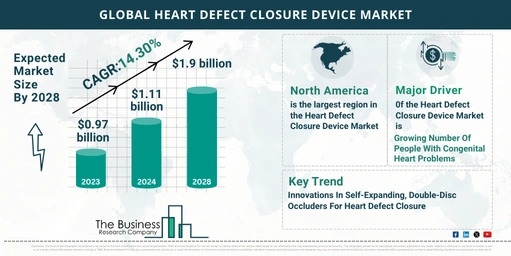
    The heart defect closure device market has experienced significant growth recently and is projected to continue expanding.

    • 2023: $0.97 billion
    • 2024: $1.11 billion (CAGR of 14.2%)
    • 2028: $1.90 billion (CAGR of 14.3%)

    This growth is driven by several factors, including the increasing prevalence of congenital heart problems, an aging population, rising health awareness, and advancements in medical technology.

    Key Drivers of Market Growth

    1. Rising Incidence of Congenital Heart Problems
    • Structural defects in the heart present from birth are on the rise.
    • Genetic factors, environmental influences, and maternal health issues contribute to the growing incidence.
    • Heart defect closure devices provide minimally invasive treatments to correct these defects, improving cardiac function and reducing complications.
    1. Technological Advancements
    • Improvements in catheterization techniques and diagnostic technologies are driving market growth.
    • The rise in MRI procedures and the use of 3D imaging in heart defect closure are notable trends.
    1. Aging Population
    • The prevalence of heart defects increases with age, impacting a significant portion of the elderly population.

    Read More On The Heart Defect Closure Device Market Report 2024 – https://www.thebusinessresearchcompany.com/report/heart-defect-closure-device-global-market-report

    Innovations in Heart Defect Closure Devices

    1. Self-Expanding, Double-Disc Occluders
    • Companies are developing advanced occluders that enhance procedural safety and patient outcomes.
    • Example: Abbott Laboratories’ Amplatzer Talisman PFO Occlusion System, launched in September 2022, uses a self-expanding, double-disc occluder to seal patent foramen ovale (PFO) with minimal invasiveness.
    1. Expansion of Product Portfolios
    • Haemonetics Corporation’s acquisition of Cardiva Medical in March 2021 expands its range of vascular closure solutions, offering more options for heart defect treatments.

    Major Market Players

    The heart defect closure device market features several prominent companies:

    • Abbott Laboratories
    • Medtronic
    • Koninklijke Philips N.V.
    • Boston Scientific Corporation
    • Terumo Corporation
    • Edwards Lifesciences
    • W L Gore and Associates
    • BIOTRONIK SE & Co. KG
    • Lepu Medical Technology
    • Meril Life Sciences Pvt. Ltd.
    • MicroPort Scientific Corporation
    • AtriCure Inc.
    • LifeTech Scientific Corporation
    • Baylis Medical Company Inc.

    Market Segmentation

    1. By Type
    • Atrial Septal Defect (ASD) Closure Devices
    • Left Atrial Appendage (LAA) Closure Devices
    • Patent Foramen Ovale (PFO) Closure Devices
    • Patent Ductus Arteriosus (PDA) Closure Devices
    • Ventricular Septal Defect (VSD) Closure Devices
    1. By Material
    • Nitinol-Based Devices
    • Stainless Steel Devices
    • Other Materials
    1. By Mode of Delivery
    • Transcatheter Delivery
    • Surgical Delivery
    • Other Modes
    1. By End-User
    • Hospitals
    • Clinics
    • Ambulatory Surgical Centers
    • Other End-Users

    Regional Insights

    • North America: The largest market in 2023.
    • Asia-Pacific: Expected to be the fastest-growing region in the forecast period.

    Conclusion

    The heart defect closure device market is poised for robust growth, fueled by technological innovations, increasing prevalence of heart defects, and advancements in diagnostic and treatment methods. The market’s future looks promising with continued development and adoption of advanced devices aimed at improving patient outcomes.

    Request for A Sample Of The Global Heart Defect Closure Device Market Report:
    https://www.thebusinessresearchcompany.com/sample_request?id=16074&type=smp

  • Gouty Arthritis Market Report 2024: Market Size, Drivers, And Trends

    Gouty Arthritis Market Report 2024: Market Size, Drivers, And Trends

    The Business Research Company’s global market reports are now updated with the latest market sizing information for the year 2024 and forecasted to 2033

    The gouty arthritis market has been experiencing notable growth and is set to continue this trend in the coming years. Here’s an overview of the current market dynamics, key trends, and future prospects.

    Current Market Size and Growth

    • 2023 Market Size: $3.21 billion
    • 2024 Market Size: $3.44 billion (CAGR of 7.2%)
    • 2028 Market Size: $4.57 billion (CAGR of 7.3%)

    The market’s growth in recent years has been driven by several factors:

    • High Prevalence of Chronic Diseases: An increase in chronic conditions has heightened the demand for gouty arthritis treatments.
    • Increased Alcohol Intake: Alcohol consumption is a known risk factor for gout, contributing to the market’s growth.
    • Aging Population: As the elderly population grows, so does the incidence of gouty arthritis.
    • Acceptance of Enhanced Therapies: There is a growing acceptance of advanced regeneration therapies.
    • Rising Healthcare Expenditure: Increased spending on healthcare services supports the market expansion.

    Projected Market Growth and Trends

    • Improvements in Healthcare Infrastructure: Better healthcare facilities and services are expected to boost market growth.
    • Increased Obesity Rates: Obesity contributes to higher rates of gout, thereby expanding the market.
    • Increased Incidence of Gout: The rising incidence of gout drives demand for effective treatments.
    • Rising Awareness: Growing awareness among the public about gouty arthritis is contributing to market growth.

    View More On The Gouty Arthritis Market Report 2024 – https://www.thebusinessresearchcompany.com/report/gouty-arthritis-global-market-report

    Key Trends:

    • Demand for Effective Treatments: There is a growing need for effective and innovative treatment options.
    • Regenerative Therapies: Advances in regenerative medicine are impacting the treatment landscape.
    • Technological Advancements: Innovations in medical technology are enhancing diagnosis and treatment options.
    • Product Launches and Approvals: New product launches and regulatory approvals are shaping the market.

    The Impact of Obesity

    Obesity plays a significant role in the gouty arthritis market:

    • Rising Obesity Rates: Increased consumption of high-calorie foods and sedentary lifestyles contribute to obesity.
    • Link to Gout: Obesity increases uric acid production and reduces its excretion, leading to gouty arthritis.
    • Market Influence: With around 1 billion individuals classified as obese globally, the rising rates of obesity are expected to drive market growth.

    Innovations in Treatment

    Cortrophin Gel:

    • New Approval: In October 2023, ANI Pharmaceuticals received FDA approval for a new 1-mL vial of Cortrophin Gel, used for treating acute gouty arthritis flares.
    • Unique Position: Cortrophin Gel is the only FDA-approved ACTH therapy for gouty arthritis flares.

    Tigulixostat Development:

    • Collaborative Effort: Innovent Biologics Inc. and LG Chem Life Sciences are developing Tigulixostat, a new non-purine xanthine oxidase inhibitor.
    • Market Expansion: This collaboration aims to introduce Tigulixostat to the Chinese market, enhancing treatment options.

    Market Segmentation

    The gouty arthritis market is segmented as follows:

    1. By Type:
      • Acute Gouty Arthritis
      • Chronic Gouty Arthritis
    2. By Treatment:
      • Non-Steroidal Anti-Inflammatory Drugs (NSAIDs)
      • Pain Relievers
      • Corticosteroids
      • Xanthine Oxidase Inhibitors
      • Uricosurics
      • Others
    3. By Diagnosis:
      • Joint Fluid Test
      • Blood Test
      • X-Ray Imaging
      • Ultrasound
      • Dual Energy Computed Tomography (CT) Scan
      • Other Diagnostics
    4. By Distribution Channel:
      • Hospital Pharmacy
      • Retail Pharmacy
      • Others
    5. By End-Users:
      • Hospitals
      • Specialty Clinics
      • Others

    Regional Insights

    • North America: Dominated the gouty arthritis market in 2023.
    • Europe: Expected to be the fastest-growing region in the forecast period.

    The gouty arthritis market is poised for continued growth due to advancements in treatment options, increasing obesity rates, and improved healthcare infrastructure. The ongoing development of innovative therapies and the rising prevalence of the condition will further drive market expansion.

    Request A Sample Of The Global Gouty Arthritis Market Report 2024:
    https://www.thebusinessresearchcompany.com/sample_request?id=16070&type=smp

  • What’s The Growth Forecast For Histology Equipment Market Through 2024-2033?

    What’s The Growth Forecast For Histology Equipment Market Through 2024-2033?

    The Business Research Company’s global market reports provide comprehensive analysis on the various markets in 27 industries across 60 geographies.

     Steady Growth in Recent Years

    The histology equipment market has experienced consistent growth, with the market size increasing from $0.62 billion in 2023 to $0.65 billion in 2024. This growth represents a compound annual growth rate (CAGR) of 4.4%. Several factors have contributed to this steady rise:

    • High Prevalence of Chronic Diseases: Increased chronic disease rates drive demand for diagnostic equipment.
    • Increased Healthcare Expenditure: Greater investment in healthcare infrastructure boosts equipment demand.
    • Technological Innovations: Advancements in imaging technologies improve diagnostic accuracy.
    • Expansion of Research Activities: Enhanced research drives the need for advanced histology tools.
    • Aging Population: An older global population increases the demand for diagnostic equipment.

    Forecasted Growth and Market Drivers

    Looking ahead, the histology equipment market is projected to grow to $0.78 billion by 2028, at a CAGR of 4.6%. This future growth is attributed to several key factors:

    • Increasing Cancer Prevalence: The rising incidence of cancer necessitates advanced diagnostic tools.
    • Demand for Personalized Medicine: Tailored treatment approaches drive demand for precise diagnostic equipment.
    • Growing Healthcare Infrastructure: Expansion in emerging markets supports market growth.
    • Technological Advancements: Innovations in imaging techniques enhance diagnostic capabilities.
    • Expanding Geriatric Population: A larger elderly demographic increases diagnostic needs.
    • R&D in Life Sciences: Continued research in life sciences fuels demand for histology equipment.

    View More On The Histology Equipment Market Report 2024 – https://www.thebusinessresearchcompany.com/report/histology-equipment-global-market-report

    Major Trends Shaping the Market

    Several trends are shaping the histology equipment market, including:

    • Automation Adoption: Increasing use of automated systems to improve efficiency.
    • Digital Pathology: Rising demand for digital imaging and pathology solutions.
    • Personalized Medicine: Growth in tailored treatment approaches.
    • Advancements in Tissue Staining: Improved staining technologies enhance diagnostic accuracy.
    • Oncology Research: Expanding focus on cancer research drives equipment demand.
    • Workflow Efficiency: Increased focus on optimizing lab workflows.
    • Infrastructure Investments: Higher investments in laboratory facilities.

    Rising Cancer Burden

    The growing burden of cancer significantly impacts the histology equipment market. Cancer diagnosis and treatment require precise and detailed tissue examination. Factors contributing to the rise in cancer cases include:

    • Lifestyle Factors: Modifiable lifestyle choices impact cancer prevalence.
    • Biological and Demographic Factors: Non-modifiable factors such as genetics and age contribute to cancer risk.

    For example, in 2021, it was projected that 151,000 individuals in Australia would be diagnosed with cancer, excluding basal cell and squamous cell carcinomas. By 2031, new cancer cases are expected to rise to 185,000, highlighting the increasing need for advanced histology equipment.

    Innovations and Acquisitions

    Next-Generation Slide Scanners: Companies are developing advanced slide scanners to enhance image quality and diagnostic precision. For instance, Roche launched the VENTANA DP 600 slide scanner in June 2022, offering high-resolution images and improved workflow integration.

    Acquisition by StatLab Medical Products: In March 2024, StatLab Medical Products acquired Poly Scientific R&D Corp., including its subsidiary Histology Control Systems, Inc. This acquisition expands StatLab’s manufacturing capabilities and market reach, enhancing its product offerings in histology.

    Market Segmentation

    The histology equipment market is segmented into:

    1. By Type: Includes slide staining systems, scanners, tissue processing systems, microtomes, coverslippers, and other types.
    2. By Product: Comprises instruments and analysis software systems, consumables, and reagents.
    3. By Application: Serves hospitals, pharmaceutical companies, diagnostic centers, academic institutes, research laboratories, and other applications.

    Regional Insights:

    • North America: Dominated the market in 2023.
    • Asia-Pacific: Expected to be the fastest-growing region during the forecast period.

    Conclusion

    The histology equipment market is poised for steady growth driven by technological advancements, increasing cancer prevalence, and expanding healthcare infrastructure. Innovations in imaging and automation, along with strategic acquisitions, are expected to further propel the market. As the demand for precise diagnostic tools continues to rise, the histology equipment market remains a critical component of modern medical diagnostics.

    Request A Sample Of The Global Histology Equipment Market Report 2024:
    https://www.thebusinessresearchcompany.com/sample_request?id=16080&type=smp


  • Ectopic Pregnancy Market Growth Analysis Till 2033 By The Business Research Company

    Ectopic Pregnancy Market Growth Analysis Till 2033 By The Business Research Company

    The Business Research Company’s market reports offer an in-depth analysis on the market’s growth potential, major drivers, key trends and more.

    Market Growth and Key Drivers

    Historic Growth

    • Strong Market Growth: The ectopic pregnancy market size grew from $7.62 billion in 2023 to $8.09 billion in 2024, at a CAGR of 6.2%.
    • Key Drivers:
      • Increased awareness and early detection.
      • Rise in pelvic inflammatory disease cases.
      • Expansion in R&D in women’s reproductive health.
      • Enhanced maternal healthcare infrastructure.

    Future Projections

    • Continued Expansion: The market is expected to grow to $10.35 billion by 2028, at a CAGR of 6.3%.
    • Growth Factors:
      • Increasing prevalence of gynecological disorders.
      • Rising awareness and early detection.
      • Growing healthcare expenditure.
      • Increasing adoption of minimally invasive surgeries.
      • Expansion of telemedicine for remote monitoring.

    Read More On The Ectopic Pregnancy Market Report 2024 – https://www.thebusinessresearchcompany.com/report/ectopic-pregnancy-global-market-report

    Trends and Innovations

    Contraceptive Devices and Market Growth

    • Driving Market Growth: Increased use of contraceptive devices is propelling market growth.
    • Key Insights:
      • Contraceptive devices, especially IUDs, can elevate the risk of ectopic pregnancies.
      • Utilization of long-acting reversible contraceptives (LARC) rose to 44.1 per 1,000 people from 2022 to 2023.
    • Impact: The rise in contraceptive use emphasizes the need for advanced ectopic pregnancy detection and treatment.

    AI-Powered Ultrasound Systems

    • Revolutionizing Diagnosis: Companies are developing AI-powered ultrasound systems to enhance diagnostic accuracy.
    • Example:
      • Samsung Medison’s V8, introduced in September 2021, features BiometryAssist and LaborAssist, improving diagnostic precision and efficiency.
    • Benefit: AI advancements reduce the risk of complications by improving early detection and diagnosis accuracy.

    Notable Acquisition: Halozyme and Antares Pharma

    • Strategic Acquisition: In April 2022, Halozyme Therapeutics acquired Antares Pharma for $960 million.
    • Impact:
      • Enhances drug delivery technology, particularly auto-injector systems for methotrexate injections.
      • Improves patient compliance and treatment outcomes.
    • Focus: The acquisition strengthens Halozyme’s position in the ectopic pregnancy treatment market.

    Market Segmentation

    By Type

    • Tubal Ectopic Pregnancy
    • Non-Tubal Ectopic Pregnancy
    • Heterotopic Ectopic Pregnancy
    • Other Types

    By Treatment

    • Folic Acid Analogue
    • Corticosteroid
    • Other Treatments

    By Distribution Channel

    • Retail Pharmacies
    • Online Pharmacies
    • Hospital Pharmacies
    • Other Distribution Channels

    By End-User

    • Hospitals
    • Clinics
    • Fertility Centers
    • Other End-Users

    Major Players in the Market

    • Leading Companies: Pfizer Inc., F. Hoffmann-La Roche Ltd, AbbVie Inc., Bayer AG, Sanofi S.A., Bristol-Myers Squibb Company, Novartis AG, and more.
    • Focus: These companies are driving advancements in diagnostic tools, minimally invasive surgical procedures, and treatment options.

    Regional Insights

    • Largest Region: North America leads the ectopic pregnancy market, driven by advanced healthcare infrastructure and high awareness levels.

    Conclusion

    The ectopic pregnancy market is poised for significant growth, driven by advancements in diagnostic technologies, increased awareness, and strategic acquisitions. As major players continue to innovate, the market will see enhanced patient outcomes and expanded treatment options, ensuring better healthcare for women globally.

    Request for A Sample Of The Global Ectopic Pregnancy Market Report:
    https://www.thebusinessresearchcompany.com/sample_request?id=16042&type=smp

  • Growth Trajectory Of The DNA Microarray Market 2024-2033

    Growth Trajectory Of The DNA Microarray Market 2024-2033

    The Business Research Company’s global market reports are now updated with the latest market sizing information for the year 2024 and forecasted to 2033

    Market Size and Growth Rate

    • Current Market Size: The DNA microarray market was valued at $3.02 billion in 2023.
    • Projected Growth: It is expected to grow to $3.38 billion in 2024, at a CAGR of 12.0%.
    • Future Projections: The market size is anticipated to reach $5.34 billion by 2028, growing at a CAGR of 12.1%.

    Historic Growth Drivers

    • Pharmacogenomics: Increasing application of pharmacogenomics.
    • Healthcare Infrastructure: Development of healthcare infrastructure.
    • Collaborations and Partnerships: Strategic alliances and partnerships.
    • Cost Reduction: Decreasing costs associated with DNA microarray technology.
    • Public Awareness: Growing public awareness and education about genetic testing.

    Future Growth Drivers

    • Personalized Medicine: Expansion of personalized medicine approaches.
    • Comparative Genomic Hybridization (CGH): Emergence of CGH technologies.
    • Agricultural Genomics: Growth in agricultural genomics applications.
    • Regulatory Approvals: Streamlined regulatory approvals and standards.
    • Chronic Diseases: Rising prevalence of chronic diseases necessitating advanced diagnostics.

    View More On The DNA Microarray Market Report 2024 – https://www.thebusinessresearchcompany.com/report/dna-microarray-global-market-report

    Personalized Medicine Drives DNA Microarray Market Growth

    Key Role of Personalized Medicine

    • Tailored Treatments: Personalized medicine focuses on tailoring medical treatments to individual patient profiles.
    • Technological Integration: Utilizes ‘omics’ technologies and genetic data.
    • FDA Approvals: Significant increase in FDA-approved personalized therapies.
    • Example: In February 2024, the FDA approved 16 novel personalized therapies, up from 6 in 2022.

    Contribution to Market Growth

    • Gene Expression Analysis: DNA microarrays enable analysis of gene expression patterns.
    • Treatment Plans: Facilitates the development of tailored treatment plans based on genetic profiles.

    Major Players in the DNA Microarray Market

    Leading Companies

    • Key Players:Roche Holding AG, Thermo Fisher Scientific Inc., Danaher Corporation, Merck KGaA, Agilent Technologies Inc., PerkinElmer Inc., Illumina Inc., bioMérieux SA, Schott AG, Bio-Rad Laboratories Inc., QIAGEN N.V., Bioneer Corporation, CapitalBio Technology Co. Ltd., Eurofins Genomics LLC, Savyon Diagnostics Ltd., Oxford Gene Technology, Sengenics Corporation LLC, Affymetrix, BioCat GmbH, Scienion AG, LC Sciences, Arrayit Corporation, Akonni Biosystems Inc., Arraystar Inc., Febit Holding GmbH.

    Advancement in DNA Microarray Technology with Two-Day Turnaround

    Technological Innovations

    • Two-Day Turnaround: Focus on reducing turnaround times for faster results.
    • Thermo Fisher’s CytoScan HD Accel Array: Introduced in August 2023, offering whole-genome analysis with improved coverage.
    • Applications: Significant for prenatal, postnatal, and oncology research.

    Competitive Edge

    • Efficiency: Enhances research and clinical decision-making processes.
    • Productivity: Increases productivity and profitability in research labs.

    SCHOTT AG Acquires Applied Microarray Inc.

    Strategic Acquisition

    • Acquisition Details: SCHOTT AG acquired Applied Microarray Inc. in October 2021.
    • Purpose: To enhance SCHOTT’s point-of-care microarray solutions.
    • Applications: Focus on infectious disease detection.

    DNA Microarray Market Segmentation

    By Type

    • Complementary DNA Microarrays
    • Oligonucleotide DNA Microarrays
    • Other Types

    By Application

    • Gene Expression Analysis
    • Genotyping
    • Other Applications

    By End-user

    • Pharmaceutical and Biotechnology Companies
    • Diagnostic Centers
    • Hospitals and Clinics
    • Academic and Research Institutes
    • Other End-users

    Regional Insights

    Largest Market

    • North America: The largest region in the DNA microarray market in 2023.

    Fastest-Growing Region

    • Asia-Pacific: Expected to be the fastest-growing region during the forecast period.

     Request A Sample Of The Global DNA Microarray Market Report 2024:
    https://www.thebusinessresearchcompany.com/sample_request?id=16039&type=smp

  • Top 5 Insights From The Direct Primary Care Market Report 2024

    Top 5 Insights From The Direct Primary Care Market Report 2024

    The Business Research Company’s global market reports are now updated with the latest market sizing information for the year 2024 and forecasted to 2033

    According to The Business Research Company’s Direct Primary Care Global Market Report 2024, the direct primary care market is expected to show promising growth in the forecast period.

    Rapid Market Expansion

    • Current Size and Growth: The direct primary care (DPC) market has experienced significant growth recently, increasing from $61.29 billion in 2023 to an estimated $65.61 billion in 2024, reflecting a compound annual growth rate (CAGR) of 7.0%.
    • Historical Drivers: Key factors contributing to this growth include limitations of the fee-for-service model, a shortage of primary care providers, healthcare provider burnout, the rise of lifestyle medicine and holistic care, and the demand for convenience, flexibility, and transparent cost control.

    Future Market Projections

    • Expected Growth: The DPC market is projected to continue its upward trajectory, reaching $86.50 billion by 2028 with a CAGR of 7.2%.
    • Forecast Drivers: Future growth will be driven by a shift towards holistic and proactive healthcare, expansion of DPC practices, adoption of value-based care models, and potential policy changes.

    View More On The Direct Primary Care Market Report 2024 – https://www.thebusinessresearchcompany.com/report/direct-primary-care-global-market-report

    Key Trends in Direct Primary Care

    • Technological Integration: Trends shaping the market include leveraging natural language processing, integrating genomic and precision medicine, developing cloud-based practice management systems, utilizing predictive analytics, and incorporating digital therapeutics.

    Impact of Rising Diabetes Prevalence

    Diabetes and Direct Primary Care

    • Rising Diabetes Cases: The increasing prevalence of diabetes, driven by obesity, sedentary lifestyles, poor diets, aging populations, and genetic factors, is expected to boost the DPC market.
    • DPC Benefits for Diabetic Patients: DPC practices offer a flat monthly fee for unlimited access to primary care services, which includes regular check-ups, medication management, lifestyle counseling, and continuous support. This model is particularly beneficial for diabetic patients needing consistent monitoring and care.

    Statistics Highlighting Diabetes Growth

    • Global Data: According to the International Diabetes Federation’s 2021 report, 537 million adults aged 20 to 79 years are diagnosed with diabetes worldwide, projected to rise to 643 million by 2030 and 783 million by 2045.

    Major Companies in Direct Primary Care

    Leading Market Players

    • Key Companies: Prominent companies in the DPC market include Oak Street Health Inc., Prestige Consumer Healthcare Inc., One Medical Group, RubiconMD, Aledade Inc., Crossover Health Medical Group APC, Everside Health Inc., and more.

    Innovations and Acquisitions

    Direct-to-Consumer Services

    • Service Innovation: Companies are focusing on innovative service offerings, such as direct-to-consumer (DTC) services, to enhance market competitiveness. For instance, MedLion Management Inc. launched an online medical service in January 2022, providing virtual consultations, secure messaging, and access to electronic health records.

    Strategic Acquisitions

    • Everside Health’s Acquisition of R-Health: In July 2021, Everside Health acquired R-Health to expand its comprehensive primary care services across the U.S., demonstrating strategic moves to strengthen market presence.

    Market Segmentation and Regional Insights

    Segmentation Overview

    • By Type: The DPC market is segmented into clinical services, laboratory services, consultative services, care coordination, and comprehensive care management.
    • By Practice Setting: It includes solo practices, group practices, and other practice settings.
    • By Application: Applications cover cardiology, internal medicine, primary care, osteopathy, psychiatry, and pediatrics.

    Regional Performance

    • North America: The largest market in 2023.
    • Asia-Pacific: Expected to be the fastest-growing region during the forecast period.

    The direct primary care market is poised for continued growth and innovation, driven by the increasing demand for accessible, comprehensive, and patient-centered healthcare solutions.

    Request A Sample Of The Global Direct Primary Care Market Report 2024:
    https://www.thebusinessresearchcompany.com/sample_request?id=16037&type=smp

  • Key Trends And Drivers In The Diagnostic Radioisotopes Market 2024

    Key Trends And Drivers In The Diagnostic Radioisotopes Market 2024

    The Business Research Company’s market reports offer an in-depth analysis on the market’s growth potential, major drivers, key trends and more.

    The diagnostic radioisotopes market has experienced substantial growth in recent years and is poised for continued expansion. Let’s explore the factors driving this growth, significant trends, and the key players in this dynamic market.

    Current Market Growth

    • Market Size and Growth Rate
      • The diagnostic radioisotopes market grew from $5.06 billion in 2023 to $5.54 billion in 2024, representing a compound annual growth rate (CAGR) of 9.6%.
      • The growth in the historic period was driven by the discovery of radioactivity, the introduction of technetium-99m, clinical applications and research, Cold War era and nuclear research, and the emergence of positron emission tomography.

    Future Market Prospects

    • Projected Market Size and Growth Rate
      • The market is expected to grow to $8.06 billion by 2028 at a CAGR of 9.8%.
      • Key factors for future growth include emerging radioisotope production methods, expanded clinical applications, patient-centered care and safety, point-of-care imaging, and environmental sustainability and green chemistry.

    Read More On The Diagnostic Radioisotopes Market Report 2024 – https://www.thebusinessresearchcompany.com/report/diagnostic-radioisotopes-global-market-report

    Key Market Trends

    • Hybrid Imaging Techniques
      • The integration of hybrid imaging techniques enhances diagnostic accuracy by combining anatomical and functional imaging.
    • Theranostics
      • The use of radioisotopes for both diagnosis and therapy is gaining traction, enabling personalized treatment plans.
    • Molecular Imaging Techniques
      • Advancements in molecular imaging techniques are providing deeper insights into cellular and molecular processes.
    • Use of Cyclotrons and Generators
      • The deployment of cyclotrons and generators for isotope production is improving supply chain efficiency and reducing reliance on nuclear reactors.
    • Safety and Radiation Protection
      • Enhanced safety protocols and radiation protection measures are becoming standard practice in the industry.

    Rising Burden of Cancer

    • Impact on Market Growth
      • The rising burden of cancer is a significant driver for the diagnostic radioisotopes market.
      • Factors contributing to the increase in cancer cases include lifestyle choices, genetic predisposition, and environmental factors.
      • Radioisotopes play a crucial role in cancer management by enabling precise diagnosis, targeted treatment, and effective monitoring.
      • For example, new cancer cases in Europe increased by 2.3% from 2020 to 2022, reaching 2.74 million, and cancer deaths rose by 2.4% in the same period.

    Key Market Players

    • Major Companies
      • Cardinal Health Inc., Sumitomo Heavy Industries Ltd., BWX Technologies Inc., Lantheus Holdings, Curium Pharma, Clarity Pharmaceuticals, Bracco Diagnostic Inc., Ion Beam Applications S.A., Nordion Inc., Eckert & Ziegler AG, NorthStar Medical Radioisotopes LLC, NTP Radioisotopes SOC Ltd, Global Medical Solutions Ltd., Isotopia Molecular Imaging Ltd., Cyclopharm Limited, Trasis NV, Orano Med LLC, ARTMS Inc., Radiomedix Inc., Coqu RadioPharmaceuticals Corp., IsoTherapeutics Group LLC.

    Technological Innovations

    • Advancements in Radiopharmaceutical Technology
      • Companies are focused on developing advanced radiopharmaceutical technology to improve diagnostic accuracy and patient outcomes.
      • For instance, Bracco Group launched Blue Earth Therapeutics in March 2022 to advance precision-targeted therapeutic radiopharmaceuticals, initially targeting prostate cancer.

    Strategic Acquisitions

    • Telix Pharmaceuticals and ARTMS
      • In April 2024, Telix Pharmaceuticals acquired ARTMS to enhance isotope production and market position.
      • This acquisition aims to bolster Telix’s supply chain and manufacturing capabilities, meeting the rising demand for diagnostic and therapeutic isotopes.

    Market Segmentation

    • By Radioisotope
      • Technetium-99m, Thallium-201, Gallium-67, Iodine-123, FluoroDeoxyGlucose (FDG), Rubidium-82, Other Radioisotopes.
    • By Imaging Modality
      • Single Photon Emission Computed Tomography (SPECT), Positron Emission Tomography (PET), Beta Emitters.
    • By Application
      • Oncology, Cardiology, Other Applications.
    • By End User
      • Hospitals, Specialty Clinics, Diagnostic Centers, Academic and Research Institutes, Other End Users.

    Regional Insights

    • North America and Asia-Pacific
      • North America was the largest region in the diagnostic radioisotopes market in 2023.
      • Asia-Pacific is expected to be the fastest-growing region during the forecast period.

    The diagnostic radioisotopes market is on a robust growth trajectory, driven by technological advancements, the rising burden of cancer, and strategic industry moves. As the market continues to evolve, innovations and expansions in production and application will play pivotal roles in shaping its future.

    Request for A Sample Of The Global Diagnostic Radioisotopes Market Report:
    https://www.thebusinessresearchcompany.com/sample_request?id=16033&type=smp