Blog

  • Insights Into The Slip Disc Market’s Growth Potential 2024-2033

    Insights Into The Slip Disc Market’s Growth Potential 2024-2033

    The Business Research Company’s global market reports are now updated with the latest market sizing information for the year 2024 and forecasted to 2033

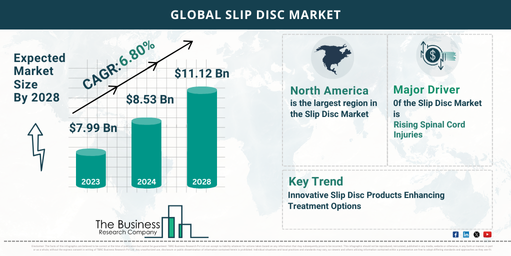
    The slip disc market size has shown strong growth recently, projected to grow from $7.99 billion in 2023 to $8.53 billion in 2024 at a compound annual growth rate (CAGR) of 6.7%. Factors contributing to this growth during the historical period include the increasing elderly population, heightened awareness of spinal health, a rise in sedentary lifestyles and poor posture, the development and popularity of minimally invasive surgical options, and the expansion of health insurance coverage. The slip disc market size is expected to continue its strong growth trajectory, reaching $11.12 billion in 2028 at a CAGR of 6.8%. The anticipated growth in the forecast period can be attributed to improvements in healthcare infrastructure, ongoing research and development, enhanced availability and effectiveness of physical therapy and rehabilitation services, a rising focus on managing chronic pain, and a growing preference for non-surgical and less invasive treatment options. Key trends for the forecast period include advancements in imaging technologies, innovations in medical devices and surgical techniques, the adoption of robotic-assisted spine surgery, artificial disc replacement, and the implementation of telemedicine and digital health solutions.

    The increase in spinal cord injuries is expected to propel the growth of the slip disc market going forward. Spinal cord injuries are characterized by damage to the spinal cord that leads to a loss of function, such as mobility or sensation, often resulting in conditions like slipped discs. The rise in spinal cord injuries can be linked to a higher incidence of motor vehicle accidents, sports-related injuries, and falls. As more individuals experience spinal cord injuries, the demand for treatments and interventions for slipped discs increases. For example, in March 2024, according to the National Center for Biotechnology Information, a US-based government agency, approximately 17,000 new spinal cord injury cases are reported annually in the United States, with around 282,000 individuals currently living with spinal cord injuries. Furthermore, in May 2023, an article published by the National Center for Biotechnology Information noted that low back pain (LBP) affected 619 million people worldwide in 2020, with projections indicating this number could rise to 843 million by 2050. Consequently, the increase in spinal cord injuries is propelling the growth of the slip disc market.

    Get A Free Sample On The Slip Disc Market Report:

    https://www.thebusinessresearchcompany.com/sample.aspx?id=18735&type=smp

    What Are The Key Trends That Influence Slip Disc Market Share Analysis?

    Major companies in the slip disc market are focused on developing innovative products, such as biologic patches, to advance treatment options and improve patient outcomes. A biologic patch is a regenerative tissue scaffold designed to promote the healing and repair of damaged intervertebral discs using biological materials and growth factors. For instance, in November 2023, researchers at the Perelman School of Medicine at the University of Pennsylvania and the CMC VA Medical Center (CMCVAMC) developed a novel biologic patch called Tension-activated repair patches (TARPs) that could revolutionize the treatment of herniated discs in the spine. These patches aim to offer a more effective disc repair solution than current techniques by utilizing an individual’s natural movements, assisting in re-cushioning the vertebrae, restoring tension in the damaged discs, and filling in the gaps left by herniations. This dual approach seeks to halt further disc deterioration and alleviate disc pain.

    Which Market Players Are Driving Growth In The Slip Disc Market?

    Major companies operating in the slip disc market are Medacta International SA, Hitachi Ltd., General Electric Company, Pfizer Inc., GlaxoSmithKline plc, Medtronic plc, Siemens Healthcare Private Limited, Koninklijke Philips N.V, Stryker Corporation, Teva Pharmaceutical Industries Ltd., DePuy Synthes Companies, Zimmer Biomet Holdings Inc., Smith & Nephew plc, NuVasive Inc., Canon Medical Systems Corporation, Globus Medical Inc., Orthofix Medical Inc., Accuray Incorporated, Corin Group, Precision Spine Care, BioSpine Institute, Vertebral Technologies Inc., Captiva Spine Inc.

    How Is The Global Slip Disc Market Segmented?

    The slip disc market covered in this report is segmented –

    1) By Type: Thoracic Herniated Discs, Lumbar Herniated Disc, Cervical Herniated Discs
    2) By Diagnosis: Physical Examination, Nerve Conduction Test, Imaging Tests
    3) By Medications: Therapy, Surgery
    4) By Application: Hospital Use, Clinic Use, Household, Other Applications

    Read The Full Slip Disc Market Report Here

    https://www.thebusinessresearchcompany.com/report/slip-disc-global-market-report

    The Slip Disc Global Market Report 2024 provides an overview of the slip discmarket for the time series: historic years (2010 – 2021) and ten years forecast (2023 – 2032). The slip disc market forecast analyzes slip disc market size, slip disc market share, leading competitor and their market positions.

    The Table Of Content For The Slip Disc Market Include

    1. Slip Disc Market Executive Summary
    2. Slip Disc Market Segments
    3. Slip Disc Market Size And Template Market Growth Rate
    4.  Key Slip Disc Market Trends
    5. Major Slip Disc Market Drivers
    ……
    25. Key Mergers And Acquisitions In The Slip Disc Market
    26. Top Slip Disc Companies
    27. Slip Disc Market Opportunities And Strategies
    28. Slip Disc Market, Conclusions And Recommendations
    29. Appendix

    Explore Similar Reports From The Business Research Company:

    Opto Semiconductors Global Market Report 2024

    https://www.thebusinessresearchcompany.com/report/opto-semiconductors-global-market-report

    High-Reliability Semiconductors Global Market Report 2024

    https://www.thebusinessresearchcompany.com/report/high-reliability-semiconductors-global-market-report

    Semiconductor Etch Equipment Global Market Report 2024

    https://www.thebusinessresearchcompany.com/report/semiconductor-etch-equipment-global-market-report

    Learn More About The Business Research Company

    The Business Research Company has published over 15000+ reports in 27 industries, spanning 60+ geographies. The reports draw on 1,500,000 datasets, extensive secondary research, and exclusive insights from interviews with industry leaders.

    Contact us at:The Business Research Company: https://www.thebusinessresearchcompany.com/

    Americas +1 3156230293

    Asia +44 2071930708

    Europe +44 2071930708

    Email us at info@tbrc.info

    Follow us on:

    LinkedIn: https://in.linkedin.com/company/the-business-research-company

    YouTube: https://www.youtube.com/channel/UC24_fI0rV8cR5DxlCpgmyFQ

    Global Market Model: https://www.thebusinessresearchcompany.com/global-market-model

    Found this article helpful? Share it on:

  • North America Leads The Podcast Dynamic Insertion Tools Market: Regional Analysis And 2030 Forecast

    North America Leads The Podcast Dynamic Insertion Tools Market: Regional Analysis And 2030 Forecast

    The Business Research Company’s 2026 market reports are designed to deliver research that is more actionable and strategically valuable. Key offerings include market attractiveness scoring, total addressable market sizing, company benchmarking matrices, interactive Excel dashboards, deeper supply chain intelligence, emerging startup tracking, and granular product-level insights.

    Podcast Dynamic Insertion Tools Market Revenue Projected To Rise To $2.33 Billion By 2030

    The podcast dynamic insertion tools market has experienced substantial expansion in recent years. It is anticipated to grow from $1.02 billion in 2025 to $1.21 billion in 2026, exhibiting a compound annual growth rate (CAGR) of 18.2%. The historical increase in this market can be linked to factors such as the expanding podcast audience and listening hours, increased brand spending on digital audio advertising, a move from static to dynamic ad monetization, the necessity for improved campaign measurement in podcasts, and the emergence of podcast networks and professional production.

    The podcast dynamic insertion tools market size is anticipated to undergo substantial growth in the upcoming years, with projections indicating it will reach $2.33 billion in 2030, exhibiting a compound annual growth rate (CAGR) of 17.9%. This expansion during the forecast period can be ascribed to a greater adoption of AI-driven audience targeting, an increasing demand for real-time ad optimization, the proliferation of podcast monetization platforms, a heightened focus on privacy-safe analytics and attribution, and the development of localized and multilingual podcast advertising. Noteworthy trends in the forecast period encompass programmatic ad targeting for podcasts, real-time content replacement and updates, personalized listener-level segmentation, sophisticated attribution and analytics tracking, and automated sponsorship and campaign scheduling.

    Want Deeper Podcast Dynamic Insertion Tools Market Insights? Get A Free Sample Report:

    https://thebusinessresearchcompany.com/sample_request?id=76342833&type=smp&name=Podcast%20Dynamic%20Insertion%20Tools%20Market%20Report%202026&utm_source=Blogs&utm_medium=Paid&utm_campaign=Nov_PR

    Primary Growth Driver Shaping The Podcast Dynamic Insertion Tools Market Outlook

    The expansion of smart devices is anticipated to boost the growth of the podcast dynamic insertion tools market in the coming years. These devices are electronic gadgets capable of internet connectivity, data collection and sharing, and remote operation, including smartphones, smartwatches, and smart home appliances. The increasing prevalence of smart devices stems from advancements in mobile connectivity infrastructure, where the broad implementation of high-speed wireless networks and better data access simplifies and reduces the cost for consumers to acquire and frequently utilize multiple internet-enabled gadgets. This growth in smart devices has expedited the uptake of podcast dynamic insertion tools, given that a higher number of connected devices allows listeners to consume customized, targeted audio content flexibly, thus increasing the need for technology capable of real-time dynamic insertion of pertinent advertisements and segments. For example, in February 2023, BuildOps Inc., a US-based software-as-a-service (SaaS) company, reported that IoT-connected devices increased by 28% from 2022 to 2023, with projections to hit 16 billion by the close of 2023. Consequently, the widespread adoption of smart devices is a key factor boosting the podcast dynamic insertion tools market.

    Podcast Dynamic Insertion Tools Market Structure: A Detailed Look At Segments And Subsegments

    The podcast dynamic insertion tools market covered in this report is segmented –

    1) By Component: Software, Services

    2) By Deployment Mode: Cloud-Based, On-Premises

    3) By Organization Size: Small And Medium Enterprises, Large Enterprises

    4) By Application: Advertising, Content Personalization, Sponsorship, Analytics, Other Applications

    5) By End-User: Media And Entertainment, Advertising Agencies, Podcast Networks, Independent Podcasters, Other End-Users

    Subsegments:

    1) By Software: Advertisement Insertion Software, Content Management Software, Analytics And Reporting Software, Automation And Scheduling Software

    2) By Services: Implementation Services, Technical Support Services, Consulting Services, Training And Education Services

    Podcast Dynamic Insertion Tools Market Innovation And Strategy Trends Among Leading Companies

    Leading companies within the podcast dynamic insertion tools market are prioritizing the development of innovative solutions, such as artificial intelligence (AI)-powered contextual targeting, to deliver more pertinent advertisements and enhance listener involvement. AI-driven contextual targeting is a technology that employs AI to analyze podcast content and listener behavior, enabling the placement of highly relevant ads, which in turn boosts ad effectiveness, improves listener engagement, and increases advertisers’ return on investment. For example, in March 2024, Audacy Inc., a US-based broadcasting company, unveiled its Dynamic AI Contextual Advertising solution, an advanced platform designed to refine podcast ad targeting. This technology processes millions of hours of podcast content, categorizes episodes using industry-standard tags such as business and finance, entertainment, and sports, and dynamically inserts ads during moments of high listener engagement. This solution enables advertisers to deliver hyper-targeted, contextually relevant messaging, thereby enhancing both the listener experience and campaign ROI. Audacy’s tool ensures that advertisements are complementary rather than disruptive by aligning them with podcast themes, effectively connecting content with monetization in the realm of digital audio.

    Top Companies Competing In The Podcast Dynamic Insertion Tools Market

    Major companies operating in the podcast dynamic insertion tools market are Acast AB, Audacy Inc., Ad Results Media Inc., Captivate.fm Inc., AudioBoom PLC, AudioGo Ltd., Veritonic Inc., Omny Studio Pty Ltd., Podcorn Inc., Spreaker Inc., RedCircle Inc., CoHost Inc., Wondery Inc., AMIE Inc., Audiometric Inc., Audiohook Inc., Backtracks Inc., Podigee GmbH, Blubrry LLC, Transistor.fm Inc.

    View The Complete Podcast Dynamic Insertion Tools Market Study With Segment And Regional Data:

    https://thebusinessresearchcompany.com/report/global-podcast-dynamic-insertion-tools-market-report?utm_source=Blogs&utm_medium=Paid&utm_campaign=Nov_PR

    Podcast Dynamic Insertion Tools Market Regional Outlook Across Major Geographies

    North America was the largest region in the podcast dynamic insertion tools market in 2025. The regions covered in the podcast dynamic insertion tools market report are Asia-Pacific, South East Asia, Western Europe, Eastern Europe, North America, South America, Middle East, Africa.

    Reach Out To Our Team:

    The Business Research Company: https://www.thebusinessresearchcompany.com/

    Americas: +1 310-496-7795

    Asia: +44 7882 955267 & +91 8897263534

    Europe: +44 7882 955267

    Email us at: marketing@tbrc.info

    Follow us on:

    LinkedIn: https://in.linkedin.com/company/the-business-research-company

    YouTube: https://www.youtube.com/channel/UC24_fI0rV8cR5DxlCpgmyFQ

    Global Market Model: https://www.thebusinessresearchcompany.com/global-market-model

  • Genomic Data Clean-Room Platforms Market Analysis 2026: Market Size, Growth Trends And Industry Outlook

    Genomic Data Clean-Room Platforms Market Analysis 2026: Market Size, Growth Trends And Industry Outlook

    Backed by market attractiveness analysis, total addressable market sizing, company benchmarking matrices, interactive Excel dashboards, wider supply chain intelligence, emerging startup coverage, and detailed product-level insights, The Business Research Company’s 2026 market reports are designed to offer research that is more actionable and strategically valuable than ever.

    Genomic Data Clean-Room Platforms Market Value Analysis: What Growth Lies Ahead Over The Forecast Period?

    The genomic data clean-room platforms market has experienced significant expansion in recent years. It is anticipated to grow from $1.89 billion in 2025 to $2.32 billion in 2026, achieving a compound annual growth rate (CAGR) of 22.7%. The market’s past growth is primarily attributable to the increasing volume of genomic sequencing data, rising data privacy and compliance requirements, the expansion of collaborative biomedical research initiatives, the growing adoption of cloud computing in life sciences, and increasing demand for secure data sharing frameworks.

    The genomic data clean-room platforms market is projected to experience substantial growth over the coming years. It is forecast to reach $5.27 billion by 2030, exhibiting a compound annual growth rate (CAGR) of 22.7%. This expansion during the forecast period can be attributed to factors such as increased investments in precision medicine programs, a rising adoption of federated data analysis models, the broadening of population-scale genomics projects, a growing emphasis on cross-border research collaboration, and advancements in privacy-enhancing computation technologies. Key trends anticipated in this period include the increased uptake of privacy-preserving genomic data collaboration platforms, the expanding integration of secure multi-party computation frameworks, the growing deployment of cloud-based genomic clean-room environments, the development of regulatory-compliant data governance architectures, and a stronger focus on secure cross-organization genomic analytics.

    Get A Free Sample Report With In-Depth Market Insights:

    https://thebusinessresearchcompany.com/sample_request?id=69837183&type=smp&name=Genomic%20Data%20Clean-Room%20Platforms%20Market%20Report%202026&utm_source=Blogs&utm_medium=Paid&utm_campaign=Nov_PR

    Genomic Data Clean-Room Platforms Market Growth Momentum: What Factors Are Shaping Demand?

    The increasing need for secure sharing of genomic data is projected to boost the expansion of the genomic data clean-room platforms market in the future. Secure genomic data sharing involves exchanging and utilizing genomic information while safeguarding individual privacy and adhering to regulatory guidelines. This surge in demand stems from improved research collaboration, as it enables wider access to pseudonymized genomic datasets without compromising patient privacy. Genomic data clean-room platforms address this requirement by offering controlled settings where researchers can access and examine sensitive genomic datasets, guaranteeing privacy, compliance, and data security. For example, in June 2024, the National Library of Medicine, a US-based federal government agency, reported that South Korea revised its health data guidelines. This change removed the “reserved” status for pseudonymized genomic data, with >90% expert consensus, thereby facilitating the use of datasets derived from 872 individuals (comprising 642,563 SNPs and 13 STRs), where 90–98% of STRs corresponded to matching SNPs, a figure that increased to 99–100% with 30 STRs. Consequently, the increasing need for secure genomic data sharing will propel the genomic data clean-room platforms market.

    Genomic Data Clean-Room Platforms Market Segment Outlook: Which Categories Are Growing Fastest?

    The genomic data clean-room platforms market covered in this report is segmented –

    1) By Component: Software, Services

    2) By Deployment Mode: On-Premises, Cloud-Based

    3) By Application: Pharmaceutical And Biotechnology Companies, Research And Academic Institutions, Healthcare Providers, Contract Research Organizations, Other Applications

    4) By End-User: Hospitals, Research Centers, Diagnostic Laboratories, Other End-Users

    Subsegments:

    1) By Software: Data Integration, Data Analysis, Security And Compliance, Visualization Tools, Workflow Management

    2) By Services: Consulting, Implementation, Support And Maintenance, Training, Custom Development

    Genomic Data Clean-Room Platforms Market Trends: What’s Defining The Industry’s Next Phase?

    Major companies in the genomic data clean-room platforms market are increasingly expanding cloud-based solutions to enhance scalability, security, and collaboration in managing genomic data. Cloud-native infrastructures enable the hosting, storage, and analysis of genomic datasets entirely within cloud environments, offering flexible compute resources, secure access controls, and integrated storage without the need for local infrastructure. For instance, in 2024, SOPHiA GENETICS, a Switzerland-based cloud-native healthcare technology company, introduced an improved whole genome sequencing analytics solution that leverages cloud platforms to deliver faster, more secure, and scalable insights for researchers and clinicians. Such innovations are facilitating efficient, privacy-preserving genomic data analysis, fostering collaborative research, and stimulating growth in the genomic data clean-room platforms market.

    Genomic Data Clean-Room Platforms Market Leading Companies And Competitive Benchmarking

    Major companies operating in the genomic data clean-room platforms market are Amazon Web Services Incorporated, BC Platforms Aktiengesellschaft, IQVIA Incorporated, Illumina Incorporated, Snowflake Incorporated, Palantir Technologies Incorporated, Qiagen, Datavant Incorporated, Databricks Incorporated, Foundation Medicine Incorporated, Flatiron Health Incorporated, Verily Life Sciences LLC, Genomics England Limited, Velsera, Elucidata Incorporated, DNAnexus Incorporated, Lifebit Biotech Limited, Congenica, Genestack Limited, KnetMiner

    View The Full Genomic Data Clean-Room Platforms Market Report:

    https://thebusinessresearchcompany.com/report/genomic-data-clean-room-platforms-global-market-report?utm_source=Blogs&utm_medium=Paid&utm_campaign=Nov_PR

    Genomic Data Clean-Room Platforms Market Geographic Spread And Regional Opportunities

    North America was the largest region in the genomic data clean-room platforms market in 2025. The regions covered in the genomic data clean-room platforms market report are Asia-Pacific, South East Asia, Western Europe, Eastern Europe, North America, South America, Middle East, Africa.

    Reach Out To Our Team:

    The Business Research Company: https://www.thebusinessresearchcompany.com/

    Americas: +1 310-496-7795

    Asia: +44 7882 955267 & +91 8897263534

    Europe: +44 7882 955267

    Email us at: marketing@tbrc.info

    Follow us on:

    LinkedIn: https://in.linkedin.com/company/the-business-research-company

    YouTube: https://www.youtube.com/channel/UC24_fI0rV8cR5DxlCpgmyFQ

    Global Market Model: https://www.thebusinessresearchcompany.com/global-market-model

  • Genomic Data Analysis And Interpretation Market Growth To $4.05 Billion Creates New Opportunities Across The Industry

    Genomic Data Analysis And Interpretation Market Growth To $4.05 Billion Creates New Opportunities Across The Industry

    Featuring market attractiveness scoring, total addressable market sizing, company benchmarking matrices, interactive Excel dashboards, deeper supply chain intelligence, emerging startup tracking, and granular product-level insights, The Business Research Company’s 2026 market reports are built to deliver research that is both more actionable and more strategically valuable.

    Genomic Data Analysis And Interpretation Market Size Forecast: How Big Could The Market Get By 2030?

    The genomic data analysis and interpretation market size has expanded significantly in recent years. It is projected to expand from $2.19 billion in 2025 to $2.48 billion in 2026, achieving a compound annual growth rate (CAGR) of 13.1%. This historical growth can be attributed to several factors, including the increasing prevalence of next-generation sequencing, the enlargement of genomic databases, the initial uptake of bioinformatics tools, demand from academic research, and the reduction in sequencing expenses.

    The genomic data analysis and interpretation market is projected for significant expansion in the coming years. By 2030, this market is anticipated to reach $4.05 billion, exhibiting a compound annual growth rate (CAGR) of 13.0%. Key drivers for this growth during the forecast period include the increasing number of population genomics initiatives, enhanced integration with electronic health records, a rising need for real-time data analysis, breakthroughs in AI algorithms, and the broadening scope of precision medicine. Noteworthy trends expected over the forecast horizon encompass a surge in the uptake of bioinformatics software platforms, greater application of AI in variant interpretation, an escalating call for cloud-based genomic analysis, the wider deployment of personalized medicine applications, and more frequent incorporation of genomic data into clinical decision-making processes.

    Get A Free Sample Report With In-Depth Market Insights:

    https://thebusinessresearchcompany.com/sample_request?id=54541719&type=smp&name=Genomic%20Data%20Analysis%20And%20Interpretation%20Market%20Report%202026&utm_source=Blogs&utm_medium=Paid&utm_campaign=Nov_PR

    Genomic Data Analysis And Interpretation Market Expansion Drivers: What’s Shaping Future Growth?

    The projected increase in cancer cases is set to propel the expansion of the genomic data analysis and interpretation market moving forward. Cancer is characterized by the uncontrolled proliferation and spread of abnormal cells within the body, often infiltrating other tissues and organs. The rise in cancer incidents is attributed to an aging population, lifestyle modifications including smoking and poor diet, environmental pollution, and enhanced detection methods leading to earlier diagnosis. Genomic data analysis and interpretation in oncology assist in pinpointing genetic mutations, biomarkers, and personalized treatment approaches for improved patient outcomes. For instance, in May 2024, data from the National Cancer Institute, a US-based government agency, indicated approximately 18.1 million cancer survivors in the United States. This figure is anticipated to reach 22.5 million by 2032. By 2040, it is expected that the number of new cancer cases annually will amount to 29.9 million, with cancer-related deaths estimated to climb to 15.3 million. Therefore, the growing number of cancer cases is a key driver for the growth of the genomic data analysis and interpretation market.

    Genomic Data Analysis And Interpretation Market Segment Landscape: Which Areas Lead Development?

    The genomic data analysis and interpretation market covered in this report is segmented –

    1) By Product: Software, Services

    2) By Application: Functional Genomics, Real-time Polymerase Chain Reaction (PCR), Transfection, Single Nucleotide Polymorphisms (SNP) Analysis, Mutational Analysis, Microarray Analysis, Ribonucleic Acid (RNA) Interference, Pathway Analysis

    3) By End User: Research And Academic Institutions, Biotechnology And Biopharmaceutical Companies, Hospitals And Diagnostic Laboratories, Contract Research Organizations, Forensic Laboratories, Other End Users

    Subsegments:

    1) By Software: Data Analysis Software, Genome Sequencing Software, Bioinformatics Software, Variant Analysis Software, Cloud-Based Genomic Software, Other Software Solutions

    2) By Services: Genomic Data Analysis Services, Genome Sequencing Services, Bioinformatics Services, Consulting Services, Interpretation And Reporting Services, Cloud-Based Genomic Services, Other Services

    Genomic Data Analysis And Interpretation Market Industry Trends Fueling Future Revenue Growth

    Leading firms in the genomic data analysis and interpretation market are prioritizing the creation of novel services, like advanced long-read sequencing, to enhance their market competitiveness. These advanced long-read sequencing offerings utilize state-of-the-art technologies for analyzing genetic material, yielding extended sequence reads that enable a more thorough and precise description of DNA and RNA. For example, in April 2024, Clinical-Microbiomics A/S, a biotechnology firm from Denmark, introduced its Advanced Long-Read 16S, ITS, 18S, Isolate, and metagenomics sequencing services. The aim of these services is to cater to the requirements of researchers across academic, clinical, and industrial sectors. By producing longer reads, these services offer enhanced resolution insights into microbial communities, facilitating the differentiation of closely related organisms and associating particular functions with them. Furthermore, the information gathered via long-read sequencing aids in building high-quality metagenome-assembled genomes, thus offering a more exact and holistic comprehension of the microbial ecosystem.

    Genomic Data Analysis And Interpretation Market Industry Leaders And Competitive Landscape

    Major companies operating in the genomic data analysis and interpretation market are F. Hoffmann-La Roche AG, Thermo Fisher Scientific Inc., Agilent Technologies Inc., Illumina Inc., Bio-Rad Laboratories Inc., QIAGEN N.V., Beijing Genomics Institute (BGI) Genomics Co. Ltd, Guardant Health Inc., 10x Genomics Inc., Oxford Nanopore Technologies Inc., Pacific Biosciences of California Inc., SOPHiA GENETICS Inc., DNAnexus Inc., Seven Bridges Genomics Inc., ASURAGEN INC., Fabric Genomics Inc., DNASTAR Inc., Genoox, Golden Helix Inc., Partek Inc., SoftGenetics LLC, Cantada Bio, Geneyx Genomex Ltd., Freenome Holdings Inc, BlueBee Inc.

    View The Full Genomic Data Analysis And Interpretation Market Report:

    https://thebusinessresearchcompany.com/report/genomic-data-analysis-and-interpretation-global-market-report?utm_source=Blogs&utm_medium=Paid&utm_campaign=Nov_PR

    Genomic Data Analysis And Interpretation Market Top Region By Revenue And Market Share

    North America was the largest region in the genomic data analysis and interpretation market in 2025. Asia-Pacific is expected to be the fastest-growing region in the forecast period. The regions covered in the genomic data analysis and interpretation market report are Asia-Pacific, South East Asia, Western Europe, Eastern Europe, North America, South America, Middle East, Africa.

    Reach Out To Our Team:

    The Business Research Company: https://www.thebusinessresearchcompany.com/

    Americas: +1 310-496-7795

    Asia: +44 7882 955267 & +91 8897263534

    Europe: +44 7882 955267

    Email us at: marketing@tbrc.info

    Follow us on:

    LinkedIn: https://in.linkedin.com/company/the-business-research-company

    YouTube: https://www.youtube.com/channel/UC24_fI0rV8cR5DxlCpgmyFQ

    Global Market Model: https://www.thebusinessresearchcompany.com/global-market-model

  • Genomic Biomarkers Market Forecast: Breaking Down The Numbers Behind Future Expansion

    Genomic Biomarkers Market Forecast: Breaking Down The Numbers Behind Future Expansion

    Built to provide research that’s more actionable and strategically valuable, The Business Research Company’s 2026 market reports include market attractiveness analysis, total addressable market sizing, company benchmarking matrices, interactive Excel dashboards, broader supply chain intelligence, emerging startup tracking, and in-depth product insights.

    Genomic Biomarkers Market Revenue Outlook: What CAGR Lies Ahead Through 2030?

    The genomic biomarkers market has experienced significant expansion in its size over recent years. It is anticipated to increase from $8.72 billion in 2025 to $10.24 billion in 2026, at a compound annual growth rate (CAGR) of 17.5%. The historical expansion of this market can be attributed to several factors, including developments in genomic sequencing technologies, a broadening of oncology-focused biomarker research, the increased adoption of personalized treatment approaches, enhancements in clinical validation frameworks, and the growing availability of genomic databases.

    The genomic biomarkers market is projected to experience substantial expansion in the coming years, with its value set to reach $19.33 billion by 2030, exhibiting a compound annual growth rate (CAGR) of 17.2%. This anticipated growth during the forecast period is fueled by several factors, including escalating investments in precision medicine initiatives, a heightened need for tools facilitating early disease detection, the broadening scope of biomarker-driven drug development, the escalating incorporation of AI into biomarker analysis, and strengthened regulatory backing for individualized treatments. Key developments anticipated in this period encompass the wider embrace of biomarker-guided precision medicine, greater assimilation of genomic data into clinical decision processes, the expanding application of companion diagnostics, the proliferation of multi-omics biomarker platforms, and a reinforced emphasis on clinical validation benchmarks.

    Get A Free Sample Report With In-Depth Market Insights:

    https://thebusinessresearchcompany.com/sample_request?id=67935811&type=smp&name=Genomic%20Biomarkers%20Market%20Report%202026&utm_source=Blogs&utm_medium=Paid&utm_campaign=Nov_PR

    Genomic Biomarkers Market Development Factors: What’s Supporting Demand?

    The growing need for personalized medicine is anticipated to fuel the expansion of the genomic biomarkers market in the coming years. Personalized medicine, alternatively known as precision medicine, represents a medical strategy that customizes healthcare decisions and therapies to align with each patient’s individual traits, primarily drawing upon their genetic and genomic information. This heightened demand for personalized medicine is attributed to several factors, including an increasing emphasis on patient-centered care, advancements in genetic sequencing and analysis, a patient-centric methodology, and the utilization of EHRs for storing and examining patient data. Genomic biomarkers are crucial in personalized medicine, empowering healthcare providers to tailor medical treatments specifically to an individual’s unique genetic composition. This method, also referred to as precision medicine, aims to optimize treatment effectiveness and minimize adverse effects by taking into account the genetic disparities among individuals. As an illustration, in February 2024, the Personalized Medicine Coalition, a US-based professional membership organization, indicated that the FDA approved 16 new personalized treatments for rare disease patients in 2023, an increase from six in 2022. Thus, the escalating demand for personalized medicine is a key driver for the growth of the genomic biomarkers market.

    Genomic Biomarkers Market Segments: Where Is Growth Concentrated?

    The genomic biomarkers market covered in this report is segmented –

    1) By Type: Predictive Biomarkers, Prognostic Biomarkers

    2) By Disease Indication: Oncology, Cardiovascular Diseases, Neurological Diseases, Renal Disorders, Other Disease Indications

    3) By Validation: Analytical Validation, Clinical Validation, Clinical Utility

    4) By End-User: Hospitals, Diagnostic Centers, Other End-Users

    Subsegments:

    1) By Predictive Biomarkers: Drug Response Biomarkers, Companion Diagnostics Biomarkers, Pharmacodynamic Biomarkers, Predictive Genetic Markers for Disease Susceptibility

    2) By Prognostic Biomarkers: Cancer Prognostic Biomarkers, Cardiovascular Disease Prognostic Biomarkers, Neurodegenerative Disease Prognostic Biomarkers, Infectious Disease Prognostic Biomarkers

    Genomic Biomarkers Market Trends Powering Strategic Industry Growth

    Companies operating in the genomic biomarkers market are primarily focused on developing novel products, including lung reagents, to improve the detection of specific genetic mutations in lung cancer, elevate diagnostic accuracy, and enable personalized treatment strategies by utilizing advanced genomic technologies. Lung reagents are defined as specialized chemical or biological substances utilized in diagnostic tests, research, or medical procedures concerning the lungs, thereby assisting in precision medicine by informing treatment choices based on the cancer’s unique genetic profile. For instance, in December 2023, Biofidelity, a UK-based company specializing in the development of advanced genomic assays and precision diagnostics, unveiled ASPYRE-Lung reagents. These ASPYRE-Lung reagents are engineered to identify critical genetic mutations and alterations found in lung cancer, which are essential for guiding targeted therapies and personalized treatment approaches.

    Genomic Biomarkers Market Key Participants And Competitive Landscape

    Major companies operating in the genomic biomarkers market are Thermo Fisher Scientific Inc., Roche Diagnostics International Ltd., Illumina Inc., PerkinElmer Inc., Almac Group, Azenta Inc., Novogene Corporation, Oxford Nanopore Technologies Ltd., Celerion, Quanterix Corporation, Bio-Rad Laboratories Inc., NantHealth Inc., Centogene N.V., Sophia Genetics SA, Envisagenics, Deep Genomics, Creative Diagnostics, Macrogen Inc., Guardant Health Inc., Sema4

    View The Full Genomic Biomarkers Market Report:

    https://thebusinessresearchcompany.com/report/genomic-biomarkers-global-market-report?utm_source=Blogs&utm_medium=Paid&utm_campaign=Nov_PR

    Genomic Biomarkers Market Regional Analysis And Top Geography

    North America was the largest region in the genomic biomarkers market in 2025. Asia-Pacific is expected to be the fastest-growing region in the forecast period. The regions covered in the genomic biomarkers market report are Asia-Pacific, South East Asia, Western Europe, Eastern Europe, North America, South America, Middle East, Africa.

    Reach Out To Our Team:

    The Business Research Company: https://www.thebusinessresearchcompany.com/

    Americas: +1 310-496-7795

    Asia: +44 7882 955267 & +91 8897263534

    Europe: +44 7882 955267

    Email us at: marketing@tbrc.info

    Follow us on:

    LinkedIn: https://in.linkedin.com/company/the-business-research-company

    YouTube: https://www.youtube.com/channel/UC24_fI0rV8cR5DxlCpgmyFQ

    Global Market Model: https://www.thebusinessresearchcompany.com/global-market-model

  • Genome-Wide Association Studies Market Expected To Grow At 13.4% CAGR Through 2030: What Businesses Need To Know

    Genome-Wide Association Studies Market Expected To Grow At 13.4% CAGR Through 2030: What Businesses Need To Know

    Backed by market attractiveness analysis, total addressable market sizing, company benchmarking matrices, interactive Excel dashboards, wider supply chain intelligence, emerging startup coverage, and detailed product-level insights, The Business Research Company’s 2026 market reports are designed to offer research that is more actionable and strategically valuable than ever.

    Genome-Wide Association Studies Market Growth Analysis: How Will Revenue Trend Over The Forecast Period?

    The genome-wide association studies market has experienced substantial expansion in recent years. Its valuation is anticipated to rise from $2.27 billion in 2025 to $2.58 billion in 2026, demonstrating a compound annual growth rate (CAGR) of 13.7%. This expansion during the historical period is primarily due to the broadening of genetic research initiatives, the increased availability of genomic datasets, an uptick in academic population studies, the rising adoption of genotyping technologies, and advancements in data analysis capabilities.

    The genome-wide association studies market size is anticipated to undergo significant expansion over the forthcoming years. It is projected to reach $4.26 billion by 2030, driven by a compound annual growth rate (CAGR) of 13.4%. The impetus for this growth in the forecast period can be linked to the escalating demand for precision medicine insights, increasing investments in genomic analytics platforms, the broadening scope of AI-driven genetic research, an expanding pharmaceutical interest in target discovery, and a greater emphasis on predictive healthcare models. Prominent trends within this period include the increased embrace of large-scale population genomics studies, the rising adoption of advanced bioinformatics platforms, the deeper integration of GWAS in drug discovery, the expansion of personalized medicine research programs, and an enhanced focus on disease risk prediction.

    Get A Free Sample Report With In-Depth Market Insights:

    https://thebusinessresearchcompany.com/sample_request?id=19142480&type=smp&name=Genome-Wide%20Association%20Studies%20Market%20Report%202026&utm_source=Blogs&utm_medium=Paid&utm_campaign=Nov_PR

    Genome-Wide Association Studies Market Industry Drivers: What’s Behind The Revenue Growth?

    The increasing demand for personalized medicine is projected to drive the expansion of the genome-wide association studies market. Personalized medicine represents a healthcare strategy that customizes treatment and prevention plans to align with an individual’s specific genetic profile, lifestyle, and environmental factors. The growing adoption of this approach stems primarily from innovations in genomics, which facilitate the accurate identification of genetic variations and the development of bespoke treatments. Genome-wide association studies (GWAS) are crucial for personalized medicine, as they pinpoint genetic variations associated with diseases, thereby enabling the creation of targeted treatment strategies. These studies contribute to better healthcare outcomes by offering insights into individual risk profiles and supporting precision therapies. For example, in February 2024, the Personalized Medicine Coalition (PMC), a US-based nonprofit organization, noted that the U.S. Food and Drug Administration (FDA) approved 26 new personalized medicines in 2023, a considerable increase from the 12 approved in 2022. Consequently, the rising demand for personalized medicine is a key factor propelling the growth of the genome-wide association studies market.

    Genome-Wide Association Studies Market Segment Analysis: What Are The Core Market Categories?

    The genome-wide association studies market covered in this report is segmented –

    1) By Product Type: Genotyping Services, Genotyping Kits And Reagents, Software And Data Analysis Tools, Other Product Types

    2) By Application: Drug Discovery, Disease Risk Assessment, Personalized Medicine, Other Applications

    3) By End-User: Pharmaceutical And Biotechnology Companies, Academic And Research Institutes, Hospitals And Clinics, Other End-Users

    Subsegments:

    1) By Genotyping Services: Whole Genome Sequencing (Wgs), Exome Sequencing, Targeted Genotyping

    2) By Genotyping Kits And Reagents: Dna Extraction Kits, Sequencing Reagents, Library Preparation Kits

    3) By Software And Data Analysis Tools: Bioinformatics Platforms, Data Visualization Tools, Statistical Analysis Software

    4) By Other Product Types: Sample Collection Devices, Quality Control Tools, Laboratory Consumables

    Genome-Wide Association Studies Market Growth Trends Reshaping The Competitive Landscape

    Leading companies in the genome-wide association studies market are focused on developing innovative solutions, such as advanced research platforms, to accelerate disease discovery and personalized medicine applications. An advanced research platform is an integrated system of tools and technologies that enables large-scale genomic data generation, analysis, and interpretation specifically for genome-wide association studies. For example, in January 2025, 23andMe Holding Co., a US-based biotechnology company, launched Discover23, a consumer-focused platform designed for genetic insights and ancestry exploration. It allows biopharma collaborators to access comprehensive genetic data within a trusted environment powered by Lifebit. The platform offers analysis-ready genome-wide association studies (GWAS) on over 1,000 disease cohorts, which are derived from billions of phenotypic data points collected from millions of consenting participants. The goal of this advanced research platform is to speed up drug discovery by aiding researchers in identifying novel disease biology and potential drug targets, thereby improving clinical trial success, all while ensuring participant privacy.

    Genome-Wide Association Studies Market Top Companies Driving Competitive Growth

    Major companies operating in the genome-wide association studies market are F. Hoffmann-La Roche AG, AstraZeneca plc, Thermo Fisher Scientific Inc., GlaxoSmithKline plc, Regeneron Pharmaceuticals Inc., Eurofins Scientific SE, Laboratory Corporation of America Holdings, Daiichi Sankyo Company Limited, Agilent Technologies Inc., Illumina Inc., Revvity Inc., QIAGEN N.V., Databricks Inc., Broad Institute of MIT and Harvard, BGI Genomics Co. Ltd., deCODE genetics Inc., Genomics England Ltd., CD Genomics Inc., Veritas Genetics Inc., Finngen, The Wellcome Sanger Institute

    View The Full Genome-Wide Association Studies Market Report:

    https://thebusinessresearchcompany.com/report/genome-wide-association-studies-global-market-report?utm_source=Blogs&utm_medium=Paid&utm_campaign=Nov_PR

    Genome-Wide Association Studies Market Geographic Analysis: Where Is Demand Rising Fastest?

    North America was the largest region in the genome-wide association studies market in 2025. The regions covered in the genome-wide association studies market report are Asia-Pacific, South East Asia, Western Europe, Eastern Europe, North America, South America, Middle East, Africa.

    Reach Out To Our Team:

    The Business Research Company: https://www.thebusinessresearchcompany.com/

    Americas: +1 310-496-7795

    Asia: +44 7882 955267 & +91 8897263534

    Europe: +44 7882 955267

    Email us at: marketing@tbrc.info

    Follow us on:

    LinkedIn: https://in.linkedin.com/company/the-business-research-company

    YouTube: https://www.youtube.com/channel/UC24_fI0rV8cR5DxlCpgmyFQ

    Global Market Model: https://www.thebusinessresearchcompany.com/global-market-model

  • Genome Editing/Genome Engineering Market Forecast To Reach $24.53 Billion By 2030: Key Trends Explained

    Genome Editing/Genome Engineering Market Forecast To Reach $24.53 Billion By 2030: Key Trends Explained

    Featuring market attractiveness scoring, total addressable market sizing, company benchmarking matrices, interactive Excel dashboards, deeper supply chain intelligence, emerging startup tracking, and granular product-level insights, The Business Research Company’s 2026 market reports are built to deliver research that is both more actionable and more strategically valuable.

    Genome Editing/Genome Engineering Market Forecast: What Value Will The Market Reach By 2030?

    The genome editing/genome engineering market has witnessed rapid expansion in recent years. It is anticipated to expand from $10.17 billion in 2025 to $12.15 billion in 2026, achieving a compound annual growth rate (CAGR) of 19.5%. This historical growth can be attributed to key factors including the discovery of genome editing techniques, their initial applications in research, the widespread availability of molecular biology tools, an increase in academic research funding, and the growing demand for disease modeling.

    The genome editing/genome engineering market is projected for substantial expansion in the coming years. It is forecast to achieve a size of $24.53 billion by 2030, demonstrating a compound annual growth rate (CAGR) of 19.2%. This anticipated growth can be attributed to the clinical translation of gene editing therapies, the broadening field of agricultural genomics, enhancements in editing accuracy, the creation of ethical frameworks, and the commercialization of genome editing services. Significant trends during the forecast period involve the rising adoption of CRISPR-based editing tools, the wider application of genome editing in disease research, an increased utilization of cell line engineering applications, a growing need for precision gene modification, and augmented academic and government research funding.

    Get A Free Sample Report With In-Depth Market Insights:

    https://thebusinessresearchcompany.com/sample_request?id=44111459&type=smp&name=Genome%20Editing%2FGenome%20Engineering%20Market%20Report%202026&utm_source=Blogs&utm_medium=Paid&utm_campaign=Nov_PR

    Genome Editing/Genome Engineering Market Growth Factors: What’s Supporting Expansion?

    The genome editing and genome engineering market’s growth is projected to be propelled by an escalation in research pursuits. These pursuits involve systematic and organized efforts undertaken by individuals, teams, or institutions to collect, analyze, interpret, and generate new knowledge or insights in a particular field of study. Genome editing and genome engineering have become pivotal catalysts in the expanding volume of research activities, significantly transforming the landscape of scientific exploration. These groundbreaking tools empower researchers to meticulously modify and comprehend the intricate genetic fabric of organisms, offering unparalleled precision and versatility. For instance, in July 2023, according to National Institute of Neurological Disorders and Stroke, a US-based government research institute, reported that NIH awards more than $140 million to help accelerate genome editing approaches from the lab to the clinic. Therefore, an increase in research activities is driving the genome editing and genome engineering market.

    Genome Editing/Genome Engineering Market Segment Breakdown: Which Categories Lead On Revenue?

    The genome editing/genome engineering market covered in this report is segmented –

    1) By Product And Service: Reagents And Consumables, Software And Systems, Services

    2) By Technology: CRISPR, TALEN, ZFN, Antisense, Other Technologies

    3) By Application: Cell Line Engineering, Genetic Engineering, Diagnostic Applications, Drug Discovery And Development, Other Applications

    4) By End User: Biotechnology Companies, Pharmaceutical Companies, Academic And Government Research Institutes

    Subsegments:

    1) By Reagents And Consumables: CRISPR Or Cas9 Kits, TALENs Kits, Zinc Finger Nucleases (ZFNs), Donor DNA Templates, Nucleotide Reagents

    2) By Software And Systems: Genome Editing Design Software, Analysis And Visualization Tools, Workflow Management Systems

    3) By Services: Gene Synthesis And Cloning Services, Custom Genome Editing Services, Consulting Services For Genome Editing Projects

    Genome Editing/Genome Engineering Market Trends Shaping Long-Term Demand

    Major companies are engaging in collaborations and partnerships to strengthen their standing in the genome editing and genome engineering market. A strategic business partnership refers to a structured affiliation between two or more commercial enterprises, typically formalized through one or more business agreements or contracts. For instance, in April 2024, Regeneron Pharmaceuticals, a US-based biopharmaceutical company focused on developing medicines in immunology, oncology, and genetic diseases, entered into a collaboration with Mammoth Biosciences, a US-based biotech firm founded by Jennifer Doudna that specializes in CRISPR-based gene editing. Through this partnership, Regeneron aims to leverage Mammoth’s ultra-small CRISPR platforms together with Regeneron’s delivery technologies to accelerate the development of in vivo gene editing therapies for tissues beyond the liver, thereby expanding Regeneron’s therapeutic pipeline and technological reach. Mammoth Biosciences is a U.S.-based company providing CRISPR-based genome editing systems, including its proprietary small Cas enzymes, for therapeutic and diagnostic applications.

    Genome Editing/Genome Engineering Market Leading Players And Competitive Positioning

    Major companies operating in the genome editing/genome engineering market are Thermo Fisher Scientific Inc., Merck Group, Genscript Biotech Corp, Sangamo Therapeutics Inc., Lonza Group AG, Editas Medicine Inc., CRISPR Therapeutics AG, Agilent Technologies Inc., Intellia Therapeutics, bluebird bio Inc., Transposagen Biopharmaceuticals Inc., Tecan Trading AG, Precision BioSciences, PerkinElmer Inc., Cellectis S.A, Applied StemCell Inc., Bio-Rad Laboratories Inc., Bio-Techne, Creative Biogene, Cyagen Biosciences, Dharmacon Inc., Eurofins Genomics LLC, Evotec SE, GeneCopoeia Inc., Genewiz, Horizon Discovery Group PLC, Inscripta Inc., Integrated DNA Technologies Inc., MaxCyte Inc., New England Biolabs, Novartis International AG.

    View The Full Genome Editing/Genome Engineering Market Report:

    https://thebusinessresearchcompany.com/report/genome-editing-or-genome-engineering-global-market-report?utm_source=Blogs&utm_medium=Paid&utm_campaign=Nov_PR

    Genome Editing/Genome Engineering Market Global Footprint: Which Region Leads The Market?

    North America was the largest region in the gene editing/genome engineering market in 2025. Asia-Pacific is expected to be the fastest-growing region in the genome editing/genome engineering market report during the forecast period. The regions covered in the genome editing/genome engineering market report are Asia-Pacific, South East Asia, Western Europe, Eastern Europe, North America, South America, Middle East, Africa.

    Reach Out To Our Team:

    The Business Research Company: https://www.thebusinessresearchcompany.com/

    Americas: +1 310-496-7795

    Asia: +44 7882 955267 & +91 8897263534

    Europe: +44 7882 955267

    Email us at: marketing@tbrc.info

    Follow us on:

    LinkedIn: https://in.linkedin.com/company/the-business-research-company

    YouTube: https://www.youtube.com/channel/UC24_fI0rV8cR5DxlCpgmyFQ

    Global Market Model: https://www.thebusinessresearchcompany.com/global-market-model

  • Genital Warts Market Size Forecast From 2026 To 2030: Key Industry Trends

    Genital Warts Market Size Forecast From 2026 To 2030: Key Industry Trends

    Built to provide research that’s more actionable and strategically valuable, The Business Research Company’s 2026 market reports include market attractiveness analysis, total addressable market sizing, company benchmarking matrices, interactive Excel dashboards, broader supply chain intelligence, emerging startup tracking, and in-depth product insights.

    Genital Warts Market Size Outlook: How Quickly Will Revenue Expand Through 2030?

    The genital warts market size has experienced robust expansion in recent years. It is projected to grow from $2.06 billion in 2025 to $2.17 billion in 2026, at a compound annual growth rate (CAGR) of 5.1%. This past growth can be ascribed to factors including the high prevalence of hpv infections, the availability of topical drugs, the early adoption of ablative procedures, sexual health awareness programs, and clinical treatment guidelines.

    The genital warts market is projected to experience substantial expansion in the coming years. Its valuation is anticipated to reach $2.65 billion by 2030, exhibiting a compound annual growth rate (CAGR) of 5.1%. This growth during the forecast period is attributable to factors such as broader HPV vaccination coverage, the emergence of innovative topical agents, an increase in outpatient treatment options, proactive early screening initiatives, and patients’ increasing inclination towards non-invasive care. Key trends projected for the forecast period encompass a greater uptake of topical treatment therapies, heightened awareness regarding HPV-related infections, a surging demand for minimally invasive ablative treatments, the expansion of preventive HPV vaccination programs, and a rise in the utilization of home-based treatment solutions.

    Get A Free Sample Report With In-Depth Market Insights:

    https://thebusinessresearchcompany.com/sample_request?id=45466186&type=smp&name=Genital%20Warts%20Market%20Report%202026&utm_source=Blogs&utm_medium=Paid&utm_campaign=Nov_PR

    Genital Warts Market Demand Drivers: What’s Powering Industry Growth?

    The escalating occurrence of sexually transmitted infections (STIs) is set to stimulate expansion within the genital warts market in the coming period. STIs are ailments predominantly passed on via sexual interaction, encompassing vaginal, anal, and oral sex, stemming from bacterial, viral, or parasitic origins. The frequency of STIs is on the rise, attributed to factors such as heightened sexual activity, insufficient protective measures, and restricted availability of educational and medical facilities. Genital warts, themselves a prevalent sexually transmitted infection (STI), are triggered by particular strains of the human papillomavirus (HPV) and transmitted through direct skin contact during sexual encounters. A relevant example is the report from the Centers for Disease Control and Prevention, a US-based government public health agency, which stated in September 2025 that over 2.2 million cases of chlamydia, gonorrhea, and syphilis were documented in 2024. Consequently, the expanding incidence of sexually transmitted infections (STIs) is a key factor propelling the development of the genital warts market.

    Genital Warts Market Segmentation: How Does The Market Break Down By Category?

    The genital warts market covered in this report is segmented –

    1) By Drug Type: Imiquimod, Podophyllin, Podofilox, Trichloroacetic Acid

    2) By Treatment: Chemical Treatment, Ablative Treatment, Preventive Treatment, Other Treatments

    3) By Gender: Female, Male

    4) By End Users: Hospitals, Clinics, Home Care Settings

    Subsegments:

    1) By Imiquimod: Imiquimod Cream 5%, Imiquimod Cream 3.75%

    2) By Podophyllin: Podophyllin Resin 10%, Podophyllin Resin 25%

    3) By Podofilox: Podofilox Gel 0.5%, Podofilox Solution 0.5%

    4) By Trichloroacetic Acid: Trichloroacetic Acid 80-90%, Trichloroacetic Acid 50-70%

    Genital Warts Market Innovation Trends Shaping Future Development

    Leading firms in the genital warts market are creating new treatment solutions, including innovative dermatology medications, to tackle the difficulties experienced by individuals with this condition. Dermatology drugs are newly formulated pharmaceutical or therapeutic agents specifically intended for the treatment of various skin conditions, including genital warts. For example, in March 2023, Verrica Pharmaceuticals Inc., a US-based dermatology pharmaceutical company, obtained New Chemical Entity (NCE) status for its investigational drug, YCANTH. YCANTH is under development for treating genital warts and has successfully completed its phase 2 trials. Achieving FDA NCE status grants the company a minimum of five years of protection against generic competitors.

    Genital Warts Market Competitive Overview And Top Companies

    Major companies operating in the genital warts market are Merck & Co. Inc, Teva Pharmaceutical Industries Ltd, Sun Pharmaceuticals, Perrigo Company plc, Glenmark Pharmaceutical Inc, Taro Pharmaceutical Industries Ltd, ANI Pharmaceuticals Inc, Verrica Pharmaceuticals Inc, CryoConcepts LP, CryoIQ Global AB, Cassiopea Inc, GlaxoSmithKline plc, Pfizer Inc, Bayer AG, Astellas Pharma Inc, Amgen Inc, Boehringer Ingelheim, Johnson & Johnson, Eli Lilly and Company, Novan Inc

    View The Full Genital Warts Market Report:

    https://thebusinessresearchcompany.com/report/genital-warts-global-market-report?utm_source=Blogs&utm_medium=Paid&utm_campaign=Nov_PR

    Genital Warts Market Regional Split: Which Areas Are Fueling Growth?

    North America was the largest region in the genital warts market in 2025. Asia-Pacific is expected to be the fastest-growing region in the forecast period. The regions covered in the genital warts market report are Asia-Pacific, South East Asia, Western Europe, Eastern Europe, North America, South America, Middle East, Africa.

    Reach Out To Our Team:

    The Business Research Company: https://www.thebusinessresearchcompany.com/

    Americas: +1 310-496-7795

    Asia: +44 7882 955267 & +91 8897263534

    Europe: +44 7882 955267

    Email us at: marketing@tbrc.info

    Follow us on:

    LinkedIn: https://in.linkedin.com/company/the-business-research-company

    YouTube: https://www.youtube.com/channel/UC24_fI0rV8cR5DxlCpgmyFQ

    Global Market Model: https://www.thebusinessresearchcompany.com/global-market-model

  • Genital Herpes Market 2026: Market Size, Growth Drivers And Emerging Opportunities

    Genital Herpes Market 2026: Market Size, Growth Drivers And Emerging Opportunities

    Backed by market attractiveness analysis, total addressable market sizing, company benchmarking matrices, interactive Excel dashboards, wider supply chain intelligence, emerging startup coverage, and detailed product-level insights, The Business Research Company’s 2026 market reports are designed to offer research that is more actionable and strategically valuable than ever.

    Genital Herpes Market Size, Value And Growth Trajectory Through 2030

    The genital herpes market size has demonstrated significant expansion in recent years. It is anticipated to increase from $2.34 billion in 2025 to $2.49 billion in 2026, achieving a compound annual growth rate (CAGR) of 6.8%. This historical growth can be credited to the high prevalence of hsv infections, the availability of antiviral drugs, various public health screening initiatives, comprehensive sexual health education programs, and established clinical diagnosis protocols.

    The genital herpes market is projected to witness robust expansion over the next few years, with its size expected to reach $3.15 billion by 2030, exhibiting a compound annual growth rate (CAGR) of 6.0%. This anticipated growth during the forecast period is driven by factors such as the creation of preventive vaccines, the proliferation of rapid diagnostic tools, advancements in patient adherence therapies, the emergence of digital sexual health services, and improved access to healthcare. Key trends during this period are foreseen to include an increased reliance on antiviral suppressive therapy, heightened awareness leading to earlier diagnosis of STIs, an escalating demand for point-of-care diagnostic tests, the broadening of preventive sexual health programs, and an intensified focus on managing long-term symptoms.

    Get A Free Sample Report With In-Depth Market Insights:

    https://thebusinessresearchcompany.com/sample_request?id=52136691&type=smp&name=Genital%20Herpes%20Market%20Report%202026&utm_source=Blogs&utm_medium=Paid&utm_campaign=Nov_PR

    Genital Herpes Market Growth Drivers: What’s Behind The Acceleration?

    Increased attention to sexual health is projected to boost the expansion of the genital herpes market moving ahead. This heightened emphasis on sexual health originates from a growing acknowledgment of its crucial impact on general well-being and life quality. Sexual health services for genital herpes largely encompass diagnosis, therapy, guidance, and continuous care to assist individuals in handling flare-ups, averting spread, and dealing with emotional and relational issues linked to the condition. As an illustration, the Centers for Disease Control and Prevention, a US-based government public health agency, indicated in September 2025 that over 2.2 million cases of chlamydia, gonorrhea, and syphilis were documented in 2024. Consequently, the heightened focus on sexual health is anticipated to fuel the expansion of the genital herpes market.

    Genital Herpes Market Segment Trends And Revenue Contributors

    The genital herpes market covered in this report is segmented –

    1) By Type: Diagnosis, Treatment

    2) By Route Of Administration: Oral, Injectable, Topical

    3) By Distribution Channel: Hospital Pharmacy, Retail Pharmacy, Other Distribution Channel

    Subsegments:

    1) By Diagnosis: Polymerase Chain Reaction (PCR) Tests, Viral Culture Tests, Blood Antibody Tests (Serology), Antigen Detection Tests, Point-Of-Care Rapid Tests

    2) By Treatment: Antiviral Medications, Acyclovir, Valacyclovir, Famciclovir, Topical Treatments, Acyclovir Cream, Docosanol Cream, Preventive Therapies, Suppressive Therapy, Prophylactic Vaccines (Under Development), Pain Management Medications, Analgesics, Topical Anesthetics

    Genital Herpes Market Trends Redefining Industry Growth

    Major companies operating within the genital herpes market are increasingly establishing strategic partnerships to enhance their technological capacities and expand their market penetration. A strategic partnership involves collaboration among organizations that combine their resources, knowledge, and efforts to accomplish mutual objectives. For example, in December 2024, Changchun Baike Biotechnology, a China-based biotechnology company, and Zhuhai Livanda Biotechnology, a China-based biopharmaceutical company, collectively received authorization from China’s National Medical Products Administration to begin clinical trials for LVRNA101. This multi-component mRNA vaccine, intended for Herpes Simplex Virus Type 2 (HSV-2, genital herpes), is formulated to generate both humoral and cellular immune responses utilizing advanced mRNA technology.

    Genital Herpes Market Competitive Landscape: Which Companies Lead The Industry?

    Major companies operating in the genital herpes market are Merck & Co Inc, Abbott Laboratories, GlaxoSmithKline plc, Viatris Inc, Teva Pharmaceuticals Inc, Sandoz Inc, Valeant Pharmaceuticals International Inc, Sun Pharmaceutical Industries Ltd, Dr Reddy’s Laboratories Ltd, Apotex Inc, Zydus Group, Genocea Biosciences Inc, Glenmark Pharmaceuticals Inc, Maruho Co Ltd, Eurocine Vaccines AB, Vical Incorporated, Gilead Sciences Inc, Johnson & Johnson Inc, AstraZeneca plc, Moderna Inc, Assembly Biosciences Inc

    View The Full Genital Herpes Market Report:

    https://thebusinessresearchcompany.com/report/genital-herpes-global-market-report?utm_source=Blogs&utm_medium=Paid&utm_campaign=Nov_PR

    Genital Herpes Market Top Region: Where Does Most Revenue Come From?

    North America was the largest region in the genital herpes market in 2025. The regions covered in the genital herpes market report are Asia-Pacific, South East Asia, Western Europe, Eastern Europe, North America, South America, Middle East, Africa.

    Reach Out To Our Team:

    The Business Research Company: https://www.thebusinessresearchcompany.com/

    Americas: +1 310-496-7795

    Asia: +44 7882 955267 & +91 8897263534

    Europe: +44 7882 955267

    Email us at: marketing@tbrc.info

    Follow us on:

    LinkedIn: https://in.linkedin.com/company/the-business-research-company

    YouTube: https://www.youtube.com/channel/UC24_fI0rV8cR5DxlCpgmyFQ

    Global Market Model: https://www.thebusinessresearchcompany.com/global-market-model

  • Genetic Toxicology Testing Market Set To Expand From $2.74 Billion In 2026: Growth Outlook Through 2030

    Genetic Toxicology Testing Market Set To Expand From $2.74 Billion In 2026: Growth Outlook Through 2030

    Featuring market attractiveness scoring, total addressable market sizing, company benchmarking matrices, interactive Excel dashboards, deeper supply chain intelligence, emerging startup tracking, and granular product-level insights, The Business Research Company’s 2026 market reports are built to deliver research that is both more actionable and more strategically valuable.

    Genetic Toxicology Testing Market CAGR Outlook And Future Development

    The genetic toxicology testing market has experienced significant growth in recent years. It is forecast to expand from $1.8 billion in 2025 to $1.98 billion in 2026, demonstrating a compound annual growth rate (CAGR) of 10.0%. This historical expansion can be attributed to regulatory safety mandates, the increasing pharmaceutical research and development, the initial implementation of in vivo testing, oversight of industrial chemicals, and various environmental health investigations.

    The genetic toxicology testing market is set for significant expansion in the coming years. Projections indicate it will reach $2.74 billion by 2030, exhibiting a compound annual growth rate (CAGR) of 8.4%. This anticipated growth during the forecast period stems from factors such as a move towards alternative testing approaches, the establishment of more stringent regulatory guidelines, an increase in biologics development, the growing need for safer chemical products, and advancements in toxicogenomics. Key trends expected over this period involve a heightened application of genotoxicity testing in drug development, the broader integration of in vitro genetic toxicology assays, an intensified regulatory emphasis on chemical safety evaluation, the extension of environmental genotoxicity assessments, and a greater requirement for pharmaceutical safety investigations.

    Get A Free Sample Report With In-Depth Market Insights:

    https://thebusinessresearchcompany.com/sample_request?id=80309180&type=smp&name=Genetic%20Toxicology%20Testing%20Market%20Report%202026&utm_source=Blogs&utm_medium=Paid&utm_campaign=Nov_PR

    Genetic Toxicology Testing Market Growth Factors Behind Sustained Expansion

    The future expansion of the genetic toxicology testing market is anticipated to be propelled by the growing requirement for personalized medicine. Personalized medicine constitutes a medical framework that customizes healthcare choices, methods, interventions, and products for individual patients, based on their anticipated response or disease susceptibility. The personalized medicine market has experienced substantial positive momentum due to genetic advancements, a deeper understanding of diseases, the availability of biomarker-based diagnostics, value-based healthcare initiatives, and its integration into clinical practice and research. Genetic toxicology testing contributes to personalized medicine by supplying vital information regarding genetic variability, susceptibility to genotoxic agents, and treatment outcomes. For instance, in February 2024, the Personalized Medicine Coalition, a US-based non-profit organization, stated that in 2023, the FDA approved 16 new personalized medicines for rare disease patients, an increase from six in 2022. Therefore, the escalating demand for personalized medicine is a key driver for the genetic toxicology testing market.

    Genetic Toxicology Testing Market Segment Analysis Spotlighting Growth Areas

    The genetic toxicology testing market covered in this report is segmented –

    1) By Testing Method: In Vitro, In Vivo

    2) By Product: Services, Reagents And Consumables, Assays

    3) By Application: Healthcare Industry, Food Industry, Cosmetics Industry, Agriculture Industry, Other Applications

    Subsegments:

    1) By In Vitro: Ames Test, Micronucleus Assay, Comet Assay, Chromosomal Aberration Test, Cell Transformation Assay

    2) By In Vivo: Micronucleus Test (Rodent), Comet Assay (In Vivo), Bone Marrow Chromosomal Aberration Test, Dominant Lethal Test (Rodent)

    Genetic Toxicology Testing Market Strategic Trends: What Defines The Next Growth Phase?

    Leading companies operating in the genetic toxicology testing market are concentrating on developing innovative drug screening platforms, such as high throughput transcriptomics, to enhance accuracy and efficiency in identifying potential genetic toxins. High throughput transcriptomics refers to a technology-driven approach that allows large-scale measurement of gene expression (the transcriptome) across many samples in parallel, typically using methods like RNA sequencing (RNA-seq). This enables researchers to assess, in a high-throughput manner, how compounds (e.g., drugs or chemicals) perturb global cellular gene expression, helping predict toxicological effects, modes of action (MOA), and potential genotoxicity. For instance, in September 2024, Toxys, a Netherlands based biotech company specializing in in vitro toxicology solutions, launched MutaTracker, a mammalian cell based mutagenicity and genotoxicity assay that integrates its established ToxTracker reporter system with error corrected single molecule mutation sequencing (SMM seq). This platform enables ultra-sensitive detection of point mutations (as rare as 1 in 107 bases) and provides detailed insight into the genotoxic mode of action, improving accuracy and reducing false positives compared to traditional cytogenetic assays.

    Genetic Toxicology Testing Market Leading Companies: Who Holds The Strongest Market Presence?

    Major companies operating in the genetic toxicology testing market are F. Hoffmann-La Roche Ltd., Thermo Fisher Scientific Inc., Merck KGaA, Laboratory Corporation of America Holdings, Eurofins Scientific SE, SGS SA, WuXi AppTec, Intertek Group plc, Charles River Laboratories International Inc., PerkinElmer Inc., Bio-Rad Laboratories Inc., Fraunhofer ITEM, Jubilant Life Sciences Limited, Evotec SE, Inotiv Inc., Promega Corporation, Syngene International Limited, Nelson Laboratories LLC, Instem, Frontage Laboratories Inc., Creative Bioarray, Creative Biolabs Inc., Gentronix Limited, MB Research Laboratories

    View The Full Genetic Toxicology Testing Market Report:

    https://thebusinessresearchcompany.com/report/genetic-toxicology-testing-global-market-report?utm_source=Blogs&utm_medium=Paid&utm_campaign=Nov_PR

    Genetic Toxicology Testing Market Regional Breakdown: Where Is Demand Concentrated?

    North America was the largest region in the genetic toxicology testing market in 2025. Asia-Pacific is expected to be the fastest-growing region in the forecast period. The regions covered in the genetic toxicology testing market report are Asia-Pacific, South East Asia, Western Europe, Eastern Europe, North America, South America, Middle East, Africa.

    Reach Out To Our Team:

    The Business Research Company: https://www.thebusinessresearchcompany.com/

    Americas: +1 310-496-7795

    Asia: +44 7882 955267 & +91 8897263534

    Europe: +44 7882 955267

    Email us at: marketing@tbrc.info

    Follow us on:

    LinkedIn: https://in.linkedin.com/company/the-business-research-company

    YouTube: https://www.youtube.com/channel/UC24_fI0rV8cR5DxlCpgmyFQ

    Global Market Model: https://www.thebusinessresearchcompany.com/global-market-model

  • Genetic Testing Services Market Size And Growth In 2026: Key Factors Shaping Future Demand

    Genetic Testing Services Market Size And Growth In 2026: Key Factors Shaping Future Demand

    Built to provide research that’s more actionable and strategically valuable, The Business Research Company’s 2026 market reports include market attractiveness analysis, total addressable market sizing, company benchmarking matrices, interactive Excel dashboards, broader supply chain intelligence, emerging startup tracking, and in-depth product insights.

    Genetic Testing Services Market Set To Climb From $23.75 Billion In 2026 To $34.09 Billion By 2030

    The genetic testing services market size has seen rapid growth over recent years. It is anticipated to expand from $21.36 billion in 2025 to $23.75 billion in 2026, exhibiting a compound annual growth rate (CAGR) of 11.2%. The past growth in this market can be attributed to several factors including rising consumer interest in ancestry testing, the introduction of advanced sequencing technologies, its initial uptake in academic research, increasing public awareness of inherited diseases, and the expansion of laboratory services.

    The genetic testing services market is projected to experience substantial expansion over the upcoming years. This market is anticipated to reach $34.09 billion by 2030, demonstrating a compound annual growth rate (CAGR) of 9.5%. Factors contributing to this growth during the forecast period include the incorporation of genomics into standard healthcare, the increasing need for personalized health insights, the proliferation of digital health platforms, enhanced regulatory clarity for testing services, and the advancement of preventive medicine. Key trends expected over the forecast period encompass the rise of direct-to-consumer genetic testing services, a growing need for disease risk assessment services, the broadening of prenatal and newborn genetic services, a surge in the uptake of ancestry and genealogy testing, and greater utilization of genetic counseling services.

    Get A Free Sample Report With In-Depth Market Insights:

    https://thebusinessresearchcompany.com/sample_request?id=83425043&type=smp&name=Genetic%20Testing%20Services%20Market%20Report%202026&utm_source=Blogs&utm_medium=Paid&utm_campaign=Nov_PR

    Genetic Testing Services Market Demand Drivers Opening New Revenue Streams

    The anticipated expansion of the genetic testing services market is linked to the rising occurrence of genetic disorders. These disorders stem from DNA irregularities in individuals, resulting in physical or developmental issues. Several factors contribute to this growing prevalence, including heightened awareness, better diagnostic methods, broader genetic screening, and an uptick in consanguineous marriages within certain demographics. The use of genetic testing services is expanding for diagnosing, predicting outcomes, and guiding treatment choices for those with genetic conditions, thereby facilitating tailored medical care and family planning approaches aligned with an individual’s genetic profile. As an illustration, the World Health Organization (WHO), a Switzerland-based specialized agency of the United Nations dedicated to international public health, reported in February 2023 that congenital diseases led to an estimated 240,000 baby deaths worldwide annually within 28 days of birth. Furthermore, data from the Centers for Disease Control and Prevention, a US-based government agency, indicates that approximately 6,000 babies are born annually in the United States with Down syndrome, representing about 1 in every 700 babies. Consequently, the rising occurrence of genetic disorders is a key impetus for the genetic testing services market.

    Genetic Testing Services Market Segment Performance And Emerging Opportunities

    The genetic testing services market covered in this report is segmented –

    1) By Type: Predictive Testing, Carrier Testing, Prenatal Testing, Newborn Screening, Other Types

    2) By Disease: Cancer Disease, Metabolic Disease, Cardiovascular Disease, Other Diseases

    3) By End User: Diagnostic Laboratories, Hospitals And Clinics, Academic Institutes And Research Centers, Other End Users

    Subsegments:

    1) By Predictive Testing: Cancer Predisposition Testing, Heart Disease Risk Testing, Neurological Disorder Risk Testing, Other Predictive Tests

    2) By Carrier Testing: Carrier Screening For Single-Gene Disorders, Carrier Screening For Multifactorial Conditions, Carrier Screening For Inherited Genetic Conditions, Other Carrier Tests

    3) By Prenatal Testing: Non-Invasive Prenatal Testing (NIPT), Amniocentesis, Chorionic Villus Sampling (CVS), Ultrasound-Combined Genetic Testing, Other Prenatal Tests

    4) By Newborn Screening: Metabolic Disorder Screening, Genetic Disorder Screening, Hearing Loss Screening, Endocrine Disorder Screening, Other Newborn Screening Tests

    5) By Other Types: Pharmacogenetic Testing, Forensic Genetic Testing, Ancestry And Genetic Genealogy Testing, Paternity Testing, Other Specialized Genetic Tests

    Genetic Testing Services Market Transformation Trends: What Innovations Are Driving Change?

    Leading companies in the genetic testing services market are prioritizing the creation of advanced technological solutions, such as cancer screening tests, to improve precision, broaden testing abilities, and enhance overall patient results. Cancer screening tests are routine, periodic examinations performed on individuals showing no symptoms, aimed at the early detection of cancer indicators. The goal of these tests is to identify cancerous or precancerous conditions before symptoms become apparent, leading to more effective treatment. For example, in May 2025, Guardant Health, a United States based provider of precision oncology diagnostics, including blood based liquid biopsies and genetic profiling, introduced the Guardant Hereditary Cancer test. This initiative expanded its genetic testing services into hereditary cancer risk assessment, thereby strengthening its screening and prevention platform within oncology care. Guardant Health’s test features a blood-based 82-gene hereditary cancer panel that can be utilized with Guardant360 from the same sample, providing prompt results within 2–3 weeks for an optimized inherited cancer risk detection process.

    Genetic Testing Services Market Key Players: Which Companies Lead Industry Competition?

    Major companies operating in the genetic testing services market are F. Hoffmann-La Roche Ltd, Thermo Fisher Scientific Inc., Abbott Laboratories, Danaher Corporation, Laboratory Corporation of America Holdings (LabCorp), Quest Diagnostics Incorporated, Eurofins Scientific SE, SGS SA, Agilent Technologies, Hologic Inc., Illumina Inc., PerkinElmer Inc., bioMérieux SA, Bio-Rad Laboratories Inc., QIAGEN N.V., Natera Inc., Myriad Genetics Inc., BGI Genomics Co. Ltd., Invitae Corporation, NeoGenomics Laboratories Inc, 23andMe Holding Co, Berry Genomics Co. Ltd, Pacific Biosciences of California Inc, Ambry Genetics Corporation, Biocartis SA, CENTOGENE N.V., Blueprint Genetics Oy, Igenomix, Veritas Genetics

    View The Full Genetic Testing Services Market Report:

    https://thebusinessresearchcompany.com/report/genetic-testing-services-global-market-report?utm_source=Blogs&utm_medium=Paid&utm_campaign=Nov_PR

    Genetic Testing Services Market Geographic Landscape: Which Region Leads Industry Growth?

    North America was the largest region in the genetic testing services market in 2025. The regions covered in the genetic testing services market report are Asia-Pacific, South East Asia, Western Europe, Eastern Europe, North America, South America, Middle East, Africa.

    Reach Out To Our Team:

    The Business Research Company: https://www.thebusinessresearchcompany.com/

    Americas: +1 310-496-7795

    Asia: +44 7882 955267 & +91 8897263534

    Europe: +44 7882 955267

    Email us at: marketing@tbrc.info

    Follow us on:

    LinkedIn: https://in.linkedin.com/company/the-business-research-company

    YouTube: https://www.youtube.com/channel/UC24_fI0rV8cR5DxlCpgmyFQ

    Global Market Model: https://www.thebusinessresearchcompany.com/global-market-model