Month: September 2024

  • Understand How The Neural Implants Market Is Poised To Grow Through 2024-2033

    Understand How The Neural Implants Market Is Poised To Grow Through 2024-2033

    The Business Research Company’s global market reports are now updated with the latest market sizing information for the year 2024 and forecasted to 2033

    The neural implants market has experienced significant growth in recent years and is poised for continued expansion. This article explores the factors driving this growth, key trends, and emerging innovations in the industry.

    Market Overview and Growth Projections

    • Current Market Size and Growth:
      • 2023: $4.89 billion
      • 2024: $5.39 billion
      • CAGR: 10.1%
    • Future Growth Projections:
      • 2028: $7.98 billion
      • CAGR: 10.3%

    The rapid increase in market size can be attributed to several factors, including advancements in healthcare infrastructure and an aging population.

    Factors Driving Market Growth

    • Established Healthcare Facilities: Growth in healthcare infrastructure has improved accessibility to neural implants.
    • Aging Population: The increasing number of elderly individuals contributes to a higher demand for treatments for neurological disorders.
    • Minimally Invasive Procedures: A shift towards less invasive surgical options has boosted the popularity of neural implants.
    • Personalized Treatment Options: Growing demand for customized medical treatments supports market expansion.

    View More On The Neural Implants Market Report 2024 – https://www.thebusinessresearchcompany.com/report/neural-implants-global-market-report

    The Impact of Neurological Disorders

    • Prevalence of Disorders: The rising incidence of neurological disorders like Parkinson’s disease, epilepsy, and Alzheimer’s is a major driver of the neural implants market.
    • Treatment and Management: Neural implants offer a tailored approach to managing these disorders, improving efficacy and minimizing side effects.
    • Statistics: For instance, nearly 7 million Americans aged 65 and older had Alzheimer’s dementia in 2022, with numbers expected to reach 13.8 million by 2060.

    Innovative Developments in Neural Implants

    • Deep Brain Stimulation (DBS) Devices:
      • Recent Launch: Abbott Laboratories introduced the Liberta RC, a compact, rechargeable DBS device with remote programming in January 2024.
      • Features: The device requires minimal recharges (only 10 per year), offers remote monitoring and adjustments, and supports active lifestyles.
    • Partnerships and Alliances:
      • Butterfly Network and Forest Neurotech: In October 2023, these companies partnered to develop a minimally invasive whole-brain neural interface using ultrasound technology.
      • Objective: This collaboration aims to create more effective brain-computer interfaces and enhance treatment options for neurological conditions.

    Market Segmentation

    • By Product:
      • Spinal Cord Stimulation (SCS)
      • Deep Brain Stimulation (DBS)
      • Vagus Nerve Stimulation (VNS)
    • By Application:
      • Chronic Pain
      • Parkinson’s Disease (PD)
      • Epilepsy
      • Other Applications
    • By End-User:
      • Hospitals
      • Specialized Neurological Centers (SNCs)
      • Outpatient Surgery Centers

    Regional Insights

    • North America: Held the largest market share in 2023.
    • Asia-Pacific: Expected to be the fastest-growing region due to increasing healthcare investments and rising awareness of neurological treatments.

    Conclusion
    The neural implants market is set for robust growth driven by technological advancements, increasing prevalence of neurological disorders, and innovative product developments. As companies continue to push the boundaries of neural implant technology, the future looks promising for both patients and the industry.

    Request A Sample Of The Global Neural Implants Market Report 2024:
    https://www.thebusinessresearchcompany.com/sample_request?id=15618&type=smp

  • Global Neonatal Infants Enteral Feeding Devices Market Report 2024 – Top Market Trends And Opportunities

    Global Neonatal Infants Enteral Feeding Devices Market Report 2024 – Top Market Trends And Opportunities

    The Business Research Company’s market reports offer an in-depth analysis on the market’s growth potential, major drivers, key trends and more.

    Introduction
    The neonatal infants enteral feeding devices market has demonstrated steady growth, reflecting the increasing demand for specialized care in neonates. From a market size of $2.10 billion in 2023, it is projected to grow to $2.17 billion by 2024, at a compound annual growth rate (CAGR) of 3.5%. This blog explores the factors driving this growth, emerging trends, and future projections for the market.

    Market Growth Drivers
    Increasing Premature Birth Rates

    • Preterm Birth Prevalence: Preterm births, occurring before 37 weeks of gestation, are rising due to factors like advanced maternal age and lifestyle choices. These births often require enteral feeding devices to ensure proper nutrition.
    • Statistical Insight: In the UK, preterm births slightly increased from 7.4% in 2020 to 7.5% in 2021, highlighting a sustained need for these devices.

    Rising Neonatal Admissions

    • Hospitalization Rates: The rise in neonatal admissions, especially for critically ill or premature infants, drives the demand for enteral feeding devices.
    • Recent Data: According to the American Academy of Pediatrics, the proportion of late preterm and low birth weight infants receiving specialized care increased from 83.9% to 88.8%, underscoring the growing need for advanced feeding solutions.

    Read More On The Neonatal Infants Enteral Feeding Devices Market Report 2024 – https://www.thebusinessresearchcompany.com/report/neonatal-infants-enteral-feeding-devices-global-market-report

    Future Market Projections
    Steady Growth Forecast

    • Market Expansion: The neonatal enteral feeding devices market is expected to reach $2.5 billion by 2028, with a CAGR of 3.6%.
    • Key Growth Drivers:
      • Increased Adoption: More neonatal intensive care units (NICUs) are adopting enteral nutrition.
      • Healthcare Investments: Emerging markets are seeing increased investments in healthcare infrastructure.
      • Awareness and Technology: Growing awareness of the benefits of enteral feeding and advancements in technology are contributing to this growth.

    Major Trends Influencing the Market

    Technological Advancements

    • Real-Time Assessment: Advanced technologies, such as real-time assessment systems, are enhancing the precision and safety of feeding devices.
    • Innovative Products: For instance, Cardinal Health’s NTrainer System 2.0, launched in August 2023, uses real-time data to track and improve infants’ feeding skills.

    Device Miniaturization and Smart Technology

    • Smaller, Smarter Devices: Miniaturization and the integration of smart technology for remote monitoring are key trends.
    • Enhanced Features: New devices are designed with features to prevent infections, offer personalized nutrition solutions, and improve overall care efficiency.

    Market Segmentation
    By Product Type

    • Feeding Tubes: Includes gastrostomy tubes, jejunostomy tubes, duodenostomy tubes, nasal feeding tubes, and oropharyngeal feeding tubes.

    By Material

    • Materials Used: Silicone, polyurethane, and polyvinyl chloride are common materials for these devices.

    By Size

    • Size Categories: Devices are categorized for preterm and full-term infants.

    By Application

    • Usage Settings: Devices are used in clinics, hospitals, ambulatory care settings, and home care environments.

    Regional Insights

    North America

    • Market Leader: North America was the largest market for neonatal enteral feeding devices in 2023, driven by advanced healthcare infrastructure and high adoption rates.

    Conclusion
    The neonatal infants enteral feeding devices market is poised for steady growth, driven by increasing premature birth rates, rising neonatal admissions, and advancements in technology. As the market evolves, innovations in feeding device technology and expanding applications in both clinical and home settings will play crucial roles in meeting the growing demand and improving neonatal care.

    Request for A Sample Of The Global Neonatal Infants Enteral Feeding Devices Market Report:
    https://www.thebusinessresearchcompany.com/sample_request?id=15616&type=smp

  • Needle-Free Drug Delivery Devices Market Forecast 2024: Forecast Market Size, Drivers And Key Segments

    Needle-Free Drug Delivery Devices Market Forecast 2024: Forecast Market Size, Drivers And Key Segments

    The Business Research Company’s global market reports are now updated with the latest market sizing information for the year 2024 and forecasted to 2033

    The needle-free drug delivery devices market has experienced remarkable growth in recent years, reflecting a shift towards more patient-friendly treatment options. As the industry continues to expand, several factors are driving this trend, promising a significant evolution in how medications are administered.

    Market Growth Overview

    • 2023 to 2024 Expansion: The market surged from $14.99 billion in 2023 to $16.70 billion in 2024, marking a compound annual growth rate (CAGR) of 11.4%.
    • Future Projections: Expected to reach $25.88 billion by 2028, with a slightly higher CAGR of 11.6%.

    This growth is fueled by:

    • Rising Chronic Diseases: Increasing prevalence necessitates frequent injections.
    • Demand for Painless Methods: Patients and healthcare providers are seeking alternatives to traditional needles.
    • Technological Innovations: Advances in device efficiency and usability.
    • Regulatory and Market Expansion: Supportive policies and access to emerging markets.

    Key Drivers of Growth

    1. Painless Medication Administration: The drive for more comfortable drug delivery methods is reshaping the market.
    2. Patient-Centric Solutions: Emphasis on improving patient experiences and compliance.
    3. Technological Advancements: Innovations such as wearable devices, microfluidic technologies, and AI integration are enhancing device functionality.
    4. Healthcare Access: Expanding reach in emerging markets is contributing to market growth.

    View More On The Needle-Free Drug Delivery Devices Market Report 2024 – https://www.thebusinessresearchcompany.com/report/needle-free-drug-delivery-devices-global-market-report

    Diabetes as a Catalyst

    • Prevalence Surge: Diabetes cases are on the rise due to lifestyle changes, aging populations, and other factors.
    • Needle-Free Solutions: Devices like jet injectors and transdermal patches offer a less invasive alternative to insulin injections.
    • Statistics: According to the International Diabetes Federation, diabetes cases are expected to hit 643 million by 2030 and 783 million by 2045.

    These devices alleviate discomfort and improve adherence to diabetes management plans.

    Innovations in Device Technology

    • Dual Chamber Inhalers: Companies are focusing on advanced solutions such as dual-chamber inhalers, which can deliver multiple medications through a single device.
    • Case Study: Berry Global’s BerryHaler, introduced in April 2024, is a notable example. It features:
      • Dose Counter: Ensures accurate medication administration.
      • All-Plastic Design: Avoids metal parts, simplifying use.
      • Enhanced Features: Includes a bi-directional mouthpiece cover and audible signals for proper usage.

    Industry Consolidation and Expansion

    • Halozyme and Antares Pharma: In May 2022, Halozyme Therapeutics acquired Antares Pharma for $960 million. This acquisition strengthens Halozyme’s portfolio in needle-free drug delivery by integrating Antares’ auto-injector technology.

    Market Segmentation

    The needle-free drug delivery devices market is segmented as follows:

    • By Device Type:
      • Inhalers
      • Jet Injectors
      • Novel Needles
      • Transdermal Patches
      • Other Devices
    • By Application:
      • Pain Management
      • Vaccine Delivery
      • Pediatric Injections
      • Insulin Delivery
      • Other Applications
    • By End-User:
      • Hospitals and Clinics
      • Home Healthcare

    Regional Insights

    • Current Leader: North America holds the largest market share as of 2023.
    • Future Growth: Asia-Pacific is anticipated to be the fastest-growing region in the forecast period.

    Conclusion
    The needle-free drug delivery devices market is set for continued expansion, driven by technological advancements, an increasing prevalence of chronic conditions like diabetes, and a growing emphasis on patient comfort. As the industry evolves, innovations in device design and technology will likely play a crucial role in shaping the future of drug delivery.

    Request A Sample Of The Global Needle-Free Drug Delivery Devices Market Report 2024:
    https://www.thebusinessresearchcompany.com/sample_request?id=15615&type=smp

  • Global Needle Market Key Insights 2024-2033

    Global Needle Market Key Insights 2024-2033

    The Business Research Company’s global market reports are now updated with the latest market sizing information for the year 2024 and forecasted to 2033

    The needle market has experienced substantial growth recently and is poised for continued expansion. This blog explores the key factors driving this growth, emerging trends, and significant developments impacting the needle market.

    Market Overview and Growth Projections

    • Current Market Size: The needle market reached $7.60 billion in 2023.
    • Short-Term Growth: Expected to grow to $8.21 billion in 2024, with a compound annual growth rate (CAGR) of 7.9%.
    • Long-Term Growth: Projected to reach $11.20 billion by 2028, driven by an 8.1% CAGR.

    Key Growth Drivers:

    • Chronic Diseases: Rising prevalence necessitates more frequent medical interventions.
    • Vaccination Programs: Increased immunization drives demand for needles.
    • Surgical Procedures: Growing surgical operations require more needles.
    • Government Regulations: Enhanced regulations promote needle use for safer practices.

    View More On The Needle Market Report 2024 – https://www.thebusinessresearchcompany.com/report/needle-global-market-report

    Impact of Ambulatory Surgical Centers (ASCs)

    • Growth of ASCs: The number of ASCs increased from 6,109 to 6,223 in 2023, with a projected 12% growth over the next five years.
    • Role of Needles: Essential for injections, suturing, and blood collection in ASCs.
    • Technology and Demand: Technological advancements and the shift toward outpatient procedures boost needle demand.

    Impact:

    • The proliferation of ASCs contributes to the rising need for various needle types, supporting market expansion.

    Innovations in Needle Technology

    • Advanced Transbronchial Needles: Companies are developing cutting-edge needles for minimally invasive diagnostics.
    • BIOSTAR Needles: Introduced by Broncus Medical Inc. in September 2023, these needles enhance diagnostic accuracy for lung conditions.
    • Size Variations: Available in sizes from 25G to 19G, impacting diagnostic yield and sample quality.

    Benefits:

    • Innovations like the BIOSTAR needles offer superior diagnostic capabilities, improving patient outcomes and fueling market growth.

    ICU Medical’s Strategic Acquisition

    • Acquisition Details: In January 2022, ICU Medical Inc. acquired Smiths Medical Inc.
    • Strategic Goals: This acquisition aims to strengthen ICU Medical’s global presence and enhance its product offerings.
    • Impact on Market: Expand ICU Medical’s portfolio in the needle segment, contributing to market consolidation and innovation.

    Market Segmentation

    • By Type:
      • Conventional Needles
      • Safety Needles
    • By Material:
      • Stainless Steel
      • Plastic
      • Glass
      • Peek
    • By Application:
      • Surgical Suture Needles
      • Pen Needles (Diabetes)
      • Blood Collection Needles
      • Ophthalmic Procedure Needles
      • Dentistry Needles
      • Insufflation Needles
    • By End User:
      • Hospitals
      • Clinics
      • Diagnostic Centers
      • Research Institutions
      • Home-Based Care

    Regional Insights

    • North America: Led the needle market in 2023.
    • Asia-Pacific: Expected to be the fastest-growing region during the forecast period.

    Conclusion
    The needle market is on an upward trajectory, driven by increasing healthcare needs, technological innovations, and the expansion of ambulatory surgical centers. With significant developments and strategic acquisitions shaping the landscape, the market is set for continued growth, presenting opportunities for both existing players and new entrants.

    Request A Sample Of The Global Needle Market Report 2024:
    https://www.thebusinessresearchcompany.com/sample_request?id=15614&type=smp

  • Future Growth Forecast For The Mycosis Fungoides Treatment Global Market 2024-2033

    Future Growth Forecast For The Mycosis Fungoides Treatment Global Market 2024-2033

    The Business Research Company’s global market reports provide comprehensive analysis on the various markets in 27 industries across 60 geographies.

    The mycosis fungoides treatment market has experienced significant growth in recent years and is set to continue expanding. This blog delves into the key drivers behind this growth, major trends shaping the market, and future projections.

    Market Growth Overview

    • Current Market Size: The mycosis fungoides treatment market was valued at $0.91 billion in 2023.
    • Short-Term Growth: It is projected to increase to $0.97 billion in 2024, reflecting a compound annual growth rate (CAGR) of 6.8%.
    • Long-Term Growth: By 2028, the market is expected to reach $1.26 billion, with a CAGR of 6.9%.

    The recent growth can be attributed to several factors, including higher incidences of immune system dysfunction and the expanding adoption of effective therapeutic options such as phototherapy and radiation therapy.

    Drivers of Market Growth

    Increasing Incidence of Lymphoma Cancer

    • Rising Cases: The incidence of lymphoma cancer, including cutaneous T-cell lymphomas like mycosis fungoides, is on the rise.
    • Contributing Factors: Environmental exposures, viral infections, aging populations, and lifestyle factors contribute to this increase.
    • Impact: The growing number of lymphoma cases is driving demand for effective treatments, which boosts market growth.

    View More On The Mycosis Fungoides Treatment Market Report 2024 – https://www.thebusinessresearchcompany.com/report/mycosis-fungoides-treatment-global-market-report

    Advancements in Healthcare

    • Technological Innovations: Advances in treatment technologies, such as improved chemotherapy options and monoclonal antibodies, are contributing to market growth.
    • New Products: The introduction of advanced therapies and products is expected to fuel further expansion.

    Investment and Research

    • R&D Focus: Increased investment in research and development is leading to the creation of new therapies and improving existing ones.
    • Clinical Trials: Ongoing clinical trials and advancements in treatments are enhancing the market landscape.

    Major Trends Shaping the Market

    Technological Advancements

    • CAR T Cell Therapy: Chimeric Antigen Receptor (CAR) T cell therapy is emerging as a revolutionary treatment for mycosis fungoides. In September 2022, CRISPR Therapeutics AG received FDA’s Regenerative Medicine Advanced Therapy (RMAT) designation for its CTX130 CAR T cell therapy. This milestone underscores the therapy’s potential in treating T-cell lymphomas.

    Increasing Demand for Monoclonal Antibodies

    • First-Line Therapy: There is a growing preference for monoclonal antibodies as a first-line treatment, enhancing patient outcomes and driving market growth.

    Strategic Acquisitions

    • Pfizer’s Expansion: Pfizer Inc. expanded its oncology portfolio by acquiring Trillium Therapeutics for approximately $2.22 billion in November 2021. This acquisition strengthens Pfizer’s position in the market and expands its range of treatments for mycosis fungoides.

    Market Segmentation

    The mycosis fungoides treatment market is segmented into:

    • Drug Type: Includes topical steroids and mechlorethamine.
    • Treatment Type: Encompasses photodynamic therapy, radiation therapy, targeted therapy, and chemotherapy.
    • End-User: Covers hospitals, private clinics, and specialty clinics.

    Regional Insights

    • North America: Was the largest market in 2023 due to advanced healthcare infrastructure and high treatment adoption rates.
    • Asia-Pacific: Expected to be the fastest-growing region in the forecast period, driven by increasing healthcare investments and rising patient populations.

    Conclusion
    The mycosis fungoides treatment market is set for robust growth, driven by increasing lymphoma cancer incidences, advancements in treatment technologies, and significant investments in research and development. As the market evolves, ongoing innovations and strategic acquisitions will play a crucial role in shaping its future trajectory.

    Request A Sample Of The Global Mycosis Fungoides Treatment Market Report 2024:
    https://www.thebusinessresearchcompany.com/sample_request?id=15613&type=smp

  • Poly ADP-Ribose Polymerase (PARP) Inhibitor Market Forecast Until 2033 – Estimated Market Size And Growth Rate

    Poly ADP-Ribose Polymerase (PARP) Inhibitor Market Forecast Until 2033 – Estimated Market Size And Growth Rate

    The Business Research Company’s market reports offer an in-depth analysis on the market’s growth potential, major drivers, key trends and more.

    The poly ADP-ribose polymerase (PARP) inhibitor market is experiencing rapid growth, driven by a combination of clinical advancements, expanding applications, and increasing prevalence of certain cancers. This blog explores the key factors influencing the market’s growth, the trends shaping its future, and the major players involved.

    Rapid Growth in Market Size

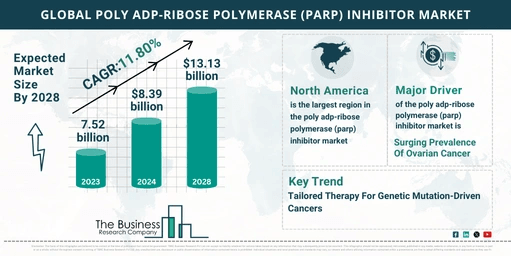
    • 2023 Market Size:The PARP inhibitor market was valued at $7.52 billion in 2023, showcasing strong growth driven by several factors.
    • 2024 Projections:The market is expected to reach $8.39 billion in 2024, growing at a compound annual growth rate (CAGR) of 11.6%.
    • 2028 Forecast:By 2028, the market size is projected to rise to $13.13 billion, with a CAGR of 11.8%.

    Factors Contributing to Market Growth

    • Clinical Research: Ongoing clinical trials and research have enhanced the efficacy and safety profiles of PARP inhibitors, making them more widely accepted.
    • Regulatory Approvals: Increased regulatory approvals have facilitated the entry of new PARP inhibitors into the market.
    • Market Competition: The presence of multiple players has led to innovations and more affordable options.
    • Drug Combinations: Combining PARP inhibitors with other therapies has expanded their application, particularly in oncology.
    • Patient Advocacy: Growing awareness and advocacy for cancer treatment options have bolstered market demand.

    Read More On The Poly ADP-Ribose Polymerase (PARP) Inhibitor Market Report 2024 – https://www.thebusinessresearchcompany.com/report/poly-adp-ribose-polymerase-parp-inhibitor-global-market-report

    Future Growth Drivers

    • Expanded Indications: PARP inhibitors are being explored for a broader range of cancers, beyond just ovarian and breast cancers.
    • Personalized Medicine: Tailored treatments based on genetic mutations are becoming more prevalent, with PARP inhibitors playing a crucial role.
    • Biomarker Development: Advances in biomarkers are enabling better patient selection and treatment outcomes.
    • Health Economics: The cost-effectiveness of PARP inhibitors is improving, making them more accessible.
    • Emerging Markets: The Asia-Pacific region is expected to be the fastest-growing market, driven by increasing healthcare infrastructure and awareness.

    Major Trends Shaping the Market

    • Precision Medicine: The trend towards precision medicine, where treatments are customized to individual genetic profiles, is enhancing the effectiveness of PARP inhibitors.
    • Immunotherapy Advancements: Integrating PARP inhibitors with immunotherapies is opening new avenues for cancer treatment.
    • Targeted Therapies: PARP inhibitors are part of the growing focus on targeted cancer therapies, offering more effective and less toxic treatment options.
    • AI in Drug Discovery: Artificial intelligence is being used to accelerate the discovery and development of new PARP inhibitors.
    • Patient-Centric Healthcare: The shift towards more personalized and patient-centric healthcare models is driving demand for PARP inhibitors.

    Impact of Ovarian Cancer on Market Growth

    • Rising Prevalence: The increasing prevalence of ovarian cancer, projected to affect 4.4 million women globally by 2040, is a significant driver of market growth.
    • Treatment Role: PARP inhibitors are particularly effective in treating ovarian cancer patients with BRCA mutations, leading to enhanced tumor cell death.
    • Mortality Rates: With a projected 51% increase in ovarian cancer-related deaths by 2040, the demand for effective treatments like PARP inhibitors is expected to rise.

    Key Players in the Market

    • Pharmaceutical Giants: Major companies like Pfizer Inc., Johnson & Johnson Services Inc., and AstraZeneca plc are leading the market with innovative PARP inhibitors.
    • Emerging Players: Companies like Zydus Lifesciences Limited are developing generic PARP inhibitors to enhance accessibility.
    • Strategic Acquisitions: Companies like Ariceum Therapeutics GmbH are expanding their portfolios through acquisitions, such as their 2023 purchase of Theragnostics Ltd.

    Conclusion: A Market Poised for Continued Growth

    The PARP inhibitor market is on a strong growth trajectory, driven by advancements in cancer treatment, expanding applications, and the increasing prevalence of cancers like ovarian cancer. With major trends such as precision medicine and AI-driven drug discovery shaping the future, the market is expected to continue its robust expansion, offering new hope for patients worldwide.

    Request for A Sample Of The Global Poly ADP-Ribose Polymerase (PARP) Inhibitor Market Report:
    https://www.thebusinessresearchcompany.com/sample_request?id=15637&type=smp

  • Overview Of The Point-of-Care (POC) Coagulation Testing Devices Market 2024-2033: Growth And Major Players Analysis

    Overview Of The Point-of-Care (POC) Coagulation Testing Devices Market 2024-2033: Growth And Major Players Analysis

    The Business Research Company’s global market reports are now updated with the latest market sizing information for the year 2024 and forecasted to 2033

    Strong Market Growth

    • The POC coagulation testing devices market has seen significant growth, expanding from $1.93 billion in 2023 to $2.12 billion in 2024, representing a 9.6% CAGR.
    • This growth is driven by an increase in chronic and infectious diseases, an aging population, and advancements in portable diagnostic technologies.

    Future Market Projections

    • The market is expected to reach $3.07 billion by 2028 with a 9.8% CAGR.
    • The future expansion will be fueled by the rising demand for rapid and accurate disease diagnosis, the growth of telemedicine, and advancements in diagnostic testing technologies.

    View More On The Point-of-Care (POC) Coagulation Testing Devices Market Report 2024 – https://www.thebusinessresearchcompany.com/report/point-of-care-poc-coagulation-testing-devices-global-market-report

    Key Growth Drivers

    • Prevalence of Blood Clotting Disorders: Increasing cases of hemophilia, von Willebrand disease, and other clotting disorders are pushing the demand for POC coagulation devices.
    • Lifestyle Factors: Smoking, excessive alcohol consumption, and sedentary lifestyles contribute to the rise in blood clotting disorders, highlighting the need for quick diagnostic tools.
    • Technological Advancements: The integration of next-generation sequencing (NGS), AI, and microfluidic technologies into diagnostic devices is transforming the POC testing landscape.

    The Role of Major Industry Players

    • Companies like Roche Diagnostics, Thermo Fisher Scientific, and Abbott Laboratories are at the forefront of innovation in the POC coagulation testing market.
    • Cipla Limited has developed Cippoint, an immunofluorescence-based analyzer, which provides rapid results in 3 to 15 minutes, enhancing diagnostic accuracy and patient care.

    Strategic Mergers and Acquisitions

    • LumiraDx’s merger with CA Healthcare Acquisition Corp. for $3 billion in 2021 underscores the industry’s focus on expanding diagnostic capabilities through strategic partnerships.
    • This merger allows LumiraDx to leverage its innovative platform, which includes over 30 assays covering various health conditions, to offer advanced coagulation testing solutions.

    Technological Innovations Leading the Way

    • Immunofluorescence-Based Quantitative Analysis: This technology is revolutionizing coagulation testing by enabling faster, more accurate diagnosis and management of blood clotting disorders.
    • Artificial Intelligence (AI) and Data Analytics: The use of AI in diagnostics is enhancing the precision and speed of coagulation testing, leading to better patient outcomes.

    Market Segmentation

    • Product Types: The market includes coagulation monitors, consumables, and analyzers.
    • Technology: It spans optical, mechanical, and electrochemical technologies.
    • Methods: Prothrombin time and international normalized ratio (INR) testing are common, alongside viscoelastic coagulation monitoring and other methods.
    • Applications: These devices are used in blood glucose testing, infectious diseases testing, cardiac markers testing, and coagulation testing.
    • End-Users: The primary users are hospitals, diagnostic laboratories, and clinics.

    Conclusion: A Rapidly Evolving Market

    The POC coagulation testing devices market is poised for continued growth, driven by rising demand for rapid diagnostics, technological advancements, and a growing emphasis on preventive healthcare. With key players pushing the boundaries of innovation, the market is set to play a crucial role in the future of healthcare diagnostics.

    Request A Sample Of The Global Point-of-Care (POC) Coagulation Testing Devices Market Report 2024:
    https://www.thebusinessresearchcompany.com/sample_request?id=15636&type=smp

  • Understand How The Pet Fitness Care Market Is Poised To Grow Through 2024-2033

    Understand How The Pet Fitness Care Market Is Poised To Grow Through 2024-2033

    The Business Research Company’s global market reports are now updated with the latest market sizing information for the year 2024 and forecasted to 2033

    The pet fitness care market has witnessed substantial growth in recent years, driven by several factors that have reshaped the industry. From rising pet ownership to innovations in pet wellness, the market is set to expand even further in the coming years. Let’s explore the key trends and growth drivers shaping this dynamic industry.

    Current Market Size and Growth

    • Strong Growth in 2023-2024: The pet fitness care market grew from $6.42 billion in 2023 to an estimated $7.06 billion in 2024, reflecting a robust compound annual growth rate (CAGR) of 10.0%.
    • Key Growth Drivers:
      • Awareness of Pet Obesity: Increased recognition of pet obesity issues has driven demand for fitness solutions.
      • Humanization of Pets: Pets are increasingly seen as family members, fueling demand for their wellness.
      • Rise of Pet Wellness Industry: The broader wellness trend has naturally extended to pets, leading to more specialized products and services.
      • Urbanization and Changing Lifestyles: As urban living spaces increase, the need for structured pet fitness becomes more pressing.
      • Pet Insurance Coverage: More comprehensive pet insurance policies now include fitness and wellness services.
      • Celebrity Influence: Celebrities advocating for pet fitness have made it a mainstream concern.

    Future Market Projections

    • Anticipated Growth by 2028: The market is projected to grow to $10.47 billion by 2028, with a CAGR of 10.3%.
    • Emerging Trends:
      • Innovations in Pet Exercise Equipment: New technologies and products designed for pet fitness are being developed.
      • Research on Animal Behavior: Advances in understanding pet behavior are informing better fitness solutions.
      • Integration of AI and Data Analytics: AI is increasingly being used to customize fitness plans based on individual pet needs.
      • Virtual and Remote Fitness Services: The digitalization trend extends to pet fitness, with virtual training and monitoring services becoming popular.
      • Customized Nutrition and Fitness Plans: Tailored plans for pets ensure a more personalized approach to their health and fitness.

    View More On The Pet Fitness Care Market Report 2024 –
    https://www.thebusinessresearchcompany.com/report/pet-fitness-care-global-market-report

    Impact of Rising Pet Ownership on the Market

    • Growing Pet Ownership: The surge in pet ownership globally is a significant factor driving the market.
      • Reasons for Increase:
        • Companionship: More people are seeking companionship, especially in urban settings.
        • Awareness of Animal Welfare: Greater focus on the ethical treatment of animals has led to more people adopting pets.
        • Health Benefits: Owning pets has been linked to numerous health benefits, encouraging more people to become pet owners.
        • Social Media Influence: Pets often star in social media, making pet ownership more desirable.
        • Better Veterinary Care: Advances in veterinary care make pet ownership more manageable and attractive.

    Innovative Solutions Enhancing Market Growth

    • Focus on Innovation: Companies are constantly innovating to meet the demands of modern pet owners.
      • Pet Location and Activity Trackers: These devices are increasingly popular, offering real-time tracking and fitness monitoring.
      • Example – Pawfit 3: Launched in April 2024, the Pawfit 3 is a compact GPS pet tracker that monitors both location and activity. It features 4G tracking technology, personalized fitness goals, and is waterproof, making it ideal for outdoor pets.
      • Benefits of Trackers: They offer peace of mind for owners and help in maintaining the pet’s health by tracking activity levels.

    Strategic Acquisitions in the Market

    • Nestlé India Acquires Purina Petcare: In July 2022, Nestlé India acquired Purina Petcare for $15.95 million, strengthening its position in India’s growing pet care market.
      • Strategic Alignment: The acquisition aligns with Nestlé’s strategy to focus on higher-margin products and explore new growth opportunities in the premium pet care segment.

    Market Segmentation and Regional Insights

    • Segmented Market:
      • Solutions: Products or equipment, software, and services.
      • Pet Types: Dogs, cats, and other pets.
      • Distribution Channels: Pet specialty stores, online platforms, and veterinary clinics.
    • Regional Leadership: North America was the largest region in the pet fitness care market in 2023, reflecting its mature market and high pet ownership rates.

    Conclusion

    The pet fitness care market is poised for significant growth, driven by rising pet ownership, innovative solutions, and strategic industry moves. As more people recognize the importance of their pets’ health, the demand for fitness care products and services will continue to soar, making this a vibrant and expanding sector.

    Request A Sample Of The Global Pet Fitness Care Market Report 2024:
    https://www.thebusinessresearchcompany.com/sample_request?id=15634&type=smp

  • Personalized Retail Nutrition And Wellness Market Growth Analysis Till 2033 By The Business Research Company

    Personalized Retail Nutrition And Wellness Market Growth Analysis Till 2033 By The Business Research Company

    The Business Research Company’s market reports offer an in-depth analysis on the market’s growth potential, major drivers, key trends and more.

    Rapid Growth and Market Size Expansion

    • Market Size Growth:
      • 2023: $3.50 billion
      • 2024: $4.15 billion
      • Growth Rate: 18.3% CAGR
    • Future Projections:
      • 2028: $8.19 billion
      • Growth Rate: 18.6% CAGR
    • Growth Drivers:
      • Rise in chronic diseases
      • Advances in nutritional science
      • Educational campaigns and awareness programs
      • Increased health and wellness consciousness
      • Focus on individualized healthcare

    Factors Fueling Future Growth

    • E-commerce and Retail Channels:
      • Expansion in digital platforms
      • Increased accessibility and convenience for consumers
    • Functional Foods and Supplements:
      • Growing demand for health-boosting products
      • Customized supplements and meal delivery services
    • Digital Health Platforms:
      • Integration of data science and AI
      • Use of biosensors and wearables for personalized insights
      • Innovative solutions for individualized health management

    Read More On The Personalized Retail Nutrition And Wellness Market Report 2024 – https://www.thebusinessresearchcompany.com/report/personalized-retail-nutrition-and-wellness-global-market-report

    The Impact of a Healthier Lifestyle

    • Adoption of Healthier Lifestyles:
      • Increasing awareness of nutrition and wellness
      • Growing trend towards preventive healthcare
      • Need for conscious choices in improving overall well-being
    • Personalized Nutrition’s Role:
      • Customized dietary recommendations
      • Alignment with individual health goals and nutritional needs
      • Rising consumer interest, as seen in the 2022 survey by the International Food Information Council

    Key Players in the Market

    • Major Companies:
      • Archer Daniels Midland Company
      • Danone S.A.
      • General Mills Inc.
      • Cargill Incorporated
      • Herbalife International of America Inc.
      • Isagenix International LLC
      • And many others
    • Emerging Trends:
      • Advanced digital platforms for tailored nutrition guidance
      • Enhanced user engagement through data-driven strategies
      • Significant corporate developments, such as acquisitions and platform enhancements

    Enhancement of Advanced Platforms with Nutrition Insights

    • Technological Innovations:
      • Digital platforms with new insight tools
      • Personalized dietary recommendations based on data analysis
    • Case Study:
      • Albertsons Companies, Inc.:
        • Launched Sincerely Health platform with nutrition insights tool
        • Measures grocery purchases against USDA’s MyPlate guidelines
        • Users can set goals, earn rewards, and manage wellness

    Viome Life Sciences’ Strategic Acquisition of Naring Health

    • Expansion of Personalized Health Offerings:
      • Acquisition in November 2023 of Naring Health
      • Focus on microbiome analysis, food science, and proteomics
      • Integration of resources to enhance personalized health solutions

    Conclusion: A Market Poised for Transformation

    The personalized retail nutrition and wellness market is on a trajectory of significant growth, driven by technological innovations, consumer demand for health-conscious products, and the integration of advanced data science and AI. With key players continuing to innovate and expand, the market is set to evolve rapidly, offering increasingly customized and effective solutions for consumers worldwide.

    Request for A Sample Of The Global Personalized Retail Nutrition And Wellness Market Report:
    https://www.thebusinessresearchcompany.com/sample_request?id=15633&type=smp

  • Overview Of The Pen Needles Market 2024-2033: Growth And Major Players Analysis

    Overview Of The Pen Needles Market 2024-2033: Growth And Major Players Analysis

    The Business Research Company’s global market reports are now updated with the latest market sizing information for the year 2024 and forecasted to 2033

    Market Size and Growth

    • Rapid Growth:The pen needles market is expanding quickly, with a growth from $2.17 billion in 2023 to $2.42 billion in 2024.
    • Strong CAGR:The compound annual growth rate (CAGR) is 11.5%, signaling a robust upward trend.
    • Key Drivers:This growth is fueled by the invention of insulin pens, advancements in miniaturization technology, and a focus on patient convenience. Enhanced needle designs and safety features have also played a crucial role.

    Future Market Projections

    • Continued Expansion: The market size is expected to reach $3.77 billion by 2028, with a CAGR of 11.7%.
    • Innovation Focus: Future growth will be driven by compatibility with various insulin pens, customization options, and material innovations.
    • Digital Integration: The integration of pen needles with digital health solutions and adherence to regulatory guidelines will also contribute to market expansion.

    View More On The Pen Needles Market Report 2024 –
    https://www.thebusinessresearchcompany.com/report/pen-needles-global-market-report

    Rising Prevalence of Diabetes

    • Global Health Issue: Diabetes is becoming increasingly common due to sedentary lifestyles, unhealthy diets, and urbanization.
    • Aging Population: The aging global population, combined with genetic predisposition and rising obesity rates, exacerbates the issue.
    • Need for Pen Needles: Pen needles are vital for diabetes management, offering precise insulin delivery and improved glycemic control. Their role is crucial in enhancing patient compliance.
    • Staggering Projections: The number of individuals with diabetes is expected to rise to 643 million by 2030 and 783 million by 2045, driving further demand for pen needles.

    Technological Advancements in Pen Needles

    • Innovation in Home-Use Pen Needles: Companies are focusing on advanced products, such as home-use pen needles, to maximize revenue.
    • Owen Mumford’s Unifine Ultra: An example of innovation is Owen Mumford’s Unifine Ultra, which features a needle lock-out mechanism, ergonomic design, and a range of sizes for enhanced comfort and compliance.
    • Patient-Centered Design: These advancements are aimed at making the injection process safer, more convenient, and more comfortable for users.

    Strategic Acquisitions in the Market

    • Gilde Healthcare’s Acquisition of EUROPIN s.r.o.: In February 2022, Gilde Healthcare Partners strengthened its position in diabetic care by acquiring EUROPIN s.r.o., a manufacturer of customized pen cannulas and lancet needles.
    • Market Impact: This acquisition allows Gilde Healthcare to form an integrated contract manufacturer for tailor-made cannulas, further solidifying its presence in the pen needles market.

    Market Segmentation

    • By Type: The market is segmented into standard pen needles and safety pen needles.
    • By Needle Length: Options include short, medium, and long-length pen needles.
    • By Therapy: The market caters to insulin, glucagon-like-peptide-1 (GLP-1), and growth hormone therapies.
    • Mode of Purchase: Pen needles can be purchased through retail and non-retail channels.
    • End Users: Major end users include hospitals, clinics, home healthcare, and other healthcare providers.

    Regional Market Insights

    • North America: The largest region in the pen needles market in 2023, driven by advanced healthcare infrastructure and high diabetes prevalence.
    • Asia-Pacific: Expected to be the fastest-growing region, thanks to rising diabetes cases and improving healthcare facilities.

    Conclusion

    The pen needles market is on a significant growth trajectory, driven by the increasing prevalence of diabetes and continuous technological advancements. With a strong focus on innovation and strategic acquisitions, major players in the market are well-positioned to capitalize on the expanding demand for pen needles. As the market evolves, attention to patient needs, regulatory compliance, and regional market dynamics will be key to sustained growth.

    Request A Sample Of The Global Pen Needles Market Report 2024:
    https://www.thebusinessresearchcompany.com/sample_request?id=15632&type=smp