Year: 2024

  • Future Growth Forecast For The Clear Aligners Global Market 2024-2033

    Future Growth Forecast For The Clear Aligners Global Market 2024-2033

    The Business Research Company’s global market reports provide comprehensive analysis on the various markets in 27 industries across 60 geographies.

    Embracing Exponential Growth: A Look at the Market Statistics

    • The clear aligners market has witnessed remarkable growth in recent years.
    • From $3.83 billion in 2023, it is projected to reach $5.2 billion in 2024, boasting a CAGR of 35.8%.
    • Factors contributing to this surge include the prevalence of malocclusions, burgeoning demand in emerging markets, and supportive government initiatives.

    Clear Aligners Market On The Rise Due To Increasing Prevalence Of Dental Malocclusion

    • Malocclusion, characterized by misalignment of teeth, is a prevalent dental disorder worldwide.
    • Global reports from Star Orthodontics indicate nearly 56% of people will have malocclusion, with Africa showing an 81% incidence.
    • Adoption of clear aligners for teeth straightening is escalating, amplifying market growth.
    • Major players in the clear aligners market include Align Technology Inc., Henry Schein Inc., and Dentsply Sirona, among others.

    Revolutionizing Clear Aligners With Dental 3D Printing Technology

    • Dental 3D printing is revolutionizing clear aligner manufacturing, enabling cost-effective design and production.
    • It finds extensive applications in various dental procedures, including clear aligners, dentures, and surgical guides.
    • Partnerships like Candid and Carbon’s collaboration demonstrate the integration of advanced printing technologies in clear aligner production.

    View More On The Clear Aligners Market Report 2024 – https://www.thebusinessresearchcompany.com/report/clear-aligners-global-market-report

    Spark Clear Aligners Collaborates With K-Pop Star Mark Tuan For Gifting Smiles Campaign

    • Spark Clear Aligners’ partnership with K-pop sensation Mark Tuan aims to spread smiles among his fans.
    • Under the ‘Gifting Smiles’ campaign, the collaboration seeks to raise awareness about the significance of a confident smile.

    Segmentation Insights and Regional Dominance

    • The clear aligners market segmentation includes product types like soft, medium, and hard aligners.
    • Age group segmentation comprises children/teenagers and adults, while material types range from polyurethane plastic to PVC.
    • End-users primarily include hospitals, dental, and orthodontic clinics.
    • North America emerged as the leading region in the clear aligners market in 2023, underscoring its market dominance.

    Looking Ahead: Forecasts and Trends

    • The clear aligners market is poised for significant expansion, with a projected value of $15.39 billion by 2028.
    • Technological advancements, such as AI integration and digital impressions, will shape market dynamics.
    • Trends like dental 3D printing and strategic partnerships are set to redefine the industry landscape.
    • Mergers, acquisitions, and collaborations will play a pivotal role in shaping the competitive landscape.

    Conclusion: Navigating the Clear Aligners Landscape

    The clear aligners market is experiencing unprecedented growth, driven by factors like the rising prevalence of malocclusion and technological advancements. As the market continues to evolve, embracing innovation and strategic collaborations will be key to unlocking its full potential. With a forecasted surge in demand and a myriad of emerging trends, the journey ahead promises exciting opportunities for stakeholders across the dental industry.

    Request A Sample Of The Global Clear Aligners Market Report 2024:
    https://www.thebusinessresearchcompany.com/sample_request?id=3271&type=smp

  • Top 5 Insights From The Cell and Gene Therapy Market Report 2024

    Top 5 Insights From The Cell and Gene Therapy Market Report 2024

    The Business Research Company’s global market reports are now updated with the latest market sizing information for the year 2024 and forecasted to 2033

    According to The Business Research Company’s Cell and Gene Therapy Global Market Report 2024, the cell and gene therapy market is expected to show promising growth in the forecast period.

    The cell & gene therapy market size has witnessed exponential growth in recent years, with significant projections for the future.

    • Current Market Trends:
      • Market size grew from $13.81 billion in 2023 to $17.31 billion in 2024 at a CAGR of 25.3%.
      • Key drivers include increased investments, R&D growth, and strong economic conditions in emerging markets.
    • Future Projections:
      • Expected to reach $39.74 billion in 2028, exhibiting a CAGR of 23.1%.
      • Factors driving future growth include rising prevalence of cancer and chronic diseases, aging population, and increased healthcare spending.

    Emerging Trends and Focus Areas

    In the forecast period, several trends are expected to shape the landscape of the cell & gene therapy market.

    • Advanced Therapies:
      • Focus on advanced therapies such as CAR T-cell therapy.
      • Concentration on research initiatives and funding acquisition.
    • Strategic Collaborations:
      • Collaborations to integrate advanced technologies.
      • Development of gene editing tools, especially CRISPR.
    • M&A Activities:
      • Partnering or acquiring competitor companies.
      • Increasing pipeline studies for cell and gene therapies.
    • Infrastructure Investment:
      • Expansion of manufacturing facilities.

    View More On The Cell and Gene Therapy Market Report 2024 – https://www.thebusinessresearchcompany.com/report/cell-and-genes-therapy-global-market-report

    Strategic Investments And Industry Consolidation Drive Growth

    Steady investment and consolidation have played a significant role in driving growth in the cell and gene therapy market.

    • Investment Initiatives:
      • Pfizer’s $68.5 million investment in a gene therapy facility in North Carolina.
      • Expansion of production capacity contributing to market growth.
    • Key Players:
      • Major companies like Biogen Inc., Novartis AG, and Pfizer are driving industry growth.
      • Involvement of 16 out of the top 20 biopharmaceutical companies in CGT products.

    Impact of CAR T-Cell Therapy

    CAR T-cell therapy is a pivotal player in shaping the cell and gene therapy market.

    • Technology Overview:
      • CAR T-cell therapy involves genetic engineering of T cells to target cancer cells.
      • Recent FDA approval for therapies like Breyanzi underscores its significance.

    Novartis’ Acquisition of Gyroscope Therapeutics

    Novartis expands its gene therapy portfolio with strategic acquisitions.

    • Acquisition Details:
      • Novartis AG’s $800 million acquisition of Gyroscope Therapeutics.
      • Addition of GT005, an experimental gene therapy for eye diseases, to Novartis’ portfolio.

    Market Segmentation and Regional Insights

    Understanding the segmentation and regional dynamics of the cell and gene therapy market is crucial.

    • Segmentation Overview:
      • Product segmentation: Cell Therapy, Gene Therapy.
      • Application segmentation: Oncology, Neurological Disorders, Others.
      • End-user segmentation: Hospitals, Ambulatory Surgical Centers, etc.
    • Regional Insights:
      • North America leads the market in 2023, reflecting the region’s significant contribution to industry growth.

    In conclusion, the cell & gene therapy market is witnessing unprecedented growth, driven by strategic investments, technological advancements, and evolving treatment paradigms. With emerging trends and innovations, the future of this market looks promising, offering new avenues for research, development, and patient care.

    Request A Sample Of The Global Cell and Gene Therapy Market Report 2024:
    https://www.thebusinessresearchcompany.com/sample_request?id=3472&type=smp

  • Overview Of The CAR-T Therapy Market 2024-2033: Growth And Major Players Analysis

    Overview Of The CAR-T Therapy Market 2024-2033: Growth And Major Players Analysis

    The Business Research Company’s global market reports are now updated with the latest market sizing information for the year 2024 and forecasted to 2033

    The CAR-T therapy market has experienced remarkable growth in recent years, with significant projections for the future. Let’s delve into the key drivers and trends shaping this burgeoning sector.

    Market Growth Overview:

    • Rapid growth projected from $2.15 billion in 2023 to $2.55 billion in 2024.
    • Compound annual growth rate (CAGR) of 19.1% attributed to healthcare expenditure and drug discovery advances.
    • Further growth expected, reaching $4.74 billion in 2028, with a CAGR of 16.7%.

    Factors Driving Growth:

    1. Increase in Blood Cancer Incidence:
      • Rising blood cancer rates propel demand for CAR-T therapy.
    2. Rise in Healthcare Expenditure:
      • Higher healthcare spending supports accessibility to advanced treatments.
    3. Strong Pipeline of Drugs:
      • Ongoing research contributes to the development of innovative CAR-T therapies.
    4. Focus on CAR-T Therapy:
      • Shift towards personalized medicine fuels interest and investment in CAR-T therapy.

    View More On The CAR-T Therapy Market Report 2024 – https://www.thebusinessresearchcompany.com/report/car-t-therapy-global-market-report

    Major Trends in Forecast Period:

    • R&D focus on remodeled CAR-T therapy to mitigate neurological side effects.
    • Development of off-the-shelf allogeneic CAR-T therapy for broader application.
    • Advancements in manufacturing next-generation CAR T cells for enhanced glioma treatment.
    • Integration of AI and machine learning to optimize CAR-T therapy.
    • Strategic collaborations and acquisitions to foster innovation and portfolio expansion.

    Financial Support Driving Growth:

    • Organizations provide funding for CAR-T therapy research and patient treatment.
    • Example: University of California San Diego granted $4.1 million for CAR-T cell therapy development.
    • Financial backing accelerates market growth and innovation.

    Key Players:

    • Leading companies include Gilead Sciences, Novartis AG, and Biocon, among others.
    • Diverse range of companies contributing to CAR-T therapy advancements.

    Innovation in CAR-T Therapy Market:

    • Introduction of BioCentriq by Terumo Blood and Cell Technologies.
    • BioCentriq facilitates cell and gene therapy development, enhancing patient care.
    • Collaboration between Terumo BCT and BioCentriq demonstrates efficient CAR-T cell manufacturing.

    Astellas’ Strategic Acquisition:

    • Astellas Pharma’s acquisition of Iveric Bio for $5.9 billion in July 2023.
    • Strengthens Astellas’ position in ocular healthcare, particularly for blinding retinal illnesses.
    • Acquisition underscores strategic moves within the CAR-T therapy market.

    Market Segmentation:

    • CAR-T therapy market segmented by type, target antigen, and application.
    • Types include monotherapy and combination therapy, targeting antigens like CD19 and CD22.
    • Applications range from acute lymphoblastic leukemia to multiple myeloma.

    Regional Analysis:

    • North America emerged as the largest region for CAR-T therapy market in 2023.

    Conclusion:

    The CAR-T therapy market is poised for significant expansion driven by increasing healthcare expenditure, robust R&D efforts, and a focus on personalized medicine. Innovations and strategic collaborations are shaping the landscape, promising improved treatments and outcomes for patients battling cancer and other diseases. As the market continues to evolve, stakeholders must navigate dynamic trends and seize opportunities for growth and advancement.

    Request A Sample Of The Global CAR-T Therapy Market Report 2024:
    https://www.thebusinessresearchcompany.com/sample_request?id=6670&type=smp

  • Cancer Monoclonal Antibodies Market Growth Analysis Till 2033 By The Business Research Company

    Cancer Monoclonal Antibodies Market Growth Analysis Till 2033 By The Business Research Company

    The Business Research Company’s market reports offer an in-depth analysis on the market’s growth potential, major drivers, key trends and more.

    Exploring the Current and Projected Growth

    The cancer monoclonal antibodies market has experienced significant growth in recent years and is poised for further expansion in the coming years. Let’s delve into the key factors driving this growth and the anticipated trends shaping the market’s trajectory.

    Current Market Dynamics and Projections

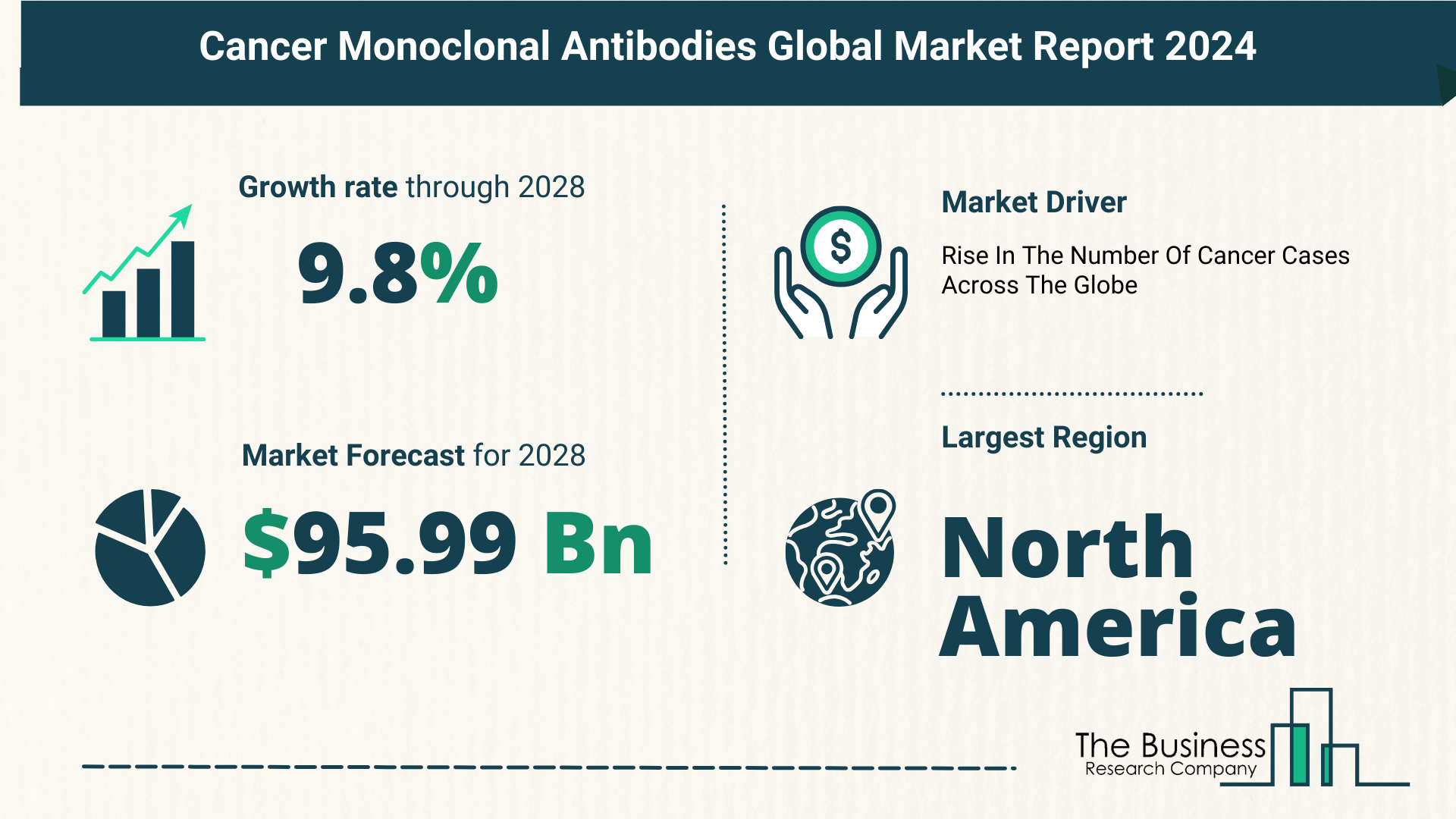
    • The market size surged from $59.98 billion in 2023 to $66.1 billion in 2024, marking a notable compound annual growth rate (CAGR) of 10.2%.
    • Projected growth anticipates a climb to $95.99 billion by 2028, with a CAGR of 9.8%, fueled by factors such as increasing cancer prevalence and expanding global access to healthcare.

    Drivers of Market Growth

    Cancer Incidence Rates

    The rise in cancer cases globally, including common types like lung, prostate, bowel, and breast cancer, is a significant driver. The surge in cancer diagnoses underscores the need for effective treatments, thus boosting demand for monoclonal antibodies.

    Demographic Trends

    Factors such as an aging population contribute to the growth of the cancer monoclonal antibodies market. With increasing longevity, the prevalence of cancer among the elderly rises, necessitating advanced treatment options.

    Technological Advancements

    Innovations in technology play a pivotal role in driving market growth. From product innovation to AI-powered research, technological advancements streamline R&D efforts, leading to the development of more effective therapies.

    Read More On The Cancer Monoclonal Antibodies Market Report 2024 – https://www.thebusinessresearchcompany.com/report/cancer-monoclonal-antibodie-global-market-report

    Trends Shaping the Future

    Product Innovation Through Collaboration

    Strategic collaborations among companies are fostering product innovation. These partnerships enable companies to leverage each other’s expertise, leading to the development of breakthrough therapies. For instance, BioNTech SE’s collaboration with OncoC4, Inc., aims to jointly develop and market innovative checkpoint antibodies for cancer treatment.

    Expansion of Immunotherapy Portfolios

    Strategic acquisitions, such as Pfizer Inc.’s acquisition of Trillium Therapeutics, bolster companies’ immunotherapy portfolios. This acquisition enhances Pfizer’s ability to combat hematological malignancies and solid tumors, reflecting the industry’s focus on expanding treatment options.

    Segmentation and Regional Analysis

    Segmentation

    • Monoclonal Antibody Therapies: Avastin, Herceptin, Keytruda, Opdivo, Darzalex, Perjeta, Others
    • Application: Breast Cancer, Blood Cancer, Lung Cancer, Brain Tumor, Colorectal Cancer, Cervical Cancer, Gastric Cancer, Others
    • End-User: Hospitals, Research Laboratories, Others

    Regional Analysis

    North America emerged as the largest region in the cancer monoclonal antibodies market in 2023. This underscores the region’s significant contribution to market growth and innovation.

    Conclusion

    The cancer monoclonal antibodies market is witnessing robust growth, driven by rising cancer incidence rates, demographic shifts, and technological advancements. Collaboration and innovation will continue to be key strategies for companies seeking to address the evolving needs of patients and healthcare systems worldwide. As the market expands, it holds promise for delivering more effective and personalized treatments, ultimately improving outcomes for cancer patients globally.

    Request for A Sample Of The Global Cancer Monoclonal Antibodies Market Report:
    https://www.thebusinessresearchcompany.com/sample_request?id=3451&type=smp

  • Bi-Specific MAbS Market Report 2024: Market Size, Drivers, And Trends

    Bi-Specific MAbS Market Report 2024: Market Size, Drivers, And Trends

    The Business Research Company’s global market reports are now updated with the latest market sizing information for the year 2024 and forecasted to 2033

    Introduction: The Growth Trajectory

    • Rapid expansion: From $8.81 billion in 2023 to $10.25 billion in 2024.
    • Projected growth: Expected to reach $16.9 billion by 2028 at a CAGR of 13.3%.

    Factors Driving Growth

    1. Increasing Prevalence of Cancer and Chronic Diseases
      • Bispecific MAbs address multiple diseases.
      • Cancer prevalence: A significant driver.
      • Impact of chronic diseases on demand.
    2. Technological Advancements and Innovation
      • Focus on product innovation.
      • Integration of artificial intelligence.
      • Investment in targeted and combination therapy.

    View More On The Bi-Specific MAbS Market Report 2024 – https://www.thebusinessresearchcompany.com/report/bi-specific-mab-global-market-report

    Impact of Increasing Cancer Prevalence on the Bi-Specific MAbs Market

    • Bispecific MAbs crucial for treating cancer.
    • Enhanced effectiveness over monoclonal antibodies.
    • Rising demand driven by cancer-related deaths.

    Strategic Collaborations and Partnerships Fuel Growth

    • Importance of strategic initiatives.
    • Collaborations expand product portfolios and geographical presence.
    • Case study: Gilead Sciences and MacroGenics partnership.

    Takeda’s Strategic Acquisition: Expanding Bispecific Antibody Technology

    • Acquisition of Maverick Therapeutics.
    • Enhancing T-cell engager platform.
    • Accelerating development of innovative bispecific immunotherapies.

    Segmentation of the Bi-Specific MAbs Market

    1. By Type
      • Catumaxomab (Removab)
      • Blinatumomab
      • Duligotumab
      • Emicizumab
      • Amivantamab
      • Faricimab
      • Teclistamab
    2. By Product Type
      • In Vivo
      • In Vitro
    3. By Indication
      • Cancer
      • Hemophilia A
      • Ophthalmic
    4. By End Use
      • Hospitals
      • Research Institutes
      • Other End-Users

    North America: Leading the Charge

    • Dominance in the bi-specific MAbs market.
    • Reflects the region’s focus on healthcare and innovation.

    Conclusion: Navigating Towards a Promising Future
    The bi-specific MAbs market’s journey exemplifies the synergy between innovation, strategic partnerships, and addressing critical healthcare needs. As the market continues to expand, fueled by technological advancements and rising disease burdens, it holds the promise of transforming patient care and outcomes on a global scale.

    Request A Sample Of The Global Bi-Specific MAbS Market Report 2024:
    https://www.thebusinessresearchcompany.com/sample_request?id=3390&type=smp

  • Global Biosimilars Market Report 2024 – Top Market Trends And Opportunities

    Global Biosimilars Market Report 2024 – Top Market Trends And Opportunities

    The Business Research Company’s market reports offer an in-depth analysis on the market’s growth potential, major drivers, key trends and more.

    Introduction

    • The biosimilars market’s explosive growth trajectory underscores its increasing importance in the pharmaceutical landscape.
    • A forecast of market size and growth indicates a promising future, driven by various factors.

    The Current Landscape and Growth Drivers

    • The biosimilars market witnessed robust growth from 2023 to 2024, expanding from $15.86 billion to $18.85 billion.
    • Factors fueling this growth include:
      • Increase in cancer prevalence.
      • Strong economic growth in emerging markets.
      • Rise in pharmaceutical R&D expenditure.
      • Expanded healthcare expenditure.
      • Government initiatives promoting biosimilar adoption.
      • Expanding drug pipelines and patent expirations.

    Future Projections and Market Dynamics

    • Forecasts predict further expansion, with the market reaching $35.81 billion by 2028, boasting a CAGR of 17.4%.
    • Projected growth drivers include:
      • Escalating cancer prevalence.
      • Growing demand for G-CSF prophylaxis.
      • Increased healthcare spending.
      • Emerging economies’ potential.
      • Technological advancements.
      • Aging population and enhanced healthcare accessibility.

    Read More On The Biosimilars Market Report 2024 – https://www.thebusinessresearchcompany.com/report/biosimilar-global-market-report

    Rising Prevalence of Chronic Diseases Sparks Growth in the Biosimilars Market

    • Chronic diseases like arthritis, asthma, and cancer drive demand for biosimilars.
    • Lifestyle factors contribute to disease prevalence.
    • Biosimilars play a crucial role in activating the immune system against cancer cells.
    • Global projections indicate a significant burden of chronic diseases, propelling biosimilar demand.

    Innovative Product Launches Enhance Biosimilars Market

    • Major players focus on innovation for competitive advantage.
    • Examples like AMJEVITA showcase breakthroughs, offering affordable alternatives.
    • Innovation drives accessibility and affordability, crucial for market expansion.

    Biocon Biologics Ltd. Acquisition of Viatris Inc. Biosimilars Business

    • Strategic acquisitions strengthen market positions.
    • Biocon Biologics’ acquisition of Viatris Inc.’s biosimilars business for $3 billion illustrates this trend.
    • Enhanced commercial capabilities and global market access drive growth and expansion.

    Market Segmentation

    • The biosimilars market is segmented based on:
      1. Type: Including monoclonal antibodies, insulin, erythropoietin, and more.
      2. Product: Covering recombinant non-glycosylated proteins and glycosylated proteins.
      3. Application: Encompassing oncology, chronic diseases, growth hormone deficiency, infectious diseases, and others.

    Regional Insights

    • North America dominated the biosimilars market in 2023.
    • The Middle East is projected to experience the fastest growth, indicating shifting market dynamics.

    Conclusion

    • The biosimilars market’s rapid growth trajectory reflects its pivotal role in modern healthcare.
    • Continued innovation, strategic partnerships, and market expansions are vital for sustained growth.
    • As demand surges and technology advances, the biosimilars market is poised for further expansion, offering hope for improved healthcare accessibility and affordability globally.

    Request for A Sample Of The Global Biosimilars Market Report:
    https://www.thebusinessresearchcompany.com/sample_request?id=2807&type=smp

  • Key Insights On The Biopsy Devices Market 2024 – Size, Driver, And Major Players

    Key Insights On The Biopsy Devices Market 2024 – Size, Driver, And Major Players

    The Business Research Company’s global market reports are now updated with the latest market sizing information for the year 2024 and forecasted to 2033

    As per The Business Research Company’s Biopsy Devices Global Market Report 2024, the biopsy devices market is expected to show significant growth in the forecast period.

    Unlocking Growth Potential in Biopsy Devices Market
    The biopsy devices market has experienced robust growth in recent years, with the market size reaching $2.87 billion in 2023. Forecasts indicate further expansion, projecting a rise to $3.11 billion in 2024, showcasing a compound annual growth rate (CAGR) of 8.4%. This growth trajectory is set to continue, with estimates placing the market at $4.29 billion by 2028, attributing the surge to various factors.

    Factors Driving Growth

    • Emerging Markets Expansion
    • Healthcare Infrastructure Advancements
    • Growing Elderly Population

    Projected Growth Drivers

    • Government Healthcare Investments
    • Increasing Cancer Cases
    • Rise in Healthcare Expenditure

    Key Trends Shaping the Market

    • Technological Advancements
    • Launch of Fully Automatic Biopsy Systems
    • Product Innovations
    • Development of Robot-Assisted Biopsy Systems
    • Partnerships and Collaborations
    • Rising Investments

    View More On The Biopsy Devices Market Report 2024 – https://www.thebusinessresearchcompany.com/report/biopsy-devices-global-market-report

    Rising Cancer Incidence Drives Robust Growth In The Biopsy Devices Market
    The escalation in cancer cases has significantly contributed to the burgeoning biopsy devices market. Biopsies remain a fundamental diagnostic tool for identifying cancerous cells, with recent statistics underscoring the urgency:

    • American Cancer Society estimates of new cancer cases in the United States.
    • Canadian Medical Association Journal projections for cancer cases in Canada.

    Market Leaders and Innovations

    • Becton Dickinson and Company (BD)
    • Hologic, Inc.
    • Danaher Corporation
    • Boston Scientific Corporation
    • Olympus Corporation
    • Cook Medical
    • Medtronic Inc.
    • Cardinal Health
    • And many more…

    Innovative Quick-Core Auto Biopsy System Enhances Market Prospects For Leading Companies
    Market leaders are actively innovating to capitalize on growth opportunities. Notably, the development of the Quick-Core Auto Biopsy System by IZI Medical Products LLC exemplifies this trend:

    • Launch of Quick-Core Auto Biopsy System for soft tissue biopsy.
    • Enhancing reliability, precision, and quality of biopsy procedures.

    Quest Diagnostics Acquires Haystack Oncology To Advance Blood-Based Cancer Testing Services
    In a strategic move, Quest Diagnostics acquired Haystack Oncology, aiming to revolutionize blood-based cancer testing services:

    • Integration of Haystack Oncology’s MRD technology.
    • Development of novel blood-based clinical laboratory services.

    Segmentation of the Biopsy Devices Market

    1. By Product Type:
      • Needle-Based Biopsy Guns
      • Biopsy Forceps
      • Biopsy Guidance Systems
      • Biopsy Needles
      • Other Products
    2. By Image Guiding Technology:
      • MRI-Guided Biopsy
      • Stereotactic-Guided Biopsy
      • Ultrasound-Guided Biopsy
      • Other Imaging Technologies
    3. By Application:
      • Breast Biopsy
      • Gynecological Biopsy
      • Prostate Biopsy
      • Blood Cancers Biopsy
      • Skin Biopsy
      • Kidney Biopsy
      • Gastroenterology Biopsy
      • Other Applications
    4. By End User:
      • Diagnostics And Imaging Centers
      • Hospitals
      • Other End Users

    Market Dynamics in North America
    North America emerged as the largest region in the biopsy devices market in 2023, reflecting the region’s advanced healthcare infrastructure and significant investments.

    Conclusion
    The biopsy devices market presents a landscape of dynamic growth driven by technological advancements, rising cancer incidences, and strategic acquisitions. With a focus on innovation and strategic partnerships, market players are poised to unlock new avenues of growth, revolutionizing cancer diagnosis and treatment globally.

    Request A Sample Of The Global Biopsy Devices Market Report 2024:
    https://www.thebusinessresearchcompany.com/sample_request?id=3283&type=smp

  • 5 Key Insights On The Breast Imaging Devices Market 2024

    5 Key Insights On The Breast Imaging Devices Market 2024

    The Business Research Company’s global market reports are now updated with the latest market sizing information for the year 2024 and forecasted to 2033

    As per The Business Research Company’s Breast Imaging Devices Global Market Report 2024, the breast imaging devices market is expected to show significant growth in the forecast period.

    Introduction

    • The breast imaging devices market has witnessed robust growth in recent years.
    • Projected growth from $4.53 billion in 2023 to $4.76 billion in 2024 at a CAGR of 5.1%.

    Anticipating Continued Expansion

    • Forecasts suggest a climb to $5.9 billion by 2028 with a CAGR of 5.5%.
    • Driven by increased awareness and investment in breast disease detection.

    Rising Prevalence of Breast Cancer

    • Hormonal imbalances, menopause, and reproductive disorders elevate breast cancer risk.
    • Breast cancer tops cancer-related deaths among women globally.

    Key Players in the Market

    • Siemens Healthineers AG, Hologic, Inc., GE Healthcare, and more dominate the market.

    View More On The Breast Imaging Devices Market Report 2024 – https://www.thebusinessresearchcompany.com/report/breast-imaging-devices-global-market-report

    Technological Advancements Revolutionize Diagnosis

    • Launch of advanced products and portfolio expansions define market trends.
    • Siemens Healthiness’ AI-powered Mammovista Smart enhances image reading processes.

    Smart Breast’s Acquisition of GE Healthcare

    • Acquisition strengthens Smart Breast’s position in breast cancer screening.
    • GE Healthcare’s Discovery NM750b molecular breast imaging assets bolster Smart Breast’s offerings.

    Market Segmentation

    1. By Product Type
      • Tomosynthesis
      • Breast Ultrasound
      • Breast MRI
      • Mammography
      • Nuclear Imaging
      • Other Product Types
    2. By Technology
      • Ionizing
      • Non-Ionizing
    3. By End User
      • Hospitals and Clinics
      • Breast Care Centers
      • Diagnostic Imaging Centers

    Dominance of North America

    • North America led the breast imaging devices market in 2023.

    Conclusion

    • The breast imaging devices market is poised for significant growth, fueled by technological advancements and rising awareness.
    • Investments in early detection and treatment will continue to drive market expansion, offering hope for improved breast healthcare worldwide.

    Request A Sample Of The Global Breast Imaging Devices Market Report 2024:
    https://www.thebusinessresearchcompany.com/sample_request?id=3291&type=smp

  • Comprehensive Analysis On Size, Share, And Drivers Of The Brain Tumor Drugs Market

    Comprehensive Analysis On Size, Share, And Drivers Of The Brain Tumor Drugs Market

    The Business Research Company’s global market reports provide comprehensive analysis on the various markets in 27 industries across 60 geographies.

    The brain tumor drugs market has witnessed robust growth in recent years, with substantial projections for the future. Understanding the driving forces behind this expansion and the trends shaping its trajectory is essential for stakeholders in the healthcare industry.

    Steady Expansion:

    • Market size surged from $3.55 billion in 2023 to $3.81 billion in 2024.
    • Compound Annual Growth Rate (CAGR) of 7.3% from 2023 to 2024.

    Driving Forces Behind Growth:

    • Increasing prevalence of neurological disorders.
    • Rise in healthcare expenditure.
    • Surge in approvals for oncology drugs.
    • Growth in pharmaceutical R&D spending.
    • Advances in cancer drug discovery.

    Forecasted Growth:

    • Projected to reach $5.01 billion by 2028.
    • Anticipated CAGR of 7.1% from 2024 to 2028.

    View More On The Brain Tumor Drugs Market Report 2024 – https://www.thebusinessresearchcompany.com/report/brain-tumor-drugs-global-market-report

    Factors Fueling Future Growth:

    • Rise in cancer incidence rates.
    • Growing healthcare spending.
    • Aging population demographics.
    • Strong pipeline of drugs.
    • Revised FDA regulations favoring biologics.

    Emerging Trends:

    1. Combination Therapies: Investment in combined drug approaches for brain tumor treatment.
    2. Phase Zero Clinical Trials: Adoption to enhance drug efficacy.
    3. Technological Drug Delivery: Utilizing technology for improved drug delivery.
    4. Focus on Cell and Gene Therapy: Expanding into promising areas of treatment.
    5. Mergers and Acquisitions: Strategic maneuvers to bolster market presence.

    Rising Prevalence of Neurological Disorders Driving Market Growth:

    • Longer life expectancy and sedentary lifestyles contribute to rising neurological disorders.
    • Significant patient numbers driving demand for brain tumor drugs.
    • Key players in the market include F. Hoffmann-La Roche Ltd., Novartis AG, Amgen Inc., and more.

    Nanotechnology Revolutionizing Brain Tumor Drug Treatment:

    • Nanoparticles enable targeted drug delivery to cancer cells.
    • Reduced drug dosage, improved shelf life, and decreased toxicity.
    • Overcoming the blood-brain barrier, a historic challenge in treatment.
    • Companies like GE Healthcare, Johnson & Johnson, and Pfizer adopting nano-drug technology.

    Sanofi’s Strategic Acquisition:

    • Sanofi’s $1 billion acquisition of Amunix Pharmaceuticals Inc. in December 2021.
    • Focus on developing transformative cancer therapies, including brain tumor drugs.
    • Demonstrates industry commitment to innovation and strategic partnerships.

    Market Segmentation:

    1. By Drugs: Temozolomide, Bevacizumab, Other Drugs.
    2. By End User: Hospital Pharmacies, Retail Pharmacies/Drug Stores, Other End-Users.

    Regional Dynamics:

    • North America led the market in 2023.
    • Middle East poised for rapid growth, becoming the fastest-growing region.

    Conclusion:

    The brain tumor drugs market is poised for significant expansion, driven by factors such as increasing neurological disorders, technological advancements, and strategic industry moves. Understanding these dynamics is crucial for stakeholders navigating this evolving landscape, ensuring effective treatments for patients and sustainable growth for the industry as a whole.

    Request A Sample Of The Global Brain Tumor Drugs Market Report 2024:
    https://www.thebusinessresearchcompany.com/sample_request?id=2588&type=smp

  • Top 5 Insights From The Blood And Blood Components Market Report 2024

    Top 5 Insights From The Blood And Blood Components Market Report 2024

    The Business Research Company’s global market reports are now updated with the latest market sizing information for the year 2024 and forecasted to 2033

    According to The Business Research Company’s Blood And Blood Components Global Market Report 2024, the blood and blood components market is expected to show promising growth in the forecast period.

    Steady Growth Trajectory

    • In recent years, the blood and blood components market has exhibited robust growth.
    • From $39.28 billion in 2023, it is projected to reach $41.29 billion in 2024, marking a notable Compound Annual Growth Rate (CAGR) of 5.1%.

    Driving Forces Behind Growth

    • Increased incidence of trauma and road accidents necessitating blood transfusions.
    • Aging population and rising healthcare expenditure.
    • Growing awareness about the importance of blood donation.

    Future Projections

    • Forecasts predict further expansion, with the market expected to soar to $50.67 billion by 2028, boasting a CAGR of 5.2%.
    • Factors contributing to this surge include rising chronic diseases and government initiatives promoting blood donation.

    Emerging Trends

    • Collaboration with other industry players to foster innovation.
    • Focus on R&D for the development of advanced products.
    • Utilization of IoT-based solutions to ensure blood safety.
    • Emphasis on efficient blood transfusion management.

    View More On The Blood And Blood Components Market Report 2024 – https://www.thebusinessresearchcompany.com/report/blood-and-blood-components-global-market-report

    Demand Surge: Rising Disease Prevalence and Accident Rates

    • Trauma incidents and road accidents lead to substantial blood loss, necessitating immediate transfusions.
    • Growing disease prevalence and accident rates amplify the need for blood and its components.
    • According to statistics from the Arizona Department of Health Services, trauma-related deaths surged by 19% in 2021 compared to 2020.

    Advanced Precision Blood Typing Technology

    • Companies are investing in innovative technologies like precision blood typing to enhance transfusion safety.
    • Precision blood typing ensures accurate determination of blood types, minimizing complications.
    • San Diego Blood Bank launched a precision blood initiative to elevate transfusion standards and improve patient outcomes.

    Pfizer’s Strategic Move: Acquisition of Global Blood Therapeutics

    • Pfizer’s acquisition of Global Blood Therapeutics underscores a strategic focus on blood-related treatments.
    • The undisclosed deal strengthens Pfizer’s position in sickle cell disease treatment.
    • Global Blood Therapeutics’ expertise complements Pfizer’s 30-year legacy in healthcare.

    Market Segmentation

    1. By Product: Whole Blood, Blood Components
    2. By Blood Components: Red Blood Cells, Platelets, Plasma, White Blood Cells
    3. By End-User: Hospitals, Ambulatory Surgical Centers, Others
    4. By Application: Anemia, Trauma and Surgery, Cancer Treatment, Bleeding Disorders

    Regional Dominance: North America

    • North America led the blood and blood components market in 2023, showcasing its prominence in the industry’s landscape.

    In conclusion, the blood and blood components market’s trajectory reflects both its critical role in healthcare and its potential for further expansion. With innovations in technology, strategic acquisitions, and a growing focus on transfusion safety, the future holds immense promise for this vital sector. As demand continues to surge due to disease prevalence and accidents, stakeholders must collaborate and innovate to meet evolving healthcare needs effectively.

    Request A Sample Of The Global Blood And Blood Components Market Report 2024:
    https://www.thebusinessresearchcompany.com/sample_request?id=2573&type=smp