Year: 2024

  • Overview Of The Methenamine Hippurate Tablets Market 2024-2033: Growth And Major Players Analysis

    Overview Of The Methenamine Hippurate Tablets Market 2024-2033: Growth And Major Players Analysis

    The Business Research Company’s global market reports are now updated with the latest market sizing information for the year 2024 and forecasted to 2033

    Introduction: A Flourishing Market

    • Strong growth: Market size reached $8.97 billion in 2023.
    • Expected growth to $9.63 billion in 2024.
    • CAGR: 7.4%.
    • Historical drivers: Traditional UTI treatment, antibiotic resistance concerns, clinical validation, physician prescription patterns, patient preference.

    Charting Growth: Forecasted Expansion

    • Projected growth to $12.83 billion by 2028.
    • CAGR: 7.4%.
    • Forecasted drivers: Growing UTI prevalence, rising antibiotic resistance, advancements in UTI management, preventive healthcare focus, clinical trials.
    • Major trends: Increased UTI incidence, antibiotic resistance, preference for non-antibiotic treatments, preventive healthcare, R&D.

    Rising Geriatric Population Spurs Demand

    • Role of geriatric population in market growth.
    • Vulnerability of older individuals to UTIs.
    • Example: WHO projects a significant increase in the global geriatric population by 2030.
    • Growing need for methenamine hippurate tablets among older demographics.

    View More On The Methenamine Hippurate Tablets Market Report 2024 – https://www.thebusinessresearchcompany.com/report/methenamine-hippurate-tablets-global-market-report

    Product Innovation Transforms Market Dynamics

    • Product innovation as a key market trend.
    • Example: Custex launches Cystex Ultra Protection in August 2021.
    • Features of Cystex Ultra Protection and its intended benefits.
    • Aurelius Group’s acquisition of McKesson UK in April 2022.
    • Aim: Supporting growth across healthcare divisions and improving patient outcomes.

    Segmentation and Market Dynamics

    • Type segmentation: 20 tablets or bottle, 6 tablets or bottle.
    • Distribution channel segmentation: Hospital pharmacy, online pharmacy, retail pharmacy.
    • Application segmentation: Uncomplicated UTIs, healthcare-associated UTIs.
    • End-user segmentation: Hospitals, homecare, specialty clinics, others.
    • North America led in 2023.

    Conclusion: Paving the Path to Healthier Futures The methenamine hippurate tablets market reflects a growing demand for effective UTI management solutions, driven by factors such as aging populations, antibiotic resistance concerns, and a shift towards preventive healthcare. As the market continues to evolve, stakeholders must focus on innovation, collaboration, and strategic partnerships to meet the evolving needs of patients and healthcare systems.

    Looking ahead, the market presents significant opportunities for growth and advancement, with trends such as product innovation, demographic shifts, and healthcare system expansions shaping its trajectory. By embracing innovation and leveraging emerging technologies, stakeholders can drive positive outcomes and contribute to the overall improvement of urinary tract health worldwide.

    In a healthcare landscape marked by challenges and opportunities, the methenamine hippurate tablets market stands at the forefront of promoting urinary health and wellbeing. As stakeholders collaborate and innovate to address evolving healthcare needs, the future of UTI management looks promising, with methenamine hippurate tablets playing a pivotal role in improving patient outcomes and enhancing quality of life.

    Request A Sample Of The Global Methenamine Hippurate Tablets Market Report 2024:
    https://www.thebusinessresearchcompany.com/sample_request?id=9412&type=smp

  • What Is The Forecast Growth Rate For The Medical Imaging Reagents Market?

    What Is The Forecast Growth Rate For The Medical Imaging Reagents Market?

    The Business Research Company’s market reports offer an in-depth analysis on the market’s growth potential, major drivers, key trends and more.

    The medical imaging reagents market has witnessed robust growth, escalating from $14.06 billion in 2023 to $15.13 billion in 2024, showcasing a compound annual growth rate (CAGR) of 7.6%.

    • Key drivers for historic growth include the rising prevalence of diseases, an aging population, and expanding applications of medical imaging technologies.
    • Regulatory approvals and strategic collaborations have further fueled market expansion.

    Anticipated Growth and Market Dynamics
    Projections indicate substantial growth for the medical imaging reagents market, reaching $19.52 billion by 2028, with a CAGR of 6.6%.

    • Factors driving forecasted growth include the advent of personalized medicine, early disease detection initiatives, and the global burden of chronic diseases.
    • Increasing adoption of point-of-care imaging and the integration of theranostics contribute to market dynamics.

    Rising Prevalence Of Chronic Diseases Fuels Surge In The Medical Imaging Reagents Market
    The surge in chronic diseases serves as a primary driver for the expansion of the medical imaging reagents market.

    • Chronic diseases necessitate continuous medical attention and diagnostic imaging for effective management.
    • Data from the American Cancer Society and the IDF Diabetes Atlas highlights the escalating prevalence of cancer and diabetes worldwide.
    • Medical imaging reagents play a crucial role in disease detection and monitoring, driving market growth.

    Innovative Instruments Driving Progress In The Medical Imaging Reagents Market
    Product innovation emerges as a prominent trend in the medical imaging reagents market, with companies striving to introduce novel solutions to maintain market competitiveness.

    • Aptamer Group PLC’s launch of Optimer-Fc exemplifies innovation in antibody substitutes, enhancing precision and selectivity in disease marker detection.
    • This development expands research and diagnostic capabilities, offering enhanced detection solutions for disease biomarkers.

    Perkinelmer Expands Life Science Portfolio With Acquisition Of Bio Legend
    PerkinElmer’s acquisition of Bio Legend for $5.25 billion underscores the industry’s focus on expanding life science capabilities and product offerings.

    • The acquisition enables PerkinElmer to diversify its life science franchise, incorporating cytometry, proteogenomic assays, and microscopy-based imaging solutions.
    • Bio Legend’s expertise in reagents supports PerkinElmer’s goal of advancing biomedical research and diagnostics.

    Read More On The Medical Imaging Reagents Market Report 2024 – https://www.thebusinessresearchcompany.com/report/medical-imaging-reagents-global-market-report

    Market Segmentation and Regional Insights
    The medical imaging reagents market is segmented based on class, technology, modality, application, and end-user.

    • Classes include contrast reagents, optical reagents, and nuclear reagents.
    • Technologies encompass nanoparticles, fluorescent dyes, radiopharmaceuticals, and quantum dots.
    • Modalities range from X-ray and CT scans to ultrasound and MRI imaging.
    • Applications cover various disorders, including neurological, cardiovascular, cancer, gastrointestinal, musculoskeletal, and nephrological conditions.
    • End-users span biotechnology and pharmaceutical companies, as well as diagnostic labs.

    Regional Insights: North America Leads Market Dynamics
    North America emerged as the largest region in the medical imaging reagents market in 2023, driven by technological advancements and robust healthcare infrastructure.

    • The region’s dominance underscores its role as a key hub for medical research and innovation.
    • However, emerging markets and global expansion initiatives signify growing opportunities in other regions.

    In summary, the medical imaging reagents market is poised for substantial growth, driven by technological innovations, increasing disease prevalence, and strategic acquisitions. As companies continue to prioritize innovation and collaboration, the market is set to evolve, offering enhanced diagnostic capabilities and improved patient outcomes globally.

    Request for A Sample Of The Global Medical Imaging Reagents Market Report:
    https://www.thebusinessresearchcompany.com/sample_request?id=9917&type=smp

  • Key Insights On The Medical Device Testing Market 2024 – Size, Driver, And Major Players

    Key Insights On The Medical Device Testing Market 2024 – Size, Driver, And Major Players

    The Business Research Company’s global market reports are now updated with the latest market sizing information for the year 2024 and forecasted to 2033

    As per The Business Research Company’s Medical Device Testing Global Market Report 2024, the medical device testing market is expected to show significant growth in the forecast period.

    The medical device testing market has experienced robust growth in recent years, driven by various factors contributing to its expansion.

    • Market size increased from $9.21 billion in 2023 to $9.83 billion in 2024, reflecting a Compound Annual Growth Rate (CAGR) of 6.7%.
    • Historic growth attributed to stringent regulatory requirements, complexity of medical devices, globalization, rise in chronic diseases, and patient safety focus.

    Anticipating Strong Growth Ahead
    The medical device testing market is poised for significant growth, reaching $12.33 billion by 2028, boasting a CAGR of 5.8%.

    • Forecasted growth linked to advancements in medical technology, outsourcing of testing services, personalized medicine, expanding regulatory landscape, and cybersecurity focus.
    • Major trends include regulatory compliance testing, biocompatibility testing, simulation techniques, sterility testing, and services for connected devices.

    Surge in Medical Device Testing Amidst Rising Recalls
    The increasing number of medical device recalls is a key driver propelling the medical device testing market forward.

    • Medical device recalls aim to address safety issues and ensure product effectiveness.
    • Medical device testing assists in identifying safety concerns, improving product quality, and avoiding recalls.
    • Statistics indicate a rise in medical recalls, underscoring the importance of rigorous testing.

    View More On The Medical Device Testing Market Report 2024 – https://www.thebusinessresearchcompany.com/report/medical-device-testing-global-market-report

    Nelson Labs Redefines Medical Device Testing
    Product innovation emerges as a prominent trend in the medical device testing market, with companies introducing novel solutions to enhance market positioning.

    • Nelson Labs launched Nelson Labs Mark, a product testing verification program ensuring trustworthy data on product performance.
    • The program includes two-factor authentication for consumers and initially targets masks and respirator devices.

    Strategic Expansion Enhances Laboratory Services
    Strategic expansions play a pivotal role in enhancing laboratory services and meeting evolving market demands.

    • Millstone Medical Outsourcing LLC’s acquisition of MycoScience Inc. aims to expand laboratory and environmental testing services.
    • The acquisition strengthens Millstone’s presence in the medical device testing market.

    Market Segmentation Insights
    Understanding market segmentation provides valuable insights into the diverse landscape of medical device testing.

    1. Segmentation Overview:
      • Testing Type: Physical, Chemical or Biological, Cybersecurity, Microbiology, Sterility, Others
      • Device Class: Class I, Class II, Class III
      • Sourcing Type: In-House, Outsourced
      • Service Type: Testing, Inspection, Certification
      • End-User: Hospitals, Research Centers, Homecare Clinics, Others
    2. Regional Dynamics:
      • North America led the medical device testing market in 2023, while Asia-Pacific is poised for rapid growth.

    In conclusion, the medical device testing market’s trajectory underscores its critical role in ensuring the safety and efficacy of healthcare devices. As regulatory requirements evolve and technological advancements reshape the industry, organizations must prioritize rigorous testing and innovative solutions to meet market demands effectively. Strategic expansions, product innovations, and market segmentation insights will be instrumental in navigating the dynamic landscape of medical device testing, fostering enhanced healthcare standards globally.

    Request A Sample Of The Global Medical Device Testing Market Report 2024:
    https://www.thebusinessresearchcompany.com/sample_request?id=9981&type=smp

  • What’s The Growth Forecast For Medical Copper Tubing Market Through 2024-2033?

    What’s The Growth Forecast For Medical Copper Tubing Market Through 2024-2033?

    The Business Research Company’s global market reports provide comprehensive analysis on the various markets in 27 industries across 60 geographies.

    Introduction: Growth Trajectory of Medical Copper Tubing Market

    • Exponential growth: $1.67 billion (2023) to $1.81 billion (2024) at 8.3% CAGR
    • Historic drivers: Reliability, safety compliance, diagnostic applications, home healthcare expansion

    Forecasted Growth and Key Drivers

    • Estimated growth: $2.46 billion (2028) at 8.0% CAGR
    • Factors driving growth:
      • Increased demand for medical devices
      • Emphasis on infection control
      • Rise in minimally invasive procedures
      • Expansion of home healthcare
      • Development of imaging technology

    Trends Shaping the Future of Medical Copper Tubing

    • Antimicrobial properties
    • Manufacturing technology advancements
    • Minimally invasive procedures
    • Shift towards home healthcare
    • Increased usage in imaging and diagnostic equipment

    Medical Procedures Driving Market Growth

    • Surge in surgical procedures
    • Importance of medical copper tubing in surgery
    • Usage in life-saving tools and equipment
    • Surgical statistics from The Aesthetic Society

    View More On The Medical Copper Tubing Market Report 2024 – https://www.thebusinessresearchcompany.com/report/medical-copper-tubing-global-market-report

    Innovative Advancements in the Market

    • Product innovations driving market trends
    • Example: KME’s antimicrobial copper tubes
    • Benefits including health protection and sustainability

    Strategic Acquisition for Diversified Solutions

    • Longship Group’s acquisition of Lawton Group
    • Introduction of new healthcare solutions
    • Expertise in medical copper tubing

    Market Segmentation Insights

    • By Product Type: Bracketing, Fittings, Tubing
    • By Application: Carbon Dioxide, Medical Air, Medical Vacuum, Nitrogen, Nitrous Oxide, Oxygen
    • By End-user: Nursing Home, Hospitals, Ambulatory Surgical Centers, Specialty Clinics

    Regional Dynamics: North America Leading the Charge

    • North America’s dominance in 2023
    • Implications for regional market trends and growth

    Conclusion: Pioneering Excellence in Healthcare
    The medical copper tubing market emerges as a cornerstone in modern healthcare, facilitating critical procedures and ensuring patient safety. With its reliability, innovation, and adaptability, medical copper tubing stands at the forefront of medical advancements. As the market continues to grow, fueled by technological innovations and strategic acquisitions, it paves the way for a future where healthcare solutions are efficient, effective, and sustainable. From surgical procedures to home healthcare, medical copper tubing plays a vital role in elevating patient care and shaping the landscape of modern medicine. As organizations embrace innovation and collaboration, they position themselves at the forefront of healthcare excellence, driving positive outcomes and shaping the future of medical copper tubing.

    Request A Sample Of The Global Medical Copper Tubing Market Report 2024:
    https://www.thebusinessresearchcompany.com/sample_request?id=9397&type=smp

  • 5 Takeaways From The Hydrolase Enzymes Market Overview 2024

    5 Takeaways From The Hydrolase Enzymes Market Overview 2024

    The Business Research Company’s global market reports are now updated with the latest market sizing information for the year 2024 and forecasted to 2033

    According to The Business Research Company’s Hydrolase Enzymes Global Market Report 2024, the hydrolase enzymes market is expected to show promising growth in the forecast period.

    The hydrolase enzymes market has experienced robust growth in recent years, driven by technological advancements, increased demand for sustainable solutions, and expanding industrial applications. With the market set to reach $6.54 billion in 2024 and an estimated $8.86 billion by 2028, it’s crucial to understand the factors fueling this expansion.

    Pancreatitis Prevalence Drives Surge In Hydrolase Enzymes Market

    • The rise in pancreatitis cases globally serves as a significant driver for the hydrolase enzymes market.
    • Hydrolase enzymes play a pivotal role in treating malabsorption associated with pancreatic insufficiency, offering relief to patients.
    • With the increasing incidence of pancreatitis, there is a growing demand for hydrolase enzyme-based treatments to alleviate symptoms and improve patient outcomes.

    Product Innovation Transforms The Market

    • Product innovation emerges as a key trend shaping the hydrolase enzymes market landscape.
    • Leading companies are introducing innovative solutions to cater to evolving consumer needs and sustain their market position.
    • Initiatives like Biocatalysts Ltd.’s Promod 517MDP enzyme highlight the industry’s focus on developing specialized products to address specific applications and enhance functionality.

    View More On The Hydrolase Enzymes Market Report 2024 – https://www.thebusinessresearchcompany.com/report/hydrolase-enzymes-global-market-report

    Segmentation and Market Dynamics

    The hydrolase enzymes market segmentation includes:

    1. By Product: Esterase, Glycosylases, Peptidases, and Other Products
    2. By Bond Type: Ester Bonds, Sugars, Ether Bonds, Peptide Bonds, Carbon-Nitrogen Bonds, Acid Anhydrides, Carbon-Carbon Bonds, Halide Bonds, Phosphorus-Nitrogen Bonds, and Other Bond Types
    3. By Application: Pharmaceutical, Food And Beverages, Laundry Detergents, Cosmetics, Textile, Pulp And Paper, Biofuel, and Other Applications

    North America Leads, Europe Emerges as the Fastest-Growing Region

    • North America holds a dominant position in the hydrolase enzymes market, attributed to advanced healthcare infrastructure and research initiatives.
    • Europe is anticipated to witness significant growth during the forecast period, driven by increasing investments in biotechnology and industrial applications.

    Conclusion: Pioneering Advances in Biotechnology

    In conclusion, the hydrolase enzymes market continues to expand rapidly, fueled by increasing demand across diverse industries and advancements in enzyme engineering. With a focus on addressing prevalent health conditions like pancreatitis and enhancing industrial processes, hydrolase enzymes play a crucial role in driving innovation and sustainability. As companies invest in research and development and collaborate on groundbreaking initiatives, the hydrolase enzymes market is poised for substantial growth. By embracing trends like product innovation, customization, and sustainable biocatalysis, stakeholders in the hydrolase enzymes market are shaping the future of biotechnology and industrial applications. As the global demand for efficient enzyme-based solutions continues to rise, the hydrolase enzymes market remains at the forefront of transformative advancements in healthcare and industrial processes.

    Request A Sample Of The Global Hydrolase Enzymes Market Report 2024:
    https://www.thebusinessresearchcompany.com/sample_request?id=9143&type=smp

  • How Is The Medical Centrifuge Market Expected To Grow Through 2024-2033

    How Is The Medical Centrifuge Market Expected To Grow Through 2024-2033

    The Business Research Company’s global market reports are now updated with the latest market sizing information for the year 2024 and forecasted to 2033

    According to The Business Research Company’s Medical Centrifuge Global Market Report 2024, the medical centrifuge market is expected to show promising growth in the forecast period.

    The medical centrifuge market has witnessed robust growth in recent years, driven by scientific advancements, increased healthcare spending, and the evolution of clinical diagnostics. As biomedical research expands and healthcare industries evolve, the demand for efficient centrifugation technologies continues to rise.

    Surge In Research And Development Activities Fuels Growth In The Medical Centrifuge Market

    • Research and Development Operations: Essential for market knowledge and product development.
    • Centrifuge Applications: Used in research and clinical settings for purifying cells, proteins, and nucleic acids.
    • WHO Report Insights: Rise in genomic surveillance capabilities due to increased investment during the pandemic.
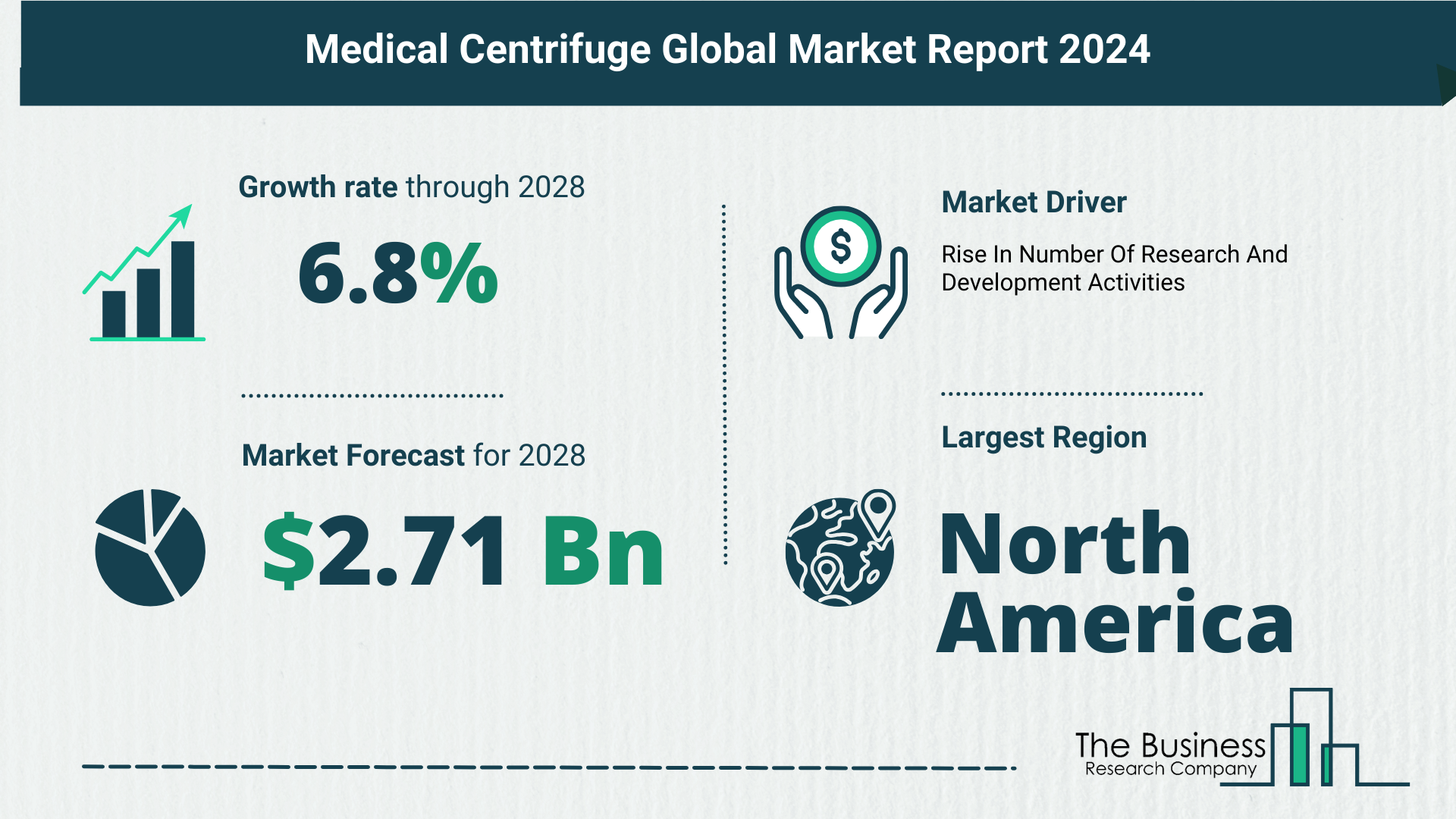
    • Market Impact: Growing R&D activities driving demand for medical centrifuges.

    View More On The Medical Centrifuge Market Report 2024 – https://www.thebusinessresearchcompany.com/report/medical-centrifuge-global-market-report

    Innovative Medical Centrifuge To Elevate Laboratory Efficiency

    • Product Innovation: Introduction of cutting-edge centrifugation technologies.
    • Eppendorf’s Centrifuge 5910 Ri: Features touchscreen interface and enhanced security measures.
    • Advantages: Quick parameter setting, improved documentation options, and remote monitoring capabilities.
    • Accumax and Neuation Merger: Strengthening product offerings and streamlining operations.

    Market Segmentation and Dynamics

    • Types of Centrifuges: Bench-top, floor-standing, tabletop, portable.
    • Capacity Varieties: Microcentrifuge, medium, and large capacity centrifuges.
    • Temperature Specifications: Refrigerated and non-refrigerated centrifuges.
    • End-User Industries: Hospitals, clinics, ambulatory surgical centers, and others.
    • Regional Insights: North America leads in 2023, with Asia-Pacific showing rapid growth.

    Future Outlook and Growth Projections

    The medical centrifuge market is poised for substantial growth in the coming years, driven by key trends:

    • Market Size Projection: Expected growth from $1.96 billion in 2023 to $2.71 billion in 2028.
    • Technological Advancements: Focus on compact designs, automation, and energy efficiency.
    • Demand Drivers: Rise in healthcare spending, point-of-care testing, and digitalization.
    • Specialized Centrifugation: Tailored solutions for specific healthcare needs.
    • Sustainability: Emphasis on eco-friendly practices and energy-efficient designs.

    Conclusion: Advancing Healthcare Through Centrifugation
    As healthcare landscapes evolve and research endeavors expand, the role of medical centrifuges becomes increasingly vital in laboratory settings. With innovations driving efficiency and reliability, the market is poised for transformative growth. By embracing technological advancements and prioritizing sustainability, companies can meet the growing demand for specialized centrifugation solutions while contributing to advancements in biomedical research and clinical diagnostics. As the medical centrifuge market continues to evolve, collaboration, innovation, and a commitment to excellence will drive the industry forward, shaping the future of healthcare delivery worldwide.

    Request A Sample Of The Global Medical Centrifuge Market Report 2024:
    https://www.thebusinessresearchcompany.com/sample_request?id=9388&type=smp

  • Growth Trajectory Of The Male Hypogonadism Market 2024-2033

    Growth Trajectory Of The Male Hypogonadism Market 2024-2033

    The Business Research Company’s global market reports are now updated with the latest market sizing information for the year 2024 and forecasted to 2033

    Market Expansion and Evolution

    • The male hypogonadism market has witnessed robust growth, escalating from $3.55 billion in 2023 to $3.8 billion in 2024, with a commendable CAGR of 6.8%.
    • The historic growth trajectory owes its momentum to an aging population, increased awareness, lifestyle factors, chronic illnesses, and evolving treatment-seeking behaviors.
    • Future projections indicate continued strong growth, with the market anticipated to reach $4.77 billion by 2028, driven by rising awareness, lifestyle-related conditions, therapy innovations, and a focus on men’s health.

    Unveiling the Driving Forces: Rising Infertility Rates

    • The surge in infertility rates acts as a catalyst for male hypogonadism market growth.
    • Male hypogonadism, contributing to decreased sperm production and infertility, emerges as a significant factor in male infertility.
    • Reports from institutions like the NIH and the Libyan Journal of Medical Sciences highlight escalating male infertility rates, propelling the male hypogonadism market forward.

    View More On The Male Hypogonadism Market Report 2024 – https://www.thebusinessresearchcompany.com/report/male-hypogonadism-global-market-report

    Innovative Products Redefining Treatment Paradigms

    • Major companies in the male hypogonadism market are pioneering innovative products, including digital-forward platforms and telemedicine solutions.
    • Platforms like Base Healthcare’s men’s virtual health platform offer subscription-based access to virtual health services, oral testosterone treatment, and personalized health guidance.
    • Strategic acquisitions, such as Gruenenthal’s acquisition of Nebido from Bayer AG, bolster product portfolios and pave the way for research and development in male hypogonadism treatment.

    Market Segmentation: Insights and Dynamics

    • The male hypogonadism market segmentation includes types such as Klinefelter’s syndrome, Kallmann syndrome, pituitary disorders, and others.
    • Drug delivery methods encompass topical gels, injectables, transdermal patches, and other innovative drug delivery systems.
    • Therapies like testosterone therapy and gonadotropin-releasing hormone therapy offer diverse treatment options for patients.

    Regional Dynamics: Market Expansion and Growth Prospects

    • North America emerges as the dominant region in the male hypogonadism market in 2023, reflecting significant market share.
    • Asia-Pacific stands out as the fastest-growing region, driven by technological advancements, rising healthcare awareness, and expanding patient populations.

    Conclusion: Pioneering Advances in Men’s Health

    The male hypogonadism market continues to evolve, fueled by rising infertility rates, innovative product developments, and a growing emphasis on men’s health. As awareness spreads and treatment options expand, stakeholders across the healthcare spectrum play a pivotal role in shaping the market’s trajectory. With a focus on long-term safety, treatment efficacy, and patient well-being, the male hypogonadism market stands poised for continued growth and innovation. Collaborative efforts, strategic acquisitions, and advancements in telemedicine herald a new era of accessible and personalized care for individuals affected by male hypogonadism. As the market journey unfolds, stakeholders navigate a landscape ripe with opportunities to revolutionize men’s health and transform lives through innovative treatment modalities and patient-centric care.

    Request A Sample Of The Global Male Hypogonadism Market Report 2024:
    https://www.thebusinessresearchcompany.com/sample_request?id=9969&type=smp

  • Key Takeaways From The Global Lewy Body Dementia Treatment Market Forecast 2024

    Key Takeaways From The Global Lewy Body Dementia Treatment Market Forecast 2024

    The Business Research Company’s global market reports are now updated with the latest market sizing information for the year 2024 and forecasted to 2033

    As per The Business Research Company’s Lewy Body Dementia Treatment Global Market Report 2024, the lewy body dementia treatment market is expected to show significant growth in the forecast period.

    Introduction: Unveiling Market Expansion

    The Lewy body dementia treatment market has experienced robust growth in recent years, with an anticipated surge from $4.14 billion in 2023 to $4.41 billion in 2024, showcasing a Compound Annual Growth Rate (CAGR) of 6.5%. This growth is attributed to factors such as supportive care, regulatory approvals, and multidisciplinary care approaches.

    Charting Future Growth Trajectories

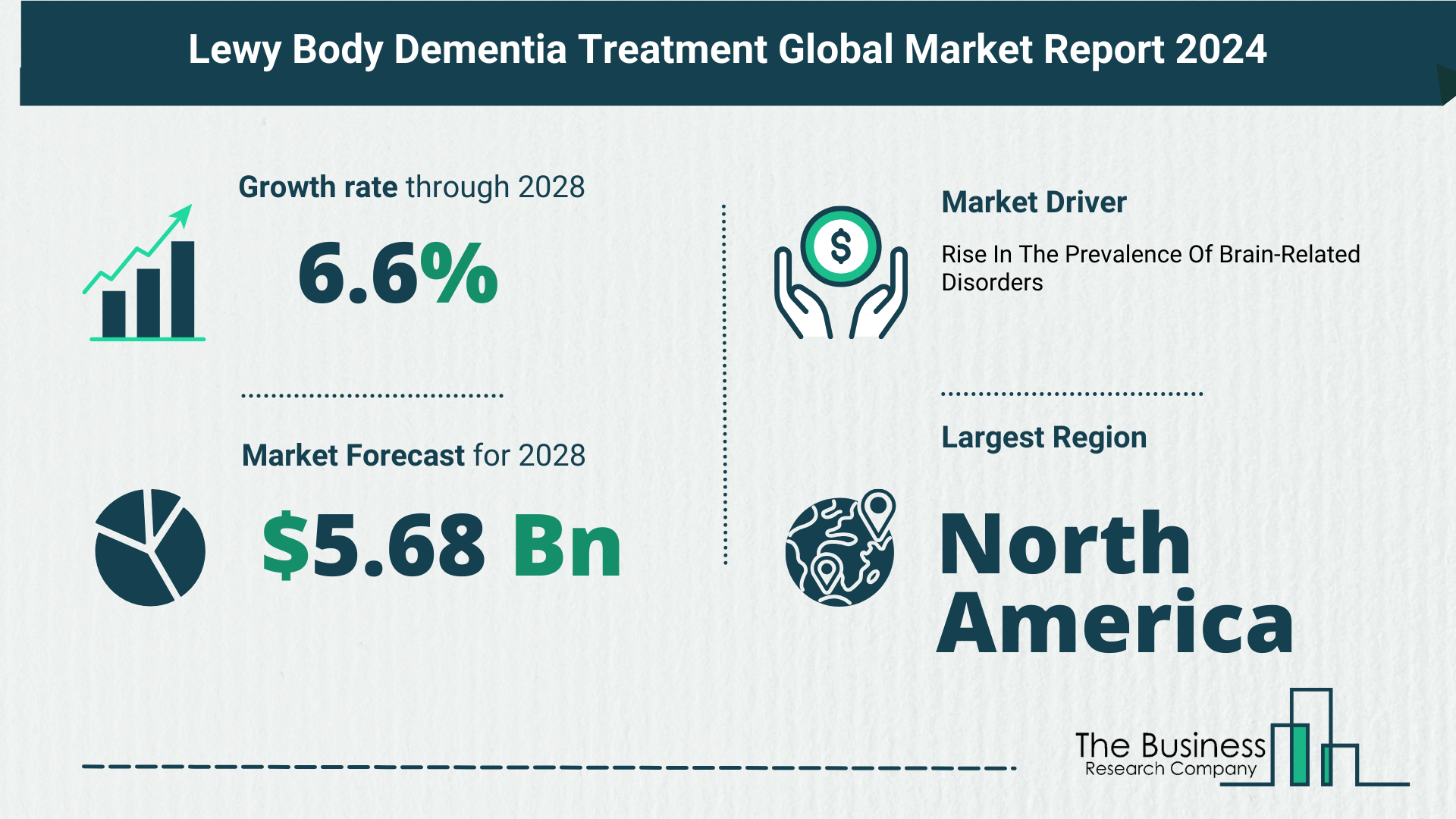
    Forecasts indicate continued strong growth, with the market projected to reach $5.68 billion by 2028, driven by advancements in neurology, precision medicine, and collaborative healthcare models. Moreover, trends like family support and personalized treatment approaches are expected to shape the market landscape in the coming years.

    Impact of Rising Brain Disorders on Market Dynamics

    The escalating prevalence of brain-related disorders is set to propel the growth of the Lewy body dementia treatment market. Brain disorders encompass a range of conditions impairing brain function, such as hallucinations and cognitive decline. With brain disorders expected to affect 9.3 million individuals in the US alone by 2060, the demand for effective treatments is on the rise, driving market growth globally.

    View More On The Lewy Body Dementia Treatment Market Report 2024 – https://www.thebusinessresearchcompany.com/report/lewy-body-dementia-treatment-global-market-report

    Innovative Medicine Driving Market Trends
    Product innovation emerges as a key trend in the Lewy body dementia treatment market, with companies focusing on developing novel solutions to address unmet medical needs. For instance, Biogen Inc.’s development of lecanemab, a humanized monoclonal antibody, showcases the industry’s commitment to advancing treatment options. Lecanemab’s ability to reduce brain amyloid levels represents a significant advancement in Alzheimer’s disease treatment, a component of Lewy body dementia.

    Strategic Acquisitions Bolster Market Presence
    Strategic acquisitions play a crucial role in expanding market presence and enhancing product portfolios. Pfizer Inc.’s acquisition of Biohaven Pharmaceuticals Inc. for $11.6 billion in October 2022 underscores the company’s commitment to advancing treatment options in the Lewy body dementia market. Biohaven Pharmaceuticals Inc.’s expertise in developing drugs for Parkinson’s disease complements Pfizer’s strategic objectives, strengthening its position in the market.

    Understanding Market Segmentation

    The Lewy body dementia treatment market is segmented based on drug type, distribution channel, and application, catering to diverse patient needs and preferences.

    1. By Drug Type: Antidepressants, Antipsychotic Drugs, Benzodiazepine, Carbidopa-Levodopa, Cholinesterase inhibitors, Modafinil
    2. By Distribution Channel: Hospitals Pharmacies, Retail Pharmacies, Online Pharmacies, Other Distribution Channels
    3. By Application: Alzheimer’s disease, Dementia, Parkinson’s disease

    Regional Dynamics: North America Leads the Way

    North America emerges as the largest region in the Lewy body dementia treatment market in 2023, reflecting the region’s focus on healthcare innovation and advanced treatment modalities. However, other regions are expected to witness substantial growth, underscoring the global demand for effective dementia treatments.

    Conclusion: Advancing Treatment Paradigms

    In conclusion, the Lewy body dementia treatment market presents significant opportunities for innovation and growth. With the rising prevalence of brain disorders and increasing investment in research and development, stakeholders must embrace innovative approaches to address unmet medical needs. By leveraging advancements in neurology and collaborative healthcare models, the industry can enhance patient outcomes and shape the future of Lewy body dementia treatment globally.

    Request A Sample Of The Global Lewy Body Dementia Treatment Market Report 2024:

    https://www.thebusinessresearchcompany.com/sample_request?id=9387&type=smp

  • Future Growth Forecast For The Lactose Intolerance Treatment Global Market 2024-2033

    Future Growth Forecast For The Lactose Intolerance Treatment Global Market 2024-2033

    The Business Research Company’s global market reports provide comprehensive analysis on the various markets in 27 industries across 60 geographies.

     The lactose intolerance treatment market has witnessed robust growth in recent years, driven by increased awareness, changing dietary habits, and rising cases of lactose intolerance worldwide. With the market projected to reach $32.78 billion in 2024 and an estimated $43.59 billion by 2028, it’s essential to explore the factors contributing to this expansion.

    Increasing Incidences Of Small Intestine Diseases Drives The Market

    • The surge in small intestine diseases worldwide acts as a primary driver for the lactose intolerance treatment market.
    • Digestive illnesses affect millions globally, emphasizing the need for effective treatments like lactose intolerance remedies.
    • The economic burden of digestive diseases underscores the urgency for accessible and efficient treatment options, fueling market growth.

    View More On The Lactose Intolerance Treatment Market Report 2024 – https://www.thebusinessresearchcompany.com/report/lactose-intolerance-treatment-global-market-report

    Technological Advancement Transforms The Market

    • Technological innovations play a pivotal role in reshaping the lactose intolerance treatment landscape.
    • Market leaders like Nestlé are leveraging advanced technologies to develop cost-effective solutions for sugar reduction and lactose intolerance.
    • These advancements offer versatile options for consumers while addressing the demand for natural and alternative products.

    Segmentation and Market Dynamics

    The lactose intolerance treatment market segmentation includes:

    1. By Treatment: Food Supplements, Enzyme Lactase Supplements, Probiotics, and Other Treatments
    2. By Intolerance Type: Primary Lactose Intolerance, Secondary Lactose Intolerance, Congenital Lactose Intolerance, and Developmental Lactose Intolerance
    3. By Route of Administration: Oral, Injectable
    4. By End Users: Hospitals, Homecare, Specialty Clinics, and Other End Users

    North America Leads the Way

    • North America emerges as the largest region in the lactose intolerance treatment market, driven by advanced healthcare infrastructure and rising awareness.
    • The region’s focus on personalized medicine and dietary trends contributes significantly to market expansion.

    Conclusion: Pioneering Advances in Healthcare

    In conclusion, the lactose intolerance treatment market is witnessing significant growth propelled by technological advancements, increasing disease incidences, and patient-centric healthcare approaches. As companies continue to invest in research and development and expand their product portfolios, the lactose intolerance treatment market is poised for substantial expansion. With major trends emphasizing dairy alternatives, diagnostic advancements, and global awareness initiatives, the future of lactose intolerance treatment holds promise in revolutionizing patient care and dietary choices. As the healthcare industry evolves to meet consumer demands and address global health challenges, lactose intolerance treatment emerges as a critical component in promoting digestive health and overall well-being.

    Request A Sample Of The Global Lactose Intolerance Treatment Market Report 2024:

    https://www.thebusinessresearchcompany.com/sample_request?id=9478&type=smp

  • Global Intratumoral Cancer Therapies Market Key Insights 2024-2033

    Global Intratumoral Cancer Therapies Market Key Insights 2024-2033

    The Business Research Company’s global market reports are now updated with the latest market sizing information for the year 2024 and forecasted to 2033

    According to The Business Research Company’s Intratumoral Cancer Therapies Global Market Report 2024, the intratumoral cancer therapies market is expected to show promising growth in the forecast period.

    Evolving Dynamics: Market Overview

    • Rapid growth: Market size reached $124.82 billion in 2023.
    • Expected growth to $141.55 billion in 2024.
    • CAGR: 13.4%.
    • Historical drivers: Advancements in cancer research, increasing cancer incidence, precision medicine demand, clinical evidence, unmet medical needs.

    Pioneering Progress: Forecasted Expansion

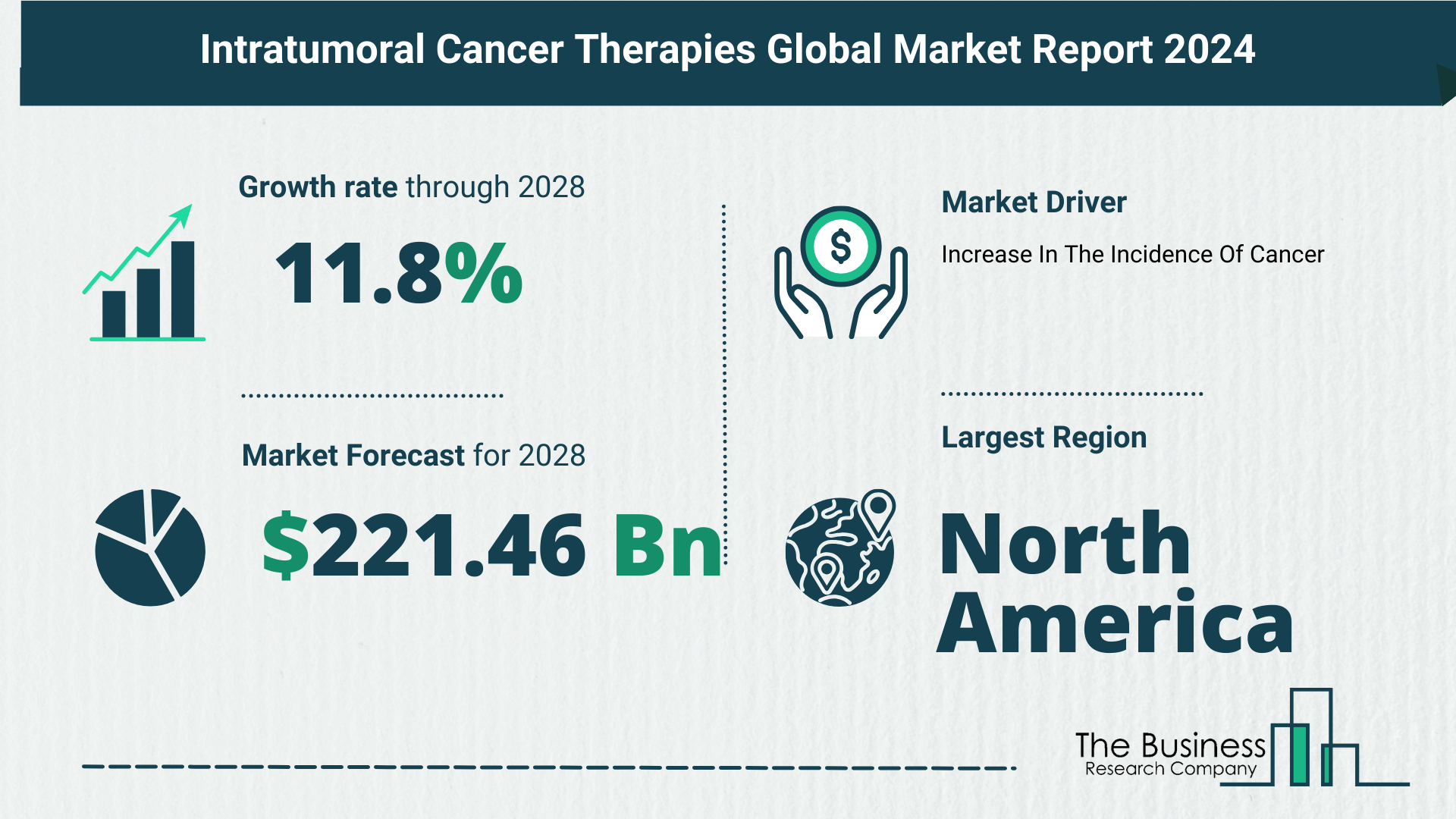
    • Projected growth to $221.46 billion by 2028.
    • CAGR: 11.8%.
    • Forecasted drivers: Advancements in immunotherapy, precision medicine adoption, clinical trial expansion, rare cancers focus, regulatory support.
    • Major trends: Intratumoral immunomodulators, image-guided therapies, hyperthermia, combination therapies, regulatory approvals.

    Rising Cancer Incidence Fuels Market Expansion

    • Impact of increasing cancer incidence on market growth.
    • Significance of intratumoral cancer therapies in diagnosis and treatment.
    • Example: American Cancer Society reports a 3.16% increase in cancer cases in 2023.
    • Driving force: Addressing off-target toxicities and adverse effects in cancer treatment.

    View More On The Intratumoral Cancer Therapies Market Report 2024 – https://www.thebusinessresearchcompany.com/report/intratumoral-cancer-therapies-global-market-report

    Technological Advancements Propel Growth

    • Key trend: Technological innovation in the market.
    • Example: Evonik introduces EUDRATEC SoluFlow microparticle technology.
    • AstraZeneca’s acquisition of Neogene Therapeutics Inc. for $120 million.
    • Neogene Therapeutics Inc.’s customized treatment approach based on TCR genes targeting tumor-specific neoantigens.

    Segmentation and Market Landscape

    • Technology segmentation: Monoclonal antibodies, vaccines, checkpoint inhibitors, cell therapies, immune system modulators, adoptive cell transfer, cytokines.
    • Application segmentation: Lung cancer, breast cancer, melanoma, prostate cancer, head and neck cancer, others.
    • End-user segmentation: Hospitals, cancer research centers, clinics.
    • North America led the market in 2023.

    Conclusion: Advancing Cancer Care The intratumoral cancer therapies market reflects a dynamic landscape characterized by rapid growth, technological innovation, and a focus on addressing unmet medical needs. As cancer incidence continues to rise globally, the demand for effective and targeted treatment options remains paramount.

    Looking ahead, the market presents significant opportunities for growth and advancement, with trends such as immunotherapy, precision medicine, and combination therapies shaping its trajectory. By embracing innovation and strategic collaborations, stakeholders can drive positive outcomes and enhance patient care in the fight against cancer.

    In a healthcare environment marked by challenges and opportunities, the intratumoral cancer therapies market stands as a beacon of hope, offering new avenues for treatment and improving patient outcomes. As stakeholders continue to push the boundaries of innovation and research, the future of cancer care looks promising, with intratumoral therapies playing a crucial role in the journey towards a world free from the burden of cancer.

    Request A Sample Of The Global Intratumoral Cancer Therapies Market Report 2024:

    https://www.thebusinessresearchcompany.com/sample_request?id=9979&type=smp