Year: 2024

  • Key Insights On The Antispasmodics Drugs Market 2024 – Size, Driver, And Major Players

    Key Insights On The Antispasmodics Drugs Market 2024 – Size, Driver, And Major Players

    The Business Research Company’s global market reports are now updated with the latest market sizing information for the year 2024 and forecasted to 2033

    As per The Business Research Company’s Antispasmodics Drugs Global Market Report 2024, the template market is expected to show significant growth in the forecast period.

    Market Growth and Projections

    • The antispasmodics drugs market has witnessed substantial growth.
    • Expected to rise from $12.69 billion in 2023 to $13.92 billion in 2024, with a CAGR of 9.7%.
    • Forecasted to reach $20.04 billion in 2028, with a CAGR of 9.5%.

    Drivers of Growth

    • Rising prevalence of spasmodic conditions.
    • Advancements in medical research.
    • Growing aging population and changing lifestyles.
    • Improvements in diagnosis leading to increased demand.

    Factors Contributing to Future Growth

    • Increasing healthcare expenditure worldwide.
    • Emphasis on personalized medicine.
    • Global population growth, especially in emerging markets.
    • Rise in clinical trials and research activities.

    Major Trends in the Forecast Period

    • Expanding indications for antispasmodics.
    • Healthcare infrastructure development in emerging markets.
    • Advancements in drug development for improved efficacy.
    • Increasing awareness and diagnosis of spasmodic conditions.
    • Preference for non-invasive treatment options.

    Elderly Population Boom Fuels Growth In Antispasmodic Drug Market

    • The elderly population surge drives market expansion.
    • Antispasmodic drugs crucial for managing symptoms in older adults.
    • Global projections indicate a significant increase in the elderly population by 2050.

    Product Innovation Transforms The Market

    • Product innovations drive market dynamics.
    • Example: Ardelyx Inc.’s introduction of IBSRELA for IBS-C treatment.
    • Acquisition of Dyscovry Science Ltd. by Silo Wellness Inc. expands psychedelic portfolio.

    Market Segmentation

    1. By Drug: Dicyclomine Hydrochloride, Loperamide Hydrochloride, Other Drugs
    2. By Indication: Irritable Bowel Syndrome, Stomach Cramps, Other Indications
    3. By Route Of Administration: Oral, Parenteral, Other Modes Of Administrations
    4. By Distribution Channel: Hospital Pharmacy, Online Pharmacy, Retail Pharmacy
    5. By End-User: Hospitals, Homecare, Specialty Clinics, Other End-Users

    Regional Insights

    • North America led the antispasmodics drugs market in 2023.
    • Asia-Pacific expected to witness the fastest growth during the forecast period.

    In summary, the antispasmodics drugs market exhibits robust growth driven by demographic shifts, technological advancements, and increasing healthcare investments. As the elderly population expands and innovative treatments emerge, the demand for antispasmodic drugs continues to rise globally. With a focus on personalized medicine and expanded indications, the market presents significant opportunities for stakeholders. As the landscape evolves, companies must adapt to emerging trends and consumer preferences to sustain growth and meet the evolving healthcare needs of the population.

    View More On The Antispasmodics Drugs Market Report 2024 – https://www.thebusinessresearchcompany.com/report/antispasmodics-drugs-global-market-report

    Request A Sample Of The Global Antispasmodics Drugs Market Report 2024:
    https://www.thebusinessresearchcompany.com/sample_request?id=9414&type=smp

  • Comprehensive Analysis On Size, Share, And Drivers Of The Anal Fissure Treatment Market

    Comprehensive Analysis On Size, Share, And Drivers Of The Anal Fissure Treatment Market

    The Business Research Company’s global market reports provide comprehensive analysis on the various markets in 27 industries across 60 geographies. 

    Evolving Market Dynamics

    • The anal fissure treatment market has experienced robust growth, expanding from $1.3 billion in 2023 to $1.42 billion in 2024, boasting a remarkable CAGR of 9.1%.
    • Historic growth drivers include limited treatment options, increased awareness, demographic shifts, and supportive healthcare infrastructure.

    Anticipating Future Growth

    • Forecasts predict continued market expansion, reaching $2.01 billion by 2028, fueled by innovative treatment approaches, rising incidence rates, and investment in R&D.
    • Emerging trends include technological advancements, demand for minimally invasive procedures, and a focus on patient-centric care.

    Impact of Growing Elderly Population and Unhealthy Lifestyles

    • The rising elderly population and unhealthy lifestyles are anticipated to drive market growth, necessitating anal fissure treatment.
    • Global projections suggest a significant increase in the elderly population by 2030, highlighting the need for effective treatment options.
    • Leading companies like AstraZeneca PLC and Pfizer Inc. are actively involved in addressing this demographic trend.

    Innovative Solutions For Anal Fissure Treatment

    • Companies in the anal fissure treatment market are developing innovative products, including topical treatments, to cater to diverse customer needs.
    • Acrux Limited’s FDA-approved Nitroglycerin Ointment, 0.4%, offers relief from chronic anal fissure pain, reflecting a commitment to enhancing patient comfort.
    • Emphasis on advancing later-stage projects and diverse product pipelines underscores industry innovation.

    Strategic Acquisitions Driving Market Expansion

    • AstraZeneca Plc.’s acquisition of Alexion Pharmaceuticals Inc. represents a strategic move to expand into rare disease therapies.
    • The combined resources are poised to accelerate the discovery and development of life-changing medicines, fostering growth and innovation.
    • Alexion Pharmaceuticals Inc.’s expertise in biopharmaceuticals aligns with AstraZeneca’s broader healthcare goals.

    Market Segmentation and Regional Dynamics

    • The market is segmented by type, route of administration, and application, reflecting varied treatment approaches and healthcare settings.
    • North America leads the market, with Asia-Pacific emerging as the fastest-growing region, presenting opportunities for market expansion and innovation.

    In conclusion, the anal fissure treatment market continues to evolve, driven by changing demographics, technological advancements, and strategic collaborations. As companies invest in innovative solutions and expand their global footprint, the industry is poised for sustained growth. By prioritizing patient-centric care, leveraging technological innovations, and embracing regulatory changes, stakeholders can navigate the evolving landscape and contribute to improved healthcare outcomes worldwide.

    View More On The Anal Fissure Treatment Market Report 2024 – https://www.thebusinessresearchcompany.com/report/anal-fissure-treatment-global-market-report

    Request A Sample Of The Global Anal Fissure Treatment Market Report 2024:
    https://www.thebusinessresearchcompany.com/sample_request?id=9425&type=smp

  • Ambulatory Services Market Forecast 2024: Forecast Market Size, Drivers And Key Segments

    Ambulatory Services Market Forecast 2024: Forecast Market Size, Drivers And Key Segments

    The Business Research Company’s global market reports are now updated with the latest market sizing information for the year 2024 and forecasted to 2033

    Understanding Market Dynamics

    • Swift Expansion: The ambulatory services market has experienced rapid growth, surging from $3.67 billion in 2023 to $4.05 billion in 2024, reflecting a robust Compound Annual Growth Rate (CAGR) of 10.6%.
    • Drivers of Growth: Factors such as the shift towards outpatient care, rising healthcare costs, emphasis on preventive care, patient preference for convenience, and increased awareness of ambulatory services have fueled this expansion.

    Anticipating Future Trends

    • Continued Momentum: The market is poised for further rapid growth, projected to reach $5.99 billion by 2028, with a CAGR of 10.3%.
    • Driving Forces: The forecasted growth is underpinned by the rise in telehealth services, expansion of chronic care management, adoption of patient-centered care models, focus on early intervention, and integration of telemedicine in ambulatory settings.

    Key Trends in the Forecast Period

    Rising Chronic Disease Propels Market Growth

    • Prevalence of Chronic Diseases: The escalating prevalence of chronic conditions like diabetes, heart disease, and cancer is a significant driver of ambulatory services growth.
    • Patient Demand for Convenience: Patients seek accessible ambulatory services to manage chronic conditions effectively, driving market demand.

    Technological Advancements Revolutionize Patient Care

    • Embracing Technology: Major players are integrating advanced technologies to enhance patient care and engagement within the ambulatory services sector.
    • Example: HealthViewX’s Virtual Clinic App exemplifies innovative technology facilitating online E/M care services, emphasizing patient engagement and care continuity.

    View More On The Ambulatory Services Market Report 2024 – https://www.thebusinessresearchcompany.com/report/ambulatory-services-global-market-report

    Strategic Expansions and Acquisitions

    • UnitedHealth Group’s Acquisition: UnitedHealth Group’s acquisition of Change Healthcare demonstrates a strategic move to bolster healthcare technology capabilities and expand ambulatory care services.
    • Impact: This acquisition enables the provision of comprehensive ambulatory care services to patients, showcasing the importance of strategic partnerships in the evolving healthcare landscape.

    Segmentation Insights

    • Diverse Offerings: The ambulatory services market encompasses a range of types including emergency departments, primary care, surgical specialty, and various services such as surgical and diagnostic services.
    • Center and Modality Differentiation: Centers can be categorized as single specialty or multispecialty, while modalities include hospital-based ambulatory surgical centers and freestanding ambulatory surgical centers.
    • Application Diversity: Ambulatory services cater to diverse medical applications such as ophthalmology, plastic surgery, orthopedics, gastroenterology, pain management, and others.

    Regional Analysis

    • Dominance of North America: North America emerged as the largest region in the ambulatory services market in 2023, underscoring significant market presence and growth potential in the region.

    In conclusion, the ambulatory services market presents a dynamic landscape shaped by rapid growth, technological advancements, and strategic expansions. As the healthcare industry continues to evolve, stakeholders must adapt to emerging trends and embrace innovative solutions to meet patient needs effectively. With a focus on inclusivity, digital integration, outcomes-based care, and enhanced patient experiences, the ambulatory services sector is poised to play a pivotal role in shaping the future of healthcare delivery.

    Request A Sample Of The Global Ambulatory Services Market Report 2024:
    https://www.thebusinessresearchcompany.com/sample_request?id=9816&type=smp

  • Global Ambulatory Health Care Services Market Key Insights 2024-2033

    Global Ambulatory Health Care Services Market Key Insights 2024-2033

    The Business Research Company’s global market reports are now updated with the latest market sizing information for the year 2024 and forecasted to 2033

    According to The Business Research Company’s Ambulatory Health Care Services Global Market Report 2024, the ambulatory health care services market is expected to show promising growth in the forecast period.

    The ambulatory healthcare services market has demonstrated robust growth, escalating from $3.34 billion in 2023 to $3.57 billion in 2024, with a compound annual growth rate (CAGR) of 7.1%. This growth is attributed to changing demographics, healthcare policy shifts, evolving consumer preferences, cost containment measures, and the adoption of collaborative care models.

    Future Projections

    Anticipated growth projections suggest a continued upward trajectory, with the market expected to reach $4.73 billion by 2028, boasting a CAGR of 7.3%. This growth is driven by a shift towards value-based care, the integration of artificial intelligence (AI) in healthcare, telehealth expansion, patient empowerment initiatives, and population health management strategies.

    Rising Disease Prevalence Fuels Market Expansion

    Impact of Disease Prevalence

    The increasing prevalence of both communicable and non-communicable diseases worldwide is a significant driver of growth in the ambulatory healthcare services market. With diseases affecting millions annually, there’s a heightened demand for emergency care and ambulatory services to address immediate healthcare needs.

    Market Response to Disease Trends

    Key players in the ambulatory healthcare services market, including Surgery Partners Inc., HCA Healthcare, and others, are instrumental in providing critical care solutions to combat disease prevalence. Their contributions enable timely interventions and access to quality healthcare services for patients across the globe.

    Tech Advancements Drive Innovation

    Focus on Technological Innovations

    Technological advancements play a pivotal role in shaping the ambulatory healthcare services landscape. Major companies are leveraging advanced solutions to enhance patient care, streamline operations, and improve collaboration among healthcare stakeholders.

    Case Study: Careport’s Ambulatory Solution

    Careport’s introduction of CarePort ambulatory exemplifies the integration of technology to bridge gaps in care coordination. This innovative solution facilitates seamless communication between ambulatory providers, patients, and home- and community-based organizations, enhancing overall patient experience and outcomes.

    Strategic Acquisitions Enhance Market Position

    Acquisition Strategies

    Strategic acquisitions, such as Terveystalo’s acquisition of Helsinki Hospital, underscore the company’s commitment to expanding its healthcare offerings and improving patient outcomes. Collaborative efforts and shared resources are instrumental in strengthening treatment pathways and enhancing overall healthcare services.

    Market Segmentation and Regional Outlook

    Segmentation Overview

    The ambulatory healthcare services market is segmented based on type and application, reflecting the diverse range of services and specialties offered. From primary care offices to surgical specialties and orthopedics to ophthalmology, the market caters to various healthcare needs and preferences.

    Regional Dynamics

    North America emerged as the largest region in the ambulatory healthcare services market in 2023, reflecting the region’s advanced healthcare infrastructure and robust market presence. As the market expands, regions worldwide are witnessing increased demand for ambulatory services, driven by evolving healthcare needs and technological advancements.

    In conclusion, the ambulatory healthcare services market presents significant opportunities for growth and innovation, driven by advancements in technology, rising disease prevalence, and strategic collaborations. As market dynamics evolve, stakeholders must remain agile and proactive in addressing emerging challenges and opportunities, ensuring the delivery of accessible, efficient, and quality healthcare services to individuals worldwide.

    View More On The Ambulatory Health Care Services Market Report 2024 – https://www.thebusinessresearchcompany.com/report/ambulatory-health-care-services-global-market-report

    Request A Sample Of The Global Ambulatory Health Care Services Market Report 2024:
    https://www.thebusinessresearchcompany.com/sample_request?id=9447&type=smp

  • 5 Takeaways From The Alzheimers Drugs Market Overview 2024

    5 Takeaways From The Alzheimers Drugs Market Overview 2024

    The Business Research Company’s global market reports are now updated with the latest market sizing information for the year 2024 and forecasted to 2033

    According to The Business Research Company’s Alzheimers Drugs Global Market Report 2024, the alzheimers drugs market is expected to show promising growth in the forecast period.

    The Alzheimer’s drugs market has experienced robust growth in recent years, with a projected increase from $8.64 billion in 2023 to $9.44 billion in 2024, indicating a compound annual growth rate (CAGR) of 9.3%. This upward trajectory is attributed to several factors, including the surge in Alzheimer’s disease cases, substantial investments in research and development, improved understanding of disease mechanisms, global health initiatives, and increased public awareness and education.

    An Optimistic Future: Projections and Influencing Factors

    1. Foreseen Growth: Anticipated expansion to $13.32 billion by 2028, with a CAGR of 9.0%.
    2. Driving Forces: Precision medicine, disease modification focus, biomarker identification, patient-centric drug development, and non-pharmacological interventions.
    3. Key Trends: Diverse therapeutic approaches, digital health solutions, regenerative medicine, diagnostic technology advancements, AI in drug discovery, and strategic partnerships.

    Rising Prevalence Of Alzheimer’s Disease To Drive Market Growth

    The alarming rise in Alzheimer’s disease cases emerges as a primary catalyst propelling the growth of the Alzheimer’s drugs market. This neurologic condition, characterized by progressive brain shrinkage and cell death, necessitates effective drugs to address memory loss, cognitive challenges, and everyday living difficulties. Notably, the 2022 Alzheimer’s Disease Facts and Figures report by The Alzheimer’s Association underscores the prevalence of the disease, with 6.5 million Americans aged 65 and older affected in 2022. Projections hint at a significant increase by 2050, emphasizing the urgent need for effective drugs in the market.

    View More On The Alzheimers Drugs Market Report 2024 – https://www.thebusinessresearchcompany.com/report/alzheimers-drugs-global-market-report

    Technological Advancements Driving Innovation

    1. Key Trend: Embrace of technological advancements as a driving force for innovation.
    2. Noteworthy Example: iMediSync’s launch of iSyncBrain, an EEG digital biomarker for early Alzheimer’s dementia diagnosis, showcases the integration of AI cloud platform and customized NIR-LED neuromodulation. With over 90% accuracy rates, this innovative solution screens and distinguishes amnestic mild cognitive impairment (MCI) in the preclinical stage.
    3. Strategic Acquisitions: AbbVie’s acquisition of Syndesi Therapeutics in March 2022, bringing in new modulators of the synaptic vesicle protein 2A (SV2A), exemplifies the industry’s commitment to expanding neuroscience portfolios.

    Market Segmentation and Regional Dynamics

    1. By Drugs: Segmented into Donepezil, Rivastigmine, Galantamine, and Memantine.
    2. By Distribution Channel: Encompassing Hospital Pharmacy, Retail Pharmacy, and Online Pharmacy.
    3. By Application: Categorized into Early to Moderate Stages and Moderate to Severe Stages.

    Global Landscape: Regional Perspectives

    1. North America Dominance: Emerged as the largest region in the Alzheimer’s drugs market in 2023.
    2. Asia-Pacific Growth: Expected to be the fastest-growing region during the forecast period, highlighting the global nature of Alzheimer’s disease and the need for effective drug solutions.

    Conclusion

    The trajectory of the Alzheimer’s drugs market underscores the urgency and significance of addressing the growing prevalence of Alzheimer’s disease. With technological innovations, strategic acquisitions, and a focus on precision medicine, the industry is poised for substantial growth. As diverse therapeutic approaches and digital health solutions come to the forefront, there is a renewed hope for advancements in diagnostic technologies and breakthroughs in drug discovery. Collaborations and partnerships in the pharmaceutical landscape emphasize the collective effort to combat Alzheimer’s disease. In this dynamic landscape, the Alzheimer’s drugs market is not just a business sector; it’s a crucial endeavor for improving lives and shaping a healthier future.

    Request A Sample Of The Global Alzheimers Drugs Market Report 2024:
    https://www.thebusinessresearchcompany.com/sample_request?id=9040&type=smp

  • Future Growth Forecast For The Allergy Immunotherapy Global Market 2024-2033

    Future Growth Forecast For The Allergy Immunotherapy Global Market 2024-2033

    The Business Research Company’s global market reports provide comprehensive analysis on the various markets in 27 industries across 60 geographies.

    The allergy immunotherapy market stands at the forefront of healthcare innovation, driven by rising allergy prevalence, technological advancements, and evolving treatment paradigms. Let’s delve into the dynamics, trends, and projections shaping this dynamic landscape.

    Surge in Allergic Disorders: Catalyst for Growth

    • The escalating prevalence of allergic disorders fuels the demand for allergy immunotherapy.
    • Allergic rhinitis, asthma, food allergies, and venom allergies contribute to the rising allergy burden globally.
    • According to the CDC, in the USA alone, nearly one-third of adults suffer from seasonal allergies, skin conditions, or food allergies, underscoring the urgent need for effective treatment options.

    Key Players and Market Landscape

    • Major companies like LETI Pharma, Stallergenes Greer International AG, and ALK-Abelló A/S lead innovations in allergy immunotherapy.
    • Strategic partnerships, research investments, and product diversification drive market competitiveness and expansion.
    • Market segmentation includes allergy types, treatment modalities, and distribution channels, catering to diverse patient needs and preferences.

    Advancements in Allergy Diagnosis: Leveraging AI-Powered Testing

    • Technological innovations, such as AI-powered allergy component testing, revolutionize allergy diagnosis and treatment.
    • AI-powered testing platforms based on Component Resolved Diagnostics (CRD) offer advanced insights and personalized treatment options.
    • Companies like Metropolis Healthcare Limited pioneer AI-powered testing, enhancing clinical decision-making and treatment outcomes.

    Market Growth and Projections

    • The allergy immunotherapy market has experienced rapid growth, with projections indicating sustained expansion.
    • From $2.59 billion in 2023, the market is set to reach $2.86 billion in 2024, reflecting a robust CAGR of 10.6%.
    • Anticipated growth to $4.43 billion by 2028, with a CAGR of 11.6%, underscores the market’s resilience and potential.

    Trends Driving Market Evolution

    • Advancements in treatment technology, increasing allergy prevalence, and rise in patient awareness characterize key market trends.
    • Telemedicine and remote monitoring solutions optimize patient care and facilitate access to specialized allergy services.
    • Customized treatment plans, tailored to individual patient needs, enhance treatment efficacy and patient satisfaction.

    Regional Dynamics and Market Outlook

    • Europe leads the allergy immunotherapy market, with Asia-Pacific emerging as the fastest-growing region.
    • Asia-Pacific’s expanding healthcare infrastructure, rising disposable income, and increasing healthcare expenditure drive market growth and adoption.

    Embracing the Future of Allergy Immunotherapy

    • As the allergy immunotherapy market evolves, stakeholders must prioritize education, accessibility, and personalized healthcare.
    • Collaboration between healthcare providers, technology innovators, and policymakers is essential to address allergy burden and improve patient outcomes.
    • By embracing technological advancements, fostering research and development, and advocating for allergy awareness, the industry can drive positive health outcomes and enhance quality of life globally.

    In conclusion, the allergy immunotherapy market represents a dynamic landscape characterized by innovation, growth, and evolving treatment approaches. By leveraging technological advancements, fostering patient-centric care, and advocating for allergy awareness, the industry can unlock new opportunities and pave the way for improved allergy management and patient well-being worldwide.

    View More On The Allergy Immunotherapy Market Report 2024 – https://www.thebusinessresearchcompany.com/report/allergy-immunotherapy-global-market-report

    Request A Sample Of The Global Allergy Immunotherapy Market Report 2024:
    https://www.thebusinessresearchcompany.com/sample_request?id=9416&type=smp

  • Global Advanced Wound Care Market Analysis 2024: Size, Share, And Key Trends

    Global Advanced Wound Care Market Analysis 2024: Size, Share, And Key Trends

    As per The Business Research Company’s Advanced Wound Care Global Market Report 2024, the advanced wound care market is expected to show significant growth in the forecast period.

    The advanced wound care market has witnessed remarkable growth in recent years, attributed to several key factors driving innovation and demand. Let’s delve into the market dynamics, trends, and projections shaping this vital healthcare sector.

    Robust Market Expansion and Projections

    • The advanced wound care market size has exhibited strong growth, rising from $10.14 billion in 2023 to $10.86 billion in 2024, at a compound annual growth rate (CAGR) of 7.0%.
    • The market is poised for further expansion, with projections indicating a surge to $14.06 billion by 2028, reflecting a CAGR of 6.7%.
    • Factors fueling this growth include wound care innovation, an aging population, medical advancements, rising chronic conditions, and improved healthcare infrastructure.

    Driving Forces: Surge in Surgical Procedures

    • The upsurge in surgical procedures emerges as a pivotal driver propelling the advanced wound care market forward.
    • Surgical interventions, including both invasive and non-invasive procedures, contribute significantly to the demand for advanced wound care products.
    • Notably, the prevalence of surgical procedures witnessed a substantial increase in recent years, amplifying the need for effective wound care solutions.

    Key Players and Market Landscape

    • Major companies driving innovation and market expansion include Integra Lifesciences Corp., Molnlycke Health Care, Johnson And Johnson Services Inc., among others.
    • These companies play a crucial role in advancing wound care technology, developing innovative products, and expanding their market presence globally.
    • Collaborative partnerships and strategic acquisitions further characterize the competitive landscape, enabling companies to enhance their product portfolios and address evolving consumer needs.

    Innovative Solutions Redefining Wound Care

    • Product innovation stands out as a prominent trend shaping the advanced wound care landscape.
    • Leading companies prioritize the development of cutting-edge solutions to address diverse clinical requirements in surgical, chronic wounds, and burns.
    • Recent innovations, such as DuPont de Nemours, Inc.’s Liveo MG 7-9960 Soft Skin Adhesive, highlight the industry’s commitment to enhancing patient outcomes and user experience.

    Strategic Acquisitions and Portfolio Expansion

    • Essity AB’s acquisition of Hydrofera underscores the strategic moves aimed at strengthening market position and expanding product offerings.
    • Through strategic acquisitions, companies seek to leverage synergies, access new markets, and integrate complementary technologies to drive growth and innovation.

    View More On The Advanced Wound Care Market Report 2024 – https://www.thebusinessresearchcompany.com/report/advanced-wound-care-global-market-report

    Market Segmentation and Regional Dynamics

    • The advanced wound care market encompasses diverse product types, wound categories, applications, and end-user segments.
    • Product segmentation includes antimicrobial gels, hydrogel dressings, wound cleansers, and other specialized products tailored to specific wound types and patient needs.
    • Regional dynamics reveal North America as the largest market in 2023, with Asia-Pacific projected to witness the fastest growth during the forecast period.

    Future Outlook: Embracing Patient-Centric Care

    • The future of advanced wound care emphasizes patient-centric approaches, personalized medicine, and value-based healthcare models.
    • Collaborative research partnerships, emphasis on regenerative medicine, and a shift towards minimally invasive solutions are poised to shape the industry’s trajectory.

    Conclusion: Pioneering Innovation in Wound Care

    • The advanced wound care market reflects a dynamic landscape driven by innovation, market expansion, and strategic collaborations.
    • As the healthcare industry continues to evolve, stakeholders must prioritize patient needs, embrace technological advancements, and foster a culture of innovation to optimize clinical outcomes and enhance quality of life.

    In summary, the advanced wound care market presents a compelling narrative of growth, innovation, and transformative impact, poised to redefine standards of care and elevate patient experiences worldwide.

    Request A Sample Of The Global Advanced Wound Care Market Report 2024:
    https://www.thebusinessresearchcompany.com/sample_request?id=9943&type=smp

  • What’s The Growth Forecast For Wound Closure Devices Market Through 2024-2033?

    What’s The Growth Forecast For Wound Closure Devices Market Through 2024-2033?

    The Business Research Company’s global market reports provide comprehensive analysis on the various markets in 27 industries across 60 geographies.

    Rising Market Size and Growth Trends

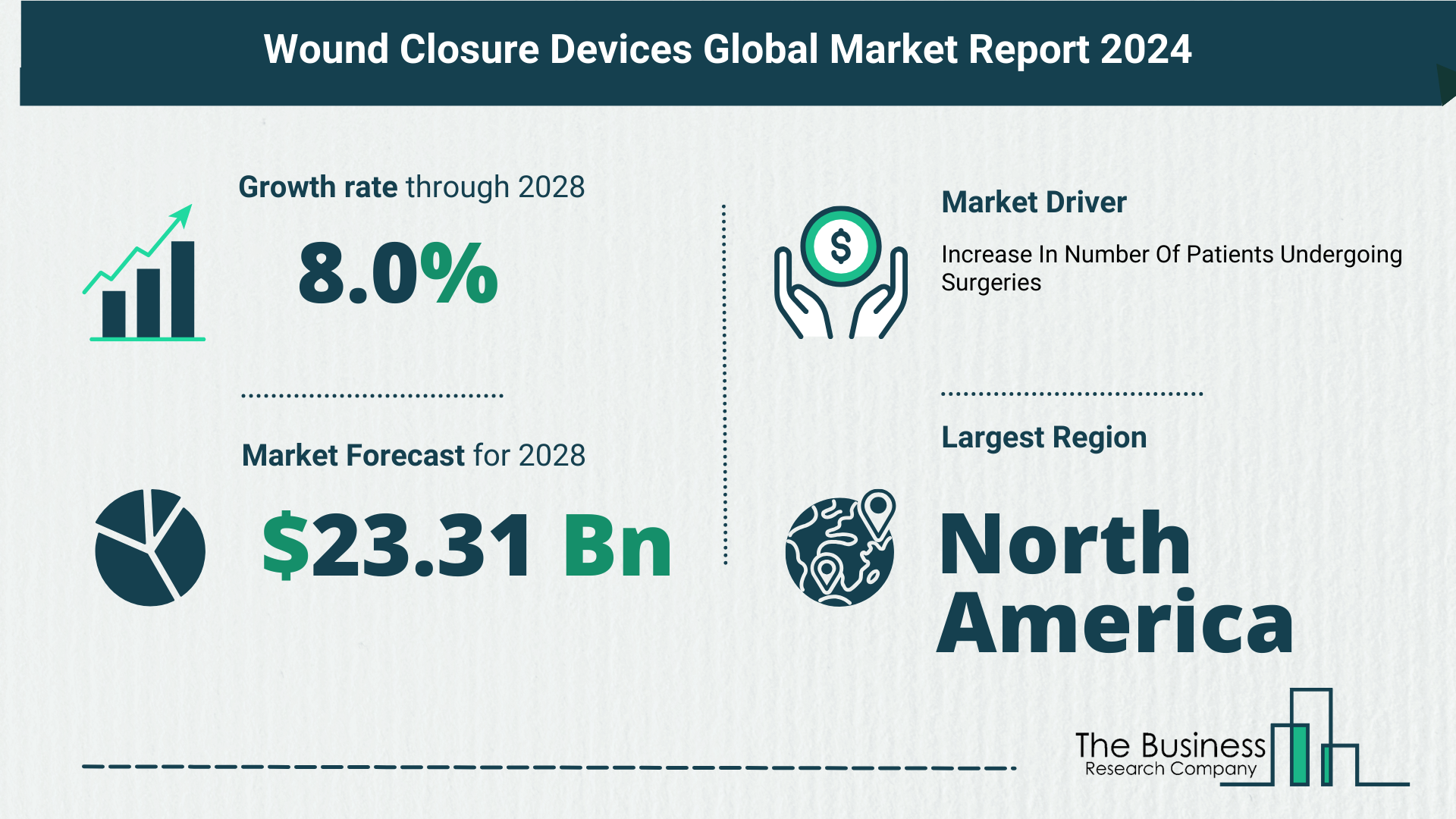
    • The wound closure devices market has witnessed robust growth, with a size of $15.82 billion in 2023, expected to reach $17.13 billion in 2024 at a CAGR of 8.3%.
    • Factors contributing to historic and forecasted growth include surgical procedures, aging population, chronic diseases, traumatic injuries, minimally invasive surgeries, and patient preference for aesthetic closure.

    Future Growth Prospects

    • The market is projected to expand to $23.31 billion by 2028, driven by patient safety, telemedicine, biodegradable devices, home healthcare, and outpatient procedures.
    • Major trends include minimally invasive techniques, accelerated wound healing, demand for hemostats, disposable devices, and regulatory initiatives.

    Surge In Surgical Procedures Boosts Wound Closure Devices Market

    • Surgical procedures’ rise propels the demand for wound closure devices, addressing chronic, traumatic, and surgical wounds, skin grafts, and flaps.
    • Notable increases in cosmetic and specialized surgeries indicate market growth potential.
    • Major players include Abbott Laboratories, Johnson & Johnson, and Smith & Nephew among others.

    View More On The Wound Closure Devices Market Report 2024 – https://www.thebusinessresearchcompany.com/report/wound-closure-devices-global-market-report

    Pioneering Technological Advancements Shaping The Future Of Wound Closure Devices

    • Technology plays a crucial role in market growth, with companies focusing on flexible solutions to gain a competitive edge.
    • Ethicon Endo-Surgery introduced the ECHELONTM+ Stapler with GST Reloads, enhancing staple line security and reducing complications.
    • Essity AB’s acquisition of Hydrofera LLC aims to expand its medical solutions business, enhancing innovation and product diversity.

    Segmentation and Market Dynamics

    • The market is segmented by product type, wound type, and end-use, catering to diverse healthcare needs.
    • North America leads the market, with significant contributions to revenue and innovation.

    In conclusion, the wound closure devices market’s promising growth trajectory underscores its vital role in modern healthcare. Technological innovations, coupled with increasing surgical procedures and patient safety concerns, are driving market expansion. As companies continue to invest in R&D and strategic acquisitions, the industry is poised for further advancement, catering to the evolving needs of patients and healthcare providers alike.

    Request A Sample Of The Global Wound Closure Devices Market Report 2024:
    https://www.thebusinessresearchcompany.com/sample_request?id=7958&type=smp

  • Understand How The Womens Health Market Is Poised To Grow Through 2024-2033

    Understand How The Womens Health Market Is Poised To Grow Through 2024-2033

    The Business Research Company’s global market reports are now updated with the latest market sizing information for the year 2024 and forecasted to 2033

    As per The Business Research Company’s Womens Health Global Market Report 2024, the template market is expected to show significant growth in the forecast period.

    The women’s health market stands at the forefront of healthcare innovation, driven by a combination of factors including demographic shifts, technological advancements, and evolving healthcare needs. Let’s explore the dynamics, trends, and projections shaping this vital sector.

    Addressing the Aging Population Surge

    • The aging population is a significant catalyst driving the growth of the women’s health market.
    • With a rising proportion of elderly individuals, particularly women aged 65 and older, specialized healthcare interventions become imperative.
    • Women-centric diseases such as osteoporosis, breast cancer, and menopause-related issues underscore the need for tailored healthcare solutions.
    • The World Health Organization projects a significant demographic shift, emphasizing the increasing importance of women’s health in global healthcare agendas.

    Key Players and Market Landscape

    • Major companies such as AbbVie Inc., Bayer AG, and Pfizer Inc. play pivotal roles in advancing women’s health through research, development, and market presence.
    • Strategic acquisitions, like Partners Group’s acquisition of Axia Women’s Health, contribute to market expansion and portfolio diversification.
    • Market segmentation includes product types, age groups, treatment modalities, applications, and distribution channels, catering to diverse healthcare needs and preferences.

    Innovations Redefining Personalized Care

    • Innovations in women’s health underscore a growing trend towards personalized care and precision medicine.
    • Companies like FemTec Health leverage technology and data analytics to develop tailored healthcare solutions.
    • Platforms such as BiomeAI integrate genetic, consumer, and biometric data, empowering women with personalized insights and holistic healthcare experiences.

    Market Growth and Projections

    • The women’s health market has witnessed steady growth, with projections indicating continued expansion.
    • From $41.22 billion in 2023, the market is forecasted to reach $43.24 billion in 2024, reflecting a CAGR of 4.9%.
    • Anticipated growth to $53.69 billion by 2028, with a CAGR of 5.6%, underscores the sector’s resilience and potential.

    View More On The Womens Health Market Report 2024 – https://www.thebusinessresearchcompany.com/report/womens-health-global-market-report

    Trends Driving Market Evolution

    • Digital health solutions, fertility tracking, and non-hormonal contraceptive options emerge as prominent trends shaping the women’s health landscape.
    • Expanded access to fertility treatments and advancements in reproductive medicine contribute to improved outcomes and patient experiences.
    • Integration of artificial intelligence (AI) enhances diagnostic capabilities, streamlines healthcare delivery, and fosters informed decision-making.

    Regional Dynamics and Market Outlook

    • North America dominates the women’s health market, with Asia-Pacific poised for rapid growth.
    • The Asia-Pacific region represents a burgeoning market, fueled by increasing healthcare investments, changing demographics, and rising healthcare awareness.

    Embracing the Future of Women’s Health

    • As the women’s health market continues to evolve, stakeholders must prioritize patient-centered care, innovation, and accessibility.
    • Collaboration between healthcare providers, technology innovators, and policymakers is essential to address emerging healthcare challenges and improve health outcomes.
    • By embracing digital solutions, fostering research and development, and advocating for women’s health rights, the industry can drive positive change and empower women worldwide.

    In conclusion, the women’s health market reflects a dynamic landscape characterized by innovation, growth, and evolving healthcare paradigms. By leveraging technological advancements, embracing patient-centric approaches, and fostering collaborative partnerships, the industry can unlock new opportunities and pave the way for a healthier future for women globally.

    Request A Sample Of The Global Womens Health Market Report 2024:
    https://www.thebusinessresearchcompany.com/sample_request?id=8017&type=smp

  • Key Trends And Drivers In The Womens Health And Beauty Supplements Market 2024

    Key Trends And Drivers In The Womens Health And Beauty Supplements Market 2024

    The Business Research Company’s market reports offer an in-depth analysis on the market’s growth potential, major drivers, key trends and more.

    The women’s health and beauty supplements market has witnessed remarkable growth, projecting an escalation from $75.41 billion in 2023 to $83.65 billion in 2024, boasting a compound annual growth rate (CAGR) of 10.9%. This expansion stems from a myriad of factors including an aging population, evolving lifestyles, a preference for natural products, preventive healthcare initiatives, and heightened emphasis on skin health.

    Anticipated Growth Trajectory

    1. Historic Growth Drivers: Aging population, lifestyle changes, and preventive healthcare measures.
    2. Forecasted Surge: Expectations soar with a projected value of $129.04 billion by 2028, attributed to innovation in ingredient formulations, cultural shifts, and advancements in delivery systems.
    3. Major Trends: Digital health, beauty-from-within concept, menopause support, CBD products, collagen supplementation, personalized nutrition, and anti-aging ingredients integration.

    Rising Prevalence Of Women’s Health Disorders Fuels Growth In The Market
    An escalating prevalence of health disorders among women, such as anemia and arthritis, propels the demand for health and beauty supplements. Deficiencies in essential vitamins and minerals contribute to these disorders, highlighting the necessity for supplements like vitamin B12 and calcium. Notably, statistics from the Centers for Disease Control and Prevention (CDC) project a significant rise in doctor-diagnosed arthritis cases among women by 2040, driving market growth.

    Innovative Products Transforming the Landscape

    1. Product Innovation: Key players focus on introducing innovative products tailored to women’s health needs.
    2. Digital Support Solutions: Integration of digital technologies enhances user experience and effectiveness of supplements.
    3. Case in Point: Health & Her’s Perimenopause MIND+ supplement coupled with a technologically advanced menopause tracker exemplifies innovation in addressing women’s health concerns.

    Read More On The Womens Health And Beauty Supplements Market Report 2024 – https://www.thebusinessresearchcompany.com/report/womens-health-and-beauty-supplements-global-market-report

    Nestle Strengthens Health And Nutrition Portfolio
    Nestle’s acquisition of The Bountiful Company’s vitamin brands for $5.75 billion bolsters its health and nutrition portfolio. This strategic move underscores Nestle’s commitment to catering to diverse customer needs and expanding its market presence.

    Market Segmentation and Regional Dynamics

    1. By Product: Segmented into vitamins, minerals, enzymes, botanicals, proteins, omega-3, probiotics, and other products.
    2. By Consumer Group: Caters to various consumer groups including prenatal, postnatal, PMS, perimenopause, postmenopause, and others.
    3. By Distribution Channel: Hypermarkets, health and beauty retail stores, drug stores, online pharmacies, and e-commerce platforms.
    4. By Application: Addresses beauty and women’s health concerns.
    5. By End-Users Age Group: Distinguished by age groups for targeted supplementation.

    Asia-Pacific emerges as the largest region in the women’s health and beauty supplements market, with the Middle East & Africa expected to witness rapid growth in the forecast period.

    Conclusion
    The women’s health and beauty supplements market’s exponential growth trajectory reflects evolving consumer preferences, technological advancements, and proactive healthcare initiatives. As awareness of women’s health issues expands and innovative solutions emerge, the market is poised for substantial expansion. Key players’ focus on product innovation, strategic acquisitions, and market segmentation underscores the industry’s commitment to meeting diverse consumer needs and enhancing overall well-being. As the market continues to evolve, collaboration, innovation, and consumer-centric approaches will remain integral to sustained growth and success.

    Request for A Sample Of The Global Womens Health And Beauty Supplements Market Report:
    https://www.thebusinessresearchcompany.com/sample_request?id=8537&type=smp