Year: 2024

  • Global In-Vitro Toxicology Testing Market Overview 2024: Size, Drivers, And Trends

    Global In-Vitro Toxicology Testing Market Overview 2024: Size, Drivers, And Trends

    The Business Research Company’s global market reports provide comprehensive analysis on the various markets in 27 industries across 60 geographies.

    Market Growth and Projections

    • Rapid expansion from $10.31 billion in 2023 to $11.46 billion in 2024 at a CAGR of 11.1%.
    • Forecasted growth to $17.13 billion in 2028, with a CAGR of 10.6%.
    • Historic growth fueled by regulatory requirements, ethical concerns, and drug development demands.

    Future Growth Drivers and Trends

    • Emphasis on personalized medicine and predictive toxicology models.
    • Expansion of environmental testing and challenges in oncology drug development.
    • Trends like multi-organ chips and organ-on-a-chip technologies are expected to shape the market.

    Healthcare Expenditure Propels Market Expansion

    • Rising healthcare expenditure globally is driving demand for in-vitro toxicology testing.
    • Increased spending on healthcare services and pharmaceuticals fuels market growth.
    • Statistics underscore the significant rise in healthcare expenditure, particularly in the United States.

    View More On The In-Vitro Toxicology Testing Market Report 2024 – https://www.thebusinessresearchcompany.com/report/in-vitro-toxicology-testing-global-market-report

    Technological Advancements Fuel Market Momentum

    • Innovative cell culture systems are driving growth and innovation.
    • Companies are investing in new technologies to enhance their market positions.
    • Examples include Amerigo Scientific’s launch of 3D cell culture for precision medicine.

    Strategic Acquisitions Enhance Market Presence

    • Acquisitions, such as Aragen Life Sciences acquiring Intox Private Limited, bolster industry capabilities.
    • Aragen expands its drug discovery and development services with the acquisition of Intox Private Limited.

    Market Segmentation

    • Segmented by product/service, method, technology, application, and industry.
    • Product/service categories include consumables, assays, equipment, software, and services.
    • Methods range from cellular assays to in silico models and ex vivo models.
    • Technologies encompass cell culture, high-throughput methods, and toxicogenomics.
    • Applications span neurotoxicity, dermal toxicity, cytotoxicity, and more.
    • Industries served include pharmaceuticals, cosmetics, food, and chemicals.

    Regional Dynamics

    • North America led the in-vitro toxicology testing market in 2023.
    • Asia-Pacific is anticipated to be the fastest-growing region during the forecast period.

    Conclusion
    The in-vitro toxicology testing market is experiencing robust growth, driven by factors such as healthcare expenditure, technological advancements, and strategic acquisitions. As healthcare spending continues to rise globally, demand for toxicology testing solutions increases. Technological innovations, including 3D cell culture systems, are reshaping the industry landscape, offering alternatives to traditional testing methods. Strategic acquisitions, such as Aragen Life Sciences’ purchase of Intox Private Limited, reflect the industry’s commitment to expansion and service enhancement. With market segmentation covering various products, methods, and industries, the in-vitro toxicology testing market is poised for continued growth and innovation, particularly in regions like Asia-Pacific. As the industry evolves, stakeholders must remain agile and responsive to emerging trends and market demands to capitalize on growth opportunities effectively.

    Request A Sample Of The Global In-Vitro Toxicology Testing Market Report 2024:
    https://www.thebusinessresearchcompany.com/sample_request?id=7987&type=smp

  • 5 Key Insights On The Intravenous Immunoglobulin Market 2024

    5 Key Insights On The Intravenous Immunoglobulin Market 2024

    The Business Research Company’s global market reports are now updated with the latest market sizing information for the year 2024 and forecasted to 2033

    As per The Business Research Company’s Intravenous Immunoglobulin Global Market Report 2024, the intravenous immunoglobulin market is expected to show significant growth in the forecast period.

    The intravenous immunoglobulin market has experienced robust growth in recent years, driven by a multitude of factors ranging from demographic shifts to technological advancements. Let’s explore the trends and projections shaping this dynamic landscape.

    Steady Growth Trajectory: A Statistical Insight

    • Market size surged from $13.82 billion in 2023 to $14.84 billion in 2024, marking a Compound Annual Growth Rate (CAGR) of 7.3%.
    • Projections indicate continued expansion, with the market anticipated to reach $20.24 billion by 2028, boasting a CAGR of 8.1%.

    Drivers of Market Expansion
    Rising Geriatric Population Fuels Growth In The Intravenous Immunoglobulin Market
    The burgeoning geriatric demographic emerges as a primary driver propelling the intravenous immunoglobulin market forward. As individuals age, their immune systems weaken, necessitating supplementary immunoglobulins to bolster immunity.

    • India’s elderly population expected to reach 194 million by 2031, highlighting the escalating demand for immunoglobulin products.
    • Globally, the proportion of individuals aged 60 and above is projected to rise significantly by 2030, accentuating the need for intravenous immunoglobulin therapies.

    View More On The Intravenous Immunoglobulin Market Report 2024 – https://www.thebusinessresearchcompany.com/report/intravenous-immunoglobulin-global-market-report

    Market Innovations: Catalysts of Advancement
    Innovative Human Plasma-Derived IVIG Products Drive Advancements
    Product innovation stands at the forefront of market evolution, with companies focusing on developing cutting-edge solutions to address unmet medical needs and rare diseases.

    • Octapharma’s ‘Octagam 10%’ approval marks a milestone in dermatomyositis treatment, underscoring the potential of human plasma-derived IVIG products.
    • Grifols’ acquisition of GigaGen Inc. underscores its commitment to fostering research and innovation, augmenting its portfolio with biotechnological advancements.

    Market Segmentation: Addressing Diverse Needs
    The intravenous immunoglobulin market encompasses a diverse array of product types, distribution channels, applications, and end-users, catering to varied healthcare demands.

    • Types include Immunoglobulin G (IgG), Immunoglobulin M (IgM), Immunoglobulin A (IgA), Immunoglobulin E (IgE), and Immunoglobulin D (IgD).
    • Distribution channels span Hospital Pharmacy, Retail Pharmacy, and Other Distribution Channels.
    • Applications range from Hypogammaglobulinemia to Chronic Inflammatory Demyelinating Polyneuropathy (CIDP) and beyond.
    • End-users encompass Hospitals, Clinics, and Home Care settings.

    Regional Dynamics: Mapping Market Growth
    North America emerged as the leading region in the intravenous immunoglobulin market in 2023, with Asia-Pacific poised for exponential growth in the forecast period.

    • Asia-Pacific’s burgeoning healthcare infrastructure and rising healthcare expenditure position it as the fastest-growing region, presenting lucrative opportunities for market players.

    Conclusion: Charting the Course Ahead
    As the intravenous immunoglobulin market continues its upward trajectory, propelled by demographic shifts, technological innovations, and strategic collaborations, stakeholders must remain adaptive to evolving market dynamics.

    • Collaboration and innovation are pivotal in addressing emerging healthcare challenges and catering to diverse patient needs.
    • With a keen focus on research and development, alongside a commitment to patient-centric care, the intravenous immunoglobulin market is poised for transformative growth in the years ahead.

    Navigating this dynamic landscape requires a holistic approach, blending scientific advancements with a patient-centric ethos to drive innovation and enhance healthcare outcomes on a global scale. As market players harness the power of innovation and collaboration, the future of intravenous immunoglobulin therapies appears promising, heralding a new era of healthcare excellence and accessibility.

    Request A Sample Of The Global Intravenous Immunoglobulin Market Report 2024:
    https://www.thebusinessresearchcompany.com/sample_request?id=8538&type=smp

  • How Is The Hospital EMR Systems Market Expected To Grow Through 2024-2033

    How Is The Hospital EMR Systems Market Expected To Grow Through 2024-2033

    The Business Research Company’s global market reports are now updated with the latest market sizing information for the year 2024 and forecasted to 2033

    According to The Business Research Company’s Hospital EMR Systems Global Market Report 2024, the hospital EMR systems market is expected to show promising growth in the forecast period.

    A Thriving Market Landscape

    • The hospital EMR systems market has witnessed rapid growth, surging from $17.31 billion in 2023 to $19.08 billion in 2024, with a compound annual growth rate (CAGR) of 10.2%.
    • Historic growth is fueled by digital transformation in healthcare, government regulations, and the imperative for data accuracy and accessibility.

    Charting Future Trajectories: Projections and Trends

    • Forecasts indicate robust growth, with the market expected to reach $25.62 billion by 2028, driven by population health management, precision medicine, cybersecurity measures, and telehealth integration.
    • Major trends include cloud-based EMR adoption, interoperability, mobile access, population health management, and collaboration with health tech startups.

    Rapid Growth Of EMR Adoption Fuels Hospital EMR Systems Market

    • The global surge in EMR adoption is a key driver of market expansion.
    • EMR solutions streamline patient data management and enhance healthcare delivery efficiency.
    • Reports show a significant increase in EMR adoption decisions across various healthcare institutions, indicating growing market traction.

    Major Players and User-Friendly Platforms

    • Key players in the market include Cerner Corporation, Epic Systems Corporation, Allscripts Healthcare Solutions Inc., and GE Healthcare Technologies Inc.
    • Companies prioritize user-friendly platforms to offer reliable services, such as Syra Health Corp’s Careplus, which integrates telehealth and streamlines clinical operations.
    • User-friendly platforms enhance efficiency and facilitate seamless navigation for healthcare professionals.

    View More On The Hospital EMR Systems Market Report 2024 – https://www.thebusinessresearchcompany.com/report/hospital-emr-systems-global-market-report

    Netsmart Technologies Expands Portfolio

    • Netsmart Technologies’ acquisition of TheraOffice in April 2022 marks its foray into the physical therapy and rehabilitation space.
    • TheraOffice offers EMR services tailored for physical therapy and rehabilitation providers, expanding Netsmart’s market reach.

    Segmentation and Market Dynamics

    • The hospital EMR systems market is segmented by component, type, delivery mode, and hospital size, catering to diverse healthcare needs.
    • North America leads the market, reflecting the region’s proactive approach towards digital healthcare adoption.

    Conclusion: Pioneering Healthcare Transformation

    The hospital EMR systems market embodies a pivotal shift towards digitized healthcare ecosystems. With a focus on data accuracy, accessibility, and patient-centric care, EMR solutions revolutionize healthcare delivery and improve patient outcomes. As major players invest in innovative platforms and strategic acquisitions, the market expands its footprint across diverse healthcare domains. Cloud-based adoption, interoperability, and telehealth integration redefine healthcare paradigms, offering seamless access to critical patient information and fostering collaborative care models. As the market evolves amidst global health challenges, precision medicine imperatives, and cybersecurity concerns, stakeholders navigate towards a future where technology enhances healthcare accessibility, efficiency, and quality. With a shared commitment to healthcare innovation, the hospital EMR systems market pioneers transformative solutions that empower healthcare professionals and improve patient well-being on a global scale.

    Request A Sample Of The Global Hospital EMR Systems Market Report 2024:
    https://www.thebusinessresearchcompany.com/sample_request?id=7891&type=smp

  • Future Growth Forecast For The Hospital Capacity Management Solutions Global Market 2024-2033

    Future Growth Forecast For The Hospital Capacity Management Solutions Global Market 2024-2033

    The Business Research Company’s global market reports provide comprehensive analysis on the various markets in 27 industries across 60 geographies.

    Rapid Expansion and Future Projections

    • The hospital capacity management solutions market has surged, climbing from $3.46 billion in 2023 to an estimated $4.03 billion in 2024, with a notable CAGR of 16.5%.
    • Projected growth to reach $7.44 billion by 2028, at a robust CAGR of 16.6%.
    • Historic expansion fueled by patient safety initiatives, healthcare infrastructure improvement, and real-time monitoring to optimize patient flow.
    • Forecasted surge attributed to digital transformation, real-time analytics, and interoperability initiatives.

    Fostering Growth Through Government Initiatives

    • Government initiatives worldwide drive investment in hospital capacity management solutions to enhance patient satisfaction and care quality.
    • Example: The Government of India’s US$ 40 million health project with the World Bank to improve healthcare infrastructure in Meghalaya.
    • Government support leads to the establishment of e-Hospitals and other infrastructure enhancements, fostering market growth.

    View More On The Hospital Capacity Management Solutions Market Report 2024 – https://www.thebusinessresearchcompany.com/report/hospital-capacity-management-solutions-global-market-report

    GE Healthcare’s Real-Time Potential Unleashed

    • Technological advancement shapes the hospital capacity management solutions market.
    • GE Healthcare’s partnership with Apprise Health Insights enables real-time occupancy statistics and resource optimization.
    • Real-time data utilization enhances decision-making and improves statewide capacity management.

    Alcidion’s Strategic Acquisition Elevates Market Position

    • Alcidion Corporation’s acquisition of ExtraMed Ltd. enhances its presence in the UK patient flow market.
    • Acquisition enables cross-selling opportunities and strengthens Alcidion’s product line.
    • ExtraMed Ltd. specializes in patient flow management, complementing Alcidion’s portfolio.

    Market Segmentation and Regional Outlook

    • Segmented by Component: Software and Services.
    • Product categories include Asset Management, Patient Flow Management Solutions, Workforce Management, and Quality Patient Care.
    • Mode of Delivery includes On-Premise and Cloud-based solutions.
    • Applications range from Standalone to Integrated solutions, catering to Hospitals and Ambulatory Surgical Centers.
    • North America led the hospital capacity management solutions market in 2023, showcasing significant potential for growth.

    Conclusion: Advancing Healthcare Delivery The hospital capacity management solutions market witnesses remarkable growth, propelled by technological innovations and government initiatives aimed at enhancing patient care and safety. Real-time data analytics, interoperability, and digital transformation reshape healthcare delivery, empowering hospitals to optimize resources and improve patient outcomes. Partnerships and strategic acquisitions further fortify market players’ positions, fostering innovation and expanding market reach. As healthcare systems globally face unprecedented challenges, collaborative models and data-driven decision-making emerge as cornerstones in improving healthcare delivery. Through sustained investment and innovation, the hospital capacity management solutions market navigates towards a future where healthcare delivery is efficient, effective, and patient-centric. In this journey towards enhanced healthcare management, technology, collaboration, and a commitment to quality care pave the way for a healthier tomorrow.

    Request A Sample Of The Global Hospital Capacity Management Solutions Market Report 2024:
    https://www.thebusinessresearchcompany.com/sample_request?id=8354&type=smp

  • Understand How The Home Healthcare Equipment Market Is Poised To Grow Through 2024-2033

    Understand How The Home Healthcare Equipment Market Is Poised To Grow Through 2024-2033

    The Business Research Company’s global market reports are now updated with the latest market sizing information for the year 2024 and forecasted to 2033

    As per The Business Research Company’s Home Healthcare Equipment Global Market Report 2024, the home healthcare equipment market is expected to show significant growth in the forecast period.

    Market Expansion: A Closer Look

    The home healthcare equipment market has experienced significant growth in recent years, owing to various factors:

    • Government initiatives promoting home healthcare
    • Patient preference for home-based care
    • Cost-effective care solutions
    • Improved patient outcomes
    • Awareness programs enhancing understanding
    • Rural healthcare access improvements
    • Infrastructure development in healthcare

    Forward Momentum: Growth Predictions

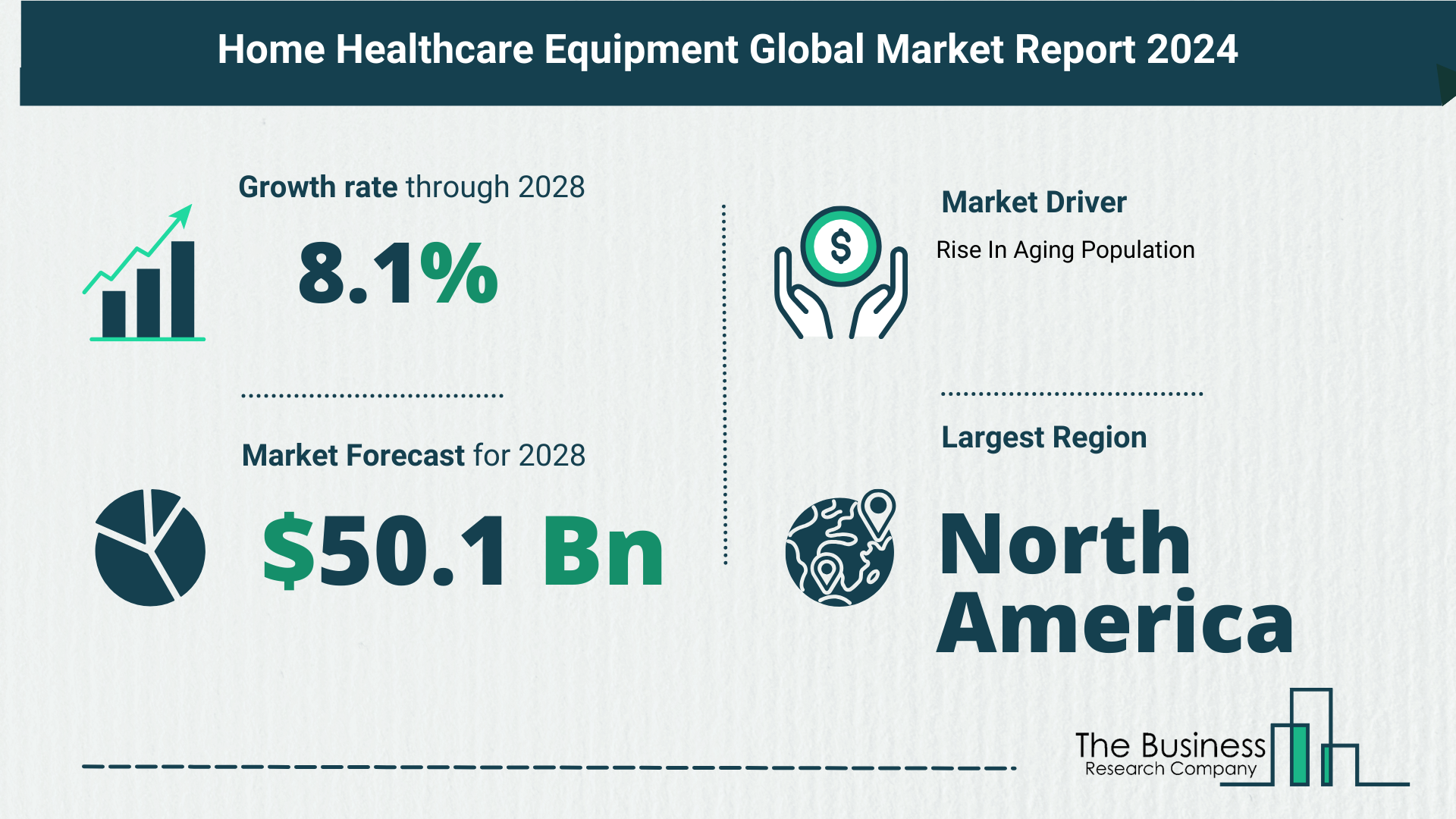
    The market is poised for substantial growth, with a projected increase from $34.22 billion in 2023 to $36.74 billion in 2024, boasting a Compound Annual Growth Rate (CAGR) of 7.4%. Looking ahead, the market is forecasted to reach $50.1 billion by 2028, with a CAGR of 8.1%.

    Driving Forces: Understanding the Dynamics

    • Digital health adoption fuels market growth
    • Integration of smart home technologies
    • Consumer-driven healthcare preferences
    • Advancements in remote diagnostics
    • Telemedicine services expansion

    Addressing Aging Population Needs

    The rise in the aging population emerges as a key driver for the home healthcare equipment market:

    • Aging population seeks control over health
    • Home healthcare equipment aids in enhancing strength and preventing injuries
    • Instances such as WHO’s projection of 2.1 billion elderly by 2050 underscore the significance
    • Market responds to growing needs of the elderly demographic

    Key Players and Market Landscape

    Leading companies in the home healthcare equipment market include:

    • LifeScan Inc.
    • Microlife Corporation
    • A&D Company Limited
    • Abbott Laboratories
    • And many more…

    View More On The Home Healthcare Equipment Market Report 2024 – https://www.thebusinessresearchcompany.com/report/home-healthcare-equipment-global-market-report

    Technological Innovation: Shaping the Landscape

    • Technological advancements drive market trends
    • Companies integrate new technologies to enhance offerings
    • Example: CommScope’s HomeSight system revolutionizes homecare with smart camera integration
    • Improved end-user experience and enhanced care services delivery

    Strategic Acquisitions: Expanding Capabilities

    • Paradigm’s acquisition of HomeCare Connect signals market expansion
    • Acquisition broadens specialized network and clinical solution sets
    • Extends accountable care management into the home health industry
    • HomeCare Connect enriches Paradigm’s product line with home health and durable medical equipment services

    Segmentation Insights: Understanding Market Dynamics

    The home healthcare equipment market is segmented based on:

    1. Product: Blood Glucose Monitor, Blood Pressure Monitor, Rehabilitation Equipment, Other Products
    2. Service: Rehabilitation, Infusion Therapy, Unskilled Care, Respiratory Therapy, Pregnancy Care, Skilled Nursing, Hospice and Palliative Care
    3. Application: Diagnostics and Monitoring, Therapeutics, Care and Rehabilitation, Other Applications
    4. End User: Hospitals or Clinics or Diagnostic Labs, Research and Development Centers, Home Care Settings

    Regional Dynamics: North America Leads the Charge

    • North America emerges as the largest region in the home healthcare equipment market in 2023
    • Market dynamics reflect region’s infrastructure and technological advancements

    In conclusion, the home healthcare equipment market stands at the forefront of healthcare innovation, driven by technological advancements and evolving patient needs. As the market continues to expand and embrace new trends, it holds the promise of improving patient outcomes and enhancing the quality of care delivered in the comfort of one’s home.

    Request A Sample Of The Global Home Healthcare Equipment Market Report 2024:
    https://www.thebusinessresearchcompany.com/sample_request?id=7867&type=smp

  • What Is The Forecast Growth Rate For The High Level Disinfection Services Market?

    What Is The Forecast Growth Rate For The High Level Disinfection Services Market?

    The Business Research Company’s market reports offer an in-depth analysis on the market’s growth potential, major drivers, key trends and more.

    The high-level disinfection services market has experienced robust growth, with projections indicating an increase from $28.36 billion in 2023 to $31 billion in 2024, boasting a compound annual growth rate (CAGR) of 9.3%. This growth is driven by several factors:

    • Increasing healthcare facility compliance
    • Surge in surgical procedures
    • Stringent regulatory standards
    • Focus on patient safety
    • Global pandemics and infectious disease outbreaks
    • Growing geriatric population

    Anticipated Growth Trajectory

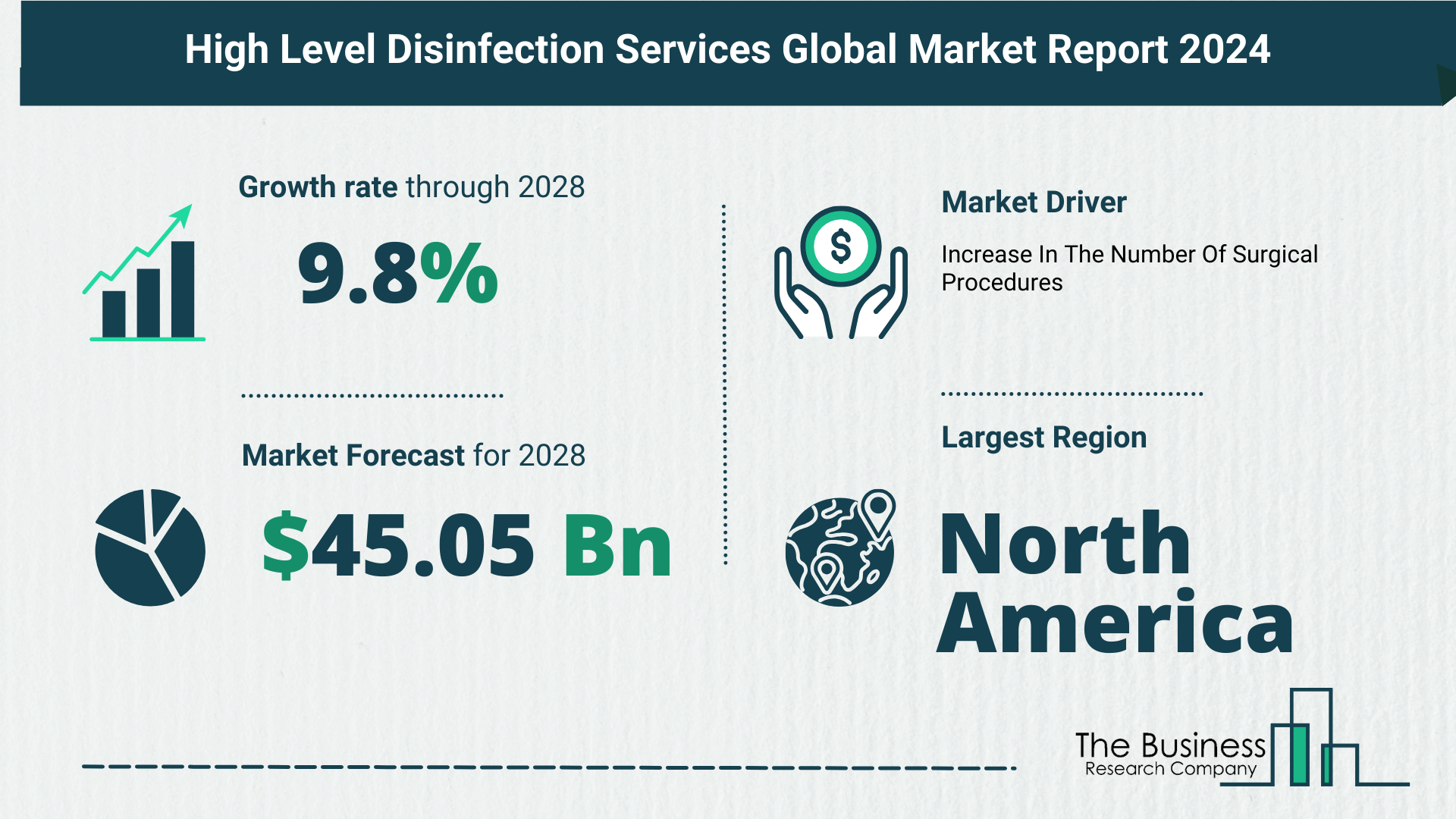
    Expectations point towards continued strong growth in the high-level disinfection services market, with projections reaching $45.05 billion by 2028, sustaining a CAGR of 9.8%. The forecasted growth in the coming years is attributed to various factors:

    • Demand from emerging markets
    • Emphasis on personalized medicine and advanced therapies
    • Global health security initiatives
    • Sustainable disinfection practices
    • Increased awareness of antimicrobial resistance

    Rising Surgical Procedures Drive Market Growth

    The surge in the number of surgical procedures is expected to be a significant driver of growth in the high-level disinfection services market:

    • Surgical procedures, ranging from aesthetic plastic surgery to critical medical interventions, are witnessing a substantial increase.
    • Proper disinfection of medical equipment and surgical tools is crucial to prevent infections and ensure patient safety.
    • The demand for high-level disinfection services is directly correlated with the rise in surgical interventions, emphasizing the need for effective sterilization protocols.

    Read More On The High Level Disinfection Services Market Report 2024 – https://www.thebusinessresearchcompany.com/report/high-level-disinfection-services-global-market-report

    Technological Advancements Fuel Innovation

    Technological advancements play a pivotal role in revolutionizing high-level disinfection services:

    • Companies are investing in innovative solutions, such as non-invasive, chemical-free UVC disinfection systems, to enhance sterilization processes.
    • Technological innovations drive efficiency, reliability, and sustainability in disinfection practices, ensuring superior patient outcomes.
    • Advancements like the Thor UVC disinfection system by Bio-One Sciences exemplify the transformative potential of technology in infection prevention and control.

    Strategic Acquisitions Shape the Market Landscape

    Strategic acquisitions and collaborations reshape the competitive landscape of the high-level disinfection services market:

    • Steris Corporation’s acquisition of Cantel Medical Corporation underscores the industry’s consolidation efforts and expansion of infection prevention portfolios.
    • Mergers and acquisitions enable companies to diversify their product offerings and cater to a broader customer base, driving innovation and market growth.

    Market Segmentation and Regional Dynamics

    The high-level disinfection services market is segmented based on key criteria:

    1. Services:Including in-house and outsourced disinfection services.
    2. Compound:Encompassing formaldehyde, glutaraldehyde, hydrogen peroxide, and other components.
    3. End-User:Catering to hospitals, diagnostic laboratories, pharmaceutical companies, research institutes, and other end users.

    Conclusion

    The high-level disinfection services market continues to evolve, propelled by advancements in technology, rising demand for surgical procedures, and stringent regulatory standards. Innovations in disinfection methods and strategic collaborations redefine industry standards, paving the way for enhanced patient safety and infection control. With an emphasis on sustainable practices and technological integration, the future of the high-level disinfection services market appears promising, addressing critical needs in healthcare facilities worldwide.

    Request for A Sample Of The Global High Level Disinfection Services Market Report:
    https://www.thebusinessresearchcompany.com/sample_request?id=8087&type=smp

  • Overview Of The Hereditary Cancer Testing Market 2024-2033: Growth And Major Players Analysis

    Overview Of The Hereditary Cancer Testing Market 2024-2033: Growth And Major Players Analysis

    The Business Research Company’s global market reports are now updated with the latest market sizing information for the year 2024 and forecasted to 2033

    The hereditary cancer testing market has experienced rapid growth driven by increasing awareness of hereditary cancers and advancements in genetic testing technologies. As the understanding of genetic predispositions to cancer expands, so does the demand for accurate and comprehensive testing solutions.

    Market Growth Trajectory

    • In 2023, the hereditary cancer testing market stood at $3.97 billion, set to surge to $4.43 billion in 2024, exhibiting a compound annual growth rate (CAGR) of 11.6%.
    • Historic growth factors include rising incidence of hereditary cancers, government initiatives, and improved insurance coverage.
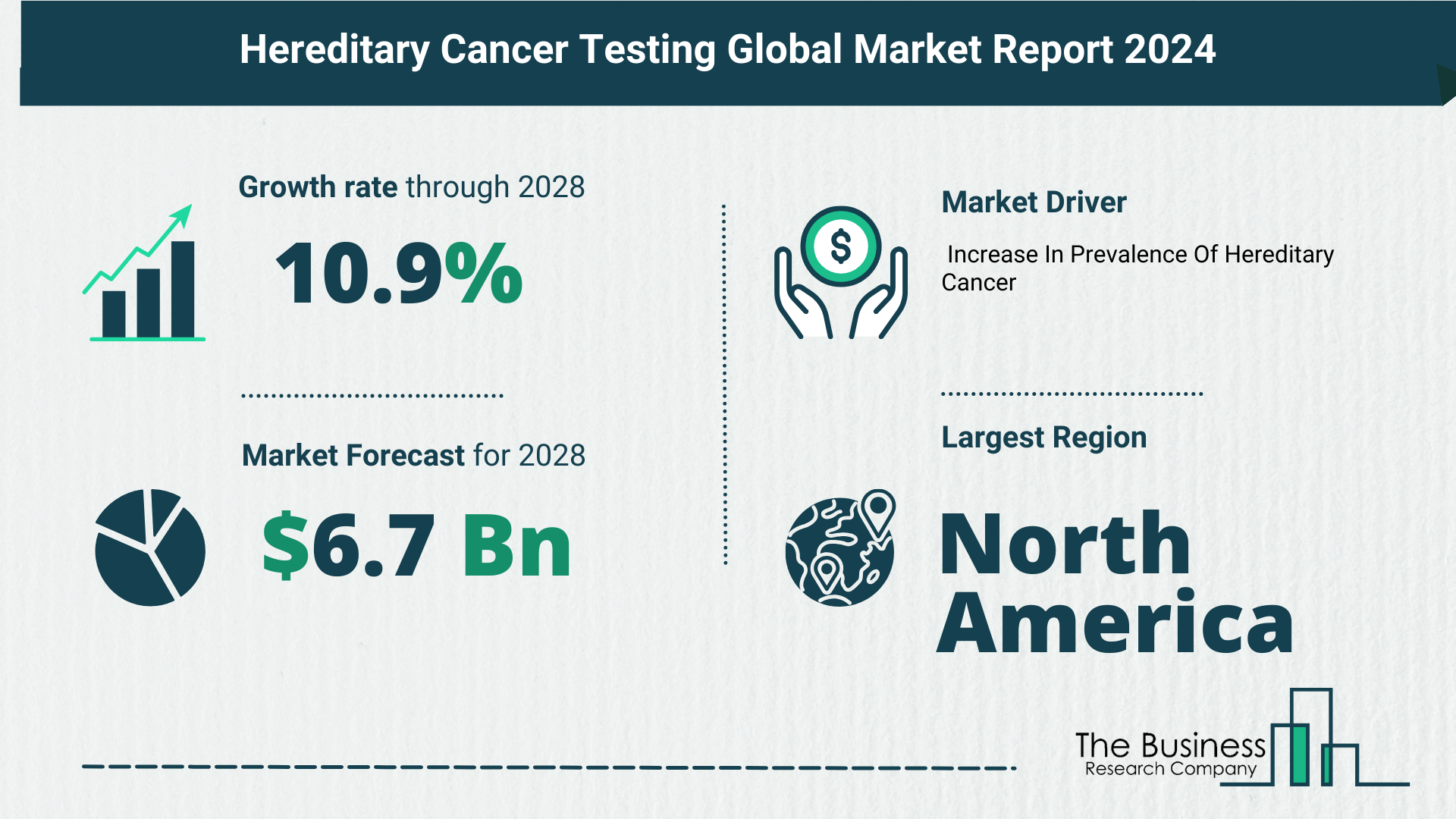
    • Forecasts project significant expansion to $6.7 billion by 2028, fueled by advancements in precision medicine and global health initiatives.

    Rising Demand for Hereditary Cancer Testing

    • The increasing prevalence of hereditary cancer syndromes propels the demand for hereditary cancer testing.
    • Hereditary cancer testing enables the detection of specific gene mutations associated with increased cancer risk.
    • Approximately 10% of pancreatic cancer cases and 20% of cancer patients overall have a hereditary component.

    View More On The Hereditary Cancer Testing Market Report 2024 – https://www.thebusinessresearchcompany.com/report/hereditary-cancer-testing-global-market-report

    Technological Innovations

    • Technological innovation is a key trend shaping the hereditary cancer testing market.
    • Companies like Myriad Genetics are pioneering cutting-edge approaches to genetic testing.
    • Myriad Genetics’ Polygenic Breast Cancer Risk Assessment Score offers personalized risk assessments for women.

    Strategic Acquisitions

    • Strategic acquisitions play a pivotal role in expanding companies’ genetic testing portfolios.
    • Exact Sciences’ acquisition of PreventionGenetics enhances its cancer testing capabilities and broadens its genetic testing portfolio.
    • PreventionGenetics brings comprehensive genetic testing capabilities and clinical expertise to Exact Sciences’ portfolio.

    Market Segmentation

    1. Test Type: Multi Panel Test, Single-site Genetic Test
    2. Indication: Breast Cancer, Ovarian Cancer, Colorectal Cancer, Other Indications
    3. End User: Hospitals, Clinics, Diagnostic Centers

    Regional Dynamics

    • North America dominated the hereditary cancer testing market in 2023, driven by advanced healthcare infrastructure and awareness.
    • The market is witnessing significant growth in Asia-Pacific, fueled by increasing healthcare spending and awareness of hereditary cancer risks.

    Conclusion

    The hereditary cancer testing market is witnessing robust growth driven by advancements in genetic testing technologies and rising awareness of hereditary cancer risks. As companies invest in innovative testing solutions and expand their portfolios through strategic acquisitions, the market continues to evolve rapidly. With the advent of precision medicine and personalized treatment approaches, hereditary cancer testing plays a pivotal role in early detection and risk assessment. As the market expands, stakeholders must prioritize ethical considerations and ensure accessibility to testing for all individuals at risk. The future of hereditary cancer testing promises enhanced accuracy, broader applicability, and improved patient outcomes in the fight against cancer.

    Request A Sample Of The Global Hereditary Cancer Testing Market Report 2024:
    https://www.thebusinessresearchcompany.com/sample_request?id=8121&type=smp

  • Global Hemostats Market Key Insights 2024-2033

    Global Hemostats Market Key Insights 2024-2033

    The Business Research Company’s global market reports are now updated with the latest market sizing information for the year 2024 and forecasted to 2033

    According to The Business Research Company’s Hemostats Global Market Report 2024, the hemostats market is expected to show promising growth in the forecast period.

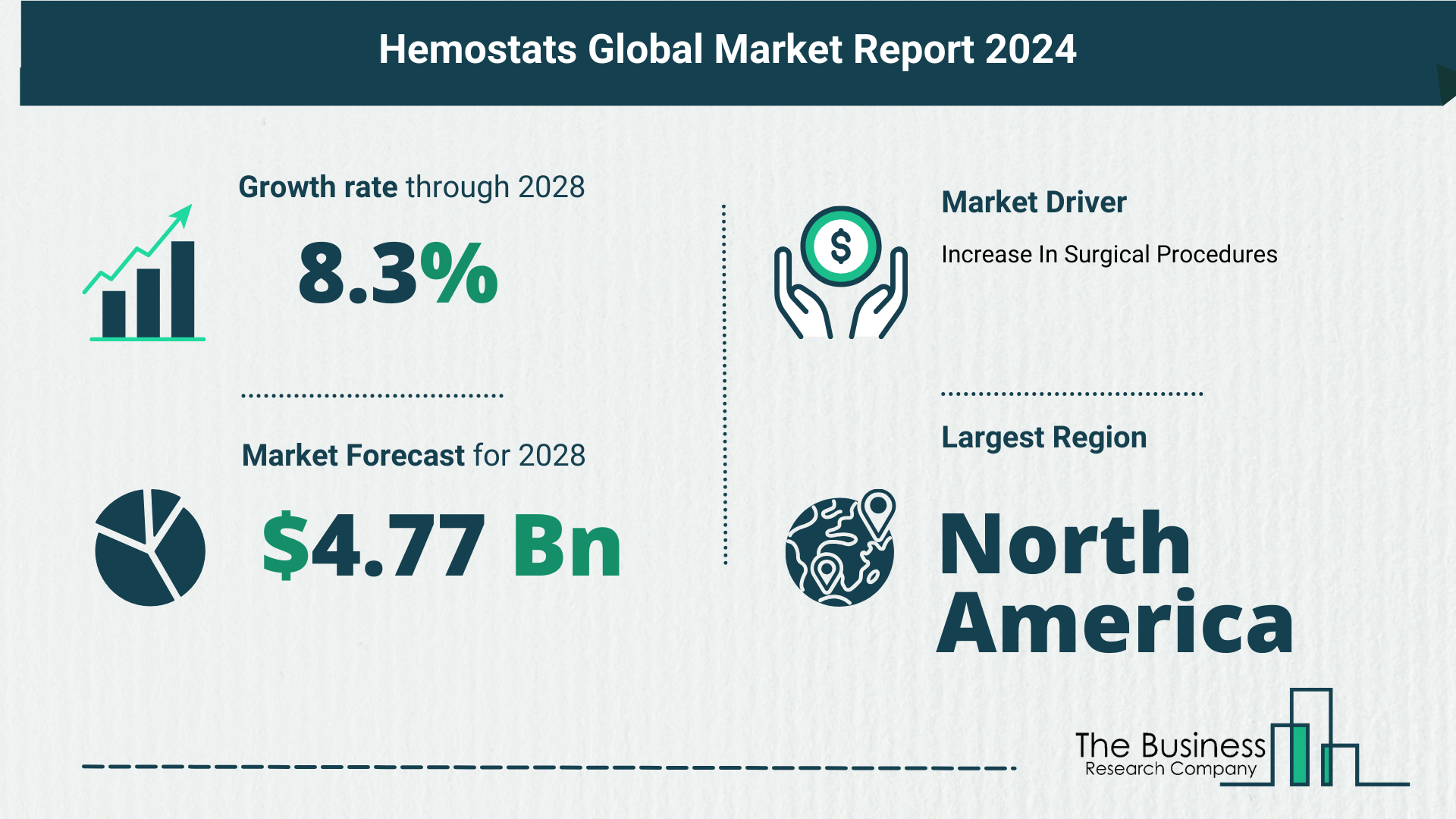
    A Surge in Surgical Procedures Drives Hemostat Market

    • Surgical advancements and rising surgical procedures fuel the growth of the hemostats market.
    • Hemostats play a crucial role in preventing blood loss during surgical interventions.
    • The American Academy of Facial Plastic and Reconstructive Surgery reports a significant increase in surgical and non-surgical procedures, indicating a rising demand for hemostatic solutions.

    Key Players in the Hemostats Market

    • Major companies such as C. R. Bard Inc., B. Braun Melsungen AG, and Baxter International Inc. lead the hemostats market.
    • These companies focus on research, development, and the introduction of advanced hemostatic technologies to meet evolving surgical needs.

    View More On The Hemostats Market Report 2024 – https://www.thebusinessresearchcompany.com/report/hemostats-global-market-report

    Technological Advancements Propel Market Growth

    • Technological innovations drive growth and expand the range of hemostatic solutions available.
    • Baxter’s launch of PERCLOT Absorbable Hemostatic Powder in the U.S. enhances bleeding control and optimizes patient care during surgeries.
    • Technological advancements cater to diverse surgical requirements and contribute to the market’s expansion.

    Baxter’s Strategic Acquisition Strengthens Hemostatic Solutions

    • Baxter’s strategic acquisition of CryoLife, Inc., for $60.8 million bolsters its hemostatic solutions portfolio.
    • CryoLife, Inc., known for distributing cryogenically preserved human tissues, complements Baxter’s product offerings, enhancing bleeding control options for surgeons.

    Market Segmentation and Dynamics

    • The hemostats market is segmented by type, product, formulation, and application, catering to various surgical specialties.
    • Thrombin-Based Hemostats, Oxidized Regenerated Cellulose-Based Hemostats, and Gelatin-Based Hemostats are among the types available.
    • Orthopedic Surgery, General Surgery, and Cardiovascular Surgery are some of the applications driving market growth.

    Forecast and Regional Trends

    • The hemostats market is poised to reach $4.77 billion by 2028, with a compound annual growth rate (CAGR) of 8.3%.
    • Strong growth is expected in the Asia-Pacific region, driven by healthcare infrastructure development and increasing surgical demand.

    Conclusion: Pioneering Surgical Solutions

    The hemostats market thrives on technological advancements and strategic acquisitions, catering to the evolving needs of surgical procedures worldwide. With major players driving innovation and expanding their product portfolios, surgeons gain access to a diverse range of hemostatic solutions, optimizing patient care and surgical outcomes. As surgical precision and demand for minimally invasive procedures rise, hemostatic technologies play a pivotal role in enhancing bleeding control and improving patient recovery. With a focus on research, development, and market expansion, the hemostats industry continues to pioneer surgical solutions that redefine standards of care and contribute to advancements in global healthcare.

    Request A Sample Of The Global Hemostats Market Report 2024:
    https://www.thebusinessresearchcompany.com/sample_request?id=8226&type=smp

  • Top 5 Insights From The Intraoral Cameras Market Report 2024

    Top 5 Insights From The Intraoral Cameras Market Report 2024

    The Business Research Company’s global market reports are now updated with the latest market sizing information for the year 2024 and forecasted to 2033

    According to The Business Research Company’s Intraoral Cameras Global Market Report 2024, the intraoral cameras market is expected to show promising growth in the forecast period.

    The intraoral cameras market has experienced rapid growth, escalating from $1.62 billion in 2023 to $1.8 billion in 2024, showcasing a commendable compound annual growth rate (CAGR) of 10.8%. This surge in the historic period is attributed to various factors:

    • Cost-efficiency and enhanced affordability
    • Utilization for training and educational purposes
    • Ergonomic design and portability facilitating ease of use
    • Integration with electronic health records (EHR)
    • Seamless integration into digital dentistry practices

    Anticipated Growth Trajectory

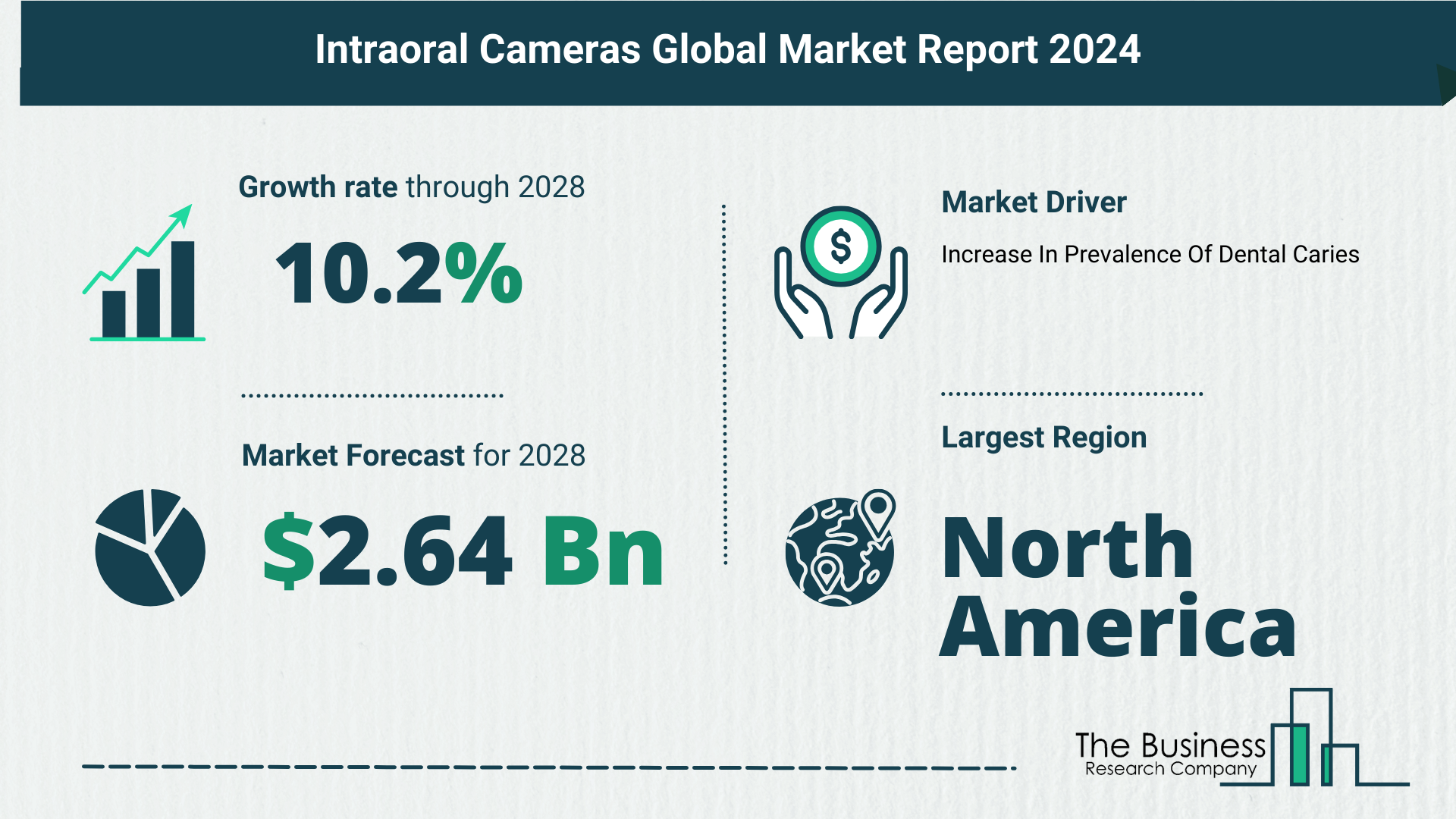
    Forecasts project sustained rapid growth in the intraoral cameras market, with expectations reaching $2.64 billion by 2028, sustaining a robust CAGR of 10.2%. The surge in the forecast period is fueled by several key drivers:

    • Growing prominence of the dental industry
    • Increasing focus on oral health and preventive care
    • Integration with digital dentistry practices for enhanced diagnostics
    • Adoption of patient-centric care models prioritizing individualized treatment
    • Precision enhancement in diagnostic procedures

    Dental Caries Surge Drives Demand

    The surge in dental caries prevalence emerges as a significant driver propelling the growth of the intraoral cameras market:

    • Intraoral cameras play a pivotal role in advanced diagnosis, detecting caries and cracks in teeth beyond the capabilities of traditional radiographs.
    • The World Health Organization estimates approximately 2 billion people suffer from dental caries of permanent teeth globally, underlining the critical need for advanced diagnostic tools.
    • Increasing awareness and prevalence of dental caries underscore the importance of intraoral cameras in enhancing diagnostic precision.

    View More On The Intraoral Cameras Market Report 2024 – https://www.thebusinessresearchcompany.com/report/intraoral-cameras-global-market-report

    Next-Generation Optical Technology Cameras
    Major players in the intraoral cameras market are pioneering technological advancements with the introduction of next-generation optical technology cameras:

    • Optical technology harnesses light properties to acquire, manipulate, and transmit information, revolutionizing imaging and diagnostics.
    • ACTEON launched the C50, the most advanced intraoral camera utilizing optical technology to enhance clinical outcomes and affordability.
    • Features such as advanced optics, autofocus, high-definition image sensors, and innovative detection assistance redefine excellence in dental diagnostics.

    Strategic Acquisitions Fuel Market Expansion

    Strategic acquisitions propel market expansion and portfolio diversification, as evidenced by Envista Holdings Corporation’s acquisition of Carestream Dental’s intraoral scanner business:

    • Envista’s $600 million acquisition strengthens its portfolio with intraoral scanners and software, expanding its market presence.
    • Carestream Dental’s expertise in medical imaging systems complements Envista’s dental equipment offerings, fostering innovation and growth opportunities.

    Market Segmentation and Regional Dynamics

    The intraoral cameras market is segmented based on various criteria:

    1. Type: Encompassing USB cameras, fiber optic cameras, wireless cameras, and other types.
    2. Software Type: Including X-Ray software and button capture software.
    3. Application: Spanning implantology, endodontic, oral and maxillofacial surgery, orthodontics, and other applications.
    4. End User: Catering to dental hospitals and clinics, dental diagnostic centers, dental academic and research institutes, and other end users.

    Conclusion
    The evolution of intraoral cameras marks a paradigm shift in dental diagnostics, offering precision, efficiency, and patient-centric care. As the dental industry embraces digital transformation, intraoral cameras emerge as indispensable tools in modern dental practices. With technological advancements, strategic acquisitions, and global collaborations, the intraoral cameras market is poised for substantial growth, catering to evolving healthcare needs and driving excellence in dental care worldwide. As market dynamics evolve, the future promises innovative solutions, enhanced diagnostics, and improved patient outcomes, cementing the pivotal role of intraoral cameras in dental healthcare.

    Request A Sample Of The Global Intraoral Cameras Market Report 2024:
    https://www.thebusinessresearchcompany.com/sample_request?id=8451&type=smp

  • Comprehensive Analysis On Size, Share, And Drivers Of The Intraoperative Neuromonitoring Market

    Comprehensive Analysis On Size, Share, And Drivers Of The Intraoperative Neuromonitoring Market

    The Business Research Company’s global market reports provide comprehensive analysis on the various markets in 27 industries across 60 geographies.

     The intraoperative neuromonitoring market has experienced significant growth in recent years, driven by advancements in technology, rising demand for early diagnosis, and increasing focus on patient safety. As the healthcare landscape evolves, the role of neuromonitoring becomes increasingly critical in surgical procedures.

    Market Growth Trajectory

    • In 2023, the intraoperative neuromonitoring market reached $3.4 billion, expected to rise to $3.66 billion in 2024, boasting a compound annual growth rate (CAGR) of 7.6%.
    • Historic growth is attributed to increasing incidence of neurological disorders, expanding applications in surgeries, and favorable insurance coverage policies.
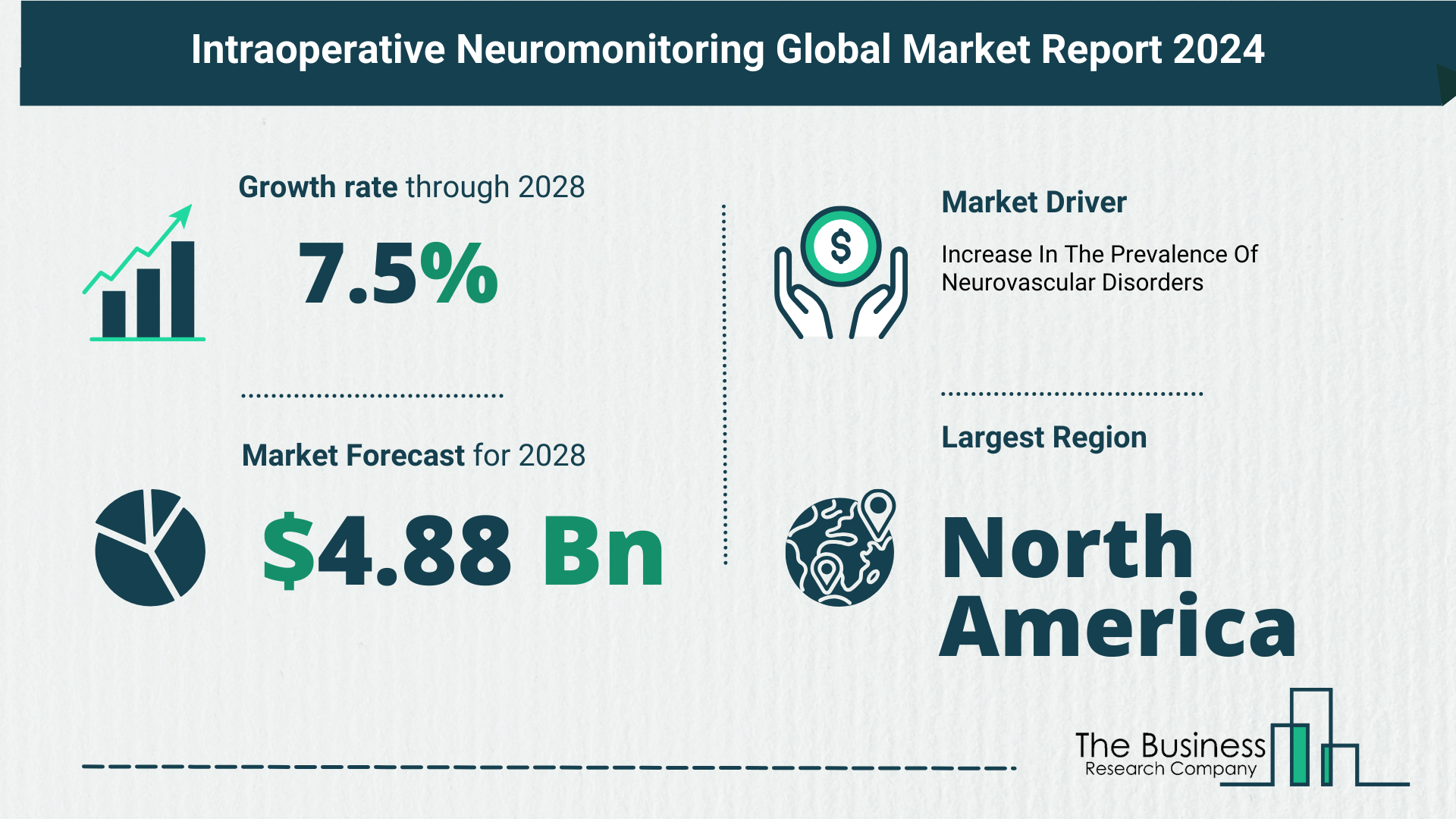
    • Forecasts project robust expansion to $4.88 billion by 2028, with a CAGR of 7.5%, driven by demand for minimally invasive surgeries and technological advancements.

    Rising Demand for Early Diagnosis

    • The demand for early diagnosis of health problems is on the rise, driving growth in the intraoperative neuromonitoring market.
    • Manufacturers focus on enhancing accuracy and precision in diagnostic devices to meet evolving healthcare needs.
    • The COVID-19 pandemic has intensified the need for diagnostics, with a noticeable increase in hospital referrals and attendance.

    Brain-Machine Interface (BMI) Technology

    • Major companies are introducing brain-machine interface technology to expand service portfolios and drive revenues.
    • BMI technology aids individuals with severe neurological impairments, enhancing their quality of life.
    • Axoft’s FDA Breakthrough Device designation for BMI technology aims to improve therapeutic options for neurological disorders.

    View More On The Intraoperative Neuromonitoring Market Report 2024 – https://www.thebusinessresearchcompany.com/report/intraoperative-neuromonitoring-global-market-report

    Strategic Acquisitions Propel Growth

    • In May 2021, Assure Holdings Corp. acquired Sentry Neuromonitoring, LLC, strengthening its position in the intraoperative neuromonitoring market.
    • The acquisition enhances Assure Holdings Corp.’s presence in Texas, Missouri, and Kansas, opening new business prospects.

    Segmentation of the Intraoperative Neuromonitoring Market

    1. By Products and Services: Systems, Accessories, Services
    2. By Modality: Motor Evoked Potentials, Somatosensory Evoked Potentials, Electroencephalography, Electromyography, Brainstem Auditory Evoked Potentials, Visual Evoked Potentials
    3. By Application: Spinal Surgery, Neurosurgery, Vascular Surgery, ENT Surgery, Orthopedic Surgery, Other Surgeries
    4. By End User: Hospitals, Ambulatory Surgical Centers

    Regional Dynamics

    • North America led the intraoperative neuromonitoring market in 2023, driven by technological adoption and healthcare infrastructure development.
    • Asia-Pacific is expected to witness significant growth, propelled by increasing surgical procedures and demand for quality healthcare services.

    Conclusion

    The intraoperative neuromonitoring market plays a pivotal role in ensuring patient safety and surgical success. With advancements in technology and rising demand for early diagnosis, the market is poised for substantial growth in the coming years. Strategic collaborations, technological innovations, and regulatory support will continue to drive the market forward, creating opportunities for stakeholders across the healthcare spectrum. As the market evolves, companies must remain agile and innovative to meet the dynamic needs of patients and healthcare providers alike.

    Request A Sample Of The Global Intraoperative Neuromonitoring Market Report 2024:
    https://www.thebusinessresearchcompany.com/sample_request?id=8767&type=smp