Year: 2024

  • 5 Takeaways From The Companion Animal Pharmaceuticals Market Overview 2024

    5 Takeaways From The Companion Animal Pharmaceuticals Market Overview 2024

    The Business Research Company’s global market reports are now updated with the latest market sizing information for the year 2024 and forecasted to 2033

    According to The Business Research Company’s Companion Animal Pharmaceuticals Global Market Report 2024, the companion animal pharmaceuticals market is expected to show promising growth in the forecast period.

    The companion animal pharmaceuticals market has witnessed robust growth in recent years, with a promising outlook for the future. This growth is driven by various factors, including the humanization of pets, preventive healthcare measures, and the rise in pet insurance. Let’s delve into the key trends and factors shaping this thriving market.

    Market Overview

    • Current Market Size: The market size is projected to increase from $15.23 billion in 2023 to $16.63 billion in 2024, exhibiting a Compound Annual Growth Rate (CAGR) of 9.2%.
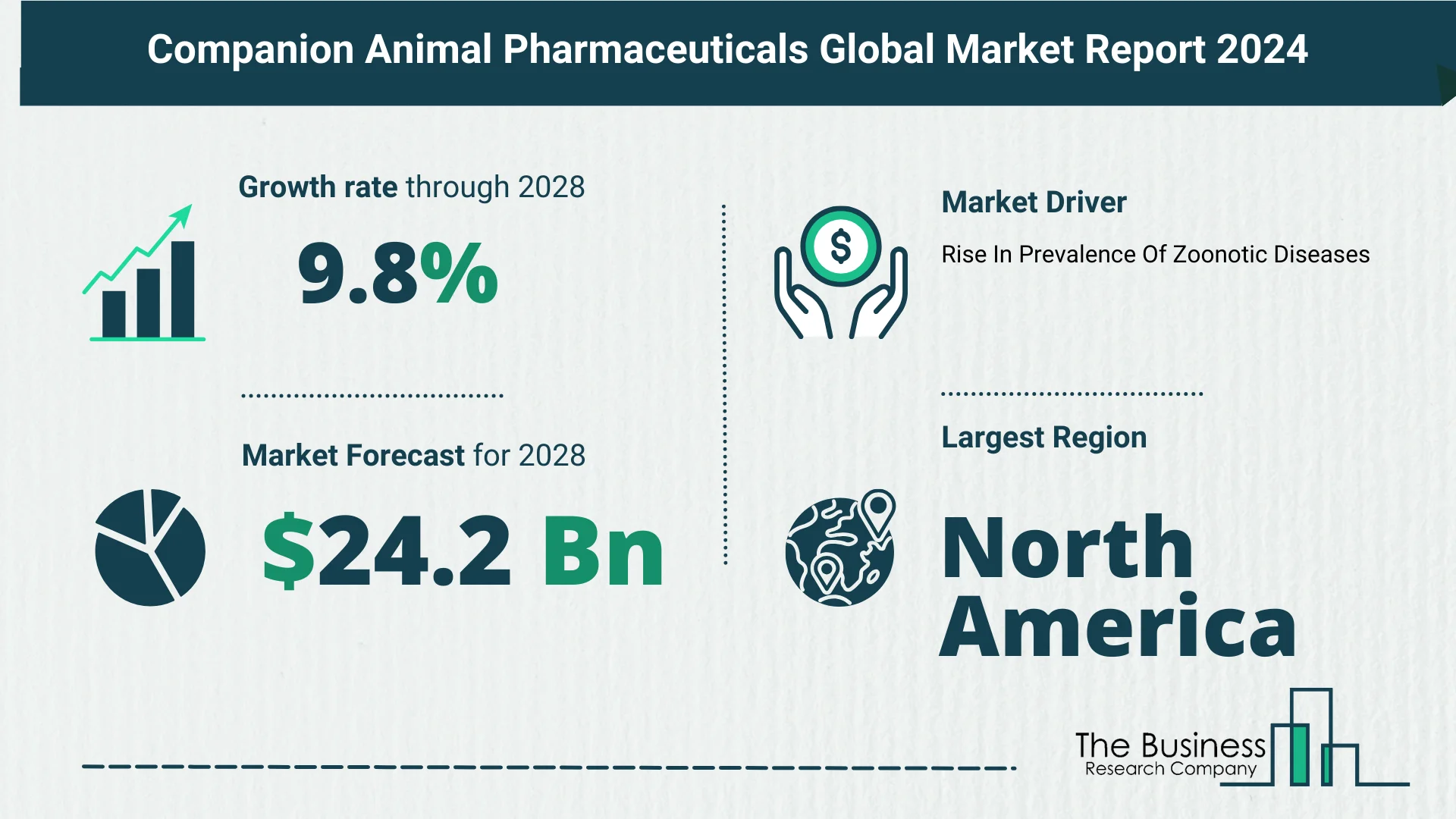
    • Future Growth: Anticipated growth to $24.2 billion in 2028, with a CAGR of 9.8%.

    Factors Fueling Growth

    1. Humanization of Pets
    • The increasing trend of treating pets as family members has driven the demand for advanced pharmaceuticals.
    1. Preventive Healthcare Measures
    • Pet owners are increasingly adopting preventive healthcare measures, contributing to the growth of the market.
    1. Rise in Pet Insurance
    • The surge in pet insurance adoption has facilitated easier access to veterinary healthcare, promoting pharmaceutical consumption.
    1. Changing Lifestyle and Urbanization
    • Urbanization and changing lifestyles have led to a higher demand for companion animals and subsequently, pharmaceuticals.
    1. Zoonotic Disease Concerns
    • Growing concerns about zoonotic diseases are pushing pet owners to invest in pharmaceuticals for their animals’ health.
    1. Veterinary Healthcare Accessibility
    • Improved accessibility to veterinary healthcare services is a key factor driving the market.

    Future Trends and Projections

    1. Personalized Medicine for Pets
    • The focus on personalized medicine tailored for individual pets is expected to drive market growth.
    1. Telehealth and Remote Veterinary Services
    • The integration of telehealth and remote veterinary services will contribute to the expansion of the market.
    1. Nutrition and Nutraceuticals
    • Increasing awareness of pet nutrition and the importance of nutraceuticals will influence market dynamics.
    1. One Health Initiatives
    • Collaborative efforts through one health initiatives will play a significant role in shaping the future of the market.
    1. Advancements in Veterinary Medicine
    • Ongoing advancements in veterinary medicine will pave the way for innovative pharmaceutical products.
    1. Regulatory Compliance and Safety Standards
    • Emphasis on regulatory compliance and safety standards will ensure the credibility of companion animal pharmaceuticals.
    1. Collaborations and Partnerships
    • Collaborations and partnerships among key industry players will foster innovation and market expansion.

    Zoonotic Diseases Drive Market Growth
    The prevalence of zoonotic diseases has become a major catalyst for the companion animal pharmaceuticals market’s growth. Zoonotic illnesses, capable of transmission between animals and humans, are a rising concern globally. Notably, Campylobacteriosis and Salmonella have reported high cases, emphasizing the need for effective pharmaceutical interventions. Key companies driving this market include Elanco Animal Health, Boehringer Ingelheim, Ceva Santé Animale, and many others.

    View More On The Companion Animal Pharmaceuticals Market Report 2024 – https://www.thebusinessresearchcompany.com/report/companion-animal-pharmaceuticals-global-market-report

    Innovation in Product Launches
    Major market players are responding to increased demand by introducing innovative products. For instance, Elanco Animal Health launched Credelio Cat, an oral flea and tick product with rapid and long-lasting efficacy. Such advancements are crucial in meeting customer expectations and expanding market reach.

    Strategic Acquisitions Boost Market Presence
    Strategic acquisitions also play a pivotal role in market dynamics. In July 2022, Dechra Pharmaceuticals acquired Piedmont Animal Health, enhancing its product portfolio and strengthening its position in the European and North American markets.

    Market Segmentation
    The companion animal pharmaceuticals market is segmented based on animal type, indication, and distribution channels. Dogs, cats, horses, and other companion animals constitute the animal type segmentation. Indications cover infectious diseases, dermatologic diseases, pain, orthopedic diseases, behavioral diseases, and others. Distribution channels include veterinary hospitals, veterinary clinics, and retail pharmacies.

    Regional Insights
    North America dominated the market in 2023, while the Asia-Pacific region is expected to witness the fastest growth during the forecast period.

    In conclusion, the companion animal pharmaceuticals market’s impressive growth trajectory is propelled by a combination of factors such as evolving consumer attitudes, technological advancements, and increasing awareness about pet health. As the market continues to innovate and adapt, stakeholders should stay attuned to emerging trends and opportunities to thrive in this dynamic landscape.

    Request A Sample Of The Global Companion Animal Pharmaceuticals Market Report 2024:
    https://www.thebusinessresearchcompany.com/sample_request?id=7983&type=smp

  • 3D Imaging Market Report 2024: Market Size, Drivers, And Trends

    3D Imaging Market Report 2024: Market Size, Drivers, And Trends

    The Business Research Company’s global market reports are now updated with the latest market sizing information for the year 2024 and forecasted to 2033

    The 3D imaging market has witnessed exponential growth in recent years, with the market size reaching $27.47 billion in 2023. The growth is projected to continue, reaching $33.95 billion in 2024 at a remarkable compound annual growth rate (CAGR) of 23.6%. The historic period’s expansion can be attributed to increased adoption in healthcare, manufacturing, architectural visualization, automotive design, and cultural heritage preservation.

    Forecasted Surge in Market Size
    Anticipating the future, the 3D imaging market is poised for even more significant growth, projected to reach $80.73 billion in 2028 at a CAGR of 24.2%. The forecasted surge is driven by advancements in medical imaging, applications in geological and environmental sciences, security and surveillance, autonomous vehicles, smart city development, and precision agriculture. Noteworthy trends in this period include the demand for 3D content in entertainment, increased automotive applications, GIS utilization, rising demand for 3D cameras and sensors, the integration of lidar technology in mapping, and the development of portable 3D scanners.

    Smartphone Usage: A Catalyst for Growth
    – Smartphone Boom
    The increased usage of smartphones is set to propel the 3D imaging market’s growth. The proliferation of smart devices, improved user experiences, and expanding reliable internet connections contribute to this phenomenon.

    – Imaging Technology Integration
    New imaging technologies enable the capture of objects in 3D through smartphones. This innovation facilitates viewing the same object in different locations, fostering convenience and accessibility.

    – Market Impact
    The surge in smartphone usage is evident; for instance, a report by Uswitch Limited notes a 3.8% increase in active mobile connections from 2021 to 2022. With 95% of the UK population projected to own smartphones by 2025, this trend significantly drives the 3D imaging market.

    View More On The 3D Imaging Market Report 2024 – https://www.thebusinessresearchcompany.com/report/3d-imaging-global-market-report

    Technological Advancement: A Key Driver
    – Embracing Innovation
    Technological advancement emerges as a pivotal trend propelling the 3D imaging market. Major companies in the sector are dedicated to advancing their technologies through continuous research and development.

    – Real-world Examples
    Noteworthy instances include TriHealth introducing advanced 3D mammography with AI technology, enhancing image interpretation for radiologists. Additionally, the partnership between SIGNUS and eCential Robotics exemplifies global collaboration for the development of 2D/3D robotic imaging and surgical navigation systems.

    Market Segmentation for Precision
    – Components
    The 3D imaging market is segmented by components, including solutions, hardware, and services, providing a comprehensive landscape for market participants.

    – Deployment Modes
    Understanding the diverse needs of users, the market is categorized based on deployment modes, encompassing both cloud and on-premises options.

    – Applications
    The versatility of 3D imaging applications is highlighted through segmentation based on 3D modeling, scanning, layout and animation, rendering, and image reconstruction.

    – Verticals
    With diverse applications across industries, the market caters to various verticals, including aerospace and defense, automotive, manufacturing, healthcare, architecture, media, retail, and more.

    Regional Dynamics
    – North America Dominance
    In 2023, North America led the 3D imaging market. The region’s technological prowess and early adoption contribute to its prominent position.

    – Asia-Pacific Growth
    Asia-Pacific is anticipated to be the fastest-growing region in the forecast period, signifying the global expansion of the 3D imaging market.

    In conclusion, the 3D imaging market is on an impressive growth trajectory, fueled by technological advancements, increasing smartphone usage, and a diverse range of applications across industries. As the market continues to evolve, it offers exciting opportunities for innovation and collaboration, shaping the future of imaging technology.

    Request A Sample Of The Global 3D Imaging Market Report 2024:
    https://www.thebusinessresearchcompany.com/sample_request?id=7988&type=smp

  • Growth Trajectory Of The Animal Antibiotics and Antimicrobials Market 2024-2033

    Growth Trajectory Of The Animal Antibiotics and Antimicrobials Market 2024-2033

    The Business Research Company’s global market reports are now updated with the latest market sizing information for the year 2024 and forecasted to 2033

    1. Introduction

    The animal antibiotics and antimicrobials market have demonstrated robust growth in recent years, witnessing an increase from $4.97 billion in 2023 to an estimated $5.34 billion in 2024, reflecting a noteworthy compound annual growth rate (CAGR) of 7.5%. Let’s explore the factors contributing to this growth and the anticipated trends shaping the market’s future.

    1. Future Growth Projections

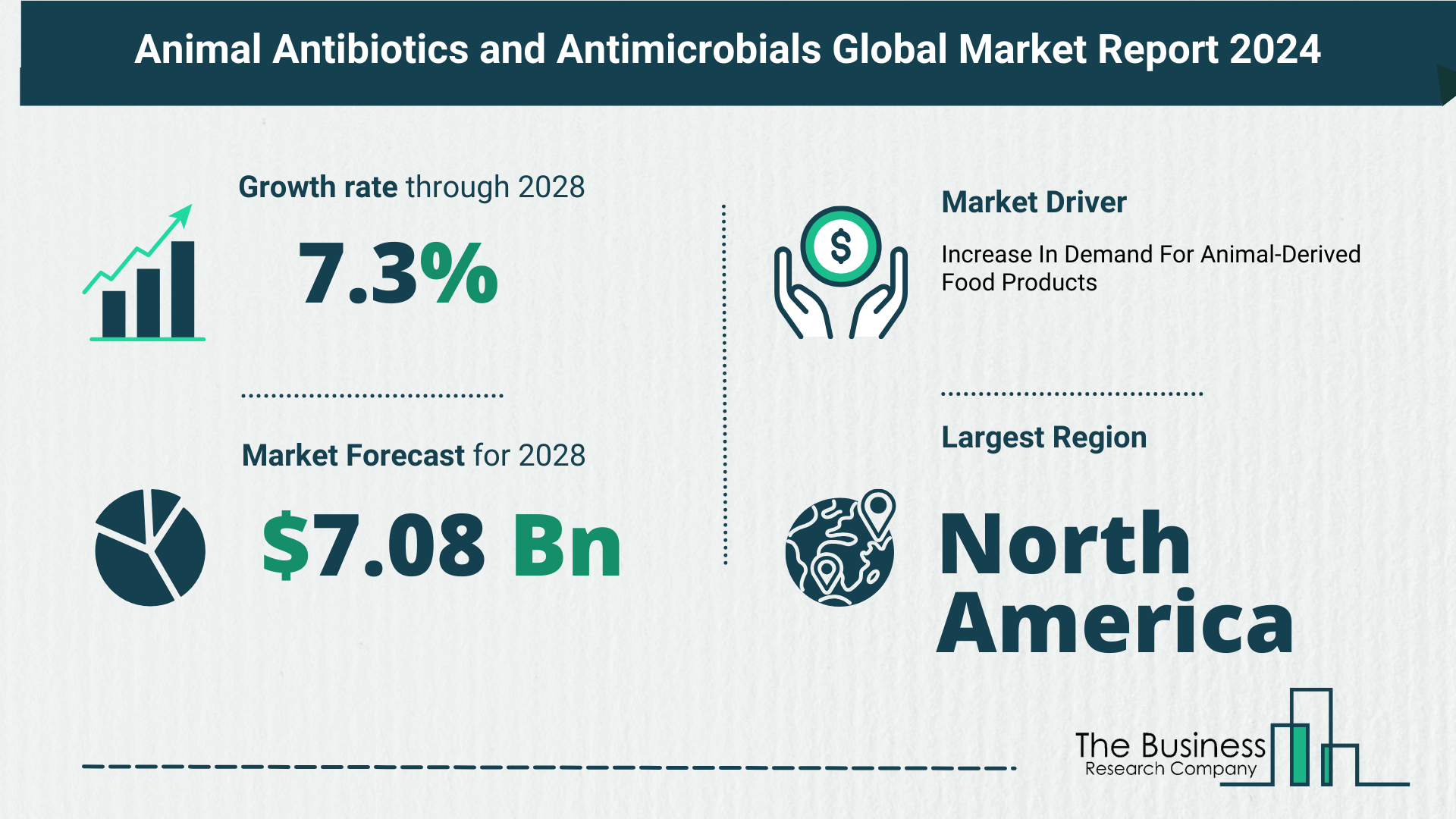
    The animal antibiotics and antimicrobials market are poised for continued expansion, with a projected growth to $7.08 billion in 2028 at a CAGR of 7.3%. The forecast period’s growth is attributed to emerging diseases, global population growth, regulatory changes, and growing public health concerns.

    • Future growth projections for animal antibiotics and antimicrobials market
    • Factors driving growth: Emerging diseases, global population growth, regulatory changes
    1. Rising Demand for Animal-Derived Products

    The surge in demand for animal-derived food products, such as meat, eggs, and milk, is a key driver of market growth. Companies and institutions involved in animal food production are utilizing antibiotics and antimicrobials as preventive measures to ensure a healthy and disease-free herd. The Global Meat & Poultry trends report predicts global meat and poultry consumption to reach 313 million metric tons in 2023, further boosting the demand for animal antibiotics and antimicrobials.

    • Increased demand for animal-derived food products
    • Utilization of antibiotics for maintaining a healthy herd
    1. Market Players and Key Companies

    Major players in the animal antibiotics and antimicrobials market include C. H. Boehringer Sohn AG & Co. KG, Zoetis Inc., Elanco Animal Health Inc., and others. The competitive landscape showcases the strategic positioning and contributions of these industry leaders.

    • Key players: Boehringer, Zoetis, Elanco, and more
    • Competitive landscape in the animal antibiotics and antimicrobials market

    View More On The Animal Antibiotics and Antimicrobials Market Report 2024 – https://www.thebusinessresearchcompany.com/report/animal-antibiotics-and-antimicrobials-global-market-report

    1. Innovations in Early Detection Tests

    Companies are focusing on introducing early detection tests for animals, enhancing veterinarians’ capabilities in disease management. These tests, such as PetDx’s OncoK9, utilize next-generation sequencing technology and proprietary algorithms to detect cancer-associated genomic alterations in canine DNA, enabling early diagnosis through a simple blood draw.

    • Innovations in early detection tests for animals
    • Example: OncoK9 by PetDx
    1. Strategic Acquisitions Shaping the Market

    Strategic acquisitions contribute to market dynamics, exemplified by Dechra Pharmaceuticals’ acquisition of Piedmont Animal Health for $210 million in cash. This strategic move aims to bolster Dechra’s companion animal pharmaceutical product pipeline and expand its team of specialized researchers.

    • Dechra Pharmaceuticals’ acquisition of Piedmont Animal Health
    • Strategic moves in the animal antibiotics and antimicrobials market
    1. Market Segmentation

    Understanding the animal antibiotics and antimicrobials market involves exploring its segmentation based on the type of product, mode of delivery, and animal type. This nuanced segmentation provides insights into the diverse facets of the market.

    • Segmentation of the animal antibiotics and antimicrobials market
    • Product types: Tetracyclines, Penicillins, Sulfonamides, and more
    • Modes of delivery: Premixes, Oral Powder, Injection, and others
    • Animal types: Food-Producing Animals, Companion Animals
    1. Regional Dynamics

    In 2023, North America claimed the largest share in the animal antibiotics and antimicrobials market, with Asia-Pacific projected as the fastest-growing region in the forecast period. Regional dynamics play a pivotal role in shaping market trends and opportunities.

    • North America leads the animal antibiotics and antimicrobials market
    • Asia-Pacific as the fastest-growing region

    In conclusion, the animal antibiotics and antimicrobials market’s growth is driven by factors such as rising demand for animal-derived products, innovations in early detection tests, strategic acquisitions, and a comprehensive market segmentation strategy. As the market evolves, emphasis on alternative solutions, collaborative initiatives, and increased investments in research positions it for sustained growth and advancements in animal health.

    Request A Sample Of The Global Animal Antibiotics and Antimicrobials Market Report 2024:
    https://www.thebusinessresearchcompany.com/sample_request?id=6712&type=smp

  • How Is The Animal Based Protein Supplements Market Expected To Grow Through 2024-2033

    How Is The Animal Based Protein Supplements Market Expected To Grow Through 2024-2033

    The Business Research Company’s global market reports are now updated with the latest market sizing information for the year 2024 and forecasted to 2033

    According to The Business Research Company’s Animal Based Protein Supplements Global Market Report 2024, the animal based protein supplements market is expected to show promising growth in the forecast period.

    The animal-based protein supplements market has experienced rapid growth, escalating from $28.21 billion in 2023 to an anticipated $31.04 billion in 2024, marking a Compound Annual Growth Rate (CAGR) of 10.0%. This surge is attributed to heightened health consciousness, evolving dietary preferences, and the thriving sports and fitness trends.

    1. Continued Momentum: Projected Rapid Growth Ahead:

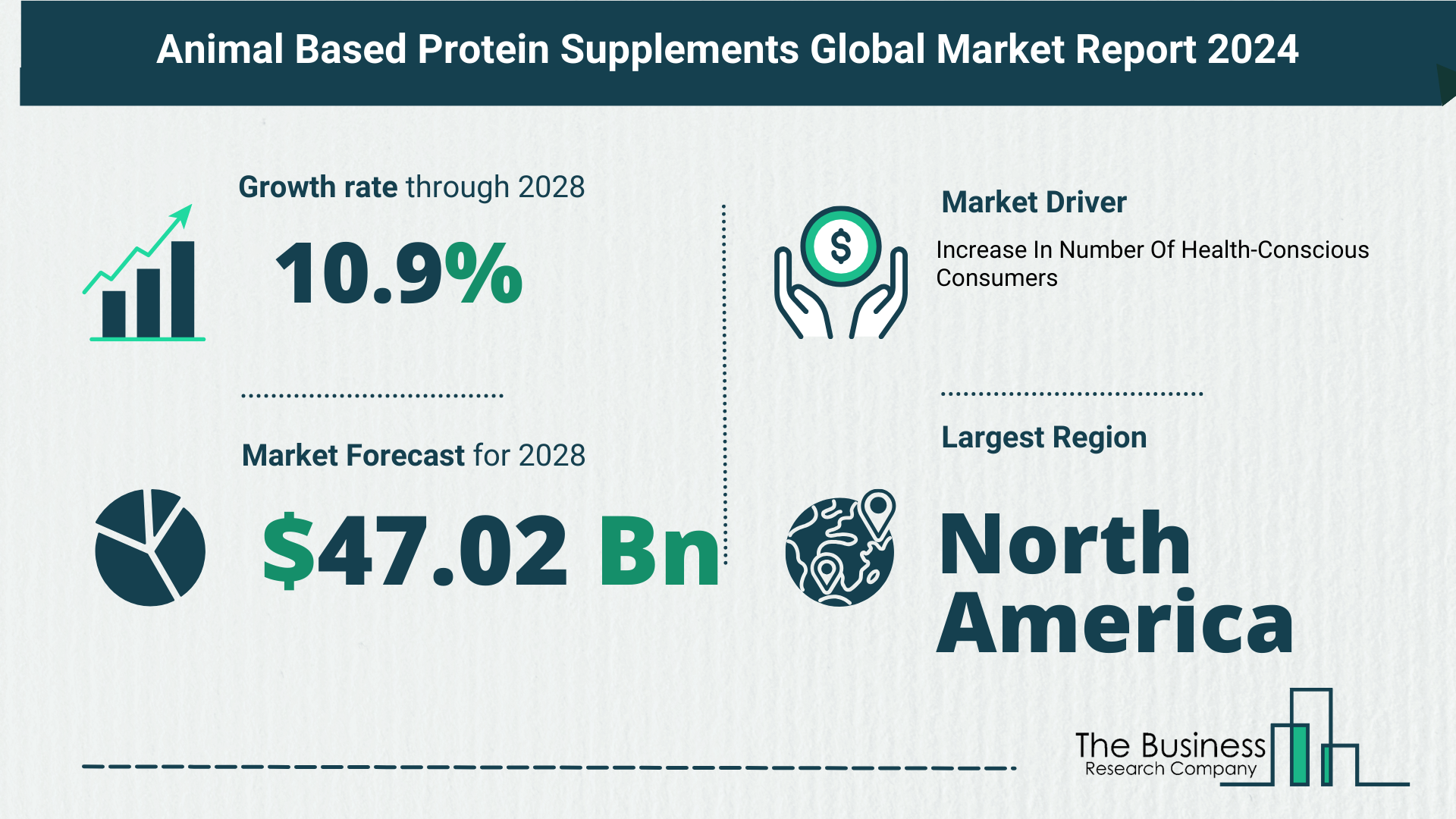
    The trajectory of the animal-based protein supplements market remains robust, with an anticipated growth to $47.02 billion in 2028 at a CAGR of 10.9%. This forward momentum can be attributed to factors such as a growing global population, increasing income levels, shifts in the retail landscape, environmental and sustainability concerns, and regulatory support and standards.

    • Projected Size for 2028:Anticipated market growth.
    • Drivers of Growth:Population growth, income levels, retail landscape evolution.
    • Key Trends:Product innovation, plant-based synergy, technological advancements, clean label movement, personalization and customization, digitalization of marketing, functional and fortified formulations, packaging innovation.
    1. Health-Conscious Wave: Driving Demand for Animal-Based Proteins:

    The surge in health-conscious consumers is a pivotal factor propelling the demand for animal-based protein supplements. Globally, an increasing number of individuals are prioritizing their health and nutrition, recognizing the importance of meeting daily protein requirements. This shift in dietary habits, driven by heightened awareness, is steering consumers towards animal-based protein supplements.

    • Global Health Consciousness:Rise in individuals focusing on health.
    • Protein Requirement Awareness:Understanding the importance of daily protein intake.
    • Post-Pandemic Trends:70% of Indians prioritizing dietary changes for better health.

    View More On The Animal Based Protein Supplements Market Report 2024 – https://www.thebusinessresearchcompany.com/report/animal-based-protein-supplements-global-market-report

    1. Industry Innovations: Transformative Products for Diverse Needs:

    Product innovation stands out as a prominent trend in the animal-based protein supplements market. Leading companies are investing in developing cutting-edge solutions to strengthen their market positions. Notably, GoodSport Nutrition introduced the GoodSport sports drink, a natural sports drink made from 97% dairy, offering superior hydration compared to conventional sports drinks.

    • Key Trend:Product innovation in animal-based protein supplements.
    • Case Study:GoodSport Nutrition’s natural sports drink.
    • Research-Based Formulation:Emphasizing effective hydration with dairy components.
    1. Strategic Acquisitions: Strengthening Market Positions:

    In a strategic move, Nestlé Health Science acquired Vital Proteins in February 2022. This acquisition adds another dimension to Nestlé’s wellness portfolio, enhancing its presence in the vitamin, mineral, supplement, and wellness market. Vital Proteins, a US-based producer of animal collagen-based protein supplements, brings unique offerings to Nestlé’s repertoire.

    • Strategic Acquisition:Nestlé Health Science acquiring Vital Proteins.
    • Portfolio Enhancement:Addition of animal collagen-based protein supplements.
    • Market Position Strengthening:Augmenting Nestlé’s presence in the wellness sector.
    1. Comprehensive Market Segmentation: Understanding Diversity:

    The animal-based protein supplements market is intricately segmented based on product types (Protein Powder, Protein Bars, Ready-To-Drink, Other Products), raw materials (Whey, Casein, Egg, Fish, Other Raw Materials), applications (Pharmaceuticals and Nutraceuticals, Food and Beverages, Infant Formulations, Cosmetics and Personal Care, Animal Feed, Dietary Supplements), and distribution channels (Supermarkets and Hypermarkets, Online Stores, Chemists or Drugstores, Specialty Stores, Other Distribution Channels).

    • Product Types:Diverse offerings including powder, bars, ready-to-drink, and more.
    • Raw Materials:Varied sources such as whey, casein, egg, fish, and others.
    • Applications:Spanning pharmaceuticals, food, cosmetics, and more.
    • Distribution Channels:Ranging from supermarkets to online stores and specialty outlets.
    1. Regional Dynamics: North America Leads, Asia-Pacific Surges:

    North America emerged as the largest region in the animal-based protein supplements market in 2023. However, the Asia-Pacific region is expected to witness the fastest growth in the forecast period. Regional dynamics play a significant role in shaping market trends and the pace of expansion.

    • Regional Leadership:North America leading in 2023.
    • Growth Hub:Asia-Pacific anticipated to be the fastest-growing region.
    • Market Dynamics Influence:Regional factors shaping market trends.

    Conclusion: The animal-based protein supplements market, driven by health consciousness, innovations, and strategic acquisitions, is on an upward trajectory. As it continues to evolve, offering diverse and technologically advanced products, it stands at the forefront of meeting the nutritional needs of an increasingly health-aware global population.

    Request A Sample Of The Global Animal Based Protein Supplements Market Report 2024:
    https://www.thebusinessresearchcompany.com/sample_request?id=7315&type=smp

  • Comprehensive Analysis On Size, Share, And Drivers Of The Anti-Aging Market

    Comprehensive Analysis On Size, Share, And Drivers Of The Anti-Aging Market

    The Business Research Company’s global market reports provide comprehensive analysis on the various markets in 27 industries across 60 geographies. 

    The anti-aging market has witnessed robust growth in recent years, reflecting the increasing demand for solutions that defy the signs of aging. With a market size of $54.66 billion in 2023, projected to reach $59.17 billion in 2024 at a CAGR of 8.2%, the industry is on a steadfast upward trajectory. This growth is attributed to several factors, including an aging population, heightened consumer awareness of anti-aging products, a surge in disposable income, an expanding skincare and cosmetics industry, and shifting demographics.

    A Glimpse into the Future

    Anticipating Strong Growth

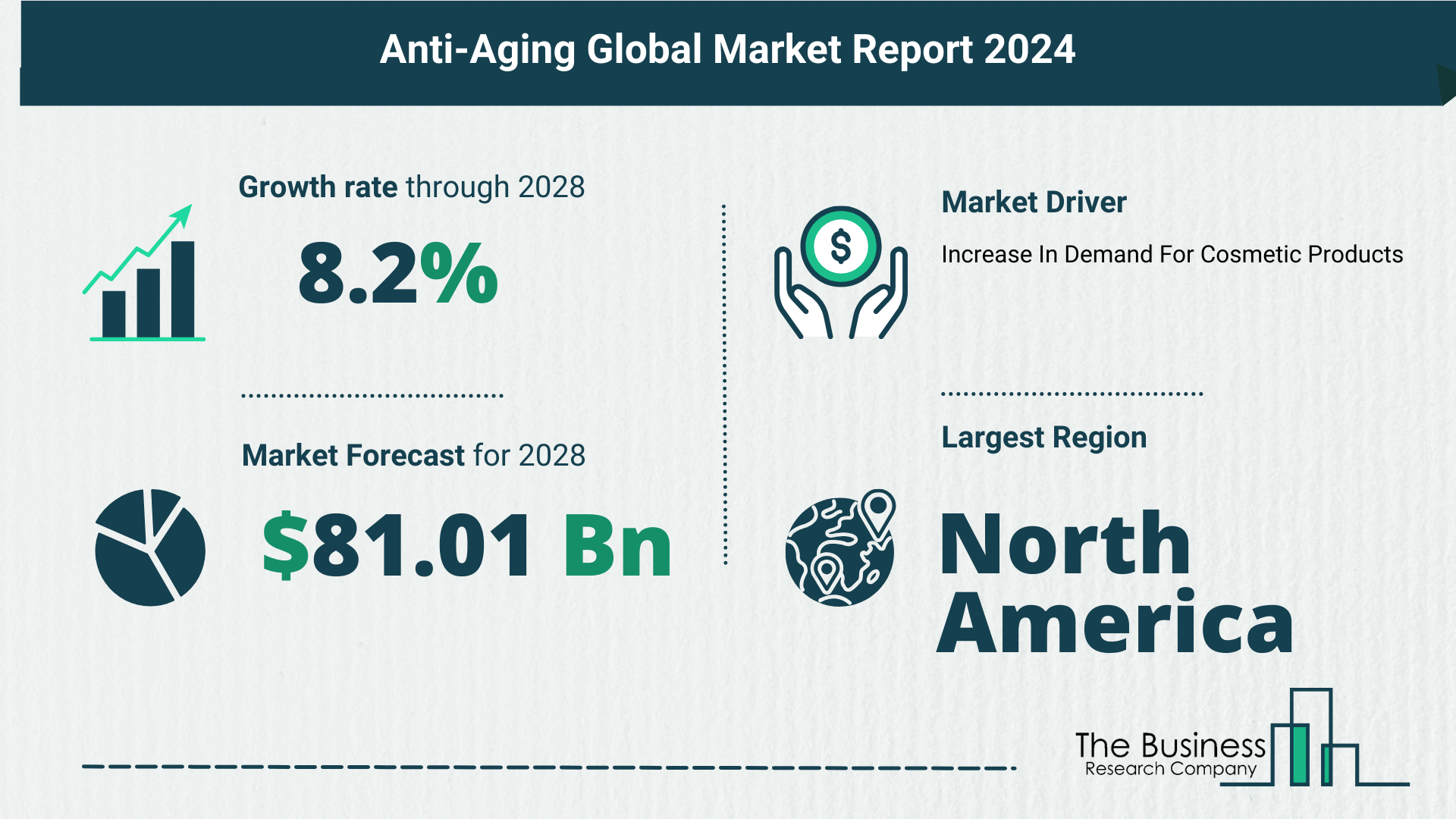
    The anti-aging market is poised for continued robust growth, with an estimated market size of $81.01 billion in 2028, boasting a CAGR of 8.2%. The forecasted expansion is driven by factors such as the rising demand for non-invasive solutions, a growing preference for natural and organic products, increasing demand for clinically-advanced solutions, rising disposable income and healthcare expenditure, and a growing awareness and acceptance of anti-aging products and services. Notable trends in the forecast period include advancements in medical and cosmetic technologies, the development of nutraceuticals and functional foods, the convergence of beauty and wellness trends, and the rise of digital beauty platforms and virtual consultations.

    • Key Trends in the Forecast Period
      • Advancements in medical and cosmetic technologies
      • Development of nutraceuticals and functional foods
      • Convergence of beauty and wellness trends
      • Rise of digital beauty platforms and virtual consultations

    Rising Disposable Income Fuels Market Growth

    The surge in disposable income emerges as a driving force behind the escalating growth of the anti-aging market. As households experience an increase in disposable income, consumers have more financial freedom to allocate towards premium anti-aging products and treatments. The higher affordability translates into a heightened demand for top-tier solutions, thereby propelling market growth. For instance, in 2021, lower-middle-income countries had a per capita net disposable income ranging from $1,036 to $4,045, while upper-middle-income countries ranged from $4,046 to $12,535, according to the World Bank.

    • Market Players: Allergan plc, L’Oréal SA, Beiersdorf AG, Estee Lauder Companies Inc., Procter & Gamble Company, Shiseido Co. Ltd., and others.

    View More On The Anti-Aging Market Report 2024 – https://www.thebusinessresearchcompany.com/report/anti-aging-global-market-report

    Innovations Transforming the Landscape

    Major companies in the anti-aging market are continually innovating to gain a competitive edge. A notable example is the development of new anti-aging masks, exemplified by Christian Dior SE’s launch of the Dior Skin Light. This anti-aging LED mask utilizes photobiomodulation technology with red light to stimulate skin cells, enhancing collagen and elastin production. With a promise of addressing issues such as redness, enlarged pores, and excessive sebum in just twelve minutes, innovations like these are transforming the anti-aging market landscape.

    • Innovation Spotlight: Christian Dior SE’s launch of Dior Skin Light, an anti-aging LED mask.

    Strategic Acquisitions Strengthen Industry Players

    In January 2022, Galderma S. A. acquired ALASTIN Skincare, Inc., marking a strategic move to strengthen its dermatology portfolio. ALASTIN Skincare, a US-based company specializing in physician-dispensed skincare products, brings expertise in science-based skincare to Galderma, solidifying its position in the global skincare market.

    • Strategic Acquisition: Galderma S. A.’s acquisition of ALASTIN Skincare, Inc.

    Market Segmentation: A Comprehensive Overview

    The anti-aging market is segmented based on product type, treatment, demographic, application, and end-user categories, providing a holistic understanding of its diverse landscape.

    1. Product Type
      • UV Absorbers
      • Anti-Wrinkle Products
      • Dermal Fillers
      • Botox
      • Anti-Stretch Mark Products
    2. Treatment
      • Hair Restoration
      • Adult Acne Therapy
      • Breast Augmentation
      • Liposuction
      • Chemical Peel
      • Other Treatments
    3. Demographic
      • Generation X
      • Baby Boomers
      • Generation Y
      • Generation Z
    4. Application
      • Anti-Wrinkle Treatment
      • Anti-Pigmentation
      • Skin Resurfacing
      • Other Applications
    5. End-User
      • Hospitals
      • Clinics
      • Home Healthcare

    Regional Dynamics: North America Leads, Asia-Pacific Emerges

    In 2023, North America dominated the anti-aging market, but the forecast indicates that Asia-Pacific is set to be the fastest-growing region. This shift in regional prominence signifies the global nature of the anti-aging market’s evolution.

    Conclusion: Radiant Horizons Await

    From $54.66 billion in 2023 to a projected $81.01 billion in 2028, the anti-aging market’s trajectory promises a radiant future. Fueled by consumer trends, technological innovations, and strategic industry moves, the market continues to redefine the boundaries of beauty and wellness. As the convergence of health and aesthetics gains momentum, the anti-aging market stands at the forefront of transformative change, offering a spectrum of possibilities for those seeking to defy the hands of time.

    Request A Sample Of The Global Anti-Aging Market Report 2024:
    https://www.thebusinessresearchcompany.com/sample_request?id=5842&type=smp

  • Understand How The Consumer Healthcare Market Is Poised To Grow Through 2024-2033

    Understand How The Consumer Healthcare Market Is Poised To Grow Through 2024-2033

    The Business Research Company’s global market reports are now updated with the latest market sizing information for the year 2024 and forecasted to 2033

    As per The Business Research Company’s Consumer Healthcare Global Market Report 2024, the consumer healthcare market is expected to show significant growth in the forecast period.

    The consumer healthcare market has witnessed an exponential surge in recent years, escalating from $537.77 billion in 2023 to $663.81 billion in 2024 at an impressive compound annual growth rate (CAGR) of 23.4%. This remarkable growth is attributed to several factors, including an aging population, the prominence of over-the-counter (OTC) medications, a focus on wellness and prevention, the growth of e-commerce and online pharmacies, and the increasing prevalence of health and fitness trends.

    Anticipating Exponential Growth: A Glimpse into the Future The trajectory of the consumer healthcare market is poised for continued exponential growth, with projections estimating a climb to $1476.45 billion in 2028 at a CAGR of 22.1%. The anticipated growth in the forecast period can be credited to the surge in personalized health and genetics, the advent of digital health and telemedicine, the rise in remote patient monitoring, the popularity of health apps and wearables, and an increasing demand for nutraceuticals and dietary supplements.

    Cardiovascular Disease Rates Propel Consumer Healthcare Market

    • Cardiovascular Disease (CVD):A significant driver of consumer healthcare market growth.
    • Convenient and Affordable Management:Consumer healthcare services provide a convenient and affordable approach to manage cardiovascular diseases.
    • Global CVD Impact:In 2020, CVD accounted for approximately 19.1 million deaths worldwide, emphasizing the global impact of this health concern.
    • Regional Disparities:Eastern Europe and Central Asia identified with the highest CVD-related mortality rates in 2020.

    Major Players in the Consumer Healthcare Landscape

    • Key Market Players:Johnson & Johnson, Sanofi S.A., Abbott Laboratories, BASF SE, and others contribute to the thriving consumer healthcare market.
    • Diverse Portfolio:Companies such as Pfizer Inc., Boehringer Ingelheim International GmbH, GlaxoSmithKline PLC, and more have a diverse portfolio catering to various consumer healthcare needs.

    Digital Health Solutions Revolutionize Consumer Healthcare

    • Digital Transformation:Consumer healthcare companies adopt digital health solutions to meet the demands of a tech-savvy population.
    • On-Demand Treatments:The digitization of health and wellness provides on-demand treatments, aligning with changing consumer preferences.
    • Behavioral Coaching App Example:Johnson & Johnson’s Nicorette QuickMist Nicotine Spray accompanied by a behavioral coaching app for personalized self-care.

    View More On The Consumer Healthcare Market Report 2024 – https://www.thebusinessresearchcompany.com/report/consumer-healthcare-global-market-report

    CVC Capital Partners’ Strategic Move in Consumer Health

    • Acquisition of Cooper Consumer Health:In 2021, CVC Capital Partners acquired Cooper Consumer Health, a French company specializing in OTC treatments.
    • Deal Valuation:The acquisition, valued at $2.4 billion, underscores the significant investment in the consumer health sector.
    • Business Acceleration:CVC Capital Partners aims to accelerate its consumer health business through this strategic acquisition.

    Segmentation: Understanding the Consumer Healthcare Market The consumer healthcare market is segmented based on various parameters, offering a comprehensive understanding of its dynamics.

    1. By Product:
      • OTC Pharmaceuticals
      • Dietary Supplements
    2. By Application:
      • Retail
      • Online
      • Hospitals

    Regional Dynamics: North America Leading, Asia-Pacific Emerging

    • North America:Emerged as the largest region in the consumer healthcare market in 2023.
    • Asia-Pacific:Expected to be the fastest-growing region in the forecast period, reflecting the global shift in healthcare dynamics.

    Conclusion: Shaping the Future of Consumer Healthcare As we navigate the future, the consumer healthcare market is not only witnessing unprecedented growth but is also undergoing transformative shifts. The convergence of digital health solutions, the rising demand for personalized self-care, and strategic acquisitions in the sector signify a dynamic landscape. With consumers at the forefront, embracing technological advancements and personalized health approaches, the consumer healthcare market is poised to play a pivotal role in shaping the future of healthcare on a global scale.

    Request A Sample Of The Global Consumer Healthcare Market Report 2024:
    https://www.thebusinessresearchcompany.com/sample_request?id=5726&type=smp

  • Key Trends And Drivers In The Dialyzers Market 2024

    Key Trends And Drivers In The Dialyzers Market 2024

    The Business Research Company’s market reports offer an in-depth analysis on the market’s growth potential, major drivers, key trends and more.

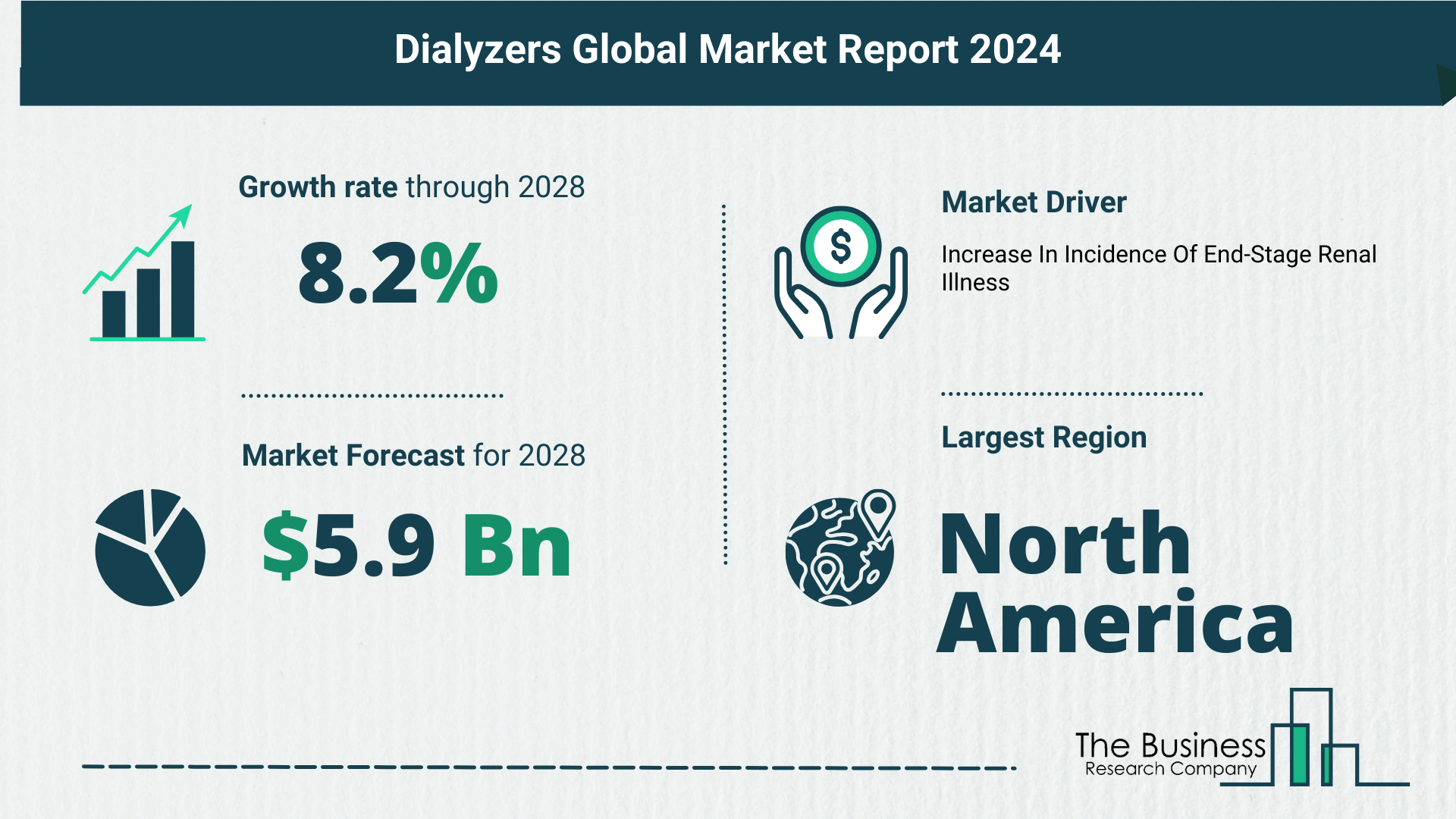
    The dialyzers market has experienced robust growth in recent years, and the trajectory is set to continue. In 2023, the market size reached $3.95 billion, with a projected increase to $4.31 billion in 2024, demonstrating a Compound Annual Growth Rate (CAGR) of 9.1%. Looking ahead, the market is expected to witness strong growth, reaching $5.9 billion in 2028, with a CAGR of 8.2%. Key factors attributing to this growth include the increasing prevalence of chronic kidney diseases, rising disposable income, and a growing demand for home dialysis treatment.

    Increasing Incidence of Renal Illness Driving Market Growth

    • End-Stage Renal Illness:The dialyzer market is poised for growth due to the increasing incidence of end-stage renal illness. End-stage renal failure (ESRF), or end-stage renal disease (ESRD), marks the irreversible stage of chronic kidney disease where kidney function has significantly diminished.
    • Global Impact:Notably, in the US, nearly 37 million people were diagnosed with chronic kidney disease by 2021, according to the Centers for Disease Control and Prevention. In Australia, 17,700 deaths in 2020, accounting for 11% of all deaths, were attributed to chronic kidney disease.

    Key Players in the Dialyzers Market

    • Industry Giants:Major companies shaping the dialyzers market include Merck & Co Inc., Thermo Fisher Scientific Inc., Medtronic PLC, and others.
    • Diverse Offerings:These companies provide a comprehensive range of dialyzers, contributing to the market’s growth and innovation.

    Innovations in Hemocompatible Dialyzers

    • Focus on Hemocompatibility:Major companies in the dialyzer market concentrate on developing innovative products, including hemocompatible dialyzers. These dialyzers aim to minimize blood clotting and inflammatory responses during dialysis, reducing complications like blood clots, bleeding, and infections.
    • Fresenius’ FX CorAL Dialyzer:Fresenius Medical Care AG & Co. KGaA introduced the FX CorAL dialyzer, utilizing polysulfone, a material with superior filtration and hemocompatibility properties. This innovation enhances clearance and ensures uniform circulation, making therapy safer.

    Strategic Acquisitions Enhancing Market Position

    • Braun SE’s Acquisition:In March 2022, B. Braun SE acquired Intermedt Medizin & Technik GmbH, a move expected to strengthen and expand B. Braun’s dialysis product portfolio. The acquisition secures a comprehensive range of dialysis products and services from Intermedt, a German-based manufacturer.

    Market Segmentation for Comprehensive Insights

    The dialyzers market is segmented based on various factors:

    1. Type:High-Flux Dialyzers, Low-Flux Dialyzers
    2. Usage Type:Disposable, Reusable
    3. End-Uses:In-Centre Dialysis, Home Dialysis, Hospital Dialysis, Independent Dialysis, Peritoneal Dialysis, Home Hemodialysis

    Read More On The Dialyzers Market Report 2024 – https://www.thebusinessresearchcompany.com/report/dialyzers-global-market-report

    Innovative Trends Shaping the Future

    • Wearable Dialysis Devices:The forecast period brings a trend towards wearable dialysis devices, offering enhanced mobility and convenience for patients.
    • Artificial Intelligence (AI) Integration:The integration of AI in dialysis processes promises improved efficiency and personalized treatment plans.
    • Remote Monitoring:The adoption of remote monitoring allows healthcare professionals to monitor patients’ dialysis sessions from a distance.
    • Value-Based Care Models:The industry is witnessing a shift towards value-based care models, emphasizing positive patient outcomes and cost-effectiveness.
    • Bioengineered Dialyzers:Advancements in bioengineering contribute to the development of more efficient and patient-friendly dialyzers.

    Regional Dynamics: North America Leading the Way

    • North America’s Dominance:In 2023, North America emerged as the largest region in the dialyzers market. The region’s advanced healthcare infrastructure and ongoing research and development initiatives contribute to its leadership.
    • Asia-Pacific’s Emerging Growth:Asia-Pacific is anticipated to be the fastest-growing region in the forecast period, driven by the increasing prevalence of chronic kidney diseases and rising healthcare expenditure.

    Conclusion: A Promising Horizon for Dialyzers

    As the dialyzers market continues to advance, driven by innovations, strategic acquisitions, and a growing awareness of kidney-related illnesses, it promises a future where renal therapies are more effective, accessible, and patient-centric. The emphasis on hemocompatible dialyzers, coupled with trends like wearable devices and AI integration, underscores the industry’s commitment to enhancing the quality of life for patients undergoing dialysis. With North America at the forefront and Asia-Pacific emerging as a key player, the dialyzers market is poised for sustained growth, contributing significantly to the global healthcare landscape

    Request for A Sample Of The Global Dialyzers Market Report:
    https://www.thebusinessresearchcompany.com/sample_request?id=13080&type=smp

  • What’s The Growth Forecast For Acute Agitation And Aggression Treatment Market Through 2024-2033?

    What’s The Growth Forecast For Acute Agitation And Aggression Treatment Market Through 2024-2033?

    The Business Research Company’s global market reports provide comprehensive analysis on the various markets in 27 industries across 60 geographies. 

    The acute agitation and aggression treatment market has witnessed robust growth, escalating from $5.4 billion in 2023 to $5.72 billion in 2024, with a compound annual growth rate (CAGR) of 5.9%. This trajectory is fueled by advances in pharmacology, increased clinical research, regulatory approvals, a rise in the prevalence of acute agitation and aggression cases, and heightened awareness regarding mental health.

    Anticipating Continued Growth: A Look into the Future The market is poised for sustained growth, with projections estimating an increase to $7.23 billion in 2028, exhibiting a CAGR of 6.0%. The forthcoming surge is attributed to factors such as a growing aging population, expanding healthcare infrastructure, increased pharmaceutical industry investment, a rise in home-based care, and an overall increase in disposable income.

    Dementia Incidence: A Driving Force in Market Expansion

    • Dementia’s Impact:The increase in dementia cases propels the growth of the acute agitation and aggression treatment market.
    • Behavioral Manifestations:Agitation, a common symptom in dementia, necessitates effective treatment for improved patient quality of life.
    • Projected Australian Statistics:In 2022, an estimated 401,300 Australians had dementia, with projections indicating a potential doubling by 2058.

    Major Players Shaping the Landscape

    • Key Market Players:Pfizer Inc., Johnson & Johnson Pvt Ltd., F Hoffmann-La Roche Ltd., and others contribute to market growth.
    • Diverse Portfolio:Companies like AbbVie Inc., Novartis AG, Sanofi SA, and Bristol-Myers Squibb Company address various facets of acute agitation and aggression treatment.

    Innovation Spotlight: Sublingual Film IGALMI (Dexmedetomidine)

    • Groundbreaking Treatment:IGALMI (dexmedetomidine) is a sublingual film offering a novel approach to treating acute agitation associated with schizophrenia or bipolar disorder.
    • Quick-Acting Solution:BioXcel Therapeutics Inc.’s product starts working within minutes and has a short duration of around 2 hours.
    • FDA Approval:In April 2022, the Food and Drug Administration approved IGALMI, showcasing the industry’s commitment to advancing treatment options.

    Strategic Acquisitions: SK Capital Partners and Apotex Inc.

    • Acquisition Overview:In April 2023, SK Capital Partners LP acquired Apotex Inc., a Canada-based generic pharmaceutical producer, for an undisclosed amount.
    • Market Expansion:SK Capital’s acquisition of Apotex aims to expand its presence in the generic pharmaceutical market and strengthen its overall investment in healthcare.

    Market Segmentation: Understanding the Dynamics The acute agitation and aggression treatment market is segmented to provide a comprehensive understanding of its intricate dynamics.

    1. By Treatment Approach:
      • Behavioral Approaches
      • Environmental Interventions
      • Pharmacologic Approaches
    2. By Drug Class:
      • Anti-Psychotics
      • Benzodiazepines
      • Other Drug Classes
    3. By Route of Administration:
      • Oral
      • Intramuscular
      • Other Routes of Administrations
    4. By Indication:
      • Schizophrenia
      • Dementia
      • Bipolar Disorder
      • Depression
      • Drug-Induced Agitation And Aggression
      • Alcohol Withdrawal
      • Other Indications
    5. By End User:
      • Hospitals And Ambulatory Surgical Centers
      • Psychiatric Care Facilities
      • Other End Users

    Regional Dynamics: North America Leading, Asia-Pacific Rising

    • North America:Emerged as the largest region in the acute agitation and aggression treatment market in 2023.
    • Asia-Pacific:Anticipated to be the fastest-growing region in the forecast period, signaling a shift in global healthcare dynamics.

    Conclusion: Steering Toward a Transformed Future As the acute agitation and aggression treatment market advances, it not only witnesses substantial growth but also undergoes significant transformations. The intersection of innovative treatments, strategic acquisitions, and a comprehensive market segmentation approach shapes the future of mental health treatment. With major players at the helm, technological advancements, and a growing awareness of mental health, the market is set to play a crucial role in enhancing the quality of life for those affected by acute agitation and aggression.

    View More On The Acute Agitation And Aggression Treatment Market Report 2024 – https://www.thebusinessresearchcompany.com/report/acute-agitation-and-aggression-treatment-global-market-report

    Request A Sample Of The Global Acute Agitation And Aggression Treatment Market Report 2024:
    https://www.thebusinessresearchcompany.com/sample_request?id=13078&type=smp

  • Top 5 Insights From The Wound Debridement Market Report 2024

    Top 5 Insights From The Wound Debridement Market Report 2024

    The Business Research Company’s global market reports are now updated with the latest market sizing information for the year 2024 and forecasted to 2033

    According to The Business Research Company’s Wound Debridement Global Market Report 2024, the wound debridement market is expected to show promising growth in the forecast period.

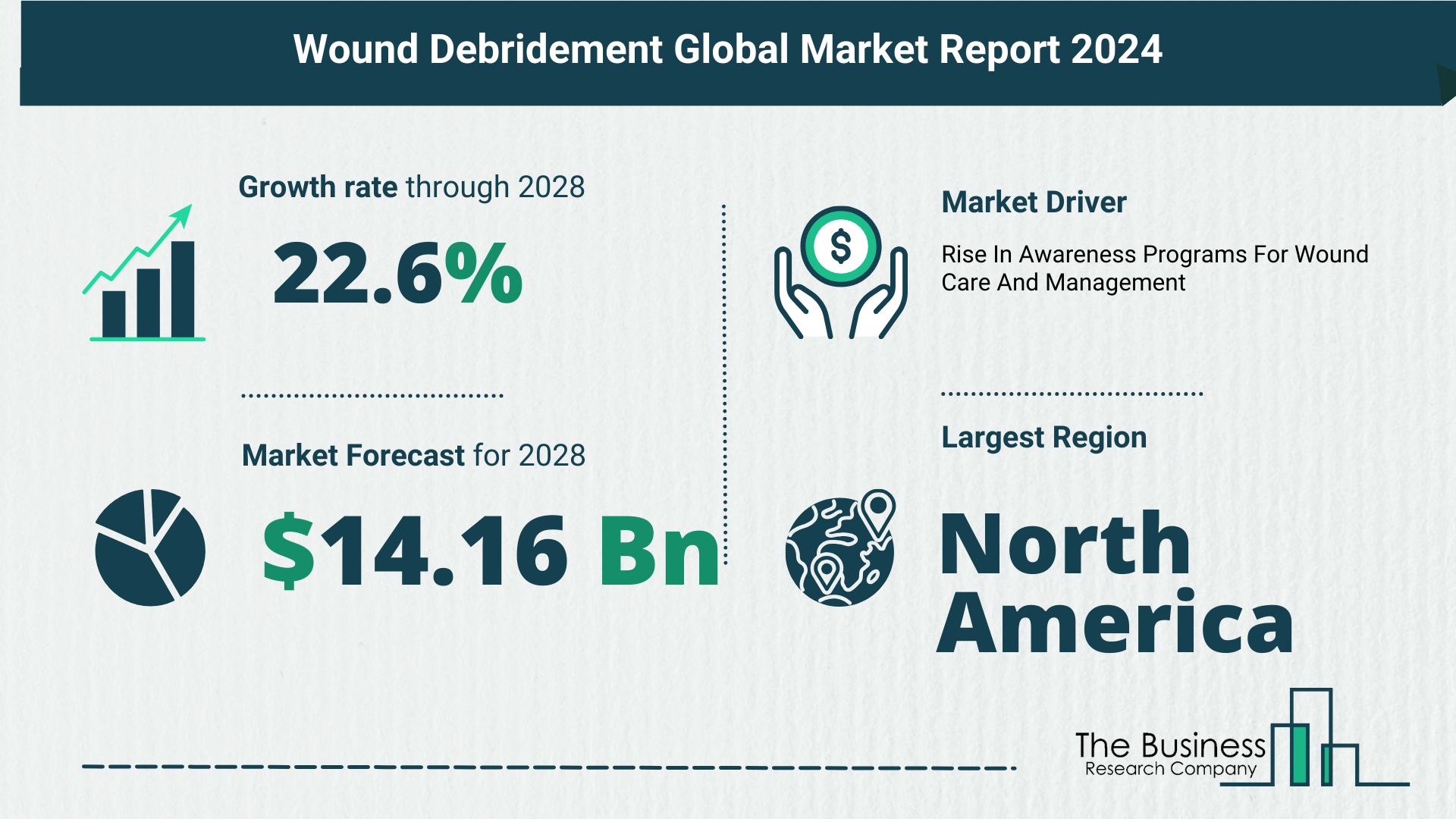
    The Wound Debridement Market Landscape The wound debridement market has experienced robust growth in recent years, with a notable surge from $5 billion in 2023 to $5.35 billion in 2024 at a compound annual growth rate (CAGR) of 7.0%. Projections indicate further expansion, reaching $7.03 billion in 2028 at a CAGR of 7.1%. This growth is attributed to various factors such as the prevalence of chronic diseases, an aging population, increased healthcare expenditure, sports injuries, road accidents, and economic growth.

    Rising Awareness Programs Drive Wound Debridement Market Growth

    • Diverse Causes of Wounds: Injuries, accidents, surgical wounds, burns, diabetes, vascular disease, and chronic wounds necessitate attention.
    • Healogics Wound Care Awareness Campaign: A prime example of an initiative aimed at raising awareness about chronic wound healing.
    • Resourceful Workshops: Workshops aiding in educating both patients and healthcare providers about wound severity and care.
    • Key Market Players: Smith & Nephew PLC, B. Braun Melsungen AG, Coloplast A/S, and others contribute to market growth.

    View More On The Wound Debridement Market Report 2024 – https://www.thebusinessresearchcompany.com/report/wound-debridement-global-market-report

    Innovative Technologies Transforming The Wound Debridement Market

    • Tech Advancements as a Key Trend: Major market players focusing on innovative technologies for wound debridement.
    • Wearable Technologies: Integration of wearable technologies, electronic health data, and diverse examination devices.
    • Nanosensor for Advanced Care: RMIT University’s nanosensor-based glowing wound dressing unit for infection monitoring.
    • Essity AB’s Acquisition of Hydrofera: A strategic move to enhance Essity’s wound debridement portfolio and innovation capabilities.

    Segmentation: Understanding the Wound Debridement Market The wound debridement market is segmented based on various parameters, providing a comprehensive understanding of its dynamics.

    1. By Product:
      • Enzymatic Debridement Products
      • Autolytic Debridement Products
      • Gels, Ointments
      • Mechanical Debridement Products
      • Ultrasonic Debridement Products
      • Other Products
    2. By Method:
      • Surgical Method
      • Enzymatic Method
      • Mechanical Method
      • Autolytic Method
      • Other Methods
    3. By Wound Type:
      • Venous Leg Ulcers
      • Diabetic Foot Ulcers
      • Pressure Ulcers
      • Surgical and Traumatic Wounds
      • Other Wound Types
    4. By End User:
      • Hospitals
      • Clinics
      • Other End Users

    Regional Dynamics: North America Leading, Asia-Pacific Emerging

    • North America: The largest region in the wound debridement market in 2023.
    • Asia-Pacific: Expected to be the fastest-growing region, showcasing immense potential during the forecast period.

    Conclusion: Navigating the Future of Wound Debridement The wound debridement market’s trajectory is marked by consistent growth, fueled by factors like increasing diabetic populations, outpatient care trends, regulatory support, and advancements in healthcare infrastructure. The landscape is further enriched by major trends such as biological debridement, robotic debridement, smart wound dressings, minimally invasive techniques, and advanced wound imaging. As we navigate the future, it is evident that the wound debridement market is not only witnessing growth but also transforming through innovation and awareness initiatives, ultimately contributing to improved patient outcomes and healthcare practices.

    Request A Sample Of The Global Wound Debridement Market Report 2024:
    https://www.thebusinessresearchcompany.com/sample_request?id=6575&type=smp

  • Global Virology Specimen Collection Market Report 2024 – Top Market Trends And Opportunities

    Global Virology Specimen Collection Market Report 2024 – Top Market Trends And Opportunities

    The Business Research Company’s market reports offer an in-depth analysis on the market’s growth potential, major drivers, key trends and more.

    The virology specimen collection market has witnessed robust growth in recent years, and this trend is set to continue. In 2023, the market size reached $6.18 billion, with a projected increase to $6.56 billion in 2024, boasting a Compound Annual Growth Rate (CAGR) of 6.1%. Looking ahead, the market is anticipated to further expand, reaching $8.23 billion in 2028, at a CAGR of 5.8%. This growth can be attributed to various factors, including disease outbreaks, infectious disease research, public health initiatives, quality assurance and regulation, remote and home testing, global health preparedness, and government funding.

    Rising Cases of Viral Diseases Boosting Market Growth

    • Viral Infections on the Rise: The surge in viral diseases, such as HIV/AIDS and influenza, is a significant driver for the virology specimen collection market. In 2022, UNAIDS reported 39.0 million people globally living with HIV, with 1.3 million new infections and 630,000 AIDS-related deaths in the same year.
    • Critical Role of Specimen Collection: Virology specimen collection is crucial for the diagnosis and treatment of viral diseases. Proper collection, transport, and processing of specimens are essential steps in detecting viral infections.
    • Market Growth Catalyst: The increasing prevalence of viral diseases, especially HIV/AIDS, contributes significantly to the market’s growth trajectory.

    Key Players in the Virology Specimen Collection Market

    • Industry Leaders: Major companies driving the virology specimen collection market include Puritan Medical Products Co. LLC, Becton Dickinson and Company, Quidel Corporation, Thermo Fisher Scientific Inc., and others.
    • Diverse Offerings: These companies provide a range of products and services, contributing to the market’s overall dynamism and growth.

    Technological Advancements Shaping the Market

    • Automated Sample Isolation: Technological advancements, including automated sample isolation and real-time amplification technology, are transforming the virology specimen collection market.
    • Nightingale Health’s Innovation: In August 2023, Nightingale Health PLC introduced a remote blood collection kit, allowing research participants to self-collect blood samples. This innovation enhances flexibility and expands study options.
    • Impact on Research: Remote blood collection facilitates research by overcoming logistical and geographic constraints, ultimately advancing medical research and clinical trials.

    Read More On The Virology Specimen Collection Market Report 2024 – https://www.thebusinessresearchcompany.com/report/virology-specimen-collection-global-market-report

    Strategic Acquisitions Enhancing Diagnostic Capabilities

    • DiaSorin’s Acquisition of Luminex Corporation: In 2021, DiaSorin S.p.A. acquired Luminex Corporation for $1.8 billion. This strategic move provides DiaSorin access to Luminex’s multiplexing technology and a portfolio that complements its existing offerings, particularly strengthening its position in the United States.
    • Synergies and Benefits: The acquisition opens avenues for academic and scientific research, enhances interaction with biopharma businesses, and broadens access to clinical multiplexing assays for future Value-Based Care projects.

    Market Segmentation for Comprehensive Insights

    The virology specimen collection market is segmented based on various factors:

    1. Product Type: Blood Collection Kits, Specimen Collection Tubes, Viral Transport Media, Swabs
    2. Sample: Blood Samples, Nasopharyngeal Samples, Throat Samples, Nasal Samples, Cervical Samples, Oral Samples, Other Samples
    3. Method: Manual, Automated
    4. Application: Diagnostic, Therapeutic

    Regional Dynamics: North America Leading, Asia-Pacific Rising

    • North America’s Dominance: In 2023, North America held the largest share in the virology specimen collection market. The region’s advanced healthcare infrastructure and technological innovations contribute to its leadership.
    • Asia-Pacific’s Growth: The Asia-Pacific region is poised to be the fastest-growing in the forecast period. Factors such as increasing healthcare awareness and a rising population contribute to the market’s expansion in this region.

    Conclusion: A Thriving Future for Virology Specimen Collection
    As the virology specimen collection market continues to grow, driven by technological advancements, strategic acquisitions, and the increasing prevalence of viral diseases, it presents a promising landscape for stakeholders. The integration of self-collection kits, point-of-care specimen collection, and digital health platforms underscores the industry’s adaptability to evolving healthcare needs. With North America leading and Asia-Pacific emerging as a key player, the market is on a trajectory of sustained growth, promising a future where effective specimen collection plays a pivotal role in combating viral diseases globally.

    Request for A Sample Of The Global Virology Specimen Collection Market Report:
    https://www.thebusinessresearchcompany.com/sample_request?id=6642&type=smp