Month: March 2025

  • Key Highlights of the Acute Renal Failure (ARF) Market 2025-2034: Growth Dynamics, Trends, and Opportunities

    Key Highlights of the Acute Renal Failure (ARF) Market 2025-2034: Growth Dynamics, Trends, and Opportunities

    Updated 2025 Market Reports Released: Trends, Forecasts to 2034 – Early Purchase Your Competitive Edge Today!

    What is the Forecasted Expansion Rate of the Acute Renal Failure (ARF) Market Over the 2025–2034 Period?

    The market size for acute renal failure (ARF) has seen a robust expansion in recent times. It is projected to surge from a valuation of $6.09 billion in 2024 to around $6.62 billion in 2025, with a compound annual growth rate (CAGR) of 8.6%. The notable growth in the historic phase can be credited to multiple factors such as the increasing elderly population, a higher number of sepsis cases, advancements in diagnostic techniques, government initiatives in healthcare, as well as a rise in nephrotoxic medication case occurrences.

    Anticipated to witness substantial growth in the coming years, the acute renal failure (ARF) market is expected to reach $9.09 billion by 2029, progressing at a compound annual growth rate (CAGR) of 8.3%. The predicted expansion during the forecasted period can be ascribed to the broadening of home-based dialysis solutions, emerging markets, the advent of renal biomarkers, extensive research and development for new therapeutic drugs, and the surging necessity for non-invasive diagnostics. Key trends forecasted for the period include the advancement in continuous renal replacement therapy (CRRT), 3D bioprinting of renal tissue, the introduction of wearable biosensors, next-gen dialysis machines, and drug delivery fuelled by nanotechnology.

    Which Primary Drivers Are Supporting the Continued Expansion of the Acute Renal Failure (ARF) Market?

    The growth of the acute renal failure (ARF) market is anticipated to be fuelled by the rising incidence of chronic kidney diseases. Chronic kidney disease (CKD), a long-lasting ailment where the kidneys fail to properly filter the blood, is becoming increasingly prevalent due to escalating diabetes, hypertension, obesity, aging populations, and lifestyle-related factors globally. Acting as a substantial catalyst or exacerbating element for chronic kidney disease, acute renal failure, marked by the unexpected loss of kidney functionality, can cause irreversible harm to kidney tissues, compromise filtration efficacy, and augment the likelihood of continuous, long-term kidney malfunction, if not adequately controlled. For example, by June 2023, as per the report by Kidney Research UK, a non-profit association based in the UK, roughly 7.2 million residents of the UK are presently dealing with chronic kidney disease, accounting for over 10% of the population. Out of these, 3.25 million are in the advanced stages of the ailment, while a further 3.9 million are in the beginning stages. By 2033, it anticipates that the tally of individuals afflicted by chronic kidney disease will increase to 7.61 million. Consequently, the rising incidence of chronic kidney diseases is instigating the surge in the acute renal failure (ARF) market.

    Explore Comprehensive Insights Into The Global Acute Renal Failure (ARF) Market With A Free Sample Report:

    https://www.thebusinessresearchcompany.com/sample.aspx?id=21083&type=smp

    Who Are the Leading Organizations Fueling the Expansion of the Acute Renal Failure (ARF) Market?

    Major companies operating in the acute renal failure (ARF) market are Pfizer Inc., Novartis AG, LG Chem Ltd., Medtronic plc, Fresenius Medical Care AG & Co. KGaA, Asahi Kasei Corporation, Baxter International Inc., Astellas Pharma Inc., Syensqo, Dr. Reddy’s Laboratories Limited, Zydus Lifesciences Limited, NIKKISO Co., Ltd., Quark Pharmaceuticals Inc., NIPRO Corporation, Alloksys Life Sciences B.V., AM-Pharma B.V., Sentien Biotechnologies, MediBeacon LLC, Angion Biomedica Corp., Atox Bio Ltd.

    Which Cutting-Edge Trends Are Expected to Drive the Acute Renal Failure (ARF) Market’s Growth?

    Principal businesses in the acute renal failure (ARF) market are working to acquire regulatory endorsements for medications to broaden their accessibility and consolidate their standing in treating severe acute kidney injury (AKI). These endorsements necessitate official permission from government or regulatory agencies for the public sale and use of drugs, medical equipment, or treatments. For example, CalciMedica., a clinical-stage biopharmaceutical company based in the US, earned FDA approval for an IND application for a Phase 2 trial of Auxora in February 2024, aiming to determine Auxora’s effectiveness in addressing severe acute kidney injury (AKI) linked with acute hypoxemic respiratory failure (AHRF), a condition known for its high fatality rate. The KOURAGE trial, a randomized, double-blind, placebo-controlled study, intends to enrol around 150 patients with Stage 2 and 3 acute kidney injury (AKI) who also experience acute hypoxemic respiratory failure (AHRF). The study aims to evaluate the effectiveness of Auxora through five daily doses by measuring the number of days patients live without the need for ventilators or dialysis up to 30 days following the treatment.

    Secure Your Global Acute Renal Failure (ARF) Market Report Now for Fast and Efficient Delivery!

    https://www.thebusinessresearchcompany.com/report/acute-renal-failure-arf-global-market-report

    What Are the Key Components of the Acute Renal Failure (ARF) Market, and How Do Its Segments Perform?

    The acute renal failure (ARF) market covered in this report is segmented –

    1) By Disease Type: Prerenal Acute Renal Failure, Renal Acute Renal Failure, Postrenal Acute Renal Failure

    2) By Drug Type: Diuretics, Vasopressors, Erythropoiesis-Stimulating Agents (ESAS), Phosphate Binders, Calcium and Vitamin D Supplements, Antibiotics, Others Drugs

    3) By Route of Administration: Oral, Intravenous

    4) By Diagnosis: Computed Tomography (CT) Scan, Kidney Biopsy, Ultrasound

    5) By End-Users: Clinics, Hospitals, Home Healthcare, Others End-Users

    Subsegments:

    1) By Prerenal Acute Renal Failure: Hypovolemia, Decreased Cardiac Output, Renal Artery Stenosis

    2) By Renal Acute Renal Failure: Acute Tubular Necrosis, Glomerulonephritis, Interstitial Nephritis

    3) By Postrenal Acute Renal Failure: Obstructive Uropathy, Bladder Outlet Obstruction, Kidney Stones

    Which Regions Are Most Influential in Expanding the Acute Renal Failure (ARF) Market?

    North America was the largest region in the acute renal failure (ARF) market in 2024. Asia-Pacific is expected to be the fastest-growing region in the forecast period. The regions covered in the acute renal failure (ARF) market report are Asia-Pacific, Western Europe, Eastern Europe, North America, South America, Middle East, Africa.

    What Does the Definition of the Acute Renal Failure (ARF) Market Include?

    Acute renal failure (ARF), also known as acute kidney injury (AKI), refers to a sudden and rapid decline in kidney function over a period of hours or days. Acute renal failure is treated through various methods, including medication, fluid management, and dialysis, to help restore kidney function and prevent further complications.

    Browse Through More Similar Reports By The Business Research Company:

    Hypolipidemics Global Market Report 2025

    https://www.thebusinessresearchcompany.com/report/hypolipidemics-global-market-report

    Hypophosphatasia Treatment Global Market Report 2025

    https://www.thebusinessresearchcompany.com/report/hypophosphatasia-treatment-global-market-report

    Exocrine Pancreatic Insufficiency (EPI) Therapeutics And Diagnostics Global Market Report 2025

    https://thebusinessresearchcompany.com/report/exocrine-pancreatic-insufficiency-epi-therapeutics-and-diagnostics-global-market-report

    About The Business Research Company:

    With over 15000+ reports from 27 industries covering 60+ geographies, The Business Research Company has built a reputation for offering comprehensive, data-rich research and insights. Armed with 1,500,000 datasets, the optimistic contribution of in-depth secondary research, and unique insights from industry leaders, you can get the information you need to stay ahead in the game.

    Contact us at:

    The Business Research Company: https://www.thebusinessresearchcompany.com/

    Americas +1 3156230293

    Asia +44 2071930708

    Europe +44 2071930708

    Email us at info@tbrc.info

    Follow us on:

    LinkedIn: https://in.linkedin.com/company/the-business-research-company

    YouTube: https://www.youtube.com/channel/UC24_fI0rV8cR5DxlCpgmyFQ

    Global Market Model: https://www.thebusinessresearchcompany.com/global-market-model

    Found this article helpful? Share it on:

  • Unlocking the Future of the Coccidioidomycosis Drug Market: Growth Rate, Key Trends, and Opportunities for 2025-2034

    Unlocking the Future of the Coccidioidomycosis Drug Market: Growth Rate, Key Trends, and Opportunities for 2025-2034

    Updated 2025 Market Reports Released: Trends, Forecasts to 2034 – Early Purchase Your Competitive Edge Today!

    Analyzing the Growth Rate of the Coccidioidomycosis Drug Market: What’s the Expected CAGR for the Next Decade?

    In recent times, the market size for coccidioidomycosis drugs has significantly expanded. Projections indicate an increase from $0.33 billion in 2024 to $0.36 billion in 2025, with a compound annual growth rate (CAGR) of 8.4%. The historic growth in the sector is due to several key factors. These include the rise in valley fever cases, enhanced awareness of coccidioidomycosis, the advancement in antifungal medications, improvement of healthcare infrastructure in areas where the disease is endemic, an upsurge in government funding targeted at rare disease research, an expanding immunocompromised patient population and partnerships between pharmaceutical firms and healthcare providers.

    The market for coccidioidomycosis drugs is predicted to experience significant expansion in the coming years, with an anticipated value of $0.48 billion in 2029, delivering a compound annual growth rate (CAGR) of 10.3%. Factors contributing to this growth during the projection period include an increase in valley fever occurrences, a surge in the population in regions endemic for the disease, the progression of personalized medicine, escalating severe coccidioidomycosis cases, enhancements in fungal resistance management, increased health care spending in endemic areas, ongoing trials for new therapies, growth of treatment accessibility in underprivileged regions, and a heightened emphasis on the management of rare diseases. The forecast period will also see trends such as the application of artificial intelligence in drug discovery, the use of machine learning for personalized treatment, development of targeted antifungal therapies, integration of genomic data in precision medicine, advancements in molecular biomarkers-based diagnostic tools, expansion of telemedicine for distant patient management, innovations in nanoparticle-based drug delivery, the use of big data in epidemiology and treatment results, progress in real-time patient monitoring technology, and the development of virtual clinical trial platforms.

    What Major Innovations Are Driving the Accelerated Growth of the Coccidioidomycosis Drug Market?

    The anticipated expansion of the coccidioidomycosis drug market is driven by the growing rate of immunocompromised individuals. These individuals, facing a higher risk of infection and illnesses, have compromised immune systems due to ailments like human immunodeficiency virus (HIV), cancer, or post-transplant conditions. A rise in chronic diseases, increased organ transplant procedure rates, the ubiquitous application of immunosuppressive treatments, and an increasing incidence of HIV/AIDS all contribute to the growth in immunocompromised populations. Drugs for coccidioidomycosis provide relief to these patients by regulating fungal infections, lessening the severity of the disease, and averting severe complications such as disseminated coccidioidomycosis that can pose a life-threat due to diminished immune responses. For example, the Joint United Nations Programme on HIV/AIDS (UNAIDS), a Swiss United Nations organization, reported in July 2024 that the people living with HIV increased from 39.0 million in 2022 to 39.9 million in 2023. Hence, it is the rising rate of immunocompromised individuals that is propelling the growth of the coccidioidomycosis drug market.

    Request Your Free Coccidioidomycosis Drug Market Report Sample Now!

    https://www.thebusinessresearchcompany.com/sample.aspx?id=21153&type=smp

    What are the leading organizations impacting the Coccidioidomycosis Drug market’s growth?

    Major companies operating in the coccidioidomycosis drug market are Pfizer Inc., Johnson & Johnson, Merck & Co. Inc., Bayer AG, Bristol Myers Squibb, Novartis AG, Gilead Sciences Inc., Viatris Inc., Teva Pharmaceuticals USA Inc., Baxter International Inc., Astellas Pharma Inc., Bausch Health Companies Inc., Sun Pharmaceutical Industries Ltd., Apotex Inc., Cipla Limited, Dr. Reddy’s Laboratories, Zydus Group, Amneal Pharmaceuticals Inc., Recordati S.p.A., Glenmark Pharmaceuticals Limited, Xellia Pharmaceuticals Pvt. Ltd., Brundavan laboratories Pvt.Ltd., LGM Pharma, Enomark Pharma

    What Are the Most Prominent Trends Driving Change in the Coccidioidomycosis Drug Market?

    Top firms involved in the coccidioidomycosis drug market are strategically investing in advanced antifungal therapy development and improving treatment efficiency. These investments allow the companies to carry out clinical trials for new drug formulations and combination treatments, aimed at drug-resistant fungal strains, to improve patient outcomes. For instance, in February 2022, researchers at the University of California (UCLA) initiated a center to understand the varying impacts of coccidioidomycosis (valley fever) on different individuals. The collaborative project, involving UCLA, University of California San Diego (UCSD), and supported by the National Institutes of Health (NIH), oversees four research projects that focus on innate and adaptive immune responses, the genomic base of cocci disease, and the role fungal virulence factors play.

    Pre-order Your Report for Quick and Easy Delivery!

    https://www.thebusinessresearchcompany.com/report/coccidioidomycosis-drug-global-market-report

    What Are the Core Segments of the Coccidioidomycosis Drug Market, and How Do They Contribute to Growth?

    The coccidioidomycosis drug market covered in this report is segmented –

    1) By Drug Type: Azoles, Echinocandins, Polyenes

    2) By Route Of Administration: Oral, Intravenous

    3) By Treatment Phase: Acute Phase, Chronic Phase, Prophylactic Treatment

    4) By Group Of Patients: Immunocompetent Patients, Immunocompromised Patients

    5) By End-User: Speciality Clinics, Hospitals, Homecare, Other End-Users

    Subsegments:

    1) By Azoles: Fluconazole, Itraconazole, Voriconazole, Posaconazole

    2) By Echinocandins: Caspofungin, Micafungin, Anidulafungin

    3) By Polyenes: Amphotericin B, Liposomal Amphotericin B

    What Regions Are Leading the Charge in the Coccidioidomycosis Drug Market?

    North America was the largest region in the coccidioidomycosis drug market in 2024. Asia-Pacific is expected to be the fastest-growing region in the forecast period. The regions covered in the coccidioidomycosis drug market report are Asia-Pacific, Western Europe, Eastern Europe, North America, South America, Middle East, Africa.

    How Is the Coccidioidomycosis Drug Market Categorized and Defined in the Industry?

    Coccidioidomycosis drug is a medication designed to combat infections caused by Coccidioides species, the fungi responsible for valley fever. These drugs including azole antifungals and polyene antifungals, help control fungal growth and reduce symptoms. Depending on the severity of infection, treatment may be oral, intravenous, or long-term to prevent complications, especially in immunocompromised patients.

    Browse Through More Similar Reports By The Business Research Company:

    Antidotes Global Market Report 2025

    https://www.thebusinessresearchcompany.com/report/antidotes-global-market-report

    Global Antifungals Global Market Report 2025

    https://www.thebusinessresearchcompany.com/report/antifungals-global-market-report

    Cell Therapy Technologies Global Market Report 2025

    https://thebusinessresearchcompany.com/report/cell-therapy-technologies-global-market-report

    About The Business Research Company:

    With over 15000+ reports from 27 industries covering 60+ geographies, The Business Research Company has built a reputation for offering comprehensive, data-rich research and insights. Armed with 1,500,000 datasets, the optimistic contribution of in-depth secondary research, and unique insights from industry leaders, you can get the information you need to stay ahead in the game.

    Contact us at:

    The Business Research Company: https://www.thebusinessresearchcompany.com/

    Americas +1 3156230293

    Asia +44 2071930708

    Europe +44 2071930708

    Email us at info@tbrc.info

    Follow us on:

    LinkedIn: https://in.linkedin.com/company/the-business-research-company

    YouTube: https://www.youtube.com/channel/UC24_fI0rV8cR5DxlCpgmyFQ

    Global Market Model: https://www.thebusinessresearchcompany.com/global-market-model

    Found this article helpful? Share it on:

  • Coagulation Factor Deficiency Growth Forecast 2025-2034: Trends, Opportunities, and Key Insights You Need to Know

    Coagulation Factor Deficiency Growth Forecast 2025-2034: Trends, Opportunities, and Key Insights You Need to Know

    Updated 2025 Market Reports Released: Trends, Forecasts to 2034 – Early Purchase Your Competitive Edge Today!

    What is the Predicted CAGR for the Coagulation Factor Deficiency Market Over the Forecast Period of 2025 to 2034?

    The market for coagulation factor deficiency has experienced robust growth in recent times. The market is projected to escalate from $4.58 billion in 2024 to $4.94 billion in 2025, indicating a compound annual growth rate (CAGR) of 8.0%. The remarkable growth during the previous years can be ascribed to factors such as the rising instances of hemophilia, the advent of recombinant factors, increasing awareness regarding coagulation disorders, advancements in diagnostic capabilities, government initiatives for rare diseases, the development of prophylactic therapies, enlargement of patient registries, and heightened investment in the field of biotechnology.

    The market size for coagulation factor deficiency is predicted to witness significant expansion in the upcoming years, reaching a value of $6.64 billion by 2029, thanks to a compound annual growth rate (CAGR) of 7.7%. The anticipated growth during the forecast period is due to multiple factors such as the evolving acceptance of gene therapies, an increased emphasis on personalized medicine, a growth in the occurrence of coagulation disorders, broader accessibility in emerging markets, as well as the inclusion of digital health services and continual innovation in biomanufacturing technologies. Key trends for the forecast period comprise of technologies in gene editing like CRISPR, the creation of long-lasting recombinant factors, improvements in gene therapy delivery systems, wearable devices for coagulation monitoring, the utilization of artificial intelligence for optimizing treatments, point-of-care diagnostic instruments, drug delivery based on nanoparticles, the development of recombinant products independent of plasma, innovation in biosimilars, and the incorporation of precision medicine methodologies.

    How Are Key Drivers in the Industry Acting as Catalysts for the Growth of the Coagulation Factor Deficiency Market?

    Blood-related disorders, which are on the rise, are expected to boost the coagulation factor deficiency market’s growth. These disorders include a range of conditions that impact the production, function or composition of blood cells, platelets or plasma, resulting in problems such as anemia, clotting issues and immune system deficiencies. The increase in such disorders can be attributed to factors including an aging population, genetic factors, heightened public awareness, environmental stresses, lifestyle changes, a growing prevalence of chronic illnesses and advancements in diagnostic technology that enable earlier identification. The coagulation factor deficiency aids in managing these disorders by supplying the much-needed clotting elements to prevent or regulate excessive bleeding in situations like hemophilia, where there is an impairment in the body’s innate capability to produce blood clots. For example, the Leukemia and Lymphoma Society, a professional U.S. organisation, stated in September 2024 that every three minutes, one person in the U.S. is diagnosed with leukemia, lymphoma or myeloma. These cancers affected an estimated 187,740 individuals, or 9.4% of the anticipated 2,001,140 new cancer cases in the U.S. in 2024. Additionally, the National Health Service (NHS) England, a UK government-funded healthcare system, cited in May 2024 that about 17,000 people in England were living with the inherited blood disorder sickle cell disease, with approximately 250 new diagnoses each year. Consequently, the rising instances of blood-related disorders are fuelling the expansion of the coagulation factor deficiency market.

    Explore Comprehensive Insights Into The Global Coagulation Factor Deficiency Market With A Free Sample Report:

    https://www.thebusinessresearchcompany.com/sample.aspx?id=21152&type=smp

    Who are the key firms paving the way for growth in the Coagulation Factor Deficiency market?

    Major companies operating in the coagulation factor deficiency market are Pfizer Inc., F Hoffmann-La Roche Ltd., Bayer HealthCare Pharmaceuticals, Sanofi Genzyme, Novo Nordisk A/S, Baxter International Inc., CSL Behring LLC, Grifols S.A., Octapharma AG, Takeda Pharmaceutical Company Limited, Swedish Orphan Biovitrum AB, GC Biopharma Co. Ltd., Alnylam Pharmaceuticals Inc., Opko Health Inc., Kedrion Biopharma Inc., Shanghai RAAS Blood Products Co. Ltd., LFB S.A., Biotest AG, Spark Therapeutics Inc., Biogen Inc., Sangamo Therapeutics Inc., Centessa Pharmaceuticals Inc.

    What Key Trends Are Currently Impacting the Coagulation Factor Deficiency Market’s Development?

    Leading firms in the coagulation factor deficiency market are concentrating on creating novel treatments, such as one-time gene therapy, to offer sustainable or possibly curative responses for those affected by bleeding disorders such as hemophilia, thereby diminishing the necessity for lifelong clotting factor infusions. One-time gene therapy is a medical procedure which involves the addition or modification of genetic materials within an individual’s cells to tackle or eradicate a disease, intending to deliver enduring or possibly irreversible therapeutic outcomes after only a single application. For example, in April 2024, Pfizer Inc., an American pharmaceutical and biotech company, revealed that the U.S. Food and Drug Administration (FDA) has given its approval for BEQVEZ (fidanacogene elaparvovec-dzkt) to be used in the treatment of adults experiencing moderate to severe hemophilia B who are currently undertaking factor IX (FIX) prophylaxis therapy. This one-time adeno-associated virus (AAV)-based gene therapy is engineered to introduce a functional version of the FIX gene, which codes for a high-activity FIX variant, into the transduced cells. For those living with hemophilia B, the gene therapy allows them to self-produce FIX through this single treatment, eradicating the need for regular FIX infusions.

    Secure Your Global Coagulation Factor Deficiency Market Report Now for Fast and Efficient Delivery!

    https://www.thebusinessresearchcompany.com/report/coagulation-factor-deficiency-global-market-report

    Which Segments Play a Crucial Role in the Expansion of the Coagulation Factor Deficiency Market?

    The coagulation factor deficiency market covered in this report is segmented –

    1) By Product: Recombinant Coagulation Factor Concentrates, Plasma-derived Coagulation Factor Concentrates, Biologics, Desmopressin, Other Product Types

    2) By Deficiency Type: Haemophilia A, Hemophilia B, Von Willebrand Disease, Factor XI Deficiency, Factor XIII Deficiency, Other Treatment Types

    3) By End Users: Hospitals, Clinics, Home Care, Other End Users

    Subsegments:

    1) By Recombinant Coagulation Factor Concentrates: Recombinant Factor VIII, Recombinant Factor IX, Recombinant Factor VIIa, Other Recombinant Factors

    2) By Plasma-derived Coagulation Factor Concentrates: Plasma-derived Factor VIII, Plasma-derived Factor IX, Plasma-derived Factor VII, Other Plasma-derived Factors

    3) By Biologics: Monoclonal Antibodies, Gene Therapy Products

    4) By Desmopressin: Intravenous Desmopressin, Intranasal Desmopressin

    5) By Other Product Types: Fresh Frozen Plasma (FFP), Prothrombin Complex Concentrates (PCC)

    Which Geographical Regions Are Pioneering Growth in the Coagulation Factor Deficiency Market?

    North America was the largest region in the coagulation factor deficiency market in 2024. Asia-Pacific is expected to be the fastest-growing region in the forecast period. The regions covered in the coagulation factor deficiency market report are Asia-Pacific, Western Europe, Eastern Europe, North America, South America, Middle East, Africa.

    How Do Experts Define the Scope of the Coagulation Factor Deficiency Market?

    Coagulation factor deficiency refers to a condition where the body lacks one or more clotting factors necessary for blood coagulation, leading to prolonged bleeding or difficulty in stopping bleeding. These deficiencies are treated with clotting factor concentrates and other therapies, which are used to manage and prevent bleeding episodes in patients with conditions like hemophilia.

    Browse Through More Similar Reports By The Business Research Company:

    Chronic Lower Back Pain Global Market Report 2025

    https://www.thebusinessresearchcompany.com/report/chronic-lower-back-pain-global-market-report

    Chronic Lymphocytic Leukemia Treatment Global Market Report 2025

    https://www.thebusinessresearchcompany.com/report/chronic-lymphocytic-leukemia-treatment-global-market-report

    Global Ambulatory IV Infusion Pumps Opportunities And Strategies Global Market Report 2025

    https://thebusinessresearchcompany.com/report/ambulatory-iv-infusion-pumps-global-market

    About The Business Research Company:

    With over 15000+ reports from 27 industries covering 60+ geographies, The Business Research Company has built a reputation for offering comprehensive, data-rich research and insights. Armed with 1,500,000 datasets, the optimistic contribution of in-depth secondary research, and unique insights from industry leaders, you can get the information you need to stay ahead in the game.

    Contact us at:

    The Business Research Company: https://www.thebusinessresearchcompany.com/

    Americas +1 3156230293

    Asia +44 2071930708

    Europe +44 2071930708

    Email us at info@tbrc.info

    Follow us on:

    LinkedIn: https://in.linkedin.com/company/the-business-research-company

    YouTube: https://www.youtube.com/channel/UC24_fI0rV8cR5DxlCpgmyFQ

    Global Market Model: https://www.thebusinessresearchcompany.com/global-market-model

    Found this article helpful? Share it on:
  • Exploring Key Insights of the Clinical Trial Support Services Market: Growth Prospects, Emerging Trends, and Opportunities

    Exploring Key Insights of the Clinical Trial Support Services Market: Growth Prospects, Emerging Trends, and Opportunities

    Updated 2025 Market Reports Released: Trends, Forecasts to 2034 – Early Purchase Your Competitive Edge Today!

    How Rapidly is the Clinical Trial Support Services Market Expected to Expand Between 2025 and 2034 Based on Current Trends?

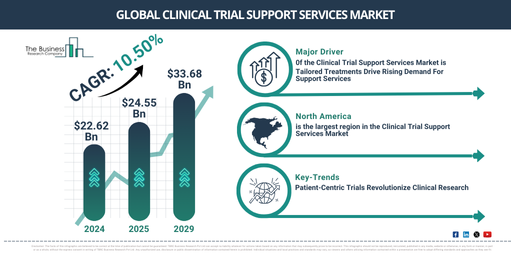
    The market size for clinical trial support services has seen substantial growth in the past few years. It is projected to increase from $22.62 billion in 2024 to $24.55 billion in 2025 with a compound annual growth rate (CAGR) of 8.5%. The historic period’s growth can be credited to factors such as the heightened outsourcing of clinical trials, an upsurge in healthcare spending, the expansion of the pharmaceutical and biotech industries, regulatory shifts and reforms, globalization of clinical trials, a growing disease prevalence, an escalation in clinical research financing, and a rising demand for expedited drug development.

    Substantial expansion is anticipated in the clinical trial support services market in the coming years, with projections estimating a rise to $33.68 billion in 2029, representing a compound annual growth rate (CAGR) of 10.5%. This growth forecast for the period can be linked to several factors such as the rising demand for individualized medicine, an uptick in the incidence of chronic diseases, augmented investment in research and development, regulatory backing for clinical trials, the growth of outsourcing in clinical trials, a heightened emphasis on patient-centric trials, an increase in the complexity of clinical trials, and the appearance of new therapeutic areas. Key trends expected to shape the forecast period include the incorporation of artificial intelligence, machine learning, blockchain technology, data analytics on a larger scale, wearable technology, decentralized clinical trials, electronic data capture, clinical trial management systems, remote patient tracking, and virtual clinical trials.

    Which Primary Drivers Are Supporting the Continued Expansion of the Clinical Trial Support Services Market?

    The growth of the clinical trial support services market is set to be accelerated by the advent of personalized medicine. This type of medicine customizes treatments for patients based on their specific lifestyle, genetic constitution, and environmental surroundings to elevate their healthcare and yield optimal results. The application of personalized medicine is becoming more widespread due to factors such as the evolution of genomics, increased access to biomarker-based diagnostics, enhanced techniques for data analytics, and a growing demand for more precise and efficient therapies. Clinical trial support services make personalized medicine achievable by optimizing the process of patient enrollment, incorporating biomarker-driven trial frameworks, and ensuring compliance with regulations. This facilitates the creation of targeted therapies that are personalized to the genetic make-up and disease profile of each patient. For instance, in February 2024, the Personalized Medicine Coalition (PMC), a non-profit organization based in the US, reported that the U.S. Food and Drug Administration (FDA) sanctioned 26 new personalized treatments in 2023. This was a marked rise from the 12 that were approved in 2022. Hence, the advent of personalized medicine is fueling the growth of the clinical trial support services market.

    Get Your Free Sample of the Global Clinical Trial Support Services Market Report Now!

    https://www.thebusinessresearchcompany.com/sample.aspx?id=21151&type=smp

    Which key players are shaping the future of the Clinical Trial Support Services market?

    Major companies operating in the clinical trial support services market are Pfizer Inc., F. Hoffmann-La Roche AG, Sanofi S.A., Thermo Fisher Scientific Inc., Eli Lilly and Company, Novo Nordisk A/S, Iqvia Inc., Laboratory Corporation of America Holdings (Labcorp), ICON plc, SGS S.A., Eurofins Scientific SE, WuXi AppTec, Syneos Health, Catalent Inc., Charles River Laboratories International Inc., Medpace Holdings Inc., Pharmaron, MARKEN Ltd., Novotech, ClinChoice Private Limited, Medidata Solutions Inc., Premier Research, Quotient Sciences Ltd., Caidya, MMS Holdings Inc., Celerion Inc., Parexel International (MA) Corporation, Alcura Health, Almac Group, Brighter Health Network LLC

    How Are the Latest Trends Influencing the Growth of the Clinical Trial Support Services Market?

    Major corporations in the clinical trial support services market are emphasizing on evolving patient-centric trials to improve the recruitment process, amplify retention, decrease participant strain, and confirm an inclusive and affirmative experience for various patient groups. The prime goal of these patient-centric trials, which are clinical trials designed focusing on patients’ needs, preferences and experiences, is to amplify accessibility, involvement and overall satisfaction of participants throughout the course of the trial. For example, Leal Health, a patient-first digital health firm based in the US, inaugurated its unique patient-centric program-level analytic platform in March 2023. Built to integrate with online clinical trial websites of pharmaceutical companies, this platform facilitates formulation and execution of effective patient-focused programs. These programs not only ensure high-quality patient candidates for clinical trials but also reduce recruitment timelines and enhance operational efficiencies, thereby improving the overall patient experience from start to finish.

    Get Instant Access to the Global Clinical Trial Support Services Market Report with Swift Delivery!

    https://www.thebusinessresearchcompany.com/report/clinical-trial-support-services-global-market-report

    What Are the Major Segments of the Clinical Trial Support Services Market and Their Role in Driving Growth?

    The clinical trial support services market covered in this report is segmented –

    1) By Service: Clinical Trial Site Management, Data Management, Patient Recruitment Management, Administrative Staff, Institutional Review Board (IRB), Other Services

    2) By Phases: Preclinical Studies, Phase I, Phase II, Phase III, Phase IV

    3) By Application: Oncology, Central Nervous System (CNS) And Mental Disorders, Cardiovascular Diseases, Infectious Diseases, Bood Disorders, Other Applications

    Subsegments:

    1) By Clinical Trial Site Management: Site Selection, Site Initiation, Site Monitoring, Site Close-out

    2) By Data Management: Data Collection, Data Validation, Electronic Data Capture (EDC), Statistical Analysis

    3) By Patient Recruitment Management: Patient Screening, Enrollment Strategy, Retention Services

    4) By Administrative Staff: Clinical Research Coordinators, Project Managers, Regulatory Affairs Specialists

    5) By Institutional Review Board (IRB): Ethical Review, Protocol Review, Compliance Monitoring

    6) By Other Services: Regulatory Consulting, Quality Assurance, Medical Writing, Investigator Training

    What Regions Are At the Forefront of Clinical Trial Support Services Market Expansion?

    North America was the largest region in the clinical trial support services market in 2024. Asia-Pacific is expected to be the fastest-growing region in the forecast period. The regions covered in the clinical trial support services market report are Asia-Pacific, Western Europe, Eastern Europe, North America, South America, Middle East, Africa.

    How Can We Define the Clinical Trial Support Services Market and Its Key Components?

    Clinical trial support services refer to a range of specialized services that assist in the planning, execution, and management of clinical trials, ensuring regulatory compliance, data integrity, patient recruitment, and overall trial efficiency. These services help streamline the drug development process, reduce operational complexities, and enhance the quality and reliability of trial outcomes.

    Browse Through More Similar Reports By The Business Research Company:

    Encephalitis Treatment Global Market Report 2025

    https://www.thebusinessresearchcompany.com/report/encephalitis-treatment-global-market-report

    Epidural Abscess Treatment Global Market Report 2025

    https://www.thebusinessresearchcompany.com/report/epidural-abscess-treatment-global-market-report

    Smart Insulin Pens Global Market Report 2025

    https://thebusinessresearchcompany.com/report/smart-insulin-pens-global-market-report

    About The Business Research Company:

    With over 15000+ reports from 27 industries covering 60+ geographies, The Business Research Company has built a reputation for offering comprehensive, data-rich research and insights. Armed with 1,500,000 datasets, the optimistic contribution of in-depth secondary research, and unique insights from industry leaders, you can get the information you need to stay ahead in the game.

    Contact us at:

    The Business Research Company: https://www.thebusinessresearchcompany.com/

    Americas +1 3156230293

    Asia +44 2071930708

    Europe +44 2071930708

    Email us at info@tbrc.info

    Follow us on:

    LinkedIn: https://in.linkedin.com/company/the-business-research-company

    YouTube: https://www.youtube.com/channel/UC24_fI0rV8cR5DxlCpgmyFQ

    Global Market Model: https://www.thebusinessresearchcompany.com/global-market-model

    Found this article helpful? Share it on:
  • 2025-2034 Growth Prospects of the Acute On Chronic Liver Failure (ACLF) Market: Key Trends and Opportunities Analyzed

    2025-2034 Growth Prospects of the Acute On Chronic Liver Failure (ACLF) Market: Key Trends and Opportunities Analyzed

    Updated 2025 Market Reports Released: Trends, Forecasts to 2034 – Early Purchase Your Competitive Edge Today!

    How Significant is the Anticipated Growth Rate of the Acute On Chronic Liver Failure (ACLF) Market from 2025 to 2034?

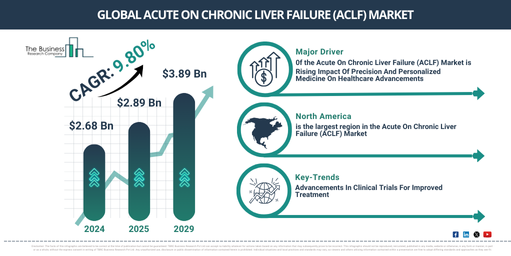
    The market for acute on chronic liver failure (ACLF) has seen robust growth in the recent years. The market value is projected to surge from $2.68 billion in 2024 to $2.89 billion in 2025, marking a compound annual growth rate (CAGR) of 8.0%. Several factors have fueled this growth during the historical period. These include the increasing instances of chronic liver diseases, heightened awareness around liver health, rising healthcare expenditure, the emergence of new therapies, an uptick in alcohol-related liver damage, growth in organ transplant procedures, advancements in critical care, a rise in the aging population, and expanded research focused on liver failure mechanisms.

    It is forecasted that the acute on chronic liver failure (ACLF) market will experience significant expansion in the upcoming years, with a projected value of $3.89 billion in 2029, indicating a CAGR of 9.8%. Factors contributing to this surge during the projection period include the growing use of liver support devices, progress in regenerative medicine, heightened emphasis on precision medicine, increased preference for less invasive treatments, formulation of targeted therapies, improvement of health infrastructure in emerging markets, escalated R&D investments, rising incidence of metabolic disorders and enhanced public-private collaborations. Future trends poised to impact this growth consist of integrating artificial intelligence in diagnostic procedures, crafting bioengineered liver tissue, improving extracorporeal liver support devices, applying machine learning for customised therapy procedures, the advent of gene alteration technologies, progress in liquid biopsy methodologies, design of precise drug delivery systems, strides in 3D bioprinting for liver regrowth, the adoption of wearable health tracking devices, and developments in nanotechnology-based treatments.

    What Industry-Specific Factors Are Fueling the Growth of the Acute On Chronic Liver Failure (ACLF) Market?

    The escalating emphasis on precision and individually tailored treatments is predicted to fuel the expansion of the acute on chronic liver failure market. Precision and personalized medicine are practices that involve adjusting treatments based on the genetic, environmental, and lifestyle characteristics of patients, with the aim of maximizing outcomes and enhancing care. The adoption of these practices has been growing, sparked by advancements in genomics, augmented availability of biomarker-based diagnostics, improved data analytics technology, and an upswing in demand for more targeted, effective therapies. For acute-on-chronic liver failure (ACLF), the use of precision and personalized medicine can help to personalize treatments based on a patient’s genetic profile, the severity of their disease, and insights from biomarkers. This allows for the application of targeted therapies that can improve outcomes and reduce the risk of multiple organs failing. For example, in February 2024, the Personalized Medicine Coalition (PMC), a non-profit organization in the U.S., reported that the U.S. Food and Drug Administration (FDA) approved 26 new personalized medicines in 2023. This was a prominent increase from the 12 that were approved in 2022. Thus, the escalating emphasis on precision and personalized medicine is a significant driver for the growth of the acute on chronic liver failure market.

    Request Your Free Acute On Chronic Liver Failure (ACLF) Market Report Sample Now!

    https://www.thebusinessresearchcompany.com/sample.aspx?id=21081&type=smp

    Who Are the Dominant Players Pushing the Boundaries of the Acute On Chronic Liver Failure (ACLF) Market?

    Major companies operating in the acute on chronic liver failure (ACLF) market are Pfizer Inc., F. Hoffmann-La Roche AG, Merck & Co. Inc., Bayer AG, Sanofi S.A., Bristol-Myers Squibb, AstraZeneca plc, Abbott Laboratories, GSK plc, Eli Lilly and Company, Gilead Sciences Inc, Novo Nordisk A/S, Astellas Pharma Inc., CSL Behring, Grifols S.A., Lupin Pharmaceutical Limited, Ferring Pharmaceuticals, Shire plc, Gyre Therapeutics Inc., Dr. Falk Pharma GmbH, Genfit, eGenesis Inc., Conatus Pharmaceuticals Inc., Cellaion SA, Rheacell GmbH & Co. KG, Martin Pharmaceuticals Inc.

    How Are Market Trends Revolutionizing the Acute On Chronic Liver Failure (ACLF) Industry in Recent Times?

    Key players in the acute-on-chronic liver failure (ACLF) market are directing their efforts towards initiating clinical trials for the advancement of modern therapeutics, regenerative medicine strategies, and specific drug therapies, with a focus on boosting patient survival rates. These trials are an important step for verifying new methods of treatment, sophisticated liver support systems, and immune-modulating treatments to optimize disease control and minimize fatalities. For example, A-TANGO, a project funded by EU horizon in Spain, announced in September 2024 the commencement of the “G-TAK trial”. This would take place across various liver centres in the UK with the aim to provide assistance to critically ill patients dealing with conditions such as alcoholic hepatitis and acute-on-chronic liver failure (ACLF). G-TAK is a therapy that combines the use of toll-like 4 receptor antagonist (TAK242) to target inflammation, and granulocyte colony-stimulating factor (G-CSF, TRL9) to enhance the proliferation of hepatocytes, thereby offering a treatment for acute-on-chronic liver failure (ACLF).

    Pre-order Your Report for Quick and Easy Delivery!

    https://www.thebusinessresearchcompany.com/report/acute-on-chronic-liver-failure-aclf-global-market-report

    How Are the Key Segments of the Acute On Chronic Liver Failure (ACLF) Market Driving Opportunities and Innovations?

    The acute on chronic liver failure (ACLF) market covered in this report is segmented –

    1) By Type Of Treatment: Pharmacological, Supportive Care

    2) By Mode Of Administration: Oral, Intravenous (IV)

    3) By End-User: Hospitals, Ambulatory Surgical Centers, Specialty Clinics

    Subsegments:

    1) By Pharmacological: Antibiotics, Anti-inflammatory Drugs, Vasopressors, Immunomodulators, Antiviral Agents

    2) By Supportive Care: Liver Dialysis, Plasma Exchange, Nutritional Support, Mechanical Ventilation, Renal Replacement Therapy (RRT)

    Which Geographic Areas Are Influencing the Growth of the Acute On Chronic Liver Failure (ACLF) Market?

    North America was the largest region in the acute on chronic liver failure (ACLF) market in 2024. Asia-Pacific is expected to be the fastest-growing region in the forecast period. The regions covered in the acute on chronic liver failure (ACLF) market report are Asia-Pacific, Western Europe, Eastern Europe, North America, South America, Middle East, Africa.

    What Are the Core Features That Define the Acute On Chronic Liver Failure (ACLF) Market?

    Acute on chronic liver failure (ACLF) is a severe condition characterized by acute hepatic decompensation in patients with pre-existing chronic liver disease. This deterioration triggers systemic inflammation, contributing to the progressive failure of multiple organs. The condition is associated with a high risk of mortality, requiring prompt diagnosis and intensive medical management.

    Browse Through More Similar Reports By The Business Research Company:

    Influenza A Virus Vaccine Global Market Report 2025

    https://www.thebusinessresearchcompany.com/report/h1n1-vaccine-global-market-report

    Typhoid Vi Polysaccharide Vaccine Global Market Report 2025

    https://www.thebusinessresearchcompany.com/report/typhoid-vi-polysaccharide-vaccine-global-market-report

    Organ Transplant Immunosuppressant Drugs Global Market Report 2025

    https://thebusinessresearchcompany.com/report/organ-transplant-immunosuppressant-drugs-global-market-report

    About The Business Research Company:

    With over 15000+ reports from 27 industries covering 60+ geographies, The Business Research Company has built a reputation for offering comprehensive, data-rich research and insights. Armed with 1,500,000 datasets, the optimistic contribution of in-depth secondary research, and unique insights from industry leaders, you can get the information you need to stay ahead in the game.

    Contact us at:

    The Business Research Company: https://www.thebusinessresearchcompany.com/

    Americas +1 3156230293

    Asia +44 2071930708

    Europe +44 2071930708

    Email us at info@tbrc.info

    Follow us on:

    LinkedIn: https://in.linkedin.com/company/the-business-research-company

    YouTube: https://www.youtube.com/channel/UC24_fI0rV8cR5DxlCpgmyFQ

    Global Market Model: https://www.thebusinessresearchcompany.com/global-market-model

    Found this article helpful? Share it on:

  • Growth, Trends, and Opportunities in the Acute Ocular Pain Market: Key Insights for the Next Decade

    Growth, Trends, and Opportunities in the Acute Ocular Pain Market: Key Insights for the Next Decade

    Updated 2025 Market Reports Released: Trends, Forecasts to 2034 – Early Purchase Your Competitive Edge Today!

    What is the Long-Term Projected Growth Rate for the Acute Ocular Pain Market, and What Are the Key Drivers?

    The market for acute ocular pain treatment has seen a vigorous expansion in recent years. Expected to rise from a valuation of $0.40 billion in 2024, it is projected to reach $0.43 billion in 2025, thanks to a compound annual growth rate (CAGR) of 8.7%. This notable growth over the historical period is largely a result of factors such as the growing prevalence of eye injuries and ocular surgeries, amplified awareness around ocular health, an aging demographic, swift urban growth, and a higher expenditure on healthcare services.

    The market size for acute ocular pain is predicted to experience robust growth in the coming years, expanding to $0.60 billion in 2029 with an 8.6% compound annual growth rate (CAGR). The anticipated growth within the forecasted period can be credited to factors such as beneficial reimbursement policies, wider access in developing markets, an increase in the occurrence of ocular conditions, a surging need for targeted and efficient ocular pain treatments, and a rising focus on patient-centered care. Significant trends within the forecast period range from progress in diagnostics, technological advances, inventive drug developments, unique delivery systems, and the incorporation of artificial intelligence.

    What Are the Primary Drivers Supporting the Growth of the Acute Ocular Pain Market?

    The acute ocular pain market is anticipated to be driven by the rising frequency of eye injuries. Damage or trauma to the eye or its adjacent structures, caused by impact, foreign items, chemical contacts, or burns, qualifies as an eye injury, potentially resulting in pain, vision anomalies, or lasting damage. The escalating number of eye injuries can be attributed to increasing occupational hazards, amplified screen time, environmental contaminants, trauma related to sports, and an absence of adequate eye safety measures, which contribute significantly to the surge in eye injuries. Acute ocular pain is a significant marker of underlying eye trauma that triggers immediate diagnosis and treatment; however, delays or inadequate management of pain can increase complications, resulting in extended discomfort and potentially affecting vision. For example, according to the Welsh Government, an agency of the UK, Welsh ophthalmology departments noted over 35,000 admissions in 2023-24, a rise of 5.8% from the previous year in August 2024. Consequently, the growing occurrence of eye injuries stimulates the acute ocular pain market.

    Explore Comprehensive Insights Into The Global Acute Ocular Pain Market With A Free Sample Report:

    https://www.thebusinessresearchcompany.com/sample.aspx?id=21080&type=smp

    Which Companies Are Leading the Charge in Expanding the Acute Ocular Pain Market?

    Major companies operating in the acute ocular pain market are AbbVie Inc., Novartis AG, Regeneron Pharmaceuticals Inc., Alcon Vision LLC, Sun Pharmaceutical Industries Ltd., Bausch + Lomb Corporation, Santen Pharmaceutical, Dompé Farmaceutici S.p.A., Aldeyra Therapeutics Inc., Ocular Therapeutix, Nicox S.A., Omeros Corporation, Chromocell Therapeutics Corporation, XOMA Corporation, Vyluma, Sylentis, Surface Ophthalmics Inc., Pharmaleads, Kala Bio, IACTA Pharmaceuticals

    What New Trends Are Reshaping the Acute Ocular Pain Market and Its Opportunities?

    Leading businesses in the acute ocular pain market are working towards creating innovative solutions such as neuropathic corneal pain (NCP) therapy, a fresh approach to treating severe eye pain. NCP therapy forms treatments intended to control and mitigate chronic, often severe eye pain stemming from corneal nerve impairment or malfunction. For example, in October 2024, UK-based biopharmaceutical firm OKYO Pharma released news of the first patient being dosed in their Phase 2 clinical trial for OK-101, a breakthrough neuropathic corneal pain (NCP) therapy. Designed to be a non-opioid, anti-inflammatory solution, OK-101 targets neuropathic corneal pain, an eye condition linked with corneal nerve injury and intense eye discomfort. The objective is to enlist 48 patients diagnosed with NCP and validated through confocal microscopy. The testing is being spearheaded by Dr. Pedram Hamrah, an esteemed expert in the field of ocular pain management, at Tufts Medical Center.

    Secure Your Global Acute Ocular Pain Market Report Now for Fast and Efficient Delivery!

    https://www.thebusinessresearchcompany.com/report/acute-ocular-pain-global-market-report

    What Major Market Segments Define the Scope and Growth of the Acute Ocular Pain Market?

    The acute ocular pain market covered in this report is segmented –

    1) By Drug: Topical Non-Steroidal Anti-Inflammatory Drugs, Topical Cycloplegic Agents, Oral Analgesics, Corticosteroids, Immunomodulators

    2) By Medical Condition: Corneal Abrasion, Glaucoma, Conjunctivitis, Iritis, Other Medical Conditions

    3) By Route Of Administration: Topical, Intraocular, Oral, Other Routes Of Administration

    4) By Distribution Channel: Hospital Pharmacy, Online Pharmacy, Retail Pharmacy

    5) By End User: Hospitals, Homecare, Ophthalmic Clinics, Other End Users

    Subsegments:

    1) By Topical Non-Steroidal Anti-Inflammatory Drugs (NSAIDs): Ketorolac, Bromfenac, Nepafenac, Diclofenac

    2) By Topical Cycloplegic Agents: Atropine, Cyclopentolate, Homatropine

    3) By Oral Analgesics: Acetaminophen, Ibuprofen, Tramadol, Codeine

    4) By Corticosteroids: Prednisolone, Dexamethasone, Fluorometholone, Loteprednol

    5) By Immunomodulators: Cyclosporine, Tacrolimus, Lifitegrast

    What Are the Top Regions Fueling Growth in the Acute Ocular Pain Market?

    Asia-Pacific was the largest region in the acute ocular pain market in 2024. North America expected to be the fastest-growing region in the forecast period. The regions covered in the acute ocular pain market report are Asia-Pacific, Western Europe, Eastern Europe, North America, South America, Middle East, Africa.

    How Is the Acute Ocular Pain Market Defined Across Different Regions?

    Acute ocular pain is a sudden, intense discomfort or sharp sensation in the eye, often caused by infections, injuries, inflammation, or underlying medical conditions, and may be accompanied by symptoms such as redness, swelling, vision disturbances, or sensitivity to light, requiring prompt evaluation to determine the underlying cause and appropriate treatment. It can result from various factors, including corneal abrasions, uveitis, glaucoma, or foreign body irritation, and may indicate a serious condition needing urgent medical attention to prevent complications.

    Browse Through More Similar Reports By The Business Research Company:

    Autoimmune Treatment Global Market Report 2025

    https://www.thebusinessresearchcompany.com/report/autoimmune-treatment-global-market-report

    PD 1 And PDL1 Inhibitors Immune Checkpoint Inhibitors Global Market Report 2025

    https://www.thebusinessresearchcompany.com/report/pd-1-and-pdl1-inhibitors-or-immune-checkpoint-inhibitors-global-market-report

    Stem Cell Therapy Global Market Report 2025

    https://thebusinessresearchcompany.com/report/stem-cells-therapy-global-market-report

    About The Business Research Company:

    With over 15000+ reports from 27 industries covering 60+ geographies, The Business Research Company has built a reputation for offering comprehensive, data-rich research and insights. Armed with 1,500,000 datasets, the optimistic contribution of in-depth secondary research, and unique insights from industry leaders, you can get the information you need to stay ahead in the game.

    Contact us at:

    The Business Research Company: https://www.thebusinessresearchcompany.com/

    Americas +1 3156230293

    Asia +44 2071930708

    Europe +44 2071930708

    Email us at info@tbrc.info

    Follow us on:

    LinkedIn: https://in.linkedin.com/company/the-business-research-company

    YouTube: https://www.youtube.com/channel/UC24_fI0rV8cR5DxlCpgmyFQ

    Global Market Model: https://www.thebusinessresearchcompany.com/global-market-model

    Found this article helpful? Share it on:

  • Acute Kidney Injury Trends and Opportunities 2025-2034: A Comprehensive Guide to Growth Insights

    Acute Kidney Injury Trends and Opportunities 2025-2034: A Comprehensive Guide to Growth Insights

    Updated 2025 Market Reports Released: Trends, Forecasts to 2034 – Early Purchase Your Competitive Edge Today!

    What Factors Are Driving the Anticipated Growth Rate of the Acute Kidney Injury Market Through 2034?

    Over the past few years, the acute kidney injury market has shown robust growth. It has a projected increase from $5.37 billion in 2024 to $5.74 billion in 2025, translating to a compound annual growth rate (CAGR) of 6.9%. This notable growth during the historical timeframe can be linked to various factors, such as the rising number of chronic illnesses, increasingly aged population, escalating cases of hospital-acquired infections, growing consciousness about renal health, and breakthroughs in critical care medication.

    In the forthcoming years, the market size for acute kidney injury is projected to undergo substantial growth. The predicted compound annual growth rate (CAGR) is 6.5%, with a forecasted market size of $7.39 billion in 2029. The expansion during this period will be driven by factors such as the rising incidence of sepsis, increased need for tailored treatment, government initiatives surrounding health care, escalating health care spending in developing markets, and an intensified emphasis on personalized medicine and regenerative therapies. Leading trends anticipated for this period are wearable dialysis tools, artificial intelligence integration into treatment enhancement, transportable renal replacement therapy systems, continuous renal replacement therapy (CRRT) developments, remote patient monitoring, and the incorporation of telemedicine.

    What Drivers Are Shaping the Growth of the Acute Kidney Injury Market?

    The rising incidence of diabetes is projected to drive the expansion of the acute kidney injury market. Diabetes encompasses a variety of metabolic disorders distinguished by elevated blood glucose levels owing to the body’s insufficient insulin production or cells not properly responding to insulin. The growing incidence of diabetes is attributed to factors like escalating obesity rates, poor dietary habits, lack of physical activity, older demographics, and improved awareness and diagnosis. Acute kidney damage triggers metabolic and inflammatory alterations that could impact insulin sensitivity and glucose balance, underscoring a complicated interaction that could affect diabetes progression and treatment. For example, as reported by the UK’s Office for Health Improvement & Disparities in March 2024, between March 2022 and March 2023, the proportion of individuals with type 1 diabetes who underwent all eight recommended care procedures increased by 22%, and for type 2 diabetes, it rose by 21%, while the percentage reaching the desired HbA1c levels climbed to 37.9%, the highest figure ever recorded by the National Diabetes Audit (NDA). Therefore, the advancing prevalence of diabetes is fuelling the growth of the acute kidney injury market.

    Get Your Free Sample of the Global Acute Kidney Injury Market Report Now!

    https://www.thebusinessresearchcompany.com/sample.aspx?id=21079&type=smp

    Who are the major industry leaders accelerating growth in the Acute Kidney Injury market?

    Major companies operating in the acute kidney injury market are Pfizer Inc., F. Hoffmann-La Roche Ltd, Merck & Co. Inc., Sanofi S.A., Bristol-Myers Squibb Company, Novartis AG, Eli Lilly and Company, Gilead Sciences Inc., Amgen Inc., Fresenius Medical Care AG & Co. KGaA, Asahi Kasei Medical Co. Ltd., Teva Pharmaceutical Industries Ltd., Baxter International Inc., B. Braun Melsungen AG, Nipro Corporation, Nikkiso Co. Ltd., Quark Pharmaceuticals Inc., Kringle Pharma Inc., Aptabio Therapeutics Inc., Alexion Pharmaceuticals Inc., Alloksys Life Sciences B.V., AM-Pharma B.V., Arch Biopartners Inc., Guard Therapeutics International AB

    Which Current Trends Are Having the Most Impact on the Acute Kidney Injury Market?

    The acute kidney injury (AKI) market is witnessing major firms prioritizing the attainment of regulatory approvals to diversify their product offerings and bring innovative treatment alternatives. These regulatory approvals are official permits issued by regulatory authorities like the FDA or EMA, permitting the sale and marketing of a product once it meets specific safety, quality, and efficacy benchmarks. For example, Mission Therapeutics Ltd., a biotechnology firm based in the UK, was given approval by the FDA to begin a Phase II clinical trial for its principal product, MTX652, aimed at acute kidney injury (AKI) in patients at high risk after heart surgery. The trial will test this unique drug, designed to target the vital pathways in kidney damage and repair in December 2023. The objective is to curb inflammation, inhibit further kidney damage, and stimulate recovery. It is the trial’s distinct aspect that it focuses on harnessing novel therapeutic procedures to tackle the intrinsic molecular triggers of AKI, potentially providing superior treatment alternatives to existing solutions. The safety, efficacy, and pharmacokinetics of MTX652 will be assessed in the Phase II trial, providing critical data that may facilitate wider clinical utilization and potential approval.

    Get Instant Access to the Global Acute Kidney Injury Market Report with Swift Delivery!

    https://www.thebusinessresearchcompany.com/report/acute-kidney-injury-global-market-report

    What Are the Major Categories and Their Growth Dynamics in the Acute Kidney Injury Market?

    The acute kidney injury market covered in this report is segmented –

    1) By Injury: Pre-Renal Kidney Injury, Post-Renal Kidney Injury, Intrinsic Kidney Injury

    2) By Treatment Type: Dialysis, Drug Therapy, Urinary Implants

    3) By End User: Hospitals, Ambulatory Surgical Centers, Other End Users

    Subsegments:

    1) By Pre-Renal Kidney Injury: Hypovolemia, Heart Failure-Related Injury, Sepsis-Induced Injury, Renal Artery Stenosis, Hepatorenal Syndrome

    2) By Post-Renal Kidney Injury: Ureteral Obstruction, Bladder Outlet Obstruction, Prostate Enlargement (Benign Prostatic Hyperplasia), Kidney Stones, Tumors Affecting Urinary Tract

    3) By Intrinsic Kidney Injury: Acute Tubular Necrosis (ATN), Acute Interstitial Nephritis (AIN), Glomerulonephritis, Vasculitis, Rhabdomyolysis-Induced Injury

    Which Regions Are Key Players in the Growth of the Acute Kidney Injury Market?

    North America was the largest region in the acute kidney injury market in 2024. Asia-Pacific is expected to be the fastest-growing region in the forecast period. The regions covered in the acute kidney injury market report are Asia-Pacific, Western Europe, Eastern Europe, North America, South America, Middle East, Africa.

    What Key Elements Shape the Definition of the Acute Kidney Injury Market?

    Acute kidney injury (AKI) refers to a sudden decline in kidney function, leading to an accumulation of waste products, electrolytes, and fluids in the body. It can develop rapidly over hours or days and is often caused by conditions like reduced blood flow, direct kidney damage, or obstruction of the urinary tract.

    Browse Through More Similar Reports By The Business Research Company:

    Influenza Diagnostic Global Market Report 2025

    https://www.thebusinessresearchcompany.com/report/influenza-diagnostic-global-market-report

    Medical And Diagnostic Laboratory Services Global Market Report 2025

    https://www.thebusinessresearchcompany.com/report/medical-and-diagnostic-laboratory-services-global-market-report

    Bleeding Disorder Testing Global Market Report 2025

    https://thebusinessresearchcompany.com/report/bleeding-disorder-testing-global-market-report

    About The Business Research Company:

    With over 15000+ reports from 27 industries covering 60+ geographies, The Business Research Company has built a reputation for offering comprehensive, data-rich research and insights. Armed with 1,500,000 datasets, the optimistic contribution of in-depth secondary research, and unique insights from industry leaders, you can get the information you need to stay ahead in the game.

    Contact us at:

    The Business Research Company: https://www.thebusinessresearchcompany.com/

    Americas +1 3156230293

    Asia +44 2071930708

    Europe +44 2071930708

    Email us at info@tbrc.info

    Follow us on:

    LinkedIn: https://in.linkedin.com/company/the-business-research-company

    YouTube: https://www.youtube.com/channel/UC24_fI0rV8cR5DxlCpgmyFQ

    Global Market Model: https://www.thebusinessresearchcompany.com/global-market-model

    Found this article helpful? Share it on:
  • Unlocking the Future of the Acute Care Syndromic Testing Market: Growth Rate, Key Trends, and Opportunities for 2025-2034

    Unlocking the Future of the Acute Care Syndromic Testing Market: Growth Rate, Key Trends, and Opportunities for 2025-2034

    Updated 2025 Market Reports Released: Trends, Forecasts to 2034 – Early Purchase Your Competitive Edge Today!

    Analyzing the Growth Rate of the Acute Care Syndromic Testing Market: What’s the Expected CAGR for the Next Decade?

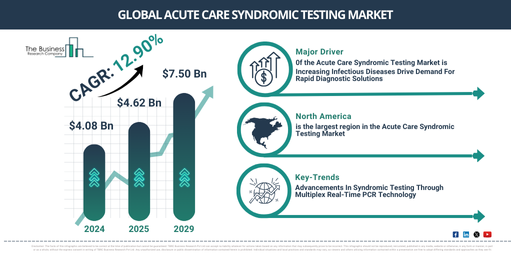
    The market size for acute care syndromic testing has seen a swift surge in recent times. The market, which stood at $4.08 billion in 2024, is projected to reach $4.62 billion in 2025, growing at a compound annual growth rate (CAGR) of 13.2%. The observed growth in the previous period is linked to an increase in awareness about antimicrobial resistance and an upsurge in government funding for infectious diseases. Additionally, rising investments in healthcare infrastructure, heightened focus on syndromic testing, the expansion of telemedicine, and an increase in infectious diseases have also contributed to this growth.

    In the next few years, the acute care syndromic testing market size is set to experience rapid expansion. Expected to reach a valuation of $7.50 billion in 2029 with a compound annual growth rate (CAGR) of 12.9%, numerous factors are driving this growth. These factors include an increase in infectious diseases, a greater need for quicker diagnostic solutions, healthcare services’ expansion, a rise in the use of multiplex syndromic panels, and the escalating number of elderly people. Key trends in the prediction period encompass the transition to point-of-care testing, the integration of cloud-based platforms, the adoption of multiplex panels, AI-powered tools’ development, and automation in syndromic testing.

    Which Major Market Drivers Are Expected to Boost the Acute Care Syndromic Testing Market’s Growth Potential?

    The upsurge in infectious diseases is anticipated to boost the acute care syndromic testing market. Infectious diseases, brought about by harmful microorganisms such as bacteria, viruses, fungi, or parasites, can be transmitted between individuals, animals, or even from the environment. The increasing prevalence of these diseases is attributed to factors like population growth, urbanization, international travel, resistance to antimicrobials, and changes in climate, amplifying the necessity for effective countermeasures and treatments. Acute care syndromic testing plays a crucial role in infectious diseases by quickly pinpointing pathogens and co-infections using multiplex molecular diagnostics, facilitating targeted treatment interventions. For example, data from the Health Security Agency, a government agency in the UK, showed that in February 2024, the influenza positivity rate rose to 16.6%, a rise from 14.0% the week prior. Similarly, influenza-like illness (ILI) consultations also escalated, reaching 9.8 per 100,000 people, as opposed to 7.5 per 100,000 in the preceding week. Furthermore, hospitalizations due to influenza surged to 7.63 per 100,000, an increase from the previous week’s 5.12 per 100,000. Consequently, the rising prevalence of infectious diseases is propelling the acute care syndromic testing market.

    Request Your Free Acute Care Syndromic Testing Market Report Sample Now!

    https://www.thebusinessresearchcompany.com/sample.aspx?id=21078&type=smp

    What are the leading organizations impacting the Acute Care Syndromic Testing market’s growth?

    Major companies operating in the acute care syndromic testing market are Siemens Healthineers AG, F. Hoffmann-La Roche Ltd, Thermo Fisher Scientific Inc., Danaher Corporation, Becton, Dickinson and Company, Seegene Inc., bioMérieux SA, Sysmex Corporation, Bio-Rad Laboratories Inc., QIAGEN N.V., Werfen, DiaSorin S.p.A., Quidel Corporation, Luminex Corporation, Biocartis NV, Microbiologics Inc., QuantuMDx Group Ltd., Curetis GmbH by OpGen Inc., Genetic Signatures Ltd., Applied BioCode Inc.

    What Are the Most Prominent Trends Driving Change in the Acute Care Syndromic Testing Market?

    Leading firms in the acute care syndromic testing industry are prioritizing technological progress such as the multiplex real-time polymerase chain reaction (PCR) technology to enrich diagnostic precision, expedite pathogen identification, sharpen laboratory processes, lessen response time, and boost patient results through precise and timely treatment measures. Multiplex real-time PCR technology is an innovative molecular diagnostic technique that concurrently detects and measures multiple pathogens or genetic targets in a single PCR reaction, enhancing efficacy and precision in disease diagnosis. As an illustration, in April 2023, QIAGEN N.V., a biotech research firm based in the Netherlands, initiated the QIAstat-Dx syndromic testing solution in Japan, inclusive of a SARS-CoV-2 respiratory panel proficient in identifying over 20 pathogens from a single sample. Using the multiplex real-time PCR technology, it renders swift outcomes with lesser labor compared to individual PCR assays. As of the close of 2022, more than 3,500 systems were globally installed, aiding the diagnosis of respiratory, gastrointestinal, and meningitis-associated conditions. The system is available in over 100 nations, thereby improving syndromic testing access globally.

    Pre-order Your Report for Quick and Easy Delivery!

    https://www.thebusinessresearchcompany.com/report/acute-care-syndromic-testing-global-market-report

    What Are the Core Segments of the Acute Care Syndromic Testing Market, and How Do They Contribute to Growth?

    The acute care syndromic testing market covered in this report is segmented –

    1) By Disease Type: Respiratory Diseases, Gastrointestinal Diseases, Genitourinary Diseases, Tropical Diseases, Other Disease Types

    2) By Sample Type: Blood, Urine, Biofluids, Stool, Swabs, Other Sample Types

    3) By Target: Bacteria, Viruses, Fungi, Parasites

    4) By End User: Hospitals, Clinical And Diagnostic Laboratories, Research And Academic Institutions, Other End Users

    Subsegments:

    1) By Respiratory Diseases: Influenza, Respiratory Syncytial Virus (RSV), COVID-19, Tuberculosis, Other Respiratory Diseases

    2) By Gastrointestinal Diseases: Clostridium Difficile Infection, Norovirus, Rotavirus, Salmonella, Other Gastrointestinal Diseases

    3) By Genitourinary Diseases: Urinary Tract Infections (UTIs), Sexually Transmitted Infections (STIs), Vaginal Infections, Other Genitourinary Diseases

    4) By Tropical Diseases: Malaria, Dengue, Chikungunya, Zika Virus, Other Tropical Diseases

    5) By Other Disease Types: Meningitis, Sepsis, Other Emerging Infectious Diseases

    What Regions Are Leading the Charge in the Acute Care Syndromic Testing Market?

    North America was the largest region in the acute care syndromic testing market in 2024. The regions covered in the acute care syndromic testing market report are Asia-Pacific, Western Europe, Eastern Europe, North America, South America, Middle East, Africa.

    How Is the Acute Care Syndromic Testing Market Categorized and Defined in the Industry?

    Acute care syndromic testing refers to a rapid molecular diagnostic approach that detects multiple pathogens simultaneously from a single patient sample. It is used in emergency and critical care settings to quickly diagnose infectious diseases. This enables faster treatment decisions, improved patient outcomes, and reduced hospital stays.

    Browse Through More Similar Reports By The Business Research Company:

    Anthrax Vaccine Global Market Report 2025

    https://www.thebusinessresearchcompany.com/report/anthrax-vaccine-global-market-report

    Dendritic Cell Cancer Vaccine Global Market Report 2025

    https://www.thebusinessresearchcompany.com/report/dendritic-cell-cancer-vaccine-global-market-report

    Cell and Gene Therapy Global Market Report 2025

    https://thebusinessresearchcompany.com/report/cell-and-genes-therapy-global-market-report

    About The Business Research Company:

    With over 15000+ reports from 27 industries covering 60+ geographies, The Business Research Company has built a reputation for offering comprehensive, data-rich research and insights. Armed with 1,500,000 datasets, the optimistic contribution of in-depth secondary research, and unique insights from industry leaders, you can get the information you need to stay ahead in the game.

    Contact us at:

    The Business Research Company: https://www.thebusinessresearchcompany.com/

    Americas +1 3156230293

    Asia +44 2071930708

    Europe +44 2071930708

    Email us at info@tbrc.info

    Follow us on:

    LinkedIn: https://in.linkedin.com/company/the-business-research-company

    YouTube: https://www.youtube.com/channel/UC24_fI0rV8cR5DxlCpgmyFQ

    Global Market Model: https://www.thebusinessresearchcompany.com/global-market-model

    Found this article helpful? Share it on:

  • Actinic Keratosis Growth Forecast 2025-2034: Trends, Opportunities, and Key Insights You Need to Know

    Actinic Keratosis Growth Forecast 2025-2034: Trends, Opportunities, and Key Insights You Need to Know

    Updated 2025 Market Reports Released: Trends, Forecasts to 2034 – Early Purchase Your Competitive Edge Today!

    What is the Predicted CAGR for the Actinic Keratosis Market Over the Forecast Period of 2025 to 2034?

    Recent years have seen a consistent expansion in the actinic keratosis market size, moving from $7.95 billion in 2024 to an expected $8.44 billion in 2025, representing a compound annual growth rate (CAGR) of 6.1%. This upward trend during the historical period can be linked to factors such as an increase in UV radiation exposure, an aging demographic, heightened awareness around skin cancer, a rising incidence of actinic keratosis, the growth in healthcare infrastructure, larger disposable incomes, backing from government schemes, and a heightened emphasis on preemptive skincare.

    In the ensuing years, the market size of actinic keratosis is anticipated to experience a significant increase, expanding to a value of $10.58 billion in 2029, with an annual compound growth rate of 7.4%. The rise during the projection period can be attributed to several factors, such as the introduction of new therapies, advancements in AI-enabled diagnostic tools, an increase in the adoption of combination treatments, and the growing demand for non-invasive procedures. The rise of tele dermatology, wider use of photodynamic therapy, increased cognizance of cosmetic results, the creation of targeted biologic treatments, and increased health investments in emerging markets along with an emphasis on early detection and prevention also contribute to this growth. The industry also expects to witness trends like AI-powered diagnostic instruments, machine learning for lesion examination, sophisticated photodynamic therapy systems, wearable UV monitoring devices, nanotechnology in drug delivery, 3D imaging for customized treatments, portable phototherapy devices for home-usage, early detection biosensors, software for automatic lesion classification and therapeutic systems based on hydrogel.

    What Factors Are Propelling the Growth of the Actinic Keratosis Market from 2025 to 2034?

    The actinic keratosis market is expected to grow due to the rise in severe sunburn cases. Severe sunburns, characterized by intense skin burns caused by excess exposure to ultraviolet (UV) radiation, result in redness, discomfort, swelling, and occasionally blisters. These sunburns occur due to extended exposure to UV radiation, inadequate sun protection, increased outdoor activities during peak UV radiation hours, and climbing temperatures due to climate change. Actinic keratosis arises when sunburns damage the DNA in skin cells via UV radiation, causing mutations that disrupt normal cell functioning and leading to the generation of precancerous lesions, especially with recurrent or long-term sun exposure. For instance, Melanoma Focus, a UK-based charity, reported in May 2024 that in 2022-23, 201 hospital admissions were due to sunburn, which included 89 children and 25 babies under a year old. The charity discovered that 66% of UK adults aged 16-65 recalled being sunburned in their childhood and 65% of them had experienced a severe sunburn with blisters at least once. This statistic rose to 77% for individuals with light, pale, or white skin. Consequently, the growth of the actinic keratosis market is being fueled by the increasing number of severe sunburn cases.

    Explore Comprehensive Insights Into The Global Actinic Keratosis Market With A Free Sample Report:

    https://www.thebusinessresearchcompany.com/sample.aspx?id=21077&type=smp

    Who are the key firms paving the way for growth in the Actinic Keratosis market?

    Major companies operating in the actinic keratosis market are Pfizer Inc., F. Hoffmann-La Roche AG, Merck & Co. Inc., AbbVie Inc., Sanofi S.A., Bristol-Myers Squibb, Novartis AG, GSK plc, Amgen Inc., Bausch Health Companies Inc., Perrigo Company plc, Galderma SA, Incyte Corporation, Leo Pharma Inc., Almirall S.A., Athenex Inc., G&E Herbal Biotechnology Co. Ltd., Aclaris Therapeutics Inc., Biofrontera Inc., Hill Dermaceuticals Inc.

    What Key Trends Are Currently Impacting the Actinic Keratosis Market’s Development?

    Top players in the actinic keratosis market are channeling their efforts towards the invention of topical ointments that can better target and obliterate precancerous lesions, lower relapse instances, and improve patient adherence with dwindled treatment times and superior safety measures. These topical ointments are medicated creams or gels that have an active ingredient such as tirbanibulin which is formulated to target abnormal keratinocytes for the successful treatment of precancerous lesions. For example, Almirall SA, a biopharmaceutical firm based in Spain, was approved by the US Food and Drug Administration (FDA) in June 2024 for its supplemental new drug application (sNDA) to broaden the use of its drug, Klisyri, to an area of upto 100 cm2. Klisyri (tirbanibulin) 1% ointment inhibits microtubules and is specifically designed to hamper the growth of abnormal keratinocytes which eventually results in the reduction of both the number and size of precancerous lesions, thus benefiting the treatment procedure of actinic keratosis (AK) on the face or scalp.

    Secure Your Global Actinic Keratosis Market Report Now for Fast and Efficient Delivery!

    https://www.thebusinessresearchcompany.com/report/actinic-keratosis-global-market-report

    Which Segments Play a Crucial Role in the Expansion of the Actinic Keratosis Market?

    The actinic keratosis market covered in this report is segmented –

    1) By Treatment Type: Topical Treatment, Surgical Procedure, Photodynamic Therapy, Other Treatment Types

    2) By Distribution Channels: Hospital Pharmacies, Drug Stores And Retail Pharmacies, Online Providers

    3) By End-User: Hospitals, Dermatology Clinics, Spas And Rejuvenation Centers, Homecare Settings, Other End-Users

    Subsegments:

    1) By Topical Treatment: 5-Fluorouracil (5-FU), Imiquimod, Diclofenac, Ingenol Mebutate, Retinoids

    2) By Surgical Procedure: Cryotherapy, Curettage And Electrodessication, Excision

    3) By Photodynamic Therapy: Aminolevulinic Acid (ALA) Plus Light Therapy, Methyl Aminolevulinate (MAL) Plus Light Therapy

    4) By Other Treatment Types: Laser Therapy, Chemical Peels, Combination Therapies

    Which Geographical Regions Are Pioneering Growth in the Actinic Keratosis Market?

    North America was the largest region in the actinic keratosis market in 2024. Asia-Pacific is expected to be the fastest-growing region in the forecast period. The regions covered in the actinic keratosis market report are Asia-Pacific, Western Europe, Eastern Europe, North America, South America, Middle East, Africa.

    How Do Experts Define the Scope of the Actinic Keratosis Market?

    Actinic keratosis (AK), also known as solar keratosis, is a common precancerous skin condition that occurs due to prolonged exposure to ultraviolet (UV) radiation from the sun or artificial sources leading to rough, scaly or crusty patches on sun-exposed areas of the skin such as the face, scalp, hands and arms. It is considered an early stage of squamous cell carcinoma (SCC) and requires treatment to prevent progression. Regular skin checks and protection from sun exposure are essential for managing and preventing the development of actinic keratosis.

    Browse Through More Similar Reports By The Business Research Company:

    Pediatric Bladder Treatment Global Market Report 2025

    https://www.thebusinessresearchcompany.com/report/pediatric-bladder-treatment-global-market-report

    Pediatric Imaging Global Market Report 2025

    https://www.thebusinessresearchcompany.com/report/pediatric-imaging-global-market-report

    Inflammatory Bowel Disease Treatment Global Market Report 2025

    https://thebusinessresearchcompany.com/report/inflammatory-bowel-disease-treatment-global-market-report

    About The Business Research Company:

    With over 15000+ reports from 27 industries covering 60+ geographies, The Business Research Company has built a reputation for offering comprehensive, data-rich research and insights. Armed with 1,500,000 datasets, the optimistic contribution of in-depth secondary research, and unique insights from industry leaders, you can get the information you need to stay ahead in the game.

    Contact us at:

    The Business Research Company: https://www.thebusinessresearchcompany.com/

    Americas +1 3156230293

    Asia +44 2071930708

    Europe +44 2071930708

    Email us at info@tbrc.info

    Follow us on:

    LinkedIn: https://in.linkedin.com/company/the-business-research-company

    YouTube: https://www.youtube.com/channel/UC24_fI0rV8cR5DxlCpgmyFQ

    Global Market Model: https://www.thebusinessresearchcompany.com/global-market-model

    Found this article helpful? Share it on:

  • Exploring Key Insights of the Acquired Immunodeficiency Syndrome (AIDS) Market: Growth Prospects, Emerging Trends, and Opportunities

    Exploring Key Insights of the Acquired Immunodeficiency Syndrome (AIDS) Market: Growth Prospects, Emerging Trends, and Opportunities

    Updated 2025 Market Reports Released: Trends, Forecasts to 2034 – Early Purchase Your Competitive Edge Today!

    How Rapidly is the Acquired Immunodeficiency Syndrome (AIDS) Market Expected to Expand Between 2025 and 2034 Based on Current Trends?

    The market for acquired immunodeficiency syndrome (AIDS) has seen robust growth in the recent past. There’s an expected growth from $32.09 billion in 2024 to $33.85 billion in 2025, with a compound annual growth rate (CAGR) of 5.5%. The growth in the previous years has been fueled by an upsurge in HIV infection rates, enhanced government funding in HIV treatment, augmented global awareness campaigns, better diagnostic proficiency, and amplified backing from non-governmental organizations.

    A significant increase is anticipated in the market size of acquired immunodeficiency syndrome (AIDS) in the forthcoming years, with a projection of reaching $41.57 billion in 2029 at a compound annual growth rate (CAGR) of 5.3%. The escalation in this forecast period is influenced by multiple factors, including the rising demand for long-lasting injectable therapies, the uptick in acceptance of pre-exposure prophylaxis (PrEP), amplified investment in research for HIV cure, the broadening of telemedicine services for HIV care, an emphasis on personalized medicine, and heightened awareness around early HIV diagnosis. In this projected period, major trends involve a shift toward single-tablet regimens, a growing penchant for injectable and implantable HIV treatments, an increasing need for digital health solutions in managing HIV, burgeoning interest in functional HIV cure tactics, and the escalating involvement of artificial intelligence in drug discovery.

    How Are the key drivers Contributing to the Expansion of the Acquired Immunodeficiency Syndrome (AIDS) Market?

    The rise in HIV infection cases is anticipated to fuel the growth trajectory of the acquired immunodeficiency syndrome (AIDS) market. HIV infections are caused by the human immunodeficiency virus (HIV) that compromises the immune system’s functionality, thereby diminishing the body’s capacity to ward off infections and diseases. Unprotected sex with someone infected, needle or syringe sharing, receiving infected blood products, having several sexual partners, and having a compromised immune system or pre-existing sexually transmitted infections contribute to the upsurge in HIV infection rates. Efficient administration of acquired immunodeficiency syndrome (AIDS) enhances the life expectancy of people infected with HIV. It supports early detection, extends access to effective antiretroviral therapies, improves prevention strategies, and fortifies healthcare systems – all feeding into better containment of the virus. For example, data from the European Centre for Disease Prevention and Control (ECDC), a Sweden-based European Union agency, showed that in November 2024, there were 112,883 new HIV diagnoses in 2023 across 47 out of 53 countries in Europe, with 24,731 cases documented in the European Union/European Economic Area (EU/EEA). The total crude rate of HIV diagnoses was 12.7 per 100,000 population, marking a 2.4% growth from the 12.4 per 100,000 rate seen in 2022. Consequently, the escalating rates of HIV infections are propelling the acquired immunodeficiency syndrome (AIDS) market.

    Get Your Free Sample of the Global Acquired Immunodeficiency Syndrome (AIDS) Market Report Now!

    https://www.thebusinessresearchcompany.com/sample.aspx?id=21076&type=smp

    Which key players are shaping the future of the Acquired Immunodeficiency Syndrome (AIDS) market?

    Major companies operating in the acquired immunodeficiency syndrome (AIDS) market are Pfizer Inc., Johnson and Johnson, F. Hoffmann-La Roche Ltd, Merck & Co. Inc., Sanofi SA, Bristol-Myers Squibb Company, Abbott, GSK plc, Takeda Pharmaceuticals, Gilead Sciences, Viatris Inc., Teva Pharmaceuticals, Aurobindo Pharma, Cipla Ltd, Shionogi and Co., Dr. Reddy’s Laboratories, Lupin, Hetero Drugs Limited, Glenmark Pharmaceuticals Limited, ViiV Healthcare

    How Are the Latest Trends Influencing the Growth of the Acquired Immunodeficiency Syndrome (AIDS) Market?

    Leading businesses in the acquired immunodeficiency syndrome (AIDS) market are concentrating their efforts on the creation of innovative therapies such as long-acting injectables. These therapies are aimed at enhancing patient adherence, decreasing the regularity of dosage, and providing a favorable option to daily oral antiretroviral treatments. Administered through injections, long-acting injectables are slow-releasing medications designed to maintain a level of the active ingredient for extended periods, therefore, minimizing the frequency of dosage when compared to conventional oral medications. For example, in January 2025, GSK plc., a UK-centric pharmaceutical firm, received approval from the European Commission for a long-acting injectable treatment called Vocabria (cabotegravir) plus Rekambys (rilpivirine). This injectable treatment, given via intramuscular injection every one or two months based on the specific treatment plan, is approved for adolescents aged 12 years and older who have HIV. The slow-release feature of these injections could potentially enhance adherence rates among adolescents who find daily pill-based therapies challenging.

    Get Instant Access to the Global Acquired Immunodeficiency Syndrome (AIDS) Market Report with Swift Delivery!

    https://www.thebusinessresearchcompany.com/report/acquired-immunodeficiency-syndrome-aids-global-market-report

    What Are the Major Segments of the Acquired Immunodeficiency Syndrome (AIDS) Market and Their Role in Driving Growth?

    The acquired immunodeficiency syndrome (AIDS) market covered in this report is segmented –

    1) By Type: Human Immunodeficiency Virus 1, Human Immunodeficiency Virus 2

    2) By Drug Type: Nucleoside-Analog Reverse Transcriptase Inhibitors, Non-Nucleoside Reverse Transcriptase Inhibitors, Fusion Inhibitors, CCR5 Anatagonists And Post-Attachment Inhibitors, Protease Inhibitors, Integrase Inhibitors, Pre-Exposure Prophylaxis And Post-Exposure Prophylaxis

    3) By Route Of Administration: Oral, Parenteral

    4) By Application: Hospital Pharmacy, Retail Pharmacy, Other Applications

    5) By Distribution Channel: Offline, Online

    Subsegments:

    1) By Human Immunodeficiency Virus 1 (HIV-1): Antiretroviral Therapy (ART), Pre-Exposure Prophylaxis (PrEP), Post-Exposure Prophylaxis (PEP), HIV-1 Diagnostic Tests, HIV-1 Vaccine Development, HIV-1 Opportunistic Infection Management

    2) By Human Immunodeficiency Virus 2 (HIV-2): Antiretroviral Therapy (ART) For HIV-2, HIV-2 Diagnostic Tests, HIV-2 Surveillance And Epidemiology, HIV-2 Vaccine Research, Management Of HIV-2 Co-Infections

    What Regions Are At the Forefront of Acquired Immunodeficiency Syndrome (AIDS) Market Expansion?

    North America was the largest region in the acquired immunodeficiency syndrome (AIDS) market in 2024. Asia-Pacific is expected to be the fastest-growing region in the forecast period. The regions covered in the acquired immunodeficiency syndrome (AIDS) market report are Asia-Pacific, Western Europe, Eastern Europe, North America, South America, Middle East, Africa.

    How Can We Define the Acquired Immunodeficiency Syndrome (AIDS) Market and Its Key Components?

    Acquired immunodeficiency syndrome (AIDS) is a chronic, life-threatening condition caused by the human immunodeficiency virus (HIV), which progressively weakens the immune system by destroying CD4 T cells, leaving the body vulnerable to opportunistic infections, severe illnesses, and certain cancers in the absence of effective antiretroviral treatment. It is managed by a combination of antiretroviral therapy (ART), regular monitoring of immune function, prevention of opportunistic infections, and comprehensive healthcare support to improve patient outcomes and quality of life.

    Browse Through More Similar Reports By The Business Research Company:

    Pneumococcal Vaccine Global Market Report 2025

    https://www.thebusinessresearchcompany.com/report/pneumococcal-vaccine-global-market-report

    Vaccine Contract Manufacturing Global Market Report 2025

    https://www.thebusinessresearchcompany.com/report/vaccine-contract-manufacturing-global-market-report

    Cold Pain Therapy Global Market Report 2025

    https://thebusinessresearchcompany.com/report/cold-pain-therapy-global-market-report

    About The Business Research Company:

    With over 15000+ reports from 27 industries covering 60+ geographies, The Business Research Company has built a reputation for offering comprehensive, data-rich research and insights. Armed with 1,500,000 datasets, the optimistic contribution of in-depth secondary research, and unique insights from industry leaders, you can get the information you need to stay ahead in the game.

    Contact us at:

    The Business Research Company: https://www.thebusinessresearchcompany.com/

    Americas +1 3156230293

    Asia +44 2071930708

    Europe +44 2071930708

    Email us at info@tbrc.info

    Follow us on:

    LinkedIn: https://in.linkedin.com/company/the-business-research-company

    YouTube: https://www.youtube.com/channel/UC24_fI0rV8cR5DxlCpgmyFQ

    Global Market Model: https://www.thebusinessresearchcompany.com/global-market-model

    Found this article helpful? Share it on: