Month: May 2025

  • Market Trends Influencing Strategic Decisions in the Interventional Oncology Devices Industry: Integration Of Robotics Technology Enhances Efficiency In Interventional Oncology Devices Market

    Market Trends Influencing Strategic Decisions in the Interventional Oncology Devices Industry: Integration Of Robotics Technology Enhances Efficiency In Interventional Oncology Devices Market

    Discover trends, market shifts, and competitive outlooks for the interventional oncology devices industry through 2025-2034 with The Business Research Company’s reliable data and in-depth research

    How Has The Interventional Oncology Devices Market Growth Evolved From 2024 To 2025, And What’s Ahead?

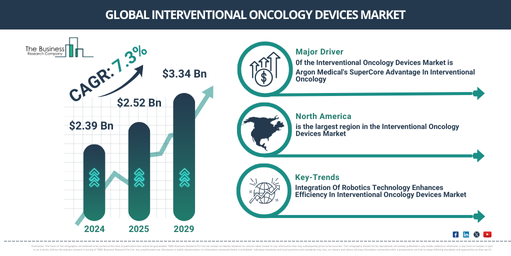
    The market size for interventional oncology devices has seen a robust enhancement in recent years. An increase from $2.39 billion in 2024 to $2.52 billion in 2025, marking a compound annual growth rate (CAGR) of 5.3% is anticipated. Factors such as an aging populace, rising prevalence of cancer, amplified spending on pharmaceutical research and development, elevated healthcare expenditures, and an increase in the volume of healthcare facilities, can be credited for this growth observed in the past.

    The market for interventional oncology devices is set to experience significant expansion in the coming years, reaching a worth of $3.34 billion in 2029, at a compound annual growth rate (CAGR) of 7.3%. The rise during the forecast period is due to several factors such as an increase in elderly population, an upward trend in using minimally invasive surgeries (MIS), increased investment in research and development, enhanced healthcare spending, ambitious potential in developing nations, and the escalating prevalence of cancer and chronic illnesses. The forecast period is also expected to witness major trends such as concentration on the advancement of image-guided oncology devices, utilization of artificial intelligence for the creation of novel devices, development of innovative embolic devices for improved oncology procedures, emphasis on the integration of robotic technology and strategic partnerships with companies and research institutions to expedite the process of product development and innovation.

    Download a free sample to assess the report’s scope and structure:

    https://www.thebusinessresearchcompany.com/sample.aspx?id=3304&type=smp

    What Are the Major Market Drivers Behind the Rising Adoption of Interventional Oncology Devices Market?

    Top firms in the interventional oncology devices market are honing in on technologies like tissue volume, with the aim of boosting diagnostic precision and the efficiency of oncology treatments. The term tissue volume entails the measure of biological tissue gathered during a biopsy. A larger scope of tissue volumes can offer a more extensive range of samples, which in turn elevates diagnostic accuracy and the viability of treatment strategies. For example, Argon Medical, a medical device company based in the United States, unveiled the SuperCore Advantage semi-automatic biopsy in June 2023. The SuperCore Advantage is capable of securing up to 35% additional samples compared to its top competitors, thereby diminishing the necessity for numerous runs during biopsies. This capability is integral for accumulating sufficient tissue samples requisite for accurate diagnosis.

    Which Key Market Segments Comprise the Interventional Oncology Devices Market and Drive Its Revenue Growth?

    The interventional oncology devices market covered in this report is segmented –

    1) By Product: Embolization Devices, Ablation Devices, Support Devices

    2) By procedure: Thermal Tumor Ablation, Non-Thermal Tumor Ablation, Transcatheter Arterial Chemoembolization (TACE), Transcatheter Arterial Radioembolization (TARE), Selective Internal Radiation Therapy (SIRT), Transcatheter Arterial Embolization (TAE), Bland Embolization

    3) By Cancer Type: Liver Cancer, Kidney Cancer, Lung Cancer, Bone Cancer, Other Cancer Types

    Subsegments:

    1) By Embolization Devices: Embolic Agents, Catheters For Embolization, Delivery Systems For Embolic Agents

    2) By Ablation Devices: Radiofrequency Ablation Devices, Microwave Ablation Devices, Cryoablation Devices, Laser Ablation Devices

    3) By Support Devices: Imaging Guidance Systems, Access Devices, Fluid Management Systems

    Request customized data on this market:

    https://www.thebusinessresearchcompany.com/customise?id=3304&type=smp

    Which Areas Are Leading Regions in the Interventional Oncology Devices Market Expansion Across the Globe?

    North America was the largest region in the interventional oncology devices market in 2024. Asia-Pacific was the second largest region in the global interventional oncology devices market report. The regions covered in the interventional oncology devices market report are Asia-Pacific, Western Europe, Eastern Europe, North America, South America, Middle East, Africa

    What Are the Strategic Trends Steering theInterventional Oncology Devices Market Direction?

    Significant firms are zeroing in on employing robotics technology in interventional oncology apparatus for improved efficiency. The system combines image-guided planning and direction with the attachment of various tools to the required body region with greater accuracy and effectiveness. As an illustration, Quantum Surgical’s Epione interventional oncology robotics platform received approval from the U.S. Food and Drug Administration in March 2022.

    View the full report here:

    https://www.thebusinessresearchcompany.com/report/interventional-oncology-devices-global-market-report

    How Is the Interventional Oncology Devices Market Conceptually Defined?

    Interventional oncology devices refer to medical tools and technologies used to diagnose and treat cancer through minimally invasive procedures. They are used to target tumors directly, delivering treatments like ablation or embolization while minimizing damage to surrounding healthy tissue.

    Purchase the full report and get a swift delivery:

    https://www.thebusinessresearchcompany.com/purchaseoptions.aspx?id=3304

    About The Business Research Company:

    With over 15000+ reports from 27 industries covering 60+ geographies, The Business Research Company has built a reputation for offering comprehensive, data-rich research and insights. Armed with 1,500,000 datasets, the optimistic contribution of in-depth secondary research, and unique insights from industry leaders, you can get the information you need to stay ahead in the game.

    Get in touch with us:

    The Business Research Company: https://www.thebusinessresearchcompany.com/

    Americas +1 3156230293

    Asia +44 2071930708

    Europe +44 2071930708

    Email us at info@tbrc.info

    Follow us on:

    LinkedIn: https://in.linkedin.com/company/the-business-research-company

    YouTube: https://www.youtube.com/channel/UC24_fI0rV8cR5DxlCpgmyFQ

    Global Market Model: https://www.thebusinessresearchcompany.com/global-market-model
  • Global Medical Equipment Market Trends: Regional Breakdowns and Strategic Insights

    Discover trends, market shifts, and competitive outlooks for the medical equipment industry through 2025-2034 with The Business Research Company’s reliable data and in-depth research

    #How Has The Medical Equipment Market Size Shifted, And What Is the Outlook Through 2034?

    In recent times, there has been a swift expansion in the size of the medical equipment market. It is projected to rise from $764.67 billion in 2024 to $842.49 billion in 2025, with a compound annual growth rate (CAGR) of 10.2%. Factors such as increased healthcare spending, robust economic development in emerging markets, expansion in the number of healthcare facilities, and a rise in the frequency of surgical procedures are credited for the growth witnessed in the historic period.

    The market size for medical equipment is projected to experience substantial expansion in the upcoming years, with the growth expected to reach $1183.02 billion in 2029 at a compound annual growth rate (CAGR) of 8.9%. This growth may be ascribed to various factors including the aging population, a rising prevalence of chronic illnesses, and government backing. The anticipated period will see some significant trends such as the creation of new technological solutions, an emphasis on expanding medical equipment manufacturing facilities, an effort towards partnership and collaborations, a concentration on cardiovascular devices creation, and development of hybrid image technologies.

    Download a free sample to assess the report’s scope and structure:

    https://www.thebusinessresearchcompany.com/sample.aspx?id=3157&type=smp

    What Are the Major Market Drivers Behind the Rising Adoption of Medical Equipment Market?

    The escalating occurrence of cardiovascular ailments is anticipated to fuel the expansion of the medical equipment market. The term Cardiovascular disease (CVD) encompasses conditions impacting the heart or blood vessels. The diseases are frequently linked with the buildup of fatty substances in the arteries, known as atherosclerosis, and an increased possibility of blood clots. Various medical equipment is crucial for preventing, diagnosing, and treating cardiovascular diseases. To illustrate, the Centers for Disease Control and Prevention, a US-based governmental body, reported in May 2024 that heart disease was responsible for the demise of 702,880 individuals in 2022, corresponding to 1 in 5 deaths. Each year, around 805,000 people in the U.S. suffer a heart attack, with 605,000 being their first time and 200,000 happening to those with a history of a heart attack. Thus, the escalating occurrence of cardiovascular ailments is sure to boost the medical equipment market’s progress in the future.

    Which Key Market Segments Comprise the Medical Equipment Market and Drive Its Revenue Growth?

    The medical equipment market covered in this report is segmented –

    1) By Type: In-Vitro Diagnostics, Dental Equipment And Supplies, Ophthalmic Devices, Diagnostic Imaging Equipment, Cardiovascular Devices, Hospital Supplies, Surgical Equipment, Orthopedic Devices, Patient Monitoring Devices, Others

    2) By Type Of Expenditure: Public, Private

    3) By Product: Instruments And Equipment, Disposables And Consumables

    4) By End User: Hospitals And Clinics, Homecare And Diagnostic Centers, Other End Users

    Subsegments:

    1) By In-Vitro Diagnostics: Clinical Chemistry, Immunoassay, Molecular Diagnostics, Hematology, Microbiology

    2) By Dental Equipment And Supplies: Dental Instruments, Dental Implants, Dental Chairs And Equipment, Orthodontic Supplies, Dental Consumables

    3) By Ophthalmic Devices: Contact Lenses, Intraocular Lenses, Ophthalmic Lasers, Diagnostic Devices, Surgical Devices

    4) By Diagnostic Imaging Equipment: X-Ray Systems, Ultrasound Systems, MRI Systems, CT Scanners, Nuclear Imaging Systems

    5) By Cardiovascular Devices: Cardiac Rhythm Management Devices, Catheters, Heart Valves, Stents, Cardiac Assist Devices

    6) By Hospital Supplies: Disposables, Sterilization Equipment, Surgical Masks And Gowns, IV Solutions And Administration Sets, Diagnostic Strips

    7) By Surgical Equipment: Surgical Instruments, Electrosurgical Devices, Robotic Surgery Systems, Surgical Sutures And Staplers, Minimally Invasive Surgery Devices

    8) By Orthopedic Devices: Joint Replacement Devices, Trauma Fixation Devices, Spinal Implants, Orthopedic Braces And Supports, Arthroscopy Devices

    9) By Patient Monitoring Devices: Vital Signs Monitors, Remote Patient Monitoring Devices, Fetal And Neonatal Monitors, Cardiac Monitoring Devices, Multi-Parameter Monitors

    10) By Others: Blood Glucose Meters, Insulin Delivery Devices, Continuous Glucose Monitoring Systems (CGMs), Lancets And Strips, Dialysis Equipment (Hemodialysis, Peritoneal Dialysis), Urinary Catheters, Stone Management Devices

    Request customized data on this market:

    https://www.thebusinessresearchcompany.com/customise?id=3157&type=smp

    Which Areas Are Leading Regions in the Medical Equipment Market Expansion Across the Globe?

    North America was the largest region in the global medical equipment market in 2024. Asia-Pacific was the second largest region in the global medical equipment market. The regions covered in the medical equipment market report are Asia-Pacific, Western Europe, Eastern Europe, North America, South America, Middle East, Africa

    What Are the Strategic Trends Steering theMedical Equipment Market Direction?

    Key players in the medical equipment market, such as the Stryker Corporation, are focusing on innovation to boost their market profitability. For example, in May 2022, the US-based medical tech firm unveiled the EasyFuse Dynamic Compression System. This comprehensive super-elastic nitinol staple system aims to provide quick, straightforward fixation for high-demand foot and ankle applications. Designed to simplify surgical operations, it offers strong dynamic-compression implants, and reduces surgical waste. Notably, the EasyFuse System’s expansive staple bridge is designed to evenly spread forces and guarantee steady implant strength.

    View the full report here:

    https://www.thebusinessresearchcompany.com/report/medical-equipment-global-market-report

    How Is the Medical Equipment Market Conceptually Defined?

    Medical equipment are devices that can be instrument, apparatus or machine that can be used in the prevention, diagnosis or treatment of illness or disease, or for detecting, measuring, restoring, correcting or modifying the structure or function of the body for health purpose.

    Purchase the full report and get a swift delivery:

    https://www.thebusinessresearchcompany.com/purchaseoptions.aspx?id=3157

    About The Business Research Company:

    With over 15000+ reports from 27 industries covering 60+ geographies, The Business Research Company has built a reputation for offering comprehensive, data-rich research and insights. Armed with 1,500,000 datasets, the optimistic contribution of in-depth secondary research, and unique insights from industry leaders, you can get the information you need to stay ahead in the game.

    Get in touch with us:

    The Business Research Company: https://www.thebusinessresearchcompany.com/

    Americas +1 3156230293

    Asia +44 2071930708

    Europe +44 2071930708

    Email us at info@tbrc.info

    Follow us on:

    LinkedIn: https://in.linkedin.com/company/the-business-research-company

    YouTube: https://www.youtube.com/channel/UC24_fI0rV8cR5DxlCpgmyFQ

    Global Market Model: https://www.thebusinessresearchcompany.com/global-market-model
  • $7.54 Billion Forecast for Masks (N95 Respirators And Other Surgical Masks) Market by 2029, Backed by Demand and Innovation

    $7.54 Billion Forecast for Masks (N95 Respirators And Other Surgical Masks) Market by 2029, Backed by Demand and Innovation

    Discover trends, market shifts, and competitive outlooks for the masks (n95 respirators and other surgical masks) industry through 2025-2034 with The Business Research Company’s reliable data and in-depth research

    #How Has The Masks (N95 Respirators And Other Surgical Masks) Market Growth Evolved From 2024 To 2025, And What’s Ahead?

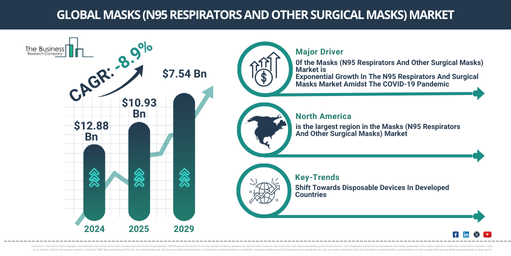
    The size of the market for masks, including N95 respirators and surgical masks, has witnessed a sharp decrease in recent times. It is predicted to fall from “$12.88 billion in 2024 to $10.93 billion in 2025, with a compound annual growth rate (CAGR) of -15.2%. This shrinkage during the past period is due to lesser demand influenced by the pandemic, heightened consciousness and accessibility of reusable masks, and a cutback in government and institutional financing.

    The market for masks, including N95 respirators and other surgical masks, is predicted to experience a sharp decrease in the coming years. The market valuation is forecasted to reach $7.54 billion in 2029, representing a compound annual growth rate (CAGR) of -8.9%. This growth prediction for the forecast period is due to factors such as the emergence of new COVID-19 variants, an increase in airborne illnesses, government actions, and the surge in online pharmacies. The expected trends for the forecast period encompass the creation of N95 masks integrated with Bluetooth technology, the addition of new technologies to improve customer experience, technological progress, a rise in mergers and acquisitions, investments in biodegradable and repeat-use materials, the application of nanotechnology, the production of custom-made masks, and the creation of reusable silicon masks.

    Download a free sample to assess the report’s scope and structure:

    https://www.thebusinessresearchcompany.com/sample.aspx?id=3992&type=smp

    What Are the Core Growth Drivers Propelling the Masks (N95 Respirators And Other Surgical Masks) Market Forward?

    The market for N95 respirators and other surgical masks is witnessing rapid expansion due to the outbreak of the COVID-19 pandemic. The critical nature of COVID-19 as a severe acute respiratory syndrome, which can spread through airborne droplets that can be potentially blocked with masks, is the main reason for this increase. These masks have now become vital gear for healthcare workers interacting with infected patients. Moreover, as a preventive measure, numerous workers and individuals are also making use of these face masks.

    What Segment Types Define the Masks (N95 Respirators And Other Surgical Masks) Market Structure?

    The masks (N95 respirators and other surgical masks) market covered in this report is segmented –

    1) By Type: N95 Respirator, Common Grade Surgical Masks, Others (Comfort Masks/Dust Masks)

    2) By End User: Hospitals and Clinics, Individual, Other End Users

    3) By Nature: Reusable, Disposable

    Subsegments:

    1) By N95 Respirator: Standard N95 Respirators, N95 Respirators With Valves, N95 Respirators With Additional Features

    2) By Common Grade Surgical Masks: Disposable Surgical Masks, Medical-Grade Surgical Masks, Fluid-Resistant Surgical Masks

    3) By Others (Comfort Masks/Dust Masks): Cloth Masks, Dust Masks, Comfort Masks With Additional Filtration

    Request customized data on this market:

    https://www.thebusinessresearchcompany.com/customise?id=3992&type=smp

    Which Geographic Areas Hold the Strongest Growth Potential in the Masks (N95 Respirators And Other Surgical Masks) Market?

    North America was the largest region in the N95 respirators and other surgical masks market in 2024. Asia-Pacific was the second largest region in the N95 respirators and other surgical masks market share. The regions covered in the masks (N95 respirators and other surgical masks) market report are Asia-Pacific, Western Europe, Eastern Europe, North America, South America, Middle East, Africa

    Which Emerging Trends that Are Influencing theMasks (N95 Respirators And Other Surgical Masks) Industry Evolution?

    One of the prominent trends observed in developed nations in the context of the N95 respirators and other surgical masks market revolves around the preference for disposable devices. The appeal of disposable masks lies in their ability to eradicate the need for sterilizing the product and diminishing the probability of cross-contamination with other reusable items. Economically feasible, these masks help in lowering the patient’s hospital stay and reducing the risk of infection compared to reusable non-woven masks, which require decontamination, washing, and sterilizing each time. While reusable surgical face masks can indeed be sterilized and cleaned for reuse, they offer less protection and require more time for production, washing, and sterilization. The FDA states that surgical masks are not meant for repeated use, which may incite increased interest in disposable respiratory masks. Disposable surgical face masks are frequently viewed as offering superior protection compared to their reusable counterparts since they need to be discarded right after use, given their bio-hazardous nature.

    View the full report here:

    https://www.thebusinessresearchcompany.com/report/masks-n95-respirators-and-other-surgical-masks-global-market-report

    What Is the Definition of the Masks (N95 Respirators And Other Surgical Masks) Market?

    The N95 respirators and other surgical masks are used as personal protective equipment to protect the wearer from airborne particles and liquid contaminating the face. The N95 respirators and other surgical masks are available in a variety of thicknesses and liquid contact protection levels. These characteristics may also have an impact on how readily people can breathe through the surgical mask and how well it protects people.

    Purchase the full report and get a swift delivery:

    https://www.thebusinessresearchcompany.com/purchaseoptions.aspx?id=3992

    About The Business Research Company:

    With over 15000+ reports from 27 industries covering 60+ geographies, The Business Research Company has built a reputation for offering comprehensive, data-rich research and insights. Armed with 1,500,000 datasets, the optimistic contribution of in-depth secondary research, and unique insights from industry leaders, you can get the information you need to stay ahead in the game.

    Get in touch with us:

    The Business Research Company: https://www.thebusinessresearchcompany.com/

    Americas +1 3156230293

    Asia +44 2071930708

    Europe +44 2071930708

    Email us at info@tbrc.info

    Follow us on:

    LinkedIn: https://in.linkedin.com/company/the-business-research-company

    YouTube: https://www.youtube.com/channel/UC24_fI0rV8cR5DxlCpgmyFQ

    Global Market Model: https://www.thebusinessresearchcompany.com/global-market-model
  • $8.3 Billion Forecast for Lateral Flow Immunoassay (LFIA) Based Rapid Test Market by 2029, Backed by Demand and Innovation

    Discover trends, market shifts, and competitive outlooks for the lateral flow immunoassay (lfia) based rapid test industry through 2025-2034 with The Business Research Company’s reliable data and in-depth research

    What Is the Estimated Market Size of the Lateral Flow Immunoassay (LFIA) Based Rapid Test Market In 2029?

    In recent times, the market size of the lateral flow immunoassay (LFIA) based rapid test has witnessed a significant drop. It experienced a decrease from “$8.03 billion in 2024 to $7.23 billion in 2025, leading to a compound annual growth rate (CAGR) of -9.9%. The reasons for this decline during the historical period include limited sensitivity and specificity, intricacies of multiplexing, issues with cross-reactivity, challenges related to storage and shelf-life, along with restricted quantitative capability.

    The market size for rapid tests based on the lateral flow immunoassay (LFIA) is anticipated to witness consistent expansion in the upcoming years, with a projected growth to $8.3 billion in 2029 at a compound annual growth rate (CAGR) of 3.5%. The predicted reduction during this period can be ascribed to international supply chain interruptions, regulatory obstacles, heightened competition, the rise of substitutive technologies, and integration with digital health platforms. Key tendencies for this period involve the maturation of superior technologies for multiple or recurring LFIA based rapid exams and results storage/ communication, a focus on partnerships and alliances, home test kit development, investment in AI-based illness screening and detection tests, and the creation of affordable testing kits for easy patient access at a reduced cost.

    Download a free sample to assess the report’s scope and structure:

    https://www.thebusinessresearchcompany.com/sample.aspx?id=3293&type=smp

    What Are the Core Growth Drivers Propelling the Lateral Flow Immunoassay (LFIA) Based Rapid Test Market Forward?

    The persistent problem of quality control is predicted to impede the growth of the rapid test market built on the platform of the lateral flow immunoassay (LFIA). A rise in operational expenses, such as wages and investments in technology, have squeezed the profit margins of numerous law firms. For example, in June 2023, PLOS, an American non-profit organization, stated that LFIA products available in the market fail to consistently satisfy the high standards of reliability and specificity. An after-the-fact assessment of four LFIA tests uncovered diverse diagnostic results with some tests indicating as low as 47% precision in detecting IgG.

    What Segment Types Define the Lateral Flow Immunoassay (LFIA) Based Rapid Test Market Structure?

    The lateral flow immunoassay (LFIA) based rapid test market covered in this report is segmented –

    1) By Technique: Competitive Assay, Sandwich Assay, Multiplex Detection Assay

    2) By Application: Infectious Disease, Pregnancy And Fertility, Toxicology, Cardiac Marker And Cholesterol Testing, Other Applications

    3) By End-Users: Hospitals And Clinics, Diagnostic Laboratories, Home Care, Other End Users

    Subsegments:

    1) By Competitive Assay: Direct Competitive Assays, Indirect Competitive Assays

    2) By Sandwich Assay: Single-step Sandwich Assays, Two-step Sandwich Assays

    3) By Multiplex Detection Assay: Multi-analyte Assays, Simultaneous Detection Of Various Targets

    Request customized data on this market:

    https://www.thebusinessresearchcompany.com/customise?id=3293&type=smp

    Which Geographic Areas Hold the Strongest Growth Potential in the Lateral Flow Immunoassay (LFIA) Based Rapid Test Market?

    North America was the largest region in the lateral flow immunoassay (LFIA) based rapid test market in 2024. Asia-Pacific was the second largest region in the global lateral flow immunoassay (LFIA) based rapid test market. The regions covered in the lateral flow immunoassay (LFIA) based rapid test market report are Asia-Pacific, Western Europe, Eastern Europe, North America, South America, Middle East, Africa

    Which Emerging Trends that Are Influencing theLateral Flow Immunoassay (LFIA) Based Rapid Test Industry Evolution?

    Leading firms operating in the lateral flow immunoassay (LFIA)-based rapid test sector are focusing on enhancing their tests’ sensitivity and specificity, improving detection pace, and broadening the spectrum of identifiable pathogens or biomarkers, by leveraging technologies like qPCR. This, in turn, is propelling them towards delivering more dependable and precise diagnostic solutions for various medical applications. The quantitative polymerase chain reaction (qPCR) technique, a molecular biology method used for amplifying and quantifying DNA or RNA sequences in real time, allows accurate measurement of gene expression levels or the identification of specific pathogens in different sample types. To illustrate, in November 2023, Switzerland’s F. Hoffmann-La Roche AG introduced the LightCycler PRO System. This system, building on Roche’s legacy of qPCR equipment, employs gold-standard technology to ensure high caliber, precision, and dependability, vital factors for correct patient diagnosis and efficient clinical decision-making.

    View the full report here:

    https://www.thebusinessresearchcompany.com/report/lateral-flow-immunoassay-based-rapid-test-global-market-report

    What Is the Definition of the Lateral Flow Immunoassay (LFIA) Based Rapid Test Market?

    Lateral Flow Immunoassay (LFIA) based rapid test is a simple technology-based diagnostic device that is used to determine the presence of a target such as pathogens or biomarkers in samples collected from the human body. These samples may include urine, saliva, blood, sweat and other fluids.

    Purchase the full report and get a swift delivery:

    https://www.thebusinessresearchcompany.com/purchaseoptions.aspx?id=3293

    About The Business Research Company:

    With over 15000+ reports from 27 industries covering 60+ geographies, The Business Research Company has built a reputation for offering comprehensive, data-rich research and insights. Armed with 1,500,000 datasets, the optimistic contribution of in-depth secondary research, and unique insights from industry leaders, you can get the information you need to stay ahead in the game.

    Get in touch with us:

    The Business Research Company: https://www.thebusinessresearchcompany.com/

    Americas +1 3156230293

    Asia +44 2071930708

    Europe +44 2071930708

    Email us at info@tbrc.info

    Follow us on:

    LinkedIn: https://in.linkedin.com/company/the-business-research-company

    YouTube: https://www.youtube.com/channel/UC24_fI0rV8cR5DxlCpgmyFQ

    Global Market Model: https://www.thebusinessresearchcompany.com/global-market-model
  • Laboratory Automation Systems Market 2025-2034: Key Highlights, Growth Dynamics, and Emerging Trends

    Laboratory Automation Systems Market 2025-2034: Key Highlights, Growth Dynamics, and Emerging Trends

    Discover trends, market shifts, and competitive outlooks for the laboratory automation systems industry through 2025-2034 with The Business Research Company’s reliable data and in-depth research

    #How Has The Laboratory Automation Systems Market Growth Evolved From 2024 To 2025, And What’s Ahead?

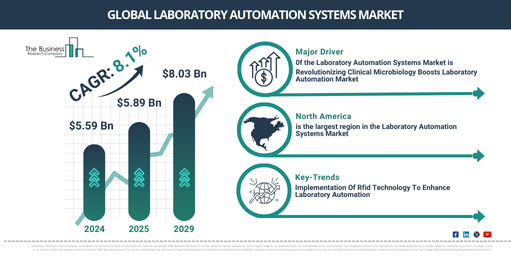
    In recent times, the market for laboratory automation systems has seen significant growth. The market value is expected to increase from $5.59 billion in 2024 to $5.89 billion in 2025, at a compound annual growth rate (CAGR) of 5.4%. Factors contributing to this growth during the historical period include an increase in medical mistakes, expansion of healthcare facilities, sales growth in emerging economies, an escalation in healthcare spending, and the swiftly expanding senior citizen demographic.

    The market size of laboratory automation systems is projected to witness robust expansion in the upcoming years, reaching $8.03 billion in 2029 with a compound annual growth rate (CAGR) of 8.1%. Factors propelling growth during the forecast period encompass swift advancements in technology, an increasing aging population, a rise in chronic disease occurrence, the impact of COVID-19, and a surge in lifestyle-related ailments. The forecast period is likely to spot key trends such as a focus on enhancing investment in research and development, collaborations with companies specializing in artificial intelligence, forging partnerships with other market participants, devising more effective laboratory automation solutions, the adoption of RFID technology, launching new products and securing approvals, and leveraging support from government schemes.

    Download a free sample to assess the report’s scope and structure:

    https://www.thebusinessresearchcompany.com/sample.aspx?id=2560&type=smp

    How Are Key Drivers in the Industry Acting as Catalysts for the Growth of theLaboratory Automation Systems Market?

    Surging demand for microbiology testing coupled with the standardization of devices for microbiology culture sample-collection has led to the preferential usage of automated systems in clinical microbiology laboratories for culture-based testing. Traditional manual methods for culture-based testing have given way to automated procedures, courtesy of total laboratory automation. Notably, systems like Becton Dickinson’s Kiestra TLA, Copan’s WASPLab, among others, facilitate total laboratory automation for culture-based microbiology examinations. These automated systems’ ability to enhance laboratory efficiency, reduce turnaround times, and greatly improve the quality of culture-based microbiology testing is propelling the growth of the automated laboratory systems market.

    Which Segments in the Laboratory Automation Systems Offer the Most Growth?

    The laboratory automation systems market covered in this report is segmented –

    1) By Type: Modular Automation, Total Lab Automation

    2) By Equipment And Software: Automated Liquid Handling, Microplate Readers, Standalone Robots, Automated Storage, Retrieval

    3) By Application: Drug Discovery, Clinical Diagnostics, Genomics Solutions, Proteomics Solutions, Others

    4) By End User: Biotechnology And Pharmaceutical Industries, Research Institutes, Hospitals And Private Labs, Academic Institutes

    Subsegments:

    1) By Modular Automation: Robotic Systems for Sample Handling, Automated Liquid Handling Systems, Modular Sample Storage Systems

    2) By Total Lab Automation: Integrated Workflow Systems, Fully Automated Laboratory Analyzers, Comprehensive Data Management Solutions

    Request customized data on this market:

    https://www.thebusinessresearchcompany.com/customise?id=2560&type=smp

    What Are the Fastest-Growing Geographies in the #How Are Key Drivers in the Industry Acting as Catalysts for the Growth of theLaboratory Automation Systems Market?# Market?

    North America was the largest region in the laboratory automation systems market in 2024. Western Europe was the second largest region in the global laboratory automation systems market analysis. The regions covered in the laboratory automation systems market report are Asia-Pacific, Western Europe, Eastern Europe, North America, South America, Middle East, Africa

    What Are the Current Market Growth and Trends in the Laboratory Automation Systems Industry?

    RFID technology is becoming more prevalent in hospital laboratories as a result of its integration into laboratory automation systems, yielding improvements in efficiency, product quality, cost-effectiveness, error minimization, expedited sample delivery, and decreased dependence on human involvement. Identifying things based on wireless communication, RFID technology, which includes a tag and a reader that use radio frequency to interact, is analogous to the bar code technology but offers more advantages due to its automation capabilities that minimize human interference. It contains a data processing unit, transponder, and transceiver which cater to the enhanced identification and tracking needs in hospital labs. In these automated lab systems, RFID tags are used alongside patient samples for identification and smart cards are utilized to save patient data in a workstation that oversees lab processes. An example of this is the healthcare company Mayo Clinic, which implemented RFID-integrated laboratory automation systems, resulting in a 70% reduction in error rates, advances in efficiency and patient security, and a 50% decrease in specimen processing time.

    View the full report here:

    https://www.thebusinessresearchcompany.com/report/laboratory-automation-systems-global-market-report

    What Are the Key Elements That Define the Laboratory Automation Systems Market?

    Laboratory automation systems refer to the use of instruments to carry out laboratory tasks with a minimum of human involvement. Clinical laboratories operate more efficiently because of laboratory automation, which helps to standardize tests.

    Purchase the full report and get a swift delivery:

    https://www.thebusinessresearchcompany.com/purchaseoptions.aspx?id=2560

    About The Business Research Company:

    With over 15000+ reports from 27 industries covering 60+ geographies, The Business Research Company has built a reputation for offering comprehensive, data-rich research and insights. Armed with 1,500,000 datasets, the optimistic contribution of in-depth secondary research, and unique insights from industry leaders, you can get the information you need to stay ahead in the game.

    Get in touch with us:

    The Business Research Company: https://www.thebusinessresearchcompany.com/

    Americas +1 3156230293

    Asia +44 2071930708

    Europe +44 2071930708

    Email us at info@tbrc.info

    Follow us on:

    LinkedIn: https://in.linkedin.com/company/the-business-research-company

    YouTube: https://www.youtube.com/channel/UC24_fI0rV8cR5DxlCpgmyFQ

    Global Market Model: https://www.thebusinessresearchcompany.com/global-market-model
  • Kidney Cancer Drugs Market Insights: In-Depth Look at Growth Trends, Market Size, and Opportunities for 2025-2034

    Discover trends, market shifts, and competitive outlooks for the kidney cancer drugs industry through 2025-2034 with The Business Research Company’s reliable data and in-depth research

    #What Is the Current and Projected Market Size of the Kidney Cancer Drugs Market Through 2034?

    In recent times, the kidney cancer drugs market has been witnessing significant growth. Expanding from $8.2 billion in 2024 to $8.63 billion in 2025, this market is projected to see a compound annual growth rate (CAGR) of 5.1%. Various factors, including enhanced healthcare spending, rapid increase in the aging population, surge in pharmaceutical research and development expenditure, and breakthroughs in cancer drug development, have contributed to the growth recorded in the historical period.

    Anticipated persistent expansion is on the cards for the kidney cancer drugs market, with projections indicating a surge to $10.48 billion by 2029, at a compound annual growth rate (CAGR) of 5.0%. Several factors contribute to this anticipated growth during the forecast period, including the surging older population, escalating healthcare spending, an upward trend in acquisitions and partnerships aimed at drug development, and the vast potential offered by emerging economies. Key trends to watch during the forecast period encompass the inclusion of 3D technology in producing drugs and creating models, an amplified focus on biomarkers, the introduction and adoption of novel treatment evolutions, enhancement of treatment through personalized medicine, investment in AI solutions, and alliances with other firms or governmental entities to expedite the creation of innovative drugs.

    Download a free sample to assess the report’s scope and structure:

    https://www.thebusinessresearchcompany.com/sample.aspx?id=2591&type=smp

    What External and Internal Drivers Are Contributing to the Growth of theKidney Cancer Drugs Market?

    One of the primary catalysts for the growth of the kidney cancer drugs market is the increase in renal cancer occurrences. Factors such as alterations in lifestyle, tobacco usage, and poor food choices contribute to the proliferation of these renal cancer cells. For example, the American Cancer Society, a US health organization dedicated to combating cancer, projected in January 2022, that there will be 79,000 new kidney cancer diagnoses (50,290 in men and 28,710 in women), resulting in the death of 13,920 individuals (8,960 male and 4,960 female). Most of the diagnoses are made between the ages of 65 and 74, with the average age of diagnosis being 64, while kidney cancer is relatively rare in people below 45. This scenario provides a boost to the kidney cancer drugs market.

    What Segment Types Define the Kidney Cancer Drugs Market Structure?

    The kidney cancer drugs market covered in this report is segmented –

    1) By Type: Renal Cell Carcinoma (RCC), Transitional Cell Carcinoma (TCC) Or Urothelial Cell Carcinoma (UCC)

    2) By Product: Nexavar (Sorafenib), Sutent (Sunitinib), Afinitor (Everolimus), Votrient (Pazopanib), Avastin (Bevacizumab), Inlyta (Axitinib), Other Products

    3) By End Users: Hospitals, Clinics, Research Center, Other End-Users

    Subsegments:

    1) By Renal Cell Carcinoma (RCC): Targeted Therapies, Immune Checkpoint Inhibitors, Cytokine Therapies

    2) By Transitional Cell Carcinoma (TCC) Or Urothelial Cell Carcinoma (UCC): Chemotherapy Agents, Immunotherapy Agents, Antibody-Drug Conjugates (ADCs)

    Request customized data on this market:

    https://www.thebusinessresearchcompany.com/customise?id=2591&type=smp

    Which Geographic Areas Hold the Strongest Growth Potential in the Kidney Cancer Drugs Market?

    North America was the largest region in the kidney cancer drugs market in 2024. Middle East is expected to be the fastest-growing region in the global kidney cancer drugs market share during the forecast period. The regions covered in the kidney cancer drugs market report are Asia-Pacific, Western Europe, Eastern Europe, North America, South America, Middle East, Africa

    What Long-Term Trends Are Transforming the Competitive Landscape of the Kidney Cancer Drugs Market?

    Firms that have a major presence in the kidney cancer drug market are concentrating their efforts on technological advancements such as the development of biosimilars to enhance treatment options, make therapies more affordable for patients, and foster innovation in cancer treatment. The creation of biosimilars entails the production of biological medicines that bear a strong resemblance to a previously approved reference product, with equivalent efficacy, safety, and quality. For example, RELEUKO (filgrastim-ayow), a biosimilar to Neupogen (filgrastim), was developed and launched by Amneal Pharmaceuticals Inc., a pharmaceutical firm based in the United States, in November 2022. RELEUKO (filgrastim-ayow) is intended to treat neutropenia, especially in patients receiving chemotherapy.

    View the full report here:

    https://www.thebusinessresearchcompany.com/report/kidney-cancer-drugs-global-market-report

    What Is the Definition of the Kidney Cancer Drugs Market?

    Kidney cancer drugs that can treat kidney cancer. Because they can reach cancer cells practically anywhere in the body, these treatments are known as systemic therapy. Several different types of medications may be used, depending on the type of kidney cancer. It functions by stopping tyrosine kinases, which are crucial proteins in cancer cells that aid in growth and survival, or angiogenesis, the development of new blood vessels that feed malignancies.

    Purchase the full report and get a swift delivery:

    https://www.thebusinessresearchcompany.com/purchaseoptions.aspx?id=2591

    About The Business Research Company:

    With over 15000+ reports from 27 industries covering 60+ geographies, The Business Research Company has built a reputation for offering comprehensive, data-rich research and insights. Armed with 1,500,000 datasets, the optimistic contribution of in-depth secondary research, and unique insights from industry leaders, you can get the information you need to stay ahead in the game.

    Get in touch with us:

    The Business Research Company: https://www.thebusinessresearchcompany.com/

    Americas +1 3156230293

    Asia +44 2071930708

    Europe +44 2071930708

    Email us at info@tbrc.info

    Follow us on:

    LinkedIn: https://in.linkedin.com/company/the-business-research-company

    YouTube: https://www.youtube.com/channel/UC24_fI0rV8cR5DxlCpgmyFQ

    Global Market Model: https://www.thebusinessresearchcompany.com/global-market-model

  • Joint Reconstruction Devices And Equipment Market Outlook 2025–2034: Identifying Growth Drivers, Technology Trends, and Policy Impact

    Discover trends, market shifts, and competitive outlooks for the joint reconstruction devices and equipment industry through 2025-2034 with The Business Research Company’s reliable data and in-depth research

    #What is the Anticipated CAGR of the Joint Reconstruction Devices And Equipment Market, and What Factors Will Drive It?

    The market for joint reconstruction devices and equipment has seen robust growth in recent years. The market size will increase from $26.54 billion in 2024 to $28.61 billion in 2025, with a compound annual growth rate (CAGR) of 7.8%. This historical growth can be traced back to advancements in technology, vigorous economic growth in emerging markets, and an escalation in healthcare spending.

    In the coming years, the market for joint reconstruction devices and equipment is anticipated to experience consistent growth. The market will expand to be valued at $34.23 billion in 2029, with a compound annual growth rate (CAGR) of 4.6%. Reasons for this forecasted growth include a rise in joint reconstruction disorders, a significant increase in the elderly population, and an upturn in joint replacement surgeries. The projected trends during this period include the development of Internet of Things (IoT) enabled solutions for joint reconstruction surgeries, utilizing artificial intelligence to cut down costs and time, investing in the creation of robotics products for joint reconstruction procedures, concentrating on mergers and acquisitions for business growth, and putting capital into 3D printing technology.

    Download a free sample to assess the report’s scope and structure:

    https://www.thebusinessresearchcompany.com/sample.aspx?id=2436&type=smp

    What Are the Core Market Drivers Propelling Growth in the Joint Reconstruction Devices And Equipment Industry?

    The market is being propelled by the large number of patients suffering from joint reconstruction diseases. Rather than pursuing other treatments for joint conditions, patients are opting for joint replacement therapy due to its increased safety and dependability. The number of patients is growing due to the escalation of joint reconstruction diseases such as osteoarthritis, knee and hip injuries, road accidents, cartilage, and labral injuries. For example, osteoarthritis, a common joint disorder, primarily affects the elderly worldwide. This ailment can be addressed with joint replacement surgeries using orthopedic knee and hip implant surgery. The Arthritis Foundation forecasts that about 67 million people will have arthritis by 2030. This increasing patient base for joint diseases is fuelling the demand for joint reconstruction devices and equipment market, greatly influencing market expansion.

    How Is the Joint Reconstruction Devices And Equipment Market Segmented?

    The joint reconstruction devices and equipment market covered in this report is segmented –

    1) By Product Type: Knee Reconstruction Devices, Hip Reconstruction Devices, Extremity Reconstruction Devices

    2) By Application: Arthrodesis, Arthroscopy, Joint Replacement Surgery, Osteotomy, Resurfacing Surgery, Small Joint Surgery

    3) By End User: Hospitals, Orthopedic Clinics, Ambulatory Surgical Centers

    Subsegments:

    1) By Knee Reconstruction Devices: Total Knee Replacement (TKR) Implants, Partial Knee Replacement Implants, Knee Revision Implants

    2) By Hip Reconstruction Devices: Total Hip Replacement (THR) Implants, Hip Resurfacing Implants, Hip Revision Implants

    3) By Extremity Reconstruction Devices: Shoulder Reconstruction Devices, Ankle Reconstruction Devices, Elbow Reconstruction Devices, Wrist And Hand Reconstruction Devices

    Request customized data on this market:

    https://www.thebusinessresearchcompany.com/customise?id=2436&type=smp

    Which Regions Are Driving the Next Phase of the Joint Reconstruction Devices And Equipment Market Growth?

    North America was the largest region in the global joint reconstruction devices and equipment market in 2024. Asia-Pacific was the second largest market in joint reconstruction devices and equipment market. The regions covered in the joint reconstruction devices and equipment market report are Asia-Pacific, Western Europe, Eastern Europe, North America, South America, Middle East, Africa

    What Key Market Trends and Innovations Are Shaping the Future of the Joint Reconstruction Devices And Equipment Industry?

    Leading enterprises operating in the joint reconstruction devices sector are gradually turning their investments towards 3D printing technology, given its substantial superiority over conventional joint reconstruction procedures. This method is employed for bone reconstructions as a foundational step prior to the surgical process, allowing the patient to undertake a preoperative MRI or CT scan. Such attributes notably enhance patient safety, which can subsequently impact their adherence to treatment protocols. For instance, Exactech, a renowned US-based firm specializing in advanced implants and instruments, unveiled their pioneering total hip arthroplasty system in August 2022. This comprehensive system proffers a broad spectrum of revolutionary design features aimed at assisting surgeons in achieving optimal results for their patients.

    View the full report here:

    https://www.thebusinessresearchcompany.com/report/joint-reconstruction-devices-and-equipment-global-market-report

    How Is the Joint Reconstruction Devices And Equipment Market Defined and What Are Its Core Parameters?

    Joint reconstruction devices are implantable medical devices that are used to operate as replacements for the shoulder joint, hip joint or knee joint to restore the function of a joint. A joint can be restored by resurfacing the bones.

    Purchase the full report and get a swift delivery:

    https://www.thebusinessresearchcompany.com/purchaseoptions.aspx?id=2436

    About The Business Research Company:

    With over 15000+ reports from 27 industries covering 60+ geographies, The Business Research Company has built a reputation for offering comprehensive, data-rich research and insights. Armed with 1,500,000 datasets, the optimistic contribution of in-depth secondary research, and unique insights from industry leaders, you can get the information you need to stay ahead in the game.

    Get in touch with us:

    The Business Research Company: https://www.thebusinessresearchcompany.com/

    Americas +1 3156230293

    Asia +44 2071930708

    Europe +44 2071930708

    Email us at info@tbrc.info

    Follow us on:

    LinkedIn: https://in.linkedin.com/company/the-business-research-company

    YouTube: https://www.youtube.com/channel/UC24_fI0rV8cR5DxlCpgmyFQ

    Global Market Model: https://www.thebusinessresearchcompany.com/global-market-model

  • Emerging Growth Drivers in the IVF Services Market Landscape: Rising Infertility Rates Drive Growth In The In Vitro Fertilization (IVF) Services Market

    Emerging Growth Drivers in the IVF Services Market Landscape: Rising Infertility Rates Drive Growth In The In Vitro Fertilization (IVF) Services Market

    Discover trends, market shifts, and competitive outlooks for the ivf services industry through 2025-2034 with The Business Research Company’s reliable data and in-depth research

    #What Are the Key Milestones in the IVF Services Market’s Growth Trajectory From 2025 To 2034?

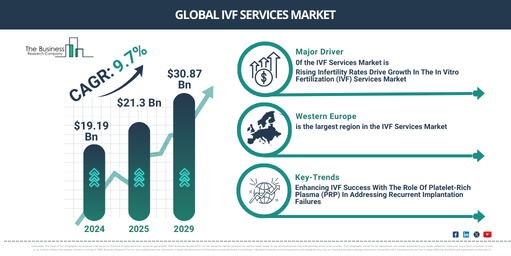
    The market size of IVF services has experienced swift growth in the past few years. It is expected to expand from $19.19 billion in 2024 to $21.3 billion in 2025, exhibiting a compound annual growth rate (CAGR) of 11.0%. This historic growth is mainly due to the rising instances of PCOS, an uptick in cases of premature ovarian failure, a surge in male infertility, and insurance companies extending coverage to IVF procedures.

    The market for IVF services is anticipated to experience robust growth in the upcoming years, reaching a size of $30.87 billion in 2029 with a compound annual growth rate (CAGR) of 9.7%. This expansion in the forecast period can be credited to factors such as an increasing rate of infertility, advancements in fertility treatment technology, higher acceptance of IVF services to facilitate pregnancy, a surge in the number of same-sex couples, an upturn in fertility clinics, growth in disposable income, and delayed parenthood. Notable trends for the prediction period include the implementation of mitochondrial replacement therapies to combat genetic disorders, embracing novel technologies to provide improved solutions for fertility treatments, providing PGT-A screening or testing to possibly enhance pregnancy chances, the utilization of artificial intelligence to cut costs and time, the development of blockchain-based applications, and the incorporation of cutting-edge technology like time-lapse microscopy for secure, continuous, and unbroken embryo observation.

    Download a free sample to assess the report’s scope and structure:

    https://www.thebusinessresearchcompany.com/sample.aspx?id=3348&type=smp

    Which Primay Drivers Are Accelerating Growth in the IVF Services Market?

    The escalating rate of infertility has been a key factor in the expansion of the in vitro fertilization (IVF) services market. Known as the failure to achieve pregnancy within a year, infertility affects approximately 12 to 13 out of every 100 pairs, as reported by the US Department of Health and Human Services. Additionally, the Indian Journal of Community Medicine notes that there are 15 to 20 million cases of infertility solely in India. With this growing infertility rate, individuals are turning to IVF services more and more, subsequently aiding the market’s growth.

    Which Primary Segments of the IVF Services Market Are Driving Growth and Industry Transformations?

    The IVF services market covered in this report is segmented –

    1) By Cycle Type: Fresh IVF Cycles(Non-donor), Thawed IVF Cycles(Non-donor), Donor Egg IVF Cycles

    2) By Service Provider: Fertility Clinics, Hospitals, Surgical Centers, Clinical Research Institutes

    3) By End User: Fertility Clinics, Hospitals And Other Settings

    Subsegments:

    1) By Fresh IVF Cycles (Non-donor): Standard Fresh IVF Cycles, IVF Cycles With Preimplantation Genetic Testing (PGT)

    2) By Thawed IVF Cycles (Non-donor): Thawed Embryo Transfer (TET) Cycles, Thawed Blastocyst Transfer Cycles

    3) By Donor Egg IVF Cycles: IVF Cycles Using Fresh Donor Eggs, IVF Cycles Using Frozen Donor Eggs

    Request customized data on this market:

    https://www.thebusinessresearchcompany.com/customise?id=3348&type=smp

    Which Regions Are Key Players in the Growth of the #Which Primay Drivers Are Accelerating Growth in the IVF Services Market?# Market?

    Western Europe was the largest region in the IVF services market in 2024. North America was the second largest region in global IVF services market share. The regions covered in the ivf services market report are Asia-Pacific, Western Europe, Eastern Europe, North America, South America, Middle East, Africa

    Which Technological Trends Are Reshaping the IVF Services Industry Dynamics?

    The use of Platelet-rich plasma (PRP) as an advanced method to boost the success rate of In Vitro Fertilization (IVF) in patients experiencing continuous implantation failures is gaining momentum. PRP significantly enhances egg quality, thickness of uterine lining and endometrial receptivity when paired with fertility procedures such as IVF, mainly targeting consistent implantation failure through multiple IVF cycles. The Journal of Assisted Reproduction and Genetics has published an article indicating that women undergoing PRP treatment evidenced substantial enhancements in Follicle-Stimulating Hormone (FSH), Anti-Müllerian Hormone (AMH), and Antral Follicle Count (AFC), thereby augmenting fertility.

    View the full report here:

    https://www.thebusinessresearchcompany.com/report/ivf-services-global-market-report

    What Parameters Are Used to Define the IVF Services Market?

    IVF is a process of fertilization where an egg is combined with sperm outside the body, in vitro (in glass). In vitro fertilization (IVF) is a sophisticated set of treatments intended to improve fertility, avoid genetic issues, and aid in child conception. It is used to address infertility.

    Purchase the full report and get a swift delivery:

    https://www.thebusinessresearchcompany.com/purchaseoptions.aspx?id=3348

    About The Business Research Company:

    With over 15000+ reports from 27 industries covering 60+ geographies, The Business Research Company has built a reputation for offering comprehensive, data-rich research and insights. Armed with 1,500,000 datasets, the optimistic contribution of in-depth secondary research, and unique insights from industry leaders, you can get the information you need to stay ahead in the game.

    Get in touch with us:

    The Business Research Company: https://www.thebusinessresearchcompany.com/

    Americas +1 3156230293

    Asia +44 2071930708

    Europe +44 2071930708

    Email us at info@tbrc.info

    Follow us on:

    LinkedIn: https://in.linkedin.com/company/the-business-research-company

    YouTube: https://www.youtube.com/channel/UC24_fI0rV8cR5DxlCpgmyFQ

    Global Market Model: https://www.thebusinessresearchcompany.com/global-market-model

  • Insulin DrugsMarket Overview 2025–2034: CAGR Trends, Long-Term Growth Paths, and Business Implications

    Insulin DrugsMarket Overview 2025–2034: CAGR Trends, Long-Term Growth Paths, and Business Implications

    Discover trends, market shifts, and competitive outlooks for the insulin drugs industry through 2025-2034 with The Business Research Company’s reliable data and in-depth research

    What Is the Estimated Market Size of the Insulin Drugs Market In 2029?

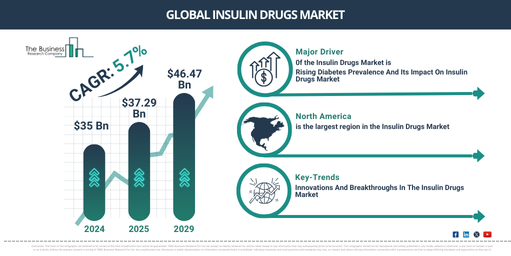
    Recent years have seen a marked expansion of the insulin drugs market. Anticipated to surge from $35 billion in 2024 to $37.29 billion in 2025, representing a compound annual growth rate (CAGR) of 6.6%. Factors that facilitated growth in the past include a rise in cases of diabetes, growth in emerging markets, a larger geriatric population, and advancements in insulin analogues.

    Expectations suggest a robust increase in the insulin drugs market in the coming years, with its valuation projected to reach $46.47 billion by 2029, signifying a compound annual growth rate (CAGR) of 5.7%. Factors contributing to this growth during the forecasted span include a higher disease incidence, government policies, and escalated R&D efforts and collaborations. The noteworthy trends prevailing in the projected period encompass the introduction of novel products for diversifying product offerings, broadening the product pipeline and business operations via merges and acquisitions, resorting to strategic alliances for enhancing product visibility, ramping up investments in R&D for inventing new insulin delivery techniques, and channeling funds into sophisticated solutions for curtailing R&D expenditures and expediting the development process.

    Download a free sample to assess the report’s scope and structure:

    https://www.thebusinessresearchcompany.com/sample.aspx?id=2674&type=smp

    What Are the Primary Drivers Supporting the Market Growth of the Insulin Drugs Market?

    The prevalence of diabetes is expected to increase due to shifts in lifestyle patterns, which will subsequently stimulate the demand for diabetes medications in the predicted period. Extended work hours, lack of physical exercise, and unhealthy dietary and drinking habits all contribute to the onset of diabetes. A research indicates a significant incidence of diabetes among individuals leading sedentary lives. In addition, obese individuals face up to 80 times higher risk of developing type 2 diabetes. A World Health Organization (WHO) report anticipates that by 2030, 74% of UK men and 64% of UK women will be overweight. These elements are likely to expand the number of diabetes patients, hence potentially boosting the diabetes treatment market throughout the forecast period.

    Which Primary Segments of the Insulin Drugs Market Are Driving Growth and Industry Transformations?

    The insulin drugs market covered in this report is segmented –

    1) By Product Type: Basal Or Long-Acting Insulins, Bolus Or Fast-Acting Insulins, Pre-Mixed, And Intermediate And Short Acting Insulins

    2) By Source Type: Insulin Analogs, And Human Insulin

    4) By Drug Classification: Branded Drugs, And Generic Drugs

    3) By Application: Type 2 Diabetes, Type 1 Diabetes, And Gestational Diabetes

    5) By Distribution Channel: Hospital Pharmacies, Retail Pharmacies, And Online

    Subsegments:

    1) By Basal Or Long-Acting Insulins: Insulin Glargine, Insulin Detemir, Insulin Degludec

    2) By Bolus Or Fast-Acting Insulins: Insulin Aspart, Insulin Lispro, Insulin Glulisine

    3) By Pre-Mixed: Biphasic Insulin Formulations, Pre-Mixed Combinations Of Long-Acting And Fast-Acting Insulins

    4) By Intermediate And Short-Acting Insulins: Insulin NPH (Neutral Protamine Hagedorn), Regular Insulin (Short-Acting)

    Request customized data on this market:

    https://www.thebusinessresearchcompany.com/customise?id=2674&type=smp

    Which Regions Are Key Players in the Growth of the #What Are the Primary Drivers Supporting the Market Growth of the Insulin Drugs Market?# Market?

    North America was the largest region in the insulin drugs market in 2024. Middle East is expected to be the largest growing region in the global insulin drugs market share during the forecast period. The regions covered in the insulin drugs market report are Asia-Pacific, Western Europe, Eastern Europe, North America, South America, Middle East, Africa

    What Are the Most Significant Market Trends in the Insulin Drugs Market?

    The Insulin market is currently experiencing a rising wave of mergers and acquisitions for novel formulations, with companies actively putting funds towards the invention of new insulin drugs. This includes research conducted at Lund University Diabetes Centre in Sweden, which involved the use of CRISPR – a leading gene-editing tool. The study facilitated the shutdown of a gene linked to diabetes, effectively reducing the death of beta cells and boosting the production of insulin in the pancreas. Insulin producer, Novo Nordisk, has crafted a diabetes pill due for release in India by February 2022. This tablet, part of the popular and effective Glucagon-like peptide-1 (GLP-1s) class of drugs, prompts insulin production. The innovative medicine is projected to accrue approximately $5 billion in annual sales.

    View the full report here:

    https://www.thebusinessresearchcompany.com/report/insulin-drugs-global-market-report

    What Parameters Are Used to Define the Insulin Drugs Market?

    Insulin drugs refer to medications that used to treat diabetes. Insulin is a medication prescribed to treat type 1 diabetes and type 2 diabetes mellitus. There are several types, preparations, and dosage amount of insulin. Insulin is a hormone that is produced naturally in our bodies. Its main role is to allow cells throughout the body to uptake glucose (sugar) and convert it into a form that can be used by these cells for energy.

    Purchase the full report and get a swift delivery:

    https://www.thebusinessresearchcompany.com/purchaseoptions.aspx?id=2674

    About The Business Research Company:

    With over 15000+ reports from 27 industries covering 60+ geographies, The Business Research Company has built a reputation for offering comprehensive, data-rich research and insights. Armed with 1,500,000 datasets, the optimistic contribution of in-depth secondary research, and unique insights from industry leaders, you can get the information you need to stay ahead in the game.

    Get in touch with us:

    The Business Research Company: https://www.thebusinessresearchcompany.com/

    Americas +1 3156230293

    Asia +44 2071930708

    Europe +44 2071930708

    Email us at info@tbrc.info

    Follow us on:

    LinkedIn: https://in.linkedin.com/company/the-business-research-company

    YouTube: https://www.youtube.com/channel/UC24_fI0rV8cR5DxlCpgmyFQ

    Global Market Model: https://www.thebusinessresearchcompany.com/global-market-model

  • Global Injectable Drug Delivery Devices Market Trends: Regional Breakdowns and Strategic Insights

    Global Injectable Drug Delivery Devices Market Trends: Regional Breakdowns and Strategic Insights

    Discover trends, market shifts, and competitive outlooks for the injectable drug delivery devices industry through 2025-2034 with The Business Research Company’s reliable data and in-depth research

    #What Are the Key Projections for the CAGR of the Injectable Drug Delivery Devices Market Size From 2025 to 2034?

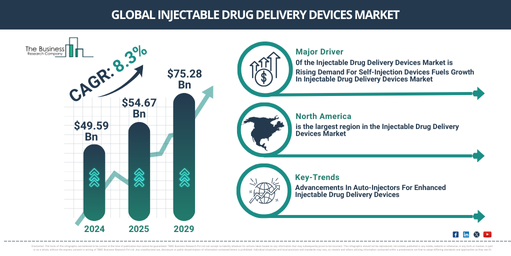
    The market size for injectable drug delivery devices has been experiencing swift growth in the past years. It is projected to increase from $49.59 billion in 2024 to $54.67 billion in 2025, with a compound annual growth rate (CAGR) of 10.3%. The expansion during the historical period is due to the quick rise in the elderly population, enhanced healthcare facilities, increased healthcare spending, growth of biologics, and a heightened awareness for self-administration.

    The market for injectable drug delivery devices is anticipated to witness significant expansion in the coming years, predicted to reach $75.28 billion in 2029, with a compound annual growth rate (CAGR) of 8.3%. This anticipated growth during the forecast period can be ascribed to the increasing occurrence of chronic illnesses, growing demand for injectable medicines, the sudden rise of severe infections, and numerous drugs and vaccines currently undergoing various clinical trial stages. Future market trends are expected to include the concentration on creating microneedle-based drug delivery systems, investments in self-injectable devices R&D, emphasis on producing wearable devices, and needle-free injection system manufacturing. Additionally, the expansion of prefilled syringes product lines, advancements in the digital technology of devices, and the creation of innovative auto-injectors and other devices are also expected to shape this market’s future.

    Download a free sample to assess the report’s scope and structure:

    https://www.thebusinessresearchcompany.com/sample.aspx?id=2835&type=smp

    What Are the Major Market Drivers Behind the Rising Adoption of Injectable Drug Delivery Devices Market?

    The injectable drug delivery devices market is being propelled by the growing preference for self-injection devices. These are medical devices developed for patients to use at home for administering their own medication. The category of self-injection devices encompasses needle-free, auto, pen, and wearable injectors, all designed for flexibility, precision drug delivery, and ease of use. Developments in these self-injectable devices have led to increasing acceptance in recent years. A noteworthy product is the BD Physioject, a single-use auto-injector crafted by Becton, Dickinson, and Company. It’s an affordable, tested, and reliable option that’s tailored for individuals with chronic health conditions such as rheumatoid arthritis, multiple sclerosis, asthma, and osteoporosis. Other industry players involved in the production of self-injection devices include AbbVie, Inc., 3M, Baxter, Gerresheimer AG, and Pfizer Inc. The benefits of self-injectable injections, as well as an increasing awareness of self-administration, have sparked a surge in the demand for self-injectable devices, further bolstering the injectable drug delivery devices market in the times ahead.

    Which Key Market Segments Comprise the Injectable Drug Delivery Devices Market and Drive Its Revenue Growth?

    The injectable drug delivery devices market covered in this report is segmented –

    1) By Type: Syringes, Injectors And Pump

    2) By Application: Autoimmune Diseases, Hormonal Disorders, Oncology, Orphan Diseases, Pain Management, Respiratory Therapy, Other Applications

    3) By End-user: Hospitals And Clinics, Home Healthcare Settings, Pharmaceutical And Biotechnological Companies, Research Laboratories, Other End Users

    Subsegments:

    1) By Syringes: Conventional Syringes, Prefilled Syringes, Safety Syringes

    2) By Injectors: Autoinjectors, Pen Injectors, Needle-Free Injectors

    3) By Pumps: Insulin Pumps, Ambulatory Infusion Pumps, Implantable Pumps

    Request customized data on this market:

    https://www.thebusinessresearchcompany.com/customise?id=2835&type=smp

    Which Areas Are Leading Regions in the Injectable Drug Delivery Devices Market Expansion Across the Globe?

    North America was the largest region in the injectable drug delivery devices market in 2024. Western Europe was the second-largest region in the global injectable drug delivery devices market. The regions covered in the injectable drug delivery devices market report are Asia-Pacific, Western Europe, Eastern Europe, North America, South America, Middle East, Africa

    What Are the Strategic Trends Steering theInjectable Drug Delivery Devices Market Direction?

    There is an increasing emphasis on the production of auto-injectors within companies that manufacture injectable drug delivery mechanisms. These auto-injectors are fully automatic, customizable, and reusable, enabling patients to perform hundreds of self-injections. Patients have the ability to regulate the delivery speed of the dose, aiding in pain and discomfort reduction during injection. Precise adjustments can be made to the speed and penetration depth of the automatic injection. For instance, Unilife corporation’s reusable auto-injector LISA, offers a myriad of customizable features like connectivity to Bluetooth LE, Wi-Fi or 3G, and drug warming before injection for targeted therapies. Anticipated progress in technology and the introduction of novel products are set to contribute to significant growth in the injectable drug delivery technology market in the future, enhancing convenience and ease of parenteral therapeutic administration.

    View the full report here:

    https://www.thebusinessresearchcompany.com/report/injectable-drug-delivery-devices-global-market-report

    How Is the Injectable Drug Delivery Devices Market Conceptually Defined?

    Injectable Drug Delivery Devices refer to medical devices designed to administer medications directly into the body through injections. Injectable drug delivery devices are used for various routes of drug administration, such as intravenous, subcutaneous, intradermal, intra-peritoneal, and intra-muscular.

    Purchase the full report and get a swift delivery:

    https://www.thebusinessresearchcompany.com/purchaseoptions.aspx?id=2835

    About The Business Research Company:

    With over 15000+ reports from 27 industries covering 60+ geographies, The Business Research Company has built a reputation for offering comprehensive, data-rich research and insights. Armed with 1,500,000 datasets, the optimistic contribution of in-depth secondary research, and unique insights from industry leaders, you can get the information you need to stay ahead in the game.

    Get in touch with us:

    The Business Research Company: https://www.thebusinessresearchcompany.com/

    Americas +1 3156230293

    Asia +44 2071930708

    Europe +44 2071930708

    Email us at info@tbrc.info

    Follow us on:

    LinkedIn: https://in.linkedin.com/company/the-business-research-company

    YouTube: https://www.youtube.com/channel/UC24_fI0rV8cR5DxlCpgmyFQ

    Global Market Model: https://www.thebusinessresearchcompany.com/global-market-model