Month: June 2025

  • Ngenla Market Outlook 2025–2034: Identifying Growth Drivers, Technology Trends, and Policy Impact

    Ngenla Market Outlook 2025–2034: Identifying Growth Drivers, Technology Trends, and Policy Impact

    Stay ahead with our updated market reports featuring the latest on tariffs, trade flows, and supply chain transformations.

    How Fast Is The Ngenla Market Expected to Grow Between 2025 And 2029?

    In recent times, the market size of ngenla has seen a XX (HCAGR) expansion. There’s a projection that its growth will move upwards from $XX million in 2024 to $XX million in 2025, with a compound annual growth rate (CAGR) sticking at XX%. Factors contributing to this historic period growth include a rising occurrence of pediatric GHD, enhanced understanding of growth hormone deficiencies, the global escalation in healthcare expenditure, growing concerns over patient compliance, and the approval of innovative treatments by regulatory bodies.

    Forecasts suggest the ngenla market size will experience an XX (FCAGR) upswing in the upcoming couple of years. By 2029, the projection is that it will blow up to $XX million with a compound annual growth rate (CAGR) of XX%. Factors contributing to the growth forecast encompass the growing demand for accessible treatment choices, an increase in the global pediatric populace, a rise in R&D investment in biologics, more extensive healthcare insurance cover, and a heightened focus on customised treatments. Key trends for the future period comprise advancing next-generation growth hormone treatments, exploiting untapped markets, employing AI in patient monitoring, the proliferation of telemedicine for patient handling, and augmented regulatory attention towards patient safety.

    Download a free sample to assess the report’s scope and structure:

    https://www.thebusinessresearchcompany.com/sample.aspx?id=20259&type=smp

    What are the Fundamental Drivers and Innovations Shaping the Ngenla Market?

    The escalating incidence of childhood growth hormone deficiency (GHD) is projected to stimulate the ngenla market’s advancement. GHD in children is an ailment defined by insufficient secretion of the growth hormone, which can adversely affect a child’s physical growth and overall wellness. The incidence of GHD is on an uptick due to heightened awareness, superior diagnostic proficiency, and broader access to global healthcare services. Ngenla, a prolonged-acting recombinant human growth hormone or somatrogon, assists with pediatric growth hormone deficiency by ensuring a uniform and stable release of the growth hormone via weekly injections. This not only lightens the load of daily administration, but also improves adherence, efficiently spurring growth and development in children with inadequate growth hormone generation. As an illustration, the National Library of Medicine (NLM), a biomedical library based in the US, reported in January 2024 that GHD is an infrequent condition in children, with the incidence estimated to be somewhere between 1 in 3,500 to 1 in 10,000, subject to the diagnostic norms and stimulation test thresholds utilized. Thus, the mounting incidence of childhood growth hormone deficiency (GHD) propels the ngenla market.

    How Is the Ngenla Market Segmented?

    The ngenla market covered in this report is segmented –

    1) By Indication: Growth Hormone Deficiency; Turner Syndrome; Prader-Willi; Small For Gestational Age

    2) By Distribution Channel: Hospital Pharmacies; Retail Pharmacies; Online Pharmacies

    3) By End User: Pediatric Patients; Adult Patients

    Request customized data on this market:

    https://www.thebusinessresearchcompany.com/customise?id=20259&type=smp

    Which Regions Are Driving the Next Phase of the Ngenla Market Growth?

    North America was the largest region in the ngenla market in 2024. Asia-Pacific is expected to be the fastest-growing region in the forecast period. The regions covered in the ngenla market report are Asia-Pacific, Western Europe, Eastern Europe, North America, South America, Middle East, Africa.

    What Key Trends Are Shaping the Future of the Ngenla Market?

    The focal trend in the Ngenla market is the pursuit of progress, particularly in areas such as extended-release growth hormone therapies, improved adherence to treatment, and superior overall results for both child and adult patients with lack of growth hormones. Extended-release growth hormone treatments are intended to provide continuous release of hormones, diminishing the number of injections required, thus making it easier for patients to adhere to treatment for growth hormone insufficiencies. For instance, in June 2023, Pfizer Inc., an American biopharmaceutical firm, and OPKO Health Inc., a medication company also based in the US, gained US Food and Drug Administration (FDA) approval for NGENLA (somatrogon-ghla), a weekly human growth hormone analog. NGENLA is approved for the treatment of growth failure in children aged three years and older due to inadequate endogenous growth hormone production.

    View the full report here:

    https://www.thebusinessresearchcompany.com/report/ngenla-global-market-report

    How Is the Ngenla Market Defined and What Are Its Core Parameters?

    Ngenla refers to a long-acting human growth hormone (somatrogon) developed for the treatment of growth hormone deficiency (GHD) in children and adults. It is used to improve growth and manage growth-related disorders by replacing the natural growth hormone in individuals with inadequate production.

    Purchase the full report and get a swift delivery:

    https://www.thebusinessresearchcompany.com/purchaseoptions.aspx?id=20259

    About The Business Research Company:

    With over 15000+ reports from 27 industries covering 60+ geographies, The Business Research Company has built a reputation for offering comprehensive, data-rich research and insights. Armed with 1,500,000 datasets, the optimistic contribution of in-depth secondary research, and unique insights from industry leaders, you can get the information you need to stay ahead in the game.

    Get in touch with us:

    The Business Research Company: https://www.thebusinessresearchcompany.com/

    Americas +1 3156230293

    Asia +44 2071930708

    Europe +44 2071930708

    Email us at info@tbrc.info

    Follow us on:

    LinkedIn: https://in.linkedin.com/company/the-business-research-company

    YouTube: https://www.youtube.com/channel/UC24_fI0rV8cR5DxlCpgmyFQ

    Global Market Model: https://www.thebusinessresearchcompany.com/global-market-model
  • Point of Care Connectivity SolutionsMarket Overview 2025–2034: CAGR Trends, Long-Term Growth Paths, and Business Implications

    Point of Care Connectivity SolutionsMarket Overview 2025–2034: CAGR Trends, Long-Term Growth Paths, and Business Implications

    Get 30% off on our Global Market Reports with code ONLINE30 – Hurry, limited time offer!

    What Are the Projected Market Size and Growth Rates for the Point of Care Connectivity Solutions Market From 2025 To 2029?

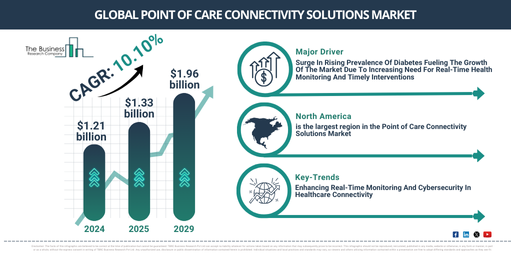
    The market size for point-of-care connectivity solutions has experienced swift expansion in recent years, which is set to continue. It is projected to increase from $1.21 billion in 2024 to approximately $1.33 billion in 2025, reflecting a compound annual growth rate (CAGR) of 10.5%. The driving forces behind this growing trend include a surge in demand for continuous patient monitoring, an increase in chronic diseases and aging populace, the escalating preference for telemedicine and remote healthcare services, an urgent need to cut healthcare costs, and heightened regulatory mandates for managing patient data.

    The market for point-of-care connectivity solutions is predicted to undergo a swift expansion in the upcoming years, reaching $1.96 billion in 2029 with a compounded annual growth rate (CAGR) of 10.1%. This expected surge during the forecast period is due to factors such as the growing implementation of artificial intelligence in healthcare, an escalating number of outpatient and homecare services, the rising requirement for specialized healthcare approaches, augmented investment in healthcare IT infrastructures, and growing use of mobile health applications and wearable devices. The forecast period also anticipates the predominance of advanced data analytics for immediate decision making, expansion in wireless communication technologies, innovations in cloud-based healthcare solutions, and the merge of IoT devices for enhanced patient supervision and electronic health records with point of care systems.

    Download a free sample to assess the report’s scope and structure:

    https://www.thebusinessresearchcompany.com/sample.aspx?id=23478&type=smp

    What Are the Primary Drivers Supporting the Market Growth of the Point of Care Connectivity Solutions Market?

    The increasing incidence of diabetes is believed to be a primary driver for the growth of the point of care connectivity solutions market. Diabetes, a cluster of diseases that interfere with the body’s processing of blood sugar or glucose, often leads to elevated blood sugar levels. The occurrence of diabetes is rising since excessive body fat can trigger insulin resistance, thereby hindering the body’s effective regulation of blood glucose levels. Point of care connectivity solutions contribute to diabetes management by enabling physicians to readily monitor patients’ health in real time, thereby facilitating prompt treatment and better management of the disease. For example, the American Diabetes Association, a non-profit organization based in the US, reported in November 2023 that about 25.5 million individuals in the US were diagnosed with diabetes in 2022, representing 7.6% of the total populace. Consequently, the escalating prevalence of diabetes is fuelling the growth of the point of care connectivity solutions market.

    Which Primary Segments of the Point of Care Connectivity Solutions Market Are Driving Growth and Industry Transformations?

    The point of care connectivity solutions market covered in this report is segmented –

    1) By Type: Software, Services

    2) By Application: Glucose Monitoring, Coagulation Monitoring, Electrolyte and Blood Gas Analysis, Infectious Disease Devices, Cardio Metabolic Monitoring, Other Applications

    3) By End User: Hospitals And Clinics, Diagnostic And Specialty Centers, Other End Users

    Sub Segments:

    1) By Software: Electronic Medical Records (EMR) Integration, Device Connectivity Software, Data Management And Analytics, Interface Software, Middleware Solutions

    2) By Services: Support and Maintenance, Implementation and Integration, Consulting, Training and Education, Managed Services

    Request customized data on this market:

    https://www.thebusinessresearchcompany.com/customise?id=23478&type=smp

    Which Regions Are Key Players in the Growth of the Point of Care Connectivity Solutions Market?

    North America was the largest region in the point-of-care connectivity solutions market in 2024. Asia-Pacific is expected to be the fastest-growing region in the forecast period. The regions covered in the point of care connectivity solutions market report are Asia-Pacific, Western Europe, Eastern Europe, North America, South America, Middle East, Africa.

    What Are the Most Significant Market Trends in the Point of Care Connectivity Solutions Market?

    Leading enterprises in the point of care connectivity solutions market are focusing on creating advanced digital connectivity solutions to improve data integration, streamline clinical workflows, and facilitate immediate decision-making at the point of care. Digital connectivity in point of care (POC) involves technology that interconnects diagnostic tools, electronic health records (EHRs), and healthcare systems to support instantaneous data sharing, integration, and administration at the point of care. For example, EKF Diagnostics, a diagnostics and biotechnology company based in the UK, unveiled a middleware connectivity solution for POC analyzers and data management in May 2022. This adaptable software bolsters real-time remote management of patient test outcomes, QC data, and analyzer settings across various devices. It promotes smooth integration with hospital IT networks, gifting hospitals, clinics, and laboratories with improved functionality.

    View the full report here:

    https://www.thebusinessresearchcompany.com/report/point-of-care-connectivity-solutions-global-market-report

    What Parameters Are Used to Define the Point of Care Connectivity Solutions Market?

    Point-of-care connectivity solutions are technologies and systems that allow for the seamless transfer of health data from point-of-care (POC) diagnostic devices to healthcare professionals, mostly involving the data into electronic health records (EHRs). These solutions facilitate real-time access to patient information, raising clinical decision-making and improving patient outcomes.

    Purchase the full report and get a swift delivery:

    https://www.thebusinessresearchcompany.com/purchaseoptions.aspx?id=23478

    About The Business Research Company:

    With over 15000+ reports from 27 industries covering 60+ geographies, The Business Research Company has built a reputation for offering comprehensive, data-rich research and insights. Armed with 1,500,000 datasets, the optimistic contribution of in-depth secondary research, and unique insights from industry leaders, you can get the information you need to stay ahead in the game.

    Get in touch with us:

    The Business Research Company: https://www.thebusinessresearchcompany.com/

    Americas +1 3156230293

    Asia +44 2071930708

    Europe +44 2071930708

    Email us at info@tbrc.info

    Follow us on:

    LinkedIn: https://in.linkedin.com/company/the-business-research-company

    YouTube: https://www.youtube.com/channel/UC24_fI0rV8cR5DxlCpgmyFQ

    Global Market Model: https://www.thebusinessresearchcompany.com/global-market-model
  • Plant-Based Active Pharmaceutical Ingredients (API) Outlook 2034: Key Drivers, Trends, and Market Frontiers

    Plant-Based Active Pharmaceutical Ingredients (API) Outlook 2034: Key Drivers, Trends, and Market Frontiers

    Get 30% off on our Global Market Reports with code ONLINE30 – Hurry, limited time offer!

    What Is the Estimated Market Size of the Plant-Based Active Pharmaceutical Ingredients (API) Market In 2029?

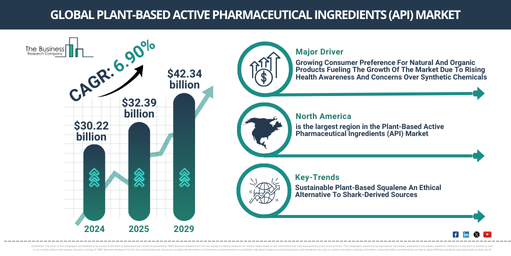
    The size of the market for plant-based active pharmaceutical ingredients (API) has witnessed significant expansion in the past few years. Forecasts predict a surge from 2024’s $30.22 billion to $32.39 billion in 2025, marking a compound annual growth rate (CAGR) of 7.2%. The upswing during the historic period is largely due to a rise in traditional herbal medicinal practices, swell in interest for natural treatments, growth of early pharmaceutical derivations, expansion in worldwide trade of medicinal plants, and amplified industrialization of botanical medications.

    Expectations are high for significant expansion in the plant-based active pharmaceutical ingredients (API) market over the next few years, with an anticipated growth to $42.34 billion by 2029. This equates to a compound annual growth rate (CAGR) of 6.9%. The predicted growth over this period can be linked to various factors such as the increased consumer demand for natural remedies, more substantial investment in research for plant-based drugs, the widening scope of applications in chronic illness management, and the growing partnerships between the pharmaceutical and botanical sectors. Key trends for the forecast period encompass drug discovery facilitated by artificial intelligence (AI), progressive plant tissue culture methodologies, precision fermentation processes for plant-derived compounds, and environment-friendly extraction techniques for sustainable production.

    Download a free sample to assess the report’s scope and structure:

    https://www.thebusinessresearchcompany.com/sample.aspx?id=23477&type=smp

    How Are Key Drivers in the Industry Acting as Catalysts for the Growth of the Plant-Based Active Pharmaceutical Ingredients (API) Market?

    Advancements in the plant-based active pharmaceutical ingredients (API) market are likely to be propelled by the increasing consumer attraction to natural and organic goods. These refer to products derived from natural ingredients, minimally processed, devoid of synthetic additives, and free from genetically modified organisms (GMOs). The amplified health awareness and apprehensions related to synthetic elements have made consumers more inclined towards natural and organic products due to their perceived lower risk than synthetic ones. Plant-based active pharmaceutical ingredients provide medicinal advantages devoid of chemicals, aligning with the consumer’s demand for safe, clean, and sustainable healthcare alternatives. For example, Argentina-based organic product certification authority LETIS S.A. reported in May 2024 that organic food sales rocketed 4.3% to $61.67 billion in 2022, and other organic goods added an extra $5.906 billion to the total sales with 1.6% growth. Hence, the upgrading shift towards natural and organic goods is stimulating the development of the plant-based active pharmaceutical ingredients (API) market.

    Which Segments in the Plant-Based Active Pharmaceutical Ingredients (API) Offer the Most Growth?

    The plant-based active pharmaceutical ingredients (API) market covered in this report is segmented –

    1) By Product Type: Alkaloids, Glycosides, Cannabinoids, Flavonoid, Terpenes And Terpenoids, Polyphenols, Saponins, Other Product Types

    2) By Source: Leaves, Roots, Bark, Flowers, Seeds, Fruits, Resin And Gums, Other Sources

    3) By Distribution Channel: Online Retailers, Super markets Or Hyper markets, Specialty Food Stores, Foodservice

    4) By End-Use: Pharmaceuticals, Nutraceuticals, Herbal Based Industries, Other End-Uses

    Subsegments:

    1) Alkaloids: Morphine Alkaloids, Tropane Alkaloids, Quinolizidine Alkaloids, Indole Alkaloids, Isoquinoline Alkaloids, Pyrrolizidine Alkaloids

    2) By Glycosides: Cardiac Glycosides, Anthraquinone Glycosides, Flavonoid Glycosides, Saponin Glycosides, Cyanogenic Glycosides

    3) Cannabinoids: Tetrahydrocannabinol (THC), Cannabidiol (CBD), Cannabigerol (CBG), Cannabichromene (CBC), Cannabinol (CBN)

    4) Flavonoid: Flavones, Flavonols, Isoflavones, Flavanones, Anthocyanins

    5) Terpenes And Terpenoids: Monoterpenes, Sesquiterpenes, Diterpenes, Triterpenes, Tetraterpenes

    6) Polyphenols: Phenolic Acids, Stilbenes, Lignans, Flavonoid Polyphenols

    7) Saponins: Steroidal Saponins, Triterpenoid Saponins

    8) Other Product Types: Coumarins, Tannins, Lignins, Phenolic Glycosides

    Request customized data on this market:

    https://www.thebusinessresearchcompany.com/customise?id=23477&type=smp

    What Are the Fastest-Growing Geographies in the Plant-Based Active Pharmaceutical Ingredients (API) Market?

    North America was the largest region in the plant-based active pharmaceutical ingredients (API) market in 2024. Asia-Pacific is expected to be the fastest-growing region in the forecast period. The regions covered in the plant-based active pharmaceutical ingredients (API) market report are Asia-Pacific, Western Europe, Eastern Europe, North America, South America, Middle East, Africa.

    What Are the Current Market Growth and Trends in the Plant-Based Active Pharmaceutical Ingredients (API) Industry?

    Key businesses in the plant-based active pharmaceutical ingredients (API) arena are turning their attention toward creating new products like plant-based squalene. The goal of this innovation is to provide a sustainable and ethical substitute for the traditional squalene derived from animals. Plant-based squalene, obtained from sources such as amaranth, olives, and sugarcane, is endorsed for use in pharmaceuticals, cosmetics, and vaccines, making it a sustainable and ethical alternative to shark-derived squalene. A case in point is the launch of PhytoSquene by German specialty chemicals company, Evonik Industries AG, in October 2023. PhytoSquene, the first plant-based squalene of GMP-quality derived from amaranth oil, offers a sustainable solution to shark-based squalene. It also ensures high purity, consistency from one batch to another, and adheres to European Pharmacopoeia (Ph. Eur.) standards. Squalene has a vital function in vaccine additives, where it boosts the immune response. PhytoSquene aids in addressing concerns about biodiversity while decreasing dependence on animal-based sources and respecting cultural and religious sensitivities.

    View the full report here:

    https://www.thebusinessresearchcompany.com/report/plant-based-active-pharmaceutical-ingredients-api-global-market-report

    What Are the Key Elements That Define the Plant-Based Active Pharmaceutical Ingredients (API) Market?

    Plant-based active pharmaceutical ingredients (APIs) refer to the biologically active compounds derived from plants that are utilized in the formulation of medications. These ingredients are crucial for their therapeutic effects, which can include treating, preventing, or managing various health conditions.

    Purchase the full report and get a swift delivery:

    https://www.thebusinessresearchcompany.com/purchaseoptions.aspx?id=23477

    About The Business Research Company:

    With over 15000+ reports from 27 industries covering 60+ geographies, The Business Research Company has built a reputation for offering comprehensive, data-rich research and insights. Armed with 1,500,000 datasets, the optimistic contribution of in-depth secondary research, and unique insights from industry leaders, you can get the information you need to stay ahead in the game.

    Get in touch with us:

    The Business Research Company: https://www.thebusinessresearchcompany.com/

    Americas +1 3156230293

    Asia +44 2071930708

    Europe +44 2071930708

    Email us at info@tbrc.info

    Follow us on:

    LinkedIn: https://in.linkedin.com/company/the-business-research-company

    YouTube: https://www.youtube.com/channel/UC24_fI0rV8cR5DxlCpgmyFQ

    Global Market Model: https://www.thebusinessresearchcompany.com/global-market-model

  • Phosphoinositide 3-Kinase (PI3K) Inhibitors  Market in Focus: Forecasting Growth Drivers, Scaling Potential, and Global Opportunities

    Phosphoinositide 3-Kinase (PI3K) Inhibitors Market in Focus: Forecasting Growth Drivers, Scaling Potential, and Global Opportunities

    Get 30% off on our Global Market Reports with code ONLINE30 – Hurry, limited time offer!

    How Has The Phosphoinositide 3-Kinase (PI3K) Inhibitors Market Growth Evolved From 2024 To 2025, And What’s Ahead?

    The market size for phosphoinositide 3-kinase (PI3K) inhibitors has seen a swift growth in the past few years. It is predicted to grow from $1.38 billion in 2024 to $1.57 billion in 2025, with a compound annual growth rate (CAGR) of 13.7%. Factors contributing to this growth in the historical period include a rise in cancer occurrences, increased research on specific therapies, regulatory authorizations for first-generation PI3K inhibitors, an upsurge in healthcare spending, and a surge in clinical trials for hematologic malignancies.

    Anticipated rapid growth in the phosphoinositide 3-kinase (PI3K) inhibitors market is foreseen in the upcoming years, with an expected rise to $2.61 billion by 2029 at a compound annual growth rate (CAGR) of 13.5%. The expansion during the forecast timeframe can be linked to several factors including heightened demand for combination therapies, emergence of advanced generation PI3K inhibitors with enhanced safety profiles, escalating investment in cancer research and progression, expansion of applications beyond the realm of oncology, and an increasing utilization of biomarkers for patient selection. Key trends for the forecast period consist of a transition toward dual and pan-isoform PI3K inhibitors, an amplified preference for orally administered formulations over intravenous options, a growing emphasis on confronting resistance mechanisms, an increasing alliance of artificial intelligence in drug discovery, and a broadening involvement of PI3K inhibitors in immunotherapy combinations.

    Download a free sample to assess the report’s scope and structure:

    https://www.thebusinessresearchcompany.com/sample.aspx?id=23474&type=smp

    What Are the Core Market Drivers Propelling Growth in the Phosphoinositide 3-Kinase (PI3K) Inhibitors Industry?

    The escalation in the number of cancer and autoimmune disease cases is projected to fuel the expansion of the phosphoinositide 3-kinase (PI3K) inhibitors market. Both cancer and autoimmune diseases are characterized by abnormal cell growth and unintentional attacks on healthy tissues by the immune system, respectively, resulting in extended inflammation and tissue destruction. The growth in these diseases can be attributed to genetic predisposition leading to cumulative genetic mutations and an erratic immune system. PI3K inhibitors play a central role in tackling the upsurge of these diseases, as they target out of order PI3K signaling implicated in tumor evolution and immune system malfunctions, thus offering potential treatment benefits through precision medicine techniques that improve treatment effectiveness and patient results. The National Cancer Institute reported in May 2024, that the count of cancer survivors in the United States, which stood at 18.1 million in 2022, is predicted to reach 22.5 million by 2032, with an estimated 40.5% of all citizens likely to receive a cancer diagnosis at some point in their lives. Therefore, the rising prevalence of cancer and autoimmune diseases is driving the growth of the Phosphoinositide 3-Kinase (PI3K) Inhibitors market.

    How Is the Phosphoinositide 3-Kinase (PI3K) Inhibitors Market Segmented?

    The phosphoinositide 3-kinase (PI3K) inhibitors market covered in this report is segmented –

    1) By Type Of Inhibitor: Isoform Selective Inhibitors, Pan-Phosphoinositide 3-Kinase (PI3K) Inhibitors, Dual Phosphoinositide 3-Kinase (PI3K) Or Mechanistic Target Of Rapamycin (mTOR) Inhibitors, Novel Targeted Inhibitors

    2) By Distribution Channel: Hospital Pharmacies, Retail Pharmacies, Online Pharmacies, Other Distribution Channel

    3) By Application Areas: Cancer Treatment, Metabolic Disorders, Autoimmune Diseases, Neurological Disorders

    4) By End User: Hospitals, Research Institutes, Pharmaceutical Companies, Contract Research Organizations (CROs)

    Subsegments:

    1) By Isoform Selective Inhibitors: Phosphoinositide 3-Kinase Alpha (PI3Kα), Phosphoinositide 3-Kinase Beta (PI3Kβ), Phosphoinositide 3-Kinase Delta (PI3Kδ), Phosphoinositide 3-Kinase Gamma (PI3Kγ)

    2) By Pan-Phosphoinositide 3-Kinase (PI3K) Inhibitors: Class I Phosphoinositide 3-Kinase (PI3K), Non-Isoform Specific Phosphoinositide 3-Kinase (PI3K), Phosphoinositide 3-Kinase Kinase Domain

    3) By Dual Phosphoinositide 3-Kinase (PI3K) Or Mechanistic Target of Rapamycin (mTOR) Inhibitors: Phosphoinositide 3-Kinase (PI3K) and Mechanistic Target of Rapamycin (mTOR) Inhibition, Adenosine Triphosphate-Competitive Dual Inhibitors, Allosteric Dual Inhibitors

    4) By Novel Targeted Inhibitors: Next-Generation Phosphoinositide 3-Kinase, Targeting Mutant Phosphoinositide 3-Kinase Isoforms, Autophagy Modulators, Checkpoint Inhibitors, Combination Therapies

    Request customized data on this market:

    https://www.thebusinessresearchcompany.com/customise?id=23474&type=smp

    Which Regions Are Driving the Next Phase of the Phosphoinositide 3-Kinase (PI3K) Inhibitors Market Growth?

    North America was the largest region in the phosphoinositide 3-kinase (PI3K) inhibitors market in 2024. Asia-Pacific is expected to be the fastest-growing region in the forecast period. The regions covered in the phosphoinositide 3-kinase (PI3K) inhibitors market report are Asia-Pacific, Western Europe, Eastern Europe, North America, South America, Middle East, Africa.

    What Key Market Trends and Innovations Are Shaping the Future of the Phosphoinositide 3-Kinase (PI3K) Inhibitors Industry?

    Leading businesses in the phosphoinositide 3-kinase (PI3K) inhibitors market are dedicating resources to the creation of novel solutions like PI3K delta inhibitor therapies. These therapies are precision treatments designed to target conditions stemming from imbalanced PI3K signaling. PI3K delta inhibitor therapy functions by blocking the PI3K Delta enzyme, a crucial player in immune cell signaling, which results in reduced inflammation, autoimmune reactions, and specific blood cancers. For example, in March 2023, the United States Food and Drug Administration (FDA) gave Joenja (leniolisib) the green light, making it the pioneering treatment for activated phosphoinositide 3-kinase delta syndrome (APDS) in patients 12 years old and up. This approval sets a new benchmark in targeted therapies by offering an exact medicinal approach to tackle immune dysfunction due to PIK3CD or PIK3R1 genetic mutations. The introduction of Joenja not only widens the scope of PI3K inhibitor clinical uses beyond cancer treatments but also emphasizes the growing interest in tailored therapies for uncommon immunological conditions.

    View the full report here:

    https://www.thebusinessresearchcompany.com/report/phosphoinositide-3-kinase-pi3k-inhibitors-global-market-report

    How Is the Phosphoinositide 3-Kinase (PI3K) Inhibitors Market Defined and What Are Its Core Parameters?

    Phosphoinositide 3-Kinase (PI3K) inhibitors are a class of drugs that target the PI3K enzyme, which plays a critical role in regulating cell growth, survival, and metabolism. These inhibitors help control abnormal cell division and tumor growth, making them helpful in treating various cancers such as breast cancer, leukemia, and lymphoma. PI3K inhibitors work by blocking signaling pathways that promote the survival and proliferation of cancer cells, ultimately helping to slow down or halt tumor progression.

    Purchase the full report and get a swift delivery:

    https://www.thebusinessresearchcompany.com/purchaseoptions.aspx?id=23474

    About The Business Research Company:

    With over 15000+ reports from 27 industries covering 60+ geographies, The Business Research Company has built a reputation for offering comprehensive, data-rich research and insights. Armed with 1,500,000 datasets, the optimistic contribution of in-depth secondary research, and unique insights from industry leaders, you can get the information you need to stay ahead in the game.

    Get in touch with us:

    The Business Research Company: https://www.thebusinessresearchcompany.com/

    Americas +1 3156230293

    Asia +44 2071930708

    Europe +44 2071930708

    Email us at info@tbrc.info

    Follow us on:

    LinkedIn: https://in.linkedin.com/company/the-business-research-company

    YouTube: https://www.youtube.com/channel/UC24_fI0rV8cR5DxlCpgmyFQ

    Global Market Model: https://www.thebusinessresearchcompany.com/global-market-model

  • Market Trends Influencing Strategic Decisions in the Coagulation Factor Deficiency Industry: Biotechnology Breakthrough Enables Self-Production Of Coagulation Factors Through One-Time Gene Therapy

    Our market reports now include the latest updates on global tariffs, trade impacts, and evolving supply chain dynamics.

    How Fast Is The Coagulation Factor Deficiency Market Expected to Grow Between 2025 And 2029?

    The market size of coagulation factor deficiency has exhibited robust growth in the past few years. A surge is expected from $4.58 billion in 2024 to $4.94 billion in 2025, with a Compound Annual Growth Rate (CAGR) of 8.0%. Factors contributing to this historic growth span across an increase in hemophilia cases, advent of recombinant factors, improved awareness on coagulation disorders, enhanced diagnostic capabilities, governmental aid for uncommon diseases, development of prophylactic treatments, larger patient registries, and an upswing in biotechnology investment.

    The coagulation factor deficiency market is set to witness substantial expansion in the coming years, reaching a whopping $6.64 billion by 2029. This represents a compound annual growth rate (CAGR) of 7.7%. The impressive growth forecast is in tune with the rising trend of gene therapies, an increased emphasis on customized medicine, and an upswing in coagulation disorders. Other factors driving the growth include the wider reach in developing markets, incorporation of digital health technology and constant advancements in biomanufacturing processes. Looking ahead, the future trends that will shape this market include gene editing techniques like CRISPR, creation of durable recombinant factors, progression in gene therapy delivery options, wearable tools for monitoring coagulation, artificial intelligence-driven treatment optimization, point-of-care diagnostic tools, drug delivery using nanoparticles, development of recombinant products without plasma, innovation in biosimilars and adopting precision medicine approaches.

    Download a free sample to assess the report’s scope and structure:

    https://www.thebusinessresearchcompany.com/sample.aspx?id=21152&type=smp

    What Are the Major Market Drivers Behind the Rising Adoption of Coagulation Factor Deficiency Market?

    The escalating occurrence of conditions related to blood is anticipated to fuel the expansion of the coagulation factor deficiency market in the future. Diseases associated with blood typically involve issues with the creation, functionality, or makeup of blood cells, platelets or plasma, culminating in problems such as anemia, clotting complications, or immune system deficiencies. The rise in such conditions can be attributed to various factors including older populace, genetic susceptibility, heightened awareness, environmental elements, changes in lifestyle, and increasing incidence of chronic diseases coupled with progress in diagnostic techniques enabling earlier detection. Coagulation factor deficiency plays a pivotal role in managing diseases related to blood by rendering the required clotting factors essential to thwart or regulate excessive bleeding during conditions like hemophilia, where the body falters in forming blood clots. For instance, the Leukemia and Lymphoma Society, a US-based professional organization, stated in September 2024 that every three minutes a new case of leukemia, lymphoma, or myeloma is diagnosed in the US. They estimated that 187,740 individuals were diagnosed with these cancers in 2024, making up 9.4% of the predicted 2,001,140 new cancer cases in the US that year. Furthermore, the National Health Service (NHS) England, a UK-based government-funded healthcare system, reported in May 2024 that roughly 17,000 people in England are living with sickle cell disease, an inherited condition related to blood, with around 250 new cases diagnosed each year. As a consequence, the increasing occurrence of diseases related to blood is pushing the growth of the coagulation factor deficiency market.

    Which Key Market Segments Comprise the Coagulation Factor Deficiency Market and Drive Its Revenue Growth?

    The coagulation factor deficiency market covered in this report is segmented –

    1) By Product: Recombinant Coagulation Factor Concentrates, Plasma-derived Coagulation Factor Concentrates, Biologics, Desmopressin, Other Product Types

    2) By Deficiency Type: Haemophilia A, Hemophilia B, Von Willebrand Disease, Factor XI Deficiency, Factor XIII Deficiency, Other Treatment Types

    3) By End Users: Hospitals, Clinics, Home Care, Other End Users

    Subsegments:

    1) By Recombinant Coagulation Factor Concentrates: Recombinant Factor VIII, Recombinant Factor IX, Recombinant Factor VIIa, Other Recombinant Factors

    2) By Plasma-derived Coagulation Factor Concentrates: Plasma-derived Factor VIII, Plasma-derived Factor IX, Plasma-derived Factor VII, Other Plasma-derived Factors

    3) By Biologics: Monoclonal Antibodies, Gene Therapy Products

    4) By Desmopressin: Intravenous Desmopressin, Intranasal Desmopressin

    5) By Other Product Types: Fresh Frozen Plasma (FFP), Prothrombin Complex Concentrates (PCC)

    Request customized data on this market:

    https://www.thebusinessresearchcompany.com/customise?id=21152&type=smp

    Which Areas Are Leading Regions in the Coagulation Factor Deficiency Market Expansion Across the Globe?

    North America was the largest region in the coagulation factor deficiency market in 2024. Asia-Pacific is expected to be the fastest-growing region in the forecast period. The regions covered in the coagulation factor deficiency market report are Asia-Pacific, Western Europe, Eastern Europe, North America, South America, Middle East, Africa.

    What Are the Strategic Trends Steering theCoagulation Factor Deficiency Market Direction?

    Leading firms in the coagulation factor deficiency market are concentrating on the creation of groundbreaking therapies such as one-time gene therapy. This innovation could offer long-lasting or possibly curative resolutions for patients suffering from bleeding disorders like hemophilia, thereby diminishing the necessity for continuous infusions of clotting factors. The concept of one-time gene therapy entails a medical procedure that involves the modification or insertion of genetic elements in a patient’s cells to treat or possibly cure a condition. The goal here is to offer durable or permanent therapeutic effects after a single procedure. For instance, in April 2024, Pfizer Inc., a pharmaceutical and biotechnology company based in the US, confirmed that BEQVEZ (fidanacogene elaparvovec-dzkt) received approval from the U.S. Food and Drug Administration (FDA) for treatment of adults dealing with moderate to acute hemophilia B who are currently under factor IX (FIX) prophylaxis therapy. BEQVEZ is a one-time adeno-associated virus (AAV)-based gene therapy aimed at introducing a functional copy of the FIX gene coding into the transduced cells for a high-activity FIX variant. This gene therapy allows hemophilia B patients to self-produce FIX via this one-time treatment, eliminating the need for regular FIX infusions.

    View the full report here:

    https://www.thebusinessresearchcompany.com/report/coagulation-factor-deficiency-global-market-report

    How Is the Coagulation Factor Deficiency Market Conceptually Defined?

    Coagulation factor deficiency refers to a condition where the body lacks one or more clotting factors necessary for blood coagulation, leading to prolonged bleeding or difficulty in stopping bleeding. These deficiencies are treated with clotting factor concentrates and other therapies, which are used to manage and prevent bleeding episodes in patients with conditions like hemophilia.

    Purchase the full report and get a swift delivery:

    https://www.thebusinessresearchcompany.com/purchaseoptions.aspx?id=21152

    About The Business Research Company:

    With over 15000+ reports from 27 industries covering 60+ geographies, The Business Research Company has built a reputation for offering comprehensive, data-rich research and insights. Armed with 1,500,000 datasets, the optimistic contribution of in-depth secondary research, and unique insights from industry leaders, you can get the information you need to stay ahead in the game.

    Get in touch with us:

    The Business Research Company: https://www.thebusinessresearchcompany.com/

    Americas +1 3156230293

    Asia +44 2071930708

    Europe +44 2071930708

    Email us at info@tbrc.info

    Follow us on:

    LinkedIn: https://in.linkedin.com/company/the-business-research-company

    YouTube: https://www.youtube.com/channel/UC24_fI0rV8cR5DxlCpgmyFQ

    Global Market Model: https://www.thebusinessresearchcompany.com/global-market-model
  • Strong CAGR to Propel in the Pharmaceutical Stability And Storage Services  Market and Beyond upto $3.65 Billion by 2029

    Strong CAGR to Propel in the Pharmaceutical Stability And Storage Services Market and Beyond upto $3.65 Billion by 2029

    Get 30% off on our Global Market Reports with code ONLINE30 – Hurry, limited time offer!

    What is the Projected CAGR for the Pharmaceutical Stability And Storage Services Market Size from 2025 to 2034?

    The market size for pharmaceutical stability and storage services has experienced vigorous growth in the past few years. It is projected to expand from $2.66 billion in 2024 to $2.84 billion in 2025, with a compound annual growth rate (CAGR) of 6.7%. This advancement during the historical period is attributed to factors like the rising demand for biologics, the growing incidence of chronic diseases, expansion in drug development, the increasing intricacy of drug formulations, and the escalation of research and development activities in the pharmaceutical sector.

    In the coming years, the market for pharmaceutical stability and storage services is predicted to experience robust growth, reaching a value of $3.65 billion by 2029, with a 6.5% compound annual growth rate (CAGR). Key factors that contribute to this projected growth during the forecast period are the surge in personalized medicine, enhancements in cold chain logistics, an expanding biopharma pipeline, an increase in biologic drug approvals, and a growing need for stability testing. Noteworthy trends forecasted for this period include technological improvements, developments in cryogenic storage technologies, progress in digital monitoring technologies, the evolution of new packaging technologies, and advancements in temperature-controlled storage systems.

    Download a free sample to assess the report’s scope and structure:

    https://www.thebusinessresearchcompany.com/sample.aspx?id=23473&type=smp

    Which Primay Drivers Are Accelerating Growth in the Pharmaceutical Stability And Storage Services Market?

    The pharmaceutical stability and storage services market is forecasted to grow due to the increasing numbers of approvals for novel drugs. These novel drugs are freshly created pharmaceutical compounds that have never been authorized for use or marketed before. The rise in approvals for such drugs can be attributed to developments in biotechnology which allow for the finding of new compounds and enhanced regulatory processes that enable quicker and more effective drug development. The growth in approvals for novel drugs fuels the demand for pharmaceutical stability and storage services as they ensure suitable conditions, adherence to regulations, and elongated shelf-life management. For instance, as per the U.S. Food and Drug Administration (FDA), a federal agency responsible for safeguarding public health in the U.S., 37 novel drugs were approved by the FDA in 2022 followed by 50 in 2024, resulting in the progression of treatments for conditions such as cancer, rare diseases, neurology, infections, schizophrenia, pain, and Alzheimer’s. Thus, the surge in novel drug approvals propels the expansion of the pharmaceutical stability and storage services market.

    Which Primary Segments of the Pharmaceutical Stability And Storage Services Market Are Driving Growth and Industry Transformations?

    The pharmaceutical stability and storage services market covered in this report is segmented –

    1) By Service: Stability, Storage

    2) By Product Type: Tablets, Capsules, Injectable Solutions, Oral Suspensions, Combination Products, Other Product Types

    3) By Molecule: Small Molecule, Large Molecule

    4) By Mode: In-House, Outsourcing

    5) By End User: Biopharmaceutical Companies, Contract Manufacturing Organizations, Contract Research Organizations, Other End Users

    Subsegments:

    1) Stability Services: Long-Term Stability Studies, Accelerated Stability Studies, Intermediate Stability Studies, Photostability Testing, Forced Degradation Studies

    2) Storage Services: Ambient Storage, Refrigerated Storage (2°C to 8°C), Frozen Storage (-20°C to -80°C), Cryogenic Storage (-150°C to -196°C), Controlled Drug Substance And Product Storage

    Request customized data on this market:

    https://www.thebusinessresearchcompany.com/customise?id=23473&type=smp

    Which Regions Are Key Players in the Growth of the Pharmaceutical Stability And Storage Services Market?

    North America was the largest region in the pharmaceutical stability and storage services market in 2024. Asia-Pacific is expected to be the fastest-growing region in the forecast period. The regions covered in the pharmaceutical stability and storage services market report are Asia-Pacific, Western Europe, Eastern Europe, North America, South America, Middle East, Africa.

    Which Technological Trends Are Reshaping the Pharmaceutical Stability And Storage Services Industry Dynamics?

    Leading corporations in the stability and storage services sector of the pharmaceutical industry are prioritizing the creation of technology-forward solutions such as cryogenic storage suites. These aim to improve the conservation of pharmaceutical products that are sensitive to temperature fluctuations. These specialised suites can achieve very low temperatures, usually under -150°C, to maintain the condition of pharmaceutical and biological materials like cell therapies, vaccines, and biologics that require specific temperature ranges. A prominent example of this comes from Astoriom, a UK-based business in the stability and biospecimen storage market. In December 2024, Astoriom unveiled its cryogenic storage suite in its Tramore facility located in County Waterford, Ireland, significantly enhancing its biological sample storage capacity. This advanced suite is constructed to satisfy the growing need for secure, long-term storage of biological materials, guaranteeing their long-term viability. With meticulous temperature control reaching -196°C, extensive storage space, ISO 9001 certification ensuring regulatory compliance, and sophisticated security precautions involving access regulation and surveillance systems, this storage facility is top-tier.

    View the full report here:

    https://www.thebusinessresearchcompany.com/report/pharmaceutical-stability-and-storage-services-global-market-report

    What Parameters Are Used to Define the Pharmaceutical Stability And Storage Services Market?

    Pharmaceutical stability and storage services refer to specialized services to ensure that pharmaceutical products (such as drugs, medications, and vaccines) maintain their quality, efficacy, and safety over time. These services include controlled environments for storing drugs, conducting stability studies to monitor chemical, physical, and microbiological changes, and ensuring compliance with regulatory standards.

    Purchase the full report and get a swift delivery:

    https://www.thebusinessresearchcompany.com/purchaseoptions.aspx?id=23473

    About The Business Research Company:

    With over 15000+ reports from 27 industries covering 60+ geographies, The Business Research Company has built a reputation for offering comprehensive, data-rich research and insights. Armed with 1,500,000 datasets, the optimistic contribution of in-depth secondary research, and unique insights from industry leaders, you can get the information you need to stay ahead in the game.

    Get in touch with us:

    The Business Research Company: https://www.thebusinessresearchcompany.com/

    Americas +1 3156230293

    Asia +44 2071930708

    Europe +44 2071930708

    Email us at info@tbrc.info

    Follow us on:

    LinkedIn: https://in.linkedin.com/company/the-business-research-company

    YouTube: https://www.youtube.com/channel/UC24_fI0rV8cR5DxlCpgmyFQ

    Global Market Model: https://www.thebusinessresearchcompany.com/global-market-model
  • Personalized Or Customized Skin Care Market Valuation Expected To Reach $32.97 Billion By 2029, Growing At A Rate Of 7.3%

    Personalized Or Customized Skin Care Market Valuation Expected To Reach $32.97 Billion By 2029, Growing At A Rate Of 7.3%

    Get 30% off on our Global Market Reports with code ONLINE30 – Hurry, limited time offer!

    What Is the Current and Projected Market Size of the Personalized Or Customized Skin Care Market Through 2034?

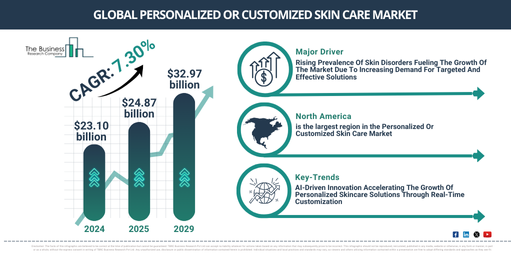
    The market size for customized skin care has seen significant growth in the recent past. It’s predicted to increase from $23.10 billion in 2024 to $24.87 billion in 2025, with a compound annual growth rate (CAGR) of 7.7%. The surge witnessed earlier can be credited to a growing consumer preference for personalized beauty remedies, enhanced knowledge about skin wellness and health, increased e-commerce and online consultations, improved access to sophisticated skin examination technologies, and a heightened preference for pure and organic ingredients.

    The market size for personalized and tailored skincare is projected to experience significant expansion in the coming years. The market is anticipated to increase to $32.97 billion by 2029, with a compound annual growth rate (CAGR) of 7.3%. The expansion during the forecast period can be linked to the surge in the use of artificial intelligence and machine learning, the rise in popularity of subscription-based skincare services, the escalating consumer preference for sustainable and ethically produced products, growing investments in advanced skincare technologies, and the escalating impact of social media and beauty influencers. Leading trends for the forecast period encompass advancements in AI-driven skin analysis, innovations in custom-made skincare formulas, the merging of wearable skin technology for real-time data, advances in environmentally friendly and sustainable packaging, and breakthroughs in targeted treatments based on genetic analysis.

    Download a free sample to assess the report’s scope and structure:

    https://www.thebusinessresearchcompany.com/sample.aspx?id=23472&type=smp

    Which Factors and External Forces Are Driving Demand in the Personalized Or Customized Skin Care Market?

    The surge in skin-related issues is anticipated to drive the expansion of the personalized or custom skin care industry in the forecast period. Skin conditions impact the skin’s appearance, structure, or functionality, often resulting in symptoms like inflammation, rashes, itching, as well as changes in texture and color. A significant increase in these issues is due to increased exposure to environmental pollutants which can compromise the skin’s natural defense, incite inflammation, and exacerbate problems like acne, eczema, and dermatitis. Personalized skin care is favored for skin issues as it addresses the specific triggers and requirements of a person’s skin, providing a more effective remedy and lesser chance of irritation as opposed to generic products. For instance, Cancer Australia, a government agency based in Australia, reported in February 2025, that an estimated 18,257 new melanoma cases and 1,314 associated fatalities occurred in Australia. Consequently, the escalating prevalence of skin disorders is prompting the progress of the personalized or customized skin care industry.

    Which Segments in the Personalized Or Customized Skin Care Offer the Most Growth?

    The personalized or customized skin care market covered in this report is segmented –

    1) By Product Type: Cleanser, Face Serum, Moisturizer, Active, Body Lotion, Body Duo, Other Product Types

    2) By Price Range: Low, Medium, High

    3) By Consumer Group: Men, Women, Kids

    4) By Distribution Channel: Online, Offline

    Subsegments:

    1) By Cleanser: Gel Cleanser, Cream Cleanser, Foam Cleanser, Micellar Water, Oil-Based Cleanser, Clay Cleanser, Powder Cleanser

    2) By Face Serum: Hydrating Serum, Anti-Aging Serum, Brightening Serum, Acne Treatment Serum, Antioxidant Serum, Pore-Minimizing Serum, Calming Or Soothing Serum

    3) By Moisturizer: Gel-Based Moisturizer, Cream-Based Moisturizer, Lotion-Based Moisturizer, Water-Based Moisturizer, Oil-Based Moisturizer, Night Cream, Day Cream

    4) By Active: Retinoids Or Retinol, Alpha Hydroxy Acids (AHA), Beta Hydroxy Acids (BHA), Vitamin C, Hyaluronic Acid, Niacinamide, Peptides

    5) By Body Lotion: Nourishing Body Lotion, Firming Body Lotion, Brightening Body Lotion, Fragrance-Free Lotion, Sensitive Skin Lotion, Tinted Body Lotion

    6) By Body Duo: Body Wash And Lotion Combo, Scrub And Lotion Duo, Cleanser And Moisturizer Duo, Body Oil And Lotion Duo, Exfoliator And Hydrator Combo

    7) By Other Product Types: Face Masks, Toners And Mists, Eye Creams, Lip Care Products, Sunscreens, Spot Treatments, Exfoliators

    Request customized data on this market:

    https://www.thebusinessresearchcompany.com/customise?id=23472&type=smp

    What Are the Fastest-Growing Geographies in the Personalized Or Customized Skin Care Market?

    North America was the largest region in the personalized or customized skin care market in 2024. Asia-Pacific is expected to be the fastest-growing region in the forecast period. The regions covered in the personalized or customized skin care market report are Asia-Pacific, Western Europe, Eastern Europe, North America, South America, Middle East, Africa.

    Which Cutting-Edge Market Trends Are Expected to Drive the Personalized Or Customized Skin Care Market’s Growth?

    Leading corporations within the personalized skincare industry are concentrating on the development of cutting-edge technologies such as robotic mini-labs. These technologies aim to revolutionize the making of custom skincare formulations by improving accuracy and offering quicker, more specialized customization according to individual skin requirements. Robotic mini-labs are small, automated systems that create skincare items tailored to individual needs. For example, SmartSKN, a Canadian firm dedicated to creating AI-powered beauty solutions, introduced an AI-platform named K-OWN in March 2025. Collaborating with their robotic mini-labs, K-OWN can create custom, freshly made skincare goods in minutes. This trailblazing platform empowers consumers to craft bespoke Korean skincare goods, meticulously designed to meet their unique skin necessities. K-OWN utilizes AI technology to provide an exceptionally personalized skincare regimen. This platform is designed to shake up the way consumers view skincare by providing solutions tailored to each person’s needs.

    View the full report here:

    https://www.thebusinessresearchcompany.com/report/personalized-or-customized-skin-care-global-market-report

    What Are the Key Elements That Define the Personalized Or Customized Skin Care Market?

    Personalized or customized skincare refers to skincare products and routines that are specifically tailored to an individual’s unique skin type, concerns, genetics, lifestyle, and environmental factors. Personalized skincare uses data often collected through questionnaires, skin analysis tools, or even DNA testing to recommend or formulate products that best address each person’s specific needs. This approach aims to improve effectiveness, reduce the risk of irritation or adverse reactions, and provide a more targeted, results-driven skincare experience.

    Purchase the full report and get a swift delivery:

    https://www.thebusinessresearchcompany.com/purchaseoptions.aspx?id=23472

    About The Business Research Company:

    With over 15000+ reports from 27 industries covering 60+ geographies, The Business Research Company has built a reputation for offering comprehensive, data-rich research and insights. Armed with 1,500,000 datasets, the optimistic contribution of in-depth secondary research, and unique insights from industry leaders, you can get the information you need to stay ahead in the game.

    Get in touch with us:

    The Business Research Company: https://www.thebusinessresearchcompany.com/

    Americas +1 3156230293

    Asia +44 2071930708

    Europe +44 2071930708

    Email us at info@tbrc.info

    Follow us on:

    LinkedIn: https://in.linkedin.com/company/the-business-research-company

    YouTube: https://www.youtube.com/channel/UC24_fI0rV8cR5DxlCpgmyFQ

    Global Market Model: https://www.thebusinessresearchcompany.com/global-market-model
  • Personalized Medicine Biomarkers Market Forecast Reaching $51.53 Billion by 2029 at 17.6% CAGR

    Personalized Medicine Biomarkers Market Forecast Reaching $51.53 Billion by 2029 at 17.6% CAGR

    Get 30% off on our Global Market Reports with code ONLINE30 – Hurry, limited time offer!

    What is the Anticipated CAGR of the Personalized Medicine Biomarkers Market, and What Factors Will Drive It?

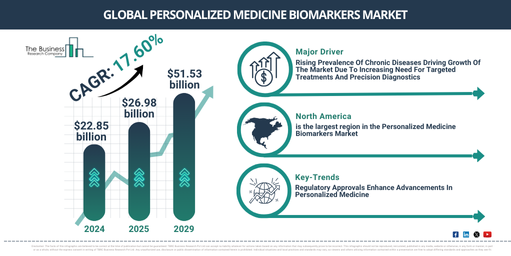
    In recent times, the market size for personalized medicine biomarkers has seen a speedy expansion. The market, which was valued at $22.85 billion in 2024 is projected to increase to $26.98 billion in 2025 with a compound annual growth rate (CAGR) of 18.0%.Key factors driving this growth primarily include the escalating occurrences of chronic ailments, increasing implementation of companion diagnostics, surge in biomarker research investments, a mounting emphasis on early detection and preventive healthcare, as well as regulatory backing for biomarker-oriented therapies.

    The market size for personalized medicine biomarkers is set to experience a major boost in growth over the forthcoming years. By 2029, its value is projected to hit $51.53 billion, with a compound annual growth rate of 17.6%. The projected growth within this period can be credited to the widespread use in precision oncology, the surge in demand for targeted treatments, an intensified focus on early detection of diseases, rising consumer preference for personalized methods, and the backing of government policies and funding. The forecast period will witness predominant trends such as the adoption of a multi-omics approach in biomarker discovery, progress in liquid biopsy-based biomarkers, an increase in digital biomarker utilization, embracing AI and machine learning for biomarker discovery, and the augmentation of real-world proof in biomarker validation.

    Download a free sample to assess the report’s scope and structure:

    https://www.thebusinessresearchcompany.com/sample.aspx?id=23471&type=smp

    Which Major Market Drivers Are Expected to Boost the Growth Potential of the Personalized Medicine Biomarkers Market?

    The escalating rates of chronic diseases are projected to fuel the expansion of the personalized medicine biomarkers market. Chronic diseases are long-lasting health issues that develop slowly and linger for longer than a year, necessitating constant medical care or impeding day-to-day tasks. The rise in chronic diseases is attributed to poor lifestyle decisions, inadequate diets, insufficient physical exercise, and elevated stress levels. Personalized medicine biomarkers aid in customizing treatments for chronic diseases, pinpointing efficient therapies, forecasting disease development, and reducing negative effects based on individual genetic and molecular makeups. For instance, the World Health Organization (WHO), a health authority based in Switzerland, indicated in February 2024 that new cancer cases are anticipated to exceed 35 million by 2050, marking a 77% upsurge from the projected 20 million cases in 2022. Hence, the increasing incidence of chronic diseases is propelling the expansion of the personalized medicine biomarkers market.

    Which Key Market Segments Comprise the Personalized Medicine Biomarkers Market and Drive Its Revenue Growth?

    The personalized medicine biomarkers market covered in this report is segmented –

    1) By Biomarker Type: Genomic, Proteomics, Metabolic, Other Biomarker Types

    2) By Disease Indication: Oncology, Neurology, Diabetes, Autoimmune Diseases, Cardiology, Other Indications

    3) By Application: Early Detection Or Screening, Diagnosis, Treatment Selection, Monitoring

    4) By End Use: Hospitals And Clinics, Pharmaceutical And Biotechnology Companies, Diagnostic Labs, Other End Users

    Subsegments:

    1) By Genomic: Single Nucleotide Polymorphisms (SNPs), Copy Number Variations (CNVs), Gene Expression Biomarkers, Epigenetic Biomarkers

    2) By Proteomics: Protein Expression Biomarkers, Post-Translational Modification (PTM) Biomarkers, Protein-Protein Interaction Biomarkers, Enzyme Activity Biomarkers

    3) By Metabolic: Lipid Biomarkers, Amino Acid Biomarkers, Carbohydrate Biomarkers, Hormone Biomarkers

    4) By Other Biomarker Types: Inflammatory Biomarkers, Microbiome Biomarkers, Autoantibody Biomarkers, Extracellular Vesicle Biomarkers

    Request customized data on this market:

    https://www.thebusinessresearchcompany.com/customise?id=23471&type=smp

    Which Areas Are Leading Regions in the Personalized Medicine Biomarkers Market Expansion Across the Globe?

    North America was the largest region in the personalized medicine biomarkers market in 2024. Asia-Pacific is expected to be the fastest-growing region in the forecast period. The regions covered in the personalized medicine biomarkers market report are Asia-Pacific, Western Europe, Eastern Europe, North America, South America, Middle East, Africa.

    What Are the Key Market Trends in the Personalized Medicine Biomarkers Market Over the Coming Years?

    Leading firms in the biomarker market for personalized medicine are honing their strategies on securing regulatory approvals to boost the reliability of their products, extend their market footprint, and optimize patient results. Such approvals constitute formal permission from health regulators affirming that a medical service, product, or piece of technology adheres to the requisite safety, effectiveness, and quality expectations for public usage. For example, in August 2024, Illumina, Inc., a biotech firm based in the US, attained approval from the Food and Drug Administration (FDA) for its cancer biomarker examination and two associated diagnostics. This examination utilizes leading edge sequencing (NGS) tech to pinpoint genetic changes in cancer cells, enabling healthcare professionals to tailor treatment options based on distinct biomarkers. This approval represents a significant stride in precision oncology, with the aim of enhancing the speed and precision of treatment choice for people with cancer, thereby optimizing personalized care.

    View the full report here:

    https://www.thebusinessresearchcompany.com/report/personalized-medicine-biomarkers-global-market-report

    How Is the Personalized Medicine Biomarkers Market Conceptually Defined?

    Personalized medicine biomarkers are specific biological indicators that tailor medical treatments to individual patients based on their unique genetic, molecular, or physiological characteristics. These biomarkers can help predict how a patient will respond to a particular drug, enabling doctors to choose the most effective and safest treatment options.

    Purchase the full report and get a swift delivery:

    https://www.thebusinessresearchcompany.com/purchaseoptions.aspx?id=23471

    About The Business Research Company:

    With over 15000+ reports from 27 industries covering 60+ geographies, The Business Research Company has built a reputation for offering comprehensive, data-rich research and insights. Armed with 1,500,000 datasets, the optimistic contribution of in-depth secondary research, and unique insights from industry leaders, you can get the information you need to stay ahead in the game.

    Get in touch with us:

    The Business Research Company: https://www.thebusinessresearchcompany.com/

    Americas +1 3156230293

    Asia +44 2071930708

    Europe +44 2071930708

    Email us at info@tbrc.info

    Follow us on:

    LinkedIn: https://in.linkedin.com/company/the-business-research-company

    YouTube: https://www.youtube.com/channel/UC24_fI0rV8cR5DxlCpgmyFQ

    Global Market Model: https://www.thebusinessresearchcompany.com/global-market-model
  • $6.68 Billion Forecast for Pelvic Cancer Induced Hemorrhagic Cystitis Market by 2029, Backed by Demand and Innovation

    $6.68 Billion Forecast for Pelvic Cancer Induced Hemorrhagic Cystitis Market by 2029, Backed by Demand and Innovation

    Get 30% off on our Global Market Reports with code ONLINE30 – Hurry, limited time offer!

    What Are the Key Milestones in the Pelvic Cancer Induced Hemorrhagic Cystitis Market’s Growth Trajectory From 2025 To 2034?

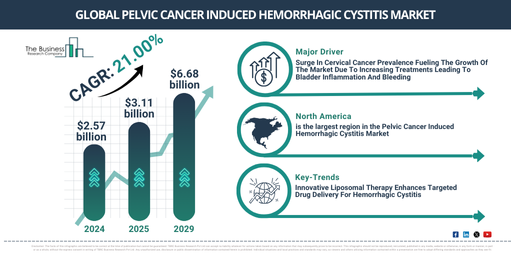
    The market size of hemorrhagic cystitis caused by pelvic cancer has experienced remarkable expansion in the past few years. It is projected to surge from $2.57 billion in 2024 to $3.11 billion in 2025, maintaining a compound annual growth rate (CAGR) of 21.1%. Factors contributing to this historic period growth include the rise in pelvic cancer incidences, an aging populace, an increase in cases of cervical cancer, governmental initiatives and the establishment of supportive reimbursement policies.

    The market size of hemorrhagic cystitis prompted by pelvic cancer is anticipated to experience significant expansion in the upcoming years. The market value is set to reach $6.68 billion by 2029, propelled by a compound annual growth rate (CAGR) of 21.0%. The growth projected for this period is attributed to factors such as heightened public awareness, a growing trend towards unhealthy eating habits and sedentary lifestyles, an expanding healthcare framework, increased patient compliance, and the preference for cost-effective drugs that are devoid of side effects. Over the forecast period, key trends are expected to include advancements in medicinal development, progression in targeted therapies and immunotherapies, the uptake of combination therapies, the rise in personalized medicine, and the adoption of innovative therapies.

    Download a free sample to assess the report’s scope and structure:

    https://www.thebusinessresearchcompany.com/sample.aspx?id=23470&type=smp

    What Are the Core Growth Drivers Propelling the Pelvic Cancer Induced Hemorrhagic Cystitis Market Forward?

    The expected surge in cervical cancer incidences is likely to accelerate the growth of the cervical cancer-induced hemorrhagic cystitis market. Cervical cancer, a malignant neoplasm that originates in the cervix, is predominantly due to enduring infection from high-risk strains of the human papillomavirus (HPV). Without treatment, it can lead to unregulated cell multiplication, invasion of nearby tissues, and potential metastasis. The increasing instances of cervical cancer can be attributed to an insufficient access to preventative healthcare, with ineffective cervical screening programs being a crucial factor. Complications like pelvic cancer-induced hemorrhagic cystitis broaden clinical awareness and surveillance of cervical cancer, encouraging early detection and prompt treatment which can ultimately enhance patient outcomes and push progress in cancer care. For instance, as per the data provided by the American Cancer Society, a non-profit organization from the U.S., around 13,360 new invasive cervical cancer cases are anticipated in 2025 in the U.S., with about 4,320 women estimated to fall victim to the disease. Therefore, the upturn in cervical cancer cases is fueling the expansion of the cervical cancer-induced hemorrhagic cystitis market. The move towards detrimental diets and inactive lifestyles is anticipated to augment the growth of the pelvic cancer-induced hemorrhagic cystitis market. This refers to a lifestyle of consuming high-calorie, nutrient-deficient foods and performing less physical exercise, resulting in negative health circumstances such as obesity, cardiovascular diseases, and metabolic disorders. The shift towards unwholesome diets and inactive lifestyles is encouraged by the increasing intake of processed foods, promoting unhealthy eating habits and leading to long-term health hazards. Pelvic cancer-induced hemorrhagic cystitis underlines the significance of maintaining a healthier lifestyle. Positive dietary changes and an active lifestyle support overall wellness, advance treatment outcomes, and enrich the quality of life. For instance, the American Heart Association, Inc., a non-profit organization in the U.S., projected that by 2050 over 150 million Americans will have an unhealthy diet resulting in nearly a 40% rise in adult obesity. Consequently, the move towards unhealthy diets and inactive lifestyles is propelling the growth of the pelvic cancer-induced hemorrhagic cystitis market.

    What Segment Types Define the Pelvic Cancer Induced Hemorrhagic Cystitis Market Structure?

    The pelvic cancer induced hemorrhagic cystitis market covered in this report is segmented –

    1) By Treatment: Bone Marrow Transplant, Chemotherapy, Radiation Therapy, Other Treatments

    2) By Route Of Administration: Oral, Injectable, Intravesical

    3) By Distribution Channel: Hospital Pharmacies, Retail Pharmacies, Online Pharmacies

    Subsegments:

    1) By Bone Marrow Transplant: Autologous Bone Marrow Transplant, Allogeneic Bone Marrow Transplant, Haploidentical Transplant

    2) By Chemotherapy: Systemic Chemotherapy, Intravesical Chemotherapy, Targeted Chemotherapy

    3) By Radiation Therapy: External Beam Radiation Therapy (EBRT), Brachytherapy, Intensity-Modulated Radiation Therapy (IMRT)

    4) By Other Treatments: Hyperbaric Oxygen Therapy (HBOT), Intravesical Therapy, Bladder Irrigation And Catheterization, Surgical Interventions, Regenerative Medicine Approaches, Pain Management And Palliative Care

    Request customized data on this market:

    https://www.thebusinessresearchcompany.com/customise?id=23470&type=smp

    Which Geographic Areas Hold the Strongest Growth Potential in the Pelvic Cancer Induced Hemorrhagic Cystitis Market?

    North America was the largest region in the pelvic cancer induced hemorrhagic cystitis market in 2024. Asia-Pacific is expected to be the fastest-growing region in the forecast period. The regions covered in the pelvic cancer induced hemorrhagic cystitis market report are Asia-Pacific, Western Europe, Eastern Europe, North America, South America, Middle East, Africa.

    Which Emerging Trends that Are Influencing the Pelvic Cancer Induced Hemorrhagic Cystitis Industry Evolution?

    Leading businesses in the pelvic cancer-induced hemorrhagic cystitis market are concentrating on the development of innovative drug treatments, such as liposomal tacrolimus therapy. This involves the creation of sophisticated drug formulations that amplify targeted treatment delivery, while also heightening safety and efficacy. Liposomal tacrolimus therapy is a treatment method that involves enclosing tacrolimus in liposomes to boost its bioavailability, enhance targeted immunosuppression, and lessen systemic toxicity when treating autoimmune disorders and organ transplant rejection. For instance, Lipella Pharmaceuticals Inc., a biotechnology firm based in the US, revealed the patent allowance in the country for its novel liposomal drug delivery platform in October 2024. This platform is designed to improve the focused application of therapeutic agents for multiple medical conditions, including hemorrhagic cystitis. Notably, this cutting-edge liposomal technology increases drug delivery to epithelial tissues such as the bladder, mouth, colon, and urethra. Such targeted delivery makes the treatment more effective and reduces systemic side effects. Also, the market exclusivity obtained via this patent enhances Lipella’s competitive advantage and bolsters the advancement of LP-10, its primary clinical asset and a potential intravesical treatment for hemorrhagic cystitis.

    View the full report here:

    https://www.thebusinessresearchcompany.com/report/pelvic-cancer-induced-hemorrhagic-cystitis-global-market-report

    What Is the Definition of the Pelvic Cancer Induced Hemorrhagic Cystitis Market?

    Pelvic cancer-induced hemorrhagic cystitis refers to inflammation and bleeding of the bladder (cystitis) caused by pelvic cancer or its treatments (such as radiation therapy or chemotherapy). It occurs due to direct tumor invasion, radiation-induced damage, or chemotherapy agents such as cyclophosphamide and ifosfamide, which can irritate the bladder lining. Treatment typically involves supportive care like hydration and bladder irrigation, medications to manage pain and protect the bladder, and, in severe cases, procedures such as cystoscopy or surgery to manage complications.

    Purchase the full report and get a swift delivery:

    https://www.thebusinessresearchcompany.com/purchaseoptions.aspx?id=23470

    About The Business Research Company:

    With over 15000+ reports from 27 industries covering 60+ geographies, The Business Research Company has built a reputation for offering comprehensive, data-rich research and insights. Armed with 1,500,000 datasets, the optimistic contribution of in-depth secondary research, and unique insights from industry leaders, you can get the information you need to stay ahead in the game.

    Get in touch with us:

    The Business Research Company: https://www.thebusinessresearchcompany.com/

    Americas +1 3156230293

    Asia +44 2071930708

    Europe +44 2071930708

    Email us at info@tbrc.info

    Follow us on:

    LinkedIn: https://in.linkedin.com/company/the-business-research-company

    YouTube: https://www.youtube.com/channel/UC24_fI0rV8cR5DxlCpgmyFQ

    Global Market Model: https://www.thebusinessresearchcompany.com/global-market-model

  • Global Paroxysmal Nocturnal Hemoglobinuria (PNH) Treatment Market Projected to Reach $10.09 Billion by 2029 at a CAGR of 13.5%

    Global Paroxysmal Nocturnal Hemoglobinuria (PNH) Treatment Market Projected to Reach $10.09 Billion by 2029 at a CAGR of 13.5%

    Get 30% off on our Global Market Reports with code ONLINE30 – Hurry, limited time offer!

    How Has The Paroxysmal Nocturnal Hemoglobinuria (PNH) Treatment Market Size Shifted, And What Is the Outlook Through 2034?

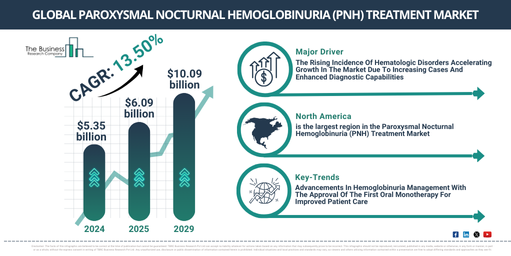
    The market size for the paroxysmal nocturnal hemoglobinuria (PNH) treatment has seen a fast-paced growth in recent years. It’s projected to expand from $5.35 billion in 2024 to $6.09 billion in 2025, marking a compound annual growth rate (CAGR) of 13.8%. This expansion observed in the historic period can be credited to several factors such as a rising incidence of neurological disorders and chronic pain conditions, a heightened awareness about the disease, an upsurge in the occurrence of paroxysmal nocturnal hemoglobinuria (PNH), a growing awareness of rare blood disorders, and an increase in regulatory approvals and research and development (R&D).

    Expectations suggest that the market for paroxysmal nocturnal hemoglobinuria (PNH) treatment will expand quickly in the coming years, with projections reaching $10.09 billion by 2029, reflecting a compound annual growth rate (CAGR) of 13.5%. Factors contributing to this growth during the forecast period include the escalating prevalence of rare diseases, increased spending and advanced treatment accessibility in healthcare, heightened investment in healthcare infrastructure, and the rising trend of home-based testing and telemonitoring, along with a spike in research and development activities. The forecast period also sees progressive trends like improvements in genetic testing and biomarkers, therapy advances, development of target-specific therapies, biotechnological advancements, and the creation of new therapeutic methods.

    Download a free sample to assess the report’s scope and structure:

    https://www.thebusinessresearchcompany.com/sample.aspx?id=23469&type=smp

    What are the Fundamental Drivers and Innovations Shaping the Paroxysmal Nocturnal Hemoglobinuria (PNH) Treatment Market?

    The escalating occurrence of blood-related disorders is anticipated to push the expansion of the paroxysmal nocturnal hemoglobinuria (PNH) treatment market. Hematologic disorders encompass a wide range of health issues that impact blood and blood-producing organs, which can lead to abnormalities in red blood cells, white blood cells, platelets, bone marrow, and the coagulation system, resulting in anemia, clotting disorders, or cancers. The heightened occurrence of such disorders is fueled by elements like an aging population and genetic predispositions, with genetic anomalies playing a crucial role in triggering irregular blood cell production, which subsequently leads to different hematologic conditions. Treatment for paroxysmal nocturnal hemoglobinuria (PNH) positively controls these disorders by implementing targeted therapies that lessen complement-mediated hemolysis, decrease thrombotic complications, and enhance survival outcomes for patients. For example, Cancer Research UK, a UK-based charity organization, projected in July 2024 that the average number of new leukemia cases, a kind of hematologic disorder is predicted to rise from roughly 12,400 in 2023-2025 to about 14,500 by 2038-2040. Thus, the growing incidence of hematologic disorders propels the paroxysmal nocturnal hemoglobinuria (PNH) treatment market forward.

    How Is the Paroxysmal Nocturnal Hemoglobinuria (PNH) Treatment Market Segmented?

    The paroxysmal nocturnal hemoglobinuria (PNH) treatment market covered in this report is segmented –

    1) By Treatment Type: Complement C5 Inhibitors, Anti-Complement Component 5a Receptor (C5aR) Monoclonal Antibodies, Alternative Pathway Inhibitors, Hematopoietic Stem Cell Transplantation, Other Therapies

    2) By Route Of Administration: Intravenous, Subcutaneous, Oral

    3) By market Availability: Approved, In Pipeline, Investigational

    4) By End-Use: Hospitals, Specialty Clinics, Homecare Settings, Other End-Users

    Subsegments:

    1) By Complement : C5 InhibitorsEculizumab (Soliris), Ravulizumab (Ultomiris), Emerging C5 Inhibitors, Biosimilars Of C5 Inhibitors,

    2) By Anti-Complement Component 5a Receptor Monoclonal Antibodies: Avacopan (Tavneos), Other Investigational C5aR mAbs, Monotherapy vs Combination Therapy, Clinical Trial Phase (Phase I, II, III)

    3) By Alternative Pathway Inhibitors: C3 Inhibitors, Factor B Inhibitors, Factor D Inhibitors, Targeting Complement Amplification, Combination Therapies And Dual Inhibition

    4) By Hematopoietic Stem Cell Transplantation (HSCT) : Autologous HSCT vs. Allogeneic HSCT, Pre-Transplant Conditioning Therapies, Post-Transplant Immunosuppressive Therapies

    5) By Other Therapies: Immunosuppressive Therapy, Supportive Care, Anticoagulation Therapy, Gene Therapy

    Request customized data on this market:

    https://www.thebusinessresearchcompany.com/customise?id=23469&type=smp

    Which Regions Are Driving the Next Phase of the Paroxysmal Nocturnal Hemoglobinuria (PNH) Treatment Market Growth?

    North America was the largest region in the paroxysmal nocturnal hemoglobinuria (PNH) treatment market in 2024. Asia-Pacific is expected to be the fastest-growing region in the forecast period. The regions covered in the paroxysmal nocturnal hemoglobinuria (PNH) treatment market report are Asia-Pacific, Western Europe, Eastern Europe, North America, South America, Middle East, Africa.

    What Key Trends Are Shaping the Future of the Paroxysmal Nocturnal Hemoglobinuria (PNH) Treatment Market?

    Key players in the paroxysmal nocturnal hemoglobinuria (PNH) treatment sector are striving to innovate by conceiving new solutions such as oral Factor B inhibitors. Their goal is to provide enhanced therapeutic effectiveness and make it easier for patients to handle PNH. An oral Factor B inhibitor is a unique, small-molecule medication that selectively impedes Factor B in the alternative complement pathway, helping control hyperactive immune responses and mitigate inflammation in diseases driven by complement-mediated mechanisms. For example, in December 2023, the Switzerland-based pharmaceutical company, Novartis AG, revealed the FDA’s approval of Fabhalta (iptacopan), the first oral standalone treatment for PNH. This new Factor B inhibitor provides a more holistic way to manage complement-mediated hemolysis, by targeting the alternative complement pathway earlier, which leads to increased hemoglobin levels and less requirement for blood transfusions. The authorization of Fabhalta signifies a pioneering leap forward in PNH therapy, presenting heightened effectiveness, improved patient adherence, and a substitute for IV therapies, thus revolutionizing the treatment options for this rare blood disorder.

    View the full report here:

    https://www.thebusinessresearchcompany.com/report/paroxysmal-nocturnal-hemoglobinuria-pnh-treatment-global-market-report

    How Is the Paroxysmal Nocturnal Hemoglobinuria (PNH) Treatment Market Defined and What Are Its Core Parameters?

    Paroxysmal nocturnal hemoglobinuria (PNH) treatment refers to medical therapies to manage PNH, a rare blood disorder characterized by hemolysis (destruction of red blood cells), blood clots, and bone marrow dysfunction. Paroxysmal nocturnal hemoglobinuria (PNH) is a rare, acquired hematologic disorder characterized by the destruction of red blood cells due to complement-mediated hemolysis, bone marrow dysfunction leading to cytopenias, and an increased risk of thrombosis. Paroxysmal nocturnal hemoglobinuria (PNH) management focuses on inhibiting complement activation to prevent hemolysis, addressing bone marrow failure, and mitigating thrombotic complications to improve patient outcomes and quality of life.

    Purchase the full report and get a swift delivery:

    https://www.thebusinessresearchcompany.com/purchaseoptions.aspx?id=23469

    About The Business Research Company:

    With over 15000+ reports from 27 industries covering 60+ geographies, The Business Research Company has built a reputation for offering comprehensive, data-rich research and insights. Armed with 1,500,000 datasets, the optimistic contribution of in-depth secondary research, and unique insights from industry leaders, you can get the information you need to stay ahead in the game.

    Get in touch with us:

    The Business Research Company: https://www.thebusinessresearchcompany.com/

    Americas +1 3156230293

    Asia +44 2071930708

    Europe +44 2071930708

    Email us at info@tbrc.info

    Follow us on:

    LinkedIn: https://in.linkedin.com/company/the-business-research-company

    YouTube: https://www.youtube.com/channel/UC24_fI0rV8cR5DxlCpgmyFQ

    Global Market Model: https://www.thebusinessresearchcompany.com/global-market-model