Month: June 2025

  • Major Trends and Emerging Patterns in the Skin Cancer Diagnostics Market:  Advancements In Skin Cancer Diagnostics With The Launch Of PRAME Antibody

    Major Trends and Emerging Patterns in the Skin Cancer Diagnostics Market: Advancements In Skin Cancer Diagnostics With The Launch Of PRAME Antibody

    Discover trends, market shifts, and competitive outlooks for the skin cancer diagnostics industry through 2025-2034 with The Business Research Company’s reliable data and in-depth research

    “#What is the Projected CAGR for the Skin Cancer Diagnostics Market Size from 2025 to 2034?#
    The market size for skin cancer diagnostics has experienced robust growth in the recent past. It is projected to increase from $3.13 billion in 2024 to $3.39 billion in 2025, showing a compound annual growth rate (CAGR) of 8.4%. The substantial growth during the historic period is due to factors such as higher incidences of skin cancer, an aging population, awareness and educational campaigns, and government endeavors for early detection.

    Anticipated to witness robust expansion in the coming years, the skin cancer diagnostics market’s valuation is projected to reach $4.69 billion by 2029, expanding at a compound annual growth rate (CAGR) of 8.4%. The anticipated growth during the projected period is associated with increased awareness about sun exposure, adoption of personalized medicine strategies, the advent of telemedicine and remote monitoring, along with worldwide expansion of the healthcare sector. Primary trends expected during the projected period encompass the incorporation of digital health platforms, the development of novel skin cancer medications, interdisciplinary strategies, advances in dermatopathology, and enhanced patient education and awareness.

    #Download a free sample to assess the report’s scope and structure:#
    https://www.thebusinessresearchcompany.com/sample.aspx?id=11914&type=smp

    #What Are the Primary Drivers Supporting the Market Growth of the Skin Cancer Diagnostics Market?#
    The skin cancer diagnostics market is projected to expand due to the rising prevalence of melanoma. Melanoma, a form of skin cancer, originates from cells that generate melanin, which has a significant role in determining the color of the skin, hair, and eyes. Diagnostics for skin cancer play a vital role in identifying and assessing skin lesions, thereby facilitating the early detection, accurate diagnosis, and effective treatment of skin cancer. For example, as per a report by the American Cancer Society Inc., a prominent health organization focused on cancer eradication in the US, the count of male melanoma patients in the United States escalated from 57,180 in 2022 to 58,120 in 2023. Additionally, the American Society of Clinical Oncology, a professional body that represents all oncology doctors in the US, stated in March 2023 that melanoma represents about 1% of all skin cancer cases diagnosed in the US. Nonetheless, it accounts for the majority of skin cancer-related deaths. In 2023, melanoma is projected to claim the lives of 7,990 people in the United States, comprising 5,420 men and 2,570 women. Consequently, the mounting incidences of melanoma are propelling the advancement of the skin cancer diagnostics market.

    #Which Primary Segments of the Skin Cancer Diagnostics Market Are Driving Growth and Industry Transformations?#
    The skin cancer diagnostics market covered in this report is segmented –

    1) By Cancer Type: Basal Cell Carcinoma, Squamous Cell Carcinoma, Malignant Melanoma, Other Cancer Types
    2) By Type: Diagnosis, Therapeutics
    3) By Application: Hospital, Clinic, Laboratory, Other Applications

    Subsegments:
    1) By Basal Cell Carcinoma: Diagnostic imaging Techniques, Biopsy Procedures, Molecular Diagnostic Tests
    2) By Squamous Cell Carcinoma: Diagnostic imaging Techniques, Biopsy Procedures, Molecular Diagnostic Tests
    3) By Malignant Melanoma: Diagnostic Imaging Techniques, Biopsy Procedures, Molecular Diagnostic Tests
    4) By Other Cancer Types: Non-Melanoma Skin Cancers, Dermatofibrosarcoma Protuberans, Merkel Cell Carcinoma

    #Request customized data on this market:#
    https://www.thebusinessresearchcompany.com/customise?id=11914&type=smp

    #Which Regions Are Key Players in the Growth of the #What Are the Primary Drivers Supporting the Market Growth of the Skin Cancer Diagnostics Market?# Market?#
    North America was the largest region in the skin cancer diagnostics market in 2024. Asia-Pacific is expected to be the fastest-growing region in the forecast period. The regions covered in the skin cancer diagnostics market report are Asia-Pacific, Western Europe, Eastern Europe, North America, South America, Middle East, Africa.

    #What Are the Most Significant Market Trends in the Skin Cancer Diagnostics Market?#
    The key players in the skin cancer diagnostics market are pioneering new products such as the PRAME protein, with the aim of improving detection and treatment methods for melanoma and other forms of skin cancer. PRAME, an acronym for Preferentially Expressed Antigen in Melanoma, is a cancer/testis antigen demonstrating promise as a biomarker in melanoma diagnosis. To illustrate, Roche, a global healthcare enterprise based in Switzerland, launched the PRAME (EPR20330) Antibody in October 2022. This melanoma-associated antigen specializes in identifying PRAME protein expression in tissue samples from patients thought to have melanoma. This antibody also plays a crucial role in differentiating between benign and malignant lesions. The identification of PRAME expression indicates malignancy, a pivotal factor in accurate diagnosis and planning of treatment.

    #View the full report here:#
    https://www.thebusinessresearchcompany.com/report/skin-cancer-diagnostics-global-market-report

    #What Parameters Are Used to Define the Skin Cancer Diagnostics Market?#
    Skin cancer diagnostics refers to the processes and methods healthcare professionals use to identify and determine the presence of skin cancer in individuals. These diagnostics typically involve a combination of clinical examination, imaging techniques, and laboratory tests to evaluate suspicious skin lesions and assess the extent and characteristics of the cancer.

    #Purchase the full report and get a swift delivery:#
    https://www.thebusinessresearchcompany.com/purchaseoptions.aspx?id=11914

    #About The Business Research Company:#
    With over 15000+ reports from 27 industries covering 60+ geographies, The Business Research Company has built a reputation for offering comprehensive, data-rich research and insights. Armed with 1,500,000 datasets, the optimistic contribution of in-depth secondary research, and unique insights from industry leaders, you can get the information you need to stay ahead in the game.

    #Get in touch with us:#
    The Business Research Company: https://www.thebusinessresearchcompany.com/
    Americas +1 3156230293
    Asia +44 2071930708
    Europe +44 2071930708
    Email us at info@tbrc.info

    #Follow us on:#

    LinkedIn: https://in.linkedin.com/company/the-business-research-company
    YouTube: https://www.youtube.com/channel/UC24_fI0rV8cR5DxlCpgmyFQ
    Global Market Model: https://www.thebusinessresearchcompany.com/global-market-model”

  • Soft Tissue Sarcoma Market Valuation Expected To Reach $4.76 Billion By 2029, Growing At A Rate Of 8.6%

    Soft Tissue Sarcoma Market Valuation Expected To Reach $4.76 Billion By 2029, Growing At A Rate Of 8.6%

    Discover trends, market shifts, and competitive outlooks for the soft tissue sarcoma industry through 2025-2034 with The Business Research Company’s reliable data and in-depth research

    How Fast Is The Soft Tissue Sarcoma Market Expected to Grow Between 2025 And 2029?

    The market for soft tissue sarcoma has seen robust growth in the past few years. It is projected to increase from $3.15 billion in 2024 to $3.42 billion in 2025, with a compound annual growth rate (CAGR) of 8.6%. Factors such as the paucity of treatment alternatives, progressive insight into sarcoma biology, an uptick in funding for cancer research, growing incidence of soft tissue sarcoma, and development of healthcare facilities can be credited for the growth during this historic period.

    The market size of soft tissue sarcoma is predicted to have robust growth in the forthcoming years, escalating to $4.76 billion by 2029 with an 8.6% compound annual growth rate (CAGR). The expansion over the forecasted period may be driven by the introduction of targeted therapies specifically for soft tissue sarcoma, the increasing importance of personalized medicine, extended clinical trials for treatments of sarcoma, and enhanced awareness and early detection initiatives. Significant trends for the estimated period involve the inclusion of immunotherapy in the treatment of soft tissue sarcoma, the creation of combination therapies, focus on care models that prioritize the patient, the rise in the application of liquid biopsies, and progression in sarcoma genomics.

    Download a free sample to assess the report’s scope and structure:

    https://www.thebusinessresearchcompany.com/sample.aspx?id=12211&type=smp

    Which Factors and External Forces Are Driving Demand in the Soft Tissue Sarcoma Market?

    The soft tissue sarcoma market is predicted to experience significant growth due to the rising cancer rates. The medical term ‘cancer’ defines a wide variety of diseases that occur when abnormal cells excessively multiply, surpassing their normal limits, and either migrate to other organs or intrude on adjacent body parts. This expansion in cancer occurrence necessitates additional diagnostic procedures, therapeutic strategies, and care options tailored to the specific needs of patients suffering from various forms of cancer or sarcoma. This, in turn, amplifies the market for soft tissue sarcomas. The World Health Organization, a Switzerland-based Intergovernmental organization, predicted in January 2024 that by 2050, there would be over 35 million new cases of cancer, indicating a 77% growth from the projected 20 million cases and 9.7 million fatalities in 2022. Consequently, the escalating prevalence of cancer is propelling the growth in the soft tissue sarcoma market.

    Which Segments in the Soft Tissue Sarcoma Offer the Most Growth?

    The soft tissue sarcoma market covered in this report is segmented –

    1) By Treatment: Targeted Therapy, Chemotherapy, Anti-Angiogenesis Drugs, Radiation Therapy, Other Treatments

    2) By Route Of Administration: Oral, Parenteral, Other Route Of Administrations

    3) By End-Users: Hospitals, Homecare, Specialty Centers, Other End-Users

    Subsegments:

    1) By Targeted Therapy: Tyrosine Kinase Inhibitors (TKIs), Monoclonal Antibodies, Immunotherapy Agents

    2) By Chemotherapy: Doxorubicin, Ifosfamide, Gemcitabine, Other Chemotherapeutic Agents

    3) By Anti-Angiogenesis Drugs: Bevacizumab, Pazopanib, Axitinib, Other Anti-Angiogenesis Agents

    4) By Radiation Therapy: External Beam Radiation Therapy (EBRT), Brachytherapy

    5) By Other Treatments: Surgery, Clinical Trials, Supportive Care

    Request customized data on this market:

    https://www.thebusinessresearchcompany.com/customise?id=12211&type=smp

    What Are the Fastest-Growing Geographies in the #Which Factors and External Forces Are Driving Demand in the Soft Tissue Sarcoma Market?# Market?

    North America was the largest region in the soft tissue sarcoma market in 2024. Asia-Pacific is expected to be the fastest-growing region in the soft tissue sarcoma market report during the forecast period. The regions covered in the soft tissue sarcoma market report are Asia-Pacific, Western Europe, Eastern Europe, North America, South America, Middle East, Africa.

    Which Cutting-Edge Market Trends Are Expected to Drive theSoft Tissue Sarcoma Market’s Growth?

    The trend of product innovation is gaining traction in the soft tissue sarcoma market with major market players focusing on developing unique products to solidify their market standing. For instance, Mercy, a non-profit Catholic healthcare organization from the US, launched an advanced AI-driven texting program, The Chen Chemotherapy Model, in November 2023 to proactively prevent chemotherapy-related hospitalizations. The program employs a smart texting system that communicates daily with the patients undergoing chemotherapy, excluding weekends and holidays, and offers a list of symptoms like diarrhea, pain, fever, fatigue, nausea or vomiting, or no symptoms. Patients are allowed to choose and rate their symptoms which, depending on the gravity, could be passed on to their healthcare provider. It aims to detect potential problems at an early stage and act before the severity increases, thereby showcasing Mercy’s efforts to employ technology for enhanced patient care in the area of chemotherapy.

    View the full report here:

    https://www.thebusinessresearchcompany.com/report/soft-tissue-sarcoma-global-market-report

    What Are the Key Elements That Define the Soft Tissue Sarcoma Market?

    Soft tissue sarcoma refers to a disease where cancer cells form in the soft tissues of the body which can be diagnosed through biopsy techniques. It is commonly caused in tissues including blood arteries, muscle, neurons, and fat.

    Purchase the full report and get a swift delivery:

    https://www.thebusinessresearchcompany.com/purchaseoptions.aspx?id=12211

    About The Business Research Company:

    With over 15000+ reports from 27 industries covering 60+ geographies, The Business Research Company has built a reputation for offering comprehensive, data-rich research and insights. Armed with 1,500,000 datasets, the optimistic contribution of in-depth secondary research, and unique insights from industry leaders, you can get the information you need to stay ahead in the game.

    Get in touch with us:

    The Business Research Company: https://www.thebusinessresearchcompany.com/

    Americas +1 3156230293

    Asia +44 2071930708

    Europe +44 2071930708

    Email us at info@tbrc.info

    Follow us on:

    LinkedIn: https://in.linkedin.com/company/the-business-research-company

    YouTube: https://www.youtube.com/channel/UC24_fI0rV8cR5DxlCpgmyFQ

    Global Market Model: https://www.thebusinessresearchcompany.com/global-market-model

  • Smart Biopsy Devices Market Outlook 2025–2034: Identifying Growth Drivers, Technology Trends, and Policy Impact

    Smart Biopsy Devices Market Outlook 2025–2034: Identifying Growth Drivers, Technology Trends, and Policy Impact

    Discover trends, market shifts, and competitive outlooks for the smart biopsy devices industry through 2025-2034 with The Business Research Company’s reliable data and in-depth research

    How Has the Smart Biopsy Devices Market Growth Performance Trended Historically, And What Lies Ahead?

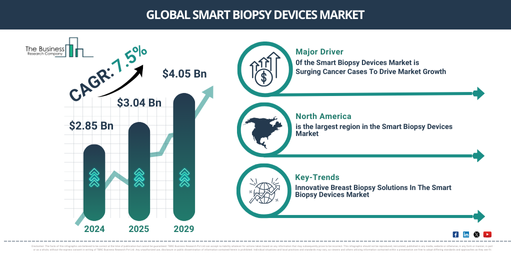
    In recent times, the market size for smart biopsy devices has seen significant growth. The value is projected to increase from $2.85 billion in 2024 to $3.04 billion in 2025, boasting a compound annual growth rate (CAGR) of 6.4%. The growth during the historic period can be attributed to a rise in cancer incidents, a preference for minimally invasive procedures, advancement in medical devices, and enhanced diagnostic precision.

    Over the coming years, the smart biopsy devices market size is predicted to experience considerable growth, escalating to a value of $4.05 billion in 2029, with a compound annual growth rate (CAGR) of 7.5%. The surge in this forecasted period can be ascribed to several factors such as the rise in personalized medicine, advancements in imaging modalities, an increase in biopsy for biomarker analysis, the entry of new players into the market, and superior data connectivity. Significant trends to look out for during the forecast period encompass robot-aided biopsies, AI-enabled biopsy assistance, the emergence of wireless biopsy instruments, utilization of portable and handheld devices, and real-time guidance systems.

    Download a free sample to assess the report’s scope and structure:

    https://www.thebusinessresearchcompany.com/sample.aspx?id=12271&type=smp

    What Are the Core Market Drivers Propelling Growth in the Smart Biopsy Devices Industry?

    The increase in cancer incidences is anticipated to boost the expansion of the smart biopsy devices market. Cancer encompasses a wide range of diseases that can originate in almost any organ or tissue. This occurs when rogue cells multiply without control, exceeding their normal confines, and either migrate to other organs or encroach upon nearby body sections. This surge in cancer cases has intensified the demand for accurate and targeted tissue specimens, which in turn has fueled the development of sophisticated biopsy tools with enhanced molecular, imaging, and precision capabilities to facilitate diagnostic and treatment procedures. For example, the World Health Organization, a Switzerland-based Intergovernmental organization, predicted in January 2024 that there will be more than 35 million new cancer cases by 2050, representing a 77% increase from the estimated 20 million cases and 9.7 million fatalities noted in 2022. Hence, the escalating number of cancer cases is stimulating the expansion of the smart biopsy device market.

    How Is the Smart Biopsy Devices Market Segmented?

    The smart biopsy devices market covered in this report is segmented –

    1) By Product: Needle-Based Biopsy Instruments, Procedure Trays, Localization Wires, Other Products

    2) By Guidance Technique: Ultrasound-Guided Biopsy, Stereotactic-Guided Biopsy, Magnetic Resonance Imaging-Guided Biopsy, Other Guidance Techniques

    3) By Application: Breast Cancer, Skin Cancer, Liver Cancer, Prostate Cancer, Other Applications

    4) By End-User: Hospitals, Academic And Research Institutes, Diagnostic And Imaging Centers

    Subsegments:

    1) By Needle-Based Biopsy Instruments: Core Needle Biopsy Devices, Fine Needle Aspiration (FNA) Devices, Vacuum-Assisted Biopsy Devices

    2) By Procedure Trays: Pre-Packaged Biopsy Procedure Trays, Customizable Procedure Trays

    3) By Localization Wires: Hook Wire Localization Devices, Radar Localization Devices, Magnetic Localization Devices

    4) By Other Products: Biopsy Markers, Biopsy Imaging Systems, Biopsy Guidance Systems

    Request customized data on this market:

    https://www.thebusinessresearchcompany.com/customise?id=12271&type=smp

    Which Regions Are Driving the Next Phase of the Smart Biopsy Devices Market Growth?

    North America was the largest region in the smart biopsy devices market in 2024. Asia-Pacific is expected to be the fastest-growing region in the smart biopsy devices market report during the forecast period. The regions covered in the smart biopsy devices market report are Asia-Pacific, Western Europe, Eastern Europe, North America, South America, Middle East, Africa.

    What Key Market Trends and Innovations Are Shaping the Future of the Smart Biopsy Devices Industry?

    Leading firms in the smart biopsy device market are focusing on the creation of sophisticated products such as breast biopsy markers, with the aim of augmenting the accuracy and efficiency of breast cancer diagnosis procedures. These markers are specifically engineered to locate exactly the spot from which a tissue sample was taken during a biopsy, thereby informing future treatment plans and facilitating close monitoring of the right region for any potential transformation into malignant cells. For example, Mammotome, a medical device manufacturer based in the United States, introduced the Mammotome DualCore Dual Stage Core Biopsy System in August 2022. As a minimally invasive breast biopsy device, it employs a two-stage methodology to deliver precision and high-quality tissue samples, typically with ultrasound guidance to enable accurate, safe, and effective diagnosis of breast cancer. By integrating this system with advanced breast biopsy markers, healthcare professionals have access to an all-encompassing and progressive approach for performing ultrasound-guided breast biopsies.

    View the full report here:

    https://www.thebusinessresearchcompany.com/report/smart-biopsy-devices-global-market-report

    How Is the Smart Biopsy Devices Market Defined and What Are Its Core Parameters?

    Smart biopsy devices refer to intelligent instruments intended to increase the precision and efficiency of tissue samples during medical procedures. It has features such as image guidance, real-time feedback, or robotic help to improve diagnostic capabilities and patient outcomes. It is used for diagnosing cancer and delivering therapeutic drugs.

    Purchase the full report and get a swift delivery:

    https://www.thebusinessresearchcompany.com/purchaseoptions.aspx?id=12271

    About The Business Research Company:

    With over 15000+ reports from 27 industries covering 60+ geographies, The Business Research Company has built a reputation for offering comprehensive, data-rich research and insights. Armed with 1,500,000 datasets, the optimistic contribution of in-depth secondary research, and unique insights from industry leaders, you can get the information you need to stay ahead in the game.

    Get in touch with us:

    The Business Research Company: https://www.thebusinessresearchcompany.com/

    Americas +1 3156230293

    Asia +44 2071930708

    Europe +44 2071930708

    Email us at info@tbrc.info

    Follow us on:

    LinkedIn: https://in.linkedin.com/company/the-business-research-company

    YouTube: https://www.youtube.com/channel/UC24_fI0rV8cR5DxlCpgmyFQ

    Global Market Model: https://www.thebusinessresearchcompany.com/global-market-model

  • Emerging Growth Drivers in the Small Molecule Innovator CDMO Market Landscape: Rising Prevalence Of Chronic Diseases Boosts Growth In The Small-Molecule Innovator CDMO Market

    Emerging Growth Drivers in the Small Molecule Innovator CDMO Market Landscape: Rising Prevalence Of Chronic Diseases Boosts Growth In The Small-Molecule Innovator CDMO Market

    Discover trends, market shifts, and competitive outlooks for the small molecule innovator cdmo industry through 2025-2034 with The Business Research Company’s reliable data and in-depth research

    What Are the Projected Market Size and Growth Rates for the Small Molecule Innovator CDMO Market From 2025 To 2029?

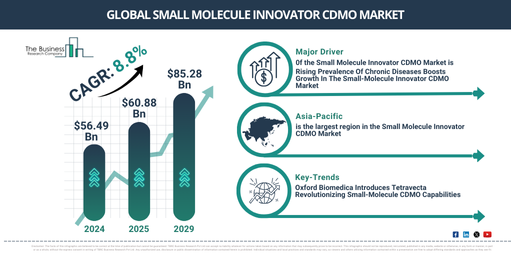
    The market size of the small molecule innovator cdmo has witnessed robust growth in the recent past. The anticipated growth from $56.49 billion in 2024 to $60.88 billion in 2025 implicates a Compound Annual Growth Rate (CAGR) of 7.8%. The historic growth patterns are a reflection of the burgeoning demand for outsourcing, heightened complexity of small molecule drugs, an amplified emphasis on a faster time-to-market, cost constraints faced by pharmaceutical firms, and strict compliance requisites.

    Anticipations point towards immense growth in the small molecule innovator cdmo market size in the upcoming years, with an estimated valuation of $85.28 billion by the year 2029. This comes with a compound annual growth rate (CAGR) of 8.8%. Factors such as upward trends in personalized medicine and targeted treatments, prioritization of green chemistry and sustainability, the urge for swift market introduction of new medications, the widening of the biopharmaceutical pipeline, and the advent of sophisticated therapies are contributing to this growth during the prediction interval. Expected trends for this time frame include a surge in virtual and remote development frameworks, higher levels of collaborative efforts and alliances in the pharmaceutical sector, broadening of CDMO services to untapped markets, adoption of disposable technologies in production, and the evolution of CDMOs into strategic growth associates.

    Download a free sample to assess the report’s scope and structure:

    https://www.thebusinessresearchcompany.com/sample.aspx?id=12178&type=smp

    Which Primay Drivers Are Accelerating Growth in the Small Molecule Innovator CDMO Market?

    The growth of the small-molecule innovator CDMO market is forecasted to be driven by the increasing occurrence of chronic diseases. Chronic diseases are those that last for a year or more, require ongoing medical care, limit daily activities, or all. Small molecule innovator CDMO supplies services and crafts medicines for chronic diseases for pharmaceutical and biotech firms. For example, the National Center for Biotechnology Information (NCBI), a National Library of Medicine in the US, predicted in January 2023 that by 2050, the population of people aged 50 and above in the US suffering from at least one chronic illness is set to rise by 99.5%, escalating from 71.522 million in 2020 to 142.66 million. As a result, the ascending prevalence of chronic diseases is fueling the growth of the small-molecule innovator CDMO market.

    Which Primary Segments of the Small Molecule Innovator CDMO Market Are Driving Growth and Industry Transformations?

    The small molecule innovator cdmo market covered in this report is segmented –

    1) By Product: Small Molecule Active Pharmaceutical Ingredient(API), Small Molecule Drug Product

    2) By Stage: Preclinical, Clinical, Commercial

    3) By Therapeutic: Cardiovascular Disease, Oncology, Respiratory Disorders, Neurology, Metabolic Disorders, Infectious Disease, Other Therapeutics

    4) By Customer: Pharmaceutical, Biotechnology

    Subsegments:

    1) By Small Molecule Active Pharmaceutical Ingredient (API): Generic APIs, Proprietary APIs, Controlled Substances

    2) By Small Molecule Drug Product: Oral Solid Dosage Forms (Tablets, Capsules), Injectable Drug Products, Topical Formulations, Liquid Formulations

    Request customized data on this market:

    https://www.thebusinessresearchcompany.com/customise?id=12178&type=smp

    Which Regions Are Key Players in the Growth of the #Which Primay Drivers Are Accelerating Growth in the Small Molecule Innovator CDMO Market?# Market?

    Asia-Pacific was the largest region in the small molecule innovator CDMO market in 2024. The regions covered in the small molecule innovator CDMO market report are Asia-Pacific, Western Europe, Eastern Europe, North America, South America, Middle East, Africa.

    Which Technological Trends Are Reshaping the Small Molecule Innovator CDMO Industry Dynamics?

    In the small molecule CDMO market, there is a rising trend of product innovation. To maintain their market prominence, major companies involved in the small-molecule innovator CDMO sector are embracing cutting-edge products. For instance, Oxford Biomedica, a company based in the UK, introduced a next-gen system for CDMO called TetraVecta in May 2023. The scope for overcoming challenges related to medicinal product development, such as the size, complexity, or interference to be delivered, is offered through small-molecule innovator companies. Additionally, the TetraVecta technology expedites both development and deployment of in vivo gene therapies.

    View the full report here:

    https://www.thebusinessresearchcompany.com/report/small-molecule-innovator-cdmo-global-market-report

    What Parameters Are Used to Define the Small Molecule Innovator CDMO Market?

    Small molecule innovator CDMO refers to a pharmaceutical division offering small-molecule drug development and manufacturing contract services. It is used in clinical trials to obtain early relative bioavailability information.

    Purchase the full report and get a swift delivery:

    https://www.thebusinessresearchcompany.com/purchaseoptions.aspx?id=12178

    About The Business Research Company:

    With over 15000+ reports from 27 industries covering 60+ geographies, The Business Research Company has built a reputation for offering comprehensive, data-rich research and insights. Armed with 1,500,000 datasets, the optimistic contribution of in-depth secondary research, and unique insights from industry leaders, you can get the information you need to stay ahead in the game.

    Get in touch with us:

    The Business Research Company: https://www.thebusinessresearchcompany.com/

    Americas +1 3156230293

    Asia +44 2071930708

    Europe +44 2071930708

    Email us at info@tbrc.info

    Follow us on:

    LinkedIn: https://in.linkedin.com/company/the-business-research-company

    YouTube: https://www.youtube.com/channel/UC24_fI0rV8cR5DxlCpgmyFQ

    Global Market Model: https://www.thebusinessresearchcompany.com/global-market-model

  • Major Drivers Propelling the Growth oh theSleep Testing Services Market Forward: Increase In The Number Of Patients Suffering From Sleep Disorders Drives The Growth Of The Sleep Testing Services Market

    Major Drivers Propelling the Growth oh theSleep Testing Services Market Forward: Increase In The Number Of Patients Suffering From Sleep Disorders Drives The Growth Of The Sleep Testing Services Market

    Discover trends, market shifts, and competitive outlooks for the sleep testing services industry through 2025-2034 with The Business Research Company’s reliable data and in-depth research

    How Fast Is The Sleep Testing Services Market Expected to Grow Between 2025 And 2029?

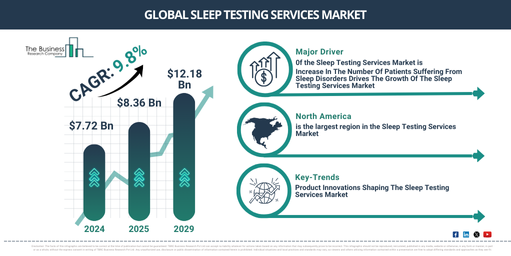
    The market for sleep testing services has experienced substantial growth in the last few years. It is projected to increase from $7.72 billion in 2024 to $8.36 billion in 2025, with a compound annual growth rate (CAGR) of 8.4%. This significant growth in the historical period can be credited to a rise in awareness of sleep disorders, increased occurrences of sleep apnea, the obesity crisis, elevated stress levels, lifestyle changes, and the expansion of insurance coverage.

    The market for sleep testing services is anticipated to witness substantial growth in the upcoming years, reaching $12.18 billion by 2029 with a compound annual growth rate (CAGR) of 9.8%. The projected growth within the forecast period can be linked to a heightened focus on mental health, the creation of home sleep testing equipment, a rise in insomnia cases, employer wellness initiatives, and increased efforts towards patient education and advocacy. Expected trends within this forecast period include the incorporation of wearable technology, the application of telemedicine and remote sleep consultation services, the development of advanced sleep monitoring tools, partnerships with healthcare providers, and research into sleep-related comorbid conditions.

    Download a free sample to assess the report’s scope and structure:

    https://www.thebusinessresearchcompany.com/sample.aspx?id=12099&type=smp

    Which Major Market Drivers Are Expected to Boost the Growth Potential of the Sleep Testing Services Market?

    The growth of the sleep testing services market is likely to be influenced by the rise in sleep disorder cases. Sleep disorders, otherwise known as sleep-wake disorders, include a range of issues linked to the nature type, volume, and timing of sleep, such as obstructive sleep apnea, parasomnias, narcolepsy, and restless leg syndrome, which often go hand in hand with physical or mental health problems like anxiety, depression, and cognitive disorders. These testing services are crucial in the treatment process of patients suffering from obstructive sleep apnea, by offering essential information for disease management and suggesting treatment methods. For example, SleepFoundation.org, a US-based charitable organization focused on providing sleep health information and comprehensive product testing, reported in May 2023 that an estimated 50 million to 70 million individuals are battling persistent sleep disorders, a tendency exacerbated by post-traumatic stress disorder (PTSD). Additionally, 70% of adults are affected by seasonal affective disorder (SAD), while insomnia that impedes daily activities impacts between 9% and 15% of the American adult population. Hence, the burgeoning number of sleep disorder cases is propelling the growth of the sleep testing services market.

    Which Key Market Segments Comprise the Sleep Testing Services Market and Drive Its Revenue Growth?

    The sleep testing services market covered in this report is segmented –

    1) By Diagnostic Type: Home Sleep Testing, In-Lab Sleep Testing

    2) By Application: Obstructive Sleep Apnea, Insomnia, Rapid Eye Movement (REM) Sleep Disorder, Restless Legs Syndrome, Narcolepsy, Circadian Rhythm Sleeping Disorders

    3) By End-User: Sleep Centers, Hospitals, Home Care Settings

    Subsegments:

    1) By Home Sleep Testing: Portable Monitors, Oximetry Testing, Full-Body Sleep Monitors

    2) By In-Lab Sleep Testing: Polysomnography (PSG), Multiple Sleep Latency Test (MSLT), Maintenance Of Wakefulness Test (MWT)

    Request customized data on this market:

    https://www.thebusinessresearchcompany.com/customise?id=12099&type=smp

    Which Areas Are Leading Regions in the Sleep Testing Services Market Expansion Across the Globe?

    North America was the largest region in the sleep testing services market in 2024. Europe is expected to be the fastest-growing region in the forecast period. The regions covered in the sleep testing services market report are Asia-Pacific, Western Europe, Eastern Europe, North America, South America, Middle East, Africa.

    What Are the Key Market Trends in theSleep Testing Services Market Over the Coming Years?

    The boom in product innovation is an emerging trend that is catching on in the sleep testing services market. To maintain their market position, leading companies in the sector are coming up with advanced and upgraded products, and adding new aspects to their existing ones. For example, Acurable, a medical device company based out of the UK, launched the AcuPebble SA100, an iteration of its AcuPebble device, in May 2023. This device, aimed at the US market, is slated for diagnosing obstructive sleep apnea (OSA). The AcuPebble SA100 seeks to bolster the troublesome home sleep apnea testing process, enabling swifter diagnosis, more prompt treatment and better handling of this recurring disorder.

    View the full report here:

    https://www.thebusinessresearchcompany.com/report/sleep-testing-services-global-market-report

    How Is the Sleep Testing Services Market Conceptually Defined?

    Sleep testing services refer to a non-invasive, overnight examination that is performed in a sleep lab during normal sleeping hours to document the physical and mental activity that takes place when a person is sleeping to identify and treat sleep problems. Sleep testing services are used to diagnose sleep disorders and record brain waves, the oxygen level in the blood, heart rate, and breathing during sleep.

    Purchase the full report and get a swift delivery:

    https://www.thebusinessresearchcompany.com/purchaseoptions.aspx?id=12099

    About The Business Research Company:

    With over 15000+ reports from 27 industries covering 60+ geographies, The Business Research Company has built a reputation for offering comprehensive, data-rich research and insights. Armed with 1,500,000 datasets, the optimistic contribution of in-depth secondary research, and unique insights from industry leaders, you can get the information you need to stay ahead in the game.

    Get in touch with us:

    The Business Research Company: https://www.thebusinessresearchcompany.com/

    Americas +1 3156230293

    Asia +44 2071930708

    Europe +44 2071930708

    Email us at info@tbrc.info

    Follow us on:

    LinkedIn: https://in.linkedin.com/company/the-business-research-company

    YouTube: https://www.youtube.com/channel/UC24_fI0rV8cR5DxlCpgmyFQ

    Global Market Model: https://www.thebusinessresearchcompany.com/global-market-model

  • Critical Market Drivers Shaping the Outlook for Skull Clamp Market from 2025-2034: Growing Number Of Traumatic Brain Injury (TBI) Cases Drives Skull Clamp Market Growth

    Critical Market Drivers Shaping the Outlook for Skull Clamp Market from 2025-2034: Growing Number Of Traumatic Brain Injury (TBI) Cases Drives Skull Clamp Market Growth

    Discover trends, market shifts, and competitive outlooks for the skull clamp industry through 2025-2034 with The Business Research Company’s reliable data and in-depth research

    What Are the Key Projections for the CAGR of the Skull Clamp Market Size From 2025 to 2034?

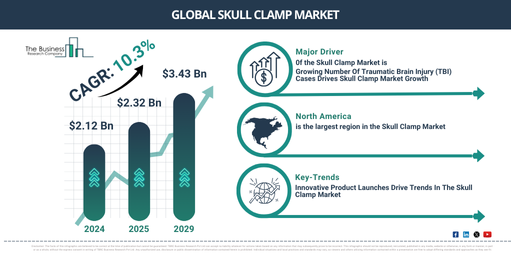
    In the recent past, the skull clamp market has been expanding rapidly. The projected growth is from $2.12 billion in 2024 to $2.32 billion in 2025, marking a compound annual growth rate (CAGR) of 9.5%. The notable growth observed in the preceding years can be linked to advancements in the field of neurosurgery, a rise in neurological disorders, the preference for minimally invasive procedures, an increase in traumatic brain injuries (TBI), as well as regulatory standards and approvals.

    In the upcoming years, significant growth is anticipated in the skull clamp market. It is projected to expand to $3.43 billion by 2029, boasting a compound annual growth rate (CAGR) of 10.3%. This surge during the prediction period can be credited to factors such as the incorporation of 3d printing into medical devices, a concentrated effort to minimize intraoperative issues, the customization of skull clamps for pediatric and geriatric patients, a shift towards valuing health care models, and improved safety measures in surgical apparatuses. Noteworthy trends during this time are predicted to be the integration of artificial intelligence (AI) in neurosurgery, the creation of lightweight and user-friendly designs, a focus on skull clamps specific for each patient, greater emphasis on less invasive devices in the market, and improved compatibility with navigation and imaging technologies.

    Download a free sample to assess the report’s scope and structure:

    https://www.thebusinessresearchcompany.com/sample.aspx?id=12048&type=smp

    What Are the Core Growth Drivers Propelling the Skull Clamp Market Forward?

    The rise in traumatic brain injury (TBI) instances is projected to stimulate the skull clamp market’s growth. TBI is a brain injury resulting from an external force or trauma. The escalating count of TBI cases is primarily attributed to the upsurge in motor vehicle mishaps, sports-related injuries, and physical attacks. In these scenarios, skull clamp devices play a vital role by immobilizing and steadying the head, aiding surgical procedures, and facilitating diagnostic imaging. For instance, the National Library of Medicine (NLM), a US-based National library governed by the federal government, stated that approximately 27 to 69 million people are diagnosed with TBI annually in October 2023, exhibiting an incidence rate of 351 to 939 cases per 100,000 individuals. Furthermore, the Academy for Multidisciplinary Neurotraumatology, a Romanian scientific community dedicated to advancing neurotraumatology, disclosed that approximately 500 to 800 new TBI instances occur per 100,000 individuals each year, according to various studies conducted in the United States and New Zealand. Hence, the escalating number of TBI cases is expected to fuel the skull clamp market’s growth.

    What Segment Types Define the Skull Clamp Market Structure?

    The skull clamp market covered in this report is segmented –

    1) By Product: Three Pin Skull Clamp, Four Pin Skull Clamp, Two Pin Skull Clamp

    2) By Accessories: Skull Pins, Headrests, Other Accessories

    3) By Material: Stainless Steel, Aluminum Alloy, Titanium, Radiolucent

    4) By Application: Surgery, Medical Imaging

    5) By End Users: Hospitals, Specialty Clinics, Ambulatory Surgical Centers

    Subsegments:

    1) By Three Pin Skull Clamp: Adjustable Three Pin Clamps, Fixed Three Pin Clamps, Disposable Three Pin Clamps

    2) By Four Pin Skull Clamp: Adjustable Four Pin Clamps, Fixed Four Pin Clamps, Disposable Four Pin Clamps

    3) By Two Pin Skull Clamp: Adjustable Two Pin Clamps, Fixed Two Pin Clamps, Disposable Two Pin Clamps

    Request customized data on this market:

    https://www.thebusinessresearchcompany.com/customise?id=12048&type=smp

    Which Geographic Areas Hold the Strongest Growth Potential in the Skull Clamp Market?

    North America was the largest region in the skull clamp market in 2024. Asia-Pacific is expected to be the fastest-growing region in the forecast period. The regions covered in the skull clamp market report are Asia-Pacific, Western Europe, Eastern Europe, North America, South America, Middle East, Africa.

    Which Emerging Trends that Are Influencing theSkull Clamp Industry Evolution?

    A noteworthy market trend is product innovation, which is becoming increasingly prevalent in the skull clamp market. Leading businesses in this industry are directing their efforts towards the development of unique products to solidify their market standing. As an example, Micromar, an American medical device firm specializing in neurosurgery and skull clamps, unveiled the HeadFix HF03B, a pioneering cranial fixator, in June 2022. Geared towards meeting neurosurgeons’ demands, the HeadFix HF03B provides improved practicality and optimizes surgical time efficiency, key concerns for neurosurgeons. It features a novel design that permits the single-handed positioning of the patient’s head, simplifying its use while ensuring safety. Moreover, an incorporated accessory supports adult and pediatric methods, making part replacements unnecessary.

    View the full report here:

    https://www.thebusinessresearchcompany.com/report/skull-clamp-global-market-report

    What Is the Definition of the Skull Clamp Market?

    A skull clamp, or a skull fixation device, is a medical instrument designed to hold the patient’s head in a stable and fixed position, allowing the surgeon to perform delicate surgical operations on the brain or spine. It is commonly used in neurosurgery to secure the skull during various procedures.

    Purchase the full report and get a swift delivery:

    https://www.thebusinessresearchcompany.com/purchaseoptions.aspx?id=12048

    About The Business Research Company:

    With over 15000+ reports from 27 industries covering 60+ geographies, The Business Research Company has built a reputation for offering comprehensive, data-rich research and insights. Armed with 1,500,000 datasets, the optimistic contribution of in-depth secondary research, and unique insights from industry leaders, you can get the information you need to stay ahead in the game.

    Get in touch with us:

    The Business Research Company: https://www.thebusinessresearchcompany.com/

    Americas +1 3156230293

    Asia +44 2071930708

    Europe +44 2071930708

    Email us at info@tbrc.info

    Follow us on:

    LinkedIn: https://in.linkedin.com/company/the-business-research-company

    YouTube: https://www.youtube.com/channel/UC24_fI0rV8cR5DxlCpgmyFQ

    Global Market Model: https://www.thebusinessresearchcompany.com/global-market-model

  • From Insight to Impact: Strategic Growth Mapping in the Automatic And Smart Pet Feeder Market

    From Insight to Impact: Strategic Growth Mapping in the Automatic And Smart Pet Feeder Market

    Discover trends, market shifts, and competitive outlooks for the automatic and smart pet feeder industry through 2025-2034 with The Business Research Company’s reliable data and in-depth research

    What is the Projected CAGR for the Automatic And Smart Pet Feeder Market Size from 2025 to 2034?

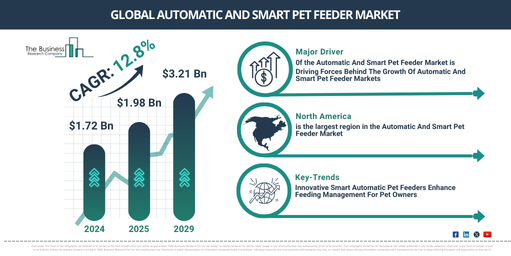
    The market for automatic and smart pet feeders has seen swift expansion in the past years. The market will increase from a value of $1.72 billion in 2024 to around $1.98 billion in 2025, exhibiting a compound annual growth rate (CAGR) of 15.3%. Various factors such as rising demand for convenience, assimilation into IoT ecosystems, multifunctional features of smart pet feeders, impact of pet-focused media and entertainment, and the increase in pet lifespan and number of older pets have contributed to the past growth.

    Over the coming years, the market size for smart and automatic pet feeders is projected to experience substantial expansion, reaching $3.21 billion by 2029 at a compound annual growth rate (CAGR) of 12.8%. The projected growth for this period is likely to be driven by factors like increased pet ownership, rising uptake of smart home technologies, a growing preference for convenience-oriented lifestyles, heightened awareness regarding pet health and nutrition, as well as the growing tendency to humanize pets. Key trends anticipated during this forecast period include integration with IoT ecosystems, product enhancements and innovations, amalgamation with smart home environments, the introduction of intelligent food dispensing sensors, and partnerships and collaborations within the pet industry.

    Download a free sample to assess the report’s scope and structure:

    https://www.thebusinessresearchcompany.com/sample.aspx?id=14045&type=smp

    What are the Fundamental Drivers and Innovations Shaping the Automatic And Smart Pet Feeder Market?

    The growth of the automated and intelligent pet feeder markets is expected to be driven by the rising interest in pet ownership. This surge in pet ownership demand is fueled by the increasing acknowledgment of pets as providers of companionship and emotional support, coupled with the trend of humanizing pets. Automatic and smart pet feeders present a convenient alternative for everyday pet care chores, cutting down the time and effort dedicated to regular pet feeding, thus making pet ownership more manageable and enticing for potential pet owners. This convenience persuades more people to contemplate pet adoption, leading to an overall escalation in pet ownership rates. The American Pet Products Association (APPA), a non-profit organization based in the United States, reported a considerable rise in pet ownership in the country by 11% in 2022 compared to the previous year. Hence, the growing demand for pet ownership fuels the expansion of the automatic and smart pet feeder markets.

    How Is the Automatic And Smart Pet Feeder Market Segmented?

    The automatic and smart pet feeder market covered in this report is segmented –

    1) By Product: Automatic Smart Feeder, Smart Pet Feeder

    2) By Pet Type: Dogs, Cats, Other Pet Types

    3) By Price Range: Low-Cost Feeder, Mid-Range Feeder, High-End-Feeder

    4) By Application: Pet Healthcare, Communication And Entertainment, Pet Owner Convenience, Pet Safety

    5) By Distribution Channel: Online E-Commerce Stores, Hyper markets Or Super markets, Pet Care Stores And Clinics

    Subsegments:

    1) By Automatic Smart Feeder: Wi-Fi Enabled Feeders, Programmable Feeders, Voice-Controlled Feeders

    2) By Smart Pet Feeder: App-Controlled Feeders, Portion Control Feeders, Interactive Feeders

    Request customized data on this market:

    https://www.thebusinessresearchcompany.com/customise?id=14045&type=smp

    Which Regions Are Driving the Next Phase of the Automatic And Smart Pet Feeder Market Growth?

    North America was the largest region in the automatic and smart pet feeders market in 2024. Asia-Pacific is expected to be the fastest-growing region in the forecast period. The regions covered in the automatic and smart pet feeder market report are Asia-Pacific, Western Europe, Eastern Europe, North America, South America, Middle East, Africa.

    What Key Trends Are Shaping the Future of the Automatic And Smart Pet Feeder Market?

    Top businesses in the automatic and smart pet feeder industry are prioritizing the creation of nascent products, such as smart control. This feature ensures regular feeding schedules for pets, whether or not the owner is present. Smart control pertains to utilizing technology for remote handling and planning of feeding times, meal sizes, and type of food for pets. For example, consumer electronics enterprise Xiaomi Inc. from China introduced Xiaomi Mijia Pet Feeder 2 in December 2023 for situations when pet owners are away for extended periods. This advanced smart automatic pet feeder has a generous capacity of 5 liters, capable of accommodating extended pet owner absences, and can store up to 2.5 kilograms of dry pet food. Through a dedicated app, it offers smart control, enabling pet owners to set feeding schedules and portions. The equipment is equipped with a backup power supply to ensure continuous functioning during power cuts, and its triple-sealed design helps keep the food fresh. An easy-to-understand LED screen shows the remaining food quantity and gives alerts when it is time to replenish.

    View the full report here:

    https://www.thebusinessresearchcompany.com/report/automatic-and-smart-pet-feeder-global-market-report

    How Is the Automatic And Smart Pet Feeder Market Defined and What Are Its Core Parameters?

    Automatic and smart pet feeders are innovative devices designed to automate the pet feeding process. They dispense food at scheduled times or upon command, often integrating advanced features such as portion control, customizable feeding schedules, and remote access via smartphone apps.

    Purchase the full report and get a swift delivery:

    https://www.thebusinessresearchcompany.com/purchaseoptions.aspx?id=14045

    About The Business Research Company:

    With over 15000+ reports from 27 industries covering 60+ geographies, The Business Research Company has built a reputation for offering comprehensive, data-rich research and insights. Armed with 1,500,000 datasets, the optimistic contribution of in-depth secondary research, and unique insights from industry leaders, you can get the information you need to stay ahead in the game.

    Get in touch with us:

    The Business Research Company: https://www.thebusinessresearchcompany.com/

    Americas +1 3156230293

    Asia +44 2071930708

    Europe +44 2071930708

    Email us at info@tbrc.info

    Follow us on:

    LinkedIn: https://in.linkedin.com/company/the-business-research-company

    YouTube: https://www.youtube.com/channel/UC24_fI0rV8cR5DxlCpgmyFQ

    Global Market Model: https://www.thebusinessresearchcompany.com/global-market-model

  • Automated Microscopy Market Valuation Expected To Reach $11.14 Billion By 2029, Growing At A Rate Of 7%

    Automated Microscopy Market Valuation Expected To Reach $11.14 Billion By 2029, Growing At A Rate Of 7%

    Discover trends, market shifts, and competitive outlooks for the automated microscopy industry through 2025-2034 with The Business Research Company’s reliable data and in-depth research

    What Is the Estimated Market Size of the Automated Microscopy Market In 2029?

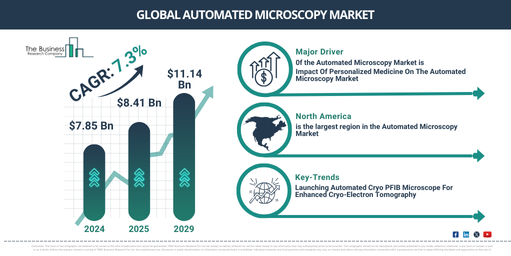
    The market size of automated microscopy has seen a significant increase in the recent past. The market, which stood at $7.85 billion in 2024, is projected to reach $8.41 billion in 2025, growing at a compound annual growth rate (CAGR) of 7.1%. The growth experienced during the historic period results from improvements in imaging technology, a rise in the complexity of biological research, the need for high throughput screenings, and the integration of automation and workflow. Also, cost reduction, accessibility, and the advent of multimodal imaging have played significant roles in this growth.

    The market for automated microscopy is predicted to witness robust expansion in the upcoming years, potentially achieving a value of $11.14 billion by 2029, presenting a compound annual growth rate (CAGR) of 7.3%. This predicted growth during the forecast period is likely due to the inclusion of artificial intelligence, smaller and more portable devices, multiplexed and multimodal integrated imaging, interdisciplinary research challenges, and a growing demand for personalized medicine and precise diagnostics. The imminent period will likely see trends such as the utilization of multi-omics techniques, high content screening intended for drug discovery, 3D and multimodal imaging, open-source hardware and software platforms, and analysis of live cell imaging and dynamics.

    Download a free sample to assess the report’s scope and structure:

    https://www.thebusinessresearchcompany.com/sample.aspx?id=14259&type=smp

    Which Factors and External Forces Are Driving Demand in the Automated Microscopy Market?

    The surging need for personalized medicine is projected to fuel the expansion of the automated microscopy market. Personalized medicine, a healthcare approach that considers an individual’s genetic variations, environmental factors, and lifestyle, is increasingly adopted due to several reasons such as heightened awareness about genetic differences, the progression in genomics, and the escalating incidence of chronic illnesses. Automated microscopy offers vital tools and technologies to researchers and clinicians, promoting the progression of personalized medicine by elucidating disease processes, pinpointing predictive biomarkers, and refining treatment plans. For example, the Personalized Medicine Coalition (PMC), a US-based entity advocating for the comprehension and implementation of personalized medicine, stated in October 2022 that over 75,000 genetic testing products and 300 personalized medicines would be accessible for individuals with various forms of cancer, rare genetic diseases, and numerous chronic and infectious diseases. Hence, the surging need for personalized medicine is accelerating the expansion of the automated microscopy market.

    Which Segments in the Automated Microscopy Offer the Most Growth?

    The automated microscopy market covered in this report is segmented –

    1) By Product Type: Optical Microscopes, Electron Microscopes, Scanning Probe Microscopes

    2) By Application: Medical Diagnostics, Nanotechnology, Material Science, Life Sciences, Semiconductors

    3) By End User: Hospitals, Research Facilities, Diagnostic Clinics

    Subsegments:

    1) By Optical Microscopes: Automated Light Microscopes, Confocal Microscopes, Fluorescence Microscopes

    2) By Electron Microscopes: Scanning Electron Microscopes (SEM), Transmission Electron Microscopes (TEM), Scanning Transmission Electron Microscopes (STEM)

    3) By Scanning Probe Microscopes: Atomic Force Microscopes (AFM), Scanning Tunneling Microscopes (STM), Other Types Of Scanning Probe Microscopes

    Request customized data on this market:

    https://www.thebusinessresearchcompany.com/customise?id=14259&type=smp

    What Are the Fastest-Growing Geographies in the Automated Microscopy Market?

    North America was the largest region in the automated microscopy market in 2024. Asia-Pacific is expected to be the fastest-growing region in the forecast period. The regions covered in the automated microscopy market report are Asia-Pacific, Western Europe, Eastern Europe, North America, South America, Middle East, Africa.

    Which Cutting-Edge Market Trends Are Expected to Drive the Automated Microscopy Market’s Growth?

    Leading companies in the automated microscopy market are pioneering novel products, like the automated Cryo PFIB (Cryo-Plasma focused ion beam) microscopes, to amplify workflow productivity, conserve time, and advance applications. One such invention is an automated Cryo-PFIB microscope, a crucial tool for expeditious preparation of cryo-lamellae needed for cellular cryo-electron tomography. For example, in August 2022, Thermo Fisher Scientific Inc., a biotechnology firm in the USA, introduced the automated Cryo PFIB microscope to make the process of preparing cryo-lamellae for cellular cryo-electron tomography research more efficient. This trailblazing technology ensures superior preparation of cryo lamella for cryo tomography and volume imaging of biological specimens, thereby strengthening the role of microscopy in life sciences and research. The technology focuses on generating superior samples of a constant thickness and averting the risks of sample contamination. It incorporates plasma FIB (Focused Ion Beam) technology for swift removal of large sample volumes and providing swift access to areas of biological interest, along with automation features for easy sample preparation and remote operation feasibility.

    View the full report here:

    https://www.thebusinessresearchcompany.com/report/automated-microscopy-global-market-report

    What Are the Key Elements That Define the Automated Microscopy Market?

    Automated microscopy refers to the use of computer-controlled systems and software to perform microscopic analysis and imaging tasks with minimal human intervention. It is used to streamline and improve scientific research, medical diagnosis, and industrial quality control by allowing for high-throughput and high-resolution imaging of biological samples, materials, and components.

    Purchase the full report and get a swift delivery:

    https://www.thebusinessresearchcompany.com/purchaseoptions.aspx?id=14259

    About The Business Research Company:

    With over 15000+ reports from 27 industries covering 60+ geographies, The Business Research Company has built a reputation for offering comprehensive, data-rich research and insights. Armed with 1,500,000 datasets, the optimistic contribution of in-depth secondary research, and unique insights from industry leaders, you can get the information you need to stay ahead in the game.

    Get in touch with us:

    The Business Research Company: https://www.thebusinessresearchcompany.com/

    Americas +1 3156230293

    Asia +44 2071930708

    Europe +44 2071930708

    Email us at info@tbrc.info

    Follow us on:

    LinkedIn: https://in.linkedin.com/company/the-business-research-company

    YouTube: https://www.youtube.com/channel/UC24_fI0rV8cR5DxlCpgmyFQ

    Global Market Model: https://www.thebusinessresearchcompany.com/global-market-model

  • $5.67 Billion Forecast for Automated Liquid Handling Systems Market by 2029, Backed by Demand and Innovation

    $5.67 Billion Forecast for Automated Liquid Handling Systems Market by 2029, Backed by Demand and Innovation

    Discover trends, market shifts, and competitive outlooks for the automated liquid handling systems industry through 2025-2034 with The Business Research Company’s reliable data and in-depth research

    What Are the Key Projections for the CAGR of the Automated Liquid Handling Systems Market Size From 2025 to 2034?

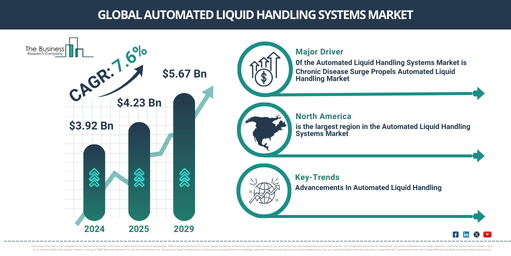
    The market for automated liquid handling systems has seen significant expansion in recent years. Its market size is projected to increase from $3.92 billion in 2024 to an estimated $4.23 billion in 2025, with a compound annual growth rate (CAGR) of 7.9%. Factors contributing to this growth during the historical period include the requirement for high-throughput screening, the expansion of the pharmaceutical and biotechnology sectors, the necessity for accurate and precise liquid handling, the increasing adoption of lab automation, growth in personalized medicine, the advancement of drug discovery and development, while also offering cost and time efficiency.

    The market size for automated liquid handling systems is anticipated to witness robust expansion over the coming years. The market value is set to reach $5.67 billion in 2029, growing at a compound annual growth rate of 7.6%. This surge in growth during the forecast period is due to factors such as speedier drug discovery processes, the widening scope of genomics and proteomics research, the increasing need for high-throughput diagnostics, the adoption in growing markets, a shift towards miniaturization, as well as a focus on enhancing reproducibility and data quality. The forecast period will see major trends such as the adoption of high-throughput systems, growth in the pharmaceutical industries, the incorporation of robotic arms, the creation of miniaturized systems, collaboration between service providers and laboratories, growth in diagnostic labs, the use of touch-free technologies, and a heightening focus on compliance.

    Download a free sample to assess the report’s scope and structure:

    https://www.thebusinessresearchcompany.com/sample.aspx?id=14850&type=smp

    What Are the Core Growth Drivers Propelling the Automated Liquid Handling Systems Market Forward?

    The automated liquid handling systems market is predicted to expand due to the rising occurrence of chronic ailments. Chronic diseases are long-term conditions that, although manageable, are typically not entirely curable. This escalating prevalence of chronic illnesses can be attributed to increased intake of processed foods, sedentary lifestyles marked by extended periods of sitting, and decreased physical activity. Automated liquid handling systems, with their superior accuracy, reproducibility, and throughput compared to manual pipetting, have become essential tools in the pharmaceutical and biotech sectors. For example, a 2022 report released by the American College of Cardiology, a non-profit medical organization based in the US, projected that all four primary cardiovascular risk factors will witness a surge from 2025 to 2060. There is a predicted rise of 39.3% in diabetes, affecting 55 million people, followed by dyslipidemia (27.6% affecting 126 million), hypertension (25.1% affecting 162 million), and obesity (18.3% affecting 126 million). Along with this, huge increases in rates of cardiovascular diseases like stroke (33.8% affecting 15 million) and heart failure (33.4% affecting 13 million) are expected, with ischemic heart disease (30.7% affecting 29 million) and heart attacks (16.9% affecting 16 million) following a similar trend. Thus, the rising occurrence of chronic illnesses is fueling the growth of the automated liquid handling systems market.

    What Segment Types Define the Automated Liquid Handling Systems Market Structure?

    The automated liquid handling systems market covered in this report is segmented –

    1) By Type: Automated Liquid Handling System, Semi-automated Liquid Handling System

    2) By Application: Drug Discovery And ADME-Tox Research, Cancer And Genomic Research, Bioprocessing Or Biotechnology, Other Applications

    3) By End User: Contract Research Organizations, Pharmaceutical And Biotechnology, Academic And Research Institutes

    Subsegments:

    1) By Automated Liquid Handling System: Single-Channel Automated Systems, Multi-Channel Automated Systems, Integrated Liquid Handling Systems, Robotic Liquid Handling Systems

    2) By Semi-Automated Liquid Handling System: Manual-Supported Semi-Automated Systems, Partially Automated Pipetting Systems, Semi-Automated Dispensing Systems

    Request customized data on this market:

    https://www.thebusinessresearchcompany.com/customise?id=14850&type=smp

    Which Geographic Areas Hold the Strongest Growth Potential in the Automated Liquid Handling Systems Market?

    North America was the largest region in the automated liquid handling systems market in 2024. Asia Pacific is expected to be the fastest-growing region in the forecast period. The regions covered in the automated liquid handling systems market report are Asia-Pacific, Western Europe, Eastern Europe, North America, South America, Middle East, Africa.

    Which Emerging Trends that Are Influencing the Automated Liquid Handling Systems Industry Evolution?

    Firms actively involved in the automated liquid handling systems market are making concerted efforts to solidify their market standing by innovating with dual-core pipetting technology solutions. This advanced technology in liquid handling streamlines the dispensation of liquids in a lab environment with notable accuracy and precision. For example, in February 2022, SPT Labtech, a prominent automated liquid handling systems designer and producer based in the UK, unveiled the apricot DC1 at SLAS 2022 in Boston. This 4-in-1 compact automated liquid handling platform is software-controlled and augments the overall throughput, standardization, and data quality of multiple applications. It uniquely combines four separate pipetting tools into a single compact device, making it apt for high-volume and low-volume single- and multichannel pipetting operations.

    View the full report here:

    https://www.thebusinessresearchcompany.com/report/automated-liquid-handling-systems-global-market-report

    What Is the Definition of the Automated Liquid Handling Systems Market?

    Automated liquid handling systems refer to computerized devices that perform liquid transfers in laboratory settings. These systems utilize software to execute various protocols, offering precise sample preparation for high-throughput sequencing, screening, bioassays, and more. They can include components such as heating or cooling, shaking, and centrifugal force for contactless liquid removal.

    Purchase the full report and get a swift delivery:

    https://www.thebusinessresearchcompany.com/purchaseoptions.aspx?id=14850

    About The Business Research Company:

    With over 15000+ reports from 27 industries covering 60+ geographies, The Business Research Company has built a reputation for offering comprehensive, data-rich research and insights. Armed with 1,500,000 datasets, the optimistic contribution of in-depth secondary research, and unique insights from industry leaders, you can get the information you need to stay ahead in the game.

    Get in touch with us:

    The Business Research Company: https://www.thebusinessresearchcompany.com/

    Americas +1 3156230293

    Asia +44 2071930708

    Europe +44 2071930708

    Email us at info@tbrc.info

    Follow us on:

    LinkedIn: https://in.linkedin.com/company/the-business-research-company

    YouTube: https://www.youtube.com/channel/UC24_fI0rV8cR5DxlCpgmyFQ

    Global Market Model: https://www.thebusinessresearchcompany.com/global-market-model

  • Assistive Technologies For Visually Impaired Outlook 2034: Key Drivers, Trends, and Market Frontiers

    Assistive Technologies For Visually Impaired Outlook 2034: Key Drivers, Trends, and Market Frontiers

    Discover trends, market shifts, and competitive outlooks for the assistive technologies for visually impaired industry through 2025-2034 with The Business Research Company’s reliable data and in-depth research

    How Has The Assistive Technologies For Visually Impaired Market Growth Evolved From 2024 To 2025, And What’s Ahead?

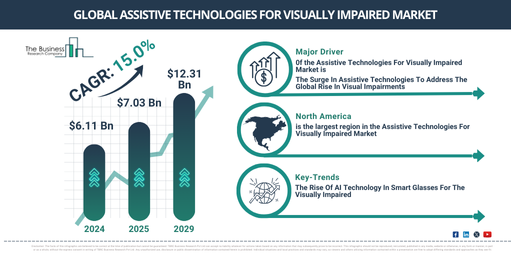
    The market size for assistive technologies for the visually impaired has seen swift growth in recent times. The market is predicted to rise from $6.11 billion in 2024 to $7.03 billion in 2025, reflecting a compound annual growth rate (CAGR) of 15.0%. The growth in previous years is believed to be due to an increase in the aging population, heightened awareness of assistive technologies, and amplified government initiatives.

    The market for assistive technologies for the visually impaired is anticipated to experience a robust expansion in the coming years. The market valuation is projected to reach $12.31 billion by 2029, growing at a compound annual growth rate (CAGR) of 15.0%. This growth during the forecast period is primarily driven by the increasing instances of visual impairments and blindness, and the escalating demand to fulfill the unaddressed needs of patients. Notable trends during the forecast period consist of AI-equipped smart glasses, sophisticated screen readers, braille displays, and the use of augmented reality (AR) for navigation.

    Download a free sample to assess the report’s scope and structure:

    https://www.thebusinessresearchcompany.com/sample.aspx?id=13598&type=smp

    How Are Key Drivers in the Industry Acting as Catalysts for the Growth of the Assistive Technologies For Visually Impaired Market?

    The assistive technologies for visually impaired market is expected to be bolstered by the escalating instances of visual impairments and blindness. These conditions, which restrict or entirely obliterate a person’s ability to see, are addressed by assistive technologies that help enhance accessibility. These include critical aids like braille displays that augment navigation, provide access to information and foster communication. For instance, the World Health Organization reported in August 2023 that approximately 2.2 billion people worldwide are struggling with vision impairments. Among them, 1 billion cases could have been prevented or are currently inadequately treated. Moreover, refractive errors impact 36% of these individuals, while cataracts contribute to impairment in 17% of the cases. Thus, the rise in visual impairments and blindness is increasingly fueling the growth of the assistive technologies market for the visually impaired.

    Which Segments in the Assistive Technologies For Visually Impaired Offer the Most Growth?

    The assistive technologies for visually impaired market covered in this report is segmented –

    1) By Type: Educational Devices And Software, Mobility Devices, Low Vision Devices

    2) By Distribution Channel: Hospital Pharmacies, Retail Pharmacies, Optical Stores, Online Pharmacies

    3) By End User: Blind Schools, Enterprises And Social Organizations, Personal Use, Hospitals, Other End Users

    Subsegments:

    1) By Educational Devices And Software: Braille Notetakers, Screen Readers, Accessible Learning Software

    2) By Mobility Devices: Canes (Traditional And Smart Canes), GPS Navigation Devices, Wearable Technology For Navigation

    3) By Low Vision Devices: Magnifiers (Handheld And Electronic), Telescopic Lenses, Digital Magnification Devices

    Request customized data on this market:

    https://www.thebusinessresearchcompany.com/customise?id=13598&type=smp

    What Are the Fastest-Growing Geographies in the Assistive Technologies For Visually Impaired Market?

    North America was the largest region in the assistive technologies for visually impaired market in 2024. Asia-Pacific is expected to be the fastest-growing region in the forecast period. The regions covered in the assistive technologies for visually impaired market report are Asia-Pacific, Western Europe, Eastern Europe, North America, South America, Middle East, Africa.

    What Are the Current Market Growth and Trends in the Assistive Technologies For Visually Impaired Industry?

    Leading firms in the assistive technologies for visually impaired market are striving to develop products with cutting-edge technology, such as AI-powered smart glasses, to enhance their market profitability. These smart glasses with AI tech grant the visually impaired the ability to navigate and interact with their environment with increased confidence and independence. For example, Envision, a company from the Netherlands, unveiled a new generation of AI-controlled smart glasses for the visually impaired in March 2022. These AI-driven glasses for the blind include advanced features like OCR, improved text recognition, multiple language support, and a wide-ranging app ecosystem for smooth integration of bespoke applications, covering specialized features such as assistance with orientation and mobility for both indoors and outdoors. Smart glasses, equipped with facial and object identification, color detection, and scene depiction, also include an encrypted video call function for fluid communication with trusted contacts. They convert visual inputs into audio signals, supporting the user’s independence and expanding their possibilities. The product, based on Google Glass Enterprise Edition 2 and weighing less than 50g, is equipped with an 8MP wide-angle camera, ensures persistent connectivity for 5-6 hours, and supports USB-C high-speed charging.

    View the full report here:

    https://www.thebusinessresearchcompany.com/report/assistive-technologies-for-visually-impaired-global-market-report

    What Are the Key Elements That Define the Assistive Technologies For Visually Impaired Market?

    Assistive technologies for the visually impaired refer to tools, devices, software, and systems specifically designed to assist individuals with visual impairments in various aspects of their daily lives. The primary goal of these technologies is to enhance accessibility, promote independence, and provide individuals with visual disabilities with the means to navigate, communicate, and access information effectively. These technologies address challenges related to reading, mobility, communication, and overall interaction with the surrounding environment.

    Purchase the full report and get a swift delivery:

    https://www.thebusinessresearchcompany.com/purchaseoptions.aspx?id=13598

    About The Business Research Company:

    With over 15000+ reports from 27 industries covering 60+ geographies, The Business Research Company has built a reputation for offering comprehensive, data-rich research and insights. Armed with 1,500,000 datasets, the optimistic contribution of in-depth secondary research, and unique insights from industry leaders, you can get the information you need to stay ahead in the game.

    Get in touch with us:

    The Business Research Company: https://www.thebusinessresearchcompany.com/

    Americas +1 3156230293

    Asia +44 2071930708

    Europe +44 2071930708

    Email us at info@tbrc.info

    Follow us on:

    LinkedIn: https://in.linkedin.com/company/the-business-research-company

    YouTube: https://www.youtube.com/channel/UC24_fI0rV8cR5DxlCpgmyFQ

    Global Market Model: https://www.thebusinessresearchcompany.com/global-market-model