Month: July 2025

  • M-M-R II Market Trends Report 2025 – For Business Development and Strategy Teams

    Claim your 30% discount on Global Market Reports with code ONLINE30. Limited time only.

    How Has the M-M-R II Market Growth Performance Trended Historically, And What Lies Ahead?

    Over the recent years, the M-M-R II’s size has experienced a rapid XX (HCAGR) growth. The market value, which was $XX million in 2024, is projected to rise to $XX million by 2025, reflecting a compound annual growth rate (CAGR) of XX%. This significant increase during the historic period can be ascribed to factors such as a surge in health insurance coverage, heightened focus on preventative healthcare, growing public knowledge of vaccine safety, increased demand for easy vaccination alternatives, and a boost in travel vaccines requirements.

    What Is the Forecast for the M-M-R II Market Size Through 2029?

    Anticipations are being made about the M-M-R II market to observe a compound annual growth rate (CAGR) of XX% in the imminent years, projecting a growth up to $XX million by 2029. This foreseeable growth during the forecast period is due to the rising awareness of the diminishing immunity levels, active measures to address and eradicate vaccine hesitancy, the incorporation of telemedicine for improving vaccine consciousness, prioritizing community immunization champions, and surge in the growth of private-sector vaccine suppliers. The substantial trends during this forecast phase are anticipated to be the creation of combined vaccines, pharmaceutical industry innovations, the formulation of thermostable vaccines, the transition towards digital immunization records, and improvements in cold chain technology.

    Download The Free Sample Report Here:

    https://www.thebusinessresearchcompany.com/sample.aspx?id=20156&type=smp

    What are the Key Market Players in M-M-R II Market and How They’re Evolving?

    Major companies operating in the M-M-R II market include Merck & Co. Inc.

    What Are the Primary Growth Drivers in the M-M-R II Market?

    The M-M-R II market is expected to surge due to the increasing incidences of measles, mumps, and rubella. These viruses are infectious and can lead to serious health risks, such as fever, rashes, swelling, and in some extreme cases, neurological damage or congenital abnormalities if contracted during pregnancy. Lower rates of vaccination, cracks in immunization coverage, and vaccine hesitancy among certain groups contribute to the escalating cases of measles, mumps, and rubella. The M-M-R II vaccine aids in combating these diseases by prompting the immune system to produce antibodies that minimize infection risks and respective health consequences. In May 2024, the UK Health Security Agency reported that in England, the laboratory-confirmed cases of mumps had increased from 10 cases in the July to September 2022 period to 51 cases in January to March 2023. Similarly, measles cases rose from 7 in the previous quarter to 31 during January to March 2023. This surge in measles, mumps, and rubella cases is fueling the growth of the M-M-R II market.

    Request For A Customized Report:

    https://www.thebusinessresearchcompany.com/customise?id=20156&type=smp

    What Are the Leading Segments in the Global M-M-R II Industry?

    The M-M-R II market covered in this report is segmented –

    1) By Indication: Measles, Mumps, Rubella

    2) By Formulation: Live Attenuated Vaccine, Pre-Filled Syringes

    3) By Distribution Channel: Hospitals, Pediatric Clinics, Public Health Agencies, Retail Pharmacies

    4) By End User Patients: Infants, Children, Adults

    What Are the Key Market Trends in the M-M-R II Industry?

    A key trend highlighted in the M-M-R II market is the focus towards inventing new therapies such as live attenuated vaccines. These vaccines improve the effectiveness of immunization and expand the range of protection against diseases like measles, mumps, and rubella. The concept of a live attenuated vaccine involves the use of a pathogen in its weakened form, which is instrumental in triggering an immune response yet mild enough not to cause the disease. As an illustration, in March 2023, the U.S. Food and Drug Administration granted Merck & Co. Inc., a US-based pharmaceutical firm, the right to use the M-M-R II (Measles, Mumps, and Rubella Virus Vaccine Live) through intramuscular means. Designed for those who are 12 months or older, the M-M-R II vaccine is a preventive measure against measles, mumps, and rubella. This vaccine can be administered either intramuscularly or subcutaneously, with the first recommended dosage given at 12 to 15 months and a subsequent dose at 4 to 6 years.

    Access The Full Report Here:

    https://www.thebusinessresearchcompany.com/report/m-m-r-ii-global-market-report

    What Is the Regional Outlook for the M-M-R II Market?

    North America was the largest region in the M-M-R II market in 2024. Asia-Pacific is expected to be the fastest-growing region in the forecast period. The regions covered in the M-M-R II market report are Asia-Pacific, Western Europe, Eastern Europe, North America, South America, Middle East and Africa.

    Purchase The Full Report Today:

    https://www.thebusinessresearchcompany.com/purchaseoptions.aspx?id=20156

    This Report Delivers Insight On:

    1. How big is the m-m-r ii market, and how is it changing globally?

    2. Who are the major companies in the m-m-r ii market, and how are they performing?

    3. What are the key opportunities and risks in the m-m-r ii market right now?

    4. Which products or customer segments are growing the most in the m-m-r ii market?

    5. What factors are helping or slowing down the growth of the m-m-r ii market?

    About The Business Research Company:

    With over 15000+ reports from 27 industries covering 60+ geographies, The Business Research Company has built a reputation for offering comprehensive, data-rich research and insights. Armed with 1,500,000 datasets, the optimistic contribution of in-depth secondary research, and unique insights from industry leaders, you can get the information you need to stay ahead in the game.

    Get in touch with us:

    The Business Research Company: https://www.thebusinessresearchcompany.com/

    Americas +1 310-496-7795

    Asia +44 2071930708

    Europe +44 7882 955267

    Email us at info@tbrc.info

    Follow us on:

    LinkedIn: https://in.linkedin.com/company/the-business-research-company

    YouTube: https://www.youtube.com/channel/UC24_fI0rV8cR5DxlCpgmyFQ

    Global Market Model: https://www.thebusinessresearchcompany.com/global-market-model
  • Myelofibrosis (MF) Market to Reach $1.76 Billion by 2029 | Key Drivers and Future Outlook

    Myelofibrosis (MF) Market to Reach $1.76 Billion by 2029 | Key Drivers and Future Outlook

    Claim your 30% discount on Global Market Reports with code ONLINE30. Limited time only.

    What Is the Growth Rate of the Myelofibrosis (MF) Market?

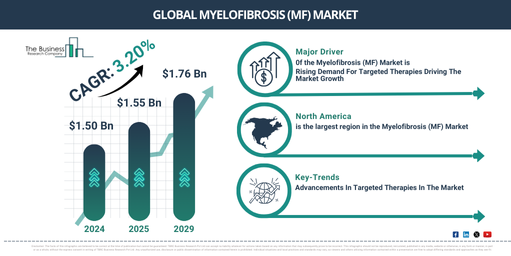
    The market size for myelofibrosis (MF) has been on a consistent growth trajectory in the past few years. It’s projected to surge from $1.50 billion in 2024 to $1.55 billion in 2025, marking a compound annual growth rate (CAGR) of 3.5%. The growth during the historical period has been driven by several factors. These include rising instances of myeloproliferative neoplasms, increased consciousness and early detection, wider acceptance of JAK inhibitors, expanding availability of bone marrow transplants, and an uptick in regulatory approvals for new treatments.

    What Growth Rate Is Forecasted for the Myelofibrosis (MF) Market by 2029?

    Over the coming years, the myelofibrosis (MF) market is anticipated to experience consistent expansion, reaching a valuation of $1.76 billion by 2029 with a compound annual growth rate (CAGR) of 3.2%. This expansion during the forecast timeframe can be correlated to the mounting need for customized treatment options, a surge in gene and cell therapies related clinical trials, an increased adoption of combination therapies, extensive health insurance coverage for rare illnesses, and enhanced expenditure on hematology treatment. The forecasted period will potentially witness key innovations such as advancements in gene-altering technologies, novel developments in fibrosis-focused medication, creation of next-gen JAK inhibitors, a escalating focus on immunotherapy for myelofibrosis, and a rise in the application of artificial intelligence for drug development.

    Download The Free Sample Report Here:

    https://www.thebusinessresearchcompany.com/sample.aspx?id=21226&type=smp

    Which Key Companies Are Shaping the Future of the Myelofibrosis (MF) Market?

    Major companies operating in the myelofibrosis (MF) market are Pfizer Inc., F. Hoffmann-La Roche Ltd., Merck & Co. Inc., AbbVie Inc., Sanofi S.A., Bristol-Myers Squibb Company, Novartis AG, GlaxoSmithKline plc, Eli Lilly and Company, Gilead Sciences Inc., A. Menarini Industrie Farmaceutiche Riunite S.r.l., Incyte Corporation, Sobi Inc., MorphoSys AG, CTI BioPharma Corp., Suzhou Zelgen Biopharmaceutical Co. Ltd., NS Pharma Inc., Impact Biomedicines Inc., Kartos Therapeutics Inc., Geron Corporation

    Which Factors Are Driving Demand in the Myelofibrosis (MF) Industry?

    The rise in the preference for targeted therapies is anticipated to push forward the expansion of the myelofibrosis (MF) market. Tailoring treatments and healthcare choices around unique genetic, environmental, and lifestyle elements represents the concept of targeted therapies. The surging demand for these therapies is supported by the advancements in genomics, biotechnology, and data analytics, which facilitate more accurate and effective, and personalized treatments. Identifying crucial molecular pathways such as JAK-STAT signaling, myelofibrosis (MF) lays a significant foundation for fabricating targeted therapies, which includes precision treatments like JAK inhibitors (Ruxolitinib, Fedratinib, and Pacritinib) that help manage symptoms and slow down the progression of the disease. For instance, in April 2024, the American Society of Gene & Cell Therapy, a government organization based in the US, stated that the overall number of therapies in all phases of clinical pipeline development has seen an increase. Phase I therapies, in particular, witnessed an 11% increase—the most considerable growth rate since Q4 2022. Consequently, the escalating demand for targeted therapies is fueling the expansion of the myelofibrosis (MF) market.

    Request For A Customized Report:

    https://www.thebusinessresearchcompany.com/customise?id=21226&type=smp

    How Is the Myelofibrosis (MF) Market Segmented by Several Divisions?

    The myelofibrosis (MF) market covered in this report is segmented –

    1) By Drug Type: Jak Inhibitor, Immunomodulators, Hydroxyurea, Other Drug Types

    2) By Treatment Type: Chemotherapy, Targeted Therapy, Other Treatment Types

    3) By Route Of Administration: Oral, Parenteral, Other Routes Of Administration

    4) By Distribution Channel: Hospital Pharmacy, Online Pharmacy, Retail Pharmacy

    5) By End User: Hospitals, Homecare, Specialty Clinics, Other End Users

    Subsegments:

    1) By Jak Inhibitor: Ruxolitinib, Fedratinib, Momelotinib, Itacitinib

    2) By Immunomodulators: Thalidomide, Lenalidomide, Pomalidomide

    3) By Hydroxyurea: Oral Hydroxyurea, Injectable Hydroxyurea

    4) By Other Drug Types: Erythropoiesis-Stimulating Agents (ESAs), Danazol, Monoclonal Antibodies, Chemotherapy Agents

    What are the Emerging Market Trends Driving the Growth of the Myelofibrosis (MF) Industry?

    Prominent corporations in the myelofibrosis (MF) market are concentrating their efforts on the advancement of targeted treatments, such as JAK1/JAK2 and ACVR1 inhibitors, with the aim to strengthen the effectiveness of treatment, manage disease progression, and enhance patient outcomes in myelofibrosis (MF). The function of JAK1/JAK2 inhibitors is to target the Janus kinase pathway with an aim to decrease inflammation and irregular blood cell production in myelofibrosis. On the other hand, ACVR1 inhibitors work by blocking activin receptor-like kinase 2 (ALK2) for controlling bone marrow fibrosis and disease progression. For instance, in September 2023, GSK plc, a pharmaceutical company based in UK, accepted approval from the US Food and Drug Administration (FDA) for Ojjaara (momelotinib), approved for treating intermediate- or high-risk myelofibrosis. Its twin action mechanism, focusing on both JAK1/JAK2 and ACVR1, effectively controls inflammatory pathways while raising hemoglobin levels, thereby decreasing transfusion need. This approval has not only broadened treatment possibilities but also established a fresh benchmark for MF management in patients dealing with anemia, a substantial unresolved necessity in the disease landscape.

    Access The Full Report Here:

    https://www.thebusinessresearchcompany.com/report/myelofibrosis-mf-global-market-report

    Which Regions Are Driving Growth in the Myelofibrosis (MF) Market?

    North America was the largest region in the myelofibrosis (MF) market in 2024. Asia-Pacific is expected to be the fastest-growing region in the forecast period. The regions covered in the myelofibrosis (MF) market report are Asia-Pacific, Western Europe, Eastern Europe, North America, South America, Middle East, Africa.

    Purchase The Full Report Today:

    https://www.thebusinessresearchcompany.com/purchaseoptions.aspx?id=21226

    This Report Delivers Insight On:

    1. How big is the myelofibrosis (mf) market, and how is it changing globally?

    2. Who are the major companies in the myelofibrosis (mf) market, and how are they performing?

    3. What are the key opportunities and risks in the myelofibrosis (mf) market right now?

    4. Which products or customer segments are growing the most in the myelofibrosis (mf) market?

    5. What factors are helping or slowing down the growth of the myelofibrosis (mf) market?

    About The Business Research Company:

    With over 15000+ reports from 27 industries covering 60+ geographies, The Business Research Company has built a reputation for offering comprehensive, data-rich research and insights. Armed with 1,500,000 datasets, the optimistic contribution of in-depth secondary research, and unique insights from industry leaders, you can get the information you need to stay ahead in the game.

    Get in touch with us:

    The Business Research Company: https://www.thebusinessresearchcompany.com/

    Americas +1 310-496-7795

    Asia +44 2071930708

    Europe +44 7882 955267

    Email us at info@tbrc.info

    Follow us on:

    LinkedIn: https://in.linkedin.com/company/the-business-research-company

    YouTube: https://www.youtube.com/channel/UC24_fI0rV8cR5DxlCpgmyFQ

    Global Market Model: https://www.thebusinessresearchcompany.com/global-market-model
  • Rhabdomyosarcoma Market to Reach $2.6 Billion by 2029 | Key Drivers and Future Outlook

    Rhabdomyosarcoma Market to Reach $2.6 Billion by 2029 | Key Drivers and Future Outlook

    Claim your 30% discount on Global Market Reports with code ONLINE30. Limited time only.

    What Is the Growth Rate of the Rhabdomyosarcoma Market?

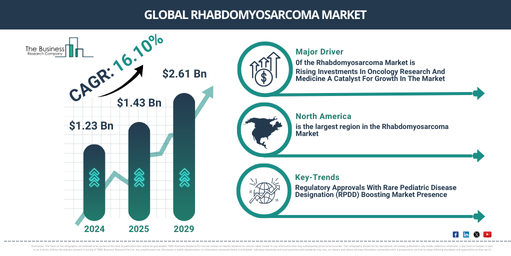
    The market for rhabdomyosarcoma has seen a swift expansion in the recent past. It’s projected that the market will escalate from $1.23 billion in 2024 to $1.43 billion in 2025, boasting a compound annual growth rate (CAGR) of 16.5%. This notable growth during the historical phase can be traced back to a rise in resources dedicated to cancer research, the presence of targeted treatments, advancements in surgical methods and strategies, development in pediatric oncology initiatives, and enhanced health care policies.

    What Growth Rate Is Forecasted for the Rhabdomyosarcoma Market by 2029?

    Predictions suggest a substantial surge in the rhabdomyosarcoma market size over the forthcoming years, anticipated to reach $2.61 billion by 2029 with a compound annual growth rate (CAGR) of 16.1%. The projected growth in the specified period is a result of factors like a deeper knowledge of cancer biology, upgraded prognosis tools, the emphasis on early detection and prevention, expansion of the global oncology networks, and the incorporation of multi-disciplinary treatment methods. The forecast period is also expected to witness trends such as advancements in immunotherapy, the use of liquid biopsy for early detection, organoids for drug testing, advanced radiotherapy techniques and progressing regenerative medicine.

    Download The Free Sample Report Here:

    https://www.thebusinessresearchcompany.com/sample.aspx?id=21276&type=smp

    Which Key Companies Are Shaping the Future of the Rhabdomyosarcoma Market?

    Major companies operating in the rhabdomyosarcoma market are Pfizer Inc., Merck & Co Inc., Bristol-Myers Squibb Company, Thermo Fisher Scientific Inc., AstraZeneca PLC, Novartis AG, Eli Lilly and Company, Gilead Sciences Inc., GE HealthCare Technologies Inc., Eisai Co Ltd., Ipsen S.A., Elekta AB, Acrivon Therapeutics Inc., Larvol Inc., Oasmia Pharmaceutical AB, Immix Biopharma Inc., Cellectar Biosciences Inc., Lantern Pharma Inc., ApconiX Ltd., Oncoheroes Biosciences Inc.

    Which Factors Are Driving Demand in the Rhabdomyosarcoma Industry?

    The growth of the rhabdomyosarcoma market is anticipated to be propelled forward by the rise in investments directed towards oncology research and medicine. These financial contributions, provided by governments, pharmaceutical corporations, research institutions, and private investors, are aimed at furthering the comprehension and treatment of cancer, as well as its prevention and diagnosis. Factors such as a growing global cancer burden, progress in precision medicine, the high demand for novel therapies, increased clinical trials, funding initiatives, and the emergence of targeted treatments and immunotherapy are intensifying the investments towards oncology research and medicine. These investments are beneficial for rhabdomyosarcoma as they contribute to progress in early detection, advancement in treatment options, funding for clinical trials, enhancement of pediatric cancer care facilities and the innovation in the research to understand the progression and biology of the disease better. For instance, IQVIA, an Indian IT firm offering advanced analytics, indicated in May 2024 that global spending on cancer medicine escalated to $223 billion in 2023, exhibiting a $25 billion rise from 2022, and is forecasted to touch $409 billion by 2028. Hence, the rhabdomyosarcoma market is fuelled by the increase in oncology research and medicine investments. In addition to this, the rhabdomyosarcoma market’s growth is predicted to be driven by improvements in healthcare facilities. These establishments, such as hospitals, clinics, and diagnostic centers, cater to the treatment and support of patients. Increased investment in healthcare infrastructure, an emphasis on patient-oriented care, demographic growth, and aging are among the factors leading to the advancement in healthcare facilities. Rhabdomyosarcoma is instrumental in driving improvements in healthcare facilities as it necessitates innovative diagnostic tools, new treatment protocols, and comprehensive care approaches which further enhance oncology research, pediatric cancer treatment, and development of targeted therapies. For instance, according to the American Health Care Association, a US-based nonprofit organization, in May 2023, the United States had 6,129 hospitals, marking a 0.591% increase from the preceding year, which recorded 6,093 hospitals. Therefore, the rhabdomyosarcoma market is propelled by the enhancement in healthcare facilities.

    Request For A Customized Report:

    https://www.thebusinessresearchcompany.com/customise?id=21276&type=smp

    How Is the Rhabdomyosarcoma Market Segmented by Several Divisions?

    The rhabdomyosarcoma market covered in this report is segmented –

    1) By Type: Embryonal Rhabdomyosarcoma, Alveolar Rhabdomyosarcoma, Other Types

    2) By Treatment: Surgery, Radiation Therapy, Chemotherapy, Stem Cell Therapy

    3) By Diagnosis: Imaging Tests, X-Ray, Computed Tomography Scan, Magnetic Resonance Imaging Scan, Positron Emission Tomography Scan, Bone Scan, Biopsy, Needle Biopsy, Surgical Biopsy

    Subsegments:

    1) By Embryonal Rhabdomyosarcoma: Botryoid Rhabdomyosarcoma, Spindle Cell Rhabdomyosarcoma

    2) Alveolar Rhabdomyosarcoma (ARMS): Fusion-Positive ARMS, Fusion-Negative ARMS

    3) Other Types of Rhabdomyosarcoma: Pleomorphic Rhabdomyosarcoma, Mixed-Type Rhabdomyosarcoma, Sclerosing Rhabdomyosarcoma

    What are the Emerging Market Trends Driving the Growth of the Rhabdomyosarcoma Industry?

    Leading firms in the rhabdomyosarcoma market are securing regulatory permissions with the rare pediatric disease designation (RPDD) for their drugs to broaden their scope and consolidate their standing in the rhabdomyosarcoma treatment sector. The RPDD is a unique status awarded by regulatory bodies to promote the creation of remedies for grave or fatal rare diseases, predominantly affecting kids. For example, in January 2022, Immix Biopharma, Inc., an American biotech firm, was given the RPDD for IMX-110, a treatment for rhabdomyosarcoma in children, by the Food and Drug Administration, a US government agency. IMX-110 is the inaugural clinical-stage product within the SMARxT Tissue-Specific Platform. It includes a poly-kinase inhibitor and apoptosis initiator that is delivered deeply into the tumor microenvironment. IMX-110 is intended to build up at the desired therapeutic sites at a rate 3 to 5 times faster than standard treatments. The drug targets the cancer, cancer-associated fibroblasts, and immune cells or tumor-associated macrophages, cutting off the connections between the tumor and its metabolic and structural support, resulting in tumor apoptosis.

    Access The Full Report Here:

    https://www.thebusinessresearchcompany.com/report/rhabdomyosarcoma-global-market-report

    Which Regions Are Driving Growth in the Rhabdomyosarcoma Market?

    North America was the largest region in the rhabdomyosarcoma market in 2024. Asia-Pacific is expected to be the fastest-growing region in the forecast period. The regions covered in the rhabdomyosarcoma market report are Asia-Pacific, Western Europe, Eastern Europe, North America, South America, Middle East, Africa.

    Purchase The Full Report Today:

    https://www.thebusinessresearchcompany.com/purchaseoptions.aspx?id=21276

    This Report Delivers Insight On:

    1. How big is the rhabdomyosarcoma market, and how is it changing globally?

    2. Who are the major companies in the rhabdomyosarcoma market, and how are they performing?

    3. What are the key opportunities and risks in the rhabdomyosarcoma market right now?

    4. Which products or customer segments are growing the most in the rhabdomyosarcoma market?

    5. What factors are helping or slowing down the growth of the rhabdomyosarcoma market?

    About The Business Research Company:

    With over 15000+ reports from 27 industries covering 60+ geographies, The Business Research Company has built a reputation for offering comprehensive, data-rich research and insights. Armed with 1,500,000 datasets, the optimistic contribution of in-depth secondary research, and unique insights from industry leaders, you can get the information you need to stay ahead in the game.

    Get in touch with us:

    The Business Research Company: https://www.thebusinessresearchcompany.com/

    Americas +1 310-496-7795

    Asia +44 2071930708

    Europe +44 7882 955267

    Email us at info@tbrc.info

    Follow us on:

    LinkedIn: https://in.linkedin.com/company/the-business-research-company

    YouTube: https://www.youtube.com/channel/UC24_fI0rV8cR5DxlCpgmyFQ

    Global Market Model: https://www.thebusinessresearchcompany.com/global-market-model
  • Molluscum Contagiosum (MC) Treatment Market Size to Exceed $3.89 Billion by 2029 | Growth and Industry Trends

    Molluscum Contagiosum (MC) Treatment Market Size to Exceed $3.89 Billion by 2029 | Growth and Industry Trends

    Claim your 30% discount on Global Market Reports with code ONLINE30. Limited time only.

    How Has the Molluscum Contagiosum (MC) Treatment Market Grown from 2024 to 2025?

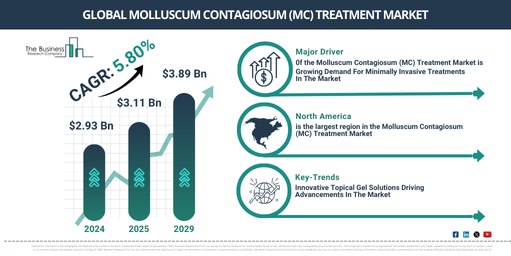
    The molluscum contagiosum (MC) treatment market has seen robust growth in the previous years. The estimated rise will be from $2.93 billion in 2024 to $3.11 billion in 2025, indicating a compound annual growth rate (CAGR) of 6.2%. The growth in the historical period can be attributed to factors such as the growing awareness about skin infections and respective treatments, an upturn in pediatric cases, expansion in healthcare expenditure, an increase in the count of immunocompromised individuals, and higher funding from private and governmental entities.

    What Growth Rate Is Anticipated for the Molluscum Contagiosum (MC) Treatment Market in the Coming Years?

    Anticipations are high for the molluscum contagiosum (MC) treatment market to exhibit robust growth in the coming years, reaching an impressive $3.89 billion by the year 2029 with a compound annual growth rate (CAGR) of 5.8%. The rise throughout the forecast period can be traced back to a growing inclination towards non-invasive procedures, an escalating incidence of skin conditions, amplified healthcare demand, an increased prevalence of chronic illnesses, and the growing accessibility of sophisticated treatment options. Key trends expected throughout the forecast period encompass a gravitation towards cosmetic treatments, the progression of topical delivery systems, a transition towards home-based treatments, advancements in cryotherapy, and an emphasis on pediatric treatment choices.

    Download The Free Sample Report Here:

    https://www.thebusinessresearchcompany.com/sample.aspx?id=21225&type=smp

    Who Are the Leading Companies in the Molluscum Contagiosum (MC) Treatment Market?

    Major companies operating in the molluscum contagiosum (MC) treatment market are Verrica Pharmaceuticals, Novan Inc., Veloce BioPharma LLC, Gurina Foundation, Competition Deep Dive, Azafaros, Polaryx Therapeutics, Abbott Medtronic, Merck & Co., Inc., Pfizer Inc., Siemens Healthcare GmbH, Novartis, Ligand Pharmaceuticals Incorporated, Aclaris Therapeutics Inc., Verrica Pharmaceuticals Inc., Nielsen BioSciences Inc., MedCara Pharmaceuticals LLC, Gurina Foundation, Veloce BioPharma LLC, Labo ACM

    What Are the Key Drivers of the Molluscum Contagiosum (MC) Treatment Market?

    The growing preference for less harmful treatments is projected to fuel the expansion of the molluscum contagiosum treatment market. These treatments cause minor disruption to the body, typically via small or non-existent incisions. The popularity of these treatments is due to their potential to decrease recovery periods, reduce surgical complications, and improve patient results compared to conventional approaches. Cryotherapy and laser therapy are minimally invasive techniques used for molluscum contagiosum treatment, resulting in efficient removal, less recuperation time, and minimal scarring. The occasional, widespread lesions in molluscum contagiosum are best handled by these treatments which usually involve fewer appointments. For example, in February 2024, the American Academy of Facial Plastic and Reconstructive Surgery, a non-profit organization in the US, claimed that in 2023, 83% of all medical procedures – that is, 35 million – were minimally invasive, leaving only 17% as traditional surgical procedures. Thus, the mounting interest in minimally invasive treatments is steering the growth of the molluscum contagiosum treatment market.

    Request For A Customized Report:

    https://www.thebusinessresearchcompany.com/customise?id=21225&type=smp

    What Are the Key Market Segments in the Molluscum Contagiosum (MC) Treatment Industry?

    The molluscum contagiosum (MC) treatment market covered in this report is segmented –

    1) By Type: Molluscum Contagiosum Virus (MCV) -1, Molluscum Contagiosum Virus (MCV) -2, Molluscum Contagiosum Virus (MCV) -3, Molluscum Contagiosum Virus (MCV) -4

    2) By Treatment Type: Topical Therapy, Immune-Modulators And Procedural Treatments

    3) By Route Of Administration: Topical, Oral

    4) By End User: Hospitals, Dermatology Clinics, Homecare Settings, Other End Users

    Subsegments:

    1) By Molluscum Contagiosum Virus (MCV) -1: Topical Treatments, Cryotherapy, Curettage

    2) By Molluscum Contagiosum Virus (MCV) -2: Topical Treatments, Cryotherapy, Curettage

    3) By Molluscum Contagiosum Virus (MCV) -3: Topical Treatments, Cryotherapy, Curettage

    4) By Molluscum Contagiosum Virus (MCV) -4: Topical Treatments, Cryotherapy, Curettage

    What Are the Latest Trends in the Molluscum Contagiosum (MC) Treatment Market?

    Key players in the molluscum contagiosum (MC) treatment market are prioritizing the creation of novel products, like topical gels, to maximize effectiveness, ensure patient adherence, and offer non-invasive treatment alternatives. Topical gels are semi-solid mediums applied to skin or mucous membranes for targeted treatment or medical benefits. For example, in April 2024, US-based biopharmaceutical firm Ligand Pharmaceuticals Incorporated introduced Pelthos Therapeutics to market Zelsuvmi (brazier) topical gel, 10.3% – marking the first Food and Drug Administration-approved at-home MC treatment for kids and adults over one-year-old. This gel, which releases nitric oxide, disrupts viral replication and aids in lesion clearance. Zelsuvmi provides a non-invasive, pain-free substitute for traditional, in-office procedures like cryotherapy or curettage, hence being a feasible and user-friendly treatment choice for patients aged one year or higher.

    Access The Full Report Here:

    https://www.thebusinessresearchcompany.com/report/molluscum-contagiosum-mc-treatment-global-market-report

    What Are the Key Regional Markets in the Molluscum Contagiosum (MC) Treatment Industry?

    North America was the largest region in the molluscum contagiosum (MC) treatment market in 2024. Asia-Pacific is expected to be the fastest-growing region in the forecast period. The regions covered in the molluscum contagiosum (MC) treatment market report are Asia-Pacific, Western Europe, Eastern Europe, North America, South America, Middle East, Africa.

    Purchase The Full Report Today:

    https://www.thebusinessresearchcompany.com/purchaseoptions.aspx?id=21225

    This Report Delivers Insight On:

    1. How big is the molluscum contagiosum (mc) treatment market, and how is it changing globally?

    2. Who are the major companies in the molluscum contagiosum (mc) treatment market, and how are they performing?

    3. What are the key opportunities and risks in the molluscum contagiosum (mc) treatment market right now?

    4. Which products or customer segments are growing the most in the molluscum contagiosum (mc) treatment market?

    5. What factors are helping or slowing down the growth of the molluscum contagiosum (mc) treatment market?

    About The Business Research Company:

    With over 15000+ reports from 27 industries covering 60+ geographies, The Business Research Company has built a reputation for offering comprehensive, data-rich research and insights. Armed with 1,500,000 datasets, the optimistic contribution of in-depth secondary research, and unique insights from industry leaders, you can get the information you need to stay ahead in the game.

    Get in touch with us:

    The Business Research Company: https://www.thebusinessresearchcompany.com/

    Americas +1 310-496-7795

    Asia +44 2071930708

    Europe +44 7882 955267

    Email us at info@tbrc.info

    Follow us on:

    LinkedIn: https://in.linkedin.com/company/the-business-research-company

    YouTube: https://www.youtube.com/channel/UC24_fI0rV8cR5DxlCpgmyFQ

    Global Market Model: https://www.thebusinessresearchcompany.com/global-market-model
  • Minimal Residual Disease Industry Insights 2025 – Market Forecast for Executives and Planners

    Minimal Residual Disease Industry Insights 2025 – Market Forecast for Executives and Planners

    Claim your 30% discount on Global Market Reports with code ONLINE30. Limited time only.

    How Has the Minimal Residual Disease Market Size Changed, over the years?

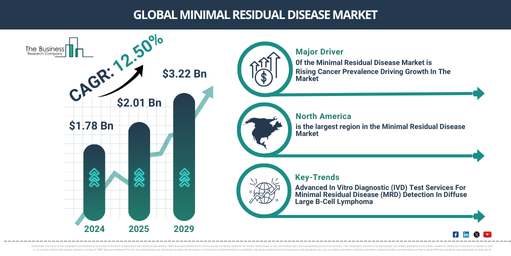
    The market size for minimal residual disease has experienced quick expansion in the past few years. It is projected to increase from $1.78 billion in 2024 to $2.01 billion in 2025, with a compound annual growth rate (CAGR) of 12.9%. Factors contributing to its growth during the historic period include a rise in cancer cases, increased spending on research and development, improved affordability of healthcare, an increased occurrence of blood cancer, and heightened public awareness.

    How Much Will the Minimal Residual Disease Market Be Worth in 2029?

    Expectations suggest that the minimal residual disease market will undergo substantial growth in the coming years, potentially reaching a value of $3.22 billion by 2029, with a compound annual growth rate (CAGR) of 12.5%. This predicted growth during the forecast period is linked to several factors: an increase in cancer patients, a surge in government-driven awareness programs, improved healthcare affordability, heightened disposable income in burgeoning economies, and initiatives by governmental bodies to enhance cancer awareness. Major forecast period trends encompass developments in next-generation sequencing (NGS) technology, standardization of MRD testing, the adoption of personalized MRD monitoring, progress in liquid biopsy technologies, and therapies targeted at minimal residual disease.

    Download The Free Sample Report Here:

    https://www.thebusinessresearchcompany.com/sample.aspx?id=21224&type=smp

    Which is the Largest Company in the Minimal Residual Disease Market?

    Major companies operating in the minimal residual disease market are Thermo Fisher Scientific Inc., Amgen Inc., Laboratory Corporation of America Holdings (LabCorp), Quest Diagnostics Incorporated, Agilent Technologies Inc., Sysmex Corporation, Bio-Rad Laboratories Inc., Qiagen N.V., Exact Sciences Corporation, Kite Pharma Inc., Natera Inc., Foundation Medicine Inc., NeoGenomics Inc., Guardant Health Inc., Grail LLC, Tempus AI Inc., Veracyte Inc., Adaptive Biotechnologies Corporation, Invivoscribe Inc., Mission Bio Inc., ArcherDx Inc.

    What Are the Main Market Drivers in the Minimal Residual Disease Industry?

    The minimal residual disease market’s growth is anticipated to be driven by the rising incidence of cancer. Cancer, a group of diseases defined by the uncontrolled proliferation and spread of aberrant cells within the body, is becoming more common due to reasons such as an aging demographic, increased contact with environmental carcinogens, unhealthy lifestyles, and hereditary susceptibilities. The growing frequency of cancer heightens the requirement for accurate MRD testing to identify any remaining cancer cells, allowing for early detection and tailored treatments. This enhances the prediction of recurrence and improves patient results. For instance, the National Cancer Institute (NCI), a government agency based in the US, reported in May 2024 that nearly 20 million new cancer cases and 9.7 million cancer-related deaths were recorded worldwide in 2022, with forecasts for 2040 predicting 29.9 million new instances and 15.3 million cancer-related fatalities. Consequently, the escalating incidence of cancer is fueling the expansion of the minimal residual disease market.

    Request For A Customized Report:

    https://www.thebusinessresearchcompany.com/customise?id=21224&type=smp

    How Is the Minimal Residual Disease Market Segments Structured?

    The minimal residual disease market covered in this report is segmented –

    1) By Detection Target: Lymphoma, Leukemia, Solid Tumors, Other Detection Targets

    2) By Test Technique: Flow Cytometry, Polymerase Chain Reaction (PCR), Next Generation Sequencing (NGS), Other Test Techniques

    3) By End-User: Banking, Financial Services, And Insurance (BFSI), Retail And E-Commerce, Hospitals, Diagnostic Laboratories, Research Institutions

    Subsegments:

    1) By Lymphoma: Hodgkin Lymphoma, Non-Hodgkin Lymphoma

    2) By Leukemia: Acute Lymphoblastic Leukemia, Acute Myeloid Leukemia, Chronic Lymphocytic Leukemia, Chronic Myeloid Leukemia

    3) By Solid Tumors: Breast Cancer, Lung Cancer, Colorectal Cancer, Prostate Cancer

    4) By Other Detection Targets: Multiple Myeloma, Neuroblastoma, Sarcomas

    What Strategic Trends Are Transforming the Minimal Residual Disease Market?

    Pioneering businesses in the minimal residual disease (MRD) market are prioritizing the development of innovative in vitro diagnostic (IVD) examination services as they strive for personalized treatment options that enhance patient results. IVD testing is a laboratory-based diagnostic approach that identify the remaining cancer cells post-treatment, allowing predictions regarding recurrence and refining therapy. For example, Adaptive Biotechnologies Corporation, an American biotech firm, introduced clonoSEQ Assay, a MRD detection solution for patients with diffuse large B-cell lymphoma (DLBCL) in December 2022. The test utilizes circulating tumor DNA (ctDNA) in blood specimens to provide a supremely sensitive, non-intrusive method of tracking cancer development and identifying early relapse indicators. This assay equips doctors with a more accurate comprehension of a patient’s disease load, aiding in the customization of treatment strategies. The debut of this clonoSEQ Assay, the first MRD test for DLBCL covered by Medicare, ensures its wide availability across all treatment schedules and periods.

    Access The Full Report Here:

    https://www.thebusinessresearchcompany.com/report/minimal-residual-disease-global-market-report

    Which Global Regions Offer the Highest Growth in the Minimal Residual Disease Market?

    North America was the largest region in the minimal residual disease market in 2024. Asia-Pacific is expected to be the fastest-growing region in the forecast period. The regions covered in the minimal residual disease market report are Asia-Pacific, Western Europe, Eastern Europe, North America, South America, Middle East, Africa.

    Purchase The Full Report Today:

    https://www.thebusinessresearchcompany.com/purchaseoptions.aspx?id=21224

    This Report Delivers Insight On:

    1. How big is the minimal residual disease market, and how is it changing globally?

    2. Who are the major companies in the minimal residual disease market, and how are they performing?

    3. What are the key opportunities and risks in the minimal residual disease market right now?

    4. Which products or customer segments are growing the most in the minimal residual disease market?

    5. What factors are helping or slowing down the growth of the minimal residual disease market?

    About The Business Research Company:

    With over 15000+ reports from 27 industries covering 60+ geographies, The Business Research Company has built a reputation for offering comprehensive, data-rich research and insights. Armed with 1,500,000 datasets, the optimistic contribution of in-depth secondary research, and unique insights from industry leaders, you can get the information you need to stay ahead in the game.

    Get in touch with us:

    The Business Research Company: https://www.thebusinessresearchcompany.com/

    Americas +1 310-496-7795

    Asia +44 2071930708

    Europe +44 7882 955267

    Email us at info@tbrc.info

    Follow us on:

    LinkedIn: https://in.linkedin.com/company/the-business-research-company

    YouTube: https://www.youtube.com/channel/UC24_fI0rV8cR5DxlCpgmyFQ

    Global Market Model: https://www.thebusinessresearchcompany.com/global-market-model
  • Market Analysis on Minjuvi Or Monjuvi Industry – Insights for Corporate Strategy and R&D

    Market Analysis on Minjuvi Or Monjuvi Industry – Insights for Corporate Strategy and R&D

    Claim your 30% discount on Global Market Reports with code ONLINE30. Limited time only.

    What Are the Projected Market Size and Growth Rates for the Minjuvi Or Monjuvi Market From 2025 To 2029?

    In recent years, the market size for minjuvi or monjuvi has seen a XX% increase (HCAGR). The market is projected to expand from $XX million in 2024 to $XX million in 2025, showing a compound annual growth rate (CAGR) of XX%. Such growth during the historic period can be linked to a concentrated attention towards the approval of combination drugs, the extension of access programs, the implementation of reimbursement policies that favor targeted therapies, the high death rate from untreated relapsed DLBCL, and an escalating demand for biologics within oncology.

    What Is the Projected Market Size of the Minjuvi Or Monjuvi Market?

    In the coming years, the minjuvi or monjuvi market is forecasted to experience an XX (FCAGR) expansion. It’s projected to augment to a hefty $XX million in 2029, with a compound annual growth rate (CAGR) of XX%. The predicted growth during this period could be ascribed to several factors such as increasing attention towards old age patient groups, heightened awareness surrounding healthcare, the escalating use of CD19-focused therapies, public and NGO assistance in cancer research, and a surge in cancer survival rates. The key trends during the projected period encompass the innovation of monoclonal antibodies, the preference for orphan drug designation, a shift favoring immunotherapy over traditional chemotherapy, the integration of artificial intelligence within oncology drug development, and the inception of biosimilars.

    Download The Free Sample Report Here:

    https://www.thebusinessresearchcompany.com/sample.aspx?id=20155&type=smp

    Who are the Major Competitors in the Minjuvi Or Monjuvi Market Outlook?

    Major companies operating in the minjuvi or monjuvi market include Incyte Corporation

    What Is Fueling Growth in the Minjuvi Or Monjuvi Market?

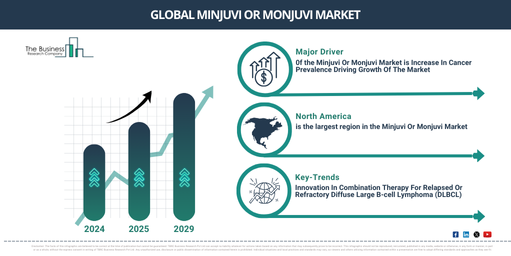
    The proliferation of cancer is anticipated to catalyze the expansion of the Minjuvi or Monjuvi market. Cancer, a term for a collection of disorders marked by random growth and distribution of asymmetrical cells within the body, is becoming increasingly common due to aging, unhealthy lifestyles such as smoking and poor diets, environmental contaminants, hereditary elements, and better diagnostic methods. For the treatment of relapsed or refractory diffuse large B-cell lymphoma (DLBCL), Minjuvi or Monjuvi is paired with lenalidomide, offering a more effective strategy to target cancer cells. An example of this trend is a report issued in August 2024 by the Australian Institute of Health and Welfare, a national agency providing information and statistics about Australia’s healthcare and welfare. Predictions state that by 2034, there will be almost 209,000 fresh cancer diagnoses in Australia, marking a substantial rise from the projected 169,000 cases in 2024. Furthermore, by 2024, cancer is expected to be the cause of death for three in every ten individuals in the country. Therefore, the mounting prevalence of cancer is contributing to the growth of the Minjuvi or Monjuvi market.

    Request For A Customized Report:

    https://www.thebusinessresearchcompany.com/customise?id=20155&type=smp

    Which Minjuvi Or Monjuvi Market Segments Are Growing the Fastest?

    The minjuvi or monjuvi market covered in this report is segmented –

    1) By Indication: Relapsed Or Refractory Diffuse Large B-cell Lymphoma (DLBCL), Other B-Cell Malignancies

    2) By Formulation: Intravenous Infusion, Pre-Filled Syringes

    3) By Distribution Channel: Hospitals, Oncology Clinics, Specialty Pharmacies, Home Healthcare Services

    4) By End User Patients: Adult Patients, Geriatric Patients

    Which Industry Trends Are Shaping the Future of the Minjuvi Or Monjuvi Market?

    One prominent trend observed in the minjuvi or monjuvi market involves the creation of groundbreaking therapies like combination therapy, aimed at enhancing the effectiveness of treatment for patients suffering from B-cell malignancies, specifically those with relapsed or refractory DLBCL. The concept of combination therapy includes the use of two or more therapies or medications in tandem to address a health issue, often by targeting varied disease pathways or mechanisms. For instance, in February 2024, Minjuvi (tafasitamab) was launched in Brazil by Knight Therapeutics Inc., a pharmaceutical firm based in Canada, through its affiliate United Medical Ltda. Used in tandem with lenalidomide, Minjuvi (tafasitamab) serves as an immunotherapy treatment for patients diagnosed with relapsed or refractory diffuse large B-cell lymphoma (DLBCL) who aren’t eligible for autologous stem cell transplantation. According to NCCN guidelines, this combination has demonstrated a notably high objective response rate, earning it the status of a preferred secondary treatment.

    Access The Full Report Here:

    https://www.thebusinessresearchcompany.com/report/minjuvi-or-monjuvi-global-market-report

    Which Countries Are Leading the Minjuvi Or Monjuvi Market?

    North America was the largest region in the minjuvi or monjuvi market in 2024. Asia-Pacific is expected to be the fastest-growing region in the forecast period. The regions covered in the minjuvi or monjuvi market report are Asia-Pacific, Western Europe, Eastern Europe, North America, South America, Middle East and Africa.

    Purchase The Full Report Today:

    https://www.thebusinessresearchcompany.com/purchaseoptions.aspx?id=20155

    This Report Delivers Insight On:

    1. How big is the minjuvi or monjuvi market, and how is it changing globally?

    2. Who are the major companies in the minjuvi or monjuvi market, and how are they performing?

    3. What are the key opportunities and risks in the minjuvi or monjuvi market right now?

    4. Which products or customer segments are growing the most in the minjuvi or monjuvi market?

    5. What factors are helping or slowing down the growth of the minjuvi or monjuvi market?

    About The Business Research Company:

    With over 15000+ reports from 27 industries covering 60+ geographies, The Business Research Company has built a reputation for offering comprehensive, data-rich research and insights. Armed with 1,500,000 datasets, the optimistic contribution of in-depth secondary research, and unique insights from industry leaders, you can get the information you need to stay ahead in the game.

    Get in touch with us:

    The Business Research Company: https://www.thebusinessresearchcompany.com/

    Americas +1 310-496-7795

    Asia +44 2071930708

    Europe +44 7882 955267

    Email us at info@tbrc.info

    Follow us on:

    LinkedIn: https://in.linkedin.com/company/the-business-research-company

    YouTube: https://www.youtube.com/channel/UC24_fI0rV8cR5DxlCpgmyFQ

    Global Market Model: https://www.thebusinessresearchcompany.com/global-market-model
  • Microtome Market Trends Report 2025 – For Business Development and Strategy Teams

    Microtome Market Trends Report 2025 – For Business Development and Strategy Teams

    Claim your 30% discount on Global Market Reports with code ONLINE30. Limited time only.

    What Is the Forecast for the Microtome Market Growth in 2025?

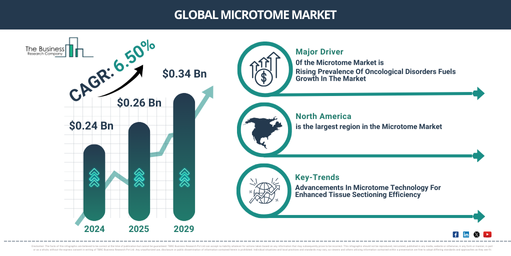
    In the past few years, the microtome market has experienced robust growth. The market, which was valued at $0.24 billion in 2024, is projected to reach $0.26 billion in 2025, growing at a compound annual growth rate (CAGR) of 6.9%. This significant growth during the historic period may be due to expanding awareness of early diagnosis, higher demand for biopsies, a rise in the elderly population, increased demand for microtomes, and escalating incidences of cancer.

    What Is the Forecast for the Microtome Market Size Through 2029?

    In the coming years, the microtome market size is projected to experience substantial growth, expanding to $0.34 billion by 2029, with a compound annual growth rate (CAGR) of 6.5%. Factors influencing this projected growth during the forecast period include an increasing incidence of chronic diseases, a rise in the elderly population, a growing prevalence of oncological disorders, a surge in the use of microtomes in neuroscience, and the expansion of precision medicine. Anticipated trends for the forecast period encompass progress in automation, the development of motorized microtomes with customizable features, the launch of diamond-coated blades, integration with imaging systems, and advancements in high-resolution sectioning.

    Download The Free Sample Report Here:

    https://www.thebusinessresearchcompany.com/sample.aspx?id=21223&type=smp

    What are the Key Market Players in Microtome Market and How They’re Evolving?

    Major companies operating in the microtome market are Cardinal Health Inc., Leica Biosystems Nussloch GmbH, Sakura Finetek Inc., RWD Life Science Co. Ltd., SM Scientific Instruments Pvt. Ltd., Narang Medical Limited, AGD Biomedicals Pvt. Ltd., Diapath S.p.A., Milestone Medical, Boeckeler Instruments Inc., SLEE Medical GmbH, microTec Laborgeräte GmbH, Campden Instruments, Precisionary Instruments LLC, Jinhua YIDI Medical Appliance Co. Ltd., Medimeas, Histo-Line Laboratories, MEDITE Medical GmbH, Erma Inc., CellPath Ltd., Laboid International

    What Are the Primary Growth Drivers in the Microtome Market?

    The increase in oncological disorder cases is anticipated to fuel the expansion of the microtome market. Oncological disorders are diseases characterized by the unregulated multiplication and spread of anomalous cells, often resulting in cancer. The growing incidence of such disorders is attributed to numerous factors, such as an aging demographic, heightened exposure to environmental carcinogens, unhealthy living habits, and genetic susceptibilities. Microtomes aid pathologists in cutting tissue accurately, allowing them to investigate cancer cells and ascertain the nature and advancement of the tumor. For example, as per the World Health Organization, an international public health organization based in Switzerland, almost 20 million fresh cases of cancer were reported in 2022, leading to around 10 million deaths from the disease in February 2024. The forecasts indicate that the yearly cancer occurrence could escalate to 35 million by 2050, signifying a 77% growth from the 2022 statistics. Therefore, the escalating incidence of oncological disorders is propelling the microtome market’s expansion.

    Request For A Customized Report:

    https://www.thebusinessresearchcompany.com/customise?id=21223&type=smp

    What Are the Leading Segments in the Global Microtome Industry?

    The microtome market covered in this report is segmented –

    1) By Product: Instruments, Accessories

    2) By Technology: Fully Automated, Semi-Automated, Manual

    3) By Application: Disease Diagnosis, Medical Research

    4) By End-User: Hospitals, Clinical And Diagnostic Laboratories, Academic Research Centers, Other End-Users

    Subsegments:

    1) By Instruments: Rotary Microtome, Cryostat Microtome, Vibrating Microtome, Ultramicrotome, Sledge Microtome

    2) By Accessories: Blades And Knives, Blade Holders, Specimen Holders, Sectioning Aids, Safety Covers And Disposables

    What Are the Key Market Trends in the Microtome Industry?

    Leading businesses within the microtome market are concentrating on creating cutting-edge devices like tissue sectioning tools to elevate laboratory efficiency and enhance results in both medicinal and research areas. Tissue sectioning tools, which enable the creation of precise and uniform tissue slices for histology, research, and diagnostics, are vital laboratory instruments. For example, in February 2023, Precisionary Instruments, a manufacturer of microtomes based in the United States, introduced a new range of rotary microtomes. These offer significant benefits such as a robust, steady core perfect for serial sectioning, ensuring uniform outputs with large sample amounts. The RF-600 manual model carries two clamp holders for various cassette dimensions, while the RF-800 and RF-1000 models are equipped with LCD touchscreen controls. The RF-1000 model offers completely automated cutting features that can be operated through a touchscreen, control panel, or foot pedal for heightened productivity. These microtomes are specifically designed for sectioning tissue embedded in paraffin for histology studies.

    Access The Full Report Here:

    https://www.thebusinessresearchcompany.com/report/microtome-global-market-report

    What Is the Regional Outlook for the Microtome Market?

    North America was the largest region in the microtome market in 2024. The regions covered in the microtome market report are Asia-Pacific, Western Europe, Eastern Europe, North America, South America, Middle East, Africa.

    Purchase The Full Report Today:

    https://www.thebusinessresearchcompany.com/purchaseoptions.aspx?id=21223

    This Report Delivers Insight On:

    1. How big is the microtome market, and how is it changing globally?

    2. Who are the major companies in the microtome market, and how are they performing?

    3. What are the key opportunities and risks in the microtome market right now?

    4. Which products or customer segments are growing the most in the microtome market?

    5. What factors are helping or slowing down the growth of the microtome market?

    About The Business Research Company:

    With over 15000+ reports from 27 industries covering 60+ geographies, The Business Research Company has built a reputation for offering comprehensive, data-rich research and insights. Armed with 1,500,000 datasets, the optimistic contribution of in-depth secondary research, and unique insights from industry leaders, you can get the information you need to stay ahead in the game.

    Get in touch with us:

    The Business Research Company: https://www.thebusinessresearchcompany.com/

    Americas +1 310-496-7795

    Asia +44 2071930708

    Europe +44 7882 955267

    Email us at info@tbrc.info

    Follow us on:

    LinkedIn: https://in.linkedin.com/company/the-business-research-company

    YouTube: https://www.youtube.com/channel/UC24_fI0rV8cR5DxlCpgmyFQ

    Global Market Model: https://www.thebusinessresearchcompany.com/global-market-model
  • Restless Leg Syndrome Industry Insights 2025 – Market Forecast for Executives and Planners

    Restless Leg Syndrome Industry Insights 2025 – Market Forecast for Executives and Planners

    Claim your 30% discount on Global Market Reports with code ONLINE30. Limited time only.

    How Has the Restless Leg Syndrome Market Size Changed, over the years?

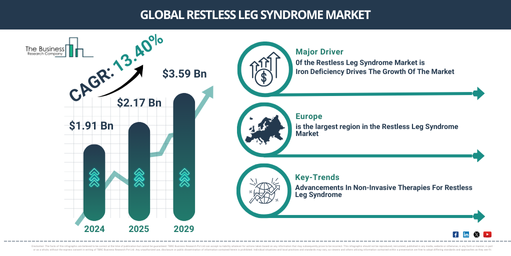
    The market size for restless leg syndrome has experienced significant expansion recently. Its growth will surge from $1.91 billion in 2024, to $2.17 billion in 2025, maintaining a compound annual growth rate (CAGR) of 13.8%. The progress during the historic period can be credited to a rise in alcohol consumption, expanded health insurance coverage, accessibility of over-the-counter drugs, escalating public health campaigns, and an upward trend in mental health problems.

    How Much Will the Restless Leg Syndrome Market Be Worth in 2029?

    The market size of restless leg syndrome is predicted to witness a rapid expansion in the forthcoming years. The speculated increase suggests a surge to $3.59 billion by 2029, with a compound annual growth rate (CAGR) of 13.4%. The acceleration in growth during this projected period is related to factors such as higher investments in healthcare, the progression of awareness and educational drives, an uptick in early diagnosis, a rise in government funding, and more participation in clinical trials. The upcoming trends predicted in the forecast period entail AI-driven individualistic treatment strategies, advanced neurostimulation devices, the use of deep learning algorithms for diagnosis, brainwave adjustment technology, and wearable exoskeletons for aiding leg movements.

    Download The Free Sample Report Here:

    https://www.thebusinessresearchcompany.com/sample.aspx?id=21274&type=smp

    Which is the Largest Company in the Restless Leg Syndrome Market?

    Major companies operating in the restless leg syndrome market are Pfizer Inc., Roche Holding AG, Merck & Co Inc., Novartis International AG, GlaxoSmithKline plc, Teva Pharmaceutical Industries Ltd., Boehringer Ingelheim International GmbH, Baxter International Inc., Astellas Pharma Inc., UCB S.A., Kyowa Kirin Co Ltd., Amneal Pharmaceuticals Inc., Lupin Pharmaceuticals Inc., Alembic Pharmaceuticals Limited, Mundipharma International Limited, Azurity Pharmaceuticals LLC, Otsuka Pharmaceutical Co Ltd., Horizon Therapeutics plc, Mylan N.V., Apollo Pharmacy Limited

    What Are the Main Market Drivers in the Restless Leg Syndrome Industry?

    The escalating occurrence of iron deficiency is anticipated to boost the expansion of the restless leg syndrome market in the future. Iron deficiency signifies a state where the body is lacking enough iron for the production of adequate healthy red blood cells, which can result in symptoms like weariness, weakness, and a pale complexion. This escalating occurrence is attributed to factors like inadequate dietary intake, loss of blood, disorders of malabsorption, and heightened iron needs during periods of pregnancy or growth. The treatment for restless leg syndrome frequently includes iron supplements or diet modifications, which not only soothe the disturbing urges and sensations but also aim to rectify the deficient iron levels by replenishing the body’s iron reserves, enhancing the production of red blood cells, and reestablishing suitable neurological operations. For example, as per the Nation Health Service England, a governmental agency based in England, there were 191,927 admissions due to iron deficiency in the 2023-24 period in January 2025, indicating an 11% rise compared to 2022-23. As a result, the escalating occurrence of iron deficiency propels the expansion of the restless leg syndrome market.

    Request For A Customized Report:

    https://www.thebusinessresearchcompany.com/customise?id=21274&type=smp

    How Is the Restless Leg Syndrome Market Segments Structured?

    The restless leg syndrome market covered in this report is segmented –

    1) By Type: Primary Restless Legs Syndrome, Secondary Restless Legs Syndrome

    2) By Treatment Type: Medicine And Devices, Surgery

    3) By Route Of Administration: Oral, Injectable

    4) By Distribution Channel: Hospital Pharmacy, Retail Pharmacy, Online Pharmacy

    5) By Application: Neurological Treatment, Sleep Disorders, Movement Disorders, Symptom Management

    Subsegments:

    1) By Primary Restless Legs Syndrome: Idiopathic Restless Legs Syndrome, Hereditary Restless Legs Syndrome

    2) By Secondary Restless Legs Syndrome: Iron Deficiency-related Restless Legs Syndrome, Chronic Kidney Disease-related Restless Legs Syndrome, Pregnancy-related Restless Legs Syndrome, Medication-induced Restless Legs Syndrome

    What Strategic Trends Are Transforming the Restless Leg Syndrome Market?

    Leading corporations in the restless leg syndrome (RLS) market are concentrating their efforts towards the development of groundbreaking solutions like novel non-invasive treatments. These are new-age medical interventions that don’t necessitate surgical procedures or skin penetration, and they strive to alleviate different conditions employing state-of-the-art methodologies such as electrical stimulation, light therapy or external equipment. A prime example is Varco Leg Care, an Indian enterprise specializing in consumer healthcare technology, which was granted FDA De Novo clearance for its concoction, the NTX100 Tonic Motor Activation (TOMAC) System, in April 2023. The TOMAC System, specifically engineered for the moderate to severe symptoms associated with RLS, augments sleep grade in patients who are medication-resistant. It functions by sparking the peroneal nerves bilaterally to induce tonic and continuous muscle activation that is in harmony with sleep. This action aids in mitigating the symptoms characteristic of restless leg syndrome (RLS).

    Access The Full Report Here:

    https://www.thebusinessresearchcompany.com/report/restless-leg-syndrome-global-market-report

    Which Global Regions Offer the Highest Growth in the Restless Leg Syndrome Market?

    Europe was the largest region in the restless leg syndrome market in 2024. North-America is expected to be the fastest-growing region in the forecast period. The regions covered in the restless leg syndrome market report are Asia-Pacific, Western Europe, Eastern Europe, North America, South America, Middle East, Africa.

    Purchase The Full Report Today:

    https://www.thebusinessresearchcompany.com/purchaseoptions.aspx?id=21274

    This Report Delivers Insight On:

    1. How big is the restless leg syndrome market, and how is it changing globally?

    2. Who are the major companies in the restless leg syndrome market, and how are they performing?

    3. What are the key opportunities and risks in the restless leg syndrome market right now?

    4. Which products or customer segments are growing the most in the restless leg syndrome market?

    5. What factors are helping or slowing down the growth of the restless leg syndrome market?

    About The Business Research Company:

    With over 15000+ reports from 27 industries covering 60+ geographies, The Business Research Company has built a reputation for offering comprehensive, data-rich research and insights. Armed with 1,500,000 datasets, the optimistic contribution of in-depth secondary research, and unique insights from industry leaders, you can get the information you need to stay ahead in the game.

    Get in touch with us:

    The Business Research Company: https://www.thebusinessresearchcompany.com/

    Americas +1 310-496-7795

    Asia +44 2071930708

    Europe +44 7882 955267

    Email us at info@tbrc.info

    Follow us on:

    LinkedIn: https://in.linkedin.com/company/the-business-research-company

    YouTube: https://www.youtube.com/channel/UC24_fI0rV8cR5DxlCpgmyFQ

    Global Market Model: https://www.thebusinessresearchcompany.com/global-market-model
  • Mepsevii Forecast Report – Designed for Decision Makers and Product Teams

    Mepsevii Forecast Report – Designed for Decision Makers and Product Teams

    Claim your 30% discount on Global Market Reports with code ONLINE30. Limited time only.

    What Is the Estimated Market Size of the Mepsevii Market In 2029?

    In recent times, the mepsevii market has seen an XX (HCAGR). Forecasts predict that it will expand from $XX million in 2024, reaching $XX million in 2025, with a compound annual growth rate (CAGR) of XX%. This growth during the historic period is said to be driven by a heightened focus on individualized healthcare, increasing healthcare spending, a better understanding of uncommon genetic disorders and an increase in awareness amongst healthcare professionals. Additionally, an encouraging and supportive regulatory landscape has also contributed to this trend.

    What Growth Rate Is Forecasted for the Mepsevii Market by 2029?

    Over the next few years, the mepsevii market is anticipated to experience a XX (FCAGR) increase. By 2029, it is projected to reach a market value of $XX million, growing at a compound annual growth rate (CAGR) of XX%. This projected growth is attributed to factors such as the increased number of clinical trials, the rising incidence of uncommon diseases, the growing interest in stem cell therapies, the increased prevalence of mucopolysaccharidosis, and the growing application of innovative treatment methods. Significant trends during this forecast period include the progress in therapies for rare diseases, the advancements in medical technology, telemedicine innovations, the evolution of drug delivery methods, and the development and accessibility of advanced treatment alternatives.

    Download The Free Sample Report Here:

    https://www.thebusinessresearchcompany.com/sample.aspx?id=20154&type=smp

    Which Key Companies Are Shaping the Future of the Mepsevii Market?

    Major companies operating in the mepsevii market include Ultragenyx Pharmaceutical Inc

    Which Factors Are Driving Demand in the Mepsevii Industry?

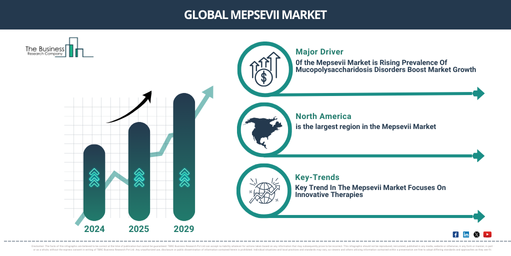
    There has been an anticipation for the mepsevii market to expand due to the rising instances of mucopolysaccharidosis (MPS) disorders. MPS disorders are genetic diseases instigated by specific enzyme deficiencies that obstruct the decomposition of glycosaminoglycans, which consequently accumulate in various bodily organs, causing chronic damages. Advances in diagnostic methodologies, heightened healthcare provider awareness, and increased accessibility to genetic testing have led to an uptick in the instances of MPS disorders due to early and accurate disease detection. Mepsevii, by offering enzyme replacement therapy, replenishes the absent enzyme, beta-glucuronidase, effectively treating MPS VII. By doing so, it aids in preventing the damaging build-up of certain sugars in the body, thereby alleviating symptoms and decelerating the disease’s progression. As stated by Medscape, a US-based medical information and continuing education platform for health professionals and clinicians, in February 2022, the global prevalence of all variations of MPS is estimated to be 1 in every 16,000 to 30,000 births. It is, therefore, the increasing prevalence of MPS disorders that is propelling the growth of the mepsevii market.

    Request For A Customized Report:

    https://www.thebusinessresearchcompany.com/customise?id=20154&type=smp

    How Is the Mepsevii Market Segmented by Several Divisions?

    The mepsevii market covered in this report is segmented –

    1) By Formulation: Intravenous Infusion, Pre-Filled Syringes

    2) By Indication: Mucopolysaccharidosis VII (MPS VII, Sly syndrome), Enzyme Replacement Therapy

    3) By Distribution Channel: Hospitals, Specialty Clinics, Home Healthcare Services, Pharmacies

    4) By End User Patients: Pediatric Patients, Adult Patients

    What are the Emerging Market Trends Driving the Growth of the Mepsevii Industry?

    The primary trend currently dominating the mepsevii market is the emergence of innovative therapies. This includes treatment like replacement therapy, which is specifically designed to handle the root genetic causes of mucopolysaccharidosis VII and improve patient prognoses. Replacement therapy is a medical procedure that supplies the body with a substance it requires but cannot produce in adequate amounts. This procedure can be beneficial for addressing hormonal imbalances, enzyme insufficiencies or organ malfunctions. For instance, Ultragenyx Pharmaceutical Inc., an American biopharmaceutical firm, recently disclosed that Mepsevii (vestronidase alfa), an enzyme replacement therapy, has been granted reimbursement approval in Spain for mucopolysaccharidosis VII (MPS VII) treatment, also known as Sly syndrome. This approval signifies a notable advancement in making treatment more readily accessible for patients in Spain who are diagnosed with this rare and fatal genetic ailment. MPS VII hampers the body’s capacity to metabolize certain sugars, resulting in accumulation of detrimental substances in the body.

    Access The Full Report Here:

    https://www.thebusinessresearchcompany.com/report/mepsevii-global-market-report

    Which Regions Are Driving Growth in the Mepsevii Market?

    North America was the largest region in the mepsevii market in 2024. Asia-Pacific is expected to be the fastest-growing region in the forecast period. The regions covered in the mepsevii market report are Asia-Pacific, Western Europe, Eastern Europe, North America, South America, Middle East and Africa.

    Purchase The Full Report Today:

    https://www.thebusinessresearchcompany.com/purchaseoptions.aspx?id=20154

    This Report Delivers Insight On:

    1. How big is the mepsevii market, and how is it changing globally?

    2. Who are the major companies in the mepsevii market, and how are they performing?

    3. What are the key opportunities and risks in the mepsevii market right now?

    4. Which products or customer segments are growing the most in the mepsevii market?

    5. What factors are helping or slowing down the growth of the mepsevii market?

    About The Business Research Company:

    With over 15000+ reports from 27 industries covering 60+ geographies, The Business Research Company has built a reputation for offering comprehensive, data-rich research and insights. Armed with 1,500,000 datasets, the optimistic contribution of in-depth secondary research, and unique insights from industry leaders, you can get the information you need to stay ahead in the game.

    Get in touch with us:

    The Business Research Company: https://www.thebusinessresearchcompany.com/

    Americas +1 310-496-7795

    Asia +44 2071930708

    Europe +44 7882 955267

    Email us at info@tbrc.info

    Follow us on:

    LinkedIn: https://in.linkedin.com/company/the-business-research-company

    YouTube: https://www.youtube.com/channel/UC24_fI0rV8cR5DxlCpgmyFQ

    Global Market Model: https://www.thebusinessresearchcompany.com/global-market-model

  • Respiratory Syncytial Virus (RSV) Diagnostics Market Trends Report 2025 – For Business Development and Strategy Teams

    Respiratory Syncytial Virus (RSV) Diagnostics Market Trends Report 2025 – For Business Development and Strategy Teams

    Claim your 30% discount on Global Market Reports with code ONLINE30. Limited time only.

    What Is the Forecast for the Respiratory Syncytial Virus (RSV) Diagnostics Market Growth in 2025?

    The market for diagnosing respiratory syncytial virus (RSV) has seen a swift increase in size over the past few years. It’s projected to expand from $1.01 billion in 2024 to $1.12 billion in 2025, boasting a compound annual growth rate (CAGR) of 11.0%. This robust growth in the past can be credited to the surging use of point-of-care diagnostics, government-led efforts to enhance RSV diagnostics, an increasing number of respiratory illnesses in children, a rise in infections acquired in hospitals, and boosted demand for non-invasive techniques for diagnosis.

    What Is the Forecast for the Respiratory Syncytial Virus (RSV) Diagnostics Market Size Through 2029?

    In the upcoming years, the respiratory syncytial virus (RSV) diagnostics market is projected to witness a significant expansion. The market is anticipated to reach $1.68 billion by 2029 with a Compound Annual Growth Rate (CAGR) of 10.7%. The expansion during the forecasted period is associated with factors such as a rise in infections of respiratory syncytial virus (RSV), increased awareness around RSV diagnostics, enlargement of healthcare infrastructure, escalating global healthcare expenditure, and the growing elderly population. Noteworthy trends during the projected period include progressions in molecular diagnostic methodologies, technological enhancements in diagnostic tools, embracement of rapid diagnostic tests (RDTs), growth of diagnostic test collections by organizations, and advancements in the genetic and proteomic diagnostics.

    Download The Free Sample Report Here:

    https://www.thebusinessresearchcompany.com/sample.aspx?id=21273&type=smp

    What are the Key Market Players in Respiratory Syncytial Virus (RSV) Diagnostics Market and How They’re Evolving?

    Major companies operating in the respiratory syncytial virus (RSV) diagnostics market are F. Hoffmann-La Roche Ltd., Thermo Fisher Scientific Inc., Abbott Laboratories, Siemens Healthineers AG, Merck KGaA, Becton, Dickinson, and Company, Quest Diagnostics Incorporated, Hologic Inc., BIOMÉRIEUX SA, QuidelOrtho Corporation, Bio-Rad Laboratories Inc., DiaSorin S.p.A., Acon Laboratories Inc., Cepheid Inc., Meridian Bioscience Inc., Seegene Inc., LumiraDx Ltd., Sekisui Diagnostics Ltd., Boditech Med Inc., Trinity Biotech plc, R-Biopharm AG, GeneTex Inc., Creative Diagnostics, Certest Biotec S.L., Clarity Diagnostics LLC, Genes 2Me LLP, Coris BioConcept S.A.

    What Are the Primary Growth Drivers in the Respiratory Syncytial Virus (RSV) Diagnostics Market?

    The increase in respiratory illnesses is projected to propel the expansion of the market for respiratory syncytial virus (RSV) diagnostics. Respiratory ailments, including disorders that affect the lungs and airways, limit oxygen exchange and breathing, and involve diseases such as chronic obstructive pulmonary disease (COPD), pneumonia, respiratory infections, and asthma. The growing rate of these ailments is attributed to factors like escalating air pollution, tobacco usage, climate alterations, urbanization, and the rising instances of infections and chronic conditions like asthma and COPD. RSV diagnostics are critical for detecting respiratory diseases, enabling precise and prompt identification of RSV infections and allowing for efficient treatment, control, and prevention of severe complications, particularly in susceptible groups. For example, the Australian Institute of Health and Welfare reported in November 2024 that approximately 2.8 million people (11% of the population) in Australia were diagnosed with asthma in 2022. Asthma represented 2.5% of the total disease load and 35% of the load from all respiratory illnesses in 2023. It resulted in 467 deaths in 2022, equating to 1.8 deaths per 100,000 individuals and accounting for 0.2% of all deaths. As a result, the increasing rate of respiratory illnesses is driving the growth of the RSV diagnostics market.

    Request For A Customized Report:

    https://www.thebusinessresearchcompany.com/customise?id=21273&type=smp

    What Are the Leading Segments in the Global Respiratory Syncytial Virus (RSV) Diagnostics Industry?

    The respiratory syncytial virus (RSV) diagnostics market covered in this report is segmented –

    1) By Product Type: Kits And Assays, Instruments, Reagents, Other Product Types

    2) By Technology: Molecular Diagnostics, Immunoassays, Rapid Antigen Detection Tests, Other Technologies

    3) By Sample Type: Nasal Swabs, Throat Swabs, Bronchoalveolar Lavage

    4) By End User: Hospitals, Diagnostic Laboratories, Home Care Settings, Other End Users

    Subsegments:

    1) By Kits And Assays: Rapid Antigen Detection Kits, PCR-based Assays, Serological Assays

    2) By Instruments: PCR Analyzers, Immunoassay Analyzers

    3) By Reagents: PCR Reagents, Antibody Reagents, Enzyme Reagents

    4) By Other Product Types: Sample Collection Devices, Transport Media

    What Are the Key Market Trends in the Respiratory Syncytial Virus (RSV) Diagnostics Industry?

    Leading businesses in the respiratory syncytial virus (RSV) diagnostics market are stepping up their game by creating groundbreaking products like respiratory virus combination testing, which offers precise and efficient solutions to clients. This diagnostic technique allows for the concurrent detection of assorted respiratory viruses including influenza and respiratory syncytial virus (RSV), among others, using a single sample, thereby aiding in the diagnosis of viral infections. For instance, in January 2023, the U.S.-based clinical laboratory testing firm, Sonora Quest Laboratories, introduced a diagnostic test for COVID-19, RSC, and influenza. This multi-target analysis, enabled by a single patient’s sample, efficiently detects COVID-19, respiratory syncytial virus (RSV), and influenza. Combining these three tests into a single procedure simplifies the testing routine and minimizes the need for multiple samples. This expedited identification of all three infections aids medical professionals in making swifter therapeutic choices, with potential beneficial impact on patient recovery. Furthermore, this test could play a crucial role in curbing the proliferation of these viruses, thus decreasing the risk of contagion to others.

    Access The Full Report Here:

    https://www.thebusinessresearchcompany.com/report/respiratory-syncytial-virus-rsv-diagnostics-global-market-report

    What Is the Regional Outlook for the Respiratory Syncytial Virus (RSV) Diagnostics Market?

    North America was the largest region in the respiratory syncytial virus (RSV) diagnostics market in 2024. Asia-Pacific is expected to be the fastest-growing region in the forecast period. The regions covered in the respiratory syncytial virus (RSV) diagnostics market report are Asia-Pacific, Western Europe, Eastern Europe, North America, South America, Middle East, Africa.

    Purchase The Full Report Today:

    https://www.thebusinessresearchcompany.com/purchaseoptions.aspx?id=21273

    This Report Delivers Insight On:

    1. How big is the respiratory syncytial virus (rsv) diagnostics market, and how is it changing globally?

    2. Who are the major companies in the respiratory syncytial virus (rsv) diagnostics market, and how are they performing?

    3. What are the key opportunities and risks in the respiratory syncytial virus (rsv) diagnostics market right now?

    4. Which products or customer segments are growing the most in the respiratory syncytial virus (rsv) diagnostics market?

    5. What factors are helping or slowing down the growth of the respiratory syncytial virus (rsv) diagnostics market?

    About The Business Research Company:

    With over 15000+ reports from 27 industries covering 60+ geographies, The Business Research Company has built a reputation for offering comprehensive, data-rich research and insights. Armed with 1,500,000 datasets, the optimistic contribution of in-depth secondary research, and unique insights from industry leaders, you can get the information you need to stay ahead in the game.

    Get in touch with us:

    The Business Research Company: https://www.thebusinessresearchcompany.com/

    Americas +1 310-496-7795

    Asia +44 2071930708

    Europe +44 7882 955267

    Email us at info@tbrc.info

    Follow us on:

    LinkedIn: https://in.linkedin.com/company/the-business-research-company

    YouTube: https://www.youtube.com/channel/UC24_fI0rV8cR5DxlCpgmyFQ

    Global Market Model: https://www.thebusinessresearchcompany.com/global-market-model