Month: July 2025

  • Biosimilar Monoclonal Antibodies Industry Valued at $12.79 Billion by 2029 With CAGR of 8.5% | Size and Share Insights

    Biosimilar Monoclonal Antibodies Industry Valued at $12.79 Billion by 2029 With CAGR of 8.5% | Size and Share Insights

    Claim your 30% discount on Global Market Reports with code ONLINE30. Limited time only.

    What Are the Projected Market Size and Growth Rates for the Biosimilar Monoclonal Antibodies Market From 2025 To 2029?

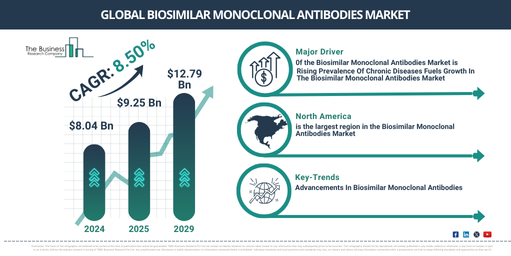
    The market size of biosimilar monoclonal antibodies has seen a quick expansion in the previous years and is expected to rise from $8.04 billion in 2024 to $9.25 billion in 2025, growing at a compound annual rate (CAGR) of 15.1%. Factors contributing to this growth over the past years include expiry of patents, heightened Biosimilars awareness, government-led initiatives, increased funding by pharmaceutical organizations, and a rise in the acceptance of Biosimilars by medical practitioners and patients.

    What Is the Projected Market Size of the Biosimilar Monoclonal Antibodies Market?

    In the forthcoming years, the biosimilar monoclonal antibodies market is projected to witness robust growth. It is predicted to reach a valuation of $12.79 billion in 2029, with a compound annual growth rate (CAGR) of 8.5%. This predicted growth during the forecast period can be credited to factors like increasing biologic spending, expansion of biosimilar portfolio, customizing biosimilar therapy, and growing public intrigue in biosimilars. The anticipated trends throughout this period comprise of therapeutic expansion, individualized biosimilars, alliances and partnerships, biosimilar autoinjectors and devices, and biobetters.

    Download The Free Sample Report Here:

    https://www.thebusinessresearchcompany.com/sample.aspx?id=3412&type=smp

    Who are the Major Competitors in the Biosimilar Monoclonal Antibodies Market Outlook?

    Major companies operating in the biosimilar monoclonal antibodies market include Pfizer Inc., Novartis AG, AbbVie Inc., Coherus BioSciences, Biocon Limited, Amgen Inc., Boehringer Ingelheim International GmbH, Celltrion Inc., BioXpress Therapeutics SA, Intas Pharmaceuticals Limited, Genor BioPharma Co. Ltd., BIOCAD, Dr. Reddy’s Laboratories Ltd., 3SBio Inc., Reliance Life Sciences, Hisun Pharmaceuticals, Celgen Biopharmaceuticals, Torrent Pharmaceuticals Ltd., Cadila Healthcare Ltd., Shanghai Henlius Biotech Inc., Teva Pharmaceutical Industries Ltd., Alvotech, Xentria Inc., Lazuline Biotech Private Limited, Epygen Biotech Pvt Ltd., Mabpharm Limited, Qilu Pharmaceutical Co. Ltd., Chiatai Tianqing Pharmaceutical Group Co. Ltd., YL Biologics Ltd., Aprogen Biologics, UNDBIO Co Ltd., Samsung Bioepis Co. Ltd., ISU Abxis Corp., Bio-Rad Laboratories Inc.

    What Is Fueling Growth in the Biosimilar Monoclonal Antibodies Market?

    Chronic diseases’ rising occurrence is projected to fuel the biosimilar monoclonal antibodies market. Biosimilar monoclonal antibodies address chronic conditions such as cancer, autoimmune diseases, and rheumatoid arthritis. Biosimilar versions of monoclonal antibodies like trastuzumab, bevacizumab, and rituximab are utilized in cancer therapy. Furthermore, cancer incidence is on an upward trend annually. For example, reports from the U.S.-based public health agency, the Centers for Disease Control and Prevention (CDC), in February 2024 indicated an increasing number of Americans dealing with multiple chronic diseases, with 42% managing two or more, and 12% coping with five or more. Hence, the surge in chronic diseases is projected to prompt the expansion of the biosimilar monoclonal antibodies market.

    Request For A Customized Report:

    https://www.thebusinessresearchcompany.com/customise?id=3412&type=smp

    Which Biosimilar Monoclonal Antibodies Market Segments Are Growing the Fastest?

    The biosimilar monoclonal antibodies market covered in this report is segmented –

    1) By Type: Synthetic Chemicals, Biopharmaceuticals, Other Types

    2) By Compound: Infliximab, Rituximab, Abciximab, Trastuzumab, Adalimumab, Bevacizumab

    3) By Application: Chronic & Autoimmune Diseases, Oncology, Other Applications

    Subsegments:

    1) By Synthetic Chemicals: Small Molecule Drugs, Chemical Synthesis Products

    2) By Biopharmaceuticals: Monoclonal Antibodies, Recombinant Proteins, Vaccines, Other Biopharmaceuticals

    3) By Other Types: Antibody-Drug Conjugates, Fusion Proteins, Biosimilars Of Other Biologics

    Which Industry Trends Are Shaping the Future of the Biosimilar Monoclonal Antibodies Market?

    Prominent businesses in the biosimilar monoclonal antibodies market are concentrating their efforts on creating economical biosimilar therapies in order to maintain a competitive edge. These therapies are biologic medical products that closely resemble previously approved reference monoclonal antibodies, intended to provide cost-effective treatment alternatives for a range of diseases such as cancer and autoimmune disorders. To illustrate, in 2022, Pfizer, a pharmaceutical corporation based in the United States, introduced Abrilada, a biosimilar of AbbVie’s Humira (adalimumab). Abrilada possesses a safety and efficacy profile equivalent to the original, but with substantial cost reductions for both patients and healthcare systems. Additionally, it takes advantage of streamlined approval procedures and strong manufacturing facilities, increasing patient access to vital treatments. This pattern signifies a wider shift in the industry to tackle escalating healthcare costs while continuing to provide superior therapeutic choices for patients.

    Access The Full Report Here:

    https://www.thebusinessresearchcompany.com/report/biosimilar-monoclonal-antibodie-global-market-report

    Which Countries Are Leading the Biosimilar Monoclonal Antibodies Market?

    The countries covered in the biosimilar monoclonal antibodies market report are Australia, Brazil, China, France, Germany, India, Indonesia, Japan, Russia, South Korea, UK, USA, Italy, Spain, Canada.

    Purchase The Full Report Today:

    https://www.thebusinessresearchcompany.com/purchaseoptions.aspx?id=3412

    This Report Delivers Insight On:

    1. How big is the biosimilar monoclonal antibodies market, and how is it changing globally?

    2. Who are the major companies in the biosimilar monoclonal antibodies market, and how are they performing?

    3. What are the key opportunities and risks in the biosimilar monoclonal antibodies market right now?

    4. Which products or customer segments are growing the most in the biosimilar monoclonal antibodies market?

    5. What factors are helping or slowing down the growth of the biosimilar monoclonal antibodies market?

    About The Business Research Company:

    With over 15000+ reports from 27 industries covering 60+ geographies, The Business Research Company has built a reputation for offering comprehensive, data-rich research and insights. Armed with 1,500,000 datasets, the optimistic contribution of in-depth secondary research, and unique insights from industry leaders, you can get the information you need to stay ahead in the game.

    Get in touch with us:

    The Business Research Company: https://www.thebusinessresearchcompany.com/

    Americas +1 310-496-7795

    Asia +44 2071930708

    Europe +44 7882 955267

    Email us at info@tbrc.info

    Follow us on:

    LinkedIn: https://in.linkedin.com/company/the-business-research-company

    YouTube: https://www.youtube.com/channel/UC24_fI0rV8cR5DxlCpgmyFQ

    Global Market Model: https://www.thebusinessresearchcompany.com/global-market-model
  • Biosimilar Lymphocyte Modulator Market to Reach $2.86 Billion by 2029 | Key Drivers and Future Outlook

    Biosimilar Lymphocyte Modulator Market to Reach $2.86 Billion by 2029 | Key Drivers and Future Outlook

    Claim your 30% discount on Global Market Reports with code ONLINE30. Limited time only.

    What Is the Estimated Market Size of the Biosimilar Lymphocyte Modulator Market In 2029?

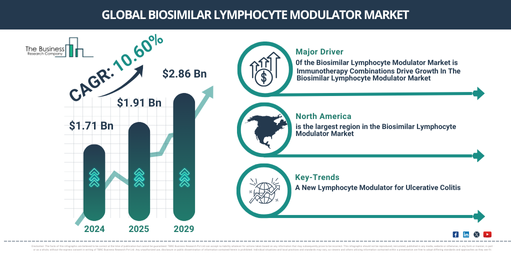
    The market for biosimilar lymphocyte modulator has seen expedited growth in previous years. The market is projected to increase from $1.71 billion in 2024 to $1.91 billion in 2025, representing an 11.5% compound annual growth rate (CAGR). This growth during the historic period can be credited to the escalating occurrence of immune-centric ailments, an enhanced comprehension of lymphocyte modulators, increasing government assistance to biosimilars, and the expansive development of these biosimilars.

    What Growth Rate Is Forecasted for the Biosimilar Lymphocyte Modulator Market by 2029?

    The market for biosimilar lymphocyte modulators is projected to experience substantial expansion in the forthcoming years, escalating to $2.86 billion in 2029 with a 10.6% compound annual growth rate (CAGR). This growth during the estimated period can be credited to a surge in patient requests for biosimilars, an expanding patient demographic, mounting demand for individualized medicine, a propensity for less invasive procedures, and the growth of the biologic drug catalog. The anticipated period will witness major trends such as the progression in biosimilar technology, guarantees of quality and effectiveness, patient-oriented strategies, biosimilars, and biologic novelty.

    Download The Free Sample Report Here:

    https://www.thebusinessresearchcompany.com/sample.aspx?id=3434&type=smp

    Which Key Companies Are Shaping the Future of the Biosimilar Lymphocyte Modulator Market?

    Major companies operating in the biosimilar lymphocyte modulator market include Pfizer Inc., Celltrion Inc., Genentech Inc., Novartis AG, Sandoz International GmbH, Fresenius Kabi AG, Biocon Ltd., Dr. Reddy’s Laboratories Ltd., Intas Pharmaceuticals Ltd., Lupin Limited, Stada Arzneimittel AG, Zydus Cadila, Hetero Drugs Limited, Torrent Pharmaceuticals Ltd., Glenmark Pharmaceuticals Ltd., Alvotech, Coherus BioSciences, Innovent Biologics, Shanghai Henlius Biotech, BioXpress Therapeutics SA, Mabion SA, Polpharma Biologics, Prestige BioPharma, Qilu Pharmaceutical, Shanghai Fosun Pharmaceutical Group Co. Ltd., Wockhardt Ltd., Amega Biotech

    Which Factors Are Driving Demand in the Biosimilar Lymphocyte Modulator Industry?

    The growth of the biosimilar lymphocyte modulator market is anticipated to be propelled by the combination of immunotherapy with other cancer treatments. Pairing immunotherapies or integrating immunotherapies with other cancer treatments like radiation or chemotherapy enhances the benefits derived from lymphocyte modulators. As reported by the Reinsurance Group of America, a reinsurance solutions provider based in the US, in January 2023, solely about 12% of all cancer patients are projected to benefit from immune checkpoint inhibitor therapy. Nevertheless, a multitude of new immunotherapy drugs are currently in the research phase, and clinical trials for various types of cancer are being set up. This combined approach saves patients from potentially deadly immune system reactions, therefore spurring the growth of the lymphocyte modulator market.

    Request For A Customized Report:

    https://www.thebusinessresearchcompany.com/customise?id=3434&type=smp

    How Is the Biosimilar Lymphocyte Modulator Market Segmented by Several Divisions?

    The biosimilar lymphocyte modulator market covered in this report is segmented –

    1) By Drug: Campath-1H, Natalizumab Biosimilar, Efalizumab – A1089-Anti-CD11a Biosimilar, Anti-CD38 Daratumumab Biosimilar, Anti-CS1 Elotuzumab Biosimilar

    2) By Disease: Arthritis, Diabetes, Multiple Myeloma, Enterocolitis, Multiple Sclerosis, Psoriasis, Other Diseases

    3) Distribution Channel: Online Pharmacies, direct to consumer

    Subsegments:

    1) By Campath-1H: Chronic Lymphocytic Leukemia (CLL) Treatment, Autoimmune Diseases Management

    2) By Natalizumab Biosimilar: Multiple Sclerosis Treatment, Crohn’s Disease Management

    3) By Efalizumab – A1089-Anti-CD11a Biosimilar: Psoriasis Treatment

    4) By Anti-CD38 Daratumumab Biosimilar: Multiple Myeloma Treatment

    5) By Anti-CS1 Elotuzumab Biosimilar: Multiple Myeloma Treatment

    What are the Emerging Market Trends Driving the Growth of the Biosimilar Lymphocyte Modulator Industry?

    Most of the prominent firms in the biosimilar lymphocyte modulator market are investing in the development of biosimilar variations of essential lymphocyte modulators. The aim of these efforts is to provide cost-effective substitutes, enhance patient access to necessary treatments, and facilitate improved management of autoimmune diseases and associated conditions. To illustrate, Pfizer Inc., an accomplished American pharmaceutical enterprise, made public in October 2023 that the U.S. Food and Drug Administration (FDA) had sanctioned VELSIPITY (etrasimod). This innovative lymphocyte modulator, VELSIPITY, is contrived to treat moderate to acute ulcerative colitis (UC). VELSIPITY (etrasimod) functions as a selective sphingosine-1-phosphate (S1P) receptor modulator that can change lymphocyte activity. S1P receptor modulators work by aiming at the receptors present on lymphocytes, a variant of white blood cell; this effectively confines them in lymph nodes and restricts their travel to regions of inflammation, like the gastrointestinal tract in cases of ulcerative colitis (UC). This reduced circulation of lymphocytes assists in lowering the immune response, which is advantageous in handling autoimmune disorders such as UC where inflammation is a fundamental problem.

    Access The Full Report Here:

    https://www.thebusinessresearchcompany.com/report/biosimilar-lymphocytes-modulator-global-market-report

    Which Regions Are Driving Growth in the Biosimilar Lymphocyte Modulator Market?

    The countries covered in the biosimilar lymphocyte modulator market report are Australia, Brazil, China, France, Germany, India, Indonesia, Japan, Russia, South Korea, UK, USA, Italy, Spain, Canada.

    Purchase The Full Report Today:

    https://www.thebusinessresearchcompany.com/purchaseoptions.aspx?id=3434

    This Report Delivers Insight On:

    1. How big is the biosimilar lymphocyte modulator market, and how is it changing globally?

    2. Who are the major companies in the biosimilar lymphocyte modulator market, and how are they performing?

    3. What are the key opportunities and risks in the biosimilar lymphocyte modulator market right now?

    4. Which products or customer segments are growing the most in the biosimilar lymphocyte modulator market?

    5. What factors are helping or slowing down the growth of the biosimilar lymphocyte modulator market?

    About The Business Research Company:

    With over 15000+ reports from 27 industries covering 60+ geographies, The Business Research Company has built a reputation for offering comprehensive, data-rich research and insights. Armed with 1,500,000 datasets, the optimistic contribution of in-depth secondary research, and unique insights from industry leaders, you can get the information you need to stay ahead in the game.

    Get in touch with us:

    The Business Research Company: https://www.thebusinessresearchcompany.com/

    Americas +1 310-496-7795

    Asia +44 2071930708

    Europe +44 7882 955267

    Email us at info@tbrc.info

    Follow us on:

    LinkedIn: https://in.linkedin.com/company/the-business-research-company

    YouTube: https://www.youtube.com/channel/UC24_fI0rV8cR5DxlCpgmyFQ

    Global Market Model: https://www.thebusinessresearchcompany.com/global-market-model
  • Biosimilar Interleukins Market Size to Exceed $20.79 Billion by 2029 | Growth and Industry Trends

    Biosimilar Interleukins Market Size to Exceed $20.79 Billion by 2029 | Growth and Industry Trends

    Claim your 30% discount on Global Market Reports with code ONLINE30. Limited time only.

    How Fast Is The Biosimilar Interleukins Market Expected to Grow Between 2025 And 2029?

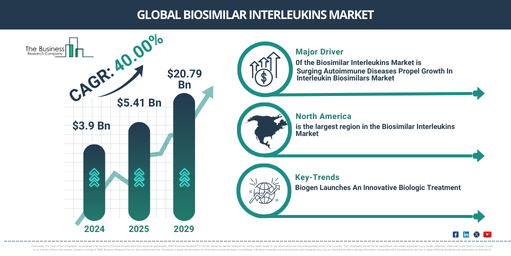
    In recent times, the biosimilar interleukins market has seen an explosive growth. The market, which was worth $3.9 billion in 2024, is forecasted to reach a value of $5.41 billion in 2025, at a compound annual growth rate (CAGR) of 39.0%. The significant growth seen in previous years can be linked to a rise in autoimmune diseases, growing knowledge of biosimilar interleukins, increased government backing for biosimilars, expansion of the biosimilar market and a rising demand from patients for biosimilars.

    What Growth Rate Is Anticipated for the Biosimilar Interleukins Market in the Coming Years?

    The market for biosimilar interleukins is predicted to witness significant expansion in the upcoming years, forecasting to reach a value of $20.79 billion by 2029, with a compounded annual growth rate of 40.0%. The expected upswing during the forecast period can be credited to factors such as a growing patient count, broader healthcare accessibility, a surge in personalized medicine demand, and increased preference for minimally invasive procedures. Major anticipated trends during this timeline include progress in biosimilar technology, targeted immunotherapies, quality checks and manufacturing, and worldwide collaboration.

    Download The Free Sample Report Here:

    https://www.thebusinessresearchcompany.com/sample.aspx?id=3433&type=smp

    Who Are the Leading Companies in the Biosimilar Interleukins Market?

    Major companies operating in the biosimilar interleukins market include Mabpharm Limitied, Gedeon Richter plc, Bio-Thera Solutions Ltd., Sunshine Guojian Pharmaceutical, Stada Arzneimittel AG, Teva Pharmaceutical Industries, 3SBio Inc., Shanghai Fosun Pharmaceuticals, Novartis AG, Pfizer Inc., Amgen Inc., F. Hoffmann-La Roche AG, Sanofi SA, Merck & Co. Inc., GlaxoSmithKline plc, Eli Lilly and Company, AstraZeneca plc, Qilu Pharmaceutical, Tonghua Dongbao, PROBIOMED S.A. de C.V., Biosidus S.A., LG Life Sciences, Viatris Inc.

    What Are the Key Drivers of the Biosimilar Interleukins Market?

    The rise in autoimmune diseases like psoriasis and rheumatoid arthritis is projected to significantly impact the interleukin biosimilars market positively in the upcoming years. Autoimmune diseases occur when immune cells are unable to differentiate between healthy cells and potentially harmful antibodies. Biologic drugs, such as anti-interleukin antibodies, have demonstrated immense clinical benefit in controlling these cells and governing their proliferation, activation, and migration. The National Institutes of Health (NIH), a reputable American biomedical research agency, indicated in February 2024 reports that the global incidence and prevalence of autoimmune diseases are projected to grow annually by 19.1% and 12.5%, respectively. Therefore, as autoimmune diseases become more common, the demand for biosimilar interleukins is expected to rise, propelling the market growth.

    Request For A Customized Report:

    https://www.thebusinessresearchcompany.com/customise?id=3433&type=smp

    What Are the Key Market Segments in the Biosimilar Interleukins Industry?

    The biosimilar interleukins market covered in this report is segmented –

    1) By Type: IL-17, IL-23, IL-1, IL-5, IL-6

    2) By Application: Psoriasis, Psoriatic Arthritis, Rheumatoid Arthritis, Asthma, Inflammatory Bowel Disease (IBD), Other Applications

    3) By Distribution Channel: Hospital Pharmacies, Online Pharmacies, Retail Pharmacies, Clinics, Research Institutes

    Subsegments:

    1) By IL-17: Autoimmune Disease Treatment, Inflammatory Disease Management

    2) By IL-23: Psoriasis Treatment, Inflammatory Bowel Disease (IBD) Treatment

    3) By IL-1: Rheumatoid Arthritis Management, Other Autoimmune Disorders

    4) By IL-5: Asthma Treatment, Eosinophilic Disorders

    5) By IL-6: Rheumatoid Arthritis Management, Inflammatory Disease Treatment

    What Are the Latest Trends in the Biosimilar Interleukins Market?

    Major corporations in the biosimilar interleukins market are creating innovative products like Tofidence (tocilizumab-bavi) to boost their market profitability. Tofidence is a monoclonal antibody that targets interleukin-6 receptors and is used in treating various inflammatory autoimmune disorders. For example, Biogen, an American biotech firm, received FDA approval for Tofidence (tocilizumab-bavi) as the initial biosimilar to reference Genentech’s Actemra (tocilizumab) in September 2023. Tofidence is dispensed through intravenous infusion and has been sanctioned for the treatment of severely active rheumatoid arthritis, polyarticular juvenile idiopathic arthritis, and systemic juvenile idiopathic arthritis.

    Access The Full Report Here:

    https://www.thebusinessresearchcompany.com/report/biosimilar-interleukin-global-market-report

    What Are the Key Regional Markets in the Biosimilar Interleukins Industry?

    The countries covered in the biosimilar interleukins market report are Australia, Brazil, China, France, Germany, India, Indonesia, Japan, Russia, South Korea, UK, USA, Italy, Spain, Canada.

    Purchase The Full Report Today:

    https://www.thebusinessresearchcompany.com/purchaseoptions.aspx?id=3433

    This Report Delivers Insight On:

    1. How big is the biosimilar interleukins market, and how is it changing globally?

    2. Who are the major companies in the biosimilar interleukins market, and how are they performing?

    3. What are the key opportunities and risks in the biosimilar interleukins market right now?

    4. Which products or customer segments are growing the most in the biosimilar interleukins market?

    5. What factors are helping or slowing down the growth of the biosimilar interleukins market?

    About The Business Research Company:

    With over 15000+ reports from 27 industries covering 60+ geographies, The Business Research Company has built a reputation for offering comprehensive, data-rich research and insights. Armed with 1,500,000 datasets, the optimistic contribution of in-depth secondary research, and unique insights from industry leaders, you can get the information you need to stay ahead in the game.

    Get in touch with us:

    The Business Research Company: https://www.thebusinessresearchcompany.com/

    Americas +1 310-496-7795

    Asia +44 2071930708

    Europe +44 7882 955267

    Email us at info@tbrc.info

    Follow us on:

    LinkedIn: https://in.linkedin.com/company/the-business-research-company

    YouTube: https://www.youtube.com/channel/UC24_fI0rV8cR5DxlCpgmyFQ

    Global Market Model: https://www.thebusinessresearchcompany.com/global-market-model
  • Biosimilar Hormones Industry Insights 2025 – Market Forecast for Executives and Planners

    Biosimilar Hormones Industry Insights 2025 – Market Forecast for Executives and Planners

    Claim your 30% discount on Global Market Reports with code ONLINE30. Limited time only.

    #How Has The Biosimilar Hormones Market Size Shifted, And What Is the Outlook Through 2034?

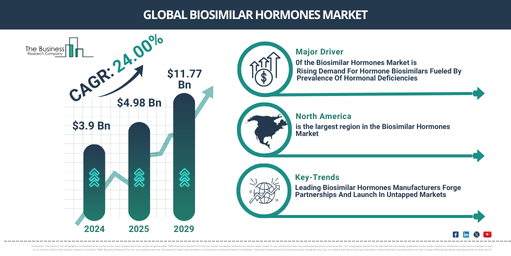
    The market size for biosimilar hormones has seen a significant increase recently. Its growth trajectory indicates a rise from $3.9 billion in 2024 to $4.98 billion in 2025 at a compound annual growth rate (CAGR) of 27.5%. Factors contributing to this upward trend during the historic period include the growing occurrence of chronic illnesses, the increasing elderly population, enhanced understanding of biosimilar hormones, and broader access to healthcare services.

    How Much Will the Biosimilar Hormones Market Be Worth in 2029?

    The market size of biosimilar hormones is predicted to experience significant expansion in the coming years, potentially reaching a value of $11.77 billion in 2029 with a compound annual growth rate (CAGR) of 24.0%. Factors contributing to this anticipated growth during the forecast period are an increase in hormone targets, patient acceptance, advancements in manufacturing processes, government backing, expanding clinical trial data, and wider access to healthcare facilities. Key trends predicted for the forecast period include the adoption of personalized hormone replacement, the introduction of new products, issues related to pricing and access, and a focus on patient-oriented care.

    Download The Free Sample Report Here:

    https://www.thebusinessresearchcompany.com/sample.aspx?id=3432&type=smp

    Which is the Largest Company in the Biosimilar Hormones Market?

    Major companies operating in the biosimilar hormones market include Teva Pharmaceutical Industries Ltd., Gedeon Richter Plc., Intas Pharmaceuticals Ltd., Biocon Limited, Mylan, Sanofi, Sandoz Group AG, LG Life Sciences, Ferring Pharmaceuticals, GC Pharma, Pfizer Inc., Dr. Reddy’s Laboratories, Amgen Inc., Eli Lilly and Company, Celltrion Inc., Samsungbioepis Co.Ltd, Merck & Co., Biogen Inc., Boehringer Ingelheim, Alvotech, BioXpress Therapeutics, Cipla Limited, Lupin Ltd., Stada Arzneimittel AG, Torrent Pharmaceuticals, Zydus Cadila, Accord Healthcare, Hetero Drugs, Wockhardt

    What Are the Main Market Drivers in the Biosimilar Hormones Industry?

    The biosimilar hormones market has grown due to the increasing need to address hormonal deficiencies, particularly in growth and metabolic hormones. Hormone therapies have advanced significantly throughout the years, which has only fueled a higher demand for products in this market sector. The British Medical Journal, a peer-reviewed medical journal based in the UK, reported in January 2022 that it is estimated that anywhere from 1 in 3,500 to 1 in 10,000 children globally suffer from GH deficiency (GHD). A Medscape report from June 2022 also highlighted the expectation that roughly 6,000 adults in the USA are likely to be diagnosed with a deficiency in growth hormones (GH). The steady occurrence of hormonal deficiencies and the subsequent need for treatment is a significant factor propelling the growth of the biosimilar hormones market.

    Request For A Customized Report:

    https://www.thebusinessresearchcompany.com/customise?id=3432&type=smp

    How Is the Biosimilar Hormones Market Segments Structured?

    The biosimilar hormones market covered in this report is segmented –

    1) By Type: Teriparatide Biosimilars, Follitropin Alfa Biosimilars, Insulin Biosimilars, Somatropin Biosimilars, Other Types

    2) By Application: Research & Biotechnology, Diagnostics, Biocatalysts, Therapeutics, Other Applications

    3) By Distribution Channel: Hospital And Retail Pharmacy, Online Pharmacy/pharmacy, Specialty Clinics

    Subsegments:

    1) By Teriparatide Biosimilars: Osteoporosis Treatment, Bone Health Maintenance

    2) By Follitropin Alfa Biosimilars: Infertility Treatment, Assisted Reproductive Technology (ART)

    3) By Insulin Biosimilars: Type 1 Diabetes Management, Type 2 Diabetes Management

    4) By Somatropin Biosimilars: Growth Hormone Deficiency Treatment, Pediatric Growth Disorders

    5) By Other Types: Thyroid Hormones, Corticosteroids

    What Strategic Trends Are Transforming the Biosimilar Hormones Market?

    Major figures in the biosimilar hormones market are employing several strategic approaches, including releasing new products in under-served regions, to broaden the reach of their drug to a larger demographic. They’re concentrating on diversifying the locations for their product launches to inflate sales and escalate profits. For example, Alvotech Holdings S.A., a Luxembourg-based biopharmaceutical enterprise with a focus on biosimilar medicine development, confirmed a collaboration with Fuji Pharma Co. Ltd., a pharmaceutical business from Japan, for the advancement of biosimilar drug contenders in Japan in February 2022. They have both pledged to enrich their strategic partnership with new components to facilitate the birth and promotion of biosimilar medication in Japan.

    Access The Full Report Here:

    https://www.thebusinessresearchcompany.com/report/biosimilar-hormone-global-market-report

    Which Global Regions Offer the Highest Growth in the Biosimilar Hormones Market?

    The countries covered in the biosimilar hormones market report are Australia, Brazil, China, France, Germany, India, Indonesia, Japan, Russia, South Korea, UK, USA, Italy, Spain, Canada.

    Purchase The Full Report Today:

    https://www.thebusinessresearchcompany.com/purchaseoptions.aspx?id=3432

    This Report Delivers Insight On:

    1. How big is the biosimilar hormones market, and how is it changing globally?

    2. Who are the major companies in the biosimilar hormones market, and how are they performing?

    3. What are the key opportunities and risks in the biosimilar hormones market right now?

    4. Which products or customer segments are growing the most in the biosimilar hormones market?

    5. What factors are helping or slowing down the growth of the biosimilar hormones market?

    About The Business Research Company:

    With over 15000+ reports from 27 industries covering 60+ geographies, The Business Research Company has built a reputation for offering comprehensive, data-rich research and insights. Armed with 1,500,000 datasets, the optimistic contribution of in-depth secondary research, and unique insights from industry leaders, you can get the information you need to stay ahead in the game.

    Get in touch with us:

    The Business Research Company: https://www.thebusinessresearchcompany.com/

    Americas +1 310-496-7795

    Asia +44 2071930708

    Europe +44 7882 955267

    Email us at info@tbrc.info

    Follow us on:

    LinkedIn: https://in.linkedin.com/company/the-business-research-company

    YouTube: https://www.youtube.com/channel/UC24_fI0rV8cR5DxlCpgmyFQ

    Global Market Model: https://www.thebusinessresearchcompany.com/global-market-model
  • Biosimilar Growth Hormones Market Trends Report 2025 – For Business Development and Strategy Teams

    Biosimilar Growth Hormones Market Trends Report 2025 – For Business Development and Strategy Teams

    Claim your 30% discount on Global Market Reports with code ONLINE30. Limited time only.

    #How Has the Biosimilar Growth Hormones Market Growth Performance Trended Historically, And What Lies Ahead?

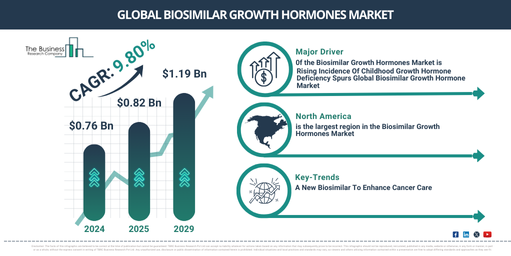
    In the past few years, there has been substantial growth in the market size of biosimilar growth hormones. Projected growth over the next year sees the market rising from $0.76 billion in 2024 to $0.82 billion in 2025, reflecting a compound annual growth rate (CAGR) of 8.4%. Factors such as increased demand for growth hormones, the expiration of patents, supporting clinical evidence, and an escalated number of clinical trials account for the growth observed during the historical period.

    What Is the Forecast for the Biosimilar Growth Hormones Market Size Through 2029?

    In the coming years, the biosimilar growth hormones market is anticipated to witness robust growth, expanding to $1.19 billion in 2029 at a compound annual growth rate (CAGR) of 9.8%. Several factors such as pediatric growth disorders, broader indications, rising diagnosis rates, and heightened awareness of biosimilar alternatives contribute to this growth during the forecast period. The forecast period will also see major trends like an emphasis on pediatric-centric biosimilars, the advent of biosimilar combinations, and improvements in dosing convenience.

    Download The Free Sample Report Here:

    https://www.thebusinessresearchcompany.com/sample.aspx?id=3391&type=smp

    What are the Key Market Players in Biosimilar Growth Hormones Market and How They’re Evolving?

    Major companies operating in the biosimilar growth hormones market include Amega Biotech, Biosidus S.A., Eli Lilly and Company, Ferring Pharmaceuticals, Genetech Inc., Merck & Co. Inc., Novartis AG, Novo Nordisk A/S, Sanofi S.A., USV Private Limited, Zhongshan Hygene Biopharm Co. Ltd., Biopartners And LG Chem, Boehringer Ingelheim International GmbH, Celltrion Inc., Dr. Reddy’s Laboratories Ltd., Gedeon Richter Plc., Genor Biopharma Co. Ltd., Hetero Drugs Limited, Intas Pharmaceuticals Ltd., LG Chem Ltd., Lupin Limited, Mabion S.A., Mundipharma International Limited, Panacea Biotec Limited, Pfenex Inc., PlantForm Corporation

    What Are the Primary Growth Drivers in the Biosimilar Growth Hormones Market?

    The escalation in the global biosimilar growth hormone market is being fueled by the increasing incidences of growth hormone deficiencies in children. This deficiency stems from damage to either the pituitary gland or hypothalamus, as a result of abnormalities that may have taken place either prior to the child’s birth (congenital) or during or post birth (acquired). For example, September 2023 data from Hormones Australia by the Endocrine Society of Australia (ESA) – a leading Australian authority on endocrine-related conditions and diseases, assessed that there are 2 to 3 individuals out of every 10,000, suffering from growth hormone deficiency. Consequently, this surge in children diagnosed with growth hormone deficiencies is propelling the expansion of the biosimilar growth hormone sector.

    Request For A Customized Report:

    https://www.thebusinessresearchcompany.com/customise?id=3391&type=smp

    What Are the Leading Segments in the Global Biosimilar Growth Hormones Industry?

    The biosimilar growth hormones market covered in this report is segmented –

    1) By Route Of Administration: Intravenous, Subcutaneous, Intramuscular, Oral

    2) By Application: Growth Hormone Deficiency, Turner Syndrome, Idiopathic Short Stature, Prader Willi Syndrome, Other Applications

    3) By Distribution Channel: Hospital And Retail Pharmacy, Online Pharmacy/ePharmacy, Specialty Clinics

    Subsegments:

    1) By Intravenous: Hospital-based Administration, Outpatient Clinics

    2) By Subcutaneous: Self-administration, Professional Administration

    3) By Intramuscular: Pediatric Care, Adult Care

    4) By Oral: Tablets, Capsules

    What Are the Key Market Trends in the Biosimilar Growth Hormones Industry?

    Key players in the biosimilar growth hormones market, such as the pharmaceutical companies Pfizer Inc. and OPKO Health Inc., are innovating solutions like human growth hormone to increase both treatment effectiveness and affordability for growth hormone deficiencies. These solutions are aimed towards medical treatments or supplements that are intended to stimulate or substitute the production of human growth hormone (HGH) in the body, either to treat growth deficiencies or for anti-aging. To illustrate, in June 2023, both Pfizer Inc. and OPKO Health Inc. received approval from the US Food and Drug Administration (FDA) for NGENLA (somatrogon-ghla), a weekly injectable treatment for pediatric patients with growth hormone deficiency (GHD). This long-lasting therapy provides an alternative to daily injections, enhancing ease and compliance for both patients and caregivers. Its approval was granted on the basis of clinical trials that verified both its effectiveness and safety, signifying a major progress in growth hormone treatments.

    Access The Full Report Here:

    https://www.thebusinessresearchcompany.com/report/biosimilar-growth-hormone-global-market-report

    What Is the Regional Outlook for the Biosimilar Growth Hormones Market?

    The countries covered in the biosimilar growth hormones market report are Australia, Brazil, China, France, Germany, India, Indonesia, Japan, Russia, South Korea, UK, USA, Italy, Spain, Canada.

    Purchase The Full Report Today:

    https://www.thebusinessresearchcompany.com/purchaseoptions.aspx?id=3391

    This Report Delivers Insight On:

    1. How big is the biosimilar growth hormones market, and how is it changing globally?

    2. Who are the major companies in the biosimilar growth hormones market, and how are they performing?

    3. What are the key opportunities and risks in the biosimilar growth hormones market right now?

    4. Which products or customer segments are growing the most in the biosimilar growth hormones market?

    5. What factors are helping or slowing down the growth of the biosimilar growth hormones market?

    About The Business Research Company:

    With over 15000+ reports from 27 industries covering 60+ geographies, The Business Research Company has built a reputation for offering comprehensive, data-rich research and insights. Armed with 1,500,000 datasets, the optimistic contribution of in-depth secondary research, and unique insights from industry leaders, you can get the information you need to stay ahead in the game.

    Get in touch with us:

    The Business Research Company: https://www.thebusinessresearchcompany.com/

    Americas +1 310-496-7795

    Asia +44 2071930708

    Europe +44 7882 955267

    Email us at info@tbrc.info

    Follow us on:

    LinkedIn: https://in.linkedin.com/company/the-business-research-company

    YouTube: https://www.youtube.com/channel/UC24_fI0rV8cR5DxlCpgmyFQ

    Global Market Model: https://www.thebusinessresearchcompany.com/global-market-model
  • Market Analysis on Arthritis Monoclonal Antibodies Industry – Insights for Corporate Strategy and R&D

    Market Analysis on Arthritis Monoclonal Antibodies Industry – Insights for Corporate Strategy and R&D

    Claim your 30% discount on Global Market Reports with code ONLINE30. Limited time only.

    What Are the Projected Market Size and Growth Rates for the Arthritis Monoclonal Antibodies Market From 2025 To 2029?

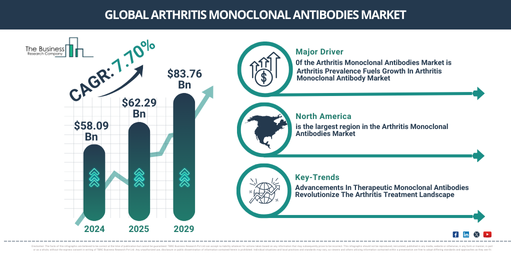
    The market size for arthritis monoclonal antibodies has seen robust growth in the recent past. It is expected to expand from $58.09 billion in 2024 to $62.29 billion in 2025, exhibiting a compound annual growth rate (CAGR) of 7.2%. This growth over the historic period can be credited to the surge in arthritis cases, heightened awareness about arthritis monoclonal antibodies, expansion in the range of approved arthritis monoclonal antibodies, government backing for research and development, and escalated investment by pharmaceutical firms.

    What Is the Projected Market Size of the Arthritis Monoclonal Antibodies Market?

    The market for arthritis monoclonal antibodies is forecasted to significantly expand in the upcoming years, reaching a size of $83.76 billion in 2029, with a compound annual growth rate (CAGR) of 7.7%. This expected progression within the forecast period is primarily influenced by factors such as combination therapies, widening indications, patient preference, and augmented healthcare expenditure. The major trends to watch in the forecast period include the rise of biosimilars and biobetters, targeted therapies, the adoption of homecare administration, application of real-world evidence, considerations of cost and access, and progress in drug delivery methods.

    Download The Free Sample Report Here:

    https://www.thebusinessresearchcompany.com/sample.aspx?id=3449&type=smp

    Who are the Major Competitors in the Arthritis Monoclonal Antibodies Market Outlook?

    Major companies operating in the arthritis monoclonal antibodies market include Johnson & Johnson, Hoffmann-La Roche Ltd., Novartis AG, Pfizer Inc., AbbVie Inc., Amgen Inc., Genentech Inc., GlaxoSmithKline plc., AstraZeneca plc, Bristol Myers Squibb, Eli Lilly and Company, Thermo Fisher Scientific Inc., Sanofi SA, Daiichi Sankyo Company Ltd., Seattle Genetics, Teva Pharmaceutical Industries Ltd., Shanghai Junshi Biosciences Co. Ltd., GenScript Biotech Corporation, Sigma-Aldrich Co. LLC, AbGenomics Corp., ADC Therapeutics SA, Agensys Inc., Alexion Pharmaceuticals Inc., ALMAC Group Ltd., Ambrx Inc., Astellas Pharma Inc., Celgene Corporation, Celldex Therapeutics Inc., Boehringer Ingelheim International GmbH, Celltrion Inc., HanAll Biopharma Co. Ltd., Merck & Co. Inc., Mitsubishi Tanabe Pharma Corporation, Regeneron Pharmaceuticals Inc., Samsung Bioepis Co. Ltd.

    What Is Fueling Growth in the Arthritis Monoclonal Antibodies Market?

    The surge in arthritis cases worldwide has promoted the expansion of the arthritis monoclonal antibody market. As per the Global RA Network, more than 350 million people globally were affected by arthritis in 2021, with osteoarthritis being the most widespread kind, followed by gout, fibromyalgia, and rheumatoid arthritis. For instance, Arthritis Australia, a charitable non-profit organization based in Australia, predicted in February 2024 that the number of Australians suffering from arthritis would rise from 4.11 million in 2025 to 5.39 million by 2040. The escalating incidence of arthritis is fueling the growth of the arthritis monoclonal antibody market.

    Request For A Customized Report:

    https://www.thebusinessresearchcompany.com/customise?id=3449&type=smp

    Which Arthritis Monoclonal Antibodies Market Segments Are Growing the Fastest?

    The arthritis monoclonal antibodies market covered in this report is segmented –

    1) By Drug: Remicade, Humira, Enbrel, Rituxan, Orencia, Actemra, Simponi, Cimzia, Remsima

    2) By Application: Rheumatoid Arthritis, Osteoarthritis, Psoriatic Arthritis, Ankylosing Spondylitis, Fibromyalgia, Other Applications

    3) By End-Use: Hospitals, Research Institutes, Other End-Users

    Which Industry Trends Are Shaping the Future of the Arthritis Monoclonal Antibodies Market?

    The progression in the production of therapeutic monoclonal antibody products is proving crucial to the growth of the arthritis monoclonal antibody market. Compared to small molecules and peptides, monoclonal antibodies achieve better results in treating arthritis given their target-specific nature and high efficacy for curing the disease. The introduction of an increasing number of monoclonal antibody drugs for arthritis is a clear display of these enhanced treatment choices.

    Access The Full Report Here:

    https://www.thebusinessresearchcompany.com/report/arthritis-monoclonal-antibodie-global-market-report

    Which Countries Are Leading the Arthritis Monoclonal Antibodies Market?

    The countries covered in the arthritis monoclonal antibodies market report are Australia, Brazil, China, France, Germany, India, Indonesia, Japan, Russia, South Korea, UK, USA, Italy, Spain, Canada.

    Purchase The Full Report Today:

    https://www.thebusinessresearchcompany.com/purchaseoptions.aspx?id=3449

    This Report Delivers Insight On:

    1. How big is the arthritis monoclonal antibodies market, and how is it changing globally?

    2. Who are the major companies in the arthritis monoclonal antibodies market, and how are they performing?

    3. What are the key opportunities and risks in the arthritis monoclonal antibodies market right now?

    4. Which products or customer segments are growing the most in the arthritis monoclonal antibodies market?

    5. What factors are helping or slowing down the growth of the arthritis monoclonal antibodies market?

    About The Business Research Company:

    With over 15000+ reports from 27 industries covering 60+ geographies, The Business Research Company has built a reputation for offering comprehensive, data-rich research and insights. Armed with 1,500,000 datasets, the optimistic contribution of in-depth secondary research, and unique insights from industry leaders, you can get the information you need to stay ahead in the game.

    Get in touch with us:

    The Business Research Company: https://www.thebusinessresearchcompany.com/

    Americas +1 310-496-7795

    Asia +44 2071930708

    Europe +44 7882 955267

    Email us at info@tbrc.info

    Follow us on:

    LinkedIn: https://in.linkedin.com/company/the-business-research-company

    YouTube: https://www.youtube.com/channel/UC24_fI0rV8cR5DxlCpgmyFQ

    Global Market Model: https://www.thebusinessresearchcompany.com/global-market-model

  • Apheresis Consumables And Equipment Forecast Report – Designed for Decision Makers and Product Teams

    Apheresis Consumables And Equipment Forecast Report – Designed for Decision Makers and Product Teams

    Claim your 30% discount on Global Market Reports with code ONLINE30. Limited time only.

    What Is the Estimated Market Size of the Apheresis Consumables And Equipment Market In 2029?

    In recent times, there has been a rapid expansion in the market size of apheresis consumables and equipment. The market, which stood at $3.34 billion in 2024, is projected to rise to $3.76 billion in 2025, marking a compound annual growth rate (CAGR) of 12.4%. Factors such as a higher incidence of chronic illnesses, increased patient knowledge of apheresis procedures, a surge in the need for blood components, and the aging population have contributed to this historical market growth.

    What Growth Rate Is Forecasted for the Apheresis Consumables And Equipment Market by 2029?

    The market for apheresis consumables and equipment is set to experience substantial growth in the upcoming years, with projections indicating a rise to $5.66 billion by 2029 at a compound annual growth rate (CAGR) of 10.8%. This anticipated growth throughout the forecast period can be credited to increased use in areas such as cell therapy, the emergence of infectious diseases, the advancements in personalized medicine, the evolution of healthcare infrastructure development, a hike in blood donations and a surge in organ transplantation. Key trends during the forecast period are predicted to involve automation and robotics, therapeutic apheresis, the provision of remote apheresis services, the emergence of portable apheresis equipment, and further advancements in automation and robotics.

    Download The Free Sample Report Here:

    https://www.thebusinessresearchcompany.com/sample.aspx?id=2476&type=smp

    Which Key Companies Are Shaping the Future of the Apheresis Consumables And Equipment Market?

    Major companies operating in the apheresis consumables and equipment market include Asahi Kasei Medical Co. Ltd., Haemonetics Corporation, Kawasumi Laboratories Inc., Fresenius SE & Co. KGaA, Terumo BCT, Braun Melsungen AG, Therakos Inc., HemaCare Corporation, Cerus Corporation, Kaneka Corporation, Nikkiso Co., Medica SpA, Terumo Corporation, Macopharma, Grifols S.A., Baxter International Inc., Fenwal Inc., Miltenyi Biotec GmbH, Infomed SA, Lmb Technologie GmbH, Medivators Inc., Nigale Biomedical Inc., Aferetica S.r.l., Apheresis Care Group, Beijing Meso-Tech Co. Ltd., Biegler GmbH, Brightwake Ltd., Cytosorbents Corporation, DePuy Synthes Companies, Guangzhou Daji Medical Science and Technology Co. Ltd., Haier Biomedical

    Which Factors Are Driving Demand in the Apheresis Consumables And Equipment Industry?

    The global rise in blood disorders has caused a heightened demand for blood transfusions. Apheresis Equipment facilitates blood transfusions for conditions such as sickle cell anemia, as well as cancers like leukemia. The Leukemia and Lymphoma Society report details that it is anticipated that 60,300 individuals in the USA will be diagnosed with leukemia, with a blood cancer diagnosis occurring every 3 minutes, thereby necessitating immediate blood transfusions. Furthermore, the American Society of Hematology has reported that there are 100,000 Americans afflicted with sickle cell anemia, while an additional 2 million people carry the trait, consequently needing Apheresis Equipment for blood transfusion. The International Agency for Research on Cancer (IARC) has projected that by 2040, there will be 16.3 million new cases of cancer reported worldwide. Treating cancer necessitates a bare minimum of 8 units of blood per patient for each procedure, leading to the requirement of blood component collection and transfusions. Hence, these highly prevalent blood disorders significantly increase the necessity for apheresis consumables and equipment in the industry.

    Request For A Customized Report:

    https://www.thebusinessresearchcompany.com/customise?id=2476&type=smp

    How Is the Apheresis Consumables And Equipment Market Segmented by Several Divisions?

    The apheresis consumables and equipment market covered in this report is segmented –

    1) By Product: Disposables, Devices

    2) By Technology: Centrifugation, Membrane Filtration

    3) By Procedure: Photopheresis, Plasmapheresis, LDL Apheresis, Plateletpheresis, Leukapheresis, Erythrocytapheresis, Other Procedures

    4) By Application: Renal Disease, Neurology, Hematology, Other Applications

    Subsegments:

    1) By Disposables: Apheresis Kits, Tubing Sets, Filters, Collection Bags, Anticoagulants

    2) By Devices: Automated Apheresis Devices, Manual Apheresis Devices, Centrifuges, Plasmapheresis Devices

    What are the Emerging Market Trends Driving the Growth of the Apheresis Consumables And Equipment Industry?

    Firms are innovating technologically superior and automated devices that improve the effectiveness of their products (blood). Advanced technological devices such as automatic apheresis tools featuring continuous flow centrifugation, automated interface systems, and tailor-made anticoagulant infusion systems are in the process of being developed and implemented. The integration of automated Apheresis apparatus has been effective in enhancing the speed and efficiency of blood separation procedures. For example, Haemonetics Corp is among companies that have developed automated apheresis tools like NexSys PCS which enhance productivity, while also improving the quality and adherence to regulatory standards in plasma collection centres.

    Access The Full Report Here:

    https://www.thebusinessresearchcompany.com/report/apheresis-consumables-and-equipment-global-market-report

    Which Regions Are Driving Growth in the Apheresis Consumables And Equipment Market?

    The countries covered in the apheresis consumables and equipment market report are Australia, Brazil, China, France, Germany, India, Indonesia, Japan, Russia, South Korea, UK, USA, Italy, Spain, Canada.

    Purchase The Full Report Today:

    https://www.thebusinessresearchcompany.com/purchaseoptions.aspx?id=2476

    This Report Delivers Insight On:

    1. How big is the apheresis consumables and equipment market, and how is it changing globally?

    2. Who are the major companies in the apheresis consumables and equipment market, and how are they performing?

    3. What are the key opportunities and risks in the apheresis consumables and equipment market right now?

    4. Which products or customer segments are growing the most in the apheresis consumables and equipment market?

    5. What factors are helping or slowing down the growth of the apheresis consumables and equipment market?

    About The Business Research Company:

    With over 15000+ reports from 27 industries covering 60+ geographies, The Business Research Company has built a reputation for offering comprehensive, data-rich research and insights. Armed with 1,500,000 datasets, the optimistic contribution of in-depth secondary research, and unique insights from industry leaders, you can get the information you need to stay ahead in the game.

    Get in touch with us:

    The Business Research Company: https://www.thebusinessresearchcompany.com/

    Americas +1 310-496-7795

    Asia +44 2071930708

    Europe +44 7882 955267

    Email us at info@tbrc.info

    Follow us on:

    LinkedIn: https://in.linkedin.com/company/the-business-research-company

    YouTube: https://www.youtube.com/channel/UC24_fI0rV8cR5DxlCpgmyFQ

    Global Market Model: https://www.thebusinessresearchcompany.com/global-market-model
  • Anesthesia Monitoring Devices Market Outlook 2025 – Insights for Executive and Strategic Planning

    Anesthesia Monitoring Devices Market Outlook 2025 – Insights for Executive and Strategic Planning

    Claim your 30% discount on Global Market Reports with code ONLINE30. Limited time only.

    How Fast Is The Anesthesia Monitoring Devices Market Expected to Grow Between 2025 And 2029?

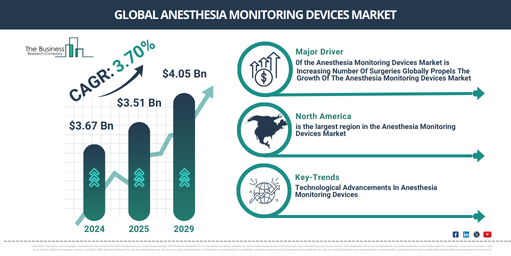
    In recent times, the market size for anesthesia monitoring devices has experienced a downward trend. The market is projected to slump from $3.67 billion in 2024 to $3.51 billion in 2025, registering a compound annual growth rate (CAGR) of -4.5%. The downturn in the historic phase can be linked to the exorbitant cost of anesthesia monitoring devices, high maintenance expenses, and the impact of Covid-19.

    What Growth Rate Is Anticipated for the Anesthesia Monitoring Devices Market in the Coming Years?

    Anticipated to witness firm growth in the forthcoming years, the market size for anesthesia monitoring devices is projected to reach a value of $4.05 billion by 2029, expanding at a 3.7% Compound Annual Growth Rate (CAGR). This prospective growth during the prediction period could be linked to increased spending in healthcare, the emergence of telemedicine and remote monitoring, a surge in minor surgical procedures, and an uptick in economic advancement. The forecast period is poised to observe significant trends such as the incorporation of electronic health records (EHR), the application of artificial intelligence (AI) and machine learning, the usage of mobile applications and wearable devices, the deployment of innovative sensors and connectivity, and the implementation of non-invasive monitoring technologies.

    Download The Free Sample Report Here:

    https://www.thebusinessresearchcompany.com/sample.aspx?id=5972&type=smp

    Who Are the Leading Companies in the Anesthesia Monitoring Devices Market?

    Major companies operating in the anesthesia monitoring devices market include Baxter International Inc., Cardinal Health Inc., Draegerwerk AG & Co. KGaA, GE Healthcare, Heyer Medical AG, Intersurgical Limited, Medtronic Inc., Mindray Medical International Limited, Nihon Kohden Corporation, Philips Healthcare, Smiths Medical Inc., Infinium Medical Inc., Fukuda Denshi Co. Ltd., Becton Dickinson and Company, Ambu A/S, Teleflex Incorporated, Ventlab, ACOMA Medical Industry Co., BPL Medical Technologies, Dixion GmbH, Löwenstein Medical GmbH & Co. KG, Medasense Biometrics Ltd., Veterinary Anesthesia Systems Inc., CNSystems Medizintechnik GmbH, Allied Medical Limited, Criticare Technologies Inc., Masimo Corporation, Spacelabs Healthcare Inc., Mennen Medical Ltd., BrainU Co. Ltd., OSI Systems Inc., Penlon Limited, Natus Medical Incorporated, Schiller AG, Edwards Lifesciences Corporation, Bionet Co. Ltd., DRE Medical Inc., Digicare Biomedical Technology Inc.

    What Are the Key Drivers of the Anesthesia Monitoring Devices Market?

    The global rise in surgical procedures is anticipated to fuel the growth of the anesthesia monitoring devices market. An upward trend in surgeries such as hip fracture repairs, neurosurgical operations, cesarean sections, and more, have led to increased need for anesthesia monitoring devices. Taking a case in point, the International Society of Aesthetic Plastic Surgery (ISAPS), a US-based association of qualified aesthetic plastic surgeons, indicated in June 2024 that the total number of surgical and non-surgical procedures had escalated by 3.4%, arriving at 34.9 million in the year 2023. As such, the growth of the anesthesia monitoring device market can be attributed to the increasing rate of surgeries.

    Request For A Customized Report:

    https://www.thebusinessresearchcompany.com/customise?id=5972&type=smp

    What Are the Key Market Segments in the Anesthesia Monitoring Devices Industry?

    The anesthesia monitoring devices market covered in this report is segmented –

    1) By Product: Advanced Anesthesia Monitors, Basic Anesthesia Monitors, Integrated Anesthesia Workstation

    2) By Application: Cardiology, Neurology, Dental, Ophthalmology, Urology, Orthopedics, Other Applications

    3) By End User: Hospitals, Ambulatory Surgical Centers, Clinics, Nursing Homes

    Subsegments:

    1) By Advanced Anesthesia Monitors: Multi-parameter Monitors, EEG Monitors, Gas Analyzers

    2) By Basic Anesthesia Monitors: Pulse Oximeters, Blood Pressure Monitors, Capnometers

    3) By Integrated Anesthesia Workstation: Anesthesia Delivery Systems, Ventilation Systems, Monitoring Systems

    What Are the Latest Trends in the Anesthesia Monitoring Devices Market?

    The rise of new technologies is a notable trend gaining traction in the anesthesia monitoring devices market. Various businesses are introducing new, high-tech products in the industry. As an illustration, SCHILLER, a Switzerland-based company, unveiled their MRI-compatible patient monitor, MAGLIFE RT-1 in April 2022. The device not only conducts patient monitoring in an MRI setting, but it also keeps track of all vital signs during anesthesia. The MAGLIFE RT-1 ensures detailed scrutiny during check-ups and can be entirely operated from outside the Faraday cage through MAGSCREEN RT-1. The system is made to accommodate all patient types: adults, children, and neonates.

    Access The Full Report Here:

    https://www.thebusinessresearchcompany.com/report/anesthesia-monitoring-devices-global-market-report

    What Are the Key Regional Markets in the Anesthesia Monitoring Devices Industry?

    The countries covered in the anesthesia monitoring devices market report include Australia, Brazil, China, France, Germany, India, Indonesia, Japan, Russia, South Korea, UK, USA, Italy, Spain, Canada.

    Purchase The Full Report Today:

    https://www.thebusinessresearchcompany.com/purchaseoptions.aspx?id=5972

    This Report Delivers Insight On:

    1. How big is the anesthesia monitoring devices market, and how is it changing globally?

    2. Who are the major companies in the anesthesia monitoring devices market, and how are they performing?

    3. What are the key opportunities and risks in the anesthesia monitoring devices market right now?

    4. Which products or customer segments are growing the most in the anesthesia monitoring devices market?

    5. What factors are helping or slowing down the growth of the anesthesia monitoring devices market?

    About The Business Research Company:

    With over 15000+ reports from 27 industries covering 60+ geographies, The Business Research Company has built a reputation for offering comprehensive, data-rich research and insights. Armed with 1,500,000 datasets, the optimistic contribution of in-depth secondary research, and unique insights from industry leaders, you can get the information you need to stay ahead in the game.

    Get in touch with us:

    The Business Research Company: https://www.thebusinessresearchcompany.com/

    Americas +1 310-496-7795

    Asia +44 2071930708

    Europe +44 7882 955267

    Email us at info@tbrc.info

    Follow us on:

    LinkedIn: https://in.linkedin.com/company/the-business-research-company

    YouTube: https://www.youtube.com/channel/UC24_fI0rV8cR5DxlCpgmyFQ

    Global Market Model: https://www.thebusinessresearchcompany.com/global-market-model
  • Airway Management Devices Market Projected at $3.48 Billion by 2029 | Strategic Insights and Forecast Data

    Airway Management Devices Market Projected at $3.48 Billion by 2029 | Strategic Insights and Forecast Data

    Claim your 30% discount on Global Market Reports with code ONLINE30. Limited time only.

    #How Has The Airway Management Devices Market Size Shifted, And What Is the Outlook Through 2034?

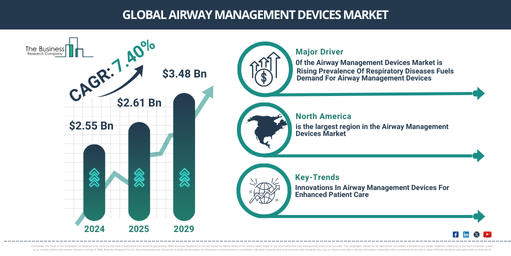
    The market for airway management devices has seen a consistent expansion in recent years. The market, which stood at $2.55 billion in 2024, is expected to rise to $2.61 billion in 2025, registering a compound annual growth rate (CAGR) of 2.4%. The notable growth during the historical period is linked to the surged presence of chronic respiratory ailments, an increased population of older adults, a rising preference for minimally invasive procedures, and a heightened cognizance about the significance of airway management.

    How Much Will the Airway Management Devices Market Be Worth in 2029?

    In the ensuing years, the market for airway management devices is predicted to experience robust growth. The market is projected to reach $3.48 billion by 2029, growing at a compound annual growth rate (CAGR) of 7.4%. Factors such as the growing elderly population, occupational health and safety, anesthesia procedures, telemedicine, and remote patient care can be attributed to this growth in the forecast period. Key trends for the period would be the improvement of video and imaging technology, the incorporation of telehealth, customized and 3D-printed devices, and airway management algorithms.

    Download The Free Sample Report Here:

    https://www.thebusinessresearchcompany.com/sample.aspx?id=3268&type=smp

    Which is the Largest Company in the Airway Management Devices Market?

    Major companies operating in the airway management devices market include Medtronic PLC, Smiths Medical Inc., Teleflex Incorporated, Ambu A/S, KARL STORZ SE & Co. KG, Flexicare Medical Limited, Intersurgical Ltd., Becton Dickinson and Company, Mercury Medical, Well Lead Medical Co. Ltd., Unomedical Inc., SunMed LLC, Tuoren Medical Device India Pvt. Ltd., Medline Industries Inc., Armstrong Medical Limited, Zhejiang Sujia Medical Device Co.Ltd., Vyaire Medical Inc., Salter Labs Inc., Cook Medical Inc., Olympus Corporation, General Electric Company, ICU Medical Inc., ConvaTec Group Plc, VBM Medizintechnik GmbH, Boston Scientific Corporation, Fujifilm Holdings Corporation, Hoya Corporation, Richard Wolf GmbH, Stryker Corporation, Terumo Corporation, Verathon Inc., Vitalograph Ltd., Westmed Inc., Xiamen Compower Medical Tech Co. Ltd.

    What Are the Main Market Drivers in the Airway Management Devices Industry?

    The rise in respiratory ailments is anticipated to boost the airway management devices market in the years to come. These devices are typically utilized during critical emergency airway management in medical procedures. For instance, reported by the UK Health Security Agency in June 2024, there were about 49,300 hospital admissions in England due to confirmed influenza between the 40th week of 2022 and the 15th week of 2023. This is significantly higher compared to the roughly 8,400 instances in England documented in 2021-2022. Consequently, the escalating occurrence of respiratory diseases bolsters the expansion of the airway management devices market.

    Request For A Customized Report:

    https://www.thebusinessresearchcompany.com/customise?id=3268&type=smp

    How Is the Airway Management Devices Market Segments Structured?

    The airway management devices market covered in this report is segmented –

    1) By Type: Infraglottic Airway Management Devices, Supraglottic Airway Management Devices, Resuscitators, Laryngoscopes, Other Devices

    2) By Application: Anesthesia, Emergency Medicine, Other Applications

    3) By End Use: Hospital, Homecare

    Subsegments:

    1) By Infraglottic Airway Management Devices: Endotracheal Tubes, Tracheostomy Tubes, Cuffed Tubes

    2) By Supraglottic Airway Management Devices: Laryngeal Mask Airways (LMA), Supraglottic Airway Devices, Oropharyngeal Airways

    3) By Resuscitators: Bag-Valve Masks (BVM), Manual Resuscitators, Neonatal Resuscitators

    4) By Laryngoscopes: Direct Laryngoscopes, Video Laryngoscopes, Fiberoptic Laryngoscopes

    5) By Other Devices: Airway Accessories, Airway Pressure Monitoring Devices, Airway Management Suction Devices

    What Strategic Trends Are Transforming the Airway Management Devices Market?

    Leading firms in the airway management devices market are introducing enhanced technology, such as healthcare devices, to improve patient care, facilitate easier access to airways, and provide more secure intubation procedures in a variety of clinical conditions. These healthcare tools are devices, equipment, machines, or implants that are applied in the medical field for the diagnosis, prevention, monitoring, treatment, or relief of diseases or health conditions. For example, in March 2023, BHV Partners, an investment firm based in the U.S., inaugurated a fresh medical device startup called Conus Airway. This startup is committed to creating revolutionary healthcare devices aimed at augmenting anesthesia and surgical procedures involving the respiratory system. By emphasizing state-of-the-art technology and design, Conus Airway intends to enhance patient results and streamline clinical operations. The startup is intent on tackling specific obstacles in airway management, ultimately leading to safer and more efficient healthcare solutions for patients and healthcare professionals alike.

    Access The Full Report Here:

    https://www.thebusinessresearchcompany.com/report/airway-management-devices-global-market-report

    Which Global Regions Offer the Highest Growth in the Airway Management Devices Market?

    The countries covered in the airway management devices market report are Australia, Brazil, China, France, Germany, India, Indonesia, Japan, Russia, South Korea, UK, USA, Italy, Spain, Canada.

    Purchase The Full Report Today:

    https://www.thebusinessresearchcompany.com/purchaseoptions.aspx?id=3268

    This Report Delivers Insight On:

    1. How big is the airway management devices market, and how is it changing globally?

    2. Who are the major companies in the airway management devices market, and how are they performing?

    3. What are the key opportunities and risks in the airway management devices market right now?

    4. Which products or customer segments are growing the most in the airway management devices market?

    5. What factors are helping or slowing down the growth of the airway management devices market?

    About The Business Research Company:

    With over 15000+ reports from 27 industries covering 60+ geographies, The Business Research Company has built a reputation for offering comprehensive, data-rich research and insights. Armed with 1,500,000 datasets, the optimistic contribution of in-depth secondary research, and unique insights from industry leaders, you can get the information you need to stay ahead in the game.

    Get in touch with us:

    The Business Research Company: https://www.thebusinessresearchcompany.com/

    Americas +1 310-496-7795

    Asia +44 2071930708

    Europe +44 7882 955267

    Email us at info@tbrc.info

    Follow us on:

    LinkedIn: https://in.linkedin.com/company/the-business-research-company

    YouTube: https://www.youtube.com/channel/UC24_fI0rV8cR5DxlCpgmyFQ

    Global Market Model: https://www.thebusinessresearchcompany.com/global-market-model
  • X-Ray Systems Devices And Equipment Industry Growth Expected to Reach $23.65 Billion by 2029 at a CAGR of 6.3% | Segmentation and Growth Opportunities

    X-Ray Systems Devices And Equipment Industry Growth Expected to Reach $23.65 Billion by 2029 at a CAGR of 6.3% | Segmentation and Growth Opportunities

    Claim your 30% discount on Global Market Reports with code ONLINE30. Limited time only.

    #How Has the X-Ray Systems Devices And Equipment Market Growth Performance Trended Historically, And What Lies Ahead?

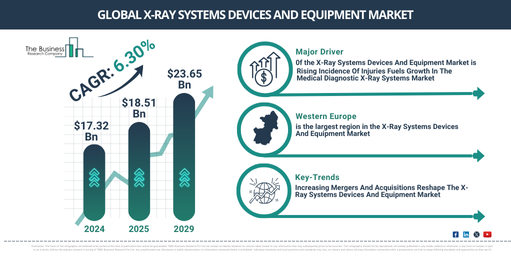
    In recent times, the market for X-ray systems devices and equipment has witnessed robust growth. The market is expected to expand from $17.32 billion in 2024 to $18.51 billion in 2025, with a compound annual growth rate (CAGR) of 6.8%. The notable growth during the historic period can be accredited to factors such as medical diagnostics, population growth, the aging population, and preventive and basic healthcare.

    What Is the Forecast for the X-Ray Systems Devices And Equipment Market Size Through 2029?

    Expectations are high for notable expansion in the X-ray systems devices and equipment market in the coming years. The market is predicted to reach a value of $23.65 billion in 2029, with a compound annual growth rate (CAGR) of 6.3%. The projected growth during the forecast period is due to factors such as digital transformation, specialized applications, population health management, and improvements in radiation safety. Significant trends anticipated throughout this forecast period include 3D and cone-beam CT imaging, point-of-care X-ray, AI-enhanced imaging, and remote and mobile imaging.

    Download The Free Sample Report Here:

    https://www.thebusinessresearchcompany.com/sample.aspx?id=3810&type=smp

    What are the Key Market Players in X-Ray Systems Devices And Equipment Market and How They’re Evolving?

    Major companies operating in the X-ray systems devices and equipment market include Siemens Healthcare, Carestream Health, Philips Healthcare, Hitachi Medical, GE Healthcare, Shimadzu Corporation, Fujifilm Holdings, Toshiba Medical Systems Corporation, Canon Inc., Agfa HealthCare N.V., Hologic Inc., Konica Minolta, Samsung, Analogic Corporation, Summit Industries, Rapiscan Systems, Swissray International Inc., Ziehm Imaging GmbH, RMS India, KUB Technologies Inc., Source Ray Inc., Allengers Medical Systems, Dentsply Sirona, Bennett, MinXray Inc., Varian Medical Systems, Angell Technology, Control-X Medical, DMS Imaging, Esaote, IAE SPA, Infimed Sp. z o.o., Medonica Healthcare Private Limited, PerkinElmer Inc., Planmed Oy

    What Are the Primary Growth Drivers in the X-Ray Systems Devices And Equipment Market?

    The expansion of the medical diagnostic X-ray systems, machinery, and equipment industry is largely due to an escalating rate of global injuries. The demand for these diagnostic tools, particularly X-ray devices and equipment, is soaring with the rise in accidents, sports injuries, severe muscular damages, and bone injuries, among other things. To illustrate, the National Health Service UK-based governmental department reported in December 2022 that 44.0 million imaging tests were carried out in England in the year up to March 2022. This is a significant boost, with a 26% jump from last year’s 34.9 million. Moreover, X-rays led the way with 21.8 million tests, an increase of 30%, followed by ultrasound at 10.1 million (up by 23%), CT scans at 6.7 million (a 21% rise), and MRI scans at 3.8 million, marking a 28% surge. All other imaging modalities experienced increases as well: fluoroscopy by 23%, nuclear medicine by 22%, SPECT by 39%, PET-CT scans by 20%, and medical photography by 11%. Consequently, the international upsurge in injury incidents is propelling the growth of the medical diagnostic X-ray systems, devices, and equipment market.

    Request For A Customized Report:

    https://www.thebusinessresearchcompany.com/customise?id=3810&type=smp

    What Are the Leading Segments in the Global X-Ray Systems Devices And Equipment Industry?

    The X-ray systems devices and equipment market covered in this report is segmented –

    1) By Type: Portable Type, Stationary Type

    2) By Product Type: Computed Tomography, Mobile X-Ray Devices, C-Arm Devices, Dental X-Ray, Mammography, Other Product Types

    3) By image type: 2D images, 3D images, 4D images 4) By Technology: Analog X-Ray Machine , Digital X-Ray Machine

    4) By Technology: Analog X-Ray Machine, Digital X-Ray Machine

    5) By Application: Cardiovascular, Respiratory, Mammography, Dental, Orthopedics, Other Applications

    Subsegments:

    1) By Portable Type: Mobile X-Ray Systems, Handheld X-Ray Devices, Veterinary X-Ray Systems

    2) By Stationary Type: Conventional X-Ray Systems, Computed Radiography (CR) Systems, Digital Radiography (DR) Systems, Fluoroscopy X-Ray Systems

    What Are the Key Market Trends in the X-Ray Systems Devices And Equipment Industry?

    There is an increase in mergers and acquisitions in the X-ray systems devices and equipment market. This surge is primarily fueled by companies looking to expand their operations into the medical/diagnostic imaging and radiology sectors. In April 2024, Japan-based precision, measuring, and medical equipment manufacturer, Shimadzu company, acquired X-ray Imaging Services, Inc. for an undeclared sum. Through the acquisition of California’s X-ray Imaging Services, Inc. (CIS), Shimadzu Medical Systems USA is looking to broaden its direct sales and service areas in the U.S., especially on the West Coast. X-ray Imaging Services, Inc. is a leading supplier of security equipment to governmental and business entities in California.

    Access The Full Report Here:

    https://www.thebusinessresearchcompany.com/report/x-ray-systems-devices-and-equipment-global-market-report

    What Is the Regional Outlook for the X-Ray Systems Devices And Equipment Market?

    Western Europe was the largest region in the global X-ray devices and equipment market in 2023. North America was the second-largest region in global X-ray devices and equipment market share. The regions covered in the x-ray systems devices and equipment market report are Asia-Pacific, Western Europe, Eastern Europe, North America, South America, Middle East, and Africa.

    Purchase The Full Report Today:

    https://www.thebusinessresearchcompany.com/purchaseoptions.aspx?id=3810

    This Report Delivers Insight On:

    1. How big is the x-ray systems devices and equipment market, and how is it changing globally?

    2. Who are the major companies in the x-ray systems devices and equipment market, and how are they performing?

    3. What are the key opportunities and risks in the x-ray systems devices and equipment market right now?

    4. Which products or customer segments are growing the most in the x-ray systems devices and equipment market?

    5. What factors are helping or slowing down the growth of the x-ray systems devices and equipment market?

    About The Business Research Company:

    With over 15000+ reports from 27 industries covering 60+ geographies, The Business Research Company has built a reputation for offering comprehensive, data-rich research and insights. Armed with 1,500,000 datasets, the optimistic contribution of in-depth secondary research, and unique insights from industry leaders, you can get the information you need to stay ahead in the game.

    Get in touch with us:

    The Business Research Company: https://www.thebusinessresearchcompany.com/

    Americas +1 310-496-7795

    Asia +44 2071930708

    Europe +44 7882 955267

    Email us at info@tbrc.info

    Follow us on:

    LinkedIn: https://in.linkedin.com/company/the-business-research-company

    YouTube: https://www.youtube.com/channel/UC24_fI0rV8cR5DxlCpgmyFQ

    Global Market Model: https://www.thebusinessresearchcompany.com/global-market-model