Month: July 2025

  • Oral Transmucosal Drugs Market Trends Report 2025 – For Business Development and Strategy Teams

    Oral Transmucosal Drugs Market Trends Report 2025 – For Business Development and Strategy Teams

    Claim your 30% discount on Global Market Reports with code ONLINE30. Limited time only.

    #How Has the Oral Transmucosal Drugs Market Growth Performance Trended Historically, And What Lies Ahead?

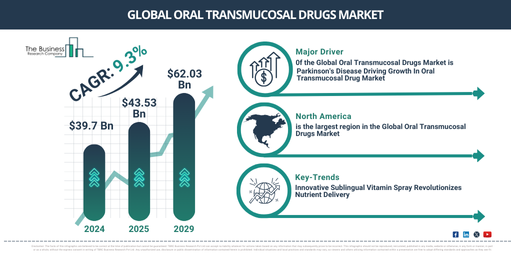
    In recent times, the oral transmucosal drugs market has been experiencing significant growth. It is projected to expand from a size of $39.7 billion in 2024 to $43.53 billion in 2025 with a compound annual growth rate (CAGR) of 9.6%. The strides made in past years is due to factors such as improved diagnostic capabilities, an aging population, environmental contaminants, genetic predisposition, higher detection rates, swift relief provided by fast-acting drug absorption, and superior compliance.

    What Is the Forecast for the Oral Transmucosal Drugs Market Size Through 2029?

    The market for oral transmucosal drugs is forecasted to witness significant growth in the upcoming years, and it is projected to reach a valuation of $62.03 billion by 2029, growing at a compound annual growth rate (CAGR) of 9.3%. Factors contributing to this anticipated market growth in the forecast timeframe include the evolution of personalized medicine, increased research on innovative drug delivery systems, swelling geriatric population, heightened oral health awareness, growing preference for non-invasive treatment options, and the evolution of regulatory frameworks. There are major trends expected in the forecast period, such as the increasing use of unique formulations, the application of personalized medicine, advancements in telehealth, incorporation of digital health technologies, and technological innovation in the pharmaceutical sector.

    Download The Free Sample Report Here:

    https://www.thebusinessresearchcompany.com/sample.aspx?id=15627&type=smp

    What are the Key Market Players in Oral Transmucosal Drugs Market and How They’re Evolving?

    Major companies operating in the oral transmucosal drugs market are Pfizer Inc., Merck & Co. Inc., AbbVie Inc., Sanofi-Aventis LLC, AstraZeneca PLC, Abbott Laboratories, Novartis AG, GlaxoSmithKline plc, Eli Lilly & Company Ltd., Boehringer Ingelheim International GmbH, Viatris Inc., Teva Pharmaceutical Industries Ltd., Biogen Inc., Actavis Pharma Inc., Sun Pharmaceutical Industries Limited, Dr. Reddy’s Laboratories Ltd., Endo Pharmaceuticals Inc., Lupin Limited, Zydus Lifesciences Limited, Mallinckrodt Pharmaceuticals Plc, Glenmark Pharmaceuticals Limited, Jubilant Life Sciences Limited, Torrent Pharmaceuticals Ltd., Alembic Pharmaceuticals Ltd., Wockhardt Ltd.

    What Are the Primary Growth Drivers in the Oral Transmucosal Drugs Market?

    The escalation of Parkinson’s disease incidences is predicted to spur the expansion of the oral transmucosal drug market in the future. Parkinson’s disease is a degenerative neurological ailment that causes tremors, rigidity, and difficulties in movement due to a decrease in dopamine-producing cells in the brain. The mounting instances of Parkinson’s disease can be attributed to older demographics, environmental contaminants, genetic predispositions, and improvements in diagnostic methods that boost detection rates. Oral transmucosal medications aid in the therapy for Parkinson’s disease by enabling rapid absorption of drugs, eliminating digestive issues, leading to faster relief, better compliance, and potentially less motor complications. For example, data from the Parkinson’s Foundation, a non-profit organization based in the US, suggested that around 1 million individuals in the US are presently living with Parkinson’s disease (PD) as of December 2022. This figure is forecasted to rise to 1.2 million by 2030. Consequently, the growing incidence of Parkinson’s disease is fostering the development of the oral transmucosal drug market.

    Request For A Customized Report:

    https://www.thebusinessresearchcompany.com/customise?id=15627&type=smp

    What Are the Leading Segments in the Global Oral Transmucosal Drugs Industry?

    The oral transmucosal drugs market covered in this report is segmented –

    1) By Product Type: Tablets, Films, Liquid And Spray, Other Product Types

    2) By Indication: Opioid Dependence, Nausea And Vomiting, Erectile Dysfunction, Neurological Disorders, Other Indications

    3) By Route Of Administration: Sublingual Mucosa, Buccal Mucosa, Other Routes Of Administration

    4) By Distribution Channel: Hospital Pharmacies, Retail Pharmacies, Online Pharmacies

    Subsegments:

    1) By Tablets: Buccal Tablets, Sublingual Tablets, Effervescent Tablets

    2) By Films: Buccal Films, Sublingual Films, Mucoadhesive Films

    3) By Liquid And Spray: Sublingual Liquid Solutions, Oral Sprays (Pain Relief, Sleep Aids), Mucosal Gels

    4) By Other Product Types: Lozenges, Pastilles, Chewing Gums

    What Are the Key Market Trends in the Oral Transmucosal Drugs Industry?

    Leading corporations in the oral transmucosal drug market are committed to designing groundbreaking solutions for drug delivery, such as sublingual vitamin spray, to increase the effectiveness of drug delivery, make it more convenient for patients, and enhance therapeutic outcomes. A sublingual vitamin spray refers to an oral transmucosal drug administration system that delivers vitamins directly into the bloodstream through the mucous membranes beneath the tongue. This approach avoids the gastrointestinal tract and liver metabolism, leading to the quick and effective absorption of vitamins. Vestige Marketing, a wellness and fitness company based in India, for example, launched a product named Absorvit in October 2022. This sublingual vitamin spray ensures fast absorption and immediate results. This breakthrough product offers an absorption rate that is 3-10 times higher than traditional oral systems. It encompasses improved forms and exact dosages of necessary vitamins, such as B12, C, D, and multivitamins, guaranteeing the best possible nutrition delivery. Thus, Absorvit provides an effective and handy method of supplementing critical nutrients and improving overall wellbeing.

    Access The Full Report Here:

    https://www.thebusinessresearchcompany.com/report/oral-transmucosal-drugs-global-market-report

    What Is the Regional Outlook for the Oral Transmucosal Drugs Market?

    North America was the largest region in the oral transmucosal drugs market in 2023. Asia-Pacific is expected to be the fastest-growing region in the forecast period. The regions covered in the oral transmucosal drugs market report are Asia-Pacific, Western Europe, Eastern Europe, North America, South America, Middle East, Africa.

    Purchase The Full Report Today:

    https://www.thebusinessresearchcompany.com/purchaseoptions.aspx?id=15627

    This Report Delivers Insight On:

    1. How big is the oral transmucosal drugs market, and how is it changing globally?

    2. Who are the major companies in the oral transmucosal drugs market, and how are they performing?

    3. What are the key opportunities and risks in the oral transmucosal drugs market right now?

    4. Which products or customer segments are growing the most in the oral transmucosal drugs market?

    5. What factors are helping or slowing down the growth of the oral transmucosal drugs market?

    About The Business Research Company:

    With over 15000+ reports from 27 industries covering 60+ geographies, The Business Research Company has built a reputation for offering comprehensive, data-rich research and insights. Armed with 1,500,000 datasets, the optimistic contribution of in-depth secondary research, and unique insights from industry leaders, you can get the information you need to stay ahead in the game.

    Get in touch with us:

    The Business Research Company: https://www.thebusinessresearchcompany.com/

    Americas +1 310-496-7795

    Asia +44 2071930708

    Europe +44 7882 955267

    Email us at info@tbrc.info

    Follow us on:

    LinkedIn: https://in.linkedin.com/company/the-business-research-company

    YouTube: https://www.youtube.com/channel/UC24_fI0rV8cR5DxlCpgmyFQ

    Global Market Model: https://www.thebusinessresearchcompany.com/global-market-model
  • Combined Pituitary Hormone Deficiencies Forecast Report – Designed for Decision Makers and Product Teams

    Combined Pituitary Hormone Deficiencies Forecast Report – Designed for Decision Makers and Product Teams

    Claim your 30% discount on Global Market Reports with code ONLINE30. Limited time only.

    What Is the Estimated Market Size of the Combined Pituitary Hormone Deficiencies Market In 2029?

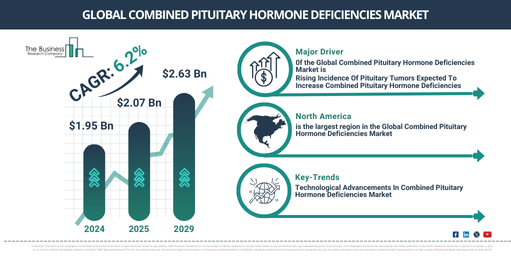
    The market size for combined pituitary hormone deficiencies has seen substantial growth in the recent past. Projected growth indicates an increase from $1.95 billion in 2024 to $2.07 billion in 2025, indicating a compound annual growth rate (CAGR) of 6.5%. The growth observed in the historic period is due to factors such as increased awareness and diagnosis, a rise in the aging population, and an increase in targeted therapies. Additionally, an increase in cancer prevalence and genetic predisposition have also contributed to this growth.

    What Growth Rate Is Forecasted for the Combined Pituitary Hormone Deficiencies Market by 2029?

    The market size for combined pituitary hormone deficiencies is anticipated to experience robust growth in the coming years. It is projected to reach $2.63 billion by 2029, with a compound annual growth rate (CAGR) of 6.2%. The predicted growth could be due to an increase in chronic health issues, long-lasting health consequences, advancements in genetic research, improved healthcare accessibility, and enhanced health infrastructure. Key trends forecasted for this period encompass advanced imaging techniques, genetic testing, precision medicine, biomarkers, molecular diagnostics, and the use of artificial intelligence (AI) and machine learning.

    Download The Free Sample Report Here:

    https://www.thebusinessresearchcompany.com/sample.aspx?id=18306&type=smp

    Which Key Companies Are Shaping the Future of the Combined Pituitary Hormone Deficiencies Market?

    Major companies operating in the combined pituitary hormone deficiencies market are Pfizer Inc., Merck & Co Inc., Bristol-Myers Squibb Company, Abbott Laboratories, Novartis AG, Sanofi S.A., F. Hoffmann-La Roche Ltd., Takeda Pharmaceutical Company Limited, GlaxoSmithKline plc, Eli Lilly and Company, Novo Nordisk A/S, Teva Pharmaceutical Industries Ltd., Sun Pharmaceutical Industries Ltd., Aurobindo Pharma Limited, Ipsen Group, Cipla Inc., Ferring Pharmaceuticals, Lupin Limited, LEO Pharma A/S, Glenmark Pharmaceuticals Limited, AnkeBio Co Ltd., Aeterna Zentaris Inc., Anhui Anke Biotechnology Co Ltd., GeneScience Pharmaceuticals Co Ltd., Strongbridge Biopharma plc

    Which Factors Are Driving Demand in the Combined Pituitary Hormone Deficiencies Industry?

    The combined pituitary hormone deficiencies market is predicted to grow as a result of the rising occurrence of pituitary tumors. These tumors are irregular growths in the pituitary gland, responsible for regulating hormone production in the brain. Factors like exposure to endocrine-disrupting chemicals found in certain plastics, pesticides, and personal care products, can lead to hormonal irregularities and pituitary gland abnormalities. These tumors can further provoke combined pituitary hormone deficiency by halting the gland’s capacity to produce various hormones, thus causing hormonal imbalances. For example, the American Cancer Society, a US-based non-profit organization, reported in October 2022 that over 10,000 pituitary tumors are identified annually in the United States. Hence, the escalating prevalence of pituitary tumors is stimulating the expansion of the combined pituitary hormone deficiencies market.

    Request For A Customized Report:

    https://www.thebusinessresearchcompany.com/customise?id=18306&type=smp

    How Is the Combined Pituitary Hormone Deficiencies Market Segmented by Several Divisions?

    The combined pituitary hormone deficiencies market covered in this report is segmented –

    1) By Inheritance: Autosomal Dominant, Autosomal Recessive, X-linked Recessive

    2) By Diagnosis: Blood Tests, Imaging Tests, Other Diagnoses

    3) By Treatment: Hormone Replacement Therapy Medication, Levothyroxine, Corticosteroids, Other Treatments

    4) By Distribution Channel: Hospital Pharmacy , Retail Pharmacy , Online Pharmacy, Others Distribution Channels

    5) By End-Users: Hospitals, Specialty Clinics, Homecare, Other End Users

    Subsegments:

    1) By Autosomal Dominant: Single Gene Mutation, Family History Of Genetic Disorder

    2) By Autosomal Recessive: Both Parents Are Carriers, Homozygous Mutations

    3) By X-Linked Recessive: Carrier Females, Affected Males

    What are the Emerging Market Trends Driving the Growth of the Combined Pituitary Hormone Deficiencies Industry?

    Leading businesses in the market for combined pituitary hormone deficiencies are pioneering advanced treatment alternatives like body-identical hormone therapy treatment (HRT). This innovation aims to heighten patient adherence, lessen the frequency of treatment administration and boost the overall results of the treatment. The body-identical HRT strategy uses hormones that perfectly match those naturally produced by the body to remedy deficiencies or imbalances in hormones. For example, the Bijuva, a combined hormone therapy for post-menopausal women, was launched by Theramex, a specialty pharmaceutical company located in the UK, in June 2023. This product encapsulates 1 mg of estradiol and 100 mg of progesterone and perfectly emulates the body’s natural hormones. It is designed for women who have passed menopause by at least a year and still have an intact uterus, providing a body-identical solution for the symptoms of estrogen deficiency.

    Access The Full Report Here:

    https://www.thebusinessresearchcompany.com/report/combined-pituitary-hormone-deficiencies-global-market-report

    Which Regions Are Driving Growth in the Combined Pituitary Hormone Deficiencies Market?

    North America was the largest region in the combined pituitary hormone deficiencies market in 2023. The regions covered in the combined pituitary hormone deficiencies market report are Asia-Pacific, Western Europe, Eastern Europe, North America, South America, Middle East, Africa.

    Purchase The Full Report Today:

    https://www.thebusinessresearchcompany.com/purchaseoptions.aspx?id=18306

    This Report Delivers Insight On:

    1. How big is the combined pituitary hormone deficiencies market, and how is it changing globally?

    2. Who are the major companies in the combined pituitary hormone deficiencies market, and how are they performing?

    3. What are the key opportunities and risks in the combined pituitary hormone deficiencies market right now?

    4. Which products or customer segments are growing the most in the combined pituitary hormone deficiencies market?

    5. What factors are helping or slowing down the growth of the combined pituitary hormone deficiencies market?

    About The Business Research Company:

    With over 15000+ reports from 27 industries covering 60+ geographies, The Business Research Company has built a reputation for offering comprehensive, data-rich research and insights. Armed with 1,500,000 datasets, the optimistic contribution of in-depth secondary research, and unique insights from industry leaders, you can get the information you need to stay ahead in the game.

    Get in touch with us:

    The Business Research Company: https://www.thebusinessresearchcompany.com/

    Americas +1 310-496-7795

    Asia +44 2071930708

    Europe +44 7882 955267

    Email us at info@tbrc.info

    Follow us on:

    LinkedIn: https://in.linkedin.com/company/the-business-research-company

    YouTube: https://www.youtube.com/channel/UC24_fI0rV8cR5DxlCpgmyFQ

    Global Market Model: https://www.thebusinessresearchcompany.com/global-market-model
  • Congestive Heart Failure Treatment Devices Market Projected at $28.64 Billion by 2029 | Strategic Insights and Forecast Data

    Congestive Heart Failure Treatment Devices Market Projected at $28.64 Billion by 2029 | Strategic Insights and Forecast Data

    Claim your 30% discount on Global Market Reports with code ONLINE30. Limited time only.

    How Has The Congestive Heart Failure Treatment Devices Market Size Shifted, And What Is the Outlook Through 2034?

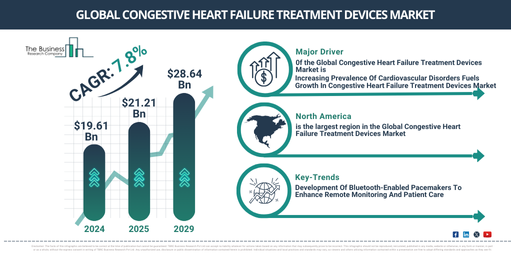
    The market size for treatment devices for congestive heart failure has seen robust growth in the past few years. The market is projected to expand from $19.61 billion in 2024 to $21.21 billion in 2025, showcasing a compound annual growth rate (CAGR) of 8.1%. This growth in the historic period is due to factors such as the trend towards less invasive surgical methods, an increase in demand for minimally invasive structural heart devices, continuous training and education for medical professionals, an upswing in healthcare spending, and patients’ increasing preference for non-surgical or minimally invasive treatment alternatives.

    How Much Will the Congestive Heart Failure Treatment Devices Market Be Worth in 2029?

    The market size for congestive heart failure treatment devices is set to exhibit vigorous growth in the coming years, reaching a valuation of $28.64 billion by 2029 with a compound annual growth rate (CAGR) of 7.8%. This upward trend during the forecast period is tied to factors like an aging populace, heightening awareness of cardiac well-being, the establishment of screening programs, encouraging reimbursement policies for structural heart surgeries, and swift regulatory permissions for cutting-edge structural heart contraptions. The forecast period will also see significant trends, such as a growing preference for transcatheter valve replacement, continual progress in developing state-of-the-art devices using advanced materials, an increasing emphasis on individualized treatment methods, rising utilization of hybrid procedures, and the incorporation of remote monitoring and telehealth solutions.

    Download The Free Sample Report Here:

    https://www.thebusinessresearchcompany.com/sample.aspx?id=15774&type=smp

    Which is the Largest Company in the Congestive Heart Failure Treatment Devices Market?

    Major companies operating in the congestive heart failure treatment devices market are Abbott Laboratories, Medtronic plc, Baxter International Inc., Boston Scientific Corporation, Terumo Corporation, Edwards Lifesciences Corporation, Charles River Laboratories International Inc., W. L. Gore & Associates Inc., Bracco Group, LivaNova PLC, Meril Life Sciences Pvt. Ltd., Biotronik SE & Co. KG, CryoLife Inc., HeartWare International Inc., Direct Flow Medical Inc., Berlin Heart GmbH, CVRx Inc., Micro Interventional Devices Inc., Jarvik Heart Inc., CardioKinetix Inc., Xeltis AG, Ancora Heart Inc., ReliantHeart Inc.

    What Are the Main Market Drivers in the Congestive Heart Failure Treatment Devices Industry?

    The growth of the congestive heart failure treatment devices market is expected to be spurred by the increased occurrence of cardiovascular disorders. These disorders include conditions that affect the heart and blood vessels, like coronary artery disease, hypertension, and heart failure, which can adversely affect blood circulation and overall cardiac health. These disorders’ rising prevalence is mainly due to increased risk factors such as obesity, sedentary lifestyles, poor diets, and growing old age populations. Congestive heart failure treatment devices play a pivotal role in managing these disorders by controlling heart rhythms and enhancing heart function, significantly improving patient outcomes. For example, a report by Charity Today, a UK-based charity organization, stated in January 2024 that over 39,000 people in England prematurely died of cardiovascular conditions including heart attacks, coronary heart disease and stroke in 2022. Hence, the surge in the prevalence of cardiovascular conditions is propelling the growth of the congestive heart failure (CHF) treatment devices market.

    Request For A Customized Report:

    https://www.thebusinessresearchcompany.com/customise?id=15774&type=smp

    How Is the Congestive Heart Failure Treatment Devices Market Segments Structured?

    The congestive heart failure treatment devices market covered in this report is segmented –

    1) By Product: Cardiac Pacemaker, Implantable Cardioverter Defibrillators (ICDs), Cardiac Resynchronization Therapy Devices (CRT), Counter Pulsation Devices, Ventricular Assist Devices (VADs)

    2) By Application: Left Ventricular Assist Device (LVAD), Right Ventricular Assist Device (RVAD), Biventricular Assist Device (BIVAD)

    3) By End-User: Hospitals And Clinic, Specialized Cardiovascular Disease Treatment Centers, Ambulatory Surgery Centers

    Subsegments:

    1) By Cardiac Pacemaker: Single Chamber Pacemaker, Dual Chamber Pacemaker, Biventricular Pacemaker

    2) By Implantable Cardioverter Defibrillators (ICDs): Traditional ICDs, Subcutaneous ICDs, CRT-D (Cardiac Resynchronization Therapy Defibrillator)

    3) By Cardiac Resynchronization Therapy Devices (CRT): CRT-P (Cardiac Resynchronization Therapy Pacemaker), CRT-D (Cardiac Resynchronization Therapy Defibrillator)

    4) By Counter Pulsation Devices: Intra-Aortic Balloon Pumps (IABP), External Counterpulsation Devices (ECP)

    5) By Ventricular Assist Devices (VADs): Left Ventricular Assist Devices (LVAD), Right Ventricular Assist Devices (RVAD), Biventricular Assist Devices (BiVAD)

    What Strategic Trends Are Transforming the Congestive Heart Failure Treatment Devices Market?

    Major firms in the congestive heart failure treatment devices market, like dual-chamber leadless pacemakers, are enhancing their product line with innovative solutions. These products are designed to better synchronize heart rhythm, minimize risks linked to traditional pacemaker leads, increase patient comfort, and offer more efficient control of heart failure symptoms. Consequently, they enhance quality of life and lower the rate of hospital readmissions for arrhythmia patients. A dual-chamber leadless pacemaker is a cutting-edge pacemaker model that manages the heart’s rhythm without the typical leads that are often implanted in the heart. For instance, Abbott Laboratories, a healthcare company based in the US, showcased the successful insertion of the world’s initial dual-chamber leadless pacemaker during a significant clinical trial in February 2022. This innovative device, made to control heart rhythms without standard leads, advances patient care through a less invasive process. The dual-chamber design allows for simultaneous pacing of both the atrium and ventricle, adding to better management of heart conditions. The intention behind this advancement is to offer patients a more accessible and effectual solution for heart rhythm issues, potentially reducing hospital readmissions and improving overall quality of life. Advanced technologies monitor the performance of the device, providing constant cardiac health supervision.

    Access The Full Report Here:

    https://www.thebusinessresearchcompany.com/report/congestive-heart-failure-treatment-devices-global-market-report

    Which Global Regions Offer the Highest Growth in the Congestive Heart Failure Treatment Devices Market?

    North America was the largest region in the congestive heart failure treatment devices market in 2023. Asia-Pacific is expected to be the fastest-growing region in the forecast period. The regions covered in the congestive heart failure treatment devices market report are Asia-Pacific, Western Europe, Eastern Europe, North America, South America, Middle East and Africa.

    Purchase The Full Report Today:

    https://www.thebusinessresearchcompany.com/purchaseoptions.aspx?id=15774

    This Report Delivers Insight On:

    1. How big is the congestive heart failure treatment devices market, and how is it changing globally?

    2. Who are the major companies in the congestive heart failure treatment devices market, and how are they performing?

    3. What are the key opportunities and risks in the congestive heart failure treatment devices market right now?

    4. Which products or customer segments are growing the most in the congestive heart failure treatment devices market?

    5. What factors are helping or slowing down the growth of the congestive heart failure treatment devices market?

    About The Business Research Company:

    With over 15000+ reports from 27 industries covering 60+ geographies, The Business Research Company has built a reputation for offering comprehensive, data-rich research and insights. Armed with 1,500,000 datasets, the optimistic contribution of in-depth secondary research, and unique insights from industry leaders, you can get the information you need to stay ahead in the game.

    Get in touch with us:

    The Business Research Company: https://www.thebusinessresearchcompany.com/

    Americas +1 310-496-7795

    Asia +44 2071930708

    Europe +44 7882 955267

    Email us at info@tbrc.info

    Follow us on:

    LinkedIn: https://in.linkedin.com/company/the-business-research-company

    YouTube: https://www.youtube.com/channel/UC24_fI0rV8cR5DxlCpgmyFQ

    Global Market Model: https://www.thebusinessresearchcompany.com/global-market-model
  • Cognitive Behavioral Therapy Market Outlook 2025 – Insights for Executive and Strategic Planning

    Cognitive Behavioral Therapy Market Outlook 2025 – Insights for Executive and Strategic Planning

    Claim your 30% discount on Global Market Reports with code ONLINE30. Limited time only.

    How Fast Is The Cognitive Behavioral Therapy Market Expected to Grow Between 2025 And 2029?

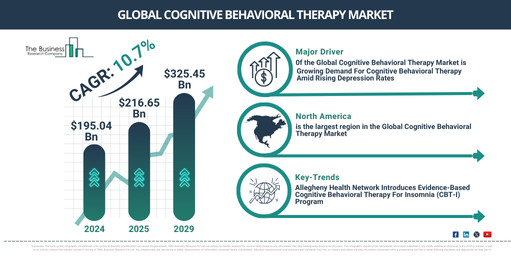
    The size of the cognitive behavioral therapy market has expanded swiftly in the prior years. It’s projected to rise from a value of $195.04 billion in 2024 to about $216.65 billion in 2025, indicating a Compound Annual Growth Rate (CAGR) of 11.1%. This progression in the earlier period can be credited to factors such as the worldwide expansion of mental health services, adjustments in healthcare policies and insurance provisions, a shift in treatment methodologies, a surge in mental health consciousness, and the introduction of cognitive behavioral therapy (CBT).

    What Growth Rate Is Anticipated for the Cognitive Behavioral Therapy Market in the Coming Years?

    The market size of cognitive behavioral therapy is projected to witness accelerated growth in the upcoming years, scaling up to $325.45 billion in 2029 with a compound annual growth rate (CAGR) of 10.7%. This surge in the prediction period can be linked to the growing need for mental health support in workplaces, amplified government funding and initiatives, continuous advancements in digital therapeutics and mobile health apps, incorporation in primary care units, and targeted efforts for individual groups. Key forthcoming trends include a heightened focus on individualized medicine, the spread of digital therapeutics platforms that provide CBT, the growth of community-oriented mental health services, emphasis on teletherapy and distant monitoring, and the application of outcome measurement and data analytics in mental health care.

    Download The Free Sample Report Here:

    https://www.thebusinessresearchcompany.com/sample.aspx?id=16378&type=smp

    Who Are the Leading Companies in the Cognitive Behavioral Therapy Market?

    Major companies operating in the cognitive behavioral therapy market are Universal Health Services Inc., Magellan Health, Acadia Healthcare Company, Headspace Inc., American Addiction Centers Inc., Behavioral Health Group Inc., American Well Corp., Landmark Recovery, Haven Behavioural Healthcare Inc., Ieso Digital Health Ltd., Talkspace Inc., Springstone Inc., Unmind, TherapyNotes LLC, Woebot Health, Big Health, Pear Therapeutics Inc., SilverCloud Health Inc., eMindful Inc., Thrive Therapeutic Software Limited, Cognoa Inc., Therachat, Spring Care Inc., Minddistrict, Sanvello

    What Are the Key Drivers of the Cognitive Behavioral Therapy Market?

    The surge in depression cases is anticipated to fuel the cognitive behavioral therapy market’s expansion in the future. Depression, a mental health disorder marked by persistent sadness, feelings of despair, and diminished interest or pleasure in activities, is often associated with physical symptoms such as changes in sleep or eating habits. A rise in depression cases can be attributed to factors like societal pressures, economic stress, genetic factors, traumatic events, and limited mental health resources and support availability. Cognitive behavioral therapy (CBT) has been found effective in treating depression by assisting individuals in recognizing and transforming negative thought and behavior patterns. For example, a National Health Service survey published in November 2022 revealed that about 18.0% of children aged 7 to 16, and 22.0% of young adults aged 17 to 24, registered a potential mental disorder in 2022. The incidence of a likely mental disorder increased from 17.4% in 2021 to 25.7% in 2022 in individuals aged 17 to 19. The surveyed group comprised 2,866 children and young adults. Hence, the rise in depression cases propels the cognitive behavioral therapy market’s growth.

    Request For A Customized Report:

    https://www.thebusinessresearchcompany.com/customise?id=16378&type=smp

    What Are the Key Market Segments in the Cognitive Behavioral Therapy Industry?

    The cognitive behavioral therapy market covered in this report is segmented –

    1) By Type: Cognitive Behavioral Therapy, Cognitive Behavioral Play Therapy, Desensitization, Aversion Therapy, Other Types

    2) By Age Group: Children, Adult, Geriatric

    3) By Applications: Anxiety Disorders, Depression, Substance Abuse, Post-Traumatic Stress Disorder (PTSD), Eating Disorders, Attention Deficit Hyperactivity Disorder (ADHD), Bipolar Disorders, Other Applications

    4) By Service Provider: Hospitals And Clinics, Specialty Hospitals, Rehabilitation Centers, Home Care, Other Service Providers

    1) By Cognitive Behavioral Therapy (CBT): Individual CBT, Group CBT, Online CBT, Telehealth CBT, Cognitive Behavioral Play Therapy

    2) By Cognitive Behavioral Play Therapy: Child-Focused Play Therapy, Parent-Child Play Therapy, Interactive Play Therapy

    3) By Desensitization: Systematic Desensitization, Exposure Therapy, Virtual Reality Exposure Therapy

    4) By Aversion Therapy: Classical Aversion Therapy, Operant Aversion Therapy

    5) By Other Types: Dialectical Behavior Therapy (DBT), Mindfulness-Based Cognitive Therapy (MBCT), Acceptance and Commitment Therapy (ACT), Rational Emotive Behavior Therapy (REBT)

    What Are the Latest Trends in the Cognitive Behavioral Therapy Market?

    Several key players in the cognitive behavioral therapy market are pioneering inventive services, like cognitive behavioral therapy for insomnia (CBT-I) program, in order to fortify their market dominance. The CBT-I program is a structured endeavor designed to enhance sleep quality by navigating the cognitive and behavioral aspects contributing to insomnia, such as detrimental sleep behaviors and pessimistic thinking patterns. To illustrate, Allegheny Health Network, a healthcare corporation based in the US, launched a novel evidence-based cognitive behavioral therapy for insomnia (CBT-I) program in March 2024. This program, designed to assist patients in improving the quality and volume of their sleep, is backed by a grant from the Richard King Mellon Foundation. It’s a joint venture involving the AHN Primary Care Institute, the AHN Psychiatry & Behavioral Health Institute, and Highmark Health.

    Access The Full Report Here:

    https://www.thebusinessresearchcompany.com/report/cognitive-behavioral-therapy-global-market-report

    What Are the Key Regional Markets in the Cognitive Behavioral Therapy Industry?

    North America was the largest region in the cognitive behavioral therapy market in 2024. Asia-Pacific is expected to be the fastest-growing region in the forecast period. The regions covered in the cognitive behavioral therapy market report are Asia-Pacific, Western Europe, Eastern Europe, North America, South America, Middle East, Africa.

    Purchase The Full Report Today:

    https://www.thebusinessresearchcompany.com/purchaseoptions.aspx?id=16378

    This Report Delivers Insight On:

    1. How big is the cognitive behavioral therapy market, and how is it changing globally?

    2. Who are the major companies in the cognitive behavioral therapy market, and how are they performing?

    3. What are the key opportunities and risks in the cognitive behavioral therapy market right now?

    4. Which products or customer segments are growing the most in the cognitive behavioral therapy market?

    5. What factors are helping or slowing down the growth of the cognitive behavioral therapy market?

    About The Business Research Company:

    With over 15000+ reports from 27 industries covering 60+ geographies, The Business Research Company has built a reputation for offering comprehensive, data-rich research and insights. Armed with 1,500,000 datasets, the optimistic contribution of in-depth secondary research, and unique insights from industry leaders, you can get the information you need to stay ahead in the game.

    Get in touch with us:

    The Business Research Company: https://www.thebusinessresearchcompany.com/

    Americas +1 310-496-7795

    Asia +44 2071930708

    Europe +44 7882 955267

    Email us at info@tbrc.info

    Follow us on:

    LinkedIn: https://in.linkedin.com/company/the-business-research-company

    YouTube: https://www.youtube.com/channel/UC24_fI0rV8cR5DxlCpgmyFQ

    Global Market Model: https://www.thebusinessresearchcompany.com/global-market-model
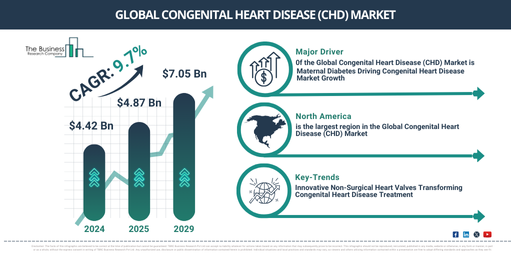
  • Congenital Heart Disease (CHD) Industry Growth Expected to Reach $7.05 Billion by 2029 at a CAGR of 9.7% | Segmentation and Growth Opportunities

    Congenital Heart Disease (CHD) Industry Growth Expected to Reach $7.05 Billion by 2029 at a CAGR of 9.7% | Segmentation and Growth Opportunities

    Claim your 30% discount on Global Market Reports with code ONLINE30. Limited time only.

    How Has the Congenital Heart Disease (CHD) Market Growth Performance Trended Historically, And What Lies Ahead?

    The market size associated with congenital heart disease (CHD) has seen substantial growth recently. The market is expected to grow from a value of $4.42 billion in 2024 to $4.87 billion in 2025, with a compound annual growth rate (CAGR) of 10.1%. The surge that was observed during the recent years can be linked to several factors including a rise in risk elements such as obesity and smoking, advancements in diagnostic technology, the growth of the elderly population, intensified awareness initiatives, improved policies for reimbursement, and an escalation in research and development funding.

    What Is the Forecast for the Congenital Heart Disease (CHD) Market Size Through 2029?

    The market for congenital heart disease (CHD) is anticipated to witness solid expansion in the coming years, growing to a predicted $7.05 billion by 2029 with a compound annual growth rate (CAGR) of 9.7%. Factors contributing to this growth in the projected period include increased access to healthcare in underdeveloped areas, constant advancements in cardiac imaging technology, widespread campaigns focusing on early diagnosis and treatment, and a global increase in healthcare spending, alongside advances in personalized medicine. Key trends for the forecast period incorporate the use of minimally invasive surgical methods, the growing use of telemedicine for remote patient consultations and monitoring, increasing demand for customized treatment strategies, the emergence of innovative implantable devices featuring enhanced function and lifespan, and the incorporation of artificial intelligence and machine learning in diagnosis and treatment procedures.

    Download The Free Sample Report Here:

    https://www.thebusinessresearchcompany.com/sample.aspx?id=15545&type=smp

    What are the Key Market Players in Congenital Heart Disease (CHD) Market and How They’re Evolving?

    Major companies operating in the congenital heart disease (CHD) market are Pfizer Inc., AstraZeneca Plc, Abbott Laboratories, Novartis AG, Medtronic, Siemens Healthineers, Philips Healthcare, Roche Diagnostics International Ltd., Boston Scientific Corp., Laboratory Corporation of America Holdings (LabCorp), Terumo Corporation, Mindray Medical International Limited, Canon Medical Systems Corporation, Masimo Corporation, Neusoft Corp., Carestream Health, Midmark Corporation, Contec Medical Systems, Randox Laboratories Ltd., Schiller AG, BPL Medical Technologies, Compumedics Limited, Biocare Medical, Bionet America Inc., Nasan Medical Electronics Pvt Ltd

    What Are the Primary Growth Drivers in the Congenital Heart Disease (CHD) Market?

    The projected rise in cases of maternal diabetes is likely to fuel the expansion of the congenital heart disease (CHD) market in the coming years. Gestational diabetes mellitus (GDM), or maternal diabetes, is the term given to diabetes that develops in women who were not previously diabetic prior to becoming pregnant. This condition is triggered by alterations in lifestyle, such as an increase in sedentary behavior and poor dietary choices, along with a rising obesity rate among women of reproductive age. The occurrence of maternal diabetes can result in newborns having congenital heart disease (CHD) since excess glucose in the mother’s blood influences the development of the child’s heart. This abnormal blood sugar level can disrupt the proper development of the fetal heart, thereby raising the chances of CHD. As an example, the National Health Service, a government department in the UK, stated in October 2023 that there was a rise from 4.9% in 2021 to 6.6% in 2022 in adverse pregnancy outcomes in women diagnosed with type 2 diabetes. Thus, the surge in maternal diabetes diagnoses is boosting the congenital heart disease (CHD) market’s growth.

    Request For A Customized Report:

    https://www.thebusinessresearchcompany.com/customise?id=15545&type=smp

    What Are the Leading Segments in the Global Congenital Heart Disease (CHD) Industry?

    The congenital heart disease (CHD) market covered in this report is segmented –

    1) By Type: Heart Valve Defects, Heart Wall Defects, Blood Vessel Defects, Other Types

    2) By Diagnosis: Electrocardiogram, Chest X-ray,  Echocardiogram, Transesophageal Echocardiogram, Pulse Oximetry, Exercise Stress Test, Cardiac Computed Tomography (CT) Scan Or Magnetic Resonance Imaging (MRI), Cardiac Catheterization, Other Diagnosis

    3) By Treatment: Interventional Cardiology, Cardiac Surgery, Telemedicine, Medication Management, Lifestyle Modifications

    4) By Age Group: Infants, Children, Adolescents, Adults

    5) By Application: Hospitals And Clinics, Diagnostic Centers, Ambulatory Surgical Centers, Research And Academic Institutions

    Subsegments:

    1) By Heart Valve Defects: Aortic Valve Stenosis, Pulmonary Valve Stenosis, Mitral Valve Prolapse, Tricuspid Valve Defects, Valve Regurgitation

    2) By Heart Wall Defects: Atrial Septal Defect (ASD), Ventricular Septal Defect (VSD), Atrioventricular Septal Defect (AVSD), Hypoplastic Left Heart Syndrome (HLHS), Tetralogy of Fallot (TOF)

    3) By Blood Vessel Defects: Coarctation Of The Aorta, Patent Ductus Arteriosus (PDA), Pulmonary Artery Stenosis, Transposition Of The Great Arteries (TGA), Truncus Arteriosus

    4) By Other Types: Single Ventricle Defects, Ebstein’s Anomaly, Total Anomalous Pulmonary Venous Return (TAPVR), Coronary Artery Anomalies, Pulmonary Venous Obstruction

    What Are the Key Market Trends in the Congenital Heart Disease (CHD) Industry?

    Leading businesses in the congenital heart disease industry are innovating non-surgical heart valves to enhance patient results and life quality. Transcatheter, or non-operative heart valves, are therapeutic appliances that manage heart valve diseases without necessitating conventional open-heart surgery. For instance, Medtronic, a medical tech firm based in the US, re-launched its Harmony Transcatheter Pulmonary Valve (TPV) System in February 2023. This system is a revolutionary, minimally invasive substitute for open-heart surgery for congenital heart disease patients, particularly those with native or previously surgically remedied right ventricular outflow tract (RVOT) abnormalities. The system, which is the first FDA-approved valve for the right side, offers a non-operative resolution for patients experiencing severe pulmonary valve regurgitation. The Harmony TPV System was granted U.S. FDA approval in 2021 and was reissued after a voluntary recall, signaling Medtronic’s dedication to progressing solutions for congenital heart disease patients.

    Access The Full Report Here:

    https://www.thebusinessresearchcompany.com/report/congenital-heart-disease-chd-global-market-report

    What Is the Regional Outlook for the Congenital Heart Disease (CHD) Market?

    North America was the largest region in the congenital heart disease (CHD) market in 2023. The regions covered in the congenital heart disease (CHD) market report are Asia-Pacific, Western Europe, Eastern Europe, North America, South America, Middle East, Africa.

    Purchase The Full Report Today:

    https://www.thebusinessresearchcompany.com/purchaseoptions.aspx?id=15545

    This Report Delivers Insight On:

    1. How big is the congenital heart disease (chd) market, and how is it changing globally?

    2. Who are the major companies in the congenital heart disease (chd) market, and how are they performing?

    3. What are the key opportunities and risks in the congenital heart disease (chd) market right now?

    4. Which products or customer segments are growing the most in the congenital heart disease (chd) market?

    5. What factors are helping or slowing down the growth of the congenital heart disease (chd) market?

    About The Business Research Company:

    With over 15000+ reports from 27 industries covering 60+ geographies, The Business Research Company has built a reputation for offering comprehensive, data-rich research and insights. Armed with 1,500,000 datasets, the optimistic contribution of in-depth secondary research, and unique insights from industry leaders, you can get the information you need to stay ahead in the game.

    Get in touch with us:

    The Business Research Company: https://www.thebusinessresearchcompany.com/

    Americas +1 310-496-7795

    Asia +44 2071930708

    Europe +44 7882 955267

    Email us at info@tbrc.info

    Follow us on:

    LinkedIn: https://in.linkedin.com/company/the-business-research-company

    YouTube: https://www.youtube.com/channel/UC24_fI0rV8cR5DxlCpgmyFQ

    Global Market Model: https://www.thebusinessresearchcompany.com/global-market-model
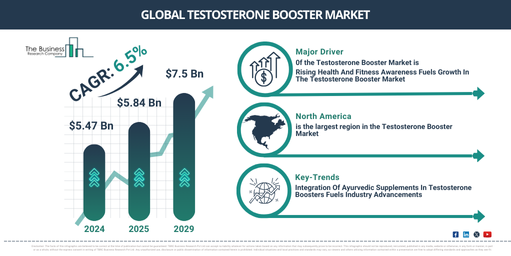
  • Testosterone Booster Market to Reach $7.5 Billion by 2029 | Key Drivers and Future Outlook

    Testosterone Booster Market to Reach $7.5 Billion by 2029 | Key Drivers and Future Outlook

    Claim your 30% discount on Global Market Reports with code ONLINE30. Limited time only.

    What Is the Growth Rate of the Testosterone Booster Market?

    There has been a robust growth in the testosterone booster market size in the past few years. Its increase from $5.47 billion in 2024 to $5.84 billion in 2025, with a compound annual growth rate (CAGR) of 6.7%, can be credited to several factors. These include recommendations from healthcare experts, evolving beauty standards, extensive fitness coverage in publications and media, the global spread of fitness culture, and changing views on masculinity.

    What Growth Rate Is Forecasted for the Testosterone Booster Market by 2029?

    In the subsequent years, robust expansion is anticipated in the testosterone booster market, which is predicted to reach $7.5 billion by 2029, showcasing a compound annual growth rate (CAGR) of 6.5%. Factors contributing to growth during the forecast period include a greater focus on preventive healthcare, an expanding e-commerce sector, amplified consciousness about hormonal health, inventive marketing approaches, and customized medicine. Prevailing trends in the forecasted period comprise a rising preference for online sales platforms, advancements in product delivery formats, incorporation of technology, penetration of the global market, and strategic collaborations and partnerships.

    Download The Free Sample Report Here:

    https://www.thebusinessresearchcompany.com/sample.aspx?id=13942&type=smp

    Which Key Companies Are Shaping the Future of the Testosterone Booster Market?

    Major companies operating in the testosterone booster market report are GNC Holdings LLC, Evolution Nutrition LLC, Iron Brothers Supplements, Musclepro Nutrition Pvt Ltd., Nutrabolt, Alpha Pro Tech Ltd., MuscleTech, Performance Lab, Hybrid Nutraceuticals LLC, Optimum Nutrition, Vita Balance Inc., JYM Supplement Science, VH Nutrition LLC, SMP Nutra LLC, Roar Ambition Ltd, Ultra Testo Rush, BL Bio Lab LLC, Pharmgrade, Zenith Nutrition, CrazyBulk NZ, Nugenix, Lipocine Inc., TestoTEK, Invictus Labs, Zoic Pharmaceuticals

    Which Factors Are Driving Demand in the Testosterone Booster Industry?

    The rising consciousness surrounding health and fitness is anticipated to drive the expansion of the testosterone booster market in the future. This term, health and fitness, represents the complete well-being and the body and mind’s best functioning, including the physical, mental, and social health aspects, and places importance on sustaining or bettering an individual’s physical state. Testosterone boosters can aid in enhancing muscle mass and power, positively affecting sports performance and overall body strength. For instance, a survey conducted by ukactive, a UK-based non-profit industry association, in September 2023 revealed that over half of UK adults, constituting 54%, claimed that their primary reason for staying physically active was to support their mental health. Simultaneously, 49% pointed out the aim was to stay in shape. Additionally, among these, 86% concurred that staying physically active could assist in preventing numerous diseases and injuries. Consequently, this heightened knowledge about health and fitness is spearheading the expansion of the testosterone booster market.

    Request For A Customized Report:

    https://www.thebusinessresearchcompany.com/customise?id=13942&type=smp

    How Is the Testosterone Booster Market Segmented by Several Divisions?

    The testosterone booster market covered in this report is segmented –

    1) By Component: Vitamins, D-Aspartic Acid, Zinc Component

    2) By Source: Mucuna Pruriens, Ginseng, Oyster Extract, Fenugreek

    3) By Application: Hospitals, Retail Pharmacies

    Subsegments:

    1) By Vitamins: Vitamin D, Vitamin B6, Vitamin B12

    2) By D-Aspartic Acid: D-Aspartic Acid Powder, D-Aspartic Acid Capsules

    3) By Zinc Component: Zinc Citrate, Zinc Monomethionine, Zinc Aspartate

    What are the Emerging Market Trends Driving the Growth of the Testosterone Booster Industry?

    Key players in the testosterone booster market, such as Jagat Pharma Pvt Ltd., are innovating with advanced product formulations that incorporate ayurvedic supplements, consolidating their market presence. These Ayurvedic supplements enhance testosterone boosters, providing a time-tested, holistic, and natural solution appealing to customers who prefer non-synthetic alternatives. As an example, this India-based Ayurveda company rolled out a potent testosterone booster in November 2023, aimed at boosting energy levels, amplifying endurance, and augmenting muscle power. The company’s recent offering contains critical Ayurvedic elements like Ginseng Root Extract, Gokhru, Ashwagandha, Fenugreek, Safed Musli, and Kawach Beej. The formulation aims to increase strength, power, and stamina, thereby elevating physical performance and endurance.

    Access The Full Report Here:

    https://www.thebusinessresearchcompany.com/report/testosterone-booster-global-market-report

    Which Regions Are Driving Growth in the Testosterone Booster Market?

    North America was the largest region in the testosterone booster market in 2024. The regions covered in the testosterone booster market report are Asia-Pacific, Western Europe, Eastern Europe, North America, South America, Middle East, Africa.

    Purchase The Full Report Today:

    https://www.thebusinessresearchcompany.com/purchaseoptions.aspx?id=13942

    This Report Delivers Insight On:

    1. How big is the testosterone booster market, and how is it changing globally?

    2. Who are the major companies in the testosterone booster market, and how are they performing?

    3. What are the key opportunities and risks in the testosterone booster market right now?

    4. Which products or customer segments are growing the most in the testosterone booster market?

    5. What factors are helping or slowing down the growth of the testosterone booster market?

    About The Business Research Company:

    With over 15000+ reports from 27 industries covering 60+ geographies, The Business Research Company has built a reputation for offering comprehensive, data-rich research and insights. Armed with 1,500,000 datasets, the optimistic contribution of in-depth secondary research, and unique insights from industry leaders, you can get the information you need to stay ahead in the game.

    Get in touch with us:

    The Business Research Company: https://www.thebusinessresearchcompany.com/

    Americas +1 310-496-7795

    Asia +44 2071930708

    Europe +44 7882 955267

    Email us at info@tbrc.info

    Follow us on:

    LinkedIn: https://in.linkedin.com/company/the-business-research-company

    YouTube: https://www.youtube.com/channel/UC24_fI0rV8cR5DxlCpgmyFQ

    Global Market Model: https://www.thebusinessresearchcompany.com/global-market-model
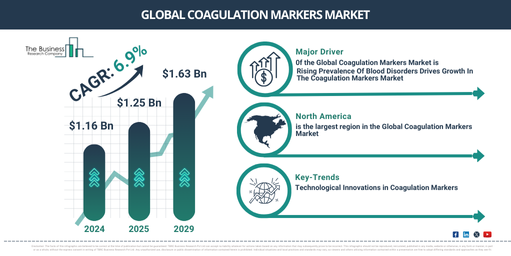
  • Coagulation Markers Market Projected at $1.63 Billion by 2029 | Strategic Insights and Forecast Data

    Coagulation Markers Market Projected at $1.63 Billion by 2029 | Strategic Insights and Forecast Data

    Claim your 30% discount on Global Market Reports with code ONLINE30. Limited time only.

    #How Has The Coagulation Markers Market Size Shifted, And What Is the Outlook Through 2034?

    The market for coagulation markers has experienced significant growth in the past years. It is forecasted to expand from $1.16 billion in 2024 to $1.25 billion in 2025, reflecting a compound annual growth rate (CAGR) of 7.1%. Factors contributing to the growth during the historical period include the increasing incidence of cardiovascular diseases, an aging populace, a rise in surgical procedures, initiatives and funding by the government, improved health awareness and early diagnosis, and growing healthcare infrastructure.

    How Much Will the Coagulation Markers Market Be Worth in 2029?

    The demand in the coagulation markers sector is predicted to significantly increase in the forthcoming years, reaching a market size of $1.63 billion in 2029, with a compound annual growth rate (CAGR) of 6.9%. Factors contributing to this predicted upswing during the projected period are the increasing prevalence of chronic illnesses, the heightened use of personalized medicine, a growing global populace, a surge in healthcare spending, and the expanding presence in developing markets. Upcoming trends that should be noted during the projected duration are the introduction of artificial intelligence and machine learning, the advancement of new biomarkers, improvements in point-of-care technologies, lab automation, the rise in wearable health technologies, the growth in telehealth and remote supervision, and the utilization of sustainable diagnostic routines.

    Download The Free Sample Report Here:

    https://www.thebusinessresearchcompany.com/sample.aspx?id=17117&type=smp

    Which is the Largest Company in the Coagulation Markers Market?

    Major companies operating in the coagulation markers market are Siemens Healthineers, Roche Holding AG, Thermo Fisher Scientific Inc., Abbott Laboratories, Quidel Corporation, Sysmex Corporation, Bio-Rad Laboratories Inc., Werfen Group, Nihon Kohden Corporation, Randox Laboratories Ltd, Stago Group, Sekisui Diagnostics, Helena Laboratories Italia Spa, Tulip Diagnostics Ltd, Trinity Biotech PLC, CTK Biotech Inc., International Technidyne Corporation (ITC), Diazyme Laboratories Inc., AdvaCare Pharma USA (AccuQuik Test Kits), Technoclone GmbH, BioMedica Diagnostics Inc., Eurolyser Diagnostica GmbH, Goldsite Diagnostics Inc., Hipro Biotechnology Co. Ltd., HYPHEN BioMed

    What Are the Main Market Drivers in the Coagulation Markers Industry?

    The increase in the occurrence of blood-related conditions is anticipated to push forward the growth of the coagulation markers sector. Blood illnesses encompass a broad spectrum of disorders that impede the normal functionality of blood. An aging demographic, heightened consciousness, and enhanced diagnostic techniques are causing an upsurge in the prevalence of blood disorders. Coagulation markers are instrumental in diagnosing and managing blood conditions due to their ability to evaluate clotting functionality, spot irregularities, and monitor the effectiveness of treatments for conditions such as hemophilia and thrombosis. For example, the Leukaemia Foundation, a non-profit organization based in Australia, reported in May 2024 that approximately 135,000 Australians are currently living with a blood disorder or cancer, a figure that is expected to escalate to over 275,000 by 2035, hence, supporting the expansion of the coagulation markers market due to the escalating prevalence of blood disorders.

    Request For A Customized Report:

    https://www.thebusinessresearchcompany.com/customise?id=17117&type=smp

    How Is the Coagulation Markers Market Segments Structured?

    The coagulation markers market covered in this report is segmented –

    1) By Product: D-Dimer Assay, Fibrinogen Assay

    2) By Sample Type: Plasma, Whole Blood Sample, Other Sample Types

    3) By Technology: Fluorescence Immunoassay, Enzyme-Linked Immuno Sorbent Assay (ELISA), Rapid Test, Particle Enhanced Immunoturbidimetric Assay

    4) By Application: Deep Venous Thrombosis (DVT), Pulmonary Embolism (PE), Disseminated Intravascular Coagulation (DIC), Trauma, Other Applications

    5) By End User: Hospital, Specialty Clinics, Academic And Research Institute, Diagnostics Laboratories

    Subsegments:

    1) By D-Dimer Assay: ELISA-Based D-Dimer Assay, Lateral Flow Immunoassay D-Dimer Test, Chemiluminescent Immunoassay D-Dimer Test

    2) By Fibrinogen Assay: Clauss Fibrinogen Assay, Functional Fibrinogen Assay, Automated Fibrinogen Assay

    What Strategic Trends Are Transforming the Coagulation Markers Market?

    In a bid to enhance the accuracy and speed of diagnoses related to blood clot-related conditions, leading players in the coagulation markers market are investing in the creation of advanced technology solutions, including D-dimer kits. These kits are diagnostic instruments that are used to determine the amount of D-dimer, which is a protein fragment that is produced when a blood clot dissolves. This can assist in detecting and examining clot-related disorders such as deep vein thrombosis and pulmonary embolism. For example, Bionote Inc., a biotechnology firm based in the United States, introduced the Vcheck D-dimer 5Tests/Kit in July 2024. This immunodiagnostic tool, which offers five tests per kit to identify D-dimer levels, is intended for use in veterinary medicine. It is beneficial in diagnosing conditions like sepsis, thrombosis, and DIC in veterinary clinics using it as a blood clot formation and disintegration marker.

    Access The Full Report Here:

    https://www.thebusinessresearchcompany.com/report/coagulation-markers-global-market-report

    Which Global Regions Offer the Highest Growth in the Coagulation Markers Market?

    North America was the largest region in the coagulation markers market in 2024. The regions covered in the coagulation markers market report are Asia-Pacific, Western Europe, Eastern Europe, North America, South America, Middle East, Africa.

    Purchase The Full Report Today:

    https://www.thebusinessresearchcompany.com/purchaseoptions.aspx?id=17117

    This Report Delivers Insight On:

    1. How big is the coagulation markers market, and how is it changing globally?

    2. Who are the major companies in the coagulation markers market, and how are they performing?

    3. What are the key opportunities and risks in the coagulation markers market right now?

    4. Which products or customer segments are growing the most in the coagulation markers market?

    5. What factors are helping or slowing down the growth of the coagulation markers market?

    About The Business Research Company:

    With over 15000+ reports from 27 industries covering 60+ geographies, The Business Research Company has built a reputation for offering comprehensive, data-rich research and insights. Armed with 1,500,000 datasets, the optimistic contribution of in-depth secondary research, and unique insights from industry leaders, you can get the information you need to stay ahead in the game.

    Get in touch with us:

    The Business Research Company: https://www.thebusinessresearchcompany.com/

    Americas +1 310-496-7795

    Asia +44 2071930708

    Europe +44 7882 955267

    Email us at info@tbrc.info

    Follow us on:

    LinkedIn: https://in.linkedin.com/company/the-business-research-company

    YouTube: https://www.youtube.com/channel/UC24_fI0rV8cR5DxlCpgmyFQ

    Global Market Model: https://www.thebusinessresearchcompany.com/global-market-model
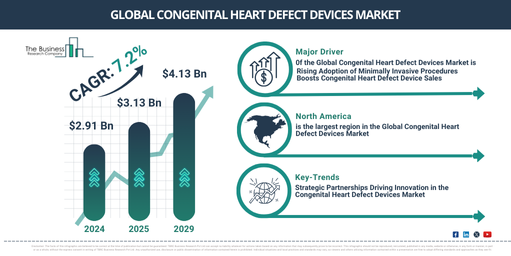
  • Congenital Heart Defect Devices Industry Valued at $4.13 Billion by 2029 With CAGR of 7.2% | Size and Share Insights

    Congenital Heart Defect Devices Industry Valued at $4.13 Billion by 2029 With CAGR of 7.2% | Size and Share Insights

    Claim your 30% discount on Global Market Reports with code ONLINE30. Limited time only.

    What Are the Projected Market Size and Growth Rates for the Congenital Heart Defect Devices Market From 2025 To 2029?

    The market size for devices for congenital heart defects has seen substantial growth in recent years. It is forecasted to increase from $2.91 billion in 2024 to $3.13 billion in 2025, with a compound annual growth rate (CAGR) of 7.5%. The notable growth observed in the historic period is attributable to factors such as enhancements in healthcare awareness campaigns, an uptick in heart defect screening programs, stricter medical device regulations, a rise in instances of congenital heart defects, and an elevated risk of organ failure.

    What Is the Projected Market Size of the Congenital Heart Defect Devices Market?

    The market for congenital heart defect devices is predicted to experience significant expansion in the forthcoming years. It is estimated to reach $4.13 billion by 2029, with a compound annual growth rate (CAGR) of 7.2%. The projected growth during this timeframe can be due to the increase in clinical trials, an upsurge in the elderly population, growing occurrence of congenital heart diseases, ascent in government backing and funding, and a rise in the number of dedicated medical centers. Key trends anticipated during this period comprise technological enhancements, adoption of digital health technologies, personalized healthcare, the integration of 3D printing technology, and the use of wearable devices.

    Download The Free Sample Report Here:

    https://www.thebusinessresearchcompany.com/sample.aspx?id=18543&type=smp

    Who are the Major Competitors in the Congenital Heart Defect Devices Market Outlook?

    Major companies operating in the congenital heart defect devices market are Pfizer Inc., Johnson & Johnson, AstraZeneca plc., Abbott Laboratories, GlaxoSmithKline plc., Medtronic plc., Philips Healthcare, Boston Scientific Corporation, W. L. Gore & Associates Inc., Masimo Corporation, Lepu Medical Technology (Beijing) Co. Ltd., MicroPort Scientific Corporation, Stereotaxis Inc., Berlin Heart GmbH, Ventracor Limited, Syncardia Systems LLC, On-X Life Technologies Inc., Occlutech Holding AG, Sahajanand Medical Technologies Pvt. Ltd., Response Biomedical Corporation, Xeltis AG, Procyrion Inc., Heartstitch Inc., Cardia Inc., OSYPKA Medical GmbH

    What Is Fueling Growth in the Congenital Heart Defect Devices Market?

    The escalating rise in the count of minimally invasive surgeries is projected to spur the expansion of the congenital heart defect device market. Minimally invasive surgeries encompass conducting surgical interventions with minor incisions or via natural bodily orifices, often utilizing specialized equipment and methods to lower trauma and accelerate recuperation. The surge in minimally invasive surgeries can be attributed to technological advancements, patients favoring less invasive remedies, refined surgical methods, and the perks of shortened recovery periods and fewer complications. Congenital heart defect devices come into play in executing minimally invasive surgeries by enabling the diagnosis, therapy, and administration of heart irregularities via methods that necessitate smaller incisions or catheter-centric approaches. For instance, the American Society of Plastic Surgeons (ASPS), a professional organization based in the US representing plastic surgeons, stated that in 2022, the total number of cosmetic minimally invasive surgeries performed in the US stood at 23,672,269, indicating a 7% increase in comparison to earlier years. As such, the skyrocketing frequency of minimally invasive surgeries is catalyzing the congenital heart defect devices market’s progression.

    Request For A Customized Report:

    https://www.thebusinessresearchcompany.com/customise?id=18543&type=smp

    Which Congenital Heart Defect Devices Market Segments Are Growing the Fastest?

    The congenital heart defect devices market covered in this report is segmented –

    1) By Device Type: Catheters, Pacemakers, Single-Chamber Pacemakers, Dual-Chamber Pacemakers, Biventricular Pacemakers, Leadless Pacemakers, Implantable Cardioverter Defibrillators, Biventricular Devices, Implanted Cardiac Loop Recorders, Other Device Types

    2) By Defect Type: Atrial Septal Defect, Ventricular Septal Defect, Atrioventricular Septal Defect, Tricuspid Atresia, Truncus Arteriosus, Other Defect Types

    3) By End user: Hospitals, Specialty Clinics, Academic And Research Institute, Other End Users

    Subsegments:

    1) By Catheters: Balloon Catheters, Diagnostic Catheters, Guiding Catheters

    2) By Pacemakers: Single-Chamber Pacemakers, Dual-Chamber Pacemakers, Biventricular Pacemakers, Leadless Pacemakers

    3) By Implantable Cardioverter Defibrillators: Single-Chamber Icds, Dual-Chamber Icds, Subcutaneous Icds

    4) By Biventricular Devices: Crt-P (Cardiac Resynchronization Therapy Pacemakers), Crt-D (Cardiac Resynchronization Therapy Defibrillators)

    5) By Implanted Cardiac Loop Recorders: Traditional Implantable Loop Recorders, Subcutaneous Implantable Loop Recorders

    6) By Other Device Types: Transcatheter Heart Valves, Ventricular Assist Devices (VADS)

    Which Industry Trends Are Shaping the Future of the Congenital Heart Defect Devices Market?

    Key players in the congenital heart defect devices market are increasingly leveraging strategic partnerships as a way to foster innovation in the design and development of congenital heart defect devices. These alliances allow companies in the sector to pool their resources and knowledge, accelerate research and development, widen their market reach and hasten the commercialization process. Such synergies effectively spur innovation and stimulate growth in this sphere. An illustration of this is the partnership formed in May 2024 between SMT (Sahajanand Medical Technologies Pvt Ltd), a manufacturing company based in India, and HeartX, an Indian MedTech organization, with a shared goal of enhancing cardiovascular patient care. This collaboration bolsters SMT’s foothold in the congenital heart defect (CHD) area by bringing on board HeartX’s innovative solutions, such as the JOVE VB Stent. Through this strategic union, SMT now can provide advanced CHD devices aimed at improving the effectiveness of treatments, streamlining procedures and boosting patient outcomes.

    Access The Full Report Here:

    https://www.thebusinessresearchcompany.com/report/congenital-heart-defect-devices-global-market-report

    Which Countries Are Leading the Congenital Heart Defect Devices Market?

    North America was the largest region in the congenital heart defect devices market in 2024. Asia-Pacific is expected to be the fastest-growing region in the forecast period. The regions covered in the congenital heart defect devices market report are Asia-Pacific, Western Europe, Eastern Europe, North America, South America, Middle East, Africa.

    Purchase The Full Report Today:

    https://www.thebusinessresearchcompany.com/purchaseoptions.aspx?id=18543

    This Report Delivers Insight On:

    1. How big is the congenital heart defect devices market, and how is it changing globally?

    2. Who are the major companies in the congenital heart defect devices market, and how are they performing?

    3. What are the key opportunities and risks in the congenital heart defect devices market right now?

    4. Which products or customer segments are growing the most in the congenital heart defect devices market?

    5. What factors are helping or slowing down the growth of the congenital heart defect devices market?

    About The Business Research Company:

    With over 15000+ reports from 27 industries covering 60+ geographies, The Business Research Company has built a reputation for offering comprehensive, data-rich research and insights. Armed with 1,500,000 datasets, the optimistic contribution of in-depth secondary research, and unique insights from industry leaders, you can get the information you need to stay ahead in the game.

    Get in touch with us:

    The Business Research Company: https://www.thebusinessresearchcompany.com/

    Americas +1 310-496-7795

    Asia +44 2071930708

    Europe +44 7882 955267

    Email us at info@tbrc.info

    Follow us on:

    LinkedIn: https://in.linkedin.com/company/the-business-research-company

    YouTube: https://www.youtube.com/channel/UC24_fI0rV8cR5DxlCpgmyFQ

    Global Market Model: https://www.thebusinessresearchcompany.com/global-market-model
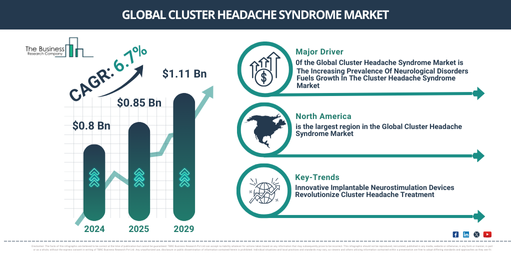
  • Cluster Headache Syndrome Industry Growth Expected to Reach $1.11 Billion by 2029 at a CAGR of 6.7% | Segmentation and Growth Opportunities

    Cluster Headache Syndrome Industry Growth Expected to Reach $1.11 Billion by 2029 at a CAGR of 6.7% | Segmentation and Growth Opportunities

    Claim your 30% discount on Global Market Reports with code ONLINE30. Limited time only.

    #How Has the Cluster Headache Syndrome Market Growth Performance Trended Historically, And What Lies Ahead?

    There has been robust growth in the cluster headache syndrome market in recent years. Projections indicate that it will increase from $0.8 billion in 2024 to $0.85 billion in 2025, exhibiting a compound annual growth rate (CAGR) of 7.0%. The surge experienced in the historical period can be traced back to various factors including enhancements in public health policies, advancements in research and development for therapies regarding headaches, heightened consciousness of neurological diseases, expansion of multinational clinical studies, and an escalation in the accessibility of supplementary treatment options.

    What Is the Forecast for the Cluster Headache Syndrome Market Size Through 2029?

    In the coming years, significant growth is anticipated in the cluster headache syndrome market, with an expectation to expand to $1.11 billion by 2029, growing at a compound annual growth rate (CAGR) of 6.7%. The surge in growth during the forecast period is attributed to an increasing number of neurological disorders, an upward trend in the investment for new medication development, growth in healthcare expenditure, a rise in cases of depression, and an increase in drug approvals. The forecast period promises major trends such as technological developments, the rise of telemedicine, the emergence of personalized medicine, neuromodulation techniques, and the introduction of targeted drug therapies.

    Download The Free Sample Report Here:

    https://www.thebusinessresearchcompany.com/sample.aspx?id=18301&type=smp

    What are the Key Market Players in Cluster Headache Syndrome Market and How They’re Evolving?

    Major companies operating in the cluster headache syndrome market are Pfizer Inc., Bayer AG, GlaxoSmithKline plc, Takeda Pharmaceutical Company Limited, Eli Lilly and Company, Viatris Inc., Teva Pharmaceutical Industries Ltd., Otsuka Pharmaceutical Co. Ltd., Hikma Pharmaceuticals, Amneal Pharmaceuticals, Grünenthal GmbH, Mallinckrodt Pharmaceuticals, Upsher-Smith Laboratories, Zogenix Inc., Neurelis Inc., ElectroCore Medical LLC, Ceruvia Lifesciences, TrioxBio Inc., Winston Pharmaceuticals Inc., Zosano Pharma Corporation, Autonomic Technologies Inc., H. Lundbeck A/S

    What Are the Primary Growth Drivers in the Cluster Headache Syndrome Market?

    The increasing occurrence of neurological disorders is projected to drive the expansion of the cluster headache syndrome market. Neurological disorders are a vast category, encompassing any ailment that affects the nervous system, including the brain, spinal cord, and body-wide nerves. Factors contributing to the rise in neurological disorders include an increased prevalence of risk factors like diabetes, enhanced diagnostics, neurological complications stemming from other conditions, and socio-economic disparities. Treatments designed for neurological disorders aid in managing cluster headache syndrome, since many of these disorders intersect with or influence headache pathways. Addressing the symptoms and root causes of cluster headaches can effectively diminish their frequency, intensity, and consequences. For example, the European Brain Council, a non-profit organization based in Belgium, stated in April 2022 that the number of Europeans afflicted by Dementia (a neurological disorder) stood at 10.5 million and is predicted to surge to 18.7 million by 2050. Hence, the escalation in neurological disorders is fueling the growth of the cluster headache syndrome market.

    Request For A Customized Report:

    https://www.thebusinessresearchcompany.com/customise?id=18301&type=smp

    What Are the Leading Segments in the Global Cluster Headache Syndrome Industry?

    The cluster headache syndrome market covered in this report is segmented –

    1) By Type: Episodic, Chronic

    2) By Drug Type: Calcium Channel Blockers, Corticosteroids, Sumatriptan, Lithium Carbonate, Ergots, Melatonin, Anti-Seizure, Local Anesthetics

    3) By Diagnosis: Neurological Examination, Magnetic Resonance Imaging, Computed Tomography Scan

    4) By Route of Administration: Oral, Topical, Intravenous, Other Routes Of Administration

    5) By Distribution Channel: Hospital Pharmacies, Retail Pharmacies, Online Stores, Other Distribution Channels

    Subsegments:

    1) By Episodic: Short-Duration Episodic Cluster Headaches, Long-Duration Episodic Cluster Headaches

    2) By Chronic: Chronic Cluster Headaches With Frequent Attacks, Chronic Cluster Headaches With Rare Attacks

    What Are the Key Market Trends in the Cluster Headache Syndrome Industry?

    Key players in the cluster headache syndrome market are concentrating on the advent of innovative technologies, like implantable neurostimulation technology, to offer sufferers more efficient treatment methods. The implantable neurostimulation technology employs devices which are surgically inserted to deliver electrical signals to specific nerve system areas. For example, in August 2023, Salvia BioElectronics, a medical device enterprise based in the Netherlands, introduced a paper-thin neuromodulation device designed to treat severe migraine and cluster headaches. This device incorporates paper-thin bioelectronic foils that adapt to the shape of the patient’s head once implanted, thereby delivering electrical pulses. Since migraines and cluster headaches are associated with heightened sensitivity in certain brain areas, the neuromodulation device’s electrical pulses restore equilibrium and alleviate the headaches.

    Access The Full Report Here:

    https://www.thebusinessresearchcompany.com/report/cluster-headache-syndrome-global-market-report

    What Is the Regional Outlook for the Cluster Headache Syndrome Market?

    North America was the largest region in the cluster headache syndrome market in 2024. Asia-Pacific is expected to be the fastest-growing region in the forecast period. The regions covered in the cluster headache syndrome market report are Asia-Pacific, Western Europe, Eastern Europe, North America, South America, Middle East, Africa.

    Purchase The Full Report Today:

    https://www.thebusinessresearchcompany.com/purchaseoptions.aspx?id=18301

    This Report Delivers Insight On:

    1. How big is the cluster headache syndrome market, and how is it changing globally?

    2. Who are the major companies in the cluster headache syndrome market, and how are they performing?

    3. What are the key opportunities and risks in the cluster headache syndrome market right now?

    4. Which products or customer segments are growing the most in the cluster headache syndrome market?

    5. What factors are helping or slowing down the growth of the cluster headache syndrome market?

    About The Business Research Company:

    With over 15000+ reports from 27 industries covering 60+ geographies, The Business Research Company has built a reputation for offering comprehensive, data-rich research and insights. Armed with 1,500,000 datasets, the optimistic contribution of in-depth secondary research, and unique insights from industry leaders, you can get the information you need to stay ahead in the game.

    Get in touch with us:

    The Business Research Company: https://www.thebusinessresearchcompany.com/

    Americas +1 310-496-7795

    Asia +44 2071930708

    Europe +44 7882 955267

    Email us at info@tbrc.info

    Follow us on:

    LinkedIn: https://in.linkedin.com/company/the-business-research-company

    YouTube: https://www.youtube.com/channel/UC24_fI0rV8cR5DxlCpgmyFQ

    Global Market Model: https://www.thebusinessresearchcompany.com/global-market-model
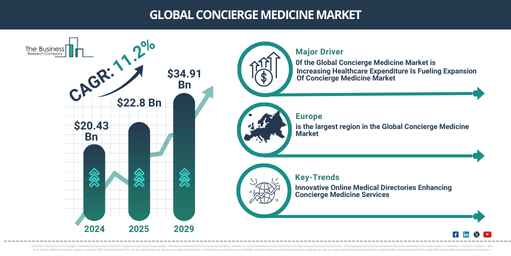
  • Concierge Medicine Market to Reach $34.91 Billion by 2029 | Key Drivers and Future Outlook

    Concierge Medicine Market to Reach $34.91 Billion by 2029 | Key Drivers and Future Outlook

    Claim your 30% discount on Global Market Reports with code ONLINE30. Limited time only.

    What Is the Estimated Market Size of the Concierge Medicine Market In 2029?

    The size of the concierge medicine market has experienced a fast-paced expansion in recent years. Its growth is projected to escalate from a valuation of $20.43 billion in 2024 to around $22.8 billion in 2025, exhibiting a compound annual growth rate (CAGR) of 11.6%. Factors contributing to this growth during the historical period include amplified need for customized healthcare, instances of physician burnout, escalating healthcare costs, altered consumer preferences and the introduction of corporate wellness programs.

    What Growth Rate Is Forecasted for the Concierge Medicine Market by 2029?

    The market size for concierge medicine is predicted to witness swift expansion in the coming years, with an anticipated growth to $34.91 billion by 2029 and a compound annual growth rate (CAGR) of 11.2%. Factors contributing to this predicted growth during the forecast period encompass the merging of supplementary therapies, urbanization, changes in lifestyle, differences in healthcare quality, regulatory developments, and increased health awareness among the millennial population. The forecast period is also expected to see significant trends such as virtual concierge services, coordinated care networks, technological progression, artificial intelligence, and predictive analytics.

    Download The Free Sample Report Here:

    https://www.thebusinessresearchcompany.com/sample.aspx?id=15773&type=smp

    Which Key Companies Are Shaping the Future of the Concierge Medicine Market?

    Major companies operating in the concierge medicine market are Duke Health, Privia Health Group Inc., One Medical Group Inc., Crossover Health, MedScape, MDVIP LLC, Sollis Health, Medix global, PinnacleCare, PartnerMD LLC, Paragon Private Health, SignatureMD, Castle Connolly Private Health Partners LLC, Concierge Choice Physicians, EliteHealth, Specialdocs Consultants LLC, Access Healthcare Direct, Dedication Health, Plus Humain, Diamond Physicians, Atlas MD, Red Carpet Concierge Medicine, HealthPulse Concierge Medicine, Lake Oconee Concierge Medicine, NOVA Concierge Medicine & Aesthetics

    Which Factors Are Driving Demand in the Concierge Medicine Industry?

    The anticipated expansion of the concierge medicine market is likely to be spurred on by the rising healthcare expenditure. The phrase healthcare expenditure pertains to the collective sum of money allocated towards healthcare goods and services within a particular timeframe. This encompasses costs related to hospital care, medication, physician services, and other health-centric services. Rising medical technology advancements and a growing prevalence of chronic diseases contribute to the escalation of healthcare expenditure. Concierge medicine leverages these expenses to provide bespoke, high-end medical services, giving patients better access and tailored care. For example, the Canadian Institute for Health Information (CIHI), a non-profit organization based in Canada that focuses on gathering and scrutinizing health data, predicted in November 2023 that Canada’s healthcare spending might reach an estimated $344 billion. This represents a $9 billion increase, or roughly 2.8%, from the prior year. Consequently, the uptick in healthcare spending is fueling the expansion of the concierge medicine market.

    Request For A Customized Report:

    https://www.thebusinessresearchcompany.com/customise?id=15773&type=smp

    How Is the Concierge Medicine Market Segmented by Several Divisions?

    The concierge medicine market covered in this report is segmented –

    1) By Ownership: Group, Standalone

    2) By Application: Cardiology, Primary Care, Psychiatry, Pediatrics, Osteopathy, Neurology, Other Applications

    3) By End User: Individual, Corporate Organization

    Subsegments:

    1) By Group: Multi-Physician Concierge Practices, Physician Networks And Associations

    2) By Standalone: Independent Concierge Practices, Single-Physician Concierge Practices

    What are the Emerging Market Trends Driving the Growth of the Concierge Medicine Industry?

    To improve patient access to prompt and customized healthcare services, leading firms in the concierge medicine market are offering features like an online medical directory. This digital platform registers healthcare providers such as doctors, clinics, and specialists, enabling users to retrieve details about medical professionals and their services. For example, in March 2023, HealthLynked Corporation, a company based in the US that provides healthcare services, introduced an online concierge service. Through its comprehensive online directory, which includes over 880,000 healthcare providers, it allows patients nationwide to schedule doctor appointments. The service simplifies the process of booking appointments by suggesting specific times for open slots and making provision for requests concerning unclaimed provider listings. With the HealthLynked app, patients can revise their medical records, while support is available from concierge nurse staff.

    Access The Full Report Here:

    https://www.thebusinessresearchcompany.com/report/concierge-medicine-global-market-report

    Which Regions Are Driving Growth in the Concierge Medicine Market?

    Europe was the largest region in the concierge medicine market in 2023. North America is expected to be the fastest-growing region in the forecast period. The regions covered in the concierge medicine market report are Asia-Pacific, Western Europe, Eastern Europe, North America, South America, Middle East and Africa.

    Purchase The Full Report Today:

    https://www.thebusinessresearchcompany.com/purchaseoptions.aspx?id=15773

    This Report Delivers Insight On:

    1. How big is the concierge medicine market, and how is it changing globally?

    2. Who are the major companies in the concierge medicine market, and how are they performing?

    3. What are the key opportunities and risks in the concierge medicine market right now?

    4. Which products or customer segments are growing the most in the concierge medicine market?

    5. What factors are helping or slowing down the growth of the concierge medicine market?

    About The Business Research Company:

    With over 15000+ reports from 27 industries covering 60+ geographies, The Business Research Company has built a reputation for offering comprehensive, data-rich research and insights. Armed with 1,500,000 datasets, the optimistic contribution of in-depth secondary research, and unique insights from industry leaders, you can get the information you need to stay ahead in the game.

    Get in touch with us:

    The Business Research Company: https://www.thebusinessresearchcompany.com/

    Americas +1 310-496-7795

    Asia +44 2071930708

    Europe +44 7882 955267

    Email us at info@tbrc.info

    Follow us on:

    LinkedIn: https://in.linkedin.com/company/the-business-research-company

    YouTube: https://www.youtube.com/channel/UC24_fI0rV8cR5DxlCpgmyFQ

    Global Market Model: https://www.thebusinessresearchcompany.com/global-market-model