Month: July 2025

  • Esophageal Catheters Market Projected at $3.58 Billion by 2029 | Strategic Insights and Forecast Data

    Esophageal Catheters Market Projected at $3.58 Billion by 2029 | Strategic Insights and Forecast Data

    Claim your 30% discount on Global Market Reports with code ONLINE30. Limited time only.

    How Has the Esophageal Catheters Market Size Changed, over the years?

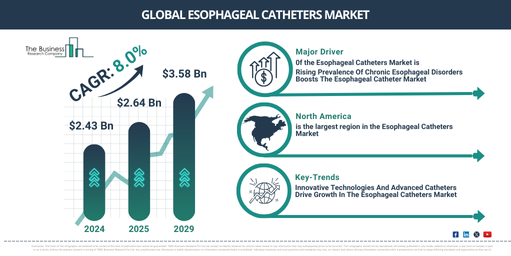
    The market scale for esophageal catheters has seen robust growth recently. The expectation is that this rise will continue from $2.43 billion in 2024 to $2.64 billion in 2025, evidencing a compound annual growth rate (CAGR) of 8.6%. Developments in critical care, cardiac and respiratory disorders, minimally invasive practices, and intensive care units (icus) are some key factors contributing to the growth witnessed in the historic period.

    How Much Will the Esophageal Catheters Market Be Worth in 2029?

    In the upcoming years, the market size of esophageal catheters is projected to witness substantial growth, with a prediction to reach $3.58 billion by 2029, growing at a compound annual growth rate (CAGR) of 8.0%. This anticipated growth during the forecast period can be credited to factors such as an increase in the global aging population, advancements in critical care, personalized medicine, telemedicine and remote monitoring. The leading trends expected during this period comprise wireless and mobile monitoring, AI-enhanced monitoring, smart catheter sensors, and focus on patient-centered care.

    Download The Free Sample Report Here:

    https://www.thebusinessresearchcompany.com/sample.aspx?id=13010&type=smp

    Which is the Largest Company in the Esophageal Catheters Market?

    Major companies operating in the esophageal catheters market are Medtronic PLC, Medline Industries LP, Becton Dickinson and Company, Boston Scientific Corporation, B. Braun Melsungen AG, Stryker Corporation, Olympus Corporation, Edwards Lifesciences Corporation, CooperSurgical Inc., Teleflex Incorporated, Cook Medical Inc., Merit Medical Systems Inc., Avanos Medical Inc., Medela AG, Japan Lifeline Co. Ltd., Meridian Bioscience Inc., Laborie Medical Technologies Inc., FUJIFILM Medical Systems, CardioFocus Inc., Taewoong Medical Co., Pennine Healthcare, EB Neuro S.p.A., Alicn Medical Co. Ltd., Hamilton Medical AG, Deem Sensing Technologies Pvt. Ltd., Envaste Limited, Medcaptain Medical Technology Co. Ltd., CardioCommand Inc., Ella Cs S.R.O, PENTAX Medical Co.

    What Are the Main Market Drivers in the Esophageal Catheters Industry?

    The escalating occurrence of prolonged esophageal conditions is projected to stimulate the expansion of the esophageal catheter market. Chronic esophageal conditions encompass a range of health issues or diseases impacting the esophagus, the muscle-lined channel linking the oral cavity to the stomach, for an extended duration. Specialized esophageal catheters like manometry catheters facilitate the diagnosis of chronic esophageal conditions by tracking pressure variations and motility patterns throughout the esophagus. For instance, a report by the US-based National Library of Medicine in January 2023 predicted a total of 7,39,666 new cases and 7,23,466 deaths resulting from esophageal cancer in the year 2030, followed by 9,87,723 cases and 9,14,304 fatalities around the globe in 2040. Consequently, the escalating occurrence of chronic esophageal conditions contributes to the expansion of the esophageal catheter market.

    Esophageal Catheters Market Driver: Surge in Demand for Minimally Invasive Procedures underpins esophageal catheters demand


    Request For A Customized Report:

    https://www.thebusinessresearchcompany.com/customise?id=13010&type=smp

    How Is the Esophageal Catheters Market Segments Structured?

    The esophageal catheters market covered in this report is segmented –

    1) By Product Type: Balloon Dilation Catheter, Irrigation Catheter, Pressure Monitoring Catheter, Radiofrequency Ablation Catheter, Suction Catheter

    2) By Application: Gastroesophageal Reflux Disease (GERD), Dysphagia, Chest Pain, Other Applications

    3) By End-User: Hospitals, Clinics, Ambulatory Surgical Centers

    Subsegments:

    1) By Balloon Dilation Catheter: Single-Use Balloon Catheters, Multi-Use Balloon Catheters

    2) By Irrigation Catheter: Standard Irrigation Catheters, Specialty Irrigation Catheters

    3) By Pressure Monitoring Catheter: Continuous Pressure Monitoring Catheters, Intermittent Pressure Monitoring Catheters

    4) By Radiofrequency Ablation Catheter: Circular Ablation Catheters, Linear Ablation Catheters

    5) By Suction Catheter: Standard Suction Catheters, Pediatric Suction Catheters

    What Strategic Trends Are Transforming the Esophageal Catheters Market?

    Prominent companies in the esophageal catheters market are focusing on developing cutting-edge technologies such as TactiFlex SE irrigation catheters to expand their offerings and solidify their market position. A radiofrequency ablation catheter is a medical tool used to treat various arrhythmias during cardiac ablation procedures by transmitting high-frequency electrical impulses to the cardiac tissue. For example, in August 2022, Abbott Laboratories, an American medical devices and healthcare company, introduced TactiFlex SE in Japan. This radiofrequency (RF) ablation catheter comes with a flexible tip, slit electrode, and contact force technology. It is designed to adapt to the shape of the heart’s wall, catering to unique patient anatomies, thereby presenting a safe and efficient solution for lesion creation during operations.

    Access The Full Report Here:

    https://www.thebusinessresearchcompany.com/report/esophageal-catheters-global-market-report

    Which Global Regions Offer the Highest Growth in the Esophageal Catheters Market?

    North America was the largest region in the esophageal catheters market in 2024. Asia-Pacific is expected to be the fastest-growing region in the forecast period. The regions covered in esophageal catheters market report are Asia-Pacific, Western Europe, Eastern Europe, North America, South America, Middle East and Africa.

    Purchase The Full Report Today:

    https://www.thebusinessresearchcompany.com/purchaseoptions.aspx?id=13010

    This Report Delivers Insight On:

    1. How big is the esophageal catheters market, and how is it changing globally?

    2. Who are the major companies in the esophageal catheters market, and how are they performing?

    3. What are the key opportunities and risks in the esophageal catheters market right now?

    4. Which products or customer segments are growing the most in the esophageal catheters market?

    5. What factors are helping or slowing down the growth of the esophageal catheters market?

    About The Business Research Company:

    With over 15000+ reports from 27 industries covering 60+ geographies, The Business Research Company has built a reputation for offering comprehensive, data-rich research and insights. Armed with 1,500,000 datasets, the optimistic contribution of in-depth secondary research, and unique insights from industry leaders, you can get the information you need to stay ahead in the game.

    Get in touch with us:

    The Business Research Company: https://www.thebusinessresearchcompany.com/

    Americas +1 310-496-7795

    Asia +44 2071930708

    Europe +44 7882 955267

    Email us at info@tbrc.info

    Follow us on:

    LinkedIn: https://in.linkedin.com/company/the-business-research-company

    YouTube: https://www.youtube.com/channel/UC24_fI0rV8cR5DxlCpgmyFQ

    Global Market Model: https://www.thebusinessresearchcompany.com/global-market-model
  • Smart Hospital Industry Growth Expected to Reach $157.37 Billion by 2029 at a CAGR of 21.8% | Segmentation and Growth Opportunities

    Smart Hospital Industry Growth Expected to Reach $157.37 Billion by 2029 at a CAGR of 21.8% | Segmentation and Growth Opportunities

    Claim your 30% discount on Global Market Reports with code ONLINE30. Limited time only.

    What Is the Forecast for the Smart Hospital Market Growth in 2025?

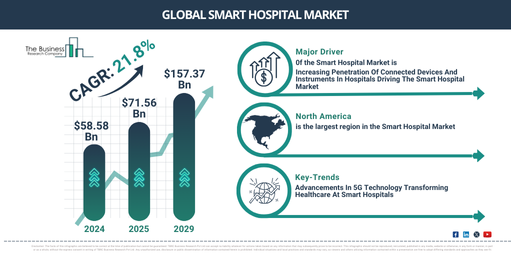
    Recent years have witnessed extensive growth in the smart hospital market size. There is a predicted expansion from $58.58 billion in 2024 to $71.56 billion in 2025, marking a compound annual growth rate (CAGR) of 22.2%. Factors such as initiatives for patient safety, the surge in demand for integrated healthcare solutions, workforce scarcities, digital transformation drives, and growing regulatory mandates have been responsible for this growth during the historic period.

    What Is the Forecast for the Smart Hospital Market Size Through 2029?

    Expectations are high for the smart hospital market to expand exponentially in the near future. By 2029, the market will likely surge to a whopping $157.37 billion, exhibiting a compound annual growth rate (CAGR) of 21.8%. This substantial growth in the forecast period can be credited to a greater emphasis on preventive care, the need for instantaneous data, an increase in IoMT devices, escalating healthcare expenses, and a surging aging population. The future trends to watch include telemedicine and distant patient monitoring, AI and machine learning implementations, healthcare IoT security, wearable health technology, and smart hospital architecture.

    Download The Free Sample Report Here:

    https://www.thebusinessresearchcompany.com/sample.aspx?id=13734&type=smp

    What are the Key Market Players in Smart Hospital Market and How They’re Evolving?

    Major companies operating in the smart hospital market report are Apple Inc., Alphabet Inc., Microsoft Corporation, AT&T Inc., Intel Corporation, The International Business Machines Corporation, Cisco Systems, Inc., Qualcomm Life, SAP SE, Medtronic PLC, Nvidia Corporation, Siemens Healthineers AG, Koninklijke Philips N.V., GE Healthcare, Stanley Healthcare, Honeywell Life Care Solutions, Cerner Corporation, General Vision, Allscripts Healthcare Solutions, Athenahealth, Brooks Automation, AirStrip Technologies Inc., Welltok Inc., Enlitic Inc., Next IT Corp.

    What Are the Primary Growth Drivers in the Smart Hospital Market?

    The smart hospital market is anticipated to experience considerable growth due to the increasing incorporation of connected devices and instruments in hospitals. These refer to internet-connected medical devices used across different hospital practices to gather vast amounts of data. Their rising prevalence is fundamental to the evolution of smart hospitals as it improves patient care, boosts operation efficiency, and enables data-driven decision making. The FDA, a federal agency in the US, announced in October 2023, that 171 devices have been added to the list of AI and ML-enabled medical devices available in the market, a significant increase from the previous year. The number of these devices is predicted to increase by 30% or more. Therefore, the growing incorporation of connected devices in hospital settings is fueling the expansion of the smart hospitals market.

    Request For A Customized Report:

    https://www.thebusinessresearchcompany.com/customise?id=13734&type=smp

    What Are the Leading Segments in the Global Smart Hospital Industry?

    The smart hospital market covered in this report is segmented –

    1) By Component: Hardware, Software System, Services

    2) By Technology: Cloud Computing, Artificial Intelligence, Wearable Technologies, Radio Frequencies Identification, Other Technologies

    3) By Connectivity: Wired, Wireless

    4) By Application: Remote Medicine Management, Medical Connected Imaging, Medical Assistance, Electronic Health Record, Outpatient Vigilance

    Subsegments:

    1) By Hardware: Medical Devices, Internet Of Things (IoT) Devices, Wearable Health Monitors, Infrastructure Equipment (Sensors, Cameras)

    2) By Software System: Electronic Health Records (EHR), Hospital Management Systems, Patient Engagement Software, Data Analytics And Reporting Tools

    3) By Services: Consulting Services, Implementation And Integration Services, Maintenance And Support Services, Training And Education Services

    What Are the Key Market Trends in the Smart Hospital Industry?

    Major businesses in the smart hospital sector are forming strategic alliances to advance smart hospital solutions. This typically involves two or more entities (mainly companies) working together to produce mutually beneficial outcomes. For instance, in March 2023, the health-tech start-up LifeSigns, based in the US, established a partnership with Amala Hospital. Amala Hospital is a Indian-based establishment that provides orthopedic treatments and therapeutic services, and this alliance resulted in the introduction of a smart ward. This is a setup which employs the iMS technology of LifeSigns, using wearable wireless sensors for constant patient observation, making traditional wired systems obsolete hence increasing comfort and enhancing data gathering.

    Access The Full Report Here:

    https://www.thebusinessresearchcompany.com/report/smart-hospital-global-market-report

    What Is the Regional Outlook for the Smart Hospital Market?

    North America was the largest region in the smart hospital market in 2024. Asia-Pacific is expected to be the fastest-growing region in the forecast period. The regions covered in the smart hospital market report are Asia-Pacific, Western Europe, Eastern Europe, North America, South America, Middle East, Africa.

    Purchase The Full Report Today:

    https://www.thebusinessresearchcompany.com/purchaseoptions.aspx?id=13734

    This Report Delivers Insight On:

    1. How big is the smart hospital market, and how is it changing globally?

    2. Who are the major companies in the smart hospital market, and how are they performing?

    3. What are the key opportunities and risks in the smart hospital market right now?

    4. Which products or customer segments are growing the most in the smart hospital market?

    5. What factors are helping or slowing down the growth of the smart hospital market?

    About The Business Research Company:

    With over 15000+ reports from 27 industries covering 60+ geographies, The Business Research Company has built a reputation for offering comprehensive, data-rich research and insights. Armed with 1,500,000 datasets, the optimistic contribution of in-depth secondary research, and unique insights from industry leaders, you can get the information you need to stay ahead in the game.

    Get in touch with us:

    The Business Research Company: https://www.thebusinessresearchcompany.com/

    Americas +1 310-496-7795

    Asia +44 2071930708

    Europe +44 7882 955267

    Email us at info@tbrc.info

    Follow us on:

    LinkedIn: https://in.linkedin.com/company/the-business-research-company

    YouTube: https://www.youtube.com/channel/UC24_fI0rV8cR5DxlCpgmyFQ

    Global Market Model: https://www.thebusinessresearchcompany.com/global-market-model
  • Erdheim Chester Disease Industry Growth Expected to Reach $7.85 Billion by 2029 at a CAGR of 7.6% | Segmentation and Growth Opportunities

    Erdheim Chester Disease Industry Growth Expected to Reach $7.85 Billion by 2029 at a CAGR of 7.6% | Segmentation and Growth Opportunities

    Claim your 30% discount on Global Market Reports with code ONLINE30. Limited time only.

    What Is the Forecast for the Erdheim Chester Disease Market Growth in 2025?

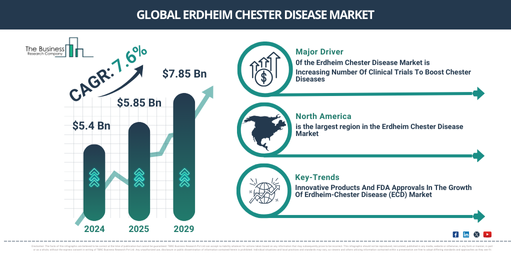
    In the last few years, the market size for Erdheim Chester disease has seen significant growth. It is expected to rise from $5.4 billion in 2024 to $5.85 billion in 2025, with a compound annual growth rate (CAGR) of 8.3%. Factors contributing to this growth during the historical period include heightened awareness of the disease, cooperative research efforts, recognition of the disease as a rare condition, worldwide patient advocacy, and regulatory backing for orphan drugs.

    What Is the Forecast for the Erdheim Chester Disease Market Size Through 2029?

    In the coming years, the Erdheim Chester Disease market is anticipated to exhibit robust growth, with a projection to reach $7.85 billion by 2029, growing at a Compound Annual Growth Rate (CAGR) of 7.6%. This predicted expansion during the forecast period can be attributed to numerous factors such as implementation of precision medicine, advancement in imaging techniques, an increase in clinical trial participation, escalated funding for rare diseases, and the emergence of innovative therapeutic targets. The forecast period will also witness key trends including the development of drugs tailored to patient needs, international cooperation, progress in diagnostic technology, research on the genetic and molecular basis of the disease, and breakthroughs in immunotherapy.

    Download The Free Sample Report Here:

    https://www.thebusinessresearchcompany.com/sample.aspx?id=13240&type=smp

    What are the Key Market Players in Erdheim Chester Disease Market and How They’re Evolving?

    Major companies operating in the erdheim chester disease market report are Pfizer Inc., Johnson & Johnson, Roche Holding AG, AbbVie Inc., Bayer AG, Novartis AG, Sanofi S.A., Bristol-Myers Squibb Company, AstraZeneca PLC, GSK PLC, Eli Lilly and Company, Amgen Inc., Teva Pharmaceutical Industries Ltd., Regeneron Pharmaceuticals Inc., Mylan N.V., Astellas Pharma Inc., Vertex Pharmaceuticals, Sun Pharmaceutical Industries Limited, Horizon Therapeutics PLC, Hikma Pharmaceuticals PLC, BioMarin Pharmaceutical Inc., Cipla Inc., Jubilant Pharmova Limited, Labcorp, Orchard Therapeutics PLC, Cyclerion Therapeutics Inc

    What Are the Primary Growth Drivers in the Erdheim Chester Disease Market?

    The expansion of the Erdheim-Chester disease market is anticipated to be catalysed by a surge in the number of clinical trials. Clinical trials, which are research investigations aimed at assessing the safety, efficacy and potential advantages of novel medical treatments, interventions, medications, devices or procedures, are critical for the development of new Erdheim-Chester therapies. These trials focus on the pathophysiological and clinical characteristics of the disease, collect patient data to enhance understanding of the disease, and evaluate the safety and effectiveness of new treatments. For example, a report by Xtalks, a Canadian digital medical firm, stated that as of May 2023, there are 452,604 registered clinical trials worldwide on ClinicalTrials.gov, with 64,838 of them actively seeking participants. This marks a substantial rise from the over 365,000 trials registered in early 2021. Consequently, the escalating number of clinical trials is fuelling the expansion of the Erdheim-Chester disease market. In addition, the swift increase in healthcare expenditure is set to stimulate growth in the Erdheim-Chester disease market. Healthcare spending entails the total amount individuals commit to healthcare services and products. Rising spending on Erdheim-Chester disease healthcare could lead to enhanced patient care, better treatment methods and more optimistic patient outcomes, whilst also aiding the progression of medical science and society’s overall wellbeing. For example, Cross River Therapy, a US-based provider of ABA therapy services, reported in September 2024 that the U.S. pharmaceutical industry generated $550 billion in revenue, while Americans spent $576.9 billion on medicine in 2021, with projected spending predicted to rise to $605-$635 billion by 2025. Ergo, this increase in healthcare spending is driving the future growth of the Erdheim-Chester disease market.

    Request For A Customized Report:

    https://www.thebusinessresearchcompany.com/customise?id=13240&type=smp

    What Are the Leading Segments in the Global Erdheim Chester Disease Industry?

    The erdheim chester disease market covered in this report is segmented –

    1) By Treatment: Chemotherapy, Immunotherapy, Radiation Therapy, Other Treatments

    2) By Route Of Administration: Oral, Parenteral, Other Route Of Administration

    3) By Distribution Channel: Hospital Pharmacy, Online Pharmacy, Retail Pharmacy

    4) By End User: Hospitals, Homecare, Specialty Clinics, Other End User

    Subsegments:

    1) By Chemotherapy: Traditional Chemotherapy Agents, Targeted Chemotherapy Regimens

    2) By Immunotherapy: Checkpoint Inhibitors, Monoclonal Antibodies, Interferon Therapy

    3) By Radiation Therapy: Palliative Radiation Therapy, Stereotactic Radiosurgery

    4) By Other Treatments: Targeted Therapy, Supportive Care And Symptomatic Treatment, Clinical Trials For Novel Therapies

    What Are the Key Market Trends in the Erdheim Chester Disease Industry?

    Trend 1

    Text: Leading corporations within the Erdheim-Chester disease industry are advancing via the creation of innovative solutions like dabrafenib (Tafinlar) combined with trametinib (Mekinist) and are achieving approvals to cater to a larger clientele, thereby increasing purchases and revenue growth. In March 2023, the US-based federal organization, Food and Drug Administration, granted approval for dabrafenib, a BRAF inhibitor, to be utilized for Erdheim-Chester disease treatment (ECD), an infrequent case of non-Langerhans cell histiocytosis. Dabrafenib’s effectiveness in treating ECD, particularly those patients with BRAF V600E mutation-positive lesions, has been proven. The drug has also shown substantial effectiveness in treating pediatric ECD patients, especially those with multiple large cerebral ECD lesions.

    Innovative Therapies Aim at Distinct Cancer Features Catering to Uncommon Cancers

    In the Erdheim-Chester disease domain, prominent businesses are concentrating on generating innovative solutions such as targeted cancer treatment. This offers a feasible treatment alternative for adult patients with histiocytic neoplasms and satisfies an unfulfilled need in the treatment of these rare cancers. Targeted cancer treatment stands for therapies that solely focus on the unique characteristics of cancer cells, like specific proteins or genetic mutations, to slow their multiplication and existence and reduce harm to healthy cells. In November 2022, cobimetinib (Cotellic) was approved for the treatment of adult patients diagnosed with histiocytic neoplasms, which include Erdheim-Chester disease, Rosai-Dorfman disease, and Langerhans cell histiocytosis by the US Food and Drug Administration (FDA), a US federal agency. Patients with histologically validated histiocytic neoplasms of any mutation were involved in the trials conducted for the study.

    Access The Full Report Here:

    https://www.thebusinessresearchcompany.com/report/erdheim-chester-disease-global-market-report

    What Is the Regional Outlook for the Erdheim Chester Disease Market?

    North America was the largest region in the Erdheim-Chester disease market in 2024. Asia-Pacific is expected to be the fastest-growing region in the forecast period. The regions covered in the erdheim chester disease market report is Asia-Pacific, Western Europe, Eastern Europe, North America, South America, Middle East, Africa

    Purchase The Full Report Today:

    https://www.thebusinessresearchcompany.com/purchaseoptions.aspx?id=13240

    This Report Delivers Insight On:

    1. How big is the erdheim chester disease market, and how is it changing globally?

    2. Who are the major companies in the erdheim chester disease market, and how are they performing?

    3. What are the key opportunities and risks in the erdheim chester disease market right now?

    4. Which products or customer segments are growing the most in the erdheim chester disease market?

    5. What factors are helping or slowing down the growth of the erdheim chester disease market?

    About The Business Research Company:

    With over 15000+ reports from 27 industries covering 60+ geographies, The Business Research Company has built a reputation for offering comprehensive, data-rich research and insights. Armed with 1,500,000 datasets, the optimistic contribution of in-depth secondary research, and unique insights from industry leaders, you can get the information you need to stay ahead in the game.

    Get in touch with us:

    The Business Research Company: https://www.thebusinessresearchcompany.com/

    Americas +1 310-496-7795

    Asia +44 2071930708

    Europe +44 7882 955267

    Email us at info@tbrc.info

    Follow us on:

    LinkedIn: https://in.linkedin.com/company/the-business-research-company

    YouTube: https://www.youtube.com/channel/UC24_fI0rV8cR5DxlCpgmyFQ

    Global Market Model: https://www.thebusinessresearchcompany.com/global-market-model
  • Smart Drug Delivery Systems Industry Valued at $31.01 Billion by 2029 With CAGR of 19.6% | Size and Share Insights

    Smart Drug Delivery Systems Industry Valued at $31.01 Billion by 2029 With CAGR of 19.6% | Size and Share Insights

    Claim your 30% discount on Global Market Reports with code ONLINE30. Limited time only.

    What Is the Forecast for the Smart Drug Delivery Systems Market from 2024 to 2025?

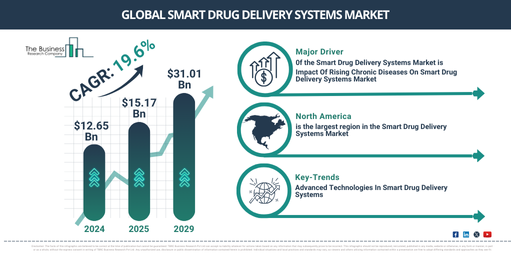
    The market size for smart drug delivery systems has seen a significant growth in the past few years. The market, which is anticipated to be $12.65 billion in 2024, is projected to escalate to $15.17 billion in 2025, representing a compound annual growth rate (CAGR) of 19.9%. The surge in growth during the past years can be credited to factors such as heightened demand for drug delivery systems, increasing patient adherence, rising prevalence of chronic illnesses, growth in the field of personalized medicine, and the necessity for cost-effective healthcare solutions.

    What Is the Projected Market Size of the Smart Drug Delivery Systems Market?

    In the coming years, the market for smart drug delivery systems is predicted to experience a swift expansion. It is projected to reach $31.01 billion by 2029, exhibiting a compound annual growth rate (CAGR) of 19.6%. The predicted upswing can be attributed to a variety of factors, including the escalating concern of non-communicable diseases, an increased emphasis on precision medicine, the emergence of theragnostic, a rising demand for non-invasive drug delivery techniques, and expanding healthcare spending. Important trends expected during this forecast period encompass miniaturization and microfabrication technologies, progress in material science, the incorporation of artificial intelligence (AI) and machine learning (ML), the emergence of nano-sized drug delivery systems, and the integration of IoT and wearable technology.

    Download The Free Sample Report Here:

    https://www.thebusinessresearchcompany.com/sample.aspx?id=14796&type=smp

    Who are the Major Competitors in the Smart Drug Delivery Systems Market Outlook?

    Major companies operating in the smart drug delivery systems market are Pfizer Inc., Johnson & Johnson, Bayer AG, Abbott Laboratories, Novartis International AG, Medtronic plc, Eli Lilly and Company, Amgen Inc., Novo Nordisk, Merck Group, Becton Dickinson and Company, Stryker Corporation, Baxter International Inc., Boston Scientific Corporation, Biogen Inc., Vertex Pharmaceuticals Incorporated, Phillips-Medisize Corporation, ResMed Inc., West Pharmaceutical Services Inc., Insulet Corporation, Owen Mumford Ltd., Sonceboz, H&T Presspart Manufacturing Ltd., E3D Elcam Drug Delivery Devices, CeQur Corporation

    What Is Fueling Growth in the Smart Drug Delivery Systems Market?

    The surge in chronic diseases is anticipated to drive the growth of the smart drug delivery systems market. Chronic illnesses are long-term health issues that gradually worsen over time and usually have multifaceted origins. The rise in chronic diseases is due in part to older populations, environmental effects, and inequalities in healthcare accessibility. Smart drug delivery systems provide a viable solution for managing chronic diseases by improving the efficacy of medications and boosting patient compliance. For example, the National Library of Medicine reported in January 2023 that by 2050, the number of people suffering from at least one chronic disease will reach 142.66 million, representing a 99.5% increase from 71.522 million in 2020. Consequently, the burgeoning occurrence of chronic diseases is fueling the smart drug delivery systems market.

    Request For A Customized Report:

    https://www.thebusinessresearchcompany.com/customise?id=14796&type=smp

    Which Smart Drug Delivery Systems Market Segments Are Growing the Fastest?

    The smart drug delivery systems market covered in this report is segmented –

    1) By Product: Connected Inhalers, Connected Autoinjectors, Connected Pen Injectors, Connected Wearable Injectors, Add-On Sensors, Other Products

    2) By Therapeutic Area: Metabolic Disorders, Neurological Disorders, Respiratory Disorders, Hormonal Disorders, Other Therapeutic Areas

    3) By Drug Delivery Mode: Injectable, Inhalation, Oral

    4) By End-User: Hospitals, Clinics, Home Care, Ambulatory Care Settings, Other End-Users

    Subsegments:

    1) By Connected Inhalers: Dry Powder Inhalers (DPIs), Metered Dose Inhalers (MDIs)

    2) By Connected Autoinjectors: Single-Dose Autoinjectors, Multi-Dose Autoinjectors

    3) By Connected Pen Injectors: Insulin Pen Injectors, Biologic Pen Injectors

    4) By Connected Wearable Injectors: Insulin Wearable Injectors, Infusion Pump Wearable Injectors

    5) By Add-On Sensors: Glucose Monitoring Sensors, Medication Adherence Sensors, Temperature Sensors

    6) By Other Products: Smart Syringes, Smart Patches, Smart Implants

    Which Industry Trends Are Shaping the Future of the Smart Drug Delivery Systems Market?

    Prominent organizations in the smart drug delivery systems market are concentrating on the fabrication of recyclable medication dispensing devices, similar to Qfinity, with the aim of transforming drug administration practices. Qfinity differs from disposable, single-use items as it purports to be reusable after medication dispersal. For example, in May 2022, Jabil Inc., an American manufacturing services firm, introduced Qfinity, a recyclable drug dispensing device specifically designed for subcutaneous drug self-administration. The device has a capacity of over 100 injections per apparatus and can accommodate 1 mL or 2.25 mL pre-filled cartridges, leading to a decrease of 60% in carbon emissions per injection. The Qfinity autoinjector platform is flexible, with a wide range of technical specifications for drug volumes and viscosities. Furthermore, a connected variant referred to as Qfinity+ enables remote patient monitoring and adherence through integrated sensors and electronics, ensuring connectivity without sacrificing user-friendliness.

    Access The Full Report Here:

    https://www.thebusinessresearchcompany.com/report/smart-drug-delivery-systems-global-market-report

    Which Countries Are Leading the Smart Drug Delivery Systems Market?

    North America was the largest region in the smart drug delivery systems market in 2024. Asia-Pacific is expected to be the fastest-growing region in the forecast period. The regions covered in the smart drug delivery systems market report are Asia-Pacific, Western Europe, Eastern Europe, North America, South America, Middle East and Africa.

    Purchase The Full Report Today:

    https://www.thebusinessresearchcompany.com/purchaseoptions.aspx?id=14796

    This Report Delivers Insight On:

    1. How big is the smart drug delivery systems market, and how is it changing globally?

    2. Who are the major companies in the smart drug delivery systems market, and how are they performing?

    3. What are the key opportunities and risks in the smart drug delivery systems market right now?

    4. Which products or customer segments are growing the most in the smart drug delivery systems market?

    5. What factors are helping or slowing down the growth of the smart drug delivery systems market?

    About The Business Research Company:

    With over 15000+ reports from 27 industries covering 60+ geographies, The Business Research Company has built a reputation for offering comprehensive, data-rich research and insights. Armed with 1,500,000 datasets, the optimistic contribution of in-depth secondary research, and unique insights from industry leaders, you can get the information you need to stay ahead in the game.

    Get in touch with us:

    The Business Research Company: https://www.thebusinessresearchcompany.com/

    Americas +1 310-496-7795

    Asia +44 2071930708

    Europe +44 7882 955267

    Email us at info@tbrc.info

    Follow us on:

    LinkedIn: https://in.linkedin.com/company/the-business-research-company

    YouTube: https://www.youtube.com/channel/UC24_fI0rV8cR5DxlCpgmyFQ

    Global Market Model: https://www.thebusinessresearchcompany.com/global-market-model
  • Smart Contact Lenses Market to Reach $8.61 Billion by 2029 | Key Drivers and Future Outlook

    Smart Contact Lenses Market to Reach $8.61 Billion by 2029 | Key Drivers and Future Outlook

    Claim your 30% discount on Global Market Reports with code ONLINE30. Limited time only.

    What Is the Growth Rate of the Smart Contact Lenses Market?

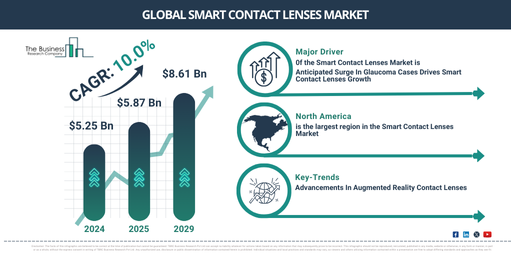
    In recent times, there has been a swift expansion in the market size of smart contact lenses. The market value is projected to rise from $5.25 billion in 2024 to reach $5.87 billion in 2025, showcasing a compound annual growth rate (CAGR) of 11.9%. The historical growth can be linked to the increasing incidence of eye disorders and visual impairments, heightened demand for on-the-spot health tracking and diagnostics, a growing understanding of the advantages of smart contact lenses, wider applications in the healthcare and medical diagnostic sector, and a boost in research and development activities.

    What Growth Rate Is Forecasted for the Smart Contact Lenses Market by 2029?

    Expectations are high for a swift expansion in the smart contact lenses market in the upcoming years. The projection indicates a growth to $8.61 billion in 2029, with a compound annual growth rate (CAGR) of 10.0%. This projected growth during the forecast period can be attributed to several factors like the escalating demand for customized healthcare solutions, increasing elderly population with concurrent rise in age-associated eye disorders, growing popularity of wearable devices for wellness and lifestyle handling, surging interest in non-invasive health assessment solutions, emergent markets and unexploited opportunities in developing areas. The forecast period will also witness major trends such as incorporation of augmented reality (AR) and virtual reality (VR) technologies, progress in microelectronics and miniaturization technology, perpetual innovation in smart contact lens technology, and improved connectivity features coupled with integration of Internet of Things (IoT).

    Download The Free Sample Report Here:

    https://www.thebusinessresearchcompany.com/sample.aspx?id=13932&type=smp

    Which Key Companies Are Shaping the Future of the Smart Contact Lenses Market?

    Major companies operating in the smart contact lenses market report are Google LLC, Johnson & Johnson, Huawei Technologies Co., Ltd, Hitachi Ltd., Sony Group Corporation, International Business Machines Corporation, Samsung Electronics Co Ltd, Novartis AG, Liner Technologies Inc., STMicroelectronics N.V., Alcon Vision LLC, Interuniversity Microelectronics Centre, Atmel Corporation, Optical Technology Inc., Luxexcel, Innovega Inc., In With Corporation, EP Global Communications Inc., Azalea Vision, MediPrint Ophthalmic, Tissot Medical Research SA

    Which Factors Are Driving Demand in the Smart Contact Lenses Industry?

    The smart contact lens market is projected to grow due to the escalating number of glaucoma cases. Glaucoma, a cluster of eye disorders, causes a rise in intraocular pressure (pressure inside the eye) that can damage the optic nerve and result in vision impairment or even blindness if not addressed. Smart contact lenses can support glaucoma management by tracking intraocular pressure and supplying consistent data for superior disease management and immediate response. For instance, in October 2022, according to BrightFocus Foundation, a non-profit organization based in the US, roughly 80 million people worldwide are currently affected by glaucoma, and this is projected to surge to over 111 million by 2040. As a result, the growing incidence of glaucoma will bolster the expansion of the smart contact lens market.

    Request For A Customized Report:

    https://www.thebusinessresearchcompany.com/customise?id=13932&type=smp

    How Is the Smart Contact Lenses Market Segmented by Several Divisions?

    The smart contact lenses market covered in this report is segmented –

    1) By Type: Daily Wear Soft Lenses, Extended-Wear, Planned Replacement, Rapid Gas Permeable (RGP), Other Types

    2) By Application: Intraocular Pressure Monitoring, Continuous Glucose Monitoring

    3) By End User: Hospitals, Ophthalmology Clinics, Other End Users

    Subsegments:

    1) By Daily Wear Soft Lenses: Daily Disposable Lenses, Weekly Disposable Lenses, Monthly Disposable Lenses

    2) By Extended-Wear: Continuous Wear Lenses, Extended Wear Soft Lenses

    3) By Planned Replacement: Biweekly Lenses, Monthly Lenses

    4) By Rapid Gas Permeable (RGP): Traditional RGP Lenses, Specialty RGP Lenses

    5) By Other Types: Scleral Lenses, Orthokeratology Lenses, Multifocal Lenses

    What are the Emerging Market Trends Driving the Growth of the Smart Contact Lenses Industry?

    Key players in the smart contact lens market, such as augmented reality contact lenses, are innovating and incorporating advanced technology to serve their customers more efficiently. These lenses are wearable technology that infuses augmented reality (AR) features directly onto the contact lenses. To illustrate, in March 2022, Mojo Vision, an American company that specializes in developing and commercializing high-performance micro-LED display technology, introduced Mojo Lens. This new-age smart contact lens prototype is an innovative product of the company, designed to bring invisible computing into reality. The lens comes with a series of unique hardware and technological elements built right into the lens structure, thus accentuating its display, communication features, eye tracking functions, and power system. Significantly, this updated version introduces the fundamental operating system code and user experience (UX) components for the first time, laying a pathway for comprehensive development and testing of important consumer and partner applications.

    Access The Full Report Here:

    https://www.thebusinessresearchcompany.com/report/smart-contact-lenses-global-market-report

    Which Regions Are Driving Growth in the Smart Contact Lenses Market?

    North America was the largest region in the smart contact lenses market in 2024. Asia-Pacific is expected to be the fastest-growing region in the forecast period. The regions covered in the smart contact lenses market report are Asia-Pacific, Western Europe, Eastern Europe, North America, South America, Middle East, Africa.

    Purchase The Full Report Today:

    https://www.thebusinessresearchcompany.com/purchaseoptions.aspx?id=13932

    This Report Delivers Insight On:

    1. How big is the smart contact lenses market, and how is it changing globally?

    2. Who are the major companies in the smart contact lenses market, and how are they performing?

    3. What are the key opportunities and risks in the smart contact lenses market right now?

    4. Which products or customer segments are growing the most in the smart contact lenses market?

    5. What factors are helping or slowing down the growth of the smart contact lenses market?

    About The Business Research Company:

    With over 15000+ reports from 27 industries covering 60+ geographies, The Business Research Company has built a reputation for offering comprehensive, data-rich research and insights. Armed with 1,500,000 datasets, the optimistic contribution of in-depth secondary research, and unique insights from industry leaders, you can get the information you need to stay ahead in the game.

    Get in touch with us:

    The Business Research Company: https://www.thebusinessresearchcompany.com/

    Americas +1 310-496-7795

    Asia +44 2071930708

    Europe +44 7882 955267

    Email us at info@tbrc.info

    Follow us on:

    LinkedIn: https://in.linkedin.com/company/the-business-research-company

    YouTube: https://www.youtube.com/channel/UC24_fI0rV8cR5DxlCpgmyFQ

    Global Market Model: https://www.thebusinessresearchcompany.com/global-market-model
  • Epidural Abscess Treatment Industry Valued at $56.78 Billion by 2029 With CAGR of 6.6% | Size and Share Insights

    Epidural Abscess Treatment Industry Valued at $56.78 Billion by 2029 With CAGR of 6.6% | Size and Share Insights

    Claim your 30% discount on Global Market Reports with code ONLINE30. Limited time only.

    What Is the Forecast for the Epidural Abscess Treatment Market from 2024 to 2025?

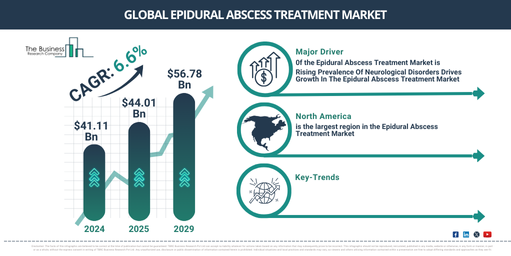
    The market for the treatment of epidural abscess has seen significant expansion in the past few years. The market is projected to increase from $41.11 billion in 2024 to $44.01 billion in 2025, with a compound annual growth rate (CAGR) of 7.1%. The previous growth can be linked to the rising incidence of epidural abscesses, elevated health care spending, heightened disease awareness, and an escalating demand for combination treatments.

    What Is the Projected Market Size of the Epidural Abscess Treatment Market?

    The market for treating epidural abscess is projected to experience robust growth in the coming years, reaching a value of $56.78 billion by 2029 at a Compound Annual Growth Rate (CAGR) of 6.6%. The expected upswing during this forecast period can be attributed to an increase in the aging population, government interventions, investments in research and development related to epidural abscess, and a rise in the occurrence of spinal epidural abscesses. Key trends that will shape the market during this forecast period include advancements in healthcare technology, the application of digital health technologies in managing epidural abscess, the use of artificial intelligence in diagnosing and treating epidural abscess, and the availability of cost-effective treatments for epidural abscess.

    Download The Free Sample Report Here:

    https://www.thebusinessresearchcompany.com/sample.aspx?id=12904&type=smp

    Who are the Major Competitors in the Epidural Abscess Treatment Market Outlook?

    Major companies operating in the epidural abscess treatment market are Pfizer Inc., F. Hoffmann-La Roche Ltd., Merck & Co. Inc., AbbVie Inc., Bayer AG, Novartis AG, Sanofi S.A., Bristol-Myers Squibb Company, AstraZeneca PLC, Abbott Laboratories, Eli Lilly and Company, Gilead Sciences Inc., Amgen Inc., Teva Pharmaceutical Industries Ltd., Mylan N.V., Astellas Pharma, Daiichi Sankyo Company Limited, Boehringer Ingelheim International GmbH, UCB Pharma, Sun Pharmaceutical Industries Limited, Kyowa Hakko Kirin Co. Ltd., Ferring B.V., Hikma Pharmaceuticals PLC, Intas Pharmaceuticals Limited, Alembic Limited, Zydus Lifesciences Ltd., Lupin Limited, Mallinckrodt Pharmaceuticals.

    What Is Fueling Growth in the Epidural Abscess Treatment Market?

    The growth of the epidural abscess treatment market is predicted to be fueled by the rising occurrence of neurological disorders. Neurological disorders are medical conditions that affect the nervous system, including the brain, spinal cord, and nerves. Such disorders often lead to ailments like acute spinal cord injury, Alzheimer’s Disease, Amyotrophic Lateral Sclerosis (ALS), and others. Treatment of epidural abscess, often used for neurological disorders, involves quickly draining the abscess surgically and administering antibiotics to avert spinal cord and nerve compression, thereby alleviating pressure on the spinal cord and nerves. For example, in March 2022, the Alzheimer’s Association, a US-based nonprofit organization, estimated that an approximate 6.7 million Americans aged 65 and older will be living with Alzheimer’s in 2023, a number anticipated to rise to 12.7 million by 2050. Consequently, the increasing prevalence of neurological disorders is anticipated to bolster the epidural abscess treatment market. The growth of the epidural abscess treatment market is also expected to be propelled by the rising usage of intravenous drugs. Intravenous drug usage involves injecting drugs directly into the bloodstream using a hypodermic needle and syringe. This practice can cause epidural abscesses if contaminated injection tools or drugs introduce bacteria or pathogens into the bloodstream, thereby calling for specialized treatments, care, and prevention programs. For example, in July 2024, the Australian Institute of Health and Welfare, an Australian government agency, reported that between 2022-2023, about 1.4% of individuals aged 14 and above admitted to having injected a drug at least once in their lifetime, and 0.2% reported having injected a drug within the past year. As such, the escalating usage of intravenous drugs is set to enhance the epidural abscess treatment market.

    Request For A Customized Report:

    https://www.thebusinessresearchcompany.com/customise?id=12904&type=smp

    Which Epidural Abscess Treatment Market Segments Are Growing the Fastest?

    The epidural abscess treatment market covered in this report is segmented –

    1) By Type: Intracranial, Intraspinal

    2) By Treatment: Antifungal, Antibiotics, Surgery

    3) By End-User: Hospital, Pharmacy, Specialty Clinics, Other End-Users

    Subsegments:

    1) By Intracranial: Brain Abscess, Subdural Abscess, Epidural Abscess in the Cranium

    2) By Intraspinal: Cervical Epidural Abscess, Thoracic Epidural Abscess, Lumbar Epidural Abscess, Sacral Epidural Abscess

    Access The Full Report Here:

    https://www.thebusinessresearchcompany.com/report/epidural-abscess-treatment-global-market-report

    Which Countries Are Leading the Epidural Abscess Treatment Market?

    North America was the largest region in the epidural abscess treatment market in 2024. The regions covered in epidural abscess treatment market report are Asia-Pacific, Western Europe, Eastern Europe, North America, South America, Middle East and Africa.

    Purchase The Full Report Today:

    https://www.thebusinessresearchcompany.com/purchaseoptions.aspx?id=12904

    This Report Delivers Insight On:

    1. How big is the epidural abscess treatment market, and how is it changing globally?

    2. Who are the major companies in the epidural abscess treatment market, and how are they performing?

    3. What are the key opportunities and risks in the epidural abscess treatment market right now?

    4. Which products or customer segments are growing the most in the epidural abscess treatment market?

    5. What factors are helping or slowing down the growth of the epidural abscess treatment market?

    About The Business Research Company:

    With over 15000+ reports from 27 industries covering 60+ geographies, The Business Research Company has built a reputation for offering comprehensive, data-rich research and insights. Armed with 1,500,000 datasets, the optimistic contribution of in-depth secondary research, and unique insights from industry leaders, you can get the information you need to stay ahead in the game.

    Get in touch with us:

    The Business Research Company: https://www.thebusinessresearchcompany.com/

    Americas +1 310-496-7795

    Asia +44 2071930708

    Europe +44 7882 955267

    Email us at info@tbrc.info

    Follow us on:

    LinkedIn: https://in.linkedin.com/company/the-business-research-company

    YouTube: https://www.youtube.com/channel/UC24_fI0rV8cR5DxlCpgmyFQ

    Global Market Model: https://www.thebusinessresearchcompany.com/global-market-model
  • Small Molecule Injectable Drugs Market Size to Exceed $399.67 Billion by 2029 | Growth and Industry Trends

    Small Molecule Injectable Drugs Market Size to Exceed $399.67 Billion by 2029 | Growth and Industry Trends

    Claim your 30% discount on Global Market Reports with code ONLINE30. Limited time only.

    How Has the Small Molecule Injectable Drugs Market Grown from 2024 to 2025?

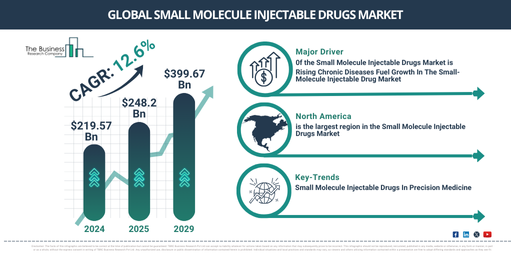
    Rapid expansion has been witnessed in the market size of small molecule injectable drugs in the past few years. The market value is estimated to escalate from $219.57 billion in 2024 to about $248.2 billion in 2025, generating a compound annual growth rate (CAGR) of 13.0%. This considerable growth during the historic period can be ascribed to factors like the surge in chronic diseases, an aging demographic, initiatives taken by the government, increased spending on healthcare, and enhancements in manufacturing processes.

    What Growth Rate Is Anticipated for the Small Molecule Injectable Drugs Market in the Coming Years?

    The market size of small molecule injectable drugs is set to experience swift expansion in the upcoming years and is projected to reach $399.67 billion in 2029 with a compound annual growth rate (CAGR) of 12.6%. The surge in growth during the forecast period can be credited to the implementation of personalized healthcare, the incorporation of digital health, enhancements in supply chains, the usage of real-world data, and a transition to outpatient care. The projection period will also witness significant trends such as improvements in drug delivery systems, technological progression, emphasis on research and development, innovation in injection-based treatments, and expedited approvals of new drug formulas.

    Download The Free Sample Report Here:

    https://www.thebusinessresearchcompany.com/sample.aspx?id=14998&type=smp

    Who Are the Leading Companies in the Small Molecule Injectable Drugs Market?

    Major companies operating in the small molecule injectable drugs market are Pfizer Inc., Johnson & Johnson Services Inc., F. Hoffmann-La Roche AG, Merck & Co. Inc., AbbVie Inc., Sanofi S.A., Bristol-Myers Squibb Company, AstraZeneca plc, Abbott Laboratories, Novartis AG, Fresenius Kabi AG, GlaxoSmithKline plc, Eli Lilly and Company, Gilead Sciences Inc., Amgen Inc., Becton Dickinson and Company, Teva Pharmaceutical Industries Ltd., Baxter International Inc., Sun Pharmaceutical Industries Ltd., Aurobindo Pharma Ltd., Dr. Reddy’s Laboratories Ltd., Cipla Limited, Hikma Pharmaceuticals plc, BioCryst Pharmaceuticals Inc., Mylan N.V.

    What Are the Key Drivers of the Small Molecule Injectable Drugs Market?

    The increase in chronic diseases is predicted to fuel the expansion of the small-molecule injectable drug market. Chronic diseases, defined by their enduring nature and usually gradual progress, are escalating due to a blend of factors such as inactive lifestyles, unhealthy food habits, smoking, and rising stress levels. These lifestyle preferences contribute to the progression of conditions like obesity, diabetes, cardiovascular diseases, and certain types of cancer. Small-molecule injectable drugs serve a critical function in chronic disease management by providing targeted therapy, better compliance, disease modification, combination therapy alternatives, and therapeutic monitoring opportunities. As an example, the World Health Organization, a specialized agency of the United Nations based in Switzerland, reported that in September 2023, there were 41 million deaths globally, accounting for 74% of deaths due to non-communicable diseases (NCDs) or chronic diseases each year. Deaths due to cardiovascular diseases numbered 17.9 million, while cancer claimed 9.3 million lives. Chronic respiratory diseases and diabetes were responsible for 4.1 million and 2.0 million deaths respectively. Hence, the surge in chronic diseases propels the small-molecule injectable drug market.

    Request For A Customized Report:

    https://www.thebusinessresearchcompany.com/customise?id=14998&type=smp

    What Are the Key Market Segments in the Small Molecule Injectable Drugs Industry?

    The small molecule injectable drugs market covered in this report is segmented –

    1) By Drug Class: Small Molecule Antibiotics, Analgesics, Chemotherapy, Antivirals, Anticoagulant, Skeletal Muscle Relaxants, Anticonvulsants, Other Drug Class

    2) By Indication: Pain Management, Oncology, Infectious Diseases, Cardiovascular Diseases, CNS Diseases, Other Indications

    3) By Mode of Delivery: IV Set, Intravenous Injection, Infusion Pump, Intramuscular Injection, Subcutaneous Injection

    4) By End User: Hospitals, Ambulatory Clinics, Outpatient Facility, Infusion Therapy Center, Home Care, Other End Users

    Subsegments:

    1) By Small Molecule Antibiotics: Penicillin-Based Antibiotics, Cephalosporins, Aminoglycosides, Macrolides, Tetracyclines

    2) By Analgesics: Nonsteroidal Anti-inflammatory Drugs (NSAIDs), Opioids, Acetaminophen

    3) By Chemotherapy: Alkylating Agents, Antimetabolites, Mitotic Inhibitors, Topoisomerase Inhibitors

    4) By Antivirals: Nucleoside Analogues, Protease Inhibitors, Reverse Transcriptase Inhibitors

    5) By Anticoagulant: Heparin, Low Molecular Weight Heparins, Direct Oral Anticoagulants (DOACs)

    6) By Skeletal Muscle Relaxants: Baclofen, Cyclobenzaprine, Methocarbamol

    7) By Anticonvulsants: Benzodiazepines, Phenytoin, Carbamazepine

    8) By Other Drug Class: Immunosuppressants, Biologic Agents, Hormonal Therapies

    What Are the Latest Trends in the Small Molecule Injectable Drugs Market?

    Within the market for small-molecule injectable drugs, businesses are concerned with forging ahead in the creation of several innovative technologies. An example of this is microparticle technology, which improves the solubility of active pharmaceutical ingredients in orally administered drugs. Microparticle technology pertains to the formation and application of microscale particles, anywhere from nanometers to micrometers in size. These particles can be crafted from an array of materials, including polymers, metals, ceramics, and composites. As an illustration, Evonik Industries AG, a specialty chemicals business based in Germany, rolled out EUDRATEC SoluFlow in March 2022. This new microparticle technology boosts the solubility of active pharmaceutical ingredients in oral drugs. This ground-breaking emulsion-based process technology banishes challenges with solubility that traditional manufacturing procedures cannot tackle, especially pertinent to novel small-molecule therapeutics where over 70% of compounds are insoluble. EUDRATEC SoluFlow paves the way for formulating new oral therapies in a multitude of fields such as cancer, cardiovascular disease, infectious disease, and diabetes, transforming drugs with low solubility into powders of amorphous solid dispersions (ASD) with ease of flow.

    Access The Full Report Here:

    https://www.thebusinessresearchcompany.com/report/small-molecule-injectable-drugs-global-market-report

    What Are the Key Regional Markets in the Small Molecule Injectable Drugs Industry?

    North America was the largest region in the small molecule injectable drugs market in 2024. Europe is expected to be the fastest-growing region in the forecast period. The regions covered in the small molecule injectable drugs market report are Asia-Pacific, Western Europe, Eastern Europe, North America, South America, Middle East, Africa.

    Purchase The Full Report Today:

    https://www.thebusinessresearchcompany.com/purchaseoptions.aspx?id=14998

    This Report Delivers Insight On:

    1. How big is the small molecule injectable drugs market, and how is it changing globally?

    2. Who are the major companies in the small molecule injectable drugs market, and how are they performing?

    3. What are the key opportunities and risks in the small molecule injectable drugs market right now?

    4. Which products or customer segments are growing the most in the small molecule injectable drugs market?

    5. What factors are helping or slowing down the growth of the small molecule injectable drugs market?

    About The Business Research Company:

    With over 15000+ reports from 27 industries covering 60+ geographies, The Business Research Company has built a reputation for offering comprehensive, data-rich research and insights. Armed with 1,500,000 datasets, the optimistic contribution of in-depth secondary research, and unique insights from industry leaders, you can get the information you need to stay ahead in the game.

    Get in touch with us:

    The Business Research Company: https://www.thebusinessresearchcompany.com/

    Americas +1 310-496-7795

    Asia +44 2071930708

    Europe +44 7882 955267

    Email us at info@tbrc.info

    Follow us on:

    LinkedIn: https://in.linkedin.com/company/the-business-research-company

    YouTube: https://www.youtube.com/channel/UC24_fI0rV8cR5DxlCpgmyFQ

    Global Market Model: https://www.thebusinessresearchcompany.com/global-market-model

  • Small Molecule CMO/CDMO Industry Insights 2025 – Market Forecast for Executives and Planners

    Small Molecule CMO/CDMO Industry Insights 2025 – Market Forecast for Executives and Planners

    Claim your 30% discount on Global Market Reports with code ONLINE30. Limited time only.

    How Has the Small Molecule CMO/CDMO Market Size Changed, over the years?

    The market size of the small molecule CMO/CDMO has experienced substantial growth of late. Projected growth from $50.58 billion in 2024 to $54.58 billion in 2025, achieving a compound annual growth rate (CAGR) of 7.9%. The historic period of growth can be credited to favorable government backing, cost-effective strategies, increasing drug development complexity, industry amalgamation, and a concentrated focus on core competencies.

    How Much Will the Small Molecule CMO/CDMO Market Be Worth in 2029?

    The market size for small molecule CMO/CDMO is anticipated to witness robust growth in the coming years, reaching a valuation of $73.3 billion by the year 2029, expanding at an annual rate of 7.7%. Various factors contributing to the growth during the forecast period include, enhanced drug pipelines, the global reach of pharmaceutical operations, an increase in flexible manufacturing, expertise in regulatory compliance and the merging of biopharmaceutical operations. The period is expected to unveil major trends including environmentally friendly and sustainable manufacturing methods, escalated collaboration and partnerships, the rise of personalized medication and niche therapies. Other impending trends are the surging number of virtual and virtual-to-reality companies, incorporation of digital technologies, and speedy response manufacturing.

    Download The Free Sample Report Here:

    https://www.thebusinessresearchcompany.com/sample.aspx?id=13733&type=smp

    Which is the Largest Company in the Small Molecule CMO/CDMO Market?

    Major companies operating in the small molecule CMO/CDMO market report are Patheon NV (Thermo Fisher Scientific), GlaxoSmithKline, Johnson Matthey PLC, Lonza Group Ltd., WuXi AppTec, Catalent Inc., Aurobindo Pharma, Fareva, Aesica Pharmaceuticals Limited, Siegfried holdings AG, Recipharm AB, Jubilant Life Sciences Limited, Almac Group, Piramal Pharma Solutions, Oxford Chemicals Inc., Syngene International Limited, Novasep, Pfizer CentreOne, GVK Biosciences, ChemPartner, Avid Bioservices Inc., Dishman Carbogen Amcis Ltd., ProChem Inc., Metrics Contract Services

    What Are the Main Market Drivers in the Small Molecule CMO/CDMO Industry?

    The growth of the small-molecule CMO/CDMO market is expected to be fuelled by the increasing need for pharmaceuticals. Comprising of both governmental and private entities, the pharmaceutical industry focuses on finding, developing, and producing medications. The utilisation of small-molecule CMO/CDMO in this industry allows the outsourcing of a variety of services, such as being responsible for the development, production, and packaging of small-molecule drugs. This permits pharmaceutical companies to cut expenditures, save on time, and enhance their operations. For instance, as per the Government of Canada, domestic exports in the pharma industry escalated to 9.59 billion USD (12.79 billion CAD) in 2022, a surge from 10.71 billion CAD in 2021. There was also a rise in imports, with a total of 30.21 billion CAD compared to 26.63 billion CAD in 2021. Overall, the surge in the demand for pharmaceuticals is powering the growth of the small-molecule CMO/CDMO market.

    Request For A Customized Report:

    https://www.thebusinessresearchcompany.com/customise?id=13733&type=smp

    How Is the Small Molecule CMO/CDMO Market Segments Structured?

    The small molecule CMO/CDMO market covered in this report is segmented –

    1) By Product: Small Molecule Drug Product, Small Molecule API

    2) By Stage Type: Clinical, Commercial, Preclinical

    3) By Therapeutic Area: Oncology, Neurology, Infectious Disease, Cardiovascular Disease, Respiratory Disorders, Metabolic Disorders, Other Therapeutics

    4) By Application: Cardiovascular, Oncology, Diabetes, Immunological Disorders

    Subsegments:

    1) By Small Molecule Drug Product: Solid Dosage Forms (Tablets, Capsules), Liquid Dosage Forms (Injectables, Solutions), Topical Dosage Forms

    2) By Small Molecule API (Active Pharmaceutical Ingredient): Generic APIs, Branded APIs, Custom Synthesis APIs

    What Strategic Trends Are Transforming the Small Molecule CMO/CDMO Market?

    Leading enterprises in the small-molecule CMO/CDMO market are turning towards cutting-edge technologies, such as the advanced small-molecule platform in Shanghai, in order to enhance CDMO services. This innovative small-molecule platform showcases the latest technological advancements in developing and manufacturing small-molecule medicines and aims to produce safer, more effective, and more efficiently made pharmaceutical compounds. To illustrate, Porton Pharma Solutions Ltd., a pharmaceutical company based in China, rolled out an advanced small-molecule platform in Shanghai in June 2023 to boost CDMO services. This advanced small-molecule platform showcases an integrative approach with the nexus of pioneering technologies and methodologies to improve the complete lifecycle of small molecule drugs and one-stop solution services. It offers an all-encompassing platform that ensures flexibility and availability, all the while promoting digital transformation.

    Access The Full Report Here:

    https://www.thebusinessresearchcompany.com/report/small-molecule-cmo-or-cdmo-global-market-report

    Which Global Regions Offer the Highest Growth in the Small Molecule CMO/CDMO Market?

    North America was the largest region in the small molecule CMO/CDMO market in 2024. The regions covered in the small molecule CMO/CDMO market report are Asia-Pacific, Western Europe, Eastern Europe, North America, South America, Middle East, Africa.

    Purchase The Full Report Today:

    https://www.thebusinessresearchcompany.com/purchaseoptions.aspx?id=13733

    This Report Delivers Insight On:

    1. How big is the small molecule cmo/cdmo market, and how is it changing globally?

    2. Who are the major companies in the small molecule cmo/cdmo market, and how are they performing?

    3. What are the key opportunities and risks in the small molecule cmo/cdmo market right now?

    4. Which products or customer segments are growing the most in the small molecule cmo/cdmo market?

    5. What factors are helping or slowing down the growth of the small molecule cmo/cdmo market?

    About The Business Research Company:

    With over 15000+ reports from 27 industries covering 60+ geographies, The Business Research Company has built a reputation for offering comprehensive, data-rich research and insights. Armed with 1,500,000 datasets, the optimistic contribution of in-depth secondary research, and unique insights from industry leaders, you can get the information you need to stay ahead in the game.

    Get in touch with us:

    The Business Research Company: https://www.thebusinessresearchcompany.com/

    Americas +1 310-496-7795

    Asia +44 2071930708

    Europe +44 7882 955267

    Email us at info@tbrc.info

    Follow us on:

    LinkedIn: https://in.linkedin.com/company/the-business-research-company

    YouTube: https://www.youtube.com/channel/UC24_fI0rV8cR5DxlCpgmyFQ

    Global Market Model: https://www.thebusinessresearchcompany.com/global-market-model
  • Endotoxin Testing Market to Reach $2.91 Billion by 2029 | Key Drivers and Future Outlook

    Endotoxin Testing Market to Reach $2.91 Billion by 2029 | Key Drivers and Future Outlook

    Claim your 30% discount on Global Market Reports with code ONLINE30. Limited time only.

    What Is the Growth Rate of the Endotoxin Testing Market?

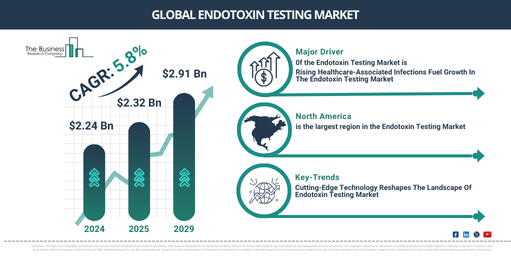
    In recent times, the endotoxin testing market has been expanding steadily. It’s expected to rise from $2.24 billion in 2024, reaching $2.32 billion in 2025 at a compound annual growth rate (CAGR) of 3.6%. The notable growth during the historical timeframe was a result of increased demand for biologics and biosimilars, along with an augmented awareness of the essential role that endotoxin testing holds and escalating prevalence of infectious diseases.

    What Growth Rate Is Forecasted for the Endotoxin Testing Market by 2029?

    In the coming years, the endotoxin testing market is projected to experience robust growth. The market size is expected to reach $2.91 billion by 2029, growing at a compound annual growth rate (CAGR) of 5.8%. The projected growth during this period can be linked to the enlargement of the biopharmaceutical industry, increased funding for research and development in endotoxin testing, and the expansion of global health care. Noteworthy trends during this forecasted period include the innovation of endotoxin detection instruments, the rise in acceptance of endotoxin testing services, and the increased demand for these services.

    Download The Free Sample Report Here:

    https://www.thebusinessresearchcompany.com/sample.aspx?id=12932&type=smp

    Which Key Companies Are Shaping the Future of the Endotoxin Testing Market?

    Major companies operating in the endotoxin testing market are Thermo Fisher Scientific Inc., Merck KGaA, bioMérieux SA., Eurofins Scientific SE, Lonza Group Ltd., WuXi AppTec Co. Ltd., Bio-Rad Laboratories Inc., Maravai LifeSciences Holdings Inc., Cambrex Corporation, GenScript Biotech Corporation, Charles River Laboratories International Inc., Nelson Laboratories LLC, Lifecore Biomedical Inc., Stellar Biotechnologies Inc., Biovision Inc., Associates of Cape Cod Inc., FUJIFILM Wako Pure Chemical Corporation, InvivoGen Inc., Tebu-bio Nv., MatTek Corporation, Microcoat Biotechnologie GmbH, Accelagen Inc., BioAssay Systems LLC, BioThema AB, Hycult Biotech Inc., Pacific Biolabs Inc., Xiamen Bioendo Technology Co. Ltd., Zhanjiang A&C Biological Ltd., Accugen Laboratories Inc.

    Which Factors Are Driving Demand in the Endotoxin Testing Industry?

    The growth of the endotoxin testing market is expected to be propelled by the increasing instances of infections associated with healthcare. Such infections are those that are not present at the time of hospital admission but are acquired during the course of medical treatment. These are often caused by contamination of medical equipment or procedures, emphasizing the vital importance of stringent testing mechanisms to guarantee patient safety. Through the evaluation of bacterial endotoxin levels in medical instruments, particularly injectable pharmaceutical items and implantable medical devices, endotoxin testing services significantly thwart such infections. For instance, in December 2022, the United Nations International Children’s Emergency Fund (UNICEF) reported that pneumonia took a toll on the lives of over 700,000 children annually, accounting for the largest number of child deaths due to an infectious disease, which is about 2,000 deaths per day. Additionally, in May 2022, the World Health Organization revealed that 24% of patients annually suffer from healthcare-associated sepsis and of those, 52.3% treated in intensive care units die. This highlights the driving role of escalating healthcare-associated infections in the expansion of the endotoxin testing market.

    Endotoxin Testing Market Driver: Rising Demand For Biologics Fuels Growth In The Endotoxin Testing Market


    Request For A Customized Report:

    https://www.thebusinessresearchcompany.com/customise?id=12932&type=smp

    How Is the Endotoxin Testing Market Segmented by Several Divisions?

    The endotoxin testing market covered in this report is segmented –

    1) By Test Type: LAL (Limulus Amebocyte Lysate) Test, Chromogenic Tests, Turbidimetric Tests, Gel Clot Tests, MAT Test, Rabbit Pyrogen Test, Recombinant Factor C (rFC) Assay

    2) By Application: Medical Devices, Pharmaceuticals, Packaging, Raw Materials

    3) By End-User: Hospitals, Laboratories, Research Institutes

    Subsegments:

    1) By LAL (Limulus Amebocyte Lysate) Test: Gel Clot LAL Test, Kinetic LAL Test, Endpoint LAL Test

    2) By Chromogenic Tests: Chromogenic LAL Test, Chromogenic Factor C Assay

    3) By Turbidimetric Tests: Turbidimetric LAL Test, Turbidimetric Factor C Assay

    4) By Gel Clot Tests: Gel Clot LAL Test

    5) By MAT Test (Monocyte Activation Test): Direct MAT, Indirect MAT

    6) By Rabbit Pyrogen Test: Standard Rabbit Pyrogen Test

    7) By Recombinant Factor C (rFC) Assay: RFC Assay For Endotoxin Detection

    What are the Emerging Market Trends Driving the Growth of the Endotoxin Testing Industry?

    Key players in the endotoxin testing market are striving to maintain their market dominance by integrating innovative technology into their operations. One such company is Lonza Group AG, a biotechnology, pharmaceutical and nutrition manufacturing company based in Switzerland. In August 2023, they debuted the Nebula absorbance reader, a state-of-the-art absorbance microplate reader designed for streamlined endotoxin and pyrogen testing. It aligns with Lonza’s most recent WinKQCL software system, enabling data integrity compliance, expediting training, and reducing the validation burden. This means existing users of the WinKQCL software won’t need to familiarize themselves with a new system to leverage the contemporary reader, thereby minimizing training requirements. The Nebula Absorbance Reader is a modern and technologically superior substitution reader that yields results, aligning with those usually recognized with the ELx808 – the industry’s standard absorbance reader that Lorenz has discontinued. It is also proficiently designed to fulfill the demanding specifications of Lonza’s absorbance-based endotoxin assays, including the Lonza PYROGENT 5000 Turbidimetric and Kinetic-QCL Chromogenic Endotoxin Assays.

    Access The Full Report Here:

    https://www.thebusinessresearchcompany.com/report/endotoxin-testing-global-market-report

    Which Regions Are Driving Growth in the Endotoxin Testing Market?

    North America was the largest region in the endotoxin testing market in 2024. Asia-Pacific is expected to be the fastest-growing region in the forecast period. The regions covered in endotoxin testing market report are Asia-Pacific, Western Europe, Eastern Europe, North America, South America, Middle East and Africa.

    Purchase The Full Report Today:

    https://www.thebusinessresearchcompany.com/purchaseoptions.aspx?id=12932

    This Report Delivers Insight On:

    1. How big is the endotoxin testing market, and how is it changing globally?

    2. Who are the major companies in the endotoxin testing market, and how are they performing?

    3. What are the key opportunities and risks in the endotoxin testing market right now?

    4. Which products or customer segments are growing the most in the endotoxin testing market?

    5. What factors are helping or slowing down the growth of the endotoxin testing market?

    About The Business Research Company:

    With over 15000+ reports from 27 industries covering 60+ geographies, The Business Research Company has built a reputation for offering comprehensive, data-rich research and insights. Armed with 1,500,000 datasets, the optimistic contribution of in-depth secondary research, and unique insights from industry leaders, you can get the information you need to stay ahead in the game.

    Get in touch with us:

    The Business Research Company: https://www.thebusinessresearchcompany.com/

    Americas +1 310-496-7795

    Asia +44 2071930708

    Europe +44 7882 955267

    Email us at info@tbrc.info

    Follow us on:

    LinkedIn: https://in.linkedin.com/company/the-business-research-company

    YouTube: https://www.youtube.com/channel/UC24_fI0rV8cR5DxlCpgmyFQ

    Global Market Model: https://www.thebusinessresearchcompany.com/global-market-model
  • Small Cell Lung Cancer Therapeutics Market Trends Report 2025 – For Business Development and Strategy Teams

    Small Cell Lung Cancer Therapeutics Market Trends Report 2025 – For Business Development and Strategy Teams

    Claim your 30% discount on Global Market Reports with code ONLINE30. Limited time only.

    What Is the Forecast for the Small Cell Lung Cancer Therapeutics Market Growth in 2025?

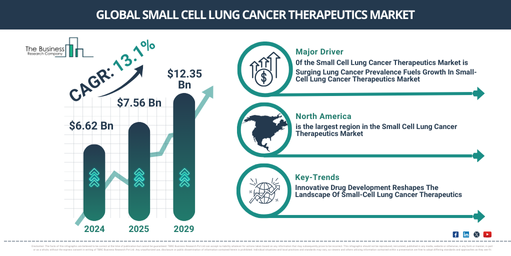
    Recent years have seen an impressive expansion in the small cell lung cancer therapeutics market. It is projected to advance from a value of $6.62 billion in 2024 to hit the $7.56 billion mark in 2025, representing a compound annual growth rate (CAGR) of 14.2%. The noticeable escalation during the historical phase is accredited to an amplified occurrence of small cell lung cancer, increased cognizance regarding the disease, rising calls for efficacious and handy treatment methods, as well as government interventions.

    What Is the Forecast for the Small Cell Lung Cancer Therapeutics Market Size Through 2029?

    The market size for therapeutics for small cell lung cancer is predicted to experience rapid expansion in the coming years, reaching $12.35 billion in 2029 with a compound annual growth rate (CAGR) of 13.1%. The growth during the predicted period is likely due to increased research and development efforts for treating small cell lung cancer, a rise in tobacco smoking, expanded use of chemotherapy, and an increase in healthcare spending. Noteworthy trends for the forecast period consist of progress in early detection and screening techniques, the broadening of clinical trials, advancements in radiation therapy, and improvements in immunotherapy.

    Download The Free Sample Report Here:

    https://www.thebusinessresearchcompany.com/sample.aspx?id=12912&type=smp

    What are the Key Market Players in Small Cell Lung Cancer Therapeutics Market and How They’re Evolving?

    Major companies operating in the small cell lung cancer therapeutics market are Pfizer Inc., Johnson and Johnson Private Limited, F. Hoffmann-La Roche AG, AbbVie Inc., Bayer AG, Janssen Pharmaceuticals, Novartis AG, Merck and Co. Inc., Sanofi S.A, Bristol-Myers Squibb Company, Astrazeneca PLC, GSK PLC, Medtronic PLC, Eli Lilly and Company, Gilead Sciences Inc., Boehringer Ingelheim International GmbH, Otsuka Pharmaceutical Co. Ltd., Teva Pharmaceutical Industries Ltd., Regeneron Pharmaceuticals, Mylan N.V., Astellas Pharma Inc., Daiichi Sankyo Company Ltd., Vertex Pharmaceuticals, Aurobindo Pharma Limited, Kyowa Kirin Co. Ltd.

    What Are the Primary Growth Drivers in the Small Cell Lung Cancer Therapeutics Market?

    The small-cell lung cancer therapeutics market’s expansion is likely to be fueled by the growing incidence of lung cancer. Lung cancer is a malignant condition characterized by the uncontrolled multiplication of abnormal cells in the lung tissue. Symptoms typically include coughing, chest pain, and difficulty in breathing. Treatment for this type of cancer often includes chemotherapy, radiation therapy, and occasionally, targeted therapies. These treatments can enhance survival rates and improve the life quality of the patients. In January 2023, the American Cancer Society reported approximately 238,340 new lung cancer cases (117,550 in men and 120,790 in women). There were reportedly 127,070 lung cancer-related deaths (67,160 in men and 59,910 in women) in 2022. Consequently, the growing prevalence of lung cancer is driving the small-cell lung cancer therapeutics market. The surge in tobacco usage is predicted to contribute to the growth of the small-cell lung cancer (SCLC) therapeutics market. The rise in tobacco consumption can be attributed to several factors including population growth, advertising, lack of regulation, societal and cultural factors, coping mechanisms, nicotine dependency, and the easy availability of tobacco products. Tobacco smoke is laden with various carcinogenic substances, such as polycyclic aromatic hydrocarbons (PAHs) and nitrosamines, which can cause DNA damage in lung cells, hence triggering cancer, including SCLC. For example, Statistics Canada reported a 5.8% increase in cigarette production compared to June 2021 in July 2022. The number of cigarettes sold also spiked by 1.3% from May 2022, totaling 1.4 billion in June 2022. Additionally, the Centers for Disease Control and Prevention reported an estimated 28.3 million adult cigarette smokers in the United States and approximately 3.08 million middle and high school students using at least one tobacco product in May 2023. Approximately 1,600 US children under 18 years initiate cigarette smoking every day. Therefore, these rising rates of tobacco usage are boosting the small-cell lung cancer (SCLC) therapeutics market.

    Request For A Customized Report:

    https://www.thebusinessresearchcompany.com/customise?id=12912&type=smp

    What Are the Leading Segments in the Global Small Cell Lung Cancer Therapeutics Industry?

    The small cell lung cancer therapeutics market covered in this report is segmented –

    1) By Drug Type: Atezolizumab, Topotecan, Lurbinectedin, Durvalumab, Methotrexate, Pembrolizumab

    2) By Treatment Type: Chemotherapy, Targeted Therapy, Other Treatment Types

    3) By Route Of Administration: Oral, Parenteral, Other Routes Of Administrations

    4) By End-Users: Hospitals, Cancer Therapy Centers, Other End-Users

    What Are the Key Market Trends in the Small Cell Lung Cancer Therapeutics Industry?

    Major firms active in the small-cell lung cancer therapeutics market are concentrating their efforts on producing novel products such as monoclonal antibodies to amplify focused treatment effectiveness and positively impact patient outcomes. These monoclonal antibodies, which originate from a single immune cell clone, are laboratory-made molecules engineered to attach to designated antigens, boosting uniformity and specificity. Owing to their precise action, they have found widespread application in treatments for cancer and autoimmune diseases. For example, in March 2024, Indonesian healthcare provider PT Kalbe Farma Tbk, introduced Serplulimab to its lung cancer patients. Serplulimab, a completely humanized anti-PD-1 monoclonal antibody, has proven to be quite effective as an initial treatment for extensive-stage small cell lung cancer (ES-SCLC), raising the median overall survival rate to 15.4 months, an increase from 10.9 months with just chemotherapy13. Clinical trials also showed enhanced progression-free survival and an increased objective response rate, positioning it as a favourable treatment option for those patients who have not received previous treatment for this aggressive form of cancer.

    Access The Full Report Here:

    https://www.thebusinessresearchcompany.com/report/small-cell-lung-cancer-therapeutics-global-market-report

    What Is the Regional Outlook for the Small Cell Lung Cancer Therapeutics Market?

    North America was the largest region in the small cell Lung cancer therapeutics market in 2024. Asia-Pacific is expected to be the fastest-growing region in the forecast period. The regions covered in small cell lung cancer therapeutics market report are Asia-Pacific, Western Europe, Eastern Europe, North America, South America, Middle East and Africa.

    Purchase The Full Report Today:

    https://www.thebusinessresearchcompany.com/purchaseoptions.aspx?id=12912

    This Report Delivers Insight On:

    1. How big is the small cell lung cancer therapeutics market, and how is it changing globally?

    2. Who are the major companies in the small cell lung cancer therapeutics market, and how are they performing?

    3. What are the key opportunities and risks in the small cell lung cancer therapeutics market right now?

    4. Which products or customer segments are growing the most in the small cell lung cancer therapeutics market?

    5. What factors are helping or slowing down the growth of the small cell lung cancer therapeutics market?

    About The Business Research Company:

    With over 15000+ reports from 27 industries covering 60+ geographies, The Business Research Company has built a reputation for offering comprehensive, data-rich research and insights. Armed with 1,500,000 datasets, the optimistic contribution of in-depth secondary research, and unique insights from industry leaders, you can get the information you need to stay ahead in the game.

    Get in touch with us:

    The Business Research Company: https://www.thebusinessresearchcompany.com/

    Americas +1 310-496-7795

    Asia +44 2071930708

    Europe +44 7882 955267

    Email us at info@tbrc.info

    Follow us on:

    LinkedIn: https://in.linkedin.com/company/the-business-research-company

    YouTube: https://www.youtube.com/channel/UC24_fI0rV8cR5DxlCpgmyFQ

    Global Market Model: https://www.thebusinessresearchcompany.com/global-market-model