Month: July 2025

  • Market Analysis on Virtual Rehabilitation Industry – Insights for Corporate Strategy and R&D

    Market Analysis on Virtual Rehabilitation Industry – Insights for Corporate Strategy and R&D

    Claim your 30% discount on Global Market Reports with code ONLINE30. Limited time only.

    What Is the Forecast for the Virtual Rehabilitation Market from 2024 to 2025?

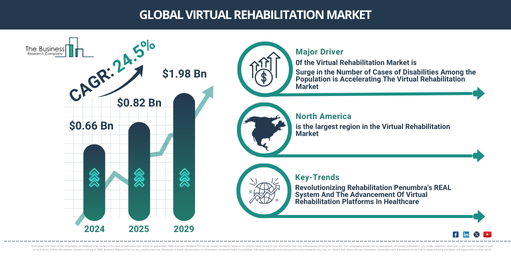
    The market size of virtual rehabilitation has seen an impressive expansion in the past few years. It is expected to expand from a valuation of $0.66 billion in 2024 to $0.82 billion in 2025, with a compound annual growth rate (CAGR) of 24.1%. This growth in the historic period is due to rising disability prevalence among the population, the growing utilization of virtual reality for patient treatment, and a heightened embrace of VR technology in the healthcare sector.

    What Is the Projected Market Size of the Virtual Rehabilitation Market?

    The size of the virtual rehabilitation market is forecasted to undergo a considerable increase in the coming years. It is anticipated to reach $1.98 billion in 2029 with a compound annual growth rate (CAGR) of 24.5%. The significant growth in the forecast period can be due to an aging population, a rise in non-communicable diseases, an increase in policies supporting virtual rehabilitation, and a shift towards patient-centered healthcare. The forecast period is expected to see the emergence of key trends such as product innovations, partnerships, advancements in virtual rehabilitation, new technology, and enhanced internet connectivity.

    Download The Free Sample Report Here:

    https://www.thebusinessresearchcompany.com/sample.aspx?id=13949&type=smp

    Who are the Major Competitors in the Virtual Rehabilitation Market Outlook?

    Major companies operating in the virtual rehabilitation market report are SWORD Health, Hinge Health Inc., Meden-Inmed, BO&BO Ltd., Saebo Inc., Mindmaze, Bridgeway Senior Healthcare, Motek Medical B.V., XRHealth (VRHealth), Tyromotion GmbH, Brontes Processing, LiteGait, GestureTek Health, CSE Entertainment UK, Rehab-Robotics, Virtualware Group, MIRA Rehab Limited, Myelin-H, Motorika, Doctor Kinetic, Agile Virtual PT, Cogniv Technologies, Immersive Rehab, Neuro Rehab VR, Rehametrics, Neuro Rehab VR, CoRehab srl, Accelerated Care Plus Corporation, Euleria S.R.L

    What Is Fueling Growth in the Virtual Rehabilitation Market?

    The escalating instances of disability are predicted to fuel the expansion of the virtual rehabilitation market in the future. A disability can be identified as a physical, cognitive, sensory, or mental condition that critically hampers one’s ability to carry out daily activities, fully engage in societal settings, or fulfill common life roles. Virtual rehabilitation supports the disabled community by offering them the opportunity to access therapeutic interventions and custom-fit exercises through virtual platforms. For example, the World Health Organization, a Switzerland-based global public health entity, reported in March 2023, that approximately 1.3 billion individuals worldwide, that represent 16% of the total global populace, suffer from disabilities. Consequently, the growing occurrences of disability among the population is accelerating the growth of the virtual rehabilitation market.

    Request For A Customized Report:

    https://www.thebusinessresearchcompany.com/customise?id=13949&type=smp

    Which Virtual Rehabilitation Market Segments Are Growing the Fastest?

    The virtual rehabilitation market covered in this report is segmented –

    1) By Type: Physical Rehabilitation, Neuro And Cognitive Rehabilitation, Other Types

    2) By Patient Type: Short Term Patients, Long Term Patients

    3) By End-User: Inpatient Rehabilitation Hospitals, Rehabilitation Centers And Clinics, Home Care Settings

    Subsegments:

    1) By Physical Rehabilitation: Musculoskeletal Rehabilitation, Sports Injury Rehabilitation, Post-Surgery Rehabilitation

    2) By Neuro And Cognitive Rehabilitation: Stroke Rehabilitation, Traumatic Brain Injury (TBI) Rehabilitation, Memory And Cognitive Skills Training

    3) By Other Types: Pediatric Rehabilitation, Cardiac Rehabilitation, Geriatric Rehabilitation

    Which Industry Trends Are Shaping the Future of the Virtual Rehabilitation Market?

    Leading entities in the virtual rehabilitation sector are focusing on the creation of advanced platforms, such as the multi-disciplinary rehabilitation tool, to gain an upper hand in the market. This approach to rehabilitation is comprehensive, involving professionals from different fields working in unison to cater to the needs of individuals recuperating from sickness, injury, or disability. As an illustration, Penumbra, a medical company based in the US, in November 2022, initiated the first full-body, hands-free virtual reality offering focused on rehabilitation, thereby widening its REAL System platform. This is the only non-tethered, hands-free virtual reality platform for rehabilitation that addresses the upper and lower extremities with a full-body immersive experience. It allows clinicians to design custom exercises and activities for patients to challenge, engage, and motivate them, while also monitoring their progress. The REAL System platform capitalizes on virtual reality technology to provide immersive healthcare designed for overall well-being, improving functional skills, stress management, and cognition.

    Access The Full Report Here:

    https://www.thebusinessresearchcompany.com/report/virtual-rehabilitation-global-market-report

    Which Countries Are Leading the Virtual Rehabilitation Market?

    North America was the largest region in the virtual rehabilitation market in 2024. Europe is expected to be the fastest-growing region in the forecast period. The regions covered in the virtual rehabilitation market report are Asia-Pacific, Western Europe, Eastern Europe, North America, South America, Middle East, Africa.

    Purchase The Full Report Today:

    https://www.thebusinessresearchcompany.com/purchaseoptions.aspx?id=13949

    This Report Delivers Insight On:

    1. How big is the virtual rehabilitation market, and how is it changing globally?

    2. Who are the major companies in the virtual rehabilitation market, and how are they performing?

    3. What are the key opportunities and risks in the virtual rehabilitation market right now?

    4. Which products or customer segments are growing the most in the virtual rehabilitation market?

    5. What factors are helping or slowing down the growth of the virtual rehabilitation market?

    About The Business Research Company:

    With over 15000+ reports from 27 industries covering 60+ geographies, The Business Research Company has built a reputation for offering comprehensive, data-rich research and insights. Armed with 1,500,000 datasets, the optimistic contribution of in-depth secondary research, and unique insights from industry leaders, you can get the information you need to stay ahead in the game.

    Get in touch with us:

    The Business Research Company: https://www.thebusinessresearchcompany.com/

    Americas +1 310-496-7795

    Asia +44 2071930708

    Europe +44 7882 955267

    Email us at info@tbrc.info

    Follow us on:

    LinkedIn: https://in.linkedin.com/company/the-business-research-company

    YouTube: https://www.youtube.com/channel/UC24_fI0rV8cR5DxlCpgmyFQ

    Global Market Model: https://www.thebusinessresearchcompany.com/global-market-model
  • Intestinal Pseudo-Obstruction Treatment Market Drivers Report 2025 – For Business Development and Strategy Teams

    Intestinal Pseudo-Obstruction Treatment Market Drivers Report 2025 – For Business Development and Strategy Teams

    Claim your 30% discount on Global Market Reports with code ONLINE30. Limited time only.

    What Is the Forecast for the Intestinal Pseudo-Obstruction Treatment Market Growth in 2025?

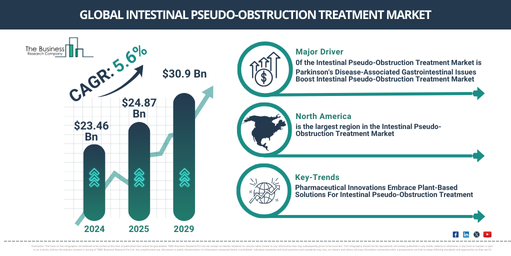
    There has been impressive growth in the market size for treatment of intestinal pseudo-obstruction in the past few years. Projected growth indicates a leap from $23.46 billion in 2024 to $24.87 billion in 2025, with a compound annual growth rate (CAGR) of 6.0%. The notable growth that occurred in the historical period can be credited to heightened recognition and diagnosis, advancements in medical imaging, improvements in gastrointestinal motility testing, and global access to healthcare.

    What Is the Forecast for the Intestinal Pseudo-Obstruction Treatment Market Size Through 2029?

    The market for intestinal pseudo-obstruction treatment is anticipated to witness robust growth in the upcoming years, reaching a value of $30.9 billion by 2029, scaling at a compound annual growth rate (CAGR) of 5.6%. Factors contributing to this growth during the forecast period include advancements in research and drug development, the implementation of telemedicine and remote monitoring, emphasis on patient education and support, and favorable reimbursement policies. The future requirements would be mainly shaped by trends such as heightened gastrointestinal motility testing, the use of immunomodulatory therapies, adoption of nutritional interventions, and the integration of data analytics and artificial intelligence.

    Download The Free Sample Report Here:

    https://www.thebusinessresearchcompany.com/sample.aspx?id=12995&type=smp

    What are the Key Market Players in Intestinal Pseudo-Obstruction Treatment Market and How They’re Evolving?

    Major companies operating in the intestinal pseudo-obstruction treatment market are F. Hoffmann-La Roche AG, Merck Sharp & Dohme Corp, Bayer AG, Sanofi S.A., AstraZeneca PLC, GSK PLC, Takeda Pharmaceutical Company Limited, Amgen PLC, Boehringer Ingelheim International GmbH, Teva Pharmaceutical Industries Ltd., Astellas Pharma Inc., Mylan N.V., Biogen Inc., Penn Medicine, Sun Pharmaceutical Industries Ltd., Aurobindo Pharma Ltd., Cipla Inc., Dr. Reddy’s Laboratories Ltd., Allergan PLC, Torrent Pharmaceuticals Limited, Basilea Pharmaceutica Ltd., Paratek Pharmaceuticals Inc., Melinta Therapeutics LLC, Tetraphase Pharmaceuticals Inc., Callisto Pharmaceuticals Inc.

    What Are the Primary Growth Drivers in the Intestinal Pseudo-Obstruction Treatment Market?

    The escalating incidence of Parkinson’s disease is projected to spur the growth of the intestinal pseudo-obstruction treatment market. Parkinson’s disease is a neurodegenerative condition primarily targeting dopamine-producing neurons in the substantia nigra region of the brain. Its sufferers experience an increasing occurrence of IPO as it impacts the enteric nervous system, causing gastrointestinal dysmotility leading to megacolon or intestinal blockages, including acute colonic pseudo-obstruction. As an example, the Parkinson’s Foundation, a US-based non-profit institution, reported that in December 2022 about 90,000 Americans got diagnosed with Parkinson’s disease annually, a significant 50% rise compared to the previous 60,000 annual diagnoses. Furthermore, it is estimated that by 2030, 1.2 million people globally will be suffering from Parkinson’s disease. Consequently, this surge is fueling the growth of the intestinal pseudo-obstruction treatment market. Increase in cases of cancer should power up the expansion of the intestinal pseudo-obstruction (IPO) treatment market. Cancer implies a condition where there is uncontrolled and rampant growth of some of the body cells, which eventually spread to other body parts. Sedentary lifestyle, poor dietary habits, and tobacco consumption all increase the cancer risk. The primary approach for IPO cancer treatment involves managing the root cancer, which can alleviate or even resolve the pseudo-obstruction related gastrointestinal symptoms. For example, as per Macmillan Cancer Support, a non-profit organization based in the UK, the current cancer patient population in the UK stands at around 3 million, and it is anticipated that this will escalate to 3.5 million by 2025, 4 million by 2030, and 5.3 million by 2040. Thus, the rise in cancer cases is fueling the expansion of the intestinal pseudo-obstruction (IPO) treatment market.

    Request For A Customized Report:

    https://www.thebusinessresearchcompany.com/customise?id=12995&type=smp

    What Are the Leading Segments in the Global Intestinal Pseudo-Obstruction Treatment Industry?

    The intestinal pseudo-obstruction treatment market covered in this report is segmented –

    1) By Drug Class: Antibiotics, Antidepressants, Antidiarrheals

    2) By Treatment: Medication, Surgery, Diet, Decompression, Other Treatments

    3) By Route Of Administration: Oral, Intravenous, Other Route Of Administrations

    4) By Diagnosis: Physical Examination, Biopsy, Blood Test, Gastric Emptying Tests, Imaging Tests, Other Diagnosis

    5) By End User: Clinic, Hospitals, Other End Users

    Subsegments:

    1) By Antibiotics: Broad-Spectrum Antibiotics, Narrow-Spectrum Antibiotics

    2) By Antidepressants: Tricyclic Antidepressants (TCAs), Selective Serotonin Reuptake Inhibitors (SSRIs)

    3) By Antidiarrheals: Loperamide, Bismuth Subsalicylate

    Access The Full Report Here:

    https://www.thebusinessresearchcompany.com/report/intestinal-pseudo-obstruction-treatment-global-market-report

    What Is the Regional Outlook for the Intestinal Pseudo-Obstruction Treatment Market?

    North America was the largest region in the intestinal pseudo-obstruction treatment market in 2024. The regions covered in intestinal pseudo-obstruction (IPO) treatment market report are Asia-Pacific, Western Europe, Eastern Europe, North America, South America, Middle East and Africa.

    Purchase The Full Report Today:

    https://www.thebusinessresearchcompany.com/purchaseoptions.aspx?id=12995

    This Report Delivers Insight On:

    1. How big is the intestinal pseudo-obstruction treatment market, and how is it changing globally?

    2. Who are the major companies in the intestinal pseudo-obstruction treatment market, and how are they performing?

    3. What are the key opportunities and risks in the intestinal pseudo-obstruction treatment market right now?

    4. Which products or customer segments are growing the most in the intestinal pseudo-obstruction treatment market?

    5. What factors are helping or slowing down the growth of the intestinal pseudo-obstruction treatment market?

    About The Business Research Company:

    With over 15000+ reports from 27 industries covering 60+ geographies, The Business Research Company has built a reputation for offering comprehensive, data-rich research and insights. Armed with 1,500,000 datasets, the optimistic contribution of in-depth secondary research, and unique insights from industry leaders, you can get the information you need to stay ahead in the game.

    Get in touch with us:

    The Business Research Company: https://www.thebusinessresearchcompany.com/

    Americas +1 310-496-7795

    Asia +44 2071930708

    Europe +44 7882 955267

    Email us at info@tbrc.info

    Follow us on:

    LinkedIn: https://in.linkedin.com/company/the-business-research-company

    YouTube: https://www.youtube.com/channel/UC24_fI0rV8cR5DxlCpgmyFQ

    Global Market Model: https://www.thebusinessresearchcompany.com/global-market-model
  • Medical Coding Industry Valued at $29.2 Billion by 2029 With CAGR of 11.1% | Size and Share Insights

    Medical Coding Industry Valued at $29.2 Billion by 2029 With CAGR of 11.1% | Size and Share Insights

    Claim your 30% discount on Global Market Reports with code ONLINE30. Limited time only.

    What Is the Forecast for the Medical Coding Market from 2024 to 2025?

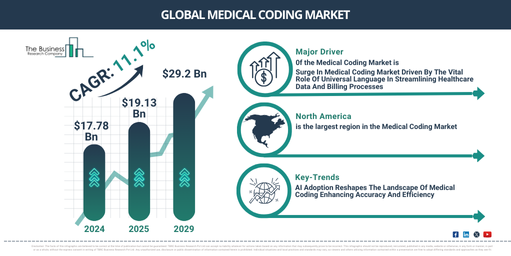
    Recent years have seen robust expansion in the medical coding market size. The market, which is projected to surge from $17.78 billion in 2024 to $19.13 billion in 2025, exhibits a compound annual growth rate (CAGR) of 7.6%. Factors contributing to the growth in the historic period include the rising healthcare industry, implementation of ICD and CPT coding systems, the transition towards electronic health records (EHRs), regulatory compliance demands, and the drive towards specialization and subspecialization within healthcare.

    What Is the Projected Market Size of the Medical Coding Market?

    Expectations are high for a swift expansion in the medical coding market in the coming years, with projections indicating its potential to rise to $29.2 billion by 2029, showcasing a compound annual growth rate (CAGR) of 11.1%. Several factors contributing to this prospective growth during the forecast period include enhanced workforce training, global expansion of the healthcare market, shifts in regulatory mechanisms and the need for adherence, and the proliferation of telehealth and remote medical services, as well as a transition towards value-based care models. Forecasted trends for this period encompass greater emphasis on education and training initiatives, a lean towards remote work and outsourcing, integration and interoperability of EHR, an augmented demand for specialty-specific coding, and a rising emphasis on precision and quality.

    Download The Free Sample Report Here:

    https://www.thebusinessresearchcompany.com/sample.aspx?id=6070&type=smp

    Who are the Major Competitors in the Medical Coding Market Outlook?

    Major companies operating in the medical coding market include 3M Company, Advanced Medical Coding Services, AcerHealth Inc., Aveanna Healthcare LLC, AthenaHealth, AAPC (American Association of Professional Coders), Codemasters Inc., EqualizeRCM Services, Alpha Coding Experts LLC, Accurate Medical Coding LLC, American Medical Billing & Coding Services, Apex Medical Billing & Coding, Associated Medical Billing & Coding, Beacon Healthcare Coding, Billing Advantage LLC, Blue Star Medical Billing & Coding, Brite Medical Coding, Care Medical Coding, Central Billing Services LLC, Certified Medical Billing Specialists, Code 1 LLC, Coding Masters, Complete Medical Coding Solutions, Cypress Medical Coding, Data Plus Services, Dedicated Medical Billing & Coding, Empower Medical Billing & Coding Services, Expert Medical Coding, First Class Medical Billing & Coding, Global Medical Billing & Coding, Greenlight Medical Billing & Coding

    What Is Fueling Growth in the Medical Coding Market?

    The escalating demand for a standardized language in healthcare documentation is projected to fuel the expansion of the medical coding market. The medical sector generates immense data that is complex to manage manually without the appropriate universal identifiers and is challenging to reference if a patient’s history check is required. The transformation of medical records into universal medical alphanumeric codes anticipated facilitating medical data regulation and accurate billing refund while also tracing a patient’s health for prospective grievances or treatments. This will naturally generate a need for medical codes that assist in arranging medical data and streamlining the procedures, cutting down inefficiencies linked to manually recording data without universal codes. For instance, the International Classification of Diseases (ICD) managed by the World Health Organization uses global disease and mortality data reported and coded using the ICD. Furthermore, in October 2022, as per the newly published Calendar Year (CY) 2023 Current Procedural Terminology (CPT) code set by the American Medical Association (AMA), a US-based professional body and advocacy organization for doctors and medical students, there were an addition of 102 new codes, removal of 68 codes, and modification of 87 codes with detailed explanations in the CY 2023 updates. The utilization and formulation of a universally applicable code are driving the medical coding market’s growth.

    Request For A Customized Report:

    https://www.thebusinessresearchcompany.com/customise?id=6070&type=smp

    Which Medical Coding Market Segments Are Growing the Fastest?

    The medical coding market covered in this report is segmented –

    1) By Component: In-house, Outsourced

    2) By Classification System: International Classification of Diseases (ICDs), Healthcare Common Procedure Coding System (HCPCS), Current Procedural Terminology (CPT)

    3) By End User: Diagnostic Centers, Hospitals & Care Providers

    Subsegments:

    1) By In-house: Internal Coding Staff, In-house Coding Software Solutions

    2) By Outsourced: Third-Party Coding Services, Remote Coding Solutions, Hybrid Outsourcing Models

    Which Industry Trends Are Shaping the Future of the Medical Coding Market?

    The rising usage of artificial intelligence (AI) is a current trend that’s becoming increasingly widespread within the medical coding market. AI emulates human intelligence in machines, which are designed to think and act like humans. The integration of AI is set to refine medical billing processes, enhance the accuracy of medical coders, and boost overall performance. This is particularly significant given the escalating volume of healthcare data and growing complexity. Furthermore, medical coding will necessitate fewer queries to locate the correct codes for unprocessed data, alleviating the strain of medical coding. For example, Maverick Medical AI, an autonomous medical coding firm based in Israel, introduced its self-governing medical coding platform in November 2022 to satisfy RadNet’s medical coding needs in the US. This will assist in enhancing its revenue cycle management process, reducing operating costs, and boosting compensation. Maverick combines medical coding industry expertise with innovative machine learning and adaptable AI. It autonomously evaluates clinical notes and reports, accurately producing reimbursement codes (ICD-10, CPT) in real-time, and enabling charges to be readily available for billing systems.

    Access The Full Report Here:

    https://www.thebusinessresearchcompany.com/report/medical-coding-global-market-report

    Which Countries Are Leading the Medical Coding Market?

    North America was the largest region in the medical coding market in 2024. Asia-Pacific is expected to be the fastest-growing region in the forecast period. The regions covered in the medical coding market report are Asia-Pacific, Western Europe, Eastern Europe, North America, South America, Middle East, Africa.

    Purchase The Full Report Today:

    https://www.thebusinessresearchcompany.com/purchaseoptions.aspx?id=6070

    This Report Delivers Insight On:

    1. How big is the medical coding market, and how is it changing globally?

    2. Who are the major companies in the medical coding market, and how are they performing?

    3. What are the key opportunities and risks in the medical coding market right now?

    4. Which products or customer segments are growing the most in the medical coding market?

    5. What factors are helping or slowing down the growth of the medical coding market?

    About The Business Research Company:

    With over 15000+ reports from 27 industries covering 60+ geographies, The Business Research Company has built a reputation for offering comprehensive, data-rich research and insights. Armed with 1,500,000 datasets, the optimistic contribution of in-depth secondary research, and unique insights from industry leaders, you can get the information you need to stay ahead in the game.

    Get in touch with us:

    The Business Research Company: https://www.thebusinessresearchcompany.com/

    Americas +1 310-496-7795

    Asia +44 2071930708

    Europe +44 7882 955267

    Email us at info@tbrc.info

    Follow us on:

    LinkedIn: https://in.linkedin.com/company/the-business-research-company

    YouTube: https://www.youtube.com/channel/UC24_fI0rV8cR5DxlCpgmyFQ

    Global Market Model: https://www.thebusinessresearchcompany.com/global-market-model
  • Virtual Human Anatomy Software Forecast Report – Designed for Decision Makers and Product Teams

    Virtual Human Anatomy Software Forecast Report – Designed for Decision Makers and Product Teams

    Claim your 30% discount on Global Market Reports with code ONLINE30. Limited time only.

    What Is the Growth Rate of the Virtual Human Anatomy Software Market?

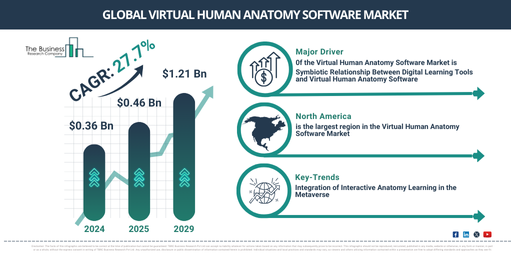
    The market size of virtual human anatomy software has seen an enormous expansion lately. The market, at $0.36 billion in 2024, is projected to escalate to $0.46 billion in 2025, showing a compound annual growth rate (CAGR) of 28.0%. This spike in the historical timeframe is credited to the necessity for medical education, surge in e-learning platforms, need for patient-centric solutions, as well as research and development.

    What Growth Rate Is Forecasted for the Virtual Human Anatomy Software Market by 2029?

    The market size of the virtual human anatomy software is projected to experience substantial growth in the upcoming years, expanding to $1.21 billion by the year 2029, with a compound annual growth rate (CAGR) of 27.7%. Factors contributing to this projected growth in the forecast period include a surge in the requirement for distance learning solutions, broadening scope of internet-based medical education courses, increased healthcare simulation training, rising demand for individualized learning experiences, and wider adoption of telemedicine and telehealth services. Major trends anticipated for this forecast period comprise sophisticated biometric integration, wider application of artificial intelligence (AI), incorporation of telemedicine, utilization of blockchain for verifying medical education credentials, and augmented learning analytics.

    Download The Free Sample Report Here:

    https://www.thebusinessresearchcompany.com/sample.aspx?id=15021&type=smp

    Which Key Companies Are Shaping the Future of the Virtual Human Anatomy Software Market?

    Major companies operating in the virtual human anatomy software market are VirtaMed AG, Wolters Kluwer Health, Inc., Epredia, Anatomage Inc., Biomax Informatics AG, Visible Body, BioDigital Inc., 3D4Medical Ltd., Primal Pictures Ltd., BodyViz LLC, Kenhub GmbH, Zygote Media Group Inc., Catfish Animation Studio Srl, Medicalholodeck GmbH, Lifeliqe, s.r.o., 3D Organon Ltd., Virtual Medicine, 4D Interactive Anatomy, Anatomy 3D Atlas, Elsevier B.V., Anatronica, Anomalous Medical, LLC, Cyber-Anatomy, Inc., Brain Science Tools B.V., BodyParts3D/Anatomography, BodyMaps, Digiscope Ltd., Human Anatomy VR

    Which Factors Are Driving Demand in the Virtual Human Anatomy Software Industry?

    The expected surge in the virtual human anatomy software market is attributed to the rising implementation of online learning. Online learning, characterized by internet-based, digital technology-facilitated remote delivery of educational content, is witnessing increased prevalence. Its popularity is driven by factors such as accessibility, flexibility, affordability, advanced technology, and synchronization with evolving societal and economic patterns. The role of virtual human anatomy software in online learning is significant, offering immersive and interactive experiences that enrich students’ comprehension of human anatomy. Statistics from Eurostat reveal that in January 2024, 30% of EU internet users between 16 and 74 years utilized online courses or learning materials over the last three months, a rise from 28% in 2022. This growing traction in online learning is set to catalyze the expansion of the virtual human anatomy software market.

    Request For A Customized Report:

    https://www.thebusinessresearchcompany.com/customise?id=15021&type=smp

    How Is the Virtual Human Anatomy Software Market Segmented by Several Divisions?

    The virtual human anatomy software market covered in this report is segmented –

    1) By Type: 3D Anatomy Software, VR Anatomy Software

    2) By Technology: Cloud-Based, On-Premise

    3)By Application: Educational Institution, Hospitals And Clinics, Other Applications

    Subsegments:

    1) By 3D Anatomy Software: Interactive 3D Visualization, 3D Rendering And Simulation, Anatomical Modeling Tools

    2) By VR Anatomy Software: Virtual Reality-Based Anatomy Exploration, VR Simulation For Medical Training, Immersive 3D Anatomy Visualization

    What are the Emerging Market Trends Driving the Growth of the Virtual Human Anatomy Software Industry?

    Major corporations active in the virtual human anatomy software market have begun to unveil Anatomage VR, an engaging anatomy learning platform within the metaverse, in response to the surge in demand. Tailored to complement certified anatomy and life science programs in high schools, Anatomage VR offers students a three-dimensional simulation of real human bodies. This allows them to navigate, investigate, and gain a holistic understanding of anatomical structures, systems, and diseases, all in astonishing anatomical detail. As an example, in October 2022, Anatomage, an American company known for its expertise in 3D anatomy visualization and simulation technologies, introduced Anatomage VR. This interactive learning platform allows students to engage with Anatomage Table’s digital bodies, which include intricately detailed digital versions of male and female cadavers. Students can visualize over 2,500 anatomical features in each digital body, watch 71 animated anatomy presentations in 3D, and enhance their engagement via the use of quiz models.

    Access The Full Report Here:

    https://www.thebusinessresearchcompany.com/report/virtual-human-anatomy-software-global-market-report

    Which Regions Are Driving Growth in the Virtual Human Anatomy Software Market?

    North America was the largest region in the virtual human anatomy market in 2024. The regions covered in the virtual human anatomy software market report are Asia-Pacific, Western Europe, Eastern Europe, North America, South America, Middle East, Africa.

    Purchase The Full Report Today:

    https://www.thebusinessresearchcompany.com/purchaseoptions.aspx?id=15021

    This Report Delivers Insight On:

    1. How big is the virtual human anatomy software market, and how is it changing globally?

    2. Who are the major companies in the virtual human anatomy software market, and how are they performing?

    3. What are the key opportunities and risks in the virtual human anatomy software market right now?

    4. Which products or customer segments are growing the most in the virtual human anatomy software market?

    5. What factors are helping or slowing down the growth of the virtual human anatomy software market?

    About The Business Research Company:

    With over 15000+ reports from 27 industries covering 60+ geographies, The Business Research Company has built a reputation for offering comprehensive, data-rich research and insights. Armed with 1,500,000 datasets, the optimistic contribution of in-depth secondary research, and unique insights from industry leaders, you can get the information you need to stay ahead in the game.

    Get in touch with us:

    The Business Research Company: https://www.thebusinessresearchcompany.com/

    Americas +1 310-496-7795

    Asia +44 2071930708

    Europe +44 7882 955267

    Email us at info@tbrc.info

    Follow us on:

    LinkedIn: https://in.linkedin.com/company/the-business-research-company

    YouTube: https://www.youtube.com/channel/UC24_fI0rV8cR5DxlCpgmyFQ

    Global Market Model: https://www.thebusinessresearchcompany.com/global-market-model
  • Mechanical Ventilator Market to Reach $12.66 Billion by 2029 | Key Drivers and Future Outlook

    Mechanical Ventilator Market to Reach $12.66 Billion by 2029 | Key Drivers and Future Outlook

    Claim your 30% discount on Global Market Reports with code ONLINE30. Limited time only.

    What Is the Growth Rate of the Mechanical Ventilator Market?

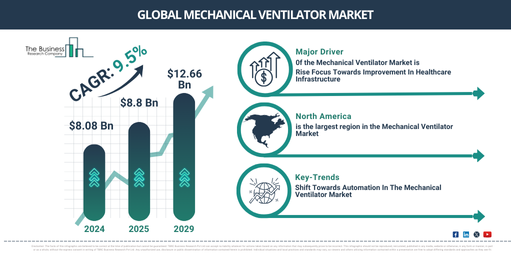
    There has been significant growth in the mechanical ventilator market size in recent years. The market is set to expand from $8.08 billion in 2024 to $8.8 billion in 2025, indicating a compound annual growth rate (CAGR) of 8.9%. The prior growth can be linked to various factors such as efforts in emergency readiness, research, development initiatives, advancements in the medical field, critical care necessities, occurrences of epidemics and pandemics, the increasing age of the population, and the prevalence of chronic respiratory conditions.

    What Growth Rate Is Forecasted for the Mechanical Ventilator Market by 2029?

    The market for mechanical ventilators is predicted to experience robust growth in the coming years, ballooning to a value of $12.66 billion by 2029, with a compound annual growth rate (CAGR) of 9.5%. Factors contributing to this predicted growth during the forecasted period include global health crises and pandemics, readiness for emergency response, compliance with regulatory standards, governmental investment and initiatives, and the development of worldwide healthcare infrastructure. During the same period, primary trends are anticipated to revolve around energy efficiency, integration with wearable tech, wireless connection and remote monitoring, utilization of AI and machine learning, and the use of modular and customizable systems.

    Download The Free Sample Report Here:

    https://www.thebusinessresearchcompany.com/sample.aspx?id=6400&type=smp

    Which Key Companies Are Shaping the Future of the Mechanical Ventilator Market?

    Major companies operating in the mechanical ventilator market include Air Liquide, Medtronic plc, Koninklijke Philips N.V., GE Healthcare, Smiths Medical, Bio-Med Devices Inc., ResMed, Hill-Rom Holdings Inc., Getinge, Dräger, Chart Biomedical, Fisher & Paykel Healthcare Limited, ZOLL Medical Corporation, Vyaire Medical Inc., SCHILLER, Hamilton Medical, Ventec Life Systems, Allied Healthcare Products Inc., Bunnell Inc., Airon Corporation, aXcent Medical GmbH, Trident Medical Innovations

    Which Factors Are Driving Demand in the Mechanical Ventilator Industry?

    The enhancement of healthcare infrastructure is anticipated to stimulate growth in the mechanical ventilator market. This infrastructure forms the bedrock for the evaluation, planning, implementation, and enhancement of public health initiatives. The advent of the COVID-19 pandemic has escalated the demand for upgraded healthcare facilities and the need for infrastructure preparedness. Numerous hospitals are augmenting their capacity for mechanical ventilators to accommodate rising demand and prevent medical device shortages during emergencies. For example, the American Hospital Association reported in January 2024 that the United States is home to 6,120 hospitals, 923 of which are managed by local and state governments. These establishments offer a total of 916,752 staffed beds to cater to the healthcare requirements across the country. As a result, the development of healthcare infrastructure is fuelling the expansion of the mechanical ventilator market.

    Request For A Customized Report:

    https://www.thebusinessresearchcompany.com/customise?id=6400&type=smp

    How Is the Mechanical Ventilator Market Segmented by Several Divisions?

    The mechanical ventilator market covered in this report is segmented –

    1) By Type: Adult Ventilators, Pediatric Ventilators, Neonatal/ Infant Ventilators

    2) By Mobility: Intensive Care Ventilators, High-End ICU Ventilators, Mid-End ICU Ventilators, Basic ICU Ventilators, Portable Ventilators

    3) By Mode Of Ventilation: Invasive Ventilation, Non-Invasive Ventilation

    4) By End-User: Hospitals and Clinics, Home Care, Ambulatory Care Centers, Emergency Medical Service, Other End-Users

    Subsegments:

    1) By Adult Ventilators: Invasive Adult Ventilators, Non-Invasive Adult Ventilators

    2) By Pediatric Ventilators: Invasive Pediatric Ventilators, Non-Invasive Pediatric Ventilators

    3) By Neonatal/Infant Ventilators: High-Frequency Ventilators, Conventional Ventilators for Neonates

    What are the Emerging Market Trends Driving the Growth of the Mechanical Ventilator Industry?

    A crucial trend that is picking up steam in the mechanical ventilator market is product innovation. Companies are channeling investment into the research and development of groundbreaking products to streamline mechanical ventilators in terms of frequency, assist control, and time, with the aim of reducing the effort needed to operate the ventilator. To exemplify, OES Medical, an anesthesia equipment and accessories manufacturer based in the UK, unveiled the Gemini-G100, a mechanically propelled piston ICU ventilator, in January 2022. The freshly introduced Gemini-G100 is engineered to support intensive care units around the globe, especially in areas where the supply of high-pressure oxygen gas is a challenge. The only requirement for its operation is electrical power, thus, it does not impose any extra burden on the hospital’s oxygen supply.

    Access The Full Report Here:

    https://www.thebusinessresearchcompany.com/report/mechanical-ventilator-global-market-report

    Which Regions Are Driving Growth in the Mechanical Ventilator Market?

    North America was the largest region in the mechanical ventilator market in 2024. The regions covered in the mechanical ventilator market report are Asia-Pacific, Western Europe, Eastern Europe, North America, South America, Middle East, Africa.

    Purchase The Full Report Today:

    https://www.thebusinessresearchcompany.com/purchaseoptions.aspx?id=6400

    This Report Delivers Insight On:

    1. How big is the mechanical ventilator market, and how is it changing globally?

    2. Who are the major companies in the mechanical ventilator market, and how are they performing?

    3. What are the key opportunities and risks in the mechanical ventilator market right now?

    4. Which products or customer segments are growing the most in the mechanical ventilator market?

    5. What factors are helping or slowing down the growth of the mechanical ventilator market?

    About The Business Research Company:

    With over 15000+ reports from 27 industries covering 60+ geographies, The Business Research Company has built a reputation for offering comprehensive, data-rich research and insights. Armed with 1,500,000 datasets, the optimistic contribution of in-depth secondary research, and unique insights from industry leaders, you can get the information you need to stay ahead in the game.

    Get in touch with us:

    The Business Research Company: https://www.thebusinessresearchcompany.com/

    Americas +1 310-496-7795

    Asia +44 2071930708

    Europe +44 7882 955267

    Email us at info@tbrc.info

    Follow us on:

    LinkedIn: https://in.linkedin.com/company/the-business-research-company

    YouTube: https://www.youtube.com/channel/UC24_fI0rV8cR5DxlCpgmyFQ

    Global Market Model: https://www.thebusinessresearchcompany.com/global-market-model
  • Macular Degeneration Treatment Market Size to Exceed $19.06 Billion by 2029 | Growth and Industry Trends

    Macular Degeneration Treatment Market Size to Exceed $19.06 Billion by 2029 | Growth and Industry Trends

    Claim your 30% discount on Global Market Reports with code ONLINE30. Limited time only.

    How Has the Macular Degeneration Treatment Market Grown from 2024 to 2025?

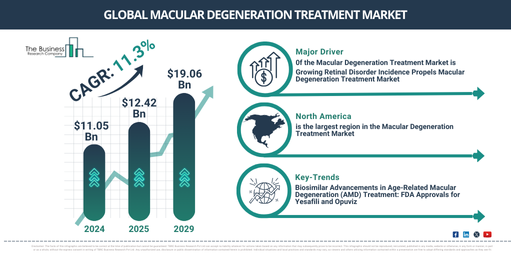
    The market for macular degeneration treatment has seen significant growth in previous years. The expansion is expected to continue, with market size predicted to increase from $11.05 billion in 2024 to $12.42 billion in 2025, reflecting a compound annual growth rate (CAGR) of 12.4%. Several factors contribute to the growth witnessed during the historic period, including an aging population, changes in lifestyle, scarcity of treatment alternatives, heightened awareness, and improvements in healthcare infrastructure.

    What Growth Rate Is Anticipated for the Macular Degeneration Treatment Market in the Coming Years?

    The market for treatments for macular degeneration is projected to experience swift expansion in the coming years, with an estimated value of $19.06 billion by 2029, growing at a compound annual growth rate (CAGR) of 11.3%. The anticipated growth during the forecast period can be credited to advancements in scientific research, an increase in healthcare spending, escalating incidence rates, customized medicinal treatments, and worldwide initiatives toward vision health. Key trends for this period encompass focus on neuroprotective and regenerative treatments, the broadening of telemedicine and distance monitoring, personalization in medicine, exploration of stem cell therapies, and patient-centric initiatives for increasing awareness and education.

    Download The Free Sample Report Here:

    https://www.thebusinessresearchcompany.com/sample.aspx?id=5799&type=smp

    Who Are the Leading Companies in the Macular Degeneration Treatment Market?

    Major companies operating in the macular degeneration treatment market include Pfizer Inc., F. Hoffmann-La Roche Ltd., Allergan Inc., Bayer AG, Novartis AG, GlaxoSmithKline plc, Panoptica, Regeneron Pharmaceuticals Inc., Bausch Health Companies Inc., Santen Pharmaceuticals, Aerie Pharmaceuticals Inc., BioXcel Therapeutics Inc., Regenxbio Inc., Spark Therapeutics Inc., Alimera Sciences Inc., Applied Genetic Technologies Corp (AGTC), Cell Medica Ltd., Ophthotech Corporation, Adverum Biotechnologies Inc., Neurotech Pharmaceuticals Inc., 4D Molecular Therapeutics Inc., GenSight Biologics Inc.

    What Are the Key Drivers of the Macular Degeneration Treatment Market?

    The macular degeneration treatment market is projected to grow owing to the escalating prevalence of retinal disorders. These disorders can impair the essential tissue and disrupt how visual data is processed, resulting in either warped or non-existent vision. As an example, the American Academy of Ophthalmology has forecasted that by 2050, roughly 7.32 million U.S citizens will be suffering from primary open-angle glaucoma, a broad term for a range of eye-related conditions. The majority of those affected will be those between the ages of 70 and 79 (32%), women (50%), and Hispanics (50%); the most substantial demographic portion being Hispanic males. Hence, the surge in retinal disorders incidence is fueling the expansion of the macular degeneration treatment market.

    Request For A Customized Report:

    https://www.thebusinessresearchcompany.com/customise?id=5799&type=smp

    What Are the Key Market Segments in the Macular Degeneration Treatment Industry?

    The macular degeneration treatment market covered in this report is segmented –

    1) By Stage of Disease: Early-Stage AMD, Intermediate AMD, Late-Stage AMD

    2) By End User: Ambulatory Surgical Centers, Ophthalmic Clinics, Hospitals

    3) By Route of Administration: Oral, Injectable, Other Route of Administration

    4) By Types: Wet Macular Degeneration, Dry Macular Degeneration

    Subsegments:

    1) By Early-Stage AMD: Nutritional Supplements, Lifestyle Modification Treatments

    2) By Intermediate AMD: Anti-VEGF Injections, Photodynamic Therapy

    3) By Late-Stage AMD: Surgical Treatments, Advanced Anti-VEGF Therapies, Gene Therapy Options

    What Are the Latest Trends in the Macular Degeneration Treatment Market?

    Key firms engaged in the macular degeneration treatment industry are focusing on creating biosimilars to treat age-related macular degeneration (AMD) in order to enhance access to effective treatment. Biosimilars are biological medication products that are almost identical to an already approved reference product, and there are no clinically significant differences related to safety, purity, or potency. For instance, Biocon Biologics Ltd, an Indian company, and Samsung Bioepis Co. Ltd, from South Korea, received FDA approvals for Yesafili and Opuviz, two new biosimilars, in May 2024. The biosimilars both block vascular endothelial growth factor (VEGF), which causes unusual blood vessel growth in the eye, thereby preventing vision loss linked to conditions like AMD and diabetic retinopathy. The approval process by the FDA included comparative analysis that showed no notable differences in efficacy or safety between Yesafili and Opuviz compared to Eylea. Such studies conducted thorough examinations of the biosimilars’ pharmacokinetics and immunogenicity.

    Access The Full Report Here:

    https://www.thebusinessresearchcompany.com/report/macular-degeneration-treatment-global-market-report

    What Are the Key Regional Markets in the Macular Degeneration Treatment Industry?

    North America was the largest region in the macular degeneration treatment market in 2024. Asia-Pacific is expected to be the fastest-growing region in the forecast period. The regions covered in the macular degeneration treatment Market report are Asia-Pacific, Western Europe, Eastern Europe, North America, South America, Middle East, Africa.

    Purchase The Full Report Today:

    https://www.thebusinessresearchcompany.com/purchaseoptions.aspx?id=5799

    This Report Delivers Insight On:

    1. How big is the macular degeneration treatment market, and how is it changing globally?

    2. Who are the major companies in the macular degeneration treatment market, and how are they performing?

    3. What are the key opportunities and risks in the macular degeneration treatment market right now?

    4. Which products or customer segments are growing the most in the macular degeneration treatment market?

    5. What factors are helping or slowing down the growth of the macular degeneration treatment market?

    About The Business Research Company:

    With over 15000+ reports from 27 industries covering 60+ geographies, The Business Research Company has built a reputation for offering comprehensive, data-rich research and insights. Armed with 1,500,000 datasets, the optimistic contribution of in-depth secondary research, and unique insights from industry leaders, you can get the information you need to stay ahead in the game.

    Get in touch with us:

    The Business Research Company: https://www.thebusinessresearchcompany.com/

    Americas +1 310-496-7795

    Asia +44 2071930708

    Europe +44 7882 955267

    Email us at info@tbrc.info

    Follow us on:

    LinkedIn: https://in.linkedin.com/company/the-business-research-company

    YouTube: https://www.youtube.com/channel/UC24_fI0rV8cR5DxlCpgmyFQ

    Global Market Model: https://www.thebusinessresearchcompany.com/global-market-model
  • Virtual Colonoscopy Software Market Outlook 2025 – Insights for Executive and Strategic Planning

    Virtual Colonoscopy Software Market Outlook 2025 – Insights for Executive and Strategic Planning

    Claim your 30% discount on Global Market Reports with code ONLINE30. Limited time only.

    How Has the Virtual Colonoscopy Software Market Grown from 2024 to 2025?

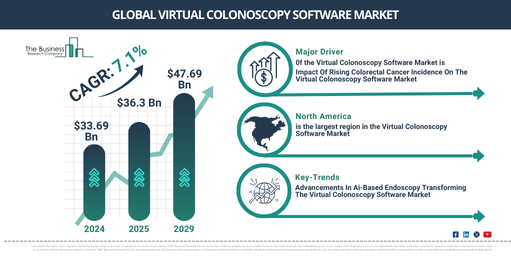
    There has been significant growth in the market size of virtual colonoscopy software in the past few years. The market is projected to expand from $33.69 billion in 2024 to $36.3 billion in 2025, showing a compound annual growth rate (CAGR) of 7.8%. Factors such as advancements in imaging technology, an aging population, the option for remote consultations, and favorable reimbursement policies have all contributed to the growth witnessed in the historic period.

    What Growth Rate Is Anticipated for the Virtual Colonoscopy Software Market in the Coming Years?

    We anticipate a robust rise in the market size of virtual colonoscopy software in the upcoming years. The market is predicted to escalate to $47.69 billion in 2029, growing at a compound annual growth rate (CAGR) of 7.1%. This expansion in the forecast period can be credited to factors such as access to global healthcare, individualized screening, telemedicine, as well as education and awareness among patients. Key trends expected during this period are the utilization of AI for image analysis, advancement in 3D visualization, patient-focused care, and improved data privacy and security.

    Download The Free Sample Report Here:

    https://www.thebusinessresearchcompany.com/sample.aspx?id=13002&type=smp

    Who Are the Leading Companies in the Virtual Colonoscopy Software Market?

    Major companies operating in the virtual colonoscopy software market are Hitachi Medical Corporation, Medtronic PLC, Siemens Healthineers, Koninklijke Philips N.V., Boston Scientific Corporation, Olympus Corporation, GE HealthCare Technologies Inc., Hologic Inc., Stony Brook University, Carestream Health, Toshiba Medical Systems Corporation, Barco NV, Agfa Healthcare, Cybernet Systems Co. Ltd., Intelerad Medical Systems Incorporated, Canon Medical Informatics Inc., TeraRecon Inc., iCAD Inc., Median Technologies, LEXION Medical LLC, Mentice Inc., Pie Medical Imaging, Ziosoft USA Inc., EDDA Technology Inc., Intrasense SA, Volumina Medical, Medweb, Viatronix Inc., Voxel-Q.

    What Are the Key Drivers of the Virtual Colonoscopy Software Market?

    The virtual colonoscopy software market is anticipated to grow due to the rising prevalence of colorectal cancer. This cancer type, which forms in the colon or rectum tissues, has a significant impact on market growth since virtual colonoscopy software serves as a crucial tool for non-invasive screening and detection of any strange developments in the colon. It is noted by the International Agency for Research on Cancer, a French government body, that by the year 2040, colorectal cancer cases are projected to rise to 3.2 million annually, resulting in 1.6 million deaths. This is a notable increase from 1.9 million new diagnoses and 930,000 fatalities recorded in 2020. Thus, the upsurge in colorectal cancer incidents is stimulating the virtual colonoscopy software market’s expansion.

    Factor Contributing to the Expansion of Virtual Colonoscopy Software Market: Proliferation of Chronic Diseases Is Expected to Push the Market Forward


    Request For A Customized Report:

    https://www.thebusinessresearchcompany.com/customise?id=13002&type=smp

    What Are the Key Market Segments in the Virtual Colonoscopy Software Industry?

    The virtual colonoscopy software market covered in this report is segmented –

    1) By Product Type: Two Dimensional (2D), Three Dimensional (3D)

    2) By Deployment: On-Premises, Cloud-based

    3) By Application: Polyps, Crohn’s Disease, Ulcerative Colitis, Colorectal Cancer (CRC), Diverticulosis, Stenosis

    4) By End-User: Hospitals, Clinics, Diagnostic Centers, Ambulatory Surgical Centers

    Subsegments:

    1) By Two Dimensional (2D): Standard 2D Imaging Software, Advanced 2D Visualization Tools

    2) By Three Dimensional (3D): Standard 3D Imaging Software, Enhanced 3D Reconstruction Software, Interactive 3D Analysis Tools

    What Are the Latest Trends in the Virtual Colonoscopy Software Market?

    Key players in the virtual colonoscopy software market are concentrating on adopting cutting-edge technology solutions like AI-integrated endoscopy in order to maintain their market position. AI-integrated endoscopy denotes the application of artificial intelligence technology in gastrointestinal (GI) endoscopy practices. For example, in August 2022, Medtronic PLC, a medical device company based in the US, introduced the GI Genius module, a module driven by artificial intelligence for managing colorectal cancer. This module takes advantage of AI and deep learning algorithms to support doctors in identifying and treating colorectal cancer. It provides improved visualization during colonoscopy and utilizes AI software to spotlight abnormal polyps in real-time. This module marks a notable advancement that aids in the early detection of colorectal cancer.

    Access The Full Report Here:

    https://www.thebusinessresearchcompany.com/report/virtual-colonoscopy-software-global-market-report

    What Are the Key Regional Markets in the Virtual Colonoscopy Software Industry?

    North America was the largest region in the virtual colonoscopy software market in 2024. The regions covered in virtual colonoscopy software market report are Asia-Pacific, Western Europe, Eastern Europe, North America, South America, Middle East and Africa.

    Purchase The Full Report Today:

    https://www.thebusinessresearchcompany.com/purchaseoptions.aspx?id=13002

    This Report Delivers Insight On:

    1. How big is the virtual colonoscopy software market, and how is it changing globally?

    2. Who are the major companies in the virtual colonoscopy software market, and how are they performing?

    3. What are the key opportunities and risks in the virtual colonoscopy software market right now?

    4. Which products or customer segments are growing the most in the virtual colonoscopy software market?

    5. What factors are helping or slowing down the growth of the virtual colonoscopy software market?

    About The Business Research Company:

    With over 15000+ reports from 27 industries covering 60+ geographies, The Business Research Company has built a reputation for offering comprehensive, data-rich research and insights. Armed with 1,500,000 datasets, the optimistic contribution of in-depth secondary research, and unique insights from industry leaders, you can get the information you need to stay ahead in the game.

    Get in touch with us:

    The Business Research Company: https://www.thebusinessresearchcompany.com/

    Americas +1 310-496-7795

    Asia +44 2071930708

    Europe +44 7882 955267

    Email us at info@tbrc.info

    Follow us on:

    LinkedIn: https://in.linkedin.com/company/the-business-research-company

    YouTube: https://www.youtube.com/channel/UC24_fI0rV8cR5DxlCpgmyFQ

    Global Market Model: https://www.thebusinessresearchcompany.com/global-market-model
  • Interstitial Cystitis Market Outlook 2025 – Insights for Executive and Strategic Planning

    Interstitial Cystitis Market Outlook 2025 – Insights for Executive and Strategic Planning

    Claim your 30% discount on Global Market Reports with code ONLINE30. Limited time only.

    How Has the Interstitial Cystitis Market Grown from 2024 to 2025?

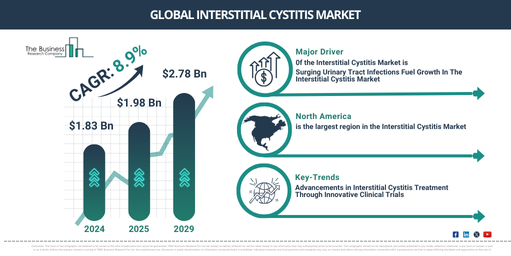
    The market size for interstitial cystitis has seen substantial growth recently. The market that was valued at $1.83 billion in 2024 will escalate to $1.98 billion in 2025, marking a compound annual growth rate (CAGR) of 8.2%. This notable growth in the historical period is a product of progress in diagnostic procedures, increased awareness and education, drug developments, and beneficial therapies.

    What Growth Rate Is Anticipated for the Interstitial Cystitis Market in the Coming Years?

    The market for interstitial cystitis is projected to witness robust expansion in the coming years, with its value poised to reach $2.78 billion in 2029, growing at a compound annual growth rate (CAGR) of 8.9%. The predicted growth during the forecast period is due to factors like biomarker research, innovation in medications, patient-focused healthcare, and global expansion. Key trends foreseen during this period encompass dietary advice, multidisciplinary care, collaborative research, and alternative treatment methods.

    Download The Free Sample Report Here:

    https://www.thebusinessresearchcompany.com/sample.aspx?id=13041&type=smp

    Who Are the Leading Companies in the Interstitial Cystitis Market?

    Major companies operating in the interstitial cystitis market are Pfizer Inc., Johnson & Johnson Ltd., Merck & Co. Inc., AbbVie Inc., Bayer AG, Novartis AG, Sanofi S.A., Bristol-Myers Squibb Company, AstraZeneca PLC, Sun Pharmaceutical Industries Ltd., GlaxoSmithKline PLC, Takeda Pharmaceutical Co. Ltd., Eli Lilly and Company, Boehringer Ingelheim international GmbH, Amgen Inc., Viatris Inc., Teva Pharmaceutical Industries Ltd., Astellas Pharma Inc., Perrigo Company PLC, Aurobindo Pharma Ltd., Purdue Pharma LP, Apotex Inc., Endo International PLC, Amneal Pharmaceuticals Inc., Alvogen Inc., Kyorin Pharmaceutical Co. Ltd., Seikagaku Corp, Genentech Inc., Strides Pharma Science Limited, AlgoTherapeutix SAS.

    What Are the Key Drivers of the Interstitial Cystitis Market?

    Rising occurrences of urinary tract infections are believed to stimulate the growth of the interstitial cystitis market. Urinary tract infections are germs-induced diseases that can happen anywhere in the urinary system following bacteria entry into the urethra. Such infections can cause bacterial cystitis both directly or indirectly and if left untreated, can lead to continuous inflammation of the bladder, a key trigger for interstitial cystitis. Therapeutic interventions for urinary tract infections resulting from interstitial cystitis can enhance pain relief and life quality for patients enduring the disease. As an example, a research paper published by the National Kidney Foundation Inc., a US-based organization specializing in awareness, prevention, and treatment of kidney diseases within the country, reported in January 2024 that about 50%–60% of women experience an UTI at least once in their lifetime. Therefore, the increasing prevalence of urinary tract infections is a key driver for the interstitial cystitis market expansion. Efforts by the government are projected to drive the interstitial cystitis market growth. Government efforts, funded by various resources such as taxes, grants, and donations, aim to correct specific problems. These attempts can be applied to interstitial cystitis (IC), providing necessary studies to better comprehend IC causes and mechanisms, and additionally funding clinical trials aimed at testing new therapies and treatments. For example, in June 2023, the Food and Drug Administration, a federal agency from the US dedicated to safeguarding public health, launched an initiative for a drug development scheme for treating and developing products specific for interstitial cystitis or bladder pain syndrome. Therefore, boosting government initiatives are driving the interstitial cystitis market forward.

    Request For A Customized Report:

    https://www.thebusinessresearchcompany.com/customise?id=13041&type=smp

    What Are the Key Market Segments in the Interstitial Cystitis Industry?

    The interstitial cystitis market covered in this report is segmented –

    1) By Treatment: Medications, Bladder Instillation, Botulinum Toxin A, Nerve Stimulation, Surgery

    2) By Patient Type: Pediatric Patients, Adult Patients

    3) By Drug Type: Over-The-Counter (OTC) Drugs, Prescription Drugs

    4) By End User: Hospitals And Clinics, Homecare

    Subsegments:

    1) By Medications: Oral Medications, Antihistamines, Nonsteroidal Anti-Inflammatory Drugs (NSAIDs), Antidepressants

    2) By Bladder Instillation: Dimethyl Sulfoxide (DMSO) Instillations, Heparin Instillations, Lidocaine Instillations

    3) By Botulinum Toxin A: Intravesical Botulinum Toxin Injections

    4) By Nerve Stimulation: Sacral Nerve Stimulation, Percutaneous Tibial Nerve Stimulation (PTNS)

    5) By Surgery: Bladder Augmentation, Cystectomy, Fulguration

    What Are the Latest Trends in the Interstitial Cystitis Market?

    Major firms participating in the market for interstitial cystitis treatments are striving to create new clinical trial phases, with the aim to innovate treatments for interstitial cystitis and boost market revenues. These revolutionary treatments are advancing the management and results of this chronic and frequently multifaceted bladder disease. An example of this occurred in May 2023, when Vaneltix Pharma, Inc. teamed up with Prevail Infoworks, Inc. to commence a Phase 2 clinical trial. This trial is designed to evaluate the safety and effectiveness of VNX001, as compared to its constituents (lidocaine and heparin) or a placebo for those suffering from interstitial cystitis/bladder pain syndrome (IC/BPS). This collaboration, which is currently recruiting participants, fuses pharmaceutical and analytics proficiency to progress potential remedies for IC/BPS, symbolizing a commitment towards innovative approaches in the healthcare field.

    Access The Full Report Here:

    https://www.thebusinessresearchcompany.com/report/interstitial-cystitis-global-market-report

    What Are the Key Regional Markets in the Interstitial Cystitis Industry?

    North America was the largest region in the interstitial cystitis market in 2024. The regions covered in interstitial cystitis market report are Asia-Pacific, Western Europe, Eastern Europe, North America, South America, Middle East and Africa.

    Purchase The Full Report Today:

    https://www.thebusinessresearchcompany.com/purchaseoptions.aspx?id=13041

    This Report Delivers Insight On:

    1. How big is the interstitial cystitis market, and how is it changing globally?

    2. Who are the major companies in the interstitial cystitis market, and how are they performing?

    3. What are the key opportunities and risks in the interstitial cystitis market right now?

    4. Which products or customer segments are growing the most in the interstitial cystitis market?

    5. What factors are helping or slowing down the growth of the interstitial cystitis market?

    About The Business Research Company:

    With over 15000+ reports from 27 industries covering 60+ geographies, The Business Research Company has built a reputation for offering comprehensive, data-rich research and insights. Armed with 1,500,000 datasets, the optimistic contribution of in-depth secondary research, and unique insights from industry leaders, you can get the information you need to stay ahead in the game.

    Get in touch with us:

    The Business Research Company: https://www.thebusinessresearchcompany.com/

    Americas +1 310-496-7795

    Asia +44 2071930708

    Europe +44 7882 955267

    Email us at info@tbrc.info

    Follow us on:

    LinkedIn: https://in.linkedin.com/company/the-business-research-company

    YouTube: https://www.youtube.com/channel/UC24_fI0rV8cR5DxlCpgmyFQ

    Global Market Model: https://www.thebusinessresearchcompany.com/global-market-model
  • Viral Hepatitis Market Projected at $19.97 Billion by 2029 | Strategic Insights and Forecast Data

    Viral Hepatitis Market Projected at $19.97 Billion by 2029 | Strategic Insights and Forecast Data

    Claim your 30% discount on Global Market Reports with code ONLINE30. Limited time only.

    How Has the Viral Hepatitis Market Size Changed, over the years?

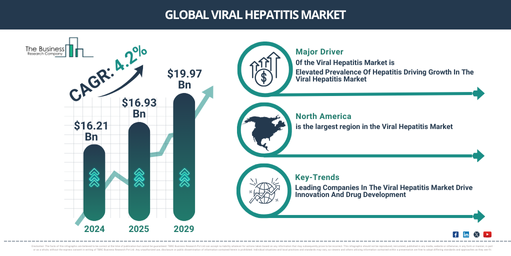
    Continuous growth has been observed in the viral hepatitis market size over previous years. The market is projected to expand from $16.21 billion in 2024 to $16.93 billion in 2025, boasting a compound annual growth rate (CAGR) of 4.4%. Factors such as the advancement in vaccine development, increased frequency of blood screening programs, the use of antiviral drugs, and global health initiatives have been key contributors to this growth in the historic period.

    How Much Will the Viral Hepatitis Market Be Worth in 2029?

    In the coming years, the market size of viral hepatitis is predicted to experience consistent growth, eventually reaching $19.97 billion in 2029 with a compound annual growth rate (CAGR) of 4.2%. The growth anticipated in this forecasted period can be associated with factors like access to treatment options, public health regulations, combined therapies, and health equality initiatives. Significant trends projected during this same period range from individualized treatment plans and digital health gadgets, to AI’s role in disease monitoring and the micro-elimination of hepatitis C.

    Download The Free Sample Report Here:

    https://www.thebusinessresearchcompany.com/sample.aspx?id=13028&type=smp

    Which is the Largest Company in the Viral Hepatitis Market?

    Major companies operating in the viral hepatitis market are Pfizer Inc., Johnson & Johnson Co, F Hoffmann-La Roche AG, Merck & Co., AbbVie Inc., Novartis AG, Sanofi SA, Bristol-Myers Squibb, Astra Zeneca Pharmaceuticals LP, GlaxoSmithKline PLC, Takeda Pharmaceutical Company Limited, Gilead Sciences Inc., Viatris Inc., Teva Pharmaceutical Industries Ltd., Astellas Pharma Inc., Daiichi Sankyo Co. Ltd., Hetero Drugs Ltd., Eisai Co. Ltd., Boehringer Ingelheim Group, Sun Pharmaceutical Industries Ltd., Lupin Limited, Dr. Reddy’s Laboratories, Zydus Lifescience Ltd., Glenmark Pharmaceuticals Ltd., Cipla Ltd., Torrent Pharmaceuticals Ltd., Otsuka Pharmaceutical Co. Ltd., Wockhardt Ltd.

    What Are the Main Market Drivers in the Viral Hepatitis Industry?

    The escalating incidences of hepatitis are anticipated to spur the expansion of the viral hepatitis market in the future. Hepatitis, a liver infection, is triggered by multiple infectious viruses and non-infectious agents that can lead to various health complications. Hepatitis A, B, C, D, and E are the viruses that can induce viral hepatitis, leading to inflammation and damage in the liver. For example, in April 2024, the European Centre for Disease Prevention and Control, a health agency based in Sweden, reported 28,855 hepatitis B virus (HBV) infections across 30 EU/EEA Member States in 2022, a 78% rise from 16,187 cases in the previous year. Furthermore, the case count in 2022, standing at 28,420, equates to a crude rate of 8.5 cases per 100,000 individuals. Hence, the swelling prevalence of hepatitis will catalyze the growth of the viral hepatitis market. Expanding research and developmental pursuits will fuel the growth of the viral hepatitis market. The domain of research and development (R&D) for viral hepatitis includes an array of activities like vaccine development, antiviral medications, diagnostic tests, epidemiology studies, public health interventions, genomic exploration, prevention strategies, global health campaigns, clinical trials, and probing into co-infections. Increased flow into these activities will result in innovative treatment methodologies, broader diagnostic and prevention options, increased clinical trials, amplified global health initiatives, and intensified competition among pharmaceutical firms. For instance, in November 2022, The Peter Doherty Institute for Infection and Immunity, a research institution based in Australia, revealed that Melbourne researchers secured funding of $1.7 million for the next five years from the mRNA Victoria Activation Program for advancing their groundbreaking work to discover a cure for hepatitis B virus infection. Hence, the surge in research and development activities will contribute to the burgeoning growth of the viral hepatitis market in the upcoming years.

    Request For A Customized Report:

    https://www.thebusinessresearchcompany.com/customise?id=13028&type=smp

    How Is the Viral Hepatitis Market Segments Structured?

    The viral hepatitis market covered in this report is segmented –

    1) By Disease Type: Hepatitis A, Hepatitis B, Hepatitis C, Other Disease Types

    2) By Diagnosis: Liver Biopsy, Blood Tests, Imaging Tests, Other Diagnosis

    3) By Treatment: Antiviral Drugs, Surgery, Vaccine, Immune Modulator Drugs, Other Treatments

    4) By Route Of Administration: Oral, Parenteral, Other Routes Of Administration

    5) By End-Users: Hospitals, Specialty Clinics, Homecare, Other End-Users

    Subsegments:

    1) By Hepatitis A: Acute Hepatitis A, Chronic Hepatitis A

    2) By Hepatitis B: Acute Hepatitis B, Chronic Hepatitis B, Hepatitis B Carrier

    3) By Hepatitis C: Acute Hepatitis C, Chronic Hepatitis C

    4) By Other Disease Types: Hepatitis D, Hepatitis E

    What Strategic Trends Are Transforming the Viral Hepatitis Market?

    Firms within the viral hepatitis market are focusing on the progression and innovation of new drugs to maintain their market standing. The advancement in drug development not only enhances scientific comprehension by providing a deeper understanding of disease mechanisms, but also speeds up the creation of novel treatments. For example, Gilead Sciences Inc., an American biopharmaceutical firm, declared in November 2022 that the FDA had given a supplemental new drug application (sNDA) for Vemlidy (tenofovir alafenamide) 25 mg tablets. This drug is intended to be a daily treatment for chronic hepatitis B virus (HBV) infection in children aged 12 and over who have compensated liver disease. The approval of Vemlidy for this particular patient group was backed by the results of a 24-week Phase 2 clinical trial.

    Access The Full Report Here:

    https://www.thebusinessresearchcompany.com/report/viral-hepatitis-global-market-report

    Which Global Regions Offer the Highest Growth in the Viral Hepatitis Market?

    North America was the largest region in the viral hepatitis market in 2024. The regions covered in viral hepatitis market report are Asia-Pacific, Western Europe, Eastern Europe, North America, South America, Middle East and Africa.

    Purchase The Full Report Today:

    https://www.thebusinessresearchcompany.com/purchaseoptions.aspx?id=13028

    This Report Delivers Insight On:

    1. How big is the viral hepatitis market, and how is it changing globally?

    2. Who are the major companies in the viral hepatitis market, and how are they performing?

    3. What are the key opportunities and risks in the viral hepatitis market right now?

    4. Which products or customer segments are growing the most in the viral hepatitis market?

    5. What factors are helping or slowing down the growth of the viral hepatitis market?

    About The Business Research Company:

    With over 15000+ reports from 27 industries covering 60+ geographies, The Business Research Company has built a reputation for offering comprehensive, data-rich research and insights. Armed with 1,500,000 datasets, the optimistic contribution of in-depth secondary research, and unique insights from industry leaders, you can get the information you need to stay ahead in the game.

    Get in touch with us:

    The Business Research Company: https://www.thebusinessresearchcompany.com/

    Americas +1 310-496-7795

    Asia +44 2071930708

    Europe +44 7882 955267

    Email us at info@tbrc.info

    Follow us on:

    LinkedIn: https://in.linkedin.com/company/the-business-research-company

    YouTube: https://www.youtube.com/channel/UC24_fI0rV8cR5DxlCpgmyFQ

    Global Market Model: https://www.thebusinessresearchcompany.com/global-market-model
  • Intermittent Pneumatic Compression (IPC) Devices Market Projected at $2.16 Billion by 2029 | Strategic Insights and Forecast Data

    Intermittent Pneumatic Compression (IPC) Devices Market Projected at $2.16 Billion by 2029 | Strategic Insights and Forecast Data

    Claim your 30% discount on Global Market Reports with code ONLINE30. Limited time only.

    How Has the Intermittent Pneumatic Compression (IPC) Devices Market Size Changed, over the years?

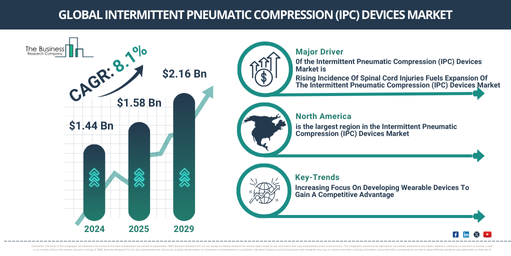
    In recent years, the market size for intermittent pneumatic compression (IPC) devices has seen robust growth. The market, which stands at $1.44 billion in 2024, is projected to reach $1.58 billion in 2025, yielding a compound annual growth rate (CAGR) of 9.9%. Factors contributing to this historic growth include an enhanced understanding of the disease, a rise in awareness and diagnosis, evolving health policies, collaborative clinical trial efforts, supportive patient advocacy, and physician education programs.

    How Much Will the Intermittent Pneumatic Compression (IPC) Devices Market Be Worth in 2029?

    Predictions indicate a robust expansion in the market size of intermittent pneumatic compression (IPC) devices over the next several years, reaching a valuation of $2.16 billion in 2029 with a compound annual growth rate (CAGR) of 8.1%. This notable rise during the forecast period is ascribed to an enlarging patient base, heightened attention on the quality of life of patients, broadening research partnerships, worldwide health endeavors, as well as improving access to healthcare. The forecasting timeframe also foresees key trends like the advent of aimed therapies, advancement of oral and injectable drugs, examination of immune alteration techniques, the launch of disease-altering agents, and the concentration on personalized medicinal methodologies.

    Download The Free Sample Report Here:

    https://www.thebusinessresearchcompany.com/sample.aspx?id=13460&type=smp

    Which is the Largest Company in the Intermittent Pneumatic Compression (IPC) Devices Market?

    Major companies operating in the intermittent pneumatic compression (ipc) devices market report are Cardinal Health Inc., 3M Company, Medtronic PLC, Stryker Corporation, Tyco International PLC, Medline Industries LP, B. Braun Melsungen AG, Zimmer Biomet Holdings Inc., Smith & Nephew PLC, Getinge AB, Enovis Corporation, Arjo AB, Tactile Systems Technology Inc., ThermoTek Inc., Encompass Group LLC, Hyperice Inc., Breg Inc., Currie Medical Specialties Inc., ManaMed Inc., Bio Compression Systems Inc., Direct Healthcare Group Ltd., Devon Medical Inc., Mego Afek A.C. Ltd., BSN medical GmbH, Compression Therapy UK Limited, Air Relax Inc., Innova Medical Group Inc.

    What Are the Main Market Drivers in the Intermittent Pneumatic Compression (IPC) Devices Industry?

    The increasing incidence of spinal cord injuries is predicted to be a significant catalyst for the growth of the intermittent pneumatic compression (IPC) devices market. Spinal cord injuries, characterized by a loss of function that often leads to variable degrees of paralysis and sensory impairment below the injury level, necessitate the use of IPC devices, which aid in the prevention of deep vein thrombosis (DVT) by enhancing blood circulation via the sequential compression of the lower limbs. For example, the National Spinal Cord Injury Statistical Center, a US government organization, stated that around 18,000 new spinal cord injury cases are recorded per year in the US. The annual rate of such cases is estimated to be 54 per 1 million people, meaning that the surge in patients with spinal cord injuries is a key driver for the IPC devices market. Another factor that is fueling the growth of the intermittent pneumatic compression (IPC) devices market is the escalating number of accidents. Accidents, being unpredictable occurrences that often result in injury or property damage, necessitate the application of IPC devices for treating fractures and soft-tissue damages. For instance, in October 2023, the European Commission reported a 4% rise in road fatalities in the EU, amounting to 20,640 deaths, a significant increase compared to 2021. Therefore, the growth in accident rates is further stimulating the expansion of the IPC devices market.

    Request For A Customized Report:

    https://www.thebusinessresearchcompany.com/customise?id=13460&type=smp

    How Is the Intermittent Pneumatic Compression (IPC) Devices Market Segments Structured?

    The intermittent pneumatic compression (IPC) devices market covered in this report is segmented –

    1) By Type: Deep Vein Thrombosis (DVT), Pulmonary Embolism (PE)

    2) By Distribution Channel: Clinics, Pharmacies, Online Channels, Other Offline Channels

    3) By Application: Home Use, Hospital

    Subsegments:

    1) By Deep Vein Thrombosis (DVT): Portable DVT Compression Devices, Non-Portable (Stationary) DVT Compression Devices, Sequential Compression Devices for DVT

    2) By Pulmonary Embolism (PE): Portable PE Compression Devices, Non-Portable (Stationary) PE Compression Devices, Sequential Compression Devices for PE

    What Strategic Trends Are Transforming the Intermittent Pneumatic Compression (IPC) Devices Market?

    Leading businesses in the intermittent pneumatic compression (IPC) devices market are increasingly focusing on the creation of unique devices, like wearable technology, in order to establish a competitive advantage. These wearable IPC devices aid circulation and prevent instances of deep vein thrombosis (DVT), especially during periods of extended immobility. For example, Fist Assist Devices LLC, a US medical device firm, unveiled the Fist Assist Model FA-1, a wearable, patent-protected, intermittent pneumatic compression apparatus for the arm, designed to encourage vein dilation, in March 2022. This is considered the first wearable gadget in the world for presurgical vein dilation, encouraging arteriovenous fistula (AVF). The device is automated, eliminating the necessity for manual adjustments, which simplifies usage and minimizes the likelihood of user error. It fosters vein dilation by cyclically exerting pressure on the arm, enhancing both blood flow and vein dilation.

    Access The Full Report Here:

    https://www.thebusinessresearchcompany.com/report/intermittent-pneumatic-compression-ipc-devices-global-market-report

    Which Global Regions Offer the Highest Growth in the Intermittent Pneumatic Compression (IPC) Devices Market?

    North America was the largest region in the intermittent pneumatic compression (IPC) devices market in 2024. The regions covered in the intermittent pneumatic compression (ipc) devices market report are Asia-Pacific, Western Europe, Eastern Europe, North America, South America, Middle East, Africa.

    Purchase The Full Report Today:

    https://www.thebusinessresearchcompany.com/purchaseoptions.aspx?id=13460

    This Report Delivers Insight On:

    1. How big is the intermittent pneumatic compression (ipc) devices market, and how is it changing globally?

    2. Who are the major companies in the intermittent pneumatic compression (ipc) devices market, and how are they performing?

    3. What are the key opportunities and risks in the intermittent pneumatic compression (ipc) devices market right now?

    4. Which products or customer segments are growing the most in the intermittent pneumatic compression (ipc) devices market?

    5. What factors are helping or slowing down the growth of the intermittent pneumatic compression (ipc) devices market?

    About The Business Research Company:

    With over 15000+ reports from 27 industries covering 60+ geographies, The Business Research Company has built a reputation for offering comprehensive, data-rich research and insights. Armed with 1,500,000 datasets, the optimistic contribution of in-depth secondary research, and unique insights from industry leaders, you can get the information you need to stay ahead in the game.

    Get in touch with us:

    The Business Research Company: https://www.thebusinessresearchcompany.com/

    Americas +1 310-496-7795

    Asia +44 2071930708

    Europe +44 7882 955267

    Email us at info@tbrc.info

    Follow us on:

    LinkedIn: https://in.linkedin.com/company/the-business-research-company

    YouTube: https://www.youtube.com/channel/UC24_fI0rV8cR5DxlCpgmyFQ

    Global Market Model: https://www.thebusinessresearchcompany.com/global-market-model