Month: July 2025

  • Non-Therapeutic Biomolecules Industry Growth Expected to Reach $52.15 Billion by 2029 at a CAGR of 11.1% | Segmentation and Growth Opportunities

    Non-Therapeutic Biomolecules Industry Growth Expected to Reach $52.15 Billion by 2029 at a CAGR of 11.1% | Segmentation and Growth Opportunities

    Claim your 30% discount on Global Market Reports with code ONLINE30. Limited time only.

    What Is the Forecast for the Non-Therapeutic Biomolecules Market Growth in 2025?

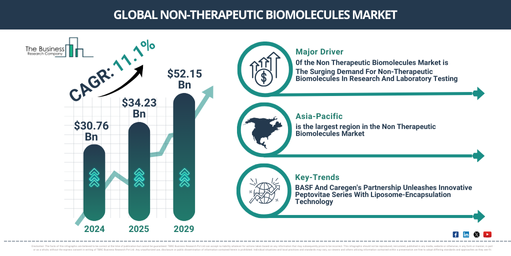
    The size of the non-therapeutic biomolecules industry has undergone swift expansion in the past few years. Its growth is expected to accelerate from $30.76 billion in 2024 to $34.23 billion in 2025, marking a compound annual growth rate (CAGR) of 11.3%. Factors contributing to this growth during the historical timeline include upsurged investments in research and development (R&D), growing usage in research and diagnostics, heightened awareness and acceptance, strategic alliances and partnerships, and regulatory aid.

    What Is the Forecast for the Non-Therapeutic Biomolecules Market Size Through 2029?

    Expectations are high for a swift expansion in the non-therapeutic biomolecules market in the subsequent years. The projected size by 2029 is $52.15 billion, with an 11.1% compound annual growth rate (CAGR). Factors contributing to the anticipated growth in the forecast period include the emergence of new market prospects, advancements in data analytics and integration, increased focus on precision medicine, augmented investments in personalized healthcare, and widening application areas. The upcoming period is also expected to witness noteworthy trends such as technological advancements, strategic collaborations, growing use in agriculture, increased involvement in industrial processes, along with increasing customization and personalization.

    Download The Free Sample Report Here:

    https://www.thebusinessresearchcompany.com/sample.aspx?id=8769&type=smp

    What are the Key Market Players in Non-Therapeutic Biomolecules Market and How They’re Evolving?

    Major companies operating in the non-therapeutic biomolecules market are Amgen Inc., Genentech Inc., Merck KGaA, Lonza Group AG, Bio-Rad Laboratories Inc., Thermo Fisher Scientific Inc., Agilent Technologies Inc., Charles River Laboratories International Inc., GE Healthcare Life Sciences, Fujifilm Diosynth Biotechnologies, Evonik Industries AG, Seikagaku Corporation, Takeda Pharmaceutical Company Limited, MilliporeSigma, Covance Inc., Sartorius AG, Sanofi S.A., CordenPharma International, Bayer AG, WuXi AppTec, Ginkgo Bioworks, Synlogic Inc., 3M Company, Eppendorf AG, Medtronic Plc, Bio-Techne Corporation, Iovance Biotherapeutics Inc., Vectalys, Avid Bioservices Inc., Sientra Inc.

    What Are the Primary Growth Drivers in the Non-Therapeutic Biomolecules Market?

    The non-therapeutic biomolecules market’s growth is predicted to be fueled by the fast-paced escalation in research and laboratory testing. Laboratory testing, a medical process that involves examining bodily samples like blood or urine to diagnose and monitor diseases and formulate treatment plans, is coupled with research, a method through which novel knowledge is created or current knowledge is innovatively used to generate new insights, theories, and comprehension. Non-therapeutic biomolecules are utilized in laboratory testing to detect the presence or level of a biomarker molecule indicative of disease, thereby enhancing the test’s sensitivity and specificity. For example, in July 2024, as per the data from the National Health Service (NHS), a hospital and healthcare provider based in the UK, diagnostic activity outpaced the pre-pandemic levels in 2023, showcasing a 21% surge in tests conducted in May 2024 in comparison to the previous year. Hence, the accelerated rise in research and laboratory testing appears to be the driving force behind the growth of the non-therapeutic biomolecules market.

    Request For A Customized Report:

    https://www.thebusinessresearchcompany.com/customise?id=8769&type=smp

    What Are the Leading Segments in the Global Non-Therapeutic Biomolecules Industry?

    The non-therapeutic biomolecules market covered in this report is segmented –

    1) By Trad Pharma: Enzymes, Recombinant Proteins, Plasmids, Peptides, Oligonucleotides, Monoclonal Antibodies

    2) By End User: Research, Pharma, In Vitro Diagnostics(IVD)

    Subsegments:

    1) By Enzymes: Industrial Enzymes, Diagnostic Enzymes

    2) By Recombinant Proteins: Antigens, Cytokines, Growth Factors

    3) By Plasmids: Research Plasmids, Expression Plasmids

    4) By Peptides: Antimicrobial Peptides, Signaling Peptides

    5) By Oligonucleotides: Antisense Oligonucleotides, RNAi Oligonucleotides

    6) By Monoclonal Antibodies: Research Antibodies, Diagnostic Antibodies

    What Are the Key Market Trends in the Non-Therapeutic Biomolecules Industry?

    The trend of product innovation is emerging prominently in the non-therapeutic biomolecules market, with major players engaging in research as well as development for novel product introductions to maintain dominant market positions. For example, BASF SE, a transnational chemical corporation from Germany, entered into a collaboration with Caregen, a biomimetic peptide R&D entity from Korea, in January 2022. Together, they unveiled the Peptovitae series, a range developed via liposome-encapsulation technology designed to extend its dermo-cosmetic offering. This approach offers innovative, distinct resolutions for a variety of skin issues by directing essential nutrients or medications in small bubbles to certain sections of the body using fat, without impacting other zones. The Peptovitae series caters to a greater scope of skin conditions beyond those typically linked to peptide usage, including age indications, skin brightness enhancement, calming dry, itchy skin and skin hydration.

    Access The Full Report Here:

    https://www.thebusinessresearchcompany.com/report/non-therapeutic-biomolecules-global-market-report

    What Is the Regional Outlook for the Non-Therapeutic Biomolecules Market?

    Asia-Pacific was the largest region in the non-therapeutic biomolecules market share in 2024. The regions covered in the non-therapeutic biomolecules market report are Asia-Pacific, Western Europe, Eastern Europe, North America, South America, Middle East, Africa.

    Purchase The Full Report Today:

    https://www.thebusinessresearchcompany.com/purchaseoptions.aspx?id=8769

    This Report Delivers Insight On:

    1. How big is the non-therapeutic biomolecules market, and how is it changing globally?

    2. Who are the major companies in the non-therapeutic biomolecules market, and how are they performing?

    3. What are the key opportunities and risks in the non-therapeutic biomolecules market right now?

    4. Which products or customer segments are growing the most in the non-therapeutic biomolecules market?

    5. What factors are helping or slowing down the growth of the non-therapeutic biomolecules market?

    About The Business Research Company:

    With over 15000+ reports from 27 industries covering 60+ geographies, The Business Research Company has built a reputation for offering comprehensive, data-rich research and insights. Armed with 1,500,000 datasets, the optimistic contribution of in-depth secondary research, and unique insights from industry leaders, you can get the information you need to stay ahead in the game.

    Get in touch with us:

    The Business Research Company: https://www.thebusinessresearchcompany.com/

    Americas +1 3156230293

    Asia +44 2071930708

    Europe +44 2071930708

    Email us at info@tbrc.info

    Follow us on:

    LinkedIn: https://in.linkedin.com/company/the-business-research-company

    YouTube: https://www.youtube.com/channel/UC24_fI0rV8cR5DxlCpgmyFQ

    Global Market Model: https://www.thebusinessresearchcompany.com/global-market-model
  • Medical Composites Industry Growth Expected to Reach $2.78 Billion by 2029 at a CAGR of 14.6% | Segmentation and Growth Opportunities

    Medical Composites Industry Growth Expected to Reach $2.78 Billion by 2029 at a CAGR of 14.6% | Segmentation and Growth Opportunities

    Claim your 30% discount on Global Market Reports with code ONLINE30. Limited time only.

    What Is the Forecast for the Medical Composites Market Growth in 2025?

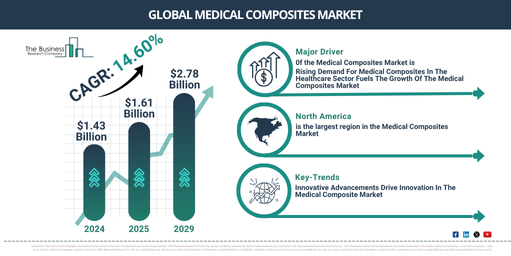
    The size of the medical composites market has seen a swift increase in recent times. Projected growth is from $1.43 billion in 2024 to $1.61 billion in 2025, experiencing a compound annual growth rate (CAGR) of 12.5%. Factors contributing to this growth in the historic period include orthopedic uses, an aging demographic, trauma and sports-related injuries, regulatory adherence, and a focus on patient-centric care.

    What Is the Forecast for the Medical Composites Market Size Through 2029?

    In the coming years, the size of the medical composites market is predicted to surge significantly. It is projected to reach $2.78 billion by the year 2029, expanding at a compound annual growth rate (CAGR) of 14.6%. This growth during the forecast period is expected to be fueled by factors such as personalized implants, additive manufacturing, increase in telehealth services, regenerative medicine, and biocompatible nanocomposites. Some of the major trends foreseen in the forecast period envelop customized 3D-printed implants, remote monitoring, intelligent composite materials, sustainability, and environment-friendly materials, in addition to wearable health gears.

    Download The Free Sample Report Here:

    https://www.thebusinessresearchcompany.com/sample.aspx?id=7489&type=smp

    What are the Key Market Players in Medical Composites Market and How They’re Evolving?

    Major companies operating in the medical composites market include 3M Company, Toray Industries Inc., SGL Carbon SE, CeramTec GmbH, Composiflex Inc., Dentsply Sirona Inc., Mitsubishi Chemical Holdings Corporation, Avient Corporation, Zeus Industrial Products Inc., Kulzer GmbH, Kaman Corporation, Den-Mat Holdings LLC, Ivoclar Vivadent Inc., Tokuyama Dental Corporation Inc., Quantum Composites Inc., Teijin Limited, Dental Technologies Inc., Koninklijke DSM N.V., Fillauer LLC, Getinge Group, Hill-Rom Holdings Inc., icotec AG, Johns Manville Corp., Nippon Sheet Glass Co. Ltd., Ossur, Ottobock SE & Co. KGaA, Owens Corning, Park Aerospace Corp., Shofu Inc., Taishan Fibreglass South Africa (Pty) Ltd, Fiber Materials Inc., Stryker Corporation

    What Are the Primary Growth Drivers in the Medical Composites Market?

    Projected growth in the medical composites market is driven by the escalating demand from the healthcare industry. This sector, which encompasses clinical and medical service providers, medical device manufacturers, and developers of medicines and health insurance, is witnessing a surge in the need for medical composites, primarily due to the increasing requirements for medical tools. MedTech Europe, a Belgium-based European trade association that acts as the voice of the medical technology industries, reported in September 2022 that an average of about 11% of the GDP is directed towards healthcare in European countries. Of this healthcare spending, medical technologies account for nearly 7.6%. Across different European nations, the expenditure on medical technology varies between roughly 5% to 12% of the total healthcare costs. The per capita spend on medical technology in Europe is estimated at approximately $346.08 (€284). Thus, the rising demand for medical composites in the healthcare sector is fuelling the expansion of the medical composites market.

    Request For A Customized Report:

    https://www.thebusinessresearchcompany.com/customise?id=7489&type=smp

    What Are the Leading Segments in the Global Medical Composites Industry?

    The medical composites market covered in this report is segmented –

    1) By Fiber Type: Carbon Fiber, Ceramic Fiber, Other Fiber Types

    2) By Process: Wet Lamination, Prepreg, Other Process

    3) By Application: Diagnostic Imaging, Composite Body Implants, Surgical Instruments, Dental, Other Applications

    Subsegments:

    1) By Carbon Fiber: Continuous Carbon Fiber, Short Carbon Fiber, Carbon Fiber Reinforced Polymers (CFRP)

    2) By Ceramic Fiber: Alumina Fiber, Zirconia Fiber, Silicon Carbide Fiber

    3) By Other Fiber Types: Glass Fiber, Natural Fiber, Aramid Fiber

    What Are the Key Market Trends in the Medical Composites Industry?

    The medical composite market is seeing a surge in popularity due to substantial technological progress. To fortify their standing in the market, distinguished companies are putting their efforts into creating innovative technological solutions. An example of this can be seen when Nobio, a company from Israel that’s active in the medical composites industry, introduced their newest collection, Infinix, in February 2022. This collection contains cutting-edge antimicrobial restorative materials crafted to fight against continual decay. Integrated into the Infinix system is Nobio’s novel QASi antimicrobial particle technology, which is used in both the universal and flowable composites and the universal bonding system. The newly devised restorative materials, which feature QASi antimicrobial particle technology, are used to thwart tooth demineralization, provide enduring bacterial inhibition at the restorative edges, and minimize restorative failures due to secondary caries.

    Access The Full Report Here:

    https://www.thebusinessresearchcompany.com/report/medical-composites-global-market-report

    What Is the Regional Outlook for the Medical Composites Market?

    North America was the largest region in the medical composites market in 2024. The regions covered in the medical composites market report include Asia-Pacific, Western Europe, Eastern Europe, North America, South America, Middle East and Africa.

    Purchase The Full Report Today:

    https://www.thebusinessresearchcompany.com/purchaseoptions.aspx?id=7489

    This Report Delivers Insight On:

    1. How big is the medical composites market, and how is it changing globally?

    2. Who are the major companies in the medical composites market, and how are they performing?

    3. What are the key opportunities and risks in the medical composites market right now?

    4. Which products or customer segments are growing the most in the medical composites market?

    5. What factors are helping or slowing down the growth of the medical composites market?

    About The Business Research Company:

    With over 15000+ reports from 27 industries covering 60+ geographies, The Business Research Company has built a reputation for offering comprehensive, data-rich research and insights. Armed with 1,500,000 datasets, the optimistic contribution of in-depth secondary research, and unique insights from industry leaders, you can get the information you need to stay ahead in the game.

    Get in touch with us:

    The Business Research Company: https://www.thebusinessresearchcompany.com/

    Americas +1 3156230293

    Asia +44 2071930708

    Europe +44 2071930708

    Email us at info@tbrc.info

    Follow us on:

    LinkedIn: https://in.linkedin.com/company/the-business-research-company

    YouTube: https://www.youtube.com/channel/UC24_fI0rV8cR5DxlCpgmyFQ

    Global Market Model: https://www.thebusinessresearchcompany.com/global-market-model
  • Healthcare Payer Solution Market Projected at $73.27 Billion by 2029 | Strategic Insights and Forecast Data

    Healthcare Payer Solution Market Projected at $73.27 Billion by 2029 | Strategic Insights and Forecast Data

    Claim your 30% discount on Global Market Reports with code ONLINE30. Limited time only.

    How Has the Healthcare Payer Solution Market Size Changed, over the years?

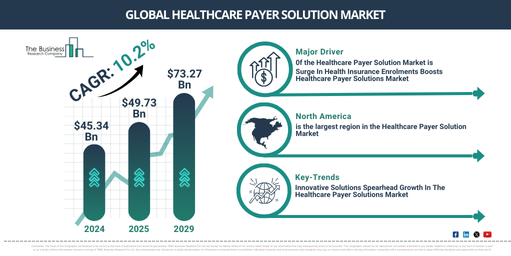
    Over the past few years, the market size for healthcare payer solutions has seen significant growth. It is anticipated to rise from $45.34 billion in 2024 to $49.73 billion in 2025, with a compound annual growth rate (CAGR) of 9.7%. Factors contributing to the growth during the historical period include the introduction of managed care, modifications in regulations (such as hipaa, aca), accentuation on data analytics, a heightened focus on member engagement and experience, and a shift towards interoperability.

    How Much Will the Healthcare Payer Solution Market Be Worth in 2029?

    Predictions indicate that the healthcare payer solution market will undergo quick expansion in the coming years, ballooning to a value of $73.27 billion by 2029. This represents a compound annual growth rate (CAGR) of 10.2%. This growth can be attributed to several factors such as a shift towards more patient-centered care, an increase in telemedicine and remote care, emphasis on data security, and value-based payment models. The forecast period will also see major trends including financial transparency, cost management, risk stratification and population health management. In addition, there is set to be a rise in data interoperability and exchange, value-based care models, and the integration of artificial intelligence (AI) and predictive analytics.

    Download The Free Sample Report Here:

    https://www.thebusinessresearchcompany.com/sample.aspx?id=9393&type=smp

    Which is the Largest Company in the Healthcare Payer Solution Market?

    Major companies operating in the healthcare payer solution market include Cognizant Technical Solutions, Concentrix Corporation, Accenture plc, HCL Technologies Ltd., Xerox Corporation, UnitedHealth Group Inc., McKesson Corporation, HMS Holdings Corp., International Business Machines Corporation, Change Healthcare Inc., Wipro Limited, Infosys Limited, Tata Consultancy Services Limited, NTT Data Corporation, Genpact Limited, Mphasis Limited, Firstsource Solutions Limited, WNS Limited, IQVIA Inc., Omega Healthcare, R RCM Inc., Conduent Inc., EXL Service Holdings Inc., Cotiviti Holdings Inc., Cerner Corporation, Allscripts Healthcare Solutions Inc., Epic Systems Corporation, Athenahealth Inc., NextGen Healthcare Inc., eClinicalWorks LLC

    What Are the Main Market Drivers in the Healthcare Payer Solution Industry?

    The anticipated increase in insurance registrations is set to fuel the advancement of the healthcare payer solutions market. The act of insurance enrollment involves an eligible applicant subscribing to an insurance provider and becoming a participant in the plan. In the arena of insurance, healthcare payer solutions offer robust central administration and claim management interfaces. These solutions promote growth, inspire novelty, and facilitate cost reductions for payer agencies across numerous business sectors. For example, the Centers for Medicare & Medicaid Services, a health coverage provider in the US, reported that over 13.6 million people in America have opted for health insurance coverage for 2022 via HealthCare.gov and state-run marketplaces, accounting for 92% of those who enrolled for plans up to December 15, 2021. Therefore, the upward trend in insurance enrollments is stimulating demand in the healthcare payer solutions market.

    Request For A Customized Report:

    https://www.thebusinessresearchcompany.com/customise?id=9393&type=smp

    How Is the Healthcare Payer Solution Market Segments Structured?

    The healthcare payer solution market covered in this report is segmented –

    1) By Services: Business Process Outsourcing Services, Information Technology Outsourcing Services, Knowledge Process Outsourcing Services

    2) By Application: Pharmacy Audit And Analysis Systems, Claims Management Services, Fraud Management Services, Computer-assisted Coding (CAC) Systems, Member Eligibility Management Services, Provider Network Management Services, Payment Management Services, Customer Relationship Management Services, Medical Document Management Services, General Ledger And Payroll Management

    3) By End User: Private Provider, Public Provider

    Subsegments:

    1) By Business Process Outsourcing Services: Claims Processing, Enrollment And Eligibility Verification, Member Services And Support, Provider Network Management, Billing And Payment Processing, Data Management And Analytics

    2) By Information Technology Outsourcing Services: Application Development And Maintenance, IT Infrastructure Management, Data Security And Compliance Solutions, Cloud Services, Health Information Exchange Solutions, Software As A Service (SaaS) Solutions

    3) By Knowledge Process Outsourcing Services: Clinical Data Management, Healthcare Analytics, market Research And Intelligence, Medical Coding And Billing Services, Regulatory Compliance Services, Health Outcomes Research

    What Strategic Trends Are Transforming the Healthcare Payer Solution Market?

    The emergence of product innovations is a prominent trend in the healthcare payer solutions sector. Major firms in this market are concentrating their efforts on forging innovative solutions to bolster their business position. To exemplify, IMAT Solutions, a firm in the US that specializes in real-time, innovative healthcare data management and population health reporting solutions, unveiled a novel product in March 2022. This new product addresses the collection, synthesis, distribution, and reporting of healthcare data. The cutting-edge technologies and services will assist payers, statewide organizations, and HIEs to gain advantages from IMAT’s novel clustering and SaaS-based solutions, in conjunction with the company’s new NCQA Data Aggregator Validation (DAV) designation.

    Access The Full Report Here:

    https://www.thebusinessresearchcompany.com/report/healthcare-payer-solution-global-market-report

    Which Global Regions Offer the Highest Growth in the Healthcare Payer Solution Market?

    North America was the largest region in the healthcare payer solution market in 2024. The regions covered in the healthcare payer solution market report are Asia-Pacific, Western Europe, Eastern Europe, North America, South America, Middle East, Africa

    Purchase The Full Report Today:

    https://www.thebusinessresearchcompany.com/purchaseoptions.aspx?id=9393

    This Report Delivers Insight On:

    1. How big is the healthcare payer solution market, and how is it changing globally?

    2. Who are the major companies in the healthcare payer solution market, and how are they performing?

    3. What are the key opportunities and risks in the healthcare payer solution market right now?

    4. Which products or customer segments are growing the most in the healthcare payer solution market?

    5. What factors are helping or slowing down the growth of the healthcare payer solution market?

    About The Business Research Company:

    With over 15000+ reports from 27 industries covering 60+ geographies, The Business Research Company has built a reputation for offering comprehensive, data-rich research and insights. Armed with 1,500,000 datasets, the optimistic contribution of in-depth secondary research, and unique insights from industry leaders, you can get the information you need to stay ahead in the game.

    Get in touch with us:

    The Business Research Company: https://www.thebusinessresearchcompany.com/

    Americas +1 3156230293

    Asia +44 2071930708

    Europe +44 2071930708

    Email us at info@tbrc.info

    Follow us on:

    LinkedIn: https://in.linkedin.com/company/the-business-research-company

    YouTube: https://www.youtube.com/channel/UC24_fI0rV8cR5DxlCpgmyFQ

    Global Market Model: https://www.thebusinessresearchcompany.com/global-market-model
  • Non-Steroidal Anti-inflammatory Drugs Industry Valued at $28.79 Billion by 2029 With CAGR of 6.8% | Size and Share Insights

    Non-Steroidal Anti-inflammatory Drugs Industry Valued at $28.79 Billion by 2029 With CAGR of 6.8% | Size and Share Insights

    Claim your 30% discount on Global Market Reports with code ONLINE30. Limited time only.

    What Is the Forecast for the Non-Steroidal Anti-inflammatory Drugs Market from 2024 to 2025?

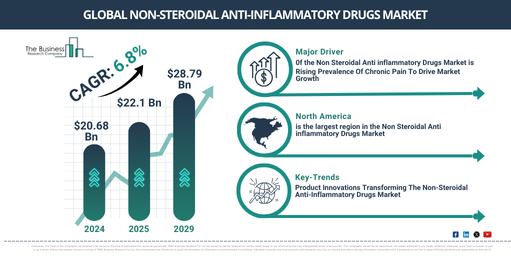
    The market size for non-steroidal anti-inflammatory drugs has seen robust growth in recent years. It is predicted to increase from a value of $20.68 billion in 2024 to $22.1 billion in 2025, marking a compound annual growth rate (CAGR) of 6.8%. Factors contributing to this growth during the historical period can be traced to chronic inflammatory conditions, the management of pain after surgery, sports-related injuries, over-the-counter accessibility, an aging demographic, and increasing consumer awareness.

    What Is the Projected Market Size of the Non-Steroidal Anti-inflammatory Drugs Market?

    In the coming years, the non-steroidal anti-inflammatory drugs market is predicted to experience impressive growth, expanding to $28.79 billion by 2029 with a compound annual growth rate (CAGR) of 6.8%. This anticipated growth during the forecast period can be credited to the introduction of new pain management therapies, amendments in regulations, the use of telehealth, global wellness fads, competition in the biosimilar market, patient choices, and the implementation of precision medicine strategies. The forecast period is also expected to witness prominent trends such as dominance of the over-the-counter (OTC) market, a surge in preference for cox-2 inhibitors, generics and market competition, and the merging of digital health technologies.

    Download The Free Sample Report Here:

    https://www.thebusinessresearchcompany.com/sample.aspx?id=8023&type=smp

    Who are the Major Competitors in the Non-Steroidal Anti-inflammatory Drugs Market Outlook?

    Major companies operating in the non-steroidal anti-inflammatory drugs market are Pfizer Inc., Bayer AG, Johnson & Johnson, Sun Pharmaceutical Industries Ltd., Assertio Therapeutics Inc., Iroko Pharmaceuticals Inc., Reckitt Benckiser Group PLC, Perrigo Company PLC, Hikma Pharmaceuticals Public Limited Company, Glenmark Pharmaceuticals Limited, Septodont, Aspen Pharmacare Holdings Limited, Sagent Pharmaceuticals Inc., Advanced Pharma Inc., Akorn Operating Company LLC, Alembic Pharmaceuticals Limited, Torrent Pharmaceuticals Limited, Lupin Limited, Cipla Limited, Zydus Cadila Healthcare Limited, Aurobindo Pharma Limited, Sanofi S.A., GlaxoSmithKline PLC, Horizon Therapeutics PLC, Zyla Life sciences, Novartis AG, Roche Holding AG, AbbVie Inc., Bristol-Myers Squibb Company

    What Is Fueling Growth in the Non-Steroidal Anti-inflammatory Drugs Market?

    The increasing prevalence of chronic pain is anticipated to stimulate the expansion of the non-steroidal anti-inflammatory drugs market. The term chronic pain describes discomfort that lasts for over six months. Non-steroidal anti-inflammatory drugs are utilized to repair injuries and alleviate chronic pain. For example, the CDC (Centers for Disease Control and Prevention), a government agency based in the US, reported in April 2022 that arthritis was a frequent cause of chronic pain, affecting millions of US citizens. Roughly one out of four adults, or 15 million people, with arthritis are suffering from intense joint pain related to arthritis. Consequently, the escalating prevalence of chronic pain is propelling the growth of the non-steroidal anti-inflammatory drugs market.

    Request For A Customized Report:

    https://www.thebusinessresearchcompany.com/customise?id=8023&type=smp

    Which Non-Steroidal Anti-inflammatory Drugs Market Segments Are Growing the Fastest?

    The non-steroidal anti-inflammatory drugs market covered in this report is segmented –

    1) By Route Of Administration: Oral, Topical, Other Route Of Administration

    2) By Disease Indication: Arthritis, Migraine, Ophthalmic Diseases, Other Disease Indications

    3) By Distribution Channel: Hospital Pharmacy, Retail Pharmacy, Online Pharmacy

    Subsegments:

    1) By Oral: Tablets, Capsules, Liquids Or Solutions

    2) By Topical: Gels, Creams, Patches

    3) By Other Route Of Administration: Injectable (Intravenous And Intramuscular), Suppositories

    Which Industry Trends Are Shaping the Future of the Non-Steroidal Anti-inflammatory Drugs Market?

    One of the primary ongoing tendencies in the market for non-steroidal anti-inflammatory drugs is significant product innovation. The key players in this market are highly focused on inventing new technology solutions. In an example from March 2024, the pharmaceutical company based in Ireland, Endo International plc, introduced ibuprofen-famotidine 800 mg/26.6 mg tablets. They feature a combination of the pain-relieving and anti-inflammatory benefits of ibuprofen along with the stomach shielding effects of famotidine. The aim of this concoction is to ease pain, while simultaneously reducing the probability of gastrointestinal side effects common with the extensive use of nonsteroidal anti-inflammatory drugs (NSAIDs) like ibuprofen.

    Access The Full Report Here:

    https://www.thebusinessresearchcompany.com/report/non-steroidal-anti-inflammatory-drugs-global-market-report

    Which Countries Are Leading the Non-Steroidal Anti-inflammatory Drugs Market?

    North America was the largest region in the non-steroidal anti-inflammatory drugs market in 2024. Asia-Pacific is expected to be the fastest-growing region in the non-steroidal anti-inflammatory drugs market during the forecast period. The regions covered in the non-steroidal anti-inflammatory drugs market report are Asia-Pacific, Western Europe, Eastern Europe, North America, South America, Middle East, Africa.

    Purchase The Full Report Today:

    https://www.thebusinessresearchcompany.com/purchaseoptions.aspx?id=8023

    This Report Delivers Insight On:

    1. How big is the non-steroidal anti-inflammatory drugs market, and how is it changing globally?

    2. Who are the major companies in the non-steroidal anti-inflammatory drugs market, and how are they performing?

    3. What are the key opportunities and risks in the non-steroidal anti-inflammatory drugs market right now?

    4. Which products or customer segments are growing the most in the non-steroidal anti-inflammatory drugs market?

    5. What factors are helping or slowing down the growth of the non-steroidal anti-inflammatory drugs market?

    About The Business Research Company:

    With over 15000+ reports from 27 industries covering 60+ geographies, The Business Research Company has built a reputation for offering comprehensive, data-rich research and insights. Armed with 1,500,000 datasets, the optimistic contribution of in-depth secondary research, and unique insights from industry leaders, you can get the information you need to stay ahead in the game.

    Get in touch with us:

    The Business Research Company: https://www.thebusinessresearchcompany.com/

    Americas +1 3156230293

    Asia +44 2071930708

    Europe +44 2071930708

    Email us at info@tbrc.info

    Follow us on:

    LinkedIn: https://in.linkedin.com/company/the-business-research-company

    YouTube: https://www.youtube.com/channel/UC24_fI0rV8cR5DxlCpgmyFQ

    Global Market Model: https://www.thebusinessresearchcompany.com/global-market-model
  • Medical Carts Industry Valued at $5.45 Billion by 2029 With CAGR of 15.8% | Size and Share Insights

    Medical Carts Industry Valued at $5.45 Billion by 2029 With CAGR of 15.8% | Size and Share Insights

    Claim your 30% discount on Global Market Reports with code ONLINE30. Limited time only.

    What Is the Forecast for the Medical Carts Market from 2024 to 2025?

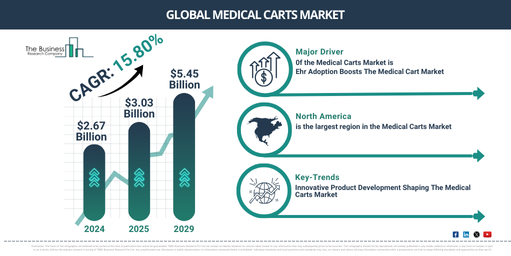
    Rapid expansion has been observed in the recent years in the medical carts market size. The market will witness an increase from $2.67 billion in 2024 to $3.03 billion in 2025, experiencing a compound annual growth rate (CAGR) of 13.8%. Factors contributing to the growth during the historic period include the adoption of electronic health records (ehr), the shift towards patient-centric care, modernization of hospitals, stringent healthcare regulations, and an aging population.

    What Is the Projected Market Size of the Medical Carts Market?

    Anticipated to experience swift expansion in the coming years, the medical carts market is projected to reach $5.45 billion by 2029, with a compound annual growth rate (CAGR) of 15.8%. Factors contributing to this growth during the forecast period include green and sustainable design, readiness for emergencies, point-of-care testing, and customization for specialized care along with adherence to interoperability standards. Notable trends expected to influence the market during this period include medical carts enabled by Internet of Things (IoT), assistance from artificial intelligence (AI) in care, sustainable and eco-friendly design, inventory management powered by AI, and remote monitoring of patients.

    Download The Free Sample Report Here:

    https://www.thebusinessresearchcompany.com/sample.aspx?id=7230&type=smp

    Who are the Major Competitors in the Medical Carts Market Outlook?

    Major companies operating in the medical carts market include ITD GmbH, Advantech Co. Ltd., Harloff Manufacturing Co. Inc., AFC Industries Inc., Midmark Corporation, Capsa Healthcare LLC, Bergmann Group GmbH & Co. KG, Onyx Healthcare Inc., InterMetro Industries Corporation Inc., Waterloo Healthcare Inc., Ergotron Inc., Jaco Inc., Enovate Medical LLC, TouchPoint Medical Inc., Merino International Group LLC, Lakeside Manufacturing Inc., BiHealthcare Inc., Scott-Clark Medical Inc., Medstor Systems USA LLC, Hergo Ergonomic Support Systems Inc., Cardinal Scale Manufacturing Company, Capsa Solutions LLC, Omnicell Inc., Mid Central Medical, Medline Industries LP, Altus Inc, Armstrong Medical Industries, Inc., Modern Medical Equipment Mfg. Ltd., Omnimed Inc., Pedigo Products Inc.

    What Is Fueling Growth in the Medical Carts Market?

    The growth of the medical cart market is expected to be driven by the increasing implementation of electronic health records (EHR), which is essentially a digital version of a patient’s medical history that is continually updated. Medical carts equipped with batteries are portable, aiding healthcare professionals in improving access to EHR. Citing data from Health IT, a U.S.-based entity that caters to all types of hospitals and healthcare networks, it is revealed that almost 9 out of 10 (88%) U.S. based office doctors had embraced some form of EHR while nearly 4 out of 5 (78%) had transitioned to a certified EHR in the year 2021. Thus, it can be concluded that the augmenting implementation of electronic health records (EHR) is boosting the expansion of the medical cart market.

    Request For A Customized Report:

    https://www.thebusinessresearchcompany.com/customise?id=7230&type=smp

    Which Medical Carts Market Segments Are Growing the Fastest?

    The medical carts market covered in this report is segmented –

    1) By Type: Anesthesia Carts, Emergency Carts, Procedure Carts, Telemedicine Cart, Other Type

    2) By Material Type: Metal, Plastic, Others Type

    3) By End User: Hospitals, Physician Offices, Other End User

    Subsegments:

    1) By Anesthesia Carts: Standard Anesthesia Carts, Mobile Anesthesia Carts, Anesthesia Workstations

    2) By Emergency Carts: Crash Carts, Trauma Carts, Code Blue Carts

    3) By Procedure Carts: Surgical Procedure Carts, Examination Carts, Treatment Carts

    4) By Telemedicine Cart: Mobile Telemedicine Carts, Fixed Telemedicine Carts

    5) By Other Type: Medication Carts, Supply Carts, Nursing Carts

    Which Industry Trends Are Shaping the Future of the Medical Carts Market?

    The rising trend of product innovation is becoming increasingly significant in the medical carts industry. Leading players in the market are introducing new products to solidify their market stance. For example, Ultralife Corporation, a company based in the United States specializing in the production and maintenance of power and communication systems, along with Karta, another US-based cart manufacturer, rolled out a new cart and power solution in March 2024. These advanced carts are capable of powering laptops, whole system units, and mini personal computers used in hospitals or other healthcare environments. The cart even features adjustable height capabilities and top-tier castor wheels for effortless maneuverability, in addition to a variety of customizable add-ons designed to accommodate various clinical procedures.

    Access The Full Report Here:

    https://www.thebusinessresearchcompany.com/report/medical-carts-global-market-report

    Which Countries Are Leading the Medical Carts Market?

    North America was the largest region in the medical carts market in 2024. Asia-Pacific is expected to be the fastest-growing region in the forecast period. The regions covered in the medical carts market report include Asia-Pacific, Western Europe, Eastern Europe, North America, South America, Middle East and Africa.

    Purchase The Full Report Today:

    https://www.thebusinessresearchcompany.com/purchaseoptions.aspx?id=7230

    This Report Delivers Insight On:

    1. How big is the medical carts market, and how is it changing globally?

    2. Who are the major companies in the medical carts market, and how are they performing?

    3. What are the key opportunities and risks in the medical carts market right now?

    4. Which products or customer segments are growing the most in the medical carts market?

    5. What factors are helping or slowing down the growth of the medical carts market?

    About The Business Research Company:

    With over 15000+ reports from 27 industries covering 60+ geographies, The Business Research Company has built a reputation for offering comprehensive, data-rich research and insights. Armed with 1,500,000 datasets, the optimistic contribution of in-depth secondary research, and unique insights from industry leaders, you can get the information you need to stay ahead in the game.

    Get in touch with us:

    The Business Research Company: https://www.thebusinessresearchcompany.com/

    Americas +1 3156230293

    Asia +44 2071930708

    Europe +44 2071930708

    Email us at info@tbrc.info

    Follow us on:

    LinkedIn: https://in.linkedin.com/company/the-business-research-company

    YouTube: https://www.youtube.com/channel/UC24_fI0rV8cR5DxlCpgmyFQ

    Global Market Model: https://www.thebusinessresearchcompany.com/global-market-model
  • Headache Disorders Industry Growth Expected to Reach $6.99 Billion by 2029 at a CAGR of 8.8% | Segmentation and Growth Opportunities

    Headache Disorders Industry Growth Expected to Reach $6.99 Billion by 2029 at a CAGR of 8.8% | Segmentation and Growth Opportunities

    Claim your 30% discount on Global Market Reports with code ONLINE30. Limited time only.

    What Is the Forecast for the Headache Disorders Market Growth in 2025?

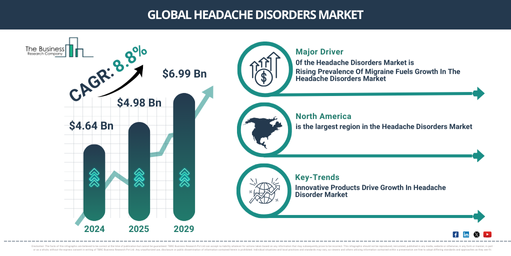
    The market size of headache disorders has been significantly expanding in the past few years. The growth is anticipated to rise from $4.64 billion in 2024 to $4.98 billion in 2025, exhibiting a compound annual growth rate (CAGR) of 7.3%. Factors such as limited treatment alternatives, enhanced awareness, an escalating frequency of headaches, developments in healthcare infrastructure, changes in lifestyle, and heightened stress levels have contributed to the growth experienced during the historical period.

    What Is the Forecast for the Headache Disorders Market Size Through 2029?

    The market size for headache disorders is predicted to experience robust expansion in the coming years, reaching $6.99 billion by 2029 with a compound annual growth rate (CAGR) of 8.8%. The anticipated growth during the forecast period can be credited to advancements in digital health solutions, individualized medicine strategies, escalating investments into research and development, global population’s aging process, and increased research in neuroinflammation. Key trends expected during this period are developments in medical technology for treatment, customized medication, a greater emphasis on preventative treatment, a growing pipeline of innovative therapies, and a surge in non-pharmacological approaches.

    Download The Free Sample Report Here:

    https://www.thebusinessresearchcompany.com/sample.aspx?id=9452&type=smp

    What are the Key Market Players in Headache Disorders Market and How They’re Evolving?

    Major companies operating in the headache disorders market include Teva Pharmaceutical Industries Ltd., Hikma Pharmaceuticals PLC, Dr. Reddy’s Laboratories Ltd, Novartis AG, Eli Lilly and Company, F. Hoffmann-La Roche Ltd., Sun Pharmaceutical Industries Ltd, Emcure Pharmaceuticals Limited, Endo International plc, WorldMeds LLC, AstraZeneca plc, Bausch & Lomb Incorporated, Nichi-Iko Pharmaceutical Co, Upsher-Smith Laboratories LLC, Bristol-Myers Squibb Company, Bayer AG, Boehringer Ingelheim International GmbH., Gilead Sciences Inc., Amgen Inc., Pfizer Inc., GlaxoSmithKline plc, Johnson & Johnson, Merck & Co. Inc., AbbVie Inc., Eisai Co. Ltd., Impax Laboratories LLC, Lannett Company Inc., Lupin Pharmaceuticals Inc.

    What Are the Primary Growth Drivers in the Headache Disorders Market?

    The growth of the headache disorders market is expected to be spurred by the rising incidence of migraines. Migraines are a kind of headache marked by repeated bouts of moderate to severe throbbing and pulsating pain on one side of the head. They potentially result from headache disorders, leading to neurological anomalies that cause severe throbbing pain, exhaustion, and nausea. For example, in April 2022, the Journal of Headache and Pain, a peer-reviewed journal from the UK, reported that 52.0% of the populations under study had some form of active headache disorder, with a gender breakdown of 44.4% males and 57.8% females. Furthermore, migraines impacted 14.0% of the population, with 8.6% males and 17.0% females affected, and tension-type headaches (TTH) were prevalent in 26.0% of the group, impacting 23.4% males and 27.1% females. Consequently, the increasing incidence of migraine is fueling the demand in the headache disorders market.

    Request For A Customized Report:

    https://www.thebusinessresearchcompany.com/customise?id=9452&type=smp

    What Are the Leading Segments in the Global Headache Disorders Industry?

    The headache disorders market covered in this report is segmented –

    1) By Type: Migraine, Tension-Type Headache, Cluster Headache, Medication-Overuse Headache, Other Types

    2) By Treatment: Medication, Heat Therapy, Diet Changes, Acupuncture, Oxygen Therapy

    3) By Diagnosis: Complete Blood Count, Skull X-Rays, Sinus X-Rays, CT Scan, Magnetic Resonance Imaging (MRI)

    4) By Route Of Administration: Oral, Parenteral, Other Route Of Administrations

    5) By End-User: Hospitals, Specialty Clinics, Homecare, Other End-Users

    Subsegments:

    1) By Migraine: Chronic Migraine, Episodic Migraine, Migraine With Aura, Migraine Without Aura

    2) By Tension-Type Headache: Episodic Tension-Type Headache, Chronic Tension-Type Headache

    3) By Cluster Headache: Chronic Cluster Headache, Episodic Cluster Headache

    4) By Medication-Overuse Headache: Analgesic-Overuse Headache, Caffeine-Withdrawal Headache

    5) By Other Types: Sinus Headache, Hormonal Headache, Thunderclap Headache, Other Primary And Secondary Headaches

    What Are the Key Market Trends in the Headache Disorders Industry?

    Prominent corporations active in the headache disorder sector are centred on the creation of unique items, like migraine tablets, in order to enhance treatments and elevate patient results. Migraine tablets are drugs meant to relieve or redirect migraine assaults by concentrating on precise pathways implicated in migraine signs such as discomfort and inflammation. For instance, in January 2024, Akums Drugs & Pharmaceuticals, a pharmaceutical production company based in India, presented the Lasmiditan Tablet, a generic variant of Eli Lilly’s REYVOW, geared towards the immediate relief of migraines. Having received endorsements from both the Drug Controller General of India (DCGI) and the US Food and Drug Administration (USFDA), Lasmiditan endeavors to relieve migraine symptoms by attaching to the 5-HT1F serotonin receptor, disrupting pain signals, and minimizing neural inflammation. The dosage guideline spans from 50 mg to 100 mg, with one dose at most within a 24 hour period.

    Access The Full Report Here:

    https://www.thebusinessresearchcompany.com/report/headache-disorders-global-market-report

    What Is the Regional Outlook for the Headache Disorders Market?

    North America was the largest region in the headache disorders market in 2024. The regions covered in the headache disorders market report are Asia-Pacific, Western Europe, Eastern Europe, North America, South America, Middle East, Africa

    Purchase The Full Report Today:

    https://www.thebusinessresearchcompany.com/purchaseoptions.aspx?id=9452

    This Report Delivers Insight On:

    1. How big is the headache disorders market, and how is it changing globally?

    2. Who are the major companies in the headache disorders market, and how are they performing?

    3. What are the key opportunities and risks in the headache disorders market right now?

    4. Which products or customer segments are growing the most in the headache disorders market?

    5. What factors are helping or slowing down the growth of the headache disorders market?

    About The Business Research Company:

    With over 15000+ reports from 27 industries covering 60+ geographies, The Business Research Company has built a reputation for offering comprehensive, data-rich research and insights. Armed with 1,500,000 datasets, the optimistic contribution of in-depth secondary research, and unique insights from industry leaders, you can get the information you need to stay ahead in the game.

    Get in touch with us:

    The Business Research Company: https://www.thebusinessresearchcompany.com/

    Americas +1 3156230293

    Asia +44 2071930708

    Europe +44 2071930708

    Email us at info@tbrc.info

    Follow us on:

    LinkedIn: https://in.linkedin.com/company/the-business-research-company

    YouTube: https://www.youtube.com/channel/UC24_fI0rV8cR5DxlCpgmyFQ

    Global Market Model: https://www.thebusinessresearchcompany.com/global-market-model
  • Non-Invasive Brain Trauma Monitoring Devices Market to Reach $15.15 Billion by 2029 | Key Drivers and Future Outlook

    Non-Invasive Brain Trauma Monitoring Devices Market to Reach $15.15 Billion by 2029 | Key Drivers and Future Outlook

    Claim your 30% discount on Global Market Reports with code ONLINE30. Limited time only.

    What Is the Growth Rate of the Non-Invasive Brain Trauma Monitoring Devices Market?

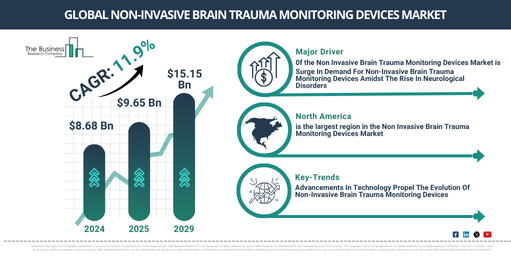
    The market size for non-invasive brain trauma monitoring devices has seen swift expansion in the past few years. Expected to rise from $8.68 billion in 2024 to $9.65 billion in 2025, there is a forecasted compound annual growth rate (CAGR) of 11.2%. Factors like the personalized medicine approach, emphasis on sustained monitoring, widespread utilization of wearable technology, enhancement in signal sensitivity, as well as the integration of multimodal monitoring have contributed to the growth during the historical period.

    What Growth Rate Is Forecasted for the Non-Invasive Brain Trauma Monitoring Devices Market by 2029?

    In the coming years, the market for non-invasive brain trauma monitoring devices is anticipated to experience significant expansion, reaching a valuation of $15.15 billion in 2029 with a Compound Annual Growth Rate (CAGR) of 11.9%. The projected growth during the forecast period is a result of increased awareness and diagnosis, combined research efforts, demand for long-lasting monitoring systems, advancements in signal processing, and improvements in remote connectivity. The forecast period will also see major trends such as miniaturization and wearable devices, improvement in sensor technology, focus on real-time monitoring, remote patient monitoring, and progression in non-invasive imaging techniques.

    Download The Free Sample Report Here:

    https://www.thebusinessresearchcompany.com/sample.aspx?id=8325&type=smp

    Which Key Companies Are Shaping the Future of the Non-Invasive Brain Trauma Monitoring Devices Market?

    Major companies operating in the non-invasive brain trauma monitoring devices market are Sophysa Ltd., Spiegelberg GmbH & Co. KG, Natus Medical Inc., Nihon Kohden Corporation, Philips Healthcare, Advanced Brain Monitoring, CAS Medical Systems Inc., Siemens AG, Compumedics Ltd., Medtronic Plc., Integra LifeSciences, Cadwell Industries Inc., Codman & Shurtleff Inc., Covidien PLC., Hitachi Medical Corporation, Koninklijke Philips N.V., NeuroLogica Corp., NeuroWave Systems Inc., Noraxon U.S.A, Sense Neuro Diagnostics, GE Healthcare, BrainScope Company Inc., Cerebrotech Medical Systems Inc., Neural Analytics Inc., Oculogica Inc., Ornim Medical Ltd.

    Which Factors Are Driving Demand in the Non-Invasive Brain Trauma Monitoring Devices Industry?

    A surge in the occurrence of neurological disorders and diseases is predicted to drive the need for non-invasive brain trauma monitoring devices. Often categorised as non-communicable diseases (NCDs), neurological disorders have significant effects on an individual’s thoughts, emotions, behaviours as well as injuries like brain, spinal cord, or nerve injuries. Non-invasive brain trauma monitoring devices facilitate uninterrupted tracking and let doctors gauge the patient’s critical level and the necessary steps required to lessen the severity of their trauma. The American Cancer Society, a US-based nonprofit cancer advocacy organization, projected in January 2024 that brain cancer cases would rise to 25,400 in 2024 from 24,810 in 2023. Consequently, the increase in neurological disorders and diseases is expected to stimulate the non-invasive brain trauma monitoring devices market.

    Request For A Customized Report:

    https://www.thebusinessresearchcompany.com/customise?id=8325&type=smp

    How Is the Non-Invasive Brain Trauma Monitoring Devices Market Segmented by Several Divisions?

    The non-invasive brain trauma monitoring devices market covered in this report is segmented –

    1) By Type: Non-invasive Intracranial Pressure Monitor, Non-invasive Cerebral Edema Dynamic Monitor, Other Types

    2) By Application: Cardiology, Urology And Nephrology, Oncology, Gastroenterology, Other Applications

    3) By End-User: Hospitals, Neurological Centers, Other End Users

    Subsegments:

    1) By Non-invasive Intracranial Pressure Monitor: Transcranial Doppler (TCD) Devices, Near-Infrared Spectroscopy (NIRS) Devices

    2) By Non-invasive Cerebral Edema Dynamic Monitor: Electrical Impedance Tomography (EIT), Magnetic Resonance Imaging (MRI)-Based Monitors

    3) By Other Types: Ultrasound-Based Monitors, Bioelectrical Signal Monitors

    What are the Emerging Market Trends Driving the Growth of the Non-Invasive Brain Trauma Monitoring Devices Industry?

    The rise of technological breakthroughs is a leading trend that is becoming increasingly prominent in the market for non-invasive brain trauma monitoring devices. To bolster their standing within the market, major corporations involved in non-invasive brain trauma monitoring devices are investing in advanced technology. For example, in May 2024, Canon Medical Systems, a healthcare and medical imaging corporation based in Japan, established the first usage of the Aquilion Serve SP CT scanner in the U.S., which was equipped with INSTINX, an artificial intelligence-backed system for workflow automation. This scanner aims to elevate imaging capabilities and enhance patient care. Furthermore, the INSTINX system, which operates off artificial intelligence, streamlines imaging procedures, enhancing precision and efficiency in clinical environments.

    Access The Full Report Here:

    https://www.thebusinessresearchcompany.com/report/non-invasive-brain-trauma-monitoring-devices-global-market-report

    Which Regions Are Driving Growth in the Non-Invasive Brain Trauma Monitoring Devices Market?

    North America was the largest region in the non-invasive brain trauma monitoring devices market share in 2024. The regions covered in the non-invasive brain trauma monitoring devices market report are Asia-Pacific, Western Europe, Eastern Europe, North America, South America, Middle East, Africa.

    Purchase The Full Report Today:

    https://www.thebusinessresearchcompany.com/purchaseoptions.aspx?id=8325

    This Report Delivers Insight On:

    1. How big is the non-invasive brain trauma monitoring devices market, and how is it changing globally?

    2. Who are the major companies in the non-invasive brain trauma monitoring devices market, and how are they performing?

    3. What are the key opportunities and risks in the non-invasive brain trauma monitoring devices market right now?

    4. Which products or customer segments are growing the most in the non-invasive brain trauma monitoring devices market?

    5. What factors are helping or slowing down the growth of the non-invasive brain trauma monitoring devices market?

    About The Business Research Company:

    With over 15000+ reports from 27 industries covering 60+ geographies, The Business Research Company has built a reputation for offering comprehensive, data-rich research and insights. Armed with 1,500,000 datasets, the optimistic contribution of in-depth secondary research, and unique insights from industry leaders, you can get the information you need to stay ahead in the game.

    Get in touch with us:

    The Business Research Company: https://www.thebusinessresearchcompany.com/

    Americas +1 3156230293

    Asia +44 2071930708

    Europe +44 2071930708

    Email us at info@tbrc.info

    Follow us on:

    LinkedIn: https://in.linkedin.com/company/the-business-research-company

    YouTube: https://www.youtube.com/channel/UC24_fI0rV8cR5DxlCpgmyFQ

    Global Market Model: https://www.thebusinessresearchcompany.com/global-market-model
  • Medical Alert Systems Market to Reach $19.03 Billion by 2029 | Key Drivers and Future Outlook

    Medical Alert Systems Market to Reach $19.03 Billion by 2029 | Key Drivers and Future Outlook

    Claim your 30% discount on Global Market Reports with code ONLINE30. Limited time only.

    What Is the Growth Rate of the Medical Alert Systems Market?

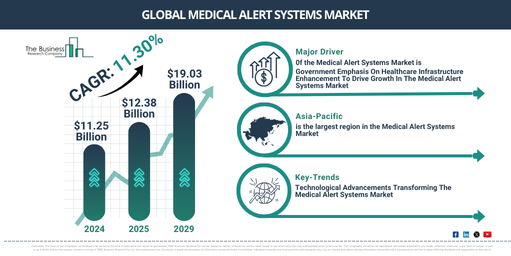
    The size of the medical alert systems market has seen a significant increase in recent years. Projected growth shows a rise from $11.25 billion in 2024 to $12.38 billion in 2025 with a Compound Annual Growth Rate (CAGR) of 10.0%. The historical growth can be linked to factors like chronic health conditions, an aging population, advancements in healthcare infrastructure, government initiatives, and the rise of telehealth services.

    What Growth Rate Is Forecasted for the Medical Alert Systems Market by 2029?

    The size of the medical alert systems market is anticipated to experience fast-paced expansion in the coming years, reaching a value of $19.03 billion in 2029 with a Compound Annual Growth Rate (CAGR) of 11.3%. Several factors contributing to this forecasted growth include independent living, savings on medical costs, access to healthcare in rural areas, tailor-made emergency plans, and reduction of social isolation amongst the elderly. Key trends expected during the forecast period encompass the integration of Internet of Things (IoT) and wearables, the use of blockchain for securing health data, voice-activated systems, application of artificial intelligence (AI) in predictive care, and technology to detect falls.

    Download The Free Sample Report Here:

    https://www.thebusinessresearchcompany.com/sample.aspx?id=7166&type=smp

    Which Key Companies Are Shaping the Future of the Medical Alert Systems Market?

    Major companies operating in the medical alert systems market include Koninklijke Philips N.V., Connect America Holdings LLC, ADT Inc., Bay Alarm Medical Company, VRI Inc., Ascom Wireless Solutions Holding AG, ADT Corporation, Medical Guardian LLC, Hill-Rom Holdings Inc., MobileHelp LLC, LifeFone Medical Alert Services, Tunstall Group Holdings Ltd., Alertone Services LLC, GreatCall Inc., Rescue Alert, LogicMark LLC, Nortek Security and Control LLC, Galaxy Medical Alert Systems Ltd., Guardian Alarm Company, Legrand Assisted Living & Healthcare Inc., LifeStation Inc., Guardian Medical Monitoring LLC, Life Alert Emergency Response Inc., Medical Care Alert LLC, MedicAlert Foundation, ResponseLINK LLC, Vital Link Inc., LifeCall Inc., LifeWatch USA LLC, LifeWise Health Plan of Oregon Inc., MedScope America Corp., Mytrex Inc., Senior Safety Medical Alert Systems LLC, Smart Caregiver Corporation

    Which Factors Are Driving Demand in the Medical Alert Systems Industry?

    The surge in government attention towards enhancing health care infrastructure is anticipated to trigger the expansion of the medical alert systems market in the future. Medical alert systems can prove to be essential for individuals who need to shift into a nursing home or an assisted living institution. It is crucial for the management to understand how healthcare institutions can use medical alerts, given that accidents and emergencies can occur even in facilities with 24-hour care. For instance, as reported by the Centers for Medicare & Medicaid Services, a Federal agency based in the US, in June 2023 there was a 2.7% hike in healthcare expenditure in the United States, amounting to a total of $4.3 trillion, equivalent to $12,914 per capita. Such healthcare costs constituted 18.3% of the country’s gross domestic product. Hence, the enhanced government emphasis on improving health care infrastructure is likely to stimulate the growth of the medical alert systems market over the forthcoming period.

    Request For A Customized Report:

    https://www.thebusinessresearchcompany.com/customise?id=7166&type=smp

    How Is the Medical Alert Systems Market Segmented by Several Divisions?

    The medical alert systems market covered in this report is segmented –

    1) By Offering Type: Hardware, Services

    2) By System Type: Personal Emergency Response System (PERS), Nurse Calling System (NCS), Smart Belt

    3) By Technology Type: Two-way Voice Systems, Medical Alert Alarm (Button) System,, IP-based Systems

    4) By Distribution Channel Type: Pharmacies, Online Sales, Hyper markets

    5) By Application Type: Home-Based users, Senior Living Facilities/Senior Care Centers, Assisted Living Facilities, Hospitals and Clinics, Others Applications

    Subsegments:

    1) By Hardware: Personal Emergency Response Systems (PERS), Wearable Devices, Base Stations And Control Units, Sensors And Detectors

    2) By Services: Monitoring Services, Installation And Setup Services, Maintenance And Support Services, Mobile Alert Services

    What are the Emerging Market Trends Driving the Growth of the Medical Alert Systems Industry?

    The surge in technological innovations has become a crucial trend earning popularity in the medical alert systems market. Key businesses in this sector are embracing innovative technological solutions, like the Micro, which is a mobile medical alert device, to maintain their market standing. For instance, the Essence Group, a company grounded in the US and specializes in IoT-based remote care solutions, introduced the world’s initial 5G-capable mobile Personal Emergency Response System (mPERS) device named Umbrella in January 2022. Umbrella is a compact device that merges with Essence’s multi-service cloud, offering improved personal security and care for several remote and outdoor environments.

    Access The Full Report Here:

    https://www.thebusinessresearchcompany.com/report/medical-alert-systems-global-market-report

    Which Regions Are Driving Growth in the Medical Alert Systems Market?

    Asia-Pacific was the largest region in the medical alert systems market in 2024, and it is also expected to be the fastest-growing region in the forecast period. The regions covered in the medical alert systems market report include Asia-Pacific, Western Europe, Eastern Europe, North America, South America, Middle East and Africa.

    Purchase The Full Report Today:

    https://www.thebusinessresearchcompany.com/purchaseoptions.aspx?id=7166

    This Report Delivers Insight On:

    1. How big is the medical alert systems market, and how is it changing globally?

    2. Who are the major companies in the medical alert systems market, and how are they performing?

    3. What are the key opportunities and risks in the medical alert systems market right now?

    4. Which products or customer segments are growing the most in the medical alert systems market?

    5. What factors are helping or slowing down the growth of the medical alert systems market?

    About The Business Research Company:

    With over 15000+ reports from 27 industries covering 60+ geographies, The Business Research Company has built a reputation for offering comprehensive, data-rich research and insights. Armed with 1,500,000 datasets, the optimistic contribution of in-depth secondary research, and unique insights from industry leaders, you can get the information you need to stay ahead in the game.

    Get in touch with us:

    The Business Research Company: https://www.thebusinessresearchcompany.com/

    Americas +1 3156230293

    Asia +44 2071930708

    Europe +44 2071930708

    Email us at info@tbrc.info

    Follow us on:

    LinkedIn: https://in.linkedin.com/company/the-business-research-company

    YouTube: https://www.youtube.com/channel/UC24_fI0rV8cR5DxlCpgmyFQ

    Global Market Model: https://www.thebusinessresearchcompany.com/global-market-model
  • Gynecological Devices Industry Valued at $20.09 Billion by 2029 With CAGR of 9.1% | Size and Share Insights

    Gynecological Devices Industry Valued at $20.09 Billion by 2029 With CAGR of 9.1% | Size and Share Insights

    Claim your 30% discount on Global Market Reports with code ONLINE30. Limited time only.

    What Is the Forecast for the Gynecological Devices Market from 2024 to 2025?

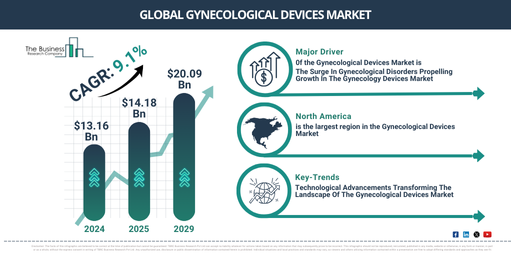
    The market size of gynecological devices has experienced significant growth in recent years. It’s projected to expand from $13.16 billion in 2024 to $14.18 billion in 2025, with a compound annual growth rate (CAGR) of 7.8%. The historic growth can be linked to the introduction of laparoscopic surgery, the advancement of intrauterine devices (IUDs), the evolution of hysteroscopy, the appearance of robotic surgery, and advancements in diagnostic imaging.

    What Is the Projected Market Size of the Gynecological Devices Market?

    The market for gynecological devices is predicted to experience substantial growth in the coming years, expanding to a size of $20.09 billion in 2029 with a compound annual growth rate (CAGR) of 9.1%. This anticipated growth in the forecast period can be due to several factors including an increase in health expenditure related to women, advancements in the field of robotic surgery, the adoption of personalized treatment plans and the growth of ambulatory surgical centers. Key trends to watch during the forecast period consist of minimally invasive surgeries, a transition towards ambulatory environments, a heightened emphasis on women’s health awareness, a patient-centric perspective, along with an increased investment in research and development.

    Download The Free Sample Report Here:

    https://www.thebusinessresearchcompany.com/sample.aspx?id=9937&type=smp

    Who are the Major Competitors in the Gynecological Devices Market Outlook?

    Major companies operating in the gynecological devices market include Medtronic plc, CooperSurgical Inc., Richard Wolf GmbH, Hologic Inc., Boston Scientific Corporation, Stryker Corporation, Karl Storz SE & Co. KG, Ethicon Inc., MedGyn Products Inc., General Electric Company, Gynex Corporation, Bayer AG, Gynemed Medizinprodukte GmbH & Co. KG, Meril Life Sciences Pvt. Ltd., Cook Group Inc., B. Braun Melsungen AG, Siemens Healthineers AG, Smith & Nephew plc, Steris Corporation, Abbott Laboratories, Fujifilm Holdings Corporation, Koninklijke Philips N.V., Medline Industries Inc., Mindray Medical International Limited, Olympus Medical Systems Corporation, Cardinal Health Inc.

    What Is Fueling Growth in the Gynecological Devices Market?

    The surge in gynecological conditions is anticipated to spur the expansion of the gynecology devices market. Such disorders, which impede the regular operation of the female reproductive systems like the breasts, abdomen, and pelvic organs, can have a significant effect. Gynecology devices are employed to manage the overall female reproductive system, encompassing pregnancy and childbirth. These devices also enable various medical procedures like colposcopy, loop electrical excision procedure (LEEP), endometrial biopsy, IUD insertion, dilation and curettage (D&C), tubal ligation, ovarian cystectomy, among others. According to a World Health Organization (WHO) report in March 2023, endometriosis affected nearly 190 million women and girls at reproductive age globally. Moreover, in January 2023, the American Cancer Society projected that around 13,960 new cases of invasive cervical cancer would be diagnosed, with an approximate 4,310 women anticipated to succumb from this disease within the year. Consequently, the escalating occurrence of gynecological disorders is facilitating the growth of the gynecological devices market.

    Request For A Customized Report:

    https://www.thebusinessresearchcompany.com/customise?id=9937&type=smp

    Which Gynecological Devices Market Segments Are Growing the Fastest?

    The gynecological devices market covered in this report is segmented –

    1) By Device: Surgical Devices, Diagnostic Imaging Systems, Hand Held Instruments, Software, Other Devices

    2) By Application: Laparoscopy, Hysteroscopy, Dilation And Curettage, Colposcopy, Other Applications

    3) By End User: Clinics, Hospitals, Diagnostic Centers, Research Institutes, Others End Users

    Subsegments:

    1) By Surgical Devices: Hysteroscopes, Laparoscopes, Endometrial Ablation Devices, Biopsy Forceps

    2) By Diagnostic Imaging Systems: Ultrasound Machines, MRI Systems, CT Scanners, X-ray Systems

    3) By Hand Held Instruments: Speculums, Forceps, Scissors, Scalpels

    4) By Software: Electronic Medical Records (EMR) Software, Imaging Software, Data Management Software

    5) By Other Devices: Contraceptive Devices, Menstrual Cups, Pelvic Floor Devices

    Which Industry Trends Are Shaping the Future of the Gynecological Devices Market?

    Continued advancements in technology is proving to be a major trend gaining traction in the gynecological devices market. Firms in this market are incorporating innovative technologies to bolster their standing. To illustrate, in February 2023, Boston Imaging (Samsung), a medical imaging technology company based in the US, rolled out Hera W10 Elite, an AI-powered health ultrasound system exclusively designed for women. This system enables the visual representation of microcirculatory and slow-moving blood in both 2D and 3D. The Hera W10 Elite system encompasses an advanced MV-Flow function and boasts a larger OLED display, enhancing the interpretation of multiple ultrasound images used in obstetric and gynecological procedures, thus providing detailed diagnostic insights for medical professionals. The system also incorporates an innovative transducer for endovaginal visualization of the fetal heart and brain. Enhanced AI features of the system include HeartAssist, ViewAssist, and BiometryAssist.

    Access The Full Report Here:

    https://www.thebusinessresearchcompany.com/report/gynecological-devices-global-market-report

    Which Countries Are Leading the Gynecological Devices Market?

    North America was the largest region in the gynecological devices market in 2024. Asia-Pacific is expected to be the fastest-growing region in the gynecological devices market report forecast period. The regions covered in the gynecological devices market report are Asia-Pacific, Western Europe, Eastern Europe, North America, South America, Middle East, Africa

    Purchase The Full Report Today:

    https://www.thebusinessresearchcompany.com/purchaseoptions.aspx?id=9937

    This Report Delivers Insight On:

    1. How big is the gynecological devices market, and how is it changing globally?

    2. Who are the major companies in the gynecological devices market, and how are they performing?

    3. What are the key opportunities and risks in the gynecological devices market right now?

    4. Which products or customer segments are growing the most in the gynecological devices market?

    5. What factors are helping or slowing down the growth of the gynecological devices market?

    About The Business Research Company:

    With over 15000+ reports from 27 industries covering 60+ geographies, The Business Research Company has built a reputation for offering comprehensive, data-rich research and insights. Armed with 1,500,000 datasets, the optimistic contribution of in-depth secondary research, and unique insights from industry leaders, you can get the information you need to stay ahead in the game.

    Get in touch with us:

    The Business Research Company: https://www.thebusinessresearchcompany.com/

    Americas +1 3156230293

    Asia +44 2071930708

    Europe +44 2071930708

    Email us at info@tbrc.info

    Follow us on:

    LinkedIn: https://in.linkedin.com/company/the-business-research-company

    YouTube: https://www.youtube.com/channel/UC24_fI0rV8cR5DxlCpgmyFQ

    Global Market Model: https://www.thebusinessresearchcompany.com/global-market-model
  • Non-Alcoholic Steatohepatitis Treatment Market Size to Exceed $13.83 Billion by 2029 | Growth and Industry Trends

    Non-Alcoholic Steatohepatitis Treatment Market Size to Exceed $13.83 Billion by 2029 | Growth and Industry Trends

    Claim your 30% discount on Global Market Reports with code ONLINE30. Limited time only.

    How Has the Non-Alcoholic Steatohepatitis Treatment Market Grown from 2024 to 2025?

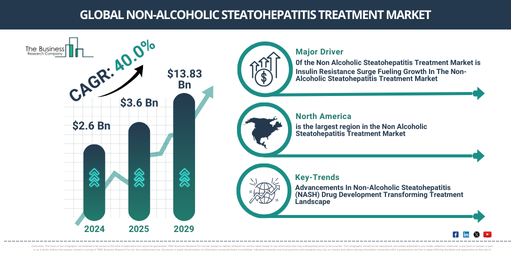
    In the last few years, the market for non-alcoholic steatohepatitis treatment has witnessed a significant upsurge. Its expansion is set to continue, rising from $2.6 billion in 2024 to $3.6 billion in 2025 with a compound annual growth rate of 38.5%. Various factors have contributed to the growth observed in the historic period such as the increasing occurrence of NASH, enhanced awareness and diagnosis, lifestyle modifications and growing obesity crises, in-depth clinical research, improvements in healthcare infrastructure and accessibility, regulatory backing, and clinical trials.

    What Growth Rate Is Anticipated for the Non-Alcoholic Steatohepatitis Treatment Market in the Coming Years?

    The market for non-alcoholic steatohepatitis treatment is anticipated to witness a significant surge in the coming years, with its value projected to reach $13.83 billion by 2029, expanding at a compound annual growth rate (CAGR) of 40.0%. The expected growth during the forecast period can be credited to progress in drug discovery, heightened disease understanding, increasing incidence and risk factors, along with a shift towards personalized healthcare. Key trends predicted for the coming period include a more patient-focused approach, technological innovation, targeted treatments, evolving regulatory environment, and advances in research.

    Download The Free Sample Report Here:

    https://www.thebusinessresearchcompany.com/sample.aspx?id=8595&type=smp

    Who Are the Leading Companies in the Non-Alcoholic Steatohepatitis Treatment Market?

    Major companies operating in the non-alcoholic steatohepatitis treatment market are AstraZeneca PLC, Galmed Pharmaceuticals Ltd., Genfit S.A., Zydus Cadila Healthcare Limited, Bristol-Myers Squibb Company, Gilead Sciences Inc., Novo Nordisk A/S, Immuron Ltd., Inventiva Pharma SA, NGM Biopharmaceuticals Inc., Galectin Therapeutics Inc., Madrigal Pharmaceuticals Corporation, Intercept Pharmaceuticals Inc., Cirius Therapeutics Inc., Viking Therapeutics Inc., Eli Lilly and Company, Terns Pharmaceuticals Inc., Pfizer Inc., Merck & Co. Inc., AbbVie Inc., Johnson & Johnson Private Limited, Sanofi S.A., F. Hoffmann-La Roche Ltd., C.H. Boehringer Sohn AG & Co. KG

    What Are the Key Drivers of the Non-Alcoholic Steatohepatitis Treatment Market?

    Insulin resistance’s growing prevalence has been a major contributor to the expansion of the non-alcoholic steatohepatitis treatment market. When insulin resistance happens, muscle, fat, and liver cells don’t respond properly to insulin, making glucose absorption from the blood difficult, which in turn leads to high blood sugar. This condition is often associated with an unhealthy lifestyle, overconsumption of sugar, and genetic factors. Insulin resistance has become more common due to the increase in diabetes and other liver-related conditions, which are managed by non-alcoholic steatohepatitis treatment. For example, as per the latest report from the International Diabetes Federation, a global diabetes community based in Belgium, in January 2022, 537 million individuals (20-79 years old) are currently affected by diabetes, representing one in ten individuals. This figure is predicted to rise to 643 million by 2030, and 783 million by 2045. Additionally, the American Cancer Society, a nonprofit cancer advocacy group in the US, anticipates new liver cancer cases in 2024 to be 41,630, up from 41,210 in 2023. Consequently, the growing prevalence of insulin resistance due to various liver and diabetes diseases is predicted to boost the non-alcoholic steatohepatitis treatment market.

    Request For A Customized Report:

    https://www.thebusinessresearchcompany.com/customise?id=8595&type=smp

    What Are the Key Market Segments in the Non-Alcoholic Steatohepatitis Treatment Industry?

    The non-alcoholic steatohepatitis treatment market covered in this report is segmented –

    1) By Drug Type: Vitamin E And Pioglitazone, Ocaliva, Elafibranor, Selonsertib And cenicriviroc, Obeticholic Acid, Other Drugs Types

    2) By Test Type: Blood Tests, Liver Biopsy, Imaging Procedures

    3) By End User: Hospital Pharmacies, Retail And Specialty Pharmacies, Other End Users

    Subsegments:

    1) By Vitamin E And Pioglitazone: Vitamin E Supplements, Pioglitazone-Based Formulations.

    2) By Ocaliva: Ocaliva (Obeticholic Acid) For NASH

    3) By Elafibranor: Elafibranor-Based Treatments

    4) By Selonsertib And Cenicriviroc: Selonsertib Formulations, Cenicriviroc Formulations

    5) By Obeticholic Acid: Other Formulations Of Obeticholic Acid

    6) By Other Drug Types: Novel Agents In Clinical Trials, Combination Therapies

    What Are the Latest Trends in the Non-Alcoholic Steatohepatitis Treatment Market?

    The evolution of non-alcoholic steatohepatitis (NASH) medication is emerging as a significant trend in the non-alcoholic steatohepatitis therapy market. Numerous firms are directing their resources towards the invention of innovative drugs aimed at liver disease treatment, minimizing the side effects. For instance, Pfizer Inc., a leading American pharmaceutical and biotechnology corporation, was granted fast-track designation in May 2022 by the U.S. Food and Drug Administration (FDA) to expedite the development process of its NASH drug, specifically ervogastat and clesacostat. Fast Track is a designed program to expedite the development of Pfizer’s investigative combination therapy for non-alcoholic steatohepatitis (NASH) with liver fibrosis, namely ervogastat (PF-06865571, a diacylglycerol O-acyltransferase 2 inhibitor, or DGAT2i) and clesacostat (PF-05221304, an acetyl-CoA carboxylase inhibitor, or ACCi).

    Access The Full Report Here:

    https://www.thebusinessresearchcompany.com/report/non-alcoholic-steatohepatitis-treatment-global-market-report

    What Are the Key Regional Markets in the Non-Alcoholic Steatohepatitis Treatment Industry?

    North America was the largest region in the non-alcoholic steatohepatitis treatment market share in 2024. The regions covered in the non-alcoholic steatohepatitis treatment market report are Asia-Pacific, Western Europe, Eastern Europe, North America, South America, Middle East, Africa.

    Purchase The Full Report Today:

    https://www.thebusinessresearchcompany.com/purchaseoptions.aspx?id=8595

    This Report Delivers Insight On:

    1. How big is the non-alcoholic steatohepatitis treatment market, and how is it changing globally?

    2. Who are the major companies in the non-alcoholic steatohepatitis treatment market, and how are they performing?

    3. What are the key opportunities and risks in the non-alcoholic steatohepatitis treatment market right now?

    4. Which products or customer segments are growing the most in the non-alcoholic steatohepatitis treatment market?

    5. What factors are helping or slowing down the growth of the non-alcoholic steatohepatitis treatment market?

    About The Business Research Company:

    With over 15000+ reports from 27 industries covering 60+ geographies, The Business Research Company has built a reputation for offering comprehensive, data-rich research and insights. Armed with 1,500,000 datasets, the optimistic contribution of in-depth secondary research, and unique insights from industry leaders, you can get the information you need to stay ahead in the game.

    Get in touch with us:

    The Business Research Company: https://www.thebusinessresearchcompany.com/

    Americas +1 3156230293

    Asia +44 2071930708

    Europe +44 2071930708

    Email us at info@tbrc.info

    Follow us on:

    LinkedIn: https://in.linkedin.com/company/the-business-research-company

    YouTube: https://www.youtube.com/channel/UC24_fI0rV8cR5DxlCpgmyFQ

    Global Market Model: https://www.thebusinessresearchcompany.com/global-market-model