Month: August 2025

  • Male Fertility Market Outlook 2025: Mapping Growth, Innovation, and Regional Shifts

    Male Fertility Market Outlook 2025: Mapping Growth, Innovation, and Regional Shifts

    Claim your 30% discount on Global Market Reports with code ONLINE30. Limited time only.

    What Are the Projected Market Size and Growth Rates for the Male Fertility Market From 2025 To 2029?

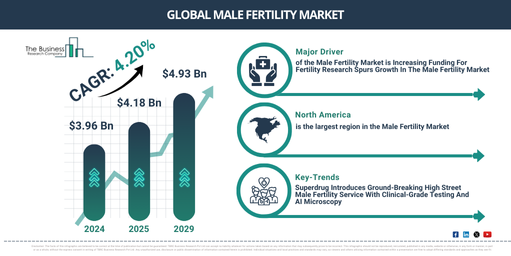
    The market for male fertility has seen robust growth in the past few years. It’s projected to rise from $3.96 billion in 2024 to $4.18 billion in 2025, reflecting a Compound Annual Growth Rate (CAGR) of 5.5%. Factors contributing to the growth in the historical period include a shift in lifestyles and habits, environmental influences, improvements in medical technology, increased awareness and acknowledgment of male fertility problems, and socioeconomic variables.

    The male fertility market size is expected to see steady growth in the next few years. It will grow to $4.93 billion in 2029 at a compound annual growth rate (CAGR) of 4.2%. The growth in the forecast period can be attributed to aging population, rising prevalence of male fertility disorders, growing demand for assisted reproductive technologies, expanding access to fertility treatments, increasing research and development in male fertility solutions. Major trends in the forecast period include personalized medicine in male fertility treatments, integration of artificial intelligence and big data analytics in diagnosis and treatment, shift towards natural and holistic approaches to improve male fertility, telemedicine and remote monitoring for fertility consultations, emphasis on mental health and stress management in male fertility care.

    Download a free sample to assess the report’s scope and structure:

    https://www.thebusinessresearchcompany.com/sample.aspx?id=13699&type=smp

    What External and Internal Drivers Are Contributing to the Growth of theMale Fertility Market?

    The male fertility market’s growth is anticipated to be fueled by an increase in investments for fertility investigations. This research delves into the study of variables influencing reproductive well-being, encompassing conception, pregnancy, and maximizing fertility results. There’s a significant focus on male fertility studies within this funding, aiming to gain a comprehensive understanding of reproductive health, enhance fertility results overall, and acknowledge the crucial part that male factors have in conception and reproductive achievement. As an illustration, the Eunice Kennedy Shriver National Institute of Child Health and Human Development, based in the US, awarded a grant of $2.26 million in October 2023 to look into fertility-conserving treatments. Moreover, the Medical Research Future Fund (MRFF), a medical research organization from Australia, assigned grants totaling $3.3 million in September 2022 to aid those suffering from endometriosis, search for fertility options, and refine clinical registries. Consequently, the escalating funds for fertility research are significantly influencing the expansion of the male fertility market.

    What Segment Types Define the Male Fertility Market Structure?

    The male fertilitymarket covered in this report is segmented –

    1) By Test Type: Sperm Agglutination; DNA Fragmentation Technique; Oxidative Stress Analysis; Computer Assisted Semen Analysis; Sperm Penetration Assay; Other Test Types

    2) By Treatment Type: Assisted Reproductive Technology; Varicocele Surgery; Medication

    3) By Supplement: Antioxidants; Vitamins; Minerals; Amino Acids; Enzymes

    4) By End User: Hospitals And Clinics; Fertility Centers; Research Institutes; Other End Users

    Subsegments:

    1) By Sperm Agglutination: Seminal Plasma Agglutination Test; Sperm-Bound Antibody Tests

    2) By DNA Fragmentation Technique: Sperm DNA Fragmentation Index (DFI) Tests; Comet Assay

    3) By Oxidative Stress Analysis: Reactive Oxygen Species (ROS) Measurement; Antioxidant Capacity Tests

    4) By Computer Assisted Semen Analysis (CASA): Motility Analysis; Morphology Assessment

    5) By Sperm Penetration Assay: Sperm-oocyte Interaction Tests; In Vitro Fertilization (IVF) Models

    6) By Other Test Types: Hormonal Tests; Genetic Testing; Semen Culture Tests

    Request customized data on this market:

    https://www.thebusinessresearchcompany.com/customise?id=13699&type=smp

    Which Geographic Areas Hold the Strongest Growth Potential in the Male Fertility Market?

    North America was the largest region in the male fertility market in 2024. Asia-Pacific is expected to be the fastest-growing region in the forecast period. The regions covered in the male fertility market report are Asia-Pacific, Western Europe, Eastern Europe, North America, South America, Middle East, Africa.

    What Long-Term Trends Are Transforming the Competitive Landscape of the Male Fertility Market?

    Leading businesses within the male fertility market are centering their efforts on service innovations such as testing facilities, enabling individuals to gain insights about their fertility and thereby exert more control over their reproductive health. A testing service essentially offers testing or analysis of specific substances or conditions. For example, Superdrug Stores PLC, a retail business based in the UK, launched the first high-street male fertility service in the UK in November 2022. This testing service includes a clinical-grade sperm test, equivalent to a test by the World Health Organization or NHS. It is recognized by most fertility treatments. Additionally, the services provide clinical-grade semen analysis utilizing advanced AI microscopes. The analysis looks into 22 variables, including sperm morphology—its size and shape. The inconspicuous at-home test kit can be collected from the store and taken home. A courier will then collect the sample, and results will be available 48 hours after the lab receives the sample. A comprehensive diagnostic report will be given, useful for subsequent referrals or consultations with fertility specialists.

    View the full report here:

    https://www.thebusinessresearchcompany.com/report/male-fertility-global-market-report

    What Is the Definition of the Male Fertility Market?

    Male fertility is usually defined as the ability of a man to impregnate his female partner. It is a complex process that depends on the production of healthy sperm, the functionality of the male reproductive organs, and the ability to have an erection and ejaculate so that the sperm can reach the egg.

    Purchase the full report and get a swift delivery:

    https://www.thebusinessresearchcompany.com/purchaseoptions.aspx?id=13699

    About The Business Research Company:

    With over 15000+ reports from 27 industries covering 60+ geographies, The Business Research Company has built a reputation for offering comprehensive, data-rich research and insights. Armed with 1,500,000 datasets, the optimistic contribution of in-depth secondary research, and unique insights from industry leaders, you can get the information you need to stay ahead in the game.

    Get in touch with us:

    The Business Research Company: https://www.thebusinessresearchcompany.com/

    Americas +1 310-496-7795

    Europe +44 7882 955267

    Asia & Others +44 7882 955267 & +91 8897263534

    Email us at info@tbrc.info

    Follow us on:

    LinkedIn: https://in.linkedin.com/company/the-business-research-company

    YouTube: https://www.youtube.com/channel/UC24_fI0rV8cR5DxlCpgmyFQ

    Global Market Model: https://www.thebusinessresearchcompany.com/global-market-model
  • Malaria Vaccines Market in Focus: Forecasting Growth Drivers, Scaling Potential, and Global Opportunities

    Malaria Vaccines Market in Focus: Forecasting Growth Drivers, Scaling Potential, and Global Opportunities

    Claim your 30% discount on Global Market Reports with code ONLINE30. Limited time only.

    What Is the Estimated Market Size of the Malaria Vaccines Market In 2029?

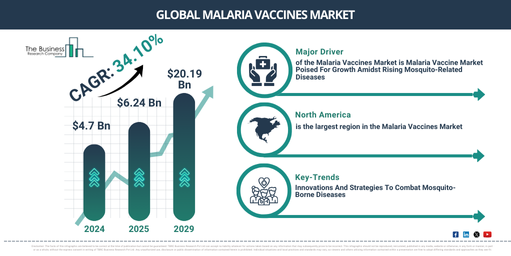
    In recent years, the malaria vaccines market has witnessed rapid growth. With an anticipation to rise from $4.7 billion in 2024 to $6.24 billion in 2025, the market would exhibit a compound annual growth rate (CAGR) of 32.7%. The significant expansion recorded during the historic period has its roots in numerous factors like a high prevalence of malaria, worldwide health initiatives, availability of funding and grants, initiatives towards controlling malaria, and support from government and regulatory bodies.

    The malaria vaccines market size is expected to see exponential growth in the next few years. It will grow to $20.19 billion in 2029 at a compound annual growth rate (CAGR) of 34.1%. The growth in the forecast period can be attributed to global elimination goals, expanded access programs, increasing vaccine coverage, global vaccine alliances, climate change impact. Major trends in the forecast period include technological innovations, public-private partnerships, international collaboration, advancements in vaccine technology, advancements in vaccine technology.

    Download a free sample to assess the report’s scope and structure:

    https://www.thebusinessresearchcompany.com/sample.aspx?id=13698&type=smp

    What Are the Core Market Drivers Propelling Growth in the Malaria Vaccines Industry?

    The malaria vaccine market’s growth is predicted to be driven by an increase in mosquito-borne diseases. These diseases encompass a wide range of illnesses that result from the bite of an infected mosquito. The RTS, S/AS01 (RTS, S) malaria vaccine plays a significant role in mitigating the effects of these diseases by priming the immune system to recognize and combat the parasites. As an example, a World Health Organization report in November 2023 revealed that there were approximately 249 million malaria cases worldwide in 2022, marking an increase of 5 million cases from the previous year. Furthermore, Pakistan saw around 2.6 million cases in 2022, which is a significant leap from the 500,000 cases reported in 2021. Consequently, the increase in mosquito-borne diseases is accelerating the expansion of the malaria vaccine market.

    How Is the Malaria Vaccines Market Segmented?

    The malaria vaccinesmarket covered in this report is segmented –

    1) By Agent: Plasmodium Falciparum; Plasmodium Vivax; Anopheles Species

    2) By Vaccine Type: Pre-Erythrocytic; Erythrocytic; Multi-antigen; Other Vaccines

    3) By Route Of Administration: Intramuscular; Subcutaneous; Intradermal; Other Routes

    4) By Distribution Channel: Public; Private

    Subsegments:

    1) By Plasmodium Falciparum: RTS,S/AS01 Vaccine; Other Experimental Vaccines

    2) By Plasmodium Vivax: Candidate Vaccines In Development; Combination Vaccines

    3) By Anopheles Species: Transmission-Blocking Vaccines; Vector Control Approaches

    Request customized data on this market:

    https://www.thebusinessresearchcompany.com/customise?id=13698&type=smp

    Which Regions Are Driving the Next Phase of the Malaria Vaccines Market Growth?

    North America was the largest region in the malaria vaccines market in 2024. Asia-Pacific is expected to be the fastest growing region in the forecast period. The regions covered in the malaria vaccines market report are Asia-Pacific, Western Europe, Eastern Europe, North America, South America, Middle East, Africa.

    What Key Trends Are Shaping the Future of the Malaria Vaccines Market?

    Several leading companies within the malaria vaccine market are forging innovative products, such as child-specific malaria vaccines, in an effort to broaden their consumer base, accelerate sales, and boost revenue. These vaccines, developed for mosquito-transmitted diseases, are immuno-formulations aimed at preventing the diseases carried by mosquitoes. They specifically target Plasmodium falciparum, which is the most lethal malaria parasite worldwide and particularly predominant in Africa. For instance, Malawi, an East African nation, in conjunction with the World Health Organization, an intergovernmental entity based in Switzerland, rolled out Africa’s inaugural child-focused malaria vaccine in November 2022. The unique appeal of the RTSS vaccine, designed for young children, rests in its potential to reduce fatalities from mosquito-induced disease. The vaccine has already been piloted on over a million children in Ghana, Kenya, and Malawi. Despite its modest effectiveness rate of 30%, there is hopeful speculation that it could help save the lives of the 400,000 people who die from malaria annually.

    View the full report here:

    https://www.thebusinessresearchcompany.com/report/malaria-vaccines-global-market-report

    How Is the Malaria Vaccines Market Defined and What Are Its Core Parameters?

    Malaria vaccines are specific vaccines designed to prevent malaria, a potentially deadly mosquito-borne infectious disease caused by parasites from the Plasmodium genus. These vaccines aim to provide immunity against the plasmodium parasites that cause malaria.

    Purchase the full report and get a swift delivery:

    https://www.thebusinessresearchcompany.com/purchaseoptions.aspx?id=13698

    About The Business Research Company:

    With over 15000+ reports from 27 industries covering 60+ geographies, The Business Research Company has built a reputation for offering comprehensive, data-rich research and insights. Armed with 1,500,000 datasets, the optimistic contribution of in-depth secondary research, and unique insights from industry leaders, you can get the information you need to stay ahead in the game.

    Get in touch with us:

    The Business Research Company: https://www.thebusinessresearchcompany.com/

    Americas +1 310-496-7795

    Europe +44 7882 955267

    Asia & Others +44 7882 955267 & +91 8897263534

    Email us at info@tbrc.info

    Follow us on:

    LinkedIn: https://in.linkedin.com/company/the-business-research-company

    YouTube: https://www.youtube.com/channel/UC24_fI0rV8cR5DxlCpgmyFQ

    Global Market Model: https://www.thebusinessresearchcompany.com/global-market-model

  • Strong CAGR to Propel in the Major Depressive Disorder Market and Beyond upto $7.14 Billion by 2029

    Strong CAGR to Propel in the Major Depressive Disorder Market and Beyond upto $7.14 Billion by 2029

    Claim your 30% discount on Global Market Reports with code ONLINE30. Limited time only.

    How Fast Is The Major Depressive Disorder Market Expected to Grow Between 2025 And 2029?

    There has been a stable expansion in the market size for major depressive disorder over the recent years. An increase from $6.12 billion in 2024 to $6.26 billion in 2025 is expected, with a compound annual growth rate (CAGR) of 2.3%. This increase during the historic phase can be credited to advancements in pharmaceuticals, awareness about mental health, psychological therapies, and initiatives in public health.

    The major depressive disorder market size is expected to see steady growth in the next few years. It will grow to $7.14 billion in 2029 at a compound annual growth rate (CAGR) of 3.4%. The growth in the forecast period can be attributed to precision medicine, telepsychiatry and teletherapy, novel treatment modalities, global expansion of mental health services. Major trends in the forecast period include early intervention, peer support and online communities, holistic approaches, resilience and coping strategies.

    Download a free sample to assess the report’s scope and structure:

    https://www.thebusinessresearchcompany.com/sample.aspx?id=13042&type=smp

    Which Primay Drivers Are Accelerating Growth in the Major Depressive Disorder Market?

    The escalation in instances of substance misuse and alcohol addiction is anticipated to drive the expansion of the major depressive disorder market. Substance and alcohol addiction reference harmful and excessive usage patterns of various substances, including alcohol, leading to detrimental physical, psychological and social results. Major depressive disorder often occurs alongside this, and the coexistence of the two can cause a significant escalation in the risk of physical and mental damage. For example, a survey issued in July 2024 by the Substance Abuse and Mental Health Services Administration, a department of health and human services in the US, revealed that 3.1% of individuals (equivalent to 8.9 million) abused opioids in 2023. Moreover, 21.8% of people 12 years or older used marijuana, making it the most frequently misused illegal drug. Furthermore, in the previous month, 9.4% of those aged 12 or older had used nicotine vapes, rising from 8.3% in 2022. Hence, the escalation in the frequency of substance misuse and alcohol addiction is fueling the expansion of the major depressive disorder market.

    Which Primary Segments of the Major Depressive Disorder Market Are Driving Growth and Industry Transformations?

    The major depressive disordermarket covered in this report is segmented –

    1) By Treatment: Psychotherapy; Medications; Electroconvulsive Therapy (ECT); Transcranial Magnetic Stimulation (TMS); Other Treatments

    2) By Diagnosis: Physical Examinations; Laboratory Tests; Psychiatric Evaluations; Diagnostic And Statistical Manual of Mental Disorders (DSM-5); Other Diagnosis

    3) By End-User: Clinics; Hospitals; Other End-Users

    Subsegments:

    1) By Psychotherapy: Cognitive Behavioral Therapy (CBT); Interpersonal Therapy (IPT); Dialectical Behavior Therapy (DBT); Psychodynamic Therapy

    2) By Medications: Selective Serotonin Reuptake Inhibitors (SSRIs); Serotonin and Norepinephrine Reuptake Inhibitors (SNRIs); Tricyclic Antidepressants (TCAs); Monoamine Oxidase Inhibitors (MAOIs); Atypical Antidepressants

    3) Electroconvulsive Therapy (ECT): Unilateral ECT; Bilateral ECT; Modified ECT

    4) Transcranial Magnetic Stimulation (TMS): Repetitive Transcranial Magnetic Stimulation (rTMS); Deep Transcranial Magnetic Stimulation (dTMS); Theta Burst Stimulation (TBS); Navigated Brain Stimulation (nTMS)

    5) Other: Cognitive Behavioral Therapy (CBT); Psychodynamic Therapy; Interpersonal Therapy (IPT); Vagus Nerve Stimulation (VNS); Ketamine Therapy; Bright Light Therapy; Psychedelic-Assisted Therapy; Medication (Antidepressants)

    Request customized data on this market:

    https://www.thebusinessresearchcompany.com/customise?id=13042&type=smp

    Which Regions Are Key Players in the Growth of the #Which Primay Drivers Are Accelerating Growth in the Major Depressive Disorder Market?# Market?

    North America was the largest region in the major depressive disorder market in 2024. The regions covered in major depressive disorder market report are Asia-Pacific, Western Europe, Eastern Europe, North America, South America, Middle East and Africa.

    Which Technological Trends Are Reshaping the Major Depressive Disorder Industry Dynamics?

    The focus of leading firms in the major depressive disorder market is to gain an edge over competitors by creating and receiving approval for innovative products. As the demand for safer and more effective treatments rises, there has been an increase in drug approvals for the treatment of major depressive disorders, including VRAYLAR (cariprazine). In December 2022, the US-based pharmaceutical company, AbbVie Inc., obtained approval from the Food and Drug Administration (FDA) to use VRAYLAR (cariprazine) as a supplemental therapy to antidepressants for adults suffering from major depressive disorder (MDD). Designed as an unconventional antipsychotic medication, VRAYLAR, which adjusts dopamine and serotonin concentrations in the brain, became the first of its kind approved for additional treatment for major depressive disorder. Moreover, VRAYLAR comes in a capsule that is taken once a day.

    View the full report here:

    https://www.thebusinessresearchcompany.com/report/major-depressive-disorder-global-market-report

    What Parameters Are Used to Define the Major Depressive Disorder Market?

    Major depressive disorder refers to a mood disorder or depression that causes a persistent feeling of sadness and loss of interest, which can interfere with daily activities such as sleeping, eating, or working. It goes beyond normal fluctuations in mood and can significantly impact a person’s thoughts, feelings, behavior and physical well-being. The treatment for major depressive disorder involves several medical interventions that support the emotional well-being of an individual.

    Purchase the full report and get a swift delivery:

    https://www.thebusinessresearchcompany.com/purchaseoptions.aspx?id=13042

    About The Business Research Company:

    With over 15000+ reports from 27 industries covering 60+ geographies, The Business Research Company has built a reputation for offering comprehensive, data-rich research and insights. Armed with 1,500,000 datasets, the optimistic contribution of in-depth secondary research, and unique insights from industry leaders, you can get the information you need to stay ahead in the game.

    Get in touch with us:

    The Business Research Company: https://www.thebusinessresearchcompany.com/

    Americas +1 310-496-7795

    Europe +44 7882 955267

    Asia & Others +44 7882 955267 & +91 8897263534

    Email us at info@tbrc.info

    Follow us on:

    LinkedIn: https://in.linkedin.com/company/the-business-research-company

    YouTube: https://www.youtube.com/channel/UC24_fI0rV8cR5DxlCpgmyFQ

    Global Market Model: https://www.thebusinessresearchcompany.com/global-market-model

  • Macular Edema and Macular Degeneration Market Valuation Expected To Reach $13.44 Billion By 2029, Growing At A Rate Of 6.8%

    Macular Edema and Macular Degeneration Market Valuation Expected To Reach $13.44 Billion By 2029, Growing At A Rate Of 6.8%

    Claim your 30% discount on Global Market Reports with code ONLINE30. Limited time only.

    What Are the Key Projections for the CAGR of the Macular Edema and Macular Degeneration Market Size From 2025 to 2034?

    The market size for macular edema and macular degeneration has seen significant expansion in the past few years. Its size is projected to rise from $9.65 billion in 2024 to $10.33 billion in 2025, averaging a compound annual growth rate (CAGR) of 7.0%. Factors driving growth in the historical period include an increase in the elderly population, high rates of diabetes, heightened awareness and early detection, global steps toward improved eye health, advances in pharmaceuticals, and reinforced patient advocacy and support.

    The macular edema and macular degeneration market size is expected to see strong growth in the next few years. It will grow to $13.44 billion in 2029 at a compound annual growth rate (CAGR) of 6.8%. The growth in the forecast period can be attributed to personalized medicine approaches, rising awareness in emerging markets, focus on combination therapies, integration with teleophthalmology services, global aging demographics. Major trends in the forecast period include advancements in sustained-release drug delivery, integration of gene therapies, development of novel imaging technologies, personalized treatment approaches based on biomarkers, teleophthalmology for remote monitoring, advancements in artificial intelligence for diagnostics.

    Download a free sample to assess the report’s scope and structure:

    https://www.thebusinessresearchcompany.com/sample.aspx?id=13479&type=smp

    Which Factors and External Forces Are Driving Demand in the Macular Edema and Macular Degeneration Market?

    The growth of the macular edema and macular degeneration market is anticipated to be fueled by an increasing diabetic population. Diabetes, a long-term medical condition, brings high blood sugar levels and can harm the eye’s blood vessels, potentially leading to macular edema and macular degeneration. For example, The National Health Service (NHS England), a public healthcare system in the UK, reported in June 2024 that the count of people identified with pre-diabetes rose to 3,615,330 in 2023, showing an 18% rise from 3,065,825 in 2022. Even more, there was nearly a 25% increase in cases among those under 40, increasing from 173,166 in 2022 to 216,440 in 2023. Thus, the proliferation of the diabetic population is acting as a catalyst for the growth of the macular edema and macular degeneration market.

    Which Segments in the Macular Edema and Macular Degeneration Offer the Most Growth?

    The macular edema and macular degenerationmarket covered in this report is segmented –

    1) By Treatment Type: Drug Therapy; Laser Treatment

    2) By Application: Macular Edema; Diabetic Macular Edema (DME); Cystoid Macular Edema (CME); Macular Degeneration; Dry age-related macular degeneration; Wet age-related macular degeneration

    3) By End User: Hospitals; Clinics; Other End Users

    Subsegments:

    1) By Drug Therapy: Anti-VEGF (Vascular Endothelial Growth Factor) Injections; Steroid Injections; Oral Medications; Combination Therapy (Anti-VEGF + Steroids)

    2) By Laser Treatment: Focal Laser Photocoagulation; Panretinal Photocoagulation (PRP); Subthreshold Laser Therapy; MicroPulse Laser Therapy

    Request customized data on this market:

    https://www.thebusinessresearchcompany.com/customise?id=13479&type=smp

    What Are the Fastest-Growing Geographies in the #Which Factors and External Forces Are Driving Demand in the Macular Edema and Macular Degeneration Market?# Market?

    North America was the largest region in the macular edema and macular degeneration market in 2024. The regions covered in the macular edema and macular degeneration market report are Asia-Pacific, Western Europe, Eastern Europe, North America, South America, Middle East, Africa.

    Which Cutting-Edge Market Trends Are Expected to Drive theMacular Edema and Macular Degeneration Market’s Growth?

    Leading firms in the macular edema and macular degeneration market are striving to enhance their market profitability by creating innovative products such as Vabysmo (faricimab-svoa). This drug is utilized to treat neovascular age-related macular degeneration (nAMD) and diabetic macular edema (DME). In January 2022, Genentech Inc., a biotech company based in the US, received FDA approval for Vabysmo (faricimab-svoa). It’s a bispecific antibody that functions by targeting the vascular endothelial growth factor (VEGF) and angiopoietin 2 (Ang-2), marking it as the first dual-action monoclonal antibody for both conditions. Faricimab has the potential to be a game-changer in the treatment of nAMD and DME, and its approval by the FDA and EU signifies a significant achievement for both Genentech and Roche.

    View the full report here:

    https://www.thebusinessresearchcompany.com/report/macular-edema-and-macular-degeneration-global-market-report

    What Are the Key Elements That Define the Macular Edema and Macular Degeneration Market?

    Macular edema and macular degeneration are two different eye conditions that can affect vision. Macular edema is swelling in the part of the retina at the back of the eye, which can cause blurry vision. Macular degeneration is a condition that affects the macula, a part of the retina at the back of the eye that is responsible for central vision. They can be caused by many different conditions, including diabetic retinopathy, retinal vein occlusion, and inflammation, and include age, genetics, smoking, high blood pressure, and obesity.

    Purchase the full report and get a swift delivery:

    https://www.thebusinessresearchcompany.com/purchaseoptions.aspx?id=13479

    About The Business Research Company:

    With over 15000+ reports from 27 industries covering 60+ geographies, The Business Research Company has built a reputation for offering comprehensive, data-rich research and insights. Armed with 1,500,000 datasets, the optimistic contribution of in-depth secondary research, and unique insights from industry leaders, you can get the information you need to stay ahead in the game.

    Get in touch with us:

    The Business Research Company: https://www.thebusinessresearchcompany.com/

    Americas +1 310-496-7795

    Europe +44 7882 955267

    Asia & Others +44 7882 955267 & +91 8897263534

    Email us at info@tbrc.info

    Follow us on:

    LinkedIn: https://in.linkedin.com/company/the-business-research-company

    YouTube: https://www.youtube.com/channel/UC24_fI0rV8cR5DxlCpgmyFQ

    Global Market Model: https://www.thebusinessresearchcompany.com/global-market-model
  • Artificial Intelligence (AI) In Remote Patient Monitoring Market Valuation Expected To Reach $6.49 Billion By 2029, Growing At A Rate Of 23.5%

    Artificial Intelligence (AI) In Remote Patient Monitoring Market Valuation Expected To Reach $6.49 Billion By 2029, Growing At A Rate Of 23.5%

    Claim your 30% discount on Global Market Reports with code ONLINE30. Limited time only.

    #How Has the Artificial Intelligence (AI) In Remote Patient Monitoring Market Growth Performance Trended Historically, And What Lies Ahead?#_x000D_

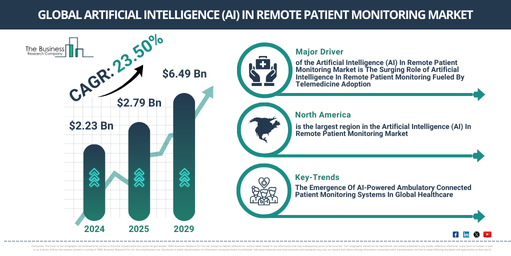
    Recent years have seen an exponential growth in the market size of artificial intelligence (AI) in remote patient monitoring. The market is projected to expand from $2.23 billion in 2024 to $2.79 billion in 2025, indicating a compound annual growth rate (CAGR) of 25.1%. This remarkable growth during the historic period is a result of various factors including the rising rates of chronic illness, improvements in data security, the advent of AI-centric applications which improve patient involvement, amalgamation with electronic health records (EHR), and the paramount need to reduce expenses in healthcare._x000D_

    _x000D_

    The market size for artificial intelligence (AI) in remote patient monitoring is predicted to expand significantly in the forthcoming years, with a projected value of$6.49 billion in 2029,” and a compound annual growth rate (CAGR) of 23.5%. The expected growth during the forecast period can be linked to various factors, including global health issues, regulatory backing, ongoing advancements in AI-driven diagnostic applications, an increase in telehealth utilization, and future strides in predictive analytics. Major trends set for the forecast period encompass wearable technology, enhancements in AI algorithms, and machine learning methods, data protection and cybersecurity concerns, along with individualized medical treatment and planning._x000D_

    _x000D_

    #Download a free sample to assess the report’s scope and structure:#_x000D_

    https://www.thebusinessresearchcompany.com/sample.aspx?id=13791&type=smp_x000D_

    _x000D_

    #Which Factors and External Forces Are Driving Demand in the Artificial Intelligence (AI) In Remote Patient Monitoring Market?#_x000D_

    The surge in telemedicine usage is predicted to boost the expansion of artificial intelligence (AI) in the remote patient monitoring market in the forthcoming years. Telemedicine is defined as the application of telecommunications technologies such as video conferencing, telephonic conversations, and virtual messaging to deliver healthcare services from a distance. When combined with telemedicine, AI in remote patient monitoring can assess this data in real time, identifying minute discrepancies and alerting healthcare staff about potential complications before they escalate into emergencies. For example, a 2022 survey by Rock Health, a non-profit organization located in the US, revealed that in February 2023, 80% of survey participants stated they had used telemedicine services at some point, reflecting an 8 percentage point increase from 72% in 2021. Consequently, the widespread adoption of telemedicine is anticipated to fuel the growth of artificial intelligence (AI) in the remote patient monitoring market._x000D_

    _x000D_

    #Which Segments in the Artificial Intelligence (AI) In Remote Patient Monitoring Offer the Most Growth?#_x000D_

    The artificial intelligence (AI) in remote patient monitoringmarket covered in this report is segmented – _x000D_

    _x000D_

    1) By Solution: Software; Hardware; Services_x000D_

    2) By Product: Vital Monitors; Special Monitors; Other Products_x000D_

    3) By Technology: Natural Language Processing; Machine Learning; Querying Method; Speech Recognition_x000D_

    4) By Application: Diabetes; Respiratory Issues; Weight Management And Fitness Monitoring; Cancer; Dehydration; Cardiovascular Diseases; Sleep Disorder; Viral Infection; Other Applications_x000D_

    _x000D_

    Subsegments:_x000D_

    1) By Software: Predictive Analytics; Data Management; Monitoring Platforms; Mobile Applications_x000D_

    2) By Hardware: Wearable Devices; Sensors; Medical Devices_x000D_

    3) By Services: Implementation Services; Training And Education Services; Support And Maintenance Services_x000D_

    _x000D_

    #Request customized data on this market:#_x000D_

    https://www.thebusinessresearchcompany.com/customise?id=13791&type=smp_x000D_

    _x000D_

    #What Are the Fastest-Growing Geographies in the #Which Factors and External Forces Are Driving Demand in the Artificial Intelligence (AI) In Remote Patient Monitoring Market?# Market?#_x000D_

    North America was the largest region in the artificial intelligence (AI) in remote patient monitoring market in 2024. Asia-Pacific is expected to be the fastest-growing region in the forecast period. The regions covered in the artificial intelligence (AI) in remote patient monitoring market report are Asia-Pacific, Western Europe, Eastern Europe, North America, South America, Middle East, Africa._x000D_

    _x000D_

    #Which Cutting-Edge Market Trends Are Expected to Drive theArtificial Intelligence (AI) In Remote Patient Monitoring Market’s Growth?#_x000D_

    Significant businesses in the artificial intelligence (AI) in remote patient monitoring market are strategically integrating AI with wearable devices, such as an AI-empowered ambulatory connected patient monitoring system, to gain a competitive edge and improve healthcare services. An AI-empowered ambulatory connected patient monitoring system is a healthcare approach that merges artificial intelligence (AI) with ambulatory monitoring technology for real-time tracking and analysis of a patient’s vital signs and health metrics. For instance, in October 2023, Dozee, a medical equipment manufacturer based out of India, introduced ‘Dozee Pro Ex,’ a state-of-the-art ambulatory connected patient monitoring system intended for global markets. This Indian-made solution includes wireless wearable sensors for continuous monitoring of vital parameters like ECG rhythm, blood pressure, heart rate, oxygen saturation, respiration rate, and temperature. Importantly, ‘Dozee Pro Ex’ features an AI-driven early warning system that scrutinizes vital parameter trends and provides timely alerts regarding possible clinical decline. The objective of this next-gen product is to transform the conventional healthcare system by facilitating 24/7 patient monitoring, irrespective of their location, be it a hospital bed, non-bed spaces, a healthcare facility or their home._x000D_

    _x000D_

    #View the full report here:#_x000D_

    https://www.thebusinessresearchcompany.com/report/artificial-intelligence-ai-in-remote-patient-monitoring-global-market-report_x000D_

    _x000D_

    #What Are the Key Elements That Define the Artificial Intelligence (AI) In Remote Patient Monitoring Market?#_x000D_

    Artificial intelligence (AI) in remote patient monitoring (RPM) refers to the integration of AI technologies into systems designed to monitor and manage the health and well-being of patients remotely. AI is employed to enhance the capabilities of remote monitoring solutions, providing advanced analytics, automation, and intelligent insights for healthcare professionals._x000D_

    _x000D_

    #Purchase the full report and get a swift delivery:#_x000D_

    https://www.thebusinessresearchcompany.com/purchaseoptions.aspx?id=13791_x000D_

    _x000D_

    #About The Business Research Company:#_x000D_

    With over 15000+ reports from 27 industries covering 60+ geographies, The Business Research Company has built a reputation for offering comprehensive, data-rich research and insights. Armed with 1,500,000 datasets, the optimistic contribution of in-depth secondary research, and unique insights from industry leaders, you can get the information you need to stay ahead in the game._x000D_

    _x000D_

    #Get in touch with us:#_x000D_

    The Business Research Company: https://www.thebusinessresearchcompany.com/_x000D_

    Americas +1 310-496-7795_x000D_

    Europe +44 7882 955267_x000D_

    Asia & Others +44 7882 955267 & +91 8897263534_x000D_

    Email us at info@tbrc.info_x000D_

    _x000D_

    #Follow us on:#_x000D_

    _x000D_

    LinkedIn: https://in.linkedin.com/company/the-business-research-company_x000D_

    YouTube: https://www.youtube.com/channel/UC24_fI0rV8cR5DxlCpgmyFQ_x000D_

    Global Market Model: https://www.thebusinessresearchcompany.com/global-market-model

  • Lipid Nanoparticles Market Forecast Reaching $2.16 Billion by 2029 at 15.6% CAGR

    Lipid Nanoparticles Market Forecast Reaching $2.16 Billion by 2029 at 15.6% CAGR

    Claim your 30% discount on Global Market Reports with code ONLINE30. Limited time only.

    How Has The Lipid Nanoparticles Market Growth Evolved From 2024 To 2025, And What’s Ahead?

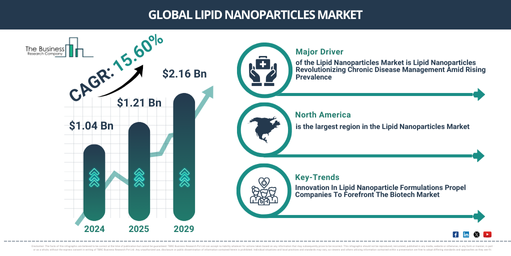
    The size of the lipid nanoparticles market has experienced significant expansion in the last few years. The market is projected to expand from $1.04 billion in 2024 to $1.21 billion in 2025, with a compound annual growth rate (CAGR) of 17.0%. This previous growth can be linked to an increased emphasis on the creation of LNP-based medications, robust investment in research facilities, and mounting healthcare spending.

    The lipid nanoparticles market size is expected to see rapid growth in the next few years. It will grow to $2.16 billion in 2029 at a compound annual growth rate (CAGR) of 15.6%. The growth in the forecast period can be attributed to rising prevalence of chronic diseases, increasing demand for RNA-based therapeutics, increasing demand for advanced gene delivery systems, this increasing focus on personalized medicine, increasing investment in research and development. Major trends in the forecast period include advancements in drug delivery technologies, innovative drug delivery systems, integration of artificial intelligence in LNP development.

    Download a free sample to assess the report’s scope and structure:

    https://www.thebusinessresearchcompany.com/sample.aspx?id=15210&type=smp

    Which Major Market Drivers Are Expected to Boost the Growth Potential of the Lipid Nanoparticles Market?

    The spike in the occurrence of chronic ailments is spurring the expansion of the lipid nanoparticles (LNPs) market. Chronic diseases are conditions that persist for an extended period, typically over three months, and encompass ailments like diabetes, hypertension, and others. The escalation in chronic disease incidence is attributable to factors such as poor health habits, ageing demography, lifestyle preferences, tobacco usage, unhealthy nutrition, sedentary lifestyle, and excessive alcohol intake. Lipid nanoparticles (LNPs) present a feasible solution to the chronic disease challenge due to their superior ability to amplify the effectiveness of mRNA therapeutics and vaccines. LNPs augment the remedy landscape for numerous chronic diseases, infusing hope for advanced management techniques and possibly improved patient outcomes. For instance, the National Health Service, a UK-based government body, reported in June 2024, that in 2023, the NHS detected an additional half a million (549,000) individuals in England vulnerable to developing type 2 diabetes. This finding pushed the total count of people with non-diabetic hyperglycemia, or pre-diabetes, registered with a GP to 3,615,330. It signifies a substantial upswing compared to the 3,065,825 recorded in 2022, indicating a near 20% increase. Consequently, the escalating occurrence of chronic diseases is propelling the expansion of the lipid nanoparticle market.

    Which Key Market Segments Comprise the Lipid Nanoparticles Market and Drive Its Revenue Growth?

    The lipid nanoparticlesmarket covered in this report is segmented –

    1) By Type: Nano-Structured Lipid Carriers (NLCs); Solid Lipid Nanoparticles (SLNs); Other Types

    2) By Application: Research; Therapeutics

    3) By End User: Pharmaceutical And Biotechnology Companies; Academics And Research Centers; Other End Users

    Subsegments:

    1) By Nano-Structured Lipid Carriers (NLCs): Hard NLCs; Soft NLCs

    2) By Solid Lipid Nanoparticles (SLNs): Conventional SLNs; Modified SLNs

    3) By Other Types: Lipid-Core Micelles; Liposomes

    Request customized data on this market:

    https://www.thebusinessresearchcompany.com/customise?id=15210&type=smp

    Which Areas Are Leading Regions in the Lipid Nanoparticles Market Expansion Across the Globe?

    North America was the largest region in the lipid nanoparticles (LNPs) market in 2024. The regions covered in the lipid nanoparticles (LNPs) market report are Asia-Pacific, Western Europe, Eastern Europe, North America, South America, Middle East, Africa.

    What Are the Key Market Trends in theLipid Nanoparticles Market Over the Coming Years?

    Innovating circular RNA (circRNA) and lipid nanoparticle (LNP) formulations are key strategies utilized by big players in the lipid nanoparticles (LNPs) market to stay competitive. The enhancement in the scope of circRNA and LNP formulation expands the array of available RNA formats, with circRNA, a single-stranded RNA that forms a covalently closed loop, included. For instance, GenScript Biotech, an American life sciences firm, introduced the formulation of circRNA and LNP to its reagent services in September 2023. These added services underline GenScript’s dedication to offering protein replacement therapies, gene and cell therapy. They have been made instantly accessible as part of GenScript’s contract-manufactured reagent services. The benefits of circRNA over conventional linear RNA include improved stability, slower degradation, and the ability to reach optimal therapeutic protein levels with a lower dosage.

    View the full report here:

    https://www.thebusinessresearchcompany.com/report/lipid-nanoparticles-global-market-report

    How Is the Lipid Nanoparticles Market Conceptually Defined?

    Lipid nanoparticles (LNPs) refer to the type of nanoparticle composed primarily of lipids, which are fatty substances that are essential components of cell membranes. These nanoparticles are typically composed of a lipid bilayer or a solid lipid matrix and are characterized by their small size, generally ranging from 10 to 1000 nanometers in diameter.

    Purchase the full report and get a swift delivery:

    https://www.thebusinessresearchcompany.com/purchaseoptions.aspx?id=15210

    About The Business Research Company:

    With over 15000+ reports from 27 industries covering 60+ geographies, The Business Research Company has built a reputation for offering comprehensive, data-rich research and insights. Armed with 1,500,000 datasets, the optimistic contribution of in-depth secondary research, and unique insights from industry leaders, you can get the information you need to stay ahead in the game.

    Get in touch with us:

    The Business Research Company: https://www.thebusinessresearchcompany.com/

    Americas +1 310-496-7795

    Europe +44 7882 955267

    Asia & Others +44 7882 955267 & +91 8897263534

    Email us at info@tbrc.info

    Follow us on:

    LinkedIn: https://in.linkedin.com/company/the-business-research-company

    YouTube: https://www.youtube.com/channel/UC24_fI0rV8cR5DxlCpgmyFQ

    Global Market Model: https://www.thebusinessresearchcompany.com/global-market-model
  • AR/VR Medical Simulation Market Forecast Reaching $7.84 Billion by 2029 at 18.6% CAGR

    AR/VR Medical Simulation Market Forecast Reaching $7.84 Billion by 2029 at 18.6% CAGR

    Claim your 30% discount on Global Market Reports with code ONLINE30. Limited time only.

    #What Are the Projected Market Size and Growth Rates for the AR/VR Medical Simulation Market From 2025 To 2029?#_x000D_

    In recent years, the market size of the AR/VR medical simulation has experienced rapid growth. Projections forecast an increase from $3.3 billion in 2024 to $3.96 billion in 2025, supporting a compound annual growth rate (CAGR) of 19.9%. This growth during the past period is attributable to several factors. These include an emphasis on resuscitation training, a heightened demand for minimally invasive surgical procedures, an increase in remote healthcare solutions, a surge in pediatric critical care training, an elevated demand for healthcare services, and an upswing in the utilization of medical simulators._x000D_

    _x000D_

    The market size of ar/vr medical simulation is predicted to experience speedy expansion in the upcoming years, with an estimated value of$7.84 billion by 2029, and exhibiting a compound annual growth rate (CAGR) of 18.6%. The acceleration in growth during the projected period is due to factors such as the heightened demand for medical training solutions, escalating healthcare spending, growing population, increasing chronic ailments, and a strong emphasis on patient safety and high-quality care. The upcoming period will see dominant trends such as computer-dependent simulations, developments in graphical and processing strength, virtual reality (VR) surgical simulations, advancements in medical imaging technology, the downsizing and portability of technology, and progress in surgical instruments._x000D_

    _x000D_

    #Download a free sample to assess the report’s scope and structure:#_x000D_

    https://www.thebusinessresearchcompany.com/sample.aspx?id=15117&type=smp_x000D_

    _x000D_

    #Which Major Market Drivers Are Expected to Boost the Growth Potential of the AR/VR Medical Simulation Market?#_x000D_

    Increased surgical procedures are anticipated to boost the AR/VR medical simulation market’s expansion. These procedures, which involve operating on a patient to address an illness or condition, are growing due to factors such as the aging populace, advancements in medical techniques, and the rising impact of long-term diseases. AR and VR medical simulations are being increasingly used in surgeries to enhance training, better surgical results, and improve patient care, offering a productive and safe platform for learning, skill enhancement, and pre-surgical preparation. As reported by the Aesthetic Society, a US-based organization dedicated to plastic surgery and cosmetic medicine, in March 2023, the total surgical procedures saw a growth of 2.9% from 2022 to 2023 and an uptick of 10.2% from 2019 to 2023. Consequently, the rise in surgical procedures is fueling the growth of the AR/VR medical simulation market._x000D_

    _x000D_

    #Which Key Market Segments Comprise the AR/VR Medical Simulation Market and Drive Its Revenue Growth?#_x000D_

    The ar/vr medical simulationmarket covered in this report is segmented – _x000D_

    _x000D_

    1) By Product And Service: Medical Simulation Anatomical Models; Web Based Simulation; Medical Simulation Software; Simulation Training Services_x000D_

    2) By Application: Medical Education; Patient Care Management; Other Applications_x000D_

    3) By End-Users: Hospitals And Healthcare Institutions; Medical Schools And Universities; Military Organizations; Other End-Users_x000D_

    _x000D_

    Subsegments:_x000D_

    1) By Medical Simulation Anatomical Models: Physical Models; AR Or VR Models_x000D_

    2) By Web-Based Simulation: Online Training Platforms; Virtual Learning Modules_x000D_

    3) By Medical Simulation Software: Patient Simulation Software; Surgical Simulation Software; Scenario-Based Training Software_x000D_

    4) By Simulation Training Services: Instructor-Led Training; Remote Simulation Training; Technical Support And Maintenance_x000D_

    _x000D_

    #Request customized data on this market:#_x000D_

    https://www.thebusinessresearchcompany.com/customise?id=15117&type=smp_x000D_

    _x000D_

    #Which Areas Are Leading Regions in the AR/VR Medical Simulation Market Expansion Across the Globe?#_x000D_

    North America was the largest region in the AR/VR medical simulation market in 2024. Asia-Pacific is expected to be the fastest growing region in the forecast period. The regions covered in the AR/VR medical simulation market report are Asia-Pacific, Western Europe, Eastern Europe, North America, South America, Middle East, Africa._x000D_

    _x000D_

    #What Are the Key Market Trends in theAR/VR Medical Simulation Market Over the Coming Years?#_x000D_

    Leading players in the AR/VR medical simulation industry are striving to create pioneering solutions like medical VR training platforms in their quest for market advantage. Such a platform is a digital system employing VR technology to produce lifelike medical scenarios, operations, and environments for educational, training, and skills cultivation purposes in the medical field. For example, in March 2022, ORamaVR Inc., a company based in Switzerland with a specialty in medical VR training tools, ushered in MAGES SDK which is the world’s inaugural ultra-realistic VR authoring tool created for quick surgical instruction and evaluation. This tool permits any organization to devise its unique custom-made medical VR education or demonstration simulation. It offers a way for users to create VR psychomotor simulation prototypes of medical procedures with negligible programming, hence ideal for swift VR simulation creation. It accommodates multiuser engagement permitting one active instructor-user and numerous observers. Its collaborative mode has been evaluated and verified to be compatible with a minimum of 20 users from varied countries and using different headsets._x000D_

    _x000D_

    #View the full report here:#_x000D_

    https://www.thebusinessresearchcompany.com/report/ar-or-vr-medical-simulation-global-market-report_x000D_

    _x000D_

    #How Is the AR/VR Medical Simulation Market Conceptually Defined?#_x000D_

    AR/VR medical simulation involves the use of immersive technologies to create realistic virtual environments and scenarios for medical education and training. These simulations, by giving hands-on experience as well as opportunities for repetition and feedback, can increase clinical skills, information retention, confidence, and ultimately patient outcomes._x000D_

    _x000D_

    #Purchase the full report and get a swift delivery:#_x000D_

    https://www.thebusinessresearchcompany.com/purchaseoptions.aspx?id=15117_x000D_

    _x000D_

    #About The Business Research Company:#_x000D_

    With over 15000+ reports from 27 industries covering 60+ geographies, The Business Research Company has built a reputation for offering comprehensive, data-rich research and insights. Armed with 1,500,000 datasets, the optimistic contribution of in-depth secondary research, and unique insights from industry leaders, you can get the information you need to stay ahead in the game._x000D_

    _x000D_

    #Get in touch with us:#_x000D_

    The Business Research Company: https://www.thebusinessresearchcompany.com/_x000D_

    Americas +1 310-496-7795_x000D_

    Europe +44 7882 955267_x000D_

    Asia & Others +44 7882 955267 & +91 8897263534_x000D_

    Email us at info@tbrc.info_x000D_

    _x000D_

    #Follow us on:#_x000D_

    _x000D_

    LinkedIn: https://in.linkedin.com/company/the-business-research-company_x000D_

    YouTube: https://www.youtube.com/channel/UC24_fI0rV8cR5DxlCpgmyFQ_x000D_

    Global Market Model: https://www.thebusinessresearchcompany.com/global-market-model

  • $432.91 Billion Forecast for Life Sciences BPO Market by 2029, Backed by Demand and Innovation

    $432.91 Billion Forecast for Life Sciences BPO Market by 2029, Backed by Demand and Innovation

    Claim your 30% discount on Global Market Reports with code ONLINE30. Limited time only.

    What is the Projected CAGR for the Life Sciences BPO Market Size from 2025 to 2034?

    The size of the life sciences BPO market has seen a swift expansion in the recent past. It’s projected to surge from $266.44 billion in 2024 to $294.54 billion in 2025, boasting a compound annual growth rate (CAGR) of 10.5%. The unprecedented growth during this historical period can be ascribed to emphasis on healthcare solutions centered around the patient, escalating data management difficulties, competitive pressures in the market, time-to-market constraints, globalization, expansion, and the intricacies of clinical trials.

    The life sciences bpo market size is expected to see rapid growth in the next few years. It will grow to $432.91 billion in 2029 at a compound annual growth rate (CAGR) of 10.1%. The growth in the forecast period can be attributed to increasing demand for drug development support, focus on real-world evidence and data analytics, globalization and expansion strategies, increased emphasis on precision medicine, rise in outsourcing clinical trial management. Major trends in the forecast period include ai and advanced analytics integration, virtual trials and remote monitoring, focus on regulatory compliance solutions, precision medicine and personalized healthcare, blockchain and data security solutions.

    Download a free sample to assess the report’s scope and structure:

    https://www.thebusinessresearchcompany.com/sample.aspx?id=13293&type=smp

    What Are the Core Growth Drivers Propelling the Life Sciences BPO Market Forward?

    The growth of the life sciences BPO market is expected to be driven by rising healthcare expenditures. This refers to the aggregate sum allocated for healthcare-related goods and services, covering a range of categories that include medical treatments, prescriptions, hospital accommodations, physician appointments, medical equipment, health insurance, and associated healthcare costs. Life sciences BPO solutions assist healthcare organizations in providing essential drugs, devices, and services to patients. Increased healthcare investments further boost their capacity to manage costs, accelerate development, expedite the market entry of new treatments, and lower research and development costs. For example, the Centers for Medicare & Medicaid Services, a federal agency in the U.S, reported that healthcare spending in the U.S rose by 4.1% in 2022, totalling $4.5 trillion. This growth pace surpasses the 3.2% growth observed in 2021. Consequently, the escalating healthcare spending is fuelling the expansion of the life sciences BPO market.

    What Segment Types Define the Life Sciences BPO Market Structure?

    The life sciences bpomarket covered in this report is segmented –

    1) By Services: Pharmaceutical Outsourcing; Medical Devices Outsourcing; Contract Sales And Marketing Outsourcing; Other Services

    2) By Application: Clinical Testing Methods; Environmental Testing Methods; Other Applications

    3) By End User: Hospitals And Clinics; Diagnostic Laboratories; Other End Users

    Subsegments:

    1) By Pharmaceutical Outsourcing: Drug Development Services; Clinical Trials Management; Regulatory Affairs Services; Pharmacovigilance

    2) By Medical Devices Outsourcing: Product Development Services; Regulatory Compliance; Quality Assurance And Testing; Supply Chain Management

    3) By Contract Sales And Marketing Outsourcing: Sales Force Outsourcing; Marketing Strategy Development; Market Access And Pricing Strategies; Promotional Activities

    4) By Other Services: Data Management And Analytics; IT Services; Training And Education; Consulting Services

    Request customized data on this market:

    https://www.thebusinessresearchcompany.com/customise?id=13293&type=smp

    Which Geographic Areas Hold the Strongest Growth Potential in the Life Sciences BPO Market?

    Asia-Pacific was the largest region in the life sciences BPO market in 2024. The regions covered in the life sciences bpo market report are Asia-Pacific, Western Europe, Eastern Europe, North America, South America, Middle East, Africa

    Which Emerging Trends that Are Influencing theLife Sciences BPO Industry Evolution?

    Key players in the life sciences BPO market are leveraging the power of strategic alliances to create breakthrough solutions. Such partnerships enable life sciences BPO entities to pool resources and expertise, amplify R&D capabilities, broaden their market footprint, and hasten commercialization, which ultimately fuels the growth and innovation in the life sciences BPO sector. For example, in March 2024, a collaboration was formed between Cognizant Technology Solutions Corp, a US-based entity, and NVIDIA, another US-based software firm. The objective of this partnership is to expedite the process of drug discovery by harnessing the power of NVIDIA’s BioNeMo generative AI platform. This facilitates quicker, more efficient analysis of complex data sets. Through this partnership, research capabilities are boosted and the speed to market for life-saving therapies is increased.

    View the full report here:

    https://www.thebusinessresearchcompany.com/report/life-sciences-bpo-global-market-report

    What Is the Definition of the Life Sciences BPO Market?

    Life sciences BPO (business process outsourcing) refers to a service that supports life sciences companies in various areas of their business processes. It is delegating specialized tasks such as data management, regulatory adherence, and customer support associated with the life sciences sector to third-party experts.

    Purchase the full report and get a swift delivery:

    https://www.thebusinessresearchcompany.com/purchaseoptions.aspx?id=13293

    About The Business Research Company:

    With over 15000+ reports from 27 industries covering 60+ geographies, The Business Research Company has built a reputation for offering comprehensive, data-rich research and insights. Armed with 1,500,000 datasets, the optimistic contribution of in-depth secondary research, and unique insights from industry leaders, you can get the information you need to stay ahead in the game.

    Get in touch with us:

    The Business Research Company: https://www.thebusinessresearchcompany.com/

    Americas +1 310-496-7795

    Europe +44 7882 955267

    Asia & Others +44 7882 955267 & +91 8897263534

    Email us at info@tbrc.info

    Follow us on:

    LinkedIn: https://in.linkedin.com/company/the-business-research-company

    YouTube: https://www.youtube.com/channel/UC24_fI0rV8cR5DxlCpgmyFQ

    Global Market Model: https://www.thebusinessresearchcompany.com/global-market-model

  • Global Life Science Software Market Projected to Reach $43.09 Billion by 2029 at a CAGR of 14.2%

    Global Life Science Software Market Projected to Reach $43.09 Billion by 2029 at a CAGR of 14.2%

    Claim your 30% discount on Global Market Reports with code ONLINE30. Limited time only.

    What Is the Current and Projected Market Size of the Life Science Software Market Through 2034?

    There has been a swift expansion in the size of the life science software market in the past few years. The market is estimated to surge from $22.31 billion in 2024 to $25.35 billion in 2025, experiencing a compound annual growth rate (CAGR) of 13.6%. Factors, such as the need for compliance with regulations, requirements for data integration and management, the increased call for tailored medicine, clinical trial globalization, and patient-focused approaches can explain the growth witnessed in the historical period.

    The life science software market size is expected to see rapid growth in the next few years. It will grow to $43.09 billion in 2029 at a compound annual growth rate (CAGR) of 14.2%. The growth in the forecast period can be attributed to increased emphasis on real-world evidence (rwe), enhanced cybersecurity measures, integration of artificial intelligence (AI) and machine learning (ml), growing demand for cloud-based solutions, expanded role in precision medicine. Major trends in the forecast period include continued technological advancements, accelerated digital transformation, collaboration and networking, increasing research and development activities, advancements in technology.

    Download a free sample to assess the report’s scope and structure:

    https://www.thebusinessresearchcompany.com/sample.aspx?id=13690&type=smp

    What are the Fundamental Drivers and Innovations Shaping the Life Science Software Market?

    The growth of life science software is expected to be driven by the increasing demand for personalized medicine. Personalized medicine is a distinctive medical methodology that individualizes healthcare decisions and treatments based on particulars such as genetics, lifestyle, and environmental aspects. There’s a need for advanced software solutions to homogenize and assimilate data from a variety of sources, like wearable technology, genetic testing, and electronic health records, for personalized medicine. Life science software is crucial in aiding the analysis and understanding of intricate biological data, thereby, helping researchers and healthcare workers to customize treatment plans according to individual patient traits. As an example, a report published by the Personalized Medicine Coalition (PMC), a nonprofit organization in the United States, in February 2023 stated that personalized medicines made up 35% of newly approved NMEs in 2021 and 12 new approvals in 2022, consistently holding at least 25% of new drug approvals over the last eight years. This represented a considerable rise from less than 10% ten years prior. As a result, the escalating demand for personalized medicine is propelling the expansion of the life science software market.

    How Is the Life Science Software Market Segmented?

    The life science softwaremarket covered in this report is segmented –

    1) By Type: Predictive; Descriptive; Prescriptive

    2) By Deployment: On-Premise; Hosted

    3) By Application: Marketing; Compliance; R&D; Pharmacovigilance; SCM

    4) By End User: Healthcare Institutes; Biopharmaceutical Industry; Medical Devices Industry; Medical Research Centers

    Subsegments:

    1) By Predictive: Predictive Analytics Tools; Risk Assessment Software; Patient Outcome Prediction

    2) By Descriptive: Data Visualization Tools; Reporting Software; Statistical Analysis Software

    3) By Prescriptive: Decision Support Systems; Optimization Tools; Treatment Recommendation Software

    Request customized data on this market:

    https://www.thebusinessresearchcompany.com/customise?id=13690&type=smp

    Which Regions Are Driving the Next Phase of the Life Science Software Market Growth?

    North America was the largest region in the life science software market in 2024. Asia-Pacific is expected to be the fastest-growing region in the forecast period. The regions covered in the life science software market report are Asia-Pacific, Western Europe, Eastern Europe, North America, South America, Middle East, Africa.

    What Key Trends Are Shaping the Future of the Life Science Software Market?

    Leading businesses in the life science software market are incorporating sophisticated technologies such as generative AI, machine learning (ML), and computer-aided drug-design (CADD) to optimize the drug discovery process, increase efficiency, and expedite innovations. Generative AI is used to concoct new molecular structures, whereas ML algorithms sift through extensive datasets to recognize potential drug candidates and forecast their effectiveness. Paired with CADD tools, these advancements permit scientists to digitally simulate and improve drug interactions, greatly accelerating the discovery and creation of potent compounds. For instance, in December 2023, Merck, a German science and technology corporation, introduced a drug discovery tool called AIDDISON. This software, designed to hasten the discovery of innovative medications and streamline the drug development process, operates on AI and ML technologies, enabling the rapid and efficient analysis of monumental amounts of data to pinpoint prospective medication candidates more effectively than traditional methods.

    View the full report here:

    https://www.thebusinessresearchcompany.com/report/life-science-software-global-market-report

    How Is the Life Science Software Market Defined and What Are Its Core Parameters?

    Life science software refers to specialized software applications and platforms designed to support and streamline various processes within the field of life sciences. It is utilized across various domains within the life sciences industry to enhance research, streamline processes and improve overall efficiency.

    Purchase the full report and get a swift delivery:

    https://www.thebusinessresearchcompany.com/purchaseoptions.aspx?id=13690

    About The Business Research Company:

    With over 15000+ reports from 27 industries covering 60+ geographies, The Business Research Company has built a reputation for offering comprehensive, data-rich research and insights. Armed with 1,500,000 datasets, the optimistic contribution of in-depth secondary research, and unique insights from industry leaders, you can get the information you need to stay ahead in the game.

    Get in touch with us:

    The Business Research Company: https://www.thebusinessresearchcompany.com/

    Americas +1 310-496-7795

    Europe +44 7882 955267

    Asia & Others +44 7882 955267 & +91 8897263534

    Email us at info@tbrc.info

    Follow us on:

    LinkedIn: https://in.linkedin.com/company/the-business-research-company

    YouTube: https://www.youtube.com/channel/UC24_fI0rV8cR5DxlCpgmyFQ

    Global Market Model: https://www.thebusinessresearchcompany.com/global-market-model

  • Global Duodenal Ulcer Treatment Market Projected to Reach $141.84 Billion by 2029 at a CAGR of 7.2%

    Global Duodenal Ulcer Treatment Market Projected to Reach $141.84 Billion by 2029 at a CAGR of 7.2%

    Claim your 30% discount on Global Market Reports with code ONLINE30. Limited time only.

    #How Has The Duodenal Ulcer Treatment Market Size Shifted, And What Is the Outlook Through 2034?#_x000D_

    The market for treatments of duodenal ulcers has seen significant growth in the past few years. It’s poised to continue progressing from $99.99 billion in 2024, to reach a size of $107.34 billion in 2025, resulting in a compound annual growth rate (CAGR) of 7.4%. This growing trend in the past can be traced back to various factors such as the rise in preference amongst patients for non-invasive procedures, increased awareness about gastrointestinal health, a rise in the population of cigarette smokers and alcohol or tobacco users, and amplified incorporation of digital health solutions._x000D_

    _x000D_

    The market for duodenal ulcer treatment is projected to experience sensible expansion in the coming years, with a predicted growth to $141.84 billion by 2029, presenting a compound annual growth rate (CAGR) of 7.2%. This expected growth in the forecasted period can be credited to factors such as rising disease incidence, the development of healthcare infrastructure and facilities, heightened awareness of treatment options, a trend towards less invasive procedures, and concerted effort by governments to increase awareness. The forthcoming trend to watch during the forecast period includes technological innovations, the incorporation of probiotics, the use of telemedicine, nutritional therapy, and the incorporation of evidence-based practices._x000D_

    _x000D_

    #Download a free sample to assess the report’s scope and structure:#_x000D_

    https://www.thebusinessresearchcompany.com/sample.aspx?id=18339&type=smp_x000D_

    _x000D_

    #What are the Fundamental Drivers and Innovations Shaping the Duodenal Ulcer Treatment Market?#_x000D_

    The escalation in the population of regular cigarette smokers is projected to fuel the expansion of the duodenal ulcer treatment market. A cigarette smoker, defined as someone who regularly smokes cigarettes made of small rolls of paper filled with tobacco, inhales and exhales resulting smoke. The rise in cigarette consumption can be attributed to cultural impacts, public policy, and socioeconomic conditions. Duodenal ulcer treatment among smokers calls for a holistic approach that integrates specific ulcer therapy, smoking cessation methods, lifestyle changes, and constant tracking to boost healing while minimizing the risk of reoccurrence. As stated by the Office for National Statistics, a government establishment in the UK, approximately 6.4 million adults over 18 were reported as cigarette smokers in 2022, comprising 12.9% of the population. Meanwhile, the 16 to 24 age bracket had the highest rate of e-cigarette usage in 2022, where 15.5% of people in this age group were reported as regular vapers, a rise from 11.1% in 2021. Consequently, the increasing population of cigarette smokers is contributing to the growth of the duodenal ulcer treatment market._x000D_

    _x000D_

    #How Is the Duodenal Ulcer Treatment Market Segmented?#_x000D_

    The duodenal ulcer treatmentmarket covered in this report is segmented – _x000D_

    _x000D_

    1) By Type: Antibiotics; Proton Pump Inhibitors; Antacids; Potassium-Competitive Acid Blockers; H2-Antagonist; Ulcer Protective Drugs; Surgery_x000D_

    2) By Application: Adult; Elderly_x000D_

    3) By Distribution Channel: Hospital Pharmacy; Retail Pharmacy; Online Pharmacy_x000D_

    _x000D_

    Subsegments:_x000D_

    1) By Antibiotics: Amoxicillin; Clarithromycin; Metronidazole; Tetracycline; Levofloxacin _x000D_

    2) By Proton Pump Inhibitors (PPIs): Omeprazole; Esomeprazole; Lansoprazole; Pantoprazole; Rabeprazole _x000D_

    3) By Antacids: Magnesium Hydroxide; Aluminum Hydroxide; Calcium Carbonate; Sodium Bicarbonate _x000D_

    4) By Potassium-Competitive Acid Blockers (P-CABs): Vonoprazan; Tegoprazan _x000D_

    5) By H2-Antagonists (H2 Blockers): Ranitidine; Famotidine; Cimetidine; Nizatidine _x000D_

    6) By Ulcer Protective Drugs: Sucralfate; Misoprostol; Bismuth Subsalicylate _x000D_

    7) By Surgery: Partial Gastrectomy; Vagotomy; Pyloroplasty; Endoscopic Therapy_x000D_

    _x000D_

    _x000D_

    #Request customized data on this market:#_x000D_

    https://www.thebusinessresearchcompany.com/customise?id=18339&type=smp_x000D_

    _x000D_

    #Which Regions Are Driving the Next Phase of the Duodenal Ulcer Treatment Market Growth?#_x000D_

    North America was the largest region in the duodenal ulcer treatment market in 2024. The regions covered in the duodenal ulcer treatment market report are Asia-Pacific, Western Europe, Eastern Europe, North America, South America, Middle East, Africa._x000D_

    _x000D_

    #What Key Trends Are Shaping the Future of the Duodenal Ulcer Treatment Market?#_x000D_

    Leading firms operating in the duodenal ulcer treatment market are prioritizing the creation of novel and unique products, like combi kits for duodenal ulcers and H pylori infection, aimed at improving the treatment of duodenal ulcers. The term ‘combi kit for duodenal ulcer and H. pylori infection’ typically denotes a synergistic treatment route that brings together medicines meant to cure the ulcer and eliminate the H. pylori bacteria. For instance, in April of 2023, Akums Drugs and Pharmaceutical Limited, a pharmaceutical company based in India, introduced a unique Combikit designed to treat duodenal ulcers associated with Helicobacter pylori (H. pylori) infection. The distinguishing attributes of this Combikit contain three powerful drugs: amoxicillin, clarithromycin, and esomeprazole, which effectively work together to block the expansion of H. pylori bacteria and decrease the production of gastric acid, thereby addressing the primary triggers of duodenal ulcers. This Combikit received approval from the Central Drugs Standard Control Organization (CDSCO) for the treatment of duodenal ulcers and the eradication of H. pylori in patients having active or healed peptic ulcers._x000D_

    _x000D_

    #View the full report here:#_x000D_

    https://www.thebusinessresearchcompany.com/report/duodenal-ulcer-treatment-global-market-report_x000D_

    _x000D_

    #How Is the Duodenal Ulcer Treatment Market Defined and What Are Its Core Parameters?#_x000D_

    Duodenal ulcer treatment refers to the therapeutic approaches to healing and managing ulcers in the duodenum, the first part of the small intestine. This treatment involves a combination of medications to reduce acid production and promote healing, lifestyle changes, and, in some cases, interventions to eradicate Helicobacter pylori bacteria, a common cause of duodenal ulcers._x000D_

    _x000D_

    #Purchase the full report and get a swift delivery:#_x000D_

    https://www.thebusinessresearchcompany.com/purchaseoptions.aspx?id=18339_x000D_

    _x000D_

    #About The Business Research Company:#_x000D_

    With over 15000+ reports from 27 industries covering 60+ geographies, The Business Research Company has built a reputation for offering comprehensive, data-rich research and insights. Armed with 1,500,000 datasets, the optimistic contribution of in-depth secondary research, and unique insights from industry leaders, you can get the information you need to stay ahead in the game._x000D_

    _x000D_

    #Get in touch with us:#_x000D_

    The Business Research Company: https://www.thebusinessresearchcompany.com/_x000D_

    Americas +1 310-496-7795_x000D_

    Europe +44 7882 955267_x000D_

    Asia & Others +44 7882 955267 & +91 8897263534_x000D_

    Email us at info@tbrc.info_x000D_

    _x000D_

    #Follow us on:#_x000D_

    _x000D_

    LinkedIn: https://in.linkedin.com/company/the-business-research-company_x000D_

    YouTube: https://www.youtube.com/channel/UC24_fI0rV8cR5DxlCpgmyFQ_x000D_

    Global Market Model: https://www.thebusinessresearchcompany.com/global-market-model