Month: August 2025

  • Critical Market Drivers Shaping the Outlook for Metabolomics Market from 2025-2034: Cancer Prevalence Driving Metabolomics Advancements For Early Diagnosis And Treatment

    Critical Market Drivers Shaping the Outlook for Metabolomics Market from 2025-2034: Cancer Prevalence Driving Metabolomics Advancements For Early Diagnosis And Treatment

    Claim your 30% discount on Global Market Reports with code ONLINE30. Limited time only.

    How Has the Metabolomics Market Growth Performance Trended Historically, And What Lies Ahead?

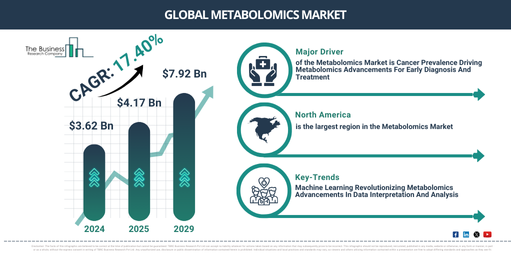
    There has been a swift expansion in the metabolomics market size in the past few years. It is projected to rise from $3.62 billion in 2024 to $4.17 billion in 2025, exhibiting a compound annual growth rate (CAGR) of 15.1%. The historical growth can be linked to progress in healthcare, advancement in drug discovery and development, the identification of disease biomarkers, contributions from academic and research institutions, and advancements in nutrition and food science.

    The market size of metabolomics is anticipated to witness significant expansion in the coming years, specifically reaching to$7.92 billion in 2029″ with a Compound Annual Growth Rate (CAGR) of 17.4%. This growth during the predicted period can be credited largely to factors like bespoke healthcare solutions, safer and more effective drugs, advancements in microbiome and gut health research, environmental and agricultural applications, and regenerative medicine. The period is also likely to see industry trends such as the intersection with other ‘omics’, focused metabolomics studies, single-cell metabolomics, the utilization of data analytics and artificial intelligence, and point-of-care testing.

    Download a free sample to assess the report’s scope and structure:

    https://www.thebusinessresearchcompany.com/sample.aspx?id=2497&type=smp

    What Are the Core Growth Drivers Propelling the Metabolomics Market Forward?

    The escalating rate of cancer occurrence is a key factor propelling the growth of the metabolomics market. Metabolomics assists in identifying potential biomarkers like specific cells, gene products, enzymes, hormones, or molecules, thereby aiding early diagnosis by measuring the responsiveness of cancer drugs. For example, the American Cancer Society, a U.S based company, predicted in 2023 that there will be 1,958,310 new cancer cases and 609,820 cancer deaths in the United States, which marks an increase from the previous year. Techniques such as nuclear magnetic resonance (NMR) and mass spectrometry (MS) are being utilized in metabolomics to study cancer. Companies like Metabolon Inc., Bruker Corp., and others have leveraged metabolomics as an effective tool for early detection and treatment of cancer.

    What Segment Types Define the Metabolomics Market Structure?

    The metabolomicsmarket covered in this report is segmented –

    1) By Product And Service: Metabolomics Instruments; Metabolomics Bioinformatics Tools And Services

    2) By Indication: Cancer; Cardiovascular Disorders; Neurological Disorders; Inborn Errors of Metabolism; Other Indications

    3) By Application: Biomarker Discovery; Drug Discovery; Toxicology Testing; Nutrigenomics; Functional Genomics; Personalized Medicine; Other Applications

    Subsegments:

    1) By Metabolomics Instruments: Chromatography Instruments (Gas Chromatography, Liquid Chromatography); Mass Spectrometry Instruments (LC-MS, GC-MS); NMR Instruments (Nuclear Magnetic Resonance); Others (Spectroscopy Instruments, Microarrays)

    2) By Metabolomics Bioinformatics Tools And Services: Software Tools (Data Analysis, Statistical Tools, Modeling Tools); Database Services (Metabolomic Databases); Consulting Services (Data Interpretation, Analytical Support); Training And Support Services

    Request customized data on this market:

    https://www.thebusinessresearchcompany.com/customise?id=2497&type=smp

    Which Geographic Areas Hold the Strongest Growth Potential in the Metabolomics Market?

    North America was the largest region in the metabolomics market in 2024. Western Europe was the second largest region in the metabolomics market. The regions covered in the metabolomics market report are Asia-Pacific, Western Europe, Eastern Europe, North America, South America, Middle East, Africa

    Which Emerging Trends that Are Influencing theMetabolomics Industry Evolution?

    The rise in the use of machine learning in metabolomics is evident thanks to enhanced efficiency in interpreting data obtained from metabolomics techniques. Technologies powered by machine learning assist in automating risky, intricate processes, eliminating redundant and lengthy procedures, and providing speedy, mistake-free services. Industry companies are favouring machine learning methods for metabolism analysis to address issues, automate operations, and perform tasks. Certain machine learning algorithms are beneficial in analysing metabolism data and modelling metabolic pathways. Companies such as Bio-Rad Laboratories and Metabolon Inc., for example, have begun employing machine learning algorithms for improved comprehension and prediction in studies of metabolomics. For instance, MeltDB 2.0 is a machine learning software that functions as a tool in analysing and integrating metabolomics experiment data, aiding in research and data set storage. This kind of machine learning software delivers detailed analysis and visualization capabilities for properly depicting extensive complex data.

    View the full report here:

    https://www.thebusinessresearchcompany.com/report/metabolomics-global-market-report

    What Is the Definition of the Metabolomics Market?

    Metabolomics is the study of small molecules called metabolites that are produced during metabolism within cells, tissues, or organisms. It provides insights into biological processes, disease mechanisms, and metabolic pathways by analyzing and quantifying these metabolites. This field is crucial in personalized medicine, drug discovery, and understanding various diseases like cancer and diabetes.

    Purchase the full report and get a swift delivery:

    https://www.thebusinessresearchcompany.com/purchaseoptions.aspx?id=2497

    About The Business Research Company:

    With over 15000+ reports from 27 industries covering 60+ geographies, The Business Research Company has built a reputation for offering comprehensive, data-rich research and insights. Armed with 1,500,000 datasets, the optimistic contribution of in-depth secondary research, and unique insights from industry leaders, you can get the information you need to stay ahead in the game.

    Get in touch with us:

    The Business Research Company: https://www.thebusinessresearchcompany.com/

    Americas +1 310-496-7795

    Europe +44 7882 955267

    Asia & Others +44 7882 955267 & +91 8897263534

    Email us at info@tbrc.info

    Follow us on:

    LinkedIn: https://in.linkedin.com/company/the-business-research-company

    YouTube: https://www.youtube.com/channel/UC24_fI0rV8cR5DxlCpgmyFQ

    Global Market Model: https://www.thebusinessresearchcompany.com/global-market-model
  • Key Factors Fueling the Growth of the Persistent Epithelial Defect Management Market in 2025: Increasing Prevalence Of Eye Disorders Driving Growth In The Market

    Key Factors Fueling the Growth of the Persistent Epithelial Defect Management Market in 2025: Increasing Prevalence Of Eye Disorders Driving Growth In The Market

    Claim your 30% discount on Global Market Reports with code ONLINE30. Limited time only.

    What Are the Key Projections for the CAGR of the Persistent Epithelial Defect Management Market Size From 2025 to 2034?

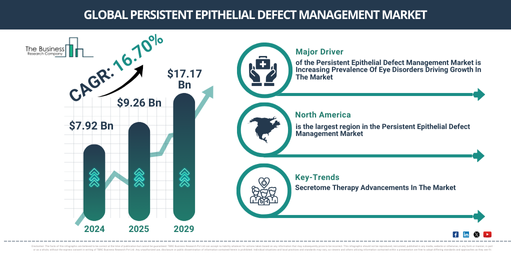
    The market size of persistent epithelial defect management has seen a significant increase over the recent years. From $7.92 billion in 2024, It’s projected to grow to $9.26 billion in 2025 with a compound annual growth rate (CAGR) of 17.0%. The historical growth can be associated with a rise in research activities, a surge in hospital demand, an increase in cases of ocular surface disorders and eye disorders, as well as a growing elderly population.

    The market size for managing persistent epithelial defects is projected to experience considerable expansion in the forthcoming years. It is anticipated to reach$17.17 billion by 2029,” growing at a compound annual growth rate (CAGR) of 16.7%. The expected rise during this forecast period is linked to the growth in partnerships and collaborations, increased awareness and education, the emphasis on value-centered care, and the escalating prevalence of disorders such as diabetes and hypertension, all of which contribute to early intervention and management. Significant trends anticipated during this period are technological advancements, the surging demand for novel treatment forms, advanced therapeutic procedures, and the availability of sophisticated surgical instruments and strategies and innovative medication.

    Download a free sample to assess the report’s scope and structure:

    https://www.thebusinessresearchcompany.com/sample.aspx?id=21256&type=smp

    What are the Fundamental Drivers and Innovations Shaping the Persistent Epithelial Defect Management Market?

    The surge in eye-related issues is anticipated to fuel the expansion of the persistent epithelial defect management market in the future. Eye disorders span a comprehensive range of medical issues influencing the eye’s structure, functioning, or health, resulting in vision loss, discomfort, or even possible blindness. Aspects such as aging demographics, extended exposure to screens, and climatic alterations drive the occurrence of these eye disorders. Persistent epithelial defect management proves to be critical in treating these disorders as it facilitates healing, reduces inflammation, and wards off further issues like infections or scarring. For instance, the World Health Organization, based in Switzerland, stated in December 2024 that the universal pooled prevalence of childhood myopia in 2023 was 5.23%, with a noticeably elevated rate in females (4.90%) as opposed to males (3.94%). Hence, the escalating prevalence of eye disorders stimulates the expansion of the persistent epithelial defect management market.

    How Is the Persistent Epithelial Defect Management Market Segmented?

    The persistent epithelial defect managementmarket covered in this report is segmented –

    1) By Disease Type: Epithalial Or Limbal; Inflammatory Disease; Neurotrophic Disease; Other Disease Types

    2) By Distribution Channel: Direct Sales; Online Pharmacy; Retail Pharmacy; Hospitals

    3) By End User: Hospital Or Clinical Laboratories; Physician Offices; Reference Laboratories; Other End Users

    Subsegments:

    1) By Epithelial Or Limbal: Limbal Stem Cell Deficiency (LSCD); Limbal Transplantation; Conjunctival Transplantation

    2) By Inflammatory Disease: Dry Eye Syndrome; Allergic Conjunctivitis; Uveitis

    3) By Neurotrophic Disease: Herpes Simplex Virus (HSV) Keratitis; Diabetic Neuropathy; Neurotrophic Keratopathy

    4) By Other Disease Types: Chemical Burns; Trauma-Induced Defects; Congenital Corneal Opacities

    Request customized data on this market:

    https://www.thebusinessresearchcompany.com/customise?id=21256&type=smp

    Which Regions Are Driving the Next Phase of the Persistent Epithelial Defect Management Market Growth?

    North America was the largest region in the persistent epithelial defect management market in 2024. Asia-Pacific is expected to be the fastest-growing region in the forecast period. The regions covered in the persistent epithelial defect management market report are Asia-Pacific, Western Europe, Eastern Europe, North America, South America, Middle East, Africa.

    What Key Trends Are Shaping the Future of the Persistent Epithelial Defect Management Market?

    In the persistent epithelial defect management market, dominant firms are concentrating their efforts on the creation of novel treatment methods, specifically secretome therapy, which is intended to hasten the healing process and enhance the results for persistent epithelial defects. Secretome therapy involves the use of cells’ secreted bioactive molecules, including lipids, proteins, and extracellular vesicles for treating diverse diseases, fostering tissue repair, and regulating immune responses. For example, Kala Pharmaceuticals Inc., a biopharmaceutical business located in the US, in April 2023, attained U.S. Food and Drug Administration (FDA) Fast Track Designation approval for KPI-012, a persistent corneal epithelial defect treatment using human MSC-S therapy. The medicine utilizes a multifactorial approach to target persistent epithelial defect management’s root causes, boosting corneal recovery through bioactive molecules like neurotrophic factors, growth factors, and protease inhibitors.

    View the full report here:

    https://www.thebusinessresearchcompany.com/report/persistent-epithelial-defect-management-global-market-report

    How Is the Persistent Epithelial Defect Management Market Defined and What Are Its Core Parameters?

    Persistent Epithelial Defect (PED) Management refers to the medical strategies used to promote corneal healing in cases where the corneal epithelium fails to regenerate and close within two weeks despite standard treatment. It involves identifying and addressing underlying causes using therapeutic approaches such as lubricating eye drops, autologous serum tears, amniotic membrane transplantation, bandage contact lenses, and biologic therapies to facilitate epithelial healing and prevent corneal complications like ulcers or perforation.

    Purchase the full report and get a swift delivery:

    https://www.thebusinessresearchcompany.com/purchaseoptions.aspx?id=21256

    About The Business Research Company:

    With over 15000+ reports from 27 industries covering 60+ geographies, The Business Research Company has built a reputation for offering comprehensive, data-rich research and insights. Armed with 1,500,000 datasets, the optimistic contribution of in-depth secondary research, and unique insights from industry leaders, you can get the information you need to stay ahead in the game.

    Get in touch with us:

    The Business Research Company: https://www.thebusinessresearchcompany.com/

    Americas +1 310-496-7795

    Europe +44 7882 955267

    Asia & Others +44 7882 955267 & +91 8897263534

    Email us at info@tbrc.info

    Follow us on:

    LinkedIn: https://in.linkedin.com/company/the-business-research-company

    YouTube: https://www.youtube.com/channel/UC24_fI0rV8cR5DxlCpgmyFQ

    Global Market Model: https://www.thebusinessresearchcompany.com/global-market-model
  • $4.93 Billion Forecast for Testicular Cancer Market by 2029, Backed by Demand and Innovation

    $4.93 Billion Forecast for Testicular Cancer Market by 2029, Backed by Demand and Innovation

    Claim your 30% discount on Global Market Reports with code ONLINE30. Limited time only.

    What is the Anticipated CAGR of the Testicular Cancer Market, and What Factors Will Drive It?

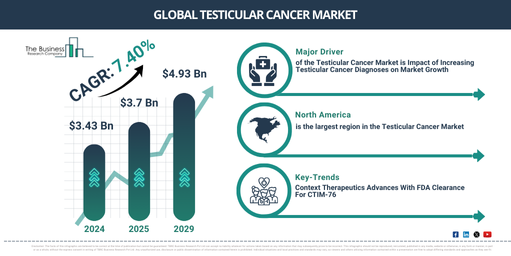
    The market for testicular cancer has seen robust expansion in the past few years. The projections show an increase from $3.43 billion in 2024 to $3.7 billion in 2025, marking a compound annual growth rate (CAGR) of 7.9%. Spurring growth in the past era may be due to a boost in testicular cancer awareness, a surge in risk factors, increasing incidences of testicular cancer, and the heightened solicitation for diagnostic procedures.

    The market for testicular cancer is predicted to experience a significant expansion in the upcoming years. The market size is estimated to propel to$4.93 billion by 2029″, marking a compound annual growth rate (CAGR) of 7.4%. Factors contributing to this accelerated progression during the forecast period encompass an escalatory diagnosis rate of testicular cancer, rising disease prevalence, enhanced treatment alternatives, and a surge in the acceptance of targeted therapies. KEY trends influencing this forecast period comprise progress in treatment methodologies, the advancement of healthcare facilities, intensified research and development, the generation of targeted medications, and improvements in clinical trials.

    Download a free sample to assess the report’s scope and structure:

    https://www.thebusinessresearchcompany.com/sample.aspx?id=20977&type=smp

    What Are the Core Growth Drivers Propelling the Testicular Cancer Market Forward?

    The rise in the detection of testicular cancer is anticipated to drive the expansion of the testicular cancer market in the future. Testicular cancer, which typically presents as painless tumors or swelling in male testes, has seen an uptick in diagnoses due to enhanced awareness, advancements in diagnostic procedures, and an increase in self-exams as well as potential environmental and lifestyle influences. The testicular cancer market plays a critical role in stepping up the diagnoses by backing research, bettering diagnostic aids, and endorsing awareness efforts for early detection. For example, a July 2024 report by Cancer Council Victoria, a non-profit organization based in Australia, showed in 2022, the incidences of testicular cancer in males below 40 were significantly higher at 160 cases, contrasted with 37 cases in the 40-49 age group, underscoring a significant difference in diagnoses among the younger and middle-aged male demographics. Consequently, the escalating diagnoses of testicular cancer are fueling the progression of the testicular cancer market.

    What Segment Types Define the Testicular Cancer Market Structure?

    The testicular cancermarket covered in this report is segmented –

    1) By Treatment Type: Surgery; Chemotherapy; Radiotherapy; Immunotherapy; Targeted Therapy

    2) By Histology: Seminoma; Non-Seminoma; Mixed

    3) By Product: Tablet; Capsule; Creams

    4) By Route Of Administration: Oral; Topical

    5) By End-use: Hospitals; Clinics

    Subsegments:

    1) By Surgery: Orchiectomy; Retroperitoneal Lymph Node Dissection (RPLND)

    2) By Chemotherapy: Platinum-Based Chemotherapy; Chemotherapy Regimens (BEP regimen)

    3) By Radiotherapy: External Beam Radiation; Retroperitoneal Radiation

    4) By Immunotherapy: Immune Checkpoint Inhibitors; Cancer Vaccines

    5) By Targeted Therapy: Tyrosine Kinase Inhibitors; Monoclonal Antibodies

    Request customized data on this market:

    https://www.thebusinessresearchcompany.com/customise?id=20977&type=smp

    Which Geographic Areas Hold the Strongest Growth Potential in the Testicular Cancer Market?

    North America was the largest region in the testicular cancer market in 2024. Asia-Pacific is expected to be the fastest-growing region in the forecast period. The regions covered in the testicular cancer market report are Asia-Pacific, Western Europe, Eastern Europe, North America, South America, Middle East, Africa.

    Which Emerging Trends that Are Influencing theTesticular Cancer Industry Evolution?

    Key players in the testicular cancer market are concentrating their efforts on the creation of novel products, like cell-engaging bispecific antibodies, aimed at treating CLDN6-positive gynecologic and testicular cancers. A cell-engaging bispecific antibody is a specific type of antibody that joins two separate targets to stimulate immune cells into eliminating cancerous or diseased cells. For example, in May 2024, the U.S. biopharmaceutical firm Context Therapeutics Inc. declared that the U.S. Food and Drug Administration (FDA) approved its Investigational New Drug (IND) application for CTIM-76, a CLDN6 x CD3 T cell-engaging bispecific antibody. This approval permits the organization to commence a Phase 1 clinical trial to investigate CTIM-76 in patients with CLDN6-positive gynecologic and testicular cancers. The study will primarily examine dosage escalation and expansion to determine the drug’s safety, efficacy, and pharmacokinetics.

    View the full report here:

    https://www.thebusinessresearchcompany.com/report/testicular-cancer-global-market-report

    What Is the Definition of the Testicular Cancer Market?

    Testicular cancer is a type of cancer that originates in the testicles, which are part of the male reproductive system. It typically affects young men and is highly treatable, especially when diagnosed early, with various treatment options. Testicular cancer is relatively rare but is one of the most common cancers in young men, particularly between the ages of 15 and 35. It often presents as a lump or swelling in one testicle, sometimes accompanied by pain or discomfort.

    Purchase the full report and get a swift delivery:

    https://www.thebusinessresearchcompany.com/purchaseoptions.aspx?id=20977

    About The Business Research Company:

    With over 15000+ reports from 27 industries covering 60+ geographies, The Business Research Company has built a reputation for offering comprehensive, data-rich research and insights. Armed with 1,500,000 datasets, the optimistic contribution of in-depth secondary research, and unique insights from industry leaders, you can get the information you need to stay ahead in the game.

    Get in touch with us:

    The Business Research Company: https://www.thebusinessresearchcompany.com/

    Americas +1 310-496-7795

    Europe +44 7882 955267

    Asia & Others +44 7882 955267 & +91 8897263534

    Email us at info@tbrc.info

    Follow us on:

    LinkedIn: https://in.linkedin.com/company/the-business-research-company

    YouTube: https://www.youtube.com/channel/UC24_fI0rV8cR5DxlCpgmyFQ

    Global Market Model: https://www.thebusinessresearchcompany.com/global-market-model
  • Key Factors Fueling the Growth of the Medical Billing Outsourcing Market in 2025: Error Minimization Driving Growth In The Medical Billing Outsourcing Market

    Key Factors Fueling the Growth of the Medical Billing Outsourcing Market in 2025: Error Minimization Driving Growth In The Medical Billing Outsourcing Market

    Claim your 30% discount on Global Market Reports with code ONLINE30. Limited time only.

    What Are the Projected Market Size and Growth Rates for the Medical Billing Outsourcing Market From 2025 To 2029?

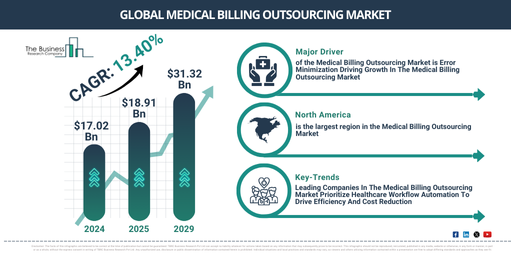
    In recent times, the size of the medical billing outsourcing market has expanded swiftly. It is projected to increase from $17.02 billion in 2024 to $18.91 billion in 2025, at a compound annual growth rate (CAGR) of 11.1%. The advancement during the historic phase can be credited to the increasing intricacy of medical billing, transition towards electronic health records (ehrs), a surge in patient numbers, and heightened emphasis on patient care.

    In the ensuing years, the medical billing outsourcing market size is projected to experience substantial growth, increasing to$31.32 billion in 2029 with a compound annual growth rate (CAGR) of 13.4%. Several contributing factors to this projected growth over the forecast period include the advancement of telehealth, integration of healthcare IT, globalization and offshoring, along with economic and labor considerations. Key trends expected to shape this period include the advent of AI and automation, improved cybersecurity and data protection measures, personalized revenue cycle solutions, patient-focused billing, and technological progress in the sector.

    Download a free sample to assess the report’s scope and structure:

    https://www.thebusinessresearchcompany.com/sample.aspx?id=3306&type=smp

    What are the Fundamental Drivers and Innovations Shaping the Medical Billing Outsourcing Market?

    The growth of the medical billing outsourcing market is attributed to the escalating requirement for reducing errors. In the US, about 80% of medical invoices are believed to contain inaccuracies. For example, Equifax, a credit agency company, discovered through an audit that there is an average mistake value of $1,300 in hospital invoices exceeding $10,000. Additionally, it is anticipated that doctors let slip around $125 billion annually due to substandard billing methods in the USA. This increasing necessity for reducing errors and fine-tuning the billing procedure propelled the market for medical billing outsourcing.

    How Is the Medical Billing Outsourcing Market Segmented?

    The medical billing outsourcingmarket covered in this report is segmented –

    1) By Service: Front End; Back End

    2) By Component: In-house; Outsourced

    3) By End User: Hospitals; Physician Offices

    Subsegments:

    1) By Front End: Patient Registration; Insurance Verification; Coding And Billing; Charge Entry; Other Front-End Services

    2) By Back End: Accounts Receivable Management; Payment Posting; Denial Management; Insurance Follow-Up; Coding Compliance; Other Back-End Services

    Request customized data on this market:

    https://www.thebusinessresearchcompany.com/customise?id=3306&type=smp

    Which Regions Are Driving the Next Phase of the Medical Billing Outsourcing Market Growth?

    North America was the largest region in the medical billing outsourcing market in 2024. Western Europe was the second-largest region in the global medical billing outsourcing market analysis. The regions covered in the medical billing outsourcing market report are Asia-Pacific, Western Europe, Eastern Europe, North America, South America, Middle East, and Africa.

    What Key Trends Are Shaping the Future of the Medical Billing Outsourcing Market?

    Leading businesses in the medical billing outsourcing market are keen on creating healthcare workflow automation platforms to enhance productivity, lower expenses, and increase precision in the billing process. Their ultimate goal is to facilitate healthcare providers’ operations and expedite reimbursement for services offered. A healthcare workflow automation platform is a software solution engineered to simplify and automate various functions within the healthcare system. This innovative platform revolutionizes order entry and results for outpatient clinics, decreasing costs and boosting efficiency, accuracy, and the quality of patient services. For example, in November 2023, US-based Shadowbox, Inc introduced Shadowbox Automation Platform, a healthcare workflow automation platform. This platform collaborates with a collection of electronic health records (EHRs) and Radiology Information Systems (RIS), pushing for a paperless workflow for order entry and findings. This collaboration eradicates the need for manual processes and intricate EHR integration projects, leading to more effective data transfer. It provides comprehensive patient details along with automated insurance verification and prior authorization at the point of order.

    View the full report here:

    https://www.thebusinessresearchcompany.com/report/medical-billing-outsourcing-global-market-report

    How Is the Medical Billing Outsourcing Market Defined and What Are Its Core Parameters?

    Medical billing outsourcing refers to the practice where healthcare providers contract third-party companies to manage and handle their billing processes. These third-party providers ensure that claims for medical services are submitted accurately and on time to insurance companies and patients. By outsourcing, healthcare facilities can focus on patient care while the billing company takes care of tracking payments, managing collections, and resolving disputes. This service helps healthcare providers reduce administrative burdens, improve revenue cycle management, minimize errors, and ensure compliance with changing healthcare regulations.

    Purchase the full report and get a swift delivery:

    https://www.thebusinessresearchcompany.com/purchaseoptions.aspx?id=3306

    About The Business Research Company:

    With over 15000+ reports from 27 industries covering 60+ geographies, The Business Research Company has built a reputation for offering comprehensive, data-rich research and insights. Armed with 1,500,000 datasets, the optimistic contribution of in-depth secondary research, and unique insights from industry leaders, you can get the information you need to stay ahead in the game.

    Get in touch with us:

    The Business Research Company: https://www.thebusinessresearchcompany.com/

    Americas +1 310-496-7795

    Europe +44 7882 955267

    Asia & Others +44 7882 955267 & +91 8897263534

    Email us at info@tbrc.info

    Follow us on:

    LinkedIn: https://in.linkedin.com/company/the-business-research-company

    YouTube: https://www.youtube.com/channel/UC24_fI0rV8cR5DxlCpgmyFQ

    Global Market Model: https://www.thebusinessresearchcompany.com/global-market-model
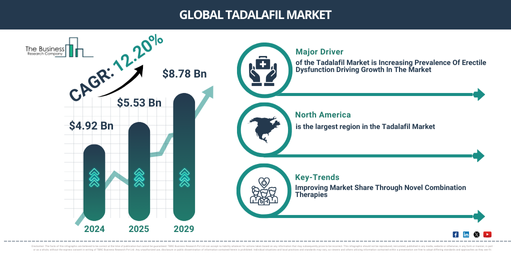
  • Global Tadalafil Market Projected to Reach $8.78 Billion by 2029 at a CAGR of 12.2%

    Global Tadalafil Market Projected to Reach $8.78 Billion by 2029 at a CAGR of 12.2%

    Claim your 30% discount on Global Market Reports with code ONLINE30. Limited time only.

    What Are the Key Milestones in the Tadalafil Market’s Growth Trajectory From 2025 To 2034?

    The market size for tadalafil has experienced significant expansion in the past few years. Its anticipated growth is from $4.92 billion in 2024 to $5.53 billion in 2025, exhibiting a compound annual growth rate (CAGR) of 12.5%. The reasons for the expansion during the historical period include heightened awareness of men’s health, increased drug usage, a surge in the growth of tadalafil, a rise in healthcare spending, and a growing elderly population.

    Expectations for the tadalafil market project a sharp expansion in the coming years, with its size predicted to reach $8.78 billion in 2029, growing at a compound annual rate (CAGR) of 12.2%. Factors contributing to this anticipated growth in the forecast period include rising instances of erectile dysfunction, the escalating demand for lifestyle medications, increased cases of PAH, the growing acceptance of contemporary healthcare solutions, and higher disposable incomes. During the forecast period, the market is expected to witness trends like the integration of digital health systems, innovative drug formations, advancements in medication, improved drug delivery systems, and progress in medical technology.

    Download a free sample to assess the report’s scope and structure:

    https://www.thebusinessresearchcompany.com/sample.aspx?id=20974&type=smp

    What are the Fundamental Drivers and Innovations Shaping the Tadalafil Market?

    The escalating prevalence of erectile dysfunction anticipates fostering the expansion of the tadalafil market. Erectile dysfunction (ED) is a health disorder defined by a consistent incapacity to realize or uphold an erection adequate for satisfactory sexual activity. The intensifying prevalence of ED stems from factors such as an aged population, chronic medical conditions, poor lifestyle habits, mental stress, and undesirable effects of some drugs. Tadalafil aids erectile dysfunction by calming the smooth muscles in the penis’s blood vessels, boosting blood circulation and facilitating the capability to attain and preserve an erection during sexual arousal. For instance, in February 2024, a report by the National Library of Medicine, an entity of the National Institutes of Health (NIH) in the US, indicated that the prevalence of ED, gauged using IIEF-5 scores, is 24.2% across the overall population. This incidence significantly escalates with age, influencing 52.2% of those aged 75 and above and 48.0% of those in the 65-74 age bracket. Consequently, the escalating prevalence of erectile dysfunction is steering the growth of the tadalafil market.

    How Is the Tadalafil Market Segmented?

    The tadalafilmarket covered in this report is segmented –

    1) By Product Type: Tablets; Oral Suspensions

    2) By Distribution Channel: Hospital Pharmacy; Retail Pharmacy; Online Pharmacy

    3) By Application: Erectile Dysfunction; Pulmonary Arterial Hypertension; Benign Prostatic Hyperplasia

    Subsegments:

    1) By Tablets: 2.5 mg Tablets; 5 mg Tablets; 10 mg Tablets; 20 mg Tablets

    2) By Oral Suspensions: 2.5 mg/5 mL Oral Suspension; 10 mg/5 mL Oral Suspension; Custom Dosing Oral Suspensions

    Request customized data on this market:

    https://www.thebusinessresearchcompany.com/customise?id=20974&type=smp

    Which Regions Are Driving the Next Phase of the Tadalafil Market Growth?

    North America was the largest region in the tadalafil market in 2024. Asia-Pacific is expected to be the fastest-growing region in the forecast period. The regions covered in the tadalafil market report are Asia-Pacific, Western Europe, Eastern Europe, North America, South America, Middle East, Africa.

    What Key Trends Are Shaping the Future of the Tadalafil Market?

    Leading organizations in the tadalafil market are investing in pioneering formulations, like combined treatments, to step up therapy effectiveness, bolster patient adherence, and grow their market dominance in managing erectile dysfunction and pulmonary arterial hypertension. Combined therapy involves the concurrent use of two or more medications or treatments in order to augment therapeutic results, boost efficiency, and tackle an array of aspects related to a disease or condition. For example, in March 2024, Johnson & Johnson, a healthcare firm based in the US, declared that it has received approval from the U.S. Food and Drug Administration (FDA) for OPSYNVI, an innovative single-tablet treatment which merges macitentan, an endothelin receptor antagonist (ERA), and tadalafil, an inhibitor of phosphodiesterase 5 (PDE5). This inventive therapy is designed for the enduring management of pulmonary arterial hypertension (PAH) in Adults (WHO Group I) who fall under the WHO functional class II-III. It’s suitable for patients starting treatment and those already on ERA, PDE5 inhibitors, or both. It also provides a simpler alternative for patients stabilized on separate doses of macitentan 10 mg and tadalafil 40 mg (20 mg x 2).

    View the full report here:

    https://www.thebusinessresearchcompany.com/report/tadalafil-global-market-report

    How Is the Tadalafil Market Defined and What Are Its Core Parameters?

    Tadalafil is a phosphodiesterase 5 (PDE5) inhibitor used primarily to treat erectile dysfunction and pulmonary arterial hypertension. It works by relaxing blood vessels, improving blood flow to specific areas, and helping to manage these conditions effectively.

    Purchase the full report and get a swift delivery:

    https://www.thebusinessresearchcompany.com/purchaseoptions.aspx?id=20974

    About The Business Research Company:

    With over 15000+ reports from 27 industries covering 60+ geographies, The Business Research Company has built a reputation for offering comprehensive, data-rich research and insights. Armed with 1,500,000 datasets, the optimistic contribution of in-depth secondary research, and unique insights from industry leaders, you can get the information you need to stay ahead in the game.

    Get in touch with us:

    The Business Research Company: https://www.thebusinessresearchcompany.com/

    Americas +1 310-496-7795

    Europe +44 7882 955267

    Asia & Others +44 7882 955267 & +91 8897263534

    Email us at info@tbrc.info

    Follow us on:

    LinkedIn: https://in.linkedin.com/company/the-business-research-company

    YouTube: https://www.youtube.com/channel/UC24_fI0rV8cR5DxlCpgmyFQ

    Global Market Model: https://www.thebusinessresearchcompany.com/global-market-model
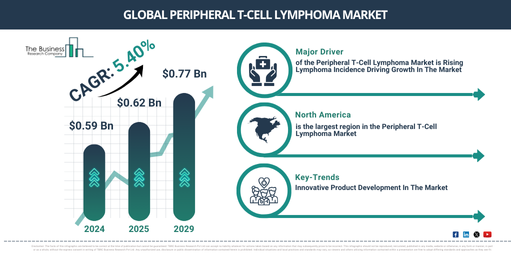
  • Major Trends and Emerging Patterns in the Peripheral T-Cell Lymphoma Market: Innovative Product Development In The Market

    Major Trends and Emerging Patterns in the Peripheral T-Cell Lymphoma Market: Innovative Product Development In The Market

    Claim your 30% discount on Global Market Reports with code ONLINE30. Limited time only.

    How Has The Peripheral T-Cell Lymphoma Market Growth Evolved From 2024 To 2025, And What’s Ahead?

    The market for peripheral t-cell lymphoma has seen significant growth recently, expanding from a size of $0.59 billion in 2024 to an anticipated $0.62 billion in 2025, which represents a compound annual growth rate (CAGR) of 5.6%. Factors contributing to this historic growth include an increased awareness of rare lymphomas, the introduction of monoclonal antibodies, early designations of orphan drugs, advancements in research on hematologic cancers, a rise in the uptake of stem cell transplants, enhanced diagnostic precision, the development of oncology healthcare infrastructure, and early innovations in immunotherapy.

    In the forthcoming years, the peripheral t-cell lymphoma market is anticipated to experience significant expansion. Predictions estimate that the market will escalate to$0.77 billion by 2029 with a compound annual growth rate (CAGR) of 5.4%. Such growth during the projection period can be ascribed to the progressions in targeted treatments, increased adoption of personalized medical practices, advancements in immunotherapy applications, a strong influx of revolutionary drugs, increased healthcare investment in developing markets, the broadening of patient access programs, incorporation of artificial intelligence in diagnostic methods, regulatory incentives for orphan drugs, and an increased focus on combined treatments. Key trends to look out for during the forecast period include the innovation of new biologics, improvements in gene editing technologies, adoption of liquid biopsy diagnostics, integration of artificial intelligence in treatment planning, advancements in CAR-T cell therapies, progressions in next-generation sequencing, the application of nanotechnology in drug delivery, personalized vaccine development, emergence of bispecific antibodies and the automation of clinical trial processes.

    Download a free sample to assess the report’s scope and structure:

    https://www.thebusinessresearchcompany.com/sample.aspx?id=21255&type=smp

    What Are the Primary Drivers Supporting the Market Growth of the Peripheral T-Cell Lymphoma Market?

    The rising prevalence of lymphoma is anticipated to fuel the expansion of the peripheral T-cell lymphoma market in the future. Lymphoma is a kind of cancer that originates in the lymphatic system, a component of the body’s immune defenses. The increased occurrence of lymphoma is attributed to genetic factors, environmental exposure, viral infections such as the Epstein-Barr virus, immune deficiency disorders, and lifestyle aspects like smoking and obesity. Peripheral T-cell lymphoma (PTCL) plays a role in lymphoma’s advancement by stemming from mature T-cells, causing aggressive disease conduct, dysregulation of the immune system, and lesser receptivity to treatment compared to other lymphoma variants. For example, the American Cancer Society Facts and Figures, a professional organization based in the US, estimated that new non-Hodgkin lymphoma cases in 2023 and 2024 were 80,550 each. Consequently, the growing prevalence of lymphoma is propelling the peripheral T-cell lymphoma market’s growth.

    Which Primary Segments of the Peripheral T-Cell Lymphoma Market Are Driving Growth and Industry Transformations?

    The peripheral t-cell lymphomamarket covered in this report is segmented –

    1) By Type: Peripheral T-Cell Lymphoma Not Otherwise Specified (PTCL-NOS); Angioimmunoblastic T- Cell Lymphoma (AITL); Anaplastic Large Cell Lymphoma (ALCL); Adult T- Cell Leukaemia Or Lymphoma (ATLL); Enteropathy-Associated T- Cell Lymphoma ( EATL); Hepatosplenic T- Cell Lymphoma; Other Types

    2) By Treatment Type: Chemotherapy; Target Therapy; Immunotherapy; Stem Cell Therapy; Radiation Therapy

    3) By Drug Class: Histone Deacetylase (HDAC) Inhibitors; Monoclonal Antibodies; Alkylating Angents; Antimetabolites; Other Drug Class

    4) By Route Of Administration: Oral; Injectable

    5) By End-User: Hospitals; Specialty Clinics; Ambulatory Surgical Center; Research Institute

    Subsegments:

    1) By Peripheral T-Cell Lymphoma Not Otherwise Specified (PTCL-NOS): Cutaneous PTCL; Systemic PTCL

    2) By Angioimmunoblastic T-Cell Lymphoma (AITL): Classical AITL; Variant AITL

    3) By Anaplastic Large Cell Lymphoma (ALCL): Systemic ALCL; Cutaneous ALCL

    4) By Adult T-Cell Leukaemia Or Lymphoma (ATLL): Acute ATLL; Chronic ATLL; Smoldering ATLL; Lymphoma Type ATLL

    5) By Enteropathy-Associated T-Cell Lymphoma (EATL): Type 1 EATL; Type 2 EATL

    6) By Hepatosplenic T-Cell Lymphoma: Hepatic Type; Splenic Type

    7) By Other Types: Subcutaneous T-Cell Lymphoma; Lymphomatoid Granulomatosis

    Request customized data on this market:

    https://www.thebusinessresearchcompany.com/customise?id=21255&type=smp

    Which Regions Are Key Players in the Growth of the #What Are the Primary Drivers Supporting the Market Growth of the Peripheral T-Cell Lymphoma Market?# Market?

    North America was the largest region in the peripheral T-cell lymphoma market in 2024. Asia-Pacific is expected to be the fastest-growing region in the forecast period. The regions covered in the peripheral T-cell lymphoma market report are Asia-Pacific, Western Europe, Eastern Europe, North America, South America, Middle East, Africa.

    What Are the Most Significant Market Trends in the Peripheral T-Cell Lymphoma Market?

    Leading businesses in the peripheral T-cell lymphoma market are innovating, with a particular focus on novel drugs like dihydrofolate reductase inhibitors. These are crucial in boosting treatment effectiveness and consequently enhancing patient health. Dihydrofolate reductase inhibitors block an enzyme vital for DNA replication and cell multiplication. For example, in December 2024, Fresenius Kabi AG, a pharmaceutical firm from Germany, launched Pralatrexate Injection. This drug is a generic alternative to Folotyn and is used in the treatment of resistant or recurring peripheral T-cell lymphoma. The introduction of this product enriches the firm’s oncology range, providing both physicians and patients with an affordable, high-quality treatment alternative. The injection comes in 20 mg/1 mL and 40 mg/2 mL single-dose vials and its continued approval is dependent on confirmatory test outcomes, although it was initially approved under accelerated approval based on overall response rate.

    View the full report here:

    https://www.thebusinessresearchcompany.com/report/peripheral-t-cell-lymphoma-global-market-report

    What Parameters Are Used to Define the Peripheral T-Cell Lymphoma Market?

    Peripheral T-cell lymphoma (PTCL) refers to a group of aggressive non-Hodgkin lymphomas that originate in mature T-cells, a type of white blood cell essential for immune function. PTCL can affect lymph nodes, spleen, bone marrow, liver, and other organs. Symptoms often include swollen lymph nodes, fever, night sweats, unexplained weight loss, skin rashes, and persistent fatigue.

    Purchase the full report and get a swift delivery:

    https://www.thebusinessresearchcompany.com/purchaseoptions.aspx?id=21255

    About The Business Research Company:

    With over 15000+ reports from 27 industries covering 60+ geographies, The Business Research Company has built a reputation for offering comprehensive, data-rich research and insights. Armed with 1,500,000 datasets, the optimistic contribution of in-depth secondary research, and unique insights from industry leaders, you can get the information you need to stay ahead in the game.

    Get in touch with us:

    The Business Research Company: https://www.thebusinessresearchcompany.com/

    Americas +1 310-496-7795

    Europe +44 7882 955267

    Asia & Others +44 7882 955267 & +91 8897263534

    Email us at info@tbrc.info

    Follow us on:

    LinkedIn: https://in.linkedin.com/company/the-business-research-company

    YouTube: https://www.youtube.com/channel/UC24_fI0rV8cR5DxlCpgmyFQ

    Global Market Model: https://www.thebusinessresearchcompany.com/global-market-model
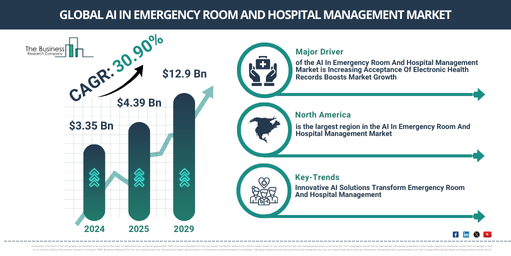
  • AI In Emergency Room And Hospital Management Market in Focus: Forecasting Growth Drivers, Scaling Potential, and Global Opportunities

    AI In Emergency Room And Hospital Management Market in Focus: Forecasting Growth Drivers, Scaling Potential, and Global Opportunities

    Claim your 30% discount on Global Market Reports with code ONLINE30. Limited time only.

    What is the Anticipated CAGR of the AI In Emergency Room And Hospital Management Market, and What Factors Will Drive It?

    The market size for AI in emergency room and hospital management has seen a dramatic expansion recently. It’s predicted to increase from $3.35 billion in 2024 to $4.39 billion in 2025, exhibiting a compound annual growth rate (CAGR) of 31.2%. This growth during the historical period is due to factors such as inflating patient visits, heightened deployment of AI in screening procedures, rising use of AI-driven training and simulations, the growth of emergency care protocols and the relentless push for demonstrating the return on investment (ROI).

    There is an expected surge in the market size of ai in emergency room and hospital management in the coming years. It is predicted to reach a size of$12.9 billion by 2029, growing at a compound annual growth rate (CAGR) of 30.9%. This increase during the forecast period can be associated with factors such as the growth of remote consultations, the transition towards value-based care models, advancements in research and development, automation of administrative tasks, and synergy with imaging technologies. Key trends during this forecast period comprise intelligent scheduling systems, integration of Internet of Things (IoT) devices, tracking of resources in real-time, anomaly detection, and the emergence of virtual health assistants.

    Download a free sample to assess the report’s scope and structure:

    https://www.thebusinessresearchcompany.com/sample.aspx?id=20708&type=smp

    What Are the Core Market Drivers Propelling Growth in the AI In Emergency Room And Hospital Management Industry?

    The projected growth in AI for emergency room and hospital administration markets is predicated on the rising adoption of electronic health records (EHRs). EHRs, digital repositories of patient medical information, are gaining widespread acceptance due to their ability to enhance patient care by facilitating data accessibility, streamlining workflows, promoting inter-healthcare provider communication and leveraging data analytics for clinical decision-making. In emergency rooms and hospital management, AI contributes to the efficiency of EHRs by simplifying data input, improving patient triage via predictive analytics, automating administrative duties, and supporting clinical decision-making. In turn, this leads to quicker diagnoses and individualized treatment plans. For instance, a study carried out by the National Center for Health Statistics, a U.S. government body, in April 2024 revealed that 88.2% of medical office physicians were using an EHR system, while 77.8% were utilizing a certified EHR system. Hence, the growing endorsement of electronic health records is set to energize the AI in emergency room and hospital administration markets.

    How Is the AI In Emergency Room And Hospital Management Market Segmented?

    The ai in emergency room and hospital managementmarket covered in this report is segmented –

    1) By Offering: Hardware; Software; Services

    2) By Technology: Machine Learning; Natural Language Processing; Context-Aware Computing; Computer Vision

    3) By End User: Hospital And Healthcare Providers; Patients; Pharmaceuticals And Biotechnology Companies; Healthcare Payers; Other End Users

    Subsegments:

    1) By Hardware: Processors; Memory Devices; Storage Devices; Sensors; Others

    2) By Software: Ai Platforms; Ai-Powered Applications; Analytics Solutions; Workflow Management Solutions; Others

    3) By Services: Implementation And Integration Services; Support And Maintenance Services; Training And Consulting Services; Others

    Request customized data on this market:

    https://www.thebusinessresearchcompany.com/customise?id=20708&type=smp

    Which Regions Are Driving the Next Phase of the AI In Emergency Room And Hospital Management Market Growth?

    North America was the largest region in the AI in emergency room and hospital management market in 2024. The regions covered in the AI in emergency room and hospital management market report are Asia-Pacific, Western Europe, Eastern Europe, North America, South America, Middle East, Africa.

    What Key Market Trends and Innovations Are Shaping the Future of the AI In Emergency Room And Hospital Management Industry?

    Leading firms in the AI in emergency rooms and hospital management market are honing in on patient flow administration and operations efficiency via superior utilities such as Gen AI-based SaaS tools. These innovations expedite digital revolution, allowing hospitals to stay current with unfolding demands and enhance system-wide management. Generative AI-based SaaS tools are essentially cloud-based software that utilize AI to create content, insights, and automation capabilities, thereby enriching decision-making and productivity in a range of industries. For example, in June 2023, LeanTaaS, an American SaaS solution provider for hospital functions, introduced iQueue Autopilot, a generative AI instrument intended to boost patient flow and management of capacity. The solution emulates human interactions to assist in decision-making in both inpatient and outpatient environments. iQueue Autopilot employs three techniques including Lean Forward for instantaneous recommendations, Lean Back for preemptive alerts, and Moment in Time Problem Solving for immediate risk control. By combining AI/ML proficiency with a large diligence of hospital operational data, it offers practical insights that enable hospitals to finetune resources and boost patient outcomes.

    View the full report here:

    https://www.thebusinessresearchcompany.com/report/ai-in-emergency-room-and-hospital-management-global-market-report

    How Is the AI In Emergency Room And Hospital Management Market Defined and What Are Its Core Parameters?

    Artificial intelligence (AI) in emergency room and hospital management involves the use of advanced algorithms and technologies to optimize patient care, streamline operations, and enhance decision-making through data analysis, predictive modeling, and automation. It improves efficiency, accuracy, and patient outcomes in healthcare settings.

    Purchase the full report and get a swift delivery:

    https://www.thebusinessresearchcompany.com/purchaseoptions.aspx?id=20708

    About The Business Research Company:

    With over 15000+ reports from 27 industries covering 60+ geographies, The Business Research Company has built a reputation for offering comprehensive, data-rich research and insights. Armed with 1,500,000 datasets, the optimistic contribution of in-depth secondary research, and unique insights from industry leaders, you can get the information you need to stay ahead in the game.

    Get in touch with us:

    The Business Research Company: https://www.thebusinessresearchcompany.com/

    Americas +1 310-496-7795

    Europe +44 7882 955267

    Asia & Others +44 7882 955267 & +91 8897263534

    Email us at info@tbrc.info

    Follow us on:

    LinkedIn: https://in.linkedin.com/company/the-business-research-company

    YouTube: https://www.youtube.com/channel/UC24_fI0rV8cR5DxlCpgmyFQ

    Global Market Model: https://www.thebusinessresearchcompany.com/global-market-model
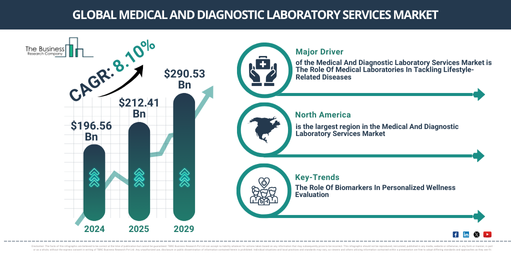
  • Major Trends and Emerging Patterns in the Medical And Diagnostic Laboratory Services Market: The Role Of Biomarkers In Personalized Wellness Evaluation

    Major Trends and Emerging Patterns in the Medical And Diagnostic Laboratory Services Market: The Role Of Biomarkers In Personalized Wellness Evaluation

    Claim your 30% discount on Global Market Reports with code ONLINE30. Limited time only.

    What Is the Estimated Market Size of the Medical And Diagnostic Laboratory Services Market In 2029?

    The market size for medical and diagnostic laboratory services has seen significant growth in the past few years. The market is projected to expand from $196.56 billion in 2024 to $212.41 billion in 2025 with a compound annual growth rate (CAGR) of 8.1%. The previous increase can be linked to the progress in medical technology, an older population, healthcare reform, as well as epidemics and pandemics, along with the prevalence of chronic diseases.

    The market size for medical and diagnostic laboratory services is predicted to experience substantial expansion in the coming years, swelling to an estimated$290.53 billion in 2029″ with a Compound Annual Growth Rate (CAGR) of 8.1%. This growth during the forecasted timeline can be linked to various factors such as precision medicine, telemedicine and remote patient monitoring, personalized healthcare, genomic testing, and changes in regulations. Other emerging trends in the forecast period include point-of-care testing, at-home testing kits, the utilization of artificial intelligence (AI) and data analytics, telepathology, telelaboratory services, and consolidation of laboratories.

    Download a free sample to assess the report’s scope and structure:

    https://www.thebusinessresearchcompany.com/sample.aspx?id=1965&type=smp

    What Are the Primary Drivers Supporting the Market Growth of the Medical And Diagnostic Laboratory Services Market?

    The rising trend of desk jobs, hectic schedules, and the shift in consumer choices are impacting the global disease landscape, particularly non-communicable ailments like cancer, diabetes, and heart-related conditions. Extended work hours, minimal physical exertion, and harmful dietary patterns are key triggers for chronic disorders such as diabetes. For example, in July 2023, the Office for National Statistics in the UK reported that over 1.35 million individuals (53%) in the first quarter of 2023, who were inactive due to prolonged illness, had signs of depression, anxiety, or nervousness. Diagnostics for these conditions range from HbA1c tests for diabetes tracking, biopsies, tumor marker tests, bone scans, MRI, and CT scans for cancer detection, to electrocardiograms, chest X-rays, cardiac CT scans, and stress tests for identifying heart ailments. The rise in lifestyle-related diseases will amplify the need for diagnostic tests, propelling the medical and diagnostic laboratory services market in the coming years.

    Which Primary Segments of the Medical And Diagnostic Laboratory Services Market Are Driving Growth and Industry Transformations?

    The medical and diagnostic laboratory servicesmarket covered in this report is segmented –

    1) By Type: Diagnostic Imaging Centers; Medical Laboratory Services

    2) By Type of Expenditure: Public; Private

    3) By Application: Cardiology; Oncology; Neurology; Orthopedics; Gastroenterology; Gynecology; Other Applications

    4) By End User Gender: Male; Female

    Subsegments:

    1) By Diagnostic Imaging Centers: X-ray Imaging; Magnetic Resonance Imaging (MRI); Ultrasound Imaging; Computed Tomography (CT) Scans; Nuclear Imaging; Mammography

    2) By Medical Laboratory Services: Clinical Chemistry; Hematology; Microbiology; Immunology/Serology; Molecular Diagnostics; Pathology; Blood Banking/Transfusion Services

    Request customized data on this market:

    https://www.thebusinessresearchcompany.com/customise?id=1965&type=smp

    Which Regions Are Key Players in the Growth of the #What Are the Primary Drivers Supporting the Market Growth of the Medical And Diagnostic Laboratory Services Market?# Market?

    North America was the largest region in the medical and diagnostic laboratory services market in 2024. Asia-Pacific was the second largest region in the medical and diagnostic laboratory services market. The regions covered in the medical and diagnostic laboratory services market report are Asia-Pacific, Western Europe, Eastern Europe, North America, South America, Middle East, Africa.

    What Are the Most Significant Market Trends in the Medical And Diagnostic Laboratory Services Market?

    Biomarkers are now being utilized by medical and diagnostic labs to gauge various health aspects linked to personal wellness. Health and wellness of individuals can be evaluated through the application of biomarkers that determine the causes of sleep disturbances and stress indicators. Changes in the immune system related to both physical and mental states can be signaled by biomarkers like cortisol, testosterone, and secretory IgA. Physicians can use this information to identify the causes of such ailments. Most likely, this high-end service will appeal to affluent individuals and high-ranking corporate employees.

    View the full report here:

    https://www.thebusinessresearchcompany.com/report/medical-and-diagnostic-laboratory-services-global-market-report

    What Parameters Are Used to Define the Medical And Diagnostic Laboratory Services Market?

    Medical and diagnostic laboratory services are services that provide diagnostic tests for various diseases. The tests are used to detect if the person has encountered the disease. Medical and diagnostic laboratory services make it possible to deliver prompt, affordable, and high-quality diagnostic services in secure settings.

    Purchase the full report and get a swift delivery:

    https://www.thebusinessresearchcompany.com/purchaseoptions.aspx?id=1965

    About The Business Research Company:

    With over 15000+ reports from 27 industries covering 60+ geographies, The Business Research Company has built a reputation for offering comprehensive, data-rich research and insights. Armed with 1,500,000 datasets, the optimistic contribution of in-depth secondary research, and unique insights from industry leaders, you can get the information you need to stay ahead in the game.

    Get in touch with us:

    The Business Research Company: https://www.thebusinessresearchcompany.com/

    Americas +1 310-496-7795

    Europe +44 7882 955267

    Asia & Others +44 7882 955267 & +91 8897263534

    Email us at info@tbrc.info

    Follow us on:

    LinkedIn: https://in.linkedin.com/company/the-business-research-company

    YouTube: https://www.youtube.com/channel/UC24_fI0rV8cR5DxlCpgmyFQ

    Global Market Model: https://www.thebusinessresearchcompany.com/global-market-model
  • Strong CAGR to Propel in the Aesthetic Lasers Market and Beyond upto $3.79 Billion by 2029

    Strong CAGR to Propel in the Aesthetic Lasers Market and Beyond upto $3.79 Billion by 2029

    Claim your 30% discount on Global Market Reports with code ONLINE30. Limited time only.

    What Are the Key Milestones in the Aesthetic Lasers Market’s Growth Trajectory From 2025 To 2034?

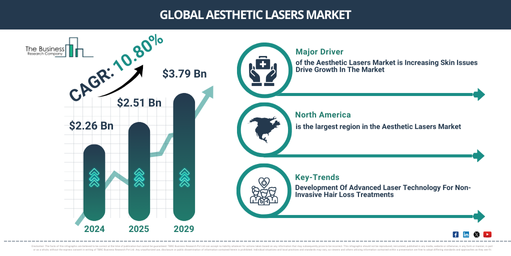
    In recent years, there has been a rapid expansion of the market size for aesthetic lasers. From the year 2024 to 2025, the market is projected to increase from $2.26 billion to $2.51 billion at a compound annual growth rate (CAGR) of 11.2%. Factors contributing to this substantial growth during the historic period include the growing demand for non-invasive procedures, heightened awareness of aesthetics, an aging population, increasing instances of skin-related problems, and the influence of social media.

    In the forthcoming years, the aesthetic lasers market is set to experience a swift expansion, escalating to$3.79 billion in 2029″ with a compound annual growth rate (CAGR) of 10.8%. The predicted growth in this period can be credited to factors such as the broadened use in medical aesthetics, augmented acceptance of laser techniques for tattoo elimination, an upswing in disposable income, emphasis on skin revitalization procedures, and the growth of aesthetic clinics. The emergence of hybrid laser systems, augmented need for fractional lasers, an upward trend in bespoke laser treatments, the incorporation of AI in laser apparatus, and a surge in demand for multi-purpose aesthetic lasers are significant trends projected to shape the market within this forecast period.

    Download a free sample to assess the report’s scope and structure:

    https://www.thebusinessresearchcompany.com/sample.aspx?id=20707&type=smp

    Which Primay Drivers Are Accelerating Growth in the Aesthetic Lasers Market?

    The growing prevalence of skin conditions is anticipated to fuel the global aesthetic lasers market’s growth. Skin conditions encompass a variety of disorders like acne, eczema, psoriasis, and skin infections that may lead to symptoms such as irritation, redness, dryness, and pigment changes, negatively impacting the skin’s look and health. The burgeoning prevalence of skin issues is attributed to elements like environmental pollution, extended exposure to UV radiation, unhealthy lifestyle habits, poor nutrition, excessive stress, and genetic factors. Aesthetic lasers, which emit focused light energy, are utilized to tackle an array of skin troubles. They operate by focusing on specific skin layers, encouraging collagen synthesis, and fostering skin rejuvenation. These lasers enhance skin texture, tone, and general appearance while requiring minimal recovery time. As mentioned in a July 2022 report by The International Agency for Research on Cancer (IARC), a specialized cancer agency of the World Health Organization based in France, approximately 330,000 new melanoma cases were identified worldwide in 2022, with nearly 60,000 resulting in fatalities. Moreover, according to the American Cancer Society, a US-based non-profit organization, in January 2024, it is predicted that about 100,640 new melanoma cases would be identified in the US, with an expected 8,290 deaths. Consequently, the escalating prevalence of skin conditions is bolstering the growth of the aesthetic lasers market.

    Which Primary Segments of the Aesthetic Lasers Market Are Driving Growth and Industry Transformations?

    The aesthetic lasersmarket covered in this report is segmented –

    1) By Type: Ablative Laser; Non-Ablative Laser

    2) By Application: Skin Resurfacing Or Skin Rejuvenation; Hair Removal; Acne And Scars; Tattoo Removal; Treatment Of Vascular Lesions; Other Applications

    3) By End User: Dermatology Clinics; Beauty And Wellness Centers; Medical Spas

    Subsegments:

    1) By Ablative Laser: CO2 Lasers; Erbium Lasers; Fractional Lasers

    2) By Non-Ablative Laser: Diode Lasers; Pulsed Dye Lasers; Nd:YAG Lasers; Alexandrite Lasers; Intense Pulsed Light (IPL) Systems

    Request customized data on this market:

    https://www.thebusinessresearchcompany.com/customise?id=20707&type=smp

    Which Regions Are Key Players in the Growth of the #Which Primay Drivers Are Accelerating Growth in the Aesthetic Lasers Market?# Market?

    North America was the largest region in the aesthetic lasers market in 2024. Asia-Pacific is expected to be the fastest-growing region in the forecast period. The regions covered in the aesthetic lasers market report are Asia-Pacific, Western Europe, Eastern Europe, North America, South America, Middle East, Africa.

    Which Technological Trends Are Reshaping the Aesthetic Lasers Industry Dynamics?

    In the aesthetic lasers market, major industry players are concentrating their efforts on innovating new technologies such as Low-Level Laser Therapy (LLLT) devices. These devices provide non-invasive solutions to hair loss, encouraging hair growth and enhancing the health of the scalp. The LLLT treatment operates with low-intensity light, stimulating cellular activity, promoting healing, managing pain, reducing inflammation, and enhancing hair regrowth and skin rejuvenation. For example, in June 2024, Lumenis Be. Ltd., a company that specializes in energy-based medical devices from Israel, introduced FoLix, the pioneering FDA-approved proprietary fractional laser. This was specifically developed to treat hair loss in both genders. This groundbreaking technology applies accurate laser pulses to hair follicles to encourage hair growth, eliminating the necessity for chemicals, needles, anesthesia, or surgery. Patients witnessed significant improvement after just 4-6 monthly sessions.

    View the full report here:

    https://www.thebusinessresearchcompany.com/report/aesthetic-lasers-global-market-report

    What Parameters Are Used to Define the Aesthetic Lasers Market?

    Aesthetic lasers are advanced medical devices that emit focused light energy at specific wavelengths to target various skin and body tissues, offering non-invasive or minimally invasive solutions for cosmetic and dermatological concerns such as skin rejuvenation, hair removal, and scar reduction. These lasers are utilized for procedures including skin tightening, wrinkle reduction, tattoo removal, vascular lesion treatment, and acne management.

    Purchase the full report and get a swift delivery:

    https://www.thebusinessresearchcompany.com/purchaseoptions.aspx?id=20707

    About The Business Research Company:

    With over 15000+ reports from 27 industries covering 60+ geographies, The Business Research Company has built a reputation for offering comprehensive, data-rich research and insights. Armed with 1,500,000 datasets, the optimistic contribution of in-depth secondary research, and unique insights from industry leaders, you can get the information you need to stay ahead in the game.

    Get in touch with us:

    The Business Research Company: https://www.thebusinessresearchcompany.com/

    Americas +1 310-496-7795

    Europe +44 7882 955267

    Asia & Others +44 7882 955267 & +91 8897263534

    Email us at info@tbrc.info

    Follow us on:

    LinkedIn: https://in.linkedin.com/company/the-business-research-company

    YouTube: https://www.youtube.com/channel/UC24_fI0rV8cR5DxlCpgmyFQ

    Global Market Model: https://www.thebusinessresearchcompany.com/global-market-model
  • Spinal Muscular Atrophy Market Forecast 2025–2034: Trends Reshaping Demand, Investment, and Innovation

    Spinal Muscular Atrophy Market Forecast 2025–2034: Trends Reshaping Demand, Investment, and Innovation

    Claim your 30% discount on Global Market Reports with code ONLINE30. Limited time only.

    How Has The Spinal Stenosis Devices Market Size Shifted, And What Is the Outlook Through 2034?

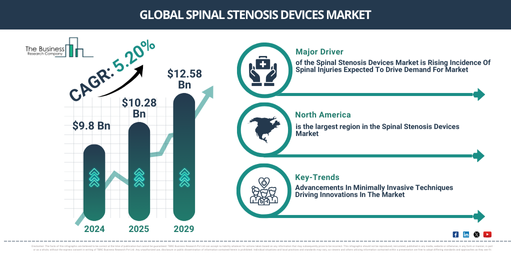
    The market size for spinal stenosis devices has consistently expanded over the past few years. It is anticipated to witness an increase from $9.8 billion in 2024 to $10.28 billion in 2025, marking a compound annual growth rate (CAGR) of 4.9%. The past growth is associated with factors such as escalating spinal stenosis cases in the expanding elderly population, the increasing incidence of spinal ailments and degenerative conditions, a rising trend in spinal injuries, growing instances of spinal diseases, and a surge in spinal disorders among young and old individuals.

    The market for spinal stenosis devices is projected to experience substantial growth in the upcoming years, swelling to$12.58 billion by 2029″ at a compound annual growth rate (CAGR) of 5.2%. This predicted growth for the forecasted period can be ascribed to a heightened demand for minimally intrusive surgical procedures, an increased emphasis on minimally invasive spine surgery (MISS), elevated healthcare spending, and investments in newly emerging markets. The forecast period is poised to witness significant trends such as advancements in the technology for spinal implants and surgical methods, a growing inclination towards biodegradable and 3D-printed implants, and budding collaborations and product innovations.

    Download a free sample to assess the report’s scope and structure:

    https://www.thebusinessresearchcompany.com/sample.aspx?id=20966&type=smp

    What Are the Primary Drivers Supporting the Market Growth of the Spinal Stenosis Devices Market?

    The spinal stenosis devices market is predicted to expand due to the escalating occurrence of spinal injuries. Defined as traumatic harm to the spinal cord or nearby areas, spinal injuries disrupt the conveyance of sensory and motor signals, which can potentially result in loss of feeling, function, and movement beneath the injury site. The escalation in spinal injuries is predominantly linked to a rise in traumatic events such as car accidents and falls, particularly in older adults, and an increasing prevalence of non-traumatic reasons such as degenerative illnesses and age-related conditions. Spinal stenosis devices offer focused relief and structural support by relieving nerve compression, enhancing spinal alignment, and boosting mobility, thereby significantly ameliorating the quality of life for patients with spinal injuries. For example, in May 2023, the National Spinal Cord Injury Statistical Center, a US-based body that provides information on the spinal cord, reported 18,000 new spinal injuries annually, with a yearly incidence rate of 54 per 1 million. Furthermore, it’s calculated that roughly 302,000 people in the US have suffered a traumatic spinal cord injury. Thus, the escalating occurrence of spinal injuries is fueling the growth of the spinal stenosis devices market.

    Which Primary Segments of the Spinal Stenosis Devices Market Are Driving Growth and Industry Transformations?

    The spinal stenosis devicesmarket covered in this report is segmented –

    1) By Product Type: Interspinous Spacers; Stabilization Systems; Spinal Arthroplasty System; Interbody Fusion Devices

    2) By Application: Lumbar Spinal Stenosis; Cervical Spinal Stenosis; Thoracic Spinal Stenosis

    3) By End User: Hospitals; Ambulatory Surgical Centres; Others End Users

    Subsegments:

    1) By Interspinous Spacers: Single-Level Spacers; Multi-Level Spacers; Expandable Spacers

    2) By Stabilization Systems: Pedicle Screw Systems; Lateral Screw Systems; Dynamic Stabilization Systems

    3) By Spinal Arthroplasty System: Cervical Arthroplasty Systems; Lumbar Arthroplasty Systems; Artificial Disc Replacements

    4) By Interbody Fusion Devices: PEEK (Polyetheretherketone) Devices; Titanium Interbody Devices; Bioactive And Biocompatible Devices

    Request customized data on this market:

    https://www.thebusinessresearchcompany.com/customise?id=20966&type=smp

    Which Regions Are Key Players in the Growth of the #What Are the Primary Drivers Supporting the Market Growth of the Spinal Stenosis Devices Market?# Market?

    North America was the largest region in the spinal stenosis devices market in 2024. Asia-Pacific is expected to be the fastest-growing region in the forecast period. The regions covered in the spinal stenosis devices market report are Asia-Pacific, Western Europe, Eastern Europe, North America, South America, Middle East, Africa.

    What Are the Most Significant Market Trends in the Spinal Stenosis Devices Market?

    The key players in the spinal stenosis devices market are concentrating on technological innovations, such as minimally invasive surgical techniques, to boost surgical accuracy and shorten recovery durations. These techniques use small incisions, also known as ports, to access the body’s internal organs, greatly reducing bodily trauma. Specialized tools, including cameras and trocars, are utilized, enabling surgeons to undertake operations with less discomfort, decreased recovery periods, and minimized complication risks compared to conventional open surgery. For example, Accelus, a U.S-based medical tech company providing cutting-edge solutions in spinal surgery domain, launched the linesider modular-cortical system in January 2024. This system permits surgeons to position screw shanks earlier during spinal implant operations and to tailor constructs with modular tulips and rods. Both open modular and cortical modular sets are available to suit diverse surgical methods. Spinal implants play a vital role in maintaining and supporting the spinal structure during surgical procedures, aiding in the correction of deformities, fractures, or degenerative diseases, thereby enhancing patient performance and lifestyle.

    View the full report here:

    https://www.thebusinessresearchcompany.com/report/spinal-stenosis-devices-global-market-report

    What Parameters Are Used to Define the Spinal Stenosis Devices Market?

    Spinal stenosis devices are medical tools or implants designed to relieve pressure on the spinal cord or nerves caused by the narrowing of the spinal canal. These devices include interspinous spacers, decompression systems, and stabilizing implants to improve mobility and reduce pain.

    Purchase the full report and get a swift delivery:

    https://www.thebusinessresearchcompany.com/purchaseoptions.aspx?id=20966

    About The Business Research Company:

    With over 15000+ reports from 27 industries covering 60+ geographies, The Business Research Company has built a reputation for offering comprehensive, data-rich research and insights. Armed with 1,500,000 datasets, the optimistic contribution of in-depth secondary research, and unique insights from industry leaders, you can get the information you need to stay ahead in the game.

    Get in touch with us:

    The Business Research Company: https://www.thebusinessresearchcompany.com/

    Americas +1 310-496-7795

    Europe +44 7882 955267

    Asia & Others +44 7882 955267 & +91 8897263534

    Email us at info@tbrc.info

    Follow us on:

    LinkedIn: https://in.linkedin.com/company/the-business-research-company

    YouTube: https://www.youtube.com/channel/UC24_fI0rV8cR5DxlCpgmyFQ

    Global Market Model: https://www.thebusinessresearchcompany.com/global-market-model