Month: August 2025

  • Emerging Growth Drivers in the Neuroprosthetics Market Landscape: Neuroprosthetics Market Soars As Global Neurological Disorder And Nerve Injury Cases Surge

    Emerging Growth Drivers in the Neuroprosthetics Market Landscape: Neuroprosthetics Market Soars As Global Neurological Disorder And Nerve Injury Cases Surge

    Claim your 30% discount on Global Market Reports with code ONLINE30. Limited time only.

    What Are the Key Projections for the CAGR of the Neuroprosthetics Market Size From 2025 to 2034?

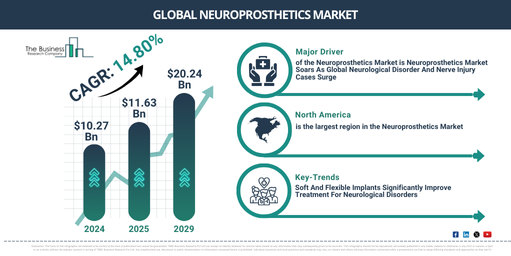
    In recent years, the size of the neuroprosthetics market has experienced rapid growth. The market is projected to increase from $10.27 billion in 2024 to $11.63 billion in 2025, reflective of a compound annual growth rate (CAGR) of 13.3%. The exceptional expansion during the historic period can be linked to factors such as an aging population, government initiatives, research and development initiatives, regulatory approvals, as well as investments and funding.

    The neuroprosthetics market is projected to experience a significant surge in size in the upcoming years, with a projected value of $20.24 billion in 2029, boasting a compound annual growth rate (CAGR) of 14.8%. The predicted growth within this period is associated with factors such as personalized medicine, the frequency of chronic diseases, the advent of telemedicine services, worldwide healthcare expenditure, and neurorehabilitation. Key trends expected within this period encompass brain-computer interfaces (bcis), the development and implementation of artificial intelligence (AI) and machine learning, non-invasive neuroprosthetics, sensory restoration, and biohybrid neuroprosthetics.

    Download a free sample to assess the report’s scope and structure:

    https://www.thebusinessresearchcompany.com/sample.aspx?id=6606&type=smp

    Which Primay Drivers Are Accelerating Growth in the Neuroprosthetics Market?

    The swell in the number of individuals afflicted by nerve injuries and neurological disorders is anticipated to advance the development of the neuroprosthetics market. Neurological disorders constitute conditions that influence the brain, the spinal cord, and the body’s nerves. Damage to nerves from pressure, cuts, or stretching during unforeseen incidents or accidents are known as nerve injuries. Neuroprosthetics aid patients afflicted by such injuries and disorders in recovering their impaired sensory and motor functions. For example, per the World Health Organization, a Switzerland-based United Nations health entity, in 2022, roughly 50 million people worldwide suffered from epilepsy, with about 80% of them residing in middle and low-income nations. As such, the escalating number of patients afflicted by nerve injuries and neurological disorders is propelling the neuroprosthetics market’s expansion.

    Which Primary Segments of the Neuroprosthetics Market Are Driving Growth and Industry Transformations?

    The neuroprostheticsmarket covered in this report is segmented –

    1) By Type: Motor Neuroprosthetics; Auditory Neuroprosthetics/ Cochlear implants; Visual Neuroprosthetics/ Retinal implants; Cognitive Neuroprosthetics

    2) By Technique: Spinal Cord Stimulation; Deep Brain Stimulation; Vagus Nerve Stimulation; Sacral Nerve Stimulation; Transcranial Magnetic Stimulation

    3) By Application: Motor Neuron Disorders; Physiological Disorders; Cognitive Disorders

    Subsegments:

    1) By Motor Neuroprosthetics: Functional Electrical Stimulation (FES) Systems; Brain-Machine Interfaces (BMIs); Prosthetic Limbs With Neural Control; Exoskeletons For Rehabilitation

    2) By Auditory Neuroprosthetics Or Cochlear Implants: Cochlear Implants (Single and Multi-Channel); Auditory Brainstem Implants (ABI); Bone-Anchored Hearing Aids (BAHA)

    3) By Visual Neuroprosthetics Or Retinal Implants: Retinal Prostheses; Optogenetic Implants; Visual Cortical Implants

    4) By Cognitive Neuroprosthetics: Deep Brain Stimulation (DBS) Devices; Cognitive Enhancement Implants; Neurostimulation Devices For Cognitive Disorders

    Request customized data on this market:

    https://www.thebusinessresearchcompany.com/customise?id=6606&type=smp

    Which Regions Are Key Players in the Growth of the #Which Primay Drivers Are Accelerating Growth in the Neuroprosthetics Market?# Market?

    North America was the largest region in the neuroprosthetics market in 2024. Asia-Pacific is expected to be the fastest-growing region in the forecast period. The regions covered in the neuroprosthetics market report include Asia-Pacific, Western Europe, Eastern Europe, North America, South America, Middle East and Africa.

    Which Technological Trends Are Reshaping the Neuroprosthetics Industry Dynamics?

    The neuroprosthetics market is being revolutionized by technological developments. Defining technological advancement as the discovery of knowledge that propels technological improvements for superior products for consumers, we can look at Axoft, a nanotechnology company from the US, as an example. In October 2022, they introduced their brain-machine interface (BMI) technology to the market. This innovation uses soft, laminate implants comprised of bioinspired materials that resemble brain tissue, heightening long-term stability and diminishing the risk of formation of scars or infection. This groundbreaking design boasts ultra-high bandwidth and consistent readings at the single-neuron level, markedly increasing treatment capabilities for neurological conditions like epilepsy and Parkinson’s disease while reducing the necessity for regular replacements.

    View the full report here:

    https://www.thebusinessresearchcompany.com/report/neuroprosthetics-global-market-report

    What Parameters Are Used to Define the Neuroprosthetics Market?

    Neuroprosthetics is the study of neuroprostheses and brain-machine interfaces. Neuroprosthetic devices substitute the cognitive or sensory functions that have been impaired due to nervous system disorders. They encompass various artificial devices or systems that can enhance the output or input of a neural system. The major purpose of neuroprosthetics is to allow brain-injured patients to participate in day-to-day life and improve their quality of life.

    Purchase the full report and get a swift delivery:

    https://www.thebusinessresearchcompany.com/purchaseoptions.aspx?id=6606

    About The Business Research Company:

    With over 15000+ reports from 27 industries covering 60+ geographies, The Business Research Company has built a reputation for offering comprehensive, data-rich research and insights. Armed with 1,500,000 datasets, the optimistic contribution of in-depth secondary research, and unique insights from industry leaders, you can get the information you need to stay ahead in the game.

    Get in touch with us:

    The Business Research Company: https://www.thebusinessresearchcompany.com/

    Americas +1 310-496-7795

    Europe +44 7882 955267

    Asia & Others +44 7882 955267 & +91 8897263534

    Email us at info@tbrc.info

    Follow us on:

    LinkedIn: https://in.linkedin.com/company/the-business-research-company

    YouTube: https://www.youtube.com/channel/UC24_fI0rV8cR5DxlCpgmyFQ

    Global Market Model: https://www.thebusinessresearchcompany.com/global-market-model
  • Pet Cancer Therapeutics Market Forecast 2025–2034: Trends Reshaping Demand, Investment, and Innovation

    Pet Cancer Therapeutics Market Forecast 2025–2034: Trends Reshaping Demand, Investment, and Innovation

    Claim your 30% discount on Global Market Reports with code ONLINE30. Limited time only.

    #What Is the Current and Projected Market Size of the Pet Diabetes Care Market Through 2034?#_x000D_

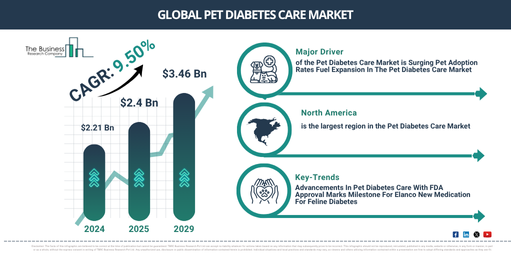
    The market size for pet diabetes care has consistently seen robust growth in the past few years. It is set to expand from a significant $2.21 billion in 2024 to $2.4 billion in 2025, demonstrating a compound annual growth rate (CAGR) of 8.6%. The expansion during the historical period can be credited to factors such as increased awareness about pet health, advancements in the field of veterinary medicine, rising instances of diabetes among pets, humanization of pets, heightened focus on pet nutrition, awareness initiatives undertaken by veterinary organizations, and the availability of insulin and other medications._x000D_

    _x000D_

    The market size for pet diabetes care is anticipated to witness robust growth in the coming years. It is projected to expand to $3.46 billion in 2029, with a compound annual growth rate (CAGR) of 9.5%. The growth during the predicted period can be credited to factors like the rising adoption of pet insurance, tailored diabetes management plans, emphasis on preventive pet healthcare, the globalization of pet health practices, increased funding in pet health studies, and the growth of consumer affluence. Noteworthy trends during the forecast period encompass progress in veterinary diagnostics, attention on pet obesity control, advancements in insulin delivery systems, growth in pet insurance options, improved accessibility of specialty pet foods, the use of telemedicine and remote monitoring, as well as collaborations within the veterinary medicine field._x000D_

    _x000D_

    #Download a free sample to assess the report’s scope and structure:#_x000D_

    https://www.thebusinessresearchcompany.com/sample.aspx?id=8095&type=smp_x000D_

    _x000D_

    #What Are the Primary Drivers Supporting the Market Growth of the Pet Diabetes Care Market?#_x000D_

    The anticipated rise in pet adoption is predicted to drive the pet diabetes care market’s expansion. Pet adoption, which involves acquiring a pet from a shelter or rescue that its previous owners have abandoned rather than purchasing one from a pet shop, breeder, or other people, is becoming more prevalent. The fact that pets are being diagnosed with diabetes at an increasing rate each year is partly due to the reflection of our own lifestyles – they tend to be less physically active and rely heavily on processed foods. For instance, in 2022 Animal Medicines Australia, a non-governmental organization in Australia, documented considerable growth in pet ownership. The number of pet owners amounted to 28,730.8 in 2022, growing by 24% from 39% in 2021. This sharp increase underscores the escalating trend in pet adoption and investment in their well-being. The rise in pet ownership emphasizes the growing fondness for pets in Australian families. Hence, the upward swing in pet adoption is fueling the expansion of the pet diabetes care market._x000D_

    _x000D_

    #Which Primary Segments of the Pet Diabetes Care Market Are Driving Growth and Industry Transformations?#_x000D_

    The pet diabetes care market covered in this report is segmented – _x000D_

    _x000D_

    1) By Drug Type: Insulin Therapy, Oral Medication _x000D_

    2) By Device Type: Glucose Monitoring Devices, Insulin Delivery Devices _x000D_

    3) By Animal Type: Canine, Feline, Other Animal Types _x000D_

    4) By End-User: Veterinary Clinics, Home Care Settings, Veterinary Hospitals_x000D_

    _x000D_

    Subsegments:_x000D_

    1) By Insulin Therapy: Canine Insulin Products, Feline Insulin Products, Insulin Delivery Devices_x000D_

    2) By Oral Medication: Glipizide, Metformin, Other Oral Hypoglycemic Agents_x000D_

    _x000D_

    #Request customized data on this market:#_x000D_

    https://www.thebusinessresearchcompany.com/customise?id=8095&type=smp_x000D_

    _x000D_

    #Which Regions Are Key Players in the Growth of the #What Are the Primary Drivers Supporting the Market Growth of the Pet Diabetes Care Market?# Market?#_x000D_

    North America was the largest region in the pet diabetes care market in 2024. Asia-Pacific is expected to be the fastest-growing region in the forecast period. The regions covered in the pet diabetes care market report are Asia-Pacific, Western Europe, Eastern Europe, North America, South America, Middle East, Africa._x000D_

    _x000D_

    #What Are the Most Significant Market Trends in the Pet Diabetes Care Market?#_x000D_

    The rise in research and development activities, along with the introduction of new products, is becoming increasingly important in the pet diabetes market. There is a growing number of studies focused on better understanding diabetes in pets and simplifying its management. Furthermore, to maintain their market standing, companies are debuting new items like generic drugs. For instance, in December 2022, Elanco Animal Health Inc. received approval from the U.S. Food and Drug Administration (FDA) for their medication designed for cats suffering from a particular type of diabetes, marking it as the first FDA-approved oral medication for this condition in animals._x000D_

    _x000D_

    #View the full report here:#_x000D_

    https://www.thebusinessresearchcompany.com/report/pet-diabetes-care-global-market-report_x000D_

    _x000D_

    #What Parameters Are Used to Define the Pet Diabetes Care Market?#_x000D_

    Pet diabetes care is used to treat pets suffering from diabetes, which may also cause other diseases such as heart disease, pancreatitis, urinary tract infections, kidney disease, and skin infections. Diabetes develops when a pet’s body produces insufficient insulin, stops generating it altogether, or uses it improperly, which hinders the body from converting food into energy._x000D_

    _x000D_

    #Purchase the full report and get a swift delivery:#_x000D_

    https://www.thebusinessresearchcompany.com/purchaseoptions.aspx?id=8095_x000D_

    _x000D_

    #About The Business Research Company:#_x000D_

    With over 15000+ reports from 27 industries covering 60+ geographies, The Business Research Company has built a reputation for offering comprehensive, data-rich research and insights. Armed with 1,500,000 datasets, the optimistic contribution of in-depth secondary research, and unique insights from industry leaders, you can get the information you need to stay ahead in the game._x000D_

    _x000D_

    #Get in touch with us:#_x000D_

    The Business Research Company: https://www.thebusinessresearchcompany.com/_x000D_

    Americas +1 310-496-7795_x000D_

    Europe +44 7882 955267_x000D_

    Asia & Others +44 7882 955267 & +91 8897263534_x000D_

    Email us at info@tbrc.info_x000D_

    _x000D_

    #Follow us on:#_x000D_

    _x000D_

    LinkedIn: https://in.linkedin.com/company/the-business-research-company_x000D_

    YouTube: https://www.youtube.com/channel/UC24_fI0rV8cR5DxlCpgmyFQ_x000D_

    Global Market Model: https://www.thebusinessresearchcompany.com/global-market-model

  • From Insight to Impact: Strategic Growth Mapping in the Hospital-Acquired Infection Control Market

    From Insight to Impact: Strategic Growth Mapping in the Hospital-Acquired Infection Control Market

    Claim your 30% discount on Global Market Reports with code ONLINE30. Limited time only.

    How Has the Hospital-Acquired Infection Control Market Growth Performance Trended Historically, And What Lies Ahead?

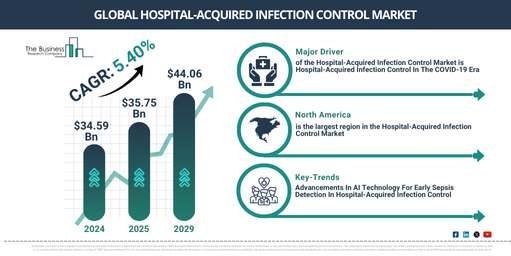
    There has been a consistent growth in the market size of hospital-acquired infection control over the past years. The size of the market is predicted to increase from $34.59 billion in 2024 to $35.75 billion in 2025, with a compound annual growth rate (CAGR) of 3.4%. The historic growth can be linked to factors such as a growing resistance to antibiotics, increased awareness, strict regulations, the global spread of infectious diseases, and initiatives towards patient safety.

    The market size of hospital-acquired infection control is anticipated to exhibit remarkable growth in the upcoming years. The market is projected to reach $44.06 billion in 2029, growing at a compound annual growth rate (CAGR) of 5.4%. Factors contributing to this growth during the forecast period include the emergence of multidrug-resistant pathogens, pandemic readiness, enhanced surveillance and monitoring, antimicrobial stewardship efforts, and international cooperation. Notable trends shaping the forecast period are the use of real-time location systems (RTLS), the inclusion of artificial intelligence (AI) in surveillance, a shift towards single-use and disposable devices, a strong focus on staff training and instruction, and an increased use of disinfection technologies.

    Download a free sample to assess the report’s scope and structure:

    https://www.thebusinessresearchcompany.com/sample.aspx?id=7694&type=smp

    What are the Fundamental Drivers and Innovations Shaping the Hospital-Acquired Infection Control Market?

    The hospital-acquired infection control market is projected to expand due to the rise in COVID-19 incidences. COVID-19 is a viral infection brought about by the SARS-CoV-2 virus. With the onset of the COVID-19 pandemic, there has been a surge in the need for hospital-acquired infection control goods and services, with an emphasis on personal cleanliness and the manufacture of infection control medical equipment. For example, World Health Organization, a specialized agency of the United Nations based in Switzerland, reported that global COVID-19 cases hit 581.6 million on 8th August 2022. Consequently, the climbing numbers of COVID-19 cases are fueling the growth of the hospital-acquired infection control market.

    How Is the Hospital-Acquired Infection Control Market Segmented?

    The hospital-acquired infection controlmarket covered in this report is segmented –

    1) By Product: Sterilizers; Disinfectors; Endoscope Reprocessors; Microbial Testing Instruments; Consumables; Disinfectants; Infection Prevention And Surveillance Software; Other Products

    2) By Technology: Phenotypic Methods; Genotypic Methods

    3) By Diseases: Hospital Acquired Pneumonia; Bloodstream Infections; Surgical Site Infections; Gastrointestinal Infections; Urinary Tract Infection; Other Diseases

    4) By Application: Disease Testing; Drug-Resistance Testing

    5) By End User: Hospitals; ICUs; Ambulatory Surgical; Diagnostic Centers; Nursing Homes; Maternity Centers; Other End Users

    Subsegments:

    1) By Sterilizers: Steam Sterilizers; Ethylene Oxide Sterilizers; Hydrogen Peroxide Sterilizers

    2) By Disinfectors: Washer Disinfectors; Automated Disinfectors

    3) By Endoscope Reprocessors: High-Level Disinfection Reprocessors; Automated Endoscope Reprocessors

    4) By Microbial Testing Instruments: Culture Systems; Rapid Microbial Testing Systems

    5) By Consumables: Sterilization Wraps; Filters; Personal Protective Equipment (PPE)

    6) By Disinfectants: Alcohol-based Disinfectants; Chlorine-based Disinfectants; Quaternary Ammonium Compounds

    7) By Infection Prevention And Surveillance Software: Surveillance Software Solutions; Data Management Software

    8) By Other Products: Cleaning Equipment; Air Purification Systems

    Request customized data on this market:

    https://www.thebusinessresearchcompany.com/customise?id=7694&type=smp

    Which Regions Are Driving the Next Phase of the Hospital-Acquired Infection Control Market Growth?

    North America was the largest region in the hospital-acquired infection control market in 2024. Asia-Pacific is expected to be the fastest-growing region in the forecast period. The regions covered in the hospital-acquired infection control market report are Asia-Pacific, Western Europe, Eastern Europe, North America, South America, Middle East, Africa.

    What Key Trends Are Shaping the Future of the Hospital-Acquired Infection Control Market?

    Leading businesses in the hospital-acquired infection control market are concentrating on creating novel tech solutions such as artificial intelligence systems for early sepsis detection to improve patient results by enabling prompt diagnosis and therapy. This AI-based sepsis detection system leverages advanced technology using AI and machine learning algorithms to recognize initial sepsis indicators in patients. For example, in April 2024, US-based medical clinic Prenosis Inc. was granted FDA marketing approval for Sepsis ImmunoScore, the first AI-powered system specifically designed to foresee sepsis, a potentially fatal condition that can result in extreme complications. This path-breaking device boosts early detection via real-time data evaluation, empowering healthcare practitioners to act more swiftly and efficaciously. The employment of AI is designed to assist rather than substitute medical personnel in decision-making, ultimately enhancing patient results and cutting healthcare expenses.

    View the full report here:

    https://www.thebusinessresearchcompany.com/report/hospital-acquired-infection-control-global-market-report

    How Is the Hospital-Acquired Infection Control Market Defined and What Are Its Core Parameters?

    Hospital-acquired infections are acquired during hospital care that is not present before hospital admission. The prevention and control of hospital-acquired infection using various cleaning, sterilization, and disinfection methods refers to hospital-acquired infection control. These infections can be caused by the cross-infection from the surfaces of equipment, the skin of patients, and healthcare staff. Hospital-acquired infection control is used to reduce or eliminate the transmission of illnesses.

    Purchase the full report and get a swift delivery:

    https://www.thebusinessresearchcompany.com/purchaseoptions.aspx?id=7694

    About The Business Research Company:

    With over 15000+ reports from 27 industries covering 60+ geographies, The Business Research Company has built a reputation for offering comprehensive, data-rich research and insights. Armed with 1,500,000 datasets, the optimistic contribution of in-depth secondary research, and unique insights from industry leaders, you can get the information you need to stay ahead in the game.

    Get in touch with us:

    The Business Research Company: https://www.thebusinessresearchcompany.com/

    Americas +1 310-496-7795

    Europe +44 7882 955267

    Asia & Others +44 7882 955267 & +91 8897263534

    Email us at info@tbrc.info

    Follow us on:

    LinkedIn: https://in.linkedin.com/company/the-business-research-company

    YouTube: https://www.youtube.com/channel/UC24_fI0rV8cR5DxlCpgmyFQ

    Global Market Model: https://www.thebusinessresearchcompany.com/global-market-model
  • Strategic Growth Drivers Shaping the Nasal Polyps Treatment Market Outlook 2025- 2034:Rising Healthcare Expenditure Drives The Nasal Polyps Treatment Market

    Strategic Growth Drivers Shaping the Nasal Polyps Treatment Market Outlook 2025- 2034:Rising Healthcare Expenditure Drives The Nasal Polyps Treatment Market

    Claim your 30% discount on Global Market Reports with code ONLINE30. Limited time only.

    How Has The Nasal Polyps Treatment Market Growth Evolved From 2024 To 2025, And What’s Ahead?

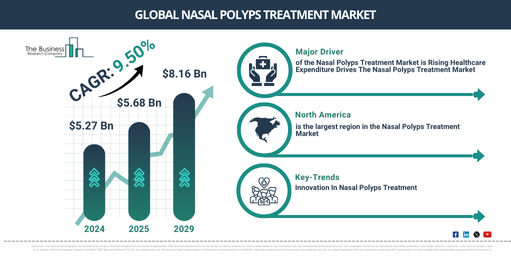
    The market size for treatment of nasal polyps has significantly expanded in the past few years. The growth is expected to continue from $5.27 billion in 2024 to $5.68 billion in 2025, maintaining a compound annual growth rate (CAGR) of 7.7%. Factors contributing to this growth in the past include surgical procedures, steroid medications, environmental factors, and the prevalence of conditions such as allergic rhinitis and chronic sinusitis.

    In the coming years, the market size of nasal polyps treatment is anticipated to witness robust growth. The market is expected to expand to$8.16 billion in 2029, with a compound annual growth rate (CAGR) of 9.5%. This growth in the predicted timeline can be credited to factors like drug development, personalized healthcare, telemedicine services, patient-directed care, and regulatory clearances. Key trends impacting this forecast period include advancements in diagnostic technology, medical breakthroughs, biologic therapy techniques, immunotherapy treatments, and cooperative scientific research.

    Download a free sample to assess the report’s scope and structure:

    https://www.thebusinessresearchcompany.com/sample.aspx?id=7109&type=smp

    Which Factors and External Forces Are Driving Demand in the Nasal Polyps Treatment Market?

    The escalation in healthcare spending is anticipated to push the growth of the nasal polyps treatment market. Healthcare spending pertains to the total money invested by individuals, governments, and organizations within a particular healthcare system to offset the expenses of medical services, treatments, medicines, and healthcare infrastructure. With the expansion of healthcare budgets, more funds are likely to be directed towards the identification, control, and treatment of nasal polyps. Such financial commitments can pave the way for enhanced patient access to sophisticated therapies, pioneering treatment alternatives, and boosted research and development, eventually catalyzing the market’s growth. For example, in December 2023, data from the Centers for Medicare & Medicaid Services, an American federal agency, indicated a 4.1% increase in U.S. healthcare spending, hitting $4.5 trillion in 2022, exceeding the 3.2% expansion recorded in 2021. Therefore, the escalating healthcare expenditure is propelling the nasal polyps treatment market.

    Which Segments in the Nasal Polyps Treatment Offer the Most Growth?

    The nasal polyps treatmentmarket covered in this report is segmented –

    1) By Type: Pharmacological Therapies; Surgeries

    2) By Route: Oral; Nasal; Other Routes

    3) By Distribution: Hospital Pharmacies; Retail Pharmacies; Online Pharmacies

    Subsegments:

    1) By Pharmacological Therapies: Corticosteroids; Biologics; Antihistamines; Saline Nasal Irrigation

    2) By Surgeries: Functional Endoscopic Sinus Surgery (FESS); Polypectomy; Endoscopic Sinus Surgery; Balloon Sinus Dilation; Revision Sinus Surgery

    Request customized data on this market:

    https://www.thebusinessresearchcompany.com/customise?id=7109&type=smp

    What Are the Fastest-Growing Geographies in the #Which Factors and External Forces Are Driving Demand in the Nasal Polyps Treatment Market?# Market?

    North America was the largest region in the nasal polyps treatment market in 2024 Asia-Pacific is expected to be the fastest-growing region in the forecast period. The regions covered in the nasal polyps treatment market report include Asia-Pacific, Western Europe, Eastern Europe, North America, South America, Middle East and Africa.

    Which Cutting-Edge Market Trends Are Expected to Drive theNasal Polyps Treatment Market’s Growth?

    Innovating new products is becoming a prominent trend in the field of nasal polyps treatment. To enhance their market foothold, leading companies are focusing on creating novel products. For example, in September 2024, a UK-based pharmaceutical organization, AstraZeneca, received the U.S. Food and Drug Administration (FDA) approval for their product Fasenra (benralizumab). This product represents a significant step forward in treating eosinophilic granulomatosis with polyangiitis (EGPA), achieving remission in about 60% of patients and allowing 41% to entirely stop using oral corticosteroids, thereby decreasing the long-term adverse effects associated with steroids. With this approval, treatment options have broadened for an estimated 15,000 U.S. patients with EGPA, a condition frequently linked with impairing nasal and sinus symptoms. This highlights the ongoing requirement for efficient treatments for such eosinophilic disorders.

    View the full report here:

    https://www.thebusinessresearchcompany.com/report/nasal-polyps-treatment-global-market-report

    What Are the Key Elements That Define the Nasal Polyps Treatment Market?

    Nasal polyps are soft, painless, noncancerous growths on the lining of your nasal passages or sinuses. They dangle like grapes or teardrops and are linked with asthma, persistent infections, allergies, medication sensitivity, and other immunological disorders.

    Purchase the full report and get a swift delivery:

    https://www.thebusinessresearchcompany.com/purchaseoptions.aspx?id=7109

    About The Business Research Company:

    With over 15000+ reports from 27 industries covering 60+ geographies, The Business Research Company has built a reputation for offering comprehensive, data-rich research and insights. Armed with 1,500,000 datasets, the optimistic contribution of in-depth secondary research, and unique insights from industry leaders, you can get the information you need to stay ahead in the game.

    Get in touch with us:

    The Business Research Company: https://www.thebusinessresearchcompany.com/

    Americas +1 310-496-7795

    Europe +44 7882 955267

    Asia & Others +44 7882 955267 & +91 8897263534

    Email us at info@tbrc.info

    Follow us on:

    LinkedIn: https://in.linkedin.com/company/the-business-research-company

    YouTube: https://www.youtube.com/channel/UC24_fI0rV8cR5DxlCpgmyFQ

    Global Market Model: https://www.thebusinessresearchcompany.com/global-market-model
  • Hospital OutsourcingMarket Overview 2025–2034: CAGR Trends, Long-Term Growth Paths, and Business Implications

    Hospital OutsourcingMarket Overview 2025–2034: CAGR Trends, Long-Term Growth Paths, and Business Implications

    Claim your 30% discount on Global Market Reports with code ONLINE30. Limited time only.

    What Are the Projected Market Size and Growth Rates for the Hospital Outsourcing Market From 2025 To 2029?

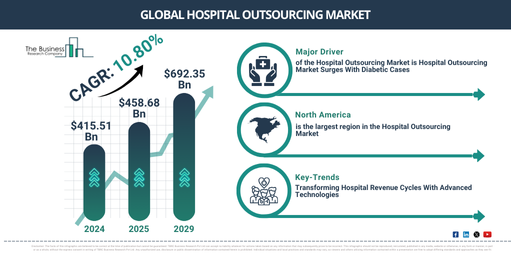
    The size of the hospital outsourcing market has significantly expanded over the recent years. It is projected to increase from $415.51 billion in 2024 to $458.68 billion in 2025, with a compound annual growth rate (CAGR) of 10.4%. The expansion during the historic period can be attributed to factors such as cost containment, emphasis on core competencies, regulatory compliance, globalization, risk management, and quality enhancement.

    In the coming years, the hospital outsourcing market is predicted to experience a swift expansion. The market is projected to reach$692.35 billion by 2029 with a compound annual growth rate (CAGR) of 10.8%. The anticipated growth in this forecast period can be traced to factors like patient-oriented services, escalating intricacy in health care services, adaptability and scalability, cybersecurity issues, and managing population health. The forecast period is likely to witness key trends such as technology advances, digital transformation, the rise of business process outsourcing (BPO) in the healthcare sector, rising acceptance of IT outsourcing, along with a focus on outsourcing revenue cycle management.

    Download a free sample to assess the report’s scope and structure:

    https://www.thebusinessresearchcompany.com/sample.aspx?id=7268&type=smp

    What Are the Primary Drivers Supporting the Market Growth of the Hospital Outsourcing Market?

    The escalation in the number of diabetes patients in hospitals is projected to boost the expansion of the hospital outsourcing market in the future. Hospitals tend to utilize outsourcing services when they experience a surge in patient numbers and their infrastructure is incapable of coping with such high volumes. This is largely due to an increase in chronic diseases, like diabetes, cardiovascular disorders, and more that are elevating the patient admission rates in hospitals, consequently exerting more strain on medical procedures. For example, in April 2023, as per the data from Diabetes UK, a trade association based in the UK, around 4.3 million people have been diagnosed with diabetes in the UK. The registration data for 2021-22 indicates an increase of 148,951 cases in contrast to the 2020-21 data. Furthermore, over 2.4 million individuals are deemed to be at a high risk of contracting type 2 diabetes. Therefore, the escalating influx of diabetes patients in hospitals is a key driver for the growth of the hospital outsourcing market.

    Which Primary Segments of the Hospital Outsourcing Market Are Driving Growth and Industry Transformations?

    The hospital outsourcingmarket covered in this report is segmented –

    1) By Hospital Type: Private; Public

    2) By Hospital Size: Small And Medium Hospitals; Large Hospitals

    3) By Services: Healthcare IT; Clinical Services; Business Services; Transportation Services; Other Services

    4) By End-Users: Nursing Homes And Assisted Living; Specialty Hospitals; General Medical And Surgical Hospitals; Emergency And Other Outpatient Care Centers; Other End Users

    Subsegments:

    1) By Private: For-profit Hospitals; Non-profit Hospitals

    2) By Public: Government Hospitals; Community Hospitals

    Request customized data on this market:

    https://www.thebusinessresearchcompany.com/customise?id=7268&type=smp

    Which Regions Are Key Players in the Growth of the #What Are the Primary Drivers Supporting the Market Growth of the Hospital Outsourcing Market?# Market?

    North America was the largest region in the hospital outsourcing market in 2024. The regions covered in the hospital outsourcing market report are Asia-Pacific, Western Europe, Eastern Europe, North America, South America, Middle East, Africa.

    What Are the Most Significant Market Trends in the Hospital Outsourcing Market?

    Leading corporations in the hospital outsourcing market are implementing cutting-edge technologies, including digital platforms, to enhance revenue cycle results, which in turn bolsters their market profitability. Essentially, a digital platform is a tech-driven solution created to simplify and boost various administrative and monetary operations within health institutions. To illustrate, Omega Healthcare, a healthcare services firm based in the U.S., unveiled the Omega Digital Platform in October 2023. This platform uses AI, RPA, ML, bots, and NLP to augment efficiency in revenue cycle processes, reduce human involvement, and redistribute resources effectively. The end goal is to accomplish outcomes such as decreasing coding expenses with an accuracy exceeding 95% and shortening accounts receivable days, with the ultimate aim of maximising revenue for providers, payers, pharma, and clinical research establishments. Omega’s unique technology and analytical tools are designed to enhance productivity, reduce expenses, accelerate cash flow, and better financial results.

    View the full report here:

    https://www.thebusinessresearchcompany.com/report/hospital-outsourcing-global-market-report

    What Parameters Are Used to Define the Hospital Outsourcing Market?

    Hospital outsourcing is a process in which some processes of a hospital are assigned to another vendor or a smaller facility that has expertise and specialization in the specific area. This helps to provide support to hospital processes and smooth running of the hospitals.

    Purchase the full report and get a swift delivery:

    https://www.thebusinessresearchcompany.com/purchaseoptions.aspx?id=7268

    About The Business Research Company:

    With over 15000+ reports from 27 industries covering 60+ geographies, The Business Research Company has built a reputation for offering comprehensive, data-rich research and insights. Armed with 1,500,000 datasets, the optimistic contribution of in-depth secondary research, and unique insights from industry leaders, you can get the information you need to stay ahead in the game.

    Get in touch with us:

    The Business Research Company: https://www.thebusinessresearchcompany.com/

    Americas +1 310-496-7795

    Europe +44 7882 955267

    Asia & Others +44 7882 955267 & +91 8897263534

    Email us at info@tbrc.info

    Follow us on:

    LinkedIn: https://in.linkedin.com/company/the-business-research-company

    YouTube: https://www.youtube.com/channel/UC24_fI0rV8cR5DxlCpgmyFQ

    Global Market Model: https://www.thebusinessresearchcompany.com/global-market-model
  • Major Drivers Propelling the Growth oh theMobile Imaging Services Market Forward: Rising Prevalence Of Chronic Diseases Propels Demand For Mobile Imaging Services

    Major Drivers Propelling the Growth oh theMobile Imaging Services Market Forward: Rising Prevalence Of Chronic Diseases Propels Demand For Mobile Imaging Services

    Claim your 30% discount on Global Market Reports with code ONLINE30. Limited time only.

    What is the Projected CAGR for the Mobile Imaging Services Market Size from 2025 to 2034?

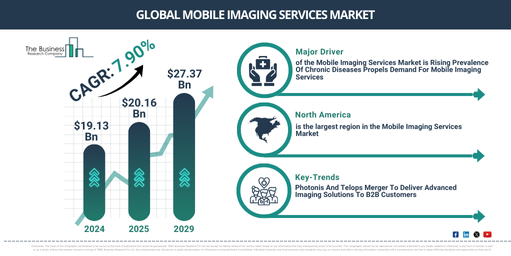
    The market for mobile imaging services has seen robust growth in recent years. The market is projected to expand from $19.13 billion in 2024 to $20.16 billion in 2025, at a Compound Annual Growth Rate (CAGR) of 5.4%. Factors contributing to growth during the historic period include an aging demographic, cost-effectiveness, emergency healthcare provision, disease screening initiatives, chronic illness management, and regulatory environment.

    In the coming years, the market for mobile imaging services is projected to undergo robust growth. The market is expected to reach a value of$27.37 billion by 2029, expanding at a compound annual growth rate (CAGR) of 7.9%. The market growth during the forecast period is likely to be driven by factors such as rural healthcare, telehealth services, global health programs, control of infectious diseases, and point-of-care testing. Key trends during this period are anticipated to include the incorporation of artificial intelligence (AI), data security, advancements in technology, remote patient monitoring, and point-of-care ultrasound.

    Download a free sample to assess the report’s scope and structure:

    https://www.thebusinessresearchcompany.com/sample.aspx?id=5145&type=smp

    Which Major Market Drivers Are Expected to Boost the Growth Potential of the Mobile Imaging Services Market?

    The escalating instances of persistent ailments like cancer, neurological disorders, and cardiovascular diseases are anticipated to steer the expansion of the mobile imaging services market in the projected period. A chronic disease is a sustained health issue that can’t be cured. These conditions persist for more than a year requiring consistent medical supervision and could hamper day-to-day activities. Many tend to be untouched by vaccines or medications. Worldwide, chronic diseases are the primary contributors to death and disability, with rates of these conditions broadening across all regions and impacting people from all walks of life. Mobile imaging services provide healthcare providers with the tools to conduct essential screenings using a range of imaging technologies such as X-Ray, EKG, and ultrasound. For instance, based on United Nations data, the share of worldwide deaths attributed to chronic diseases is predicted to climb to 70% by 2030. Hence, the growing prevalence of chronic diseases is fueling the expansion of the mobile imaging services market.

    Which Key Market Segments Comprise the Mobile Imaging Services Market and Drive Its Revenue Growth?

    The mobile imaging servicesmarket covered in this report is segmented –

    1) By Product Type: X-ray; Ultrasound; CT; MRI; Mammography; Bone Densitometry

    2) By End User: Hospitals And Private Clinics; Home Healthcare Providers; Rehabilitation Centers, Geriatric Care And Hospice Agencies; Sports Organizations; Other End Users

    Subsegments:

    1) By X-ray: Portable X-ray Machines; Digital X-ray Systems

    2) By Ultrasound: Portable Ultrasound Devices; Point-of-Care Ultrasound Systems

    3) By Computed Tomography (CT): Mobile CT Scanners; Helical CT Scanners

    4) By Magnetic Resonance Imaging (MRI): Mobile MRI Systems; Open MRI Systems

    5) By Mammography: Mobile Mammography Units; Digital Mammography Systems

    6) By Bone Densitometry: Portable Bone Densitometers; Dual-Energy X-ray Absorptiometry (DXA) Scanners

    Request customized data on this market:

    https://www.thebusinessresearchcompany.com/customise?id=5145&type=smp

    Which Areas Are Leading Regions in the Mobile Imaging Services Market Expansion Across the Globe?

    North America was the largest region in the mobile imaging services market in 2024. The regions covered in the mobile imaging services market report include Asia-Pacific, Western Europe, Eastern Europe, North America, South America, Middle East and Africa.

    What Are the Key Market Trends in theMobile Imaging Services Market Over the Coming Years?

    A significant trend emerging in the mobile imaging services market is the focus on strategic partnerships and acquisitions. Leading corporations in this market are increasingly utilizing collaborations and acquisitions as a tool to foster innovation and maintain a competitive edge. An example of this was seen in April 2023 when Photonis, a French company producing electro-optical detection and imaging apparatus for defense and industrial sectors, entered an acquisition agreement with the Canadian firm, Telops, known for developing and manufacturing high-performance imaging systems and infrared cameras. This merger is expected to deliver unique, top-tier imaging products to B2B customers, leveraging component production mastery, a broad geographical footprint and superior technological capabilities.

    View the full report here:

    https://www.thebusinessresearchcompany.com/report/mobile-imaging-services-global-market-report

    How Is the Mobile Imaging Services Market Conceptually Defined?

    The mobile imaging services are engaged in providing imaging services such as computed tomography (CT), magnetic resonance imaging (MRI) and nuclear imaging services directly to medical facilities, homes and businesses. Through mobile equipment, it is possible to deliver imaging services patients having location or cost constraints. Mobile imaging services provide X-rays, EKGs, and ultrasounds delivered to medical facilities, families, and businesses. It is usually less expensive and quicker than third-party options, and it can help overwhelmed in-house imaging departments.

    Purchase the full report and get a swift delivery:

    https://www.thebusinessresearchcompany.com/purchaseoptions.aspx?id=5145

    About The Business Research Company:

    With over 15000+ reports from 27 industries covering 60+ geographies, The Business Research Company has built a reputation for offering comprehensive, data-rich research and insights. Armed with 1,500,000 datasets, the optimistic contribution of in-depth secondary research, and unique insights from industry leaders, you can get the information you need to stay ahead in the game.

    Get in touch with us:

    The Business Research Company: https://www.thebusinessresearchcompany.com/

    Americas +1 310-496-7795

    Europe +44 7882 955267

    Asia & Others +44 7882 955267 & +91 8897263534

    Email us at info@tbrc.info

    Follow us on:

    LinkedIn: https://in.linkedin.com/company/the-business-research-company

    YouTube: https://www.youtube.com/channel/UC24_fI0rV8cR5DxlCpgmyFQ

    Global Market Model: https://www.thebusinessresearchcompany.com/global-market-model
  • Hospital Information System Outlook 2034: Key Drivers, Trends, and Market Frontiers

    Hospital Information System Outlook 2034: Key Drivers, Trends, and Market Frontiers

    Claim your 30% discount on Global Market Reports with code ONLINE30. Limited time only.

    What Is the Estimated Market Size of the Hospital Information System Market In 2029?

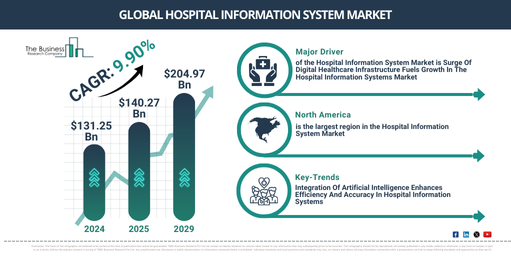
    The market size of the hospital information system has seen significant growth in the past few years. The market is projected to rise from $131.25 billion in 2024 to $140.27 billion in 2025, with a compound annual growth rate (CAGR) of 6.9%. This growth during the historical period can be linked to increased application of digital health infrastructure, growth in cases of chronic diseases, and a surge in healthcare spending.

    It is projected that the hospital information system market will undergo significant expansion in the forthcoming years, with a forecasted growth to$204.97 billion by 2029″, exhibiting a compound annual growth rate (CAGR) of 9.9%. This progression observed in the forecast period can be linked to a number of influencing factors such as increased governmental initiatives, elevated funding, boosted healthcare accessibility, and heightened consciousness about the value of electronic medical records (EMR). Key trends expected to shape the forecast period comprise the utilisation of artificial intelligence to enhance data tracking, recording, and preservation, a concentrated effort on medical devices to elevate patient monitoring and general healthcare quality, and the introduction of electronic health record platforms for structured capturing, storage, and dispersion of patient data, with a particular emphasis on cloud technologies and strategic alliances and collaborations.

    Download a free sample to assess the report’s scope and structure:

    https://www.thebusinessresearchcompany.com/sample.aspx?id=6849&type=smp

    How Are Key Drivers in the Industry Acting as Catalysts for the Growth of theHospital Information System Market?

    The hospital information systems market is predicted to be advanced by the heightened adoption of digital healthcare infrastructure. This umbrella term refers to the use of digital tools in the healthcare sector to elevate the quality of medical services and can include real-time tracking of patients’ health data through wearable technology. The integration of digital healthcare infrastructure in healthcare facilities benefits patient monitoring practices. Rock Health, a corporation based in the UK, revealed in February 2023 that as per a 2022 survey, 80% of participants had at least once availed of telemedicine services. This was an increase of 8 percentage points from the 72% recorded in 2021, even though the use of live video telemedicine showed only a 1% rise compared to the previous year. Consequently, the increasing utilization of digital healthcare infrastructure is fuelling the expansion of the hospital information systems market.

    Which Segments in the Hospital Information System Offer the Most Growth?

    The hospital information systemmarket covered in this report is segmented –

    1) By Components: Hardware, Software, Services

    2) By Type: Clinical Information Systems, Administrative Information Systems, Electronic Medical Records, Laboratory Information Systems, Radiology Information Systems, Pharmacy Information Systems, Other Types

    3) By Deployment: Web-Based, On-Premises, Cloud Based

    4) By End-User: Hospitals, Insurance Companies, Other End-Users

    Subsegments:

    1) By Hardware: Servers; Workstations; Networking Equipment; Peripheral Devices

    2) By Software: Electronic Health Records (EHR) Software; Practice Management Software; Clinical Information Systems; Revenue Cycle Management Software

    3) By Services: Implementation Services; Support And Maintenance Services; Training And Consulting Services; Managed Services

    Request customized data on this market:

    https://www.thebusinessresearchcompany.com/customise?id=6849&type=smp

    What Are the Fastest-Growing Geographies in the #How Are Key Drivers in the Industry Acting as Catalysts for the Growth of theHospital Information System Market?# Market?

    North America was the largest region in the hospital information systems market in 2024. Asia-Pacific is expected to be the fastest-growing region in the forecast period. The regions covered in the hospital information system market report are Asia-Pacific, Western Europe, Eastern Europe, North America, South America, Middle East, Africa.

    What Are the Current Market Growth and Trends in the Hospital Information System Industry?

    Artificial intelligence (AI) utilization constitutes a significant trend in the hospital information system market. To enhance data tracking, recording, and maintenance, key market players are capitalizing on AI. For example, in August 2022, a collaboration was launched by TidalHealth, a Maryland-based hospital information system and Health Care organization offering a plethora of hospitals, clinics, and physicians for emergency care. Its aim is to boost the precision of patient diagnostics, alleviate clinician exhaustion, and augment earnings via improved documentations. TidalHealth plans to employ the AI-enriched software across its network in Maryland and Delaware to streamline practitioners’ workflows. It is envisioned that this software will assist TidalHealth clinicians in automating electronic health records (EHR) chart reviews and will strengthen patient safety by ensuring all diagnoses are recorded.

    View the full report here:

    https://www.thebusinessresearchcompany.com/report/hospital-information-system-global-market-report

    What Are the Key Elements That Define the Hospital Information System Market?

    Hospital information systems refer to systems that collect, store, manage, and transmit patients’ medical records. This system brings together all the information and processes of a hospital on a single platform. The hospital information systems are used to store and manage healthcare data.

    Purchase the full report and get a swift delivery:

    https://www.thebusinessresearchcompany.com/purchaseoptions.aspx?id=6849

    About The Business Research Company:

    With over 15000+ reports from 27 industries covering 60+ geographies, The Business Research Company has built a reputation for offering comprehensive, data-rich research and insights. Armed with 1,500,000 datasets, the optimistic contribution of in-depth secondary research, and unique insights from industry leaders, you can get the information you need to stay ahead in the game.

    Get in touch with us:

    The Business Research Company: https://www.thebusinessresearchcompany.com/

    Americas +1 310-496-7795

    Europe +44 7882 955267

    Asia & Others +44 7882 955267 & +91 8897263534

    Email us at info@tbrc.info

    Follow us on:

    LinkedIn: https://in.linkedin.com/company/the-business-research-company

    YouTube: https://www.youtube.com/channel/UC24_fI0rV8cR5DxlCpgmyFQ

    Global Market Model: https://www.thebusinessresearchcompany.com/global-market-model
  • Critical Market Drivers Shaping the Outlook for Mixed Reality in Healthcare Market from 2025-2034: Growing Elderly Population Propels Mixed Reality In Healthcare Market Growth

    Critical Market Drivers Shaping the Outlook for Mixed Reality in Healthcare Market from 2025-2034: Growing Elderly Population Propels Mixed Reality In Healthcare Market Growth

    Claim your 30% discount on Global Market Reports with code ONLINE30. Limited time only.

    What Is the Current and Projected Market Size of the Mixed Reality in Healthcare Market Through 2034?

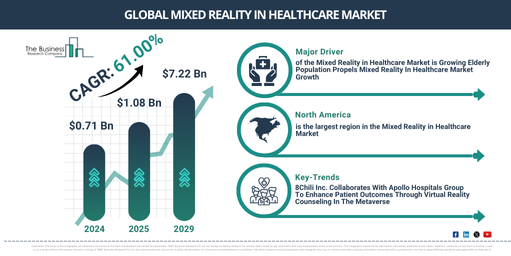
    The healthcare sector has witnessed a booming rise in the size of the mixed reality market in the last few years. The size which was at $0.71 billion in 2024, is projected to magnify to $1.08 billion in 2025, with a compound annual growth rate (CAGR) of 51.0%. The immense augmentation in the preceding period could be credited to improvements in medical training, patient awareness, rehabilitation, physical therapy, chronic illness management, and reduction in radiation exposure.

    It is predicted that the mixed reality in healthcare sector will experience significant expansion in the coming years, ballooning to$7.22 billion by 2029 with a compound annual growth rate (CAGR) of 61.0%. The substantial growth anticipated during the forecast period is linked with global health endeavors, regulatory structures, holographic telemedicine, enhancement of workflow, and teleconsultations. During this forecast period, notable patterns such as the fusion of artificial intelligence (AI), virtual clinical experiments, wearable mixed reality gadgets, augmented pre-surgery planning, and instantaneous language translation are expected to emerge.

    Download a free sample to assess the report’s scope and structure:

    https://www.thebusinessresearchcompany.com/sample.aspx?id=6935&type=smp

    What Are the Core Growth Drivers Propelling the Mixed Reality in Healthcare Market Forward?

    The growth of the mixed reality in healthcare market is anticipated to be spurred by the rise in the older population. This refers specifically to individuals who are 65 years and above. Such individuals are susceptible to a number of illnesses and conditions requiring surgical procedures. Mixed reality in surgery offers surgeons the ability to scrutinize a patient’s anatomy in conjunction with their MRI and CT scan data. For example, America’s Health Rankings, a U.S based organization that assesses health outcomes, has shared data stating that over 56 million adults aged 65 and above represents approximately 16.9% of the total population in the U.S. It is estimated that by 2030, more than 73.1 million elderly individuals will be present as the final batch of the baby boomer generation hit their twilight years. Hence, the surge in the elderly population is fuelling the expansion of the mixed reality in healthcare market.

    What Segment Types Define the Mixed Reality in Healthcare Market Structure?

    The mixed reality in healthcaremarket covered in this report is segmented –

    1) By Device Types: AR Devices; VR Devices

    2) By Component: Hardware; Software; Content and Application

    3) By Application: Surgery and Surgery Simulation; Patient Care Management; Fitness Management; Medical Training and Education; Other Applications

    4) By End-Users: Hospital; Surgical Centers and Medical Institutes; Other End Users

    Subsegments:

    1) By AR Devices: Smart Glasses; Head-Mounted Displays (HMDs); Mobile AR Applications; Projection-based AR Systems

    2) By VR Devices: Head-Mounted Displays (HMDs); VR Software Platforms; Motion Tracking Devices; Controllers And Input Devices

    Request customized data on this market:

    https://www.thebusinessresearchcompany.com/customise?id=6935&type=smp

    Which Geographic Areas Hold the Strongest Growth Potential in the Mixed Reality in Healthcare Market?

    North America was the largest region in the mixed reality in healthcare market in 2024. Asia-Pacific is expected to be the fastest-growing region in the forecast period. The regions covered in the mixed reality in healthcare market report include Asia-Pacific, Western Europe, Eastern Europe, North America, South America, Middle East and Africa.

    Which Emerging Trends that Are Influencing theMixed Reality in Healthcare Industry Evolution?

    The trend of technological progress is gaining momentum in the mixed reality healthcare market. Leading firms in this sector are concentrating on creating innovative technological solutions to consolidate their standing. For instance, Apollo Hospitals Group, a healthcare company from India, entered into a partnership with 8chili Inc. in February 2022 to facilitate involvement in the metaverse. The introduction of virtual reality patient consultation pre and post-surgery is expected to enhance patient results by presenting common environments with calming narratives that foster control over one’s body and psychological reactions. Additionally, immersive virtual reality activities are planned to enhance users’ emotional control capabilities. This personalized methodology for every patient will lead to increased patient satisfaction. 8chili Inc., a U.S deep tech company, is at the forefront of developing the essential infrastructure for the creation and dissemination of metaverse content.

    View the full report here:

    https://www.thebusinessresearchcompany.com/report/mixed-reality-in-healthcare-global-market-report

    What Is the Definition of the Mixed Reality in Healthcare Market?

    Mixed reality in healthcare refers to a combination of augmented and virtual reality to experience a real-life environment using digital tools in the medical field to accelerate diagnoses, improve access to healthcare, reduce infection transmission, educate, and enhance outcomes.

    Purchase the full report and get a swift delivery:

    https://www.thebusinessresearchcompany.com/purchaseoptions.aspx?id=6935

    About The Business Research Company:

    With over 15000+ reports from 27 industries covering 60+ geographies, The Business Research Company has built a reputation for offering comprehensive, data-rich research and insights. Armed with 1,500,000 datasets, the optimistic contribution of in-depth secondary research, and unique insights from industry leaders, you can get the information you need to stay ahead in the game.

    Get in touch with us:

    The Business Research Company: https://www.thebusinessresearchcompany.com/

    Americas +1 310-496-7795

    Europe +44 7882 955267

    Asia & Others +44 7882 955267 & +91 8897263534

    Email us at info@tbrc.info

    Follow us on:

    LinkedIn: https://in.linkedin.com/company/the-business-research-company

    YouTube: https://www.youtube.com/channel/UC24_fI0rV8cR5DxlCpgmyFQ

    Global Market Model: https://www.thebusinessresearchcompany.com/global-market-model
  • Global Hospital Asset Tracking and Inventory Management Systems Market Trends: Regional Breakdowns and Strategic Insights

    Global Hospital Asset Tracking and Inventory Management Systems Market Trends: Regional Breakdowns and Strategic Insights

    Claim your 30% discount on Global Market Reports with code ONLINE30. Limited time only.

    How Fast Is The Hospital Asset Tracking and Inventory Management Systems Market Expected to Grow Between 2025 And 2029?

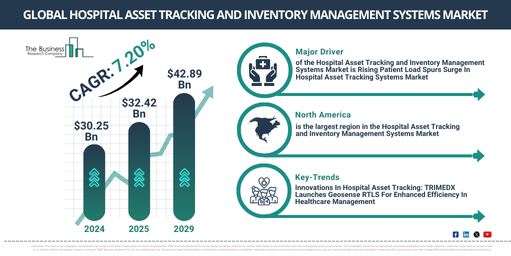
    The hospital resources monitoring and inventory control systems market has seen significant expansion in recent years. It is projected to increase from $30.25 billion in 2024 to $32.42 billion in 2025, with a compound annual growth rate (CAGR) of 7.2%. The growth during the historical period can be attributed to factors such as pressure to reduce costs, increased complexity in healthcare operations, concerns about patient safety, the emergence of data analytics, and escalating healthcare spending.

    The market size for hospital asset tracking and inventory management systems is projected to experience significant growth in the coming years. It is set to reach$42.89 billion by 2029, maintaining a Compound Annual Growth Rate (CAGR) of 7.2%. This anticipated growth during the forecast period can be attributed to the incorporation with electronic health records (EHR), remote supervision and management, the need for real-time visibility, focus on sustainability, and the impact of global health events. The forecast period will also see major trends such as the application of artificial intelligence (AI), advent of blockchain technology, technological advancement, adoption of RID technology, data analytics for operational understanding, and employment of cloud-based solutions.

    Download a free sample to assess the report’s scope and structure:

    https://www.thebusinessresearchcompany.com/sample.aspx?id=7461&type=smp

    What Are the Major Market Drivers Behind the Rising Adoption of Hospital Asset Tracking and Inventory Management Systems Market?

    The surge in patient numbers in hospitals has spurred the expansion of the hospital asset tracking and inventory management systems market. This surge is attributed to the COVID-19 pandemic, lifestyle diseases and other illnesses like cancer which have led to an escalation in the number of hospitalizations. As the patient count rises, so does the need for medical equipment and inventory, fueling the growth of asset tracking and inventory management systems. For example, the Nuffield Trust, a charity based in the UK, noted in May 2024 that the percentage of patients in private hospitals in England increased from 5.6% before the pandemic to 7.5% during the 2022/23 period. Thus, the rising patient load in hospitals is propelling the expansion of the hospital asset tracking and inventory management systems market.

    Which Key Market Segments Comprise the Hospital Asset Tracking and Inventory Management Systems Market and Drive Its Revenue Growth?

    The hospital asset tracking and inventory management systemsmarket covered in this report is segmented –

    1) By Product Type: Mobile; Fixed; Other Inventory

    2) By Technology: Hardware; Software

    3) By Application: Equipment Or Device Or Supplies Tracking; Equipment Maintenance

    Subsegments:

    1) By Mobile: Mobile Asset Tracking Devices; Mobile Inventory Management Applications

    2) By Fixed: Fixed Asset Tracking Systems; Fixed Inventory Management Solutions

    3) By Other Inventory: RFID-based Inventory Systems; Barcode-based Inventory Management; Manual Inventory Management Systems

    Request customized data on this market:

    https://www.thebusinessresearchcompany.com/customise?id=7461&type=smp

    Which Areas Are Leading Regions in the Hospital Asset Tracking and Inventory Management Systems Market Expansion Across the Globe?

    North America was the largest region in the hospital asset tracking and inventory market in 2024. The regions covered in the hospital asset tracking and inventory management systems market report are Asia-Pacific, Western Europe, Eastern Europe, North America, South America, Middle East, Africa.

    What Are the Strategic Trends Steering theHospital Asset Tracking and Inventory Management Systems Market Direction?

    Leading firms in the hospital asset tracking and inventory management systems market are developing innovative products like healthcare asset management systems in order to heighten efficiency, lower expenses, and advance patient care. The term ‘healthcare asset management’ symbolizes an organized manner of handling a healthcare institution’s assets, which might encompass medical equipment, IT infrastructure, facilities, and personnel. An example is TRIMEDX, a biotechnology firm based in the US, which introduced a state-of-the-art Real-Time Location System (RTLS) called GeoSense in April 2024 for managing healthcare assets. This trailblazing system offers precise tracking of medical devices at the room level, leading to a potential reduction in search times by a substantial 50%. This allows medical staff to concentrate more on providing patient care. GeoSense is engineered to smoothly interlink with TRIMEDX’s existing data frameworks and incorporates a user-friendly mobile application for instant access to device location at the patient’s bedside.

    View the full report here:

    https://www.thebusinessresearchcompany.com/report/hospital-asset-tracking-and-inventory-management-systems-global-market-report

    How Is the Hospital Asset Tracking and Inventory Management Systems Market Conceptually Defined?

    Hospital asset tracking and inventory management systems use sensors and tags that track the assets of the hospitals, provide real-time data, and play a crucial role in locating medical equipment in times of emergency in hospitals.

    Purchase the full report and get a swift delivery:

    https://www.thebusinessresearchcompany.com/purchaseoptions.aspx?id=7461

    About The Business Research Company:

    With over 15000+ reports from 27 industries covering 60+ geographies, The Business Research Company has built a reputation for offering comprehensive, data-rich research and insights. Armed with 1,500,000 datasets, the optimistic contribution of in-depth secondary research, and unique insights from industry leaders, you can get the information you need to stay ahead in the game.

    Get in touch with us:

    The Business Research Company: https://www.thebusinessresearchcompany.com/

    Americas +1 310-496-7795

    Europe +44 7882 955267

    Asia & Others +44 7882 955267 & +91 8897263534

    Email us at info@tbrc.info

    Follow us on:

    LinkedIn: https://in.linkedin.com/company/the-business-research-company

    YouTube: https://www.youtube.com/channel/UC24_fI0rV8cR5DxlCpgmyFQ

    Global Market Model: https://www.thebusinessresearchcompany.com/global-market-model
  • Key Factors Fueling the Growth of the Medical Styrenic Block Copolymer Market in 2025: Rising Healthcare Expenditure Fueling Growth Of Medical Styrenic Block Copolymer Market

    Key Factors Fueling the Growth of the Medical Styrenic Block Copolymer Market in 2025: Rising Healthcare Expenditure Fueling Growth Of Medical Styrenic Block Copolymer Market

    Claim your 30% discount on Global Market Reports with code ONLINE30. Limited time only.

    What is the Anticipated CAGR of the Medical Styrenic Block Copolymer Market, and What Factors Will Drive It?

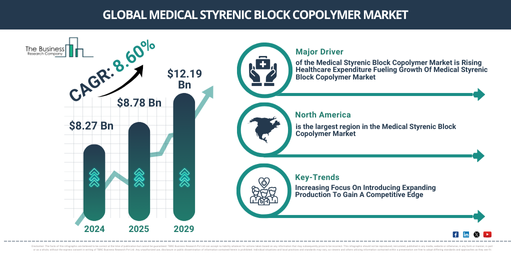
    The market for medical styrenic block copolymer has significantly expanded in the past few years. The market size is expected to increase from $8.27 billion in 2024 to $8.78 billion in 2025, with a compound annual growth rate (CAGR) of 6.1%. The surge during the historical period is due to factors such as regulatory compliance, infection control, telemedicine services, precision medicine, and global healthcare initiatives.

    In the coming years, the market size for medical styrenic block copolymer is predicted to experience substantial growth, with a projection to reach $12.19 billion in 2029, growing at a compound annual growth rate (CAGR) of 8.6%. The expected growth during the forecast period can be ascribed to factors such as resistance to sterilization, drug delivery systems, adaptable medical packaging, manufacturing of medical devices, tissue engineering, and biocompatibility techniques. Prominent trends in the forecast period will involve advanced medical devices, degradable copolymers, 3D printing, surgical robotics, and radiopacity.

    Download a free sample to assess the report’s scope and structure:

    https://www.thebusinessresearchcompany.com/sample.aspx?id=6582&type=smp

    What are the Fundamental Drivers and Innovations Shaping the Medical Styrenic Block Copolymer Market?

    The anticipated rise in healthcare spending is predicted to accelerate the growth of the medical styrenic block copolymer market. Healthcare spending encapsulates the average funds allocated to the healthcare sector in an economy, incorporating expenses associated with hospitals, home health services, and personal healthcare. These styrenic block copolymer materials are essential in the creation of medical products, as they provide flexibility, elasticity, and stretchability. For example, in March 2022, the 2021–2030 National Health Expenditure (NHE) report by the US-based federal agency, the Centers for Medicare & Medicaid Services, predicted an average increase of 5.1% annually in national health spending from 2021 to 2030, summing up to roughly $6.8 trillion. Furthermore, projections anticipate a 7.2% annual growth in Medicare spending and a 5.6% annual increase in Medicaid spending from 2021 to 2030. Consequently, the upward trend in healthcare expenditures is fueling the expansion of the medical styrene block copolymer market.

    How Is the Medical Styrenic Block Copolymer Market Segmented?

    The medical styrenic block copolymermarket covered in this report is segmented –

    1) By Type: Styrene Ethylene Butadiene Styrene; Styrene Isoprene Butadiene; Styrene-Butadiene-Styrene

    2) By Application: Tubing; Medical bags; Equipment; Packaging and diagnostics products; Wound care; Other Applications

    Subsegments:

    1) By Styrene Ethylene Butadiene Styrene (SEBS): SEBS For Medical Applications; SEBS For Adhesives And Sealants

    2) By Styrene Isoprene Butadiene (SIBS): SIBS For Drug Delivery Systems; SIBS For Medical Devices

    3) By Styrene-Butadiene-Styrene (SBS): SBS For Soft Adhesives; SBS For Coatings And Sealants

    Request customized data on this market:

    https://www.thebusinessresearchcompany.com/customise?id=6582&type=smp

    Which Regions Are Driving the Next Phase of the Medical Styrenic Block Copolymer Market Growth?

    North America was the largest region in the medical styrenic block copolymer market in 2024. Asia-Pacific is expected to be the fastest-growing region in the forecast period. The regions covered in the medical styrenic block copolymer market report include Asia-Pacific, Western Europe, Eastern Europe, North America, South America, Middle East and Africa.

    What Key Trends Are Shaping the Future of the Medical Styrenic Block Copolymer Market?

    Major players in the medical styrenic block copolymer market are looking to gain a competitive advantage by increasing their production. The growth in healthcare needs necessitates the enhanced production of medical styrenic block copolymer to ensure a consistent supply of top-grade materials used in medical appliances and packaging. For example, Kraton Corporation, a US company that specializes in specialty polymers and biobased chemicals’ manufacturing and sales, revealed its plans to enlarge its manufacturing facilities in Berre, France, in June 2022. The expansion will result in up to 100% ISCC PLUS certified Renewable Styrenic Block Copolymers (SBC) under the CirKular+ ReNew Series, using a mass balance strategy. The CirKular+ ReNew series facilitates an up to 85% reduction in cradle-to-gate carbon footprint, including biogenic carbon, compared to the fossil-based products manufactured in Berre. This significant breakthrough highlights the commitment of Kraton to the circular economy and offers its customers innovative and sustainable solutions.

    View the full report here:

    https://www.thebusinessresearchcompany.com/report/medical-styrenic-block-copolymer-global-market-report

    How Is the Medical Styrenic Block Copolymer Market Defined and What Are Its Core Parameters?

    Medical styrene block copolymers refer to thermoplastic elastomers. These materials look like plastic but behave like rubber. This material helps to make products flexible, stretchable, and elastic. It can also be used as an alternative to natural rubber, silicone rubber, thermoplastic polyurethane (TPU), or polyvinyl chloride (PVC). The medical styrenic block copolymer market is used in the manufacture of medical products such as surgical drapery, needle shields, dental dams, drip chambers, and exercise bands.

    Purchase the full report and get a swift delivery:

    https://www.thebusinessresearchcompany.com/purchaseoptions.aspx?id=6582

    About The Business Research Company:

    With over 15000+ reports from 27 industries covering 60+ geographies, The Business Research Company has built a reputation for offering comprehensive, data-rich research and insights. Armed with 1,500,000 datasets, the optimistic contribution of in-depth secondary research, and unique insights from industry leaders, you can get the information you need to stay ahead in the game.

    Get in touch with us:

    The Business Research Company: https://www.thebusinessresearchcompany.com/

    Americas +1 310-496-7795

    Europe +44 7882 955267

    Asia & Others +44 7882 955267 & +91 8897263534

    Email us at info@tbrc.info

    Follow us on:

    LinkedIn: https://in.linkedin.com/company/the-business-research-company

    YouTube: https://www.youtube.com/channel/UC24_fI0rV8cR5DxlCpgmyFQ

    Global Market Model: https://www.thebusinessresearchcompany.com/global-market-model