Month: September 2025

  • Industry Trends Show Veterinary Point-Of-Care (POC) Hematology Diagnostics Market Set to Expand at 13% CAGR Until 2029

    Industry Trends Show Veterinary Point-Of-Care (POC) Hematology Diagnostics Market Set to Expand at 13% CAGR Until 2029

    Claim your 30% discount on Global Market Reports with code ONLINE30. Limited time only.

    What CAGR Is Anticipated for the Veterinary Point-Of-Care (POC) Hematology Diagnostics Market Through 2029?

    The market size of the veterinary point-of-care (poc) hematology diagnostics has seen a swift expansion in recent times. It is projected to increase from $1.41 billion in 2024 to $1.6 billion in 2025, progressing at a compound annual growth rate (CAGR) of 13.1%. Factors contributing to its growth during the historical period include a surge in pet ownership, growing demand for health services for companion animals, expansion of veterinary clinics, heightened awareness about animal health, and rising need for quick diagnostic results.

    The market size for point-of-care (poc) hematology diagnostics in veterinary medicine is poised to experience a swift expansion in the coming years. The market is projected to reach $2.6 billion in 2029, with a compound annual growth rate (CAGR) of 13.0%. The growth during the forecast period is attributed to factors such as the rise in pet insurance, escalating needs for livestock surveillance, growing expenditures on veterinary healthcare, increasing adoption of handheld diagnostic tools, and a rising inclination for less invasive testing methods. The forecast period will also see key trends such as advancements in diagnostic technologies, incorporation of technology in POC devices, greater adoption of AI in diagnostics, integration with telemedicine platforms and a gradual move towards personalized veterinary care.

    Download The Free Sample Report Here:

    https://www.thebusinessresearchcompany.com/sample.aspx?id=24737&type=smp

    What Market Forces Are Driving The Veterinary Point-Of-Care (POC) Hematology Diagnostics Sector In 2025 And Beyond?

    The rise in pet ownership is anticipated to fuel the expansion of the veterinary point-of-care (POC) hematology diagnostics market. Pet ownership involves looking after a domesticated animal such as a dog, cat, bird, or other pet, ensuring it’s basic needs, health, and overall welfare. This surge in pet ownership primarily stems from increased urbanization, with city dwellers turn to pets for companionship and emotional support in often smaller, isolated living environments. Veterinary point-of-care (POC) hematology diagnostics contribute to pet ownership by facilitating rapid, at-hand blood analysis that results in faster diagnosis, prompt treatments, and superior health results for domestic animals. For example, according to a 2024 report by Shelter Animals Count, a non-profit organization in the US, dog and cat adoptions totaled 4,192,443, including 2 million dogs and 2 million cats. This marked a marginal increase of 0.4% or an additional 17,153 adoptions from 2023. Hence, the rising trend of pet ownership is propelling the veterinary point-of-care (POC) hematology diagnostics market’s growth.

    How Is The Global Veterinary Point-Of-Care (POC) Hematology Diagnostics Market Categorized By Segments?

    The veterinary point-of-care (POC) hematology diagnostics market covered in this report is segmented –

    1) By Product Type: Instruments, Consumables

    2) By Animal Type: Livestock Animals, Companion Animals, Other Animal Types

    3) By Application: Blood Disorders, Metabolic Disorders, Other Applications

    4) By End User: Veterinary Clinics, Veterinary Hospitals, Research Laboratories, Other End-Users

    Subsegments:

    1) By Instruments: Analyzers, Blood Gas Electrolyte Analyzers, Coagulation Analyzers, Other Instruments

    2) By Consumables: Reagents, Controls And Calibrators, Slides, Cuvettes, Other Consumables

    What Long-Term Trends Are Likely To Affect The Veterinary Point-Of-Care (POC) Hematology Diagnostics Market?

    Leading companies in the veterinary point-of-care (POC) hematology diagnostics market are directing their efforts towards creating innovative items like veterinary analyzers to increase diagnostic speed and accuracy in clinical environments. Veterinary analyzers are diagnostic medical tools utilized in animal healthcare for assessing biological samples such as blood, serum, or urine. These instruments aid vets in diagnosing, tracking, and handling a variety of animal diseases by offering quick and precise test results. For instance, Seamaty Diagnostic Co., Ltd., a medical equipment manufacturing company from China, launched four sophisticated veterinary analyzers in August 2023 to deliver rapid and precise on-site diagnostics, greatly enhancing the efficiency and quality of service in pet hospitals. These analyzers include the VG2 vet blood gas electrolyte immunoassay analyzer for combined blood gas and immunoassay testing; the portable VG1 veterinary blood gas & electrolyte analyzer used for critical care monitoring; the Vi1 veterinary fluorescence immunoassay analyzer that utilizes state-of-the-art nanocrystal technology for sensitive diagnostics; and the VBC30/VBC50 hematology analyzers that conduct detailed blood counts crucial for early disease detection.

    Which Firms Are Considered Leaders In The Veterinary Point-Of-Care (POC) Hematology Diagnostics Market Space?

    Major companies operating in the veterinary point-of-care (POC) hematology diagnostics market are Zoetis Inc., IDEXX Laboratories, Sysmex Corp., Bio-Rad Laboratories Inc., HORIBA Medical, Carestream Health Inc., Virbac, Randox Laboratories Ltd., ESAOTE SPA, FUJIFILM SonoSite, Heska Corporation, Getein Animal Medical Technology, Boule Diagnostics AB, Genrui Biotech Inc., Drucker Diagnostics, Volition, Woodley Equipment Company Ltd, Eurolyser Diagnostica GmbH, Hoëk Labs, Bioevopeak

    Get The Full Report Here:

    https://www.thebusinessresearchcompany.com/report/veterinary-point-of-care-poc-hematology-diagnostics-global-market-report

    What Role Do Regional Policies And Investments Play In Veterinary Point-Of-Care (POC) Hematology Diagnostics Market Expansion?

    North America was the largest region in the veterinary point-of-care (POC) hematology diagnostics market in 2024. Asia-Pacific is expected to be the fastest-growing region in the forecast period. The regions covered in the veterinary point-of-care (POC) hematology diagnostics market report are Asia-Pacific, Western Europe, Eastern Europe, North America, South America, Middle East, Africa.

    Request For A Customized Report:

    https://www.thebusinessresearchcompany.com/customise?id=24737&type=smp

    About The Business Research Company:

    With over 15000+ reports from 27 industries covering 60+ geographies, The Business Research Company has built a reputation for offering comprehensive, data-rich research and insights. Armed with 1,500,000 datasets, the optimistic contribution of in-depth secondary research, and unique insights from industry leaders, you can get the information you need to stay ahead in the game.

    Get in touch with us:

    The Business Research Company: https://www.thebusinessresearchcompany.com/

    Americas +1 310-496-7795

    Asia +44 7882 955267 & +91 8897263534

    Europe +44 7882 955267

    Email us at info@tbrc.info

    Follow us on:

    LinkedIn: https://in.linkedin.com/company/the-business-research-company

    YouTube: https://www.youtube.com/channel/UC24_fI0rV8cR5DxlCpgmyFQ

    Global Market Model: https://www.thebusinessresearchcompany.com/global-market-model
  • Global Lactation Support Supplements Market Landscape: Trends and Market Share to 2029

    Global Lactation Support Supplements Market Landscape: Trends and Market Share to 2029

    Claim your 30% discount on Global Market Reports with code ONLINE30. Limited time only.

    What Is the Estimated Industry Valuation for the Lactation Support Supplements Sector?

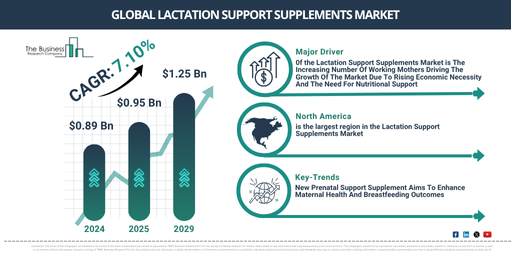
    The market for lactation support supplements has been experiencing notable growth in the past few years. It is projected to increase from $0.89 billion in 2024 to $0.95 billion in 2025, with a compound annual growth rate (CAGR) of 7.4%. Multiple factors are contributing to this growth during the historic period, including enhanced understanding of breastfeeding advantages among mothers, a growing preference for herbal and natural galactagogues, an increased occurrence of postpartum lactation complications, the expansion of e-commerce for health supplements and an increase in healthcare spending for maternity care.

    The market size for lactation support supplements is expected to experience robust growth in the coming years, with a projection of $1.25 billion by 2029 at a 7.1% compound annual growth rate (CAGR). Factors contributing to this growth within the forecast period include an increasing preference for personalized nutrition for mothers, demand for lactation supplements labeled as clean and organic, a rising trend towards plant-based and vegan lactation products, an expanded availability of beverages that enhance lactation, and a mounting adoption of subscription-based nutraceutical services. Key trends expected within the forecast period include the creation of probiotic blends, incorporation with digital health platforms, inclusion in postnatal care packages, innovation in vegan and allergen-free options, and collaborations with telehealth lactation services.

    Download The Free Sample Report Here:

    https://www.thebusinessresearchcompany.com/sample.aspx?id=24582&type=smp

    What Forces Are Driving The Growth Of The Lactation Support Supplements Market?

    The rise in the number of employed mothers is predicted to stimulate the lactation support supplements market’s expansion. Women who juggle career commitments with parenting and caregiving roles are what we refer to as working mothers, typically juggling responsibilities at home and the workplace. This rise in the number of working mothers can be attributed to economic requirements, as many families depend on dual incomes to keep up with escalating living costs, cater to family necessities, and uphold financial stability. Lactation support supplements assist working mothers by supplying vital nutrients that foster milk production, ensuring they can fulfil both their breastfeeding commitments and professional duties without risking their health or the nutritional needs of their newborn. For instance, as reported by the Department for Education, a government department in the UK, almost 73% of mothers with children aged between 0 and 14 were working in 2022, up from 71% in 2021. Hence, the rise in the number of working mothers is fuelling the growth of the lactation support supplements market.

    How Is The Lactation Support Supplements Industry Segmented Across Key Parameters?

    The lactation support supplements market covered in this report is segmented –

    1) By Product Type: Capsules, Tablets, Powders, Teas

    2) By Ingredient Type: Fenugreek, Moringa, Milk Thistle, Fennel, Oatmeal, Other Ingredient Types

    3) By Sales Channel: Online Sales Channel, Direct Sales Channel, Pharmacies Or Drug Stores, Other Offline Channels

    Subsegments

    1) By Capsules: Softgel Capsules, Hard Gel Capsules, Liquid Capsules

    2) By Tablets: Chewable Tablets, Regular Tablets, Effervescent Tablets

    3) By Powders: Single Serve Powders, Bulk Powders

    4) By Teas: Loose Leaf Teas, Tea Bags

    What Notable Trends Are Shaping The Direction Of The Lactation Support Supplements Market?

    Key players in the lactation support supplement market are shifting their attention towards the creation of novel products, such as prenatal support supplements, with the intent of improving maternal health and nursing results. Prenatal support supplements are specifically designed products that supply vital vitamins, minerals, and nutrients for the well-being of the expecting mother and the growing fetus during gestation. In October 2024, for example, Synevit, an American nutraceutical company, introduced Prenelact, a nutritional supplement tailor-made to assist women throughout their pregnancy and lactation periods. This supplement delivers an exact calibration of 19 crucial vitamins and minerals that are expertly designed to cater to the distinctive nutritional needs of pregnant and breastfeeding women. Each ingredient is present in clinically advised daily quantities to guarantee efficient absorption and safety, circumventing the dangers of deficiencies or surpluses.

    Which Companies Currently Dominate The Competitive Landscape In The Lactation Support Supplements Industry?

    Major companies operating in the lactation support supplements market are Nestlé S.A., Nature’s Way Products, LLC, Munchkin Inc., Traditional Medicinals Inc., Willow Innovations Inc, Pink Stork LLC, Boobie Superfoods, UpSpring Baby LLC, Motherlove Herbal Company, Earth Mama Organics LLC, Fairhaven Health LLC, Holistic Lactation LLC, Legendairy Milk LLC, Majka LLC, Maxi Health Research LLC, Milky Mama LLC, Nutrizoe Nutriifoods Private Limited, Oat Mama LLC, Rumina Naturals Inc, Vitalpax

    Get The Full Report Here:

    https://www.thebusinessresearchcompany.com/report/lactation-support-supplements-global-market-report

    Which Geographic Regions Are Driving Demand In The Lactation Support Supplements Market?

    North America was the largest region in the lactation support supplements market in 2024. Asia-Pacific is expected to be the fastest-growing region in the forecast period. The regions covered in the lactation support supplements market report are Asia-Pacific, Western Europe, Eastern Europe, North America, South America, Middle East, Africa.

    Request For A Customized Report:

    https://www.thebusinessresearchcompany.com/customise?id=24582&type=smp

    About The Business Research Company:

    With over 15000+ reports from 27 industries covering 60+ geographies, The Business Research Company has built a reputation for offering comprehensive, data-rich research and insights. Armed with 1,500,000 datasets, the optimistic contribution of in-depth secondary research, and unique insights from industry leaders, you can get the information you need to stay ahead in the game.

    Get in touch with us:

    The Business Research Company: https://www.thebusinessresearchcompany.com/

    Americas +1 310-496-7795

    Asia +44 7882 955267 & +91 8897263534

    Europe +44 7882 955267

    Email us at info@tbrc.info

    Follow us on:

    LinkedIn: https://in.linkedin.com/company/the-business-research-company

    YouTube: https://www.youtube.com/channel/UC24_fI0rV8cR5DxlCpgmyFQ

    Global Market Model: https://www.thebusinessresearchcompany.com/global-market-model
  • Competitive and Market Trend Analysis of Vegetarian Capsules Industry Through 2029

    Competitive and Market Trend Analysis of Vegetarian Capsules Industry Through 2029

    Claim your 30% discount on Global Market Reports with code ONLINE30. Limited time only.

    What Are the Latest Market Insights for the Vegetarian Capsules Industry?

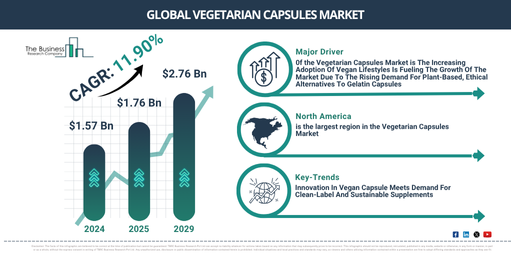
    The size of the vegetarian capsules market has experienced swift growth in the past few years. Its growth is projected to escalate from $1.57 billion in 2024 to $1.76 billion in 2025, at a compound annual growth rate (CAGR) of 12.3%. Factors that have fueled growth in the past have been growing consumer enlightenment about health and wellness, increasing worries about synthetic additives and gelatin-based capsules, rising number of vegetarians and vegans, surging preference for natural and plant-based supplements, and enhanced regulatory support and labeling for vegetarian products.

    The market size for vegetarian capsules is predicted to witness a swift expansion in the approaching years, shooting up to a staggering $2.76 billion by 2029, employing a compound annual growth rate (CAGR) of 11.9%. Factors contributing to such growth during the forecast period involve the growing acceptance of eco-friendly and sustainable packaging, expansion in nutraceutical and functional food sectors, escalating consumer interest in personalized nutrition, and a rise in distribution channels. Key trends throughout this period include a consumer transition towards clean-label and plant-based items, advancements in plant extraction techniques, a widening embrace of vegan and vegetarian lifestyles, greater emphasis on sustainability and environment, as well as the incorporation of digital health tools and tailor-made supplements.

    Download The Free Sample Report Here:

    https://www.thebusinessresearchcompany.com/sample.aspx?id=24736&type=smp

    What Forces Are Driving The Growth Of The Vegetarian Capsules Industry?

    An uptick in veganism is predicted to boost the expansion of the vegetarian capsules market in the future. This lifestyle, which eliminates all products derived from animals and focuses on plant-based foods and ethically sound, cruelty-free options, is being adopted for both health and environmental benefits. The shift towards veganism is predominantly due to heightened awareness and concern for animal rights, causing more individuals to abstain from animal-derived products to prevent causing harm. Vegetarian capsules, acting as plant-based counterparts to gelatin capsules, are in line with vegan dietary requirements and ethical guidelines. They provide a means for vegans to consume supplements without the use of ingredients sourced from animals. To illustrate, Finder, a US-based personal finance comparison platform, reported that as of January 2024, around 2.5 million people or 4.7% of the UK population have adopted veganism, a significant increase from 1.4 million or 2.5% of the population in 2023. As such, the rise in vegan lifestyles is the main driving force behind the expansion of the vegetarian capsules market.

    What Is The Overview Of Market Segmentation In The Vegetarian Capsules Industry?

    The vegetarian capsules market covered in this report is segmented –

    1) By Product: Hydroxypropyl Methyl Cellulose, Pullulan

    2) By Ingredient Type: Plant-Based Extracts, Herbal Ingredients, Vitamins And Minerals, Amino Acids, Probiotics

    3) By Capsule Type: Hard Shell Capsules, Soft Gel Capsules, Liquid-Filled Capsules, Delayed-Release Capsules

    4) By Distribution Channel: Online Retail, Pharmacies And Drugstores, Health Food Stores, Supermarkets And Hypermarkets

    5) By Application: Dietary Supplements, Pharmaceuticals, Nutraceuticals, Functional Foods And Beverages

    Subsegments:

    1) By Hydroxypropyl Methyl Cellulose (HPMC): Hydroxypropyl Methyl Cellulose (HPMC) With Gelling Agent, Hydroxypropyl Methyl Cellulose (HPMC) Without Gelling Agent, Delayed-Release Hydroxypropyl Methyl Cellulose (HPMC) Capsules, Acid-Resistant Hydroxypropyl Methyl Cellulose (HPMC) Capsules, Hydroxypropyl Methyl Cellulose (HPMC) Capsules For Nutraceutical Applications, Hydroxypropyl Methyl Cellulose (HPMC) Capsules For Pharmaceutical Applications

    2) By Pullulan: Pullulan Capsules With Plant-Based Plasticizers, Starch-Free Pullulan Capsules, Acid-Resistant Pullulan Capsules, Pullulan Capsules For Clean Label Products, Pullulan Capsules For Moisture-Sensitive Formulations, Pullulan Capsules For Probiotic Delivery

    What Future Market Trends Are Projected For The Vegetarian Capsules Industry?

    Firms dominating the vegetarian capsules industry are innovating advanced products such as plant-based polymer capsules to meet the rising need for clean-label, vegan-friendly supplements. These capsules derived from natural resources like cellulose or starch, devoid of animal materials, provide a biodegradable and vegan substitute to conventional gelatin capsules. ACG Capsules, a pharmaceutical firm from India, launched the first entirely vegan printed capsules globally in February 2025. These capsules are produced from hydroxypropyl methylcellulose (HPMC) and are accredited by Vegan Action and The Vegetarian Society to ensure zero animal-derived ingredients in the capsule shell and printing procedure. This novel approach satisfies the increasing need for sustainable, non-animal tested, and transparent items in the pharmaceutical and nutraceutical domains. Brands are encouraged to personify their messaging using vegan-approved inks in green, black, or brown hues. This development signifies remarkable progress in the sphere of ethical and environmentally conscious health solutions.

    Who Are The Primary Players Operating Across The Global Vegetarian Capsules Market?

    Major companies operating in the vegetarian capsules market are Lonza Group, ACG Worldwide, SIRIO Pharma Co. Ltd., Robinson Pharma Inc., Hunan Er-Kang Pharmaceutical Co. Ltd., Procaps Laboratories, Qualicaps Inc., HealthCaps India Ltd., Zhejiang Yuexi Capsule Co. Ltd., Farmacapsulas S.A., CapsCanada Corporation, Natural Capsules Limited, Bahrain Pharma, Sunil Healthcare Limited, Bright Pharma Caps, PATCO EXPORTS PVT. LTD, Horbaach, Shaoxing Kangke Capsule Co. Ltd., Dah Feng Capsule Co. Ltd., Anhui Huangshan Capsule Co. Ltd.

    Get The Full Report Here:

    https://www.thebusinessresearchcompany.com/report/vegetarian-capsules-global-market-report

    Which Region Offers The Most Growth Potential For The Vegetarian Capsules Market Through 2029?

    North America was the largest region in the vegetarian capsules market in 2024. Asia-Pacific is expected to be the fastest-growing region in the forecast period. The regions covered in the vegetarian capsules market report are Asia-Pacific, Western Europe, Eastern Europe, North America, South America, Middle East, Africa.

    Request For A Customized Report:

    https://www.thebusinessresearchcompany.com/customise?id=24736&type=smp

    About The Business Research Company:

    With over 15000+ reports from 27 industries covering 60+ geographies, The Business Research Company has built a reputation for offering comprehensive, data-rich research and insights. Armed with 1,500,000 datasets, the optimistic contribution of in-depth secondary research, and unique insights from industry leaders, you can get the information you need to stay ahead in the game.

    Get in touch with us:

    The Business Research Company: https://www.thebusinessresearchcompany.com/

    Americas +1 310-496-7795

    Asia +44 7882 955267 & +91 8897263534

    Europe +44 7882 955267

    Email us at info@tbrc.info

    Follow us on:

    LinkedIn: https://in.linkedin.com/company/the-business-research-company

    YouTube: https://www.youtube.com/channel/UC24_fI0rV8cR5DxlCpgmyFQ

    Global Market Model: https://www.thebusinessresearchcompany.com/global-market-model
  • Comprehensive Forecast: Label-Free Array Systems Market Share, Growth, and Opportunities Through 2029

    Claim your 30% discount on Global Market Reports with code ONLINE30. Limited time only.

    How Large Is the Label-Free Array Systems Market Expected to Be in 2029?

    The market size of label-free array systems has seen robust growth in recent years. Its worth is expected to rise from $1.37 billion in 2024 to $1.48 billion in 2025, exhibiting a compound annual growth rate (CAGR) of 7.7%. This growth in the past years is credited to the increasing demand for drug discovery and development, a shift towards early-stage screening in drug development pipelines, the expansion of biologics and biosimilars research, the necessity for swift identification of biomolecular interactions, and their growing usage in lead optimization and validation.

    The size of the market for label-free array systems is slated for noticeable expansion in the coming years. The forecast is a growth to $1.96 billion by 2029, representing a compound annual growth rate (CAGR) of 7.3%. Driving forces behind this growth during the forecast period include a rising emphasis on bespoke medicine, increased discovery of biomarkers for disease diagnostics, a boost in funding for life science studies, the provision of government and private grants, and an increasing demand for non-invasive methods of diagnostics. Noteworthy trends for this period include the enhancement of mass spectrometry technologies, progression in surface plasmon resonance systems, the integration of microfluidics with label-free systems, the capacity for high-throughput screening, and the automation in biochemical assays.

    Download The Free Sample Report Here:

    https://www.thebusinessresearchcompany.com/sample.aspx?id=24581&type=smp

    What Are The Contributors To Demand In The Label-Free Array Systems Market?

    The expected surge in lifestyle-related chronic illnesses is seen to drive the expansion of the label-free array system market in the future. These chronic ailments are mainly attributed to unhealthy lifestyle habits such as poor diet, smoking, excessive drinking, and little to no exercise. The escalation of these diseases can be linked to an increased sedentary lifestyle; more individuals are getting desk jobs and partaking in screen-based hobbies, consequently limiting physical activities and negatively affecting metabolic health. Label-free array systems, being cutting-edge biosensing technologies, provide real-time, high-throughput detection of biomolecular interactions devoid of fluorescent or radioactive labels. These systems are becoming increasingly crucial in mitigating the risk of lifestyle-related chronic diseases by facilitating early detection, risk evaluation, and personalized preventive approaches. As per a May 2025 report by World Health Organization, a Switzerland-based intergovernmental organization, around 2.5 billion adults, aged 18 and above, were overweight in 2022, with more than 890 million categorized as obese. The report also predicted that nearly 35 million children below five years of age would also be overweight by 2032. Therefore, the increasing threat of lifestyle-related chronic diseases is expected to catalyze the growth of the label-free array systems market.

    What Segmentation Categories Are Included In The Label-Free Array Systems Market Analysis?

    The label-free array systems market covered in this report is segmented –

    1) By Technology: Surface Plasmon Resonance, Bio Layer Interferometry, Cellular Dielectric Spectroscopy, Other Technologies

    2) By Accessories: Sensor Chips, Reagents, Consumables, Other Accessories

    3) By Application: Drug Discovery, Protein-Protein Interactions, Receptor Ligand Assays, Thermodynamics, Kinetics Or Affinity Mapping, Other Applications

    4) By End-User: Pharmaceutical And Biotechnology Companies, Academic And Research Institutes, Contract Research Organizations, Other End Users

    Subsegments:

    1) By Surface Plasmon Resonance: Imaging SPR, SPR Microscopy, Multi-Parametric SPR, Localized SPR

    2) By Bio Layer Interferometry: Fiber Optic-Based BLI, Plate-Based BLI, High-Throughput BLI Systems

    3) By Cellular Dielectric Spectroscopy: Real-Time Impedance-Based Systems, Multi-Well Plate CDS Platforms, Label-Free Cytotoxicity Assays

    4) By Other Technologies: Microcantilever-Based Systems, Optical Waveguide Grating Sensors, Quartz Crystal Microbalance (QCM), Field-Effect Transistor (FET)-Based Biosensors

    What Upcoming Trends Are Expected To Impact The Label-Free Array Systems Market Globally?

    Leading corporations in the label-free array systems market are concentrating on the creation of innovative solutions like label-free biosensors, aimed at simplifying testing procedures. These label-free biosensors, which are analytical tools, can detect biological interactions directly, without the need for fluorescent or radioactive markers. As an example, in February 2024, SPOC Proteomics Inc., a life science firm based in the US, unveiled its customizable SPOC protein biosensor chips. These chips provide real-time, label-free biosensing for up to 1,000 fully folded proteins on a compact 1.5 cm² SPR chip. Utilizing a unique method, these chips generate proteins directly from DNA in nano-liter wells and simultaneously capture and purify these proteins on the sensor surface. This novel approach circumvents the conventional recombinant protein production process, thereby reducing costs 10 to 100 times compared to regular techniques. Furthermore, SPOC protein biosensor chips offer extensive qualitative, quantitative, and kinetic data, establishing them as the perfect choice for high-throughput proteomic studies.

    Who Are The Top-Ranked Companies In The Label-Free Array Systems Market Today?

    Major companies operating in the label-free array systems market are Merck KGaA, Thermo Fisher Scientific Inc., Becton Dickinson and Company, Corning Incorporated, Agilent Technologies Inc., Cytiva, PerkinElmer Inc., Illumina Inc., Sartorius AG, Charles River Laboratories, Bio-Rad Laboratories Inc., Bruker Corporation, Horiba Instruments Incorporated, Tecan Group Ltd., Metrohm India Limited, Malvern Panalytical Ltd., Reichert Inc., Attana AB, NanoSPR Devices, Arrayjet, BioNavis Ltd., Biosensing Instrument Inc., GeSiM Co., Plexera LLC, Plasmetrix

    Get The Full Report Here:

    https://www.thebusinessresearchcompany.com/report/label-free-array-systems-global-market-report

    How Is Label-Free Array Systems Market Adoption Varying Across Different Regions And Sectors?

    North America was the largest region in the label-free array systems market in 2024. Asia-Pacific is expected to be the fastest-growing region in the forecast period. The regions covered in the label-free array systems market report are Asia-Pacific, Western Europe, Eastern Europe, North America, South America, Middle East, Africa.

    Request For A Customized Report:

    https://www.thebusinessresearchcompany.com/customise?id=24581&type=smp

    About The Business Research Company:

    With over 15000+ reports from 27 industries covering 60+ geographies, The Business Research Company has built a reputation for offering comprehensive, data-rich research and insights. Armed with 1,500,000 datasets, the optimistic contribution of in-depth secondary research, and unique insights from industry leaders, you can get the information you need to stay ahead in the game.

    Get in touch with us:

    The Business Research Company: https://www.thebusinessresearchcompany.com/

    Americas +1 310-496-7795

    Asia +44 7882 955267 & +91 8897263534

    Europe +44 7882 955267

    Email us at info@tbrc.info

    Follow us on:

    LinkedIn: https://in.linkedin.com/company/the-business-research-company

    YouTube: https://www.youtube.com/channel/UC24_fI0rV8cR5DxlCpgmyFQ

    Global Market Model: https://www.thebusinessresearchcompany.com/global-market-model
  • Global Vaccine Technologies Market Landscape: Trends and Market Share to 2029

    Global Vaccine Technologies Market Landscape: Trends and Market Share to 2029

    Claim your 30% discount on Global Market Reports with code ONLINE30. Limited time only.

    What Are the Forecasted Growth Rate and Market Size of the Vaccine Technologies Market?

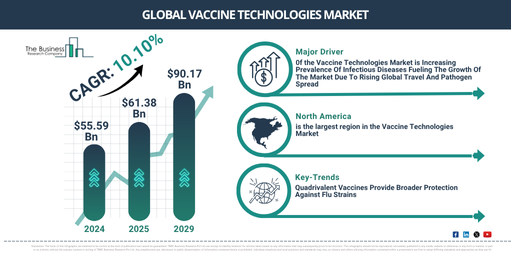
    The market size of vaccine technologies has seen a swift expansion in the past few years. The market value is projected to rise from $55.59 billion in 2024 to $61.38 billion in 2025, maintaining a compound annual growth rate (CAGR) of 10.4%. The market’s surge during the historic period is due to increased cases of infectious diseases, enhanced government support for vaccine research, the eruption of pandemics, rising consciousness on vaccine advantages, and the broadening of immunization initiatives.

    Rapid expansion is anticipated in the vaccine technologies market size in the coming years. It’s projected to reach $90.17 billion in 2029, with a compound annual growth rate (CAGR) of 10.1%. The escalation in the anticipation period is linked to the augmenting demand for mRNA vaccines, escalating investments in personalized vaccines, increasing concentration on cancer vaccines, a higher incidence of chronic diseases, and enhanced consciousness about vaccine safety. Major trends that are expected during the anticipation period are the formulation of mRNA and DNA-based vaccines, expansion of nanoparticle vaccine delivery systems, rise in combination vaccines, growing preference for thermostable vaccines, and the emphasis on needle-free vaccine delivery.

    Download The Free Sample Report Here:

    https://www.thebusinessresearchcompany.com/sample.aspx?id=24735&type=smp

    Which Factor Is Shaping The Future Of The Vaccine Technologies Market?

    The escalation in the count of transmissible diseases is anticipated to surge the advancement of the vaccine technologies market. Transmissible illnesses are inflicted by harmful microorganisms such as bacteria, viruses, fungi and parasites, which can be passed on directly or indirectly from person to person. The augmenting rate of such diseases owes to amplified travel, enabling pathogens to be transported swiftly across borders. Vaccine technologies contribute towards the treatment of infectious diseases by promoting targeted immune responses, thereby aiding in prevention and control of infections. These technologies bolster public health initiatives by curbing disease progression and intensity, thereby enhancing healthcare outcomes overall. For instance, the UK Health Security Agency, a government agency of the UK, reported in February 2024 that the instances of tuberculosis (a contagious bacterial disease that mainly impacts the lungs) in England climbed to 4,850 in 2023, a hike of 10.7% from 4,380 cases in 2022. Hence, the swell in the frequency of infectious diseases is fueling the expansion of the vaccine technologies market.

    What Is The Segment-Wise Breakdown Of The Vaccine Technologies Market?

    The vaccine technologies market covered in this report is segmented –

    1) By Type: Recombinant Or Conjugate Or Subunit, Inactivated, Live Attenuated, Toxoid

    2) By Route Of Administration: Parenteral, Oral, Nasal

    3) By Disease Indication: Infectious Diseases, Non-Infectious Diseases

    4) By Age Group: Pediatric, Adults

    5) By Distribution Channel: Hospital And Retail Pharmacies, Government Suppliers, Other Distribution Channels

    Subsegments:

    1) By Recombinant Or Conjugate Or Subunit: Protein Subunit Vaccines, Virus-Like Particle (VLP) Vaccines, Glycoconjugate Vaccines, Recombinant Vector Vaccines

    2) By Inactivated: Whole-Virus Inactivated Vaccines, Split-Virus Inactivated Vaccines, Purified Inactivated Vaccines

    3) By Live Attenuated: Viral Live Attenuated Vaccines, Bacterial Live Attenuated Vaccines

    4) By Toxoid: Diphtheria Toxoid Vaccines, Tetanus Toxoid Vaccines

    Which Trends Are Redefining The Future Landscape Of The Vaccine Technologies Industry?

    Leading firms in the vaccine technologies market are concentrating on creating innovative solutions like quadrivalent influenza vaccines, to widen the scope of immunization coverage and decrease the likelihood of strain mismatch. Quadrivalent influenza vaccines are designed to shield from four strains of influenza virus, including two influenza A and two influenza B viruses, providing more extensive protection than trivalent vaccines. For example, Zydus Lifesciences, a pharmaceutical company based in India, rolled out VaxiFlu-4, a quadrivalent influenza vaccine, in February 2025. This vaccine provides seasonal defense against four influenza strains, covering both influenza A and B types. The vaccine, which is administered as a single-dose intramuscular injection, is appropriate for both adults and children. It significantly mitigates the impact of seasonal influenza by providing wider strain coverage than conventional trivalent vaccines.

    Which Companies Hold The Largest Market Share In The Vaccine Technologies Sector?

    Major companies operating in the vaccine technologies market are Pfizer Inc., Johnson & Johnson, Merck & Co. Inc, Sanofi S.A., AstraZeneca plc, Novartis AG, GSK plc, Moderna Inc., CSL Limited, Bharat Biotech International Limited, Bavarian Nordic A/S, Takeda Pharmaceutical Company Limited, Sinovac Biotech Ltd., Emergent BioSolutions Inc., Valneva SE, Novavax Inc., Dynavax Technologies Corporation, CureVac N.V., Inovio Pharmaceuticals Inc, Mitsubishi Tanabe Pharma Corporation.

    Get The Full Report Here:

    https://www.thebusinessresearchcompany.com/report/vaccine-technologies-global-market-report

    How Does Regional Performance Compare Across The Vaccine Technologies Industry?

    North America was the largest region in the vaccine technologies market in 2024. Asia-Pacific is expected to be the fastest-growing region in the forecast period. The regions covered in the vaccine technologies market report are Asia-Pacific, Western Europe, Eastern Europe, North America, South America, Middle East, Africa.

    Request For A Customized Report:

    https://www.thebusinessresearchcompany.com/customise?id=24735&type=smp

    About The Business Research Company:

    With over 15000+ reports from 27 industries covering 60+ geographies, The Business Research Company has built a reputation for offering comprehensive, data-rich research and insights. Armed with 1,500,000 datasets, the optimistic contribution of in-depth secondary research, and unique insights from industry leaders, you can get the information you need to stay ahead in the game.

    Get in touch with us:

    The Business Research Company: https://www.thebusinessresearchcompany.com/

    Americas +1 310-496-7795

    Asia +44 7882 955267 & +91 8897263534

    Europe +44 7882 955267

    Email us at info@tbrc.info

    Follow us on:

    LinkedIn: https://in.linkedin.com/company/the-business-research-company

    YouTube: https://www.youtube.com/channel/UC24_fI0rV8cR5DxlCpgmyFQ

    Global Market Model: https://www.thebusinessresearchcompany.com/global-market-model
  • Future Demand and Leading Companies Shaping the Lab Consumables Market to 2029

    Future Demand and Leading Companies Shaping the Lab Consumables Market to 2029

    Claim your 30% discount on Global Market Reports with code ONLINE30. Limited time only.

    What Is the Outlook for the Lab Consumables Market Heading Into 2029?

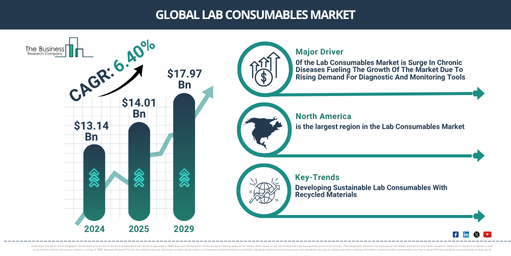
    Recently, there has been significant growth in the lab consumables market size. It is set for further growth, with projections showing an increase from $13.14 billion in 2024 to $14.01 billion in 2025. This represents a compound annual growth rate (CAGR) of 6.7%. Factors contributing to this growth during the historical period include a surge in demand for personalized medicine, an escalated adoption of genomics and proteomics, an increase in clinical diagnostic testing, boosted investment in life sciences research, and a rise in the number of research laboratories.

    In the forthcoming years, the lab consumables market size is anticipated to experience robust growth. It is set to increase to $17.97 billion by 2029, with a Compound Annual Growth Rate (CAGR) of 6.4%. This expansion, predicted over the forecast period, can be credited to the heightened emphasis on precision medicine, escalating demand for high-throughput screening, expanded investment in drug discovery and development, soaring acceptance of automation in labs, and an uptick in government support for research activities. Key trends for the forecast period include progress in lab-on-a-chip technologies, enhanced materials for better consumable durability, innovation in eco-friendly and sustainable consumables, the merger of digital technologies into lab workflows, and innovation in 3D-printed lab consumables.

    Download The Free Sample Report Here:

    https://www.thebusinessresearchcompany.com/sample.aspx?id=24580&type=smp

    Which Factors Are Pushing The Lab Consumables Market Forward?

    The escalating incidence of enduring health issues is anticipated to boost the progression of the lab consumables market. Chronic ailments indicate continuous health issues, often enduring for six months or beyond, regularly requiring ongoing medical supervision. The surge in the chronic disease incidence derives from ageing demographics coupled with lifestyle elements like poor nutrition, sedentary habits, and escalated stress levels. Lab consumables facilitate the management of chronic ailments by allowing precise diagnostic evaluations, constant monitoring, and punctual treatment modifications through dependable specimen gathering and scrutiny. For example, in June 2024, as per the Australian Institute of Health and Welfare, a government organisation based in Australia, it was evaluated that about 15.4 million Australians (61%) were combating at least one enduring health issue. Thus, the escalating prevalence of chronic ailments is a crucial influencer for the acceptance of the lab consumables market.

    Which Segment Held The Largest Share In The Lab Consumables Market In 2025?

    The lab consumables market covered in this report is segmented –

    1) By Type: Reagents And Kits, Cell Imaging Consumables, General Lab Supplies

    2) By Product Type: Pipettes And Tips, Containers And Vials, Microplates, Filtration Products, Centrifuge Tubes And Accessories, Cryogenic Storage, Lab Gloves, Lab Disposables, Lab Labels And Markers

    3) By Application: Clinical Diagnostics, Industrial manufacturing, Life Science Research, Environmental Testing, Forensic Analysis, Materials Analysis

    4) By End-User: Academic And Research Institutes, Clinical Laboratories, Government And Forensic Laboratories, Other End-Users

    Subsegments:

    1) By Reagents And Kits: PCR Reagents, Immunoassay Kits, Molecular Biology Kits, Enzymes And Buffers, Cell Culture Reagents, DNA Or RNA Extraction Kits, Protein Assay Kits, Staining Reagents

    2) By Cell Imaging Consumables: Microscope Slides And Coverslips, Imaging Plates And Dishes, Fluorescent Dyes And Probes, Cell Staining Reagents, Imaging Chambers, Culture Flasks And Plates For Imaging, Imaging Buffers And Mounting Media

    3) By General Lab Supplies: Pipettes And Tips, Microcentrifuge Tubes, Petri Dishes, Lab Gloves, Disposable Lab Wares, Cryogenic Vials, Filter Papers And Membranes, Storage Containers And Racks

    How Are Key Trends Driving Expansion In The Lab Consumables Industry?

    Leading players in the lab consumables market are shifting their focus towards creating sustainable lab consumables using recycled resources. These green lab consumables are equipped to lessen the ecological impact with the application of reprocessed, reusable, or compostable materials and environmentally friendly production techniques. This aids in conforming to rigid regulations and satisfying the growing desire among research institutions and healthcare providers for earth-friendly substitutes. For instance, in 2024, the life science firm based in Germany, Eppendorf, who designs and promotes lab consumables, started utilizing ‘Post Consumer Recyclate’ (PCR) polypropylene that comes from industrial surplus materials from contact lens production. This ensures the high purity and sterility requisite for laboratory usage. This switch aids in preserving fossil fuel resources and is foreseen to decrease CO2 emissions by more than 166 tons every year, without impairing the quality, sterility or stability of the pipette tips. This effort is a part of a broader sustainability plan of Eppendorf, encompassing the use of biobased raw materials and recyclates in the making of green lab consumables, whilst maintaining the rigorous norms of life science investigations.

    Which Organizations Are Driving Progress In The Lab Consumables Industry?

    Major companies operating in the lab consumables market are A&T Corporation, Thermo Fisher Scientific Inc., Danaher Corporation, Merck KGaA, Siemens Healthineers AG, Corning Incorporated, Avantor Performance Materials B.V., Agilent Technologies Inc., Illumina Inc., Sartorius AG, Beckman Coulter Inc., Bio-Rad Laboratories Inc., Bruker Corporation, Nihon Kohden Corporation, Eppendorf AG, Andreas Hettich GmbH & Co. KG, Tecan Group Ltd., Hamilton Company, Sarstedt AG & Co. KG, Greiner Bio-One International GmbH, J-SCIENCE LAB Co. Ltd.

    Get The Full Report Here:

    https://www.thebusinessresearchcompany.com/report/lab-consumables-global-market-report

    Which Region Is Expected To Experience The Highest Growth In The Lab Consumables Industry?

    North America was the largest region in the lab consumables market in 2024. Asia-Pacific is expected to be the fastest-growing region in the forecast period. The regions covered in the lab consumables market report are Asia-Pacific, Western Europe, Eastern Europe, North America, South America, Middle East, Africa.

    Request For A Customized Report:

    https://www.thebusinessresearchcompany.com/customise?id=24580&type=smp

    About The Business Research Company:

    With over 15000+ reports from 27 industries covering 60+ geographies, The Business Research Company has built a reputation for offering comprehensive, data-rich research and insights. Armed with 1,500,000 datasets, the optimistic contribution of in-depth secondary research, and unique insights from industry leaders, you can get the information you need to stay ahead in the game.

    Get in touch with us:

    The Business Research Company: https://www.thebusinessresearchcompany.com/

    Americas +1 310-496-7795

    Asia +44 7882 955267 & +91 8897263534

    Europe +44 7882 955267

    Email us at info@tbrc.info

    Follow us on:

    LinkedIn: https://in.linkedin.com/company/the-business-research-company

    YouTube: https://www.youtube.com/channel/UC24_fI0rV8cR5DxlCpgmyFQ

    Global Market Model: https://www.thebusinessresearchcompany.com/global-market-model
  • 2025–2029 Krabbe Disease Treatment Market Outlook: Regional Trends and Growth Forecast

    Claim your 30% discount on Global Market Reports with code ONLINE30. Limited time only.

    What Does the Forecast Indicate for the Krabbe Disease Treatment Market From 2025 to 2029?

    The size of the market for Krabbe disease treatment has experienced robust growth in the recent past. The market is projected to expand from a size of $2.31 billion in 2024 to $2.47 billion in 2025, exhibiting a compound annual growth rate (CAGR) of 6.7%. Factors contributing to the growth during the historic period include an increased demand for treatments for rare diseases, progressive efforts in enzyme replacement therapy research, a rise in government funding for the treatment of rare diseases, an uptick in newborn screening programs, and ongoing efforts in patient advocacy initiatives.

    The market size for Krabbe disease treatment is forecasted to undergo substantial growth in the coming years, with an estimated value of $3.16 billion in 2029 and a compound annual growth rate of 6.4%. This growth over the forecast period is ascribed to advancements in gene therapy research, amplified investment in orphan drug creation, an increase in regulatory stimuli for rare diseases, a surge in clinical trial activities, and escalated spending on healthcare. The forecast period is expected to see several trends including gene and enzyme replacement therapies, a focus on tailored treatment strategies, improvements in stem cell transplantation, the application of artificial intelligence in diagnosis and therapeutic development, and enhanced diagnostic methods.

    Download The Free Sample Report Here:

    https://www.thebusinessresearchcompany.com/sample.aspx?id=24579&type=smp

    What Elements Are Contributing To Growth In The Krabbe Disease Treatment Market?

    The surging frequency of newborn screening programs is anticipated to fuel the expansion of the krabbe disease treatment market in the future. Such health programs, conducted shortly after a baby’s birth, assess the risk of significant yet treatable genetic, metabolic, and developmental conditions. Enhancements in medical technology allow for earlier identification and proactive prevention of severe health complications, thus encouraging the proliferation of newborn screening. Early detection of krabbe disease is possible due to these programs, leading to immediate measures before the onset of symptoms. Early detection paves the way for treatments like stem cell transplantation, which enhance patient outcomes and decelerate disease development. For example, the Michigan Department of Health and Human Services, a US state agency, reported in November 2023 that since 2022, over 7.7 million infants have been screened, with over 8,000 identified with conditions from the NBS blood spot panel. In contrast, of the 100,176 infants tested in 2022, the lion’s share were Michigan inhabitants, with 322 (0.3%) diagnosed with a disease. Consequently, the rising frequency of newborn screening programs is pushing the krabbe disease treatment market’s growth.

    Which Segments Are Detailed In The Global Krabbe Disease Treatment Market Report?

    The krabbe disease treatment market covered in this report is segmented –

    1) By Treatment Type: Medication, Enzyme Replacement Therapy, Gene Therapy, Stem Cell Therapy

    2) By Diagnostics: Newborn Screening, Genetic Testing

    3) By Distribution Channel: Retail Pharmacies, E-Commerce, Hospital Pharmacies

    4) By Application: Infantile Onset, Late-Onset, Adult Onset

    5) By End-Users: Hospitals And Clinics, Research Centers, Laboratories, Other End-Users

    Subsegments:

    1) By Medication: Anticonvulsants, Muscle Relaxants, Anti-Inflammatory Drugs, Pain Management Medications, Psychotropic Agents

    2) By Enzyme Replacement Therapy (ERT): Intravenous Enzyme Infusion, Intrathecal Enzyme Administration, PEGylated Enzyme Formulations, Recombinant Galactocerebrosidase (GALC)

    3) By Gene Therapy: Adeno-Associated Virus (AAV)-Based Gene Therapy, Lentiviral Vector-Based Gene Therapy, In Vivo Gene Therapy, Ex Vivo Gene-Modified Stem Cell Therapy

    4) By Stem Cell Therapy: Hematopoietic Stem Cell Transplantation (HSCT), Umbilical Cord Blood Stem Cell Therapy, Bone Marrow Transplant, Allogeneic Stem Cell Therapy

    Which Emerging Trends And Strategic Shifts Are Shaping The Krabbe Disease Treatment Market?

    Key players in the krabbe disease treatment market are channeling their efforts into advancing gene therapy programs in order to improve treatment effectiveness and expand its availability worldwide. Such programs undertake certain actions, like modifying or replacing genes in a patient’s cells, in order to treat or stave off diseases. By focusing on correcting genetic abnormalities, these therapies may offer possible solutions for genetic diseases through the introduction, elimination, or alteration of particular genes. Take, for example, Forge Biologics, an American gene therapy organization that rolled out FBX-101, a cutting-edge adeno-associated viral (AAV) gene therapy, in March 2024. Astonishingly, this therapeutic approach managed to secure the Innovation Passport designation from the MLHRA in the United Kingdom, which helped expedite its entrance into the Innovative Licensing and Access Pathway (ILAP)—a unique pathway crafted to fast-track the regulatory procedures and market access for treatments aimed at severe or life-threatening conditions. Given its promising safety and efficacy outcomes during preliminary clinical trials, FBX-101 shows potential in offering improved clinical results for children diagnosed with this rare, lethal neurodegenerative disease as it delivers a functioning GALC gene to affected patients.

    Who Are The Key Contributors To Growth In The Krabbe Disease Treatment Market?

    Major companies operating in the krabbe disease treatment market are Labcorp Holdings Inc., Ajinomoto Co. Inc., Fulgent Genetics, Mayo Clinic Laboratories, Myriad Genetics Inc., Passage Bio Inc., PreventionGenetics, Greenwood Genetic Center, Magenta Therapeutics Inc., Gain Therapeutics Inc., Cells4Life Group LLP, DNA Labs India, M6P Therapeutics, MediciNova Inc., Neurogene Inc., Polaryx Therapeutics Inc., Vascumab LLC, APTEEUS, Agilus Diagnostics, Medicover Genetics.

    Get The Full Report Here:

    https://www.thebusinessresearchcompany.com/report/krabbe-disease-treatment-global-market-report

    Which Region Is Projected To Lead The Krabbe Disease Treatment Market By 2025?

    North America was the largest region in the krabbe disease treatment market in 2024. Asia-Pacific is expected to be the fastest-growing region in the forecast period. The regions covered in the krabbe disease treatment market report are Asia-Pacific, Western Europe, Eastern Europe, North America, South America, Middle East, Africa.

    Request For A Customized Report:

    https://www.thebusinessresearchcompany.com/customise?id=24579&type=smp

    About The Business Research Company:

    With over 15000+ reports from 27 industries covering 60+ geographies, The Business Research Company has built a reputation for offering comprehensive, data-rich research and insights. Armed with 1,500,000 datasets, the optimistic contribution of in-depth secondary research, and unique insights from industry leaders, you can get the information you need to stay ahead in the game.

    Get in touch with us:

    The Business Research Company: https://www.thebusinessresearchcompany.com/

    Americas +1 310-496-7795

    Asia +44 7882 955267 & +91 8897263534

    Europe +44 7882 955267

    Email us at info@tbrc.info

    Follow us on:

    LinkedIn: https://in.linkedin.com/company/the-business-research-company

    YouTube: https://www.youtube.com/channel/UC24_fI0rV8cR5DxlCpgmyFQ

    Global Market Model: https://www.thebusinessresearchcompany.com/global-market-model
  • Latest Market Developments in Janus Kinases (JAKs) Inhibitor Drug Industry: Forecast 2025–2029

    Latest Market Developments in Janus Kinases (JAKs) Inhibitor Drug Industry: Forecast 2025–2029

    Claim your 30% discount on Global Market Reports with code ONLINE30. Limited time only.

    How Much Is the Global Janus Kinases (JAKs) Inhibitor Drug Market Valued at Present and by 2029?

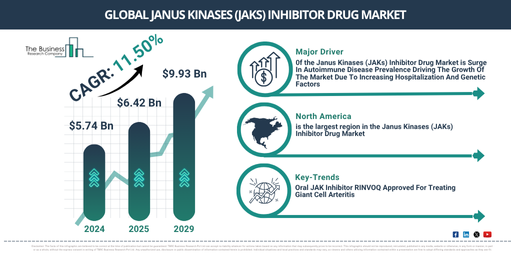
    The market size for janus kinases (jaks) inhibitor drugs has seen a steep expansion in the last few years. The market, valued at $5.74 billion in 2024, is projected to climb to $6.42 billion in 2025, marking a compound annual growth rate (CAGR) of 11.9%. Factors contributing to this significant growth during the historical period include an increase in autoimmune conditions, expansion of uses beyond treating rheumatoid arthritis, a growing prevalence of autoimmune diseases, an aging population, and supportive reimbursement policies.

    Over the coming years, the market size for Janus Kinases (JAKs) inhibitor drugs is projected to expand swiftly, reaching $9.93 billion in 2029 with a compound annual growth rate (CAGR) of 11.5%. This boost during the prediction period can be traced back to the escalation of immunological disease treatment options, a rise in approved indications, enhanced patient awareness and education, increased accessibility to treatment, and a heightened emphasis on immunotherapy. Key trend movements anticipated during this period include a transition towards oral therapies, integration of digital therapeutics, strategic alliances and partnerships, progress in combination therapies, and increased investment in R&D.

    Download The Free Sample Report Here:

    https://www.thebusinessresearchcompany.com/sample.aspx?id=24578&type=smp

    #What Drivers Are Influencing Growth In The Janus Kinases (JAKs) Inhibitor Drug Market?

    The escalating incidence of autoimmune conditions is poised to stimulate the growth trajectory of the janus kinases (JAKs) inhibitor drug market. Autoimmune disorders occur when the immune system erroneously damages the body’s healthy cells and tissues. This surge in autoimmune disorders is rooted in genetic factors, since certain genetic predispositions can heighten an individual’s vulnerability to a malfunctioning immune system. For autoimmune conditions, Janus kinase (JAK) inhibitors prove effective as they target and obstruct certain enzymes that are integral to the immune response, thereby reducing inflammation and shielding the body’s tissues from the immune system’s assault. For example, a report released in June 2024 by the Australian Institute of Health and Welfare, a governmental organization based out of Australia, showed that in 2021–22, there were 10,000 hospital admissions for rheumatoid arthritis, marking a 25% increase from the previous year’s 8,000, which translates into 39 hospitalizations per 100,000 people. Thus, the escalating incidence of autoimmune disorders propels the growth of the janus kinases JAKs inhibitor drug market.

    What Are The Main Segments Identified In The Janus Kinases (JAKs) Inhibitor Drug Market Research?

    The janus kinases (JAKs) inhibitor drug market covered in this report is segmented –

    1) By Type: JAK1 Inhibitor, JAK2 Inhibitor, JAK3 Inhibitor, Other Types

    2) By Drug Type: Selective JAK Inhibitors, Non-Selective JAK Inhibitors, Oral JAK Inhibitors, Other Drug Types

    3) By Route of Administration: Oral, Injectable, Topical

    4) By Application: Rheumatoid Arthritis, Psoriatic Arthritis, Inflammatory Bowel Disease, Atopic Dermatitis, Ulcerative Colitis

    5) By End User: Hospitals, Homecare, Specialty Clinics, Other End Users

    Subsegments:

    1) By JAK1 Inhibitor: Filgotinib, Upadacitinib, Itacitinib, Abrocitinib, Brepocitinib

    2) By JAK2 Inhibitor: Fedratinib, Pacritinib, Momelotinib, Gandotinib, NS-018

    3) By JAK3 Inhibitor: Tofacitinib, PF-06651600, Ritlecitinib

    4) By Other Types: Baricitinib, Ruxolitinib, Oclacitinib, Delgocitinib, Peficitinib

    What Are The Leading Trends And Opportunities In The Janus Kinases (JAKs) Inhibitor Drug Sector?

    Top players in the market of Janus Kinases (JAKs) inhibitor drugs are keen on procuring regulatory certifications to magnify their therapeutic uses, speed up their market entry, and fortify their competitive standing. These regulatory certifications are official permissions given by health regulatory bodies that enable pharmaceutical companies to market and trade a drug once it affirms its safety and effectiveness for specific medical issues. For example, in April 2025, AbbVie Inc., a biopharmaceutical organization based in the US, obtained approval from the Food and Drug Administration (FDA) for RINVOQ (upadacitinib), a orally administered Janus kinase (JAK) suppressor, intended for adults dealing with giant cell arteritis (GCA). This tackles JAK1 and upadacitinib and impairs the JAK-STAT signaling pathway, which is imperative for communicating signals from pro-inflammatory cytokines playing a role in immune-mediated and inflammatory diseases. This approval presents a precious new method of treatment that could cut down reliance on glucocorticoids that have notable side effects, thereby addressing a significant gap in GCA management and enhancing care outcomes for patients.

    Which Companies Play A Key Role In The Development Of The Janus Kinases (JAKs) Inhibitor Drug Market?

    Major companies operating in the janus kinases (JAKs) inhibitor drug market are Pfizer Inc., Johnson & Johnson, Merck & Co. Inc., AbbVie Inc., Sanofi S.A., Bristol-Myers Squibb Company, AstraZeneca PLC, GlaxoSmithKline plc, Takeda Pharmaceutical Company Limited, Eli Lilly and Company, Amgen Inc., Regeneron Pharmaceuticals Inc., Astellas Pharma Inc., Vertex Pharmaceuticals Incorporated, Incyte Corporation, Galapagos NV, Theravance Biopharma Inc., Celon Pharma S.A., Aclaris Therapeutics Inc., Arcutis Biotherapeutics Inc., Dizal (Jiangsu) Pharmaceutical Co. Ltd., Reistone Biopharma Co. Ltd.

    Get The Full Report Here:

    https://www.thebusinessresearchcompany.com/report/janus-kinases-jaks-inhibitor-drug-global-market-report

    What Are The Key Regional Developments Shaping The Janus Kinases (JAKs) Inhibitor Drug Market?

    North America was the largest region in the janus kinases (JAKs) inhibitor market in 2024. The regions covered in the janus kinases (JAKs) inhibitor drug market report are Asia-Pacific, Western Europe, Eastern Europe, North America, South America, Middle East, Africa.

    Request For A Customized Report:

    https://www.thebusinessresearchcompany.com/customise?id=24578&type=smp

    About The Business Research Company:

    With over 15000+ reports from 27 industries covering 60+ geographies, The Business Research Company has built a reputation for offering comprehensive, data-rich research and insights. Armed with 1,500,000 datasets, the optimistic contribution of in-depth secondary research, and unique insights from industry leaders, you can get the information you need to stay ahead in the game.

    Get in touch with us:

    The Business Research Company: https://www.thebusinessresearchcompany.com/

    Americas +1 310-496-7795

    Asia +44 7882 955267 & +91 8897263534

    Europe +44 7882 955267

    Email us at info@tbrc.info

    Follow us on:

    LinkedIn: https://in.linkedin.com/company/the-business-research-company

    YouTube: https://www.youtube.com/channel/UC24_fI0rV8cR5DxlCpgmyFQ

    Global Market Model: https://www.thebusinessresearchcompany.com/global-market-model

  • Emerging Trends and Growth Drivers in the Isocitrate Dehydrogenase (IDH) Inhibitors Market Through 2029

    Emerging Trends and Growth Drivers in the Isocitrate Dehydrogenase (IDH) Inhibitors Market Through 2029

    Claim your 30% discount on Global Market Reports with code ONLINE30. Limited time only.

    What Is the Current and Projected Market Size of the Isocitrate Dehydrogenase (IDH) Inhibitors Industry?

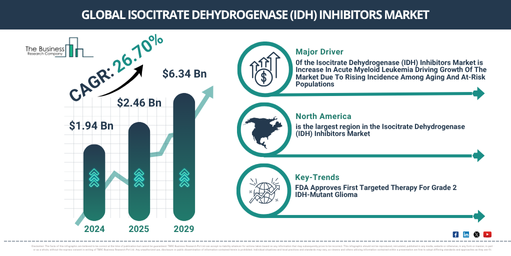
    In recent times, the market size of isocitrate dehydrogenase (idh) inhibitors has experienced an unprecedented growth. The market, which was valued at $1.94 billion in 2024, is projected to reach $2.46 billion in 2025, growing at a compound annual growth rate (CAGR) of 27.0%. This remarkable growth during the historic period is owed to factors such as an increased prevalence of hematologic malignancies, advancements in genetic profiling for cancer, successful results of targeted therapies, initiatives in precision medicine, and an increased expenditure on healthcare in the field of oncology.

    In the near future, the isocitrate dehydrogenase (idh) inhibitors market is speculated to witness significant growth. It’s predicted to increase to a value of $6.34 billion by the year 2029, at a compound annual growth rate (CAGR) of 26.7%. The anticipated growth during the forecast period is due to factors such as favorable reimbursement policies, an upswing in cases of blood cancers, heightened awareness of the disease among oncologists, increased use of precision medicine, and the expansion of healthcare infrastructure and specialized oncology centers. Key trends that are forecasted to shape the market include progress in genomic and molecular diagnostics, striking partnerships and licensing agreements, advancement in the technology used for drug delivery, enhancement in diagnostic tools, and the development of combination therapies.

    Download The Free Sample Report Here:

    https://www.thebusinessresearchcompany.com/sample.aspx?id=24577&type=smp

    #Which Factors Are Currently Driving The Growth Of The Isocitrate Dehydrogenase (IDH) Inhibitors Market?

    The expected rise in acute myeloid leukemia instances is believed to spur the expansion of the isocitrate dehydrogenase (IDH) inhibitors market. Acute myeloid leukemia (AML) is a quick-developing blood and bone marrow cancer, signified by the accelerated generation of abnormal white blood cells that hamper the formation of normal blood cells. The aging population’s growth contributes to the ascending incidence of acute myeloid leukemia as older individuals have an elevated risk for this aggressive form of blood cancer due to alterations in their bone marrow and immune system linked with aging. Isocitrate dehydrogenase (IDH) inhibitors aid in acute myeloid leukemia treatment by inhibiting mutant IDH enzymes, thereby reinstating normal blood cell growth and inhibiting leukemia cell proliferation. For example, a report released by the Leukaemia Foundation, an Australia-based non-profit organization, in February 2023 stated that over 7,000 children, 6,000 young adults, and 108,000 adults aged between 25–65 are predicted to be diagnosed with blood cancers, mainly acute lymphoblastic leukemia (ALL), acute myeloid leukemia (AML), and non-Hodgkin lymphoma (NHL) from 2022 to 2035. Hence, the frequency augmentation of acute myeloid leukemia is expected to accelerate the growth of the isocitrate dehydrogenase (IDH) inhibitors market.

    How Is The Global Isocitrate Dehydrogenase (IDH) Inhibitors Market Structured In Terms Of Segments?

    The isocitrate dehydrogenase (IDH) inhibitors market covered in this report is segmented –

    1) By Type: IDH1 Mutant Medullary Malignant Tumor, IDH2 Mutant Medullary Malignant Tumor, Other Types

    2) By Molecule Type: Monoclonal Antibodies, Peptides, Small Molecules, Other Molecule Types

    3) By Route Of Administration: Oral, Parenteral, Subcutaneous, Topical

    4) By Application: FLT3 Inhibitor, DH Inhibitor, Hedgehog Pathway Inhibitor, Other Applications

    Subsegments:

    1) By IDH1 Mutant Medullary Malignant Tumor: Acute Myeloid Leukemia (AML), Glioma Or Glioblastoma, Cholangiocarcinoma, Chondrosarcoma

    2) By IDH2 Mutant Medullary Malignant Tumor: Acute Myeloid Leukemia (AML), Myelodysplastic Syndromes (MDS), Angioimmunoblastic T-Cell Lymphoma (AITL)

    3) By Other Types: Solid Tumors With IDH Mutations, Metastatic Cancers With IDH Alterations, Experimental Or Off-Label Uses In Rare Cancers

    What Trends Are Currently Influencing Growth In The Isocitrate Dehydrogenase (IDH) Inhibitors Market?

    Leading firms in the isocitrate dehydrogenase (IDH) inhibitors market are striving to receive regulatory approvals as a strategy to broaden the clinical application of their therapies, expedite their entry into the market, and gain an edge in treating IDH-mutant cancers. Regulatory approval is given by health departments and it gives a green light for a drug to be marketed and used once its safety and efficacy have been validated. For instance, in August 2024, the France-based pharmaceutical firm, Servier Laboratoires, obtained FDA approval for its VORANIGO (vorasidenib) tablets, which is the first targeted treatment for Grade 2 IDH-mutant glioma patients. The patients include those with astrocytoma and oligodendroglioma carrying IDH1 or IDH2 mutations. This orally administered therapy has been proven to significantly extend progression-free survival, as evidenced in the Phase 3 INDIGO trial. In the trial, patients showed a median progression-free survival rate of 27.7 months as compared to 11.1 months for the placebo group. VORANIGO provides a manageable, well-tolerated option with manageable side-effects, thereby marking a major breakthrough for a patient group that had few preceding treatment alternatives.

    Who Are The Main Participants Shaping The Isocitrate Dehydrogenase (IDH) Inhibitors Market Landscape?

    Major companies operating in the isocitrate dehydrogenase (IDH) inhibitors market are Roche Holding AG, Merck & Co., Inc., Bristol-Myers Squibb Company, Novartis AG, GlaxoSmithKline plc, Eli Lilly and Company, Daiichi Sankyo Company Limited, Les Laboratoires Servier, Evotec SE, HUTCHMED (China) Limited, Rigel Pharmaceuticals Inc., CStone Pharmaceuticals, Forma Therapeutics Holdings Inc., Philogen S.p.A., Kura Oncology, Inc., Philogen S.p.A., Agios Pharmaceuticals Inc., Adooq Bioscience LLC, Taiho Pharmaceutical Co. Ltd., Celgene Corporation, Focus Biomolecules LLC, InvivoChem LLC

    Get The Full Report Here:

    https://www.thebusinessresearchcompany.com/report/isocitrate-dehydrogenase-idh-inhibitors-global-market-report

    Which Region Currently Holds The Largest Share In The Isocitrate Dehydrogenase (IDH) Inhibitors Market?

    North America was the largest region in the isocitrate dehydrogenase (IDH) inhibitors market in 2024. Asia-Pacific is expected to be the fastest-growing region in the forecast period. The regions covered in the isocitrate dehydrogenase (IDH) inhibitors market report are Asia-Pacific, Western Europe, Eastern Europe, North America, South America, Middle East, Africa.

    Request For A Customized Report:

    https://www.thebusinessresearchcompany.com/customise?id=24577&type=smp

    About The Business Research Company:

    With over 15000+ reports from 27 industries covering 60+ geographies, The Business Research Company has built a reputation for offering comprehensive, data-rich research and insights. Armed with 1,500,000 datasets, the optimistic contribution of in-depth secondary research, and unique insights from industry leaders, you can get the information you need to stay ahead in the game.

    Get in touch with us:

    The Business Research Company: https://www.thebusinessresearchcompany.com/

    Americas +1 310-496-7795

    Asia +44 7882 955267 & +91 8897263534

    Europe +44 7882 955267

    Email us at info@tbrc.info

    Follow us on:

    LinkedIn: https://in.linkedin.com/company/the-business-research-company

    YouTube: https://www.youtube.com/channel/UC24_fI0rV8cR5DxlCpgmyFQ

    Global Market Model: https://www.thebusinessresearchcompany.com/global-market-model

  • CAGR of 6.6% Projected for Iron Chelation Therapy Market From 2025 to 2029

    CAGR of 6.6% Projected for Iron Chelation Therapy Market From 2025 to 2029

    Claim your 30% discount on Global Market Reports with code ONLINE30. Limited time only.

    How Will the Iron Chelation Therapy Market Evolve in Terms of Growth and Size by 2029?

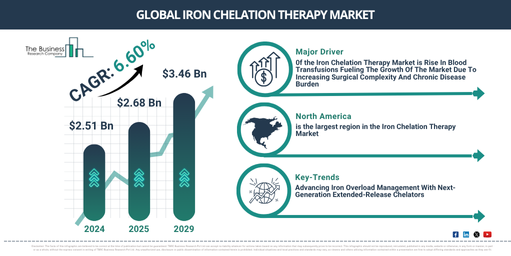
    The market size for iron chelation therapy has been experiencing substantial growth in recent times. The market value is forecasted to increase from $2.51 billion in 2024 to $2.68 billion in 2025 at a compound annual growth rate (CAGR) of 6.8%. This growth during the historic period can be traced back to an escalating demand for more secure iron removal treatments, a surge in global rates of blood transfusion, an increase in chronic anemia cases because of genetic disorders, an upswing in healthcare spending in developing economies, as well as a rise in clinical research concerning iron chelation therapy.

    In the coming years, the iron chelation therapy market is projected to experience significant growth, with its size anticipated to reach $3.46 billion by 2029, growing at a compound annual growth rate (CAGR) of 6.6%. Factors contributing to this predicted growth include the heightened use of oral chelation drugs, increased funding towards research in rare diseases, the emerging focus on personalized medicine, rising approval of novel therapies by regulatory bodies, and improved healthcare accessibility in developing regions. The period of prediction is expected to witness key trends like advancements in the formulation of oral chelation drugs, evolution of combination therapy techniques, breakthroughs in targeted drug delivery systems, cutting-edge tools for detecting iron overload, and the formulation of treatment models centered around patients.

    Download The Free Sample Report Here:

    https://www.thebusinessresearchcompany.com/sample.aspx?id=24576&type=smp

    What factors are expected to fuel Iron Chelation Therapy market growth in the coming years?

    The surge in the number of blood transfusions is predicted to boost the growth of the iron chelation therapy market. Blood transfusion is characterized by the procedure wherein a patient receives donated blood to replenish blood volume or address specific medical conditions such as anemia or blood loss. The escalation in blood transfusions is a consequence of the rising frequency of intricate surgeries, which often result in considerable blood loss necessitating transfusion to preserve hemodynamic stability and bolster patient recuperation. Iron chelation therapy aids in the elimination of surplus iron accumulated in the body due to regular blood transfusions. For example, as per the American Red Cross, a non-profit organization based in the U.S., approximately 16 million blood components are transfused annually in the country. Sickle cell disease impacts between 90,000 and 100,000 individuals, with approximately 1,000 infants diagnosed with it each year, and a significant number of patients require ongoing blood transfusions. Consequently, the surge in blood transfusions is fostering the growth of the iron chelation therapy market.

    What Are The Key Findings From The Segmentation Analysis Of The Iron Chelation Therapy Market?

    The iron chelation therapy market covered in this report is segmented –

    1) By Type: Deferasirox, Deferoxamine, Deferiprone

    2) By Route Of Administration: Oral Chelators, Parenteral Chelators, Intravenous Administration, Subcutaneous Delivery

    3) By Indication: Thalassemia, Sickle Cell Disease, Myelodysplastic Syndromes (MDS), Non-Transfusion-Dependent Thalassemia (NTDT)

    4) By Patient Demographics: Pediatric Patients, Adult Patients, Elderly Patients, Gender-Specific (Male, Female)

    5) By End-User: Hospitals, Specialty Clinics, Homecare Settings, Other End User

    Subsegments:

    1) By Deferasirox: Dispersible Tablets (DT), Film-Coated Tablets (FCT), Oral Suspension

    2) By Deferoxamine: Injectable Solution, Subcutaneous Infusion, Intramuscular Injection, Intravenous Infusion

    3) By Deferiprone: Oral Solution, Oral Tablets, Modified-Release Tablets

    Which Trends Are Expected To Shape The Future Of The Iron Chelation Therapy Market?

    The iron chelation therapy market is seeing major players concentrating on the production of next-gen chelators that present improved bioavailability. This strategic move aims to enhance treatment efficiency, reduce negative side effects, and boost patient consistency. By incorporating such chelators with superior bioavailability, these companies aspire to advance the absorption and productivity of iron chelation therapies. Consequently, they hope to streamline dosing plans and improve patient compliance in contending with iron overload disorders. For instance, in March 2023, approval was granted to Chiesi Farmaceutici S.p.A., a pharmaceutical enterprise from Italy, by Health Canada for FERRIPROX MR. This twice-daily, extended-release iron chelator aims to treat iron overload in patients with thalassemia, sickle cell disease, and other types of anemia, promising improved accessibility and ongoing assistance for rare disease treatment. Clinical data substantiates that FERRIPROX MR 1,000 mg is efficacious and safe for the intended clientele, with an acceptable safety profile for patients suffering from iron overload.

    What Are The Most Active Companies In The Iron Chelation Therapy Market Today?

    Major companies operating in the iron chelation therapy market are Pfizer Inc., Bayer AG, Sanofi S.A., Novartis AG, GlaxoSmithKline plc, Teva Pharmaceutical Industries Ltd., Sun Pharmaceutical Industries Ltd., Aurobindo Pharma Ltd., Dr. Reddy’s Laboratories Ltd., Cipla Ltd., Zydus Cadila, Balchem, Piramal Pharma Solutions, Vifor Pharma Group, MSN Laboratories, Natco Pharma Ltd., CTX Lifesciences, Nouryon, Tivan Sciences, Synnat Pharma.

    Get The Full Report Here:

    https://www.thebusinessresearchcompany.com/report/iron-chelation-therapy-global-market-report

    Which Regional Markets Are Attracting The Most Investment In Iron Chelation Therapy?

    North America was the largest region in the iron chelation therapy market in 2024. Asia-Pacific is expected to be the fastest-growing region in the forecast period. The regions covered in the iron chelation therapy market report are Asia-Pacific, Western Europe, Eastern Europe, North America, South America, Middle East, Africa.

    Request For A Customized Report:

    https://www.thebusinessresearchcompany.com/customise?id=24576&type=smp

    About The Business Research Company:

    With over 15000+ reports from 27 industries covering 60+ geographies, The Business Research Company has built a reputation for offering comprehensive, data-rich research and insights. Armed with 1,500,000 datasets, the optimistic contribution of in-depth secondary research, and unique insights from industry leaders, you can get the information you need to stay ahead in the game.

    Get in touch with us:

    The Business Research Company: https://www.thebusinessresearchcompany.com/

    Americas +1 310-496-7795

    Asia +44 7882 955267 & +91 8897263534

    Europe +44 7882 955267

    Email us at info@tbrc.info

    Follow us on:

    LinkedIn: https://in.linkedin.com/company/the-business-research-company

    YouTube: https://www.youtube.com/channel/UC24_fI0rV8cR5DxlCpgmyFQ

    Global Market Model: https://www.thebusinessresearchcompany.com/global-market-model