Month: September 2025

  • Peptide Synthesis Market Valuation Expected To Reach $8.92 Billion By 2029, Growing At A Rate Of 9.6%

    Claim your 30% discount on Global Market Reports with code ONLINE30. Limited time only.

    How Has The Peptide Synthesis Market Size Shifted, And What Is the Outlook Through 2034?

    In recent times, the peptide synthesis market has experienced noteworthy advancement. The market size which stood at $5.69 billion in 2024 is projected to escalate to $6.18 billion in 2025, displaying a compound annual growth rate (CAGR) of 8.6%. The surge experienced in the past can be ascribed to the proliferation of peptide-based vaccines, expansion in the biotechnology and biopharmaceutical sectors, need for high-purity peptides, along with regulatory approvals and standardization.

    In the coming years, the peptide synthesis market is projected to witness robust growth. It is anticipated to reach a worth of$8.92 billion by 2029, growing at a compound annual growth rate (CAGR) of 9.6%. This potent growth in the prospective period can be ascribed to the fast-paced growth of therapeutic peptides, escalating demand for personalized peptides, and their increasing significance in drug discovery and development. It also emphasizes the importance of peptide libraries for screening. Key trends during this forecast period encompass the development of peptide mimetics, the incorporation of new amino acid derivatives, advancements in peptide cyclization methodologies, innovations in the domain of solid-phase peptide synthesis (SPPs), and the growing use of click chemistry.

    Download a free sample to assess the report’s scope and structure:

    https://www.thebusinessresearchcompany.com/sample.aspx?id=13295&type=smp

    Which Factors and External Forces Are Driving Demand in the Peptide Synthesis Market?

    The rise in chronic diseases is anticipated to drive the peptide synthesis market’s expansion. Chronic diseases, also known as non-communicable diseases (NCDs), are long-lasting health issues that generally progress over an extended period. Chronic diseases can be treated using peptide synthesis, as some peptides possess anti-inflammatory and antioxidant properties that could help in averting chronic illnesses like cardiovascular diseases. By targeting specific cellular processes and signaling pathways, peptides offer new possibilities for chronic disease management and treatment. For example, data from the Australian Institute of Health and Welfare, a government agency based in Australia, indicated that in June 2024, the death rate attributable to chronic conditions increased to 490 per 100,000 people in 2022, which had risen from 459 per 100,000 in 2021. This rising prevalence of chronic diseases is bolstering the peptide synthesis market’s growth.

    Which Segments in the Peptide Synthesis Offer the Most Growth?

    The peptide synthesismarket covered in this report is segmented –

    1) By Product And Service: Reagents; Equipment; Services

    2) By Technology: Solid-Phase Peptide Synthesis; Solution-Phase Peptide Synthesis; Hybrid And Recombinant Technology

    3) By End User: Pharmaceutical And Biotechnology companies; Contract Manufacturing And Development Organizations (CDMOs) And Contract Research Organizations (CROs); Academic And Research Institutes

    Subsegments:

    1) By Reagents: Amino Acids; Coupling Reagents; Protecting Groups; Cleavage Reagents

    2) By Equipment: Peptide Synthesizers; Chromatography Systems; Mass Spectrometers; Other Analytical Instruments

    3) By Services: Custom Peptide Synthesis; Peptide Characterization And Analysis; Peptide Modification Services; Consulting And Support Services

    Request customized data on this market:

    https://www.thebusinessresearchcompany.com/customise?id=13295&type=smp

    What Are the Fastest-Growing Geographies in the #Which Factors and External Forces Are Driving Demand in the Peptide Synthesis Market?# Market?

    North America was the largest region in the peptide synthesis market in 2024. Asia-Pacific is expected to be the fastest-growing region in the forecast period. The regions covered in the peptide synthesis market report are Asia-Pacific, Western Europe, Eastern Europe, North America, South America, Middle East, Africa

    Which Cutting-Edge Market Trends Are Expected to Drive thePeptide Synthesis Market’s Growth?

    To establish their superiority in the peptide synthesis market, leading firms are concentrating on launching state-of-the-art peptide synthesizers like PurePep Sonata+. This advanced version has been designed to enhance efficiency, velocity, and precision in comparison to conventional peptide synthesizers. In March 2022, Gyros Protein Technologies, a company in the U.S. that offers peptide synthesis and bioanalytical technology services, introduced the PurePep Sonata+ peptide synthesizer. The new PurePep Sonata+ expands the scope of Sonata XT by incorporating real-time flow technology, offering a revolutionary method for consistently observing fluid flow rates within the system. This non-intrusive methodology ensures exact and precise fluid transfers across a broad spectrum of viscosities.

    View the full report here:

    https://www.thebusinessresearchcompany.com/report/peptide-synthesis-global-market-report

    What Are the Key Elements That Define the Peptide Synthesis Market?

    Peptide synthesis refers to the laboratory process of producing peptides, which are compounds that are short chains of amino acids linked together by chemical bonds. These synthesized peptides have various applications in research, drug development, and medical diagnostics to generate precise sequences that mimic epitopes within particular protein domains.

    Purchase the full report and get a swift delivery:

    https://www.thebusinessresearchcompany.com/purchaseoptions.aspx?id=13295

    About The Business Research Company:

    With over 15000+ reports from 27 industries covering 60+ geographies, The Business Research Company has built a reputation for offering comprehensive, data-rich research and insights. Armed with 1,500,000 datasets, the optimistic contribution of in-depth secondary research, and unique insights from industry leaders, you can get the information you need to stay ahead in the game.

    Get in touch with us:

    The Business Research Company: https://www.thebusinessresearchcompany.com/

    Americas +1 310-496-7795

    Europe +44 7882 955267

    Asia & Others +44 7882 955267 & +91 8897263534

    Email us at info@tbrc.info

    Follow us on:

    LinkedIn: https://in.linkedin.com/company/the-business-research-company

    YouTube: https://www.youtube.com/channel/UC24_fI0rV8cR5DxlCpgmyFQ

    Global Market Model: https://www.thebusinessresearchcompany.com/global-market-model
  • Peptic Ulcer Market Forecast Reaching $4.89 Billion by 2029 at 3.8% CAGR

    Claim your 30% discount on Global Market Reports with code ONLINE30. Limited time only.

    How Has the Peptic Ulcer Market Growth Performance Trended Historically, And What Lies Ahead?

    In recent times, the market size for peptic ulcers has been expanding progressively. The market growth is projected to rise from $4.1 billion in 2024 to $4.22 billion in 2025 at a steady compound annual growth rate (CAGR) of 3.0%. The past period growth is primarily due to the growing occurrences of helicobacter pylori infection, increased consumption of nonsteroidal anti-inflammatory drugs (NSAIDs), alterations in lifestyle and eating routines, expanded awareness through campaigns and educational drives, and an emphasis on managing stress.

    In the coming years, the market size for peptic ulcers is anticipated to witness consistent growth. It is projected to increase to$4.89 billion by 2029, growing at a compound annual growth rate (CAGR) of 3.8%. Factors contributing to this growth during the forecast period include the advent of new therapies and treatments, an ageing population, the incorporation of precision medicine, preventive strategies and health advancement, as well as ongoing research and clinical trials. Key trends during this period encompass digital health care solutions, progress in treatment methods, a rising incidence of helicobacter pylori infection, the merging of diagnostic imaging technologies, and an elevated use of combination therapies.

    Download a free sample to assess the report’s scope and structure:

    https://www.thebusinessresearchcompany.com/sample.aspx?id=13221&type=smp

    Which Major Market Drivers Are Expected to Boost the Growth Potential of the Peptic Ulcer Market?

    The increasing trend of obesity is predicted to boost the expansion of the peptic ulcer market in future. Obesity, a health disorder typified by excessive accumulation of body fat leading to a body mass index (BMI) of 30 or above, can be caused by genetic, environmental, and lifestyle factors including poor dietary habits and insufficient physical exercise. This condition fosters the overproduction of gastric acid, weakens the protection of the stomach’s mucosal lining, and aids in the formation of peptic ulcers. Furthermore, additional weight seems to incite inflammation in the digestive tract, which can culminate in peptic ulcers. For example, data from the Centers for Disease Control and Prevention, a public health agency in the US, revealed that between August 2021 and August 2023, the obesity rate among adults stood at 40.3%, with 39.2% prevalence in men and 41.3% in women. Consequently, the escalating trend of obesity is fueling the growth of the peptic ulcer market.

    Which Key Market Segments Comprise the Peptic Ulcer Market and Drive Its Revenue Growth?

    The peptic ulcermarket covered in this report is segmented –

    1) By Disease Indication: Gastritis; Gastric Ulcer; Duodenal Ulcer; Gastroesophageal Reflux Disease (GERD)

    2) By Drug Type: Proton Pump Inhibitors (PPI); H2 Antagonists; Antibiotics; Other Drugs

    3) By Distribution Channel: Hospital Pharmacies; Private Clinics; Drug Store; Retail Pharmacies; E-Commerce

    Subsegments:

    1) By Gastritis: Acute Gastritis; Chronic Gastritis

    2) By Gastric Ulcer: Acute Gastric Ulcer; Chronic Gastric Ulcer

    3) By Duodenal Ulcer: Acute Duodenal Ulcer; Chronic Duodenal Ulcer

    4) By Gastroesophageal Reflux Disease (GERD): Non-Erosive GERD; Erosive GERD

    Request customized data on this market:

    https://www.thebusinessresearchcompany.com/customise?id=13221&type=smp

    Which Areas Are Leading Regions in the Peptic Ulcer Market Expansion Across the Globe?

    North America was the largest region in the peptic ulcer market in 2024. Asia-Pacific is expected to be the fastest-growing region in the forecast period. The regions covered in the peptic ulcer market report are Asia-Pacific, Western Europe, Eastern Europe, North America, South America, Middle East, Africa

    What Are the Key Market Trends in thePeptic Ulcer Market Over the Coming Years?

    Firms active in the peptic ulcer market are working on unique product formulation and treatments, securing regulatory acceptances to establish a competitive advantage. The creation of drugs is a vital component in peptic ulcer care, benefiting symptom control, healing process, complication prevention, and treatment of the root issue. For example, in April 2023, Indian pharmaceutical firm Akums Drugs and Pharmaceutical Ltd. introduced its newest formulation, the Combikit, comprising of Amoxicillin, Clarithromycin, and Esomeprazole. The Central Drugs Standard Control Organisation (CDSCO) has endorsed this Combikit for the treatment of duodenal ulcers related to Helicobacter pylori (H. pylori) and for the elimination of H. pylori from patients with active or healed peptic ulcers. The H. pylori-targeting treatment has shown efficacy in reducing ulcer recurrence risk, proving significantly valuable to patients. H. pylori is a common infection in India and is linked with gastritis and peptic ulcer development.

    View the full report here:

    https://www.thebusinessresearchcompany.com/report/peptic-ulcer-global-market-report

    How Is the Peptic Ulcer Market Conceptually Defined?

    A peptic ulcer is an open sore or raw area in the stomach lining or intestine. It is primarily caused by the erosion of the stomach’s protective lining or the upper part of the small intestine (duodenum). The common peptic ulcer symptoms include upper abdominal pain or discomfort and acid reflux symptoms like heartburn, sometimes accompanied by nausea.

    Purchase the full report and get a swift delivery:

    https://www.thebusinessresearchcompany.com/purchaseoptions.aspx?id=13221

    About The Business Research Company:

    With over 15000+ reports from 27 industries covering 60+ geographies, The Business Research Company has built a reputation for offering comprehensive, data-rich research and insights. Armed with 1,500,000 datasets, the optimistic contribution of in-depth secondary research, and unique insights from industry leaders, you can get the information you need to stay ahead in the game.

    Get in touch with us:

    The Business Research Company: https://www.thebusinessresearchcompany.com/

    Americas +1 310-496-7795

    Europe +44 7882 955267

    Asia & Others +44 7882 955267 & +91 8897263534

    Email us at info@tbrc.info

    Follow us on:

    LinkedIn: https://in.linkedin.com/company/the-business-research-company

    YouTube: https://www.youtube.com/channel/UC24_fI0rV8cR5DxlCpgmyFQ

    Global Market Model: https://www.thebusinessresearchcompany.com/global-market-model

  • $49.53 Billion Forecast for Pediatric Electronic Medical Record (EMR) Software Market by 2029, Backed by Demand and Innovation

    Claim your 30% discount on Global Market Reports with code ONLINE30. Limited time only.

    What Are the Projected Market Size and Growth Rates for the Pediatric Electronic Medical Record (EMR) Software Market From 2025 To 2029?

    The market for pediatric electronic medical record (emr) software has been experiencing a steady increase in recent times. It is projected to inflate from $35.69 billion in 2024 to about $37.95 billion in 2025, with a compound annual growth rate (CAGR) of 6.3%. The historical growth is attributable to the surge in medical records which fuels the need for pediatric EMR software. Other growth drivers include an increase in regulatory obligations for pediatric healthcare facilities and a rising demand for interoperable pediatric EMR software.

    The market size for pediatric electronic medical record (emr) software is anticipated to experience substantial growth over the upcoming years, reaching$49.53 billion by 2029 with a compound annual growth rate (CAGR) of 6.9%. This predicted growth during the forecast period can be linked to the increasing digitalization, rising requirement for pediatric emr software in healthcare institutions, and the adoption of EMR software. There’s also an escalating prevalence of pediatric subspecialties. Key trends for the forecast period encompass technological enhancements, personalization for pediatric specialty, the incorporation of telemedicine for pediatric consultations, management of pediatric pain, and the utilization of technology for better care coordination.

    Download a free sample to assess the report’s scope and structure:

    https://www.thebusinessresearchcompany.com/sample.aspx?id=14451&type=smp

    What Are the Core Growth Drivers Propelling the Pediatric Electronic Medical Record (EMR) Software Market Forward?

    The anticipated surge in the quantity of medical records is predicted to fuel the expansion of the pediatric electronic medical record (EMR) software market in the future. This medical data consists of a well-organized documentation of a patient’s healthcare details, encompassing their medical background, clinical results, diagnostic test outcomes, care before and after surgeries, the patient’s development, along with medication. The increasing number of pediatric medical records can be attributed to multiple factors such as higher cases of chronic diseases among children, growing focus on child preventive care, and higher use of healthcare facilities for children. EMR software systemizes and disseminates medical records, thus speeding up diagnosis and cure decisions for pediatric patients. For example, the Bureau of Labor Statistics, a US government agency, estimated in September 2022 that the employment of medical records specialists will rise by 8% from 2022 to 2032, which is quicker than the average growth of all sectors. Hence, the increasing quantity of medical records is propelling the expansion of the pediatric EMR software market.

    What Segment Types Define the Pediatric Electronic Medical Record (EMR) Software Market Structure?

    The pediatric electronic medical record (emr) softwaremarket covered in this report is segmented –

    1) By Type: Cloud Based; On Premises

    2) By Components: Software Services; Consulting; Hardware

    3) By Functionality: Clinical Documentation; Patient Management; Reporting And Analytics

    4) By Application: Large Enterprise; Small And Medium-sized Enterprises (SMEs)

    5) By End User: Hospitals; Diagnostic Centers; Other End Users

    Subsegments:

    1) By Cloud-Based: Public Cloud; Private Cloud; Hybrid Cloud

    2) By On-Premises: Standalone Systems; Integrated Systems

    Request customized data on this market:

    https://www.thebusinessresearchcompany.com/customise?id=14451&type=smp

    Which Geographic Areas Hold the Strongest Growth Potential in the Pediatric Electronic Medical Record (EMR) Software Market?

    North America was the largest region in the pediatric electronic medical record (EMR) software market in 2024. Asia-Pacific is expected to be the fastest-growing region in the forecast period. The regions covered in the pediatric electronic medical record (EMR) software market report are Asia-Pacific, Western Europe, Eastern Europe, North America, South America, Middle East, Africa.

    Which Emerging Trends that Are Influencing thePediatric Electronic Medical Record (EMR) Software Industry Evolution?

    Large corporations in the pediatric EMR software market are concentrating on incorporating sophisticated AI-based technologies into the pediatric electronic medical record (EMR) in order to gain an advantage in the industry. AI-based technologies in pediatric EMR systems aid in refining clinical decision-making, personalized care provision, efficacy, and outcomes for pediatric patients and their families. For example, in December 2023, Pieces Technologies, a US healthcare AI and technology firm, introduced Children’s Health, a clinical generative AI, into the North Texas Pediatric Health System. This technology easily integrates with the health system’s Epic electronic medical record (EMR), frequently used by physicians, nurses, and case managers for clinical handoffs, length of stay management, discharge barrier resolution, team communication, and multidisciplinary rounds. By combining contextual modeling, collaborative and adversarial AI, human-in-the-loop supervision, and automated clinical rapid engineering, Pieces maintains a remarkably low major error rate.

    View the full report here:

    https://www.thebusinessresearchcompany.com/report/pediatric-electronic-medical-record-emr-software-global-market-report

    What Is the Definition of the Pediatric Electronic Medical Record (EMR) Software Market?

    Pediatric electronic medical record (EMR) software is a specialized digital system designed to manage and store medical records specifically for pediatric patients. It includes features such as growth charts, immunization tracking, and age-specific templates for documenting health information. This software helps healthcare providers streamline pediatric care, improve accuracy in diagnoses, and ensure continuity of care for children.

    Purchase the full report and get a swift delivery:

    https://www.thebusinessresearchcompany.com/purchaseoptions.aspx?id=14451

    About The Business Research Company:

    With over 15000+ reports from 27 industries covering 60+ geographies, The Business Research Company has built a reputation for offering comprehensive, data-rich research and insights. Armed with 1,500,000 datasets, the optimistic contribution of in-depth secondary research, and unique insights from industry leaders, you can get the information you need to stay ahead in the game.

    Get in touch with us:

    The Business Research Company: https://www.thebusinessresearchcompany.com/

    Americas +1 310-496-7795

    Europe +44 7882 955267

    Asia & Others +44 7882 955267 & +91 8897263534

    Email us at info@tbrc.info

    Follow us on:

    LinkedIn: https://in.linkedin.com/company/the-business-research-company

    YouTube: https://www.youtube.com/channel/UC24_fI0rV8cR5DxlCpgmyFQ

    Global Market Model: https://www.thebusinessresearchcompany.com/global-market-model

  • Global Pediatric Bladder Treatment Market Projected to Reach $4.47 Billion by 2029 at a CAGR of 4.7%

    Claim your 30% discount on Global Market Reports with code ONLINE30. Limited time only.

    What Is the Estimated Market Size of the Pediatric Bladder Treatment Market In 2029?

    There has been consistent growth in the pediatric bladder treatment market in the past few years. It is projected to increase from $3.54 billion in 2024 to $3.72 billion in 2025, with a compound annual growth rate (CAGR) of 4.8%. The significant growth in the aforementioned period is linked to the rising incidences of pediatric bladder issues, enhanced awareness about these conditions, improved access to healthcare for kids, and an increase in disposable income.

    In the coming years, the pediatric bladder treatment market is anticipated to experience consistent growth, with projections estimating its size to reach$4.47 billion by 2029, with a compound annual growth rate (CAGR) of 4.7%. The forecast period’s growth can be credited to factors such as an aging population, increased occurrence of chronic diseases in children, enhanced healthcare accessibility and the rising demand for customized medical treatment. The forecast period is also expected to see a handful of key trends, such as the embrace of novel and innovative pediatric bladder solutions, digital healthcare technologies, early detection and prevention strategies, and non-invasive treatment methods.

    Download a free sample to assess the report’s scope and structure:

    https://www.thebusinessresearchcompany.com/sample.aspx?id=12943&type=smp

    What are the Fundamental Drivers and Innovations Shaping the Pediatric Bladder Treatment Market?

    The rise in pediatric bladder ailments is projected to fuel the expansion of the pediatric bladder treatment market in the future. Pediatric bladder disorders are a range of health issues affecting the ordinary functioning of the urinary bladder in children. Conditions like spina bifida and neurological disorders are key contributors to urinary issues in children, which necessitate effective therapies. Based on medical journal published by Switzerland’s Multidisciplinary Digital Publishing Institute (MDPI) in March 2023, it was observed in a study of 1,065 pediatric patients with neurogenic bladder (NGB) that 38.9% of patients had spina bifida. The main complication noted was lower urinary tract infection (18.1%), predominantly among patients with open spina bifida (54.1%). Furthermore, during a 12-month evaluation, common complications such as lower urinary tract infections (18.1%), urinary incontinence (8.0%), and hydronephrosis (5.6%) were reported, with 7.9% of patients experiencing four or more relapses of lower urinary tract infections. Therefore, the rising occurrence of pediatric bladder disorders will spur the expansion of the pediatric bladder treatment market.

    How Is the Pediatric Bladder Treatment Market Segmented?

    The pediatric bladder treatmentmarket covered in this report is segmented –

    1) By Type: Diurnal Incontinence; Enuresis; Other Types

    2) By Treatment: Urotherapy; Medication; Surgical Reconstruction; Other Treatments

    3) By Route of Administration: Oral; Parenteral; Other Route of Administrations

    4) By Distribution Channel: Hospital Pharmacy; Online Pharmacy; Retail Pharmacy

    5) By End User: Hospitals; Homecare; Specialty Clinics; Other End-Users

    Subsegments:

    1) By Diurnal Incontinence: Overactive Bladder; Urge Incontinence; Other Diurnal Incontinence Types

    2) By Enuresis: Primary Enuresis; Secondary Enuresis; Nocturnal Enuresis

    3) By Other Types: Neurogenic Bladder; Structural Abnormalities; Other Pediatric Bladder Disorders

    Request customized data on this market:

    https://www.thebusinessresearchcompany.com/customise?id=12943&type=smp

    Which Regions Are Driving the Next Phase of the Pediatric Bladder Treatment Market Growth?

    North America was the largest region in the pediatric bladder treatment market in 2024. Asia-Pacific is expected to be the fastest-growing region in the forecast period. The regions covered in pediatric bladder treatment market report are Asia-Pacific, Western Europe, Eastern Europe, North America, South America, Middle East and Africa.

    View the full report here:

    https://www.thebusinessresearchcompany.com/report/pediatric-bladder-treatment-global-market-report

    How Is the Pediatric Bladder Treatment Market Defined and What Are Its Core Parameters?

    Pediatric bladder disorders refer to a spectrum of medical issues affecting the urinary bladder in children, encompassing conditions that impact bladder function, control and structure. Pediatric bladder treatment refers to managing and treating bladder dysfunction, where treatment options vary depending on age, overall health, medical history, bladder symptoms and the cause of the nerve damage or neurologic condition.

    Purchase the full report and get a swift delivery:

    https://www.thebusinessresearchcompany.com/purchaseoptions.aspx?id=12943

    About The Business Research Company:

    With over 15000+ reports from 27 industries covering 60+ geographies, The Business Research Company has built a reputation for offering comprehensive, data-rich research and insights. Armed with 1,500,000 datasets, the optimistic contribution of in-depth secondary research, and unique insights from industry leaders, you can get the information you need to stay ahead in the game.

    Get in touch with us:

    The Business Research Company: https://www.thebusinessresearchcompany.com/

    Americas +1 310-496-7795

    Europe +44 7882 955267

    Asia & Others +44 7882 955267 & +91 8897263534

    Email us at info@tbrc.info

    Follow us on:

    LinkedIn: https://in.linkedin.com/company/the-business-research-company

    YouTube: https://www.youtube.com/channel/UC24_fI0rV8cR5DxlCpgmyFQ

    Global Market Model: https://www.thebusinessresearchcompany.com/global-market-model

  • Patient Referral Tracking Systems Market Forecast 2025–2034: Trends Reshaping Demand, Investment, and Innovation

    Patient Referral Tracking Systems Market Forecast 2025–2034: Trends Reshaping Demand, Investment, and Innovation

    Claim your 30% discount on Global Market Reports with code ONLINE30. Limited time only.

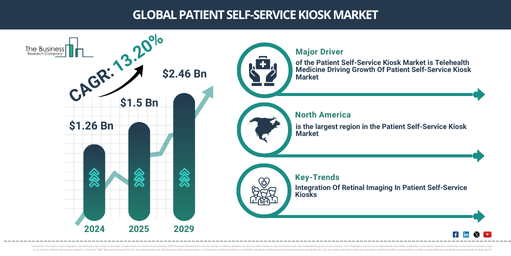
    How Fast Is The Patient Self-Service Kiosk Market Expected to Grow Between 2025 And 2029?

    The market size for patient self-service kiosks has experienced rapid expansion in recent times. Expected to increase from $1.26 billion in 2024 to $1.5 billion in 2025, it’s set to grow at a compound annual rate of growth (CAGR) of 19.3%. This progression in the historic phase can be linked to requirements for regulatory compliance, escalating costs of healthcare, initiatives focused on patient-centric care, a surge in patient volume, and the need for touch-free solutions.

    In the coming years, a substantial expansion is anticipated in the patient self-service kiosk market, growing to a size of$2.46 billion in 2029, boasting a compound annual growth rate (CAGR) of 13.2%. This inflating growth within the projected timeframe can be credited to factors such as the broadening scope of telehealth and remote patient observation, the focus on managing population health, interoperability and data interchange, as well as the increased desire for personalized healthcare services. Noteworthy trends that will characterize this forecast period include the extensive incorporation of artificial intelligence and machine learning, augmented reality (AR) and virtual reality (VR), the internet of medical things (IoMT) connectivity, the use of blockchain for data safety and interoperability, along with 5G connectivity and edge computing.

    Download a free sample to assess the report’s scope and structure:

    https://www.thebusinessresearchcompany.com/sample.aspx?id=14973&type=smp

    What Are the Primary Drivers Supporting the Market Growth of the Patient Self-Service Kiosk Market?

    The patient self-service kiosk market is projected to grow due to the escalation of telehealth medicine. Telehealth refers to the utilization of telecommunications technology for distributing healthcare services remotely. The significant role of telehealth has resulted from increased healthcare accessibility, convenience, and the ability to cater to underserved populations. Patient self-service kiosks provide convenient access to healthcare services empowering individuals to manage their health independently, promoting a more patient-centric healthcare model. Rock Health, a U.S. healthcare organization, in a survey conducted in February 2023, recorded an 8% rise in telemedicine adoption from 72% in 2021 to 80%; 82% of Hispanic respondents reported using telemedicine, this was a 9% increase compared to 2021. Consequently, the growth of telehealth medicine is propelling the patient self-service kiosk market.

    Which Primary Segments of the Patient Self-Service Kiosk Market Are Driving Growth and Industry Transformations?

    The patient self-service kioskmarket covered in this report is segmented –

    1) By Product Type: Freestanding Kiosks; Wall-Mounted Kiosks; Countertop Kiosks; Mobile Kiosks

    2) By Component: Data Entry; Touchscreens; Barcode Readers; Keyboard And Trackball; Electronic Number Pad; Audio Speakers; Electronic Signature Pad; Printer; Point-Of-Sales (POS); Other Components

    3) By Application: Self-Check-In; Floor Map; Prescription Order Refilling And Updating; Collection Of Co-Payments; Hospital News

    4) By End User: Hospitals; Laboratories; Specialty Clinics; Pharmaceutical Stores

    Subsegments:

    1) By Freestanding Kiosks: Interactive Kiosks; Digital Signage Kiosks; Payment Kiosks

    2) By Wall-Mounted Kiosks: Touchscreen Kiosks; Check-In Kiosks; Information Kiosks

    3) By Countertop Kiosks: Self-Check-In Kiosks; Payment And Billing Kiosks

    4) By Mobile Kiosks: Tablet-Based Kiosks; Smartphone-Based Kiosks; Portable Check-In Kiosks

    Request customized data on this market:

    https://www.thebusinessresearchcompany.com/customise?id=14973&type=smp

    Which Regions Are Key Players in the Growth of the #What Are the Primary Drivers Supporting the Market Growth of the Patient Self-Service Kiosk Market?# Market?

    North America was the largest region in the patient self-service kiosk market in 2024. Asia-Pacific is expected to be the fastest-growing region in the forecast period. The regions covered in the patient self-service kiosk market report are Asia-Pacific, Western Europe, Eastern Europe, North America, South America, Middle East, Africa.

    What Are the Most Significant Market Trends in the Patient Self-Service Kiosk Market?

    Businesses in the self-service kiosk sector for patients are concentrating on superior technological solutions like retinal imaging kiosk technology in order to maintain a competitive edge and improve their healthcare services. These kiosks are equipped with state-of-the-art retinal imaging technology and include user-friendly interfaces, allowing individuals to carry out their own retinal scans without needing assistance from a professional. For example, Pursuant Health, Inc., a health data management corporation based in the U.S, revealed an innovative kiosk equipped with this sophisticated retinal imaging technology in January 2024. This high-tech kiosk was awarded 510(k) clearance by the U.S. Food and Drug Administration, representing a significant achievement. With the integration of self-service retinal imaging facilities, people can now at their convenience capture images of their retinas at these kiosks. The kiosk features an intuitive interface that efficiently navigates users through the imaging procedure. After the image is captured, certified ophthalmologists remotely examine the photographs for indications of damage caused by numerous health conditions, such as diabetes and hypertension. This inventive addition to regular health checks incorporates retinal imaging with important health parameters such as weight, body mass index, blood pressure, and pulse, providing users with a more detailed health appraisal experience.

    View the full report here:

    https://www.thebusinessresearchcompany.com/report/patient-self-service-kiosk-global-market-report

    What Parameters Are Used to Define the Patient Self-Service Kiosk Market?

    A patient self-service kiosk is a convenient and user-friendly solution implemented in healthcare facilities to streamline administrative processes and enhance the patient experience. These kiosks typically feature a touch-screen interface and offer a range of functionalities tailored to meet the needs of patients.

    Purchase the full report and get a swift delivery:

    https://www.thebusinessresearchcompany.com/purchaseoptions.aspx?id=14973

    About The Business Research Company:

    With over 15000+ reports from 27 industries covering 60+ geographies, The Business Research Company has built a reputation for offering comprehensive, data-rich research and insights. Armed with 1,500,000 datasets, the optimistic contribution of in-depth secondary research, and unique insights from industry leaders, you can get the information you need to stay ahead in the game.

    Get in touch with us:

    The Business Research Company: https://www.thebusinessresearchcompany.com/

    Americas +1 310-496-7795

    Europe +44 7882 955267

    Asia & Others +44 7882 955267 & +91 8897263534

    Email us at info@tbrc.info

    Follow us on:

    LinkedIn: https://in.linkedin.com/company/the-business-research-company

    YouTube: https://www.youtube.com/channel/UC24_fI0rV8cR5DxlCpgmyFQ

    Global Market Model: https://www.thebusinessresearchcompany.com/global-market-model

  • Patient Referral Tracking Systems Market 2025-2034: Key Highlights, Growth Dynamics, and Emerging Trends

    Claim your 30% discount on Global Market Reports with code ONLINE30. Limited time only.

    What Are the Key Projections for the CAGR of the Patient Referral Tracking Systems Market Size From 2025 to 2034?

    The market size for patient referral tracking systems has seen significant expansion in the past years. The projection for the market growth is from $8.58 billion in 2024 to $9.98 billion in 2025, with a compound annual growth rate (CAGR) of 16.3%. This historic growth has been contributed to by factors such as naval fleet modernization, rising geopolitical tensions, a focus on underwater warfare readiness, the development of unmanned systems, and collaborative defense initiatives.

    The size of the patient referral tracking systems market is predicted to experience a rapid expansion in the coming years, reaching $17.42 billion in 2029, with a compound annual growth rate (CAGR) of 14.9%. The upsurge during the forecast years can be ascribed to factors such as growing defense budgets, increased investment in maritime surveillance abilities, a surge in government funding, a rise in the global spread of submarines, and elevated submarine risks. Notable trends expected during the forecast period encompass an elevated acceptance of AI-driven referral optimization, expansion of virtual care platforms, increased focus on patient engagement and communication, integration with population health management strategies, and improved data analytics and reporting capabilities.

    Download a free sample to assess the report’s scope and structure:

    https://www.thebusinessresearchcompany.com/sample.aspx?id=15231&type=smp

    How Are Key Drivers in the Industry Acting as Catalysts for the Growth of thePatient Referral Tracking Systems Market?

    The patient referral tracking system market is poised for growth, propelled by the rising incorporation of electronic health records (EHR). An EHR is a digital rendition of a patient’s comprehensive health history, a trove of critical information that can be securely shared and accessed by healthcare providers. The growing advocacy for electronic health records stems from their proven efficacy in enhancing healthcare efficiency, safety of the patient, and coordination of care. They also play a pivotal role in patient referral tracking systems, fostering flawless communication and coordination among healthcare providers by documenting referral details, keeping track of patient’s progress, and ensuring that care continuity is maintained. Backing this trend, the Centers for Disease Control and Prevention (CDC), a national public health organization based in the US, stated in November 2023 that 88.2% of office-based physicians employed electronic health record systems. Meanwhile, the adoption rate of certified EHR systems stood at 77.8%. All in all, the escalating implementation of electronic health records is fueling the expansion of the patient referral tracking system market.

    Which Segments in the Patient Referral Tracking Systems Offer the Most Growth?

    The patient referral tracking systemsmarket covered in this report is segmented –

    1) By Type: Inbound; Outbound

    2) By Deployment Mode: Cloud-Based; On-Premise

    3) By End-User: Healthcare Providers; Healthcare Payers; Patients; Other End-Users

    Subsegments:

    1) By Inbound: Physician Referrals; Hospital Referrals; Specialist Referrals

    2) By Outbound: Patient Referral To Specialists; Referral To Diagnostic Services; Referral To Rehabilitation Services

    Request customized data on this market:

    https://www.thebusinessresearchcompany.com/customise?id=15231&type=smp

    What Are the Fastest-Growing Geographies in the #How Are Key Drivers in the Industry Acting as Catalysts for the Growth of thePatient Referral Tracking Systems Market?# Market?

    North America was the largest region in the patient referral tracking systems market in 2024. The regions covered in the patient referral tracking systems market report are Asia-Pacific, Western Europe, Eastern Europe, North America, South America, Middle East, Africa.

    What Are the Current Market Growth and Trends in the Patient Referral Tracking Systems Industry?

    Major players in the patient referral tracking systems market are creating centralized referral management solutions like enterprise referral managers to boost effectiveness and collaboration in healthcare services. Enterprise referral manager is a software that tracks patient referrals and provides several advantages to healthcare institutions such as prevention of referral leakage, reducing latency, automatic alerts, safe exchange of patient data, and more. For example, WellSky, a technology company from the US, introduced the WellSky enterprise referral manager in October 2023. This specially-designed software solution aims to transform the referral, intake, and customer relations management practices for home health, hospice, and other forms of home-based care agencies. The solution is designed to bring about improvements in the efficiency of staff, broaden referral sources, and expedite the initiation of patient care. It offers features like digital connectivity with various electronic health record systems, CRM capabilities for marketing liaisons, and smooth transitions across different care environments.

    View the full report here:

    https://www.thebusinessresearchcompany.com/report/patient-referral-tracking-systems-global-market-report

    What Are the Key Elements That Define the Patient Referral Tracking Systems Market?

    A patient referral tracking system is a software or technological solution designed to manage and monitor the process of patient referrals within a healthcare organization or network. This system typically facilitates the referral process from one healthcare provider to another such as from a primary care physician to a specialist or from a clinic to a hospital.

    Purchase the full report and get a swift delivery:

    https://www.thebusinessresearchcompany.com/purchaseoptions.aspx?id=15231

    About The Business Research Company:

    With over 15000+ reports from 27 industries covering 60+ geographies, The Business Research Company has built a reputation for offering comprehensive, data-rich research and insights. Armed with 1,500,000 datasets, the optimistic contribution of in-depth secondary research, and unique insights from industry leaders, you can get the information you need to stay ahead in the game.

    Get in touch with us:

    The Business Research Company: https://www.thebusinessresearchcompany.com/

    Americas +1 310-496-7795

    Europe +44 7882 955267

    Asia & Others +44 7882 955267 & +91 8897263534

    Email us at info@tbrc.info

    Follow us on:

    LinkedIn: https://in.linkedin.com/company/the-business-research-company

    YouTube: https://www.youtube.com/channel/UC24_fI0rV8cR5DxlCpgmyFQ

    Global Market Model: https://www.thebusinessresearchcompany.com/global-market-model

  • Patient Flow Management Solutions Market Trends 2025-2034: Growth, Strategic Insights, and Opportunities Ahead

    Claim your 30% discount on Global Market Reports with code ONLINE30. Limited time only.

    How Has The Patient Flow Management Solutions Market Growth Evolved From 2024 To 2025, And What’s Ahead?

    The market size for patient flow management solutions has seen rapid expansion in recent years. The projected growth is from $1.65 billion in 2024 to around $2.02 billion in 2025, with a compound annual growth rate (CAGR) of 22.4%. Factors such as increasing demand for healthcare services, regulatory mandates and compliance needs, escalating healthcare expenditures, and the requirement for operational efficiency have contributed to the growth witnessed in this period.

    The market size of patient flow management solutions is projected to experience a significant rise in the coming years, with an estimated valuation of $4.69 billion in 2029 and a Compound Annual Growth Rate (CAGR) of 23.4%. Factors contributing to the growth during this period include the increasing use of artificial intelligence and machine learning, the amalgamation of telemedicine and remote monitoring solutions, a shift towards more patient-focused care models, healthcare infrastructure development in emerging markets, and an increased emphasis on data interoperability and analytics. Notable emerging trends during this period are the move towards value-based care, focus on enhancing patient interaction and experience, rising use of predictive analytics for demand projection, adoption of mobile health (mHealth) apps, and the introduction of cloud-based patient flow management solutions.

    Download a free sample to assess the report’s scope and structure:

    https://www.thebusinessresearchcompany.com/sample.aspx?id=13902&type=smp

    What Are the Major Market Drivers Behind the Rising Adoption of Patient Flow Management Solutions Market?

    The growth of the patient flow management solutions market is forecasted to be driven by the increasing number of hospital admissions. Such admissions refer to the scenario where an individual, due to unavailability of necessary medical care at home or outside hospital settings, is allowed entry into a hospital as a patient. Functions such as appointment scheduling and real-time patient tracking are catered to by patient flow management solutions used in hospital admissions and patient treatment, resulting in saved waiting time, enhanced patient contentment, and more effective usage of hospital facilities. For example, the National Health Service, a UK government department, established that there were approximately 408,700 hospital admissions linked to smoking in 2022–23, a rise of 4.8% from 389,800 in 2021–22, as of December 2023. Hence, the escalating number of hospital admissions fuels the expansion of the patient flow management solutions market.

    Which Key Market Segments Comprise the Patient Flow Management Solutions Market and Drive Its Revenue Growth?

    The patient flow management solutionsmarket covered in this report is segmented –

    1) By Component: Hardware; Software; Services

    2) By Type: Event-Driven Patient Tracking; Real-Time Locating Systems

    3) By Product: Integrated; Standalone

    4) By Delivery Mode: Web-Based; On-Premise; Cloud-Based

    5) By End User: Hospitals; Clinics; Other End Users

    Subsegments:

    1) By Hardware: Patient Tracking Systems; Kiosks And Check-In Devices; Real-Time Location Systems (RTLS); Display Boards And Digital Signage; Mobile Devices And Tablets

    2) By Software: Patient Scheduling Software; Queue Management Software; Data Analytics And Reporting Tools; Electronic Health Record (EHR) Integration Software; Telehealth Solutions

    3) By Services: Consulting Services; Implementation And Integration Services; Training And Support Services; Maintenance And Upgrades; Customization Services

    Request customized data on this market:

    https://www.thebusinessresearchcompany.com/customise?id=13902&type=smp

    Which Areas Are Leading Regions in the Patient Flow Management Solutions Market Expansion Across the Globe?

    North America was the largest region in the patient flow management solutions market in 2024. The regions covered in the patient flow management solutions market report are Asia-Pacific, Western Europe, Eastern Europe, North America, South America, Middle East, Africa.

    What Are the Strategic Trends Steering thePatient Flow Management Solutions Market Direction?

    Leading entities in the patient flow management solutions market are prioritizing the creation of revolutionary products, including healthcare data capabilities, to enhance health fairness and patient administration. These capabilities signify the capacity to accumulate, retain, interpret, and present data associated with individual’s and population’s health. For example, Google Cloud, a computer application from the US, introduced three novel Healthcare Data Engine (HDE) accelerators in November 2022. These advancements are designed to simplify patient flow control and augment population health index analysis for superior value-based care. The goal is to offer tools that healthcare institutions can utilize to refine patient flow, link patients with community resources, and capitalize on the social determinants of health (SDOH) dataset. This accelerator allows health systems to display a variety of facility effectiveness indices to detect patterns and manage patient admissions, transfers, and duration of stay while optimizing departmental capacity management.

    View the full report here:

    https://www.thebusinessresearchcompany.com/report/patient-flow-management-solutions-global-market-report

    How Is the Patient Flow Management Solutions Market Conceptually Defined?

    Patient flow management solutions refer to technology and strategies that optimize the movement of patients within healthcare facilities, from initial registration to discharge. Patient flow management solutions are crucial for healthcare organizations to improve efficiency and enhance the patient experience.

    Purchase the full report and get a swift delivery:

    https://www.thebusinessresearchcompany.com/purchaseoptions.aspx?id=13902

    About The Business Research Company:

    With over 15000+ reports from 27 industries covering 60+ geographies, The Business Research Company has built a reputation for offering comprehensive, data-rich research and insights. Armed with 1,500,000 datasets, the optimistic contribution of in-depth secondary research, and unique insights from industry leaders, you can get the information you need to stay ahead in the game.

    Get in touch with us:

    The Business Research Company: https://www.thebusinessresearchcompany.com/

    Americas +1 310-496-7795

    Europe +44 7882 955267

    Asia & Others +44 7882 955267 & +91 8897263534

    Email us at info@tbrc.info

    Follow us on:

    LinkedIn: https://in.linkedin.com/company/the-business-research-company

    YouTube: https://www.youtube.com/channel/UC24_fI0rV8cR5DxlCpgmyFQ

    Global Market Model: https://www.thebusinessresearchcompany.com/global-market-model

  • Patient Engagement Technology Market Insights: In-Depth Look at Growth Trends, Market Size, and Opportunities for 2025-2034

    Claim your 30% discount on Global Market Reports with code ONLINE30. Limited time only.

    What is the Projected CAGR for the Patient Engagement Technology Market Size from 2025 to 2034?

    There has been a significant expansion in the patient engagement technology market in the past few years. The market value is predicted to rise from $7.06 billion in 2024 to $7.44 billion in 2025, experiencing a compound annual growth rate (CAGR) of 5.5%. This noteworthy growth during the historic period can be linked to the enforcement of government regulations and campaigns advocating patient-focused care. In addition, the surge in demand for patient engagement solutions post-pandemic, an increase in the use of mobile health applications, a growing number of collaborations and partnerships among those involved in healthcare, and the extended use of telehealth services have contributed to the market expansion.

    The market size for patient engagement technology is anticipated to experience significant expansion in the upcoming years, reaching a value of $9.34 billion in 2029 with a CAGR of 5.8%. The projected expansion during the forecast period is primarily due to the scarcity of skilled IT professionals, safeguards for patient data, advancements in technology, an upsurge in demand for patient engagement solutions and the escalating adoption of EHR and mHealth solutions. Key trends anticipated during this forecast period are the enhanced use of telehealth services, the shift towards patient-focused healthcare, an increase in collaborations and partnerships amongst stakeholders in healthcare, and a growing prevalence of chronic diseases.

    Download a free sample to assess the report’s scope and structure:

    https://www.thebusinessresearchcompany.com/sample.aspx?id=14156&type=smp

    What External and Internal Drivers Are Contributing to the Growth of thePatient Engagement Technology Market?

    The surge in requirements for remote care is predicted to fuel the expansion of the patient engagement technology market in the future. The need for remote care is attributed to the increasing necessity and anticipation of healthcare services that don’t require physically visiting healthcare centers. Remote care allows patients to utilize healthcare services from their own homes. This augmented accessibility and convenience result in improved patient engagement, as individuals are more inclined to be involved actively in their healthcare when it is readily and enthusiastically available. For instance, a report by Rock Health, an American healthcare organization, revealed in February 2023 that 80% of all respondents had used care via telemedicine at some point, an increase of eight people from 72% in 2021. Furthermore, 82% of reported telemedicine use indicates a 9-person rise compared to 2021. Consequently, the escalating requirements for remote care are stimulating the growth of the patient engagement technology market.

    What Segment Types Define the Patient Engagement Technology Market Structure?

    The patient engagement technologymarket covered in this report is segmented –

    1) By Type: Hardware; Software; Services

    2) By Delivery Mode: Web-Based And Cloud-Based; On-Premise

    3) By Application: Health Management; Social Management; Home Healthcare Management; Financial Health Management

    4) By End User: Providers; Payers; Patients

    Subsegments:

    1) By Hardware: Patient Kiosks; Wearable Devices; Tablets And Mobile Devices; Telehealth Equipment

    2) By Software: Patient Portal Software; Mobile Health Applications; Communication And Messaging Platforms; Telemedicine Software; Analytics Tools

    3) By Services: Consulting Services; Implementation Services; Training And Support Services; Engagement Strategy Development

    Request customized data on this market:

    https://www.thebusinessresearchcompany.com/customise?id=14156&type=smp

    Which Geographic Areas Hold the Strongest Growth Potential in the Patient Engagement Technology Market?

    North America was the largest region in the patent engagement technology market in 2024. Asia-Pacific is expected to be the fastest-growing region in the forecast period. The regions covered in the patient engagement technology market report are Asia-Pacific, Western Europe, Eastern Europe, North America, South America, Middle East, Africa.

    What Long-Term Trends Are Transforming the Competitive Landscape of the Patient Engagement Technology Market?

    Key players in the patient engagement technology market, such as ZAIDYN connected health, are exploiting innovative technologies to boost their market profitability. The AI-empowered platform, ZAIDYN Connected Health, was crafted to foster innovation among pharmaceutical firms, healthcare providers, and payer communities. In a significant development, in October 2023, management consulting services firm from the US, ZS Associates, introduced ZAIDYN-connected health technology to enable medication compliance, chronic disease monitoring, and facilitate timely interventions in case of any health complications. This technology enables remote patient monitoring and collects health data. Such a gamut of technologies helps industry stakeholders to pinpoint treatment shortcomings and address unmet patient requirements.

    View the full report here:

    https://www.thebusinessresearchcompany.com/report/patient-engagement-technology-global-market-report

    What Is the Definition of the Patient Engagement Technology Market?

    Patient engagement technology refers to digital tools and platforms that enable and encourage patients to manage their health actively. This technology encompasses multiple solutions, including virtual care, wearable monitoring devices, mobile wellness apps, and telehealth.

    Purchase the full report and get a swift delivery:

    https://www.thebusinessresearchcompany.com/purchaseoptions.aspx?id=14156

    About The Business Research Company:

    With over 15000+ reports from 27 industries covering 60+ geographies, The Business Research Company has built a reputation for offering comprehensive, data-rich research and insights. Armed with 1,500,000 datasets, the optimistic contribution of in-depth secondary research, and unique insights from industry leaders, you can get the information you need to stay ahead in the game.

    Get in touch with us:

    The Business Research Company: https://www.thebusinessresearchcompany.com/

    Americas +1 310-496-7795

    Europe +44 7882 955267

    Asia & Others +44 7882 955267 & +91 8897263534

    Email us at info@tbrc.info

    Follow us on:

    LinkedIn: https://in.linkedin.com/company/the-business-research-company

    YouTube: https://www.youtube.com/channel/UC24_fI0rV8cR5DxlCpgmyFQ

    Global Market Model: https://www.thebusinessresearchcompany.com/global-market-model

  • Patient Access /Front-end RCM Solutions Market Outlook 2025–2034: Identifying Growth Drivers, Technology Trends, and Policy Impact

    Claim your 30% discount on Global Market Reports with code ONLINE30. Limited time only.

    What Is the Current and Projected Market Size of the Patient Access /Front-end RCM Solutions Market Through 2034?

    In recent times, there has been a swift expansion in the size of the patient access/front-end RCM solutions market. The market, which was worth $2.52 billion in 2024, is projected to increase to $2.8 billion in 2025, signifying a compound annual growth rate (CAGR) of 10.9%. This notable growth during the historical period is primarily due to the surge in the need for patient access services, a rising trend of adopting denials management, a growing necessity of standardizing patient data, and a high demand for patient access/front-end RCM solutions in the healthcare sector.

    The market size for patient access / front-end rcm solutions is set to experience a swift expansion in the coming years. It is projected to reach$4.28 billion by 2029,” expanding at a compound annual growth rate (CAGR) of 11.2%. Factors such as the growing demand for web and cloud-based solutions, increasing demand for education and training, medical necessity and pre-certification services, a rising focus on integration platform as a service (IPAAS), escalating healthcare expenditure, and an increasing awareness of healthcare contribute to this growth during the forecast period. Key trends for this period include a mounting importance for denials management to propel the market, increased adoption of connected healthcare ecosystems, high installation expenses for patient access solutions, growing implementation of patient access solutions in the healthcare sector, and demographic changes which are influencing the market.

    Download a free sample to assess the report’s scope and structure:

    https://www.thebusinessresearchcompany.com/sample.aspx?id=14155&type=smp

    What Are the Core Market Drivers Propelling Growth in the Patient Access /Front-end RCM Solutions Industry?

    The upward trajectory of the patient access/front-end RCM solutions market is anticipated to be fueled by a surging emphasis on patient engagement. This refers to the dynamic participation, involvement, and cooperation of patients in their healthcare journey. Patient engagement encompasses various responses, activities, and interactions between patients and healthcare professionals, planned to enrich the overall health services experience, improve health results, and encourage patient autonomy. Precise data gathering at the initial point minimizes billing inaccuracies, claim rejections, and expensive amendments, thereby enhancing the effectiveness of RCM procedures. For example, a study by Xtelligent Healthcare Media, a US-based B2B media and events specialist in the healthcare field, revealed in November 2022 that 61% of patients expressed an interest in uplifted patient engagement, and 83% of healthcare consumers demonstrated preparedness to engage in health and wellness betterment. Hence, this amplification of patient engagement underpins the growth of the patient access/front-end RCM solutions market.

    How Is the Patient Access /Front-end RCM Solutions Market Segmented?

    The patient access /front-end rcm solutionsmarket covered in this report is segmented –

    1) By Product And Service: Services; Software

    2) By Deployment: On-Premise Solutions; Web And Cloud-Based Solutions

    3) By End-User: HCIT Outsourcing Companies; Healthcare Providers

    Subsegments:

    1) By Services: Patient Registration Services; Insurance Verification Services; Eligibility And Benefits Verification; Scheduling Services; Pre-Authorization Services; Financial Counseling Services

    2) By Software: Patient Registration Software; Eligibility Verification Software; Appointment Scheduling Software; Billing And Payment Software; Analytics And Reporting Tools

    Request customized data on this market:

    https://www.thebusinessresearchcompany.com/customise?id=14155&type=smp

    Which Regions Are Driving the Next Phase of the Patient Access /Front-end RCM Solutions Market Growth?

    North America was the largest region in the patient access /front-end RCM solutions market in 2024. Asia-Pacific is expected to be the fastest-growing region in the forecast period. The regions covered in the patient access /front-end RCM solutions market report are Asia-Pacific, Western Europe, Eastern Europe, North America, South America, Middle East, Africa.

    What Key Market Trends and Innovations Are Shaping the Future of the Patient Access /Front-end RCM Solutions Industry?

    Top-tier businesses participating in the patient access/front-end RCM solutions market are pioneering innovative technology, such as Enabled Solutions, to increase revenue cycle results. Using state-of-the-art technological gadgets and systems, Enabled Solutions uplift and fine-tune various processes implicated in managing the company’s revenue cycle, while ensuring stringent cybersecurity measures are in place to safeguard important financial and patient information. In October 2023, for example, a technology firm based in the US, Omega Healthcare, introduced the Omega Digital Platform (ODP). The use of revolutionary proprietary technologies allows for all-encompassing revenue cycle management solutions for patient access, mid-revenue sequence, and administration office functions. Workflow simplification, reduced administrative assignments, and improved economic output are the benefits of these solutions. The ODP integrates artificial intelligence, robotic process automation, machine learning, bots, and natural language processing to elevate precision and competence. Consequently, clients have the ability to rearrange resources, escalate patient and workforce contentment, and achieve superior financial outcomes.

    View the full report here:

    https://www.thebusinessresearchcompany.com/report/patient-access-or-front-end-rcm-solutions-global-market-report

    How Is the Patient Access /Front-end RCM Solutions Market Defined and What Are Its Core Parameters?

    Patient Access/Front-end RCM Solutions encompass a suite of tools and services designed to enhance the patient experience and healthcare provider revenue cycle management by refining the patient access process. These solutions improve the efficiency and effectiveness of front-end processes associated with patient access, including registration, eligibility verification, insurance validation, pre-authorization, and patient financial counseling.

    Purchase the full report and get a swift delivery:

    https://www.thebusinessresearchcompany.com/purchaseoptions.aspx?id=14155

    About The Business Research Company:

    With over 15000+ reports from 27 industries covering 60+ geographies, The Business Research Company has built a reputation for offering comprehensive, data-rich research and insights. Armed with 1,500,000 datasets, the optimistic contribution of in-depth secondary research, and unique insights from industry leaders, you can get the information you need to stay ahead in the game.

    Get in touch with us:

    The Business Research Company: https://www.thebusinessresearchcompany.com/

    Americas +1 310-496-7795

    Europe +44 7882 955267

    Asia & Others +44 7882 955267 & +91 8897263534

    Email us at info@tbrc.info

    Follow us on:

    LinkedIn: https://in.linkedin.com/company/the-business-research-company

    YouTube: https://www.youtube.com/channel/UC24_fI0rV8cR5DxlCpgmyFQ

    Global Market Model: https://www.thebusinessresearchcompany.com/global-market-model

  • Emerging Growth Drivers in the Paroxysmal Nocturnal Hemoglobinuria (PNH) Market Landscape: Rising Prevalence Of Blood And Bone Marrow Disorders Fueling The Paroxysmal Nocturnal Hemoglobinuria (PNH) Market

    Claim your 30% discount on Global Market Reports with code ONLINE30. Limited time only.

    What is the Anticipated CAGR of the Paroxysmal Nocturnal Hemoglobinuria (PNH) Market, and What Factors Will Drive It?

    In recent times, the market size for paroxysmal nocturnal hemoglobinuria (pnh) has experienced a swift expansion. The market is projected to enhance from a value of $4.24 billion in 2024 to approximately $4.67 billion in 2025, demonstrating a compound annual growth rate (CAGR) of 10.1%. Factors accounting for this growth during the historic period include an increased demand for treatment options for paroxysmal nocturnal hemoglobinuria, a surge in disposable incomes, initiation of relevant government policies, and a rise in healthcare spending.

    The market size for paroxysmal nocturnal hemoglobinuria (PNH) is projected to undergo robust growth in the coming years. It is expected to rise to $6.71 billion by 2029 at a compound annual growth rate (CAGR) of 9.5%. Several factors such as the aging population, rising demand for self-managed treatments, better access to healthcare services, increased occurrence of comorbid conditions, and heightened interest in personalized medication attribute to this projected growth. Key shifts expected during the forecast period involve advancements in digital health technology, creation of innovative treatments, uptake of gene therapy, and early interventions.

    Download a free sample to assess the report’s scope and structure:

    https://www.thebusinessresearchcompany.com/sample.aspx?id=12936&type=smp

    Which Primay Drivers Are Accelerating Growth in the Paroxysmal Nocturnal Hemoglobinuria (PNH) Market?

    An increase in blood and bone marrow-related disorders is projected to drive the expansion of the paroxysmal nocturnal hemoglobinuria (PNH) market. Medical conditions affecting the creation, function, and components of blood are defined as blood disorders while bone marrow-related disorders emerge when there is inadequate production of red cells, white cells, or platelets in the bone marrow or when the produced blood cells are damaged or defective. PNH has a close relationship with blood and bone marrow-related disorders as it influences blood cell production, the function of the immune system, and the condition of the bone marrow microenvironment. Being a rare blood disorder associated with bone marrow failure diseases, PNH occurs when a genetic defect influences the functioning of red blood cells and platelets. For example, Cancer Australia, a governmental agency, reported in August 2022 that an estimated 5,202 instances of leukemia are expected to be identified in Australia in 2022, with 3,198 cases in males and 2,004 cases in females. Each person has a 1 in 58 (1.7%) chance of being diagnosed with leukemia by the time they reach the age of 85. This risk is considerably higher for males with a 1 in 47 chance (2.1%) compared to females with a 1 in 77 chance (1.3%). As such, the increasing incidences of blood and bone marrow-related disorders contribute to the growth and expansion of the paroxysmal nocturnal hemoglobinuria (PNH) market.

    Which Primary Segments of the Paroxysmal Nocturnal Hemoglobinuria (PNH) Market Are Driving Growth and Industry Transformations?

    The paroxysmal nocturnal hemoglobinuria (pnh)market covered in this report is segmented –

    1) By Treatment Type: Medications; Bone Marrow Transplantation; Blood Transfusion; Immunosuppressive Therapy; Other Treatment Types

    2) By Diagnosis Type: Flow Cytometry; High-Resolution Mass Spectrometry; Other Diagnosis Types

    3) By End Use: Hospitals; Clinics; Other End Users

    Subsegments:

    1) By Medications: Eculizumab; Ravulizumab; Complement Inhibitors; Supportive Care Medications

    2) By Bone Marrow Transplantation: Allogeneic Stem Cell Transplantation; Autologous Stem Cell transplantation

    3) By Blood Transfusion: Red blood Cell Transfusion; Platelet Transfusion; Fresh Frozen Plasma Transfusion

    4) By Immunosuppressive Therapy: Corticosteroids; Azathioprine; Cyclophosphamide; Mycophenolate Mofetil

    5) By Other Treatment Types: Supportive Therapies; Management Of Complications

    Request customized data on this market:

    https://www.thebusinessresearchcompany.com/customise?id=12936&type=smp

    Which Regions Are Key Players in the Growth of the #Which Primay Drivers Are Accelerating Growth in the Paroxysmal Nocturnal Hemoglobinuria (PNH) Market?# Market?

    North America was the largest region in the paroxysmal nocturnal hemoglobinuria (PNH) market in 2024. The regions covered in paroxysmal nocturnal hemoglobinuria (PNH) market report are Asia-Pacific, Western Europe, Eastern Europe, North America, South America, Middle East and Africa.

    Which Technological Trends Are Reshaping the Paroxysmal Nocturnal Hemoglobinuria (PNH) Industry Dynamics?

    Leading firms in the Paroxysmal Nocturnal Hemoglobinuria (PNH) market are steering their focus towards the creation of unique and novel drugs and therapies such as injectable C5 inhibitors, specifically for treating Paroxysmal Nocturnal Hemoglobinuria (PNH), in a bid to maintain their prominence in the market. Considered as a monoclonal antibody, an injectable C5 inhibitor works to impede the complement component C5, thus minimizing inflammation and tissue harm in autoimmune illnesses and conditions, including Paroxysmal Nocturnal Hemoglobinuria (PNH). For instance, Chugai Pharmaceutical Co., a pharmaceutical company based in Japan, was given priority review authorization from the National Medical Products Administration (NMPA) of China in February 2024 for the treatment of Paroxysmal Nocturnal Hemoglobinuria (PNH). This has placed China on the map as the first nation to approve PIASKY, even ahead of other key markets, with it set to join the National Reimbursement Drug List (NRDL) talks within the same year. The notable market potential stems from the fact that Paroxysmal Nocturnal Hemoglobinuria (PNH), a classed rare disease, impacts an estimated number of around 12,740 individuals in China.

    View the full report here:

    https://www.thebusinessresearchcompany.com/report/paroxysmal-nocturnal-hemoglobinuria-pnh-global-market-report

    What Parameters Are Used to Define the Paroxysmal Nocturnal Hemoglobinuria (PNH) Market?

    Paroxysmal nocturnal hemoglobinuria (PNH) refers to a rare and acquired hematological disorder characterized by the abnormal breakdown of red blood cells (hemolysis) due to a deficiency of certain proteins on the surface of blood cells. It is a debilitating disorder that leads to premature death and impaired production of blood cells. PNH includes a wide range of symptoms, such as fatigue, shortness of breath, abdominal pain and thrombosis (blood clot formation).

    Purchase the full report and get a swift delivery:

    https://www.thebusinessresearchcompany.com/purchaseoptions.aspx?id=12936

    About The Business Research Company:

    With over 15000+ reports from 27 industries covering 60+ geographies, The Business Research Company has built a reputation for offering comprehensive, data-rich research and insights. Armed with 1,500,000 datasets, the optimistic contribution of in-depth secondary research, and unique insights from industry leaders, you can get the information you need to stay ahead in the game.

    Get in touch with us:

    The Business Research Company: https://www.thebusinessresearchcompany.com/

    Americas +1 310-496-7795

    Europe +44 7882 955267

    Asia & Others +44 7882 955267 & +91 8897263534

    Email us at info@tbrc.info

    Follow us on:

    LinkedIn: https://in.linkedin.com/company/the-business-research-company

    YouTube: https://www.youtube.com/channel/UC24_fI0rV8cR5DxlCpgmyFQ

    Global Market Model: https://www.thebusinessresearchcompany.com/global-market-model