Month: September 2025

  • Antidepressants Market Size, Share & Trends Analysis Report By Product | Forecast to 2029

    Antidepressants Market Size, Share & Trends Analysis Report By Product | Forecast to 2029

    Claim 20% Off Global Market Reports With Code ONLINE20 – Insights on Tariff Effects, Global Trade, and Industry Disruptors

    What Is The Current Size And Growth Outlook For The Antidepressants Market?

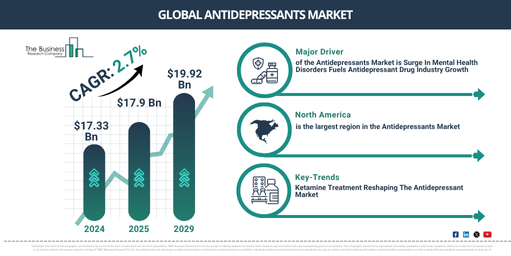
    In recent times, there has been consistent growth in the size of the antidepressants market. The market size will see an increase from $17.33 billion in 2024 to $17.9 billion in 2025, with a compound annual growth rate (CAGR) of 3.3%. Factors such as an increased incidence of mental health disorders, diminished stigma, improvements in diagnostic procedures, extended treatment alternatives, and mental health policies and initiatives by the government have contributed to the growth during the historic period.

    The market size for antidepressants is predicted to experience consistent expansion in the upcoming years, reaching a value of “$19.92 billion in 2029 with a compound annual growth rate (CAGR) of 2.7%. This growth during the forecasted period is due to increased awareness and advocacy of mental health issues, the significant influence of stress and lifestyle alterations, the incorporation of mental health services, breakthroughs in psychiatric research, and the use of telemedicine and remote mental health services. Key trends projected for this period encompass regulatory transformations, market rivalry, growth in the generic market, a focus on side effect profiles, and budding markets.

    Get A Free Sample Of The Report:

    https://www.thebusinessresearchcompany.com/sample.aspx?id=2881&type=smp

    Which Growth Drivers Are Shaping The Antidepressants Market Outlook?

    Around the world, the increasing incidence of mental health disorders has significantly fueled the expansion of the antidepressant drug market, due to a substantial number of consumers relying on these drugs to combat depression, anxiety, and other mental ailments. Antidepressant medications come into play for conditions including but not limited to depression, Obsessive-Compulsive Disorder (OCD), childhood enuresis, major depressive disorder, severe anxiety disorder, bipolar disorder, Post-Traumatic Stress Disorder (PTSD), and social anxiety disorder. Worldwide, the prevalence of depression ranges between 2% and 6%, with older individuals being more prone to depression compared to other demographics. WHO estimates suggest that 280 million people across the globe were suffering from depression in 2023. Hence, the escalating rates of mental health disorders are projected to thrust the antidepressant market growth.

    Which Sub-Segments Are Driving Growth Within The Antidepressants Market?

    The antidepressants market covered in this report is segmented –

    1) By Product: Selective Serotonin Reuptake Inhibitor (SSRI), Serotonin-norepinephrine Reuptake Inhibitor (SNRI), Tricyclic Antidepressant (TCA), Monoamine Oxidase Inhibitor (MAOI)

    2) By Drug Class: Monoamine Oxidase Inhibitors, Serotonin Antagonist And Reuptake Inhibitors, Serotonin-Norepinephrine Reuptake Inhibitors, Selective Serotonin Reuptake Inhibitors, Tricyclic Antidepressants

    3) By Depressive Disorder: Major Depressive Disorder, Obsessive-Compulsive Disorder, Generalized Anxiety Disorder, Panic Disorder

    Subsegments:

    1) By Selective Serotonin Reuptake Inhibitor (SSRI): Fluoxetine, Sertraline, Escitalopram, Paroxetine, Citalopram

    2) By Serotonin-norepinephrine Reuptake Inhibitor (SNRI): Venlafaxine, Duloxetine, Desvenlafaxine

    3) By Tricyclic Antidepressant (TCA): Amitriptyline, Nortriptyline, Imipramine, Doxepin

    4) By Monoamine Oxidase Inhibitor (MAOI): Phenelzine, Tranylcypromine, Isocarboxazid

    What Future-Focused Trends Are Anticipated In The Antidepressants Market?

    A significant trend in the antidepressant market is the treatment of resistant depression. The latest treatment involves the use of Ketamine, a substance commonly employed as an anesthetic during surgeries. This treatment encourages the production of glutamate and induces the brain to establish new neural connections, rendering it more malleable and capable of creating new pathways. This then assists individuals in forming more positive thoughts and behaviors. For example, the Food and Drug Administration (FDA) has given the green light to a new ketamine depression drug known as esketamine, which is half of the ketamine compound. This drug is administered through a nasal spray and it’s necessary for the patient to be on a different antidepressant simultaneously. Additionally, this treatment is only available for patients who have previously tried and found insufficient relief from two other antidepressants.

    Which Companies Hold A Competitive Edge In The 251 Market?

    Major companies operating in the antidepressants market include Pfizer Inc., Johnson & Johnson Services Inc., F. Hoffmann-La Roche Ltd., Merck & Co. Inc., AbbVie Inc., Novartis AG, Sanofi S.A., Bristol Myers Squibb Company, Fresenius Kabi AG, Abbott Laboratories, AstraZeneca plc, GlaxoSmithKline plc, Takeda Pharmaceutical Co. Ltd., Eli Lilly and Company, Boehringer Ingelheim GmbH, H. Lundbeck AS, Teva Pharmaceutical Industries Ltd., Akeda Pharmaceutical Co., Otsuka Pharmaceutical Co., Mylan N.V, Sun Pharmaceuticals Pvt. Ltd., Servier Laboratories, Sumitomo Dainippon Pharma Co., Aurobindo Pharma Limited, Dr. Reddy’s Laboratories Ltd., Hikma Pharmaceuticals plc, Allergan plc, Alkermes plc, Egis Pharmaceuticals plc, Forest Laboratories Inc.

    Access The Complete Report Here:

    https://www.thebusinessresearchcompany.com/report/antidepressant-global-market-report

    Which Region Dominates The Antidepressants Market Today?

    North America was the largest region in the antidepressants market in 2024. Middle East is expected to be the largest growing region in the global antidepressants market during the forecast period. The regions covered in the antidepressants market report are Asia-Pacific, Western Europe, Eastern Europe, North America, South America, Middle East, Africa.

    Customize Your Report Here:

    https://www.thebusinessresearchcompany.com/customise?id=2881&type=smp

    About The Business Research Company:

    With over 15000+ reports from 27 industries covering 60+ geographies, The Business Research Company has built a reputation for offering comprehensive, data-rich research and insights. Armed with 1,500,000 datasets, the optimistic contribution of in-depth secondary research, and unique insights from industry leaders, you can get the information you need to stay ahead in the game.

    Get in touch with us:

    The Business Research Company: https://www.thebusinessresearchcompany.com/

    Americas +1 310-496-7795

    Asia +44 7882 955267 & +91 8897263534

    Europe +44 7882 955267

    Email us at info@tbrc.info

    Follow us on:

    LinkedIn: https://in.linkedin.com/company/the-business-research-company

    YouTube: https://www.youtube.com/channel/UC24_fI0rV8cR5DxlCpgmyFQ

    Global Market Model: https://www.thebusinessresearchcompany.com/global-market-model
  • What Are The Strategic Insights Behind The Antibody Drug Conjugates Market Expansion To $37.9 Billion?

    What Are The Strategic Insights Behind The Antibody Drug Conjugates Market Expansion To $37.9 Billion?

    Claim 20% Off Global Market Reports With Code ONLINE20 – Insights on Tariff Effects, Global Trade, and Industry Disruptors

    What Is The Predicted Market Size Of The Antibody Drug Conjugates Industry By 2029?

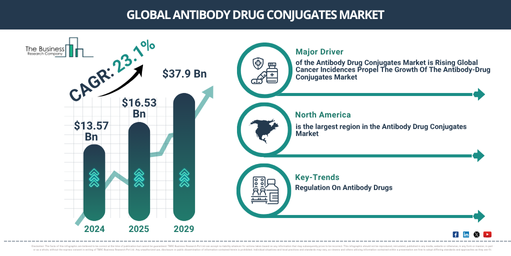
    The market size for antibody drug conjugates has seen remarkable growth in the past years. The market, which is set to rise from $13.57 billion in 2024 to $16.53 billion in 2025, will have a compound annual growth rate (CAGR) of 21.8%. The surge witnessed in the past can be credited to the increasing cases of cancer, successful clinical outcomes and approvals, strategic partnerships, increased R&D investment, and strategies centred around market expansion.

    The market size for antibody drug conjugates is projected to experience substantial growth in the coming years, escalating to “$37.9 billion in 2029 with a compound annual growth rate (CAGR) of 23.1%. The expansion during the forecasted period can be credited to novel ADCS, broader indications, heightened emphasis on personalized medicine, escalating investments in precision treatment, and rising awareness of healthcare. Significant trends during the forecast period include progress in conjugation technologies, enhanced comprehension of tumor biology, technological progression, expanding therapeutic applications, and cutting-edge conjugation technologies.

    Get A Free Sample Of The Report:

    https://www.thebusinessresearchcompany.com/sample.aspx?id=2569&type=smp

    What Market Forces Are Contributing To The Growth Of The Antibody Drug Conjugates Market?

    The surge in global cancer incidences propels the antibody-drug conjugates market. Obesity, smoking, alcohol consumption, and unhealthy dietary practices are primarily accountable for most cancer types. Cancer Research UK anticipates 27.5 million fresh cancer instances each year by 2040. The escalating cancer occurrences are foreseen to amplify the need for antibody-drug conjugates, fuelling the expansion of the market.

    What Segmentation Insights Are Provided In The Antibody Drug Conjugates Market Research?

    The antibody drug conjugates market covered in this report is segmented –

    1) By Type: Monoclonal Antibodies, Linker, Drug/Toxin, Other Types

    2) By Product: Adcertis, Kadcyla, Other Products

    3) By Technology: Immunogen Technology, Seattle Genetics Technology, Immunomedics Technology, Other Technology

    4) By Application: Blood Cancer, Breast Cancer, Ovarian Cancer, Lung Cancer, Brain Tumor, Other Applications

    5) By End User: Hospital, Clinics, Other End Users

    Subsegments:

    1) By Monoclonal Antibodies: IgG-based Monoclonal Antibodies, IgM-based Monoclonal Antibodies, Bispecific Antibodies

    2) By Linker: Cleavable Linkers, Non-cleavable Linkers, Stable Linkers

    3) By Drug/Toxin: Cytotoxic Drugs, Chemotherapeutic Agents, Radioisotopes

    4) By Other Types: Enzyme-Targeted ADCs, Antibody-Drug Conjugates with Immune Modulators

    Which Notable Trends Are Transforming The Antibody Drug Conjugates Market Outlook?

    The production of antibody-drug conjugates is overseen by various regulatory entities, including the Food and Drug Administration in the USA. Although there is no specific guidance for the industry regarding ADC development in the USA, the FDA uses the existing guidelines for small drugs and monoclonal antibodies as a framework for regulation. The Offices of Biotechnology Products (OBP) and Pharmaceutical Quality at the FDA, which are primarily focused on product quality, supervise the manufacture of the antibody component of the ADC and regulate the control strategies for both the antibody intermediate and the drug substance (DS) and drug product (DP). Overseeing the adequacy of the payload and linker, conjugation reactions, and control strategy components falls under the remit of the small molecule review groups, nested within the Office of Pharmaceutical Quality.

    Which Firms Are Driving Innovation Within The Antibody Drug Conjugates Market?

    Major companies operating in the antibody drug conjugates market include Pfizer Inc., F. Hoffmann-La Roche Ltd., AbbVie Inc., AstraZeneca plc, Takeda Pharmaceutical Company Limited, Millennium Pharmaceuticals Inc., Gilead Sciences Inc., Daiichi Sankyo Company Limited, Sorrento Therapeutics Inc., Astellas Pharma Inc., Zydus Lifesciences Limited, Seagen Inc., Seagen Inc., Synthon BV, Genentech Inc., ImmunoGen Inc., Nordic Nanovector ASA, ADC Therapeutics SA, Immunomedics Inc., Mersana Therapeutics Inc., Heidelberg Pharma AG, Celldex Therapeutics Inc., Oxford BioTherapeutics, Concortis Biotherapeutics Corp., Antikor BioPharma Ltd., Eisai Co. Ltd., Merck KGaA

    Access The Complete Report Here:

    https://www.thebusinessresearchcompany.com/report/antibody-drug-conjugates-global-market-report

    Which Regional Markets Are Emerging As Key Hubs For The Antibody Drug Conjugates Market?

    North America was the largest region in the antibody-drug conjugates (ADCs) market in 2024. The Middle East is expected to be the fastest-growing region in the global antibody drug conjugates market share during the forecast period. The regions covered in the antibody drug conjugates market report are Asia-Pacific, Western Europe, Eastern Europe, North America, South America, Middle East, Africa.

    Customize Your Report Here:

    https://www.thebusinessresearchcompany.com/customise?id=2569&type=smp

    About The Business Research Company:

    With over 15000+ reports from 27 industries covering 60+ geographies, The Business Research Company has built a reputation for offering comprehensive, data-rich research and insights. Armed with 1,500,000 datasets, the optimistic contribution of in-depth secondary research, and unique insights from industry leaders, you can get the information you need to stay ahead in the game.

    Get in touch with us:

    The Business Research Company: https://www.thebusinessresearchcompany.com/

    Americas +1 310-496-7795

    Asia +44 7882 955267 & +91 8897263534

    Europe +44 7882 955267

    Email us at info@tbrc.info

    Follow us on:

    LinkedIn: https://in.linkedin.com/company/the-business-research-company

    YouTube: https://www.youtube.com/channel/UC24_fI0rV8cR5DxlCpgmyFQ

    Global Market Model: https://www.thebusinessresearchcompany.com/global-market-model
  • What Is The Long-Term Forecast For The Antacids Market Growing At 3% CAGR?

    What Is The Long-Term Forecast For The Antacids Market Growing At 3% CAGR?

    Claim 20% Off Global Market Reports With Code ONLINE20 – Insights on Tariff Effects, Global Trade, and Industry Disruptors

    What Are The Market Size Estimates For The Antacids Market?

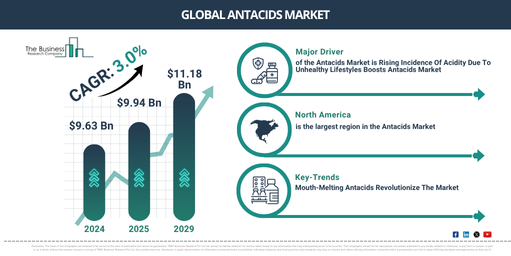
    The dimensions of the antacids market have steadily expanded over the past few years. The market is projected to increase from $9.63 billion in 2024 to $9.94 billion in 2025, with a compound annual growth rate (CAGR) of 3.1%. The growth experienced during the historic period can be linked to factors such as historical pricing and accessibility, shifts in dietary habits, economic circumstances and lifestyle modifications, advances in medical care and awareness, and historical demographic trends of the population.

    The antacids industry is projected a consistent expansion in the forthcoming years, with its market worth reaching “$11.18 billion and a Compound Annual Growth Rate (CAGR) of 3.0% by 2029. The anticipated development in the given duration can be credited to factors such as market rivalry and industry movements, customer inclinations and brand fidelity, environmental elements and amendments in lifestyle, surfacing health issues, financial circumstances, and healthcare expenditures. Dominant inclinations in the projected duration comprise health awareness and cognizance, technological progression, customer choices for herbal solutions, regulatory modifications and adherence, and an escalating rate of digestive ailments.

    Get A Free Sample Of The Report:

    https://www.thebusinessresearchcompany.com/sample.aspx?id=2415&type=smp

    Which Key Factors Are Fueling Growth In The Antacids Market?

    Unhealthy lifestyle decisions leading to a notable increase in acid reflux conditions significantly contribute to the expansion of the antacids market. These unhealthy lifestyle decisions encompass sedentary jobs, lack of proper sleep, and inconsistent eating patterns, giving rise to heightened stomach acidity levels and resulting in gastroesophageal reflux disease. As per the American College of Gastroenterology, nearly 60 million Americans are afflicted with this ailment. This, in turn, stimulates the need for antacids.

    Which Segment Accounts For The Largest Share In The Antacids Market?

    The antacids market covered in this report is segmented –

    1) By Drug Class: Proton Pump Inhibitors, H2 Antagonist, Acid Neutralizers, Pro-Motility Agents

    2) By Formulation Type: Tablet, Liquid, Powder, Other Formulation Types

    3) By Distribution Channel: Hospital Pharmacies, Retail Pharmacies, Other Distribution Channels

    Subsegments:

    1) By Proton Pump Inhibitors (PPIs): Omeprazole, Esomeprazole, Lansoprazole, Pantoprazole, Rabeprazole

    2) By H2 Antagonists: Ranitidine, Famotidine, Cimetidine, Nizatidine

    3) By Acid Neutralizers: Antacids, Sodium Bicarbonate

    4) By Pro-Motility Agents: Metoclopramide, Domperidone

    Which Long-Term Trends Will Play A Crucial Role In The Antacids Market?

    The trend towards mouth-melting antacids is gaining traction in the antacid market. Previously, antacids were produced in tablet, liquid, and powder formats. But recent innovations have introduced micro-mouth melting granules that dissolve quickly in the mouth to the market. These granules work similarly to an effervescent and are now a part of the antacids. Sun Pharma’s ‘Pepmelt’ exemplifies this new class of mouth-melting instant relief antacids, combining the benefits of herbal ingredients with this modern dissolving technology.

    Who Are The Dominant Players In The Antacids Market Today?

    Major companies operating in the antacids market include Walmart Equate LLC, Private Label, Pfizer Inc, Bayer AG, Sanofi S.A., Abbott Laboratories, GlaxoSmithKline plc, Takeda Pharmaceutical Company Limited, Boehringer Ingelheim GmbH, Reckitt Benckiser Group plc, WellSpring Pharmaceutical Corporation, Xiuzheng Pharmaceutical Group Company Limited, Bausch Health Companies Inc., Sun Pharmaceuticals Industries Ltd., Dr. Reddy’s Laboratories Ltd., Hikma Pharmaceuticals plc, Alkem Laboratories Ltd., Conba Group Co. Ltd., Chattem Chemicals Inc., China Resources Sanjiu Medical & Pharmaceutical Co. Ltd., Thornton and Ross Ltd., McNeil Consumer Pharmaceuticals Co., Advance Pharmaceutical Inc.

    Access The Complete Report Here:

    https://www.thebusinessresearchcompany.com/report/antacids-global-market-report

    What Regional Factors Are Accelerating Growth In The Antacids Market?

    North America was the largest region in the antacids market in 2024. The Middle East is expected to be the fastest-growing region in the global antacids market share. The regions covered in the antacids market report are Asia-Pacific, Western Europe, Eastern Europe, North America, South America, Middle East, Africa.

    Customize Your Report Here:

    https://www.thebusinessresearchcompany.com/customise?id=2415&type=smp

    About The Business Research Company:

    With over 15000+ reports from 27 industries covering 60+ geographies, The Business Research Company has built a reputation for offering comprehensive, data-rich research and insights. Armed with 1,500,000 datasets, the optimistic contribution of in-depth secondary research, and unique insights from industry leaders, you can get the information you need to stay ahead in the game.

    Get in touch with us:

    The Business Research Company: https://www.thebusinessresearchcompany.com/

    Americas +1 310-496-7795

    Asia +44 7882 955267 & +91 8897263534

    Europe +44 7882 955267

    Email us at info@tbrc.info

    Follow us on:

    LinkedIn: https://in.linkedin.com/company/the-business-research-company

    YouTube: https://www.youtube.com/channel/UC24_fI0rV8cR5DxlCpgmyFQ

    Global Market Model: https://www.thebusinessresearchcompany.com/global-market-model
  • Which Emerging Trends Are Driving The Anesthetics Market Toward $12.15 Billion By 2029?

    Which Emerging Trends Are Driving The Anesthetics Market Toward $12.15 Billion By 2029?

    Claim 20% Off Global Market Reports With Code ONLINE20 – Insights on Tariff Effects, Global Trade, and Industry Disruptors

    How Is The Anesthetics Market Expected To Grow In Terms Of Size?

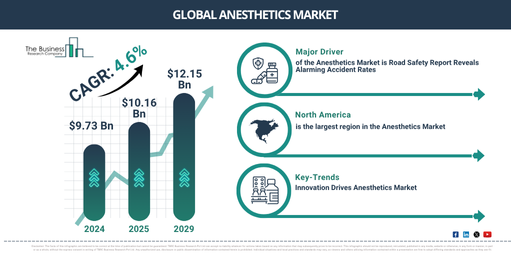
    In recent years, the anesthetics market has experienced consistent expansion. It is predicted to elevate from a value of $9.73 billion in 2024 to a higher limit of $10.16 billion in 2025 at a compound annual growth rate (CAGR) of 4.5%. The past growth trends can be linked to a combination of factors including historical shifts within the industry, market competitiveness, environmental and ethical considerations, consumer’s past preferences, the occurrence of disease outbreaks and pandemics in history, along with the economic conditions and the allocation of healthcare spendings.

    The size of the anesthetics market is predicted to experience consistent expansion in the forthcoming years. It is projected to surge to “$12.15 billion by 2029” with a 4.6% compound annual growth rate (CAGR). The growth anticipated in the forecast period is due to factors such as fluctuations in market demand, innovation in drug formulations, emergence of new markets and demographic shifts, changes in consumer preferences and awareness, industry competition and consolidation. Key trends for the forecast period encompass economical solutions for anesthetics, global health issues, modifications in regulations and safety protocols, awareness programs and training, as well as drug discovery and novelty.

    Get A Free Sample Of The Report:

    https://www.thebusinessresearchcompany.com/sample.aspx?id=2537&type=smp

    Which Market Dynamics Are Playing A Critical Role In The Growth Of The Anesthetics Market?

    The rise in accident rates is a significant factor propelling the anesthetic drug market as these drugs are often utilized in surgical procedures. This upward trend is primarily attributable to the growing occurrence of injuries and accidents necessitating surgery. For instance, a Global status report on road safety by WHO revealed that the road accidents tally hit 1.35 million, equating to roughly 64 fatalities per 100,000 vehicles. Consequently, this escalation in accidents serves as a catalyst for the expansion of the anesthetic market in the future.

    What Are The Main Segment Classifications In The Anesthetics Market?

    The anesthetics market covered in this report is segmented –

    1) By Type: General Anesthetics, Local Anesthetics

    2) By Route of Administration: Inhalation Anesthesia Drugs, Intravenous Anesthesia Drugs, Topical Anesthesia Drugs

    3) By Application: General Surgeries, Plastic Surgery, Cosmetic Surgeries, Dental Surgeries, Other Applications

    Subsegments:

    1) By General Anesthetics: Inhalational Anesthetics, Intravenous Anesthetics

    2) By Local Anesthetics: Esters, Amides

    How Are Industry Trends Steering The Expansion Of The Anesthetics Market?

    Leading firms in the anesthetics market are developing novel products like train pulse oximeter to enhance their market profitability. A train pulse oximeter is a specific form of pulse oximeter purposely built for usage in locations with limited resources, such as remote or rural regions where medical equipment availability might be scarce. For example, in July 2022, Smile Train, Inc. – a US-based nonprofit organization that focuses on providing reconstructive surgery for children with cleft lips and palates, came up with the Lifebox-Smile Train pulse oximeter. This economical device helps monitor the oxygen saturation level of patients during surgical procedures, thereby making the use of anesthesia safer.

    Which Companies Are Contributing Significantly To The Anesthetics Market Growth?

    Major companies operating in the anesthetics market include Pfizer Inc., F. Hoffmann-La Roche AG, AbbVie Inc., Novartis International AG, AstraZeneca plc, Abbott Laboratories Inc., Boehringer Ingelheim International GmbH, Fresenius SE & Co. KGaA, Viatris Inc., Baxter International Inc., Teva Pharmaceutical Industries Limited, B. Braun Melsungen AG, Eisai Co. Ltd., Sun Pharmaceutical Industries Ltd., Reddy’s Laboratories Inc., Hikma Pharmaceuticals plc, Aspen Pharmacare Holdings Limited, Amneal Pharmaceuticals LLC, Mallinckrodt Pharmaceuticals Ltd., Piramal Enterprises Limited, Pacira BioSciences Inc., Maruishi Pharmaceuticals Co. Ltd., Claris Lifesciences Limited, Paion AG, Thera Wise, Hameln Pharmaceuticals Ltd., DLC Laboratories Inc., Verve Health Care Ltd.

    Access The Complete Report Here:

    https://www.thebusinessresearchcompany.com/report/anesthetics-global-market-report

    Which Region Holds The Greatest Opportunity For Anesthetics Market Expansion?

    North America was the largest region in the anesthetics market in 2024. Middle East is expected to be the fastest-growing region in the global anesthetics market during the forecast period. The regions covered in the anesthetics market report are Asia-Pacific, Western Europe, Eastern Europe, North America, South America, Middle East, Africa.

    Customize Your Report Here:

    https://www.thebusinessresearchcompany.com/customise?id=2537&type=smp

    About The Business Research Company:

    With over 15000+ reports from 27 industries covering 60+ geographies, The Business Research Company has built a reputation for offering comprehensive, data-rich research and insights. Armed with 1,500,000 datasets, the optimistic contribution of in-depth secondary research, and unique insights from industry leaders, you can get the information you need to stay ahead in the game.

    Get in touch with us:

    The Business Research Company: https://www.thebusinessresearchcompany.com/

    Americas +1 310-496-7795

    Asia +44 7882 955267 & +91 8897263534

    Europe +44 7882 955267

    Email us at info@tbrc.info

    Follow us on:

    LinkedIn: https://in.linkedin.com/company/the-business-research-company

    YouTube: https://www.youtube.com/channel/UC24_fI0rV8cR5DxlCpgmyFQ

    Global Market Model: https://www.thebusinessresearchcompany.com/global-market-model
  • How Is The Alpha Mannosidosis Market Expected To Grow At 17.3% CAGR Over 2025–2029?

    How Is The Alpha Mannosidosis Market Expected To Grow At 17.3% CAGR Over 2025–2029?

    Claim 20% Off Global Market Reports With Code ONLINE20 – Insights on Tariff Effects, Global Trade, and Industry Disruptors

    How Much Will The Alpha Mannosidosis Market Be Worth By 2029?

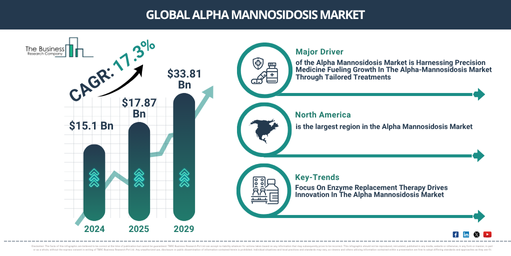
    The market for alpha mannosidosis has seen significant expansion in the previous years. It is projected to increase from $15.1 billion in 2024 to $17.87 billion in 2025, with a compound annual growth rate (CAGR) of 18.3%. Factors contributing to growth during the historic period include emerging market growth, urban development, enhanced demand for artificial fibers, and governmental programs for the textile sector.

    The market for alpha mannosidosis is projected to experience significant expansion in the coming years, with an estimate growth to $33.81 billion by 2029, a compound annual growth rate (CAGR) of 17.3%. Several factors fuel this predicted growth during the forecast period, including growth in global population and urbanisation, the surge in e-commerce, the increasing demand for sportswear, the rise of organized retail in emerging economies, and the growing impact of social media. Key trends anticipated during the forecast period feature an increased use of enzyme therapy, a move towards the use of hematopoietic stem cell transplantation and a wider adoption of cisterna magna infusion.

    Get A Free Sample Of The Report:

    https://www.thebusinessresearchcompany.com/sample.aspx?id=4093&type=smp

    What Underlying Factors Are Supporting The Alpha Mannosidosis Market Growth?

    The alpha mannosidosis market is poised for growth, driven by the escalating demand for precision medicine. This personalized approach to healthcare takes into account the unique genetic, environmental, and lifestyle factors in patients, which aids in optimizing treatment and prevention strategies. The burgeoning popularity of precision medicine can be attributed to innovative advances in genomic technologies and data analytics, which facilitate more precise identification of genetic variations and their health impacts. Coupled with a growing appetite for tailored treatment solutions and an increased understanding of the shortcomings of standard approaches, there’s heightened interest in individualized healthcare. Precision medicine facilitates the creation of targeted therapies, customized to specific genetic mutations and patient profiles linked to this rare disease. As illustrated by data from the Personalized Medicine Coalition (PMC), a U.S. based non-profit consortium, in 2023, the FDA approved 16 novel personalized treatments for rare diseases in February 2024, a significant increase from mere six approvals in 2022. Hence, the burgeoning demand for precision medicine is fueling the expansion of the alpha mannosidosis market.

    Which Segmentation Categories Are Highlighted In The Alpha Mannosidosis Market Analysis?

    The alpha mannosidosis market covered in this report is segmented –

    1) By Therapy Type: Bone Marrow Transplant (BMT), Enzyme Replacement Therapy (ERT), Other Therapies

    2) By Indication: Type I, Type II, Type III

    3) By End-User: Hospitals, Speciality Clinics

    Subsegments:

    1) By Bone Marrow Transplant (BMT): Autologous BMT, Allogeneic BMT

    2) By Enzyme Replacement Therapy (ERT): Recombinant Enzymes, Long-acting Enzyme Formulations

    3) By Other Therapies: Symptomatic Treatments, Gene Therapy, Supportive Care

    Which Market Trends Are Expected To Define The Future Of The Alpha Mannosidosis Market?

    Leading businesses in the alpha mannosidosis market are prioritizing the creation of enzyme replacement therapies for this uncommon ailment. The therapy operates by introducing exogenous alpha-mannosidase which decreases the build-up of mannose-dense oligosaccharides in numerous tissues and organs. This build-up is typical of alpha-mannosidosis and integral to the disease’s detrimental effects. For instance, Chiesi Global Rare Diseases, a pharmaceutical company based in the U.S., launched Lamzede (velmanase alfa) in February 2023. This was the first enzyme replacement therapy approved in the U.S. for alpha-mannosidosis – a rare genetic disorder characterized by a deficiency of the alpha-mannosidase enzyme in the body and its effects beyond the central nervous system. Lamzede works by replicating the functions of the body’s own alpha-mannosidase enzyme, thus restoring regular cellular activity in patients. Injections of 10 mg Lamzede are administered to patients weekly.

    Which Organizations Are At The Forefront Of The Alpha Mannosidosis Market?

    Major companies operating in the alpha mannosidosis market include Chiesi Farmaceutici S.p.A., Cipla, Daiichi Sankyo Company, Ultragenyx Pharmaceutical Inc, Mitsubishi Tanabe Pharma, Merck, Bristol-Myers Squibb, Novartis AG, Amgen, Centogene, Zymenex A/S, Albumedix Ltd, Kite Pharma, Catalent, Freeline Therapeutics, Avectas, DiNAQOR AG, Vivet Therapeutics, Allergan, PsiOxus Therapeutics, Herantis Pharma Plc, Biocad, Celgene Corporation, Johnson & Johnson, F. Hoffmann-La Roche Ltd, Eli Lilly and Company, Bayer AG, PTC Therapeutics, Gilead Sciences Inc., GlaxoSmithKline plc, Takeda Pharmaceutical Company Limited, Pfizer S.R.L., AstraZeneca plc, Biogen SA, Sanofi, Adcock Ingram

    Access The Complete Report Here:

    https://www.thebusinessresearchcompany.com/report/alphas-mannosidosis-global-market-report

    Which Geographic Regions Are Creating Strong Demand In The Alpha Mannosidosis Market?

    North America was the largest region in the alpha mannosidosis market in 2024. Asia-Pacific is expected to be the fastest-growing region in the forecast period. The regions covered in the alpha mannosidosis market report are Asia-Pacific, Western Europe, Eastern Europe, North America, South America, Middle East, Africa.

    Customize Your Report Here:

    https://www.thebusinessresearchcompany.com/customise?id=4093&type=smp

    About The Business Research Company:

    With over 15000+ reports from 27 industries covering 60+ geographies, The Business Research Company has built a reputation for offering comprehensive, data-rich research and insights. Armed with 1,500,000 datasets, the optimistic contribution of in-depth secondary research, and unique insights from industry leaders, you can get the information you need to stay ahead in the game.

    Get in touch with us:

    The Business Research Company: https://www.thebusinessresearchcompany.com/

    Americas +1 310-496-7795

    Asia +44 7882 955267 & +91 8897263534

    Europe +44 7882 955267

    Email us at info@tbrc.info

    Follow us on:

    LinkedIn: https://in.linkedin.com/company/the-business-research-company

    YouTube: https://www.youtube.com/channel/UC24_fI0rV8cR5DxlCpgmyFQ

    Global Market Model: https://www.thebusinessresearchcompany.com/global-market-model
  • Which Factors Will Push The Aesthetic Medicine Market To Achieve $102.34 Billion By 2029?

    Which Factors Will Push The Aesthetic Medicine Market To Achieve $102.34 Billion By 2029?

    Claim 20% Off Global Market Reports With Code ONLINE20 – Insights on Tariff Effects, Global Trade, and Industry Disruptors

    What Is The Present And Forecasted Size Of The Aesthetic Medicine Market?

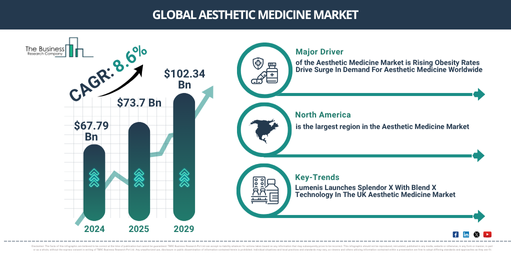
    The market size for aesthetic medicine has seen robust expansion in the past few years. It is projected to escalate from a base of $67.79 billion in 2024 to an estimated $73.7 billion in 2025, demonstrating a compound annual growth rate (CAGR) of 8.7%. Factors such as an increase in disposable income and urbanization, an expanding obese demographic, and the rising trend of non-invasive or minimally invasive aesthetic procedures significantly contribute to this historic period’s growth.

    The market size of aesthetic medicine is predicted to experience substantial expansion in the coming years. It is estimated to surge to “$102.34 billion by 2029 with a compound annual growth rate (CAGR) of 8.6%. Factors contributing to this predicted expansion during the forecast period include a growing elderly populace, swift urbanization, and rising disposable income, along with an increase in corporate mergers and acquisitions. Notable trends for this period are anticipated to be product innovation, incorporation of artificial intelligence in aesthetic procedures, the advancement of focal radiofrequency technology, the utilization of laser-assisted liposuction, and an increase in partnerships and collaborations.

    Get A Free Sample Of The Report:

    https://www.thebusinessresearchcompany.com/sample.aspx?id=6349&type=smp

    Which Demand Drivers Are Strengthening The Aesthetic Medicine Market?

    The escalating rates of obesity worldwide are predicted to fuel the expansion of the aesthetic medicine market. This global surge in obesity is due to factors like increased consumption of unhealthy food, sedentary lifestyles, and effects from pre-and postnatal conditions. Individuals who are grappling with obesity often turn to aesthetic medicine for solutions such as fat reduction and meso-face lift, utilizing both invasive and non-invasive procedures. For example, the Government Digital Service, a UK governmental organization, estimated in May 2023 that 25.9% of persons aged 18 years and older in England were classified as obese in the span of 2022–2023, marking an increase from 25.2%. As such, the accelerating number of obese individuals worldwide is anticipated to stimulate the growth of the aesthetic medicine market.

    What Is The Segment Breakdown Of The Aesthetic Medicine Market?

    The aesthetic medicine market covered in this report is segmented –

    1) By Product: Facial Aesthetic Products, Body Contouring Devices, Cosmetic Implants, Hair Removal Devices, Skin Aesthetic Devices, Other Products

    2) By Procedure Type: Invasive Procedures, Non-Invasive Procedures

    3) By End-User: Hospitals And Clinics, Medical Spas And Beauty Centres, Home Care

    Subsegments:

    1) By Facial Aesthetic Products: Dermal Fillers, Botox And Neurotoxins, Chemical Peels

    2) By Body Contouring Devices: Cryolipolysis Devices, Radiofrequency Devices, Ultrasound Devices

    3) By Cosmetic Implants: Breast Implants, Facial Implants, Body Implants

    4) By Hair Removal Devices: Laser Hair Removal Devices, Intense Pulsed Light (IPL) Devices

    5) By Skin Aesthetic Devices: Microneedling Devices, Laser Skin Resurfacing Devices, LED Therapy Devices

    6) By Other Products: Skin Tightening Devices, Cellulite Reduction Devices, Anti-Aging Products

    How Are Global Trends Impacting The Development Of The Aesthetic Medicine Market?

    In the aesthetic medicine market, companies are focusing on the creation and development of innovative products in order to strengthen their market position. For instance, Lumenis, a medical device company based in Israel that focuses on aesthetic, surgical, and ophthalmic applications, introduced the Splendor X device to the UK market in January 2022. This device uses BLEND X technology, a binary laser emission of Nd: YAG (neodymium-doped yttrium aluminum garnet; Nd: Y3Al5O12) (1064 nm) and Alexandrite (755 nm) wavelengths that can be adjusted and synchronized. It can be used by both males and females and is compatible with all types of Fitzpatrick skin. It is versatile, capable of treating any part of the body including the face, bikini line, legs, arms, stomach, and underarms.

    Who Are The Major Stakeholders Operating In The Aesthetic Medicine Market?

    Major companies operating in the aesthetic medicine market include AbbVie, Johnson & Johnson, Galderma, Bausch Health, Shanghai Fosun Pharmaceutical Co, Cynosure, El.En. S.p.A, Cutera, Merz Pharma, Syneron Candela, Vive Cosmetics, VLCC Personal Care, Kazima Cosmetics, SoftFil, Sinclair Phama, BIOXIS pharmaceuticals, Premium Aesthetics LLC, Martinex, Medical Esthetic, Ipsen Pharma, Ruby Surgery & Aesthetics, Medicina Estética Regenerativa, Xcite Technologies, ReNue aesthetic medicine, VYDENCE Medical, Julphar, MSD (Musculoskeletal disorders), Next Biosciences, Novartis South Africa, Aspen Pharmacare, 54gene, Altis Biologics, Cipla Medpro, Sanofi Genzyme.

    Access The Complete Report Here:

    https://www.thebusinessresearchcompany.com/report/aesthetic-medicine-global-market-report

    Which Region Is Likely To Register The Fastest Growth In The Aesthetic Medicine Market?

    North America was the largest region in the aesthetic medicine market in 2024. Asia-Pacific is expected to be the fastest-growing region in the forecast period. The regions covered in the aesthetic medicine market report are Asia-Pacific, Western Europe, Eastern Europe, North America, South America, Middle East, Africa.

    Customize Your Report Here:

    https://www.thebusinessresearchcompany.com/customise?id=6349&type=smp

    About The Business Research Company:

    With over 15000+ reports from 27 industries covering 60+ geographies, The Business Research Company has built a reputation for offering comprehensive, data-rich research and insights. Armed with 1,500,000 datasets, the optimistic contribution of in-depth secondary research, and unique insights from industry leaders, you can get the information you need to stay ahead in the game.

    Get in touch with us:

    The Business Research Company: https://www.thebusinessresearchcompany.com/

    Americas +1 310-496-7795

    Asia +44 7882 955267 & +91 8897263534

    Europe +44 7882 955267

    Email us at info@tbrc.info

    Follow us on:

    LinkedIn: https://in.linkedin.com/company/the-business-research-company

    YouTube: https://www.youtube.com/channel/UC24_fI0rV8cR5DxlCpgmyFQ

    Global Market Model: https://www.thebusinessresearchcompany.com/global-market-model
  • Which Factors Will Push The Wingless-Related Integration Site (WNT) Signaling Pathway Inhibitor Market To Achieve $4.5 Billion By 2029?

    Which Factors Will Push The Wingless-Related Integration Site (WNT) Signaling Pathway Inhibitor Market To Achieve $4.5 Billion By 2029?

    Claim 30% Off Global Market Reports With Code ONLINE30 – Insights on Tariff Effects, Global Trade, and Industry Disruptors

    What Are The Future Growth Projections For The Wingless-Related Integration Site (WNT) Signaling Pathway Inhibitor Market Size?

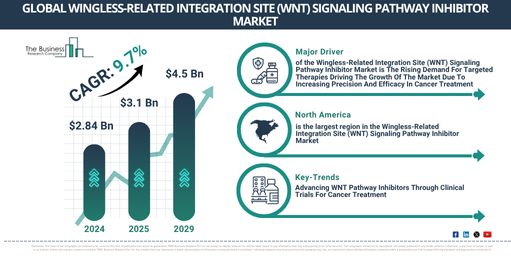
    The market for inhibitors of the wingless-related integration site (WNT) signaling pathway has experienced solid growth recently. It is projected to increase from $2.84 billion in 2024 to $3.1 billion in 2025, reflecting a compound annual growth rate (CAGR) of 9.2%. Factors contributing to the growth during the historical period include the rising incidence of cancer, an increasing number of chronic disease cases, advancements in drug development, and the escalating prevalence of pulmonary arterial hypertension.

    The market size of the inhibitor for the wingless-related integration site (WNT) signaling pathway is set to experience significant expansion in the coming years. It is predicted to reach $4.5 billion by 2029, with a compound annual growth rate (CAGR) of 9.7%. This growth during the projection period is largely due to factors such as increased acceptance of therapies, more supportive regulations, broader clinical trials, a rise in precision medicine usage, and more funds being allocated to research and development. Dominant trends during this period will be therapies gaining more acceptance, progressively supportive regulations, the widening of clinical trials, and a growth in the usage of precision medicine.

    Get A Free Sample Of The Report:

    https://www.thebusinessresearchcompany.com/sample.aspx?id=23583&type=smp

    Which Industry Forces Are Driving The Wingless-Related Integration Site (WNT) Signaling Pathway Inhibitor Market Forward?

    The burgeoning need for specific therapies is anticipated to stimulate the expansion of the wingless-related integration site (WNT) signaling pathway inhibitor market in the future. Such treatments concentrate on unique molecules or pathways that contribute to the progression of disease. The surge in specific therapies stems from precision medicine, which heightens effectiveness by targeting particular genetic changes while also diminishing adverse reactions. WNT signaling pathway inhibitors provide a support in specific therapies by preventing the irregular trigger of the WNT pathway, commonly associated with cancer cell expansion and metastasis; hence, decelerating tumor development and enhancing treatment results. As an example, the American Society of Gene and Cell Therapy (ASGCT), a professional membership organization based in the USA, reported in July 2024 that 76 gene therapy trials had begun in the second quarter of 2024, reflecting a 25% growth in comparison to the former quarter. Thus, the escalating requirement for specific therapies is propelling the expansion of the wingless-related integration site (WNT) signaling pathway inhibitor market.

    What Is The Segment Breakdown Of The Wingless-Related Integration Site (WNT) Signaling Pathway Inhibitor Market?

    The wingless-related integration site (wnt) signaling pathway inhibitor market covered in this report is segmented –

    1) By Drug Type: Small molecule Inhibitors, Monoclonal Antibodies, Gene Therapies

    2) By Mechanism Of Action: Porcupine Inhibitors, Frizzled Inhibitors, ß-Catenin Inhibitors, Wingless-Related Integration Site (WNT)-Protein Inhibitors

    3) By Stage Of Development: Pre-Clinical, Clinical Trials, Approved Products

    4) By Indications: Cancers, Bone Diseases, Neurological Disorders

    5) By End-Users: Pharmaceutical Companies, Research Institutions, Hospitals, Diagnostic Laboratories

    Subsegments:

    1) By Small Molecule Inhibitors: Porcupine Inhibitors, Tankyrase Inhibitors, ß-Catenin Inhibitors

    2) By Monoclonal Antibodies: Wingless-Related Integration Site (WNT) Ligand-Targeting Antibodies, Frizzled Receptor-Blocking Antibodies, Dickkopf (DKK) Antibodies

    3) By Gene Therapies: Clustered Regularly Interspaced Short Palindromic Repeats (CRISPR)-Based Gene Editing, RNA Interference (RNAi) Therapies, Antisense Oligonucleotides (ASOs)

    How Are Global Trends Impacting The Development Of The Wingless-Related Integration Site (WNT) Signaling Pathway Inhibitor Market?

    Leading firms in the wingless-related integration site (WNT) signaling pathway inhibitor market are concentrating their efforts on the creation of improved solutions including conducting clinical trials for WNT signaling pathway inhibitors. This strategy seeks to widen the range of treatment alternatives and address the issue of drug resistance. These clinical trials evaluate the efficacy and potential benefits of drugs that target the WNT pathway, which plays a pivotal role in the development of cancer and other diseases. For instance, a US-based biopharmaceutical company, FogPharma, disclosed in June 2023 that the first patient was administered a dose in the first stage of its Phase 1/2 clinical trials for FOG-001. This drug, which is the first TCF-blocking ß-catenin inhibitor of its kind, targets advanced solid tumors, including those seen in colorectal cancer. This non-randomized, open-label study intends to register a maximum of 200 patients to investigate the safety, tolerability, pharmacokinetics, pharmacodynamics, and the anticancer activity of FOG-001. This drug works by interrupting ß-catenin-dependent signaling in the Wnt pathway, which is a significant factor in oncogenesis.

    Who Are The Major Stakeholders Operating In The Wingless-Related Integration Site (WNT) Signaling Pathway Inhibitor Market?

    Major companies operating in the wingless-related integration site (WNT) signaling pathway inhibitor market are Bayer AG, Novartis AG, Merck KGaA, Eisai Co. Ltd, STEMCELL Technologies Inc., Abcam Limited, MedChemExpress LLC, Enzo Life Sciences International Inc., FogPharma Inc., Selleck Chemicals LLC, Santa Cruz Biotechnology, Inc., Creative BioMart Inc., Redx Pharma plc, REPROCELL Inc., CHEMDIV INC, PRISM BioLab Co., Ltd., Allarity Therapeutics Inc., Verastem Oncology Inc., OncoMed Pharmaceuticals Inc, Allied-Bristol Life Sciences LLC.

    Access The Complete Report Here:

    https://www.thebusinessresearchcompany.com/report/wingless-related-integration-site-wnt-signaling-pathway-inhibitor-global-market-report

    Which Region Is Likely To Register The Fastest Growth In The Wingless-Related Integration Site (WNT) Signaling Pathway Inhibitor Market?

    North America was the largest region in the wingless-related integration site (WNT) signaling pathway inhibitor market in 2024. Asia-Pacific is expected to be the fastest-growing region in the forecast period. The regions covered in the wingless-related integration site (WNT) signaling pathway inhibitor market report are Asia-Pacific, Western Europe, Eastern Europe, North America, South America, Middle East, Africa.

    Customize Your Report Here:

    https://www.thebusinessresearchcompany.com/customise?id=23583&type=smp

    About The Business Research Company:

    With over 15000+ reports from 27 industries covering 60+ geographies, The Business Research Company has built a reputation for offering comprehensive, data-rich research and insights. Armed with 1,500,000 datasets, the optimistic contribution of in-depth secondary research, and unique insights from industry leaders, you can get the information you need to stay ahead in the game.

    Get in touch with us:

    The Business Research Company: https://www.thebusinessresearchcompany.com/

    Americas +1 310-496-7795

    Asia +44 7882 955267 & +91 8897263534

    Europe +44 7882 955267

    Email us at info@tbrc.info

    Follow us on:

    LinkedIn: https://in.linkedin.com/company/the-business-research-company

    YouTube: https://www.youtube.com/channel/UC24_fI0rV8cR5DxlCpgmyFQ

    Global Market Model: https://www.thebusinessresearchcompany.com/global-market-model
  • What Key Growth Drivers Are Shaping The Venlafaxine Market Forecast Toward $4.13 Billion?

    What Key Growth Drivers Are Shaping The Venlafaxine Market Forecast Toward $4.13 Billion?

    Claim 30% Off Global Market Reports With Code ONLINE30 – Insights on Tariff Effects, Global Trade, and Industry Disruptors

    What Is The Current Size And Growth Outlook For The Venlafaxine Market?

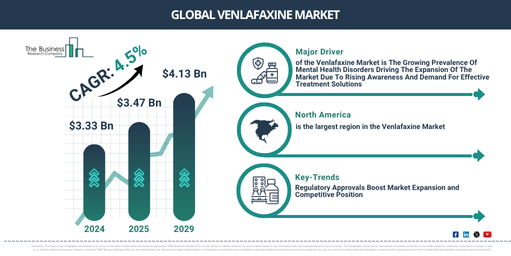
    The market for venlafaxine has experienced steady expansion in the past few years. The market is forecasted to expand from $3.33 billion in 2024 to $3.47 billion in 2025, indicating a compound annual growth rate (CAGR) of 4.1%. Factors such as a rise in the intensity of depression, enhanced symptoms of anxiety, growing resistance to treatments, the need for dosing modifications, ascending patient age, and deteriorating health conditions have all contributed to this historical growth.

    The market size of venlafaxine is projected to experience consistent expansion in the upcoming years, estimated to reach “$4.13 billion by 2029”, at a compound annual growth rate (CAGR) of 4.5%. The anticipated growth during the forecast duration can be credited to several factors such as escalating chronic stress concerns, an increase in the occurrence of panic attacks, improved understanding of treatment-resistant conditions, heightened awareness about neurobiological elements, and a surging emphasis on tailored medical treatment. Significant trends projected over this period encompass digital health tracking, AI-aided pharmaceutical discoveries, advances in drug delivery systems, updates in regulations and policies, and the use of AI in the tracking of treatment efficacy.

    Get A Free Sample Of The Report:

    https://www.thebusinessresearchcompany.com/sample.aspx?id=23565&type=smp

    What Are The Primary Factors Supporting The Venlafaxine Market Expansion?

    The venlafaxine market is predicted to expand, mainly due to the rising occurrence of mental health disorders. Such conditions, affecting an individual’s thought process, emotional state, mannerism, or mood, often result in discomfort or hindered functionality in daily activities. The growth rate of these disorders is escalating due to the overuse of social media, which promotes unrealistic expectations, cyber harassment, and a decrease in face-to-face communication, thereby causing increased levels of anxiety and depression. Venlafaxine aids in managing these disorders by elevating serotonin and norepinephrine levels in the brain. This dual function mechanism aids in mood regulation and assists in easing symptoms related to depression, anxiety, and panic disorders. As per the National Institute of Mental Health (NIMH), a US-based federal agency, in 2022, 59.3 million adults, constituting 23.1% of the adult American population, suffered from any mental illness (AMI). The incidence was more prevalent amongst females (26.4%) than males (19.7%). Consequently, the growing rate of mental health disorders is fostering the expansion of the venlafaxine market.

    Which Segments Define The Structure Of The Venlafaxine Market?

    The venlafaxine market covered in this report is segmented –

    1) By Formulation: Extended-Release Capsules, Immediate-Release Tablets, Oral Solution

    2) By Drug Class: Antidepressant, Selective Serotonin And Norepinephrine Reuptake Inhibitors (SNRIs)

    3) By Demographic: Adult, Pediatric, Geriatric

    4) By Application: Panic Disorder, Depression, Anxiety, Social Anxiety Disorder, Other Application

    5) By End-User: Clinic, Hospital, Other End-Users

    Subsegments:

    1) By Extended-Release Capsules: 37.5 Mg Capsules, 75 Mg Capsules, 150 Mg Capsules, 225 Mg Capsules

    2) By Immediate-Release Tablets: 25 Mg Tablets, 37.5 Mg Tablets, 50 Mg Tablets, 75 Mg Tablets, 100 Mg Tablets

    3) By Oral Solution: 25 Mg/Ml Oral Solution, 37.5 Mg/Ml Oral Solution, 50 Mg/Ml Oral Solution

    What Strategic Shifts And Innovations Are Influencing The Venlafaxine Market?

    Companies with a significant presence in the venlafaxine market are concentrating their efforts on acquiring regulatory approvals, with the hope of increasing their product lines, extending their market reach, and solidifying their competitive standing. Regulatory approvals are formal permissions issued by healthcare entities, granting businesses the ability to produce, distribute, and sell pharmaceutical products once their safety, effectiveness, and quality have been verified. For example, in August 2022, the USFDA gave Zydus Lifesciences, an Indian pharmaceutical firm, permission to sell generic incarnations of venlafaxine and pregabalin extended-release tablets. The venlafaxine formulations that were approved, which are used for treating depression and anxiety disorders, come in dosages of 37.5 mg, 75 mg, 150 mg, and 225 mg. Pregabalin has been approved to treat neuropathic pain resulting from diabetes-related peripheral neuropathy, postherpetic neuralgia, fibromyalgia, injuries to the spinal cord, and also as an additional treatment for partial onset seizures.

    Which Firms Are Making The Biggest Impact In The Venlafaxine Market?

    Major companies operating in the venlafaxine market are Pfizer Inc., Merck & Co. Inc., Sanofi SA, Thermo Fisher Scientific Inc., AstraZeneca plc, Novartis AG, Takeda Pharmaceutical Company Limited., Viatris Inc., Teva Pharmaceutical Industries, Sun Pharmaceutical Industries Ltd., Aurobindo Pharma, Dr Reddy’s Laboratories., Zydus Cadila, Lupin Pharmaceuticals, Torrent Pharmaceuticals, Taylor & Francis , Stada Arzneimittel, Taj Pharma, Mesha Pharma, Suzhou Pharmaceutical.

    Access The Complete Report Here:

    https://www.thebusinessresearchcompany.com/report/venlafaxine-global-market-report

    Which Region Is Forecasted To Lead The Venlafaxine Market In The Coming Years?

    North America was the largest region in the venlafaxine market in 2024. The regions covered in the venlafaxine market report are Asia-Pacific, Western Europe, Eastern Europe, North America, South America, Middle East, Africa.

    Customize Your Report Here:

    https://www.thebusinessresearchcompany.com/customise?id=23565&type=smp

    About The Business Research Company:

    With over 15000+ reports from 27 industries covering 60+ geographies, The Business Research Company has built a reputation for offering comprehensive, data-rich research and insights. Armed with 1,500,000 datasets, the optimistic contribution of in-depth secondary research, and unique insights from industry leaders, you can get the information you need to stay ahead in the game.

    Get in touch with us:

    The Business Research Company: https://www.thebusinessresearchcompany.com/

    Americas +1 310-496-7795

    Asia +44 7882 955267 & +91 8897263534

    Europe +44 7882 955267

    Email us at info@tbrc.info

    Follow us on:

    LinkedIn: https://in.linkedin.com/company/the-business-research-company

    YouTube: https://www.youtube.com/channel/UC24_fI0rV8cR5DxlCpgmyFQ

    Global Market Model: https://www.thebusinessresearchcompany.com/global-market-model
  • How Will The Urinary Retention Drug Market Expand At A CAGR Of 5.8% Through 2029?

    How Will The Urinary Retention Drug Market Expand At A CAGR Of 5.8% Through 2029?

    Claim 30% Off Global Market Reports With Code ONLINE30 – Insights on Tariff Effects, Global Trade, and Industry Disruptors

    What Is The Predicted Market Size Of The Urinary Retention Drug Industry By 2029?

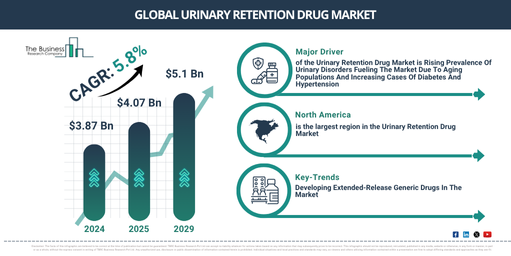
    The market size for drugs treating urinary retention has seen robust growth lately. The market is projected to burgeon from $3.87 billion in 2024 to $4.07 billion in 2025, indicating a compound annual growth rate (CAGR) of 5.2%. The earlier growth phase can be linked to factors such as a surge in the elderly population, amplification of healthcare investments, enhancements in medical facilities, a growing aged demographic, an increase in the global elderly population, and a rise in the incidence of BPH.

    The market for urinary retention medication is set to experience significant expansion in the coming years. Experts predict it will reach a size of $5.1 billion by 2029, with a compound annual growth rate (CAGR) of 5.8%. Factors contributing to this projected growth during the forecast period include an uptick in cases of urinary retention and postoperative urinary retention, an increased occurrence of urinary incontinence (UI), heightened awareness of the importance of timely diagnosis and treatment, and a rise in benign prostatic hyperplasia occurrences. The forecast period is also expected to see key developments such as advanced drug delivery systems, improvements in drug formulations, the use of artificial intelligence and machine learning, telemedicine and remote patient monitoring, and groundbreaking solutions.

    Get A Free Sample Of The Report:

    https://www.thebusinessresearchcompany.com/sample.aspx?id=23552&type=smp

    Which Growth Drivers Are Shaping The Urinary Retention Drug Market Outlook?

    The urinary retention drug market is projected to expand due to the growing instances of urinary disorders. These disorders, which affect the urinary system, can cause complications such as difficulty in urination, discomfort, incontinence, or retention. The surge in urinary disorders can be attributed to a rise in diabetes cases as elevated blood sugar levels can harm the kidneys and urinary tract. This can cause conditions like diabetic nephropathy and regular urinary tract infections. Drugs for urinary retention assist in handling these disorders by increasing urine flow, calming bladder muscles, and easing symptoms such as issues with urination, thereby bolstering bladder functionality and comfort. For instance, in October 2023, hospitals in England reported 147,285 admissions due to urinary tract infections (UTI) in 2022/23 according to the National Health Service (NHS), a UK government department. Of these cases, 56% or 82,392 admissions were for individuals over the age of 65. The majority of these admissions pertained to the 80-84 age group, reporting 17,280 cases. Therefore, the escalating instances of urinary disorders are fuelling the advancement of the urinary retention drug market.

    What Are The Primary Segmentation Parameters In The Urinary Retention Drug Market?

    The urinary retention drug market covered in this report is segmented –

    1) By Drug Class: Alpha Blockers, Beta-3 Agonists, Anticholinergics, Surgical Agents

    2) By Indication: Chronic Urinary Retention, Postoperative Urinary Retention, Neurogenic Bladder

    3) By Administration: Oral, Injectable, Transdermal

    4) By End Users: Hospitals, Homecare, Specialty Clinics, Other End Users

    Subsegments:

    1) By Alpha Blockers: Alpha-1 Blockers, Alpha-2 Blockers

    2) By Beta-3 Agonists: Selective Beta-3 Agonists

    3) By Anticholinergics: Antimuscarinics, Non-Selective Anticholinergics

    4) By Surgical Agents: Anesthetics, Hemostatic Agents, Muscle Relaxants, Antibiotic Prophylaxis

    Which Emerging Trends Are Reshaping The Urinary Retention Drug Market Landscape?

    Leading firms in the urinary retention drug market are strategizing to create new formulations such as extended-release tablets to enhance patient adherence and offer extended symptom relief. Extended-release (ER) tablets are a pharmaceutical formulation that allows the gradual release of the active substance over an extended time. Such a controlled release method ensures a steady concentration of the drug in the blood, thus reducing the dosage frequency compared to immediate-release tablets. For example, in April 2024, an Indian pharmaceutical corporation, Zydus Lifesciences Limited, launched a Mirabegron generic equivalent for treating overactive bladder (OAB). Mirabegron, a selective beta-3 adrenergic agonist, relaxes the bladder muscles, reducing the need to urinate frequently, and reducing incontinence. Although it is primarily used for OAB, it also aids in the treatment of urinary retention related to overactive bladder conditions. This medication is consumed once a day orally.

    Which Players Are Shaping The Competitive Landscape Of The Urinary Retention Drug Market?

    Major companies operating in the urinary retention drug market are Pfizer Inc., Johnson & Johnson, Merck & Co. Inc., AbbVie Inc., Sanofi S.A., Bristol-Myers Squibb Company, AstraZeneca PLC, Novartis International AG, GlaxoSmithKline plc, Medtronic plc, Takeda Pharmaceutical Company Limited, Eli Lilly and Company, Teva Pharmaceutical Industries Limited, Boehringer Ingelheim International GmbH, Astellas Pharma Inc., Sun Pharmaceutical Industries Limited, Aurobindo Pharma Limited, Lupin Limited, Cadila Healthcare Limited, Torrent Pharmaceuticals Limited, Ajanta Pharma Limited, Ferring Pharmaceuticals Inc., UroGen Pharma Ltd.

    Access The Complete Report Here:

    https://www.thebusinessresearchcompany.com/report/urinary-retention-drug-global-market-report

    What Are The Emerging Regional Trends Driving The Urinary Retention Drug Market?

    North America was the largest region in the urinary retention drug market in 2024. The regions covered in the urinary retention drug market report are Asia-Pacific, Western Europe, Eastern Europe, North America, South America, Middle East, Africa.

    Customize Your Report Here:

    https://www.thebusinessresearchcompany.com/customise?id=23552&type=smp

    About The Business Research Company:

    With over 15000+ reports from 27 industries covering 60+ geographies, The Business Research Company has built a reputation for offering comprehensive, data-rich research and insights. Armed with 1,500,000 datasets, the optimistic contribution of in-depth secondary research, and unique insights from industry leaders, you can get the information you need to stay ahead in the game.

    Get in touch with us:

    The Business Research Company: https://www.thebusinessresearchcompany.com/

    Americas +1 310-496-7795

    Asia +44 7882 955267 & +91 8897263534

    Europe +44 7882 955267

    Email us at info@tbrc.info

    Follow us on:

    LinkedIn: https://in.linkedin.com/company/the-business-research-company

    YouTube: https://www.youtube.com/channel/UC24_fI0rV8cR5DxlCpgmyFQ

    Global Market Model: https://www.thebusinessresearchcompany.com/global-market-model

  • Huntington’s Disease Treatment Market 2025–2029: Unveiling Growth Developments with the Latest Updates

    Claim 30% Off Global Market Reports With Code ONLINE30 – Insights on Tariff Effects, Global Trade, and Industry Disruptors

    What Is The Current Size And Growth Outlook For The Huntington’s Disease Treatment Market?

    The market size of treatment for Huntington’s disease has experienced rapid expansion in the past few years. The market, which is expected to increase from $0.73 billion in 2024 to $0.82 billion in 2025, forecasts a compound annual growth rate (CAGR) of 12.3%. Factors contributing to the growth in the previous period include an amplified awareness towards genetic diseases, improvements in the availability of genetic testing, increased funding towards research of neurodegenerative diseases, a higher count of clinical trials for experimental treatments, and a burgeoning stream of drugs designed to modify the disease.

    In the years to come, the Huntington’s disease treatment market is anticipated to experience a rapid expansion. This growth is predicted to reach $1.32 billion in 2029, with a compound annual growth rate (CAGR) of 12.6%. The expansion through this period can be correlated to the increasing emphasis on personalized medicine, amplified integration of digital health monitoring, escalating regulatory support for orphan drugs, a surge in demand for symptomatic relief therapies, and a growing call for disease-modifying treatments. Tops trends projected for the period include the emergence of technology-driven gene silencing tools, the development of cell-based therapies and peripheral biomarkers, the incorporation of telehealth in HD management, the amalgamation of patient-reported outcomes, and advancements in disease-modifying drugs.

    Get A Free Sample Of The Report:

    https://www.thebusinessresearchcompany.com/sample.aspx?id=24245&type=smp

    Which Factors Are Steering Growth In The Huntington’s Disease Treatment Market?

    The surge in gene therapies is seen as a catalyst for the future expansion of the treatment market for Huntington’s disease. These therapies, which adjust or replace faulty genes to preemptively combat or cure diseases at their genetic root, are gaining traction alongside advancements in precision medicine. This tech enables the direct addressing of genetic origins and as such, brings about superior results to traditional remedies. These therapies specifically combat Huntington’s disease by suppressing the defective HTT gene, which spawns harmful proteins and causes damage to nerve cells. This method is effective in decelerating the disease’s progress, safeguarding brain function, and possibly providing long-term control. For example, in July 2023, according to data reported by the American Society of Gene & Cell Therapy (ASGCT), a professional membership organization based in the US, and Citeline, a US-based supplier of medication and medical equipment, the number of phase II gene therapies had risen to 260 by the Q2 2023, a 5% increase from 247 at the end of Q1. Thus, this rise in gene therapies is catalyzing the expansion of the Huntington’s disease treatment market.

    What Are The Key Segment Trends Observed In The Huntington’s Disease Treatment Market?

    The huntington’s disease treatment market covered in this report is segmented –

    1) By Treatment: Symptomatic Treatment, Disease-Modifying Therapies

    2) By Administration Type: Oral, Intravenous, Subcutaneous, Topical

    3) By Therapeutic: Genetic Disorders, Neurological Disorders, Psychiatric Disorders

    4) By Distribution Channel: Hospital Pharmacies, Retail Pharmacies, Online Pharmacies

    5) By End-User: Hospitals, Clinics, Homecare Settings, Research Centers

    Subsegments:

    1) By Symptomatic Treatment: Antidepressants, Antipsychotics, Mood Stabilizers, Chorea Medications, Cognitive Enhancers

    2) By Disease-Modifying Therapies: Gene Therapy, Neuroprotective Agents, RNA-Based Therapies, Stem Cell Therapy, Protein-Targeting Therapies

    Which Disruptive Trends Are Driving Change Across The Huntington’s Disease Treatment Market?

    Leading businesses in the Huntington’s disease treatment market are concentrating on the advancement of high-level therapies such as selective vesicular monoamine transporter 2 (VMAT2) inhibitor capsules. These capsules aim to enhance the patient’s lifestyle while curbing the progression of the disease. Selective VMAT2 inhibitor capsules are drugs that obstruct the vesicular monoamine transporter 2, a protein crucial in composing neurotransmitters for brain discharge. These medications assist in lessening the release of neurotransmitters, therefore, controlling involuntary movements and associated symptoms. For example, in August 2023, the U.S. Food and Drug Administration (FDA) gave Neurocrine Biosciences, Inc., a US-based biotech enterprise, approval for Ingrezza (valbenazine) capsules, which are a once-daily oral VMAT2 inhibitor. These capsules combat chorea linked with Huntington’s disease (HD) in adults by mitigating excessive dopamine signaling in the brain. The drug is procurable in various capsule strengths and is suitable for intake with or without food, providing a flexible dosing alternative for patients.

    Which Firms Are Driving Innovation Within The Huntington’s Disease Treatment Market?

    Major companies operating in the huntington’s disease treatment market are F. Hoffmann-La Roche Ltd., Novartis AG, Teva Pharmaceutical Industries Ltd., Vertex Pharmaceuticals Incorporated, Bausch Health Companies Inc., Sun Pharmaceutical Industries Inc., H. Lundbeck A/S, WaVe Life Sciences Ltd., Dr. Reddy’s Laboratories Ltd., Hikma Pharmaceuticals plc, Lupin Limited, Neurocrine Biosciences Inc., Alnylam Pharmaceuticals Inc., PTC Therapeutics Inc., Ionis Pharmaceuticals Inc., Annexon Inc., Uniqure NV, Sage Therapeutics Inc., Azevan Pharmaceuticals Inc., Prilenia Therapeutics B.V.

    Access The Complete Report Here:

    https://www.thebusinessresearchcompany.com/report/huntingtons-disease-treatment-global-market-report

    What Regional Factors Are Accelerating Growth In The Huntington’s Disease Treatment Market?

    North America was the largest region in the Huntington’s disease treatment market in 2024. Asia-Pacific is expected to be the fastest-growing region in the forecast period. The regions covered in the huntington’s disease treatment market report are Asia-Pacific, Western Europe, Eastern Europe, North America, South America, Middle East, Africa.

    Customize Your Report Here:

    https://www.thebusinessresearchcompany.com/customise?id=24245&type=smp

    About The Business Research Company:

    With over 15000+ reports from 27 industries covering 60+ geographies, The Business Research Company has built a reputation for offering comprehensive, data-rich research and insights. Armed with 1,500,000 datasets, the optimistic contribution of in-depth secondary research, and unique insights from industry leaders, you can get the information you need to stay ahead in the game.

    Get in touch with us:

    The Business Research Company: https://www.thebusinessresearchcompany.com/

    Americas +1 310-496-7795

    Asia +44 7882 955267 & +91 8897263534

    Europe +44 7882 955267

    Email us at info@tbrc.info

    Follow us on:

    LinkedIn: https://in.linkedin.com/company/the-business-research-company

    YouTube: https://www.youtube.com/channel/UC24_fI0rV8cR5DxlCpgmyFQ

    Global Market Model: https://www.thebusinessresearchcompany.com/global-market-model