Month: March 2026

  • A Significant Growth Driver for the Cell Freezing Media Market Is the Rising Demand For Personalized Medicine Fueling The Growth Of The Market Due To Increasing Need For Patient-Specific Cryopreservation Solutions

    A Significant Growth Driver for the Cell Freezing Media Market Is the Rising Demand For Personalized Medicine Fueling The Growth Of The Market Due To Increasing Need For Patient-Specific Cryopreservation Solutions

    The Business Research Company’s 2026 market reports include new capabilities such as market attractiveness scoring and analysis, total addressable market analysis, company scoring matrix, interactive excel data dashboard, improved supply chain analysis, upcoming startups in the market, and overview of key products, aimed at improving the depth, usability, and strategic value of the insights delivered.

    What Is The Expected Market Size Of The Cell Freezing Media Market From 2026 To 2030?

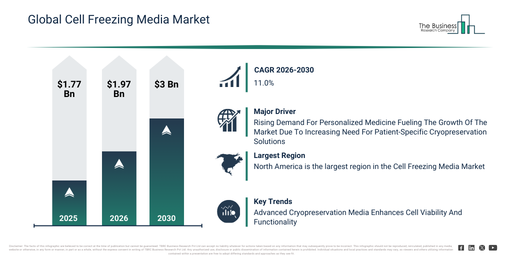
    The cell freezing media market has experienced swift expansion in recent years. This market is anticipated to grow from $1.77 billion in 2025 to $1.97 billion in 2026, demonstrating a compound annual growth rate (CAGR) of 11.3%. During the historical period, this expansion was primarily due to the increase in biobanking operations, a rise in the application of cryopreservation in research, the development of stem cell research programs, the growing adoption of controlled-rate freezing methodologies, and improved availability of liquid nitrogen storage facilities.

    The cell freezing media market is anticipated to experience significant expansion in the coming years, with its valuation expected to reach $3 billion by 2030, exhibiting a compound annual growth rate (CAGR) of 11.0%. This growth throughout the forecast period can be attributed to the escalating development of cell and gene therapies, a heightened demand for large-scale cell banking, the broadening scope of personalized medicine research, evolving regulatory mandates for cell storage quality, and the increasing integration of automated cryopreservation systems. Noteworthy trends during this period include the rising adoption of ready-to-use cryopreservation media, a growing preference for serum-free freezing media, an increased application of GMP-grade cryoprotectants, the expansion of long-term cell banking practices, and an intensified focus on optimizing post-thaw cell recovery.

    Download the Free Sample Report to Explore Key Market Insights:

    https://www.thebusinessresearchcompany.com/sample.aspx?id=30227&type=smp

    Which Growth Drivers Are Contributing To The Progress Of The Cell Freezing Media Market?

    The increasing demand for personalized medicine is expected to boost the growth of the cell freezing media market going forward. Personalized medicine is a medical methodology that customizes treatments for individual patients based on their genetic, environmental, and lifestyle factors to optimize results and enhance care. The demand for personalized medicine is on the rise due to advancements in genomic technologies, which facilitate the accurate identification of genetic variations and the creation of tailored treatments. Cell freezing media supports personalized medicine by providing reliable cryopreservation solutions that safeguard patient-specific cells, tissues, and biologics. This ensures high post-thaw viability and functionality, thereby supporting the creation of customized therapies and improving treatment outcomes. For instance, in February 2024, the Personalized Medicine Coalition (PMC), a US-based nonprofit organization, stated that the U.S. Food and Drug Administration (FDA) approved 26 new personalized medicines in 2023, marking a significant increase from the 12 approved in 2022. Thus, the growing demand for personalized medicine is a primary driver for the cell freezing media market.

    Which Segments Are Included In The Analysis Of The Cell Freezing Media Market?

    The cell freezing media market covered in this report is segmented –

    1) By Type: Dimethyl Sulfoxide (DMSO), Glycerol, Sucrose, Ficoll, Serum-Based Media

    2) By Cell Culture Type: Suspension Cell Culture, 2D Cell Culture, 3D Cell Culture, Other Cell Culture Types

    3) By Distribution Channel: Direct Sales, Distributors, E-Commerce Platforms, Retail Outlets, Specialized Scientific Instrumentation Suppliers

    4) By Application: Stem Cell Research, Embryonic Cell Preservation, Hematopoietic Cell Preservation, Tissue Sample Storage, Gene Therapy Applications

    5) By End-User: Academic Research Institutions, Biotechnology Companies, Pharmaceutical Companies, Clinical Laboratories, Contract Research Organizations (CROs)

    Subsegments:

    1) By Dimethyl Sulfoxide (DMSO): Pharmaceutical Grade Dimethyl Sulfoxide, Laboratory Grade Dimethyl Sulfoxide, Industrial Grade Dimethyl Sulfoxide, High Purity Dimethyl Sulfoxide

    2) By Glycerol: Pharmaceutical Grade Glycerol, Analytical Grade Glycerol, Biological Grade Glycerol, Synthetic Grade Glycerol

    3) By Sucrose: Pharmaceutical Grade Sucrose, Analytical Grade Sucrose, Biological Grade Sucrose, Crystalline Sucrose

    4) By Ficoll: Ficoll 400, Ficoll 70, Ficoll PM 400 Solution, Low Viscosity Ficoll

    5) By Serum-Based Media: Fetal Bovine Serum Based Media, Human Serum Based Media, Horse Serum Based Media, Newborn Calf Serum Based Media

    What Key Trends Are Influencing The Development Of The Cell Freezing Media Market?

    Leading companies in the cell freezing media market are concentrating on creating advanced products, such as specialized cryopreservation media, to increase efficiency, improve cell viability, and expedite therapeutic development. Specialized cryopreservation media are defined as specific solutions crafted to preserve cells, tissues, or biological substances at extremely low temperatures while upholding their viability, functionality, and structural integrity. For example, in April 2024, Pluristyx Inc., a US-based biotechnology company, introduced PluriFreeze. This is a xeno-free and serum-free cGMP-manufactured media developed to enhance the recovery and function of numerous cell types, including stem cells and immune cells, after thawing. It is designed as a robust, ready-to-use formulation that guarantees high cell viability and functionality, thereby supporting the progression of therapies from research to clinical use. PluriFreeze contributes to superior post-thaw cell viability, manufacturing efficiency, and reproducibility in the development processes for stem cells and cell therapies.

    Which Key Industry Participants Are Active In The Cell Freezing Media Market?

    Major companies operating in the cell freezing media market are Merck KGaA, Thermo Fisher Scientific Inc., Danaher Corporation, FUJIFILM Corporation, Lonza Group Ltd., Avantor Inc., Sartorius AG, BioRad Laboratories Inc., BioTechne Corporation, Miltenyi Biotec GmbH, Stemcell Technologies Inc., Vitrolife AB, American Type Culture Collection (ATCC), Bio-Life Solutions Inc., Nacalai Tesque Inc., PromoCell GmbH, Nippon Genetics Co. Ltd., Nippon Zenyaku Kogyo Co. Ltd., Quality Biological Inc., Corning Incorporated

    Read the full cell freezing media market report here:

    https://www.thebusinessresearchcompany.com/report/global-cell-freezing-media-market-report

    What Are The Leading Geographic Regions In The Cell Freezing Media Market?

    North America was the largest region in the cell freezing media market in 2025. Asia-Pacific is expected to be the fastest-growing region in the forecast period. The regions covered in the cell freezing media market report are Asia-Pacific, South East Asia, Western Europe, Eastern Europe, North America, South America, Middle East, Africa.

    Request A Tailored Cell Freezing Media Market Research Report For Competitive Advantage:

    https://www.thebusinessresearchcompany.com/customise?id=30227&type=smp

    Browse Through More Reports Similar to the Global Cell Freezing Media Market 2026, By The Business Research Company

    Dna Testing Global Market Report

    https://www.thebusinessresearchcompany.com/report/dna-testing-global-market-report

    Cell Free Dna Isolation And Extraction Global Market Report

    https://www.thebusinessresearchcompany.com/report/cell-free-dna-isolation-and-extraction-global-market-report

    Dna Diagnostics Global Market Report

    https://www.thebusinessresearchcompany.com/report/dna-diagnostics-global-market-report

    Get in touch with us:

    The Business Research Company: https://www.thebusinessresearchcompany.com/

    Americas +1 310-496-7795

    Asia +44 7882 955267 & +91 8897263534

    Europe +44 7882 955267

    Email us at info@tbrc.info

    Follow us on:

    LinkedIn: https://in.linkedin.com/company/the-business-research-company

    YouTube: https://www.youtube.com/channel/UC24_fI0rV8cR5DxlCpgmyFQ

    Global Market Model: https://www.thebusinessresearchcompany.com/global-market-model
  • Global Cell Free DNA (cfDNA) Testing Industry Trends and Market Growth Forecast for 2026–2030

    Global Cell Free DNA (cfDNA) Testing Industry Trends and Market Growth Forecast for 2026–2030

    The Business Research Company’s 2026 market reports include new capabilities such as market attractiveness scoring and analysis, total addressable market analysis, company scoring matrix, interactive excel data dashboard, improved supply chain analysis, upcoming startups in the market, and overview of key products, aimed at improving the depth, usability, and strategic value of the insights delivered.

    What Market Valuation Is Forecasted For The Cell Free DNA (cfDNA) Testing Market By 2030 Starting From Its 2026 Size?

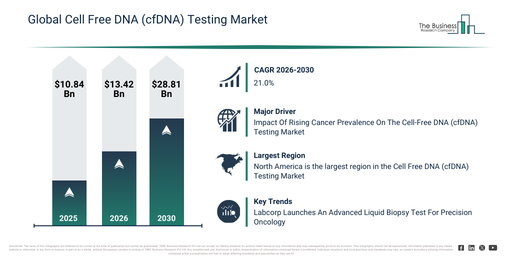
    The cell free dna (cfdna) testing market has experienced substantial expansion in its size over recent years. This market is projected to expand from $10.84 billion in 2025 to $13.42 billion in 2026, demonstrating a compound annual growth rate (CAGR) of 23.8%. Factors contributing to its historical growth include the rising prevalence of cancer diagnostics, the increasing adoption of non-invasive testing methods, the expansion of prenatal screening programs, advancements in sequencing technologies, and the growing clinical acceptance of liquid biopsy.

    The cell free dna (cfdna) testing market size is projected for substantial expansion in the upcoming years, with expectations to reach $28.81 billion by 2030, demonstrating a compound annual growth rate (CAGR) of 21.0%. This projected growth throughout the forecast period can be attributed to heightened investments in precision oncology, an increasing need for early cancer detection, the broadened scope of transplant monitoring applications, the wider acceptance of personalized medicine, and greater integration of AI-driven genomic analysis. Significant developments during this period are anticipated to include the rising adoption of liquid biopsy diagnostics, an increase in the utilization of ngs-based cfdna analysis, surging demand for non-invasive prenatal testing, the expansion of oncology monitoring applications, and improved integration of bioinformatics platforms.

    Download the Free Sample Report to Explore Key Market Insights:

    https://www.thebusinessresearchcompany.com/sample.aspx?id=15757&type=smp

    What Primary Drivers Are Shaping The Development Of The Cell Free DNA (cfDNA) Testing Market?

    The projected increase in cancer cases is poised to drive the expansion of the cell-free DNA (cfDNA) testing market moving forward. Cancer refers to a complex set of diseases defined by the uncontrolled multiplication and spread of anomalous cells throughout the body. These cells can invade and destroy healthy tissue and, if left unchecked, can significantly compromise bodily functions. The prevalence of cancer can be attributed to an aging global population, shifts in lifestyle, various environmental factors, and improvements in detection and diagnostic technologies. cfDNA testing plays a crucial role by identifying genetic mutations associated with cancer in its early stages, often before symptoms become apparent. This early detection enables timely medical intervention, thereby enhancing patient outcomes and survival rates by pinpointing cancer when it is most treatable. For example, in February 2024, the World Health Organization (WHO), a Switzerland-based intergovernmental organization, estimated that new cancer cases are expected to exceed 35 million by 2050, representing a 77% increase over the forecasted 20 million cases in 2022. Thus, the escalating incidence of cancer is a key factor propelling the growth of the cell-free DNA (cfDNA) testing market.

    Which Segment Categories Define The Cell Free DNA (cfDNA) Testing Market?

    The cell free dna (cfdna) testing market covered in this report is segmented –

    1) By Product: Donor-Derived Cell-Free DNA, Circulating Cell-Free Tumor DNA, Cell-Free Fetal DNA

    2) By Platforms: Next Generation Sequencing (NGS), rPCR And Multiplexed PCR, qPCR And dPCR, Other platforms

    3) By Application: Oncology, Non-Invasive Prenatal Test (NIPT), Gynecology, Transplantation, Other Applications

    Subsegments:

    1) By Donor-Derived Cell-Free DNA: Organ Transplant Monitoring, Graft Rejection Detection

    2) By Circulating Cell-Free Tumor DNA: Cancer Detection, Minimal Residual Disease Monitoring, Liquid Biopsy

    3) By Cell-Free Fetal DNA: Non-Invasive Prenatal Testing (NIPT), Fetal Genetic Disorder Screening

    How Are Trends Impacting The Cell Free DNA (cfDNA) Testing Market?

    Key companies within the cell-free DNA (cfDNA) testing market are concentrating on advancing innovative technologies, specifically liquid biopsy tests, which deliver improved sensitivity, specificity, and efficiency in detecting cancer-related mutations and genetic alterations. Liquid biopsy tests are diagnostic procedures that enable oncologists to assess circulating cell-free DNA originating from tumor cells, thereby facilitating personalized, targeted therapy plans. For instance, in May 2023, Laboratory Corporation of America Holdings (Labcorp), a US-based life sciences company, introduced Labcorp Plasma Focus, a novel liquid biopsy test tailored for patients with advanced or metastatic solid tumors. This test analyzes circulating cell-free DNA (cfDNA) released by tumor cells from a standard blood draw, providing a minimally invasive option and rapid results. It expands access to precision oncology by identifying clinically actionable biomarkers across numerous common cancers, such as non-small cell lung, colorectal, breast, esophageal, gastroesophageal junction, gastric cancers, and melanoma.

    Who Are The Top Companies Competing In The Cell Free DNA (cfDNA) Testing Market?

    Major companies operating in the cell free dna (cfdna) testing market are F. Hoffmann-La Roche Ltd., Thermo Fisher Scientific Inc., Laboratory Corporation of America Holdings, Quest Diagnostics Incorporated, Agilent Technologies Inc., Illumina Inc., Qiagen N.V., Exact Sciences Corporation, Bio-Techne Corporation, Natera Inc., Myriad Genetics Inc., NeoGenomics Laboratories Inc., Invitae Corporation, Foundation Medicine Inc., Guardant Health Inc., Integrated DNA Technologies Inc., Caris Life Sciences Inc., Twist Bioscience Corporation, Adaptive Biotechnologies Corporation, Biodesix Inc., Biocept Inc., Personal Genome Diagnostics Inc., Agena Bioscience Inc., Menarini Silicon Biosystems Inc., Circulogene Theranostics LLC

    Read the full cell free dna (cfdna) testing market report here:

    https://www.thebusinessresearchcompany.com/report/cell-free-dna-cfdna-testing-global-market-report

    How Does The Cell Free DNA (cfDNA) Testing Market Perform Across Major Global Regions?

    North America was the largest region in the cell-free DNA (cfDNA) testing market in 2025. Asia-Pacific is expected to be the fastest-growing region in the forecast period. The regions covered in the cell free dna (cfdna) testing market report are Asia-Pacific, South East Asia, Western Europe, Eastern Europe, North America, South America, Middle East, Africa.

    Request A Tailored Cell Free DNA (cfDNA) Testing Market Research Report For Competitive Advantage:

    https://www.thebusinessresearchcompany.com/customise?id=15757&type=smp

    Browse Through More Reports Similar to the Global Cell Free DNA (cfDNA) Testing Market 2026, By The Business Research Company

    Cell Counting Global Market Report

    https://www.thebusinessresearchcompany.com/report/cell-counting-global-market-report

    Cell Cultures Global Market Report

    https://www.thebusinessresearchcompany.com/report/cell-cultures-global-market-report

    Cell Separation Global Market Report

    https://www.thebusinessresearchcompany.com/report/cell-separation-global-market-report

    Get in touch with us:

    The Business Research Company: https://www.thebusinessresearchcompany.com/

    Americas +1 310-496-7795

    Asia +44 7882 955267 & +91 8897263534

    Europe +44 7882 955267

    Email us at info@tbrc.info

    Follow us on:

    LinkedIn: https://in.linkedin.com/company/the-business-research-company

    YouTube: https://www.youtube.com/channel/UC24_fI0rV8cR5DxlCpgmyFQ

    Global Market Model: https://www.thebusinessresearchcompany.com/global-market-model
  • Cell Expansion Market Size Outlook and Demand Growth Across 2026–2030

    Cell Expansion Market Size Outlook and Demand Growth Across 2026–2030

    The Business Research Company’s 2026 market reports include new capabilities such as market attractiveness scoring and analysis, total addressable market analysis, company scoring matrix, interactive excel data dashboard, improved supply chain analysis, upcoming startups in the market, and overview of key products, aimed at improving the depth, usability, and strategic value of the insights delivered.

    How Is The Market Size Of The Cell Expansion Market Expected To Change Between 2026 And 2030?

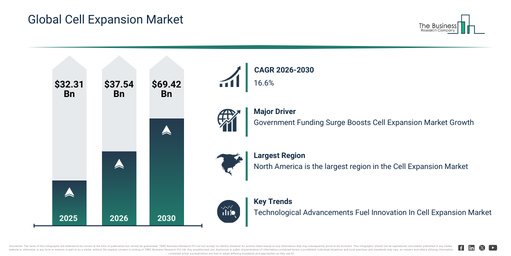
    The cell expansion market has experienced substantial growth recently. Projections indicate its expansion from $32.31 billion in 2025 to reach $37.54 billion by 2026, demonstrating a compound annual growth rate (CAGR) of 16.2%. Historically, this growth can be attributed to factors such as the expansion of biopharmaceutical manufacturing, increased utilization of mammalian cell cultures, the integration of cell expansion into vaccine production, the rise in research-scale cell cultivation, and the accessibility of disposable culture systems.

    The cell expansion market is projected to experience substantial growth over the coming years. By 2030, its value is anticipated to reach $69.42 billion, exhibiting a compound annual growth rate (CAGR) of 16.6%. This projected expansion is primarily driven by factors such as the escalating need for cell and gene therapies, increased funding in extensive biologics manufacturing, the broadening scope of regenerative medicine research, a heightened emphasis on economical scaling solutions, and the wider integration of closed-system expansion methods. Key developments expected during this period include the rising acceptance of disposable cell expansion setups, a growing need for adaptable cell culture platforms, the increased application of serum-free expansion media, the deployment of automated bioreactor systems, and a strengthened commitment to standardizing processes.

    Download the Free Sample Report to Explore Key Market Insights:

    https://www.thebusinessresearchcompany.com/sample.aspx?id=8264&type=smp

    Which Major Factors Are Driving The Expansion Of The Cell Expansion Market?

    Increased governmental financial backing for research and development is projected to boost the cell expansion market in the coming years. Government funding, which refers to monetary support provided by a government for a particular aim, is essential for fostering innovation, advancing cell-based therapies, and accelerating progress in regenerative medicine. As an illustration, in September 2023, the National Cancer Institute, a US-based government agency, received a budget of $7.3 billion from the United States Congress for fiscal year 2023, marking a $408 million increase over 2022. Therefore, the growing government funding for research and development is a key driver for the cell expansion market’s growth.

    How Is The Cell Expansion Market Structured Across Different Segments?

    The cell expansion market covered in this report is segmented –

    1) By Cell Type: Mammalian, Microbial, Other Cell Types

    2) By Product: Consumables, Reagents, Media, Serum, Disposables, Instruments

    3) By Application: Biopharmaceuticals, Tissue Culture And Engineering, Vaccine Production, Drug Development, Gene Therapy, Cancer Research, Stem Cell Research, Other Applications

    4) By End-User: Biopharmaceutical And Biotechnology Companies, Research Institutes, Cell Banks, Other End-Users

    Subsegments:

    1) By Mammalian: Adherent Cells, Suspension Cells, Stem Cells

    2) By Microbial: Bacterial Cells, Yeast Cells, Fungal Cells

    3) By Other Cell Types: Plant Cells, Insect Cells, Hybridoma Cells

    What Industry Trends Are Redefining The Cell Expansion Market?

    Leading companies in the cell expansion market are prioritizing advancements in bioprocessing technologies, such as automated 3D bioreactor systems, to enhance the efficiency and scalability of cell production for therapeutic applications. PluriCDMO provides large-scale, automated cell therapy manufacturing using a proprietary 3D bioreactor system, ensuring consistent, high-quality production from early development through clinical trials. For instance, in January 2024, Pluristem Therapeutics Inc., an Israel-based biotechnology company, launched a new business division named PluriCDMO to offer cell therapy manufacturing services as a contract development and manufacturing organization (CDMO). This new division includes a 47,000-ft2 good manufacturing practice (GMP) cell therapy production facility. Through this new division, Pluri will offer services relating to early preclinical development through late-stage clinical trials and commercialization.

    Which Major Players Dominate The Cell Expansion Market?

    Major companies operating in the cell expansion market are Thermo Fisher Scientific Inc., Becton Dickinson and Company, Lonza Group, Corning Inc., Merck KGaA, Sartorius Stedim Biotech SA, Terumo Corporation, Miltenyi Biotec GmbH, Danaher Corporation, Stemcell Technologies Inc., Beckman Coulter Inc., Takara Bio Inc., RepliCel Life Sciences, Neximmune Inc., Celltainer Biotech BV, GE HealthCare Technologies Inc., ReproCELL USA Inc., iXCells Biotechnologies Inc., Neuromics LLC, G&G Technologies Inc., Eppendorf AG, Avantor Inc., Bio-Techne Corporation, BioLife Solutions Inc., Cesca Therapeutics Inc., Core Dynamics Ltd., Lifeline Scientific Inc., Princeton Cryotech Inc., VWR International LLC, Azenta US Inc., MVE Biological Solutions LLC, BioCision LLC, BioSpherix Ltd.

    Read the full cell expansion market report here:

    https://www.thebusinessresearchcompany.com/report/cell-expansion-global-market-report

    Which Region Currently Holds The Largest Share Of The Cell Expansion Market?

    North America was the largest region in the cell expansion market share in 2025. Asia-Pacific is expected to be the fastest-growing region in the forecast period. The regions covered in the cell expansion market report are Asia-Pacific, South East Asia, Western Europe, Eastern Europe, North America, South America, Middle East, Africa.

    Request A Tailored Cell Expansion Market Research Report For Competitive Advantage:

    https://www.thebusinessresearchcompany.com/customise?id=8264&type=smp

    Browse Through More Reports Similar to the Global Cell Expansion Market 2026, By The Business Research Company

    Cell Culture Consumables And Equipment Global Market Report

    https://www.thebusinessresearchcompany.com/report/cell-culture-consumables-and-equipment-global-market-report

    Stem Cell Cord Blood Banking Global Market Report

    https://www.thebusinessresearchcompany.com/report/stem-cell-cord-blood-banking-global-market-report

    Induced Pluripotent Stem Cell Global Market Report

    https://www.thebusinessresearchcompany.com/report/induced-pluripotent-stem-cell-global-market-report

    Get in touch with us:

    The Business Research Company: https://www.thebusinessresearchcompany.com/

    Americas +1 310-496-7795

    Asia +44 7882 955267 & +91 8897263534

    Europe +44 7882 955267

    Email us at info@tbrc.info

    Follow us on:

    LinkedIn: https://in.linkedin.com/company/the-business-research-company

    YouTube: https://www.youtube.com/channel/UC24_fI0rV8cR5DxlCpgmyFQ

    Global Market Model: https://www.thebusinessresearchcompany.com/global-market-model
  • Cell Dissociation Market Insights Highlighting Opportunities and Drivers Supporting Growth to 2030

    Cell Dissociation Market Insights Highlighting Opportunities and Drivers Supporting Growth to 2030

    The Business Research Company’s 2026 market reports include new capabilities such as market attractiveness scoring and analysis, total addressable market analysis, company scoring matrix, interactive excel data dashboard, improved supply chain analysis, upcoming startups in the market, and overview of key products, aimed at improving the depth, usability, and strategic value of the insights delivered.

    What Is The Market Size Of The Cell Dissociation Market In 2026 And What Value Is Projected For 2030?

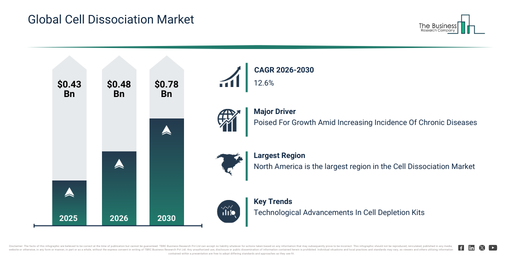
    The cell dissociation market size has experienced swift expansion in recent years. It is anticipated to grow from $0.43 billion in 2025 to $0.48 billion in 2026, reflecting a compound annual growth rate (CAGR) of 12.9%. The historical expansion of this market can be attributed to the proliferation of cell-based research activities, the increasing application of flow cytometry techniques, the growth observed in academic life sciences research, the wider adoption of in vitro cell culture models, and the availability of commercial dissociation reagents.

    The cell dissociation market is projected to experience substantial expansion over the upcoming years, reaching $0.78 billion by 2030, driven by a compound annual growth rate (CAGR) of 12.6%. This anticipated growth can be attributed to several factors including the rising adoption of single-cell genomics, increased investments in cell therapy research, a growing need for reproducible cell processing workflows, the expansion of precision medicine studies, and the increasing utilization of automated laboratory systems. Key trends anticipated during this period involve the greater adoption of standardized enzymatic dissociation protocols, an increasing demand for gentle cell separation techniques, the expanded use of automated tissue dissociation systems, the broadening of single-cell analysis workflows, and a heightened emphasis on preserving cell viability.

    Download the Free Sample Report to Explore Key Market Insights:

    https://www.thebusinessresearchcompany.com/sample.aspx?id=19360&type=smp

    What Key Drivers Are Influencing The Growth Of The Cell Dissociation Market?

    The increasing prevalence of chronic diseases is projected to drive the growth of the cell dissociation market in the future. This rise in chronic conditions can be attributed to elements such as an aging population, evolving lifestyles, and increasing rates of obesity, physical inactivity, and unhealthy diets, all contributing to the prolonged development and persistence of conditions including diabetes, heart disease, and cancer. Cell dissociation is vital for researching chronic diseases as it enables investigators to separate and analyze individual cells, which helps in understanding disease mechanisms and creating targeted therapies. For example, in April 2025, according to the Centers for Disease Control and Prevention (CDC), a U.S.-based federal health agency, in 2023 approximately 194 million U.S. adults (76.4%) reported experiencing one or more chronic conditions, and about 130 million adults (51.4%) reported having multiple chronic conditions. Therefore, the expanding incidence of chronic diseases stimulates the cell dissociation market.

    What Are The Key Segments Of The Cell Dissociation Market?

    The cell dissociation market covered in this report is segmented –

    1) By Product: Enzymatic Dissociation, Non-enzymatic Dissociation, Instruments And Accessories

    2) By Tissue: Epithelial Tissue, Connective Tissue

    3) By Application: Tissue Dissociation, Cell Detachment

    4) By End-User: Pharmaceuticals And Biotechnology Companies, Research And Academic Institutes, Clinical Research Organizations (CRO), Other End-Users

    Subsegments:

    1) By Enzymatic Dissociation: Trypsin Solutions, Collagenase Solutions, Dispase Solutions, Other Enzymatic Dissociation Reagents

    2) By Non-Enzymatic Dissociation: Chemical Dissociation Solutions, Mechanical Dissociation Solutions, Hypotonic Solutions

    3) By Instruments and Accessories: Cell Dissociation Systems, Tissue Homogenizers, Centrifuges, Cell Culture Plates And Flasks

    What Key Developments And Trends Are Impacting The Cell Dissociation Market?

    Leading companies active in the cell dissociation market are concentrating on creating sophisticated products, such as cell depletion and enrichment kits, to achieve a competitive advantage. These kits are engineered to selectively remove or increase specific cell populations, thereby boosting the efficiency and accuracy of subsequent applications in both research and clinical contexts. As an illustration, in February 2023, LevitasBio, a US-based biotechnology company, unveiled the LeviSelect Suite of Cell Depletion & Enrichment Kits. These kits incorporate distinctive attributes like high-speed processing and minimal detriment to cell viability, which improves their effectiveness in sensitive research settings. The LeviSelect kits additionally feature customizable protocols, empowering researchers to precisely target a broad spectrum of cell types.

    Who Are The Leading Companies Operating In The Cell Dissociation Market?

    Major companies operating in the cell dissociation market are Roche Holding AG, Danaher Corporation, Fujifilm Holdings Corporation, Becton Dickinson and Company, GE HealthCare Technologies Inc., Corning Incorporated, Lonza Group AG, Bio-Rad Laboratories Inc., Eppendorf AG, Bio-Techne Corporation, Miltenyi Biotec, BioLegend Inc., Cyagen Biosciences Inc., Cell Signaling Technology Inc., HiMedia Laboratories LLC, Gemini Bio-Products, Biological Industries USA Inc., BrainBits LLC, Biocompare Inc., AAT Bioquest Inc.

    Read the full cell dissociation market report here:

    https://www.thebusinessresearchcompany.com/report/cell-dissociation-global-market-report

    Which Region Is Expected To Register The Fastest Growth In The Cell Dissociation Market?

    North America was the largest region in the cell dissociation market in 2025. Asia-Pacific is expected to be the fastest-growing region in the forecast period. The regions covered in the cell dissociation market report are Asia-Pacific, South East Asia, Western Europe, Eastern Europe, North America, South America, Middle East, Africa.

    Request A Tailored Cell Dissociation Market Research Report For Competitive Advantage:

    https://www.thebusinessresearchcompany.com/customise?id=19360&type=smp

    Browse Through More Reports Similar to the Global Cell Dissociation Market 2026, By The Business Research Company

    Flow Cytometry In Oncology And Immunology Global Market Report

    https://www.thebusinessresearchcompany.com/report/flow-cytometry-in-oncology-and-immunology-global-market-report

    Stem Cell Global Market Report

    https://www.thebusinessresearchcompany.com/report/stem-cell-global-market-report

    Cellular Telephone Global Market Report

    https://www.thebusinessresearchcompany.com/report/cellular-telephone-global-market-report

    Get in touch with us:

    The Business Research Company: https://www.thebusinessresearchcompany.com/

    Americas +1 310-496-7795

    Asia +44 7882 955267 & +91 8897263534

    Europe +44 7882 955267

    Email us at info@tbrc.info

    Follow us on:

    LinkedIn: https://in.linkedin.com/company/the-business-research-company

    YouTube: https://www.youtube.com/channel/UC24_fI0rV8cR5DxlCpgmyFQ

    Global Market Model: https://www.thebusinessresearchcompany.com/global-market-model
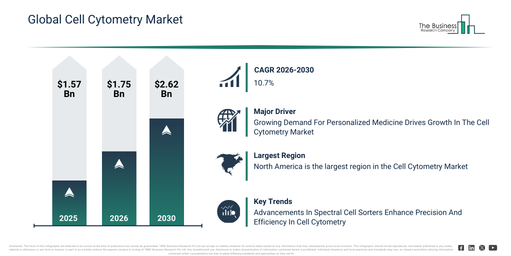
  • Global Cell Cytometry Market Expected to Reach $2.62 Billion by 2030 with 10.7% CAGR

    Global Cell Cytometry Market Expected to Reach $2.62 Billion by 2030 with 10.7% CAGR

    The Business Research Company’s 2026 market reports include new capabilities such as market attractiveness scoring and analysis, total addressable market analysis, company scoring matrix, interactive excel data dashboard, improved supply chain analysis, upcoming startups in the market, and overview of key products, aimed at improving the depth, usability, and strategic value of the insights delivered.

    What Will Be The Estimated Market Valuation Of The Cell Cytometry Market By The End Of 2030?

    The cell cytometry market has shown rapid expansion in its size over recent years. The market is forecast to expand from $1.57 billion in 2025 to $1.75 billion in 2026, driven by a compound annual growth rate (CAGR) of 11.0%. This historical growth can be attributed to several factors, including the expansion of cancer research activities, the rising application of flow cytometry in diagnostics, the increase in pharmaceutical drug discovery, the adoption of automated laboratory systems, and the availability of advanced cytometry reagents.

    The cell cytometry market is projected to experience substantial growth in the coming years. Its valuation is forecast to reach $2.62 billion by 2030, exhibiting a compound annual growth rate (CAGR) of 10.7%. This growth during the forecast period is primarily driven by the increasing adoption in precision medicine, rising investments in immunotherapy research, the expansion of single-cell analysis applications, a growing demand for high-throughput cell analysis, and the increasing integration of digital analytics in cytometry platforms. Key trends anticipated during this period include the increasing adoption of high-parameter flow cytometry, a growing use of AI-based cell analysis software, rising demand for immune profiling applications, the expansion of automated cytometry workflows, and an enhanced focus on single-cell analysis.

    Download the Free Sample Report to Explore Key Market Insights:

    https://www.thebusinessresearchcompany.com/sample.aspx?id=20527&type=smp

    What Major Growth Drivers Are Shaping The Outlook Of The Cell Cytometry Market?

    The rising need for personalized medicine is set to fuel the expansion of the cell cytometry treatment market. This medical strategy customizes treatment and prevention approaches for each patient, considering their unique characteristics, genetic makeup, and lifestyle, thereby aiming for more precise and effective healthcare solutions. The increasing interest in personalized medicine stems from its promise to deliver more efficacious and targeted therapies with reduced side effects, ultimately enhancing patient results. Within personalized medicine, cell cytometry plays a crucial role by examining individual patients’ cells. This enables accurate identification of disease markers, monitoring of immune responses, and the customization of treatments based on a patient’s particular cellular attributes, leading to more effective and personalized therapies. As an illustration, in February 2024, the Personalized Medicine Coalition, a US-based non-profit organization, reported that the FDA approved 16 novel personalized therapies for patients with rare diseases in 2023, a significant increase from six in 2022. Consequently, the escalating demand for personalized medicine is a key driver for the expansion of the cell cytometry market.

    Which Segment Classifications Shape The Cell Cytometry Market?

    The cell cytometry market covered in this report is segmented –

    1) By Product Type: Instrument, Kit And Reagent, Software And Services

    2) By Technology: Cell-Based Flow Cytometry, Bead-Based Flow Cytometry

    3) By Application: Oncology, Drug Discovery, Stem Cell Therapy, Organ Transplantation, Hematology, Other Applications

    4) By End-User: Hospitals And Clinics, Academia And Research Institutes, Pharmaceutical And Biotechnology Companies, Other End-Users

    Subsegments:

    1) By Instrument: Flow Cytometers, Imaging Cytometers, Mass Cytometers, Laser Scanning Cytometers

    2) By Kit and Reagent: Cell Staining Kits, Antibody Reagents, Isotype Controls, Cell Viability Assays

    3) By Software and Services: Data Analysis Software, Instrument Calibration Software, Consulting Services, Technical Support And Maintenance Services

    What Trends Are Projected To Affect The Cell Cytometry Market?

    Major companies within the cell cytometry market are concentrating on developing innovative solutions, such as spectral cell sorters, to achieve unbiased results and improve operational efficiency. A spectral cell sorter represents an advanced flow cytometry device that categorizes cells based on the entire spectrum of fluorescence emissions rather than just a few distinct wavelengths. For instance, in October 2023, Sony Corporation, a Japan-based electronics company, unveiled the FP7000 spectral cell sorter. This device boasts advanced full-spectrum analysis alongside high-speed sorting capabilities, enabling the simultaneous and more accurate detection of multiple fluorescent markers. It incorporates Sony’s patented spectral technology, which allows for precise identification of cells by utilizing full-spectrum capture and deconvolution, thereby enhancing multiplexing capabilities and resolution compared to traditional flow cytometers. The FP7000 is designed for ease of use, featuring intuitive software, making it accessible for complex research applications in immunology, cancer, and stem cell studies.

    Which Companies Are Expanding Their Footprint In The Cell Cytometry Market?

    Major companies operating in the cell cytometry market are Merck & Co. Inc., Thermo Fisher Scientific Inc., Danaher Corporation, Becton Dickinson and Company, Agilent Technologies Inc., Sartorius AG, Beckman Coulter Inc., Bio-Rad Laboratories Inc., Bruker Corporation, StemCell Technologies Canada Inc., PerkinElmer Inc., Molecular Devices LLC, Luminex Corporation, R&D Systems, Cytek Biosciences Inc., Cell Signaling Technology Inc., Sony Biotechnology Inc., Sysmex Partec GmbH, Nexcelom Bioscience, Vajra Biometrix Private Limited, Accellix, Amphasys

    Read the full cell cytometry market report here:

    https://www.thebusinessresearchcompany.com/report/cell-cytometry-global-market-report

    Which Regions Are Projected To Dominate The Cell Cytometry Market In The Coming Years?

    North America was the largest region in the cell cytometry market in 2025. Asia-Pacific is expected to be the fastest-growing region in the forecast period. The regions covered in the cell cytometry market report are Asia-Pacific, South East Asia, Western Europe, Eastern Europe, North America, South America, Middle East, Africa.

    Request A Tailored Cell Cytometry Market Research Report For Competitive Advantage:

    https://www.thebusinessresearchcompany.com/customise?id=20527&type=smp

    Browse Through More Reports Similar to the Global Cell Cytometry Market 2026, By The Business Research Company

    Cell Culture Media Global Market Report

    https://www.thebusinessresearchcompany.com/report/cell-culture-media-global-market-report

    Primary Cell Culture Global Market Report

    https://www.thebusinessresearchcompany.com/report/primary-cell-culture-global-market-report

    Cell Culture Plates Global Market Report

    https://www.thebusinessresearchcompany.com/report/cell-culture-plates-global-market-report

    Get in touch with us:

    The Business Research Company: https://www.thebusinessresearchcompany.com/

    Americas +1 310-496-7795

    Asia +44 7882 955267 & +91 8897263534

    Europe +44 7882 955267

    Email us at info@tbrc.info

    Follow us on:

    LinkedIn: https://in.linkedin.com/company/the-business-research-company

    YouTube: https://www.youtube.com/channel/UC24_fI0rV8cR5DxlCpgmyFQ

    Global Market Model: https://www.thebusinessresearchcompany.com/global-market-model
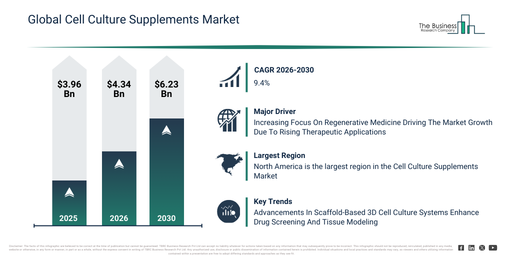
  • Cell Culture Supplements Market Future Outlook Showing Expansion Toward $6.22 Billion by 2030

    Cell Culture Supplements Market Future Outlook Showing Expansion Toward $6.22 Billion by 2030

    The Business Research Company’s 2026 market reports include new capabilities such as market attractiveness scoring and analysis, total addressable market analysis, company scoring matrix, interactive excel data dashboard, improved supply chain analysis, upcoming startups in the market, and overview of key products, aimed at improving the depth, usability, and strategic value of the insights delivered.

    What Market Size Growth Is Projected For The Cell Culture Supplements Market During The Forecast Period 2026–2030?

    The cell culture supplements market size has demonstrated robust growth in recent times. This market is forecast to increase from $3.96 billion in 2025 to $4.34 billion in 2026, achieving a compound annual growth rate (CAGR) of 9.7%. The observed growth over the historical period stems from the expansion of cell-based research activities, an uptick in biopharmaceutical manufacturing, the broader adoption of in vitro testing models, increased funding for life science research infrastructure, and the heightened demand for reliable cell culture outcomes.

    The cell culture supplements market is anticipated to experience substantial expansion over the upcoming years, with its size projected to reach $6.23 billion by 2030, exhibiting a compound annual growth rate (CAGR) of 9.4%. This projected growth during the forecast period is primarily fueled by the accelerating development of cell and gene therapies, a heightened focus on scalable biologics production, the broadening scope of regenerative medicine research, an increasing need for xeno-free culture systems, and a stronger regulatory emphasis on quality-controlled cell culture components. Significant trends expected during this period involve a greater uptake of serum-free and chemically defined supplements, an escalating demand for high-purity growth factors, the expanded utilization of animal-origin-free supplements, the proliferation of customized media formulations, and an intensified focus on ensuring consistent batch-to-batch quality.

    Download the Free Sample Report to Explore Key Market Insights:

    https://www.thebusinessresearchcompany.com/sample.aspx?id=30226&type=smp

    What Drivers Are Expected To Influence The Cell Culture Supplements Market During The Forecast Period?

    The anticipated expansion of the cell culture supplements market is largely driven by the growing emphasis on regenerative medicine. This field is an interdisciplinary area utilizing biological methods to repair, replace, or regenerate impaired cells, tissues, and organs to re-establish their proper function. The heightened attention on regenerative medicine stems from increased investments by both government agencies and the private sector, which are directed towards advancing stem cell research, gene therapies, and tissue engineering solutions for addressing previously untreatable conditions. This intense focus on regenerative medicine fuels the need for cell culture supplements, given their critical role in cultivating and sustaining diverse cell types employed in developing regenerative therapies and associated research. As an illustration, a report issued by the American Society of Gene & Cell Therapy (ASGCT), a U.S.-based professional membership organization, in July 2023, indicated that 247 gene therapies were in Phase II at the close of the first quarter of 2023, a figure that subsequently rose by 5%, totaling 260 by the conclusion of the second quarter. Consequently, the escalating emphasis on regenerative medicine is propelling the expansion of the cell culture supplements equipment market.

    What Market Segments Are Evaluated Within The Cell Culture Supplements Market?

    The cell culture supplements market covered in this report is segmented –

    1) By Product Type: Growth Factors And Cytokines, Amino Acids, Vitamins, Hormones, Attachment Factors, Other Product Types

    2) By Source: Animal-Based, Human-Based, Synthetic, Plant-Based

    3) By Application: Biopharmaceutical Production, Tissue Engineering And Regenerative Medicine, Diagnostics, Drug Development, Other Applications

    4) By End-User: Pharmaceutical And Biotechnology Companies, Academic And Research Institutes, Other End-Users

    Subsegments:

    1) By Growth Factors And Cytokines: Epidermal Growth Factor (EGF), Fibroblast Growth Factor (FGF), Vascular Endothelial Growth Factor (VEGF), Transforming Growth Factor Beta (TGF-ß), Interleukins (ILs)

    2) By Amino Acids: L-Glutamine, L-Arginine, L-Lysine, L-Leucine, L-Methionine

    3) By Vitamins: Vitamin A (Retinol), Vitamin B Complex, Vitamin C (Ascorbic Acid), Vitamin D, Vitamin E (Tocopherol), Vitamin K

    4) By Hormones: Insulin, Cortisol, Estrogen, Progesterone, Thyroid Hormones

    5) By Attachment Factors: Fibronectin, Laminin, Collagen, Vitronectin

    6) By Other Product Types: Trace Elements, Lipids, Nucleotides, Antioxidants

    Which Upcoming Trends Are Expected To Influence The Cell Culture Supplements Market?

    Major companies within the cell culture supplements market are focusing on developing innovative products, such as scaffold-based 3D cell culture systems, to enhance the accuracy of drug screening and tissue modeling capabilities. These scaffold-based 3D cell culture systems mimic natural tissue architecture, facilitating more physiologically relevant cell growth, improving disease modeling, and enabling better prediction of drug responses. For instance, in July 2024, Bioserve India, an India-based biotechnology company, introduced its advanced stem cell products, which feature specialized culture media, growth factors, and tools for stem cell culture, differentiation, and disease modeling with iPSCs and ESCs. The product line also encompasses kits and small molecules for efficient iPSC generation from somatic cells, scaffold-based 3D cell culture systems for drug screening and toxicity testing, cellular assays to assess cell viability, proliferation, and metabolic activity, and preclinical services using human tissue technology to predict clinical outcomes. Additionally, the product portfolio offers a global biorepository with over 600,000 biospecimens and research tools like antibodies, proteins, and genomic analysis kits to support diverse scientific investigations. These offerings aim to boost stem cell research and therapy development in the Indian market.

    Who Are The Top Market Participants Influencing The Cell Culture Supplements Market?

    Major companies operating in the cell culture supplements market are Thermo Fisher Scientific Inc., Danaher Corporation, Merck KGaA, Becton, Dickinson and Company, GE HealthCare, Corning Incorporated, Lonza Group AG, Sartorius AG, Bio-Techne Corporation, Repligen Corporation, Takara Bio Inc., HiMedia Laboratories, PromoCell GmbH, RoosterBio Inc., Capricorn Scientific GmbH, Genexis Biotech Pvt Ltd., PromoKine GmbH, BioProcess Technologies Ltd., Jin Kairui Biotechnology Co. Ltd., FUJIFILM Irvine Scientific, Athena Enzyme Systems.

    Read the full cell culture supplements market report here:

    https://www.thebusinessresearchcompany.com/report/global-cell-culture-supplements-market-report

    Which Region Is Forecast To Lead The Cell Culture Supplements Market In Terms Of Market Size?

    North America was the largest region in the cell culture supplements market in 2025. Asia-Pacific is expected to be the fastest-growing region in the forecast period. The regions covered in the cell culture supplements market report are Asia-Pacific, South East Asia, Western Europe, Eastern Europe, North America, South America, Middle East, Africa.

    Request A Tailored Cell Culture Supplements Market Research Report For Competitive Advantage:

    https://www.thebusinessresearchcompany.com/customise?id=30226&type=smp

    Browse Through More Reports Similar to the Global Cell Culture Supplements Market 2026, By The Business Research Company

    Cell Cultures Global Market Report

    https://www.thebusinessresearchcompany.com/report/cell-cultures-global-market-report

    Cell Culture Plates Global Market Report

    https://www.thebusinessresearchcompany.com/report/cell-culture-plates-global-market-report

    Cell Culture Media Global Market Report

    https://www.thebusinessresearchcompany.com/report/cell-culture-media-global-market-report

    Get in touch with us:

    The Business Research Company: https://www.thebusinessresearchcompany.com/

    Americas +1 310-496-7795

    Asia +44 7882 955267 & +91 8897263534

    Europe +44 7882 955267

    Email us at info@tbrc.info

    Follow us on:

    LinkedIn: https://in.linkedin.com/company/the-business-research-company

    YouTube: https://www.youtube.com/channel/UC24_fI0rV8cR5DxlCpgmyFQ

    Global Market Model: https://www.thebusinessresearchcompany.com/global-market-model
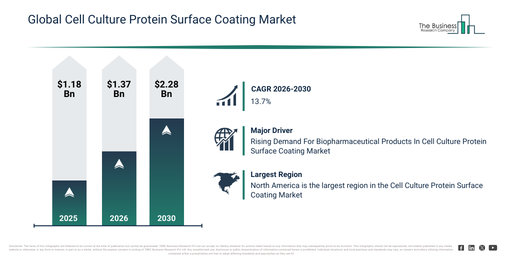
  • Cell Culture Protein Surface Coating Market Revenue Growth Expected to Reach $2.28 Billion by 2030 with 13.7% CAGR

    Cell Culture Protein Surface Coating Market Revenue Growth Expected to Reach $2.28 Billion by 2030 with 13.7% CAGR

    The Business Research Company’s 2026 market reports include new capabilities such as market attractiveness scoring and analysis, total addressable market analysis, company scoring matrix, interactive excel data dashboard, improved supply chain analysis, upcoming startups in the market, and overview of key products, aimed at improving the depth, usability, and strategic value of the insights delivered.

    How Will The Market Size Of The Cell Culture Protein Surface Coating Market Evolve From 2026 To 2030?

    The market for cell culture protein surface coatings has experienced swift expansion recently. Its size is projected to increase from $1.18 billion in 2025 to $1.37 billion in 2026, demonstrating a compound annual growth rate (CAGR) of 15.4%. This historical growth is attributable to factors such as a rise in in vitro research activities, the proliferation of cell-based experiments, the widespread use of coated cultureware in lab settings, an increase in academic research output, and the provision of consistent coating materials.

    The cell culture protein surface coating market is set to experience substantial expansion in the coming years, with its size projected to reach $2.28 billion by 2030, demonstrating a compound annual growth rate (CAGR) of 13.7%. This growth trajectory during the forecast period is primarily fueled by an escalating demand for advanced cell culture systems, increased investments in regenerative medicine research, the broadening application of stem cell and tissue engineering, a growing preference for animal-free coatings, and the wider adoption of scalable culture platforms. Significant trends anticipated for this period include the increased utilization of ECM-mimicking protein coatings, a heightened demand for ready-to-use pre-coated surfaces, the rising embrace of synthetic and recombinant proteins, the proliferation of high-density cell culture formats, and a sharpened focus on achieving reproducibility in cell attachment.

    Download the Free Sample Report to Explore Key Market Insights:

    https://www.thebusinessresearchcompany.com/sample.aspx?id=16369&type=smp

    What Drivers Are Influencing The Cell Culture Protein Surface Coating Market?

    The expanding need for biopharmaceutical goods is projected to propel the growth of the cell culture protein surface coating market. These products, which are pharmaceutical substances derived from living organisms or created using biotechnological methods such as recombinant DNA technology, cell cultures, and monoclonal antibodies, are seeing increased demand. This surge is attributed to advancements in cell culture technologies, a rise in chronic and age-related diseases, innovations in bioprocessing, and progress in genomics. Within biopharmaceutical production, cell culture protein surface coatings play a crucial role by enhancing cell growth, improving functionality, and boosting production efficiency, thereby contributing to the creation of safe, effective, and high-quality biopharmaceutical products. For example, in August 2023, data from the Alliance for Regenerative Medicine, a US-based non-profit, indicated that the number of cell, gene, and tissue-engineering therapeutic developers globally reached 2,760 in the first quarter of 2023, marking a 101% increase from 1,369 in the first quarter of 2022. Consequently, the escalating demand for biopharmaceutical products is a primary driver for the cell culture protein surface coating market.

    Which Segment Areas Are Covered In The Cell Culture Protein Surface Coating Market Analysis?

    The cell culture protein surface coating market covered in this report is segmented –

    1) By Coating Type: Pre-Coating, Multiwall Or Microwell Plates, Flasks, Petri Dishes, Slides, Cover Slips, Self-Coating

    2) By Protein Source: Animal-Derived Protein, Human-Derived Protein, Synthetic Protein, Plant-Derived Protein

    3) By Application: Scientific Research, Industrial Production

    Subsegments:

    1) By Pre-Coating: Ready-To-Use Pre-Coated Plates, Pre-Coated Flasks, Pre-Coated Petri Dishes

    2) By Multiwall Or Microwell Plates: 96-Well Plates, 384-Well Plates, 1536-Well Plates

    3) By Flasks: Tissue Culture Flasks, Serum-Free Flasks, Spinner Flasks

    4) By Petri Dishes: Standard Petri Dishes, Disposable Petri Dishes, Specialized Coated Petri Dishes

    5) By Slides: Microscope Slides, Glass Slides With Coating, Poly-L-Lysine Coated Slides

    6) By Cover Slips: Standard Glass Cover Slips, Hydrophilic Cover Slips, Specially Coated Cover Slips

    7) By Self-Coating: Self-Coating Plates, Self-Coating Flasks, Self-Coating Dishes

    Which Global Companies Are Actively Competing In The Cell Culture Protein Surface Coating Market?

    Major companies operating in the cell culture protein surface coating market are Thermo Fisher Scientific Inc., Merck KGaA, Corning Incorporated, Avantor Inc., Agilent Technologies Inc., Lonza Group AG, Sartorius AG, Greiner AG, Eppendorf SE, Bio Techne Corporation, Promega Corporation, ReproCELL Inc., MoBiTec GmbH, Advanced Biomatrix Inc., AMS Biotechnology Europe Limited, Cell Guidance Systems, NeuVitro Corporation, ZenBio Inc., SPL Life Sciences Co. Ltd., Becton Dickinson and Company, MatTek Corporation, ScienCell Research Laboratories Inc., STEMCELL Technologies Inc., Takara Bio Inc.

    Read the full cell culture protein surface coating market report here:

    https://www.thebusinessresearchcompany.com/report/cell-culture-protein-surface-coating-global-market-report

    Which Regions Are Expected To Experience Rapid Expansion In The Cell Culture Protein Surface Coating Market?

    North America was the largest region in the cell culture protein surface coating market in 2025. Asia-Pacific is expected to be the fastest-growing region in the forecast period. The regions covered in the cell culture protein surface coating market report are Asia-Pacific, South East Asia, Western Europe, Eastern Europe, North America, South America, Middle East, Africa.

    Request A Tailored Cell Culture Protein Surface Coating Market Research Report For Competitive Advantage:

    https://www.thebusinessresearchcompany.com/customise?id=16369&type=smp

    Browse Through More Reports Similar to the Global Cell Culture Protein Surface Coating Market 2026, By The Business Research Company

    Cell Culture Media Storage Containers Global Market Report

    https://www.thebusinessresearchcompany.com/report/cell-culture-media-storage-containers-global-market-report

    Cell Cultures Global Market Report

    https://www.thebusinessresearchcompany.com/report/cell-cultures-global-market-report

    Cell Culture Media Global Market Report

    https://www.thebusinessresearchcompany.com/report/cell-culture-media-global-market-report

    Get in touch with us:

    The Business Research Company: https://www.thebusinessresearchcompany.com/

    Americas +1 310-496-7795

    Asia +44 7882 955267 & +91 8897263534

    Europe +44 7882 955267

    Email us at info@tbrc.info

    Follow us on:

    LinkedIn: https://in.linkedin.com/company/the-business-research-company

    YouTube: https://www.youtube.com/channel/UC24_fI0rV8cR5DxlCpgmyFQ

    Global Market Model: https://www.thebusinessresearchcompany.com/global-market-model
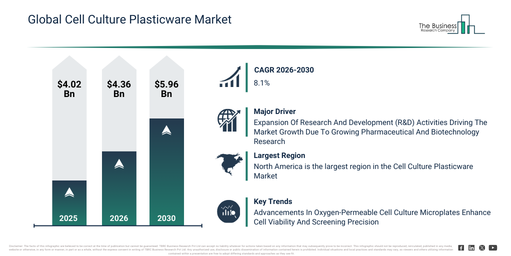
  • Cell Culture Plasticware Market Expected to Record Steady Growth and Approach $5.95 Billion by 2030

    Cell Culture Plasticware Market Expected to Record Steady Growth and Approach $5.95 Billion by 2030

    The Business Research Company’s 2026 market reports include new capabilities such as market attractiveness scoring and analysis, total addressable market analysis, company scoring matrix, interactive excel data dashboard, improved supply chain analysis, upcoming startups in the market, and overview of key products, aimed at improving the depth, usability, and strategic value of the insights delivered.

    What Is The Forecasted Market Value Of The Cell Culture Plasticware Market Across 2026–2030?

    The cell culture plasticware market has shown robust growth in recent years. It is forecast to grow from $4.02 billion in 2025 to $4.36 billion in 2026, achieving a compound annual growth rate (CAGR) of 8.4%. The expansion observed in the historic period is attributable to the broadening of academic and industrial life science research, increased cell biology studies, the rising utilization of disposable labware, advancements in polymer molding technologies, and a greater standardization of lab protocols.

    The cell culture plasticware market is projected to experience robust expansion over the coming years. This market is forecast to reach $5.96 billion by 2030, demonstrating a compound annual growth rate (CAGR) of 8.1%. Key factors driving this growth during the forecast period include the increasing proliferation of gene and cell therapy research, heightened investments in biopharmaceutical research and development, the broadening scope of high-throughput screening applications, a rising need for contamination-free laboratory settings, and an increased emphasis on environmentally friendly plastic options. Prominent trends identified for the forecast period encompass an escalating demand for superior sterile plasticware, the increasing embrace of single-use laboratory consumables, a heightened focus on ensuring experimental reproducibility, the broadening of cell-based research endeavors, and an amplified emphasis on optimizing workflow efficiency.

    Download the Free Sample Report to Explore Key Market Insights:

    https://www.thebusinessresearchcompany.com/sample.aspx?id=30225&type=smp

    What Drivers Are Shaping The Future Growth Of The Cell Culture Plasticware Market?

    The anticipated increase in research and development (R&D) activities is set to fuel the expansion of the cell culture plasticware market. R&D encompasses systematic efforts to broaden scientific knowledge and devise new applications for existing understanding across various sectors. The surge in R&D activities is primarily driven by escalating public and private sector investments in scientific exploration, as governments and corporations globally emphasize innovation to resolve complex challenges in healthcare, technology, and other critical domains. This growth in R&D directly contributes to the demand for cell culture plasticware, as these products are vital for conducting experiments, culturing cells, and developing new therapies in laboratory settings. For instance, according to the National Center for Science and Engineering Statistics (NCSES), a US-based government statistical agency, U.S. research and development expenditures in February 2025 increased from $892 billion in 2022 to $940 billion in 2023, representing a rise of $48 billion. Therefore, the expansion of research and development (R&D) activities is a key driver for the growth of the cell culture plasticware market.

    What Segmentation Levels Are Considered In The Cell Culture Plasticware Market?

    The cell culture plasticware market covered in this report is segmented –

    1) By Product Type: Dishes, Flasks, Plates, Tubes, Other Product Types

    2) By Material Type: Polystyrene, Polypropylene

    3) By Sterilization Type: Gamma Sterilization, Ethylene Oxide Sterilization, Steam Sterilization, Radiation Sterilization, Non-Sterile Products

    4) By Application: Tissue Culture And Engineering, Gene Therapy, Cytogenetics

    5) By End-User: Pharmaceutical And Biotechnology Companies, Academic And Research Institutes, Other End-Users

    Subsegments:

    1) By Dishes: Petri Dishes, Multiwell Dishes, Cell Culture Dishes

    2) By Flasks: Tissue Culture Flasks, Erlenmeyer Flasks, Spinner Flasks

    3) By Plates: 6-Well Plates, 12-Well Plates, 24-Well Plates, 48-Well Plates, 96-Well Plates, 384-Well Plates, Microplates

    4) By Tubes: Centrifuge Tubes, Conical Tubes, Cryogenic Tubes, Culture Tubes

    5) By Other Product Types: Reservoirs, Bottles, Pipette Tips, Cell Strainers

    Which Market Trends Are Creating New Opportunities In The Cell Culture Plasticware Market?

    Leading companies within the cell culture plasticware market are concentrating on creating novel products, such as high oxygen-permeability culture microplates, to boost physiological accuracy and screening effectiveness. High oxygen-permeability culture microplates are defined as materials engineered to facilitate enhanced oxygen diffusion into cultivated cells and tissues, thereby better replicating in vivo environments and minimizing cell death linked to hypoxia. An example is the launch of the InnoCell by Mitsui Chemicals, Inc., a chemical manufacturer from Japan, in June 2025; this cell culture microplate features a highly oxygen-permeable design. This product provides a non-treated “N-type” microplate suitable for non-adherent cells, organoids, and spheroids, alongside a collagen-coated “C-type” designed for hepatocytes and various assay cells. It ensures an optimal oxygen supply to cultured cells and tissues, which helps sustain healthy cell cultures over extended durations and decreases cell death in 3D spheroids. Furthermore, the plates exhibit low drug adsorption and excellent fluorescence imaging properties, including high resolution and minimal autofluorescence, rendering them ideal for advanced drug screening techniques like high-content imaging and phenotypic assays.

    Which Leading Firms Are Contributing To The Growth Of The Cell Culture Plasticware Market?

    Major companies operating in the cell culture plasticware market are Thermo Fisher Scientific Inc., Corning Incorporated, Mitsui Chemicals Inc., Sarstedt AG & Co. KG, MP Biomedicals, SABEU GmbH & Co. KG, HiMedia Laboratories, Wuxi NEST Biotechnology Co. Ltd, RoosterBio Inc., Biologix Group Limited, Solution One, Captivate Bio, Allele Life Sciences (P) Ltd, D. Haridas and Company, Maxome Labsciences Pvt Ltd., Incelligence.de, Cotaus Co. Ltd., Zhejiang Peky Biotech Co. Ltd., BKMAM, Chongqing New World Trading Co. Ltd

    Read the full cell culture plasticware market report here:

    https://www.thebusinessresearchcompany.com/report/global-cell-culture-plasticware-market-report

    Which Geographic Regions Are Influencing Demand In The Cell Culture Plasticware Market?

    North America was the largest region in the cell culture plasticware market in 2025. Asia-Pacific is expected to be the fastest-growing region in the forecast period. The regions covered in the cell culture plasticware market report are Asia-Pacific, South East Asia, Western Europe, Eastern Europe, North America, South America, Middle East, Africa.

    Request A Tailored Cell Culture Plasticware Market Research Report For Competitive Advantage:

    https://www.thebusinessresearchcompany.com/customise?id=30225&type=smp

    Browse Through More Reports Similar to the Global Cell Culture Plasticware Market 2026, By The Business Research Company

    Cell Culture Media Global Market Report

    https://www.thebusinessresearchcompany.com/report/cell-culture-media-global-market-report

    Cell Cultures Global Market Report

    https://www.thebusinessresearchcompany.com/report/cell-cultures-global-market-report

    3D Cell Culture Technologies Global Market Report

    https://www.thebusinessresearchcompany.com/report/3d-cell-culture-technologies-global-market-report

    Get in touch with us:

    The Business Research Company: https://www.thebusinessresearchcompany.com/

    Americas +1 310-496-7795

    Asia +44 7882 955267 & +91 8897263534

    Europe +44 7882 955267

    Email us at info@tbrc.info

    Follow us on:

    LinkedIn: https://in.linkedin.com/company/the-business-research-company

    YouTube: https://www.youtube.com/channel/UC24_fI0rV8cR5DxlCpgmyFQ

    Global Market Model: https://www.thebusinessresearchcompany.com/global-market-model
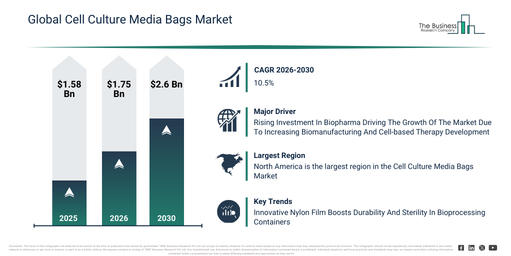
  • Cell Culture Media Bags Industry Expansion Forecast Showing Market Size of $2.6 Billion by 2030 at 10.5% CAGR

    Cell Culture Media Bags Industry Expansion Forecast Showing Market Size of $2.6 Billion by 2030 at 10.5% CAGR

    The Business Research Company’s 2026 market reports include new capabilities such as market attractiveness scoring and analysis, total addressable market analysis, company scoring matrix, interactive excel data dashboard, improved supply chain analysis, upcoming startups in the market, and overview of key products, aimed at improving the depth, usability, and strategic value of the insights delivered.

    What Market Size Increase Is Anticipated For The Cell Culture Media Bags Market Over The 2026–2030 Period?

    The cell culture media bags market has experienced significant expansion in recent years. It is anticipated to grow from $1.58 billion in 2025 to $1.75 billion in 2026, demonstrating a compound annual growth rate (CAGR) of 10.8%. The increase observed in the historic period can be attributed to the expansion of biopharmaceutical manufacturing, the rising adoption of single-use technologies, an escalating demand for sterile media handling, the broadening of cell therapy research, and advancements in the quality of polymer materials.

    The cell culture media bags market is projected for swift expansion over the coming years, reaching a valuation of $2.6 billion by 2030, exhibiting a compound annual growth rate (CAGR) of 10.5%. This anticipated growth during the forecast period is fueled by several factors, including the expanding capacity for biologics production, a heightened need for manufacturing processes that are scalable and adaptable, an intensified emphasis on minimizing contamination risks, increased capital expenditure in the manufacturing of cell and gene therapies, and the broader availability of tailored media preparation solutions. Key trends anticipated for the same period encompass a wider embrace of single-use systems for media handling, a greater desire for cell culture bags that can be customized, an increasing prevalence of multi-chamber designs for media preparation, the development of more contamination-free media storage options, and an elevated concentration on adaptable biomanufacturing workflows.

    Download the Free Sample Report to Explore Key Market Insights:

    https://www.thebusinessresearchcompany.com/sample.aspx?id=30224&type=smp

    Which Economic Or Industry Drivers Are Impacting The Cell Culture Media Bags Market?

    Increased financial commitment to biopharma is projected to stimulate the expansion of the cell culture media bags market moving ahead. This surge in biopharma investment stems from an escalating need for novel treatments and tailored medications that cater to currently unaddressed health requirements. Such investments in biopharma boost the requirement for cell culture media bags, as they facilitate extensive biomanufacturing and bioprocessing activities for biologics and cell-based treatments. As an illustration, the BioIndustry Association (BIA), a UK trade group for the country’s innovative life sciences and biotech industry, reported in January 2025 that the UK biotech sector reached a notable achievement in 2024, attracting $4.59 billion (£3.5 billion) in investments, which signifies a strong 94% increase compared to the previous year. Consequently, the expanding financial backing for biopharma is fueling the development of the cell culture media bags market.

    How Is The Cell Culture Media Bags Market Segmented Across Key Categories?

    The cell culture media bags market covered in this report is segmented –

    1) By Product Type: Single Chamber Bags, Dual Chamber Bags, Multi-Chamber Bags, Customizable Bags

    2) By Material Type: Polyethylene (PE), Ethylene Vinyl Alcohol (EVOH), Fluorinated Ethylene Propylene (FEP), Polyolefin

    3) By Design: 2-D Bags, 3-D Bags, Hybrid Or Multilayer Bags

    4) By End-User: Biotechnology Companies, Pharmaceutical Companies, Academic And Research Institutions, Contract Research Organizations (CROs)

    Subsegments:

    1) By Single Chamber Bags: Standard Single-Use Media Bags, Gamma-Irradiated Bags, Sterile-Filtered Bags, Pre-Filled Media Bags, Storage And Transport Bags

    2) By Dual Chamber Bags: Media And Buffer Separation Bags, Powder-Liquid Mixing Bags, Media Supplement Integration Bags, Two-Phase Culture Preparation Bags

    3) By Multi-Chamber Bags: Three-Chamber Media Preparation Bags, Multi-Component Nutrient Mixing Bags, Cell Culture Media And Feed Compartment Bags, Sequential Mixing Bags

    4) By Customizable Bags: Volume-Configured Custom Bags, Port And Connector Customized Bags, Film Material Customized Bags, Labeling And Branding Custom Bags, Application-Specific Custom Bags

    What Trends Are Affecting The Expansion Of The Cell Culture Media Bags Market?

    Leading companies in the cell culture media bags market are focusing on bioprocessing innovation, such as proprietary woven nylon structures, to enhance the durability, leak resistance, and reliability of single-use process containers for sample preparation and biomarker analysis. A proprietary woven nylon structure refers to a special, patented design of nylon fibers interwoven to form a film or membrane used in single-use bioprocessing containers. For instance, in April 2023, Merck & Co., Inc., a US-based company specializing in healthcare, life science, and electronics, launched Ultimus Single-Use Process Container Film, a robust film for single-use bioprocessing containers, including media bags and Mobius 3D containers. Its proprietary woven nylon structure delivers exceptional durability, leak resistance, and protection against abrasions and material fatigue. The film provides 10 times greater abrasion resistance, 2.8 times higher tensile strength, and double the puncture strength compared to conventional films. Being animal-origin-free with a low extractable profile, it supports healthy cell growth while maintaining sterility and product quality. This innovation enhances container reliability and operational efficiency in cell culture and other biomanufacturing processes.

    Who Are The Dominant Players Shaping The Cell Culture Media Bags Market Landscape?

    Major companies operating in the cell culture media bags market are Saint-Gobain Life Sciences, Thermo Fisher Scientific, Merck KGaA, Fujifilm Holdings Corporation, Danaher Corporation, Parker Hannifin Corporation, GE Healthcare, Corning Incorporated, Lonza Group, Avantor Inc., Sartorius AG, Entegris Inc., Eppendorf, Miltenyi Biotec, Takara, Chemglass Life Sciences, Lampire Biological Laboratories, OriGen Biomedical Inc, LEPURE, Kuhner AG, BioLink

    Read the full cell culture media bags market report here:

    https://www.thebusinessresearchcompany.com/report/global-cell-culture-media-bags-market-report

    What Are The Top-Performing Regions Within The Cell Culture Media Bags Market?

    North America was the largest region in the cell culture media bags market in 2025. The regions covered in the cell culture media bags market report are Asia-Pacific, South East Asia, Western Europe, Eastern Europe, North America, South America, Middle East, Africa.

    Request A Tailored Cell Culture Media Bags Market Research Report For Competitive Advantage:

    https://www.thebusinessresearchcompany.com/customise?id=30224&type=smp

    Browse Through More Reports Similar to the Global Cell Culture Media Bags Market 2026, By The Business Research Company

    Cryoablation Devices Global Market Report

    https://www.thebusinessresearchcompany.com/report/cryoablation-devices-global-market-report

    Cryotherapy Global Market Report

    https://www.thebusinessresearchcompany.com/report/cryotherapy-global-market-report

    Cryogenic Insulation Global Market Report

    https://www.thebusinessresearchcompany.com/report/cryogenic-insulation-global-market-report

    Get in touch with us:

    The Business Research Company: https://www.thebusinessresearchcompany.com/

    Americas +1 310-496-7795

    Asia +44 7882 955267 & +91 8897263534

    Europe +44 7882 955267

    Email us at info@tbrc.info

    Follow us on:

    LinkedIn: https://in.linkedin.com/company/the-business-research-company

    YouTube: https://www.youtube.com/channel/UC24_fI0rV8cR5DxlCpgmyFQ

    Global Market Model: https://www.thebusinessresearchcompany.com/global-market-model
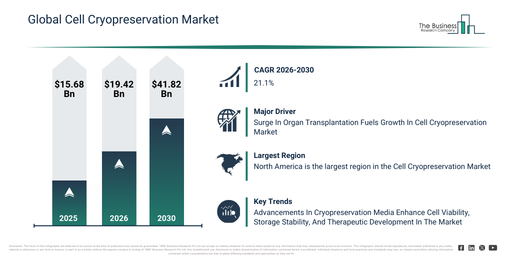
  • Cell Cryopreservation Market Revenue Expected to Reach $41.81 Billion by 2030 with 21.1% CAGR

    Cell Cryopreservation Market Revenue Expected to Reach $41.81 Billion by 2030 with 21.1% CAGR

    The Business Research Company’s 2026 market reports include new capabilities such as market attractiveness scoring and analysis, total addressable market analysis, company scoring matrix, interactive excel data dashboard, improved supply chain analysis, upcoming startups in the market, and overview of key products, aimed at improving the depth, usability, and strategic value of the insights delivered.

    How Much Is The Cell Cryopreservation Market Expected To Grow In Terms Of Market Value Between 2026 And 2030?

    The cell cryopreservation market has seen remarkable expansion in recent years. Its valuation is projected to rise from $15.68 billion in 2025 to $19.42 billion in 2026, achieving a compound annual growth rate (CAGR) of 23.9%. This historical growth can be linked to several contributing factors, including the expansion of biobanking activities, the increasing use of preserved cells in research, the growth of IVF and fertility clinics, the adoption of cryopreservation in regenerative medicine, and the widespread availability of liquid nitrogen storage systems.

    The cell cryopreservation market is projected to experience rapid expansion in the coming years, reaching a valuation of $41.82 billion by 2030, driven by a compound annual growth rate (CAGR) of 21.1%. This anticipated growth over the forecast period stems from several factors, including the escalating demand for cell and gene therapies, increased investments in biopharmaceutical manufacturing, the broadening scope of stem cell research, an intensifying focus on standardized storage protocols, and the wider integration of automated cryostorage systems. Key trends foreseen during this period involve the greater uptake of serum-free cryopreservation media, the increasing deployment of controlled-rate freezing systems, a rising need for long-term cell storage solutions, the expansion of cryobanking infrastructure, and a heightened emphasis on maintaining cell viability.

    Download the Free Sample Report to Explore Key Market Insights:

    https://www.thebusinessresearchcompany.com/sample.aspx?id=15755&type=smp

    What Major Drivers Are Influencing Demand In The Cell Cryopreservation Market?

    The anticipated rise in organ transplantation procedures is projected to fuel the expansion of the cell cryopreservation market. Organ transplantation is a medical procedure involving the replacement of a damaged or failing organ with a healthy one from a donor. The increase in these procedures is attributed to organ failure caused by hereditary abnormalities, infections, traumas, and chronic diseases. Cell cryopreservation in organ transplantation involves freezing and storing cells from organs to maintain their viability for future use, thereby enhancing graft success and reducing immune rejection. For instance, in January 2024, according to the Health Resources and Services Administration, a US-based federal agency, 46,632 organ transplants were performed in 2023 from both living and deceased donors, indicating an 8.7% increase from 2022. Consequently, the growing volume of organ transplantation procedures is a key factor driving the cell cryopreservation market’s growth.

    What Major Segment Divisions Exist Within The Cell Cryopreservation Market?

    The cell cryopreservation market covered in this report is segmented –

    1) By Product: Cell Freezing Media, Equipment, Consumables

    2) By Application: Hepatocytes, Stem Cells, Oocytes And Embryotic cells, Sperm Cells, Other Applications

    3) By End-Use Channel: Biopharmaceutical And Pharmaceutical Companies, Research Institutes, Biobanks, In Vitro Fertilization (IVF) Clinics, Other End-Use Channels

    Subsegments:

    1) By Cell Freezing Media: Serum-Based Freezing Media, Serum-Free Freezing Media

    2) By Equipment: Cryopreservation Freezers, Cryo Storage Tanks, Controlled-Rate Freezers

    3) By Consumables: Cryovials, Cryo Storage Bags, Cryo Tubes

    Which Trends Are Influencing The Cell Cryopreservation Market?

    Leading companies within the cell cryopreservation market are concentrating on creating advanced solutions, including specialized cryopreservation media, to enhance long-term cell stability, enable high-quality storage, and improve subsequent therapeutic applications. Cryopreservation media are scientifically formulated solutions crafted to preserve cells or tissues at extremely low temperatures, safeguarding their viability, functionality, and reproducibility for research and clinical processes. For example, in April 2024, Pluristyx Inc., a US-based provider of tools, technologies, and services for cellular therapies, introduced PluriFreeze, a unique cryopreservation medium solution designed to accelerate stem cell therapy advancement. Developed to support the growth of induced pluripotent stem cells (iPSCs), the PluriFreeze Cryopreservation Media, intended for Research Use Only (RUO), provides an innovative method to boost efficiency and quality during iPSC therapy development. This solution aims to streamline stem cell research and expedite the commercialization of cutting-edge cell therapies, thereby strengthening progress in the cell cryopreservation market.

    Which Companies Are Leading Innovation In The Cell Cryopreservation Market?

    Major companies operating in the cell cryopreservation market are Thermo Fisher Scientific Inc., Danaher Corporation, Merck KGaA, Corning Inc., STEMCELL Technologies, Cryoport Inc., ThermoGenesis Holdings Inc., Akron Biotech, X-Therma Inc., Acorn Biolabs Inc., PanTHERA CryoSolutions, CryoCrate LLC, Chart Industries Inc., Eppendorf SE, PHC Holdings Corporation, Helmer Scientific Inc., Brooks Automation Inc., Azenta Life Sciences Inc., Worthington Industries Inc., CBS Scientific, Planer PLC, Stirling Ultracold Inc.

    Read the full cell cryopreservation market report here:

    https://www.thebusinessresearchcompany.com/report/cell-cryopreservation-global-market-report

    Which Region Shows The Strongest Potential For Future Growth In The Cell Cryopreservation Market?

    North America was the largest region in the cell cryopreservation market in 2025. Asia-Pacific is expected to be the fastest-growing region in the forecast period. The regions covered in the cell cryopreservation market report are Asia-Pacific, South East Asia, Western Europe, Eastern Europe, North America, South America, Middle East, Africa.

    Request A Tailored Cell Cryopreservation Market Research Report For Competitive Advantage:

    https://www.thebusinessresearchcompany.com/customise?id=15755&type=smp

    Browse Through More Reports Similar to the Global Cell Cryopreservation Market 2026, By The Business Research Company

    Cell Viability Assays Global Market Report

    https://www.thebusinessresearchcompany.com/report/cell-viability-assays-global-market-report

    Stem Cell Assay Global Market Report

    https://www.thebusinessresearchcompany.com/report/stem-cell-assay-global-market-report

    Cell Cultures Global Market Report

    https://www.thebusinessresearchcompany.com/report/cell-cultures-global-market-report

    Get in touch with us:

    The Business Research Company: https://www.thebusinessresearchcompany.com/

    Americas +1 310-496-7795

    Asia +44 7882 955267 & +91 8897263534

    Europe +44 7882 955267

    Email us at info@tbrc.info

    Follow us on:

    LinkedIn: https://in.linkedin.com/company/the-business-research-company

    YouTube: https://www.youtube.com/channel/UC24_fI0rV8cR5DxlCpgmyFQ

    Global Market Model: https://www.thebusinessresearchcompany.com/global-market-model