Month: March 2026

  • Expanding animal feed demand is boosting the Phytogenic Feed Additives Market 2026

    Expanding animal feed demand is boosting the Phytogenic Feed Additives Market 2026

    The Business Research Company’s 2026 market reports include new capabilities such as market attractiveness scoring and analysis, total addressable market analysis, company scoring matrix, interactive excel data dashboard, improved supply chain analysis, upcoming startups in the market, and overview of key products, aimed at improving the depth, usability, and strategic value of the insights delivered.

    What Will Be The Estimated Market Valuation Of The Phytogenic Feed Additives Market By The End Of 2030?

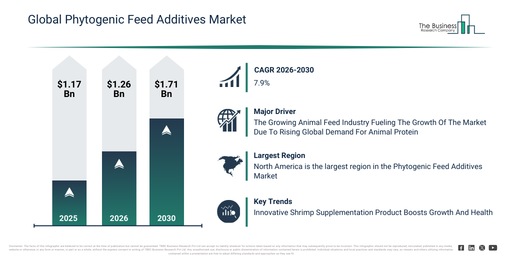
    The phytogenic feed additives market has experienced robust growth in recent years. This market is projected to expand from $1.17 billion in 2025 to $1.26 billion in 2026, demonstrating a compound annual growth rate (CAGR) of 7.9%. Historically, this expansion has been driven by factors such as regulatory bans on antibiotic growth promoters, rising demand for animal protein, the traditional incorporation of herbs and spices in feed, the broadening of commercial livestock farming, and a heightened awareness of animal gut health.

    The phytogenic feed additives market is projected to experience robust expansion over the coming years, with its valuation set to reach $1.71 billion by 2030, demonstrating a compound annual growth rate (CAGR) of 7.9%. This projected increase stems from several factors, including the rise in sustainable animal farming practices, a growing demand for antibiotic-free meat, the broadening of aquaculture feed applications, developments in plant extract technologies, and an enhanced emphasis on animal welfare. Key trends anticipated during this period encompass the increasing integration of these additives as antibiotic alternatives in animal feed, a heightened need for natural growth promoters, their expanded application in poultry and livestock nutrition, the development of organic and sustainable feed options, and a greater concentration on animal gut health and feed efficiency.

    Download the Free Sample Report to Explore Key Market Insights:

    https://www.thebusinessresearchcompany.com/sample.aspx?id=24379&type=smp

    What Drivers Are Shaping The Future Growth Of The Phytogenic Feed Additives Market?

    The expanding animal feed industry is projected to drive the future growth of the phytogenic feed additives market. This industry involves the manufacturing, processing, and distribution of feed items formulated to fulfill the dietary requirements of animals such as livestock, poultry, and aquaculture. The expansion of the animal feed sector is largely a result of the escalating global demand for animal protein, fueled by a rising population and evolving dietary patterns. Phytogenic feed additives bolster the animal feed industry by delivering natural, plant-derived solutions that enhance animal health and overall performance. They contribute to robust gut health, improved immunity, and optimized growth, supporting sustainable and efficient livestock production. For example, as reported in July 2024 by the Department for Environment, Food and Rural Affairs, a UK-based government department, total animal feed production amounted to 31,128 tonnes in 2023, an increase from 29,397 tonnes in 2022. Hence, the increasing animal feed industry is a significant impetus behind the growth of the phytogenic feed additives market.

    Which Segment Classifications Shape The Phytogenic Feed Additives Market?

    The phytogenic feed additives market covered in this report is segmented –

    1) By Type: Essential Oils, Flavonoids, Saponins, Oleoresins, Other Types

    2) By Form: Powder, Liquid, Granules

    3) By Application: Antimicrobial Effect, Digestion Enhancement, Growth Promotion, Other Applications

    4) By End-Use Industry: Animal Feed Industry, Pet Food Industry, Aquaculture Industry

    Subsegments:

    1) By Essential Oils: Thyme Oil, Oregano Oil, Peppermint Oil, Eucalyptus Oil, Garlic Oil

    2) By Flavonoids: Citrus Flavonoids, Soy Flavonoids, Tea Flavonoids

    3) By Saponins: Quillaja Saponins, Yucca Saponins

    4) By Oleoresins: Capsicum Oleoresin, Turmeric Oleoresin, Paprika Oleoresin, Ginger Oleoresin

    5) By Other Types: Tannins, Alkaloids, Limonoids, Terpenoids

    How Are Trends Impacting The Phytogenic Feed Additives Market?

    Leading companies in the phytogenic feed additives market are prioritizing the development of innovative offerings, including shrimp supplementation products, to boost growth, strengthen immune health, and increase overall efficiency in shrimp production. A shrimp supplementation product is characterized as a feed additive or nutritional supplement specifically formulated to improve the growth, health, immunity, and general performance of shrimp within aquaculture settings. For example, in April 2023, Kemin AquaScience, a US-based biotechnology research company, introduced Pathorol, a natural phytogenic feed additive aimed at enhancing the health of farmed shrimp. This particular shrimp supplementation product is engineered to support the well-being of the hepatopancreas, a critical organ involved in shrimp digestion. The product works by improving feed digestibility, enhancing growth performance, and reducing size variations among shrimp, ultimately fostering healthy development and greater productivity.

    Which Companies Are Expanding Their Footprint In The Phytogenic Feed Additives Market?

    Major companies operating in the phytogenic feed additives market are Cargill Incorporated, Archer-Daniels-Midland Company, BASF SE, SHV Holdings, DuPont de Nemours Inc., DSM-Firmenich AG, Land O’Lakes Inc., Alltech Inc., Kemin Industries Inc., Synthite Industries Private Limited, Natural Remedies Pvt. Ltd., Esseco Group, Biovet, Nutrex N.V, Camlin Fine Sciences Ltd, Phytobiotics Futterzusatzstoffe GmbH?, Growell India Private Limited, Indian Herbs Specialities Pvt. Ltd., Green Pharma, Phytosynthese S.A.S.

    Read the full phytogenic feed additives market report here:

    https://www.thebusinessresearchcompany.com/report/phytogenic-feed-additives-global-market-report

    Which Geographic Regions Are Influencing Demand In The Phytogenic Feed Additives Market?

    North America was the largest region in the phytogenic feed additives market in 2025. Asia-Pacific is expected to be the fastest-growing region in the forecast period. The regions covered in the phytogenic feed additives market report are Asia-Pacific, South East Asia, Western Europe, Eastern Europe, North America, South America, Middle East, Africa.

    Request A Tailored Phytogenic Feed Additives Market Research Report For Competitive Advantage:

    https://www.thebusinessresearchcompany.com/customise?id=24379&type=smp

    Browse Through More Reports Similar to the Global Phytogenic Feed Additives Market 2026, By The Business Research Company

    Nutritional Feed Additives Market Report 2026

    https://www.thebusinessresearchcompany.com/report/nutritional-feed-additives-global-market-report

    Feed Additives Market Report 2026

    https://www.thebusinessresearchcompany.com/report/feed-additives-global-market-report

    Medical Feed Additives Market Report 2026

    https://www.thebusinessresearchcompany.com/report/medical-feed-additives-global-market-report

    Get in touch with us:

    The Business Research Company: https://www.thebusinessresearchcompany.com/

    Americas +1 310-496-7795

    Asia +44 7882 955267 & +91 8897263534

    Europe +44 7882 955267

    Email us at info@tbrc.info

    Follow us on:

    LinkedIn: https://in.linkedin.com/company/the-business-research-company

    YouTube: https://www.youtube.com/channel/UC24_fI0rV8cR5DxlCpgmyFQ

    Global Market Model: https://www.thebusinessresearchcompany.com/global-market-model
  • Product innovation is driving growth in the Phytoestrogen Supplements Market 2026

    Product innovation is driving growth in the Phytoestrogen Supplements Market 2026

    The Business Research Company’s 2026 market reports include new capabilities such as market attractiveness scoring and analysis, total addressable market analysis, company scoring matrix, interactive excel data dashboard, improved supply chain analysis, upcoming startups in the market, and overview of key products, aimed at improving the depth, usability, and strategic value of the insights delivered.

    What Market Size Growth Is Projected For The Phytoestrogen Supplements Market During The Forecast Period 2026–2030?

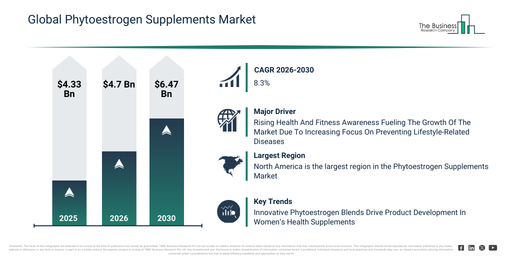
    The phytoestrogen supplements market has experienced significant expansion over the past few years. This market is projected to expand from $4.33 billion in 2025 to $4.7 billion in 2026, demonstrating a compound annual growth rate (CAGR) of 8.5%. Historically, this market’s expansion was driven by factors such as limited understanding of phytoestrogen advantages, a continued dependence on conventional hormone replacement therapies, an enlarging elderly female demographic, the rising incidence of menopausal indicators, and a broadening health and wellness market.

    The phytoestrogen supplements market is projected to experience robust expansion over the coming years. This market is set to reach $6.47 billion by 2030, exhibiting a compound annual growth rate (CAGR) of 8.3%. This anticipated growth can be attributed to several factors, including an escalating demand for plant-based supplements, the creation of innovative phytoestrogen formulations, the proliferation of online nutraceutical platforms, increased governmental and healthcare initiatives promoting women’s health, and the incorporation of personalized nutrition solutions. Key trends shaping the forecast period encompass a growing need for menopause and hormonal health supplements, an increase in plant-based and natural dietary products, heightened consumer understanding of bone and cardiovascular health, the broadening of online and retail distribution networks for nutraceuticals, and the evolution of specific phytoestrogen formulations and combinations.

    Download the Free Sample Report to Explore Key Market Insights:

    https://www.thebusinessresearchcompany.com/sample.aspx?id=27383&type=smp

    Which Economic Or Industry Drivers Are Impacting The Phytoestrogen Supplements Market?

    The expanding emphasis on health and well-being is projected to boost the growth of the phytoestrogen supplements market in the future. Health and fitness encompass sustaining comprehensive physical and mental wellness via consistent physical activity, appropriate diet, and sound lifestyle decisions. The concentration on health and fitness is growing as a greater number of individuals recognize the dangers linked to diseases stemming from lifestyle choices, including obesity, diabetes, and cardiovascular issues. Phytoestrogen supplements aid health and fitness by fostering hormonal equilibrium, boosting bone integrity, and elevating overall vigor, especially for women. For example, in Jun 2024, data from the International Food Information Council (IFIC), a US based non-profit organization, indicated that the percentage of Americans adhering to a particular diet or eating regimen over the last year stayed elevated at 54%. A majority of individuals seek to augment their protein consumption, with interest escalating from 59% in 2022 to 67% in 2023, and peaking at 71% in 2024. Furthermore, approximately half of consumers intend to consume more fresh foods, which are broadly regarded as the most nutritious choices. Consequently, the heightened emphasis on health and fitness is propelling the expansion of the phytoestrogen supplements market.

    What Market Segments Are Evaluated Within The Phytoestrogen Supplements Market?

    The phytoestrogen supplements market covered in this report is segmented –

    1) By Type: Flavonoids, Daidzen, Denistein, Glycitein, Biochanin A, Coumestans, Prenyl Flavonoids, Lignans, Stilbenes, Other Types

    2) By Source: Nuts And Oilseeds, Soy Products, Cereal And Bread, Legumes, Meat Products, Other Sources

    3) By Distribution Channel: Online Stores, Pharmacies, Health Stores, Other Distribution Channel

    4) By Application: Food And Beverages, Nutraceuticals, Cosmetics, Other Applications

    5) By End-User: Hospital And Clinics, Wellness Centers, Other End-Users

    Subsegments:

    1) By Flavonoids: Isoflavones, Flavonols, Flavanones

    2) By Daidzen: Natural Daidzein Extracts, Synthetic Daidzein Compounds

    3) By Denistein: Fermented Soy-Derived Genistein, Non-Fermented Soy Genistein

    4) By Glycitein: Soy-Based Glycitein, Red Clover-Based Glycitein

    5) By Biochanin A: Red Clover Extracts, Chickpea-Derived Biochanin A

    6) By Coumestans: Coumestrol, Coumestan-Rich Legume Extracts

    7) By Prenyl Flavonoids: 8-Prenylnaringenin, Xanthohumol

    8) By Lignans: Flaxseed-Derived Lignans, Sesame Seed-Derived Lignans

    9) By Stilbenes: Resveratrol, Pterostilbene

    10) By Other Types: Mycoestrogens, Enterolignans, Phlorotannins

    What Industry Trends Are Redefining The Phytoestrogen Supplements Market?

    Major companies operating in the phytoestrogen supplements market are increasingly focusing on introducing innovative solutions, such as phytoestrogen blends, to improve the efficacy and bioavailability of their products. Phytoestrogen blends are defined as supplements that combine various plant-based estrogenic compounds to enhance hormonal support and overall health benefits. As an illustration, in August 2023, Designs for Health, a US-based provider of high-quality nutritional supplements, launched a phytoestrogen blend within its new women’s health supplement line. This initiative aims to offer natural support for hormonal balance and relief from menopausal symptoms. The blend incorporates plant-derived compounds, specifically phytoestrogens, which mimic or modulate estrogen activity in the body. This mechanism helps address diverse women’s health needs, including managing menopausal symptoms, promoting bone health, and supporting overall well-being. This product launch signifies the rising demand for natural alternatives to traditional hormone therapies and underscores Designs for Health’s dedication to research-backed, practitioner-recommended solutions for women at every stage of life.

    Who Are The Top Market Participants Influencing The Phytoestrogen Supplements Market?

    Major companies operating in the phytoestrogen supplements market are Archer Daniels Midland Company, Herbalife Ltd., GNC Holdings Inc., Helios Lifestyle Private Limited, NOW Health Group Inc., Blackmores Limited, Vitacost.com Inc., Nature’s Way, Swanson Health Products, Gaia Herbs Inc., Natural Organics Inc., Solaray LLC, Nutra Green Biotechnology Co. Ltd., Medisys Biotech Pvt. Ltd., Frutarom Ltd., HerboNutra, Tradichem S.L., Aushadhi Herbal.

    Read the full phytoestrogen supplements market report here:

    https://www.thebusinessresearchcompany.com/report/phytoestrogen-supplements-global-market-report

    What Are The Top-Performing Regions Within The Phytoestrogen Supplements Market?

    North America was the largest region in the phytoestrogen supplements market in 2025. Asia-Pacific is expected to be the fastest-growing region in the forecast period. The regions covered in the phytoestrogen supplements market report are Asia-Pacific, South East Asia, Western Europe, Eastern Europe, North America, South America, Middle East, Africa.

    Request A Tailored Phytoestrogen Supplements Market Research Report For Competitive Advantage:

    https://www.thebusinessresearchcompany.com/customise?id=27383&type=smp

    Browse Through More Reports Similar to the Global Phytoestrogen Supplements Market 2026, By The Business Research Company

    Trade Management Software Market Report 2026

    https://www.thebusinessresearchcompany.com/report/trade-management-software-global-market-report

    Algorithmic Trading Market Report 2026

    https://www.thebusinessresearchcompany.com/report/algorithmic-trading-global-market-report

    Automated Algo Trading Market Report 2026

    https://www.thebusinessresearchcompany.com/report/automated-algo-trading-global-market-report

    Get in touch with us:

    The Business Research Company: https://www.thebusinessresearchcompany.com/

    Americas +1 310-496-7795

    Asia +44 7882 955267 & +91 8897263534

    Europe +44 7882 955267

    Email us at info@tbrc.info

    Follow us on:

    LinkedIn: https://in.linkedin.com/company/the-business-research-company

    YouTube: https://www.youtube.com/channel/UC24_fI0rV8cR5DxlCpgmyFQ

    Global Market Model: https://www.thebusinessresearchcompany.com/global-market-model
  • LED-based innovations are transforming the Photomedicine Market 2026

    LED-based innovations are transforming the Photomedicine Market 2026

    The Business Research Company’s 2026 market reports include new capabilities such as market attractiveness scoring and analysis, total addressable market analysis, company scoring matrix, interactive excel data dashboard, improved supply chain analysis, upcoming startups in the market, and overview of key products, aimed at improving the depth, usability, and strategic value of the insights delivered.

    How Will The Market Size Of The Photomedicine Market Evolve From 2026 To 2030?

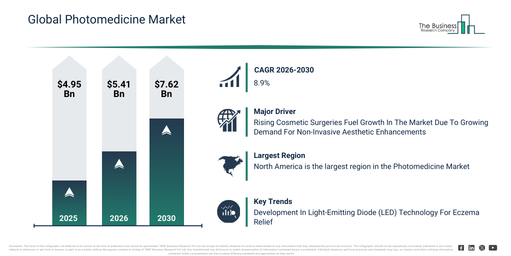
    The photomedicine market has experienced substantial growth in recent years. This market is projected to expand from $4.95 billion in 2025 to reach $5.41 billion in 2026, exhibiting a compound annual growth rate (CAGR) of 9.3%. Historically, factors contributing to this growth include the limited accessibility of photomedicine devices, a dependency on traditional treatment approaches, the rising incidence of skin and dental ailments, expanding hospital and clinic facilities, and increasing public knowledge regarding non-invasive treatments.

    The photomedicine market is projected to experience robust expansion over the coming years. By 2030, its valuation is anticipated to reach $7.62 billion, exhibiting a compound annual growth rate (CAGR) of 8.9%. This anticipated growth during the forecast period stems from several factors, including progress in LED and laser technologies, the rising incorporation of wearable photomedicine devices, the broadening availability of home-based therapy options, increased research into tissue regeneration applications, and the growing uptake of digital monitoring and remote therapy platforms. Key trends anticipated within the forecast timeframe encompass the increasing utilization of light-based therapies within oncology and dermatology, the expansion of home-based photomedicine devices and treatment systems, the growing deployment of non-invasive pain management alternatives, the proliferation of aesthetic and cosmetic photomedicine interventions, and the incorporation of photomedicine into dental and ophthalmic surgical methods.

    Download the Free Sample Report to Explore Key Market Insights:

    https://www.thebusinessresearchcompany.com/sample.aspx?id=27382&type=smp

    What Major Drivers Are Influencing Demand In The Photomedicine Market?

    The escalating number of cosmetic surgeries is projected to drive the expansion of the photomedicine market. These medical procedures are conducted to enhance or alter an individual’s appearance for aesthetic goals. The increase in cosmetic surgeries is attributable to rising social media influence and an increasing desire for an improved self-image, propelled by extensive exposure to beauty standards and trends. Photomedicine offers utility in cosmetic surgeries through precise, non-invasive treatments that boost skin appearance, lessen blemishes, and enhance overall facial and body aesthetics with minimal recovery period. For instance, in April 2025, the British Association of Aesthetic Plastic Surgeons (BAAPS), a UK-based surgical organization, recorded 27,462 cosmetic surgical procedures, showing a 5% increase compared to 2023. Thus, the growing volume of cosmetic surgeries is propelling the photomedicine market’s development.

    Which Segment Areas Are Covered In The Photomedicine Market Analysis?

    The photomedicine market covered in this report is segmented –

    1) By Type: Light Emitting Diodes, Lasers, Full Spectrum Light, Polychromatic Polarized Light, Dichroic Lamps, Fluorescent Lamps

    2) By Application: Oncology, Dermatology, Pain Management, Dental Procedures, Aesthetics, Ophthalmology, Other Applications

    3) By End Users: Hospitals And Clinics, Dermatology And Ophthalmology Centers, Home-Based Therapy, Research And Academic Institutions

    Subsegments:

    1) By Light Emitting Diodes: Red Light Therapy, Blue Light Therapy, Infrared Light Emitting Diode Therapy

    2) By Lasers: Low Level Laser Therapy (LLLT), High Intensity Laser Therapy (HILT), Pulsed Dye Lasers

    3) By Full Spectrum Light: White Light Therapy, Bright Light Therapy, Seasonal Affective Disorder (SAD) Lamps

    4) By Polychromatic Polarized Light: Bioptron Light Therapy, Polarized Multicolor Light Emitting Diode Systems

    5) By Dichroic Lamps: Infrared Dichroic Lamps, Ultraviolet Dichroic Lamps, Visible Light Dichroic Lamps

    6) By Fluorescent Lamps: Narrowband Ultraviolet B Lamps, Broadband Ultraviolet B Lamps, Ultraviolet A Lamps

    What Key Developments And Trends Are Impacting The Photomedicine Market?

    Leading companies within the photomedicine market are concentrating on developing sophisticated products, such as light-emitting diode (LED) devices, to enhance treatment effectiveness and address a broader spectrum of medical and cosmetic conditions. Light-emitting diode (LED) devices are non-invasive technologies that deliver specific wavelengths of light to activate cellular processes and support tissue recovery, finding widespread application in photomedicine for healing, pain management, skin rejuvenation, and various therapeutic purposes. For instance, in April 2024, Bestqool, a US-based company specializing in red light therapy technology, introduced a red-light therapy device tailored for eczema relief. This device utilizes advanced wavelengths to alleviate itching, swelling, and inflammation, thus fostering skin healing without adverse effects. This particular therapy presents a non-drug alternative that has demonstrated promising clinical improvements in eczema symptoms.

    Which Global Companies Are Actively Competing In The Photomedicine Market?

    Major companies operating in the photomedicine market are BIOLASE Inc., Lumenis Ltd., Candela Medical Inc., Fotona d.o.o., IRIDEX Corporation, PhotoCure ASA, Clinuvel Pharmaceuticals Limited, Erchonia Lasers Limited, Biolitec biomedical technology GmbH, Lynton Lasers Limited, Aspen Laser Systems LLC, Carl Zeiss AG, LightStim LLC, PhotoMedex Inc., Quanta Systems Ltd., THOR Photomedicine Limited

    Read the full photomedicine market report here:

    https://www.thebusinessresearchcompany.com/report/photomedicine-global-market-report

    Which Region Shows The Strongest Potential For Future Growth In The Photomedicine Market?

    North America was the largest region in the photomedicine market in 2025. Asia-Pacific is expected to be the fastest-growing region in the forecast period. The regions covered in the photomedicine market report are Asia-Pacific, South East Asia, Western Europe, Eastern Europe, North America, South America, Middle East, Africa.

    Request A Tailored Photomedicine Market Research Report For Competitive Advantage:

    https://www.thebusinessresearchcompany.com/customise?id=27382&type=smp

    Browse Through More Reports Similar to the Global Photomedicine Market 2026, By The Business Research Company

    Investments Market Report 2026

    https://www.thebusinessresearchcompany.com/report/investments-global-market-report

    Partner And Interconnect Management Market Report 2026

    https://www.thebusinessresearchcompany.com/report/partner-and-interconnect-management-global-market-report

    Investment Banking Market Report 2026

    https://www.thebusinessresearchcompany.com/report/investment-banking-global-market-report

    Get in touch with us:

    The Business Research Company: https://www.thebusinessresearchcompany.com/

    Americas +1 310-496-7795

    Asia +44 7882 955267 & +91 8897263534

    Europe +44 7882 955267

    Email us at info@tbrc.info

    Follow us on:

    LinkedIn: https://in.linkedin.com/company/the-business-research-company

    YouTube: https://www.youtube.com/channel/UC24_fI0rV8cR5DxlCpgmyFQ

    Global Market Model: https://www.thebusinessresearchcompany.com/global-market-model
  • Advancing clinical trials are shaping the Photodynamic Therapy Market 2026

    Advancing clinical trials are shaping the Photodynamic Therapy Market 2026

    The Business Research Company’s 2026 market reports include new capabilities such as market attractiveness scoring and analysis, total addressable market analysis, company scoring matrix, interactive excel data dashboard, improved supply chain analysis, upcoming startups in the market, and overview of key products, aimed at improving the depth, usability, and strategic value of the insights delivered.

    What Is The Forecasted Market Value Of The Photodynamic Therapy Market Across 2026–2030?

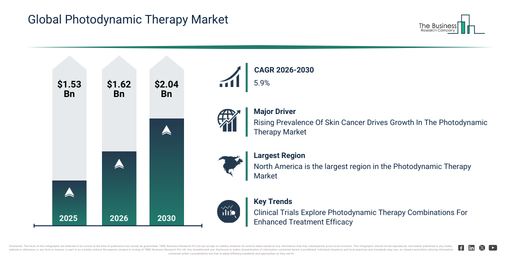
    The photodynamic therapy market has shown robust expansion in recent years. It is forecast to grow from $1.53 billion in 2025 to $1.62 billion in 2026, exhibiting a compound annual growth rate (CAGR) of 6.1%. The market’s historical development can be ascribed to factors such as the increasing prevalence of skin cancer and precancerous lesions, a greater embrace of minimally invasive therapies, the initial clinical validation of photosensitizers, an increasing understanding of non-surgical treatment alternatives, and the widespread availability of laser-based medical devices.

    The photodynamic therapy market is projected to experience substantial expansion in the coming years. Its value is anticipated to reach $2.04 billion by 2030, exhibiting a compound annual growth rate (CAGR) of 5.9%. This projected growth over the forecast period is fueled by several factors, including breakthroughs in new photosensitizer formulations, the broadening of its applications beyond cancer treatment, an increasing demand for therapies deliverable in outpatient settings, greater investment in infrastructure for cancer treatment, and a growing inclination towards targeted and precise therapeutic methods. Key developments expected during this period involve the greater use of photodynamic therapy in oncology, its increased acceptance in dermatology and aesthetic procedures, the creation of advanced photosensitizers, a move towards less invasive cancer treatments, and an uptick in the adoption of combination therapy approaches.

    Download the Free Sample Report to Explore Key Market Insights:

    https://www.thebusinessresearchcompany.com/sample.aspx?id=5246&type=smp

    Which Market Drivers Are Supporting The Expansion Of The Photodynamic Therapy Market?

    The increasing occurrence of skin cancer is contributing to the growth of the photodynamic therapy market. Skin cancer is noted as the most common cancer among all types. Melanoma accounts for only about 1% of skin cancers but is responsible for a significant number of skin cancer deaths. Photodynamic treatment (PDT) involves using a combination of a light-sensitizing medication and intense light to destroy cancer cells. A doctor applies a lotion containing light-sensitizing chemicals to the skin cancer and the surrounding region. For instance, in 2023, data from Cancer Australia, an Australia-based government agency, showed approximately 8,257 new cases of melanoma of the skin were diagnosed, making up 2.6% of all deaths from cancer. Therefore, the rising incidence of skin cancer is expected to drive the growth of the photodynamic therapy market in the foreseeable future.

    What Segmentation Levels Are Considered In The Photodynamic Therapy Market?

    The photodynamic therapy market covered in this report is segmented –

    1) By Product: Drugs, Devices

    2) By Application: Actinic Keratosis (AK), Cancer, Acne, Psoriasis, Other Applications

    3) By End-User: Cosmetics And Dermatology Clinics, Hospitals, Cancer Treatment Centers, Other End-Users

    Subsegments:

    1) By Drugs: Photosensitizers, Combination Drug Therapies, Novel Photosensitizer Formulations

    2) By Devices: Light Sources (Laser Systems, LED Systems), Delivery Devices (Fiber Optics, Handheld Devices), Treatment Systems (Portable Devices, Fixed Systems)

    What Trends Are Projected To Affect The Photodynamic Therapy Market?

    Leading companies within the photodynamic therapy (PDT) market are increasingly dedicating efforts to clinical trials aimed at assessing PDT in combination with various medications for improved therapeutic results. Photodynamic therapy itself involves employing compounds activated by light to specifically target and eliminate cancerous or diseased cells. As an illustration, Kintara Therapeutics, a US-based biotechnology firm, commenced a clinical trial in February 2024 for its REM-001 therapy, which targets cutaneous metastatic breast cancer (CMBC). This open-label study, identified as NCT05374915, involves 15 patients and evaluates REM-001, a second-generation PDT agent, at a 0.8 mg dose. The trial’s objective is to refine the study design prior to a Phase 3 trial, emphasizing the Best Overall Objective Response Rate (bORR) within 24 weeks, with primary endpoints assessing complete and partial responses in the treated areas.

    Which Leading Firms Are Contributing To The Growth Of The Photodynamic Therapy Market?

    Major companies operating in the photodynamic therapy market are Galderma S.A., Bausch Health, Lumenis Ltd., Biofrontera, Modlight Inc., PhotoMedex Inc., Soligenix Inc., Quest PharmaTech Inc., Theralase Technologies Inc., Quantel Medical, Axcan Pharma, Sihealth, MediGlobus, Steba Biotech, Ambicare Health, Nuovo Therapy, Pharmstandard, Rusatom Healthcare, Hologic Inc., Dusa Pharmaceuticals, PDT Pharma Indústria e Comércio de Produtos Farmacêuticos, MMOptics Ltd, Global Healthcare Solutions Perú, DMC Equipmentos LTDA, Biolite, SyMed LLC, Alma Lasers, Candela Medica, Velt International Group Inc.

    Read the full photodynamic therapy market report here:

    https://www.thebusinessresearchcompany.com/report/photodynamic-therapy-global-market-report

    How Is The Photodynamic Therapy Market Distributed Across Key Geographic Regions?

    North America was the largest region in the photodynamic therapy market in 2025. The regions covered in the photodynamic therapy market report are Asia-Pacific, South East Asia, Western Europe, Eastern Europe, North America, South America, Middle East, Africa.

    Request A Tailored Photodynamic Therapy Market Research Report For Competitive Advantage:

    https://www.thebusinessresearchcompany.com/customise?id=5246&type=smp

    Browse Through More Reports Similar to the Global Photodynamic Therapy Market 2026, By The Business Research Company

    Photodynamic Therapy Market Report 2026

    https://www.thebusinessresearchcompany.com/report/photodynamic-therapy-global-market-report

    Light Therapy Market Report 2026

    https://www.thebusinessresearchcompany.com/report/light-therapy-global-market-report

    Laser Photomask Market Report 2026

    https://www.thebusinessresearchcompany.com/report/laser-photomask-global-market-report

    Get in touch with us:

    The Business Research Company: https://www.thebusinessresearchcompany.com/

    Americas +1 310-496-7795

    Asia +44 7882 955267 & +91 8897263534

    Europe +44 7882 955267

    Email us at info@tbrc.info

    Follow us on:

    LinkedIn: https://in.linkedin.com/company/the-business-research-company

    YouTube: https://www.youtube.com/channel/UC24_fI0rV8cR5DxlCpgmyFQ

    Global Market Model: https://www.thebusinessresearchcompany.com/global-market-model
  • Biopharmaceutical expansion is fueling growth in the Phosphoramidite Market 2026

    Biopharmaceutical expansion is fueling growth in the Phosphoramidite Market 2026

    The Business Research Company’s 2026 market reports include new capabilities such as market attractiveness scoring and analysis, total addressable market analysis, company scoring matrix, interactive excel data dashboard, improved supply chain analysis, upcoming startups in the market, and overview of key products, aimed at improving the depth, usability, and strategic value of the insights delivered.

    What Market Size Increase Is Anticipated For The Phosphoramidite Market Over The 2026–2030 Period?

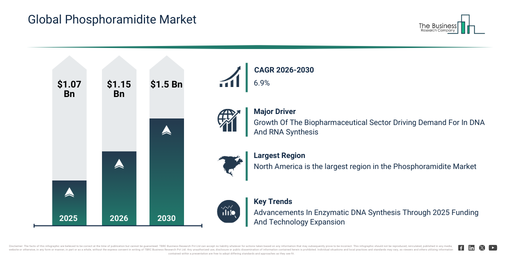
    The phosphoramidite market has experienced robust expansion over the past few years. It is projected to expand from $1.07 billion in 2025 to $1.15 billion by 2026, registering a compound annual growth rate (CAGR) of 7.1%. Historically, this growth can be attributed to an increase in DNA sequencing activities, the expansion of academic research funding, a greater use of synthetic nucleic acids, the development of solid-phase synthesis techniques, and rising demand for molecular diagnostics.

    The phosphoramidite market size is anticipated to experience robust expansion over the coming years. This market is projected to reach a valuation of $1.5 billion by 2030, demonstrating a compound annual growth rate (CAGR) of 6.9%. Key drivers for this growth during the projection period include the broadening scope of RNA-based therapeutics, advancements in gene editing technologies, heightened investment in pharmaceutical research and development, an increasing need for custom oligonucleotides, and the expansion of automated synthesis platforms. Significant trends identified for the forecast timeframe encompass an escalating requirement for oligonucleotide synthesis materials, the enlargement of gene therapy and RNA therapeutics applications, wider incorporation into diagnostic and research uses, increasing integration of automated solid-phase synthesis methods, and a sharpened emphasis on chemical inputs of high purity.

    Download the Free Sample Report to Explore Key Market Insights:

    https://www.thebusinessresearchcompany.com/sample.aspx?id=22096&type=smp

    What Underlying Factors Are Accelerating The Growth Of The Phosphoramidite Market?

    The expanding biopharmaceutical sector is anticipated to drive the future growth of the phosphoramidite market. This sector refers to the industry engaged in the research, development, production, and commercialization of biologically derived medical products, encompassing vaccines, gene therapies, monoclonal antibodies, and recombinant proteins. The expansion of the biopharmaceutical sector is a result of advancements in biotechnology, the increasing prevalence of chronic diseases, and greater investments in research and development. Biotechnology innovations, such as gene editing and monoclonal antibody therapies, have led to more effective and targeted treatments. For instance, in October 2025, the Office for National statistics, a UK-based government department, reported that in 2024, the UK life sciences industry consisted of 6,170 businesses operating across 7,320 sites, employing 359,600 people, and generating $191 billion (£146.9 billion) in turnover. The medical technology subsector was the largest by both company count and workforce, accounting for 60% of all companies and 55% of total employment. Thus, the growth of the phosphoramidite market is being propelled by the expansion of the biopharmaceutical sector.

    How Is The Phosphoramidite Market Segmented Across Key Categories?

    The phosphoramidite market covered in this report is segmented –

    1) By Type: Deoxyribonucleic Acid (DNA) Phosphoramidites, Ribonucleic Acid (RNA) Phosphoramidites, Labeled Phosphoramidites, Modifier Phosphoramidites, Other Types

    2) By Synthesis Method: H-Phosphonate Method, Phosphoramidite Method, Trivalent Phosphorus Compounds Method

    3) By Application: Gene Synthesis, Deoxyribonucleic Acid (DNA) Sequencing, Deoxyribonucleic Acid (DNA) Amplification

    4) By End-User: Academic Research, Pharmaceutical Industry, Biotechnology Industry

    Subsegments:

    1) By Deoxyribonucleic Acid (DNA) Phosphoramidites: Standard DNA Phosphoramidites, Degenerate DNA Phosphoramidites, Methylated DNA Phosphoramidites, Backbone-Modified DNA Phosphoramidites

    2) By Ribonucleic Acid (RNA) Phosphoramidites: Standard RNA Phosphoramidites, 2′-O-Methyl RNA Phosphoramidites, 2′-Fluoro RNA Phosphoramidites, 2′-O-TBDMS Protected RNA Phosphoramidites

    3) By Labeled Phosphoramidites: Fluorescent-Labeled Phosphoramidites, Biotin-Labeled Phosphoramidites, Digoxigenin-Labeled Phosphoramidites, Radioisotope-Labeled Phosphoramidites

    4) By Modifier Phosphoramidites: Amine-Modified Phosphoramidites, Thiol-Modified Phosphoramidites, Spacer Phosphoramidites, Azide-Modified Phosphoramidites

    5) By Other Types: Chimeric Phosphoramidites, Phosphorothioate Phosphoramidites, PEGylated Phosphoramidites, Photo-Cleavable Phosphoramidites

    Which Upcoming Trends Are Expected To Influence The Phosphoramidite Market?

    Leading entities within the phosphoramidite market are prioritizing the creation of advanced DNA synthesis methods, such as convertible-preferred stock financing rounds, to boost the implementation and advancement of Gibson SOLA technology for quick DNA and mRNA synthesis. This type of financing involves a company securing funds by issuing preferred shares, which possess the option to be converted into a set quantity of common shares at a future date. An illustrative example is from March 2025, when Telesis Bio Inc., a biotechnology firm based in the US, disclosed it had obtained new funding totaling up to $21 million. This capital injection is intended to hasten the market introduction of its innovative enzymatic DNA synthesis platform, Gibson SOLA, backed by various strategic investors. The purpose of these funds is to scale up the company’s entirely enzymatic DNA synthesis technology, expand its research and development as well as manufacturing capacities, and increase availability for fast, customizable production of long DNA. The firm employs a unique enzymatic strategy that facilitates the swift and accurate synthesis of extended DNA sequences, thereby resolving existing limitations linked to conventional phosphoramidite-based techniques.

    Who Are The Dominant Players Shaping The Phosphoramidite Market Landscape?

    Major companies operating in the phosphoramidite market are Thermo Fisher Scientific Inc., Agilent Technologies Inc., Aragen Life Sciences, Twist Bioscience, Innovassynth Technologies (I) Ltd., Tokyo Chemical Industry Co. Ltd. (TCI), Aurigene Services, Eurofins Genomics, LGC Biosearch Technologies, Link Technologies Ltd., Creative Biolabs, Biosynth Carbosynth, TriLink BioTechnologies, ChemGenes Corporation, Berry & Associates Inc., Lumiprobe Corporation, Hongene Biotech Corporation, Carbolink India Pvt. Ltd., PolyOrg Inc., Glen Research, Gene Link Inc., emp BIOTECH GmbH

    Read the full phosphoramidite market report here:

    https://www.thebusinessresearchcompany.com/report/phosphoramidite-global-market-report

    Which Region Is Projected To Dominate The Phosphoramidite Market During The Forecast Period?

    North America was the largest region in the phosphoramidite market in 2025. Europe is expected to be the fastest-growing region during the forecast period. The regions covered in the phosphoramidite market report are Asia-Pacific, South East Asia, Western Europe, Eastern Europe, North America, South America, Middle East, Africa.

    Request A Tailored Phosphoramidite Market Research Report For Competitive Advantage:

    https://www.thebusinessresearchcompany.com/customise?id=22096&type=smp

    Browse Through More Reports Similar to the Global Phosphoramidite Market 2026, By The Business Research Company

    Phosgene Market Report 2026

    https://www.thebusinessresearchcompany.com/report/phosgene-global-market-report

    Phosphoric Acid Market Report 2026

    https://www.thebusinessresearchcompany.com/report/phosphoric-acid-global-market-report

    Phosphonates Market Report 2026

    https://www.thebusinessresearchcompany.com/report/phosphonates-global-market-report

    Get in touch with us:

    The Business Research Company: https://www.thebusinessresearchcompany.com/

    Americas +1 310-496-7795

    Asia +44 7882 955267 & +91 8897263534

    Europe +44 7882 955267

    Email us at info@tbrc.info

    Follow us on:

    LinkedIn: https://in.linkedin.com/company/the-business-research-company

    YouTube: https://www.youtube.com/channel/UC24_fI0rV8cR5DxlCpgmyFQ

    Global Market Model: https://www.thebusinessresearchcompany.com/global-market-model
  • Advanced conjugation technologies are shaping the Protein Labeling Market 2026

    Advanced conjugation technologies are shaping the Protein Labeling Market 2026

    The Business Research Company’s 2026 market reports include new capabilities such as market attractiveness scoring and analysis, total addressable market analysis, company scoring matrix, interactive excel data dashboard, improved supply chain analysis, upcoming startups in the market, and overview of key products, aimed at improving the depth, usability, and strategic value of the insights delivered.

    How Large Is The Protein Labeling Market Projected To Become By 2030 Based On Its 2026 Valuation?

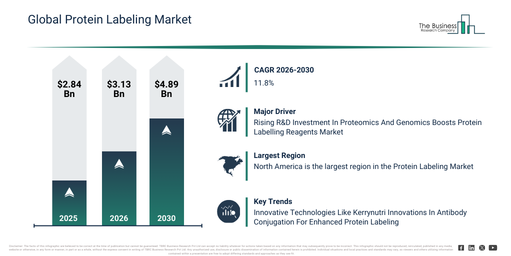
    The protein labeling market has seen rapid expansion in recent years. It is projected to increase from $2.84 billion in 2025 to $3.13 billion in 2026, demonstrating a compound annual growth rate (CAGR) of 10.1%. This historic growth can be attributed to several factors including the limited availability of specialized protein labels, a reliance on traditional fluorescent dyes, a growing demand for cell-based assays, increasing research in proteomics, and the adoption of enzyme-conjugated labeling techniques.

    The protein labeling market size is anticipated to experience substantial expansion over the next few years, reaching $4.89 billion by 2030, with a compound annual growth rate (CAGR) of 11.8%. This projected growth is attributed to the advancement of new fluorophore probes, increased utilization of recombinant and modified proteins, the rising adoption of automated labeling platforms, growth in proteomics and genomics research, and the growing integration of protein labeling with mass spectrometry and high-throughput assays. Significant trends expected during this forecast period include a surging demand for fluorescent and chemiluminescent protein labels, a greater use of recombinant and modified proteins for research, an increased embrace of in-vitro and in-vivo labeling techniques, the broadening of applications in cell-based assays and fluorescence microscopy, and the expanding incorporation of monoclonal antibodies in immunological techniques and protein micro assays.

    Download the Free Sample Report to Explore Key Market Insights:

    https://www.thebusinessresearchcompany.com/sample.aspx?id=3417&type=smp

    What Major Growth Drivers Are Shaping The Outlook Of The Protein Labeling Market?

    Elevated investment in the research and development (R&D) of proteomics and genomics is a primary factor driving the expansion of the protein labeling reagents market. Proteomics involves the comprehensive study of the entire protein content found within a cell, tissue, or organism. Crucially, protein labeling methods applied before separation and analysis are essential steps in proteomic profiling strategies. For example, in 2023, the Office for National Statistics, a UK-based, government agency, reported that the UK government’s net expenditure on research and development (R&D) climbed to £17.4 billion ($22.1 billion) in 2023. This figure represents an 8.2% increase from the £16.1 billion ($20.45 billion) allocated in 2022. Consequently, this rising spending on R&D in proteomics and genomics is a significant stimulant for the market.

    What Segment Groups Are Identified Within The Protein Labeling Market?

    The protein labeling market covered in this report is segmented –

    1) By Product: Reagents, Protein, Enzymes, Probes/ Tags, Monoclonal Antibodies

    2) By Labeling Method: In-vitro Labeling, In-vivo Labeling

    3) By Application: Cell Based-Assay, Fluorescence Microscopy, Immunological Techniques, Mass Spectrometry, Protein Micro Assay

    Subsegments:

    1) By Reagents: Fluorescent Dyes, Enzyme Labels, Chemiluminescent Reagents, Radioactive Labels

    2) By Protein: Recombinant Proteins, Native Proteins, Modified Proteins

    3) By Enzymes: Alkaline Phosphatase, Horseradish Peroxidase, Other Enzymatic Labels

    4) By Probes Or Tags: Biotin Labels, Antibody Tags, Fluorophore Probes, Affinity Tags

    5) By Monoclonal Antibodies: Primary Monoclonal Antibodies, Secondary Monoclonal Antibodies, Conjugated Monoclonal Antibodies

    What Trends Are Advancing Progress In The Protein Labeling Market?

    Leading companies in the protein labeling market are focused on developing innovative solutions such as the conjugation of antibodies to StarBright dyes to enhance detection sensitivity, multiplexing capabilities, and overall assay performance. StarBright dyes are bright, photostable fluorescent dyes specifically designed for high-performance labeling of antibodies and proteins. For example, in January 2025, Bio-Rad Laboratories Inc., a US-based life sciences company, launched the TrailBlazer Tag and TrailBlazer StarBright Dye Label Kits, enabling researchers to efficiently conjugate antibodies to StarBright dyes for advanced flow cytometry and imaging applications. These kits streamline the labeling process, improve signal clarity, and support complex multi-color experiments in biomedical research.

    Which Companies Hold Significant Positions In The Protein Labeling Market?

    Major companies operating in the protein labeling market are Thermo Fisher Scientific Inc., Merck KGaA, PerkinElmer Inc., GE HealthCare Technologies Inc., F. Hoffmann-La Roche AG, Agilent Technologies Inc., BIO-RAD LABORATORIES, LI-COR Inc., Promega Corporation, Eurogentec S.A., Luminex Corporation, New England Biolabs Inc., Abcam plc., TriLink BioTechnologies LLC., Waters Corporation, AMETEK Inc., HORIBA Ltd., Spectris plc., METTLER TOLEDO International Inc., Shimadzu Corporation, Hitachi High-Tech Corporation.

    Read the full protein labeling market report here:

    https://www.thebusinessresearchcompany.com/report/protein-labelings-global-market-report

    Which Regions Are Projected To Dominate The Protein Labeling Market In The Coming Years?

    North America was the largest region in the protein labeling market in 2025. The regions covered in the protein labeling market report are Asia-Pacific, South East Asia, Western Europe, Eastern Europe, North America, South America, Middle East, Africa.

    Request A Tailored Protein Labeling Market Research Report For Competitive Advantage:

    https://www.thebusinessresearchcompany.com/customise?id=3417&type=smp

    Browse Through More Reports Similar to the Global Protein Labeling Market 2026, By The Business Research Company

    Protein Expression Market Report 2026

    https://www.thebusinessresearchcompany.com/report/protein-expression-global-market-report

    Biostimulants Market Report 2026

    https://www.thebusinessresearchcompany.com/report/biostimulants-global-market-report

    Therapeutic Proteins Market Report 2026

    https://www.thebusinessresearchcompany.com/report/therapeutic-proteins-global-market-report

    Get in touch with us:

    The Business Research Company: https://www.thebusinessresearchcompany.com/

    Americas +1 310-496-7795

    Asia +44 7882 955267 & +91 8897263534

    Europe +44 7882 955267

    Email us at info@tbrc.info

    Follow us on:

    LinkedIn: https://in.linkedin.com/company/the-business-research-company

    YouTube: https://www.youtube.com/channel/UC24_fI0rV8cR5DxlCpgmyFQ

    Global Market Model: https://www.thebusinessresearchcompany.com/global-market-model
  • Increasing adoption of personalized medicine is driving the Protein Inhibitors Market 2026

    Increasing adoption of personalized medicine is driving the Protein Inhibitors Market 2026

    The Business Research Company’s 2026 market reports include new capabilities such as market attractiveness scoring and analysis, total addressable market analysis, company scoring matrix, interactive excel data dashboard, improved supply chain analysis, upcoming startups in the market, and overview of key products, aimed at improving the depth, usability, and strategic value of the insights delivered.

    What Market Value Is Anticipated For The Protein Inhibitors Market Over The Period 2026–2030?

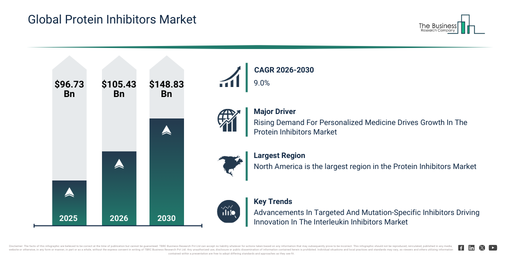
    The protein inhibitors market size has exhibited substantial growth in recent years. It is projected to increase from $96.73 billion in 2025 to $105.43 billion in 2026, reflecting a compound annual growth rate (CAGR) of 9.0%. The historical expansion can be attributed to factors such as the limited availability of protein inhibitor therapies, a dependence on conventional chemotherapy, the rising prevalence of cancer and inflammatory conditions, growing awareness of targeted treatments, and the utilization of hospital pharmacy distribution channels.

    The protein inhibitors market is projected to experience substantial expansion over the coming years. By 2030, its valuation is anticipated to reach $148.83 billion, driven by a compound annual growth rate (CAGR) of 9.0%. This forecasted growth stems from several factors, including the progress in selective and non-selective kinase inhibitors, advancements in biologic monoclonal antibodies, the increasing reach of online pharmacies and digital distribution channels, growing research efforts in protein degradation technologies, and heightened investment in customized protein inhibitor treatments. Key developments expected during this period involve an increasing call for targeted protein inhibitor therapies, an expansion in the use of protein kinase inhibitors in oncology, the broader application of monoclonal antibody-based treatments, a rise in the uptake of combination therapy products, and a strategic emphasis on small molecule and peptide-based inhibitors.

    Download the Free Sample Report to Explore Key Market Insights:

    https://www.thebusinessresearchcompany.com/sample.aspx?id=3429&type=smp

    What Drivers Are Expected To Influence The Protein Inhibitors Market During The Forecast Period?

    The future expansion of the protein inhibitors market is anticipated due to the increasing demand for personalized medicine. This approach involves customizing medical treatments based on a person’s distinct genetic profile, leading to more targeted and efficient healthcare solutions. Protein inhibitors play a vital role within personalized medicine, as they target particular proteins to address illnesses according to an individual’s genetic blueprint. For example, data from the Personalized Medicine Coalition, a US-based professional membership organization, revealed in February 2024 that the FDA had approved 16 novel personalized treatments for rare disease patients in 2023, a significant rise from six in 2022. Moreover, the PMC classifies about 34% of the 35 therapeutic NMEs, specifically 12 of them, as personalized medicines. Consequently, the expanding need for personalized medicine is a key factor propelling the growth of the protein inhibitors market.

    How Is The Protein Inhibitors Market Divided Into Its Major Segments?

    The protein inhibitors market covered in this report is segmented –

    1) By Product: Protein Kinase Inhibitors, Monoclonal Antibody, Other Products

    2) By Application: Oncology, Inflammatory Diseases, Other Applications

    3) By Distribution Channel: Hospital Pharmacies, Independent Pharmacies, Online Pharmacies

    Subsegments:

    1) By Protein Kinase Inhibitors: Selective Kinase Inhibitors, Non-selective Kinase Inhibitors, Small Molecule Kinase Inhibitors, Biologic Kinase Inhibitors

    2) By Monoclonal Antibodies: Chimeric Monoclonal Antibodies, Humanized Monoclonal Antibodies, Fully Human Monoclonal Antibodies, Conjugated Monoclonal Antibodies

    3) By Other Products: Peptide Inhibitors, Protein Degradation Technologies, Small Molecule Inhibitors, Combination Therapy Products

    How Are Trends Transforming The Protein Inhibitors Market Landscape?

    Companies operating in the protein inhibitors market are concentrating on developing innovative solutions like tyrosine kinase inhibitors to target specific signaling pathways, improve therapeutic efficacy, and enhance patient outcomes in treating cancer and other chronic diseases. A tyrosine kinase inhibitor (TKI) is a type of drug that obstructs the activity of tyrosine kinases, which are enzymes vital for activating proteins involved in cell signaling, growth, and division, thus helping to prevent the proliferation of cancerous or abnormal cells. For example, in April 2024, F. Hoffmann-La Roche AG, a Switzerland-based healthcare company, obtained approval from the FDA for Alecensa (alectinib) as the first adjuvant treatment for patients with ALK-positive early-stage non-small cell lung cancer (NSCLC) who have undergone surgery to remove their tumor.

    Who Are The Prominent Organizations Shaping The Protein Inhibitors Market?

    Major companies operating in the protein inhibitors market are Bayer AG, AstraZeneca plc, F. Hoffmann-La Roche Ltd., Teva Pharmaceutical Industries Ltd., Apotex Inc., Novartis International AG, GlaxoSmithKline plc, Pfizer Inc., Boehringer Ingelheim International GmbH, Abbott Laboratories, Amgen Inc., Baxter International Inc., Merck & Co. Inc., AbbVie Inc., Bristol Myers Squibb Company, Biogen Inc., Eli Lilly and Company, Gilead Sciences Inc., Johnson & Johnson, Regeneron Pharmaceuticals Inc., Sanofi S.A., Takeda Pharmaceutical Company Limited, Vertex Pharmaceuticals Inc., Lonza Group AG, Catalent Inc., Thermo Fisher Scientific Inc., Charles River Laboratories International Inc., WuXi AppTec Co. Ltd.

    Read the full protein inhibitors market report here:

    https://www.thebusinessresearchcompany.com/report/protein-inhibitor-global-market-report

    Which Region Is Forecast To Lead The Protein Inhibitors Market In Terms Of Market Size?

    North America was the largest region in the protein inhibitors market in 2025. The regions covered in the protein inhibitors market report are Asia-Pacific, South East Asia, Western Europe, Eastern Europe, North America, South America, Middle East, Africa.

    Request A Tailored Protein Inhibitors Market Research Report For Competitive Advantage:

    https://www.thebusinessresearchcompany.com/customise?id=3429&type=smp

    Browse Through More Reports Similar to the Global Protein Inhibitors Market 2026, By The Business Research Company

    Biologics Market 2026

    https://www.thebusinessresearchcompany.com/report/biologics-market

    Protein Expression Market Report 2026

    https://www.thebusinessresearchcompany.com/report/protein-expression-global-market-report

    Biostimulants Market Report 2026

    https://www.thebusinessresearchcompany.com/report/biostimulants-global-market-report

    Get in touch with us:

    The Business Research Company: https://www.thebusinessresearchcompany.com/

    Americas +1 310-496-7795

    Asia +44 7882 955267 & +91 8897263534

    Europe +44 7882 955267

    Email us at info@tbrc.info

    Follow us on:

    LinkedIn: https://in.linkedin.com/company/the-business-research-company

    YouTube: https://www.youtube.com/channel/UC24_fI0rV8cR5DxlCpgmyFQ

    Global Market Model: https://www.thebusinessresearchcompany.com/global-market-model
  • Rising chronic disease prevalence is fueling growth in the Protein Degradation Therapy Market 2026

    Rising chronic disease prevalence is fueling growth in the Protein Degradation Therapy Market 2026

    The Business Research Company’s 2026 market reports include new capabilities such as market attractiveness scoring and analysis, total addressable market analysis, company scoring matrix, interactive excel data dashboard, improved supply chain analysis, upcoming startups in the market, and overview of key products, aimed at improving the depth, usability, and strategic value of the insights delivered.

    What Is The Expected Market Size Of The Protein Hydrolysis Enzymes Market From 2026 To 2030?

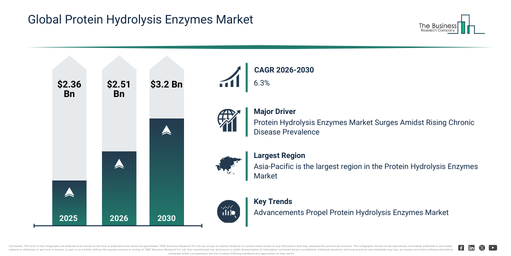
    The protein hydrolysis enzymes market has experienced robust expansion in recent years. It is anticipated to grow from $2.36 billion in 2025 to $2.51 billion in 2026, at a compound annual growth rate (CAGR) of 6.3%. The market’s past growth can be attributed to factors such as the rising demand for functional foods, increasing utilization of protein in animal feed, the expansion of dairy and beverage industries, advancements in fermentation techniques, and a growing awareness of protein quality.

    The protein hydrolysis enzymes market is projected for significant expansion in the coming years, anticipated to reach $3.2 billion by 2030, exhibiting a compound annual growth rate (CAGR) of 6.3%. Key factors driving this growth over the forecast period include the rising demand for plant-based protein items, the integration of enzyme solutions within nutraceuticals, the expansion of the processed food sector, a heightened focus on protein digestibility and bioavailability, and an increase in research and development within enzyme technology. Prominent trends expected during this period involve enzyme-based protein modification, advancements in plant-derived enzymes, the development of high-solubility protein formulations, the creation of low-viscosity protein solutions, and the emergence of specialty protein hydrolysates.

    Download the Free Sample Report to Explore Key Market Insights:

    https://www.thebusinessresearchcompany.com/sample.aspx?id=9113&type=smp

    What Drivers Are Influencing The Protein Hydrolysis Enzymes Market?

    The protein hydrolysis enzymes market is projected to grow due to the increasing incidence of chronic diseases. A chronic disease is characterized as a health condition that develops gradually or is persistent in individuals, often having long-lasting effects. With the assistance of enzymes, protein hydrolysis produces physiologically active peptides that can aid in preventing cancer and other diseases by modulating antioxidant enzymes, which are critical in controlling the body’s pro-inflammatory processes; thus, a rise in chronic disease prevalence is anticipated to boost the demand for protein hydrolysis enzymes. For instance, in June 2024, the National Health Service, a UK-based government department, indicated that 3,615,330 individuals registered with a general practitioner (GP) had been diagnosed with non-diabetic hyperglycemia or pre-diabetes (a condition with elevated blood sugar levels, not high enough to be classified as diabetes) in 2023, showing an 18% increase from 3,065,825 cases in 2022. Consequently, the rising prevalence of chronic diseases is stimulating the growth of the protein hydrolysis enzymes market.

    Which Segments Are Included In The Analysis Of The Protein Hydrolysis Enzymes Market?

    The protein hydrolysis enzymes market covered in this report is segmented –

    1) By Type: Microorganisms, Animals, Plants

    2) By Method Of Production: Extraction, Fermentation

    3) By Application: Detergent And Cleaning, Food And Beverage, Animal Feed, Textile, Dairy, Other Applications

    Subsegments:

    1) By Microorganisms: Bacterial Enzymes, Fungal Enzymes, Yeast-Derived Enzymes

    2) By Animals: Animal-Derived Enzymes, Rennet

    3) By Plants: Plant-Derived Enzymes, Seed-Derived Enzymes

    Which Trends Are Impacting The Growth Of The Protein Hydrolysis Enzymes Market?

    Leading companies operating within the protein hydrolysis enzyme market are prioritizing technological innovations, such as optimized enzyme blends, to improve nutrient digestion, boost animal performance, and address specific issues in livestock production. An optimized enzyme blend represents a carefully crafted combination of various enzymes designed to enhance the digestion and utilization of nutrients present in animal feed. For instance, in March 2023, International Flavors & Fragrances Inc., a US-based food and health ingredient provider, launched Axtra PRIME, a novel optimized enzyme blend created to improve nutrient digestion and enhance piglet performance in animal nutrition. This innovative product addresses key challenges in piglet production, especially during weaning, by integrating xylanase, beta-glucanase, alpha-amylase, and protease enzymes to facilitate healthier growth and more efficient feed utilization.

    Which Key Industry Participants Are Active In The Protein Hydrolysis Enzymes Market?

    Major companies operating in the protein hydrolysis enzymes market are Novozymes A/S, Royal DSM, DuPont de Nemours Inc., AB Enzymes GmbH, Advanced Enzyme Technologies, Dyadic International Inc., Jiangsu Boli Bioproducts Co. Ltd., Specialty Enzymes & Biotechnologies Co, Solvay Enzymes, Amano Enzyme Inc., Biocatalysts, Rossari Biotech Limited, Enzyme Solutions, DSM Nutritional Products, Chr. Hansen Holding A/S, Noor Enzymes, Enzyme Development Corporation, Enzyme Supplies Limited, Enzyme Innovation, Enzybel Group

    Read the full protein hydrolysis enzymes market report here:

    https://www.thebusinessresearchcompany.com/report/protein-hydrolysis-enzymes-global-market-report

    Which Regions Are Expected To Experience Rapid Expansion In The Protein Hydrolysis Enzymes Market?

    Asia-Pacific was the largest region in the protein hydrolysis enzymes market in 2025. Asia-Pacific is expected to be the fastest-growing region in the protein hydrolysis enzymes market during the forecast period. The regions covered in the protein hydrolysis enzymes market report are Asia-Pacific, South East Asia, Western Europe, Eastern Europe, North America, South America, Middle East, Africa.

    Request A Tailored Protein Hydrolysis Enzymes Market Research Report For Competitive Advantage:

    https://www.thebusinessresearchcompany.com/customise?id=9113&type=smp

    Browse Through More Reports Similar to the Global Protein Hydrolysis Enzymes Market 2026, By The Business Research Company

    Protein Hydrolysis Enzymes Market Report 2026

    https://www.thebusinessresearchcompany.com/report/protein-hydrolysis-enzymes-global-market-report

    Hydrolase Enzymes Market Report 2026

    https://www.thebusinessresearchcompany.com/report/hydrolase-enzymes-global-market-report

    Enzyme Market Report 2026

    https://www.thebusinessresearchcompany.com/report/enzyme-global-market-report

    Get in touch with us:

    The Business Research Company: https://www.thebusinessresearchcompany.com/

    Americas +1 310-496-7795

    Asia +44 7882 955267 & +91 8897263534

    Europe +44 7882 955267

    Email us at info@tbrc.info

    Follow us on:

    LinkedIn: https://in.linkedin.com/company/the-business-research-company

    YouTube: https://www.youtube.com/channel/UC24_fI0rV8cR5DxlCpgmyFQ

    Global Market Model: https://www.thebusinessresearchcompany.com/global-market-model
  • Global Protein Degradation Therapy Market 2026 evolving with targeted treatment innovations

    Global Protein Degradation Therapy Market 2026 evolving with targeted treatment innovations

    The Business Research Company’s 2026 market reports include new capabilities such as market attractiveness scoring and analysis, total addressable market analysis, company scoring matrix, interactive excel data dashboard, improved supply chain analysis, upcoming startups in the market, and overview of key products, aimed at improving the depth, usability, and strategic value of the insights delivered.

    What Market Valuation Is Forecasted For The Protein Degradation Therapy Market By 2030 Starting From Its 2026 Size?

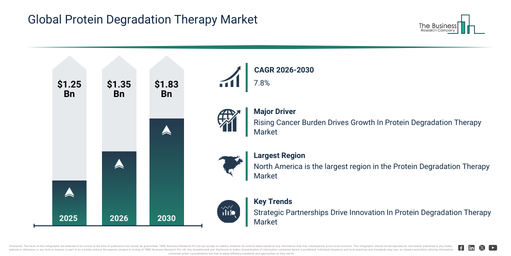
    The protein degradation therapy market has seen significant expansion in recent years. It is anticipated to grow from $1.25 billion in 2025 to $1.35 billion in 2026, at a compound annual growth rate (CAGR) of 8.1%. This past growth can be attributed to advancements in molecular biology research, the expansion of targeted cancer therapies, an increased understanding of protein dysfunction in diseases, early-stage clinical successes, and growing venture capital funding in biotech.

    The protein degradation therapy market is poised for significant expansion in the coming years, projected to reach $1.83 billion by 2030, exhibiting a compound annual growth rate (CAGR) of 7.8%. This anticipated growth is driven by factors such as a heightened demand for innovative cancer treatments, increasing investments in precision oncology, the broadening scope of protein degradation platforms, an uptick in clinical trial activity, and greater regulatory backing for advanced therapeutics. Key trends during this period are expected to encompass the accelerated development of targeted protein degraders, a sharpened focus on oncology applications, increased capital flowing into PROTAC-based therapies, an expanding pipeline of clinical candidates, and strengthened partnerships between pharmaceutical and biotechnology companies.

    Download the Free Sample Report to Explore Key Market Insights:

    https://www.thebusinessresearchcompany.com/sample.aspx?id=20603&type=smp

    What Drivers Are Shaping The Future Growth Of The Protein Degradation Therapy Market?

    The increasing burden of cancer is projected to drive the expansion of the protein degradation therapy market. Cancer refers to a collection of illnesses defined by the uncontrolled multiplication and spread of abnormal cells within the body. The rise in cancer rates is primarily attributable to multiple elements, with the aging population being a major contributor. Additionally, lifestyle habits such as smoking, inadequate diet, lack of exercise, and increasing rates of obesity have heightened the risk of various cancers. Protein degradation therapy is essential for cancer treatment because it selectively targets and eliminates specific proteins that promote cancer growth and survival, potentially overcoming resistance to conventional therapies. For instance, in February 2024, a report from the World Health Organization, a Switzerland-based intergovernmental organization, predicted that over 35 million new cancer cases are expected by 2050, marking a 77% increase from the estimated 20 million cases in 2022. Furthermore, high human development index (HDI) countries are anticipated to experience the largest growth in absolute numbers, with an additional 4.8 million new cases forecast in 2050 compared to 2022 estimates. Therefore, the growing incidence of cancer is propelling the growth of the protein degradation therapy market.

    Which Segment Categories Define The Protein Degradation Therapy Market?

    The protein degradation therapy market covered in this report is segmented –

    1) By Type: Bavdegalutamide (ARV – 110), Vepdegestrant (ARV – 471)

    2) By Application: Oncology, Neurodegenerative Diseases, Infectious Diseases, Other Applications

    3) By End-User: Pharmaceutical Companies, Biotechnology Companies, Academic And Research Institutes

    Subsegments:

    1) By Bavdegalutamide (ARV-110): Androgen Receptor Degraders, Prostate Cancer Therapy

    2) By Vepdegestrant (ARV-471): Estrogen Receptor Degraders, Breast Cancer Therapy

    What Major Market Trends Are Driving Changes In The Protein Degradation Therapy Market?

    Leading companies within the protein degradation therapy market are increasingly adopting a strategic alliance approach to foster the creation of novel treatments. These collaborations enable them to utilize complementary expertise, pool resources, and expedite the identification and advancement of new drug candidates aimed at disease-causing proteins. Such strategic partnerships involve organizations leveraging each other’s capabilities and assets for reciprocal advantages and collective achievements. For instance, in February 2024, Arvinas, a U.S.-based biotechnology firm, unveiled its inaugural oral PROTAC degrader, ARV-102. This innovative compound is specifically engineered to penetrate the blood-brain barrier and target LRRK2, intended for applications in neurodegenerative diseases. ARV-102 exhibits oral bioavailability, a brain-penetrant characteristic, and significant specificity for LRRK2. While this advancement enhances companies’ product pipelines by addressing targets previously considered intractable, challenges persist regarding long-term safety, manufacturing intricacies, and the refinement of pharmacokinetics given its larger molecular architecture.

    Who Are The Top Companies Competing In The Protein Degradation Therapy Market?

    Major companies operating in the protein degradation therapy market are Relay Therapeutics, Arvinas Holding Company LLC, Kymera Therapeutics, Nurix Therapeutics, Vividion Therapeutics, Mission Therapeutics Ltd., C4 Therapeutics Inc., Cullgen Inc., Frontier Medicines, Foghorn Therapeutics, Aileron Therapeutics, Ribometrix Inc., Nimbus Therapeutics, Jnana Therapeutics, KSQ Therapeutics, Stoke Therapeutics, Flare Therapeutics, Accent Therapeutics, Monte Rosa Therapeutics, Lycia Therapeutics, Dialectic Therapeutics, Amphista Therapeutics, Biotheryx Inc., Cedilla Therapeutics, Dewpoint Therapeutics Inc

    Read the full protein degradation therapy market report here:

    https://www.thebusinessresearchcompany.com/report/protein-degradation-therapy-global-market-report

    Which Geographic Regions Are Influencing Demand In The Protein Degradation Therapy Market?

    North America was the largest region in the protein degradation therapy market in 2025. Asia-Pacific is expected to be the fastest-growing region in the forecast period. The regions covered in the protein degradation therapy market report are Asia-Pacific, South East Asia, Western Europe, Eastern Europe, North America, South America, Middle East, Africa.

    Request A Tailored Protein Degradation Therapy Market Research Report For Competitive Advantage:

    https://www.thebusinessresearchcompany.com/customise?id=20603&type=smp

    Browse Through More Reports Similar to the Global Protein Degradation Therapy Market 2026, By The Business Research Company

    Home Infusion Therapy Market Report 2026

    https://www.thebusinessresearchcompany.com/report/home-infusion-therapy-global-market-report

    Car T Therapy Market Report 2026

    https://www.thebusinessresearchcompany.com/report/car-t-therapy-global-market-report

    Aromatherapy Market Report 2026

    https://www.thebusinessresearchcompany.com/report/aromatherapy-global-market-report

    Get in touch with us:

    The Business Research Company: https://www.thebusinessresearchcompany.com/

    Americas +1 310-496-7795

    Asia +44 7882 955267 & +91 8897263534

    Europe +44 7882 955267

    Email us at info@tbrc.info

    Follow us on:

    LinkedIn: https://in.linkedin.com/company/the-business-research-company

    YouTube: https://www.youtube.com/channel/UC24_fI0rV8cR5DxlCpgmyFQ

    Global Market Model: https://www.thebusinessresearchcompany.com/global-market-model
  • Proteasome Inhibitors Market 2026 showing steady demand growth

    Proteasome Inhibitors Market 2026 showing steady demand growth

    The Business Research Company’s 2026 market reports include new capabilities such as market attractiveness scoring and analysis, total addressable market analysis, company scoring matrix, interactive excel data dashboard, improved supply chain analysis, upcoming startups in the market, and overview of key products, aimed at improving the depth, usability, and strategic value of the insights delivered.

    How Is The Market Size Of The Proteasome Inhibitors Market Expected To Change Between 2026 And 2030?

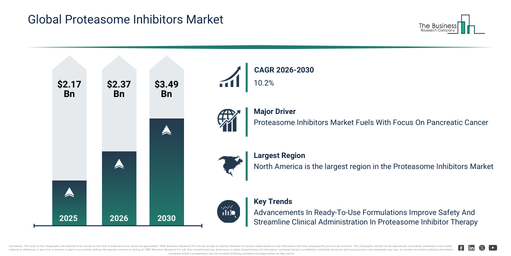
    The proteasome inhibitors market size has experienced robust growth in recent years. It is projected to expand from $2.17 billion in 2025 to $2.37 billion in 2026, demonstrating a compound annual growth rate (CAGR) of 9.2%. The expansion observed in the historic period stems from factors such as the approval of first proteasome inhibitors, the increasing prevalence of multiple myeloma, rising investment in oncology research, advancements in cancer diagnostics, and the growth of hospital oncology departments.

    The proteasome inhibitors market size is anticipated to see considerable expansion over the next few years. It is projected to increase to $3.49 billion in 2030, demonstrating a compound annual growth rate (CAGR) of 10.2%. The anticipated growth during this period can be attributed to the expanding proteasome inhibitor pipeline, the integration of AI in drug discovery, a growing demand for combination therapies, the development of oral formulations, and the emergence of oncology markets. Key trends expected in the forecast period include personalized cancer therapies, targeted proteasome inhibition, the advancement of combination therapy, improved drug delivery systems, and the expansion of clinical trials.

    Download the Free Sample Report to Explore Key Market Insights:

    https://www.thebusinessresearchcompany.com/sample.aspx?id=12251&type=smp

    Which Economic Or Industry Drivers Are Impacting The Proteasome Inhibitors Market?

    The increasing incidence of pancreatic cancer is projected to fuel the expansion of the Proteasome Inhibitors Market moving forward. Pancreatic cancer is a malignancy that originates in the cells of the pancreas, an organ situated in the abdomen behind the stomach. Proteasome inhibitors are predominantly utilized in the treatment of pancreatic cancer, where the proteasome plays a crucial role in promoting cell survival and proliferation by degrading proteins that regulate cell cycle progression and cell death. It effectively disrupts cancer cell survival and hinders tumor growth and metastasis. For example, in January 2024, reports from the American Cancer Society, a US-based health organization, indicated that an estimated 64,050 adults in the US were diagnosed with pancreatic cancer by 2023, and 50,550 people died from it. Furthermore, these numbers climbed to 66,440 diagnoses and 51,750 deaths. Consequently, the rising prevalence of pancreatic cancer is driving the growth of the Proteasome Inhibitors Market. Elevated government funding for research and development is anticipated to propel the growth of the Proteasome Inhibitors Market in the coming years. Government funding refers to financial resources provided by a government to support a specific objective. This funding plays a significant role in advancing proteasome inhibitor research by offering financial support for scientific investigations, clinical trials, and drug development efforts. For instance, in September 2023, the National Cancer Institute, a US-based government agency, received a budget of $7.3 billion from the United States Congress for fiscal year 2023, marking a $408 million increase over 2022. Therefore, increasing government funding for research and development is a key factor driving the growth of the Proteasome Inhibitors Market.

    How Is The Proteasome Inhibitors Market Structured Across Different Segments?

    The proteasome inhibitors market covered in this report is segmented –

    1) By Product: Velcade, Kyprolis, Ninlaro, Other Products

    2) By Drugs: Bortezomib, Carfilzomib, Ixazomib

    3) By Indication: Lymphoma, Mantle Cell Lymphoma, Multiple Myeloma

    4) By Distribution Channel: Hospital Pharmacy, Online Pharmacy, Retail Pharmacy

    5) By End-User: Hospital, Specialty Clinics, Other End-Users

    Subsegments:

    1) By Velcade: Injectable Velcade (Bortezomib), Oral Formulations

    2) By Kyprolis: Injectable Kyprolis (Carfilzomib), Combination Therapies With Kyprolis

    3) By Ninlaro: Oral Ninlaro (Ixazomib), Combination Therapies With Ninlaro

    4) By Other Products: Investigational Proteasome Inhibitors, Combination Products

    Which Trends Are Shaping The Future Of The Proteasome Inhibitors Market?

    Key companies active in the proteasome inhibitors market are concentrating on introducing sophisticated, ready-to-use formulations to enhance treatment effectiveness, simplify clinical procedures, and improve patient safety. Ready-to-use injectable products eliminate the necessity for on-site reconstitution, thereby reducing preparation time, decreasing the likelihood of dosing errors, and supporting more efficient oncology care. For example, in April 2025, Amneal Pharmaceuticals Inc., a US-based specialty pharmaceutical company, launched BORUZU, which is the first ready-to-use bortezomib injection indicated for multiple myeloma and mantle cell lymphoma. This particular formulation is designed to streamline clinical workflow by enabling direct administration without reconstitution, assisting healthcare providers in delivering faster and more reliable proteasome inhibitor therapy in both outpatient and hospital settings.

    Which Major Players Dominate The Proteasome Inhibitors Market?

    Major companies operating in the proteasome inhibitors market are Pfizer Inc., Johnson And Johnson, Onyx Pharmaceuticals Inc., Progenra Inc., Nurix Inc., Cephalon Inc., Cleave Therapeutics, Apotex Inc., Amgen Inc., Takeda Pharmaceutical Company Limited, Millennium Pharmaceuticals, Bristol-Myers Squibb Company, Janssen Pharmaceuticals, AbbVie, Karyopharm Therapeutics, OncoArendi Therapeutics, Novartis AG, GlaxoSmithKline plc, Sanofi S.A., Eli Lilly and Company

    Read the full proteasome inhibitors market report here:

    https://www.thebusinessresearchcompany.com/report/proteasome-inhibitors-global-market-report

    What Are The Top-Performing Regions Within The Proteasome Inhibitors Market?

    North America was the largest region in the proteasome inhibitors market in 2025. The regions covered in the proteasome inhibitors market report are Asia-Pacific, South East Asia, Western Europe, Eastern Europe, North America, South America, Middle East, Africa.

    Request A Tailored Proteasome Inhibitors Market Research Report For Competitive Advantage:

    https://www.thebusinessresearchcompany.com/customise?id=12251&type=smp

    Browse Through More Reports Similar to the Global Proteasome Inhibitors Market 2026, By The Business Research Company

    Proteasome Inhibitors Market Report 2026

    https://www.thebusinessresearchcompany.com/report/proteasome-inhibitors-global-market-report

    Proteases Market Report 2026

    https://www.thebusinessresearchcompany.com/report/proteases-global-market-report

    Serine Proteases Market Report 2026

    https://www.thebusinessresearchcompany.com/report/serine-proteases-global-market-report

    Get in touch with us:

    The Business Research Company: https://www.thebusinessresearchcompany.com/

    Americas +1 310-496-7795

    Asia +44 7882 955267 & +91 8897263534

    Europe +44 7882 955267

    Email us at info@tbrc.info

    Follow us on:

    LinkedIn: https://in.linkedin.com/company/the-business-research-company

    YouTube: https://www.youtube.com/channel/UC24_fI0rV8cR5DxlCpgmyFQ

    Global Market Model: https://www.thebusinessresearchcompany.com/global-market-model