Month: March 2026

  • Plant-Based API Market 2026–2035 gaining momentum with sustainable pharma trends

    Plant-Based API Market 2026–2035 gaining momentum with sustainable pharma trends

    The Business Research Company’s 2026 market reports include new capabilities such as market attractiveness scoring and analysis, total addressable market analysis, company scoring matrix, interactive excel data dashboard, improved supply chain analysis, upcoming startups in the market, and overview of key products, aimed at improving the depth, usability, and strategic value of the insights delivered.

    How Is The Market Size Of The Plant-Based Active Pharmaceutical Ingredients (API) Market Expected To Change Between 2026 And 2030?

    The plant-based active pharmaceutical ingredients (api) market size has demonstrated significant expansion in recent years. Its projected trajectory indicates an increase from $32.08 billion in 2025 to $34.2 billion by 2026, achieving a compound annual growth rate (CAGR) of 6.6%. This historic growth is largely a result of various factors, including the wider adoption of traditional medicine, the accessible supply of medicinal plants, the economic benefits offered over synthetic APIs, the development of herbal drug formulations, and a heightened consumer inclination towards natural products.

    The plant-based active pharmaceutical ingredients (api) market is projected to experience substantial expansion over the upcoming years. This market is anticipated to reach a valuation of $44.05 billion by 2030, demonstrating a compound annual growth rate (CAGR) of 6.5%. The projected growth during this period is primarily driven by factors such as API sourcing focused on sustainability, the broadening of plant-based drug development pipelines, the increasing convergence of nutraceuticals and pharmaceuticals, advancements in standardization methodologies, and the worldwide demand for environmentally friendly pharmaceutical products. Key trends foreseen for the forecast period encompass an escalating demand for natural and herbal APIs, the advancement of phytochemical extraction techniques, the expanding application of plant APIs in the treatment of chronic conditions, greater regulatory approval for herbal APIs, and a general move towards more sustainable API sourcing practices.

    Download the Free Sample Report to Explore Key Market Insights:

    https://www.thebusinessresearchcompany.com/sample.aspx?id=23477&type=smp

    What Drivers Are Expected To Influence The Plant-Based Active Pharmaceutical Ingredients (API) Market During The Forecast Period?

    An increasing consumer inclination towards natural and organic items is anticipated to fuel the expansion of the plant-based active pharmaceutical ingredients (API) market moving ahead. Such products are defined as those created from naturally derived components, undergoing minimal processing, and devoid of synthetic chemicals and genetically modified organisms (GMOs). This rising preference is driven by heightened health consciousness and anxieties surrounding synthetic chemicals, as individuals grow more aware of the potential hazards linked to artificial ingredients. Plant-based active pharmaceutical ingredients (APIs) complement natural and organic offerings by providing potent, chemical-free therapeutic advantages, thereby aligning with consumer desires for clean, secure, and sustainable healthcare alternatives. Illustrating this trend, data from April 2025 provided by the Organic Trade Association, a US-based membership-based business association, shows that U.S. sales of certified organic products experienced significant growth in 2024, increasing by 5.2%. This rate was more than double the 2.5% growth observed in the overall market, with organic sales reaching a record $71.6 billion for the year. Consequently, the increasing consumer partiality for natural and organic products is actively propelling the expansion of the plant-based active pharmaceutical ingredients (API) market.

    How Is The Plant-Based Active Pharmaceutical Ingredients (API) Market Structured Across Different Segments?

    The plant-based active pharmaceutical ingredients (api) market covered in this report is segmented –

    1) By Product Type: Alkaloids, Glycosides, Cannabinoids, Flavonoid, Terpenes And Terpenoids, Polyphenols, Saponins, Other Product Types

    2) By Source: Leaves, Roots, Bark, Flowers, Seeds, Fruits, Resin And Gums, Other Sources

    3) By Distribution Channel: Online Retailers, Supermarkets Or Hypermarkets, Specialty Food Stores, Foodservice

    4) By End-Use: Pharmaceuticals, Nutraceuticals, Herbal Based Industries, Other End-Uses

    Subsegments:

    1) By Alkaloids: Morphine Alkaloids, Tropane Alkaloids, Quinolizidine Alkaloids, Indole Alkaloids, Isoquinoline Alkaloids, Pyrrolizidine Alkaloids

    2) By Glycosides: Cardiac Glycosides, Anthraquinone Glycosides, Flavonoid Glycosides, Saponin Glycosides, Cyanogenic Glycosides

    3) By Cannabinoids: Tetrahydrocannabinol (THC), Cannabidiol (CBD), Cannabigerol (CBG), Cannabichromene (CBC), Cannabinol (CBN)

    4) By Flavonoid: Flavones, Flavonols, Isoflavones, Flavanones, Anthocyanins

    5) By Terpenes And Terpenoids: Monoterpenes, Sesquiterpenes, Diterpenes, Triterpenes, Tetraterpenes

    6) By Polyphenols: Phenolic Acids, Stilbenes, Lignans, Flavonoid Polyphenols

    7) By Saponins: Steroidal Saponins, Triterpenoid Saponins

    8) By Other Product Types: Coumarins, Tannins, Lignins, Phenolic Glycosides

    Which Trends Are Shaping The Future Of The Plant-Based Active Pharmaceutical Ingredients (API) Market?

    Leading companies operating in the plant-based active pharmaceutical ingredients (API) market are focusing on developing innovative products, such as plant-based squalene, to provide sustainable and ethical alternatives to traditional animal-derived sources. Plant-based squalene serves as a sustainable and ethical alternative to shark-derived squalene, sourced from plants like amaranth, olives, and sugarcane for use in pharmaceuticals, cosmetics, and vaccines. For instance, in October 2023, Evonik Industries AG, a Germany-based specialty chemicals company, launched PhytoSquene, the first GMP-quality, plant-based squalene derived from amaranth oil. This innovation presents a sustainable alternative to shark-derived squalene, while ensuring high purity, batch-to-batch consistency, and compliance with European Pharmacopoeia (Ph. Eur.) standards. Squalene plays a crucial role in vaccine adjuvants, enhancing immune response. By offering a plant-based option, PhytoSquene addresses biodiversity concerns, reduces reliance on animal sources, and meets cultural and religious preferences.

    Which Major Players Dominate The Plant-Based Active Pharmaceutical Ingredients (API) Market?

    Major companies operating in the plant-based active pharmaceutical ingredients (api) market are Indena S.p.A., Centroflora Group, Alkaloids Corporation, Alchem International Pvt. Ltd., C2 Pharma, Brains Bioceutical Corp., Bright Green Corporation, Sichuan Xieli Pharmaceutical Co. Ltd., Roquette Frères, Koninklijke DSM N.V., Evonik Industries AG, Sun Pharmaceutical Industries Ltd., Aurobindo Pharma Limited, Alembic Pharmaceuticals Ltd., Seppic, PAI Pharma, SCL Lifesciences Ltd., AMGIS Lifescience Ltd., Organotechnie, HimPharm

    Read the full plant-based active pharmaceutical ingredients (api) market report here:

    https://www.thebusinessresearchcompany.com/report/plant-based-active-pharmaceutical-ingredients-api-global-market-report

    Which Region Is Forecast To Lead The Plant-Based Active Pharmaceutical Ingredients (API) Market In Terms Of Market Size?

    North America was the largest region in the plant-based active pharmaceutical ingredients (API) market in 2025. Asia-Pacific is expected to be the fastest-growing region in the forecast period. The regions covered in the plant-based active pharmaceutical ingredients (api) market report are Asia-Pacific, South East Asia, Western Europe, Eastern Europe, North America, South America, Middle East, Africa.

    Request A Tailored Plant-Based Active Pharmaceutical Ingredients (API) Market Research Report For Competitive Advantage:

    https://www.thebusinessresearchcompany.com/customise?id=23477&type=smp

    Browse Through More Reports Similar to the Global Plant-Based Active Pharmaceutical Ingredients (API) Market 2026, By The Business Research Company

    Active Pharmaceutical Ingredients Market Report 2026

    https://www.thebusinessresearchcompany.com/report/active-pharmaceutical-ingredients-global-market-report

    Pharmaceuticals Market 2026

    https://www.thebusinessresearchcompany.com/report/pharmaceuticals-market

    Veterinary Active Pharmaceutical Ingredients Manufacturing Market Report 2026

    https://www.thebusinessresearchcompany.com/report/veterinary-active-pharmaceutical-ingredients-manufacturing-global-market-report

    Get in touch with us:

    The Business Research Company: https://www.thebusinessresearchcompany.com/

    Americas +1 310-496-7795

    Asia +44 7882 955267 & +91 8897263534

    Europe +44 7882 955267

    Email us at info@tbrc.info

    Follow us on:

    LinkedIn: https://in.linkedin.com/company/the-business-research-company

    YouTube: https://www.youtube.com/channel/UC24_fI0rV8cR5DxlCpgmyFQ

    Global Market Model: https://www.thebusinessresearchcompany.com/global-market-model
  • Pimozide Tablet Market Outlook 2026–2030 driven by neurological disorder treatments

    Pimozide Tablet Market Outlook 2026–2030 driven by neurological disorder treatments

    The Business Research Company’s 2026 market reports include new capabilities such as market attractiveness scoring and analysis, total addressable market analysis, company scoring matrix, interactive excel data dashboard, improved supply chain analysis, upcoming startups in the market, and overview of key products, aimed at improving the depth, usability, and strategic value of the insights delivered.

    What Is The Market Size Of The Pimozide Tablet Market In 2026 And What Value Is Projected For 2030?

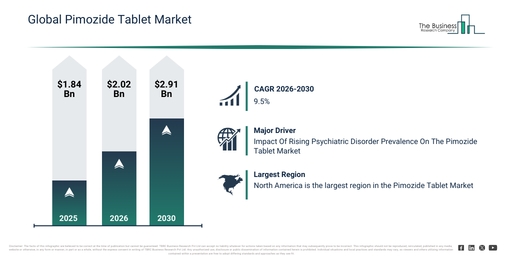
    The pimozide tablet market has witnessed significant expansion in recent years. It is projected to expand from $1.84 billion in 2025 to $2.02 billion in 2026, exhibiting a compound annual growth rate (CAGR) of 9.9%. The historical growth in this market can be ascribed to several factors, including restricted treatment options for Tourette’s Syndrome, an escalating prevalence of chronic schizophrenia, the expansion of hospital and clinic infrastructure, increasing awareness of antipsychotic therapies, and a reliance on traditional offline pharmacies.

    The pimozide tablet market is poised for substantial expansion over the upcoming years. It is projected to achieve a size of $2.91 billion by 2030, exhibiting a compound annual growth rate (CAGR) of 9.5%. This growth during the forecast period is fueled by several factors, including the development of low-dose and unit-dose pimozide tablets, the widening reach of online pharmacy platforms, an increase in home healthcare adoption, enhanced government mental health initiatives, and the integration of digital adherence monitoring tools. Furthermore, significant trends expected in this period involve a heightened awareness of Tourette’s syndrome and chronic schizophrenia, a growing preference for oral antipsychotic medications, the expansion of home-based mental health care and therapy services, the broadening of online pharmaceutical distribution channels, and the innovation of personalized dosing and packaging alternatives.

    Download the Free Sample Report to Explore Key Market Insights:

    https://www.thebusinessresearchcompany.com/sample.aspx?id=19655&type=smp

    What Drivers Are Influencing The Pimozide Tablet Market?

    The rising prevalence of psychiatric disorders is anticipated to propel the growth of the pimozide tablet market moving forward. Psychiatric disorders are mental health conditions marked by notable disturbances in thoughts, emotions, or behaviors, resulting in distress or impaired functioning. The increasing occurrence of psychiatric disorders is primarily linked to factors such as elevated stress levels, shifting societal norms, enhanced awareness and diagnosis, and genetic predispositions. Pimozide tablets are used in psychiatric disorders to manage symptoms like delusions and tics by blocking dopamine receptors, thereby aiding in the reduction of abnormal brain activity. For instance, in August 2025, according to the Substance Abuse and Mental Health Services Administration (SAMHSA), a US-based federal agency, 23.4% of adults aged 18 or older (approximately 61.5 million people) experienced any mental illness (AMI), with about 5.6% reporting a serious mental illness (SMI). Comparatively, in 2023, 22.8% (58.7 million people) and 5.7% (14.6 million people) of adults reported AMI and SMI, respectively. Thus, the growing prevalence of psychiatric disorders is driving the pimozide tablet market. The increase in healthcare expenditure is expected to fuel the expansion of the pimozide tablet market in the future. Healthcare expenditures are escalating due to the rising cost of advanced medical technologies, aging populations, and the widespread presence of chronic diseases. Growing healthcare spending boosts the demand for pimozide tablets by improving access to mental health treatments and supporting broader insurance coverage for psychiatric medications. For example, in May 2024, data from the Office for National Statistics, a UK-based government department, revealed that healthcare expenditure in the UK rose from £277 ($319.91) billion in 2022 to £292 ($337.23) billion in 2023, reflecting a nominal increase compared to the prior year. Therefore, the increase in healthcare expenditure is driving the growth of the pimozide tablet market.

    What Are The Key Segments Of The Pimozide Tablet Market?

    The pimozide tablet market covered in this report is segmented –

    1) By Type: 1 Milligram, 2 Milligram, 4 Milligram

    2) By Distribution Channel: Online, Offline

    3) By Application: Tourette’s Syndrome, Chronic Schizophrenia

    4) By End User: Hospitals, Clinics, Home Use

    Who Are The Leading Companies Operating In The Pimozide Tablet Market?

    Major companies operating in the pimozide tablet market are Pfizer Inc., Johnson & Johnson, AbbVie Inc., Novartis AG, Bristol-Myers Squibb, GlaxoSmithKline plc, C.H. Boehringer Sohn AG & Co. KG, Teva Pharmaceutical Industries Ltd., Hetero Drugs, Sun Pharmaceutical Industries Ltd., Jazz Pharmaceuticals, Aurobindo Pharma, Cipla Limited, Apotex Inc., H. Lundbeck A/S, Dr. Reddy’s Laboratories, Hikma Pharmaceuticals, Amneal Pharmaceuticals, Endo International, Lupin Limited, Zydus Cadila, Alkem Laboratories, Torrent Pharmaceuticals, Glenmark Pharmaceuticals, Mallinckrodt Pharmaceuticals, Jubilant Life Sciences, Alembic Pharmaceuticals, Wockhardt, AA Pharma, Taj Pharmaceuticals

    Read the full pimozide tablet market report here:

    https://www.thebusinessresearchcompany.com/report/pimozide-tablet-global-market-report

    Which Regions Are Expected To Experience Rapid Expansion In The Pimozide Tablet Market?

    North America was the largest region in the pimozide tablet market in 2025. The regions covered in the pimozide tablet market report are Asia-Pacific, South East Asia, Western Europe, Eastern Europe, North America, South America, Middle East, Africa.

    Request A Tailored Pimozide Tablet Market Research Report For Competitive Advantage:

    https://www.thebusinessresearchcompany.com/customise?id=19655&type=smp

    Browse Through More Reports Similar to the Global Pimozide Tablet Market 2026, By The Business Research Company

    Smart Phone Tablet Games Market Report 2026

    https://www.thebusinessresearchcompany.com/report/smart-phone-tablet-games-global-market-report

    Tablets Market Report 2026

    https://www.thebusinessresearchcompany.com/report/tablets-global-market-report

    Multivitamin Capsules And Tablets Market Report 2026

    https://www.thebusinessresearchcompany.com/report/multivitamin-capsules-and-tablets-global-market-report

    Get in touch with us:

    The Business Research Company: https://www.thebusinessresearchcompany.com/

    Americas +1 310-496-7795

    Asia +44 7882 955267 & +91 8897263534

    Europe +44 7882 955267

    Email us at info@tbrc.info

    Follow us on:

    LinkedIn: https://in.linkedin.com/company/the-business-research-company

    YouTube: https://www.youtube.com/channel/UC24_fI0rV8cR5DxlCpgmyFQ

    Global Market Model: https://www.thebusinessresearchcompany.com/global-market-model

  • Expanding animal feed demand is boosting the Phytogenic Feed Additives Market 2026

    Expanding animal feed demand is boosting the Phytogenic Feed Additives Market 2026

    The Business Research Company’s 2026 market reports include new capabilities such as market attractiveness scoring and analysis, total addressable market analysis, company scoring matrix, interactive excel data dashboard, improved supply chain analysis, upcoming startups in the market, and overview of key products, aimed at improving the depth, usability, and strategic value of the insights delivered.

    What Will Be The Estimated Market Valuation Of The Phytogenic Feed Additives Market By The End Of 2030?

    The phytogenic feed additives market has experienced robust growth in recent years. This market is projected to expand from $1.17 billion in 2025 to $1.26 billion in 2026, demonstrating a compound annual growth rate (CAGR) of 7.9%. Historically, this expansion has been driven by factors such as regulatory bans on antibiotic growth promoters, rising demand for animal protein, the traditional incorporation of herbs and spices in feed, the broadening of commercial livestock farming, and a heightened awareness of animal gut health.

    The phytogenic feed additives market is projected to experience robust expansion over the coming years, with its valuation set to reach $1.71 billion by 2030, demonstrating a compound annual growth rate (CAGR) of 7.9%. This projected increase stems from several factors, including the rise in sustainable animal farming practices, a growing demand for antibiotic-free meat, the broadening of aquaculture feed applications, developments in plant extract technologies, and an enhanced emphasis on animal welfare. Key trends anticipated during this period encompass the increasing integration of these additives as antibiotic alternatives in animal feed, a heightened need for natural growth promoters, their expanded application in poultry and livestock nutrition, the development of organic and sustainable feed options, and a greater concentration on animal gut health and feed efficiency.

    Download the Free Sample Report to Explore Key Market Insights:

    https://www.thebusinessresearchcompany.com/sample.aspx?id=24379&type=smp

    What Drivers Are Shaping The Future Growth Of The Phytogenic Feed Additives Market?

    The expanding animal feed industry is projected to drive the future growth of the phytogenic feed additives market. This industry involves the manufacturing, processing, and distribution of feed items formulated to fulfill the dietary requirements of animals such as livestock, poultry, and aquaculture. The expansion of the animal feed sector is largely a result of the escalating global demand for animal protein, fueled by a rising population and evolving dietary patterns. Phytogenic feed additives bolster the animal feed industry by delivering natural, plant-derived solutions that enhance animal health and overall performance. They contribute to robust gut health, improved immunity, and optimized growth, supporting sustainable and efficient livestock production. For example, as reported in July 2024 by the Department for Environment, Food and Rural Affairs, a UK-based government department, total animal feed production amounted to 31,128 tonnes in 2023, an increase from 29,397 tonnes in 2022. Hence, the increasing animal feed industry is a significant impetus behind the growth of the phytogenic feed additives market.

    Which Segment Classifications Shape The Phytogenic Feed Additives Market?

    The phytogenic feed additives market covered in this report is segmented –

    1) By Type: Essential Oils, Flavonoids, Saponins, Oleoresins, Other Types

    2) By Form: Powder, Liquid, Granules

    3) By Application: Antimicrobial Effect, Digestion Enhancement, Growth Promotion, Other Applications

    4) By End-Use Industry: Animal Feed Industry, Pet Food Industry, Aquaculture Industry

    Subsegments:

    1) By Essential Oils: Thyme Oil, Oregano Oil, Peppermint Oil, Eucalyptus Oil, Garlic Oil

    2) By Flavonoids: Citrus Flavonoids, Soy Flavonoids, Tea Flavonoids

    3) By Saponins: Quillaja Saponins, Yucca Saponins

    4) By Oleoresins: Capsicum Oleoresin, Turmeric Oleoresin, Paprika Oleoresin, Ginger Oleoresin

    5) By Other Types: Tannins, Alkaloids, Limonoids, Terpenoids

    How Are Trends Impacting The Phytogenic Feed Additives Market?

    Leading companies in the phytogenic feed additives market are prioritizing the development of innovative offerings, including shrimp supplementation products, to boost growth, strengthen immune health, and increase overall efficiency in shrimp production. A shrimp supplementation product is characterized as a feed additive or nutritional supplement specifically formulated to improve the growth, health, immunity, and general performance of shrimp within aquaculture settings. For example, in April 2023, Kemin AquaScience, a US-based biotechnology research company, introduced Pathorol, a natural phytogenic feed additive aimed at enhancing the health of farmed shrimp. This particular shrimp supplementation product is engineered to support the well-being of the hepatopancreas, a critical organ involved in shrimp digestion. The product works by improving feed digestibility, enhancing growth performance, and reducing size variations among shrimp, ultimately fostering healthy development and greater productivity.

    Which Companies Are Expanding Their Footprint In The Phytogenic Feed Additives Market?

    Major companies operating in the phytogenic feed additives market are Cargill Incorporated, Archer-Daniels-Midland Company, BASF SE, SHV Holdings, DuPont de Nemours Inc., DSM-Firmenich AG, Land O’Lakes Inc., Alltech Inc., Kemin Industries Inc., Synthite Industries Private Limited, Natural Remedies Pvt. Ltd., Esseco Group, Biovet, Nutrex N.V, Camlin Fine Sciences Ltd, Phytobiotics Futterzusatzstoffe GmbH?, Growell India Private Limited, Indian Herbs Specialities Pvt. Ltd., Green Pharma, Phytosynthese S.A.S.

    Read the full phytogenic feed additives market report here:

    https://www.thebusinessresearchcompany.com/report/phytogenic-feed-additives-global-market-report

    Which Geographic Regions Are Influencing Demand In The Phytogenic Feed Additives Market?

    North America was the largest region in the phytogenic feed additives market in 2025. Asia-Pacific is expected to be the fastest-growing region in the forecast period. The regions covered in the phytogenic feed additives market report are Asia-Pacific, South East Asia, Western Europe, Eastern Europe, North America, South America, Middle East, Africa.

    Request A Tailored Phytogenic Feed Additives Market Research Report For Competitive Advantage:

    https://www.thebusinessresearchcompany.com/customise?id=24379&type=smp

    Browse Through More Reports Similar to the Global Phytogenic Feed Additives Market 2026, By The Business Research Company

    Nutritional Feed Additives Market Report 2026

    https://www.thebusinessresearchcompany.com/report/nutritional-feed-additives-global-market-report

    Feed Additives Market Report 2026

    https://www.thebusinessresearchcompany.com/report/feed-additives-global-market-report

    Medical Feed Additives Market Report 2026

    https://www.thebusinessresearchcompany.com/report/medical-feed-additives-global-market-report

    Get in touch with us:

    The Business Research Company: https://www.thebusinessresearchcompany.com/

    Americas +1 310-496-7795

    Asia +44 7882 955267 & +91 8897263534

    Europe +44 7882 955267

    Email us at info@tbrc.info

    Follow us on:

    LinkedIn: https://in.linkedin.com/company/the-business-research-company

    YouTube: https://www.youtube.com/channel/UC24_fI0rV8cR5DxlCpgmyFQ

    Global Market Model: https://www.thebusinessresearchcompany.com/global-market-model
  • Product innovation is driving growth in the Phytoestrogen Supplements Market 2026

    Product innovation is driving growth in the Phytoestrogen Supplements Market 2026

    The Business Research Company’s 2026 market reports include new capabilities such as market attractiveness scoring and analysis, total addressable market analysis, company scoring matrix, interactive excel data dashboard, improved supply chain analysis, upcoming startups in the market, and overview of key products, aimed at improving the depth, usability, and strategic value of the insights delivered.

    What Market Size Growth Is Projected For The Phytoestrogen Supplements Market During The Forecast Period 2026–2030?

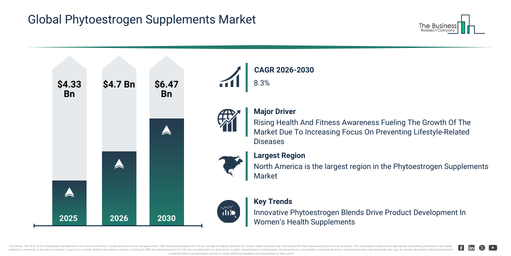
    The phytoestrogen supplements market has experienced significant expansion over the past few years. This market is projected to expand from $4.33 billion in 2025 to $4.7 billion in 2026, demonstrating a compound annual growth rate (CAGR) of 8.5%. Historically, this market’s expansion was driven by factors such as limited understanding of phytoestrogen advantages, a continued dependence on conventional hormone replacement therapies, an enlarging elderly female demographic, the rising incidence of menopausal indicators, and a broadening health and wellness market.

    The phytoestrogen supplements market is projected to experience robust expansion over the coming years. This market is set to reach $6.47 billion by 2030, exhibiting a compound annual growth rate (CAGR) of 8.3%. This anticipated growth can be attributed to several factors, including an escalating demand for plant-based supplements, the creation of innovative phytoestrogen formulations, the proliferation of online nutraceutical platforms, increased governmental and healthcare initiatives promoting women’s health, and the incorporation of personalized nutrition solutions. Key trends shaping the forecast period encompass a growing need for menopause and hormonal health supplements, an increase in plant-based and natural dietary products, heightened consumer understanding of bone and cardiovascular health, the broadening of online and retail distribution networks for nutraceuticals, and the evolution of specific phytoestrogen formulations and combinations.

    Download the Free Sample Report to Explore Key Market Insights:

    https://www.thebusinessresearchcompany.com/sample.aspx?id=27383&type=smp

    Which Economic Or Industry Drivers Are Impacting The Phytoestrogen Supplements Market?

    The expanding emphasis on health and well-being is projected to boost the growth of the phytoestrogen supplements market in the future. Health and fitness encompass sustaining comprehensive physical and mental wellness via consistent physical activity, appropriate diet, and sound lifestyle decisions. The concentration on health and fitness is growing as a greater number of individuals recognize the dangers linked to diseases stemming from lifestyle choices, including obesity, diabetes, and cardiovascular issues. Phytoestrogen supplements aid health and fitness by fostering hormonal equilibrium, boosting bone integrity, and elevating overall vigor, especially for women. For example, in Jun 2024, data from the International Food Information Council (IFIC), a US based non-profit organization, indicated that the percentage of Americans adhering to a particular diet or eating regimen over the last year stayed elevated at 54%. A majority of individuals seek to augment their protein consumption, with interest escalating from 59% in 2022 to 67% in 2023, and peaking at 71% in 2024. Furthermore, approximately half of consumers intend to consume more fresh foods, which are broadly regarded as the most nutritious choices. Consequently, the heightened emphasis on health and fitness is propelling the expansion of the phytoestrogen supplements market.

    What Market Segments Are Evaluated Within The Phytoestrogen Supplements Market?

    The phytoestrogen supplements market covered in this report is segmented –

    1) By Type: Flavonoids, Daidzen, Denistein, Glycitein, Biochanin A, Coumestans, Prenyl Flavonoids, Lignans, Stilbenes, Other Types

    2) By Source: Nuts And Oilseeds, Soy Products, Cereal And Bread, Legumes, Meat Products, Other Sources

    3) By Distribution Channel: Online Stores, Pharmacies, Health Stores, Other Distribution Channel

    4) By Application: Food And Beverages, Nutraceuticals, Cosmetics, Other Applications

    5) By End-User: Hospital And Clinics, Wellness Centers, Other End-Users

    Subsegments:

    1) By Flavonoids: Isoflavones, Flavonols, Flavanones

    2) By Daidzen: Natural Daidzein Extracts, Synthetic Daidzein Compounds

    3) By Denistein: Fermented Soy-Derived Genistein, Non-Fermented Soy Genistein

    4) By Glycitein: Soy-Based Glycitein, Red Clover-Based Glycitein

    5) By Biochanin A: Red Clover Extracts, Chickpea-Derived Biochanin A

    6) By Coumestans: Coumestrol, Coumestan-Rich Legume Extracts

    7) By Prenyl Flavonoids: 8-Prenylnaringenin, Xanthohumol

    8) By Lignans: Flaxseed-Derived Lignans, Sesame Seed-Derived Lignans

    9) By Stilbenes: Resveratrol, Pterostilbene

    10) By Other Types: Mycoestrogens, Enterolignans, Phlorotannins

    What Industry Trends Are Redefining The Phytoestrogen Supplements Market?

    Major companies operating in the phytoestrogen supplements market are increasingly focusing on introducing innovative solutions, such as phytoestrogen blends, to improve the efficacy and bioavailability of their products. Phytoestrogen blends are defined as supplements that combine various plant-based estrogenic compounds to enhance hormonal support and overall health benefits. As an illustration, in August 2023, Designs for Health, a US-based provider of high-quality nutritional supplements, launched a phytoestrogen blend within its new women’s health supplement line. This initiative aims to offer natural support for hormonal balance and relief from menopausal symptoms. The blend incorporates plant-derived compounds, specifically phytoestrogens, which mimic or modulate estrogen activity in the body. This mechanism helps address diverse women’s health needs, including managing menopausal symptoms, promoting bone health, and supporting overall well-being. This product launch signifies the rising demand for natural alternatives to traditional hormone therapies and underscores Designs for Health’s dedication to research-backed, practitioner-recommended solutions for women at every stage of life.

    Who Are The Top Market Participants Influencing The Phytoestrogen Supplements Market?

    Major companies operating in the phytoestrogen supplements market are Archer Daniels Midland Company, Herbalife Ltd., GNC Holdings Inc., Helios Lifestyle Private Limited, NOW Health Group Inc., Blackmores Limited, Vitacost.com Inc., Nature’s Way, Swanson Health Products, Gaia Herbs Inc., Natural Organics Inc., Solaray LLC, Nutra Green Biotechnology Co. Ltd., Medisys Biotech Pvt. Ltd., Frutarom Ltd., HerboNutra, Tradichem S.L., Aushadhi Herbal.

    Read the full phytoestrogen supplements market report here:

    https://www.thebusinessresearchcompany.com/report/phytoestrogen-supplements-global-market-report

    What Are The Top-Performing Regions Within The Phytoestrogen Supplements Market?

    North America was the largest region in the phytoestrogen supplements market in 2025. Asia-Pacific is expected to be the fastest-growing region in the forecast period. The regions covered in the phytoestrogen supplements market report are Asia-Pacific, South East Asia, Western Europe, Eastern Europe, North America, South America, Middle East, Africa.

    Request A Tailored Phytoestrogen Supplements Market Research Report For Competitive Advantage:

    https://www.thebusinessresearchcompany.com/customise?id=27383&type=smp

    Browse Through More Reports Similar to the Global Phytoestrogen Supplements Market 2026, By The Business Research Company

    Trade Management Software Market Report 2026

    https://www.thebusinessresearchcompany.com/report/trade-management-software-global-market-report

    Algorithmic Trading Market Report 2026

    https://www.thebusinessresearchcompany.com/report/algorithmic-trading-global-market-report

    Automated Algo Trading Market Report 2026

    https://www.thebusinessresearchcompany.com/report/automated-algo-trading-global-market-report

    Get in touch with us:

    The Business Research Company: https://www.thebusinessresearchcompany.com/

    Americas +1 310-496-7795

    Asia +44 7882 955267 & +91 8897263534

    Europe +44 7882 955267

    Email us at info@tbrc.info

    Follow us on:

    LinkedIn: https://in.linkedin.com/company/the-business-research-company

    YouTube: https://www.youtube.com/channel/UC24_fI0rV8cR5DxlCpgmyFQ

    Global Market Model: https://www.thebusinessresearchcompany.com/global-market-model
  • LED-based innovations are transforming the Photomedicine Market 2026

    LED-based innovations are transforming the Photomedicine Market 2026

    The Business Research Company’s 2026 market reports include new capabilities such as market attractiveness scoring and analysis, total addressable market analysis, company scoring matrix, interactive excel data dashboard, improved supply chain analysis, upcoming startups in the market, and overview of key products, aimed at improving the depth, usability, and strategic value of the insights delivered.

    How Will The Market Size Of The Photomedicine Market Evolve From 2026 To 2030?

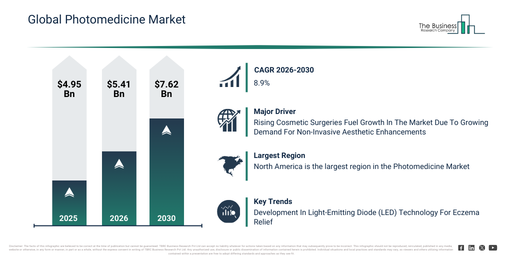
    The photomedicine market has experienced substantial growth in recent years. This market is projected to expand from $4.95 billion in 2025 to reach $5.41 billion in 2026, exhibiting a compound annual growth rate (CAGR) of 9.3%. Historically, factors contributing to this growth include the limited accessibility of photomedicine devices, a dependency on traditional treatment approaches, the rising incidence of skin and dental ailments, expanding hospital and clinic facilities, and increasing public knowledge regarding non-invasive treatments.

    The photomedicine market is projected to experience robust expansion over the coming years. By 2030, its valuation is anticipated to reach $7.62 billion, exhibiting a compound annual growth rate (CAGR) of 8.9%. This anticipated growth during the forecast period stems from several factors, including progress in LED and laser technologies, the rising incorporation of wearable photomedicine devices, the broadening availability of home-based therapy options, increased research into tissue regeneration applications, and the growing uptake of digital monitoring and remote therapy platforms. Key trends anticipated within the forecast timeframe encompass the increasing utilization of light-based therapies within oncology and dermatology, the expansion of home-based photomedicine devices and treatment systems, the growing deployment of non-invasive pain management alternatives, the proliferation of aesthetic and cosmetic photomedicine interventions, and the incorporation of photomedicine into dental and ophthalmic surgical methods.

    Download the Free Sample Report to Explore Key Market Insights:

    https://www.thebusinessresearchcompany.com/sample.aspx?id=27382&type=smp

    What Major Drivers Are Influencing Demand In The Photomedicine Market?

    The escalating number of cosmetic surgeries is projected to drive the expansion of the photomedicine market. These medical procedures are conducted to enhance or alter an individual’s appearance for aesthetic goals. The increase in cosmetic surgeries is attributable to rising social media influence and an increasing desire for an improved self-image, propelled by extensive exposure to beauty standards and trends. Photomedicine offers utility in cosmetic surgeries through precise, non-invasive treatments that boost skin appearance, lessen blemishes, and enhance overall facial and body aesthetics with minimal recovery period. For instance, in April 2025, the British Association of Aesthetic Plastic Surgeons (BAAPS), a UK-based surgical organization, recorded 27,462 cosmetic surgical procedures, showing a 5% increase compared to 2023. Thus, the growing volume of cosmetic surgeries is propelling the photomedicine market’s development.

    Which Segment Areas Are Covered In The Photomedicine Market Analysis?

    The photomedicine market covered in this report is segmented –

    1) By Type: Light Emitting Diodes, Lasers, Full Spectrum Light, Polychromatic Polarized Light, Dichroic Lamps, Fluorescent Lamps

    2) By Application: Oncology, Dermatology, Pain Management, Dental Procedures, Aesthetics, Ophthalmology, Other Applications

    3) By End Users: Hospitals And Clinics, Dermatology And Ophthalmology Centers, Home-Based Therapy, Research And Academic Institutions

    Subsegments:

    1) By Light Emitting Diodes: Red Light Therapy, Blue Light Therapy, Infrared Light Emitting Diode Therapy

    2) By Lasers: Low Level Laser Therapy (LLLT), High Intensity Laser Therapy (HILT), Pulsed Dye Lasers

    3) By Full Spectrum Light: White Light Therapy, Bright Light Therapy, Seasonal Affective Disorder (SAD) Lamps

    4) By Polychromatic Polarized Light: Bioptron Light Therapy, Polarized Multicolor Light Emitting Diode Systems

    5) By Dichroic Lamps: Infrared Dichroic Lamps, Ultraviolet Dichroic Lamps, Visible Light Dichroic Lamps

    6) By Fluorescent Lamps: Narrowband Ultraviolet B Lamps, Broadband Ultraviolet B Lamps, Ultraviolet A Lamps

    What Key Developments And Trends Are Impacting The Photomedicine Market?

    Leading companies within the photomedicine market are concentrating on developing sophisticated products, such as light-emitting diode (LED) devices, to enhance treatment effectiveness and address a broader spectrum of medical and cosmetic conditions. Light-emitting diode (LED) devices are non-invasive technologies that deliver specific wavelengths of light to activate cellular processes and support tissue recovery, finding widespread application in photomedicine for healing, pain management, skin rejuvenation, and various therapeutic purposes. For instance, in April 2024, Bestqool, a US-based company specializing in red light therapy technology, introduced a red-light therapy device tailored for eczema relief. This device utilizes advanced wavelengths to alleviate itching, swelling, and inflammation, thus fostering skin healing without adverse effects. This particular therapy presents a non-drug alternative that has demonstrated promising clinical improvements in eczema symptoms.

    Which Global Companies Are Actively Competing In The Photomedicine Market?

    Major companies operating in the photomedicine market are BIOLASE Inc., Lumenis Ltd., Candela Medical Inc., Fotona d.o.o., IRIDEX Corporation, PhotoCure ASA, Clinuvel Pharmaceuticals Limited, Erchonia Lasers Limited, Biolitec biomedical technology GmbH, Lynton Lasers Limited, Aspen Laser Systems LLC, Carl Zeiss AG, LightStim LLC, PhotoMedex Inc., Quanta Systems Ltd., THOR Photomedicine Limited

    Read the full photomedicine market report here:

    https://www.thebusinessresearchcompany.com/report/photomedicine-global-market-report

    Which Region Shows The Strongest Potential For Future Growth In The Photomedicine Market?

    North America was the largest region in the photomedicine market in 2025. Asia-Pacific is expected to be the fastest-growing region in the forecast period. The regions covered in the photomedicine market report are Asia-Pacific, South East Asia, Western Europe, Eastern Europe, North America, South America, Middle East, Africa.

    Request A Tailored Photomedicine Market Research Report For Competitive Advantage:

    https://www.thebusinessresearchcompany.com/customise?id=27382&type=smp

    Browse Through More Reports Similar to the Global Photomedicine Market 2026, By The Business Research Company

    Investments Market Report 2026

    https://www.thebusinessresearchcompany.com/report/investments-global-market-report

    Partner And Interconnect Management Market Report 2026

    https://www.thebusinessresearchcompany.com/report/partner-and-interconnect-management-global-market-report

    Investment Banking Market Report 2026

    https://www.thebusinessresearchcompany.com/report/investment-banking-global-market-report

    Get in touch with us:

    The Business Research Company: https://www.thebusinessresearchcompany.com/

    Americas +1 310-496-7795

    Asia +44 7882 955267 & +91 8897263534

    Europe +44 7882 955267

    Email us at info@tbrc.info

    Follow us on:

    LinkedIn: https://in.linkedin.com/company/the-business-research-company

    YouTube: https://www.youtube.com/channel/UC24_fI0rV8cR5DxlCpgmyFQ

    Global Market Model: https://www.thebusinessresearchcompany.com/global-market-model
  • Advancing clinical trials are shaping the Photodynamic Therapy Market 2026

    Advancing clinical trials are shaping the Photodynamic Therapy Market 2026

    The Business Research Company’s 2026 market reports include new capabilities such as market attractiveness scoring and analysis, total addressable market analysis, company scoring matrix, interactive excel data dashboard, improved supply chain analysis, upcoming startups in the market, and overview of key products, aimed at improving the depth, usability, and strategic value of the insights delivered.

    What Is The Forecasted Market Value Of The Photodynamic Therapy Market Across 2026–2030?

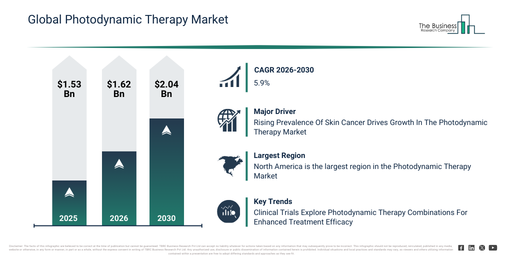
    The photodynamic therapy market has shown robust expansion in recent years. It is forecast to grow from $1.53 billion in 2025 to $1.62 billion in 2026, exhibiting a compound annual growth rate (CAGR) of 6.1%. The market’s historical development can be ascribed to factors such as the increasing prevalence of skin cancer and precancerous lesions, a greater embrace of minimally invasive therapies, the initial clinical validation of photosensitizers, an increasing understanding of non-surgical treatment alternatives, and the widespread availability of laser-based medical devices.

    The photodynamic therapy market is projected to experience substantial expansion in the coming years. Its value is anticipated to reach $2.04 billion by 2030, exhibiting a compound annual growth rate (CAGR) of 5.9%. This projected growth over the forecast period is fueled by several factors, including breakthroughs in new photosensitizer formulations, the broadening of its applications beyond cancer treatment, an increasing demand for therapies deliverable in outpatient settings, greater investment in infrastructure for cancer treatment, and a growing inclination towards targeted and precise therapeutic methods. Key developments expected during this period involve the greater use of photodynamic therapy in oncology, its increased acceptance in dermatology and aesthetic procedures, the creation of advanced photosensitizers, a move towards less invasive cancer treatments, and an uptick in the adoption of combination therapy approaches.

    Download the Free Sample Report to Explore Key Market Insights:

    https://www.thebusinessresearchcompany.com/sample.aspx?id=5246&type=smp

    Which Market Drivers Are Supporting The Expansion Of The Photodynamic Therapy Market?

    The increasing occurrence of skin cancer is contributing to the growth of the photodynamic therapy market. Skin cancer is noted as the most common cancer among all types. Melanoma accounts for only about 1% of skin cancers but is responsible for a significant number of skin cancer deaths. Photodynamic treatment (PDT) involves using a combination of a light-sensitizing medication and intense light to destroy cancer cells. A doctor applies a lotion containing light-sensitizing chemicals to the skin cancer and the surrounding region. For instance, in 2023, data from Cancer Australia, an Australia-based government agency, showed approximately 8,257 new cases of melanoma of the skin were diagnosed, making up 2.6% of all deaths from cancer. Therefore, the rising incidence of skin cancer is expected to drive the growth of the photodynamic therapy market in the foreseeable future.

    What Segmentation Levels Are Considered In The Photodynamic Therapy Market?

    The photodynamic therapy market covered in this report is segmented –

    1) By Product: Drugs, Devices

    2) By Application: Actinic Keratosis (AK), Cancer, Acne, Psoriasis, Other Applications

    3) By End-User: Cosmetics And Dermatology Clinics, Hospitals, Cancer Treatment Centers, Other End-Users

    Subsegments:

    1) By Drugs: Photosensitizers, Combination Drug Therapies, Novel Photosensitizer Formulations

    2) By Devices: Light Sources (Laser Systems, LED Systems), Delivery Devices (Fiber Optics, Handheld Devices), Treatment Systems (Portable Devices, Fixed Systems)

    What Trends Are Projected To Affect The Photodynamic Therapy Market?

    Leading companies within the photodynamic therapy (PDT) market are increasingly dedicating efforts to clinical trials aimed at assessing PDT in combination with various medications for improved therapeutic results. Photodynamic therapy itself involves employing compounds activated by light to specifically target and eliminate cancerous or diseased cells. As an illustration, Kintara Therapeutics, a US-based biotechnology firm, commenced a clinical trial in February 2024 for its REM-001 therapy, which targets cutaneous metastatic breast cancer (CMBC). This open-label study, identified as NCT05374915, involves 15 patients and evaluates REM-001, a second-generation PDT agent, at a 0.8 mg dose. The trial’s objective is to refine the study design prior to a Phase 3 trial, emphasizing the Best Overall Objective Response Rate (bORR) within 24 weeks, with primary endpoints assessing complete and partial responses in the treated areas.

    Which Leading Firms Are Contributing To The Growth Of The Photodynamic Therapy Market?

    Major companies operating in the photodynamic therapy market are Galderma S.A., Bausch Health, Lumenis Ltd., Biofrontera, Modlight Inc., PhotoMedex Inc., Soligenix Inc., Quest PharmaTech Inc., Theralase Technologies Inc., Quantel Medical, Axcan Pharma, Sihealth, MediGlobus, Steba Biotech, Ambicare Health, Nuovo Therapy, Pharmstandard, Rusatom Healthcare, Hologic Inc., Dusa Pharmaceuticals, PDT Pharma Indústria e Comércio de Produtos Farmacêuticos, MMOptics Ltd, Global Healthcare Solutions Perú, DMC Equipmentos LTDA, Biolite, SyMed LLC, Alma Lasers, Candela Medica, Velt International Group Inc.

    Read the full photodynamic therapy market report here:

    https://www.thebusinessresearchcompany.com/report/photodynamic-therapy-global-market-report

    How Is The Photodynamic Therapy Market Distributed Across Key Geographic Regions?

    North America was the largest region in the photodynamic therapy market in 2025. The regions covered in the photodynamic therapy market report are Asia-Pacific, South East Asia, Western Europe, Eastern Europe, North America, South America, Middle East, Africa.

    Request A Tailored Photodynamic Therapy Market Research Report For Competitive Advantage:

    https://www.thebusinessresearchcompany.com/customise?id=5246&type=smp

    Browse Through More Reports Similar to the Global Photodynamic Therapy Market 2026, By The Business Research Company

    Photodynamic Therapy Market Report 2026

    https://www.thebusinessresearchcompany.com/report/photodynamic-therapy-global-market-report

    Light Therapy Market Report 2026

    https://www.thebusinessresearchcompany.com/report/light-therapy-global-market-report

    Laser Photomask Market Report 2026

    https://www.thebusinessresearchcompany.com/report/laser-photomask-global-market-report

    Get in touch with us:

    The Business Research Company: https://www.thebusinessresearchcompany.com/

    Americas +1 310-496-7795

    Asia +44 7882 955267 & +91 8897263534

    Europe +44 7882 955267

    Email us at info@tbrc.info

    Follow us on:

    LinkedIn: https://in.linkedin.com/company/the-business-research-company

    YouTube: https://www.youtube.com/channel/UC24_fI0rV8cR5DxlCpgmyFQ

    Global Market Model: https://www.thebusinessresearchcompany.com/global-market-model
  • Biopharmaceutical expansion is fueling growth in the Phosphoramidite Market 2026

    Biopharmaceutical expansion is fueling growth in the Phosphoramidite Market 2026

    The Business Research Company’s 2026 market reports include new capabilities such as market attractiveness scoring and analysis, total addressable market analysis, company scoring matrix, interactive excel data dashboard, improved supply chain analysis, upcoming startups in the market, and overview of key products, aimed at improving the depth, usability, and strategic value of the insights delivered.

    What Market Size Increase Is Anticipated For The Phosphoramidite Market Over The 2026–2030 Period?

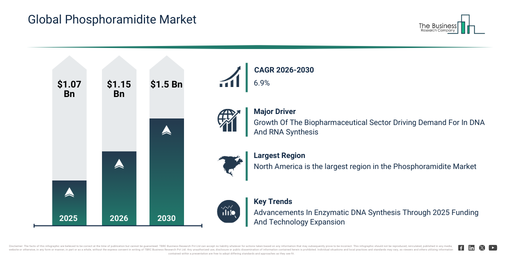
    The phosphoramidite market has experienced robust expansion over the past few years. It is projected to expand from $1.07 billion in 2025 to $1.15 billion by 2026, registering a compound annual growth rate (CAGR) of 7.1%. Historically, this growth can be attributed to an increase in DNA sequencing activities, the expansion of academic research funding, a greater use of synthetic nucleic acids, the development of solid-phase synthesis techniques, and rising demand for molecular diagnostics.

    The phosphoramidite market size is anticipated to experience robust expansion over the coming years. This market is projected to reach a valuation of $1.5 billion by 2030, demonstrating a compound annual growth rate (CAGR) of 6.9%. Key drivers for this growth during the projection period include the broadening scope of RNA-based therapeutics, advancements in gene editing technologies, heightened investment in pharmaceutical research and development, an increasing need for custom oligonucleotides, and the expansion of automated synthesis platforms. Significant trends identified for the forecast timeframe encompass an escalating requirement for oligonucleotide synthesis materials, the enlargement of gene therapy and RNA therapeutics applications, wider incorporation into diagnostic and research uses, increasing integration of automated solid-phase synthesis methods, and a sharpened emphasis on chemical inputs of high purity.

    Download the Free Sample Report to Explore Key Market Insights:

    https://www.thebusinessresearchcompany.com/sample.aspx?id=22096&type=smp

    What Underlying Factors Are Accelerating The Growth Of The Phosphoramidite Market?

    The expanding biopharmaceutical sector is anticipated to drive the future growth of the phosphoramidite market. This sector refers to the industry engaged in the research, development, production, and commercialization of biologically derived medical products, encompassing vaccines, gene therapies, monoclonal antibodies, and recombinant proteins. The expansion of the biopharmaceutical sector is a result of advancements in biotechnology, the increasing prevalence of chronic diseases, and greater investments in research and development. Biotechnology innovations, such as gene editing and monoclonal antibody therapies, have led to more effective and targeted treatments. For instance, in October 2025, the Office for National statistics, a UK-based government department, reported that in 2024, the UK life sciences industry consisted of 6,170 businesses operating across 7,320 sites, employing 359,600 people, and generating $191 billion (£146.9 billion) in turnover. The medical technology subsector was the largest by both company count and workforce, accounting for 60% of all companies and 55% of total employment. Thus, the growth of the phosphoramidite market is being propelled by the expansion of the biopharmaceutical sector.

    How Is The Phosphoramidite Market Segmented Across Key Categories?

    The phosphoramidite market covered in this report is segmented –

    1) By Type: Deoxyribonucleic Acid (DNA) Phosphoramidites, Ribonucleic Acid (RNA) Phosphoramidites, Labeled Phosphoramidites, Modifier Phosphoramidites, Other Types

    2) By Synthesis Method: H-Phosphonate Method, Phosphoramidite Method, Trivalent Phosphorus Compounds Method

    3) By Application: Gene Synthesis, Deoxyribonucleic Acid (DNA) Sequencing, Deoxyribonucleic Acid (DNA) Amplification

    4) By End-User: Academic Research, Pharmaceutical Industry, Biotechnology Industry

    Subsegments:

    1) By Deoxyribonucleic Acid (DNA) Phosphoramidites: Standard DNA Phosphoramidites, Degenerate DNA Phosphoramidites, Methylated DNA Phosphoramidites, Backbone-Modified DNA Phosphoramidites

    2) By Ribonucleic Acid (RNA) Phosphoramidites: Standard RNA Phosphoramidites, 2′-O-Methyl RNA Phosphoramidites, 2′-Fluoro RNA Phosphoramidites, 2′-O-TBDMS Protected RNA Phosphoramidites

    3) By Labeled Phosphoramidites: Fluorescent-Labeled Phosphoramidites, Biotin-Labeled Phosphoramidites, Digoxigenin-Labeled Phosphoramidites, Radioisotope-Labeled Phosphoramidites

    4) By Modifier Phosphoramidites: Amine-Modified Phosphoramidites, Thiol-Modified Phosphoramidites, Spacer Phosphoramidites, Azide-Modified Phosphoramidites

    5) By Other Types: Chimeric Phosphoramidites, Phosphorothioate Phosphoramidites, PEGylated Phosphoramidites, Photo-Cleavable Phosphoramidites

    Which Upcoming Trends Are Expected To Influence The Phosphoramidite Market?

    Leading entities within the phosphoramidite market are prioritizing the creation of advanced DNA synthesis methods, such as convertible-preferred stock financing rounds, to boost the implementation and advancement of Gibson SOLA technology for quick DNA and mRNA synthesis. This type of financing involves a company securing funds by issuing preferred shares, which possess the option to be converted into a set quantity of common shares at a future date. An illustrative example is from March 2025, when Telesis Bio Inc., a biotechnology firm based in the US, disclosed it had obtained new funding totaling up to $21 million. This capital injection is intended to hasten the market introduction of its innovative enzymatic DNA synthesis platform, Gibson SOLA, backed by various strategic investors. The purpose of these funds is to scale up the company’s entirely enzymatic DNA synthesis technology, expand its research and development as well as manufacturing capacities, and increase availability for fast, customizable production of long DNA. The firm employs a unique enzymatic strategy that facilitates the swift and accurate synthesis of extended DNA sequences, thereby resolving existing limitations linked to conventional phosphoramidite-based techniques.

    Who Are The Dominant Players Shaping The Phosphoramidite Market Landscape?

    Major companies operating in the phosphoramidite market are Thermo Fisher Scientific Inc., Agilent Technologies Inc., Aragen Life Sciences, Twist Bioscience, Innovassynth Technologies (I) Ltd., Tokyo Chemical Industry Co. Ltd. (TCI), Aurigene Services, Eurofins Genomics, LGC Biosearch Technologies, Link Technologies Ltd., Creative Biolabs, Biosynth Carbosynth, TriLink BioTechnologies, ChemGenes Corporation, Berry & Associates Inc., Lumiprobe Corporation, Hongene Biotech Corporation, Carbolink India Pvt. Ltd., PolyOrg Inc., Glen Research, Gene Link Inc., emp BIOTECH GmbH

    Read the full phosphoramidite market report here:

    https://www.thebusinessresearchcompany.com/report/phosphoramidite-global-market-report

    Which Region Is Projected To Dominate The Phosphoramidite Market During The Forecast Period?

    North America was the largest region in the phosphoramidite market in 2025. Europe is expected to be the fastest-growing region during the forecast period. The regions covered in the phosphoramidite market report are Asia-Pacific, South East Asia, Western Europe, Eastern Europe, North America, South America, Middle East, Africa.

    Request A Tailored Phosphoramidite Market Research Report For Competitive Advantage:

    https://www.thebusinessresearchcompany.com/customise?id=22096&type=smp

    Browse Through More Reports Similar to the Global Phosphoramidite Market 2026, By The Business Research Company

    Phosgene Market Report 2026

    https://www.thebusinessresearchcompany.com/report/phosgene-global-market-report

    Phosphoric Acid Market Report 2026

    https://www.thebusinessresearchcompany.com/report/phosphoric-acid-global-market-report

    Phosphonates Market Report 2026

    https://www.thebusinessresearchcompany.com/report/phosphonates-global-market-report

    Get in touch with us:

    The Business Research Company: https://www.thebusinessresearchcompany.com/

    Americas +1 310-496-7795

    Asia +44 7882 955267 & +91 8897263534

    Europe +44 7882 955267

    Email us at info@tbrc.info

    Follow us on:

    LinkedIn: https://in.linkedin.com/company/the-business-research-company

    YouTube: https://www.youtube.com/channel/UC24_fI0rV8cR5DxlCpgmyFQ

    Global Market Model: https://www.thebusinessresearchcompany.com/global-market-model

  • Medical Tricorder Industry Expansion Forecast Showing Market Size of $18.87 Billion by 2030 at 19.7% CAGR

    Medical Tricorder Industry Expansion Forecast Showing Market Size of $18.87 Billion by 2030 at 19.7% CAGR

    The Business Research Company’s 2026 market reports include new capabilities such as market attractiveness scoring and analysis, total addressable market analysis, company scoring matrix, interactive excel data dashboard, improved supply chain analysis, upcoming startups in the market, and overview of key products, aimed at improving the depth, usability, and strategic value of the insights delivered.

    What Is The Estimated Market Size Of The Medical Tricorder Market During 2026–2030?

    The medical tricorder market has experienced swift expansion in recent years. Its valuation is projected to increase from $7.71 billion in 2025 to $9.21 billion in 2026, exhibiting a compound annual growth rate (CAGR) of 19.4%. Historically, this market’s growth has been driven by several factors, including the increased use of portable medical devices, a growing need for quick diagnostic capabilities, the expansion of telemedicine services, the enhanced availability of compact imaging sensors, and the widespread adoption of digital health platforms.

    The medical tricorder market is poised for substantial growth in the upcoming years. It is forecast to achieve a valuation of **$18.88 billion in 2030, demonstrating a compound annual growth rate (CAGR) of 19.7%.** This expansion during the forecast period is fueled by an escalating demand for home-based diagnostics, increased investment in AI-powered medical devices, the broadening of remote healthcare delivery models, a heightened emphasis on preventive healthcare, and improved integration with electronic health records. Prominent trends throughout this period include the rising adoption of handheld diagnostic devices, an increase in the application of AI-based health assessment tools, the growing incorporation of wireless medical imaging, the expansion of point-of-care diagnostic solutions, and a stronger focus on remote patient monitoring.

    Download the Free Sample Report to Explore Key Market Insights:

    https://www.thebusinessresearchcompany.com/sample.aspx?id=5315&type=smp

    What Underlying Factors Are Accelerating The Growth Of The Medical Tricorder Market?

    The growing incidence of long-term health conditions is projected to boost the expansion of the medical tricorder market in the future. These conditions, such as diabetes, heart disease, cancer, and respiratory ailments, are persistent health issues demanding continuous healthcare and oversight. The increasing occurrence of chronic disorders is fueled by the aging demographic in developed nations, where people over 65 years old face considerably elevated rates of several chronic conditions, stemming from accumulated health hazards and age-associated bodily alterations. This expanding prevalence of chronic disorders underscores the demand for sophisticated diagnostic tools capable of facilitating continuous health tracking, prompt identification of issues, and immediate disease control across various indicators in accessible point-of-care environments. An example of this trend is observed in June 2024, when the UK’s government body, the National Health Service, reported that 3,615,330 individuals registered with a general practitioner (GP) had been diagnosed with non-diabetic hyperglycemia or pre-diabetes (a condition characterized by higher-than-normal blood sugar, though not yet diabetes) in 2023. This figure represents an 18% rise from 3,065,825 cases recorded in 2022. Consequently, the growing impact of chronic diseases is a key factor propelling the expansion of the medical tricorder market.

    How Are The Various Segments Of The Medical Tricorder Market Categorized?

    The medical tricorder market covered in this report is segmented –

    1) By Device Type: Multi-Parameter Diagnostic Tricorders, Vital Signs Monitoring Tricorders, AI-Enabled Diagnostic Tricorders, Smartphone-Integrated Tricorders, Wearable-Linked Tricorder Devices

    2) By Diagnostic Capability: Cardiovascular Assessment, Respiratory Assessment, Metabolic And Temperature Assessment, Neurological And General Health Assessment, Multi-Condition Screening

    3) By Connectivity Type: Wired Connectivity, Wireless Connectivity

    4) By Application: Diagnosis, Continuous Or Intermittent Monitoring, Early Disease Screening, Remote Health Assessment

    5) By End User: Hospitals, Clinics And Primary Care Centers, Home Care Settings, Remote And Telehealth Providers

    Subsegments:

    1) By Multi-Parameter Diagnostic Tricorders: Vital Signs And Physiological Monitoring Tricorders, Biochemical And Metabolic Assessment Tricorders, Multi-Sensor Integrated Tricorders, Point-Of-Care Diagnostic Tricorders

    2) By Vital Signs Monitoring Tricorders: Cardiovascular Vital Monitoring Tricorders, Respiratory Vital Monitoring Tricorders, Temperature And Oxygen Saturation Tricorders, Continuous And Spot-Check Monitoring Tricorders

    3) By AI-Enabled Diagnostic Tricorders: AI-Assisted Clinical Decision Support Tricorders, Predictive And Risk-Assessment Tricorders, Symptom-Analysis And Pattern-Recognition Tricorders, Cloud-Based AI Diagnostic Tricorders

    4) By Smartphone-Integrated Tricorders: App-Based Diagnostic Tricorders, Sensor-Enabled Smartphone Tricorders, Camera And Sensor-Assisted Tricorders, Smartphone-Connected Peripheral Tricorders

    5) By Wearable-Linked Tricorder Devices: Smartwatch-Integrated Tricorders, Patch And Biosensor-Linked Tricorders, Continuous Remote Monitoring Tricorders, Multi-Wearable Data Aggregation Tricorders

    What Trends Are Affecting The Expansion Of The Medical Tricorder Market?

    Leading companies in the medical tricorder market are achieving new approvals, specifically for smart health-tracking devices. These smart health-tracking devices are wearable or portable technologies that continuously monitor and gather health-related data, such as heart rate, physical activity, sleep patterns, and vital signs, empowering users with real-time information to effectively manage their health and overall wellness. As an illustration, in January 2024, Withings, a France-based firm known for producing smart health-tracking devices, unveiled the BeamO, a versatile 4-in-1 health scanner. The BeamO multiscope incorporates several health monitoring features into a singular device, including ECG, pulse oximeter, stethoscope, and thermometer functions. Referred to by Withings as the thermometer of the future, it not only measures temperature but also delivers insights into heart and lung health. This device incorporates electrodes along its sides to monitor blood oxygen levels and heart rate, along with performing a 1-lead ECG, much like the ECG function found in the Apple Watch. It utilizes a temperature scanner to read body temperature from the temporal artery and incorporates a piezoelectric disc to capture acoustic soundwaves from the chest or back, which can be conveniently shared with a physician during telehealth consultations.

    Which Major Firms Influence Developments In The Medical Tricorder Market?

    Major companies operating in the medical tricorder market are Cloud DX Inc., Scanadu Inc., Basil Leaf Technologies LLC, Healthy.io Ltd., Aidar Health Inc., Accurable Ltd., Care Taker Medical LLC, ChroniSense Medical Ltd., Cardiomo Inc., VitalConnect Inc., Avidhrt Inc., SensoDX II LLC, Final Frontier Medical Devices Inc., Medipense Inc., AliveCor Inc., iHealth Labs Inc., Omron Healthcare Inc., Withings SA, BioTelemetry Inc., Qardio Inc., Empatica Inc., EarlySense Ltd.

    Read the full medical tricorder market report here:

    https://www.thebusinessresearchcompany.com/report/medical-tricorder-global-market-report

    Which Region Is Projected To Dominate The Medical Tricorder Market During The Forecast Period?

    North America was the largest region in the medical tricorder market in 2025. Europewas the second-largest market in the medical tricorder market. The regions covered in the medical tricorder market report are Asia-Pacific, South East Asia, Western Europe, Eastern Europe, North America, South America, Middle East, Africa.

    Request A Tailored Medical Tricorder Market Research Report For Competitive Advantage:

    https://www.thebusinessresearchcompany.com/customise?id=5315&type=smp

    Browse Through More Reports Similar to the Global Medical Tricorder Market 2026, By The Business Research Company

    Digital Camcorders Market Report 2026

    https://www.thebusinessresearchcompany.com/report/digital-camcorders-global-market-report

    Precision Medicine Market Report 2026

    https://www.thebusinessresearchcompany.com/report/precision-medicine-global-market-report

    Hydrocortisone Market Report 2026

    https://www.thebusinessresearchcompany.com/report/hydrocortisone-global-market-report

    Get in touch with us:

    The Business Research Company: https://www.thebusinessresearchcompany.com/

    Americas +1 310-496-7795

    Asia +44 7882 955267 & +91 8897263534

    Europe +44 7882 955267

    Email us at info@tbrc.info

    Follow us on:

    LinkedIn: https://in.linkedin.com/company/the-business-research-company

    YouTube: https://www.youtube.com/channel/UC24_fI0rV8cR5DxlCpgmyFQ

    Global Market Model: https://www.thebusinessresearchcompany.com/global-market-model

  • Rising ADHD Prevalence Supporting Growth in the Atopic Dermatitis Cream Market

    The Business Research Company’s 2026 market reports include new capabilities such as market attractiveness scoring and analysis, total addressable market analysis, company scoring matrix, interactive excel data dashboard, improved supply chain analysis, upcoming startups in the market, and overview of key products, aimed at improving the depth, usability, and strategic value of the insights delivered.

    How Much Is The Attention Deficit Hyperactivity Disorder (ADHD) Therapeutics Market Expected To Grow In Terms Of Market Value Between 2026 And 2030?

    The market for attention deficit hyperactivity disorder (adhd) therapeutics has experienced robust growth in recent years. Projections indicate it will expand from $13.97 billion in 2025 to $14.67 billion by 2026, demonstrating a compound annual growth rate (CAGR) of 5.0%. Historically, this growth has been driven by factors such as increasing ADHD diagnosis rates, heightened awareness concerning mental health, the availability of stimulant drugs, a surge in pediatric ADHD cases, and the development of early intervention programs.

    The attention deficit hyperactivity disorder (adhd) therapeutics market size is anticipated to experience robust expansion in the coming years. This market is projected to reach $17.86 billion by 2030, demonstrating a compound annual growth rate (CAGR) of 5.0%. Factors contributing to this growth over the projected timeframe include progress in precision medicine for adhd, the uptake of digital therapeutics, the broadening of telehealth platforms, the incorporation of AI into adhd management, and a rise in adult adhd diagnoses. Key developments expected during the forecast period encompass personalized adhd treatment strategies, remote adhd management through telehealth, digital therapeutics along with mobile applications for adhd, an increase in non-pharmacological interventions, and the integration of behavioral and cognitive therapies.

    Download the Free Sample Report to Explore Key Market Insights:

    https://www.thebusinessresearchcompany.com/sample.aspx?id=14042&type=smp

    What Drivers Are Influencing The Attention Deficit Hyperactivity Disorder (ADHD) Therapeutics Market?

    The expanding incidence of attention-deficit hyperactivity disorder is projected to boost the growth of the attention-deficit hyperactivity disorder (ADHD) therapeutics market in the future. This increasing occurrence of attention-deficit hyperactivity disorder (ADHD) signifies a rising count of individuals identified with this neurodevelopmental condition over time. Medications and treatments for ADHS aim to manage its complex aspects, striving to enhance symptom control, reduce functional limitations, improve life quality, and generally benefit the well-being of those with ADHD. For example, in May 2025, data from NHS England Digital, a UK-based national information and technology partner, indicated that approximately 2,498,000 people in England were living with ADHD, encompassing both diagnosed and undiagnosed instances. Consequently, the growing prevalence of ADHD is stimulating the expansion of the attention-deficit hyperactivity disorder (ADHD) therapeutic market.

    What Major Segment Divisions Exist Within The Attention Deficit Hyperactivity Disorder (ADHD) Therapeutics Market?

    The attention deficit hyperactivity disorder (adhd) therapeutics market covered in this report is segmented –

    1) By Drug Type: Stimulants, Non-Stimulants

    2) By Psychotherapy: Behavior Therapy, Cognitive Behavioral Therapy, Family Therapy

    3) By Age Group: Pediatric And Adolescent, Adult

    4) By Distribution Channel: Hospital Pharmacies, Specialty Clinics, Retail Pharmacies

    Subsegments:

    1) By Stimulants: Amphetamine-Based Stimulants, Methylphenidate-Based Stimulants

    2) By Non-Stimulants: Atomoxetine, Guanfacine, Clonidine

    How Are Trends Shaping The Direction Of The Attention Deficit Hyperactivity Disorder (ADHD) Therapeutics Market?

    Leading companies in the attention-deficit hyperactivity disorder (ADHD) therapeutics market are prioritizing the development of digital innovations, such as over-the-counter (OTC) versions of digital therapeutics like Endeavor for ADHD, to address the escalating demand for digital solutions and the increasing need for remote healthcare. Digital therapeutics are evidence-based interventions powered by high-quality software programs, designed to prevent, manage, or treat a medical disorder or disease. These interventions can be utilized independently or alongside traditional medical treatments. For example, in June 2023, Akili, a US-based digital health company, introduced an over-the-counter (OTC) edition of its video game-based digital therapeutic for adults diagnosed with attention-deficit hyperactivity disorder (ADHD). This OTC version, known as EndeavorOTC, is intended to improve attention, time management, and organizational skills. This initiative also follows the successful rollout of Akili’s FDA-authorized prescription video game treatment, EndeavorRx, for children with ADHD. The OTC version offers adults a non-pharmacological treatment alternative for managing ADHD symptoms.

    Which Companies Are Leading Innovation In The Attention Deficit Hyperactivity Disorder (ADHD) Therapeutics Market?

    Major companies operating in the attention deficit hyperactivity disorder (adhd) therapeutics market are Pfizer Inc, Johnson & Johnson, Novartis AG, GlaxoSmithKline plc, Takeda Pharmaceutical Company Limited, Eli Lilly and Company, Otsuka Pharmaceutical Co Ltd, UCB S.A., Amneal Pharmaceuticals LLC, Lupin Limited, Mallinckrodt Pharmaceuticals Inc, Arbor Pharmaceuticals LLC, Tris Pharma Inc, NEOS Therapeutic Inc, Rhodes Pharmaceuticals L.P., KemPharm Inc, Ironshore Pharmaceuticals Inc, Purdue Pharma L.P., Aevi Genomic Medicine, Highland Therapeutics Inc

    Read the full attention deficit hyperactivity disorder (adhd) therapeutics market report here:

    https://www.thebusinessresearchcompany.com/report/attention-deficit-hyperactivity-disorder-adhd-therapeutics-global-market-report

    Which Regions Are Expected To Experience Rapid Expansion In The Attention Deficit Hyperactivity Disorder (ADHD) Therapeutics Market?

    North America was the largest region in the attention deficit hyperactivity disorder (ADHD) therapeutic market in 2025. Asia-Pacific is expected to be the fastest-growing region in the forecast period. The regions covered in the attention deficit hyperactivity disorder (adhd) therapeutics market report are Asia-Pacific, South East Asia, Western Europe, Eastern Europe, North America, South America, Middle East, Africa.

    Request A Tailored Attention Deficit Hyperactivity Disorder (ADHD) Therapeutics Market Research Report For Competitive Advantage:

    https://www.thebusinessresearchcompany.com/customise?id=14042&type=smp

    Browse Through More Reports Similar to the Global Attention Deficit Hyperactivity Disorder (ADHD) Therapeutics Market 2026, By The Business Research Company

    Attention Deficit Hyperactivity Disorder Adhd Therapeutics Market Report 2026

    https://www.thebusinessresearchcompany.com/report/attention-deficit-hyperactivity-disorder-adhd-therapeutics-global-market-report

    Bipolar Disorder Therapeutics Market Report 2026

    https://www.thebusinessresearchcompany.com/report/bipolar-disorder-therapeutics-global-market-report

    Autism Spectrum Disorders Treatment Market Report 2026

    https://www.thebusinessresearchcompany.com/report/autism-spectrum-disorders-treatment-global-market-report

    Get in touch with us:

    The Business Research Company: https://www.thebusinessresearchcompany.com/

    Americas +1 310-496-7795

    Asia +44 7882 955267 & +91 8897263534

    Europe +44 7882 955267

    Email us at info@tbrc.info

    Follow us on:

    LinkedIn: https://in.linkedin.com/company/the-business-research-company

    YouTube: https://www.youtube.com/channel/UC24_fI0rV8cR5DxlCpgmyFQ

    Global Market Model: https://www.thebusinessresearchcompany.com/global-market-model

  • Global Atopic Dermatitis Cream Market Trends and Growth Forecast for 2026–2030

    The Business Research Company’s 2026 market reports include new capabilities such as market attractiveness scoring and analysis, total addressable market analysis, company scoring matrix, interactive excel data dashboard, improved supply chain analysis, upcoming startups in the market, and overview of key products, aimed at improving the depth, usability, and strategic value of the insights delivered.

    What Market Value Is Expected For The Atopic Dermatitis Cream Market At The End Of The 2026–2030 Forecast Period?

    The atopic dermatitis cream market size has experienced robust growth in recent years. This market is projected to expand from $5.42 billion in 2025 to $5.89 billion in 2026, demonstrating a compound annual growth rate (CAGR) of 8.6%. The historical growth of this market can be attributed to factors including the increasing prevalence of atopic dermatitis across age groups, a growing awareness of chronic eczema management, the wider availability of topical corticosteroid therapies, rising dermatologist consultations, and the expansion of retail dermatology products.

    The atopic dermatitis cream market is poised for substantial growth in the upcoming years, with its valuation expected to reach $8.11 billion by 2030, demonstrating a compound annual growth rate (CAGR) of 8.3%. This expansion during the forecast period is propelled by the increasing advancement of targeted topical treatments, a rising consumer need for personalized dermatology solutions, the widening reach of online pharmacy distribution channels, an escalating focus on the enduring restoration of the skin barrier, and a greater adoption of non-steroidal innovations. Key trends identified for this period include the growing utilization of non-steroidal anti-inflammatory creams, an elevated demand for formulations designed for barrier repair and those containing ceramides, an evolving preference for treatment options that minimize steroid use, the broadening availability of topical therapies safe for pediatric application, and an intensified focus on managing long-term flare-ups.

    Download the Free Sample Report to Explore Key Market Insights:

    https://www.thebusinessresearchcompany.com/sample.aspx?id=28144&type=smp

    What Drivers Are Shaping The Future Growth Of The Atopic Dermatitis Cream Market?

    The increasing occurrence of eczema is anticipated to fuel the expansion of the atopic dermatitis cream market in the future. Eczema, a dermal ailment, manifests as itching, redness, dryness, and inflammation. As more individuals develop allergies and sensitive skin issues, there’s a growing need for eczema care, which in turn boosts the demand for effective remedies and skincare products. Atopic dermatitis cream offers benefits in treating eczema by diminishing inflammation, alleviating itching, reinstating the skin’s inherent protective layer, and averting additional irritation or infection, consequently fostering recovery and enduring skin wellness in affected regions. For example, in December 2024, data from the Royal Australian College of General Practitioners, an Australia-based research institute, indicated that approximately 16% of Australians suffer from eczema, with roughly 25% of these instances categorized as severe. Consequently, the escalating prevalence of eczema is a significant factor driving the growth of the atopic dermatitis cream market.

    What Segment Types Make Up The Atopic Dermatitis Cream Market?

    The atopic dermatitis cream market covered in this report is segmented –

    1) By Product Type: Corticosteroid Creams, Calcineurin Inhibitor Creams, PDE4 Inhibitor Creams, Moisturizing Creams, Other Product Types

    2) By Age Group: Pediatric, Adult, Geriatric

    3) By Distribution Channel: Hospital Pharmacies, Retail Pharmacies, Online Pharmacies, Other Distribution Channels

    Subsegments:

    1) By Corticosteroid Creams: Low-Potency Corticosteroids, Medium-Potency Corticosteroids, High-Potency Corticosteroids, Ultra-High Potency Corticosteroids

    2) By Calcineurin Inhibitor Creams: Tacrolimus Ointment, Pimecrolimus Cream, Other Calcineurin Inhibitors

    3) By PDE4 Inhibitor Creams: Crisaborole Ointment, Roflumilast Cream, Other PDE4 Inhibitors

    4) By Moisturizing Creams: Emollient-Based Moisturizers, Humectant-Based Moisturizers, Occlusive Moisturizers, Ceramide-Containing Moisturizers

    5) By Other Product Types: JAK Inhibitor Creams, Antihistamine Creams, Herbal Or Natural Topical Creams, Combination Creams

    Which Market Trends Are Creating New Opportunities In The Atopic Dermatitis Cream Market?

    Leading companies within the atopic dermatitis cream market are concentrating their efforts on creating novel steroid-free treatments, enhancing patient reach via insurance and support initiatives, and guaranteeing sustained management of the condition with safer topical options. These steroid-free therapies offer alternatives to corticosteroids, effectively addressing inflammation and skin issues securely, free from the risks typically associated with steroids. For example, in July 2024, Arcutis Biotherapeutics Inc., a biopharmaceutical firm based in the US, introduced ZORYVE (roflumilast) cream 0.15% in the U.S. for the treatment of mild to moderate atopic dermatitis in adults and children aged six and older. This steroid-free cream, applied once daily, is formulated to deliver rapid relief from itching, improve the clearing of the disease, and support enduring control without the common adverse effects linked to conventional topical treatments. ZORYVE is presently available through pharmacies, with prompt insurance coverage facilitated by specific pharmacy benefit managers (PBMs) contracts.

    Who Are The Key Players Driving Competition In The Atopic Dermatitis Cream Market?

    Major companies operating in the atopic dermatitis cream market are Pfizer Inc., AbbVie Inc., Bayer AG, Sanofi S.A., AstraZeneca plc, GlaxoSmithKline plc, Eli Lilly and Company, Teva Pharmaceutical Industries Ltd., Viatris Inc, Regeneron Pharmaceuticals Inc., Astellas Pharma Inc., Bausch Health Companies Inc., Organon & Co., Galderma S.A., Incyte Corporation, Leo Pharma A/S, Almirall S.A., Boehringer Ingelheim, Arcutis Biotherapeutics Inc., Medimetriks Pharmaceuticals Inc.

    Read the full atopic dermatitis cream market report here:

    https://www.thebusinessresearchcompany.com/report/atopic-dermatitis-cream-global-market-report

    Which Geographic Regions Are Influencing Demand In The Atopic Dermatitis Cream Market?

    North America was the largest region in the atopic dermatitis cream market in 2025. Asia-Pacific is expected to be the fastest-growing region in the forecast period. The regions covered in the atopic dermatitis cream market report are Asia-Pacific, South East Asia, Western Europe, Eastern Europe, North America, South America, Middle East, Africa.

    Request A Tailored Atopic Dermatitis Cream Market Research Report For Competitive Advantage:

    https://www.thebusinessresearchcompany.com/customise?id=28144&type=smp

    Browse Through More Reports Similar to the Global Atopic Dermatitis Cream Market 2026, By The Business Research Company

    Atopic Dermatitis Market Report 2026

    https://www.thebusinessresearchcompany.com/report/atopic-dermatitis-global-market-report

    Dermatitis Drugs Market Report 2026

    https://www.thebusinessresearchcompany.com/report/dermatitis-drugs-global-market-report

    Daily Cleansing Cream Market Report 2026

    https://www.thebusinessresearchcompany.com/report/daily-cleansing-cream-global-market-report

    Get in touch with us:

    The Business Research Company: https://www.thebusinessresearchcompany.com/

    Americas +1 310-496-7795

    Asia +44 7882 955267 & +91 8897263534

    Europe +44 7882 955267

    Email us at info@tbrc.info

    Follow us on:

    LinkedIn: https://in.linkedin.com/company/the-business-research-company

    YouTube: https://www.youtube.com/channel/UC24_fI0rV8cR5DxlCpgmyFQ

    Global Market Model: https://www.thebusinessresearchcompany.com/global-market-model