Month: March 2026

  • Hypoparathyroidism Industry Forecast Indicating Market Size of $1.54 Billion by 2030 at 8.2% CAGR

    Hypoparathyroidism Industry Forecast Indicating Market Size of $1.54 Billion by 2030 at 8.2% CAGR

    The Business Research Company’s 2026 market reports include new capabilities such as market attractiveness scoring and analysis, total addressable market analysis, company scoring matrix, interactive excel data dashboard, improved supply chain analysis, upcoming startups in the market, and overview of key products, aimed at improving the depth, usability, and strategic value of the insights delivered.

    What Market Size Increase Is Anticipated For The Hypoparathyroidism Market Over The 2026–2030 Period?

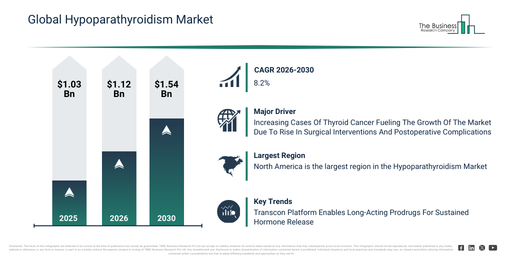
    The hypoparathyroidism market size has shown robust expansion in recent years. It is anticipated to increase from $1.03 billion in 2025 to $1.12 billion in 2026, at a compound annual growth rate (CAGR) of 8.6%. Historically, this growth can be attributed to thyroid surgery complications, calcium deficiency cases, rare disease awareness, hospital endocrine care, and hormone replacement availability.

    The hypoparathyroidism market is projected to experience substantial expansion in the coming years. This market is set to reach $1.54 billion by 2030, demonstrating a compound annual growth rate (CAGR) of 8.2%. This anticipated growth during the forecast period is attributable to several factors, including progress in recombinant therapies, enhanced diagnosis of rare diseases, patient adherence initiatives, the proliferation of specialty clinics, and the integration of precision endocrinology. Key trends identified for the forecast period encompass a rise in the diagnosis of rare endocrine conditions, the increasing application of recombinant parathyroid hormones, the broadening of long-term calcium management strategies, heightened awareness regarding post-surgical complications, and the creation of supplementary supportive treatments.

    Download the Free Sample Report to Explore Key Market Insights:

    https://www.thebusinessresearchcompany.com/sample.aspx?id=24565&type=smp

    What Underlying Factors Are Accelerating The Growth Of The Hypoparathyroidism Market?

    The anticipated expansion of the hypoparathyroidism market is linked to the rising incidence of thyroid cancer. Thyroid cancer is defined by the proliferation of atypical cells within the thyroid gland, frequently manifesting as a neck lump. This increase in thyroid cancer diagnoses is attributed to improvements in diagnostic imaging, which facilitate earlier and more regular identification of minor, symptom-free thyroid nodules. Thyroid cancer contributes to hypoparathyroidism by necessitating more thyroid operations, potentially leading to unintentional harm to the parathyroid glands. Such damage results in an imbalance of calcium and a persistent hormone deficit, thereby boosting the need for ongoing disease management strategies. For example, data from May 2024 by the American Cancer Society, a US-based non-profit organization, indicates that new thyroid cancer cases are projected to rise to 44,020 in 2025 from 43,720 in 2023. Consequently, the growing occurrence of thyroid cancer is a key factor propelling the hypoparathyroidism market’s expansion.

    How Is The Hypoparathyroidism Market Segmented Across Key Categories?

    The hypoparathyroidism market covered in this report is segmented –

    1) By Treatment: Hormone Replacement Therapy, Adjunctive Therapies

    2) By Type: Hormone Replacement Therapy, Calcium And Vitamin D Supplements, Emerging Therapies

    3) By Route Of Administration: Oral, Parenteral

    4) By Distribution Channel: Hospital Pharmacy, Retail Pharmacy, Online Pharmacy

    5) By End User: Hospitals, Specialty Clinics, Homecare Settings

    Subsegments:

    1) By Hormone Replacement Therapy: Recombinant Parathyroid Hormone, Parathyroid Hormone Analogues, Calcimimetics, Calcium And Vitamin D Supplements

    2) By Adjunctive Therapies: Magnesium Supplements, Phosphate Binders, Other Supportive Therapies

    Which Upcoming Trends Are Expected To Influence The Hypoparathyroidism Market?

    Major companies in the hypoparathyroidism market are concentrating on developing technologically advanced products, including transition technology-based products, to boost treatment efficacy and improve patient outcomes. TransCon technology-based products are therapeutics created using TransCon (Transient Conjugation) technology, a proprietary platform designed to optimize drug delivery. For instance, in January 2024, Ascendis Pharma A/S, a Denmark-based biopharmaceutical company, launched YORVIPATH (palopegteriparatide), its second TransCon technology-based product, in Germany and Austria for the treatment of adults with chronic hypoparathyroidism. YORVIPATH is a once-daily prodrug of parathyroid hormone (PTH 1-34) formulated to maintain physiological PTH levels over 24 hours, thereby addressing the underlying hormone deficiency in chronic hypoparathyroidism.

    Who Are The Dominant Players Shaping The Hypoparathyroidism Market Landscape?

    Major companies operating in the hypoparathyroidism market are Pfizer Inc., F. Hoffmann-La Roche Ltd., Merck & Co Inc., AbbVie Inc., Sanofi S.A., Novartis AG, GlaxoSmithKline plc , Takeda Pharmaceutical Company Limited, Eli Lilly and Company, Amgen Inc., Teva Pharmaceutical Industries Ltd., Dr. Reddy’s Laboratories Ltd., Cipla Limited , Lupin Limited, Torrent Pharmaceuticals Ltd., Eagle Pharmaceuticals Inc., BridgeBio Pharma Inc., Ascendis Pharma A/S, Extend Biosciences Inc., Entera Bio Ltd.

    Read the full hypoparathyroidism market report here:

    https://www.thebusinessresearchcompany.com/report/hypoparathyroidism-global-market-report

    Which Region Is Projected To Dominate The Hypoparathyroidism Market During The Forecast Period?

    North America was the largest region in the hypoparathyroidism market in 2025. Asia-Pacific is expected to be the fastest-growing region in the forecast period. The regions covered in the hypoparathyroidism market report are Asia-Pacific, South East Asia, Western Europe, Eastern Europe, North America, South America, Middle East, Africa.

    Request A Tailored Hypoparathyroidism Market Research Report For Competitive Advantage:

    https://www.thebusinessresearchcompany.com/customise?id=24565&type=smp

    Browse Through More Reports Similar to the Global Hypoparathyroidism Market 2026, By The Business Research Company

    Homeopathy Market Report 2026

    https://www.thebusinessresearchcompany.com/report/homeopathy-global-market-report

    Thyroid Function Test Market Report 2026

    https://www.thebusinessresearchcompany.com/report/thyroid-function-test-global-market-report

    Anti Thyroid Drugs Market Report 2026

    https://www.thebusinessresearchcompany.com/report/anti-thyroid-drugs-global-market-report

    Get in touch with us:

    The Business Research Company: https://www.thebusinessresearchcompany.com/

    Americas +1 310-496-7795

    Asia +44 7882 955267 & +91 8897263534

    Europe +44 7882 955267

    Email us at info@tbrc.info

    Follow us on:

    LinkedIn: https://in.linkedin.com/company/the-business-research-company

    YouTube: https://www.youtube.com/channel/UC24_fI0rV8cR5DxlCpgmyFQ

    Global Market Model: https://www.thebusinessresearchcompany.com/global-market-model
  • Hypolipidemics Market Revenue Anticipated to Reach $37.34 Billion by 2030 with a CAGR of 3.3%

    Hypolipidemics Market Revenue Anticipated to Reach $37.34 Billion by 2030 with a CAGR of 3.3%

    The Business Research Company’s 2026 market reports include new capabilities such as market attractiveness scoring and analysis, total addressable market analysis, company scoring matrix, interactive excel data dashboard, improved supply chain analysis, upcoming startups in the market, and overview of key products, aimed at improving the depth, usability, and strategic value of the insights delivered.

    How Much Is The Hypolipidemics Market Expected To Grow In Terms Of Market Value Between 2026 And 2030?

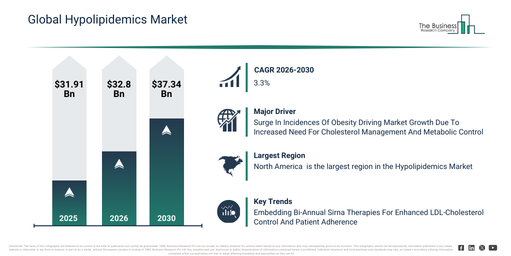
    The hypolipidemics market has demonstrated consistent expansion in recent years. It is anticipated to grow from $31.91 billion in 2025 to $32.8 billion in 2026, achieving a compound annual growth rate (CAGR) of 2.8%. This historical increase can be attributed to several factors, including the rising prevalence of cardiovascular disease, the widespread adoption of statins, increased cholesterol screening rates, improved access to essential cardiovascular drugs, and the expansion of hospital and pharmacy networks.

    The hypolipidemics market size is projected to experience consistent expansion over the upcoming years. This market is forecast to reach $37.34 billion by 2030, demonstrating a compound annual growth rate (CAGR) of 3.3%. Factors contributing to this expansion during the forecast period include the worldwide aging demographic, a greater prevalence of dyslipidemia, a heightened emphasis on preventive cardiology, the proliferation of combination lipid therapies, and broadened healthcare accessibility in developing regions. Key trends anticipated for the forecast period encompass a surge in the long-term application of lipid-lowering treatments, a wider acceptance of combination hypolipidemic medications, an intensified focus on preventive cardiovascular drug therapy, the broader use of generic statins, and enhanced oversight of cholesterol management results.

    Download the Free Sample Report to Explore Key Market Insights:

    https://www.thebusinessresearchcompany.com/sample.aspx?id=2435&type=smp

    Which Growth Drivers Are Contributing To The Progress Of The Hypolipidemics Market?

    An increasing number of obesity cases is anticipated to drive the expansion of the hypolipidemic drugs market moving forward. Obesity, a persistent metabolic condition, is characterized by excessive body fat accumulation, frequently leading to heightened cholesterol levels, insulin resistance, and an elevated risk of cardiovascular issues. The escalating rates of obesity are primarily due to increased consumption of ultra-processed, calorie-dense foods, coupled with reduced physical movement associated with contemporary sedentary lifestyles. In the context of obesity, hypolipidemic medications are utilized to reduce high cholesterol levels, which can pose a risk for cardiovascular complications in individuals carrying excessive body fat. For example, in October 2025, according to Forbes, a US-based business media company, the prevalence of adult obesity in the United States was 40.3%, with women at 41.3% and men at 39.2%, while the global prevalence of obesity among children and adolescents aged 5 to 19 years reached 9.4%. Consequently, the rising instances of obesity are fueling the growth of the hypolipidemic drug market.

    What Major Segment Divisions Exist Within The Hypolipidemics Market?

    The hypolipidemics market covered in this report is segmented –

    1) By Product Type: HMG-CoA Reductase Inhibitors, Nicotinic Acid Drugs

    2) By Drug Type: Statins, Bile Acid Sequestrants, Cholesterol Absorption Inhibitors, PCSK9 Inhibitors, Other Drug Types

    3) By Application: Hospital, Clinics, Pharmacy

    Subsegments:

    1) By HMG-CoA Reductase Inhibitors: Atorvastatin, Rosuvastatin, Simvastatin, Lovastatin, Pravastatin, Fluvastatin

    2) By Nicotinic Acid Drugs: Niacin (Vitamin B3), Extended-release Niacin

    How Are Trends Shaping The Direction Of The Hypolipidemics Market?

    Leading companies in the hypolipidemics market are concentrating on developing innovative products and formulations, such as siRNA-based LDL-cholesterol–lowering treatments administered twice yearly. This effort aims to enhance patient adherence, decrease the burden of treatment, and provide lasting lipid control with fewer injections. These specific therapies integrate powerful lipid-lowering mechanisms with convenient dosing schedules, thereby addressing both clinical results and patient quality of life. For instance, in July 2025, Novartis, a Switzerland-based pharmaceutical firm, announced that its product Leqvio (inclisiran) gained FDA approval for initial use in individuals requiring LDL-cholesterol reduction, allowing a greater number of patients to benefit from its twice-yearly dosing regimen. Inclisiran functions by silencing the PCSK9 gene in the liver through RNA interference, delivering sustained LDL-lowering with just two doses per year. This approval signifies a shift within the hypolipidemics market towards highly effective, long-acting therapies that facilitate long-term cardiovascular risk management without requiring frequent dosing.

    Which Companies Are Leading Innovation In The Hypolipidemics Market?

    Major companies operating in the hypolipidemics market are Pfizer Inc., AstraZeneca Plc, Novartis AG, Sanofi-Aventis, Merck Sharp & Dohme B.V., Amgen Plc, Abbott Laboratories Limited, Daiichi Sankyo Company Limited, Kowa Company Ltd., Viatris Inc., Teva Pharmaceutical Industries Ltd., Sun Pharmaceutical Industries Limited, Dr. Reddy’s Laboratories Ltd., Lupin Limited, Zydus Lifesciences Limited, Torrent Pharmaceuticals Ltd., Cipla Limited, Wockhardt Limited, Alembic Pharmaceuticals Limited, Intas Pharmaceuticals Ltd.

    Read the full hypolipidemics market report here:

    https://www.thebusinessresearchcompany.com/report/hypolipidemics-global-market-report

    What Are The Leading Geographic Regions In The Hypolipidemics Market?

    North America was the largest region in the hypolipidemic drugs market in 2025. The Middle East is expected to be the fastest-growing region in the hypolipidemic drugs market during the forecast period. The regions covered in the hypolipidemics market report are Asia-Pacific, South East Asia, Western Europe, Eastern Europe, North America, South America, Middle East, Africa.

    Request A Tailored Hypolipidemics Market Research Report For Competitive Advantage:

    https://www.thebusinessresearchcompany.com/customise?id=2435&type=smp

    Browse Through More Reports Similar to the Global Hypolipidemics Market 2026, By The Business Research Company

    Hypolipidemics Market Report 2026

    https://www.thebusinessresearchcompany.com/report/hypolipidemics-global-market-report

    Phospholipid Market Report 2026

    https://www.thebusinessresearchcompany.com/report/phospholipid-global-market-report

    Lecithin And Phospholipids Market Report 2026

    https://www.thebusinessresearchcompany.com/report/lecithin-and-phospholipids-global-market-report

    Get in touch with us:

    The Business Research Company: https://www.thebusinessresearchcompany.com/

    Americas +1 310-496-7795

    Asia +44 7882 955267 & +91 8897263534

    Europe +44 7882 955267

    Email us at info@tbrc.info

    Follow us on:

    LinkedIn: https://in.linkedin.com/company/the-business-research-company

    YouTube: https://www.youtube.com/channel/UC24_fI0rV8cR5DxlCpgmyFQ

    Global Market Model: https://www.thebusinessresearchcompany.com/global-market-model
  • Global Hyperuricemia Drugs Market Projected for Strong Growth, Reaching $7.64 Billion by 2030 at 8.1% CAGR

    Global Hyperuricemia Drugs Market Projected for Strong Growth, Reaching $7.64 Billion by 2030 at 8.1% CAGR

    The Business Research Company’s 2026 market reports include new capabilities such as market attractiveness scoring and analysis, total addressable market analysis, company scoring matrix, interactive excel data dashboard, improved supply chain analysis, upcoming startups in the market, and overview of key products, aimed at improving the depth, usability, and strategic value of the insights delivered.

    What Market Value Is Expected For The Hyperuricemia Drugs Market At The End Of The 2026–2030 Forecast Period?

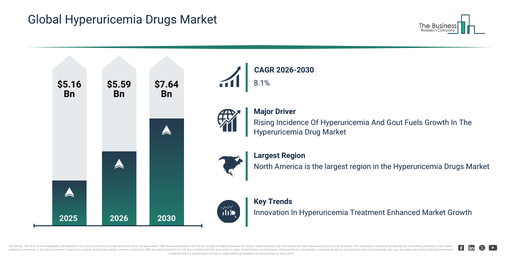
    The hyperuricemia drugs market size has seen substantial growth over recent years. It is projected to expand from $5.16 billion in 2025 to $5.59 billion in 2026, with a compound annual growth rate (CAGR) of 8.4%. Historically, this expansion can be attributed to factors such as the restricted availability of advanced hyperuricemia drugs, an increasing occurrence of gout and kidney stones, a lack of patient understanding about uric acid management, a reliance on traditional anti-inflammatory medications, and the development of hospital and clinic infrastructure.

    The hyperuricemia drugs market size is anticipated to demonstrate significant expansion over the next few years. It is forecast to reach $7.64 billion by 2030, exhibiting a compound annual growth rate (CAGR) of 8.1%. This growth during the forecast period is propelled by factors such as the development of selective uric acid reabsorption inhibitors (suri), increased adoption of combination therapy, growing awareness of preventive care and lifestyle modifications, the expansion of homecare services, and rising government initiatives for metabolic disorder management. Prominent trends within the forecast period include the increasing prevalence of hyperuricemia and gout, greater utilization of xanthine oxidase inhibitors and uricosuric agents, the growth of combination therapy and supportive care medications, the expansion of homecare and specialty clinics for hyperuricemia management, and an emphasis on lifestyle modification and preventive care supplements.

    Download the Free Sample Report to Explore Key Market Insights:

    https://www.thebusinessresearchcompany.com/sample.aspx?id=19517&type=smp

    What Primary Drivers Are Shaping The Development Of The Hyperuricemia Drugs Market?

    The increasing occurrence of hyperuricemia and gout is anticipated to fuel the expansion of the hyperuricemia drug market moving ahead. Hyperuricemia refers to a state marked by abnormally high concentrations of uric acid in the bloodstream, potentially resulting in gout, a severe type of arthritis stemming from the buildup of urate crystals within the joints. Several elements impact the prevalence of hyperuricemia and gout, including genetic susceptibility, eating patterns (especially significant purine consumption), excess weight, renal performance, lifestyle decisions (like drinking alcohol and insufficient hydration), particular drugs, and ongoing health issues such as high blood pressure and diabetes. Medications for hyperuricemia play a crucial role in managing uric acid concentrations, thereby aiding in averting the onset and advancement of hyperuricemia and gout by diminishing uric acid accumulation and easing related discomforts. As an illustration, in July 2024, data released by The Lancet, a UK-based general medical journal, indicated that worldwide, gout was 3.26 times more prevalent in males than in females in 2020 and its occurrence rose with age, anticipating approximately 95.8 million prevalent cases by 2050. Consequently, the increasing occurrence of hyperuricemia and gout is propelling expansion within the hyperuricemia drug market.

    What Segment Types Make Up The Hyperuricemia Drugs Market?

    The hyperuricemia drugs market covered in this report is segmented –

    1) By Type: Asymptomatic Hyperuricemia, Symptomatic Hyperuricemia, Other Types

    2) By Drugs: Nonsteroidal Anti-Inflammatory Drugs, Xanthine Oxidase Inhibitors, Selective Uric Acid Reabsorption Inhibitor (SURI), Uricosuric Agents, Other Drugs

    3) By Diseases: Gout, Kidney Stone, Other Diseases

    4) By End-User: Hospitals, Homecare, Specialty Clinics, Other End-Users

    Subsegments:

    1) By Asymptomatic Hyperuricemia: Uric Acid Lowering Agents, Lifestyle Modification Supplements

    2) By Symptomatic Hyperuricemia: Anti-Inflammatory Drugs, Uric Acid Inhibitors

    3) By Other Types: Combination Therapy, Dietary Supplements

    Which Market Trends Are Creating New Opportunities In The Hyperuricemia Drugs Market?

    Leading firms within the hyperuricemia drug market are prioritizing the creation of novel offerings, specifically therapeutic equivalent generic versions, aiming to deliver affordable options that improve patient access to gout therapy. These generic versions are drugs containing an identical active component to their brand-name counterparts, supplied in the same dosage format, and anticipated to exhibit comparable clinical efficacy and safety characteristics. An illustrative example occurred in January 2024, when Lupin, a pharmaceutical entity based in India, secured clearance from the US health authority for its Febuxostat Tablets (40 mg and 80 mg) and Varenicline Tablets (0.5 mg and 1 mg). The objective of these generic medications is to offer more economical choices for individuals needing hyperuricemia therapy (Febuxostat) and assistance with quitting smoking (Varenicline). Through the introduction of these generics, Lupin intends to broaden availability of crucial medicines, simultaneously gaining a portion of the US pharmaceutical sector and providing patients with economical alternatives for their health requirements.

    Who Are The Key Players Driving Competition In The Hyperuricemia Drugs Market?

    Major companies operating in the hyperuricemia drugs market are Pfizer Inc., Merck & Co., Bayer AG, Sanofi SA, AstraZeneca plc, Novartis AG, Boehringer Ingelheim International GmbH, Teva Pharmaceuticals, Teijin Pharma Limited, Sun Pharmaceutical Industries Ltd., Dr. Reddy’s Laboratories Ltd., Hikma Pharmaceuticals PLC, Amneal Pharmaceuticals Inc., Glenmark Pharmaceuticals Ltd., Kissei Pharmaceutical Co. Ltd., Fuji Yakuhin Co. Ltd.

    Read the full hyperuricemia drugs market report here:

    https://www.thebusinessresearchcompany.com/report/hyperuricemia-drugs-global-market-report

    How Does The Hyperuricemia Drugs Market Perform Across Major Global Regions?

    North America was the largest region in the hyperuricemia drugs market in 2025. The regions covered in the hyperuricemia drugs market report are Asia-Pacific, South East Asia, Western Europe, Eastern Europe, North America, South America, Middle East, Africa.

    Request A Tailored Hyperuricemia Drugs Market Research Report For Competitive Advantage:

    https://www.thebusinessresearchcompany.com/customise?id=19517&type=smp

    Browse Through More Reports Similar to the Global Hyperuricemia Drugs Market 2026, By The Business Research Company

    Acne Drugs Market Report 2026

    https://www.thebusinessresearchcompany.com/report/acne-drugs-global-market-report

    Prostate Cancer Drugs Market Report 2026

    https://www.thebusinessresearchcompany.com/report/prostate-cancer-drugs-global-market-report

    Ovarian Cancer Drugs Market Report 2026

    https://www.thebusinessresearchcompany.com/report/ovarian-cancer-drugs-global-market-report

    Get in touch with us:

    The Business Research Company: https://www.thebusinessresearchcompany.com/

    Americas +1 310-496-7795

    Asia +44 7882 955267 & +91 8897263534

    Europe +44 7882 955267

    Email us at info@tbrc.info

    Follow us on:

    LinkedIn: https://in.linkedin.com/company/the-business-research-company

    YouTube: https://www.youtube.com/channel/UC24_fI0rV8cR5DxlCpgmyFQ

    Global Market Model: https://www.thebusinessresearchcompany.com/global-market-model
  • Hyperphosphatemia Treatment Market Expected to Reach $9.52 Billion by 2030 at a CAGR of 13.4%

    Hyperphosphatemia Treatment Market Expected to Reach $9.52 Billion by 2030 at a CAGR of 13.4%

    The Business Research Company’s 2026 market reports include new capabilities such as market attractiveness scoring and analysis, total addressable market analysis, company scoring matrix, interactive excel data dashboard, improved supply chain analysis, upcoming startups in the market, and overview of key products, aimed at improving the depth, usability, and strategic value of the insights delivered.

    What Is The Estimated Market Size Of The Hyperphosphatemia Treatment Market During 2026–2030?

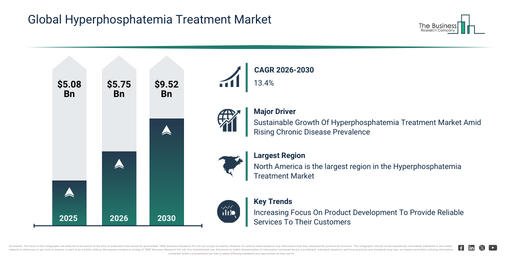
    The hyperphosphatemia treatment market has experienced substantial expansion in recent years. Its value is projected to increase from $5.08 billion in 2025 to $5.75 billion in 2026, demonstrating a compound annual growth rate (CAGR) of 13.2%. Historically, this growth was driven by factors such as a high incidence of renal failure, insufficient knowledge regarding phosphate management, constraints of traditional treatments, hospital-focused therapy provision, and reliance on calcium-based phosphate binders.

    The hyperphosphatemia treatment market is projected for swift expansion in the upcoming years. Its value is anticipated to reach $9.52 billion by 2030, demonstrating a compound annual growth rate (CAGR) of 13.4%. This anticipated expansion during the forecast period is fueled by several factors, including developments in non-calcium phosphate binders, the incorporation of digital health monitoring, a surge in the embrace of precision medicine, growing capital allocation towards innovative therapies, and the proliferation of e-pharmacy channels. Key patterns observed over the forecast horizon involve the escalating occurrence of chronic kidney disease, increased utilization of phosphate binders, the expansion of at-home dialysis options, broadened hospital pharmacy networks, and the creation of new hyperphosphatemia treatments.

    Download the Free Sample Report to Explore Key Market Insights:

    https://www.thebusinessresearchcompany.com/sample.aspx?id=5852&type=smp

    Which Major Factors Are Driving The Expansion Of The Hyperphosphatemia Treatment Market?

    The expanding occurrence of chronic illnesses in patients is propelling the expansion of the hyperphosphatemia treatment market. These conditions are non-contagious and necessitate ongoing medical attention. A significant proportion of these long-term ailments encompass cardiovascular diseases, chronic kidney disease, chronic respiratory conditions, hyperparathyroidism, diabetes, and cancer. For example, in September 2023, the World Health Organization, a specialized UN agency located in Switzerland, reported 41 million deaths annually worldwide, with 74% attributable to non-communicable diseases (NCDs) or chronic diseases. Additionally, data from February 2023 by SingleCare Services LLC, a US-based healthcare savings platform, indicated a rising prevalence of kidney diseases, where untreated kidney failure tragically results in approximately 1 million individuals’ deaths each year. The incidence of hyperphosphatemia has risen among individuals suffering from end-stage renal disease (ESRD), consequently boosting the demand for hyperphosphatemia treatment or medications.

    How Are The Various Segments Of The Hyperphosphatemia Treatment Market Categorized?

    The hyperphosphatemia treatment market covered in this report is segmented –

    1) By Product: Sevelamer, Calcium-Based Phosphate Binders, Iron-Based Phosphate Binders, Lanthanum Carbonate, Other products

    2) By Distribution channel: Hospital Pharmacy, Retail Pharmacy, Online stores

    3) By End-User: Chronic Kidney Disease (CKD) Patients on Dialysis, Non-Dialysis CKD Patients, Post-Kidney Transplant Patients

    Subsegments:

    1) By Sevelamer: Sevelamer Hydrochloride, Sevelamer Carbonate

    2) By Calcium-Based Phosphate Binders: Calcium Acetate, Calcium Carbonate

    3) By Iron-Based Phosphate Binders: Ferric Citrate, Ferric Sulfate

    4) By Lanthanum Carbonate: Lanthanum Carbonate Hydrate

    5) By Other Products: Magnesium-Based Phosphate Binders, Novel Phosphate Binders

    What Trends Are Affecting The Expansion Of The Hyperphosphatemia Treatment Market?

    Leading companies in the hyperphosphatemia treatment market are prioritizing the development of innovative products, such as Xphozah, to boost their revenue. Xphozah is specifically designed to manage hyperphosphatemia, a condition characterized by excessive phosphorus that causes calcium to be removed from bones and various body parts. For instance, in October 2023, Ardelyx Inc., a US-based biopharmaceutical company, received approval for Xphozah. This approval was granted for treating hyperphosphatemia, which leads to calcium depletion from bones and other tissues in the body. An overabundance of phosphorus can contribute to brittle bones, joint discomfort, muscle cramps, and itchy skin. The FDA has approved this medication for use in patients who have not responded adequately to or are intolerant of phosphate binder therapies, which currently represent the standard of care for this condition.

    Which Major Firms Influence Developments In The Hyperphosphatemia Treatment Market?

    Major companies operating in the hyperphosphatemia treatment market are Sanofi SA, Akebia Therapeutics Inc., Ardelyx Inc., Astellas Pharma Inc., Fresenius Medical Care AG & Co. KGaA, Lupin Limited, Sun Pharmaceutical Industries Ltd., Takeda Pharmaceutical Company Limited, Ultragenyx Pharmaceutical Inc., Unicycive Therapeutics Inc., Vifor Pharma Management Ltd., Zeria Pharmaceutical Co. Ltd., Amgen Inc., AstraZeneca plc, Baxter International Inc., Kyowa Kirin Co. Ltd., Ipsen, Shionogi & Co. Ltd., Otsuka Pharmaceutical Co. Ltd., Bayer AG, Boehringer Ingelheim International GmbH, Novartis International AG

    Read the full hyperphosphatemia treatment market report here:

    https://www.thebusinessresearchcompany.com/report/hyperphosphatemia-treatment-global-market-report

    Which Region Currently Holds The Largest Share Of The Hyperphosphatemia Treatment Market?

    North America was the largest region in the hyperphosphatemia treatment market in 2025. Asia-Pacific is expected to be the fastest-growing region in the forecast period. The regions covered in the hyperphosphatemia treatment market report are Asia-Pacific, South East Asia, Western Europe, Eastern Europe, North America, South America, Middle East, Africa.

    Request A Tailored Hyperphosphatemia Treatment Market Research Report For Competitive Advantage:

    https://www.thebusinessresearchcompany.com/customise?id=5852&type=smp

    Browse Through More Reports Similar to the Global Hyperphosphatemia Treatment Market 2026, By The Business Research Company

    Hyperphosphatemia Treatment Market Report 2026

    https://www.thebusinessresearchcompany.com/report/hyperphosphatemia-treatment-global-market-report

    Mineral And Bone Disorder Treatment Market Report 2026

    https://www.thebusinessresearchcompany.com/report/mineral-and-bone-disorder-treatment-global-market-report

    Food Phosphate Market Report 2026

    https://www.thebusinessresearchcompany.com/report/food-phosphate-global-market-report

    Get in touch with us:

    The Business Research Company: https://www.thebusinessresearchcompany.com/

    Americas +1 310-496-7795

    Asia +44 7882 955267 & +91 8897263534

    Europe +44 7882 955267

    Email us at info@tbrc.info

    Follow us on:

    LinkedIn: https://in.linkedin.com/company/the-business-research-company

    YouTube: https://www.youtube.com/channel/UC24_fI0rV8cR5DxlCpgmyFQ

    Global Market Model: https://www.thebusinessresearchcompany.com/global-market-model
  • Hyper-Personalized Medicine Market Forecast 2026–2035 Reflecting Growth Opportunities Across Industries

    Hyper-Personalized Medicine Market Forecast 2026–2035 Reflecting Growth Opportunities Across Industries

    The Business Research Company’s 2026 market reports include new capabilities such as market attractiveness scoring and analysis, total addressable market analysis, company scoring matrix, interactive excel data dashboard, improved supply chain analysis, upcoming startups in the market, and overview of key products, aimed at improving the depth, usability, and strategic value of the insights delivered.

    What Market Size Expansion Is Predicted For The Hyper-Personalized Medicine Market Between 2026 And 2030?

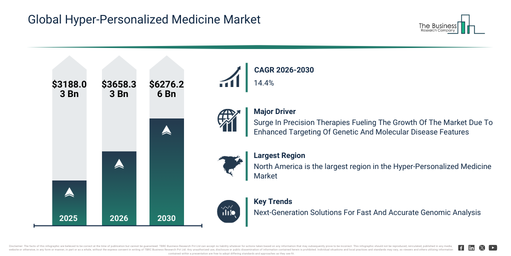
    The hyper-personalized medicine market size has demonstrated substantial growth in recent years. This market is anticipated to expand from $3188.03 billion in 2025 to $3658.33 billion in 2026, at a compound annual growth rate (CAGR) of 14.8%. The historical expansion of this market can be linked to factors such as the initial limited accessibility of personalized medicine solutions, the prevailing reliance on conventional treatment methodologies, an increasing patient demand for customized therapies, heightened investment in genomics research, and the early integration of molecular diagnostics.

    The hyper-personalized medicine market is anticipated to experience swift expansion over the coming years. By 2030, its valuation is projected to reach $6276.26 billion, demonstrating a compound annual growth rate (CAGR) of 14.4%. This anticipated growth during the forecast period is largely due to several factors, including progress in gene and cell therapies, the incorporation of AI and bioinformatics into clinical settings, the expansion of precision nutrition and wellness offerings, increasing governmental support for personalized medicine, and the greater uptake of companion diagnostics along with liquid biopsy technologies. Key trends emerging in this period encompass the wider deployment of AI-powered clinical decision support systems, the increasing acceptance of individualized treatment strategies and precise surgical methods, a growing need for telemedicine and remote patient monitoring solutions, a heightened emphasis on nutrigenomics and customized dietary recommendations, and the creation of RNA-based and targeted therapeutic interventions.

    Download the Free Sample Report to Explore Key Market Insights:

    https://www.thebusinessresearchcompany.com/sample.aspx?id=27313&type=smp

    What Key Drivers Are Influencing The Growth Of The Hyper-Personalized Medicine Market?

    The increasing need for precision therapies is projected to boost the expansion of the hyper-personalized medicine market going forward. Precision therapies refer to medical treatments specifically designed to target distinct genetic, molecular, or cellular features of a disease, allowing for more effective and individualized interventions with fewer side effects compared to traditional treatments. These therapies are gaining prominence due to their capacity to address specific genetic or molecular disease characteristics, leading to enhanced and personalized patient outcomes. Hyper-personalized medicine aids precision therapies by enabling treatments to be precisely tailored to an individual’s unique genetic, molecular, and lifestyle factors, thereby maximizing their effectiveness and minimizing adverse effects. For instance, in February 2024, according to the Personalized Medicine Coalition, a US-based non-profit organization, the Food and Drug Administration (FDA) approved 16 novel personalized therapies for patients with rare diseases in 2023, which is a significant rise from 6 approvals in 2022. Therefore, the heightened demand for precision therapies is actively propelling the growth of the hyper-personalized medicine market.

    Which Market Segments Are Examined In The Hyper-Personalized Medicine Market Study?

    The hyper-personalized medicine market covered in this report is segmented –

    1) By Product: Hyper Personalized Medicine Diagnostics, Hyper Personalized Medicine Therapeutics, Hyper Personalized Medical Care, Hyper Personalized Nutrition And Wellness

    2) By Technology: Genomics, Proteomics, Bioinformatics, Metabolomics

    3) By Application: Oncology, Neurology, Blood Transfusion Safety, Diabetes, Autoimmune Diseases, Cardiology

    4) By End User: Hospitals, Diagnostic Centers, Research And Academic Institutes

    Subsegments:

    1) By Hyper Personalized Medicine Diagnostics: Genomic Sequencing, Biomarker Testing, Molecular Diagnostics, Companion Diagnostics, Liquid Biopsy

    2) By Hyper Personalized Medicine Therapeutics: Targeted Drug Therapies, Gene Therapy, Cell Therapy, Immunotherapy, RNA-based Therapeutics

    3) By Hyper Personalized Medical Care: Telemedicine And Remote Monitoring, Personalized Treatment Plans, AI-driven Clinical Decision Support, Patient-specific Rehabilitation, Precision Surgery

    4) By Hyper Personalized Nutrition And Wellness: Nutrigenomics, Personalized Diet Plans, Microbiome Analysis, Customized Supplements, Wellness Coaching And Monitoring

    Which Trends Are Influencing The Hyper-Personalized Medicine Market?

    Major companies in the hyper-personalized medicine market are increasingly directing their efforts towards innovative solutions, particularly accelerated whole-genome sequencing (WGS) analysis platforms, to meet the growing demand for faster, more precise genomic insights, AI-driven clinical decision support, and scalable companion diagnostics that facilitate genuinely individualized therapies and dosing. Accelerated whole-genome sequencing (WGS) analysis platforms are sophisticated, software-driven systems that rapidly transform raw genomic data into clinically meaningful information, aiding clinicians and researchers in making quicker and more accurate diagnostic and treatment decisions. For instance, in May 2024, SOPHiA GENETICS SA, a Switzerland-based data-driven healthcare and diagnostics company, launched a new WGS application designed to deliver fully analyzed whole-genome insights on an accelerated timeline for clinicians and researchers. The platform incorporates end-to-end automated workflows, from initial FASTQ files to variant interpretation, leveraging cloud computing and optimized algorithms to shorten turnaround times. It also includes clinical decision-support modules for oncology and rare diseases, supports scalability for hospitals and biotech organizations, and often provides analyzed reports on the same day.

    Who Are The Primary Competitors In The Hyper-Personalized Medicine Market?

    Major companies operating in the hyper-personalized medicine market are Pfizer Inc., Johnson & Johnson, Roche Holding AG, Bayer AG, Sanofi S.A., Bristol-Myers Squibb Company, AstraZeneca PLC, Abbott Laboratories, Novartis AG, Danaher Corporation, Amgen Inc., Merck KGaA, GE Healthcare Technologies Inc., Biogen Inc., Illumina Inc., Guardant Health Inc., Berry Genomics Co. Ltd., Sophia Genetics SA, Mapmygenome, InnoCare Pharma.

    Read the full hyper-personalized medicine market report here:

    https://www.thebusinessresearchcompany.com/report/hyper-personalized-medicine-global-market-report

    Which Region Is Expected To Register The Fastest Growth In The Hyper-Personalized Medicine Market?

    North America was the largest region in the hyper-personalized medicine market in 2025. Asia-Pacific is expected to be the fastest-growing region in the forecast period. The regions covered in the hyper-personalized medicine market report are Asia-Pacific, South East Asia, Western Europe, Eastern Europe, North America, South America, Middle East, Africa.

    Request A Tailored Hyper-Personalized Medicine Market Research Report For Competitive Advantage:

    https://www.thebusinessresearchcompany.com/customise?id=27313&type=smp

    Browse Through More Reports Similar to the Global Hyper-Personalized Medicine Market 2026, By The Business Research Company

    Mouse Market Report 2026

    https://www.thebusinessresearchcompany.com/report/mouse-global-market-report

    Museums Historical Sites Zoos And Parks Market Report 2026

    https://www.thebusinessresearchcompany.com/report/museums-historical-sites-zoos-and-parks-global-market-report

    Exhibition Market Report 2026

    https://www.thebusinessresearchcompany.com/report/exhibition-global-market-report

    Get in touch with us:

    The Business Research Company: https://www.thebusinessresearchcompany.com/

    Americas +1 310-496-7795

    Asia +44 7882 955267 & +91 8897263534

    Europe +44 7882 955267

    Email us at info@tbrc.info

    Follow us on:

    LinkedIn: https://in.linkedin.com/company/the-business-research-company

    YouTube: https://www.youtube.com/channel/UC24_fI0rV8cR5DxlCpgmyFQ

    Global Market Model: https://www.thebusinessresearchcompany.com/global-market-model
  • Global Hyperlipidemia Drugs Market Analysis for 2026–2030 with Strategic Business Insights

    Global Hyperlipidemia Drugs Market Analysis for 2026–2030 with Strategic Business Insights

    The Business Research Company’s 2026 market reports include new capabilities such as market attractiveness scoring and analysis, total addressable market analysis, company scoring matrix, interactive excel data dashboard, improved supply chain analysis, upcoming startups in the market, and overview of key products, aimed at improving the depth, usability, and strategic value of the insights delivered.

    How Large Is The Hyperlipidemia Drugs Market Projected To Become By 2030 Based On Its 2026 Valuation?

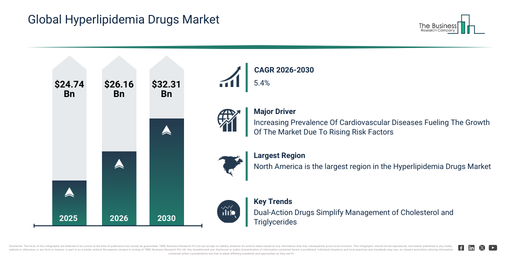
    The hyperlipidemia drugs market has experienced robust expansion over the past few years. Its valuation is set to increase from $24.74 billion in 2025 to $26.16 billion in 2026, achieving a compound annual growth rate (CAGR) of 5.7%. Historically, this growth has been driven by several factors, including the increasing prevalence of hyperlipidemia, an expanding geriatric population, a rising incidence of cardiovascular diseases, challenges in accessing advanced lipid-lowering therapies, and enhancements in healthcare infrastructure.

    The hyperlipidemia drugs market is anticipated to experience substantial expansion over the coming years. It is projected to reach $32.31 billion by 2030, demonstrating a compound annual growth rate (CAGR) of 5.4%. Key drivers for this growth throughout the forecast period include the introduction of novel pcsk9 inhibitors and inclisiran, the expansion of combination therapies, a growing understanding of personalized medicine, increased spending on cardiovascular healthcare, and the integration of digital health monitoring tools. Significant trends expected during this period involve the increasing uptake of statins and pcsk9 inhibitors, an uptick in the use of combination therapies for managing hyperlipidemia, heightened awareness regarding cardiovascular disease prevention, the broadening of hospital and retail pharmacy networks, and a surging demand for personalized lipid-lowering treatments.

    Download the Free Sample Report to Explore Key Market Insights:

    https://www.thebusinessresearchcompany.com/sample.aspx?id=27312&type=smp

    What Major Growth Drivers Are Shaping The Outlook Of The Hyperlipidemia Drugs Market?

    The rising occurrence of cardiovascular conditions is projected to boost the expansion of the hyperlipidemia drugs market in the future. These diseases encompass various ailments impacting the heart and circulatory system, such as coronary heart disease, heart failure, stroke, and hypertension. A key reason for the growing prevalence of cardiovascular diseases is an unhealthy diet, given that overconsumption of saturated fats, trans fats, added sugars, and sodium leads to issues like high blood pressure, obesity, and increased cholesterol. Hyperlipidemia drugs are crucial for managing cardiovascular diseases because they effectively reduce detrimental cholesterol and triglyceride levels, thereby supporting heart health. These medications streamline treatment through advanced therapeutic approaches, decreasing complication risks and enhancing patient recovery. For example, data from October 2024 by the Centers for Disease Control and Prevention, a US-based government entity, revealed that in 2023, cardiovascular disease was responsible for 919,032 lives, representing one in every three deaths. Coronary heart disease continued to be the most common type of heart ailment, and significantly, approximately one in six cardiovascular disease-related deaths affected individuals younger than 65 years. Consequently, the rising incidence of cardiovascular diseases is fueling the expansion of the hyperlipidemia drugs market.

    What Segment Groups Are Identified Within The Hyperlipidemia Drugs Market?

    The hyperlipidemia drugs market covered in this report is segmented –

    1) By Drug Class: Statins, Bile Acid Sequestrants, Cholesterol Absorption Inhibitors, Fibric Acid Derivatives, Proprotein Convertase Subtilisin Or Kexin Type 9 (PCSK9) Inhibitors, Combination, Miscellaneous

    2) By Route Of Administration: Oral, Parenteral, Other Route Of Administrations

    3) By Distribution Channel: Hospital Pharmacies, Online Pharmacies, Retail Pharmacies

    4) By End User: Hospitals, Clinics, Other End Users

    Subsegments:

    1) By Statins: Atorvastatin, Rosuvastatin, Simvastatin, Pravastatin, Fluvastatin, Lovastatin, Pitavastatin

    2) By Bile Acid Sequestrants: Cholestyramine, Colesevelam, Colestipol

    3) By Cholesterol Absorption Inhibitors: Ezetimibe, Ezetimibe-Simvastatin Combination

    4) By Fibric Acid Derivatives: Fenofibrate, Gemfibrozil, Bezafibrate, Ciprofibrate

    5) By Proprotein Convertase Subtilisin Or Kexin Type 9 (PCSK9) Inhibitors: Evolocumab, Alirocumab, Inclisiran

    6) By Combination: Statin + Ezetimibe, Statin + Niacin, Statin + Omega-3, Statin + Bile Acid Sequestrant, Fixed-Dose Combinations (FDCs) Of Statins + Antihypertensives

    7) By Miscellaneous: Niacin (Nicotinic Acid), Omega-3 Fatty Acids (EPA/DHA), Lomitapide, Mipomersen, Bempedoic Acid

    What Trends Are Advancing Progress In The Hyperlipidemia Drugs Market?

    Leading companies in the hyperlipidemia drugs market are prioritizing the development of advanced therapies, such as combination treatments, to enhance effectiveness and simplify patient regimens for improved cardiovascular health. These combination therapies involve the administration of two or more distinct medications together in a single protocol, proving more efficacious in addressing a disease than a lone drug. For example, in June 2024, Daewoong Bio Inc., a pharmaceutical company based in South Korea, introduced CRA-TG Soft Capsule, a combination medication blending rosuvastatin with omega-3 fatty acids for treating hyperlipidemia in patients. Rosuvastatin functions by reducing cholesterol synthesis in the liver, thereby lowering harmful low-density lipoprotein (LDL) levels in the blood, while omega-3 fatty acids serve as a dietary supplement to decrease triglyceride levels in individuals with elevated triglycerides. This particular product employs patented multi-layer capsule coating technology to boost the stability and tolerability of its ingredients, all while maintaining a standard capsule size.

    Which Companies Hold Significant Positions In The Hyperlipidemia Drugs Market?

    Major companies operating in the hyperlipidemia drugs market are Pfizer Inc., Merck & Co. Inc., AbbVie Inc., Sanofi S.A., Bristol-Myers Squibb Company, AstraZeneca plc, Novartis AG, GlaxoSmithKline plc, Amgen Inc., Takeda Pharmaceutical Company Limited, Boehringer Ingelheim GmbH, Teva Pharmaceutical Industries Ltd., Regeneron Pharmaceuticals Inc., Daiichi Sankyo Company Limited, Sun Pharmaceutical Industries Ltd., STADA Arzneimittel AG, Aurobindo Pharma Ltd., Zydus Lifesciences Limited, Lupin Limited, Glenmark Pharmaceuticals Ltd.

    Read the full hyperlipidemia drugs market report here:

    https://www.thebusinessresearchcompany.com/report/hyperlipidemia-drugs-global-market-report

    Which Regions Are Projected To Dominate The Hyperlipidemia Drugs Market In The Coming Years?

    North America was the largest region in the hyperlipidemia drugs market in 2025. Asia-Pacific is expected to be the fastest-growing region in the forecast period. The regions covered in the hyperlipidemia drugs market report are Asia-Pacific, South East Asia, Western Europe, Eastern Europe, North America, South America, Middle East, Africa.

    Request A Tailored Hyperlipidemia Drugs Market Research Report For Competitive Advantage:

    https://www.thebusinessresearchcompany.com/customise?id=27312&type=smp

    Browse Through More Reports Similar to the Global Hyperlipidemia Drugs Market 2026, By The Business Research Company

    Ground Handling Services Market Report 2026

    https://www.thebusinessresearchcompany.com/report/ground-handling-services-global-market-report

    Power Plant Maintenance Market Report 2026

    https://www.thebusinessresearchcompany.com/report/power-plant-maintenance-global-market-report

    Maintenance Services Market Report 2026

    https://www.thebusinessresearchcompany.com/report/maintenance-services-global-market-report

    Get in touch with us:

    The Business Research Company: https://www.thebusinessresearchcompany.com/

    Americas +1 310-496-7795

    Asia +44 7882 955267 & +91 8897263534

    Europe +44 7882 955267

    Email us at info@tbrc.info

    Follow us on:

    LinkedIn: https://in.linkedin.com/company/the-business-research-company

    YouTube: https://www.youtube.com/channel/UC24_fI0rV8cR5DxlCpgmyFQ

    Global Market Model: https://www.thebusinessresearchcompany.com/global-market-model
  • Hydroxychloroquine Market Outlook 2026–2035 Driven by Key Growth Factors and Industry Forecasts

    Hydroxychloroquine Market Outlook 2026–2035 Driven by Key Growth Factors and Industry Forecasts

    The Business Research Company’s 2026 market reports include new capabilities such as market attractiveness scoring and analysis, total addressable market analysis, company scoring matrix, interactive excel data dashboard, improved supply chain analysis, upcoming startups in the market, and overview of key products, aimed at improving the depth, usability, and strategic value of the insights delivered.

    What Market Value Is Anticipated For The Hydroxychloroquine Market Over The Period 2026–2030?

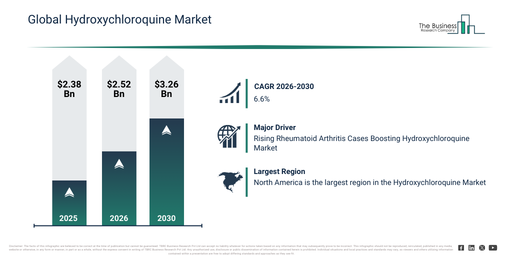
    The hydroxychloroquine market has experienced significant expansion in recent years. It is anticipated to grow from $2.38 billion in 2025 to $2.52 billion in 2026, demonstrating a compound annual growth rate (CAGR) of 6.2%. This historical growth can be linked to the considerable prevalence of malaria in endemic areas, its recognized application in autoimmune disorders, increasing public awareness of hydroxychloroquine’s advantages, its accessibility through hospital and retail pharmacies, and the rising clinical adoption for conditions such as rheumatoid arthritis and lupus.

    The hydroxychloroquine market size is anticipated to undergo significant expansion in the coming years. It is projected to grow to $3.26 billion in 2030, driven by a compound annual growth rate (CAGR) of 6.6%. This expected growth over the forecast period stems from ongoing research into COVID-19 applications, the creation of novel formulations and delivery methods, the widening reach of online pharmacy channels, escalating government health initiatives for malaria prevention, and increasing investments in clinical trials and off-label studies. Prominent trends for the forecast period encompass the rising application of hydroxychloroquine for both malaria prevention and treatment, its growing acceptance in the management of rheumatoid arthritis and lupus, an increase in off-label uses and clinical research for COVID-19, the diversification of tablet formulations and injectable variants, and its enhanced distribution through hospital, online, and retail pharmacies.

    Download the Free Sample Report to Explore Key Market Insights:

    https://www.thebusinessresearchcompany.com/sample.aspx?id=3235&type=smp

    What Drivers Are Expected To Influence The Hydroxychloroquine Market During The Forecast Period?

    The increasing incidence of rheumatoid arthritis is predicted to fuel the expansion of the hydroxychloroquine market. Rheumatoid arthritis is an autoimmune and inflammatory ailment where the immune system mistakenly attacks healthy cells, causing inflammation in affected areas of the body. Hydroxychloroquine is valuable in treating rheumatoid arthritis as it helps mitigate inflammation and relieve symptoms, thus enhancing the quality of life for numerous patients. For example, in June 2023, data from the Centers for Disease Control and Prevention, a US-based health protection agency, revealed that 54.4 million adults in the United States had been diagnosed with arthritis, a figure projected to rise to 78 million by 2040. Consequently, the rising number of rheumatoid arthritis cases is anticipated to stimulate the hydroxychloroquine market. Hydroxychloroquine Market Driver: Impact Of Rising Healthcare Expenditure On The Growth Of The Hydroxychloroquine Market

    How Is The Hydroxychloroquine Market Divided Into Its Major Segments?

    The hydroxychloroquine market covered in this report is segmented –

    1) By Drug Activity: Anti-Malarial Drug, Anti-Rheumatic Drug, Lupus Suppressant Drug, Anti COVID-19 Drug, Other Drug Activity

    2) By Formulation: Tablets, Injection

    3) By Application: Malaria, Rheumatoid Arthritis, Lupus Erythematosus, COVID-19, Other Applications

    4) By Distribution Channel: Hospital Pharmacy, Online Pharmacy, Specialty Drug Stores, Retail Pharmacy

    Subsegments:

    1) By Anti-Malarial Drug: Treatment Of Malaria, Prophylaxis For Malaria

    2) By Anti-Rheumatic Drug: Treatment Of Rheumatoid Arthritis, Treatment Of Juvenile Idiopathic Arthritis

    3) By Lupus Suppressant Drug: Treatment Of Systemic Lupus Erythematosus

    4) By Anti COVID-19 Drug: Treatment Of COVID-19 Symptoms

    5) By Other Drug Activity: Treatment Of Other Autoimmune Disorders, Additional Off-label uses

    Who Are The Prominent Organizations Shaping The Hydroxychloroquine Market?

    Major companies operating in the hydroxychloroquine market are Bayer AG, Dr. Reddy’s Laboratories Ltd., Zydus Group, Ipca Laboratories Ltd., Wallace Pharma, Teva Pharmaceuticals Inc., Mylan Pharmaceuticals Inc., Novartis AG, Intas Pharmaceuticals Ltd., Lupin Limited, Shanghai Zhongxi Sanwei Pharmaceutical Co. Ltd., Torrent Pharmaceuticals Ltd., Hikma Pharmaceuticals plc, Sandoz International GmbH, Cipla Limited, Shenhua Pharmaceutical Co. Ltd., Sanofi S.A., Macleod Pharmaceuticals Ltd., Laurus Labs, TAJ Pharmaceuticals, Wuhan Wuyao Pharmaceutical Co. Ltd., Concordia Healthcare, Pfizer Inc., Cadila Pharmaceuticals, Hetero Drugs Ltd., Jubilant Generics Limited, Alembic Pharmaceuticals Limited, Sun Pharmaceutical Industries Ltd., Aurobindo Pharma USA Inc., Alkem Laboratories Ltd., Glenmark Pharmaceuticals Ltd., Unichem Laboratories Ltd., Wockhardt Limited, Emcure Pharmaceuticals Ltd., Strides Pharma Science Ltd., Indoco Remedies Ltd.

    Read the full hydroxychloroquine market report here:

    https://www.thebusinessresearchcompany.com/report/hydroxychloroquines-global-market-report

    Which Region Is Forecast To Lead The Hydroxychloroquine Market In Terms Of Market Size?

    North America was the largest region in the hydroxychloroquine market in 2025. Middle East is expected to be the fastest-growing region in the hydroxychloroquine market report. The regions covered in the hydroxychloroquine market report are Asia-Pacific, South East Asia, Western Europe, Eastern Europe, North America, South America, Middle East, Africa.

    Request A Tailored Hydroxychloroquine Market Research Report For Competitive Advantage:

    https://www.thebusinessresearchcompany.com/customise?id=3235&type=smp

    Browse Through More Reports Similar to the Global Hydroxychloroquine Market 2026, By The Business Research Company

    Cardiovascular Drugs Market Report 2026

    https://www.thebusinessresearchcompany.com/report/cardiovascular-drugs-global-market-report

    Dermatology Drugs Market Report 2026

    https://www.thebusinessresearchcompany.com/report/dermatology-drugs-global-market-report

    Gastrointestinal Drug Market Report 2026

    https://www.thebusinessresearchcompany.com/report/gastrointestinal-drug-global-market-report

    Get in touch with us:

    The Business Research Company: https://www.thebusinessresearchcompany.com/

    Americas +1 310-496-7795

    Asia +44 7882 955267 & +91 8897263534

    Europe +44 7882 955267

    Email us at info@tbrc.info

    Follow us on:

    LinkedIn: https://in.linkedin.com/company/the-business-research-company

    YouTube: https://www.youtube.com/channel/UC24_fI0rV8cR5DxlCpgmyFQ

    Global Market Model: https://www.thebusinessresearchcompany.com/global-market-model
  • Hydrolase Enzymes Market Trends and Opportunities Across 2026–2030

    Hydrolase Enzymes Market Trends and Opportunities Across 2026–2030

    The Business Research Company’s 2026 market reports include new capabilities such as market attractiveness scoring and analysis, total addressable market analysis, company scoring matrix, interactive excel data dashboard, improved supply chain analysis, upcoming startups in the market, and overview of key products, aimed at improving the depth, usability, and strategic value of the insights delivered.

    What Is The Expected Market Size Of The Hydrolase Enzymes Market From 2026 To 2030?

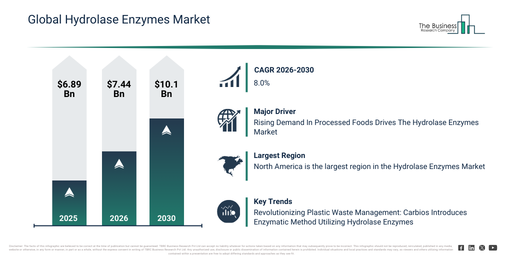
    The hydrolase enzymes market has experienced robust expansion in recent years. It is projected to increase from $6.89 billion in 2025 to $7.44 billion in 2026, achieving a compound annual growth rate (CAGR) of 7.9%. The market’s growth in previous periods can be linked to the growing adoption of enzymes in detergent formulations, the expansion of pharmaceutical manufacturing, increased utilization of enzymes in food processing, breakthroughs in fermentation technology, and the cost efficiency offered by enzymatic catalysis.

    The hydrolase enzymes market is projected to experience substantial expansion in the coming years. By 2030, its value is anticipated to reach $10.1 billion, growing at a compound annual growth rate (CAGR) of 8.0%. This anticipated growth during the forecast period is driven by several factors, including the increasing demand for biopharmaceuticals, a heightened emphasis on sustainable industrial practices, the expansion of biofuel production, broader applications within cosmetics and personal care, and ongoing advancements in enzyme engineering. Key trends for this period involve the rising incorporation of hydrolase enzymes in biopharmaceutical drug development, the growing integration of enzyme-based processing in food and beverage production, an elevated need for hydrolases in detergent and cleaning products, the wider use of industrial enzymes in biofuel and biorefinery contexts, and product developments prioritizing enzymes with high stability and specificity.

    Download the Free Sample Report to Explore Key Market Insights:

    https://www.thebusinessresearchcompany.com/sample.aspx?id=9143&type=smp

    What Drivers Are Influencing The Hydrolase Enzymes Market?

    The hydrolase enzymes market is projected to grow due to the increasing requirement for processed foods. Processed foods are defined as food items that undergo intentional alterations from their natural condition through various methods such as preparation, preservation, cooking, or packaging. Hydrolase enzymes are utilized in processed food production for creating diverse sweeteners, like high-fructose corn syrup, and for breaking down complex carbohydrates, proteins, and fats into simpler constituents. As an illustration, in May 2024, the United States Department of Agriculture, a US-based federal agency, reported that in 2023, the value of U.S. processed food exports rose by 0.2% year-over-year to $14.73 billion, establishing a record for the third consecutive year. Hence, the rising demand for processed foods is a key driver for the expansion of the hydrolase enzymes market.

    Which Segments Are Included In The Analysis Of The Hydrolase Enzymes Market?

    The hydrolase enzymes market covered in this report is segmented –

    1) By Product: Esterase, Glycosylases, Peptidases, Other Products

    2) By Bond Type: Ester Bonds (Esterases), Sugars (DNA Glycosylases And Glycoside Hydrolase), Ether Bonds (Thioether And Trialkylsulfonium), Peptide Bonds (Peptidases), Carbon-Nitrogen Bonds (Other Than Peptide Bonds), Acid Anhydrides, Carbon-Carbon Bonds, Halide Bonds, Phosphorus-Nitrogen Bonds, Other Bond Types

    3) By Application: Pharmaceutical, Food And Beverages, Laundry Detergents, Cosmetics, Textile, Pulp And Paper, Biofuel, Other Applications

    Subsegments:

    1) By Esterase: Acetylcholinesterase, Lipases, Carboxylesterases

    2) By Glycosylases: Amylases, Cellulases, Glucosidases

    3) By Peptidases: Serine Peptidases, Cysteine Peptidases, Aspartic Peptidases, Metallopeptidases

    4) By Other Products: Phosphatases, Nucleotidases, Other Hydrolases

    Which Trends Are Impacting The Growth Of The Hydrolase Enzymes Market?

    Leading companies within the hydrolase enzymes market are concentrating on innovations, such as advanced enzyme engineering, to enhance the efficiency and sustainability of industrial processes, including plastic recycling and the manufacturing of bio-based products. Enzymatic recycling is a method that utilizes naturally occurring enzymes to break down plastics, like PET, into their core components, allowing them to be reprocessed into new materials without compromising their quality. For instance, in August 2023, Carbios, a France-based biotech company, introduced a pioneering enzymatic recycling process, marking a significant evolution in how PET (polyethylene terephthalate) waste is handled. This innovative approach enables the conversion of waste into recycled and recyclable products without any degradation in quality, by employing naturally occurring enzymes to transform plastic and textile waste into new products.

    Which Key Industry Participants Are Active In The Hydrolase Enzymes Market?

    Major companies operating in the hydrolase enzymes market are Creative Enzymes Holdings Limited, Advanced Enzyme Technologies Limited, Specialty Enzymes & Probiotics, Novozymes A/S, Antozyme Biotech Private Limited, Infinita Biotech Private Limited, Aumgene Biosciences (Shanghai) Co. Ltd., AB Enzymes GmbH, Dyadic International Inc., Sisco Research Laboratories Pvt Ltd., Amano Enzyme Inc., Codexis Inc., Merck KGaA, BESTZYME BIO-ENGINEERING CO. Ltd., Bioseutica Group, BASF SE, Kemin Industries Inc., Epygen Labs FZ LLC, DuPont de Nemours Inc., Biovet Private Limited, Enzyme Development Corporation, Associated British Foods, Chr. Hansen Holding A/S, Thermo Fisher Scientific Inc., Koninklijke DSM N.V., Enzymes Biotec Limited, Kerry Group plc

    Read the full hydrolase enzymes market report here:

    https://www.thebusinessresearchcompany.com/report/hydrolase-enzymes-global-market-report

    Which Regions Are Expected To Experience Rapid Expansion In The Hydrolase Enzymes Market?

    North America was the largest region in the hydrolase enzymes market in 2025. Europe is expected to be the fastest-growing region in the hydrolase enzymes market report during the forecast period. The regions covered in the hydrolase enzymes market report are Asia-Pacific, South East Asia, Western Europe, Eastern Europe, North America, South America, Middle East, Africa.

    Request A Tailored Hydrolase Enzymes Market Research Report For Competitive Advantage:

    https://www.thebusinessresearchcompany.com/customise?id=9143&type=smp

    Browse Through More Reports Similar to the Global Hydrolase Enzymes Market 2026, By The Business Research Company

    Hydrolase Enzymes Market Report 2026

    https://www.thebusinessresearchcompany.com/report/hydrolase-enzymes-global-market-report

    Enzyme Market Report 2026

    https://www.thebusinessresearchcompany.com/report/enzyme-global-market-report

    Protein Hydrolysis Enzymes Market Report 2026

    https://www.thebusinessresearchcompany.com/report/protein-hydrolysis-enzymes-global-market-report

    Get in touch with us:

    The Business Research Company: https://www.thebusinessresearchcompany.com/

    Americas +1 310-496-7795

    Asia +44 7882 955267 & +91 8897263534

    Europe +44 7882 955267

    Email us at info@tbrc.info

    Follow us on:

    LinkedIn: https://in.linkedin.com/company/the-business-research-company

    YouTube: https://www.youtube.com/channel/UC24_fI0rV8cR5DxlCpgmyFQ

    Global Market Model: https://www.thebusinessresearchcompany.com/global-market-model

  • Global Hydrogel Based Drug Delivery System Market Forecast 2026–2035 Presenting Long-Term Growth Insights

    Global Hydrogel Based Drug Delivery System Market Forecast 2026–2035 Presenting Long-Term Growth Insights

    The Business Research Company’s 2026 market reports include new capabilities such as market attractiveness scoring and analysis, total addressable market analysis, company scoring matrix, interactive excel data dashboard, improved supply chain analysis, upcoming startups in the market, and overview of key products, aimed at improving the depth, usability, and strategic value of the insights delivered.

    What Market Valuation Is Forecasted For The Hydrogel Based Drug Delivery System Market By 2030 Starting From Its 2026 Size?

    The market size for hydrogel based drug delivery systems has witnessed rapid expansion in recent years. It is anticipated to expand from $7.56 billion in 2025 to $8.36 billion in 2026, demonstrating a compound annual growth rate (CAGR) of 10.6%. The historical growth in this sector can be ascribed to several factors, including limited hydrogel formulations, a dependence on natural hydrogels, minimal adoption in clinical environments, a deficiency in large molecule delivery systems, and the rising demand for sustained release therapies.

    The hydrogel based drug delivery system market size is anticipated to undergo significant expansion over the next few years. It is predicted to reach $12.35 billion by 2030, exhibiting a compound annual growth rate (CAGR) of 10.2%. This projected growth stems from factors such as the advancement of synthetic and hybrid hydrogels, heightened emphasis on oncology and cardiology applications, the broadening of injectable and ocular delivery pathways, the increasing uptake of personalized hydrogel therapies, and enhanced investment in research institutions and hospitals. Prominent trends expected during the forecast period encompass the increasing acceptance of injectable and topical hydrogel drug delivery systems, expanded application of hydrogels for targeted oncology and cardiology treatments, the creation of hybrid hydrogels designed for improved drug release profiles, expanded investigation into the delivery of peptides, proteins, and large molecules, and the evolution of personalized medicine and patient-specific drug formulations.

    Download the Free Sample Report to Explore Key Market Insights:

    https://www.thebusinessresearchcompany.com/sample.aspx?id=27311&type=smp

    What Drivers Are Shaping The Future Growth Of The Hydrogel Based Drug Delivery System Market?

    An increasing incidence of burn injuries is anticipated to drive expansion in the hydrogel-based drug delivery system market in the foreseeable future. Burn incidents refer to medical conditions where individuals sustain harm to their skin or underlying tissues resulting from exposure to heat, chemicals, electricity, or radiation. The frequency of burn cases is increasing, largely due to a rise in domestic accidents involving the improper handling of hot liquids or culinary devices, leading to skin damage and highlighting the necessity for enhanced safety consciousness in everyday life. Hydrogel-based drug delivery systems facilitate the healing process for burns by establishing a moist, safeguarded environment that promotes faster recovery and reduces discomfort. Simultaneously, they administer medications in a regulated, prolonged fashion to improve tissue regeneration and guard against infections. As an illustration, data from October 2023, provided by the International Burn Injury Database (iBID), a US-based organization, indicated a 45% rise in burns and scalds among children during the first six months of 2023 when contrasted with the corresponding period in 2022. Concurrently, occurrences involving adults and the elderly linked to hot water bottles saw a 19% increase. Consequently, the expanding occurrence of burn cases is a key factor propelling the growth of the hydrogel-based drug delivery system market.

    Which Segment Categories Define The Hydrogel Based Drug Delivery System Market?

    The hydrogel based drug delivery system market covered in this report is segmented –

    1) By Type Of Hydrogel: Natural Hydrogels, Synthetic Hydrogels, Hybrid Hydrogels

    2) By Drug Type: Small Molecules, Large Molecules, Peptides, Proteins

    3) By Route Of Administration: Topical, Injectable, Oral, Transdermal, Ocular

    4) By Application: Cardiology, Oncology, Immunology, Pain Management, Other Applications

    5) By End-User: Hospitals, Clinics, Research Institutes, Other End-Users

    Subsegments:

    1) By Natural Hydrogels: Alginate, Chitosan, Collagen, Gelatin, Hyaluronic Acid, Fibrin

    2) By Synthetic Hydrogels: Polyethylene Glycol (PEG), Polyvinyl Alcohol (PVA), Polyacrylamide (PAAm), Poloxamer, Poly(N-isopropylacrylamide) (PNIPAM)

    3) By Hybrid Hydrogels: Natural-Synthetic Polymer Blends, Interpenetrating Polymer Networks (IPNs), Composite Hydrogels, Nanocomposite Hydrogels

    What Major Market Trends Are Driving Changes In The Hydrogel Based Drug Delivery System Market?

    Major companies operating in the hydrogel-based drug delivery market are prioritizing the development of advanced products like injectable hydrogels, aiming to enhance targeted delivery and enable controlled, sustained drug release. These injectable hydrogels are soft, water-based materials that are administered with minimal invasiveness into the body, facilitating the delivery of drugs with controlled, sustained release directly at the target site, which in turn boosts effectiveness and minimizes side effects. Illustratively, in October 2024, UPM Biomedicals Oy, a biotechnology company based in Finland, launched Fibgel, recognized as the world’s inaugural injectable nanocellulose hydrogel specifically engineered for permanent implantable medical devices. This innovative hydrogel is crafted from renewable Finnish birch wood cellulose and water, offering a safe, sustainable, and animal-free alternative to traditional synthetic and animal-derived hydrogels. Fibgel provides tunable mechanical properties and excellent biocompatibility, enabling controlled and sustained drug release precisely at the intended site. Its shear-thinning characteristic allows for easy injection through minimally invasive procedures, thereby improving patient comfort and accelerating recovery.

    Who Are The Top Companies Competing In The Hydrogel Based Drug Delivery System Market?

    Major companies operating in the hydrogel based drug delivery system market are Johnson & Johnson, Merck KGaA, UPM Biomedicals Oy, The Lubrizol Corporation, Ashland Global Holdings Inc., B. Braun Melsungen AG, Ocular Therapeutix Inc., Primex ehf, Heppe Medical Chitosan GmbH, BioCat GmbH, Micropore Technologies Limited, Akina Inc., KitoZyme SA

    Read the full hydrogel based drug delivery system market report here:

    https://www.thebusinessresearchcompany.com/report/hydrogel-based-drug-delivery-system-global-market-report

    Which Geographic Regions Are Influencing Demand In The Hydrogel Based Drug Delivery System Market?

    North America was the largest region in the hydrogel-based drug delivery system market in 2025. Asia-Pacific is expected to be the fastest-growing region in the forecast period. The regions covered in the hydrogel based drug delivery system market report are Asia-Pacific, South East Asia, Western Europe, Eastern Europe, North America, South America, Middle East, Africa.

    Request A Tailored Hydrogel Based Drug Delivery System Market Research Report For Competitive Advantage:

    https://www.thebusinessresearchcompany.com/customise?id=27311&type=smp

    Browse Through More Reports Similar to the Global Hydrogel Based Drug Delivery System Market 2026, By The Business Research Company

    Legal Services Market Report 2026

    https://www.thebusinessresearchcompany.com/report/legal-services-global-market-report

    Case Management Market Report 2026

    https://www.thebusinessresearchcompany.com/report/case-management-global-market-report

    Legal Services Market Report 2026

    https://www.thebusinessresearchcompany.com/report/legal-services-global-market-report

    Get in touch with us:

    The Business Research Company: https://www.thebusinessresearchcompany.com/

    Americas +1 310-496-7795

    Asia +44 7882 955267 & +91 8897263534

    Europe +44 7882 955267

    Email us at info@tbrc.info

    Follow us on:

    LinkedIn: https://in.linkedin.com/company/the-business-research-company

    YouTube: https://www.youtube.com/channel/UC24_fI0rV8cR5DxlCpgmyFQ

    Global Market Model: https://www.thebusinessresearchcompany.com/global-market-model
  • Hyaluronic Acid Supplement Market Outlook 2026–2030 Highlighting Emerging Business Opportunities

    Hyaluronic Acid Supplement Market Outlook 2026–2030 Highlighting Emerging Business Opportunities

    The Business Research Company’s 2026 market reports include new capabilities such as market attractiveness scoring and analysis, total addressable market analysis, company scoring matrix, interactive excel data dashboard, improved supply chain analysis, upcoming startups in the market, and overview of key products, aimed at improving the depth, usability, and strategic value of the insights delivered.

    How Is The Market Size Of The Hyaluronic Acid Supplement Market Expected To Change Between 2026 And 2030?

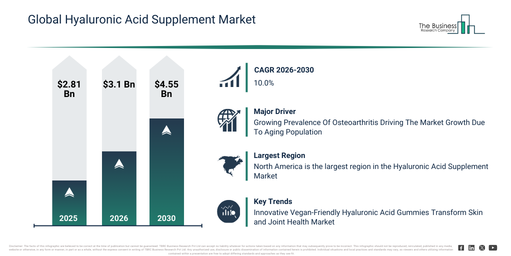
    The hyaluronic acid supplement market size has observed rapid expansion in recent years. It is anticipated to grow from $2.81 billion in 2025 to $3.1 billion in 2026, reflecting a compound annual growth rate (CAGR) of 10.3%. The market’s historic growth can be ascribed to a growing consumer emphasis on anti-aging solutions, the wider adoption of dietary supplements, the rising beauty-from-within trend, increased awareness of joint health advantages, and the availability of various supplement formats.

    The hyaluronic acid supplement market is projected to experience significant expansion in the coming years. This market is set to reach $4.55 billion by 2030, demonstrating a compound annual growth rate (CAGR) of 10.0%. The anticipated growth during this period is driven by factors such as a surge in demand for clean-label beauty supplements, increased incorporation into functional foods, the widening reach of e-commerce distribution, an expanding aging demographic, and improvements in bioavailable formulation technologies. Key trends expected over the forecast horizon encompass a heightened demand for supplements supporting skin and joint health, the growing adoption of fermentation-derived hyaluronic acid, an increasing inclination towards multi-functional beauty supplements, the broadening of oral and functional food applications, and an intensified concentration on optimizing bioavailability.

    Download the Free Sample Report to Explore Key Market Insights:

    https://www.thebusinessresearchcompany.com/sample.aspx?id=30299&type=smp

    Which Economic Or Industry Drivers Are Impacting The Hyaluronic Acid Supplement Market?

    The increasing occurrence of osteoarthritis is anticipated to drive the expansion of the hyaluronic acid supplement market in the future. This condition, osteoarthritis, is a degenerative ailment of the joints, marked by cartilage deterioration that results in discomfort, rigidity, and limited movement in the impacted joints. Its prevalence is on the rise, mainly attributed to the aging population, given that the likelihood of developing osteoarthritis escalates with age due to the gradual degeneration of joint cartilage over years. Hyaluronic acid supplements assist individuals with osteoarthritis by restoring natural joint fluid, enhancing lubrication and cushioning, slowing down cartilage breakdown, which consequently eases pain and improves joint flexibility. As an illustration, in February 2024, data from Arthritis Australia, a non-profit organization based in Australia, indicated that osteoarthritis (OA) is predicted to impact 2.35 million Australians by 2025, constituting 57% of the overall arthritis population and establishing it as the most widespread type of arthritis in Australia. By 2040, the count of Australians suffering from OA is forecasted to reach 3.11 million, signifying a 32% increase compared to 2025. This translates to an additional 762,515 individuals in Australia living with OA by 2040 relative to 2025. Consequently, the increasing incidence of osteoarthritis is fueling the expansion of the hyaluronic acid supplement market.

    How Is The Hyaluronic Acid Supplement Market Structured Across Different Segments?

    The hyaluronic acid supplement market covered in this report is segmented –

    1) By Product Form: Capsules, Tablets, Powder, Liquid, Gummies, Other Product Forms

    2) By Source: Biotic, Synthetic, Plant Based

    3) By Distribution Channel: Online Stores, Pharmacies Or Drug Stores, Supermarkets Or Hypermarkets, Specialty Stores, Other Distribution Channels

    4) By Application: Joint Health, Skin Care, Eye Health, Hair Health, Other Applications

    5) By End-User: Adults, Geriatric, Athletes, General Populations, Other End-Users

    Subsegments:

    1) By Capsules: Standard Hyaluronic Acid Capsules, Extended-Release Hyaluronic Acid Capsules, Combination Hyaluronic Acid Capsules, Vegan Hyaluronic Acid Capsules

    2) By Tablets: Chewable Hyaluronic Acid Tablets, Effervescent Hyaluronic Acid Tablets, Coated Hyaluronic Acid Tablets, Multi-Ingredient Hyaluronic Acid Tablets

    3) By Powder: Pure Hyaluronic Acid Powder, Flavored Hyaluronic Acid Powder, Soluble Hyaluronic Acid Powder, Multi-Compound Hyaluronic Acid Powder

    4) By Liquid: Ionic Hyaluronic Acid Liquid, Concentrated Hyaluronic Acid Drops, Flavored Hyaluronic Acid Liquid, Bioavailable Hyaluronic Acid Solution

    5) By Gummies: Fruit-Flavored Hyaluronic Acid Gummies, Vegan Hyaluronic Acid Gummies, Multi-Vitamin Hyaluronic Acid Gummies, Chewable Hyaluronic Acid Gummies

    6) By Other Product Forms: Topical Hyaluronic Acid Gels, Injectable Hyaluronic Acid Formulations, Hyaluronic Acid Lozenges, Functional Food Hyaluronic Acid Products

    Which Trends Are Shaping The Future Of The Hyaluronic Acid Supplement Market?

    Leading companies in the hyaluronic acid supplement market are prioritizing the creation of novel products, exemplified by vegan-friendly hyaluronic acid gummies, to cater to the escalating demand for accessible, clean-label remedies for skin and joint well-being. These plant-based supplements provide hyaluronic acid without animal ingredients, supporting skin hydration, enhancing elasticity, and promoting joint health when consumed orally. For instance, in February 2023, Elemis Ltd., a wellness supplement firm based in the UK, unveiled its Pro-Collagen Skin Future Supplements, a dietary ingestible skincare product, made available exclusively at QVC. The supplement incorporates hyaluronic acid, an antioxidant blend, chlorella, and vitamins A and C, designed to improve skin hydration, luminosity, firmness, and elasticity, as well as minimize fine lines and wrinkles. The hyaluronic acid within the formula helps elevate skin hydration and elasticity, targeting visible indicators of aging for a more youthful look. Additionally, the encapsulated antioxidant blend is formulated to stabilize and amplify collagen production, while chlorella contributes to overall skin health. Vitamins A and C further assist in collagen formation and the upkeep of normal skin function.

    Which Major Players Dominate The Hyaluronic Acid Supplement Market?

    Major companies operating in the hyaluronic acid supplement market are Elemis Ltd., NOW Health Group Inc. (NOW Foods), Nature’s Truth Inc., Nutricost LLC, Jarrow Formulas Inc., Life Extension Foundation Buyers Club Inc., Bioiberica S.A., Contipro a.s., Makers Nutrition LLC, GMP Laboratories of America Inc., NeoCell Inc., Titan Biotech Ltd., SMP Nutra Inc., Chambio Inc., Supplement Factory LLC, A&A Pharmachem Inc., BioCell Technology LLC, NatureBell Inc., TCI Co. Ltd., The Hyalogic Inc.

    Read the full hyaluronic acid supplement market report here:

    https://www.thebusinessresearchcompany.com/report/global-hyaluronic-acid-supplement-market-report

    What Are The Top-Performing Regions Within The Hyaluronic Acid Supplement Market?

    North America was the largest region in the hyaluronic acid supplement market in 2025. Asia-Pacific is expected to be the fastest-growing region in the forecast period. The regions covered in the hyaluronic acid supplement market report are Asia-Pacific, South East Asia, Western Europe, Eastern Europe, North America, South America, Middle East, Africa.

    Request A Tailored Hyaluronic Acid Supplement Market Research Report For Competitive Advantage:

    https://www.thebusinessresearchcompany.com/customise?id=30299&type=smp

    Browse Through More Reports Similar to the Global Hyaluronic Acid Supplement Market 2026, By The Business Research Company

    Eye Health Supplements Market Report 2026

    https://www.thebusinessresearchcompany.com/report/eye-health-supplements-global-market-report

    Hyaluronic Acid Based Dermal Fillers Market Report 2026

    https://www.thebusinessresearchcompany.com/report/hyaluronic-acid-based-dermal-fillers-global-market-report

    Skin Care Supplements Market Report 2026

    https://www.thebusinessresearchcompany.com/report/skin-care-supplements-global-market-report

    Get in touch with us:

    The Business Research Company: https://www.thebusinessresearchcompany.com/

    Americas +1 310-496-7795

    Asia +44 7882 955267 & +91 8897263534

    Europe +44 7882 955267

    Email us at info@tbrc.info

    Follow us on:

    LinkedIn: https://in.linkedin.com/company/the-business-research-company

    YouTube: https://www.youtube.com/channel/UC24_fI0rV8cR5DxlCpgmyFQ

    Global Market Model: https://www.thebusinessresearchcompany.com/global-market-model