
Month: March 2026

  • Fracture Management Products Market 2026 approaching $12.97 billion by 2030

    Fracture Management Products Market 2026 approaching $12.97 billion by 2030

    The Business Research Company’s 2026 market reports include new capabilities such as market attractiveness scoring and analysis, total addressable market analysis, company scoring matrix, interactive excel data dashboard, improved supply chain analysis, upcoming startups in the market, and overview of key products, aimed at improving the depth, usability, and strategic value of the insights delivered.

    What Market Value Is Expected For The Fracture Management Products Market At The End Of The 2026–2030 Forecast Period?

    The fracture management products market has experienced significant growth in recent years. Its value is projected to rise from $9.67 billion in 2025 to $10.26 billion in 2026, demonstrating a compound annual growth rate (CAGR) of 6.1%. This historical expansion can be attributed to an increase in road and sports injuries, the growth of the aging population, the proliferation of orthopedic hospitals, rising surgical procedure volumes, and improvements in trauma care infrastructure.

    The fracture management products market is projected to experience substantial growth in the upcoming years. Its valuation is set to reach $12.97 billion by 2030, exhibiting a compound annual growth rate (CAGR) of 6.0%. This anticipated expansion during the forecast period is driven by factors such as enhanced orthopedic implant innovation, the increasing prevalence of outpatient orthopedic surgeries, a surge in demand for bioresorbable implants, a rise in accident rates, and continuous advancements in surgical techniques. Key trends expected over this period encompass the increasing utilization of advanced internal fixation devices, the expanding adoption of biodegradable materials, a heightened demand for minimally invasive procedures, the spread of ambulatory surgical treatments, and an increasing emphasis on accelerating patient recovery.

    Download the Free Sample Report to Explore Key Market Insights:

    https://www.thebusinessresearchcompany.com/sample.aspx?id=24219&type=smp

    Which Market Drivers Are Supporting The Expansion Of The Fracture Management Products Market?

    The growing occurrence of sports-related injuries is projected to propel the expansion of the fracture management products market in the coming years. Sports-related injuries are physical damages to the musculoskeletal system resulting from overuse, impact, or improper technique during athletic activities or exercise. The heightened frequency of these injuries is attributable to the increasing intensity and regularity of high-impact sports, which strain the body and elevate injury risks, especially as athletes, both professional and amateur, push their limits without adequate recovery or preventive measures. Fracture management products are vital for stabilizing broken bones, ensuring proper alignment, and facilitating healing, thereby assisting athletes in regaining full function and returning to their sport. For instance, in June 2024, the U.S. Centers for Disease Control and Prevention (CDC), a US-based federal public-health agency, reported that sports and recreation-related emergency-department injury cases increased from 2,298,832 in 2022 to 2,458,235 in 2023, indicating a clear year-over-year rise. Therefore, the escalating incidence of sports-related injuries significantly boosts the growth of the fracture management products market.

    What Segment Types Make Up The Fracture Management Products Market?

    The fracture management products market covered in this report is segmented –

    1) By Product Type: Internal Fixation Devices, External Fixation Devices, Fracture Fixation Consumables

    2) By Material Type: Stainless Steel, Titanium, Biodegradable Materials, Polymer-Based Products, Composite Materials

    3) By Distribution Channel: Direct Sales, Online Sales, Distributors And Wholesalers, Retail Pharmacies, Speciality Centers

    4) By Application: Upper Extremity Fractures, Lower Extremity Fractures, Other Applications

    5) By End-User: Hospitals, Orthopedic Clinics, Ambulatory Surgery Centers, Rehabilitation Centers, Research Institutes, Home Care Settings

    Subsegments:

    1) By Internal Fixation Devices: Plates And Screws, Intramedullary Nails Or Rods, Pins And Wires, Bone Screws, Orthopedic Compression Devices

    2) By External Fixation Devices: Unilateral And Bilateral Fixators, Circular Fixators, Hybrid Fixators, Bone Lengthening Devices

    3) By Fracture Fixation Consumables: Orthopedic Drills And Blades, Bone Cements, Bone Grafts And Substitutes, Surgical Sutures, Screws And Pins

    Which Market Trends Are Creating New Opportunities In The Fracture Management Products Market?

    Major companies operating in the fracture management products market are concentrating on developing technologically advanced solutions, such as fracture nailing systems, to mitigate complication risks and enhance patient recovery outcomes. These systems are internal fixation devices, typically metal rods or nails, which are inserted into the bone marrow to stabilize and align bone fractures, particularly in extended bones like the femur or tibia. For instance, in March 2024, Stryker Corporation, a US-based medical technology company, introduced the Gamma4 Hip Fracture Nailing System. This system features an advanced intramedullary nailing design for hip and femur fractures, crafted for improved anatomical fit by leveraging the SOMA database, which comprises over 34,000 3D bone models. Its beneficial attributes include a chamfered distal tip, a proximal body that is 5 mm shorter, and a length-dependent radius of curvature for long nails. Another system component, the precision pin, significantly reduces skiving by 66% and offers superior resistance to pull-out compared to conventional Ø3.2 K-wires. Furthermore, both Gamma4 and T2Alpha nails are compatible with the same instrument platform, which simplifies surgical operations and standardizes procedures.

    Who Are The Key Players Driving Competition In The Fracture Management Products Market?

    Major companies operating in the fracture management products market are Johnson & Johnson Inc, Medtronic plc, Stryker Corporation, Zimmer Biomet Holdings Inc., Olympus Corporation, Smith & Nephew plc, DePuy Synthes Inc, Arthrex Inc., Integra LifeSciences Corporation, NuVasive Inc., Conmed Corporation, Globus Medical Inc, DJO Global Inc., Ossur hf., Wright Medical Group, KLS Martin SE, Orthofix Medical Inc., Richard Wolf GmbH, Acumed LLC, B. Braun Melsungen AG, Paragon 28 Inc., Narang Medical Ltd., TriMed Inc., Sonoma Orthopedic Products Inc, Extremity Medical LLC, Synthes Inc.

    Read the full fracture management products market report here:

    https://www.thebusinessresearchcompany.com/report/fracture-management-products-global-market-report

    How Is The Fracture Management Products Market Distributed Across Key Geographic Regions?

    North America was the largest region in the fracture management products market in 2025. Asia-Pacific is expected to be the fastest-growing region in the forecast period. The regions covered in the fracture management products market report are Asia-Pacific, South East Asia, Western Europe, Eastern Europe, North America, South America, Middle East, Africa.

    Request A Tailored Fracture Management Products Market Research Report For Competitive Advantage:

    https://www.thebusinessresearchcompany.com/customise?id=24219&type=smp

    Browse Through More Reports Similar to the Global Fracture Management Products Market 2026, By The Business Research Company

    Fracture Fixation Products Market Report 2026

    https://www.thebusinessresearchcompany.com/report/fracture-fixation-products-global-market-report

    Trauma Fixation Devices And Equipment Market Report 2026

    https://www.thebusinessresearchcompany.com/report/trauma-fixation-devices-and-equipment-global-market-report

    Crushing Screening And Mineral Processing Equipment Market Report 2026

    https://www.thebusinessresearchcompany.com/report/crushing-screening-and-mineral-processing-equipment-global-market-report

    Get in touch with us:

    The Business Research Company: https://www.thebusinessresearchcompany.com/

    Americas +1 310-496-7795

    Asia +44 7882 955267 & +91 8897263534

    Europe +44 7882 955267

    Email us at info@tbrc.info

    Follow us on:

    LinkedIn: https://in.linkedin.com/company/the-business-research-company

    YouTube: https://www.youtube.com/channel/UC24_fI0rV8cR5DxlCpgmyFQ

    Global Market Model: https://www.thebusinessresearchcompany.com/global-market-model
  • DNA Synthesis Market 2026 expected to reach $13.06 billion by 2030 with 20.2% CAGR

    DNA Synthesis Market 2026 expected to reach $13.06 billion by 2030 with 20.2% CAGR

    The Business Research Company’s 2026 market reports include new capabilities such as market attractiveness scoring and analysis, total addressable market analysis, company scoring matrix, interactive excel data dashboard, improved supply chain analysis, upcoming startups in the market, and overview of key products, aimed at improving the depth, usability, and strategic value of the insights delivered.

    What Is The Market Size Of The DNA Synthesis Market In 2026 And What Value Is Projected For 2030?

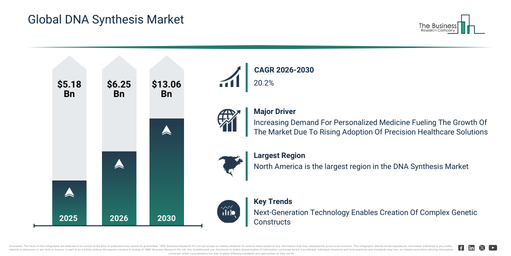
    The dna synthesis market size has experienced rapid expansion over recent years. It is projected to increase from $5.18 billion in 2025 to $6.25 billion in 2026, achieving a compound annual growth rate (CAGR) of 20.7%. This historical growth can be attributed to the constrained availability of custom dna synthesis services, reliance on traditional solid-phase synthesis methods, growing research and development (R&D) in biotechnology, increasing demand for diagnostics and therapeutics, and the adoption of gene synthesis for research purposes.

    The dna synthesis market is projected to experience substantial expansion in the coming years, reaching a valuation of $13.06 billion by 2030, demonstrating a compound annual growth rate (CAGR) of 20.2%. This anticipated growth is driven by several factors, including advancements in automated dna synthesis platforms, increasing applications across synthetic biology and gene therapy, the expansion of contract research organizations (CROs) and contract development and manufacturing organizations (CDMOs), stricter regulatory compliance and quality benchmarks, and the integration of artificial intelligence and bioinformatics into dna sequence design. Key trends shaping the forecast period involve a heightened demand for custom dna sequences, a surge in synthetic biology applications, greater utilization of gene libraries for research purposes, the broadening of PCR-based and chip-based synthesis techniques, and a strong emphasis on producing high-purity and accurate oligonucleotides.

    Download the Free Sample Report to Explore Key Market Insights:

    https://www.thebusinessresearchcompany.com/sample.aspx?id=25756&type=smp

    What Major Drivers Are Influencing Demand In The DNA Synthesis Market?

    The DNA synthesis market is projected to expand significantly due to the escalating demand for personalized medicine. This medical approach involves customizing treatment and prevention strategies based on individual genetic profiles, lifestyles, and environments to achieve optimal patient outcomes. The rise in demand for personalized medicine is largely attributable to advancements in genomic technologies, which allow for treatments precisely tailored to an individual’s genetic makeup, thereby enhancing effectiveness and minimizing side effects. DNA synthesis supports personalized medicine by enabling the creation of custom DNA sequences essential for gene editing, diagnostic tools, and precision therapeutics, thus facilitating more accurate, efficient, and individualized healthcare solutions. For instance, in February 2024, the Personalized Medicine Coalition, a US-based advocacy company, stated that the FDA approved 16 new personalized treatments for rare disease patients in 2023, a notable increase from 6 in 2022. Therefore, the increasing need for personalized medicine is a key driver for the DNA synthesis market.

    What Are The Key Segments Of The DNA Synthesis Market?

    The dna synthesis market covered in this report is segmented –

    1) By Service: Oligonucleotide Synthesis, Standard Oligonucleotide Synthesis, Custom Oligonucleotide Synthesis, Gene Synthesis, Custom Gene Synthesis, Gene Library Synthesis

    2) By Method: Solid-Phase Synthesis, PCR-Based Enzyme Synthesis, Chip-Based Synthesis

    3) By Application: Research And Development, Diagnostics, Synthetic Biology, Other Applications

    4) By End-User: Pharmaceutical And Biotechnology Companies, Contract Research Organizations (CROs) And Contract Development And Manufacturing Organizations(CDMOs), Academic And Research Institutes, Other End-Users

    Subsegments:

    1) By Oligonucleotide Synthesis: DNA Oligonucleotides, RNA Oligonucleotides, Modified Oligonucleotides

    2) By Standard Oligonucleotide Synthesis: Unmodified Oligonucleotides, Modified Oligonucleotides, Purity Grades

    3) By Custom Oligonucleotide Synthesis: Custom Length Oligos, Custom Modifications, Custom Purity Specifications

    4) By Gene Synthesis: Synthetic Genes, Codon-Optimized Genes, Functional Genes

    5) By Custom Gene Synthesis: Custom Sequence Design, Multi-fragment Assembly, Vector Cloning Services

    6) By Gene Library Synthesis: Random Mutagenesis Libraries, Site-Directed Mutagenesis Libraries, Combinatorial Libraries

    What Key Trends Are Influencing The Development Of The DNA Synthesis Market?

    Leading companies operating within the DNA synthesis market are focusing their efforts on developing innovative solutions, such as synthetic deoxyribonucleic acid molecules, to enable the faster, more accurate, and cost-effective advancement of gene therapies, diagnostics, and synthetic biology applications. Synthetic DNA molecules are artificially constructed sequences of nucleotides designed in the lab to either mimic or modify natural deoxyribonucleic acid for use in research, diagnostic procedures, and biotechnology applications. For instance, in May 2025, Ribbon Biolabs, an Austria-based synthetic biology company, launched MiroSynth, representing a novel class of complex synthetic DNA molecules. This product is designed to facilitate high-throughput, automated, and scalable production of long and complex deoxyribonucleic acid sequences for advanced biotechnological applications. It offers unique features such as enhanced accuracy in sequence assembly, extended strand length capability, and rapid construction of intricate genetic constructs, making it ideal for research, therapeutic development, and industrial biotech. Its flexible design allows for seamless integration into diverse workflows, thereby empowering researchers and developers to accelerate innovation across genomics, synthetic biology, and personalized medicine.

    Who Are The Leading Companies Operating In The DNA Synthesis Market?

    Major companies operating in the dna synthesis market are GenScript Biotech Corporation, Twist Bioscience Corporation, Bioneer Corporation, DNA Script, Eton Bioscience, LGC Biosearch Technologies, Ansa Biotechnologies, Synbio Technologies, Quintara Biosciences, Elegen Corporation, Biomatik Corporation, Bio Basic Inc., Evonetix Ltd.

    Read the full dna synthesis market report here:

    https://www.thebusinessresearchcompany.com/report/dna-synthesis-global-market-report

    Which Region Shows The Strongest Potential For Future Growth In The DNA Synthesis Market?

    North America was the largest region in the DNA synthesis market in 2025. Asia-Pacific is expected to be the fastest-growing region in the forecast period. The regions covered in the dna synthesis market report are Asia-Pacific, South East Asia, Western Europe, Eastern Europe, North America, South America, Middle East, Africa.

    Request A Tailored DNA Synthesis Market Research Report For Competitive Advantage:

    https://www.thebusinessresearchcompany.com/customise?id=25756&type=smp

    Browse Through More Reports Similar to the Global DNA Synthesis Market 2026, By The Business Research Company

    Gene Synthesis Market Report 2026

    https://www.thebusinessresearchcompany.com/report/gene-synthesis-global-market-report

    Oligonucleotide Synthesis Market Report 2026

    https://www.thebusinessresearchcompany.com/report/oligonucleotide-synthesis-global-market-report

    Recombinant Dna Technology Market Report 2026

    https://www.thebusinessresearchcompany.com/report/recombinant-dna-technology-global-market-report

    Get in touch with us:

    The Business Research Company: https://www.thebusinessresearchcompany.com/

    Americas +1 310-496-7795

    Asia +44 7882 955267 & +91 8897263534

    Europe +44 7882 955267

    Email us at info@tbrc.info

    Follow us on:

    LinkedIn: https://in.linkedin.com/company/the-business-research-company

    YouTube: https://www.youtube.com/channel/UC24_fI0rV8cR5DxlCpgmyFQ

    Global Market Model: https://www.thebusinessresearchcompany.com/global-market-model
  • Global DNA Repair Drugs Market 2026 advancing rapidly toward $32.21 billion by 2030 at 20% CAGR

    Global DNA Repair Drugs Market 2026 advancing rapidly toward $32.21 billion by 2030 at 20% CAGR

    The Business Research Company’s 2026 market reports include new capabilities such as market attractiveness scoring and analysis, total addressable market analysis, company scoring matrix, interactive excel data dashboard, improved supply chain analysis, upcoming startups in the market, and overview of key products, aimed at improving the depth, usability, and strategic value of the insights delivered.

    What Will Be The Estimated Market Valuation Of The DNA Repair Drugs Market By The End Of 2030?

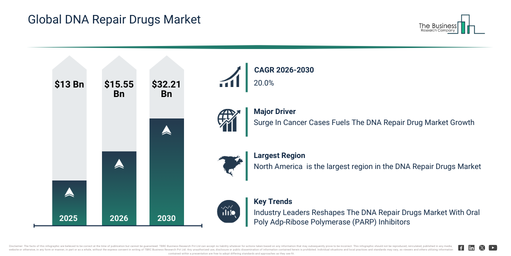
    The dna repair drugs market size has experienced rapid growth in recent years. It is anticipated to expand from $13 billion in 2025 to $15.55 billion in 2026, demonstrating a compound annual growth rate (CAGR) of 19.6%. This historical growth can be attributed to several factors, including the rising global incidence of cancer, increased uptake of chemotherapy and radiation treatments, the strong clinical success seen with PARP inhibitors, a surge in oncology drug approvals, and the expansion of hospital-based cancer treatment infrastructure.

    The dna repair drugs market size is projected to experience substantial expansion in the coming years, reaching $32.21 billion by 2030, exhibiting a compound annual growth rate (CAGR) of 20.0%. This projected growth throughout the forecast period stems from factors such as increasing adoption of precision medicine, heightened investment in dna damage response research, a rising need for maintenance cancer therapies, the widening scope of targeted oncology pipelines, and enhanced diagnostic capabilities for identifying genetic mutations. Key developments anticipated during this period include the broadening of parp inhibitor-based therapies, an uptick in the use of combination cancer treatments, a greater emphasis on personalized oncology drugs, the expansion of maintenance therapy applications, and breakthroughs in next-generation ddr inhibitors.

    Download the Free Sample Report to Explore Key Market Insights:

    https://www.thebusinessresearchcompany.com/sample.aspx?id=12200&type=smp

    Which Market Drivers Are Supporting The Expansion Of The DNA Repair Drugs Market?

    The increasing incidence of cancer is projected to fuel the expansion of the DNA repair drug market. Cancer is a disease type that develops in almost any organ or tissue when abnormal cells proliferate uncontrollably, extending beyond their usual boundaries, and either spreading to other organs or invading adjacent body parts. This surge in cancer prevalence is primarily driven by factors such as smoking, radiation exposure, cancer-causing substances (carcinogens), obesity, and genetic mutations. Cancer prevention strategies often involve interfering with DNA’s natural ability to repair itself, which in turn causes cancerous cells to stop replicating and ultimately die. For instance, data from July 2024, provided by the Australian Institute of Health and Welfare, an Australia-based government agency, indicates that the number of cancer cases diagnosed in Australia rose from 160,570 in 2022 to 164,694 in 2023, marking a notable increase over the year. This upward trajectory highlights the escalating prevalence of cancer within the country, consequently driving the growth of the DNA repair drug market.

    Which Segment Classifications Shape The DNA Repair Drugs Market?

    The dna repair drugs market covered in this report is segmented –

    1) By Drug Type: Olaparib, Rucaparib, Niraparib, Talazoparib, Other Drugs

    2) By Distribution Channel: Hospital Pharmacies, Retail Pharmacies, Other Distribution Channels

    3) By Application: Ovarian Cancer, Fallopian Tube Cancer, Peritoneal Cancer, Breast Cancer, Other Applications

    Subsegments:

    1) By Olaparib: Tablets, Capsules, Combination Therapies

    2) By Rucaparib: Tablets, Monotherapy, Combination with Other Cancer Treatments

    3) By Niraparib: Capsules, Extended-Release Formulations, Maintenance Therapy Applications

    4) By Talazoparib: Capsules, Combination with Immunotherapy, High-Dose and Low-Dose Options

    5) By Other Drugs: Experimental PARP Inhibitors, Generic and Biosimilar Versions, Next-Generation DNA Damage Response (DDR) Inhibitors

    How Are Trends Impacting The DNA Repair Drugs Market?

    Leading companies in the DNA repair drug market are concentrating on developing innovative solutions, such as oral poly ADP-ribose polymerase (PARP) inhibitors. These oral poly ADP-ribose polymerase (PARP) inhibitors are a class of medications designed for oral administration, specifically targeting the activity of the PARP enzyme. For instance, in June 2023, Pfizer Inc., a US-based global pharmaceutical company, announced the FDA approval of ‘TALZENNA’ (talazoparib). TALZENNA is the initial and sole PARP inhibitor approved for use in combination with XTANDI, an established standard of care, for adult patients diagnosed with metastatic castration-resistant prostate cancer (mCRPC) who have mutations in homologous recombination repair (HRR) genes. TALZENNA functions by inhibiting the PARP enzyme’s activity and trapping PARP at DNA damage sites, which subsequently reduces the growth of cancer cells and induces their death.

    Which Companies Are Expanding Their Footprint In The DNA Repair Drugs Market?

    Major companies operating in the dna repair drugs market are Pfizer Inc., Johnson & Johnson Private Limited, AbbVie Inc., Bayer AG, Novartis AG, Bristol-Myers Squibb Company, AstraZeneca PLC, Sanofi S.A., GlaxoSmithKline plc., Takeda Pharmaceutical Company Limited, Gilead Sciences Inc., Amgen Inc., Merck KGaA, Regeneron Pharmaceuticals Inc., Ono Pharmaceutical Co. Ltd., Jiangsu HengRui Medicine Co. Ltd., Genentech Inc., ClovisOncology Inc., Karyopharm Therapeutics Inc., Repare Therapeutics Inc., C4 Therapeutics Inc., Precision BioSciences, Artios Pharma Limited, FoRx Therapeutics AG, Onxeo SA

    Read the full dna repair drugs market report here:

    https://www.thebusinessresearchcompany.com/report/dna-repair-drugs-global-market-report

    How Is The DNA Repair Drugs Market Distributed Across Key Geographic Regions?

    North America was the largest region in the DNA repair drugs market in 2025. Asia-Pacific is expected to be the fastest-growing region in the forecast period. The regions covered in the dna repair drugs market report are Asia-Pacific, South East Asia, Western Europe, Eastern Europe, North America, South America, Middle East, Africa.

    Request A Tailored DNA Repair Drugs Market Research Report For Competitive Advantage:

    https://www.thebusinessresearchcompany.com/customise?id=12200&type=smp

    Browse Through More Reports Similar to the Global DNA Repair Drugs Market 2026, By The Business Research Company

    Dna Repair Drugs Market Report 2026

    https://www.thebusinessresearchcompany.com/report/dna-repair-drugs-global-market-report

    Nucleic Acid Based Gene Therapy Market Report 2026

    https://www.thebusinessresearchcompany.com/report/nucleic-acid-based-gene-therapy-global-market-report

    Genes Therapy Market Report 2026

    https://www.thebusinessresearchcompany.com/report/genes-therapy-global-market-report

    Get in touch with us:

    The Business Research Company: https://www.thebusinessresearchcompany.com/

    Americas +1 310-496-7795

    Asia +44 7882 955267 & +91 8897263534

    Europe +44 7882 955267

    Email us at info@tbrc.info

    Follow us on:

    LinkedIn: https://in.linkedin.com/company/the-business-research-company

    YouTube: https://www.youtube.com/channel/UC24_fI0rV8cR5DxlCpgmyFQ

    Global Market Model: https://www.thebusinessresearchcompany.com/global-market-model
  • Diuretics Market 2026 projected to reach $0.92 billion by 2030 at 3.7% CAGR

    Diuretics Market 2026 projected to reach $0.92 billion by 2030 at 3.7% CAGR

    The Business Research Company’s 2026 market reports include new capabilities such as market attractiveness scoring and analysis, total addressable market analysis, company scoring matrix, interactive excel data dashboard, improved supply chain analysis, upcoming startups in the market, and overview of key products, aimed at improving the depth, usability, and strategic value of the insights delivered.

    What Market Size Growth Is Projected For The Diuretics Market During The Forecast Period 2026–2030?

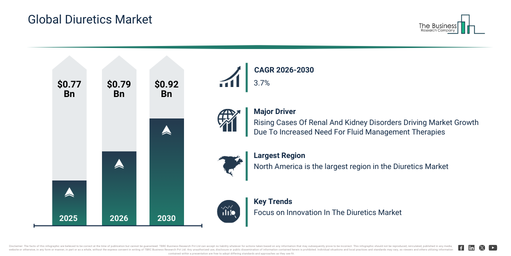
    The diuretics market size has experienced consistent growth over the past few years. Projections indicate it will expand from $0.77 billion in 2025 to reach $0.79 billion in 2026, demonstrating a compound annual growth rate (CAGR) of 2.9%. This historical expansion can be linked to factors such as a significant burden of cardiovascular diseases, extensive hospital prescribing practices, its long history of clinical application, the availability of affordable generic medications, and an aging demographic.

    The diuretics market size is projected to experience consistent expansion over the upcoming years. By 2030, this market is anticipated to reach $0.92 billion, demonstrating a compound annual growth rate (CAGR) of 3.7%. This anticipated growth during the forecast period is primarily driven by an increase in chronic kidney disease cases, the rising prevalence of heart failure, broader access to primary healthcare, enhanced treatment guidelines, and an expanding elderly population. Key trends projected for this period encompass the growing application in hypertension management, a surge in the adoption of combination diuretic therapy, the proliferation of generic diuretic medications, the expansion of outpatient care environments, and the development of improved formulations offering fewer side effects.

    Download the Free Sample Report to Explore Key Market Insights:

    https://www.thebusinessresearchcompany.com/sample.aspx?id=2439&type=smp

    What Underlying Factors Are Accelerating The Growth Of The Diuretics Market?

    The escalating occurrence of renal and kidney disorder cases is anticipated to propel the diuretics market forward. These conditions compromise the body’s capacity to regulate fluid and electrolyte balance, frequently culminating in issues like edema, hypertension, and fluid retention, which demand diuretics for their effective management. The increase in kidney disorders can be linked to lifestyle shifts, such as consuming unhealthy foods high in calcium and other minerals. The mounting prevalence of kidney disorders underpins the diuretics sector by fostering greater demand for medications that can eliminate excess fluid, reduce swelling, and assist in controlling blood pressure for affected individuals. For example, in May 2024, according to the Centers for Disease Control and Prevention (CDC), a US-based public health agency, approximately 14% of U.S. adults, or around 35.5 million people, are estimated to be living with chronic kidney diseases. Hence, the rising incidence of renal and kidney disorder cases is a significant driver for the growth of the diuretics market.

    What Market Segments Are Evaluated Within The Diuretics Market?

    The diuretics market covered in this report is segmented –

    1) By Type: Osmotic Diuretics, Carbonic Anhydrase Inhibitors, Loop Diuretics, Thiazides And Thiazide-Like Diuretics, Aldosterone Antagonists

    2) By Distribution: Hospital Pharmacies, Independent Pharmacies, Retail Pharmacies, Drug Stores, Online Pharmacies

    3) By Application: Hypertension, Glaucoma, Heart Failure, Kidney Stones

    Subsegments:

    1) By Osmotic Diuretics: Mannitol, Glycerin, Urea

    2) By Carbonic Anhydrase Inhibitors: Acetazolamide, Dorzolamide, Brinzolamide

    3) By Loop Diuretics: Furosemide, Bumetanide, Torsemide, Ethacrynic Acid

    4) By Thiazides And Thiazide-Like Diuretics: Hydrochlorothiazide, Chlorthalidone, Indapamide, Metolazone

    5) By Aldosterone Antagonists: Spironolactone, Eplerenone

    What Industry Trends Are Redefining The Diuretics Market?

    Major companies operating in the diuretics market are strategically focusing on introducing innovative products, including prescription medications, to improve treatment efficacy and reduce side effects for patients experiencing conditions like hypertension and heart failure. Prescription medication refers to drugs obtainable only with a doctor’s prescription, guaranteeing their appropriate use for specific medical conditions under professional supervision. For example, in January 2023, Glenmark Pharmaceuticals Limited, an India-based pharmaceutical company, launched a generic version of the diuretic Bumetanide Injection. This product is designed for the treatment of fluid retention and swelling associated with congestive heart failure and other conditions. It is supplied in two formulations: 1 mg/4 mL single-dose vials and 2.5 mg/10 mL multi-dose vials, both maintaining a concentration of 0.25 mg/mL. This injection effectively treats edema (fluid retention) caused by ailments such as congestive heart failure, liver disease, and kidney disease, thereby promoting increased urine production to alleviate symptoms like swelling and difficulty breathing.

    Who Are The Top Market Participants Influencing The Diuretics Market?

    Major companies operating in the diuretics market are Merck & Co. Inc., Meda Manufacturing GmbH, Pfizer Inc., GlaxoSmithKline plc., F. Hoffmann-La Roche AG, Aton Pharma Inc., Boehringer Ingelheim International GmbH, Novartis AG, Teva Pharmaceutical Industries Ltd., Sanofi-aventis U.S. LLC, Centaur Pharmaceuticals Pvt Ltd, Validus Pharmaceuticals LLC, Actavis Generics, Paddock Laboratories LLC, Perrigo Pharmaceutical Company, Oak Pharmaceuticals Inc., Akron Pharmaceuticals Inc., Alembic Pharmaceuticals Limited, Aurobindo Pharma Limited, IPCA Laboratories Limited, Jubilant Cadista Pharmaceuticals Limited, Mylan N.V., Princeton Laboratories Inc., Sciegen Pharma Limited, Unichem Laboratories Limited, AstraZeneca plc, Bayer AG, Cipla Ltd, Fresenius Kabi AG, Sandoz International GmbH, Sun Pharmaceutical Industries Ltd, Zydus Lifesciences Ltd., Amneal Pharmaceuticals LLC, Apotex Inc.

    Read the full diuretics market report here:

    https://www.thebusinessresearchcompany.com/report/diuretics-drugs-global-market-report

    Which Region Is Projected To Dominate The Diuretics Market During The Forecast Period?

    North America was the largest region in the diuretics market in 2025. The Middle East is expected to be the fastest-growing region in the diuretics market during the forecast period. The regions covered in the diuretics market report are Asia-Pacific, South East Asia, Western Europe, Eastern Europe, North America, South America, Middle East, Africa.

    Request A Tailored Diuretics Market Research Report For Competitive Advantage:

    https://www.thebusinessresearchcompany.com/customise?id=2439&type=smp

    Browse Through More Reports Similar to the Global Diuretics Market 2026, By The Business Research Company

    Diuretics Drugs Market Report 2026

    https://www.thebusinessresearchcompany.com/report/diuretics-drugs-global-market-report

    Urology Supplements Market Report 2026

    https://www.thebusinessresearchcompany.com/report/urology-supplements-global-market-report

    Nephrology Drugs Market Report 2026

    https://www.thebusinessresearchcompany.com/report/nephrology-drugs-global-market-report

    Get in touch with us:

    The Business Research Company: https://www.thebusinessresearchcompany.com/

    Americas +1 310-496-7795

    Asia +44 7882 955267 & +91 8897263534

    Europe +44 7882 955267

    Email us at info@tbrc.info

    Follow us on:

    LinkedIn: https://in.linkedin.com/company/the-business-research-company

    YouTube: https://www.youtube.com/channel/UC24_fI0rV8cR5DxlCpgmyFQ

    Global Market Model: https://www.thebusinessresearchcompany.com/global-market-model
  • Disruptive Behavior Disorder Treatment Market 2026–2035 expanding with mental health awareness

    Disruptive Behavior Disorder Treatment Market 2026–2035 expanding with mental health awareness

    The Business Research Company’s 2026 market reports include new capabilities such as market attractiveness scoring and analysis, total addressable market analysis, company scoring matrix, interactive excel data dashboard, improved supply chain analysis, upcoming startups in the market, and overview of key products, aimed at improving the depth, usability, and strategic value of the insights delivered.

    How Will The Market Size Of The Disruptive Behavior Disorder Treatment Market Evolve From 2026 To 2030?

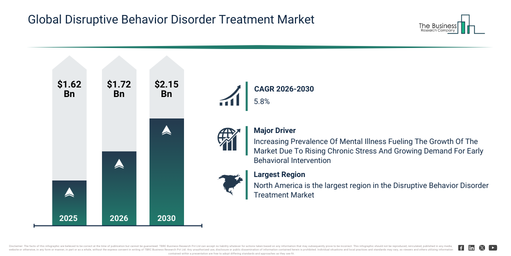
    The disruptive behavior disorder treatment market has experienced significant growth in recent years. It is projected to expand from $1.62 billion in 2025 to $1.72 billion in 2026, exhibiting a compound annual growth rate (CAGR) of 6.1%. Historically, this growth can be attributed to an increase in the diagnosis of childhood behavioral disorders, mental health referrals from schools, a reliance on psychotherapy approaches, treatment models driven by specialists, and a limited array of pharmacological options.

    The disruptive behavior disorder treatment market size is expected to show significant growth in the coming years. It is projected to expand to $2.15 billion by 2030, exhibiting a compound annual growth rate (CAGR) of 5.8%. The anticipated increase over the forecast period is due to factors such as increased mental health awareness, the expansion of teletherapy services, government initiatives concerning mental health, the integration of digital behavioral platforms, and a rising demand for personalized treatment plans. Key trends during this period include a growing need for early behavioral intervention, increased implementation of family-centered therapy programs, the development of multidisciplinary treatment models, the increasing adoption of digital mental health tools, and an emphasis on monitoring long-term behavioral outcomes.

    Download the Free Sample Report to Explore Key Market Insights:

    https://www.thebusinessresearchcompany.com/sample.aspx?id=24522&type=smp

    Which Growth Drivers Are Contributing To The Progress Of The Disruptive Behavior Disorder Treatment Market?

    The increasing prevalence of mental illness is projected to drive the growth of the disruptive behavior disorder treatment market. Mental illness encompasses a broad spectrum of mental health conditions that impact an individual’s mood, thought processes, behavior, and overall functioning. The rising incidence of mental illness is attributed to increasing levels of chronic stress, which, when prolonged, disrupts brain function and can initiate or worsen mental health disorders. Disruptive behavior disorder treatment contributes to managing mental illness by addressing persistent behavioral challenges in children and adolescents, underscoring its importance for early intervention. It enhances emotional regulation and social functioning through targeted therapies, leading to improved overall mental health outcomes. For example, data from May 2024, sourced from the US-based American Psychiatric Association, indicated that in 2024, 43% of U.S. adults reported feeling more anxious than the previous year, an increase from 37% in 2023 and 32% in 2022, highlighting a growing trend in anxiety levels. Thus, the increasing occurrence of mental illness is a key driver for the disruptive behavior disorder treatment market. The rising healthcare expenditure is anticipated to propel the growth of the disruptive behavior disorder treatment market in the coming years. Healthcare expenditure refers to the total funds allocated to medical services, treatments, facilities, research, and public health programs aimed at maintaining or improving health outcomes. This increase in healthcare spending is partly due to an aging population that necessitates greater medical attention, treatments, and long-term care services. Higher healthcare expenditure enhances disruptive behavior disorder treatment by providing improved access to specialized therapies, medications, and early intervention services. It also facilitates the development of advanced treatment programs, thereby enhancing mental health outcomes and the overall quality of care. For instance, in December 2024, according to the Centers for Medicare & Medicaid Services (CMS), a US-based federal agency, the national health expenditures (NHE) expanded by 7.5% to reach $4.9 trillion in 2023, constituting 17.6% of the gross domestic product (GDP). Therefore, the escalating healthcare expenditure is a significant factor driving the disruptive behavior disorder treatment market.

    Which Segment Areas Are Covered In The Disruptive Behavior Disorder Treatment Market Analysis?

    The disruptive behavior disorder treatment market covered in this report is segmented –

    1) By Type: Oppositional Defiant Disorder, Conduct Disorder, Intermittent Explosive Disorder

    2) By Treatment: Medication Management, Comprehensive Evaluation, Family Therapy, Parenting Modification, Group Therapy, Individual Therapy, Social And Emotional Skills Training

    3) By Age Group: Children 4 To 12 Years, Adolescents 13 To 17 Years, Young Adults 18 To 24 Years, Adults 25 Years And Above

    4) By End User: Hospitals, Outpatient Clinics, Residential Treatment Facilities, Home Care Settings, Specialized Disruptive Behavior Disorder Treatment Centers

    Subsegments:

    1) By Oppositional Defiant Disorder: Mild Oppositional Defiant Disorder, Moderate Oppositional Defiant Disorder, Severe Oppositional Defiant Disorder

    2) By Conduct Disorder: Childhood-Onset Conduct Disorder, Adolescent-Onset Conduct Disorder, Unspecified Onset Conduct Disorder

    3) By Intermittent Explosive Disorder: Frequent Low-Intensity Explosive Episodes, Infrequent High-Intensity Explosive Episodes, Mixed Severity Explosive Episodes

    Which Global Companies Are Actively Competing In The Disruptive Behavior Disorder Treatment Market?

    Major companies operating in the disruptive behavior disorder treatment market are Sheppard Pratt Health System, Rogers Behavioral Health, The Menninger Clinic, Devereux Advanced Behavioral Health, Youth Villages, Universal Health Services Behavioral Health Division, Acadia Healthcare, Newport Healthcare, The Guidance Center, Centerstone, Behavioral Health Network, Cumberland Hospital for Children and Adolescents, ViewPoint Health, Merit Behavioral Care, Center for Discovery

    Read the full disruptive behavior disorder treatment market report here:

    https://www.thebusinessresearchcompany.com/report/disruptive-behavior-disorder-treatment-global-market-report

    What Are The Leading Geographic Regions In The Disruptive Behavior Disorder Treatment Market?

    North America was the largest region in the disruptive behavior disorder treatment market in 2025. The regions covered in the disruptive behavior disorder treatment market report are Asia-Pacific, South East Asia, Western Europe, Eastern Europe, North America, South America, Middle East, Africa.

    Request A Tailored Disruptive Behavior Disorder Treatment Market Research Report For Competitive Advantage:

    https://www.thebusinessresearchcompany.com/customise?id=24522&type=smp

    Browse Through More Reports Similar to the Global Disruptive Behavior Disorder Treatment Market 2026, By The Business Research Company

    Autism Spectrum Disorders Treatment Market Report 2026

    https://www.thebusinessresearchcompany.com/report/autism-spectrum-disorders-treatment-global-market-report

    Cognitive Behavioral Therapy Market Report 2026

    https://www.thebusinessresearchcompany.com/report/cognitive-behavioral-therapy-global-market-report

    Behavioral Rehabilitation Market Report 2026

    https://www.thebusinessresearchcompany.com/report/behavioral-rehabilitation-global-market-report

    Get in touch with us:

    The Business Research Company: https://www.thebusinessresearchcompany.com/

    Americas +1 310-496-7795

    Asia +44 7882 955267 & +91 8897263534

    Europe +44 7882 955267

    Email us at info@tbrc.info

    Follow us on:

    LinkedIn: https://in.linkedin.com/company/the-business-research-company

    YouTube: https://www.youtube.com/channel/UC24_fI0rV8cR5DxlCpgmyFQ

    Global Market Model: https://www.thebusinessresearchcompany.com/global-market-model
  • Global Disposable Flow-Battery Bioreactor Market 2026–2030 showing strategic growth opportunities

    Global Disposable Flow-Battery Bioreactor Market 2026–2030 showing strategic growth opportunities

    The Business Research Company’s 2026 market reports include new capabilities such as market attractiveness scoring and analysis, total addressable market analysis, company scoring matrix, interactive excel data dashboard, improved supply chain analysis, upcoming startups in the market, and overview of key products, aimed at improving the depth, usability, and strategic value of the insights delivered.

    What Is The Forecasted Market Value Of The Disposable Flow-Battery Bioreactor Market Across 2026–2030?

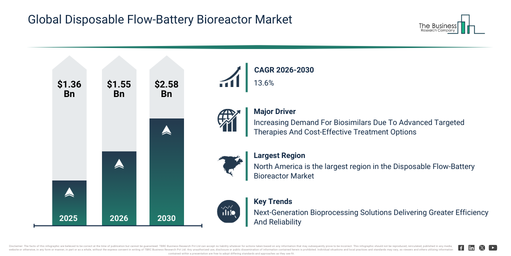
    The market size for disposable flow-battery bioreactors has experienced swift expansion recently. Forecasts indicate it will expand from $1.36 billion in 2025 to reach $1.55 billion in 2026, demonstrating a compound annual growth rate (CAGR) of 13.9%. This historical increase is primarily due to factors such as the growth in biopharmaceutical manufacturing, the rising demand for flexible production systems, the expansion of contract manufacturing activities, the increased adoption of disposable bioprocessing equipment, and a heightened focus on contamination risk reduction.

    The disposable flow-battery bioreactor market is poised for significant expansion in the coming years. By 2030, this market is projected to reach $2.58 billion, demonstrating a compound annual growth rate (CAGR) of 13.6%. This projected growth is driven by several factors, including greater investments in advanced biomanufacturing technologies, increased adoption of continuous processing models, the broadening scope of cell and gene therapy production, a heightened focus on economical bioproduction, and a rising need for scalable single-use systems. Key trends anticipated during the forecast period involve the expanding use of single-use bioprocessing systems, a growing requirement for continuous bioproduction solutions, the increasing incorporation of energy-efficient flow technologies, the development of more modular bioreactor designs, and an intensified commitment to sterility and process flexibility.

    Download the Free Sample Report to Explore Key Market Insights:

    https://www.thebusinessresearchcompany.com/sample.aspx?id=29037&type=smp

    What Primary Drivers Are Shaping The Development Of The Disposable Flow-Battery Bioreactor Market?

    The escalating demand for biosimilars is anticipated to drive the disposable flow-battery bioreactor market’s future growth. Biosimilars represent highly similar, more affordable versions of approved biologics, lacking any significant clinical distinctions. This increasing need for biosimilars arises as patients and healthcare providers seek advanced, targeted therapies that promise better treatment results, enhanced accessibility, and reduced expenses for chronic and complex illnesses. Disposable flow-battery bioreactors facilitate biosimilar production by offering a flexible, scalable, and contamination-resistant platform, which allows for efficient cell culture, precise control over process parameters, and accelerated production cycles. This, in turn, helps to shorten development timelines, lower manufacturing costs, and ensure consistent quality and efficacy of biosimilar products. For example, according to Samsung Bioepis Co. Ltd., a South Korea-based biopharmaceutical company, in 2024, the Food and Drug Administration (FDA), a US-based federal agency, approved 45 biosimilars, with 38 of them subsequently launched in the US, underscoring strong market adoption compared to total approvals. Consequently, the rising demand for biologics and biosimilars methods is propelling the expansion of the disposable flow-battery bioreactor market.

    What Segmentation Levels Are Considered In The Disposable Flow-Battery Bioreactor Market?

    The disposable flow-battery bioreactor market covered in this report is segmented –

    1) By Product Type: Single-Use Flow-Battery Bioreactors, Multi-Use Disposable Flow-Battery Bioreactors

    2) By Application: Biopharmaceutical Production, Cell Therapy, Vaccine Manufacturing, Research and Development

    3) By End-User: Pharmaceutical And Biotechnology Companies, Academic And Research Institutes, Contract Manufacturing Organizations, Other End-Users

    Subsegments:

    1) By Single-Use Flow-Battery Bioreactors: Modular Single-Use Flow-Battery Bioreactors, Integrated Single-Use Flow-Battery Bioreactors, Compact Single-Use Flow-Battery Bioreactors, Large-Scale Single-Use Flow-Battery Bioreactors

    2) By Multi-Use Disposable Flow-Battery Bioreactors: Hybrid Multi-Use Disposable Flow-Battery Bioreactors, Automated Multi-Use Disposable Flow-Battery Bioreactors, Pilot-Scale Multi-Use Disposable Flow-Battery Bioreactors, Industrial-Scale Multi-Use Disposable Flow-Battery Bioreactors

    What Trends Are Projected To Affect The Disposable Flow-Battery Bioreactor Market?

    Leading companies in the disposable flow-battery bioreactor market are concentrating on innovations such as single-user reactor systems to enhance process efficiency, reduce contamination risks, and enable faster production of complex biologics. A single-use reactor is a disposable bioreactor system crafted for one-time application in biopharmaceutical manufacturing, eliminating the requirement for cleaning and sterilization between batches. For instance, in September 2024, Merck KGaA, a Germany-based biopharmaceutical company, unveiled the first single-use reactor specifically engineered for the creation of antibody drug conjugates (ADCs), a rapidly expanding class of therapeutic agents designed to precisely target and destroy tumor cells while sparing healthy tissue. This reactor boosts manufacturing efficiency by 70% compared to traditional stainless steel or glass methods, incorporates Ultimus Film for exceptional leak resistance, and stands as the initial scalable single-use mixer developed exclusively for ADC production.

    Which Leading Firms Are Contributing To The Growth Of The Disposable Flow-Battery Bioreactor Market?

    Major companies operating in the disposable flow-battery bioreactor market are Thermo Fisher Scientific, Sartorius AG, Merck KGaA, Eppendorf AG, GE Healthcare, PBS Biotech Inc., Getinge, Distek Inc., Donaldson (Solaris Biotech), Cellexus Ltd., ABEC Inc., Pierre Guerin Technologies, Bioengineering AG, Infors HT, ZETA GmbH, Corning Incorporated, Tofflon Life Sciences, CerCell ApS, Beckman Coulter, Meissner Filtration Products Inc

    Read the full disposable flow-battery bioreactor market report here:

    https://www.thebusinessresearchcompany.com/report/disposable-flow-battery-bioreactor-global-market-report

    How Does The Disposable Flow-Battery Bioreactor Market Perform Across Major Global Regions?

    North America was the largest region in the disposable flow-battery bioreactor market in 2025. Asia-Pacific is expected to be the fastest-growing region in the forecast period. The regions covered in the disposable flow-battery bioreactor market report are Asia-Pacific, South East Asia, Western Europe, Eastern Europe, North America, South America, Middle East, Africa.

    Request A Tailored Disposable Flow-Battery Bioreactor Market Research Report For Competitive Advantage:

    https://www.thebusinessresearchcompany.com/customise?id=29037&type=smp

    Browse Through More Reports Similar to the Global Disposable Flow-Battery Bioreactor Market 2026, By The Business Research Company

    Flow Battery Market Report 2026

    https://www.thebusinessresearchcompany.com/report/flow-battery-global-market-report

    Membrane Bioreactor Market Report 2026

    https://www.thebusinessresearchcompany.com/report/membrane-bioreactor-global-market-report

    Small Scale Bioreactors Market Report 2026

    https://www.thebusinessresearchcompany.com/report/small-scale-bioreactors-global-market-report

    Get in touch with us:

    The Business Research Company: https://www.thebusinessresearchcompany.com/

    Americas +1 310-496-7795

    Asia +44 7882 955267 & +91 8897263534

    Europe +44 7882 955267

    Email us at info@tbrc.info

    Follow us on:

    LinkedIn: https://in.linkedin.com/company/the-business-research-company

    YouTube: https://www.youtube.com/channel/UC24_fI0rV8cR5DxlCpgmyFQ

    Global Market Model: https://www.thebusinessresearchcompany.com/global-market-model

  • Dipeptide Peptidase 4 Inhibitors Market 2026–2035 growing with diabetes treatment demand

    Dipeptide Peptidase 4 Inhibitors Market 2026–2035 growing with diabetes treatment demand

    The Business Research Company’s 2026 market reports include new capabilities such as market attractiveness scoring and analysis, total addressable market analysis, company scoring matrix, interactive excel data dashboard, improved supply chain analysis, upcoming startups in the market, and overview of key products, aimed at improving the depth, usability, and strategic value of the insights delivered.

    What Market Size Increase Is Anticipated For The Dipeptide Peptidase 4 Inhibitors Market Over The 2026–2030 Period?

    The dipeptide peptidase 4 inhibitors market has shown consistent expansion over recent years. Its value is expected to rise from $11.81 billion in 2025 to $12.39 billion in 2026, achieving a compound annual growth rate (CAGR) of 5.0%. This historical growth can be attributed to factors like the increasing worldwide occurrence of type 2 diabetes, the necessity for glucose-reducing treatments with minimal hypoglycemia risk, the widespread clinical acceptance of therapies based on incretin, the availability of numerous branded DPP-4 inhibitors, and the expansion of diabetes management in outpatient settings.

    The dipeptide peptidase 4 inhibitors market is anticipated to experience consistent expansion over the upcoming years. By 2030, its value is projected to reach $14.78 billion, achieving a compound annual growth rate (CAGR) of 4.5%. This expansion during the projection period stems from a surging worldwide diabetic population, greater uptake of combination diabetes treatments, an increased emphasis on convenient oral medications for patients, broadened availability of diabetes care in developing economies, and persistent need for economical glycemic management solutions. Key tendencies observed within this timeframe encompass the continued application of dpp-4 inhibitors as supplementary treatment for type 2 diabetes, a rising inclination towards oral antidiabetic drugs, more frequent prescription of dpp-4 inhibitors for older diabetic individuals, heightened interest in fixed-dose combination treatments, and a gradual transition towards generic dpp-4 inhibitor versions.

    Download the Free Sample Report to Explore Key Market Insights:

    https://www.thebusinessresearchcompany.com/sample.aspx?id=15791&type=smp

    Which Major Factors Are Driving The Expansion Of The Dipeptide Peptidase 4 Inhibitors Market?

    The expanding incidence of diabetes is projected to fuel the growth of the dipeptide peptidase 4 inhibitors market. Diabetes is a chronic health condition impacting how the body metabolizes glucose (sugar), which is a vital energy source for the body’s cells. The increase in diabetes cases is primarily attributed to the widespread adoption of sedentary lifestyles and unhealthy eating habits in contemporary societies. Dipeptidyl peptidase 4 inhibitors are utilized in diabetes management to enhance glycemic control by inhibiting the degradation of incretin hormones. For instance, in 2024, the International Diabetes Federation, a Belgium-based health organization, reported that 537 million adults (1 in 10) were living with diabetes in 2021, a number expected to rise to 643 million by 2030 and 783 million by 2045. Consequently, the escalating prevalence of diabetes drives the dipeptide peptidase 4 inhibitors market.

    How Is The Dipeptide Peptidase 4 Inhibitors Market Segmented Across Key Categories?

    The dipeptide peptidase 4 inhibitors market covered in this report is segmented –

    1) By Type: Sitagliptin, Saxagliptin, Linagliptin, Alogliptin, Vildagliptin, Other Types

    2) By Distribution Channel: Hospital Pharmacies, Retail Pharmacies, Online Channels

    3) By Application: Type 2 Diabetes, Gestational Diabetes, Metabolic Syndrome, Other Applications

    Subsegments:

    1) By Sitagliptin: Branded Sitagliptin, Generic Sitagliptin, Sitagliptin Monotherapy, Sitagliptin Combination Therapy

    2) By Saxagliptin: Branded Saxagliptin, Generic Saxagliptin, Saxagliptin Monotherapy, Saxagliptin Combination Therapy

    3) By Linagliptin: Branded Linagliptin, Generic Linagliptin, Linagliptin Monotherapy, Linagliptin Combination Therapy

    4) By Alogliptin: Branded Alogliptin, Generic Alogliptin, Alogliptin Monotherapy, Alogliptin Combination Therapy

    5) By Vildagliptin: Branded Vildagliptin, Generic Vildagliptin, Vildagliptin Monotherapy, Vildagliptin Combination Therapy

    6) By Other Types: Teneligliptin, Anagliptin, Gemigliptin, Trelagliptin

    Who Are The Dominant Players Shaping The Dipeptide Peptidase 4 Inhibitors Market Landscape?

    Major companies operating in the dipeptide peptidase 4 inhibitors market are Merck & Co. Inc., Novartis AG, Bristol Myers Squibb Company, AstraZeneca Plc, Boehringer Ingelheim International GmbH, Takeda Pharmaceutical Company Limited, Daiichi Sankyo Company Limited, Macleods Pharmaceuticals Ltd., Mitsubishi Tanabe Pharma Corp., Dr. Reddy’s Laboratories Ltd., Cipla Limited, Cadila Healthcare Limited, Lupin Limited, Zydus Lifesciences Ltd., Glenmark Pharmaceuticals Ltd., Aurobindo Pharma Limited, Alkem Laboratories Ltd., Torrent Pharmaceuticals Limited, Biocon Limited, LG Life Sciences, USV Private Limited, Sanwa Kagaku Kenkyusho Co. Ltd., Kowa Company Ltd

    Read the full dipeptide peptidase 4 inhibitors market report here:

    https://www.thebusinessresearchcompany.com/report/dipeptide-peptidase-4-inhibitors-global-market-report

    Which Region Currently Holds The Largest Share Of The Dipeptide Peptidase 4 Inhibitors Market?

    Asia-Pacific was the largest region in the dipeptide peptidase 4 inhibitors market in 2025. Latin America is expected to be the fastest-growing region in the forecast period. The regions covered in the dipeptide peptidase 4 inhibitors market report are Asia-Pacific, South East Asia, Western Europe, Eastern Europe, North America, South America, Middle East, Africa.

    Request A Tailored Dipeptide Peptidase 4 Inhibitors Market Research Report For Competitive Advantage:

    https://www.thebusinessresearchcompany.com/customise?id=15791&type=smp

    Browse Through More Reports Similar to the Global Dipeptide Peptidase 4 Inhibitors Market 2026, By The Business Research Company

    Dipeptide Peptidase 4 Inhibitors Market Report 2026

    https://www.thebusinessresearchcompany.com/report/dipeptide-peptidase-4-inhibitors-global-market-report

    Peptide Therapeutics Market Report 2026

    https://www.thebusinessresearchcompany.com/report/peptide-therapeutics-global-market-report

    Proteasome Inhibitors Market Report 2026

    https://www.thebusinessresearchcompany.com/report/proteasome-inhibitors-global-market-report

    Get in touch with us:

    The Business Research Company: https://www.thebusinessresearchcompany.com/

    Americas +1 310-496-7795

    Asia +44 7882 955267 & +91 8897263534

    Europe +44 7882 955267

    Email us at info@tbrc.info

    Follow us on:

    LinkedIn: https://in.linkedin.com/company/the-business-research-company

    YouTube: https://www.youtube.com/channel/UC24_fI0rV8cR5DxlCpgmyFQ

    Global Market Model: https://www.thebusinessresearchcompany.com/global-market-model

  • Digital Therapeutics Post-Stroke Rehab Market 2026–2030 driven by rehabilitation advancements

    Digital Therapeutics Post-Stroke Rehab Market 2026–2030 driven by rehabilitation advancements

    The Business Research Company’s 2026 market reports include new capabilities such as market attractiveness scoring and analysis, total addressable market analysis, company scoring matrix, interactive excel data dashboard, improved supply chain analysis, upcoming startups in the market, and overview of key products, aimed at improving the depth, usability, and strategic value of the insights delivered.

    How Much Is The Digital Therapeutics Post-Stroke Rehab Market Expected To Grow In Terms Of Market Value Between 2026 And 2030?

    The digital therapeutics post-stroke rehab market size has witnessed substantial growth in recent years. It is forecast to rise from $1.31 billion in 2025 to $1.58 billion in 2026, reflecting a compound annual growth rate (CAGR) of 20.3%. The growth observed in the historic period stems from the increasing incidence of stroke cases, expansion of rehabilitation services, rising acceptance of tele-rehabilitation models, improvements in digital therapy platforms, and growing demand for home-based recovery solutions.

    The digital therapeutics post-stroke rehab market is set to experience substantial expansion in the upcoming years. Its valuation is projected to reach $3.28 billion by 2030, propelled by a compound annual growth rate (CAGR) of 20.0%. This anticipated growth throughout the forecast period stems from factors such as increased investments in digital rehabilitation technologies, the rising adoption of AI-driven personalized therapy, the expansion of remote monitoring within post-acute care, an intensifying focus on value-based rehabilitation outcomes, and greater integration with traditional therapy pathways. Significant trends foreseen during this period encompass the growing acceptance of remote rehabilitation platforms, an uptick in the use of gamified therapy programs, the increasing incorporation of wearable motion sensors, the broader deployment of virtual reality-based rehabilitation, and an amplified emphasis on outcome tracking and analytics.

    Download the Free Sample Report to Explore Key Market Insights:

    https://www.thebusinessresearchcompany.com/sample.aspx?id=29029&type=smp

    What Key Drivers Are Influencing The Growth Of The Digital Therapeutics Post-Stroke Rehab Market?

    The future growth of the digital therapeutics post-stroke rehab market is anticipated to be propelled by increasing healthcare expenditure. This expenditure encompasses the total spending on medical services, equipment, and technologies aimed at improving health outcomes. Its rise is attributed to the growing demand for advanced medical technologies, as hospitals and clinics invest more in innovative equipment and digital solutions to enhance patient care and outcomes. Elevated healthcare expenditure supports digital therapeutics post-stroke rehab by enabling hospitals and rehabilitation centers to allocate more funds towards comprehensive post-stroke care programs, including personalized therapy and continuous monitoring solutions. For instance, in June 2025, according to the Centers for Medicare & Medicaid Services, a US-based government agency, in 2023, national health expenditures (NHE) grew by 7.5%, reaching $4.9 trillion, which averages $14,570 per person and represents 17.6% of the Gross Domestic Product (GDP). Spending on Medicare increased by 8.1% to $1,029.8 billion, making up 21% of total NHE. Thus, the increasing healthcare expenditure is a significant factor driving the growth of the digital therapeutics post-stroke rehab market.

    What Major Segment Divisions Exist Within The Digital Therapeutics Post-Stroke Rehab Market?

    The digital therapeutics post-stroke rehab market covered in this report is segmented –

    1) By Product Type: Software, Devices, Services

    2) By Patient Type: Adult: Geriatric, Pediatric

    3) By Application: Motor Skills Rehabilitation, Cognitive Rehabilitation, Speech And Language Therapy

    4) By Distribution Channel: Online, Offline

    5) By End-User: Hospitals, Rehabilitation Centers, Homecare Settings

    Subsegments:

    1) By Software: Rehabilitation Management Platforms, Cognitive Retraining Applications, Virtual Reality Therapy Programs, Motion Tracking Software, Remote Patient Monitoring Systems, Gamified Exercise Applications

    2) By Devices: Wearable Motion Sensors, Robotic Rehabilitation Systems, Smart Gloves And Exoskeletons, Balance Training Devices, Neurostimulation Devices, Tablet And Mobile-Based Therapy Kits

    3) By Services: Tele-Rehabilitation Services, Clinical Support And Consultation, Patient Engagement And Coaching Services, Data Analytics And Outcome Tracking, Maintenance And Technical Support Services, Training And Integration Services

    How Are Trends Shaping The Direction Of The Digital Therapeutics Post-Stroke Rehab Market?

    Leading companies in the digital therapeutics post-stroke rehab market are concentrating on forging strategic collaborations to access new customer bases and markets that would be challenging to enter independently. Such strategic collaborations involve partnerships between entities designed to collectively achieve goals, leverage individual strengths, and expand their market presence. For instance, in September 2025, Flint Rehab, a US-based developer of stroke rehabilitation systems, collaborated with Tenovi, a US-based medical equipment manufacturer, to initiate a landmark NIH-funded trial to evaluate remote therapeutic monitoring (RTM) in stroke rehabilitation. This collaboration yielded one of the country’s initial randomized controlled trials utilizing a remote therapeutic monitoring (RTM) program to track at-home exercises in stroke rehabilitation. It presents an innovative approach for therapists to observe patient progress and sustain engagement during the critical early recovery phase. The trial integrates Flint Rehab’s FDA-listed MiGo Tracker, a wearable wrist device, with Tenovi’s Cellular-Connected Gateway to securely transmit exercise data in real time to Tenovi’s RTM platform. This straightforward system operates without requiring smartphones, apps, or Wi-Fi, providing therapists with a simplified, Medicare-billable method to monitor patients, intervene swiftly, and adapt care plans based on real-time activity.

    Which Companies Are Leading Innovation In The Digital Therapeutics Post-Stroke Rehab Market?

    Major companies operating in the digital therapeutics post-stroke rehab market are Fourier Intelligence Co. Ltd., OneStep HealthTech, kaia health, Neofect, SWORD Health, Tyromotion, XRHealth, Saebo, Blue Marble Health Co., Neuro Rehab VR, Bionik Laboratories Corp., Flint Rehab, Eodyne, Neurofenix Inc., GripAble Ltd., i-BrainTech Ltd., neurobridge LLC, medrhythms Inc., MIRA Rehab, Rehametrics, Rewire Rehab, Strolll, immersive Rehab.

    Read the full digital therapeutics post-stroke rehab market report here:

    https://www.thebusinessresearchcompany.com/report/digital-therapeutics-post-stroke-rehab-global-market-report

    Which Region Is Expected To Register The Fastest Growth In The Digital Therapeutics Post-Stroke Rehab Market?

    North America was the largest region in the digital therapeutics post-stroke rehab market in 2025. Asia-Pacific is expected to be the fastest-growing region in the forecast period. The regions covered in the digital therapeutics post-stroke rehab market report are Asia-Pacific, South East Asia, Western Europe, Eastern Europe, North America, South America, Middle East, Africa.

    Request A Tailored Digital Therapeutics Post-Stroke Rehab Market Research Report For Competitive Advantage:

    https://www.thebusinessresearchcompany.com/customise?id=29029&type=smp

    Browse Through More Reports Similar to the Global Digital Therapeutics Post-Stroke Rehab Market 2026, By The Business Research Company

    Digital Therapeutics Market Report 2026

    https://www.thebusinessresearchcompany.com/report/digital-therapeutics-global-market-report

    Stroke Management Market Report 2026

    https://www.thebusinessresearchcompany.com/report/stroke-management-global-market-report

    Medical Rehabilitation Services Market Report 2026

    https://www.thebusinessresearchcompany.com/report/medical-rehabilitation-services-global-market-report

    Get in touch with us:

    The Business Research Company: https://www.thebusinessresearchcompany.com/

    Americas +1 310-496-7795

    Asia +44 7882 955267 & +91 8897263534

    Europe +44 7882 955267

    Email us at info@tbrc.info

    Follow us on:

    LinkedIn: https://in.linkedin.com/company/the-business-research-company

    YouTube: https://www.youtube.com/channel/UC24_fI0rV8cR5DxlCpgmyFQ

    Global Market Model: https://www.thebusinessresearchcompany.com/global-market-model

  • Global Digital Therapeutics For Tinnitus Market 2026–2035 indicating long-term expansion

    Global Digital Therapeutics For Tinnitus Market 2026–2035 indicating long-term expansion

    The Business Research Company’s 2026 market reports include new capabilities such as market attractiveness scoring and analysis, total addressable market analysis, company scoring matrix, interactive excel data dashboard, improved supply chain analysis, upcoming startups in the market, and overview of key products, aimed at improving the depth, usability, and strategic value of the insights delivered.

    What Market Value Is Expected For The Digital Therapeutics For Tinnitus Market At The End Of The 2026–2030 Forecast Period?

    The market size for digital therapeutics addressing tinnitus has experienced rapid expansion in recent years. This market is projected to expand from $1.78 billion in 2025 to $2.27 billion in 2026, exhibiting a compound annual growth rate (CAGR) of 27.3%. Historically, this growth has been influenced by factors including a rising incidence of hearing-related disorders, increased public awareness of tinnitus management options, a surge in mobile health application usage, the expansion of digital audiology services, and the inherent limitations of conventional tinnitus treatments.

    The market size for digital therapeutics targeting tinnitus is expected to undergo substantial expansion in the upcoming years. It is projected to reach $5.89 billion by 2030, growing at a compound annual growth rate (CAGR) of 27.0%. The anticipated growth within this forecast period can be attributed to several factors: an escalating demand for customized auditory therapies, the increasing adoption of AI-driven sound optimization, the broadening of remote audiology services, the growing integration of digital therapeutic solutions with hearing devices, and a heightened focus on managing tinnitus symptoms over the long term. Major trends observed for the forecast period include the increasing uptake of sound therapy applications, the rising utilization of personalized tinnitus management programs, the expanding integration of AI-based audio modulation, the widening scope of mobile-based behavioral therapies, and an enhanced emphasis on continuous patient engagement.

    Download the Free Sample Report to Explore Key Market Insights:

    https://www.thebusinessresearchcompany.com/sample.aspx?id=29028&type=smp

    What Major Growth Drivers Are Shaping The Outlook Of The Digital Therapeutics For Tinnitus Market?

    The expanding uptake of digital health solutions is anticipated to fuel the growth of the digital therapeutics for tinnitus market in the coming years. Digital health refers to the application of digital technologies, interconnected tools, and data-driven platforms to enhance healthcare delivery, improve patient outcomes, and support overall health management. The adoption of digital health solutions is increasing as more individuals gain access to smartphones and the internet, enabling patients to connect with healthcare services conveniently, anytime and anywhere. Digital therapeutics for tinnitus benefit from this enhanced connectivity by providing mobile health applications, telemedicine platforms, and evidence-based interventions that are readily accessible and convenient. For instance, in December 2023, according to the National Health Service, a UK-based government department, digital health app users reached 33.6 million, an increase from 16.8 million in 2022, with monthly logins rising 54% from 16.8 million to 25.8 million. Consequently, the rising adoption of digital health solutions is driving the growth of the digital therapeutics for tinnitus market.

    What Segment Types Make Up The Digital Therapeutics For Tinnitus Market?

    The digital therapeutics for tinnitus market covered in this report is segmented –

    1) By Product Type: Software Applications, Devices, Services

    2) By Therapy: Cognitive Behavioral Therapy, Sound Therapy, Educational Therapy, Other Therapies

    3) By Distribution Channel: Online Platforms, Hospitals And Clinics, Other Distribution Channels

    4) By End User: Adults, Pediatrics, Geriatrics

    Subsegments:

    1) By Software Application: Mobile Applications, Web Based Applications, Cloud Based Applications, Standalone Applications

    2) By Devices: Wearable Devices, Hearing Aids Integrated Devices, Sound Therapy Devices, Neuromodulation Devices

    3) By Services: Remote Monitoring Services, Counseling Services, Subscription Based Services, Customized Therapy Services

    Which Market Trends Are Creating New Opportunities In The Digital Therapeutics For Tinnitus Market?

    Companies actively engaged in the digital therapeutics for tinnitus market are concentrating on technological breakthroughs, particularly in digital therapeutic (DTx) solutions for neuro-behavioral disorders, with the aim of improving auditory processing and mental health outcomes. Digital therapeutic (DTx) for Neuro-Behavioral Disorders refers to software-driven, evidence-based interventions crafted to prevent, manage, or treat neurological and behavioral conditions such as tinnitus, depression, or anxiety, by delivering personalized digital programs that enhance cognitive, emotional, or sensory functions. As an illustration, in February 2025, Neurive, a neurotechnology company based in South Korea, unveiled SoriCLEAR, a digital therapeutic developed to address tinnitus and depression. Spearheaded by CEO Jae-Jun Song, a professor at Korea University specializing in neuromodulation, dementia, and depression, SoriCLEAR leverages artificial intelligence to analyze factors including age, gender, tinnitus frequency, and severity. This data-informed strategy facilitates the development of personalized treatment plans tailored to each patient’s profile. SoriCLEAR has been granted approval by Korea’s Ministry of Food and Drug Safety, making it the country’s fifth digital therapeutic for tinnitus. The platform is currently deployed in clinical settings, providing a promising non-invasive treatment alternative for individuals struggling with these challenging conditions.

    Who Are The Key Players Driving Competition In The Digital Therapeutics For Tinnitus Market?

    Major companies operating in the digital therapeutics for tinnitus market are Sonova Holding AG, Starkey Hearing Technologies, Oticon A/S, ASKA Pharmaceutical Co. Ltd., Beltone, InfectoPharm Arzneimittel und Consilium GmbH, Signia, Oto Health Inc., Neuromod Devices Ltd., Mahana Therapeutics Inc., AudioCardio Inc., Neuromonics Inc., Treble Health Ltd., Sound Oasis LLC, AppyHapps Inc., Auricle Inc., TrueSilence Inc., MindEar Ltd., Tinnitracks, Tonal Tinnitus Therapy

    Read the full digital therapeutics for tinnitus market report here:

    https://www.thebusinessresearchcompany.com/report/digital-therapeutics-for-tinnitus-global-market-report

    Which Regions Are Projected To Dominate The Digital Therapeutics For Tinnitus Market In The Coming Years?

    North America was the largest region in the digital therapeutics for tinnitus market in 2025. Asia-Pacific is expected to be the fastest-growing region in the forecast period. The regions covered in the digital therapeutics for tinnitus market report are Asia-Pacific, South East Asia, Western Europe, Eastern Europe, North America, South America, Middle East, Africa.

    Request A Tailored Digital Therapeutics For Tinnitus Market Research Report For Competitive Advantage:

    https://www.thebusinessresearchcompany.com/customise?id=29028&type=smp

    Browse Through More Reports Similar to the Global Digital Therapeutics For Tinnitus Market 2026, By The Business Research Company

    Digital Therapeutics Market Report 2026

    https://www.thebusinessresearchcompany.com/report/digital-therapeutics-global-market-report

    Neurology Devices Market Report 2026

    https://www.thebusinessresearchcompany.com/report/neurology-devices-global-market-report

    Otic Drugs Market Report 2026

    https://www.thebusinessresearchcompany.com/report/otic-drugs-global-market-report

    Get in touch with us:

    The Business Research Company: https://www.thebusinessresearchcompany.com/

    Americas +1 310-496-7795

    Asia +44 7882 955267 & +91 8897263534

    Europe +44 7882 955267

    Email us at info@tbrc.info

    Follow us on:

    LinkedIn: https://in.linkedin.com/company/the-business-research-company

    YouTube: https://www.youtube.com/channel/UC24_fI0rV8cR5DxlCpgmyFQ

    Global Market Model: https://www.thebusinessresearchcompany.com/global-market-model
  • Digital Therapeutics For Migraine Market 2026 unlocking new treatment possibilities

    Digital Therapeutics For Migraine Market 2026 unlocking new treatment possibilities

    The Business Research Company’s 2026 market reports include new capabilities such as market attractiveness scoring and analysis, total addressable market analysis, company scoring matrix, interactive excel data dashboard, improved supply chain analysis, upcoming startups in the market, and overview of key products, aimed at improving the depth, usability, and strategic value of the insights delivered.

    What Is The Estimated Market Size Of The Digital Therapeutics For Migraine Market During 2026–2030?

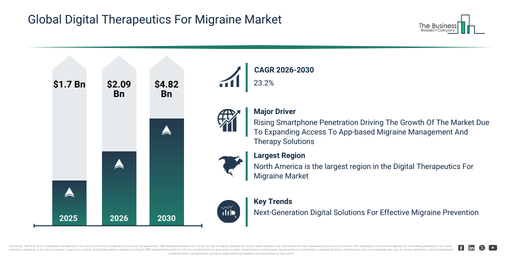
    The market for digital therapeutics aimed at migraine has experienced substantial expansion in recent times. This sector is projected to expand from $1.7 billion in 2025 to reach $2.09 billion by 2026, exhibiting a compound annual growth rate (CAGR) of 23.5%. Factors contributing to this historical growth include an escalating occurrence of migraine conditions, the increasing adoption of mobile health applications, enhanced accessibility to digital healthcare systems, a heightened understanding of non-pharmacological approaches to migraine management, and the wider integration of telemedicine.

    The digital therapeutics for migraine market is poised for rapid expansion in the coming years, projected to reach $4.82 billion by 2030, exhibiting a compound annual growth rate (CAGR) of 23.2%. This anticipated growth during the forecast period is driven by factors such as the heightened need for preventive migraine solutions, the increased uptake of AI-powered tools for migraine prediction, the proliferation of remote patient engagement models, the deeper integration of digital therapeutics into clinical practices, and a stronger emphasis on individualized migraine treatment approaches. Key trends emerging over the forecast horizon encompass the widespread adoption of applications for tracking migraines, the growing utilization of digital programs for behavior modification, the increasing incorporation of wearables for identifying triggers, the expansion of digital solutions focused on prevention, and a heightened emphasis on receiving real-time patient feedback.

    Download the Free Sample Report to Explore Key Market Insights:

    https://www.thebusinessresearchcompany.com/sample.aspx?id=29027&type=smp

    What Drivers Are Expected To Influence The Digital Therapeutics For Migraine Market During The Forecast Period?

    The increasing smartphone penetration is expected to propel the growth of the digital therapeutics for migraine market going forward. Smartphones are defined as mobile devices that combine telecommunication functions with advanced computing capabilities, internet access, and a wide range of applications. This penetration is rising due to their increasing affordability and availability, enabling broader access to mobile connectivity and digital services. Enhanced smartphone penetration improves access to digital therapeutics for migraine, facilitating broader use of app-based management and therapy solutions. For instance, in February 2023, according to the GSM Association (GSMA), a UK-based industry organization that represents the interests of mobile network operators and companies, smartphone penetration in sub-Saharan Africa is projected to rise significantly, reaching 87% by 2030, up from 51% in 2022. Therefore, the increasing smartphone penetration is driving the growth of the digital therapeutics for migraine market.

    How Are The Various Segments Of The Digital Therapeutics For Migraine Market Categorized?

    The digital therapeutics for migraine market covered in this report is segmented –

    1) By Product Type: Software, Devices, Services

    2) By Patient Type: Adult, Pediatric

    3) By Distribution Channel: Healthcare Providers, Online Platforms, Pharmacies

    4) By Application: Prevention, Acute Treatment, Patient Education, Other Applications

    5) By End User: Hospitals, Clinics, Homecare, Other End Users

    Subsegments:

    1) By Software: Mobile Applications, Web Applications, Desktop Applications

    2) By Devices: Wearable Devices, Monitoring Devices, Therapeutic Devices

    3) By Services: Consultation Services, Coaching Services, Support Services

    What Trends Are Affecting The Expansion Of The Digital Therapeutics For Migraine Market?

    Leading companies within the digital therapeutics for migraine market are prioritizing advanced innovation, such as prescription-grade mobile software, to elevate treatment effectiveness, enhance patient adherence, and address the growing need for non-pharmacological approaches to migraine management. Prescription-grade mobile software denotes mobile applications that have undergone clinical validation and received approval from regulatory bodies to deliver evidence-based therapeutic interventions. As an illustration, in April 2025, Click Therapeutics, Inc., a US-based firm specializing in prescription digital therapeutics, launched CT-132, which is the inaugural prescription digital therapeutic authorized by the FDA for the preventive treatment of episodic migraine in the United States. This regulated mobile application is engineered to offer sustainable and effective migraine management through software-driven behavioral strategies. It integrates clinically validated digital interventions to assist patients in managing stress-triggered migraine risk and decreasing the number of monthly migraine days. Compared to conventional wellness applications, this solution ensures superior treatment efficacy, patient adherence, and seamless integration into formal healthcare systems.

    Which Major Firms Influence Developments In The Digital Therapeutics For Migraine Market?

    Major companies operating in the digital therapeutics for migraine market are Pfizer Inc., Theranica Bio Electronics Ltd., Dr. Reddy’s Laboratories, Evidation Health Inc., Aptar Digital Health SAS, Click Therapeutics Inc., Salvia BioElectronics B.V., Tonix Pharmaceuticals Holding Corp, Neurolief Ltd., AndHealth LLC., Nordic Brain Tech AS., Curelator Inc., Lin Health Inc., Schmerzklinik Kiel GmbH., Juva Health Inc., Migrevention OÜ., Newsenselab GmbH., Ebby Health Inc., Care Tuner Inc., Peachy Day Inc.

    Read the full digital therapeutics for migraine market report here:

    https://www.thebusinessresearchcompany.com/report/digital-therapeutics-for-migraine-global-market-report

    Which Region Is Forecast To Lead The Digital Therapeutics For Migraine Market In Terms Of Market Size?

    North America was the largest region in the digital therapeutics for migraine market in 2025. Asia-Pacific is expected to be the fastest-growing region in the forecast period. The regions covered in the digital therapeutics for migraine market report are Asia-Pacific, South East Asia, Western Europe, Eastern Europe, North America, South America, Middle East, Africa.

    Request A Tailored Digital Therapeutics For Migraine Market Research Report For Competitive Advantage:

    https://www.thebusinessresearchcompany.com/customise?id=29027&type=smp

    Browse Through More Reports Similar to the Global Digital Therapeutics For Migraine Market 2026, By The Business Research Company

    Migraine Drugs Market Report 2026

    https://www.thebusinessresearchcompany.com/report/migraine-drugs-global-market-report

    Migraine Treatment Market Report 2026

    https://www.thebusinessresearchcompany.com/report/migraine-treatment-global-market-report

    Acute Migraine Treatment Market Report 2026

    https://www.thebusinessresearchcompany.com/report/acute-migraine-treatment-global-market-report

    Get in touch with us:

    The Business Research Company: https://www.thebusinessresearchcompany.com/

    Americas +1 310-496-7795

    Asia +44 7882 955267 & +91 8897263534

    Europe +44 7882 955267

    Email us at info@tbrc.info

    Follow us on:

    LinkedIn: https://in.linkedin.com/company/the-business-research-company

    YouTube: https://www.youtube.com/channel/UC24_fI0rV8cR5DxlCpgmyFQ

    Global Market Model: https://www.thebusinessresearchcompany.com/global-market-model