Month: March 2026

  • Cryogenic Vaporizer Market 2026 projected to reach $6.89 billion by 2030 at 5.9% CAGR

    Cryogenic Vaporizer Market 2026 projected to reach $6.89 billion by 2030 at 5.9% CAGR

    The Business Research Company’s 2026 market reports include new capabilities such as market attractiveness scoring and analysis, total addressable market analysis, company scoring matrix, interactive excel data dashboard, improved supply chain analysis, upcoming startups in the market, and overview of key products, aimed at improving the depth, usability, and strategic value of the insights delivered.

    What Market Value Is Anticipated For The Cryogenic Vaporizer Market Over The Period 2026–2030?

    The cryogenic vaporizer market size has seen substantial growth in recent years. It is anticipated to increase from $5.19 billion in 2025 to $5.48 billion in 2026, achieving a compound annual growth rate (CAGR) of 5.8%. This historical growth can be attributed to a rise in industrial gas consumption, the expansion of oil and gas processing facilities, the established application of cryogenic storage systems, demand emanating from metallurgical industries, and a heightened usage of oxygen and nitrogen gases.

    The cryogenic vaporizer market is anticipated to experience substantial expansion over the upcoming years. By 2030, this market is projected to reach $6.89 billion, showing a compound annual growth rate (CAGR) of 5.9%. Factors contributing to this growth during the forecast period include the expansion of LNG transportation infrastructure, an increasing need for medical oxygen systems, the development of hydrogen and clean energy initiatives, growing industrial automation, and the requirement for efficient gas handling equipment. Key trends expected in the same period involve the increasing application of cryogenic gases in industrial processes, wider acceptance of ambient air heated vaporizers, the broadening of LNG infrastructure and distribution networks, a surge in demand from the healthcare and medical gas supply sectors, and a heightened emphasis on energy-efficient vaporization solutions.

    Download the Free Sample Report to Explore Key Market Insights:

    https://www.thebusinessresearchcompany.com/sample.aspx?id=19019&type=smp

    What Drivers Are Expected To Influence The Cryogenic Vaporizer Market During The Forecast Period?

    The increasing demand for natural gas is set to drive the expansion of the cryogenic vaporizer market. Natural gas, a fossil fuel predominantly composed of methane, finds applications in electricity generation, various industrial operations, heating, and transportation. The elevated demand for natural gas is primarily due to its lower carbon intensity when compared to coal and oil. The cryogenic vaporizer market plays a crucial role in meeting this demand by converting liquefied natural gas (LNG) into its gaseous form, ready for immediate downstream utilization. For example, the U.S. Energy Information Administration (EIA), a U.S.-based government agency, reported that natural gas consumption in the United States reached 2,428 billion cubic feet (2.428 trillion cubic feet) in June 2024, which translates to 80.9 billion cubic feet per day. This figure represents an increase from 78.8 billion cubic feet per day in June 2023, showing a daily rise of 2.1 billion cubic feet. Hence, the escalating requirement for natural gas is clearly propelling the growth of the cryogenic vaporizer market.

    How Is The Cryogenic Vaporizer Market Divided Into Its Major Segments?

    The cryogenic vaporizer market covered in this report is segmented –

    1) By Product: Ambient Air Heated Vaporizer, Steam Heated Vaporizer, Other Products

    2) By Cryogen Type: Nitrogen, Oxygen, Natural Gas, Argon, Other Cryogen Types

    3) By End-User: Oil And Gas Industry, Power, Food And Beverage, Chemical, Rubber And Plastics, Metallurgy, Healthcare, Shipping, Other End-Users

    Subsegments:

    1) By Ambient Air Heated Vaporizer: Natural Draft Ambient Vaporizer, Forced Draft Ambient Vaporizer

    2) By Steam Heated Vaporizer: Low-Pressure Steam Heated Vaporizer, High-Pressure Steam Heated Vaporizer

    3) By Other Products: Water Bath Vaporizer, Electric Heated Vaporizer, Direct Fired Vaporizer

    How Are Trends Transforming The Cryogenic Vaporizer Market Landscape?

    Major companies in the cryogenic vaporizer market are increasingly concentrating on creating advanced solutions, such as microchannel heat-exchanger vaporizers, to address the escalating need for compact, highly efficient regasification systems within the maritime LNG sector. These microchannel heat-exchanger vaporizers employ precisely engineered, diffusion-welded microchannels, often in the printed circuit heat exchanger (PCHE) format, to achieve exceptional heat transfer area density within a reduced footprint, thereby offering superior thermal efficiency and less weight compared to conventional shell-and-tube vaporizers. For example, in October 2025, Shensi Technology (Anhui) Co., Ltd., a specialist in thermal management and heat exchangers from China, introduced the PCHE-LNG heat exchanger, specifically designed for the FGSS sector. This cutting-edge cryogenic microchannel exchanger, manufactured using advanced diffusion-welding technology, provides a heat-transfer area density of up to 6,400 m³/m³, which enables it to halve the floor space requirement relative to ORVs while also decreasing energy consumption by around 20%. It is compatible with both high- and low-pressure LNG systems, has proven full-scale operation in offshore environments, and has secured class certifications in China, Europe, and Japan, with both mass production and customized services currently accessible.

    Who Are The Prominent Organizations Shaping The Cryogenic Vaporizer Market?

    Major companies operating in the cryogenic vaporizer market are Linde plc, Chart Industries Inc., Nikkiso Co. Ltd., Kobe Steel Ltd., Cryostar, Cryolor SA, Taylor-Wharton Cryogenics LLC, INOX India Pvt. Ltd., Cryonorm B.V., Cryeng Group Pty Ltd, Isisan Energy Solutions Private Limited, Incryo Systems Pvt. Ltd., Cryogas Equipment Private Limited, Super Cryogenic Systems Private Limited, GMS Interneer Co. Ltd., Kagla Vaportech Corporation, FIBA Technologies Inc., OPW Clean Energy Solutions, Iec Fabchem Limited, CryoVation

    Read the full cryogenic vaporizer market report here:

    https://www.thebusinessresearchcompany.com/report/cryogenic-vaporizer-global-market-report

    Which Region Is Forecast To Lead The Cryogenic Vaporizer Market In Terms Of Market Size?

    Asia-Pacific was the largest region in the cryogenic vaporizer market in 2025. North America is expected to be the fastest-growing region in the forecast period. The regions covered in the cryogenic vaporizer market report are Asia-Pacific, South East Asia, Western Europe, Eastern Europe, North America, South America, Middle East, Africa.

    Request A Tailored Cryogenic Vaporizer Market Research Report For Competitive Advantage:

    https://www.thebusinessresearchcompany.com/customise?id=19019&type=smp

    Browse Through More Reports Similar to the Global Cryogenic Vaporizer Market 2026, By The Business Research Company

    Vaporizers Market Report 2026

    https://www.thebusinessresearchcompany.com/report/vaporizers-global-market-report

    Cryogenic Equipment Market 2026

    https://www.thebusinessresearchcompany.com/report/cryogenic-equipment-market

    Cryoablation Devices Market Report 2026

    https://www.thebusinessresearchcompany.com/report/cryoablation-devices-global-market-report

    Get in touch with us:

    The Business Research Company: https://www.thebusinessresearchcompany.com/

    Americas +1 310-496-7795

    Asia +44 7882 955267 & +91 8897263534

    Europe +44 7882 955267

    Email us at info@tbrc.info

    Follow us on:

    LinkedIn: https://in.linkedin.com/company/the-business-research-company

    YouTube: https://www.youtube.com/channel/UC24_fI0rV8cR5DxlCpgmyFQ

    Global Market Model: https://www.thebusinessresearchcompany.com/global-market-model

  • Breakthrough therapies are driving progress in the Enzyme Replacement Therapy Market 2026

    Breakthrough therapies are driving progress in the Enzyme Replacement Therapy Market 2026

    The Business Research Company’s 2026 market reports include new capabilities such as market attractiveness scoring and analysis, total addressable market analysis, company scoring matrix, interactive excel data dashboard, improved supply chain analysis, upcoming startups in the market, and overview of key products, aimed at improving the depth, usability, and strategic value of the insights delivered.

    How Much Is The Enzyme Replacement Therapy Market Expected To Grow In Terms Of Market Value Between 2026 And 2030?

    The enzyme replacement therapy market has shown significant growth over recent years. This market is projected to expand from $12.36 billion in 2025 to reach $13.43 billion by 2026, exhibiting a compound annual growth rate (CAGR) of 8.6%. Historically, this expansion has been driven by factors such as the increasing prevalence of lysosomal storage disorders, advancements in recombinant DNA technology, heightened awareness regarding rare diseases, improvements in hospital infrastructure, and government initiatives supporting treatments for rare diseases.

    The enzyme replacement therapy market is projected to experience substantial expansion over the upcoming years. Its valuation is anticipated to reach $19.29 billion by 2030, exhibiting a compound annual growth rate (CAGR) of 9.5%. This projected growth during the forecast period is fueled by several factors, including the increasing scope of precision medicine, the creation of innovative enzyme formulations, a rise in the use of home infusion therapies, the incorporation of digital health solutions, and growing partnerships between biotechnology firms and research institutions. Key developments anticipated in this period encompass tailored enzyme replacement therapies, broader rare disease treatment initiatives, the formulation of longer-acting enzymes, the adoption of less invasive administration methods, and the integration of real-world data for optimizing treatment strategies.

    Download the Free Sample Report to Explore Key Market Insights:

    https://www.thebusinessresearchcompany.com/sample.aspx?id=10512&type=smp

    What Drivers Are Influencing The Enzyme Replacement Therapy Market?

    The enzyme replacement therapy (ERT) market is expected to grow due to increasing healthcare expenditure. Healthcare expenditure refers to the overall financial outlay for healthcare services, related goods, and activities within a specific healthcare system or economy over a defined period. This spending is critical for enzyme replacement therapy (ERT) primarily because these treatments are specialized and often expensive, necessitating significant investment in research and development, as well as clinical trials and testing. For instance, in June 2025, the US-based federal agency Centers for Medicare & Medicaid Services (CMS) reported that National Health Expenditure (NHE) expanded by 7.5% to $4.9 trillion in 2023, amounting to $14,570 per person, and constituted 17.6% of the Gross Domestic Product (GDP). Hospital expenditures surged by 10.4% to $1,519.7 billion in 2023, outpacing the 3.2% growth recorded in 2022. Therefore, rising healthcare expenditures are driving the growth of the enzyme replacement therapy (ERT) market.

    What Major Segment Divisions Exist Within The Enzyme Replacement Therapy Market?

    The enzyme replacement therapy market covered in this report is segmented –

    1) By Enzyme Type: Agalsidase Alfa, Agalsidase Beta, Galsulfase, Other Enzyme Types

    2) By Route Of Administration: Oral, Parenteral

    3) By Application: Gaucher Disease, Pompe Disease, Fabry Disease, Other Applications

    4) By End-Users: Hospitals, Infusion Centers, Other End-Users

    How Are Trends Shaping The Direction Of The Enzyme Replacement Therapy Market?

    Major companies operating in the enzyme replacement therapy (ERT) market are concentrating on developing innovative treatment products and securing approvals for Pompe disease therapy, aiming to address the unmet medical needs of patients with late-onset Pompe disease. In the European Union, a treatment for late-onset Pompe disease in adults, comprising Pombiliti (cipaglucosidase alfa) and Opfolda (miglustat), serves as an enzyme replacement therapy. For instance, in June 2023, Amicus Therapeutics, a US-based biotechnology company, announced the approval and introduction of a new Pompe disease therapy within the European Union. This launch was a response to the unmet medical need for patients with late-onset Pompe disease, bolstered by clinical data, and driven by potential market opportunities and regulatory support. This specific treatment, which includes Pombiliti (cipaglucosidase alfa) and Opfolda (miglustat), acts as an enzyme replacement therapy for adults with late-onset Pompe disease.

    Which Companies Are Leading Innovation In The Enzyme Replacement Therapy Market?

    Major companies operating in the enzyme replacement therapy market are Biomarin Pharmaceutical Inc., Leadiant Biosciences Inc., Pfizer Inc., Sanofi S.A., AbbVie Inc., Alexion Pharmaceuticals Inc., Recordati Rare Diseases Inc., JCR Pharmaceuticals Co. Ltd., Horizon Pharma Public Limited Company, Protalix Biotherapeutics Ltd., Amicus Therapeutics Inc., AstraZeneca plc, Novartis AG, Roche Holding AG, GlaxoSmithKline plc, Merck & Co. Inc., Eli Lilly and Company, Bristol-Myers Squibb Company, Retrophin Inc., Abeona Therapeutics Inc., Orchard Therapeutics plc, Ultragenyx Pharmaceutical Inc.

    Read the full enzyme replacement therapy market report here:

    https://www.thebusinessresearchcompany.com/report/enzyme-replacement-therapy-global-market-report

    Which Regions Are Expected To Experience Rapid Expansion In The Enzyme Replacement Therapy Market?

    North America was the largest region in the enzyme replacement therapy market in 2025. Asia-Pacific is expected to be the fastest-growing region in the global enzyme replacement therapy market report during the forecast period. The regions covered in the enzyme replacement therapy market report are Asia-Pacific, South East Asia, Western Europe, Eastern Europe, North America, South America, Middle East, Africa.

    Request A Tailored Enzyme Replacement Therapy Market Research Report For Competitive Advantage:

    https://www.thebusinessresearchcompany.com/customise?id=10512&type=smp

    Browse Through More Reports Similar to the Global Enzyme Replacement Therapy Market 2026, By The Business Research Company

    Enzyme Replacement Therapy Market Report 2026

    https://www.thebusinessresearchcompany.com/report/enzyme-replacement-therapy-global-market-report

    Enzyme Inhibitor Market Report 2026

    https://www.thebusinessresearchcompany.com/report/enzyme-inhibitor-global-market-report

    Enzyme Market Report 2026

    https://www.thebusinessresearchcompany.com/report/enzyme-global-market-report

    Get in touch with us:

    The Business Research Company: https://www.thebusinessresearchcompany.com/

    Americas +1 310-496-7795

    Asia +44 7882 955267 & +91 8897263534

    Europe +44 7882 955267

    Email us at info@tbrc.info

    Follow us on:

    LinkedIn: https://in.linkedin.com/company/the-business-research-company

    YouTube: https://www.youtube.com/channel/UC24_fI0rV8cR5DxlCpgmyFQ

    Global Market Model: https://www.thebusinessresearchcompany.com/global-market-model
  • Crohn’s Disease Treatment Market 2026–2035 expanding with improved biologics and therapies

    Crohn’s Disease Treatment Market 2026–2035 expanding with improved biologics and therapies

    The Business Research Company’s 2026 market reports include new capabilities such as market attractiveness scoring and analysis, total addressable market analysis, company scoring matrix, interactive excel data dashboard, improved supply chain analysis, upcoming startups in the market, and overview of key products, aimed at improving the depth, usability, and strategic value of the insights delivered.

    What Is The Expected Market Size Of The Crohn’s Disease Treatment Market From 2026 To 2030?

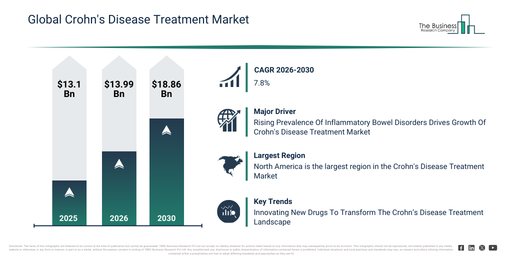
    The crohn’s disease treatment market size has experienced strong growth in recent years. It is anticipated to expand from $13.1 billion in 2025 to $13.99 billion in 2026, exhibiting a compound annual growth rate (CAGR) of 6.8%. In the past, this growth was primarily driven by factors such as increasing Crohn’s disease prevalence, a greater awareness of inflammatory bowel diseases, the expansion of hospital pharmacy networks, the availability of conventional anti-inflammatory drugs, and enhanced diagnostic capabilities.

    The market for crohn’s disease treatment is projected to experience substantial expansion in the coming years. This market is anticipated to reach $18.86 billion by 2030, exhibiting a compound annual growth rate (CAGR) of 7.8%. Factors contributing to this growth during the forecast period include the expanding pipeline of biologics and small molecules, an increasing demand for personalized treatment options, the growing penetration of online pharmacies, rising healthcare spending in developing economies, and an emphasis on long-term disease management. Key trends observed within this period encompass the increasing acceptance of biologic therapies, a movement towards proactive and intensive treatment strategies, a greater emphasis on regimens that reduce steroid usage, the development of oral small-molecule treatments, and the broader availability through online and specialty pharmacy outlets.

    Download the Free Sample Report to Explore Key Market Insights:

    https://www.thebusinessresearchcompany.com/sample.aspx?id=10852&type=smp

    What Drivers Are Influencing The Crohn’s Disease Treatment Market?

    The rising incidence of inflammatory bowel disorders is anticipated to boost the Crohn’s disease treatment market in the future. Inflammatory bowel disorders are chronic conditions characterized by inflammation of the gastrointestinal tract, which can affect any part of the digestive system, from the mouth to the anus, causing inflammation and damage. Treatments for Crohn’s disease aim to lessen intestinal inflammation, avert symptom flare-ups, and maintain remission. For example, data from September 2023, provided by the National Center for Biotechnology Information, a US-based government organization, indicated a comparable rise in the prevalence of Crohn’s disease and ulcerative colitis, with inflammatory bowel disease estimated at 825 cases per 100,000 people in 2023, specifically 410 for Crohn’s disease and 414 for ulcerative colitis and IBD-u. Consequently, the increasing occurrence of these conditions is stimulating the expansion of the Crohn’s disease treatment market.

    Which Segments Are Included In The Analysis Of The Crohn’s Disease Treatment Market?

    The crohn’s disease treatment market covered in this report is segmented –

    1) By Drug Type: Antibiotics, Amino Salicylates, Corticosteroids, Immunomodulators, Other Drug Types

    2) By Distribution Channel: Hospital Pharmacies, Retail Pharmacies, Online Pharmacies

    3) By Application: Neuropathic Pain, Fibromyalgia, Chronic Back Pain, Arthritic Pain, Migraine Post-Operative Pain, Cancer Pain, Other Applications

    Subsegments:

    1) By Antibiotics: Metronidazole, Ciprofloxacin, Other Antibiotics

    2) By Amino Salicylates: Mesalamine, Sulfasalazine, Other Amino Salicylates

    3) By Corticosteroids: Prednisone, Budesonide, Other Corticosteroids

    4) By Immunomodulators: Azathioprine, Methotrexate, Mercaptopurine

    5) By Other Drug Types: Biologics, Small Molecules, Other Treatments

    Which Trends Are Impacting The Growth Of The Crohn’s Disease Treatment Market?

    Key players in the crohn’s disease treatment market are developing and obtaining approvals for new medications, such as biosimilar ustekinumab, to deliver more effective and accessible therapeutic solutions for patients, ultimately elevating patient results and life quality. Biosimilar ustekinumab refers to a biological drug that is highly comparable to the original ustekinumab (a monoclonal antibody) used for managing autoimmune ailments. For example, in July 2024, Sandoz International GmbH, a pharmaceutical firm based in Switzerland, introduced Pyzchiva (ustekinumab) throughout Europe, establishing it as the inaugural ustekinumab biosimilar offered in all strengths, including a 130 mg vial specifically for Crohn’s disease. This drug is prescribed for adults and children over six with plaque psoriasis, psoriatic arthritis, and Crohn’s disease, thereby strengthening Sandoz’s immunology portfolio while seeking to improve availability of affordable treatments for chronic inflammatory conditions.

    Which Key Industry Participants Are Active In The Crohn’s Disease Treatment Market?

    Major companies operating in the crohn’s disease treatment market are AbbVie Inc., Janssen Pharmaceuticals, Takeda Pharmaceutical Company Limited, Bristol-Myers Squibb Company, Galapagos NV, Teva Pharmaceutical Industries Ltd., Mylan N.V., Glenmark Pharmaceuticals, Tillotts Pharma AG, Dr. Falk Pharma GmbH, Shire Pharmaceuticals, Salix Pharmaceuticals, Prometheus Laboratories Inc., Pfizer Inc., Novartis AG, Sanofi S.A., Eli Lilly and Company, Boehringer Ingelheim GmbH, Arena Pharmaceuticals Inc., F. Hoffmann-La Roche Ltd.

    Read the full crohn’s disease treatment market report here:

    https://www.thebusinessresearchcompany.com/report/crohns-disease-treatment-global-market-report

    Which Regions Are Expected To Experience Rapid Expansion In The Crohn’s Disease Treatment Market?

    North America was the largest region in the global Crohn’s disease treatment market in 2025. Asia-Pacific is expected to be the fastest-growing region in the forecast period. The regions covered in the crohn’s disease treatment market report are Asia-Pacific, South East Asia, Western Europe, Eastern Europe, North America, South America, Middle East, Africa.

    Request A Tailored Crohn’s Disease Treatment Market Research Report For Competitive Advantage:

    https://www.thebusinessresearchcompany.com/customise?id=10852&type=smp

    Browse Through More Reports Similar to the Global Crohn’s Disease Treatment Market 2026, By The Business Research Company

    Crohns Disease Treatment Market Report 2026

    https://www.thebusinessresearchcompany.com/report/crohns-disease-treatment-global-market-report

    Crohns Disease Cd Treatment Market Report 2026

    https://www.thebusinessresearchcompany.com/report/crohns-disease-cd-treatment-global-market-report

    Inflammatory Bowel Disease Treatment Market Report 2026

    https://www.thebusinessresearchcompany.com/report/inflammatory-bowel-disease-treatment-global-market-report

    Get in touch with us:

    The Business Research Company: https://www.thebusinessresearchcompany.com/

    Americas +1 310-496-7795

    Asia +44 7882 955267 & +91 8897263534

    Europe +44 7882 955267

    Email us at info@tbrc.info

    Follow us on:

    LinkedIn: https://in.linkedin.com/company/the-business-research-company

    YouTube: https://www.youtube.com/channel/UC24_fI0rV8cR5DxlCpgmyFQ

    Global Market Model: https://www.thebusinessresearchcompany.com/global-market-model
  • Strategic collaborations are shaping innovation in the Enzyme Inhibitor Market 2026

    Strategic collaborations are shaping innovation in the Enzyme Inhibitor Market 2026

    The Business Research Company’s 2026 market reports include new capabilities such as market attractiveness scoring and analysis, total addressable market analysis, company scoring matrix, interactive excel data dashboard, improved supply chain analysis, upcoming startups in the market, and overview of key products, aimed at improving the depth, usability, and strategic value of the insights delivered.

    What Market Value Is Expected For The Enzyme Inhibitor Market At The End Of The 2026–2030 Forecast Period?

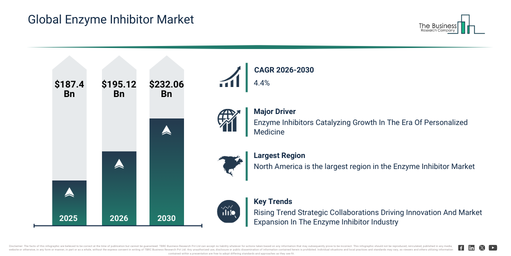
    The enzyme inhibitor market size has exhibited consistent growth in recent years. It is projected to expand from $187.4 billion in 2025 to $195.12 billion in 2026, achieving a compound annual growth rate (CAGR) of 4.1%. Historically, this growth can be attributed to factors such as the increasing prevalence of chronic diseases, a rise in pharmaceutical r&d spending, strong demand for ppIs and statins, a growing aging population, and the expansion of generic enzyme inhibitor drugs.

    The enzyme inhibitor market is projected to experience consistent expansion over the upcoming years. Its valuation is anticipated to reach $232.06 billion by 2030, demonstrating a compound annual growth rate (CAGR) of 4.4%. This anticipated growth during the forecast period stems from various factors such as advancements in precision medicine, a surge in oncology drug pipelines, increasing investments within the biotechnology industry, a heightened demand for personalized therapies, and broadening applications in non-pharmaceutical sectors. Key developments expected during this period involve a growing embrace of targeted enzyme inhibitor therapies, an extended role for enzyme inhibitors in managing chronic diseases, an amplified research and development focus on more selective and safer inhibitors, an increasing utilization of enzyme inhibitors beyond traditional therapeutic uses, and a movement towards combination drug therapies.

    Download the Free Sample Report to Explore Key Market Insights:

    https://www.thebusinessresearchcompany.com/sample.aspx?id=6728&type=smp

    What Drivers Are Shaping The Future Growth Of The Enzyme Inhibitor Market?

    The rising need for individualized healthcare is anticipated to drive expansion in the enzyme inhibitor market over the next few years. Personalized medicine, alternatively known as precision medicine, represents a medical and therapeutic strategy that takes into account a person’s unique genetic profile, surroundings, and way of life. The increasing acceptance of personalized medicine stems from progress in targeted therapies, accurate diagnostics, and pharmaceutical research, with enzyme inhibitors proving essential as they can be customized for particular patients or disease variations. As an illustration, in February 2024, data from the Personalised Medicine Coalition, a US-based hospital and health care organization, indicated that in 2023, the FDA sanctioned 16 novel personalized treatments for rare disease patients, an increase from 6 in 2022. Consequently, the expanding need for personalized medicine is fueling the growth of the enzyme inhibitor market.

    What Segment Types Make Up The Enzyme Inhibitor Market?

    The enzyme inhibitor market covered in this report is segmented –

    1) By Type: Proton Pump Inhibitors (PPIs), Protease Inhibitors, Reverse Transcriptase Inhibitors, Aromatase Inhibitors, Kinase Inhibitors, Neuraminidase Inhibitors, Statins, Other Types

    2) By Disease Indication: Chronic Obstructive Pulmonary Disorders, Cardiovascular Disease, Gastrointestinal Disorders, Arthritis, Inflammatory Diseases, Other Disease Indications

    3) By Application: Chemotherapy, Antibiotics, Pesticides, Cardiovascular Treatments, Other Applications

    4) By End User: Pharmaceutical, Biotechnology, Food And Beverage, Other End Users

    Subsegments:

    1) By Proton Pump Inhibitors (PPIs): Omeprazole, Esomeprazole, Lansoprazole, Pantoprazole, Rabeprazole

    2) By Protease Inhibitors: Ritonavir, Lopinavir, Atazanavir, Saquinavir, Darunavir

    3) By Reverse Transcriptase Inhibitors: NRTIs (Nucleoside Reverse Transcriptase Inhibitors), NNRTIs (Non-Nucleoside Reverse Transcriptase Inhibitors)

    4) By Aromatase Inhibitors: Anastrozole, Letrozole, Exemestane

    5) By Kinase Inhibitors: BCR-ABL Inhibitors, EGFR Inhibitors, ALK Inhibitors, MEK Inhibitors

    6) By Neuraminidase Inhibitors: Oseltamivir, Zanamivir, Peramivir

    7) By Statins: Atorvastatin, Simvastatin, Rosuvastatin, Lovastatin

    8) By Other Types: Antifolates, Phosphodiesterase Inhibitors, Cyclooxygenase Inhibitors

    Which Market Trends Are Creating New Opportunities In The Enzyme Inhibitor Market?

    Leading firms within the enzyme inhibitor market are concentrating on developing novel treatments, including selective kinase inhibitors, aiming to enhance therapeutic choices and patient results for diverse medical conditions. Jaypirca (pirtobrutinib) stands as a highly selective, non-covalent Bruton’s tyrosine kinase (BTK) inhibitor, receiving FDA approval for managing adult patients experiencing relapsed or refractory mantle cell lymphoma following a minimum of two previous systemic treatments. Illustratively, in January 2023, Loxo Oncology at Lilly, the oncology division of Eli Lilly and Company, a US-based pharmaceutical entity, introduced Jaypirca tablets. This product is the inaugural and sole non-covalent (reversible) Bruton’s tyrosine kinase (BTK) inhibitor sanctioned by the Food and Drug Administration, a US-based health organization. This authorization signifies a notable progression for individuals afflicted with MCL, who typically face restricted therapeutic alternatives once current treatments cease to be effective. Jaypirca offers a fresh methodology for targeting the BTK pathway, holding the potential to better the prognosis for this particular group of patients.

    Who Are The Key Players Driving Competition In The Enzyme Inhibitor Market?

    Major companies operating in the enzyme inhibitor market are Abbott Laboratories, Amgen Inc., AstraZeneca plc, Bayer AG, F. Hoffmann-La Roche AG, Pfizer Inc., Takeda Pharmaceutical Company, Merck and Co. Inc., Eli Lilly and Company, Bristol-Myers Squibb Company, Cipla USA Inc., AbbVie Inc., Teva Pharmaceutical Industries Ltd., Janssen Pharmaceuticals, Acellera Ltd., BioSolveIT GmbH, Cresset BioMolecular Discovery Ltd., Dotmatics Limited, Inte:Ligand GmbH, LeadIT, Chemical Computing Group Inc.

    Read the full enzyme inhibitor market report here:

    https://www.thebusinessresearchcompany.com/report/enzyme-inhibitor-global-market-report

    Which Geographic Regions Are Influencing Demand In The Enzyme Inhibitor Market?

    North America was the largest region in the enzyme inhibitor market in 2025. Asia-Pacific is expected to be the fastest-growing region in the forecast period. The regions covered in the enzyme inhibitor market report are Asia-Pacific, South East Asia, Western Europe, Eastern Europe, North America, South America, Middle East, Africa.

    Request A Tailored Enzyme Inhibitor Market Research Report For Competitive Advantage:

    https://www.thebusinessresearchcompany.com/customise?id=6728&type=smp

    Browse Through More Reports Similar to the Global Enzyme Inhibitor Market 2026, By The Business Research Company

    Enzyme Inhibitor Market Report 2026

    https://www.thebusinessresearchcompany.com/report/enzyme-inhibitor-global-market-report

    Enzyme Market Report 2026

    https://www.thebusinessresearchcompany.com/report/enzyme-global-market-report

    Ace Inhibitors Market Report 2026

    https://www.thebusinessresearchcompany.com/report/ace-inhibitors-global-market-report

    Get in touch with us:

    The Business Research Company: https://www.thebusinessresearchcompany.com/

    Americas +1 310-496-7795

    Asia +44 7882 955267 & +91 8897263534

    Europe +44 7882 955267

    Email us at info@tbrc.info

    Follow us on:

    LinkedIn: https://in.linkedin.com/company/the-business-research-company

    YouTube: https://www.youtube.com/channel/UC24_fI0rV8cR5DxlCpgmyFQ

    Global Market Model: https://www.thebusinessresearchcompany.com/global-market-model
  • Strategic growth opportunities emerging in the Global Critical Care Drugs Market 2026–2030

    Strategic growth opportunities emerging in the Global Critical Care Drugs Market 2026–2030

    The Business Research Company’s 2026 market reports include new capabilities such as market attractiveness scoring and analysis, total addressable market analysis, company scoring matrix, interactive excel data dashboard, improved supply chain analysis, upcoming startups in the market, and overview of key products, aimed at improving the depth, usability, and strategic value of the insights delivered.

    What Market Valuation Is Forecasted For The Critical Care Drugs Market By 2030 Starting From Its 2026 Size?

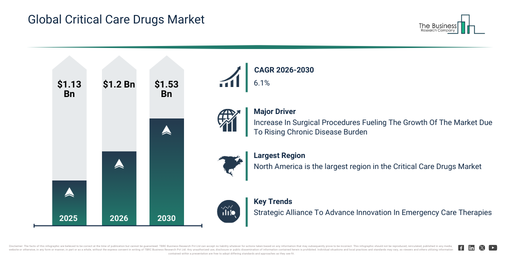
    The critical care drugs market size has shown robust expansion in recent years. It is projected to increase from $1.13 billion in 2025 to $1.2 billion in 2026, progressing at a compound annual growth rate (CAGR) of 6.4%. This historical growth can be linked to factors such as a rising incidence of critical illnesses, increasing ICU admissions, limited availability of advanced critical care drugs, developing hospital infrastructure, and the reliance on conventional sedatives and analgesics.

    The critical care drugs market is projected to experience substantial expansion over the coming years. It is set to reach $1.53 billion by 2030, demonstrating a compound annual growth rate (CAGR) of 6.1%. This growth during the forecast period is fueled by factors such as the development of innovative opioids and sedatives, the incorporation of AI-based monitoring and dosing instruments, the broadening of acute care protocols, escalating government efforts to enhance ICU capacity, and the growing uptake of precision critical care treatments. Key trends anticipated in the same period involve a heightened utilization of sophisticated sedatives and analgesics within ICU environments, the increased embrace of continuous monitoring and dose optimization solutions, an expansion in drugs for acute care and critical event management, the proliferation of protocol-driven drug delivery in operating theatres, and an intensified emphasis on ensuring safety and reducing adverse drug reactions in critical care.

    Download the Free Sample Report to Explore Key Market Insights:

    https://www.thebusinessresearchcompany.com/sample.aspx?id=27266&type=smp

    What Drivers Are Shaping The Future Growth Of The Critical Care Drugs Market?

    An escalating count of surgical procedures is projected to drive the expansion of the critical care drugs market in the future. Surgical procedures encompass medical interventions where physicians perform operations to correct or address health conditions such as injuries or illnesses. The increment in these surgical procedures can be attributed to the increasing prevalence of chronic diseases that necessitate operative treatment. Critical care drugs are deployed in surgical settings to manage pain, stabilize vital functions, avert infections, and facilitate recovery both during and following an operation. For instance, in May 2025, the Australian Institute of Health and Welfare, an Australia-based government agency, stated that during 2023–24, approximately 778,500 patients were admitted for surgery from public hospital waiting lists, representing a 5.8% rise when compared to 2022–23. This ongoing increase in surgical procedures is thus stimulating the growth of the critical care drugs market.

    Which Segment Categories Define The Critical Care Drugs Market?

    The critical care drugs market covered in this report is segmented –

    1) By Drug Type: Opioids, Morphine, Pethidine, Naloxone, Fentanyl, Benzodiazepines, Diazepam, Midazolam, Lorazepum, Other Types

    2) By Clinical Applications: Sepsis And Septic Shock, Acute Respiratory Distress Syndrome (ARDS), Acute Cardiovascular Events, Acute Kidney Injury, Traumatic Injuries

    3) By Route Of Administration: Intravenous (IV), Intramuscular (IM), Inhalation, Subcutaneous

    4) By End User: Intensive Care Unit (ICU), Coronary Care Unit (CCU), Operation Theatres, Trauma Centers

    Subsegments:

    1) By Opioids: Codeine, Hydromorphone, Oxycodone, Tapentadol, Methadone

    2) By Morphine: Immediate-Release Morphine, Extended-Release Morphine, Injectable Morphine, Oral Morphine Solutions

    3) By Pethidine: Injectable Pethidine, Oral Pethidine, Pethidine Combinations

    4) By Naloxone: Injectable Naloxone, Nasal Naloxone, Auto-injector Naloxone

    5) By Fentanyl: Transdermal Patches, Injectable Fentanyl, Buccal Tablets, Sublingual Spray, Lozenges

    6) By Benzodiazepines: Short-Acting Benzodiazepines, Intermediate-Acting Benzodiazepines, Long-Acting Benzodiazepines

    7) By Diazepam: Oral Tablets, Injectable Diazepam, Rectal Gel, Oral Solution

    8) By Midazolam: Injectable Midazolam, Nasal Spray, Buccal Formulation, Oral Syrup

    9) By Lorazepam: Oral Tablets, Injectable Lorazepam, Oral Concentrate

    10) By Other Types: Propofol, Ketamine, Dexmedetomidine, Etomidate, Clonidine

    What Major Market Trends Are Driving Changes In The Critical Care Drugs Market?

    Leading companies within the critical care drugs market are emphasizing strategic alliances to broaden their product offerings, improve research capacities, expedite market entry, and solidify their position in rapidly expanding therapeutic domains. These collaborations facilitate quicker research, development, and market access by leveraging collective expertise and shared resources. They empower pharmaceutical entities to cooperate with hospitals, research bodies, or biotechnology enterprises, thereby boosting drug innovation and the effectiveness of clinical trials. As an illustration, in March 2024, Dr. Reddy’s Laboratories Ltd., an India-based pharmaceutical firm, formed a partnership with US-based Pharmazz Inc. to introduce and commercialize Centhaquine, an inventive resuscitative medication for hypovolemic shock, in India, marketed under the brand Lyfaquin. This strategic agreement provides Dr. Reddy’s with sole marketing and distribution privileges in India and Nepal, while Pharmazz is set to receive initial payments and ongoing royalties. The alliance enhances Dr. Reddy’s critical care portfolio by integrating a new therapy, sanctioned by the Drugs Controller General of India (DCGI) for urgent situations, thereby reaffirming its dedication to providing crucial treatments for patients in critical condition.

    Who Are The Top Companies Competing In The Critical Care Drugs Market?

    Major companies operating in the critical care drugs market are Intas Pharmaceuticals, Sun Pharmaceutical Industries Ltd., Aurobindo Pharma, Dr. Reddy’s Laboratories Ltd., Cipla Ltd., Lupin Ltd., Zydus Lifesciences Limited, Cargus Biopharma, Glenmark Pharmaceuticals, Torrent Pharmaceuticals, Mankind Pharma, Novalab Healthcare, Arlak Biotech Ltd., Pax Healthcare, SwissChem Healthcare, Iskon Remedies, Salvus Pharma, Fortune Labs, H&I Critical Care, Biofield Pharma.

    Read the full critical care drugs market report here:

    https://www.thebusinessresearchcompany.com/report/critical-care-drugs-global-market-report

    Which Geographic Regions Are Influencing Demand In The Critical Care Drugs Market?

    North America was the largest region in the critical care drugs market in 2025. Asia-Pacific is expected to be the fastest-growing region in the forecast period. The regions covered in the critical care drugs market report are Asia-Pacific, South East Asia, Western Europe, Eastern Europe, North America, South America, Middle East, Africa.

    Request A Tailored Critical Care Drugs Market Research Report For Competitive Advantage:

    https://www.thebusinessresearchcompany.com/customise?id=27266&type=smp

    Browse Through More Reports Similar to the Global Critical Care Drugs Market 2026, By The Business Research Company

    Landscaping Services Market Report 2026

    https://www.thebusinessresearchcompany.com/report/landscaping-services-global-market-report

    Architectural Services Market Report 2026

    https://www.thebusinessresearchcompany.com/report/architectural-services-global-market-report

    Crop Production Market Report 2026

    https://www.thebusinessresearchcompany.com/report/crop-production-global-market-report

    Get in touch with us:

    The Business Research Company: https://www.thebusinessresearchcompany.com/

    Americas +1 310-496-7795

    Asia +44 7882 955267 & +91 8897263534

    Europe +44 7882 955267

    Email us at info@tbrc.info

    Follow us on:

    LinkedIn: https://in.linkedin.com/company/the-business-research-company

    YouTube: https://www.youtube.com/channel/UC24_fI0rV8cR5DxlCpgmyFQ

    Global Market Model: https://www.thebusinessresearchcompany.com/global-market-model
  • Environmental Biotechnology Market 2026 expanding due to rising wastewater treatment demand

    Environmental Biotechnology Market 2026 expanding due to rising wastewater treatment demand

    The Business Research Company’s 2026 market reports include new capabilities such as market attractiveness scoring and analysis, total addressable market analysis, company scoring matrix, interactive excel data dashboard, improved supply chain analysis, upcoming startups in the market, and overview of key products, aimed at improving the depth, usability, and strategic value of the insights delivered.

    What Is The Estimated Market Size Of The Environmental Biotechnology Market During 2026–2030?

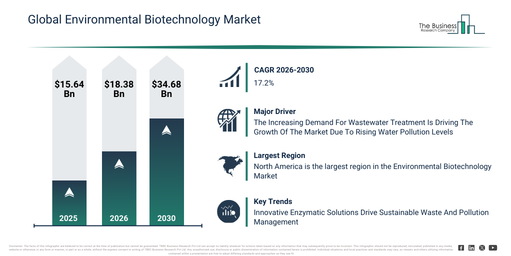
    The environmental biotechnology market has seen rapid growth in its size during recent years. Its valuation is projected to increase from $15.64 billion in 2025 to $18.38 billion in 2026, achieving a compound annual growth rate (CAGR) of 17.5%. This historical expansion can be linked to factors like a limited understanding of environmental biotechnology solutions, a reliance on conventional chemical treatments, the rising generation of industrial wastewater, an absence of regulatory frameworks for microbial applications, and a slow integration into agriculture and waste management practices.

    The environmental biotechnology market size is anticipated to undergo significant expansion in the coming years, reaching $34.68 billion by 2030, reflecting a compound annual growth rate (CAGR) of 17.2%. This growth over the forecast period stems from technological progress in microbial consortia and enzyme formulations, increased government support for sustainable practices, more stringent environmental regulations concerning wastewater and soil treatment, wider application of industrial and agricultural bioremediation methods, and a rise in investment in genetically engineered microorganisms. Noteworthy trends during this period include the growing adoption of microbial blends for waste treatment, an increase in the use of enzymes for pollution control, the expansion of nutrient-based bioremediation solutions, increasing applications in soil and water bioremediation, and a focus on genetically engineered microorganisms for environmental challenges.

    Download the Free Sample Report to Explore Key Market Insights:

    https://www.thebusinessresearchcompany.com/sample.aspx?id=25762&type=smp

    Which Economic Or Industry Drivers Are Impacting The Environmental Biotechnology Market?

    The environmental biotechnology market is projected to expand, driven by the escalating demand for wastewater treatment. This treatment process involves purifying used or contaminated water by eliminating contaminants, pollutants, and harmful substances, making it safe for environmental release or subsequent reuse. The heightened demand for wastewater treatment primarily stems from increasing water pollution levels, which jeopardize public health, ecosystems, and the availability of clean water. Environmental biotechnology significantly enhances wastewater treatment through the application of biological processes and organisms to effectively break down pollutants, diminish toxic waste, and facilitate cleaner water discharge. For instance, the American Society of Civil Engineers, a US-based professional organization, published a report in 2024 indicating that the estimated annual investment gap for water infrastructure, including drinking water, wastewater, and stormwater, in 2025 was $99 billion, an increase from $81 billion. Consequently, the growing requirement for wastewater treatment is a key driver for the growth of the environmental biotechnology market.

    How Are The Various Segments Of The Environmental Biotechnology Market Categorized?

    The environmental biotechnology market covered in this report is segmented –

    1) By Product: Microbial Blends, Nutrients, Enzymes, Microbes

    2) By Technology: Cell-Based Assays, Nanobiotechnology, Fermentation, Deoxyribonucleic Acid (DNA) Sequencing, Polymerase Chain Reaction Technology, Other Technologies

    3) By Application: Wastewater Treatment, Bioremediation, Other Applications

    4) By End User: Agriculture, Water Treatment, Energy, Waste Management, Food And Beverage, Pharmaceuticals

    Subsegments:

    1) By Microbial Blends: Bioaugmentation Blends, Bioremediation Microbial Consortia, Waste Decomposition Microbial Mixes, Odor Control Microbial Formulations

    2) By Nutrients: Nitrogen Supplements, Phosphorus Additives, Trace Mineral Blends, Carbon Source Additives

    3) By Enzymes: Waste Degrading Enzymes, Oil And Grease-Degrading Enzymes, Sludge Reduction Enzymes, Odor Control Enzymes

    4) By Microbes: Bacteria, Fungi, Algae, Genetically Engineered Microorganisms

    What Trends Are Affecting The Expansion Of The Environmental Biotechnology Market?

    Major companies within the environmental biotechnology market are focusing on developing innovative solutions, such as enzyme-based biocatalysts, to enhance the efficiency and sustainability of pollution control and waste treatment processes. Enzyme-based biocatalysts are biological molecules that accelerate chemical reactions, enabling faster and more efficient processes in environmental applications such as waste degradation and pollutant removal. For instance, in November 2024, Novonesis A/S, a Denmark-based biotechnology company, launched Eversa Advance, an enzymatic biosolution aimed at improving the efficiency and sustainability of biodiesel feedstock processing, especially for materials containing up to 20% free fatty acids. This innovative solution allows biodiesel producers to process waste-based feedstocks without the need for acid esterification, cutting pretreatment operating costs by up to 45% while also reducing equipment wear and downtime. By enhancing feedstock flexibility, this solution helps boost plant profitability and promotes more sustainable biodiesel production.

    Which Major Firms Influence Developments In The Environmental Biotechnology Market?

    Major companies operating in the environmental biotechnology market are BASF SE, Dow Chemical Company, Evonik Industries AG, Ecolab Inc., DuPont de Nemours Inc., Suez SA, Novonesis A/S, Ginkgo Bioworks Holdings Inc., Praj Industries Limited, Genomatica Inc., LanzaTech Global Inc., Biorem Inc., Green Biologics Ltd., Veolia Environnement S.A.

    Read the full environmental biotechnology market report here:

    https://www.thebusinessresearchcompany.com/report/environmental-biotechnology-global-market-report

    What Are The Top-Performing Regions Within The Environmental Biotechnology Market?

    North America was the largest region in the environmental biotechnology market in 2025. The regions covered in the environmental biotechnology market report are Asia-Pacific, South East Asia, Western Europe, Eastern Europe, North America, South America, Middle East, Africa.

    Request A Tailored Environmental Biotechnology Market Research Report For Competitive Advantage:

    https://www.thebusinessresearchcompany.com/customise?id=25762&type=smp

    Browse Through More Reports Similar to the Global Environmental Biotechnology Market 2026, By The Business Research Company

    Agricultural Biotechnology Market Report 2026

    https://www.thebusinessresearchcompany.com/report/agricultural-biotechnology-global-market-report

    Animal Biotechnology Market Report 2026

    https://www.thebusinessresearchcompany.com/report/animal-biotechnology-global-market-report

    Biotechnology Services Market Report 2026

    https://www.thebusinessresearchcompany.com/report/biotechnology-services-global-market-report

    Get in touch with us:

    The Business Research Company: https://www.thebusinessresearchcompany.com/

    Americas +1 310-496-7795

    Asia +44 7882 955267 & +91 8897263534

    Europe +44 7882 955267

    Email us at info@tbrc.info

    Follow us on:

    LinkedIn: https://in.linkedin.com/company/the-business-research-company

    YouTube: https://www.youtube.com/channel/UC24_fI0rV8cR5DxlCpgmyFQ

    Global Market Model: https://www.thebusinessresearchcompany.com/global-market-model

  • Growing home care adoption continues to influence the Entecavir Market 2026

    Growing home care adoption continues to influence the Entecavir Market 2026

    The Business Research Company’s 2026 market reports include new capabilities such as market attractiveness scoring and analysis, total addressable market analysis, company scoring matrix, interactive excel data dashboard, improved supply chain analysis, upcoming startups in the market, and overview of key products, aimed at improving the depth, usability, and strategic value of the insights delivered.

    What Market Size Expansion Is Predicted For The Enteral Feeding Formula Market Between 2026 And 2030?

    The enteral feeding formula market size has shown rapid expansion in recent years. It is projected to grow from $7.09 billion in 2025 to $7.81 billion in 2026, achieving a compound annual growth rate (CAGR) of 10.1%. The significant growth observed in the past can be attributed to factors like increasing ICU admissions, the rising prevalence of chronic diseases, a growing aging population, the expansion of hospital infrastructure, and heightened awareness of clinical nutrition.

    The enteral feeding formula market is projected for substantial expansion in the coming years. It is anticipated to reach a valuation of $11.52 billion by 2030, exhibiting a compound annual growth rate (CAGR) of 10.2%. This projected growth is driven by factors such as the expansion of home healthcare nutrition, a surge in cancer and neurological disorder diagnoses, an escalating need for personalized nutritional solutions, innovations in feeding tubes and pumps, and broader healthcare availability in developing economies. Key trends anticipated during this period encompass a growing preference for disease-specific enteral formulas, a rise in the application of high-protein and specialized nutrition products, increased uptake of pediatric enteral nutrition, wider integration of enteral feeding in home care environments, and advancements aimed at enhancing taste, texture, and patient tolerance.

    Download the Free Sample Report to Explore Key Market Insights:

    https://www.thebusinessresearchcompany.com/sample.aspx?id=7744&type=smp

    What Major Drivers Are Influencing Demand In The Enteral Feeding Formula Market?

    The market for enteral feeding formulas is expected to advance due to the growing need for home care services. These services offer extensive support to individuals requiring assistance with daily routines who prefer to remain in their homes. Enteral feeding is becoming more common in home-based settings for patients needing prolonged nutritional support. For example, the U.S. Bureau of Labor Statistics, a federal agency, reported in November 2024 that in May 2023, New York had 60 home health and personal care aide jobs per 1,000, which was 2.5 times higher than the national average of 24 per 1,000. Therefore, the rising demand for home care services will propel the enteral feeding formula market’s expansion.

    Which Market Segments Are Examined In The Enteral Feeding Formula Market Study?

    The enteral feeding formula market covered in this report is segmented –

    1) By Product: Standard Formulas, Disease-Specific Formulas

    2) By Stage: Adults, Pediatrics

    3) By Application: Oncology, Gastroenterology, Neurology, Diabetes, Critical Care, Other Applications

    4) By End User: Hospitals, Long-Term Care Facilities

    Subsegments:

    1) By Standard Formulas: Polymer-Based Formulas, Oligomeric Formulas, High-Protein Formulas

    2) By Disease-Specific Formulas: Diabetic Formulas, Renal Formulas, Pulmonary Formulas, Oncology Formulas

    Which Trends Are Influencing The Enteral Feeding Formula Market?

    Leading businesses within the enteral feeding formulas market are innovating with advanced technological products, notably enteral feeding pumps, to improve their range of available offerings. An enteral feeding pump serves as a medical instrument for direct delivery of liquid nutrition into a patient’s stomach or intestines via a feeding tube, thereby guaranteeing accurate and regulated nutrient supply for those unable to consume food orally. For example, in September 2023, Cardinal Health, a healthcare firm based in the US, introduced the Kangaroo OMNI enteral feeding pump. This pump is engineered to offer enteral feeding patients improved choices customized to their individual requirements, incorporating features like portability and adaptability for administering thick formulas and hydration across diverse healthcare environments. Furthermore, it boasts superior water resistance, permitting cleaning under flowing water, and includes complementary accessories such as a pole clamp and a table stand. Additionally, the device is capable of displaying screen content in 19 distinct languages.

    Who Are The Primary Competitors In The Enteral Feeding Formula Market?

    Major companies operating in the enteral feeding formula market are Abbott Laboratories, Nestlé S.A., Danone S.A., Fresenius Kabi AG, B. Braun Melsungen AG, Meiji Holdings Co. Ltd., Real Food Blends, Ajinomoto Cambrooke Inc., Otsuka Pharmaceutical Co. Ltd., Medtrition Inc., Nutri-Force Nutrition, Global Health Product Inc., VICTUS, Kate Farms, Baxter International Inc., Perrigo Nutritionals LLC, Reckitt Benckiser Group plc, Bio-Serv Inc., Nutrabalace Ltd., Med-Diet Laboratories Inc., Precision Foods-Kent Corporation, SimplyThick LLC, Vitaflow LLC

    Read the full enteral feeding formula market report here:

    https://www.thebusinessresearchcompany.com/report/enteral-feeding-formula-global-market-report

    Which Region Shows The Strongest Potential For Future Growth In The Enteral Feeding Formula Market?

    North America was the largest region in the enteral feeding formula market in 2025. Asia-Pacific is expected to be the fastest-growing region in the forecast period. The regions covered in the enteral feeding formula market report are Asia-Pacific, South East Asia, Western Europe, Eastern Europe, North America, South America, Middle East, Africa.

    Request A Tailored Enteral Feeding Formula Market Research Report For Competitive Advantage:

    https://www.thebusinessresearchcompany.com/customise?id=7744&type=smp

    Browse Through More Reports Similar to the Global Enteral Feeding Formula Market 2026, By The Business Research Company

    Enteral Feeding Formula Market Report 2026

    https://www.thebusinessresearchcompany.com/report/enteral-feeding-formula-global-market-report

    Enteral Nutrition Market Report 2026

    https://www.thebusinessresearchcompany.com/report/enteral-nutrition-global-market-report

    Enteral Feeding Devices Market Report 2026

    https://www.thebusinessresearchcompany.com/report/enteral-feeding-devices-global-market-report

    Get in touch with us:

    The Business Research Company: https://www.thebusinessresearchcompany.com/

    Americas +1 310-496-7795

    Asia +44 7882 955267 & +91 8897263534

    Europe +44 7882 955267

    Email us at info@tbrc.info

    Follow us on:

    LinkedIn: https://in.linkedin.com/company/the-business-research-company

    YouTube: https://www.youtube.com/channel/UC24_fI0rV8cR5DxlCpgmyFQ

    Global Market Model: https://www.thebusinessresearchcompany.com/global-market-model
  • Critical Care Antiarrhythmic Drugs Market 2026–2035 driven by increasing cardiac care needs

    Critical Care Antiarrhythmic Drugs Market 2026–2035 driven by increasing cardiac care needs

    The Business Research Company’s 2026 market reports include new capabilities such as market attractiveness scoring and analysis, total addressable market analysis, company scoring matrix, interactive excel data dashboard, improved supply chain analysis, upcoming startups in the market, and overview of key products, aimed at improving the depth, usability, and strategic value of the insights delivered.

    How Is The Market Size Of The Critical Care Antiarrhythmic Drugs Market Expected To Change Between 2026 And 2030?

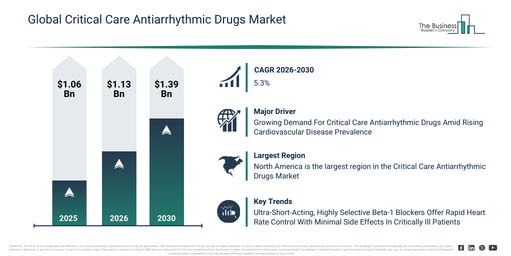
    The critical care antiarrhythmic drugs market size has experienced significant expansion recently. It is forecast to increase from $1.06 billion in 2025 to $1.13 billion in 2026, achieving a compound annual growth rate (CAGR) of 5.9%. This historical growth can be ascribed to a high incidence of acute cardiac arrhythmias, the well-established function of antiarrhythmic drugs in intensive care units, an expansion of emergency cardiac care services, the availability of proven intravenous drug formulations, and the increasing development of hospital-based critical care infrastructure.

    The critical care antiarrhythmic drugs market is projected to demonstrate significant expansion in the coming years, with its valuation expected to reach $1.39 billion by 2030, growing at a compound annual growth rate (CAGR) of 5.3%. This anticipated growth is primarily driven by the increasing incidence of cardiovascular diseases, a growing aging demographic facing cardiac risk factors, the expansion of intensive care and emergency medical facilities, a concentrated effort on early arrhythmia intervention, and the necessity for rapid stabilization therapies in critical care settings. Key developments during this forecast period include the increasing adoption of rapid-acting intravenous antiarrhythmic drugs, a growing reliance on evidence-based protocols in critical care environments, an increased application of combination therapy for severe arrhythmias, the wider use of antiarrhythmic drugs in emergency cardiac care, and a steady demand for both established and generic critical care antiarrhythmics.

    Download the Free Sample Report to Explore Key Market Insights:

    https://www.thebusinessresearchcompany.com/sample.aspx?id=16386&type=smp

    Which Economic Or Industry Drivers Are Impacting The Critical Care Antiarrhythmic Drugs Market?

    The rising occurrence of cardiovascular disease is anticipated to drive the expansion of the critical care antiarrhythmic drugs market moving ahead. Cardiovascular disease encompasses conditions impacting the heart and blood vessels, resulting in severe complications like arrhythmias, heart attacks, and strokes. The incidence of cardiovascular disease is escalating because of inactive lifestyles, poor dietary choices, smoking, and growing levels of obesity and hypertension. The critical care antiarrhythmic drugs market plays a crucial role in cardiac emergency care by helping to restore a regular heart rhythm and avert cardiac arrest in individuals suffering from severe arrhythmias. For example, data from 2023, provided by the World Heart Federation, a Switzerland-based non-governmental organization, projects that worldwide fatalities from cardiovascular disease will hit 0.0222 billion by 2030 and 0.0323 billion by 2050, highlighting a swiftly escalating global burden of CVD. Consequently, the expanding prevalence of cardiovascular disease is fueling the growth of the critical care antiarrhythmic drugs market.

    How Is The Critical Care Antiarrhythmic Drugs Market Structured Across Different Segments?

    The critical care antiarrhythmic drugs market covered in this report is segmented –

    1) By Type: Sodium Channel Blockers, Potassium Channel Blockers, Other Types

    2) By Disease Type: Ventricular Arrhythmias, Supraventricular Arrhythmias

    3) By Application: Hospitals, Other Applications

    Subsegments:

    1) By Sodium Channel Blockers: Class I Antiarrhythmic Drugs, Class Ia Antiarrhythmics, Class Ib Antiarrhythmics, Class Ic Antiarrhythmics

    2) By Potassium Channel Blockers: Class Iii Antiarrhythmic Drugs

    3) By Other Types: Adenosine, Magnesium Sulfate, Other Experimental Or Off-Label Drugs

    Which Trends Are Shaping The Future Of The Critical Care Antiarrhythmic Drugs Market?

    Major companies in the critical care antiarrhythmic drugs market are concentrating on developing highly selective, ultra-short-acting beta-1 blocker therapies to enhance heart rate management and reduce adverse effects in critically ill patients. These therapies involve medications designed to swiftly lower heart rate by precisely engaging beta-1 receptors in the heart, with their effects diminishing quickly post-administration. As an illustration, in November 2024, AOP Orphan Pharmaceuticals GmbH, a pharmaceutical firm based in Austria, obtained U.S. FDA approval for Rapiblyk (landiolol). This drug is intended for the fast reduction of ventricular rate in adults experiencing supraventricular tachycardia (including atrial fibrillation and atrial flutter) within critical care environments. Rapiblyk comes as a lyophilized powder in a 280 mg vial for intravenous injection, and once reconstituted, it is administered at a dose range of 9.3–74.6 µg/kg/min. Its exceptionally short half-life enables a 40–90% reduction in heart rate within approximately 10 minutes, while having minimal impact on blood pressure, rendering it particularly valuable in ICU, emergency department, perioperative, and cardiac surgical settings. The rapid start and cessation of its action, coupled with its high ß1/ß2 selectivity (˜ 255:1), distinguish it from traditional beta-blockers, thus guaranteeing effective rate control without inducing prolonged systemic effects.

    Which Major Players Dominate The Critical Care Antiarrhythmic Drugs Market?

    Major companies operating in the critical care antiarrhythmic drugs market are Pfizer Inc., F. Hoffmann-La Roche Ltd., Bayer AG, Sanofi S.A., Bristol Myers Squibb, Novartis AG, Viatris Inc., Teva Pharmaceutical Industries Ltd., Baxter International Inc., Fresenius Kabi AG, Sun Pharmaceutical Industries Ltd., Aurobindo Pharma Limited, Dr. Reddy’s Laboratories Ltd., Hikma Pharmaceuticals Plc, Amneal Pharmaceuticals Inc., Lupin Pharmaceutical Limited, Biocon Limited, Glenmark Pharmaceuticals Limited, Torrent Pharmaceuticals Ltd., Alembic Pharmaceuticals Ltd., Upsher-Smith Laboratories LLC., Mayne Pharma International Pty Ltd., Zydus Cadila Healthcare Limited, Amomed Pharma GmbH

    Read the full critical care antiarrhythmic drugs market report here:

    https://www.thebusinessresearchcompany.com/report/critical-care-antiarrhythmic-drugs-global-market-report

    What Are The Top-Performing Regions Within The Critical Care Antiarrhythmic Drugs Market?

    North America was the largest region in the critical care antiarrhythmic drugs market in 2025. Europe is expected to be the fastest-growing region in the forecast period. The regions covered in the critical care antiarrhythmic drugs market report are Asia-Pacific, South East Asia, Western Europe, Eastern Europe, North America, South America, Middle East, Africa.

    Request A Tailored Critical Care Antiarrhythmic Drugs Market Research Report For Competitive Advantage:

    https://www.thebusinessresearchcompany.com/customise?id=16386&type=smp

    Browse Through More Reports Similar to the Global Critical Care Antiarrhythmic Drugs Market 2026, By The Business Research Company

    Critical Care Antiarrhythmic Drugs Market Report 2026

    https://www.thebusinessresearchcompany.com/report/critical-care-antiarrhythmic-drugs-global-market-report

    Cardiovascular Monitoring And Diagnostic Devices And Equipment Market Report 2026

    https://www.thebusinessresearchcompany.com/report/cardiovascular-monitoring-and-diagnostic-devices-and-equipment-global-market-report

    Arrhythmia Market Report 2026

    https://www.thebusinessresearchcompany.com/report/arrhythmia-global-market-report

    Get in touch with us:

    The Business Research Company: https://www.thebusinessresearchcompany.com/

    Americas +1 310-496-7795

    Asia +44 7882 955267 & +91 8897263534

    Europe +44 7882 955267

    Email us at info@tbrc.info

    Follow us on:

    LinkedIn: https://in.linkedin.com/company/the-business-research-company

    YouTube: https://www.youtube.com/channel/UC24_fI0rV8cR5DxlCpgmyFQ

    Global Market Model: https://www.thebusinessresearchcompany.com/global-market-model
  • Global Entecavir Market 2026–2030 supported by antiviral treatment demand

    Global Entecavir Market 2026–2030 supported by antiviral treatment demand

    The Business Research Company’s 2026 market reports include new capabilities such as market attractiveness scoring and analysis, total addressable market analysis, company scoring matrix, interactive excel data dashboard, improved supply chain analysis, upcoming startups in the market, and overview of key products, aimed at improving the depth, usability, and strategic value of the insights delivered.

    How Large Is The Entecavir Market Projected To Become By 2030 Based On Its 2026 Valuation?

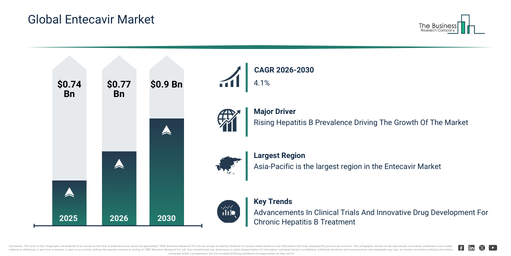
    The entecavir market has experienced consistent expansion in recent years. It is anticipated to expand from $0.74 billion in 2025 to $0.77 billion in 2026, achieving a compound annual growth rate (CAGR) of 4.2%. The historical increase can be attributed to several factors, including the high global prevalence of hepatitis B, the clinical effectiveness of nucleoside analogs, the broadening of antiviral treatment guidelines, enhanced hepatitis B diagnosis rates, and a rising global burden of liver disease.

    The entecavir market is projected to experience consistent expansion over the upcoming years. Its value is anticipated to reach $0.9 billion by 2030, demonstrating a compound annual growth rate (CAGR) of 4.1%. This growth during the projected timeframe stems from several factors, including an expanding chronic hepatitis B patient population, improved accessibility to antiviral treatments in developing economies, wider adoption of strategies for long-term viral suppression, an increase in public health initiatives targeting hepatitis, and a rising need for cost-effective generic medications. Key trends expected throughout this forecast period involve an uptick in the use of long-term antiviral therapies, a heightened emphasis on managing chronic hepatitis B, increasing consumer demand for oral antiviral drugs, broader availability of generic entecavir, and enhanced surveillance of viral load suppression.

    Download the Free Sample Report to Explore Key Market Insights:

    https://www.thebusinessresearchcompany.com/sample.aspx?id=21183&type=smp

    Which Market Drivers Are Supporting The Expansion Of The Entecavir Market?

    The increasing prevalence of hepatitis B is projected to drive the growth of the entecavir market moving forward. Hepatitis B is a viral infection that impacts the liver, leading to symptoms such as jaundice, fatigue, and abdominal pain, and can result in chronic liver disease or liver cancer if left untreated. The surge in hepatitis B cases is attributed to factors including unprotected sexual contact, sharing of needles, mother-to-child transmission during childbirth, and insufficient vaccination coverage in specific regions. Entecavir works to treat hepatitis B by inhibiting the replication of the hepatitis B virus (HBV) DNA, thereby reducing viral load and preventing liver damage. For instance, in August 2025, the Centers for Disease Control and Prevention, a US-based government agency, indicated that in 2023, non-Hispanic Asian/Pacific Islander individuals experienced a rate of newly reported chronic hepatitis B cases that was nearly 10 times higher than that of non-Hispanic White individuals. Therefore, the increasing prevalence of hepatitis B is a key driver for the entecavir market’s expansion.

    What Segment Groups Are Identified Within The Entecavir Market?

    The entecavir market covered in this report is segmented –

    1) By Product Type: Tablets, Oral Solution

    2) By Application: Hepatitis B Treatment, Liver Transplantation, Other Applications

    3) By Distribution Channel: Hospital Pharmacies, Retail Pharmacies, Online Pharmacies

    Subsegments:

    1) By Tablets: Standard Dose Tablets, High Dose Tablets

    2) By Oral Solution: Ready-to-Use Liquid Solution, Powder For Oral Solution

    What Trends Are Advancing Progress In The Entecavir Market?

    Major companies in the entecavir market are developing innovative drugs via clinical trials to improve efficacy and treatment outcomes for chronic hepatitis B patients, with the potential to reduce resistance and enhance long-term viral suppression. Clinical trials are research studies conducted to assess the safety, effectiveness, and potential side effects of novel treatments, drugs, or therapies in human participants. For instance, in October 2024, Aligos Therapeutics Inc., a US-based biotechnology company, is engaged in a phase 2 clinical trial for ALG-000184 for hepatitis B treatment. ALG-000184 is a type of therapy known as a capsid assembly modulator, operating by disrupting the formation of the capsid, the protective shell around a virus’s genetic material. The fourth phase of the study is currently evaluating the long-term effects of ALG-000184 (300 mg), either as a standalone treatment or alongside the approved antiviral entecavir, in patients with chronic hepatitis B. The combination of ALG-000184 and entecavir resulted in more significant reductions in viral load compared to entecavir alone, while ALG-000184 demonstrated comparable effectiveness, irrespective of its concurrent use with entecavir. The virus remained consistently suppressed throughout the study, encompassing both HBeAg-positive and HBeAg-negative patients.

    Which Companies Hold Significant Positions In The Entecavir Market?

    Major companies operating in the entecavir market are Bristol-Myers Squibb Company, GSK plc, Teva Pharmaceutical Industries Ltd., Qingfeng Pharmaceutical Group, Aurobindo Pharma Ltd., ScinoPharm Taiwan Ltd., Dr. Reddy’s Laboratories Ltd., Cipla Inc., Zhejiang Huahai Pharmaceuticals Co. Ltd., Qianjin Group, Genix Pharma Ltd., Dawnrays Pharmaceutical Holidings Ltd., Zhejiang Ausun Pharmaceutical Co. Ltd., Hunan Warrant Chiral Pharmaceutical Co. Ltd., Camber Pharmaceuticals Inc., Century Pharmaceuticals Ltd., Aligos Therapeutics Inc. , HRV Global Life Sceince, Solco Healthcare LLC, Accela ChemBio Inc.

    Read the full entecavir market report here:

    https://www.thebusinessresearchcompany.com/report/entecavir-global-market-report

    How Is The Entecavir Market Distributed Across Key Geographic Regions?

    Asia-Pacific was the largest region in the entecavir market in 2025. North America is expected to be the fastest-growing region in the forecast period. The regions covered in the entecavir market report are Asia-Pacific, South East Asia, Western Europe, Eastern Europe, North America, South America, Middle East, Africa.

    Request A Tailored Entecavir Market Research Report For Competitive Advantage:

    https://www.thebusinessresearchcompany.com/customise?id=21183&type=smp

    Browse Through More Reports Similar to the Global Entecavir Market 2026, By The Business Research Company

    Excavator Market Report 2026

    https://www.thebusinessresearchcompany.com/report/excavator-global-market-report

    Caviar Market Report 2026

    https://www.thebusinessresearchcompany.com/report/caviar-global-market-report

    Encoder Market Report 2026

    https://www.thebusinessresearchcompany.com/report/encoder-global-market-report

    Get in touch with us:

    The Business Research Company: https://www.thebusinessresearchcompany.com/

    Americas +1 310-496-7795

    Asia +44 7882 955267 & +91 8897263534

    Europe +44 7882 955267

    Email us at info@tbrc.info

    Follow us on:

    LinkedIn: https://in.linkedin.com/company/the-business-research-company

    YouTube: https://www.youtube.com/channel/UC24_fI0rV8cR5DxlCpgmyFQ

    Global Market Model: https://www.thebusinessresearchcompany.com/global-market-model
  • COVID-19 Drug Associated APIs Market 2026–2030 expanding with pharmaceutical supply chain demand

    COVID-19 Drug Associated APIs Market 2026–2030 expanding with pharmaceutical supply chain demand

    The Business Research Company’s 2026 market reports include new capabilities such as market attractiveness scoring and analysis, total addressable market analysis, company scoring matrix, interactive excel data dashboard, improved supply chain analysis, upcoming startups in the market, and overview of key products, aimed at improving the depth, usability, and strategic value of the insights delivered.

    What Is The Market Size Of The COVID-19 Drug Associated APIs Market In 2026 And What Value Is Projected For 2030?

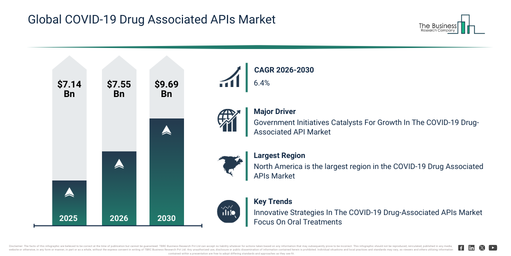
    The covid-19 drug associated apis market size has shown substantial growth in recent times. It is anticipated to increase from $7.14 billion in 2025 to $7.55 billion in 2026, demonstrating a compound annual growth rate (CAGR) of 5.8%. The expansion during the preceding period was influenced by factors such as the initial rise in covid-19 cases, the urgent requirement for repurposed medications, the constrained supply of antiviral apis, a reliance on imports from the Asia-Pacific area, and accelerated emergency approvals.

    The covid-19 drug associated apis market size is projected to experience significant expansion over the coming years. It is expected to grow to $9.69 billion by 2030, achieving a compound annual growth rate (CAGR) of 6.4%. This anticipated growth during the forecast period is driven by the advancement of next-generation antiviral and immunomodulator apis, the broadening of domestic api manufacturing capabilities, increasing adoption of biotech synthesis, heightened government funding for pandemic preparedness, and a rising demand for diverse covid-19 treatment options. Prominent trends within this period include an increasing need for antiviral and antimalarial apis, a greater emphasis on both captive and merchant api manufacturing, the expansion of synthetic and biotech-based api production, escalating investment in research and development for covid-19 drugs, and enhanced regulatory supervision over api quality and supply chains.

    Download the Free Sample Report to Explore Key Market Insights:

    https://www.thebusinessresearchcompany.com/sample.aspx?id=3248&type=smp

    What Major Drivers Are Influencing Demand In The COVID-19 Drug Associated APIs Market?

    Government efforts in healthcare research and development are projected to boost the growth of the COVID-19 drug-associated API market moving forward. Government initiatives encompass distinct actions, programs, policies, or projects undertaken by governmental bodies at various levels (local, regional, national, or international) to address specific issues, achieve particular objectives, or instigate positive societal changes. These initiatives for healthcare R&D are increasing to encourage innovation and accelerate the discovery of new treatments that tackle critical public health challenges. COVID-19 drug-associated APIs support government healthcare research and development initiatives by supplying crucial active ingredients, which aid in the swift development, testing, and production of treatments and vaccines. For instance, in April 2025, according to the Office for National Statistics (ONS), a UK-government agency, the UK government’s net R&D expenditure was £17.4 ($20.10) billion in 2023, an increase from £16.1 billion in 2022. Therefore, government initiatives for research and development in healthcare are driving the expansion of the COVID-19 drug-associated API market.

    What Are The Key Segments Of The COVID-19 Drug Associated APIs Market?

    The covid-19 drug associated apis market covered in this report is segmented –

    1) By Drug Class: Antimalarials, Bronchodilators, Antibiotics, Antivirals, Other Drug Class

    2) By Synthesis Type: Synthetic, Biotech

    3) By Business Mode: Captive API, Merchant API

    Subsegments:

    1) By Antimalarials: Hydroxychloroquine, Chloroquine

    2) By Bronchodilators: Beta-Agonists, Anticholinergics

    3) By Antibiotics: Macrolides, Tetracyclines

    4) By Antivirals: Remdesivir, Favipiravir, Lopinavir Or Ritonavir

    5) By Other Drug Classes: Corticosteroids, Immunomodulators

    What Key Trends Are Influencing The Development Of The COVID-19 Drug Associated APIs Market?

    Major companies operating in the COVID-19 drug-associated APIs market are increasingly prioritizing the introduction of innovative products, such as oral treatment for COVID-19, to gain a competitive advantage. Oral treatment for COVID-19 refers to medicines taken by mouth to manage and treat the infection caused by the SARS-CoV-2 virus, which is responsible for COVID-19. For instance, in May 2023, Pfizer Inc., a US-based pharmaceutical company, released PAXLOVID, after receiving approval from the FDA. This oral investigational drug, identified as a SARS-CoV-2 protease inhibitor, has demonstrated an 89% reduction in the risk of hospitalization or death when compared to a placebo in high-risk, non-hospitalized adults with COVID-19. It is designed for early administration, aiming to be prescribed upon the first sign of infection or awareness of exposure, with the potential to prevent severe illness, hospitalization, and death.

    Who Are The Leading Companies Operating In The COVID-19 Drug Associated APIs Market?

    Major companies operating in the covid-19 drug associated apis market are Dr. Reddy’s Laboratories Ltd., Lianyungang Guike Pharmaceutical CO. LTD., Alembic Pharmaceuticals Ltd., Wockhardt Ltd., Sandoz Srl, Lupin Limited, Aurobindo Pharma Ltd., Shanghai Shyndec Pharmaceutical Co. Ltd., Zhejiang Yatai Pharmaceutical Co. Ltd., Zhejiang Guobang Pharmaceutical Co Ltd., Cipla Limited, Shandong Boyuan Pharmaceutical Co. Ltd., Aspiro Pharma Ltd., Qilu Antibiotics Pharmaceutical Co. Ltd., Shenzhen China Resources Jiuxin Pharmaceutical Co. Ltd., Zhejiang Cheng Yi Pharmaceutical, Star Lake Bioscience Co.Inc., Hetero Labs Ltd., Geno Pharmaceuticals Ltd., Mylan Laboratories Ltd., Ipca Laboratories Limited, Zydus Takeda Healthcare Private Limited, Mangalam Drugs & Organics, Wallace Pharmaceuticals, Zhejiang Hisun Pharmaceutical Co. Ltd., Zhejiang Huahai Pharmaceutical Co. Ltd., Zhejiang Jiuzhou Pharmaceutical Co. Ltd., Zhejiang NHU Co. Ltd., Zhejiang Xianju Pharmaceutical Co. Ltd., Zhejiang Yongtai Technology Co. Ltd., Zhejiang Zhebei Pharmaceutical Co. Ltd., Zhejiang Tianyu Pharmaceutical Co. Ltd., Zhejiang Aisheng Pharmaceutical Co. Ltd., Zhejiang Aokang Pharmaceutical Co. Ltd.

    Read the full covid-19 drug associated apis market report here:

    https://www.thebusinessresearchcompany.com/report/covid19-drug-associated-api-global-market-report

    Which Region Shows The Strongest Potential For Future Growth In The COVID-19 Drug Associated APIs Market?

    North America was the largest region in the COVID-19 drug-associated APIs market in 2025. Middle East is expected to be the fastest growing region in the global COVID-19 drug associated APIs market share during the forecast period. The regions covered in the covid-19 drug associated apis market report are Asia-Pacific, South East Asia, Western Europe, Eastern Europe, North America, South America, Middle East, Africa.

    Request A Tailored COVID-19 Drug Associated APIs Market Research Report For Competitive Advantage:

    https://www.thebusinessresearchcompany.com/customise?id=3248&type=smp

    Browse Through More Reports Similar to the Global COVID-19 Drug Associated APIs Market 2026, By The Business Research Company

    Coronavirus Current Therapy Market Report 2026

    https://www.thebusinessresearchcompany.com/report/coronavirus-current-therapy-global-market-report

    Hydroxychloroquines Market Report 2026

    https://www.thebusinessresearchcompany.com/report/hydroxychloroquines-global-market-report

    Covid 19 Detection Test Kits And Consumables Market Report 2026

    https://www.thebusinessresearchcompany.com/report/covid-19-detection-test-kits-and-consumables-global-market-report

    Get in touch with us:

    The Business Research Company: https://www.thebusinessresearchcompany.com/

    Americas +1 310-496-7795

    Asia +44 7882 955267 & +91 8897263534

    Europe +44 7882 955267

    Email us at info@tbrc.info

    Follow us on:

    LinkedIn: https://in.linkedin.com/company/the-business-research-company

    YouTube: https://www.youtube.com/channel/UC24_fI0rV8cR5DxlCpgmyFQ

    Global Market Model: https://www.thebusinessresearchcompany.com/global-market-model