Month: March 2026

  • Smart Pulse Oximeter Ring Market Expected to Record Steady Growth and Approach $2.39 Billion by 2030

    Smart Pulse Oximeter Ring Market Expected to Record Steady Growth and Approach $2.39 Billion by 2030

    The Business Research Company’s 2026 market reports include new capabilities such as market attractiveness scoring and analysis, total addressable market analysis, company scoring matrix, interactive excel data dashboard, improved supply chain analysis, upcoming startups in the market, and overview of key products, aimed at improving the depth, usability, and strategic value of the insights delivered.

    What Market Valuation Is Forecasted For The Smart Pulse Oximeter Ring Market By 2030 Starting From Its 2026 Size?

    In recent years, the smart pulse oximeter ring market has experienced swift expansion. It is projected to expand from $1.14 billion in 2025 to $1.33 billion in 2026, exhibiting a compound annual growth rate (CAGR) of 16.1%. This historical growth is largely due to factors such as increasing respiratory health awareness, the demand for COVID-related monitoring, wider adoption of wearable health technology, the rise in homecare monitoring, and the expansion of fitness tracking.

    The smart pulse oximeter ring market is set to experience significant expansion over the next few years. This market is expected to reach $2.39 billion by 2030, demonstrating a compound annual growth rate (CAGR) of 15.8%. The anticipated growth within this period is driven by increased attention to preventive health monitoring, the effective management of chronic diseases, enhanced sleep disorder diagnosis, wider telehealth integration, and innovations in miniaturized sensors. Prominent developments expected during the forecast period include continuous spo2 monitoring rings, devices for tracking sleep and wellness, health rings connected to smartphones, compact non-invasive monitoring solutions, and wearables featuring extended battery life.

    Download the Free Sample Report to Explore Key Market Insights:

    https://www.thebusinessresearchcompany.com/sample.aspx?id=29206&type=smp

    What Drivers Are Shaping The Future Growth Of The Smart Pulse Oximeter Ring Market?

    The expanding use of telemedicine and virtual care platforms is anticipated to boost the smart pulse oximeter ring market in the future. These platforms represent digital healthcare solutions that enable individuals to seek consultations, diagnoses, and medical attention remotely through internet or mobile applications. Their uptake is increasing due to enhanced accessibility, allowing patients to connect with healthcare professionals without needing to travel. Smart pulse oximeter rings improve virtual care capabilities by providing continuous remote tracking of key health indicators like blood oxygen levels and heart rate, thus enabling providers to monitor patient well-being in real-time. For instance, in February 2023, data from a survey by Rock Health, a UK-based organization, revealed that 76% of individuals over the age of 55 had utilized telemedicine, and 80% of all participants reported using telemedicine for care at some point in 2023. Consequently, the growing acceptance of telemedicine and virtual care platforms is fueling the expansion of the smart pulse oximeter ring market.

    Which Segment Categories Define The Smart Pulse Oximeter Ring Market?

    The smart pulse oximeter ring market covered in this report is segmented –

    1) By Product Type: Bluetooth-Enabled, Wi-Fi Enabled, Standalone

    2) By Distribution Channel: Online Retail, Pharmacies, Specialty Stores, Other Distribution Channels

    3) By Application: Home Care, Hospitals And Clinics, Sports And Fitness, Other Applications

    4) By End-User: Adults, Pediatrics, Geriatrics

    Subsegments:

    1) By Bluetooth-Enabled: Real-Time Data Sync, Smartphone Integration, Fitness Tracking, Sleep Monitoring, Health Alerts

    2) By Wi-Fi-Enabled: Cloud Data Upload, Remote Monitoring, Web Portal Access, Home Healthcare Integration, Long-Duration Monitoring

    3) By Standalone: Built-In Memory, Local Display, Vibration Alerts, Device-Independent Operation, Extended Battery Life

    What Major Market Trends Are Driving Changes In The Smart Pulse Oximeter Ring Market?

    Key players within the smart pulse oximeter ring market are concentrating on creating sophisticated solutions, including silicone ring devices, which offer enhanced flexibility, safety, and comfort during various physical or occupational pursuits. These silicone devices are characterized as soft, pliant bands crafted from silicone, intended for secure and comfortable application in areas such as health tracking, monitoring physical activity, or for everyday use. An example of this is the announcement in February 2025 by Viatom, a medical device producer from China, regarding the U.S. Food and Drug Administration’s clearance for their Viatom Smart Ring Pulse Oximeter-O2Ring. This particular device is a light silicone ring engineered for either sporadic measurements or ongoing data surveillance in adult individuals. The instrument records SpO2, heart rate, and perfusion index, and finds utility in various settings like homes, hospitals, long-term care facilities, and sleep laboratories; however, it is not built for uninterrupted real-time tracking. A notable feature is its integrated vibration alert, which activates when readings surpass predetermined thresholds, thereby encouraging the user to modify their sleep position without disturbing their rest. Employing embedded SpO2 sensors and noise-reduction filtration, the device gathers precise, medically reliable data via an optical volume-based approach. All acquired data is immediately synchronized with the Vihealth app, which then generates elaborate four-second interval graphs and exhaustive reports, facilitating clinical evaluation.

    Who Are The Top Companies Competing In The Smart Pulse Oximeter Ring Market?

    Major companies operating in the smart pulse oximeter ring market are Ultrahuman Healthcare, Circular (Circulsense), RingConn, Amazfit (Zepp Health Corporation), Fitbit (Google LLC), Apple Inc., McLear Ltd., Motivi Inc. (earlier smart ring maker – independent manufacturer history), Prevention (Prevention Circul+ ring brand), Sleepon Inc., Go2Sleep (SleepOn rings), Movano Health, Happy Health (Happy Ring), ArcX Technology, Boogear (smart rings with sensors), Dcare Smart Ring, Wellue (smart ring oximeter products), Omni Health Ring (development-stage), Owl Ring (upcoming independent smart ring), SmartRing Labs (generic smart ring maker).

    Read the full smart pulse oximeter ring market report here:

    https://www.thebusinessresearchcompany.com/report/smart-pulse-oximeter-ring-global-market-report

    Which Geographic Regions Are Influencing Demand In The Smart Pulse Oximeter Ring Market?

    North America was the largest region in the smart pulse oximeter ring market in 2025. Asia-Pacific is expected to be the fastest-growing region in the forecast period. The regions covered in the smart pulse oximeter ring market report are Asia-Pacific, South East Asia, Western Europe, Eastern Europe, North America, South America, Middle East, Africa.

    Request A Tailored Smart Pulse Oximeter Ring Market Research Report For Competitive Advantage:

    https://www.thebusinessresearchcompany.com/customise?id=29206&type=smp

    Browse Through More Reports Similar to the Global Smart Pulse Oximeter Ring Market 2026, By The Business Research Company

    Pulse Oximeters Spirometers Market Report 2026

    https://www.thebusinessresearchcompany.com/report/pulse-oximeters-spirometers-global-market-report

    Cardiac Arrhythmia Monitoring Devices Market Report 2026

    https://www.thebusinessresearchcompany.com/report/cardiac-arrhythmia-monitoring-devices-global-market-report

    Wearable Heart Monitoring Devices Market Report 2026

    https://www.thebusinessresearchcompany.com/report/wearable-heart-monitoring-devices-global-market-report

    Get in touch with us:

    The Business Research Company: https://www.thebusinessresearchcompany.com/

    Americas +1 310-496-7795

    Asia +44 7882 955267 & +91 8897263534

    Europe +44 7882 955267

    Email us at info@tbrc.info

    Follow us on:

    LinkedIn: https://in.linkedin.com/company/the-business-research-company

    YouTube: https://www.youtube.com/channel/UC24_fI0rV8cR5DxlCpgmyFQ

    Global Market Model: https://www.thebusinessresearchcompany.com/global-market-model

  • Traumatic Brain Injuries Assessment And Management Devices Market Growth Expected to Reach $5.58 Billion by 2030 with 8% CAGR

    Traumatic Brain Injuries Assessment And Management Devices Market Growth Expected to Reach $5.58 Billion by 2030 with 8% CAGR

    The Business Research Company’s 2026 market reports include new capabilities such as market attractiveness scoring and analysis, total addressable market analysis, company scoring matrix, interactive excel data dashboard, improved supply chain analysis, upcoming startups in the market, and overview of key products, aimed at improving the depth, usability, and strategic value of the insights delivered.

    What Market Size Growth Is Projected For The Traumatic Brain Injuries Assessment And Management Devices Market During The Forecast Period 2026–2030?

    The market for devices used in the assessment and management of traumatic brain injuries has experienced robust growth over the past few years. This market is projected to expand from $3.76 billion in 2025 to reach $4.1 billion by 2026, demonstrating a compound annual growth rate (CAGR) of 8.9%. Historically, this expansion has been driven by several factors, including an increase in road accidents and sports-related injuries, the proliferation of trauma care centers, a greater reliance on CT and MRI imaging techniques, heightened understanding of brain injury treatment, and the wider availability of sophisticated neurological tools.

    The market for traumatic brain injuries assessment and management devices is projected to experience robust growth over the coming years. By 2030, its valuation is set to reach $5.58 billion, expanding at a compound annual growth rate (CAGR) of 8.0%. This anticipated expansion during the forecast period is primarily driven by the increasing integration of remote patient monitoring technologies, escalating investments in neurocritical care infrastructure, the wider availability of wearable brain monitoring solutions, a heightened emphasis on individualized rehabilitation planning, and the incorporation of AI-based clinical decision support systems. Noteworthy trends anticipated in this period encompass the expanded application of AI-assisted TBI diagnostic tools, the broader deployment of continuous brain monitoring systems, the growing embrace of portable neurodiagnostic devices, an increase in multimodal imaging integration, and an intensified focus on identifying injuries early.

    Download the Free Sample Report to Explore Key Market Insights:

    https://www.thebusinessresearchcompany.com/sample.aspx?id=15945&type=smp

    Which Economic Or Industry Drivers Are Impacting The Traumatic Brain Injuries Assessment And Management Devices Market?

    The sustained high burden of road traffic collisions is anticipated to propel the growth of the traumatic brain injuries assessment and management devices market moving forward. Road traffic crashes, which involve vehicle collisions on public roads resulting in injuries, fatalities, or property damage, remain a major global contributor to traumatic brain injury. The continuous rise in these incidents is influenced by factors such as distracted driving, speeding, increasing vehicle density, and infrastructure limitations. TBI assessment and management devices play a vital role in emergency and acute care settings by aiding in rapid diagnosis, intracranial pressure monitoring, and continuous neurological evaluation to guide timely, life-saving interventions for crash victims. For instance, in August 2025, according to the International Transport Forum, a France-based intergovernmental organization, Australia recorded 1,297 road deaths in 2024, marking a 4% increase compared to 2023. Therefore, the persistent significant impact of road traffic crashes is driving the expansion of the traumatic brain injuries assessment and management devices market.

    What Market Segments Are Evaluated Within The Traumatic Brain Injuries Assessment And Management Devices Market?

    The traumatic brain injuries assessment and management devices market covered in this report is segmented –

    1) By Devices: Imaging Devices, Monitoring Devices

    2) By Technology: Intracranial Pressure (ICP) Monitoring, Brain Tissue Oxygen Monitoring

    3) By End-User: Hospitals, Diagnostic Centers, Other End-Users

    Subsegments:

    1) By Imaging Devices: Computed Tomography (CT) Scanners, Magnetic Resonance Imaging (MRI) Scanners, Positron Emission Tomography (PET) Scanners

    2) By Monitoring Devices: Intracranial Pressure (ICP) Monitors, Electroencephalogram (EEG) Machines, Near-Infrared Spectroscopy (NIRS) Monitors, Transcranial Doppler (TCD) Devices

    What Industry Trends Are Redefining The Traumatic Brain Injuries Assessment And Management Devices Market?

    Leading companies and research institutions operating within the traumatic brain injury (TBI) assessment and management devices market are increasingly prioritizing the development of portable, hand-held diagnostic solutions. This effort aims to enhance rapid, point-of-care evaluations, especially in pre-hospital and field environments. These diagnostic hand-held devices incorporate technologies such as eye-safe lasers, spectroscopy, and AI-driven analysis to enable swift, non-invasive detection of brain injury immediately following trauma. As an illustration, in February 2024, The University of Birmingham, a UK-based public research university, unveiled a prototype diagnostic device that combines a class-1, eye-safe laser with Raman spectroscopy to analyze biochemical biomarkers at the back of the eye. This technology, intended to evolve into a hand-held, point-of-care tool for use in scenarios like roadside emergencies, sports fields, and military settings, strives to support early triage and clinical decision-making by providing prompt, on-scene TBI assessment.

    Who Are The Top Market Participants Influencing The Traumatic Brain Injuries Assessment And Management Devices Market?

    Major companies operating in the traumatic brain injuries assessment and management devices market are Abbott Laboratories, Medtronic plc, Siemens Healthineers AG, Philips Healthcare, GE HealthCare Technologies Inc., Canon Medical Systems Corporation, Masimo Corporation, Nihon Kohden Corporation, Natus Medical Incorporated, Neurosoft SA, Cadwell Industries Inc., NeuroPace Inc., Compumedics Limited, Micromed LLC, Electrical Geodesics Inc., ANT Neuro, Neuroelectrics Corporation, BrainScope Company Inc., Hyperfine Research Inc., Advanced Brain Monitoring Inc.

    Read the full traumatic brain injuries assessment and management devices market report here:

    https://www.thebusinessresearchcompany.com/report/traumatic-brain-injuries-assessment-and-management-devices-global-market-report

    What Are The Top-Performing Regions Within The Traumatic Brain Injuries Assessment And Management Devices Market?

    North America was the largest region in the traumatic brain injuries assessment and management devices market in 2025. Asia-Pacific is expected to be the fastest-growing region in the forecast period. The regions covered in the traumatic brain injuries assessment and management devices market report are Asia-Pacific, South East Asia, Western Europe, Eastern Europe, North America, South America, Middle East, Africa.

    Request A Tailored Traumatic Brain Injuries Assessment And Management Devices Market Research Report For Competitive Advantage:

    https://www.thebusinessresearchcompany.com/customise?id=15945&type=smp

    Browse Through More Reports Similar to the Global Traumatic Brain Injuries Assessment And Management Devices Market 2026, By The Business Research Company

    Traumatic Brain Injuries Assessment Market Report 2026

    https://www.thebusinessresearchcompany.com/report/traumatic-brain-injuries-assessment-global-market-report

    Traumatic Brain Injury Diagnostic Equipment Market Report 2026

    https://www.thebusinessresearchcompany.com/report/traumatic-brain-injury-diagnostic-equipment-global-market-report

    Traumatic Brain Injury Market Report 2026

    https://www.thebusinessresearchcompany.com/report/traumatic-brain-injury-global-market-report

    Get in touch with us:

    The Business Research Company: https://www.thebusinessresearchcompany.com/

    Americas +1 310-496-7795

    Asia +44 7882 955267 & +91 8897263534

    Europe +44 7882 955267

    Email us at info@tbrc.info

    Follow us on:

    LinkedIn: https://in.linkedin.com/company/the-business-research-company

    YouTube: https://www.youtube.com/channel/UC24_fI0rV8cR5DxlCpgmyFQ

    Global Market Model: https://www.thebusinessresearchcompany.com/global-market-model

  • Global Senior Mobility Aid Devices Market Analysis for 2026–2030 with Strategic Forecast Insights for Businesses

    Global Senior Mobility Aid Devices Market Analysis for 2026–2030 with Strategic Forecast Insights for Businesses

    The Business Research Company’s 2026 market reports include new capabilities such as market attractiveness scoring and analysis, total addressable market analysis, company scoring matrix, interactive excel data dashboard, improved supply chain analysis, upcoming startups in the market, and overview of key products, aimed at improving the depth, usability, and strategic value of the insights delivered.

    What Market Valuation Is Forecasted For The Senior Mobility Aid Devices Market By 2030 Starting From Its 2026 Size?

    The senior mobility aid devices market size has experienced strong growth in recent years. It is anticipated to expand from $11.98 billion in 2025 to $12.9 billion in 2026, achieving a compound annual growth rate (CAGR) of 7.7%. Historically, this growth can be ascribed to factors such as an aging population, a rising incidence of mobility impairments, increased awareness of fall risks, limited access to rehabilitation services, and a growing demand for home healthcare solutions.

    The market for senior mobility aid devices is projected to experience substantial expansion in the coming years. This market is anticipated to reach a valuation of $17.12 billion by 2030, exhibiting a compound annual growth rate (CAGR) of 7.3%. Factors contributing to this growth during the forecast period include the increasing adoption of AI-enabled mobility devices, the integration of IoT within mobility aids, the broader availability of electric wheelchairs and scooters, the emergence of personalized rehabilitation programs, and the expansion of smart assisted living infrastructure. Key trends expected over the forecast period encompass smart mobility integration, advancements in fall detection and prevention technology, the development of personalized mobility solutions, an emphasis on ergonomic and lightweight designs, and the provision of home-based mobility assistance.

    Download the Free Sample Report to Explore Key Market Insights:

    https://www.thebusinessresearchcompany.com/sample.aspx?id=25900&type=smp

    What Drivers Are Shaping The Future Growth Of The Senior Mobility Aid Devices Market?

    The expansion of the senior mobility aid devices market is anticipated to be fueled by the growing occurrence of disabilities. Disabilities encompass enduring physical, mental, intellectual, or sensory conditions that can impede an individual’s complete and effective engagement in society on an equal footing. The increase in disabilities is a consequence of the aging global population, which in turn leads to a higher incidence of age-related health issues such as arthritis, dementia, and impairments in vision or hearing, all contributing to long-term limitations. Senior mobility aid devices play a crucial role in significantly boosting the autonomy and everyday functionality of individuals with disabilities by offering vital support, stability, and simplified movement. For example, in October 2024, data from the House of Commons Library indicated that 16.1 million people in the UK reported having a disability during the 2022-23 financial year, constituting 24% of the nation’s populace. Consequently, the rising prevalence of disabilities will invigorate the growth of the senior mobility aid devices market.

    Which Segment Categories Define The Senior Mobility Aid Devices Market?

    The senior mobility aid devices market covered in this report is segmented –

    1) By Product Type: Wheelchairs, Scooters, Walking Aids, Mobility Lift, Other Product Types

    2) By Price: Low, Medium, High

    3) By Distribution Channel: Online Channels, Offline Channels

    4) By End-User: Individual, Hospitals And Nursing Homes, Assisted Living, Other End-Users

    Subsegments:

    1) By Wheelchairs: Manual Wheelchairs, Electric Wheelchairs, Transport Wheelchairs, Positioning Wheelchairs, Bariatric Wheelchairs

    2) By Scooters: 3-Wheel Scooters, 4-Wheel Scooters, Foldable Mobility Scooters, Heavy-Duty Mobility Scooters

    3) By Walking Aids: Canes, Crutches, Walkers, Rollators, Gait Trainers

    4) By Mobility Lifts: Stair Lifts, Vehicle Lifts, Ceiling Lifts, Portable Lifts, Pool Lifts

    5) By Other Product Types: Transfer Boards, Patient Lifting Slings, Knee Walkers, Mobility Accessories, Standing Aids

    What Major Market Trends Are Driving Changes In The Senior Mobility Aid Devices Market?

    Leading companies in the senior mobility aid devices market are concentrating on creating advanced solutions, such as pedestrian-mobility-assistance models, to deliver a cost-effective and non-invasive option for improving mobility. Pedestrian-mobility-assistance models are instruments or devices that assist individuals with mobility challenges in navigating walking environments safely and independently. For instance, in March 2023, Toyota Motor Corporation, a Japan-based automotive manufacturer, unveiled C+walk S, a pedestrian-mobility-assistance model. This is a three-wheeled mobility device specifically designed for seniors and individuals who struggle with walking long distances, offering a secure and easy-to-use method for movement. It is engineered to align with average walking speeds and presents a sleek design that integrates well into urban environments, facilitating simple side-by-side travel and interaction with others. The device can assess the conditions of the path ahead, making it suitable for sidewalk use. It also includes safety sensors that detect obstacles and aid users in avoiding potential collisions.

    Who Are The Top Companies Competing In The Senior Mobility Aid Devices Market?

    Major companies operating in the senior mobility aid devices market are Medline Industries LP, Ottobock, Invacare Corporation, Permobil, Sunrise Medical LLC, Drive DeVilbiss Healthcare, Handicare AB, Pride Mobility Products Ltd., Vissco Rehabilitation Aids Pvt. Ltd., Graham Field Health Products Inc., Merits Health Products Co. Ltd., Nova Medical Products, Meyra Group GmbH, Karma Medical Products Co. Ltd., Narula Udyog India Pvt. Ltd., Heartway Medical Products Co. Ltd., Arcatron Mobility Pvt. Ltd., Antano Group, PEAAR Healthtech LLP, Golden Technologies Inc., GF Health Products Inc., Kymco Healthcare

    Read the full senior mobility aid devices market report here:

    https://www.thebusinessresearchcompany.com/report/senior-mobility-aid-devices-global-market-report

    Which Geographic Regions Are Influencing Demand In The Senior Mobility Aid Devices Market?

    Asia-Pacific was the largest region in the senior mobility aid devices market in 2025. The regions covered in the senior mobility aid devices market report are Asia-Pacific, South East Asia, Western Europe, Eastern Europe, North America, South America, Middle East, Africa.

    Request A Tailored Senior Mobility Aid Devices Market Research Report For Competitive Advantage:

    https://www.thebusinessresearchcompany.com/customise?id=25900&type=smp

    Browse Through More Reports Similar to the Global Senior Mobility Aid Devices Market 2026, By The Business Research Company

    Mobility Aids And Transportation Equipment Market Report 2026

    https://www.thebusinessresearchcompany.com/report/mobility-aids-and-transportation-equipment-global-market-report

    Elder Care Services And Assistive Devices Market Report 2026

    https://www.thebusinessresearchcompany.com/report/elder-care-services-and-assistive-devices-global-market-report

    Disabled And Elderly Assistive Technology Market Report 2026

    https://www.thebusinessresearchcompany.com/report/disabled-and-elderly-assistive-technology-global-market-report

    Get in touch with us:

    The Business Research Company: https://www.thebusinessresearchcompany.com/

    Americas +1 310-496-7795

    Asia +44 7882 955267 & +91 8897263534

    Europe +44 7882 955267

    Email us at info@tbrc.info

    Follow us on:

    LinkedIn: https://in.linkedin.com/company/the-business-research-company

    YouTube: https://www.youtube.com/channel/UC24_fI0rV8cR5DxlCpgmyFQ

    Global Market Model: https://www.thebusinessresearchcompany.com/global-market-model
  • Smart Prosthetics Industry Expansion Forecast Showing Market Size of $3.18 Billion by 2030 at 9.3% CAGR

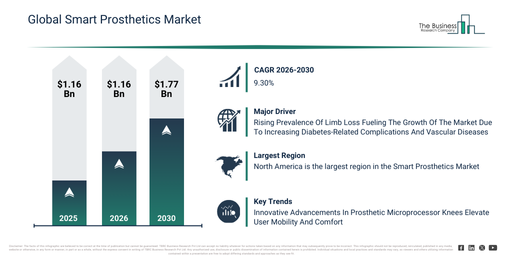
    Smart Prosthetics Industry Expansion Forecast Showing Market Size of $3.18 Billion by 2030 at 9.3% CAGR

    The Business Research Company’s 2026 market reports include new capabilities such as market attractiveness scoring and analysis, total addressable market analysis, company scoring matrix, interactive excel data dashboard, improved supply chain analysis, upcoming startups in the market, and overview of key products, aimed at improving the depth, usability, and strategic value of the insights delivered.

    How Is The Market Size Of The Smart Prosthetics Market Expected To Change Between 2026 And 2030?

    The smart prosthetics market has shown robust expansion in recent years. Its valuation is expected to rise from $2.03 billion in 2025 to $2.23 billion in 2026, reflecting a compound annual growth rate (CAGR) of 9.9%. This historical growth can be attributed to several factors, including the constrained functionality of conventional prosthetics, the reliance on mechanical prosthetic limbs, the expanding infrastructure of orthopedic clinics, heightened awareness regarding mobility solutions, and the early adoption by rehabilitation centers.

    The smart prosthetics market is projected to experience substantial expansion over the upcoming years, reaching a valuation of $3.18 billion in 2030, exhibiting a compound annual growth rate (CAGR) of 9.3%. This anticipated growth stems from several factors, including breakthroughs in bionic and hybrid prosthetic technologies, the incorporation of AI and sensor-based systems, an increase in their use for pediatric patients, the expanding elderly demographic needing prosthetics, and the broadening of direct and online distribution channels. Key developments expected during this period involve a surge in the adoption of microprocessor-controlled prosthetics, the incorporation of sensor-driven movement recognition, increasing demand for myoelectric and hybrid prosthetic solutions, the expansion of rehabilitation and orthopedic clinics, and an emphasis on tailoring prosthetics for both pediatric and adult users.

    Download the Free Sample Report to Explore Key Market Insights:

    https://www.thebusinessresearchcompany.com/sample.aspx?id=27417&type=smp

    Which Economic Or Industry Drivers Are Impacting The Smart Prosthetics Market?

    The increasing prevalence of limb loss is anticipated to propel the growth of the smart prosthetics market. Limb loss refers to the condition where one or more limbs are partially or completely removed due to injury, disease, or congenital factors. The rising global incidence of diabetes-related complications, especially peripheral artery disease and neuropathic ulcers which frequently result in non-traumatic lower limb amputations, is contributing to the growing prevalence of limb loss. Smart prosthetics assist patients with limb loss in restoring natural movement by interpreting muscle signals and adapting to activities in real time, thereby enhancing mobility, independence, dexterity, control, and comfort to boost daily functionality and quality of life. For instance, in December 2024, according to the Archives of Rehabilitation Research and Clinical Translation, a US-based peer-reviewed medical journal, an estimated 2,309,000 people in the US live with limb loss, with approximately 91% having undergone lower extremity amputations and 9.2% upper extremity amputations, and this number is projected to increase by 145% by 2060. Consequently, the increasing prevalence of limb loss is driving the growth of the smart prosthetics market.

    How Is The Smart Prosthetics Market Structured Across Different Segments?

    The smart prosthetics market covered in this report is segmented –

    1) By Product Type: Bionic Limbs, Myoelectric Prosthetics, Hybrid Prosthetics

    2) By Technology: Microprocessor-Controlled, Bluetooth-Enabled, Sensor-Integrated, Other Technologies

    3) By Distribution Channel: Direct Sales, Distributors, Online Sales, Other Distribution Channels

    4) By Application: Orthopedic Clinics, Hospitals, Rehabilitation Centers, Other Applications

    5) By End-User: Adults, Pediatrics

    Subsegments:

    1) By Bionic Limbs: Upper-Limb Bionic Prosthetics, Lower-Limb Bionic Prosthetics, Modular Bionic Limbs, Lightweight Bionic Limbs

    2) By Myoelectric Prosthetics: Single-Joint Myoelectric Prosthetics, Multi-Joint Myoelectric Prosthetics, Sensor-Integrated Myoelectric Prosthetics, Adaptive Myoelectric Prosthetics

    3) By Hybrid Prosthetics: Combination Mechanical-Electrical Prosthetics, Sensor-Assisted Hybrid Prosthetics, Custom-Fit Hybrid Prosthetics, Multi-Functional Hybrid Prosthetics

    Which Trends Are Shaping The Future Of The Smart Prosthetics Market?

    Leading companies within the smart prosthetics market are concentrating on creating advanced products, such as prosthetic microprocessor knees, to boost user mobility, enhance stability, and reduce energy consumption during movement. These prosthetic microprocessor knees are artificial knee joints equipped with integrated computers that automatically regulate movement, facilitating a smoother, safer, and more natural gait. For example, in July 2024, Ottobock UK, a UK-based medical equipment manufacturer, introduced the Genium X4. This product is presented as the subsequent iteration of their prosthetic microprocessor knee (MPK), signifying a notable leap forward in mobility technology. The Genium X4 incorporates Optimized Physiological Gait (OPG) 3.0 technology, providing an exceptionally fluid and nearly natural walking sensation. Its primary features encompass better slope climbing, a convenient start-to-walk function, reinforced stance phase stability, dynamic reverse motion, and an intuitive mode for cycling. Furthermore, the knee is completely waterproof and resistant to corrosion, delivers up to five days of battery life, and supports personalized MyMode presets.

    Which Major Players Dominate The Smart Prosthetics Market?

    Major companies operating in the smart prosthetics market are Hanger Inc., Ottobock SE & Co. KGaA, Össur hf., Blatchford Group Limited, Trulife Limited, RSLSteeper, PROTEOR SAS, Fillauer LLC, WillowWood LLC, CURE International Inc., Advanced Arm Dynamics Inc., Open Bionics Ltd., Syntouch LLC, Coapt LLC, COVVI Ltd., Endolite India Private Limited, Medical Center Orthotics & Prosthetics Inc., Infinite Biomedical Technologies, Taska Prosthetics, LimbLogic Prosthetics

    Read the full smart prosthetics market report here:

    https://www.thebusinessresearchcompany.com/report/smart-prosthetics-global-market-report

    What Are The Top-Performing Regions Within The Smart Prosthetics Market?

    North America was the largest region in the smart prosthetics market in 2025. Asia-Pacific is expected to be the fastest-growing region in the forecast period. The regions covered in the smart prosthetics market report are Asia-Pacific, South East Asia, Western Europe, Eastern Europe, North America, South America, Middle East, Africa.

    Request A Tailored Smart Prosthetics Market Research Report For Competitive Advantage:

    https://www.thebusinessresearchcompany.com/customise?id=27417&type=smp

    Browse Through More Reports Similar to the Global Smart Prosthetics Market 2026, By The Business Research Company

    Online Insurance Market Report 2026

    https://www.thebusinessresearchcompany.com/report/online-insurance-global-market-report

    Usage Based Insurance Market 2026

    https://www.thebusinessresearchcompany.com/report/usage-based-insurance-market

    Blockchain In Insurance Market Report 2026

    https://www.thebusinessresearchcompany.com/report/blockchain-in-insurance-global-market-report

    Get in touch with us:

    The Business Research Company: https://www.thebusinessresearchcompany.com/

    Americas +1 310-496-7795

    Asia +44 7882 955267 & +91 8897263534

    Europe +44 7882 955267

    Email us at info@tbrc.info

    Follow us on:

    LinkedIn: https://in.linkedin.com/company/the-business-research-company

    YouTube: https://www.youtube.com/channel/UC24_fI0rV8cR5DxlCpgmyFQ

    Global Market Model: https://www.thebusinessresearchcompany.com/global-market-model

  • Structural Heart Devices Market Outlook 2026–2035 Driven by Key Growth Factors and Industry Projections

    Structural Heart Devices Market Outlook 2026–2035 Driven by Key Growth Factors and Industry Projections

    The Business Research Company’s 2026 market reports include new capabilities such as market attractiveness scoring and analysis, total addressable market analysis, company scoring matrix, interactive excel data dashboard, improved supply chain analysis, upcoming startups in the market, and overview of key products, aimed at improving the depth, usability, and strategic value of the insights delivered.

    What Market Value Is Anticipated For The Structural Heart Devices Market Over The Period 2026–2030?

    The structural heart devices market has shown robust expansion in recent years. It is forecast to grow from $11.37 billion in 2025 to $12.48 billion in 2026, achieving a compound annual growth rate (CAGR) of 9.8%. This historical growth can be linked to the increasing occurrence of structural heart conditions, the global rise in the elderly population, the prompt adoption of valve replacement technologies, the proliferation of cardiac specialty centers, and enhancements in interventional cardiology methods.

    The structural heart devices market is projected to experience substantial expansion over the next few years. It is anticipated to grow to $17.23 billion in 2030, achieving a compound annual growth rate (CAGR) of 8.4%. This expansion during the forecast period is primarily driven by a surging preference for minimally invasive procedures, increasing investments in cardiovascular innovation, the broadening of pediatric cardiac interventions, the expanding adoption of AI-assisted diagnostics, and a heightened demand for durable and long-lasting implants. Significant trends expected during this period include the rising adoption of transcatheter heart valve procedures, a growing demand for minimally invasive cardiac implants, the increasing integration of advanced imaging and navigation systems, the expansion of catheter-based delivery technologies, and a stronger focus on patient-specific device design.

    Download the Free Sample Report to Explore Key Market Insights:

    https://www.thebusinessresearchcompany.com/sample.aspx?id=15677&type=smp

    Which Economic Or Industry Drivers Are Impacting The Structural Heart Devices Market?

    The increasing occurrence of cardiovascular conditions is anticipated to boost the expansion of the structural heart device market in the future. Cardiovascular diseases (CVDs) encompass a range of afflictions impacting the heart and its associated blood vessels, including conditions such as coronary artery disease, heart attacks, and strokes. Instances of cardiovascular diseases, specifically heart disease and stroke, have shown a consistent global rise, attributed to inactive lifestyles, unhealthy eating patterns, escalating obesity figures, tobacco use, and an aging demographic. Structural heart devices address cardiovascular ailments by mending or substituting impaired heart valves, rectifying structural flaws, and enhancing cardiac performance and patient prognosis. As an illustration, in January 2024, data from the American Heart Association, a US-based non-profit organization, indicated that the age-adjusted mortality rate from cardiovascular disease climbed to 233.3 per 100,000 in 2024, representing a 4.0% increase from 224.4 per 100,000 in 2023. Consequently, the growing occurrence of cardiovascular diseases is fueling the expansion of the structural heart device market.

    How Is The Structural Heart Devices Market Divided Into Its Major Segments?

    The structural heart devices market covered in this report is segmented –

    1) By Type: Heart Valve Devices, Annuloplasty Rings, Occluders, Delivery Systems

    2) By Procedure: Replacement Procedures, Repair Procedures

    3) By Indication: Atrial Septal Defect, Patent Foramen Ovale, Ventricular Septal Defect, Aortic Valve Stenosis, Other Indications

    4) By Age Group: Pediatric, Adults

    Subsegments:

    1) By Heart Valve Devices: Transcatheter Heart Valves, Surgical Heart Valves, Annuloplasty Rings

    2) By Annuloplasty Rings: Mitral Annuloplasty Rings, Aortic Annuloplasty Rings

    3) By Occluders: Atrial Septal Defect (Asd) Occluders, Patent Foramen Ovale (Pfo) Occluders

    4) By Delivery Systems: Balloon Delivery Systems, Catheter-Based Delivery Systems

    How Are Trends Transforming The Structural Heart Devices Market Landscape?

    Leading companies within the structural heart devices market are concentrating on developing advanced solutions, including innovative next-generation transcatheter heart valves, with the goal of improving durability, decreasing complications, and expanding minimally invasive treatment options. Next-generation transcatheter heart valves are replacement valves that are minimally invasive, featuring advanced materials and attributes like anti-calcification tissue and enhanced sealing, which serve to boost durability and reduce complications when compared to older valves. For instance, in September 2025, Edwards Lifesciences Corporation, a US-based medical technology company, launched a next-generation transcatheter heart valve platform in India, which provides a durable, minimally invasive treatment for aortic stenosis in patients who cannot undergo open-heart surgery. Key attributes of this advanced valve include calcification-resistant tissue technology designed to prevent calcium accumulation and extend longevity, a taller outer sealing skirt to minimize paravalvular leaks, and dry tissue storage to facilitate easier hospital handling. Additionally, the platform supports a “lifetime management” strategy, allowing for minimally invasive valve-in-valve procedures for future interventions and ensuring sustained treatment effectiveness.

    Who Are The Prominent Organizations Shaping The Structural Heart Devices Market?

    Major companies operating in the structural heart devices market are Abbott Laboratories, Medtronic Plc, Boston Scientific Corporation, Terumo Corporation, Edwards Lifesciences Corporation, W. L. Gore & Associates Inc., LivaNova PLC, Meril Life Sciences Pvt. Ltd., CryoLife Inc., Braile Biomédica, Direct Flow Medical Inc., JenaValve Technology Inc., Micro Interventional Devices Inc., CardioKinetix Inc., Xeltis AG, Ancora Heart Inc., JOMDD Inc., Valcare Medical, BioStable Science & Engineering Inc., Comed B.V., Transcatheter Technologies GmbH

    Read the full structural heart devices market report here:

    https://www.thebusinessresearchcompany.com/report/structural-heart-devices-global-market-report

    What Are The Top-Performing Regions Within The Structural Heart Devices Market?

    North America was the largest region in the structural heart devices market in 2025. Asia-Pacific is expected to be the fastest-growing region in the forecast period. The regions covered in the structural heart devices market report are Asia-Pacific, South East Asia, Western Europe, Eastern Europe, North America, South America, Middle East, Africa.

    Request A Tailored Structural Heart Devices Market Research Report For Competitive Advantage:

    https://www.thebusinessresearchcompany.com/customise?id=15677&type=smp

    Browse Through More Reports Similar to the Global Structural Heart Devices Market 2026, By The Business Research Company

    Structural Heart Devices Market Report 2026

    https://www.thebusinessresearchcompany.com/report/structural-heart-devices-global-market-report

    Cardiac Mapping Market Report 2026

    https://www.thebusinessresearchcompany.com/report/cardiac-mapping-global-market-report

    Cardiovascular Ultrasound Market Report 2026

    https://www.thebusinessresearchcompany.com/report/cardiovascular-ultrasound-global-market-report

    Get in touch with us:

    The Business Research Company: https://www.thebusinessresearchcompany.com/

    Americas +1 310-496-7795

    Asia +44 7882 955267 & +91 8897263534

    Europe +44 7882 955267

    Email us at info@tbrc.info

    Follow us on:

    LinkedIn: https://in.linkedin.com/company/the-business-research-company

    YouTube: https://www.youtube.com/channel/UC24_fI0rV8cR5DxlCpgmyFQ

    Global Market Model: https://www.thebusinessresearchcompany.com/global-market-model

  • Trauma Fixation Devices And Equipment Market Forecast 2026–2035 Reflecting Expansion Opportunities Across Industries

    Trauma Fixation Devices And Equipment Market Forecast 2026–2035 Reflecting Expansion Opportunities Across Industries

    The Business Research Company’s 2026 market reports include new capabilities such as market attractiveness scoring and analysis, total addressable market analysis, company scoring matrix, interactive excel data dashboard, improved supply chain analysis, upcoming startups in the market, and overview of key products, aimed at improving the depth, usability, and strategic value of the insights delivered.

    How Will The Market Size Of The Trauma Fixation Devices And Equipment Market Evolve From 2026 To 2030?

    The trauma fixation devices and equipment market size has demonstrated consistent expansion in recent years. It is anticipated to increase from $12.11 billion in 2025 to $12.49 billion in 2026, achieving a compound annual growth rate (CAGR) of 3.2%. The growth experienced in the past can be attributed to a rising incidence of road accidents and sports injuries, increasing orthopedic surgical volumes, the expansion of trauma care facilities, the availability of standardized fixation devices, and improved surgical training programs.

    The trauma fixation devices and equipment market is projected to experience consistent expansion over the upcoming years. Its value is anticipated to reach $15.08 billion by 2030, demonstrating a compound annual growth rate (CAGR) of 4.8%. This growth throughout the forecast period stems from factors such as an increasing elderly population prone to fractures, a heightened demand for biocompatible implants, the rise in outpatient orthopedic surgical procedures, wider embrace of sophisticated fixation technologies, and ongoing advancements in the design of trauma implants. Key developments expected during this period include a greater uptake of advanced internal fixation systems, a growing need for lighter fixation materials, increased utilization of implants shaped to fit anatomy, the expansion of minimally invasive trauma surgeries, and an intensified focus on achieving more rapid bone healing results.

    Download the Free Sample Report to Explore Key Market Insights:

    https://www.thebusinessresearchcompany.com/sample.aspx?id=2403&type=smp

    What Major Drivers Are Influencing Demand In The Trauma Fixation Devices And Equipment Market?

    The trauma fixation devices and equipment market is projected to expand due to the rising occurrence of road accidents and sports injuries. These incidents involve accidental physical harm or trauma from vehicle collisions or mishaps, as well as injuries sustained during athletic pursuits. A key factor behind the growing number of such accidents and injuries is risky behaviors, as unsafe actions like speeding, not wearing protective gear, or disregarding safety protocols significantly heighten the probability of these events. Trauma fixation devices and equipment are crucial for addressing road accidents and sports injuries by stabilizing broken bones, ensuring proper alignment, and promoting quicker, more effective recovery. For instance, the International Transport Forum, a France-based intergovernmental organization, reported in August 2025 that Australia experienced 1,297 road deaths in 2024, representing a 4% increase compared to 2023. Consequently, the increasing incidence of road accidents and sports injuries is a significant force propelling the trauma fixation devices and equipment market.

    Which Segment Areas Are Covered In The Trauma Fixation Devices And Equipment Market Analysis?

    The trauma fixation devices and equipment market covered in this report is segmented –

    1) By Device Type: Internal Fixation Devices, External Fixation Devices

    2) By Product Type: Metal Plates and Screws, Pins/Wires, Nails and Rods, Circular Fixator, Hybrid Fixator, Unilateral Fixator

    3) By End-User: Hospitals, Trauma Centers, Ambulatory Surgical Centers

    Subsegments:

    1) By Internal Fixation Devices: Plates And Screws, Intramedullary Nails, Rods And Pins, Bone Screws, Compression Plates

    2) By External Fixation Devices: External Fixators, Ring Fixators, Hybrid Fixators, Soft Tissue Fixators

    What Key Developments And Trends Are Impacting The Trauma Fixation Devices And Equipment Market?

    Key companies active in the trauma fixation devices and equipment sector are concentrating on developing innovative products, such as tendon fixation device systems, to boost their market revenue. A tendon fixation device system provides surgeons with a distinct design through a tendon thread that features a resorbable technology, known as Citregen, offering unique chemical and mechanical properties for orthopedic surgical applications. For instance, in July 2024, Anika Therapeutics, a US-based company specializing in developing, manufacturing, and marketing therapeutic products primarily for orthopedic care, launched the Integrity Implant System. This hyaluronic acid-based implant, which combines bone and tendon fixation components with single-use arthroscopic delivery instruments, is designed to protect injured tendons and assist in healing during rotator cuff repair and other tendon procedures. The scaffold component of the Integrity system is a flexible, porous, knitted structure that integrates Anika’s proprietary Hyaff material, a solid form of hyaluronic acid (HA) that promotes tissue regeneration and gradually resorbs. This construct is further reinforced with non-resorbable polyethylene terephthalate, providing inherent strength and allowing for confident arthroscopic manipulation. As a result, Integrity offers a truly unique and differentiated solution for surgeons to address various tendon repairs.

    Which Global Companies Are Actively Competing In The Trauma Fixation Devices And Equipment Market?

    Major companies operating in the trauma fixation devices and equipment market are Johnson & Johnson, DePuy Synthes, Stryker Corporation, Smith & Nephew plc, Zimmer Biomet Holdings, Arthrex Inc., B. Braun Group, Orthofix Medical Inc, Xinrong, Suzhou Sunan Zimmered, Double Medical, Jiangsu Trauhui, Wright Medical Group, Greenbone Ortho, Medartis AG, MedSilesia, IlluminOss, CONMED Corporation, Baumer S.A., Biomecanica Group, Engimplan, GMReis, NEOORTHO, Trauma Solutions S.A.C., ZygoFix, CarboFix Orthopedic Ltd, Carevature Medical Ltd, ARNICA FAM PARAND, Tibbi Aletler San.Tic.Ltd.Sti., Atamed, EgiFix medical

    Read the full trauma fixation devices and equipment market report here:

    https://www.thebusinessresearchcompany.com/report/trauma-fixation-devices-and-equipment-global-market-report

    Which Region Shows The Strongest Potential For Future Growth In The Trauma Fixation Devices And Equipment Market?

    North America was the largest region in the trauma fixation devices and equipment market in 2025. Western Europe was the second largest region in the trauma fixation devices and equipment market report. The regions covered in the trauma fixation devices and equipment market report are Asia-Pacific, South East Asia, Western Europe, Eastern Europe, North America, South America, Middle East, Africa.

    Request A Tailored Trauma Fixation Devices And Equipment Market Research Report For Competitive Advantage:

    https://www.thebusinessresearchcompany.com/customise?id=2403&type=smp

    Browse Through More Reports Similar to the Global Trauma Fixation Devices And Equipment Market 2026, By The Business Research Company

    Internal Trauma Fixation Devices Market Report 2026

    https://www.thebusinessresearchcompany.com/report/internal-trauma-fixation-devices-global-market-report

    Wound Care Devices Market Report 2026

    https://www.thebusinessresearchcompany.com/report/wound-care-devices-global-market-report

    Advanced Wound Care Devices Market Report 2026

    https://www.thebusinessresearchcompany.com/report/advanced-wound-care-devices-global-market-report

    Get in touch with us:

    The Business Research Company: https://www.thebusinessresearchcompany.com/

    Americas +1 310-496-7795

    Asia +44 7882 955267 & +91 8897263534

    Europe +44 7882 955267

    Email us at info@tbrc.info

    Follow us on:

    LinkedIn: https://in.linkedin.com/company/the-business-research-company

    YouTube: https://www.youtube.com/channel/UC24_fI0rV8cR5DxlCpgmyFQ

    Global Market Model: https://www.thebusinessresearchcompany.com/global-market-model
  • Self-Sampling Blood Collection And Storage Device Market Outlook 2026–2035 Driven by Key Growth Factors and Industry Projections

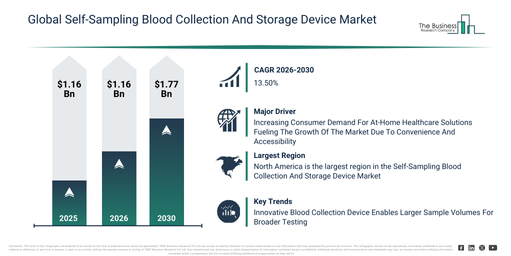
    Self-Sampling Blood Collection And Storage Device Market Outlook 2026–2035 Driven by Key Growth Factors and Industry Projections

    The Business Research Company’s 2026 market reports include new capabilities such as market attractiveness scoring and analysis, total addressable market analysis, company scoring matrix, interactive excel data dashboard, improved supply chain analysis, upcoming startups in the market, and overview of key products, aimed at improving the depth, usability, and strategic value of the insights delivered.

    How Is The Market Size Of The Self-Sampling Blood Collection And Storage Device Market Expected To Change Between 2026 And 2030?

    The self-sampling blood collection and storage device market has seen significant expansion in recent years. This market is expected to expand from $0.95 billion in 2025 to $1.08 billion in 2026, achieving a compound annual growth rate (CAGR) of 13.8%. Historically, this growth can be linked to factors such as the constrained availability of self-sampling devices, the reliance on clinical appointments for blood collection, an increasing public understanding of home diagnostics, the rising occurrence of chronic conditions, and the evolution of rudimentary blood collection kits.

    The self-sampling blood collection and storage device market size is anticipated to expand swiftly in the near future, reaching $1.79 billion by 2030 with a compound annual growth rate (CAGR) of 13.5%. This growth over the forecast period is primarily driven by advancements in micro-needle and fingerstick technologies, the increasing adoption of personalized healthcare, the expansion of telemedicine and remote monitoring, a rising demand for genetic and drug testing, and the development of integrated digital health platforms. Noteworthy trends during this period encompass the growing acceptance of at-home blood collection devices, an increasing need for remote diagnostic testing, the evolution of stabilization and preservation reagents, the broadening of genetic and infectious disease testing, and the integration of enhanced user-friendly and safety features into these devices.

    Download the Free Sample Report to Explore Key Market Insights:

    https://www.thebusinessresearchcompany.com/sample.aspx?id=24692&type=smp

    Which Economic Or Industry Drivers Are Impacting The Self-Sampling Blood Collection And Storage Device Market?

    The growing consumer appetite for at-home healthcare solutions is anticipated to fuel the expansion of the self-sampling blood collection and storage devices market moving forward. At-home healthcare solutions encompass medical services, equipment, and technologies that empower individuals to receive care, monitor, and oversee their health from a remote setting, thereby eliminating the necessity of clinic or hospital visits. The rising interest in at-home healthcare stems from a desire for enhanced convenience, as it obviates the need for clinic travel and shortens waiting periods. Self-sampling blood collection and storage devices facilitate at-home healthcare by allowing easy and precise sample acquisition without the requirement of a clinic visit. They streamline procedures, improve patient comfort, and aid in prompt diagnostics, thereby boosting overall access to healthcare. An illustrative example is found in July 2024, when the Bureau of Labor Statistics, a US-based federal agency, reported that home- and community-based care achieved 4.3 million jobs, propelled by 2.5 million workers in services for the elderly and people with disabilities and 1.8 million in home health care. Consequently, the expanding consumer demand for at-home healthcare solutions is a key catalyst for the growth of the self-sampling blood collection and storage devices market.

    How Is The Self-Sampling Blood Collection And Storage Device Market Structured Across Different Segments?

    The self-sampling blood collection and storage device market covered in this report is segmented –

    1) By Product Type: Kits, Tubes, Lancets, Others Product Type

    2) By Material Type: Plastic, Glass, Silicone, Metal, Composite Materials

    3) By Sample Type: Blood, Urine, Saliva

    4) By Application: Genetic Testing, Infectious Disease Testing, Drug Testing, Blood Chemistry Testing

    5) By End-User: Hospitals, Diagnostic Laboratories, Research Institutes, Home Care Settings, Other End-Users

    Subsegments:

    1) By Kits: Dried Blood Spot (DBS) Collection Kits, Microtube Collection Kits, Plasma Separation Kits, DNA/RNA Collection Kits, At-home Diagnostic Test Kits

    2) By Tubes: EDTA Tubes, Heparin Tubes, Serum Separator Tubes, Plasma Separator Tubes, Micro Collection Tubes

    3) By Lancets: Push-Button Lancets, Pressure-Activated Lancets, Safety Lancets, Retractable Lancets, Adjustable Depth Lancets

    4) By Others Product Type: Capillary Blood Collection Devices, Blood Collection Cards, Transfer Devices, Filter Paper Devices, Preservation And Stabilization Reagents

    Which Trends Are Shaping The Future Of The Self-Sampling Blood Collection And Storage Device Market?

    Leading companies in the self-sampling blood collection and storage device market are concentrating on creating advanced solutions, such as new self-sampling blood collection devices, to improve sample quality, user convenience, and diagnostic accuracy. These new self-sampling blood collection devices represent the latest generation of technologies that enable individuals to collect their own blood samples with minimal or no help from healthcare professionals. For instance, in February 2023, Capitainer AB, a Sweden-based medical technology company, launched Capitainer B 50. This self-sampling blood collection card is designed to allow patients to collect and store significantly larger volumes of blood. It provides features that enable patients to obtain two precise 50 µL blood samples from a finger stick, which supports a wider range of lab analyses due to the increased sample volume. The device integrates a precise filling mechanism that automatically meters the blood, thereby minimizing the risk of over- or under-filling, and includes a sampling indicator for user confirmation.

    Which Major Players Dominate The Self-Sampling Blood Collection And Storage Device Market?

    Major companies operating in the self-sampling blood collection and storage device market are Becton Dickinson And Company, DBS System SA, Terumo Corporation, Sysmex Corporation, Qiagen N V, PerkinElmer Inc, Sarstedt AG And Co KG, Greiner Bio One International GmbH, Trajan Group Holdings Limited, Tasso Inc, PanoHealth, Boston Microfluidics Inc, LAMEDITECH Co Ltd, YourBio Health Inc, Capitainer, Drawbridge Health Inc, Spot On Sciences, Neoteryx LLC, Hemaxis SA, Microsampling Systems Ltd

    Read the full self-sampling blood collection and storage device market report here:

    https://www.thebusinessresearchcompany.com/report/self-sampling-blood-collection-and-storage-device-global-market-report

    What Are The Top-Performing Regions Within The Self-Sampling Blood Collection And Storage Device Market?

    North America was the largest region in the self-sampling blood collection and storage device market in2025. Asia-Pacific is expected to be the fastest-growing region in the forecast period. The regions covered in the self-sampling blood collection and storage device market report are Asia-Pacific, South East Asia, Western Europe, Eastern Europe, North America, South America, Middle East, Africa.

    Request A Tailored Self-Sampling Blood Collection And Storage Device Market Research Report For Competitive Advantage:

    https://www.thebusinessresearchcompany.com/customise?id=24692&type=smp

    Browse Through More Reports Similar to the Global Self-Sampling Blood Collection And Storage Device Market 2026, By The Business Research Company

    Blood Screening Market Report 2026

    https://www.thebusinessresearchcompany.com/report/blood-screening-global-market-report

    Blood Bank Market Report 2026

    https://www.thebusinessresearchcompany.com/report/blood-bank-global-market-report

    Blood Purification Equipment Market Report 2026

    https://www.thebusinessresearchcompany.com/report/blood-purification-equipment-global-market-report

    Get in touch with us:

    The Business Research Company: https://www.thebusinessresearchcompany.com/

    Americas +1 310-496-7795

    Asia +44 7882 955267 & +91 8897263534

    Europe +44 7882 955267

    Email us at info@tbrc.info

    Follow us on:

    LinkedIn: https://in.linkedin.com/company/the-business-research-company

    YouTube: https://www.youtube.com/channel/UC24_fI0rV8cR5DxlCpgmyFQ

    Global Market Model: https://www.thebusinessresearchcompany.com/global-market-model

  • Smart Posture Correction Market Revenue Expected to Reach $3.47 Billion by 2030 with 18% CAGR

    Smart Posture Correction Market Revenue Expected to Reach $3.47 Billion by 2030 with 18% CAGR

    The Business Research Company’s 2026 market reports include new capabilities such as market attractiveness scoring and analysis, total addressable market analysis, company scoring matrix, interactive excel data dashboard, improved supply chain analysis, upcoming startups in the market, and overview of key products, aimed at improving the depth, usability, and strategic value of the insights delivered.

    What Is The Market Size Of The Smart Posture Correction Market In 2026 And What Value Is Projected For 2030?

    The smart posture correction market has experienced rapid growth in recent years. It is anticipated to expand from $1.52 billion in 2025 to $1.79 billion in 2026, achieving a compound annual growth rate (CAGR) of 18.3%. The historical increase can be attributed to a rise in sedentary lifestyles, growing awareness of workplace ergonomics, the prevalence of musculoskeletal disorders, the adoption of wearable technology, and evolving fitness tracking trends.

    The smart posture correction market is projected to experience swift expansion over the coming years. Its valuation is anticipated to reach $3.47 billion in 2030, demonstrating a compound annual growth rate (CAGR) of 18.0%. This projected increase during the forecast period stems from factors such as the broadening of remote work, the implementation of corporate wellness programs, a focus on preventive musculoskeletal care, advancements in AI posture analytics, and the availability of home ergonomics solutions. Key developments expected within this period encompass real-time posture monitoring wearables, haptic feedback systems for posture correction, coaching delivered via apps, workplace ergonomic monitoring, and continuous tracking of spinal alignment.

    Download the Free Sample Report to Explore Key Market Insights:

    https://www.thebusinessresearchcompany.com/sample.aspx?id=29205&type=smp

    What Major Drivers Are Influencing Demand In The Smart Posture Correction Market?

    The increasing prevalence of remote work is anticipated to drive the expansion of the smart posture correction market in the coming years. Remote work describes a professional setup where individuals fulfill their job responsibilities away from conventional office settings, primarily from their homes. This growth in remote work is largely spurred by businesses aiming for cost efficiency, as they cut down on expenses related to physical office spaces while sustaining output through digital collaborative platforms. The wider acceptance of remote work arrangements fuels the need for smart posture correction devices. This is because prolonged periods of working from home frequently lead to less-than-ideal ergonomic environments, prompting people to look for tech solutions that track and enhance their sitting and standing posture during the day. For example, in July 2024, data from the Bureau of Labor Statistics, a US-based federal government agency, indicated that the proportion of employed individuals working from home on days they worked rose from 34% in 2022 to 35% in 2023. Consequently, the rise of remote work is propelling the growth of the smart posture correction market.

    What Are The Key Segments Of The Smart Posture Correction Market?

    The smart posture correction market covered in this report is segmented –

    1) By Product Type: Wearable Devices, Smart Chairs

    2) By Sensor Type: Accelerometers, Gyroscopes, Magnetometers, Other Sensor Types

    3) By Distribution Channel: Online Stores, Specialty Stores, Retail Pharmacies, Other Distribution Channels

    4) By Application: Personal Use, Healthcare, Fitness And Wellness, Corporate, Other Applications

    Subsegments:

    1) By Wearable Devices: Clip On Posture Trackers, Sensor Embedded Posture Shirts, Haptic Feedback Posture Braces, Posture Coaching Smart Neckbands, Vibration Cue Adhesive Patches

    2) By Smart Chairs: Gaming Chairs With Posture Coaching, Executive Chairs With Posture Alerts, Educational Chairs With Integrated Sensors

    What Key Trends Are Influencing The Development Of The Smart Posture Correction Market?

    Major companies in the smart posture correction market are prioritizing the development of innovative AI-powered posture solutions. These aim to offer personalized corrective feedback and promote improved posture habits for long-term musculoskeletal health. AI-driven posture solutions are intelligent systems that leverage artificial intelligence to monitor and evaluate body posture in real time. They provide corrective feedback to enhance alignment, reduce musculoskeletal issues, improve ergonomics, and encourage healthier movement patterns. For instance, in July 2024, Neurabody, a South Korea-based health tech startup, launched Posture AI, an AI-driven posture solution designed to tackle the global back pain epidemic. Their solution utilizes embedded sensors and an advanced analytics platform to continuously monitor posture and offer immediate feedback to correct undesirable habits, aiming to lessen chronic back pain by fostering better posture. The current product suite includes a smart posture sensor and an ergonomic correction shirt, with plans to introduce smart posture seats and lumbar support devices in 2025 and 2026. This comprehensive platform is aimed at office workers, insurance companies, and esports gamers. It employs machine learning to predict back pain risk and recommend exercises, thereby assisting millions in self-managing their posture and effectively combating back pain.

    Who Are The Leading Companies Operating In The Smart Posture Correction Market?

    Major companies operating in the smart posture correction market are Upright Technologies Ltd, Wearable X Inc, dorsaVi Limited, Lumo Bodytech Inc, IntelliSkin Inc, AlignMed Corp, Kinetisense Inc, Soter Analytics Pty Ltd, Modjoul Inc, Ergo Impact LLC, TuMeke Ergonomics Ltd, YogiFi Inc, Kaia Health Inc, Ottobock SE & Co KGaA, Xiaomi Corporation, TruPosture Inc, Posture360 Ltd, PostureNOW Inc, PostureMedic LLC, BackJoy Orthotics LLC, Oska Wellness Inc

    Read the full smart posture correction market report here:

    https://www.thebusinessresearchcompany.com/report/smart-posture-correction-global-market-report

    Which Region Shows The Strongest Potential For Future Growth In The Smart Posture Correction Market?

    North America was the largest region in the smart posture correction market in 2025. Asia-Pacific is expected to be the fastest-growing region in the forecast period. The regions covered in the smart posture correction market report are Asia-Pacific, South East Asia, Western Europe, Eastern Europe, North America, South America, Middle East, Africa.

    Request A Tailored Smart Posture Correction Market Research Report For Competitive Advantage:

    https://www.thebusinessresearchcompany.com/customise?id=29205&type=smp

    Browse Through More Reports Similar to the Global Smart Posture Correction Market 2026, By The Business Research Company

    Smart Wearables Market Report 2026

    https://www.thebusinessresearchcompany.com/report/smart-wearables-global-market-report

    Smart Portable Rehabilitation Devices Market Report 2026

    https://www.thebusinessresearchcompany.com/report/smart-portable-rehabilitation-devices-global-market-report

    Smart Sleep Monitor Market Report 2026

    https://www.thebusinessresearchcompany.com/report/smart-sleep-monitor-global-market-report

    Get in touch with us:

    The Business Research Company: https://www.thebusinessresearchcompany.com/

    Americas +1 310-496-7795

    Asia +44 7882 955267 & +91 8897263534

    Europe +44 7882 955267

    Email us at info@tbrc.info

    Follow us on:

    LinkedIn: https://in.linkedin.com/company/the-business-research-company

    YouTube: https://www.youtube.com/channel/UC24_fI0rV8cR5DxlCpgmyFQ

    Global Market Model: https://www.thebusinessresearchcompany.com/global-market-model
  • Structural Heart Market Developments and Growth Opportunities Across 2026–2030

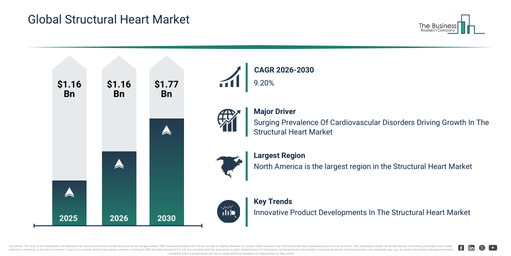
    Structural Heart Market Developments and Growth Opportunities Across 2026–2030

    The Business Research Company’s 2026 market reports include new capabilities such as market attractiveness scoring and analysis, total addressable market analysis, company scoring matrix, interactive excel data dashboard, improved supply chain analysis, upcoming startups in the market, and overview of key products, aimed at improving the depth, usability, and strategic value of the insights delivered.

    What Is The Expected Market Size Of The Structural Heart Market From 2026 To 2030?

    The structural heart market size has experienced robust expansion in recent years. This market is projected to expand from $15.89 billion in 2025 to $17.31 billion in 2026, exhibiting a compound annual growth rate (CAGR) of 8.9%. Historically, this growth has been driven by factors such as the increasing incidence of valvular heart diseases, a global aging demographic, the proliferation of catheterization laboratories, the adoption of transcatheter heart technologies, and a growing understanding of the benefits of minimally invasive cardiac care.

    The structural heart market size is anticipated to experience robust expansion in the coming years. It is projected to reach $24.6 billion by 2030, exhibiting a compound annual growth rate (CAGR) of 9.2%. This growth over the forecast period is driven by factors such as an increasing demand for transcatheter therapies, greater investments in structural heart programs, the expansion of cardiac centers of excellence, advancements in device miniaturization, and a heightened emphasis on lowering open-heart surgery rates. Key trends for this period encompass the rising adoption of transcatheter valve procedures, an increase in minimally invasive structural heart interventions, enhanced integration of advanced cardiac imaging, the expansion of catheter-based repair technologies, and a stronger focus on patient-specific treatment planning.

    Download the Free Sample Report to Explore Key Market Insights:

    https://www.thebusinessresearchcompany.com/sample.aspx?id=12029&type=smp

    What Major Drivers Are Influencing Demand In The Structural Heart Market?

    The increasing incidence of cardiovascular ailments is anticipated to fuel the expansion of the structural heart market. These disorders, which impact the heart and blood vessels, encompass conditions such as coronary artery disease, heart failure, and stroke. This surge in prevalence is primarily influenced by an aging demographic, shifts in lifestyle and dietary habits, and escalating rates of obesity and diabetes. Structural heart products and services provide diagnosis and therapy for anomalies or disorders impacting the heart’s valves, chambers, and adjacent tissues, utilizing minimally invasive techniques instead of open-heart surgery, thereby ensuring effective treatment with reduced complication risks. For example, in September 2025, data from the British Heart Foundation, a UK-based charity, revealed that over 7.6 million people across the UK—specifically more than 4 million men and over 3.6 million women—are currently affected by cardiovascular disease. Forecasts suggest that, due to an aging population and enhanced survival rates, this figure could increase by approximately 1 million by 2030 and by around 2 million by 2040. Consequently, the growing occurrence of cardiovascular disorders is propelling the expansion of the structural heart market.

    Which Segments Are Included In The Analysis Of The Structural Heart Market?

    The structural heart market covered in this report is segmented –

    1) By Product: Occluders, Annuloplasty Rings, Heart Valve Balloons, Other Products

    2) By Procedure: Heart Valve Stenosis, Heart Valve Regurgitation, Left Atrial Appendage Closure

    3) By End Users: Hospitals, Cardiac Centers

    Subsegments:

    1) By Occluders: Atrial Septal Defect (ASD) Occluders, Patent Foramen Ovale (PFO) Occluders, Ventricular Septal Defect (VSD) Occluders

    2) By Annuloplasty Rings: Rigid Annuloplasty Rings, Flexible Annuloplasty Rings, Adjustable Annuloplasty Rings

    3) By Heart Valve Balloons: Balloon Expandable Heart Valve Systems, Valvuloplasty Balloons

    4) By Other Products: Transcatheter Heart Valves, Structural Heart Imaging Devices, Delivery Systems For Structural Heart Procedures

    Which Trends Are Impacting The Growth Of The Structural Heart Market?

    Leading companies operating in the structural heart market are developing advanced products, such as transcatheter edge-to-edge repair (TEER) systems, to improve minimally invasive treatment options for heart valve diseases. These TEER systems are minimally invasive medical devices utilized to treat heart valve conditions, especially mitral valve regurgitation. For instance, in April 2024, Abbott Laboratories, a US-based medical device company, obtained approval from the Food and Drug Administration (FDA), a US-based federal agency focused on protecting public health. This approval concerned TriClip, an innovative transcatheter edge-to-edge repair (TEER) system. This minimally invasive device is introduced through a vein in the leg, facilitating valve repair without the necessity of open-heart surgery, thereby making it suitable for patients who might be at higher risk due to age or pre-existing health issues. The device operates by employing clips to grasp and bring together the leaflets of the tricuspid valve, which in turn reduces regurgitation and enhances blood flow.

    Which Key Industry Participants Are Active In The Structural Heart Market?

    Major companies operating in the structural heart market are Abbott Laboratories, Medtronic plc, Boston Scientific Corporation, Edwards Lifesciences Corporation, Lepu Medical Technology Co. Ltd., LivaNova PLC, Venus Medtech (Hangzhou) Inc., CryoLife Inc., Endologix Inc., Braile Biomédica, JenaValve Technology Inc., Corvia Medical Inc., On-X Life Technologies Inc., Symetis SA, Micro Interventional Devices Inc., CardioKinetix Inc., Tendyne Holdings Inc., Neovasc Inc., NVT AG, Biomerics LLC, Shockwave Medical Inc., HLT Medical, Q’Apel Medical Inc., Z-Medical GmbH + Co. KG

    Read the full structural heart market report here:

    https://www.thebusinessresearchcompany.com/report/structural-heart-global-market-report

    Which Region Shows The Strongest Potential For Future Growth In The Structural Heart Market?

    North America was the largest region in the structural heart market in 2025. Asia-Pacific is expected to be the fastest-growing region in the forecast period. The regions covered in the structural heart market report are Asia-Pacific, South East Asia, Western Europe, Eastern Europe, North America, South America, Middle East, Africa.

    Request A Tailored Structural Heart Market Research Report For Competitive Advantage:

    https://www.thebusinessresearchcompany.com/customise?id=12029&type=smp

    Browse Through More Reports Similar to the Global Structural Heart Market 2026, By The Business Research Company

    Structural Heart Market Report 2026

    https://www.thebusinessresearchcompany.com/report/structural-heart-global-market-report

    Cardiovascular Devices Market Report 2026

    https://www.thebusinessresearchcompany.com/report/cardiovascular-devices-global-market-report

    Cardiovascular Implants Market Report 2026

    https://www.thebusinessresearchcompany.com/report/cardiovascular-implants-global-market-report

    Get in touch with us:

    The Business Research Company: https://www.thebusinessresearchcompany.com/

    Americas +1 310-496-7795

    Asia +44 7882 955267 & +91 8897263534

    Europe +44 7882 955267

    Email us at info@tbrc.info

    Follow us on:

    LinkedIn: https://in.linkedin.com/company/the-business-research-company

    YouTube: https://www.youtube.com/channel/UC24_fI0rV8cR5DxlCpgmyFQ

    Global Market Model: https://www.thebusinessresearchcompany.com/global-market-model

  • Self-Monitoring Blood Glucose (SMBG) Devices Market Developments and Growth Opportunities Across 2026–2030

    Self-Monitoring Blood Glucose (SMBG) Devices Market Developments and Growth Opportunities Across 2026–2030

    The Business Research Company’s 2026 market reports include new capabilities such as market attractiveness scoring and analysis, total addressable market analysis, company scoring matrix, interactive excel data dashboard, improved supply chain analysis, upcoming startups in the market, and overview of key products, aimed at improving the depth, usability, and strategic value of the insights delivered.

    What Is The Market Size Of The Self-Monitoring Blood Glucose (SMBG) Devices Market In 2026 And What Value Is Projected For 2030?

    The self-monitoring blood glucose (smbg) devices market has experienced robust expansion in recent years. This market is projected to grow from $16.19 billion in 2025 to $17.56 billion in 2026, exhibiting a compound annual growth rate (CAGR) of 8.5%. Historically, its development can be linked to the increasing prevalence of diabetes, greater awareness regarding self-monitoring practices, the wider adoption of home healthcare, the availability of affordable glucose meters, and enhanced diabetes management guidelines.

    The self-monitoring blood glucose (smbg) devices market is projected to experience substantial expansion over the upcoming years. This sector is anticipated to reach $24.17 billion in 2030, demonstrating a compound annual growth rate (CAGR) of 8.3%. Factors driving this growth during the forecast period include the escalating demand for connected health solutions, the increasing embrace of continuous glucose monitoring, the broadening of telehealth-based diabetes care, a heightened emphasis on preventive healthcare, and a surge in investments directed towards digital diabetes management. Key trends projected for this period encompass the wider adoption of smart glucose monitoring devices, an uptick in the utilization of continuous glucose monitoring systems, the deeper integration of mobile health applications, the extension of remote patient monitoring solutions, and an amplified focus on developing patient-friendly device designs.

    Download the Free Sample Report to Explore Key Market Insights:

    https://www.thebusinessresearchcompany.com/sample.aspx?id=6969&type=smp

    What Major Drivers Are Influencing Demand In The Self-Monitoring Blood Glucose (SMBG) Devices Market?

    The increasing incidence of diabetes is projected to drive the expansion of the self-monitoring blood glucose device market in the future. Diabetes is defined as a persistent metabolic condition where the body fails to produce adequate insulin or utilize it efficiently, resulting in elevated blood sugar levels that can progressively harm multiple organs and systems. This growing occurrence of diabetes largely stems from poor dietary habits, which contribute to elevated long-term blood sugar and gradually compromise metabolic well-being. Self-Monitoring Blood Glucose (SMBG) Devices assist in managing diabetes by allowing people to monitor their blood sugar levels in real-time, facilitating prompt changes to their diet, medication, or physical activity for improved glycemic control. For example, as reported by the National Health Service, a UK government department, in June 2024, the NHS found that in 2023, more than half a million (549,000) new individuals in England were at risk of type 2 diabetes, raising the overall count of those with non-diabetic hyperglycemia, or pre-diabetes, registered with a GP to 3,615,330. This indicates a substantial rise from 3,065,825 in 2022, marking an increase of nearly 20%. Consequently, the increasing prevalence of diabetes is propelling the expansion of the self-monitoring blood glucose devices market.

    What Are The Key Segments Of The Self-Monitoring Blood Glucose (SMBG) Devices Market?

    The self-monitoring blood glucose (smbg) devices market covered in this report is segmented –

    1) By Product: Self-Monitoring Blood Glucose Meters, Testing Strips, Lancets

    2) By Distribution Channel: Hospital Pharmacies, Retail Pharmacies, Online Sales, Diabetes Clinics & Centers

    3) By Application: Type 1 Diabetes, Type 2 Diabetes, Gestational Diabetes

    Subsegments:

    1) By Self-Monitoring Blood Glucose Meters: Traditional Glucose Meters, Smart Glucose Meters

    2) By Testing Strips: Standard Testing Strips, Test Strips for Specific Meters

    3) By Lancets: Standard Lancets, Safety Lancets

    What Key Trends Are Influencing The Development Of The Self-Monitoring Blood Glucose (SMBG) Devices Market?

    Leading companies in the self-monitoring blood glucose (SMBG) devices market are concentrating on developing advanced solutions, such as continuous glucose monitoring (CGM) systems, to address the increasing demand for less burdensome glucose tracking, enhanced glycemic control, remote patient oversight, and improved integration with insulin delivery and digital health platforms. These CGM systems operate as wearable sensors that continuously measure interstitial glucose, providing trend data, alerts, and cloud-connected reporting; their key features include real-time glucose readings, trend arrows, customizable alarms, and data sharing. In contrast to traditional fingerstick SMBG (glucometers) which require discrete capillary blood samples and offer only point-in-time values, CGMs enable proactive therapy adjustments and richer longitudinal insights, thereby reducing hypoglycemia risk and improving time-in-range. For instance, in August 2024, Medtronic plc, an Ireland-based medical technology company, unveiled Simplera CGM, a compact, disposable, all-in-one continuous glucose monitor crafted for easier self-application, real-time glucose sensing, and seamless use with both the InPen smart insulin pen and the MiniMed 780G system, offering users a smaller form factor, simplified wear, and enhanced interoperability that supports continuous visibility for Smart MDI users, redundant sensing for pump users, and overall improved comfort, adherence, and clinical decision-making through continuous glucose trend data integration.

    Who Are The Leading Companies Operating In The Self-Monitoring Blood Glucose (SMBG) Devices Market?

    Major companies operating in the self-monitoring blood glucose (smbg) devices market are Abbott Laboratories, Bionime Corporation, B Braun Melsungen AG, F Hoffmann La Roche Ltd, LifeScan Inc, PHC Holdings Corporation, Home Diagnostics Inc, ARKRAY Inc, Ypsomed Holding AG, Dexcom Inc, Medtronic plc, Senseonics Holdings Inc, AgaMatrix Inc, All Medicus Co Ltd, Ascensia Diabetes Care Holdings AG, Bayer AG, Becton Dickinson and Company, Cnoga Medical Ltd, ForaCare Inc, Infopia Co Ltd, Menarini Diagnostics, Nipro Corporation, Nova Biomedical Corporation, Omron Healthcare Inc, OrSense Ltd, Prodigy Diabetes Care LLC, PTS Diagnostics, TaiDoc Technology Corporation, Trividia Health Inc

    Read the full self-monitoring blood glucose (smbg) devices market report here:

    https://www.thebusinessresearchcompany.com/report/self-monitoring-blood-glucose-smbg-devices-global-market-report

    Which Region Shows The Strongest Potential For Future Growth In The Self-Monitoring Blood Glucose (SMBG) Devices Market?

    North America was the largest region in the self-monitoring blood glucose (SMBG) devices market in 2025. Europe is expected to be the fastest-growing region in the forecast period. The regions covered in the self-monitoring blood glucose (smbg) devices market report are Asia-Pacific, South East Asia, Western Europe, Eastern Europe, North America, South America, Middle East, Africa.

    Request A Tailored Self-Monitoring Blood Glucose (SMBG) Devices Market Research Report For Competitive Advantage:

    https://www.thebusinessresearchcompany.com/customise?id=6969&type=smp

    Browse Through More Reports Similar to the Global Self-Monitoring Blood Glucose (SMBG) Devices Market 2026, By The Business Research Company

    Continuous Glucose Monitoring Devices Market Report 2026

    https://www.thebusinessresearchcompany.com/report/continuous-glucose-monitoring-devices-global-market-report

    Blood Glucose Monitoring Systems Market Report 2026

    https://www.thebusinessresearchcompany.com/report/blood-glucose-monitoring-systems-global-market-report

    Continous Blood Glucose Monitoring Market Report 2026

    https://www.thebusinessresearchcompany.com/report/continous-blood-glucose-monitoring-global-market-report

    Get in touch with us:

    The Business Research Company: https://www.thebusinessresearchcompany.com/

    Americas +1 310-496-7795

    Asia +44 7882 955267 & +91 8897263534

    Europe +44 7882 955267

    Email us at info@tbrc.info

    Follow us on:

    LinkedIn: https://in.linkedin.com/company/the-business-research-company

    YouTube: https://www.youtube.com/channel/UC24_fI0rV8cR5DxlCpgmyFQ

    Global Market Model: https://www.thebusinessresearchcompany.com/global-market-model