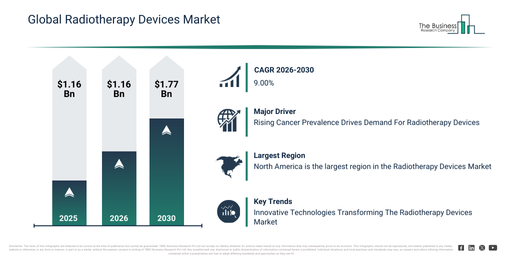
Month: March 2026

  • Radiotherapy Devices Market Future Outlook Showing Expansion Toward $10.17 Billion by 2030

    Radiotherapy Devices Market Future Outlook Showing Expansion Toward $10.17 Billion by 2030

    The Business Research Company’s 2026 market reports include new capabilities such as market attractiveness scoring and analysis, total addressable market analysis, company scoring matrix, interactive excel data dashboard, improved supply chain analysis, upcoming startups in the market, and overview of key products, aimed at improving the depth, usability, and strategic value of the insights delivered.

    What Market Value Is Anticipated For The Radiotherapy Devices Market Over The Period 2026–2030?

    The market size for radiotherapy devices has experienced significant growth in recent years. It is anticipated to expand from $6.64 billion in 2025 to $7.21 billion in 2026, showing a compound annual growth rate (CAGR) of 8.6%. The historical expansion of this market can be attributed to several factors, including the rising global incidence rates of cancer, the development of oncology treatment infrastructure, the increasing adoption of external beam radiation therapies, advancements in linear accelerator performance, and the wider availability of sophisticated radiotherapy techniques.

    The radiotherapy devices market is anticipated to experience substantial expansion over the upcoming years. This market is projected to reach $10.18 billion by 2030, exhibiting a compound annual growth rate (CAGR) of 9.0%. This projected growth is driven by several factors, including the increasing need for personalized cancer therapies, heightened investments in proton therapy facilities, the broadening of AI-powered oncology processes, a greater emphasis on reducing radiation-induced side effects, and ongoing advancements in radiation delivery technologies. Key developments expected during this period encompass the wider adoption of image-guided radiation therapy systems, the increased implementation of proton therapy technologies, the expanding integration of AI-driven treatment planning, the proliferation of stereotactic radiation methods, and an intensified focus on accurate dose delivery.

    Download the Free Sample Report to Explore Key Market Insights:

    https://www.thebusinessresearchcompany.com/sample.aspx?id=3375&type=smp

    Which Economic Or Industry Drivers Are Impacting The Radiotherapy Devices Market?

    The escalating occurrence of cancer is anticipated to drive the future expansion of the radiotherapy devices market. Cancer prevalence denotes the overall count or proportion of individuals within a population identified with cancer at a specific moment or over a particular duration. For patients newly diagnosed with cancer, radiotherapy is frequently utilized either as a primary treatment or an additional therapy. Its application often involves shrinking tumors, managing the progression of cancer, or eliminating cancer cells before or after surgical procedures. For instance, in July 2024, according to the Australian Institute of Health and Welfare, an Australia-based government agency, in Australia the number of cancer cases diagnosed increased from 160,570 in 2022 to 164,694 in 2023, reflecting a notable rise over the year. This upward trend highlights the growing prevalence of cancer within the country, consequently propelling the growth of the radiotherapy devices market.

    How Is The Radiotherapy Devices Market Divided Into Its Major Segments?

    The radiotherapy devices market covered in this report is segmented –

    1) By Product Type: External Beam Radiation Therapy Devices, Linear Accelerator Devices, Proton Therapy Devices

    2) By Application: Skin Cancer, Breast Cancer, Prostate Cancer, Cervical Cancer, Lung Cancer, Other Applications

    3) By End Users: Hospitals, Ambulatory Surgical Centers, Oncological Treatment Centers

    Subsegments:

    1) By External Beam Radiation Therapy Devices: Intensity-Modulated Radiation Therapy (IMRT) Devices, Image-Guided Radiation Therapy (IGRT) Devices, Stereotactic Body Radiation Therapy (SBRT) Devices, Stereotactic Radiosurgery (SRS) Devices, 3D Conformal Radiation Therapy (3D CRT) Devices

    2) By Linear Accelerator Devices: Conventional Linear Accelerators, Stereotactic Linear Accelerators

    3) By Proton Therapy Devices: Cyclotron-Based Devices, Synchrotron-Based Devices, Synchrocyclotron-Based Devices

    How Are Trends Transforming The Radiotherapy Devices Market Landscape?

    Leading companies in the radiotherapy devices market are innovating new technologies, such as The Versa HD, to enhance their market profitability. The Versa HD is a linear accelerator system specifically designed for radiation therapy. For instance, in May 2023, Mitchell Cancer Institute, a US-based cancer treatment centre, introduced new radiation technology named The Versa HD. This system is capable of administering Volumetric Modulated Arc Therapy (VMAT), which accelerates the delivery of treatments and improves the patient experience. The Versa HD is also able to provide High-Definition Dynamic Radiosurgery (HDRS), which possesses special sequencing capabilities and converts the linac into a specialized SRS solution.

    Who Are The Prominent Organizations Shaping The Radiotherapy Devices Market?

    Major companies operating in the radiotherapy devices market are Varian Medical Systems Inc., Elekta AB, Accuray Incorporated, IBA Ion Beam Applications SA, Koninklijke Philips N.V., Siemens Aktiengesellschaft, Eckert & Ziegler Bebig, IsoRay Inc., General Electric Healthcare, Vision RT Ltd., RaySearch Laboratories AB, Theragenics Corporation, Canon Medical Systems Corporation, Mitsubishi Electric Corporation, Shinva Medical Instrument Company Limited, Neusoft Medical Systems Co. Ltd., Mevion Medical Systems Inc., Optivus Proton Therapy Inc., Panacea Medical Technologies Pvt. Ltd., P-Cure Ltd., Provision Healthcare LLC, Sumitomo Heavy Industries Ltd., ViewRay Inc., Miranda Medical, Nordion Inc., NTP Radioisotopes SOC Ltd., Curium, Hitachi Ltd., Brainlab AG, Best Theratronics Ltd., ProTom International Inc., RefleXion Medical Inc., Insightec Ltd., TomoTherapy Incorporated, Agile MV LLC, CIVCO Radiotherapy, Johari Digital Healthcare Ltd., Alpha Tau Medical Ltd.,

    Read the full radiotherapy devices market report here:

    https://www.thebusinessresearchcompany.com/report/radiotherapy-devices-global-market-report

    What Are The Top-Performing Regions Within The Radiotherapy Devices Market?

    North America was the largest region in the radiotherapy devices market in 2025. Asia-Pacific was the second-largest region in the global radiotherapy devices market report. The regions covered in the radiotherapy devices market report are Asia-Pacific, South East Asia, Western Europe, Eastern Europe, North America, South America, Middle East, Africa.

    Request A Tailored Radiotherapy Devices Market Research Report For Competitive Advantage:

    https://www.thebusinessresearchcompany.com/customise?id=3375&type=smp

    Browse Through More Reports Similar to the Global Radiotherapy Devices Market 2026, By The Business Research Company

    Single Dose Radiotherapy Services Market Report 2026

    https://www.thebusinessresearchcompany.com/report/single-dose-radiotherapy-services-global-market-report

    Image Guided Radiation Therapy Market Report 2026

    https://www.thebusinessresearchcompany.com/report/image-guided-radiation-therapy-global-market-report

    Radiosurgery And Radiotherapy Robotics Market Report 2026

    https://www.thebusinessresearchcompany.com/report/radiosurgery-and-radiotherapy-robotics-global-market-report

    Get in touch with us:

    The Business Research Company: https://www.thebusinessresearchcompany.com/

    Americas +1 310-496-7795

    Asia +44 7882 955267 & +91 8897263534

    Europe +44 7882 955267

    Email us at info@tbrc.info

    Follow us on:

    LinkedIn: https://in.linkedin.com/company/the-business-research-company

    YouTube: https://www.youtube.com/channel/UC24_fI0rV8cR5DxlCpgmyFQ

    Global Market Model: https://www.thebusinessresearchcompany.com/global-market-model

  • Radiofrequency Eye Device Market Revenue Growth Expected to Reach $2.11 Billion by 2030 with 16% CAGR

    Radiofrequency Eye Device Market Revenue Growth Expected to Reach $2.11 Billion by 2030 with 16% CAGR

    The Business Research Company’s 2026 market reports include new capabilities such as market attractiveness scoring and analysis, total addressable market analysis, company scoring matrix, interactive excel data dashboard, improved supply chain analysis, upcoming startups in the market, and overview of key products, aimed at improving the depth, usability, and strategic value of the insights delivered.

    What Is The Expected Market Size Of The Radiofrequency Eye Device Market From 2026 To 2030?

    The radiofrequency eye device market size has observed substantial expansion in recent years. It will grow from $1.01 billion in 2025 to $1.17 billion in 2026 at a compound annual growth rate (CAGR) of 16.3%. This historical growth is attributable to several contributing factors, including an escalating demand for nonsurgical eye rejuvenation, ongoing technological progress in radiofrequency devices, increasing public awareness of cosmetic options, the widespread availability of minimally invasive treatments, and rising disposable income levels.

    The radiofrequency eye device market is anticipated to show significant expansion in the coming years. It is projected to achieve a market size of $2.12 billion in 2030, with a compound annual growth rate (CAGR) of 16.0%. This forecasted growth is driven by elements such as multipurpose RF devices, their integration with skincare and monitoring apps, the expansion of ophthalmic and cosmetic clinics, AI-assisted procedure guidance, and advancements in device portability and precision. Notable trends within the forecast period encompass monopolar radiofrequency devices, bipolar radiofrequency devices, multipolar radiofrequency devices, fractional radiofrequency devices, and microneedling radiofrequency devices.

    Download the Free Sample Report to Explore Key Market Insights:

    https://www.thebusinessresearchcompany.com/sample.aspx?id=28309&type=smp

    What Major Drivers Are Influencing Demand In The Radiofrequency Eye Device Market?

    The expanding adoption of minimally invasive cosmetic procedures is set to drive the growth of the radiofrequency eye device market. These treatments, requiring minimal to no incisions or recovery time, provide aesthetic enhancements through faster recuperation and reduced risks. The rising patient preference for safe, efficient treatments with minimal downtime is fueling the increased uptake of minimally invasive procedures. Radiofrequency eye devices support these minimally invasive cosmetic procedures by precisely delivering controlled RF energy to the delicate skin around the eyes, stimulating collagen production, tightening tissues, reducing fine lines and wrinkles, and improving skin texture with accuracy and minimal downtime, thereby offering an effective alternative to surgical interventions. For instance, in June 2023, according to the American Society of Plastic Surgeons, a US-based professional medical association, minimally invasive cosmetic procedures increased by 7%, rising from 13.7 million procedures to 14.7 million procedures. During the same period, overall cosmetic surgical procedures increased by 5%. Consequently, the growing adoption of minimally invasive cosmetic procedures is expected to propel the growth of the radiofrequency eye device market.

    Which Segments Are Included In The Analysis Of The Radiofrequency Eye Device Market?

    The radiofrequency eye device market covered in this report is segmented –

    1) By Product Type: Monopolar Radiofrequency Devices, Bipolar Radiofrequency Devices, Multipolar Radiofrequency Devices, Other Product Types

    2) By Application: Wrinkle Reduction, Skin Tightening, Other Applications

    3) By End-User: Hospitals, Ophthalmic Clinics, Ambulatory Surgical Centers, Other End-Users

    Subsegments:

    1) By Monopolar Radiofrequency Devices: Handheld Monopolar RF Eye Devices, Console-Based / Stationary Monopolar RF Systems, Temperature-Controlled Monopolar RF Eye Devices

    2) By Bipolar Radiofrequency Devices: Handheld Bipolar RF Eye Devices, Tabletop / Console-Based Bipolar RF Systems, Eye-Dedicated Bipolar RF Devices for Periocular Skin Tightening, Bipolar RF Devices for Eyelid / Meibomian Gland Therapy

    3) By Multipolar Radiofrequency Devices: Handheld Multipolar RF Eye Devices, Stationary Multipolar RF Platforms, Multi-Functional Multipolar RF Eye Rejuvenation Systems

    4) By Other Product Types: Fractional Radiofrequency Eye Devices, Non-Ablative Radiofrequency Eye Devices, Hybrid Radiofrequency Eye Devices, Radiofrequency Devices for Dry Eye Management

    Which Trends Are Impacting The Growth Of The Radiofrequency Eye Device Market?

    Leading companies in the radiofrequency eye device market are concentrating on advancements in artificial intelligence for eye diagnostics, such as AI-assisted meibography analysis, with the goal of increasing accuracy and improving patient outcomes in managing dry eye and other ocular surface disorders. AI-assisted meibography analysis involves leveraging deep learning algorithms to automatically evaluate meibomian gland structure and function from infrared eyelid images, which allows for the early detection of meibomian gland dysfunction (MGD) and aids in making more precise treatment decisions. For instance, in November 2023, Lumenis Ltd., an Israel-based ophthalmic technology company, launched OptiPLUS, a dual-frequency radiofrequency device for dry-eye care that includes automatic electrode detection, treatment presets, and closed-loop temperature control, designed to target the meibomian glands while simultaneously enhancing periorbital collagen. This integration enables clinics to align AI diagnostic findings with customized radiofrequency treatment protocols, thereby improving results for patients with ocular surface disorders.

    Which Key Industry Participants Are Active In The Radiofrequency Eye Device Market?

    Major companies operating in the radiofrequency eye device market are InMode Ltd, Lumenis Ltd, Venus Concept, YA-MAN Ltd, MiBo Medical Group, Alma Lasers, EndyMed Medical, Pollogen Ltd, BTL Industries, Candela Medical, Silk’n International, Guangzhou Beautylife Tech, Norlanya, AMIRO, Zemits LLC, Lutronic Corporation, Jeisys Medical, RejuvaMedica Ltd, HABI Medical, ThermoLift Technologies Ltd

    Read the full radiofrequency eye device market report here:

    https://www.thebusinessresearchcompany.com/report/radiofrequency-eye-device-global-market-report

    Which Region Shows The Strongest Potential For Future Growth In The Radiofrequency Eye Device Market?

    North America was the largest region in the radiofrequency eye device market in 2025. Asia-Pacific is expected to be the fastest-growing region in the forecast period. The regions covered in the radiofrequency eye device market report are Asia-Pacific, South East Asia, Western Europe, Eastern Europe, North America, South America, Middle East, Africa.

    Request A Tailored Radiofrequency Eye Device Market Research Report For Competitive Advantage:

    https://www.thebusinessresearchcompany.com/customise?id=28309&type=smp

    Browse Through More Reports Similar to the Global Radiofrequency Eye Device Market 2026, By The Business Research Company

    Ophthalmic Devices Market Report 2026

    https://www.thebusinessresearchcompany.com/report/ophthalmic-devices-global-market-report

    Military Night Vision Device Market Report 2026

    https://www.thebusinessresearchcompany.com/report/military-night-vision-device-global-market-report

    Night Vision Devices Market Report 2026

    https://www.thebusinessresearchcompany.com/report/night-vision-devices-global-market-report

    Get in touch with us:

    The Business Research Company: https://www.thebusinessresearchcompany.com/

    Americas +1 310-496-7795

    Asia +44 7882 955267 & +91 8897263534

    Europe +44 7882 955267

    Email us at info@tbrc.info

    Follow us on:

    LinkedIn: https://in.linkedin.com/company/the-business-research-company

    YouTube: https://www.youtube.com/channel/UC24_fI0rV8cR5DxlCpgmyFQ

    Global Market Model: https://www.thebusinessresearchcompany.com/global-market-model

  • Personalized Knee Implants Market Revenue Growth Expected to Reach $3.41 Billion by 2030 with 6.8% CAGR

    Personalized Knee Implants Market Revenue Growth Expected to Reach $3.41 Billion by 2030 with 6.8% CAGR

    The Business Research Company’s 2026 market reports include new capabilities such as market attractiveness scoring and analysis, total addressable market analysis, company scoring matrix, interactive excel data dashboard, improved supply chain analysis, upcoming startups in the market, and overview of key products, aimed at improving the depth, usability, and strategic value of the insights delivered.

    How Will The Market Size Of The Personalized Knee Implants Market Evolve From 2026 To 2030?

    The personalized knee implants market has demonstrated strong growth in recent years. It is anticipated to increase from $2.45 billion in 2025 to $2.62 billion in 2026, reflecting a compound annual growth rate (CAGR) of 6.9%. This historical expansion can be linked to factors such as an aging global population, the rising prevalence of osteoarthritis, heightened awareness regarding personalized healthcare, improvements in imaging technologies, and an escalating number of orthopedic surgeries.

    The personalized knee implants market size is anticipated to experience robust expansion over the next few years. It is projected to increase to $3.41 billion in 2030, growing at a compound annual growth rate (CAGR) of 6.8%. This growth during the forecast period is driven by the increasing adoption of 3D printing, the integration of AI in surgical planning, the rising demand for minimally invasive procedures, technological progress in implant materials, and market expansion in emerging regions. Significant trends expected during this period include custom 3D-printed implants, patient-specific surgical planning, minimally invasive knee replacement, advanced post-operative rehabilitation solutions, and the integration of wearable technology.

    Download the Free Sample Report to Explore Key Market Insights:

    https://www.thebusinessresearchcompany.com/sample.aspx?id=25874&type=smp

    What Drivers Are Influencing The Personalized Knee Implants Market?

    The rising incidence of osteoarthritis is projected to boost the expansion of the personalized knee implants market in the future. This condition is characterized as a progressive joint ailment where the protective cartilage at bone ends gradually erodes, resulting in discomfort, rigidity, and limited joint motion. The growing prevalence of osteoarthritis stems from an aging demographic, as the likelihood of developing it increases with age due to the gradual deterioration of joint cartilage. Personalized knee implants offer a solution for osteoarthritis through their custom fit, which conforms to each patient’s distinct anatomy, thereby improving joint alignment, alleviating pain, and boosting mobility with greater efficacy compared to conventional implants. For example, a June 2024 report from the Australian Institute of Health and Welfare, an Australian-based government organization, indicated that in Australia, osteoarthritis was responsible for 143,410 disability-adjusted life years (DALYs) (4.46 per 1,000 people) in 2023 and 2,314 deaths (8.9 per 100,000) in 2022. These figures represented 2.5% of the overall disease burden and 1.2% of all fatalities, respectively. Consequently, the expanding incidence of osteoarthritis is fueling the growth within the personalized knee implants market.

    Which Segment Areas Are Covered In The Personalized Knee Implants Market Analysis?

    The personalized knee implants market covered in this report is segmented –

    1) By Type: Femoral, Tibia, Patella

    2) By Fixation Material: Cemented, Cementless, Hybrid

    3) By Material: Metal-On-Plastic, Ceramic-On-Plastic

    4) By Procedure: Primary, Partial, Revision

    5) By End Use: Hospitals, Ambulatory Surgical Centers, Other End Uses

    Subsegments:

    1) By Femoral Type: Standard Femoral Implants, Customized Femoral Implants, Gender-Specific Femoral Implants

    2) By Tibia Type: Standard Tibial Implants, Customized Tibial Implants, Modular Tibial Baseplates

    3) By Patella Type: Standard Patellar Implants, Customized Patellar Implants, Patellar Resurfacing Implants

    What Key Developments And Trends Are Impacting The Personalized Knee Implants Market?

    Major companies in the personalized knee implants market are concentrating on technological advancements like robotic-assisted total knee arthroplasty to improve surgical precision, the accuracy of implant alignment, patient-specific customization, and overall clinical outcomes. Robotic-assisted total knee arthroplasty refers to a knee replacement surgery where a robotic system aids the surgeon in planning and executing the procedure with greater exactitude. For instance, in April 2025, THINK Surgical, Inc., a US-based provider of robotic surgical systems, introduced and first utilized the Freedom Total Knee Implant, marking Maxx Orthopedics’ initial use of the TMINI miniature robotic system. The Freedom total knee implant offers extensive patient-specific customization while maintaining surgical efficiency. It incorporates a bone-preserving design, allowing for less bone removal during implantation, and provides multiple sizing and configuration options to match individual patient anatomy. The system supports both cemented and cementless fixation and features an optimized polyethylene insert for enhanced wear resistance and smooth articulation. Its design aims to achieve natural knee kinematics, stability throughout the range of motion, and long-term durability.

    Which Global Companies Are Actively Competing In The Personalized Knee Implants Market?

    Major companies operating in the personalized knee implants market are Stryker Corporation, DePuy Synthes Inc., Zimmer Biomet Holdings Inc., Smith & Nephew plc, Stanmore Implants Worldwide Ltd, Exactech Inc., Medacta International SA, Corin Group PLC, MicroPort Orthopedics Inc., B. Braun Melsungen AG, LimaCorporate S.p.A., Waldemar Link GmbH & Co. KG, THINK Surgical Inc., Signature Orthopaedics Pty Ltd, Maxx Orthopedics Inc., restor3d Inc., NanoKnee LLC, Conformis Inc., Aesculap Implant Systems LLC, United Orthopedic Corporation, Kyocera Medical Corporation, Mathys Ltd Bettlach

    Read the full personalized knee implants market report here:

    https://www.thebusinessresearchcompany.com/report/personalized-knee-implants-global-market-report

    Which Regions Are Expected To Experience Rapid Expansion In The Personalized Knee Implants Market?

    North America was the largest region in the personalized knee implants market in 2025. Asia-Pacific is expected to be the fastest-growing region in the forecast period. The regions covered in the personalized knee implants market report are Asia-Pacific, South East Asia, Western Europe, Eastern Europe, North America, South America, Middle East, Africa.

    Request A Tailored Personalized Knee Implants Market Research Report For Competitive Advantage:

    https://www.thebusinessresearchcompany.com/customise?id=25874&type=smp

    Browse Through More Reports Similar to the Global Personalized Knee Implants Market 2026, By The Business Research Company

    Advanced Orthopedic Technologies Implants And Regenerative Products Market Report 2026

    https://www.thebusinessresearchcompany.com/report/advanced-orthopedic-technologies-implants-and-regenerative-products-global-market-report

    Pediatric Orthopedic Implants Market Report 2026

    https://www.thebusinessresearchcompany.com/report/pediatric-orthopedic-implants-global-market-report

    Dental Implants Market Report 2026

    https://www.thebusinessresearchcompany.com/report/dental-implants-global-market-report

    Get in touch with us:

    The Business Research Company: https://www.thebusinessresearchcompany.com/

    Americas +1 310-496-7795

    Asia +44 7882 955267 & +91 8897263534

    Europe +44 7882 955267

    Email us at info@tbrc.info

    Follow us on:

    LinkedIn: https://in.linkedin.com/company/the-business-research-company

    YouTube: https://www.youtube.com/channel/UC24_fI0rV8cR5DxlCpgmyFQ

    Global Market Model: https://www.thebusinessresearchcompany.com/global-market-model

  • Personalized Cranial Implant Market Expected to Record Steady Growth and Approach $1.34 Billion by 2030

    Personalized Cranial Implant Market Expected to Record Steady Growth and Approach $1.34 Billion by 2030

    The Business Research Company’s 2026 market reports include new capabilities such as market attractiveness scoring and analysis, total addressable market analysis, company scoring matrix, interactive excel data dashboard, improved supply chain analysis, upcoming startups in the market, and overview of key products, aimed at improving the depth, usability, and strategic value of the insights delivered.

    What Is The Forecasted Market Value Of The Personalized Cranial Implant Market Across 2026–2030?

    The personalized cranial implant market has experienced substantial expansion over recent years. Projections indicate it will grow from $0.96 billion in 2025 to $1.03 billion in 2026, demonstrating a compound annual growth rate (CAGR) of 7.3%. The growth observed in historical periods is attributable to an increase in traumatic brain injury cases, a rising number of tumor resection surgeries, advancements in cranial imaging technologies, growing neurosurgical procedure volumes, and improved availability of biocompatible implant materials.

    The personalized cranial implant market is anticipated to experience robust expansion over the coming years. This market is projected to reach $1.34 billion by 2030, exhibiting a compound annual growth rate (CAGR) of 6.8%. Several factors contribute to this growth during the forecast period, including the embrace of personalized medicine strategies, the increase in 3D printing facilities within hospitals, a rising need for tailored cosmetic adjustments, advancements in implant design software technology, and heightened healthcare spending on sophisticated neurosurgical procedures. Key trends anticipated during this period encompass the escalating acceptance of patient-specific cranial reconstruction, the broadened application of 3D printing for neurosurgical implants, a surge in demand for minimally invasive cranial surgeries, the extended deployment of personalized implants in intricate trauma scenarios, and superior aesthetic and functional results influencing surgeon choice.

    Download the Free Sample Report to Explore Key Market Insights:

    https://www.thebusinessresearchcompany.com/sample.aspx?id=25873&type=smp

    What Drivers Are Shaping The Future Growth Of The Personalized Cranial Implant Market?

    The increasing occurrence of traumatic brain injuries (TBIs) is projected to fuel the expansion of the personalized cranial implant market moving forward. Traumatic brain injuries are defined as damage to the brain stemming from external mechanical forces. This rise in TBIs is attributed to greater public awareness regarding head injury risks and improvements in medical diagnostics. Personalized cranial implants are vital for traumatic brain injuries, as they facilitate precise, custom-fit skull reconstruction, thereby enhancing brain protection, appearance, and patient recovery. For instance, in 2024, the Tennessee Department of Health, a US-based government agency, reported that the number of patients on the traumatic brain injury (TBI) registry rose by 2.4% in 2023 compared to 2022. Thus, the growing incidence of traumatic brain injuries (TBIs) and cranial defects is propelling growth in the personalized cranial implants market.

    What Segmentation Levels Are Considered In The Personalized Cranial Implant Market?

    The personalized cranial implant market covered in this report is segmented –

    1) By Implant Material: Titanium, Polymethylmethacrylate (PMMA), Polyether Ether Ketone (PEEK), Other Implant Materials

    2) By Indication: Traumatic Brain Injury, Oncology (Tumor Resection), Congenital Disorders, Infections, Cosmetic Or Deformity Correction

    3) By End Use: Hospitals, Ambulatory Surgical Centers, Other End Uses

    Subsegments:

    1) By Titanium: Pure Titanium, Titanium Alloy, Mesh Titanium Implants, Solid Titanium Plates

    2) By Polymethylmethacrylate: Preformed Polymethylmethacrylate Implants, Hand-Molded Polymethylmethacrylate, Custom Molded Polymethylmethacrylate, Antibiotic-Impregnated Polymethylmethacrylate

    3) By Polyether Ether Ketone: Standard Polyether Ether Ketone Implants, Reinforced Polyether Ether Ketone Implants, Three-Dimensionally Printed Polyether Ether Ketone Implants, Patient-Specific Polyether Ether Ketone Implants

    4) By Other Implant Materials: Ceramic Implants, Composite Material Implants, Bioactive Glass Implants, Bioresorbable Polymer Implants

    What Trends Are Projected To Affect The Personalized Cranial Implant Market?

    Leading companies within the personalized cranial implant market are focusing on advanced technologies, such as hospital-site sterile 3D printing, to enhance production efficiency and improve the provision of patient-specific implants. This hospital-site sterile 3D printing technology involves specialized cleanroom-compatible 3D printers that can fabricate medical-grade implants directly within healthcare facilities, thereby minimizing contamination risks and expediting turnaround times. For instance, in April 2024, 3D Systems, a US-based additive manufacturing company, launched the VSP PEEK Cranial Implant. This implant is a patient-specific cranial implant solution that uses high-performance PEEK material and an FDA-cleared 3D printing workflow, which includes modeling software, a sterile-environment 3D printer, and a streamlined post-processing system. It is engineered to replicate the mechanical properties of human bone. The implant offers superior biocompatibility, radiolucency, and resistance to bodily fluids. The system reduces material usage by up to 85% compared to traditional machining, leading to significantly lower costs. Its sterile, hospital-site deployment facilitates faster surgical planning and improved outcomes, establishing it as a transformative tool in neurosurgery and cranioplasty.

    Which Leading Firms Are Contributing To The Growth Of The Personalized Cranial Implant Market?

    Major companies operating in the personalized cranial implant market are Medtronic PLC, Stryker Corporation, Zimmer Biomet Holdings Inc., Renishaw PLC, KLS Martin Group, B. Braun Melsungen AAG, Medartis Holding AG, CranioTech GmbH, evonos GmbH & Co. KG, Matrix Surgical USA LLC, Jeil Medical Corporation, Anatomics Pty Ltd., Calavera Surgical Design Inc., KELYNIAM Global Incorporated, Xilloc Medical B.V., INCREDIBLE AM Private Limited, LUCID Implants Private Limited, Ortho Baltic Joint Stock Company, OssDsign AB, 3D Systems Healthcare, Materialise NV, Oxford Performance Materials

    Read the full personalized cranial implant market report here:

    https://www.thebusinessresearchcompany.com/report/personalized-cranial-implant-global-market-report

    Which Geographic Regions Are Influencing Demand In The Personalized Cranial Implant Market?

    North America was the largest region in the personalized cranial implant market in 2025. Asia-Pacific is expected to be the fastest-growing region in the forecast period. The regions covered in the personalized cranial implant market report are Asia-Pacific, South East Asia, Western Europe, Eastern Europe, North America, South America, Middle East, Africa.

    Request A Tailored Personalized Cranial Implant Market Research Report For Competitive Advantage:

    https://www.thebusinessresearchcompany.com/customise?id=25873&type=smp

    Browse Through More Reports Similar to the Global Personalized Cranial Implant Market 2026, By The Business Research Company

    Neural Implants Market Report 2026

    https://www.thebusinessresearchcompany.com/report/neural-implants-global-market-report

    Facial Implants Market Report 2026

    https://www.thebusinessresearchcompany.com/report/facial-implants-global-market-report

    Cosmetic Implants Market Report 2026

    https://www.thebusinessresearchcompany.com/report/cosmetic-implants-global-market-report

    Get in touch with us:

    The Business Research Company: https://www.thebusinessresearchcompany.com/

    Americas +1 310-496-7795

    Asia +44 7882 955267 & +91 8897263534

    Europe +44 7882 955267

    Email us at info@tbrc.info

    Follow us on:

    LinkedIn: https://in.linkedin.com/company/the-business-research-company

    YouTube: https://www.youtube.com/channel/UC24_fI0rV8cR5DxlCpgmyFQ

    Global Market Model: https://www.thebusinessresearchcompany.com/global-market-model
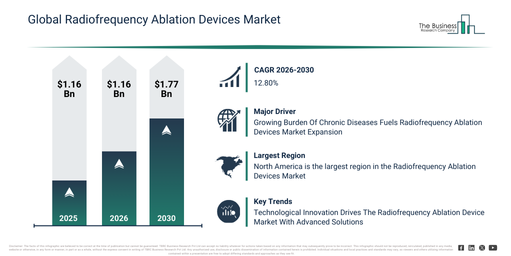
  • Radiofrequency Ablation Devices Market Expected to Record Steady Growth and Approach $9.55 Billion by 2030

    Radiofrequency Ablation Devices Market Expected to Record Steady Growth and Approach $9.55 Billion by 2030

    The Business Research Company’s 2026 market reports include new capabilities such as market attractiveness scoring and analysis, total addressable market analysis, company scoring matrix, interactive excel data dashboard, improved supply chain analysis, upcoming startups in the market, and overview of key products, aimed at improving the depth, usability, and strategic value of the insights delivered.

    What Market Valuation Is Forecasted For The Radiofrequency Ablation Devices Market By 2030 Starting From Its 2026 Size?

    The radiofrequency ablation devices market has seen substantial growth recently. This market is set to expand from $5.25 billion in 2025 to $5.91 billion in 2026, achieving a compound annual growth rate (CAGR) of 12.5%. The historical rise in this market’s size is attributable to several factors, including the increasing occurrence of cancer and chronic pain conditions, the broadening of interventional treatment choices, the greater acceptance of thermal ablation therapies, the availability of RF generator platforms, and the escalating use of outpatient procedures.

    The radiofrequency ablation devices market is projected to experience substantial expansion in the coming years, reaching $9.55 billion by 2030, demonstrating a compound annual growth rate (CAGR) of 12.8%. This anticipated growth is driven by several factors, including the rising demand for image-guided oncology treatments, the increasing application of RF ablation within cardiology, the broadening scope of ambulatory surgical procedures, a heightened emphasis on targeted pain management, and increased capital allocated to advanced ablation technologies. Key trends anticipated during this period encompass a greater acceptance of minimally invasive ablation techniques, a surge in the utilization of disposable ablation catheters, the expanded integration of imaging-guided ablation systems, a widening of pain management applications, and a stronger emphasis on precise tissue targeting.

    Download the Free Sample Report to Explore Key Market Insights:

    https://www.thebusinessresearchcompany.com/sample.aspx?id=12168&type=smp

    Which Market Drivers Are Supporting The Expansion Of The Radiofrequency Ablation Devices Market?

    The expansion of the radiofrequency ablation devices market is expected to be driven by the rising prevalence of chronic diseases. Chronic diseases are health conditions that persist for a year or longer, requiring continuous medical care, restricting daily activities, or both. Radiofrequency ablation devices are utilized in chronic diseases to provide relief for individuals experiencing chronic and arthritic joint pain, and they are also frequently employed to reduce the size of tumors, nodules, or other growths within the body. For instance, in February 2024, the World Health Organization, a Switzerland-based intergovernmental organization, projected that by 2050, there would be over 35 million new cancer cases, marking a 77% increase compared to the estimated 20 million cases in 2022. Consequently, the increasing burden of chronic diseases is significantly fueling the growth of the radiofrequency ablation devices market.

    Which Segment Categories Define The Radiofrequency Ablation Devices Market?

    The radiofrequency ablation devices market covered in this report is segmented –

    1) By Product Type: Disposable Equipment, Reusable Equipment

    2) By Application: Oncology, Cardiology And Cardiac Rhythm Management, Gynecology, Pain Management

    3) By End-User: Hospitals, Ambulatory Surgical Centers

    Subsegments:

    1) By Disposable Equipment: Ablation Catheters, Electrode Pads, Temperature Probes

    2) By Reusable Equipment: RF Generators, Handpieces

    What Major Market Trends Are Driving Changes In The Radiofrequency Ablation Devices Market?

    Key players in the radiofrequency ablation devices market are increasingly concentrating on introducing sophisticated medical devices, such as the ELIOSTAR Balloon Ablation Catheter, to secure a competitive advantage. The ELIOSTAR Balloon Ablation Catheter represents an advanced medical solution specifically designed for cardiac ablation procedures, employing cutting-edge technology to address arrhythmias and improve accuracy during electrophysiological interventions. A concrete illustration of this trend is seen in April 2023, when Compal Electronics, an electronics firm based in Taiwan, unveiled AblatePal, a novel radiofrequency ablation (RFA) system intended for percutaneous and intraoperative coagulation and ablation of soft tissue. This RFA system operates by leveraging the thermal energy generated from electrical resistance as current passes through tissue, thereby cauterizing tumors and inducing tumor necrosis. Furthermore, its sophisticated cooling mechanism safeguards healthy tissue from damage and yields beneficial outcomes such as diminishing wound size and reducing the duration of patients’ hospital stays.

    Who Are The Top Companies Competing In The Radiofrequency Ablation Devices Market?

    Major companies operating in the radiofrequency ablation devices market are Medtronic plc, Abbott Laboratories, Boston Scientific Corporation, AngioDynamics Inc, AtriCure Inc, Stryker Corporation, Smith and Nephew plc, CONMED Corporation, Hologic Inc, Olympus Corporation, BIOTRONIK SE and Co KG, Baylis Medical Company Inc, Avanos Medical Inc, Cosman Medical Inc, Lepu Medical Technology Co Ltd, RF Medical Co Ltd, Gynesonics Inc, Cutera Inc, MicroPort Scientific Corporation, Merit Medical Systems Inc, ENDO-FLEX GmbH, Bramsys Industria e Comercio Ltd

    Read the full radiofrequency ablation devices market report here:

    https://www.thebusinessresearchcompany.com/report/radiofrequency-ablation-devices-global-market-report

    How Is The Radiofrequency Ablation Devices Market Distributed Across Key Geographic Regions?

    North America was the largest region in the radiofrequency ablation devices market in 2025. Asia-Pacific is expected to be the fastest-growing region in the forecast period. The regions covered in the radiofrequency ablation devices market report are Asia-Pacific, South East Asia, Western Europe, Eastern Europe, North America, South America, Middle East, Africa.

    Request A Tailored Radiofrequency Ablation Devices Market Research Report For Competitive Advantage:

    https://www.thebusinessresearchcompany.com/customise?id=12168&type=smp

    Browse Through More Reports Similar to the Global Radiofrequency Ablation Devices Market 2026, By The Business Research Company

    Ablation Devices Market Report 2026

    https://www.thebusinessresearchcompany.com/report/ablation-devices-global-market-report

    Ablation Technology Market Report 2026

    https://www.thebusinessresearchcompany.com/report/ablation-technology-global-market-report

    Tumor Ablation Therapy Devices Market Report 2026

    https://www.thebusinessresearchcompany.com/report/tumor-ablation-therapy-devices-global-market-report

    Get in touch with us:

    The Business Research Company: https://www.thebusinessresearchcompany.com/

    Americas +1 310-496-7795

    Asia +44 7882 955267 & +91 8897263534

    Europe +44 7882 955267

    Email us at info@tbrc.info

    Follow us on:

    LinkedIn: https://in.linkedin.com/company/the-business-research-company

    YouTube: https://www.youtube.com/channel/UC24_fI0rV8cR5DxlCpgmyFQ

    Global Market Model: https://www.thebusinessresearchcompany.com/global-market-model
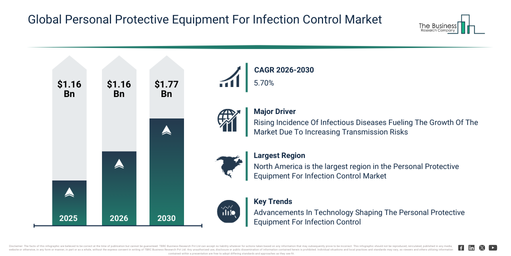
  • Personal Protective Equipment For Infection Control Industry Expansion Forecast Showing Market Size of $35.31 Billion by 2030 at 5.7% CAGR

    Personal Protective Equipment For Infection Control Industry Expansion Forecast Showing Market Size of $35.31 Billion by 2030 at 5.7% CAGR

    The Business Research Company’s 2026 market reports include new capabilities such as market attractiveness scoring and analysis, total addressable market analysis, company scoring matrix, interactive excel data dashboard, improved supply chain analysis, upcoming startups in the market, and overview of key products, aimed at improving the depth, usability, and strategic value of the insights delivered.

    What Market Size Increase Is Anticipated For The Personal Protective Equipment For Infection Control Market Over The 2026–2030 Period?

    The personal protective equipment for infection control market has shown robust growth recently and is anticipated to expand from $26.64 billion in 2025 to $28.25 billion in 2026, achieving a compound annual growth rate (CAGR) of 6.0%. This historical expansion can be linked to factors such as a pandemic-induced increase in PPE demand, escalating rates of healthcare-associated infections, greater understanding of occupational safety, government directives for infection control, and the enlargement of hospital infrastructure.

    The market for personal protective equipment for infection control is anticipated to experience robust expansion over the coming years. It is projected to grow to $35.31 billion in 2030, at a compound annual growth rate (CAGR) of 5.7%. This growth during the forecast period is attributed to the expansion of outpatient and ambulatory care centers, an increasing frequency of infectious disease outbreaks, stricter global safety compliance norms, rising healthcare expenditure in emerging markets, and demand from non-healthcare sectors such as public safety. Major trends expected in the forecast period include the expansion of antimicrobial and self-sterilizing PPE, a shift toward reusable and cost-optimized PPE, an increase in stockpiling and emergency preparedness programs, a rising demand for comfort-focused and ergonomic PPE, and the standardization and regulatory harmonization of PPE.

    Download the Free Sample Report to Explore Key Market Insights:

    https://www.thebusinessresearchcompany.com/sample.aspx?id=25872&type=smp

    Which Economic Or Industry Drivers Are Impacting The Personal Protective Equipment For Infection Control Market?

    The increasing occurrence of infectious diseases is anticipated to drive the expansion of the personal protective equipment for infection control market in the future. Infectious diseases are ailments originating from pathogenic microorganisms, including bacteria, viruses, fungi, or parasites, which can be transmitted, either directly or indirectly, between individuals, or from animals or the surroundings to humans. This growth in infectious disease incidence stems from a preference for dense urban environments and an increase in worldwide travel, both of which accelerate disease propagation. Personal protective equipment (PPE) for infection control plays a role in diminishing the prevalence of infectious diseases by enabling healthcare professionals and the public to establish a physical barrier against pathogens, thereby avoiding direct exposure to infectious agents. For example, a report from the UK Health Security Agency, a UK-based government department, indicated in March 2025 that in England, from 2023 to 2024, hospital admission rates for infectious diseases and infections reached nearly twice as high among residents of the most deprived 20% of areas compared to those residing in the least deprived areas. Furthermore, as per GOV.UK, a UK-based government department, in February 2024, the count of tuberculosis (TB) cases in England increased from 4,380 in 2022 to 4,850 in 2023, representing a 10.7% increase. Consequently, the escalating incidence of infectious diseases is a key factor propelling the expansion of the personal protective equipment for infection control market.

    How Is The Personal Protective Equipment For Infection Control Market Segmented Across Key Categories?

    The personal protective equipment for infection control market covered in this report is segmented –

    1) By Product Type: Gloves, Face Masks, Gowns And Coveralls, Eye Protection, Respirators

    2) By Material Type: Latex, Nitrile, Polyethylene, Polypropylene, Other Advanced Materials

    3) By Distribution Channel: Direct Sales, Online Retail, Traditional Retail, Catalog Sales, Wholesalers And Distributors

    4) By Application Area: Infection Prevention, Occupational Safety, Emergency Response, Aerosol Transmission Protection, Healthcare Settings

    5) By End-User: Hospitals, Ambulatory Surgical Centers, Pharmacies, Diagnostic Laboratories, Public Health Institutions

    Subsegments:

    1) By Gloves: Disposable Gloves, Sterile Gloves, Non-Sterile Gloves, Latex Gloves, Nitrile Gloves, Vinyl Gloves, Polyethylene Gloves

    2) By Face Masks: Surgical Masks, N95 Respirators, KN95 Masks, Face Shields

    3) By Gowns And Coveralls: Isolation Gowns, Surgical Gowns, Coveralls, Reusable Gowns, Disposable Gowns, Fluid-Resistant Gowns

    4) By Eye Protection: Safety Goggles, Face Shields, Protective Glasses

    5) By Respirators: Half-Face Respirators, Full-Face Respirators, Powered Air-Purifying Respirators (PAPR), Reusable Respirators, Disposable Respirators

    Which Upcoming Trends Are Expected To Influence The Personal Protective Equipment For Infection Control Market?

    Major companies operating in the personal protective equipment for infection control market are concentrating on developing innovative solutions, such as next-generation personal protective shields, to enhance user safety, improve comfort, and provide better protection against airborne pathogens. These next-generation personal protective shields refer to advanced face and body shielding equipment designed with improved materials, ergonomic designs, and enhanced protective features to offer superior defense against infectious agents. For instance, in March 2025, Stryker Corporation, a US-based medical technology company, introduced the Steri-Shield 8 personal protection system, a next-generation personal protective equipment (PPE) specifically created for healthcare professionals. This system features a customizable helmet with three points of contact for a secure and adjustable fit, including a unique ponytail path to accommodate long-haired users. It offers enhanced visibility with a 22% wider field of vision and a brighter helmet light, alongside a redesigned fan system that cools the front and back of the neck for improved comfort. The system also includes three toga styles that provide AAMI level 4 (2012) protection, ensuring the highest fluid and microbial barrier, and comes with a sleeker battery and a more efficient charging station, reflecting Stryker’s dedication to innovation and user-centric design in PPE.

    Who Are The Dominant Players Shaping The Personal Protective Equipment For Infection Control Market Landscape?

    Major companies operating in the personal protective equipment for infection control market are Cardinal Health Inc., Honeywell International Inc., 3M Company, Kimberly Clark Corporation, DuPont de Nemours Inc., STERIS plc, ELIS UK Limited, Ansell Limited, SHOWA Group, SAS Safety Corp., Moldex Metric Inc., Uvex Arbeitsschutz GmbH, Alpha Pro Tech Ltd., Polyco Healthline Ltd., Gateway Safety Inc., Plasti Surge Industries Pvt. Ltd., Franz Mensch GmbH, Univet S.p.A., Dastex Reinraumzubehör GmbH & Co. KG, Medline Industries LP, Hartalega Holdings Berhad, Top Glove Corporation Berhad, Supermax Corporation Berhad

    Read the full personal protective equipment for infection control market report here:

    https://www.thebusinessresearchcompany.com/report/personal-protective-equipment-for-infection-control-global-market-report

    What Are The Top-Performing Regions Within The Personal Protective Equipment For Infection Control Market?

    North America was the largest region in the personal protective equipment for infection control market in 2025. Asia-Pacific is expected to be the fastest-growing region in the forecast period. The regions covered in the personal protective equipment for infection control market report are Asia-Pacific, South East Asia, Western Europe, Eastern Europe, North America, South America, Middle East, Africa.

    Request A Tailored Personal Protective Equipment For Infection Control Market Research Report For Competitive Advantage:

    https://www.thebusinessresearchcompany.com/customise?id=25872&type=smp

    Browse Through More Reports Similar to the Global Personal Protective Equipment For Infection Control Market 2026, By The Business Research Company

    Infection Control Market Report 2026

    https://www.thebusinessresearchcompany.com/report/infection-control-global-market-report

    Law Enforcement Personal Protective Equipment Market Report 2026

    https://www.thebusinessresearchcompany.com/report/law-enforcement-personal-protective-equipment-global-market-report

    Military Personal Protective Equipment Market Report 2026

    https://www.thebusinessresearchcompany.com/report/military-personal-protective-equipment-global-market-report

    Get in touch with us:

    The Business Research Company: https://www.thebusinessresearchcompany.com/

    Americas +1 310-496-7795

    Asia +44 7882 955267 & +91 8897263534

    Europe +44 7882 955267

    Email us at info@tbrc.info

    Follow us on:

    LinkedIn: https://in.linkedin.com/company/the-business-research-company

    YouTube: https://www.youtube.com/channel/UC24_fI0rV8cR5DxlCpgmyFQ

    Global Market Model: https://www.thebusinessresearchcompany.com/global-market-model
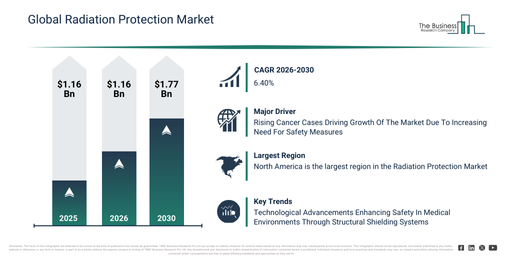
  • Radiation Protection Industry Expansion Forecast Showing Market Size of $2.66 Billion by 2030 at 6.4% CAGR

    Radiation Protection Industry Expansion Forecast Showing Market Size of $2.66 Billion by 2030 at 6.4% CAGR

    The Business Research Company’s 2026 market reports include new capabilities such as market attractiveness scoring and analysis, total addressable market analysis, company scoring matrix, interactive excel data dashboard, improved supply chain analysis, upcoming startups in the market, and overview of key products, aimed at improving the depth, usability, and strategic value of the insights delivered.

    How Is The Market Size Of The Radiation Protection Market Expected To Change Between 2026 And 2030?

    The radiation protection market size has experienced robust expansion in recent times. Projections indicate a rise from $1.94 billion in 2025 to $2.07 billion in 2026, demonstrating a compound annual growth rate (CAGR) of 6.7%. Historically, this growth can be linked to factors such as the increased adoption of x-ray and imaging procedures, the expansion of nuclear medicine applications, heightened awareness concerning radiation dangers, the establishment of fundamental radiation safety rules, and the enlargement of hospital infrastructure.

    The radiation protection market is poised for significant expansion in the coming years. It is projected to reach **$2.66 billion in 2030**, demonstrating a **compound annual growth rate (CAGR) of 6.4%**. This anticipated growth during the forecast period is fueled by advancements in radiation detection technologies, increased investments in cancer diagnostics and therapy, more rigorous radiation safety regulations and compliance, a rising need for remote monitoring solutions, and the proliferation of ambulatory surgical centers. Prominent trends expected over the forecast horizon include a heightened demand for sophisticated radiation shielding solutions, the growing adoption of personal radiation monitoring devices, an increase in diagnostic imaging and radiation therapy procedures, a stronger emphasis on occupational radiation safety standards, and the broader deployment of mobile and modular radiation protection systems.

    Download the Free Sample Report to Explore Key Market Insights:

    https://www.thebusinessresearchcompany.com/sample.aspx?id=27402&type=smp

    What Underlying Factors Are Accelerating The Growth Of The Radiation Protection Market?

    The expanding occurrence of cancer is anticipated to fuel the expansion of the radiation protection market going forward. Cancer encompasses a range of illnesses marked by the uncontrolled multiplication and spread of irregular cells, which can infiltrate nearby tissues and disseminate throughout the body. The rise in cancer prevalence is mainly attributed to longer life expectancies, given that the likelihood of developing cancer increases with age. Radiation protection plays a crucial role in minimizing exposure to detrimental radiation, thereby reducing the danger of cancers caused by radiation. For instance, a report from Macmillan Cancer Support, a UK-based charity, released in August 2024, indicated that over 3 million individuals in the UK are currently living with cancer. This figure is projected to climb to 3.5 million by 2025, 4 million by 2030, and 5.3 million by 2040. Consequently, the growing incidence of cancer is propelling the demand within the radiation protection market.

    How Is The Radiation Protection Market Structured Across Different Segments?

    The radiation protection market covered in this report is segmented –

    1) By Product Type: Protective Barriers And Booths, Shields, Radiation Detection And Monitoring Equipment, Lead Liner Doors, Other Product Types

    2) By Technology: Ionizing Radiation Protection, Non-Ionizing Radiation Protection, Radiation Dosimetry, Remote Monitoring Technology, Radiation Measurement Software

    3) By Solution: Radiation Therapy Shielding, Diagnostic Shielding

    4) By End-User: Hospitals, Ambulatory Surgical Centers, Other End Users

    Subsegments:

    1) By Protective Barriers And Booths: Mobile Radiation Barriers, Fixed Radiation Barriers, Leaded Glass Panels, X-Ray Protection Booths

    2) By Shields: Gonad Shields, Thyroid Shields, Breast Shields, Eye Shields, Full-body Shields

    3) By Radiation Detection And Monitoring Equipment: Dosimeters, Geiger Counters, Scintillation Detectors, Ionization Chambers, Personal Radiation Detectors

    4) By Lead Liner Doors: Sliding Lead Lined Doors, Swinging Lead Lined Doors, Manual Lead Lined Doors, Automatic Lead Lined Doors

    5) By Other Product Types: Lead Aprons, Lead Gloves, Lead Glasses, Lead Curtains, Radiation Protection Drapes

    Which Trends Are Shaping The Future Of The Radiation Protection Market?

    Companies operating within the radiation protection market are increasingly focusing on inventive products, such as structural shielding systems, to enhance safety from radiation in medical settings. Structural shielding systems are fixed, engineered barriers like lead-lined doors and walls, specifically designed to block detrimental ionizing radiation and protect healthcare personnel and patients during imaging and radiological procedures. As an illustration, in February 2023, SDS (Specialist Door Solutions Ltd.), a healthcare company from the UK, unveiled Shieldoor, a lead-lined X-ray door made particularly for healthcare facilities. Shieldoor delivers high-performance radiation attenuation, satisfies stringent NHS safety standards, and boosts safety in radiology and diagnostic imaging suites through its durable, hygienic, and customizable design attributes.

    Which Major Players Dominate The Radiation Protection Market?

    Major companies operating in the radiation protection market are Infab Corporation, Barrier Technologies LLC, Techno-Aide Inc., AliMed Inc., Trivitron Healthcare Pvt. Ltd., AADCO Medical Inc., Protech Medical Inc., Ultraray Radiation Protection Inc., Lancs Industries Inc., IndoSurgicals Private Limited, AmRay Medical, Uniray Medical LLP, Radiation Shield Technologies Inc., Ray-Bar Engineering Corp., StemRad Ltd., BLOXR Solutions LLC, Mirion Technologies, MarShield, Burlington Medical, Nelco Inc, Radiation Protection Products Inc, A and L Shielding, Gaven Industries Inc, Veritas Medical Solutions LLC

    Read the full radiation protection market report here:

    https://www.thebusinessresearchcompany.com/report/radiation-protection-global-market-report

    Which Region Is Projected To Dominate The Radiation Protection Market During The Forecast Period?

    North America was the largest region in the radiation protection market in 2025. Asia-Pacific is expected to be the fastest-growing region in the forecast period. The regions covered in the radiation protection market report are Asia-Pacific, South East Asia, Western Europe, Eastern Europe, North America, South America, Middle East, Africa.

    Request A Tailored Radiation Protection Market Research Report For Competitive Advantage:

    https://www.thebusinessresearchcompany.com/customise?id=27402&type=smp

    Browse Through More Reports Similar to the Global Radiation Protection Market 2026, By The Business Research Company

    Noise Mitigation System Market Report 2026

    https://www.thebusinessresearchcompany.com/report/noise-mitigation-system-global-market-report

    Railway Platform Security Market Report 2026

    https://www.thebusinessresearchcompany.com/report/railway-platform-security-global-market-report

    Railway System Market Report 2026

    https://www.thebusinessresearchcompany.com/report/railway-system-global-market-report

    Get in touch with us:

    The Business Research Company: https://www.thebusinessresearchcompany.com/

    Americas +1 310-496-7795

    Asia +44 7882 955267 & +91 8897263534

    Europe +44 7882 955267

    Email us at info@tbrc.info

    Follow us on:

    LinkedIn: https://in.linkedin.com/company/the-business-research-company

    YouTube: https://www.youtube.com/channel/UC24_fI0rV8cR5DxlCpgmyFQ

    Global Market Model: https://www.thebusinessresearchcompany.com/global-market-model

  • Personal Mobility Devices Market Revenue Expected to Reach $18.02 Billion by 2030 with 7.4% CAGR

    Personal Mobility Devices Market Revenue Expected to Reach $18.02 Billion by 2030 with 7.4% CAGR

    The Business Research Company’s 2026 market reports include new capabilities such as market attractiveness scoring and analysis, total addressable market analysis, company scoring matrix, interactive excel data dashboard, improved supply chain analysis, upcoming startups in the market, and overview of key products, aimed at improving the depth, usability, and strategic value of the insights delivered.

    How Much Is The Personal Mobility Devices Market Expected To Grow In Terms Of Market Value Between 2026 And 2030?

    The personal mobility devices market has experienced robust expansion in recent years. This market is forecasted to increase from $12.57 billion in 2025 to $13.53 billion in 2026, exhibiting a compound annual growth rate (CAGR) of 7.6%. Historically, this growth was influenced by the restricted availability of electric mobility options, a strong dependence on traditional walking aids, a burgeoning urban population with mobility requirements, rising mobility demands in hospitals and clinics, and the nascent awareness of smart mobility devices.

    The personal mobility devices market is projected to experience robust expansion in the coming years. Its valuation is set to reach $18.03 billion in 2030, exhibiting a compound annual growth rate (CAGR) of 7.4%. This growth is primarily driven by technological advancements in electric and hybrid PMDs, increased investment in smart and connected mobility solutions, a rise in government efforts for inclusive urban transit, the expansion of homecare and outpatient services, and the wider integration of IoT-enabled and autonomous mobility devices. Key trends anticipated include the growing use of personal mobility devices for city travel, a heightened demand for compact and lightweight mobility aids, a stronger emphasis on ensuring accessibility for seniors and those with disabilities, the incorporation of smart functionalities and IoT connectivity into PMDs, and the broader provision of homecare and outpatient mobility services.

    Download the Free Sample Report to Explore Key Market Insights:

    https://www.thebusinessresearchcompany.com/sample.aspx?id=24362&type=smp

    What Major Drivers Are Influencing Demand In The Personal Mobility Devices Market?

    The increasing incidence of disabilities is anticipated to propel the growth of the personal mobility devices market going forward. Disabilities are defined as long-term physical, mental, intellectual, or sensory impairments that, when interacting with various barriers, can hinder an individual’s full and effective participation in society on an equal basis with others. The rise in disability prevalence primarily stems from the aging population, as age-related conditions such as arthritis, vision impairment, and dementia become more common with longer life expectancy. Personal mobility devices, like wheelchairs and scooters, are essential for individuals with disabilities, as they enhance independence, improve access to daily activities, and support greater participation in social and professional life. For instance, in June 2025, according to a report published by the Department for Work and Pensions, a UK-based government department, during the 2023-24 period, the number of working-age people reporting a long-term health condition increased by 300,000 (2.0%), the number classed as disabled increased by 290,000 (3.1%), and those whose day-to-day activities are limited a lot increased by 170,000 (4.4%). Therefore, the rising prevalence of disabilities is driving the growth of the personal mobility devices market.

    What Major Segment Divisions Exist Within The Personal Mobility Devices Market?

    The personal mobility devices market covered in this report is segmented –

    1) By Product Type: Walking Aids, Handbikes, Mobility Scooters, Medical Beds, Stair-lifts, Power Add On Products, Wheelchairs, Other Product Types

    2) By Distribution Channel: Wholesalers Or Distributors, Online Retailers, Multi-Brand Stores, Specialty Stores

    3) By End User: Hospital And Clinics, Ambulatory Surgical Centers, Rehabilitation Centers, Homecare Setting, Other End Users

    Subsegments:

    1) By Walking Aids: Canes, Crutches, Walkers, Rollators

    2) By Handbikes: Manual Handbikes, Electric Handbikes, Hybrid Handbikes

    3) By Mobility Scooters: 3-Wheel Scooters, 4-Wheel Scooters, Foldable Or Portable Scooters, Heavy-Duty Scooters

    4) By Medical Beds: Manual Beds, Semi-Electric Beds, Fully Electric Beds, Bariatric Beds

    5) By Stair-Lifts: Straight Stair-Lifts, Curved Stair-Lifts, Outdoor Stair-Lifts, Platform Stair-Lifts

    6) By Power Add On Products: Power Assist Wheels, Power Drive Units, Motorized Attachments

    7) By Wheelchairs: Manual Wheelchairs, Power Wheelchairs, Transport Wheelchairs, Sports Wheelchairs

    8) By Other Product Types: Patient Lifts, Transfer Aids, Standing Frames, Mobility Accessories

    How Are Trends Shaping The Direction Of The Personal Mobility Devices Market?

    Key companies within the personal mobility devices market are dedicating efforts to innovate technologically advanced products, including hands-free personal mobility devices. Their goal is to advance personal mobility by merging movement support with immersive digital experiences, broadening their applications. A hands-free personal mobility device functions as a self-balancing, motorized transport solution, enabling users to move without hand involvement, typically through body movements or posture control for short-distance, individual travel. As an example, in February 2024, the Japanese automotive manufacturer Honda Motor Co., Ltd. announced the launch of the UNI-ONE, a hands-free personal mobility device engineered to boost user interaction and mobility through its sophisticated self-balancing technology and intuitive control mechanisms. The UNI-ONE is equipped with a seat that can be adjusted in height, allowing users to sustain eye-level communication with both standing and seated individuals, thus facilitating more organic social interactions. Additionally, the device integrates Honda’s Omni Traction Drive Systems, which enable seamless, multi-directional movement guided by the user’s body posture, delivering a smooth mobility experience while simultaneously broadening accessibility for users with varying mobility requirements.

    Which Companies Are Leading Innovation In The Personal Mobility Devices Market?

    Major companies operating in the personal mobility devices market are Medline Industries Inc., Stryker Corporation, Hill Rom Holdings Inc., Ottobock, Arjo AB, Invacare Holdings Corporation, NOVA Medical Products, Permobil, Sunrise Medical LLC, DRIVE MEDICAL GMBH & CO. KG, Performance Health Supply Inc., Pride Mobility Products Corp., Carex Health Brands Inc., Compass Health Brands, GF Health Products Inc., Handicare Group, Golden Technologies, Falcon Mobility Singapore, Rehabilitation Manufacturing Services Limited (RMS), Karman Healthcare, Triride srl, Eurovema Mobility AB, Rollz International.

    Read the full personal mobility devices market report here:

    https://www.thebusinessresearchcompany.com/report/personal-mobility-devices-global-market-report

    Which Region Shows The Strongest Potential For Future Growth In The Personal Mobility Devices Market?

    North America was the largest region in the personal mobility devices market in 2025. Asia-Pacific is expected to be the fastest-growing region in the forecast period. The regions covered in the personal mobility devices market report are Asia-Pacific, South East Asia, Western Europe, Eastern Europe, North America, South America, Middle East, Africa.

    Request A Tailored Personal Mobility Devices Market Research Report For Competitive Advantage:

    https://www.thebusinessresearchcompany.com/customise?id=24362&type=smp

    Browse Through More Reports Similar to the Global Personal Mobility Devices Market 2026, By The Business Research Company

    Ultra Mobile Devices Market Report 2026

    https://www.thebusinessresearchcompany.com/report/ultra-mobile-devices-global-market-report

    Managed Mobility Services Market Report 2026

    https://www.thebusinessresearchcompany.com/report/managed-mobility-services-global-market-report

    Mobility As A Service Market Report 2026

    https://www.thebusinessresearchcompany.com/report/mobility-as-a-service-global-market-report

    Get in touch with us:

    The Business Research Company: https://www.thebusinessresearchcompany.com/

    Americas +1 310-496-7795

    Asia +44 7882 955267 & +91 8897263534

    Europe +44 7882 955267

    Email us at info@tbrc.info

    Follow us on:

    LinkedIn: https://in.linkedin.com/company/the-business-research-company

    YouTube: https://www.youtube.com/channel/UC24_fI0rV8cR5DxlCpgmyFQ

    Global Market Model: https://www.thebusinessresearchcompany.com/global-market-model
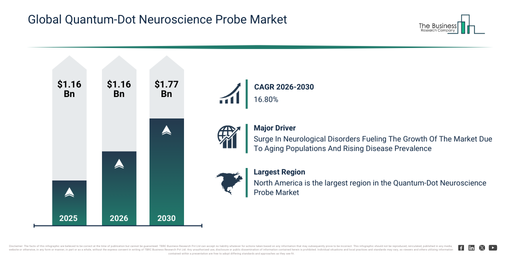
  • Quantum-Dot Neuroscience Probe Market Revenue Expected to Reach $2.05 Billion by 2030 with 16.8% CAGR

    Quantum-Dot Neuroscience Probe Market Revenue Expected to Reach $2.05 Billion by 2030 with 16.8% CAGR

    The Business Research Company’s 2026 market reports include new capabilities such as market attractiveness scoring and analysis, total addressable market analysis, company scoring matrix, interactive excel data dashboard, improved supply chain analysis, upcoming startups in the market, and overview of key products, aimed at improving the depth, usability, and strategic value of the insights delivered.

    What Is The Market Size Of The Quantum-Dot Neuroscience Probe Market In 2026 And What Value Is Projected For 2030?

    The quantum-dot neuroscience probe market has experienced substantial growth in its size over recent years. It is expected to grow from $0.94 billion in 2025 to $1.1 billion in 2026, achieving a compound annual growth rate (CAGR) of 17.0%. The expansion witnessed historically can be linked to advancements in nanotechnology research, an increase in neuroscience studies, the need for precise neural imaging, augmented academic funding, and the broader implementation of brain research programs.

    The quantum-dot neuroscience probe market size is projected to experience swift expansion over the coming years, with an anticipated growth to $2.05 billion by 2030, reflecting a compound annual growth rate (CAGR) of 16.8%. This projected increase during the forecast period is attributed to several factors, including the integration with AI-based neural analysis, a rise in neurodegenerative disease research, the expansion of brain mapping initiatives, the demand for real-time neural monitoring, and the commercialization of nano-probes. Significant trends anticipated in the forecast period involve high-resolution neural imaging, fluorescent quantum dot probes, nanoscale neuro monitoring, molecular-level brain analysis, and advanced neuro research tools.

    Download the Free Sample Report to Explore Key Market Insights:

    https://www.thebusinessresearchcompany.com/sample.aspx?id=29161&type=smp

    Which Growth Drivers Are Contributing To The Progress Of The Quantum-Dot Neuroscience Probe Market?

    The increasing occurrence of neurological conditions is anticipated to fuel the expansion of the quantum-dot neuroscience probe market in the future. These disorders are defined as health issues impacting the brain, spinal cord, and nerves, thereby influencing movement, cognitive abilities, and the entire nervous system’s operation. This increase in neurological conditions stems from an aging global population, lifestyle-associated risks, and a higher incidence of chronic illnesses, resulting in more widespread and burdensome nervous system ailments. Quantum-dot neuroscience probes assist in addressing neurological disorders by facilitating exceptionally precise imaging and tracking of neural activity, which in turn permits prompt diagnosis, specific therapies, and an enhanced comprehension of brain function and how diseases advance. As an illustration, the National Library of Medicine, a US-based federal government entity, reported in April 2025 that around 7.2 million Americans aged 65 and above are currently afflicted with Alzheimer’s dementia, with this number forecasted to escalate to 13.8 million by 2060. Consequently, the growing frequency of neurological disorders is stimulating the expansion of the quantum-dot neuroscience probe market.

    What Are The Key Segments Of The Quantum-Dot Neuroscience Probe Market?

    The quantum-dot neuroscience probe market covered in this report is segmented –

    1) By Product Type: Optical Probes, Electrical Probes, Multifunctional Probes

    2) By Material Type: Cadmium-Based Quantum Dots, Indium-Based Quantum Dots, Carbon Quantum Dots, Other Material Types

    3) By Application: Brain Imaging, Neural Activity Monitoring, Other Applications

    4) By End-User: Academic And Research Institutes, Pharmaceutical And Biotechnology Companies, Other End-Users

    Subsegments:

    1) By Optical Probes: Fluorescent Quantum Dot Probes, Near-Infrared Quantum Dot Probes, Photoactivated Quantum Dot Probes, Voltage-Sensitive Quantum Dot Probes

    2) By Electrical Probes: Quantum Dot Field Effect Transistor Probes, Quantum Dot Nanowire Probes, Quantum Dot Microelectrode Probes, Quantum Dot Conductive Polymer Probes

    3) By Multifunctional Probes: Quantum Dot Magnetic Probes, Quantum Dot Photoelectric Probes, Quantum Dot Biosensing Probes, Quantum Dot Theranostic Probes

    What Key Trends Are Influencing The Development Of The Quantum-Dot Neuroscience Probe Market?

    Who Are The Leading Companies Operating In The Quantum-Dot Neuroscience Probe Market?

    Major companies operating in the quantum-dot neuroscience probe market are Thermo Fisher Scientific Inc., Merck Group, ams-OSRAM AG, Nanosys Inc., American Elements Inc., QUANDELA Inc., Nanoco Technologies Ltd., UbiQD Inc., NN-Labs GmbH, Plasmachem GmbH, Avantama AG, Mesolight Inc., Quantum Solutions LLC, Cytodiagnostics Inc., Ocean NanoTech LLC, CD Bioparticles Inc., QD Laser Inc., QDI Systems Inc., Radetec Diagnostics Inc., QustomDot Inc.

    Read the full quantum-dot neuroscience probe market report here:

    https://www.thebusinessresearchcompany.com/report/quantum-dot-neuroscience-probe-global-market-report

    What Are The Leading Geographic Regions In The Quantum-Dot Neuroscience Probe Market?

    North America was the largest region in the quantum-dot neuroscience probe market in 2025. Asia-Pacific is expected to be the fastest-growing region in the forecast period. The regions covered in the quantum-dot neuroscience probe market report are Asia-Pacific, South East Asia, Western Europe, Eastern Europe, North America, South America, Middle East, Africa.

    Request A Tailored Quantum-Dot Neuroscience Probe Market Research Report For Competitive Advantage:

    https://www.thebusinessresearchcompany.com/customise?id=29161&type=smp

    Browse Through More Reports Similar to the Global Quantum-Dot Neuroscience Probe Market 2026, By The Business Research Company

    Quantum Dots Market Report 2026

    https://www.thebusinessresearchcompany.com/report/quantum-dots-global-market-report

    Quantum Dot Solar Cell Market Report 2026

    https://www.thebusinessresearchcompany.com/report/quantum-dot-solar-cell-global-market-report

    Quantum Chip Market Report 2026

    https://www.thebusinessresearchcompany.com/report/quantum-chip-global-market-report

    Get in touch with us:

    The Business Research Company: https://www.thebusinessresearchcompany.com/

    Americas +1 310-496-7795

    Asia +44 7882 955267 & +91 8897263534

    Europe +44 7882 955267

    Email us at info@tbrc.info

    Follow us on:

    LinkedIn: https://in.linkedin.com/company/the-business-research-company

    YouTube: https://www.youtube.com/channel/UC24_fI0rV8cR5DxlCpgmyFQ

    Global Market Model: https://www.thebusinessresearchcompany.com/global-market-model

  • Global Personal Emergency Response Systems (PERS) Market Set for Strong Expansion Reaching $12.59 Billion by 2030 at 8.8% CAGR

    Global Personal Emergency Response Systems (PERS) Market Set for Strong Expansion Reaching $12.59 Billion by 2030 at 8.8% CAGR

    The Business Research Company’s 2026 market reports include new capabilities such as market attractiveness scoring and analysis, total addressable market analysis, company scoring matrix, interactive excel data dashboard, improved supply chain analysis, upcoming startups in the market, and overview of key products, aimed at improving the depth, usability, and strategic value of the insights delivered.

    What Market Value Is Expected For The Personal Emergency Response Systems (PERS) Market At The End Of The 2026–2030 Forecast Period?

    Recent years have seen substantial expansion in the personal emergency response systems (pers) market size. Forecasts indicate an expansion from $8.23 billion in 2025 to $8.97 billion in 2026, achieving a compound annual growth rate (CAGR) of 9.0%. The historical growth is attributable to an expanding aging population, an increase in seniors opting for independent living, the demand for emergency healthcare, a shortage of caregivers, and greater awareness of elderly safety.

    The personal emergency response systems (PERS) market is anticipated to experience significant expansion in the coming years. Its valuation is projected to reach $12.6 billion by 2030, growing at a compound annual growth rate (CAGR) of 8.8%. The increase observed during this forecast period can be attributed to elements such as smart home integration, AI-driven emergency detection, the expansion of home healthcare services, governmental programs supporting elderly care, and the acceptance of mobile health. Key trends anticipated in the forecast timeframe include the development of wearable emergency devices, the adoption of GPS-enabled mobile PERS, the integration of fall detection sensors, solutions designed for elderly safety within homes, and voice-activated emergency systems.

    Download the Free Sample Report to Explore Key Market Insights:

    https://www.thebusinessresearchcompany.com/sample.aspx?id=22095&type=smp

    Which Market Drivers Are Supporting The Expansion Of The Personal Emergency Response Systems (PERS) Market?

    An increasing number of chronic diseases is anticipated to boost the personal emergency response systems (PERS) market in the coming years. These are persistent health conditions like diabetes, heart disease, and arthritis that emerge gradually and demand continuous care. The growing incidence of chronic diseases can be linked to unhealthy lifestyle choices and an aging population. These detrimental habits heighten the risk of obesity, insulin resistance, and inflammation, all critical factors in the development of chronic ailments. The rising prevalence of chronic conditions consequently drives the demand for personal emergency response systems (PERS), as they offer ongoing monitoring and rapid access to medical assistance. PERS serves as an essential solution, enabling users to alert emergency services or caregivers during health crises, thereby ensuring patient safety and providing peace of mind. For instance, in June 2024, the National Health Service, a UK-based government department, reported that in 2023, half a million (549,000) additional individuals in England were at risk of developing type 2 diabetes. This increased the total number of people with non-diabetic hyperglycemia, or pre-diabetes, registered with a GP to 3,615,330. This marks a significant increase compared to 3,065,825 in 2022, indicating a rise of nearly 20%. Therefore, the expanding prevalence of chronic diseases is a key driver for the growth of the personal emergency response systems (PERS) market.

    What Segment Types Make Up The Personal Emergency Response Systems (PERS) Market?

    The personal emergency response systems (pers) market covered in this report is segmented –

    1) By Type: Landline Personal Emergency Response System (PERS), Mobile Personal Emergency Response System (PERS)

    2) By Component: Smoke Detectors, Bed Sensors, Pull-Cord Residential, Fall Detection Sensors, Flood Detectors

    3) By End-User: Nursing Home, Home-Based User, Assisted Living Facilities, Hospices, Senior Living Facilities

    Subsegments:

    1) By Landline Personal Emergency Response System (PERS): Basic Landline PERS, Auto-Alert Landline PERS, Voice-Activated Landline PERS

    2) By Mobile Personal Emergency Response System (PERS): GPS-enabled Mobile PERS, Non-GPS Mobile PERS, Wearable Mobile PERS, Smartphone-based Mobile PERS

    Which Market Trends Are Creating New Opportunities In The Personal Emergency Response Systems (PERS) Market?

    Companies operating within the personal emergency response systems (PERS) market are strategically focusing on creating sophisticated products, notably medical alert devices, to elevate real-time monitoring for improved emergency response and more proactive healthcare management. A medical alert device is an electronic system engineered to deliver immediate assistance during medical emergencies, featuring a wearable help button that links users directly to emergency response services. An illustration of this is LogicMark, Inc., a US-based medical equipment manufacturing company, which introduced the next-generation Guardian Alert 911 Plus in February 2025. This advanced personal emergency response device is equipped with fall detection, 4G LTE technology, and a sleek, unobtrusive design, providing essential hands-free fall detection and immediate access to emergency services, thereby ensuring enhanced safety and independence for aging adults and individuals with medical conditions without the burden of ongoing costs.

    Who Are The Key Players Driving Competition In The Personal Emergency Response Systems (PERS) Market?

    Major companies operating in the personal emergency response systems (pers) market are ADT Inc, Tunstall Healthcare, Lifeline Systems Company, Medical Guardian, LifeStation, LifeFone Medical Alert Services, LifeWatch, Rescue Alert, AlertOne Services LLC, GreatCall, Bay Alarm Medical, Lifelink USA, Galaxy Medical Alert Systems, Alarm Systems, MediPendant, QMedic, Life Guardian LLC, Philips Lifeline, Bay Alarm Medical (Expanded Division), Philips Personal Emergency Response Solutions

    Read the full personal emergency response systems (pers) market report here:

    https://www.thebusinessresearchcompany.com/report/personal-emergency-response-systems-pers-global-market-report

    How Is The Personal Emergency Response Systems (PERS) Market Distributed Across Key Geographic Regions?

    North America was the largest region in the personal emergency response systems market in 2025. The regions covered in the personal emergency response systems (pers) market report are Asia-Pacific, South East Asia, Western Europe, Eastern Europe, North America, South America, Middle East, Africa.

    Request A Tailored Personal Emergency Response Systems (PERS) Market Research Report For Competitive Advantage:

    https://www.thebusinessresearchcompany.com/customise?id=22095&type=smp

    Browse Through More Reports Similar to the Global Personal Emergency Response Systems (PERS) Market 2026, By The Business Research Company

    Emergency Department Information System Market Report 2026

    https://www.thebusinessresearchcompany.com/report/emergency-department-information-system-global-market-report

    Emergency Medical Services Products Market Report 2026

    https://www.thebusinessresearchcompany.com/report/emergency-medical-services-products-global-market-report

    Incident And Emergency Management Market Report 2026

    https://www.thebusinessresearchcompany.com/report/incident-and-emergency-management-global-market-report

    Get in touch with us:

    The Business Research Company: https://www.thebusinessresearchcompany.com/

    Americas +1 310-496-7795

    Asia +44 7882 955267 & +91 8897263534

    Europe +44 7882 955267

    Email us at info@tbrc.info

    Follow us on:

    LinkedIn: https://in.linkedin.com/company/the-business-research-company

    YouTube: https://www.youtube.com/channel/UC24_fI0rV8cR5DxlCpgmyFQ

    Global Market Model: https://www.thebusinessresearchcompany.com/global-market-model