Month: March 2026

  • Injection Pen Market Expected to Record Steady Growth and Approach $103.59 Billion by 2030

    Injection Pen Market Expected to Record Steady Growth and Approach $103.59 Billion by 2030

    The Business Research Company’s 2026 market reports include new capabilities such as market attractiveness scoring and analysis, total addressable market analysis, company scoring matrix, interactive excel data dashboard, improved supply chain analysis, upcoming startups in the market, and overview of key products, aimed at improving the depth, usability, and strategic value of the insights delivered.

    What Market Valuation Is Forecasted For The Injection Pen Market By 2030 Starting From Its 2026 Size?

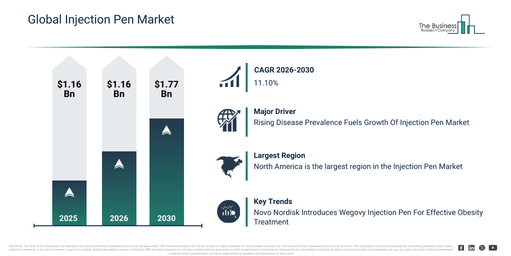
    The injection pen market has seen rapid expansion in recent years. Its value is anticipated to rise from $61.17 billion in 2025 to $67.94 billion in 2026, driven by a compound annual growth rate (CAGR) of 11.1%. Historically, this growth has been fueled by the increasing prevalence of diabetes and chronic illnesses, the expansion of self-administration therapies, the broader use of biologic drugs, enhancements in injection device design, and a growing patient preference for pen-based delivery.

    The injection pen market size is projected to experience rapid expansion in the coming years. It is expected to reach $103.59 billion in 2030, demonstrating a compound annual growth rate (CAGR) of 11.1%. The growth anticipated during the forecast period is influenced by factors such as the increasing demand for home-based drug delivery, the rising adoption of smart injection pens, the expansion of chronic disease management programs, a heightened focus on sustainability in medical devices, and advancements in connected drug delivery systems. Key trends for this forecast period include the increasing acceptance of user-friendly injection devices, a surging demand for disposable and prefilled pens, the growing integration of dose accuracy and safety features, the expansion of reusable and rechargeable injection pens, and an enhanced emphasis on patient adherence solutions.

    Download the Free Sample Report to Explore Key Market Insights:

    https://www.thebusinessresearchcompany.com/sample.aspx?id=5676&type=smp

    Which Market Drivers Are Supporting The Expansion Of The Injection Pen Market?

    The increasing occurrence of conditions such as diabetes and arthritis contributes to the expansion of the injection pen market. Several factors, including a larger obese population, physical inactivity, unhealthy eating habits, and advancing age, have led to a rise in the global incidence of diabetes. For instance, the International Diabetes Federation (IDF), a Belgium-based non-governmental, global advocacy organization focused on diabetes care, prevention, and research, reported in April 2025 that 589 million adults (20-79 years) globally are living with diabetes, a figure exceeding the combined population of the U.S., Canada, Mexico, and the Caribbean. The estimated number of adults with diabetes is projected to reach 853 million by 2050. Consequently, the escalating prevalence of diseases like diabetes and arthritis will propel the growth of the injection pen market.

    Which Segment Categories Define The Injection Pen Market?

    The injection pen market covered in this report is segmented –

    1) By Product Type: Disposable Injection Pens, Reusable Injection Pens

    2) By Therapy: Diabetes, Fertility, Osteoporosis, Growth Hormone Therapy, Other Therapies

    3) By End Users: Home Care, Hospital And Clinics

    Subsegments:

    1) By Disposable Injection Pens: Pre-filled Disposable Injection Pens, Single-Use Disposable Injection Pens

    2) By Reusable Injection Pens: Refillable Injection Pens, Multi-Use Injection Pens, Rechargeable Injection Pens

    What Major Market Trends Are Driving Changes In The Injection Pen Market?

    Leading firms in the injection pen market are concentrating on developing novel products, such as Wegovy, to deliver dependable services to consumers. Wegovy functions as an injection pen for managing patients dealing with obesity and seeking weight loss. For instance, Novo Nordisk A/S, a pharmaceutical company based in Denmark, introduced Wegovy in September 2023. This injection pen contains the medication semaglutide. When combined with exercise and adjustments to lifestyle, Wegovy aids patients in achieving approximately a 15% reduction in body weight.

    Who Are The Top Companies Competing In The Injection Pen Market?

    Major companies operating in the injection pen market are Novo Nordisk A/S, Ypsomed Holding AG, Eli Lilly and Company, Merck KGaA, AstraZeneca plc, F. Hoffmann-La Roche Ltd., Owen Mumford Ltd., Sun Pharmaceutical Industries Ltd., Pfizer Inc., Lupin Ltd., Wockhardt Ltd., AptarGroup Inc., Novartis AG, Gerresheimer AG, SHL Medical AG, Boehringer Ingelheim International GmbH, Nemera France SA, Companion Medical Inc., Jiangsu Delfu Medical Devices Co. Ltd., Haselmeier GmbH, Biocon Limited, Becton Dickinson and Company, Mylan N.V., Terumo Corporation, West Pharmaceutical Services Inc., Bespak Europe Ltd., Nipro Corporation, Consort Medical plc, Sandoz Inc., Sulzer Ltd., DuPont de Nemours Inc., Mitsubishi Gas Chemical Company Inc.

    Read the full injection pen market report here:

    https://www.thebusinessresearchcompany.com/report/injection-pen-global-market-report

    How Is The Injection Pen Market Distributed Across Key Geographic Regions?

    North America was the largest region in the injection pen market in 2025. The regions covered in the injection pen market report are Asia-Pacific, South East Asia, Western Europe, Eastern Europe, North America, South America, Middle East, Africa.

    Request A Tailored Injection Pen Market Research Report For Competitive Advantage:

    https://www.thebusinessresearchcompany.com/customise?id=5676&type=smp

    Browse Through More Reports Similar to the Global Injection Pen Market 2026, By The Business Research Company

    Corticosteroid Market Report 2026

    https://www.thebusinessresearchcompany.com/report/corticosteroid-global-market-report

    Respiratory Devices And Equipment Therapeutic Market Report 2026

    https://www.thebusinessresearchcompany.com/report/respiratory-devices-and-equipment-therapeutic-global-market-report

    Smart Inhalers Market Report 2026

    https://www.thebusinessresearchcompany.com/report/smart-inhalers-global-market-report

    Get in touch with us:

    The Business Research Company: https://www.thebusinessresearchcompany.com/

    Americas +1 310-496-7795

    Asia +44 7882 955267 & +91 8897263534

    Europe +44 7882 955267

    Email us at info@tbrc.info

    Follow us on:

    LinkedIn: https://in.linkedin.com/company/the-business-research-company

    YouTube: https://www.youtube.com/channel/UC24_fI0rV8cR5DxlCpgmyFQ

    Global Market Model: https://www.thebusinessresearchcompany.com/global-market-model
  • Foot Drop Treatment Devices Market Outlook 2026–2035 Influenced by Key Growth Drivers and Industry Forecasts

    Foot Drop Treatment Devices Market Outlook 2026–2035 Influenced by Key Growth Drivers and Industry Forecasts

    The Business Research Company’s 2026 market reports include new capabilities such as market attractiveness scoring and analysis, total addressable market analysis, company scoring matrix, interactive excel data dashboard, improved supply chain analysis, upcoming startups in the market, and overview of key products, aimed at improving the depth, usability, and strategic value of the insights delivered.

    What Market Size Growth Is Projected For The Foot Drop Treatment Devices Market During The Forecast Period 2026–2030?

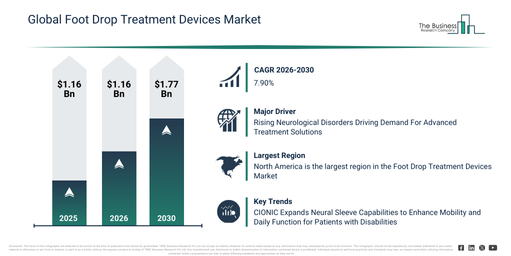
    The foot drop treatment devices market has demonstrated robust expansion over recent years. Its valuation is anticipated to climb from $2.45 billion in 2025 to $2.65 billion in 2026, achieving a compound annual growth rate (CAGR) of 8.1%. This historical development can be ascribed to several factors, including the rising occurrence of neurological disorders, an increase in stroke-related mobility limitations, the establishment of more rehabilitation centers, greater availability of orthotic devices, and enhanced clinical understanding of foot drop management.

    The foot drop treatment devices market size is expected to experience significant expansion over the coming years. By 2030, this market is projected to reach $3.59 billion, demonstrating a compound annual growth rate (CAGR) of 7.9%. Key factors contributing to this anticipated growth include a greater uptake of sophisticated neurorehabilitation technologies, an increasing need for home-based mobility aids, the development of more tailored orthotic solutions, an elevated emphasis on enhancing life quality, and advancements in wearable medical technology. Prominent trends during this forecast period encompass the wider adoption of functional electrical stimulation tools, an escalating demand for individually fitted orthotic braces, a greater application of lightweight and flexible materials, the proliferation of rehabilitation options available at home, and a heightened dedication to improving patient mobility.

    Download the Free Sample Report to Explore Key Market Insights:

    https://www.thebusinessresearchcompany.com/sample.aspx?id=20792&type=smp

    What Underlying Factors Are Accelerating The Growth Of The Foot Drop Treatment Devices Market?

    The projected growth of the foot drop treatment devices market is expected to be propelled by the rising incidence of neurological disorders and injuries. Neurological disorders and injuries describe conditions that affect the brain, spinal cord, and nerves, leading to dysfunction in motor skills, sensation, cognition, or behavior due to damage, disease, or degeneration of the nervous system. The escalating prevalence of these conditions is driven by factors such as an aging global population, increased awareness and diagnosis, lifestyle factors, environmental influences, and advancements in medical technology that allow for better detection and treatment. Foot drop treatment devices are crucial for individuals with neurological disorders and injuries, as these conditions often impair the ability to lift the foot, causing difficulty walking and a higher risk of falls. These devices offer vital support and stability by assisting in lifting the foot, thereby improving mobility and enhancing the quality of life for those impacted by these conditions. For instance, in October 2023, the World Federation of Neurology, a UK-based association of national neurological societies, reported that more than 40% of the global population is currently affected by some form of neurological condition. This burden is expected to nearly double by 2050. Consequently, the increasing incidence of neurological disorders and injuries is driving the growth of the foot drop treatment devices market.

    What Market Segments Are Evaluated Within The Foot Drop Treatment Devices Market?

    The foot drop treatment devices market covered in this report is segmented –

    1) By Product Type: Electrical Stimulator, Braces Or Splints

    2) By Application: Neuropathy, Muscle Disorders, Brain And Spinal Disorders, Other Applications

    3) By End User: Hospitals, Ambulatory Surgical Centers, Clinics, Homecare Settings

    Subsegments:

    1) By Electrical Stimulator: Functional Electrical Stimulation (FES) Devices, Neuromuscular Electrical Stimulation (NMES) Devices, Transcutaneous Electrical Nerve Stimulation (TENS) Devices, Others

    2) By Braces Or Splints: Ankle-Foot Orthoses (AFO), Dynamic Ankle-Foot Orthoses (DAFO), Hinged Ankle Braces, Custom-Made Braces, Others

    What Industry Trends Are Redefining The Foot Drop Treatment Devices Market?

    Leading companies within the foot drop treatment devices market are increasingly concentrating on technological breakthroughs, particularly in software-powered, wearable bionic clothing that merges functional electrical stimulation with real-time mobility monitoring. This innovation seeks to improve walking capabilities, strength, and overall independence for individuals facing neuromuscular impairments. Such software-driven wearable bionic devices enable personalized functional training, provide comprehensive progress monitoring, and integrate seamlessly into daily living activities, thereby assisting patients in regaining mobility, navigating stairs, walking, and performing essential daily tasks more autonomously. For instance, in May 2024, CIONIC, a U.S.-based neurotechnology company, announced enhancements to its FDA-cleared Cionic Neural Sleeve, introducing new functional exercises and detailed activity tracking reports specifically for patients with conditions such as multiple sclerosis, strokes, spinal cord injuries, and other upper motor neuron diagnoses. This lightweight, durable leg sleeve combines gait lab diagnostics with functional electrical stimulation and is operated via a smartphone, allowing for software-driven updates to be simultaneously deployed to all users, ultimately empowering patients to enhance their functional mobility and daily independence.

    Who Are The Top Market Participants Influencing The Foot Drop Treatment Devices Market?

    Major companies operating in the foot drop treatment devices market are Cardinal Health Inc., Stryker Corporation, Henry Schein Inc., Smith & Nephew LLC, Ottobock, Hanger Inc., Ossur, Bauerfeind USA Inc., Breg Inc., B. Braun Melsungen AG, Trulife Ltd., Orthomerica Products Inc., Bioness Inc., Evolution Health Care Pvt. Ltd., Aspen Medical Products, Allard Inc., Footmaxx, ProCare, DJO Global Inc., ALIMCO, Saebo Inc., Axio Bionics LLC, Thrive Orthopedics, Turbomed Orthotics, Accord Medical Products Private Limited

    Read the full foot drop treatment devices market report here:

    https://www.thebusinessresearchcompany.com/report/foot-drop-treatment-devices-global-market-report

    Which Region Is Projected To Dominate The Foot Drop Treatment Devices Market During The Forecast Period?

    North America was the largest region in the foot drop treatment devices market in 2025. Asia-Pacific is expected to be the fastest-growing region in the forecast period. The regions covered in the foot drop treatment devices market report are Asia-Pacific, South East Asia, Western Europe, Eastern Europe, North America, South America, Middle East, Africa.

    Request A Tailored Foot Drop Treatment Devices Market Research Report For Competitive Advantage:

    https://www.thebusinessresearchcompany.com/customise?id=20792&type=smp

    Browse Through More Reports Similar to the Global Foot Drop Treatment Devices Market 2026, By The Business Research Company

    Foot And Ankle Devices Market Report 2026

    https://www.thebusinessresearchcompany.com/report/foot-and-ankle-devices-global-market-report

    Industrial Protective Footwear Market Report 2026

    https://www.thebusinessresearchcompany.com/report/industrial-protective-footwear-global-market-report

    Diabetic Footwear Market Report 2026

    https://www.thebusinessresearchcompany.com/report/diabetic-footwear-global-market-report

    Get in touch with us:

    The Business Research Company: https://www.thebusinessresearchcompany.com/

    Americas +1 310-496-7795

    Asia +44 7882 955267 & +91 8897263534

    Europe +44 7882 955267

    Email us at info@tbrc.info

    Follow us on:

    LinkedIn: https://in.linkedin.com/company/the-business-research-company

    YouTube: https://www.youtube.com/channel/UC24_fI0rV8cR5DxlCpgmyFQ

    Global Market Model: https://www.thebusinessresearchcompany.com/global-market-model
  • Injectable Drug Delivery Devices Industry Expansion Forecast Showing Market Size of $79.5 Billion by 2030 at 7.9% CAGR

    Injectable Drug Delivery Devices Industry Expansion Forecast Showing Market Size of $79.5 Billion by 2030 at 7.9% CAGR

    The Business Research Company’s 2026 market reports include new capabilities such as market attractiveness scoring and analysis, total addressable market analysis, company scoring matrix, interactive excel data dashboard, improved supply chain analysis, upcoming startups in the market, and overview of key products, aimed at improving the depth, usability, and strategic value of the insights delivered.

    How Is The Market Size Of The Injectable Drug Delivery Devices Market Expected To Change Between 2026 And 2030?

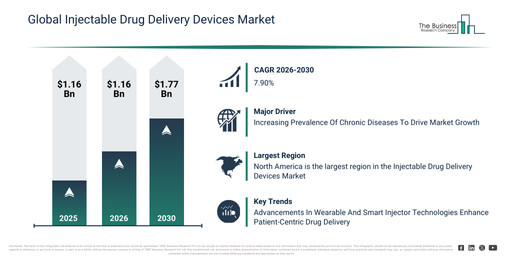
    The injectable drug delivery devices market has shown strong expansion over recent years. Its value is anticipated to rise from $54.3 billion in 2025 to $58.69 billion in 2026, demonstrating a compound annual growth rate (CAGR) of 8.1%. This historical growth can be attributed to several factors, including the increasing occurrence of chronic diseases, the proliferation of biologics and biosimilars, a rise in hospital-based injectable treatments, enhancements in sterile manufacturing processes, and the broader availability of injection devices.

    The injectable drug delivery devices market is projected to experience robust growth in the upcoming years. This market is set to expand to $79.51 billion by 2030, exhibiting a compound annual growth rate (CAGR) of 7.9%. This anticipated expansion during the forecast period is driven by a growing preference for self-administration devices, increasing demand for personalized drug delivery, the enlargement of biologic drug pipelines, rising investments in smart injection technologies, and the broader acceptance of home healthcare solutions. Prominent trends expected in this period include a wider embrace of prefilled and safety syringes, a heightened demand for autoinjectors and pen injectors, the expanding use of home-based injectable therapies, the proliferation of wearable and implantable infusion pumps, and an amplified emphasis on dose precision and patient safety.

    Download the Free Sample Report to Explore Key Market Insights:

    https://www.thebusinessresearchcompany.com/sample.aspx?id=2835&type=smp

    What Underlying Factors Are Accelerating The Growth Of The Injectable Drug Delivery Devices Market?

    The increasing incidence of chronic illnesses is anticipated to boost the growth of the injectable drug delivery devices market. A chronic disease is defined as a long-term condition persisting for at least three months, which may worsen over time. Injectable drug delivery devices provide a dependable and easy way to administer medications over prolonged durations. Such devices can improve patients’ compliance with their treatment plans, facilitating efficient management of chronic ailments and ultimately resulting in improved health outcomes. For example, data from June 2024, released by the National Health Service, a UK-based government department, indicated that 3,615,330 individuals registered with a general practitioner (GP) were diagnosed with non-diabetic hyperglycemia or pre-diabetes (a condition with elevated blood sugar levels, not high enough to be classified as diabetes) in 2023. This represented an 18% increase from 3,065,825 cases reported in 2022. Consequently, the growing prevalence of chronic diseases is propelling the expansion of the injectable drug delivery devices market moving forward.

    How Is The Injectable Drug Delivery Devices Market Structured Across Different Segments?

    The injectable drug delivery devices market covered in this report is segmented –

    1) By Type: Syringes, Injectors, Pump

    2) By Application: Autoimmune Diseases, Hormonal Disorders, Oncology, Orphan Diseases, Pain Management, Respiratory Therapy, Other Applications

    3) By End-user: Hospitals And Clinics, Home Healthcare Settings, Pharmaceutical And Biotechnological Companies, Research Laboratories, Other End Users

    Subsegments:

    1) By Syringes: Conventional Syringes, Prefilled Syringes, Safety Syringes

    2) By Injectors: Autoinjectors, Pen Injectors, Needle-Free Injectors

    3) By Pumps: Insulin Pumps, Ambulatory Infusion Pumps, Implantable Pumps

    Which Trends Are Shaping The Future Of The Injectable Drug Delivery Devices Market?

    Leading firms within the injectable drug delivery devices market are prioritizing the creation of sophisticated solutions, including wearable and smart injectors, with the aim of boosting patient ease of use, improving treatment compliance, and enabling individuals to self-administer intricate treatments. These wearable and smart injectors represent cutting-edge systems engineered to precisely dispense medications, such as biologics and high-volume formulations, simultaneously lessening patient discomfort, decreasing the likelihood of user mistakes, and elevating the entire treatment journey. As an illustration, in January 2025, Becton, Dickinson and Company, a US-based medical technology company, unveiled several next-generation devices, including the BD Accuspray Nasal Spray System, BD Hylok Glass Prefillable Syringe, BD Effivax Glass Prefillable Syringe, BD Libertas Wearable Injector, BD Evolve On-body Injector, BD Physioject Disposable Autoinjector, and BD Vystra Disposable Pen. These offerings incorporate easy-to-use designs for self-administration, provide accurate and reliable dosing for biologics and vaccines, are compatible with various drug formulations, and come in wearable designs facilitating the delivery of large volumes, all while maintaining sterility and safety via disposable parts. This introduction highlights the industry’s evolving focus toward sophisticated, patient-oriented injectable drug delivery systems designed to enhance compliance, improve comfort, and optimize treatment results.

    Which Major Players Dominate The Injectable Drug Delivery Devices Market?

    Major companies operating in the injectable drug delivery devices market are Becton Dickinson and Company, Baxter International, Gerresheimer AG, Catalent Inc., Antares Pharma, Owen Mumford, West Pharmaceutical Services Inc., B. Braun Melsungen AG, Ypsomed AG, AptarGroup Inc., Nemera, Teleflex Medical, Medtronic, Caplin Steriles Limited, Hovione Technology, Jiangsu Delfu Medical Device Co. Ltd., Terumo Corporation, Roche, Sorrel Medical, Novo Nordisk

    Read the full injectable drug delivery devices market report here:

    https://www.thebusinessresearchcompany.com/report/injectable-drug-delivery-devices-global-market-report

    Which Region Is Projected To Dominate The Injectable Drug Delivery Devices Market During The Forecast Period?

    North America was the largest region in the injectable drug delivery devices market in 2025. Asia-Pacific is expected to be the fastest-growing region in the forecast period. The regions covered in the injectable drug delivery devices market report are Asia-Pacific, South East Asia, Western Europe, Eastern Europe, North America, South America, Middle East, Africa.

    Request A Tailored Injectable Drug Delivery Devices Market Research Report For Competitive Advantage:

    https://www.thebusinessresearchcompany.com/customise?id=2835&type=smp

    Browse Through More Reports Similar to the Global Injectable Drug Delivery Devices Market 2026, By The Business Research Company

    Glucose Biosensors Market Report 2026

    https://www.thebusinessresearchcompany.com/report/glucose-biosensors-global-market-report

    Disposable Medical Sensors Market Report 2026

    https://www.thebusinessresearchcompany.com/report/disposable-medical-sensors-global-market-report

    Disposable Medical Devices Sensors Market Report 2026

    https://www.thebusinessresearchcompany.com/report/disposable-medical-devices-sensors-global-market-report

    Get in touch with us:

    The Business Research Company: https://www.thebusinessresearchcompany.com/

    Americas +1 310-496-7795

    Asia +44 7882 955267 & +91 8897263534

    Europe +44 7882 955267

    Email us at info@tbrc.info

    Follow us on:

    LinkedIn: https://in.linkedin.com/company/the-business-research-company

    YouTube: https://www.youtube.com/channel/UC24_fI0rV8cR5DxlCpgmyFQ

    Global Market Model: https://www.thebusinessresearchcompany.com/global-market-model

  • Foot And Ankle Devices Market Developments and Emerging Opportunities Across 2026–2030

    Foot And Ankle Devices Market Developments and Emerging Opportunities Across 2026–2030

    The Business Research Company’s 2026 market reports include new capabilities such as market attractiveness scoring and analysis, total addressable market analysis, company scoring matrix, interactive excel data dashboard, improved supply chain analysis, upcoming startups in the market, and overview of key products, aimed at improving the depth, usability, and strategic value of the insights delivered.

    How Will The Market Size Of The Foot And Ankle Devices Market Evolve From 2026 To 2030?

    The foot and ankle devices market has experienced rapid expansion in recent years. Its size is projected to grow from $6.6 billion in 2025 to $7.3 billion in 2026, demonstrating a compound annual growth rate (CAGR) of 10.6%. The historical growth can be linked to factors such as the increasing prevalence of foot and ankle disorders, an aging global population, a rise in diabetes-related foot complications, the expansion of orthopedic surgical procedures, and improved access to specialized orthopedic care.

    The foot and ankle devices market is projected to experience substantial expansion in the coming years. Its valuation is predicted to reach $10.77 billion by 2030, exhibiting a compound annual growth rate (CAGR) of 10.2%. This expansion during the forecast period is fueled by factors such as a greater need for tailored orthopedic solutions, wider acceptance of minimally invasive surgical methods, a stronger emphasis on post-surgical recovery results, the broader application of advanced biomaterials, and increased capital directed towards orthopedic device innovation. Key developments anticipated in this period encompass the growing integration of custom orthopedic implants, an uptick in the utilization of sophisticated bracing and support products, an intensified focus on less invasive foot and ankle interventions, the proliferation of devices for diabetic foot care, and a heightened priority on prosthetics customized for individual patients.

    Download the Free Sample Report to Explore Key Market Insights:

    https://www.thebusinessresearchcompany.com/sample.aspx?id=6324&type=smp

    Which Growth Drivers Are Contributing To The Progress Of The Foot And Ankle Devices Market?

    The rising incidence of orthopedic disorders is anticipated to drive the expansion of the foot and ankle devices market in the coming period. These disorders involve conditions impacting the musculoskeletal system, causing harm to muscle and bone tissues, specifically encompassing bones, cartilage, ligaments, tendons, and other connective tissues. Foot and ankle devices serve to treat diverse fusions, fractures, and osteotomies across the forefoot, midfoot, and rearfoot regions, thereby contributing to market growth. For example, in October 2023, data from the National Center for Biotechnology Information (NCBI), a US-based government research organization, indicated that cases of other musculoskeletal disorders are forecast to rise by 115% (107-124) between 2020 and 2050, reaching approximately 1060 million (95% UI 964-1170) prevalent cases by 2050. Furthermore, the majority of regions are expected to see at least a 50% increase in cases during this 2020 to 2050 timeframe. Consequently, the escalating occurrence of orthopedic disorders is fueling the expansion of the foot and ankle devices market.

    Which Segment Areas Are Covered In The Foot And Ankle Devices Market Analysis?

    The foot and ankle devices market covered in this report is segmented –

    1) By Product: Bracing and Support Devices, Foot and Ankle Surgical Implants

    2) By Cause Of Injury: Trauma, Diabetes, Neurological Disorders

    3) By End User: Hospitals, Ambulatory Surgery Centers, Orthopedic Clinics, Rehabilitation Centers

    Subsegments:

    1) By Bracing and Support Devices: Ankle Braces, Foot Orthoses (Arch Supports), Night Splints

    2) By Foot and Ankle Surgical Implants: Plates and Screws, Intramedullary Nails and Rods, Arthrodesis (Fusion) Devices, Total Ankle Replacement (TAR) Systems, External Fixation Devices, Bioabsorbable Fixation Devices

    What Key Developments And Trends Are Impacting The Foot And Ankle Devices Market?

    Leading companies active in the foot and ankle market are advancing technologies like navigation systems to improve surgical precision, enhance patient outcomes, and shorten operative times in complex procedures. A navigation system in the foot and ankle market refers to a computer-assisted surgical technology that offers real-time, 3D guidance, helping surgeons accurately position and align implants during operations. For instance, in March 2025, Exactech, a U.S.-based orthopedic medical device company, unveiled its GPS Ankle navigation system as a pioneering launch for total ankle replacement surgeries. This system integrates real-time intraoperative guidance with Exactech’s Vantage 3D and 3D+ ankle implants, enabling surgeons to precisely match resections carried out in the operating room to their preoperative CT-based plan with significant accuracy (2 mm / 2°). This sophisticated navigation platform boosts surgical precision, reduces the reliance on fluoroscopy, and supports data-driven decision-making through its integration with Exactech’s Active Intelligence™ ecosystem.

    Which Global Companies Are Actively Competing In The Foot And Ankle Devices Market?

    Major companies operating in the foot and ankle devices market are Aap Implantate AG, Acumed LLC, Advanced Orthopaedic Solutions Inc., Arthrex Inc., CONMED Corporation, DePuy Synthes Companies, DonJoy Inc., Extremity Medical LLC, FH ORTHOPEDICS S.A.S., Integra LifeSciences Holdings Corporation, Medartis Holding AG, Mondeal Medical Systems GmbH, Orthofix Medical Inc., Smith & Nephew plc, Stryker Corporation, Tornier N.V., Vilex in Tennessee Inc., Wright Medical Technology Inc., Zimmer Biomet Holdings Inc., KYOCERA Medical Corporation, Medacta International SA, Merete Medical GmbH, Inovedis SAS, OsteoMed LLC

    Read the full foot and ankle devices market report here:

    https://www.thebusinessresearchcompany.com/report/foot-and-ankle-devices-global-market-report

    What Are The Leading Geographic Regions In The Foot And Ankle Devices Market?

    North America was the largest region in the foot and ankle devices market in 2025. Asia-Pacific is expected to be the fastest-growing region in the forecast period. The regions covered in the foot and ankle devices market report are Asia-Pacific, South East Asia, Western Europe, Eastern Europe, North America, South America, Middle East, Africa.

    Request A Tailored Foot And Ankle Devices Market Research Report For Competitive Advantage:

    https://www.thebusinessresearchcompany.com/customise?id=6324&type=smp

    Browse Through More Reports Similar to the Global Foot And Ankle Devices Market 2026, By The Business Research Company

    Medical Footwear Market Report 2026

    https://www.thebusinessresearchcompany.com/report/medical-footwear-global-market-report

    Industrial Protective Footwear Market Report 2026

    https://www.thebusinessresearchcompany.com/report/industrial-protective-footwear-global-market-report

    Athletic Footwear Market Report 2026

    https://www.thebusinessresearchcompany.com/report/athletic-footwear-global-market-report

    Get in touch with us:

    The Business Research Company: https://www.thebusinessresearchcompany.com/

    Americas +1 310-496-7795

    Asia +44 7882 955267 & +91 8897263534

    Europe +44 7882 955267

    Email us at info@tbrc.info

    Follow us on:

    LinkedIn: https://in.linkedin.com/company/the-business-research-company

    YouTube: https://www.youtube.com/channel/UC24_fI0rV8cR5DxlCpgmyFQ

    Global Market Model: https://www.thebusinessresearchcompany.com/global-market-model
  • Injectable Cement Market Revenue Expected to Reach $2.12 Billion by 2030 with 6.4% CAGR

    Injectable Cement Market Revenue Expected to Reach $2.12 Billion by 2030 with 6.4% CAGR

    The Business Research Company’s 2026 market reports include new capabilities such as market attractiveness scoring and analysis, total addressable market analysis, company scoring matrix, interactive excel data dashboard, improved supply chain analysis, upcoming startups in the market, and overview of key products, aimed at improving the depth, usability, and strategic value of the insights delivered.

    What Is The Market Size Of The Injectable Cement Market In 2026 And What Value Is Projected For 2030?

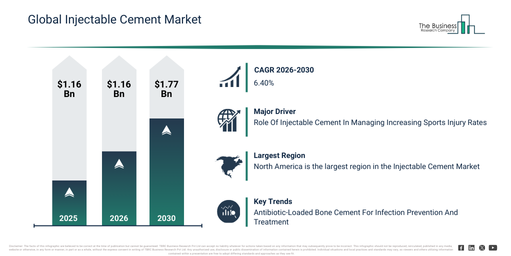
    The injectable cement market size has experienced strong growth in recent years. Its value is forecast to increase from $1.55 billion in 2025 to $1.66 billion in 2026, at a compound annual growth rate (CAGR) of 6.7%. The expansion observed historically can be linked to the rising incidence of bone fractures, the continued reliance on traditional orthopedic fixation methods, an expanding elderly population, the broadening of hospital-based orthopedic care, and the adoption of PMMA-based bone cements.

    The injectable cement market is projected to experience substantial growth in the upcoming years. It is anticipated to reach a valuation of $2.13 billion by 2030, demonstrating a compound annual growth rate (CAGR) of 6.4%. This growth during the forecast period can be attributed to several factors, including advancements in injectable cement formulations, an increased demand for minimally invasive surgical procedures, a rise in orthopedic trauma incidents, the expansion of outpatient and clinic-based treatments, and an enhanced emphasis on biocompatible and bioactive materials. Key trends anticipated within the forecast period encompass the increasing adoption of minimally invasive orthopedic procedures, the expanding application of injectable cement in stabilizing fractures, a growing inclination towards image-guided cement injections, innovations in bioactive and composite injectable cements, and a heightened focus on accelerating patient recovery and improving overall outcomes.

    Download the Free Sample Report to Explore Key Market Insights:

    https://www.thebusinessresearchcompany.com/sample.aspx?id=19528&type=smp

    Which Growth Drivers Are Contributing To The Progress Of The Injectable Cement Market?

    A growing incidence of sports-related injuries is anticipated to propel the expansion of the injectable cement market moving forward. Sports-related injuries refer to physical harm sustained during athletic endeavors, including strains, sprains, fractures, and concussions, which often require medical intervention and rehabilitation for recuperation. The surge in sports-related injuries is likely attributed to increased engagement in athletic activities, more intensive training regimes, and improvements in sports equipment that challenge physical boundaries, resulting in higher injury rates among athletes globally. Injectable cement is employed in the treatment of sports-related injuries to stabilize fractures, support bone healing, and improve surgical outcomes by offering a dependable and minimally invasive solution for bone reinforcement. For instance, in July 2025, according to the Australian Institute of Health and Welfare, an Australia-based government agency, cycling accounted for the largest portion of sports-related hospitalizations in 2023–24, representing 12% (around 7,500 cases). This was followed by Australian rules football at 8.7% (about 5,400 cases) and soccer at 8.6% (roughly 5,300 cases). Consequently, the rising number of sports-related injuries will drive the growth of the injectable cement market.

    What Are The Key Segments Of The Injectable Cement Market?

    The injectable cement market covered in this report is segmented –

    1) By Type: High Viscosity Cement, Low Viscosity Cement, Medium Viscosity Cement

    2) By Application: Periprosthetic Fractures, Pelvic Fractures, Other Applications

    3) By End User: Hospital, Clinics, Other End Users

    Subsegments:

    1) By High Viscosity Cement: Calcium Phosphate Cements, Polymethyl Methacrylate (PMMA) Cements

    2) By Low Viscosity Cement: Acrylic-Based Injectable Cements, Bioactive Glass Cements

    3) By Medium Viscosity Cement: Hybrid Injectable Cements, Composite Injectable Cements

    What Key Trends Are Influencing The Development Of The Injectable Cement Market?

    Major companies in the injectable cement market are increasingly prioritizing technological innovations, such as antibiotic-loaded bone cement, to boost infection control, achieve better patient outcomes, and enable more precise and effective treatment during orthopedic surgeries. Antibiotic-loaded bone cement is a formulation where antibiotics are mixed into the cement material, designed to help prevent or address infections at surgical sites, particularly in orthopedic procedures. For instance, in April 2024, Heraeus Medical GmbH, a medical technology producer based in Germany, introduced COPAL G+C, their latest antibiotic-loaded bone cement. This product is the first from the company to receive certification under the MDR. COPAL G+C combines gentamicin and clindamycin, which allows for targeted infection management in arthroplasty by addressing up to 90% of pathogens commonly associated with prosthetic joint infections.

    Who Are The Leading Companies Operating In The Injectable Cement Market?

    Major companies operating in the injectable cement market are Johnson & Johnson, Stryker Corporation, Zimmer Biomet Holdings Inc, Smith & Nephew, Arthrex Inc, Enovis Corporation, Globus Medical Inc, Wright Medical Group N.V, Medacta International, Orthofix Medical Inc, Alphatec Spine Inc, Exactech Inc, Spine Wave Inc, Tecres SpA, Heraeus Medical GmbH, TEKNIMED, Graftys SA, Solco Biomedical, Terumo Corporation, Bonesupport AB, Peregrine Biologics, aap Implantate AG, Biometrix Ltd, OSARTIS GmbH, IZI Medical

    Read the full injectable cement market report here:

    https://www.thebusinessresearchcompany.com/report/injectable-cement-global-market-report

    What Are The Leading Geographic Regions In The Injectable Cement Market?

    North America was the largest region in the injectable cement market in 2025. Asia-Pacific is expected to be the fastest-growing region in the forecast period. The regions covered in the injectable cement market report are Asia-Pacific, South East Asia, Western Europe, Eastern Europe, North America, South America, Middle East, Africa.

    Request A Tailored Injectable Cement Market Research Report For Competitive Advantage:

    https://www.thebusinessresearchcompany.com/customise?id=19528&type=smp

    Browse Through More Reports Similar to the Global Injectable Cement Market 2026, By The Business Research Company

    Home Infusion Therapy Market Report 2026

    https://www.thebusinessresearchcompany.com/report/home-infusion-therapy-global-market-report

    Infusion Pump Market Report 2026

    https://www.thebusinessresearchcompany.com/report/infusion-pump-global-market-report

    Implantable Infusion Pumps Market Report 2026

    https://www.thebusinessresearchcompany.com/report/implantable-infusion-pumps-global-market-report

    Get in touch with us:

    The Business Research Company: https://www.thebusinessresearchcompany.com/

    Americas +1 310-496-7795

    Asia +44 7882 955267 & +91 8897263534

    Europe +44 7882 955267

    Email us at info@tbrc.info

    Follow us on:

    LinkedIn: https://in.linkedin.com/company/the-business-research-company

    YouTube: https://www.youtube.com/channel/UC24_fI0rV8cR5DxlCpgmyFQ

    Global Market Model: https://www.thebusinessresearchcompany.com/global-market-model

  • Global Food Testing Kits Market Forecast 2026–2035 Reflecting Long-Term Industry Expansion Potential

    Global Food Testing Kits Market Forecast 2026–2035 Reflecting Long-Term Industry Expansion Potential

    The Business Research Company’s 2026 market reports include new capabilities such as market attractiveness scoring and analysis, total addressable market analysis, company scoring matrix, interactive excel data dashboard, improved supply chain analysis, upcoming startups in the market, and overview of key products, aimed at improving the depth, usability, and strategic value of the insights delivered.

    What Is The Forecasted Market Value Of The Food Testing Kits Market Across 2026–2030?

    The food testing kits market has experienced substantial expansion in recent years. It will grow from $3.33 billion in 2025 to $3.72 billion in 2026 at a compound annual growth rate (CAGR) of 11.8%. Historically, this increase has been driven by factors such as stricter food safety regulations, an uptick in packaged food consumption, the proliferation of food processing facilities, a rise in foodborne illnesses, and the wider availability of standardized testing kits.

    The food testing kits market is projected to experience substantial expansion in the coming years. This market is anticipated to reach a valuation of $5.76 billion by 2030, exhibiting a compound annual growth rate (CAGR) of 11.6%. Factors contributing to this growth during the projection period include a heightened need for real-time food quality oversight, the greater adoption of portable testing technologies, the broadening scope of food export compliance testing, a deeper emphasis on supply chain transparency, and the increasing incorporation of digital food safety systems. Key developments expected within this timeframe involve a surge in the uptake of rapid food testing kits, an escalating need for food safety testing conducted on-site, the expanded application of PCR-based detection techniques, the enlargement of allergen and GMO testing offerings, and a sharpened focus on testing for regulatory adherence.

    Download the Free Sample Report to Explore Key Market Insights:

    https://www.thebusinessresearchcompany.com/sample.aspx?id=5491&type=smp

    What Primary Drivers Are Shaping The Development Of The Food Testing Kits Market?

    The increasing prevalence of food-borne illness is projected to fuel the expansion of the food testing kits market in the coming years. Food-borne illness refers to a condition caused by the consumption of contaminated food or drink. Food testing kits are highly effective in reducing the likelihood of ingesting tainted food, thereby decreasing the incidence of food-borne illnesses. For instance, in December 2024, the European Food Safety Authority (EFSA), an Italy-based food authority agency, documented 5,691 foodborne outbreaks in 2023, indicating a 1.2% increase compared to 2022. Thus, the escalating cases of food-borne illness are driving the growth of the food testing kits market.

    What Segmentation Levels Are Considered In The Food Testing Kits Market?

    The food testing kits market covered in this report is segmented –

    1) By Technology: PCR-based, Immunoassay-based, Enzyme Substrate-based

    2) By Target Tested: Pathogens, Meat Species, GMOs, Allergens, Mycotoxins, Other Target Tested

    3) By Sample: Meat, Poultry, And Seafood, Dairy Products, Packaged Food, Fruits and Vegetables, Cereals, Grains, and Pulses, Nuts, Seeds, and Spices, Other Samples

    Subsegments:

    1) By PCR-based: Real-Time PCR Kits, Conventional PCR Kits, Multiplex PCR Kits

    2) By Immunoassay-based: Enzyme-Linked Immunosorbent Assay (ELISA) Kits, Lateral Flow Immunoassay Kits, Radioimmunoassay Kits

    3) By Enzyme Substrate-based: Colorimetric Assay Kits, Fluorometric Assay Kits, Chemiluminescent Assay Kits

    What Trends Are Projected To Affect The Food Testing Kits Market?

    Leading companies in the food testing kits market are prioritizing strategic investments to facilitate the availability of at-home food testing solutions. Such investment involves dedicating resources, including financial capital, time, or labor, with the aim of realizing future advantages. Through this commitment, Zeo aims to make home food testing kits readily available to consumers. For instance, in August 2023, Genetic Systems Diagnostics, a German biotechnology and diagnostics firm, introduced DNAllergen real-time PCR kits, designed for the dependable identification of particular allergen sequences in food items through molecular techniques. These DNAllergen real-time PCR kits enable precise identification of specific allergens within food products utilizing molecular methods. The automated feeder streamlines the process of loading and enumerating Petrifilm plates, which are diagnostic instruments crafted for the precise discovery of allergenic sequences that might be difficult to pinpoint using traditional immunoassays. A key advantage of these kits lies in their heightened sensitivity and specificity, ensuring accurate detection and preventing cross-reactivity with analogous species, for instance, distinguishing celery from mustard and rapeseed. Each kit presents an economical solution, providing 50 reactions, thereby serving as an accessible choice for both analytical laboratories and food producers.

    Which Leading Firms Are Contributing To The Growth Of The Food Testing Kits Market?

    Major companies operating in the food testing kits market are Agilent Technologies Inc., Bio-Rad Laboratories Inc., bioMérieux SA, EnviroLogix Inc., Merck KGaA, Neogen Corporation, PerkinElmer Inc., QIAGEN N.V., Romer Labs Inc., Thermo Fisher Scientific Inc., Erber Group, DNA Diagnostic A/S, Elabscience Biotechnology Co. Ltd., Creative Diagnostics, AES Laboratories Pvt. Ltd., Luminex Corporation, Randox Laboratories Ltd., Hygiena LLC, Charm Sciences Inc., Bruker Corporation, FOSS A/S, IDEXX Laboratories Inc.

    Read the full food testing kits market report here:

    https://www.thebusinessresearchcompany.com/report/food-testing-kits-global-market-report

    How Does The Food Testing Kits Market Perform Across Major Global Regions?

    North America was the largest region in the food testing kits market in 2025. Asia-Pacific is expected to be the fastest growing region in the forecast period. The regions covered in the food testing kits market report are Asia-Pacific, South East Asia, Western Europe, Eastern Europe, North America, South America, Middle East, Africa.

    Request A Tailored Food Testing Kits Market Research Report For Competitive Advantage:

    https://www.thebusinessresearchcompany.com/customise?id=5491&type=smp

    Browse Through More Reports Similar to the Global Food Testing Kits Market 2026, By The Business Research Company

    Food Safety Testing Market Report 2026

    https://www.thebusinessresearchcompany.com/report/food-safety-testing-global-market-report

    Food Authenticity Testing Market Report 2026

    https://www.thebusinessresearchcompany.com/report/food-authenticity-testing-global-market-report

    Food Pathogen Safety Testing Equipment And Supplies Market Report 2026

    https://www.thebusinessresearchcompany.com/report/food-pathogen-safety-testing-equipment-and-supplies-global-market-report

    Get in touch with us:

    The Business Research Company: https://www.thebusinessresearchcompany.com/

    Americas +1 310-496-7795

    Asia +44 7882 955267 & +91 8897263534

    Europe +44 7882 955267

    Email us at info@tbrc.info

    Follow us on:

    LinkedIn: https://in.linkedin.com/company/the-business-research-company

    YouTube: https://www.youtube.com/channel/UC24_fI0rV8cR5DxlCpgmyFQ

    Global Market Model: https://www.thebusinessresearchcompany.com/global-market-model
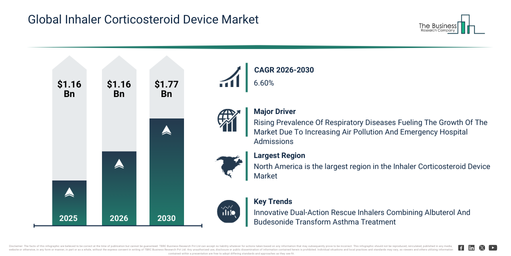
  • Global Inhaler Corticosteroid Device Market Set for Strong Expansion Reaching $23.18 Billion by 2030 at 6.6% CAGR

    Global Inhaler Corticosteroid Device Market Set for Strong Expansion Reaching $23.18 Billion by 2030 at 6.6% CAGR

    The Business Research Company’s 2026 market reports include new capabilities such as market attractiveness scoring and analysis, total addressable market analysis, company scoring matrix, interactive excel data dashboard, improved supply chain analysis, upcoming startups in the market, and overview of key products, aimed at improving the depth, usability, and strategic value of the insights delivered.

    What Will Be The Estimated Market Valuation Of The Inhaler Corticosteroid Device Market By The End Of 2030?

    The inhaler corticosteroid device market has experienced substantial growth in its size over recent years. Projections indicate it will expand from $16.83 billion in 2025 to $17.98 billion in 2026, achieving a compound annual growth rate (CAGR) of 6.8%. Key drivers behind this historical growth include an escalating prevalence of asthma and COPD, enhanced understanding of inhaler treatments, governmental programs supporting respiratory well-being, innovations in metered-dose inhalers, and the expansion of hospital and homecare infrastructure.

    The inhaler corticosteroid device market is projected to experience substantial expansion over the upcoming years. Its value is anticipated to reach $23.18 billion by 2030, exhibiting a compound annual growth rate (CAGR) of 6.6%. This growth during the projection period can be primarily ascribed to the incorporation of AI and IoT into inhaler technologies, the creation of environmentally friendly inhalers, the broader availability of telehealth services, tailored medication dispensing, and increasing consumption in developing economies. Key developments anticipated within this timeframe involve the integration of smart inhalers, customized dosage oversight, remote monitoring facilitated by telehealth, sustainable and eco-conscious device designs, and sophisticated aerosol delivery systems.

    Download the Free Sample Report to Explore Key Market Insights:

    https://www.thebusinessresearchcompany.com/sample.aspx?id=25794&type=smp

    What Primary Drivers Are Shaping The Development Of The Inhaler Corticosteroid Device Market?

    The rising incidence of respiratory diseases is anticipated to drive the expansion of the inhaler corticosteroid device market. Respiratory conditions encompass various ailments affecting the lungs and airways, impeding proper and efficient breathing. The growing occurrence of these diseases is attributed to increased air pollution, which exposes individuals to damaging particles that harm lung tissue and precipitate chronic conditions such as asthma and bronchitis. Inhaler corticosteroid devices are utilized to manage respiratory diseases by delivering anti-inflammatory medication directly into the lungs, thereby alleviating inflammation and enhancing breathing. For instance, in June 2025, data from the Office for Health Improvement and Disparities, a UK-based government department, indicated that England recorded 854,922 emergency hospital admissions for respiratory diseases in the financial year ending 2024. This figure corresponds to a rate of 1,428 (ranging from 1,424 to 1,432) per 100,000 population, representing a 7% increase compared to the previous year. Consequently, the escalating prevalence of respiratory diseases is fueling the growth of the inhaler corticosteroid device market.

    Which Segment Classifications Shape The Inhaler Corticosteroid Device Market?

    The inhaler corticosteroid device market covered in this report is segmented –

    1) By Product Type: Metered-Dose Inhalers, Dry Powder Inhalers, Soft Mist Inhalers

    2) By Formulation Type: Fluticasone Propionate, Budesonide, Beclomethasone, Mometasone Furoate

    3) By Distribution Channel: Online Pharmacies, Retail Pharmacies, Direct Sales, Hospital Pharmacies

    4) By Application: Asthma, Chronic Obstructive Pulmonary Disease (COPD), Other Applications

    5) By End-User: Hospitals, Homecare, Specialty Clinics, Other End-Users

    Subsegments:

    1) By Metered-Dose Inhalers: Conventional Metered-Dose Inhalers, Breath-Actuated Metered-Dose Inhalers, Spacer-Integrated Metered-Dose Inhalers

    2) By Dry Powder Inhalers: Single-Dose Dry Powder Inhalers, Multi-Dose Dry Powder Inhalers, Reservoir Dry Powder Inhalers

    3) By Soft Mist Inhalers: Manual Soft Mist Inhalers, Battery-Operated Soft Mist Inhalers

    How Are Trends Impacting The Inhaler Corticosteroid Device Market?

    Major companies operating in the inhaler corticosteroid device market are prioritizing the introduction of innovative solutions, including rescue inhalers that combine albuterol and budesonide. This focus is aimed at enhancing treatment effectiveness and offering patients a more convenient, dual-action therapy from a single device. An inhaler that integrates albuterol and budesonide provides a dual-action rescue capability, delivering both a bronchodilator (albuterol) to quickly open airways and a corticosteroid (budesonide) to reduce inflammation, thereby offering prompt symptom relief and long-term asthma control in one device. As an illustration, in January 2024, AstraZeneca PLC, a UK-based pharmaceutical industry company, launched AIRSUPRA. This product is notable as the first and only FDA-approved rescue inhaler to combine albuterol and budesonide for adults with asthma. Its design allows for as-needed use to both alleviate acute bronchoconstriction symptoms and diminish airway inflammation, which in turn lowers the risk of severe asthma exacerbations. This represents a novel strategy by combining a short-acting beta2-agonist (albuterol) with an inhaled corticosteroid (budesonide) in a single inhaler, approved based on clinical trials that demonstrated its superior effectiveness over albuterol alone in preventing asthma attacks.

    Which Companies Are Expanding Their Footprint In The Inhaler Corticosteroid Device Market?

    Major companies operating in the inhaler corticosteroid device market are AstraZeneca PLC, Novartis AG, GlaxoSmithKline plc, Boehringer Ingelheim International GmbH, Teva Pharmaceutical Industries Ltd., Teijin Pharma Limited, Sun Pharmaceutical Industries Limited, Aurobindo Pharma Limited, Chiesi Farmaceutici S.p.A., Cipla Limited, Hikma Pharmaceuticals PLC, Amneal Pharmaceuticals Inc., Mundipharma International Limited, Lupin Limited, Zydus Lifesciences Limited, Recipharm AB, Glenmark Pharmaceuticals Limited, Orion Corporation, Beximco Pharmaceuticals Limited, PARI Medical Holding GmbH

    Read the full inhaler corticosteroid device market report here:

    https://www.thebusinessresearchcompany.com/report/inhaler-corticosteroid-device-global-market-report

    How Does The Inhaler Corticosteroid Device Market Perform Across Major Global Regions?

    North America was the largest region in the inhaler corticosteroid device market in 2025. Asia-Pacific is expected to be the fastest-growing region in the forecast period. The regions covered in the inhaler corticosteroid device market report are Asia-Pacific, South East Asia, Western Europe, Eastern Europe, North America, South America, Middle East, Africa.

    Request A Tailored Inhaler Corticosteroid Device Market Research Report For Competitive Advantage:

    https://www.thebusinessresearchcompany.com/customise?id=25794&type=smp

    Browse Through More Reports Similar to the Global Inhaler Corticosteroid Device Market 2026, By The Business Research Company

    Implantable Infusion Pumps Market Report 2026

    https://www.thebusinessresearchcompany.com/report/implantable-infusion-pumps-global-market-report

    Intravenous Infusion Pumps Market Report 2026

    https://www.thebusinessresearchcompany.com/report/intravenous-infusion-pumps-global-market-report

    Ambulatory Iv Infusion Pumps Market Report 2026

    https://www.thebusinessresearchcompany.com/report/ambulatory-iv-infusion-pumps-global-market-report

    Get in touch with us:

    The Business Research Company: https://www.thebusinessresearchcompany.com/

    Americas +1 310-496-7795

    Asia +44 7882 955267 & +91 8897263534

    Europe +44 7882 955267

    Email us at info@tbrc.info

    Follow us on:

    LinkedIn: https://in.linkedin.com/company/the-business-research-company

    YouTube: https://www.youtube.com/channel/UC24_fI0rV8cR5DxlCpgmyFQ

    Global Market Model: https://www.thebusinessresearchcompany.com/global-market-model

  • Food and Beverage Testing Kits Market Outlook 2026–2030 Highlighting Emerging Business Opportunities

    Food and Beverage Testing Kits Market Outlook 2026–2030 Highlighting Emerging Business Opportunities

    The Business Research Company’s 2026 market reports include new capabilities such as market attractiveness scoring and analysis, total addressable market analysis, company scoring matrix, interactive excel data dashboard, improved supply chain analysis, upcoming startups in the market, and overview of key products, aimed at improving the depth, usability, and strategic value of the insights delivered.

    What Market Size Increase Is Anticipated For The Food and Beverage Testing Kits Market Over The 2026–2030 Period?

    The food and beverage testing kits market has experienced significant growth in recent years. This market is set to expand from $23.29 billion in 2025 to $24.93 billion in 2026, with a compound annual growth rate (CAGR) of 7.0%. The expansion observed in the past can be linked to factors such as the use of manual and traditional testing techniques, the limited accessibility of rapid testing kits, an increase in foodborne illness incidents, stricter regulatory demands for food safety, and a reliance on laboratory-based testing instruments.

    The food and beverage testing kits market size is anticipated to undergo significant expansion over the next few years. It is forecast to grow to $36.39 billion in 2030, achieving a compound annual growth rate (CAGR) of 9.9%. This growth during the prediction period is largely fueled by technological advancements in portable testing devices, the increasing adoption of rapid testing technologies, a heightened demand for GMO and pesticide detection, the broadening of the processed food and beverage industry, and the incorporation of cloud-based data management and analytics. Key trends expected in this forecast period include a rising demand for prompt food and beverage testing, an increased focus on the identification of pathogens and contaminants, the deployment of portable and on-site testing devices, an expansion of quality control procedures within dairy, meat, and seafood sectors, and a greater use of consumables and sample collection kits.

    Download the Free Sample Report to Explore Key Market Insights:

    https://www.thebusinessresearchcompany.com/sample.aspx?id=2495&type=smp

    Which Major Factors Are Driving The Expansion Of The Food and Beverage Testing Kits Market?

    The expanding food industry is anticipated to fuel the future growth of the food and beverage testing kits market. This industry represents an intricate, worldwide system of varied enterprises responsible for providing the majority of the food consumed globally. It encompasses every phase of food creation and commerce, such as agriculture, manufacturing, packaging, logistics, sales, and food service. Food and beverage testing kits are utilized to guarantee the safety of food items through the detection of chemical, microbiological, and physical impurities. For example, in June 2023, data from the Food and Agriculture Organization of the United Nations, a specialized agency based in Italy, indicated that global cereal stocks might rise by 1.7% above their initial figures, reaching an unprecedented 873 million tons. Worldwide coarse grain output was projected to hit 1,513 million tons in 2023, marking a 3.0% increase from 2022. Global sugar consumption was also expected to increase for the third straight season in 2022–2023, showing a rise of 1.6 million tons, or 0.9%, compared to the prior season. Consequently, the expanding food industry is a key factor propelling the growth of the food and beverage testing kits market.

    How Is The Food and Beverage Testing Kits Market Segmented Across Key Categories?

    The food and beverage testing kits market covered in this report is segmented –

    1) By Product: Consumables, Equipment

    2) By Technology: Traditional, Rapid

    3) By Contaminants Type: Pathogens, GMO’s, Pesticides, Toxins

    4) By Application: Meat, Poultry, Seafood, Dairy, Processed Foods, Fruits And Vegetables

    Subsegments:

    1) By Consumables: Test Strips, Reagents And Chemicals, Sample Collection Kits

    2) By Equipment: Portable Testing Devices, Laboratory Analyzers, Spectrophotometers, pH Meters

    Which Upcoming Trends Are Expected To Influence The Food and Beverage Testing Kits Market?

    Leading companies in the food and beverage testing kits market are intensifying their efforts to incorporate digitalization into the food testing industry, aiming to foster sustainability and gain a competitive edge. Digitalization within the food and beverage testing kit industry refers to employing digital technologies to improve food safety, quality, and efficiency. For instance, in June 2023, the Food Safety and Standards Authority of India (FSSAI), an India-based statutory body established under the Ministry of Health and Family Welfare, launched the Rapid Food Testing Kit (RAFT) portal. This digital portal was created to streamline the operations of the RAFT Scheme, ensuring both transparency and accountability. All procedures, including application processing, certificate issuing, and renewal, can now be completed electronically for the convenience of applicants. This digitalization promotes the paperless operation of the RAFT system, thereby encouraging the implementation of advanced technologies for food testing, screening, and surveillance purposes.

    Who Are The Dominant Players Shaping The Food and Beverage Testing Kits Market Landscape?

    Major companies operating in the food and beverage testing kits market are Eurofins Scientific, Thermo Fisher Scientific Inc., Bio-Rad Laboratories Inc., Neogen Corporation, PerkinElmer Inc., Merck KGaA, Agilent Technologies Inc., Danaher Corporation, 3M Company, Qiagen N.V., Intertek Group plc, TÜV SÜD, ALS Limited, Romer Labs Division Holding GmbH, Charm Sciences Inc., Hygiena LLC, IDEXX Laboratories Inc., EnviroLogix Inc., Randox Laboratories Ltd., Biomerieux SA, R-Biopharm AG, Biocheck Inc., Ab Sciex LLC, Merck Millipore, SGS SA, Bureau Veritas SA, Covance Inc., GeneDisc Technologies, Envirologix

    Read the full food and beverage testing kits market report here:

    https://www.thebusinessresearchcompany.com/report/food-and-beverage-testing-kits-global-market-report

    Which Region Currently Holds The Largest Share Of The Food and Beverage Testing Kits Market?

    North America was the largest region in the food and beverage testing kits market in 2025. Western Europe was the second largest region in the food and beverage testing kits market report. The regions covered in the food and beverage testing kits market report are Asia-Pacific, South East Asia, Western Europe, Eastern Europe, North America, South America, Middle East, Africa.

    Request A Tailored Food and Beverage Testing Kits Market Research Report For Competitive Advantage:

    https://www.thebusinessresearchcompany.com/customise?id=2495&type=smp

    Browse Through More Reports Similar to the Global Food and Beverage Testing Kits Market 2026, By The Business Research Company

    Food Testing Kits Market Report 2026

    https://www.thebusinessresearchcompany.com/report/food-testing-kits-global-market-report

    Food Pathogens Detection Technology Market Report 2026

    https://www.thebusinessresearchcompany.com/report/food-pathogens-detection-technology-global-market-report

    Gmo Testing Market Report 2026

    https://www.thebusinessresearchcompany.com/report/gmo-testing-global-market-report

    Get in touch with us:

    The Business Research Company: https://www.thebusinessresearchcompany.com/

    Americas +1 310-496-7795

    Asia +44 7882 955267 & +91 8897263534

    Europe +44 7882 955267

    Email us at info@tbrc.info

    Follow us on:

    LinkedIn: https://in.linkedin.com/company/the-business-research-company

    YouTube: https://www.youtube.com/channel/UC24_fI0rV8cR5DxlCpgmyFQ

    Global Market Model: https://www.thebusinessresearchcompany.com/global-market-model
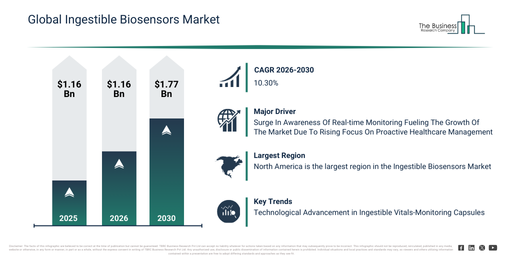
  • Ingestible Biosensors Market Growth Expected to Reach $3.22 Billion by 2030 with 10.3% CAGR

    Ingestible Biosensors Market Growth Expected to Reach $3.22 Billion by 2030 with 10.3% CAGR

    The Business Research Company’s 2026 market reports include new capabilities such as market attractiveness scoring and analysis, total addressable market analysis, company scoring matrix, interactive excel data dashboard, improved supply chain analysis, upcoming startups in the market, and overview of key products, aimed at improving the depth, usability, and strategic value of the insights delivered.

    What Market Size Growth Is Projected For The Ingestible Biosensors Market During The Forecast Period 2026–2030?

    The ingestible biosensors market size has undergone rapid growth in recent years. It will grow from $1.97 billion in 2025 to $2.18 billion in 2026 at a compound annual growth rate (CAGR) of 10.6%. The expansion observed in the past can be attributed to factors such as the limitations of traditional endoscopy, the demand for non-invasive diagnostics, advancements in miniaturized sensors, an increase in gastrointestinal disorders, and the early adoption of capsule endoscopy.

    The ingestible biosensors market is projected to experience substantial expansion in the coming years. Its value is predicted to reach $3.23 billion by 2030, demonstrating a compound annual growth rate (CAGR) of 10.3%. This anticipated growth during the forecast period is primarily driven by factors such as the rise of personalized medicine, seamless integration with mobile health platforms, an increasing elderly demographic, advancements in data transmission technology, and wider clinical acceptance. Key developments expected within this period encompass non-invasive gastrointestinal monitoring, diagnostics utilizing smart capsules, real-time tracking of internal health, tailored analysis of digestive health, and the emergence of minimally invasive diagnostic alternatives.

    Download the Free Sample Report to Explore Key Market Insights:

    https://www.thebusinessresearchcompany.com/sample.aspx?id=30305&type=smp

    Which Major Factors Are Driving The Expansion Of The Ingestible Biosensors Market?

    The growing recognition of real-time monitoring is expected to propel the ingestible biosensors market forward. Real-time monitoring entails the continuous process of gathering, analyzing, and transmitting data as it’s generated, allowing for immediate health assessments and prompt medical interventions. This increasing awareness of real-time monitoring arises from a heightened focus on proactive healthcare management, as both patients and providers acknowledge its critical role in enabling early detection of health issues and timely medical actions. Ingestible biosensors facilitate real-time monitoring by relaying physiological data from within the body, providing continuous tracking of parameters such as medication adherence, gastrointestinal activity, and biomarker levels for swift diagnosis and personalized treatment. For instance, in October 2024, a report published by HealthArc, a US-based healthcare solutions provider, revealed that around 30 million patients in the U.S. were utilizing remote patient monitoring (RPM), with this number anticipated to climb to 70.6 million by the end of 2025. Additionally, RPM has been included under Medicaid coverage by 42 states, and more than 26% of Americans are projected to adopt it. Therefore, the expanding awareness of real-time monitoring is a key driver for the ingestible biosensors market’s growth.

    What Market Segments Are Evaluated Within The Ingestible Biosensors Market?

    The ingestible biosensors market covered in this report is segmented –

    1) By Product Type: Capsule Biosensors, Pill Biosensors, Other Product Types

    2) By Sensor Type: Temperature Sensors, pH Sensors, Image Sensors, Other Sensor Types

    3) By Application: Medical Diagnostics, Drug Delivery, Patient Monitoring, Other Applications

    4) By End-User: Hospitals And Clinics, Research Institutes, Other End Users

    Subsegments:

    1) By Capsule Biosensors: Single Sensor Capsule, Multi Sensor Capsule, Smart Capsule

    2) By Pill Biosensors: Diagnostic Pill, Therapeutic Pill, Monitoring Pill

    3) By Other Product Types: Patch Integrated Capsule, Biodegradable Sensor, Wearable Assisted Sensor

    What Industry Trends Are Redefining The Ingestible Biosensors Market?

    Companies operating within the ingestible biosensors market are concentrating on developing innovative solutions, such as vitals-monitoring pills, to enhance real-time health tracking and improve early disease detection. Vitals-monitoring pills are defined as ingestible electronic capsules that track key physiological parameters, including heart rate, and transmit real-time health data to external devices for continuous monitoring and analysis. As an illustration, in November 2023, Celero Solutions Inc., a Canada-based information technology company, developed an ingestible electronic capsule, about the size of a multivitamin, capable of measuring heart and breathing rates directly from the gastrointestinal tract. In a first-in-human trial involving ten participants, the device reliably detected breathing depressions, such as those associated with obstructive sleep apnea and potentially in opioid overdose scenarios. This sensor utilizes an internal accelerometer and wireless transmission to capture vital-sign data and passes safely through the digestive tract without adverse effects. Researchers envision this technology being employed for non-intrusive monitoring of respiratory status and potentially triggering interventions in high-risk patients.

    Who Are The Top Market Participants Influencing The Ingestible Biosensors Market?

    Major companies operating in the ingestible biosensors market are Otsuka Holdings Co. Ltd., Proteus Digital Health Inc., etectRx Inc., CapsoVision Inc., IntroMedic Co. Ltd., BodyCap S.A.S., AnX Robotica Corporation, Atmo Biosciences Pty Ltd., Check-Cap Ltd., Chongqing Jinshan Science & Technology Group Co. Ltd., RF Co. Ltd., Biora Therapeutics Inc., EnteraSense Ltd., Lucid Medical Diagnostics Pvt. Ltd., Medisafe Capsule Technologies Ltd., Medtronic plc, Verily Life Sciences LLC, Olympus Corporation, JIFU Medical Technology Co. Ltd., Smart Medical Systems Ltd.

    Read the full ingestible biosensors market report here:

    https://www.thebusinessresearchcompany.com/report/global-ingestible-biosensors-market-report

    Which Region Currently Holds The Largest Share Of The Ingestible Biosensors Market?

    North America was the largest region in the ingestible biosensors market in 2025. Asia-Pacific is expected to be the fastest-growing region in the forecast period. The regions covered in the ingestible biosensors market report are Asia-Pacific, South East Asia, Western Europe, Eastern Europe, North America, South America, Middle East, Africa.

    Request A Tailored Ingestible Biosensors Market Research Report For Competitive Advantage:

    https://www.thebusinessresearchcompany.com/customise?id=30305&type=smp

    Browse Through More Reports Similar to the Global Ingestible Biosensors Market 2026, By The Business Research Company

    Temperature Sensor Market Report 2026

    https://www.thebusinessresearchcompany.com/report/temperature-sensor-global-market-report

    Temperature Monitoring Devices Market Report 2026

    https://www.thebusinessresearchcompany.com/report/temperature-monitoring-devices-global-market-report

    Baby Thermometers Market Report 2026

    https://www.thebusinessresearchcompany.com/report/baby-thermometers-global-market-report

    Get in touch with us:

    The Business Research Company: https://www.thebusinessresearchcompany.com/

    Americas +1 310-496-7795

    Asia +44 7882 955267 & +91 8897263534

    Europe +44 7882 955267

    Email us at info@tbrc.info

    Follow us on:

    LinkedIn: https://in.linkedin.com/company/the-business-research-company

    YouTube: https://www.youtube.com/channel/UC24_fI0rV8cR5DxlCpgmyFQ

    Global Market Model: https://www.thebusinessresearchcompany.com/global-market-model

  • Global Folding-Wheel Personal Mobility Robot Market Report 2026–2035 Presenting Market Expansion Outlook and Forecast Opportunities

    Global Folding-Wheel Personal Mobility Robot Market Report 2026–2035 Presenting Market Expansion Outlook and Forecast Opportunities

    The Business Research Company’s 2026 market reports include new capabilities such as market attractiveness scoring and analysis, total addressable market analysis, company scoring matrix, interactive excel data dashboard, improved supply chain analysis, upcoming startups in the market, and overview of key products, aimed at improving the depth, usability, and strategic value of the insights delivered.

    How Much Is The Folding-Wheel Personal Mobility Robot Market Expected To Grow In Terms Of Market Value Between 2026 And 2030?

    The market for folding-wheel personal mobility robots has experienced significant expansion recently. This market is projected to increase from $1.67 billion in 2025 to $1.93 billion in 2026, demonstrating a compound annual growth rate (CAGR) of 16.0%. Factors contributing to its past growth include the escalating difficulties of urban commuting, the initial embrace of personal mobility robots, advancements in foldable wheel designs, a heightened understanding of mobility assistance devices, and the incorporation of electric mobility solutions.

    The folding-wheel personal mobility robot market is anticipated to undergo significant growth in the upcoming years, with projections indicating it will reach $3.47 billion in 2030, driven by a compound annual growth rate (CAGR) of 15.7%. This expected expansion over the forecast period is attributed to several factors, including AI-driven route optimization, the expanding infrastructure of smart cities, increased adoption in elderly care and rehabilitation settings, continuous improvements in battery life and energy density, and greater integration with IoT-connected devices. Key trends for this period are set to include compact foldable mobility designs, advanced sensor-based navigation, AI-assisted personal commuting, optimized battery performance and energy efficiency, and remote-controlled mobility assistance.

    Download the Free Sample Report to Explore Key Market Insights:

    https://www.thebusinessresearchcompany.com/sample.aspx?id=29066&type=smp

    What Key Drivers Are Influencing The Growth Of The Folding-Wheel Personal Mobility Robot Market?

    The escalating occurrence of musculoskeletal disorders is anticipated to fuel the expansion of the folding-wheel personal mobility robot market in the future. Musculoskeletal disorders, or MSDs, are medical conditions affecting muscles, bones, joints, or connective tissues, leading to discomfort and restricted physical movement. The increase in these disorders stems from inactive lifestyles, which weaken muscles and joints, alongside heightened strain due to a lack of activity. Folding-wheel personal mobility robots offer assistance to those with musculoskeletal disorders by aiding movement, lessening stress on joints and muscles, and enhancing everyday mobility, allowing users to cover greater distances safely and with less discomfort. For instance, in January 2024, according to GOV.UK, a UK-based government agency, in 2023, 18.4% of individuals aged 16 and over reported having a long-term musculoskeletal (MSK) condition, reflecting an increase from 17.6% in 2022. Consequently, the growing prevalence of musculoskeletal disorders is propelling the growth of the folding-wheel personal mobility robot market.

    What Major Segment Divisions Exist Within The Folding-Wheel Personal Mobility Robot Market?

    The folding-wheel personal mobility robot market covered in this report is segmented –

    1) By Product Type: Automatic Folding-Wheel Personal Mobility Robots, Semi-Automatic Folding-Wheel Personal Mobility Robots, Self-Balancing Folding-Wheel Personal Mobility Robots, Smart Robotic Folding Mobility Robots

    2) By Folding & Control Technology: Remote-Controlled Folding Robots, Sensor-Based Automatic Folding Robots, App-Controlled Folding Mobility Robots, AI-Assisted Self-Balancing Folding Robots

    3) By Wheel Configuration: Two-Wheel Folding Mobility Robots, Three-Wheel Folding Mobility Robots, Four-Wheel Folding Mobility Robots

    4) By Application: Personal Urban Mobility, Assisted Mobility for Elderly Users, Healthcare Mobility Assistance, Rehabilitation and Recovery Mobility, Travel and Portable Mobility Assistance

    5) By End-User: Individual Users, Elderly and Mobility-Impaired Users, Hospitals and Clinics, Rehabilitation Centers, Assisted Living and Care Facilities

    Subsegments:

    1) By Automatic Folding-Wheel Personal Mobility Robots: Automatic Folding-Wheel Personal Mobility Robots, One-Touch Button Folding Mobility Robots, Remote-Controlled Folding Mobility Robots, App-Enabled Automatic Folding Mobility Robots, Fully Autonomous Folding Mechanism Robots

    2) By Semi-Automatic Folding-Wheel Personal Mobility Robots: Semi-Automatic Folding-Wheel Personal Mobility Robots, Assisted Folding Mobility Robots (Motor-Assisted Fold), Power-Lock Semi-Automatic Folding Robots, Hybrid Manual-Electric Folding Mobility Robots, Sensor-Triggered Assisted Folding Robots

    3) By Self-Balancing Folding-Wheel Personal Mobility Robots: Two-Wheel Gyroscopic Self-Balancing Folding Robots, AI-Stabilized Self-Balancing Folding Mobility Robots, Dynamic Terrain-Adaptive Folding Robots, Lean-Controlled Self-Balancing Folding Robots

    4) By Smart Robotic Folding Mobility Robots: AI-Enabled Smart Folding Mobility Robots, IoT-Connected Folding Mobility Robots, Voice-Controlled Folding Personal Mobility Robots, Health-Monitoring Integrated Folding Mobility Robots

    How Are Trends Shaping The Direction Of The Folding-Wheel Personal Mobility Robot Market?

    Leading companies in the folding-wheel personal mobility robot market are concentrating on developing advanced solutions, such as omni traction drive systems, to boost maneuverability, stability, and user convenience across various terrains. An omni traction drive system represents a wheel and motor technology that allows a personal mobility robot to move smoothly in any direction, including sideways and diagonally, while maintaining steadiness and grip on diverse surfaces. For instance, in September 2025, Honda Motor Co. Ltd., a Japan-based manufacturing company, introduced a UNI-ONE hands-free personal mobility device in Japan to provide users with enhanced, self-balancing mobility. This permits users to move by simply shifting their body weight, keeping their hands free, which facilitates natural multitasking. Its adjustable height ensures an eye level comparable to standing individuals, promoting natural communication and lowering social barriers. UNI-ONE aims to lessen physical exertion, broaden mobility choices for various users, and enhance productivity by supporting movement in workplaces, large venues, and daily activities.

    Which Companies Are Leading Innovation In The Folding-Wheel Personal Mobility Robot Market?

    Major companies operating in the folding-wheel personal mobility robot market are WHILL Inc., Airwheel, Cheelcare, Robooter, XSTO Mobility, Mobius Mobility, ComfyGo, Golden Technologies, Pride Mobility Products, ZiiLIF, SUPERPI, ALBA Robot, Care for Mobility, Zuowei Technology, Mobot, Bbr Robot, Zinger Chair, KD Smart Chair, EzLite Cruiser, Trident Mobility

    Read the full folding-wheel personal mobility robot market report here:

    https://www.thebusinessresearchcompany.com/report/folding-wheel-personal-mobility-robot-global-market-report

    Which Region Is Expected To Register The Fastest Growth In The Folding-Wheel Personal Mobility Robot Market?

    Asia-Pacific was the largest region in the folding-wheel personal mobility robot market in 2025. The regions covered in the folding-wheel personal mobility robot market report are Asia-Pacific, South East Asia, Western Europe, Eastern Europe, North America, South America, Middle East, Africa.

    Request A Tailored Folding-Wheel Personal Mobility Robot Market Research Report For Competitive Advantage:

    https://www.thebusinessresearchcompany.com/customise?id=29066&type=smp

    Browse Through More Reports Similar to the Global Folding-Wheel Personal Mobility Robot Market 2026, By The Business Research Company

    Folding Bikes Market Report 2026

    https://www.thebusinessresearchcompany.com/report/folding-bikes-global-market-report

    Robotic Wheelchairs Market Report 2026

    https://www.thebusinessresearchcompany.com/report/robotic-wheelchairs-global-market-report

    Folding Furniture Market Report 2026

    https://www.thebusinessresearchcompany.com/report/folding-furniture-global-market-report

    Get in touch with us:

    The Business Research Company: https://www.thebusinessresearchcompany.com/

    Americas +1 310-496-7795

    Asia +44 7882 955267 & +91 8897263534

    Europe +44 7882 955267

    Email us at info@tbrc.info

    Follow us on:

    LinkedIn: https://in.linkedin.com/company/the-business-research-company

    YouTube: https://www.youtube.com/channel/UC24_fI0rV8cR5DxlCpgmyFQ

    Global Market Model: https://www.thebusinessresearchcompany.com/global-market-model