Month: March 2026

  • Fetal Monitoring Market Revenue Projected to Reach $6.23 Billion by 2030 at 9.1% CAGR

    Fetal Monitoring Market Revenue Projected to Reach $6.23 Billion by 2030 at 9.1% CAGR

    The Business Research Company’s 2026 market reports include new capabilities such as market attractiveness scoring and analysis, total addressable market analysis, company scoring matrix, interactive excel data dashboard, improved supply chain analysis, upcoming startups in the market, and overview of key products, aimed at improving the depth, usability, and strategic value of the insights delivered.

    How Much Is The Fetal Monitoring Market Expected To Grow In Terms Of Market Value Between 2026 And 2030?

    The fetal monitoring market size has experienced robust growth recently. This market is projected to expand from $4.05 billion in 2025 to $4.4 billion in 2026, demonstrating a compound annual growth rate (CAGR) of 8.7%. Historically, this expansion has been driven by factors such as increasing hospital birth rates, the development of obstetric care infrastructure, the wider adoption of electronic fetal monitoring, advancements in ultrasound imaging technologies, and enhanced awareness regarding prenatal care standards.

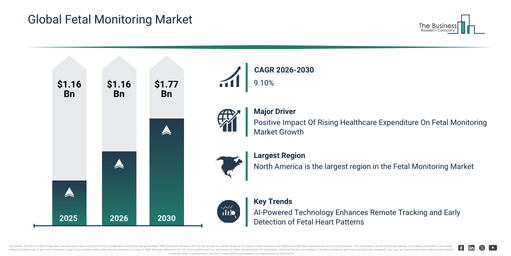
    The fetal monitoring market is projected to experience robust expansion over the coming years. This market is anticipated to reach $6.24 billion by 2030, exhibiting a compound annual growth rate (CAGR) of 9.1%. The expansion throughout the forecast period stems from factors such as increased demand for remote patient monitoring, greater adoption of digital maternity care solutions, the spread of telehealth-enabled fetal monitoring, a heightened focus on early risk detection, and increased capital flow into maternal healthcare technologies. Key trends during this period are expected to encompass the growing uptake of wireless fetal monitoring systems, increased need for continuous intrapartum monitoring, deeper integration of AI-based risk assessment tools, broader availability of portable and home-based monitoring devices, and an intensified commitment to maternal-fetal safety.

    Download the Free Sample Report to Explore Key Market Insights:

    https://www.thebusinessresearchcompany.com/sample.aspx?id=10056&type=smp

    What Drivers Are Influencing The Fetal Monitoring Market?

    The expanding healthcare expenditure is anticipated to stimulate the growth of the fetal monitoring market in the future. Healthcare expenditure refers to the aggregate financial and non-financial resources that a country, government, organization, or individual dedicates or spends on health-related goods and services. An increase in healthcare spending aids the growth of the fetal monitoring market through promoting technological advancements, boosting accessibility, providing support for research and development efforts, and improving the overall quality of maternal and fetal healthcare services. For instance, in June 2025, as reported by the Centers for Medicare & Medicaid Services, a US-based government agency, national health expenditures (NHE) in 2023 experienced a 7.5% increase, reaching $4.9 trillion. This figure averaged $14,570 per person and accounted for 17.6% of the Gross Domestic Product (GDP). Medicare spending alone rose by 8.1% to $1,029.8 billion, representing 21% of total NHE. Thus, the escalating healthcare expenditure is a primary driver for the growth of the fetal monitoring market.

    What Major Segment Divisions Exist Within The Fetal Monitoring Market?

    The fetal monitoring market covered in this report is segmented –

    1) By Product: Ultrasound Devices, Electronic Maternal Or Fetal Monitors, Uterine Contraction Monitor, Fetal Electrodes, Fetal Doppler Devices, Telemetry Devices

    2) By Method: Invasive, Non-Invasive

    3) By Application: Intrapartum Fetal Monitoring, Antepartum Fetal Monitoring

    4) By End-User: Diagnostic Laboratories, Hospitals And Clinics, Other End-Users

    Subsegments:

    1) By Ultrasound Devices: 2D Ultrasound, 3D Or 4D Ultrasound, Doppler Ultrasound

    2) By Electronic Maternal Or Fetal Monitors: Continuous Fetal Monitoring Systems, Wireless Fetal Monitoring Systems, Maternal Vital Signs Monitors

    3) By Uterine Contraction Monitor: External Uterine Contraction Monitors, Internal Uterine Pressure Catheters

    4) By Fetal Electrodes: Scalp Electrodes, Surface Electrodes

    5) By Fetal Doppler Devices: Handheld Dopplers, Tabletop Dopplers

    6) By Telemetry Devices: Wireless Telemetry Systems, Portable Monitoring Systems

    How Are Trends Shaping The Direction Of The Fetal Monitoring Market?

    Leading companies within the **fetal monitoring market** are directing their efforts towards developing advanced solutions, such as connected baby monitors, to enable continuous remote monitoring and elevate neonatal care standards. A connected baby monitor functions as an intelligent device, constantly tracking a baby’s vital signs and transmitting real-time data to smartphones or cloud platforms for oversight by parents or medical professionals from a distance. For instance, in **February 2025**, **Perigean Technologies LLC**, a technology company based in the US, secured approval from the **U.S. Food and Drug Administration (FDA)** for its **Patterns 3.0** system. This approval expanded the application of its proprietary fetal heart rate pattern recognition technology, allowing its use from **36 weeks** down to **32 weeks** of gestation. The system incorporates sophisticated AI algorithms, including **Long Short-Term Memory (LSTM)** neural networks, to accurately detect, classify, and quantify fetal heart rate patterns—such as accelerations, decelerations, baselines, and uterine contractions—from **32 weeks** onwards. **Patterns 3.0** acts as a supportive tool for clinical decision-making in both antepartum and intrapartum monitoring, providing timely alerts for indeterminate and abnormal fetal heart rate patterns to facilitate prompt interventions in high-risk pregnancies. It is designed to function seamlessly in either networked or standalone environments, thereby streamlining clinical workflows by offering standardized, consistent analysis, which allows clinicians to concentrate more on direct patient care rather than engaging in manual data interpretation.

    Which Companies Are Leading Innovation In The Fetal Monitoring Market?

    Major companies operating in the fetal monitoring market are Koninklijke Philips N.V., Medtronic plc, Drägerwerk AG & Co. KGaA, Mindray Medical International Limited, Masimo Corporation, Neoventa Medical AB, EDAN Instruments Inc., Shenzhen Comen Medical Instruments Co. Ltd., Contec Medical Systems Co. Ltd., Bionet Co. Ltd., Atom Medical Corporation, Bistos Inc., OBMedical Company, PeriGen Inc., Sunray Medical Apparatus Co. Ltd., Mediana Co. Ltd., Nonin Medical Inc., Analogic Corporation, Dixion Vertrieb medizinischer Geräte GmbH, Fisher & Paykel Healthcare Corporation Limited

    Read the full fetal monitoring market report here:

    https://www.thebusinessresearchcompany.com/report/fetal-monitoring-global-market-report

    Which Regions Are Expected To Experience Rapid Expansion In The Fetal Monitoring Market?

    North America was the largest region in the fetal monitoring market in 2025. Asia-Pacific is expected to be the fastest-growing region in the global fetal monitoring market report forecast period. The regions covered in the fetal monitoring market report are Asia-Pacific, South East Asia, Western Europe, Eastern Europe, North America, South America, Middle East, Africa.

    Request A Tailored Fetal Monitoring Market Research Report For Competitive Advantage:

    https://www.thebusinessresearchcompany.com/customise?id=10056&type=smp

    Browse Through More Reports Similar to the Global Fetal Monitoring Market 2026, By The Business Research Company

    Home Health Monitoring Devices Market Report 2026

    https://www.thebusinessresearchcompany.com/report/home-health-monitoring-devices-global-market-report

    Fetal And Neonatal Monitoring Devices Market Report 2026

    https://www.thebusinessresearchcompany.com/report/fetal-and-neonatal-monitoring-devices-global-market-report

    Prenatal Testing And Newborn Screening Market Report 2026

    https://www.thebusinessresearchcompany.com/report/prenatal-testing-and-newborn-screening-global-market-report

    Get in touch with us:

    The Business Research Company: https://www.thebusinessresearchcompany.com/

    Americas +1 310-496-7795

    Asia +44 7882 955267 & +91 8897263534

    Europe +44 7882 955267

    Email us at info@tbrc.info

    Follow us on:

    LinkedIn: https://in.linkedin.com/company/the-business-research-company

    YouTube: https://www.youtube.com/channel/UC24_fI0rV8cR5DxlCpgmyFQ

    Global Market Model: https://www.thebusinessresearchcompany.com/global-market-model

  • Global In Flight Telemedicine System Industry Trends and Market Growth Forecast for 2026–2030

    Global In Flight Telemedicine System Industry Trends and Market Growth Forecast for 2026–2030

    The Business Research Company’s 2026 market reports include new capabilities such as market attractiveness scoring and analysis, total addressable market analysis, company scoring matrix, interactive excel data dashboard, improved supply chain analysis, upcoming startups in the market, and overview of key products, aimed at improving the depth, usability, and strategic value of the insights delivered.

    What Is The Forecasted Market Value Of The In Flight Telemedicine System Market Across 2026–2030?

    The market size for in-flight telemedicine systems has experienced rapid growth in recent years. This market is expected to expand from $1.71 billion in 2025 to $1.99 billion in 2026, reflecting a compound annual growth rate (CAGR) of 16.4%. Historically, this expansion has been propelled by factors such as an increase in long-haul air travel, a rising occurrence of in-flight medical emergencies, the accessibility of satellite communication technologies, the early adoption of telemedicine platforms, and airlines’ increasing focus on passenger safety.

    The in flight telemedicine system market size is expected to experience substantial growth in the upcoming years, with forecasts showing it will rise to $3.62 billion in 2030, exhibiting a compound annual growth rate (CAGR) of 16.1%. This projected growth throughout the forecast period stems from increasing investments in connected aircraft systems, a rising need for remote healthcare solutions, the expansion of telemedicine regulations in aviation, the growing utilization of AI-assisted diagnostic tools, and enhanced collaboration between airlines and healthcare providers. Noteworthy trends anticipated during this period include the increasing adoption of real-time in-flight medical consultation systems, greater integration of wearable health monitoring devices, the expansion of satellite-based medical connectivity, a heightened demand for emergency medical support during flights, and an enhanced focus on data security and patient privacy.

    Download the Free Sample Report to Explore Key Market Insights:

    https://www.thebusinessresearchcompany.com/sample.aspx?id=24248&type=smp

    What Drivers Are Shaping The Future Growth Of The In Flight Telemedicine System Market?

    The in-flight telemedicine system market is projected to grow as the number of air travelers continues to rise. Air travelers are individuals who journey by air to various domestic or international destinations for purposes like business, leisure, or transit. The increase in air passenger figures is driven by sustained economic growth and higher disposable incomes, allowing more people to afford air travel, thereby transforming it from a luxury into a more accessible mode of transportation for both business and leisure. For air travelers, an in-flight telemedicine system proves very beneficial by enabling immediate medical assistance during a flight, connecting the onboard crew with ground-based healthcare professionals. As an illustration, in December 2024, Eurostat, a Luxembourg-based government agency, indicated that air travel in the EU reached a total of 973 million passengers in 2023, which was a 19.3% increase compared to the 816 million recorded in 2022. Therefore, the expanding number of air travelers is a significant factor contributing to the growth of the in-flight telemedicine system market.

    What Segmentation Levels Are Considered In The In Flight Telemedicine System Market?

    The in flight telemedicine system market covered in this report is segmented –

    1) By Component: Hardware, Software, Services

    2) By Technology: Video Conferencing Systems, Mobile Health Applications, Wearable Medical Devices, Mobile Telemedicine Kits, Integrated Ground Support Systems

    3) By Patient Demographics: Pediatric Patients, Adult Patients, Geriatric Patients, Patients With Chronic Illnesses, Patients Needing Psychiatric Services

    4) By Application: Routine Check-Ups, Emergency Medical Services, Chronic Disease Management, Health Education And Promotion, Medication Management Services

    5) By End-User: Airlines, Aerospace Health Services, Private Aviation Companies, Government Agencies, Insurance Providers

    Subsegments:

    1) By Hardware: Satellite Communication Systems, Onboard Medical Devices, Camera And Video Systems, In-Flight Connectivity Equipment, Display And Interface Units

    2) By Software: Telemedicine Platform Software, Real-Time Health Monitoring Applications, Data Encryption And Cybersecurity Software, Electronic Health Records (EHR) Integration Tools, Diagnostic Decision-Support Systems

    3) By Services: Installation And Integration Services, Training And Education Services, Maintenance And Support Services, Remote Monitoring Services, Data Analytics And Reporting Services

    What Trends Are Projected To Affect The In Flight Telemedicine System Market?

    Leading companies active within the in-flight telemedicine system market are concentrating on creating innovative solutions, such as in-flight diagnostic platforms, to enhance real-time medical support for passengers and improve health outcomes during emergencies at high altitudes. In-flight diagnostic platforms are defined as onboard medical systems that facilitate real-time monitoring and remote diagnosis of passengers’ health conditions during a flight. For instance, in April 2025, Aircare International, a US-based aviation company, launched the Aircare Emergency Diagnostic Platform (AEDP), an advanced in-flight telemedicine solution specifically for business aviation. This tablet-operated system employs wireless sensors to transmit live patient data and encrypted video to board-certified physicians located on the ground, thereby enabling immediate remote medical assistance during critical situations. By integrating with Aircare’s 24/7 global telemedicine services, the AEDP significantly strengthens in-flight safety and emergency medical care for both passengers and crew.

    Which Leading Firms Are Contributing To The Growth Of The In Flight Telemedicine System Market?

    Major companies operating in the in flight telemedicine system market are Airbus Group, Honeywell International Inc., Thales S.A., International SOS Pte Ltd, Viasat Inc., Sierra Nevada Corporation, Inmarsat Group Limited, Gogo Business Aviation LLC, American Well Corporation, MedAire Inc., Air Care International Ltd, MD Onboard, Blue Sky Network LLC, Brotecs Technologies Ltd, Parsys Telemedecine SAS, SnapMD Inc., MIME Technologies Limited, Philips Healthcare (Telehealth Solutions), GE HealthCare Digital, Siemens Healthineers Digital Health, SITAONAIR, Panasonic Avionics Corporation

    Read the full in flight telemedicine system market report here:

    https://www.thebusinessresearchcompany.com/report/in-flight-telemedicine-system-global-market-report

    Which Geographic Regions Are Influencing Demand In The In Flight Telemedicine System Market?

    North America was the largest region in the in-flight telemedicine system market in 2025. Asia-Pacific is expected to be the fastest-growing region in the forecast period. The regions covered in the in flight telemedicine system market report are Asia-Pacific, South East Asia, Western Europe, Eastern Europe, North America, South America, Middle East, Africa.

    Request A Tailored In Flight Telemedicine System Market Research Report For Competitive Advantage:

    https://www.thebusinessresearchcompany.com/customise?id=24248&type=smp

    Browse Through More Reports Similar to the Global In Flight Telemedicine System Market 2026, By The Business Research Company

    Telemedicine Services Market 2026

    https://www.thebusinessresearchcompany.com/report/telemedicine-services-market

    Telemedicine Equipment Market Report 2026

    https://www.thebusinessresearchcompany.com/report/telemedicine-equipment-global-market-report

    Aerospace And Defense Telemetry Market Report 2026

    https://www.thebusinessresearchcompany.com/report/aerospace-and-defense-telemetry-global-market-report

    Get in touch with us:

    The Business Research Company: https://www.thebusinessresearchcompany.com/

    Americas +1 310-496-7795

    Asia +44 7882 955267 & +91 8897263534

    Europe +44 7882 955267

    Email us at info@tbrc.info

    Follow us on:

    LinkedIn: https://in.linkedin.com/company/the-business-research-company

    YouTube: https://www.youtube.com/channel/UC24_fI0rV8cR5DxlCpgmyFQ

    Global Market Model: https://www.thebusinessresearchcompany.com/global-market-model

  • Fetal And Neonatal Monitoring Devices Market Expected to Demonstrate Stable Growth Approaching $13.56 Billion by 2030

    Fetal And Neonatal Monitoring Devices Market Expected to Demonstrate Stable Growth Approaching $13.56 Billion by 2030

    The Business Research Company’s 2026 market reports include new capabilities such as market attractiveness scoring and analysis, total addressable market analysis, company scoring matrix, interactive excel data dashboard, improved supply chain analysis, upcoming startups in the market, and overview of key products, aimed at improving the depth, usability, and strategic value of the insights delivered.

    What Market Value Is Expected For The Fetal And Neonatal Monitoring Devices Market At The End Of The 2026–2030 Forecast Period?

    The fetal and neonatal monitoring devices market has demonstrated substantial growth over recent years. This market is projected to expand from $9.92 billion in 2025 to $10.6 billion in 2026, achieving a compound annual growth rate (CAGR) of 6.8%. The historical growth of this market can be attributed to several factors, including increasing institutional childbirth rates, the expansion of neonatal intensive care units, a rising focus on maternal and infant health outcomes, the growing adoption of electronic fetal monitoring systems, and the availability of advanced neonatal care equipment.

    The market size for fetal and neonatal monitoring devices is projected to experience substantial expansion over the coming years. This market is anticipated to reach a valuation of **$13.57 billion by 2030**, demonstrating a compound annual growth rate (CAGR) of **6.4%**. This projected growth during the forecast period stems from several factors, including heightened investments in smart maternity care solutions, an escalating demand for remote patient monitoring, the expansion of neonatal care infrastructure within developing markets, an increased emphasis on the early diagnosis of complications, and the rising integration of AI-assisted monitoring systems. Key trends anticipated during the same period encompass the growing uptake of continuous fetal monitoring systems, an increased utilization of advanced neonatal vital sign monitors, the expanding integration of wireless monitoring technologies, the wider availability of portable monitoring devices, and a heightened emphasis on early risk detection.

    Download the Free Sample Report to Explore Key Market Insights:

    https://www.thebusinessresearchcompany.com/sample.aspx?id=2525&type=smp

    What Drivers Are Shaping The Future Growth Of The Fetal And Neonatal Monitoring Devices Market?

    The escalating occurrence of preterm births is projected to drive the expansion of the fetal and neonatal monitoring devices market. A preterm birth is defined as a baby born before 37 weeks of gestation, often leading to health issues such as impaired growth, intellectual disabilities, visual and hearing problems, and cerebral palsy. The rising incidence of preterm births is attributed to increased medical interventions for maternal or fetal complications, like preeclampsia or intrauterine growth restriction, which necessitate early labor induction or cesarean deliveries. Fetal and neonatal monitoring devices play a vital role in managing preterm and low birth weight infants by continuously tracking vital signs and health parameters, facilitating the early identification of complications and prompt medical interventions that improve survival rates and overall long-term health outcomes. For example, in January 2025, the Department of Health and Social Care, a UK government department focused on public health, stated that 8.1 percent of all births in England in 2023 were preterm, occurring between 24 and 36 weeks completed gestation, whereas the global average rate stands at approximately 10 percent. Therefore, the increasing prevalence of preterm births and low birth weight among infants is a key factor propelling the growth of the fetal and neonatal monitoring devices market.

    What Segment Types Make Up The Fetal And Neonatal Monitoring Devices Market?

    The fetal and neonatal monitoring devices market covered in this report is segmented –

    1) By Equipment: Fetal, Neonatal

    2) By Portability: Portable, Non Portable

    3) By Fetal Care Equipment Type: Ultrasound Devices, Fetal Dopplers, Fetal Monitors, Fetal Pulse Oximeters

    4) By Neonatal Care Equipment Type: Infant Warmers, Incubators, Convertible Warmers And Incubators, Phototherapy Equipment, Respiratory Devices, Neonatal Monitoring Devices

    5) By End User: Hospitals, Diagnostic centers, Pediatric Clinics

    Subsegments:

    1) By Fetal Monitoring Equipment: Fetal Ultrasound Devices, Fetal Dopplers, Fetal Electrodes, Fetal Heart Rate Monitors, Fetal Pulse Oximeters, CTG (Cardiotocography) Machines

    2) By Neonatal Monitoring Equipment: Neonatal Incubators, Neonatal Pulse Oximeters, Neonatal Ventilators, Neonatal ECG Machines, Neonatal Respiratory Monitors, Neonatal Temperature Management Systems

    Which Market Trends Are Creating New Opportunities In The Fetal And Neonatal Monitoring Devices Market?

    Leading firms within the fatty acid market are prioritizing the creation of advanced equipment, like the Neonatal Care Warmer Babyroo TN300, to enhance their competitive standing. This type of warmer, also referred to as an infant radiant warmer, serves as a medical instrument engineered to offer a regulated, warm setting for newborn babies, particularly those delivered early or suffering from specific health issues. As an illustration, in June 2023, Dräger, a German manufacturer specializing in gas detection and analysis systems as well as breathing and protective gear, introduced the Neonatal Care Warmer Babyroo TN300. The Babyroo TN300 represents a transformative advancement for neonatal care in birthing units, delivery rooms, and neonatal intensive care units. Equipped with resuscitation features, this open-care warmer provides a customizable layout and advanced temperature control. Its pre-warm function guarantees the mattress reaches an optimal temperature for the infant, underscoring the product’s commitment to fostering a secure and comfortable atmosphere for newborns.

    Who Are The Key Players Driving Competition In The Fetal And Neonatal Monitoring Devices Market?

    Major companies operating in the fetal and neonatal monitoring devices market are GE Healthcare, Fisher & Paykel Healthcare Limited, Philips Healthcare, Atom Medical Corporation, Natus Medical Incorporated, Phoenix Medical Systems (P) Ltd., Becton Dickinson and Company, Masimo Corporation, Drägerwerk AG & Co. KGAA, CareFusion Corporation, Nonin Medical, Koninklijke Philips N.V., Welch Allyn Inc., Spacelabs Healthcare, Smiths Medical Inc., Getinge AB, FUJIFILM SonoSite Inc., Siemens Healthcare GMBH, Utah Medical Products Inc., Neoventa Medical AB, International Biomedical Ltd., Medtronic Plc, Hill-Rom, Shenzhen Mindray Bio-Medical Electronics Co. Ltd., CooperSurgical Inc., Huntleigh Healthcare Limited, Nihon Kohden Corporation, Arjohuntleigh Healthcare India Private Limited, Advanced Instrumentations, Dixion Vertrieb medizinischer Geräte GmbH, Mediana Co. Ltd., NCC Medical Co. Ltd.

    Read the full fetal and neonatal monitoring devices market report here:

    https://www.thebusinessresearchcompany.com/report/fetal-and-neonatal-monitoring-devices-global-market-report

    Which Geographic Regions Are Influencing Demand In The Fetal And Neonatal Monitoring Devices Market?

    Asia-Pacific was the largest region in the global fetal and neonatal monitoring devices and equipment market in 2025. North America was the second-largest region in the fetal and neonatal monitoring devices and equipment market. The regions covered in the fetal and neonatal monitoring devices market report are Asia-Pacific, South East Asia, Western Europe, Eastern Europe, North America, South America, Middle East, Africa.

    Request A Tailored Fetal And Neonatal Monitoring Devices Market Research Report For Competitive Advantage:

    https://www.thebusinessresearchcompany.com/customise?id=2525&type=smp

    Browse Through More Reports Similar to the Global Fetal And Neonatal Monitoring Devices Market 2026, By The Business Research Company

    Home Health Monitoring Devices Market Report 2026

    https://www.thebusinessresearchcompany.com/report/home-health-monitoring-devices-global-market-report

    Fetal And Neonatal Monitoring Devices Market Report 2026

    https://www.thebusinessresearchcompany.com/report/fetal-and-neonatal-monitoring-devices-global-market-report

    Baby Monitoring Devices Market Report 2026

    https://www.thebusinessresearchcompany.com/report/baby-monitoring-devices-global-market-report

    Get in touch with us:

    The Business Research Company: https://www.thebusinessresearchcompany.com/

    Americas +1 310-496-7795

    Asia +44 7882 955267 & +91 8897263534

    Europe +44 7882 955267

    Email us at info@tbrc.info

    Follow us on:

    LinkedIn: https://in.linkedin.com/company/the-business-research-company

    YouTube: https://www.youtube.com/channel/UC24_fI0rV8cR5DxlCpgmyFQ

    Global Market Model: https://www.thebusinessresearchcompany.com/global-market-model
  • Implantable Remote Patient Monitoring Devices Market Size Outlook and Demand Growth Across 2026–2030

    Implantable Remote Patient Monitoring Devices Market Size Outlook and Demand Growth Across 2026–2030

    The Business Research Company’s 2026 market reports include new capabilities such as market attractiveness scoring and analysis, total addressable market analysis, company scoring matrix, interactive excel data dashboard, improved supply chain analysis, upcoming startups in the market, and overview of key products, aimed at improving the depth, usability, and strategic value of the insights delivered.

    What Market Size Increase Is Anticipated For The Implantable Remote Patient Monitoring Devices Market Over The 2026–2030 Period?

    The implantable remote patient monitoring devices market has witnessed substantial expansion in recent years. Projections indicate it will increase from $10.26 billion in 2025 to $12.51 billion in 2026, registering a compound annual growth rate (CAGR) of 21.9%. The market’s historical trajectory was shaped by factors such as limited awareness of remote monitoring benefits, a dependence on conventional in-hospital monitoring, slow adoption of implantable devices, restricted wireless connectivity, and the high cost of early monitoring devices.

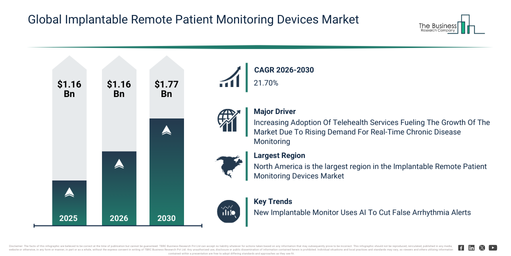
    The implantable remote patient monitoring devices market is poised for substantial expansion over the next few years. It is projected to achieve a valuation of $27.48 billion in 2030, growing at a compound annual growth rate (CAGR) of 21.7%. This growth during the forecast period is attributed to several factors, including technological advancements in implantable sensors, the increasing prevalence of chronic diseases, the integration of these devices with telemedicine platforms, a rising geriatric population, and supportive government reimbursement policies. Major trends anticipated in this period encompass the increasing adoption of continuous glucose monitoring devices, the expansion of implantable cardiac monitoring systems, a rising utilization of smart weight monitoring devices, the growth of remote home care monitoring solutions, and an enhanced focus on real-time data transmission and patient safety.

    Download the Free Sample Report to Explore Key Market Insights:

    https://www.thebusinessresearchcompany.com/sample.aspx?id=27316&type=smp

    Which Economic Or Industry Drivers Are Impacting The Implantable Remote Patient Monitoring Devices Market?

    The future expansion of the implantable remote patient monitoring devices market is anticipated to be driven by the rising uptake of telehealth services. These services encompass remote healthcare provisions via phones, video calls, or dedicated applications, enabling patients to seek medical advice without in-person clinic or hospital visits. The growing preference for telehealth stems from the escalating need for ongoing, real-time health surveillance for individuals with chronic illnesses, facilitating prompt medical responses while reducing the necessity of frequent hospital attendance. Such services augment implantable remote patient monitoring devices by facilitating immediate data exchange between patients and medical professionals, thus aiding in swift medical judgments and decreasing the requirement for physical consultations. They further refine the management of chronic diseases through constant oversight and early detection of issues, which boosts healthcare effectiveness and convenience for patients. For example, FAIR Health Inc., a US-based non-profit organization, reported in April 2023 that national telehealth utilization saw a 7.3% increase in 2023, climbing from 5.5% of medical claim lines in December 2022 to 5.9% in January 2023. Consequently, the expanding use of telehealth services is a significant factor in the growth of the implantable remote patient monitoring devices market.

    How Is The Implantable Remote Patient Monitoring Devices Market Segmented Across Key Categories?

    The implantable remote patient monitoring devices market covered in this report is segmented –

    1) By Device Type: Implantable Glucose Monitoring Devices, Implantable Cardiac Monitoring Devices, Implantable Multiparameter And Specialty Monitors

    2) By Technology: Continuous Glucose Monitoring (Cgm), Implantable Loop Recorders, Implantable Respiratory Monitors, Implantable Temperature Monitors, Implantable Neuromonitoring Devices, Implantable Multiparameter Monitors

    3) By Patient Age Group: Adults (Aged 18-64), Seniors (Aged 65 And Above), Pediatric Patients (Aged 0-17), Middle-Aged Adults (Aged 45-64)

    4) By Distribution Channel: Direct Sales, Online Sales, Health Care Institutions, Ambulatory Surgery Centers

    5) By End User: Hospitals, Home Care Settings, Ambulatory Surgery Centers, Other End Users

    Subsegments:

    1) By Implantable Glucose Monitoring Devices: Continuous Glucose Monitoring (Cgm) Devices, Long-Term Implantable Cgm Devices

    2) By Implantable Cardiac Monitoring Devices: Implantable Loop Recorders, Implantable Cardiac Telemetry Devices

    3) By Implantable Multiparameter And Specialty Monitors: Implantable Respiratory Monitoring Devices, Implantable Temperature Monitoring Devices, Implantable Neuromonitoring Devices, Implantable Multiparameter Monitors

    Which Upcoming Trends Are Expected To Influence The Implantable Remote Patient Monitoring Devices Market?

    Key companies within the implantable remote patient monitoring devices market are concentrating on developing advanced products, such as implantable cardiac monitors, to boost targeting effectiveness in monitoring for cardiac arrhythmias. An implantable cardiac monitor (ICM), also known as an implantable loop recorder (ILR), is a compact device positioned just under the skin, typically on the left side of the chest, designed for continuous monitoring and recording of the heart’s electrical activity over an extended timeframe. For instance, in June 2023, Biotronik AG, a medical technology company based in Switzerland, unveiled the BIOMONITOR IV implantable cardiac monitor. This sophisticated ICM combines BIOTRONIK’s SmartECG technology with artificial intelligence to minimize all false positive detections by 86% while maintaining 98% of true episodes. Additionally, this monitor possesses the ability to distinguish between premature atrial contractions (PACs) and premature ventricular contractions (PVCs), offering healthcare professionals superior tools for risk assessment and diagnosis.

    Who Are The Dominant Players Shaping The Implantable Remote Patient Monitoring Devices Market Landscape?

    Major companies operating in the implantable remote patient monitoring devices market are Abbott Laboratories, Medtronic plc, Boston Scientific Corporation, Dexcom Inc., LivaNova PLC, MicroPort Scientific Corporation, NeuroPace Inc., Profusa Inc., Senseonics Holdings Inc., Xeltis AG, GlySens Inc., Biotronik SE & Co KG, Impulse Dynamics NV, CVRx Inc., Vectorious Medical Technologies, EBR Systems Inc., Axonics Modulation Technologies Inc., Synchron Inc., Neuralink Corp, Orchestra BioMed Holdings Inc., Second Sight Medical Products Inc.

    Read the full implantable remote patient monitoring devices market report here:

    https://www.thebusinessresearchcompany.com/report/implantable-remote-patient-monitoring-devices-global-market-report

    What Are The Top-Performing Regions Within The Implantable Remote Patient Monitoring Devices Market?

    North America was the largest region in the implantable remote patient monitoring devices market in 2025. The regions covered in the implantable remote patient monitoring devices market report are Asia-Pacific, South East Asia, Western Europe, Eastern Europe, North America, South America, Middle East, Africa.

    Request A Tailored Implantable Remote Patient Monitoring Devices Market Research Report For Competitive Advantage:

    https://www.thebusinessresearchcompany.com/customise?id=27316&type=smp

    Browse Through More Reports Similar to the Global Implantable Remote Patient Monitoring Devices Market 2026, By The Business Research Company

    Motor Insurance Market Report 2026

    https://www.thebusinessresearchcompany.com/report/motor-insurance-global-market-report

    Car Insurance Aggregators Market Report 2026

    https://www.thebusinessresearchcompany.com/report/car-insurance-aggregators-global-market-report

    Automobile Insurance Carriers Market Report 2026

    https://www.thebusinessresearchcompany.com/report/automobile-insurance-carriers-global-market-report

    Get in touch with us:

    The Business Research Company: https://www.thebusinessresearchcompany.com/

    Americas +1 310-496-7795

    Asia +44 7882 955267 & +91 8897263534

    Europe +44 7882 955267

    Email us at info@tbrc.info

    Follow us on:

    LinkedIn: https://in.linkedin.com/company/the-business-research-company

    YouTube: https://www.youtube.com/channel/UC24_fI0rV8cR5DxlCpgmyFQ

    Global Market Model: https://www.thebusinessresearchcompany.com/global-market-model

  • Fetal And Neonatal Care Equipment Industry Forecast Indicating Market Value of $12.78 Billion by 2030 at 7.2% CAGR

    Fetal And Neonatal Care Equipment Industry Forecast Indicating Market Value of $12.78 Billion by 2030 at 7.2% CAGR

    The Business Research Company’s 2026 market reports include new capabilities such as market attractiveness scoring and analysis, total addressable market analysis, company scoring matrix, interactive excel data dashboard, improved supply chain analysis, upcoming startups in the market, and overview of key products, aimed at improving the depth, usability, and strategic value of the insights delivered.

    What Is The Estimated Market Size Of The Fetal And Neonatal Care Equipment Market During 2026–2030?

    The fetal and neonatal care equipment market has seen substantial growth in recent years. This market is projected to expand from $8.99 billion in 2025 to $9.67 billion in 2026, exhibiting a compound annual growth rate (CAGR) of 7.6%. The historical expansion can be linked to factors such as the limited availability of advanced fetal and neonatal equipment, a dependence on traditional incubators and monitoring devices, increasing neonatal care awareness, improvements in hospital infrastructure, and escalating birth rates in developing economies.

    The fetal and neonatal care equipment market size is anticipated to see substantial expansion in the coming years, with projections indicating it will grow to $12.79 billion in 2030, achieving a compound annual growth rate (CAGR) of 7.2%. This growth during the forecast period can be attributed to technological advancements in portable and smart neonatal devices, the expansion of prenatal and neonatal care services, increased investment in NICUs, a rising prevalence of premature births, and the integration of connected monitoring systems. Key trends expected in the forecast period include the increasing adoption of advanced fetal monitoring systems, a greater utilization of portable neonatal care devices, a growing demand for respiratory support equipment, the expansion of phototherapy and feeding equipment applications, and an enhanced focus on neonatal transport and safety solutions.

    Download the Free Sample Report to Explore Key Market Insights:

    https://www.thebusinessresearchcompany.com/sample.aspx?id=19432&type=smp

    Which Economic Or Industry Drivers Are Impacting The Fetal And Neonatal Care Equipment Market?

    The increasing occurrence of premature births is projected to fuel the expansion of the fetal and neonatal care equipment market in the future. A premature birth is defined as a baby being born prior to reaching 37 weeks of gestation. This growing incidence of premature births stems from factors like advanced maternal age, linked to increased complication risks, and chronic maternal health conditions, including diabetes, hypertension, obesity, and infections, all of which contribute to early labor and delivery. Such equipment enhances health results for premature infants, simultaneously enabling healthcare professionals to track vital signs, provide essential treatments, and safeguard the well-being of newborns in critical care settings. As an example, in January 2025, the Government response to the House of Lords inquiry into preterm birth, a legislative body in the UK, indicated that 8.1% of all births in 2023 were preterm, occurring between 24 and 36 completed weeks of gestation. Consequently, the increasing prevalence of premature births will stimulate the expansion of the fetal and neonatal care equipment market.

    How Are The Various Segments Of The Fetal And Neonatal Care Equipment Market Categorized?

    The fetal and neonatal care equipment market covered in this report is segmented –

    1) By Type: Fetal Care Equipment, Neonatal Care Equipment

    2) By Portability: Portable Devices, Non-Portable Devices

    3) By End-User: Hospitals, Diagnostics Centers, Clinics, Other End-Users

    Subsegments:

    1) By Fetal Care Equipment: Fetal Monitoring Equipment, Ultrasound Equipment, Fetal Surgery Equipment, Fetal Diagnostics Equipment, Fetal Assessment Systems

    2) By Neonatal Care Equipment: Incubators, Phototherapy Equipment, Respiratory Support Equipment, Neonatal Monitoring Equipment, Feeding Equipment, Suction Devices, Transport Incubators

    What Trends Are Affecting The Expansion Of The Fetal And Neonatal Care Equipment Market?

    Leading companies operating in the fetal and neonatal care equipment market are concentrating on developing technologically advanced solutions, such as wireless maternal and fetal monitoring, to offer reliable options for preterm and high-risk pregnancies. These wireless maternal and fetal monitoring systems allow for noninvasive tracking and display of fetal heart rate, maternal heart rate, and uterine activity. For instance, in February 2024, GE HealthCare Technologies Inc., a US-based medical technology company, secured 510(k) clearance from the United States Food and Drug Administration (FDA) for its Novii+ Wireless Patch Solution. The Novii+ solution is engineered to monitor both maternal and fetal health in expectant mothers from 34 weeks of gestation, broadening its prior approval that covered 37 weeks and beyond. This system incorporates a wireless, belt-free patch capable of noninvasively tracking fetal heart rate, maternal heart rate, and uterine activity. This design enables mothers to move unrestrictedly and remain mobile during labor, potentially shortening labor duration and improving comfort.

    Which Major Firms Influence Developments In The Fetal And Neonatal Care Equipment Market?

    Major companies operating in the fetal and neonatal care equipment market are Cardinal Health, Medtronic PLC, Becton Dickinson and Company, Koninklijke Philips N.V., GE Healthcare, B. Braun Melsungen AG, Shenzhen Mindray Bio-Medical Electronics Co. Ltd., Drägerwerk AG And Co KGaA, Canon Medical Systems Corporation, Masimo Corporation, Nihon Kohden Corporation, Fisher And Paykel Healthcare Limited, Contec Medical Systems Co. Ltd., Natus Medical Incorporated, Vyaire Medical Inc, Atom Medical Corporation, Amico Corporation, Mennen Medical Ltd, Phoenix Medical Systems Pvt Ltd, CareFusion Corporation, Olympus Corporation

    Read the full fetal and neonatal care equipment market report here:

    https://www.thebusinessresearchcompany.com/report/fetal-and-neonatal-care-equipment-global-market-report

    What Are The Top-Performing Regions Within The Fetal And Neonatal Care Equipment Market?

    North America was the largest region in the fetal and neonatal care equipment market in 2025. Asia-Pacific is expected to be the fastest-growing region in the forecast period. The regions covered in the fetal and neonatal care equipment market report are Asia-Pacific, South East Asia, Western Europe, Eastern Europe, North America, South America, Middle East, Africa.

    Request A Tailored Fetal And Neonatal Care Equipment Market Research Report For Competitive Advantage:

    https://www.thebusinessresearchcompany.com/customise?id=19432&type=smp

    Browse Through More Reports Similar to the Global Fetal And Neonatal Care Equipment Market 2026, By The Business Research Company

    Diagnostic Equipment Market Report 2026

    https://www.thebusinessresearchcompany.com/report/diagnostic-equipment-global-market-report

    Cardiovascular Surgery Devices And Equipment Market Report 2026

    https://www.thebusinessresearchcompany.com/report/cardiovascular-surgery-devices-and-equipment-global-market-report

    Therapeutic Dental Equipment Market Report 2026

    https://www.thebusinessresearchcompany.com/report/therapeutic-dental-equipment-global-market-report

    Get in touch with us:

    The Business Research Company: https://www.thebusinessresearchcompany.com/

    Americas +1 310-496-7795

    Asia +44 7882 955267 & +91 8897263534

    Europe +44 7882 955267

    Email us at info@tbrc.info

    Follow us on:

    LinkedIn: https://in.linkedin.com/company/the-business-research-company

    YouTube: https://www.youtube.com/channel/UC24_fI0rV8cR5DxlCpgmyFQ

    Global Market Model: https://www.thebusinessresearchcompany.com/global-market-model
  • Implantable Pulse Generator Market Insights Highlighting Opportunities and Drivers Supporting Growth to 2030

    Implantable Pulse Generator Market Insights Highlighting Opportunities and Drivers Supporting Growth to 2030

    The Business Research Company’s 2026 market reports include new capabilities such as market attractiveness scoring and analysis, total addressable market analysis, company scoring matrix, interactive excel data dashboard, improved supply chain analysis, upcoming startups in the market, and overview of key products, aimed at improving the depth, usability, and strategic value of the insights delivered.

    How Much Is The Implantable Pulse Generator Market Expected To Grow In Terms Of Market Value Between 2026 And 2030?

    The implantable pulse generator market size has experienced rapid expansion in recent years. This market is projected to expand from $147.01 billion in 2025 to $162.9 billion in 2026, demonstrating a compound annual growth rate (CAGR) of 10.8%. Historically, this growth has been driven by factors such as the increasing occurrence of chronic pain conditions, a rise in cardiovascular diseases, the wider embrace of implantable medical devices, the proliferation of hospital-based surgical procedures, and heightened awareness of neuromodulation therapies.

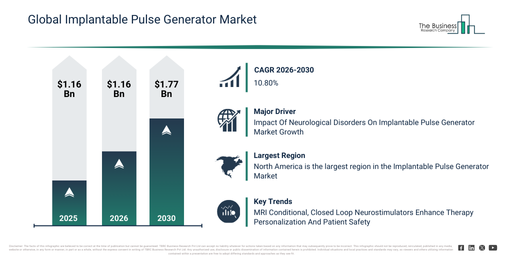
    The market for implantable pulse generators is projected to experience substantial expansion in the coming years. This market is anticipated to reach a valuation of $245.56 billion in 2030, demonstrating a compound annual growth rate (CAGR) of 10.8%. This projected growth during the forecast period is fueled by several factors, including a heightened demand for minimally invasive procedures, an expanding elderly demographic, an increasing prevalence of neurological conditions, broader availability of sophisticated implantable solutions, and a greater emphasis on sustained disease management. Key trends anticipated for this period encompass the increasing embrace of neuromodulation treatments, a surge in the utilization of implantable pulse generators for addressing chronic pain, a growing inclination towards rechargeable implantable pulse generators, an expansion of their applications in treating movement disorders, and a rising need for long-duration implantable stimulation devices.

    Download the Free Sample Report to Explore Key Market Insights:

    https://www.thebusinessresearchcompany.com/sample.aspx?id=18639&type=smp

    What Major Drivers Are Influencing Demand In The Implantable Pulse Generator Market?

    The future expansion of the implantable pulse generator market is anticipated due to an increasing occurrence of neurological conditions. These disorders are defined as ailments impacting the brain, spinal cord, and broader nervous system, consequently affecting movement, sensory perception, and cognitive abilities. The growing number of neurological disorder cases is frequently linked to elements like an aging demographic, shifts in lifestyle, environmental factors, and enhancements in diagnostic methods. Implantable pulse generators address neurological conditions by delivering precise electrical stimuli to regulate irregular neural activity and diminish symptoms. For example, in October 2023, research from the World Federation of Neurology, a UK non-profit group, indicated that over 40% of the world’s inhabitants presently suffer from a neurological ailment, and this prevalence is projected to almost double in the near future. Consequently, the escalating incidence of neurological disorders is a key catalyst for the expansion of the implantable pulse generator market.

    What Major Segment Divisions Exist Within The Implantable Pulse Generator Market?

    The implantable pulse generator market covered in this report is segmented –

    1) By Product Type: Functional Electrical Stimulation (FES) Devices for Motor Function Restoration, Spinal Cord Stimulation (SCS) Devices, Deep Brain Stimulation (DBS) Devices, Vagus Nerve Stimulation (VNS) Devices, Sacral Nerve Stimulation (SNS) Devices

    2) By Charging Type: Rechargeable, Non-Rechargeable

    3) By Application: Movement Disorders, Chronic Pain Management, Neurological Disorders, Other Applications

    4) By End User: Hospitals, Ambulatory Surgical Centers, Clinics, Home Care and Remote Monitoring Settings

    Subsegments:

    1) By Functional Electrical Stimulation (FES) Devices: For Motor Function Restoration, For Muscle Strengthening, For Rehabilitation Post-Stroke or Injury

    2) By Spinal Cord Stimulation (SCS) Devices: Conventional SCS Systems, High-Frequency SCS Systems, Burst SCS Systems

    3) By Deep Brain Stimulation (DBS) Devices: Parkinson’s Disease DBS Systems, Essential Tremor DBS Systems, Dystonia DBS Systems, Other Neurological Disorder DBS Systems

    4) By Vagus Nerve Stimulation (VNS) Devices: Epilepsy Treatment VNS Devices, Depression Treatment VNS Devices

    5) By Sacral Nerve Stimulation (SNS) Devices: Urinary Incontinence SNS Devices, Fecal Incontinence SNS Devices, Other Pelvic Floor Disorder SNS Devices

    How Are Trends Shaping The Direction Of The Implantable Pulse Generator Market?

    Companies operating in the implantable pulse generator (IPG) market are prioritizing MRI-conditional neurostimulators, such as sensing-enabled rechargeable IPGs, to bolster their competitive advantage. For instance, in April 2024, Medtronic, a US-based healthcare company, obtained FDA approval for its Inceptiv closed-loop spinal cord stimulator. This stimulator tracks evoked compound action potentials (ECAPs) 50 times per second to adjust stimulation in real time and is compatible with full-body 1.5 T and 3 T MRI scans. Similarly, in January 2024, Medtronic introduced the Percept RC rechargeable deep brain stimulation neurostimulator, which features BrainSense sensing technology, a 15-year battery life, and full-body MRI compatibility at 1.5 T and 3 T while therapy remains active. These advancements improve therapy personalization and patient safety, although they may entail higher development and device costs.

    Which Companies Are Leading Innovation In The Implantable Pulse Generator Market?

    Major companies operating in the implantable pulse generator market are Abbott Laboratories, Boston Scientific Corporation, Medtronic PLC, Nevro Corp, LivaNova PLC, NeuroPace Inc, NeuroSigma Inc, Saluda Medical Pty Ltd, Synapse Biomedical Inc, Nuvectra Medical Inc, MainStay Medical International PLC, Aleva Neurotherapeutics SA, Bioness Inc, EnteroMedics Inc, Neuronetics Inc, Axonics Inc, Sceneray Co Ltd, Cirtec Medical, BlueWind Medical, Syntach AB, Osaka Medical Devices, Gimer Medical, Saluda Medical

    Read the full implantable pulse generator market report here:

    https://www.thebusinessresearchcompany.com/report/implantable-pulse-generator-global-market-report

    Which Region Shows The Strongest Potential For Future Growth In The Implantable Pulse Generator Market?

    North America was the largest region in the implantable pulse generator market in 2025. The regions covered in the implantable pulse generator market report are Asia-Pacific, South East Asia, Western Europe, Eastern Europe, North America, South America, Middle East, Africa.

    Request A Tailored Implantable Pulse Generator Market Research Report For Competitive Advantage:

    https://www.thebusinessresearchcompany.com/customise?id=18639&type=smp

    Browse Through More Reports Similar to the Global Implantable Pulse Generator Market 2026, By The Business Research Company

    Implantable Heart Pacemaker Market Report 2026

    https://www.thebusinessresearchcompany.com/report/implantable-heart-pacemaker-global-market-report

    Implantable Cardiac Rhythm Management Device Market Report 2026

    https://www.thebusinessresearchcompany.com/report/implantable-cardiac-rhythm-management-device-global-market-report

    Cardiovascular Implants Market Report 2026

    https://www.thebusinessresearchcompany.com/report/cardiovascular-implants-global-market-report

    Get in touch with us:

    The Business Research Company: https://www.thebusinessresearchcompany.com/

    Americas +1 310-496-7795

    Asia +44 7882 955267 & +91 8897263534

    Europe +44 7882 955267

    Email us at info@tbrc.info

    Follow us on:

    LinkedIn: https://in.linkedin.com/company/the-business-research-company

    YouTube: https://www.youtube.com/channel/UC24_fI0rV8cR5DxlCpgmyFQ

    Global Market Model: https://www.thebusinessresearchcompany.com/global-market-model
  • Feminine Wipes Market Revenue Forecast to Achieve $3.56 Billion by 2030 with 8.2% CAGR

    Feminine Wipes Market Revenue Forecast to Achieve $3.56 Billion by 2030 with 8.2% CAGR

    The Business Research Company’s 2026 market reports include new capabilities such as market attractiveness scoring and analysis, total addressable market analysis, company scoring matrix, interactive excel data dashboard, improved supply chain analysis, upcoming startups in the market, and overview of key products, aimed at improving the depth, usability, and strategic value of the insights delivered.

    What Market Size Expansion Is Predicted For The Feminine Wipes Market Between 2026 And 2030?

    The feminine wipes market has demonstrated substantial growth in recent years. It is anticipated to expand from $2.4 billion in 2025 to $2.6 billion in 2026, achieving a compound annual growth rate (CAGR) of 8.6%. This historical increase can be ascribed to factors such as a greater understanding of feminine hygiene, increased participation of women in the workforce, broader access to personal care products, rising levels of disposable income, and an increased adoption of hygiene products.

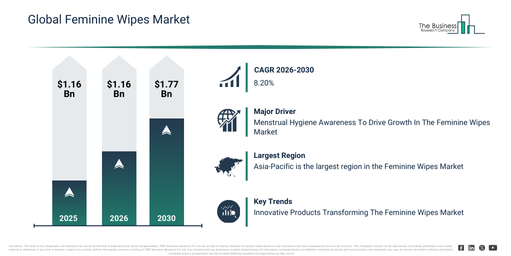
    The feminine wipes market is anticipated to experience substantial expansion in the coming years. It is projected to reach $3.56 billion in 2030, exhibiting a compound annual growth rate (CAGR) of 8.2%. This projected growth during the forecast period stems from factors such as a heightened demand for sustainable hygiene items, a greater emphasis on environmentally friendly packaging, the expansion of e-commerce channels for personal care products, increased understanding of intimate health, and continuous product innovation within feminine care. Key trends expected to shape the market over this period encompass a surge in demand for organic and natural feminine wipes, the increasing use of biodegradable wipe materials, a stronger inclination towards pH-balanced hygiene solutions, the enlargement of online distribution networks, and an intensified focus on formulations that are safe for the skin.

    Download the Free Sample Report to Explore Key Market Insights:

    https://www.thebusinessresearchcompany.com/sample.aspx?id=7120&type=smp

    What Major Drivers Are Influencing Demand In The Feminine Wipes Market?

    Increased awareness and education on menstrual hygiene among the female population are projected to propel the growth of the feminine wipes market. Menstrual hygiene refers to a hygienic practice during menstruation that can protect women from infections in their reproductive and urinary tracts. Educating women about menstrual hygiene supports the feminine wipes market by fostering dignity, enhancing confidence, and improving sexual and reproductive health. For instance, in May 2024, the World Health Organization, a Switzerland-based specialized agency of the United Nations responsible for international public health, reported that globally, only 2 out of 5 schools (39%) provide menstrual health education. This percentage rises significantly in secondary schools, with 84% of secondary schools in Central and Southern Asia. Therefore, this heightened understanding of menstrual hygiene among the female population is expected to stimulate demand for the growth of the feminine wipes market during the forecast period.

    Which Market Segments Are Examined In The Feminine Wipes Market Study?

    The feminine wipes market covered in this report is segmented –

    1) By Type: Ordinary, Sanitary

    2) By Age Group: 5 – 15 years, 16 – 30 years, 31 – 45 years, 46 – 60 years, 61 and above

    3) By Distribution Channel: Supermarkets and Hypermarkets, Convenience Stores, Pharmacies and Drugstores, Online, Other Distribution Channels

    Subsegments:

    1) By Ordinary Wipes: Unscented Ordinary Wipes, Scented Ordinary Wipes, Sensitive Skin Ordinary Wipes

    2) By Sanitary Wipes: Antibacterial Sanitary Wipes, pH-Balanced Sanitary Wipes, Organic or Natural Sanitary Wipes

    Which Trends Are Influencing The Feminine Wipes Market?

    Leading firms within the feminine wipes market are prioritizing the creation of novel offerings, including tampon and liner systems, aimed at improving convenience, comfort, and comprehensive menstrual hygiene for women. These tampon and liner systems provide a dual-component method for handling menstrual hygiene, featuring tampons for internal application and liners or pads for external safeguarding during menstruation. An example of this is the launch in May 2023 by Victoria’s Secret, a US-based company, of intimate care wipes. These are specifically formulated cleansing wipes developed to uphold hygiene in the intimate region. Characteristically, these wipes are pH-balanced, hypoallergenic, and produced from gentle materials, guaranteeing their safety for sensitive skin. Perfect for application during menstruation, post-exercise, or whenever a revitalizing cleanse is desired, intimate care wipes assist in odor control and boost comfort. They present a convenient and discreet personal care solution, enabling users to maintain a sense of cleanliness and confidence throughout their day. Thanks to their portable packaging, these wipes are readily transportable and usable as needed, establishing them as a favored item in feminine hygiene.

    Who Are The Primary Competitors In The Feminine Wipes Market?

    Major companies operating in the feminine wipes market are Albaad Massuot Yitzhak Ltd., Corman SpA., LA Fresh Group Inc., Guy & O’Neill Inc., Healthy Hoohoo Inc., The Procter & Gamble Company, Kimberly-Clark Corporation, Edgewell Personal Care Brands LLC, Johnson & Johnson, Unicharm Corporation, Essity AB, Nice-Pak Products Inc., Rockline Industries Limited, Diamond Wipes International Inc., Body Wipe Company LLC, SweetSpot Labs LLC, Goodwipes Products Inc., Rael Inc., The Honey Pot Company Inc., Cora Health Inc., L. Organic Cotton LLC, Maxim Hygiene Products LLC, Natracare LLC, Seventh Generation Inc., The Honest Company Inc., PureTouch Skin Care Inc., Summer’s Eve

    Read the full feminine wipes market report here:

    https://www.thebusinessresearchcompany.com/report/feminine-wipes-global-market-report

    Which Region Shows The Strongest Potential For Future Growth In The Feminine Wipes Market?

    Asia-Pacific was the largest region in the feminine wipes market in 2025. The regions covered in the feminine wipes market report are Asia-Pacific, South East Asia, Western Europe, Eastern Europe, North America, South America, Middle East, Africa.

    Request A Tailored Feminine Wipes Market Research Report For Competitive Advantage:

    https://www.thebusinessresearchcompany.com/customise?id=7120&type=smp

    Browse Through More Reports Similar to the Global Feminine Wipes Market 2026, By The Business Research Company

    Women Intimate Care Wipes Market Report 2026

    https://www.thebusinessresearchcompany.com/report/women-intimate-care-wipes-global-market-report

    Feminine Hygiene Products Market Report 2026

    https://www.thebusinessresearchcompany.com/report/feminine-hygiene-products-global-market-report

    Wipes Market Report 2026

    https://www.thebusinessresearchcompany.com/report/wipes-global-market-report

    Get in touch with us:

    The Business Research Company: https://www.thebusinessresearchcompany.com/

    Americas +1 310-496-7795

    Asia +44 7882 955267 & +91 8897263534

    Europe +44 7882 955267

    Email us at info@tbrc.info

    Follow us on:

    LinkedIn: https://in.linkedin.com/company/the-business-research-company

    YouTube: https://www.youtube.com/channel/UC24_fI0rV8cR5DxlCpgmyFQ

    Global Market Model: https://www.thebusinessresearchcompany.com/global-market-model

  • Global Implantable Neurostimulators Market Expected to Reach $11.43 Billion by 2030 with 11% CAGR

    Global Implantable Neurostimulators Market Expected to Reach $11.43 Billion by 2030 with 11% CAGR

    The Business Research Company’s 2026 market reports include new capabilities such as market attractiveness scoring and analysis, total addressable market analysis, company scoring matrix, interactive excel data dashboard, improved supply chain analysis, upcoming startups in the market, and overview of key products, aimed at improving the depth, usability, and strategic value of the insights delivered.

    What Market Value Is Expected For The Implantable Neurostimulators Market At The End Of The 2026–2030 Forecast Period?

    The implantable neurostimulators market size has experienced rapid growth in recent years. It is forecast to increase from $6.76 billion in 2025 to $7.52 billion in 2026, at a compound annual growth rate (CAGR) of 11.4%. This historical expansion can be attributed to the rising prevalence of chronic pain disorders, the early adoption of spinal cord stimulation therapies, the limited alternatives available for pharmacological pain management, increasing rates of neurological disorder diagnoses, and a surge in hospital-based neurosurgical procedures.

    The market for implantable neurostimulators is projected to experience swift expansion over the coming years. This market is set to reach $11.44 billion by 2030, exhibiting a compound annual growth rate (CAGR) of 11.0%. This anticipated growth is primarily driven by innovations in neurostimulation technology, broader applications for conditions such as Parkinson’s disease and epilepsy, an expanding elderly demographic facing neurological disorders, a growing body of clinical support for neuromodulation, and better reimbursement policies and access to healthcare services. Key trends anticipated during this period encompass the increasing use of implantable neurostimulators for managing chronic pain, a growing preference for rechargeable neurostimulation devices, heightened demand for less invasive neuromodulation treatments, a broadening of therapeutic indications beyond just pain and movement disorders, and a stronger emphasis on device durability and patient well-being.

    Download the Free Sample Report to Explore Key Market Insights:

    https://www.thebusinessresearchcompany.com/sample.aspx?id=20566&type=smp

    Which Market Drivers Are Supporting The Expansion Of The Implantable Neurostimulators Market?

    The anticipated surge in neurological disorders is projected to propel the expansion of the implantable neurostimulators market moving forward. Neurological disorders are health conditions affecting the nervous system, including the brain and spinal cord, which in turn impact functions like movement and cognition. This increase in neurological disorders is primarily attributed to the aging population, as longer lifespans make individuals more susceptible to conditions such as alzheimer’s and parkinson’s. Neurostimulators are devices that are implanted to deliver electrical impulses, helping to control symptoms such as tremors and pain, in conditions like epilepsy and Parkinson’s. For instance, in October 2023, reports from the World Federation of Neurology, a UK-based association of national neurological societies, indicated that over 40% of the global population currently suffers from some neurological condition, and this burden is expected to nearly double by 2050. Thus, the increasing prevalence of neurological disorders is a significant driver for the growth of the implantable neurostimulators market.

    What Segment Types Make Up The Implantable Neurostimulators Market?

    The implantable neurostimulators market covered in this report is segmented –

    1) By Product Type: Spinal Cord Stimulators, Deep Brain Stimulators, Sacral Nerve Stimulators, Vagus Nerve Stimulators, Other Product Types

    2) By Application: Pain Management, Parkinson’s Disease, Urinary And Fecal Incontinence, Epilepsy, Gastroparesis, Other Applications

    3) By End-Use: Hospitals, Ambulatory Surgical Centers (ASCs), Other End-Uses

    Subsegments:

    1) By Spinal Cord Stimulators: Conventional Spinal Cord Stimulators, Rechargeable Spinal Cord Stimulators, Non-Rechargeable Spinal Cord Stimulators, High-Frequency Spinal Cord Stimulators

    2) By Deep Brain Stimulators: Single Lead Deep Brain Stimulators, Dual Lead Deep Brain Stimulators, Rechargeable Deep Brain Stimulators, Non-Rechargeable Deep Brain Stimulators

    3) By Sacral Nerve Stimulators: Rechargeable Sacral Nerve Stimulators, Non-Rechargeable Sacral Nerve Stimulators, Implantable Pulse Generators For Sacral Nerve Stimulation

    4) By Vagus Nerve Stimulators: Rechargeable Vagus Nerve Stimulators, Non-Rechargeable Vagus Nerve Stimulators, Vagus Nerve Stimulation Systems For Epilepsy Treatment

    5) By Other Product Types: Transcranial Magnetic Stimulation (TMS) Devices, Peripheral Nerve Stimulators, Cochlear Implants

    Which Market Trends Are Creating New Opportunities In The Implantable Neurostimulators Market?

    Leading companies in the implantable neurostimulators market are concentrating on advanced innovations, including next-generation rechargeable systems that improve existing Deep Brain Stimulation (DBS) solutions and support more tailored treatment for patients with movement disorders. These novel devices offer extended battery longevity, customizable therapy configurations, and real-time brain-signal detection within a compact, patient-accessible format. For instance, in December 2024, Medtronic, a US-based medical technology company, launched its FDA-cleared Percept RC neurostimulator in India for conditions such as Parkinson’s disease, essential tremor, dystonia, and epilepsy. The Percept RC is the smallest and thinnest dual-channel rechargeable neurostimulator, equipped with BrainSense technology to record and interpret brain activity for optimized, individualized therapy adjustments. It incorporates a durable battery designed to last over 15 years, fast recharging capabilities, full-body MRI compatibility under specific guidelines, and readiness for software updates to facilitate future enhancements, ultimately enabling more data-informed and adaptive deep brain stimulation therapy.

    Who Are The Key Players Driving Competition In The Implantable Neurostimulators Market?

    Major companies operating in the implantable neurostimulators market are Abbott Laboratories, Medtronic plc, Boston Scientific Corporation, LivaNova plc, Inspire Medical Systems Inc., Nevro Corporation, Axonics Inc., Cirtec Medical Systems LLC, SPR Therapeutics Inc., BlueWind Medical Ltd., NeuroPace Inc., Bioness Inc., ReShape Lifesciences Inc., Synapse Biomedical Inc., Autonomic Technologies Inc., Comphya SA, Mainstay Medical Holdings plc, Sigenics Inc., Nalu Medical Inc., Aleva Neurotherapeutics SA, Nuvectra Corporation

    Read the full implantable neurostimulators market report here:

    https://www.thebusinessresearchcompany.com/report/implantable-neurostimulators-global-market-report

    How Is The Implantable Neurostimulators Market Distributed Across Key Geographic Regions?

    North America was the largest region in the implantable neurostimulators market in 2025. Asia-Pacific is expected to be the fastest-growing region in the forecast period. The regions covered in the implantable neurostimulators market report are Asia-Pacific, South East Asia, Western Europe, Eastern Europe, North America, South America, Middle East, Africa.

    Request A Tailored Implantable Neurostimulators Market Research Report For Competitive Advantage:

    https://www.thebusinessresearchcompany.com/customise?id=20566&type=smp

    Browse Through More Reports Similar to the Global Implantable Neurostimulators Market 2026, By The Business Research Company

    Pediatric Neurology Device Market Report 2026

    https://www.thebusinessresearchcompany.com/report/pediatric-neurology-device-global-market-report

    Neurology Devices Market Report 2026

    https://www.thebusinessresearchcompany.com/report/neurology-devices-global-market-report

    Interventional Neurology Devices And Equipment Market Report 2026

    https://www.thebusinessresearchcompany.com/report/interventional-neurology-devices-and-equipment-global-market-report

    Get in touch with us:

    The Business Research Company: https://www.thebusinessresearchcompany.com/

    Americas +1 310-496-7795

    Asia +44 7882 955267 & +91 8897263534

    Europe +44 7882 955267

    Email us at info@tbrc.info

    Follow us on:

    LinkedIn: https://in.linkedin.com/company/the-business-research-company

    YouTube: https://www.youtube.com/channel/UC24_fI0rV8cR5DxlCpgmyFQ

    Global Market Model: https://www.thebusinessresearchcompany.com/global-market-model
  • Global Female Fertility And Pregnancy Rapid Test Market Projected for Strong Growth Reaching $2.05 Billion by 2030 at 6.7% CAGR

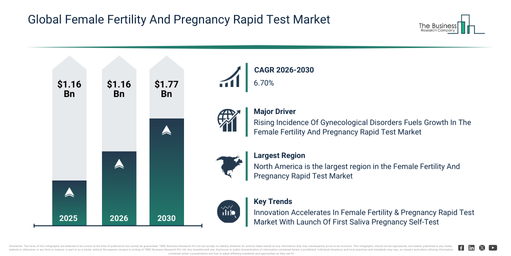
    Global Female Fertility And Pregnancy Rapid Test Market Projected for Strong Growth Reaching $2.05 Billion by 2030 at 6.7% CAGR

    The Business Research Company’s 2026 market reports include new capabilities such as market attractiveness scoring and analysis, total addressable market analysis, company scoring matrix, interactive excel data dashboard, improved supply chain analysis, upcoming startups in the market, and overview of key products, aimed at improving the depth, usability, and strategic value of the insights delivered.

    How Large Is The Female Fertility And Pregnancy Rapid Test Market Projected To Become By 2030 Based On Its 2026 Valuation?

    The female fertility and pregnancy rapid test market size has demonstrated significant expansion in recent years. This market is expected to grow from $1.48 billion in 2025 to $1.58 billion in 2026, exhibiting a compound annual growth rate (CAGR) of 7.2%. The historical increase can be attributed to factors such as heightened awareness regarding female reproductive health, the rising utilization of ovulation predictor kits, improved retail availability of rapid tests, the expansion of hospital-based diagnostic testing, and an increasing prevalence of infertility diagnoses.

    The market for female fertility and pregnancy rapid tests is projected to experience significant expansion over the coming years. This market is set to reach a value of $2.05 billion by 2030, demonstrating a compound annual growth rate (CAGR) of 6.7%. Factors driving this growth include a heightened need for early pregnancy detection, the increasing embrace of digital health monitoring technologies, a greater emphasis on customized fertility management, the broadening scope of diagnostics supported by telehealth, and the expanding presence of healthcare products in e-commerce. Concurrently, key trends anticipated during this period encompass the greater uptake of rapid testing kits for home use, an increasing desire for digital and app-integrated testing devices, the rising utilization of combined fertility and pregnancy tests, the widening of online sales channels, and an intensified focus on designing tests that are both user-friendly and highly accurate.

    Download the Free Sample Report to Explore Key Market Insights:

    https://www.thebusinessresearchcompany.com/sample.aspx?id=8966&type=smp

    Which Market Drivers Are Supporting The Expansion Of The Female Fertility And Pregnancy Rapid Test Market?

    The growing occurrence of gynecological conditions is anticipated to fuel the expansion of the female fertility and pregnancy rapid test market. These conditions are medical issues impacting female reproductive organs, specifically the breasts, abdominal and pelvic organs such as the womb (uterus), ovaries, vagina, fallopian tubes, and vulva. Female fertility and pregnancy rapid tests assist in managing gynecological disorders by allowing for the prompt identification of hormonal imbalances or pregnancy-related problems, thereby facilitating early diagnosis and effective treatment of reproductive health concerns. For example, a May 2025 report from the National Library of Medicine indicated that approximately 61.2% of women encountered at least one gynecological morbidity, with dysmenorrhea being the most prevalent at 61.3%, followed by irregular menses and infertility, both at 36.1%. Consequently, the rising prevalence of gynecological disorders is propelling the growth of the female fertility and pregnancy rapid test market.

    What Segment Groups Are Identified Within The Female Fertility And Pregnancy Rapid Test Market?

    The female fertility and pregnancy rapid test market covered in this report is segmented –

    1) By Product: Fertility Rapid Test Kits, Pregnancy Rapid Test Kits

    2) By Device Type: Digital Devices, Line-indicator Devices

    3) By Test Type: FSH Urine Test, LH Urine Test, hCG Blood Test, hCG Urine Test

    4) By Distribution Channel: Hospital Channel, Retail Channel, Online Channel

    Subsegments:

    1) By Fertility Rapid Test Kits: Ovulation Predictor Kits, Luteinizing Hormone (LH) Test Kits, Follicle-Stimulating Hormone (FSH) Test Kits

    2) By Pregnancy Rapid Test Kits: Urine-Based Pregnancy Tests, Blood-Based Pregnancy Tests, Combo Fertility And Pregnancy Tests

    What Trends Are Advancing Progress In The Female Fertility And Pregnancy Rapid Test Market?

    Leading companies within the female fertility and pregnancy rapid test market are concentrating on creating novel solutions, including saliva-based home pregnancy tests, to address the increasing need for non-invasive options. Such a test is a lateral-flow, point-of-care assay designed to identify pregnancy biomarkers in oral fluid instead of urine. For example, in May 2024, Abingdon Health plc, a UK-based lateral flow CDMO, introduced the world’s first Boots-branded saliva pregnancy self-test (available both in Boots stores and online), thereby integrating this saliva-based technology into widespread retail. This product comprises a saliva collection interface and a proprietary lateral-flow immunoassay, developed in collaboration with Salignostics and Crest Medical, engineered to bind and show the presence of the pregnancy biomarker in oral fluid; it operates as a quick, single-use self-test delivering results within minutes and is prepared for over-the-counter sale. Distinctively, it eliminates the need for urine collection in the testing process (enhancing comfort and hygiene), promotes consumer acceptance through a familiar “stick/cassette” design, and is purposed for regular home screening and early pregnancy confirmation, benefiting from Boots’ extensive retail presence and consumer confidence.

    Which Companies Hold Significant Positions In The Female Fertility And Pregnancy Rapid Test Market?

    Major companies operating in the female fertility and pregnancy rapid test market are Abbott Laboratories, Atlas Medical GmbH, bioMérieux SA, Church & Dwight Co. Inc., Quidel Corporation, Egens Group, Eurofins Scientific SE, Everlywell Inc., Genea Pty Limited, Geratherm Medical AG, SA Scientific Ltd., Artron Laboratories Inc., PRIMA Lab SA, The Procter & Gamble Company, Alere Inc., Prestige Brands Holdings Inc., SPD Swiss Precision Diagnostics GmbH, Fairhaven Health LLC, Fertility Focus Limited, HiLin Life Products Inc., Inverness Medical Innovations Inc., UEBE Medical GmbH, Wondfo Biotech Co. Ltd.

    Read the full female fertility and pregnancy rapid test market report here:

    https://www.thebusinessresearchcompany.com/report/female-fertility-and-pregnancy-rapid-test-global-market-report

    How Is The Female Fertility And Pregnancy Rapid Test Market Distributed Across Key Geographic Regions?

    North America was the largest region in the female fertility and pregnancy rapid test market in 2025. The regions covered in the female fertility and pregnancy rapid test market report are Asia-Pacific, South East Asia, Western Europe, Eastern Europe, North America, South America, Middle East, Africa.

    Request A Tailored Female Fertility And Pregnancy Rapid Test Market Research Report For Competitive Advantage:

    https://www.thebusinessresearchcompany.com/customise?id=8966&type=smp

    Browse Through More Reports Similar to the Global Female Fertility And Pregnancy Rapid Test Market 2026, By The Business Research Company

    Fertility Treatments Market Report 2026

    https://www.thebusinessresearchcompany.com/report/fertility-treatments-global-market-report

    Fertility Services Market Report 2026

    https://www.thebusinessresearchcompany.com/report/fertility-services-global-market-report

    Male Fertility Market Report 2026

    https://www.thebusinessresearchcompany.com/report/male-fertility-global-market-report

    Get in touch with us:

    The Business Research Company: https://www.thebusinessresearchcompany.com/

    Americas +1 310-496-7795

    Asia +44 7882 955267 & +91 8897263534

    Europe +44 7882 955267

    Email us at info@tbrc.info

    Follow us on:

    LinkedIn: https://in.linkedin.com/company/the-business-research-company

    YouTube: https://www.youtube.com/channel/UC24_fI0rV8cR5DxlCpgmyFQ

    Global Market Model: https://www.thebusinessresearchcompany.com/global-market-model

  • Implantable Neurostimulation Devices Market Future Outlook Showing Expansion Toward $10.01 Billion by 2030

    Implantable Neurostimulation Devices Market Future Outlook Showing Expansion Toward $10.01 Billion by 2030

    The Business Research Company’s 2026 market reports include new capabilities such as market attractiveness scoring and analysis, total addressable market analysis, company scoring matrix, interactive excel data dashboard, improved supply chain analysis, upcoming startups in the market, and overview of key products, aimed at improving the depth, usability, and strategic value of the insights delivered.

    What Is The Estimated Market Size Of The Implantable Neurostimulation Devices Market During 2026–2030?

    The implantable neurostimulation devices market size has experienced rapid expansion in recent years. This market is expected to expand from $5.62 billion in 2025 to $6.27 billion in 2026, registering a compound annual growth rate (CAGR) of 11.7%. The growth observed in prior periods can be attributed to the rising prevalence of neurological disorders, the expansion of pain management treatments, the adoption of implantable stimulation technologies, increasing clinical acceptance of neuromodulation, and the availability of implantable electronic systems.

    The implantable neurostimulation devices market is set for considerable expansion in the upcoming years. Its valuation is forecast to reach $10.02 billion by 2030, demonstrating a compound annual growth rate (CAGR) of 12.4%. This anticipated growth is driven by factors such as the increasing demand for non-pharmacological interventions, a heightened focus on precision neuromodulation techniques, the proliferation of outpatient neurological care, rising investments in brain-machine interface research, and ongoing advancements in stimulation algorithms. Significant trends expected during this forecast period include the wider adoption of advanced neurostimulation therapies, an increase in the use of rechargeable stimulation devices, the growing implementation of personalized neuromodulation treatments, the expansion of multi-indication neurostimulation systems, and a strengthened emphasis on the long-term effectiveness of these therapies.

    Download the Free Sample Report to Explore Key Market Insights:

    https://www.thebusinessresearchcompany.com/sample.aspx?id=19520&type=smp

    What Underlying Factors Are Accelerating The Growth Of The Implantable Neurostimulation Devices Market?

    The future expansion of the implantable neurostimulation device market is anticipated due to the increasing occurrence of neurological disorders. Such disorders encompass conditions impacting the nervous system’s structure or function, leading to symptoms like paralysis, seizures, and difficulties with cognition. Elevated detection rates for these disorders are linked to greater exposure to risk factors including high blood pressure, developmental irregularities, or physical trauma. These implantable neurostimulation devices serve to moderate nerve activity and mitigate symptoms in neurological disorders, particularly when alternative treatments prove unsuccessful or inadequate. An illustrative example from 2024, as reported by the Alzheimer’s Association, a US-based non-profit voluntary health organization, indicates that approximately 6.9 million Americans aged 65 and older suffer from Alzheimer’s disease, with 73% of them being age 75 or older. This figure is expected to climb to 12.7 million by 2050. Consequently, the increasing prevalence of neurological disorders will drive the implantable neurostimulation device market.

    How Are The Various Segments Of The Implantable Neurostimulation Devices Market Categorized?

    The implantable neurostimulation devices market covered in this report is segmented –

    1) By Type: Spinal Cord Stimulation (SCS), Gastric Electric Stimulation (GES), Deep Brain Stimulation (DBS), Sacral Nerve Stimulation (SNS), Vagus Nerve Stimulation (VNS), Other Types

    2) By Application: Pain Management, Parkinson’s Disease, Urinary And Fecal Incontinence, Epilepsy, Gastroparesis, Other Applications

    3) By End-User: Hospitals, Clinics, Ambulatory Surgical Centers

    Subsegments:

    1) By Spinal Cord Stimulation (SCS): Rechargeable SCS Devices, Non-Rechargeable SCS Devices

    2) By Gastric Electric Stimulation (GES): Implantable Gastric Stimulators, Adjustable Gastric Stimulators

    3) By Deep Brain Stimulation (DBS): DBS Devices for Movement Disorders, DBS Devices for Psychiatric Disorders

    4) By Sacral Nerve Stimulation (SNS): SNS Devices for Urinary Incontinence, SNS Devices for Fecal Incontinence

    5) By Vagus Nerve Stimulation (VNS): VNS Devices for Epilepsy, VNS Devices for Depression

    6) By Other Types: Peripheral Nerve Stimulation (PNS), Cortical Stimulation Devices, Novel Neurostimulation Technologies

    What Trends Are Affecting The Expansion Of The Implantable Neurostimulation Devices Market?

    Leading companies operating within the implantable neurostimulation devices market are concentrating on creating sophisticated systems, such as rechargeable brain-sensing neurostimulators, to provide more tailored and adaptable treatment for individuals suffering from movement and neurological conditions. These rechargeable brain-sensing neurostimulators are implantable devices engineered to monitor real-time brain signals while delivering specific stimulation, thereby enabling clinicians to fine-tune therapy more accurately based on individual neural activity and long-term care requirements. For instance, in January 2024, Medtronic, a US-based medical device company, announced the U.S. Food and Drug Administration (FDA) approval for its Percept RC neurostimulator. This rechargeable deep brain stimulation (DBS) system incorporates exclusive BrainSense technology, which captures and tracks brain signals for optimizing personalized therapy. The device offers a substantial service life of at least 15 years, provides adaptable and directional stimulation programming, and features quick recharging capabilities, offering patients a more robust and customizable treatment option for managing movement disorders.

    Which Major Firms Influence Developments In The Implantable Neurostimulation Devices Market?

    Major companies operating in the implantable neurostimulation devices market are Abbott Laboratories, Medtronic PLC, Boston Scientific Corporation, St. Jude Medical LLC, LivaNova PLC, Nevro Corp., Axonics Inc., NeuroPace Inc., Bioness Inc., Saluda Medical Pty Ltd., SceneRay Co. Ltd., NeuroMetrix Inc., Synapse Biomedical Inc., NeuroSigma Inc., Nuvectra Corporation, MicroTransponder Inc., Curonix LLC, Inspire Medical Systems Inc., SetPoint Medical Corporation, ElectroCore Inc.

    Read the full implantable neurostimulation devices market report here:

    https://www.thebusinessresearchcompany.com/report/implantable-neurostimulation-devices-global-market-report

    Which Region Is Projected To Dominate The Implantable Neurostimulation Devices Market During The Forecast Period?

    North America was the largest region in the implantable neurostimulation devices market in 2025. Asia-Pacific is expected to be the fastest-growing region in the forecast period. The regions covered in the implantable neurostimulation devices market report are Asia-Pacific, South East Asia, Western Europe, Eastern Europe, North America, South America, Middle East, Africa.

    Request A Tailored Implantable Neurostimulation Devices Market Research Report For Competitive Advantage:

    https://www.thebusinessresearchcompany.com/customise?id=19520&type=smp

    Browse Through More Reports Similar to the Global Implantable Neurostimulation Devices Market 2026, By The Business Research Company

    Neurostimulation Devices Market Report 2026

    https://www.thebusinessresearchcompany.com/report/neurostimulation-devices-global-market-report

    Internal Neuromodulation Devices Market Report 2026

    https://www.thebusinessresearchcompany.com/report/internal-neuromodulation-devices-global-market-report

    Neural Implants Market Report 2026

    https://www.thebusinessresearchcompany.com/report/neural-implants-global-market-report

    Get in touch with us:

    The Business Research Company: https://www.thebusinessresearchcompany.com/

    Americas +1 310-496-7795

    Asia +44 7882 955267 & +91 8897263534

    Europe +44 7882 955267

    Email us at info@tbrc.info

    Follow us on:

    LinkedIn: https://in.linkedin.com/company/the-business-research-company

    YouTube: https://www.youtube.com/channel/UC24_fI0rV8cR5DxlCpgmyFQ

    Global Market Model: https://www.thebusinessresearchcompany.com/global-market-model