Month: March 2026

  • A significant industry trend in the Digital Karyotyping Market includes advancements in third-generation chromosomal karyotyping systems improving precision and efficiency

    A significant industry trend in the Digital Karyotyping Market includes advancements in third-generation chromosomal karyotyping systems improving precision and efficiency

    The Business Research Company’s 2026 market reports include new capabilities such as market attractiveness scoring and analysis, total addressable market analysis, company scoring matrix, interactive excel data dashboard, improved supply chain analysis, upcoming startups in the market, and overview of key products, aimed at improving the depth, usability, and strategic value of the insights delivered.

    What Is The Expected Market Size Of The Digital Karyotyping Market From 2026 To 2030?

    The digital karyotyping market has experienced swift expansion recently. It is forecast to rise from $1.29 billion in 2025 to $1.42 billion in 2026, showing a compound annual growth rate (CAGR) of 10.3%. Historical growth stemmed from the escalating utilization of genomic techniques in cancer research, progress in DNA sequencing technologies, enhanced funding for genetic disorder research, the integration of digital genomic analysis tools, and the increase in molecular diagnostics laboratories.

    The digital karyotyping market size is anticipated to undergo significant expansion in the coming years. This market is projected to reach $2.09 billion by 2030, demonstrating a compound annual growth rate (CAGR) of 10.1%. The growth within the forecast period can be attributed to the increasing demand for precision oncology, the integration of AI-based genomic interpretation, a wider application in prenatal and rare disease screening, the expansion of clinical genomics services, and the development of high-throughput digital karyotyping platforms. Major trends expected during this period include high-resolution copy number analysis, sequence-based chromosomal mapping, improved detection of genomic alterations, integration with advanced bioinformatics tools, and an application expansion in cancer genomics.

    Download the Free Sample Report to Explore Key Market Insights:

    https://www.thebusinessresearchcompany.com/sample.aspx?id=28203&type=smp

    Which Growth Drivers Are Contributing To The Progress Of The Digital Karyotyping Market?

    The rising occurrence of genetic conditions is anticipated to fuel the expansion of the digital karyotyping market in the future. These disorders stem from alterations or irregularities found within an individual’s genes or chromosomes. The widespread presence of genetic disorders is attributed to a growing number of inherited and chromosomal irregularities, which escalates the probability of transmitting genetic variations from one generation to the next. Digital karyotyping addresses the increasing demand for managing genetic disorders by allowing for accurate identification of chromosomal anomalies, enhancing diagnostic precision, and informing specific treatment choices without exclusive dependence on conventional cytogenetic techniques. As an illustration, in May 2024, data from the National Health Service, a UK government department, indicated that 17,000 people are affected by sickle cell disease, an inherited genetic blood disorder, with approximately 250 new diagnoses annually. Consequently, the expanding occurrence of genetic disorders is projected to stimulate the growth of the digital karyotyping market.

    Which Segments Are Included In The Analysis Of The Digital Karyotyping Market?

    The digital karyotyping market covered in this report is segmented –

    1) By Product Type: Instruments, Software, Consumables

    2) By Application: Cancer Diagnostics, Genetic Disease Research, Prenatal Screening

    3) By End-User: Hospitals And Clinics, Diagnostic Laboratories, Research Institutes

    Subsegments:

    1) By Instruments: Automated Karyotyping Systems, Microscopes And Imaging Platforms, Scanners And Analyzers, Hybridization And Sequencing Equipment

    2) By Software: Image Analysis Software, Chromosome Classification And Detection Tools, Data Management And Integration Platforms, AI Or Ml-Based Interpretation Software

    3) By Consumables: Reagents And Kits, Probes And Stains, Slides And Coverslips, Sample Preparation Materials

    Which Trends Are Impacting The Growth Of The Digital Karyotyping Market?

    Leading companies in the digital karyotyping market are prioritizing technological advancements, particularly focusing on third-generation chromosomal karyotyping systems to enhance their competitive advantage. These advanced platforms leverage high-resolution imaging, automated scanning, and digital analysis to detect and classify chromosomal abnormalities with greater accuracy, speed, and reduced manual intervention, thereby improving diagnostic reliability and throughput in genetic testing. For instance, in April 2023, Hangzhou Diagens, a China-based biotechnology company, introduced the MetaSight G200, a system capable of capturing intelligent metaphase images and scanning a slide in just four minutes. It is equipped with the world’s first chromosome defect recognition module that automatically labels abnormalities, alongside a contactless magnetic levitation motor and a zigzag electric scanning platform to ensure stability.

    Which Key Industry Participants Are Active In The Digital Karyotyping Market?

    Major companies operating in the digital karyotyping market are Thermo Fisher Scientific, Corewell Health Laboratory, Eurofins Scientific, Agilent Technologies, Bio-Rad Laboratories Inc., Natera Inc., BGI Genomics Co. Ltd., PerkinElmer Inc., Oxford Nanopore Technologies, Genasis, Personal Genome Diagnostics Inc., DSS Imagetech, MetaSystems, Applied Spectral Imaging (ASI), Bioview, ArgusSoft, Ibex Medical Analytics, KaryoLogic Inc., Cyto Vision, Beijing Abaco Biotechnology

    Read the full digital karyotyping market report here:

    https://www.thebusinessresearchcompany.com/report/digital-karyotyping-global-market-report

    What Are The Leading Geographic Regions In The Digital Karyotyping Market?

    North America was the largest region in the digital karyotyping market in 2025. Asia-Pacific is expected to be the fastest-growing region in the forecast period. The regions covered in the digital karyotyping market report are Asia-Pacific, South East Asia, Western Europe, Eastern Europe, North America, South America, Middle East, Africa.

    Request A Tailored Digital Karyotyping Market Research Report For Competitive Advantage:

    https://www.thebusinessresearchcompany.com/customise?id=28203&type=smp

    Browse Through More Reports Similar to the Global Digital Karyotyping Market 2026, By The Business Research Company

    Digital Radiography Market Report 2026

    https://www.thebusinessresearchcompany.com/report/digital-radiography-global-market-report

    Digital Pathology Market Report 2026

    https://www.thebusinessresearchcompany.com/report/digital-pathology-global-market-report

    Digital Photography Market Report 2026

    https://www.thebusinessresearchcompany.com/report/digital-photography-global-market-report

    Get in touch with us:

    The Business Research Company: https://www.thebusinessresearchcompany.com/

    Americas +1 310-496-7795

    Asia +44 7882 955267 & +91 8897263534

    Europe +44 7882 955267

    Email us at info@tbrc.info

    Follow us on:

    LinkedIn: https://in.linkedin.com/company/the-business-research-company

    YouTube: https://www.youtube.com/channel/UC24_fI0rV8cR5DxlCpgmyFQ

    Global Market Model: https://www.thebusinessresearchcompany.com/global-market-model

  • A key trend shaping the Digital Hydration Reminder Urinalysis Strip Market is the development of home-based digital urinalysis solutions enabling personalized health monitoring and early detection

    A key trend shaping the Digital Hydration Reminder Urinalysis Strip Market is the development of home-based digital urinalysis solutions enabling personalized health monitoring and early detection

    The Business Research Company’s 2026 market reports include new capabilities such as market attractiveness scoring and analysis, total addressable market analysis, company scoring matrix, interactive excel data dashboard, improved supply chain analysis, upcoming startups in the market, and overview of key products, aimed at improving the depth, usability, and strategic value of the insights delivered.

    What Market Valuation Is Forecasted For The Digital Hydration Reminder Urinalysis Strip Market By 2030 Starting From Its 2026 Size?

    The market for digital hydration reminder urinalysis strips has experienced significant growth recently. It is projected to increase from $1.53 billion in 2025 to $1.74 billion in 2026, achieving a compound annual growth rate (CAGR) of 13.7%. The expansion observed historically is attributable to an increased focus on hydration and wellness, the uptake of home-based diagnostic testing, rising smartphone ownership, advancements in urinalysis strip technology, and a general increase in preventive healthcare practices.

    The market for digital hydration reminder urinalysis strips is projected to expand significantly over the coming years. It is anticipated to reach a valuation of $2.88 billion in 2030, exhibiting a compound annual growth rate (CAGR) of 13.4%. This growth during the forecast period is primarily driven by factors such as the expanding digital health ecosystems, the integration of these strips with wearable health devices, a heightened demand for personalized health monitoring, greater utilization in sports and fitness, and an increased emphasis on managing chronic diseases. Key trends expected within this period encompass intelligent hydration level tracking, urinalysis strips connected to mobile applications, immediate hydration feedback, customized hydration advice, and seamless integration with broader wellness platforms.

    Download the Free Sample Report to Explore Key Market Insights:

    https://www.thebusinessresearchcompany.com/sample.aspx?id=28202&type=smp

    What Primary Drivers Are Shaping The Development Of The Digital Hydration Reminder Urinalysis Strip Market?

    The increasing occurrence of diabetes is anticipated to boost the expansion of the digital hydration reminder urinalysis strip market in the future. Diabetes is a persistent ailment where the body either fails to produce adequate insulin or cannot utilize it effectively, leading to elevated blood sugar levels. The prevalence of diabetes is on the rise due to increasing rates of obesity, largely resulting from unhealthy dietary habits and inactive lifestyles. Digital hydration reminder urinalysis strips aid in tracking hydration status and urine biomarkers associated with diabetes risks, promote healthier lifestyle management, enable the early identification of complications, and enhance the overall well-being for individuals living with diabetes. For example, the International Diabetes Federation (IDF), a Belgium-based health organization dedicated to diabetes awareness and advocacy, stated that diabetes was responsible for 3.4 million deaths worldwide in 2024, which equates to one death every nine seconds. Therefore, the escalating prevalence of diabetes is a key driver for the growth of the digital hydration reminder urinalysis strip market.

    Which Segment Categories Define The Digital Hydration Reminder Urinalysis Strip Market?

    The digital hydration reminder urinalysis strip market covered in this report is segmented –

    1) By Product Type: Single-Use Strips, Multi-Use Strips, Smart Strips

    2) By Distribution Channel: Online Retail, Pharmacies, Specialty Stores, Other Distribution Channels

    3) By Application: Home Care, Hospitals And Clinics, Sports And Fitness, Occupational Health, Other Applications

    4) By End-User: Individuals, Healthcare Professionals, Athletes, Other End Users

    Subsegments:

    1) By Single-Use Strips: Colorimetric Strips, Enzymatic Strips, Electrochemical Strips

    2) By Multi-Use Strips: Reusable Sensor Strips, Washable Strips, Modular Test Strips

    3) By Smart Strips: Bluetooth-Enabled Strips, App-Integrated Strips, Internet of Things-Connected Strips

    What Major Market Trends Are Driving Changes In The Digital Hydration Reminder Urinalysis Strip Market?

    Leading companies operating in the digital hydration reminder urinalysis strip market are concentrating on developing home-based healthcare solutions designed for convenient and real-time monitoring of hydration and health biomarkers. These domestic healthcare solutions aim to empower users with personalized insights, prompt detection of potential health issues, and enhanced overall wellness management. For example, in January 2024 at CES 2024, Vivoo, a US-based health-tech company specializing in at-home wellness diagnostics, launched its innovative at-home digital Urinary Tract Infection (UTI) testing product. The kit enables users to test within minutes by scanning a urine strip with the Vivoo app, which employs AI to deliver precise results and share data with healthcare providers. This advancement facilitates convenient home monitoring, supporting early detection and improving access to healthcare.

    Who Are The Top Companies Competing In The Digital Hydration Reminder Urinalysis Strip Market?

    Major companies operating in the digital hydration reminder urinalysis strip market are Healthy.io, Vivoo, UroQR, Med2AI, Spark Diagnostics, Scanwell Health, Ribbon Checkup, Starling Medical, Withings, Kamleon, Minuteful Kidney, Inui Health, Urinostics, BioSens Diagnostics, HydroSense Health, AI-Urinalysis Labs, HydraView Medical, UrineInsight Tech, SmartDip Diagnostics, HomeUrine Tech, AIHydration Health, BioStrip Analytics, DipScan Solutions, QR-Urinalysis Systems

    Read the full digital hydration reminder urinalysis strip market report here:

    https://www.thebusinessresearchcompany.com/report/digital-hydration-reminder-urinalysis-strip-global-market-report

    How Does The Digital Hydration Reminder Urinalysis Strip Market Perform Across Major Global Regions?

    North America was the largest region in the digital hydration reminder urinalysis strip market in 2025. Asia-Pacific is expected to be the fastest-growing region in the forecast period. The regions covered in the digital hydration reminder urinalysis strip market report are Asia-Pacific, South East Asia, Western Europe, Eastern Europe, North America, South America, Middle East, Africa.

    Request A Tailored Digital Hydration Reminder Urinalysis Strip Market Research Report For Competitive Advantage:

    https://www.thebusinessresearchcompany.com/customise?id=28202&type=smp

    Browse Through More Reports Similar to the Global Digital Hydration Reminder Urinalysis Strip Market 2026, By The Business Research Company

    Urology Surgical Instruments Market Report 2026

    https://www.thebusinessresearchcompany.com/report/urology-surgical-instruments-global-market-report

    Ureteroscope Market Report 2026

    https://www.thebusinessresearchcompany.com/report/ureteroscope-global-market-report

    Urology Devices Market Report 2026

    https://www.thebusinessresearchcompany.com/report/urology-devices-global-market-report

    Get in touch with us:

    The Business Research Company: https://www.thebusinessresearchcompany.com/

    Americas +1 310-496-7795

    Asia +44 7882 955267 & +91 8897263534

    Europe +44 7882 955267

    Email us at info@tbrc.info

    Follow us on:

    LinkedIn: https://in.linkedin.com/company/the-business-research-company

    YouTube: https://www.youtube.com/channel/UC24_fI0rV8cR5DxlCpgmyFQ

    Global Market Model: https://www.thebusinessresearchcompany.com/global-market-model

  • An Important Factor Driving the Digital Health For Obesity Market Is the Surge in mHealth Usage Supporting Demand for Remote Healthcare Services

    An Important Factor Driving the Digital Health For Obesity Market Is the Surge in mHealth Usage Supporting Demand for Remote Healthcare Services

    The Business Research Company’s 2026 market reports include new capabilities such as market attractiveness scoring and analysis, total addressable market analysis, company scoring matrix, interactive excel data dashboard, improved supply chain analysis, upcoming startups in the market, and overview of key products, aimed at improving the depth, usability, and strategic value of the insights delivered.

    How Is The Market Size Of The Digital Health For Obesity Market Expected To Change Between 2026 And 2030?

    The digital health for obesity market size has seen substantial expansion in recent years. It is anticipated to increase from $78.91 billion in 2025 to $99.36 billion in 2026, demonstrating a compound annual growth rate (CAGR) of 25.9%. The historical growth in this market can be attributed to factors such as limited access to digital obesity management tools, the rising prevalence of obesity, a reliance on traditional weight management methods, a lack of integration between healthcare providers and digital solutions, and the increasing penetration of smartphones and the internet.

    The digital health for obesity market is projected to experience substantial expansion over the upcoming years. This market is anticipated to reach a valuation of $247.33 billion by 2030, demonstrating a compound annual growth rate (CAGR) of 25.6%. This anticipated growth throughout the forecast period stems from several factors, including developments in AI-powered coaching and predictive analytics, a rise in the use of connected wearable devices, the broadening of telemedicine infrastructure, increased understanding regarding personalized obesity care, and greater investment in digital health platforms. Key trends expected during this period involve the increasing uptake of mobile and web-based health applications, a greater utilization of wearable fitness and health tracking devices, an escalating need for personalized weight management programs, the broadening of telehealth and remote patient monitoring services, and the incorporation of behavioral therapy and lifestyle coaching into digital platforms.

    Download the Free Sample Report to Explore Key Market Insights:

    https://www.thebusinessresearchcompany.com/sample.aspx?id=25753&type=smp

    Which Major Factors Are Driving The Expansion Of The Digital Health For Obesity Market?

    The future expansion of the digital health for obesity market is anticipated to be propelled by the growing integration of mHealth. mHealth encompasses the utilization of mobile technology, including smartphones and tablets, in conjunction with health applications and wireless connectivity, to provide healthcare and public health solutions. This facilitates capabilities like distant supervision, informing patients, and managing health continuously. The proliferation of smartphones has fueled this increase in mHealth, as it grants effortless access to health applications and digital instruments for instant personal health tracking, administration, and enhancement. For addressing obesity, mHealth plays a supportive role for digital health interventions by providing mobile-centric strategies. These include tracking dietary intake, supervising physical activity, offering virtual guidance, and delivering tailored advice, all vital for successful weight control and altering habits. An illustrative example comes from the National Health Service (NHS), the UK’s state-funded healthcare provider. In December 2023, the NHS reported that appointments accessed or handled via its app reached 4.1 million in November 2023, a significant rise from 1.95 million recorded in November 2022. Consequently, the expanding uptake of mHealth is a key factor boosting the expansion of the digital health for obesity market.

    How Is The Digital Health For Obesity Market Structured Across Different Segments?

    The digital health for obesity market covered in this report is segmented –

    1) By Component: Software, Hardware, Services

    2) By Functionality: Weight Monitoring, Diet And Nutrition Management, Physical Activity Tracking, Behavioral Therapy Or Computer Based Test, Remote Patient Monitoring

    3) By End-Use: Patients, Providers, Payers, Other Users

    Subsegments:

    1) By Software: Mobile Applications, Web-Based Platforms, Artificial Intelligence-Powered Coaching Tools, Diet And Nutrition Tracking Software, Fitness And Activity Monitoring Software, Behavioral Modification Programs, Telehealth Software, Electronic Health Record (EHR) Integration Tools

    2) By Hardware: Wearable Fitness Trackers, Smart Scales, Smartwatches, Body Composition Analyzers, Connected Glucometers, Blood Pressure Monitors, Sleep Trackers, Internet of Things-Enabled Health Devices

    3) By Services: Remote Patient Monitoring, Teleconsultation Services, Weight Management Counseling, Subscription-Based Wellness Programs, Personalized Coaching Services, Behavioral Therapy Sessions, Data Analytics And Reporting Services, Clinical Support And Follow-Up

    Which Trends Are Shaping The Future Of The Digital Health For Obesity Market?

    Leading companies in the digital health for obesity market are concentrating on technological breakthroughs in artificial intelligence-driven nutritional support to improve personalized care, increase patient engagement, and encourage sustainable behavior changes in managing weight and related chronic conditions. Artificial intelligence-powered nutritional support utilizes AI algorithms and virtual agents to provide customized dietary advice, immediate feedback, and behavioral coaching, assisting individuals in making healthier food choices and maintaining long-term lifestyle modifications. For example, in May 2025, Omada Health Inc., a US-based digital healthcare company focused on chronic disease prevention and management, introduced OmadaSpark Inc., an artificial intelligence-powered virtual agent, as part of its nutritional intelligence initiative to bolster personalized nutrition support. It delivers real-time educational guidance, motivation, and tools for building habits. This innovation seeks to alter individuals’ relationships with food by merging advanced technology with clinical care. This development represents a significant stride in broadening Omada’s digital platform for the management of chronic conditions and obesity.

    Which Major Players Dominate The Digital Health For Obesity Market?

    Major companies operating in the digital health for obesity market are Teladoc Health Inc., WW International Inc., Hims & Hers Inc., Noom Inc., Vida Health Inc., Twin Health Inc., Allurion Technologies Inc., Virta Health Corp., Omada Health Inc., DarioHealth Corp., WellDoc Inc., Sidekick Health, Qardio Inc., Fitterfly Pvt. Ltd., Form Health, Lark Health Inc., Knownwell Inc., Ilant Health Inc., MyNetDiary Inc., Rimidi Inc

    Read the full digital health for obesity market report here:

    https://www.thebusinessresearchcompany.com/report/digital-health-for-obesity-global-market-report

    Which Region Currently Holds The Largest Share Of The Digital Health For Obesity Market?

    North America was the largest region in the digital health for obesity market in 2025. Asia-Pacific is expected to be the fastest-growing region in the forecast period. The regions covered in the digital health for obesity market report are Asia-Pacific, South East Asia, Western Europe, Eastern Europe, North America, South America, Middle East, Africa.

    Request A Tailored Digital Health For Obesity Market Research Report For Competitive Advantage:

    https://www.thebusinessresearchcompany.com/customise?id=25753&type=smp

    Browse Through More Reports Similar to the Global Digital Health For Obesity Market 2026, By The Business Research Company

    Womens Digital Health Market Report 2026

    https://www.thebusinessresearchcompany.com/report/womens-digital-health-global-market-report

    Digital Diabetes Management Market Report 2026

    https://www.thebusinessresearchcompany.com/report/digital-diabetes-management-global-market-report

    Digital Health In Neurology Market Report 2026

    https://www.thebusinessresearchcompany.com/report/digital-health-in-neurology-global-market-report

    Get in touch with us:

    The Business Research Company: https://www.thebusinessresearchcompany.com/

    Americas +1 310-496-7795

    Asia +44 7882 955267 & +91 8897263534

    Europe +44 7882 955267

    Email us at info@tbrc.info

    Follow us on:

    LinkedIn: https://in.linkedin.com/company/the-business-research-company

    YouTube: https://www.youtube.com/channel/UC24_fI0rV8cR5DxlCpgmyFQ

    Global Market Model: https://www.thebusinessresearchcompany.com/global-market-model
  • A Significant Growth Driver for the Digital Fluoroscopy System Market Is the Increasing Adoption of Telehealth Services Supporting Remote Chronic Disease Management

    A Significant Growth Driver for the Digital Fluoroscopy System Market Is the Increasing Adoption of Telehealth Services Supporting Remote Chronic Disease Management

    The Business Research Company’s 2026 market reports include new capabilities such as market attractiveness scoring and analysis, total addressable market analysis, company scoring matrix, interactive excel data dashboard, improved supply chain analysis, upcoming startups in the market, and overview of key products, aimed at improving the depth, usability, and strategic value of the insights delivered.

    What Is The Market Size Of The Digital Health For Cardiovascular Market In 2026 And What Value Is Projected For 2030?

    The digital health for cardiovascular market has experienced substantial growth in recent years. It is projected to increase from $49.64 billion in 2025 to $60.99 billion in 2026, at a compound annual growth rate (CAGR) of 22.9%. Historically, this growth can be attributed to the rising prevalence of cardiovascular diseases, the expansion of digital infrastructure in hospitals, the adoption of electronic health records, the increasing use of remote healthcare services, and the development of wearable health technology.

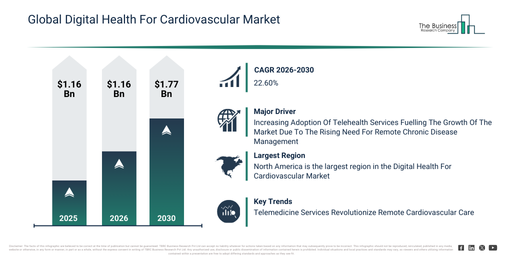
    The digital health for cardiovascular market is anticipated to experience rapid expansion in the coming years. By 2030, this market is projected to reach a valuation of $137.87 billion, demonstrating a compound annual growth rate (CAGR) of 22.6%. This expansion during the forecast period is primarily driven by factors such as the heightened demand for cardiac care at home, greater investment in AI-powered diagnostics, the proliferation of cloud-based healthcare platforms, an enhanced emphasis on preventative cardiovascular health, and the wider uptake of real-time patient monitoring. Key developments anticipated during this timeframe involve the growing use of remote cardiac monitoring solutions, an increase in the deployment of wearable ECG devices, deeper integration of AI-based diagnostic software, the broadening of telecardiology platforms, and a strengthened commitment to ongoing patient monitoring.

    Download the Free Sample Report to Explore Key Market Insights:

    https://www.thebusinessresearchcompany.com/sample.aspx?id=24210&type=smp

    What Key Drivers Are Influencing The Growth Of The Digital Health For Cardiovascular Market?

    The expanded utilization of telehealth services is projected to propel the growth of the digital health for cardiovascular care market moving forward. These services involve the remote provision of healthcare via phones, video calls, or apps, allowing patients to consult medical professionals without visiting a clinic or hospital. The rising acceptance of telehealth is fueled by its convenience in accessing healthcare from home, particularly beneficial for managing chronic conditions like heart disease. Digital health for cardiovascular care aids telehealth by enabling remote monitoring and consultations, which simplifies patient access to care. It also improves healthcare efficiency by offering real-time data, enhancing diagnosis and treatment plans, and reducing the need for in-person visits. For example, in November 2024, the Australian Digital Health Agency 2022, an Australia-based government agency, stated in its Patient Experiences 2023–24 report that 89.2% of those who had a telehealth consultation indicated they would use it again if available. This figure represents an increase from 87.7% recorded in 2022-23. Thus, the increasing adoption of telehealth services is a key driver for the growth of the digital health for cardiovascular care market.

    What Are The Key Segments Of The Digital Health For Cardiovascular Market?

    The digital health for cardiovascular market covered in this report is segmented –

    1) By Product Type: Remote Monitoring Devices, Mobile Health Applications, Diagnostic Software, Wearable ECG Monitors, Blood Pressure Monitors, Biosensors

    2) By Technology: Artificial Intelligence (AI), Internet Of Things (IoT), Telemedicine, Wearable Devices, Big Data Analytics, Interoperable Health Data Platforms

    3) By Deployment: On-Premise, Cloud

    4) By Application: Cardiac Monitoring, Diagnosis And Early Detection, Post-Surgical Care, Preventive Care, Rehabilitation Management

    5) By End User: Hospitals And Clinics, Homecare Settings, Ambulatory Care Centers, Academic And Research Institutes

    Subsegments:

    1) By Remote Monitoring Devices: Implantable Loop Recorders, Holter Monitors, Mobile Cardiac Telemetry Devices, Patch Monitors

    2) By Mobile Health Applications: Heart Rate Monitoring Apps, Blood Pressure Monitoring Apps, Medication Adherence Apps, Diet And Lifestyle Management Apps

    3) By Diagnostic Software: Electrocardiogram (ECG) Interpretation Software, Artificial intelligence (AI)-Powered Diagnostic Tools, Cardiac Imaging Analysis Software, Risk Assessment Tools

    4) By Wearable Electrocardiogram (ECG) Monitors: Smartwatches With Electrocardiogram (ECG) Functionality, Chest Strap Electrocardiogram (ECG) Monitors, Wristband Electrocardiogram (ECG) Monitors, Clothing-Integrated Electrocardiogram (ECG) Sensors

    5) By Blood Pressure Monitors: Arm Cuff Monitors, Wrist Cuff Monitors, Cuffless Continuous BP Monitors, Wireless Blood Pressure (BP) Monitors

    6) By Biosensors: Implantable Biosensors, Skin Patch Biosensors, Sweat-Based Sensors, Multi-Parameter Biosensors

    What Key Trends Are Influencing The Development Of The Digital Health For Cardiovascular Market?

    Companies actively engaged in the digital health market for cardiovascular care are prioritizing the creation of pioneering services, such as telemedicine, to bolster remote patient monitoring, improve access to healthcare, and ensure prompt interventions for individuals with heart conditions. Telemedicine itself denotes the utilization of digital communication technologies, including video calls, mobile applications, and remote monitoring equipment, to deliver medical consultations, diagnoses, and treatment from a distance. As an illustration, in January 2025, Withings, a consumer electronics company based in France, rolled out Cardio Check-Up, a telemedicine service incorporated into its Withings Plus subscription. Subscribers have the capability to use any Withings device collecting electrocardiogram data to get their heart health professionally evaluated. This service delivers four annual cardiologist reports based on the data, which is facilitated through Heartbeat Health.

    Who Are The Leading Companies Operating In The Digital Health For Cardiovascular Market?

    Major companies operating in the digital health for cardiovascular market are Abbott Laboratories, Medtronic plc, Siemens Healthineers AG, Philips Healthcare, GE HealthCare Technologies Inc., Boston Scientific Corporation, Edwards Lifesciences Corporation, Biotronik SE & Co. KG, LivaNova PLC, HeartFlow Inc., Viz.ai Inc., Bardy Diagnostics Inc., Ultromics Limited, RSIP Vision Ltd., Cardiologs Technologies SAS, Aktiia SA, FibriCheck, Cleerly Inc., AliveCor Inc., iRhythm Technologies Inc., Preventice Solutions (Boston Scientific), Eko Health Inc., BioTelemetry Inc., Withings Health Solutions

    Read the full digital health for cardiovascular market report here:

    https://www.thebusinessresearchcompany.com/report/digital-health-for-cardiovascular-global-market-report

    Which Region Is Expected To Register The Fastest Growth In The Digital Health For Cardiovascular Market?

    North America was the largest region in the digital health for cardiovascular market in 2025. Asia-Pacific is expected to be the fastest-growing region in the forecast period. The regions covered in the digital health for cardiovascular market report are Asia-Pacific, South East Asia, Western Europe, Eastern Europe, North America, South America, Middle East, Africa.

    Request A Tailored Digital Health For Cardiovascular Market Research Report For Competitive Advantage:

    https://www.thebusinessresearchcompany.com/customise?id=24210&type=smp

    Browse Through More Reports Similar to the Global Digital Health For Cardiovascular Market 2026, By The Business Research Company

    Digital Health Market Report 2026

    https://www.thebusinessresearchcompany.com/report/digital-health-global-market-report

    Womens Digital Health Market Report 2026

    https://www.thebusinessresearchcompany.com/report/womens-digital-health-global-market-report

    Cardiovascular Information System Market Report 2026

    https://www.thebusinessresearchcompany.com/report/cardiovascular-information-system-global-market-report

    Get in touch with us:

    The Business Research Company: https://www.thebusinessresearchcompany.com/

    Americas +1 310-496-7795

    Asia +44 7882 955267 & +91 8897263534

    Europe +44 7882 955267

    Email us at info@tbrc.info

    Follow us on:

    LinkedIn: https://in.linkedin.com/company/the-business-research-company

    YouTube: https://www.youtube.com/channel/UC24_fI0rV8cR5DxlCpgmyFQ

    Global Market Model: https://www.thebusinessresearchcompany.com/global-market-model
  • Digital Dose Inhalers Market Size Outlook and Demand Expansion Across 2026–2030

    Digital Dose Inhalers Market Size Outlook and Demand Expansion Across 2026–2030

    The Business Research Company’s 2026 market reports include new capabilities such as market attractiveness scoring and analysis, total addressable market analysis, company scoring matrix, interactive excel data dashboard, improved supply chain analysis, upcoming startups in the market, and overview of key products, aimed at improving the depth, usability, and strategic value of the insights delivered.

    What Market Size Growth Is Projected For The Digital Dose Inhalers Market During The Forecast Period 2026–2030?

    The market size for digital dose inhalers has seen substantial growth in recent years. It is projected to expand from $23.78 billion in 2025 to $28.97 billion by 2026, indicating a compound annual growth rate (CAGR) of 21.8%. Historically, this growth can be attributed to the increasing prevalence of asthma and COPD, the rising burden of chronic respiratory diseases, the growing use of inhalation therapy, the expansion of hospital respiratory care services, and improved access to inhaler medications.

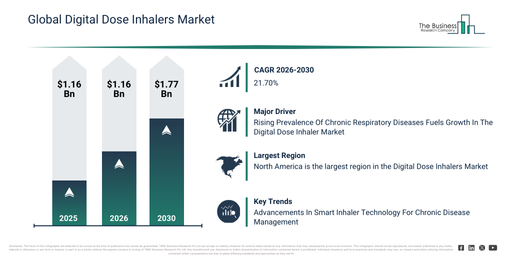
    The market size for digital dose inhalers is anticipated to undergo significant growth in the coming years. It is projected to expand to $63.58 billion in 2030, driven by a compound annual growth rate (CAGR) of 21.7%. This expansion during the forecast period can be attributed to factors such as the increasing demand for remote patient monitoring, a growing emphasis on personalized respiratory care, enhanced awareness regarding the benefits of medication adherence, the broadening of digital health ecosystems, and increased healthcare spending on managing chronic diseases. Throughout this period, major trends are expected to include the rising adoption of smart inhalation devices, a heightened focus on monitoring medication adherence, an expanding utilization of connected respiratory care solutions, a noticeable shift towards home-based management of respiratory diseases, and an increasing need for precise dose accuracy and usage tracking.

    Download the Free Sample Report to Explore Key Market Insights:

    https://www.thebusinessresearchcompany.com/sample.aspx?id=18807&type=smp

    What Drivers Are Expected To Influence The Digital Dose Inhalers Market During The Forecast Period?

    An anticipated increase in chronic respiratory illnesses is poised to boost the expansion of the digital dose inhalers market in the future. These conditions are persistent disorders impacting the respiratory system, specifically the lungs and airways, leading to ongoing challenges with breathing. The growing incidence of chronic respiratory diseases stems from various factors, such as higher levels of air pollution, an expanding elderly population, and an uptick in tobacco consumption. Digital dose inhalers are crucial for enhancing patient adherence to medication and facilitating monitoring for individuals suffering from ailments like asthma and chronic obstructive pulmonary disease (COPD). To illustrate, data from December 2023, provided by the National Center for Biotechnology Information, a US-based government agency, projected that COPD cases would increase by 112 million, summing up to 592 million by 2050, encompassing 9.5% of the qualifying populace. Consequently, the increasing occurrence of chronic respiratory diseases is fueling the development of the digital dose inhalers market.

    What Market Segments Are Evaluated Within The Digital Dose Inhalers Market?

    The digital dose inhalers market covered in this report is segmented –

    1) By Product: Metered Dose Inhaler (MDI), Dry Powder Inhaler (DPI)

    2) By Formulation Type: Branded Medication, Generic Medication

    3) By Indications: Asthma, Chronic Obstructive Pulmonary Disease (COPD), Other Indications

    4) By End User: Medical Device Industry, Hospital

    Subsegments:

    1) By Metered Dose Inhaler (MDI): Conventional MDI, Smart MDI

    2) By Dry Powder Inhaler (DPI): Single-Dose DPI, Multi-Dose DPI, Smart DPI

    What Industry Trends Are Redefining The Digital Dose Inhalers Market?

    Leading firms within the digital dose inhalers market are concentrating their efforts on creating groundbreaking products, including smart inhalers, with the aim of boosting patient results and refining medication oversight. These smart inhalers represent sophisticated instruments equipped with sensors and internet connectivity, which track drug consumption, method of inhalation, and compliance, simultaneously delivering immediate feedback through mobile applications. As an illustration, during June 2024, Aseptika Ltd., a healthcare enterprise situated in the UK, unveiled the PUFFClicker3 universal smart inhaler dose tracker at the Med-Tech Innovation Expo event. The PUFFClicker3 stands out as the globe’s inaugural inhaler dose tracker that works with both pressurized metered dose inhalers (pMDI) and dry powder inhalers (DPI), accommodating 101 SNOMED-coded inhaler varieties. This particular innovation streamlines the changeover for patients between various inhaler categories and provides integrated graphical guidance for operating every compatible inhaler.

    Who Are The Top Market Participants Influencing The Digital Dose Inhalers Market?

    Major companies operating in the digital dose inhalers market are Teva Pharmaceutical Industries Ltd., AstraZeneca plc, GlaxoSmithKline plc, Novartis AG, Propeller Health, Adherium Limited, Cohero Health, FindAir Sp z o o, Amiko Digital Health Limited, Sensirion AG, H&T Presspart Manufacturing Ltd., Philips Respironics, Boehringer Ingelheim GmbH, Cipla Limited, Glenmark Pharmaceuticals Limited, OPKO Health Inc., Mundipharma International Limited, Pneuma Respiratory Inc., Cognita Labs, AptarGroup Inc.

    Read the full digital dose inhalers market report here:

    https://www.thebusinessresearchcompany.com/report/digital-dose-inhalers-global-market-report

    Which Region Is Forecast To Lead The Digital Dose Inhalers Market In Terms Of Market Size?

    North America was the largest region in the digital dose inhalers market in 2025. Asia-Pacific is expected to be the fastest-growing region inthe forecast period. The regions covered in the digital dose inhalers market report are Asia-Pacific, South East Asia, Western Europe, Eastern Europe, North America, South America, Middle East, Africa.

    Request A Tailored Digital Dose Inhalers Market Research Report For Competitive Advantage:

    https://www.thebusinessresearchcompany.com/customise?id=18807&type=smp

    Browse Through More Reports Similar to the Global Digital Dose Inhalers Market 2026, By The Business Research Company

    Smart Inhalers Market Report 2026

    https://www.thebusinessresearchcompany.com/report/smart-inhalers-global-market-report

    Respiratory Inhaler Devices Market Report 2026

    https://www.thebusinessresearchcompany.com/report/respiratory-inhaler-devices-global-market-report

    Inhalable Drugs Market Report 2026

    https://www.thebusinessresearchcompany.com/report/inhalable-drugs-global-market-report

    Get in touch with us:

    The Business Research Company: https://www.thebusinessresearchcompany.com/

    Americas +1 310-496-7795

    Asia +44 7882 955267 & +91 8897263534

    Europe +44 7882 955267

    Email us at info@tbrc.info

    Follow us on:

    LinkedIn: https://in.linkedin.com/company/the-business-research-company

    YouTube: https://www.youtube.com/channel/UC24_fI0rV8cR5DxlCpgmyFQ

    Global Market Model: https://www.thebusinessresearchcompany.com/global-market-model
  • Digital Dentistry Market Insights Highlighting Opportunities and Drivers Supporting Growth to 2030

    Digital Dentistry Market Insights Highlighting Opportunities and Drivers Supporting Growth to 2030

    The Business Research Company’s 2026 market reports include new capabilities such as market attractiveness scoring and analysis, total addressable market analysis, company scoring matrix, interactive excel data dashboard, improved supply chain analysis, upcoming startups in the market, and overview of key products, aimed at improving the depth, usability, and strategic value of the insights delivered.

    How Will The Market Size Of The Digital Dentistry Market Evolve From 2026 To 2030?

    The digital dentistry market has expanded significantly in recent years. It is projected to increase from $6.79 billion in 2025 to $7.57 billion in 2026, reflecting a compound annual growth rate (CAGR) of 11.4%. Historically, this market’s growth has been fueled by factors such as the rise in dental care procedures, an increasing demand for accurate diagnostics, the expansion of private dental clinics, growing awareness of advanced dental treatments, and enhanced accessibility to dental technologies.

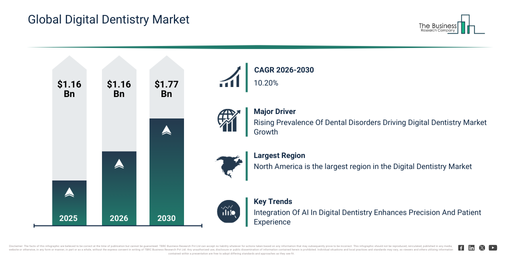
    The digital dentistry market size is set to experience substantial expansion over the next few years. It is forecast to achieve a valuation of $11.15 billion in 2030, exhibiting a compound annual growth rate (CAGR) of 10.2%. This growth during the prediction period stems from several factors, including the escalating demand for streamlined dental operations, patients’ rising expectations for accurate treatments, the growth of cosmetic and implant dentistry, increased financial input into digital healthcare infrastructure, and the wider adoption of technology-driven dental remedies. Significant trends anticipated during this timeframe encompass the growing implementation of intraoral scanners, the increased application of CAD/CAM-based restorations, a rising preference for digital workflows at the chairside, a move towards entirely digital treatment planning, and the expanding incorporation of 3D printing into dental practices.

    Download the Free Sample Report to Explore Key Market Insights:

    https://www.thebusinessresearchcompany.com/sample.aspx?id=15789&type=smp

    What Drivers Are Influencing The Digital Dentistry Market?

    The anticipated expansion of the digital dentistry market is attributed to the growing occurrence of dental disorders. These disorders encompass various conditions impacting teeth, gums, and other oral structures, such as cavities, gum disease, tooth decay, and oral infections. Contributing factors to dental disorders include inadequate oral hygiene, poor dietary choices, tobacco consumption, limited access to dental services, and an aging demographic. Digital dentistry is revolutionizing how dental disorders are diagnosed and treated, utilizing technologies like computer-aided design or computer-aided manufacturing (CAD or CAM) systems, digital imaging, and artificial intelligence (AI) diagnostics to improve accuracy and results. As an illustration, the Australian Institute of Health and Welfare, an Australia-based government agency, reported in October 2024 that approximately 87,400 hospitalizations occurred in 2022–23 due to dental conditions that were preventable with prompt intervention. The highest rate of these avoidable hospitalizations was observed in children aged 5–9 years, reaching 12.3 per 1,000 population. Consequently, the rising incidence of dental disorders is a key driver for the expansion of the digital dentistry market.

    Which Segment Areas Are Covered In The Digital Dentistry Market Analysis?

    The digital dentistry market covered in this report is segmented –

    1) By Type: Instruments, Consumables

    2) By Specialty Areas: Orthodontics, Prosthodontics, Implantology, Other Specialty Areas

    3) By Application: Diagnostics, Therapeutics, Other Applications

    4) By End User: Hospitals, Dental Clinics, Others End Users

    Subsegments:

    1) By Instruments: Digital X-ray Systems, Intraoral Scanners, CAD Or CAM Systems, 3D Printers

    2) By Consumables: Dental Imaging Software, Impression Materials, Digital Inks, 3D Printing Resins

    What Key Developments And Trends Are Impacting The Digital Dentistry Market?

    Leading companies in the digital dentistry market are actively integrating artificial intelligence and machine learning technologies into diagnostic products, such as AI-guided orthodontic scans, with the goal of enhancing treatment precision, efficiency, and capabilities for early detection. An AI-guided orthodontic scan employs artificial intelligence to assist in performing precise scans of a patient’s teeth, which supports effective treatment planning and customization. For example, in June 2023, DentalMonitoring, a medical equipment manufacturing company based in France, launched an AI-guided scan for orthodontics called ScanAssist. This device utilizes AI-driven instructions and provides real-time feedback to guide patients through their scans, aiming to improve patient engagement and overall experience. The in-app system generates a 3D mouth model that tracks patient scans, offering high-quality images and a detailed analysis of treatment progress and oral health. ScanAssist, a new feature within the DentalMonitoring app, uses software and AI to identify more than 130 intraoral observations relevant for braces and aligner treatments.

    Which Global Companies Are Actively Competing In The Digital Dentistry Market?

    Major companies operating in the digital dentistry market are 3M Company, Danaher Corporation, Zimmer Biomet Holdings Inc., DWS Systems, Dentsply Sirona Inc., Align Technology Inc., Institut Straumann AG, Planmeca Oy, Carestream Health Inc., Glidewell Dental, Ivoclar Vivadent, ZimVie Inc, Midmark Corporation, Stratasys, J. Morita Corporation, 3Shape A/S, Roland DG Corporation, Formlabs Inc., KaVo Dental GmbH, Implant Sciences Corporation, Biolase Inc, VITA North America, Medit, exocad GmbH, Kuraray Noritake Dental Inc, DOT GmBH, Apteryx Inc

    Read the full digital dentistry market report here:

    https://www.thebusinessresearchcompany.com/report/digital-dentistry-global-market-report

    Which Regions Are Expected To Experience Rapid Expansion In The Digital Dentistry Market?

    North America was the largest region in the digital dentistry market in 2025. Asia-Pacific is expected to be the fastest-growing region in the forecast period. The regions covered in the digital dentistry market report are Asia-Pacific, South East Asia, Western Europe, Eastern Europe, North America, South America, Middle East, Africa.

    Request A Tailored Digital Dentistry Market Research Report For Competitive Advantage:

    https://www.thebusinessresearchcompany.com/customise?id=15789&type=smp

    Browse Through More Reports Similar to the Global Digital Dentistry Market 2026, By The Business Research Company

    Digital Dentistry Market Report 2026

    https://www.thebusinessresearchcompany.com/report/digital-dentistry-global-market-report

    Cosmetic Dentistry Market Report 2026

    https://www.thebusinessresearchcompany.com/report/cosmetic-dentistry-global-market-report

    Therapeutic Dental Equipment Market Report 2026

    https://www.thebusinessresearchcompany.com/report/therapeutic-dental-equipment-global-market-report

    Get in touch with us:

    The Business Research Company: https://www.thebusinessresearchcompany.com/

    Americas +1 310-496-7795

    Asia +44 7882 955267 & +91 8897263534

    Europe +44 7882 955267

    Email us at info@tbrc.info

    Follow us on:

    LinkedIn: https://in.linkedin.com/company/the-business-research-company

    YouTube: https://www.youtube.com/channel/UC24_fI0rV8cR5DxlCpgmyFQ

    Global Market Model: https://www.thebusinessresearchcompany.com/global-market-model

  • Global Digital Cell Morphology System Market Forecast to Reach $3.49 Billion by 2030 with 10.6% CAGR

    Global Digital Cell Morphology System Market Forecast to Reach $3.49 Billion by 2030 with 10.6% CAGR

    The Business Research Company’s 2026 market reports include new capabilities such as market attractiveness scoring and analysis, total addressable market analysis, company scoring matrix, interactive excel data dashboard, improved supply chain analysis, upcoming startups in the market, and overview of key products, aimed at improving the depth, usability, and strategic value of the insights delivered.

    What Is The Forecasted Market Value Of The Digital Cell Morphology System Market Across 2026–2030?

    The digital cell morphology system market has experienced swift expansion in recent years. It is anticipated to increase from $2.1 billion in 2025 to $2.33 billion in 2026, exhibiting a compound annual growth rate (CAGR) of 11.0%. The growth observed in prior periods was influenced by factors such as the reliance on manual microscopic analysis, the escalating demand for accurate hematology diagnostics, initial limited adoption of digital imaging, the expansion of academic and research institutes, and the rising prevalence of hematological disorders.

    The digital cell morphology system market size is projected to experience rapid expansion over the next few years. It is expected to reach $3.49 billion in 2030, demonstrating a compound annual growth rate (CAGR) of 10.6%. This anticipated growth during the forecast period can be attributed to advancements in image processing software, an increasing embrace of flow cytometry and automated analyzers, rising investments in biotechnology and pharmaceutical research and development, the integration of AI-driven diagnostic tools, and the expansion of telemedicine and remote laboratory solutions. Prominent trends for the forecast duration encompass the growing adoption of automated cell imaging and analysis systems, an escalated utilization of high-content screening for hematology and oncology, an increase in laboratory efficiency and the standardization of results, the expansion of the consumables and reagents market specifically for digital morphology, and the integration of remote diagnostics and telepathology solutions.

    Download the Free Sample Report to Explore Key Market Insights:

    https://www.thebusinessresearchcompany.com/sample.aspx?id=27276&type=smp

    What Drivers Are Shaping The Future Growth Of The Digital Cell Morphology System Market?

    The digital cell morphology system market is anticipated to expand due to the rising occurrence of hematological disorders. These disorders encompass medical conditions impacting the blood, bone marrow, and lymphatic system, such as anemia, leukemia, and clotting disorders. The increase in hematological disorders stems from the growing incidence of chronic diseases, which directly influence blood health and necessitate continuous oversight. Digital cell morphology systems assist in diagnosing hematological disorders through precise and automated analysis of blood cell images, facilitating accurate classification. These systems boost laboratory efficiency by reducing manual review, enhancing consistency, and accelerating clinical decision-making. As an illustration, the Annual Global Survey 2024 by the World Federation of Hemophilia (WFH), a Canada-based non-profit, indicated in October 2025 a 6% increase in global identification of people with hemophilia, a 6% rise in identified von Willebrand disease cases, and a 9% increase in other inherited bleeding disorders, alongside a 9% increase in the number of women and girls with bleeding disorders. Consequently, the expanding occurrence of hematological disorders is propelling the growth of the digital cell morphology system market.

    What Segmentation Levels Are Considered In The Digital Cell Morphology System Market?

    The digital cell morphology system market covered in this report is segmented –

    1) By Product Type: Cell Imaging Systems, Cell Analysis Systems, Accessories And Consumables

    2) By Technology: Microscopy, Flow Cytometry, Image Processing Software

    3) By Distribution Channel: Direct Sales, Distributors, Online Sales

    4) By Application: Hematology, Oncology, Infectious Diseases, Other Applications

    5) By End-User: Academic And Research Institutes, Hospitals And Clinical Laboratories, Biotechnology And Pharmaceutical Companies

    Subsegments:

    1) By Cell Imaging Systems: Digital Microscopes, Fluorescence Microscopes, Full-Field Digital Imaging Systems, Automated Slide Scanners, High-Content Screening Systems

    2) By Cell Analysis Systems: Flow Cytometers, Hematology Analyzers, Morphology Analyzers, Spectrophotometers, Cell Counters

    3) By Accessories And Consumables: Reagents and Stains, Sample Preparation Kits, Slides and Cover Slips, Imaging Plates, Cell Fixatives

    What Trends Are Projected To Affect The Digital Cell Morphology System Market?

    Major companies operating in the digital cell morphology system market are prioritizing the development of technologically advanced solutions, such as AI-driven image analyzers, to boost diagnostic speed and accuracy. AI-driven image analyzers are sophisticated instruments that utilize artificial intelligence to automatically interpret digital images and extract valuable insights, thereby improving analysis speed, precision, and consistency. For instance, in July 2025, Scopio Labs Ltd., an Israel-based medical equipment manufacturing company, introduced its complete blood morphology (CBM) analyzer. This automated AI-driven image analyzer is designed for peripheral blood smear review, employing full-field imaging technology to independently process and evaluate up to 10 times more cells than traditional methods. It also presents opportunities for developing new morphology-based biomarkers and diagnostic panels, facilitating earlier disease detection and real-time patient monitoring. This innovation tackles significant challenges including the global shortage of trained laboratory technologists, the variability inherent in manual interpretations, and the increasing demand for diagnostic services.

    Which Leading Firms Are Contributing To The Growth Of The Digital Cell Morphology System Market?

    Major companies operating in the digital cell morphology system market are F. Hoffmann-La Roche AG, Thermo Fisher Scientific Inc., Abbott Laboratories, Danaher Corporation, Merck KGaA, Siemens Healthineers AG, Becton Dickinson and Company, Agilent Technologies Inc., Mindray Medical International Limited, Nikon Corporation, IDEXX Laboratories Inc., Sysmex Corporation, Bio-Rad Laboratories Inc., Horiba ABX SAS, Leica Microsystems GmbH, Medica Corporation, Scopio Labs Ltd., MetaSystems Hard & Software GmbH, West Medica Produktions- und Handels-GmbH, ZhiWei Information & Technology Co. Ltd.

    Read the full digital cell morphology system market report here:

    https://www.thebusinessresearchcompany.com/report/digital-cell-morphology-system-global-market-report

    Which Geographic Regions Are Influencing Demand In The Digital Cell Morphology System Market?

    North America was the largest region in the digital cell morphology system market in 2025. Asia-Pacific is expected to be the fastest-growing region in the forecast period. The regions covered in the digital cell morphology system market report are Asia-Pacific, South East Asia, Western Europe, Eastern Europe, North America, South America, Middle East, Africa.

    Request A Tailored Digital Cell Morphology System Market Research Report For Competitive Advantage:

    https://www.thebusinessresearchcompany.com/customise?id=27276&type=smp

    Browse Through More Reports Similar to the Global Digital Cell Morphology System Market 2026, By The Business Research Company

    Methyl Ester Sulfonate Market Report 2026

    https://www.thebusinessresearchcompany.com/report/methyl-ester-sulfonate-global-market-report

    Fatty Methyl Ester Sulfonate Market Report 2026

    https://www.thebusinessresearchcompany.com/report/fatty-methyl-ester-sulfonate-global-market-report

    Cyclohexylbenzene Market Report 2026

    https://www.thebusinessresearchcompany.com/report/cyclohexylbenzene-global-market-report

    Get in touch with us:

    The Business Research Company: https://www.thebusinessresearchcompany.com/

    Americas +1 310-496-7795

    Asia +44 7882 955267 & +91 8897263534

    Europe +44 7882 955267

    Email us at info@tbrc.info

    Follow us on:

    LinkedIn: https://in.linkedin.com/company/the-business-research-company

    YouTube: https://www.youtube.com/channel/UC24_fI0rV8cR5DxlCpgmyFQ

    Global Market Model: https://www.thebusinessresearchcompany.com/global-market-model
  • Digital Auscultation Market Future Outlook Indicating Expansion Toward $1.85 Billion by 2030

    Digital Auscultation Market Future Outlook Indicating Expansion Toward $1.85 Billion by 2030

    The Business Research Company’s 2026 market reports include new capabilities such as market attractiveness scoring and analysis, total addressable market analysis, company scoring matrix, interactive excel data dashboard, improved supply chain analysis, upcoming startups in the market, and overview of key products, aimed at improving the depth, usability, and strategic value of the insights delivered.

    What Market Size Increase Is Anticipated For The Digital Auscultation Market Over The 2026–2030 Period?

    The digital auscultation market has witnessed rapid expansion in recent years. It is anticipated to grow from $0.89 billion in 2025 to $1.03 billion in 2026, exhibiting a compound annual growth rate (CAGR) of 16.0%. Historically, the market’s development was influenced by reliance on manual stethoscopes, limited diagnostic accuracy, low adoption of digital auscultation, high device cost, and fragmented healthcare IT systems.

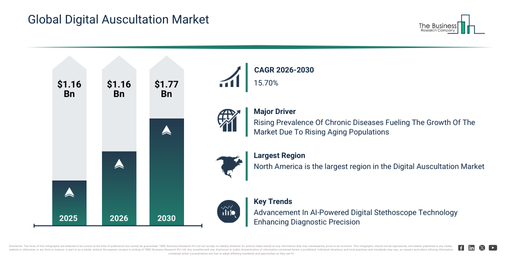
    The digital auscultation market is projected to experience substantial expansion over the upcoming years. By 2030, its valuation is anticipated to reach $1.85 billion, demonstrating a compound annual growth rate (CAGR) of 15.7%. This expansion during the forecast period is driven by increased implementation in healthcare facilities such as hospitals and clinics, the rise of telehealth services, the incorporation of AI and cloud technologies, a growing need for pediatric and cardiology surveillance, and the proliferation of home-based diagnostic instruments. Key developments anticipated in this period include advancements in heart and lung sound examination, the emergence of wireless auscultation devices, seamless integration with EHR systems, capabilities for real-time remote diagnoses, and AI-powered signal interpretation.

    Download the Free Sample Report to Explore Key Market Insights:

    https://www.thebusinessresearchcompany.com/sample.aspx?id=29017&type=smp

    Which Economic Or Industry Drivers Are Impacting The Digital Auscultation Market?

    The increasing occurrence of chronic illnesses is anticipated to fuel the expansion of the digital auscultation market in the future. These long-lasting health conditions, such as cardiovascular disorders, diabetes, respiratory ailments, and hypertension, are characterized by their gradual progression and persistence over time. The escalation of chronic diseases is largely attributable to an aging demographic, given that advancing age correlates with diminished cellular repair, compromised immune function, and an elevated susceptibility to metabolic and cardiovascular issues. Digital auscultation aids in managing chronic diseases by offering precise, real-time tracking of cardiac and pulmonary sounds, thus facilitating prompt identification of irregularities and swift intervention to enhance patient outcomes over time. For example, in February 2024, the World Health Organization, an intergovernmental body based in Switzerland, forecast more than 35 million new cancer cases by 2050, signifying a 77% rise from the estimated 20 million cases in 2022. Consequently, the growing incidence of chronic illnesses is boosting the expansion of the digital auscultation market.

    How Is The Digital Auscultation Market Segmented Across Key Categories?

    The digital auscultation market covered in this report is segmented –

    1) By Product Type: Stethoscopes, Heart Sound Analyzers, Accessories

    2) By Technology: Wireless, Wired

    3) By Application: Cardiology, Respiratory, Pediatrics, Other Applications

    4) By End-User: Hospitals, Clinics, Ambulatory Surgical Centers, Homecare Settings, Other End-Users

    Subsegments:

    1) By Stethoscopes: Electronic Stethoscopes, Wireless Stethoscopes, Bluetooth-Enabled Stethoscopes, Smart Stethoscopes, Amplified Stethoscopes

    2) By Heart Sound Analyzers: Portable Heart Sound Analyzers, Handheld Heart Sound Analyzers, Integrated Heart Sound Analyzers, Wearable Heart Sound Analyzers

    3) By Accessories: Chest Pieces, Earpieces, Tubing, Diaphragms, Power Adapters, Carrying Cases

    Which Upcoming Trends Are Expected To Influence The Digital Auscultation Market?

    Leading companies in the digital auscultation market are focusing on developing advanced products, such as AI-powered auscultation, to enhance diagnostic accuracy and improve the efficiency of clinical decision-making. AI-powered auscultation utilizes artificial intelligence to analyze heart and lung sounds captured by digital stethoscopes, thereby facilitating the automatic detection of issues and providing useful information for quicker and more precise diagnoses. An illustrative instance occurred in September 2025, when Sanolla, a US-based digital health company, unveiled the VoqX smart stethoscope. This device is recognized as the world’s first smart AI-powered stethoscope offering full-spectrum auscultation, notably including the capacity to identify low-frequency infrasound that conventional stethoscopes cannot perceive. The instrument integrates real-time AI analysis to aid clinicians in diagnosing cardiopulmonary conditions more effectively. Sanolla initiated direct sales of this FDA-certified device, signaling a considerable advancement in clinical diagnostic technology by making it accessible to frontline healthcare professionals.

    Who Are The Dominant Players Shaping The Digital Auscultation Market Landscape?

    Major companies operating in the digital auscultation market are 3M Company, Eko Health Inc., Thinklabs Medical Inc., StethoMe, Stemoscope, Strados Labs Inc., TytoCare Ltd., Rudolf Riester GmbH, American Diagnostic Corporation, Contec Medical Systems Co. Ltd., Sanolla Ltd., Ayu Devices Pvt. Ltd., M3DICINE Pty. Ltd., Ai Health Highway Pvt. Ltd., Dongjin Medical, Saintiant Technologies, GlobalMed Holdings LLC, AMD Global Telemedicine Inc., Halma Public Limited Company, Rijuven

    Read the full digital auscultation market report here:

    https://www.thebusinessresearchcompany.com/report/digital-auscultation-global-market-report

    What Are The Top-Performing Regions Within The Digital Auscultation Market?

    North America was the largest region in the digital auscultation market in 2025. Asia-Pacific is expected to be the fastest-growing region in the forecast period. The regions covered in the digital auscultation market report are Asia-Pacific, South East Asia, Western Europe, Eastern Europe, North America, South America, Middle East, Africa.

    Request A Tailored Digital Auscultation Market Research Report For Competitive Advantage:

    https://www.thebusinessresearchcompany.com/customise?id=29017&type=smp

    Browse Through More Reports Similar to the Global Digital Auscultation Market 2026, By The Business Research Company

    Digital Twin Technology Market Report 2026

    https://www.thebusinessresearchcompany.com/report/digital-twin-technology-global-market-report

    Digital Utility Market Report 2026

    https://www.thebusinessresearchcompany.com/report/digital-utility-global-market-report

    Digital Travel Market Report 2026

    https://www.thebusinessresearchcompany.com/report/digital-travel-global-market-report

    Get in touch with us:

    The Business Research Company: https://www.thebusinessresearchcompany.com/

    Americas +1 310-496-7795

    Asia +44 7882 955267 & +91 8897263534

    Europe +44 7882 955267

    Email us at info@tbrc.info

    Follow us on:

    LinkedIn: https://in.linkedin.com/company/the-business-research-company

    YouTube: https://www.youtube.com/channel/UC24_fI0rV8cR5DxlCpgmyFQ

    Global Market Model: https://www.thebusinessresearchcompany.com/global-market-model
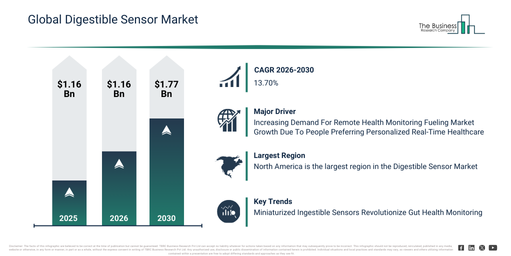
  • Digestible Sensor Market Revenue Expected to Reach $2.6 Billion by 2030 with 13.7% CAGR

    Digestible Sensor Market Revenue Expected to Reach $2.6 Billion by 2030 with 13.7% CAGR

    The Business Research Company’s 2026 market reports include new capabilities such as market attractiveness scoring and analysis, total addressable market analysis, company scoring matrix, interactive excel data dashboard, improved supply chain analysis, upcoming startups in the market, and overview of key products, aimed at improving the depth, usability, and strategic value of the insights delivered.

    How Much Is The Digestible Sensor Market Expected To Grow In Terms Of Market Value Between 2026 And 2030?

    The digestible sensor market has seen rapid expansion recently. It is forecast to rise from $1.37 billion in 2025 to $1.56 billion in 2026, achieving a compound annual growth rate (CAGR) of 14.0%. The past growth in this market can be attributed to several factors, including the limited options for ingestible sensor technologies, the reliance on traditional diagnostic methods, increasing awareness regarding gastrointestinal health, the early adoption of capsule endoscopy, and a boost in research and development efforts in bioelectronic interfaces.

    The digestible sensor market is expected to experience substantial growth in the upcoming years. It is projected to expand to $2.6 billion by 2030, demonstrating a compound annual growth rate (CAGR) of 13.7%. This expansion during the forecast period can be attributed to advancements in wireless communication and MEMS technologies, the integration with digital health platforms, the broadening of personalized medicine initiatives, an increasing demand for real-time patient monitoring, and the rise in home healthcare and telemedicine. Significant trends for the forecast period include the increasing adoption of ingestible sensors for gastrointestinal health monitoring, the incorporation of sensors with drug adherence programs, the expansion of smart capsule endoscopy applications, the growing utilization of electrochemical and gas sensing technologies, and an increase in personalized patient monitoring solutions.

    Download the Free Sample Report to Explore Key Market Insights:

    https://www.thebusinessresearchcompany.com/sample.aspx?id=27275&type=smp

    What Major Drivers Are Influencing Demand In The Digestible Sensor Market?

    The growing need for remote health monitoring is anticipated to fuel the expansion of the digestible sensor market in the future. This involves employing technology to oversee and manage patient well-being beyond conventional medical facilities, typically remotely. Its surge is attributed to individuals favoring customized, real-time medical care within their own residences, along with economical options compared to traditional face-to-face appointments. Digestible sensors support remote health monitoring by facilitating the live tracking of internal health indicators, including gastrointestinal function, thereby supplying physicians with crucial information about a patient’s digestive system. This capability permits the early identification of problems like infections or illnesses without requiring invasive methods. For example, an August 2025 data-snapshot from the Office of Inspector General, U.S. Department of Health & Human Services (OIG), revealed that in 2024, Medicare expenditures for remote patient monitoring surpassed US $536 million (marking a 31 % rise from 2023). During the same period, close to 1 million individuals enrolled for RPM services (a 27 % increase from 2023), and approximately 4,600 medical practices consistently billed for RPM. Consequently, the escalating need for remote health monitoring is fueling the expansion of the digestible sensor market.

    What Major Segment Divisions Exist Within The Digestible Sensor Market?

    The digestible sensor market covered in this report is segmented –

    1) By Type: Capsule Sensors, Wearable Sensors, Ingestible Sensors, Implantable Sensors

    2) By Distribution Channel: Online Retail, Pharmacies, Hospitals And Clinics, Direct Sales

    3) By Technology: Microelectromechanical Systems (MEMS), Wireless Communication Technologies, Optical Sensors, Bioelectronic Interfaces

    4) By Application: Medical Diagnostics, Drug Delivery, Patient Monitoring, Sports And Fitness, Other Applications

    5) By End-User: Healthcare Providers, Research Institutions, Pharmaceutical Companies, Individual Consumers

    Subsegments:

    1) By Capsule Sensors: pH Monitoring Capsules, Temperature Monitoring Capsules, Pressure Sensing Capsules, Smart Capsule Endoscopy, Drug Delivery Capsules With Sensors

    2) By Wearable Sensors: Patch-Based External Receivers, Gastrointestinal Motility Trackers, Bio-Signal Monitoring Wearables, Wearable Adherence Trackers

    3) By Ingestible Sensors: Vital Sign Monitoring Sensors, Drug Adherence Monitoring Sensors, Imaging Sensors, Gas Sensing Sensors, Electrochemical Sensors

    4) By Implantable Sensors: GI Electrophysiology Sensors, pH And Enzyme Sensors, Neuromodulation Devices, Metabolic Sensors

    How Are Trends Shaping The Direction Of The Digestible Sensor Market?

    Leading companies in the digestible sensor market are prioritizing advanced solutions, such as multi-parameter sensors, to improve diagnostic accuracy, broaden application possibilities, and enhance real-time health monitoring capabilities. A multi-parameter sensor is defined as a device engineered to concurrently measure various physical or chemical parameters from its environment or a subject, by combining different sensing technologies into one compact unit. For example, in May 2025, the Interuniversity Microelectronics Centre, a non-profit research organization based in Belgium, unveiled a highly miniaturized ingestible sensor for monitoring gut health. This exceptionally small ingestible sensor measures just 2.1 cm in length and 0.75 cm in diameter. The capsule is approximately three times smaller than traditional endoscopic capsules, leading to easier swallowing and greater patient comfort. It integrates multiple sensors, including those for oxidation-reduction potential (ORP), pH, and temperature, to deliver real-time biochemical data from the gastrointestinal tract. The capsule records measurements every 20 seconds throughout the digestive journey, powered by low-energy electronics and a compact battery. Equipped with wireless data transmission and a biocompatible casing, the device facilitates continuous, noninvasive analysis of internal gut conditions, holding significant potential for the early diagnosis of inflammation, oxidative stress, and microbiome imbalances.

    Which Companies Are Leading Innovation In The Digestible Sensor Market?

    Major companies operating in the digestible sensor market are Medtronic plc, Koninklijke Philips N.V., Otsuka Pharmaceutical Co Ltd, Olympus Corporation, Sencure B.V., Millar Inc., Check-Cap Ltd, Proteus Digital Health Inc., CapsoVision Inc., Atmo Biosciences, IntroMedic Co Ltd, BodyCAP S.A.S., Capsule Technologies Inc., etectRx Inc., Motus GI Inc., SmartPill Corporation, JINSHAN Science & Technology Group Co Ltd, MC10, Medtronic GI Solutions, Proteus GI Technologies

    Read the full digestible sensor market report here:

    https://www.thebusinessresearchcompany.com/report/digestible-sensor-global-market-report

    Which Region Shows The Strongest Potential For Future Growth In The Digestible Sensor Market?

    North America was the largest region in the digestible sensor market in 2025. Asia-Pacific is expected to be the fastest-growing region in the forecast period. The regions covered in the digestible sensor market report are Asia-Pacific, South East Asia, Western Europe, Eastern Europe, North America, South America, Middle East, Africa.

    Request A Tailored Digestible Sensor Market Research Report For Competitive Advantage:

    https://www.thebusinessresearchcompany.com/customise?id=27275&type=smp

    Browse Through More Reports Similar to the Global Digestible Sensor Market 2026, By The Business Research Company

    Precast Construction Market Report 2026

    https://www.thebusinessresearchcompany.com/report/precast-construction-global-market-report

    Wood Based Panel Market Report 2026

    https://www.thebusinessresearchcompany.com/report/wood-based-panel-global-market-report

    Precast Concrete Market 2026

    https://www.thebusinessresearchcompany.com/report/precast-concrete-market

    Get in touch with us:

    The Business Research Company: https://www.thebusinessresearchcompany.com/

    Americas +1 310-496-7795

    Asia +44 7882 955267 & +91 8897263534

    Europe +44 7882 955267

    Email us at info@tbrc.info

    Follow us on:

    LinkedIn: https://in.linkedin.com/company/the-business-research-company

    YouTube: https://www.youtube.com/channel/UC24_fI0rV8cR5DxlCpgmyFQ

    Global Market Model: https://www.thebusinessresearchcompany.com/global-market-model

  • Dietary Supplements In An Age Of Personalized Nutrition Market Expected to Grow Steadily and Approach $160.25 Billion by 2030

    Dietary Supplements In An Age Of Personalized Nutrition Market Expected to Grow Steadily and Approach $160.25 Billion by 2030

    The Business Research Company’s 2026 market reports include new capabilities such as market attractiveness scoring and analysis, total addressable market analysis, company scoring matrix, interactive excel data dashboard, improved supply chain analysis, upcoming startups in the market, and overview of key products, aimed at improving the depth, usability, and strategic value of the insights delivered.

    What Market Value Is Expected For The Dietary Supplements In An Age Of Personalized Nutrition Market At The End Of The 2026–2030 Forecast Period?

    The market for dietary supplements in an age of personalized nutrition has experienced rapid expansion in recent years. This sector is expected to grow from $97.46 billion in 2025 to $107.7 billion in 2026, achieving a compound annual growth rate (CAGR) of 10.5%. The historical growth of this market can be linked to factors such as increased consumer focus on preventive healthcare, wider consumption of dietary supplements, enhanced awareness of nutritional deficiencies, the emergence of advanced nutrigenomic research, and the expansion of e-commerce for supplement distribution.

    The dietary supplements in an age of personalized nutrition market size is anticipated to undergo substantial growth in the upcoming years, with projections indicating it will expand to $160.25 billion by 2030, exhibiting a compound annual growth rate (CAGR) of 10.4%. This anticipated growth is largely driven by factors such as the increasing adoption of personalized healthcare solutions, the rising integration of AI-driven nutrition analytics, the expansion of subscription-based supplement models, the growing demand for precision wellness products, and increasing regulatory clarity for personalized nutrition. Throughout the forecast period, significant trends are expected to include a greater emphasis on genetic-based supplement formulations, the rising adoption of digital nutrition platforms, the growing integration of wearables with supplement programs, an expansion of personalized vitamin and mineral blends, and an enhanced focus on data-driven nutrition planning.

    Download the Free Sample Report to Explore Key Market Insights:

    https://www.thebusinessresearchcompany.com/sample.aspx?id=24207&type=smp

    Which Market Drivers Are Supporting The Expansion Of The Dietary Supplements In An Age Of Personalized Nutrition Market?

    The increasing incidence of long-term health conditions is anticipated to drive the expansion of the dietary supplements in an age of personalized nutrition market moving ahead. These are defined as prolonged health issues that generally develop gradually and necessitate continuous care, encompassing ailments such as diabetes, cardiovascular disease, high blood pressure, joint inflammation, persistent respiratory conditions, cancer, and excessive weight. The rising occurrence of these diseases stems from shifts in lifestyle, specifically inadequate nutrition and insufficient exercise, both of which lead to enduring health problems. The dietary supplements in an age of personalized nutrition assist in managing chronic conditions by providing customized nutritional options derived from unique health data. They target particular nutritional shortages and foster precise well-being, thereby improving general health results and diminishing complications linked to diseases. As an illustration, data from June 2024 from the National Health Service, a UK-based government healthcare system, indicated that pre-diabetes instances in England increased by 549,000 (18%), growing from 3,065,825 in 2022 to 3,615,330 in 2023. Furthermore, for individuals under the age of 40, such cases climbed by 25%, from 173,166 to 216,440. Consequently, the expanding occurrence of chronic illness is propelling the development of the dietary supplements in an age of personalized nutrition market.

    What Segment Types Make Up The Dietary Supplements In An Age Of Personalized Nutrition Market?

    The dietary supplements in an age of personalized nutrition market covered in this report is segmented –

    1) By Product Type: Vitamins, Minerals, Amino Acids, Herbal And Botanicals, Other Product Types

    2) By Technological: Mobile Applications, Wearable Devices, Health Monitoring Software

    3) By Dosage Form: Capsules, Powder, Liquids, Soft Gels, Other Dosage Forms

    4) By Application: General Wellness, Sports Nutrition, Immune Support, Skin Health, Other Applications

    5) By End-User: Children, Adults, Elderly

    Subsegments:

    1) By Vitamins: Vitamin A, Vitamin B-Complex, Vitamin C, Vitamin D, Vitamin E, Vitamin K

    2) By Minerals: Calcium, Magnesium, Zinc, Iron, Potassium, Selenium

    3) By Amino Acids: Essential Amino Acids, Non-Essential Amino Acids, Branched-Chain Amino Acids (BCAAs), Amino Acid Blends

    4) By Herbal and Botanicals: Ginseng, Turmeric, Ashwagandha, Ginkgo Biloba, Green Tea Extract, Milk Thistle

    5) By Other Product Types: Probiotics, Omega Fatty Acids, Enzymes, Fiber Supplements, Collagen Supplements

    Which Market Trends Are Creating New Opportunities In The Dietary Supplements In An Age Of Personalized Nutrition Market?

    Leading enterprises active in the dietary supplements market, specifically within personalized nutrition, are prioritizing the development of innovative solutions like customized vitamin assessments. This focus aims to provide consumers with individualized health solutions that address distinct nutritional needs, enhance well-being outcomes, and promote proactive health management. A customized vitamin assessment is a personalized evaluation designed to analyze an individual’s specific nutritional requirements, lifestyle, and health objectives, subsequently recommending the most appropriate vitamin and supplement regimen. For instance, in November 2024, Persona Nutrition, a US-based personalized nutrition firm, introduced a white label service to assist brands in offering tailored supplement solutions, boosting customer interaction, and simplifying subscription management. This inventive dietary supplement incorporates customized vitamin assessment, enabling businesses to provide personalized offerings, improve customer loyalty, and scale effectively in the personalized nutrition domain. The white label service is highly versatile, allowing for seamless personalization across diverse health needs by leveraging customized vitamin assessments to deliver precise supplement recommendations and enhance customer engagement.

    Who Are The Key Players Driving Competition In The Dietary Supplements In An Age Of Personalized Nutrition Market?

    Major companies operating in the dietary supplements in an age of personalized nutrition market are Amway Corporation, Athletic Greens, Niagen Bioscience, Darwin AG, Viome Life Sciences Inc., Harbin Pharmaceutical Group Co. Ltd., DNALYSIS Biotechnology, Panaceutics Nutrition, Segterra Inc., GenoPalate Inc., Bioniq Health-Tech Solutions Ltd., Vous Vitamin LLC, Nourished, NutriStyle Inc., Vitable, Quantbiome Inc., Elo Health, Cuure, Care/of, Persona Nutrition, Rootine, InsideTracker, HUM Nutrition, Thorne HealthTech, Nestlé Health Science

    Read the full dietary supplements in an age of personalized nutrition market report here:

    https://www.thebusinessresearchcompany.com/report/dietary-supplements-in-an-age-of-personalized-nutrition-global-market-report

    How Is The Dietary Supplements In An Age Of Personalized Nutrition Market Distributed Across Key Geographic Regions?

    North America was the largest region in the dietary supplements in an age of personalized nutrition market in 2025. Asia-Pacific is expected to be the fastest-growing region in the forecast period. The regions covered in the dietary supplements in an age of personalized nutrition market report are Asia-Pacific, South East Asia, Western Europe, Eastern Europe, North America, South America, Middle East, Africa.

    Request A Tailored Dietary Supplements In An Age Of Personalized Nutrition Market Research Report For Competitive Advantage:

    https://www.thebusinessresearchcompany.com/customise?id=24207&type=smp

    Browse Through More Reports Similar to the Global Dietary Supplements In An Age Of Personalized Nutrition Market 2026, By The Business Research Company

    Digestive Health Supplements Market Report 2026

    https://www.thebusinessresearchcompany.com/report/digestive-health-supplements-global-market-report

    Personalized Nutrition Market Report 2026

    https://www.thebusinessresearchcompany.com/report/personalized-nutrition-global-market-report

    Weight Loss Supplements Market Report 2026

    https://www.thebusinessresearchcompany.com/report/weight-loss-supplements-global-market-report

    Get in touch with us:

    The Business Research Company: https://www.thebusinessresearchcompany.com/

    Americas +1 310-496-7795

    Asia +44 7882 955267 & +91 8897263534

    Europe +44 7882 955267

    Email us at info@tbrc.info

    Follow us on:

    LinkedIn: https://in.linkedin.com/company/the-business-research-company

    YouTube: https://www.youtube.com/channel/UC24_fI0rV8cR5DxlCpgmyFQ

    Global Market Model: https://www.thebusinessresearchcompany.com/global-market-model