Month: March 2026

  • Global Artificial Intelligence (AI)-Powered Sleep Apnea Monitoring Market Analysis for 2026–2030 with Strategic Forecast Insights for Businesses

    Global Artificial Intelligence (AI)-Powered Sleep Apnea Monitoring Market Analysis for 2026–2030 with Strategic Forecast Insights for Businesses

    The Business Research Company’s 2026 market reports include new capabilities such as market attractiveness scoring and analysis, total addressable market analysis, company scoring matrix, interactive excel data dashboard, improved supply chain analysis, upcoming startups in the market, and overview of key products, aimed at improving the depth, usability, and strategic value of the insights delivered.

    What Will Be The Estimated Market Valuation Of The Artificial Intelligence (AI)-Powered Sleep Apnea Monitoring Market By The End Of 2030?

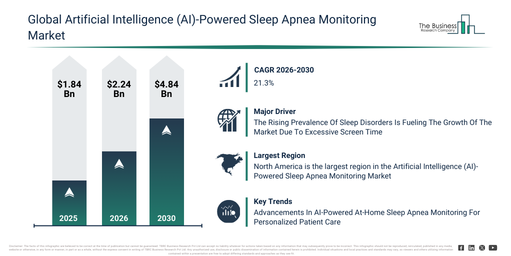
    The artificial intelligence (AI)-powered sleep apnea monitoring market has experienced substantial growth in its size over recent years. This market is projected to expand from $1.84 billion in 2025 to reach $2.24 billion by 2026, demonstrating a compound annual growth rate (CAGR) of 21.6%. Historically, this growth can be attributed to factors such as the increasing prevalence of sleep apnea, rising awareness of sleep health, wider adoption of wearable health technology, increasing application of home-based diagnostic tools, and greater accessibility to digital sleep data.

    The artificial intelligence (AI)-powered sleep apnea monitoring market is projected to experience substantial growth in the coming years. This market is forecast to reach a size of $4.84 billion by 2030, demonstrating a compound annual growth rate (CAGR) of 21.3%. Key factors driving this expansion during the forecast period include progress in AI-driven respiratory analytics, the increasing embrace of tele-sleep medicine, the wider availability of cloud-based sleep monitoring platforms, a greater need for continuous health monitoring, and an intensified focus on managing sleep disorders proactively. Significant trends anticipated in the forecast period involve the growing acceptance of AI-based tools for detecting sleep disorders, greater integration of wearable devices for sleep monitoring, increased utilization of remote sleep diagnostics, the proliferation of home-based monitoring solutions, and an amplified emphasis on identifying apnea early.

    Download the Free Sample Report to Explore Key Market Insights:

    https://www.thebusinessresearchcompany.com/sample.aspx?id=28931&type=smp

    What Primary Drivers Are Shaping The Development Of The Artificial Intelligence (AI)-Powered Sleep Apnea Monitoring Market?

    The increasing occurrence of sleep disorders is anticipated to fuel the expansion of the artificial intelligence (AI)-powered sleep apnea monitoring market in the future. These disorders are medical ailments that routinely impair an individual’s capacity to achieve restful sleep, encompassing conditions like insomnia, sleep apnea, and restless legs syndrome. The rise in sleep disorders is attributed to excessive screen usage prior to bedtime, given that blue light disrupts melatonin synthesis and postpones the commencement of sleep. Artificial intelligence (AI)-powered sleep apnea monitoring offers assistance with sleep disorders through constant surveillance of breathing patterns, oxygen saturation, and sleep cycles to pinpoint apnea incidents instantly, thereby facilitating prompt diagnosis and tailored interventions, alongside supporting distant oversight and enhancing sleep quality. For example, data from November 2023, provided by the National Health Service, a UK-based governmental health statistics organization, indicated a marginal increase in the percentage of young individuals aged 17 to 23 years reporting sleep issues three or more times during the previous week, reaching 64.9%, up from 64.0% in 2022. Consequently, the escalating incidence of sleep disorders is a key factor propelling the expansion of the artificial intelligence (AI)-powered sleep apnea monitoring market.

    Which Segment Classifications Shape The Artificial Intelligence (AI)-Powered Sleep Apnea Monitoring Market?

    The artificial intelligence (AI)-powered sleep apnea monitoring market covered in this report is segmented –

    1) By Product Type: Wearable Devices, Non-Wearable Devices, Software Solutions

    2) By Technology: Machine Learning, Deep Learning, Natural Language Processing, Other Technologies

    3) By Distribution Channel: Online, Offline

    4) By Application: Home Care, Hospitals And Clinics, Sleep Centers, Other Applications

    5) By End-User: Adults, Pediatrics, Geriatrics

    Subsegments:

    1) By Wearable Devices: Wrist Worn Sleep Trackers, Finger Oximeter Rings, Adhesive Respiratory Patches, Chest Belt Respiratory Monitors, Headband Sleep Sensors, Smart Clothing Garments

    2) By Non-Wearable Devices: Bedside Radar Respiratory Monitors, Under Mattress Sensor Mats, Smart Bed Platforms With Physiological Monitoring, Pillow Embedded Acoustic Sensors, Nightstand Radio Frequency Sensing Units

    3) By Software Solutions: Event Detection And Scoring Platforms, Remote Monitoring And Adherence Portals, Clinical Decision Support Dashboards, Patient Engagement And Coaching Applications, Population Health Screening And Triage Modules, Care Coordination And Teleconsultation Tools, Data Management And Cloud Storage Services

    Which Upcoming Trends Are Expected To Influence The Artificial Intelligence (AI)-Powered Sleep Apnea Monitoring Market?

    Major companies operating in the artificial intelligence (AI)-powered sleep apnea monitoring market are primarily concentrating on creating sophisticated at-home sleep examination solutions to provide customized management of sleep apnea and enhance patient outcomes. These at-home sleep examination solutions allow individuals to track their sleep patterns and breathing at home, collecting real-time physiological data for accurate detection of sleep disorders and reducing the need for clinical visits. For instance, in January 2025, APNEAL, a France-based healthcare technology company, unveiled the world’s first AI-powered smartphone application for identifying sleep apnea during CES 2025. The app converts a typical smartphone into a clinical-grade diagnostic instrument capable of analyzing respiratory patterns, heartbeats, and breathing sounds utilizing its built-in sensors, including the accelerometer, gyroscope, and microphone. It employs advanced artificial intelligence to deliver a 90% accuracy rate compared to polysomnography, thereby enabling at-home sleep apnea screening without the necessity for specialized equipment or hospital visits.

    Which Companies Are Expanding Their Footprint In The Artificial Intelligence (AI)-Powered Sleep Apnea Monitoring Market?

    Major companies operating in the artificial intelligence (AI)-powered sleep apnea monitoring market are Koninklijke Philips N.V., ResMed Inc., Nihon Kohden Corporation, Fisher & Paykel Healthcare Corporation Limited, Inspire Medical Systems Inc., Vyaire Medical Inc., BioSerenity, SomnoMed Limited, BMC Medical Co. Ltd., Compumedics Limited, Sibel Health, Sleepiz AG, EnsoData Inc., Onera Health B.V., SleepScore Labs LLC, SleepImage, Beacon Biosignals, Acurable, Wesper, Hexoskin.

    Read the full artificial intelligence (ai)-powered sleep apnea monitoring market report here:

    https://www.thebusinessresearchcompany.com/report/artificial-intelligence-ai-powered-sleep-apnea-monitoring-global-market-report

    How Does The Artificial Intelligence (AI)-Powered Sleep Apnea Monitoring Market Perform Across Major Global Regions?

    North America was the largest region in the artificial intelligence (AI)-powered sleep apnea monitoring market in 2025. Asia-Pacific is expected to be the fastest-growing region in the forecast period. The regions covered in the artificial intelligence (AI)-powered sleep apnea monitoring market report are Asia-Pacific, South East Asia, Western Europe, Eastern Europe, North America, South America, Middle East, Africa.

    Request A Tailored Artificial Intelligence (AI)-Powered Sleep Apnea Monitoring Market Research Report For Competitive Advantage:

    https://www.thebusinessresearchcompany.com/customise?id=28931&type=smp

    Browse Through More Reports Similar to the Global Artificial Intelligence (AI)-Powered Sleep Apnea Monitoring Market 2026, By The Business Research Company

    Smart Sleep Monitor Global Market Report

    https://www.thebusinessresearchcompany.com/report/smart-sleep-monitor-global-market-report

    Sleep Monitoring Apps Global Market Report

    https://www.thebusinessresearchcompany.com/report/sleep-monitoring-apps-global-market-report

    Sleep Tech Devices Global Market Report

    https://www.thebusinessresearchcompany.com/report/sleep-tech-devices-global-market-report

    Get in touch with us:

    The Business Research Company: https://www.thebusinessresearchcompany.com/

    Americas +1 310-496-7795

    Asia +44 7882 955267 & +91 8897263534

    Europe +44 7882 955267

    Email us at info@tbrc.info

    Follow us on:

    LinkedIn: https://in.linkedin.com/company/the-business-research-company

    YouTube: https://www.youtube.com/channel/UC24_fI0rV8cR5DxlCpgmyFQ

    Global Market Model: https://www.thebusinessresearchcompany.com/global-market-model
  • Artificial Intelligence (AI)-Driven Virtual Nursing Assistants Market Future Outlook Showing Expansion Toward $5.19 Billion by 2030

    Artificial Intelligence (AI)-Driven Virtual Nursing Assistants Market Future Outlook Showing Expansion Toward $5.19 Billion by 2030

    The Business Research Company’s 2026 market reports include new capabilities such as market attractiveness scoring and analysis, total addressable market analysis, company scoring matrix, interactive excel data dashboard, improved supply chain analysis, upcoming startups in the market, and overview of key products, aimed at improving the depth, usability, and strategic value of the insights delivered.

    What Market Size Increase Is Anticipated For The Artificial Intelligence (AI)-Driven Virtual Nursing Assistants Market Over The 2026–2030 Period?

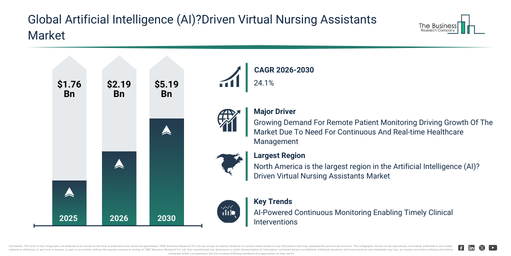
    The artificial intelligence (AI)-driven virtual nursing assistants market has experienced substantial growth in recent years. It is anticipated to expand from $1.76 billion in 2025 to $2.19 billion in 2026, at a compound annual growth rate (CAGR) of 24.4%. This historical growth can be attributed to several factors, including increasing healthcare staff shortages, the early adoption of telehealth services, a growing demand for patient self-management tools, the expansion of digital health platforms, and the availability of conversational AI technologies.

    The artificial intelligence (AI)-driven virtual nursing assistants market is anticipated to show significant expansion in the upcoming years, with its size expected to reach $5.19 billion by 2030, demonstrating a compound annual growth rate (CAGR) of 24.1%. This projected growth throughout the forecast period stems from factors such as increasing investments in virtual care infrastructure, a rising demand for continuous patient support, the expansion of AI-assisted clinical workflows, a growing focus on cost-efficient healthcare delivery, and the increasing adoption of remote patient monitoring solutions. Additionally, major trends during this period include the increasing adoption of virtual nursing support tools, the rising use of AI-powered patient engagement platforms, the growing integration of remote monitoring capabilities, the expansion of 24/7 digital care assistance, and an enhanced focus on care coordination automation.

    Download the Free Sample Report to Explore Key Market Insights:

    https://www.thebusinessresearchcompany.com/sample.aspx?id=28131&type=smp

    Which Economic Or Industry Drivers Are Impacting The Artificial Intelligence (AI)-Driven Virtual Nursing Assistants Market?

    The increasing requirement for remote patient monitoring is anticipated to propel the expansion of the artificial intelligence (AI)-driven virtual nursing assistants market going forward. Remote patient monitoring (RPM) involves the application of digital technologies to collect patients’ health data from outside conventional healthcare environments and transmit it to healthcare providers for assessment and care management. The rising demand for remote patient monitoring stems from the escalating need for continuous, real-time healthcare management beyond traditional clinical settings. Artificial intelligence (AI)-driven virtual nursing assistants, in the context of remote patient monitoring, aid in tracking patients’ health data in real time, delivering timely alerts, and supporting personalized care, thereby reducing the burden on healthcare staff. For instance, in August 2025, data from the US Department of Health and Human Services, a US-based government administration, revealed that in 2024, nearly 1 million enrollees received remote patient monitoring, marking a 27% increase compared to 2023. Consequently, the growing demand for remote patient monitoring is driving the growth of the artificial intelligence (AI)-driven virtual nursing assistants market.

    How Is The Artificial Intelligence (AI)-Driven Virtual Nursing Assistants Market Segmented Across Key Categories?

    The artificial intelligence (AI)-driven virtual nursing assistants market covered in this report is segmented –

    1) By Component: Software, Services

    2) By Technology: Automatic Speech Recognition(ASR), Text-To-Speech(TTS), Text-Based Interface, Natural Language Processing (NLP), Other Technologies

    3) By Deployment: Cloud Based, On-Premise, Hybrid

    4) By Application: Symptom Checking And Virtual Triage, Appointment Scheduling And Reminders, Medication Management, Medical Information Retrieval, Patient Engagement And Education, Clinical Decision Support, Administrative Support, Remote Monitoring

    5) By End User: Hospitals And Clinics, Patients, Healthcare Payers Pharmaceutical And Life Sciences Companies, Other End Users

    Subsegments:

    1) By Software: Clinical Decision Support, Patient Monitoring And Engagement, Workflow And Care Coordination, Medication Management, Predictive Analytics And Risk Assessment, Communication And Chat Interfaces

    2) By Services: Training And Education, Consulting And Advisory, Support And Maintenance, Managed Services, Data Management And Security, Implementation And Integration

    What Trends Are Affecting The Expansion Of The Artificial Intelligence (AI)-Driven Virtual Nursing Assistants Market?

    Major companies operating in the artificial intelligence (AI)-driven virtual nursing assistants market are developing new technologies, such as LIDAR-based spatial intelligence, to facilitate real-time patient monitoring, improve safety through early detection of risks like falls or sudden health deterioration, and support virtual nursing models. Light detection and ranging (LIDAR) is an advanced remote sensing technology that uses laser light pulses to measure distances with exceptional accuracy. For instance, in March 2025, Emory Healthcare, a US-based healthcare system, launched a virtual nursing initiative employing AI-driven technology to enhance patient care. This initiative utilizes Llght detection and ranging (LIDAR) technology in patient rooms to track movements and detect falls up to 30 seconds before they happen, complemented by automated voice alerts that prompt patients to stay in bed. It enables nurses located in a central control room to remotely conduct admissions paperwork, manage medications, provide patient education, and oversee discharge activities, thereby allowing bedside nurses to dedicate more attention to direct patient care. Furthermore, it continuously analyzes patient data to identify early indicators of clinical decline or emergencies, facilitating timely alerts to bedside care teams.

    Who Are The Dominant Players Shaping The Artificial Intelligence (AI)-Driven Virtual Nursing Assistants Market Landscape?

    Major companies operating in the artificial intelligence (AI)-driven virtual nursing assistants market are Microsoft Corporation, HealthTap Inc., Artera Inc., Caregility LLC, Luma Health Inc., Infermedica Sp. z o.o., Memora Health Inc., Buoy Health Inc., Hyro AI Ltd., Care Angel Inc., Sensely Inc., Artisight Inc., K Health Inc., Mediktor International S.L., Corti ApS, AvaSure LLC, Care.AI Inc., Tap Health Inc., GetWellNetwork Inc., Biofourmis Inc.

    Read the full artificial intelligence (ai)-driven virtual nursing assistants market report here:

    https://www.thebusinessresearchcompany.com/report/artificial-intelligence-ai-driven-virtual-nursing-assistants-global-market-report

    What Are The Top-Performing Regions Within The Artificial Intelligence (AI)-Driven Virtual Nursing Assistants Market?

    North America was the largest region in the artificial intelligence (AI)-driven virtual nursing assistants market in 2025. Asia-Pacific is expected to be the fastest-growing region in the forecast period. The regions covered in the artificial intelligence (AI)-driven virtual nursing assistants market report are Asia-Pacific, South East Asia, Western Europe, Eastern Europe, North America, South America, Middle East, Africa.

    Request A Tailored Artificial Intelligence (AI)-Driven Virtual Nursing Assistants Market Research Report For Competitive Advantage:

    https://www.thebusinessresearchcompany.com/customise?id=28131&type=smp

    Browse Through More Reports Similar to the Global Artificial Intelligence (AI)-Driven Virtual Nursing Assistants Market 2026, By The Business Research Company

    Intelligent Virtual Assistant Global Market Report

    https://www.thebusinessresearchcompany.com/report/intelligent-virtual-assistant-global-market-report

    Virtual Assistant Global Market Report

    https://www.thebusinessresearchcompany.com/report/virtual-assistant-global-market-report

    Ai As A Service Global Market Report

    https://www.thebusinessresearchcompany.com/report/ai-as-a-service-global-market-report

    Get in touch with us:

    The Business Research Company: https://www.thebusinessresearchcompany.com/

    Americas +1 310-496-7795

    Asia +44 7882 955267 & +91 8897263534

    Europe +44 7882 955267

    Email us at info@tbrc.info

    Follow us on:

    LinkedIn: https://in.linkedin.com/company/the-business-research-company

    YouTube: https://www.youtube.com/channel/UC24_fI0rV8cR5DxlCpgmyFQ

    Global Market Model: https://www.thebusinessresearchcompany.com/global-market-model
  • Artificial Intelligence (AI)-Driven Remote Cardiac Rehab Market Revenue Growth Expected to Reach $3.66 Billion by 2030 with 21.1% CAGR

    Artificial Intelligence (AI)-Driven Remote Cardiac Rehab Market Revenue Growth Expected to Reach $3.66 Billion by 2030 with 21.1% CAGR

    The Business Research Company’s 2026 market reports include new capabilities such as market attractiveness scoring and analysis, total addressable market analysis, company scoring matrix, interactive excel data dashboard, improved supply chain analysis, upcoming startups in the market, and overview of key products, aimed at improving the depth, usability, and strategic value of the insights delivered.

    How Much Is The Artificial Intelligence (AI)-Driven Remote Cardiac Rehab Market Expected To Grow In Terms Of Market Value Between 2026 And 2030?

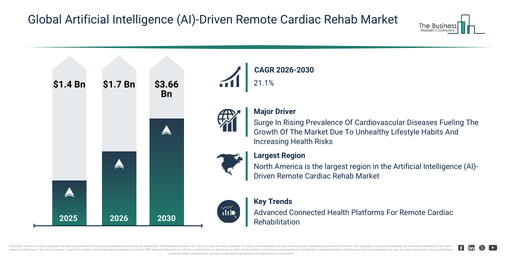
    The artificial intelligence (AI)-driven remote cardiac rehab market has experienced substantial growth in recent years. This market is set to expand from $1.4 billion in 2025 to $1.7 billion in 2026, at a compound annual growth rate (CAGR) of 21.4%. Its historical expansion can be attributed to factors such as the broadening of cardiac rehabilitation programs, the increasing prevalence of cardiovascular diseases, the greater adoption of telehealth services, the development of wearable cardiac devices, and enhanced remote monitoring capabilities.

    The artificial intelligence (AI)-driven remote cardiac rehab market size is projected for rapid expansion over the coming years. This market is anticipated to reach $3.66 billion by 2030, exhibiting a compound annual growth rate (CAGR) of 21.1%. Several factors contribute to this growth during the projected timeframe, including heightened investments in AI-powered cardiac care, a surging need for at-home rehabilitation, the proliferation of cloud-enabled cardiac analytics platforms, an intensified emphasis on proactive cardiac wellness, and greater integration with electronic health records. Key developments expected within the forecast period encompass a wider deployment of AI-powered cardiac monitoring algorithms, increased uptake of portable heart monitoring devices, a growing call for customized rehabilitation plans, the broadening availability of remote patient interaction instruments, and a stronger commitment to ongoing outcome assessment.

    Download the Free Sample Report to Explore Key Market Insights:

    https://www.thebusinessresearchcompany.com/sample.aspx?id=28913&type=smp

    What Major Drivers Are Influencing Demand In The Artificial Intelligence (AI)-Driven Remote Cardiac Rehab Market?

    The increasing occurrence of cardiovascular conditions is anticipated to fuel the expansion of the artificial intelligence (AI)-driven remote cardiac rehab market in the future. These conditions involve abnormalities of the heart and blood vessels, encompassing ailments such as heart attack, stroke, and high blood pressure. The surge in cardiovascular diseases is primarily attributable to unhealthy habits contributing to overweight, elevated blood pressure, and high cholesterol, which put a strain on the heart and arteries. AI-powered remote cardiac rehabilitation assists individuals with cardiovascular diseases through remote heart health monitoring, customized exercise and medication regimens, and instant feedback, thereby enhancing recovery, boosting compliance, and decreasing rehospitalizations. As an illustration, in August 2025, data from the National Institutes of Health, a US-based government agency, indicated that from 2025 to 2050, cardiovascular prevalence is projected to rise by 90%, mortality by 73%, and DALYs by 55%, with deaths increasing from 20.5 million to 35.6 million. Consequently, the growing incidence of cardiovascular diseases is propelling the expansion of the artificial intelligence (AI)-driven remote cardiac rehab market.

    What Major Segment Divisions Exist Within The Artificial Intelligence (AI)-Driven Remote Cardiac Rehab Market?

    The artificial intelligence (AI)-driven remote cardiac rehab market covered in this report is segmented –

    1) By Component: Software, Hardware, Services

    2) By Delivery Mode: Web-Based, App-Based, Telehealth Platforms

    3) By Deployment Mode: Cloud-Based, On-Premises

    4) By Application: Chronic Heart Failure, Post-Myocardial Infarction, Post-Cardiac Surgery, Hypertension Management, Other Applications

    5) By End-User: Hospitals And Clinics, Homecare Settings, Rehabilitation Centers, Other End-Users

    Subsegments:

    1) By Software: Remote Monitoring Software, Patient Engagement Software, Data Analytics Software

    2) By Hardware: Wearable Devices, Sensors And Monitors, Mobile Devices

    3) By Services: Telehealth Services, Consultation Services, Training And Support Services

    Which Trends Are Influencing The Artificial Intelligence (AI)-Driven Remote Cardiac Rehab Market?

    Leading companies in the artificial intelligence (AI)-driven remote cardiac rehab market are concentrating on developing innovative solutions, such as advanced connected health platforms. These platforms aim to enable continuous remote monitoring, personalized rehabilitation programs, and enhanced patient engagement, ultimately leading to improved cardiovascular outcomes. An advanced connected health platform is defined as a digital system that integrates wearable devices, sensors, mobile applications, and cloud-based analytics to remotely oversee patients’ health, deliver tailored care, and facilitate real-time communication between patients and healthcare providers. For instance, in July 2025, OMRON Healthcare, a Japan-based healthcare company, collaborated with Tricog Health Services Pvt Limited, an India-based medtech company. This partnership resulted in the launch of KeeboHealth, a platform designed to address India’s cardiac crisis and advance OMRON’s Going for Zero vision, which is a goal to eliminate cardiovascular events like heart attacks and strokes. KeeboHealth facilitates real-time monitoring by combining OMRON’s home ECG and blood pressure devices with Tricog’s AI cardiac analysis, thereby allowing for the early detection of heart issues and timely medical intervention. This platform helps in reducing hospitalizations, improving adherence to therapy, and supporting personalized heart health management.

    Which Companies Are Leading Innovation In The Artificial Intelligence (AI)-Driven Remote Cardiac Rehab Market?

    Major companies operating in the artificial intelligence (AI)-driven remote cardiac rehab market are Medtronic PLC, Philips Healthcare, Biofourmis Inc., Neurosoft Ltd., Cadence Health Solutions, Wellframe Inc., Amwell, Datos Health Ltd., VivaLNK Inc., Carda Health Inc., Heartbeat Health Inc., Cardihab Pty Ltd., Chanl Health Inc., HealthSnap Inc., Kento Health Inc., Lyfe by Lupin Digital Health, Movn Health Inc., RecoveryPlus Health, Wellinks Inc., CardioCare Fit.

    Read the full artificial intelligence (ai)-driven remote cardiac rehab market report here:

    https://www.thebusinessresearchcompany.com/report/artificial-intelligence-ai-driven-remote-cardiac-rehab-global-market-report

    Which Region Shows The Strongest Potential For Future Growth In The Artificial Intelligence (AI)-Driven Remote Cardiac Rehab Market?

    North America was the largest region in the artificial intelligence (AI)-driven remote cardiac rehab market in 2025. Asia-Pacific is expected to be the fastest-growing region in the forecast period. The regions covered in the artificial intelligence (AI)-driven remote cardiac rehab market report are Asia-Pacific, South East Asia, Western Europe, Eastern Europe, North America, South America, Middle East, Africa.

    Request A Tailored Artificial Intelligence (AI)-Driven Remote Cardiac Rehab Market Research Report For Competitive Advantage:

    https://www.thebusinessresearchcompany.com/customise?id=28913&type=smp

    Browse Through More Reports Similar to the Global Artificial Intelligence (AI)-Driven Remote Cardiac Rehab Market 2026, By The Business Research Company

    Cardiac Ai Monitoring And Diagnostics Global Market Report

    https://www.thebusinessresearchcompany.com/report/cardiac-ai-monitoring-and-diagnostics-global-market-report

    Artificial Intelligence Ai In Remote Patient Monitoring Global Market Report

    https://www.thebusinessresearchcompany.com/report/artificial-intelligence-ai-in-remote-patient-monitoring-global-market-report

    Rehabilitation Robotics Global Market Report

    https://www.thebusinessresearchcompany.com/report/rehabilitation-robotics-global-market-report

    Get in touch with us:

    The Business Research Company: https://www.thebusinessresearchcompany.com/

    Americas +1 310-496-7795

    Asia +44 7882 955267 & +91 8897263534

    Europe +44 7882 955267

    Email us at info@tbrc.info

    Follow us on:

    LinkedIn: https://in.linkedin.com/company/the-business-research-company

    YouTube: https://www.youtube.com/channel/UC24_fI0rV8cR5DxlCpgmyFQ

    Global Market Model: https://www.thebusinessresearchcompany.com/global-market-model
  • Artificial Intelligence (AI)-Driven Rare Disease Patient Finder Market Expected to Record Steady Growth and Approach $5.95 Billion by 2030

    Artificial Intelligence (AI)-Driven Rare Disease Patient Finder Market Expected to Record Steady Growth and Approach $5.95 Billion by 2030

    The Business Research Company’s 2026 market reports include new capabilities such as market attractiveness scoring and analysis, total addressable market analysis, company scoring matrix, interactive excel data dashboard, improved supply chain analysis, upcoming startups in the market, and overview of key products, aimed at improving the depth, usability, and strategic value of the insights delivered.

    What Market Value Is Expected For The Artificial Intelligence (AI)-Driven Rare Disease Patient Finder Market At The End Of The 2026–2030 Forecast Period?

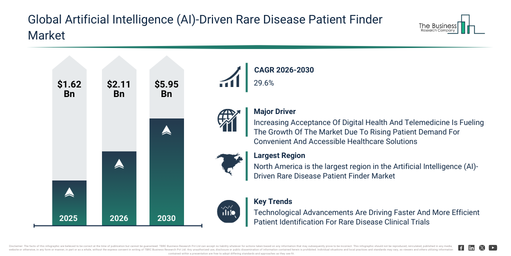
    The artificial intelligence (AI)-driven rare disease patient finder market has experienced substantial expansion in recent years. This market is expected to increase from $1.62 billion in 2025 to $2.11 billion in 2026, demonstrating a compound annual growth rate (CAGR) of 29.9%. The historical growth within this sector can be linked to factors such as the growing availability of electronic health records, the early integration of data analytics in clinical research, the expansion of genomic databases, an increased focus on orphan diseases, and the initial deployment of AI in trial recruitment.

    The artificial intelligence (AI)-driven rare disease patient finder market size is projected to experience substantial expansion over the upcoming years. This market is anticipated to reach $5.95 billion by 2030, exhibiting a compound annual growth rate (CAGR) of 29.6%. Several factors are contributing to this growth during the forecast period, including higher investments in precision medicine research, an increasing need for more rapid clinical trial enrollment, the broadened scope of real-world evidence analytics, enhanced collaboration among healthcare and life sciences entities, and greater regulatory encouragement for innovations in rare diseases. Key trends foreseen for this period encompass the expanded deployment of AI-based patient identification algorithms, the growing incorporation of multi-source health data, increased automation in clinical trial recruitment processes, the development of precision patient matching platforms, and a heightened emphasis on facilitating rare disease research.

    Download the Free Sample Report to Explore Key Market Insights:

    https://www.thebusinessresearchcompany.com/sample.aspx?id=28129&type=smp

    Which Market Drivers Are Supporting The Expansion Of The Artificial Intelligence (AI)-Driven Rare Disease Patient Finder Market?

    The market for artificial intelligence (AI)-driven rare disease patient finders is anticipated to expand, driven by the growing adoption of digital health and telemedicine. Digital health encompasses the application of technology, software, and electronic instruments to oversee, control, and enhance health and well-being. Meanwhile, telemedicine involves providing healthcare remotely through telecommunications, utilizing tools like video consultations, mobile applications, and web platforms. This rising acceptance stems from both patients and healthcare providers seeking convenient, efficient, and easily accessible healthcare options. Artificial intelligence (AI)-driven rare disease patient finders bolster digital health and telemedicine efforts by precisely identifying patients, facilitating remote oversight, prompt virtual consultations, and tailored treatment plans. For example, in November 2025, the France-based intergovernmental organization, Organisation for Economic Co operation and Development, reported advancements in EHR access within OECD countries. Data from comparable countries showed that in 2024, the average availability of online digital health services reached 82%, an increase from 79% in 2023. Consequently, the growing embrace of digital health and telemedicine is fueling the expansion of the artificial intelligence (AI)-driven rare disease patient finder market.

    What Segment Types Make Up The Artificial Intelligence (AI)-Driven Rare Disease Patient Finder Market?

    The artificial intelligence (AI)-driven rare disease patient finder market covered in this report is segmented –

    1) By Component: Software, Services

    2) By Deployment Mode: Cloud-Based, On-Premises

    3) By Application: Hospitals, Clinics, Research Institutes, Pharmaceutical Companies, Other Applications

    4) By End-User: Healthcare Providers, Life Sciences Companies, Payers, Other End-Users

    Subsegments:

    1) By Software: Electronic Data Capture, Data Management Platform, Analytics And Reporting Tools, Patient Engagement Tools, Clinical Trial Management System

    2) By Services: Implementation And Integration, Training And Support, Data Hosting And Security, Consulting Services, Maintenance And Upgrades

    What Trends Are Advancing Progress In The Artificial Intelligence (AI)-Driven Rare Disease Patient Finder Market?

    Major companies operating in the AI-driven rare disease patient finder market are prioritizing the creation of innovative technologies, specifically precision patient recruitment solutions. These efforts aim to improve the accuracy, speed, and efficiency with which suitable participants are located for rare disease clinical trials, thereby simultaneously shortening recruitment periods and elevating trial success rates. A precision patient recruitment solution represents a technology-led method that leverages sophisticated algorithms and real-world data to precisely pinpoint and connect with patients who meet specific clinical trial eligibility requirements. An example of this innovation is found in April 2024, when Citeline, a US-based business intelligence and data analytics company, introduced Citeline PatientMatch. This platform integrates advanced algorithms with extensive real-world data, including lab results, biomarkers, and electronic medical records sourced from over 400 hospitals and health systems. Its purpose is to assist sponsors and researchers in identifying eligible patients for clinical trials expeditiously and effectively, simplify patient onboarding, and facilitate intricate and varied research designs across multiple therapeutic areas.

    Who Are The Key Players Driving Competition In The Artificial Intelligence (AI)-Driven Rare Disease Patient Finder Market?

    Major companies operating in the artificial intelligence (AI)-driven rare disease patient finder market are UnitedHealth Group Incorporated, Dassault Systèmes SE, GeneDx Holdings Corp., HealthVerity Inc., ConcertAI Inc., Komodo Health Inc., Unlearn.AI Inc., Antidote Technologies Inc., Healx Ltd., FDNA Inc., Saventic Health Sp. z o.o., Digital Pharma Lab SAS, AnnieGuard Ltd., Rapid Innovation Labs Inc., Sqilline EOOD, TrialX Inc., enGenome Srl, EveryCure Inc., ThinkGenetic Inc., RareSum Inc.

    Read the full artificial intelligence (ai)-driven rare disease patient finder market report here:

    https://www.thebusinessresearchcompany.com/report/artificial-intelligence-ai-driven-rare-disease-patient-finder-global-market-report

    How Is The Artificial Intelligence (AI)-Driven Rare Disease Patient Finder Market Distributed Across Key Geographic Regions?

    North America was the largest region in the artificial intelligence (AI)-driven rare disease patient finder market in 2025. Asia-Pacific is expected to be the fastest-growing region in the forecast period. The regions covered in the artificial intelligence (AI)-driven rare disease patient finder market report are Asia-Pacific, South East Asia, Western Europe, Eastern Europe, North America, South America, Middle East, Africa.

    Request A Tailored Artificial Intelligence (AI)-Driven Rare Disease Patient Finder Market Research Report For Competitive Advantage:

    https://www.thebusinessresearchcompany.com/customise?id=28129&type=smp

    Browse Through More Reports Similar to the Global Artificial Intelligence (AI)-Driven Rare Disease Patient Finder Market 2026, By The Business Research Company

    Ai In Medical Diagnostics Global Market Report

    https://www.thebusinessresearchcompany.com/report/ai-in-medical-diagnostics-global-market-report

    Artificial Intelligence Ai In Clinical Trials Global Market Report

    https://www.thebusinessresearchcompany.com/report/artificial-intelligence-ai-in-clinical-trials-global-market-report

    Artificial Intelligence In Cancer Diagnostics Global Market Report

    https://www.thebusinessresearchcompany.com/report/artificial-intelligence-in-cancer-diagnostics-global-market-report

    Get in touch with us:

    The Business Research Company: https://www.thebusinessresearchcompany.com/

    Americas +1 310-496-7795

    Asia +44 7882 955267 & +91 8897263534

    Europe +44 7882 955267

    Email us at info@tbrc.info

    Follow us on:

    LinkedIn: https://in.linkedin.com/company/the-business-research-company

    YouTube: https://www.youtube.com/channel/UC24_fI0rV8cR5DxlCpgmyFQ

    Global Market Model: https://www.thebusinessresearchcompany.com/global-market-model
  • A significant industry trend in the Artificial Intelligence-Powered Solutions For Elderly Care Market includes the Advancements In AI-Driven Virtual Caregivers Enhancing Elderly Health Management

    The Business Research Company’s 2026 market reports include new capabilities such as market attractiveness scoring and analysis, total addressable market analysis, company scoring matrix, interactive excel data dashboard, improved supply chain analysis, upcoming startups in the market, and overview of key products, aimed at improving the depth, usability, and strategic value of the insights delivered.

    What Is The Market Size Of The Artificial Intelligence-Powered Solutions For Elderly Care Market In 2026 And What Value Is Projected For 2030?

    The market size for artificial intelligence-powered solutions designed for elderly care has seen substantial expansion in recent years. It is anticipated to grow from $31.74 billion in 2025 to $39.32 billion in 2026, demonstrating a compound annual growth rate (CAGR) of 23.9%. The increase observed in previous periods can be linked to factors like the growing demographic of the aging population, a higher incidence of chronic conditions among older individuals, the proliferation of home-based care frameworks, the swift uptake of remote health monitoring instruments, and the development of digital health platforms.

    The artificial intelligence-powered solutions for elderly care market is anticipated to experience substantial growth over the next few years. It is expected to grow to $91.09 billion in 2030, achieving a compound annual growth rate (CAGR) of 23.4%. This projected growth during the forecast period can be attributed to a rising demand for independent aging solutions, increased investments in smart home healthcare technologies, the expansion of AI-driven preventive care, an intensifying focus on reducing caregiver burden, and the growing integration of robotics in elderly assistance. Key trends in the upcoming period include the increasing adoption of AI-based remote monitoring solutions, a rising use of virtual assistants for elderly care, the expanded deployment of fall detection and safety systems, the proliferation of social companion robots, and an enhanced emphasis on personalized care delivery.

    Download the Free Sample Report to Explore Key Market Insights:

    https://www.thebusinessresearchcompany.com/sample.aspx?id=20715&type=smp

    What Major Drivers Are Influencing Demand In The Artificial Intelligence-Powered Solutions For Elderly Care Market?

    The increasing occurrence of chronic illnesses is anticipated to propel the artificial intelligence (AI)-powered solution for the elderly care market in the future. These long-term health conditions, which include diabetes and heart disease, necessitate ongoing care and affect daily routines. The rise in chronic diseases can be attributed to an aging population, changes in lifestyle including decreased physical activity and unhealthy eating habits, and increasing urbanization. Artificial intelligence (AI)-powered solutions designed for elderly care assist in managing chronic conditions through real-time health tracking, predictive analysis for timely intervention, and customized care strategies, leading to better results and an improved quality of life for older adults. For example, data from September 2023 by the World Health Organization, a Switzerland-based intergovernmental organization, showed that 41 million deaths worldwide annually, representing 74% of all deaths, were due to non-communicable diseases (NCDs) or chronic diseases. Specifically, cardiovascular diseases accounted for 17.9 million deaths, cancer for 9.3 million deaths, chronic respiratory diseases for 4.1 million deaths, and diabetes for 2.0 million deaths. Consequently, the growing incidence of chronic diseases is a significant factor propelling the artificial intelligence (AI)-powered solution for the elderly care market.

    What Are The Key Segments Of The Artificial Intelligence-Powered Solutions For Elderly Care Market?

    The artificial intelligence-powered solutions for elderly care market covered in this report is segmented –

    1) By Technology: Machine Learning, Natural Language Processing, Robotics, Computer Vision, Other Technologies

    2) By Application: Fall Detection And Prevention, Remote Monitoring And Healthcare, Personalized Virtual Assistants, Medication Management, Social Interaction And Companionship, Other Applications

    3) By End Users: Home Care Settings, Assisted Living Facilities, Nursing Homes, Hospitals And Clinics, Other End Users

    Subsegments:

    1) By Machine Learning: Predictive Analytics, Personalized Health Monitoring, Data-Driven Decision Making, Adaptive Learning Systems

    2) By Natural Language Processing (NLP): Voice Assistants, Language Translation For Elderly Communication, Sentiment Analysis For Emotional Well-Being, Speech Recognition For Assistance Devices

    3) By Robotics: Social Companions (Companion Robots), Assistance Robots For Daily Activities, Robotic Prosthetics And Exoskeletons, Autonomous Mobility Robots

    4) By Computer Vision: Fall Detection Systems, Vision-Based Health Monitoring (Eye Health), Gesture Recognition For Communication, Environment Mapping And Navigation

    5) By Other Technologies: AI-Powered Wearables, Remote Monitoring Systems, Smart Home Devices Integration, Virtual Reality Therapy

    Which Upcoming Trends Are Expected To Influence The Artificial Intelligence-Powered Solutions For Elderly Care Market?

    Major companies engaged in the artificial intelligence (AI)-powered solution for elderly care market are prioritizing the development of innovative technologies like AI-driven virtual caregivers. This focus aims to provide tailored care solutions, bolster monitoring capabilities, and elevate the overall quality of life for older adults. An AI virtual caregiver acts as an intelligent digital assistant, assisting with health monitoring, medication reminders, companionship, and emergency responses, largely helping elderly individuals maintain their independence and well-being. For instance, in November 2024, Electronic Caregiver Inc., a US-based health technology company, unveiled Addison Care+ within the AWS marketplace. Addison Care+ is an advanced AI-driven virtual caregiver created to revolutionize senior care by enhancing health management, engagement, and autonomy for aging adults and patients with chronic illnesses. It provides 24/7 activity monitoring, early detection of health concerns, and thorough care insights such as medication management and emergency response. Through its integration with AI-driven telecare operations, it simplifies nationwide deployment, empowering caregivers with proactive tools for managing client health and optimizing care delivery.

    Who Are The Leading Companies Operating In The Artificial Intelligence-Powered Solutions For Elderly Care Market?

    Major companies operating in the artificial intelligence-powered solutions for elderly care market are Samsung Electronics Co Ltd, Siemens Healthineers AG, Koninklijke Philips N.V., Cera Care, Elder HQ, Aviva Health, AiCure LLC, GrandCare Systems, K4connect, Sensi AI, Orbita, Blue Frog Robotics, CarePredict, Anvayaa Kin Care, Emoha, Reemo Health, Walk With Path, Intuition Robotics, MiiCare, Care.Coach, MyndYou, ClinOne, PainChek, Somatix Inc., SmartQuare

    Read the full artificial intelligence-powered solutions for elderly care market report here:

    https://www.thebusinessresearchcompany.com/report/artificial-intelligence-powered-solutions-for-elderly-care-global-market-report

    Which Region Shows The Strongest Potential For Future Growth In The Artificial Intelligence-Powered Solutions For Elderly Care Market?

    North America was the largest region in the artificial intelligence-powered solutions for elderly Care market in 2025. The regions covered in the artificial intelligence-powered solutions for elderly care market report are Asia-Pacific, South East Asia, Western Europe, Eastern Europe, North America, South America, Middle East, Africa.

    Request A Tailored Artificial Intelligence-Powered Solutions For Elderly Care Market Research Report For Competitive Advantage:

    https://www.thebusinessresearchcompany.com/customise?id=20715&type=smp

    Browse Through More Reports Similar to the Global Artificial Intelligence-Powered Solutions For Elderly Care Market 2026, By The Business Research Company

    Artificial Intelligence In Healthcare Diagnosis Global Market Report

    https://www.thebusinessresearchcompany.com/report/artificial-intelligence-in-healthcare-diagnosis-global-market-report

    Artificial Intelligence Or Machine Learning Ai Or Ml Medical Device Global Market Report

    https://www.thebusinessresearchcompany.com/report/artificial-intelligence-or-machine-learning-ai-or-ml-medical-device-global-market-report

    Elderly Care Global Market Report

    https://www.thebusinessresearchcompany.com/report/elderly-care-global-market-report

    Get in touch with us:

    The Business Research Company: https://www.thebusinessresearchcompany.com/

    Americas +1 310-496-7795

    Asia +44 7882 955267 & +91 8897263534

    Europe +44 7882 955267

    Email us at info@tbrc.info

    Follow us on:

    LinkedIn: https://in.linkedin.com/company/the-business-research-company

    YouTube: https://www.youtube.com/channel/UC24_fI0rV8cR5DxlCpgmyFQ

    Global Market Model: https://www.thebusinessresearchcompany.com/global-market-model
  • A key trend shaping the Artificial Intelligence-Generated Personalized Prenatal Nutrition Guide Market involves the Digital Health Solution Enables Real-Time Communication With Healthcare Workers

    The Business Research Company’s 2026 market reports include new capabilities such as market attractiveness scoring and analysis, total addressable market analysis, company scoring matrix, interactive excel data dashboard, improved supply chain analysis, upcoming startups in the market, and overview of key products, aimed at improving the depth, usability, and strategic value of the insights delivered.

    What Will Be The Estimated Market Valuation Of The Artificial Intelligence-Generated Personalized Prenatal Nutrition Guide Market By The End Of 2030?

    The artificial intelligence-generated personalized prenatal nutrition guide market size has seen substantial expansion in recent years. This market is projected to grow from $1.39 billion in 2025 to $1.71 billion in 2026, exhibiting a compound annual growth rate (CAGR) of 23.1%. The growth observed in the past can be primarily attributed to heightened awareness of the importance of maternal nutrition, the early adoption of pregnancy health applications, an increase in digital health literacy, the expansion of prenatal care programs, and a growing demand for tailored wellness solutions.

    The artificial intelligence-generated personalized prenatal nutrition guide market size is expected to experience substantial growth in the upcoming years. It is projected to reach $3.88 billion by 2030, with a compound annual growth rate (CAGR) of 22.8%. This expansion during the forecast period can be attributed to increasing investments in digital maternal health tools, the rising use of AI-driven nutrition analytics, the expansion of remote prenatal monitoring, the growing integration of genomics in nutrition planning, and the increasing demand for data-driven pregnancy care. Major trends within the forecast period include the increasing adoption of AI-personalized prenatal diet planning, rising integration with wearable health trackers, the expansion of genetic-based nutrition recommendations, the growing use of digital maternal health platforms, and an enhanced focus on preventive prenatal care.

    Download the Free Sample Report to Explore Key Market Insights:

    https://www.thebusinessresearchcompany.com/sample.aspx?id=27206&type=smp

    Which Market Drivers Are Supporting The Expansion Of The Artificial Intelligence-Generated Personalized Prenatal Nutrition Guide Market?

    An anticipated increase in the incidence of nutrition-linked pregnancy complications is set to drive the expansion of the artificial intelligence generated personalized prenatal nutrition guide market in the coming years. These complications encompass health problems affecting either the mother or the developing fetus, stemming from insufficient, excessive, or disproportionate nutrient consumption, and include conditions like anemia, gestational diabetes, and variations in birth weight (either too low or too high). The growing occurrence of these complications is attributed to unhealthy eating habits, which result in inadequate nutritional intake, excessive weight gain, and metabolic dysregulation during gestation. An artificial intelligence generated personalized prenatal nutrition guide serves to alleviate nutrition-related pregnancy complications by providing customized dietary advice, proving highly beneficial for pregnant women. This guide effectively lowers risks through individualized oversight and support, thereby enhancing the health outcomes for both the mother and her baby. To illustrate, in December 2024, data from the Office for Health Improvement and Disparities, a UK based government department, indicated that the percentage of women experiencing obesity in early pregnancy reached 26.2% in 2023-2024, representing an ascent from 25.4% recorded in 2022-2023. Consequently, the increasing incidence of nutrition-related pregnancy complications is a key factor propelling the expansion of the artificial intelligence generated personalized prenatal nutrition guide market.

    Which Segment Classifications Shape The Artificial Intelligence-Generated Personalized Prenatal Nutrition Guide Market?

    The artificial intelligence-generated personalized prenatal nutrition guide market covered in this report is segmented –

    1) By Product Type: Mobile Apps, Web-Based Platforms, Wearable Integration, Other Product Types

    2) By Deployment Mode: Cloud-Based, Hybrid Deployment Models

    3) By Application: Pregnancy Nutrition Management, Dietary Recommendations, Supplement Tracking, Other Applications

    4) By End User: Hospitals And Clinics, Homecare, Fitness And Wellness Centers, Other End Users

    Subsegments:

    1) By Mobile Apps: Artificial Intelligence-Driven Meal Planning Apps, Prenatal Nutrition Tracking Apps, Genetic-Based Nutrition Recommendation Apps, Microbiome Analysis Apps, Symptom And Health Log Apps For Pregnancy

    2) By Web-Based Platforms: Online Prenatal Diet Planning Portals, Genetic Test Result Dashboards, Artificial Intelligence (AI)-Powered Consultation Platforms, Nutrient Deficiency Monitoring Portals, Personalized Prenatal Recipe Platforms

    3) By Wearable Integration: Fitness Trackers With Prenatal Nutrition Sync, Continuous Glucose Monitoring (CGM) Integration, Smart Scales With Pregnancy Mode, Sleep Trackers Linked To Nutrition Recommendations, Hydration Monitoring Wearables

    4) By Other Product Types: At-Home Genetic Test Kits With Prenatal Focus, Microbiome Test Kits For Pregnancy Health, Artificial Intelligence-Enabled Supplement Dispensers, Voice-Assistant Guided Prenatal Nutrition Tools, Smart Kitchen Devices With Pregnancy Diet Presets

    How Are Trends Shaping The Direction Of The Artificial Intelligence-Generated Personalized Prenatal Nutrition Guide Market?

    Leading companies in the artificial intelligence-generated personalized prenatal nutrition guide market are prioritizing the creation of sophisticated tools, such as digital health solutions, to provide customized nutritional advice that enhances maternal and fetal health outcomes. A digital health solution is a technology-driven platform utilizing data and artificial intelligence to offer individualized nutritional guidance for improved maternal and fetal health. For instance, in December 2024, the Alliance for Artificial Intelligence and Medtech, a US-based advocacy organization, partnered with the Andhra Pradesh government to launch the artificial intelligence-powered Janani Mitra healthcare app, a digital health solution specifically designed to empower pregnant women across the state. This app includes features like nutrition tracking using a food scanner and early anemia detection through AI analysis of images of the eyes, tongue, and nails. Additionally, it monitors health and medication, facilitates real-time communication between pregnant women and accredited social health activists (ASHAs) and auxiliary nurse midwives (ANMs), and tracks maternal healthcare services, including visits and ultrasound checkups.

    Which Companies Are Expanding Their Footprint In The Artificial Intelligence-Generated Personalized Prenatal Nutrition Guide Market?

    Major companies operating in the artificial intelligence-generated personalized prenatal nutrition guide market are MamaWell, Appinventiv Technologies Pvt. Ltd., Maven Clinic Inc., Ritual Vitamins Inc., Nutrino Health Ltd., Ovia Health Inc., Vitagene Inc., Bump And Beyond Nutrition Limited., Nutrify LLC, Perelel, DayTwo Inc., Qua Nutrition, Baby2Body Limited., JM Nutrition, Rootine Inc., Suggestic Inc., Zaya Care, BellyFuel, Femia, Nuskha Kitchen

    Read the full artificial intelligence-generated personalized prenatal nutrition guide market report here:

    https://www.thebusinessresearchcompany.com/report/artificial-intelligence-generated-personalized-prenatal-nutrition-guide-global-market-report

    How Is The Artificial Intelligence-Generated Personalized Prenatal Nutrition Guide Market Distributed Across Key Geographic Regions?

    North America was the largest region in the artificial intelligence-generated personalized prenatal nutrition guide market in 2025. Asia Pacific is expected to be the fastest-growing region in the forecast period. The regions covered in the artificial intelligence-generated personalized prenatal nutrition guide market report are Asia-Pacific, South East Asia, Western Europe, Eastern Europe, North America, South America, Middle East, Africa.

    Request A Tailored Artificial Intelligence-Generated Personalized Prenatal Nutrition Guide Market Research Report For Competitive Advantage:

    https://www.thebusinessresearchcompany.com/customise?id=27206&type=smp

    Browse Through More Reports Similar to the Global Artificial Intelligence-Generated Personalized Prenatal Nutrition Guide Market 2026, By The Business Research Company

    Precision Engineering Machines Global Market Report

    https://www.thebusinessresearchcompany.com/report/precision-engineering-machines-global-market-report

    Precision Parts Global Market Report

    https://www.thebusinessresearchcompany.com/report/precision-parts-global-market-report

    Digital Map Global Market Report

    https://www.thebusinessresearchcompany.com/report/digital-map-global-market-report

    Get in touch with us:

    The Business Research Company: https://www.thebusinessresearchcompany.com/

    Americas +1 310-496-7795

    Asia +44 7882 955267 & +91 8897263534

    Europe +44 7882 955267

    Email us at info@tbrc.info

    Follow us on:

    LinkedIn: https://in.linkedin.com/company/the-business-research-company

    YouTube: https://www.youtube.com/channel/UC24_fI0rV8cR5DxlCpgmyFQ

    Global Market Model: https://www.thebusinessresearchcompany.com/global-market-model

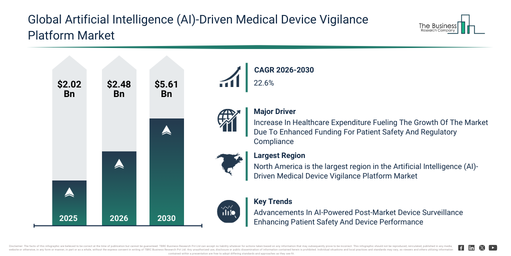
  • Artificial Intelligence (AI)-Driven Medical Device Vigilance Platform Industry Expansion Forecast Showing Market Size of $5.61 Billion by 2030 at 22.6% CAGR

    Artificial Intelligence (AI)-Driven Medical Device Vigilance Platform Industry Expansion Forecast Showing Market Size of $5.61 Billion by 2030 at 22.6% CAGR

    The Business Research Company’s 2026 market reports include new capabilities such as market attractiveness scoring and analysis, total addressable market analysis, company scoring matrix, interactive excel data dashboard, improved supply chain analysis, upcoming startups in the market, and overview of key products, aimed at improving the depth, usability, and strategic value of the insights delivered.

    What Is The Estimated Market Size Of The Artificial Intelligence (AI)-Driven Medical Device Vigilance Platform Market During 2026–2030?

    The artificial intelligence (AI)-driven medical device vigilance platform market size has seen remarkable growth in recent years. Forecasts indicate it will expand from $2.02 billion in 2025 to $2.48 billion in 2026, achieving a compound annual growth rate (CAGR) of 22.9%. This past growth can be attributed to increasing medical device adoption rates, the expansion of post-market surveillance requirements, the rising complexity of device portfolios, the growth in adverse event reporting databases, and the early use of data analytics in vigilance.

    The market for artificial intelligence (AI)-driven medical device vigilance platforms is projected to experience substantial expansion in the coming years. This market is anticipated to reach $5.61 billion by 2030, exhibiting a compound annual growth rate (CAGR) of 22.6%. Factors contributing to this growth over the forecast period include more rigorous regulatory oversight concerning device safety, a heightened need for real-time risk surveillance, the proliferation of cloud-based vigilance platforms, increasing incorporation with hospital device information, and wider uptake of AI-powered compliance instruments. Key trends anticipated during this period encompass a greater embrace of AI-powered signal detection systems, expanding utilization of predictive analytics for ensuring device safety, enhanced integration of real-time vigilance platforms, an increase in automated regulatory reporting, and a stronger emphasis on proactive risk management.

    Download the Free Sample Report to Explore Key Market Insights:

    https://www.thebusinessresearchcompany.com/sample.aspx?id=28912&type=smp

    What Underlying Factors Are Accelerating The Growth Of The Artificial Intelligence (AI)-Driven Medical Device Vigilance Platform Market?

    An anticipated factor contributing to the future expansion of the artificial intelligence (AI)-driven medical device vigilance platform market is the increasing healthcare expenditure. This expenditure encompasses all funds allocated by individuals, organizations, and governments towards health maintenance and enhancement services and initiatives. The increase in healthcare spending stems from the expanding occurrence of chronic illnesses, which necessitates ongoing medical attention, prolonged therapies, and extensive management provisions. Such expenditure assists artificial intelligence (AI)-driven medical device vigilance platforms by supplying hospitals and healthcare entities with the necessary financial means to establish extensive safety and surveillance systems, thereby guaranteeing compliance with regulations and enhancing patient safety. An illustration of this trend is observed in the UK, where, as reported by the Office for National Statistics in April 2025, government-financed healthcare constituted the majority of the nation’s health spending, amounting to $344 billion (£258 billion) in 2024, representing a real-terms increase of 2.5% compared to 2023. Consequently, the escalation in healthcare expenditure is a key factor propelling the expansion of the artificial intelligence (AI)-driven medical device vigilance platform market.

    How Are The Various Segments Of The Artificial Intelligence (AI)-Driven Medical Device Vigilance Platform Market Categorized?

    The artificial intelligence (AI)-driven medical device vigilance platform market covered in this report is segmented –

    1) By Component: Software, Hardware, Services

    2) By Deployment Mode: On-Premises, Cloud-Based

    3) By Application: Adverse Event Detection, Regulatory Compliance, Risk Management, Data Analytics, Other Applications

    4) By End-User: Hospitals, Medical Device Manufacturers, Regulatory Agencies, Contract Research Organizations, Other End-Users

    Subsegments:

    1) By Software: Predictive Analytics, Signal Detection, Data Integration, Reporting And Visualization

    2) By Hardware: Servers, Storage Devices, Networking Equipment, Sensors, Monitoring Devices

    3) By Services: Implementation Services, Maintenance And Support, Consulting Services, Training Services, Data Management Services

    How Are Trends Transforming The Artificial Intelligence (AI)-Driven Medical Device Vigilance Platform Market Landscape?

    Leading companies in the artificial intelligence (AI)-driven medical device vigilance platform market are concentrating on developing advanced solutions, such as post-market device surveillance platforms, to furnish healthcare providers and manufacturers with actionable insights for improving patient outcomes and optimizing device utilization. These post-market device surveillance platforms are systems specifically designed to track and assess the safety and performance of medical devices after their introduction into healthcare settings. For example, in October 2025, Basil Systems, a US-based company specializing in AI-powered platforms, launched its MedTech Safety Signaling platform. This platform employs AI to identify potential risks early, thereby transforming post-market device surveillance into a proactive safety approach. It processes regulatory documents, inspection reports, and adverse event narratives utilizing large language models trained on a comprehensive industry dataset to reveal patterns that are difficult to detect manually. The system organizes and interprets the gathered data, connecting related events to their original sources with associated confidence levels. This capability empowers manufacturers to discern safety trends, enhance preventive measures, anticipate regulatory attention, and guide decisions in product development.

    Which Major Firms Influence Developments In The Artificial Intelligence (AI)-Driven Medical Device Vigilance Platform Market?

    Major companies operating in the artificial intelligence (AI)-driven medical device vigilance platform market are Amazon Web Services Inc., Johnson & Johnson Services Inc., International Business Machines Corporation, Oracle Corporation, Abbott Laboratories, Medtronic Plc, Siemens Healthineers AG, Stryker Corporation, Koninklijke Philips N.V., GE HealthCare Technologies Inc., Cognizant Technology Solutions Corporation, Boston Scientific Corporation, DXC TECHNOLOGY COMPANY, Baxter International Inc., Wipro Limited, Zimmer Biomet Holdings Inc., Veeva Systems Inc., Medidata Solutions Inc., Tata Consultancy Services Limited, AssurX Inc.

    Read the full artificial intelligence (ai)-driven medical device vigilance platform market report here:

    https://www.thebusinessresearchcompany.com/report/artificial-intelligence-ai-driven-medical-device-vigilance-platform-global-market-report

    Which Region Is Projected To Dominate The Artificial Intelligence (AI)-Driven Medical Device Vigilance Platform Market During The Forecast Period?

    North America was the largest region in the artificial intelligence (AI)-driven medical device vigilance platform market in 2025. Asia-Pacific is expected to be the fastest-growing region in the forecast period. The regions covered in the artificial intelligence (AI)-driven medical device vigilance platform market report are Asia-Pacific, South East Asia, Western Europe, Eastern Europe, North America, South America, Middle East, Africa.

    Request A Tailored Artificial Intelligence (AI)-Driven Medical Device Vigilance Platform Market Research Report For Competitive Advantage:

    https://www.thebusinessresearchcompany.com/customise?id=28912&type=smp

    Browse Through More Reports Similar to the Global Artificial Intelligence (AI)-Driven Medical Device Vigilance Platform Market 2026, By The Business Research Company

    Ai In Medical Devices Global Market Report

    https://www.thebusinessresearchcompany.com/report/ai-in-medical-devices-global-market-report

    Artificial Intelligence Or Machine Learning Ai Or Ml Medical Device Global Market Report

    https://www.thebusinessresearchcompany.com/report/artificial-intelligence-or-machine-learning-ai-or-ml-medical-device-global-market-report

    Artificial Intelligence Ai In Remote Patient Monitoring Global Market Report

    https://www.thebusinessresearchcompany.com/report/artificial-intelligence-ai-in-remote-patient-monitoring-global-market-report

    Get in touch with us:

    The Business Research Company: https://www.thebusinessresearchcompany.com/

    Americas +1 310-496-7795

    Asia +44 7882 955267 & +91 8897263534

    Europe +44 7882 955267

    Email us at info@tbrc.info

    Follow us on:

    LinkedIn: https://in.linkedin.com/company/the-business-research-company

    YouTube: https://www.youtube.com/channel/UC24_fI0rV8cR5DxlCpgmyFQ

    Global Market Model: https://www.thebusinessresearchcompany.com/global-market-model

  • An Important Factor Driving the Artificial Intelligence-Enhanced Hospital Equipment Utilization Market Is the Surge In Digitalization Fueling The Growth Of The Market Due To Enhanced Operational Efficiency

    The Business Research Company’s 2026 market reports include new capabilities such as market attractiveness scoring and analysis, total addressable market analysis, company scoring matrix, interactive excel data dashboard, improved supply chain analysis, upcoming startups in the market, and overview of key products, aimed at improving the depth, usability, and strategic value of the insights delivered.

    What Market Size Growth Is Projected For The Artificial Intelligence-Enhanced Hospital Equipment Utilization Market During The Forecast Period 2026–2030?

    The market size for artificial intelligence-enhanced hospital equipment utilization has seen exponential growth in recent years. It is forecast to increase from $3.84 billion in 2025 to $4.88 billion in 2026, achieving a compound annual growth rate (CAGR) of 27.3%. This historic growth can be attributed to several factors including increasing hospital equipment utilization rates, rising operational cost pressures in healthcare facilities, the early adoption of connected medical devices, the growth in hospital digital transformation initiatives, and the expansion of centralized equipment management systems.

    The market for artificial intelligence-enhanced hospital equipment utilization is projected to experience substantial expansion in the coming years. This market is anticipated to reach $12.73 billion by 2030, exhibiting a compound annual growth rate (CAGR) of 27.1%. This anticipated growth during the forecast timeframe stems from various factors, including greater capital expenditure on intelligent hospital infrastructure, an escalating need for AI-powered operational effectiveness, the broadening of cloud-based equipment management solutions, increasing incorporation of comprehensive hospital data analytics, and a heightened emphasis on optimizing costs within healthcare operations. Key developments anticipated in this period encompass the wider embrace of predictive maintenance for medical devices, the growing deployment of AI-based systems for asset tracking, an expanding integration of real-time analytics for equipment performance, the proliferation of platforms designed for workflow optimization, and a stronger commitment to minimizing equipment downtime.

    Download the Free Sample Report to Explore Key Market Insights:

    https://www.thebusinessresearchcompany.com/sample.aspx?id=28933&type=smp

    What Underlying Factors Are Accelerating The Growth Of The Artificial Intelligence-Enhanced Hospital Equipment Utilization Market?

    The ongoing expansion of digitalization is anticipated to drive the development of the artificial intelligence-enhanced hospital equipment utilization market in the future. Digitalization describes the incorporation of digital technologies into commercial operations, services, and routine tasks, aiming to boost efficiency and generate value. The surge in digitalization stems from improved operational efficiency, as it optimizes workflows and strengthens decision-making based on data. The adoption of artificial intelligence-enhanced hospital equipment utilization propels digitalization through the integration of smart analytics and real-time tracking systems, which enhance equipment functionality, boost hospital operational effectiveness, and reinforce data links throughout healthcare systems. As an illustration, data from May 2025, provided by the Centers for Disease Control and Prevention (CDC), a federal agency in the US, indicates that roughly 92% of state public health laboratories have implemented Electronic Test Orders and Results (ETOR) systems alongside at least one healthcare collaborator for a particular laboratory initiative, representing an 18% increase from 74% observed in early 2023. Consequently, the growing trend of digitalization is fueling the expansion of the artificial intelligence-enhanced hospital equipment utilization market.

    What Market Segments Are Evaluated Within The Artificial Intelligence-Enhanced Hospital Equipment Utilization Market?

    The artificial intelligence-enhanced hospital equipment utilization market covered in this report is segmented –

    1) By Component: Software, Hardware, Services

    2) By Deployment Mode: On-Premises, Cloud

    3) By Application: Asset Tracking, Predictive Maintenance, Workflow Optimization, Inventory Management, Patient Flow Management

    4) By End-User: Hospitals, Clinics, Ambulatory Surgical Centers, Diagnostic Centers

    Subsegments:

    1) By Software: Predictive Analytics Software, Imaging Analysis Software, Workflow Optimization Software, Patient Monitoring Software

    2) By Hardware: Imaging Devices, Robotic Surgical Systems, Intelligent Monitoring Equipment, Diagnostic Instruments

    3) By Services: Maintenance And Support, Training And Implementation, Data Management, Consulting

    Which Market Trends Are Creating New Opportunities In The Artificial Intelligence-Enhanced Hospital Equipment Utilization Market?

    Leading companies operating in the artificial intelligence-enhanced hospital equipment utilization market are concentrating on developing advanced medical technologies, such as AI-driven imaging systems, to gain a competitive advantage. AI-powered imaging systems are medical imaging technologies that utilize artificial intelligence to improve image analysis, enhance diagnostic precision, and expedite the detection of abnormalities. For instance, in April 2024, GE HealthCare, a US-based medical technology company, launched Caption AI on its Vscan Air SL wireless handheld ultrasound system. This AI-enabled solution supports clinicians in capturing high-quality cardiac images with increased accuracy and efficiency. By offering real-time guidance and automated calculations, it allows even less-experienced users to conduct reliable cardiac assessments. This innovation improves diagnostic capabilities and facilitates a more effective application of ultrasound technology in clinical settings.

    Who Are The Top Market Participants Influencing The Artificial Intelligence-Enhanced Hospital Equipment Utilization Market?

    Major companies operating in the artificial intelligence-enhanced hospital equipment utilization market are Butterfly Network Inc., International Business Machines Corporation, Oracle Corporation, Medtronic Plc, Sectra AB, Siemens Healthineers AG, Fujifilm Holdings Corporation, Stryker Corporation, Philips Healthcare, GE Healthcare, Intuitive Surgical Inc., Hologic Inc., Canon Medical Systems Corporation, Carestream Health Inc., Qventus Inc., Agfa HealthCare NV, TRIMEDX Inc., Nuance Communications Inc., Sonitor Technologies AS, CenTrak Inc.

    Read the full artificial intelligence-enhanced hospital equipment utilization market report here:

    https://www.thebusinessresearchcompany.com/report/artificial-intelligence-enhanced-hospital-equipment-utilization-global-market-report

    Which Region Is Projected To Dominate The Artificial Intelligence-Enhanced Hospital Equipment Utilization Market During The Forecast Period?

    North America was the largest region in the artificial intelligence-enhanced hospital equipment utilization market in 2025. Asia-Pacific is expected to be the fastest-growing region in the forecast period. The regions covered in the artificial intelligence-enhanced hospital equipment utilization market report are Asia-Pacific, South East Asia, Western Europe, Eastern Europe, North America, South America, Middle East, Africa.

    Request A Tailored Artificial Intelligence-Enhanced Hospital Equipment Utilization Market Research Report For Competitive Advantage:

    https://www.thebusinessresearchcompany.com/customise?id=28933&type=smp

    Browse Through More Reports Similar to the Global Artificial Intelligence-Enhanced Hospital Equipment Utilization Market 2026, By The Business Research Company

    Hospital Capacity Management Solutions Global Market Report

    https://www.thebusinessresearchcompany.com/report/hospital-capacity-management-solutions-global-market-report

    Artificial Intelligence In Healthcare Diagnosis Global Market Report

    https://www.thebusinessresearchcompany.com/report/artificial-intelligence-in-healthcare-diagnosis-global-market-report

    Hospital Robots Global Market Report

    https://www.thebusinessresearchcompany.com/report/hospital-robots-global-market-report

    Get in touch with us:

    The Business Research Company: https://www.thebusinessresearchcompany.com/

    Americas +1 310-496-7795

    Asia +44 7882 955267 & +91 8897263534

    Europe +44 7882 955267

    Email us at info@tbrc.info

    Follow us on:

    LinkedIn: https://in.linkedin.com/company/the-business-research-company

    YouTube: https://www.youtube.com/channel/UC24_fI0rV8cR5DxlCpgmyFQ

    Global Market Model: https://www.thebusinessresearchcompany.com/global-market-model

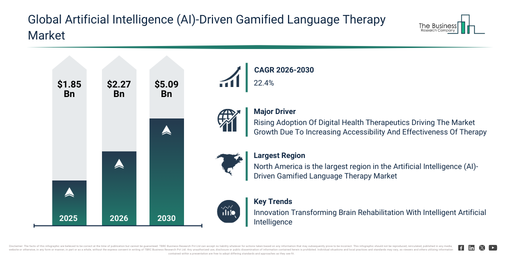
  • Artificial Intelligence (AI)-Driven Gamified Language Therapy Market Revenue Expected to Reach $5.09 Billion by 2030 with 22.4% CAGR

    Artificial Intelligence (AI)-Driven Gamified Language Therapy Market Revenue Expected to Reach $5.09 Billion by 2030 with 22.4% CAGR

    The Business Research Company’s 2026 market reports include new capabilities such as market attractiveness scoring and analysis, total addressable market analysis, company scoring matrix, interactive excel data dashboard, improved supply chain analysis, upcoming startups in the market, and overview of key products, aimed at improving the depth, usability, and strategic value of the insights delivered.

    What Market Size Expansion Is Predicted For The Artificial Intelligence (AI)-Driven Gamified Language Therapy Market Between 2026 And 2030?

    The artificial intelligence (AI)-driven gamified language therapy market size has shown rapid expansion over recent years. It is projected to increase from $1.85 billion in 2025 to $2.27 billion in 2026, demonstrating a compound annual growth rate (CAGR) of 22.6%. The historical growth of this market can be primarily linked to several factors, including rising awareness of speech and language disorders, the early implementation of digital therapy tools, the increasing acceptance of mobile health applications, the broadening of pediatric therapy programs, and the widespread availability of remote therapy platforms.

    The artificial intelligence (AI)-driven gamified language therapy market size is poised for substantial growth over the next few years, projected to expand to $5.09 billion by 2030, demonstrating a compound annual growth rate (CAGR) of 22.4%. This anticipated expansion during the forecast period stems from the escalating demand for home-based rehabilitation solutions, the increasing implementation of AI-personalized therapy models, the widening availability of virtual and immersive therapy tools, a strengthened focus on long-term patient adherence, and augmented investments in digital therapeutics. Prominent trends throughout this period include the rising adoption of gamified therapy platforms, the expanding utilization of personalized language rehabilitation tools, the deeper integration of real-time progress adaptation, the proliferation of interactive therapy environments, and an intensified emphasis on patient engagement and motivation.

    Download the Free Sample Report to Explore Key Market Insights:

    https://www.thebusinessresearchcompany.com/sample.aspx?id=28128&type=smp

    Which Growth Drivers Are Contributing To The Progress Of The Artificial Intelligence (AI)-Driven Gamified Language Therapy Market?

    The escalating embrace of digital health therapeutics is projected to stimulate the growth of the artificial intelligence (AI)-driven gamified language therapy market moving forward. Digital health therapeutics encompasses evidence-based therapeutic interventions delivered through digital platforms to prevent, manage, or treat various medical conditions. The uptake of digital health therapeutics is on the rise as individuals seek more accessible healthcare solutions for managing chronic illnesses, accessing personalized treatments, and conveniently monitoring their health from their residences. Artificial intelligence (AI)-driven gamified language therapy enhances digital health therapeutics by providing customized, interactive exercises designed to heighten patient engagement, monitor progress in real time, and expedite language rehabilitation. For instance, in November 2025, the Organisation for Economic Co operation and Development, a France-based intergovernmental organization, reported that OECD countries have shown progress in extending access to EHRs. In 2024, the average availability of online digital health services among countries with comparable data reached 82%, marking an increase from 79% in 2023. Hence, the increasing adoption of digital health therapeutics is propelling the expansion of the artificial intelligence (AI)-driven gamified language therapy market.

    Which Market Segments Are Examined In The Artificial Intelligence (AI)-Driven Gamified Language Therapy Market Study?

    The artificial intelligence (AI)-driven gamified language therapy market covered in this report is segmented –

    1) By Component: Software, Hardware, Services

    2) By Deployment Mode: Cloud-Based, On-Premises

    3) By Therapy: Speech Therapy, Language Therapy, Cognitive Therapy, Other Therapies

    4) By Application: Children, Adults, Geriatric

    5) By End-User: Hospitals And Clinics, Rehabilitation Centers, Educational Institutions, Homecare, Other End Users

    Subsegments:

    1) By Software: Mobile Applications, Web-Based Platforms, Gamification Engines, Analytics And Reporting Tools

    2) By Hardware: Virtual Reality Headsets, Augmented Reality Devices, Wearables And Sensors, Interactive Consoles

    3) By Services: Implementation And Integration, Training And Education, Support And Maintenance, Consulting Services

    Which Trends Are Impacting The Growth Of The Artificial Intelligence (AI)-Driven Gamified Language Therapy Market?

    Leading companies within the artificial intelligence (AI)-driven gamified language therapy market are concentrating on creating advanced solutions, such as personalized adaptive learning platforms, to boost user engagement, speed up recovery, and refine therapeutic results. These platforms represent digital frameworks that consistently adjust exercises, material, and challenge levels according to an individual’s performance and requirements, thereby assisting users in learning or recovering more effectively, maintaining motivation, monitoring their development instantly, and securing superior long-term achievements. For example, in April 2025, Constant Therapy Health, a digital health company based in the U.S., declared it was expanding its AI-powered speech, language, and cognitive therapy platform to incorporate Spanish and Indian English versions. This enhancement allows non-native speakers who are recovering from conditions like stroke, traumatic brain injury (TBI), aphasia, dementia, or other neurological issues to access more than 1 million evidence-backed exercises specifically customized both culturally and linguistically. The platform’s artificial intelligence continuously observes user advancement, personalizes therapy in real-time, and provides caregivers and clinicians with the ability to monitor results, consequently rendering therapy more engaging, impactful, and readily available from home.

    Who Are The Primary Competitors In The Artificial Intelligence (AI)-Driven Gamified Language Therapy Market?

    Major companies operating in the artificial intelligence (AI)-driven gamified language therapy market are Babbel GmbH, Rosetta Stone LLC, SAY IT Labs BV, SPRY Ally, MINDMAZE SA, Busuu Ltd., Memrise Ltd., Lingvist Technologies OÜ, Constant Therapy Inc., Lingraphica LLC, Gemiini Systems LLC, Speechace LLC, Otsimo Inc., Blub Blub Inc., Melospeech Inc., LiriCare BV, Gabify Ltd., FunWattle Inc., TikTalk Inc., Hevolve AI

    Read the full artificial intelligence (ai)-driven gamified language therapy market report here:

    https://www.thebusinessresearchcompany.com/report/artificial-intelligence-ai-driven-gamified-language-therapy-global-market-report

    What Are The Leading Geographic Regions In The Artificial Intelligence (AI)-Driven Gamified Language Therapy Market?

    North America was the largest region in the artificial intelligence (AI)-driven gamified language therapy market in 2025. Asia-Pacific is expected to be the fastest-growing region in the forecast period. The regions covered in the artificial intelligence (AI)-driven gamified language therapy market report are Asia-Pacific, South East Asia, Western Europe, Eastern Europe, North America, South America, Middle East, Africa.

    Request A Tailored Artificial Intelligence (AI)-Driven Gamified Language Therapy Market Research Report For Competitive Advantage:

    https://www.thebusinessresearchcompany.com/customise?id=28128&type=smp

    Browse Through More Reports Similar to the Global Artificial Intelligence (AI)-Driven Gamified Language Therapy Market 2026, By The Business Research Company

    Healthcare Gamification Global Market Report

    https://www.thebusinessresearchcompany.com/report/healthcare-gamification-global-market-report

    Artificial Intelligence Ai In Games Global Market Report

    https://www.thebusinessresearchcompany.com/report/artificial-intelligence-ai-in-games-global-market-report

    Conversational Ai Global Market Report

    https://www.thebusinessresearchcompany.com/report/conversational-ai-global-market-report

    Get in touch with us:

    The Business Research Company: https://www.thebusinessresearchcompany.com/

    Americas +1 310-496-7795

    Asia +44 7882 955267 & +91 8897263534

    Europe +44 7882 955267

    Email us at info@tbrc.info

    Follow us on:

    LinkedIn: https://in.linkedin.com/company/the-business-research-company

    YouTube: https://www.youtube.com/channel/UC24_fI0rV8cR5DxlCpgmyFQ

    Global Market Model: https://www.thebusinessresearchcompany.com/global-market-model

  • A Significant Growth Driver for the Artificial Intelligence-Driven Hospital Energy Optimization Market Is the Increasing Adoption Of Smart Hospital Infrastructure Drives The Market Growth Due To Enhanced Real-Time Data And Automation

    The Business Research Company’s 2026 market reports include new capabilities such as market attractiveness scoring and analysis, total addressable market analysis, company scoring matrix, interactive excel data dashboard, improved supply chain analysis, upcoming startups in the market, and overview of key products, aimed at improving the depth, usability, and strategic value of the insights delivered.

    How Will The Market Size Of The Artificial Intelligence-Driven Hospital Energy Optimization Market Evolve From 2026 To 2030?

    The artificial intelligence-driven hospital energy optimization market has experienced significant expansion over recent years. Its valuation is anticipated to increase from $2.49 billion in 2025 to $3.08 billion in 2026, exhibiting a compound annual growth rate (CAGR) of 23.7%. This expansion in the past can be attributed to several factors including rising energy consumption within hospitals, escalating pressures on operational costs, the initial uptake of building management systems, the ongoing development of digital hospital infrastructure, and a heightened emphasis on achieving operational efficiency.

    The artificial intelligence-driven hospital energy optimization market size is projected to experience substantial growth in the coming years. It is expected to expand to $7.15 billion by 2030, achieving a compound annual growth rate (CAGR) of 23.4%. This anticipated growth is influenced by factors such as increasing investments in green hospital initiatives, a rising need for carbon footprint reduction, the proliferation of smart hospital projects, the increasing adoption of AI-driven facility management, and a stronger regulatory emphasis on energy efficiency standards. Significant developments during the forecast period include the expanding deployment of AI-based energy management platforms, a growing embrace of smart sensors and meters, the broader application of predictive maintenance for hospital utilities, increased integration of building automation systems, and a heightened focus on optimizing energy expenditures.

    Download the Free Sample Report to Explore Key Market Insights:

    https://www.thebusinessresearchcompany.com/sample.aspx?id=27205&type=smp

    Which Growth Drivers Are Contributing To The Progress Of The Artificial Intelligence-Driven Hospital Energy Optimization Market?

    The expanding use of smart hospital infrastructure is projected to boost the artificial intelligence-driven hospital energy optimization market in the future. This infrastructure refers to a sophisticated digital technology network that facilitates streamlined healthcare services, continuous monitoring, and automated resource management within hospitals. The rise in smart hospital infrastructure is fueled by the imperative to enhance patient results via real-time data surveillance, leading to quicker diagnoses and tailored treatments, which ultimately uplifts care quality and operational efficiency. Smart hospital infrastructure aids Artificial Intelligence-Driven Hospital Energy Optimization through interconnected sensors and live data from diverse systems, allowing AI algorithms to examine energy consumption trends and automatically modify settings for reduced usage and enhanced efficiency. For example, in December 2024, data from the Centers for Disease Control and Prevention (CDC), a US-based national public health agency, indicated that 88.2% of office-based physicians utilized electronic health records systems, although the adoption rate for certified EHR systems was 77.8%. Consequently, the expanding implementation of smart hospital infrastructure is stimulating the expansion of the artificial intelligence-driven hospital energy optimization market.

    Which Segment Areas Are Covered In The Artificial Intelligence-Driven Hospital Energy Optimization Market Analysis?

    The artificial intelligence-driven hospital energy optimization market covered in this report is segmented –

    1) By Component: Software, Hardware, Services

    2) By Deployment Mode: On-Premises, Cloud

    3) By Hospital Size: Small And Medium Hospitals, Large Hospitals

    4) By Application: Heating, Ventilation, And Air Conditioning Optimization, Lighting Control, Energy Management, Equipment Monitoring, Other Applications

    5) By End-User: Public Hospitals, Private Hospitals, Specialty Hospitals, Other End-Users

    Subsegments:

    1) By Software: Energy Management Software, Building Automation Software, Predictive Maintenance Software, Data Analytics and Visualization Tools, Artificial Intelligence Algorithms And Optimization Engines

    2) By Hardware: Smart Sensors And Internet Of Things Devices, Smart Meters, Controllers And Actuators, Heating, Ventilation, And Air Conditioning Systems, Lighting Control Systems, Edge Devices And Gateways

    3) By Services: Consulting And Advisory Services, Installation And Integration Services, Maintenance And Support Services, Energy Auditing Services, Training And Education Services

    What Trends Are Affecting The Expansion Of The Artificial Intelligence-Driven Hospital Energy Optimization Market?

    Leading companies in the Artificial Intelligence-Driven Hospital Energy Optimization market are prioritizing intelligent energy management to expedite the implementation of energy-efficient solutions across healthcare facilities. This intelligent approach involves leveraging AI, cloud computing, and IoT technologies to monitor, analyze, and automatically optimize hospital energy systems, such as HVAC, thereby boosting efficiency and cutting consumption. For instance, in April 2024, True Digital Group, a Thailand-based digital transformation and technology services company, collaborated with Alibaba Cloud, a China-based cloud computing company, to launch the Climate Technology Platform. This platform integrates Alibaba Cloud’s AI-driven “Energy Expert” solution with cloud, IoT, and big data analytics to assist businesses in Thailand in identifying energy efficiency challenges, reducing greenhouse gas emissions, and embracing sustainable technologies. It facilitates real-time energy management and offers predictive insights, with the goal of expediting Thailand’s green transition and decreasing emissions by up to 40% by 2030, ultimately targeting carbon neutrality by 2050. The platform has already demonstrated up to 15% energy consumption reduction in pilot projects, including the heating, ventilation, and air conditioning system at Bangkok Hospital.

    Which Global Companies Are Actively Competing In The Artificial Intelligence-Driven Hospital Energy Optimization Market?

    Major companies operating in the artificial intelligence-driven hospital energy optimization market are Enel S.p.A., General Electric Company, Veolia Environnement S.A., Schneider Electric SE, Honeywell International Inc., ABB Group, Eaton Corporation Plc, Johnson Controls International Plc, Trane Technologies Plc, Centrica Business Solutions Ltd., Rockwell Automation Inc., Ameresco Inc., ENGIE Impact, GridPoint Inc., Optimum Energy LLC, Verdigris Technologies, Enerbrain, BuildingIQ Inc., Deerns, Resync

    Read the full artificial intelligence-driven hospital energy optimization market report here:

    https://www.thebusinessresearchcompany.com/report/artificial-intelligence-driven-hospital-energy-optimization-global-market-report

    What Are The Leading Geographic Regions In The Artificial Intelligence-Driven Hospital Energy Optimization Market?

    North America was the largest region in the artificial intelligence-driven hospital energy optimization market in 2025. Asia-Pacific is expected to be the fastest-growing region in the forecast period. The regions covered in the artificial intelligence-driven hospital energy optimization market report are Asia-Pacific, South East Asia, Western Europe, Eastern Europe, North America, South America, Middle East, Africa.

    Request A Tailored Artificial Intelligence-Driven Hospital Energy Optimization Market Research Report For Competitive Advantage:

    https://www.thebusinessresearchcompany.com/customise?id=27205&type=smp

    Browse Through More Reports Similar to the Global Artificial Intelligence-Driven Hospital Energy Optimization Market 2026, By The Business Research Company

    Earthen Plasters Global Market Report

    https://www.thebusinessresearchcompany.com/report/earthen-plasters-global-market-report

    High Performance Ceramic Coatings Global Market Report

    https://www.thebusinessresearchcompany.com/report/high-performance-ceramic-coatings-global-market-report

    Advanced Ceramics Global Market Report

    https://www.thebusinessresearchcompany.com/report/advanced-ceramics-global-market-report

    Get in touch with us:

    The Business Research Company: https://www.thebusinessresearchcompany.com/

    Americas +1 310-496-7795

    Asia +44 7882 955267 & +91 8897263534

    Europe +44 7882 955267

    Email us at info@tbrc.info

    Follow us on:

    LinkedIn: https://in.linkedin.com/company/the-business-research-company

    YouTube: https://www.youtube.com/channel/UC24_fI0rV8cR5DxlCpgmyFQ

    Global Market Model: https://www.thebusinessresearchcompany.com/global-market-model