Month: March 2026

  • Automated Cell Shakers Market Forecast 2026–2035 Highlighting Market Data Patterns and Industry Insights

    Automated Cell Shakers Market Forecast 2026–2035 Highlighting Market Data Patterns and Industry Insights

    The Business Research Company’s 2026 market reports include new capabilities such as market attractiveness scoring and analysis, total addressable market analysis, company scoring matrix, interactive excel data dashboard, improved supply chain analysis, upcoming startups in the market, and overview of key products, aimed at improving the depth, usability, and strategic value of the insights delivered.

    How Is The Market Size Of The Automated Cell Shakers Market Expected To Change Between 2026 And 2030?

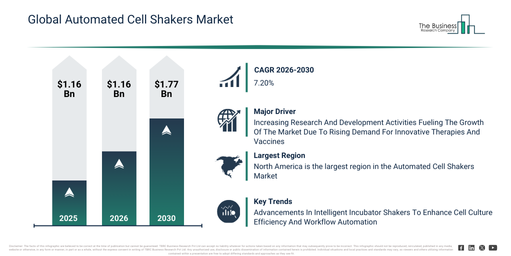
    The automated cell shakers market size has experienced robust growth in recent years. It is anticipated to increase from $0.72 billion in 2025 to $0.78 billion in 2026, demonstrating a compound annual growth rate (CAGR) of 8.3%. This historical expansion can be ascribed to several factors, including manual shaking methods, limited laboratory automation, reliance on basic orbital and platform shakers, growing pharmaceutical R&D activities, and increasing stem cell research initiatives.

    The market for automated cell shakers is projected to experience robust expansion over the coming years, anticipated to reach a valuation of $1.03 billion by 2030, exhibiting a compound annual growth rate (CAGR) of 7.2%. This projected growth during the forecast period stems from several factors, including advancements in electromechanical, magnetic, and pneumatic shaker technologies, the broadening scope of regenerative medicine and cell therapy research, increasing financial commitment to automated laboratory solutions, the incorporation of digital monitoring and smart lab infrastructure, and the escalating demand from CDMOs and biopharmaceutical companies. Key trends anticipated within this period encompass the wider embrace of automated cell culture processes, an escalating need for highly precise and uniform shaking mechanisms, the seamless integration with incubator and CO2-compatible systems, the expansion of stem cell research and its applications in regenerative medicine, and a heightened emphasis on preventing contamination and upholding sterility standards.

    Download the Free Sample Report to Explore Key Market Insights:

    https://www.thebusinessresearchcompany.com/sample.aspx?id=27215&type=smp

    What Underlying Factors Are Accelerating The Growth Of The Automated Cell Shakers Market?

    The expanding scope of research and development endeavors is anticipated to fuel the future expansion of the automated cell shakers market. These R&D initiatives are dedicated to systematic exploration and innovation, aiming to conceive, improve, or perfect various products, processes, and technologies. This increase in R&D stems from a rising need for novel therapies and vaccines to tackle intricate and newly surfacing health issues. Automated cell shakers are instrumental in R&D, providing consistent mixing, aeration, and precise temperature regulation crucial for optimal cell proliferation and dependable outcomes. They also optimize operational procedures, lessen manual input, and enhance productivity in the creation and validation of new advancements. As an illustration, the National Bureau of Statistics of China (NBS), a Chinese governmental body, reported in January 2025 that China’s total spending on research and experimental development (R&D) hit $0.50 trillion (3.6130 trillion yuan) in 2024, representing an 8.3% rise compared to the previous year. Consequently, the growing volume of research and development undertakings is propelling the expansion of the automated cell shaker market.

    How Is The Automated Cell Shakers Market Structured Across Different Segments?

    The automated cell shakers market covered in this report is segmented –

    1) By Product Type: Orbital Shakers, Reciprocating Shakers, Platform Shakers, Vortex Shakers, Incubator Shakers

    2) By Cell Culture: Finite Cell Line Cultures, Infinite Cell Line Cultures

    3) By Technology: Electromechanical, Magnetic, Pneumatic

    4) By Application: Drug Development, Regenerative Medicine, Cell Therapy, Stem Cell Research

    5) By End-Use: Pharmaceutical Companies, Biopharmaceutical Companies, Contract Development and Manufacturing Organizations (CDMOs) And Contract Manufacturing Organizations (CMOs), Hospitals, Other End-Uses

    Subsegments:

    1) By Orbital Shakers: Benchtop Orbital Shakers, Floor-Model Orbital Shakers, Incubator-Compatible Orbital Shakers, CO2-Compatible Orbital Shakers

    2) By Reciprocating Shakers: Linear Reciprocating Shakers, Rocking Reciprocating Shakers, Compact Reciprocating Shakers

    3) By Platform Shakers: Large-Capacity Platform Shakers, Multi-Tier Platform Shakers, Adjustable-Speed Platform Shakers

    4) By Vortex Shakers: Fixed-Speed Vortex Shakers, Variable-Speed Vortex Shakers, Multi-Tube Vortex Shakers

    5) By Incubator Shakers: Refrigerated Incubator Shakers, Non-Refrigerated Incubator Shakers, Stackable Incubator Shakers

    Which Trends Are Shaping The Future Of The Automated Cell Shakers Market?

    Major companies active in the automated cell shaker market are concentrating on developing advanced products, such as intelligent incubator shakers, with the aim of boosting cell culture efficiency and streamlining biopharmaceutical workflows. Intelligent incubator shakers are sophisticated laboratory devices that integrate precise temperature control with automated agitation to promote optimal cell proliferation and culture conditions, ensuring uniform mixing, improved nutrient distribution, and consistent experimental outcomes. For instance, in June 2024, Thermo Fisher Scientific Inc., a US-based life sciences company, introduced the IntelliStack incubator and CO2 incubator shaker. This product is engineered to enhance cell culture operations by combining accurate temperature and gas management with automated shaking. Its launch offers benefits such as more consistent cell growth, a reduced risk of contamination, and greater experimental reproducibility. The device is particularly valuable in biopharmaceutical research, drug development, and biotechnology applications where stable cell culture conditions are crucial. Moreover, the integrated automation enhances lab efficiency by minimizing manual intervention.

    Which Major Players Dominate The Automated Cell Shakers Market?

    Major companies operating in the automated cell shakers market are Thermo Fisher Scientific Inc., Corning Incorporated, Avantor Inc., Sartorius AG, Eppendorf SE, Bio-Techne Corporation, Biobase Biodustry (Shandong) Co. Ltd., IKA-Werke GmbH & Co. KG, OHAUS Corporation, Esco Micro Pte Ltd., Yamato Scientific Co. Ltd., Bionics Scientific Technologies Pvt. Ltd., Boekel Scientific, INFORS HT, Grant Instruments (Cambridge) Ltd., BIOSAN SIA, Jeio Tech Co. Ltd., 2mag AG, Kuhner Shaker, Benchmark Scientific

    Read the full automated cell shakers market report here:

    https://www.thebusinessresearchcompany.com/report/automated-cell-shakers-global-market-report

    Which Region Is Projected To Dominate The Automated Cell Shakers Market During The Forecast Period?

    North America was the largest region in the automated cell shakers market in 2025. Asia-Pacific is expected to be the fastest-growing region in the forecast period. The regions covered in the automated cell shakers market report are Asia-Pacific, South East Asia, Western Europe, Eastern Europe, North America, South America, Middle East, Africa.

    Request A Tailored Automated Cell Shakers Market Research Report For Competitive Advantage:

    https://www.thebusinessresearchcompany.com/customise?id=27215&type=smp

    Browse Through More Reports Similar to the Global Automated Cell Shakers Market 2026, By The Business Research Company

    Retirement Home Services Market Report 2026

    https://www.thebusinessresearchcompany.com/report/retirement-home-services-global-market-report

    Home Improvement Services Market Report 2026

    https://www.thebusinessresearchcompany.com/report/home-improvement-services-global-market-report

    Services Market Report 2026

    https://www.thebusinessresearchcompany.com/report/services-global-market-report

    Get in touch with us:

    The Business Research Company: https://www.thebusinessresearchcompany.com/

    Americas +1 310-496-7795

    Asia +44 7882 955267 & +91 8897263534

    Europe +44 7882 955267

    Email us at info@tbrc.info

    Follow us on:

    LinkedIn: https://in.linkedin.com/company/the-business-research-company

    YouTube: https://www.youtube.com/channel/UC24_fI0rV8cR5DxlCpgmyFQ

    Global Market Model: https://www.thebusinessresearchcompany.com/global-market-model
  • Automated Blood Collection Market Outlook 2026–2030 with Major Growth Drivers and Emerging Industry Trends

    Automated Blood Collection Market Outlook 2026–2030 with Major Growth Drivers and Emerging Industry Trends

    The Business Research Company’s 2026 market reports include new capabilities such as market attractiveness scoring and analysis, total addressable market analysis, company scoring matrix, interactive excel data dashboard, improved supply chain analysis, upcoming startups in the market, and overview of key products, aimed at improving the depth, usability, and strategic value of the insights delivered.

    What Is The Market Size Of The Automated Blood Collection Market In 2026 And What Value Is Projected For 2030?

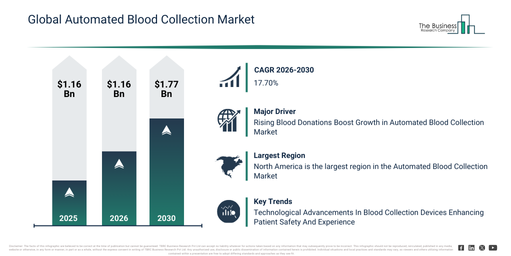
    Recent years have witnessed a rapid expansion in the size of the automated blood collection market. This market is projected to grow from $1.52 billion in 2025 to $1.8 billion in 2026, at a compound annual growth rate (CAGR) of 18.1%. The increase observed in previous periods can be linked to aspects like manual blood collection methods, reliance on conventional venipuncture, limited availability of automated systems, a rise in hospital and diagnostic center procedures, and a growing demand for accurate diagnostics.

    The automated blood collection market is poised for significant expansion in the coming years. Its size is projected to reach $3.46 billion in 2030, driven by a compound annual growth rate (CAGR) of 17.7%. This growth during the forecast period can be ascribed to technological advancements in robotic venipuncture, the increasing acceptance of point-of-care testing, greater investment in hospital automation, the widening network of diagnostic centers and pathology laboratories, and regulatory backing for automated sample collection. Notable trends anticipated in this period include the rising implementation of automated blood collection devices in hospitals, the integration of robotic venipuncture with fingerstick systems, an expanding utilization of point-of-care blood collection solutions, an intensified focus on patient safety and comfort during sampling, and the proliferation of high-precision diagnostics and therapeutic monitoring.

    Download the Free Sample Report to Explore Key Market Insights:

    https://www.thebusinessresearchcompany.com/sample.aspx?id=20498&type=smp

    Which Growth Drivers Are Contributing To The Progress Of The Automated Blood Collection Market?

    Anticipated expansion in the automated blood collection market is expected to be driven by a significant rise in blood donations. The increase in blood donation can be attributed to several elements, including enhanced public awareness of the vital need for blood in urgent medical situations, widespread blood donation initiatives organized by healthcare organizations and local groups, and progress in medical technology that improves the safety and efficiency of the donation procedure. Automated blood collection aids in blood donation by simplifying and enhancing the effectiveness of the process. It minimizes the necessity for manual intervention, thus reducing human error and inconvenience for donors. For instance, in 2024, the NHS Blood and Transplant (NHSBT), a UK-based special health authority serving England and Wales, reported 119,371 new blood donations for the 2023-2024 period, showing a modest increase from 119,016 donations in 2022-2023. Therefore, a considerable increase in blood donation is fueling the automated blood collection market.

    What Are The Key Segments Of The Automated Blood Collection Market?

    The automated blood collection market covered in this report is segmented –

    1) By Type: Arterial Sampling, Venipuncture Sampling, Fingerstick Sampling

    2) By Application: Diagnostics, Treatment, Therapeutics

    3) By End-Use: Hospitals, Diagnostic Centers, Pathology Laboratories, Other End-Uses

    Subsegments:

    1) By Arterial Sampling: Automated Arterial Blood Gas Collection Systems, Closed-Loop Arterial Sampling Systems, Point-of-Care Arterial Sampling Devices, Continuous Arterial Sampling Systems

    2) By Venipuncture Sampling: Automated Venipuncture Collection Devices, Robotic Venipuncture Systems, High-Precision Venipuncture Blood Collection Systems, Automated Venipuncture Systems for Plasma Or Serum

    3) By Fingerstick Sampling: Automated Fingerstick Blood Collection Devices, Portable Fingerstick Collection Devices, Fingerstick Collection Systems for Point-of-Care Testing, Miniaturized Automated Fingerstick Collection Systems

    What Key Trends Are Influencing The Development Of The Automated Blood Collection Market?

    Leading companies in the **automated blood collection market** are developing innovative products with advanced technologies, such as **PentaPoint technology**, to improve the precision and efficiency of blood collection processes. **PentaPoint technology** enables a more accurate and controlled collection by utilizing multiple entry points, which helps to minimize discomfort and enhance sample quality. For example, in **April 2024**, **Becton, Dickinson, and Company**, a **US**-based medical company, launched the **BD vacutainer ultratouch push-button blood collection set** in **India** and the **US**. This new device aims to reduce patient pain and discomfort during blood collection. The innovative device integrates **BD RightGauge technology**, which uses a thinner needle, and **BD PentaPoint technology**, significantly decreasing insertion pain. Additionally, the device features **BD Push Button Technology**, which reduces the risk of needle injuries by **88%**. The introduction of this advanced blood collection set is intended to improve the patient experience by boosting comfort, facilitating better vein access for clinicians, and shortening overall procedure times.

    Who Are The Leading Companies Operating In The Automated Blood Collection Market?

    Major companies operating in the automated blood collection market are Abbott Laboratories, Siemens Healthineers, Becton Dickinson and Company, CSL Plasma, Quest Diagnostics Incorporated, B. Braun Melsungen AG, Fresenius KABI AG, Grifols S.A., Terumo Corporation, Nipro Medical Corporation, Greiner AG, Bio-Rad Laboratories Inc., ICU Medical Inc., Haemonetics Corporation, SARSTEDT AG & Co. KG, Owen Mumford Ltd., Retractable Technologies Inc., Macopharma, Chengdu Rich Science Industry Co. Ltd., Babson Diagnostics, Venibot

    Read the full automated blood collection market report here:

    https://www.thebusinessresearchcompany.com/report/automated-blood-collection-global-market-report

    What Are The Leading Geographic Regions In The Automated Blood Collection Market?

    North America was the largest region in the automated blood collection market in 2025. The regions covered in the automated blood collection market report are Asia-Pacific, South East Asia, Western Europe, Eastern Europe, North America, South America, Middle East, Africa.

    Request A Tailored Automated Blood Collection Market Research Report For Competitive Advantage:

    https://www.thebusinessresearchcompany.com/customise?id=20498&type=smp

    Browse Through More Reports Similar to the Global Automated Blood Collection Market 2026, By The Business Research Company

    Stem Cell Cord Blood Banking Market Report 2026

    https://www.thebusinessresearchcompany.com/report/stem-cell-cord-blood-banking-global-market-report

    Blood Glucose Meters Market Report 2026

    https://www.thebusinessresearchcompany.com/report/blood-glucose-meters-global-market-report

    Blood And Blood Components Market Report 2026

    https://www.thebusinessresearchcompany.com/report/blood-and-blood-components-global-market-report

    Get in touch with us:

    The Business Research Company: https://www.thebusinessresearchcompany.com/

    Americas +1 310-496-7795

    Asia +44 7882 955267 & +91 8897263534

    Europe +44 7882 955267

    Email us at info@tbrc.info

    Follow us on:

    LinkedIn: https://in.linkedin.com/company/the-business-research-company

    YouTube: https://www.youtube.com/channel/UC24_fI0rV8cR5DxlCpgmyFQ

    Global Market Model: https://www.thebusinessresearchcompany.com/global-market-model
  • One of the Major Drivers of the Automated And Closed Cell Therapy Processing Systems Market Is the Growing Demand For Personalized Medicine Fueling The Growth Of The Market Due To Regulatory Support And Therapeutic Innovation

    One of the Major Drivers of the Automated And Closed Cell Therapy Processing Systems Market Is the Growing Demand For Personalized Medicine Fueling The Growth Of The Market Due To Regulatory Support And Therapeutic Innovation

    The Business Research Company’s 2026 market reports include new capabilities such as market attractiveness scoring and analysis, total addressable market analysis, company scoring matrix, interactive excel data dashboard, improved supply chain analysis, upcoming startups in the market, and overview of key products, aimed at improving the depth, usability, and strategic value of the insights delivered.

    What Will Be The Estimated Market Valuation Of The Automated And Closed Cell Therapy Processing Systems Market By The End Of 2030?

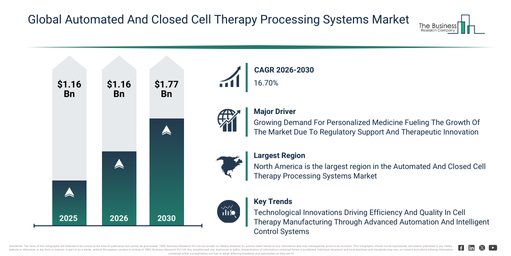
    The market size for automated and closed cell therapy processing systems has experienced significant expansion in recent years. Projections indicate its value will increase from $1.53 billion in 2025 to $1.8 billion in 2026, demonstrating a compound annual growth rate (CAGR) of 17.6%. Historically, this growth can be linked to factors such as manual cell processing methods, considerable contamination risks, restricted workflow automation, dependence on traditional bioreactors, and the gradual adoption of regenerative therapies.

    The market for automated and closed cell therapy processing systems is projected to experience substantial expansion in the coming years. This market is anticipated to reach a valuation of $3.34 billion by 2030, exhibiting a compound annual growth rate (CAGR) of 16.7%. This anticipated growth over the forecast period is primarily driven by factors such as the creation of integrated closed-system platforms, progress in robotics and microfluidics technology, the expanding development pipelines for cell and gene therapies, stricter regulatory compliance requirements, and the proliferation of contract manufacturing organizations (cramos) for cell therapies. Key trends expected during this period involve a greater embrace of single-use and closed systems, a heightened need for automated cell therapy processes, a concentrated effort on reducing contamination risks and improving safety measures, the integration of platforms capable of handling multiple cell processing steps, and the broadening use of these systems in regenerative medicine and oncology treatments.

    Download the Free Sample Report to Explore Key Market Insights:

    https://www.thebusinessresearchcompany.com/sample.aspx?id=27214&type=smp

    What Primary Drivers Are Shaping The Development Of The Automated And Closed Cell Therapy Processing Systems Market?

    The expanding requirement for personalized medicine is anticipated to boost the growth of the automated and closed-cell therapy processing systems market moving forward. Personalized medicine refers to medical treatments designed specifically for an individual’s genetic, molecular, or cellular profile to optimize effectiveness and reduce adverse reactions. The increasing demand for personalized medicine stems from reinforced regulatory structures and incentives that prioritize the approval of targeted and curative therapies over broad-use drugs. Automated and closed-cell therapy processing systems facilitate personalized medicine by enabling manufacturers to create consistent, high-quality, patient-specific cell therapies that meet strict regulatory standards. For instance, in May 2025, according to the Personalized Medicine Coalition (PMC), a US-based non-profit organization, the FDA approved 18 new personalized medicines in 2024, including six gene- or cell-based therapies, representing roughly 38 percent of all new molecular entities. Therefore, the growing demand for personalized medicine is a key driver for the automated and closed-cell therapy processing systems market.

    Which Segment Classifications Shape The Automated And Closed Cell Therapy Processing Systems Market?

    The automated and closed cell therapy processing systems market covered in this report is segmented –

    1) By Component: Software, Hardware, Consumables

    2) By Technology: Microfluidics, Robotics, Bioreactors, Single-Use Technology, Three-Dimensional (3D) Cell Culture

    3) By Workflow: Cryopreservation, Separation, Fill-Finish, Expansion, Apheresis, Other Workflows

    4) By Application: Oncology, Regenerative Medicine, Autoimmune Diseases, Infectious Diseases, Cardiovascular Diseases

    5) By End User: Pharmaceutical Companies, Biotechnology Companies, Research Institutes, Contract Manufacturing Organizations, Hospitals

    Subsegments:

    1) By Software: Process Control Software, Data Management Software, Quality Monitoring Software, Workflow Automation Software, Integration Software

    2) By Hardware: Cell Separation Devices, Bioreactors, Fluid Handling Systems, Centrifuges, Tubing And Connectors

    3) By Consumables: Sterile Bags, Culture Media, Reagents And Buffers, Filters And Cartridges, Single-Use Tubing Sets

    How Are Trends Impacting The Automated And Closed Cell Therapy Processing Systems Market?

    Major companies in the automated and closed cell therapy processing systems market are concentrating on developing advanced solutions, such as cell preparation platforms, to minimize manual labor and the risk of contamination during cell processing. These cell preparation platforms are automated systems designed for the efficient isolation, processing, and preparation of cells for subsequent analysis or clinical application. For instance, in October 2024, Sino-Biocan Biotechnology Ltd., a China-based biotech company, introduced the WUKONG Automated, Closed, Integrated Cell Processing System, which signifies a significant advancement in cell therapy manufacturing. This system provides a fully automated, closed platform that streamlines processes from initial blood collection to cell culture and final filling. It is engineered to benefit hospitals, pharmaceutical research and development teams, and contract development and manufacturing organizations by enhancing efficiency, reducing contamination risks, and ensuring good manufacturing practice-grade consistency through intelligent controls and real-time monitoring.

    Which Companies Are Expanding Their Footprint In The Automated And Closed Cell Therapy Processing Systems Market?

    Major companies operating in the automated and closed cell therapy processing systems market are Thermo Fisher Scientific Inc., Fresenius SE & Co. KGaA, Danaher Corporation, Merck KGaA, Parker Hannifin Corp., Corning Incorporated, Kawasaki Heavy Industries Ltd., Dover Corporation, Lonza Group AG, Terumo Corporation, Sartorius AG, Charles River Laboratories International Inc., Beckman Coulter Inc., Bio-Rad Laboratories Inc., STEMCELL Technologies Inc., Miltenyi Biotec B.V. & Co. KG, Hamilton Company, Repligen Corporation, Cellares Inc., Ori Biotech Ltd., Autolus Therapeutics Plc.

    Read the full automated and closed cell therapy processing systems market report here:

    https://www.thebusinessresearchcompany.com/report/automated-and-closed-cell-therapy-processing-systems-global-market-report

    How Does The Automated And Closed Cell Therapy Processing Systems Market Perform Across Major Global Regions?

    North America was the largest region in the automated and closed cell therapy processing systems market in 2025. Asia-Pacific is expected to be the fastest-growing region in the forecast period. The regions covered in the automated and closed cell therapy processing systems market report are Asia-Pacific, South East Asia, Western Europe, Eastern Europe, North America, South America, Middle East, Africa.

    Request A Tailored Automated And Closed Cell Therapy Processing Systems Market Research Report For Competitive Advantage:

    https://www.thebusinessresearchcompany.com/customise?id=27214&type=smp

    Browse Through More Reports Similar to the Global Automated And Closed Cell Therapy Processing Systems Market 2026, By The Business Research Company

    People Counting System Market Report 2026

    https://www.thebusinessresearchcompany.com/report/people-counting-system-global-market-report

    Sorting Machines Market Report 2026

    https://www.thebusinessresearchcompany.com/report/sorting-machines-global-market-report

    Slot Machines Market Report 2026

    https://www.thebusinessresearchcompany.com/report/slot-machines-global-market-report

    Get in touch with us:

    The Business Research Company: https://www.thebusinessresearchcompany.com/

    Americas +1 310-496-7795

    Asia +44 7882 955267 & +91 8897263534

    Europe +44 7882 955267

    Email us at info@tbrc.info

    Follow us on:

    LinkedIn: https://in.linkedin.com/company/the-business-research-company

    YouTube: https://www.youtube.com/channel/UC24_fI0rV8cR5DxlCpgmyFQ

    Global Market Model: https://www.thebusinessresearchcompany.com/global-market-model
  • Global Artificial Intelligence (AI)-Driven Augmented Reality (AR) Surgical Telementoring Market Analysis 2026–2030 Presenting Strategic Insights

    Global Artificial Intelligence (AI)-Driven Augmented Reality (AR) Surgical Telementoring Market Analysis 2026–2030 Presenting Strategic Insights

    The Business Research Company’s 2026 market reports include new capabilities such as market attractiveness scoring and analysis, total addressable market analysis, company scoring matrix, interactive excel data dashboard, improved supply chain analysis, upcoming startups in the market, and overview of key products, aimed at improving the depth, usability, and strategic value of the insights delivered.

    What Will Be The Estimated Market Valuation Of The Artificial Intelligence (AI)-Driven Augmented Reality (AR) Surgical Telementoring Market By The End Of 2030?

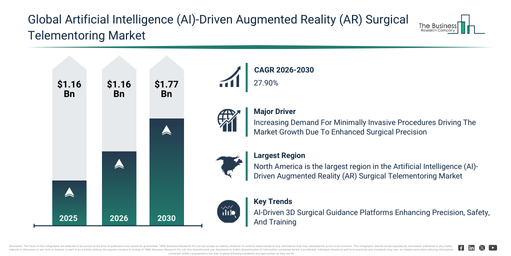
    The market size for artificial intelligence (ai)-driven augmented reality (ar) surgical telementoring has experienced substantial expansion in recent years. It is projected to increase from $1.71 billion in 2025 to $2.2 billion in 2026, demonstrating a compound annual growth rate (CAGR) of 28.2%. The growth observed in the historic period can be attributed to factors such as a shortage of skilled surgeons, the adoption of telemedicine, increasing demand for surgical training, improvements in connectivity, and the implementation of pilot telementoring programs.

    The artificial intelligence (ai)-driven augmented reality (ar) surgical telementoring market size is projected to undergo significant growth over the next few years, with its valuation expected to reach $5.88 billion in 2030, demonstrating a compound annual growth rate (CAGR) of 27.9%. This projected increase during the forecast period is driven by factors such as the expansion of 5G networks, the wider adoption of AI-guided surgery, advancements in global surgical education, improved access to rural healthcare, and the increasing demand for complex surgical operations. Notable trends anticipated in this period include enhanced remote surgical collaboration, real-time surgical visualization, better access to specialists in remote areas, more precise surgical guidance, and improvements in surgical training.

    Download the Free Sample Report to Explore Key Market Insights:

    https://www.thebusinessresearchcompany.com/sample.aspx?id=28911&type=smp

    Which Market Drivers Are Supporting The Expansion Of The Artificial Intelligence (AI)-Driven Augmented Reality (AR) Surgical Telementoring Market?

    The increasing need for minimally invasive procedures is anticipated to drive the expansion of the artificial intelligence (AI)-driven augmented reality (AR) surgical telementoring market moving forward. These procedures are surgical techniques involving small incisions and specialized instruments, designed to reduce trauma, pain, and recovery time compared to traditional open surgery. The growing demand for minimally invasive procedures stems from an aging population that increasingly requires surgical interventions while seeking quicker recovery times and shorter hospital stays. Advanced minimally invasive surgical approaches necessitate sophisticated guidance systems that leverage AI and AR technologies to offer real-time visualization and remote expert mentoring during complex procedures, thereby enhancing surgical precision, reducing errors, and improving patient outcomes. For instance, in April 2025, the British Association of Aesthetic Plastic Surgeons, a UK-based surgical organization, indicated that between 2023 and 2024, cosmetic surgical procedures saw an increase of 5%, amounting to 27,462 procedures performed in 2024. Therefore, this heightened demand for minimally invasive procedures is fueling the growth of the artificial intelligence (AI)-driven augmented reality (AR) surgical telementoring market.

    Which Segment Classifications Shape The Artificial Intelligence (AI)-Driven Augmented Reality (AR) Surgical Telementoring Market?

    The artificial intelligence (ai)-driven augmented reality (ar) surgical telementoring market covered in this report is segmented –

    1) By Component: Hardware, Software, Services

    2) By Deployment Mode: On-Premises, Cloud-Based

    3) By Application: General Surgery, Orthopedic Surgery, Neurosurgery, Cardiovascular Surgery, Other Applications

    4) By End-User: Hospitals, Ambulatory Surgical Centers, Specialty Clinics, Other End-Users

    Subsegments:

    1) By Hardware: Surgical Imaging Cameras, Depth Sensing Modules, Optical Tracking Systems, Electromagnetic Tracking Systems, Head Mounted Displays, Three Dimensional Monitors, Spatial Computing Sensors, Graphics Processing Unit Accelerators

    2) By Software: Real Time Computer Vision Algorithms, Three Dimensional Reconstruction Engines, Spatial Registration And Mapping, Annotation And Telestration Tools, Streaming And Telepresence Platform, Workflow Orchestration And Case Management

    3) By Services: Site Assessment And Readiness Planning, Installation And Commissioning, Clinical Workflow Design And Optimization, Staff Training And Credentialing Support, Remote Proctoring Program Setup

    How Are Trends Impacting The Artificial Intelligence (AI)-Driven Augmented Reality (AR) Surgical Telementoring Market?

    Leading companies within the artificial intelligence (AI)-driven augmented reality (AR) surgical telementoring market are concentrating on creating sophisticated products like real-time 3D surgical guidance platforms to improve surgical accuracy, decrease radiation exposure, and bolster training capabilities. These platforms leverage AI and AR technologies to offer surgeons dynamic, segmented views of patient anatomy during procedures, facilitating well-informed decisions and enabling the measurement of surgical success instantaneously. As an illustration, in April 2025, Proprio, a US-based AI-powered surgical technology company, introduced its Paradigm platform, which incorporates AI-guided visualization and insights derived from data. This platform merges diverse data, including CT, MRI, and operative plans, to provide real-time 3D anatomical mapping, comparable to Google Maps for surgery. Paradigm adjusts to alterations in the patient’s body, equipping surgeons with instruments and understanding to enhance results. In the initial 50 surgeries employing Paradigm, surgical teams successfully implanted hundreds of devices with favorable outcomes across a spectrum of difficult operations, ranging from scoliosis to collapsed discs. On average, the use of Paradigm decreased the necessity for radiation-based imaging by 10 times, as both experienced surgeons and newer residents utilized the technology to navigate intricate body structures safely and swiftly to achieve their goals.

    Which Companies Are Expanding Their Footprint In The Artificial Intelligence (AI)-Driven Augmented Reality (AR) Surgical Telementoring Market?

    Major companies operating in the artificial intelligence (ai)-driven augmented reality (ar) surgical telementoring market are Microsoft Corporation, Johnson & Johnson, Medtronic plc, Siemens Healthineers AG, Stryker Corporation, Koninklijke Philips NV, Intuitive Surgical Inc, Olympus Corporation, Karl Storz SE & Co KG, Osso VR Inc, Augmedics Ltd, VirtaMed AG, Surgical Theater Inc, Medivis Inc, Vuzix Corporation, XACT Robotics Inc, FundamentalVR Ltd, SentiAR Inc, EchoPixel Inc, VSI HoloMedicine.

    Read the full artificial intelligence (ai)-driven augmented reality (ar) surgical telementoring market report here:

    https://www.thebusinessresearchcompany.com/report/artificial-intelligence-ai-driven-augmented-reality-ar-surgical-telementoring-global-market-report

    How Is The Artificial Intelligence (AI)-Driven Augmented Reality (AR) Surgical Telementoring Market Distributed Across Key Geographic Regions?

    North America was the largest region in the artificial intelligence (AI)-driven augmented reality (AR) surgical telementoring market in 2025. The regions covered in the artificial intelligence (AI)-driven augmented reality (ar) surgical telementoring market report are Asia-Pacific, South East Asia, Western Europe, Eastern Europe, North America, South America, Middle East, Africa.

    Request A Tailored Artificial Intelligence (AI)-Driven Augmented Reality (AR) Surgical Telementoring Market Research Report For Competitive Advantage:

    https://www.thebusinessresearchcompany.com/customise?id=28911&type=smp

    Browse Through More Reports Similar to the Global Artificial Intelligence (AI)-Driven Augmented Reality (AR) Surgical Telementoring Market 2026, By The Business Research Company

    Ai In Virtual Reality And Augmented Reality Market Report 2026

    https://www.thebusinessresearchcompany.com/report/ai-in-virtual-reality-and-augmented-reality-global-market-report

    Augmented Intelligence Market Report 2026

    https://www.thebusinessresearchcompany.com/report/augmented-intelligence-global-market-report

    Ar Or Vr Medical Simulation Market Report 2026

    https://www.thebusinessresearchcompany.com/report/ar-or-vr-medical-simulation-global-market-report

    Get in touch with us:

    The Business Research Company: https://www.thebusinessresearchcompany.com/

    Americas +1 310-496-7795

    Asia +44 7882 955267 & +91 8897263534

    Europe +44 7882 955267

    Email us at info@tbrc.info

    Follow us on:

    LinkedIn: https://in.linkedin.com/company/the-business-research-company

    YouTube: https://www.youtube.com/channel/UC24_fI0rV8cR5DxlCpgmyFQ

    Global Market Model: https://www.thebusinessresearchcompany.com/global-market-model
  • Artificial Intelligence (AI)-Based Orthopedic Imaging Market Outlook 2026–2035 Driven by Key Growth Factors

    Artificial Intelligence (AI)-Based Orthopedic Imaging Market Outlook 2026–2035 Driven by Key Growth Factors

    The Business Research Company’s 2026 market reports include new capabilities such as market attractiveness scoring and analysis, total addressable market analysis, company scoring matrix, interactive excel data dashboard, improved supply chain analysis, upcoming startups in the market, and overview of key products, aimed at improving the depth, usability, and strategic value of the insights delivered.

    What Market Size Growth Is Projected For The Artificial Intelligence (AI)-Based Orthopedic Imaging Market During The Forecast Period 2026–2030?

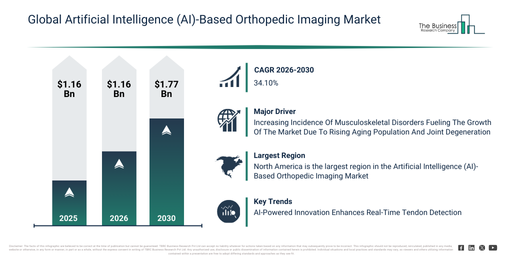
    The market size for artificial intelligence (AI)-based orthopedic imaging has experienced substantial expansion in recent years. This market is projected to grow from $2.2 billion in 2025 to $2.95 billion in 2026, demonstrating a compound annual growth rate (CAGR) of 34.4%. Historically, this growth has been driven by the increasing prevalence of orthopedic disorders, a rising number of imaging centers, the adoption of digital radiography, early AI integration in imaging, and the expansion of hospital IT infrastructure.

    The artificial intelligence (AI)-based orthopedic imaging market is poised for significant expansion over the next few years. It is projected to achieve a size of $9.56 billion by 2030, exhibiting a compound annual growth rate (CAGR) of 34.1%. This anticipated growth during the forecast period is driven by factors such as the increasing demand for personalized orthopedic care, the integration with predictive analytics, the broadening of cloud-based imaging capabilities, the rising adoption of AI-driven diagnostics, and the proliferation of minimally invasive orthopedic procedures. Furthermore, major trends expected within this period encompass AI-assisted fracture detection, the application of predictive orthopedic analytics, the development of cloud-based imaging platforms, their integration with hospital PACS systems, and automated bone density analysis.

    Download the Free Sample Report to Explore Key Market Insights:

    https://www.thebusinessresearchcompany.com/sample.aspx?id=28127&type=smp

    What Underlying Factors Are Accelerating The Growth Of The Artificial Intelligence (AI)-Based Orthopedic Imaging Market?

    The rising prevalence of musculoskeletal disorders is anticipated to fuel the expansion of the artificial intelligence (AI)-based orthopedic imaging market moving forward. These disorders encompass conditions impacting muscles, bones, joints, tendons, and ligaments, resulting in pain or restricted movement. The increase in such conditions is largely attributable to the aging demographic, as individuals naturally experience joint deterioration and decreased bone density over time. Artificial intelligence (AI)-based orthopedic imaging systems assist in diagnosing musculoskeletal issues by providing accurate image analysis, thereby facilitating the early identification of anomalies. This technology minimizes diagnostic inaccuracies through automated interpretation, enhancing clinical productivity and supporting customized treatment strategies. For example, data from January 2024, released by the Office for Health Improvement and Disparities, a UK-based government department, indicated that the self-reported prevalence of long-term musculoskeletal (MSK) conditions among individuals aged 16 and above reached 18.4% in 2023, marking an increase from 17.6% in 2022. Consequently, the growing occurrence of musculoskeletal disorders is a key factor propelling the development of the artificial intelligence (AI)-based orthopedic imaging market.

    What Market Segments Are Evaluated Within The Artificial Intelligence (AI)-Based Orthopedic Imaging Market?

    The artificial intelligence (ai)-based orthopedic imaging market covered in this report is segmented –

    1) By Component: Software, Hardware, Services

    2) By Modality: X-Ray, Computed Tomography (CT), Magnetic Resonance Imaging (MRI), Other Modalities

    3) By Deployment Mode: On-Premises, Cloud-Based

    4) By Application: Fracture Detection, Bone Age Assessment, Joint Disease Diagnosis, Bone Tumor Detection, Other Applications

    Subsegments:

    1) By Software: Image Analysis And Processing Software, Visualization And Detection Software, Workflow Management Software, Diagnostic And Predictive Analytics Software, Machine Learning And Deep Learning Algorithms

    2) By Hardware: Imaging Systems, AI-Integrated Imaging Devices, Graphics Processing Units (GPUs) Or Processing Units, Workstations And Servers, Data Storage Systems

    3) By Services: Installation And Integration Services, Training And Education Services, Consulting Services, Maintenance And Support Services, Cloud-Based Artificial Intelligence (AI) Services

    What Industry Trends Are Redefining The Artificial Intelligence (AI)-Based Orthopedic Imaging Market?

    Leading companies active in the artificial intelligence (AI)-based orthopedic imaging market are prioritizing the creation of sophisticated solutions, such as advanced AI models, to improve diagnosis, optimize workflows, and enable personalized care. These advanced AI models represent complex algorithms that examine medical images to spot abnormalities, automate interpretation, and assist in customized treatment. For example, in February 2023, Clarius Mobile Health, a medical imaging company based in Canada, secured US Food and Drug Administration (FDA) 510(k) clearance for its Clarius musculoskeletal (MSK) AI model. This model is engineered to automatically detect and measure tendons in the foot, ankle, and knee using AI, and will function with the Clarius L7 HD3 and L15 HD3 handheld ultrasound scanners. This development seeks to streamline musculoskeletal ultrasound by supporting clinicians with real-time tendon identification, labeling, and measurement, thereby boosting workflow, standardizing measurements, and decreasing variability between observers. The AI-integrated scanner makes high-definition imaging more obtainable and straightforward to operate, facilitating quicker and more accurate patient treatment.

    Who Are The Top Market Participants Influencing The Artificial Intelligence (AI)-Based Orthopedic Imaging Market?

    Major companies operating in the artificial intelligence (ai)-based orthopedic imaging market are United Imaging Intelligence Co. Ltd., Carestream Health Inc., Brainlab AG, Materialise NV, Aidoc Medical Ltd., Qure.ai Technologies Private Limited, Clarius Mobile Health Corp., Quibim S.L., RSIP Vision Ltd., GLEAMER SAS, Nano-X Imaging Ltd., CurveBeam AI Inc., AZmed SAS, VUNO Inc., Radiobotics ApS, PeekMed – Peek Health S.A., ImageBiopsy Lab GmbH, Synapsica Healthcare Pvt. Ltd., Oxipit UAB, Milvue SAS, Raylytic Software GmbH

    Read the full artificial intelligence (ai)-based orthopedic imaging market report here:

    https://www.thebusinessresearchcompany.com/report/artificial-intelligence-ai-based-orthopedic-imaging-global-market-report

    Which Region Is Projected To Dominate The Artificial Intelligence (AI)-Based Orthopedic Imaging Market During The Forecast Period?

    North America was the largest region in the artificial intelligence (AI)-based orthopedic imaging market in 2025. Asia-Pacific is expected to be the fastest-growing region in the forecast period. The regions covered in the artificial intelligence (AI)-based orthopedic imaging market report are Asia-Pacific, South East Asia, Western Europe, Eastern Europe, North America, South America, Middle East, Africa.

    Request A Tailored Artificial Intelligence (AI)-Based Orthopedic Imaging Market Research Report For Competitive Advantage:

    https://www.thebusinessresearchcompany.com/customise?id=28127&type=smp

    Browse Through More Reports Similar to the Global Artificial Intelligence (AI)-Based Orthopedic Imaging Market 2026, By The Business Research Company

    Ai In Medical Imaging Market Report 2026

    https://www.thebusinessresearchcompany.com/report/ai-in-medical-imaging-global-market-report

    Ai Enabled Medical Imaging Solutions Market Report 2026

    https://www.thebusinessresearchcompany.com/report/ai-enabled-medical-imaging-solutions-global-market-report

    Artificial Intelligence In Magnetic Resonance Imaging Mri Market Report 2026

    https://www.thebusinessresearchcompany.com/report/artificial-intelligence-in-magnetic-resonance-imaging-mri-global-market-report

    Get in touch with us:

    The Business Research Company: https://www.thebusinessresearchcompany.com/

    Americas +1 310-496-7795

    Asia +44 7882 955267 & +91 8897263534

    Europe +44 7882 955267

    Email us at info@tbrc.info

    Follow us on:

    LinkedIn: https://in.linkedin.com/company/the-business-research-company

    YouTube: https://www.youtube.com/channel/UC24_fI0rV8cR5DxlCpgmyFQ

    Global Market Model: https://www.thebusinessresearchcompany.com/global-market-model

  • Artificial Intelligence (AI)-Based Caries Detection Market Trends and Opportunities Across 2026–2030

    Artificial Intelligence (AI)-Based Caries Detection Market Trends and Opportunities Across 2026–2030

    The Business Research Company’s 2026 market reports include new capabilities such as market attractiveness scoring and analysis, total addressable market analysis, company scoring matrix, interactive excel data dashboard, improved supply chain analysis, upcoming startups in the market, and overview of key products, aimed at improving the depth, usability, and strategic value of the insights delivered.

    How Will The Market Size Of The Artificial Intelligence (AI)-Based Caries Detection Market Evolve From 2026 To 2030?

    The artificial intelligence (AI)-based caries detection market has seen swift expansion in recent years. Its value is expected to climb from $0.62 billion in 2025 to $0.72 billion in 2026, achieving a compound annual growth rate (CAGR) of 15.8%. Historically, this growth has been driven by increased adoption of digital imaging in dentistry, a greater incidence of dental caries, advancements in AI algorithms for image processing, a growing emphasis on preventive dental care, and the availability of cost-effective dental imaging devices.

    The market for artificial intelligence (AI)-based caries detection is projected to experience swift expansion in the coming years. This market is anticipated to reach $1.29 billion by 2030, exhibiting a compound annual growth rate (CAGR) of 15.5%. Factors contributing to this growth during the forecast period include the broadening of tele-dentistry services, the incorporation of AI with cloud-based dental platforms, the creation of portable intraoral imaging devices, escalating investments in AI-driven healthcare solutions, and a growing desire for customized dental treatments. Key trends identified for the forecast timeframe encompass AI-enhanced diagnostic precision, the use of predictive analytics for timely detection, remote observation of dental health, the convergence of imaging and AI software, and tailored treatment strategies.

    Download the Free Sample Report to Explore Key Market Insights:

    https://www.thebusinessresearchcompany.com/sample.aspx?id=28126&type=smp

    Which Growth Drivers Are Contributing To The Progress Of The Artificial Intelligence (AI)-Based Caries Detection Market?

    The expanding prevalence of dental ailments is projected to drive the expansion of the artificial intelligence (AI)-based caries detection market in the coming years. These oral health issues affect the teeth, gums, or adjacent oral tissues, potentially leading to discomfort, infections, or problems with mouth functions. The surge in dental diseases is attributed to greater intake of sugary and processed foods, which encourage tooth decay and gum issues by nourishing detrimental oral bacteria. AI-based caries detection systems assist in addressing dental diseases by precisely spotting early-stage tooth decay, facilitating timely intervention and lowering the chance of severe complications. For example, in September 2023, the National Institutes of Health (NIH), a US-based federal agency, reported that around 62.06% of older adults are anticipated to suffer from tooth decay, while approximately 54.57% are expected to develop periodontal disease by 2050. Consequently, the growing prevalence of dental diseases is fueling the growth of the artificial intelligence (AI)-based caries detection market.

    Which Segment Areas Are Covered In The Artificial Intelligence (AI)-Based Caries Detection Market Analysis?

    The artificial intelligence (ai)-based caries detection market covered in this report is segmented –

    1) By Product: Software, Hardware, Services

    2) By Deployment Mode: On-Premises, Cloud-Based

    3) By Application: Hospitals, Dental Clinics, Academic And Research Institutes, Other Applications

    4) By End User: General Dentists, Pediatric Dentists, Orthodontists, Other End Users

    Subsegments:

    1) By Software: Diagnostic Software, Imaging Analysis Software, Data Management Software, Predictive Analytics Software, Cloud-Based Software Solutions

    2) By Hardware: Intraoral Cameras, Digital X-Ray Machines, Optical Coherence Tomography (OCT) Devices, Near-Infrared (NIR) Imaging Devices, Laser Fluorescence Devices

    3) By Services: Remote Diagnostic Services, Software As A Service (SaaS), Maintenance And Support Services, Training And Consultation Services, Data Storage And Management Services

    What Key Developments And Trends Are Impacting The Artificial Intelligence (AI)-Based Caries Detection Market?

    Companies operating within the artificial intelligence (AI)-based caries detection market are prioritizing the development of innovative solutions, including advanced clinical enhancers, to streamline clinical workflows, save time, and mitigate the risk of human error. Advanced clinical enhancers are sophisticated tools or technologies designed to elevate the precision, efficacy, and overall outcomes of medical treatment. An illustration of this trend is VideaHealth, a US-based dental technology company, which unveiled its Caries 3.0 model in January 2025. Caries 3.0 integrates an advanced clinical enhancer that boosts accuracy by filtering out potential false positives based on caries size, tooth location, and other essential clinical determinants. It offers broad patient applicability, standing as the only FDA-cleared AI model for detecting caries in individuals aged 3 and above utilizing bitewing and periapical X-rays. The model also supports clearer patient communication through improved visualizations, making it simpler to explain conditions and encourage treatment acceptance. These advancements enable dental practices to deliver precise, evidence-based care while remaining at the forefront of technological innovation.

    Which Global Companies Are Actively Competing In The Artificial Intelligence (AI)-Based Caries Detection Market?

    Major companies operating in the artificial intelligence (ai)-based caries detection market are Dentsply Sirona, Straumann AG, Envista, Planmeca Oy, 3Shape Inc., Dexis Corp., Acteon Group, Carestream Dental LLC, Vatech Co. Ltd., RapidAI, Pearl Inc., Overjet, Videa Health, Dentomo, CranioCatch, Denti.AI Technology Inc., Diagnocat Inc., Genoray Co. Ltd., Manchester Imaging Ltd., Owandy Radiology, Tab32

    Read the full artificial intelligence (ai)-based caries detection market report here:

    https://www.thebusinessresearchcompany.com/report/artificial-intelligence-ai-based-caries-detection-global-market-report

    What Are The Leading Geographic Regions In The Artificial Intelligence (AI)-Based Caries Detection Market?

    North America was the largest region in the artificial intelligence (AI)-based caries detection market in 2025. Asia-Pacific is expected to be the fastest-growing region in the forecast period. The regions covered in the artificial intelligence (AI)-based caries detection market report are Asia-Pacific, South East Asia, Western Europe, Eastern Europe, North America, South America, Middle East, Africa.

    Request A Tailored Artificial Intelligence (AI)-Based Caries Detection Market Research Report For Competitive Advantage:

    https://www.thebusinessresearchcompany.com/customise?id=28126&type=smp

    Browse Through More Reports Similar to the Global Artificial Intelligence (AI)-Based Caries Detection Market 2026, By The Business Research Company

    Artificial Intelligence Ai Camera Market Report 2026

    https://www.thebusinessresearchcompany.com/report/artificial-intelligence-ai-camera-global-market-report

    Artificial Intelligence Ai In Animal Health Market Report 2026

    https://www.thebusinessresearchcompany.com/report/artificial-intelligence-ai-in-animal-health-global-market-report

    Artificial Intelligence In The Diagnostic Market Report 2026

    https://www.thebusinessresearchcompany.com/report/artificial-intelligence-in-the-diagnostic-global-market-report

    Get in touch with us:

    The Business Research Company: https://www.thebusinessresearchcompany.com/

    Americas +1 310-496-7795

    Asia +44 7882 955267 & +91 8897263534

    Europe +44 7882 955267

    Email us at info@tbrc.info

    Follow us on:

    LinkedIn: https://in.linkedin.com/company/the-business-research-company

    YouTube: https://www.youtube.com/channel/UC24_fI0rV8cR5DxlCpgmyFQ

    Global Market Model: https://www.thebusinessresearchcompany.com/global-market-model
  • Global Artificial Intelligence (AI) Powered Remote Electrocardiogram (ECG) Monitoring Market Forecast 2026–2035 Highlighting Long-Term Growth Insights

    Global Artificial Intelligence (AI) Powered Remote Electrocardiogram (ECG) Monitoring Market Forecast 2026–2035 Highlighting Long-Term Growth Insights

    The Business Research Company’s 2026 market reports include new capabilities such as market attractiveness scoring and analysis, total addressable market analysis, company scoring matrix, interactive excel data dashboard, improved supply chain analysis, upcoming startups in the market, and overview of key products, aimed at improving the depth, usability, and strategic value of the insights delivered.

    What Is The Forecasted Market Value Of The Artificial Intelligence (AI) Powered Remote Electrocardiogram (ECG) Monitoring Market Across 2026–2030?

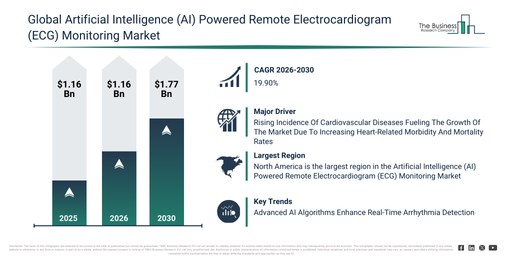
    The market size for artificial intelligence (ai) powered remote electrocardiogram (ecg) monitoring has experienced significant expansion in recent years. This market is anticipated to grow from $1.61 billion in 2025 to $1.94 billion in 2026, at a compound annual growth rate (CAGR) of 20.2%. The historical increase can be attributed to several factors, including the rising occurrence of cardiovascular diseases, the adoption of wearable ECG devices, the continuous need for heart monitoring, the integration of AI in cardiac diagnostics, and the growth of telehealth platforms.

    The artificial intelligence (ai) powered remote electrocardiogram (ecg) monitoring market size is projected to experience swift expansion over the coming years. It will grow to $4.01 billion in 2030 at a compound annual growth rate (CAGR) of 19.9%. This anticipated growth during the forecast period stems from factors such as the creation of cloud-based ECG monitoring platforms, the incorporation of predictive analytics for detecting arrhythmia, the broadened scope of remote patient monitoring services, financial commitments towards portable and wearable ECG devices, and the rising uptake in homecare and ambulatory environments. Key trends anticipated during this period encompass remote cardiac monitoring, AI-driven arrhythmia identification, predictive analysis for cardiovascular health, ECG platforms integrated with cloud technology, and immediate insights into heart health.

    Download the Free Sample Report to Explore Key Market Insights:

    https://www.thebusinessresearchcompany.com/sample.aspx?id=28125&type=smp

    What Primary Drivers Are Shaping The Development Of The Artificial Intelligence (AI) Powered Remote Electrocardiogram (ECG) Monitoring Market?

    An anticipated increase in cardiovascular disease cases is set to boost the expansion of the artificial intelligence (AI) powered remote electrocardiogram (ECG) monitoring market moving ahead. These conditions encompass a range of heart and blood vessel ailments, specifically including coronary artery disease, heart failure, and stroke. The surge in cardiovascular diseases is linked to poor dietary choices, as consuming too many processed foods and fats results in elevated cholesterol, thereby heightening cardiac risks. Artificial intelligence (AI) powered remote electrocardiogram (ECG) monitoring assists in managing cardiovascular diseases through its continuous, real-time analysis of heart rhythms. This technology facilitates quicker identification of irregularities, allows for prompt medical actions, and improves patient surveillance from distant places, contributing to superior long-term heart health results. For instance, as reported in October 2024 by the Centers for Disease Control, a US-based government agency, about 919,032 individuals died from cardiovascular disease in 2023, comprising 1 in every 3 deaths. Consequently, the increasing prevalence of cardiovascular diseases is fueling the expansion of the artificial intelligence (AI) powered remote electrocardiogram (ECG) monitoring market.

    What Segmentation Levels Are Considered In The Artificial Intelligence (AI) Powered Remote Electrocardiogram (ECG) Monitoring Market?

    The artificial intelligence (ai) powered remote electrocardiogram (ecg) monitoring market covered in this report is segmented –

    1) By Component: Hardware, Software, Services

    2) By Deployment Mode: Cloud-Based, On-Premises

    3) By End-User: Hospitals And Clinics, Ambulatory Surgical Centers, Homecare Settings, Research Institutes, Other End User

    Subsegments:

    1) By Hardware: Wearable Devices, Electrocardiogram Machines, Sensors And Electrodes, Mobile Devices

    2) By Software: Data Analytics Platforms, Artificial Intelligence Algorithms, Cloud-Based Monitoring Solutions, Mobile Applications

    3) By Services: Remote Patient Monitoring, Technical Support And Maintenance, Training And Consultation, Data Management Services

    What Trends Are Projected To Affect The Artificial Intelligence (AI) Powered Remote Electrocardiogram (ECG) Monitoring Market?

    Leading companies in the artificial intelligence (AI)-powered remote electrocardiogram (ECG) monitoring market are concentrating on creating sophisticated products, like AI-driven arrhythmia detection tools, to elevate diagnostic accuracy, improve patient outcomes, and decrease healthcare costs. These AI-driven arrhythmia detection tools are systems that utilize artificial intelligence to automatically analyze ECG data and identify irregular heart rhythms, thereby allowing for early detection, real-time alerts, and enhanced cardiac care. For instance, in April 2024, BIOTRONIK, a medical technology company located in Germany, launched the BIOMONITOR IV insertable cardiac monitor, equipped with artificial intelligence capabilities, specifically engineered to refine arrhythmia detection and patient management. It incorporates advanced AI algorithms that evaluate cardiac signals in real time, precisely identifying clinically relevant arrhythmias while minimizing incorrect positive readings. The BioMonitor IV ICM also offers automated rhythm classification and adaptive monitoring features, enabling proactive intervention and personalized treatment plans without needing manual data assessment by clinicians.

    Which Leading Firms Are Contributing To The Growth Of The Artificial Intelligence (AI) Powered Remote Electrocardiogram (ECG) Monitoring Market?

    Major companies operating in the artificial intelligence (ai) powered remote electrocardiogram (ecg) monitoring market are Koninklijke Philips N.V., GE Healthcare, Masimo Corporation, Biotronik SE & Co. KG, Nihon Kohden Corporation, iRhythm Technologies Inc., Biofourmis Pte. Ltd., BioSerenity Inc., Withings SA, Eko Devices Inc., AliveCor Inc., Compumedics Limited, Anumana Inc., Electrical Geodesics Inc. (EGI), InfoBionic Inc., Neurable Inc., Cardiomatics Sp. z o.o., IDOVEN S.L., Zeto Inc., NextGen Neuro Inc.

    Read the full artificial intelligence (ai) powered remote electrocardiogram (ecg) monitoring market report here:

    https://www.thebusinessresearchcompany.com/report/artificial-intelligence-ai-powered-remote-electrocardiogram-ecg-monitoring-global-market-report

    How Does The Artificial Intelligence (AI) Powered Remote Electrocardiogram (ECG) Monitoring Market Perform Across Major Global Regions?

    North America was the largest region in the artificial intelligence (AI) powered remote electrocardiogram (ECG) monitoring market in 2025. Asia-Pacific is expected to be the fastest-growing region in the forecast period. The regions covered in the artificial intelligence (AI) powered remote electrocardiogram (ecg) monitoring market report are Asia-Pacific, South East Asia, Western Europe, Eastern Europe, North America, South America, Middle East, Africa.

    Request A Tailored Artificial Intelligence (AI) Powered Remote Electrocardiogram (ECG) Monitoring Market Research Report For Competitive Advantage:

    https://www.thebusinessresearchcompany.com/customise?id=28125&type=smp

    Browse Through More Reports Similar to the Global Artificial Intelligence (AI) Powered Remote Electrocardiogram (ECG) Monitoring Market 2026, By The Business Research Company

    Artificial Intelligence Ai In Remote Patient Monitoring Market Report 2026

    https://www.thebusinessresearchcompany.com/report/artificial-intelligence-ai-in-remote-patient-monitoring-global-market-report

    Remote Cardiac Monitoring Market Report 2026

    https://www.thebusinessresearchcompany.com/report/remote-cardiac-monitoring-global-market-report

    Electrocardiogram Ecg Equipment And Management System Market Report 2026

    https://www.thebusinessresearchcompany.com/report/electrocardiogram-ecg-equipment-and-management-system-global-market-report

    Get in touch with us:

    The Business Research Company: https://www.thebusinessresearchcompany.com/

    Americas +1 310-496-7795

    Asia +44 7882 955267 & +91 8897263534

    Europe +44 7882 955267

    Email us at info@tbrc.info

    Follow us on:

    LinkedIn: https://in.linkedin.com/company/the-business-research-company

    YouTube: https://www.youtube.com/channel/UC24_fI0rV8cR5DxlCpgmyFQ

    Global Market Model: https://www.thebusinessresearchcompany.com/global-market-model
  • Artificial Intelligence (AI) Otoscopic Image Triaging Platform Market Outlook 2026–2030 Highlighting Emerging Opportunities

    Artificial Intelligence (AI) Otoscopic Image Triaging Platform Market Outlook 2026–2030 Highlighting Emerging Opportunities

    The Business Research Company’s 2026 market reports include new capabilities such as market attractiveness scoring and analysis, total addressable market analysis, company scoring matrix, interactive excel data dashboard, improved supply chain analysis, upcoming startups in the market, and overview of key products, aimed at improving the depth, usability, and strategic value of the insights delivered.

    What Market Size Increase Is Anticipated For The Artificial Intelligence (AI) Otoscopic Image Triaging Platform Market Over The 2026–2030 Period?

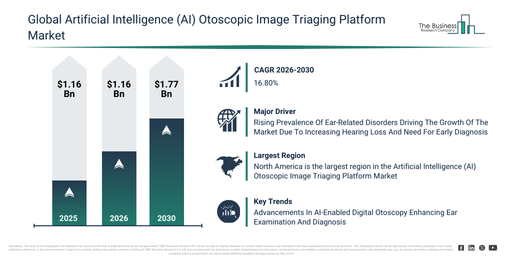
    The artificial intelligence (ai) otoscopic image triaging platform market has experienced rapid growth in recent years. This market is projected to expand from $0.64 billion in 2025 to $0.75 billion in 2026, demonstrating a compound annual growth rate (CAGR) of 17.1%. The historical growth can be attributed to several factors including the adoption of digital otoscopes, an increase in telemedicine services, the rising prevalence of ear infections, the demand for efficient ENT diagnostics, and advancements in imaging sensors.

    The artificial intelligence (ai) otoscopic image triaging platform market size is projected to experience substantial growth in the upcoming years. It is forecast to expand to $1.4 billion by 2030, achieving a compound annual growth rate (CAGR) of 16.8%. This expansion over the forecast period is fueled by the integration of ai with portable otoscopes, the broadening of cloud-based triaging platforms, the evolution of predictive diagnostic algorithms, increased investment in remote ENT monitoring solutions, and the rising uptake in primary care and telehealth. Significant developments expected during this period include automated ear image classification, ai-powered workflow optimization, remote otoscopy solutions, cloud-based image analysis, and prioritized case triage.

    Download the Free Sample Report to Explore Key Market Insights:

    https://www.thebusinessresearchcompany.com/sample.aspx?id=28123&type=smp

    Which Major Factors Are Driving The Expansion Of The Artificial Intelligence (AI) Otoscopic Image Triaging Platform Market?

    The increasing prevalence of ear-related disorders is anticipated to propel the growth of the artificial intelligence (AI) otoscopic image triaging platform market in the future. These disorders encompass conditions that compromise the ear’s regular operation, impacting aspects such as hearing, equilibrium, or general ear well-being. Augmented exposure to intense noise contributes to the rise in ear-related disorders, given that extended or recurrent loud sounds can harm the sensitive components of the inner ear, resulting in hearing impairment and issues with balance. Artificial intelligence (AI) otoscopic image triaging platforms assist in managing these conditions by quickly and precisely examining ear images to detect anomalies, which facilitates prompt diagnosis, efficient prioritization of critical instances, and improved strategies for treatment. For example, projections from the World Health Organization (WHO), a Switzerland-based intergovernmental organization, indicate that by February 2025, an estimated 2.5 billion individuals will suffer from some degree of hearing loss by 2050, with more than 700 million requiring hearing rehabilitation. Consequently, the increasing burden of ear-related disorders is driving the growth of the artificial intelligence (AI) otoscopic image triaging platform market.

    How Is The Artificial Intelligence (AI) Otoscopic Image Triaging Platform Market Segmented Across Key Categories?

    The artificial intelligence (ai) otoscopic image triaging platform market covered in this report is segmented –

    1) By Component: Software, Hardware, Services

    2) By Deployment Mode: Cloud-Based, On-Premises

    3) By Application: Telemedicine, Primary Care, ENT Clinics, Hospitals, Research And Academic Institutes, Other Applications

    Subsegments:

    1) By Software: AI Algorithms, Image Analysis Tools, Diagnostic Support Systems, Workflow Management Solutions, Cloud-Based Platforms

    2) By Hardware: Digital Otoscopes, Imaging Sensors And Detectors, Workstations And Displays, AI-Enhanced Imaging Devices

    3) By Services: Implementation And Integration Services, Training And Maintenance Services, Consulting Services, Data Management Services, Technical Support Services

    Which Upcoming Trends Are Expected To Influence The Artificial Intelligence (AI) Otoscopic Image Triaging Platform Market?

    Major companies in the artificial intelligence (AI) otoscopic image triaging platform market are prioritizing the development of advanced solutions, such as digital otoscopes, to enable easier documentation and remote consultation. Digital otoscopes are electronic instruments designed to provide clear images or videos of the ear canal and eardrum, thereby assisting in precise examination and diagnosis. For instance, in February 2025, JEDMED, a US-based medical instrument company, along with Otologic Tech, a US-based company specializing in AI-enabled digital otoscopy, launched an AI-enabled digital otoscope. This device seamlessly integrates with Otologic Technologies’ platform to provide medical professionals with automated diagnostics. It offers real-time analysis of middle ear conditions, which enhances clinical decision-making. By converting the captured video feed into a single, high-quality image, it streamlines the examination and review process. Additionally, it provides a probability assessment indicating whether an ear is normal or diseased, facilitating faster and more informed treatment decisions.

    Who Are The Dominant Players Shaping The Artificial Intelligence (AI) Otoscopic Image Triaging Platform Market Landscape?

    Major companies operating in the artificial intelligence (ai) otoscopic image triaging platform market are TytoCare Ltd, Digital Diagnostics Inc, Tympa Health Technologies, hearX, Otologic Technologies, OtoNexus Medical Technologies Inc, Siemens Healthineers AG, Philips Healthcare, Folio3 Software Inc, Aidoc Medical Ltd, Ajackus, DeepTek, CARPL AI, Zebra Medical Vision, Enlitic, VUNO Inc, CellScope, PhotoniCare, Otovation, Cupris Health, Aural Analytics, Earscan, Otoharmonics, ResApp Health

    Read the full artificial intelligence (ai) otoscopic image triaging platform market report here:

    https://www.thebusinessresearchcompany.com/report/artificial-intelligence-ai-otoscopic-image-triaging-platform-global-market-report

    Which Region Currently Holds The Largest Share Of The Artificial Intelligence (AI) Otoscopic Image Triaging Platform Market?

    North America was the largest region in the artificial intelligence (AI) otoscopic image triaging platform market in 2025. Asia-Pacific is expected to be the fastest-growing region in the forecast period. The regions covered in the artificial intelligence (AI) otoscopic image triaging platform market report are Asia-Pacific, South East Asia, Western Europe, Eastern Europe, North America, South America, Middle East, Africa.

    Request A Tailored Artificial Intelligence (AI) Otoscopic Image Triaging Platform Market Research Report For Competitive Advantage:

    https://www.thebusinessresearchcompany.com/customise?id=28123&type=smp

    Browse Through More Reports Similar to the Global Artificial Intelligence (AI) Otoscopic Image Triaging Platform Market 2026, By The Business Research Company

    Ai Enabled Medical Imaging Solutions Market Report 2026

    https://www.thebusinessresearchcompany.com/report/ai-enabled-medical-imaging-solutions-global-market-report

    Artificial Intelligence Ai Radiology Tool Market Report 2026

    https://www.thebusinessresearchcompany.com/report/artificial-intelligence-ai-radiology-tool-global-market-report

    Ai In Medical Imaging Market Report 2026

    https://www.thebusinessresearchcompany.com/report/ai-in-medical-imaging-global-market-report

    Get in touch with us:

    The Business Research Company: https://www.thebusinessresearchcompany.com/

    Americas +1 310-496-7795

    Asia +44 7882 955267 & +91 8897263534

    Europe +44 7882 955267

    Email us at info@tbrc.info

    Follow us on:

    LinkedIn: https://in.linkedin.com/company/the-business-research-company

    YouTube: https://www.youtube.com/channel/UC24_fI0rV8cR5DxlCpgmyFQ

    Global Market Model: https://www.thebusinessresearchcompany.com/global-market-model
  • Global Artificial Intelligence (AI) Optical Coherence Tomography (OCT) Market Report 2026–2035 Showing Expansion Outlook and Opportunities

    Global Artificial Intelligence (AI) Optical Coherence Tomography (OCT) Market Report 2026–2035 Showing Expansion Outlook and Opportunities

    The Business Research Company’s 2026 market reports include new capabilities such as market attractiveness scoring and analysis, total addressable market analysis, company scoring matrix, interactive excel data dashboard, improved supply chain analysis, upcoming startups in the market, and overview of key products, aimed at improving the depth, usability, and strategic value of the insights delivered.

    How Much Is The Artificial Intelligence (AI) Optical Coherence Tomography (OCT) Market Expected To Grow In Terms Of Market Value Between 2026 And 2030?

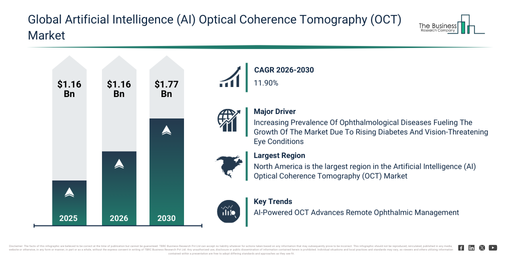
    The artificial intelligence (ai) optical coherence tomography (oct) market size has experienced rapid growth in recent years. The market is projected to expand from $2.06 billion in 2025 to $2.32 billion in 2026, achieving a compound annual growth rate (CAGR) of 12.2%. This historical growth can be attributed to the adoption of OCT in ophthalmology, the demand for early disease detection, advancements in retinal imaging devices, the increasing prevalence of eye disorders, and the integration of digital imaging technologies.

    The artificial intelligence (ai) optical coherence tomography (oct) market is anticipated to experience substantial growth over the next few years. It is projected to achieve a market size of $3.63 billion by 2030, demonstrating a compound annual growth rate (CAGR) of 11.9%. This expansion during the forecast period is primarily attributed to the integration of AI with portable OCT devices, the proliferation of cloud-based ophthalmic platforms, the development of real-time diagnostic algorithms, increasing investments in tele-ophthalmology, and the rising need for personalized eye care solutions. Significant trends emerging in this period include AI-assisted retinal imaging, automated disease detection, predictive ophthalmic analysis, cloud-based OCT platforms, and enhanced high-resolution image interpretation.

    Download the Free Sample Report to Explore Key Market Insights:

    https://www.thebusinessresearchcompany.com/sample.aspx?id=28121&type=smp

    What Key Drivers Are Influencing The Growth Of The Artificial Intelligence (AI) Optical Coherence Tomography (OCT) Market?

    The anticipated expansion of the artificial intelligence (AI) optical coherence tomography (OCT) market is intrinsically linked to the growing incidence of ophthalmological diseases. These diseases encompass various disorders and conditions that impact the eyes and visual system, potentially affecting vision, eye structure, or ocular health. The increasing occurrence of diabetes, which causes damage to retinal blood vessels and leads to vision-threatening conditions, is a primary reason for the rise in ophthalmological diseases. Artificial intelligence (AI) optical coherence tomography (OCT) plays a crucial role in diagnosing these conditions by offering high-resolution retinal imaging, thereby enabling early detection and ongoing monitoring of eye conditions. Furthermore, it streamlines diagnostic procedures by providing automated analysis of retinal scans, which enhances clinical efficiency and improves patient care. For instance, in May 2024, the Centers for Disease Control and Prevention (CDC), a US-based public health agency, reported that more than 3 million people were affected by glaucoma, a figure projected to increase to 6.3 million by 2050. This increasing prevalence of ophthalmological diseases is thus a key factor propelling the growth of the artificial intelligence (AI) optical coherence tomography (OCT) market.

    What Major Segment Divisions Exist Within The Artificial Intelligence (AI) Optical Coherence Tomography (OCT) Market?

    The artificial intelligence (ai) optical coherence tomography (oct) market covered in this report is segmented –

    1) By Type: Table Type, Portable

    2) By Technology: Time Domain Optical Coherence Tomography, Spectral Domain Optical Coherence Tomography, Swept Source Optical Coherence Tomography

    3) By Application: Hospitals, Clinic, Other Applications

    Subsegments:

    1) By Table Type: Spectral-Domain Optical Coherence Tomography (SD-OCT), Time-Domain Optical Coherence Tomography (TD-OCT), Swept-Source Optical Coherence Tomography (SS-OCT), Full-Field Optical Coherence Tomography, Doppler Optical Coherence Tomography

    2) By Portable: Handheld Optical Coherence Tomography, Smartphone Or Tablet-Based Optical Coherence Tomography, Point-Of-Care Optical Coherence Tomography Devices, Compact Or Bedside Optical Coherence Tomography Units, Wearable Optical Coherence Tomography

    How Are Trends Shaping The Direction Of The Artificial Intelligence (AI) Optical Coherence Tomography (OCT) Market?

    Major companies within the artificial intelligence (AI) optical coherence tomography (OCT) market are concentrating on developing advanced products, such as at-home optical coherence tomography (OCT) devices, to improve diagnostic accuracy, enable remote oversight, and streamline ophthalmic processes. These portable at-home optical coherence tomography (OCT) devices allow patients to perform retinal scans at home for the remote monitoring of various eye diseases. For instance, in May 2024, Notal Vision Inc., a US-based healthcare company, obtained de novo authorization from the US Food and Drug Administration (FDA) for its artificial intelligence (AI)-powered SCANLY Home OCT device. This represents the first self-operated retinal imaging device specifically for monitoring wet age-related macular degeneration (AMD) in older adults. It employs spectral-domain optical coherence tomography (OCT) alongside the AI-driven Notal OCT analyzer (NOA) to identify and quantify retinal biomarkers, thus enabling high-resolution remote monitoring between scheduled clinic visits. The device securely transmits images to the Notal Health cloud for physician review, and SCANLY is supported by current procedural terminology (CPT) billing codes.

    Which Companies Are Leading Innovation In The Artificial Intelligence (AI) Optical Coherence Tomography (OCT) Market?

    Major companies operating in the artificial intelligence (ai) optical coherence tomography (oct) market are Abbott Laboratories, Canon Inc., Carl Zeiss AG, Excelitas Technologies Corp., Topcon Corporation, Thorlabs Inc., Santec Holdings Corporation, Notal Vision Inc., Optopol Technology Sp. z o.o., BigVision Tech Inc., Shenzhen Certainn Technology Co. Ltd., Conavi Medical Inc., Wasatch Photonics Inc., RSIP Vision Ltd., Visionix Ltd., Altris AI Ltd., NIDEK Co. Ltd., Perimeter Medical Imaging AI Inc., Michelson Diagnostics Ltd., Artelus Private Limited

    Read the full artificial intelligence (ai) optical coherence tomography (oct) market report here:

    https://www.thebusinessresearchcompany.com/report/artificial-intelligence-ai-optical-coherence-tomography-oct-global-market-report

    Which Region Is Expected To Register The Fastest Growth In The Artificial Intelligence (AI) Optical Coherence Tomography (OCT) Market?

    North America was the largest region in the artificial intelligence (AI) optical coherence tomography (OCT) market in 2025. Asia-Pacific is expected to be the fastest-growing region in the forecast period. The regions covered in the artificial intelligence (AI) optical coherence tomography (oct) market report are Asia-Pacific, South East Asia, Western Europe, Eastern Europe, North America, South America, Middle East, Africa.

    Request A Tailored Artificial Intelligence (AI) Optical Coherence Tomography (OCT) Market Research Report For Competitive Advantage:

    https://www.thebusinessresearchcompany.com/customise?id=28121&type=smp

    Browse Through More Reports Similar to the Global Artificial Intelligence (AI) Optical Coherence Tomography (OCT) Market 2026, By The Business Research Company

    Ai In Medical Imaging Market Report 2026

    https://www.thebusinessresearchcompany.com/report/ai-in-medical-imaging-global-market-report

    Artificial Intelligence In Medical Imaging Market Report 2026

    https://www.thebusinessresearchcompany.com/report/artificial-intelligence-in-medical-imaging-global-market-report

    Ai Enabled Imaging Solutions Market Report 2026

    https://www.thebusinessresearchcompany.com/report/ai-enabled-imaging-solutions-global-market-report

    Get in touch with us:

    The Business Research Company: https://www.thebusinessresearchcompany.com/

    Americas +1 310-496-7795

    Asia +44 7882 955267 & +91 8897263534

    Europe +44 7882 955267

    Email us at info@tbrc.info

    Follow us on:

    LinkedIn: https://in.linkedin.com/company/the-business-research-company

    YouTube: https://www.youtube.com/channel/UC24_fI0rV8cR5DxlCpgmyFQ

    Global Market Model: https://www.thebusinessresearchcompany.com/global-market-model
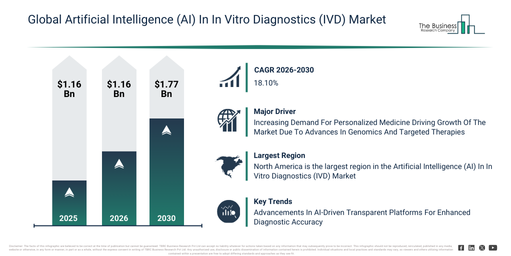
  • Artificial Intelligence (AI) In In Vitro Diagnostics (IVD) Market Outlook 2026–2030 Highlighting Innovation Trends and Competitive Landscape

    Artificial Intelligence (AI) In In Vitro Diagnostics (IVD) Market Outlook 2026–2030 Highlighting Innovation Trends and Competitive Landscape

    The Business Research Company’s 2026 market reports include new capabilities such as market attractiveness scoring and analysis, total addressable market analysis, company scoring matrix, interactive excel data dashboard, improved supply chain analysis, upcoming startups in the market, and overview of key products, aimed at improving the depth, usability, and strategic value of the insights delivered.

    What Market Value Is Expected For The Artificial Intelligence (AI) In In Vitro Diagnostics (IVD) Market At The End Of The 2026–2030 Forecast Period?

    The market for artificial intelligence (AI) in in vitro diagnostics (IVD) has seen considerable expansion recently. It is projected to increase from $3.04 billion in 2025 to $3.6 billion in 2026, at a compound annual growth rate (CAGR) of 18.4%. The historical growth of this market can be attributed to factors such as an escalating demand for precise diagnostics, the expansion of laboratory infrastructure, a higher prevalence of chronic diseases, the integration of digital diagnostic instruments, and progress in biomarker research.

    The artificial intelligence (ai) in in vitro diagnostics (ivd) market is projected to experience substantial expansion over the coming years. Its valuation is anticipated to reach $7.01 billion in 2030, exhibiting a compound annual growth rate (CAGR) of 18.1%. This anticipated growth during the forecast period is primarily driven by factors such as the proliferation of cloud-based diagnostic platforms, the convergence of AI with genomics, advancements in point-of-care AI diagnostics, increased capital allocation towards personalized medicine, and a heightened need for swift and economical testing solutions. Key trends foreseen for this period encompass AI-driven laboratory automation, predictive disease identification, interpretation of tests through data analysis, widespread adoption of cloud-based diagnostic platforms, and individualized patient profiling.

    Download the Free Sample Report to Explore Key Market Insights:

    https://www.thebusinessresearchcompany.com/sample.aspx?id=28120&type=smp

    What Major Growth Drivers Are Shaping The Outlook Of The Artificial Intelligence (AI) In In Vitro Diagnostics (IVD) Market?

    The escalating need for individualized healthcare is anticipated to fuel the expansion of the artificial intelligence (AI) in in vitro diagnostics (IVD) market moving forward. Personalized medicine defines a healthcare methodology that customizes prevention, diagnosis, and treatment based on an individual’s genetic profile, lifestyle, and environment. This approach is gaining traction as advancements in genomic data and sequencing technologies enable more precise, targeted, and effective treatments tailored to each patient. Artificial intelligence (AI) in in vitro diagnostics (IVD) contributes to personalized medicine by analyzing complex diagnostic data to identify patient-specific disease patterns, thereby facilitating accurate, timely, and customized treatment decisions. For instance, in February 2024, according to the Personalized Medicine Coalition, a US-based non-profit organization, in 2023, the FDA approved 16 new personalized treatments for rare disease patients, an increase from six in 2022. The newly approved personalized treatments for 2023 also encompassed seven cancer drugs and three for other diseases and conditions. Therefore, the growing demand for personalized medicine is a significant driver of the artificial intelligence (AI) in in vitro diagnostics (IVD) market’s growth.

    What Segment Types Make Up The Artificial Intelligence (AI) In In Vitro Diagnostics (IVD) Market?

    The artificial intelligence (ai) in in vitro diagnostics (ivd) market covered in this report is segmented –

    1) By Component: Software, Hardware, Services

    2) By Technology: Machine Learning, Natural Language Processing, Computer Vision, Robotics Process Automation, Deep Learning

    3) By Deployment Model: Cloud-Based, On-Premise, Hybrid

    4) By Application: Diagnostic Imaging, Laboratory Testing, Pathology, Genomics, Personalized Medicine

    5) By End User: Hospitals And Clinics, Diagnostic Laboratories, Research Institutes, Pharmaceutical Companies, Medical Device Manufacturers

    Subsegments:

    1) By Software: Diagnostic Algorithms, Data Analytics Platforms, Decision Support Systems

    2) By Hardware: Laboratory Instruments, Imaging Devices, Point-Of-Care Devices

    3) By Services: Consulting And Implementation, Maintenance And Support, Training And Education

    Which Market Trends Are Creating New Opportunities In The Artificial Intelligence (AI) In In Vitro Diagnostics (IVD) Market?

    Major companies operating in the artificial intelligence (AI) in in vitro diagnostics (IVD) market are concentrating on developing advanced solutions, such as CE-IVDR-certified transparent AI platforms. These initiatives aim to improve diagnostic accuracy, streamline workflows, and support personalized patient care. A CE-IVDR-certified transparent AI platform is defined as an AI system for in vitro diagnostics that meets EU regulatory standards and offers clear, auditable, and understandable decision-making. For example, in May 2025, Diagnostics.ai, a UK-based diagnostic testing company, launched PCR.AI, an intelligent solution crafted to accelerate and enhance PCR diagnostics. This system automates and speeds up the interpretation of real-time PCR diagnostics with over 99.9% accuracy. It ensures transparency by clearly demonstrating how each result is obtained, thereby securing regulatory compliance and boosting clinical trust. This development significantly improves laboratory efficiency, reduces errors, and supports seamless regulatory adherence for molecular diagnostics.

    Who Are The Key Players Driving Competition In The Artificial Intelligence (AI) In In Vitro Diagnostics (IVD) Market?

    Major companies operating in the artificial intelligence (ai) in in vitro diagnostics (ivd) market are Roche Diagnostics GmbH, Thermo Fisher Scientific Inc., Abbott Laboratories, Danaher Corporation, Siemens Healthineers AG, Illumina Inc., Hologic Inc., Sysmex Corporation, QIAGEN N.V., Tempus Labs Inc., BillionToOne Inc., PathAI Inc., Proscia Inc., Indica Labs Inc., Visiopharm A/S, aetherAI Co. Ltd., Ibex Medical Analytics Ltd., Mindpeak GmbH, OncoHost Ltd., Qritive, Aiforia Technologies Oyj

    Read the full artificial intelligence (ai) in in vitro diagnostics (ivd) market report here:

    https://www.thebusinessresearchcompany.com/report/artificial-intelligence-ai-in-in-vitro-diagnostics-ivd-global-market-report

    Which Regions Are Projected To Dominate The Artificial Intelligence (AI) In In Vitro Diagnostics (IVD) Market In The Coming Years?

    North America was the largest region in the artificial intelligence (AI) in in vitro diagnostics (IVD) market in 2025. Asia-Pacific is expected to be the fastest-growing region in the forecast period. The regions covered in the artificial intelligence (AI) in in vitro diagnostics (ivd) market report are Asia-Pacific, South East Asia, Western Europe, Eastern Europe, North America, South America, Middle East, Africa.

    Request A Tailored Artificial Intelligence (AI) In In Vitro Diagnostics (IVD) Market Research Report For Competitive Advantage:

    https://www.thebusinessresearchcompany.com/customise?id=28120&type=smp

    Browse Through More Reports Similar to the Global Artificial Intelligence (AI) In In Vitro Diagnostics (IVD) Market 2026, By The Business Research Company

    Artificial Intelligence In The Diagnostic Market Report 2026

    https://www.thebusinessresearchcompany.com/report/artificial-intelligence-in-the-diagnostic-global-market-report

    Ai In Cancer Diagnostics Market Report 2026

    https://www.thebusinessresearchcompany.com/report/ai-in-cancer-diagnostics-global-market-report

    Ai In Medical Devices Market Report 2026

    https://www.thebusinessresearchcompany.com/report/ai-in-medical-devices-global-market-report

    Get in touch with us:

    The Business Research Company: https://www.thebusinessresearchcompany.com/

    Americas +1 310-496-7795

    Asia +44 7882 955267 & +91 8897263534

    Europe +44 7882 955267

    Email us at info@tbrc.info

    Follow us on:

    LinkedIn: https://in.linkedin.com/company/the-business-research-company

    YouTube: https://www.youtube.com/channel/UC24_fI0rV8cR5DxlCpgmyFQ

    Global Market Model: https://www.thebusinessresearchcompany.com/global-market-model