Month: March 2026

  • Single Use Bioprocessing Market 2026–2030: Forecast, Innovation, and Competitive Trends

    Single Use Bioprocessing Market 2026–2030: Forecast, Innovation, and Competitive Trends

    Uncover key drivers, emerging technologies, and competitive movements shaping the single use bioprocessing market from 2026–2035 with trusted insights from The Business Research Company

    What level of growth is expected in the Single Use Bioprocessing Market between 2026 and 2030?

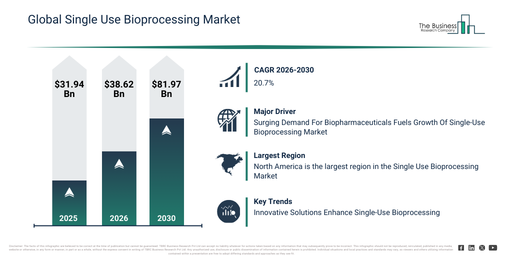
    The single use bioprocessing market has expanded significantly over recent years. It is projected to expand from $31.94 billion in 2025 to $38.62 billion in 2026, achieving a compound annual growth rate (CAGR) of 20.9%. This historical expansion can be ascribed to factors such as the limitations of traditional stainless steel systems, significant capital investment, increasing demand for biologics, early adoption in pilot-scale manufacturing processes, and the essential need for sterile production.

    The single use bioprocessing market is anticipated to experience substantial growth over the coming years. It is projected to reach $81.97 billion by 2030, demonstrating a compound annual growth rate (CAGR) of 20.7%. This expansion during the forecast period is driven by factors such as the growth in large-scale biologics manufacturing, its uptake in gene and cell therapy, the incorporation of automation and digital monitoring, the rise of modular and flexible systems, and a growing need for cost-effective single-use options. Key trends for the forecast period encompass its integration with continuous manufacturing processes, its application in vaccine production, the proliferation of modular bioprocessing systems, its utilization in clinical trial manufacturing, and the increasing regulatory adherence for single-use technologies.

    Access Your Free Sample Report for In-Depth Market Insights:

    https://www.thebusinessresearchcompany.com/sample.aspx?id=7700&type=smp

    Which Drivers Are Expected To Impact The Single Use Bioprocessing Market During The Forecast Period?

    The escalating demand for biopharmaceuticals is projected to propel the expansion of the single-use bioprocessing market moving forward. Biopharmaceuticals are medications created from living cells or organisms. Single-use bioprocessing systems are commonly utilized in the manufacturing of biopharmaceuticals to boost productivity, achieve cost savings, and facilitate safe waste disposal. For instance, in January 2024, IQVIA, a US-based provider of biopharmaceutical development services, reported that global biotech spending is expected to exceed $892 billion by 2028. Hence, the growing need for biopharmaceuticals is a key driver for the single-use bioprocessing market’s growth.

    How Is The Single Use Bioprocessing Market Divided Into Segments?

    The single use bioprocessing market covered in this report is segmented –

    1) By Product: Single-Use Media Bags And Containers, Single-Use Assemblies, Single-Use Bioreactors, Disposable Mixers, Other Products

    2) By Workflow: Upstream, Fermentation, Downstream

    3) By Application: Filtration, Storage, Cell Culture, Mixing, Purification

    4) By End User: Biopharmaceutical And Pharmaceutical companies, Contract Research Organizations And Contract Manufacturing Organizations (CROs and CMOs), Academic And Research institutes

    Subsegments:

    1) By Single-Use Media Bags And Containers: Media Bags, Storage Containers, Transport Bags

    2) By Single-Use Assemblies: Preassembled Kits, Tubing Sets, Connector Assemblies

    3) By Single-Use Bioreactors: Stirred-Tank Bioreactors, Wave-Mixed Bioreactors, Other Bioreactor Types

    4) By Disposable Mixers: Single-Use Stirring Devices, Single-Use Agitators

    5) By Other Products: Filtration Devices, Sampling Devices, Accessories

    Which Trends Are Influencing The Development Of The Single Use Bioprocessing Market?

    Leading companies in the single-use bioprocessing market are concentrating on innovative products like single-use process container film to achieve a competitive edge and enhance their technological offerings. The Ultimus single-use process container film is an innovation integrated into Mobius 3D process containers, providing a remarkable tenfold increase in abrasion resistance compared to other single-use bioprocessing films. For example, in April 2023, Merck Group, a Germany-based science and technology company, launched a Single-Use Process Container Film, a solution intended to deliver exceptional durability and leak resistance for single-use assemblies used in bioprocessing liquid applications. This Ultimus film incorporates a unique woven nylon structure, contributing to enhanced bag strength, improved durability, and resilience to mitigate issues such as abrasions, tears, and material fatigue. Additionally, Ultimus film features an animal-origin-free contact resin with minimal extractables, supporting robust cell growth performance.

    Which Key Market Players Are Investing In Expansion And Innovation Within The Single Use Bioprocessing Market?

    Major companies operating in the single use bioprocessing market are GE Healthcare Technologies Ltd, Eppendorf AG, Corning Incorporated, Thermo Fisher Scientific Inc, Sartorius AG, JM BioConnect BV, Merck KGaA, Pall Corporation, PBS Biotech Inc, Entegris Inc, DistriCell Inc, ABEC Inc, Solida Biotech GmbH, OmniBRx Biotechnologies Pvt Ltd, Celltainer Biotech BV, Cellexus BV, Danaher Corporation, Repligen Corporation, Lonza Group Ltd, Meissner Filtration Products Inc, MilliporeSigma, Avantor Performance Materials India Limited, Saint-Gobain Performance Plastics Corp, Rentschler Biopharma SE, Charter Medical Inc, Sollesis Medical Plc, Catalent Inc, Patheon Inc

    Access The Complete Report For Deeper Market Insights:

    https://www.thebusinessresearchcompany.com/report/single-use-bioprocessing-global-market-report

    Which Regions Are Poised For Strategic Growth In The Single Use Bioprocessing Market?

    North America was the largest region in the single-use bioprocessing market in 2025. Asia-Pacific is expected to be the fastest-growing region in the forecast period. The regions covered in the single use bioprocessing market report are Asia-Pacific, South East Asia, Western Europe, Eastern Europe, North America, South America, Middle East, Africa.

    Request Your Customized Single Use Bioprocessing Market Research Report for Competitive Advantage:

    https://www.thebusinessresearchcompany.com/customise?id=7700&type=smp

    Browse Through More Reports Similar to the Global Single Use Bioprocessing Market 2026, By The Business Research Company

    Bioprocess Technology Market Report 2026

    https://www.thebusinessresearchcompany.com/report/bioprocess-technology-global-market-report

    Large And Small Scale Bioprocessing Market Report 2026

    https://www.thebusinessresearchcompany.com/report/large-and-small-scale-bioprocessing-global-market-report

    Bioprocessing Technology Market Report 2026

    https://www.thebusinessresearchcompany.com/report/bioprocessing-technology-global-market-report

    Get in touch with us:

    The Business Research Company: https://www.thebusinessresearchcompany.com/

    Americas +1 310-496-7795

    Asia +44 7882 955267 & +91 8897263534

    Europe +44 7882 955267

    Email us at info@tbrc.info

    Follow us on:

    LinkedIn: https://in.linkedin.com/company/the-business-research-company

    YouTube: https://www.youtube.com/channel/UC24_fI0rV8cR5DxlCpgmyFQ

    Global Market Model: https://www.thebusinessresearchcompany.com/global-market-model
  • Single Tooth Implants And Dental Bridges Market Forecast 2026–2035: Data Trends and Industry Insights

    Single Tooth Implants And Dental Bridges Market Forecast 2026–2035: Data Trends and Industry Insights

    Uncover key drivers, emerging technologies, and competitive movements shaping the single tooth implants and dental bridges market from 2026–2035 with trusted insights from The Business Research Company

    How much is the Single Tooth Implants And Dental Bridges Market valued at in 2026, and what valuation is forecast for 2030?

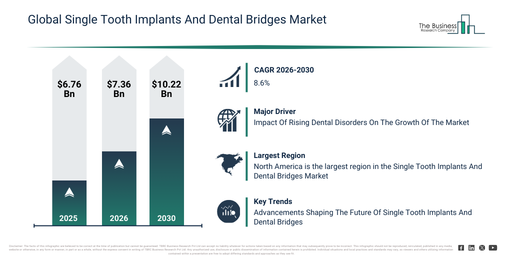
    The single tooth implants and dental bridges market has demonstrated strong growth in recent years. It is anticipated to increase from $6.76 billion in 2025 to $7.36 billion in 2026, achieving a compound annual growth rate (CAGR) of 8.8%. The expansion observed historically can be attributed to the high prevalence of tooth loss, limited access to advanced implants, the early adoption of dental bridges, an increase in dental clinics, and growing patient awareness.

    The single tooth implants and dental bridges market is projected to experience substantial expansion in the coming years. Its valuation is anticipated to reach $10.22 billion by 2030, demonstrating a compound annual growth rate (CAGR) of 8.6%. This projected increase over the forecast period can be primarily ascribed to advancements in digital dentistry solutions, the uptake of minimally invasive implantology, the diversification of dental implant materials, a rise in dental insurance coverage, and the expansion of dental tourism. Key trends identified for the forecast period encompass the proliferation of 3D-printed dental implants, a growing utilization of biocompatible materials, an increase in minimally invasive implant procedures, the embrace of guided surgery techniques, and an broadened dental insurance coverage for restorative treatments.

    Access Your Free Sample Report for In-Depth Market Insights:

    https://www.thebusinessresearchcompany.com/sample.aspx?id=20955&type=smp

    What Drivers Are Influencing The Growth Of The Single Tooth Implants And Dental Bridges Market?

    The rising prevalence of dental disorders is projected to drive the growth of the single tooth implants and dental bridges market. These disorders encompass a range of conditions affecting the teeth, gums, jaw, or oral cavity, thereby impairing oral health and function. Their increasing occurrence is attributed to factors such as elevated consumption of sugary diets, poor oral hygiene, an aging global population, and the growing incidence of lifestyle-related diseases like diabetes. Single tooth implants and dental bridges offer effective solutions for patients suffering from dental disorders by restoring missing or damaged teeth, improving oral functionality, enhancing aesthetic appeal, and boosting overall confidence, simultaneously preventing complications like shifting teeth and jawbone deterioration. For instance, in May 2024, the National Board of Health and Welfare, a Sweden-based government agency, reported that approximately 3.9 million individuals aged 24 or older sought dental care in Sweden in 2023, representing an increase from 2022. Thus, the increasing prevalence of dental disorders is a key driver for the single tooth implants and dental bridges market.

    What Segments Are Included Within The Single Tooth Implants And Dental Bridges Market?

    The single tooth implants and dental bridges market covered in this report is segmented –

    1) By Type: 3-Unit Bridges, 4-Unit Bridges, Titanium Bridges, Silicone Bridges, Maryland Bridges, Cantilever Bridges, Partial Bridges

    2) By Material: Porcelain-Fused-To-Metal (PFM), All Ceramics, Metal Alloys

    3) By Application: Hospitals, Ambulatory Surgical Centers, Organ Transplant Centers, Orthopedic And Traumas Centers

    Subsegments:

    1) By 3-Unit Bridges: Fixed 3-Unit Bridges, Resin-Bonded 3-Unit Bridges

    2) By 4-Unit Bridges: Fixed 4-Unit Bridges, Cantilever 4-Unit Bridges

    3) By Titanium Bridges: Titanium-Alloy Bridges, Titanium-Based Fixed Bridges

    4) By Silicone Bridges: Flexible Silicone Bridges, Temporary Silicone Bridges

    5) By Maryland Bridges: Resin-Bonded Maryland Bridges, Metallic Framework Maryland Bridges

    6) By Cantilever Bridges: Single Cantilever Bridges, Multiple Cantilever Bridges

    7) By Partial Bridges: Partial Fixed Bridges, Removable Partial Bridges

    What Trends Are Expected To Impact The Competitive Landscape Of The Single Tooth Implants And Dental Bridges Market?

    Leading companies in the single tooth implants and dental bridges market are focused on developing innovative solutions, such as advanced dental implant technologies, aimed at improving osseointegration, long-term stability, and overall treatment outcomes for patients undergoing restorative dental procedures. These modern implant systems are engineered to enhance surgical precision, promote faster healing, and offer superior biomechanical performance in both anterior and posterior restorations. For example, in November 2023, Keystone Dental, a US-based oral healthcare company, launched its GENESIS ACTIVE dental implant system, which utilizes a next-generation surface technology designed to accelerate bone integration and provide stronger primary stability. The system incorporates advanced thread geometry and surface activation to optimize implant-to-bone contact, enabling clinicians to achieve predictable surgical results even in challenging cases with low-density bone. With its enhanced surgical efficiency and lasting durability, the GENESIS ACTIVE system expands treatment possibilities for single-tooth replacements and complex bridge restorations, supporting the global demand for high-performance dental implant solutions.

    Who Are The Core Companies Influencing Trends In The Single Tooth Implants And Dental Bridges Market?

    Major companies operating in the single tooth implants and dental bridges market are Henry Schein Inc., Zimmer Biomet Holdings Inc., Straumann Group, Envista Holdings Corporation, Nobel BioCare Services AG, Zim Vie Inc., Osstem Implant Co. Ltd., Bio Horizons IPH Inc., Keystone Dental Inc., Zest Dental Solutions, Neoss Limited, Thommen Medical AG, Southern Implants Pty Ltd, Meagan Implant Co. Ltd., AVINENT Implant System S.L., CAMLOG Biotechnologies AG, Dentsply Sirona, TBR Dental, MegaGen Implant Co. Ltd, Dentium Co. Ltd, Alpha Bio Tec, Implant Direct, Biomet 3i, Anthogyr, Straumann Neodent, Ossean Implant System

    Access The Complete Report For Deeper Market Insights:

    https://www.thebusinessresearchcompany.com/report/single-tooth-implants-and-dental-bridges-global-market-report

    Which Regions Are Projected To Dominate The Single Tooth Implants And Dental Bridges Market In The Coming Years?

    North America was the largest region in the single tooth implants and dental bridges market in 2025. Asia-Pacific is expected to be the fastest-growing region in the forecast period. The regions covered in the single tooth implants and dental bridges market report are Asia-Pacific, South East Asia, Western Europe, Eastern Europe, North America, South America, Middle East, Africa.

    Request Your Customized Single Tooth Implants And Dental Bridges Market Research Report for Competitive Advantage:

    https://www.thebusinessresearchcompany.com/customise?id=20955&type=smp

    Browse Through More Reports Similar to the Global Single Tooth Implants And Dental Bridges Market 2026, By The Business Research Company

    Dental Implants And Prosthetics Market Report 2026

    https://www.thebusinessresearchcompany.com/report/dental-implants-and-prosthetics-global-market-report

    Dental Implants And Abutment Systems Market Report 2026

    https://www.thebusinessresearchcompany.com/report/dental-implants-and-abutment-systems-global-market-report

    Dental Crown And Bridges Market Report 2026

    https://www.thebusinessresearchcompany.com/report/dental-crown-and-bridges-global-market-report

    Get in touch with us:

    The Business Research Company: https://www.thebusinessresearchcompany.com/

    Americas +1 310-496-7795

    Asia +44 7882 955267 & +91 8897263534

    Europe +44 7882 955267

    Email us at info@tbrc.info

    Follow us on:

    LinkedIn: https://in.linkedin.com/company/the-business-research-company

    YouTube: https://www.youtube.com/channel/UC24_fI0rV8cR5DxlCpgmyFQ

    Global Market Model: https://www.thebusinessresearchcompany.com/global-market-model
  • Single Nucleotide Polymorphism (SNP) Genotyping Market Outlook 2026–2030: Key Business Drivers and Trends

    Single Nucleotide Polymorphism (SNP) Genotyping Market Outlook 2026–2030: Key Business Drivers and Trends

    Uncover key drivers, emerging technologies, and competitive movements shaping the single nucleotide polymorphism (snp) genotyping market from 2026–2035 with trusted insights from The Business Research Company

    By how much is the Single Nucleotide Polymorphism (SNP) Genotyping Market expected to grow between 2026 and 2030?

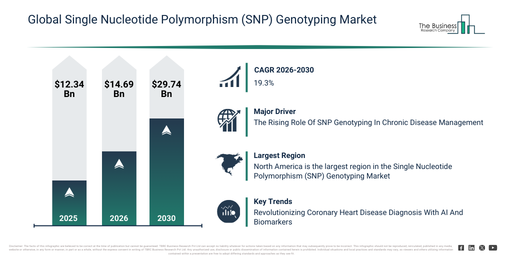
    The single nucleotide polymorphism (snp) genotyping market has experienced rapid expansion in recent years. Projections indicate it will increase from $12.34 billion in 2025 to $14.69 billion in 2026, demonstrating a compound annual growth rate (CAGR) of 19.1%. Historically, this expansion has been driven by factors such as limited early-stage genotyping capabilities, an escalating demand in research, the elevated expense of genomic analysis, increasing collaborations between research laboratories, and the initial integration into pharmacogenomics.

    The single nucleotide polymorphism (snp) genotyping market size is anticipated to undergo substantial expansion in the coming years. By 2030, it is projected to reach $29.74 billion, exhibiting a compound annual growth rate (CAGR) of 19.3%. This projected growth throughout the forecast period stems from factors such as the advancement of high-throughput SNP platforms, a rise in its application within personalized medicine, the incorporation of AI for predictive analysis, its increasing use in clinical diagnostics, and the expansion of agricultural genomics applications. Furthermore, significant trends expected during this period include its integration with pharmacogenomics, an increase in disease risk prediction, broader application in agriculture and animal breeding, the wider adoption of microarray-based genotyping, and the emergence of point-of-care SNP testing.

    Access Your Free Sample Report for In-Depth Market Insights:

    https://www.thebusinessresearchcompany.com/sample.aspx?id=12569&type=smp

    Which Drivers Are Influencing Market Acceleration In The Single Nucleotide Polymorphism (SNP) Genotyping Market?

    The single nucleotide polymorphism (SNP) genotyping market is projected to expand due to the escalating burden of chronic conditions, which are health issues persisting for a year or more, often requiring continuous medical management or limiting daily activities. Given the rising incidence of these conditions, single-nucleotide polymorphism (SNP) genotyping becomes vital for pinpointing genetic predispositions and fostering personalized medicine. As an illustration, data from the Centers for Disease Control and Prevention (CDC) in April 2025 revealed that in 2023, roughly 194 million U.S. adults, or 76.4%, reported living with at least one chronic condition. This included 59.5% of young adults, 78.4% of midlife adults, and 93.0% of older adults. Thus, the increasing burden of chronic conditions is a key factor propelling the single nucleotide polymorphism (SNP) genotyping systems market forward.

    What Leading Segments Are Studied In The Single Nucleotide Polymorphism (SNP) Genotyping Market?

    The single nucleotide polymorphism (snp) genotyping market covered in this report is segmented –

    1) By Product: Consumables, Instruments, Services

    2) By Technology: TaqMan SNP Genotyping, Mass Array SNP Genotyping, SNP Gene Chip Arrays, Other Technologies

    3) By Application: Animal Genetics, Plant Improvement, Diagnostic Research, Pharmaceuticals And Pharmacogenomics, Agricultural Biotechnology, Other Applications

    Subsegments:

    1) By Consumables: Reagents And Kits, DNA Probes, Microarrays

    2) By Instruments: SNP Genotyping Platforms, Sequencers, PCR Machines

    3) By Services: SNP Genotyping Services, Data Analysis Services, Consultation Services

    Which Trends Are Guiding The Evolution Of The Single Nucleotide Polymorphism (SNP) Genotyping Market?

    Major companies operating in the single nucleotide polymorphism (SNP) genotyping market are concentrating on creating biomarkers valuable for coronary heart disease detection to enhance their market profitability. Single nucleotide polymorphism (SNP) biomarkers linked to coronary heart disease (CHD) detection represent specific genetic variations discovered through genomic research, which are associated with an increased risk or susceptibility to coronary heart disease. For instance, in February 2023, Cardio Diagnostics, a US-based biotechnology company, introduced PrecisionCHD. PrecisionCHD is an AI-powered blood test that employs a combination of epigenetic (DNA methylation) and genetic (single nucleotide polymorphism) biomarkers for CHD detection. The test leverages a machine-learning model to achieve over 75% sensitivity for both genders, offering a non-invasive choice for blood sample collection either in-office or at home. This innovation removes the requirement for conventional tests such as stress tests, ensuring objectivity by solely depending on biomarkers, rather than self-reported patient data.

    Which Major Industry Participants Are Leading The Single Nucleotide Polymorphism (SNP) Genotyping Market Growth?

    Major companies operating in the single nucleotide polymorphism (snp) genotyping market are Thermo Fischer Scientific Inc, Danaher Corporation, Roche Diagnostics Corporation, GE HealthCare Technologies Inc, Eurofins Genomics LLC, Beckman Coulter Inc, Bio-Rad Laboratories Inc, Qiagen N.V, Sigma-Aldrich Corporation, Agilent Technologies Inc, PerkinElmer Inc, Illumina Inc, Promega Corporation, GenScript Biotech Corporation, Integrated DNA Technologies Inc, LGC Ltd, Sequenom Inc, Fluidigm Corporation, Oxford Gene Technology, Affymetrix Inc, PREMIER Biosoft International Inc, Rubicon Genomics, Xcelris Genomics, Douglas Scientific LLC, Golden Helix Inc

    Access The Complete Report For Deeper Market Insights:

    https://www.thebusinessresearchcompany.com/report/single-nucleotide-polymorphism-snp-genotyping-global-market-report

    Which Region Is Expected To Experience The Fastest Growth In The Single Nucleotide Polymorphism (SNP) Genotyping Market?

    North America was the largest region in the single nucleotide polymorphism (SNP) genotyping market in 2025. Asia-Pacific is expected to be the fastest-growing region in the forecast period. The regions covered in the single nucleotide polymorphism (snp) genotyping market report are Asia-Pacific, South East Asia, Western Europe, Eastern Europe, North America, South America, Middle East, Africa.

    Request Your Customized Single Nucleotide Polymorphism (SNP) Genotyping Market Research Report for Competitive Advantage:

    https://www.thebusinessresearchcompany.com/customise?id=12569&type=smp

    Browse Through More Reports Similar to the Global Single Nucleotide Polymorphism (SNP) Genotyping Market 2026, By The Business Research Company

    Genomics Market Report 2026

    https://www.thebusinessresearchcompany.com/report/genomics-global-market-report

    Genotyping Market Report 2026

    https://www.thebusinessresearchcompany.com/report/genotyping-global-market-report

    Genotyping Assay Market Report 2026

    https://www.thebusinessresearchcompany.com/report/genotyping-assay-global-market-report

    Get in touch with us:

    The Business Research Company: https://www.thebusinessresearchcompany.com/

    Americas +1 310-496-7795

    Asia +44 7882 955267 & +91 8897263534

    Europe +44 7882 955267

    Email us at info@tbrc.info

    Follow us on:

    LinkedIn: https://in.linkedin.com/company/the-business-research-company

    YouTube: https://www.youtube.com/channel/UC24_fI0rV8cR5DxlCpgmyFQ

    Global Market Model: https://www.thebusinessresearchcompany.com/global-market-model
  • Single Nucleotide Polymorphism (SNP) Genotyping Market Outlook 2026–2030: Key Business Drivers and Trends

    Uncover key drivers, emerging technologies, and competitive movements shaping the single nucleotide polymorphism (snp) genotyping market from 2026–2035 with trusted insights from The Business Research Company

    By how much is the Single Nucleotide Polymorphism (SNP) Genotyping Market expected to grow between 2026 and 2030?

    The single nucleotide polymorphism (snp) genotyping market has experienced rapid expansion in recent years. Projections indicate it will increase from $12.34 billion in 2025 to $14.69 billion in 2026, demonstrating a compound annual growth rate (CAGR) of 19.1%. Historically, this expansion has been driven by factors such as limited early-stage genotyping capabilities, an escalating demand in research, the elevated expense of genomic analysis, increasing collaborations between research laboratories, and the initial integration into pharmacogenomics.

    The single nucleotide polymorphism (snp) genotyping market size is anticipated to undergo substantial expansion in the coming years. By 2030, it is projected to reach $29.74 billion, exhibiting a compound annual growth rate (CAGR) of 19.3%. This projected growth throughout the forecast period stems from factors such as the advancement of high-throughput SNP platforms, a rise in its application within personalized medicine, the incorporation of AI for predictive analysis, its increasing use in clinical diagnostics, and the expansion of agricultural genomics applications. Furthermore, significant trends expected during this period include its integration with pharmacogenomics, an increase in disease risk prediction, broader application in agriculture and animal breeding, the wider adoption of microarray-based genotyping, and the emergence of point-of-care SNP testing.

    Access Your Free Sample Report for In-Depth Market Insights:

    https://www.thebusinessresearchcompany.com/sample.aspx?id=12569&type=smp

    Which Drivers Are Influencing Market Acceleration In The Single Nucleotide Polymorphism (SNP) Genotyping Market?

    The single nucleotide polymorphism (SNP) genotyping market is projected to expand due to the escalating burden of chronic conditions, which are health issues persisting for a year or more, often requiring continuous medical management or limiting daily activities. Given the rising incidence of these conditions, single-nucleotide polymorphism (SNP) genotyping becomes vital for pinpointing genetic predispositions and fostering personalized medicine. As an illustration, data from the Centers for Disease Control and Prevention (CDC) in April 2025 revealed that in 2023, roughly 194 million U.S. adults, or 76.4%, reported living with at least one chronic condition. This included 59.5% of young adults, 78.4% of midlife adults, and 93.0% of older adults. Thus, the increasing burden of chronic conditions is a key factor propelling the single nucleotide polymorphism (SNP) genotyping systems market forward.

    What Leading Segments Are Studied In The Single Nucleotide Polymorphism (SNP) Genotyping Market?

    The single nucleotide polymorphism (snp) genotyping market covered in this report is segmented –

    1) By Product: Consumables, Instruments, Services

    2) By Technology: TaqMan SNP Genotyping, Mass Array SNP Genotyping, SNP Gene Chip Arrays, Other Technologies

    3) By Application: Animal Genetics, Plant Improvement, Diagnostic Research, Pharmaceuticals And Pharmacogenomics, Agricultural Biotechnology, Other Applications

    Subsegments:

    1) By Consumables: Reagents And Kits, DNA Probes, Microarrays

    2) By Instruments: SNP Genotyping Platforms, Sequencers, PCR Machines

    3) By Services: SNP Genotyping Services, Data Analysis Services, Consultation Services

    Which Trends Are Guiding The Evolution Of The Single Nucleotide Polymorphism (SNP) Genotyping Market?

    Major companies operating in the single nucleotide polymorphism (SNP) genotyping market are concentrating on creating biomarkers valuable for coronary heart disease detection to enhance their market profitability. Single nucleotide polymorphism (SNP) biomarkers linked to coronary heart disease (CHD) detection represent specific genetic variations discovered through genomic research, which are associated with an increased risk or susceptibility to coronary heart disease. For instance, in February 2023, Cardio Diagnostics, a US-based biotechnology company, introduced PrecisionCHD. PrecisionCHD is an AI-powered blood test that employs a combination of epigenetic (DNA methylation) and genetic (single nucleotide polymorphism) biomarkers for CHD detection. The test leverages a machine-learning model to achieve over 75% sensitivity for both genders, offering a non-invasive choice for blood sample collection either in-office or at home. This innovation removes the requirement for conventional tests such as stress tests, ensuring objectivity by solely depending on biomarkers, rather than self-reported patient data.

    Which Major Industry Participants Are Leading The Single Nucleotide Polymorphism (SNP) Genotyping Market Growth?

    Major companies operating in the single nucleotide polymorphism (snp) genotyping market are Thermo Fischer Scientific Inc, Danaher Corporation, Roche Diagnostics Corporation, GE HealthCare Technologies Inc, Eurofins Genomics LLC, Beckman Coulter Inc, Bio-Rad Laboratories Inc, Qiagen N.V, Sigma-Aldrich Corporation, Agilent Technologies Inc, PerkinElmer Inc, Illumina Inc, Promega Corporation, GenScript Biotech Corporation, Integrated DNA Technologies Inc, LGC Ltd, Sequenom Inc, Fluidigm Corporation, Oxford Gene Technology, Affymetrix Inc, PREMIER Biosoft International Inc, Rubicon Genomics, Xcelris Genomics, Douglas Scientific LLC, Golden Helix Inc

    Access The Complete Report For Deeper Market Insights:

    https://www.thebusinessresearchcompany.com/report/single-nucleotide-polymorphism-snp-genotyping-global-market-report

    Which Region Is Expected To Experience The Fastest Growth In The Single Nucleotide Polymorphism (SNP) Genotyping Market?

    North America was the largest region in the single nucleotide polymorphism (SNP) genotyping market in 2025. Asia-Pacific is expected to be the fastest-growing region in the forecast period. The regions covered in the single nucleotide polymorphism (snp) genotyping market report are Asia-Pacific, South East Asia, Western Europe, Eastern Europe, North America, South America, Middle East, Africa.

    Request Your Customized Single Nucleotide Polymorphism (SNP) Genotyping Market Research Report for Competitive Advantage:

    https://www.thebusinessresearchcompany.com/customise?id=12569&type=smp

    Browse Through More Reports Similar to the Global Single Nucleotide Polymorphism (SNP) Genotyping Market 2026, By The Business Research Company

    Genomics Market Report 2026

    https://www.thebusinessresearchcompany.com/report/genomics-global-market-report

    Genotyping Market Report 2026

    https://www.thebusinessresearchcompany.com/report/genotyping-global-market-report

    Genotyping Assay Market Report 2026

    https://www.thebusinessresearchcompany.com/report/genotyping-assay-global-market-report

    Get in touch with us:

    The Business Research Company: https://www.thebusinessresearchcompany.com/

    Americas +1 310-496-7795

    Asia +44 7882 955267 & +91 8897263534

    Europe +44 7882 955267

    Email us at info@tbrc.info

    Follow us on:

    LinkedIn: https://in.linkedin.com/company/the-business-research-company

    YouTube: https://www.youtube.com/channel/UC24_fI0rV8cR5DxlCpgmyFQ

    Global Market Model: https://www.thebusinessresearchcompany.com/global-market-model
  • Global Polymyositis Market Performance Report: Global Trends 2026–2030

    Global Polymyositis Market Performance Report: Global Trends 2026–2030

    Uncover key drivers, emerging technologies, and competitive movements shaping the polymyositis market from 2026–2035 with trusted insights from The Business Research Company

    What long-term size projections exist for the Polymyositis Market covering 2026–2035?

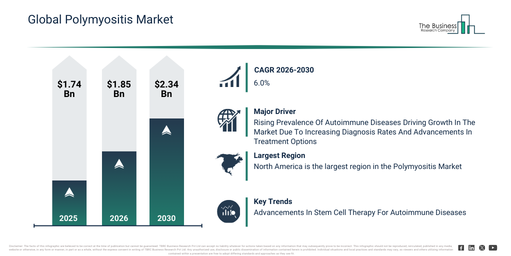
    The polymyositis market has witnessed substantial growth in recent years. It is projected to increase from $1.74 billion in 2025 to $1.85 billion in 2026, reflecting a compound annual growth rate (CAGR) of 6.2%. This historical growth can be attributed to an improved understanding of autoimmune myopathies, the availability of muscle biopsy diagnostics, expanded use of corticosteroids, enhanced hospital diagnostic capabilities, and a rising identification of rare muscle disorders.

    The market size for polymyositis is projected to experience robust expansion over the coming years. It is forecast to reach $2.34 billion by 2030, demonstrating a compound annual growth rate (CAGR) of 6.0%. This growth during the forecast period is attributable to the increasing development of targeted immune therapies, the rising integration of precision diagnostics, a greater utilization of biologics and immunoglobulins, the expansion of personalized treatment strategies, and intensified research into autoimmune disease mechanisms. Significant trends anticipated in the forecast period include the growing application of immunosuppressive therapies, increased adoption of monoclonal antibody treatments, a heightened focus on accurate differential diagnosis, the broadening of advanced diagnostic imaging, and enhanced patient monitoring protocols.

    Access Your Free Sample Report for In-Depth Market Insights:

    https://www.thebusinessresearchcompany.com/sample.aspx?id=22104&type=smp

    Which Drivers Are Impacting The Competitive Landscape Of The Polymyositis Market?

    The expanding occurrence of autoimmune conditions is anticipated to fuel the expansion of the polymyositis market in the future. These conditions involve the body’s immune system erroneously targeting its own healthy cells, tissues, or organs, resulting in inflammation and harm. Their rising incidence is linked to specific genetic variations causing an overactive immune response, heightening individuals’ vulnerability to self-tissue attacks. This genetic predisposition, coupled with environmental factors like infections, stress, and lifestyle choices, contributes to the growing number of autoimmune cases. Polymyositis itself aids in comprehending autoimmune diseases by illustrating how immune system irregularities cause muscle inflammation, thereby providing valuable insights into underlying mechanisms and potential therapies for associated conditions. For example, in February 2024, data from Arthritis Australia, an Australia-based charitable not-for-profit organisation advocating for people with arthritis and musculoskeletal conditions, indicated that by 2025, roughly 562,378 Australians will be affected by rheumatoid arthritis (RA), comprising 14% of the overall arthritis demographic. Consequently, the growing prevalence of autoimmune diseases is a key driver for the polymyositis market.

    What Segments Are Identified Within The Structure Of The Polymyositis Market?

    The polymyositis market covered in this report is segmented –

    1) By Type: Idiopathic Polymyositis, Dermatomyositis, Inclusion Body Myositis, Overlapping Myositis Syndromes

    2) By Diagnosis: Physical Examination, Muscle Biopsy, Electromyography (EMG), Blood Tests, Magnetic Resonance Imaging (MRI)

    3) By Treatment: Immunosuppressant, Immunoglobulins, Corticosteroids, Alkylating agents, Monoclonal Antibodies

    4) By Distribution Channel: Offline, Online

    5) By End User: Hospital pharmacy, Online pharmacy, Retail pharmacy

    Subsegments:

    1) By Idiopathic Polymyositis: Immune-Mediated Polymyositis, Virus-Associated Polymyositis

    2) By Dermatomyositis: Classic Dermatomyositis, Amyopathic Dermatomyositis, Juvenile Dermatomyositis

    3) By Inclusion Body Myositis: Sporadic Inclusion Body Myositis, Hereditary Inclusion Body Myopathy

    4) By Overlapping Myositis Syndromes:Polymyositis with Systemic Lupus Erythematosus (SLE), Polymyositis with Rheumatoid Arthritis (RA), Polymyositis with Systemic Sclerosis, Polymyositis with Mixed Connective Tissue Disease (MCTD)

    What Upcoming Trends Are Likely To Define The Future Path Of The Polymyositis Market?

    Companies operating within the polymyositis market are primarily focused on developing innovative therapies, such as stem cell treatments, to improve treatment efficacy and slow the progression of the disease. Stem cell therapy involves the application of umbilical cord-derived stem cells for regenerative medical purposes. These stem cells exhibit powerful immunomodulatory and anti-inflammatory properties, making them a viable option for treating autoimmune conditions like polymyositis. For example, in December 2024, RESTEM, a US-based clinical-stage biotechnology company, received Orphan Drug Designation (ODD) from the U.S. Food and Drug Administration (FDA) for its stem cell program that utilizes umbilical cord outer lining stem cells (ULSCs). This program employs umbilical cord outer lining stem cells to treat polymyositis and Dermatomyositis by regulating the immune system and reducing muscle inflammation. Early trials have demonstrated promising safety and efficacy for this therapy, with the potential to decrease steroid dependency.

    Which Leading Companies Dominate The Polymyositis Market Share?

    Major companies operating in the polymyositis market are Pfizer Inc., F Hoffmann La Roche AG, Bristol Myers Squibb Company, AstraZeneca plc, Novartis AG, GlaxoSmithKline plc, Merck & Co. Inc., C H Boehringer Sohn AG & Co. KG, Regeneron Pharmaceuticals Inc., Astellas Pharma Inc., Fresenius SE & Co. KGaA, UCB S.A., Teva Pharmaceuticals USA Inc., Kezar Life Sciences Inc., Argenx SE, Mallinckrodt Pharmaceuticals plc, Mitsubishi Tanabe Pharma Corporation, Sanofi S.A., AbbVie Inc., Eli Lilly and Company, Janssen Pharmaceuticals Inc., Takeda Pharmaceutical Company Limited, Amgen Inc., CSL Behring

    Access The Complete Report For Deeper Market Insights:

    https://www.thebusinessresearchcompany.com/report/polymyositis-global-market-report

    How Does The Polymyositis Market Perform Across Major Global Regions?

    North America was the largest region in the polymyositis market in 2025. Asia-Pacific is expected to be the fastest-growing region in the forecast period. The regions covered in the polymyositis market report are Asia-Pacific, South East Asia, Western Europe, Eastern Europe, North America, South America, Middle East, Africa.

    Request Your Customized Polymyositis Market Research Report for Competitive Advantage:

    https://www.thebusinessresearchcompany.com/customise?id=22104&type=smp

    Browse Through More Reports Similar to the Global Polymyositis Market 2026, By The Business Research Company

    Pheochromocytoma Market Report 2026

    https://www.thebusinessresearchcompany.com/report/pheochromocytoma-global-market-report

    Pericarditis Market Report 2026

    https://www.thebusinessresearchcompany.com/report/pericarditis-global-market-report

    Interstitial Cystitis Market Report 2026

    https://www.thebusinessresearchcompany.com/report/interstitial-cystitis-global-market-report

    Get in touch with us:

    The Business Research Company: https://www.thebusinessresearchcompany.com/

    Americas +1 310-496-7795

    Asia +44 7882 955267 & +91 8897263534

    Europe +44 7882 955267

    Email us at info@tbrc.info

    Follow us on:

    LinkedIn: https://in.linkedin.com/company/the-business-research-company

    YouTube: https://www.youtube.com/channel/UC24_fI0rV8cR5DxlCpgmyFQ

    Global Market Model: https://www.thebusinessresearchcompany.com/global-market-model
  • Polymyalgia Rheumatica Market Future Outlook 2026: Key Drivers and Growth Potential

    Polymyalgia Rheumatica Market Future Outlook 2026: Key Drivers and Growth Potential

    Uncover key drivers, emerging technologies, and competitive movements shaping the polymyalgia rheumatica market from 2026–2035 with trusted insights from The Business Research Company

    What total market size is anticipated for the Polymyalgia Rheumatica Market in 2030?

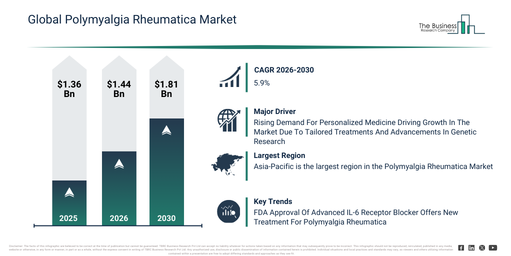
    The market for polymyalgia rheumatica has shown robust expansion over the past few years. Projections indicate it will expand from $1.36 billion in 2025 to reach $1.44 billion by 2026, demonstrating a compound annual growth rate (CAGR) of 6.2%. Historically, this expansion has been driven by factors such as a rising elderly demographic, enhanced clinical understanding of inflammatory conditions, the widespread adoption of corticosteroids as the initial treatment, increasing diagnostic rates among older patients, and the provision of rheumatology care within hospitals.

    The polymyalgia rheumatica market size is projected to observe significant expansion in the coming years. It is forecast to grow to $1.81 billion by 2030, demonstrating a compound annual growth rate (CAGR) of 5.9%. This anticipated growth during the forecast period is largely due to the increasing development of steroid-sparing therapies, escalating research into inflammatory biomarkers, the rising adoption of biologics and targeted drugs, expanding access to specialized medical care, and a growing focus on reducing long-term treatment side effects. Prominent trends expected in this period include the increased uptake of biologic therapies, a heightened focus on early and accurate diagnosis, the growing implementation of long-term corticosteroid management, the expansion of personalized treatment approaches, and enhanced monitoring of disease progression.

    Access Your Free Sample Report for In-Depth Market Insights:

    https://www.thebusinessresearchcompany.com/sample.aspx?id=22103&type=smp

    What Drivers Are Influencing Production Trends In The Polymyalgia Rheumatica Market?

    The increasing demand for personalized medicine is anticipated to propel the expansion of the polymyalgia rheumatica market moving forward. Personalized medicine refers to medical care specifically adapted to an individual’s genetic profile, lifestyle, and unique health conditions to achieve more effective results. The impetus behind the need for personalized medicine stems from breakthroughs in genetic research, rising patient desires for customized therapies, and enhancements in diagnostic technologies. Genetic research has provided a profound understanding of distinct genetic variations, enabling the creation of more tailored treatments aimed at specific genetic markers. This approach helps in selecting drugs most likely to be effective based on the patient’s characteristics, thereby leading to a more efficient and secure treatment strategy. For instance, in February 2024, according to the Personalised Medicine Coalition, a US-based hospital and health care organization, in 2023, the Food and Drug Administration approved 16 new personalized treatments for rare disease patients, which was an increase from six in 2022. Consequently, the advent of personalized medicine is fueling the growth of the polymyalgia rheumatica market.

    Which Segments Are Gaining Traction In The Polymyalgia Rheumatica Market?

    The polymyalgia rheumatica market covered in this report is segmented –

    1) By Treatment: Corticosteroids, Nonsteroidal Anti-Inflammatory Drugs, Disease-Modifying Antirheumatic Drugs, Biologics

    2) By Route Of Administration: Oral, Intravenous, Subcutaneous

    3) By Patient Type: Adult, Geriatric, Elderly Or Aging Population

    4) By Distribution Channel: Hospital Pharmacies, Retail Pharmacies, Online Pharmacies

    Subsegments:

    1) By Corticosteroids: Prednisone, Methylprednisolone, Hydrocortisone, Dexamethasone

    2) By Nonsteroidal Anti-Inflammatory Drugs (NSAIDs): Ibuprofen, Naproxen, Aspirin, Celecoxib

    3) By Disease-Modifying Antirheumatic Drugs (DMARDs): Methotrexate, Leflunomide, Sulfasalazine, Hydroxychloroquine

    4) By Biologics: Tumor Necrosis Factor (TNF) Inhibitors, Interleukin-6 (IL-6) Inhibitors, B-Cell Inhibitors, Janus Kinase (JAK) Inhibitors

    Which Trends Are Shaping Activity Within The Polymyalgia Rheumatica Market?

    Leading firms within the polymyalgia rheumatica market are prioritizing the creation of advanced medications, including interleukin-6 (IL-6) receptor blockers, to offer more precise and potent therapeutic alternatives. These interleukin-6 (IL-6) receptor blockers function as biological agents, working to suppress IL-6, a significant pro-inflammatory cytokine implicated in autoimmune conditions. Their mechanism of action, by inhibiting IL-6, leads to a reduction in inflammation and an alleviation of symptoms, thereby improving the quality of life for individuals suffering from PMR. As an illustration, in February 2023, Regeneron Pharmaceuticals, Inc., a US-based biotechnology firm, together with Sanofi, a France-based healthcare enterprise, disclosed that the Food and Drug Administration (FDA) had granted approval for Kevzara (sarilumab) to treat polymyalgia rheumatica (PMR) in adults who had not adequately responded to corticosteroids or were unable to gradually discontinue their use. Kevzara, notably the inaugural and sole biologic medication sanctioned for this ailment, operates by preventing IL-6-mediated signaling pathways. This approval stemmed from a clinical investigation demonstrating that 28.3% of patients receiving sarilumab attained sustained remission by week 52, in contrast to 10.3% of those on placebo. Kevzara is administered through subcutaneous injection bi-weekly and has also secured approval for the management of moderately to severely active rheumatoid arthritis. Currently, Sanofi’s stock (SNY) trades at $54.13 on the NASDAQ.

    Who Are The Major Companies Operating In The Polymyalgia Rheumatica Market?

    Major companies operating in the polymyalgia rheumatica market are AbbVie Inc., Sanofi S.A., Eli Lilly and Co., Regeneron Pharmaceuticals Inc., Horizon Therapeutics plc, Sparrow Pharmaceuticals Inc., Roche Holding AG, Novartis AG, Pfizer Inc., Bristol Myers Squibb Company, GlaxoSmithKline plc, AstraZeneca plc, Merck & Co. Inc., Janssen Pharmaceuticals Inc., Takeda Pharmaceutical Company Limited, UCB S.A., Amgen Inc., Boehringer Ingelheim, Bayer AG, Teva Pharmaceutical Industries Ltd., Sun Pharmaceutical Industries Ltd., Lupin Limited, Aurobindo Pharma Limited

    Access The Complete Report For Deeper Market Insights:

    https://www.thebusinessresearchcompany.com/report/polymyalgia-rheumatica-global-market-report

    Which Region Is Anticipated To See The Fastest Growth In The Polymyalgia Rheumatica Market?

    Asia-Pacific was the largest region in the polymyalgia rheumatica market in 2025. The regions covered in the polymyalgia rheumatica market report are Asia-Pacific, South East Asia, Western Europe, Eastern Europe, North America, South America, Middle East, Africa.

    Request Your Customized Polymyalgia Rheumatica Market Research Report for Competitive Advantage:

    https://www.thebusinessresearchcompany.com/customise?id=22103&type=smp

    Browse Through More Reports Similar to the Global Polymyalgia Rheumatica Market 2026, By The Business Research Company

    Sciatica Market Report 2026

    https://www.thebusinessresearchcompany.com/report/sciatica-global-market-report

    Fibromyalgia Treatment Market Report 2026

    https://www.thebusinessresearchcompany.com/report/fibromyalgia-treatment-global-market-report

    Esophageal Dysphagia Market Report 2026

    https://www.thebusinessresearchcompany.com/report/esophageal-dysphagia-global-market-report

    Get in touch with us:

    The Business Research Company: https://www.thebusinessresearchcompany.com/

    Americas +1 310-496-7795

    Asia +44 7882 955267 & +91 8897263534

    Europe +44 7882 955267

    Email us at info@tbrc.info

    Follow us on:

    LinkedIn: https://in.linkedin.com/company/the-business-research-company

    YouTube: https://www.youtube.com/channel/UC24_fI0rV8cR5DxlCpgmyFQ

    Global Market Model: https://www.thebusinessresearchcompany.com/global-market-model
  • Polymerase Chain Reaction Molecular Diagnostics Market Trends and Insights: Global Forecast to 2030

    Polymerase Chain Reaction Molecular Diagnostics Market Trends and Insights: Global Forecast to 2030

    Uncover key drivers, emerging technologies, and competitive movements shaping the polymerase chain reaction molecular diagnostics market from 2026–2035 with trusted insights from The Business Research Company

    What is the expected shift in the Polymerase Chain Reaction Molecular Diagnostics Market’s size between 2026 and 2030?

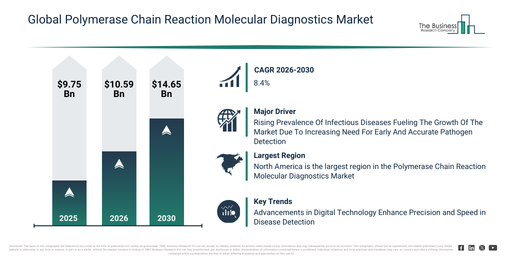
    The polymerase chain reaction molecular diagnostics market has shown robust growth in its size during recent years. Projections indicate it will expand from $9.75 billion in 2025 to $10.59 billion in 2026, with a compound annual growth rate (CAGR) of 8.7%. Its growth during the historical period stems from factors like the expansion of hospital-based molecular diagnostics, the increasing prevalence of infectious diseases, the availability of standardized pcr diagnostic kits, the growth of centralized diagnostic laboratories, and regulatory approvals for molecular tests.

    The market for polymerase chain reaction molecular diagnostics is projected to experience robust expansion in the coming years. This market is anticipated to reach a valuation of $14.65 billion by 2030, exhibiting a compound annual growth rate (CAGR) of 8.4%. The predicted growth during this period stems from several factors, including the rising acceptance of point-of-care molecular diagnostics, increased funding for personalized medicine, the broadening of genomic testing initiatives, a greater need for decentralized diagnostics, and the enhanced incorporation of digital health platforms. Key trends expected within the forecast period involve a greater application of pcr in detecting infectious diseases, an escalating requirement for high-sensitivity molecular diagnostics, the broadening scope of pcr-based oncology examinations, the increasing incorporation of automated diagnostic systems, and a heightened emphasis on tests with swift results.

    Access Your Free Sample Report for In-Depth Market Insights:

    https://www.thebusinessresearchcompany.com/sample.aspx?id=24383&type=smp

    Which Drivers Are Shaping Strategic Decisions In The Polymerase Chain Reaction Molecular Diagnostics Market?

    The polymerase chain reaction molecular diagnostics market is anticipated to expand due to the increasing prevalence of infectious diseases. These illnesses are caused by detrimental microorganisms like bacteria, viruses, fungi, or parasites, which can be transmitted directly or indirectly between individuals. The rise in infectious disease cases is attributed to the emergence of antibiotic-resistant pathogens, which are more challenging to treat and control, leading to prolonged sickness, increased healthcare expenses, and greater public health risks. Polymerase chain reaction (PCR) molecular diagnostics enhance the management of infectious diseases by offering rapid and accurate detection of pathogens at the genetic level, thus facilitating early diagnosis and targeted treatment. This improves healthcare outcomes by enabling timely interventions, reducing infection transmission, and optimizing patient care. For instance, the Centers for Disease Control and Prevention, a US-based government agency, indicated in April 2025 that 2,214 new cases of acute hepatitis B were reported in 2023, with an additional 1,769 hepatitis B-related deaths reported during the same year. Consequently, the rising prevalence of infectious diseases is a key factor driving the growth of the polymerase chain reaction molecular diagnostics market.

    What Segment Categories Are Covered In The Polymerase Chain Reaction Molecular Diagnostics Market?

    The polymerase chain reaction molecular diagnostics market covered in this report is segmented –

    1) By Product Type: Instrument, Reagents And Consumables, Software

    2) By Technology: Real-Time Polymerase Chain Reaction, Digital Polymerase Chain Reaction, Conventional Polymerase Chain Reaction

    3) By Sample Type: Blood Samples, Saliva Samples, Tissue Samples, Urine Samples

    4) By Application: Infectious Disease Testing, Oncology Testing, Other Applications

    5) By End-User: Hospitals, Diagnostic Laboratories, Other End Users

    Subsegments:

    1) By Instrument: Standard Polymerase Chain Reaction Systems, Digital Polymerase Chain Reaction Systems, Real-Time Polymerase Chain Reaction Systems

    2) By Reagents And Consumables: Polymerase Chain Reaction Kits, Polymerase Chain Reaction Enzymes, Polymerase Chain Reaction Primers and Probes, Polymerase Chain Reaction Master Mix

    3) By Software: Polymerase Chain Reaction Analysis Software, Data Management Software

    Which Trends Are Influencing The Development Of The Polymerase Chain Reaction Molecular Diagnostics Market?

    Leading firms within the polymerase chain reaction molecular diagnostics market are prioritizing the creation of advanced technological solutions, including benchtop instruments, to improve both the effectiveness and availability of testing. Benchtop instruments are defined as compact, laboratory-quality devices designed to be small enough for placement on a workbench or table, serving purposes in scientific, medical, or industrial testing and analysis. An example is QIAGEN N.V., a biotechnology company based in Germany, which introduced the QIAcuityDx Digital PCR System in September 2024, intended for clinical oncology testing. This system boasts fully automated, hands-off processing, consolidating partitioning, thermocycling, and imaging functions into one device. It provides absolute quantification of deoxyribonucleic acid and ribonucleic acid, yielding results in approximately two hours with very little manual intervention. Furthermore, the system accommodates up to five detection channels for multiplexing and supports continuous nanoplate loading. It provides both validated and customizable research modes, thereby offering versatility for various clinical and laboratory requirements.

    Which Major Firms Are Strengthening Their Position In The Polymerase Chain Reaction Molecular Diagnostics Market?

    Major companies operating in the polymerase chain reaction molecular diagnostics market are F Hoffmann La Roche AG, Thermo Fisher Scientific Inc., Abbott Laboratories, Danaher Corporation, Becton Dickinson and Company, Agilent Technologies Inc., Illumina Inc., bioMereieux SA, Sysmex Corporation, Bio Rad Laboratories Inc., QuidelOrtho Corporation, PerkinElmer, Eppendorf AG, Tecan Group, Takara Bio Inc., Biocartis NV, Zymo Research Corporation, QIAGEN N.V., Cepheid Inc., Meridian Bioscience Inc., LGC Biosearch Technologies, Analytik Jena AG, Promega Corporation, BGI Genomics Co. Ltd.

    Access The Complete Report For Deeper Market Insights:

    https://www.thebusinessresearchcompany.com/report/polymerase-chain-reaction-molecular-diagnostics-global-market-report

    Which Region Is Anticipated To See The Fastest Growth In The Polymerase Chain Reaction Molecular Diagnostics Market?

    North America was the largest region in the polymerase chain reaction molecular diagnostics market in 2025. Asia-Pacific is expected to be the fastest-growing region in the forecast period. The regions covered in the polymerase chain reaction molecular diagnostics market report are Asia-Pacific, South East Asia, Western Europe, Eastern Europe, North America, South America, Middle East, Africa.

    Request Your Customized Polymerase Chain Reaction Molecular Diagnostics Market Research Report for Competitive Advantage:

    https://www.thebusinessresearchcompany.com/customise?id=24383&type=smp

    Browse Through More Reports Similar to the Global Polymerase Chain Reaction Molecular Diagnostics Market 2026, By The Business Research Company

    In Vitro Diagnostics Enzymes Market Report 2026

    https://www.thebusinessresearchcompany.com/report/in-vitro-diagnostics-enzymes-global-market-report

    Polymerase Chain Reaction Pcr Technologies Market Report 2026

    https://www.thebusinessresearchcompany.com/report/polymerase-chain-reaction-pcr-technologies-global-market-report

    Dna Diagnostics Market Report 2026

    https://www.thebusinessresearchcompany.com/report/dna-diagnostics-global-market-report

    Get in touch with us:

    The Business Research Company: https://www.thebusinessresearchcompany.com/

    Americas +1 310-496-7795

    Asia +44 7882 955267 & +91 8897263534

    Europe +44 7882 955267

    Email us at info@tbrc.info

    Follow us on:

    LinkedIn: https://in.linkedin.com/company/the-business-research-company

    YouTube: https://www.youtube.com/channel/UC24_fI0rV8cR5DxlCpgmyFQ

    Global Market Model: https://www.thebusinessresearchcompany.com/global-market-model
  • Global Polymerase Chain Reaction (PCR) Technologies Market Report 2026–2030: Data-Driven Growth Insights

    Global Polymerase Chain Reaction (PCR) Technologies Market Report 2026–2030: Data-Driven Growth Insights

    Uncover key drivers, emerging technologies, and competitive movements shaping the polymerase chain reaction (pcr) technologies market from 2026–2035 with trusted insights from The Business Research Company

    What growth pattern is forecast for the Polymerase Chain Reaction (PCR) Technologies Market size between 2026 and 2035?

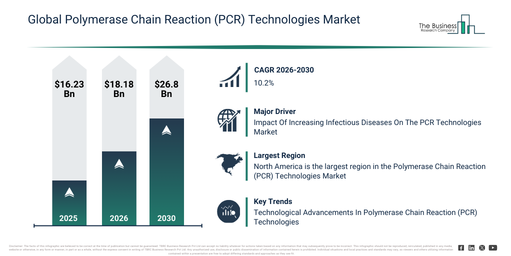
    The polymerase chain reaction (pcr) technologies market size has seen swift expansion in recent years. This market is projected to reach $18.18 billion in 2026, up from $16.23 billion in 2025, reflecting a compound annual growth rate (CAGR) of 12.0%. Historically, this growth was influenced by increasing molecular biology research activities, an uptick in infectious disease diagnostics, the provision of advanced pcr reagents and consumables, an increase in biotech research funding, and enhancements in laboratory automation.

    The polymerase chain reaction (pcr) technologies market size is expected to experience substantial expansion in the coming years. It is projected to achieve a valuation of $26.8 billion by 2030, demonstrating a compound annual growth rate (CAGR) of 10.2%. The impetus for this growth throughout the forecast period arises from factors such as increasing investment in next-generation pcr technologies, a rising demand for decentralized diagnostics, the expansion of environmental and food testing applications, the growing adoption of AI-enabled pcr analysis, and an increased focus on high-sensitivity molecular assays. Significant trends anticipated in this period encompass the growing adoption of advanced pcr platforms, a rising demand for integrated pcr software solutions, the expansion of point-of-care pcr applications, the increasing use of digital pcr technologies, and enhanced automation of pcr workflows.

    Access Your Free Sample Report for In-Depth Market Insights:

    https://www.thebusinessresearchcompany.com/sample.aspx?id=15639&type=smp

    Which Drivers Are Impacting Market Performance In The Polymerase Chain Reaction (PCR) Technologies Market?

    The rising occurrence of infectious diseases is projected to drive the expansion of the PCR technologies market in the future. These diseases are defined as ailments resulting from pathogenic microorganisms such as bacteria, viruses, parasites, or fungi, capable of transmitting between individuals either directly or indirectly. The increasing incidence of infectious diseases underscores the escalating challenges from pathogens, possibly influenced by aspects like globalization, urbanization, antimicrobial resistance, and shifts in the environment. PCR technologies play a role in reducing the spread of infectious diseases by identifying and multiplying specific genetic material from pathogens, thus assisting in their precise and sensitive identification and diagnosis. As an illustration, in 2025, the World Health Organization (WHO), a Switzerland-based specialized agency of the United Nations dedicated to international public health, estimated that 10.7 million individuals globally contracted TB in 2024, representing 131 incident cases per 100,000 population. Consequently, the growing occurrence of infectious diseases is stimulating the PCR technologies market.

    Which Segments Are Contributing To The Growth Of The Polymerase Chain Reaction (PCR) Technologies Market?

    The polymerase chain reaction (pcr) technologies market covered in this report is segmented –

    1) By Product: Reagents And Consumables, Instruments, Software, Services

    2) By Technology: Real-Time Polymerase Chain Reaction, Conventional Polymerase Chain Reaction, Reverse Transcription Polymerase Chain Reaction, Digital Polymerase Chain Reaction, Multiplex Real-Time (RT) Polymerase Chain Reaction, Hot Start Polymerase Chain Reaction, Other Technologies

    3) By Application: Gene Expression Analysis, Genetic Sequencing, Genotyping, Nucleic Acid Synthesis, Standard Validation, Point Of Care Diagnostics, Environmental Application, Other Applications

    4) By End Users: Hospitals And Diagnostic Centers, Research Laboratories And Academic Institutes, Pharmaceutical And Biotechnology Companies, Other End Users

    Subsegments:

    1) By Reagents And Consumables: PCR Master Mixes, Primers And Probes, Dna Or Rna Extraction Kits, PCR Enzymes, Buffers And Solutions, PCR Plates, Tubes, And Strips, Nucleotides

    2) By Instruments: PCR Machines (Thermal Cyclers), Real-Time PCR Systems (QPCR Systems), Digital PCR Systems, Automated PCR Platforms, Gel Electrophoresis Systems, PCR Workstations

    3) By Software: PCR Data Analysis Software, Real-Time PCR Software, Digital PCR Software, Sequence Analysis Software, Multiplex PCR Software, Laboratory Information Management Systems (Lims) For PCR

    4) By Services: PCR Testing Services, Custom PCR Primer Design Services, PCR Training And Consultation Services, PCR Sample Analysis Services, PCR-based Diagnostic Services, Technical Support And Maintenance Services For PCR Equipment

    What Trends Are Expected To Impact The Competitive Landscape Of The Polymerase Chain Reaction (PCR) Technologies Market?

    Leading companies in the PCR technologies market are focused on developing sophisticated technological solutions, such as next-generation quantitative polymerase chain reaction (qPCR) technologies, to enhance accuracy, sensitivity, and efficiency in molecular diagnostics. Quantitative polymerase chain reaction (qPCR) technology quantifies specific DNA sequences in samples, providing real-time monitoring and amplification, making it invaluable across scientific and medical disciplines. For instance, in November 2023, F. Hoffmann-La Roche AG, a Switzerland-based biotechnology company, launched the LightCycler PRO System. This new qPCR (quantitative polymerase chain reaction) system is designed to advance clinical needs in molecular diagnostics and address public health challenges. The system aims to be the most advanced qPCR technology for both clinical diagnostics and research, offering improved performance and usability while bridging the gap between translational research and in vitro diagnostics. It employs gold-standard technology, ensuring quality, precision, and reliability crucial for precise patient diagnosis and informed clinical decisions.

    Who Are The Primary Competitors In The Global Polymerase Chain Reaction (PCR) Technologies Market?

    Major companies operating in the polymerase chain reaction (pcr) technologies market are F Hoffmann La Roche Ltd., Thermo Fisher Scientific Inc., Abbott Laboratories, Danaher Corporation, Siemens Healthineers AG, Becton Dickinson and Company, GE Healthcare Technologies LLC, Eurofins Scientific SE, Agilent Technologies Inc., Illumina Inc., PerkinElmer Inc., bioMérieux SA, Beckman Coulter Inc., Sysmex Corporation, Bio Rad Laboratories Inc., QIAGEN N.V., BGI Genomics Co. Ltd., Cepheid, Takara Bio Inc., Promega Corporation, Analytik Jena AG, LGC Biosearch Technologies, Meridian Bioscience Inc., Canon Medical Systems Corporation, Eppendorf AG

    Access The Complete Report For Deeper Market Insights:

    https://www.thebusinessresearchcompany.com/report/polymerase-chain-reaction-pcr-technologies-global-market-report

    Which Global Regions Are Shaping The Competitive Landscape Of The Polymerase Chain Reaction (PCR) Technologies Market?

    North America was the largest region in the PCR technologies market in 2025. Asia-Pacific is expected to be the fastest-growing region in the forecast period. The regions covered in the polymerase chain reaction (pcr) technologies market report are Asia-Pacific, South East Asia, Western Europe, Eastern Europe, North America, South America, Middle East, Africa.

    Request Your Customized Polymerase Chain Reaction (PCR) Technologies Market Research Report for Competitive Advantage:

    https://www.thebusinessresearchcompany.com/customise?id=15639&type=smp

    Browse Through More Reports Similar to the Global Polymerase Chain Reaction (PCR) Technologies Market 2026, By The Business Research Company

    Poly Adp Ribose Polymerase Parp Inhibitor Market Report 2026

    https://www.thebusinessresearchcompany.com/report/poly-adp-ribose-polymerase-parp-inhibitor-global-market-report

    Polymerase Chain Reaction Pcr Market Report 2026

    https://www.thebusinessresearchcompany.com/report/polymerase-chain-reaction-pcr-global-market-report

    Multiplex Pcr Assays Market Report 2026

    https://www.thebusinessresearchcompany.com/report/multiplex-pcr-assays-global-market-report

    Get in touch with us:

    The Business Research Company: https://www.thebusinessresearchcompany.com/

    Americas +1 310-496-7795

    Asia +44 7882 955267 & +91 8897263534

    Europe +44 7882 955267

    Email us at info@tbrc.info

    Follow us on:

    LinkedIn: https://in.linkedin.com/company/the-business-research-company

    YouTube: https://www.youtube.com/channel/UC24_fI0rV8cR5DxlCpgmyFQ

    Global Market Model: https://www.thebusinessresearchcompany.com/global-market-model
  • Polymerase Chain Reaction (PCR) Market Dynamics 2026: Future Outlook and Key Insights

    Polymerase Chain Reaction (PCR) Market Dynamics 2026: Future Outlook and Key Insights

    Uncover key drivers, emerging technologies, and competitive movements shaping the polymerase chain reaction (pcr) market from 2026–2035 with trusted insights from The Business Research Company

    How much larger will the Polymerase Chain Reaction (PCR) Market be in 2030 compared with 2026?

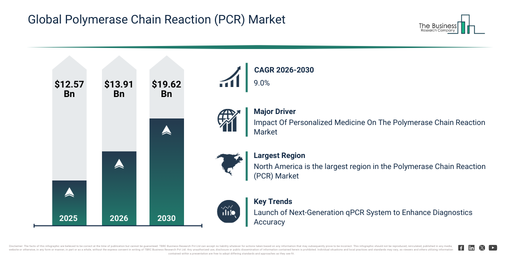
    The polymerase chain reaction (pcr) market size has experienced rapid growth in recent years. It is projected to expand from $12.57 billion in 2025 to $13.91 billion in 2026, at a compound annual growth rate (CAGR) of 10.6%. The historical growth can be attributed to factors such as the increasing application of molecular diagnostics in infectious diseases, the expansion of clinical laboratory infrastructure, progress in thermal cycler technology, a rising need for accurate genetic testing, and the growth in academic research endeavors.

    The polymerase chain reaction (pcr) market is anticipated to show robust growth in the coming years. It is projected to expand to $19.62 billion by 2030, demonstrating a compound annual growth rate (CAGR) of 9.0%. This growth throughout the forecast period can be attributed to the rising acceptance of point-of-care pcr testing, increased investment in precision diagnostics, the broadening of decentralized laboratory testing, the expanding application of digital pcr for detecting rare mutations, and a heightened emphasis on rapid diagnostic turnaround times. Significant trends for this period include the wider adoption of real-time and digital pcr, a growing demand for high-throughput pcr testing, increased utilization of pcr in oncology diagnostics, the rising integration of automated pcr systems, and an enhanced focus on multiplex pcr assays.

    Access Your Free Sample Report for In-Depth Market Insights:

    https://www.thebusinessresearchcompany.com/sample.aspx?id=15638&type=smp

    What Drivers Are Guiding Growth Patterns In The Polymerase Chain Reaction (PCR) Market?

    The future expansion of the polymerase chain reaction (PCR) market is anticipated to be driven by the increasing need for personalized medicine. Personalized medicine, also known as precision medicine, describes a medical strategy where healthcare choices, methods, interventions, and treatments are customized to the distinct characteristics of every patient. This demand for personalized medicine is growing because of progress in data analytics, unique patient treatment outcomes, and the capacity to adapt therapies according to a person’s genetic makeup. Polymerase Chain Reaction (PCR) supports personalized medicine by facilitating the multiplication and examination of particular genetic sequences, which enables medical professionals to devise treatment strategies based on a patient’s unique genetic profiles. As an illustration, the Personalized Medicine Coalition, a U.S.-based advocacy organization for customized medical therapies, reported in February 2024 that the FDA cleared 16 new personalized treatments for rare disease patients in 2023, an increase from six in 2022. Consequently, the expanding requirement for personalized medicine is propelling the development of the polymerase chain reaction market.

    How Is The Polymerase Chain Reaction (PCR) Market Divided Into Segments?

    The polymerase chain reaction (pcr) market covered in this report is segmented –

    1) By Type: Conventional Polymerase Chain Reaction, Other Types

    2) By Indication: Infectious Diseases, Oncology, Genetic Disorders, Other Indications

    3) By Application: Medical, Non-Medical

    4) By End User: Hospitals And Clinics, Pharmaceutical And Biotechnology Industries, Diagnostic Centers, Academic And Research Organization

    Subsegments:

    1) By Conventional Polymerase Chain Reaction: Endpoint Pcr, Gel Electrophoresis-Based Pcr, Reverse Transcription Pcr (Rt-Pcr), Quantitative Pcr (Qpcr) For Gene Expression, Nested Pcr

    2) By Other Types: Real-Time Pcr (Qpcr) (Quantitative Pcr), Digital Pcr (Dpcr), Multiplex Pcr, Reverse Transcription-Quantitative Pcr (Rt-Qpcr), Isothermal Amplification (Lamp), Next-Generation Pcr (Ngs-Based Pcr Techniques), High-Throughput Pcr

    Which Trends Are Guiding The Evolution Of The Polymerase Chain Reaction (PCR) Market?

    Leading companies in the polymerase chain reaction (PCR) market are focusing on developing technological improvements, such as real-time and digital PCR platforms, to satisfy the growing demand for rapid diagnostics, personalized medicine, and high-throughput genetic testing. A real-time PCR (qPCR) system combines precise thermal cycling, fluorescent detection, and sophisticated software to quantify DNA/RNA levels, yielding more accurate and faster results compared to traditional end-point PCR, which only indicates the presence or absence of a target sequence. For instance, in November 2023, Roche, a Switzerland-based diagnostics firm, launched the LightCycler PRO System, a next-generation qPCR system designed for both clinical diagnostics and research purposes. This system features improved temperature uniformity, enhanced software algorithms, and a user-friendly interface, enabling laboratories to perform high-quality assays, develop custom tests, or use modular IVD research assays, thereby boosting flexibility, throughput, and accuracy in nucleic acid testing.

    Which Key Market Players Are Investing In Expansion And Innovation Within The Polymerase Chain Reaction (PCR) Market?

    Major companies operating in the polymerase chain reaction (pcr) market are F Hoffmann La Roche Ltd., Thermo Fisher Scientific Inc., Abbott Laboratories, Danaher Corporation, Siemens Healthineers GmbH, Becton Dickinson and Company, GE HealthCare Technologies Inc, Eurofins Scientific, Agilent Technologies Inc., Illumina Inc., PerkinElmer Inc., bioMérieux SA, Beckman Coulter Inc, Sysmex Corporation, Bio Rad Laboratories Inc., Qiagen N.V., BGI Genomics Co. Ltd., Cepheid, Biocartis SA, Centogene N.V., Takara Bio Inc., LGC Biosearch Technologies, Analytik Jena AG, Promega Corporation, Meridian Bioscience Inc.

    Access The Complete Report For Deeper Market Insights:

    https://www.thebusinessresearchcompany.com/report/polymerase-chain-reaction-pcr-global-market-report

    Which Regions Are Poised For Strategic Growth In The Polymerase Chain Reaction (PCR) Market?

    North America was the largest region in the polymerase chain reaction (PCR) market in 2025. Asia-Pacific is expected to be the fastest-growing region in the forecast period. The regions covered in the polymerase chain reaction (pcr) market report are Asia-Pacific, South East Asia, Western Europe, Eastern Europe, North America, South America, Middle East, Africa.

    Request Your Customized Polymerase Chain Reaction (PCR) Market Research Report for Competitive Advantage:

    https://www.thebusinessresearchcompany.com/customise?id=15638&type=smp

    Browse Through More Reports Similar to the Global Polymerase Chain Reaction (PCR) Market 2026, By The Business Research Company

    Poly Adp Ribose Polymerase Parp Inhibitor Market Report 2026

    https://www.thebusinessresearchcompany.com/report/poly-adp-ribose-polymerase-parp-inhibitor-global-market-report

    Polymerase Chain Reaction Pcr Technologies Market Report 2026

    https://www.thebusinessresearchcompany.com/report/polymerase-chain-reaction-pcr-technologies-global-market-report

    Multiplex Pcr Assays Market Report 2026

    https://www.thebusinessresearchcompany.com/report/multiplex-pcr-assays-global-market-report

    Get in touch with us:

    The Business Research Company: https://www.thebusinessresearchcompany.com/

    Americas +1 310-496-7795

    Asia +44 7882 955267 & +91 8897263534

    Europe +44 7882 955267

    Email us at info@tbrc.info

    Follow us on:

    LinkedIn: https://in.linkedin.com/company/the-business-research-company

    YouTube: https://www.youtube.com/channel/UC24_fI0rV8cR5DxlCpgmyFQ

    Global Market Model: https://www.thebusinessresearchcompany.com/global-market-model

  • Polygenic Risk Score Services Market Research: Growth Projections and Trends 2030

    Polygenic Risk Score Services Market Research: Growth Projections and Trends 2030

    Uncover key drivers, emerging technologies, and competitive movements shaping the polygenic risk score services market from 2026–2035 with trusted insights from The Business Research Company

    Starting from its 2026 valuation, what market size is the Polygenic Risk Score Services Market expected to reach by 2030?

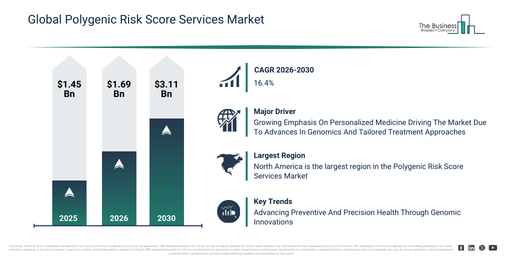
    The polygenic risk score services market has observed rapid expansion in recent years. It is projected to grow from $1.45 billion in 2025 to $1.69 billion in 2026, exhibiting a compound annual growth rate (CAGR) of 16.7%. The market’s historical growth can be linked to the increase in large-scale genotyping studies, greater access to genomic databases, the expansion of preventive healthcare programs, a rising focus on genetic risk assessment, and advancements in statistical genetics methods.

    The polygenic risk score services market is set for substantial expansion in the coming years, with projections indicating it will reach $3.11 billion by 2030, maintaining a compound annual growth rate (CAGR) of 16.4%. This anticipated growth stems from factors such as the increasing clinical application of risk stratification tools, the growing integration of polygenic risk scores (PRS) into personalized medicine, the expansion of preventive genomics programs, a rising demand for interoperable genetic data platforms, and enhanced regulatory clarity for genetic services. Significant trends expected during this forecast period include the wider adoption of polygenic risk prediction algorithms, a greater integration of PRS with clinical decision-making tools, an escalating need for population-specific risk models, the broadening of direct-to-consumer genetic risk services, and an intensified focus on data security and privacy.

    Access Your Free Sample Report for In-Depth Market Insights:

    https://www.thebusinessresearchcompany.com/sample.aspx?id=28302&type=smp

    What Drivers Are Driving Adoption Within The Polygenic Risk Score Services Market?

    The increasing focus on personalized medicine is anticipated to propel the growth of the polygenic risk score (PRS) services market in the future. This healthcare approach involves customizing prevention, diagnosis, and treatment based on an individual’s unique genetic makeup, environmental influences, and lifestyle choices. Its rise is attributed to advancements in genomics, which offer enhanced understanding of individual genetic variations, thereby enabling more accurate and focused therapeutic approaches. The polygenic risk score services market plays a crucial role in this trend by examining numerous genetic variants to assess disease risk, empowering clinicians to develop tailored prevention strategies, implement early interventions, and create customized treatment plans specific to each patient’s genetic profile. As an illustration, in February 2024, the Personalized Medicine Coalition, a US-based nonprofit organization, reported that the FDA approved 16 new personalized treatments for rare disease patients in 2023, which was an increase from six approvals in 2022, in addition to seven personalized cancer drugs and three treatments for other conditions. Consequently, the heightened emphasis on personalized medicine is stimulating the growth of the polygenic risk score services market.

    What Segments Are Included Within The Polygenic Risk Score Services Market?

    The polygenic risk score services market covered in this report is segmented –

    1) By Service Type: Genotyping, Sequencing, Data Analysis, Reporting, Other Service Types

    2) By Application: Disease Risk Assessment, Personalized Medicine, Research, Other Applications

    3) By End-User: Hospitals And Clinics, Research Institutes, Direct-to-Consumer, Other End-Users

    Subsegments:

    1) By Genotyping: Array-Based Genotyping, Targeted Genotyping, High-Throughput Genotyping

    2) By Sequencing: Whole Genome Sequencing (Wgs), Whole Exome Sequencing (Wes), Targeted Sequencing

    3) By Data Analysis: Polygenic Risk Prediction Algorithms, Bioinformatics And Statistical Analysis, Data Integration With Electronic Health Records (Ehr)

    4) By Reporting: Clinical Reports For Healthcare Providers, Direct-To-Consumer (Dtc) Reports, Risk Stratification Reports (Disease-Specific)

    5) By Other Service Types: Genetic Counseling Services, Data Storage And Cloud-Based Platforms, Prs Software And Toolkits

    What Trends Are Projected To Support The Growth Of The Polygenic Risk Score Services Market?

    Leading companies operating in the polygenic risk score services market are focusing on developing innovative solutions like pharmacogenomics to enhance personalized treatment strategies and improve patient outcomes. Pharmacogenomics refers to the study of how an individual’s genetic makeup influences their response to drugs, enabling more precise and personalized treatment. For instance, in July 2025, Bupa, a UK-based health insurance company, launched a new suite of DNA-based tests to support personalized health and wellness insights. This suite offers personalized insights on medication response and disease risk, enabling earlier detection and tailored treatment for conditions such as cancer, diabetes, and heart disease. These tests help prevent side effects, improve long-term health outcomes, and empower individuals to take proactive steps for themselves and their families. The purpose is to shift healthcare from reactive treatment to preventive, precision health management.

    Who Are The Core Companies Influencing Trends In The Polygenic Risk Score Services Market?

    Major companies operating in the polygenic risk score services market are Thermo Fisher Scientific Inc., Laboratory Corporation of America Holdings, Illumina Inc., Endeavor Health Inc., Myriad Genetics Inc., The Broad Institute of MIT and Harvard, BGI Group, Invitae Corporation, 23andMe Holding Co., Color Health Inc., Genomics Ltd., Cogentech S.R.L., Gene by Gene Ltd., Our Future Health Ltd., Mapmygenome India Limited, Australian Genome Research Facility (AGRF) Ltd., Golden Helix Inc., Allelica Inc., Antegenes OÜ, GeninCode Plc

    Access The Complete Report For Deeper Market Insights:

    https://www.thebusinessresearchcompany.com/report/polygenic-risk-score-services-global-market-report

    Which Regions Are Projected To Dominate The Polygenic Risk Score Services Market In The Coming Years?

    North America was the largest region in the polygenic risk score services market in 2025. Asia-Pacific is expected to be the fastest-growing region in the forecast period. The regions covered in the polygenic risk score services market report are Asia-Pacific, South East Asia, Western Europe, Eastern Europe, North America, South America, Middle East, Africa.

    Request Your Customized Polygenic Risk Score Services Market Research Report for Competitive Advantage:

    https://www.thebusinessresearchcompany.com/customise?id=28302&type=smp

    Browse Through More Reports Similar to the Global Polygenic Risk Score Services Market 2026, By The Business Research Company

    Integrated Risk Management Software Market Report 2026

    https://www.thebusinessresearchcompany.com/report/integrated-risk-management-software-global-market-report

    Genetic Testing Services Market Report 2026

    https://www.thebusinessresearchcompany.com/report/genetic-testing-services-global-market-report

    Risk Management Software Market Report 2026

    https://www.thebusinessresearchcompany.com/report/risk-management-software-global-market-report

    Get in touch with us:

    The Business Research Company: https://www.thebusinessresearchcompany.com/

    Americas +1 310-496-7795

    Asia +44 7882 955267 & +91 8897263534

    Europe +44 7882 955267

    Email us at info@tbrc.info

    Follow us on:

    LinkedIn: https://in.linkedin.com/company/the-business-research-company

    YouTube: https://www.youtube.com/channel/UC24_fI0rV8cR5DxlCpgmyFQ

    Global Market Model: https://www.thebusinessresearchcompany.com/global-market-model