Month: May 2026

  • Rise In Air Pollution Driving The Growth Of The Market Due To Increasing Health Risks And Demand For Targeted Therapies Is Supporting Development Across The Respiratory Biologics Market

    Rise In Air Pollution Driving The Growth Of The Market Due To Increasing Health Risks And Demand For Targeted Therapies Is Supporting Development Across The Respiratory Biologics Market

    The Business Research Company’s 2026 market reports feature advanced enhancements such as market attractiveness analysis, total addressable market evaluation, company benchmarking matrices, interactive Excel dashboards, expanded supply chain intelligence, emerging startup coverage, and detailed product insights, delivering more actionable and strategically valuable research.

    How Does The Forecasted Market Size Of The Respiratory Biologics Market Compare Between 2026 And 2030?

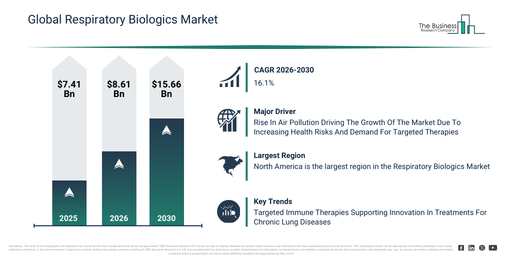
    The respiratory biologics market has experienced rapid expansion in recent years. It is projected to grow from $7.41 billion in 2025 to $8.61 billion in 2026, achieving a compound annual growth rate (CAGR) of 16.3%. The growth observed in the past can be credited to the limitations of conventional inhalers, increasing severe asthma cases, biologic therapy approvals, improved immunology research, and the expansion of specialty clinics.

    The respiratory biologics market is projected for substantial expansion over the coming years. This market is anticipated to reach $15.66 billion by 2030, exhibiting a compound annual growth rate (CAGR) of 16.1%. Factors contributing to this growth include advancements in precision respiratory medicine, the expansion of biologic pipelines, increased healthcare expenditure, enhanced reimbursement strategies, and addressing unmet needs in severe respiratory conditions. Key trends identified for this period encompass the growing acceptance of targeted biologic treatments, the broadening scope of severe asthma therapies, the development of biomarker-driven patient selection methods, a rise in the application of injectable respiratory medications, and a movement towards long-acting biologic agents.

    Download A Free Sample Report For Comprehensive Market Insights:

    https://www.thebusinessresearchcompany.com/sample.aspx?id=23497&type=smp

    Which Growth Drivers Are Expected To Support The Respiratory Biologics Market Forward?

    The increasing levels of air pollution are expected to propel the future growth of the respiratory biologics market. Air pollution refers to the existence of harmful substances such as gases, particulate matter, and biological molecules in the Earth’s atmosphere, which can negatively affect human health and the environment. This increase in air pollution is occurring due to rising industrialization and urbanization, leading to higher emissions of pollutants from factories, vehicles, and construction activities. Respiratory biologics assist in combating the health effects of air pollution by delivering targeted therapies that reduce inflammation and improve lung function in individuals exposed to airborne pollutants. For instance, in January 2025, according to the Environmental Protection Agency, a US-based government agency, the United States released over 66 million tons of pollutants into the atmosphere in 2023. Therefore, the rise in air pollution is driving the expansion of the respiratory biologics market.

    How Is The Respiratory Biologics Market Distributed Across Key Segments?

    The respiratory biologics market covered in this report is segmented –

    1) By Disease Indication: Asthma, Chronic Rhinosinasitis, Hypereosinophilic Syndrome

    2) By Route Of Administration: Intravenous, Subcutaneous

    3) By Sales Channel: Hospitals, Specialty Clinics, Retail Pharmacies, Mail Order Pharmacies

    Subsegments:

    1) By Asthma: Severe Eosinophilic Asthma, Allergic Asthma, Non-Allergic Asthma

    2) By Chronic Rhinosinasitis: Chronic Rhinosinusitis: Chronic Rhinosinusitis with Nasal Polyps, Chronic Rhinosinusitis without Nasal Polyps

    3) By Hypereosinophilic Syndrome (HES): Idiopathic HES, Lymphocytic Variant HES, Myeloproliferative HES

    Which Trends Are Contributing To Changes In The Respiratory Biologics Market?

    Leading companies within the respiratory biologics market are concentrating their efforts on advancing novel biologic treatments, such as targeted immune therapies for chronic respiratory diseases, with the goal of delivering precise care to lessen inflammation and improve lung function. These targeted immune therapies for chronic respiratory diseases are interventions designed to help regulate the body’s immune system, thereby reducing swelling and alleviating breathing difficulties in persistent lung conditions. For instance, in September 2024, Sanofi S.A., a pharmaceutical company based in France, announced that the US Food and Drug Administration (FDA) had approved Dupixent (dupilumab) for use as an add-on maintenance therapy for adults diagnosed with chronic obstructive pulmonary disease (COPD) that was inadequately controlled and presented with an eosinophilic phenotype. This authorization signified a major milestone, establishing Dupixent as the inaugural biologic medicine approved in the US for treating this specific population of COPD patients.

    Which Organizations Are Involved In The Respiratory Biologics Market?

    Major companies operating in the respiratory biologics market are Sanofi S.A., AstraZeneca plc, GlaxoSmithKline plc, Regeneron Pharmaceuticals Inc., Novartis AG, F. Hoffmann-La Roche Ltd., Amgen Inc., Swedish Orphan Biovitrum AB, Teva Pharmaceutical Industries Ltd., AbbVie Inc., Pfizer Inc., Merck & Co. Inc., Bristol Myers Squibb Company, Johnson & Johnson, Boehringer Ingelheim International GmbH, Biogen Inc., Vertex Pharmaceuticals Incorporated, Glenmark Pharmaceuticals Ltd., Kiniksa Pharmaceuticals Ltd., Pieris Pharmaceuticals Inc.

    Access The Complete Respiratory Biologics Market Report:

    https://www.thebusinessresearchcompany.com/report/respiratory-biologics-global-market-report

    Which Region Stands As The Largest Contributor To The Respiratory Biologics Market?

    North America was the largest region in the respiratory biologics market in 2025. Asia-Pacific is expected to be the fastest-growing region in the forecast period. The regions covered in the respiratory biologics market report are Asia-Pacific, South East Asia, Western Europe, Eastern Europe, North America, South America, Middle East, Africa.

    Access Respiratory Biologics Market Report for Deeper Competitive Insights

    https://www.thebusinessresearchcompany.com/sample.aspx?id=23497&type=smp

    Browse Through More Reports Similar to the Global Respiratory Biologics Market 2026, By The Business Research Company

    Respiratory Devices And Equipment Therapeutic And Diagnostic Market Report 2026

    https://www.thebusinessresearchcompany.com/report/respiratory-devices-and-equipment-therapeutic-and-diagnostic-global-market-report

    Respiratory Devices And Equipment Therapeutic Market Report 2026

    https://www.thebusinessresearchcompany.com/report/respiratory-devices-and-equipment-therapeutic-global-market-report

    Respiratory Disease Testing Market Report 2026

    https://www.thebusinessresearchcompany.com/report/respiratory-disease-testing-global-market-report

    Get in touch with us:

    The Business Research Company: https://www.thebusinessresearchcompany.com/

    Americas: +1 310-496-7795

    Asia: +44 7882 955267 & +91 8897263534

    Europe: +44 7882 955267

    Email us at: marketing@tbrc.info

    Follow us on:

    LinkedIn: https://in.linkedin.com/company/the-business-research-company

    YouTube: https://www.youtube.com/channel/UC24_fI0rV8cR5DxlCpgmyFQ

    Global Market Model: https://www.thebusinessresearchcompany.com/global-market-model
  • Impact Of Clinical Trials On The Research-Grade Proteins Market Is Supporting Development Across The Research-Grade Proteins Market

    Impact Of Clinical Trials On The Research-Grade Proteins Market Is Supporting Development Across The Research-Grade Proteins Market

    The Business Research Company’s 2026 market reports feature advanced enhancements such as market attractiveness analysis, total addressable market evaluation, company benchmarking matrices, interactive Excel dashboards, expanded supply chain intelligence, emerging startup coverage, and detailed product insights, delivering more actionable and strategically valuable research.

    What Increase In Market Value Is Predicted For The Research-Grade Proteins Market During The 2026–2030 Period?

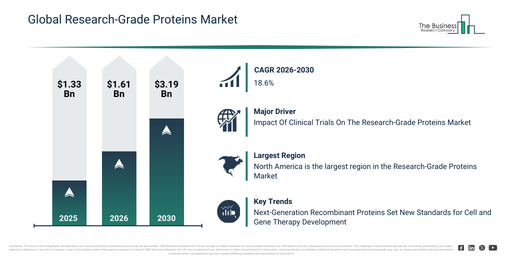
    The research-grade proteins market size has experienced substantial growth in recent years. This market is set to expand from $1.33 billion in 2025 to $1.61 billion in 2026, demonstrating a compound annual growth rate (CAGR) of 20.8%. The historical growth of this market can be attributed to various factors, such as the increase in academic life sciences research, the growing utilization of proteins in molecular biology experiments, the expansion of biopharmaceutical research and development activities, the accessibility of recombinant protein expression systems, and the rising investment in fundamental biomedical research.

    The research-grade proteins market is projected to experience substantial expansion in the coming years, anticipated to reach a valuation of $3.19 billion by 2030, exhibiting a compound annual growth rate (CAGR) of 18.6%. Several factors are set to drive this growth during the forecast period, including an intensified focus on precision medicine research, a growing need for protein-based drug targets, advancements in cell and gene therapy research, the broader application of proteins in structural biology, and the increasing trend of pharmaceutical companies outsourcing their research endeavors. Key trends anticipated over the forecast timeframe encompass an escalating demand for high-purity proteins in drug discovery, the expanded utilization of recombinant proteins in cell and molecular biology investigations, wider integration of research-grade proteins in immunology and oncology studies, the broadening scope of protein-based assays and functional analyses, and a stronger inclination towards custom and application-specific proteins.

    Download A Free Sample Report For Comprehensive Market Insights:

    https://www.thebusinessresearchcompany.com/sample.aspx?id=15917&type=smp

    What Influential Factors Are Boosting The Research-Grade Proteins Market Demand?

    The escalating number of clinical trials is anticipated to stimulate the expansion of the research-grade proteins market. Clinical trials are investigative studies focused on evaluating the safety and effectiveness of new medical treatments, interventions, or devices in humans. The increase in these trials stems from advancements in medical research, the existing burden of diseases, shifts in regulatory policies, patient demand, and industry investment. Research-grade proteins play a vital role in clinical trials by serving as indispensable tools for developing biomarkers, formulating assays, pinpointing drug targets, ensuring quality control, and setting reference standards, thus confirming the accuracy and reliability of experimental results. For example, in December 2024, the Association of the British Pharmaceutical Industry (ABPI), a UK-based organization, indicated that the number of pharmaceutical industry trials launched in the UK rose for the second consecutive year, climbing from 411 in 2022 to 426 in 2023. Therefore, the increasing volume of clinical trials is driving the growth of the research-grade proteins market.

    How Does Segment Analysis Break Down The Research-Grade Proteins Market Structure?

    The research-grade proteins market covered in this report is segmented –

    1) By Product: Cytokines And Growth Factors, Antibodies, Immune Checkpoint Proteins, Virus Antigens, Enzymes, Recombinant Regulatory Proteins, Hormones, Other Products

    2) By Host Cell: Mammalian Cells, Bacterial Cells, Fungi And Yeast, Insect Cells, Other Host Cells

    3) By End-Use: Pharmaceutical And Biotechnology Companies, Academic And Research Institute, Other End-Uses

    Subsegments:

    1) By Cytokines And Growth Factors: Interleukins, Interferons, Colony Stimulating Factors, Erythropoietin, Granulocyte Macrophage Colony-Stimulating Factor

    2) By Antibodies: Monoclonal Antibodies, Polyclonal Antibodies, Recombinant Antibodies, Conjugated Antibodies

    3) By Immune Checkpoint Proteins: PD-1 Inhibitors, PD-L1 Inhibitors, CTLA-4 Inhibitors

    4) By Virus Antigens: HIV Antigens, Hepatitis Antigens, Influenza Antigens, Hepatitis B Antigens

    5) By Enzymes: Restriction Enzymes, Proteases, Ligases, Kinases

    6) By Recombinant Regulatory Proteins: Transcription Factors, Regulatory Enzymes, Epigenetic Modifiers

    7) By Hormones: Insulin, Thyroid Hormones, Growth Hormones, Adrenaline

    8) By Other Products: Peptides, Serum Proteins, Antigen-Binding Proteins

    What Trends Are Shaping The Research-Grade Proteins Market Structure?

    Leading companies in the research-grade proteins market are focused on creating innovative solutions, including high-purity, animal-origin-free recombinant proteins, to improve consistency, safety, and performance in advanced cell and gene therapy processes. These high-purity, animal-origin-free recombinant proteins are laboratory-produced without any animal-derived materials and are purified to stringent standards, guaranteeing uniformity, safety, and dependability for both research and therapeutic uses. For instance, in October 2025, Qkine Ltd., a UK-based manufacturing firm, launched a new range of Cell Therapy Grade recombinant proteins specifically designed to fulfill the exacting requirements of cell therapy research, process development, and GMP manufacturing. These particular high-purity, animal-origin-free proteins feature low endotoxin levels and minimal host cell contaminants, produced according to defined manufacturing standards with complete regulatory documentation. Their reliable performance supports effortless scalability from initial research stages to GMP clinical workflows. Intended for sophisticated applications such as CAR-T, iPSC differentiation, and ex vivo gene editing, these regulatory-ready proteins help expedite therapy development while minimizing risks.

    Who Are The Firms Contributing To The Research-Grade Proteins Market Ecosystem?

    Major companies operating in the research-grade proteins market are Thermo Fisher Scientific Inc., Bio-Rad Laboratories Inc., Bio-Techne, Stemcell Technologies Inc., Miltenyi Biotec, GenScript Biotech Corporation, Sino Biological Inc., ACROBiosystems, OriGene Technologies Inc., RayBiotech Inc., Rockland Immunochemicals Inc., Proteintech Group Inc., Novus Biologicals LLC, Active Motif, Aviva Systems Biology Corporation, StressMarq Biosciences Inc., Abnova Corporation, AnaSpec, Biomatik, Prospec-Tany Technogene Ltd., Cusabio Technology LLC, United States Biological, Laurus Bio, Boster Biological Technology, AMS Biotechnology Europe Ltd (AMSBIO)

    Access The Complete Research-Grade Proteins Market Report:

    https://www.thebusinessresearchcompany.com/report/research-grade-proteins-global-market-report

    What Is The Largest Regional Market In The Research-Grade Proteins Market?

    North America was the largest region in the research-grade proteins market in 2025. Asia-Pacific is expected to be the fastest-growing region in the forecast period. The regions covered in the research-grade proteins market report are Asia-Pacific, South East Asia, Western Europe, Eastern Europe, North America, South America, Middle East, Africa.

    Access Research-Grade Proteins Market Report for Deeper Competitive Insights

    https://www.thebusinessresearchcompany.com/sample.aspx?id=15917&type=smp

    Browse Through More Reports Similar to the Global Research-Grade Proteins Market 2026, By The Business Research Company

    Research Grade Proteins Market Report 2026

    https://www.thebusinessresearchcompany.com/report/research-grade-proteins-global-market-report

    Protein Assays Market Report 2026

    https://www.thebusinessresearchcompany.com/report/protein-assays-global-market-report

    Protein Engineering Market Report 2026

    https://www.thebusinessresearchcompany.com/report/protein-engineering-global-market-report

    Get in touch with us:

    The Business Research Company: https://www.thebusinessresearchcompany.com/

    Americas: +1 310-496-7795

    Asia: +44 7882 955267 & +91 8897263534

    Europe: +44 7882 955267

    Email us at: marketing@tbrc.info

    Follow us on:

    LinkedIn: https://in.linkedin.com/company/the-business-research-company

    YouTube: https://www.youtube.com/channel/UC24_fI0rV8cR5DxlCpgmyFQ

    Global Market Model: https://www.thebusinessresearchcompany.com/global-market-model

  • Boosting Investment In Medical And Health Research And Development Drives Research Antibodies And Reagents Market Is Supporting Development Across The Research Antibodies and Reagents Market

    Boosting Investment In Medical And Health Research And Development Drives Research Antibodies And Reagents Market Is Supporting Development Across The Research Antibodies and Reagents Market

    The Business Research Company’s 2026 market reports feature advanced enhancements such as market attractiveness analysis, total addressable market evaluation, company benchmarking matrices, interactive Excel dashboards, expanded supply chain intelligence, emerging startup coverage, and detailed product insights, delivering more actionable and strategically valuable research.

    How Will The Market Size Of The Research Antibodies and Reagents Market Progress Through 2030?

    The research antibodies and reagents market has observed substantial growth in recent years. It is projected to expand from $17.43 billion in 2025 to $18.65 billion in 2026, exhibiting a compound annual growth rate (CAGR) of 7.0%. The historical growth in this market can be attributed to several factors, including increased funding for basic life science research, a heightened utilization of western blot and elisa techniques, the proliferation of academic and research institutes, the rising prevalence of chronic and infectious diseases, and the early integration of antibody-based detection methods.

    The research antibodies and reagents market size is expected to see strong growth in the next few years. It will grow to $24.39 billion in 2030 at a compound annual growth rate (CAGR) of 6.9%. The growth in the forecast period can be attributed to advancement in proteomics and genomics research, increasing pharmaceutical and biotechnology r&d pipelines, rising demand for precision and translational medicine, growth of contract research organizations, expansion of cell and gene therapy research. Major trends in the forecast period include rising adoption of recombinant and monoclonal antibodies, growing demand for high-specificity and validated antibodies, expansion of multiplex and high-throughput assay reagents, increasing use of ready-to-use antibody and reagent kits, custom antibody development for specialized research needs.

    Download A Free Sample Report For Comprehensive Market Insights:

    https://www.thebusinessresearchcompany.com/sample.aspx?id=3418&type=smp

    Which Drivers Are Advancing The Research Antibodies and Reagents Market Growth?

    Increased financial commitment to medical and health research and development (R&D) is anticipated to drive growth in the research antibodies and reagents market. In the realm of life science research, antibodies and reagents are indispensable components for investigating biological processes or the origins of diseases through careful experimentation, observation, laboratory work, analysis, and testing. For instance, in 2023, data from the UK-based government agency, Office for National Statistics, revealed that the UK government’s net spending on R&D climbed to £17.4 ($22.1 billion) in 2023, an increase from £16.1 billion ($20.45 billion) in 2022, representing an 8.2% rise. Therefore, enhanced investment in healthcare R&D will expand the market utilization of research antibodies and reagents.

    What Segment Types Are Included In The Research Antibodies and Reagents Market Analysis?

    The research antibodies and reagents market covered in this report is segmented –

    1) By Technology: Western Blot, Immunofluorescence, Immunohistochemistry, Flow Cytometry, Enzyme-Linked Immunosorbent Assay (Elisa), Others

    2) By Application: Proteomics, Genomics, Other Applications

    3) By End User: Pharmaceutical & Biotechnology Industry, Academic & Research Institutes, Contract Research Organizations (CROs)

    Subsegments:

    1) By Western Blot: Primary Antibodies For Western Blot, Secondary Antibodies For Western Blot, Detection Kits

    2) By Immunofluorescence: Primary Antibodies For Immunofluorescence, Secondary Antibodies For Immunofluorescence, Fluorescent Dyes And Probes

    3) By Immunohistochemistry: Primary Antibodies For Immunohistochemistry, Secondary Antibodies For Immunohistochemistry, Detection Kits

    4) By Flow Cytometry: Fluorochrome-Conjugated Antibodies, Isotype Controls, Flow Cytometry Kits

    5) By Enzyme-Linked Immunosorbent Assay (ELISA): Capture Antibodies, Detection Antibodies, ELISA Kits

    6) By Others: Proteomics Reagents, Cell Culture Reagents, Antibody Conjugation Kits

    Which Trends Are Supporting The Evolution Of The Research Antibodies and Reagents Market?

    Leading firms within the research antibodies and reagents market are concentrating on creating reagent solutions for immunohistochemistry to achieve a competitive advantage. Such a reagent solution for immunohistochemistry generally comprises antibodies and blocking agents suspended in a buffered medium. An example is Aptamer Group PLC, a UK-based developer of optimer binders in the life sciences industry, which introduced Optimer-Fc in March 2023, designed for automated immunohistochemistry (IHC) workflows. Optimer-Fc represents an innovative solution, combining an Optimer binder with the Fc domain of an antibody, thus providing an effective alternative to primary detecting antibodies across diverse IHC applications. This groundbreaking method enables Optimer-Fc to be smoothly integrated into current workflows, successfully replacing the primary detecting antibody without jeopardizing process integrity.

    Which Key Players Are Active In The Research Antibodies and Reagents Market?

    Major companies operating in the research antibodies and reagents market are Thermo Fisher Scientific Inc., Abcam plc, Cell Signaling Technology Inc., Merck KGaA, Santa Cruz Biotechnology Inc., Bio-Rad Laboratories Inc., Danaher Corporation, Johnson & Johnson, F. Hoffmann-La Roche AG, Becton Dickinson and Company, Immunochina, Takara Bio, GE Healthcare, Zhejiang Kangte Biotechnology Co. Ltd., Wuxi Tech-star Technology Co. Ltd., Shaanxi Bloom Tech Co. Ltd., PerkinElmer Inc., Lonza Group AG, GenScript Biotech Corporation, Bio-Techne Corporation

    Access The Complete Research Antibodies and Reagents Market Report:

    https://www.thebusinessresearchcompany.com/report/research-antibodie-and-reagent-global-market-report

    Which Region Contributes The Most To The Research Antibodies and Reagents Market?

    North America was the largest region in the research antibodies and reagents market in 2025. The regions covered in the research antibodies and reagents market report are Asia-Pacific, South East Asia, Western Europe, Eastern Europe, North America, South America, Middle East, Africa.

    Access Research Antibodies and Reagents Market Report for Deeper Competitive Insights

    https://www.thebusinessresearchcompany.com/sample.aspx?id=3418&type=smp

    Browse Through More Reports Similar to the Global Research Antibodies and Reagents Market 2026, By The Business Research Company

    Research Antibodie And Reagent Market Report 2026

    https://www.thebusinessresearchcompany.com/report/research-antibodie-and-reagent-global-market-report

    Antibody Discovery Market Report 2026

    https://www.thebusinessresearchcompany.com/report/antibody-discovery-global-market-report

    Next Generation Antibody Therapeutics Market Report 2026

    https://www.thebusinessresearchcompany.com/report/next-generation-antibody-therapeutics-global-market-report

    Get in touch with us:

    The Business Research Company: https://www.thebusinessresearchcompany.com/

    Americas: +1 310-496-7795

    Asia: +44 7882 955267 & +91 8897263534

    Europe: +44 7882 955267

    Email us at: marketing@tbrc.info

    Follow us on:

    LinkedIn: https://in.linkedin.com/company/the-business-research-company

    YouTube: https://www.youtube.com/channel/UC24_fI0rV8cR5DxlCpgmyFQ

    Global Market Model: https://www.thebusinessresearchcompany.com/global-market-model
  • Surge In Increasing Prevalence Of Hypertension Fueling The Growth Of The Market Due To Rising Unhealthy Lifestyles Is Supporting Development Across The Renin-Angiotensin-System (RAS)-Acting Agents Market

    Surge In Increasing Prevalence Of Hypertension Fueling The Growth Of The Market Due To Rising Unhealthy Lifestyles Is Supporting Development Across The Renin-Angiotensin-System (RAS)-Acting Agents Market

    The Business Research Company’s 2026 market reports feature advanced enhancements such as market attractiveness analysis, total addressable market evaluation, company benchmarking matrices, interactive Excel dashboards, expanded supply chain intelligence, emerging startup coverage, and detailed product insights, delivering more actionable and strategically valuable research.

    What Is The Expected Market Size Of The Renin-Angiotensin-System (RAS)-Acting Agents Market In 2026 And How Much Will It Reach By 2030?

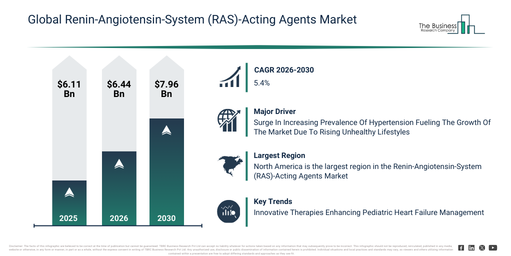
    Recent years have seen robust growth in the renin-angiotensin-system (ras)-acting agents market size. It is projected to expand from $6.11 billion in 2025 to $6.44 billion in 2026, achieving a compound annual growth rate (CAGR) of 5.5%. The expansion historically can be ascribed to high hypertension prevalence, aging population growth, widespread ACE inhibitor adoption, increased cardiovascular screening, and the affordability of generic drugs.

    The renin-angiotensin-system (ras)-acting agents market size is projected to experience robust expansion over the coming years. This market is set to reach $7.96 billion in 2030, exhibiting a compound annual growth rate (CAGR) of 5.4%. This anticipated growth during the forecast period is primarily driven by factors such as the prevalence of chronic kidney disease, increasing demand for cardiometabolic medications, enhanced patient adherence to treatments, market expansion into developing regions, and the approval of combination therapies. Key trends influencing the market in this period encompass a rise in the adoption of combination antihypertensive therapies, the development of long-acting cardiovascular drugs, a heightened emphasis on renal protection treatments, the broader production of generic RAS drugs, and a move towards fixed-dose combination formulations.

    Download A Free Sample Report For Comprehensive Market Insights:

    https://www.thebusinessresearchcompany.com/sample.aspx?id=23496&type=smp

    What Primary Factors Are Fueling The Expansion Of The Renin-Angiotensin-System (RAS)-Acting Agents Market?

    The increasing prevalence of hypertension is expected to propel the growth of the renin-angiotensin system (RAS)-acting agents market going forward. Hypertension, also known as high blood pressure, is a chronic medical condition characterized by persistently excessive force of blood against artery walls. This rise in hypertension prevalence is attributed to unhealthy diets, especially those high in salt and processed foods, which contribute to elevated blood pressure and strain on the cardiovascular system. Renin-angiotensin system (RAS)-acting agents work to lower hypertension rates by regulating blood pressure. They do this by inhibiting angiotensin II, a hormone that constricts blood vessels and promotes fluid retention, thereby encouraging vasodilation and reducing blood pressure. For instance, in September 2025, the World Health Organization, a Switzerland-based intergovernmental organization, estimated that 1.4 billion adults worldwide aged 30–79 were living with hypertension in 2024, constituting about 33% of individuals in this age group. Therefore, the increasing prevalence of hypertension is driving the growth of the renin-angiotensin system (RAS)-acting agents market.

    Which Segment Divisions Form The Structure Of The Renin-Angiotensin-System (RAS)-Acting Agents Market?

    The renin-angiotensin-system (ras)-acting agents market covered in this report is segmented –

    1) By Drug Class: Angiotensin-Converting Enzyme (ACE) Inhibitors, Angiotensin II Receptor Blockers (ARBs), Renin Inhibitors, Aldosterone Antagonists, Other Drug Classes

    2) By Indication: Hypertension, Heart Failure, Chronic Kidney Disease, Diabetic Nephropathy, Coronary Artery Disease

    3) By Distribution Channel: Hospital Pharmacies, Retail Pharmacies, Online Pharmacies, Specialty Clinics

    4) By End-User: Hospitals, Research Institutes, Pharmaceutical Companies, Other End-Users

    Subsegments:

    1) By Angiotensin-Converting Enzyme (ACE) Inhibitors: Captopril, Enalapril, Lisinopril, Ramipril, Perindopril

    2) By Angiotensin II Receptor Blockers (ARBs): Losartan, Valsartan, Irbesartan, Olmesartan, Telmisartan

    3) By Renin Inhibitors: Aliskiren

    4) By Aldosterone Antagonists: Spironolactone, Eplerenone

    5) By Other Drug Classes: Dual Angiotensin Receptor-Neprilysin Inhibitors (ARNIs), Vasopeptidase Inhibitors, Mineralocorticoid Receptor Antagonists (MRAs), Angiotensin Receptor Blockers With Neprilysin Inhibitors (ARNBIs)

    What Trends Are Affecting The Growth Of The Renin-Angiotensin-System (RAS)-Acting Agents Market?

    Leading firms within the renin-angiotensin system (RAS)-acting agents sector are concentrating on creating innovative renin-angiotensin system (RAS) inhibitors, including angiotensin-converting enzyme (ACE) inhibitors. This development aims to boost effectiveness, reduce adverse reactions, increase patient adherence, and address conditions such as high blood pressure, cardiac insufficiency, and renal disorders. An angiotensin-converting enzyme (ACE) inhibitor functions as a drug designed to lower blood pressure by inhibiting the enzyme responsible for transforming angiotensin I into angiotensin II, a compound known to constrict blood vessels. As an illustration, in November 2023, Proveca Ltd., a pharmaceutical company based in the UK, was awarded a grant by the European Commission. This grant was for pediatric use marketing authorization (PUMA) for its Aqumeldi (enalapril maleate) orodispersible tablets, prescribed for managing heart failure in children from birth up to 18 years of age. Aqumeldi, an angiotensin-converting enzyme (ACE) inhibitor, addresses pediatric heart failure by inhibiting the angiotensin-converting enzyme (ACE). This action prevents the transformation of angiotensin I into angiotensin II, leading to blood vessel relaxation, enhanced blood circulation, and a reduced strain on the heart.

    Who Are The Leading Firms Participating In The Renin-Angiotensin-System (RAS)-Acting Agents Market?

    Major companies operating in the renin-angiotensin-system (ras)-acting agents market are Novartis AG, AstraZeneca plc, Boehringer Ingelheim GmbH, Teva Pharmaceutical Industries Ltd., Sandoz International GmbH, Aurobindo Pharma Limited, Cipla Limited, Dr. Reddy’s Laboratories Ltd., Glenmark Pharmaceuticals Ltd., Torrent Pharmaceuticals Ltd., Pfizer Inc., Sanofi S.A., Bayer AG, Daiichi Sankyo Company Limited, Astellas Pharma Inc., Biocon Limited, Lupin Limited, Sun Pharmaceutical Industries Ltd., Mylan N.V., Zydus Lifesciences Limited

    Access The Complete Renin-Angiotensin-System (RAS)-Acting Agents Market Report:

    https://www.thebusinessresearchcompany.com/report/renin-angiotensin-system-ras-acting-agents-global-market-report

    Which Regional Market Leads The Renin-Angiotensin-System (RAS)-Acting Agents Market?

    North America was the largest region in the renin-angiotensin-system (RAS)-acting agents market in 2025. Asia-Pacific is expected to be the fastest-growing region in the forecast period. The regions covered in the renin-angiotensin-system (ras)-acting agents market report are Asia-Pacific, South East Asia, Western Europe, Eastern Europe, North America, South America, Middle East, Africa.

    Access Renin-Angiotensin-System (RAS)-Acting Agents Market Report for Deeper Competitive Insights

    https://www.thebusinessresearchcompany.com/sample.aspx?id=23496&type=smp

    Browse Through More Reports Similar to the Global Renin-Angiotensin-System (RAS)-Acting Agents Market 2026, By The Business Research Company

    Angiotensin Receptor Blockers Arbs Market Report 2026

    https://www.thebusinessresearchcompany.com/report/angiotensin-receptor-blockers-arbs-global-market-report

    Angina Pectoris Drugs Market Report 2026

    https://www.thebusinessresearchcompany.com/report/angina-pectoris-drugs-global-market-report

    Inotropic Agents Market Report 2026

    https://www.thebusinessresearchcompany.com/report/inotropic-agents-global-market-report

    Get in touch with us:

    The Business Research Company: https://www.thebusinessresearchcompany.com/

    Americas: +1 310-496-7795

    Asia: +44 7882 955267 & +91 8897263534

    Europe: +44 7882 955267

    Email us at: marketing@tbrc.info

    Follow us on:

    LinkedIn: https://in.linkedin.com/company/the-business-research-company

    YouTube: https://www.youtube.com/channel/UC24_fI0rV8cR5DxlCpgmyFQ

    Global Market Model: https://www.thebusinessresearchcompany.com/global-market-model
  • Surge In Autoimmune Diseases Fuels Remicade Biosimilar Market Growth Is Supporting Development Across The Remicade Biosimilar Market

    Surge In Autoimmune Diseases Fuels Remicade Biosimilar Market Growth Is Supporting Development Across The Remicade Biosimilar Market

    The Business Research Company’s 2026 market reports feature advanced enhancements such as market attractiveness analysis, total addressable market evaluation, company benchmarking matrices, interactive Excel dashboards, expanded supply chain intelligence, emerging startup coverage, and detailed product insights, delivering more actionable and strategically valuable research.

    What Market Size Is Forecasted For The Remicade Biosimilar Market By 2030 Based On Its 2026 Value?

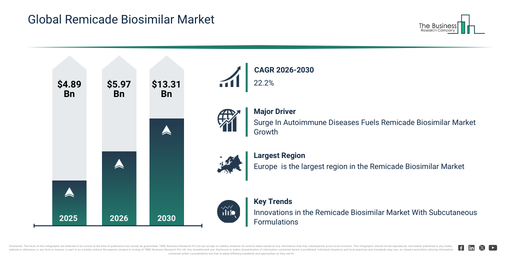
    The remicade biosimilar market has seen substantial growth in recent years. Its valuation is set to increase from $4.89 billion in 2025 to $5.97 billion in 2026, reflecting a compound annual growth rate (CAGR) of 22.2%. This historical expansion can be attributed to several factors, including the significant financial burden of branded biologics, the expiration of remicade’s patent, a growing incidence of autoimmune diseases, governmental initiatives supporting biosimilar approvals, and purchasing models such as hospital-driven bulk procurement.

    The remicade biosimilar market is projected to experience substantial expansion over the coming years, reaching $13.31 billion in 2030 with a compound annual growth rate (CAGR) of 22.2%. This expansion during the forecast period is propelled by factors such as the increasing need for economical biologic treatments, the broadening of biosimilar development pipelines, escalating healthcare spending in developing nations, greater acceptance among medical professionals and patients, and supportive reimbursement structures. Key developments anticipated during this timeframe involve a greater uptake of budget-friendly biosimilars, strengthening confidence among prescribers in infliximab biosimilars, the broadening of their approved uses for autoimmune conditions, a focus on competitive pricing and tender-based purchasing methods, and deeper market penetration in nascent healthcare markets.

    Download A Free Sample Report For Comprehensive Market Insights:

    https://www.thebusinessresearchcompany.com/sample.aspx?id=11952&type=smp

    Which Strategic Drivers Are Supporting The Remicade Biosimilar Market Development?

    The increasing occurrence of autoimmune diseases is anticipated to boost the expansion of the remicade biosimilar market. These conditions involve the immune system erroneously attacking the body’s own tissues and organs. Remicade biosimilars offer a valuable treatment approach for autoimmune diseases, helping to manage symptoms and decrease inflammation. For example, data released in February 2024 by Arthritis Australia, a charitable non-profit based in Australia, indicates that by 2025, around 562,378 Australians are predicted to suffer from rheumatoid arthritis (RA), making up 14% of the entire arthritis population. This figure is forecasted to increase by 33% to roughly 748,721 individuals by 2040. Consequently, the growing prevalence of autoimmune diseases is fueling the growth of the remicade biosimilar market.

    How Are Different Segment Groups Identified Within The Remicade Biosimilar Market?

    The remicade biosimilar market covered in this report is segmented –

    1) By Type: 100mg/10ml, 500mg/50ml

    2) By Disease Indication: Ulcerative Colitis, Rheumatoid Arthritis, Ankylosing Spondylitis, Crohn’s Disease, Psoriatic Arthritis, Plaque Psoriasis

    3) By Application: Blood Disorders, Oncology Diseases

    Which Trends Are Influencing The Direction Of The Remicade Biosimilar Market?

    Leading companies in the remicade biosimilar market are concentrating on creating innovative solutions, such as subcutaneous formulations, to achieve a competitive edge. Subcutaneous formulations of Remicade present an alternative method of administration for treating autoimmune diseases, allowing for patient self-administration and potentially improving adherence to therapy. For instance, in March 2024, Celltrion, a South Korea-based biopharmaceutical company, introduced Zymfentra, a biosimilar to Remicade (infliximab), at $6,181.08 for two doses over four weeks. This product received FDA approval as the first subcutaneous infliximab formulation for maintaining therapy in adults with moderate-to-severe ulcerative colitis and Crohn’s disease. Commercially insured patients who are eligible can receive copay assistance of $5 per month, and patients who are uninsured or underinsured may obtain Zymfentra at no cost.

    Which Companies Are Engaged In The Remicade Biosimilar Market Environment?

    Major companies operating in the remicade biosimilar market are Novartis AG, Amgen Inc, Viatris Inc., Teva Pharmaceutical Industries Ltd., Biogen Inc., LG Chem Ltd., Nippon Kayaku Co. Ltd., Celltrion Inc., Nichi-iko Pharmaceutical Co. Ltd., Biocon Limited, Alvotech S.A., MabPharm Ltd., Genor Biopharma Co. Ltd, Shanghai Biomabs Pharmaceuticals Co. Ltd., Samsung Bioepis Co. Ltd., Biocad Biopharmaceutical Co, EPIRUS Biopharmaceuticals Inc., BioXpress Therapeutics SA, Mabion S.A

    Access The Complete Remicade Biosimilar Market Report:

    https://www.thebusinessresearchcompany.com/report/remicade-biosimilar-global-market-report

    Which Region Holds The Largest Share In The Remicade Biosimilar Market?

    Europe was the largest region in the remicade biosimilar market in 2025. The regions covered in the remicade biosimilar market report are Asia-Pacific, South East Asia, Western Europe, Eastern Europe, North America, South America, Middle East, Africa.

    Access Remicade Biosimilar Market Report for Deeper Competitive Insights

    https://www.thebusinessresearchcompany.com/sample.aspx?id=11952&type=smp

    Browse Through More Reports Similar to the Global Remicade Biosimilar Market 2026, By The Business Research Company

    Remicade Biosimilar Market Report 2026

    https://www.thebusinessresearchcompany.com/report/remicade-biosimilar-global-market-report

    Biotechnology Reagents Market Report 2026

    https://www.thebusinessresearchcompany.com/report/biotechnology-reagents-global-market-report

    Bevacizumab Biosimilars Market Report 2026

    https://www.thebusinessresearchcompany.com/report/bevacizumab-biosimilars-global-market-report

    Get in touch with us:

    The Business Research Company: https://www.thebusinessresearchcompany.com/

    Americas: +1 310-496-7795

    Asia: +44 7882 955267 & +91 8897263534

    Europe: +44 7882 955267

    Email us at: marketing@tbrc.info

    Follow us on:

    LinkedIn: https://in.linkedin.com/company/the-business-research-company

    YouTube: https://www.youtube.com/channel/UC24_fI0rV8cR5DxlCpgmyFQ

    Global Market Model: https://www.thebusinessresearchcompany.com/global-market-model
  • Role Of Government Expenditure In Driving Remdesivir Market Growth Is Supporting Development Across The Remdesivir Market

    Role Of Government Expenditure In Driving Remdesivir Market Growth Is Supporting Development Across The Remdesivir Market

    The Business Research Company’s 2026 market reports feature advanced enhancements such as market attractiveness analysis, total addressable market evaluation, company benchmarking matrices, interactive Excel dashboards, expanded supply chain intelligence, emerging startup coverage, and detailed product insights, delivering more actionable and strategically valuable research.

    How Is The Market Value Of The Remdesivir Market Projected To Expand During 2026–2030?

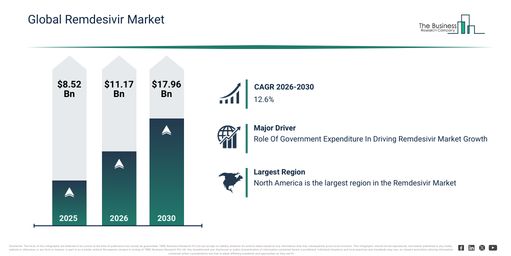
    The remdesivir market has experienced significant expansion in recent years. Its value is projected to rise from $8.52 billion in 2025 to $11.17 billion in 2026, achieving a compound annual growth rate (CAGR) of 31.2%. The historical increase can be attributed to several factors, including the emergency use authorization of remdesivir, elevated hospitalization rates during peak COVID-19 periods, limited availability of alternative antiviral treatment options, increasing awareness of antiviral therapies, and the quick expansion of hospital procurement channels.

    The remdesivir market is poised for significant expansion in the coming years. This market is projected to reach **$17.96 billion in 2030, exhibiting a compound annual growth rate (CAGR) of 12.6%.** This projected increase stems from several factors, including the introduction of new remdesivir formulations, the growing preference for oral and convenient injectable solutions, the wider implementation of telemedicine for antiviral drug delivery, increasing governmental efforts in COVID-19 management, and the expansion of online pharmacy platforms and home delivery options. Key trends anticipated during this period encompass a surge in demand for intravenous antiviral treatments, greater acceptance of oral antiviral formulations, an increase in hospitalizations and critical care interventions for COVID-19, the broadening of online and physical pharmacy distribution networks, and the creation of readily available injectable and powdered lyophilized solutions.

    Download A Free Sample Report For Comprehensive Market Insights:

    https://www.thebusinessresearchcompany.com/sample.aspx?id=3253&type=smp

    What Major Growth Factors Are Impacting The Remdesivir Market?

    The remdesivir market is projected to grow due to increasing government expenditure. Government expenditure, also known as public spending, refers to the total funds a government or public sector entity allocates and disperses to finance its operations, programs, services, and projects. This spending is crucial for the development and availability of Remdesivir, especially during public health emergencies. Governments can contribute to the accessibility and affordability of this vital antiviral medication by providing funding, regulatory support, purchasing power, and investments in research. For instance, according to the American Medical Association in April 2025, U.S. health spending in 2023 rose by 7.5% to $4.9 trillion, or $14,570 per capita, surpassing the 4.6% increase recorded in 2022. Thus, the growing government spending is fueling the expansion of the remdesivir market.

    What Segment Categories Are Evaluated In The Remdesivir Market Study?

    The remdesivir market covered in this report is segmented –

    1) By Route Of Administration: Oral, Intravenous

    2) By Dosage Form: Tablets, Frozen Solution, Lyophilized Solution

    3) By Distribution Channel: Hospitals, Clinics, Drug Stores/Pharmacies, Online, Other Distribution Channels

    Subsegments:

    1) By Oral: Tablet Formulation, Liquid Formulation

    2) By Intravenous: Ready-To-Use Injectable, Lyophilized Powder For Injection

    Who Are The Prominent Players Across The Remdesivir Market?

    Major companies operating in the remdesivir market are Gilead Sciences Inc., BrightGene Bio-Medical Technology Co Ltd, Hainan Haiyao Co. Ltd., Sichuan Kelun Pharmaceutical Co. Ltd., Hunan Warrant Pharmaceutical, Cipla Limited, Dr Reddy’s Laboratories Ltd., Shenzhen BORUI Pharmaceutical Technology Co. Ltd., Hetero Labs Limited, Mylan N.V., Zydus Cadila Health Care Limited, Syngene International Limited, Sun Pharmaceutical Industries Ltd., Aurobindo Pharma Limited, Teva Pharmaceutical Industries, Ferozsons Laboratories Limited, Jubilant Life Sciences, Laurus Labs, Macleods Pharmaceuticals, Natco Pharma, Sandoz Group AG, Strides Pharma Science Limited, Torrent Pharmaceuticals, Beximco Pharmaceuticals Ltd., Fresenius Kabi, Gland Pharma Limited, Hikma Pharmaceuticals, Lark Laboratories

    Access The Complete Remdesivir Market Report:

    https://www.thebusinessresearchcompany.com/report/remdesivir-global-market-report

    Which Region Is The Dominant Market In The Remdesivir Market?

    North America was the largest region in the remdesivir market in 2025. Middle East is expected to be the fastest growing region in the remdesivir market report during the forecast period. The regions covered in the remdesivir market report are Asia-Pacific, South East Asia, Western Europe, Eastern Europe, North America, South America, Middle East, Africa.

    Access Remdesivir Market Report for Deeper Competitive Insights

    https://www.thebusinessresearchcompany.com/sample.aspx?id=3253&type=smp

    Browse Through More Reports Similar to the Global Remdesivir Market 2026, By The Business Research Company

    Coronavirus Current Therapy Market Report 2026

    https://www.thebusinessresearchcompany.com/report/coronavirus-current-therapy-global-market-report

    3D Cell Culture Technologies Market Report 2026

    https://www.thebusinessresearchcompany.com/report/3d-cell-culture-technologies-global-market-report

    Cell Culture Consumables And Equipment Market Report 2026

    https://www.thebusinessresearchcompany.com/report/cell-culture-consumables-and-equipment-global-market-report

    Get in touch with us:

    The Business Research Company: https://www.thebusinessresearchcompany.com/

    Americas: +1 310-496-7795

    Asia: +44 7882 955267 & +91 8897263534

    Europe: +44 7882 955267

    Email us at: marketing@tbrc.info

    Follow us on:

    LinkedIn: https://in.linkedin.com/company/the-business-research-company

    YouTube: https://www.youtube.com/channel/UC24_fI0rV8cR5DxlCpgmyFQ

    Global Market Model: https://www.thebusinessresearchcompany.com/global-market-model

  • Surge In Chronic Diseases Propels Growth In The Regenerative Medicine For Cartilage Market Is Supporting Development Across The Regenerative Medicine For Cartilage Market

    Surge In Chronic Diseases Propels Growth In The Regenerative Medicine For Cartilage Market Is Supporting Development Across The Regenerative Medicine For Cartilage Market

    The Business Research Company’s 2026 market reports feature advanced enhancements such as market attractiveness analysis, total addressable market evaluation, company benchmarking matrices, interactive Excel dashboards, expanded supply chain intelligence, emerging startup coverage, and detailed product insights, delivering more actionable and strategically valuable research.

    What Are The Forecasted Market Size Figures For The Regenerative Medicine For Cartilage Market In 2026 And 2030?

    The regenerative medicine for cartilage market size has experienced robust expansion in recent years. Projections indicate that this market will expand from $4.68 billion in 2025 to $4.96 billion in 2026, demonstrating a compound annual growth rate (CAGR) of 6.1%. Historically, this growth has been driven by factors such as the increasing occurrence of knee osteoarthritis, a rise in sports-related cartilage injuries, the shortcomings of traditional pain management treatments, an increase in orthopedic surgical procedures, and the early adoption of autologous chondrocyte implantation.

    The regenerative medicine for cartilage market size is expected to see strong growth in the next few years. It will grow to $6.33 billion in 2030 at a compound annual growth rate (CAGR) of 6.3%. The growth in the forecast period can be attributed to advancements in regenerative biologics, increasing geriatric population, rising demand for joint preservation therapies, expansion of outpatient surgical centers, improving reimbursement for regenerative treatments. Major trends in the forecast period include expansion of autologous chondrocyte implantation procedures, rising adoption of minimally invasive cartilage repair surgeries, increasing clinical validation of stem cell-based cartilage therapies, growing demand for long-lasting knee cartilage regeneration solutions, standardization of cartilage repair protocols in orthopedic practice.

    Download A Free Sample Report For Comprehensive Market Insights:

    https://www.thebusinessresearchcompany.com/sample.aspx?id=3961&type=smp

    What Market Drivers Are Helping Shape The Regenerative Medicine For Cartilage Market Expansion?

    A growing number of chronic diseases is projected to boost the expansion of the regenerative medicine for cartilage market. These are medical conditions that last for an extended duration, often throughout a person’s life. Medical specialty bags are essential in the treatment and management of chronic diseases. The widespread occurrence of chronic illnesses, particularly those affecting the musculoskeletal system, can be advantageous for the field of regenerative medicine, including regenerative medicine for cartilage. For example, in June 2024, the National Health Service, a UK-based government department, reported that 3,615,330 individuals registered with a general practitioner (GP) were diagnosed with non-diabetic hyperglycemia or pre-diabetes (a condition with elevated blood sugar levels, not high enough to be classified as diabetes) in 2023, representing an 18% increase from 3,065,825 cases in 2022. Therefore, the rising incidence of chronic diseases is stimulating growth in the regenerative medicine for cartilage market.

    How Is The Regenerative Medicine For Cartilage Market Examined Through Segment Analysis?

    The regenerative medicine for cartilage market covered in this report is segmented –

    1) By Product: Cell Based, Gene Based, Tissue Based

    2) By End-Use: Ambulatory Surgical Centers, Hospitals And Clinics, Others

    3) By Application: Musculoskeletal, Oncology, Dental, Wound Care, Others

    Subsegments:

    1) By Cell-Based: Chondrocyte-Based Therapies, Mesenchymal Stem Cell (MSC) Therapies, Induced Pluripotent Stem Cell (iPSC) Therapies, Embryonic Stem Cell (ESC) Therapies

    2) By Gene-Based: Gene Modification Therapies, CRISPR-Based Gene Editing, Viral Vector Gene Therapies, Non-Viral Gene Therapies

    3) By Tissue-Based: Autologous Tissue Grafts, Allogeneic Tissue Grafts, Xenogeneic Tissue Grafts, Synthetic Scaffolds

    Which Trends Are Shaping The Regenerative Medicine For Cartilage Market Landscape?

    Key companies operating in the regenerative medicine for the cartilage market are engaged in developing bioactive materials to improve cartilage regeneration and overall treatment outcomes. These particular bioactive materials are engineered to replicate the natural extracellular matrix, which aids in promoting cell proliferation, differentiation, and tissue repair. For example, in August 2024, researchers from Northwestern University, a US-based private research university, successfully created a bioactive material that regenerated high-quality hyaline cartilage in a sheep model. This biomaterial incorporates a bioactive peptide designed to bind with transforming growth factor beta-1 (TGFb-1) along with chemically modified hyaluronic acid. This specific combination encourages the self-organization of nanoscale fibers, mirroring natural cartilage formation and thereby enhancing cellular repair processes. Such a material holds the potential to prevent knee replacements and treat various degenerative diseases.

    Which Companies Form The Competitive Landscape Of The Regenerative Medicine For Cartilage Market?

    Major companies operating in the regenerative medicine for cartilage market are Smith & Nephew plc, Integra LifeSciences, Stryker Corporation, MiMedx Group Inc., Zimmer Biomet Holdings Inc., B. Braun Melsungen AG, AbbVie, CONMED Corporation, Arthrex Inc., Baxter International Inc., China Regenerative Medicine International, ABLbio, Cellgenix GmbH, BioTissue Technologies, Corin Group, Medical Import Ltd., Orthonika, Merete, 3di GmbH, Aditus Medical GmbH, Anton Hipp GmbH, AREX SAS, Acelity L.P. Inc., StemCells Inc, Organogenesis Inc, NuVasive Inc, Japan Tissue Engineering Co. Ltd, Advantagene Inc., Mesoblast Ltd, Globus Medical, DePuy Synthes, Cryolife Inc, Johnson & Johnson, Medtronic Plc, Rti Surgical, CartiHeal Inc., DJO Global Inc., Wright Medical Group, Auxein, Aesculap Inc, AMEGA Biotech

    Access The Complete Regenerative Medicine For Cartilage Market Report:

    https://www.thebusinessresearchcompany.com/report/regenerative-medicine-for-cartilage-global-market-report

    Which Area Represents The Largest Portion Of The Regenerative Medicine For Cartilage Market?

    Europe was the largest region in regenerative medicine for cartilage in 2025. The regions covered in the regenerative medicine for cartilage market report are Asia-Pacific, South East Asia, Western Europe, Eastern Europe, North America, South America, Middle East, Africa.

    Access Regenerative Medicine For Cartilage Market Report for Deeper Competitive Insights

    https://www.thebusinessresearchcompany.com/sample.aspx?id=3961&type=smp

    Browse Through More Reports Similar to the Global Regenerative Medicine For Cartilage Market 2026, By The Business Research Company

    Regenerative Medicine For Cartilage Market Report 2026

    https://www.thebusinessresearchcompany.com/report/regenerative-medicine-for-cartilage-global-market-report

    Cartilage Repair Market Report 2026

    https://www.thebusinessresearchcompany.com/report/cartilage-repair-global-market-report

    Knee Cartilage Repair Market Report 2026

    https://www.thebusinessresearchcompany.com/report/knee-cartilage-repair-global-market-report

    Get in touch with us:

    The Business Research Company: https://www.thebusinessresearchcompany.com/

    Americas: +1 310-496-7795

    Asia: +44 7882 955267 & +91 8897263534

    Europe: +44 7882 955267

    Email us at: marketing@tbrc.info

    Follow us on:

    LinkedIn: https://in.linkedin.com/company/the-business-research-company

    YouTube: https://www.youtube.com/channel/UC24_fI0rV8cR5DxlCpgmyFQ

    Global Market Model: https://www.thebusinessresearchcompany.com/global-market-model
  • Rising Demand For Minimally Invasive Procedures Is Fueling The Growth Of The Market Due To Preference For Shorter Recovery Times Is Supporting Development Across The Regenerative Aesthetics Market

    Rising Demand For Minimally Invasive Procedures Is Fueling The Growth Of The Market Due To Preference For Shorter Recovery Times Is Supporting Development Across The Regenerative Aesthetics Market

    The Business Research Company’s 2026 market reports feature advanced enhancements such as market attractiveness analysis, total addressable market evaluation, company benchmarking matrices, interactive Excel dashboards, expanded supply chain intelligence, emerging startup coverage, and detailed product insights, delivering more actionable and strategically valuable research.

    How Much Larger Will The Regenerative Aesthetics Market Become By 2030 Compared To 2026?

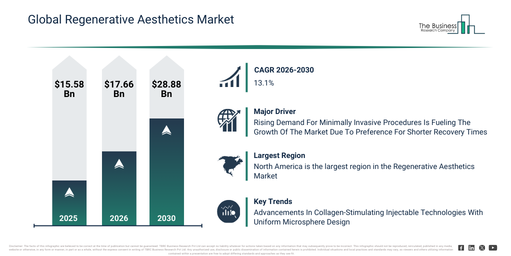
    The regenerative aesthetics market size has seen rapid expansion in recent years. It is anticipated to increase from $15.58 billion in 2025 to $17.66 billion in 2026, at a compound annual growth rate (CAGR) of 13.4%. The expansion observed historically is attributable to several elements, including a restricted availability of regenerative aesthetic products, a dependence on traditional cosmetic procedures, increasing consciousness about aesthetic treatments, a growing number of dermatology and aesthetic clinics, and the initial adoption of stem cell-based therapies.

    The regenerative aesthetics market size is projected to experience substantial growth in the coming years. It is anticipated to expand to $28.88 billion in 2030, exhibiting a compound annual growth rate (CAGR) of 13.1%. This projected growth can be attributed to several factors, including the advancement of exosome and peptide-based therapies, the increased availability of home-use regenerative products, growing investment in formulations enriched with growth factors, the integration of digital monitoring and tele-aesthetics, and a rising consumer inclination towards natural and long-lasting results. Prominent trends expected during this forecast period include the increasing adoption of exosome-based therapies for rejuvenating skin and hair, a greater utilization of platelet-rich plasma (PRP) and autologous conditioned serum, a heightened demand for treatments aimed at scar reduction and wound healing, the expansion of anti-inflammatory and combination regenerative therapies, and a growing preference for aesthetic procedures that are minimally invasive and deliver natural-looking outcomes.

    Download A Free Sample Report For Comprehensive Market Insights:

    https://www.thebusinessresearchcompany.com/sample.aspx?id=27405&type=smp

    Which Significant Factors Are Encouraging Growth In The Regenerative Aesthetics Market?

    The increasing demand for minimally invasive procedures is anticipated to fuel the expansion of the regenerative aesthetics market in the future. These procedures involve medical or surgical methods conducted through small cuts or the body’s natural openings, as opposed to extensive incisions. The surge in minimally invasive techniques stems from a rising desire for quicker recovery periods, enabling individuals to swiftly return to their normal routines. Regenerative aesthetics complements minimally invasive procedures by leveraging the body’s inherent healing capabilities to achieve enduring enhancements with little recovery time. For example, in June 2024, data from the American Society of Plastic Surgeons, a US-based non-profit organization, showed that hyaluronic acid filler minimally invasive procedures reached 5.29 million in 2023, marking an 8% increase compared to 2022. Consequently, the escalating requirement for minimally invasive procedures is stimulating growth within the regenerative aesthetics market.

    Which Segment Groups Define The Regenerative Aesthetics Market Landscape?

    The regenerative aesthetics market covered in this report is segmented –

    1) By Product Type: Exosome-Based Therapies, Other Product Types

    2) By Application: Skin Rejuvenation, Hair Restoration, Scar Reduction And Wound Healing, Anti-Inflammatory Treatments, Combination Therapies

    3) By End-User: Aesthetic Clinics, Dermatology Clinics, Home Use

    Subsegments:

    1) By Exosome-Based Therapies: Stem Cell Derived Exosomes, Platelet Derived Exosomes, Plant Derived Exosomes

    2) By Other Product Types: Platelet Rich Plasma, Autologous Conditioned Serum, Peptide Based Products, Growth Factor Enriched Formulations

    What Trends Are Influencing The Regenerative Aesthetics Market Outlook?

    Major companies operating in the regenerative aesthetics market are focusing on developing innovative technologies, such as uniform microsphere technology, to deliver advanced collagen-stimulating injectables that provide smoother application, precise treatment, and consistent results. Uniform microsphere technology is a formulation design that produces evenly sized and shaped microspheres, ensuring smooth injection, precise placement, and consistent therapeutic performance. For instance, in July 2025, Koru Pharma Co. Ltd., a South Korea-based biopharmaceutical company, launched Reversal Neo, a next-generation collagen-stimulating injectable made of high-purity Poly-L-Lactic Acid (PLLA) designed to deliver smoother injection performance, enhanced precision, and long-lasting, natural-looking aesthetic results. Reversal Neo introduces a next-generation collagen biostimulator with 200 mg of high-purity Poly-L-Lactic Acid (PLLA) and a uniform microsphere structure for smoother, more precise injections. Its advanced formulation ensures sustained collagen regeneration for natural-looking, long-lasting results. The product offers excellent biocompatibility, minimal inflammation, and enhanced patient comfort.

    Who Are The Key Market Participants In The Regenerative Aesthetics Market?

    Major companies operating in the regenerative aesthetics market are ABG Lab LLC, Koru Pharma Co. Ltd., Global Stem Cells Group, Cytori Therapeutics Inc., Aesthetic Regenerative Therapies Inc., EmCyte Corp., Geneo, Plasmolifting World GmbH, ReGen Lab, RepliCel Life Sciences Inc.,

    Access The Complete Regenerative Aesthetics Market Report:

    https://www.thebusinessresearchcompany.com/report/regenerative-aesthetics-global-market-report

    Which Region Commands The Largest Share Of The Regenerative Aesthetics Market?

    North America was the largest region in the regenerative aesthetics market in 2025. Asia-Pacific is expected to be the fastest-growing region in the forecast period. The regions covered in the regenerative aesthetics market report are Asia-Pacific, South East Asia, Western Europe, Eastern Europe, North America, South America, Middle East, Africa.

    Access Regenerative Aesthetics Market Report for Deeper Competitive Insights

    https://www.thebusinessresearchcompany.com/sample.aspx?id=27405&type=smp

    Browse Through More Reports Similar to the Global Regenerative Aesthetics Market 2026, By The Business Research Company

    Tokenization Market Report 2026

    https://www.thebusinessresearchcompany.com/report/tokenization-global-market-report

    Non Fungible Token Market Report 2026

    https://www.thebusinessresearchcompany.com/report/non-fungible-token-global-market-report

    Asset Backed Securities Market Report 2026

    https://www.thebusinessresearchcompany.com/report/asset-backed-securities-global-market-report

    Get in touch with us:

    The Business Research Company: https://www.thebusinessresearchcompany.com/

    Americas: +1 310-496-7795

    Asia: +44 7882 955267 & +91 8897263534

    Europe: +44 7882 955267

    Email us at: marketing@tbrc.info

    Follow us on:

    LinkedIn: https://in.linkedin.com/company/the-business-research-company

    YouTube: https://www.youtube.com/channel/UC24_fI0rV8cR5DxlCpgmyFQ

    Global Market Model: https://www.thebusinessresearchcompany.com/global-market-model

  • Rising Autoimmune Disorders Fueling The Growth Of The Market Due To Increasing Demand For Symptom Management And Complication Prevention Is Supporting Development Across The Raynauds Disease Treatment Market

    Rising Autoimmune Disorders Fueling The Growth Of The Market Due To Increasing Demand For Symptom Management And Complication Prevention Is Supporting Development Across The Raynauds Disease Treatment Market

    The Business Research Company’s 2026 market reports feature advanced enhancements such as market attractiveness analysis, total addressable market evaluation, company benchmarking matrices, interactive Excel dashboards, expanded supply chain intelligence, emerging startup coverage, and detailed product insights, delivering more actionable and strategically valuable research.

    What Growth In Market Value Is Anticipated For The Raynauds Disease Treatment Market Between 2026 And 2030?

    The raynauds disease treatment market has experienced robust growth in recent years. It is projected to expand from $1.49 billion in 2025 to $1.6 billion in 2026, exhibiting a compound annual growth rate (CAGR) of 7.6%. Historically, this market expansion was driven by factors such as limited awareness of raynauds disease, a reliance on conventional medication, the development of hospital and specialty clinic infrastructure, a shortage of homecare alternatives, and seasonal fluctuations in demand.

    The raynauds disease treatment market size is expected to undergo significant expansion in the coming years, with projections indicating a growth to $2.13 billion in 2030, at a compound annual growth rate (CAGR) of 7.3%. This anticipated growth within the forecast period is driven by the development of innovative pharmacological therapies, the adoption of wearable thermal therapy devices, increasing public awareness of preventive care and lifestyle management, the proliferation of homecare and telehealth services, and the incorporation of digital health monitoring and biofeedback technologies. Prominent trends for this period encompass the rising utilization of calcium channel blockers and vasodilators, increased deployment of thermal therapy devices and biofeedback systems, a growing preference for minimally invasive surgical procedures, the expansion of homecare and specialty clinic settings, and a heightened emphasis on lifestyle and stress management programs.

    Download A Free Sample Report For Comprehensive Market Insights:

    https://www.thebusinessresearchcompany.com/sample.aspx?id=24680&type=smp

    What Core Drivers Are Transforming The Raynauds Disease Treatment Market?

    The growing incidence of autoimmune diseases is anticipated to boost the expansion of the raynauds disease treatment market moving forward. These conditions involve the immune system erroneously attacking the body’s healthy tissues, leading to inflammation and damage. The heightened occurrence of autoimmune diseases is attributed to populations living in more urbanized and sanitized environments, which results in less robust immune system training, alongside contemporary lifestyle aspects such as poor nutrition, stress, and environmental contaminants. Raynaud’s disease treatment supports autoimmune conditions by facilitating improved symptom management, minimizing tissue damage, and averting complications stemming from inadequate blood flow. For instance, in February 2024, Clinical Trials Arena, a UK-based platform for clinical trials and pharmaceutical developments, indicated that worldwide cases of rheumatoid arthritis (RA) are expected to surge, with prevalence forecast to grow by 80.2% and impact nearly 1% of the global population by 2050. Thus, the increasing prevalence of autoimmune diseases is a key driver for the growth of the raynauds disease treatment market.

    What Key Segment Areas Are Included In The Raynauds Disease Treatment Market Assessment?

    The raynauds disease treatment market covered in this report is segmented –

    1) By Treatment Type: Medication, Thermal Therapies, Surgical Procedures, Alteative Therapies

    2) By Drug Class: Calcium Channel Blockers, Vasodilators, Antiplatelet Agents

    3) By Route of Administration: Oral, Topical, Injectable, Intravenous

    4) By End-User: Hospitals, Specialty Clinics, Homecare Settings, Pharmacies

    Subsegments:

    1) By Medication: Calcium Channel Blockers, Alpha Blockers, Vasodilators, Topical Nitrates, Selective Serotonin Reuptake Inhibitors (SSRIs), Phosphodiesterase Inhibitors, Angiotensin Receptor Blockers (ARBs)

    2) By Thermal Therapies: Hand Warmers, Thermal Gloves, Heated Pads, Biofeedback-Controlled Thermal Devices

    3) By Surgical Procedures: Sympathectomy, Nerve Decompression Surgery, Vascular Surgery

    4) By Alternative Therapies: Acupuncture, Biofeedback Therapy, Herbal Remedies, Nutritional Supplements, Stress Management Techniques

    Which Trends Are Expected To Shape The Raynauds Disease Treatment Market?

    Leading companies in the raynauds disease treatment market are concentrating on developing innovative solutions for managing Raynaud’s disease, such as oral calcium channel blockers, to improve blood flow by relaxing and widening blood vessels, consequently reducing the frequency and severity of vasospastic attacks. An oral calcium channel blocker is a type of medication taken by mouth that aids in relaxing and widening blood vessels by blocking calcium entry into the muscle cells of the heart and blood vessel walls. For instance, in June 2023, Aisa Pharma Inc., a US-based clinical-stage biopharmaceutical company, initiated the second part of its Phase 2b RECONNOITER trial to evaluate Profervia (cilnidipine), an oral calcium channel blocker, for treating Raynaud’s phenomenon in individuals with systemic sclerosis (SSc). This action follows promising results from the first phase, where Profervia demonstrated a greater reduction in Raynaud’s attack frequency and SSc disease severity compared to other calcium channel blockers, while also exhibiting a favorable safety profile and good tolerability. The trial, now advancing with a 20 mg dose, intends to address the urgent need for effective treatments for Raynaud’s in SSc, a condition that currently has no approved therapies.

    Which Organizations Are Operating Within The Raynauds Disease Treatment Market?

    Major companies operating in the raynauds disease treatment market are Pfizer Inc., Johnson & Johnson, Bayer AG, Novartis AG, Sanofi SA, AstraZeneca PLC, GlaxoSmithKline plc, Takeda Pharmaceutical Company Limited, Merck & Co. Inc., Teva Pharmaceutical Industries Ltd., CSL Vifor, Orion Corporation, Apricus Biosciences Inc., Vicore Pharma Holding AB, MediQuest Therapeutics Inc., Gesynta Pharma AB, Aisa Pharma Inc., Abbott Laboratories, Boehringer Ingelheim International GmbH, Viatris Inc., Lupin Limited, Sun Pharmaceutical Industries Ltd., Dr. Reddy’s Laboratories Ltd., Cipla Limited, Torrent Pharmaceuticals Ltd., Zydus Lifesciences Ltd., Aurobindo Pharma Ltd., Glenmark Pharmaceuticals Ltd., Intas Pharmaceuticals Ltd., Hikma Pharmaceuticals PLC, Alkem Laboratories Ltd.

    Access The Complete Raynauds Disease Treatment Market Report:

    https://www.thebusinessresearchcompany.com/report/raynauds-disease-treatment-global-market-report

    Which Region Accounts For The Highest Share Of The Raynauds Disease Treatment Market?

    North America was the largest region in the raynauds disease treatment market in 2025. Asia-Pacific is expected to be the fastest-growing region in the forecast period. The regions covered in the raynauds disease treatment market report are Asia-Pacific, South East Asia, Western Europe, Eastern Europe, North America, South America, Middle East, Africa.

    Access Raynauds Disease Treatment Market Report for Deeper Competitive Insights

    https://www.thebusinessresearchcompany.com/sample.aspx?id=24680&type=smp

    Browse Through More Reports Similar to the Global Raynauds Disease Treatment Market 2026, By The Business Research Company

    Alzheimer Disease Treatment Market Report 2026

    https://www.thebusinessresearchcompany.com/report/alzheimer-disease-treatment-global-market-report

    Inflammatory Bowel Disease Treatment Market Report 2026

    https://www.thebusinessresearchcompany.com/report/inflammatory-bowel-disease-treatment-global-market-report

    Lysosomal Disease Treatment Market Report 2026

    https://www.thebusinessresearchcompany.com/report/lysosomal-disease-treatment-global-market-report

    Get in touch with us:

    The Business Research Company: https://www.thebusinessresearchcompany.com/

    Americas: +1 310-496-7795

    Asia: +44 7882 955267 & +91 8897263534

    Europe: +44 7882 955267

    Email us at: marketing@tbrc.info

    Follow us on:

    LinkedIn: https://in.linkedin.com/company/the-business-research-company

    YouTube: https://www.youtube.com/channel/UC24_fI0rV8cR5DxlCpgmyFQ

    Global Market Model: https://www.thebusinessresearchcompany.com/global-market-model
  • Government Catalysts Fueling Rare Kidney Disease Market Surge Is Supporting Development Across The Rare Kidney Diseases Market

    Government Catalysts Fueling Rare Kidney Disease Market Surge Is Supporting Development Across The Rare Kidney Diseases Market

    The Business Research Company’s 2026 market reports feature advanced enhancements such as market attractiveness analysis, total addressable market evaluation, company benchmarking matrices, interactive Excel dashboards, expanded supply chain intelligence, emerging startup coverage, and detailed product insights, delivering more actionable and strategically valuable research.

    What Is The Expected Market Value Outlook For The Rare Kidney Diseases Market Through 2030?

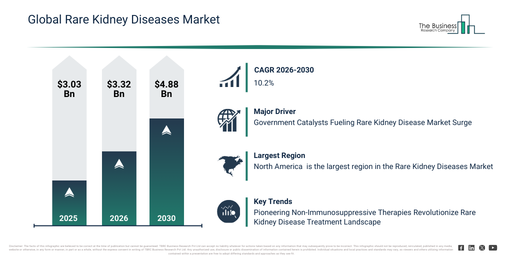
    The market size for rare kidney diseases has shown significant expansion in recent years. It is anticipated to increase from $3.03 billion in 2025 to $3.32 billion in 2026, registering a compound annual growth rate (CAGR) of 9.5%. The historical growth in this sector can be linked to factors like the limited availability of treatment options for uncommon renal disorders, a heightened awareness of genetic kidney conditions, a rising incidence of autoimmune-related nephropathies, the expansion of specialized nephrology care centers, and the prompt integration of immunosuppressive therapies.

    The rare kidney diseases market size is projected to experience substantial expansion over the upcoming years. It is anticipated to reach **$4.88 billion in 2030, exhibiting a compound annual growth rate (CAGR) of 10.2%**. This projected growth during the forecast period can be linked to several factors, including advancements in genomics-based drug discovery, an increase in orphan drug approvals, greater investment in rare disease research, the expanding application of personalized medicine strategies, and a growing pipeline of complement and immune-targeted therapies. Key developments expected within this period encompass a heightened emphasis on targeted treatments for rare renal conditions, increased clinical trial engagement for orphan kidney medications, wider acceptance of biologics for immune-mediated kidney ailments, the broadening use of companion diagnostics for prompt disease identification, and more regulatory incentives supporting rare disease drug development.

    Download A Free Sample Report For Comprehensive Market Insights:

    https://www.thebusinessresearchcompany.com/sample.aspx?id=11908&type=smp

    Which Growth Factors Are Strengthening The Rare Kidney Diseases Market Landscape?

    The rising incidence of chronic kidney disease (CKD) significantly contributes to the rare kidney disease market. Chronic kidney disease is a disorder where the kidneys are damaged and cannot properly filter blood. The increased occurrence of chronic kidney diseases will heighten the chances of patients developing rare kidney diseases, consequently driving up the demand for relevant therapeutics. For instance, in August 2025, the National Kidney Foundation, Inc., a US-based voluntary nonprofit health organization, reported that the Senate approved a $5 million increase in the FY 2026 Labor, Health and Human Services, and Education appropriations bill, designated to support kidney transplant reform and early detection efforts. This additional funding elevates the total for the Organ Procurement and Transplantation Network (OPTN) Modernization Initiative to $59 million. Therefore, the escalating prevalence of chronic kidney disease (CKD) will propel the rare kidney disease market.

    How Is Segment Classification Applied In The Rare Kidney Diseases Market?

    The rare kidney diseases market covered in this report is segmented –

    1) By Target Indication: IgA Nephropathy, Lupus Nephritis, Focal Segmental Glomerular Sclerosis, Membranous Nephropathy, C3 Glomerulopathy, Other Target Indications

    2) By Type Of Molecule: Small Molecules, Biologics

    3) By Route Of administration: Oral, Intravenous, Subcutaneous, Other Routes Of Administration

    Subsegments:

    1) By IgA Nephropathy: Immunosuppressive Therapy, Supportive Care And Symptomatic Management

    2) By Lupus Nephritis: Corticosteroids, Antimalarial Agents, Biologics

    3) By Focal Segmental Glomerular Sclerosis (FSGS): Corticosteroids, Angiotensin Receptor Blockers (ARBs), Other Immunosuppressive Agents

    4) By Membranous Nephropathy: Corticosteroids, Immunosuppressive Therapy, Monoclonal Antibodies

    5) By C3 Glomerulopathy: Complement Inhibitors, Supportive Care, Immunosuppressive Therapies

    6) By Other Target Indications: Alport Syndrome, Thin Basement Membrane Nephropathy, Other Rare Kidney Disorders

    What Trends Are Affecting The Rare Kidney Diseases Market Dynamics?

    Major companies operating in the rare kidney diseases market are concentrating on developing non-immunosuppressive therapies for managing rare kidney diseases. This unique non-immunosuppressive treatment offers the ability to treat patients with progressive kidney diseases, a feat not achievable by standard therapies used for rare kidney conditions. For instance, in February 2023, Travere Therapeutics, a US-based biopharmaceutical company, launched sparsentan, commercially known as Filspari. This drug represents the first non-immunosuppressive therapy approved for primary immunoglobulin A nephropathy (IgAN). With its distinct mechanism of action, Filspari works by blocking angiotensin and endothelin receptors. This particular characteristic differentiates Filspari from angiotensin-targeting ACE inhibitors and ARBs, which are well-known medications primarily prescribed for hypertension and have been repurposed for IgAN treatment due to their capacity to lower blood pressure in the kidney.

    Who Are The Businesses Driving Activity In The Rare Kidney Diseases Market?

    Major companies operating in the rare kidney diseases market are Merck & Co. Inc., Novartis AG, Sanofi S.A, AstraZeneca plc, Otsuka Pharmaceutical Co Ltd., Alexion Pharmaceuticals Inc., Horizon Therapeutics plc., Recordati S.p.A., Amicus Therapeutics Inc., Akebia Therapeutics Inc., Travere Therapeutics, FibroGen Inc., Aurinia Pharmaceuticals Inc., Calliditas Therapeutics AB, Apellis Pharmaceuticals Inc., Protalix Biotherapeutics Inc., ChemoCentryx Inc., Omeros Corporation, Celtaxsys Inc., Corbus Pharmaceuticals Holdings Inc., Chinook Therapeutics Inc., OxThera AB, Advicenne Pharma SA, Reata Pharmaceuticals Inc.

    Access The Complete Rare Kidney Diseases Market Report:

    https://www.thebusinessresearchcompany.com/report/rare-kidney-diseases-global-market-report

    Which Region Is The Primary Market For The Rare Kidney Diseases Market?

    North America was the leading region in the rare kidney disease market in 2025. The regions covered in the rare kidney diseases market report are Asia-Pacific, South East Asia, Western Europe, Eastern Europe, North America, South America, Middle East, Africa.

    Access Rare Kidney Diseases Market Report for Deeper Competitive Insights

    https://www.thebusinessresearchcompany.com/sample.aspx?id=11908&type=smp

    Browse Through More Reports Similar to the Global Rare Kidney Diseases Market 2026, By The Business Research Company

    Rare Kidney Diseases Market Report 2026

    https://www.thebusinessresearchcompany.com/report/rare-kidney-diseases-global-market-report

    Kidney Disease Market Report 2026

    https://www.thebusinessresearchcompany.com/report/kidney-disease-global-market-report

    Chronic Kidney Disease Market Report 2026

    https://www.thebusinessresearchcompany.com/report/chronic-kidney-disease-global-market-report

    Get in touch with us:

    The Business Research Company: https://www.thebusinessresearchcompany.com/

    Americas: +1 310-496-7795

    Asia: +44 7882 955267 & +91 8897263534

    Europe: +44 7882 955267

    Email us at: marketing@tbrc.info

    Follow us on:

    LinkedIn: https://in.linkedin.com/company/the-business-research-company

    YouTube: https://www.youtube.com/channel/UC24_fI0rV8cR5DxlCpgmyFQ

    Global Market Model: https://www.thebusinessresearchcompany.com/global-market-model