Month: May 2026

  • Rising Demand For Personalized Medicine Drives Growth In The Protein Inhibitors Market Is Supporting Development Across The Protein Inhibitors Market

    Rising Demand For Personalized Medicine Drives Growth In The Protein Inhibitors Market Is Supporting Development Across The Protein Inhibitors Market

    The Business Research Company’s 2026 market reports feature advanced enhancements such as market attractiveness analysis, total addressable market evaluation, company benchmarking matrices, interactive Excel dashboards, expanded supply chain intelligence, emerging startup coverage, and detailed product insights, delivering more actionable and strategically valuable research.

    How Will The Market Size Of The Protein Inhibitors Market Progress Through 2030?

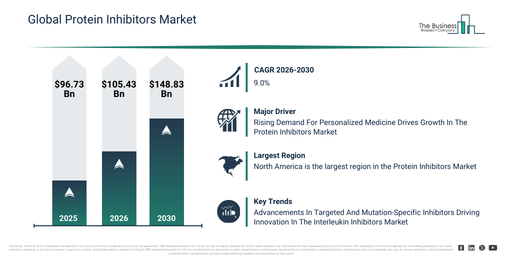
    The protein inhibitors market has experienced robust expansion in recent times. Projected growth indicates an increase from $96.73 billion in 2025 to $105.43 billion in 2026, achieving a compound annual growth rate (CAGR) of 9.0%. This past expansion was driven by several factors, including the initial limited availability of protein inhibitor therapies, a historical dependence on conventional chemotherapy, the rising incidence of cancer and inflammatory diseases, heightened awareness of targeted therapeutic options, and the integration of hospital pharmacy distribution channels.

    The protein inhibitors market size is set for robust expansion over the next few years. It is projected to attain a value of $148.83 billion in 2030, exhibiting a compound annual growth rate (CAGR) of 9.0%. This anticipated growth during the forecast period is driven by various factors, including the development of selective and non-selective kinase inhibitors, ongoing advancements in biologic monoclonal antibodies, the expansion of online pharmacy and digital distribution networks, increasing research efforts in protein degradation technologies, and rising investment in personalized protein inhibitor treatments. Significant trends expected during this period encompass a growing demand for targeted protein inhibitor therapies, an increase in the oncology applications of protein kinase inhibitors, the broader adoption of monoclonal antibody-based treatments, a rise in the uptake of combination therapy products, and a concentrated focus on small molecule and peptide-based inhibitors.

    Download A Free Sample Report For Comprehensive Market Insights:

    https://www.thebusinessresearchcompany.com/sample.aspx?id=3429&type=smp

    What Important Drivers Are Powering The Protein Inhibitors Market Growth?

    The increasing need for personalized medicine is set to boost the growth of the protein inhibitors market in the coming years. Personalized medicine involves customizing medical care to an individual’s specific genetic makeup, leading to more effective and precise healthcare interventions. Protein inhibitors are vital in this field, targeting particular proteins to treat conditions based on an individual’s genetic profile. For instance, in February 2024, the US-based professional membership organization, Personalized Medicine Coalition, reported that in 2023, the FDA approved 16 new personalized treatments for rare disease patients, an increase from six in 2022. Moreover, out of 35 therapeutic NMEs, roughly 34%, or 12 of them, are classified as personalized medicines by the Personalized Medicine Coalition (PMC). Therefore, the escalating demand for personalized medicine is a key driver for the expansion of the protein inhibitors market.

    Which Segment-Based Categories Are Covered In The Protein Inhibitors Market?

    The protein inhibitors market covered in this report is segmented –

    1) By Product: Protein Kinase Inhibitors, Monoclonal Antibody, Other Products

    2) By Application: Oncology, Inflammatory Diseases, Other Applications

    3) By Distribution Channel: Hospital Pharmacies, Independent Pharmacies, Online Pharmacies

    Subsegments:

    1) By Protein Kinase Inhibitors: Selective Kinase Inhibitors, Non-selective Kinase Inhibitors, Small Molecule Kinase Inhibitors, Biologic Kinase Inhibitors

    2) By Monoclonal Antibodies: Chimeric Monoclonal Antibodies, Humanized Monoclonal Antibodies, Fully Human Monoclonal Antibodies, Conjugated Monoclonal Antibodies

    3) By Other Products: Peptide Inhibitors, Protein Degradation Technologies, Small Molecule Inhibitors, Combination Therapy Products

    Which Trends Are Expected To Shape The Protein Inhibitors Market?

    Leading companies within the protein inhibitors market are concentrating on developing innovative solutions, such as tyrosine kinase inhibitors, to specifically target signaling pathways, enhance therapeutic effectiveness, and improve patient recovery in treating cancer and other chronic conditions. A tyrosine kinase inhibitor (TKI) functions as a drug that obstructs the action of tyrosine kinases, which are enzymes vital for activating proteins involved in cell communication, growth, and division, consequently helping to hinder the uncontrolled multiplication of cancerous or abnormal cells. For instance, in April 2024, F. Hoffmann-La Roche AG, a healthcare company based in Switzerland, received approval from the FDA for Alecensa (alectinib) to be used as the first adjuvant treatment for individuals with ALK-positive early-stage non-small cell lung cancer (NSCLC) who have undergone surgical removal of their tumor.

    Which Firms Are Competing In The Protein Inhibitors Market?

    Major companies operating in the protein inhibitors market are Bayer AG, AstraZeneca plc, F. Hoffmann-La Roche Ltd., Teva Pharmaceutical Industries Ltd., Apotex Inc., Novartis International AG, GlaxoSmithKline plc, Pfizer Inc., Boehringer Ingelheim International GmbH, Abbott Laboratories, Amgen Inc., Baxter International Inc., Merck & Co. Inc., AbbVie Inc., Bristol Myers Squibb Company, Biogen Inc., Eli Lilly and Company, Gilead Sciences Inc., Johnson & Johnson, Regeneron Pharmaceuticals Inc., Sanofi S.A., Takeda Pharmaceutical Company Limited, Vertex Pharmaceuticals Inc., Lonza Group AG, Catalent Inc., Thermo Fisher Scientific Inc., Charles River Laboratories International Inc., WuXi AppTec Co. Ltd.

    Access The Complete Protein Inhibitors Market Report:

    https://www.thebusinessresearchcompany.com/report/protein-inhibitor-global-market-report

    What Is The Largest Regional Market In The Protein Inhibitors Market?

    North America was the largest region in the protein inhibitors market in 2025. The regions covered in the protein inhibitors market report are Asia-Pacific, South East Asia, Western Europe, Eastern Europe, North America, South America, Middle East, Africa.

    Access Protein Inhibitors Market Report for Deeper Competitive Insights

    https://www.thebusinessresearchcompany.com/sample.aspx?id=3429&type=smp

    Browse Through More Reports Similar to the Global Protein Inhibitors Market 2026, By The Business Research Company

    Biologics Market 2026

    https://www.thebusinessresearchcompany.com/report/biologics-market

    Protein Expression Market Report 2026

    https://www.thebusinessresearchcompany.com/report/protein-expression-global-market-report

    Biostimulants Market Report 2026

    https://www.thebusinessresearchcompany.com/report/biostimulants-global-market-report

    Get in touch with us:

    The Business Research Company: https://www.thebusinessresearchcompany.com/

    Americas: +1 310-496-7795

    Asia: +44 7882 955267 & +91 8897263534

    Europe: +44 7882 955267

    Email us at: marketing@tbrc.info

    Follow us on:

    LinkedIn: https://in.linkedin.com/company/the-business-research-company

    YouTube: https://www.youtube.com/channel/UC24_fI0rV8cR5DxlCpgmyFQ

    Global Market Model: https://www.thebusinessresearchcompany.com/global-market-model
  • Protein Hydrolysis Enzymes Market Surges Amidst Rising Chronic Disease Prevalence Is Supporting Development Across The Protein Hydrolysis Enzymes Market

    Protein Hydrolysis Enzymes Market Surges Amidst Rising Chronic Disease Prevalence Is Supporting Development Across The Protein Hydrolysis Enzymes Market

    The Business Research Company’s 2026 market reports feature advanced enhancements such as market attractiveness analysis, total addressable market evaluation, company benchmarking matrices, interactive Excel dashboards, expanded supply chain intelligence, emerging startup coverage, and detailed product insights, delivering more actionable and strategically valuable research.

    What Is The Expected Market Size Of The Protein Hydrolysis Enzymes Market In 2026 And How Much Will It Reach By 2030?

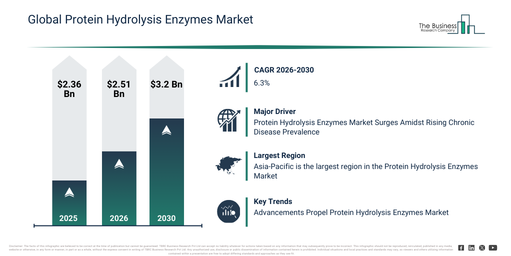
    The protein hydrolysis enzymes market has shown robust expansion in recent years. Its value is projected to rise from $2.36 billion in 2025 to $2.51 billion in 2026, progressing at a compound annual growth rate (CAGR) of 6.3%. Historically, this growth has been fueled by an increasing need for functional foods, the expanded application of protein in animal feed, the development of the dairy and beverage industries, advancements in fermentation techniques, and a heightened awareness of protein quality.

    The protein hydrolysis enzymes market is poised for substantial expansion in the coming years. Its valuation is forecast to climb to $3.2 billion by 2030, exhibiting a compound annual growth rate (CAGR) of 6.3%. This upward trajectory in the forecast period can be ascribed to several factors, such as the increasing demand for plant-based protein products, the incorporation of enzyme solutions in nutraceuticals, the expansion of the processed food industry, a heightened focus on protein digestibility and bioavailability, and growing research and development in enzyme technology. Key developments expected during this period include enzyme-based protein modification, innovations in plant-derived enzymes, the creation of high-solubility protein formulations, low-viscosity protein solutions, and specialty protein hydrolysates.

    Download A Free Sample Report For Comprehensive Market Insights:

    https://www.thebusinessresearchcompany.com/sample.aspx?id=9113&type=smp

    Which Major Factors Are Contributing To The Development Of The Protein Hydrolysis Enzymes Market?

    The protein hydrolysis enzymes market is projected to experience growth due to the rising incidence of chronic diseases. A chronic disease is defined as a health condition that is persistent, develops over time, or carries long-lasting repercussions for individuals. Enzymes play a crucial role in protein hydrolysis, which generates highly physiologically active peptides. These peptides have the potential to prevent conditions such as cancer and other diseases by modulating antioxidant enzymes, serving as a critical control point for the body’s pro-inflammatory processes. Consequently, a rise in the prevalence of chronic diseases is expected to boost the demand for protein hydrolysis enzymes. For example, in June 2024, data from the National Health Service, a UK-based government department, indicated that 3,615,330 individuals registered with a general practitioner (GP) were diagnosed with non-diabetic hyperglycemia or pre-diabetes (a condition with elevated blood sugar levels, not high enough to be classified as diabetes) in 2023. This figure marked an 18% increase compared to the 3,065,825 cases recorded in 2022. Thus, the increasing prevalence of chronic diseases is indeed a key driver for the expansion of the protein hydrolysis enzymes market.

    What Are The Major Segment Categories Within The Protein Hydrolysis Enzymes Market?

    The protein hydrolysis enzymes market covered in this report is segmented –

    1) By Type: Microorganisms, Animals, Plants

    2) By Method Of Production: Extraction, Fermentation

    3) By Application: Detergent And Cleaning, Food And Beverage, Animal Feed, Textile, Dairy, Other Applications

    Subsegments:

    1) By Microorganisms: Bacterial Enzymes, Fungal Enzymes, Yeast-Derived Enzymes

    2) By Animals: Animal-Derived Enzymes, Rennet

    3) By Plants: Plant-Derived Enzymes, Seed-Derived Enzymes

    What Trends Are Affecting The Protein Hydrolysis Enzymes Market Dynamics?

    Companies operating significantly within the protein hydrolysis enzyme market are prioritizing technological advancements, such as optimized enzyme blends, to improve nutrient digestion, boost animal performance, and address specific issues in livestock production. An optimized enzyme blend refers to a precisely formulated mixture of various enzymes crafted to enhance the digestion and utilization of nutrients present in animal feed. For example, in March 2023, International Flavors & Fragrances Inc., a US-based food and health ingredient provider, unveiled Axtra PRIME, a novel optimized enzyme blend intended to improve nutrient digestion and elevate piglet performance in animal nutrition. This innovative solution targets crucial challenges in piglet rearing, particularly during weaning, by integrating xylanase, beta-glucanase, alpha-amylase, and protease enzymes to support more robust growth and more efficient feed utilization.

    Who Are The Major Companies Operating In The Protein Hydrolysis Enzymes Market?

    Major companies operating in the protein hydrolysis enzymes market are Novozymes A/S, Royal DSM, DuPont de Nemours Inc., AB Enzymes GmbH, Advanced Enzyme Technologies, Dyadic International Inc., Jiangsu Boli Bioproducts Co. Ltd., Specialty Enzymes & Biotechnologies Co, Solvay Enzymes, Amano Enzyme Inc., Biocatalysts, Rossari Biotech Limited, Enzyme Solutions, DSM Nutritional Products, Chr. Hansen Holding A/S, Noor Enzymes, Enzyme Development Corporation, Enzyme Supplies Limited, Enzyme Innovation, Enzybel Group

    Access The Complete Protein Hydrolysis Enzymes Market Report:

    https://www.thebusinessresearchcompany.com/report/protein-hydrolysis-enzymes-global-market-report

    Which Region Contributes The Most To The Protein Hydrolysis Enzymes Market?

    Asia-Pacific was the largest region in the protein hydrolysis enzymes market in 2025. Asia-Pacific is expected to be the fastest-growing region in the protein hydrolysis enzymes market during the forecast period. The regions covered in the protein hydrolysis enzymes market report are Asia-Pacific, South East Asia, Western Europe, Eastern Europe, North America, South America, Middle East, Africa.

    Access Protein Hydrolysis Enzymes Market Report for Deeper Competitive Insights

    https://www.thebusinessresearchcompany.com/sample.aspx?id=9113&type=smp

    Browse Through More Reports Similar to the Global Protein Hydrolysis Enzymes Market 2026, By The Business Research Company

    Protein Hydrolysis Enzymes Market Report 2026

    https://www.thebusinessresearchcompany.com/report/protein-hydrolysis-enzymes-global-market-report

    Hydrolase Enzymes Market Report 2026

    https://www.thebusinessresearchcompany.com/report/hydrolase-enzymes-global-market-report

    Enzyme Market Report 2026

    https://www.thebusinessresearchcompany.com/report/enzyme-global-market-report

    Get in touch with us:

    The Business Research Company: https://www.thebusinessresearchcompany.com/

    Americas: +1 310-496-7795

    Asia: +44 7882 955267 & +91 8897263534

    Europe: +44 7882 955267

    Email us at: marketing@tbrc.info

    Follow us on:

    LinkedIn: https://in.linkedin.com/company/the-business-research-company

    YouTube: https://www.youtube.com/channel/UC24_fI0rV8cR5DxlCpgmyFQ

    Global Market Model: https://www.thebusinessresearchcompany.com/global-market-model
  • Rising Cancer Burden Drives Growth In Protein Degradation Therapy Market Is Supporting Development Across The Protein Degradation Therapy Market

    Rising Cancer Burden Drives Growth In Protein Degradation Therapy Market Is Supporting Development Across The Protein Degradation Therapy Market

    The Business Research Company’s 2026 market reports feature advanced enhancements such as market attractiveness analysis, total addressable market evaluation, company benchmarking matrices, interactive Excel dashboards, expanded supply chain intelligence, emerging startup coverage, and detailed product insights, delivering more actionable and strategically valuable research.

    What Market Size Is Forecasted For The Protein Degradation Therapy Market By 2030 Based On Its 2026 Value?

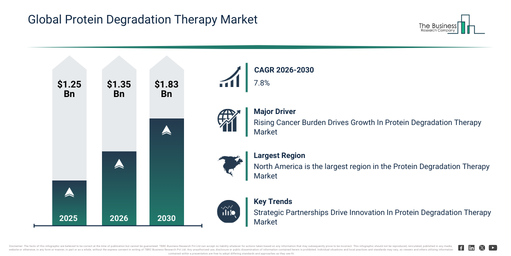
    The protein degradation therapy market has demonstrated robust expansion over recent years. This market is anticipated to expand from $1.25 billion in 2025 to $1.35 billion in 2026, reflecting a compound annual growth rate (CAGR) of 8.1%. Key factors contributing to this historical growth include advancements in molecular biology research, the broadening of targeted cancer therapies, enhanced comprehension of protein dysfunction in various diseases, initial clinical achievements, and increasing venture capital investment in the biotechnology sector.

    The protein degradation therapy market is anticipated to experience substantial expansion in the coming years. This market is projected to reach $1.83 billion by 2030, exhibiting a compound annual growth rate (CAGR) of 7.8%. Factors contributing to this growth over the forecast period include a heightened demand for new cancer treatments, increased capital flowing into precision oncology, the broadening of protein degradation platforms, an uptick in clinical trial engagement, and enhanced regulatory backing for pioneering therapeutics. Key trends anticipated during this period involve the intensified creation of targeted protein degraders, a sharpened focus on applications within oncology, greater financial commitment to PROTAC-based treatments, an enlarging pool of clinical pipeline candidates, and strengthened partnerships between pharmaceutical and biotechnology companies.

    Download A Free Sample Report For Comprehensive Market Insights:

    https://www.thebusinessresearchcompany.com/sample.aspx?id=20603&type=smp

    What Key Growth Drivers Are Influencing The Protein Degradation Therapy Market?

    The increasing prevalence of cancer is anticipated to stimulate the growth of the protein degradation therapy market moving forward. Cancer refers to a collection of diseases distinguished by the uncontrolled multiplication and spread of abnormal cells within the body. The escalation in cancer rates primarily stems from a confluence of factors, with the aging population playing a crucial role. Furthermore, lifestyle elements such as smoking, an unhealthy diet, insufficient physical activity, and rising obesity levels have heightened the susceptibility to various cancers. Protein degradation therapy is vital for treating cancer because it specifically targets and eradicates proteins that fuel cancer progression and survival, potentially overcoming resistance to conventional treatments. For instance, in February 2024, a report from the World Health Organization, a Switzerland-based intergovernmental organization, indicated that over 35 million new cancer cases are expected in 2050, representing a 77% increase from the estimated 20 million cases in 2022. Moreover, high human development index (HDI) countries are projected to witness the largest rise in absolute numbers, with an additional 4.8 million new cases predicted in 2050 compared with 2022 estimates. Hence, the increasing burden of cancer is propelling the growth of the protein degradation therapy market.

    How Is The Protein Degradation Therapy Market Distributed Across Key Segments?

    The protein degradation therapy market covered in this report is segmented –

    1) By Type: Bavdegalutamide (ARV – 110), Vepdegestrant (ARV – 471)

    2) By Application: Oncology, Neurodegenerative Diseases, Infectious Diseases, Other Applications

    3) By End-User: Pharmaceutical Companies, Biotechnology Companies, Academic And Research Institutes

    Subsegments:

    1) By Bavdegalutamide (ARV-110): Androgen Receptor Degraders, Prostate Cancer Therapy

    2) By Vepdegestrant (ARV-471): Estrogen Receptor Degraders, Breast Cancer Therapy

    Which Trends Are Influencing The Expansion Of The Protein Degradation Therapy Market?

    Major companies active within the protein degradation therapy market are increasingly adopting strategic partnerships. This approach aims to foster the creation of innovative therapies, leverage complementary expertise, share resources, and accelerate the discovery and development of new drug candidates that target disease-causing proteins. These collaborations involve companies utilizing each other’s strengths and resources to gain mutual benefits and achieve shared success. For instance, in February 2024, Arvinas, a U.S.-based biotechnology company, introduced its first oral PROTAC degrader (ARV-102), which is designed to cross the blood-brain barrier and target LRRK2 for neurodegenerative disease applications. The ARV-102 molecule features oral bioavailability, a brain-penetrant profile, and high specificity for LRRK2. This innovation strengthens companies’ pipelines by addressing previously undruggable targets, though challenges remain around long-term safety, manufacturing complexity, and optimization of pharmacokinetics given its larger molecular structure.

    Which Companies Are Influencing The Protein Degradation Therapy Market?

    Major companies operating in the protein degradation therapy market are Relay Therapeutics, Arvinas Holding Company LLC, Kymera Therapeutics, Nurix Therapeutics, Vividion Therapeutics, Mission Therapeutics Ltd., C4 Therapeutics Inc., Cullgen Inc., Frontier Medicines, Foghorn Therapeutics, Aileron Therapeutics, Ribometrix Inc., Nimbus Therapeutics, Jnana Therapeutics, KSQ Therapeutics, Stoke Therapeutics, Flare Therapeutics, Accent Therapeutics, Monte Rosa Therapeutics, Lycia Therapeutics, Dialectic Therapeutics, Amphista Therapeutics, Biotheryx Inc., Cedilla Therapeutics, Dewpoint Therapeutics Inc

    Access The Complete Protein Degradation Therapy Market Report:

    https://www.thebusinessresearchcompany.com/report/protein-degradation-therapy-global-market-report

    Which Regional Market Leads The Protein Degradation Therapy Market?

    North America was the largest region in the protein degradation therapy market in 2025. Asia-Pacific is expected to be the fastest-growing region in the forecast period. The regions covered in the protein degradation therapy market report are Asia-Pacific, South East Asia, Western Europe, Eastern Europe, North America, South America, Middle East, Africa.

    Access Protein Degradation Therapy Market Report for Deeper Competitive Insights

    https://www.thebusinessresearchcompany.com/sample.aspx?id=20603&type=smp

    Browse Through More Reports Similar to the Global Protein Degradation Therapy Market 2026, By The Business Research Company

    Home Infusion Therapy Market Report 2026

    https://www.thebusinessresearchcompany.com/report/home-infusion-therapy-global-market-report

    Car T Therapy Market Report 2026

    https://www.thebusinessresearchcompany.com/report/car-t-therapy-global-market-report

    Aromatherapy Market Report 2026

    https://www.thebusinessresearchcompany.com/report/aromatherapy-global-market-report

    Get in touch with us:

    The Business Research Company: https://www.thebusinessresearchcompany.com/

    Americas: +1 310-496-7795

    Asia: +44 7882 955267 & +91 8897263534

    Europe: +44 7882 955267

    Email us at: marketing@tbrc.info

    Follow us on:

    LinkedIn: https://in.linkedin.com/company/the-business-research-company

    YouTube: https://www.youtube.com/channel/UC24_fI0rV8cR5DxlCpgmyFQ

    Global Market Model: https://www.thebusinessresearchcompany.com/global-market-model
  • Proteasome Inhibitors Market Fuels With Focus On Pancreatic Cancer Is Supporting Development Across The Proteasome Inhibitors Market

    Proteasome Inhibitors Market Fuels With Focus On Pancreatic Cancer Is Supporting Development Across The Proteasome Inhibitors Market

    The Business Research Company’s 2026 market reports feature advanced enhancements such as market attractiveness analysis, total addressable market evaluation, company benchmarking matrices, interactive Excel dashboards, expanded supply chain intelligence, emerging startup coverage, and detailed product insights, delivering more actionable and strategically valuable research.

    How Is The Market Value Of The Proteasome Inhibitors Market Projected To Expand During 2026–2030?

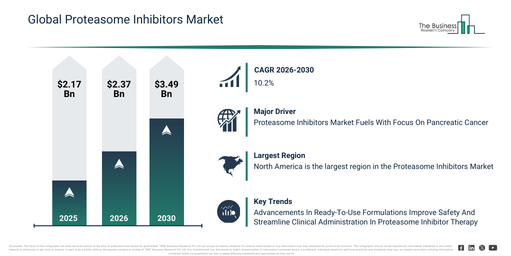
    The proteasome inhibitors market has experienced substantial expansion in recent years. This market is projected to expand from $2.17 billion in 2025 to $2.37 billion in 2026, demonstrating a compound annual growth rate (CAGR) of 9.2%. Factors contributing to this growth in the past include the initial approval of proteasome inhibitors, the increasing incidence of multiple myeloma, heightened investment in oncology research, advancements in cancer diagnostics, and the expansion of hospital oncology departments.

    The proteasome inhibitors market size is anticipated to experience rapid expansion in the upcoming years. This market is projected to reach $3.49 billion by 2030, demonstrating a compound annual growth rate (CAGR) of 10.2%. The anticipated growth within this period can be ascribed to the broadening pipeline of proteasome inhibitors, the integration of artificial intelligence in drug discovery, a heightened demand for combination therapies, advancements in oral formulation development, and the expansion of emerging oncology markets. Prominent trends expected during the forecast period include personalized cancer treatments, targeted proteasome inhibition approaches, the development of new combination therapies, enhanced drug delivery systems, and an increase in clinical trial activities.

    Download A Free Sample Report For Comprehensive Market Insights:

    https://www.thebusinessresearchcompany.com/sample.aspx?id=12251&type=smp

    Which Core Factors Are Supporting The Expansion Of The Proteasome Inhibitors Market?

    The rising incidence of pancreatic cancer is anticipated to drive the expansion of the proteasome inhibitors market. Pancreatic cancer originates in the cells of the pancreas, an organ situated in the abdomen behind the stomach. Proteasome inhibitors are predominantly employed in the management of pancreatic cancer, as the proteasome is crucial for cell survival and proliferation by breaking down proteins that control cell cycle progression and apoptosis. These inhibitors hinder cancer cell viability and suppress tumor development and metastasis. For example, in January 2024, data from the American Cancer Society, a US-based health organization, indicated that an estimated 64,050 adults in the US were diagnosed with pancreatic cancer by 2023, and 50,550 people died from it. Subsequently, the number of diagnoses climbed to 66,440, with deaths reaching 51,750. Consequently, the growing occurrence of pancreatic cancer is fueling the growth of the proteasome inhibitors market.

    How Does Segment Analysis Break Down The Proteasome Inhibitors Market Structure?

    The proteasome inhibitors market covered in this report is segmented –

    1) By Product: Velcade, Kyprolis, Ninlaro, Other Products

    2) By Drugs: Bortezomib, Carfilzomib, Ixazomib

    3) By Indication: Lymphoma, Mantle Cell Lymphoma, Multiple Myeloma

    4) By Distribution Channel: Hospital Pharmacy, Online Pharmacy, Retail Pharmacy

    5) By End-User: Hospital, Specialty Clinics, Other End-Users

    Subsegments:

    1) By Velcade: Injectable Velcade (Bortezomib), Oral Formulations

    2) By Kyprolis: Injectable Kyprolis (Carfilzomib), Combination Therapies With Kyprolis

    3) By Ninlaro: Oral Ninlaro (Ixazomib), Combination Therapies With Ninlaro

    4) By Other Products: Investigational Proteasome Inhibitors, Combination Products

    What Trends Are Impacting The Proteasome Inhibitors Market?

    Leading companies in the proteasome inhibitors market are concentrating on bringing forth advanced, pre-prepared formulations to elevate treatment effectiveness, simplify clinical delivery, and improve patient security. These ready-to-use injectable solutions remove the necessity for on-site mixing, thereby reducing preparation time, decreasing potential dosing errors, and fostering more streamlined oncology treatment. For example, in April 2025, Amneal Pharmaceuticals Inc., a US-based specialty pharmaceutical company, introduced BORUZU, which is the first ready-to-use bortezomib injection specifically indicated for multiple myeloma and mantle cell lymphoma. This particular formulation is engineered to enhance clinical operations by enabling direct administration without reconstitution, assisting healthcare providers in delivering faster and more dependable proteasome inhibitor therapy in both outpatient clinics and hospital environments.

    Who Are The Companies Shaping The Proteasome Inhibitors Market Landscape?

    Major companies operating in the proteasome inhibitors market are Pfizer Inc., Johnson And Johnson, Onyx Pharmaceuticals Inc., Progenra Inc., Nurix Inc., Cephalon Inc., Cleave Therapeutics, Apotex Inc., Amgen Inc., Takeda Pharmaceutical Company Limited, Millennium Pharmaceuticals, Bristol-Myers Squibb Company, Janssen Pharmaceuticals, AbbVie, Karyopharm Therapeutics, OncoArendi Therapeutics, Novartis AG, GlaxoSmithKline plc, Sanofi S.A., Eli Lilly and Company

    Access The Complete Proteasome Inhibitors Market Report:

    https://www.thebusinessresearchcompany.com/report/proteasome-inhibitors-global-market-report

    Which Region Holds The Largest Share In The Proteasome Inhibitors Market?

    North America was the largest region in the proteasome inhibitors market in 2025. The regions covered in the proteasome inhibitors market report are Asia-Pacific, South East Asia, Western Europe, Eastern Europe, North America, South America, Middle East, Africa.

    Access Proteasome Inhibitors Market Report for Deeper Competitive Insights

    https://www.thebusinessresearchcompany.com/sample.aspx?id=12251&type=smp

    Browse Through More Reports Similar to the Global Proteasome Inhibitors Market 2026, By The Business Research Company

    Proteasome Inhibitors Market Report 2026

    https://www.thebusinessresearchcompany.com/report/proteasome-inhibitors-global-market-report

    Proteases Market Report 2026

    https://www.thebusinessresearchcompany.com/report/proteases-global-market-report

    Serine Proteases Market Report 2026

    https://www.thebusinessresearchcompany.com/report/serine-proteases-global-market-report

    Get in touch with us:

    The Business Research Company: https://www.thebusinessresearchcompany.com/

    Americas: +1 310-496-7795

    Asia: +44 7882 955267 & +91 8897263534

    Europe: +44 7882 955267

    Email us at: marketing@tbrc.info

    Follow us on:

    LinkedIn: https://in.linkedin.com/company/the-business-research-company

    YouTube: https://www.youtube.com/channel/UC24_fI0rV8cR5DxlCpgmyFQ

    Global Market Model: https://www.thebusinessresearchcompany.com/global-market-model

  • Surge In Prostate Cancer Incidences Fueling The Growth Of The Market Due To Aging Population And Increased Life Expectancy Is Supporting Development Across The Prostate Cancer Therapeutics Market

    Surge In Prostate Cancer Incidences Fueling The Growth Of The Market Due To Aging Population And Increased Life Expectancy Is Supporting Development Across The Prostate Cancer Therapeutics Market

    The Business Research Company’s 2026 market reports feature advanced enhancements such as market attractiveness analysis, total addressable market evaluation, company benchmarking matrices, interactive Excel dashboards, expanded supply chain intelligence, emerging startup coverage, and detailed product insights, delivering more actionable and strategically valuable research.

    What Are The Forecasted Market Size Figures For The Prostate Cancer Therapeutics Market In 2026 And 2030?

    The prostate cancer therapeutics market size has demonstrated strong growth in recent years. It is projected to expand from $12.88 billion in 2025 to $13.96 billion in 2026, achieving a compound annual growth rate (CAGR) of 8.4%. The historical increase can be attributed to factors such as a rise in prostate cancer incidence, an aging male population, breakthroughs in oncology drugs, readily available hospital-based cancer care, and increased cancer screening efforts.

    The prostate cancer therapeutics market size is anticipated to undergo significant expansion over the next few years. It is projected to reach $19.25 billion by 2030, growing at a compound annual growth rate (CAGR) of 8.4%. The impetus for this growth during the forecast period stems from the uptake of precision oncology, the development of biomarker-driven treatments, an increase in oral oncology drugs, a broadening immunotherapy pipeline, and escalating healthcare expenditure. Noteworthy trends for the forecast period involve the increasing embrace of targeted therapies, the rising deployment of PARP inhibitors, the wider application of immunotherapy in cancer treatment, a transition towards oral cancer medications, and treatment selection guided by precision medicine.

    Download A Free Sample Report For Comprehensive Market Insights:

    https://www.thebusinessresearchcompany.com/sample.aspx?id=24389&type=smp

    What Are The Main Drivers Accelerating The Growth Of The Prostate Cancer Therapeutics Market?

    The rising occurrence of prostate cancer is anticipated to boost the expansion of the prostate cancer therapeutics market in the future. Prostate cancer is characterized by the formation of malignant cells in the prostate gland, primarily affecting older males. The growing number of prostate cancer cases is linked to an aging global population, given that the likelihood of developing the condition increases substantially with age, and extended life expectancies mean more men reach an age where they are susceptible. Prostate cancer therapeutics assist in managing this condition by targeting cancerous cells, slowing the disease’s advancement, and enhancing the quality of life through various treatments like surgery, radiation, hormone therapy, and modern approaches such as immunotherapy. As an illustration, Prostate Cancer UK reported in January 2025 that the number of men diagnosed with prostate cancer climbed from 50,751 cases in 2022 to 55,033 cases in 2023. Consequently, the heightened incidence of prostate cancer is fueling the growth of the prostate cancer therapeutics market.

    What Segment Types Are Included In The Prostate Cancer Therapeutics Market Analysis?

    The prostate cancer therapeutics market covered in this report is segmented –

    1) By Therapy: Hormonal Therapy, Chemotherapy, Immunotherapy, Targeted Therapy, Other Therapies

    2) By Drug Class: Androgen Receptor Inhibitors, GnRH Receptor Antagonists, PARP Inhibitors, Immune Checkpoint Inhibitors, Other Drug Classes

    3) By Route Of Administration: Oral, Injectable

    4) By Distribution Channel: Hospital Pharmacies, Retail Pharmacies

    5) By End User: Clinics, Hospitals, Other End Users

    Subsegments:

    1) By Hormonal Therapy: Luteinizing Hormone-Releasing Hormone (LHRH) Agonists, LHRH Antagonists, Anti-Androgens, Androgen Synthesis Inhibitors

    2) By Chemotherapy: Docetaxel, Cabazitaxel, Mitoxantrone, Combination Chemotherapy Regimens

    3) By Immunotherapy: Sipuleucel-T, Immune Checkpoint Inhibitors, Cancer Vaccines

    4) By Targeted Therapy: PARP Inhibitors, Radioligand Therapy

    5) By Other Therapies: Radiotherapy, Bone-Targeted Therapies, Cryotherapy, High-Intensity Focused Ultrasound

    Which Trends Are Affecting The Prostate Cancer Therapeutics Market Framework?

    Major companies in the prostate cancer therapeutics market are concentrating on developing innovative treatments, such as an oral once-a-day pill designed for advanced prostate cancer, aiming to enhance patient adherence and overall treatment results. This oral once-a-day medication for advanced prostate cancer describes therapies administered daily to manage metastatic castration-resistant prostate cancer by hindering testosterone’s effects on cancer cells. For example, in January 2024, the India-based company Zydus Lifesciences introduced Rexigo, which is India’s initial oral once-a-day pill containing relugolix for individuals with advanced prostate cancer. This convenient and economical substitute for injectable hormone therapies quickly reduces testosterone, assisting in the control of cancer progression while providing a superior cardiovascular safety profile. Being an oral therapy, it removes the necessity for injectable treatments that require administration by healthcare professionals, thereby offering greater convenience for patients. This introduction signifies a major progression in prostate cancer management within India, equipping patients and doctors with a novel, accessible, secure, and cost-efficient treatment choice.

    Which Industry Players Are Present In The Prostate Cancer Therapeutics Market?

    Major companies operating in the prostate cancer therapeutics market are Johnson & Johnson, Merck & Co. Inc., AbbVie Inc., Novartis AG, AstraZeneca plc, Sanofi S.A., Astellas Pharma Inc., Jiangsu Hengrui Medicine Co. Ltd., Telix Pharmaceuticals, Bayer AG, Curium Pharma SAS, Dendreon Pharmaceuticals, Myovant Sciences GmbH, Clovis Oncology Inc., Ipsen S.A., Veru Inc., Bristol‑Myers Squibb Company, F. Hoffmann‑La Roche Ltd, Dendreon Pharmaceuticals LLC, Pfizer Inc., Ferring B.V.

    Access The Complete Prostate Cancer Therapeutics Market Report:

    https://www.thebusinessresearchcompany.com/report/prostate-cancer-therapeutics-global-market-report

    Which Region Is The Dominant Market In The Prostate Cancer Therapeutics Market?

    North America was the largest region in the prostate cancer therapeutics market in 2025. Asia-Pacific is expected to be the fastest-growing region in the forecast period. The regions covered in the prostate cancer therapeutics market report are Asia-Pacific, South East Asia, Western Europe, Eastern Europe, North America, South America, Middle East, Africa.

    Access Prostate Cancer Therapeutics Market Report for Deeper Competitive Insights

    https://www.thebusinessresearchcompany.com/sample.aspx?id=24389&type=smp

    Browse Through More Reports Similar to the Global Prostate Cancer Therapeutics Market 2026, By The Business Research Company

    Prostate Cancer Drugs Market Report 2026

    https://www.thebusinessresearchcompany.com/report/prostate-cancer-drugs-global-market-report

    Metastatic Cancer Drugs Market Report 2026

    https://www.thebusinessresearchcompany.com/report/metastatic-cancer-drugs-global-market-report

    Urothelial Cancer Drugs Market Report 2026

    https://www.thebusinessresearchcompany.com/report/urothelial-cancer-drugs-global-market-report

    Get in touch with us:

    The Business Research Company: https://www.thebusinessresearchcompany.com/

    Americas: +1 310-496-7795

    Asia: +44 7882 955267 & +91 8897263534

    Europe: +44 7882 955267

    Email us at: marketing@tbrc.info

    Follow us on:

    LinkedIn: https://in.linkedin.com/company/the-business-research-company

    YouTube: https://www.youtube.com/channel/UC24_fI0rV8cR5DxlCpgmyFQ

    Global Market Model: https://www.thebusinessresearchcompany.com/global-market-model
  • Increasing Geriatric Male Population Driving Market Growth Due to Higher Disease Prevalence and Rising Treatment Demand Is Supporting Development Across The Prostate Cancer Drugs Market

    Increasing Geriatric Male Population Driving Market Growth Due to Higher Disease Prevalence and Rising Treatment Demand Is Supporting Development Across The Prostate Cancer Drugs Market

    The Business Research Company’s 2026 market reports feature advanced enhancements such as market attractiveness analysis, total addressable market evaluation, company benchmarking matrices, interactive Excel dashboards, expanded supply chain intelligence, emerging startup coverage, and detailed product insights, delivering more actionable and strategically valuable research.

    How Much Larger Will The Prostate Cancer Drugs Market Become By 2030 Compared To 2026?

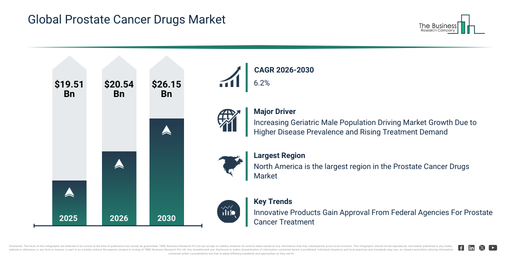
    The prostate cancer drugs market has seen strong growth in recent years. It is anticipated to increase from $19.51 billion in 2025 to $20.54 billion in 2026, exhibiting a compound annual growth rate (CAGR) of 5.3%. This historical expansion can be attributed to an aging male population, increased prostate cancer screening, widespread adoption of hormone therapy, the expansion of oncology clinics, and rising cancer awareness.

    The prostate cancer drugs market size is projected to experience significant expansion in the coming years. It is forecast to reach a value of **$26.15 billion in 2030, with a compound annual growth rate (CAGR) of 6.2%.** This anticipated expansion during the forecast period stems from various factors, including the increasing development of targeted and immunotherapy drugs, a rising incidence of advanced prostate cancer, greater personalization in treatment, expanding access to healthcare, and an increase in oncology spending. Important trends anticipated over this period involve the rising use of hormonal therapy in early treatment, increased adoption of targeted prostate cancer drugs, a growing focus on castration-resistant prostate cancer, the expansion of combination therapy approaches, and increased hospital-based prostate cancer care.

    Download A Free Sample Report For Comprehensive Market Insights:

    https://www.thebusinessresearchcompany.com/sample.aspx?id=2592&type=smp

    Which Growth Drivers Are Expected To Support The Prostate Cancer Drugs Market Forward?

    The expanding demographic of older men is anticipated to fuel the expansion of the prostate cancer drugs market in the future. This group encompasses males aged 65 and above, who commonly face a higher incidence of age-related health issues and necessitate specific medical care. This growth in the elderly male demographic stems from enhanced healthcare availability, reduced death rates, and extended global lifespans. A growing population of older men boosts the demand for prostate cancer drugs by increasing the pool of individuals needing hormonal therapies, immunotherapies, chemotherapy, and targeted medicines for managing the disease and improving survival rates. For example, in February 2025, the World Health Organization, an international public health body based in Switzerland, reported that global life expectancy at birth reached 73.3 years in 2024, and the number of people aged 60 and older worldwide is forecast to increase from 1.1 billion in 2023 to 1.4 billion by 2030. Consequently, the expanding older male population is propelling the growth of the prostate cancer market. The increasing occurrence of prostate cancer is anticipated to drive the expansion of the prostate cancer drugs market in the coming years. This malignancy forms in the prostate gland and necessitates prompt and effective treatment to lessen complications and enhance patient results. The surge in prostate cancer cases largely stems from an aging demographic and greater utilization of screening techniques, such as prostate-specific antigen (PSA) testing, resulting in improved detection rates. Prostate cancer medications are advantageous for treatment because they target particular alterations within prostate cancer cells that promote their growth. Their mechanism of action differs from that of chemotherapy and hormone therapy. For instance, in January 2023, the American Cancer Society, a voluntary health organization in the US committed to eradicating cancer, estimated approximately 288,300 new cases of prostate cancer and around 34,700 deaths from prostate cancer. Roughly 1 man in 8 will receive a prostate cancer diagnosis during his life. Consequently, the increasing prevalence of cancer is fueling the expansion of the prostate cancer drugs market.

    Which Segment Divisions Form The Structure Of The Prostate Cancer Drugs Market?

    The prostate cancer drugs market covered in this report is segmented –

    1) By Type: Hormone Sensitive Prostate Cancer, Hormone Refractory Prostate Cancer

    2) By Therapy: Hormonal Therapy, Chemotherapy, Immunotherapy, Targeted Therapy

    3) By End User: Hospitals, Clinics, Other End-Users

    Subsegments:

    1) By Hormone Sensitive Prostate Cancer: Early-Stage Prostate Cancer, Locally Advanced Prostate Cancer, Metastatic Prostate Cancer

    2) By Hormone Refractory Prostate Cancer: Castration-Resistant Prostate Cancer (CRPC), Metastatic Castration-Resistant Prostate Cancer (mCRPC)

    What Trends Are Influencing The Prostate Cancer Drugs Market?

    Major entities within the prostate cancer drugs market are concentrating their efforts on launching new products and obtaining their endorsement from federal agencies to boost their revenues. The journey of drug development and subsequent approval is protracted and complex, highlighting the necessity for drug sponsors to grasp the regulatory oversight and marketing avenues required to assure reasonable safety and effectiveness. As an illustration, in June 2023, AstraZeneca PLC, a UK-based pharmaceutical company, alongside Merck & Co. Inc., a US-based pharmaceutical company, declared the United States Food and Drug Administration’s (USFDA) approval of LYNPARZA (olaparib) Plus Abiraterone and Prednisone or Prednisolone. This approval is for the treatment of adult patients diagnosed with BRCA-Mutated Metastatic Castration-Resistant Prostate Cancer (mCRPC). An exploratory subgroup analysis from the Phase 3 PROpel trial, which underpinned this approval, revealed that LYNPARZAplus abi/pred exhibited clinically meaningful improvements in both radiographic progression-free survival (rPFS) and overall survival (OS) compared to abi/pred alone in patients with BRCAm mCRPC.

    Which Organizations Are Involved In The Prostate Cancer Drugs Market?

    Major companies operating in the prostate cancer drugs market are Astellas Pharma Inc., AstraZeneca PLC, Johnson & Johnson, Sanofi S.A., Bayer AG, Abbott Laboratories, Pfizer Inc., Novartis International AG, F. Hoffmann-La Roche Ltd., Tolmar Inc., AbbVie Inc., Siemens Healthineers AG, Genomic Health Inc., OPKO Health Inc., Siemens Healthcare GmbH, MDxHealth SA, Myriad Genetics Inc., Janssen Biotech Inc., Clovis Oncology Inc., Merck Sharp & Dohme Corp., Dendreon Corporation, Ferring Pharmaceuticals Inc., Ipsen Biopharmaceuticals Inc., Merck & Co. Inc., Eli Lilly and Company Inc., Bristol-Myers Squibb Company, Takeda Pharmaceutical Company Limited, Novartis AG, Amgen Inc., Regeneron Pharmaceuticals Inc., Exelixis Inc.

    Access The Complete Prostate Cancer Drugs Market Report:

    https://www.thebusinessresearchcompany.com/report/prostate-cancer-drugs-global-market-report

    Which Area Represents The Largest Portion Of The Prostate Cancer Drugs Market?

    North America was the largest region in the prostate cancer drugs market in 2025. Middle East is expected to be the fastest-growing region in the prostate cancer drugs market during the forecast period. The regions covered in the prostate cancer drugs market report are Asia-Pacific, South East Asia, Western Europe, Eastern Europe, North America, South America, Middle East, Africa.

    Access Prostate Cancer Drugs Market Report for Deeper Competitive Insights

    https://www.thebusinessresearchcompany.com/sample.aspx?id=2592&type=smp

    Browse Through More Reports Similar to the Global Prostate Cancer Drugs Market 2026, By The Business Research Company

    Prostate Cancer Drugs Market Report 2026

    https://www.thebusinessresearchcompany.com/report/prostate-cancer-drugs-global-market-report

    Metastatic Cancer Drugs Market Report 2026

    https://www.thebusinessresearchcompany.com/report/metastatic-cancer-drugs-global-market-report

    Bladder Cancer Drugs Market Report 2026

    https://www.thebusinessresearchcompany.com/report/bladder-cancer-drugs-global-market-report

    Get in touch with us:

    The Business Research Company: https://www.thebusinessresearchcompany.com/

    Americas: +1 310-496-7795

    Asia: +44 7882 955267 & +91 8897263534

    Europe: +44 7882 955267

    Email us at: marketing@tbrc.info

    Follow us on:

    LinkedIn: https://in.linkedin.com/company/the-business-research-company

    YouTube: https://www.youtube.com/channel/UC24_fI0rV8cR5DxlCpgmyFQ

    Global Market Model: https://www.thebusinessresearchcompany.com/global-market-model
  • Growing Prevalence of Cardiovascular Diseases Fuelling the Growth of the Propranolol Drug Market Due to Increasing Demand for Heart Rate and Blood Pressure Management Is Supporting Development Across The Propranolol Drug Market

    Growing Prevalence of Cardiovascular Diseases Fuelling the Growth of the Propranolol Drug Market Due to Increasing Demand for Heart Rate and Blood Pressure Management Is Supporting Development Across The Propranolol Drug Market

    The Business Research Company’s 2026 market reports feature advanced enhancements such as market attractiveness analysis, total addressable market evaluation, company benchmarking matrices, interactive Excel dashboards, expanded supply chain intelligence, emerging startup coverage, and detailed product insights, delivering more actionable and strategically valuable research.

    What Growth In Market Value Is Anticipated For The Propranolol Drug Market Between 2026 And 2030?

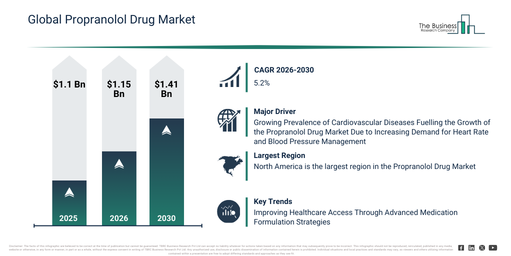
    The propranolol drug market size has experienced significant growth in recent years. This market is projected to expand from $1.1 billion in 2025 to $1.15 billion in 2026, exhibiting a compound annual growth rate (CAGR) of 5.2%. Factors contributing to its historical growth include the high prevalence of hypertension, widespread treatment for epilepsy, its low-cost availability, hospital-based prescribing practices, and its inclusion in national formularies.

    The propranolol drug market is anticipated to experience substantial expansion over the upcoming years, with projections indicating a rise to $1.41 billion by 2030, demonstrating a compound annual growth rate (CAGR) of 5.2%. This expected growth during the forecast period is primarily driven by factors such as a growing aging population, an increase in mental health conditions, the need for affordable treatment options, the broadening reach of generic drug markets, and an uptick in outpatient healthcare services. Key developments projected for this period involve a consistent need for the drug in treating cardiovascular issues, its expanding application in managing anxiety and migraines, the proliferation of generic propranolol versions, the development of extended-release formulations, and its incorporation into essential medicines initiatives.

    Download A Free Sample Report For Comprehensive Market Insights:

    https://www.thebusinessresearchcompany.com/sample.aspx?id=24388&type=smp

    What Influential Factors Are Boosting The Propranolol Drug Market Demand?

    The increasing occurrence of cardiovascular diseases is anticipated to fuel the expansion of the propranolol drug market in the future. Cardiovascular diseases (CVDs) are a category of disorders that impact the heart and blood vessels, including conditions such as coronary artery disease, heart failure, and stroke. The escalation of these diseases is linked to poor dietary habits, as excessive intake of processed foods and fats leads to higher cholesterol levels, thereby elevating heart risks. The propranolol drug assists in managing cardiovascular diseases by regulating heart rate and lowering blood pressure, rendering it beneficial for patients with hypertension and arrhythmias. It enhances cardiac function and reduces the potential for heart attacks and strokes, contributing to improved cardiovascular health. For instance, in October 2024, according to the Centers for Disease Control and Prevention (CDC), a US-based government public health agency, 919,032 people in the US died from cardiovascular disease in 2023, representing approximately one in every three deaths nationwide. Thus, the rising prevalence of cardiovascular diseases is a significant driver for the growth of the propranolol drug market.

    How Are Different Segment Groups Identified Within The Propranolol Drug Market?

    The propranolol drug market covered in this report is segmented –

    1) By Dosage: Tablets, Injectable Solutions, Extended-Release Capsules, Oral Solution

    2) By Indication-Based: Hypertension, Angina Pectoris, Migraine Prevention, Post-Traumatic Stress Disorder (PTSD), Essential Tremors, Therapeutic Options In Anxiety Disorders

    3) By End-User: Hospitals, Clinics, Home Healthcare Settings, Nursing Homes

    Subsegments:

    1) By Tablets: Standard Tablets, Chewable Tablets, Film-Coated Tablets

    2) By Injectable Solutions: Intravenous Solutions, Intramuscular Solutions, Pre-Filled Syringes

    3) By Extended-Release Capsules: 60 Milligrams (mg), 80 Milligrams (mg), 120 Milligrams (mg), 160 Milligrams (mg)

    4) By Oral Solution: Liquid Suspension, Concentrated Oral Solution, Ready-To-Use Oral Solution

    Which Trends Are Guiding The Development Of The Propranolol Drug Market?

    Major companies engaged in the propranolol drug market are emphasizing the development of sophisticated products, such as propranolol drugs utilizing extended-release formulations, to uplift patient compliance and improve overall therapeutic results. Extended-release formulations are designed to gradually dispense the drug over time, ensuring enduring therapeutic effects and lessening the requirement for frequent dosing, which consequently enhances patient adherence and treatment outcomes. For instance, in August 2023, Lupin Pharma Canada Ltd., a Canada-based pharmaceutical company, launched Propranolol long-acting capsules to address the Inderal long-acting (LA) discontinuation. This new extended-release formulation, offered in 60 mg, 80 mg, 120 mg, and 160 mg, provides Canadian patients with consistent symptom relief and bolsters adherence, thereby improving overall treatment outcomes and healthcare access.

    Who Are The Firms Contributing To The Propranolol Drug Market Ecosystem?

    Major companies operating in the propranolol drug market are Pfizer Inc., Teva Pharmaceutical Industries Ltd., Boehringer Ingelheim International GmbH, Sandoz Group AG, Fresenius Kabi AG, Cipla Limited, Hikma Pharmaceuticals PLC, Amneal Pharmaceuticals Inc., Lupin Limited, Alkem Laboratories Ltd., Torrent Pharmaceuticals Ltd., Ipca Laboratories Limited, Mankind Pharma Ltd., Lannett Company Inc., Jubilant Pharma Holdings Inc., Actiza Pharmaceutical Private Limited, Mylan Laboratories Inc., Neurocon Inc., Neuracle Lifesciences Pvt. Ltd., Yabang Pharmaceutical Group Co. Ltd.

    Access The Complete Propranolol Drug Market Report:

    https://www.thebusinessresearchcompany.com/report/propranolol-drug-global-market-report

    Which Region Commands The Largest Share Of The Propranolol Drug Market?

    North America was the largest region in the propranolol drug market in 2025. The regions covered in the propranolol drug market report are Asia-Pacific, South East Asia, Western Europe, Eastern Europe, North America, South America, Middle East, Africa.

    Access Propranolol Drug Market Report for Deeper Competitive Insights

    https://www.thebusinessresearchcompany.com/sample.aspx?id=24388&type=smp

    Browse Through More Reports Similar to the Global Propranolol Drug Market 2026, By The Business Research Company

    Propanol Market Report 2026

    https://www.thebusinessresearchcompany.com/report/propanol-global-market-report

    Theranostics Market Report 2026

    https://www.thebusinessresearchcompany.com/report/theranostics-global-market-report

    Osimertinib Drugs Market Report 2026

    https://www.thebusinessresearchcompany.com/report/osimertinib-drugs-global-market-report

    Get in touch with us:

    The Business Research Company: https://www.thebusinessresearchcompany.com/

    Americas: +1 310-496-7795

    Asia: +44 7882 955267 & +91 8897263534

    Europe: +44 7882 955267

    Email us at: marketing@tbrc.info

    Follow us on:

    LinkedIn: https://in.linkedin.com/company/the-business-research-company

    YouTube: https://www.youtube.com/channel/UC24_fI0rV8cR5DxlCpgmyFQ

    Global Market Model: https://www.thebusinessresearchcompany.com/global-market-model

  • Growing Use Of Personalized Treatments Boosting Market Growth Due To Improved Survival And Reduced Side Effects Is Supporting Development Across The Programmed Death (PD)-1 Non-Small Cell Lung Cancer Market

    Growing Use Of Personalized Treatments Boosting Market Growth Due To Improved Survival And Reduced Side Effects Is Supporting Development Across The Programmed Death (PD)-1 Non-Small Cell Lung Cancer Market

    The Business Research Company’s 2026 market reports feature advanced enhancements such as market attractiveness analysis, total addressable market evaluation, company benchmarking matrices, interactive Excel dashboards, expanded supply chain intelligence, emerging startup coverage, and detailed product insights, delivering more actionable and strategically valuable research.

    What Is The Expected Market Value Outlook For The Programmed Death (PD)-1 Non-Small Cell Lung Cancer Market Through 2030?

    The programmed death (pd)-1 non-small cell lung cancer market has experienced substantial growth in recent years. This market is projected to expand from $27.5 billion in 2025 to $29.92 billion in 2026, demonstrating a compound annual growth rate (CAGR) of 8.8%. The expansion observed during the historical period can be attributed to several factors, including the restricted approval of pd-1 inhibitors for nsclc, the increasing prevalence of lung cancer, enhanced physician understanding of immune checkpoint therapies, the conventional reliance on chemotherapy as standard care, and the initial positive outcomes from clinical trials of pembrolizumab and nivolumab.

    The programmed death (pd)-1 non-small cell lung cancer market is anticipated to experience robust expansion over the coming years. Its valuation is projected to reach $41.45 billion by 2030, exhibiting a compound annual growth rate (CAGR) of 8.5%. This anticipated growth during the forecast period stems from factors such as the creation of innovative combination treatments, the broadening scope of personalized therapies guided by biomarkers, the rising uptake of mRNA vaccine-based interventions, increasing financial commitment to immuno-oncology research, and elevated government and private sector contributions to cancer immunotherapy initiatives. Key trends expected over the forecast horizon encompass a greater embrace of pd-1 monotherapy for nsclc, an increase in combination therapies incorporating chemotherapy, ctla-4 inhibitors, and vegf inhibitors, a surge in investment dedicated to targeted therapy and mrna vaccine research, the broadening of available first-line and second-line treatment choices, and the incorporation of personalized medicine alongside biomarker testing into treatment strategy development.

    Download A Free Sample Report For Comprehensive Market Insights:

    https://www.thebusinessresearchcompany.com/sample.aspx?id=25888&type=smp

    Which Drivers Are Advancing The Programmed Death (PD)-1 Non-Small Cell Lung Cancer Market Growth?

    The programmed death (PD)-1 non-small cell lung cancer market is expected to grow due to the increasing adoption of personalized treatments. These medical approaches involve tailoring therapies to an individual’s genetic profile, lifestyle, and specific disease characteristics to achieve more effective and targeted outcomes. The rising demand for personalized treatments is fueled by the growing availability of genomic profiling and biomarker testing, which help identify specific mutations and biological markers, allowing clinicians to select therapies more likely to be effective for each individual. Personalized treatments benefit programmed death (PD)-1 non-small cell lung cancer (NSCLC) by customizing therapies based on a patient’s genetic profile, tumor characteristics, and immune response. For instance, the US Food and Drug Administration (FDA) approved 16 new personalized treatments for rare diseases in 2023, up from 6 in 2022, as reported by the Personalized Medicine Coalition, a US-based non-profit organization, in February 2024. Therefore, the increasing adoption of personalized treatments is driving the growth of the programmed death (PD)-1 non-small cell lung cancer market.

    What Segment Categories Are Evaluated In The Programmed Death (PD)-1 Non-Small Cell Lung Cancer Market Study?

    The programmed death (pd)-1 non-small cell lung cancer market covered in this report is segmented –

    1) By Drug Type: Monotherapy, Combination Therapy

    2) By Line of Therapy: First-line Treatment, Second-line And Beyond

    3) By End User: Hospitals, Specialty Cancer Centers, Academic And Research Institutes, Other End Users

    Subsegments:

    1) By Monotherapy: Pembrolizumab (Keytruda), Nivolumab (Opdivo), Cemiplimab (Libtayo), Toripalimab, Tislelizumab, Camrelizumab, Dostarlimab, Other Monotherapy Drug Types

    2) By Combination Therapy: Programmed Death (PD)-1 Inhibitor And Chemotherapy, Programmed Death (PD)-1 Inhibitor And Cytotoxic T-Lymphocyte Associated Protein (CTLA)-4 Inhibitor, Programmed Death (PD)-1 Inhibitor And Vascular Endothelial Growth Factor (VEGF) Inhibitor, Programmed Death (PD)-1 Inhibitor And Targeted Therapy, Programmed Death (PD)-1 Inhibitor And Radiation Therapy, Triple Combination Therapy, Programmed Death (PD)-1 Inhibitor And Messenger Ribonucleic Acid (mRNA) Vaccine, Other Combination Drug Types

    What Trends Are Influencing The Future Of The Programmed Death (PD)-1 Non-Small Cell Lung Cancer Market?

    Leading companies in the programmed death (PD)-1 non-small cell lung cancer market are concentrating on executing clinical trials for advanced treatments, like monotherapy, to better patient outcomes. Monotherapy represents a therapeutic method that employs a single medicine or treatment to manage a disease or ailment. For example, in March 2025, Akeso, Inc., a biopharmaceutical company based in China, released encouraging data from its Phase III HARMONi-2 trial, which investigated Ivonescimab (AK112) combined with chemotherapy for the first-line management of advanced non-small cell lung cancer (NSCLC). The research fulfilled its primary goal by notably extending progression-free survival in comparison to pembrolizumab, thus emphasizing the therapeutic capability of the dual-targeted bispecific antibody.

    Which Key Players Are Active In The Programmed Death (PD)-1 Non-Small Cell Lung Cancer Market?

    Major companies operating in the programmed death (pd)-1 non-small cell lung cancer market are F. Hoffmann-La Roche Ltd, Merck & Co. Inc., Sanofi S.A., Novartis AG, GlaxoSmithKline plc, Regeneron Pharmaceuticals Inc., Incyte Corporation, Ono Pharmaceutical Co. Ltd., BeiGene Ltd., BioNTech SE, Shanghai Junshi Biosciences Co. Ltd., Akeso Inc., Arcus Biosciences Inc., Shandong Boan Biotechnology Co. Ltd., CStone Pharmaceuticals, iTeos Therapeutics Inc., Summit Therapeutics Inc., Shanghai Henlius Biotech Inc.

    Access The Complete Programmed Death (PD)-1 Non-Small Cell Lung Cancer Market Report:

    https://www.thebusinessresearchcompany.com/report/programmed-death-pd-1-non-small-cell-lung-cancer-global-market-report

    Which Region Accounts For The Highest Share Of The Programmed Death (PD)-1 Non-Small Cell Lung Cancer Market?

    North America was the largest region in the programmed death (PD)-1 non-small cell lung cancer market in 2025. Asia-Pacific is expected to be the fastest-growing region in the forecast period. The regions covered in the programmed death (pd)-1 non-small cell lung cancer market report are Asia-Pacific, South East Asia, Western Europe, Eastern Europe, North America, South America, Middle East, Africa.

    Access Programmed Death (PD)-1 Non-Small Cell Lung Cancer Market Report for Deeper Competitive Insights

    https://www.thebusinessresearchcompany.com/sample.aspx?id=25888&type=smp

    Browse Through More Reports Similar to the Global Programmed Death (PD)-1 Non-Small Cell Lung Cancer Market 2026, By The Business Research Company

    Pd 1 And Pdl1 Inhibitors Or Immune Checkpoint Inhibitors Market Report 2026

    https://www.thebusinessresearchcompany.com/report/pd-1-and-pdl1-inhibitors-or-immune-checkpoint-inhibitors-global-market-report

    Non Small Cell Lung Cancer Nsclc Market Report 2026

    https://www.thebusinessresearchcompany.com/report/non-small-cell-lung-cancer-nsclc-global-market-report

    Small Cell Lung Cancer Therapeutics Market Report 2026

    https://www.thebusinessresearchcompany.com/report/small-cell-lung-cancer-therapeutics-global-market-report

    Get in touch with us:

    The Business Research Company: https://www.thebusinessresearchcompany.com/

    Americas: +1 310-496-7795

    Asia: +44 7882 955267 & +91 8897263534

    Europe: +44 7882 955267

    Email us at: marketing@tbrc.info

    Follow us on:

    LinkedIn: https://in.linkedin.com/company/the-business-research-company

    YouTube: https://www.youtube.com/channel/UC24_fI0rV8cR5DxlCpgmyFQ

    Global Market Model: https://www.thebusinessresearchcompany.com/global-market-model
  • Rising Incidence Of Hormonal Disorders Fueling The Growth Of The Market Due To Increasing Demand For Hormonal Balance Therapies Is Supporting Development Across The Progesterone Market

    Rising Incidence Of Hormonal Disorders Fueling The Growth Of The Market Due To Increasing Demand For Hormonal Balance Therapies Is Supporting Development Across The Progesterone Market

    The Business Research Company’s 2026 market reports feature advanced enhancements such as market attractiveness analysis, total addressable market evaluation, company benchmarking matrices, interactive Excel dashboards, expanded supply chain intelligence, emerging startup coverage, and detailed product insights, delivering more actionable and strategically valuable research.

    How Will The Market Value Of The Progesterone Market Increase Between 2026 And 2030?

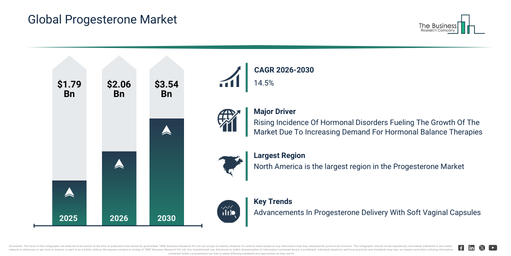
    The progesterone market has seen substantial growth in recent years. Its valuation is forecast to climb from $1.79 billion in 2025 to $2.06 billion in 2026, registering a compound annual growth rate (CAGR) of 14.8%. This historical expansion can be linked to the scarce availability of natural progesterone, a reliance on branded product formulations, increasing knowledge about menopausal treatments, a higher occurrence of dysfunctional uterine bleeding, and the widespread use of conventional oral contraceptives.

    The progesterone market is projected to experience swift expansion over the coming years. Its value is anticipated to reach $3.54 billion by 2030, demonstrating a compound annual growth rate (CAGR) of 14.5%. This expansion during the projected timeframe is linked to several factors, including the advancement of synthetic progestins and sophisticated delivery methods, an increasing need for individualized hormone therapy, the expansion of fertility and contraceptive clinics, growing research efforts in treating endometrial cancer, and the adoption of less invasive ways of administering the treatment. Key developments expected within this period encompass a growing preference for natural progesterone products, an increase in the use of hormone replacement therapy (HRT), a greater embrace of injectable and transdermal application methods, the broadening of contraceptive and fertility solutions, and an emphasis on tailored medicine alongside endometrial well-being.

    Download A Free Sample Report For Comprehensive Market Insights:

    https://www.thebusinessresearchcompany.com/sample.aspx?id=24671&type=smp

    What Primary Factors Are Fueling The Expansion Of The Progesterone Market?

    The rising occurrence of hormonal imbalances is anticipated to drive the expansion of the progesterone market in the future. Hormonal disorders are defined as health issues resulting from irregularities or impairments within the body’s endocrine system, which is responsible for generating and governing hormones that manage essential processes like metabolism, development, fertility, and emotional states. The growing incidence of these disorders stems from contemporary lifestyle elements, including inadequate nutrition, persistent stress, insufficient exercise, and contact with ecological pollutants. Progesterone aids in addressing hormonal disorders by re-establishing hormonal equilibrium, normalizing menstrual patterns, and alleviating manifestations associated with elevated estrogen levels. Furthermore, it assists the function of other hormones, including estrogen and cortisol, thereby contributing to the stabilization of the entire endocrine system’s operation and mitigating conditions like polycystic ovary syndrome (PCOS) and premenstrual syndrome (PMS). As an illustration, in January 2025, the World Health Organization, an intergovernmental body located in Switzerland, reported that polycystic ovary syndrome represents a major public health concern and is among the most prevalent hormonal disorders affecting women of childbearing age, impacting approximately 6–13% yearly. Consequently, the rising occurrence of hormonal disorders stimulates the expansion of the progesterone market.

    How Is The Progesterone Market Examined Through Segment Analysis?

    The progesterone market covered in this report is segmented –

    1) By Product Type: Natural Progesterone, Synthetic Progesterone

    2) By Drug Type: Branded, Generic

    3) By Route Of Administration: Injectable, Oral, Transdermal, Other Routes Of Administration

    4) By Application: Menopause, Contraception, Dysfunctional Uterine Bleeding, Hyperplastic Precursor Lesions, Endometrial Cancer, Other Applications

    5) By End-User: Hospitals, Clinics, Research Institutes, Other End-Users

    Subsegments:

    1) By Natural Progesterone: Oral Capsules, Vaginal Gels, Creams, Injections, Suppositories

    2) By Synthetic Progesterone: Progestins, Oral Contraceptives, Hormone Replacement Therapy (HRT) Formulations, Injectable Contraceptives, Intrauterine Devices

    Which Trends Are Contributing To Changes In The Progesterone Market?

    Companies operating within the progesterone market are primarily focused on developing innovative formulations, such as soft vaginal capsules, to enhance patient compliance and improve drug absorption. Soft vaginal capsules are described as smooth, gel-like inserts intended for vaginal use, which facilitate the direct delivery of medication to the vaginal area for purposes such as treating infections, supporting hormonal balance, or maintaining overall vaginal health. For example, in April 2024, Besins Healthcare (UK) Limited, a pharmaceutical manufacturing company based in the UK, launched Prometrium 400mg soft vaginal capsules. This product is designed to prevent miscarriage in women who experience early pregnancy bleeding and have a history of recurrent miscarriage. This pioneering formulation is the first licensed product in the UK, engineered to boost patient compliance and therapeutic outcomes by providing a targeted, non-invasive delivery method that increases progesterone absorption at the site of action.

    Who Are The Leading Firms Participating In The Progesterone Market?

    Major companies operating in the progesterone market are Pfizer Inc., Johnson & Johnson, Merck & Co Inc., Allergan plc, AbbVie Inc., Bayer AG, Teva Pharmaceutical Industries Ltd., Sun Pharmaceutical Industries Ltd, Gedeon Richter Plc., Dr. Reddy’s Laboratories Ltd., Cipla Limited, Cadila Pharmaceuticals Ltd., Aspen Pharmacare, BIOCON Ltd., Zhejiang Xianju Pharmaceutical Co. Ltd., Beximco Pharmaceuticals Ltd., Besins healthcare (UK) limited., Sichuan Deebio Pharmaceutical Co. Ltd., Changzhou Siyao Pharmaceuticals Co. Ltd., Shanghai Shyndec Pharmaceutical Co. Ltd.

    Access The Complete Progesterone Market Report:

    https://www.thebusinessresearchcompany.com/report/progesterone-global-market-report

    Which Region Is The Primary Market For The Progesterone Market?

    North America was the largest region in the progesterone market in 2025. Asia-Pacific is expected to be the fastest-growing region in the forecast period. The regions covered in the progesterone market report are Asia-Pacific, South East Asia, Western Europe, Eastern Europe, North America, South America, Middle East, Africa.

    Access Progesterone Market Report for Deeper Competitive Insights

    https://www.thebusinessresearchcompany.com/sample.aspx?id=24671&type=smp

    Browse Through More Reports Similar to the Global Progesterone Market 2026, By The Business Research Company

    Gestational Trophoblastic Disease Market Report 2026

    https://www.thebusinessresearchcompany.com/report/gestational-trophoblastic-disease-global-market-report

    Contraceptives Market Report 2026

    https://www.thebusinessresearchcompany.com/report/contraceptives-global-market-report

    Fetal Monitoring Market Report 2026

    https://www.thebusinessresearchcompany.com/report/fetal-monitoring-global-market-report

    Get in touch with us:

    The Business Research Company: https://www.thebusinessresearchcompany.com/

    Americas: +1 310-496-7795

    Asia: +44 7882 955267 & +91 8897263534

    Europe: +44 7882 955267

    Email us at: marketing@tbrc.info

    Follow us on:

    LinkedIn: https://in.linkedin.com/company/the-business-research-company

    YouTube: https://www.youtube.com/channel/UC24_fI0rV8cR5DxlCpgmyFQ

    Global Market Model: https://www.thebusinessresearchcompany.com/global-market-model

  • The Rising Demand For Personalized Medicine Fueling The Growth Of The Market Due To Increasing Adoption Of Genomic And Biomarker-Driven Therapies Is Supporting Development Across The Process Analytical Technology Market

    The Rising Demand For Personalized Medicine Fueling The Growth Of The Market Due To Increasing Adoption Of Genomic And Biomarker-Driven Therapies Is Supporting Development Across The Process Analytical Technology Market

    The Business Research Company’s 2026 market reports feature advanced enhancements such as market attractiveness analysis, total addressable market evaluation, company benchmarking matrices, interactive Excel dashboards, expanded supply chain intelligence, emerging startup coverage, and detailed product insights, delivering more actionable and strategically valuable research.

    What Will Be The Estimated Market Size Of The Process Analytical Technology Market By 2030?

    The process analytical technology market has experienced swift expansion recently. The market is projected to expand from $3.33 billion in 2025 to $3.71 billion in 2026, demonstrating a compound annual growth rate (CAGR) of 11.6%. This historical growth is attributable to factors such as the adoption of quality-by-design principles, increasing pharmaceutical manufacturing complexity, rising demand for consistent product quality, integration of analytical instruments in batch processes, and the growth of large molecule therapeutics.

    The process analytical technology market is anticipated to show significant expansion in the next few years. It is projected to climb to $5.4 billion by 2030, exhibiting a compound annual growth rate (CAGR) of 9.8%. The increase during the forecast period is attributable to the expansion of continuous manufacturing, the deployment of real-time release testing, advancements in sensor and probe technologies, the growing uptake of AI-driven process control, and regulatory encouragement for implementing process analytical technology. Notable trends expected during this period include real-time process monitoring, predictive quality control, advanced process optimization, the integration of analytical tools with manufacturing execution systems, along with regulatory compliance and process standardization efforts.

    Download A Free Sample Report For Comprehensive Market Insights:

    https://www.thebusinessresearchcompany.com/sample.aspx?id=14777&type=smp

    Which Strategic Drivers Are Supporting The Process Analytical Technology Market Development?

    The increasing need for customized medical treatments is projected to fuel the expansion of the process analytical technology (PAT) market going forward. Personalized medicine involves an approach that tailors healthcare and treatment plans specifically to an individual’s genetic profile, environmental factors, and lifestyle behaviors, thereby enabling more targeted and effective therapeutic outcomes. Progress in genomics and biomarker-driven technologies is accelerating the adoption of personalized medicine through the development of highly customized treatments. PAT supports this transition by offering real-time monitoring, analysis, and control of critical manufacturing parameters essential for precision therapies, such as gene therapies and individualized biologics, ensuring product quality, accuracy, and batch consistency. For instance, in February 2024, according to the Personalized Medicine Coalition, a US-based non-profit organization, the FDA approved 16 new personalized therapies for patients with rare diseases in 2023, marking a substantial rise from the 6 approvals recorded in 2022. Therefore, the growing demand for personalized medicine is propelling the growth of the process analytical technology market.

    Which Segment Groups Define The Process Analytical Technology Market Landscape?

    The process analytical technology market covered in this report is segmented –

    1) By Product: Analyzers, Sensors And Probes, Samplers, Software And Services

    2) By Technique: Spectroscopy, Chromatography, Particle Size Analysis, Electrophoresis, Other Techniques

    3) By Application: Small Molecules, Large Molecules, Manufacturing Applications, Other Applications

    4) By End-User: Pharmaceutical Companies, Biotechnology Companies, Other End-Users

    Subsegments:

    1) By Analyzers: Gas Analyzers, Liquid Analyzers, Particle Size Analyzers, Spectrometers, Chromatographs, Others (Moisture Analyzers, PH Meters)

    2) By Sensors And Probes: Temperature Sensors, Pressure Sensors, pH Sensors, Conductivity Sensors, Optical Sensors, Others (Flow Sensors, Humidity Sensors)

    3) By Samplers: Manual Samplers, Automated Samplers, Online Samplers, Batch Samplers

    4) By Software And Services: Software (Data Analytics, Process Control Software), Cloud-based Solutions, Support And Maintenance Services, Consulting Services, Installation And Integration Services

    What Trends Are Shaping The Process Analytical Technology Market Structure?

    Leading companies operating within the process analytical technology market are developing innovative products, including new compact radiance instruments, to gain a competitive advantage. This new compact radiance instrument analyzes individual cells in a population, enabling high-resolution characterization of cellular heterogeneity, responses, and behavior in real time during manufacturing. For instance, in October 2023, LumaCyte Inc., a US-based biotechnology company, launched a new compact radiance instrument specifically designed for advanced therapy biomanufacturing and quality control environments. This radiance instrument functions as a high-content, label-free microfluidic cell analyzer and sorter, capable of performing single-cell analysis and sorting. The innovative instrument is notable for its small size, occupying only 16 inches of bench space while retaining advanced technological capabilities. This technology holds significant importance for applications in biomanufacturing and quality control environments, as it provides efficient and precise analytical functionalities.

    Which Companies Are Engaged In The Process Analytical Technology Market Environment?

    Major companies operating in the process analytical technology market are Siemens AG, Thermo Fisher Scientific Inc, Danaher Corporation, ABB Ltd, GE Healthcare, Emerson Electric Co, Agilent Technologies Inc, Teledyne Technologies Incorporated, Sartorius AG, Mettler-Toledo, PerkinElmer Inc, Shimadzu Corporation, Waters Corporation, Bruker Corporation, HORIBA Ltd, Carl Zeiss AG, Nova Biomedical, TECAN Group Ltd, Repligen Corporation, Hamilton Company, Oxford Instruments plc, Malvern Panalytical, Hitachi High-Tech Analytical Science, JEOL Ltd, Yokogawa Electric Corporation

    Access The Complete Process Analytical Technology Market Report:

    https://www.thebusinessresearchcompany.com/report/process-analytical-technology-global-market-report

    Which Geographic Region Represents The Largest Process Analytical Technology Market Share?

    North America was the largest region in the process analytical technology market in 2025. Asia-Pacific is expected to be the fastest-growing region in the forecast period. The regions covered in the process analytical technology market report are Asia-Pacific, South East Asia, Western Europe, Eastern Europe, North America, South America, Middle East, Africa.

    Access Process Analytical Technology Market Report for Deeper Competitive Insights

    https://www.thebusinessresearchcompany.com/sample.aspx?id=14777&type=smp

    Browse Through More Reports Similar to the Global Process Analytical Technology Market 2026, By The Business Research Company

    Process Analytical Technology Market Report 2026

    https://www.thebusinessresearchcompany.com/report/process-analytical-technology-global-market-report

    Process Analyzer Market Report 2026

    https://www.thebusinessresearchcompany.com/report/process-analyzer-global-market-report

    Process Spectroscopy Market Report 2026

    https://www.thebusinessresearchcompany.com/report/process-spectroscopy-global-market-report

    Get in touch with us:

    The Business Research Company: https://www.thebusinessresearchcompany.com/

    Americas: +1 310-496-7795

    Asia: +44 7882 955267 & +91 8897263534

    Europe: +44 7882 955267

    Email us at: marketing@tbrc.info

    Follow us on:

    LinkedIn: https://in.linkedin.com/company/the-business-research-company

    YouTube: https://www.youtube.com/channel/UC24_fI0rV8cR5DxlCpgmyFQ

    Global Market Model: https://www.thebusinessresearchcompany.com/global-market-model