Month: May 2026

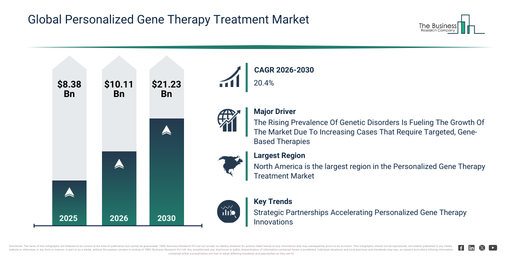
  • The Rising Prevalence Of Genetic Disorders Is Fueling The Growth Of The Market Due To Increasing Cases That Require Targeted, Gene-Based Therapies Is Supporting Development Across The Personalized Gene Therapy Treatment Market

    The Rising Prevalence Of Genetic Disorders Is Fueling The Growth Of The Market Due To Increasing Cases That Require Targeted, Gene-Based Therapies Is Supporting Development Across The Personalized Gene Therapy Treatment Market

    The Business Research Company’s 2026 market reports feature advanced enhancements such as market attractiveness analysis, total addressable market evaluation, company benchmarking matrices, interactive Excel dashboards, expanded supply chain intelligence, emerging startup coverage, and detailed product insights, delivering more actionable and strategically valuable research.

    What Is The Estimated Growth In Market Size Of The Personalized Gene Therapy Treatment Market During 2026–2030?

    The personalized gene therapy treatment market has seen substantial growth in recent years. This market is expected to expand from $8.38 billion in 2025 to $10.11 billion in 2026, achieving a compound annual growth rate (CAGR) of 20.7%. The historical growth of the market is primarily attributable to the increasing prevalence of genetic disorders, advancements in genomic sequencing technologies, early clinical success of targeted gene therapies, the expansion of specialized gene therapy research centers, and increasing investment in precision medicine.

    The personalized gene therapy treatment market is projected to experience rapid expansion over the coming years. It is forecast to reach a valuation of $21.23 billion by 2030, demonstrating a compound annual growth rate (CAGR) of 20.4%. This anticipated growth during the forecast period is propelled by factors such as a rise in regulatory clearances for personalized gene therapies, increased demand for tailored oncology solutions, broader capabilities in gene therapy manufacturing, growing incorporation of artificial intelligence in therapy development, and wider acceptance of treatments guided by pharmacogenomics. Key developments shaping the market during this period encompass the escalating embrace of gene editing-based therapies, an uptick in the application of personalized treatment regimens, enhanced integration of companion diagnostics, the advancement of both viral and non-viral vector platforms, and a heightened emphasis on precision oncology applications.

    Download A Free Sample Report For Comprehensive Market Insights:

    https://www.thebusinessresearchcompany.com/sample.aspx?id=28293&type=smp

    What Important Drivers Are Powering The Personalized Gene Therapy Treatment Market Growth?

    The increasing occurrence of genetic disorders is projected to fuel the expansion of the personalized gene therapy treatment market in the future. These conditions arise from DNA irregularities that impair typical bodily functions. The frequency of genetic disorders is escalating, primarily attributed to advanced parental age, as older reproductive cells are more susceptible to mutations that can be inherited by descendants. Personalized gene therapy targets genetic disorders by precisely mending the faulty genes causing the condition, customizing treatment to an individual’s unique genetic profile, which boosts effectiveness and lessens adverse reactions. A case in point is the data from October 2024, where the Cystic Fibrosis Trust, a UK-based charity aiding individuals with cystic fibrosis, reported approximately 11,148 registered cystic fibrosis (a genetic disorder) patients in 2022. This figure increased to 11,318 in 2023, showing a 1.5% year-over-year rise in patient registrations. Consequently, the rising incidence of genetic disorders is propelling the growth of the personalized gene therapy treatment market.

    What Segment Categories Are Evaluated In The Personalized Gene Therapy Treatment Market Study?

    The personalized gene therapy treatment market covered in this report is segmented –

    1) By Therapy: Targeted Treatments, Pharmacogenomics

    2) By Vector Type: Viral, Non-Viral

    3) By Distribution Channel: Hospitals, Clinics, Home Administration, Other Distribution Channels

    4) By Application: Oncology, Neurology, Hematological, Infectious Diseases, Ophthalmology, Other Applications

    Subsegments:

    1) By Targeted Treatments: Monoclonal Antibodies, Chimeric Antigen Receptor T-Cell Therapy (CAR-T), Small Interfering RNA (siRNA) Therapy, Antisense Oligonucleotides (ASO), Gene Editing Therapy

    2) By Pharmacogenomics: Companion Diagnostics, Drug Metabolism Enzyme Testing, Genetic Biomarker Analysis, Single Nucleotide Polymorphism (SNP) Profiling, Adverse Drug Reaction (ADR) Prediction

    What Trends Are Shaping The Personalized Gene Therapy Treatment Market Structure?

    Leading companies within the personalized gene therapy treatment market are increasingly focusing on forming strategic partnerships to enhance their technological capabilities and accelerate the delivery of innovative therapies to patients. These strategic partnerships are collaborative alliances forged between organizations to harness each other’s strengths and resources, aiming for mutual growth and a competitive advantage, while also sharing associated risks and benefits. A notable illustration occurred in May 2025, when Aldevron, a US-based firm specializing in the production of DNA, RNA, and protein, collaborated with Integrated DNA Technologies, a US-based supplier of genomics solutions. Their joint effort led to the manufacturing of the world’s first mRNA-based personalized CRISPR therapy, designed to treat an infant afflicted with urea cycle disorder (UCD), a rare and life-threatening genetic condition. This unique N of 1 therapy was conceived and delivered in a mere six months through the creation of a custom guide RNA, an mRNA-encoded base editor, off-target safety services, and a clinically validated lipid nanoparticle delivery system. The successful development of this therapy marks a considerable milestone in the field of personalized in vivo base-editing treatments.

    Which Firms Are Competing In The Personalized Gene Therapy Treatment Market?

    Major companies operating in the personalized gene therapy treatment market are Thermo Fisher Scientific Inc., Illumina Inc., Myriad Genetics Inc., BGI Genomics Co. Ltd., Invitae Corporation, Guardant Health Inc., GeneDx LLC, Ancestry Inc., Oxford Nanopore Technologies plc, Genomic Health Inc., 23andMe Holding Co., Color Health Inc., Helix OpCo LLC, Personalis Inc., Dante Genomics, Gene By Gene Ltd., Veritas Genetics Inc., Futura Genetics, Nebula Genomics Inc., Pathway Genomics Corporation

    Access The Complete Personalized Gene Therapy Treatment Market Report:

    https://www.thebusinessresearchcompany.com/report/personalized-gene-therapy-treatment-global-market-report

    Which Region Contributes The Most To The Personalized Gene Therapy Treatment Market?

    North America was the largest region in the personalized gene therapy treatment market in 2025. The regions covered in the personalized gene therapy treatment market report are Asia-Pacific, South East Asia, Western Europe, Eastern Europe, North America, South America, Middle East, Africa.

    Access Personalized Gene Therapy Treatment Market Report for Deeper Competitive Insights

    https://www.thebusinessresearchcompany.com/sample.aspx?id=28293&type=smp

    Browse Through More Reports Similar to the Global Personalized Gene Therapy Treatment Market 2026, By The Business Research Company

    Genes Therapy Market Report 2026

    https://www.thebusinessresearchcompany.com/report/genes-therapy-global-market-report

    Nucleic Acid Based Gene Therapy Market Report 2026

    https://www.thebusinessresearchcompany.com/report/nucleic-acid-based-gene-therapy-global-market-report

    Cell And Gene Therapy Clinical Trial Services Market Report 2026

    https://www.thebusinessresearchcompany.com/report/cell-and-gene-therapy-clinical-trial-services-global-market-report

    Get in touch with us:

    The Business Research Company: https://www.thebusinessresearchcompany.com/

    Americas: +1 310-496-7795

    Asia: +44 7882 955267 & +91 8897263534

    Europe: +44 7882 955267

    Email us at: marketing@tbrc.info

    Follow us on:

    LinkedIn: https://in.linkedin.com/company/the-business-research-company

    YouTube: https://www.youtube.com/channel/UC24_fI0rV8cR5DxlCpgmyFQ

    Global Market Model: https://www.thebusinessresearchcompany.com/global-market-model
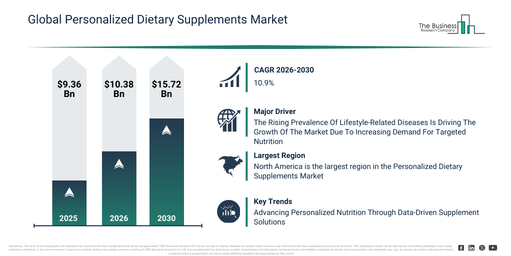
  • The Rising Prevalence Of Lifestyle-Related Diseases Is Driving The Growth Of The Market Due To Increasing Demand For Targeted Nutrition Is Supporting Development Across The Personalized Dietary Supplements Market

    The Rising Prevalence Of Lifestyle-Related Diseases Is Driving The Growth Of The Market Due To Increasing Demand For Targeted Nutrition Is Supporting Development Across The Personalized Dietary Supplements Market

    The Business Research Company’s 2026 market reports feature advanced enhancements such as market attractiveness analysis, total addressable market evaluation, company benchmarking matrices, interactive Excel dashboards, expanded supply chain intelligence, emerging startup coverage, and detailed product insights, delivering more actionable and strategically valuable research.

    What Market Value Expansion Is Expected For The Personalized Dietary Supplements Market Over The Forecast Period?

    The personalized dietary supplements market has experienced rapid expansion in recent years. It is anticipated to increase from $9.36 billion in 2025 to $10.38 billion in 2026, achieving a compound annual growth rate (CAGR) of 10.9%. This historical growth can be attributed to increasing health consciousness, the broadening use of dietary supplements, the emergence of wellness and fitness culture, enhanced access to online health services, and the development of the nutraceutical industry.

    The personalized dietary supplements market size is projected to experience substantial growth in the coming years. By 2030, this market is forecasted to attain a value of $15.72 billion, demonstrating a compound annual growth rate (CAGR) of 10.9%. This expansion during the forecast period is attributed to advancements in nutrigenomics, a rising demand for personalized healthcare, the development of subscription-based supplement models, an increasing prevalence of lifestyle diseases, and the expansion of digital health platforms. Prominent trends for this period include the growing adoption of personalized nutrition plans, increased utilization of genetic and lifestyle data, a surging demand for customized vitamin and mineral blends, the broadening of direct-to-consumer supplement platforms, and a heightened focus on preventive healthcare.

    Download A Free Sample Report For Comprehensive Market Insights:

    https://www.thebusinessresearchcompany.com/sample.aspx?id=24364&type=smp

    Which Major Factors Are Contributing To The Development Of The Personalized Dietary Supplements Market?

    The increasing incidence of lifestyle-associated illnesses is anticipated to fuel the expansion of the personalized dietary supplement market in the future. These conditions are defined as health issues predominantly stemming from an individual’s daily routines and decisions, encompassing ailments such as heart disease, type 2 diabetes, obesity, hypertension, specific cancers, and various mental health concerns. The rise in lifestyle-related diseases can be attributed to a lack of physical activity, which contributes to weight gain, suboptimal cardiovascular health, and diminished insulin sensitivity, thereby elevating the likelihood of developing chronic conditions. These diseases create a demand for personalized dietary supplements, as these offer focused nutritional support to manage or prevent particular health problems. Such customized formulations can cater to individual requirements, rectify nutritional deficits, and enhance overall well-being. For example, data from June 2024, reported by the National Health Service, a UK-based government department, indicated that 3,615,330 individuals registered with a general practitioner (GP) received a diagnosis of non-diabetic hyperglycemia or pre-diabetes in 2023. This represented an 18% increase compared to the 3,065,825 cases recorded in 2022. Consequently, the growing occurrence of lifestyle-related diseases is propelling the expansion of the personalized dietary supplement market.

    How Is The Personalized Dietary Supplements Market Examined Through Segment Analysis?

    The personalized dietary supplements market covered in this report is segmented –

    1) By Type: Vitamins, Minerals, Botanicals, Amino Acids, Enzymes, Probiotics

    2) By Dosage Forms: Tablets, Capsules, Powders, Liquids, Other Dosage Forms

    3) By Distribution Channel: Pharmacy, Super Market Or Hyper Market, Online, Health And Wellness Stores, Other Distribution Channels

    4) By Application: Additional Supplements, Medicinal Supplements, Sports Nutrition, Lifestyle Diseases, Inherited Diseases, Other Applications

    5) By End-Use: Hospitals, Clinics, Home Care, Wellness and Fitness Centers, Ambulatory Care, Other End-Uses

    Subsegments:

    1) By Vitamins: Vitamin A, Vitamin B Complex, Vitamin C, Vitamin D, Vitamin E, Vitamin K,

    2) By Minerals: Calcium, Magnesium, Zinc, Iron, Potassium, Selenium, Iodine

    3) By Botanicals: Ginseng, Turmeric, Green Tea Extract, Ashwagandha, Gingko Biloba, Echinacea, Milk Thistle

    4) By Amino Acids: Essential Amino Acids, Non-Essential Amino Acids, Branched-Chain Amino Acids, Collagen Peptides

    5) By Enzymes: Digestive Enzymes, Systemic Enzymes, Lactase, Bromelain, Papain

    6) By Probiotics: Lactobacillus species, Bifidobacterium species, Saccharomyces boulardii, Streptococcus thermophilus, Spore-forming probiotics.

    Which Trends Are Supporting The Evolution Of The Personalized Dietary Supplements Market?

    Leading companies in the personalized dietary supplements market are focusing on developing advanced products, such as custom vitamin supplements, to enhance consumer engagement through data-driven nutrition solutions. These custom vitamin supplements are nutritional products designed to align with an individual’s specific health needs, lifestyle, and biological data, often determined via questionnaires, DNA tests, or lab results. They provide personalized nutrition based on unique dietary and physiological requirements. For instance, in December 2024, Bioniq, a UK-based provider of personalized nutritional support, launched Build Your Own, a hyper-personalized vitamin supplement. This enables individuals with special health needs, such as allergies, vitamin and mineral intolerances, or chronic conditions, to create personalized supplement formulas by choosing from over 50 nutrients or following AI-driven recommendations based on their health data.

    Who Are The Major Companies Operating In The Personalized Dietary Supplements Market?

    Major companies operating in the personalized dietary supplements market are Viome Life Sciences Inc., Persona Nutrition, Bioniq Ltd., Rootine, Nourished, Metagenics Inc., Hum Nutrition Inc., Herbalife Nutrition Ltd., Amway Corporation, Abbott Laboratories, Bayer AG, Danone SA, Glanbia plc, Iovate Health Sciences International Inc., Reliance Vitamin Company Inc., Archer-Daniels-Midland Company (ADM), Nature’s Bounty, MusclePharm Corporation, Nutiva Inc., Pfizer Inc.

    Access The Complete Personalized Dietary Supplements Market Report:

    https://www.thebusinessresearchcompany.com/report/personalized-dietary-supplements-global-market-report

    Which Regional Market Leads The Personalized Dietary Supplements Market?

    North America was the largest region in the personalized dietary supplements market in 2025. Asia-Pacific is expected to be the fastest-growing region in the forecast period. The regions covered in the personalized dietary supplements market report are Asia-Pacific, South East Asia, Western Europe, Eastern Europe, North America, South America, Middle East, Africa.

    Access Personalized Dietary Supplements Market Report for Deeper Competitive Insights

    https://www.thebusinessresearchcompany.com/sample.aspx?id=24364&type=smp

    Browse Through More Reports Similar to the Global Personalized Dietary Supplements Market 2026, By The Business Research Company

    Personalized Nutrition Market Report 2026

    https://www.thebusinessresearchcompany.com/report/personalized-nutrition-global-market-report

    Personalized Medicine Market Report 2026

    https://www.thebusinessresearchcompany.com/report/personalized-medicine-global-market-report

    Nutritional Supplements Market Report 2026

    https://www.thebusinessresearchcompany.com/report/nutritional-supplements-global-market-report

    Get in touch with us:

    The Business Research Company: https://www.thebusinessresearchcompany.com/

    Americas: +1 310-496-7795

    Asia: +44 7882 955267 & +91 8897263534

    Europe: +44 7882 955267

    Email us at: marketing@tbrc.info

    Follow us on:

    LinkedIn: https://in.linkedin.com/company/the-business-research-company

    YouTube: https://www.youtube.com/channel/UC24_fI0rV8cR5DxlCpgmyFQ

    Global Market Model: https://www.thebusinessresearchcompany.com/global-market-model
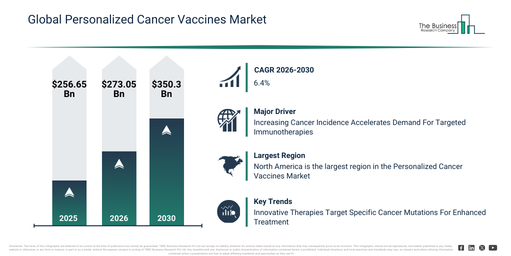
  • Increasing Cancer Incidence Accelerates Demand For Targeted Immunotherapies Is Supporting Development Across The Personalized Cancer Vaccines Market

    Increasing Cancer Incidence Accelerates Demand For Targeted Immunotherapies Is Supporting Development Across The Personalized Cancer Vaccines Market

    The Business Research Company’s 2026 market reports feature advanced enhancements such as market attractiveness analysis, total addressable market evaluation, company benchmarking matrices, interactive Excel dashboards, expanded supply chain intelligence, emerging startup coverage, and detailed product insights, delivering more actionable and strategically valuable research.

    How Will The Market Value Of The Personalized Cancer Vaccines Market Change Between 2026 And 2030?

    The personalized cancer vaccines market size has observed significant expansion over recent years. Its projected growth will take it from $256.65 billion in 2025 to $273.05 billion in 2026, exhibiting a compound annual growth rate (CAGR) of 6.4%. This historical market expansion can be attributed to several factors, including advances in cancer genomics, the persistent unmet need in oncology treatments, the inherent limitations of traditional cancer therapies, the increasing volume of immunotherapy research, and enhanced funding allocated to cancer research.

    The personalized cancer vaccines market is projected for substantial expansion in the coming years, with its size expected to reach $350.3 billion by 2030, exhibiting a compound annual growth rate (CAGR) of 6.4%. This anticipated growth throughout the forecast period is driven by factors such as the increasing adoption of personalized medicine, rising cancer incidence rates, advancements in neoantigen discovery, growing collaboration among biotech firms, and supportive regulatory frameworks. Major trends expected during this period include a heightened focus on personalized immunotherapy, a rise in the use of genomic tumor profiling, the expansion of therapeutic cancer vaccines, increasing integration with precision oncology, and more extensive clinical trial activity in cancer vaccines.

    Download A Free Sample Report For Comprehensive Market Insights:

    https://www.thebusinessresearchcompany.com/sample.aspx?id=19136&type=smp

    What Key Growth Drivers Are Influencing The Personalized Cancer Vaccines Market?

    The rising incidence of cancer is anticipated to fuel the expansion of the personalized cancer vaccine market in the future. Cancer encompasses a category of illnesses marked by unregulated cell proliferation, capable of infiltrating adjacent tissues and metastasizing throughout the body. The growing occurrence of cancer is fueled by factors such as demographic shifts towards older populations, evolving lifestyles, exposure to environmental hazards, and advancements in diagnostic methods. The personalized cancer vaccine market contributes to oncology care by providing vaccines customized to an individual patient’s tumor antigens, thereby bolstering the immune system’s capacity to recognize and eradicate malignant cells. For example, data released in July 2024 by the Australian Institute of Health and Welfare (AIHW), an Australia-based government body, showed that cancer diagnoses in Australia climbed from 160,570 cases in 2022 to 164,694 cases in 2023, representing a notable year-on-year rise. Consequently, the growing frequency of cancer cases is stimulating the development of the personalized cancer vaccine market.

    Which Segment Groups Define The Personalized Cancer Vaccines Market Landscape?

    The personalized cancer vaccines market covered in this report is segmented –

    1) By Treatment Type: Preventive Cancer Vaccines, Therapeutic Cancer Vaccines

    2) By Cancer Type: Lung Cancer, Breast Cancer, Colorectal Cancer, Leukemia, Prostate Cancer, Cervical Cancer, Glioblastoma

    3) By Mechanism Of Action: Tumor Associated Antigens (TAAs), Tumor Specific Antigens (TSAs), Somatic Mutations In Cancer Pharmacogenomics, Pharmacogenomics Towards Genomic Polymorphism, Other Mechanisms Of Action

    4) By Route Of Administration: Injectables, Other Routes Of Administration

    5) By End Use: Hospitals, Clinic, Other End Users

    Subsegments:

    1) By Preventive Cancer Vaccines: HPV Vaccines, Hepatitis B Vaccines, Combination Vaccines

    2) By Therapeutic Cancer Vaccines: Dendritic Cell Vaccines, Peptide-Based Vaccines, DNA Vaccines, RNA Vaccines, Whole Cell Vaccines

    What Trends Are Affecting The Growth Of The Personalized Cancer Vaccines Market?

    Leading firms within the personalized cancer vaccine market are concentrating on creating cutting-edge therapeutic approaches, specifically personalized immunotherapy tailored to address individual patient tumor mutations, with the aim of boosting treatment accuracy and achieving better clinical results. This personalized immunotherapy involves bespoke cancer therapies that leverage a patient’s unique genetic and tumor mutation information, frequently administered via dendritic cell-based vaccines or neoantigen-targeting systems, to elicit a specific immune reaction against cancerous cells. As an illustration, in August 2024, UCLA Health, a healthcare entity based in the US, initiated an unprecedented clinical trial to assess a personalized cancer vaccine. This vaccine targets the H3 G34 mutation found in diffuse hemispheric gliomas, employing dendritic cells to provoke an immune response against the RNA irregularities induced by this severe mutation, thereby presenting a hopeful treatment avenue for adolescents and young adults who commonly face restricted treatment alternatives and low survival prospects.

    Which Companies Are Influencing The Personalized Cancer Vaccines Market?

    Major companies operating in the personalized cancer vaccines market are Moderna Inc., CureVac AG, BioNTech SE, Genentech Inc., Merck & Co. Inc., GlaxoSmithKline plc, Achilles Therapeutics Plc, Evaxion Biotech AS, Geneos Therapeutics Inc., ISA Pharmaceuticals BV, VAXIMM GmbH, EpiVax Therapeutics Inc., Personalis Inc., Catalent Inc., Gritstone bio Inc., Neon Therapeutics Inc., Nouscom AG, Vaccitech plc, Agenus Inc., Transgene SA

    Access The Complete Personalized Cancer Vaccines Market Report:

    https://www.thebusinessresearchcompany.com/report/personalized-cancer-vaccines-global-market-report

    Which Region Holds The Largest Share In The Personalized Cancer Vaccines Market?

    North America was the largest region in the personalized cancer vaccines market in 2025. Asia-Pacific is expected to be the fastest-growing region in the forecast period. The regions covered in the personalized cancer vaccines market report are Asia-Pacific, South East Asia, Western Europe, Eastern Europe, North America, South America, Middle East, Africa.

    Access Personalized Cancer Vaccines Market Report for Deeper Competitive Insights

    https://www.thebusinessresearchcompany.com/sample.aspx?id=19136&type=smp

    Browse Through More Reports Similar to the Global Personalized Cancer Vaccines Market 2026, By The Business Research Company

    Therapeutic Bcg Vaccines Market Report 2026

    https://www.thebusinessresearchcompany.com/report/therapeutic-bcg-vaccines-global-market-report

    Cervical Cancer Vaccine Market Report 2026

    https://www.thebusinessresearchcompany.com/report/cervical-cancer-vaccine-global-market-report

    Dendritic Cell Cancer Vaccine Market Report 2026

    https://www.thebusinessresearchcompany.com/report/dendritic-cell-cancer-vaccine-global-market-report

    Get in touch with us:

    The Business Research Company: https://www.thebusinessresearchcompany.com/

    Americas: +1 310-496-7795

    Asia: +44 7882 955267 & +91 8897263534

    Europe: +44 7882 955267

    Email us at: marketing@tbrc.info

    Follow us on:

    LinkedIn: https://in.linkedin.com/company/the-business-research-company

    YouTube: https://www.youtube.com/channel/UC24_fI0rV8cR5DxlCpgmyFQ

    Global Market Model: https://www.thebusinessresearchcompany.com/global-market-model
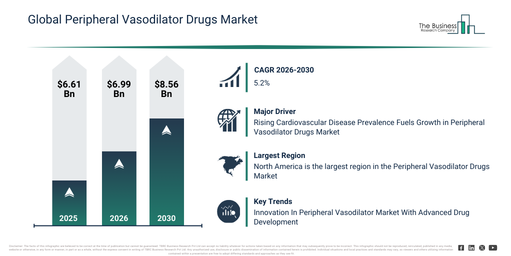
  • Rising Cardiovascular Disease Prevalence Fuels Growth in Peripheral Vasodilator Drugs Market Is Supporting Development Across The Peripheral Vasodilator Drugs Market

    Rising Cardiovascular Disease Prevalence Fuels Growth in Peripheral Vasodilator Drugs Market Is Supporting Development Across The Peripheral Vasodilator Drugs Market

    The Business Research Company’s 2026 market reports feature advanced enhancements such as market attractiveness analysis, total addressable market evaluation, company benchmarking matrices, interactive Excel dashboards, expanded supply chain intelligence, emerging startup coverage, and detailed product insights, delivering more actionable and strategically valuable research.

    What Is The Forecasted Rise In Market Size Of The Peripheral Vasodilator Drugs Market During The Forecast Period?

    The peripheral vasodilator drugs market size has exhibited strong growth in recent years. It will grow from $6.61 billion in 2025 to $6.99 billion in 2026 at a compound annual growth rate (CAGR) of 5.7%. This historic growth is attributable to several key factors, including the rising prevalence of hypertension, an increased incidence of peripheral vascular diseases, the long-term clinical use of nitrates and calcium channel blockers, a growing cardiovascular disease burden, and expanding hospital-based cardiovascular treatment.

    The peripheral vasodilator drugs market is anticipated to experience substantial expansion in the coming years. This market is projected to reach $8.56 billion by 2030, demonstrating a compound annual growth rate (CAGR) of 5.2%. Factors contributing to this growth during the forecast period include an aging worldwide population, an increase in heart failure and angina cases, a rising need for outpatient cardiovascular care, wider acceptance of generic vasodilator medications, and enhanced diagnostic capabilities for peripheral circulation disorders. Key trends anticipated during the forecast period involve the expanding application of vasodilators in managing chronic hypertension, a greater inclination towards combination cardiovascular treatments, the increasing uptake of long-acting vasodilator formulations, a broadening scope of peripheral vasodilator utilization in heart failure treatment, and a move towards formulations with enhanced safety and tolerability.

    Download A Free Sample Report For Comprehensive Market Insights:

    https://www.thebusinessresearchcompany.com/sample.aspx?id=16508&type=smp

    Which Core Factors Are Supporting The Expansion Of The Peripheral Vasodilator Drugs Market?

    The peripheral vasodilator drug market is anticipated to expand due to the rising occurrence of cardiovascular diseases. These disorders, known as CVDs, impact the heart and blood vessels, frequently resulting from atherosclerosis and manifesting as conditions such as heart attacks, strokes, hypertension, and heart failure. A primary reason for the increase in cardiovascular disease cases includes inactive lifestyles, poor dietary habits, an aging demographic, growing obesity rates, and associated health issues like diabetes and high blood pressure. In the context of cardiovascular diseases, peripheral vasodilators enhance blood circulation, lower blood pressure, lessen the heart’s effort, and relieve symptoms related to conditions such as peripheral arterial disease. For example, data from October 2024, provided by the Centers for Disease Control and Prevention (a US-based government agency), indicated that cardiovascular disease was responsible for 919,032 deaths in 2023, representing one in every three fatalities. Coronary heart disease continued to be the most common type of heart disease, and it was notable that roughly one in 6 deaths from cardiovascular diseases affected individuals under 65 years of age. Consequently, the rising incidence of cardiovascular diseases is fueling the expansion of the peripheral vasodilator drug market.

    What Key Segment Areas Are Included In The Peripheral Vasodilator Drugs Market Assessment?

    The peripheral vasodilator drugs market covered in this report is segmented –

    1) By Drug Type: Calcium Channel Blockers, Direct-Acting Vasodilators, Alpha-Adrenergic Blockers, Potassium Channel Activators, Nitrates, Other Types

    2) By Indication: Hypertension, Angina, Heart Failure, Other Indications

    3) By Application: Hospital, Retail Pharmacies, Other Applications

    Subsegments:

    1) By Calcium Channel Blockers: Dihydropyridines, Non-Dihydropyridines

    2) By Direct-Acting Vasodilators: Hydralazine, Minoxidil, Nitroprusside

    3) By Alpha-Adrenergic Blockers: Prazosin, Doxazosin, Terazosin

    4) By Potassium Channel Activators: Nicorandil, Diazoxide

    5) By Nitrates: Nitroglycerin, Isosorbide Dinitrate, Isosorbide Mononitrate

    6) By Other Types: Phosphodiesterase Inhibitors, Endothelin Receptor Antagonists

    Which Trends Are Influencing The Direction Of The Peripheral Vasodilator Drugs Market?

    Companies operating within the peripheral vasodilator drugs market are prioritizing drug development, particularly triple-drug combination therapies, to enhance treatment outcomes and expand their market presence in cardiovascular therapeutics. This triple-drug combination therapy is an antihypertensive fixed-dose combination (FDC) designed for patients who have not achieved adequate blood pressure control with dual-drug therapies or cannot tolerate diuretic-based combinations. For example, in August 2023, Ajanta Pharma Limited, an India-based pharmaceutical company specializing in cardiology, introduced Met XL AMT, a new triple-drug combination aimed at managing hypertension among Indian patients. This product is a fixed-dose combination (FDC) consisting of three antihypertensive agents: Telmisartan, Amlodipine, and Metoprolol. These agents collectively work to reduce blood pressure by relaxing blood vessels, which is a key characteristic of peripheral vasodilators. The drug holds specific approval from DCGI for managing uncontrolled hypertension alongside stable coronary artery disease, positioning it as the world’s first fixed-dose combination (FDC) of metoprolol succinate (extended-release) 50 mg, amlodipine 5 mg, and telmisartan 40 mg.

    Who Are The Companies Shaping The Peripheral Vasodilator Drugs Market Landscape?

    Major companies operating in the peripheral vasodilator drugs market are Pfizer Inc., Bayer AG, Sanofi S.A., AstraZeneca PLC, Abbott Laboratories, Novartis AG, GSK plc, Takeda Pharmaceutical Company, Gilead Sciences Inc, Amgen Inc, Boehringer Ingelheim International GmbH, Merck & Co, Viatris Inc., Teva Pharmaceutical Industries, Astellas Pharma, Daiichi Sankyo Company Limited, Sun Pharmaceutical Industries, Mitsubishi Tanabe Pharma, Cipla Limited, Hikma Pharmaceuticals, Lupin Pharmaceuticals, Glenmark Pharmaceuticals Ltd, Torrent Pharmaceuticals, Ipca Laboratories, Alembic Pharmaceuticals

    Access The Complete Peripheral Vasodilator Drugs Market Report:

    https://www.thebusinessresearchcompany.com/report/peripheral-vasodilator-drugs-global-market-report

    Which Region Is The Dominant Market In The Peripheral Vasodilator Drugs Market?

    North America was the largest region in the peripheral vasodilator drugs market in 2025. The regions covered in the peripheral vasodilator drugs market report are Asia-Pacific, South East Asia, Western Europe, Eastern Europe, North America, South America, Middle East, Africa.

    Access Peripheral Vasodilator Drugs Market Report for Deeper Competitive Insights

    https://www.thebusinessresearchcompany.com/sample.aspx?id=16508&type=smp

    Browse Through More Reports Similar to the Global Peripheral Vasodilator Drugs Market 2026, By The Business Research Company

    Peripheral Vasodilator Drugs Market Report 2026

    https://www.thebusinessresearchcompany.com/report/peripheral-vasodilator-drugs-global-market-report

    Vasodilators Market Report 2026

    https://www.thebusinessresearchcompany.com/report/vasodilators-global-market-report

    Gastroparesis Drugs Market Report 2026

    https://www.thebusinessresearchcompany.com/report/gastroparesis-drugs-global-market-report

    Get in touch with us:

    The Business Research Company: https://www.thebusinessresearchcompany.com/

    Americas: +1 310-496-7795

    Asia: +44 7882 955267 & +91 8897263534

    Europe: +44 7882 955267

    Email us at: marketing@tbrc.info

    Follow us on:

    LinkedIn: https://in.linkedin.com/company/the-business-research-company

    YouTube: https://www.youtube.com/channel/UC24_fI0rV8cR5DxlCpgmyFQ

    Global Market Model: https://www.thebusinessresearchcompany.com/global-market-model
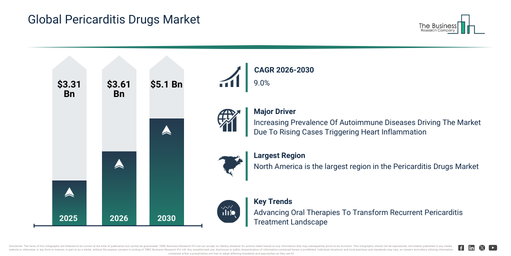
  • Increasing Prevalence Of Autoimmune Diseases Driving The Market Due To Rising Cases Triggering Heart Inflammation Is Supporting Development Across The Pericarditis Drugs Market

    Increasing Prevalence Of Autoimmune Diseases Driving The Market Due To Rising Cases Triggering Heart Inflammation Is Supporting Development Across The Pericarditis Drugs Market

    The Business Research Company’s 2026 market reports feature advanced enhancements such as market attractiveness analysis, total addressable market evaluation, company benchmarking matrices, interactive Excel dashboards, expanded supply chain intelligence, emerging startup coverage, and detailed product insights, delivering more actionable and strategically valuable research.

    How Is The Pericarditis Drugs Market’s Market Value Anticipated To Evolve From 2026 To 2030?

    The pericarditis drugs market has experienced substantial expansion in recent years. It will grow from $3.31 billion in 2025 to $3.61 billion in 2026 at a compound annual growth rate (CAGR) of 9.3%. This historical growth can be ascribed to several factors, including elevated diagnosis rates for inflammatory cardiac conditions, the presence of well-established NSAID therapies, an expanding cardiology care infrastructure, the increasing utilization of colchicine-based treatments, and refined clinical guidelines.

    The pericarditis drugs market is projected to experience substantial growth in the upcoming years, with an anticipated expansion to $5.1 billion by 2030, exhibiting a compound annual growth rate (CAGR) of 9.0%. This projected growth can be attributed to factors such as the increasing development of biologic and immunomodulatory drugs, a rising focus on personalized cardiac care, the expansion of outpatient and homecare treatment models, growing investment in cardiovascular research, and increasing awareness of rare inflammatory heart diseases. Key trends during this forecast period are expected to include the increasing adoption of targeted anti-inflammatory therapies, a rising use of combination drug regimens, a growing focus on recurrent pericarditis management, the expansion of hospital-based treatment protocols, and enhanced monitoring of treatment outcomes.

    Download A Free Sample Report For Comprehensive Market Insights:

    https://www.thebusinessresearchcompany.com/sample.aspx?id=30351&type=smp

    What Are The Main Drivers Accelerating The Growth Of The Pericarditis Drugs Market?

    The growing occurrence of autoimmune conditions is projected to boost the expansion of the pericarditis drugs market in the future. Autoimmune diseases involve the immune system erroneously targeting the body’s healthy cells and tissues. This increase in prevalence primarily stems from environmental shifts that interfere with the immune system, leading it to attack healthy tissues by mistake. Pericarditis medications are beneficial amidst the rising incidence of autoimmune diseases because numerous autoimmune disorders can induce pericarditis, which is an inflammation of the heart’s outer membrane. These medications assist in lowering inflammation, alleviating symptoms, and averting complications, thus treating pericarditis resulting from autoimmune processes. For example, in September 2023, data from the Inflammatory Bowel Disease (IBD) Clinical and Research Centre, a Canadian organization focused on improving the lives of individuals with Crohn’s disease and ulcerative colitis, indicated that over 320,000 people in Canada suffered from inflammatory bowel disease (IBD), with a prevalence of 825 per 100,000 in 2023. Given an anticipated annual increase of 2.44%, it is projected that 1.1% of the population, equating to 470,000 Canadians, will have IBD by 2035. Consequently, the growing frequency of autoimmune diseases is stimulating the expansion of the pericarditis drugs market.

    How Is Segment Classification Applied In The Pericarditis Drugs Market?

    The pericarditis drugs market covered in this report is segmented –

    1) By Drug Class: Nonsteroidal Anti-Inflammatory Drugs (NSAIDs), Colchicine, Corticosteroids, Other Drug Class

    2) By Route Of Administration: Oral, Intravenous, Intramuscular, Topical

    3) By Distribution Channel: Hospital Pharmacies, Retail Pharmacies, Online Pharmacies, Other Distribution Channels

    4) By Therapeutic Application: Acute Pericarditis Treatment, Recurrent Pericarditis Management, Post-Cardiac Surgery, Pericardial Effusion Management

    5) By End User: Hospitals, Homecare, Specialty Clinics, Other End Users

    Subsegments:

    1) By Nonsteroidal Anti-Inflammatory Drugs: Ibuprofen, Aspirin, Indomethacin, Naproxen, Diclofenac

    2) By Colchicine: Oral Colchicine, Intravenous Colchicine

    3) By Corticosteroids: Prednisone, Methylprednisolone, Hydrocortisone, Dexamethasone

    4) By Other Drug Class: Immunosuppressive Agents, Biologic Agents, Analgesics, Antibiotics

    What Trends Are Driving Changes In The Pericarditis Drugs Market?

    Major companies in the pericarditis drugs market are concentrating on developing innovative products, such as oral anti-inflammatory therapies, to enhance treatment accessibility and reduce recurrence rates for patients with recurrent pericarditis. An oral anti-inflammatory therapy is a small-molecule formulation designed to modulate inflammatory pathways and prevent disease relapse through systemic, non-injectable administration. For instance, in April 2025, Cardiol Therapeutics Inc., a Canada-based clinical-stage life sciences company specializing in anti-inflammatory and anti-fibrotic therapies for heart diseases, initiated a Phase III clinical trial for CardiolRx. This investigational therapy is engineered to target inflammasome pathway activation, a central mechanism in pericarditis-related inflammation and fibrosis. Its development marks progress toward offering a convenient, oral, non-immunosuppressive treatment option that could broaden therapeutic choices for recurrent pericarditis patients.

    Which Industry Players Are Present In The Pericarditis Drugs Market?

    Major companies operating in the pericarditis drugs market are Merck & Co. Inc., Pfizer Inc., Bayer AG, Novartis AG, Bristol-Myers Squibb Company, Takeda Pharmaceutical Company Limited, Teva Pharmaceutical Industries Ltd., Sun Pharmaceutical Industries Ltd., Aurobindo Pharma Limited, Hikma Pharmaceuticals USA Inc., Zydus Lifesciences Limited, Kiniksa Pharmaceuticals, Camber Pharmaceuticals Inc., Scilex Holding Company, Solara Active Pharma Sciences, Alkaloids Bioactives Pvt. Ltd., Alchem International Pvt. Ltd., Sarv Biolabs Pvt. Ltd., Midas Pharma GmbH, AdvaCare Pharma, Actavis GmbH, Enomark LLC, Honour Lab Limited.

    Access The Complete Pericarditis Drugs Market Report:

    https://www.thebusinessresearchcompany.com/report/global-pericarditis-drugs-market-report

    Which Area Represents The Largest Portion Of The Pericarditis Drugs Market?

    North America was the largest region in the pericarditis drugs market in 2025. Asia-Pacific is expected to be the fastest-growing region in the forecast period. The regions covered in the pericarditis drugs market report are Asia-Pacific, South East Asia, Western Europe, Eastern Europe, North America, South America, Middle East, Africa.

    Access Pericarditis Drugs Market Report for Deeper Competitive Insights

    https://www.thebusinessresearchcompany.com/sample.aspx?id=30351&type=smp

    Browse Through More Reports Similar to the Global Pericarditis Drugs Market 2026, By The Business Research Company

    Pericarditis Market Report 2026

    https://www.thebusinessresearchcompany.com/report/pericarditis-global-market-report

    Cardiovascular Drugs Market Report 2026

    https://www.thebusinessresearchcompany.com/report/cardiovascular-drugs-global-market-report

    Angina Pectoris Drugs Market Report 2026

    https://www.thebusinessresearchcompany.com/report/angina-pectoris-drugs-global-market-report

    Get in touch with us:

    The Business Research Company: https://www.thebusinessresearchcompany.com/

    Americas: +1 310-496-7795

    Asia: +44 7882 955267 & +91 8897263534

    Europe: +44 7882 955267

    Email us at: marketing@tbrc.info

    Follow us on:

    LinkedIn: https://in.linkedin.com/company/the-business-research-company

    YouTube: https://www.youtube.com/channel/UC24_fI0rV8cR5DxlCpgmyFQ

    Global Market Model: https://www.thebusinessresearchcompany.com/global-market-model
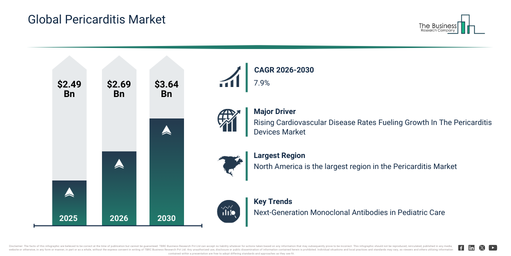
  • Rising Cardiovascular Disease Rates Fueling Growth In The Pericarditis Devices Market Is Supporting Development Across The Pericarditis Market

    Rising Cardiovascular Disease Rates Fueling Growth In The Pericarditis Devices Market Is Supporting Development Across The Pericarditis Market

    The Business Research Company’s 2026 market reports feature advanced enhancements such as market attractiveness analysis, total addressable market evaluation, company benchmarking matrices, interactive Excel dashboards, expanded supply chain intelligence, emerging startup coverage, and detailed product insights, delivering more actionable and strategically valuable research.

    By 2030, How Much Growth In Market Size Is Expected For The Pericarditis Market?

    The market for pericarditis has shown significant expansion in recent times. Anticipated to expand from $2.49 billion in 2025 to $2.69 billion in 2026, it is set to achieve a compound annual growth rate (CAGR) of 7.9%. Factors contributing to historical growth include a lack of awareness regarding pericarditis, a reliance on conventional diagnostic tools, the limited uptake of advanced imaging technologies, restricted access to specialized cardiac services, and a prevailing emphasis on hospital-based care.

    The pericarditis market size is set to demonstrate robust expansion in the upcoming years. It is projected to reach $3.64 billion in 2030, propelled by a compound annual growth rate (CAGR) of 7.9%. This projected growth is largely attributable to factors such as the increasing occurrence of cardiovascular disorders, the rising adoption of digital diagnostic methods, the expansion of outpatient surgical centers, enhanced investment in precision medicine, and the integration of AI within cardiac care. Significant trends expected during this forecast period encompass personalized pericarditis treatment strategies, the development of minimally invasive surgical techniques, advancements in early diagnostics, the integration of wearable technology for cardiac monitoring, and the broadening of outpatient cardiac care services.

    Download A Free Sample Report For Comprehensive Market Insights:

    https://www.thebusinessresearchcompany.com/sample.aspx?id=9170&type=smp

    Which Growth Drivers Are Expected To Support The Pericarditis Market Forward?

    The expanding occurrence of cardiovascular diseases is anticipated to accelerate the pericarditis market’s expansion in the future. Cardiovascular diseases describe conditions impacting the heart or blood vessels, frequently associated with fatty buildup in arteries and an elevated risk of blood clots. Untreated pericarditis can progress to severe cardiovascular complications or even death, thus the growing incidence of these diseases stimulates market demand. For illustration, data from the American Heart Association, a US-based non-profit organization, indicated in January 2024 that the age-adjusted mortality rate from cardiovascular disease rose to 233.3 per 100,000 in 2024, representing a 4.0% increase from 224.4 per 100,000 recorded in 2023. Consequently, the rising prevalence of cardiovascular diseases is propelling the growth of the pericarditis devices market.

    Pericarditis Market Driver: Increased Healthcare Spending Fuels Growth In The Pericarditis Market

    The expansion of healthcare spending is projected to boost the pericarditis market’s growth moving forward. Healthcare spending represents the total monetary resources allocated for diverse aspects of healthcare services and operations within a specific region, country, or medical system. Enhanced healthcare expenditure fosters an environment conducive to the complete management of pericarditis, encompassing everything from research and diagnosis to therapy and patient education, ultimately benefiting affected individuals. As an example, a report published in May 2023 by the Office for National Statistics, a UK-based government department, revealed that healthcare spending in the UK surged by 5.6% between 2022 and 2023, contrasting with a 0.9% increase in 2022. Total UK healthcare expenditure was approximately $317.63 billion (£292 billion) in 2023. Thus, the augmented healthcare spending is driving the expansion of the pericarditis market.

    What Are The Core Segment Classifications In The Pericarditis Market?

    The pericarditis market covered in this report is segmented –

    1) By Type: Acute Pericarditis, Chronic Pericarditis, Recurrent Pericarditis

    2) By Diagnosis And Treatment: Electrocardiogram (ECG), Echocardiogram, Computerized Tomography (Ct), X-Ray, Medication, Surgical Treatment

    3) By Application: Hospitals And Clinics, Medical Institutes, Ambulatory Surgical Centers, Research Organizations

    Subsegments:

    1) By Acute Pericarditis: Viral Pericarditis, Bacterial Pericarditis, Idiopathic Pericarditis

    2) By Chronic Pericarditis: Constrictive Pericarditis, Non-constrictive Chronic Pericarditis

    3) By Recurrent Pericarditis: Post-Acute Pericarditis Recurrences, Secondary Recurrent Pericarditis

    Which Trends Are Shaping The Pericarditis Market Landscape?

    Leading companies operating within the pediatric market are engaged in developing advanced monoclonal antibodies to expand treatment alternatives, improve therapeutic results, and lessen side effects for children experiencing various medical conditions. These next-generation monoclonal antibodies are engineered to offer enhanced efficacy, specificity, and safety in targeting diseases. For instance, in January 2024, Coherus BioSciences, a US-based biotechnology company, introduced LOQTORZITM. LOQTORZI is utilized alongside cisplatin and gemcitabine for the primary treatment of adults with metastatic or recurrent locally advanced nasopharyngeal carcinoma (NPC). It can also be employed as a single therapy for patients with recurrent, unresectable, or metastatic NPC who have shown progression after receiving platinum-containing chemotherapy, irrespective of their PD-L1 status.

    Which Organizations Are Involved In The Pericarditis Market?

    Major companies operating in the pericarditis market are Pfizer Inc., AstraZeneca plc, Merck & Co. Inc., Novartis International AG, Johnson & Johnson Services Inc., Takeda Pharmaceutical Co. Ltd., Zydus Cadila Healthcare Ltd., Sun Pharmaceutical Ltd., Kiniksa Pharmaceuticals Ltd., Regeneron Pharmaceuticals Inc., Amgen Inc., Merck KGaA, Hikma Pharmaceuticals plc, AbbVie Inc., Bristol-Myers Squibb Company, Eli Lilly and Company, GlaxoSmithKline plc, Sanofi S.A., Teva Pharmaceutical Industries Ltd., Bayer AG, Roche Holding AG, Daiichi Sankyo Company Limited, Astellas Pharma Inc.

    Access The Complete Pericarditis Market Report:

    https://www.thebusinessresearchcompany.com/report/pericarditis-global-market-report

    Which Region Commands The Largest Share Of The Pericarditis Market?

    North America was the largest region in the pericarditis market in 2025. Asia-Pacific is expected to be the fastest-growing region in the pericarditis market report during the forecast period. The regions covered in the pericarditis market report are Asia-Pacific, South East Asia, Western Europe, Eastern Europe, North America, South America, Middle East, Africa.

    Access Pericarditis Market Report for Deeper Competitive Insights

    https://www.thebusinessresearchcompany.com/sample.aspx?id=9170&type=smp

    Browse Through More Reports Similar to the Global Pericarditis Market 2026, By The Business Research Company

    Pericarditis Market Report 2026

    https://www.thebusinessresearchcompany.com/report/pericarditis-global-market-report

    Peptic Ulcer Market Report 2026

    https://www.thebusinessresearchcompany.com/report/peptic-ulcer-global-market-report

    Cardiac Valve Market Report 2026

    https://www.thebusinessresearchcompany.com/report/cardiac-valve-global-market-report

    Get in touch with us:

    The Business Research Company: https://www.thebusinessresearchcompany.com/

    Americas: +1 310-496-7795

    Asia: +44 7882 955267 & +91 8897263534

    Europe: +44 7882 955267

    Email us at: marketing@tbrc.info

    Follow us on:

    LinkedIn: https://in.linkedin.com/company/the-business-research-company

    YouTube: https://www.youtube.com/channel/UC24_fI0rV8cR5DxlCpgmyFQ

    Global Market Model: https://www.thebusinessresearchcompany.com/global-market-model
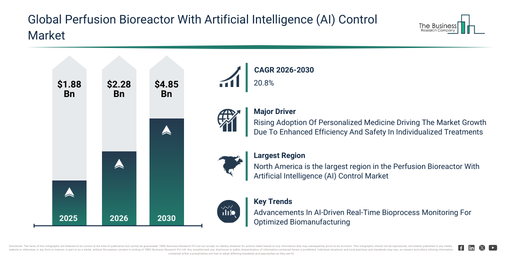
  • Rising Adoption Of Personalized Medicine Driving The Market Growth Due To Enhanced Efficiency And Safety In Individualized Treatments Is Supporting Development Across The Perfusion Bioreactor With Artificial Intelligence (AI) Control Market

    Rising Adoption Of Personalized Medicine Driving The Market Growth Due To Enhanced Efficiency And Safety In Individualized Treatments Is Supporting Development Across The Perfusion Bioreactor With Artificial Intelligence (AI) Control Market

    The Business Research Company’s 2026 market reports feature advanced enhancements such as market attractiveness analysis, total addressable market evaluation, company benchmarking matrices, interactive Excel dashboards, expanded supply chain intelligence, emerging startup coverage, and detailed product insights, delivering more actionable and strategically valuable research.

    What Market Value Trend Is Expected For The Perfusion Bioreactor With Artificial Intelligence (AI) Control Market From 2026 To 2030?

    The perfusion bioreactor with artificial intelligence (AI) control market has experienced significant growth in recent years. This market is expected to expand from $1.88 billion in 2025 to $2.28 billion in 2026, showing a compound annual growth rate (CAGR) of 21.1%. The growth observed in the past can be attributed to a rise in biologics manufacturing demand, the expansion of monoclonal antibody production, increasing adoption of perfusion-based cell culture, improvements in sensor and automation technologies, and the growing use of single-use bioprocessing systems.

    The market size for perfusion bioreactors with artificial intelligence (ai) control is anticipated to experience substantial growth in the coming years. It is projected to reach a valuation of $4.85 billion by 2030, demonstrating a compound annual growth rate (CAGR) of 20.8%. This expansion during the forecast period is primarily driven by factors such as increasing investments in AI-enabled biomanufacturing, rising demand for cell and gene therapies, wider adoption of continuous manufacturing, a heightened focus on process scalability and efficiency, and greater regulatory acceptance of advanced bioprocess technologies. Prominent trends expected in this period include the increasing adoption of AI-driven perfusion control systems, a growing reliance on continuous cell culture platforms, rising demand for single-use perfusion bioreactors, an expansion of real-time process optimization capabilities, and an enhanced emphasis on yield and process consistency.

    Download A Free Sample Report For Comprehensive Market Insights:

    https://www.thebusinessresearchcompany.com/sample.aspx?id=29146&type=smp

    What Influential Factors Are Boosting The Perfusion Bioreactor With Artificial Intelligence (AI) Control Market Demand?

    The expanding adoption of personalized medicine is anticipated to fuel the growth of the perfusion bioreactor with artificial intelligence (AI) control market moving forward. Personalized medicine is a medical strategy focused on tailoring treatments to an individual’s genetic, molecular, and clinical attributes for more precise and effective care. This rise in personalized medicine is attributed to breakthroughs in genomics, which facilitate treatments customized to a patient’s specific genetic profile, leading to enhanced effectiveness and safety. Perfusion bioreactors with AI control support personalized medicine by enabling the precise and continuous production of patient-specific cells, such as stem cells or engineered tissues, under stringently controlled conditions. For instance, in February 2024, the Personalized Medicine Coalition, a US-based non-profit organization, reported that the FDA approved 16 new personalized treatments for rare disease patients in 2023, an increase from six in 2022. The personalized treatments newly approved in 2023 further encompassed seven cancer drugs and three for other diseases and conditions. Hence, the increasing prevalence of personalized medicine is a key driver for the perfusion bioreactor with artificial intelligence (AI) control market.

    How Is The Perfusion Bioreactor With Artificial Intelligence (AI) Control Market Structured Across Different Market Segments?

    The perfusion bioreactor with artificial intelligence (ai) control market covered in this report is segmented –

    1) By Product Type: Single Use Perfusion Bioreactors, Multi-Use Perfusion Bioreactors

    2) By Artificial Intelligence (AI) Control Type: Predictive Analytics, Process Optimization, Real-Time Monitoring, Automated Feedback Control, Other Artificial Intelligence (AI) Control Types

    3) By Application: Cell Therapy, Monoclonal Antibody Production, Vaccine Manufacturing, Stem Cell Research, Other Applications

    4) By End-User: Biopharmaceutical Companies, Academic And Research Institutes, Contract Manufacturing Organizations, Other End-Users

    Subsegments:

    1) By Single-Use Perfusion Bioreactors: Disposable Bag Bioreactors, Modular Single-Chamber Bioreactors, Pre-Sterilized Single-Vessel Bioreactors

    2) By Multi-Use Perfusion Bioreactors: Stainless Steel Bioreactors, Glass Bioreactors, Multi-Vessel Continuous Culture Systems

    What Trends Are Influencing The Perfusion Bioreactor With Artificial Intelligence (AI) Control Market Outlook?

    Leading entities operating in the perfusion bioreactor with artificial intelligence (AI) control market are concentrating on advancing sophisticated strategies, such as AI-enhanced real-time bioprocess monitoring, to optimize cell culture performance, increase product yield, and lower operational expenses in biopharmaceutical manufacturing. AI-enhanced real-time bioprocess monitoring describes the application of artificial intelligence algorithms to continuously analyze data from bioreactors, thereby enabling instantaneous insights, predictive adjustments, and the optimization of cell growth and product quality during biomanufacturing. For example, in February 2025, The Cultivated B GmbH, a biotechnology company based in Germany, unveiled AI-driven multi-channel biosensors designed to improve real-time monitoring of bioreactors in cell culture and fermentation processes. These biosensors offer continuous, high-resolution data analytics, allowing bioprocess engineers to track growth and metabolism with remarkable sensitivity, detecting molecules such as glucose, amino acids, and lactic acid at sub-picomolar levels. The integration of AI provides real-time insights and recommendations to refine media formulation, enhance measurement reliability, diminish contamination risk by eliminating manual sampling, and accelerate product development for uses in pharmaceuticals, biologics, food biotechnology, waste upcycling, and alternative protein production.

    Who Are The Firms Contributing To The Perfusion Bioreactor With Artificial Intelligence (AI) Control Market Ecosystem?

    Major companies operating in the perfusion bioreactor with artificial intelligence (ai) control market are Thermo Fisher Scientific Inc., Merck KGaA, Lonza Group AG., Danaher Corporation, Sartorius Aktiengesellschaft, Getinge AB., WuXi Biologics Inc., Eppendorf Aktiengesellschaft, ABEC Inc., Catalyx.ai, PBS Biotech Inc., Cytovance Biologics, Culture Biosciences Inc., Esco Lifesciences Group Ltd., Cell Culture Company GmbH, Synthecon Inc., OmniBRx Biotechnologies Inc., ProlifeCell Inc., Sciperio Ltd., The Cultivated B Ltd.

    Access The Complete Perfusion Bioreactor With Artificial Intelligence (AI) Control Market Report:

    https://www.thebusinessresearchcompany.com/report/perfusion-bioreactor-with-artificial-intelligence-ai-control-global-market-report

    Which Region Accounts For The Highest Share Of The Perfusion Bioreactor With Artificial Intelligence (AI) Control Market?

    North America was the largest region in the perfusion bioreactor with artificial intelligence (AI) control market in 2025. Asia-Pacific is expected to be the fastest-growing region in the forecast period. The regions covered in the perfusion bioreactor with artificial intelligence (ai) control market report are Asia-Pacific, South East Asia, Western Europe, Eastern Europe, North America, South America, Middle East, Africa.

    Access Perfusion Bioreactor With Artificial Intelligence (AI) Control Market Report for Deeper Competitive Insights

    https://www.thebusinessresearchcompany.com/sample.aspx?id=29146&type=smp

    Browse Through More Reports Similar to the Global Perfusion Bioreactor With Artificial Intelligence (AI) Control Market 2026, By The Business Research Company

    Perfusion Systems Market Report 2026

    https://www.thebusinessresearchcompany.com/report/perfusion-systems-global-market-report

    Artificial Intelligence In Cardiology Market Report 2026

    https://www.thebusinessresearchcompany.com/report/artificial-intelligence-in-cardiology-global-market-report

    Artificial Intelligence Ai In Biopharmaceuticals Market Report 2026

    https://www.thebusinessresearchcompany.com/report/artificial-intelligence-ai-in-biopharmaceuticals-global-market-report

    Get in touch with us:

    The Business Research Company: https://www.thebusinessresearchcompany.com/

    Americas: +1 310-496-7795

    Asia: +44 7882 955267 & +91 8897263534

    Europe: +44 7882 955267

    Email us at: marketing@tbrc.info

    Follow us on:

    LinkedIn: https://in.linkedin.com/company/the-business-research-company

    YouTube: https://www.youtube.com/channel/UC24_fI0rV8cR5DxlCpgmyFQ

    Global Market Model: https://www.thebusinessresearchcompany.com/global-market-model
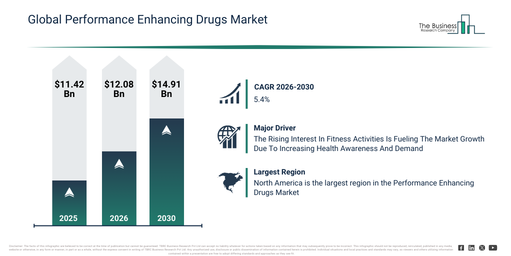
  • The Rising Interest In Fitness Activities Is Fueling The Market Growth Due To Increasing Health Awareness And Demand Is Supporting Development Across The Performance Enhancing Drugs Market

    The Rising Interest In Fitness Activities Is Fueling The Market Growth Due To Increasing Health Awareness And Demand Is Supporting Development Across The Performance Enhancing Drugs Market

    The Business Research Company’s 2026 market reports feature advanced enhancements such as market attractiveness analysis, total addressable market evaluation, company benchmarking matrices, interactive Excel dashboards, expanded supply chain intelligence, emerging startup coverage, and detailed product insights, delivering more actionable and strategically valuable research.

    How Does The Forecasted Market Size Of The Performance Enhancing Drugs Market Compare Between 2026 And 2030?

    The market for performance-enhancing drugs has experienced significant growth in recent years. Its value is projected to increase from $11.42 billion in 2025 to $12.08 billion in 2026, exhibiting a compound annual growth rate (CAGR) of 5.7%. This historical expansion can be attributed to several factors, including heightened competitiveness in professional sports, the widespread availability of anabolic steroids, the flourishing of the bodybuilding subculture, insufficient awareness of long-term health risks, and lax regulatory enforcement in particular regions.

    The performance enhancing drugs market is projected to experience substantial expansion in the coming years. This market is anticipated to reach a valuation of $14.91 billion by 2030, exhibiting a compound annual growth rate (CAGR) of 5.4%. Several factors are driving this expected growth, including the rising adoption of peptide hormones and SARMs, increasing demand from amateur athletes and fitness enthusiasts, the expansion of e-commerce distribution channels, advancements in drug formulation and delivery, and stronger anti-doping regulations which in turn spur product innovation. During this forecast period, major trends are expected to involve a rising demand for performance optimization in competitive sports, a growing use of cognitive and focus-enhancing substances, the increasing popularity of bodybuilding and fitness culture, the expansion of online and direct-to-consumer sales channels, and a heightened focus on faster recovery and endurance improvement.

    Download A Free Sample Report For Comprehensive Market Insights:

    https://www.thebusinessresearchcompany.com/sample.aspx?id=24653&type=smp

    Which Drivers Are Advancing The Performance Enhancing Drugs Market Growth?

    The increasing engagement in fitness pursuits is anticipated to fuel the expansion of the Performance Enhancing Drugs Market in the future. Fitness activities encompass physical exercises or movements performed to enhance or preserve an individual’s health, strength, flexibility, or overall physical condition. This growing interest in fitness is largely spurred by greater health consciousness, as more individuals recognize the vital role of physical exercise in preventing chronic diseases and sustaining general well-being. Performance enhancing drugs boost physical attributes such as strength, stamina, and recuperation, thereby assisting individuals in achieving superior outcomes in their fitness regimens through faster muscle development, reduced tiredness, and the ability to conduct extended and more rigorous workouts. For instance, in November 2024, according to the report published by PureGym, a UK-based health company, 48% of US are taking part in regular exercise in 2024, a 3% increase from the number of people exercising in 2023. Consequently, the increasing appeal of fitness activities is stimulating the expansion of the Performance Enhancing Drugs Market.

    Which Segment-Based Categories Are Covered In The Performance Enhancing Drugs Market?

    The performance enhancing drugs market covered in this report is segmented –

    1) By Product Type: Stimulants, Anabolic Steroids, Peptide Hormones, Beta-2 Agonists, Other Product Types

    2) By Application: Athletes, Students, Militaries, Other Applications

    3) By Distribution Channel: Online Stores, Pharmacies, Specialty Stores, Fitness Centers, Direct Sales

    4) By End User: Professional Athletes, Amateur Athletes, Bodybuilders, Fitness Enthusiasts, Patients With Chronic Illnesses

    Subsegments:

    1) By Stimulants: Amphetamines, Ephedrine, Caffeine, Modafinil, Methylphenidate

    2) By Anabolic Steroids: Testosterone, Nandrolone, Stanozolol, Oxandrolone, Boldenone

    3) By Peptide Hormones: Erythropoietin (EPO), Human Growth Hormone (hGH), Insulin-Like Growth Factor (IGF-1), Gonadotropins, Corticotropins

    4) By Beta-2 Agonists: Clenbuterol, Salbutamol, Formoterol, Terbutaline

    5) By Other Product Types: Diuretics, Narcotics, Cannabinoids, Selective Androgen Receptor Modulators (SARMs), Anti-Estrogens

    Which Key Players Are Active In The Performance Enhancing Drugs Market?

    Major companies operating in the performance enhancing drugs market are Alpha Pharma Healthcare, Balkan Pharmaceuticals, British Dragon, Geneza Pharmaceuticals, Hilma Biocare, Sciroxx, Organon Balkan, Magnus Pharmaceuticals, Pharmaqo Labs, Dragon Pharma, Kalpa Pharmaceuticals, Beligas Pharmaceuticals, ZPHC (Zhengzhou Pharmaceutical Co.), Aburaihan Pharmaceutical, Roussel Uclaf, Shree Venkatesh International, Aspen API, Taj Pharmaceuticals, Euro Pharmacies, Anabolic Pharma, Meditech Pharmaceuticals, Biogenetic Labs, Muscle Pharma, Ultima Pharmaceuticals, Swiss Remedies, Rohm Laboratories, Spectrum Pharma, International Labs, Watson Pharma, Alpha-Zeneca Labs

    Access The Complete Performance Enhancing Drugs Market Report:

    https://www.thebusinessresearchcompany.com/report/performance-enhancing-drugs-global-market-report

    Which Region Is The Primary Market For The Performance Enhancing Drugs Market?

    North America was the largest region in the performance enhancing drugs market in 2025. Asia-Pacific is expected to be the fastest-growing region in the forecast period. The regions covered in the performance enhancing drugs market report are Asia-Pacific, South East Asia, Western Europe, Eastern Europe, North America, South America, Middle East, Africa.

    Access Performance Enhancing Drugs Market Report for Deeper Competitive Insights

    https://www.thebusinessresearchcompany.com/sample.aspx?id=24653&type=smp

    Browse Through More Reports Similar to the Global Performance Enhancing Drugs Market 2026, By The Business Research Company

    Brain Tumor Drugs Market Report 2026

    https://www.thebusinessresearchcompany.com/report/brain-tumor-drugs-global-market-report

    Cervical Cancer Drugs Market Report 2026

    https://www.thebusinessresearchcompany.com/report/cervical-cancer-drugs-global-market-report

    Colorectal Cancer Drugs Market Report 2026

    https://www.thebusinessresearchcompany.com/report/colorectal-cancer-drugs-global-market-report

    Get in touch with us:

    The Business Research Company: https://www.thebusinessresearchcompany.com/

    Americas: +1 310-496-7795

    Asia: +44 7882 955267 & +91 8897263534

    Europe: +44 7882 955267

    Email us at: marketing@tbrc.info

    Follow us on:

    LinkedIn: https://in.linkedin.com/company/the-business-research-company

    YouTube: https://www.youtube.com/channel/UC24_fI0rV8cR5DxlCpgmyFQ

    Global Market Model: https://www.thebusinessresearchcompany.com/global-market-model
  • Rising Diabetes Prevalence Fuels Growth Of The Market Due To Increasing Obesity Rates And Demand For Hormone-Mimicking Therapies Is Supporting Development Across The Peptide Therapeutics Contract Active Pharmaceutical Ingredient (API) Manufacturing Market

    Rising Diabetes Prevalence Fuels Growth Of The Market Due To Increasing Obesity Rates And Demand For Hormone-Mimicking Therapies Is Supporting Development Across The Peptide Therapeutics Contract Active Pharmaceutical Ingredient (API) Manufacturing Market

    The Business Research Company’s 2026 market reports feature advanced enhancements such as market attractiveness analysis, total addressable market evaluation, company benchmarking matrices, interactive Excel dashboards, expanded supply chain intelligence, emerging startup coverage, and detailed product insights, delivering more actionable and strategically valuable research.

    What Increase In Market Value Is Predicted For The Peptide Therapeutics Contract Active Pharmaceutical Ingredient (API) Manufacturing Market During The 2026–2030 Period?

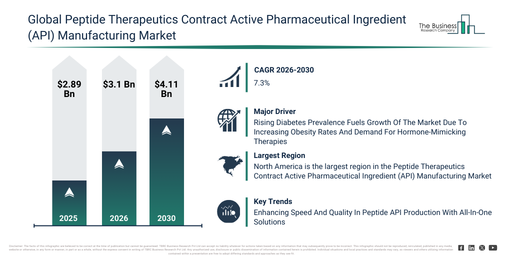
    The peptide therapeutics contract active pharmaceutical ingredient (api) manufacturing market size has shown strong growth in recent years. It is projected to expand from $2.89 billion in 2025 to $3.1 billion in 2026, achieving a compound annual growth rate (CAGR) of 7.3%. The historical increase can be attributed to a limited number of specialized peptide API manufacturers, a rising demand for peptide therapeutics, the reliance on in-house synthesis by pharmaceutical companies, regulatory compliance requirements, and an increase in preclinical and clinical trials.

    The peptide therapeutics contract active pharmaceutical ingredient (api) manufacturing market is poised for significant expansion over the next few years. It is forecast to grow to $4.11 billion in 2030, demonstrating a compound annual growth rate (CAGR) of 7.3%. This expansion during the projection period can be attributed to several factors: the enhancement of contract manufacturing organization (CMO) capabilities for peptide API, increasing investments in cutting-edge peptide synthesis technologies, the progression of personalized medicine and biologics, a greater reliance on outsourcing by small and mid-size pharmaceutical companies, and the adoption of digital manufacturing and AI-based process optimization. Prominent trends anticipated within this forecast period include a growing demand for contract manufacturing of peptide APIs, an intensified focus on GMP-grade production and regulatory compliance, an increase in outsourced peptide synthesis for clinical trials, the broadening of process optimization and technology transfer services, and the implementation of custom peptide synthesis for personalized therapeutics.

    Download A Free Sample Report For Comprehensive Market Insights:

    https://www.thebusinessresearchcompany.com/sample.aspx?id=25870&type=smp

    What Primary Factors Are Fueling The Expansion Of The Peptide Therapeutics Contract Active Pharmaceutical Ingredient (API) Manufacturing Market?

    The increasing incidence of diabetes is projected to fuel the expansion of the peptide therapeutics contract active pharmaceutical ingredient (API) manufacturing market moving forward. Diabetes is defined as a chronic metabolic condition characterized by elevated blood sugar (glucose) levels, resulting from the body’s insufficient insulin production or its inability to use insulin effectively. The growing occurrence of diabetes is primarily driven by rising obesity rates, as excessive body fat contributes to insulin resistance and disrupts blood sugar control. Peptide therapeutics utilize contract API manufacturing to facilitate the large-scale production of hormone-mimicking drugs, thereby enhancing insulin secretion and glucose management in diabetes treatment. For example, in March 2025, a report issued by the Office for Health Improvement and Disparities, a UK-based government department, revealed that the documented prevalence of type 2 diabetes among adults aged 17 and over in England was 7.0% as of March 2024, representing an increase from 6.8% in March 2023. Thus, the escalating prevalence of diabetes is stimulating the growth of the peptide therapeutics contract active pharmaceutical ingredient (API) manufacturing market.

    What Are The Major Segment Categories Within The Peptide Therapeutics Contract Active Pharmaceutical Ingredient (API) Manufacturing Market?

    The peptide therapeutics contract active pharmaceutical ingredient (api) manufacturing market covered in this report is segmented –

    1) By Scale Of Operation: Preclinical Or Clinical, Commercial

    2) By Synthesis Method: Non Chemical Synthesis, Chemical Synthesis

    3) By Enterprise Type: Large Enterprise, Small And Medium Enterprises

    Subsegments:

    1) By Preclinical Or Clinical: Discovery And Preclinical Development, Phase II Or III Manufacturing, Phase I Manufacturing

    2) By Commercial: Commercial-Scale Good Manufacturing Practice Manufacturing, Tech Transfer And Scale-up, Lifecycle Management Or Process Optimization

    What Trends Are Affecting The Peptide Therapeutics Contract Active Pharmaceutical Ingredient (API) Manufacturing Market Dynamics?

    Companies prominent in the peptide therapeutics contract active pharmaceutical ingredient (API) manufacturing market are concentrating on developing innovative methods, such as the continuous flow synthesis platform, to streamline production and address the rising complexity in drug development. This continuous flow synthesis platform integrates multiple stages, including reaction, separation, concentration, and crystallization, into one unbroken process with real-time in-line measurement, thereby enabling high-precision, non-destructive monitoring and effective scale-up. For example, in May 2023, SynCrest Inc., a Japan-based contract research, development, and manufacturing organization (CRDMO), declared the opening of its good manufacturing practice (GMP)-compliant Naruto Plant, which is outfitted with a continuous flow synthesis platform for peptide and nucleotide API production. The platform supports the swift and high-quality manufacturing of over 100 types of non-natural amino acids and high-purity special amidites, substantially cutting down lead times and production costs. This innovation is satisfying the escalating market demand for advanced peptide-based therapeutics by providing scalable, efficient, and cost-effective API manufacturing solutions.

    Who Are The Leading Firms Participating In The Peptide Therapeutics Contract Active Pharmaceutical Ingredient (API) Manufacturing Market?

    Major companies operating in the peptide therapeutics contract active pharmaceutical ingredient (api) manufacturing market are Thermo Fisher Scientific Inc., Lonza Group AG., WuXi AppTec Co. Ltd., Cambrex Corporation, ChemPartner, GenScript Biotech Corporation, Bachem Group, CordenPharma International GmbH, Syngene International Limited, Ambiopharm Inc., CPC Scientific Inc., ScinoPharm Taiwan Ltd., Hybio Pharmaceutical Co. Ltd., CSBio Company Inc., Senn Chemicals AG., AnaSpec Inc., LifeTein LLC, Apex Biotechnology Corp., BCN Peptides S.A.

    Access The Complete Peptide Therapeutics Contract Active Pharmaceutical Ingredient (API) Manufacturing Market Report:

    https://www.thebusinessresearchcompany.com/report/peptide-therapeutics-contract-active-pharmaceutical-ingredient-api-manufacturing-global-market-report

    Which Geographic Region Represents The Largest Peptide Therapeutics Contract Active Pharmaceutical Ingredient (API) Manufacturing Market Share?

    North America was the largest region in the peptide therapeutics contract active pharmaceutical ingredient (API) manufacturing market in 2025. Asia-Pacific is expected to be the fastest-growing region in the forecast period. The regions covered in the peptide therapeutics contract active pharmaceutical ingredient (api) manufacturing market report are Asia-Pacific, South East Asia, Western Europe, Eastern Europe, North America, South America, Middle East, Africa.

    Access Peptide Therapeutics Contract Active Pharmaceutical Ingredient (API) Manufacturing Market Report for Deeper Competitive Insights

    https://www.thebusinessresearchcompany.com/sample.aspx?id=25870&type=smp

    Browse Through More Reports Similar to the Global Peptide Therapeutics Contract Active Pharmaceutical Ingredient (API) Manufacturing Market 2026, By The Business Research Company

    Peptide Therapeutics Market Report 2026

    https://www.thebusinessresearchcompany.com/report/peptide-therapeutics-global-market-report

    Peptide Synthesis Market Report 2026

    https://www.thebusinessresearchcompany.com/report/peptide-synthesis-global-market-report

    Veterinary Active Pharmaceutical Ingredients Manufacturing Market Report 2026

    https://www.thebusinessresearchcompany.com/report/veterinary-active-pharmaceutical-ingredients-manufacturing-global-market-report

    Get in touch with us:

    The Business Research Company: https://www.thebusinessresearchcompany.com/

    Americas: +1 310-496-7795

    Asia: +44 7882 955267 & +91 8897263534

    Europe: +44 7882 955267

    Email us at: marketing@tbrc.info

    Follow us on:

    LinkedIn: https://in.linkedin.com/company/the-business-research-company

    YouTube: https://www.youtube.com/channel/UC24_fI0rV8cR5DxlCpgmyFQ

    Global Market Model: https://www.thebusinessresearchcompany.com/global-market-model
  • Rising Prevalence Of Chronic Diseases Propels Growth In The Peptide Therapeutics Market Is Supporting Development Across The Peptide Therapeutics Market

    Rising Prevalence Of Chronic Diseases Propels Growth In The Peptide Therapeutics Market Is Supporting Development Across The Peptide Therapeutics Market

    The Business Research Company’s 2026 market reports feature advanced enhancements such as market attractiveness analysis, total addressable market evaluation, company benchmarking matrices, interactive Excel dashboards, expanded supply chain intelligence, emerging startup coverage, and detailed product insights, delivering more actionable and strategically valuable research.

    How Will The Market Size Of The Peptide Therapeutics Market Progress Through 2030?

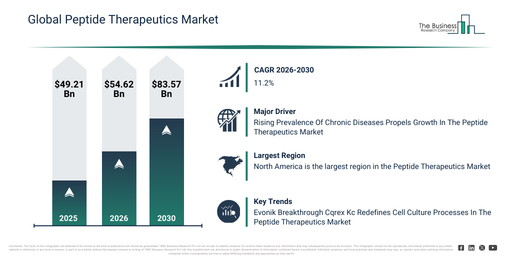
    The peptide therapeutics market size has experienced rapid growth in recent years. It is projected to expand from $49.21 billion in 2025 to $54.62 billion in 2026, achieving a compound annual growth rate (CAGR) of 11.0%. The expansion observed historically is attributable to the early adoption of peptide drugs, advancements in peptide synthesis techniques, a rising incidence of chronic and rare diseases, progress in pharmacology and biochemistry, and the proliferation of contract research organizations.

    The peptide therapeutics market is projected to experience substantial expansion in the coming years, with its valuation set to reach $83.57 billion by 2030, exhibiting a compound annual growth rate (CAGR) of 11.2%. This growth during the forecast period is attributable to several factors, including the emergence of personalized medicine, heightened investment in peptide-based therapeutics, the integration of artificial intelligence in drug discovery, the broadening of biologics manufacturing capabilities, and the expansion of healthcare solutions in emerging markets. Furthermore, major trends anticipated in this period encompass the development of targeted peptide drugs, innovations in peptide drug delivery, the rise of multi-functional peptide therapeutics, progress in natural peptide extraction and synthesis, and the increasing use of combination therapies with peptides.

    Download A Free Sample Report For Comprehensive Market Insights:

    https://www.thebusinessresearchcompany.com/sample.aspx?id=7216&type=smp

    Which Strategic Drivers Are Supporting The Peptide Therapeutics Market Development?

    The growing incidence of chronic diseases is anticipated to propel the peptide therapeutics market. Chronic ailments are persistent conditions that are often beyond cure, though they can sometimes be managed and treated. The rise in chronic diseases is attributed to factors like increased tobacco product consumption, inadequate nutrition, a sedentary lifestyle, excessive alcohol intake, and other contributing elements. Peptide therapeutics play a role in both the prevention and treatment of specific chronic illnesses. For instance, data from January 2023, released by the US-based National Library of Medicine, projected that the number of individuals in the US aged 50 and above with at least one chronic condition would escalate by 99.5%, amounting to 142.66 million, by the year 2050. Consequently, the increasing prevalence of chronic diseases is expected to drive the peptide therapeutics market during the forecast period.

    How Is The Peptide Therapeutics Market Distributed Across Key Segments?

    The peptide therapeutics market covered in this report is segmented –

    1) By Type: Generic, Branded

    2) By Route of Administration: Parenteral, Mucosal, Oral, Transdermal

    3) By Application: Cancer, Cardiovascular Diseases, Central Nervous Systems, Metabolic Disorders, Infections, Hematological Disorders, Gastrointestinal Disorders, Dermatology, Respiratory Disorders, Acromegaly, Other Applications

    Subsegments:

    1) By Generic: Generic Peptide Drugs, Biosimilars

    2) By Branded: Innovative Peptide Drugs, Patent-Protected Peptides

    Which Trends Are Influencing The Expansion Of The Peptide Therapeutics Market?

    Major companies operating in the peptide therapeutics market are concentrating on introducing advanced solutions, such as the cell culture process, to gain a competitive edge. The cell culture process involves cultivating cells outside their natural environment, under controlled conditions, which includes isolating cells of interest from living tissue and subsequently maintaining them. For instance, in June 2023, Evonik Industries AG, a German-based specialty chemicals company, launched cQrex KC. This cQrex KC is a next-generation peptide for biopharma applications, specifically designed for the cell culture process utilized in the manufacture of biological drugs. It enables cell culture process developers to optimize cystine supply and increase cell culture productivity. Furthermore, cQrex KC supports the development of vaccines, viral vectors, and cell therapies.

    Which Companies Are Engaged In The Peptide Therapeutics Market Environment?

    Major companies operating in the peptide therapeutics market are Pfizer Inc., Jhonson & Jhonson, Abbvie Inc., Novartis AG, Bristol-Myers Squibb Company, AstraZeneca plc, Sanofi SA, GlaxoSmithKline plc, Takeda Pharmaceutical Company Limited, Eli Lilly and Company, Amgen Inc., Novo Nordisk AS, Teva Pharmaceuticals Industries Ltd., Bachem Holding AG, PolyPeptide Laboratories BV, Arcus Biosciences Inc., Pepscan Therapeutics, Peptech Inc., Peptide Logic Inc., SELLAS Life Sciences Group, Ever Neuro Pharma GmbH, Zealand Pharma AG, PepGen Inc., Pepticom S.A., Peptide Technologies Corporation, SynPeptide Inc., Peptimmune Inc., Merck & Co Inc.

    Access The Complete Peptide Therapeutics Market Report:

    https://www.thebusinessresearchcompany.com/report/peptide-therapeutics-global-market-report

    Which Region Leads The Peptide Therapeutics Market By Size?

    North America was the largest region in the peptide therapeutics market in 2025. Asia-Pacific is expected to be the fastest-growing region in the forecast period. The regions covered in the peptide therapeutics market report are Asia-Pacific, South East Asia, Western Europe, Eastern Europe, North America, South America, Middle East, Africa.

    Access Peptide Therapeutics Market Report for Deeper Competitive Insights

    https://www.thebusinessresearchcompany.com/sample.aspx?id=7216&type=smp

    Browse Through More Reports Similar to the Global Peptide Therapeutics Market 2026, By The Business Research Company

    Peptide Therapeutics Market Report 2026

    https://www.thebusinessresearchcompany.com/report/peptide-therapeutics-global-market-report

    Peptide Synthesis Market Report 2026

    https://www.thebusinessresearchcompany.com/report/peptide-synthesis-global-market-report

    Peptide Based Metabolic Disorders Therapeutics Market Report 2026

    https://www.thebusinessresearchcompany.com/report/peptide-based-metabolic-disorders-therapeutics-global-market-report

    Get in touch with us:

    The Business Research Company: https://www.thebusinessresearchcompany.com/

    Americas: +1 310-496-7795

    Asia: +44 7882 955267 & +91 8897263534

    Europe: +44 7882 955267

    Email us at: marketing@tbrc.info

    Follow us on:

    LinkedIn: https://in.linkedin.com/company/the-business-research-company

    YouTube: https://www.youtube.com/channel/UC24_fI0rV8cR5DxlCpgmyFQ

    Global Market Model: https://www.thebusinessresearchcompany.com/global-market-model