Month: May 2026

  • Increasing Prevalence Of Chronic Pain Driving Growth Of Morphine Drug Market Is Supporting Development Across The Morphine Drugs Market

    Increasing Prevalence Of Chronic Pain Driving Growth Of Morphine Drug Market Is Supporting Development Across The Morphine Drugs Market

    The Business Research Company’s 2026 market reports feature advanced enhancements such as market attractiveness analysis, total addressable market evaluation, company benchmarking matrices, interactive Excel dashboards, expanded supply chain intelligence, emerging startup coverage, and detailed product insights, delivering more actionable and strategically valuable research.

    What Increase In Market Value Is Predicted For The Morphine Drugs Market During The 2026–2030 Period?

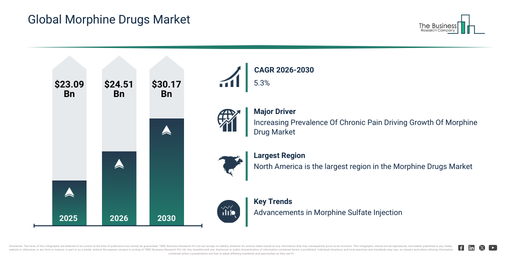
    The morphine drugs market size has experienced considerable expansion in recent years. It is anticipated to increase from $23.09 billion in 2025 to $24.51 billion in 2026, demonstrating a compound annual growth rate (CAGR) of 6.1%. The historical growth in this market can be ascribed to a longstanding clinical dependence on morphine for severe pain relief, its widespread deployment in post-surgical and trauma care, its established function in cancer pain management, its inclusion in essential medicines lists, and the availability of various generic morphine formulations.

    The morphine drugs market size is anticipated to demonstrate robust growth over the next few years, projected to reach $30.17 billion by 2030, with a compound annual growth rate (CAGR) of 5.3%. This expansion during the forecast period is fueled by the increasing prevalence of cancer demanding powerful analgesics, a rising need for palliative care services, the expansion of hospital infrastructure in developing markets, the ongoing requirement for anesthesia and pain control around surgery, and the balanced application of opioids under more rigorous regulatory frameworks. Noteworthy trends for this period include a consistent demand for opioid analgesics in managing severe pain, the continued use of morphine in palliative and end-of-life care, a preference for injectable morphine within hospital environments, the availability of various dosage forms for clinical adaptability, and an intensifying focus on controlled and regulated opioid prescribing.

    Download A Free Sample Report For Comprehensive Market Insights:

    https://www.thebusinessresearchcompany.com/sample.aspx?id=15611&type=smp

    What Major Growth Factors Are Impacting The Morphine Drugs Market?

    The escalating occurrence of chronic pain conditions is projected to stimulate the expansion of the morphine drugs market in the coming years. Chronic pain is an intricate ailment marked by persistent discomfort over extended periods, serving as an indicator of injury or illness. This condition has emerged as a significant global health issue, influenced by various interconnected elements such as an aging populace, increasing obesity rates, inactive lifestyles, stress, mental health challenges, and environmental factors. Morphine plays a vital role in managing chronic pain because of its high effectiveness in alleviating discomfort and its adaptability to individual patient needs. It enhances the quality of life, allowing chronic pain sufferers to be more active without enduring constant severe pain. For instance, in May 2021, the Government of Canada, a federal administration based in Canada, indicated that as many as 8.3 million Canadians might experience chronic pain by 2025, with this figure anticipated to rise to 9.0 million by 2030. Consequently, the rising incidence of chronic pain conditions is propelling the growth of the morphine drugs market.

    How Is The Morphine Drugs Market Structured Across Different Market Segments?

    The morphine drugs market covered in this report is segmented –

    1) By Dosage form: Injectable, Oral, Other Dosage Forms

    2) By Distribution channels: Hospital Pharmacy, Retail Pharmacy, Online Pharmacy

    3) By Applications: Pain Management, Palliative Care, Diarrhea Suppressant, Anesthesia, Other Applications

    4) By End Users: Hospitals And Clinics, Ambulatory Surgical Centers, Other End Users

    Subsegments:

    1) By Injectable: Morphine Sulfate Injection, Morphine Hydrochloride Injection, Morphine Extended Release Injection

    2) By Oral: Oral Tablets (Immediate-Release, Extended-Release), Oral Solution Or syrup, Oral Capsules (Extended-Release Capsules)

    3) By Other Dosage Forms: Rectal Suppositories, Sublingual Tablets Or Films

    What Trends Are Shaping The Morphine Drugs Market Structure?

    Companies prominent in the morphine drug market are prioritizing the development of advanced delivery methods, such as prefilled syringe formats, to enhance operational efficiency, bolster safety, and mitigate medication errors and preparation time. Prefilled syringes are characterized as sterile, single-dose administration systems that come pre-filled with a specific medication, thereby removing the requirement for manual drawing from a vial before use. For example, in April 2024, Hikma Pharmaceuticals PLC, a UK-based global pharmaceutical firm, rolled out Morphine Sulfate Injection USP in a prefilled syringe in the U.S. This product delivers a sterile, ready-to-use presentation of the opioid analgesic, which significantly improves convenience for healthcare providers in acute care settings. The prefilled syringe is engineered to help decrease dosing errors and optimize workflow efficiency by reducing the number of preparation steps.

    Who Are The Prominent Players Across The Morphine Drugs Market?

    Major companies operating in the morphine drugs market are Pfizer Inc., Sanofi S.A., Rusan Pharma Ltd., Johnson & Johnson, Teva Pharmaceutical Industries Ltd., Daiichi Sankyo Company Limited, Sandoz AG, Viatris Inc., Dr. Reddy’s Laboratories Ltd., Apotex Inc., Hikma Pharmaceuticals PLC, Endo Pharmaceuticals Inc., Sun Pharmaceutical Industries Ltd., Johnson Matthey Fine Chemicals, Fresenius Kabi USA LLC, Delpharm SaS, Alvogen Inc., Mallinckrodt Pharmaceuticals, Lannett Company, Mayne Pharma Group Limited, Noramco Inc., Tasmanian Alkaloids, Napp Pharmaceuticals Limited, Alcaliber SA

    Access The Complete Morphine Drugs Market Report:

    https://www.thebusinessresearchcompany.com/report/morphine-drugs-global-market-report

    Which Area Represents The Largest Portion Of The Morphine Drugs Market?

    North America was the largest region in the morphine drugs market in 2025. Asia-Pacific is expected to be the fastest-growing region in the forecast period. The regions covered in the morphine drugs market report are Asia-Pacific, South East Asia, Western Europe, Eastern Europe, North America, South America, Middle East, Africa.

    Access Morphine Drugs Market Report for Deeper Competitive Insights

    https://www.thebusinessresearchcompany.com/sample.aspx?id=15611&type=smp

    Browse Through More Reports Similar to the Global Morphine Drugs Market 2026, By The Business Research Company

    Morphine Drugs Market Report 2026

    https://www.thebusinessresearchcompany.com/report/morphine-drugs-global-market-report

    Opioids Market Report 2026

    https://www.thebusinessresearchcompany.com/report/opioids-global-market-report

    Narcotic Drugs Market Report 2026

    https://www.thebusinessresearchcompany.com/report/narcotic-drugs-global-market-report

    Get in touch with us:

    The Business Research Company: https://www.thebusinessresearchcompany.com/

    Americas: +1 310-496-7795

    Asia: +44 7882 955267 & +91 8897263534

    Europe: +44 7882 955267

    Email us at: marketing@tbrc.info

    Follow us on:

    LinkedIn: https://in.linkedin.com/company/the-business-research-company

    YouTube: https://www.youtube.com/channel/UC24_fI0rV8cR5DxlCpgmyFQ

    Global Market Model: https://www.thebusinessresearchcompany.com/global-market-model
  • Rising Prevalence Of Asthma Fuels Growth In The Montelukast Sodium Market Is Supporting Development Across The Montelukast Sodium Market

    Rising Prevalence Of Asthma Fuels Growth In The Montelukast Sodium Market Is Supporting Development Across The Montelukast Sodium Market

    The Business Research Company’s 2026 market reports feature advanced enhancements such as market attractiveness analysis, total addressable market evaluation, company benchmarking matrices, interactive Excel dashboards, expanded supply chain intelligence, emerging startup coverage, and detailed product insights, delivering more actionable and strategically valuable research.

    How Will The Market Size Of The Montelukast Sodium Market Progress Through 2030?

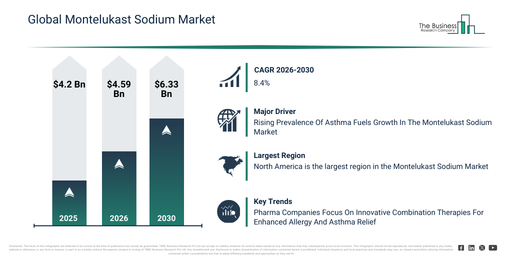
    The montelukast sodium market size has seen robust growth over recent years. It is anticipated to expand from $4.2 billion in 2025 to $4.59 billion in 2026, exhibiting a compound annual growth rate (CAGR) of 9.3%. The drivers for this historic period’s growth include the extensive clinical application of montelukast in asthma management, the increasing occurrence of allergic respiratory ailments, its demonstrated safety profile in prolonged treatment, widespread physician acceptance for maintenance therapy, and the availability of economical generic versions.

    The montelukast sodium market size is projected to experience robust expansion over the coming years. It is forecasted to reach $6.33 billion by 2030, exhibiting a compound annual growth rate (CAGR) of 8.4%. This growth during the forecast period is attributable to an increasing global prevalence of asthma and allergic rhinitis, higher diagnosis rates for pediatric asthma, greater understanding of non-steroidal asthma treatments, wider availability of respiratory medications in developing regions, and sustained need for oral maintenance medications. Key trends anticipated for this period include an escalating demand for leukotriene receptor antagonists in managing asthma, expanded application of montelukast in treating allergic rhinitis, a rise in generic montelukast sodium formulations, a preference for oral solid dosage forms for chronic respiratory conditions, and an increase in prescriptions for both pediatric and adult asthma patients.

    Download A Free Sample Report For Comprehensive Market Insights:

    https://www.thebusinessresearchcompany.com/sample.aspx?id=16123&type=smp

    What Market Drivers Are Helping Shape The Montelukast Sodium Market Expansion?

    The expanding occurrence of asthma is projected to fuel the advancement of the montelukast sodium market in the future. Asthma is a persistent respiratory ailment characterized by inflammation and narrowing of the airways, leading to recurrent episodes of wheezing, shortness of breath, chest constriction, and coughing. The rising incidence of asthma is attributable to factors such as environmental pollution, exposure to allergens, genetic susceptibility, urbanization, shifts in lifestyle, and respiratory infections. Montelukast sodium functions as a leukotriene receptor antagonist in asthma treatment, aiding in the prevention and control of asthma symptoms by inhibiting the activity of leukotrienes, which contribute to airway inflammation and constriction. For example, in October 2024, data from the National Asthma Council, an Australia-based non-profit organization, indicated that in 2023, Australia registered a total of 474 asthma-related deaths, consisting of 325 females and 149 males. This total is nearly the same as the 473 asthma-related deaths documented in 2022, showing a steady pattern in asthma fatalities across both years. Consequently, the increasing prevalence of asthma is stimulating the growth of the montelukast sodium market.

    Which Segment-Based Categories Are Covered In The Montelukast Sodium Market?

    The montelukast sodium market covered in this report is segmented –

    1) By Product: Crystal-like, Form-less Or Amorphous

    2) By Dosage Form: Tablets, Oral Solutions

    3) By Application: Bronchospasm, Allergic Coryza, Asthma, Urticaria, Other Applications

    Subsegments:

    1) By Crystal-Like: Monohydrate Crystal, Anhydrous Crystal, Spherical Crystals, Needle-Like Crystals, Polycrystalline Montelukast Sodium

    2) By Form-Less Or Amorphous: Amorphous Powder, Amorphous Granules, Non-Crystalline Montelukast Sodium

    Which Trends Are Supporting The Evolution Of The Montelukast Sodium Market?

    Leading companies in the montelukast sodium market are concentrating on developing creative solutions, such as combination therapies, to offer more extensive allergy and asthma relief and improve patient adherence. Combination therapies are treatments that utilize two or more drugs together in a single regimen to target multiple disease pathways for enhanced efficacy. For example, in October 2025, Cadila Pharmaceuticals Ltd., an India-based pharmaceutical company, launched Dlorfast-M tablets, a fixed-dose combination therapy containing desloratadine (5 mg) and montelukast (10 mg) for the management of allergic rhinitis and urticaria. It delivers broad symptom control by targeting both histamine and leukotriene pathways in a convenient once-daily oral dosage. This innovative formulation aims to enhance patient compliance and provide long-term relief with good tolerability.

    Which Companies Form The Competitive Landscape Of The Montelukast Sodium Market?

    Major companies operating in the montelukast sodium market are Pfizer Inc., Merck & Co. Inc., Sanofi Aventis SA, Teva Pharmaceuticals USA Inc., Hetero Labs Ltd., Sun Pharma Industries Ltd., Aurobindo Pharma Limited, Cipla Inc., Intas Pharmaceuticals Ltd., Seqens Group, Sanyo Chemical Industries Ltd., Morepen Laboratories, Neuland Laboratories Ltd., Medopharm Private Ltd., BEC Chemicals Pvt. Ltd, Delmar Chemicals Inc., Kimia Biosciences Ltd., Ortin Laboratories Ltd., MSN Laboratories Pvt Ltd., Vamsi Labs Ltd., LGM Pharma LLC, HRV Global Life Sciences, Sigmak Lifesciences, Akums Lifesciences Ltd., Anwita Drugs & Chemicals Pvt Ltd

    Access The Complete Montelukast Sodium Market Report:

    https://www.thebusinessresearchcompany.com/report/montelukast-sodium-global-market-report

    Which Region Commands The Largest Share Of The Montelukast Sodium Market?

    North America was the largest region in the montelukast sodium market in 2025. Asia-Pacific is expected to be the fastest-growing region in the forecast period. The regions covered in the montelukast sodium market report are Asia-Pacific, South East Asia, Western Europe, Eastern Europe, North America, South America, Middle East, Africa.

    Access Montelukast Sodium Market Report for Deeper Competitive Insights

    https://www.thebusinessresearchcompany.com/sample.aspx?id=16123&type=smp

    Browse Through More Reports Similar to the Global Montelukast Sodium Market 2026, By The Business Research Company

    Montelukast Sodium Market Report 2026

    https://www.thebusinessresearchcompany.com/report/montelukast-sodium-global-market-report

    Sodium Reduction Ingredients Market Report 2026

    https://www.thebusinessresearchcompany.com/report/sodium-reduction-ingredients-global-market-report

    Sodium Benzoate Market Report 2026

    https://www.thebusinessresearchcompany.com/report/sodium-benzoate-global-market-report

    Get in touch with us:

    The Business Research Company: https://www.thebusinessresearchcompany.com/

    Americas: +1 310-496-7795

    Asia: +44 7882 955267 & +91 8897263534

    Europe: +44 7882 955267

    Email us at: marketing@tbrc.info

    Follow us on:

    LinkedIn: https://in.linkedin.com/company/the-business-research-company

    YouTube: https://www.youtube.com/channel/UC24_fI0rV8cR5DxlCpgmyFQ

    Global Market Model: https://www.thebusinessresearchcompany.com/global-market-model

  • Rising Prevalence Of Autoimmune Diseases Fueling The Growth Of The Market Due To Increasing Demand For Targeted Immunotherapy Is Supporting Development Across The Monoclonal Antibody Therapeutics Market

    Rising Prevalence Of Autoimmune Diseases Fueling The Growth Of The Market Due To Increasing Demand For Targeted Immunotherapy Is Supporting Development Across The Monoclonal Antibody Therapeutics Market

    The Business Research Company’s 2026 market reports feature advanced enhancements such as market attractiveness analysis, total addressable market evaluation, company benchmarking matrices, interactive Excel dashboards, expanded supply chain intelligence, emerging startup coverage, and detailed product insights, delivering more actionable and strategically valuable research.

    What Is The Expected Market Size Of The Monoclonal Antibody Therapeutics Market In 2026 And How Much Will It Reach By 2030?

    The size of the monoclonal antibody therapeutics market has experienced rapid expansion in recent years. Projections indicate it will increase from $224.62 billion in 2025 to $252.19 billion in 2026, showing a compound annual growth rate (CAGR) of 12.3%. Historically, this growth can be attributed to factors including limited antibody engineering technologies, early adoption in oncology therapeutics, reliance on traditional clinical trial methods, constrained biologics manufacturing capacity, and a growing awareness of targeted therapies.

    The monoclonal antibody therapeutics market is projected to demonstrate significant expansion over the next few years, with its size forecasted to reach $396.1 billion in 2030, reflecting a compound annual growth rate (CAGR) of 11.9%. This growth throughout the forecast period is primarily driven by advancements in bispecific and multi-specific antibodies, increased production of biologics and fusion proteins, the rising prevalence of autoimmune and infectious diseases, broader adoption across hospitals and private clinics, and the integration of artificial intelligence and automation into drug discovery. Key trends anticipated during this period include heightened investment in monoclonal antibody research and development, the expansion of oncology and autoimmune therapeutics, increasing adoption of antibody-drug conjugates, the proliferation of personalized and targeted therapies, and enhancements to clinical trial infrastructure and biomanufacturing capabilities.

    Download A Free Sample Report For Comprehensive Market Insights:

    https://www.thebusinessresearchcompany.com/sample.aspx?id=25839&type=smp

    Which Significant Factors Are Encouraging Growth In The Monoclonal Antibody Therapeutics Market?

    An increasing incidence of autoimmune conditions is projected to drive expansion in the monoclonal antibody therapeutics market in the future. Autoimmune diseases arise when the body’s immune system mistakenly attacks its own healthy tissues and organs, perceiving them as foreign threats, which leads to chronic inflammation and tissue damage. The prevalence of these diseases is rising due to environmental changes, as increased exposure to pollutants and altered microbial environments are believed to trigger abnormal immune responses in susceptible individuals. Monoclonal antibody therapeutics are effective for autoimmune diseases because they precisely target and block specific immune pathways responsible for inflammation and tissue damage, helping to reduce symptoms and slow disease progression. For instance, in November 2023, according to the Multiple Sclerosis International Federation (MSIF), a UK-based international nonprofit organization, an estimated 2.9 million people worldwide were living with multiple sclerosis, a type of autoimmune and immune-mediated disease, in 2023. Therefore, the rising prevalence of autoimmune diseases is driving the growth of the monoclonal antibody therapeutics market.

    What Are The Major Segment Categories Within The Monoclonal Antibody Therapeutics Market?

    The monoclonal antibody therapeutics market covered in this report is segmented –

    1) By Product Type: Naked, Fusion Protein, Antibody Fragment, Conjugate, Multi-Specific

    2) By Therapy Area: Autoimmune And Inflammatory Disorders, Oncology, Hematology, Ophthalmology, Other Therapy Areas

    3) By Application: Cancer, Autoimmune Diseases, Infection, Hematological Diseases, Other Applications

    4) By End User: Hospitals, Private Clinics, Research Institute

    Subsegments:

    1) By Naked: Fully Human Antibodies, Humanized Antibodies, Chimeric Antibodies

    2) By Fusion Protein: Receptor Fusion Proteins, Ligand Fusion Proteins

    3) By Antibody Fragment: Single-Chain Variable Fragment, Fab Fragments, Diabodies

    4) By Conjugate: Antibody-Drug Conjugates, Radioimmunoconjugates, Immunotoxins

    5) By Multi-Specific: Bispecific Antibodies, Trispecific Antibodies, T-Cell Engagers

    What Trends Are Affecting The Growth Of The Monoclonal Antibody Therapeutics Market?

    Major companies operating in the monoclonal antibody therapeutics market are focusing on introducing innovative solutions, such as bispecific monoclonal antibodies, to enhance treatment efficacy by simultaneously targeting two different antigens or epitopes. These specialized engineered antibodies can simultaneously bind to two different antigens or two distinct epitopes on the same antigen. For instance, in March 2024, Roche Holding AG, a Switzerland-based pharmaceutical company, launched Vabysmo (faricimab-svoa), a bispecific monoclonal antibody for eye diseases. It is designed to treat neovascular (wet) age-related macular degeneration (nAMD), diabetic macular edema (DME), and macular edema following retinal vein occlusion (RVO). Vabysmo targets both VEGF-A and Angiopoietin-2 (Ang-2), offering improved vascular stability and reducing retinal fluid leakage. Its dual-target mechanism allows for extended dosing intervals of up to four months, significantly lowering treatment burden for patients.

    Who Are The Key Market Participants In The Monoclonal Antibody Therapeutics Market?

    Major companies operating in the monoclonal antibody therapeutics market are Pfizer Inc., Johnson & Johnson, F. Hoffmann-La Roche AG, Merck & Co. Inc., AbbVie Inc., Sanofi SA, Bristol-Myers Squibb Company, AstraZeneca plc, Novartis AG, GlaxoSmithKline plc, Takeda Pharmaceutical Company Limited, Eli Lilly and Company, Amgen Inc., Regeneron Pharmaceuticals Inc., Biogen Inc., Daiichi Sankyo Company Limited, UCB S.A., Genmab A/S, ADC Therapeutics, Y‑mAbs Therapeutics.

    Access The Complete Monoclonal Antibody Therapeutics Market Report:

    https://www.thebusinessresearchcompany.com/report/monoclonal-antibody-therapeutics-global-market-report

    Which Region Accounts For The Highest Share Of The Monoclonal Antibody Therapeutics Market?

    North America was the largest region in the monoclonal antibody therapeutics market in 2025. Asia-Pacific is expected to be the fastest-growing region in the forecast period. The regions covered in the monoclonal antibody therapeutics market report are Asia-Pacific, South East Asia, Western Europe, Eastern Europe, North America, South America, Middle East, Africa.

    Access Monoclonal Antibody Therapeutics Market Report for Deeper Competitive Insights

    https://www.thebusinessresearchcompany.com/sample.aspx?id=25839&type=smp

    Browse Through More Reports Similar to the Global Monoclonal Antibody Therapeutics Market 2026, By The Business Research Company

    Monoclonal Antibodies Market Report 2026

    https://www.thebusinessresearchcompany.com/report/monoclonal-antibodies-global-market-report

    Next Generation Antibody Therapeutics Market Report 2026

    https://www.thebusinessresearchcompany.com/report/next-generation-antibody-therapeutics-global-market-report

    Polyclonal Antibodies Market Report 2026

    https://www.thebusinessresearchcompany.com/report/polyclonal-antibodies-global-market-report

    Get in touch with us:

    The Business Research Company: https://www.thebusinessresearchcompany.com/

    Americas: +1 310-496-7795

    Asia: +44 7882 955267 & +91 8897263534

    Europe: +44 7882 955267

    Email us at: marketing@tbrc.info

    Follow us on:

    LinkedIn: https://in.linkedin.com/company/the-business-research-company

    YouTube: https://www.youtube.com/channel/UC24_fI0rV8cR5DxlCpgmyFQ

    Global Market Model: https://www.thebusinessresearchcompany.com/global-market-model
  • Surge In Adoption Of Cost-Efficient Biosimilar Monoclonal Antibodies Driving Market Growth Due To Greater Treatment Accessibility Is Supporting Development Across The Monoclonal Antibodies (MAs) Market

    Surge In Adoption Of Cost-Efficient Biosimilar Monoclonal Antibodies Driving Market Growth Due To Greater Treatment Accessibility Is Supporting Development Across The Monoclonal Antibodies (MAs) Market

    The Business Research Company’s 2026 market reports feature advanced enhancements such as market attractiveness analysis, total addressable market evaluation, company benchmarking matrices, interactive Excel dashboards, expanded supply chain intelligence, emerging startup coverage, and detailed product insights, delivering more actionable and strategically valuable research.

    What Market Size Is Forecasted For The Monoclonal Antibodies (MAs) Market By 2030 Based On Its 2026 Value?

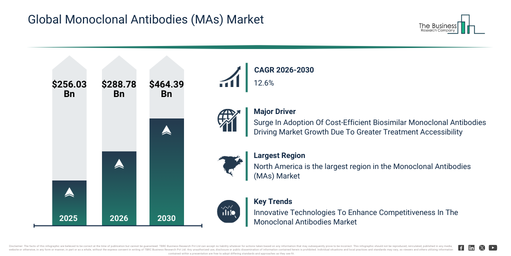
    The market size for monoclonal antibodies (mas) has seen rapid expansion in recent years. This market is expected to increase from $256.03 billion in 2025 to $288.78 billion in 2026, achieving a compound annual growth rate (CAGR) of 12.8%. The historical growth of this market can be attributed to advancements in antibody engineering, the increasing prevalence of cancer and autoimmune diseases, a rise in biologics approvals, improvements in infusion center infrastructure, and an increase in healthcare spending.

    The monoclonal antibodies (mas) market is projected to experience substantial expansion in the coming years, reaching $464.39 billion in 2030 with a compound annual growth rate (CAGR) of 12.6%. This anticipated growth during the forecast period is driven by factors such as the expansion of targeted biologics pipelines, their increased application in chronic diseases, the proliferation of biosimilars, the growing acceptance of immunotherapy, and the development of specialty clinics. Key trends foreseen over this period encompass a heightened demand for biologic-based therapies, the augmented application of monoclonal antibodies in oncology, the broadening of infusion-based treatment environments, the increasing embrace of humanized and fully human mabs, and an intensified emphasis on prolonged immunotherapy regimens.

    Download A Free Sample Report For Comprehensive Market Insights:

    https://www.thebusinessresearchcompany.com/sample.aspx?id=2554&type=smp

    What Core Drivers Are Transforming The Monoclonal Antibodies (MAs) Market?

    The monoclonal antibody market is anticipated to expand due to the growing availability of affordable biosimilar monoclonal antibodies. These biosimilars are pharmaceutical products designed to mimic already-approved biological drugs. Their increased uptake stems from rising patient needs for economical biologic treatments, the expiry of patents for key branded monoclonal antibodies, and favorable regulatory frameworks that promote their development and market entry. The greater use of economical biosimilar monoclonal antibodies benefits the monoclonal antibody market by broadening access to treatments, lowering healthcare costs, and fostering competition among drug manufacturers. For example, the World Health Organization, a global public health agency headquartered in Switzerland, reported in February 2025 that biosimilars are approximately 60% less expensive than original biologic medicines, offering significant savings that can widen access to crucial biologic therapies. Consequently, the rising presence of cost-effective biosimilar monoclonal antibodies is propelling the expansion of the monoclonal antibody market.

    How Is The Monoclonal Antibodies (MAs) Market Distributed Across Key Segments?

    The monoclonal antibodies (mas) market covered in this report is segmented –

    1) By Source: Murine, Chimeric, Humanized, Human

    2) By Application: Anti-Cancer, Immunological, Anti-Infective Monoclonal Antibodies (MAs), Neuropharmacological, Cardiovascular And Cerebrovascular, Other Applications

    3) By End Users: Hospitals, Private Clinics, Research Institute

    Subsegments:

    1) By Murine: Fully Murine MAbs, Murine-Derived MAbs

    2) By Chimeric: Chimeric MAbs With Murine Variable Regions, Chimeric MAbs With Human Constant Regions

    3) By Humanized: Humanized MAbs With Minor Murine Components, Fully Humanized MAbs

    4) By Human: Fully Human MAbs, Engineered Human MAbs

    Which Trends Are Influencing The Direction Of The Monoclonal Antibodies (MAs) Market?

    Major companies operating in the monoclonal antibodies market are introducing innovative technologies such as RenMice to gain a competitive edge in the market. RenMice offers strong assistance in the exploration of various antibody-based therapies, including fully human monoclonal antibodies, bispecific antibodies, bispecific antibody-drug conjugates (BsADCs), nanobodies, fully human T-cell receptors (TCRs), and TCR-mimic antibodies. For instance, in September 2023, Biocytogen Pharmaceuticals, a China-based international biotech company that drives the research and development of new drugs with innovative technologies, launched the RenMice series, encompassing a selection of independently created fully human antibody mice and TCR mice, all of which possess proprietary intellectual property.

    Which Organizations Are Operating Within The Monoclonal Antibodies (MAs) Market?

    Major companies operating in the monoclonal antibodies (mas) market are Johnson & Johnson, Merck & Co. Inc., AbbVie Inc., Amgen Inc., Novartis International AG, Pfizer Inc., Thermo Fisher Scientific Inc., Eli Lilly and Company, Bristol-Myers Squibb Company, F. Hoffmann-La Roche Ltd., Sanofi S.A., Abbott Laboratories, Daiichi Sankyo Company Ltd., Seattle Genetics Inc., Shanghai Junshi Biosciences Co. Ltd., GenScript Biotech Corporation, Sigma-Aldrich Co. LLC, AbGenomics Inc., ADC Therapeutics SA, Agensys Inc., Alexion Pharmaceuticals Inc., ALMAC Group Ltd., Ambrx Biopharma Inc., Astellas Pharma Inc., Celgene Corporation, Celldex Therapeutics Inc., Baxter International Inc., Fresenius SE & Co. KGaA, Hikma Pharmaceuticals plc, Jiangsu Hengrui Medicine Co. Ltd., Piramal Enterprises Ltd., CD BioSciences Inc., Creative Biolabs Inc., Advanced ChemTech Inc., Tonbo Biosciences Inc., GlaxoSmithKline plc

    Access The Complete Monoclonal Antibodies (MAs) Market Report:

    https://www.thebusinessresearchcompany.com/report/monoclonal-antibodies-global-market-report

    Which Region Is The Primary Market For The Monoclonal Antibodies (MAs) Market?

    North America was the largest region in the monoclonal antibodies (MAbS) market in 2025. The regions covered in the monoclonal antibodies (mas) market report are Asia-Pacific, South East Asia, Western Europe, Eastern Europe, North America, South America, Middle East, Africa.

    Access Monoclonal Antibodies (MAs) Market Report for Deeper Competitive Insights

    https://www.thebusinessresearchcompany.com/sample.aspx?id=2554&type=smp

    Browse Through More Reports Similar to the Global Monoclonal Antibodies (MAs) Market 2026, By The Business Research Company

    Monoclonal Antibodies Market Report 2026

    https://www.thebusinessresearchcompany.com/report/monoclonal-antibodies-global-market-report

    Polyclonal Antibodies Market Report 2026

    https://www.thebusinessresearchcompany.com/report/polyclonal-antibodies-global-market-report

    Diagnostic Specialty Antibodies Market Report 2026

    https://www.thebusinessresearchcompany.com/report/diagnostic-specialty-antibodies-global-market-report

    Get in touch with us:

    The Business Research Company: https://www.thebusinessresearchcompany.com/

    Americas: +1 310-496-7795

    Asia: +44 7882 955267 & +91 8897263534

    Europe: +44 7882 955267

    Email us at: marketing@tbrc.info

    Follow us on:

    LinkedIn: https://in.linkedin.com/company/the-business-research-company

    YouTube: https://www.youtube.com/channel/UC24_fI0rV8cR5DxlCpgmyFQ

    Global Market Model: https://www.thebusinessresearchcompany.com/global-market-model
  • The Rise Of Personalized Medicine Is Fueling The Growth Of The Market Due To Its Role In Enhancing Treatment Precision And Targeted Therapy Effectiveness Is Supporting Development Across The Molecular Targeted Therapy Market

    The Rise Of Personalized Medicine Is Fueling The Growth Of The Market Due To Its Role In Enhancing Treatment Precision And Targeted Therapy Effectiveness Is Supporting Development Across The Molecular Targeted Therapy Market

    The Business Research Company’s 2026 market reports feature advanced enhancements such as market attractiveness analysis, total addressable market evaluation, company benchmarking matrices, interactive Excel dashboards, expanded supply chain intelligence, emerging startup coverage, and detailed product insights, delivering more actionable and strategically valuable research.

    How Is The Market Value Of The Molecular Targeted Therapy Market Projected To Expand During 2026–2030?

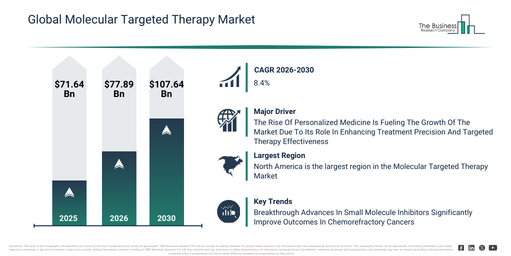
    The molecular targeted therapy market size has seen robust growth in recent years. This market is expected to increase from $71.64 billion in 2025 to $77.89 billion in 2026, achieving a compound annual growth rate (CAGR) of 8.7%. The expansion observed in the past can be linked to factors like cancer genomics research, monoclonal antibody development, numerous oncology drug approvals, the emergence of hospital oncology centers, and the widespread expansion of clinical trials.

    The molecular targeted therapy market is projected to expand significantly in the coming years. Its size is expected to reach $107.64 billion by 2030, progressing at a compound annual growth rate (CAGR) of 8.4%. This anticipated growth throughout the forecast period stems from factors such as the expansion of personalized cancer treatment, wider adoption of next-generation sequencing, AI-driven advancements in drug discovery, the escalating global oncology burden, and supportive targeted therapy reimbursement policies. Prominent trends for the same period include the broadening of precision oncology, a greater embrace of biomarker-based therapies, the development of targeted cancer drug pipelines, the incorporation of companion diagnostics, and an increasing reliance on combination targeted therapies.

    Download A Free Sample Report For Comprehensive Market Insights:

    https://www.thebusinessresearchcompany.com/sample.aspx?id=24609&type=smp

    Which Growth Factors Are Strengthening The Molecular Targeted Therapy Market Landscape?

    The expanding influence of personalized medicine is projected to stimulate the growth of the molecular targeted therapy market moving forward. Personalized medicine constitutes a healthcare methodology that customizes medical interventions and preventative measures based on an individual’s genetic makeup, lifestyle, and environmental factors. Its increasing prevalence is attributed to the growing availability of genetic data, which facilitates treatments precisely adapted to individual genomes for improved efficacy and fewer side effects. Personalized medicine supports molecular targeted therapy by analyzing a patient’s tumor for specific genetic mutations or biomarkers, thereby enabling the selection of therapies that directly address these abnormalities. This approach enhances treatment precision and minimizes harm to healthy tissues. For illustration, in February 2024, the Personalized Medicine Coalition, a US-based hospital and health care organization, reported that in 2023, the FDA sanctioned 16 new personalized treatments for rare disease patients, an increase from 6 in 2022. Consequently, the advancement of personalized medicine is a primary force driving the expansion of the molecular targeted therapy market.

    How Does Segment Analysis Break Down The Molecular Targeted Therapy Market Structure?

    The molecular targeted therapy market covered in this report is segmented –

    1) By Therapy Type: Monoclonal Antibodies, Small Molecule Inhibitors, Gene Therapy, Cell Therapy

    2) By Mode Of Administration: Oral, Injectable, Topical, Intravenous

    3) By Application: Lung Cancer, Breast Cancer, Colorectal Cancer, Leukemia, Other Applications

    4) By End-User: Hospitals, Clinics, Research Laboratories, Diagnostic Centers

    Subsegments:

    1) By Monoclonal Antibodies: Naked Monoclonal Antibodies, Conjugated Monoclonal Antibodies, Bispecific Monoclonal Antibodies

    2) By Small Molecule Inhibitors: Tyrosine Kinase Inhibitors (TKIs), Proteasome Inhibitors, Poly Adenosine Diphosphate (ADP) Ribose Polymerase (PARP) Inhibitors, Mechanistic Target Of Rapamycin (mTOR) Inhibitors

    3) By Gene Therapy: Viral Vector-Based Gene Therapy, Non-Viral Vector-Based Gene Therapy, Genome Editing

    4) By Cell Therapy: Chimeric Antigen Receptor T-Cell Therapy, T-Cell Receptor (TCR) Therapy, Tumor-Infiltrating Lymphocytes (TILs) Therapy, Dendritic Cell Therapy

    What Trends Are Driving Changes In The Molecular Targeted Therapy Market?

    Major companies in the molecular targeted therapy market are concentrating on creating advanced products, such as small molecule inhibitors, to enhance patient results across various cancers and chronic diseases. Small molecule inhibitors are tiny compounds designed to easily enter cells and suppress specific proteins that contribute to disease progression. For instance, in January 2025, Amgen Inc., a US-based pharmaceutical company, launched Lumakras (sotorasib) in conjunction with Vectibix (panitumumab), which secured approval from the US Food and Drug Administration (FDA), a US-based government organization. This therapy is indicated for adult patients suffering from KRAS G12C-mutated metastatic colorectal cancer who have previously received fluoropyrimidine-, oxaliplatin-, and irinotecan-based chemotherapy, as confirmed by an FDA-approved test. The basis for this approval was the Phase 3 CodeBreaK 300 trial, where the combination therapy significantly more than doubled progression-free survival compared to the standard of care investigated, marking it as the first targeted therapy to demonstrate such a benefit in this patient population resistant to chemotherapy.

    Who Are The Businesses Driving Activity In The Molecular Targeted Therapy Market?

    Major companies operating in the molecular targeted therapy market are Pfizer Inc., Merck & Co. Inc., AbbVie Inc., Sanofi S.A., Bristol-Myers Squibb Company, AstraZeneca PLC, Amgen Inc., Regeneron Pharmaceuticals, Vertex Pharmaceuticals Incorporated, Novartis AG, Incyte Corporation, Exelixis Inc., IDEAYA Biosciences Inc., Prelude Therapeutics Incorporated, Gamida Cell Ltd., Adaptimmune Therapeutics plc, Engine Biosciences Pte. Ltd., Krystal Biotech Inc., Sotio Biotech a.s., Cybrexa Therapeutics Inc.

    Access The Complete Molecular Targeted Therapy Market Report:

    https://www.thebusinessresearchcompany.com/report/molecular-targeted-therapy-global-market-report

    Which Geographic Region Represents The Largest Molecular Targeted Therapy Market Share?

    North America was the largest region in the molecular targeted therapy market in 2025. Asia-Pacific is expected to be the fastest-growing region in the forecast period. The regions covered in the molecular targeted therapy market report are Asia-Pacific, South East Asia, Western Europe, Eastern Europe, North America, South America, Middle East, Africa.

    Access Molecular Targeted Therapy Market Report for Deeper Competitive Insights

    https://www.thebusinessresearchcompany.com/sample.aspx?id=24609&type=smp

    Browse Through More Reports Similar to the Global Molecular Targeted Therapy Market 2026, By The Business Research Company

    Targeted Therapy Market Report 2026

    https://www.thebusinessresearchcompany.com/report/targeted-therapy-global-market-report

    Cancer Immunotherapy Drug Discovery Outsourcing Market Report 2026

    https://www.thebusinessresearchcompany.com/report/cancer-immunotherapy-drug-discovery-outsourcing-global-market-report

    Advanced Therapeutics Pharmaceutical Outsourcing Market Report 2026

    https://www.thebusinessresearchcompany.com/report/advanced-therapeutics-pharmaceutical-outsourcing-global-market-report

    Get in touch with us:

    The Business Research Company: https://www.thebusinessresearchcompany.com/

    Americas: +1 310-496-7795

    Asia: +44 7882 955267 & +91 8897263534

    Europe: +44 7882 955267

    Email us at: marketing@tbrc.info

    Follow us on:

    LinkedIn: https://in.linkedin.com/company/the-business-research-company

    YouTube: https://www.youtube.com/channel/UC24_fI0rV8cR5DxlCpgmyFQ

    Global Market Model: https://www.thebusinessresearchcompany.com/global-market-model

  • The Increasing Demand For Personalized Medicines Driving The Growth Of Market Due To Advances In Genomics And Biotechnology Is Supporting Development Across The Modular Fill-Finish Micro-Factory Market

    The Increasing Demand For Personalized Medicines Driving The Growth Of Market Due To Advances In Genomics And Biotechnology Is Supporting Development Across The Modular Fill-Finish Micro-Factory Market

    The Business Research Company’s 2026 market reports feature advanced enhancements such as market attractiveness analysis, total addressable market evaluation, company benchmarking matrices, interactive Excel dashboards, expanded supply chain intelligence, emerging startup coverage, and detailed product insights, delivering more actionable and strategically valuable research.

    What Are The Forecasted Market Size Figures For The Modular Fill-Finish Micro-Factory Market In 2026 And 2030?

    The modular fill-finish micro-factory market size has expanded swiftly in recent years. It is anticipated to grow from $1.74 billion in 2025 to $1.94 billion in 2026, demonstrating a compound annual growth rate (CAGR) of 11.4%. The market’s historical growth was driven by factors such as the growth of biologics manufacturing, increasing vaccine production requirements, the expansion of contract manufacturing services, rising demand for sterile injectable drugs, and the early adoption of modular production concepts.

    The modular fill-finish micro-factory market is anticipated to experience significant expansion in the coming years. It is projected to achieve a value of $2.96 billion by 2030, expanding at a compound annual growth rate (CAGR) of 11.1%. This expected growth during the forecast period stems from factors such as increasing investments in decentralized manufacturing, a rising demand for rapid-response vaccine facilities, the expansion of personalized medicine production, an intensifying focus on operational flexibility, and increasing regulatory approval of modular facilities. Major developments expected within this period include a greater deployment of modular sterile manufacturing units, the rising adoption of robotic fill-finish systems, an increasing need for rapid manufacturing scale-up, the expansion of prefabricated GMP facilities, and an enhanced emphasis on flexible production capacity.

    Download A Free Sample Report For Comprehensive Market Insights:

    https://www.thebusinessresearchcompany.com/sample.aspx?id=29131&type=smp

    What Important Drivers Are Powering The Modular Fill-Finish Micro-Factory Market Growth?

    The escalating need for personalized medicines is anticipated to boost the growth of the modular fill-finish micro-factory market in the future. Personalized medicine defines a healthcare approach that customizes the prevention, diagnosis, and treatment of illnesses based on an individual’s genetic, environmental, and lifestyle elements. The heightened demand for personalized medicines stems from advancements in genomics and biotechnology, facilitating treatments precisely adapted to an individual’s genetic makeup for improved efficacy and safety. Modular fill-finish micro-factories accelerate the production of personalized medicines by enabling flexible, small-batch, and rapid manufacturing tailored to individual patient needs. For instance, in February 2024, the Personalized Medicine Coalition, a US-based non-profit organization, reported that the FDA approved 16 new personalized therapies for patients with rare diseases in 2023, a significant increase from the six approvals recorded in 2022. Therefore, the rising demand for personalized medicines is propelling the expansion of the modular fill-finish micro-factory market.

    What Segment Types Are Included In The Modular Fill-Finish Micro-Factory Market Analysis?

    The modular fill-finish micro-factory market covered in this report is segmented –

    1) By Product Type: Automated Modular Fill-Finish Systems, Semi-Automated Modular Fill-Finish Systems, Manual Modular Fill-Finish Systems

    2) By Scale: Clinical, Commercial

    3) By Application: Pharmaceuticals, Biotechnology, Contract Manufacturing Organizations, Other Applications

    4) By End-User: Pharmaceutical Companies, Biotech Companies, Research Institutes, Other End-Users

    Subsegments:

    1) By Automated Modular Fill-Finish Systems: Robotic Filling Units, Automated Capping Units, Automated Labeling Units, Sterile Transfer Systems, Integrated Packaging Modules

    2) By Semi-Automated Modular Fill-Finish Systems: Semi-Automated Filling Machines, Semi-Automated Capping Machines, Semi-Automated Labeling Machines, Semi-Automated Transfer Systems, Partially Integrated Packaging Units

    3) By Manual Modular Fill-Finish Systems: Manual Filling Stations, Manual Capping Stations, Manual Labeling Stations, Manual Transfer Tools, Manual Packaging Workstations

    Which Trends Are Shaping The Modular Fill-Finish Micro-Factory Market Landscape?

    Companies operating in the modular fill-finish micro-factory market are concentrating on developing novel solutions, including flexible and interchangeable aseptic filling platforms, to enhance efficiency, precision, and scalability in sterile manufacturing processes. These flexible and interchangeable aseptic filling platforms are sophisticated systems built to manage multiple container types and various batch sizes in a sterile setting, allowing for swift configuration changes to support diverse product and production requirements. For instance, in February 2025, Recipharm AB, a Sweden-based contract development and manufacturing organization, unveiled a new modular sterile filling system. This system is intended to support process development, pilot-scale, and clinical supply manufacturing, operating inside a Grade A isolator and fully complying with Good Manufacturing Practice (GMP) standards to enable a completely GMP-compliant aseptic filling process. Tailored for small-batch production, ranging from 500 to 50,000 units per batch, it offers exceptional versatility with interchangeable modules compatible with various product types, such as syringes and vials. Its economical design limits the loss of high-value product to less than 500 mL, making it particularly apt for clinical development projects in rare diseases, cell and gene therapies, and other advanced modalities.

    Which Firms Are Competing In The Modular Fill-Finish Micro-Factory Market?

    Major companies operating in the modular fill-finish micro-factory market are Groninger And Co. GmbH, Lonza Group AG, Sartorius AG, Turner Industries Group LLC, ATS Life Sciences Systems Inc., IMA Group S.p.A., Recipharm AB, Syntegon Technology GmbH, Truking Technology Limited, Optima Packaging Group GmbH, Marchesini Group SPA, Tofflon Science and Technology Co. Ltd., Comecer S.p.A., G-CON Manufacturing Inc., Aseptic Technologies S.A., Steriline S.r.l., Colanar AG, Litek Pharma Solutions Co. Ltd., SKAN AG, Modular Mobile Facility.

    Access The Complete Modular Fill-Finish Micro-Factory Market Report:

    https://www.thebusinessresearchcompany.com/report/modular-fill-finish-micro-factory-global-market-report

    Which Region Leads The Modular Fill-Finish Micro-Factory Market By Size?

    North America was the largest region in the modular fill-finish micro-factory market in 2025. Asia-Pacific is expected to be the fastest-growing region in the forecast period. The regions covered in the modular fill-finish micro-factory market report are Asia-Pacific, South East Asia, Western Europe, Eastern Europe, North America, South America, Middle East, Africa.

    Access Modular Fill-Finish Micro-Factory Market Report for Deeper Competitive Insights

    https://www.thebusinessresearchcompany.com/sample.aspx?id=29131&type=smp

    Browse Through More Reports Similar to the Global Modular Fill-Finish Micro-Factory Market 2026, By The Business Research Company

    Fill Finish Manufacturing Market Report 2026

    https://www.thebusinessresearchcompany.com/report/fill-finish-manufacturing-global-market-report

    Fill Finish Pharmaceutical Contract Manufacturing Market Report 2026

    https://www.thebusinessresearchcompany.com/report/fill-finish-pharmaceutical-contract-manufacturing-global-market-report

    Filling Machines Market Report 2026

    https://www.thebusinessresearchcompany.com/report/filling-machines-global-market-report

    Get in touch with us:

    The Business Research Company: https://www.thebusinessresearchcompany.com/

    Americas: +1 310-496-7795

    Asia: +44 7882 955267 & +91 8897263534

    Europe: +44 7882 955267

    Email us at: marketing@tbrc.info

    Follow us on:

    LinkedIn: https://in.linkedin.com/company/the-business-research-company

    YouTube: https://www.youtube.com/channel/UC24_fI0rV8cR5DxlCpgmyFQ

    Global Market Model: https://www.thebusinessresearchcompany.com/global-market-model

  • Rising Cancer Prevalence Fueling Growth In Minimal Residual Disease Testing Market Is Supporting Development Across The Minimal Residual Disease Testing Market

    Rising Cancer Prevalence Fueling Growth In Minimal Residual Disease Testing Market Is Supporting Development Across The Minimal Residual Disease Testing Market

    The Business Research Company’s 2026 market reports feature advanced enhancements such as market attractiveness analysis, total addressable market evaluation, company benchmarking matrices, interactive Excel dashboards, expanded supply chain intelligence, emerging startup coverage, and detailed product insights, delivering more actionable and strategically valuable research.

    How Much Larger Will The Minimal Residual Disease Testing Market Become By 2030 Compared To 2026?

    The minimal residual disease testing market has experienced rapid expansion in recent years. It is projected to increase from $1.8 billion in 2025 to $2.02 billion in 2026, demonstrating a compound annual growth rate (CAGR) of 12.5%. The historical growth of this market can be linked to factors such as the increasing prevalence of hematological malignancies, ongoing advancements in molecular diagnostic technologies, greater awareness regarding minimal residual disease, the rising adoption of precision medicine, and supportive government healthcare programs.

    The minimal residual disease testing market is projected for substantial expansion in the coming years, with its valuation set to reach $3.31 billion by 2030, demonstrating a compound annual growth rate (CAGR) of 13.1%. This growth during the forecast period can be linked to several factors, including advancements in technologies like nGS and digital PCR, increased funding for cancer research, a rise in collaborations between diagnostic and pharmaceutical firms, a greater need for personalized treatment monitoring, and improvements in healthcare infrastructure within emerging markets. Key trends anticipated for this period encompass the adoption of liquid biopsy, enhanced personalized cancer monitoring, improvements in early detection and prognosis, the integration of molecular diagnostics, and an expansion in oncology research.

    Download A Free Sample Report For Comprehensive Market Insights:

    https://www.thebusinessresearchcompany.com/sample.aspx?id=9970&type=smp

    Which Major Factors Are Contributing To The Development Of The Minimal Residual Disease Testing Market?

    The rising occurrence of cancer is projected to fuel expansion within the minimal residual disease testing market in the future. Cancer is defined as a state where some cells in the body multiply uncontrollably and disseminate to other parts. Minimal residual disease testing, a highly sensitive technique for identifying cancer cells in humans, serves as the main method for detecting cancer stages. This method aids cancer patients in early disease prevention, thereby enhancing the minimal residual disease testing market. For example, data from January 2023, provided by the U.S.-based government agency, the National Institutes of Health (NIH), indicated that in 2023, the United States recorded 1,958,310 new cancer cases and 609,820 cancer deaths. Consequently, the growing frequency of cancer is a key factor propelling the expansion of the minimal residual disease testing market.

    Which Segment Divisions Form The Structure Of The Minimal Residual Disease Testing Market?

    The minimal residual disease testing market covered in this report is segmented –

    1) By Test Type: DNA – Based Test, RNA- Based Test, Immunological Test

    2) By Technology: Flow Cytometry, Polymerase Chain Reaction (PCR), Next-Generation Sequencing (NGS), Other Technologies

    3) By Application: Hematological Malignancies, Leukemia, Lymphoma, Solid Tumors, Other Application

    4) By End User: Hospitals And Specialty Clinics, Diagnostic Laboratories, Academic And Research Institutes, Other End Users

    Subsegments:

    1) By DNA-Based Test: Polymerase Chain Reaction (PCR) Tests, Next-Generation Sequencing (NGS), Digital PCR

    2) By RNA-Based Test: Reverse Transcription PCR (RT-PCR), RNA Sequencing, Quantitative PCR (qPCR)

    3) By Immunological Test: Flow Cytometry, Enzyme-Linked Immunosorbent Assay (ELISA), Immunohistochemistry

    What Trends Are Influencing The Minimal Residual Disease Testing Market Outlook?

    Leading companies within the minimal residual disease testing market are introducing cancer research diagnostic solutions to bolster detection accuracy, refine treatment monitoring, and advance personalized medicine strategies, aiming for improved patient outcomes. The IDT Archer FUSIONPlex Core Solid Tumor Panel is a targeted next-generation sequencing assay designed for identifying gene fusions and mutations in solid tumors, contributing to precision oncology and informing treatment decisions. As an illustration, in April 2023, Integrated DNA Technologies (IDT), a US-based provider of genomic solutions, released the IDT Archer FUSIONPlex Core Solid Tumor Panel, an improved cancer research testing solution that now features expanded and optimized coverage for single nucleotide variants (SNVs) and indels. This RNA-based sequencing assay simplifies fusion detection and variant calling in solid tumors, requiring a single sample input and providing researchers with a scalable, user-friendly tool that conserves time, resources, and expenses.

    Who Are The Major Companies Operating In The Minimal Residual Disease Testing Market?

    Major companies operating in the minimal residual disease testing market are Natera Inc., Guardant Health Inc., Laboratory Corporation of America Holdings, QIAGEN NV, F. Hoffmann-La Roche Ltd., Bio-Techne Corporation, Bio-Rad Laboratories Inc., Sysmex Corporation, Exact Sciences Corporation, GRAIL LLC, Veracyte Inc., Cergentis B.V, Mdxhealth SA, NeoGenomics Laboratories Inc., Adaptive Biotechnologies, Thermo Fisher Scientific Inc., Siemens Healthineers AG, PerkinElmer Inc., Agilent Technologies Inc., ArcherDx Inc., Asuragen Inc., Becton Dickinson and Company, Cepheid Inc., Fluidigm Corporation, Illumina Inc., Invitae Corporation, Luminex Corporation, Menarini Silicon Biosystems S.p.A.

    Access The Complete Minimal Residual Disease Testing Market Report:

    https://www.thebusinessresearchcompany.com/report/minimal-residual-disease-testing-global-market-report

    Which Region Has The Strongest Presence In The Minimal Residual Disease Testing Market?

    North America was the largest region in the minimal residual disease testing market in 2025. The regions covered in the minimal residual disease testing market report are Asia-Pacific, South East Asia, Western Europe, Eastern Europe, North America, South America, Middle East, Africa.

    Access Minimal Residual Disease Testing Market Report for Deeper Competitive Insights

    https://www.thebusinessresearchcompany.com/sample.aspx?id=9970&type=smp

    Browse Through More Reports Similar to the Global Minimal Residual Disease Testing Market 2026, By The Business Research Company

    Minimal Residual Disease Testing Market Report 2026

    https://www.thebusinessresearchcompany.com/report/minimal-residual-disease-testing-global-market-report

    Rare Disease Diagnostics Market Report 2026

    https://www.thebusinessresearchcompany.com/report/rare-disease-diagnostics-global-market-report

    Infectious Disease Diagnostics Testing Market Report 2026

    https://www.thebusinessresearchcompany.com/report/infectious-disease-diagnostics-testing-global-market-report

    Get in touch with us:

    The Business Research Company: https://www.thebusinessresearchcompany.com/

    Americas: +1 310-496-7795

    Asia: +44 7882 955267 & +91 8897263534

    Europe: +44 7882 955267

    Email us at: marketing@tbrc.info

    Follow us on:

    LinkedIn: https://in.linkedin.com/company/the-business-research-company

    YouTube: https://www.youtube.com/channel/UC24_fI0rV8cR5DxlCpgmyFQ

    Global Market Model: https://www.thebusinessresearchcompany.com/global-market-model
  • Increased Sports And Fitness Activities Fueling Market Growth Due To Rising Health Awareness And Wellness Participation Is Supporting Development Across The Mineral Supplements Market

    Increased Sports And Fitness Activities Fueling Market Growth Due To Rising Health Awareness And Wellness Participation Is Supporting Development Across The Mineral Supplements Market

    The Business Research Company’s 2026 market reports feature advanced enhancements such as market attractiveness analysis, total addressable market evaluation, company benchmarking matrices, interactive Excel dashboards, expanded supply chain intelligence, emerging startup coverage, and detailed product insights, delivering more actionable and strategically valuable research.

    What Growth In Market Value Is Anticipated For The Mineral Supplements Market Between 2026 And 2030?

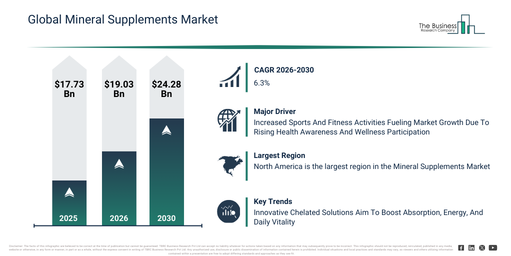
    The mineral supplements market has experienced robust expansion in recent years. It is projected to expand from $17.73 billion in 2025 to $19.03 billion in 2026, exhibiting a compound annual growth rate (CAGR) of 7.3%. Historically, this growth has been driven by factors such as the high prevalence of mineral deficiencies across populations, the long-standing use of calcium and iron supplements, an increasing public health focus on nutrition, physician recommendations for mineral supplementation, and the widespread retail availability of mineral products.

    The mineral supplements market is projected to experience substantial expansion over the upcoming years, reaching $24.28 billion in 2030, exhibiting a compound annual growth rate (CAGR) of 6.3%. This anticipated growth during the forecast period is fueled by an aging worldwide population necessitating greater mineral intake, a heightened emphasis on immunity and bone well-being, the increasing acceptance of individualized nutrition plans, greater health awareness among younger demographics, and the proliferation of online platforms for supplement sales. Furthermore, key trends during the same period encompass an elevated consumer understanding of micronutrient shortfalls, an expanding need for supplements supporting preventative and daily health, the diversification of mineral supplements into various forms, an enhanced focus on bone, immune, and metabolic health, and the broad accessibility of cost-effective generic mineral supplements.

    Download A Free Sample Report For Comprehensive Market Insights:

    https://www.thebusinessresearchcompany.com/sample.aspx?id=15609&type=smp

    What Key Growth Drivers Are Influencing The Mineral Supplements Market?

    The expansion of sports and fitness activities is projected to fuel the advancement of the mineral supplements market in the coming years. These activities cover a wide range of physical endeavors designed to improve general health, physical condition, and athletic capabilities. The increasing engagement in sports and fitness stems from a greater understanding of health advantages, improved access to fitness centers, and a heightened societal emphasis on personal wellness. Mineral supplements aid active individuals by fulfilling the heightened mineral demands linked to rigorous or extended physical activity, thereby supporting proper muscle function, energy conversion, and recuperation. For instance, in February 2024, data from the Sports And Fitness Industry Association, a US-based Trade Association, revealed that in 2023, 78.8% of Americans aged six and older, which amounts to 242 million people, took part in at least one sports or fitness activity, showing a 2.2% increase from 2022. Consequently, the rising participation in sports and fitness activities is propelling the growth of the mineral supplements market.

    How Are Different Segment Groups Identified Within The Mineral Supplements Market?

    The mineral supplements market covered in this report is segmented –

    1) By Product: Calcium, Magnesium, Iron, Potassium, Zinc, Chromium, Selenium, Other Products

    2) By Formulation: Capsule, Tablet, Powder, Liquid Or Gel, Other Formulations

    3) By Sales Channel: Pharmacies And Drug Stores, Supermarkets And Hypermarkets, Online Channels

    4) By Application: General Health, Bone And Joint Health, Gastrointestinal Health, Immunity, Other Applications

    5) By End Use: Adults, Geriatric, Pregnant Women, Children, Infants

    Subsegments:

    1) By Calcium: Calcium Carbonate, Calcium Citrate, Calcium Gluconate, Calcium Lactate

    2) By Magnesium: Magnesium Citrate, Magnesium Oxide, Magnesium Glycinate, Magnesium Sulfate

    3) By Iron: Ferrous Sulfate, Ferrous Fumarate, Ferrous Gluconate, Iron Polysaccharide Complex

    4) By Potassium: Potassium Chloride, Potassium Citrate, Potassium Gluconate

    5) By Zinc: Zinc Gluconate, Zinc Sulfate, Zinc Picolinate, Zinc Acetate

    6) By Chromium: Chromium Picolinate, Chromium Chloride, Chromium Nicotinate

    7) By Selenium: Selenium Methionine, Sodium Selenite, Selenomethionine

    8) By Other Products: Manganese Supplements, Copper Supplements, Iodine Supplements, Phosphorus Supplements

    Which Trends Are Expected To Shape The Mineral Supplements Market?

    Leading companies within the mineral supplement market are concentrating on developing innovative chelated mineral solutions to enhance bioavailability and improve absorption in comparison to traditional mineral forms. Chelated mineral solutions are a type of mineral supplement where minerals are chemically bonded to amino acids or organic molecules, which improves their absorption and bioavailability compared to traditional inorganic mineral forms. For example, in July 2025, Bayer AG, a Germany-based life sciences company, launched Supradyn Naturals Ginseng, its first-ever multivitamin specifically formulated for men, marketed with the campaign tagline Morning Wala. Josh, Poore Din. This supplement contains 30% more active ginseng and antioxidants from grape seed extract, aiming to relieve fatigue and boost daily vitality and stamina. It supports mental clarity and overall wellness, intended to empower men to sustain energy and focus throughout the day to handle professional and personal demands effectively. The product includes essential vitamins such as B12, C, and D3 and minerals like calcium, magnesium, and zinc, establishing it as a comprehensive solution for men’s everyday energy needs and cognitive health.

    Which Companies Are Influencing The Mineral Supplements Market?

    Major companies operating in the mineral supplements market are Cargill Incorporated, Nestlé S.A., Archer Daniels Midland Company, Pfizer Inc., BASF SE, Bayer AG, Sanofi SA, Abbott Laboratories, GlaxoSmithKline PLC, Otsuka Holdings Co. Ltd., DSM (Koninklijke DSM NV), Amway Corp., Glanbia plc., Orkla, Herbalife International of America Inc., GNC Holdings Inc., Kirkland Signature, Nature’s Way Products LLC, Atrium Innovations Inc., NOW Health Group Inc., Himalaya Wellness Company, Blackmores Limited, Vitabiotics Ltd., MegaFood, Pharmavite LLC

    Access The Complete Mineral Supplements Market Report:

    https://www.thebusinessresearchcompany.com/report/mineral-supplements-global-market-report

    Which Region Stands As The Largest Contributor To The Mineral Supplements Market?

    North America was the largest region in the mineral supplements market in 2025. The regions covered in the mineral supplements market report are Asia-Pacific, South East Asia, Western Europe, Eastern Europe, North America, South America, Middle East, Africa.

    Access Mineral Supplements Market Report for Deeper Competitive Insights

    https://www.thebusinessresearchcompany.com/sample.aspx?id=15609&type=smp

    Browse Through More Reports Similar to the Global Mineral Supplements Market 2026, By The Business Research Company

    Mineral Supplements Market Report 2026

    https://www.thebusinessresearchcompany.com/report/mineral-supplements-global-market-report

    Water Soluble Vitamin And Mineral Feed Supplements Market Report 2026

    https://www.thebusinessresearchcompany.com/report/water-soluble-vitamin-and-mineral-feed-supplements-global-market-report

    Therapeutic Nutrients And Minerals Market Report 2026

    https://www.thebusinessresearchcompany.com/report/therapeutic-nutrients-and-minerals-global-market-report

    Get in touch with us:

    The Business Research Company: https://www.thebusinessresearchcompany.com/

    Americas: +1 310-496-7795

    Asia: +44 7882 955267 & +91 8897263534

    Europe: +44 7882 955267

    Email us at: marketing@tbrc.info

    Follow us on:

    LinkedIn: https://in.linkedin.com/company/the-business-research-company

    YouTube: https://www.youtube.com/channel/UC24_fI0rV8cR5DxlCpgmyFQ

    Global Market Model: https://www.thebusinessresearchcompany.com/global-market-model

  • Rising Demand For High-Protein Foods Fueling The Growth Of The Market Due To Increasing Consumer Focus On Protein-Rich Diets Is Supporting Development Across The Milk Protein Concentrate (MPC) Market

    Rising Demand For High-Protein Foods Fueling The Growth Of The Market Due To Increasing Consumer Focus On Protein-Rich Diets Is Supporting Development Across The Milk Protein Concentrate (MPC) Market

    The Business Research Company’s 2026 market reports feature advanced enhancements such as market attractiveness analysis, total addressable market evaluation, company benchmarking matrices, interactive Excel dashboards, expanded supply chain intelligence, emerging startup coverage, and detailed product insights, delivering more actionable and strategically valuable research.

    What Is The Expected Market Value Outlook For The Milk Protein Concentrate (MPC) Market Through 2030?

    The milk protein concentrate (mpc) market has demonstrated strong growth in recent years. It is anticipated to expand from $3.03 billion in 2025 to $3.25 billion in 2026, exhibiting a compound annual growth rate (CAGR) of 7.2%. The past growth can be attributed to several factors such as progress in dairy processing, rising demand for food fortification, the expansion of sports nutrition, various applications in infant formula, and the effective utilization of whey and casein.

    The milk protein concentrate (mpc) market size is anticipated to undergo significant expansion in the coming years, reaching $4.25 billion by 2030, with a compound annual growth rate (CAGR) of 6.9%. This projected growth during the forecast period is fueled by innovations in plant-dairy blends, a surging demand for protein-enriched foods, the broadening scope of medical nutrition, sustainable dairy processing methods, and increased consumption in emerging markets. Key developments anticipated include a rising need for high-protein nutrition, the proliferation of sports and clinical nutrition products, expanded utilization in functional foods, a wider range of dairy ingredient applications, and a consumer preference for clean-label protein sources.

    Download A Free Sample Report For Comprehensive Market Insights:

    https://www.thebusinessresearchcompany.com/sample.aspx?id=24606&type=smp

    Which Core Factors Are Supporting The Expansion Of The Milk Protein Concentrate (MPC) Market?

    The burgeoning need for high-protein foods is projected to drive the expansion of the Milk protein concentrate (MPC) market in the coming years. This growing consumer preference indicates a significant shift towards making protein a fundamental element of their diets. Increased health consciousness and prevailing fitness trends motivate individuals to choose foods that provide lasting fullness and aid in muscle preservation. Milk protein concentrate meets this requirement by supplying a concentrated, effective dairy protein source that food producers can integrate into products enhanced with protein. For instance, data from July 2025 by the International Food Information Council (IFIC), a US-based nutrition non-profit, revealed that 70% of Americans aimed to increase their protein intake, and 23% confirmed adherence to a high-protein diet over the previous year, an increase from 18% in 2023. Consequently, the escalating demand for high-protein foods is fostering the development of the Milk protein concentrate (MPC) market.

    What Segment Categories Are Evaluated In The Milk Protein Concentrate (MPC) Market Study?

    The milk protein concentrate (mpc) market covered in this report is segmented –

    1) By Composition: Milk Protein Concentrate 40%, Milk Protein Concentrate 70%, Milk Protein Concentrate 85%

    2) By Ingredient Type: Total Milk Proteins, Co-Precipitates, Milk Protein Isolates, Blends, Other Ingredient Types

    3) By Nature: Organic, Conventional

    4) By Form: Liquid, Powder

    5) By End-User Industry: Healthcare, Food And Beverage, Automotive, Electronics, Chemicals And Materials

    Subsegments:

    1) By Milk Protein Concentrate 40%: Standard MPC 40% Powder, Instantized MPC 40%, Low-Lactose MPC 40%, Conventional MPC 40%

    2) By Milk Protein Concentrate 70%: Standard MPC 70% Powder, Instantized MPC 70%, High-Functional MPC 70%, Low-Fat MPC 70%

    3) By Milk Protein Concentrate 85%: Ultra-Filtered MPC 85%, High-Purity MPC 85%, Instantized MPC 85%, Sports And Clinical Nutrition Grade MPC 85%

    What Trends Are Affecting The Milk Protein Concentrate (MPC) Market Dynamics?

    Leading companies in the milk protein concentrate market are primarily focused on developing innovative products, such as lactose-free milk protein, to cater to lactose-intolerant consumers and broaden their market presence. Lactose-free milk protein refers to a milk protein concentrate that has undergone specific processing to eliminate lactose, making it suitable for individuals with lactose intolerance. For instance, in November 2023, Valio Ltd., a US-based dairy company, introduced Valio Eila MPC 65, a protein concentrate designed to enhance both the taste and health benefits of high-protein products. This concentrate combines the natural whey and casein proteins and amino acids found in milk, enabling manufacturers to create high-protein products with a smooth texture and a pleasant milky flavor, thereby avoiding the gritty texture and undesirable flavors often present in many protein powders. Additionally, it supports simpler ingredient lists, is suitable for a wide range of applications from beverages to desserts, and aids in streamlining production by eliminating the need for additional processing steps.

    Who Are The Companies Shaping The Milk Protein Concentrate (MPC) Market Landscape?

    Major companies operating in the milk protein concentrate (mpc) market are Lactalis Group, Arla Foods, Fonterra Co-operative Group Limited, Saputo Inc., Royal FrieslandCampina N.V., Agropur Dairy Cooperative, Valio Ltd., Glanbia Nutritionals, Actus Nutrition Inc., California Dairies Inc., Ingredia SA, Numidia Dairy Company, Idaho Milk Products LLC, BioHealth Products Inc., Paras Dairy Foods Pvt. Ltd., Open Country Dairy LLC, Interfood Group A/S, Eurial Coopérative Laitière, Amco Proteins Ltd., Agrocomplex Group

    Access The Complete Milk Protein Concentrate (MPC) Market Report:

    https://www.thebusinessresearchcompany.com/report/milk-protein-concentrate-mpc-global-market-report

    What Is The Largest Regional Market In The Milk Protein Concentrate (MPC) Market?

    North America was the largest region in the milk protein concentrate market in 2025. The regions covered in the milk protein concentrate (mpc) market report are Asia-Pacific, South East Asia, Western Europe, Eastern Europe, North America, South America, Middle East, Africa.

    Access Milk Protein Concentrate (MPC) Market Report for Deeper Competitive Insights

    https://www.thebusinessresearchcompany.com/sample.aspx?id=24606&type=smp

    Browse Through More Reports Similar to the Global Milk Protein Concentrate (MPC) Market 2026, By The Business Research Company

    Milk Protein Market Report 2026

    https://www.thebusinessresearchcompany.com/report/milk-protein-global-market-report

    Egg Protein Powder Market Report 2026

    https://www.thebusinessresearchcompany.com/report/egg-protein-powder-global-market-report

    Concentrated Milk Fat Market Report 2026

    https://www.thebusinessresearchcompany.com/report/concentrated-milk-fat-global-market-report

    Get in touch with us:

    The Business Research Company: https://www.thebusinessresearchcompany.com/

    Americas: +1 310-496-7795

    Asia: +44 7882 955267 & +91 8897263534

    Europe: +44 7882 955267

    Email us at: marketing@tbrc.info

    Follow us on:

    LinkedIn: https://in.linkedin.com/company/the-business-research-company

    YouTube: https://www.youtube.com/channel/UC24_fI0rV8cR5DxlCpgmyFQ

    Global Market Model: https://www.thebusinessresearchcompany.com/global-market-model
  • Surging Prevalence Of Migraines Driving Growth In The Migraine Drug Market Is Supporting Development Across The Migraine Drugs Market

    Surging Prevalence Of Migraines Driving Growth In The Migraine Drug Market Is Supporting Development Across The Migraine Drugs Market

    The Business Research Company’s 2026 market reports feature advanced enhancements such as market attractiveness analysis, total addressable market evaluation, company benchmarking matrices, interactive Excel dashboards, expanded supply chain intelligence, emerging startup coverage, and detailed product insights, delivering more actionable and strategically valuable research.

    How Will The Market Value Of The Migraine Drugs Market Increase Between 2026 And 2030?

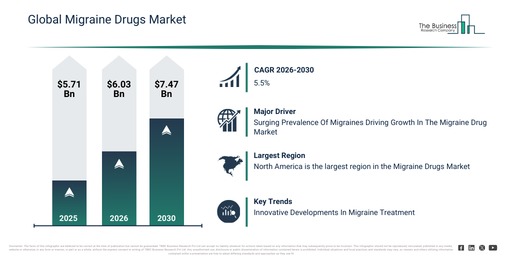
    The migraine drugs market size has demonstrated significant growth over recent years. It is anticipated to expand from $5.71 billion in 2025 to $6.03 billion in 2026, achieving a compound annual growth rate (CAGR) of 5.5%. Historically, this growth can be ascribed to the increasing global occurrence of migraine, the limited availability of specific treatments, heightened awareness of migraine conditions, an increase in neuropharmacology research, and the broadening reach of hospital and pharmacy networks.

    The migraine drugs market is anticipated to show considerable growth over the next few years. It is expected to expand to $7.47 billion by 2030, achieving a compound annual growth rate (CAGR) of 5.5%. This growth during the forecast period can be attributed to advancements in biologics for migraine, the adoption of digital health solutions and wearable devices, increased research and development in CGRP inhibitors, a rising demand for personalized medicine, and an increase in online pharmacy sales. Significant trends foreseen in this period include personalized migraine therapies, the development of CGRP antagonists, wearable headache monitoring devices, the expansion of over-the-counter migraine medications, and the integration of telemedicine for managing migraines.

    Download A Free Sample Report For Comprehensive Market Insights:

    https://www.thebusinessresearchcompany.com/sample.aspx?id=13484&type=smp

    What Are The Main Drivers Accelerating The Growth Of The Migraine Drugs Market?

    The anticipated rise in migraine occurrences is projected to stimulate expansion within the migraine drug market in the foreseeable future. A migraine headache is defined by recurrent instances of mild to severe throbbing and pulsating pain experienced on one side of the head. The growing frequency of migraines fuels the need for migraine medications, driving both innovation and sales improvements as pharmaceutical firms develop and provide effective treatments for the expanding number of patients. For example, as reported in March 2023 by the Australian Treasury, an Australia-based economic agency, in its Migraine Australia 2022–23 Pre-Budget Submissions, Australia recorded one of the globe’s highest migraine rates at 28%. This condition impacts one in every four people, exceeding the combined prevalence of type 2 diabetes, epilepsy, and asthma. Consequently, the rising prevalence of migraine is a key factor propelling the migraine drug market.

    How Is The Migraine Drugs Market Examined Through Segment Analysis?

    The migraine drugs market covered in this report is segmented –

    1) By Drug Class: Triptans, Betablockers, Angiotensin Blockers, Tricyclics, Anticonvulsants

    2) By Route of Administration: Oral, Injectable, Other Routes

    3) By End-User: Hospitals And Clinics, Retail Pharmacy, Online Pharmacy, Other End Users

    Subsegments:

    1) By Triptans: Sumatriptan, Rizatriptan, Zolmitriptan, Eletriptan

    2) By Beta Blockers: Propranolol, Metoprolol, Timolol

    3) By Angiotensin Blockers: Candesartan, Losartan

    4) By Tricyclics: Amitriptyline, Nortriptyline

    5) By Anticonvulsants: Topiramate, Valproate

    Which Trends Are Influencing The Expansion Of The Migraine Drugs Market?

    Major companies operating in the migraine drugs market are concentrating on developing innovative products, such as Zavzpret, to improve patient care and secure a competitive edge. Zavzpret is a nasal spray medication designed for the acute treatment of migraines, with or without aura, in adults. For instance, in March 2023, Pfizer, a US-based pharmaceutical company, received approval for Zavzpret from the Food and Drug Administration, a US-based federal agency. It is the first and only approved zavegepant (CGRP receptor antagonist) nasal spray specifically for the acute treatment of migraine. This product targets the calcitonin gene-related peptide (CGRP) and is intended for the acute treatment of migraine. The approval of Zavzpret offers a new treatment option for individuals with migraines, especially beneficial for those who experience nausea and vomiting with migraine attacks and for those who cannot use triptans due to cardiovascular risks.

    Which Industry Players Are Present In The Migraine Drugs Market?

    Major companies operating in the migraine drugs market are Pfizer Inc., Johnson & Johnson Services Inc., Bayer AG, Merck & Co. Inc., AbbVie Inc., Sanofi SA, Novartis AG, AstraZeneca, Abbott Laboratories, GlaxoSmithKline plc., Eli Lilly and Company, Amgen Inc., Otsuka Holdings Co. Ltd., Teva Pharmaceutical Industries Ltd., Bausch Health Companies Inc., Eisai Co. Ltd., Dr Reddys Laboratories Ltd., H. Lundbeck A/S, Amneal Pharmaceuticals Inc., Endo Pharmaceuticals Inc., Neurelis Inc., ALDER BIOPHARMACEUTICALS INC.

    Access The Complete Migraine Drugs Market Report:

    https://www.thebusinessresearchcompany.com/report/migraine-drugs-global-market-report

    Which Region Contributes The Most To The Migraine Drugs Market?

    North America was the largest region in the migraine market in 2025. Asia-Pacific is expected to be the fastest-growing region in the forecast period. The regions covered in the migraine drugs market report are Asia-Pacific, South East Asia, Western Europe, Eastern Europe, North America, South America, Middle East, Africa.

    Access Migraine Drugs Market Report for Deeper Competitive Insights

    https://www.thebusinessresearchcompany.com/sample.aspx?id=13484&type=smp

    Browse Through More Reports Similar to the Global Migraine Drugs Market 2026, By The Business Research Company

    Migraine Drugs Market Report 2026

    https://www.thebusinessresearchcompany.com/report/migraine-drugs-global-market-report

    Migraine Treatment Market Report 2026

    https://www.thebusinessresearchcompany.com/report/migraine-treatment-global-market-report

    Migraine Market Report 2026

    https://www.thebusinessresearchcompany.com/report/migraine-global-market-report

    Get in touch with us:

    The Business Research Company: https://www.thebusinessresearchcompany.com/

    Americas: +1 310-496-7795

    Asia: +44 7882 955267 & +91 8897263534

    Europe: +44 7882 955267

    Email us at: marketing@tbrc.info

    Follow us on:

    LinkedIn: https://in.linkedin.com/company/the-business-research-company

    YouTube: https://www.youtube.com/channel/UC24_fI0rV8cR5DxlCpgmyFQ

    Global Market Model: https://www.thebusinessresearchcompany.com/global-market-model