Month: May 2026

  • Accelerated Gene Therapy Advancements Fueling The Growth Of The Market Due To Rising Demand For Precise Genetic Modification Tools Is Supporting Development Across The Gene-Editing Transfection Chemicals Market

    Accelerated Gene Therapy Advancements Fueling The Growth Of The Market Due To Rising Demand For Precise Genetic Modification Tools Is Supporting Development Across The Gene-Editing Transfection Chemicals Market

    The Business Research Company’s 2026 market reports feature advanced enhancements such as market attractiveness analysis, total addressable market evaluation, company benchmarking matrices, interactive Excel dashboards, expanded supply chain intelligence, emerging startup coverage, and detailed product insights, delivering more actionable and strategically valuable research.

    What Increase In Market Value Is Predicted For The Gene-Editing Transfection Chemicals Market During The 2026–2030 Period?

    The gene-editing transfection chemicals market size has seen strong growth in recent years. It is projected to expand from $1.07 billion in 2025 to $1.16 billion in 2026, achieving a compound annual growth rate (CAGR) of 8.4%. The historical growth of this market can be attributed to factors such as the limited availability of high-efficiency transfection chemicals, a reliance on traditional delivery methods, increasing activities in academic and research institutes, growing investment in biotechnology research, and the early adoption of gene-editing tools.

    The gene-editing transfection chemicals market is projected to experience substantial expansion over the coming years. It will grow to $1.56 billion in 2030 at a compound annual growth rate (CAGR) of 7.7%. This anticipated growth during the forecast period is driven by factors such as the creation of sophisticated lipid, polymer, and peptide-based chemicals, a growing need for accurate gene-editing applications, increased research and development activities in the pharmaceutical and biotechnology sectors, the incorporation of automated transfection systems, and a rise in regulatory clearances and established guidelines. Key trends observed for this period encompass the increasing acceptance of lipid-based transfection chemicals, greater utilization of polymer and peptide-based delivery methods, an expansion in both non-viral and viral delivery mechanisms, the broader application of gene-editing techniques in drug discovery and disease modeling, and an emphasis on enhancing transfection efficiency and cellular viability.

    Download A Free Sample Report For Comprehensive Market Insights:

    https://www.thebusinessresearchcompany.com/sample.aspx?id=25770&type=smp

    What Core Drivers Are Transforming The Gene-Editing Transfection Chemicals Market?

    The advancement in gene therapy research is projected to fuel the expansion of the gene-editing transfection chemicals market moving forward. Gene therapy is defined as a technique aimed at treating or preventing diseases by directly modifying or rectifying faulty genes within a person’s cells. The acceleration in gene therapy research is a result of significant breakthroughs in gene-editing technologies, such as CRISPR, which empower scientists to precisely target and alter problematic genes responsible for various genetic disorders. Gene-editing transfection chemicals serve as indispensable tools in both the research and development phases of gene therapy, as they facilitate the efficient delivery of genetic material, including CRISPR-Cas9 components, mRNA, and plasmid DNA, into human cells. For instance, in December 2024, the American Society of Gene & Cell Therapy (ASGCT), a US-based non-profit medical and scientific organization, indicated that the Food and Drug Administration (FDA) approved six gene therapy products in 2023, an increase from five approvals in 2022. Thus, the escalating research efforts in gene therapy are actively propelling the growth of the gene-editing transfection chemicals market.

    How Does Segment Analysis Break Down The Gene-Editing Transfection Chemicals Market Structure?

    The gene-editing transfection chemicals market covered in this report is segmented –

    1) By Chemical Type: Lipid-Based, Polymer-Based, Peptide-Based, Other Chemical Types

    2) By Delivery Mechanism: Non-Viral, Viral

    3) By Application: Biomedical Research, Drug Discovery, Disease Modeling, Agricultural Biotechnology, Vaccine Development, Other Applications

    4) By End-User: Academic And Research Institutes, Biotechnology Companies, Pharmaceutical Companies, Other End-Users

    Subsegments:

    1) By Lipid-Based: Cationic Lipids, Neutral Lipids, Ionizable Lipids

    2) By Polymer-Based: Polyethyleneimine (PEI), Poly(L-Lysine) (PLL), Dendrimers

    3) By Peptide-Based: Cell-Penetrating Peptides (CPPs), Amphipathic Peptides, Targeting Peptides

    4) By Other Chemical Types: Inorganic Nanoparticles, Hybrid Nanoparticles

    What Trends Are Driving Changes In The Gene-Editing Transfection Chemicals Market?

    Major companies in the gene-editing transfection chemicals market are concentrating on introducing innovative solutions, such as lipid nanoparticle (LNP) starter kits, to streamline gene therapy and mRNA delivery workflows. Lipid nanoparticle (LNP) starter kits are pre-optimized formulations or toolkits containing lipid components and protocols, designed to facilitate the development and testing of LNP-based delivery systems. For instance, in February 2024, CordenPharma, a Switzerland-based pharmaceutical company, launched Lipid NanoParticle (LNP) Starter Kits to support researchers and developers in formulating and optimizing mRNA-based therapeutics, including vaccines and gene therapies. These kits contain four key lipids: ionizable lipids, helper lipids, sterols, and PEGylated lipids, all sourced from commercial-scale, high-purity materials to ensure batch-to-batch consistency and reduce the risk of losing valuable payloads during development. By offering a reliable and scalable lipid platform, CordenPharma aims to accelerate the gene editing and mRNA therapeutic development process while safeguarding high-value genetic payloads.

    Which Organizations Are Operating Within The Gene-Editing Transfection Chemicals Market?

    Major companies operating in the gene-editing transfection chemicals market are Thermo Fisher Scientific Inc., Merck KGaA, Lonza Group AG, Takara Bio Inc., Mirus Bio LLC, OZ Biosciences SAS, Genlantis Inc., Polyplus-Transfection SA, Altogen Biosystems LLC, SignaGen Laboratories.

    Access The Complete Gene-Editing Transfection Chemicals Market Report:

    https://www.thebusinessresearchcompany.com/report/gene-editing-transfection-chemicals-global-market-report

    Which Region Stands As The Largest Contributor To The Gene-Editing Transfection Chemicals Market?

    North America was the largest region in the gene-editing transfection chemicals market in 2025. The regions covered in the gene-editing transfection chemicals market report are Asia-Pacific, South East Asia, Western Europe, Eastern Europe, North America, South America, Middle East, Africa.

    Access Gene-Editing Transfection Chemicals Market Report for Deeper Competitive Insights

    https://www.thebusinessresearchcompany.com/sample.aspx?id=25770&type=smp

    Browse Through More Reports Similar to the Global Gene-Editing Transfection Chemicals Market 2026, By The Business Research Company

    Gene Editing Market Report 2026

    https://www.thebusinessresearchcompany.com/report/gene-editing-global-market-report

    Crispr Gene Editing Market Report 2026

    https://www.thebusinessresearchcompany.com/report/crispr-gene-editing-global-market-report

    Genome Editing Or Genome Engineering Market Report 2026

    https://www.thebusinessresearchcompany.com/report/genome-editing-or-genome-engineering-global-market-report

    Get in touch with us:

    The Business Research Company: https://www.thebusinessresearchcompany.com/

    Americas: +1 310-496-7795

    Asia: +44 7882 955267 & +91 8897263534

    Europe: +44 7882 955267

    Email us at: marketing@tbrc.info

    Follow us on:

    LinkedIn: https://in.linkedin.com/company/the-business-research-company

    YouTube: https://www.youtube.com/channel/UC24_fI0rV8cR5DxlCpgmyFQ

    Global Market Model: https://www.thebusinessresearchcompany.com/global-market-model
  • Growing Adoption Of Personalized Medicine Fueling The Growth Of The Market Due To Advancements In Genomics And Tailored Treatment Approaches Is Supporting Development Across The Gene-Circuit Cell Therapy Market

    Growing Adoption Of Personalized Medicine Fueling The Growth Of The Market Due To Advancements In Genomics And Tailored Treatment Approaches Is Supporting Development Across The Gene-Circuit Cell Therapy Market

    The Business Research Company’s 2026 market reports feature advanced enhancements such as market attractiveness analysis, total addressable market evaluation, company benchmarking matrices, interactive Excel dashboards, expanded supply chain intelligence, emerging startup coverage, and detailed product insights, delivering more actionable and strategically valuable research.

    How Will The Market Size Of The Gene-Circuit Cell Therapy Market Progress Through 2030?

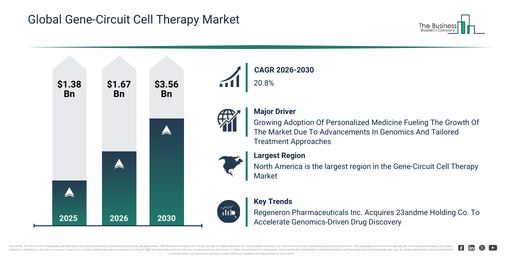
    The gene-circuit cell therapy market has experienced rapid expansion in recent years. Its value is projected to increase from $1.38 billion in 2025 to $1.67 billion in 2026, achieving a compound annual growth rate (CAGR) of 21.1%. The market’s historical growth can be linked to advances in cell engineering technologies, the success of CAR-T cell therapies, the broadening of gene editing platforms, increasing clinical familiarity with cell therapies, and heightened biotechnology investments.

    The gene-circuit cell therapy market size is expected to witness significant growth over the next few years. It is forecast to reach $3.56 billion in 2030, driven by a compound annual growth rate (CAGR) of 20.8%. This projected increase during the forecast period can be attributed to several factors, including the expanding commercialization of gene-circuit cell therapies, a rising demand for controllable immunotherapies, the growth of oncology-focused pipelines, the increasing adoption of allogeneic platforms, and advancements in scalable cell manufacturing. Key trends anticipated in the forecast period involve the growing incorporation of synthetic gene circuits in cell therapy, the progressing development of logic-controlled immune cells, an expanded utilization of off-the-shelf allogeneic therapies, the evolution of dynamic cellular response systems, and an intensified focus on treatment safety and control.

    Download A Free Sample Report For Comprehensive Market Insights:

    https://www.thebusinessresearchcompany.com/sample.aspx?id=28233&type=smp

    Which Growth Factors Are Strengthening The Gene-Circuit Cell Therapy Market Landscape?

    The gene-circuit cell therapy market is anticipated to expand due to the increasing integration of personalized medicine. This medical approach involves customizing treatment and prevention methods based on an individual’s distinct genetic profile, lifestyle, and environmental factors. Its rising prevalence is largely attributable to progress in genomics, allowing for accurate identification of genetic variations and the creation of customized treatments for patients. Gene-circuit cell therapy complements personalized medicine by offering precise and controllable treatment strategies, making it highly suitable for addressing complex and chronic conditions. This therapy boosts therapeutic accuracy by adjusting interventions to suit specific patient requirements, thereby enhancing treatment efficacy and overall health results. A notable example occurred in February 2024, when the Personalized Medicine Coalition (PMC), a US-based nonprofit, reported that the U.S. Food and Drug Administration (FDA) cleared 26 new personalized medicines in 2023, a considerable rise from the 12 approved in 2022. Consequently, the expanding use of personalized medicine is fueling the growth of the gene-circuit cell therapy market.

    What Segment Types Are Included In The Gene-Circuit Cell Therapy Market Analysis?

    The gene-circuit cell therapy market covered in this report is segmented –

    1) By Product Type: Autologous, Allogeneic

    2) By Technology: Clustered Regularly Interspaced Short Palindromic Repeats (CRISPR), Transcription Activator-Like Effector Nuclease (TALEN), Zinc Finger Nuclease (ZFN), Other Technologies

    3) By Application: Oncology, Genetic Disorders, Infectious Diseases, Other Applications

    4) By End-User: Hospitals And Clinics, Research Institutes, Biotechnology And Pharmaceutical Companies, Other End Users

    Subsegments:

    1) By Autologous: Chimeric Antigen Receptor (CAR)-T Cell Therapies, T-Cell Receptor (TCR)-T Cell Therapies, Natural Killer (NK) Cell Therapies, Stem Cell-Based Therapies

    2) By Allogeneic: Off-The-Shelf Chimeric Antigen Receptor (CAR)-T Cell Therapies, Off-The-Shelf Natural Killer (NK) Cell Therapies, TT-Cell Receptor (TCR)-T Cell Therapies, Stem Cell-Derived Therapies

    Which Trends Are Shaping The Gene-Circuit Cell Therapy Market Landscape?

    Leading companies within the gene-circuit cell therapy market are prioritizing the development of sophisticated therapeutic platforms, such as CRISPR-based gene editing systems, with the aim of enhancing treatment accuracy, improving patient outcomes, and addressing genetic diseases previously deemed incurable. CRISPR-based gene editing systems refer to innovative technologies that facilitate precise alterations to the genome, allowing for the correction of genetic flaws or the introduction of therapeutic genes into cells. For instance, in December 2023, Vertex Pharmaceuticals Inc., a US-based biopharmaceutical company, collaborated with CRISPR Therapeutics Inc., a US-based biotechnology research company, and secured conditional marketing authorization from the United Kingdom (U.K.) Medicines and Healthcare products Regulatory Agency (MHRA) for CASGEVY (exagamglogene autotemcel, exa-cel). This treatment is indicated for patients aged 12 and older diagnosed with sickle cell disease (SCD) experiencing recurrent vaso-occlusive crises, or those with transfusion-dependent beta thalassemia (TDT). Casgevy functions by modifying a patient’s hematopoietic stem cells to reactivate fetal hemoglobin production, which in turn reduces or eliminates disease symptoms and offers a potential functional cure for these conditions.

    Who Are The Businesses Driving Activity In The Gene-Circuit Cell Therapy Market?

    Major companies operating in the gene-circuit cell therapy market are Tmunity Therapeutics Inc., Ginkgo Bioworks Holdings Inc., Arcellx Inc., Beam Therapeutics Inc., CRISPR Therapeutics AG, Intellia Therapeutics Inc., Orchard Therapeutics plc, Fate Therapeutics Inc., Rubius Therapeutics Inc., BlueRock Therapeutics LP (a subsidiary of Bayer AG), Precigen Inc., SparingVision, Alaunos Therapeutics Inc., Cartesian Therapeutics Inc., Lyell Immunopharma Inc., Synlogic Inc., Senti Biosciences Inc., Autolus Therapeutics plc, Cellectis S.A., Sotio Biotech

    Access The Complete Gene-Circuit Cell Therapy Market Report:

    https://www.thebusinessresearchcompany.com/report/gene-circuit-cell-therapy-global-market-report

    What Is The Largest Regional Market In The Gene-Circuit Cell Therapy Market?

    North America was the largest region in the gene-circuit cell therapy market in 2025. The regions covered in the gene-circuit cell therapy market report are Asia-Pacific, South East Asia, Western Europe, Eastern Europe, North America, South America, Middle East, Africa.

    Access Gene-Circuit Cell Therapy Market Report for Deeper Competitive Insights

    https://www.thebusinessresearchcompany.com/sample.aspx?id=28233&type=smp

    Browse Through More Reports Similar to the Global Gene-Circuit Cell Therapy Market 2026, By The Business Research Company

    Genes Therapy Market Report 2026

    https://www.thebusinessresearchcompany.com/report/genes-therapy-global-market-report

    Cell And Gene Therapy Clinical Trial Services Market Report 2026

    https://www.thebusinessresearchcompany.com/report/cell-and-gene-therapy-clinical-trial-services-global-market-report

    Nucleic Acid Based Gene Therapy Market Report 2026

    https://www.thebusinessresearchcompany.com/report/nucleic-acid-based-gene-therapy-global-market-report

    Get in touch with us:

    The Business Research Company: https://www.thebusinessresearchcompany.com/

    Americas: +1 310-496-7795

    Asia: +44 7882 955267 & +91 8897263534

    Europe: +44 7882 955267

    Email us at: marketing@tbrc.info

    Follow us on:

    LinkedIn: https://in.linkedin.com/company/the-business-research-company

    YouTube: https://www.youtube.com/channel/UC24_fI0rV8cR5DxlCpgmyFQ

    Global Market Model: https://www.thebusinessresearchcompany.com/global-market-model

  • Increasing Prevalence Of Neurological Disorders Fueling The Growth Of The Market Due To Aging Population And Rising Disease Burden Is Supporting Development Across The Gene Therapy On Neurological Diseases Market

    Increasing Prevalence Of Neurological Disorders Fueling The Growth Of The Market Due To Aging Population And Rising Disease Burden Is Supporting Development Across The Gene Therapy On Neurological Diseases Market

    The Business Research Company’s 2026 market reports feature advanced enhancements such as market attractiveness analysis, total addressable market evaluation, company benchmarking matrices, interactive Excel dashboards, expanded supply chain intelligence, emerging startup coverage, and detailed product insights, delivering more actionable and strategically valuable research.

    What Is The Expected Market Size Of The Gene Therapy On Neurological Diseases Market In 2026 And How Much Will It Reach By 2030?

    The gene therapy on neurological diseases market size has experienced rapid expansion in recent years. It is projected to increase from $3.55 billion in 2025 to $4.01 billion in 2026, exhibiting a compound annual growth rate (CAGR) of 13.0%. The historical growth can be attributed to factors including the limited gene therapy options available for neurological diseases, the rising prevalence of Alzheimer’s and Parkinson’s disease, the reliance on conventional treatment methods, increasing awareness of genetic approaches, and early clinical trials of viral vectors.

    The market for gene therapy targeting neurological diseases is projected to experience substantial expansion over the upcoming years. It is anticipated to reach $6.48 billion in 2030, demonstrating a compound annual growth rate (CAGR) of 12.7%. This growth during the forecast period can be primarily attributed to factors such as advancements in adeno-associated virus and lentiviral therapies, the broadening of non-viral delivery platforms, an increase in regulatory approvals for neurological gene treatments, escalating investments in research and development for precise genetic interventions, and the incorporation of digital monitoring along with AI-driven patient management systems. Key trends expected during the forecast timeframe encompass increased funding for both viral and non-viral gene therapy platforms, the broadening of gene therapy applications to cover a wider range of neurological disorders, a heightened emphasis on individualized and targeted genetic therapies, the expansion of gene therapy initiatives within hospitals and clinics, and the innovation of sophisticated delivery techniques for neurological gene therapy.

    Download A Free Sample Report For Comprehensive Market Insights:

    https://www.thebusinessresearchcompany.com/sample.aspx?id=27294&type=smp

    What Important Drivers Are Powering The Gene Therapy On Neurological Diseases Market Growth?

    The expanding occurrence of neurological disorders is anticipated to stimulate the growth of the gene therapy on neurological diseases market. These conditions are medical issues impacting the brain, spinal cord, and nerves, resulting in various cognitive, motor, and sensory difficulties. The rising incidence is connected to an aging demographic, as aging progressively impairs neuronal function, diminishes brain plasticity, and elevates oxidative stress, all contributing to the onset and progression of these ailments. Gene therapy on neurological diseases assists in managing these disorders by targeting their underlying genetic origins, providing potential lasting or permanent treatment options. It enhances patient results through restoring or altering gene function, alleviating symptoms, and lessening the need for repeated medical procedures, thus improving the overall quality of life. For example, in July 2024, the National Health Service, a UK-based government agency, reported 487,432 patients diagnosed with dementia (a progressive brain disorder affecting memory, thinking, and daily activities) by June 30, 2024, marking an increase of 3,155 cases from May 31, 2024. Consequently, the increasing prevalence of neurological disorders is fueling the expansion of the gene therapy on neurological diseases market.

    Which Segment Divisions Form The Structure Of The Gene Therapy On Neurological Diseases Market?

    The gene therapy on neurological diseases market covered in this report is segmented –

    1) By Type: Viral Gene Therapy, Non-Viral Gene Therapy

    2) By Target Disease: Alzheimer’s Disease, Parkinsons Disease, Amyotrophic Lateral Sclerosis (ALS), Huntington’s Disease, Multiple Sclerosis

    3) By Administration Route: Intravenous, Intrathecal, Intranasal, Intracerebral, Other Administration Routes

    4) By Application: Hospital, Clinic, Other Applications

    Subsegments:

    1) By Viral Gene Therapy Type: Adeno Associated Virus, Lentivirus, Retrovirus, Herpes Simplex Virus, Adenovirus

    2) By Non-Viral Gene Therapy Type: Liposomes, Nanoparticles, Electroporation, Gene Gun, Naked Plasmid Deoxyribonucleic Acid (DNA)

    What Trends Are Influencing The Gene Therapy On Neurological Diseases Market Outlook?

    Major companies operating in the gene therapy on neurological diseases market are focusing on developing advanced viral delivery systems, such as adeno-associated virus serotype 2 (AAV2) vector. This development aims to improve targeted gene delivery, enhance efficacy, reduce immune reactions, and enable long-lasting treatments. The adeno-associated virus serotype 2 (AAV2) vector itself is a modified, non-pathogenic viral delivery system employed in gene therapy to transport therapeutic genes into target cells, particularly neurons, for long-term expression. For instance, in November 2024, PTC Therapeutics Inc., a US-based biopharmaceutical company, received U.S. Food and Drug Administration (FDA) approval for a gene therapy designed for the treatment of aromatic L-amino acid decarboxylase (AADC) deficiency. This therapy utilizes an AAV2 vector to deliver a functional copy of the DDC gene into the putamen, enabling dopamine production and improving motor functions. It features a one-time, intraputaminal infusion engineered to provide sustained therapeutic benefits, significantly enhancing motor function and reducing debilitating symptoms without the need for repeated interventions.

    Which Firms Are Competing In The Gene Therapy On Neurological Diseases Market?

    Major companies operating in the gene therapy on neurological diseases market are Novartis AG, Biogen Inc., Sarepta Therapeutics Inc., PTC Therapeutics Inc., Oxford Biomedica plc, Regenxbio Inc., Passage Bio Inc., Intellia Therapeutics Inc., Voyager Therapeutics Inc., UniQure N.V., AviadoBio Ltd., Capsida Biotherapeutics Inc., StrideBio Inc., Lysogene S.A., Wave Life Sciences Ltd., Taysha Gene Therapies Inc., Abeona Therapeutics Inc., CRISPR Therapeutics AG

    Access The Complete Gene Therapy On Neurological Diseases Market Report:

    https://www.thebusinessresearchcompany.com/report/gene-therapy-on-neurological-diseases-global-market-report

    Which Region Contributes The Most To The Gene Therapy On Neurological Diseases Market?

    North America was the largest region in the gene therapy on neurological diseases market in 2025. Asia-Pacific is expected to be the fastest-growing region in the forecast period. The regions covered in the gene therapy on neurological diseases market report are Asia-Pacific, South East Asia, Western Europe, Eastern Europe, North America, South America, Middle East, Africa.

    Access Gene Therapy On Neurological Diseases Market Report for Deeper Competitive Insights

    https://www.thebusinessresearchcompany.com/sample.aspx?id=27294&type=smp

    Browse Through More Reports Similar to the Global Gene Therapy On Neurological Diseases Market 2026, By The Business Research Company

    Switchboard Market Report 2026

    https://www.thebusinessresearchcompany.com/report/switchboard-global-market-report

    Mobile Computer Market 2026

    https://www.thebusinessresearchcompany.com/report/mobile-computer-market

    Surfing Boards Market Report 2026

    https://www.thebusinessresearchcompany.com/report/surfing-boards-global-market-report

    Get in touch with us:

    The Business Research Company: https://www.thebusinessresearchcompany.com/

    Americas: +1 310-496-7795

    Asia: +44 7882 955267 & +91 8897263534

    Europe: +44 7882 955267

    Email us at: marketing@tbrc.info

    Follow us on:

    LinkedIn: https://in.linkedin.com/company/the-business-research-company

    YouTube: https://www.youtube.com/channel/UC24_fI0rV8cR5DxlCpgmyFQ

    Global Market Model: https://www.thebusinessresearchcompany.com/global-market-model
  • Growing Interest In Personalized Medicine Driving The Growth Of The Market Due To Rising Demand For Targeted And Effective Treatments Is Supporting Development Across The Gene Therapy For Parkinson’s Disease Market

    Growing Interest In Personalized Medicine Driving The Growth Of The Market Due To Rising Demand For Targeted And Effective Treatments Is Supporting Development Across The Gene Therapy For Parkinson’s Disease Market

    The Business Research Company’s 2026 market reports feature advanced enhancements such as market attractiveness analysis, total addressable market evaluation, company benchmarking matrices, interactive Excel dashboards, expanded supply chain intelligence, emerging startup coverage, and detailed product insights, delivering more actionable and strategically valuable research.

    What Market Size Is Forecasted For The Gene Therapy For Parkinson’s Disease Market By 2030 Based On Its 2026 Value?

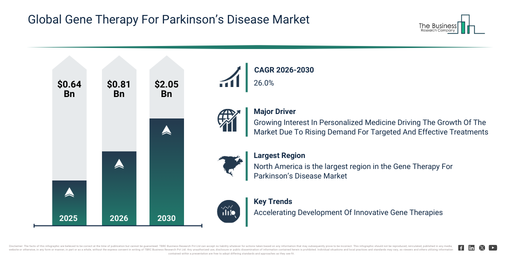
    The gene therapy for parkinson’s disease market has witnessed substantial growth in recent years. This market is projected to expand from $0.64 billion in 2025 to $0.81 billion in 2026, demonstrating a compound annual growth rate (CAGR) of 26.3%. Historically, this growth can be attributed to progress in viral vector engineering, an enhanced understanding of Parkinson’s disease pathology, increased funding for neuroscience research, the introduction of improved delivery technologies, and positive early clinical trial outcomes.

    The gene therapy for parkinson’s disease market is projected to experience significant expansion in the coming years. It is expected to reach a value of $2.05 billion by 2030, demonstrating a compound annual growth rate (CAGR) of 26.0%. This projected growth throughout the forecast period is driven by factors such as increasing investments in neurodegenerative disease therapies, a rising adoption of personalized gene therapy approaches, the expansion of late-stage clinical pipelines, a growing demand for disease-modifying treatments, and the advancement of minimally invasive delivery techniques. Prominent trends for the forecast period encompass the increasing development of viral vector-based therapies, a heightened focus on dopamine restoration approaches, the expanding use of neurotrophic factor gene delivery, the broadening of precision intracerebral delivery methods, and an enhanced emphasis on long-term therapeutic efficacy.

    Download A Free Sample Report For Comprehensive Market Insights:

    https://www.thebusinessresearchcompany.com/sample.aspx?id=28231&type=smp

    Which Major Factors Are Contributing To The Development Of The Gene Therapy For Parkinson’s Disease Market?

    The gene therapy for Parkinson’s disease market is anticipated to expand due to the increasing focus on personalized medicine. Personalized medicine refers to a medical approach that customizes treatment and prevention plans according to an individual’s unique genetic profile, lifestyle, and environment. Interest in personalized medicine is escalating because of the rising demand for targeted interventions that enhance treatment effectiveness while minimizing adverse side effects. In the context of gene therapy for Parkinson’s disease, personalized medicine is utilized to deliver specific genetic modifications designed to restore dopamine function and address individual patient-specific disease mechanisms. For instance, in February 2024, the Personalized Medicine Coalition, a US-based non-profit organization, reported that the US Food and Drug Administration (FDA) approved 16 new personalized treatments for rare disease patients in 2023, marking a significant increase from the 6 approvals granted in 2022. Thus, the growing interest in personalized medicine is driving the growth of the gene therapy for Parkinson’s disease market.

    How Are Different Segment Groups Identified Within The Gene Therapy For Parkinson’s Disease Market?

    The gene therapy for parkinson’s disease market covered in this report is segmented –

    1) By Therapy Type: In Vivo Gene Therapy, Ex Vivo Gene Therapy

    2) By Vector Type: Viral Vectors, Non-Viral Vectors

    3) By Target Gene: Aromatic L-Amino Acid Decarboxylase (AADC), Glial Cell Line-Derived Neurotrophic Factor (GDNF), Neurturin, Other Target Genes

    4) By Delivery Method: Intracerebral, Intravenous, Other Delivery Methods

    5) By End-User: Hospitals, Specialty Clinics, Research Institutes, Other End-Users

    Subsegments:

    1) By In Vivo Gene Therapy: Viral Vectors, Non-Viral Vectors

    2) By Ex Vivo Gene Therapy: Autologous Cell-Based Gene Therapy, Allogeneic Cell-Based Gene Therapy

    Which Trends Are Expected To Shape The Gene Therapy For Parkinson’s Disease Market?

    Leading companies within the gene therapy for Parkinson’s disease market are concentrating on creating more precise therapies, like regenerative medicine advanced therapy, to boost neuronal survival, restore dopamine function, and deliver lasting disease-modifying advantages for those with Parkinson’s disease. Regenerative medicine advanced therapy (RMAT) signifies a specific United States Food and Drug Administration (FDA) designation awarded to regenerative medicine products, such as cell therapies, gene therapies, and tissue-engineered products, which aim to treat, modify, reverse, or cure serious or life-threatening illnesses. For instance, in February 2025, Asklepios BioPharmaceutical, Inc. (AskBio), a US-based gene therapy company, introduced AB-1005, an investigational AAV2-GDNF gene therapy that acquired FDA regenerative medicine advanced therapy (RMAT) designation. This designation, designed to speed up the development and review of promising therapies, was awarded based on data provided by AskBio, including clinical findings from its Phase Ib open-label, uncontrolled trial, demonstrating AB-1005’s potential to decelerate disease progression and improve motor function in Parkinson’s patients.

    Who Are The Major Companies Operating In The Gene Therapy For Parkinson’s Disease Market?

    Major companies operating in the gene therapy for parkinson’s disease market are Merck & Co. Inc., Bayer AG, Sanofi S.A., Eli Lilly and Company, Biogen Inc., PTC Therapeutics Inc., Zambon S.p.A., Oxford BioMedica plc, Voyager Therapeutics Inc., Insilico Medicine Inc., Spur Therapeutics Inc., Cerevance Inc., MeiraGTx Holdings plc, BlackfinBio Inc., Partner Therapeutics Inc., Kenai Therapeutics Inc., CureSen Therapeutics Inc., BioVie Inc., Clexio Biosciences Ltd., Tetraneuron S.L.

    Access The Complete Gene Therapy For Parkinson’s Disease Market Report:

    https://www.thebusinessresearchcompany.com/report/gene-therapy-for-parkinsons-disease-global-market-report

    Which Regional Market Leads The Gene Therapy For Parkinson’s Disease Market?

    North America was the largest region in the gene therapy for parkinson’s disease market in 2025. Asia-Pacific is expected to be the fastest-growing region in the forecast period. The regions covered in the gene therapy for parkinson’s disease market report are Asia-Pacific, South East Asia, Western Europe, Eastern Europe, North America, South America, Middle East, Africa.

    Access Gene Therapy For Parkinson’s Disease Market Report for Deeper Competitive Insights

    https://www.thebusinessresearchcompany.com/sample.aspx?id=28231&type=smp

    Browse Through More Reports Similar to the Global Gene Therapy For Parkinson’s Disease Market 2026, By The Business Research Company

    Genes Therapy Market Report 2026

    https://www.thebusinessresearchcompany.com/report/genes-therapy-global-market-report

    Anti Parkinson Drugs Market Report 2026

    https://www.thebusinessresearchcompany.com/report/anti-parkinson-drugs-global-market-report

    Nucleic Acid Based Gene Therapy Market Report 2026

    https://www.thebusinessresearchcompany.com/report/nucleic-acid-based-gene-therapy-global-market-report

    Get in touch with us:

    The Business Research Company: https://www.thebusinessresearchcompany.com/

    Americas: +1 310-496-7795

    Asia: +44 7882 955267 & +91 8897263534

    Europe: +44 7882 955267

    Email us at: marketing@tbrc.info

    Follow us on:

    LinkedIn: https://in.linkedin.com/company/the-business-research-company

    YouTube: https://www.youtube.com/channel/UC24_fI0rV8cR5DxlCpgmyFQ

    Global Market Model: https://www.thebusinessresearchcompany.com/global-market-model

  • Rising Demand For Personalized Medicine Driving Growth In The Market Due To Advancements In Genetic Technologies Is Supporting Development Across The Gene Therapy For Inherited Genetic Disorders Market

    Rising Demand For Personalized Medicine Driving Growth In The Market Due To Advancements In Genetic Technologies Is Supporting Development Across The Gene Therapy For Inherited Genetic Disorders Market

    The Business Research Company’s 2026 market reports feature advanced enhancements such as market attractiveness analysis, total addressable market evaluation, company benchmarking matrices, interactive Excel dashboards, expanded supply chain intelligence, emerging startup coverage, and detailed product insights, delivering more actionable and strategically valuable research.

    How Is The Market Value Of The Gene Therapy For Inherited Genetic Disorders Market Projected To Expand During 2026–2030?

    The market size for gene therapy addressing inherited genetic disorders has seen swift expansion recently. It will grow from $4.05 billion in 2025 to $4.84 billion in 2026 at a compound annual growth rate (CAGR) of 19.3%. This historical growth can be attributed to several factors including the limited availability of advanced gene therapy techniques, a reliance on conventional treatments for genetic disorders, the increasing prevalence of inherited genetic diseases, early clinical research focused on viral vectors, and a rising awareness of rare disease management.

    The gene therapy for inherited genetic disorders market is anticipated to experience significant expansion in the coming years. It is projected to reach **$9.69 billion in 2030, demonstrating a compound annual growth rate (CAGR) of 19.0%.** This growth during the forecast period is fueled by the development of innovative viral vectors and gene editing technologies, the broadening scope of RNA-based therapies, increased implementation of ex vivo stem cell therapies, growing investment in personalized gene therapies, and the enhanced capacity of hospitals and specialty clinics for gene therapy administration. Prominent trends expected in the forecast period include the extended use of viral vector-based therapies for rare genetic disorders, an increase in ex vivo gene therapy applications, wider adoption of RNA-based therapeutics, an intensifying focus on addressing neurological and ophthalmic disorders, and the incorporation of personalized medicine into gene therapy.

    Download A Free Sample Report For Comprehensive Market Insights:

    https://www.thebusinessresearchcompany.com/sample.aspx?id=27293&type=smp

    What Key Growth Drivers Are Influencing The Gene Therapy For Inherited Genetic Disorders Market?

    The increasing need for personalized medicine is projected to fuel the expansion of the gene therapy for inherited genetic disorders market in the future. Personalized medicine involves customizing medical interventions based on an individual’s unique genetic profile and personal characteristics to achieve optimal care. This approach is gaining traction due to advancements in genetic technologies, making it simpler and more affordable to tailor treatments to an individual’s specific genetic makeup. Personalized medicine enhances gene therapy by adapting treatments to each patient’s distinct genetic profile, thereby ensuring precise gene targeting and delivery, improving effectiveness, and minimizing adverse effects. For example, in February 2024, the US-based non-profit organization, Personalized Medicine Coalition, reported that in 2023, the United States Food and Drug Administration (FDA) sanctioned 16 new personalized treatments for rare disease patients, a significant rise from 6 in 2022. The personalized treatments newly approved in 2023 also encompassed seven cancer drugs and three for other diseases and conditions. As a result, the growing demand for personalized medicine is a primary driver for the growth of the gene therapy for inherited genetic disorders market.

    What Segment Categories Are Evaluated In The Gene Therapy For Inherited Genetic Disorders Market Study?

    The gene therapy for inherited genetic disorders market covered in this report is segmented –

    1) By Type: Viral Vector-Based Therapies, Gene Editing Techniques, Ribonucleic Acid-Based Therapies, Ex Vivo Gene Therapy

    2) By Application: Inherited Metabolic Disorders, Neurological Disorders, Cardiovascular Disorders, Musculoskeletal Disorders, Ophthalmic Disorders

    3) By End-User: Hospitals, Specialty Clinics, Research Institutes, Other End-Users

    Subsegments:

    1) By Viral Vector-Based Therapies: Adenovirus Vectors, Adeno-Associated Virus (AAV) Vectors, Lentivirus Vectors

    2) By Gene Editing Techniques: Zinc Finger Nucleases (ZFNs), Transcription Activator-Like Effector Nucleases (TALENs), Meganucleases

    3) By Ribonucleic Acid-Based Therapies: Small Interfering Ribonucleic Acid, Antisense Oligonucleotides (ASOs), Messenger Ribonucleic Acid (mRNA) Therapies

    4) By Ex Vivo Gene Therapy: Hematopoietic Stem Cell Gene Therapy, Mesenchymal Stem Cell Gene Therapy, Induced Pluripotent Stem Cell (iPSC) Therapy

    What Trends Are Affecting The Gene Therapy For Inherited Genetic Disorders Market Dynamics?

    Leading companies within the gene therapy for inherited genetic disorders market are concentrating on the development of advanced solutions, such as ex-vivo CRISPR/Cas9-based gene-edited cell therapies, to address the escalating need for one-time, potentially curative treatments. These innovations aim to lessen lifelong reliance on transfusions, frequent hospitalizations, and the high expenditures associated with chronic care for inherited blood and metabolic disorders. Ex-vivo CRISPR/Cas9 gene-edited cell therapy entails collecting a patient’s hematopoietic stem cells, utilizing CRISPR/Cas9 to precisely edit disease-causing genes (or regulatory elements that increase protective fetal hemoglobin), and subsequently reinfusing the modified cells so they can engraft and deliver lasting therapeutic benefits. For example, in December 2023, Vertex Pharmaceuticals, a US-based biopharmaceutical company, obtained U.S. Food and Drug Administration (FDA) approval and achieved commercial availability for CASGEVY (exagamglogene autotemcel). This is an ex-vivo, CRISPR/Cas9-based gene-edited cell therapy specifically for sickle cell disease, an inherited genetic disorder. CASGEVY is derived from a patient’s own hematopoietic stem cells, which are gene-edited to elevate fetal hemoglobin. The product’s makeup features autologous stem cells modified with CRISPR/Cas9; its function is to raise durable fetal hemoglobin levels, thereby preventing red-blood-cell sickling. Unique attributes include precise genome editing (CRISPR/Cas9) performed ex vivo and a one-time administration delivering a durable effect. Its primary application is the treatment of severe sickle cell disease (and related indications currently under regulatory evaluation), with trials demonstrating significant reductions in vaso-occlusive crises and transfusion dependence compared to previous standard-of-care.

    Which Companies Are Influencing The Gene Therapy For Inherited Genetic Disorders Market?

    Major companies operating in the gene therapy for inherited genetic disorders market are Sanofi S.A., Novartis AG, Astellas Pharma Inc., Vertex Pharmaceuticals Incorporated, Genentech, Biomarin Pharmaceutical Inc, Sarepta Therapeutics Inc., Krystal Biotech Inc., Rocket Pharmaceuticals Inc., Sangamo Therapeutics Inc., REGENXBIO Inc., Passage Bio Inc., Voyager Therapeutics Inc., Generation Bio Co., Avrobio Inc, Editas Medicine Inc., MeiraGTx Holdings Plc, uniQure N.V., Intellia Therapeutics Inc., Bluebird Bio Inc, 4D Molecular Therapeutics Inc., CRISPR Therapeutics AG

    Access The Complete Gene Therapy For Inherited Genetic Disorders Market Report:

    https://www.thebusinessresearchcompany.com/report/gene-therapy-for-inherited-genetic-disorders-global-market-report

    Which Region Holds The Largest Share In The Gene Therapy For Inherited Genetic Disorders Market?

    North America was the largest region in the gene therapy for inherited genetic disorders market in 2025. Asia-Pacific is expected to be the fastest-growing region in the forecast period. The regions covered in the gene therapy for inherited genetic disorders market report are Asia-Pacific, South East Asia, Western Europe, Eastern Europe, North America, South America, Middle East, Africa.

    Access Gene Therapy For Inherited Genetic Disorders Market Report for Deeper Competitive Insights

    https://www.thebusinessresearchcompany.com/sample.aspx?id=27293&type=smp

    Browse Through More Reports Similar to the Global Gene Therapy For Inherited Genetic Disorders Market 2026, By The Business Research Company

    Asphalt Mixing Plants Market Report 2026

    https://www.thebusinessresearchcompany.com/report/asphalt-mixing-plants-global-market-report

    Asphalt Pavers Market Report 2026

    https://www.thebusinessresearchcompany.com/report/asphalt-pavers-global-market-report

    Asphalt Additives Market Report 2026

    https://www.thebusinessresearchcompany.com/report/asphalt-additives-global-market-report

    Get in touch with us:

    The Business Research Company: https://www.thebusinessresearchcompany.com/

    Americas: +1 310-496-7795

    Asia: +44 7882 955267 & +91 8897263534

    Europe: +44 7882 955267

    Email us at: marketing@tbrc.info

    Follow us on:

    LinkedIn: https://in.linkedin.com/company/the-business-research-company

    YouTube: https://www.youtube.com/channel/UC24_fI0rV8cR5DxlCpgmyFQ

    Global Market Model: https://www.thebusinessresearchcompany.com/global-market-model
  • Increasing Healthcare Industry Investment Propelling Gene Therapy Market Growth Is Supporting Development Across The Gene Therapy Market

    Increasing Healthcare Industry Investment Propelling Gene Therapy Market Growth Is Supporting Development Across The Gene Therapy Market

    The Business Research Company’s 2026 market reports feature advanced enhancements such as market attractiveness analysis, total addressable market evaluation, company benchmarking matrices, interactive Excel dashboards, expanded supply chain intelligence, emerging startup coverage, and detailed product insights, delivering more actionable and strategically valuable research.

    What Are The Forecasted Market Size Figures For The Gene Therapy Market In 2026 And 2030?

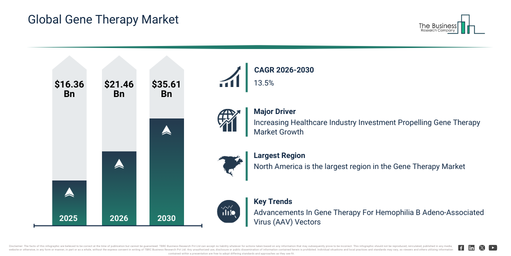
    The gene therapy market has witnessed substantial growth in recent years. Its valuation is expected to rise from $16.36 billion in 2025 to $21.46 billion in 2026, indicating a compound annual growth rate (CAGR) of 31.2%. Historically, this expansion has been driven by the increasing incidence of genetic disorders, advancements in viral vector technology, rising research and development investments in gene therapy, supportive government policies, and greater awareness of rare diseases.

    The gene therapy market is projected to experience substantial expansion over the upcoming years. Its valuation is anticipated to reach $35.61 billion by 2030, exhibiting a compound annual growth rate (CAGR) of 13.5%. This projected increase during the forecast period is fueled by several factors, including the wider adoption of personalized medicine, the development of CRISPR and other gene editing treatments, a rise in both private and public investment, the incorporation of AI into gene therapy research, and an increase in international collaborative clinical trials. Key developments expected during this timeframe encompass the advancement of personalized gene therapies, the integration of CRISPR and gene editing techniques, the broadening of regulatory and ethical guidelines, innovations in advanced viral and non-viral vectors, and expanded collaborative research and clinical studies.

    Download A Free Sample Report For Comprehensive Market Insights:

    https://www.thebusinessresearchcompany.com/sample.aspx?id=3395&type=smp

    Which Core Factors Are Supporting The Expansion Of The Gene Therapy Market?

    Increased financial commitments in the healthcare industry are projected to boost the expansion of the gene therapy market in the foreseeable future. This involves dedicating capital to entities that offer medical services, produce medical equipment or pharmaceuticals, provide medical insurance, or otherwise contribute to the healthcare sector. Such investments are vital for the gene therapy industry, as numerous pharmaceutical firms are allocating resources to strengthen their patent portfolios and secure profitable partnerships. Strategic funding also supports the creation of innovative and advanced gene therapy products. For example, in April 2025, a report from the American Medical Association, a US-based professional organization, indicated that U.S. health spending in 2023 escalated by 7.5% to $4.9 trillion, or $14,570 per capita, exceeding the 4.6% rise observed in 2022. Thus, the growing investment in the healthcare industry is propelling the growth of the gene therapy market.

    How Is The Gene Therapy Market Examined Through Segment Analysis?

    The gene therapy market covered in this report is segmented –

    1) By Gene Therapy Type: Germline Therapy, Somatic Cell Therapy

    2) By Vector: Viral Vector, Non-Viral Vector

    3) By Application: Oncology, Orphan Disease, Knee Osteoarthritis, Neurological Disorders

    4) By End Users: Biopharmaceutical Companies, Research Institutes, Other End Users

    Subsegments:

    1) By Germline Therapy: Inherited Disease Treatment, Genetic Modification Of Embryos, Gene Editing Techniques, Ethical And Regulatory Considerations

    2) By Somatic Cell Therapy: Cancer Gene Therapy, Monogenic Disorder Treatment, Gene Replacement Therapy, RNA-Based Therapies, Gene Editing Techniques

    Which Trends Are Influencing The Expansion Of The Gene Therapy Market?

    Major companies within the gene therapy market are concentrating on the development of advanced products, such as adeno-associated virus (AAV) vectors, to improve the precision and effectiveness of gene delivery for the treatment of various genetic disorders. An adeno-associated virus (AAV) vector is a commonly utilized tool in gene therapy for introducing genetic material into cells. For instance, in April 2024, Pfizer Inc., a US-based global biopharmaceutical company, obtained approval from the Food and Drug Administration (FDA), a US-based federal agency tasked with protecting public health, for BEQVEZ (fidanacogene elaparvovec-dzkt). BEQVEZ (fidanacogene elaparvovec-dzkt) is a gene therapy intended for adults suffering from moderate to severe hemophilia B, which is a genetic bleeding disorder. This condition is characterized by a deficiency in clotting factor IX (FIX), potentially leading to excessive bleeding. The therapy uses an adeno-associated virus (AAV) vector to deliver a functional copy of the FIX gene directly into liver cells, thereby assisting in the natural production of this essential clotting factor.

    Who Are The Companies Shaping The Gene Therapy Market Landscape?

    Major companies operating in the gene therapy market are UniQure NV, REGENXBIO Inc., Bristol-Myers Squibb, BioMarin Pharmaceuticals Inc., Jazz Pharmaceuticals Inc., Biocon, EdiGene Inc, Takeda Pharmaceutical, Daiichi Sankyo Company, Mitsubishi Tanabe Pharma, Merck, Lonza, Pfizer, Cellular Biomedicine Group, GenScript, Albumedix Ltd, Catalent, Freeline Therapeutics, DiNAQOR AG, Vivet Therapeutics, Allergan, Amgen, Biocad, Celgene Corporation, Johnson & Johnson, Eli Lilly and Company, AstraZeneca, Bayer AG, Juno Therapeutics, Allogene Therapeutics, Bluebird Bio, Regen BioPharma, Bellicum, BrainStorm Cell Therapeutics, Pluristem, Sanofi

    Access The Complete Gene Therapy Market Report:

    https://www.thebusinessresearchcompany.com/report/genes-therapy-global-market-report

    Which Region Is The Dominant Market In The Gene Therapy Market?

    North America was the largest region in the gene therapy market in 2025. The regions covered in the gene therapy market report are Asia-Pacific, South East Asia, Western Europe, Eastern Europe, North America, South America, Middle East, Africa.

    Access Gene Therapy Market Report for Deeper Competitive Insights

    https://www.thebusinessresearchcompany.com/sample.aspx?id=3395&type=smp

    Browse Through More Reports Similar to the Global Gene Therapy Market 2026, By The Business Research Company

    Genes Therapy Market Report 2026

    https://www.thebusinessresearchcompany.com/report/genes-therapy-global-market-report

    Nucleic Acid Based Gene Therapy Market Report 2026

    https://www.thebusinessresearchcompany.com/report/nucleic-acid-based-gene-therapy-global-market-report

    Gene Editing Market Report 2026

    https://www.thebusinessresearchcompany.com/report/gene-editing-global-market-report

    Get in touch with us:

    The Business Research Company: https://www.thebusinessresearchcompany.com/

    Americas: +1 310-496-7795

    Asia: +44 7882 955267 & +91 8897263534

    Europe: +44 7882 955267

    Email us at: marketing@tbrc.info

    Follow us on:

    LinkedIn: https://in.linkedin.com/company/the-business-research-company

    YouTube: https://www.youtube.com/channel/UC24_fI0rV8cR5DxlCpgmyFQ

    Global Market Model: https://www.thebusinessresearchcompany.com/global-market-model
  • Rise In Biofuel Demand Is Anticipated To Fuel The Gene Synthesis Market Is Supporting Development Across The Gene Synthesis Market

    Rise In Biofuel Demand Is Anticipated To Fuel The Gene Synthesis Market Is Supporting Development Across The Gene Synthesis Market

    The Business Research Company’s 2026 market reports feature advanced enhancements such as market attractiveness analysis, total addressable market evaluation, company benchmarking matrices, interactive Excel dashboards, expanded supply chain intelligence, emerging startup coverage, and detailed product insights, delivering more actionable and strategically valuable research.

    How Much Larger Will The Gene Synthesis Market Become By 2030 Compared To 2026?

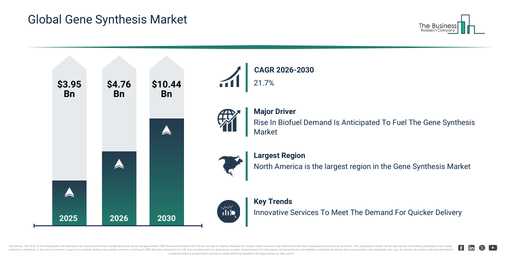
    The gene synthesis market has experienced substantial expansion in recent times. Projections indicate it will expand from $3.95 billion in 2025 to $4.76 billion in 2026, demonstrating a compound annual growth rate (CAGR) of 20.7%. Historically, this expansion can be linked to several factors, including developments in recombinant DNA technology, a surge in pharmaceutical research and development, the implementation of automated synthesis platforms, the proliferation of academic research institutions, and an escalating need for gene editing tools.

    The gene synthesis market is projected to undergo substantial expansion in the upcoming years, with its size expected to reach $10.44 billion in 2030, exhibiting a compound annual growth rate (CAGR) of 21.7%. This anticipated growth during the forecast period is primarily driven by factors such as the increasing development of gene and cell therapies, heightened investment in synthetic biology, a rise in vaccine development initiatives, the expansion of contract research organizations, and the growing application of viral dna synthesis in diagnostics. Noteworthy trends for this period include the broadening of synthetic biology applications, the advancement of personalized gene therapies, an escalating demand for high-fidelity dna synthesis, innovations in enzyme-based synthesis techniques, and an increase in research efforts from academic institutions and government bodies.

    Download A Free Sample Report For Comprehensive Market Insights:

    https://www.thebusinessresearchcompany.com/sample.aspx?id=10084&type=smp

    What Are The Main Drivers Accelerating The Growth Of The Gene Synthesis Market?

    Growing demand for biofuels is anticipated to drive the expansion of the gene synthesis market. Biofuels represent a renewable energy source, originating from organic substances like plants or animal waste, serving as a substitute for conventional fossil fuels. In the creation of biofuels, gene synthesis facilitates the engineering of microorganisms, equipping them with improved metabolic pathways to efficiently transform organic materials into biofuels. An illustrative example comes from the International Energy Agency (IEA), a France-based intergovernmental organization, which reported in June 2023 that biofuel demand is forecast to increase by 6%, or 5700 million liters, from 2022 to 2024 across advanced economies. The majority of this expansion is expected in the United States and Europe. Consequently, the escalating demand for biofuels is acting as a key driver for the gene synthesis market.

    Which Segment Groups Define The Gene Synthesis Market Landscape?

    The gene synthesis market covered in this report is segmented –

    1) By Method: Solid-Phase Synthesis, Chip-Based Synthesis, PCR-Based Enzyme Synthesis

    2) By Service: Antibody DNA Synthesis, Viral DNA Synthesis, Other Services

    3) By Application: Gene And Cell Therapy Development, Vaccine Development, Disease Diagnosis, Other Applications

    4) By End-User: Biotechnology And Pharmaceutical Companies, Academic And Government Research Institutes, Contract Research Organizations

    Subsegments:

    1) By Solid-Phase Synthesis: Phosphoramidite Method, H-phosphonate Method

    2) By Chip-Based Synthesis: Microarray Technology, Light-Directed Synthesis

    3) By PCR-Based Enzyme Synthesis: Polymerase Chain Reaction (PCR), Reverse Transcription PCR (RT-PCR)

    What Trends Are Impacting The Gene Synthesis Market?

    Leading companies in the gene synthesis market are concentrating on delivering advanced platforms, such as silicon-based DNA synthesis platforms, to satisfy the need for quicker delivery and secure a competitive advantage. A silicon-based DNA synthesis platform is a technology that uses silicon wafers to facilitate the miniaturization of the chemical reactions involved in DNA creation during the gene synthesis process. For instance, in November 2023, Twist Bioscience Corporation, a US-based biotechnology company, launched Twist Express Genes, a rapid gene synthesis service with a turnaround time of five to seven business days. This service leverages a silicon-based DNA synthesis platform to meet customer expectations for faster delivery. The Express Genes service is designed to cater to researchers in both industry and academia who either purchase DNA from suppliers or synthesize genes independently, providing a comprehensive solution for their gene production requirements. GenScript, another key player, guarantees plasmid yield and 100% sequence accuracy, upholding high standards of quality and reliability in its offerings.

    Which Industry Players Are Present In The Gene Synthesis Market?

    Major companies operating in the gene synthesis market are Genscript Biotech Corporation, Twist Bioscience Corp., ProteoGenix Inc., Biomatik Corporation, ProMab Biotechnologies Inc., Thermo Fisher Scientific Inc., Integrated DNA Technologies Inc., OriGene Technologies Inc., GenScript Corp., Merck KGaA, Codex DNA Inc., Genewiz Inc., Eurofins Genomics LLC, BioCat GmbH, Bioneer Pacific Co. Ltd., Bio Basic Inc., Beijing SBS Genetech Co. Ltd, Creative Biogene Inc, Exonbio LLC., Trenzyme GmbH, Polygen GmbH, MACROGEN CO. LTD., Synbio Technologies LLC

    Access The Complete Gene Synthesis Market Report:

    https://www.thebusinessresearchcompany.com/report/gene-synthesis-global-market-report

    Which Area Represents The Largest Portion Of The Gene Synthesis Market?

    North America was the largest region in the gene synthesis market in 2025. Asia-Pacific is expected to be the fastest-growing region in the global gene synthesis market report during the forecast period. The regions covered in the gene synthesis market report are Asia-Pacific, South East Asia, Western Europe, Eastern Europe, North America, South America, Middle East, Africa.

    Access Gene Synthesis Market Report for Deeper Competitive Insights

    https://www.thebusinessresearchcompany.com/sample.aspx?id=10084&type=smp

    Browse Through More Reports Similar to the Global Gene Synthesis Market 2026, By The Business Research Company

    Gene Synthesis Market Report 2026

    https://www.thebusinessresearchcompany.com/report/gene-synthesis-global-market-report

    Gene Editing Market Report 2026

    https://www.thebusinessresearchcompany.com/report/gene-editing-global-market-report

    Oligonucleotide Synthesis Market Report 2026

    https://www.thebusinessresearchcompany.com/report/oligonucleotide-synthesis-global-market-report

    Get in touch with us:

    The Business Research Company: https://www.thebusinessresearchcompany.com/

    Americas: +1 310-496-7795

    Asia: +44 7882 955267 & +91 8897263534

    Europe: +44 7882 955267

    Email us at: marketing@tbrc.info

    Follow us on:

    LinkedIn: https://in.linkedin.com/company/the-business-research-company

    YouTube: https://www.youtube.com/channel/UC24_fI0rV8cR5DxlCpgmyFQ

    Global Market Model: https://www.thebusinessresearchcompany.com/global-market-model
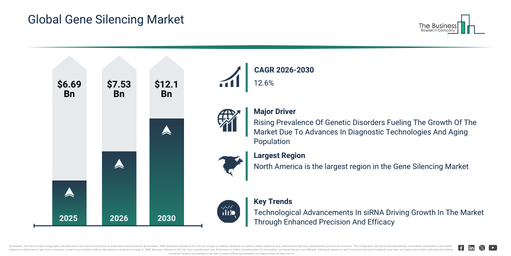
  • Rising Prevalence Of Genetic Disorders Fueling The Growth Of The Market Due To Advances In Diagnostic Technologies And Aging Population Is Supporting Development Across The Gene Silencing Market

    Rising Prevalence Of Genetic Disorders Fueling The Growth Of The Market Due To Advances In Diagnostic Technologies And Aging Population Is Supporting Development Across The Gene Silencing Market

    The Business Research Company’s 2026 market reports feature advanced enhancements such as market attractiveness analysis, total addressable market evaluation, company benchmarking matrices, interactive Excel dashboards, expanded supply chain intelligence, emerging startup coverage, and detailed product insights, delivering more actionable and strategically valuable research.

    What Growth In Market Value Is Anticipated For The Gene Silencing Market Between 2026 And 2030?

    The gene silencing market has experienced significant expansion recently. It is projected to expand from $6.69 billion in 2025 to $7.53 billion in 2026, demonstrating a compound annual growth rate (CAGR) of 12.5%. Historically, this growth can be ascribed to progress in molecular biology research, the identification of RNA interference mechanisms, increased academic research funding, a rise in genetic disease investigations, and heightened pharmaceutical R&D expenditure.

    The gene silencing market is poised for substantial growth over the next few years. It is forecast to grow to **$12.1 billion in 2030 at a compound annual growth rate (CAGR) of 12.6%.** This anticipated expansion can be attributed to several factors, including the increasing development of gene therapy pipelines, a rising demand for targeted therapeutics, the broader application of CRISPR technology, an upsurge in clinical trial activities, and the creation of next-generation gene editing tools. Significant trends expected during this period involve the expanding adoption of RNA interference technologies, the increasing utilization of CRISPR-based gene silencing, the widening scope of therapeutic gene targeting, a heightened focus on precision medicine applications, and growing investment in genetic research.

    Download A Free Sample Report For Comprehensive Market Insights:

    https://www.thebusinessresearchcompany.com/sample.aspx?id=24224&type=smp

    Which Growth Drivers Are Expected To Support The Gene Silencing Market Forward?

    The escalating occurrence of genetic disorders is projected to boost the growth of the gene silencing market in the coming years. Genetic disorders describe health conditions originating from irregularities in an individual’s DNA. They are being identified with increasing frequency, attributed to advancements in diagnostic technologies, enhanced awareness, and wider accessibility to genetic testing. The rise in these disorders is also connected to increasing parental age, which heightens the likelihood of genetic mutations passing to offspring. Gene silencing provides a promising strategy for addressing genetic disorders by specifically deactivating the expression of defective or disease-inducing genes. For instance, in August 2023, Down Syndrome UK, a UK-based charity, stated that Down syndrome affects an estimated 40,000 people in the UK, with approximately 1 in every 800 babies born with the condition. Thus, the increasing prevalence of genetic disorders is propelling the gene silencing market forward.

    What Key Segment Areas Are Included In The Gene Silencing Market Assessment?

    The gene silencing market covered in this report is segmented –

    1) By Type: Transcriptional, Post-Transcriptional, Meiotic

    2) By Gene Silencing: RNA Interference (RNAi), Antisense Oligonucleotides (ASOs), Clustered Regularly Interspaced Short Palindromic Repeats(CRISPR) Or Cas9 -Based Gene Silencing, Other Gene Silencings

    3) By Application: Neurology, Oncology, Infectious Diseases, Metabolic Diseases, Therapeutics Manufacturing, Other Applications

    4) By End-Users: Pharmaceutical And Biotechnology Companies, Research Institutes and Academic Centers, Hospitals, Clinics, Other End-Users

    Subsegments:

    1) By Transcriptional: DNA Methylation, Histone Modification

    2) By Post-Transcriptional: RNA Interference (RNAi), Antisense Oligonucleotides, MicroRNA (miRNA) Mediated Silencing

    3) By Meiotic: Meiotic Gene Conversion, Transposable Element Silencing

    Which Trends Are Affecting The Gene Silencing Market Framework?

    Leading companies in the gene silencing market are prioritizing the creation of novel technologies, such as small interfering RNA (siRNA), to boost precision and effectiveness in gene therapy. Small interfering RNA (siRNA) describes an RNA molecule that is vital in the RNA interference (RNAi) pathway, where it connects with specific messenger RNA (mRNA) to encourage its degradation, thus preventing the synthesis of disease-causing proteins. For example, in October 2024, Judo Bio Inc., a US-based biotechnology company, released siRNA, a advanced drug that utilizes small interfering RNA (siRNA) for gene silencing. Its distinguishing attributes include proprietary delivery systems like lipid nanoparticles or conjugated ligands, which ensure efficient uptake by particular cells or tissues, and AI-driven platforms designed to speed up the identification of suitable gene targets.

    Which Organizations Are Involved In The Gene Silencing Market?

    Major companies operating in the gene silencing market are Roche Holding AG, Merck & Co. Inc., AstraZeneca plc, Novartis International AG, Thermo Fisher Scientific Inc., Danaher Corporation, Agilent Technologies Inc., Illumina Inc., Bio-Rad Laboratories Inc., Bio-Techne Corporation, Alnylam Pharmaceuticals Inc., GenScript Biotech Corporation, Oxford BioMedica plc, Ionis Pharmaceuticals Inc., Arrowhead Pharmaceuticals Inc., Dicerna Pharmaceuticals Inc., New England Biolabs Inc., Quark Pharmaceuticals Inc., Sirion Biotech GmbH, Benitec Biopharma Limited, GeneCopoeia Inc., Revvity Inc.

    Access The Complete Gene Silencing Market Report:

    https://www.thebusinessresearchcompany.com/report/gene-silencing-global-market-report

    Which Region Commands The Largest Share Of The Gene Silencing Market?

    North America was the largest region in the gene silencing market in 2025. Asia-Pacific is expected to be the fastest-growing region in the forecast period. The regions covered in the gene silencing market report are Asia-Pacific, South East Asia, Western Europe, Eastern Europe, North America, South America, Middle East, Africa.

    Access Gene Silencing Market Report for Deeper Competitive Insights

    https://www.thebusinessresearchcompany.com/sample.aspx?id=24224&type=smp

    Browse Through More Reports Similar to the Global Gene Silencing Market 2026, By The Business Research Company

    Genes Therapy Market Report 2026

    https://www.thebusinessresearchcompany.com/report/genes-therapy-global-market-report

    Gene Editing Market Report 2026

    https://www.thebusinessresearchcompany.com/report/gene-editing-global-market-report

    Nucleic Acid Based Gene Therapy Market Report 2026

    https://www.thebusinessresearchcompany.com/report/nucleic-acid-based-gene-therapy-global-market-report

    Get in touch with us:

    The Business Research Company: https://www.thebusinessresearchcompany.com/

    Americas: +1 310-496-7795

    Asia: +44 7882 955267 & +91 8897263534

    Europe: +44 7882 955267

    Email us at: marketing@tbrc.info

    Follow us on:

    LinkedIn: https://in.linkedin.com/company/the-business-research-company

    YouTube: https://www.youtube.com/channel/UC24_fI0rV8cR5DxlCpgmyFQ

    Global Market Model: https://www.thebusinessresearchcompany.com/global-market-model
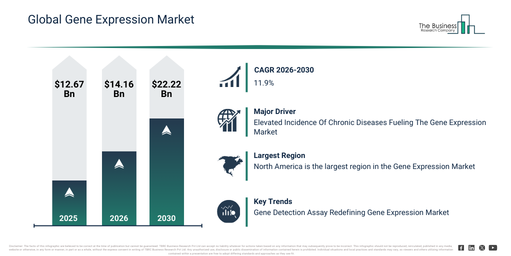
  • Elevated Incidence Of Chronic Diseases Fueling The Gene Expression Market Is Supporting Development Across The Gene Expression Market

    Elevated Incidence Of Chronic Diseases Fueling The Gene Expression Market Is Supporting Development Across The Gene Expression Market

    The Business Research Company’s 2026 market reports feature advanced enhancements such as market attractiveness analysis, total addressable market evaluation, company benchmarking matrices, interactive Excel dashboards, expanded supply chain intelligence, emerging startup coverage, and detailed product insights, delivering more actionable and strategically valuable research.

    What Is The Expected Market Value Outlook For The Gene Expression Market Through 2030?

    The gene expression market has seen considerable growth over recent years. It is projected to expand from $12.67 billion in 2025 to $14.16 billion in 2026, achieving a compound annual growth rate (CAGR) of 11.7%. This historical growth can be ascribed to elements like increased academic genomics research funding, a rise in the prevalence of chronic and genetic diseases, the initial adoption of microarray technologies, the expansion of pharmaceutical R&D pipelines, and the growing application of PCR-based techniques.

    The gene expression market is projected to expand significantly over the coming years, reaching $22.22 billion by 2030, exhibiting a compound annual growth rate (CAGR) of 11.9%. This anticipated growth is driven by several factors, including advancements in RNA sequencing technologies, a heightened emphasis on precision medicine, the expansion of clinical diagnostics applications, the incorporation of AI into gene expression data analysis, and increased investments within the biotechnology industry. Key trends expected during this period involve the broader adoption of single-cell gene expression analysis, a rise in the application of spatial transcriptomics, increased demand for high-throughput PCR platforms, the growing integration of multi-omics approaches, and the standardization of gene expression workflows.

    Download A Free Sample Report For Comprehensive Market Insights:

    https://www.thebusinessresearchcompany.com/sample.aspx?id=9156&type=smp

    What Influential Factors Are Boosting The Gene Expression Market Demand?

    The anticipated expansion of the gene expression market is significantly influenced by the increasing prevalence of chronic diseases. These conditions are defined as enduring medical ailments that last for an extended duration, usually exceeding three months. Gene expression analysis finds application in chronic disease management by aiding in the comprehension of their underlying molecular processes, the discovery of potential biomarkers, and the formulation of precise treatment strategies. As an illustration, data from June 2024, sourced from the National Health Service, a UK-based government department, revealed that 3,615,330 individuals registered with a general practitioner (GP) received a diagnosis of non-diabetic hyperglycemia or pre-diabetes (a condition characterized by elevated blood sugar levels, though not severe enough for a diabetes classification) in 2023. This represented an 18% increase from the 3,065,825 cases recorded in 2022. Consequently, the expanding incidence of chronic diseases is poised to fuel the expansion of the gene expression market.

    How Is Segment Classification Applied In The Gene Expression Market?

    The gene expression market covered in this report is segmented –

    1) By Product: Kits And Reagents, DNA Chip Or Microarray, Other Products

    2) By Process: Sample Collection, Purification, cDNA Synthesis And Conversion, PCR Analysis, Data Analysis And Interpretation

    3) By Technique: RNA Exp, Promoter Analysis, Protein Exp. And Posttranslational Modification Analysis

    4) By Application: Drug Discovery And Development, Clinical Diagnostics, Biotechnology And Microbiology, Other Applications

    Subsegments:

    1) By Kits And Reagents: RNA Isolation Kits, cDNA Synthesis Kits, qPCR Kits, Reverse Transcription Kits, Other Reagents

    2) By DNA Chip Or Microarray: Expression Microarrays, Genotyping Microarrays, Comparative Genomic Hybridization Arrays

    3) By Other Products: Software For Data Analysis, Lab Instruments, Consumables

    What Trends Are Influencing The Gene Expression Market?

    Leading companies in the gene expression market are prioritizing the creation of innovative products, such as gene detection assays, to achieve a competitive edge and increase their revenue. Within gene expression, a gene detection assay is a technique for identifying and measuring the presence of genetic molecules, offering insights into the activity and quantity of particular genes. For example, in January 2023, Bio-Techne Corporation, a US-based biotech company specializing in research instruments, expanded its Advanced Cell Diagnostics (ACD)-branded RNAscope in situ hybridization (ISH) portfolio by launching the RNAscope Plus smRNA-RNA detection assay. This novel assay permits the concurrent fluorescent identification of a small regulatory RNA alongside three target RNAs or RNA biomarkers in a single tissue section, providing single-cell and subcellular resolution. Tailored for extensive studies, the assay is compatible with the Leica Bond Rx platform and is offered as a manual assay for straightforward use. These therapeutic nucleic acids possess the capability to modulate the expression and functionality of specific target genes, thus enabling the development of personalized treatments for inherited or acquired diseases that have proven resistant to conventional therapies.

    Who Are The Firms Contributing To The Gene Expression Market Ecosystem?

    Major companies operating in the gene expression market are Thermo Fisher Scientific Inc., Qiagen NV, Illumina Inc., Bio-Rad Laboratories Inc., Agilent Technologies Inc., PerkinElmer Inc., GE Healthcare, F Hoffmann-La Roche Ltd, Oxford Gene Technology IP Limited, Promega Corporation, OriGene Technologies Inc., Luminex Corporation, Takara Bio Inc., Danaher Corporation, ELITechGroup, Biocartis Group NV, Integragen SA, Oxford Nanopore Technologies Limited, Phalanx Biotech Group, Roche Holding AG, Sengenics Corporation Pte Ltd., GenXPro GmbH, Twist Bioscience Corporation, Zymo Research Corporation, Abcam plc., Bio-Techne Corporation

    Access The Complete Gene Expression Market Report:

    https://www.thebusinessresearchcompany.com/report/gene-expression-global-market-report

    Which Region Accounts For The Highest Share Of The Gene Expression Market?

    North America was the largest region in the gene expression market in 2025. Asia-Pacific is expected to be the fastest-growing region in the gene expression market in the forecast period. The regions covered in the gene expression market report are Asia-Pacific, South East Asia, Western Europe, Eastern Europe, North America, South America, Middle East, Africa.

    Access Gene Expression Market Report for Deeper Competitive Insights

    https://www.thebusinessresearchcompany.com/sample.aspx?id=9156&type=smp

    Browse Through More Reports Similar to the Global Gene Expression Market 2026, By The Business Research Company

    Gene Expression Market Report 2026

    https://www.thebusinessresearchcompany.com/report/gene-expression-global-market-report

    Protein Expression Market Report 2026

    https://www.thebusinessresearchcompany.com/report/protein-expression-global-market-report

    Gene Synthesis Market Report 2026

    https://www.thebusinessresearchcompany.com/report/gene-synthesis-global-market-report

    Get in touch with us:

    The Business Research Company: https://www.thebusinessresearchcompany.com/

    Americas: +1 310-496-7795

    Asia: +44 7882 955267 & +91 8897263534

    Europe: +44 7882 955267

    Email us at: marketing@tbrc.info

    Follow us on:

    LinkedIn: https://in.linkedin.com/company/the-business-research-company

    YouTube: https://www.youtube.com/channel/UC24_fI0rV8cR5DxlCpgmyFQ

    Global Market Model: https://www.thebusinessresearchcompany.com/global-market-model
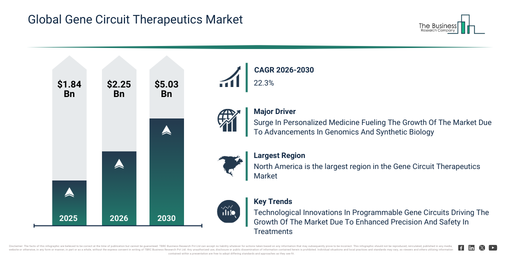
  • Surge In Personalized Medicine Fueling The Growth Of The Market Due To Advancements In Genomics And Synthetic Biology Is Supporting Development Across The Gene Circuit Therapeutics Market

    Surge In Personalized Medicine Fueling The Growth Of The Market Due To Advancements In Genomics And Synthetic Biology Is Supporting Development Across The Gene Circuit Therapeutics Market

    The Business Research Company’s 2026 market reports feature advanced enhancements such as market attractiveness analysis, total addressable market evaluation, company benchmarking matrices, interactive Excel dashboards, expanded supply chain intelligence, emerging startup coverage, and detailed product insights, delivering more actionable and strategically valuable research.

    How Will The Market Value Of The Gene Circuit Therapeutics Market Increase Between 2026 And 2030?

    The gene circuit therapeutics market size has experienced substantial growth in recent years. It is projected to expand from $1.84 billion in 2025 to $2.25 billion in 2026, achieving a compound annual growth rate (CAGR) of 22.3%. Historically, this expansion can be linked to advancements in synthetic biology research, the initial successes of gene editing technologies, increased academic research funding, a more comprehensive understanding of cellular signaling pathways, and the extension of immuno-oncology research.

    The gene circuit therapeutics market is projected to experience substantial growth over the coming years. This market is anticipated to reach $5.03 billion in 2030, exhibiting a compound annual growth rate (CAGR) of 22.3%. This expansion during the forecast period is attributable to factors such as the increasing clinical application of gene circuit therapies, a heightened demand for precise treatments, wider acceptance of programmable cell therapies, the broadening of gene therapy pipelines for rare diseases, and augmented investments in advanced genetic medicines. Key trends expected over the same period encompass the heightened development of programmable gene circuits, an uptick in the use of logic-gated cell therapies, deeper integration of synthetic biology platforms, the proliferation of precision-regulated gene expression systems, and a strengthened emphasis on safety switch mechanisms.

    Download A Free Sample Report For Comprehensive Market Insights:

    https://www.thebusinessresearchcompany.com/sample.aspx?id=28230&type=smp

    Which Drivers Are Advancing The Gene Circuit Therapeutics Market Growth?

    The increasing requirement for personalized medicine is projected to drive the expansion of the gene circuit therapeutics market moving forward. Personalized medicine involves tailoring medical interventions to the distinct characteristics of each patient, frequently utilizing genetic, biomarker, or molecular analysis. The heightened demand for personalized medicine is fueled by progress in genomics and synthetic biology, which facilitates more precise disease targeting and enhanced treatment outcomes. Gene circuit therapeutics play a crucial role in supporting personalized medicine by engineering cells and microbes with programmable logic to sense, compute, and respond to specific disease conditions, thereby enabling safer, more effective, and patient-specific therapies. For instance, according to NHS England’s Genomics Statistical Commentary, a UK-based government authority, the total number of personalized genomic tests reached 65,884 in 2024, up 14% 2023, demonstrating the rising demand for personalized medicine. Thus, the growing demand for personalized medicine has propelled the growth of the gene circuit therapeutics market.

    What Are The Core Segment Classifications In The Gene Circuit Therapeutics Market?

    The gene circuit therapeutics market covered in this report is segmented –

    1) By Product Type: Synthetic Gene Circuits, Programmable Cell Therapies, Gene Editing Tools, Other Product Types

    2) By Technology: Clustered Regularly Interspaced Short Palindromic Repeats (CRISPR), Transcription Activator-Like Effector Nuclease (TALEN), Zinc Finger Nucleases, Other Technologies

    3) By Application: Oncology, Rare Diseases, Infectious Diseases, Regenerative Medicine, Other Applications

    4) By End-User: Pharmaceutical And Biotechnology Companies, Academic And Research Institutes, Hospitals And Clinics, Other End-Users

    Subsegments:

    1) By Synthetic Gene Circuits: Switch-based Circuits, Logic Gate Circuits, Oscillatory Circuits, Memory Circuits

    2) By Programmable Cell Therapies: CAR-T Cell Therapy, TCR-T Cell Therapy, NK Cell Therapy, Stem Cell-Based Therapies

    3) By Gene Editing Tools: CRISPR-Cas Systems, TALENs, Zinc Finger Nucleases (ZFNs), Meganucleases

    4) By Others: RNA-Based Therapeutics, Antisense Oligonucleotides, Epigenome Editing Tools

    Which Trends Are Guiding The Development Of The Gene Circuit Therapeutics Market?

    Leading companies within the gene circuit therapeutics market are concentrating on developing programmable gene circuits to achieve more accurate disease targeting, regulated therapeutic responses, and enhanced safety. These programmable circuits are engineered genetic networks constructed from DNA, RNA, and regulatory proteins, which simulate logical operations within cells, thereby enabling them to detect biological inputs, process information, and produce specific outputs. As an example, in May 2023, Synlogic, Inc., a US-based clinical-stage biotechnology company, shared recent data at the Synthetic Biology: Engineering, Evolution & Design (SEED) Conference concerning SYNB1353, a Synthetic Biotic drug candidate intended for homocystinuria (HCU). SYNB1353 utilizes genetically programmed probiotic bacteria featuring metabolic gene circuits engineered to consume methionine and lower toxic homocysteine levels. This demonstrates how programmable circuits can extend their application beyond oncology to rare metabolic disorders, emphasizing their promise for creating precise, durable, and patient-friendly medicines.

    Which Key Players Are Active In The Gene Circuit Therapeutics Market?

    Major companies operating in the gene circuit therapeutics market are GenScript Biotech, Agilent Technologies, Cellectis S.A., CRISPR Therapeutics, Beam Therapeutics, Twist Bioscience, Ginkgo Bioworks, Sangamo Therapeutics, Senti Biosciences, Editas Medicine, BlueRock Therapeutics, Synthego Corporation, Manus Bio, Strand Therapeutics, Dyno Therapeutics, Obsidian Therapeutics, Rubius Therapeutics, Precigen Inc., Aurealis Therapeutics, Synlogic Inc., Azalea Therapeutics

    Access The Complete Gene Circuit Therapeutics Market Report:

    https://www.thebusinessresearchcompany.com/report/gene-circuit-therapeutics-global-market-report

    Which Region Is The Primary Market For The Gene Circuit Therapeutics Market?

    North America was the largest region in the gene circuit therapeutics market in 2025. Asia-Pacific is expected to be the fastest-growing region in the forecast period. The regions covered in the gene circuit therapeutics market report are Asia-Pacific, South East Asia, Western Europe, Eastern Europe, North America, South America, Middle East, Africa.

    Access Gene Circuit Therapeutics Market Report for Deeper Competitive Insights

    https://www.thebusinessresearchcompany.com/sample.aspx?id=28230&type=smp

    Browse Through More Reports Similar to the Global Gene Circuit Therapeutics Market 2026, By The Business Research Company

    Genes Therapy Market Report 2026

    https://www.thebusinessresearchcompany.com/report/genes-therapy-global-market-report

    Nucleic Acid Based Gene Therapy Market Report 2026

    https://www.thebusinessresearchcompany.com/report/nucleic-acid-based-gene-therapy-global-market-report

    Gene Editing Market Report 2026

    https://www.thebusinessresearchcompany.com/report/gene-editing-global-market-report

    Get in touch with us:

    The Business Research Company: https://www.thebusinessresearchcompany.com/

    Americas: +1 310-496-7795

    Asia: +44 7882 955267 & +91 8897263534

    Europe: +44 7882 955267

    Email us at: marketing@tbrc.info

    Follow us on:

    LinkedIn: https://in.linkedin.com/company/the-business-research-company

    YouTube: https://www.youtube.com/channel/UC24_fI0rV8cR5DxlCpgmyFQ

    Global Market Model: https://www.thebusinessresearchcompany.com/global-market-model