Month: May 2026

  • Rising Healthcare Expenditures Fueling Growth In The Biosimilars Market Is Supporting Development Across The Biosimilars Market

    Rising Healthcare Expenditures Fueling Growth In The Biosimilars Market Is Supporting Development Across The Biosimilars Market

    The Business Research Company’s 2026 market reports feature advanced enhancements such as market attractiveness analysis, total addressable market evaluation, company benchmarking matrices, interactive Excel dashboards, expanded supply chain intelligence, emerging startup coverage, and detailed product insights, delivering more actionable and strategically valuable research.

    How Much Larger Will The Biosimilars Market Become By 2030 Compared To 2026?

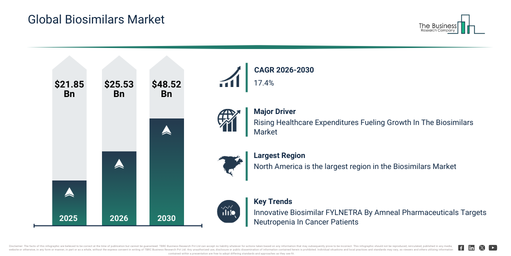
    The biosimilars market size has experienced considerable growth recently. This market is set to expand from $21.85 billion in 2025 to $25.53 billion in 2026, achieving a compound annual growth rate (CAGR) of 16.9%. Historically, this expansion has been attributed to several factors including the increasing occurrence of chronic and autoimmune diseases, the significant cost associated with originator biologics, a rising preference for more economical therapies, breakthroughs in biopharmaceutical research and development, and the development of healthcare infrastructure in emerging economies.

    The biosimilars market size is projected to undergo substantial growth over the next few years, with expectations to reach **$48.52 billion by 2030**, expanding at a compound annual growth rate (CAGR) of **17.4%**. This anticipated growth throughout the forecast period is primarily driven by the expiration of patents for significant biologics, a rising adoption of biosimilars within oncology and autoimmune treatments, supportive government incentives and policies, an increase in manufacturing capacities across Asia-Pacific, and strengthening partnerships between biopharma companies and contract manufacturing organizations. Noteworthy trends during this same period include the advancement of personalized biosimilar development, the focus on cost-effective biologics manufacturing, efforts towards regulatory harmonization and compliance, the expansion of new markets for biosimilars, and various strategic collaborations and partnerships.

    Download A Free Sample Report For Comprehensive Market Insights:

    https://www.thebusinessresearchcompany.com/sample.aspx?id=2807&type=smp

    Which Significant Factors Are Encouraging Growth In The Biosimilars Market?

    Rising healthcare spending is anticipated to boost the expansion of the biosimilars market in the future. Healthcare expenditures signify the cumulative outlay for medical goods and services within a specific population or system. The biosimilars market contributes to decreasing healthcare costs by providing more economical substitutes for costly biologic medications, thus reducing treatment expenses for both patients and healthcare providers. For example, in March 2024, the Health Foundation, a UK-based independent charity and think tank, reported that England’s total health expenditures hit £182 billion ($196.78 billion) in the most recently confirmed spending year, 2022/23. Although projected health spending is slated to increase to £192 billion ($207.59 billion) by 2024/25, inflationary pressures mean that the actual real-term growth will be a mere 0.6% when compared to the 2023/24 fiscal year. Consequently, the upward trend in healthcare expenditures is propelling the expansion of the biosimilars market.

    What Key Segment Areas Are Included In The Biosimilars Market Assessment?

    The biosimilars market covered in this report is segmented –

    1) By Type: Monoclonal Antibodies, Insulin, Erythropoietin, Granulocyte-Colony Stimulating Factor, Other Hormones

    2) By Protein Type: Recombinant Non-glycosylated Proteins, Recombinant Glycosylated Proteins

    3) By Application: Oncology, Chronic And Autoimmune Diseases, Growth Hormone Deficiency, Infectious Diseases, Other Applications

    Subsegments:

    1) By Monoclonal Antibodies: IgG Biosimilars, Non-IgG Biosimilars

    2) By Insulin: Rapid-Acting Insulin Biosimilars, Long-Acting Insulin Biosimilars, Premixed Insulin Biosimilars

    3) By Erythropoietin: Epoetin Alfa Biosimilars, Darbepoetin Alfa Biosimilars

    4) By Granulocyte-Colony Stimulating Factor (G-CSF): Filgrastim Biosimilars, Pegfilgrastim Biosimilars

    5) By Other Hormones: Growth Hormones, Hormonal Replacement Therapy Biosimilars

    Which Trends Are Guiding The Development Of The Biosimilars Market?

    Leading companies within the biosimilars market are concentrating on developing innovative products to achieve a competitive edge. FYLNETRA functions as a leukocyte growth factor, prescribed to lessen the occurrence of infection, as shown by febrile neutropenia, in individuals with non-myeloid malignancies who are receiving myelosuppressive anti-cancer drugs linked to a clinically significant incidence of febrile neutropenia. As an illustration, in May 2023, Amneal Pharmaceuticals Inc., a US-based pharmaceutical company, initiated the commercial release of FYLNETRA (pegfilgrastim-pbbk), a biosimilar that references Neulasta, presented in a pre-filled single-dose syringe. FYLNETRA is utilized for the treatment of neutropenia, a condition characterized by low neutrophils (a form of white blood cell crucial for fighting infection), which is commonly experienced by patients undergoing chemotherapy.

    Who Are The Key Market Participants In The Biosimilars Market?

    Major companies operating in the biosimilars market are Amgen, Novartis AG, Samsung Bioepis Co. Ltd., Viatris, Celltrion Inc., Coherus Biosciences, Eli Lilly and Company, Dr. Reddy’s Laboratories, Roche India Pvt Ltd, Abbott India Limited, Wuxi Biologics, Shanghai Henlius Biotech, Innovent Biologics, Hisun Pharma, 3SBio, Beijing ShuangLu Pharmaceuticals, Qilu Pharmaceutical, Kyowa Hakko Kirin, Takeda, Mitsubishi Tanabe, AGC Biologics, Bio-Thera, Sandoz Pty Ltd, Apotex Pty Ltd, Cadila Pharmaceuticals, BiosanaPharma, GlaxoSmithKline, AstraZeneca, Bayer, Merck, Boehringer Ingelheim, Sanofi, Fresenius Kabi, Napp Pharmaceuticals, Mundipharma Deutschland GmbH & Co. KG, Geropharm, Valenta, NovaMedica, SynBio, Rani Therapeutics, Johnson & Johnson, Biogen Inc., Aché, Eurofarma, Teva Pharmaceuticals, Oramed Pharmaceuticals, Entera Bio, Julphar, Hikma Pharmaceuticals, BIOPHARMA-MEA, NeoTX, AID Genomics Limited, Altis Biologics, Cipla Medpro South Africa, Next Biosciences, Viome, Inqaba Biotechnical Industries (Pty)

    Access The Complete Biosimilars Market Report:

    https://www.thebusinessresearchcompany.com/report/biosimilar-global-market-report

    Which Region Holds The Largest Share In The Biosimilars Market?

    North America was the largest region in the global biosimilars market in 2025. Middle East is expected to be the fastest-growing region in the forecast period. The regions covered in the biosimilars market report are Asia-Pacific, South East Asia, Western Europe, Eastern Europe, North America, South America, Middle East, Africa.

    Access Biosimilars Market Report for Deeper Competitive Insights

    https://www.thebusinessresearchcompany.com/sample.aspx?id=2807&type=smp

    Browse Through More Reports Similar to the Global Biosimilars Market 2026, By The Business Research Company

    Biosimilar Market Report 2026

    https://www.thebusinessresearchcompany.com/report/biosimilar-global-market-report

    Biosimilar Market Report 2026

    https://www.thebusinessresearchcompany.com/report/biosimilar-global-market-report

    Bevacizumab Biosimilars Market Report 2026

    https://www.thebusinessresearchcompany.com/report/bevacizumab-biosimilars-global-market-report

    Get in touch with us:

    The Business Research Company: https://www.thebusinessresearchcompany.com/

    Americas: +1 310-496-7795

    Asia: +44 7882 955267 & +91 8897263534

    Europe: +44 7882 955267

    Email us at: marketing@tbrc.info

    Follow us on:

    LinkedIn: https://in.linkedin.com/company/the-business-research-company

    YouTube: https://www.youtube.com/channel/UC24_fI0rV8cR5DxlCpgmyFQ

    Global Market Model: https://www.thebusinessresearchcompany.com/global-market-model

  • Rising Prevalence Of Chronic Diseases Fuels Growth In The Biosimilar Therapeutic Peptide Market Is Supporting Development Across The Biosimilar Therapeutic Peptides Market

    Rising Prevalence Of Chronic Diseases Fuels Growth In The Biosimilar Therapeutic Peptide Market Is Supporting Development Across The Biosimilar Therapeutic Peptides Market

    The Business Research Company’s 2026 market reports feature advanced enhancements such as market attractiveness analysis, total addressable market evaluation, company benchmarking matrices, interactive Excel dashboards, expanded supply chain intelligence, emerging startup coverage, and detailed product insights, delivering more actionable and strategically valuable research.

    What Growth In Market Value Is Anticipated For The Biosimilar Therapeutic Peptides Market Between 2026 And 2030?

    The biosimilar therapeutic peptides market size has seen substantial growth over recent years. It is anticipated to increase from $3.5 billion in 2025 to $3.9 billion in 2026, achieving a compound annual growth rate (CAGR) of 11.5%. This historical expansion can be attributed to factors such as the limited availability of biosimilar peptides, reliance on innovative peptide therapies, the growing prevalence of cancer and metabolic disorders, increasing awareness of peptide-based treatments, and the development of parenteral administration methods.

    The biosimilar therapeutic peptides market size is predicted to experience significant expansion over the coming years. It is projected to reach **$6.11 billion in 2030 at a compound annual growth rate (CAGR) of 11.9%**. This anticipated growth during the forecast period is attributable to several factors, including the introduction of combination and long-acting peptides, an increase in generic peptide production, wider adoption of transdermal delivery systems, rising investment in peptide research and development, and growing healthcare expenditure on peptide therapeutics. Prominent trends expected in this period involve an escalating demand for biosimilar therapeutic peptides in cancer treatment, the development of more peptide-based therapies for metabolic and cardiovascular disorders, increasing acceptance of long-acting and combination peptides, the broadening of parenteral and transdermal administration routes, and a strong focus on cost-effective generic peptides and their accessibility in emerging markets.

    Download A Free Sample Report For Comprehensive Market Insights:

    https://www.thebusinessresearchcompany.com/sample.aspx?id=3423&type=smp

    What Core Drivers Are Transforming The Biosimilar Therapeutic Peptides Market?

    The widespread occurrence of chronic diseases is anticipated to propel the biosimilar therapeutic peptide market forward. These conditions are defined as persistent medical ailments necessitating continuous management and care, frequently spanning many years or an entire lifespan. The increasing incidence of chronic diseases generates a significant need for economical treatment options, positioning biosimilar therapeutic peptides as an appealing choice given their affordability and capacity to enhance patient accessibility and the long-term viability of healthcare systems. Furthermore, regulatory backing and compelling clinical data further stimulate market expansion. Illustratively, data from April 2025, referencing the US-based federal agency Centers for Disease Control and Prevention (CDC), indicates that in 2023, approximately 194 million U.S. adults, representing 76.4%, reported experiencing at least one chronic condition. Specifically, the occurrence was 59.5% for young adults, 78.4% for midlife adults, and a substantial 93.0% for older adults. Consequently, the widespread presence of chronic diseases is expected to be a key driver for the expansion of the biosimilar therapeutic peptides market.

    How Is Segment Classification Applied In The Biosimilar Therapeutic Peptides Market?

    The biosimilar therapeutic peptides market covered in this report is segmented –

    1) By Type: Innovative, Generic

    2) By Route Of Administration: Parenteral Route, Transdermal Route, Other Route Of Administrations

    3) By Application: Cancer, Cardiovascular, Central Nervous Systems, Metabolic Disorders, Infection, Hematological Disorders, Gastrointestinal Disorders, Dermatology, Respiratory Disorders

    Subsegments:

    1) By Innovative: Long-Acting Peptides, Combination Peptides

    2) By Generic: Monoclonal Antibodies, Hormones, Enzymes

    What Trends Are Influencing The Future Of The Biosimilar Therapeutic Peptides Market?

    Leading firms within the biosimilar therapeutic peptide market are creating a research platform focused on refining peptide synthesis, boosting production efficiency, and maintaining uniform quality throughout the process, from initial discovery to market release. This platform, known as Biodrug Design Accelerator, is designed to oversee research processes pertinent to peptide drug discovery, a domain widely recognized as a significant advancement in novel drug development. An example of this initiative is Fujitsu Limited, a US-based toy manufacturing and entertainment firm, which introduced the Biodrug Design Accelerator platform in May 2023 with the goal of expediting peptide drug discovery research. The Biodrug Design Accelerator is intended to assist peptide drug discovery scientists in pharmaceutical companies by speeding up and enhancing the effectiveness of peptide drug development, particularly through its support for the design, make, test, analyze (DMTA) cycles. This system will ultimately facilitate quicker and more informed design of potential peptide drug candidates, alongside fostering effective communication among researchers concerning synthesis and testing activities.

    Which Organizations Are Operating Within The Biosimilar Therapeutic Peptides Market?

    Major companies operating in the biosimilar therapeutic peptides market are Pfizer Inc., Merck & Co. Inc., Novartis AG, Sanofi SA, Takeda Pharmaceuticals Co. Ltd., Eli Lilly and Company, Novo Nordisk A/S, Apotex Inc., Teva Pharmaceuticals Industries Ltd., Sandoz International GmbH, Lonza Inc., Stada Arzneimittel AG, Ipsen S.A, Biocon Biopharmaceuticals Pvt. Ltd., Dr. Reddy’s Laboratories Ltd., Alvogen Pharma US Inc., Corden Pharma GmbH, Bachem Holding AG, PolyPeptide Laboratories Ltd.

    Access The Complete Biosimilar Therapeutic Peptides Market Report:

    https://www.thebusinessresearchcompany.com/report/biosimilar-therapeutic-peptide-global-market-report

    Which Region Is The Dominant Market In The Biosimilar Therapeutic Peptides Market?

    North America was the largest region in the biosimilar therapeutics peptides market in 2025. Middle East is expected to be the fastest growing region in the biosimilar therapeutic peptides market report during the forecast period. The regions covered in the biosimilar therapeutic peptides market report are Asia-Pacific, South East Asia, Western Europe, Eastern Europe, North America, South America, Middle East, Africa.

    Access Biosimilar Therapeutic Peptides Market Report for Deeper Competitive Insights

    https://www.thebusinessresearchcompany.com/sample.aspx?id=3423&type=smp

    Browse Through More Reports Similar to the Global Biosimilar Therapeutic Peptides Market 2026, By The Business Research Company

    Biosimilar Therapeutic Peptide Market Report 2026

    https://www.thebusinessresearchcompany.com/report/biosimilar-therapeutic-peptide-global-market-report

    Pharmaceutical Drugs And Biologics Logistics Market 2026

    https://www.thebusinessresearchcompany.com/report/pharmaceutical-drugs-and-biologics-logistics-market

    Therapeutic Dental Equipment Market Report 2026

    https://www.thebusinessresearchcompany.com/report/therapeutic-dental-equipment-global-market-report

    Get in touch with us:

    The Business Research Company: https://www.thebusinessresearchcompany.com/

    Americas: +1 310-496-7795

    Asia: +44 7882 955267 & +91 8897263534

    Europe: +44 7882 955267

    Email us at: marketing@tbrc.info

    Follow us on:

    LinkedIn: https://in.linkedin.com/company/the-business-research-company

    YouTube: https://www.youtube.com/channel/UC24_fI0rV8cR5DxlCpgmyFQ

    Global Market Model: https://www.thebusinessresearchcompany.com/global-market-model
  • Rising Incidence Of Autoimmune Diseases Fuels Growth In The Biosimilar Monoclonal Antibodies Market Is Supporting Development Across The Biosimilar Monoclonal Antibodies Market

    Rising Incidence Of Autoimmune Diseases Fuels Growth In The Biosimilar Monoclonal Antibodies Market Is Supporting Development Across The Biosimilar Monoclonal Antibodies Market

    The Business Research Company’s 2026 market reports feature advanced enhancements such as market attractiveness analysis, total addressable market evaluation, company benchmarking matrices, interactive Excel dashboards, expanded supply chain intelligence, emerging startup coverage, and detailed product insights, delivering more actionable and strategically valuable research.

    What Is The Expected Market Value Outlook For The Biosimilar Monoclonal Antibodies Market Through 2030?

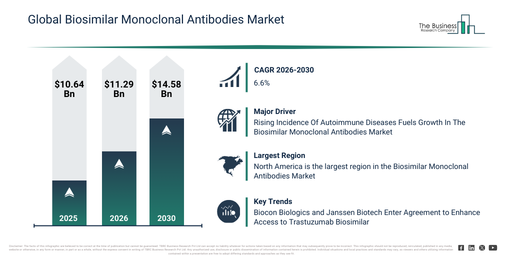
    The biosimilar monoclonal antibodies market has shown robust expansion in recent years. This market is expected to expand from $10.64 billion in 2025 to $11.29 billion in 2026, advancing at a compound annual growth rate (CAGR) of 6.2%. The significant growth observed historically can be linked to the expensive nature of originator biologics, an increasing incidence of chronic and autoimmune conditions, the expiry of patents for leading monoclonal antibodies, rising healthcare expenditure, and a gradual improvement in regulatory guidelines for biosimilars.

    The biosimilar monoclonal antibodies market size is projected to experience robust expansion over the coming years. This market is anticipated to reach $14.58 billion in 2030, exhibiting a compound annual growth rate (CAGR) of 6.6%. Factors contributing to this growth during the projected period include the broadening of biosimilar development pipelines, an escalating need for economical biologic therapies, a rise in approvals within developing markets, innovations in biopharmaceutical production, and favorable government initiatives for biosimilar integration. Key developments expected during the forecast timeframe encompass the increasing embrace of economical biosimilar monoclonal antibodies, expanded application of biosimilars in cancer and autoimmune conditions, enhanced acceptance of biosimilars by medical professionals and patients, broadened regulatory clearances across international markets, and a heightened emphasis on improving availability of biologic treatments.

    Download A Free Sample Report For Comprehensive Market Insights:

    https://www.thebusinessresearchcompany.com/sample.aspx?id=3412&type=smp

    Which Growth Factors Are Strengthening The Biosimilar Monoclonal Antibodies Market Landscape?

    The increasing occurrence of autoimmune diseases is anticipated to boost the growth of the biosimilar monoclonal antibodies market in the future. Autoimmune conditions involve the immune system erroneously targeting and attacking the body’s own tissues and organs. This rise in autoimmune diseases is largely caused by a surge in environmental triggers, such as pollution and various chemicals, which can disturb immune system equilibrium and foster irregular immune responses. Biosimilar monoclonal antibodies are instrumental in tackling the growing prevalence of autoimmune diseases by offering affordable, effective, and widely available targeted treatments that manage overactive immune responses in affected individuals. For example, data from February 2024, sourced from Arthritis Australia, an Australia-based non-profit organization, projects that by 2025, an estimated 212,136 males and 362,137 females will be diagnosed with rheumatoid arthritis (RA). These figures are expected to increase by 2040 to approximately 280,040 males and 479,828 females. Thus, the escalating incidence of autoimmune diseases is a significant driver for the biosimilar monoclonal antibodies market expansion.

    What Are The Core Segment Classifications In The Biosimilar Monoclonal Antibodies Market?

    The biosimilar monoclonal antibodies market covered in this report is segmented –

    1) By Type: Biopharmaceuticals, Other Types

    2) By Compound: Infliximab, Rituximab, Abciximab, Trastuzumab, Adalimumab, Bevacizumab

    3) By Application: Chronic & Autoimmune Diseases, Oncology, Other Applications

    Subsegments:

    1) By Biopharmaceuticals: Monoclonal Antibodies, Recombinant Proteins, Vaccines, Other Biopharmaceuticals

    2) By Other Types: Antibody-Drug Conjugates, Fusion Proteins, Biosimilars Of Other Biologics

    Which Trends Are Contributing To Changes In The Biosimilar Monoclonal Antibodies Market?

    Leading companies in the biosimilar monoclonal antibody market are focused on developing biosimilar forms of monoclonal antibodies to present cost-effective alternatives to existing monoclonal antibody therapies, thereby enhancing accessibility and affordability within healthcare. An intravenous formulation denotes an antibody preparation designed for direct administration into the bloodstream through a vein, ensuring a rapid therapeutic impact. For instance, in May 2024, Bio-Thera Solutions, a China-based biopharmaceutical company, and Biogen Inc., a US-based biopharmaceutical company, introduced TOFIDENCE (tocilizumab-bavi) in an intravenous formulation in the United States. The U.S. Food and Drug Administration had granted approval for TOFIDENCE in September 2023 for addressing moderately to severely active rheumatoid arthritis, polyarticular juvenile idiopathic arthritis, and systemic juvenile idiopathic arthritis. Upon its launch, TOFIDENCE is supplied in three vial sizes for intravenous infusion: 80 mg/4 mL, 200 mg/10 mL, and 400 mg/20 mL, with subcutaneous formulations slated for later release.

    Who Are The Businesses Driving Activity In The Biosimilar Monoclonal Antibodies Market?

    Major companies operating in the biosimilar monoclonal antibodies market are Pfizer Inc., Novartis AG, AbbVie Inc., Coherus BioSciences, Biocon Limited, Amgen Inc., Boehringer Ingelheim International GmbH, Celltrion Inc., BioXpress Therapeutics SA, Intas Pharmaceuticals Limited, Genor BioPharma Co. Ltd., BIOCAD, Dr. Reddy’s Laboratories Ltd., 3SBio Inc., Reliance Life Sciences, Hisun Pharmaceuticals, Celgen Biopharmaceuticals, Torrent Pharmaceuticals Ltd., Cadila Healthcare Ltd., Shanghai Henlius Biotech Inc., Teva Pharmaceutical Industries Ltd., Alvotech, Xentria Inc., Lazuline Biotech Private Limited, Epygen Biotech Pvt Ltd., Mabpharm Limited, Qilu Pharmaceutical Co. Ltd., Chiatai Tianqing Pharmaceutical Group Co. Ltd., YL Biologics Ltd., Aprogen Biologics, UNDBIO Co Ltd., Samsung Bioepis Co. Ltd., ISU Abxis Corp., Bio-Rad Laboratories Inc.

    Access The Complete Biosimilar Monoclonal Antibodies Market Report:

    https://www.thebusinessresearchcompany.com/report/biosimilar-monoclonal-antibodie-global-market-report

    Which Area Represents The Largest Portion Of The Biosimilar Monoclonal Antibodies Market?

    North America was the largest region in the biosimilar monoclonal antibodies market in 2025. The regions covered in the biosimilar monoclonal antibodies market report are Asia-Pacific, South East Asia, Western Europe, Eastern Europe, North America, South America, Middle East, Africa.

    Access Biosimilar Monoclonal Antibodies Market Report for Deeper Competitive Insights

    https://www.thebusinessresearchcompany.com/sample.aspx?id=3412&type=smp

    Browse Through More Reports Similar to the Global Biosimilar Monoclonal Antibodies Market 2026, By The Business Research Company

    Biologics Market 2026

    https://www.thebusinessresearchcompany.com/report/biologics-market

    Pharmaceutical Drugs And Biologics Logistics Market 2026

    https://www.thebusinessresearchcompany.com/report/pharmaceutical-drugs-and-biologics-logistics-market

    Anti Asthmatics And Copd Drugs Market 2026

    https://www.thebusinessresearchcompany.com/report/anti-asthmatics-and-copd-drugs-market

    Get in touch with us:

    The Business Research Company: https://www.thebusinessresearchcompany.com/

    Americas: +1 310-496-7795

    Asia: +44 7882 955267 & +91 8897263534

    Europe: +44 7882 955267

    Email us at: marketing@tbrc.info

    Follow us on:

    LinkedIn: https://in.linkedin.com/company/the-business-research-company

    YouTube: https://www.youtube.com/channel/UC24_fI0rV8cR5DxlCpgmyFQ

    Global Market Model: https://www.thebusinessresearchcompany.com/global-market-model

  • Rising Incidence Of Autoimmune Diseases Fuels Growth In The Biosimilar Lymphocyte Modulator Market Is Supporting Development Across The Biosimilar Lymphocyte Modulator Market

    Rising Incidence Of Autoimmune Diseases Fuels Growth In The Biosimilar Lymphocyte Modulator Market Is Supporting Development Across The Biosimilar Lymphocyte Modulator Market

    The Business Research Company’s 2026 market reports feature advanced enhancements such as market attractiveness analysis, total addressable market evaluation, company benchmarking matrices, interactive Excel dashboards, expanded supply chain intelligence, emerging startup coverage, and detailed product insights, delivering more actionable and strategically valuable research.

    How Will The Market Value Of The Biosimilar Lymphocyte Modulator Market Increase Between 2026 And 2030?

    The size of the biosimilar lymphocyte modulator market has expanded considerably in recent years. It is anticipated to increase from $2.1 billion in 2025 to $2.32 billion in 2026, at a compound annual growth rate (CAGR) of 10.6%. The historical surge in this market can be linked to the elevated cost of branded biologics, the increasing prevalence of autoimmune diseases, the rising incidence of cancer, limited access to pioneering therapies, and an upward trend in healthcare expenditure.

    The biosimilar lymphocyte modulator market size is expected to undergo rapid expansion over the next few years. It is projected to reach $3.53 billion in 2030, demonstrating a compound annual growth rate (CAGR) of 11.1%. This growth during the forecast period can be attributed to the expiration of patents for reference biologics, an increasing number of biosimilar development pipelines, growing confidence in biosimilars among physicians, the expansion of online pharmacy distribution channels, and rising government support for biosimilar adoption. Significant trends anticipated in this period include the increasing use of biosimilar lymphocyte modulators for cost-effective therapies, a surging demand for treatments for autoimmune and oncology conditions, greater acceptance of biosimilars in clinical practice, an increase in treatment options for multiple sclerosis and multiple myeloma, and improved regulatory pathways that facilitate biosimilar approvals.

    Download A Free Sample Report For Comprehensive Market Insights:

    https://www.thebusinessresearchcompany.com/sample.aspx?id=3434&type=smp

    What Important Drivers Are Powering The Biosimilar Lymphocyte Modulator Market Growth?

    The increasing occurrence of autoimmune diseases is anticipated to drive the expansion of the biosimilar lymphocyte modulator market in the future. These conditions encompass a range of disorders where the immune system incorrectly identifies and assaults the body’s own tissues and organs. The escalation in autoimmune diseases is largely fueled by heightened environmental factors, including contaminants and chemical substances, capable of disturbing immune system equilibrium and fostering irregular immune reactions. Biosimilar lymphocyte modulators contribute to the treatment of autoimmune diseases by adjusting the immune system’s function, diminishing inflammation, and easing associated symptoms. For example, as reported in February 2024 by Arthritis Australia, an Australia-based non-profit organization, projections for 2025 estimate 212,136 males and 362,137 females will have rheumatoid arthritis (RA), with these numbers expected to climb by 2040 to approximately 280,040 males and 479,828 females. Consequently, the increasing prevalence of autoimmune diseases is fueling the expansion of the biosimilar lymphocyte modulator market.

    How Is The Biosimilar Lymphocyte Modulator Market Structured Across Different Market Segments?

    The biosimilar lymphocyte modulator market covered in this report is segmented –

    1) By Drug: Campath-1H, Natalizumab Biosimilar, Efalizumab – A1089-Anti-CD11a Biosimilar, Anti-CD38 Daratumumab Biosimilar, Anti-CS1 Elotuzumab Biosimilar

    2) By Disease: Arthritis, Diabetes, Multiple Myeloma, Enterocolitis, Multiple Sclerosis, Psoriasis, Other Diseases

    3) By Distribution Channel: Online Pharmacies, Direct To Consumer

    What Trends Are Shaping The Biosimilar Lymphocyte Modulator Market Structure?

    Leading companies in the biosimilar lymphocyte modulator market are actively developing biosimilar versions of key lymphocyte modulator drugs to secure a competitive advantage within the sector. Idacio (adalimumab-aacf) operates as a tumor necrosis factor (TNF) blocker and serves as a biosimilar to Humira (adalimumab). For instance, in July 2023, Fresenius Kabi AG, a Germany-based healthcare firm, launched the citrate-free biosimilar Idacio (adalimumab-aacf) in the US for the management of chronic autoimmune diseases. This product is available in the US in a self-administered prefilled syringe and a self-administered pre-filled pen (autoinjector) to assist with dosing for its approved indications.

    Which Firms Are Competing In The Biosimilar Lymphocyte Modulator Market?

    Major companies operating in the biosimilar lymphocyte modulator market are Pfizer Inc., Celltrion Inc., Genentech Inc., Novartis AG, Sandoz International GmbH, Fresenius Kabi AG, Biocon Ltd., Dr. Reddy’s Laboratories Ltd., Intas Pharmaceuticals Ltd., Lupin Limited, Stada Arzneimittel AG, Zydus Cadila, Hetero Drugs Limited, Torrent Pharmaceuticals Ltd., Glenmark Pharmaceuticals Ltd., Alvotech, Coherus BioSciences, Innovent Biologics, Shanghai Henlius Biotech, BioXpress Therapeutics SA, Mabion SA, Polpharma Biologics, Prestige BioPharma, Qilu Pharmaceutical, Shanghai Fosun Pharmaceutical Group Co. Ltd., Wockhardt Ltd., Amega Biotech

    Access The Complete Biosimilar Lymphocyte Modulator Market Report:

    https://www.thebusinessresearchcompany.com/report/biosimilar-lymphocytes-modulator-global-market-report

    Which Region Commands The Largest Share Of The Biosimilar Lymphocyte Modulator Market?

    North America was the largest region in the biosimilar lymphocyte modulator market in 2025. Middle East is expected to be the fastest-growing region in the biosimilar lymphocyte modulator market report during the forecast period. The regions covered in the biosimilar lymphocyte modulator market report are Asia-Pacific, South East Asia, Western Europe, Eastern Europe, North America, South America, Middle East, Africa.

    Access Biosimilar Lymphocyte Modulator Market Report for Deeper Competitive Insights

    https://www.thebusinessresearchcompany.com/sample.aspx?id=3434&type=smp

    Browse Through More Reports Similar to the Global Biosimilar Lymphocyte Modulator Market 2026, By The Business Research Company

    Cellulars Immunotherapy Market Report 2026

    https://www.thebusinessresearchcompany.com/report/cellulars-immunotherapy-global-market-report

    Oral Biologics And Biosimilar Drug Market Report 2026

    https://www.thebusinessresearchcompany.com/report/oral-biologics-and-biosimilar-drug-global-market-report

    Colorectal Cancer Drugs Market Report 2026

    https://www.thebusinessresearchcompany.com/report/colorectal-cancer-drugs-global-market-report

    Get in touch with us:

    The Business Research Company: https://www.thebusinessresearchcompany.com/

    Americas: +1 310-496-7795

    Asia: +44 7882 955267 & +91 8897263534

    Europe: +44 7882 955267

    Email us at: marketing@tbrc.info

    Follow us on:

    LinkedIn: https://in.linkedin.com/company/the-business-research-company

    YouTube: https://www.youtube.com/channel/UC24_fI0rV8cR5DxlCpgmyFQ

    Global Market Model: https://www.thebusinessresearchcompany.com/global-market-model
  • Surging Autoimmune Diseases Propel Growth In Interleukin Biosimilars Market Is Supporting Development Across The Biosimilar Interleukins Market

    Surging Autoimmune Diseases Propel Growth In Interleukin Biosimilars Market Is Supporting Development Across The Biosimilar Interleukins Market

    The Business Research Company’s 2026 market reports feature advanced enhancements such as market attractiveness analysis, total addressable market evaluation, company benchmarking matrices, interactive Excel dashboards, expanded supply chain intelligence, emerging startup coverage, and detailed product insights, delivering more actionable and strategically valuable research.

    What Will Be The Estimated Market Size Of The Biosimilar Interleukins Market By 2030?

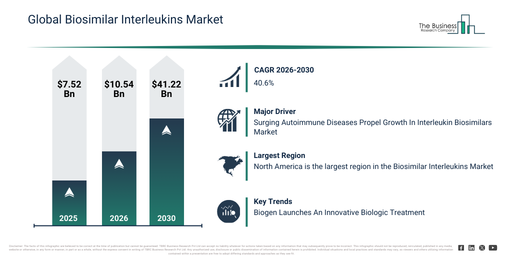
    The biosimilar interleukins market has shown significant expansion in recent years. It is projected to expand from $7.52 billion in 2025 to $10.54 billion in 2026, at a compound annual growth rate (CAGR) of 40.2%. The growth during previous periods is attributable to the elevated cost of originator interleukin biologics, the rising prevalence of autoimmune and inflammatory diseases, the increasing burden of rheumatoid arthritis and psoriasis, restricted patient access to biologic therapies, and enhanced awareness of biologics in immune modulation.

    The biosimilar interleukins market size is anticipated to undergo significant expansion in the near future, with projections showing it will reach **$41.22 billion in 2030, at a compound annual growth rate (CAGR) of 40.6%.** This growth during the forecast period can be attributed to the expiration of patents for branded interleukins, the expanding pipelines for biosimilar clinical trials, increasing physician acceptance of biosimilars, government policies that support biosimilar use, and a rising demand for affordable biologic treatments for cancer and immunology. Key trends expected in this period include the increased adoption of biosimilar interleukins in treating autoimmune diseases, a growing demand for cost-effective alternatives to originator biologics, an expansion of biosimilar approvals across multiple indications, the increasing utilization of interleukins in chronic inflammatory disorders, and the strengthening of regulatory frameworks that foster biosimilar adoption.

    Download A Free Sample Report For Comprehensive Market Insights:

    https://www.thebusinessresearchcompany.com/sample.aspx?id=3433&type=smp

    Which Major Factors Are Contributing To The Development Of The Biosimilar Interleukins Market?

    The rising occurrence of autoimmune conditions like psoriasis and rheumatoid arthritis is projected to boost the expansion of the interleukin biosimilars market throughout the forecast period. Autoimmune disorders are conditions where the immune cells cannot distinguish healthy cells from potentially dangerous antibodies. Biologic drugs, such as anti-interleukin antibodies, have exhibited significant clinical benefits in regulating cells and in directing their proliferation, activation, and migration. For instance, in February 2024, reports published by the National Institutes of Health (NIH), a US-based biomedical research agency, indicated that the estimated annual increases in the global incidence and prevalence of autoimmune diseases are 19.1% and 12.5%, respectively. Therefore, the escalating prevalence of autoimmune diseases is increasing the demand for the biosimilar interleukins market and is expected to drive the growth of the market.

    Which Segment-Based Categories Are Covered In The Biosimilar Interleukins Market?

    The biosimilar interleukins market covered in this report is segmented –

    1) By Type: IL-17, IL-23, IL-1, IL-5, IL-6

    2) By Application: Psoriasis, Psoriatic Arthritis, Rheumatoid Arthritis, Asthma, Inflammatory Bowel Disease (IBD), Other Applications

    3) By Distribution Channel: Hospital Pharmacies, Online Pharmacies, Retail Pharmacies, Clinics, Research Institutes

    Subsegments:

    1) By IL-17: Autoimmune Disease Treatment, Inflammatory Disease Management

    2) By IL-23: Psoriasis Treatment, Inflammatory Bowel Disease (IBD) Treatment

    3) By IL-1: Rheumatoid Arthritis Management, Other Autoimmune Disorders

    4) By IL-5: Asthma Treatment, Eosinophilic Disorders

    5) By IL-6: Rheumatoid Arthritis Management, Inflammatory Disease Treatment

    Which Trends Are Supporting The Evolution Of The Biosimilar Interleukins Market?

    Prominent companies operating in the biosimilar interleukins market are innovating new products, such as Tofidence (tocilizumab-bavi), to boost their profitability in the market. Tofidence functions as a monoclonal antibody designed to target and bind to interleukin-6 receptors, used in the treatment of various inflammatory autoimmune disorders. For instance, in September 2023, Biogen Inc., a US-based biotechnology company, received approval from the FDA for Tofidence (tocilizumab-bavi) as the first biosimilar referencing Genentech’s Actemra (tocilizumab). Tofidence is administered through intravenous infusion and has been approved for treating severely active rheumatoid arthritis, polyarticular juvenile idiopathic arthritis, and systemic juvenile idiopathic arthritis.

    Who Are The Major Companies Operating In The Biosimilar Interleukins Market?

    Major companies operating in the biosimilar interleukins market are Mabpharm Limitied, Gedeon Richter plc, Bio-Thera Solutions Ltd., Sunshine Guojian Pharmaceutical, Stada Arzneimittel AG, Teva Pharmaceutical Industries, 3SBio Inc., Shanghai Fosun Pharmaceuticals, Novartis AG, Pfizer Inc., Amgen Inc., F. Hoffmann-La Roche AG, Sanofi SA, Merck & Co. Inc., GlaxoSmithKline plc, Eli Lilly and Company, AstraZeneca plc, Qilu Pharmaceutical, Tonghua Dongbao, PROBIOMED S.A. de C.V., Biosidus S.A., LG Life Sciences, Viatris Inc.

    Access The Complete Biosimilar Interleukins Market Report:

    https://www.thebusinessresearchcompany.com/report/biosimilar-interleukin-global-market-report

    Which Region Accounts For The Highest Share Of The Biosimilar Interleukins Market?

    North America was the largest region in the biosimilar interleukins market in 2025. The regions covered in the biosimilar interleukins market report are Asia-Pacific, South East Asia, Western Europe, Eastern Europe, North America, South America, Middle East, Africa.

    Access Biosimilar Interleukins Market Report for Deeper Competitive Insights

    https://www.thebusinessresearchcompany.com/sample.aspx?id=3433&type=smp

    Browse Through More Reports Similar to the Global Biosimilar Interleukins Market 2026, By The Business Research Company

    Generic Pharmaceuticals Market Report 2026

    https://www.thebusinessresearchcompany.com/report/generic-pharmaceuticals-global-market-report

    Biosimilar Market Report 2026

    https://www.thebusinessresearchcompany.com/report/biosimilar-global-market-report

    Oncology Biosimilar Market Report 2026

    https://www.thebusinessresearchcompany.com/report/oncology-biosimilar-global-market-report

    Get in touch with us:

    The Business Research Company: https://www.thebusinessresearchcompany.com/

    Americas: +1 310-496-7795

    Asia: +44 7882 955267 & +91 8897263534

    Europe: +44 7882 955267

    Email us at: marketing@tbrc.info

    Follow us on:

    LinkedIn: https://in.linkedin.com/company/the-business-research-company

    YouTube: https://www.youtube.com/channel/UC24_fI0rV8cR5DxlCpgmyFQ

    Global Market Model: https://www.thebusinessresearchcompany.com/global-market-model

  • Rising Healthcare Spending Accelerates Demand For The Market Due To Higher Patient Admissions And Expanding Access To Medical Care Is Supporting Development Across The Biosimilar Hormones Market

    Rising Healthcare Spending Accelerates Demand For The Market Due To Higher Patient Admissions And Expanding Access To Medical Care Is Supporting Development Across The Biosimilar Hormones Market

    The Business Research Company’s 2026 market reports feature advanced enhancements such as market attractiveness analysis, total addressable market evaluation, company benchmarking matrices, interactive Excel dashboards, expanded supply chain intelligence, emerging startup coverage, and detailed product insights, delivering more actionable and strategically valuable research.

    What Is The Estimated Growth In Market Size Of The Biosimilar Hormones Market During 2026–2030?

    The biosimilar hormones market has undergone rapid expansion in recent years. Its size is expected to increase from $6.22 billion in 2025 to $7.68 billion in 2026, demonstrating a compound annual growth rate (CAGR) of 23.5%. The historical growth of this market stems from factors such as the increasing prevalence of diabetes and hormonal disorders, the significant cost of branded hormone therapies, a growing aging population, rising awareness of hormone replacement therapies, and the expanding networks of hospitals and retail pharmacies.

    The biosimilar hormones market size is projected to experience substantial expansion in the coming years. It is anticipated to grow to $18.12 billion in 2030, exhibiting a compound annual growth rate (CAGR) of 23.9%. This projected growth throughout the forecast period is driven by factors such as the patent expiry of significant biologic hormones, increasing regulatory encouragement for biosimilars, a rising need for affordable endocrine treatments, the broadening of online pharmacy distribution channels, and an uptick in investment for biosimilar research and development. Prominent trends for the forecast period involve the increasing adoption of biosimilar hormones as economical alternatives, a rising demand for insulin and growth hormone biosimilars, greater acceptance of biosimilar hormone therapies among medical professionals, the expansion of biosimilar application in chronic and lifestyle diseases, and enhanced regulatory pathways that support biosimilar approvals.

    Download A Free Sample Report For Comprehensive Market Insights:

    https://www.thebusinessresearchcompany.com/sample.aspx?id=3432&type=smp

    What Key Growth Drivers Are Influencing The Biosimilar Hormones Market?

    An anticipated expansion in healthcare spending is projected to fuel the advancement of the Biosimilar Hormones Market. This expenditure encompasses all financial outlays by individuals, entities, or governments directed towards health condition prevention, treatment, and management. The escalation in healthcare costs stems from progress in medical technology, where novel diagnostic instruments, treatments, and groundbreaking therapies frequently entail higher expenses, consequently elevating overall healthcare spending. This increase in healthcare expenditure encourages the adoption of biosimilar hormones by generating a need for economical treatments and broadening patient availability throughout healthcare systems. For example, data from the Centers for Medicare & Medicaid Services, a US-based agency, in December 2024 revealed that U.S. health care expenditures rose by 7.5% in 2023, reaching $4.9 trillion, equivalent to approximately $14,570 per person. Consequently, the increasing healthcare expenditure is a key factor propelling the expansion of the Biosimilar Hormones Market.

    What Are The Major Segment Categories Within The Biosimilar Hormones Market?

    The biosimilar hormones market covered in this report is segmented –

    1) By Type: Teriparatide Biosimilars, Follitropin Alfa Biosimilars, Insulin Biosimilars, Somatropin Biosimilars, Other Types

    2) By Application: Research & Biotechnology, Therapeutics, Other Applications

    3) By Distribution Channel: Hospital And Retail Pharmacy, Online Pharmacy/pharmacy, Specialty Clinics

    Subsegments:

    1) By Teriparatide Biosimilars: Osteoporosis Treatment, Bone Health Maintenance

    2) By Follitropin Alfa Biosimilars: Infertility Treatment, Assisted Reproductive Technology (ART)

    3) By Insulin Biosimilars: Type 1 Diabetes Management, Type 2 Diabetes Management

    4) By Somatropin Biosimilars: Growth Hormone Deficiency Treatment, Pediatric Growth Disorders

    5) By Other Types: Thyroid Hormones, Corticosteroids

    What Trends Are Affecting The Growth Of The Biosimilar Hormones Market?

    Leading companies in the biosimilar hormones market are developing innovative products, such as Sogroya (somapacitan-beco) injection, to boost their market profitability. Sogroya (somapacitan-beco) is a prescribed analog of human growth hormone (GH) used to treat individuals diagnosed with growth hormone deficiency (GHD). For instance, in April 2023, Novo Nordisk, a Denmark-based pharmaceutical company, received FDA approval for a new indication for Sogroya (somapacitan-beco) injection to treat children aged 2.5 years and older who experience growth failure due to insufficient endogenous growth hormone secretion. Sogroya is notable as the sole once-weekly growth hormone (GH) therapy designed for both children and adults. The approval was supported by findings from the phase 3 REAL4 trial, which demonstrated Sogroya’s effectiveness in addressing growth hormone deficiency (GHD) in pediatric patients.

    Which Companies Are Influencing The Biosimilar Hormones Market?

    Major companies operating in the biosimilar hormones market are Teva Pharmaceutical Industries Ltd., Gedeon Richter Plc., Intas Pharmaceuticals Ltd., Biocon Limited, Mylan, Sanofi, Sandoz Group AG, LG Life Sciences, Ferring Pharmaceuticals, GC Pharma, Pfizer Inc., Dr. Reddy’s Laboratories, Amgen Inc., Eli Lilly and Company, Celltrion Inc., Samsungbioepis Co.Ltd, Merck & Co., Biogen Inc., Boehringer Ingelheim, Alvotech, Cipla Limited, Lupin Ltd., Stada Arzneimittel AG, Torrent Pharmaceuticals, Zydus Cadila, Accord Healthcare, Hetero Drugs, Wockhardt

    Access The Complete Biosimilar Hormones Market Report:

    https://www.thebusinessresearchcompany.com/report/biosimilar-hormone-global-market-report

    Which Region Is The Primary Market For The Biosimilar Hormones Market?

    North America was the largest region in the biosimilar hormones market in 2025. The regions covered in the biosimilar hormones market report are Asia-Pacific, South East Asia, Western Europe, Eastern Europe, North America, South America, Middle East, Africa.

    Access Biosimilar Hormones Market Report for Deeper Competitive Insights

    https://www.thebusinessresearchcompany.com/sample.aspx?id=3432&type=smp

    Browse Through More Reports Similar to the Global Biosimilar Hormones Market 2026, By The Business Research Company

    Hormonal Contraceptives Market Report 2026

    https://www.thebusinessresearchcompany.com/report/hormonal-contraceptives-global-market-report

    Biosimilar Growth Hormone Market Report 2026

    https://www.thebusinessresearchcompany.com/report/biosimilar-growth-hormone-global-market-report

    Parathyroid Hormones Market Report 2026

    https://www.thebusinessresearchcompany.com/report/parathyroid-hormones-global-market-report

    Get in touch with us:

    The Business Research Company: https://www.thebusinessresearchcompany.com/

    Americas: +1 310-496-7795

    Asia: +44 7882 955267 & +91 8897263534

    Europe: +44 7882 955267

    Email us at: marketing@tbrc.info

    Follow us on:

    LinkedIn: https://in.linkedin.com/company/the-business-research-company

    YouTube: https://www.youtube.com/channel/UC24_fI0rV8cR5DxlCpgmyFQ

    Global Market Model: https://www.thebusinessresearchcompany.com/global-market-model
  • Rising Incidence Of Childhood Growth Hormone Deficiency Spurs Global Biosimilar Growth Hormone Market Is Supporting Development Across The Biosimilar Growth Hormones Market

    Rising Incidence Of Childhood Growth Hormone Deficiency Spurs Global Biosimilar Growth Hormone Market Is Supporting Development Across The Biosimilar Growth Hormones Market

    The Business Research Company’s 2026 market reports feature advanced enhancements such as market attractiveness analysis, total addressable market evaluation, company benchmarking matrices, interactive Excel dashboards, expanded supply chain intelligence, emerging startup coverage, and detailed product insights, delivering more actionable and strategically valuable research.

    What Market Value Expansion Is Expected For The Biosimilar Growth Hormones Market Over The Forecast Period?

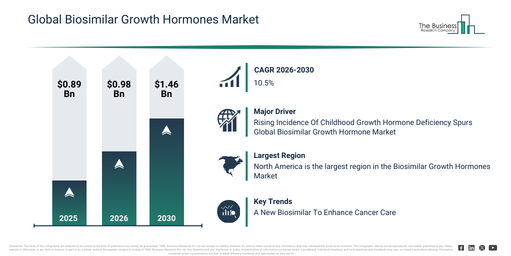
    The biosimilar growth hormones market has seen considerable expansion in recent years. This market is projected to expand from $0.89 billion in 2025 to $0.98 billion in 2026, achieving a compound annual growth rate (CAGR) of 10.1%. The increase observed in previous periods can be linked to factors such as the elevated cost of branded growth hormone therapies, the growing incidence of growth hormone deficiency, an uptick in pediatric growth disorder diagnoses, limited accessibility to affordable treatment options, and a reliance on hospital-based administration.

    The biosimilar growth hormones market is projected to experience substantial expansion over the upcoming years, reaching $1.46 billion in 2030, exhibiting a compound annual growth rate (CAGR) of 10.5%. This anticipated growth during the forecast period stems from factors such as the expiration of patents for branded growth hormones, an increase in biosimilar approvals, the wider availability of self-administration treatments, increased understanding of growth disorders, and a rise in healthcare spending across developing markets. Key developments expected during this period involve a greater embrace of affordable biosimilar growth hormones, heightened demand for growth hormone therapies for both children and adults, a growing inclination towards self-administration through subcutaneous methods, the proliferation of online pharmacies and specialized clinics, and enhanced regulatory acceptance of biosimilars.

    Download A Free Sample Report For Comprehensive Market Insights:

    https://www.thebusinessresearchcompany.com/sample.aspx?id=3391&type=smp

    Which Core Factors Are Supporting The Expansion Of The Biosimilar Growth Hormones Market?

    The increasing number of children affected by growth hormone deficiency is driving the expansion of the global biosimilar growth hormone market. This deficiency results from damage to the pituitary gland or hypothalamus, which can be due to an abnormal formation present before birth (congenital) or something that developed during or after birth (acquired). For instance, in September 2023, Hormones Australia by the Endocrine Society of Australia (ESA), an Australia-based national authority for the treatment of endocrine related conditions and disease, reported that growth hormone deficiency is estimated to affect 2 to 3 out of every 10,000 people. As a result, the rising incidence of growth deficiencies in children is fueling the growth of the biosimilar growth hormones industry.

    How Is The Biosimilar Growth Hormones Market Distributed Across Key Segments?

    The biosimilar growth hormones market covered in this report is segmented –

    1) By Route Of Administration: Subcutaneous, Intramuscular, Oral

    2) By Application: Growth Hormone Deficiency, Turner Syndrome, Idiopathic Short Stature, Prader Willi Syndrome, Other Applications

    3) By Distribution Channel: Hospital And Retail Pharmacy, Online Pharmacy/ePharmacy, Specialty Clinics

    Subsegments:

    1) By Subcutaneous: Self-administration, Professional Administration

    2) By Intramuscular: Pediatric Care, Adult Care

    3) By Oral: Tablets, Capsules

    Which Trends Are Influencing The Direction Of The Biosimilar Growth Hormones Market?

    Major companies operating in the biosimilar growth hormones market are actively developing novel solutions like human growth hormone to enhance treatment efficacy and affordability for growth hormone deficiencies. Growth hormone solutions denote medical treatments or supplements designed to stimulate or replace human growth hormone (HGH) in the body, addressing growth deficiencies or anti-aging objectives. For instance, in June 2023, Pfizer Inc., a US-based pharmaceutical company, in collaboration with OPKO Health Inc., a US-based healthcare company, obtained US Food and Drug Administration (FDA) approval for NGENLA (somatrogon-ghla). This is a once-weekly injectable human growth hormone treatment developed for pediatric patients with growth hormone deficiency (GHD). This extended-release growth hormone therapy offers a new option compared to daily injections, which can improve adherence and convenience for patients and caregivers. The approval was based on clinical studies demonstrating its efficacy and safety, marking a significant advancement in growth hormone therapies.

    Who Are The Companies Shaping The Biosimilar Growth Hormones Market Landscape?

    Major companies operating in the biosimilar growth hormones market are Amega Biotech, Biosidus S.A., Eli Lilly and Company, Ferring Pharmaceuticals, Genetech Inc., Merck & Co. Inc., Novartis AG, Novo Nordisk A/S, Sanofi S.A., USV Private Limited, Zhongshan Hygene Biopharm Co. Ltd., Biopartners And LG Chem, Boehringer Ingelheim International GmbH, Celltrion Inc., Dr. Reddy’s Laboratories Ltd., Gedeon Richter Plc., Genor Biopharma Co. Ltd., Hetero Drugs Limited, Intas Pharmaceuticals Ltd., LG Chem Ltd., Lupin Limited, Mabion S.A., Mundipharma International Limited, Panacea Biotec Limited, Pfenex Inc., PlantForm Corporation

    Access The Complete Biosimilar Growth Hormones Market Report:

    https://www.thebusinessresearchcompany.com/report/biosimilar-growth-hormone-global-market-report

    Which Geographic Region Represents The Largest Biosimilar Growth Hormones Market Share?

    North America was the largest region in the biosimilar growth hormone market in 2025. The Middle East is expected to be the fastest-growing region in the biosimilar growth hormones market report during the forecast period. The regions covered in the biosimilar growth hormones market report are Asia-Pacific, South East Asia, Western Europe, Eastern Europe, North America, South America, Middle East, Africa.

    Access Biosimilar Growth Hormones Market Report for Deeper Competitive Insights

    https://www.thebusinessresearchcompany.com/sample.aspx?id=3391&type=smp

    Browse Through More Reports Similar to the Global Biosimilar Growth Hormones Market 2026, By The Business Research Company

    Hormonal Contraceptives Market Report 2026

    https://www.thebusinessresearchcompany.com/report/hormonal-contraceptives-global-market-report

    Parathyroid Hormones Market Report 2026

    https://www.thebusinessresearchcompany.com/report/parathyroid-hormones-global-market-report

    Biosimilar Hormone Market Report 2026

    https://www.thebusinessresearchcompany.com/report/biosimilar-hormone-global-market-report

    Get in touch with us:

    The Business Research Company: https://www.thebusinessresearchcompany.com/

    Americas: +1 310-496-7795

    Asia: +44 7882 955267 & +91 8897263534

    Europe: +44 7882 955267

    Email us at: marketing@tbrc.info

    Follow us on:

    LinkedIn: https://in.linkedin.com/company/the-business-research-company

    YouTube: https://www.youtube.com/channel/UC24_fI0rV8cR5DxlCpgmyFQ

    Global Market Model: https://www.thebusinessresearchcompany.com/global-market-model

  • Growing Prevalence Of Diabetes Fueling The Growth Of The Market Due To Rising Demand For Affordable Insulin And Biologic Therapies Is Supporting Development Across The Biosimilar Contract Manufacturing Market

    Growing Prevalence Of Diabetes Fueling The Growth Of The Market Due To Rising Demand For Affordable Insulin And Biologic Therapies Is Supporting Development Across The Biosimilar Contract Manufacturing Market

    The Business Research Company’s 2026 market reports feature advanced enhancements such as market attractiveness analysis, total addressable market evaluation, company benchmarking matrices, interactive Excel dashboards, expanded supply chain intelligence, emerging startup coverage, and detailed product insights, delivering more actionable and strategically valuable research.

    How Will The Market Value Of The Biosimilar Contract Manufacturing Market Change Between 2026 And 2030?

    The biosimilar contract manufacturing market has seen rapid expansion in recent years. Its valuation is anticipated to climb from $9.94 billion in 2025 to $11.49 billion in 2026, demonstrating a compound annual growth rate (CAGR) of 15.7%. This historical growth can be primarily attributed to the expiry of reference biologic patents, the early embrace of biosimilar development programs, the broadening of contract manufacturing partnerships, evolving regulatory directives for biosimilars, and an increase in the occurrence of chronic diseases.

    The biosimilar contract manufacturing market size is projected to experience swift expansion over the coming years. This market is anticipated to reach $20.35 billion in 2030, exhibiting a compound annual growth rate (CAGR) of 15.4%. The expansion throughout the projected timeframe can be ascribed to several factors, including a rise in biosimilar authorizations across international markets, increasing impetus to lower biologic treatment expenses, the broadening of biosimilar product pipelines, escalating investments in substantial manufacturing capabilities, and progress in process optimization technologies. Key trends expected during this forecast period encompass a surge in the outsourcing of biosimilar production, an escalating need for economical production platforms, a heightened emphasis on analytical and quality assurance services, the broadening of mammalian cell-based manufacturing, and a stronger focus on adherence to regulatory standards.

    Download A Free Sample Report For Comprehensive Market Insights:

    https://www.thebusinessresearchcompany.com/sample.aspx?id=30215&type=smp

    What Are The Main Drivers Accelerating The Growth Of The Biosimilar Contract Manufacturing Market?

    The increasing incidence of diabetes is anticipated to fuel the expansion of the biosimilar contract manufacturing market in the future. Diabetes prevalence signifies the percentage of individuals within a population suffering from diabetes at a specific moment, indicating a continuous requirement for treatment and a lifelong demand for therapy. This increase in diabetes prevalence stems from more inactive lifestyles and unhealthy eating patterns, resulting in obesity, insulin resistance, and elevated instances of type 2 diabetes. Biosimilar contract manufacturing aids diabetes management by facilitating the extensive, economical production of biosimilar insulin and associated biologics. It guarantees consistent quality and adherence to regulations, thereby making advanced treatments more obtainable for patients. This contributes to greater affordability of treatment and broadens worldwide availability of crucial diabetes care. For example, in June 2024, data from the National Health Service, a UK-based government department, revealed that 3,615,330 individuals registered with a general practitioner (GP) received a diagnosis of non-diabetic hyperglycemia or pre-diabetes in 2023, representing an 18% rise from 3,065,825 cases recorded in 2022. Consequently, the expanding prevalence of diabetes is propelling the growth of the biosimilar contract manufacturing market.

    How Does Segment Analysis Break Down The Biosimilar Contract Manufacturing Market Structure?

    The biosimilar contract manufacturing market covered in this report is segmented –

    1) By Product Type: Monoclonal Antibodies, Insulin, Erythropoietin, Granulocyte Colony-Stimulating Factor, Other Product Types

    2) By Service Type: Process Development, Analytical And Quality Control, Fill And Finish Operations, Packaging, Other Service Types

    3) By Source: Mammalian, Non-mammalian

    4) By Application: Oncology, Autoimmune Diseases, Blood Disorders, Growth Hormone Deficiency, Other Applications

    5) By End-Use: Pharmaceutical Companies, Biotech Companies

    Subsegments:

    1) By Monoclonal Antibodies: Chimeric Monoclonal Antibodies, Humanized Monoclonal Antibodies, Fully Human Monoclonal Antibodies, Bispecific Monoclonal Antibodies

    2) By Insulin: Rapid Acting Insulin, Short Acting Insulin, Intermediate Acting Insulin, Long Acting Insulin, Premixed Insulin

    3) By Erythropoietin: Alpha Erythropoietin, Beta Erythropoietin, Darbepoetin Alfa, Continuous Erythropoietin Receptor Activators

    4) By Granulocyte Colony-Stimulating Factor: Filgrastim, Pegfilgrastim, Lenograstim, Long Acting Granulocyte Colony-Stimulating Factor

    5) By Other Product Types: Interferons, Interleukins, Fusion Proteins, Enzyme Therapeutics, Hormonal Biologics

    What Trends Are Driving Changes In The Biosimilar Contract Manufacturing Market?

    Major companies within the biosimilar contract manufacturing market are concentrating on developing production facilities, particularly mirrored single-use plants, to accelerate technology transfer, enhance scale-up capabilities, and improve commercial reliability. Mirrored single-use plants are sites constructed with identical production suites that operate using disposable bioprocess equipment and unified digital systems, thereby enabling rapid operational changes, consistent quality across various locations, and a reduced risk of contamination. For instance, in September 2025, Rezon Bio, a Poland-based contract development and manufacturing organization (CDMO), launched two single-use biomanufacturing sites with mirrored capabilities, covering services from cell line development through to commercial GMP supply. This approach facilitates faster technology transfer and flexible scale-up for biosimilars with minimized downtime, while simultaneously improving batch-to-batch consistency through standardized suites, integrated analytics, and logistics automation. It also lowers the total cost of ownership for sponsors by reducing cleaning validation requirements, shortening both development and manufacturing timelines, and decreasing the risks associated with expansion.

    Which Industry Players Are Present In The Biosimilar Contract Manufacturing Market?

    Major companies operating in the biosimilar contract manufacturing market are Thermo Fisher Scientific Inc., Biocon Limited, Lonza Group AG, Samsung Biologics Co. Ltd., WuXi Biologics (Cayman) Inc., Laboratorios Farmacéuticos Rovi S.A., Vetter Pharma-Fertigung GmbH & Co. KG, National Resilience Inc., Porton Pharma Solutions Co. Ltd., Syngene International Limited, Rentschler Biopharma SE, Boehringer Ingelheim International GmbH, Enzene Biosciences Ltd., Prestige Biologics Co. Ltd., Mabion S.A., HALIX B.V., BioConnection B.V., BioCina Pty Ltd, Mycenax Biotech Inc., Polpharma Biologics S.A.

    Access The Complete Biosimilar Contract Manufacturing Market Report:

    https://www.thebusinessresearchcompany.com/report/global-biosimilar-contract-manufacturing-market-report

    Which Region Leads The Biosimilar Contract Manufacturing Market By Size?

    North America was the largest region in the biosimilar contract manufacturing market in 2025. Asia-Pacific is expected to be the fastest-growing region in the forecast period. The regions covered in the biosimilar contract manufacturing market report are Asia-Pacific, South East Asia, Western Europe, Eastern Europe, North America, South America, Middle East, Africa.

    Access Biosimilar Contract Manufacturing Market Report for Deeper Competitive Insights

    https://www.thebusinessresearchcompany.com/sample.aspx?id=30215&type=smp

    Browse Through More Reports Similar to the Global Biosimilar Contract Manufacturing Market 2026, By The Business Research Company

    Biopharmaceuticals Contract Manufacturing Market Report 2026

    https://www.thebusinessresearchcompany.com/report/biopharmaceuticals-contract-manufacturing-global-market-report

    Medical Device Contract Manufacturing Market Report 2026

    https://www.thebusinessresearchcompany.com/report/medical-device-contract-manufacturing-global-market-report

    Food Contract Manufacturing Market Report 2026

    https://www.thebusinessresearchcompany.com/report/food-contract-manufacturing-global-market-report

    Get in touch with us:

    The Business Research Company: https://www.thebusinessresearchcompany.com/

    Americas: +1 310-496-7795

    Asia: +44 7882 955267 & +91 8897263534

    Europe: +44 7882 955267

    Email us at: marketing@tbrc.info

    Follow us on:

    LinkedIn: https://in.linkedin.com/company/the-business-research-company

    YouTube: https://www.youtube.com/channel/UC24_fI0rV8cR5DxlCpgmyFQ

    Global Market Model: https://www.thebusinessresearchcompany.com/global-market-model
  • Impact Of Rising Demand For Biopharmaceuticals On The Bioprocess Analyzers Market Is Supporting Development Across The Bioprocess Analyzers Market

    Impact Of Rising Demand For Biopharmaceuticals On The Bioprocess Analyzers Market Is Supporting Development Across The Bioprocess Analyzers Market

    The Business Research Company’s 2026 market reports feature advanced enhancements such as market attractiveness analysis, total addressable market evaluation, company benchmarking matrices, interactive Excel dashboards, expanded supply chain intelligence, emerging startup coverage, and detailed product insights, delivering more actionable and strategically valuable research.

    What Is The Forecasted Rise In Market Size Of The Bioprocess Analyzers Market During The Forecast Period?

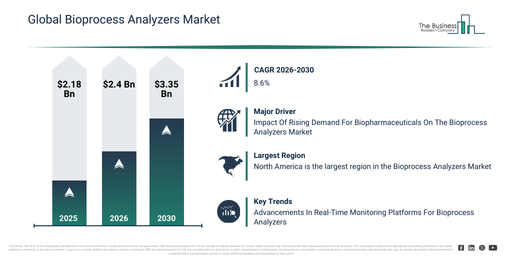
    The bioprocess analyzers market has experienced rapid growth in its size over recent years. This market is projected to expand from $2.18 billion in 2025 to $2.4 billion in 2026, achieving a compound annual growth rate (CAGR) of 10.1%. The historical expansion can be attributed to several factors, including the increasing production of biopharmaceuticals, the rising integration of automation in laboratories, a greater demand for biologics, strict regulatory compliance requirements, and continuous advancements in sensor technologies.

    The bioprocess analyzers market is projected to experience substantial expansion in the coming years. Its valuation is set to reach $3.35 billion by 2030, driven by an 8.6% compound annual growth rate (CAGR). This anticipated growth during the forecast period is fueled by several factors, including the increasing reach of personalized medicine, the incorporation of AI into bioprocessing, a rising need for continuous manufacturing processes, the expansion of contract manufacturing organizations (CMOs), and advancements in miniaturized analytical systems. Key developments expected in this period encompass real-time bioprocess monitoring, the integration of process analytical technology (PAT), the adoption of high-throughput screening and automation, the creation of advanced sensors, and the application of quality-by-design (QbD) principles.

    Download A Free Sample Report For Comprehensive Market Insights:

    https://www.thebusinessresearchcompany.com/sample.aspx?id=14865&type=smp

    Which Growth Drivers Are Expected To Support The Bioprocess Analyzers Market Forward?

    The escalating need for biopharmaceuticals is anticipated to fuel the expansion of the bioprocess analyzer market moving ahead. These are medicines derived from biological origins, including living organisms or their constituents. The biopharmaceutical sector is experiencing an upsurge, driven by innovative research and development initiatives that lead to the production of new biologics and biosimilars. Bioprocess analyzers play a crucial role in overseeing diverse metrics during biopharmaceutical manufacturing, such as cell proliferation, protein manifestation, and product integrity. Illustratively, in January 2024, data from IQVIA, a US-based firm specializing in biopharmaceutical development services, projects that worldwide biotech expenditure will surpass $892 billion by 2028. Consequently, the heightened demand for biopharmaceuticals will stimulate the growth of the bioprocess analyzer market.

    What Segment Types Are Included In The Bioprocess Analyzers Market Analysis?

    The bioprocess analyzers market covered in this report is segmented –

    1) By Product: Instruments, Consumables

    2) By Application: Antibiotics, Recombinant Proteins, Biosimilars, Other Applications

    3) By End-User: Biopharmaceutical Companies, Contract Manufacturing Organizations, Contract Research Organizations, Other End Users

    Subsegments:

    1) By Instruments: Spectrometers, Chromatographs, pH Or DO Analyzers, Gas Analyzers, Offline Analyzers

    2) By Consumables: Reagents, Sensors, Calibration Kits

    Which Trends Are Shaping The Bioprocess Analyzers Market Landscape?

    Leading firms in the bioprocess analyzer sector are concentrating on creating sophisticated solutions, like optical in-line analyzers, to secure a competitive advantage within the market. These instruments, known as optical in-line analyzers, employ optical technology for real-time surveillance and assessment of vital metrics in bioprocessing. For example, in September 2023, 908 Devices Inc., a US-based chemical and biochemical analysis enterprise, introduced MAVERICK, an advanced optical in-line analyzer offering real-time oversight and regulation of crucial elements such as glucose, lactate, and total biomass in mammalian cell cultures. Biopharmaceutical professionals can leverage the device’s extensive process fingerprint data to optimize large-scale bioprocesses. Its intuitive design streamlines operations for scientists and engineers, speeding up the formulation of cell culture media and the establishment of efficient feeding and control strategies. The system employs Raman spectroscopy for real-time measurement of several key process parameters, including glucose, lactate, and biomass, within bioreactors. MAVERICK aims to enhance process understanding, boost performance, and guarantee batch-to-batch consistency in cell culture automation for biologic production utilizing CHO (Chinese hamster ovary) or HEK293 (human embryonic kidney 293) mammalian cell lines and diverse medium types.

    Which Organizations Are Involved In The Bioprocess Analyzers Market?

    Major companies operating in the bioprocess analyzers market are Danaher Corporation, Merck KGaA, Thermo Fisher Scientific, MilliporeSigma, Sartorius AG, Beckman Coulter Inc., Waters Corporation, Bio-Rad Laboratories, Bruker Corporation, Agilent Technologies, GE Healthcare, Pall Corporation, HORIBA Ltd., Nova Biomedical, Hamilton Company, BioTek Instruments, PerkinElmer Inc, Analytik Jena AG, Eppendorf AG, Metrohm AG, Zymo Research Corporation, Macherey-Nagel GmbH & Co. KG

    Access The Complete Bioprocess Analyzers Market Report:

    https://www.thebusinessresearchcompany.com/report/bioprocess-analyzers-global-market-report

    Which Region Has The Strongest Presence In The Bioprocess Analyzers Market?

    North America was the largest region in the bioprocess analyzers market in 2025. Asia-Pacific is expected to be the fastest-growing region in the forecast period. The regions covered in the bioprocess analyzers market report are Asia-Pacific, South East Asia, Western Europe, Eastern Europe, North America, South America, Middle East, Africa.

    Access Bioprocess Analyzers Market Report for Deeper Competitive Insights

    https://www.thebusinessresearchcompany.com/sample.aspx?id=14865&type=smp

    Browse Through More Reports Similar to the Global Bioprocess Analyzers Market 2026, By The Business Research Company

    Bioprocess Analyzers Market Report 2026

    https://www.thebusinessresearchcompany.com/report/bioprocess-analyzers-global-market-report

    Process Analyzer Market Report 2026

    https://www.thebusinessresearchcompany.com/report/process-analyzer-global-market-report

    Biochemistry Analyzer Market Report 2026

    https://www.thebusinessresearchcompany.com/report/biochemistry-analyzer-global-market-report

    Get in touch with us:

    The Business Research Company: https://www.thebusinessresearchcompany.com/

    Americas: +1 310-496-7795

    Asia: +44 7882 955267 & +91 8897263534

    Europe: +44 7882 955267

    Email us at: marketing@tbrc.info

    Follow us on:

    LinkedIn: https://in.linkedin.com/company/the-business-research-company

    YouTube: https://www.youtube.com/channel/UC24_fI0rV8cR5DxlCpgmyFQ

    Global Market Model: https://www.thebusinessresearchcompany.com/global-market-model

  • The Increasing Emphasis On Personalized Medicine Is Driving The Growth Of The Market Due To Advances In Genomic Sequencing And Targeted Therapies Is Supporting Development Across The Biopharmaceutical Lab Equipment Market

    The Increasing Emphasis On Personalized Medicine Is Driving The Growth Of The Market Due To Advances In Genomic Sequencing And Targeted Therapies Is Supporting Development Across The Biopharmaceutical Lab Equipment Market

    The Business Research Company’s 2026 market reports feature advanced enhancements such as market attractiveness analysis, total addressable market evaluation, company benchmarking matrices, interactive Excel dashboards, expanded supply chain intelligence, emerging startup coverage, and detailed product insights, delivering more actionable and strategically valuable research.

    How Is The Biopharmaceutical Lab Equipment Market’s Market Value Anticipated To Evolve From 2026 To 2030?

    The biopharmaceutical lab equipment market has shown significant growth in recent years. It is anticipated to increase from $17.77 billion in 2025 to $19.18 billion in 2026, registering a compound annual growth rate (CAGR) of 7.9%. Historically, this expansion has been driven by the broadening of biopharmaceutical research pipelines, the rising adoption of laboratory automation, increased investment in life sciences infrastructure, the crucial role of chromatography and PCR technologies, and the standardization of quality control processes.

    The biopharmaceutical lab equipment market is anticipated to exhibit substantial growth over the next few years, reaching **$25.72 billion in 2030 at a compound annual growth rate (CAGR) of 7.6%**. This expansion during the forecast period is driven by factors such as the increasing development of biologics and cell therapies, a rising demand for continuous processing technologies, the enlargement of large-scale biopharma labs, the greater integration of AI-driven analytics, and an enhanced focus on operational efficiency in laboratories. Prominent trends expected in this period include the growing adoption of single-use lab equipment, increased deployment of automated analytical instruments, a heightened demand for high-throughput testing systems, the expansion of advanced cell culture platforms, and a stronger emphasis on data integrity and reproducibility.

    Download A Free Sample Report For Comprehensive Market Insights:

    https://www.thebusinessresearchcompany.com/sample.aspx?id=28967&type=smp

    What Influential Factors Are Boosting The Biopharmaceutical Lab Equipment Market Demand?

    A greater focus on personalized medicine is anticipated to fuel the expansion of the biopharmaceutical lab equipment market in the future. This medical approach involves customizing treatment and preventative measures for patients, taking into account their unique genetic makeup, environmental factors, and lifestyle choices. Its increasing acceptance stems from breakthroughs in genomic sequencing technologies and data analytics, empowering healthcare professionals to create more accurate diagnostic instruments and specific treatments tailored to each patient. The move towards such precision-based healthcare necessitates advanced laboratory equipment that can analyze genetic information, formulate targeted therapies, and facilitate clinical research for individualized treatments. As an illustration, data from February 2024 by the Personalized Medicine Coalition, a US-based hospital and health care organization, indicated that in 2023, the FDA sanctioned 16 novel personalized treatments for patients with rare diseases, an increase from six in 2022. Consequently, the heightened emphasis on personalized medicine is stimulating the growth of the biopharmaceutical lab equipment market.

    Which Segment Divisions Form The Structure Of The Biopharmaceutical Lab Equipment Market?

    The biopharmaceutical lab equipment market covered in this report is segmented –

    1) By Product Type: Chromatography Systems, Mass Spectrometers, Polymerase Chain Reaction (PCR) Equipment, Cell Culture Systems, Microscopes, Other Product Types

    2) By Technology: Single-Use Technology, Continuous Processing Technology, Cell Culture Technology, Filtration Technology, High-Throughput Screening Technology

    3) By Size Of Lab: Small Scale Labs, Medium Scale Labs, Large Scale Labs

    4) By Application: Drug Discovery, Clinical Diagnostics, Research And Development, Quality Control, Other Applications

    5) By End-User: Pharmaceutical Companies, Biotechnology Companies, Academic And Research Institutes, Other End-Users

    Subsegments:

    1) By Chromatography Systems: High-Performance Liquid Chromatography (HPLC), Gas Chromatography (GC), Ion Exchange Chromatography, Affinity Chromatography, Size Exclusion Chromatography (SEC), Thin Layer Chromatography (TLC)

    2) By Mass Spectrometers: Time-Of-Flight Mass Spectrometer (TOF-MS), Quadrupole Mass Spectrometer, Ion Trap Mass Spectrometer, Fourier Transform Ion Cyclotron Resonance (FT-ICR) Mass Spectrometer, Orbitrap Mass Spectrometer

    3) By Polymerase Chain Reaction (PCR) Equipment: Real-Time Polymerase Chain Reaction (qPCR) Machines, Digital Polymerase Chain Reaction (dPCR) Systems, Conventional Thermocyclers, Polymerase Chain Reaction (PCR) Workstations

    4) By Cell Culture Systems: Bioreactors, Incubators, Laminar Flow Cabinets, Automated Cell Culture Systems, CO2 Incubators

    5) By Microscopes: Optical Microscopes, Electron Microscopes, Fluorescence Microscopes, Confocal Microscopes

    6) By Other Product Types: Spectrophotometers, Microplate Readers, Autoclaves, Centrifuges, Freeze Dryers

    What Trends Are Influencing The Biopharmaceutical Lab Equipment Market Outlook?

    Leading companies within the biopharmaceutical lab equipment market are concentrating on developing innovative products, specifically high-resolution mass analysis systems, to enhance testing accuracy, optimize workflows, and improve overall laboratory efficiency. A high-resolution mass analysis system is an advanced tool that precisely measures the mass-to-charge ratio of ions, enabling the identification and quantification of complex molecules with significant sensitivity and resolution, crucial for applications in proteomics, pharmaceuticals, and chemical analysis. For example, in June 2025, Thermo Fisher Scientific, a US-based life sciences company, introduced next-generation mass spectrometry instruments equipped with Thermo Scientific OptiSpray technology. These instruments provide remarkable speed and sensitivity for identifying proteins, metabolites, and other biomolecules, thus supporting advanced precision medicine research. Their primary features include high-resolution mass analysis, streamlined workflows for multiomics studies, intuitive software for data processing, robust automation for sample handling, and adaptable integration with environmental and food safety research applications, allowing researchers to generate reproducible and high-quality data while accelerating discovery in complex disease studies.

    Who Are The Firms Contributing To The Biopharmaceutical Lab Equipment Market Ecosystem?

    Major companies operating in the biopharmaceutical lab equipment market are Thermo Fisher Scientific Inc., Danaher Corporation, Merck KGaA, GE HealthCare Technologies Inc., Agilent Technologies Inc., Hitachi High-Tech Corporation, Illumina Inc., Mettler-Toledo International Inc., Shimadzu Corporation, Bruker Corporation, Waters Corporation, Horiba Ltd., Eppendorf SE, Tecan Group Ltd., Hamilton Company, Oxford Instruments plc, Telstar SA, Advanced Instruments LLC, PBS Biotech Inc., Logos Biosystems Inc., Napro Scientific Inc., Accumax Lab Devices Pvt. Ltd.

    Access The Complete Biopharmaceutical Lab Equipment Market Report:

    https://www.thebusinessresearchcompany.com/report/biopharmaceutical-lab-equipment-global-market-report

    Which Region Stands As The Largest Contributor To The Biopharmaceutical Lab Equipment Market?

    North America was the largest region in the biopharmaceutical lab equipment market in 2025. Asia-Pacific is expected to be the fastest-growing region in the forecast period. The regions covered in the biopharmaceutical lab equipment market report are Asia-Pacific, South East Asia, Western Europe, Eastern Europe, North America, South America, Middle East, Africa.

    Access Biopharmaceutical Lab Equipment Market Report for Deeper Competitive Insights

    https://www.thebusinessresearchcompany.com/sample.aspx?id=28967&type=smp

    Browse Through More Reports Similar to the Global Biopharmaceutical Lab Equipment Market 2026, By The Business Research Company

    Laboratory Accessories Market Report 2026

    https://www.thebusinessresearchcompany.com/report/laboratory-accessories-global-market-report

    Lab Supplies Market Report 2026

    https://www.thebusinessresearchcompany.com/report/lab-supplies-global-market-report

    Microbiology Diagnostic Devices And Equipment Market Report 2026

    https://www.thebusinessresearchcompany.com/report/microbiology-diagnostic-devices-and-equipment-global-market-report

    Get in touch with us:

    The Business Research Company: https://www.thebusinessresearchcompany.com/

    Americas: +1 310-496-7795

    Asia: +44 7882 955267 & +91 8897263534

    Europe: +44 7882 955267

    Email us at: marketing@tbrc.info

    Follow us on:

    LinkedIn: https://in.linkedin.com/company/the-business-research-company

    YouTube: https://www.youtube.com/channel/UC24_fI0rV8cR5DxlCpgmyFQ

    Global Market Model: https://www.thebusinessresearchcompany.com/global-market-model