Month: May 2026

  • Non-Alcoholic Steatohepatitis Biomarkers Market Industry Analysis Covering Trends, Drivers, And Future Outlook

    Non-Alcoholic Steatohepatitis Biomarkers Market Industry Analysis Covering Trends, Drivers, And Future Outlook

    The Business Research Company’s 2026 market reports feature advanced enhancements such as market attractiveness analysis, total addressable market evaluation, company benchmarking matrices, interactive Excel dashboards, expanded supply chain intelligence, emerging startup coverage, and detailed product insights, delivering more actionable and strategically valuable research.

    What Will Be The Estimated Market Size Of The Non-Alcoholic Steatohepatitis Biomarkers Market By 2030?

    The non-alcoholic steatohepatitis biomarkers market size has experienced significant expansion in recent years. Projections indicate it will grow from $1.68 billion in 2025 to $2.08 billion in 2026, achieving a compound annual growth rate (CAGR) of 23.2%. Historically, this growth can be attributed to the increasing prevalence of metabolic disorders, the rising incidence of obesity and type 2 diabetes, the expansion of liver disease research programs, the availability of advanced diagnostic assays, and growing pharmaceutical interest in nash therapies.

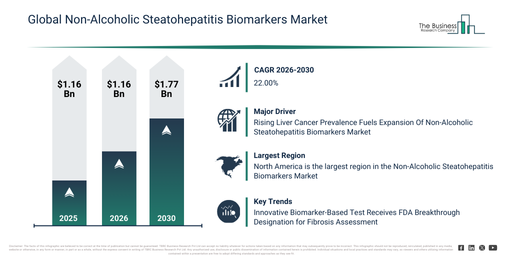
    The non-alcoholic steatohepatitis biomarkers market size is anticipated to undergo significant expansion in the upcoming years. Its valuation is predicted to reach $4.6 billion by 2030, demonstrating a compound annual growth rate (CAGR) of 22.0%. This growth during the forecast period is primarily driven by escalating investments in precision hepatology, a heightened demand for non-invasive diagnostic instruments, the broadening of biomarker-driven clinical trials, the increasing implementation of personalized medicine strategies, and a stronger emphasis on managing diseases at their initial stages. Prominent trends expected throughout this period include the accelerated creation of non-invasive diagnostic biomarkers, the increasing utilization of serum-based NASH biomarkers, the expanding integration of artificial intelligence in biomarker analysis, the wider application of companion diagnostics in pharmaceutical development, and an enhanced focus on identifying diseases early.

    Download A Free Sample Report For Comprehensive Market Insights:

    https://www.thebusinessresearchcompany.com/sample.aspx?id=9002&type=smp

    What Market Drivers Are Helping Shape The Non-Alcoholic Steatohepatitis Biomarkers Market Expansion?

    The increasing incidence of liver cancer is set to boost the expansion of the non-alcoholic steatohepatitis biomarkers market in the future. Liver cancer involves the formation of malignant growths within the liver, originating either within the organ itself (primary liver cancer) or spreading to it from other bodily regions (secondary or metastatic liver cancer). Non-alcoholic steatohepatitis (NASH) biomarkers find application in liver cancer for purposes such as early identification, tracking disease advancement, evaluating treatment efficacy, offering prognostic insights, and potentially lessening the requirement for invasive medical interventions. For example, reports from July 2025 by ecancer medical science, a UK-based cancer journal, previously forecasted that new cases of liver cancer are projected to nearly double from 870,000 in 2022 to 1.52 million by 2050. This surge is primarily attributed to population growth and aging, with Africa expected to experience the sharpest increases. Furthermore, liver cancer fatalities are also predicted to rise from 760,000 in 2022 to 1.37 million by 2050. Consequently, the increasing prevalence of liver cancer is a key factor propelling the expansion of the non-alcoholic steatohepatitis biomarkers market.

    How Is The Non-Alcoholic Steatohepatitis Biomarkers Market Distributed Across Key Segments?

    The non-alcoholic steatohepatitis biomarkers market covered in this report is segmented –

    1) By Type: Hepatic Fibrosis Biomarkers, Serum Biomarkers, Oxidative Stress Biomarkers, Apoptosis Biomarkers, Other Types

    2) By Technology: Enzyme-Linked Immunosorbent Assay (ELISA), Mass Spectrometry, Polymerase Chain Reaction (PCR), Immunohistochemistry (IHC), Next-Generation Sequencing (NGS), Other Technologies

    3) By End Use: Research Institutes And Academics, Diagnostic Centers, Pharmaceutical Companies And Pharmaceutical Companies And Contract Research Organizations (CROs), Hospitals And Clinics, Other End-Uses

    Subsegments:

    1) By Hepatic Fibrosis Biomarkers: Hyaluronic Acid, Procollagen III N-terminal Propeptide (PIIINP), Fibrosis-4 (FIB-4) Index

    2) By Serum Biomarkers: Alanine Aminotransferase (ALT), Aspartate Aminotransferase (AST), Adiponectin

    3) By Oxidative Stress Biomarkers: Malondialdehyde (MDA), 8-Isoprostane, Advanced Oxidation Protein Products (AOPP)

    4) By Apoptosis Biomarkers: Caspase-3, Cytochrome c, Liver Inhibitory Protein (LIP)

    5) By Other Types: Metabolomic Biomarkers, Genetic Biomarkers, Inflammatory Biomarkers

    Which Trends Are Affecting The Non-Alcoholic Steatohepatitis Biomarkers Market Framework?

    Leading firms within the non-alcoholic steatohepatitis biomarkers market are integrating sophisticated biomarker-platform technologies, including multi-analyte fibrosis-scoring assays, to improve non-invasive disease evaluation and patient risk categorization. Such assays analyze several fibrosis-related proteins from a sole blood sample and employ an algorithm to produce a numerical result, thereby facilitating prognostic assessment and aiding in the detection of advanced fibrosis. As an illustration, in July 2023, Siemens Healthineers, a medical-technology enterprise based in Germany, obtained breakthrough device status from the US Food and Drug Administration for its Enhanced Liver Fibrosis Test. This particular test, a multi-analyte fibrosis-scoring assay, is designed to assist in identifying advanced fibrosis and cirrhosis in individuals diagnosed with non-alcoholic fatty liver disease, providing a numerical score derived from three direct fibrosis biomarkers. This test assists in the earlier clinical assessment of liver disease severity and lessens the need for invasive biopsy procedures.

    Which Companies Form The Competitive Landscape Of The Non-Alcoholic Steatohepatitis Biomarkers Market?

    Major companies operating in the non-alcoholic steatohepatitis biomarkers market are Genfit SA, Prometheus Laboratories Inc., Siemens Medical Solutions USA Inc., BioPredictive, Quest Diagnostics, AstraZeneca Plc., Laboratory Corporation of America Holdings, Pfizer Inc., Bristol-Myers Squibb Company, NGM Biopharmaceuticals Inc., Gilead Sciences Inc., Perspectum Diagnostics Ltd., One Way Liver SL, Enterome SA, Echosens SA, Cisbio Bioassays SAS, Celerion Inc., Boehringer Ingelheim GmbH Inc., Exalenz Bioscience Ltd., Novartis AG, Novo Nordisk A/S, Allergan PLC., Glympse Bio, HistoIndex Pte Ltd, Cirius Therapeutics, Intercept Pharmaceuticals, Viking Therapeutics, Madrigal Pharmaceuticals, Galmed Pharmaceuticals, Immuron Ltd, Metacrine

    Access The Complete Non-Alcoholic Steatohepatitis Biomarkers Market Report:

    https://www.thebusinessresearchcompany.com/report/non-alcoholic-steatohepatitis-biomarkers-global-market-report

    Which Region Commands The Largest Share Of The Non-Alcoholic Steatohepatitis Biomarkers Market?

    North America was the largest region in the non-alcoholic steatohepatitis biomarkers market in 2025. Asia-Pacific is expected to be the fastest-growing region in the non-alcoholic steatohepatitis biomarkers market during the forecast period. The regions covered in the non-alcoholic steatohepatitis biomarkers market report are Asia-Pacific, South East Asia, Western Europe, Eastern Europe, North America, South America, Middle East, Africa.

    Access a Non-Alcoholic Steatohepatitis Biomarkers Market Report for Deeper Competitive Insights

    https://www.thebusinessresearchcompany.com/report/non-alcoholic-steatohepatitis-biomarkers-global-market-report

    Browse Through More Reports Similar to the Global Non-Alcoholic Steatohepatitis Biomarkers Market 2026, By The Business Research Company

    Non Alcoholic Steatohepatitis Treatment Market Report 2026

    https://www.thebusinessresearchcompany.com/report/non-alcoholic-steatohepatitis-treatment-global-market-report

    Non Alcoholic Steatohepatitis Treatment Market Report 2026

    https://www.thebusinessresearchcompany.com/report/non-alcoholic-steatohepatitis-treatment-global-market-report

    Fatty Liver Treatment Market Report 2026

    https://www.thebusinessresearchcompany.com/report/fatty-liver-treatment-global-market-report

    Get in touch with us:

    The Business Research Company: https://www.thebusinessresearchcompany.com/

    Americas: +1 310-496-7795

    Asia: +44 7882 955267 & +91 8897263534

    Europe: +44 7882 955267

    Email us at: marketing@tbrc.info

    Follow us on:

    LinkedIn: https://in.linkedin.com/company/the-business-research-company

    YouTube: https://www.youtube.com/channel/UC24_fI0rV8cR5DxlCpgmyFQ

    Global Market Model: https://www.thebusinessresearchcompany.com/global-market-model
  • Non-Absorbable Mesh Market Forecast Assessing Growth Potential And Industry Direction

    Non-Absorbable Mesh Market Forecast Assessing Growth Potential And Industry Direction

    The Business Research Company’s 2026 market reports feature advanced enhancements such as market attractiveness analysis, total addressable market evaluation, company benchmarking matrices, interactive Excel dashboards, expanded supply chain intelligence, emerging startup coverage, and detailed product insights, delivering more actionable and strategically valuable research.

    What Is The Estimated Growth In Market Size Of The Non-Absorbable Mesh Market During 2026–2030?

    The non-absorbable mesh market size has demonstrated significant expansion in recent years. It is anticipated to increase from $1.32 billion in 2025 to $1.43 billion in 2026, at a compound annual growth rate (CAGR) of 7.9%. The growth observed historically is attributable to factors such as limited access to advanced mesh materials, a predominant use of conventional polypropylene and polyester mesh, a rise in hernia repair procedures, the increasing application of surgical mesh in pelvic surgeries, and an enhanced awareness regarding the reduction of post-surgical recurrence.

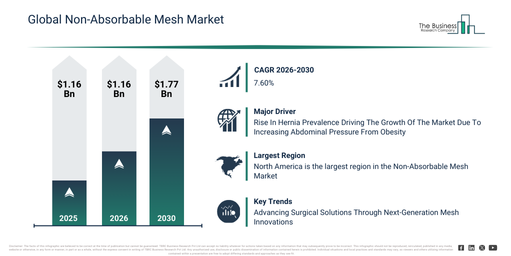
    The non-absorbable mesh market is anticipated to experience substantial growth in the upcoming years, projected to reach $1.92 billion by 2030, with a compound annual growth rate (CAGR) of 7.6%. This expansion during the forecast period can be primarily attributed to the advancement of composite and absorbable barrier meshes, an increase in minimally invasive and robotic-assisted surgeries, the development of hospital infrastructure and surgical centers, a rising demand for pelvic floor reconstruction, and the integration of advanced imaging and surgical planning tools. Key trends for the forecast period include the increasing adoption of non-absorbable mesh in hernia repairs, the ongoing development of composite and multifilament mesh materials, a heightened focus on biocompatibility and patient safety, the expansion of pelvic floor reconstruction procedures, and a growing preference for minimally invasive surgical techniques.

    Download A Free Sample Report For Comprehensive Market Insights:

    https://www.thebusinessresearchcompany.com/sample.aspx?id=24626&type=smp

    Which Significant Factors Are Encouraging Growth In The Non-Absorbable Mesh Market?

    The increasing incidence of hernia is projected to boost the expansion of the non-absorbable mesh market moving forward. A hernia is characterized by the abnormal protrusion of an organ or tissue through a weak point in the surrounding muscle or connective tissue. Hernias are becoming more common due to a rise in obesity, which places greater stress on abdominal muscles and weakens the abdominal wall. The non-absorbable mesh assists in treating hernias by providing lasting structural support to compromised or damaged tissue, thereby lowering the chance of recurrence. For instance, in March 2023, according to Medscape, LLC, a US-based media and information company, over 1 million abdominal wall hernia repairs are performed annually in the United States, with inguinal hernia repairs accounting for nearly 770,000 of these cases; approximately 90% of all inguinal hernia repairs are performed on males. Therefore, the growing prevalence of hernias is stimulating the growth of the non-absorbable mesh market.

    How Does Segment Analysis Break Down The Non-Absorbable Mesh Market Structure?

    The non-absorbable mesh market covered in this report is segmented –

    1) By Product Type: Prosthetic Mesh, Composite Mesh, Monofilament Mesh, Multifilament Mesh

    2) By Material: Polypropylene, Polyester, Polyethylene, Other Biocompatible Materials

    3) By Application: Hernia Repair, Pelvic Floor Reconstruction, Other Surgical Applications

    4) By End-User: Hospitals, Ambulatory Surgical Centers, Clinics, Other End-Users

    Subsegments:

    1) By Prosthetic Mesh: Polypropylene Mesh, Polyester Mesh, Expanded Polytetrafluoroethylene (ePTFE) Mesh, Polytetrafluoroethylene (PTFE) Mesh

    2) By Composite Mesh: Polypropylene + ePTFE Composite Mesh, Polyester + Collagen Composite Mesh, Polypropylene + Polyurethane Composite Mesh, Composite Mesh With Absorbable Barrier

    3) By Monofilament Mesh: Polypropylene Monofilament Mesh, Polyester Monofilament Mesh, Nylon Monofilament Mesh

    4) By Multifilament Mesh: Polyester Multifilament Mesh, Polyethylene Terephthalate (PET) Multifilament Mesh, Polyamide Multifilament Mesh

    What Trends Are Influencing The Non-Absorbable Mesh Market?

    Leading companies within the non-absorbable mesh market are concentrating on developing advanced innovations, such as coated composite mesh, to enhance biocompatibility and mitigate post-surgical complications. Coated composite mesh is a surgical mesh equipped with a protective layer that diminishes tissue adhesion and inflammation, thereby improving safety when implanted inside the body. For example, in April 2024, Deep Blue Medical Advances Inc., a US-based medical device firm, introduced the T-Line Hernia Mesh, providing surgeons with a novel choice for hernia repair that addresses frequent problems like tissue failure and adhesion. This mesh features integrated extensions that offer 15 times the fixation surface area compared to conventional sutures, resulting in an anchoring strength that is 275% stronger. Its macroporous, medium-weight polypropylene construction supports excellent tissue integration and alleviates stress by uniformly distributing tension across the repair region. The mesh is simple to manage, adapts to anatomical variations, and eliminates the necessity for supplementary fixation devices, enhancing both security and surgical effectiveness.

    Who Are The Key Market Participants In The Non-Absorbable Mesh Market?

    Major companies operating in the non-absorbable mesh market are Johnson and Johnson, Medtronic plc, Medline Industries Inc, Coloplast Group, Integra LifeSciences Corporation, Meril Life Sciences Pvt Ltd, B Braun Melsungen AG, W L Gore And Associates Inc, Demetech Corporation, Universal Suture Ltd, Lotus Surgicals Pvt Ltd, Altaylar Medical Ltd, Betatech Medical, DIPROMED Srl, Orion Sutures India Pvt Ltd, ProVi Swiss GmbH, Vinculum Sutures, Lizen Surgicare Private Limited, Herniamesh Srl, Assut Europe S P A, FEG Textiltechnik mbH

    Access The Complete Non-Absorbable Mesh Market Report:

    https://www.thebusinessresearchcompany.com/report/non-absorbable-mesh-global-market-report

    Which Region Accounts For The Highest Share Of The Non-Absorbable Mesh Market?

    North America was the largest region in the non-absorbable mesh market in 2025. The regions covered in the non-absorbable mesh market report are Asia-Pacific, South East Asia, Western Europe, Eastern Europe, North America, South America, Middle East, Africa.

    Access a Non-Absorbable Mesh Market Report for Deeper Competitive Insights

    https://www.thebusinessresearchcompany.com/report/non-absorbable-mesh-global-market-report

    Browse Through More Reports Similar to the Global Non-Absorbable Mesh Market 2026, By The Business Research Company

    Absorbent Dressings Market Report 2026

    https://www.thebusinessresearchcompany.com/report/absorbent-dressings-global-market-report

    Architectural Coatings Market Report 2026

    https://www.thebusinessresearchcompany.com/report/architectural-coatings-global-market-report

    Textile Coatings Market Report 2026

    https://www.thebusinessresearchcompany.com/report/textile-coatings-global-market-report

    Get in touch with us:

    The Business Research Company: https://www.thebusinessresearchcompany.com/

    Americas: +1 310-496-7795

    Asia: +44 7882 955267 & +91 8897263534

    Europe: +44 7882 955267

    Email us at: marketing@tbrc.info

    Follow us on:

    LinkedIn: https://in.linkedin.com/company/the-business-research-company

    YouTube: https://www.youtube.com/channel/UC24_fI0rV8cR5DxlCpgmyFQ

    Global Market Model: https://www.thebusinessresearchcompany.com/global-market-model
  • Non Invasive Neurostimulation Devices Market Expected To Witness Revenue Growth Toward $3.44 Billion By 2030

    Non Invasive Neurostimulation Devices Market Expected To Witness Revenue Growth Toward $3.44 Billion By 2030

    The Business Research Company’s 2026 market reports feature advanced enhancements such as market attractiveness analysis, total addressable market evaluation, company benchmarking matrices, interactive Excel dashboards, expanded supply chain intelligence, emerging startup coverage, and detailed product insights, delivering more actionable and strategically valuable research.

    What Market Value Expansion Is Expected For The Non Invasive Neurostimulation Devices Market Over The Forecast Period?

    The market for non invasive neurostimulation devices has seen rapid expansion in recent years. This market is projected to expand from $1.89 billion in 2025 to $2.14 billion in 2026, demonstrating a compound annual growth rate (CAGR) of 13.0%. Historically, this growth has been driven by factors such as the restricted availability of non-invasive neurostimulation devices, a prevailing dependence on traditional pain management therapies, the gradual integration into homecare environments, increasing public awareness concerning neurological disorders, and insufficient clinical research and validation.

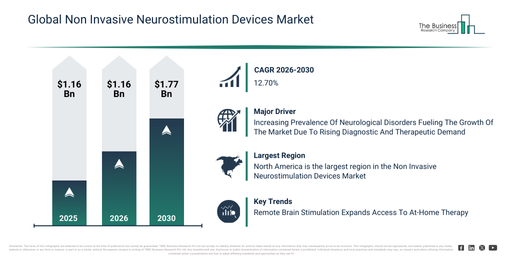
    The non-invasive neurostimulation devices market is projected to experience substantial expansion over the upcoming years, with its valuation expected to reach $3.45 billion by 2030, growing at a compound annual growth rate (CAGR) of 12.7%. This anticipated growth can be attributed to advancements in tDCS and EMS device technology, a rising prevalence of chronic pain and various neurological disorders, the increasing embrace of homecare neurostimulation solutions, heightened investment in clinical and academic research, and the incorporation of AI and smart monitoring within neurostimulation devices. Key trends for this period include the wider acceptance of non-invasive pain management therapies, an expansion in homecare neurostimulation devices, the integration of wearable and portable neurostimulation solutions, a surge in clinical research and academic studies focused on neurostimulation, and an emphasis on personalized and targeted neurostimulation treatments.

    Download A Free Sample Report For Comprehensive Market Insights:

    https://www.thebusinessresearchcompany.com/sample.aspx?id=24625&type=smp

    What Core Drivers Are Transforming The Non Invasive Neurostimulation Devices Market?

    The expanding occurrence of neurological disorders is anticipated to propel the growth of the non invasive neurostimulation devices market. Neurological disorders are medical conditions that impact the brain, spinal cord, and nerves, resulting in various symptoms such as cognitive, motor, and sensory impairments. The rising prevalence of these conditions is connected to the aging global population, as age progressively impairs neuronal function, diminishes brain plasticity, and heightens oxidative stress, thereby fostering their development and progression. Non-invasive neurostimulation devices assist in diagnosing neurological disorders by applying targeted stimulation to evaluate neural responses. These devices offer non-surgical, real-time assessment techniques, which improve diagnostic accuracy and enhance patient care in both clinical and home environments. For instance, in July 2024, according to the National Health Service, a UK-based government agency, there were 487,432 patients diagnosed with dementia (a progressive brain disorder affecting memory, thinking, and daily activities) by June 30, 2024, an increase of 3,155 cases compared to May 31, 2024. Consequently, the increasing prevalence of neurological disorders is driving the growth of the non invasive neurostimulation devices market.

    What Segment Types Are Included In The Non Invasive Neurostimulation Devices Market Analysis?

    The non invasive neurostimulation devices market covered in this report is segmented –

    1) By Type Of Stimulation Technology: Transcutaneous Electrical Nerve Stimulation (TENS), Transcranial Magnetic Stimulation (TMS), Electromagnetic Stimulation (EMS), Other Types Of Stimulation Technologies

    2) By Target Indication: Pain Management, Neurological Disorders, Psychological Disorder, Other Target Indications

    3) By End User: Hospitals And Clinics, Homecare Settings, Research And Academic Institutes

    Subsegments:

    1) By Transcutaneous Electrical Nerve Stimulation (TENS): Conventional Transcutaneous Electrical Nerve Stimulation (TENS), Acupuncture-Like Transcutaneous Electrical Nerve Stimulation (TENS), Brief-Intense Transcutaneous Electrical Nerve Stimulation (TENS), Burst Mode Transcutaneous Electrical Nerve Stimulation (TENS)

    2) By Transcranial Magnetic Stimulation (TMS): Repetitive Transcranial Magnetic Stimulation (rTMS), Deep Transcranial Magnetic Stimulation (dTMS), Single-Pulse Transcranial Magnetic Stimulation, Paired-Pulse Transcranial Magnetic Stimulation

    3) By Electromagnetic Stimulation (EMS): Functional Electromagnetic Stimulation (EMS), Neuromuscular Electromagnetic Stimulation (EMS), High-Frequency Electromagnetic Stimulation (EMS), Low-Frequency Electromagnetic Stimulation (EMS)

    4) By Other Types Of Stimulation Technology: Transcranial Direct Current Stimulation (tDCS), Cranial Electrotherapy Stimulation (CES)

    Which Trends Are Guiding The Development Of The Non Invasive Neurostimulation Devices Market?

    Key companies operating in the non invasive neurostimulation devices market are concentrating on developing advanced offerings, such as personalized stimulation protocols, to improve treatment effectiveness and patient outcomes. Personalized stimulation protocols refer to customized neurostimulation settings that are tailored to an individual’s specific medical condition, neural response, and treatment goals, aiming to maximize therapeutic efficacy and minimize side effects. For instance, in October 2023, Sooma Medical, a Finland-based medical technology company, unveiled a remote clinician-monitored brain stimulation system designed for at-home treatment utilizing non-invasive transcranial direct current stimulation (tDCS). This innovative system enables healthcare professionals to remotely oversee therapy sessions, thereby enhancing accessibility and adherence for patients dealing with neurological and mental health conditions such as depression and chronic pain.

    Which Organizations Are Operating Within The Non Invasive Neurostimulation Devices Market?

    Major companies operating in the non invasive neurostimulation devices market are Alpha Stim, Neurosoft Bioelectronics SA, Neuronetics Inc, BrainsWay Ltd, eNeura Inc, MagVenture A S, Nexstim Plc, Neuroelectrics Barcelona S L U, Cefaly Technology, ElectroCore Inc, Brainbox India Private Limited, Flow Neuroscience AB, Fisher Wallace Laboratories Inc, Sooma Medical, NeuroSigma Inc, Mind Alive Inc, TheBrainDriver LLC, Caputron Medical Products LLC, Soterix Medical Inc, neuroConn GmbH, Halo Neuroscience Inc, BTL Industries Inc, Zimmer MedizinSysteme GmbH

    Access The Complete Non Invasive Neurostimulation Devices Market Report:

    https://www.thebusinessresearchcompany.com/report/non-invasive-neurostimulation-devices-global-market-report

    Which Region Is The Primary Market For The Non Invasive Neurostimulation Devices Market?

    North America was the largest region in the non invasive neurostimulation devices market in 2025. The regions covered in the non invasive neurostimulation devices market report are Asia-Pacific, South East Asia, Western Europe, Eastern Europe, North America, South America, Middle East, Africa.

    Access a Non Invasive Neurostimulation Devices Market Report for Deeper Competitive Insights

    https://www.thebusinessresearchcompany.com/report/non-invasive-neurostimulation-devices-global-market-report

    Browse Through More Reports Similar to the Global Non Invasive Neurostimulation Devices Market 2026, By The Business Research Company

    Implantable Neurostimulation Devices Market Report 2026

    https://www.thebusinessresearchcompany.com/report/implantable-neurostimulation-devices-global-market-report

    Internal Neuromodulation Devices Market Report 2026

    https://www.thebusinessresearchcompany.com/report/internal-neuromodulation-devices-global-market-report

    Sacral Nerve Stimulation Devices Market Report 2026

    https://www.thebusinessresearchcompany.com/report/sacral-nerve-stimulation-devices-global-market-report

    Get in touch with us:

    The Business Research Company: https://www.thebusinessresearchcompany.com/

    Americas: +1 310-496-7795

    Asia: +44 7882 955267 & +91 8897263534

    Europe: +44 7882 955267

    Email us at: marketing@tbrc.info

    Follow us on:

    LinkedIn: https://in.linkedin.com/company/the-business-research-company

    YouTube: https://www.youtube.com/channel/UC24_fI0rV8cR5DxlCpgmyFQ

    Global Market Model: https://www.thebusinessresearchcompany.com/global-market-model
  • Non Contact Infrared Thermometers Market Industry Outlook 2026–2030 Highlighting Growth Momentum And Market Trends

    Non Contact Infrared Thermometers Market Industry Outlook 2026–2030 Highlighting Growth Momentum And Market Trends

    The Business Research Company’s 2026 market reports feature advanced enhancements such as market attractiveness analysis, total addressable market evaluation, company benchmarking matrices, interactive Excel dashboards, expanded supply chain intelligence, emerging startup coverage, and detailed product insights, delivering more actionable and strategically valuable research.

    How Will The Market Value Of The Non Contact Infrared Thermometers Market Change Between 2026 And 2030?

    The non contact infrared thermometers market has demonstrated strong growth in recent years. It is anticipated to increase from $0.39 billion in 2025 to $0.42 billion in 2026, achieving a compound annual growth rate (CAGR) of 8.1%. The historical expansion of this market can be linked to several factors, including the demand for contactless diagnostics driven by the pandemic, infection control necessities within hospitals, an increase in emergency medical infrastructure, growing recognition of non-invasive temperature monitoring, and the development of retail pharmacy networks.

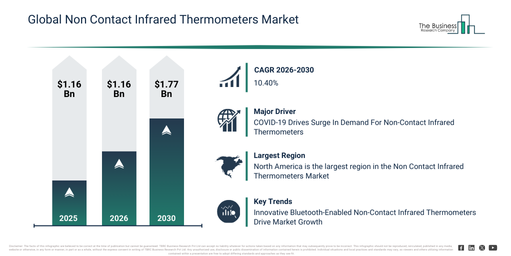
    The non contact infrared thermometers market size is anticipated to experience substantial growth in the coming years, projected to reach $0.62 billion by 2030, demonstrating a compound annual growth rate (CAGR) of 10.4%. This expansion during the forecast period is attributed to several factors, including the increasing adoption of home healthcare, growth in veterinary healthcare services, a rising geriatric population, technological improvements in infrared sensors, and expanding e-commerce penetration. Additionally, key trends in the forecast period involve the rising adoption of contactless temperature screening, the proliferation of home-based and self-diagnostic devices, an increased demand for high-accuracy medical-grade thermometers, the development of online and direct-to-consumer sales channels, and enhancements in product miniaturization and ergonomic design.

    Download A Free Sample Report For Comprehensive Market Insights:

    https://www.thebusinessresearchcompany.com/sample.aspx?id=3277&type=smp

    Which Growth Factors Are Strengthening The Non Contact Infrared Thermometers Market Landscape?

    The surging number of COVID-19 cases is a primary impetus behind the heightened demand within the non-contact infrared thermometers market, thus propelling its growth. With the rapid spread of COVID-19 infections and fever being a prominent symptom, thorough temperature checks are crucial in any large gathering. Infrared thermometers provide an efficient means for precise and regular body temperature measurement, capable of monitoring forehead temperature swiftly and remotely. As a result, the daily need for infrared thermometers is escalating, attributed to their quick assessment and high accuracy.

    Which Segment Divisions Form The Structure Of The Non Contact Infrared Thermometers Market?

    The non contact infrared thermometers market covered in this report is segmented –

    1) By Product Type: Forehead, In-Ear, Multifunction

    2) By Distribution Channel: Hospital Pharmacy, Retail Pharmacy, Online Sales

    3) By Application: Veterinary, Medical

    Subsegments:

    1) By Forehead: Handheld Forehead Thermometers, Stationary Forehead Thermometers

    2) By In-Ear: Digital In-Ear Thermometers, Infrared In-Ear Thermometers

    3) By Multifunction: Forehead And Ear Combination Thermometers, Body And Surface Temperature Thermometers

    What Trends Are Influencing The Future Of The Non Contact Infrared Thermometers Market?

    Leading companies in the non-contact infrared thermometers market are dedicating efforts to creating advanced products, including Bluetooth-enabled devices, with the goal of enriching the overall user experience. Such innovations aim to address the rising need for effective health monitoring solutions across diverse environments. Bluetooth functions as a short-range wireless communication method for exchanging data between devices, typically within a 100-meter radius. It utilizes low-power radio waves, making it an excellent choice for connecting peripherals like headphones and smartphones. For example, in July 2023, ThermoPro, a manufacturing company based in Canada, introduced its Twin TempSpike Plus, which boasts a Bluetooth range of up to 600 feet and incorporates dual probes to simultaneously track two meats. Its resilient, waterproof build guarantees consistent performance, consequently improving cooking precision and food safety.

    Who Are The Businesses Driving Activity In The Non Contact Infrared Thermometers Market?

    Major companies operating in the non contact infrared thermometers market are Helen of Troy Limited, Easywell Biomedical, Omron Healthcare Inc., Paul Hartmann, Microlife Corporation, American Diagnostic Corporation, Beurer, Exergen Corporation, Vivehealth, Contec Medical Systems Co., Japan Sensor Corporation, Terumo Corporation, BPL Medical Technologies, AccuMed, Reliefcare, A&D Medical Manufacturers, Easytem, Bestech Australia, Braun Healthcare, Riester, Vicks, Optris Infrared Sensing LLC, GAO Tek & GAO Group Inc., Safeguard19, PCE Americas Inc., Weiss Instruments Inc., Test Products International Ltd., Horiba Ltd., HORIBA Instruments Brasil Ltd., Dromex, Geratherm, Fluke Corporation, Testo SE & Co. KGaA

    Access The Complete Non Contact Infrared Thermometers Market Report:

    https://www.thebusinessresearchcompany.com/report/non-contact-infrared-thermometers-global-market-report

    Which Geographic Region Represents The Largest Non Contact Infrared Thermometers Market Share?

    North America was the largest region in the non-contact infrared thermometers market in 2025. Western Europe was the second largest region in the non-contact infrared thermometers market report. The regions covered in the non contact infrared thermometers market report are Asia-Pacific, South East Asia, Western Europe, Eastern Europe, North America, South America, Middle East, Africa.

    Access a Non Contact Infrared Thermometers Market Report for Deeper Competitive Insights

    https://www.thebusinessresearchcompany.com/report/non-contact-infrared-thermometers-global-market-report

    Browse Through More Reports Similar to the Global Non Contact Infrared Thermometers Market 2026, By The Business Research Company

    Temperature Sensor Market Report 2026

    https://www.thebusinessresearchcompany.com/report/temperature-sensor-global-market-report

    Temperature Monitoring Devices Market Report 2026

    https://www.thebusinessresearchcompany.com/report/temperature-monitoring-devices-global-market-report

    Weight Monitoring And Body Temperature Monitoring Devices And Equipment Market Report 2026

    https://www.thebusinessresearchcompany.com/report/weight-monitoring-and-body-temperature-monitoring-devices-and-equipment-global-market-report

    Get in touch with us:

    The Business Research Company: https://www.thebusinessresearchcompany.com/

    Americas: +1 310-496-7795

    Asia: +44 7882 955267 & +91 8897263534

    Europe: +44 7882 955267

    Email us at: marketing@tbrc.info

    Follow us on:

    LinkedIn: https://in.linkedin.com/company/the-business-research-company

    YouTube: https://www.youtube.com/channel/UC24_fI0rV8cR5DxlCpgmyFQ

    Global Market Model: https://www.thebusinessresearchcompany.com/global-market-model
  • Nitrile Gloves Market Growth Forecast With Analysis Of Industry Progress Through 2030

    Nitrile Gloves Market Growth Forecast With Analysis Of Industry Progress Through 2030

    The Business Research Company’s 2026 market reports feature advanced enhancements such as market attractiveness analysis, total addressable market evaluation, company benchmarking matrices, interactive Excel dashboards, expanded supply chain intelligence, emerging startup coverage, and detailed product insights, delivering more actionable and strategically valuable research.

    What Is The Forecasted Rise In Market Size Of The Nitrile Gloves Market During The Forecast Period?

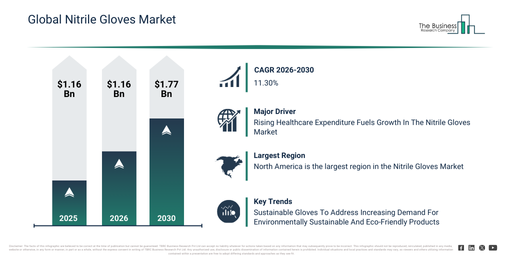
    The market size for nitrile gloves has witnessed significant growth in recent years. It is projected to expand from $17.57 billion in 2025 to $19.57 billion in 2026, achieving a compound annual growth rate (CAGR) of 11.4%. The historical expansion of this market can be attributed to the rising application of protective gloves in laboratories, more stringent healthcare hygiene standards, an increase in chemical handling activities, the development of industrial safety regulations, and the growing acceptance of disposable protective equipment.

    The nitrile gloves market is anticipated to experience significant expansion over the coming years. This market is projected to reach $30.01 billion by 2030, exhibiting a compound annual growth rate (CAGR) of 11.3%. The projected growth during this period stems from factors such as heightened demand across healthcare and pharmaceutical industries, a burgeoning emphasis on sustainable materials for gloves, expanding food safety regulations, increasing application in cleanroom settings, and escalating investments in automated production capabilities. Key trends anticipated throughout the forecast period encompass a greater uptake of powder-free disposable gloves, a surge in demand for medical-grade nitrile gloves, an increasing prioritization of chemical and puncture resistance, the proliferation of automated glove production lines, and an elevated commitment to quality and regulatory adherence.

    Download A Free Sample Report For Comprehensive Market Insights:

    https://www.thebusinessresearchcompany.com/sample.aspx?id=8475&type=smp

    What Important Drivers Are Powering The Nitrile Gloves Market Growth?

    The nitrile gloves market is expected to be significantly propelled by increasing healthcare expenditure in the future. This healthcare spending encompasses expenses related to family planning, nutrition activities, emergency health aid, and various health services. A rise in healthcare expenditure will facilitate greater investment in healthcare products and safety solutions, thereby contributing to the market’s expansion. As an example, in November 2023, the CIHI, a Canada-based independent, not-for-profit organization, reported that Canada’s total health spending is projected to reach $344 billion in 2023, which is equivalent to $8,740 per Canadian and makes up 12.1% of the country’s gross domestic product (GDP). This amount is anticipated to grow by 2.8% in 2023, following a moderate 1.5% increase recorded in 2022. Hence, the growing healthcare expenditure is acting as a key driver for the nitrile gloves market.

    How Are Different Segment Groups Identified Within The Nitrile Gloves Market?

    The nitrile gloves market covered in this report is segmented –

    1) By Type: Powder-Free Nitrile Gloves, Powder-Coated Nitrile Gloves

    2) By Texture: Smooth, Micro Roughened, Aggressively Textured

    3) By Grade: Medical Grade, Industrial Grade, Food Grade

    4) By End-Use: Healthcare, Food And Beverage, Automotive, Construction, Oil And Gas, Pharmaceutical, Chemical, Metal And Machinery, Cleanrooms, Other End Uses

    Subsegments:

    1) By Powder-Free Nitrile Gloves: Medical-Grade Powder-Free Nitrile Gloves, Industrial-Grade Powder-Free Nitrile Gloves

    2) By Powder-Coated Nitrile Gloves: Medical-Grade Powder-Coated Nitrile Gloves, Industrial-Grade Powder-Coated Nitrile Gloves

    Which Trends Are Contributing To Changes In The Nitrile Gloves Market?

    Key companies operating in the nitrile gloves market are introducing sustainable and eco-friendly gloves to meet the increasing demand for environmentally conscious products. Eco-friendly nitrile gloves are a type of disposable glove designed to mitigate the environmental impact associated with traditional nitrile gloves. For instance, in May 2023, Cranberry, a US-based nitrile glove manufacturer, unveiled its Bio Nitrile Biodegradable Nitrile Powder Free Examination Gloves. These gloves contain a unique additive that boosts microbial activity in landfills, causing the material to break down by up to 90% within 1.5 years. Despite their biodegradable properties, the gloves exceed ASTM standards for tensile strength and force at break, ensuring their durability and protective qualities. This advancement represents a significant step forward in the healthcare industry, offering an eco-friendly choice suitable for examination purposes in dental and medical facilities.

    Which Firms Are Competing In The Nitrile Gloves Market?

    Major companies operating in the nitrile gloves market are Top Glove Corporation Berhad, Ansell Limited, Hartalega Holdings Berhad, Adenna LLC, Unigloves Limited, Kossan Rubber Industries Berhad, Ammex Corporation, Dynarex Corporation, Rubberex Corporation (M) Berhad, YTY Group, Superior Gloves Works Ltd., Supermax Corporation Berhad, Nacosa USA Corp., Innovative Healthcare Corporation, Nitronix International Pte. Ltd., Renco Corporation, Safetouch PPE Inc., SAS Safety Corporation, HMD Healthcare Corp., The Glove Company LLC, American Nitrile, Semperit AG Holding, Showa Group, Globus Ltd., Riverstone Holdings Limited

    Access The Complete Nitrile Gloves Market Report:

    https://www.thebusinessresearchcompany.com/report/nitrile-gloves-global-market-report

    Which Region Leads The Nitrile Gloves Market By Size?

    North America was the largest region in the nitrile gloves market in 2025. The regions covered in the nitrile gloves market report are Asia-Pacific, South East Asia, Western Europe, Eastern Europe, North America, South America, Middle East, Africa.

    Access a Nitrile Gloves Market Report for Deeper Competitive Insights

    https://www.thebusinessresearchcompany.com/report/nitrile-gloves-global-market-report

    Browse Through More Reports Similar to the Global Nitrile Gloves Market 2026, By The Business Research Company

    Industrial Gloves Market Report 2026

    https://www.thebusinessresearchcompany.com/report/industrial-gloves-global-market-report

    Boxing Gloves Market Report 2026

    https://www.thebusinessresearchcompany.com/report/boxing-gloves-global-market-report

    Rubber Gloves Market Report 2026

    https://www.thebusinessresearchcompany.com/report/rubber-gloves-global-market-report

    Get in touch with us:

    The Business Research Company: https://www.thebusinessresearchcompany.com/

    Americas: +1 310-496-7795

    Asia: +44 7882 955267 & +91 8897263534

    Europe: +44 7882 955267

    Email us at: marketing@tbrc.info

    Follow us on:

    LinkedIn: https://in.linkedin.com/company/the-business-research-company

    YouTube: https://www.youtube.com/channel/UC24_fI0rV8cR5DxlCpgmyFQ

    Global Market Model: https://www.thebusinessresearchcompany.com/global-market-model
  • Global Nitinol Based Medical Device Market Forecast Highlighting Expansion And Competitive Dynamics

    Global Nitinol Based Medical Device Market Forecast Highlighting Expansion And Competitive Dynamics

    The Business Research Company’s 2026 market reports feature advanced enhancements such as market attractiveness analysis, total addressable market evaluation, company benchmarking matrices, interactive Excel dashboards, expanded supply chain intelligence, emerging startup coverage, and detailed product insights, delivering more actionable and strategically valuable research.

    How Is The Nitinol Based Medical Device Market’s Market Value Anticipated To Evolve From 2026 To 2030?

    The nitinol based medical device market size has experienced significant growth in recent years. It is forecast to increase from $20.91 billion in 2025 to $23.12 billion in 2026, exhibiting a compound annual growth rate (CAGR) of 10.6%. This historical expansion can be attributed to the proliferation of minimally invasive surgical procedures, the availability of advanced nickel-titanium alloys, a rise in cardiovascular intervention volumes, the adoption of flexible implant technologies, and the increasing utilization of guidewire-based interventions.

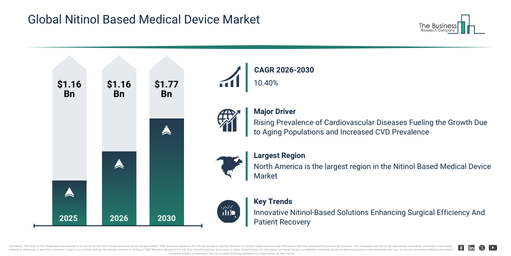
    The nitinol based medical device market is anticipated to experience significant expansion in the coming years. Projections indicate it will reach a value of $34.36 billion by 2030, demonstrating a compound annual growth rate (CAGR) of 10.4%. This projected growth during the forecast period is primarily driven by factors such as a surge in demand for advanced implantable devices, a heightened emphasis on customized patient device designs, the broadening scope of intricate endovascular procedures, increased capital allocation towards sophisticated biomaterials, and advancements in shape-memory alloy fabrication techniques. Key trends anticipated during the forecast period encompass the wider acceptance of nitinol-based minimally invasive instruments, an increasing utilization of superelastic medical components, a rising need for shape-memory implants, the enlargement of applications in both cardiovascular and neurovascular fields, and a stronger emphasis on the resilience and adaptability of devices.

    Download A Free Sample Report For Comprehensive Market Insights:

    https://www.thebusinessresearchcompany.com/sample.aspx?id=24339&type=smp

    Which Major Factors Are Contributing To The Development Of The Nitinol Based Medical Device Market?

    The rising incidence of cardiovascular conditions is projected to fuel the expansion of the nitinol-based medical device market in the future. Cardiovascular disease (CVD) encompasses various ailments affecting the heart and blood vessels, such as coronary artery disease, myocardial infarctions, heart failure, arrhythmias, and strokes. These ailments typically involve the constriction or obstruction of blood vessels, thereby impeding the delivery of blood and oxygen to the heart and other vital organs. The escalation of cardiovascular diseases can be attributed to an aging demographic, particularly in developed nations, where the susceptibility to such conditions rises with age. Nitinol-based medical devices have proven highly advantageous in managing and treating cardiovascular diseases, owing to the distinctive characteristics of nitinol, an alloy composed of nickel and titanium. For example, data from the American Heart Association, a US-based nonprofit, revealed that in January 2024, cardiovascular diseases were responsible for 931,578 deaths, an increase from 928,741 in 2023. Furthermore, the age-adjusted mortality rate from cardiovascular disease experienced a slight rise, reaching 233.3 per 100,000, which signifies a 4.0% increase from the prior year’s rate of 224.4 per 100,000. Consequently, the expanding occurrence of vascular heart conditions is a key impetus for the cardiovascular catheters market.

    What Segment Categories Are Evaluated In The Nitinol Based Medical Device Market Study?

    The nitinol based medical device market covered in this report is segmented –

    1) By Product Type: Stents, Guidewires, Retriever Device, Catheters, Other Product Types

    2) By Application: Cardiovascular, Urology, Dentistry, Other Applications

    3) By End Use: Hospitals, Ambulatory Surgical Centers, Specialty Clinics, Other End Users

    Subsegments:

    1) By Stents: Peripheral Stents, Coronary Stents, Neurovascular Stents, Other Stents

    2) By Guidewires: Diagnostic Guidewires, Interventional Guidewires

    3) By Retriever Devices: Thrombectomy Devices, Foreign Body Retrieval Devices

    4) By Catheters: Balloon Catheters, Guiding Catheters, Microcatheters, Diagnostic Catheters

    5) By Other Product Types: Orthodontic Archwires, Orthopedic Devices, Embolic Protection Devices, Other Specialized Devices

    What Trends Are Shaping The Nitinol Based Medical Device Market Structure?

    Leading companies in the nitinol-based medical device market are concentrated on developing self-expanding nitinol stent-electrodes to improve their market offerings. This device is a hybrid medical apparatus, comprising a stent structure crafted from nitinol (a nickel-titanium alloy) which expands autonomously to a predetermined form upon bodily deployment. It also incorporates embedded electrodes for electrical stimulation or signal recording from biological tissues, including nerves, blood vessels, or the brain. As an illustration, in September 2024, Synchron, a US-based entity innovating implantable neurotechnology, reported that its Stentrode BCI implant leverages a self-expanding nitinol stent-electrode array. This array is conveyed via the jugular vein to the superior sagittal sinus, proximate to the motor cortex, facilitating minimally invasive insertion within approximately ~20 minutes. The nitinol construction allows for a slender profile (1.3mm lead) with minimal radial force, thereby preventing venous harm. Simultaneously, platinum electrodes are employed to decode motor intent for digital control purposes.

    Who Are The Major Companies Operating In The Nitinol Based Medical Device Market?

    Major companies operating in the nitinol based medical device market are Medtronic plc, Cook Medical, Teleflex Incorporated, Cordis, Endologix, Arthrex, Balton, EndoSmart GmbH, Ingpuls Medical, GEE Nitinol, Confluent Medical Technologies, Seisa Medical, Fort Wayne Metals, Norman Noble Inc., Resonetics, Vascotube, Nitinol Devices & Components (Johnson Matthey), SAES Smart Materials, Memry Corporation, Euroflex GmbH, Admedes Schuessler GmbH, ATI Specialty Materials

    Access The Complete Nitinol Based Medical Device Market Report:

    https://www.thebusinessresearchcompany.com/report/nitinol-based-medical-device-global-market-report

    Which Region Has The Strongest Presence In The Nitinol Based Medical Device Market?

    North America was the largest region in the nitinol-based medical device market in 2025. Asia-Pacific is expected to be the fastest-growing region in the forecast period. The regions covered in the nitinol based medical device market report are Asia-Pacific, South East Asia, Western Europe, Eastern Europe, North America, South America, Middle East, Africa.

    Access a Nitinol Based Medical Device Market Report for Deeper Competitive Insights

    https://www.thebusinessresearchcompany.com/report/nitinol-based-medical-device-global-market-report

    Browse Through More Reports Similar to the Global Nitinol Based Medical Device Market 2026, By The Business Research Company

    Medical Device Contract Research Organization Market Report 2026

    https://www.thebusinessresearchcompany.com/report/medical-device-contract-research-organization-global-market-report

    Nanotechnology Based Medical Devices Market Report 2026

    https://www.thebusinessresearchcompany.com/report/nanotechnology-based-medical-devices-global-market-report

    Portable Medical Devices Market Report 2026

    https://www.thebusinessresearchcompany.com/report/portable-medical-devices-global-market-report

    Get in touch with us:

    The Business Research Company: https://www.thebusinessresearchcompany.com/

    Americas: +1 310-496-7795

    Asia: +44 7882 955267 & +91 8897263534

    Europe: +44 7882 955267

    Email us at: marketing@tbrc.info

    Follow us on:

    LinkedIn: https://in.linkedin.com/company/the-business-research-company

    YouTube: https://www.youtube.com/channel/UC24_fI0rV8cR5DxlCpgmyFQ

    Global Market Model: https://www.thebusinessresearchcompany.com/global-market-model
  • NGS-Based RNA-Sequencing Market Analysis Through 2030 Focusing On Demand Trends And Growth Drivers

    NGS-Based RNA-Sequencing Market Analysis Through 2030 Focusing On Demand Trends And Growth Drivers

    The Business Research Company’s 2026 market reports feature advanced enhancements such as market attractiveness analysis, total addressable market evaluation, company benchmarking matrices, interactive Excel dashboards, expanded supply chain intelligence, emerging startup coverage, and detailed product insights, delivering more actionable and strategically valuable research.

    By 2030, How Much Growth In Market Size Is Expected For The NGS-Based RNA-Sequencing Market?

    The ngs-based rna-sequencing market size has experienced significant expansion in recent years. It is anticipated to increase from $4.2 billion in 2025 to $5.27 billion in 2026, exhibiting a compound annual growth rate (CAGR) of 25.3%. The growth observed in prior periods can be attributed to the broadening of genomic research initiatives, a reduction in the cost of sequencing technologies, expanded utilization of rna-seq in academic research, the accessibility of advanced sequencing platforms, and the development of bioinformatics capabilities.

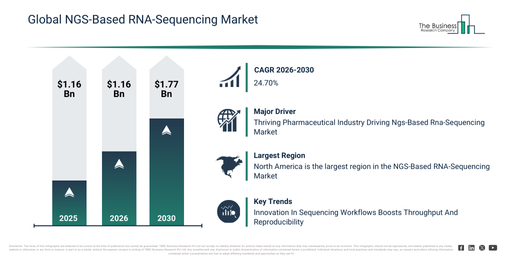
    The ngs-based rna-sequencing market is projected for rapid expansion in the coming years. This market is anticipated to reach a valuation of $12.73 billion by 2030, exhibiting a compound annual growth rate (CAGR) of 24.7%. Drivers for this growth during the projected timeframe include the expanding use of RNA sequencing in clinical diagnostics, increased funding for precision medicine, the broadening scope of pharmaceutical research applications, a rising need for integrated data analysis tools, and a heightened emphasis on multi-omics research. Key trends expected within this period involve the greater uptake of high-throughput RNA sequencing platforms, increasing interest in single-cell RNA sequencing, wider utilization of cloud-based bioinformatics analysis, the integration of transcriptomics into precision medicine, and a stronger focus on data precision and scalability.

    Download A Free Sample Report For Comprehensive Market Insights:

    https://www.thebusinessresearchcompany.com/sample.aspx?id=7416&type=smp

    What Key Growth Drivers Are Influencing The NGS-Based RNA-Sequencing Market?

    The expanding pharmaceutical sector is anticipated to boost the future growth of the NGS-based RNA-sequencing market. This industry encompasses the discovery, development, and production of drugs and medicines by both governmental and private entities. The pharmaceutical industry utilizes NGS-based RNA-sequencing for comprehensive analysis of gene expression, identification of potential drug targets, assessment of drug responses, and understanding disease mechanisms, thereby facilitating drug discovery and development through a deeper understanding of molecular processes. For instance, in June 2025, according to the Centers for Medicare & Medicaid Services (CMS), a US-based federal agency, prescription drug outlays increased by 11.4% in 2023, reaching $449.7 billion, which was an acceleration from the 7.8% growth recorded in 2022. Therefore, the burgeoning pharmaceutical industry is propelling the growth of the NGS-based RNA-sequencing market.

    How Is The NGS-Based RNA-Sequencing Market Examined Through Segment Analysis?

    The ngs-based rna-sequencing market covered in this report is segmented –

    1) By Product And Service: Sample Preparation Products, Sequencing Platforms and Consumables, Sequencing Services, Data Analysis, Storage, and Management

    2) By Technology: Sequencing by Synthesis, Ion Semiconductor Sequencing, Single-molecule Real-time Sequencing, Nanopore Sequencing

    3) By Application: Expression Profiling Analysis, Small RNA Sequencing, De Novo Transcriptome Assembly

    4) By End User: Research & Academia, Pharmaceutical & Biotechnology Companies, Other End Users

    Subsegments:

    1) By Sample Preparation Products: RNA Extraction Kits, Library Preparation Kits, Reverse Transcription Kits, Quality Control Reagents

    2) By Sequencing Platforms And Consumables: Sequencing Instruments, Sequencing Consumables

    3) By Sequencing Services: Contract Sequencing Services, Custom Library Preparation Services, Consultation And Experimental Design Services

    4) By Data Analysis, Storage, And Management: Bioinformatics Software, Data Analysis Services, Cloud-Based Data Storage Solutions, Data Management Platforms

    Which Trends Are Supporting The Evolution Of The NGS-Based RNA-Sequencing Market?

    Companies prominent in the NGS-based RNA-sequencing market are prioritizing the creation of novel offerings, specifically sophisticated small RNA-seq kits, to optimize workflows and enhance the precision and effectiveness of RNA expression analysis. These advanced kits represent next-generation library preparation instruments crafted for precise capture and sequencing of small RNAs, enabling researchers to shorten workflow durations, mitigate artifacts like adapter dimers, and attain more accurate and consistent expression profiling. As an example, in October 2025, the Austrian biotechnology firm Lexogen introduced its miRVEL Profiling Small RNA-Seq Library Prep Kit, which aims to simplify and refine small RNA research processes. This groundbreaking kit offers a quicker and more dependable workflow, allowing the preparation of libraries ready for sequencing in less than seven hours, requiring minimal manual input. Key features include cutting-edge adapter blocking technology to inhibit adapter dimer formation, guaranteeing consistent outcomes across different input quantities, and integrated 8 nt unique dual indices (UDIs) for precise multiplexing and read assignment. The miRVEL Profiling Kit accommodates diverse applications, such as RNA interference investigations, host-defense mechanism examinations, and small RNA research in plant or agricultural contexts. Furthermore, it is compatible with Lexogen’s SPLIT RNA extraction kits and TraPR small RNA enrichment system, thereby offering a comprehensive, end-to-end solution for small RNA analysis.

    Which Companies Are Influencing The NGS-Based RNA-Sequencing Market?

    Major companies operating in the ngs-based rna-sequencing market are Illumina Inc., Thermo Fisher Scientific Inc., Oxford Nanopore Technologies Ltd., Agilent Technologies Inc., BGI Group, QIAGEN N.V., Eurofins Scientific SE, Bio-Rad Laboratories Inc., F. Hoffmann-La Roche Ltd., Takara Bio Inc., GENEWIZ Inc., Novogene Corporation, Macrogen Inc., Zymo Research Corp., Lexogen GmbH, Partek Incorporated, GATC Biotech AG, Genohub LLC, BaseClear B.V., Otogenetics Corporation, SeqLL LLC, GenXPro GmbH, Genotypic Technology Pvt. Ltd.

    Access The Complete NGS-Based RNA-Sequencing Market Report:

    https://www.thebusinessresearchcompany.com/report/ngs-based-rna-sequencing-global-market-report

    Which Region Stands As The Largest Contributor To The NGS-Based RNA-Sequencing Market?

    North America was the largest region in the NGS-based RNA sequencing market in 2025. Asia-Pacific is expected to be the fastest-growing region in the forecast period. The regions covered in the ngs-based rna-sequencing market report are Asia-Pacific, South East Asia, Western Europe, Eastern Europe, North America, South America, Middle East, Africa.

    Access a NGS-Based RNA-Sequencing Market Report for Deeper Competitive Insights

    https://www.thebusinessresearchcompany.com/report/ngs-based-rna-sequencing-global-market-report

    Browse Through More Reports Similar to the Global NGS-Based RNA-Sequencing Market 2026, By The Business Research Company

    Clinical Next Generation Sequencing Ngs Data Analysis Market Report 2026

    https://www.thebusinessresearchcompany.com/report/clinical-next-generation-sequencing-ngs-data-analysis-global-market-report

    Rna Sequencing Services Market Report 2026

    https://www.thebusinessresearchcompany.com/report/rna-sequencing-services-global-market-report

    Next Generation Sequencing Market 2026

    https://www.thebusinessresearchcompany.com/report/next-generation-sequencing-market

    Get in touch with us:

    The Business Research Company: https://www.thebusinessresearchcompany.com/

    Americas: +1 310-496-7795

    Asia: +44 7882 955267 & +91 8897263534

    Europe: +44 7882 955267

    Email us at: marketing@tbrc.info

    Follow us on:

    LinkedIn: https://in.linkedin.com/company/the-business-research-company

    YouTube: https://www.youtube.com/channel/UC24_fI0rV8cR5DxlCpgmyFQ

    Global Market Model: https://www.thebusinessresearchcompany.com/global-market-model
  • Next-Generation Sequencing Library Preparation Market Projected To Surpass $3.16 Billion By 2030 At 14.2% CAGR

    Next-Generation Sequencing Library Preparation Market Projected To Surpass $3.16 Billion By 2030 At 14.2% CAGR

    The Business Research Company’s 2026 market reports feature advanced enhancements such as market attractiveness analysis, total addressable market evaluation, company benchmarking matrices, interactive Excel dashboards, expanded supply chain intelligence, emerging startup coverage, and detailed product insights, delivering more actionable and strategically valuable research.

    What Market Value Trend Is Expected For The Next-Generation Sequencing Library Preparation Market From 2026 To 2030?

    The next-generation sequencing library preparation market size has seen significant expansion over recent years. This market is expected to rise from $1.63 billion in 2025 to $1.86 billion in 2026, at a compound annual growth rate (CAGR) of 14.5%. The increase observed in previous periods is attributable to elements such as limited sequencing throughput, high cost of library preparation kits, reliance on manual preparation workflows, growing demand for genomic research, and increasing adoption of sequencing in clinical diagnostics.

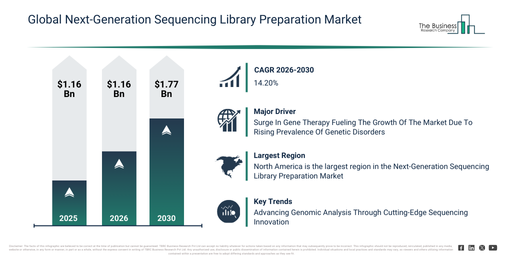
    The next-generation sequencing library preparation market is poised for significant expansion in the coming years, with projections indicating a growth to $3.17 billion by 2030, achieving a compound annual growth rate (CAGR) of 14.2%. This anticipated growth throughout the forecast period is propelled by developments in automated library preparation platforms, the increasing prevalence of whole genome and exome sequencing, growing investments in personalized medicine, the expansion of academic and research genomics projects, and the integration of NGS data with AI and cloud analytics. Noteworthy trends during this period include a rising demand for high-throughput sequencing technologies, the diversification of NGS library preparation kits and reagents, a heightened emphasis on personalized medicine and biomarker discovery, growth within infectious disease and cancer diagnostics, and the broader adoption of automation in library preparation workflows.

    Download A Free Sample Report For Comprehensive Market Insights:

    https://www.thebusinessresearchcompany.com/sample.aspx?id=27365&type=smp

    Which Core Factors Are Supporting The Expansion Of The Next-Generation Sequencing Library Preparation Market?

    Increased adoption of gene therapy is anticipated to drive expansion in the next-generation sequencing library preparation market in the future. Gene therapy involves a therapeutic approach where a patient’s genes are modified to treat or avert illnesses. The growth of gene therapy is attributed to the growing incidence of genetic conditions demanding specific and enduring therapeutic interventions. Next-generation sequencing (NGS) library preparation plays a role in gene therapy by facilitating precise analysis and confirmation of genetic alterations through the creation of superior DNA or RNA samples for subsequent sequencing. For example, data from IQVIA, a US-based healthcare intelligence and life sciences firm, released in March 2024, indicated that expenditures on cell and gene therapies in 2023 escalated to $5.9 billion, marking a 38% rise from 2022, despite constituting only 0.4% of the $1.6 trillion worldwide spending on pharmaceuticals. Consequently, the expansion of gene therapy is fueling the development of the next-generation sequencing library preparation market.

    Which Segment Groups Define The Next-Generation Sequencing Library Preparation Market Landscape?

    The next-generation sequencing library preparation market covered in this report is segmented –

    1) By Sequencing Type: Targeted Genome Sequencing, Whole Genome Sequencing, Whole Exome Sequencing, Other Sequencing Types

    2) By Product: Reagents And Consumables, DNA Library Preparation Kits, Library Preparation Kits, RNA Library Preparation Kits, Other Products

    3) By Technology: Ion Semiconductor Sequencing, Sequencing By Synthesis (SBS), Nanopore Sequencing, Single-Molecule Real-Time Sequencing (SMRT), Other Technologies

    4) By Application: Drug And Biomarker Discovery, Disease Diagnostics, Cancer Diagnostics, Reproductive Health Diagnostics, Infectious Disease Diagnostics, Other Applications

    5) By End-User: Hospitals And Clinics, Academic And Research Institutions, Pharmaceutical And Biotechnology Companies, Other End Users

    Subsegments:

    1) By Targeted Genome Sequencing: Amplicon Sequencing, Hybridization Capture-Based Sequencing, CRISPR-Based Target Enrichment, Multiplex PCR

    2) By Whole Genome Sequencing: Human Whole Genome Sequencing, Animal Whole Genome Sequencing, Plant Whole Genome Sequencing, Microbial Whole Genome Sequencing

    3) By Whole Exome Sequencing: Clinical Whole Exome Sequencing, Research Whole Exome Sequencing, Custom Exome Sequencing, Population-Scale Exome Sequencing

    4) By Other Sequencing Types: RNA Sequencing, ChIP Sequencing (ChIP-Seq), Methylation Sequencing, Single-Cell Sequencing

    What Trends Are Affecting The Growth Of The Next-Generation Sequencing Library Preparation Market?

    Companies operating within the next-generation sequencing library preparation market are prioritizing the development of sophisticated technologies, such as Xpandomer technology. Their aim is to boost sequencing speed, refine data accuracy, and expand scalability, thereby simplifying processes and enabling more efficient and reliable genomic analysis. Xpandomer technology itself represents an advanced method for sequencing deoxyribonucleic acid (DNA) or ribonucleic acid (RNA), transforming a target nucleic acid molecule into a synthetic, expanded polymer known as an Xpandomer, which is 50 times longer than the original deoxyribonucleic acid (DNA) or ribonucleic acid (RNA) strand. As an example, in February 2025, Roche AG, a biotechnology firm located in Switzerland, introduced Sequencing by Expansion. This state-of-the-art sequencing platform is engineered to enhance genomic resolution for advanced diagnostics, studies of diseases, and applications in precision medicine. The innovative automated next-generation sequencing (NGS) library preparation system offered by Roche streamlines intricate workflows, improves the quality of data, and speeds up genomic analysis, supporting both advanced research and personalized medicine efforts. Furthermore, the Sequencing by Expansion platform exhibits high versatility, facilitating precise examination of diverse genomic alterations across numerous diseases, including cancer and rare genetic disorders, by increasing resolution and accuracy to provide more profound biological insights.

    Who Are The Companies Shaping The Next-Generation Sequencing Library Preparation Market Landscape?

    Major companies operating in the next-generation sequencing library preparation market are F. Hoffmann-La Roche Ltd., Thermo Fisher Scientific Inc., Agilent Technologies India Private Limited, Illumina Inc., Beckman Coulter Inc., Bio-Rad Laboratories Inc., IDT Corporation, Tecan Group AG, Hamilton Company, Takara Bio Inc., 10x Genomics Inc., Oxford Nanopore Technologies Plc, Twist Bioscience Corporation, New England Biolabs Inc., SPT Labtech Limited, Watchmaker Genomics Inc., Pillar Biosciences Inc., Aurora Biomed Inc., BGI Group, SEQWELL INC.

    Access The Complete Next-Generation Sequencing Library Preparation Market Report:

    https://www.thebusinessresearchcompany.com/report/next-generation-sequencing-library-preparation-global-market-report

    What Is The Largest Regional Market In The Next-Generation Sequencing Library Preparation Market?

    North America was the largest region in the next-generation sequencing library preparation market in 2025. Asia-Pacific is expected to be the fastest-growing region in the forecast period. The regions covered in the next-generation sequencing library preparation market report are Asia-Pacific, South East Asia, Western Europe, Eastern Europe, North America, South America, Middle East, Africa.

    Access a Next-Generation Sequencing Library Preparation Market Report for Deeper Competitive Insights

    https://www.thebusinessresearchcompany.com/report/next-generation-sequencing-library-preparation-global-market-report

    Browse Through More Reports Similar to the Global Next-Generation Sequencing Library Preparation Market 2026, By The Business Research Company

    Industrial Water Treatment Chemicals Market Report 2026

    https://www.thebusinessresearchcompany.com/report/industrial-water-treatment-chemicals-global-market-report

    Cooling Water Treatment Chemicals Market Report 2026

    https://www.thebusinessresearchcompany.com/report/cooling-water-treatment-chemicals-global-market-report

    Water Treatment Chemicals Market Report 2026

    https://www.thebusinessresearchcompany.com/report/water-treatment-chemicals-global-market-report

    Get in touch with us:

    The Business Research Company: https://www.thebusinessresearchcompany.com/

    Americas: +1 310-496-7795

    Asia: +44 7882 955267 & +91 8897263534

    Europe: +44 7882 955267

    Email us at: marketing@tbrc.info

    Follow us on:

    LinkedIn: https://in.linkedin.com/company/the-business-research-company

    YouTube: https://www.youtube.com/channel/UC24_fI0rV8cR5DxlCpgmyFQ

    Global Market Model: https://www.thebusinessresearchcompany.com/global-market-model

  • Next-Generation Sequencing Informatics Market Forecast Through 2030 Featuring Industry Drivers And Opportunities

    Next-Generation Sequencing Informatics Market Forecast Through 2030 Featuring Industry Drivers And Opportunities

    The Business Research Company’s 2026 market reports feature advanced enhancements such as market attractiveness analysis, total addressable market evaluation, company benchmarking matrices, interactive Excel dashboards, expanded supply chain intelligence, emerging startup coverage, and detailed product insights, delivering more actionable and strategically valuable research.

    How Does The Forecasted Market Size Of The Next-Generation Sequencing Informatics Market Compare Between 2026 And 2030?

    The next-generation sequencing informatics market has seen rapid expansion in recent years. It is projected to grow from $10.23 billion in 2025 to $11.96 billion in 2026, reflecting a compound annual growth rate (CAGR) of 16.9%. The historical period’s growth can be ascribed to a rising demand for precision diagnostics, advancements in high-throughput sequencers, an increase in genomic research initiatives, growing awareness of personalized medicine, and the expansion of bioinformatics capabilities.

    The next-generation sequencing informatics market is poised for significant expansion in the coming years. This market is projected to reach $22.14 billion by 2030, exhibiting a compound annual growth rate (CAGR) of 16.6%. Several factors are expected to fuel this growth during the forecast period, including advancements in NGS informatics software technology, the rising adoption of cloud-based genomic platforms, an increase in partnerships between biotechnology and pharmaceutical firms, the escalating incidence of genetic disorders, and the incorporation of AI and machine learning into genomics analysis. Key trends anticipated for this period encompass AI-driven genomic data analysis, the proliferation of cloud-based sequencing platforms, expanding applications in personalized medicine, enhanced automation within NGS workflows, and the integration of IoT into genomic research.

    Download A Free Sample Report For Comprehensive Market Insights:

    https://www.thebusinessresearchcompany.com/sample.aspx?id=28282&type=smp

    What Are The Main Drivers Accelerating The Growth Of The Next-Generation Sequencing Informatics Market?

    The increasing integration of personalized medicine is projected to propel the expansion of the next-generation sequencing informatics market going forward. Personalized medicine is characterized as a medical strategy that customizes treatment and prevention methods according to an individual’s distinct genetic composition, way of life, and environment. The growing adoption of personalized medicine primarily stems from advancements in genomics, which facilitate precise identification of genetic variations and tailored treatments for individuals. Next-generation sequencing informatics enhances personalized medicine through comprehensive genomic data analysis, making it highly suitable for customized treatment plans and precision healthcare. It reduces diagnostic uncertainty by identifying genetic variations and predicting disease risk, consequently improving clinical decision-making and patient outcomes. For instance, in February 2024, according to the Personalized Medicine Coalition (PMC), a US-based nonprofit organization, the U.S. Food and Drug Administration (FDA) approved 26 new personalized medicines in 2023, representing a significant increase from the 12 approved in 2022. Therefore, the increasing adoption of personalized medicine is driving the growth of the next-generation sequencing informatics market.

    What Key Segment Areas Are Included In The Next-Generation Sequencing Informatics Market Assessment?

    The next-generation sequencing informatics market covered in this report is segmented –

    1) By Offering: Software, Platforms, Services

    2) By Product And Services: Storage And Computing Tools, Commercial Data Analysis, Data Interpretation And Reporting Tools, Informatics Services

    3) By Deployment Mode: Cloud, On-Premise, Hybrid

    4) By Application: Research And Development, Clinical Diagnostics, Drug Discovery, Agrigenomics

    5) By End User: Academic And Research Institutes, Pharmaceutical And Biotechnology Companies, Hospitals And Clinical Laboratories, Agricultural Biotechnology Companies

    Subsegments:

    1) By Software: Data Analysis Software, Data Management And Storage Tools, Workflow Management Software, Sequence Alignment Tools, Variant Analysis Software, Clinical Interpretation Software

    2) By Platforms: On-Premises Platforms, Cloud-Based Platforms, Hybrid Platforms

    3) By Services: Data Analysis Services, Consulting And Implementation Services, Data Management And Storage Services, Technical Support And Maintenance Services, Training And Education Services

    Which Trends Are Influencing The Direction Of The Next-Generation Sequencing Informatics Market?

    Leading firms within the next-generation sequencing informatics (NGS) market are concentrating on creating sophisticated solutions, including cloud-based platforms, with the aim of boosting scalability, strengthening data security, and optimizing genomic workflows. These cloud-based platforms are defined as digital infrastructures facilitating researchers and clinicians in storing, processing, and analyzing substantial amounts of sequencing data, whether hosted on remote servers or contained within local institutional settings. As an illustration, in March 2023, Illumina Inc., a US-based biotechnology firm, introduced Connected Insights, a novel cloud-based software tailored for the tertiary analysis of clinical next-generation sequencing (NGS) data. This innovation simplifies the interpretation and reporting of genomic data, incorporates more than 45 external knowledge sources, and shortens the time required for generating clinical reports. It also automates the interpretation of variants and the creation of reports, thereby decreasing manual work and standardizing processes across various assay types, including comprehensive genomic profiling (CGP) panels, whole-exome sequencing (WES), and transcriptomic data.

    Which Industry Players Are Present In The Next-Generation Sequencing Informatics Market?

    Major companies operating in the next-generation sequencing informatics market are DNAnexus Inc., SOPHiA GENETICS SA, DNASTAR Inc., Geneious Biomatters Ltd., CosmosID Inc., QIAGEN N.V., Seven Bridges Genomics Inc., PierianDx Inc., Fabric Genomics Inc., Golden Helix Inc., Partek Incorporated, Real Time Genomics Inc., Sentieon Inc., Roche NimbleGen Inc., Agilent Alissa Interpret, WuXi NextCODE Genomics, DNAVision SA, Genoox Ltd., Congenica Ltd., PierianDx Holdings, Bionano Genomics Inc.

    Access The Complete Next-Generation Sequencing Informatics Market Report:

    https://www.thebusinessresearchcompany.com/report/next-generation-sequencing-informatics-global-market-report

    Which Region Contributes The Most To The Next-Generation Sequencing Informatics Market?

    North America was the largest region in the next-generation sequencing informatics market in 2025. Asia-Pacific is expected to be the fastest-growing region in the forecast period. The regions covered in the next-generation sequencing informatics market report are Asia-Pacific, South East Asia, Western Europe, Eastern Europe, North America, South America, Middle East, Africa.

    Access a Next-Generation Sequencing Informatics Market Report for Deeper Competitive Insights

    https://www.thebusinessresearchcompany.com/report/next-generation-sequencing-informatics-global-market-report

    Browse Through More Reports Similar to the Global Next-Generation Sequencing Informatics Market 2026, By The Business Research Company

    Clinical Oncology Next Generation Sequencing Market Report 2026

    https://www.thebusinessresearchcompany.com/report/clinical-oncology-next-generation-sequencing-global-market-report

    Clinical Next Generation Sequencing Ngs Data Analysis Market Report 2026

    https://www.thebusinessresearchcompany.com/report/clinical-next-generation-sequencing-ngs-data-analysis-global-market-report

    Rna Sequencing Services Market Report 2026

    https://www.thebusinessresearchcompany.com/report/rna-sequencing-services-global-market-report

    Get in touch with us:

    The Business Research Company: https://www.thebusinessresearchcompany.com/

    Americas: +1 310-496-7795

    Asia: +44 7882 955267 & +91 8897263534

    Europe: +44 7882 955267

    Email us at: marketing@tbrc.info

    Follow us on:

    LinkedIn: https://in.linkedin.com/company/the-business-research-company

    YouTube: https://www.youtube.com/channel/UC24_fI0rV8cR5DxlCpgmyFQ

    Global Market Model: https://www.thebusinessresearchcompany.com/global-market-model
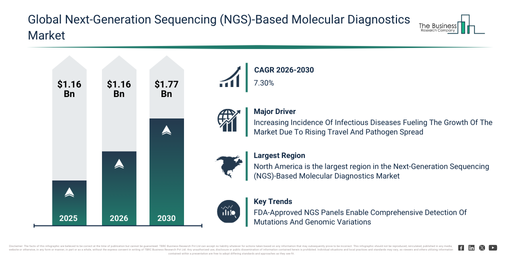
  • Increasing Incidence Of Infectious Diseases Fueling The Growth Of The Market Due To Rising Travel And Pathogen Spread Is Supporting Development Across The Next-Generation Sequencing (NGS)-Based Molecular Diagnostics Market

    Increasing Incidence Of Infectious Diseases Fueling The Growth Of The Market Due To Rising Travel And Pathogen Spread Is Supporting Development Across The Next-Generation Sequencing (NGS)-Based Molecular Diagnostics Market

    The Business Research Company’s 2026 market reports feature advanced enhancements such as market attractiveness analysis, total addressable market evaluation, company benchmarking matrices, interactive Excel dashboards, expanded supply chain intelligence, emerging startup coverage, and detailed product insights, delivering more actionable and strategically valuable research.

    What Increase In Market Value Is Predicted For The Next-Generation Sequencing (NGS)-Based Molecular Diagnostics Market During The 2026–2030 Period?

    The next-generation sequencing (ngs)-based molecular diagnostics market has demonstrated substantial growth in recent years. This market is anticipated to expand from $2.26 billion in 2025 to $2.43 billion in 2026, at a compound annual growth rate (CAGR) of 7.6%. Historically, this growth can be attributed to several factors including increased genetic disorder testing, the development of high-throughput sequencing, growing awareness of molecular diagnostics, its adoption in clinical labs, and technological improvements in sequencing reagents.

    The next-generation sequencing (ngs)-based molecular diagnostics market size is anticipated to experience robust growth in the upcoming years. This market is set to expand to $3.23 billion by 2030, demonstrating a compound annual growth rate (CAGR) of 7.3%. The expansion within this forecast period can be attributed to the incorporation of AI and machine learning in diagnostic processes, the broadening of cloud-based genomic platforms, the development of compact and point-of-care sequencing instruments, the rising adoption of personalized medicine applications, and collaborations between diagnostics and biotechnology firms. Significant trends for the forecast period include AI-assisted molecular diagnostics, cloud genomic analysis platforms, portable sequencing devices, the integration of bioinformatics pipelines, and rapid disease marker detection.

    Download A Free Sample Report For Comprehensive Market Insights:

    https://www.thebusinessresearchcompany.com/sample.aspx?id=28281&type=smp

    Which Growth Drivers Are Expected To Support The Next-Generation Sequencing (NGS)-Based Molecular Diagnostics Market Forward?

    The escalating occurrence of infectious diseases is anticipated to fuel the expansion of the next-generation sequencing (NGS)-based molecular diagnostics market. Infectious diseases are conditions caused by microorganisms such as bacteria, viruses, fungi, or parasites that invade the body, multiply, and disrupt normal bodily functions. The prevalence of these diseases is rising as increased travel and migration accelerate the spread of pathogens across regions and borders. Next-generation sequencing (NGS)-based molecular diagnostics aids in the detection of infectious diseases by offering comprehensive and precise analysis of pathogens. It shortens diagnostic time through the simultaneous identification of multiple microorganisms, thereby enhancing treatment accuracy and patient care. For instance, in February 2024, the UK Health Security Agency, a UK-based government agency, stated that tuberculosis cases in England reached 4,850 in 2023, representing a 10.7% rise from 4,380 cases in 2022. Consequently, the increasing incidence of infectious diseases is propelling the growth of the next-generation sequencing (NGS)-based molecular diagnostics market.

    How Is Segment Classification Applied In The Next-Generation Sequencing (NGS)-Based Molecular Diagnostics Market?

    The next-generation sequencing (ngs)-based molecular diagnostics market covered in this report is segmented –

    1) By Type: Instruments, Reagents And Consumables, Software And Services, Panels And Assays, Sample Preparation Kits

    2) By Application: Microbiology, Infectious Diseases, Oncology, Genetic Tests, Other Applications

    3) By End User: Research Centers And Academics, Hospitals And Clinical Laboratories, Other End Users

    Subsegments:

    1) By Instruments: Benchtop Sequencers, High-Throughput Sequencers, Portable Or Handheld Sequencers, Clinical Or Diagnostic Sequencers, Automated Library Preparation Systems, Data Analysis And Bioinformatics Hardware

    2) By Reagents And Consumables: Sequencing Reagents And Kits, Library Preparation Reagents, Target Enrichment Reagents, Amplification Reagents, Sequencing Flow Cells And Chips, Deoxyribonucleic Acid (DNA) Or Ribonucleic Acid (RNA) Extraction Reagents, Quality Control Reagents

    3) By Software And Services: Data Analysis Software, Bioinformatics Pipelines, Cloud-Based Genomic Platforms, Clinical Interpretation Tools, Data Storage And Management Services, Custom Bioinformatics Services, Genomic Database Services

    4) By Panels And Assays: Oncology Panels, Infectious Disease Panels, Carrier Screening Panels, Reproductive Health Panels, Rare Disease Or Genetic Disorder Panels, Pharmacogenomics Panels, Whole-Exome Or Whole-Genome Assays

    5) By Sample Preparation Kits: Deoxyribonucleic Acid (DNA) Extraction Kits, Ribonucleic Acid (RNA) Extraction Kits, Library Preparation Kits, Target Enrichment Kits, Amplification And Cleanup Kits, Single-Cell Preparation Kits, Low-Input Or Degraded Sample Kits

    What Trends Are Driving Changes In The Next-Generation Sequencing (NGS)-Based Molecular Diagnostics Market?

    Major companies within the next-generation sequencing (NGS)-based molecular diagnostics market are concentrating on developing advanced NGS-based panels to enhance the accuracy, accessibility, and efficiency of genetic testing. NGS panels are specific sets of genes or genomic regions analyzed simultaneously using NGS technology to detect clinically relevant mutations, leading to faster and more precise molecular diagnostics. For instance, in April 2024, Pillar Biosciences, a US-based diagnostics company, received FDA approval for its oncoReveal CDx pan-cancer solid tumor IVD kit, which analyzes 22 clinically relevant genes in a single multiplex reaction. Designed for use with Illumina’s MiSeq Dx system, this panel supports a sample-to-report time of approximately 48 hours and can process up to 46 clinical samples per run. The OncoReveal CDx includes companion diagnostic claims for KRAS (for EGFR-targeted therapy in colorectal cancer) and EGFR (TKI therapy in non–small-cell lung cancer), enabling more comprehensive and efficient detection of actionable genomic alterations to improve clinical decision-making.

    Which Organizations Are Involved In The Next-Generation Sequencing (NGS)-Based Molecular Diagnostics Market?

    Major companies operating in the next-generation sequencing (ngs)-based molecular diagnostics market are Thermo Fisher Scientific, Siemens Healthineers AG, Agilent Technologies Inc., Illumina Inc., PerkinElmer Inc., Bio-Rad Laboratories Inc., Qiagen N.V., Amoy Diagnostics Co. Ltd., Tempus Labs Inc., Myriad Genetics Inc., Epigenomics AG, Precision for Medicine Inc., Invitae Corporation, NeoGenomics Laboratories Inc., Guardant Health Inc., Caris Life Sciences Inc., Foundation Medicine Inc., Oxford Nanopore Technologies Ltd., Freenome Inc., Burning Rock Biotech, Element Biosciences Inc., Asuragen Inc., Bionano Genomics Inc., Genomic Health Inc., TATAA Biocenter AB

    Access The Complete Next-Generation Sequencing (NGS)-Based Molecular Diagnostics Market Report:

    https://www.thebusinessresearchcompany.com/report/next-generation-sequencing-ngs-based-molecular-diagnostics-global-market-report

    Which Regional Market Leads The Next-Generation Sequencing (NGS)-Based Molecular Diagnostics Market?

    North America was the largest region in the next-generation sequencing (NGS)-based molecular diagnostics market in 2025. Asia-Pacific is expected to be the fastest-growing region in the forecast period. The regions covered in the next-generation sequencing (ngs)-based molecular diagnostics market report are Asia-Pacific, South East Asia, Western Europe, Eastern Europe, North America, South America, Middle East, Africa.

    Access a Next-Generation Sequencing (NGS)-Based Molecular Diagnostics Market Report for Deeper Competitive Insights

    https://www.thebusinessresearchcompany.com/report/next-generation-sequencing-ngs-based-molecular-diagnostics-global-market-report

    Browse Through More Reports Similar to the Global Next-Generation Sequencing (NGS)-Based Molecular Diagnostics Market 2026, By The Business Research Company

    Ngs Based Rna Sequencing Market Report 2026

    https://www.thebusinessresearchcompany.com/report/ngs-based-rna-sequencing-global-market-report

    Next Generation Sequencing Market 2026

    https://www.thebusinessresearchcompany.com/report/next-generation-sequencing-market

    Point Of Care Molecular Diagnostics Market Report 2026

    https://www.thebusinessresearchcompany.com/report/point-of-care-molecular-diagnostics-global-market-report

    Get in touch with us:

    The Business Research Company: https://www.thebusinessresearchcompany.com/

    Americas: +1 310-496-7795

    Asia: +44 7882 955267 & +91 8897263534

    Europe: +44 7882 955267

    Email us at: marketing@tbrc.info

    Follow us on:

    LinkedIn: https://in.linkedin.com/company/the-business-research-company

    YouTube: https://www.youtube.com/channel/UC24_fI0rV8cR5DxlCpgmyFQ

    Global Market Model: https://www.thebusinessresearchcompany.com/global-market-model