Month: May 2026

  • Global Lung Cancer Surgery Equipment Market Anticipated To Grow To $5.09 Billion By 2030 At 6.4% CAGR

    Global Lung Cancer Surgery Equipment Market Anticipated To Grow To $5.09 Billion By 2030 At 6.4% CAGR

    The Business Research Company’s 2026 market reports feature advanced enhancements such as market attractiveness analysis, total addressable market evaluation, company benchmarking matrices, interactive Excel dashboards, expanded supply chain intelligence, emerging startup coverage, and detailed product insights, delivering more actionable and strategically valuable research.

    How Will The Market Size Of The Lung Cancer Surgery Equipment Market Progress Through 2030?

    The lung cancer surgery equipment market size has experienced strong growth in recent years. It is projected to expand from $3.73 billion in 2025 to $3.98 billion in 2026, demonstrating a compound annual growth rate (CAGR) of 6.7%. The growth during the historic period can be ascribed to factors such as the limited availability of advanced thoracic surgery equipment, a reliance on traditional open surgeries, the increasing prevalence of lung cancer, a rising number of hospital and surgical clinics, and the adoption of standard biopsy and imaging procedures.

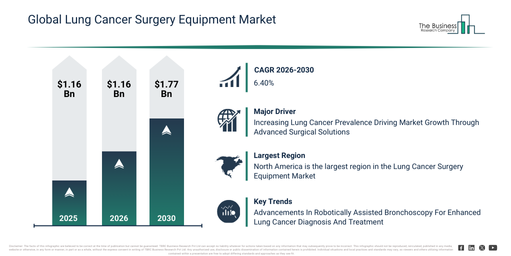
    The lung cancer surgery equipment market is projected for significant expansion over the coming years. This market is anticipated to reach $5.1 billion by 2030, exhibiting a compound annual growth rate (CAGR) of 6.4%. This projected growth is driven by several factors, including the advancement of robotic-assisted and minimally invasive surgical instruments, the incorporation of AI-powered imaging and monitoring technologies, increased funding for research and academic institutions, the wider implementation of Enhanced Recovery After Surgery (ERAS) guidelines, and the establishment of more specialized centers for lung cancer treatment. Key trends anticipated during this period involve the increasing popularity of minimally invasive lung procedures, a heightened need for sophisticated imaging and diagnostic tools, the integration of patient monitoring systems with surgical devices, a greater emphasis on postoperative rehabilitation and follow-up care, and the spread of robotic-assisted thoracic surgical techniques.

    Download A Free Sample Report For Comprehensive Market Insights:

    https://www.thebusinessresearchcompany.com/sample.aspx?id=24594&type=smp

    Which Major Factors Are Contributing To The Development Of The Lung Cancer Surgery Equipment Market?

    The increasing incidence of lung cancer is anticipated to fuel expansion in the lung cancer surgery equipment market in the foreseeable future. This condition involves the unchecked proliferation of aberrant cells within the lungs, frequently linked to tobacco use or detrimental environmental factors. The uptick in lung cancer diagnoses is primarily attributable to elevated exposure to risk factors like tobacco smoke, atmospheric contaminants, and workplace carcinogens, alongside a demographic shift towards an older population. Tools for lung cancer surgery serve to identify the disease, excise malignant tissue, and aid in recovery after operations via accurate surgical procedures and continuous patient observation. As an illustration, in February 2025, the Cancer Council, an Australian non-profit body, reported that approximately 15,122 people were diagnosed with lung cancer in Australia during 2024, with the typical age at diagnosis being 72. In Australia, lung cancer stands as the fifth most frequently diagnosed malignancy, and roughly one in 20 Australians is projected to receive such a diagnosis by the age of 85. Consequently, the expanding occurrence of lung cancer is propelling the development of the lung cancer surgery equipment market.

    How Are Different Segment Groups Identified Within The Lung Cancer Surgery Equipment Market?

    The lung cancer surgery equipment market covered in this report is segmented –

    1) By Product Type: Surgical Instruments, Access Devices, Imaging Equipment, Electrosurgical Devices, Biopsy Devices, Patient Monitoring Equipment

    2) By Surgery Type: Lobectomy Surgery, Pneumonectomy Surgery, Wedge Resection, Video-Assisted Thoracoscopic Surgery (VATS), Robotic-Assisted Surgery

    3) By Application: Diagnosis, Treatment, Aftercare And Rehabilitation

    4) By End User: Hospitals, Surgical Clinics, Ambulatory Surgical Centers, Research And Academic Institutes

    Subsegments:

    1) By Surgical Instruments: Scalpels, Forceps, Retractors, Scissors, Sutures

    2) By Access Devices: Trocars, Catheters, Guidewires, Introducers

    3) By Imaging Equipment: CT Scanners, MRI Machines, PET Scanners, X-Ray Systems, Ultrasound Devices

    4) By Electrosurgical Devices: Electrosurgical Generators, Electrosurgical Probes, Electrosurgical Electrodes, Smoke Evacuation Systems

    5) By Biopsy Devices: Needle Biopsy Devices, Core Biopsy Devices, Vacuum-Assisted Biopsy Devices, Endoscopic Biopsy Devices

    6) By Patient Monitoring Equipment: Pulse Oximeters, ECG Monitors, Respiratory Monitors, Blood Pressure Monitors, Temperature Monitors

    Which Trends Are Influencing The Direction Of The Lung Cancer Surgery Equipment Market?

    Leading companies in the lung cancer surgery equipment market are concentrating on developing devices for robotically assisted bronchoscopy. This focus aims to boost the precision and safety of tumor localization and biopsy, enhance access to hard-to-reach lung nodules, and support the early and accurate diagnosis of lung cancer. Robotically assisted bronchoscopy is an advanced medical procedure that utilizes robotic technology to guide a bronchoscope, a thin, flexible tube, into the lungs with greater precision and control than traditional manual techniques. For instance, in March 2025, Johnson and Johnson, a US-based pharmaceutical company, announced that its MONARCH QUEST system, a sophisticated robotic-assisted bronchoscopy technology, had received U.S. FDA 510(k) clearance. This system marks the latest evolution of the MONARCH Platform, which is engineered to improve the diagnosis of lung cancer through minimally invasive procedures. The system interfaces with the GE HealthCare OEC 3D mobile CBCT Imaging System, facilitating real-time, intraprocedural 3D imaging. This integration significantly improves the precision of targeting lung nodules, especially those located in difficult-to-access areas of the lung.

    Who Are The Major Companies Operating In The Lung Cancer Surgery Equipment Market?

    Major companies operating in the lung cancer surgery equipment market are Johnson & Johnson, Medtronic plc, Siemens Healthcare AG, Fujifilm Limited, GE Healthcare Technologies Inc, Boston Scientific Corporation, Olympus Corporation, Intuitive Surgical Inc, Teleflex Incorporated, KARL STORZ GmbH & Co KG, Integra LifeSciences Corporation, Richard Wolf GmbH, Angiodynamics Inc, B Braun Melsungen AG, Sontec Instruments Inc, Novadaq Technologies Inc, Stryker Corporation, CONMED Corporation, Smith & Nephew plc, Ambu A S

    Access The Complete Lung Cancer Surgery Equipment Market Report:

    https://www.thebusinessresearchcompany.com/report/lung-cancer-surgery-equipment-global-market-report

    Which Region Has The Strongest Presence In The Lung Cancer Surgery Equipment Market?

    North America was the largest region in the lung cancer surgery equipment market in 2025. Asia-Pacific is expected to be the fastest-growing region in the forecast period. The regions covered in the lung cancer surgery equipment market report are Asia-Pacific, South East Asia, Western Europe, Eastern Europe, North America, South America, Middle East, Africa.

    Access a Lung Cancer Surgery Equipment Market Report for Deeper Competitive Insights

    https://www.thebusinessresearchcompany.com/report/lung-cancer-surgery-equipment-global-market-report

    Browse Through More Reports Similar to the Global Lung Cancer Surgery Equipment Market 2026, By The Business Research Company

    Lung Cancer Drugs Market Report 2026

    https://www.thebusinessresearchcompany.com/report/lung-cancer-drugs-global-market-report

    Thoracic Surgery Devices Market Report 2026

    https://www.thebusinessresearchcompany.com/report/thoracic-surgery-devices-global-market-report

    Surgical Equipment Market Report 2026

    https://www.thebusinessresearchcompany.com/report/surgical-equipment-global-market-report

    Get in touch with us:

    The Business Research Company: https://www.thebusinessresearchcompany.com/

    Americas: +1 310-496-7795

    Asia: +44 7882 955267 & +91 8897263534

    Europe: +44 7882 955267

    Email us at: marketing@tbrc.info

    Follow us on:

    LinkedIn: https://in.linkedin.com/company/the-business-research-company

    YouTube: https://www.youtube.com/channel/UC24_fI0rV8cR5DxlCpgmyFQ

    Global Market Model: https://www.thebusinessresearchcompany.com/global-market-model

  • Lumbar Disc Replacement Devices Market Future Analysis Covering Industry Shifts And Growth Potential

    Lumbar Disc Replacement Devices Market Future Analysis Covering Industry Shifts And Growth Potential

    The Business Research Company’s 2026 market reports feature advanced enhancements such as market attractiveness analysis, total addressable market evaluation, company benchmarking matrices, interactive Excel dashboards, expanded supply chain intelligence, emerging startup coverage, and detailed product insights, delivering more actionable and strategically valuable research.

    What Is The Expected Market Size Of The Lumbar Disc Replacement Devices Market In 2026 And How Much Will It Reach By 2030?

    The lumbar disc replacement devices market has seen swift expansion in recent years. Its valuation is set to climb from $1.3 billion in 2025 to $1.47 billion in 2026, demonstrating a compound annual growth rate (CAGR) of 13.1%. This historical growth can be linked to factors including the increasing prevalence of degenerative disc disease, a rise in spinal injury cases, the proliferation of orthopedic surgical centers, greater acceptance of disc replacement procedures, and the accessibility of advanced implant materials.

    The lumbar disc replacement devices market is projected to experience substantial growth in the coming years, with its size forecast to reach $2.39 billion by 2030, demonstrating a compound annual growth rate (CAGR) of 12.9%. This expansion during the forecast period is primarily driven by an escalating demand for surgical options that preserve motion, the increasing embrace of personalized implants, the expanding global aging population, rising investments in spinal biomechanics research, and a growing preference for solutions other than spinal fusion. Significant developments anticipated during this period include the wider adoption of motion-preserving spine implants, a surge in demand for minimally invasive spine procedures, the increasing utilization of advanced biocompatible materials, the broader development of personalized spinal implant designs, and an intensified focus on long-term mobility outcomes.

    Download A Free Sample Report For Comprehensive Market Insights:

    https://www.thebusinessresearchcompany.com/sample.aspx?id=20864&type=smp

    What Key Growth Drivers Are Influencing The Lumbar Disc Replacement Devices Market?

    The rising occurrence of spinal conditions is projected to fuel the expansion of the lumbar disc replacement devices market in the future. Spinal disorders encompass various ailments affecting the spine, such as deformities, injuries, or diseases that impact the vertebrae, discs, nerves, and surrounding tissues, frequently resulting in discomfort, mobility challenges, or other complications. The increase in these conditions stems from factors like an aging global population, inactive lifestyles, obesity, and a higher prevalence of degenerative diseases such as osteoarthritis and herniated discs. Lumbar disc replacement devices assist in managing spinal disorders by restoring movement and alleviating pain for individuals suffering from degenerative disc disease, offering an effective substitute for conventional spinal fusion surgery. For instance, in April 2024, the World Health Organization, a Switzerland-based intergovernmental organization, reported that over 15 million people globally are living with spinal cord injuries (SCI). Consequently, the growing incidence of spinal disorders is propelling the growth of the lumbar disc replacement devices market. The enhancement of healthcare infrastructure is anticipated to drive the future growth of the lumbar disc replacement devices market. Healthcare infrastructure refers to the system of hospitals, clinics, diagnostic facilities, and related medical services that ensure the population has access to quality healthcare. This expansion is spurred by increased public and private sector investments, a growing populace, and an escalating demand for sophisticated medical treatment. Better infrastructure facilitates the adoption of novel medical technologies, improves patient accessibility to care, and boosts the efficiency of healthcare provision. For instance, in May 2023, a report from the Office for National Statistics, a UK-based government department, indicated that healthcare spending in the UK grew by 5.6% between 2022 and 2023, a notable increase compared to the 0.9% growth seen in 2022. Therefore, the expansion in healthcare infrastructure is stimulating growth in the lumbar disc replacement devices market.

    What Segment Categories Are Evaluated In The Lumbar Disc Replacement Devices Market Study?

    The lumbar disc replacement devices market covered in this report is segmented –

    1) By Product: Metal-On-Metal, Metal-On-Biopolymer

    2) By Pain Type: Chronic, Acute, Radicular, Other Pain Types

    3) By End-User: Hospitals, Ambulatory Surgical Center, Other End Users

    Subsegments:

    1) By Metal-On-Metal: Cobalt-Chromium Alloy, Titanium Alloy

    2) By Metal-On-Biopolymer: Metal-On-PEEK (Polyether Ether Ketone), Metal-On-Polymer Composite

    What Trends Are Driving Changes In The Lumbar Disc Replacement Devices Market?

    Leading companies in the lumbar disc replacement devices market are concentrating on integrating advanced technologies, such as numerical code technology, for sophisticated lumbar total disc replacement procedures. Numerical code technology refers to the utilization of specialized algorithms and computational models to simulate and optimize the design, performance, and implantation processes of medical devices, including lumbar disc replacement devices, thereby enhancing their precision and effectiveness in clinical applications. For instance, in January 2023, the American Medical Association, a US-based professional organization, issued a Current Procedural Terminology (CPT) code for the second level of lumbar total disc replacement (TDR) procedures. Centinel Spine LLC, a US-based medical equipment manufacturing company, leveraged this code to improve access to two-level lumbar TDR procedures. This development is instrumental in broadening the treatment options available to patients, ultimately contributing to superior clinical outcomes and more efficient healthcare delivery.

    Which Companies Are Influencing The Lumbar Disc Replacement Devices Market?

    Major companies operating in the lumbar disc replacement devices market are Medtronic Inc., Stryker Corporation, Zimmer Biomet Holdings Inc., NuVasive Inc., Globus Medical Inc., Orthofix International NV, Medacta International, Aesculap Inc., Alphatec Spine Inc., Paradigm Spine GmbH, B. Braun Melsungen AG, Neoflex Spine Inc., Centinel Spine Inc., Spineart SA, DePuy Synthes, AxioMed LLC, Spinal Stabilization Technologies LLC, NEURO FRANCE Implants SARL, SINTX Technologies Inc., SIGNUS Medizintechnik GmbH

    Access The Complete Lumbar Disc Replacement Devices Market Report:

    https://www.thebusinessresearchcompany.com/report/lumbar-disc-replacement-devices-global-market-report

    Which Region Stands As The Largest Contributor To The Lumbar Disc Replacement Devices Market?

    North America was the largest region in the lumbar disc replacement devices market in 2025. The regions covered in the lumbar disc replacement devices market report are Asia-Pacific, South East Asia, Western Europe, Eastern Europe, North America, South America, Middle East, Africa.

    Access a Lumbar Disc Replacement Devices Market Report for Deeper Competitive Insights

    https://www.thebusinessresearchcompany.com/report/lumbar-disc-replacement-devices-global-market-report

    Browse Through More Reports Similar to the Global Lumbar Disc Replacement Devices Market 2026, By The Business Research Company

    Spinal Surgery Devices And Equipment Market Report 2026

    https://www.thebusinessresearchcompany.com/report/spinal-surgery-devices-and-equipment-global-market-report

    Degenerative Disc Disease Treatment Market Report 2026

    https://www.thebusinessresearchcompany.com/report/degenerative-disc-disease-treatment-global-market-report

    Spine Implants Market Report 2026

    https://www.thebusinessresearchcompany.com/report/spine-implants-global-market-report

    Get in touch with us:

    The Business Research Company: https://www.thebusinessresearchcompany.com/

    Americas: +1 310-496-7795

    Asia: +44 7882 955267 & +91 8897263534

    Europe: +44 7882 955267

    Email us at: marketing@tbrc.info

    Follow us on:

    LinkedIn: https://in.linkedin.com/company/the-business-research-company

    YouTube: https://www.youtube.com/channel/UC24_fI0rV8cR5DxlCpgmyFQ

    Global Market Model: https://www.thebusinessresearchcompany.com/global-market-model
  • Low Vision Electronic Visual Aids Market Analysis Reflecting Expansion Trends And Industry Performance

    Low Vision Electronic Visual Aids Market Analysis Reflecting Expansion Trends And Industry Performance

    The Business Research Company’s 2026 market reports feature advanced enhancements such as market attractiveness analysis, total addressable market evaluation, company benchmarking matrices, interactive Excel dashboards, expanded supply chain intelligence, emerging startup coverage, and detailed product insights, delivering more actionable and strategically valuable research.

    What Market Size Is Forecasted For The Low Vision Electronic Visual Aids Market By 2030 Based On Its 2026 Value?

    The low vision electronic visual aids market has demonstrated robust expansion in recent years. This market is projected to increase from $1.25 billion in 2025 to $1.35 billion in 2026, achieving a compound annual growth rate (CAGR) of 8.0%. Several elements contributed to its historical growth, including the escalating prevalence of visual impairments, the constrained availability of affordable visual aids, heightened awareness regarding low vision aids, advancements in optical magnification, and the expanding geriatric population.

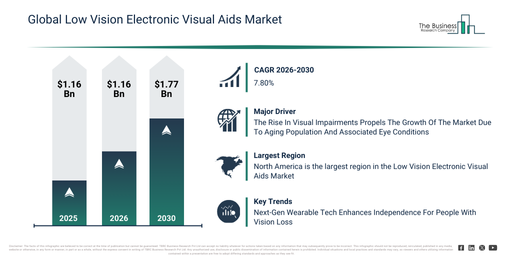
    The market for low vision electronic visual aids is projected to experience robust expansion over the coming years. By 2030, its size is anticipated to reach $1.82 billion, demonstrating a compound annual growth rate (CAGR) of 7.8%. This growth during the forecast timeframe is primarily driven by factors such as technological incorporation of AI and IoT, a growing need for portable and wearable instruments, favorable government programs, increased use in learning environments, and wider e-commerce channels for distribution. Key developments expected within this period encompass the uptake of wearable low vision tools, the shrinking size of electronic magnifiers, visual support controlled by voice, seamless connection with smart home setups, and bespoke vision improvement options.

    Download A Free Sample Report For Comprehensive Market Insights:

    https://www.thebusinessresearchcompany.com/sample.aspx?id=25815&type=smp

    Which Core Factors Are Supporting The Expansion Of The Low Vision Electronic Visual Aids Market?

    The increasing occurrence of visual impairments is expected to drive the expansion of the low vision electronic visual aids market moving forward. Visual impairments describe a spectrum of vision loss conditions that cannot be fully corrected by standard corrective lenses, medication, or surgical interventions, consequently affecting an individual’s ability to see clearly. This rise in visual impairments is predominantly attributed to the aging global populace, as age-related eye conditions like macular degeneration, cataracts, and glaucoma become more common with advancing years. Low vision electronic visual aids assist people with visual impairments by enhancing their residual vision through magnification, contrast modification, and digital image processing, which promotes greater independence in their daily activities. For example, in August 2023, the World Health Organization, a Switzerland-based specialized agency of the United Nations, stated that at least 2.2 billion people globally experience a near or distance vision impairment. However, it is estimated that only 36% of individuals with distance vision impairment due to refractive errors and just 17% of those with vision impairment caused by cataracts have received appropriate treatment. Therefore, the growing prevalence of visual impairments is a significant factor contributing to the growth of the low vision electronic visual aids market.

    How Is The Low Vision Electronic Visual Aids Market Examined Through Segment Analysis?

    The low vision electronic visual aids market covered in this report is segmented –

    1) By Type: Portable Electronic Magnifiers, Closed Circuit Television, Voice Readers, Other Types

    2) By Technology: Optical Devices, Electronic Magnifiers, Text-to-Speech Devices, Speech Recognition Systems

    3) By Application: Reading Assistance, Navigation Assistance, Social Interaction And Communication, Entertainment

    4) By Distribution Channel: Online Retail, Specialty Stores, Optical Stores, Other Distribution Channels

    5) By End-User: Individuals, Hospitals And Clinics, Rehabilitation Centers, Educational Institutions

    Subsegments:

    1) By Portable Electronic Magnifiers: Handheld Magnifiers, Stand Magnifiers, Wearable Magnifiers, Digital Magnifier Tablets

    2) By Closed Circuit Television: Desktop Closed Circuit Television Systems, Transportable Closed Circuit Television Systems, Wearable Closed Circuit Television Devices, Closed Circuit Television With Text-To-Speech Integration

    3) By Voice Readers: Screen Readers, Book Readers, Optical Character Recognition-Based Readers, Smart Audio Assistants For Reading

    4) By Other Types: Braille Notetakers, Smart Glasses, Screen Magnification Software, Navigation Aids

    Which Trends Are Shaping The Low Vision Electronic Visual Aids Market Landscape?

    Leading companies in the low vision electronic visual aids market are concentrating on developing innovative solutions, such as artificial intelligence-powered wearable smart glasses, to improve real-time visual interpretation and user independence. These AI-powered wearable smart glasses are advanced electronic visual aids that utilize AI-driven image processing, object recognition, and voice output to help individuals with low vision perceive and interact with their surroundings more effectively. For instance, in August 2024, Eyedaptic Inc., a US-based medical technology company, launched EYE6 with Ivy, a next-generation wearable visual assistant specifically designed for individuals with age-related macular degeneration and other retinal disorders. These lightweight smart glasses integrate advanced vision enhancement with an AI-powered assistant named Ivy. It is capable of reading text, identifying objects, describing surroundings, and providing support to users in 99 languages to promote greater independence. Equipped with full HD 1080p displays, hands-free voice control, and remote upgrade capabilities, the EYE6 delivers a seamless, customizable user experience for people with low vision conditions.

    Who Are The Companies Shaping The Low Vision Electronic Visual Aids Market Landscape?

    Major companies operating in the low vision electronic visual aids market are Eschenbach Optik GmbH, Vispero, HumanWare Group, Freedom Scientific Inc., IrisVision Global Inc., VisionAid International Ltd., Zoomax Technology Co. Ltd., HIMS Inc., LS And S Products Inc., CTECH Low Vision And Blindness Solutions, Low Vision International AB, NuEyes Technologies Inc., Optelec U.S. Inc., Reinecker Vision GmbH, OrCam Technologies Ltd., Enhanced Vision, Dolphin Computer Access, Acesight, Eyedaptic Inc., eSight Corporation, Eurobraille, Help Tech GmbH & Co. KG

    Access The Complete Low Vision Electronic Visual Aids Market Report:

    https://www.thebusinessresearchcompany.com/report/low-vision-electronic-visual-aids-global-market-report

    What Is The Largest Regional Market In The Low Vision Electronic Visual Aids Market?

    North America was the largest region in the low vision electronic visual aids market in 2025. Asia-Pacific is expected to be the fastest-growing region in the forecast period. The regions covered in the low vision electronic visual aids market report are Asia-Pacific, South East Asia, Western Europe, Eastern Europe, North America, South America, Middle East, Africa.

    Access a Low Vision Electronic Visual Aids Market Report for Deeper Competitive Insights

    https://www.thebusinessresearchcompany.com/report/low-vision-electronic-visual-aids-global-market-report

    Browse Through More Reports Similar to the Global Low Vision Electronic Visual Aids Market 2026, By The Business Research Company

    Night Vision Devices Market Report 2026

    https://www.thebusinessresearchcompany.com/report/night-vision-devices-global-market-report

    Assistive Technologies For Visually Impaired Market Report 2026

    https://www.thebusinessresearchcompany.com/report/assistive-technologies-for-visually-impaired-global-market-report

    Computer Vision Market Report 2026

    https://www.thebusinessresearchcompany.com/report/computer-vision-global-market-report

    Get in touch with us:

    The Business Research Company: https://www.thebusinessresearchcompany.com/

    Americas: +1 310-496-7795

    Asia: +44 7882 955267 & +91 8897263534

    Europe: +44 7882 955267

    Email us at: marketing@tbrc.info

    Follow us on:

    LinkedIn: https://in.linkedin.com/company/the-business-research-company

    YouTube: https://www.youtube.com/channel/UC24_fI0rV8cR5DxlCpgmyFQ

    Global Market Model: https://www.thebusinessresearchcompany.com/global-market-model
  • Global Low Vision Electronic Glasses Market Revenue Expected To Reach $1.66 Billion By 2030

    Global Low Vision Electronic Glasses Market Revenue Expected To Reach $1.66 Billion By 2030

    The Business Research Company’s 2026 market reports feature advanced enhancements such as market attractiveness analysis, total addressable market evaluation, company benchmarking matrices, interactive Excel dashboards, expanded supply chain intelligence, emerging startup coverage, and detailed product insights, delivering more actionable and strategically valuable research.

    How Is The Market Value Of The Low Vision Electronic Glasses Market Projected To Expand During 2026–2030?

    The low vision electronic glasses market size has experienced rapid expansion in recent years. This market is projected to increase from $0.97 billion in 2025 to $1.08 billion in 2026, achieving a compound annual growth rate (CAGR) of 11.6%. Historically, its growth can be linked to factors such as the rising prevalence of visual impairments, inherent technological limitations in traditional optical aids, the high cost associated with early devices, limited awareness concerning low vision aids, and a scarcity of trained professionals.

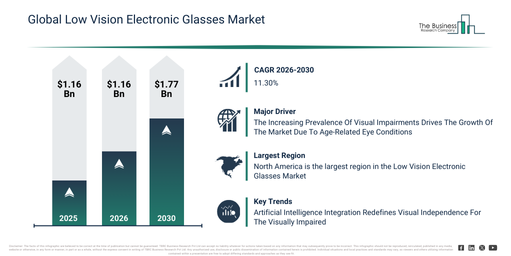
    The low vision electronic glasses market size is projected to undergo significant expansion over the next few years. It is forecast to achieve a value of $1.66 billion by 2030, growing at a compound annual growth rate (CAGR) of 11.3%. This expansion during the forecast period is propelled by advancements in AI-driven vision enhancement, the integration with AR/VR for an immersive experience, a decrease in device cost resulting from mass production, increasing adoption among the aging population, and a heightened emphasis on promoting independent living for the visually impaired. Noteworthy trends anticipated in this period encompass the miniaturization of devices, real-time image enhancement, improvements in wearable comfort and ergonomics, the incorporation of voice and gesture control, and personalized vision assistance.

    Download A Free Sample Report For Comprehensive Market Insights:

    https://www.thebusinessresearchcompany.com/sample.aspx?id=25814&type=smp

    What Are The Main Drivers Accelerating The Growth Of The Low Vision Electronic Glasses Market?

    The anticipated expansion of the low vision electronic glasses market is driven by the growing occurrence of visual impairments. These impairments denote a substantial decline in vision, uncorrectable by standard means like glasses, contact lenses, medications, or surgical procedures, which impacts an individual’s capacity to carry out daily tasks. The primary factor behind this increase in visual impairments is the aging global population, given that the likelihood of developing ocular conditions such as cataracts, glaucoma, and macular degeneration significantly escalates with advancing age. Low-vision electronic glasses offer support to individuals with such impairments by boosting their residual vision through features like magnification, contrast modification, and live image processing, thereby fostering greater self-reliance in their daily routines. Illustratively, in August 2023, the World Health Organization, a specialized health agency of the United Nations based in Switzerland, reported that a minimum of 2.2 billion people worldwide experience either near or distance vision impairment. Yet, projections indicate that only 36% of those with distance vision impairment due to refractive errors and merely 17% of individuals with vision impairment resulting from cataracts have accessed suitable treatment. Consequently, the rising prevalence of visual impairments is indeed fueling the expansion of the low vision electronic glasses market.

    Which Segment Groups Define The Low Vision Electronic Glasses Market Landscape?

    The low vision electronic glasses market covered in this report is segmented –

    1) By Product Type: Wearable Glasses, Smart Glasses, Augmented Reality Glasses, Night Vision Glasses

    2) By Technology: Optical Technology, Digital Technology, Adaptive Technology, Artificial Intelligence Integrated Technology

    3) By Application: Personal Use, Professional Use

    4) By Distribution Channel: Online Retail, Offline Retail, Direct Sales, Healthcare Providers

    5) By End-User: Individuals With Visual Impairments, Healthcare Institutions, Educational Institutions, Occupational Rehabilitation Centers

    Subsegments:

    1) By Wearable Glasses: Head-Mounted Low Vision Glasses, Clip-on Assistive Glasses, Full-Frame Digital Glasses

    2) By Smart Glasses: Voice-Controlled Smart Glasses, Bluetooth-Enabled Visual Aid Glasses, Integrated Camera Smart Glasses

    3) By Augmented Reality Glasses: Augmented Reality Glasses For Object Recognition, Augmented Reality Navigation Assistance Glasses, Augmented Reality Text-to-Speech Glasses

    4) By Night Vision Glasses: Infrared-Based Vision Glasses, Thermal Imaging Glasses for Low Vision, Low-Light Enhancement Glasses

    What Trends Are Influencing The Low Vision Electronic Glasses Market Outlook?

    Companies operating in the low vision electronic glasses market are increasingly concentrating on developing innovative solutions, such as artificial intelligence-powered smart glasses, to improve visual clarity and promote independence for individuals with visual impairments. Artificial intelligence-powered smart glasses are wearable devices that utilize AI to augment vision by identifying objects, converting text to speech, and adjusting images in real time, assisting those with visual challenges. For instance, in August 2024, Eyedaptic Inc., a US-based vision technology company, unveiled EYE6 smart glasses, an advanced wearable device designed to support individuals experiencing central vision loss. These smart glasses incorporate a blend of augmented reality and AI-driven vision enhancement to offer real-time image optimization, thereby improving visual clarity and contrast for users. The features of these glasses include a lightweight and inconspicuous design, hands-free functionality, a multilingual visual assistant supporting 99 languages, and capabilities such as text reading, environmental description, and assistance with daily activities.

    Which Industry Players Are Present In The Low Vision Electronic Glasses Market?

    Major companies operating in the low vision electronic glasses market are OrCam Technologies Ltd., Enhanced Vision Systems Inc., Vuzix Corporation, Zoomax Technology Co. Ltd., IrisVision Global Inc., Acesight, Ceciaa SAS, Envision Technologies BV, Eyedaptic Inc., GiveVision Ltd., NuEyes Technologies Inc., OXSIGHT Ltd., Vision Buddy Inc., eSight Corporation, Everysight Labs Ltd., Nreal Technology Ltd., Rokid Corporation, Avegant Corporation, Magic Leap Inc., Lenovo Smart Glasses Division, Sony Smart Vision Systems, Epson Smart Glasses Division

    Access The Complete Low Vision Electronic Glasses Market Report:

    https://www.thebusinessresearchcompany.com/report/low-vision-electronic-glasses-global-market-report

    Which Region Contributes The Most To The Low Vision Electronic Glasses Market?

    North America was the largest region in the low vision electronic glasses market in 2025. Asia-Pacific is expected to be the fastest-growing region in the forecast period. The regions covered in the low vision electronic glasses market report are Asia-Pacific, South East Asia, Western Europe, Eastern Europe, North America, South America, Middle East, Africa.

    Access a Low Vision Electronic Glasses Market Report for Deeper Competitive Insights

    https://www.thebusinessresearchcompany.com/report/low-vision-electronic-glasses-global-market-report

    Browse Through More Reports Similar to the Global Low Vision Electronic Glasses Market 2026, By The Business Research Company

    Advanced Glass Market Report 2026

    https://www.thebusinessresearchcompany.com/report/advanced-glass-global-market-report

    Smart Glass Market Report 2026

    https://www.thebusinessresearchcompany.com/report/smart-glass-global-market-report

    Glasses Case Market Report 2026

    https://www.thebusinessresearchcompany.com/report/glasses-case-global-market-report

    Get in touch with us:

    The Business Research Company: https://www.thebusinessresearchcompany.com/

    Americas: +1 310-496-7795

    Asia: +44 7882 955267 & +91 8897263534

    Europe: +44 7882 955267

    Email us at: marketing@tbrc.info

    Follow us on:

    LinkedIn: https://in.linkedin.com/company/the-business-research-company

    YouTube: https://www.youtube.com/channel/UC24_fI0rV8cR5DxlCpgmyFQ

    Global Market Model: https://www.thebusinessresearchcompany.com/global-market-model

  • Low Vision Assistive Devices Market Insights Exploring Expansion Opportunities Through 2030

    Low Vision Assistive Devices Market Insights Exploring Expansion Opportunities Through 2030

    The Business Research Company’s 2026 market reports feature advanced enhancements such as market attractiveness analysis, total addressable market evaluation, company benchmarking matrices, interactive Excel dashboards, expanded supply chain intelligence, emerging startup coverage, and detailed product insights, delivering more actionable and strategically valuable research.

    What Are The Forecasted Market Size Figures For The Low Vision Assistive Devices Market In 2026 And 2030?

    The low vision assistive devices market has experienced robust growth in recent years. It is projected to expand from $1.23 billion in 2025 to $1.34 billion in 2026, exhibiting a compound annual growth rate (CAGR) of 8.9%. The market’s historical growth can be attributed to factors such as increasing awareness of visual impairments, an expanding geriatric population, technological advancements in optical devices, government initiatives supporting disabled individuals, and the rising adoption of screen readers in education.

    The low vision assistive devices market is anticipated to experience substantial expansion over the upcoming years. Its value is projected to reach $1.89 billion by 2030, exhibiting a compound annual growth rate (CAGR) of 9.0%. This anticipated growth is driven by several factors, such as progress in AI-powered assistive technologies, the incorporation of AR/VR solutions for individuals with low vision, increased financial commitments to healthcare accessibility, a rising need for wearable low vision tools, and the expansion of online sales channels. Key developments expected during this period involve the widespread adoption of portable and wearable devices, a growing inclination towards electronic magnifiers, the seamless integration of assistive software into everyday gadgets, improved accessibility across educational and professional settings, and the development of customized low vision aids.

    Download A Free Sample Report For Comprehensive Market Insights:

    https://www.thebusinessresearchcompany.com/sample.aspx?id=25813&type=smp

    Which Growth Drivers Are Expected To Support The Low Vision Assistive Devices Market Forward?

    The anticipated expansion of the low vision assistive devices market is linked to the rising occurrence of visual impairments. These impairments encompass various forms of vision loss, such as partial sight and total blindness, which conventional glasses or contact lenses cannot completely rectify. This increase in visual impairment prevalence stems from a growing incidence of diabetes, a condition frequently leading to retinal damage and subsequent vision loss over time. Low-vision assistive devices play a crucial role in tackling visual impairments by augmenting residual vision, aiding in everyday tasks, and boosting the autonomy and well-being of those affected. For example, in February 2025, Vision Australia, as reported by Developing Australia Communities (an Australia-based organization dedicated to supporting the disability sector), stated that 453,000 Australians live with blindness or low vision, with this number anticipated to climb to 564,000 by 2030. Consequently, the expanding occurrence of visual impairments is a primary force behind the expansion of the low vision assistive devices market.

    What Key Segment Areas Are Included In The Low Vision Assistive Devices Market Assessment?

    The low vision assistive devices market covered in this report is segmented –

    1) By Product Type: Magnifiers, Reading Devices, Wearable Devices, Screen Readers, Other Product Types

    2) By Application: Education, Healthcare, Personal Use

    3) By Distribution Channel: Online Stores, Specialty Stores, Optical Stores, Other Distribution Channels

    4) By End-User: Children, Adults, Elderly

    Subsegments:

    1) By Magnifiers: Handheld Magnifiers, Stand Magnifiers, Electronic Magnifiers, Pocket Magnifiers

    2) By Reading Devices: Optical Character Recognition (OCR) Devices, Text-To-Speech Devices, Desktop Video Magnifiers, Portable Reading Machines

    3) By Wearable Devices: Smart Glasses, Head-Mounted Displays (HMDs), Augmented Reality (AR)-Based Devices, Camera-Based Wearable Systems

    4) By Screen Readers: Software-Based Screen Readers, Web-Based Screen Readers, Mobile Screen Readers, Braille Display Integrated Readers

    5) By Other Product Types: Braille Embossers, Tactile Graphics Devices, Speech-To-Text Converters, Audio Books And E-Readers

    Which Trends Are Expected To Shape The Low Vision Assistive Devices Market?

    Major companies operating in the low vision assistive devices market are concentrating on advanced technologies, such as the newest generation of blind assistive devices, to enhance visual clarity, independence, and mobility for individuals with central vision loss. These latest-generation blind assistive devices combine high-resolution imaging, real-time image processing, and wearable organic light-emitting diode (OLED) display systems to project enhanced visuals that seamlessly integrate with the user’s remaining vision while preserving peripheral awareness. For instance, in July 2025, eSight, a Canada-based assistive technology company, introduced the eSight Go wearable device. This device features a 12-megapixel camera with 4K capability, dual full high definition (HD) organic light emitting diode (OLED) screens, and a wide 45-degree field of view, offering a natural and immersive visual experience. Further features include advanced image stabilization, a simplified user interface, and a neck-distributed battery pack that improves comfort for daily use. These next-gen assistive technologies are designed to enable users to maintain full mobility and participate more actively in daily life, whether at school, work, home, or in social environments, supporting over 20 different vision impairments worldwide.

    Which Organizations Are Involved In The Low Vision Assistive Devices Market?

    Major companies operating in the low vision assistive devices market are HIMS Inc., OrCam Technologies Ltd., HumanWare Group, Freedom Scientific Inc., eSight Corporation, IrisVision Global Inc., Zoomax Technology Co. Limited, Optelec U.S. Inc., Cobolt Systems Ltd., NuEyes Technologies Inc., Vision Buddy Inc., Acesight, Eyedaptic Inc., LVI Low Vision International AB, Reinecker Vision GmbH, Ash Technologies Ltd., RevoSight Inc., Enhanced Vision, Dolphin Computer Access, Vispero, Eurobraille, Help Tech GmbH & Co. KG

    Access The Complete Low Vision Assistive Devices Market Report:

    https://www.thebusinessresearchcompany.com/report/low-vision-assistive-devices-global-market-report

    Which Regional Market Leads The Low Vision Assistive Devices Market?

    North America was the largest region in the low vision assistive devices market in 2025. The regions covered in the low vision assistive devices market report are Asia-Pacific, South East Asia, Western Europe, Eastern Europe, North America, South America, Middle East, Africa.

    Access a Low Vision Assistive Devices Market Report for Deeper Competitive Insights

    https://www.thebusinessresearchcompany.com/report/low-vision-assistive-devices-global-market-report

    Browse Through More Reports Similar to the Global Low Vision Assistive Devices Market 2026, By The Business Research Company

    Assistive Technologies For Visually Impaired Market Report 2026

    https://www.thebusinessresearchcompany.com/report/assistive-technologies-for-visually-impaired-global-market-report

    Night Vision Devices Market Report 2026

    https://www.thebusinessresearchcompany.com/report/night-vision-devices-global-market-report

    Robotic Vision Market Report 2026

    https://www.thebusinessresearchcompany.com/report/robotic-vision-global-market-report

    Get in touch with us:

    The Business Research Company: https://www.thebusinessresearchcompany.com/

    Americas: +1 310-496-7795

    Asia: +44 7882 955267 & +91 8897263534

    Europe: +44 7882 955267

    Email us at: marketing@tbrc.info

    Follow us on:

    LinkedIn: https://in.linkedin.com/company/the-business-research-company

    YouTube: https://www.youtube.com/channel/UC24_fI0rV8cR5DxlCpgmyFQ

    Global Market Model: https://www.thebusinessresearchcompany.com/global-market-model
  • Low Vision And Blind Aids Products Market Developments Influencing Industry Expansion Through 2030

    Low Vision And Blind Aids Products Market Developments Influencing Industry Expansion Through 2030

    The Business Research Company’s 2026 market reports feature advanced enhancements such as market attractiveness analysis, total addressable market evaluation, company benchmarking matrices, interactive Excel dashboards, expanded supply chain intelligence, emerging startup coverage, and detailed product insights, delivering more actionable and strategically valuable research.

    How Much Larger Will The Low Vision And Blind Aids Products Market Become By 2030 Compared To 2026?

    The low vision and blind aids products market size has expanded significantly in recent years. It is projected to increase from $3.32 billion in 2025 to $3.68 billion in 2026, demonstrating a compound annual growth rate (CAGR) of 10.8%. This historical growth can be attributed to the rising prevalence of visual impairments, greater awareness of low vision aids, increasing government initiatives for disabled persons, technological advancements in optical devices, and early adoption by educational institutions.

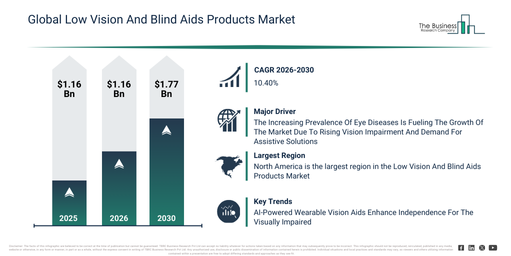
    The market for low vision and blind aids products is projected to experience significant expansion in the coming years. This market is anticipated to reach $5.46 billion by 2030, exhibiting a compound annual growth rate (CAGR) of 10.4%. Factors contributing to this projected growth include the incorporation of AI into vision assistance devices, the spread of wearable technologies, a heightened need for portable electronic support tools, the development of internet-based sales platforms, and an increased emphasis on inclusive learning and job access. Key trends for the forecast duration encompass individualized vision improvement tools, voice-controlled support systems, integration of mobile accessibility features, intelligent navigation tools for both indoor and outdoor movement, and economical, universally accessible low-vision technology.

    Download A Free Sample Report For Comprehensive Market Insights:

    https://www.thebusinessresearchcompany.com/sample.aspx?id=25812&type=smp

    What Influential Factors Are Boosting The Low Vision And Blind Aids Products Market Demand?

    The projected expansion of the low vision and blind aids products market is significantly influenced by the rising occurrence of eye diseases. These conditions encompass disorders impacting the eye’s structure or how it functions, often leading to visual impairment or complete blindness. An increase in eye diseases is attributed to prolonged screen exposure, which contributes to eye strain and accelerates the development of vision problems. Products designed for low vision and blindness provide support to individuals suffering from eye diseases by optimizing their remaining vision or by furnishing non-visual methods to access data. Such instruments improve daily activities, movement, and autonomy for those with irreversible vision loss. For example, data from May 2024 by the Centers for Disease Control and Prevention (CDC), a US-based federal agency, revealed that more than 90 million Americans over 40 currently face vision issues. Projections indicate that by 2050, vision impairment and blindness within the U.S. will surge by 150%, with diabetic retinopathy cases increasing by 72%, cataracts by 87%, and both glaucoma and macular degeneration predicted to double. Consequently, the growing incidence of eye diseases fuels the expansion of the low vision and blind aid products market.

    How Is Segment Classification Applied In The Low Vision And Blind Aids Products Market?

    The low vision and blind aids products market covered in this report is segmented –

    1) By Product Type: Optical Aids, Non-Optical Aids, Electronic Aids, Assistive Software, Wearable Technology

    2) By Age Group: Children, Adults, Seniors, Teenagers, Middle-Aged

    3) By Distribution Channel: Online Stores, Retail Pharmacies, Specialized Medical And Assistive Device Retailers, Specialty Stores, Direct Sales

    4) By Application: Blind School, Disabled Persons Federation And Hospital, Enterprises And Social Organizations

    5) By End-User: Individuals, Healthcare Professionals, Educational Institutions, Community Organizations, Government Agencies

    Subsegments:

    1) By Optical Aids: Magnifying Glasses, Telescopic Glasses, Spectacle-Mounted Magnifiers, Handheld Magnifiers, Stand Magnifiers

    2) By Non-Optical Aids: Braille Books, Large Print Materials, Tactile Graphics, Signature Guides, Writing Templates

    3) By Electronic Aids: Video Magnifiers, Digital Readers, Screen Enlargers, Electronic Braille Displays, Talking Devices

    4) By Assistive Software: Screen Readers, Screen Magnification Software, Text-To-Speech Software, Optical Character Recognition (OCR) Tools, Navigation And Mapping Software

    5) By Wearable Technology: Smart Glasses, Artificial Intelligence (AI)-Powered Vision Aids, Wearable Cameras, Voice-Enabled Smart Devices, Haptic Feedback Wearables

    What Trends Are Affecting The Low Vision And Blind Aids Products Market Dynamics?

    Major companies within the low vision and blind aids products market are prioritizing the development of sophisticated products, notably AI-powered wearable vision aids, to boost the functional independence and improve the quality of life for those affected by retinal disorders and vision loss. Such an AI-powered wearable vision aid constitutes a smart, head-mounted device that unifies artificial intelligence with vision-enhancement technologies, enabling visually impaired individuals to interpret visual data, execute routine tasks, and navigate their surroundings with increased autonomy. As an illustration, in August 2024, Eyedaptic, a US-based provider of vision-enhancement solutions, unveiled EYE6 with Ivy. This new AI-powered visual assistant is tailored for individuals grappling with age-related macular degeneration and other retinal disorders. The EYE6 integrates advanced multimodal generative artificial intelligence and large language model functionalities to support users by reading text, recognizing objects, and interpreting their environment in diverse scenarios across 99 languages. Crafted for those with age-related macular degeneration and other retinal disorders, these lightweight smart glasses merge high-definition visual augmentation with an interactive AI assistant, thereby facilitating greater independence and the administration of daily tasks.

    Who Are The Firms Contributing To The Low Vision And Blind Aids Products Market Ecosystem?

    Major companies operating in the low vision and blind aids products market are Eschenbach Optik GmbH, Tobii Dynavox, OrCam Inc., Vispero, HumanWare, Freedom Scientific, MaxiAids, Enhanced Vision, Dolphin Computer Access, Zoomax, IRIS Vision, SELVAS Healthcare Inc., LS&S LLC, LVI Low Vision International, VisionAid, Eurobraille, HHW Care Products India Private Limited, Nippon Telesoft Co. Ltd., Help Tech GmbH & Co. KG, eSight Corporation, Vuzix Corporation, Aira Tech Corp.

    Access The Complete Low Vision And Blind Aids Products Market Report:

    https://www.thebusinessresearchcompany.com/report/low-vision-and-blind-aids-products-global-market-report

    Which Region Holds The Largest Share In The Low Vision And Blind Aids Products Market?

    North America was the largest region in the low vision and blind aids products market in 2025. Asia-Pacific is expected to be the fastest-growing region in the forecast period. The regions covered in the low vision and blind aids products market report are Asia-Pacific, South East Asia, Western Europe, Eastern Europe, North America, South America, Middle East, Africa.

    Access a Low Vision And Blind Aids Products Market Report for Deeper Competitive Insights

    https://www.thebusinessresearchcompany.com/report/low-vision-and-blind-aids-products-global-market-report

    Browse Through More Reports Similar to the Global Low Vision And Blind Aids Products Market 2026, By The Business Research Company

    Blind Spot Monitor Market Report 2026

    https://www.thebusinessresearchcompany.com/report/blind-spot-monitor-global-market-report

    Assistive Technologies For Visually Impaired Market Report 2026

    https://www.thebusinessresearchcompany.com/report/assistive-technologies-for-visually-impaired-global-market-report

    Night Blindness Treatment Market Report 2026

    https://www.thebusinessresearchcompany.com/report/night-blindness-treatment-global-market-report

    Get in touch with us:

    The Business Research Company: https://www.thebusinessresearchcompany.com/

    Americas: +1 310-496-7795

    Asia: +44 7882 955267 & +91 8897263534

    Europe: +44 7882 955267

    Email us at: marketing@tbrc.info

    Follow us on:

    LinkedIn: https://in.linkedin.com/company/the-business-research-company

    YouTube: https://www.youtube.com/channel/UC24_fI0rV8cR5DxlCpgmyFQ

    Global Market Model: https://www.thebusinessresearchcompany.com/global-market-model

  • Low Temperature Plasma Sterilizer Market Size Forecast To Achieve $2.48 Billion By 2030 With 10.7% CAGR

    Low Temperature Plasma Sterilizer Market Size Forecast To Achieve $2.48 Billion By 2030 With 10.7% CAGR

    The Business Research Company’s 2026 market reports feature advanced enhancements such as market attractiveness analysis, total addressable market evaluation, company benchmarking matrices, interactive Excel dashboards, expanded supply chain intelligence, emerging startup coverage, and detailed product insights, delivering more actionable and strategically valuable research.

    What Growth In Market Value Is Anticipated For The Low Temperature Plasma Sterilizer Market Between 2026 And 2030?

    The low temperature plasma sterilizer market size has demonstrated significant expansion in recent years. This market is set to increase from $1.49 billion in 2025 to $1.65 billion in 2026, progressing at a compound annual growth rate (CAGR) of 10.7%. The historical growth in this sector is attributable to factors such as the previous dependence on conventional steam sterilizers, limited public understanding of the advantages of low-temperature sterilization, the expanding infrastructure of hospitals and clinics, a rise in surgical and dental procedures, and the increasing requirement for adherence to equipment sterilization compliance.

    The low temperature plasma sterilizer market is projected to experience substantial expansion in the coming years. By 2030, this market is anticipated to reach a valuation of $2.48 billion, demonstrating a compound annual growth rate (CAGR) of 10.7%. This growth during the forecast period is attributed to several factors, including ongoing technological progress in cold plasma and hydrogen peroxide sterilization techniques, increasing needs within homecare and mobile healthcare sectors, the expansion of sterilization applications for pharmaceutical packaging, the integration of these systems with intelligent hospital infrastructures, and a heightened emphasis on patient safety and effective infection control measures. Key trends identified for this period encompass a broader embrace of low-temperature sterilization approaches, a greater necessity for sterilizing instruments sensitive to heat and moisture, the expansion of sterilization offerings in outpatient and mobile healthcare environments, a surge in the application of plasma sterilizers within pharmaceutical and laboratory contexts, and a strong emphasis on achieving sterilization processes that are both residue-free and swift.

    Download A Free Sample Report For Comprehensive Market Insights:

    https://www.thebusinessresearchcompany.com/sample.aspx?id=27330&type=smp

    Which Drivers Are Advancing The Low Temperature Plasma Sterilizer Market Growth?

    The rising incidence of healthcare-associated infections is projected to drive the future expansion of the low temperature plasma sterilizer market. Healthcare-associated infections (HAIs) are defined as infections contracted by patients within a healthcare setting while undergoing treatment for other conditions. The surge in HAIs primarily stems from the increased application of invasive medical procedures and devices, which elevates the risk of pathogen transmission in clinical environments. Low-temperature plasma sterilizers contribute to diminishing healthcare-associated infections by effectively sterilizing heat-sensitive medical instruments without leaving toxic residues, thus enabling safer equipment reuse and bolstering overall infection control within healthcare facilities. For example, in July 2025, data from the UK Health Security Agency (UKHSA), a UK-based government agency, reported that the incidence rate of methicillin-resistant Staphylococcus aureus (MRSA) bacteraemia was 1.8 cases per 100,000 population between January and March 2025, representing an increase from 1.7 cases per 100,000 population observed during the identical period in 2024. Consequently, the growing number of healthcare-associated infections is fueling the growth of the low temperature plasma sterilizer market.

    What Are The Core Segment Classifications In The Low Temperature Plasma Sterilizer Market?

    The low temperature plasma sterilizer market covered in this report is segmented –

    1) By Product Type: Tabletop Sterilizers, Large-Automated Sterilizers, Portable Sterilizers, Accessories And Consumables

    2) By Technology: Cold Plasma Technology, Atmospheric Pressure Plasma Technology, Low-Temperature Hydrogen Peroxide Plasma Technology, Radiofrequency Plasma Technology

    3) By Material Compatibility: Metal Instruments, Plastic Instruments, Glass Instruments, Textiles And Porous Materials

    4) By Application: Surgical Instrument Sterilization, Hospital Environment Sterilization, Pharmaceutical Packaging Sterilization, Dental Product Sterilization

    5) By End-User: Healthcare Facilities, Pharmaceutical Companies, Research Laboratories, Homecare Settings

    Subsegments:

    1) By Tabletop Sterilizers: Dental Clinics Use, Small Laboratory Use, Outpatient Facilities, Home Healthcare Settings

    2) By Large-Automated Sterilizers: Hospital Central Sterile Supply Department (CSSD), Pharmaceutical Manufacturing Units, Research Institutes, Industrial Sterilization Facilities

    3) By Portable Sterilizers: Field Medical Units, Emergency Response Teams, Mobile Clinics, Military Applications

    4) By Accessories And Consumables: Sterilization Trays, Indicator Strips And Tapes, Sterilant Cartridges, Filters And Replacement Parts

    Which Trends Are Influencing The Expansion Of The Low Temperature Plasma Sterilizer Market?

    Companies operating within the low-temperature plasma sterilizer market are primarily concentrating on developing advanced products, such as automated medical-grade sterilization devices, to enhance efficiency, minimize manual effort, and guarantee the safe sterilization of heat-sensitive medical instruments. An automated medical-grade sterilization device is defined as a completely automated system engineered to disinfect medical instruments to stringent clinical standards, employing sophisticated technologies like plasma or hydrogen peroxide without requiring any manual intervention. For instance, in April 2025, Zhejiang Sada Medical Technology Co. Ltd., a China-based medical equipment company, launched the SD-D 100L Low-Temperature Hydrogen Peroxide Plasma Sterilizer. This product is a fully automatic, medical-grade sterilizer that operates at a low temperature of 50°C ± 5°C, rendering it suitable for heat-sensitive instruments such as endoscopes and precision surgical tools. The SD-D 100L provides quick sterilization cycles (40–60 minutes), integrated HEPA filtration, and advanced safety functionalities like overpressure and overheating protection, which ensures regulatory compliance and optimized workflow efficiency.

    Which Key Players Are Active In The Low Temperature Plasma Sterilizer Market?

    Major companies operating in the low temperature plasma sterilizer market are Getinge AB, Shinva Medical Instrument Co. Ltd., Belimed AG, Advanced Sterilization Products, Tuttnauer Ltd., Matachana S.A., Cisa Production S.r.l., Steelco S.p.A., Aurora Sterilisation, STERIS plc, 3M Company, Noxilizer Inc., MMM Group, Andersen Products Inc., Cantel Medical Corp., Laoken Medical Technology Co. Ltd., Mudanjiang Plasma Physical Application Technology Co. Ltd., TEKNOMAR, BeyondMedi, Zeronitec, MEDFUTURE, Heal Force Bio-Meditech Holdings Co. Ltd., BIOBASE Group Co. Ltd., Sada Medical Co. Ltd.

    Access The Complete Low Temperature Plasma Sterilizer Market Report:

    https://www.thebusinessresearchcompany.com/report/low-temperature-plasma-sterilizer-global-market-report

    Which Region Is The Dominant Market In The Low Temperature Plasma Sterilizer Market?

    North America was the largest region in the low temperature plasma sterilizer market in 2025. Asia-Pacific is expected to be the fastest-growing region in the forecast period. The regions covered in the low temperature plasma sterilizer market report are Asia-Pacific, South East Asia, Western Europe, Eastern Europe, North America, South America, Middle East, Africa.

    Access a Low Temperature Plasma Sterilizer Market Report for Deeper Competitive Insights

    https://www.thebusinessresearchcompany.com/report/low-temperature-plasma-sterilizer-global-market-report

    Browse Through More Reports Similar to the Global Low Temperature Plasma Sterilizer Market 2026, By The Business Research Company

    Forex Brokers Market Report 2026

    https://www.thebusinessresearchcompany.com/report/forex-brokers-global-market-report

    Cryptocurrency Exchange Platform Market Report 2026

    https://www.thebusinessresearchcompany.com/report/cryptocurrency-exchange-platform-global-market-report

    Algorithmic Trading Software Market Report 2026

    https://www.thebusinessresearchcompany.com/report/algorithmic-trading-software-global-market-report

    Get in touch with us:

    The Business Research Company: https://www.thebusinessresearchcompany.com/

    Americas: +1 310-496-7795

    Asia: +44 7882 955267 & +91 8897263534

    Europe: +44 7882 955267

    Email us at: marketing@tbrc.info

    Follow us on:

    LinkedIn: https://in.linkedin.com/company/the-business-research-company

    YouTube: https://www.youtube.com/channel/UC24_fI0rV8cR5DxlCpgmyFQ

    Global Market Model: https://www.thebusinessresearchcompany.com/global-market-model

  • Low Endotoxin Gelatin Market Forecast Covering Industry Demand And Market Evolution

    Low Endotoxin Gelatin Market Forecast Covering Industry Demand And Market Evolution

    The Business Research Company’s 2026 market reports feature advanced enhancements such as market attractiveness analysis, total addressable market evaluation, company benchmarking matrices, interactive Excel dashboards, expanded supply chain intelligence, emerging startup coverage, and detailed product insights, delivering more actionable and strategically valuable research.

    What Is The Expected Market Value Outlook For The Low Endotoxin Gelatin Market Through 2030?

    The low endotoxin gelatin market has shown significant expansion in recent years. It is forecast to increase from $1.84 billion in 2025 to $1.96 billion in 2026, exhibiting a compound annual growth rate (CAGR) of 6.5%. Historically, this growth can be ascribed to an increase in pharmaceutical research endeavors, expanding tissue engineering projects, the proliferation of biotech laboratories, the swift uptake of drug delivery innovations, and heightened understanding of endotoxin safety.

    The low endotoxin gelatin market is projected to experience substantial expansion in the coming years. This market is anticipated to reach $2.54 billion by 2030, demonstrating a compound annual growth rate (CAGR) of 6.7%. Key factors contributing to this growth during the forecast period include a significant increase in regenerative medicine applications, greater investment in biopharmaceutical manufacturing, a growing need for injectable gelatin products, the creation of innovative biotech-grade gelatin formulations, and the implementation of sustainable production methods. Significant trends observed in the forecast period encompass an increasing demand for biocompatible materials, the broadening scope of regenerative medicine applications, expanded utilization in drug delivery systems, a heightened emphasis on cell culture safety and purity, and the integration of advanced formulation techniques.

    Download A Free Sample Report For Comprehensive Market Insights:

    https://www.thebusinessresearchcompany.com/sample.aspx?id=25811&type=smp

    What Primary Factors Are Fueling The Expansion Of The Low Endotoxin Gelatin Market?

    The future expansion of the low endotoxin gelatin market is anticipated to be driven by the increasing need for regenerative medicine. These therapies focus on the restoration of normal function by repairing, replacing, or regenerating human cells, tissues, or organs. The surge in chronic diseases is boosting this demand for regenerative medicine, since a greater number of patients need sophisticated treatments capable of regenerating compromised tissues and enhancing long-term results. Low-endotoxin gelatin supports regenerative medicine through its provision of a secure, biocompatible framework, which fosters cellular growth and tissue regeneration while causing minimal immune responses. Its exceptional purity renders it perfect for delicate cell therapies and applications in tissue engineering. An illustration of this trend is found in July 2023 data, where the American Society of Gene & Cell Therapy (ASGCT), a US-based professional membership organization, and Citeline, a US-based provider of drugs and devices, reported 247 gene therapies in Phase II at the close of quarter 1, 2023. This quantity grew by 5%, reaching 260 by the conclusion of quarter 2. Consequently, the expanding need for regenerative medicine is propelling the advancement of the low endotoxin gelatin market.

    How Is The Low Endotoxin Gelatin Market Structured Across Different Market Segments?

    The low endotoxin gelatin market covered in this report is segmented –

    1) By Processing Method: Type A (Acid Process Gelatin), Type B (Alkaline Process Gelatin)

    2) By Product Type: Porcine Gelatin, Bovine Gelatin, Fish Gelatin, Other Product Types

    3) By Formulation: Powder, Granules, Liquid, Sheet, Other Formulations

    4) By Application: Drug Delivery Systems, Tissue Engineering, Cell Culture, Stabilizing Agents, Biomedical Scaffolding And Encapsulation Uses

    5) By End-User: Pharmaceuticals, Biotechnology, Medical Device Manufacturers, Regenerative Medicine Developers, Research Laboratories

    Subsegments:

    1) By Type A (Acid Process Gelatin): Porcine Skin Gelatin, Fast Setting Gelatin, Low Bloom Gelatin, Pharmaceutical Grade Type A, Biotech Application Grade

    2) By Type B (Alkaline Process Gelatin): Bovine Hide Gelatin, High Bloom Gelatin, Slow Dissolving Gelatin, Injectable Grade Type B, Regenerative Medicine Grade

    What Trends Are Impacting The Low Endotoxin Gelatin Market?

    Leading companies within the low endotoxin gelatin market are focusing on developing sophisticated products, such as endotoxin-controlled excipients, to enhance the safety and effectiveness of pharmaceutical formulations. Endotoxin-controlled excipients are meticulously refined ingredients crafted to limit the presence of endotoxins in pharmaceutical preparations. They are crucial for supporting the safety and reliability of sensitive products, including injectables, biologics, and cell-based therapies. For instance, in January 2025, GELITA, a Germany-based manufacturer of gelatin and collagen peptides, launched VACCIPRO and MEDELLAPRO. These excipients are highly purified, medical-grade gelatins and collagen peptides designed for advanced bioscience applications like vaccine stabilization, medical devices, and 3D bioprinting, meeting stringent endotoxin control requirements to ensure product safety and patient well-being in pharmaceutical and healthcare settings.

    Who Are The Leading Firms Participating In The Low Endotoxin Gelatin Market?

    Major companies operating in the low endotoxin gelatin market are Nagase & Co. Ltd., Darling Ingredients, GELITA AG, PB Leiner, Nippi Inc., Nitta Gelatin Inc., Weishardt Group, Sterling Biotech Limited, Narmada Gelatines Ltd., Great Lakes Gelatin Company, Junca Gelatines SL, Trobas Gelatine BV, Lapi Gelatine S.p.A., Ewald-Gelatine GmbH, India Gelatine & Chemicals Ltd., Reinert Gruppe Ingredients GmbH, Jilin Tianzheng Biotechnology Co. Ltd., Yasin gelatin, Rousselot Biomedical, Advanced BioMatrix Inc., Gelomics Pty Ltd., BDF Natural Ingredients

    Access The Complete Low Endotoxin Gelatin Market Report:

    https://www.thebusinessresearchcompany.com/report/low-endotoxin-gelatin-global-market-report

    Which Area Represents The Largest Portion Of The Low Endotoxin Gelatin Market?

    North America was the largest region in the low endotoxin gelatin market in 2025. Asia-Pacific is expected to be the fastest-growing region in the forecast period. The regions covered in the low endotoxin gelatin market report are Asia-Pacific, South East Asia, Western Europe, Eastern Europe, North America, South America, Middle East, Africa.

    Access a Low Endotoxin Gelatin Market Report for Deeper Competitive Insights

    https://www.thebusinessresearchcompany.com/report/low-endotoxin-gelatin-global-market-report

    Browse Through More Reports Similar to the Global Low Endotoxin Gelatin Market 2026, By The Business Research Company

    Gelatin Market Report 2026

    https://www.thebusinessresearchcompany.com/report/gelatin-global-market-report

    Immunotoxin Market Report 2026

    https://www.thebusinessresearchcompany.com/report/immunotoxin-global-market-report

    Bovine Gelatin Market Report 2026

    https://www.thebusinessresearchcompany.com/report/bovine-gelatin-global-market-report

    Get in touch with us:

    The Business Research Company: https://www.thebusinessresearchcompany.com/

    Americas: +1 310-496-7795

    Asia: +44 7882 955267 & +91 8897263534

    Europe: +44 7882 955267

    Email us at: marketing@tbrc.info

    Follow us on:

    LinkedIn: https://in.linkedin.com/company/the-business-research-company

    YouTube: https://www.youtube.com/channel/UC24_fI0rV8cR5DxlCpgmyFQ

    Global Market Model: https://www.thebusinessresearchcompany.com/global-market-model
  • Long-Read Sequencing Market Trends And Growth Outlook Across The 2026–2030 Forecast Period

    Long-Read Sequencing Market Trends And Growth Outlook Across The 2026–2030 Forecast Period

    The Business Research Company’s 2026 market reports feature advanced enhancements such as market attractiveness analysis, total addressable market evaluation, company benchmarking matrices, interactive Excel dashboards, expanded supply chain intelligence, emerging startup coverage, and detailed product insights, delivering more actionable and strategically valuable research.

    How Will The Market Value Of The Long-Read Sequencing Market Increase Between 2026 And 2030?

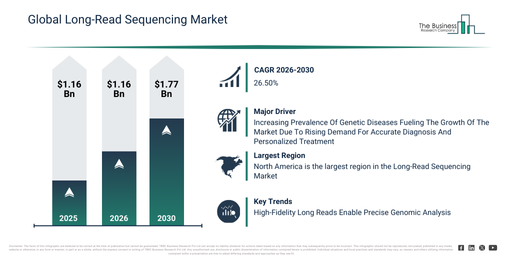
    The long-read sequencing market size has experienced substantial expansion in recent years. It is anticipated to increase from $1.15 billion in 2025 to $1.46 billion in 2026, achieving a compound annual growth rate (CAGR) of 26.8%. The historic period’s growth can be attributed to several factors, including the constraints of short-read sequencing, the rise of genomics research, significant technological innovations in nanopore sequencing, the requirement for precise genome assembly, and increased financial support within the life sciences sector.

    The long-read sequencing market size is anticipated to experience substantial growth in the coming years, projected to reach $3.74 billion by 2030 at a compound annual growth rate (CAGR) of 26.5%. This expansion during the forecast period can be attributed to factors such as the clinical adoption of long-read sequencing, falling sequencing costs, its integration with AI-based analysis, increased application in oncology diagnostics, and the development of population genomics. Key trends for the forecast period encompass the increasing uptake of long-read technologies, enhanced structural variant detection, the emergence of hybrid sequencing approaches, expanded use in rare disease genomics, and a rising application in complex genome assembly.

    Download A Free Sample Report For Comprehensive Market Insights:

    https://www.thebusinessresearchcompany.com/sample.aspx?id=28259&type=smp

    Which Strategic Drivers Are Supporting The Long-Read Sequencing Market Development?

    The anticipated rise in genetic disease cases is set to boost the expansion of the long-read sequencing market in the future. These conditions stem from alterations or mutations in DNA, either inherited or spontaneous, impacting health, development, or bodily functions. This growing occurrence is linked to enhanced awareness and progress in diagnostic tools, facilitating earlier and more precise identification of conditions previously undetected. Long-read sequencing improves the management of genetic disorders by offering highly accurate and thorough genomic data, making it suitable for diagnosing intricate and uncommon conditions. It minimizes diagnostic ambiguity through the identification of structural variations and complex mutations, thereby refining personalized treatment strategies and clinical choices. For example, as reported by the Cystic Fibrosis Trust, a national charity in the UK, in October 2024, the number of individuals living with cystic fibrosis (CF) in the UK was 11,148 in 2022, rising to 11,318 in 2023. Consequently, the growing incidence of genetic diseases is a key factor propelling the expansion of the long-read sequencing market.

    Which Segment-Based Categories Are Covered In The Long-Read Sequencing Market?

    The long-read sequencing market covered in this report is segmented –

    1) By Product And Service: Instruments Or Platforms, Consumables And Reagents, Services And Software

    2) By Workflow: Pre-Sequencing, Sequencing, Data Analysis

    3) By Technology Platform: Single Molecule Real-Time (SMRT) High-Fidelity (HiFi) Sequencing, Synthetic Long-Read Or Linked-Read, Hybrid And Other Emerging

    4) By Application: Human Genomics And Rare-Disease Diagnostics, Oncology And Liquid Biopsy, Metagenomics And Microbiome, Transcriptomics, Agri Genomics And Plant Or Animal Breeding, Other Applications

    5) By End User: Academic And Research Institutes, Hospitals And Clinics, Pharmaceutical And Biotechnology Companies, Other End-Uses

    Subsegments:

    1) By Instruments Or Platforms: Single-Molecule Real-Time (SMRT) Sequencers, Nanopore Sequencers

    2) By Consumables And Reagents: Library Preparation Kits, Sample Preparation Kits, Sequencing Kits

    3) By Services And Software: Sequencing Services, Data Analysis Services, Bioinformatics Software

    Which Trends Are Affecting The Long-Read Sequencing Market Framework?

    Leading companies within the long-read sequencing market are directing their efforts toward developing innovative solutions, including HiFi reads, to enhance the accuracy of sequencing, detect complex genetic variations, and accelerate genomic research. High-fidelity (HiFi) reads denote lengthy DNA sequences generated by particular long-read sequencing technologies, which offer both extensive read lengths and exceptionally low error rates, thus enabling the precise detection of intricate genetic and structural variants. For example, in November 2024, Pacific Biosciences of California Inc., a US-based biotechnology company, launched its Vega system, marking its inaugural benchtop long-read sequencing platform designed for more rapid and accessible genomic analysis. This compact and affordable benchtop long-read sequencer delivers highly accurate HiFi data, boasting 99.9% read accuracy. It facilitates fast, versatile sequencing for various applications such as RNA, targeted, and small genome sequencing, making advanced genomics capabilities available to a greater number of laboratories. The Vega system simplifies workflows with its onboard computing and ease of operation, empowering researchers to efficiently uncover complex genetic insights.

    Which Companies Are Engaged In The Long-Read Sequencing Market Environment?

    Major companies operating in the long-read sequencing market are Thermo Fisher Scientific Inc., Agilent Technologies Inc., Revvity Inc., Bio-Rad Laboratories Inc., BGI Genomics Co. Ltd., Novogene Co. Ltd., Takara Bio Inc., Oxford Nanopore Technologies plc, Pacific Biosciences of California Inc., New England Biolabs Inc., Roche Sequencing Solutions Inc., The Garvan Institute, Element Biosciences Inc., Eurofins Genomics, CD Genomics, BaseClear B.V, France Génomique, GrandOmics Biosciences Co. Ltd., Future Genomics Technologies B.V., MicrobesNG

    Access The Complete Long-Read Sequencing Market Report:

    https://www.thebusinessresearchcompany.com/report/long-read-sequencing-global-market-report

    Which Region Commands The Largest Share Of The Long-Read Sequencing Market?

    North America was the largest region in the long-read sequencing market in 2025. Asia-Pacific is expected to be the fastest-growing region in the forecast period. The regions covered in the long-read sequencing market report are Asia-Pacific, South East Asia, Western Europe, Eastern Europe, North America, South America, Middle East, Africa.

    Access a Long-Read Sequencing Market Report for Deeper Competitive Insights

    https://www.thebusinessresearchcompany.com/report/long-read-sequencing-global-market-report

    Browse Through More Reports Similar to the Global Long-Read Sequencing Market 2026, By The Business Research Company

    Next Generation Sequencing Market 2026

    https://www.thebusinessresearchcompany.com/report/next-generation-sequencing-market

    Dna Sequencing Market Report 2026

    https://www.thebusinessresearchcompany.com/report/dna-sequencing-global-market-report

    Protein Sequencing Market Report 2026

    https://www.thebusinessresearchcompany.com/report/protein-sequencing-global-market-report

    Get in touch with us:

    The Business Research Company: https://www.thebusinessresearchcompany.com/

    Americas: +1 310-496-7795

    Asia: +44 7882 955267 & +91 8897263534

    Europe: +44 7882 955267

    Email us at: marketing@tbrc.info

    Follow us on:

    LinkedIn: https://in.linkedin.com/company/the-business-research-company

    YouTube: https://www.youtube.com/channel/UC24_fI0rV8cR5DxlCpgmyFQ

    Global Market Model: https://www.thebusinessresearchcompany.com/global-market-model

  • Liver Cancer Drug Market Expansion Outlook Through 2030 With Revenue Growth Insights

    Liver Cancer Drug Market Expansion Outlook Through 2030 With Revenue Growth Insights

    The Business Research Company’s 2026 market reports feature advanced enhancements such as market attractiveness analysis, total addressable market evaluation, company benchmarking matrices, interactive Excel dashboards, expanded supply chain intelligence, emerging startup coverage, and detailed product insights, delivering more actionable and strategically valuable research.

    What Will Be The Estimated Market Size Of The Liver Cancer Drug Market By 2030?

    The market for liver cancer drugs has experienced rapid expansion in recent years. It is projected to increase from $2.62 billion in 2025 to $2.93 billion in 2026, demonstrating a compound annual growth rate (CAGR) of 12.1%. Historically, this growth has been influenced by factors including a higher incidence of hepatocellular carcinoma, the rising prevalence of chronic liver diseases, the expansion of oncology clinical trials, improvements in cancer diagnosis rates, and the availability of advanced chemotherapy regimens.

    The liver cancer drug market size is poised for significant growth in the upcoming years. It is projected to expand to $4.62 billion by 2030, achieving a compound annual growth rate (CAGR) of 12.1%. This projected growth can be attributed to several factors, including the increasing approvals of novel immunotherapies, a rise in investments dedicated to oncology research and development, the broadening scope of personalized cancer treatment approaches, the growing demand for combination therapies, and an intensified focus on managing early-stage liver cancer. Prominent trends expected during the forecast period involve the increasing adoption of targeted liver cancer therapies, a rising application of immunotherapy combinations, the expansion of precision oncology drug development, an intensifying emphasis on biomarker-based treatment selection, and enhanced integration of companion diagnostics.

    Download A Free Sample Report For Comprehensive Market Insights:

    https://www.thebusinessresearchcompany.com/sample.aspx?id=24282&type=smp

    What Major Growth Factors Are Impacting The Liver Cancer Drug Market?

    The expansion of the liver cancer drug market going forward is anticipated to be propelled by increasing research and development efforts. Research and development involves a structured methodology for exploring, creating, and assessing new products, technologies, or methods, aiming to broaden knowledge and introduce innovative solutions to the market. The rise in research and development is driven by the growing demand for innovation and technological advancements across industries, which encourages companies to invest in new products and improvements to maintain competitiveness. Research and development supports liver cancer drugs by enabling the discovery of targeted therapies that enhance treatment effectiveness and lessen damage to healthy liver tissue. For instance, in September 2024, Cancer Research UK, a UK-based cancer research organization, reported an investment of $533 million (£399 million) in cancer research during the 2023-24 financial year, with $124 million (£93 million) allocated to research relevant to all cancer types and $112 million (£84 million) designated for basic studies focused on understanding cancer’s fundamental biology. Therefore, increasing research and development are actively driving the growth of the liver cancer drug market.

    What Are The Major Segment Categories Within The Liver Cancer Drug Market?

    The liver cancer drug market covered in this report is segmented –

    1) By Type: Hepatocellular Carcinoma, Cholangio Carcinoma, Hepatoblastoma, Other Types

    2) By Therapy: Targeted Therapy, Immunotherapy, Chemotherapy, Other Therapies

    3) By Route Of Administration: Oral, Injectable

    4) By Distribution Channel: Hospital Pharmacies, Retail Pharmacies, Online Pharmacies

    Subsegments:

    1) By Hepatocellular Carcinoma: Targeted Therapy, Immunotherapy, Chemotherapy, Combination Therapy

    2) By Cholangio Carcinoma: Targeted Therapy, Chemotherapy, Immunotherapy

    3) By Hepatoblastoma: Chemotherapy, Targeted Therapy, Immunotherapy, Surgical Adjuvants

    4) By Other Types: Chemotherapy, Targeted Therapy, Experimental Or Off-label Therapies, Supportive Care Medications

    What Trends Are Influencing The Liver Cancer Drug Market?

    Leading companies within the liver cancer drug market are concentrating on developing innovative approaches, including advanced therapies, to achieve greater treatment precision and improve patient outcomes. Advanced therapy for liver cancer refers to cutting-edge techniques such as immunotherapy, targeted therapy, gene therapy, CAR-T cell therapy, and minimally invasive procedures like TACE and ablation, all designed to enhance the efficacy and accuracy of liver cancer treatment. For instance, in November 2023, Terumo India, an India-based medical device manufacturer, introduced advanced Balloon-TACE therapy for liver cancer treatment in India. This therapy utilizes two pioneering devices, Occlusafe and LifePearl, engineered to improve the precision and effectiveness of transcatheter arterial chemoembolization (TACE). This particular therapy targets hepatocellular carcinoma, which is the most common liver cancer in India, by directly delivering chemotherapy to tumors while minimizing damage to healthy tissue and preserving liver function.

    Who Are The Prominent Players Across The Liver Cancer Drug Market?

    Major companies operating in the liver cancer drug market are Pfizer Inc., F. Hoffmann-La Roche Ltd, Merck & Co. Inc., AstraZeneca plc, Bayer AG, Bristol-Myers Squibb Company, Eli Lilly and Company, Novartis AG, Takeda Pharmaceutical Company Limited, Hetero Drugs Limited, Sun pharma, Eisai Company Limited, Genentech Incorporated, Ipsen Société Anonyme, Cipla Limited, Dr. Reddy’s Laboratories Limited, BeiGene Ltd., Exelixis Incorporated, Natco Pharma Limited, MacroGenics Inc.

    Access The Complete Liver Cancer Drug Market Report:

    https://www.thebusinessresearchcompany.com/report/liver-cancer-drug-global-market-report

    Which Region Accounts For The Highest Share Of The Liver Cancer Drug Market?

    North America was the largest region in the liver cancer drug market in 2025. Asia-Pacific is expected to be the fastest-growing region in the forecast period. The regions covered in the liver cancer drug market report are Asia-Pacific, South East Asia, Western Europe, Eastern Europe, North America, South America, Middle East, Africa.

    Access a Liver Cancer Drug Market Report for Deeper Competitive Insights

    https://www.thebusinessresearchcompany.com/report/liver-cancer-drug-global-market-report

    Browse Through More Reports Similar to the Global Liver Cancer Drug Market 2026, By The Business Research Company

    Liver Diseases Therapeutics Market Report 2026

    https://www.thebusinessresearchcompany.com/report/liver-diseases-therapeutics-global-market-report

    Liver Health Supplements Market Report 2026

    https://www.thebusinessresearchcompany.com/report/liver-health-supplements-global-market-report

    Kidney Cancer Drugs Market Report 2026

    https://www.thebusinessresearchcompany.com/report/kidney-cancer-drugs-global-market-report

    Get in touch with us:

    The Business Research Company: https://www.thebusinessresearchcompany.com/

    Americas: +1 310-496-7795

    Asia: +44 7882 955267 & +91 8897263534

    Europe: +44 7882 955267

    Email us at: marketing@tbrc.info

    Follow us on:

    LinkedIn: https://in.linkedin.com/company/the-business-research-company

    YouTube: https://www.youtube.com/channel/UC24_fI0rV8cR5DxlCpgmyFQ

    Global Market Model: https://www.thebusinessresearchcompany.com/global-market-model