Month: May 2026

  • Home Spirometry Bluetooth Device Market Expansion Outlook Through 2030 With Revenue Growth Insights

    Home Spirometry Bluetooth Device Market Expansion Outlook Through 2030 With Revenue Growth Insights

    The Business Research Company’s 2026 market reports feature advanced enhancements such as market attractiveness analysis, total addressable market evaluation, company benchmarking matrices, interactive Excel dashboards, expanded supply chain intelligence, emerging startup coverage, and detailed product insights, delivering more actionable and strategically valuable research.

    What Increase In Market Value Is Predicted For The Home Spirometry Bluetooth Device Market During The 2026–2030 Period?

    The home spirometry bluetooth device market size has witnessed substantial growth in recent years. This market is projected to expand from $1.28 billion in 2025 to $1.42 billion in 2026, at a compound annual growth rate (CAGR) of 10.5%. The historical increase in the market can be attributed to a rise in chronic respiratory diseases, the early adoption of home health devices, advancements in Bluetooth connectivity, growing patient self-monitoring awareness, and the integration of these systems with hospital networks.

    The home spirometry bluetooth device market is projected to experience substantial expansion in the coming years. This market is anticipated to reach $2.08 billion by 2030, exhibiting a compound annual growth rate (CAGR) of 10.2%. Key factors driving this growth during the forecast period include AI-powered predictive respiratory analytics, the increasing prevalence of remote healthcare programs, seamless integration with telemedicine platforms, wider adoption by homecare providers, and a rising need for continuous pulmonary monitoring. Prominent trends expected over the forecast period encompass wireless transmission of pulmonary data, the availability of portable home monitoring devices, real-time tracking of lung function, integration with various mobile health applications, and enhanced patient adherence monitoring.

    Download A Free Sample Report For Comprehensive Market Insights:

    https://www.thebusinessresearchcompany.com/sample.aspx?id=29083&type=smp

    What Major Growth Factors Are Impacting The Home Spirometry Bluetooth Device Market?

    The anticipated expansion of the home spirometry Bluetooth device market is linked to the rising occurrence of chronic respiratory illnesses. These conditions are defined as persistent ailments impacting the airways and lung structures, resulting in diminished lung function and a decline in general respiratory well-being. The surge in chronic respiratory disease prevalence is primarily attributed to an aging demographic, given that older adults are more susceptible to respiratory issues due to natural decreases in lung capacity and prolonged contact with environmental pollutants. Such devices enable real-time, remote observation of lung function for individuals suffering from chronic respiratory diseases, facilitating prompt identification of deteriorating conditions for rapid medical action and improved sustained care. To illustrate this trend, information from May 2025 by the Centers for Disease Control and Prevention, a US-based government public health agency, indicated that chronic obstructive pulmonary disease (COPD) constituted the fifth leading cause of death in the United States in 2023, accounting for 141,733 deaths. During the same year, the age-adjusted prevalence of diagnosed COPD among adults aged 18 years and older stood at 3.8 percent. Consequently, the expanding occurrence of chronic respiratory conditions is a key factor propelling the expansion of the home spirometry Bluetooth device market.

    How Is The Home Spirometry Bluetooth Device Market Structured Across Different Market Segments?

    The home spirometry bluetooth device market covered in this report is segmented –

    1) By Product Type: Handheld Home Spirometry Devices, Compact Tabletop Home Spirometry Devices

    2) By Connectivity: Bluetooth-Enabled Devices, Bluetooth + Wi-Fi Enabled Devices

    3) By Distribution Channel: Online, Offline

    4) By Application: Chronic Obstructive Pulmonary Disease (COPD), Asthma, Cystic Fibrosis, Other Applications

    5) By End-User: Homecare Settings, Patients, Hospitals and Clinics, Other End-Users

    Subsegments:

    1) By Handheld Home Spirometry Devices: Portable Bluetooth Spirometers, Pocket-Size Spirometers, Smartphone-Integrated Spirometers, Rechargeable Handheld Spirometers, Battery-Operated Handheld Spirometers

    2) By Compact Tabletop Home Spirometry Devices: Wireless Bluetooth Tabletop Spirometers, Digital Home Diagnostic Spirometers, Multi-Parameter Home Monitoring Spirometers

    What Trends Are Shaping The Home Spirometry Bluetooth Device Market Structure?

    Leading companies in the home spirometry Bluetooth device market are concentrating on developing innovative solutions, such as the Air Next Spirometer, which aids in remote patient management and the early detection of respiratory conditions like asthma and COPD. The Air Next Spirometer is a Bluetooth-enabled, smartphone-connected home spirometry device designed for accurate lung function measurement and the transmission of real-time respiratory data for distant monitoring and management. For instance, in January 2024, NuvoAir Medical, a US-based company specializing in personalized heart and lung care, announced that its Air Next Spirometer received formal 510(k) clearance from the U.S. Food and Drug Administration (FDA) for comprehensive spirometry use at home. This clearance signifies that the device is approved for patient use at home, offering a thorough lung function assessment comparable to those conducted in clinical settings. It enables patients to perform various lung function tests, including forced expiratory volume (FEV1) and forced vital capacity (FVC), from their homes, with data forwarded to healthcare providers for ongoing management. Additionally, this approval supports clinical trials, research, and consistent monitoring of lung health outside traditional healthcare facilities, promoting more accessible and uninterrupted respiratory care.

    Who Are The Prominent Players Across The Home Spirometry Bluetooth Device Market?

    Major companies operating in the home spirometry bluetooth device market are Contec Medical Systems Co. Ltd., Vitalograph Ltd., Medcaptain Medical Technology Co. Ltd., Medical International Research S.p.A., CareSimple Inc., Geratherm Medical AG, SDI Diagnostics Inc., NDD Medical Technologies, Futuremed America Inc., Sibelmed S.L., Uscom Ltd., e-LinkCare Meditech Co. Ltd., Monitored Therapeutics Inc. (MTI), Aluna Health Inc., Jones Medical Instrument Company, CMI Health, Healthup SA, Motustech Inc., Medikro Oy, Icen Technology Company Limited

    Access The Complete Home Spirometry Bluetooth Device Market Report:

    https://www.thebusinessresearchcompany.com/report/home-spirometry-bluetooth-device-global-market-report

    Which Area Represents The Largest Portion Of The Home Spirometry Bluetooth Device Market?

    North America was the largest region in the home spirometry bluetooth device market in 2025. Asia-Pacific is expected to be the fastest-growing region in the forecast period. The regions covered in the home spirometry bluetooth device market report are Asia-Pacific, South East Asia, Western Europe, Eastern Europe, North America, South America, Middle East, Africa.

    Access a Home Spirometry Bluetooth Device Market Report for Deeper Competitive Insights

    https://www.thebusinessresearchcompany.com/report/home-spirometry-bluetooth-device-global-market-report

    Browse Through More Reports Similar to the Global Home Spirometry Bluetooth Device Market 2026, By The Business Research Company

    Spirometer Market Report 2026

    https://www.thebusinessresearchcompany.com/report/spirometer-global-market-report

    Bluetooth Low Energy Ble Technology Market Report 2026

    https://www.thebusinessresearchcompany.com/report/bluetooth-low-energy-ble-technology-global-market-report

    Respiratory Monitoring Devices Market Report 2026

    https://www.thebusinessresearchcompany.com/report/respiratory-monitoring-devices-global-market-report

    Get in touch with us:

    The Business Research Company: https://www.thebusinessresearchcompany.com/

    Americas: +1 310-496-7795

    Asia: +44 7882 955267 & +91 8897263534

    Europe: +44 7882 955267

    Email us at: marketing@tbrc.info

    Follow us on:

    LinkedIn: https://in.linkedin.com/company/the-business-research-company

    YouTube: https://www.youtube.com/channel/UC24_fI0rV8cR5DxlCpgmyFQ

    Global Market Model: https://www.thebusinessresearchcompany.com/global-market-model

  • Home Sleep Screening Devices Market Industry Analysis Covering Trends, Drivers, And Future Outlook

    Home Sleep Screening Devices Market Industry Analysis Covering Trends, Drivers, And Future Outlook

    The Business Research Company’s 2026 market reports feature advanced enhancements such as market attractiveness analysis, total addressable market evaluation, company benchmarking matrices, interactive Excel dashboards, expanded supply chain intelligence, emerging startup coverage, and detailed product insights, delivering more actionable and strategically valuable research.

    How Will The Market Size Of The Home Sleep Screening Devices Market Progress Through 2030?

    The home sleep screening devices market has experienced rapid expansion in recent years. This market is projected to grow from $3.87 billion in 2025 to $4.26 billion in 2026, demonstrating a compound annual growth rate (CAGR) of 10.1%. The growth observed in prior periods is attributable to factors such as increasing awareness regarding sleep disorders, a rising prevalence of sleep apnea, the adoption of portable medical devices, ongoing technological advancements in sensors, and the expansion of home healthcare services.

    The market for home sleep screening devices is projected to experience substantial expansion over the upcoming years, anticipated to reach $6.22 billion by 2030, exhibiting a compound annual growth rate (CAGR) of 9.9%. Factors contributing to this growth during the forecast timeframe include the incorporation of AI into sleep monitoring, an increasing elderly demographic, the expansion of the wearable devices market, the spread of telemedicine, and the need for customized sleep therapy solutions. Key trends anticipated during this period encompass remote sleep monitoring, individualized sleep therapy, the integration of mobile health, sophisticated respiratory analytics, and user-friendly sleep devices.

    Download A Free Sample Report For Comprehensive Market Insights:

    https://www.thebusinessresearchcompany.com/sample.aspx?id=25785&type=smp

    What Market Drivers Are Helping Shape The Home Sleep Screening Devices Market Expansion?

    The rising occurrence of sleep disorders is anticipated to fuel the expansion of the home sleep screening devices market in the future. These disorders are medical conditions that consistently impair an individual’s capacity to achieve restful sleep, encompassing conditions like insomnia, sleep apnea, and restless legs syndrome. The uptick in sleep disorders is attributed to excessive screen usage prior to bedtime, given that blue light disrupts melatonin synthesis and postpones the onset of sleep. Home sleep screening devices facilitate early detection and monitoring of sleep disorders by offering accessible, real-time information regarding sleep patterns and vital signs within the user’s home environment. As an illustration, in May 2025, data from the Fawcett Mattress, a Canada-based public high-quality organic latex mattress company, indicated that in 2024, approximately 48% of Canadian adults reported sleep difficulties, with 23.1% of women and 14.8% of men showing signs of nighttime insomnia. Consequently, the growing incidence of sleep disorders is serving as a catalyst for the expansion of the home sleep screening devices market.

    Which Segment-Based Categories Are Covered In The Home Sleep Screening Devices Market?

    The home sleep screening devices market covered in this report is segmented –

    1) By Type: Wearable Devices, Non-Wearable Devices, Smartphone Applications

    2) By Technology: Polysomnography, Actigraphy, Respiratory Monitoring

    3) By Distribution Channel: Online Retail, Brick-And-Mortar Stores, Healthcare Providers

    4) By Application: Sleep Apnea, Insomnia, Restless Leg Syndrome

    5) By End-User: Homecare Settings, Sleep Clinics, Hospitals

    Subsegments:

    1) By Wearable Devices: Smartwatches, Fitness Bands, Headbands, Ring-Based Sleep Monitors, Chest Straps

    2) By Non-Wearable Devices: Bedside Monitors, Mattress-Based Sensors, Under-Mattress Sensors, Contact-Free Sleep Trackers, Pillow Sensors

    3) By Smartphone Applications: Sound-Based Sleep Trackers, Motion Detection Apps, Clinical Sleep Data Analysis Platforms, App-Integrated Device Controllers, AI-Based Sleep Disorder Risk Assessment Software

    Which Trends Are Supporting The Evolution Of The Home Sleep Screening Devices Market?

    Major companies operating in the home sleep screening devices market are concentrating on developing innovative solutions, such as home sleep apnea tests, to facilitate early diagnosis of sleep disorders, thus improving patient access and outcomes. These home sleep apnea tests are compact devices designed to track breathing, oxygen levels, and heart rate during sleep to identify signs of sleep apnea. They offer a convenient, affordable option for early diagnosis when compared to traditional lab-based sleep studies. For instance, in April 2025, ResMed, a US-based medical device company, launched its FDA-cleared NightOwl in the United States. This is a small, disposable device worn on the fingertip that records up to 10 nights of sleep data, including movement, pulse rate, and blood oxygen levels. Paired with a smartphone app, it enables users to conveniently complete the test at home, with results sent to a cloud-based platform for physician analysis. This innovation aims to simplify and speed up the diagnosis of obstructive sleep apnea, making it more accessible and user-friendly for both patients and healthcare providers.

    Which Companies Form The Competitive Landscape Of The Home Sleep Screening Devices Market?

    Major companies operating in the home sleep screening devices market are Koninklijke Philips N.V., ResMed Inc., Nihon Kohden Corporation, Natus Medical Incorporated, Vyaire Medical Inc., Cadwell Industries Inc., Itamar Medical Ltd., BMC Medical Co. Ltd., Compumedics Limited, Snap Diagnostics, Sunrise SA, Cleveland Medical Devices Inc., Advanced Brain Monitoring Inc., Braebon Medical Corporation, SOMNOmedics AG, Belun Technology Company Limited, Nox Medical, Neurovirtual Inc., SOMNOtech GmbH, iXensor Co. Ltd., Apnea Sciences Corporation, Vivosense Inc.

    Access The Complete Home Sleep Screening Devices Market Report:

    https://www.thebusinessresearchcompany.com/report/home-sleep-screening-devices-global-market-report

    Which Region Commands The Largest Share Of The Home Sleep Screening Devices Market?

    North America was the largest region in the home sleep screening devices market in 2025. Asia-Pacific is expected to be the fastest-growing region in the forecast period. The regions covered in the home sleep screening devices market report are Asia-Pacific, South East Asia, Western Europe, Eastern Europe, North America, South America, Middle East, Africa.

    Access a Home Sleep Screening Devices Market Report for Deeper Competitive Insights

    https://www.thebusinessresearchcompany.com/report/home-sleep-screening-devices-global-market-report

    Browse Through More Reports Similar to the Global Home Sleep Screening Devices Market 2026, By The Business Research Company

    Sleep Study Equipment Market Report 2026

    https://www.thebusinessresearchcompany.com/report/sleep-study-equipment-global-market-report

    Sleep Testing Services Market Report 2026

    https://www.thebusinessresearchcompany.com/report/sleep-testing-services-global-market-report

    Smart Sleep Monitor Market Report 2026

    https://www.thebusinessresearchcompany.com/report/smart-sleep-monitor-global-market-report

    Get in touch with us:

    The Business Research Company: https://www.thebusinessresearchcompany.com/

    Americas: +1 310-496-7795

    Asia: +44 7882 955267 & +91 8897263534

    Europe: +44 7882 955267

    Email us at: marketing@tbrc.info

    Follow us on:

    LinkedIn: https://in.linkedin.com/company/the-business-research-company

    YouTube: https://www.youtube.com/channel/UC24_fI0rV8cR5DxlCpgmyFQ

    Global Market Model: https://www.thebusinessresearchcompany.com/global-market-model

  • Home Sleep Apnea Testing Devices Market Forecast Assessing Growth Potential And Industry Direction

    Home Sleep Apnea Testing Devices Market Forecast Assessing Growth Potential And Industry Direction

    The Business Research Company’s 2026 market reports feature advanced enhancements such as market attractiveness analysis, total addressable market evaluation, company benchmarking matrices, interactive Excel dashboards, expanded supply chain intelligence, emerging startup coverage, and detailed product insights, delivering more actionable and strategically valuable research.

    What Is The Expected Market Size Of The Home Sleep Apnea Testing Devices Market In 2026 And How Much Will It Reach By 2030?

    The home sleep apnea testing devices market size has experienced rapid expansion in recent years. This market is projected to expand from $1.98 billion in 2025 to $2.19 billion in 2026, demonstrating a compound annual growth rate (CAGR) of 10.6%. Historically, this expansion can be linked to factors such as a scarcity of at-home sleep apnea devices, a dependence on sleep studies conducted in labs, an increasing incidence of undiagnosed sleep apnea, heightened public understanding of sleep wellness, and augmented investment in medical facilities.

    The home sleep apnea testing devices market is projected to experience substantial expansion over the upcoming years. This market is anticipated to reach $3.24 billion by 2030, exhibiting a compound annual growth rate (CAGR) of 10.3%. This anticipated growth during the forecast period is fueled by several factors, including developments in portable monitoring and wearable technology, greater integration with cloud-based analytical tools, an increase in telemedicine and remote patient support, a growing elderly demographic experiencing sleep disorders, and the expansion of sales avenues such as online and physical pharmacies. Key trends foreseen for this period encompass a rise in the use of sleep monitoring devices at home, a stronger inclination towards wearable sleep trackers, heightened public knowledge of sleep apnea and related disorders, the broadening of remote patient monitoring and telehealth offerings, and the incorporation of patient information into healthcare provider systems.

    Download A Free Sample Report For Comprehensive Market Insights:

    https://www.thebusinessresearchcompany.com/sample.aspx?id=27308&type=smp

    Which Significant Factors Are Encouraging Growth In The Home Sleep Apnea Testing Devices Market?

    The growing occurrence of sleep disorders is anticipated to propel the expansion of the home sleep apnea testing devices market in the future. Sleep disorders are health conditions that interfere with regular sleep cycles, affecting sleep quality, duration, or timing, and leading to difficulties during the day. The rise in sleep disorders is attributed to increasing levels of stress and anxiety, as these factors hinder the body’s ability to relax and maintain healthy sleep patterns. Home sleep apnea testing (HSAT) devices assist in diagnosing sleep disorders by tracking breathing patterns, airflow, and oxygen saturation while an individual sleeps at home, allowing for the early identification and management of conditions such as obstructive sleep apnea. For instance, in November 2023, the National Health Service (NHS), a government agency in the UK, reported that 64.9% of individuals aged 17–23 experienced sleep problems on three or more nights in the previous week, a figure higher than the rates recorded in children aged 8–16. This incidence was significantly higher in young women (74.7%) compared to young men (55.7%). Therefore, the increasing incidence of sleep disorders is driving the growth of the home sleep apnea testing devices market.

    What Are The Major Segment Categories Within The Home Sleep Apnea Testing Devices Market?

    The home sleep apnea testing devices market covered in this report is segmented –

    1) By Device Type: Portable Monitoring Devices, Home Sleep Tests (HST), Wearable Sleep Trackers, Monitoring And Diagnostic Equipment

    2) By Technology: Oximetry, Actigraphy, Polysomnography, Other Technologies

    3) By Patient Age Group: Adults (Aged 18-64), Seniors (Aged 65 And Above), Pediatric Patients (Aged 0-17), Middle-Aged Adults (Aged 45-64)

    4) By Distribution Channel: Direct Sales, Online Sales, Retail Pharmacies, Health Care Institutions

    5) By End User: Individuals (Home Users), Healthcare Providers, Diagnostic Laboratories, Sleep Centers

    Subsegments:

    1) By Portable Monitoring Devices: Type III Monitors, Wireless Portable Monitors, Type IV Monitors

    2) By Home Sleep Tests (HST): Unattended Home Sleep Test Devices, Self-Applied Home Sleep Test Kits

    3) By Wearable Sleep Trackers: Wrist-Worn Devices, Headbands, Ring-Based Trackers

    4) By Monitoring And Diagnostic Equipment: Oximeters, Nasal Flow Sensors, Respiratory Effort Belts

    What Trends Are Affecting The Growth Of The Home Sleep Apnea Testing Devices Market?

    Leading companies within the home sleep apnea testing devices market are concentrating on developing technological advancements, such as home-based diagnostic instruments, to improve patient convenience, increase diagnostic accuracy, and support the early detection and management of sleep apnea. A home-based diagnostic device is a portable medical tool designed to allow individuals to monitor and record crucial physiological parameters, including airflow, oxygen saturation, and breathing patterns, comfortably within their home setting for diagnosing conditions like sleep apnea. For example, in April 2025, ResMed Inc., a US-based medical device company, launched NightOwl, a compact, wireless system for diagnosing sleep apnea. It incorporates an accurate, disposable fingertip sensor specifically for home use, capable of capturing data for up to 10 nights to reflect sleep variability and boost diagnostic outcomes. The significant benefits of this device include easy self-application, the elimination of bulky equipment, minimal sleep disruption, automatically scored results accessible to clinicians via a cloud platform, and full disposability for user convenience and infection control.

    Who Are The Key Market Participants In The Home Sleep Apnea Testing Devices Market?

    Major companies operating in the home sleep apnea testing devices market are Koninklijke Philips N.V., ZOLL Itamar, ResMed Inc., Nihon Kohden Corporation, Contec Medical Systems Co. Ltd., Bittium Corporation, Cadwell Industries Inc., BMC Medical Co. Ltd, SOMNOmedics AG., Compumedics Limited, Allengers Medical Systems Limited, Advanced Brain Monitoring Inc., BetterNight, Acurable Limited, ApneaMed, Belun Technology Company Limited, Braebon Medical Corporation, DormoTech Medical GmbH, Nox Medical ehf., Onera Health B.V., PranaQ Ltd.

    Access The Complete Home Sleep Apnea Testing Devices Market Report:

    https://www.thebusinessresearchcompany.com/report/home-sleep-apnea-testing-devices-global-market-report

    Which Region Accounts For The Highest Share Of The Home Sleep Apnea Testing Devices Market?

    North America was the largest region in the home sleep apnea testing devices market in 2025. Asia-Pacific is expected to be the fastest-growing region in the forecast period. The regions covered in the home sleep apnea testing devices market report are Asia-Pacific, South East Asia, Western Europe, Eastern Europe, North America, South America, Middle East, Africa.

    Access a Home Sleep Apnea Testing Devices Market Report for Deeper Competitive Insights

    https://www.thebusinessresearchcompany.com/report/home-sleep-apnea-testing-devices-global-market-report

    Browse Through More Reports Similar to the Global Home Sleep Apnea Testing Devices Market 2026, By The Business Research Company

    Hard Surface Flooring Market Report 2026

    https://www.thebusinessresearchcompany.com/report/hard-surface-flooring-global-market-report

    Industrial Flooring Market Report 2026

    https://www.thebusinessresearchcompany.com/report/industrial-flooring-global-market-report

    Laminating Adhesives Market Report 2026

    https://www.thebusinessresearchcompany.com/report/laminating-adhesives-global-market-report

    Get in touch with us:

    The Business Research Company: https://www.thebusinessresearchcompany.com/

    Americas: +1 310-496-7795

    Asia: +44 7882 955267 & +91 8897263534

    Europe: +44 7882 955267

    Email us at: marketing@tbrc.info

    Follow us on:

    LinkedIn: https://in.linkedin.com/company/the-business-research-company

    YouTube: https://www.youtube.com/channel/UC24_fI0rV8cR5DxlCpgmyFQ

    Global Market Model: https://www.thebusinessresearchcompany.com/global-market-model

  • Home Sequential Compression Devices Market Expected To Witness Revenue Growth Toward $1.61 Billion By 2030

    Home Sequential Compression Devices Market Expected To Witness Revenue Growth Toward $1.61 Billion By 2030

    The Business Research Company’s 2026 market reports feature advanced enhancements such as market attractiveness analysis, total addressable market evaluation, company benchmarking matrices, interactive Excel dashboards, expanded supply chain intelligence, emerging startup coverage, and detailed product insights, delivering more actionable and strategically valuable research.

    What Market Size Is Forecasted For The Home Sequential Compression Devices Market By 2030 Based On Its 2026 Value?

    The market for home sequential compression devices has experienced substantial growth in recent years. This sector is anticipated to expand from $1.17 billion in 2025 to $1.26 billion in 2026, achieving a compound annual growth rate (CAGR) of 7.6%. The historical growth of this market can be attributed to several factors, including the increasing prevalence of lymphedema and venous disorders, the expansion of home healthcare services, a rising preference for non-invasive therapy options, improvements in pneumatic compression technology, and wider insurance coverage for home therapies.

    The home sequential compression devices market is anticipated to experience substantial growth over the next few years. It is projected to expand to $1.62 billion by 2030, exhibiting a compound annual growth rate (CAGR) of 6.5%. This growth during the forecast period is driven by factors such as the increasing demand for connected home medical devices, the rising adoption of remote patient monitoring, the expansion of chronic disease management within the home, a growing focus on personalized compression therapy, and advancements in wearable medical device technology. Significant trends expected during this period include the wider acceptance of portable and wearable compression devices, a heightened demand for home-based vascular therapy solutions, the increasing use of rechargeable and battery-operated models, the expansion of remote monitoring functionalities, and an enhanced emphasis on patient mobility and convenience.

    Download A Free Sample Report For Comprehensive Market Insights:

    https://www.thebusinessresearchcompany.com/sample.aspx?id=14930&type=smp

    What Core Drivers Are Transforming The Home Sequential Compression Devices Market?

    The rising prevalence of obesity is anticipated to drive the expansion of the home sequential compression devices market. Obesity, a medical condition characterized by an excessive accumulation of body fat that poses a risk to an individual’s health, is a significant factor. Home sequential compression devices assist in managing the increasing instances of obesity by promoting improved circulation and reducing the risk of venous thromboembolism in individuals with limited mobility or sedentary lifestyles. This encourages better blood flow, decreases swelling, and can potentially enhance metabolic function, thereby supporting weight management efforts. For example, in May 2025, the Office for Health Improvement & Disparities, a UK-based government department, reported that an estimated 64.5% of adults aged 18 and over in England were overweight or living with obesity between 2023 and 2024, representing a slight increase from 64.0% in 2022 to 2023. Consequently, the increasing incidences of obesity are driving the home sequential compression devices market.

    How Is The Home Sequential Compression Devices Market Distributed Across Key Segments?

    The home sequential compression devices market covered in this report is segmented –

    1) By Type: Standard, Portable

    2) By Device Type: Simultaneous Sequential Compression Device (SSCD), Alternate Sequential Compression Device (ASCD)

    3) By Application: Deep Vein Thrombosis (DVT), Lymphedema Management, Chronic Venous Insufficiency (CVI), Other Applications

    Subsegments:

    1) By Standard: Non-Portable Models, Tabletop Models, Clinical-Grade Devices

    2) By Portable: Battery-Operated Models, Wearable Models, Rechargeable Portable Devices

    Which Trends Are Influencing The Direction Of The Home Sequential Compression Devices Market?

    Leading companies in the home sequential compression devices market are prioritizing the creation of advanced products, such as sequential compression devices and pants-style compression garments, to secure a competitive edge. A sequential compression device (SCD) is a technique utilized for the prevention of deep vein thrombosis (DVT), working by enhancing blood flow in the legs. Compression garments are lower body apparel that prove beneficial for patients with lymphedema, particularly in addressing conditions affecting the lower legs, back, abdomen, pelvic, and hip regions. For instance, in September 2023, AIROS Medical Inc., a US-based manufacturer of medical equipment, unveiled the AIROS 6P and compression pants. This device is capable of operating globally at 100-240 VAC. It allows for treatment with new, larger garments, which are necessary for some lymphedema patients. The lower truncal pants garments specifically target additional areas of swelling in the legs and abdomen.

    Which Organizations Are Operating Within The Home Sequential Compression Devices Market?

    Major companies operating in the home sequential compression devices market are Medtronic plc, DJO LLC, Arjo Medical Devices, BTL Corporate, Tactile Medical, Sigvaris Group, Huntleigh Healthcare Limited, Breg Inc, NormaTec, Abigo Medical AB, Medcom Group, BIOCOMPRESSION SYSTEMS, Precision Medical Products, Devon Medical Inc., AIROS Medical Inc., Mego Afek ltd., PAIO Medical, NovaFlow Medical, FlowTech Medical, CircuTherapy Inc.

    Access The Complete Home Sequential Compression Devices Market Report:

    https://www.thebusinessresearchcompany.com/report/home-sequential-compression-devices-global-market-report

    Which Region Is The Primary Market For The Home Sequential Compression Devices Market?

    North America was the largest region in the home sequential compression devices market in 2025. The regions covered in the home sequential compression devices market report are Asia-Pacific, South East Asia, Western Europe, Eastern Europe, North America, South America, Middle East, Africa.

    Access a Home Sequential Compression Devices Market Report for Deeper Competitive Insights

    https://www.thebusinessresearchcompany.com/report/home-sequential-compression-devices-global-market-report

    Browse Through More Reports Similar to the Global Home Sequential Compression Devices Market 2026, By The Business Research Company

    Data Compression Software Market Report 2026

    https://www.thebusinessresearchcompany.com/report/data-compression-software-global-market-report

    Intermittent Pneumatic Compression Ipc Devices Market Report 2026

    https://www.thebusinessresearchcompany.com/report/intermittent-pneumatic-compression-ipc-devices-global-market-report

    Compressors Market Report 2026

    https://www.thebusinessresearchcompany.com/report/compressors-global-market-report

    Get in touch with us:

    The Business Research Company: https://www.thebusinessresearchcompany.com/

    Americas: +1 310-496-7795

    Asia: +44 7882 955267 & +91 8897263534

    Europe: +44 7882 955267

    Email us at: marketing@tbrc.info

    Follow us on:

    LinkedIn: https://in.linkedin.com/company/the-business-research-company

    YouTube: https://www.youtube.com/channel/UC24_fI0rV8cR5DxlCpgmyFQ

    Global Market Model: https://www.thebusinessresearchcompany.com/global-market-model

  • Home Medical Equipment (HME) Devices Market Industry Outlook 2026–2030 Highlighting Growth Momentum And Market Trends

    Home Medical Equipment (HME) Devices Market Industry Outlook 2026–2030 Highlighting Growth Momentum And Market Trends

    The Business Research Company’s 2026 market reports feature advanced enhancements such as market attractiveness analysis, total addressable market evaluation, company benchmarking matrices, interactive Excel dashboards, expanded supply chain intelligence, emerging startup coverage, and detailed product insights, delivering more actionable and strategically valuable research.

    How Is The Market Value Of The Home Medical Equipment (HME) Devices Market Projected To Expand During 2026–2030?

    The home medical equipment (hme) devices market has experienced robust growth in recent years. It is anticipated to expand from $39.9 billion in 2025 to $43.47 billion in 2026, demonstrating a compound annual growth rate (CAGR) of 8.9%. This historical growth can be primarily attributed to aging population growth, the increasing prevalence of chronic diseases, the expansion of home healthcare services, rising hospital cost pressures, and the growing acceptance of self-monitoring medical devices.

    The home medical equipment (hme) devices market size is anticipated to experience robust expansion over the coming years. It is projected to reach $61.05 billion by 2030, exhibiting a compound annual growth rate (CAGR) of 8.9%. This projected growth throughout the forecast period stems from factors such as increasing investments in digital health technologies, a rising demand for home-based care models, the widening integration of telehealth with hme devices, an escalating emphasis on preventive healthcare, and the growing adoption of smart medical equipment. Key trends expected during this forecast period include the increasing uptake of remote patient monitoring devices, a growing need for portable and user-friendly equipment, the expansion of connected home healthcare solutions, the rising incorporation of AI-enabled diagnostic features, and a heightened focus on patient comfort and independence.

    Download A Free Sample Report For Comprehensive Market Insights:

    https://www.thebusinessresearchcompany.com/sample.aspx?id=24239&type=smp

    Which Growth Factors Are Strengthening The Home Medical Equipment (HME) Devices Market Landscape?

    The increasing adoption of remote patient monitoring is expected to significantly propel the growth of the home medical equipment devices market in the future. Remote Patient Monitoring (RPM) refers to the use of technology to observe a patient’s health and medical status from a distance, typically outside a traditional healthcare environment. This process involves devices such as wearable sensors, mobile apps, or other electronic tools that collect health data (like heart rate, blood pressure, glucose levels, etc.) and transmit it to healthcare providers. The transition to remote patient monitoring is fueled by innovations in wearable technology, enabling continuous, real-time health data collection, improving the management of chronic conditions, and enhancing patient care beyond conventional clinical settings. Home medical equipment devices contribute to remote patient monitoring by allowing individuals to track their health conditions from home. This functionality enables doctors to supervise patient progress, adjust treatments, and intervene when necessary without requiring frequent in-person visits. For instance, in April 2024, according to the Insurance Thought Leadership Inc., a US-based insurance and risk management information company, telehealth usage surged to over 53 million Medicare participants, with 91% of health systems operating telehealth programs. Therefore, the shift towards remote patient monitoring is a key driver for the growth of the home medical equipment devices market.

    How Does Segment Analysis Break Down The Home Medical Equipment (HME) Devices Market Structure?

    The home medical equipment (hme) devices market covered in this report is segmented –

    1) By Product Type: Oxygen Equipment, Mobility Assistive Devices, Respiratory Therapy Equipment, Other Products

    2) By Application: Home Healthcare, Long-term Care, Other Applications

    3) By Distribution Channel: Online Retail, Hospital Pharmacies, Retail Pharmacies, Other Distribution Channels

    4) By End-User: Adults, Pediatric, Geriatric

    Subsegments:

    1) Oxygen Equipment: Oxygen Concentrators, Oxygen Cylinders, Liquid Oxygen Systems, Oxygen Masks, Oxygen Regulators

    2) Mobility Assistive Devices: Wheelchairs, Walking Aids, Scooters, Lift Chairs, Stair Lifts

    3) Respiratory Therapy Equipment: Ventilators, CPAP Machines, BiPAP Machines, Nebulizers, Inhalers

    4) Other Products: Home Dialysis Equipment, Blood Pressure Monitors, Temperature Monitors, Pulse Oximeters, Patient Lifting Equipment

    What Trends Are Driving Changes In The Home Medical Equipment (HME) Devices Market?

    Leading companies operating within the home medical equipment devices market are prioritizing the development of advanced products, including wearable health monitoring devices, to deliver highly accurate, real-time health tracking and improve patient outcomes. Wearable health monitoring devices are sophisticated technologies engineered to continuously monitor vital health parameters such as heart rate, blood pressure, and glucose levels. For instance, in September 2024, Abbott Laboratories, a US-based healthcare company, unveiled Lingo, the first over-the-counter continuous glucose monitoring (CGM) system in the United States. Lingo is specifically designed for adults not undergoing insulin therapy, empowering users to track their glucose levels through a compact adhesive sensor that integrates with a smartphone application. Lingo’s purpose is to offer accessible glucose monitoring for health-conscious individuals and those actively managing prediabetes.

    Who Are The Businesses Driving Activity In The Home Medical Equipment (HME) Devices Market?

    Major companies operating in the home medical equipment (hme) devices market are Cardinal Health Inc., Abbott Laboratories, Medtronic plc, 3M Health Care, Medline Industries Inc., Fresenius Medical Care AG & Co. KGaA, Becton Dickinson and Company, Koninklijke Philips N.V., Stryker Corporation, GE HealthCare, Baxter International Inc., Smith & Nephew, ResMed Inc., Fisher and Paykel Healthcare Corporation Limited, Rotech Healthcare Inc., Invacare Corporation, Sunrise Medical LLC, Hollister Incorporated, B. Braun SE, Omron Healthcare Inc., Nidek Medical Products Inc.

    Access The Complete Home Medical Equipment (HME) Devices Market Report:

    https://www.thebusinessresearchcompany.com/report/home-medical-equipment-hme-devices-global-market-report

    Which Geographic Region Represents The Largest Home Medical Equipment (HME) Devices Market Share?

    North America was the largest region in the home medical equipment (HME) devices market in 2025. Asia-Pacific is expected to be the fastest-growing region in the forecast period. The regions covered in the home medical equipment (hme) devices market report are Asia-Pacific, South East Asia, Western Europe, Eastern Europe, North America, South America, Middle East, Africa.

    Access a Home Medical Equipment (HME) Devices Market Report for Deeper Competitive Insights

    https://www.thebusinessresearchcompany.com/report/home-medical-equipment-hme-devices-global-market-report

    Browse Through More Reports Similar to the Global Home Medical Equipment (HME) Devices Market 2026, By The Business Research Company

    Medical Device Technologies Market Report 2026

    https://www.thebusinessresearchcompany.com/report/medical-device-technologies-global-market-report

    Medical Equipment Market Report 2026

    https://www.thebusinessresearchcompany.com/report/medical-equipment-global-market-report

    Portable Medical Devices Market Report 2026

    https://www.thebusinessresearchcompany.com/report/portable-medical-devices-global-market-report

    Get in touch with us:

    The Business Research Company: https://www.thebusinessresearchcompany.com/

    Americas: +1 310-496-7795

    Asia: +44 7882 955267 & +91 8897263534

    Europe: +44 7882 955267

    Email us at: marketing@tbrc.info

    Follow us on:

    LinkedIn: https://in.linkedin.com/company/the-business-research-company

    YouTube: https://www.youtube.com/channel/UC24_fI0rV8cR5DxlCpgmyFQ

    Global Market Model: https://www.thebusinessresearchcompany.com/global-market-model

  • Home Medical Alert Systems Market Growth Forecast With Analysis Of Industry Progress Through 2030

    Home Medical Alert Systems Market Growth Forecast With Analysis Of Industry Progress Through 2030

    The Business Research Company’s 2026 market reports feature advanced enhancements such as market attractiveness analysis, total addressable market evaluation, company benchmarking matrices, interactive Excel dashboards, expanded supply chain intelligence, emerging startup coverage, and detailed product insights, delivering more actionable and strategically valuable research.

    What Are The Forecasted Market Size Figures For The Home Medical Alert Systems Market In 2026 And 2030?

    The market size for home medical alert systems has experienced swift expansion over recent years. This market is projected to expand from $4.4 billion in 2025 to reach $4.93 billion by 2026, exhibiting a compound annual growth rate (CAGR) of 11.9%. Historic growth in this sector is attributable to several factors, including an expanding elderly demographic, a dependence on landline-based personal emergency response systems, restricted mobile connectivity during earlier periods, heightened recognition of safety within the home, and the introduction of fundamental emergency pendant devices.

    The home medical alert systems market is anticipated to experience substantial expansion over the upcoming years. This market is projected to reach $7.65 billion by 2030, exhibiting a compound annual growth rate (CAGR) of 11.6%. Factors contributing to this growth during the forecast period include the increasing uptake of smartphone-enabled and AI-driven alert applications, seamless integration with smart home environments, a rise in chronic disease prevalence, continuous advancements in wearable technology, and the expanding presence of assisted living and nursing home establishments. Key trends anticipated during this period encompass the increasing use of wearable medical alert devices, their integration with telehealth and remote monitoring solutions, a growing need for GPS and fall detection functionalities, the proliferation of subscription and pay-as-you-go service models, and an intensified emphasis on user-friendly interfaces and overall accessibility.

    Download A Free Sample Report For Comprehensive Market Insights:

    https://www.thebusinessresearchcompany.com/sample.aspx?id=24562&type=smp

    What Important Drivers Are Powering The Home Medical Alert Systems Market Growth?

    The expanding reach of mobile networks is anticipated to stimulate the growth of the home medical alert systems market moving forward. Mobile networks are defined as wireless communication systems that link mobile devices to the internet and phone services utilizing radio waves. The increased access to mobile networks stems from the rising need for internet access in both urban and rural areas. Home medical alert systems frequently rely on mobile connectivity to function effectively, thereby promoting greater network installations in residential settings. For example, in February 2025, the GSM Association, a UK-based global organization of mobile operators and companies, reported a worldwide total of 5.8 billion unique mobile subscribers, which represented a 71% penetration rate. This figure is expected to climb to 6.5 billion by 2030. Therefore, the increasing prevalence of mobile networks is a significant factor driving the expansion of the home medical alert systems market.

    What Segment Types Are Included In The Home Medical Alert Systems Market Analysis?

    The home medical alert systems market covered in this report is segmented –

    1) By Type: Personal Emergency Response Systems (PERS), Wearable Alert Systems, Smartphone Based Alert Systems, In Home Alert Systems

    2) By Service Model: Subscription Based Services, One Time Purchase Models, Bundled Services, Pay-As-You-Go Services

    3) By Applications: Home Based Use, Nursing Home, Assisted Living Facilities, Hospices, Other Applications

    4) By Distribution Channel: Online Retailers, Medical Equipment Stores, Direct Sales, Healthcare Facilities

    5) By End User: Seniors, Disabled Individuals, Patients With Chronic Conditions, Other End Users

    Subsegments:

    1) By Personal Emergency Response Systems (PERS): Landline-Based PERS, Cellular-Based PERS, GPS-Enabled PERS, Two-Way Voice Communication PERS, Fall Detection-Integrated PERS

    2) By Wearable Alert Systems: Medical Alert Smartwatches, Emergency Pendant Alarms, Wristband Alert Devices, Necklace Alert Devices, Clip-On Wearable Sensors

    3) By Smartphone-Based Alert Systems: Dedicated Medical Alert Apps, Hybrid Smartphone + Wearable Systems, AI-Powered Emergency Response Apps, Family-Connected Alert Apps, GPS Location Tracking Apps

    4) By In-Home Alert Systems: Wall-Mounted Emergency Buttons, Bedside Alert Systems, Voice-Activated Home Assistants, Motion-Sensor Based Alarms, Smart Home-Integrated Medical Alerts

    Which Trends Are Shaping The Home Medical Alert Systems Market Landscape?

    Major companies in the home medical alert systems market are concentrating on advanced technology, like artificial intelligence (AI)-powered fall detection, to provide quicker emergency responses, enhanced user safety, and more personalized health monitoring. AI-powered fall detection specifically involves using artificial intelligence algorithms in devices to accurately identify and alert caregivers of falls in real-time, thereby improving emergency response and minimizing false alarms. For instance, in November 2024, LogicMark, a US-based company specializing in medical alert systems, launched the Freedom Alert Max, an advanced home medical alert device. This innovative system integrates AI-powered fall detection, GPS tracking, and emergency video calling into one unit. It also features seamless connectivity with mobile applications and 24/7 US-based professional monitoring. The Freedom Alert Max significantly enhances user safety and independence for seniors and vulnerable individuals.

    Which Firms Are Competing In The Home Medical Alert Systems Market?

    Major companies operating in the home medical alert systems market are ADT Inc., Connect America LLC, Lifeline Systems Pvt. Ltd., LifeStation Inc., Medical Guardian LLC, LifeFone Inc., AlertOne Services LLC, Life Alert Emergency Response Inc., Rescue Alert of California, MyNotifi by MedHab Inc., Bay Alarm Medical, SafeGuardian LLC, LifeCall Medical Alert Systems, Senior Safety Medical Alert, AlertCare Medical Alert Systems, LifeSignals Group Inc., LogicMark Inc., ResponseNow Medical Alert Systems, Rescue Touch LLC, Vital Alert Communication Inc.

    Access The Complete Home Medical Alert Systems Market Report:

    https://www.thebusinessresearchcompany.com/report/home-medical-alert-systems-global-market-report

    Which Region Leads The Home Medical Alert Systems Market By Size?

    North America was the largest region in the home medical alert systems market in 2025. Asia-Pacific is expected to be the fastest-growing region in the forecast period. The regions covered in the home medical alert systems market report are Asia-Pacific, South East Asia, Western Europe, Eastern Europe, North America, South America, Middle East, Africa.

    Access a Home Medical Alert Systems Market Report for Deeper Competitive Insights

    https://www.thebusinessresearchcompany.com/report/home-medical-alert-systems-global-market-report

    Browse Through More Reports Similar to the Global Home Medical Alert Systems Market 2026, By The Business Research Company

    Clinical Alarm Management Market Report 2026

    https://www.thebusinessresearchcompany.com/report/clinical-alarm-management-global-market-report

    Emergency Medical Services Products Market Report 2026

    https://www.thebusinessresearchcompany.com/report/emergency-medical-services-products-global-market-report

    Home Healthcare Software Market Report 2026

    https://www.thebusinessresearchcompany.com/report/home-healthcare-software-global-market-report

    Get in touch with us:

    The Business Research Company: https://www.thebusinessresearchcompany.com/

    Americas: +1 310-496-7795

    Asia: +44 7882 955267 & +91 8897263534

    Europe: +44 7882 955267

    Email us at: marketing@tbrc.info

    Follow us on:

    LinkedIn: https://in.linkedin.com/company/the-business-research-company

    YouTube: https://www.youtube.com/channel/UC24_fI0rV8cR5DxlCpgmyFQ

    Global Market Model: https://www.thebusinessresearchcompany.com/global-market-model

  • Global Home Healthcare Equipment Market Forecast Highlighting Expansion And Competitive Dynamics

    Global Home Healthcare Equipment Market Forecast Highlighting Expansion And Competitive Dynamics

    The Business Research Company’s 2026 market reports feature advanced enhancements such as market attractiveness analysis, total addressable market evaluation, company benchmarking matrices, interactive Excel dashboards, expanded supply chain intelligence, emerging startup coverage, and detailed product insights, delivering more actionable and strategically valuable research.

    How Much Larger Will The Home Healthcare Equipment Market Become By 2030 Compared To 2026?

    The home healthcare equipment market has demonstrated substantial growth in recent years. It is projected to increase from $37.83 billion in 2025 to $41.25 billion in 2026, showing a compound annual growth rate (CAGR) of 9.0%. The expansion observed in the past is primarily due to the increasing prevalence of chronic diseases, the expansion of the aging population, rising healthcare cost pressures, the growing acceptance of home-based care models, and the improved availability of portable medical devices.

    The home healthcare equipment market size is projected to experience robust expansion over the coming years. This market is anticipated to reach $58.15 billion by 2030, demonstrating a compound annual growth rate (CAGR) of 9.0%. Factors contributing to this growth during the forecast period include a heightened demand for telehealth-enabled home care services, the increasing uptake of smart medical devices, the broadening of value-based healthcare models, an intensified focus on preventive home healthcare, and significant advancements in connected health technologies. Key trends emerging within the forecast period encompass the escalating adoption of remote patient monitoring devices, an increased need for home-based diagnostic equipment, the expanding utilization of connected medical devices, the development of chronic disease home management solutions, and a stronger emphasis on patient-centric care equipment.

    Download A Free Sample Report For Comprehensive Market Insights:

    https://www.thebusinessresearchcompany.com/sample.aspx?id=7867&type=smp

    Which Major Factors Are Contributing To The Development Of The Home Healthcare Equipment Market?

    The substantial prevalence of chronic illnesses is anticipated to fuel the expansion of the home healthcare equipment market moving ahead. Chronic conditions are characterized as ailments enduring for a year or more, requiring ongoing medical attention, limiting daily functions, or a combination of these factors. Illustrative examples include cardiac disease, malignancy, excessive weight, and diabetes. Essential to the management of chronic diseases, home healthcare equipment furnishes patients with vital instruments and apparatuses for condition monitoring, treatment administration, and enhancing their well-being within their residential settings. For example, in June 2024, data from the National Health Service, a UK-based government body, revealed that 3,615,330 individuals registered with a general practitioner (GP) received a diagnosis of non-diabetic hyperglycemia or pre-diabetes (a state of heightened blood sugar levels, insufficient for a diabetes classification) in 2023. This represented an 18% rise from 3,065,825 instances recorded in 2022. Consequently, the significant incidence of chronic diseases is propelling the expansion of the home healthcare equipment market.

    Which Segment Divisions Form The Structure Of The Home Healthcare Equipment Market?

    The home healthcare equipment market covered in this report is segmented –

    1) By Product: Blood Glucose Monitor, Blood Pressure Monitor, Rehabilitation equipment, Other Products

    2) By Service: Rehabilitation, Infusion Therapy, Respiratory Therapy, Pregnancy Care

    3) By Application: Diagnostics And Monitoring, Therapeutics, Care And Rehabilitation, Other Application

    4) By End User: Hospitals Or Clinics Or Diagnostic Labs, Research And Development Centre, Home Care Settings

    Subsegments:

    1) By Blood Glucose Monitor: Glucometers, Continuous Glucose Monitors (CGMs), Test Strips

    2) By Blood Pressure Monitor: Digital Blood Pressure Monitors, Manual Blood Pressure Monitors, Ambulatory Blood Pressure Monitors

    3) By Rehabilitation Equipment: Mobility Aids, Exercise Equipment, Home Modification Products

    4) By Other Products: Thermometers, Nebulizers, Pulse Oximeters

    What Trends Are Influencing The Home Healthcare Equipment Market Outlook?

    Key players in the home healthcare equipment market are intensifying their efforts to launch sophisticated airway pressure devices to gain a competitive advantage. These advanced airway pressure devices are medical instruments crafted to deliver controlled and adjustable pressure to assist patients’ respiratory function, commonly employed for conditions such as sleep apnea and respiratory failure. For example, in July 2024, Varon, a US-based supplier of home healthcare equipment, launched its Sunnygrand series, which includes advanced CPAP (continuous positive airway pressure) and BiPAP (bilevel positive airway pressure) devices specifically designed for sleep apnea treatment. These machines feature smart algorithms that adapt to the user’s breathing patterns, ensuring optimal airflow and improved sleep quality. CPAP devices provide a continuous stream of air to maintain open airways, establishing them as the most frequently prescribed treatment for obstructive sleep apnea. In contrast, BiPAP devices offer two pressure levels: a higher one for inhalation and a lower one for exhalation, presenting a more comfortable choice for users who find CPAP therapy difficult or have more complex respiratory conditions. These devices are crucial in enhancing sleep quality and overall health by preventing breathing interruptions during sleep.

    Who Are The Major Companies Operating In The Home Healthcare Equipment Market?

    Major companies operating in the home healthcare equipment market are LifeScan Inc., Microlife Corporation, A&D Company Limited, Abbott Laboratories, Panasonic Corp., Jiangsu Yuyue Medical Equipment & Supply Co. Ltd., Sannuo Hong Kong Limited Company, Insulet Corporation, Phonak Holding AG, William Demant Holding AS, Invacare Holdings Corporation, 3M Company, ARKRAY Inc., Apex Ltd., ApiJect Systems Corp., B. Braun Melsungen AG, Baxter International Inc., Becton Dickinson and Company, Bigfoot Biomedical Inc., Cardinal Health Inc., GE Healthcare Technologies Inc.

    Access The Complete Home Healthcare Equipment Market Report:

    https://www.thebusinessresearchcompany.com/report/home-healthcare-equipment-global-market-report

    Which Region Has The Strongest Presence In The Home Healthcare Equipment Market?

    North America was the largest region in the home health care equipment market in 2025. The regions covered in the home healthcare equipment market report are Asia-Pacific, South East Asia, Western Europe, Eastern Europe, North America, South America, Middle East, Africa.

    Access a Home Healthcare Equipment Market Report for Deeper Competitive Insights

    https://www.thebusinessresearchcompany.com/report/home-healthcare-equipment-global-market-report

    Browse Through More Reports Similar to the Global Home Healthcare Equipment Market 2026, By The Business Research Company

    Home Healthcare Market Report 2026

    https://www.thebusinessresearchcompany.com/report/home-healthcare-global-market-report

    Healthcare Equipment Leasing Market Report 2026

    https://www.thebusinessresearchcompany.com/report/healthcare-equipment-leasing-global-market-report

    Home Fitness Equipment Market Report 2026

    https://www.thebusinessresearchcompany.com/report/home-fitness-equipment-global-market-report

    Get in touch with us:

    The Business Research Company: https://www.thebusinessresearchcompany.com/

    Americas: +1 310-496-7795

    Asia: +44 7882 955267 & +91 8897263534

    Europe: +44 7882 955267

    Email us at: marketing@tbrc.info

    Follow us on:

    LinkedIn: https://in.linkedin.com/company/the-business-research-company

    YouTube: https://www.youtube.com/channel/UC24_fI0rV8cR5DxlCpgmyFQ

    Global Market Model: https://www.thebusinessresearchcompany.com/global-market-model

  • Home Health Monitoring Devices Market Analysis Through 2030 Focusing On Demand Trends And Growth Drivers

    Home Health Monitoring Devices Market Analysis Through 2030 Focusing On Demand Trends And Growth Drivers

    The Business Research Company’s 2026 market reports feature advanced enhancements such as market attractiveness analysis, total addressable market evaluation, company benchmarking matrices, interactive Excel dashboards, expanded supply chain intelligence, emerging startup coverage, and detailed product insights, delivering more actionable and strategically valuable research.

    What Growth In Market Value Is Anticipated For The Home Health Monitoring Devices Market Between 2026 And 2030?

    The home health monitoring devices market size has seen significant expansion over recent years. It is forecast to grow from $1.42 billion in 2025 to $1.49 billion in 2026, achieving a compound annual growth rate (CAGR) of 5.5%. This historic growth can be attributed to factors such as the initial limited availability of home-based health devices, increasing awareness of chronic diseases, a reliance on hospital visits for monitoring, the early adoption of simple heart and breath monitors, and the low penetration of remote health technologies.

    The home health monitoring devices market size is anticipated to experience significant expansion over the next few years. It is projected to reach $1.83 billion in 2030, demonstrating a compound annual growth rate (CAGR) of 5.2%. The anticipated growth during this forecast period stems from factors such as advancements in wearable and connected devices, an expanding elderly population, increasing adoption of telemedicine, the broadening of smart home healthcare infrastructure, and rising investments in AI-enabled health analytics. Notable trends expected in this period include the increasing use of wearable health monitoring devices, a greater focus on managing chronic conditions at home, the integration of telehealth with remote patient monitoring, growth in preventive healthcare and wellness tracking initiatives, and the development of enhanced user-friendly interfaces coupled with mobile connectivity.

    Download A Free Sample Report For Comprehensive Market Insights:

    https://www.thebusinessresearchcompany.com/sample.aspx?id=24561&type=smp

    What Key Growth Drivers Are Influencing The Home Health Monitoring Devices Market?

    The increasing integration of telehealth is projected to fuel the expansion of the home health monitoring devices market. Telehealth encompasses the application of technology to deliver medical attention and consultations remotely, removing the necessity for in-person appointments. Demand for telehealth is on the rise due to its convenient accessibility to healthcare, allowing patients to promptly consult doctors from their homes, which saves time and lessens travel. This enhanced adoption of telehealth supports the need for home health monitoring devices by enabling healthcare providers to remotely access real-time patient data. Such data is vital for accurate diagnosis, timely intervention, and ongoing effective care, all without requiring physical visits. For example, in May 2025, the Centers for Medicare & Medicaid Services, a US-based federal agency, disclosed that 95% of HRSA-funded health centers employed telehealth for primary care in 2024. Consequently, the escalating use of telehealth will propel the growth of the home health monitoring devices market.

    How Are Different Segment Groups Identified Within The Home Health Monitoring Devices Market?

    The home health monitoring devices market covered in this report is segmented –

    1) By Type: Heart Monitors, Breath Monitors, Hematology Monitors, Multi-Parameter Monitors, Other Types

    2) By Application: Care Centre, Household, Other Applications

    3) By End User: Elderly Population, Chronic Disease Patients, General Health-Conscious Consumers, Post-Operative And Rehabilitation Patients, Healthcare Providers And Caregivers

    Subsegments:

    1) By Heart Monitors: ECG Monitors, Heart Rate Monitors, Blood Pressure Monitors, Holter Monitors

    2) By Breath Monitors: Pulse Oximeters, Spirometers, Breath Analyzers

    3) By Hematology Monitors: Blood Glucose Monitors, INR Monitors, Hemoglobin Monitors, Blood Clotting Time Monitors

    4) By Multi-Parameter Monitors: Vital Signs Monitors, Wearable Multi-Parameter Devices

    5) By Other Types: Body Temperature Monitors, Sleep Apnea Monitors, Urine Analyzers, Activity And Fitness Trackers

    Which Trends Are Expected To Shape The Home Health Monitoring Devices Market?

    Leading companies in the home health monitoring devices market are focusing on creating advanced solutions, such as smartwatches for remote patient oversight. These innovations are designed to integrate smoothly with health apps and telehealth platforms, allowing for simple data sharing with medical professionals. A smartwatch for virtual patient monitoring is a wearable digital gadget built to continuously record and send health-related data in real-time, empowering off-site healthcare providers to observe a patient’s physiological status and intervene promptly. For instance, in July 2024, KORE, a US-based Internet of Things (IoT) company, launched the mCareWatch 241, a smartwatch intended for virtual patient monitoring. This watch includes an emergency SOS function that helps users quickly get assistance when necessary. It also offers calling capabilities, GPS location tracking, and quick-dial options to ensure reliable communication and safety. Essential health tracking features comprise a heart rate sensor, a step counter, fall detection, and alerts for inactivity. Furthermore, users can configure geo-fencing alerts and reminders, accessible through a dedicated mobile application and web interface.

    Which Companies Are Influencing The Home Health Monitoring Devices Market?

    Major companies operating in the home health monitoring devices market are Abbott Laboratories Inc., Omron Healthcare Co. Ltd., Garmin Ltd., ResMed Inc., Masimo Corporation, ChoiceMMed America Corp., Beurer GmbH, iRhythm Technologies Inc., A&D Company Limited, Microlife Corporation, Telli Health LLC, AliveCor Inc., CareSimple Inc., BioBeat Technologies Ltd., BioIntelliSense Inc., Tenovi Inc., 100Plus Inc., BodiMetrics LLC, Oxitone Medical Ltd., Guangdong Transtek Medical Electronics Co. Ltd.

    Access The Complete Home Health Monitoring Devices Market Report:

    https://www.thebusinessresearchcompany.com/report/home-health-monitoring-devices-global-market-report

    Which Region Stands As The Largest Contributor To The Home Health Monitoring Devices Market?

    North America was the largest region in the home health monitoring devices market in 2025. Asia-Pacific is expected to be the fastest-growing region in the forecast period. The regions covered in the home health monitoring devices market report are Asia-Pacific, South East Asia, Western Europe, Eastern Europe, North America, South America, Middle East, Africa.

    Access a Home Health Monitoring Devices Market Report for Deeper Competitive Insights

    https://www.thebusinessresearchcompany.com/report/home-health-monitoring-devices-global-market-report

    Browse Through More Reports Similar to the Global Home Health Monitoring Devices Market 2026, By The Business Research Company

    Real Time Health Monitoring Devices Market Report 2026

    https://www.thebusinessresearchcompany.com/report/real-time-health-monitoring-devices-global-market-report

    Smart Home Devices Market Report 2026

    https://www.thebusinessresearchcompany.com/report/smart-home-devices-global-market-report

    Patient Monitoring Devices Market Report 2026

    https://www.thebusinessresearchcompany.com/report/patient-monitoring-devices-global-market-report

    Get in touch with us:

    The Business Research Company: https://www.thebusinessresearchcompany.com/

    Americas: +1 310-496-7795

    Asia: +44 7882 955267 & +91 8897263534

    Europe: +44 7882 955267

    Email us at: marketing@tbrc.info

    Follow us on:

    LinkedIn: https://in.linkedin.com/company/the-business-research-company

    YouTube: https://www.youtube.com/channel/UC24_fI0rV8cR5DxlCpgmyFQ

    Global Market Model: https://www.thebusinessresearchcompany.com/global-market-model

  • Holter Monitor Market Projected To Surpass $1.65 Billion By 2030 At 8% CAGR

    Holter Monitor Market Projected To Surpass $1.65 Billion By 2030 At 8% CAGR

    The Business Research Company’s 2026 market reports feature advanced enhancements such as market attractiveness analysis, total addressable market evaluation, company benchmarking matrices, interactive Excel dashboards, expanded supply chain intelligence, emerging startup coverage, and detailed product insights, delivering more actionable and strategically valuable research.

    What Is The Expected Market Value Outlook For The Holter Monitor Market Through 2030?

    The holter monitor market size has demonstrated robust expansion over recent years. It is projected to increase from $1.11 billion in 2025 to $1.22 billion in 2026, exhibiting a compound annual growth rate (CAGR) of 9.4%. The historical growth can be attributed to the rising prevalence of cardiovascular diseases, the increasing adoption of ambulatory ECG monitoring, the growing integration of cardiac diagnostic devices by hospitals, improved awareness regarding arrhythmia detection, and the expansion of specialty cardiac centers.

    The holter monitor market is anticipated to experience substantial expansion in the coming years. This market is projected to reach $1.66 billion by 2030, exhibiting a compound annual growth rate (CAGR) of 8.0%. This projected increase during the forecast period is due to factors such as an aging demographic facing elevated cardiac risks, an increasing need for remote cardiac diagnostic solutions, the rising implementation of continuous heart rhythm monitoring, the broadening of home healthcare cardiac offerings, and a heightened emphasis on the early detection of cardiac irregularities. Key developments anticipated during this period encompass a move towards wireless and wearable holter monitoring devices, the extension of long-term continuous cardiac monitoring, the increasing uptake of remote and home-based heart monitoring, a growing preference for compact and user-friendly holter monitors, and the greater incorporation of holter monitoring into preventive cardiac care strategies.

    Download A Free Sample Report For Comprehensive Market Insights:

    https://www.thebusinessresearchcompany.com/sample.aspx?id=15584&type=smp

    Which Core Factors Are Supporting The Expansion Of The Holter Monitor Market?

    The anticipated increase in cardiovascular disease cases is projected to drive the holter monitor market in the future. Cardiovascular disease encompasses conditions impacting the heart or blood vessels, frequently resulting in complications like heart attacks or strokes. The prevalence of such conditions is influenced by inactive lifestyles, poor dietary choices, growing obesity levels, and an older demographic. Holter monitors are essential in cardiovascular diseases for uninterrupted surveillance of heart rhythms, assisting in the diagnosis and treatment of issues like arrhythmias and ischemic events. For example, in December 2024, GOV.UK, a UK-based government body, disclosed that by March 2024, approximately 2.24 million adults in England, constituting about 4.4% of individuals aged 18 and over, had received a GP-documented diagnosis of CKD. This figure represents an uptick from 2.09 million cases reported in the preceding year. Consequently, the increasing occurrence of cardiovascular diseases is fueling the expansion of the holter monitor market.

    What Segment Categories Are Evaluated In The Holter Monitor Market Study?

    The holter monitor market covered in this report is segmented –

    1) By Product Type: Wired, Wireless

    2) By Channel Type: 3 Channel, 12 Channel, Other Channel Types

    3) By Monitoring Capacity: Upto 7 Days, Above 7 Days

    4) By End User: Hospitals, Specialty Cardiac Centers, Other End Users

    Subsegments:

    1) By Wired: Single-Channel Wired Holter Monitor, Multi-Channel Wired Holter Monitor, Standard Wired Holter Monitors (12-lead Ecg), Portable Wired Holter Monitors, Long-Term Continuous Monitoring Wired Devices, Hospital-Grade Wired Holter Monitors

    2) By Wireless: Single-Channel Wireless Holter Monitor, Multi-Channel Wireless Holter Monitor, Bluetooth-enabled Wireless Holter Monitors, Cloud-Connected Wireless Holter Monitors, Wearable Wireless Holter Monitors ( Patches Or Wristbands), Mobile App-Integrated Wireless Holter Monitors

    What Trends Are Affecting The Holter Monitor Market Dynamics?

    Leading companies in the holter monitor market are concentrating on developing products equipped with advanced technology to capture high-quality ECG recording. High-quality ECG (electrocardiogram) recording refers to the process of accurately and reliably capturing the heart’s electrical signals, which is vital for diagnosing various cardiac conditions. For example, in November 2023, Norav Medical, a Germany-based supplier of innovative medical devices, introduced the NR-314P Holter device. This cutting-edge Holter device delivers up to 14 days of continuous ECG recording in a lightweight 41g form factor. This compact instrument features 3-lead ECG technology, wireless connectivity, and effortless integration with EHR/HIS systems via HL7 and DICOM. It facilitates uninterrupted daily activities thanks to its rechargeable battery and water-resistant design. The NR-314P elevates patient care through its sophisticated analysis capabilities. Moreover, its water-resistant, lightweight construction and rechargeable lithium polymer battery enhance user adherence to long-term monitoring by ensuring continuous ECG recording during everyday activities.

    Who Are The Companies Shaping The Holter Monitor Market Landscape?

    Major companies operating in the holter monitor market are Koninklijke Philips N.V., GE HealthCare Technologies, Lepu Medical Technology (Beijing) Co. Ltd, Fukuda Denshi Co. Ltd, Bittium Corporation, BTL Corporate, iRhythm Technologies Inc., Schiller AG, Edan Instruments Inc., Contec Medical Systems Co. Ltd, BPL Medical Technologies, ScottCare Corporation, EB Neuro S.p.A., custo med GmbH, ACS Diagnostics GmbH, Biotricity Inc., Cortrium ApS, Cardioline S.p.A., Labtech Ltd, Aspel SA, Borsam BioMedical Instruments Co. Ltd, AMEDTEC Medizintechnik Aue GmbH

    Access The Complete Holter Monitor Market Report:

    https://www.thebusinessresearchcompany.com/report/holter-monitor-global-market-report

    What Is The Largest Regional Market In The Holter Monitor Market?

    North America was the largest region in the holter monitor market in 2025. The regions covered in the holter monitor market report are Asia-Pacific, South East Asia, Western Europe, Eastern Europe, North America, South America, Middle East, Africa.

    Access a Holter Monitor Market Report for Deeper Competitive Insights

    https://www.thebusinessresearchcompany.com/report/holter-monitor-global-market-report

    Browse Through More Reports Similar to the Global Holter Monitor Market 2026, By The Business Research Company

    Ecg Patch And Holter Monitor Market Report 2026

    https://www.thebusinessresearchcompany.com/report/ecg-patch-and-holter-monitor-global-market-report

    Financial Analytics Market Report 2026

    https://www.thebusinessresearchcompany.com/report/financial-analytics-global-market-report

    Trade Finance Market Report 2026

    https://www.thebusinessresearchcompany.com/report/trade-finance-global-market-report

    Get in touch with us:

    The Business Research Company: https://www.thebusinessresearchcompany.com/

    Americas: +1 310-496-7795

    Asia: +44 7882 955267 & +91 8897263534

    Europe: +44 7882 955267

    Email us at: marketing@tbrc.info

    Follow us on:

    LinkedIn: https://in.linkedin.com/company/the-business-research-company

    YouTube: https://www.youtube.com/channel/UC24_fI0rV8cR5DxlCpgmyFQ

    Global Market Model: https://www.thebusinessresearchcompany.com/global-market-model
  • Hollow-Fiber Bioreactors Market Forecast Through 2030 Featuring Industry Drivers And Opportunities

    Hollow-Fiber Bioreactors Market Forecast Through 2030 Featuring Industry Drivers And Opportunities

    The Business Research Company’s 2026 market reports feature advanced enhancements such as market attractiveness analysis, total addressable market evaluation, company benchmarking matrices, interactive Excel dashboards, expanded supply chain intelligence, emerging startup coverage, and detailed product insights, delivering more actionable and strategically valuable research.

    How Will The Market Value Of The Hollow-Fiber Bioreactors Market Increase Between 2026 And 2030?

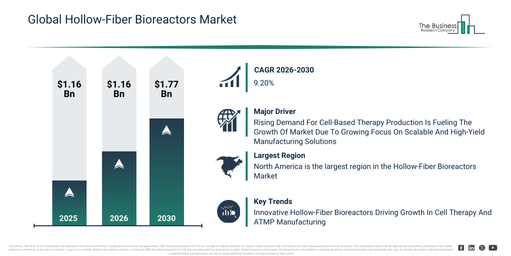
    The market for hollow-fiber bioreactors has experienced robust expansion in recent years. It is projected to increase from $1.5 billion in 2025 to $1.64 billion in 2026, exhibiting a compound annual growth rate (CAGR) of 9.3%. This historical growth can be ascribed to several factors, including the reliance on traditional cell culture systems, limitations in bioreactor scalability, increasing biopharmaceutical R&D activities, a rise in academic research in tissue engineering, and the adoption of reusable bioreactors for early-stage production.

    The hollow-fiber bioreactors market size is projected to experience substantial expansion over the upcoming years. Its valuation is anticipated to reach $2.33 billion by 2030, exhibiting a compound annual growth rate (CAGR) of 9.2%. This expansion during the forecast period can be attributed to several factors, including ongoing technological progress in single-use bioreactors, the proliferation of modular and automated systems, an escalating need for high-throughput protein production, increased outsourcing to contract research organizations (CROs), and the integration of continuous perfusion and monitoring systems. Key developments anticipated in this period encompass the growing embrace of single-use hollow-fiber bioreactors, an increase in high-density cell culture applications, a surging requirement for biopharmaceutical protein production, the broadening scope of tissue engineering and regenerative medicine, and a heightened emphasis on automated and high-throughput bioreactor systems.

    Download A Free Sample Report For Comprehensive Market Insights:

    https://www.thebusinessresearchcompany.com/sample.aspx?id=27307&type=smp

    What Are The Main Drivers Accelerating The Growth Of The Hollow-Fiber Bioreactors Market?

    An anticipated surge in the need for cell-based therapy production is set to boost the expansion of the hollow-fiber bioreactors market. This production involves creating medicinal products from living cells to address or control diverse ailments such as cancers, autoimmune conditions, and genetic illnesses. The heightened demand for cell-based therapy production stems from a growing requirement for manufacturing systems that are both scalable and consistent, capable of handling high cell concentrations while preserving product integrity. Hollow-fiber bioreactors facilitate cell-based therapy production through their provision of a sealed system with an extensive surface area, allowing for effective proliferation and collection of therapeutic cells in regulated environments. For example, data from December 2024 by the International Federation of Pharmaceutical Manufacturers and Associations, a Switzerland-based non-profit organization, indicates that six first-in-class cell and gene treatments launched in 2023, representing a 50% increase over the three introduced in 2022. Consequently, the increasing need for cell-based therapy production is a key factor propelling the expansion of the hollow-fiber bioreactors market.

    How Is The Hollow-Fiber Bioreactors Market Examined Through Segment Analysis?

    The hollow-fiber bioreactors market covered in this report is segmented –

    1) By Product Type: Single-Use Hollow-Fiber Bioreactors, Reusable Hollow-Fiber Bioreactors

    2) By Application: Cell Culture, Tissue Engineering, Biopharmaceutical Production, Wastewater Treatment, Other Applications

    3) By End-User: Pharmaceutical And Biotechnology Companies, Research Institutes, Contract Research Organizations, Other End-Users

    Subsegments:

    1) By Single-Use Hollow-Fiber Bioreactors: Pre-Assembled Single-Use Hollow-Fiber Bioreactors, Modular Single-Use Hollow-Fiber Bioreactors, Customizable Single-Use Hollow-Fiber Bioreactors, High-Throughput Single-Use Hollow-Fiber Bioreactors, Automated Single-Use Hollow-Fiber Bioreactors

    2) By Reusable Hollow-Fiber Bioreactors: Fixed-Bed Reusable Hollow-Fiber Bioreactors, Modular Reusable Hollow-Fiber Bioreactors, High-Capacity Reusable Hollow-Fiber Bioreactors, Multipurpose Reusable Hollow-Fiber Bioreactors, Clean-In-Place Reusable Hollow-Fiber Bioreactors

    Which Trends Are Influencing The Expansion Of The Hollow-Fiber Bioreactors Market?

    Key players in the hollow-fiber bioreactors market are concentrating on creating novel solutions, including single-use hollow-fiber membrane networks, to facilitate high-density, scalable, and gentle cell culture for advanced therapies. These single-use networks are disposable bioreactor systems, featuring semi-permeable fibers that continuously supply nutrients and remove waste. This design supports consistent nutrient distribution, low-shear environments, and scalable high-density cell growth, simultaneously minimizing contamination risks and streamlining biomanufacturing processes. As an example, in March 2025, ABEC Inc., a US-based process-engineering firm, introduced its ATB (Advanced Therapy Bioreactor), which is a single-use, closed, hollow-fiber bioreactor platform tailored for advanced therapy medicinal product (ATMP) production. The ATB system incorporates unique hollow-fiber membrane networks that simulate the human circulatory system for localized nutrient and gas exchange. It also uses oscillation-based mixing, rather than mechanical agitation, to sustain ideal growth conditions. This design allows for reliable scale-up from 0.2 L to 10 L, maintaining a constant hollow-fiber surface-area-to-volume ratio across different sizes. It has shown excellent cell densities and viabilities for various challenging-to-culture cells, such as primary T-cells, CD34+ stem cells, HEK293, and CHO lines.

    Which Industry Players Are Present In The Hollow-Fiber Bioreactors Market?

    Major companies operating in the hollow-fiber bioreactors market are General Electric Company, Veolia Environnement S.A., Thermo Fisher Scientific Inc., Mitsubishi Chemical Corporation, Kubota Corporation, DuPont de Nemours Inc., MANN+HUMMEL GmbH, Alfa Laval AB, Sartorius AG, Repligen Corporation, Shenzhen Dreamemway Environmental Products Co. Ltd., FiberCell Systems Inc., Reynolds Culligan Water, Shanghai MegaVision Membrane Engineering & Technology Co. Ltd., Memfill Tech Private Limited, FibraCast Inc., iMemFlo Membrane Technology Co. Ltd., Guangdong Skyview Environmental Science and Technology Co. Ltd., PHILOS Co. Ltd., Blufox Engineering Pvt. Ltd.

    Access The Complete Hollow-Fiber Bioreactors Market Report:

    https://www.thebusinessresearchcompany.com/report/hollow-fiber-bioreactors-global-market-report

    Which Region Contributes The Most To The Hollow-Fiber Bioreactors Market?

    North America was the largest region in the hollow-fiber bioreactors market in 2025. Asia-Pacific is expected to be the fastest-growing region in the forecast period. The regions covered in the hollow-fiber bioreactors market report are Asia-Pacific, South East Asia, Western Europe, Eastern Europe, North America, South America, Middle East, Africa.

    Access a Hollow-Fiber Bioreactors Market Report for Deeper Competitive Insights

    https://www.thebusinessresearchcompany.com/report/hollow-fiber-bioreactors-global-market-report

    Browse Through More Reports Similar to the Global Hollow-Fiber Bioreactors Market 2026, By The Business Research Company

    Mortgage Brokerage Services Market Report 2026

    https://www.thebusinessresearchcompany.com/report/mortgage-brokerage-services-global-market-report

    Mortgage Lender Market Report 2026

    https://www.thebusinessresearchcompany.com/report/mortgage-lender-global-market-report

    Mortgage Servicing Software Market Report 2026

    https://www.thebusinessresearchcompany.com/report/mortgage-servicing-software-global-market-report

    Get in touch with us:

    The Business Research Company: https://www.thebusinessresearchcompany.com/

    Americas: +1 310-496-7795

    Asia: +44 7882 955267 & +91 8897263534

    Europe: +44 7882 955267

    Email us at: marketing@tbrc.info

    Follow us on:

    LinkedIn: https://in.linkedin.com/company/the-business-research-company

    YouTube: https://www.youtube.com/channel/UC24_fI0rV8cR5DxlCpgmyFQ

    Global Market Model: https://www.thebusinessresearchcompany.com/global-market-model