Month: May 2026

  • Gastric Cancer Diagnostic Market Expansion Outlook Through 2030 With Revenue Growth Insights

    Gastric Cancer Diagnostic Market Expansion Outlook Through 2030 With Revenue Growth Insights

    The Business Research Company’s 2026 market reports feature advanced enhancements such as market attractiveness analysis, total addressable market evaluation, company benchmarking matrices, interactive Excel dashboards, expanded supply chain intelligence, emerging startup coverage, and detailed product insights, delivering more actionable and strategically valuable research.

    What Is The Forecasted Rise In Market Size Of The Gastric Cancer Diagnostic Market During The Forecast Period?

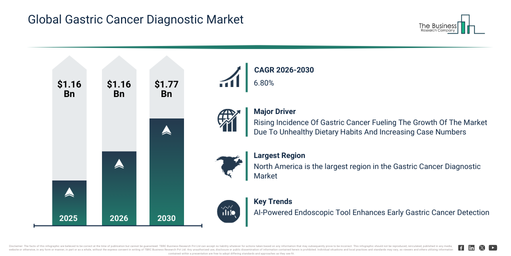
    Significant growth has been observed in the gastric cancer diagnostic market size over recent years. This market is projected to expand from $2.78 billion in 2025 to $2.98 billion in 2026, achieving a compound annual growth rate (CAGR) of 7.2%. Contributing factors to its historical growth include the scarcity of fluorescent probes, the predominant use of traditional single-color FISH methods, the rise in genetic research endeavors, the expanding infrastructure of hospitals and laboratories, and the widespread use of basic cytogenetic diagnostics.

    The market for gastric cancer diagnostics is projected to experience robust expansion in the coming years. This market is anticipated to reach $3.87 billion by 2030, exhibiting a compound annual growth rate (CAGR) of 6.8%. Several factors are expected to fuel this growth during the forecast period, including the emergence of multiplex and high-throughput probes, a growing need for precision medicine, the broadening scope of genetic and pharmaceutical research, innovations in imaging and quantification technologies, and stricter regulatory compliance and quality benchmarks. Key trends anticipated for the upcoming period encompass the increasing integration of multiplex and high-throughput FISH probes, an expanding range of genetic and molecular diagnostic uses, greater application in clinical and pharmaceutical research settings, incorporation with sophisticated imaging and analysis tools, and an intensified emphasis on the precision and sensitivity of probes.

    Download A Free Sample Report For Comprehensive Market Insights:

    https://www.thebusinessresearchcompany.com/sample.aspx?id=27291&type=smp

    What Major Growth Factors Are Impacting The Gastric Cancer Diagnostic Market?

    The increasing occurrence of gastric cancer is projected to stimulate the expansion of the gastric cancer diagnostic market moving forward. Gastric cancer refers to a malignant growth within the stomach lining, where cells multiply uncontrollably, forming a mass capable of invading nearby tissues and spreading to other body parts. This rise in gastric cancer cases stems from unhealthy dietary practices, as high consumption of salted, smoked, and processed foods elevates stomach lining damage and cancer risk. Gastric cancer diagnostic methods assist in diagnosing the condition by enabling the early detection of malignant lesions, which is crucial for timely treatment and improved patient outcomes. These diagnostics enhance clinical efficiency by delivering accurate and rapid results, thus supporting better disease management. For instance, in May 2024, according to the American Cancer Society, a US-based nonprofit organization, the number of new stomach cancer cases reached 26,890 in 2024, an increase from 26,500 cases in 2023. Consequently, the growing incidence of gastric cancer is driving the growth of the gastric cancer diagnostic market.

    Which Segment Divisions Form The Structure Of The Gastric Cancer Diagnostic Market?

    The gastric cancer diagnostic market covered in this report is segmented –

    1) By Diagnostic Type: Endoscopy, Imaging, Biopsy, Laboratory Tests, Biomarker-Based Testing

    2) By Product: Reagents And Consumables, Instruments

    3) By Technology: Molecular Diagnostics, Immunoassays, Next-Generation Sequencing, Other Technologies

    4) By Application: Early Diagnosis, Screening, Monitoring

    5) By End User: Hospitals, Clinics, Diagnostic Laboratories, Other End Users

    Subsegments:

    1) By Endoscopy: Conventional Endoscopy, Chromoendoscopy, Narrow Band Imaging, Confocal Laser Endomicroscopy, Capsule Endoscopy

    2) By Imaging: Computed Tomography, Magnetic Resonance Imaging, Positron Emission Tomography, Ultrasound

    3) By Biopsy: Forceps Biopsy, Needle Biopsy, Endoscopic Ultrasound-Guided Biopsy, Laparoscopic Biopsy

    4) By Laboratory Tests: Blood Tests, Stool Tests, Urea Breath Test, Serology

    5) By Biomarker-Based Testing: Genetic Testing, Protein Biomarker Testing, Circulating Tumor DNA Testing, Microribonucleic Acid Testing

    What Trends Are Impacting The Gastric Cancer Diagnostic Market?

    Companies actively engaged in the gastric cancer diagnostic market are prioritizing the development of innovative diagnostic tools, particularly artificial intelligence-based endoscopic diagnostic support devices, to improve early detection and accuracy. These AI-powered endoscopic support devices are instruments designed to aid in the identification and assessment of gastrointestinal abnormalities during endoscopy. As an illustration, in March 2024, AI Medical Service Inc., a Japan-based medical technology company, introduced GastroAI-model G, an AI-enabled endoscopic diagnostic support system. This system assists gastroenterologists during endoscopic procedures by analyzing video images in real time to pinpoint potential cancerous lesions. It utilizes deep learning to detect suspicious areas indicative of early gastric cancer, which may require a biopsy or further examination. When such lesions are identified, the system instantly alerts the physician by highlighting the area with a rectangle on the endoscopic screen, thereby enhancing diagnostic accuracy and enabling early cancer detection.

    Who Are The Prominent Players Across The Gastric Cancer Diagnostic Market?

    Major companies operating in the gastric cancer diagnostic market are F. Hoffmann-La Roche Ltd., Thermo Fisher Scientific Inc., Abbott Laboratories, Becton Dickinson and Company, Quest Diagnostics Incorporated, Agilent Technologies Inc., Illumina Inc., bioMérieux SA, Qiagen N.V., DiaSorin S.p.A, Natera Inc., Myriad Genetics Inc., Fulgent Genetics Inc., Foundation Medicine Inc., Invitae Corporation, NeoGenomics Laboratories Inc., Fujirebio Inc., MiRXES Pte Ltd., BIOCEPT Inc., Pillar Biosciences Inc.

    Access The Complete Gastric Cancer Diagnostic Market Report:

    https://www.thebusinessresearchcompany.com/report/gastric-cancer-diagnostic-global-market-report

    Which Region Is The Dominant Market In The Gastric Cancer Diagnostic Market?

    North America was the largest region in the gastric cancer diagnostic market in 2025. Asia Pacific is expected to be the fastest-growing region in the forecast period. The regions covered in the gastric cancer diagnostic market report are Asia-Pacific, South East Asia, Western Europe, Eastern Europe, North America, South America, Middle East, Africa.

    Access a Gastric Cancer Diagnostic Market Report for Deeper Competitive Insights

    https://www.thebusinessresearchcompany.com/report/gastric-cancer-diagnostic-global-market-report

    Browse Through More Reports Similar to the Global Gastric Cancer Diagnostic Market 2026, By The Business Research Company

    Thermal Insulation Material Market Report 2026

    https://www.thebusinessresearchcompany.com/report/thermal-insulation-material-global-market-report

    Building Insulation Materials Market Report 2026

    https://www.thebusinessresearchcompany.com/report/building-insulation-materials-global-market-report

    Insulation Products Market Report 2026

    https://www.thebusinessresearchcompany.com/report/insulation-products-global-market-report

    Get in touch with us:

    The Business Research Company: https://www.thebusinessresearchcompany.com/

    Americas: +1 310-496-7795

    Asia: +44 7882 955267 & +91 8897263534

    Europe: +44 7882 955267

    Email us at: marketing@tbrc.info

    Follow us on:

    LinkedIn: https://in.linkedin.com/company/the-business-research-company

    YouTube: https://www.youtube.com/channel/UC24_fI0rV8cR5DxlCpgmyFQ

    Global Market Model: https://www.thebusinessresearchcompany.com/global-market-model
  • Gait Analyzer Market Industry Analysis Covering Trends, Drivers, And Future Outlook

    Gait Analyzer Market Industry Analysis Covering Trends, Drivers, And Future Outlook

    The Business Research Company’s 2026 market reports feature advanced enhancements such as market attractiveness analysis, total addressable market evaluation, company benchmarking matrices, interactive Excel dashboards, expanded supply chain intelligence, emerging startup coverage, and detailed product insights, delivering more actionable and strategically valuable research.

    How Is The Gait Analyzer Market’s Market Value Anticipated To Evolve From 2026 To 2030?

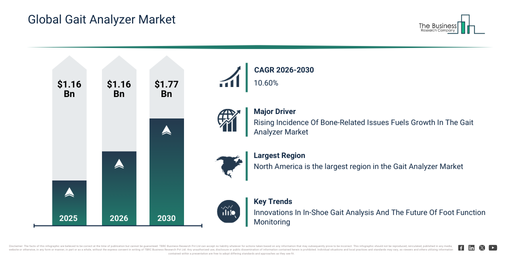
    The gait analyzer market has experienced significant expansion recently. This market is expected to grow from $1.41 billion in 2025 to $1.56 billion in 2026, achieving a compound annual growth rate (CAGR) of 10.6%. The historical surge in this market can be attributed to several factors, including the increasing prevalence of musculoskeletal disorders, the proliferation of rehabilitation and physiotherapy centers, a heightened awareness of mobility assessment in clinical care, the adoption of gait analysis in sports medicine, and an expansion of research studies focused on human movement.

    The gait analyzer market is projected to experience substantial expansion in the coming years. Its valuation is set to reach $2.33 billion by 2030, exhibiting a compound annual growth rate (CAGR) of 10.6%. This anticipated growth during the forecast period is primarily fueled by factors such as an aging population facing mobility challenges, a heightened emphasis on preventive healthcare and timely diagnosis, the emergence of rehabilitation solutions designed for home use, a rising need for customized treatment strategies, and the broadening application of sports and fitness monitoring tools. Key developments anticipated in this period encompass the increasing integration of wearable gait analysis devices, the expanding utility of gait analysis within rehabilitation and physiotherapy practices, the wider implementation of gait assessment in tracking athletic performance, the growing deployment of compact and home-based gait analyzers, and a surging requirement for reliable tools for assessing mobility and posture objectively.

    Download A Free Sample Report For Comprehensive Market Insights:

    https://www.thebusinessresearchcompany.com/sample.aspx?id=18622&type=smp

    What Market Drivers Are Helping Shape The Gait Analyzer Market Expansion?

    A rise in bone-related health concerns is projected to fuel the expansion of the gait analyzer market in the future. These issues cover various conditions and diseases impacting bone structure, strength, and overall function. Their origins can include genetic predispositions, inadequate nutrition, physical injuries, infections, and other medical complications. The growing prevalence of bone-related problems stems from an aging global demographic, inactive lifestyles, dietary shortcomings, and genetic influences. Gait analyzers play a crucial role in managing these conditions, providing advantages like precise diagnosis, continuous monitoring, tailored treatment plans, complication avoidance, assistance in surgical planning, research applications, patient awareness, and an enhanced quality of life. For example, data published in February 2023 by the National Library of Medicine, a US-based biomedical library, indicates that total hip arthroplasty (THA) and total knee arthroplasty (TKA) procedures are anticipated to grow by 719,364 and 1.22 million, respectively, by 2040. Additionally, by 2060, TKA procedures are projected to reach 2.91 million, while THA procedures are estimated at 1.98 million. Consequently, the escalating incidence of bone-related health concerns is acting as a primary driver for the expansion of the gait analyzer market.

    How Are Different Segment Groups Identified Within The Gait Analyzer Market?

    The gait analyzer market covered in this report is segmented –

    1) By Type: With Heart Rate Monitoring, Without Heart Rate Monitoring

    2) By Age: Pediatric, Adult

    3) By Application: Household, Commercial, Other Applications

    Subsegments:

    1) By With Heart Rate Monitoring: Wearable Gait Analyzers With Integrated Heart Rate Sensors, Gait Analysis Systems With Ecg Or Pulse Rate Monitoring, Smart Insoles With Heart Rate Tracking, Portable Gait Monitors With Biometric Feedback

    2) By Without Heart Rate Monitoring: Standalone Gait Analysis Systems (Pressure Mats, Motion Sensors), 3D Motion Capture Systems For Gait Analysis, Video-Based Gait Analysis Systems, Treadmills With Gait Analysis Features (Without Heart Rate Monitoring)

    Which Trends Are Affecting The Gait Analyzer Market Framework?

    Leading firms within the gait analyzer market are concentrating on creating advanced products, such as in-shoe foot function and gait analysis systems, designed to provide real-time, precise data on foot mechanics and movement patterns. These in-shoe systems offer continuous and comprehensive insights into foot mechanics and gait, aiding both clinical assessments and the optimization of athletic performance. For instance, in June 2023, Tekscan, a US-based company that manufactures gait analyzers, launched F-Scan GO, a new compact in-shoe foot function and gait analysis system specifically developed for biomechanics researchers. It offers an uncompromising in-shoe gait analysis solution, enabling natural gait motion while collecting extensive sensor data at unmatched sampling speeds. This development solidifies Tekscan’s leadership in the field of in-shoe gait analysis, supported by numerous research-validated studies.

    Which Companies Form The Competitive Landscape Of The Gait Analyzer Market?

    Major companies operating in the gait analyzer market are Kistler Group, Movella Holdings Inc, Tekscan Inc, BTS Bioengineering Corp, Delsys Inc, Noraxon USA Inc, BioSensics LLC, Advanced Mechanical Technology Inc, Motion Analysis Corporation, Qualisys AB, Zebris Medical GmbH, Medilogic GmbH, ProtoKinetics LLC, Microgate Srl, Sensor Medica Srl, DIERS International GmbH, ReTiSense Inc, Novel GmbH, Moticon GmbH, Vicon Motion Systems Ltd

    Access The Complete Gait Analyzer Market Report:

    https://www.thebusinessresearchcompany.com/report/gait-analyzer-global-market-report

    Which Area Represents The Largest Portion Of The Gait Analyzer Market?

    North America was the largest region in the gait analyzer market in 2025. The regions covered in the gait analyzer market report are Asia-Pacific, South East Asia, Western Europe, Eastern Europe, North America, South America, Middle East, Africa.

    Access a Gait Analyzer Market Report for Deeper Competitive Insights

    https://www.thebusinessresearchcompany.com/report/gait-analyzer-global-market-report

    Browse Through More Reports Similar to the Global Gait Analyzer Market 2026, By The Business Research Company

    Fitness Tracker Market Report 2026

    https://www.thebusinessresearchcompany.com/report/fitness-tracker-global-market-report

    Industrial Analytics Market Report 2026

    https://www.thebusinessresearchcompany.com/report/industrial-analytics-global-market-report

    Foot And Ankle Devices Market Report 2026

    https://www.thebusinessresearchcompany.com/report/foot-and-ankle-devices-global-market-report

    Get in touch with us:

    The Business Research Company: https://www.thebusinessresearchcompany.com/

    Americas: +1 310-496-7795

    Asia: +44 7882 955267 & +91 8897263534

    Europe: +44 7882 955267

    Email us at: marketing@tbrc.info

    Follow us on:

    LinkedIn: https://in.linkedin.com/company/the-business-research-company

    YouTube: https://www.youtube.com/channel/UC24_fI0rV8cR5DxlCpgmyFQ

    Global Market Model: https://www.thebusinessresearchcompany.com/global-market-model
  • Functional Brain Imaging System Market Forecast Assessing Growth Potential And Industry Direction

    Functional Brain Imaging System Market Forecast Assessing Growth Potential And Industry Direction

    The Business Research Company’s 2026 market reports feature advanced enhancements such as market attractiveness analysis, total addressable market evaluation, company benchmarking matrices, interactive Excel dashboards, expanded supply chain intelligence, emerging startup coverage, and detailed product insights, delivering more actionable and strategically valuable research.

    By 2030, How Much Growth In Market Size Is Expected For The Functional Brain Imaging System Market?

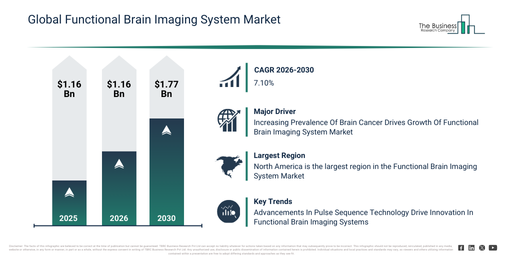
    The market size for functional brain imaging systems has demonstrated robust growth over recent years. This market is projected to expand from $5.08 billion in 2025 to $5.45 billion in 2026, achieving a compound annual growth rate (CAGR) of 7.4%. Historically, this growth has been driven by factors such as the limited availability of high-resolution imaging systems, reliance on traditional imaging techniques, an increase in the prevalence of neurological disorders, expanding academic research into brain function, and the initial embrace of fMRI technologies.

    The functional brain imaging system market is poised for robust expansion in the coming years, with its size projected to reach $7.17 billion by 2030, driven by a compound annual growth rate (CAGR) of 7.1%. This growth during the forecast period can be attributed to several factors, including progress in portable and wearable fNIRS devices, the increasing integration of ai in brain imaging analysis, the broader availability of hybrid pet/mri and pet/ct systems, rising funding for cognitive neuroscience research, and improvements in hospital and diagnostic imaging infrastructure. Major trends anticipated in this period include the increasing adoption of functional brain imaging in clinical diagnosis, the incorporation of portable and wearable brain imaging devices, an increase in research applications for cognitive science, a growing focus on neurology and psychiatry applications, and the wider deployment of hybrid imaging modalities for brain studies.

    Download A Free Sample Report For Comprehensive Market Insights:

    https://www.thebusinessresearchcompany.com/sample.aspx?id=20555&type=smp

    Which Significant Factors Are Encouraging Growth In The Functional Brain Imaging System Market?

    The rising occurrence of brain cancer is anticipated to boost the expansion of the functional brain imaging system market in the future. Brain cancer is characterized by the uncontrolled proliferation of abnormal cells within the brain, leading to tumor formation that can impair normal brain functions. This increased occurrence of brain cancer can be attributed to several factors including an aging demographic, enhanced detection techniques, environmental hazards, and more effective reporting. Functional brain imaging systems play a crucial role by improving diagnostic accuracy, facilitating the development of safer and more efficacious treatment strategies, and offering continuous monitoring to enhance results for individuals suffering from brain cancer. For example, in 2023, as reported by Cancer Australia, a cancer control agency to the Government of Australia, Australia documented 1,597 deaths attributed to brain cancer, consisting of 956 males and 641 females. By 2025, the fatality count is predicted to increase to 1,639, impacting 979 males and 660 females. Consequently, the growing incidence of brain cancer is a key factor propelling the expansion of the functional brain imaging system market.

    What Segment Categories Are Evaluated In The Functional Brain Imaging System Market Study?

    The functional brain imaging system market covered in this report is segmented –

    1) By Type: Functional Magnetic Resonance Imaging (fMRI) Systems, Functional Near Infrared Spectroscopy (fNIRS) Systems, Positron Emission Tomography (PET) System, Others Types

    2) By Application: Hospital, Diagnostic imaging center, Other Applications

    3) By End-User: Neurology, Psychiatry, Oncology, Cognitive Science

    Subsegments:

    1) By Functional Magnetic Resonance Imaging (fMRI) Systems: Research-Grade Functional Magnetic Resonance Imaging (fMRI) Systems, Clinical Functional Magnetic Resonance Imaging (fMRI) Systems, High-Field Functional Magnetic Resonance Imaging (fMRI) Systems, Resting-State Functional Magnetic Resonance Imaging (fMRI) Systems

    2) By Functional Near Infrared Spectroscopy (fNIRS) Systems: Portable Functional Near Infrared Spectroscopy (fNIRS) Systems, Multi-Channel Functional Near Infrared Spectroscopy (fNIRS) Systems, Wearable Functional Near Infrared Spectroscopy (fNIRS) Devices, Clinical Functional Near Infrared Spectroscopy (fNIRS) Systems

    3) By Positron Emission Tomography (PET) Systems: Whole-Body Positron Emission Tomography (PET) Systems, Dedicated Brain Positron Emission Tomography (PET) Systems

    4) By Other Types: Electroencephalography (EEG) Systems, Magnetoencephalography (MEG) Systems, Diffusion Tensor Imaging (DTI) Systems, Transcranial Magnetic Stimulation (TMS) Systems

    What Trends Are Influencing The Functional Brain Imaging System Market?

    Leading firms in the functional brain imaging system market are concentrating on creating advanced solutions, including pulse sequence technology, to boost image clarity, refine diagnostic precision, and shorten scan durations, thereby achieving more impactful and streamlined brain imaging processes. Within functional brain imaging systems, pulse sequence technology involves a synchronized series of radiofrequency (RF) pulses and magnetic field gradients utilized during an MRI scan to govern the image generation process of the MRI system. An example of this is Fujifilm Holdings Corporation, a Japan-based photographic film producer, which introduced Aperto Lucent, an open 0.4-tesla MRI system, in July 2024. This system features RADAR motion compensating pulse sequence technology, which diminishes the necessity for rescans and lessens motion artifacts, often a significant obstacle in MRI examinations. Furthermore, APERTO Lucent leverages Fujifilm’s well-known permanent magnet technology, streamlining its setup and lowering operational expenses by requiring less supplementary equipment to uphold the magnetic field.

    Who Are The Key Market Participants In The Functional Brain Imaging System Market?

    Major companies operating in the functional brain imaging system market are Siemens Healthineers AG, General Electric HealthCare Technologies Inc., NordicNeuroLab AS, Koninklijke Philips N.V., Shimadzu Corporation, Toshiba International Corporation, Elekta AB, Canon Medical Systems Corporation, Cortech Solutions Inc., Compumedics Ltd., Brain Products GmbH, Aspect Imaging Ltd., ANT Neuro GmbH, BIOPAC Systems Inc., Neuroelectrics Corporation, Twente Medical Systems International(TMSI) B.V., Advanced Brain Monitoring Inc., Gowerlabs Ltd., Artinis Medical Systems B.V., NIRx Medical Technologies LLC

    Access The Complete Functional Brain Imaging System Market Report:

    https://www.thebusinessresearchcompany.com/report/functional-brain-imaging-system-global-market-report

    Which Region Commands The Largest Share Of The Functional Brain Imaging System Market?

    North America was the largest region in the functional brain imaging system market in 2025. The regions covered in the functional brain imaging system market report are Asia-Pacific, South East Asia, Western Europe, Eastern Europe, North America, South America, Middle East, Africa.

    Access a Functional Brain Imaging System Market Report for Deeper Competitive Insights

    https://www.thebusinessresearchcompany.com/report/functional-brain-imaging-system-global-market-report

    Browse Through More Reports Similar to the Global Functional Brain Imaging System Market 2026, By The Business Research Company

    3D Medical Imaging Devices Market Report 2026

    https://www.thebusinessresearchcompany.com/report/3d-medical-imaging-devices-global-market-report

    Diagnostic Imaging Equipment Market Report 2026

    https://www.thebusinessresearchcompany.com/report/diagnostic-imaging-equipment-global-market-report

    3D Diagnostic Imaging Services Market Report 2026

    https://www.thebusinessresearchcompany.com/report/3d-diagnostic-imaging-services-global-market-report

    Get in touch with us:

    The Business Research Company: https://www.thebusinessresearchcompany.com/

    Americas: +1 310-496-7795

    Asia: +44 7882 955267 & +91 8897263534

    Europe: +44 7882 955267

    Email us at: marketing@tbrc.info

    Follow us on:

    LinkedIn: https://in.linkedin.com/company/the-business-research-company

    YouTube: https://www.youtube.com/channel/UC24_fI0rV8cR5DxlCpgmyFQ

    Global Market Model: https://www.thebusinessresearchcompany.com/global-market-model

  • Fully Automatic Biochemistry Analyzer Market Expected To Witness Revenue Growth Toward $4.5 Billion By 2030

    Fully Automatic Biochemistry Analyzer Market Expected To Witness Revenue Growth Toward $4.5 Billion By 2030

    The Business Research Company’s 2026 market reports feature advanced enhancements such as market attractiveness analysis, total addressable market evaluation, company benchmarking matrices, interactive Excel dashboards, expanded supply chain intelligence, emerging startup coverage, and detailed product insights, delivering more actionable and strategically valuable research.

    What Market Value Trend Is Expected For The Fully Automatic Biochemistry Analyzer Market From 2026 To 2030?

    The market for fully automatic biochemistry analyzers has consistently expanded in recent years. Projections indicate its expansion from $3.55 billion in 2025 to $3.72 billion by 2026, demonstrating a compound annual growth rate (CAGR) of 5.0%. Historically, this growth has been driven by several factors, including an increase in clinical laboratory testing volumes, the broadening of hospital diagnostic infrastructure, the growing prevalence of chronic and metabolic diseases, the greater uptake of automated laboratory instruments, and the demand for quicker diagnostic turnaround times.

    The fully automatic biochemistry analyzer market is anticipated to experience consistent expansion over the upcoming years. This sector is projected to attain a valuation of $4.5 billion by 2030, exhibiting a compound annual growth rate (CAGR) of 4.9%. The projected increase during this period is driven by several factors, including the heightened need for extensive diagnostic screening, the expansion of diagnostic laboratory networks, a growing emphasis on optimizing laboratory operational costs, the broadening of pharmaceutical and biotech research initiatives, and augmented investments in healthcare automation. Notable trends throughout this forecast period encompass the increasing embrace of fully automated laboratory workflows, a heightened demand for high-throughput clinical testing, the expanded utilization of integrated systems for sample and reagent handling, the broader deployment of biochemistry analyzers in decentralized diagnostic settings, and an enhanced focus on precision and uniformity in clinical testing.

    Download A Free Sample Report For Comprehensive Market Insights:

    https://www.thebusinessresearchcompany.com/sample.aspx?id=18620&type=smp

    What Core Drivers Are Transforming The Fully Automatic Biochemistry Analyzer Market?

    The increasing number of clinical and research laboratories is anticipated to fuel the expansion of the fully automatic biochemistry analyzer market in the future. These laboratories are defined as establishments carrying out diagnostic testing and scientific investigations on biological specimens. The expansion of these laboratories has been propelled by greater financial commitments to biomedical research, clinical trials, and personalized medicine initiatives. Furthermore, substantial financial backing from government bodies, private sector entities, and various grants contributes to the development of research facilities and laboratories. Fully automatic biochemistry analyzers improve the precision and operational effectiveness of clinical and research laboratories. They achieve this by automating intricate testing procedures, enabling laboratories to handle extensive sample quantities, maintain uniform outcomes, and facilitate sophisticated research endeavors. For example, in March 2025, data from IQVIA, a US-based human data science company, indicated that in 2024, funding reached a 10-year high of $102 billion, a significant increase from the $71 billion recorded in 2023. Consequently, the expansion of clinical and research laboratories is a primary catalyst for the fully automatic biochemistry analyzer market.

    How Is The Fully Automatic Biochemistry Analyzer Market Examined Through Segment Analysis?

    The fully automatic biochemistry analyzer market covered in this report is segmented –

    1) By Type: Bench Top, Floor-Standing

    2) By Application: Disease Diagnosis, Drugs Of Abuse Testing, Drug Discovery, In Vitro Diagnosis, Other Applications

    3) By End Users: Pharmaceutical And Biotech Companies, Hospitals And Clinics, Diagnostic Laboratories, Point Of Care Centers, Other End-Users

    Subsegments:

    1) By Bench Top: Small Capacity Bench Top Analyzers, Medium Capacity Bench Top Analyzers, High Throughput Bench Top Analyzers, Compact Bench Top Analyzers For Limited Space

    2) By Floor-Standing: High Capacity Floor-standing Analyzers, Fully Automated Floor-Standing Biochemistry Analyzers, Modular Floor-Standing Systems, Multi-Station Floor-Standing Analyzers

    Which Trends Are Guiding The Development Of The Fully Automatic Biochemistry Analyzer Market?

    Leading companies in the fully automatic biochemistry analyzer market are advancing clinical research technologies, such as single-unit throughput testing, to provide more efficient and precise diagnostic capabilities. Single-unit throughput tests are designed to evaluate the performance or processing capacity of an individual analyzer under specified conditions. For example, in March 2025, Shenzhen YHLO Biotech Co., a China-based biotechnology company, introduced the YHLO iBC 2000 Fully Automated Biochemistry Analyzer. This high-throughput platform can perform up to 3,200 tests per hour per unit, with the flexibility to connect multiple units for a maximum throughput of 9,200 tests per hour. This system reinforces YHLO’s mid-to-high throughput biochemistry portfolio, integrates with its CLIA and total laboratory automation solutions, addresses various clinical demands, and demonstrates the company’s dedication to innovation and collaborative R&D to deliver intelligent, high-performance laboratory solutions globally.

    Which Organizations Are Operating Within The Fully Automatic Biochemistry Analyzer Market?

    Major companies operating in the fully automatic biochemistry analyzer market are Roche Holding AG, Thermo Fisher Scientific Inc., Abbott Laboratories, Siemens Healthineers, Fujifilm Corporation, Mindray Bio-Medical Electronics Co. Ltd., Hitachi High-Technologies Corporation, Beckman Coulter Inc., Sysmex Corporation, Bio-Rad Laboratories Inc., Ortho Clinical Diagnostics, Horiba Medical Ltd, DiaSorin S.p.A., Randox Laboratories Ltd., Dirui Industries Co. Ltd., Trivitron Healthcare Ltd, EKF Diagnostics Holdings plc, A. Menarini Diagnostics Srl, Analytical Technologies Limited, Urit Medical Electronic Group, Adaltis Inc.

    Access The Complete Fully Automatic Biochemistry Analyzer Market Report:

    https://www.thebusinessresearchcompany.com/report/fully-automatic-biochemistry-analyzer-global-market-report

    Which Region Accounts For The Highest Share Of The Fully Automatic Biochemistry Analyzer Market?

    Europe was the largest region in the fully automatic biochemistry analyzer market in 2025. The regions covered in the fully automatic biochemistry analyzer market report are Asia-Pacific, South East Asia, Western Europe, Eastern Europe, North America, South America, Middle East, Africa.

    Access a Fully Automatic Biochemistry Analyzer Market Report for Deeper Competitive Insights

    https://www.thebusinessresearchcompany.com/report/fully-automatic-biochemistry-analyzer-global-market-report

    Browse Through More Reports Similar to the Global Fully Automatic Biochemistry Analyzer Market 2026, By The Business Research Company

    Biochemistry Analyzer Market Report 2026

    https://www.thebusinessresearchcompany.com/report/biochemistry-analyzer-global-market-report

    Protein Analyzer Market Report 2026

    https://www.thebusinessresearchcompany.com/report/protein-analyzer-global-market-report

    Bioprocess Analyzers Market Report 2026

    https://www.thebusinessresearchcompany.com/report/bioprocess-analyzers-global-market-report

    Get in touch with us:

    The Business Research Company: https://www.thebusinessresearchcompany.com/

    Americas: +1 310-496-7795

    Asia: +44 7882 955267 & +91 8897263534

    Europe: +44 7882 955267

    Email us at: marketing@tbrc.info

    Follow us on:

    LinkedIn: https://in.linkedin.com/company/the-business-research-company

    YouTube: https://www.youtube.com/channel/UC24_fI0rV8cR5DxlCpgmyFQ

    Global Market Model: https://www.thebusinessresearchcompany.com/global-market-model
  • Full Dentures Market Industry Outlook 2026–2030 Highlighting Growth Momentum And Market Trends

    Full Dentures Market Industry Outlook 2026–2030 Highlighting Growth Momentum And Market Trends

    The Business Research Company’s 2026 market reports feature advanced enhancements such as market attractiveness analysis, total addressable market evaluation, company benchmarking matrices, interactive Excel dashboards, expanded supply chain intelligence, emerging startup coverage, and detailed product insights, delivering more actionable and strategically valuable research.

    How Does The Forecasted Market Size Of The Full Dentures Market Compare Between 2026 And 2030?

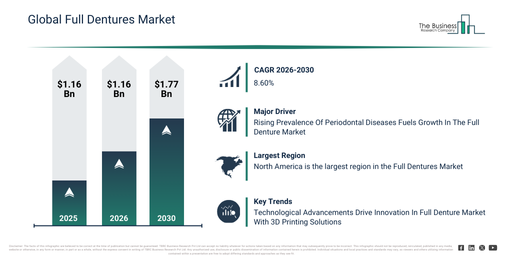
    The full dentures market has experienced robust growth in recent years. Projections indicate its expansion from $1.67 billion in 2025 to $1.82 billion in 2026, demonstrating a compound annual growth rate (CAGR) of 8.9%. Historically, this growth stemmed from factors such as a dependence on conventional acrylic and porcelain dentures, restricted availability of dental prosthetic technologies, the rising prevalence of edentulism among the elderly, increasing consciousness regarding oral health, and the role of traditional dental clinics in promoting denture usage.

    The full dentures market size is anticipated to undergo significant expansion in the upcoming years. This market is expected to reach $2.53 billion in 2030, demonstrating a compound annual growth rate (CAGR) of 8.6%. The projected growth during the forecast period can be attributed to advancements in CAD/CAM and 3D-printing technologies, an increase in disposable income and dental expenditure, rising dental tourism, a growing preference for implant-supported dentures, and the development of biocompatible and advanced denture materials. Dominant trends during this period include the rising adoption of implant-supported dentures, an increasing demand for aesthetic and natural-looking dentures, growth in 3D-printed and CAD/CAM dentures, the expansion of dental clinics and specialized dental hospitals, and a focus on lightweight and flexible denture materials.

    Download A Free Sample Report For Comprehensive Market Insights:

    https://www.thebusinessresearchcompany.com/sample.aspx?id=20554&type=smp

    Which Growth Factors Are Strengthening The Full Dentures Market Landscape?

    The increasing occurrence of periodontal diseases is projected to fuel the expansion of the full denture market in the future. These conditions, also termed periodontal diseases, describe a category of inflammatory illnesses that impact the structures supporting the teeth. The widespread nature of periodontal disease stems from a high incidence of gum ailments, inadequate oral hygiene, an expanding elderly demographic, and a growing understanding of how oral health influences general well-being. Full dentures offer support to the soft tissues of the mouth, aiding in the preservation of the mouth’s and jaw’s natural form, which may alleviate problems linked to periodontal disease. Furthermore, these prosthetic devices can substitute missing teeth, thereby avoiding further extractions and assisting in the preservation of oral functionality. As an illustration, by October 2025, data from the National Center for Biotechnology Information, a US-based entity offering biomedical and genomic information resources, indicates that the population afflicted by periodontitis is expected to surpass 1.5 billion by 2050. Consequently, the increasing occurrence of periodontal diseases is a key factor propelling growth in the full denture market.

    Which Segment Groups Define The Full Dentures Market Landscape?

    The full dentures market covered in this report is segmented –

    1) By Material: Acrylic Dentures, Ceramic Dentures, Porcelain Dentures, Metal Dentures, Other Materials

    2) By Technology: Conventional Dentures, Implant-Supported Dentures, Computer-Aided Design (CAD) And Computer-Aided Manufacturing (CAM) Dentures

    3) By Usage: Removable, Fixed

    4) By Distribution Channel: Direct Sales, Distributor, Online, Pharmacy And Drug Store

    5) By End-User: Specialized Dental Hospitals, Somatology Departments In General Hospitals, Dental Clinics

    Subsegments:

    1) By Acrylic Dentures: Conventional Acrylic Dentures, Flexible Acrylic Dentures, Lightweight Acrylic Dentures, Acrylic Dentures With Natural Appearance

    2) By Ceramic Dentures: High-Strength Ceramic Dentures, Monolithic Ceramic Dentures, Layered Ceramic Dentures, Ceramic Dentures With Aesthetic Enhancements

    3) By Porcelain Dentures: Conventional Porcelain Dentures, Porcelain Dentures With Metal Framework, Porcelain Dentures With High Aesthetic Value, Stain-Resistant Porcelain Dentures

    4) By Metal Dentures: Partial Metal Dentures, Full Metal Dentures, Titanium Dentures, Gold Alloy Dentures

    5) By Other Materials: Composite Dentures, 3d-Printed Dentures, Biocompatible Dentures, Custom-Made Dentures With Advanced Materials

    What Trends Are Influencing The Future Of The Full Dentures Market?

    Leading companies operating within the full denture market are prioritizing the development of innovative solutions, such as 3D-printed permanent denture solutions, aiming to elevate patient satisfaction through customized options that are more efficient and quicker to produce. A 3D-printed permanent denture solution describes a method for creating dentures using 3D printing technology, offering a modern, efficient, and highly customizable choice for patients requiring dental prosthetics. For instance, in February 2023, Stratasys Ltd., a US-based additive manufacturing company, launched TrueDent, representing the first monolithic, full-color 3D-printed permanent dentures solution. This groundbreaking method streamlines the denture manufacturing process by allowing a complete denture to be produced in a single print, eliminating the assembly of multiple parts. The technology incorporates advanced materials that deliver both aesthetic appeal and functional durability, effectively tackling common issues found in traditional denture production. The full-color capability not only enhances the visual quality of the dentures but also facilitates a more precise match of the prosthetics to the patient’s natural gum and tooth colors.

    Who Are The Businesses Driving Activity In The Full Dentures Market?

    Major companies operating in the full dentures market are 3M Company, Henry Schein Inc., Zimmer Biomet Holdings Inc., Dentsply Sirona Inc., Straumann Holding AG, Ivoclar Vivadent AG, VITA Zahnfabrik H. Rauter GmbH & Co. KG, Young Innovations Inc., VOCO GmbH, Keystone Dental Inc., BEGO GmbH and Co. K.G., Kuraray Co. Ltd., GC International AG, J. Morita Corporation, Kulzer GmbH, Modern Dental Group Limited, Nissin Dental Products Inc., YAMAHACHI DENTAL MFG CO, AvaDent Digital Dental Solutions, National Dentex Labs, Shofu Inc., COLTENE Holding AG, SCHEU-DENTAL GmbH, Lang Dental Manufacturing Company Inc.

    Access The Complete Full Dentures Market Report:

    https://www.thebusinessresearchcompany.com/report/full-dentures-global-market-report

    Which Region Is The Primary Market For The Full Dentures Market?

    North America was the largest region in the full dentures market in 2025. The regions covered in the full dentures market report are Asia-Pacific, South East Asia, Western Europe, Eastern Europe, North America, South America, Middle East, Africa.

    Access a Full Dentures Market Report for Deeper Competitive Insights

    https://www.thebusinessresearchcompany.com/report/full-dentures-global-market-report

    Browse Through More Reports Similar to the Global Full Dentures Market 2026, By The Business Research Company

    Dental Consumables Market Report 2026

    https://www.thebusinessresearchcompany.com/report/dental-consumables-global-market-report

    Dental Flap Surgery Market Report 2026

    https://www.thebusinessresearchcompany.com/report/dental-flap-surgery-global-market-report

    Dental Biomaterials Market Report 2026

    https://www.thebusinessresearchcompany.com/report/dental-biomaterials-global-market-report

    Get in touch with us:

    The Business Research Company: https://www.thebusinessresearchcompany.com/

    Americas: +1 310-496-7795

    Asia: +44 7882 955267 & +91 8897263534

    Europe: +44 7882 955267

    Email us at: marketing@tbrc.info

    Follow us on:

    LinkedIn: https://in.linkedin.com/company/the-business-research-company

    YouTube: https://www.youtube.com/channel/UC24_fI0rV8cR5DxlCpgmyFQ

    Global Market Model: https://www.thebusinessresearchcompany.com/global-market-model
  • Fragile X Syndrome (FXS) Treatment Market Growth Forecast With Analysis Of Industry Progress Through 2030

    Fragile X Syndrome (FXS) Treatment Market Growth Forecast With Analysis Of Industry Progress Through 2030

    The Business Research Company’s 2026 market reports feature advanced enhancements such as market attractiveness analysis, total addressable market evaluation, company benchmarking matrices, interactive Excel dashboards, expanded supply chain intelligence, emerging startup coverage, and detailed product insights, delivering more actionable and strategically valuable research.

    What Increase In Market Value Is Predicted For The Fragile X Syndrome (FXS) Treatment Market During The 2026–2030 Period?

    The fragile x syndrome (fxs) treatment market size has shown significant expansion in recent years. It is anticipated to expand from $2.07 billion in 2025 to $2.23 billion in 2026, achieving a compound annual growth rate (CAGR) of 7.8%. Historically, this market’s growth has been fueled by factors such as an enhanced clinical understanding of fragile x syndrome, the proliferation of behavioral therapy programs, increasing access to psychiatric medications, a rise in the diagnosis rates for genetic disorders, and improved availability of specialized care centers.

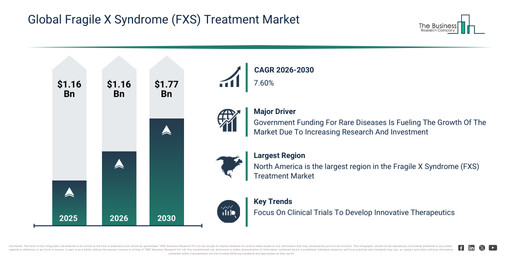
    The fragile x syndrome (fxs) treatment market size is anticipated to experience robust growth in the coming years. It is projected to expand to $3 billion by 2030, achieving a compound annual growth rate (CAGR) of 7.6%. The expansion during the forecast period is attributable to increased investments in precision medicine research, the broadening scope of gene-targeted therapies, a rise in clinical trial activity for rare diseases, a growing emphasis on early genetic screening, and strengthened collaboration between biotechnology firms and research institutions. Key trends expected in the forecast period include a heightened focus on targeted pharmacological therapies, the increasing integration of behavioral and drug-based treatments, an expansion of personalized treatment approaches, a rising adoption of early diagnosis and intervention programs, and enhanced development of novel mglur5 and gaba-based therapies.

    Download A Free Sample Report For Comprehensive Market Insights:

    https://www.thebusinessresearchcompany.com/sample.aspx?id=24220&type=smp

    What Important Drivers Are Powering The Fragile X Syndrome (FXS) Treatment Market Growth?

    The fragile X syndrome (FXS) treatment market is projected to expand due to future government financial allocations for rare diseases. These conditions are characterized as medical ailments affecting a small segment of the population, often being chronic, progressive, and life-threatening. The increased prevalence of rare diseases is primarily attributed to improvements in diagnostic capabilities, as advancements in genetic testing, imaging technologies, and data analysis have enabled healthcare providers to more accurately identify and classify previously undiagnosed or misdiagnosed conditions. fragile X syndrome (FXS) treatment is essential in securing government funding for rare diseases by underscoring the importance of specialized therapies and early intervention, which in turn raises awareness and directs resources towards expanded research and healthcare initiatives. As an illustration, in February 2024, the UK government, as reported by the UK Parliament’s House of Commons Library, a UK-based government administration, committed a £14 million ($17.3 million) investment to establish a national rare disease research platform, featuring 11 research nodes across the UK and a coordinating hub. Thus, government funding for rare diseases is a key factor driving the growth of the fragile X syndrome (FXS) treatment market.

    What Key Segment Areas Are Included In The Fragile X Syndrome (FXS) Treatment Market Assessment?

    The fragile x syndrome (fxs) treatment market covered in this report is segmented –

    1) By Treatment Type: Pharmacological Treatment, Psychotherapy, Education And Training

    2) By Route of Administration: Oral, Injectable, Intranasal And Transdermal Delivery Routes

    3) By Related Disorder: Fragile X Syndrome, Fragile X Mental Retardation 1 (FMR1)-Related Primary Ovarian Insufficiency, Fragile X-Associated Tremor, Fragile X-Associated Neuropsychiatric Disorders, Other Related Disorders

    4) By Patient Age Group: Children, Adults, Elderly

    5) By End-User: Hospitals, Specialty Clinics, Other End Users

    Subsegments:

    1) By Pharmacological Treatment: Antidepressants, Antipsychotics, Stimulants, Anticonvulsants, Anti-Anxiety Medications, mGluR5 Antagonists (Metabotropic Glutamate Receptor 5 Antagonists), GABA Agonists (Gamma-Aminobutyric Acid Agonists)

    2) By Psychotherapy: Cognitive Behavioral Therapy (CBT), Family Therapy, Social Skills Training, Occupational Therapy, Speech And Language Therapy, Applied Behavior Analysis (ABA)

    3) By Education And Training: Special Education Programs, Individualized Education Programs (IEPs), Parent Training And Support, Behavioral Intervention Plans, Skill-Building Workshops, Inclusive Classroom Strategies

    Which Trends Are Contributing To Changes In The Fragile X Syndrome (FXS) Treatment Market?

    Leading firms within the fragile X syndrome (FXS) treatment market are prioritizing the creation of novel products, including calcium-activated potassium (BK) channel activator, with the goal of addressing fundamental neurological mechanisms and enhancing patient therapeutic results. A calcium-activated potassium (BK) channel activator functions as a compound that boosts the activity of BK channels, which play a role in controlling cellular excitability and neurotransmitter release. As an illustration, during January 2025, Spinogenix Inc., a US-based biotechnology research entity, was granted Fast Track designation by the U.S. Food and Drug Administration (FDA) for SPG601, identified as a calcium-activated potassium (BK) channel activator, intended for the treatment of fragile x syndrome (FXS), thus facilitating accelerated clinical progression and regulatory assessment to deliver a new therapy targeting synaptic dysfunction to patients sooner. This designation emphasizes the pressing demand for effective therapies for fragile x syndrome and brings to light SPG601’s therapeutic capability to alleviate cognitive and behavioral symptoms by addressing central neurological mechanisms.

    Which Firms Are Competing In The Fragile X Syndrome (FXS) Treatment Market?

    Major companies operating in the fragile x syndrome (fxs) treatment market are F. Hoffmann-La Roche Ltd, Shionogi & Co. Ltd., Marinus Pharmaceuticals Inc., Healx Ltd, Neuren Pharmaceuticals Limited, Fulcrum Therapeutics Inc., Neuronascent Inc., Autifony Therapeutics Limited, Quadrant Biosciences Inc., Neurolixis Inc., Taysha Gene Therapies Inc., Ovid Therapeutics Inc., Spinogenix Inc., Epigen Biosciences Inc., Confluence Pharmaceuticals Inc., Actinogen Medical Limited, Anavex Life Sciences Corp., FRAXA Research Foundation Inc., Zynerba Pharmaceuticals Inc., BioMarin Pharmaceutical Inc., PTC Therapeutics Inc., Sage Therapeutics Inc., Neurocrine Biosciences Inc., Ionis Pharmaceuticals Inc.

    Access The Complete Fragile X Syndrome (FXS) Treatment Market Report:

    https://www.thebusinessresearchcompany.com/report/fragile-x-syndrome-fxs-treatment-global-market-report

    Which Geographic Region Represents The Largest Fragile X Syndrome (FXS) Treatment Market Share?

    North America was the largest region in the fragile X syndrome FXS treatment market in 2025. Asia-Pacific is expected to be the fastest-growing region in the forecast period. The regions covered in the fragile x syndrome (fxs) treatment market report are Asia-Pacific, South East Asia, Western Europe, Eastern Europe, North America, South America, Middle East, Africa.

    Access a Fragile X Syndrome (FXS) Treatment Market Report for Deeper Competitive Insights

    https://www.thebusinessresearchcompany.com/report/fragile-x-syndrome-fxs-treatment-global-market-report

    Browse Through More Reports Similar to the Global Fragile X Syndrome (FXS) Treatment Market 2026, By The Business Research Company

    Patient Derived Xenograft Pdx Models Market Report 2026

    https://www.thebusinessresearchcompany.com/report/patient-derived-xenograft-pdx-models-global-market-report

    Rare Diseases Treatment Market Report 2026

    https://www.thebusinessresearchcompany.com/report/rare-diseases-treatment-global-market-report

    Autism Spectrum Disorders Treatment Market Report 2026

    https://www.thebusinessresearchcompany.com/report/autism-spectrum-disorders-treatment-global-market-report

    Get in touch with us:

    The Business Research Company: https://www.thebusinessresearchcompany.com/

    Americas: +1 310-496-7795

    Asia: +44 7882 955267 & +91 8897263534

    Europe: +44 7882 955267

    Email us at: marketing@tbrc.info

    Follow us on:

    LinkedIn: https://in.linkedin.com/company/the-business-research-company

    YouTube: https://www.youtube.com/channel/UC24_fI0rV8cR5DxlCpgmyFQ

    Global Market Model: https://www.thebusinessresearchcompany.com/global-market-model

  • Global Fracture Fixation Products Market Forecast Highlighting Expansion And Competitive Dynamics

    Global Fracture Fixation Products Market Forecast Highlighting Expansion And Competitive Dynamics

    The Business Research Company’s 2026 market reports feature advanced enhancements such as market attractiveness analysis, total addressable market evaluation, company benchmarking matrices, interactive Excel dashboards, expanded supply chain intelligence, emerging startup coverage, and detailed product insights, delivering more actionable and strategically valuable research.

    How Will The Market Size Of The Fracture Fixation Products Market Progress Through 2030?

    The fracture fixation products market has experienced significant growth in recent years. It is forecast to grow from $11.32 billion in 2025 to $12.24 billion in 2026, demonstrating a compound annual growth rate (CAGR) of 8.1%. This historical growth can be attributed to a rising incidence of road accidents, an increase in orthopedic surgical volumes, an expanding aging population more susceptible to fractures, the enlargement of hospital orthopedic departments, and greater awareness of fracture treatment options.

    The fracture fixation products market is projected to experience substantial expansion over the upcoming years. Its value is forecast to reach $16.23 billion by 2030, demonstrating a compound annual growth rate (CAGR) of 7.3%. This anticipated growth is driven by several factors, including a rise in sports-related injuries, the growing acceptance of advanced orthopedic implants, the expansion of ambulatory surgical centers, an increasing incidence of osteoporosis, and enhanced availability of trauma care facilities. Key trends during this period are expected to encompass the growing use of bio-absorbable fixation devices, a heightened need for fracture fixation in trauma and accident situations, a developing inclination towards minimally invasive orthopedic surgeries, the broadened availability of small bone fracture management solutions, and the increased application of customized fixation systems for intricate fractures.

    Download A Free Sample Report For Comprehensive Market Insights:

    https://www.thebusinessresearchcompany.com/sample.aspx?id=17156&type=smp

    Which Major Factors Are Contributing To The Development Of The Fracture Fixation Products Market?

    The increasing incidence of osteoporosis and osteoarthritis is anticipated to drive the expansion of the fracture fixation products market in the coming period. Osteoporosis is a medical condition characterized by bones that are brittle and more susceptible to breaks, while osteoarthritis is a degenerative joint ailment that results in cartilage breakdown, pain, and reduced joint mobility. The occurrence of osteoporosis and osteoarthritis is growing due to factors such as extended lifespans, escalating obesity rates, and a higher frequency of trauma, including sports injuries. Fracture fixation products become necessary for osteoporosis to stabilize weakened bones prone to fractures and for osteoarthritis to provide support and repair to joints affected by cartilage degradation. For instance, in June 2025, as reported by Arthritis & Osteoporosis Tasmania, an Australia-based nonprofit organization, in 2023, the count of Australians aged 50 and over experiencing osteoporosis or osteopenia is projected to climb by 23%, reaching 7.7 million by 2033. Hence, the increasing prevalence of osteoporosis and osteoarthritis is a significant driver for the growth of the fracture fixation products market.

    How Is Segment Classification Applied In The Fracture Fixation Products Market?

    The fracture fixation products market covered in this report is segmented –

    1) By Type: Internal Fixation Product, External Fixation Product, Small Bone Fracture Management Products, Other Types

    2) By Fracture Location: Upper Extremities, Hip And Pelvis, Lower Extremities

    3) By Application: Metallic Fixators, Bio-Absorbable Fixators, Other Applications

    4) By End Users: Hospitals And Clinics, Orthopedic Centers, Ambulatory Surgical Centers, Other End Users

    Subsegments:

    1) By Internal Fixation Product: Plates And Screws, Intramedullary Nails/Rods, Pins And Wires, Bone Grafts, Cannulated Screws

    2) By External Fixation Product: Unilateral Fixators, Circular Fixators, Hybrid Fixators, Bone Lengthening Devices, Trauma Fixators

    3) By Small Bone Fracture Management Products: Finger And Toe Fixation Devices, Hand And Wrist Plates, Ankle Fixation Plates, Mini External Fixators, Small Intramedullary Nails

    4) By Other Types: Bioabsorbable Fixation Devices, Orthobiologic Products, 3D-Printed Fixation Devices, Orthopedic Pins

    What Trends Are Shaping The Fracture Fixation Products Market Structure?

    Leading firms within the fracture fixation products market are engaged in the development of advanced intramedullary nailing systems, aiming to enhance surgical results and accelerate patient recuperation. These next-generation intramedullary nailing systems are defined as sophisticated medical instruments employed in orthopedic procedures for stabilizing and treating breaks in long bones, including the femur and tibia. An illustrative example is Stryker Corporation, a US-based medical technology firm, which introduced its Gamma4 Hip Fracture Nailing System to the European market in March 2024. Stryker’s recently launched Gamma4 system exemplifies the evolution of intramedullary nailing technology, specifically engineered for effective treatment of hip and femur fractures and to optimize surgical workflows for practitioners. The Gamma system itself has undergone enhancements through process optimization, procedure standardization, and a precise focus on details, collectively improving surgical methods and overall ease of use.

    Who Are The Major Companies Operating In The Fracture Fixation Products Market?

    Major companies operating in the fracture fixation products market are Johnson and Johnson, Medtronic Plc, Stryker Corporation, Zimmer Biomet Holdings Inc, Smith and Nephew plc, NuVasive Inc., Globus Medical Inc., Wright Medical Group N.V., Orthofix Medical Inc., KLS Martin SE & Co. KG, Paragon 28 Inc., Acumed LLC, Narang Medical Ltd., GPC Medical Ltd., Inion Oy, Vast Ortho Inc, Extremity Medical LLC, Citieffe s.r.l., Bioretec Ltd., Arthrex Inc

    Access The Complete Fracture Fixation Products Market Report:

    https://www.thebusinessresearchcompany.com/report/fracture-fixation-products-global-market-report

    Which Region Leads The Fracture Fixation Products Market By Size?

    North America was the largest region in the fracture fixation products market in 2025. Asia-Pacific is expected to be the fastest-growing region in the forecast period. The regions covered in the fracture fixation products market report are Asia-Pacific, South East Asia, Western Europe, Eastern Europe, North America, South America, Middle East, Africa.

    Access a Fracture Fixation Products Market Report for Deeper Competitive Insights

    https://www.thebusinessresearchcompany.com/report/fracture-fixation-products-global-market-report

    Browse Through More Reports Similar to the Global Fracture Fixation Products Market 2026, By The Business Research Company

    Composites Repair And Rehab Market Report 2026

    https://www.thebusinessresearchcompany.com/report/composites-repair-and-rehab-global-market-report

    Advanced Orthopedic Technologies Implants And Regenerative Products Market Report 2026

    https://www.thebusinessresearchcompany.com/report/advanced-orthopedic-technologies-implants-and-regenerative-products-global-market-report

    Trauma Fixation Devices And Equipment Market Report 2026

    https://www.thebusinessresearchcompany.com/report/trauma-fixation-devices-and-equipment-global-market-report

    Get in touch with us:

    The Business Research Company: https://www.thebusinessresearchcompany.com/

    Americas: +1 310-496-7795

    Asia: +44 7882 955267 & +91 8897263534

    Europe: +44 7882 955267

    Email us at: marketing@tbrc.info

    Follow us on:

    LinkedIn: https://in.linkedin.com/company/the-business-research-company

    YouTube: https://www.youtube.com/channel/UC24_fI0rV8cR5DxlCpgmyFQ

    Global Market Model: https://www.thebusinessresearchcompany.com/global-market-model
  • Fractional Radio Frequency Body Device Market Analysis Through 2030 Focusing On Demand Trends And Growth Drivers

    Fractional Radio Frequency Body Device Market Analysis Through 2030 Focusing On Demand Trends And Growth Drivers

    The Business Research Company’s 2026 market reports feature advanced enhancements such as market attractiveness analysis, total addressable market evaluation, company benchmarking matrices, interactive Excel dashboards, expanded supply chain intelligence, emerging startup coverage, and detailed product insights, delivering more actionable and strategically valuable research.

    What Is The Expected Market Size Of The Fractional Radio Frequency Body Device Market In 2026 And How Much Will It Reach By 2030?

    The fractional radio frequency body device market size has seen swift expansion recently. It is projected to expand from $1.22 billion in 2025 to $1.39 billion in 2026, demonstrating a compound annual growth rate (CAGR) of 13.7%. Historically, this expansion has stemmed from an uptick in cosmetic procedures, innovations in RF technology, the desire for non-invasive treatments, the proliferation of medical spas, and heightened awareness regarding body aesthetics.

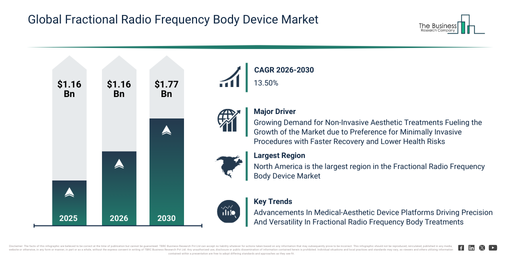
    The fractional radio frequency body device market size is anticipated to undergo significant expansion in the coming years. It is projected to ascend to $2.31 billion by 2030, exhibiting a compound annual growth rate (CAGR) of 13.5%. The expansion during this forecast period can be ascribed to advancements in portable devices, mounting concerns regarding obesity, the proliferation of home-use devices, an increase in disposable income, and greater acceptance of aesthetic treatments. Prominent trends expected in the forecast period include the rise of non-invasive body contouring, heightened demand for skin tightening procedures, the adoption of portable rf body devices, the broadening of medical spa services, and a reinforced consumer focus on aesthetic wellness.

    Download A Free Sample Report For Comprehensive Market Insights:

    https://www.thebusinessresearchcompany.com/sample.aspx?id=28227&type=smp

    What Key Growth Drivers Are Influencing The Fractional Radio Frequency Body Device Market?

    The increasing need for non-surgical cosmetic procedures is projected to fuel the expansion of the fractional radio frequency body device market moving ahead. Non-invasive aesthetic treatments are defined as cosmetic interventions that enhance appearance without surgical methods, providing advantages like quicker recuperation and reduced health hazards. The requirement for non-invasive aesthetic treatments is escalating because patients are increasingly opting for minimally invasive methods for skin tightening and body sculpting. Fractional RF body devices cater to this preference by offering noticeable outcomes with little recovery time, consistent with the wider consumer shift towards non-surgical choices. For example, in June 2025, the American Society of Plastic Surgeons (ASPS), a US-based professional association of plastic surgeons, reported that professionals carried out 28.5 million asthetic minimally invasive treatments in 2024, an increase from 28.1 million in 2023, representing a 1.5% rise year-over-year. Consequently, the escalating demand for non-invasive aesthetic treatments is propelling the development of the fractional radio frequency body device market.

    What Are The Core Segment Classifications In The Fractional Radio Frequency Body Device Market?

    The fractional radio frequency body device market covered in this report is segmented –

    1) By Product Type: Portable Fractional Radio Frequency Body Devices, Non-Portable Fractional Radio Frequency Body Devices

    2) By Distribution Channel: Direct Sales, Online Retail, Other Distribution Channels

    3) By Application: Skin Tightening, Body Contouring, Cellulite Reduction, Wrinkle Reduction, Other Applications

    4) By End-User: Hospitals, Dermatology Clinics, Medical Spas, Other End Users

    Subsegments:

    1) By Portable Fractional Radio Frequency Body Devices, Handheld Devices, Battery-Operated Devices, Rechargeable Devices, Wireless or Smart-Connected Devices

    2) By Non-Portable Fractional Radio Frequency Body Devices, Tabletop Devices, Trolley-Based Devices, Stationary Clinical Systems, Multi-Functional Integrated Systems

    Which Trends Are Supporting The Evolution Of The Fractional Radio Frequency Body Device Market?

    Companies operating within the fractional radio frequency body device market are placing a high priority on technological advancements, including medical-aesthetic device platforms, to enhance treatment precision, improve patient comfort, and enable multi-application versatility. A medical-aesthetic device platform is defined as an integrated system that combines multiple technologies and applicators into one device, allowing for a wide array of skin and body treatments. For example, in February 2023, Candela Corporation, a US-based medical aesthetic device company, unveiled the Profound Matrix system, which is a long-pulse radio frequency microneedling platform. This system is developed for minimally invasive skin and body treatments, primarily targeting skin laxity, wrinkles, and body contouring. Its Matrix Pro applicator facilitates precise microneedling with radio frequency energy, and the Depth Intelligence technology ensures consistent penetration and energy delivery customized to the specific characteristics of individual tissues.

    Which Companies Are Influencing The Fractional Radio Frequency Body Device Market?

    Major companies operating in the fractional radio frequency body device market are Hologic Inc., InMode Ltd., BTL Industries Inc., Lumenis Ltd., Cynosure LLC, Venus Concept, Cutera Inc., Lutronic Corporation, Alma Lasers, Solta Medical, Fotona d.o.o., Sciton Inc., Sisram Medical, Quanta System S.p.A., Sharplight Technologies Ltd., Jeisys Medical Inc., Candela Corporation, EndyMed Medical Ltd., Syneron Medical Ltd., Viora Ltd.

    Access The Complete Fractional Radio Frequency Body Device Market Report:

    https://www.thebusinessresearchcompany.com/report/fractional-radio-frequency-body-device-global-market-report

    Which Region Has The Strongest Presence In The Fractional Radio Frequency Body Device Market?

    North America was the largest region in the fractional radio frequency body device market in 2025. Asia-Pacific is expected to be the fastest-growing region in the forecast period. The regions covered in the fractional radio frequency body device market report are Asia-Pacific, South East Asia, Western Europe, Eastern Europe, North America, South America, Middle East, Africa.

    Access a Fractional Radio Frequency Body Device Market Report for Deeper Competitive Insights

    https://www.thebusinessresearchcompany.com/report/fractional-radio-frequency-body-device-global-market-report

    Browse Through More Reports Similar to the Global Fractional Radio Frequency Body Device Market 2026, By The Business Research Company

    Radiofrequency Ablation Devices Market Report 2026

    https://www.thebusinessresearchcompany.com/report/radiofrequency-ablation-devices-global-market-report

    Radio Frequency Front End Market Report 2026

    https://www.thebusinessresearchcompany.com/report/radio-frequency-front-end-global-market-report

    Rf Components Market Report 2026

    https://www.thebusinessresearchcompany.com/report/rf-components-global-market-report

    Get in touch with us:

    The Business Research Company: https://www.thebusinessresearchcompany.com/

    Americas: +1 310-496-7795

    Asia: +44 7882 955267 & +91 8897263534

    Europe: +44 7882 955267

    Email us at: marketing@tbrc.info

    Follow us on:

    LinkedIn: https://in.linkedin.com/company/the-business-research-company

    YouTube: https://www.youtube.com/channel/UC24_fI0rV8cR5DxlCpgmyFQ

    Global Market Model: https://www.thebusinessresearchcompany.com/global-market-model
  • Fractional Radio Frequency (RF) Microneedle Device Market Projected To Surpass $1.84 Billion By 2030 At 12.5% CAGR

    Fractional Radio Frequency (RF) Microneedle Device Market Projected To Surpass $1.84 Billion By 2030 At 12.5% CAGR

    The Business Research Company’s 2026 market reports feature advanced enhancements such as market attractiveness analysis, total addressable market evaluation, company benchmarking matrices, interactive Excel dashboards, expanded supply chain intelligence, emerging startup coverage, and detailed product insights, delivering more actionable and strategically valuable research.

    What Market Size Is Forecasted For The Fractional Radio Frequency (RF) Microneedle Device Market By 2030 Based On Its 2026 Value?

    The fractional radio frequency (rf) microneedle device market has experienced rapid expansion in recent years. Its valuation is projected to increase from $1.02 billion in 2025 to $1.15 billion in 2026, demonstrating a compound annual growth rate (CAGR) of 12.8%. Historically, this market’s growth has been driven by factors including increased aesthetic awareness, the demand for collagen stimulation, a rise in acne scar treatments, continuous technological innovation, and an expansion in dermatology practices.

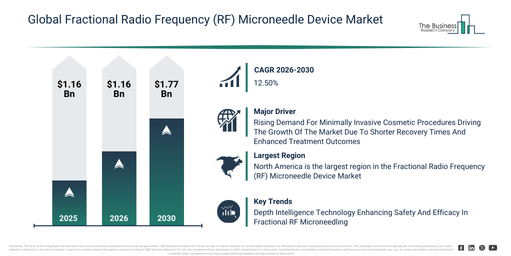
    The fractional radio frequency (rf) microneedle device market size is anticipated to experience substantial expansion over the next few years. It is projected to achieve a valuation of $1.85 billion by 2030, growing at a compound annual growth rate (CAGR) of 12.5%. This growth throughout the forecast period can be attributed to several factors, including the increasing demand for cosmetic procedures, rising disposable income, innovations in microneedle design, the expanding medical aesthetics market, and the impact of social media. Significant trends expected during this period involve a growing demand for minimally invasive aesthetic treatments, an increased preference for short recovery treatments, the availability of customizable skin rejuvenation solutions, an increase in combination aesthetic therapies, and the expansion of dermatology clinics.

    Download A Free Sample Report For Comprehensive Market Insights:

    https://www.thebusinessresearchcompany.com/sample.aspx?id=28226&type=smp

    Which Core Factors Are Supporting The Expansion Of The Fractional Radio Frequency (RF) Microneedle Device Market?

    A surge in the preference for minimally invasive cosmetic procedures is projected to fuel the expansion of the fractional radio frequency (RF) microneedle device market in the foreseeable future. These procedures are defined as aesthetic treatments that improve appearance through methods like injections, lasers, or minor incisions, offering quicker recovery and lower risks than conventional surgical interventions. The heightened interest in minimally invasive cosmetic procedures stems from their brief recovery periods, enabling individuals to swiftly return to their everyday routines. Such devices guarantee reliable, accurate, and uniform results through the application of insulated or depth-adjustable needles, which precisely target distinct skin layers. As an illustration, data from June 2024, supplied by the American Society of Plastic Surgeons, a US-based specialty organization, indicated that minimally invasive procedures grew by 7 percent in 2023, outpacing surgical procedures by 2 percent. This included over 9 million neuromodulator injections and more than 5 million hyaluronic acid fillers treatments. Consequently, the escalating demand for minimally invasive cosmetic procedures is a key factor propelling the expansion of the fractional RF microneedle device market.

    How Is The Fractional Radio Frequency (RF) Microneedle Device Market Structured Across Different Market Segments?

    The fractional radio frequency (rf) microneedle device market covered in this report is segmented –

    1) By Product Type: Single-Needle Devices, Multi-Needle Devices

    2) By Application: Skin Rejuvenation, Acne Scar Treatment, Wrinkle Reduction, Hyperpigmentation, Other Applications

    3) By End-User: Hospitals, Dermatology Clinics, Aesthetic Centers, Other End-Users

    Subsegments:

    1) By Single-Needle Devices: Insulated Single-Needle, Non-Insulated Single-Needle, Adjustable Depth Single-Needle, Fixed Depth Single-Needle

    2) By Multi-Needle Devices: Insulated Multi-Needle, Non-Insulated Multi-Needle, Adjustable Depth Multi-Needle, Fixed Depth Multi-Needle, Disposable Tip Multi-Needle, Reusable Tip Multi-Needle

    What Trends Are Affecting The Growth Of The Fractional Radio Frequency (RF) Microneedle Device Market?

    Leading companies in the fractional radio frequency (RF) microneedle device market are concentrating on developing RF delivery systems with depth intelligence to ensure treatments are precise, safe, and consistent. These depth intelligence-enabled RF delivery systems facilitate accurate control of radiofrequency energy at targeted skin layers, guaranteeing uniform treatment, minimizing tissue damage, and enhancing both safety and effectiveness. For instance, in February 2023, Candela, a US-based medical aesthetics company, introduced the Profound Matrix System, a fractional radio frequency (RF) microneedle device. This device incorporates the Matrix Pro applicator, which features depth intelligence technology, provides real-time impedance feedback, and supports three user-controlled depth and energy settings within a single insertion. The Profound Matrix System enables practitioners to customize treatments to suit individual patient needs, thereby improving outcomes for skin tightening, wrinkle reduction, and overall facial rejuvenation.

    Who Are The Companies Shaping The Fractional Radio Frequency (RF) Microneedle Device Market Landscape?

    Major companies operating in the fractional radio frequency (rf) microneedle device market are Hologic Inc., InMode Ltd., Lumenis Be Ltd., Candela Medical Inc., Cutera Inc., Lutronic Corporation, Venus Concept Inc., Dermatrix Inc., Cartessa Aesthetics LLC, Beijing Nubway Science & Technology Co. Ltd., Jeisys Medical Inc., WONTECH Co. Ltd., EndyMed Medical Ltd., Deka Medical, Agnes Medical Co. Ltd., Dermatude B.V., Ilooda Co. Ltd., Viol Co. Ltd., Aesthetics Biomedical Inc., Xi’an Prima Beauty Equipment Co. Ltd.

    Access The Complete Fractional Radio Frequency (RF) Microneedle Device Market Report:

    https://www.thebusinessresearchcompany.com/report/fractional-radio-frequency-rf-microneedle-device-global-market-report

    Which Region Stands As The Largest Contributor To The Fractional Radio Frequency (RF) Microneedle Device Market?

    North America was the largest region in the fractional radio frequency (RF) microneedle device market in 2025. Asia-Pacific is expected to be the fastest-growing region in the forecast period. The regions covered in the fractional radio frequency (rf) microneedle device market report are Asia-Pacific, South East Asia, Western Europe, Eastern Europe, North America, South America, Middle East, Africa.

    Access a Fractional Radio Frequency (RF) Microneedle Device Market Report for Deeper Competitive Insights

    https://www.thebusinessresearchcompany.com/report/fractional-radio-frequency-rf-microneedle-device-global-market-report

    Browse Through More Reports Similar to the Global Fractional Radio Frequency (RF) Microneedle Device Market 2026, By The Business Research Company

    Microwave Devices Market Report 2026

    https://www.thebusinessresearchcompany.com/report/microwave-devices-global-market-report

    Radio Frequency Rf Diplexer Market Report 2026

    https://www.thebusinessresearchcompany.com/report/radio-frequency-rf-diplexer-global-market-report

    Micromachining Market Report 2026

    https://www.thebusinessresearchcompany.com/report/micromachining-global-market-report

    Get in touch with us:

    The Business Research Company: https://www.thebusinessresearchcompany.com/

    Americas: +1 310-496-7795

    Asia: +44 7882 955267 & +91 8897263534

    Europe: +44 7882 955267

    Email us at: marketing@tbrc.info

    Follow us on:

    LinkedIn: https://in.linkedin.com/company/the-business-research-company

    YouTube: https://www.youtube.com/channel/UC24_fI0rV8cR5DxlCpgmyFQ

    Global Market Model: https://www.thebusinessresearchcompany.com/global-market-model
  • Foreign Body Removal Market Forecast Through 2030 Featuring Industry Drivers And Opportunities

    Foreign Body Removal Market Forecast Through 2030 Featuring Industry Drivers And Opportunities

    The Business Research Company’s 2026 market reports feature advanced enhancements such as market attractiveness analysis, total addressable market evaluation, company benchmarking matrices, interactive Excel dashboards, expanded supply chain intelligence, emerging startup coverage, and detailed product insights, delivering more actionable and strategically valuable research.

    How Is The Market Value Of The Foreign Body Removal Market Projected To Expand During 2026–2030?

    The foreign body removal market has experienced robust expansion over recent years. This market is projected to expand from $2.1 billion in 2025 to $2.24 billion by 2026, demonstrating a compound annual growth rate (CAGR) of 6.9%. Historically, this expansion has been driven by factors such as a rising occurrence of accidental ingestion incidents, the broadening of emergency medical services, the widespread availability of fundamental surgical tools, an uptick in hospital admissions, and enhanced recognition of the importance of timely foreign body extraction.

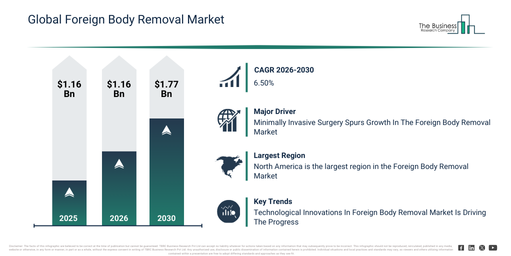
    The foreign body removal market is anticipated to exhibit robust growth over the next few years. It is projected to expand to $2.89 billion by 2030, achieving a compound annual growth rate (CAGR) of 6.5%. This growth throughout the forecast period can be attributed to several factors, including the increasing integration of advanced endoscopic technologies, a rising need for outpatient surgical procedures, the expansion of ambulatory surgical centers, growing investments in emergency care infrastructure, and a heightened focus on minimally invasive treatment methods. Prominent trends observed during this period involve the wider adoption of minimally invasive retrieval devices, an increase in the use of endoscopic tools for foreign body removal, a growing demand for precision surgical instruments, the broadening scope of emergency care procedures, and an enhanced emphasis on patient safety and the efficiency of procedures.

    Download A Free Sample Report For Comprehensive Market Insights:

    https://www.thebusinessresearchcompany.com/sample.aspx?id=9435&type=smp

    What Are The Main Drivers Accelerating The Growth Of The Foreign Body Removal Market?

    The foreign body removal market is expected to expand due to the increasing demand for minimally invasive surgery. Minimally invasive surgery is a type of procedure characterized by smaller incisions, shorter recovery periods, and the use of fewer stitches. Foreign body removal is a minimally invasive surgical procedure employed to extract objects that have been swallowed and become lodged in the digestive system or other regions of the body. As foreign body removal is often conducted through minimally invasive surgery, the rising adoption of such methods contributes to an escalated demand for these procedures. For instance, in February 2024, according to the American Academy of Facial Plastic and Reconstructive Surgery, a US-based non-profit organization, approximately 83% of all medical procedures performed in 2023 were minimally invasive, with standard surgical procedures accounting for the remaining 17%. Moreover, in 2023, the American Society of Plastic Surgeons, a US-based specialty organization, noted that the total number of cosmetic minimally invasive procedures rose from 23.7 million in 2022 to 25.4 million in 2023. Consequently, the growing demand for minimally invasive surgery is a significant driver for the foreign body removal market.

    Which Segment-Based Categories Are Covered In The Foreign Body Removal Market?

    The foreign body removal market covered in this report is segmented –

    1) By Device Type: Forceps, Retrieval Baskets, Balloon Catheter, Other Device Types

    2) By Application: Stomach, Gut, Mouth, Ear, Nose, Other Applications

    3) By End Users: Hospitals And Clinics, Ambulatory Surgical Centers, Other End Users

    Subsegments:

    1) By Forceps: Grasping Forceps, Biopsy Forceps

    2) By Retrieval Baskets: Standard Retrieval Baskets, Angled Retrieval Baskets

    3) By Balloon Catheter: Inflatable Balloon Catheters, Non-Inflatable Balloon Catheters

    4) By Other Device Types: Endoscopic Instruments, Magnetic Retrieval Devices, Specimen Traps

    Which Trends Are Influencing The Direction Of The Foreign Body Removal Market?

    Major companies in the foreign body removal market are focusing on developing innovative products, such as microsurgery instruments, to empower surgeons with exceptional control and precision in complex surgical scenarios, thereby improving surgical outcomes and patient experiences. Microsurgery instruments are specialized surgical tools designed for accurate manipulation and intervention in very small bodily tissues, enabling intricate procedures like the repair of blood vessels and nerves under magnification. For instance, in November 2023, Surtex Instruments, a UK-based medical instrument manufacturer, launched the Infinex series. This series features diamond-dusted jaws on microsurgery forceps and needle holders, which enhances grip and stability, while the Maestro series includes precision-crafted micro scissors and forceps for flawless performance. Their significance lies in providing surgeons with advanced tools that ensure superior surgical outcomes, reduced patient trauma, and faster recovery periods.

    Which Industry Players Are Present In The Foreign Body Removal Market?

    Major companies operating in the foreign body removal market are Boston Scientific Corporation, CONMED Corporation, MEDIVATORS Inc., Applied Medical Resources Corporation, Olympus Corporation, Diversatek Inc., Cook Medical LLC, Medtronic plc, Stryker Corporation, Smith & Nephew plc, Johnson & Johnson Services Inc., B. Braun Melsungen AG, Teleflex Incorporated, Merit Medical Systems Inc., Terumo Corporation, Abbott Laboratories, Cardinal Health Inc., Becton Dickinson and Company, Teleflex Medical OEM, AngioDynamics Inc., Hologic Inc., Integra LifeSciences Holdings Corporation, Zimmer Biomet Holdings Inc., Karl Storz SE & Co. KG, Fujifilm Holdings Corporation, Richard Wolf GmbH, Pentax Medical Company

    Access The Complete Foreign Body Removal Market Report:

    https://www.thebusinessresearchcompany.com/report/foreign-body-removal-global-market-report

    What Is The Largest Regional Market In The Foreign Body Removal Market?

    North America was the largest region in the foreign body removal market in 2025. The regions covered in the foreign body removal market report are Asia-Pacific, South East Asia, Western Europe, Eastern Europe, North America, South America, Middle East, Africa.

    Access a Foreign Body Removal Market Report for Deeper Competitive Insights

    https://www.thebusinessresearchcompany.com/report/foreign-body-removal-global-market-report

    Browse Through More Reports Similar to the Global Foreign Body Removal Market 2026, By The Business Research Company

    Body Fat Reduction Market Report 2026

    https://www.thebusinessresearchcompany.com/report/body-fat-reduction-global-market-report

    Foreign Exchange Market Report 2026

    https://www.thebusinessresearchcompany.com/report/foreign-exchange-global-market-report

    Offshore Decommissioning Market Report 2026

    https://www.thebusinessresearchcompany.com/report/offshore-decommissioning-global-market-report

    Get in touch with us:

    The Business Research Company: https://www.thebusinessresearchcompany.com/

    Americas: +1 310-496-7795

    Asia: +44 7882 955267 & +91 8897263534

    Europe: +44 7882 955267

    Email us at: marketing@tbrc.info

    Follow us on:

    LinkedIn: https://in.linkedin.com/company/the-business-research-company

    YouTube: https://www.youtube.com/channel/UC24_fI0rV8cR5DxlCpgmyFQ

    Global Market Model: https://www.thebusinessresearchcompany.com/global-market-model