Month: May 2026

  • Dialysis Devices And Equipment Market Industry Forecast Reflecting Growth To $17.46 Billion By 2030

    Dialysis Devices And Equipment Market Industry Forecast Reflecting Growth To $17.46 Billion By 2030

    The Business Research Company’s 2026 market reports feature advanced enhancements such as market attractiveness analysis, total addressable market evaluation, company benchmarking matrices, interactive Excel dashboards, expanded supply chain intelligence, emerging startup coverage, and detailed product insights, delivering more actionable and strategically valuable research.

    What Is The Estimated Growth In Market Size Of The Dialysis Devices And Equipment Market During 2026–2030?

    The dialysis devices and equipment market has shown steady expansion in recent years. It is anticipated to grow from $13.62 billion in 2025 to $14.28 billion in 2026, reflecting a compound annual growth rate (CAGR) of 4.8%. This historical growth can be attributed to several factors, including the increasing occurrence of chronic kidney disease, the development of hospital dialysis infrastructure, enhanced access to hemodialysis machines, an expanding aging population, and the proliferation of renal care clinics.

    The dialysis devices and equipment market is projected to experience substantial expansion in the coming years. This market is anticipated to reach $17.47 billion by 2030, demonstrating a compound annual growth rate (CAGR) of 5.2%. This projected growth during the forecast period stems from factors such as the heightened demand for at-home dialysis treatments, increased capital allocation towards advanced dialysis technologies, the broadening availability of tele-nephrology services, a concentrated effort on economical renal care solutions, and the wider acceptance of portable dialysis devices. Key trends expected within this period involve the wider implementation of home dialysis systems, a surge in the utilization of automated peritoneal dialysis devices, the increasing incorporation of remote patient monitoring, an expansion in the range of portable dialysis equipment, and an elevated emphasis on ensuring patient safety alongside improved treatment efficacy.

    Download A Free Sample Report For Comprehensive Market Insights:

    https://www.thebusinessresearchcompany.com/sample.aspx?id=3801&type=smp

    What Core Drivers Are Transforming The Dialysis Devices And Equipment Market?

    The increasing occurrence of hypertension is anticipated to fuel the expansion of the dialysis devices and equipment market moving ahead. Hypertension refers to a medical state marked by persistently high blood pressure within the blood vessels. Hemodialysis involves filtering blood externally using a machine, aiding in blood pressure regulation and maintaining equilibrium of essential minerals like potassium, sodium, and calcium in the bloodstream. While hemodialysis can partially substitute kidney function, it’s not a complete replacement. It contributes to better energy levels and minimizes fluid accumulation in the body between sessions. For example, data from September 2025, provided by the World Health Organization (WHO), a specialized United Nations agency situated in Switzerland, indicates that around 1.4 billion adults aged 30–79 worldwide suffered from hypertension in 2024. Approximately one-third of these individuals, with two-thirds residing in low- and middle-income countries, were affected. Furthermore, 600 million were unaware of their condition, roughly 630 million were undergoing treatment, but only about 320 million had their blood pressure successfully controlled. Consequently, the increasing incidence of hypertension is a key factor propelling the expansion of the dialysis devices and equipment market.

    Which Segment Divisions Form The Structure Of The Dialysis Devices And Equipment Market?

    The dialysis devices and equipment market covered in this report is segmented –

    1) By Product: Hemodialysis Devices, Peritoneal Dialysis Devices, Continuous Renal Replacement Therapy (CRRT) Systems, Consumables

    2) By Application: Serum And Blood Treatment, Virus Purification, Drug Binding Studies

    3) By End-User: Hospitals, Clinics, Ambulatory Surgical Centers, Home Care Settings

    Subsegments:

    1) By Hemodialysis Devices: Hemodialysis Machines, Dialyzers (Artificial Kidneys), Blood Tubing Sets, Hemodialysis Catheters

    2) By Peritoneal Dialysis Devices: Automated Peritoneal Dialysis (APD) Machines, Continuous Ambulatory Peritoneal Dialysis (CAPD) Sets, Peritoneal Dialysis Catheters, Transfer Sets for Peritoneal Dialysis

    3) By Continuous Renal Replacement Therapy (CRRT) Systems: CRRT Machines, CRRT Filters, CRRT Blood Tubing Sets

    4) By Consumables: Dialysis Solutions, Renal Replacement Therapy Consumables, Heparin And Other Anticoagulants, Patient Monitoring Supplies

    What Trends Are Affecting The Growth Of The Dialysis Devices And Equipment Market?

    Leading firms within the dialysis devices and equipment sector are concentrating on creating sophisticated solutions, including AI-powered remote monitoring, to improve both access to care and its overall quality. This AI-driven remote monitoring involves embedding artificial intelligence and cloud-based systems into dialysis machines, enabling them to send live data to healthcare professionals for improved clinical judgments, ongoing supervision, and prompt identification of potential issues. An example of this trend is Renalyx Health Systems, an India-based renal care technology provider, which introduced the RENALYX–RxT 21 in February 2025. This device stands as India’s premier entirely domestically developed smart hemodialysis machine, equipped with live cloud connectivity and tele-nephrology functions. This system delivers critical care standards for individuals suffering from cardiovascular problems or acute kidney injury and aids in the treatment of end-stage renal disease, all while being considerably more affordable than comparable imported models. Produced within India, it addresses unmet demand in semi-urban and rural areas, with future plans to escalate its production to thousands of units over the coming years.

    Which Organizations Are Operating Within The Dialysis Devices And Equipment Market?

    Major companies operating in the dialysis devices and equipment market are Fresenius Medical Care AG & Co. KGaA, Baxter International Inc., Nipro Corporation, B. Braun Medical Inc., Nikkiso Co. Ltd., Asahi Kasei Corporation, Toray Medical Co. Ltd., JMS Co. Ltd., Kawasumi Laboratories Inc., Terumo Corporation, DaVita Inc., NxStage Medical Inc., Outset Medical Inc., Renalyx Health Systems, Medikit Co. Ltd., Otsuka Medical Devices Co. Ltd., Shanwaishan Medical Group, Bain Medical Equipment Co. Ltd., Jiangsu Lengthen Life Science and Technology Co. Ltd., Shenzhen Landwind Industry Co. Ltd.

    Access The Complete Dialysis Devices And Equipment Market Report:

    https://www.thebusinessresearchcompany.com/report/dialysis-devices-and-equipment-global-market-report

    Which Region Holds The Largest Share In The Dialysis Devices And Equipment Market?

    Asia-Pacific was the largest region in the global dialysis devices and equipment market in 2025. North America was the second largest market in dialysis devices and equipment market. The regions covered in the dialysis devices and equipment market report are Asia-Pacific, South East Asia, Western Europe, Eastern Europe, North America, South America, Middle East, Africa.

    Access a Customized Dialysis Devices And Equipment Market Report for Deeper Competitive Insights

    https://www.thebusinessresearchcompany.com/customise?id=3801&type=smp

    Browse Through More Reports Similar to the Global Dialysis Devices And Equipment Market 2026, By The Business Research Company

    Portable Dialysis Machines Market Report 2026

    https://www.thebusinessresearchcompany.com/report/portable-dialysis-machines-global-market-report

    Dialysis Catheters Market Report 2026

    https://www.thebusinessresearchcompany.com/report/dialysis-catheters-global-market-report

    Kidney Dialysis Market Report 2026

    https://www.thebusinessresearchcompany.com/report/kidney-dialysis-global-market-report

    Get in touch with us:

    The Business Research Company: https://www.thebusinessresearchcompany.com/

    Americas: +1 310-496-7795

    Asia: +44 7882 955267 & +91 8897263534

    Europe: +44 7882 955267

    Email us at: marketing@tbrc.info

    Follow us on:

    LinkedIn: https://in.linkedin.com/company/the-business-research-company

    YouTube: https://www.youtube.com/channel/UC24_fI0rV8cR5DxlCpgmyFQ

    Global Market Model: https://www.thebusinessresearchcompany.com/global-market-model
  • Dialysis Catheters Market Forecast Analysis Through 2030 With Insights On Industry Expansion

    Dialysis Catheters Market Forecast Analysis Through 2030 With Insights On Industry Expansion

    The Business Research Company’s 2026 market reports feature advanced enhancements such as market attractiveness analysis, total addressable market evaluation, company benchmarking matrices, interactive Excel dashboards, expanded supply chain intelligence, emerging startup coverage, and detailed product insights, delivering more actionable and strategically valuable research.

    What Market Value Expansion Is Expected For The Dialysis Catheters Market Over The Forecast Period?

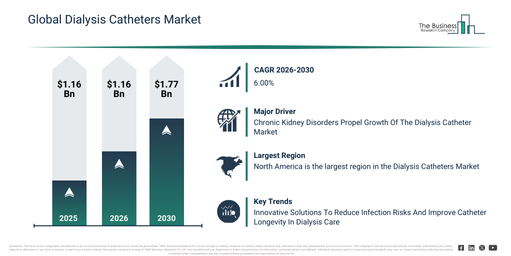
    The dialysis catheters market size has observed substantial growth in recent years. It is projected to expand from $0.92 billion in 2025 to $0.97 billion in 2026, achieving a compound annual growth rate (CAGR) of 6.0%. This historical expansion can be attributed to the rising prevalence of chronic kidney disease, an increasing hemodialysis patient population, the expansion of hospital dialysis centers, a growing incidence of diabetes and hypertension, and improved access to renal care services.

    The market size for dialysis catheters is projected to experience significant expansion in the coming years. It is forecast to achieve a valuation of $1.23 billion by 2030, exhibiting a compound annual growth rate (CAGR) of 6.0%. This anticipated growth during the forecast period can be ascribed to factors such as an expanding aging demographic, the increasing uptake of home dialysis therapies, a heightened need for dependable long-term dialysis access, the expansion of ambulatory dialysis services, and increased healthcare spending dedicated to renal care. Prominent trends throughout the forecast period include an escalating demand for long-term vascular access solutions, a rising preference for tunneled dialysis catheters, an intensified focus on infection prevention and ensuring patient safety, a discernible shift towards home-based dialysis access, and the growing application of double-lumen and multi-lumen catheters.

    Download A Free Sample Report For Comprehensive Market Insights:

    https://www.thebusinessresearchcompany.com/sample.aspx?id=18806&type=smp

    Which Growth Factors Are Strengthening The Dialysis Catheters Market Landscape?

    The rising occurrence of chronic kidney conditions is anticipated to fuel expansion in the dialysis catheter market in the coming years. These are persistent health issues characterized by a gradual decline in kidney function, hindering their capacity to cleanse the blood of waste and surplus fluids. The increase in chronic kidney disorders stems from various factors, such as obesity, suboptimal lifestyle choices, inherited susceptibility, infections, and inflammatory ailments. Dialysis catheters aid in managing chronic kidney disorders by ensuring the effective and consistent elimination of waste from the circulatory system. As an illustration, data from June 2023, sourced from a report by Kidney Research UK, a non-profit organization based in the UK, revealed that approximately 7.2 million people in the UK are currently afflicted with chronic kidney disease, accounting for more than 10% of the overall population. Among these individuals, 3.25 million are experiencing advanced stages of the condition, with a further 3.9 million being in its initial phases. Projections indicate that by 2033, the count of people impacted by chronic kidney disease is expected to reach 7.61 million. Consequently, the growing prevalence of chronic kidney conditions is a key factor propelling the expansion of the dialysis catheter market.

    How Are Different Segment Groups Identified Within The Dialysis Catheters Market?

    The dialysis catheters market covered in this report is segmented –

    1) By Product Type: Tunneled Catheters, Non-Tunneled Catheters, Step-Tip Catheters, Split-Tip Catheters, Symmetric Catheters

    2) By Material: Silicone, Polyurethane

    3) By Application: Hemodialysis, Peritoneal

    4) By End-Use: Hospitals, Ambulatory Surgical Centers, Homecare Settings, Other End-Users

    Subsegments:

    1) By Tunneled Catheters: Single-Lumen Tunneled Catheters, Double-Lumen Tunneled Catheters, Multi-Lumen Tunneled Catheters

    2) By Non-Tunneled Catheters: Single-Lumen Non-Tunneled Catheters, Double-Lumen Non-Tunneled Catheters, Multi-Lumen Non-Tunneled Catheters

    3) By Step-Tip Catheters: Single-Lumen Step-Tip Catheters, Double-Lumen Step-Tip Catheters

    4) By Split-Tip Catheters: Single-Lumen Split-Tip Catheters, Double-Lumen Split-Tip Catheters

    5) By Symmetric Catheters: Single-Lumen Symmetric Catheters, Double-Lumen Symmetric Catheters

    Which Trends Are Influencing The Direction Of The Dialysis Catheters Market?

    Major companies in the dialysis catheters market are focusing on developing innovative solutions like antimicrobial catheter lock solutions to mitigate infection risks, prolong catheter longevity, and enhance patient outcomes. Such a solution is a specialized fluid employed to fill and maintain dialysis catheters when not in use, containing agents like taurolidine or antibiotics to prevent bacterial and fungal infections while keeping the catheter open. For instance, in November 2023, CorMedix Inc., a US-based biopharmaceutical company, received FDA approval for DefenCath (taurolidine and heparin) catheter lock solution (CLS), intended to reduce catheter-related bloodstream infections (CRBSIs) in adult patients with kidney failure undergoing chronic hemodialysis via a central venous catheter (CVC).

    Who Are The Businesses Driving Activity In The Dialysis Catheters Market?

    Major companies operating in the dialysis catheters market are Medtronic plc, Becton Dickinson and Company, Baxter International Inc., B Braun Melsungen AG, Terumo Corporation, Teleflex Incorporated, Merit Medical Systems Inc., Vygon SA, Argon Medical Devices, Jiangxi Sanxin Medtec, Poly Medicure Ltd, Medical Components Inc., Kimal PLC, Guangdong Baihe Medical Technology, SCW Medicath Ltd, Angiplast Pvt. Ltd., PFM Medical Inc., Mozarc Medical, Joline GmbH & Co. KG, Shunmei Medical Co. Ltd

    Access The Complete Dialysis Catheters Market Report:

    https://www.thebusinessresearchcompany.com/report/dialysis-catheters-global-market-report

    Which Region Is The Dominant Market In The Dialysis Catheters Market?

    North America was the largest region in the dialysis catheters market in 2025. The regions covered in the dialysis catheters market report are Asia-Pacific, South East Asia, Western Europe, Eastern Europe, North America, South America, Middle East, Africa.

    Access a Customized Dialysis Catheters Market Report for Deeper Competitive Insights

    https://www.thebusinessresearchcompany.com/customise?id=18806&type=smp

    Browse Through More Reports Similar to the Global Dialysis Catheters Market 2026, By The Business Research Company

    Kidney Dialysis Market Report 2026

    https://www.thebusinessresearchcompany.com/report/kidney-dialysis-global-market-report

    Dialysis Devices And Equipment Market 2026

    https://www.thebusinessresearchcompany.com/report/dialysis-devices-and-equipment-market

    Urinary Catheters Market Report 2026

    https://www.thebusinessresearchcompany.com/report/urinary-catheters-global-market-report

    Get in touch with us:

    The Business Research Company: https://www.thebusinessresearchcompany.com/

    Americas: +1 310-496-7795

    Asia: +44 7882 955267 & +91 8897263534

    Europe: +44 7882 955267

    Email us at: marketing@tbrc.info

    Follow us on:

    LinkedIn: https://in.linkedin.com/company/the-business-research-company

    YouTube: https://www.youtube.com/channel/UC24_fI0rV8cR5DxlCpgmyFQ

    Global Market Model: https://www.thebusinessresearchcompany.com/global-market-model

  • Diagnostic X-Ray System Market Growth Outlook Indicating Expansion To $22.43 Billion By 2030

    Diagnostic X-Ray System Market Growth Outlook Indicating Expansion To $22.43 Billion By 2030

    The Business Research Company’s 2026 market reports feature advanced enhancements such as market attractiveness analysis, total addressable market evaluation, company benchmarking matrices, interactive Excel dashboards, expanded supply chain intelligence, emerging startup coverage, and detailed product insights, delivering more actionable and strategically valuable research.

    How Will The Market Value Of The Diagnostic X-Ray System Market Change Between 2026 And 2030?

    The diagnostic x-ray system market size has experienced significant expansion in recent years. It is projected to increase from $14.98 billion in 2025 to $16.39 billion in 2026, demonstrating a compound annual growth rate (CAGR) of 9.4%. The historical growth of this market can be attributed to several factors, including an increase in diagnostic imaging procedures, the rising prevalence of chronic diseases, the expansion of hospital imaging infrastructure, a heightened demand for early disease detection, and improved access to healthcare facilities.

    The diagnostic x-ray system market is projected to experience significant expansion in the coming years, with its valuation expected to reach $22.43 billion by 2030, growing at a compound annual growth rate (CAGR) of 8.2%. This anticipated growth throughout the forecast period stems from factors such as an increasing aging population, a heightened demand for point-of-care imaging, the proliferation of diagnostic imaging centers, rising investments in healthcare infrastructure, and an increased emphasis on preventive healthcare. Key trends during this period are expected to include the rising adoption of digital x-ray systems, a growing need for portable and mobile x-ray units, an intensified focus on reducing radiation dosage, a move towards multi-functional imaging platforms, and the expanded application of x-ray systems in preventive diagnostics.

    Download A Free Sample Report For Comprehensive Market Insights:

    https://www.thebusinessresearchcompany.com/sample.aspx?id=15348&type=smp

    What Important Drivers Are Powering The Diagnostic X-Ray System Market Growth?

    The anticipated increase in surgical procedures is set to propel the expansion of the diagnostic X-ray system market in the coming period. This surge in surgical interventions can be attributed to advancements in medical technology, enhanced access to healthcare services, the growing number of elderly individuals, and the rising prevalence of chronic illnesses requiring surgical intervention for both diagnosis and treatment. Diagnostic X-ray systems are employed in surgical contexts for pre-operative planning, intra-operative guidance, and post-operative assessment, delivering real-time visualization of anatomical structures to assist surgeons in precise localization and accurate intervention. For instance, in September 2023, information from the National Library of Medicine, a US-based federal government agency, indicated that as of 2023, 7,733 robotic surgical systems had been installed worldwide, and over 10 million robotic surgeries had been conducted. Therefore, the heightened volume of surgical procedures is fueling the growth of the diagnostic X-ray system market.

    What Segment Categories Are Evaluated In The Diagnostic X-Ray System Market Study?

    The diagnostic x-ray system market covered in this report is segmented –

    1) By Product: Medical X-ray Devices, X-Ray Diffraction (XRD), Security X-Ray Devices, X-Ray Fluorescence (XRF), SAXS Or WAXS

    2) By Application: Medical, Research And Development, Security

    3) By End User: Hospital, Diagnostic Imaging Centers, Airports, Malls, Railway And Metro Stations, Government Facilities And Homeland Security

    Subsegments:

    1) By Medical X-Ray Devices: Analog X-Ray Systems, Digital X-Ray Systems, Portable X-Ray Systems, Mobile X-Ray Units, Fluoroscopy Systems, Computed Tomography (Ct) Scanners, Mammography Systems

    2) By X-Ray Diffraction (Xrd): Laboratory Xrd Systems, Portable Xrd Systems, High-Resolution Xrd Systems, Xrd For Material Science, Xrd For Structural Analysis

    3) By Security X-Ray Devices: Baggage And Luggage X-Ray Scanners, Cargo And Freight X-Ray Scanners, Handheld X-Ray Inspection Devices, Security Screening Systems For Airports, Radiographic Inspection Systems For Security

    4) By X-Ray Fluorescence (Xrf): Portable Xrf Analyzers, Laboratory Xrf Systems, Xrf For Elemental Analysis, Xrf For Material Identification

    5) By Saxs Or Waxs (Small-Angle X-ray Scattering Or Wide-Angle X-Ray Scattering): Laboratory Saxs/Waxs Systems, Synchrotron Saxs/Waxs Systems, Saxs/waxs For Nanomaterials And Polymer Research, Saxs/waxs For Structural Characterization Of Biological Samples

    What Trends Are Driving Changes In The Diagnostic X-Ray System Market?

    Major companies operating in the diagnostic X-ray system market are developing new X-ray systems based on advanced technology such as artificial intelligence, aiming to enhance diagnostic capabilities, improve workflow efficiency, and optimize patient care. Artificial intelligence (AI) involves utilizing machine learning algorithms and computer vision techniques to analyze and interpret X-ray images for medical purposes. For instance, in December 2023, DeepTek.ai, an India-based medical imaging AI-based startup, launched the Augmento X-Ray, an FDA-cleared CADe chest X-Ray solution powered by AI. This solution seeks to alleviate radiologist workload and elevate chest X-ray reporting quality. It accomplishes this by reducing radiologist workload by 30–50%, streamlining workflow, and improving patient care through offering detailed analysis for various lung, pleura, and cardiac conditions, as well as detecting foreign objects within the chest.

    Which Firms Are Competing In The Diagnostic X-Ray System Market?

    Major companies operating in the diagnostic x-ray system market are Hitachi Ltd., General Electric Company, Thermo Fisher Scientific Inc., Siemens Healthineers, FUJIFILM Holdings Corporation, Koninklijke Philips N.V., Hologic Inc., Shimadzu Corporation, Canon Medical Systems Corporation, Bruker Corporation, Carestream Health Inc., OSI Systems Inc., Anton Paar GmbH, Malvern Panalytical Ltd., Smiths Detection Group Limited, Rigaku Corporation, NUCTECH COMPANY LIMITED, Astrophysics Inc., Konica Minolta Healthcare Americas Inc., Toshiba Medical Systems Corporation

    Access The Complete Diagnostic X-Ray System Market Report:

    https://www.thebusinessresearchcompany.com/report/diagnostic-x-ray-system-global-market-report

    Which Area Represents The Largest Portion Of The Diagnostic X-Ray System Market?

    North America was the largest region in the diagnostic X-ray system market in 2025. The regions covered in the diagnostic x-ray system market report are Asia-Pacific, South East Asia, Western Europe, Eastern Europe, North America, South America, Middle East, Africa.

    Access a Customized Diagnostic X-Ray System Market Report for Deeper Competitive Insights

    https://www.thebusinessresearchcompany.com/customise?id=15348&type=smp

    Browse Through More Reports Similar to the Global Diagnostic X-Ray System Market 2026, By The Business Research Company

    X Ray Systems Devices And Equipment Market Report 2026

    https://www.thebusinessresearchcompany.com/report/x-ray-systems-devices-and-equipment-global-market-report

    Industrial X Ray Market Report 2026

    https://www.thebusinessresearchcompany.com/report/industrial-x-ray-global-market-report

    Medical X Ray Equipment And Imaging Software Market Report 2026

    https://www.thebusinessresearchcompany.com/report/medical-x-ray-equipment-and-imaging-software-global-market-report

    Get in touch with us:

    The Business Research Company: https://www.thebusinessresearchcompany.com/

    Americas: +1 310-496-7795

    Asia: +44 7882 955267 & +91 8897263534

    Europe: +44 7882 955267

    Email us at: marketing@tbrc.info

    Follow us on:

    LinkedIn: https://in.linkedin.com/company/the-business-research-company

    YouTube: https://www.youtube.com/channel/UC24_fI0rV8cR5DxlCpgmyFQ

    Global Market Model: https://www.thebusinessresearchcompany.com/global-market-model

  • Global Diagnostic Wearable Medical Devices Market Anticipated To Grow To $15 Billion By 2030 At 13.1% CAGR

    Global Diagnostic Wearable Medical Devices Market Anticipated To Grow To $15 Billion By 2030 At 13.1% CAGR

    The Business Research Company’s 2026 market reports feature advanced enhancements such as market attractiveness analysis, total addressable market evaluation, company benchmarking matrices, interactive Excel dashboards, expanded supply chain intelligence, emerging startup coverage, and detailed product insights, delivering more actionable and strategically valuable research.

    What Is The Forecasted Rise In Market Size Of The Diagnostic Wearable Medical Devices Market During The Forecast Period?

    The diagnostic wearable medical devices market size has expanded considerably over recent years. It is projected to increase from $8.09 billion in 2025 to $9.18 billion in 2026, progressing at a compound annual growth rate (CAGR) of 13.4%. The historical growth can be linked to limited availability of wearable medical devices, high cost of early devices, reliance on traditional monitoring methods, growing awareness of health and fitness tracking, and limited integration with mobile apps.

    The market for diagnostic wearable medical devices is anticipated to experience significant expansion in the coming years. This market is projected to reach a valuation of $15.01 billion by 2030, demonstrating a compound annual growth rate (CAGR) of 13.1%. This projected growth throughout the forecast period stems from several factors, including advancements in sensor technology and wearable electronics, an increasing need for remote patient monitoring, wider acceptance of home healthcare options, the incorporation of AI and cloud platforms, and the broader application of wearables in fetal and neuro monitoring. Key developments expected during this time frame encompass the expanding embrace of remote patient monitoring, the growing deployment of wearables in sports and fitness, an uptick in home healthcare monitoring, the merging with mobile health applications, and a heightened emphasis on continuous and real-time health tracking.

    Download A Free Sample Report For Comprehensive Market Insights:

    https://www.thebusinessresearchcompany.com/sample.aspx?id=19396&type=smp

    Which Major Factors Are Contributing To The Development Of The Diagnostic Wearable Medical Devices Market?

    The rising occurrence of chronic illnesses is anticipated to fuel the expansion of the diagnostic wearable medical devices market in the future. These conditions are defined as health issues that endure for a long time, evolving slowly, continuing for prolonged durations, and frequently needing continuous medical care and oversight. Several elements contribute to the widespread nature of chronic diseases, such as an aging populace, inactive daily routines, unhealthy eating patterns, growing levels of obesity, and the heightened presence of risk factors like smoking and heavy drinking. Diagnostic wearable medical devices are increasingly utilized for managing chronic conditions through the tracking of vital signs and other health indicators, delivering immediate data that assists both patients and healthcare professionals in more effectively overseeing these conditions. For example, data from April 2025 by the Centers for Disease Control and Prevention (CDC), a US-based federal agency, indicated that in 2023, around 194 million U.S. adults, or 76.4%, reported experiencing at least one chronic condition. The incidence stood at 59.5% for young adults, 78.4% for midlife adults, and 93.0% for older adults. Consequently, the growing occurrence of chronic diseases serves as a key impetus for the expansion of the diagnostic wearable medical devices market.

    How Is The Diagnostic Wearable Medical Devices Market Examined Through Segment Analysis?

    The diagnostic wearable medical devices market covered in this report is segmented –

    1) By Type: Vital Signs Monitor, Sleep And Activity Monitor, Fetal And Obstetric Monitoring, Neuro Monitoring, Electrocardiogram Monitors

    2) By Channel: Online, Pharmacies, Hypermarkets

    3) By Application: Sports And Fitness, Remote Patient Monitoring, Home Healthcare

    Subsegments:

    1) By Vital Signs Monitor: Heart Rate Monitor, Blood Pressure Monitor, Temperature Monitor, Respiratory Rate Monitor, Blood Oxygen Saturation (Spo2) Monitor

    2) By Sleep And Activity Monitor: Sleep Apnea Monitor, Wearable Sleep Trackers, Physical Activity And Fitness Trackers, Step Counters And Pedometers, Sleep Pattern Monitoring Devices

    3) By Fetal And Obstetric Monitoring: Fetal Heart Rate Monitor, Maternal Contraction Monitors, Wearable Pregnancy Monitoring Devices, Non-Invasive Fetal Monitoring Devices

    4) By Neuro Monitoring: Wearable EEG Monitors, Brain Activity Monitors, Seizure Monitoring Devices, Wearable Neurostimulation Devices

    5) By Electrocardiogram Monitors: Portable ECG Monitors, Wearable ECG Patches, Real-Time ECG Monitoring Devices, Continuous ECG Monitoring Wearables

    Which Trends Are Shaping The Diagnostic Wearable Medical Devices Market Landscape?

    Leading firms within the diagnostic wearable medical devices market are concentrating on creating inventive solutions, including glucose monitoring systems, aiming to improve precision, user interaction, and the handling of persistent ailments like diabetes. These glucose monitoring systems are medical instruments designed to measure and monitor blood glucose levels, thereby assisting individuals, especially those with diabetes, in managing their health status with instant data and understanding. An example is Dexcom Inc., a US-based producer of continuous glucose monitoring systems, which launched its advanced Dexcom G7 CGM System for Medicare beneficiaries in February 2023. This subsequent-generation Dexcom G7 CGM System features a distinct design, boasting a more compact, less conspicuous profile and a quicker warm-up period. It integrates the sensor and transmitter into a singular device, thereby boosting user-friendliness and precision, demonstrated by an overall mean absolute relative difference (MARD) of 8.2%. Furthermore, it provides adaptable alerts, an extended wear duration, and effortless compatibility with other diabetes management tools and digital health platforms, showcasing the progress in diagnostic wearable continuous glucose monitoring devices.

    Who Are The Major Companies Operating In The Diagnostic Wearable Medical Devices Market?

    Major companies operating in the diagnostic wearable medical devices market are Apple Inc., Google LLC, Samsung Electronics Co. Ltd., Huawei Technologies Co. Ltd., F. Hoffmann-La Roche Ltd., Abbott Laboratories, Medtronic plc, Koninklijke Philips NV, GE Healthcare, OMRON Corporation, Garmin Ltd., Drägerwerk AG & Co. KGaA, Molex LLC, ResMed Inc., Dexcom Inc., Boyd Corporation, Masimo Corporation, AliveCor Inc., VitalConnect Inc., BTS Bioengineering Corp., Cleveland Medical Devices Inc., Meril Life Sciences Pvt. Ltd., Activinsights Ltd., Murata Vios Inc.

    Access The Complete Diagnostic Wearable Medical Devices Market Report:

    https://www.thebusinessresearchcompany.com/report/diagnostic-wearable-medical-devices-global-market-report

    Which Region Commands The Largest Share Of The Diagnostic Wearable Medical Devices Market?

    North America was the largest region in the diagnostic wearable medical devices market in 2025. The regions covered in the diagnostic wearable medical devices market report are Asia-Pacific, South East Asia, Western Europe, Eastern Europe, North America, South America, Middle East, Africa.

    Access a Customized Diagnostic Wearable Medical Devices Market Report for Deeper Competitive Insights

    https://www.thebusinessresearchcompany.com/customise?id=19396&type=smp

    Browse Through More Reports Similar to the Global Diagnostic Wearable Medical Devices Market 2026, By The Business Research Company

    Diagnostic Equipment Market Report 2026

    https://www.thebusinessresearchcompany.com/report/diagnostic-equipment-global-market-report

    Point Of Care Diagnostics Devices And Equipment Market Report 2026

    https://www.thebusinessresearchcompany.com/report/point-of-care-diagnostics-devices-and-equipment-global-market-report

    Dental Diagnostic Imaging Devices And Equipment Market Report 2026

    https://www.thebusinessresearchcompany.com/report/dental-diagnostic-imaging-devices-and-equipment-global-market-report

    Get in touch with us:

    The Business Research Company: https://www.thebusinessresearchcompany.com/

    Americas: +1 310-496-7795

    Asia: +44 7882 955267 & +91 8897263534

    Europe: +44 7882 955267

    Email us at: marketing@tbrc.info

    Follow us on:

    LinkedIn: https://in.linkedin.com/company/the-business-research-company

    YouTube: https://www.youtube.com/channel/UC24_fI0rV8cR5DxlCpgmyFQ

    Global Market Model: https://www.thebusinessresearchcompany.com/global-market-model
  • Diagnostic Ultrasound Market Future Analysis Covering Industry Shifts And Growth Potential

    Diagnostic Ultrasound Market Future Analysis Covering Industry Shifts And Growth Potential

    The Business Research Company’s 2026 market reports feature advanced enhancements such as market attractiveness analysis, total addressable market evaluation, company benchmarking matrices, interactive Excel dashboards, expanded supply chain intelligence, emerging startup coverage, and detailed product insights, delivering more actionable and strategically valuable research.

    How Is The Diagnostic Ultrasound Market’s Market Value Anticipated To Evolve From 2026 To 2030?

    The diagnostic ultrasound market has demonstrated robust growth in recent years. It is forecast to grow from $7.95 billion in 2025 to $8.4 billion in 2026, achieving a compound annual growth rate (CAGR) of 5.7%. The expansion observed in the past period can be attributed to factors such as the limited adoption of advanced imaging technologies, a reliance on traditional 2D ultrasound devices, increasing awareness regarding prenatal and cardiac diagnostics, the development of hospital and diagnostic center infrastructure, and the demand for non-invasive imaging solutions.

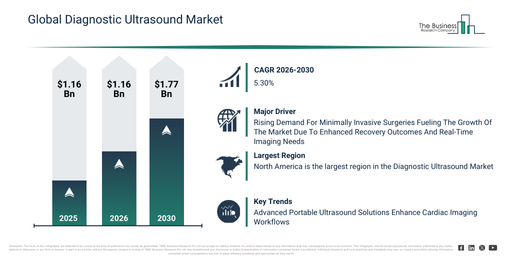
    The diagnostic ultrasound market is projected to experience substantial expansion over the upcoming years. Its valuation is anticipated to reach $10.32 billion by 2030, demonstrating a compound annual growth rate (CAGR) of 5.3%. This projected expansion during the forecast period stems from various factors, such as advancements in AI-powered ultrasound technologies, an increase in the uptake of handheld and portable devices, the growing demand for healthcare services for the elderly and mothers, the integration with telehealth and cloud-based diagnostic solutions, and the creation of high-resolution 3D/4D and Doppler imaging systems. Key developments expected during this period involve the increasing popularity of portable and handheld ultrasound equipment, wider implementation of 3D and 4D imaging in obstetrics and gynecology, an expanding role for Doppler imaging in cardiology and critical care, the integration of ultrasound with telemedicine and remote diagnostic tools, and a strong emphasis on non-invasive and radiation-free diagnostic approaches.

    Download A Free Sample Report For Comprehensive Market Insights:

    https://www.thebusinessresearchcompany.com/sample.aspx?id=25752&type=smp

    What Key Growth Drivers Are Influencing The Diagnostic Ultrasound Market?

    The increasing preference for minimally invasive surgical procedures is expected to drive the growth of the diagnostic ultrasound market going forward. These medical procedures are performed through small incisions using specialized instruments and imaging technologies, leading to less bodily trauma compared to traditional open surgeries. The demand for minimally invasive surgeries is rising primarily due to their advantages such as faster patient recovery, reduced pain, and fewer complications than conventional open surgeries. Diagnostic ultrasound supports minimally invasive surgeries by offering real-time imaging guidance, which enables accurate targeting, improves surgical precision, and minimizes the need for more invasive diagnostic approaches. For instance, in August 2023, The Aesthetic Society, a US-based organization of plastic surgery and cosmetic medicine, reported that Americans spent over $11.8 billion on minimally invasive surgical procedures overall, marking a 2% increase from the previous year. Consequently, the expanding demand for minimally invasive surgeries is a key factor fueling the growth of the diagnostic ultrasound market.

    Which Segment Groups Define The Diagnostic Ultrasound Market Landscape?

    The diagnostic ultrasound market covered in this report is segmented –

    1) By Technology: Two-Dimensional (2D) Ultrasound Imaging, Three-Dimensional (3D) And Four-dimensional (4D) Ultrasound Imaging, Doppler Imaging

    2) By Portability: Trolley-Based Devices, Hand-Held Devices

    3) By Application: Anesthesiology, Cardiology, Gynecology Or Obstetrics, Musculoskeletal Radiology, Critical Care, Radiology, Other Applications

    4) By End-user: Hospitals, Maternity Centers, Diagnostic Centers, Ambulatory Surgical Services, Other End-Users

    Subsegments:

    1) By Two-Dimensional (2D) Ultrasound Imaging: Static 2D Imaging, Real-Time 2D Imaging, High-Resolution 2D Imaging, Portable Or Handheld 2D Ultrasound

    2) By Three-Dimensional (3D) And Four-Dimensional (4D) Ultrasound Imaging: Static 3D Imaging, Real-time 3D Imaging, 4D Live Motion Imaging, 3D Or 4D Transvaginal Imaging, 3D Or 4D Cardiac Imaging

    3) By Doppler Imaging: Color Doppler, Power Doppler, Continuous Wave Doppler, Pulsed Wave Doppler, Spectral Doppler

    What Trends Are Influencing The Diagnostic Ultrasound Market Outlook?

    Major companies operating in the diagnostic ultrasound market are primarily focused on developing advanced solutions, such as artificial intelligence (AI)-enhanced compact echocardiography systems. These innovations aim to improve imaging accuracy, accelerate exam workflows, and expand access to high-quality cardiac diagnostics across diverse care environments. AI-enabled compact ultrasound systems are essentially portable imaging platforms that integrate automated measurement tools, intelligent guidance, and high-resolution imaging to support fast and reliable cardiac assessments directly at the point of care. For example, in March 2025, Royal Philips, a Netherlands-based health technology company, launched its AI-enhanced Compact Ultrasound 5500CV, a next-generation echocardiography system. This system is designed to help clinicians perform exams up to 50% faster through automated cardiac measurement tools, while also delivering advanced imaging capabilities in a portable format to support efficient, high-quality cardiac evaluations across multiple clinical settings.

    Which Companies Are Influencing The Diagnostic Ultrasound Market?

    Major companies operating in the diagnostic ultrasound market are Siemens Healthcare Private Limited, Fujifilm Holdings Corporation, GE Healthcare, Koninklijke Philips NV, Konica Minolta Inc, Mindray Medical International Limited, United Imaging Healthcare Co Ltd, Samsung Medison Co Ltd, Analogic Corporation, Esaote SpA, SonoScape Medical Corporation, Canon Medical Systems Corporation, Chison Medical Imaging Co Ltd, Clarius Mobile Health, MedGyn Products Inc, Terason, TELEMED Medical Systems, Hitachi Medical Systems, Shimadzu Corporation, Carestream Health Inc, Edan Instruments Inc, Mindray DS USA

    Access The Complete Diagnostic Ultrasound Market Report:

    https://www.thebusinessresearchcompany.com/report/diagnostic-ultrasound-global-market-report

    Which Region Accounts For The Highest Share Of The Diagnostic Ultrasound Market?

    North America was the largest region in the diagnostic ultrasound market in 2025. Asia-Pacific is expected to be the fastest-growing region in the forecast period. The regions covered in the diagnostic ultrasound market report are Asia-Pacific, South East Asia, Western Europe, Eastern Europe, North America, South America, Middle East, Africa.

    Access a Customized Diagnostic Ultrasound Market Report for Deeper Competitive Insights

    https://www.thebusinessresearchcompany.com/customise?id=25752&type=smp

    Browse Through More Reports Similar to the Global Diagnostic Ultrasound Market 2026, By The Business Research Company

    Ultrasound Transducer Market Report 2026

    https://www.thebusinessresearchcompany.com/report/ultrasound-transducer-global-market-report

    Cardiovascular Ultrasound Market Report 2026

    https://www.thebusinessresearchcompany.com/report/cardiovascular-ultrasound-global-market-report

    Contrast Enhanced Ultrasound Market Report 2026

    https://www.thebusinessresearchcompany.com/report/contrast-enhanced-ultrasound-global-market-report

    Get in touch with us:

    The Business Research Company: https://www.thebusinessresearchcompany.com/

    Americas: +1 310-496-7795

    Asia: +44 7882 955267 & +91 8897263534

    Europe: +44 7882 955267

    Email us at: marketing@tbrc.info

    Follow us on:

    LinkedIn: https://in.linkedin.com/company/the-business-research-company

    YouTube: https://www.youtube.com/channel/UC24_fI0rV8cR5DxlCpgmyFQ

    Global Market Model: https://www.thebusinessresearchcompany.com/global-market-model

  • Diagnostic Imaging Services Market Analysis Reflecting Expansion Trends And Industry Performance

    Diagnostic Imaging Services Market Analysis Reflecting Expansion Trends And Industry Performance

    The Business Research Company’s 2026 market reports feature advanced enhancements such as market attractiveness analysis, total addressable market evaluation, company benchmarking matrices, interactive Excel dashboards, expanded supply chain intelligence, emerging startup coverage, and detailed product insights, delivering more actionable and strategically valuable research.

    By 2030, How Much Growth In Market Size Is Expected For The Diagnostic Imaging Services Market?

    The diagnostic imaging services market size has experienced robust growth in recent years. Projections indicate it will expand from $566.86 billion in 2025 to $599.12 billion in 2026, exhibiting a compound annual growth rate (CAGR) of 5.7%. Historically, this growth can be attributed to the expansion of hospital-based imaging services, an increasing prevalence of chronic diseases, the proliferation of diagnostic imaging centers, improved accessibility to imaging technologies, and a rising demand for non-invasive diagnostics.

    The diagnostic imaging services market is projected to experience robust expansion in the coming years. It is forecast to reach $749.09 billion by 2030, exhibiting a compound annual growth rate (CAGR) of 5.7%. This anticipated growth during the forecast period can be primarily attributed to several factors, including heightened investments in AI-driven imaging analytics, an increasing call for personalized diagnostic services, the expansion of ambulatory imaging facilities, the rising embrace of advanced MRI and CT technologies, and an amplified focus on workflow automation. Key trends anticipated during this period encompass the growing integration of AI-assisted imaging interpretation, the expanded utilization of advanced multimodal imaging modalities, the continued growth of outpatient diagnostic centers, the incorporation of cloud-based imaging platforms, and a strengthened emphasis on early disease detection.

    Download A Free Sample Report For Comprehensive Market Insights:

    https://www.thebusinessresearchcompany.com/sample.aspx?id=8083&type=smp

    Which Core Factors Are Supporting The Expansion Of The Diagnostic Imaging Services Market?

    The anticipated increase in healthcare spending is projected to fuel the expansion of the diagnostic imaging services market. This expenditure represents the total funds allocated to healthcare products and services over a defined period, typically assessed at a national or regional scope. A substantial and expanding component of overall healthcare costs is attributed to diagnostic imaging services. Advances in sophisticated imaging technologies, including MRI, CT scans, and PET scans, have enabled more precise diagnosis of a broader spectrum of conditions. Nevertheless, these cutting-edge technologies are associated with increased expenses. For example, data from Health Affairs, a US-based academic journal, published in June 2024, forecasts that national healthcare spending in the U.S. will climb from $4,799.3 billion in 2023 to $5,048.8 billion in 2024, reflecting an increment of approximately $249.5 billion. Consequently, the escalation in healthcare expenditures is a key impetus for the expansion of the systemic diagnostic Imaging Services market.

    What Key Segment Areas Are Included In The Diagnostic Imaging Services Market Assessment?

    The diagnostic imaging services market covered in this report is segmented –

    1) By Type: X-Ray Imaging, Ultrasound, Magnetic Resource Imaging, Computed Tomography, Nuclear Imaging, Mammography

    2) By Application: Cardiology, Gynecology Or OBS, Orthopedics And Musculoskeletal, Oncology, Neurology And Spine, General Imaging

    3) By End User: Hospitals, Diagnostic Imaging Centers, Ambulatory Imaging Centers, Other End Users

    Subsegments:

    1) By X-Ray Imaging: Conventional X-Ray, Digital X-Ray, Fluoroscopy

    2) By Ultrasound: Diagnostic Ultrasound, 3D Or 4D Ultrasound, Doppler Ultrasound

    3) By Magnetic Resonance Imaging (MRI): Closed MRI, Open MRI, Functional MRI (fMRI)

    4) By Computed Tomography (CT): Single-Slice CT, Multi-Slice CT, Cone Beam CT

    5) By Nuclear Imaging: Positron Emission Tomography (PET), Single Photon Emission Computed Tomography (SPECT), Bone Scintigraphy

    6) By Mammography: Screen-Film Mammography, Digital Mammography, 3D Mammography

    Which Trends Are Expected To Shape The Diagnostic Imaging Services Market?

    Leading companies within the diagnostic imaging services market are concentrating on adopting artificial intelligence and utilizing blockchain technology to revolutionize diagnostic imaging. Artificial intelligence, or AI, involves machines simulating human intelligence to perform tasks specifically requiring human capabilities. For example, in February 2023, RadNet, a US-based healthcare company, launched an enhanced breast cancer detection (EBCD) service aimed at improving the accuracy of breast cancer screenings for women. This service also includes an additional AI-driven review named Accord for certain suspicious exams, ensuring thorough evaluations. Furthermore, EBCD provides a comprehensive lifetime risk assessment for breast cancer, assisting patients in understanding their individual risk factors and guiding customized screening protocols.

    Who Are The Companies Shaping The Diagnostic Imaging Services Market Landscape?

    Major companies operating in the diagnostic imaging services market are RadNet Inc., Sonic Healthcare Ltd., HCA Healthcare Inc., Tenet Healthcare Corporation, Ramsay Health Care Limited, IHH Healthcare Berhad, Fresenius Medical Care AG & Co. KGaA, Spire Healthcare Group plc, Fortis Healthcare Limited, Apollo Hospitals Enterprise Limited, Narayana Hrudayalaya Limited, QIAGEN N.V., Eurofins Scientific SE, Unilabs AB, Affidea Group, InHealth Group Limited, Capitol Health Limited, NMC Health plc, RAYUS Radiology, Akumin Inc., Envision Healthcare Corporation

    Access The Complete Diagnostic Imaging Services Market Report:

    https://www.thebusinessresearchcompany.com/report/diagnostic-imaging-services-global-market-report

    Which Region Is The Primary Market For The Diagnostic Imaging Services Market?

    North America was the largest region in the diagnostic imaging services market in 2025. Asia-Pacific is expected to be the fastest-growing region in the forecast period. The regions covered in the diagnostic imaging services market report are Asia-Pacific, South East Asia, Western Europe, Eastern Europe, North America, South America, Middle East, Africa.

    Access a Customized Diagnostic Imaging Services Market Report for Deeper Competitive Insights

    https://www.thebusinessresearchcompany.com/customise?id=8083&type=smp

    Browse Through More Reports Similar to the Global Diagnostic Imaging Services Market 2026, By The Business Research Company

    Diagnostic Catheters Market Report 2026

    https://www.thebusinessresearchcompany.com/report/diagnostic-catheters-global-market-report

    Diagnostic Imaging Equipment Market Report 2026

    https://www.thebusinessresearchcompany.com/report/diagnostic-imaging-equipment-global-market-report

    Medical Imaging Equipment Market Report 2026

    https://www.thebusinessresearchcompany.com/report/medical-imaging-equipment-global-market-report

    Get in touch with us:

    The Business Research Company: https://www.thebusinessresearchcompany.com/

    Americas: +1 310-496-7795

    Asia: +44 7882 955267 & +91 8897263534

    Europe: +44 7882 955267

    Email us at: marketing@tbrc.info

    Follow us on:

    LinkedIn: https://in.linkedin.com/company/the-business-research-company

    YouTube: https://www.youtube.com/channel/UC24_fI0rV8cR5DxlCpgmyFQ

    Global Market Model: https://www.thebusinessresearchcompany.com/global-market-model

  • Global Diagnostic Imaging Equipment Market Revenue Expected To Reach $68.72 Billion By 2030

    Global Diagnostic Imaging Equipment Market Revenue Expected To Reach $68.72 Billion By 2030

    The Business Research Company’s 2026 market reports feature advanced enhancements such as market attractiveness analysis, total addressable market evaluation, company benchmarking matrices, interactive Excel dashboards, expanded supply chain intelligence, emerging startup coverage, and detailed product insights, delivering more actionable and strategically valuable research.

    What Market Value Trend Is Expected For The Diagnostic Imaging Equipment Market From 2026 To 2030?

    The diagnostic imaging equipment market has demonstrated consistent growth in recent years. Looking ahead, the market is set to expand from $54.96 billion in 2025 to $57.05 billion in 2026, at a compound annual growth rate (CAGR) of 3.8%. The historical expansion of this market can be attributed to several factors, including the increasing prevalence of chronic diseases, the expansion of hospital imaging infrastructure, a growing demand for early disease diagnosis, continuous technological improvements in imaging modalities, and rising healthcare expenditure.

    The diagnostic imaging equipment market is projected to experience consistent expansion over the upcoming years. This market is forecast to reach $68.72 billion by 2030, exhibiting a compound annual growth rate (CAGR) of 4.8%. Factors driving this growth during the projected period include a rise in the use of AI-driven diagnostic assistance, heightened investments in digital healthcare frameworks, an escalating need for point-of-care imaging solutions, the broadening of telemedicine offerings, and an intensified emphasis on enhancing imaging efficiency. Key trends anticipated during this forecast encompass the greater uptake of AI-assisted imaging technologies, an increased requirement for portable diagnostic imaging equipment, the evolving integration of multi-modal imaging platforms, the proliferation of high-resolution imaging advancements, and a sharpened focus on automating workflows.

    Download A Free Sample Report For Comprehensive Market Insights:

    https://www.thebusinessresearchcompany.com/sample.aspx?id=3152&type=smp

    What Are The Main Drivers Accelerating The Growth Of The Diagnostic Imaging Equipment Market?

    The escalating global prevalence of chronic diseases is anticipated to boost the expansion of the diagnostic imaging equipment market. These conditions, which include illnesses like cancer and diabetes, are defined as those lasting a year or longer, requiring ongoing medical attention, limiting daily activities, or both. The growing burden of chronic diseases is largely attributed to the widespread adoption of unhealthy lifestyles, such as poor nutrition, physical inactivity, tobacco use, and excessive alcohol consumption, which significantly elevate global risk factors. Radiological imaging techniques are instrumental in identifying a variety of diseases, including diabetes, cancer, and cardiovascular disease, as well as chronic illnesses before symptoms become apparent. For instance, in 2025, the International Diabetes Federation, a Belgium-based health organization, reported that in 2024, approximately 589 million adults aged 20-79 were living with diabetes, with this total number expected to reach 853 million by 2050, and more than 4 in 5 adults with diabetes residing in low and middle income countries. Therefore, the worldwide increase in chronic diseases is a key driver for the diagnostic imaging equipment market.

    How Is Segment Classification Applied In The Diagnostic Imaging Equipment Market?

    The diagnostic imaging equipment market covered in this report is segmented –

    1) By Imaging Modality: X-Ray Systems Devices And Equipment, Ultrasound Systems Devices And Equipment, Computed Tomography (CT) Scanners Devices And Equipment, Magnetic Resonance Imaging Systems Devices And Equipment, Cardiovascular Monitoring And Diagnostic Devices And Equipment, Nuclear Imaging Devices And Equipment

    2) By Product: Instruments Or Equipment, Imaging Accessories And Software

    3) By Type of Expenditure: Public, Private

    4) By End User: Hospitals And Clinics, Diagnostic Laboratories, Other End Users

    Subsegments:

    1) By X-Ray Systems Devices And Equipment: Analog X-Ray Systems, Digital X-Ray Systems, Fluoroscopy Systems, Portable X-Ray Systems, Mammography Systems

    2) By Ultrasound Systems Devices And Equipment: Diagnostic Ultrasound Systems, 2D Ultrasound Systems, 3D Or 4D Ultrasound Systems, Portable Ultrasound Systems

    3) By Computed Tomography (CT) Scanners Devices And Equipment: Conventional CT Scanners, Spiral Or Helical CT Scanners, Multislice CT Scanners, Portable CT Scanners

    4) By Magnetic Resonance Imaging Systems Devices And Equipment: Closed MRI Systems, Open MRI Systems, Extremity MRI Systems, High-Field MRI Systems, Low-Field MRI Systems

    5) By Cardiovascular Monitoring And Diagnostic Devices And Equipment: ECG Systems, Echocardiography Systems, Stress Testing Systems, Cardiac Catheterization Equipment, Holter Monitoring Systems

    6) By Nuclear Imaging Devices And Equipment: Positron Emission Tomography (PET) Scanners, Single-Photon Emission Computed Tomography (SPECT) Scanners, Hybrid PET Or CT Scanners, Gamma Cameras

    What Trends Are Affecting The Diagnostic Imaging Equipment Market Dynamics?

    Leading companies in the diagnostic imaging equipment market are concentrating on technological advancements, such as incorporating sophisticated artificial intelligence (AI) capabilities into computed tomography (CT) systems. This focus aims to improve image quality, accelerate workflows, reduce radiation dose, and enhance diagnostic confidence. These AI-driven systems assist in automating routine tasks like positioning, reconstruction, and motion correction, thereby enabling radiologists to prioritize complex cases and alleviate the workload on busy imaging teams. For instance, in January 2025, Philips, a Netherlands-based health technology company, introduced its AI-enabled CT 5300. The CT 5300 is equipped with a NanoPanel Precise detector specifically engineered for AI reconstruction, along with AI cardiac motion correction and smart workflow automation to enhance speed, consistency, and diagnostic accuracy. Utilizing its AI-powered reconstruction software, the system achieves an 80% lower radiation dose, up to 85% lower noise, and improved low-contrast detectability. The system also facilitates real-time remote collaboration through virtual tools, which aids centers in more efficiently managing increasing patient volumes, staff shortages, and complex case mixes.

    Which Industry Players Are Present In The Diagnostic Imaging Equipment Market?

    Major companies operating in the diagnostic imaging equipment market are Siemens AG, Koninklijke Philips NV, Fujifilm Holdings Corporation, General Electric Company, Carestream Health Inc., Hologic Inc., Mindray Medical International Limited, Canon Medical Systems Corporation, Esaote SpA, Shimadzu Medical Systems USA, Samsung Electronics Co. Ltd., Koning Corporation, Toshiba Medical Systems Corporation, Hitachi Medical Systems America Inc., Agfa-Gevaert NV, Analogic Corporation, Del Medical Inc., Esaote North America Inc., Imaging Dynamics Company Ltd., InfiMed Inc., Mediso Medical Imaging Systems Kft., NeuroLogica Corp., Planmed Oy, Shimadzu Corporation, SonoScape Medical Corp., SuperSonic Imagine SA, Terason, Toshiba America Medical Systems Inc., Ziehm Imaging GmbH, Zonare Medical Systems Inc.

    Access The Complete Diagnostic Imaging Equipment Market Report:

    https://www.thebusinessresearchcompany.com/report/diagnostic-imaging-equipment-global-market-report

    Which Geographic Region Represents The Largest Diagnostic Imaging Equipment Market Share?

    Western Europe was the largest region in the global diagnostic imaging equipment market in 2025. North America was the second largest region in the global diagnostic imaging equipment market. Africa. was the smallest region in the global diagnostic imaging equipment market. The regions covered in the diagnostic imaging equipment market report are Asia-Pacific, South East Asia, Western Europe, Eastern Europe, North America, South America, Middle East, Africa.

    Access a Customized Diagnostic Imaging Equipment Market Report for Deeper Competitive Insights

    https://www.thebusinessresearchcompany.com/customise?id=3152&type=smp

    Browse Through More Reports Similar to the Global Diagnostic Imaging Equipment Market 2026, By The Business Research Company

    Diagnostic Imaging Services Market Report 2026

    https://www.thebusinessresearchcompany.com/report/diagnostic-imaging-services-global-market-report

    Medical Imaging Equipment Market Report 2026

    https://www.thebusinessresearchcompany.com/report/medical-imaging-equipment-global-market-report

    Diagnostic Catheters Market Report 2026

    https://www.thebusinessresearchcompany.com/report/diagnostic-catheters-global-market-report

    Get in touch with us:

    The Business Research Company: https://www.thebusinessresearchcompany.com/

    Americas: +1 310-496-7795

    Asia: +44 7882 955267 & +91 8897263534

    Europe: +44 7882 955267

    Email us at: marketing@tbrc.info

    Follow us on:

    LinkedIn: https://in.linkedin.com/company/the-business-research-company

    YouTube: https://www.youtube.com/channel/UC24_fI0rV8cR5DxlCpgmyFQ

    Global Market Model: https://www.thebusinessresearchcompany.com/global-market-model
  • Diagnostic Catheters Market Insights Exploring Expansion Opportunities Through 2030

    Diagnostic Catheters Market Insights Exploring Expansion Opportunities Through 2030

    The Business Research Company’s 2026 market reports feature advanced enhancements such as market attractiveness analysis, total addressable market evaluation, company benchmarking matrices, interactive Excel dashboards, expanded supply chain intelligence, emerging startup coverage, and detailed product insights, delivering more actionable and strategically valuable research.

    How Does The Forecasted Market Size Of The Diagnostic Catheters Market Compare Between 2026 And 2030?

    Significant growth has been observed in the diagnostic catheters market size over recent years. This market is projected to expand from $4.5 billion in 2025 to $4.78 billion in 2026, at a compound annual growth rate (CAGR) of 6.2%. The historical growth can be ascribed to several factors, including an increase in cardiovascular diagnostic procedures, the rising prevalence of chronic diseases, the expansion of catheterization laboratories, enhanced hospital-based diagnostic capabilities, and improved availability of imaging technologies.

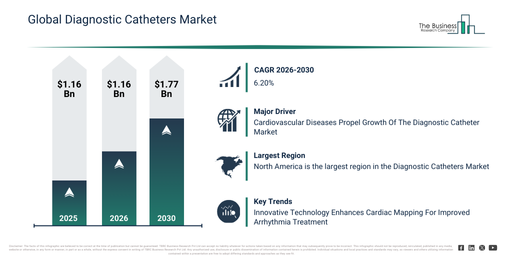
    The diagnostic catheters market is projected to experience robust expansion over the coming years. This market is anticipated to reach $6.08 billion by 2030, demonstrating a compound annual growth rate (CAGR) of 6.2%. Factors driving this growth during the forecast period include a growing elderly demographic, heightened need for timely disease detection, the proliferation of diagnostic and imaging facilities, a greater emphasis on precise diagnostic methods, and increased spending on diagnostic healthcare services. Key developments expected within the forecast timeframe encompass a rise in minimally invasive diagnostic techniques, an increasing requirement for high-resolution imaging catheters, wider adoption of multi-parameter monitoring catheters, a move towards disposable diagnostic catheters, and expanding utility in electrophysiology diagnostics.

    Download A Free Sample Report For Comprehensive Market Insights:

    https://www.thebusinessresearchcompany.com/sample.aspx?id=18805&type=smp

    Which Growth Drivers Are Expected To Support The Diagnostic Catheters Market Forward?

    The escalating occurrence of cardiovascular diseases is anticipated to propel the expansion of the diagnostic catheter market. Cardiovascular disease (CVD) refers to a range of conditions affecting the heart and blood vessels, including coronary artery disease, heart attacks, and stroke. Several factors contribute to the rise in cardiovascular diseases, such as an unhealthy diet, obesity, stress, urbanization, and socioeconomic elements. Diagnostic catheters are employed to visualize and evaluate the function of cardiovascular structures, as well as to identify abnormalities in patients with these conditions. For instance, in October 2024, the Centers for Disease Control and Prevention, a US-based government agency, reported that in 2023, cardiovascular disease resulted in 919,032 deaths, accounting for approximately one in every three deaths. Therefore, the increasing prevalence of cardiovascular diseases is driving the growth of the diagnostic catheter market.

    What Are The Core Segment Classifications In The Diagnostic Catheters Market?

    The diagnostic catheters market covered in this report is segmented –

    1) By Type: Diagnostic Imaging Catheters, Angiography Catheters, Electrophysiology Catheters, Non-Imaging Diagnostic Catheter, Pressure And Hemodynamic Monitoring Catheters, Temperature Monitoring Catheters, Other Non-Imaging Diagnostic Catheter

    2) By Application Area: Cardiology, Urology, Gastroenterology, Neurology, Other Application Areas

    3) By End-User: Hospitals, Diagnostic And Imaging Centers

    Subsegments:

    1) By Diagnostic Imaging Catheters: Intracardiac Imaging Catheters, Endoscopic Imaging Catheters, Optical Coherence Tomography (OCT) Catheters, Ultrasound Imaging Catheters

    2) By Angiography Catheters: Diagnostic Angiography Catheters, Coronary Angiography Catheters, Peripheral Angiography Catheters, Neurovascular Angiography Catheters

    3) By Electrophysiology Catheters: Mapping Catheters, Ablation Catheters, Diagnostic EP Catheters, Electrophysiology Recording Catheters

    4) By Non-Imaging Diagnostic Catheters: Pressure Measurement Catheters, Fluid Aspiration Catheters, Blood Gas Sampling Catheters

    5) By Pressure And Hemodynamic Monitoring Catheters: Pulmonary Artery Catheters (Swan-Ganz Catheters), Central Venous Pressure Catheters, Intra-arterial Pressure Monitoring Catheters, Intracranial Pressure Monitoring Catheters

    6) By Temperature Monitoring Catheters: Core Temperature Monitoring Catheters, Bladder Temperature Monitoring Catheters, Esophageal Temperature Monitoring Catheters

    7) By Other Non-Imaging Diagnostic Catheters: Biopsy Catheters, Infusion Catheters, Aspiration Catheters, Microcatheters For Diagnostic Use

    Which Trends Are Influencing The Expansion Of The Diagnostic Catheters Market?

    Major companies active in the diagnostic catheter market are concentrating on developing advanced technologies, like TRUEref technology, to refine the mapping of complex cardiac arrhythmias. TRUEref technology describes a method for providing highly precise reference data in imaging and diagnostics, frequently employed in medical devices for enhanced accuracy. As an example, in July 2023, Biosense Webster Inc., a US-based company specializing in medical devices for cardiac arrhythmias, launched the OPTRELL Mapping Catheter to offer high-definition electrophysiological mapping. This catheter is supported by the CARTO 3 System, a high-density diagnostic instrument engineered for exact electrophysiological mapping in difficult cardiac arrhythmia situations. It features 48 small electrodes organized in a fixed array, which generates high-resolution maps for improved ablation targeting. This technological advancement bolsters clinicians’ ability to detect ablation gaps and understand arrhythmia mechanisms, ultimately leading to better treatment outcomes for patients.

    Which Organizations Are Involved In The Diagnostic Catheters Market?

    Major companies operating in the diagnostic catheters market are Johnson & Johnson, Abbott Laboratories, Medtronic plc, Koninklijke Philips N.V., Becton Dickinson and Company, Boston Scientific Corporation, B Braun Melsungen AG, Terumo Corporation, Biotronik SE & Co KG, AngioDynamics Inc, Cook Medical Incorporated, Teleflex Incorporated, Merit Medical Systems Inc, Smiths Medical, Olympus Corporation, Nipro Corporation, Vascular Solutions Inc, InspireMD Inc, Endovascular Solutions Inc, Cardinal Health Technologies Inc

    Access The Complete Diagnostic Catheters Market Report:

    https://www.thebusinessresearchcompany.com/report/diagnostic-catheters-global-market-report

    Which Region Leads The Diagnostic Catheters Market By Size?

    North America was the largest region in the diagnostic catheters market in 2025. Asia-Pacific is expected to be the fastest-growing region in the forecast period. The regions covered in the diagnostic catheters market report are Asia-Pacific, South East Asia, Western Europe, Eastern Europe, North America, South America, Middle East, Africa.

    Access a Customized Diagnostic Catheters Market Report for Deeper Competitive Insights

    https://www.thebusinessresearchcompany.com/customise?id=18805&type=smp

    Browse Through More Reports Similar to the Global Diagnostic Catheters Market 2026, By The Business Research Company

    Catheters Market Report 2026

    https://www.thebusinessresearchcompany.com/report/catheters-global-market-report

    Pediatric Catheter Market Report 2026

    https://www.thebusinessresearchcompany.com/report/pediatric-catheter-global-market-report

    Urinary Catheters Market Report 2026

    https://www.thebusinessresearchcompany.com/report/urinary-catheters-global-market-report

    Get in touch with us:

    The Business Research Company: https://www.thebusinessresearchcompany.com/

    Americas: +1 310-496-7795

    Asia: +44 7882 955267 & +91 8897263534

    Europe: +44 7882 955267

    Email us at: marketing@tbrc.info

    Follow us on:

    LinkedIn: https://in.linkedin.com/company/the-business-research-company

    YouTube: https://www.youtube.com/channel/UC24_fI0rV8cR5DxlCpgmyFQ

    Global Market Model: https://www.thebusinessresearchcompany.com/global-market-model
  • Diagnostic And Monitoring Ophthalmic Devices And Equipment Market Developments Influencing Industry Expansion Through 2030

    Diagnostic And Monitoring Ophthalmic Devices And Equipment Market Developments Influencing Industry Expansion Through 2030

    The Business Research Company’s 2026 market reports feature advanced enhancements such as market attractiveness analysis, total addressable market evaluation, company benchmarking matrices, interactive Excel dashboards, expanded supply chain intelligence, emerging startup coverage, and detailed product insights, delivering more actionable and strategically valuable research.

    What Increase In Market Value Is Predicted For The Diagnostic And Monitoring Ophthalmic Devices And Equipment Market During The 2026–2030 Period?

    The diagnostic and monitoring ophthalmic devices and equipment market size has shown consistent expansion in recent years. It is anticipated to increase from $5.14 billion in 2025 to $5.39 billion in 2026, demonstrating a compound annual growth rate (CAGR) of 4.8%. The historic period’s growth is largely due to the increasing prevalence of eye disorders, a growing aging population, the expansion of ophthalmic diagnostic centers, rising awareness of preventive eye care, and advancements in imaging technologies.

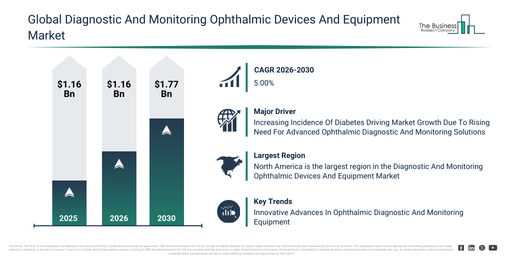
    The diagnostic and monitoring ophthalmic devices and equipment market size is anticipated to demonstrate consistent growth over the next few years, reaching $6.54 billion by 2030, at a compound annual growth rate (CAGR) of 5.0%. This growth during the forecast period can be attributed to factors such as increasing demand for early glaucoma and retinal disease detection, a rising adoption of tele-ophthalmology solutions, the expansion of smart diagnostic platforms, growing investments in precision eye care, and the increasing integration of AI-based analytics. Major trends identified for the forecast period include the increasing adoption of AI-enabled ophthalmic diagnostics, rising demand for high-resolution retinal imaging systems, the growing use of non-invasive vision monitoring devices, expansion of automated refraction and screening equipment, and an enhanced focus on early disease detection.

    Download A Free Sample Report For Comprehensive Market Insights:

    https://www.thebusinessresearchcompany.com/sample.aspx?id=3800&type=smp

    What Influential Factors Are Boosting The Diagnostic And Monitoring Ophthalmic Devices And Equipment Market Demand?

    The rising occurrence of diabetes is anticipated to drive the expansion of the diagnostic and monitoring ophthalmic devices and equipment market in the future. Diabetes is a persistent medical condition characterized by the body’s inability to properly utilize or generate sufficient insulin, a hormone essential for blood sugar regulation. This growing prevalence of diabetes stems from pervasive alterations in lifestyle, particularly diets rich in sugar and fat coupled with reduced physical movement. Tools within the diagnostic and monitoring ophthalmic devices and equipment category, like smart contact lenses, find application in both continuous glucose tracking and managing diabetic retinopathy. These devices are capable of wirelessly tracking glucose concentrations and delivering immediate information to the user. For example, in 2025, the International Diabetes Federation, a Belgium based health organization, reported that in 2024, approximately 589 million adults aged 20-79 had diabetes. This figure is predicted to increase to 853 million by 2050, with over 4 in 5 adults with diabetes living in low and middle income countries. Consequently, the escalating incidence of diabetes is a key factor propelling the expansion of the diagnostic and monitoring ophthalmic devices and equipment market.

    How Is The Diagnostic And Monitoring Ophthalmic Devices And Equipment Market Structured Across Different Market Segments?

    The diagnostic and monitoring ophthalmic devices and equipment market covered in this report is segmented –

    1) By Product Type: Optical Coherence Tomographers, Ophthalmic Ultrasound Imaging Systems, Fundus Cameras, Ophthalmoscopes, Keratometers, Specular Microscopes., Tonometers, Slit Lamps, Retinoscopes, Other Products

    2) By Application: Retinal Evaluation, Glaucoma Detection And Monitoring, Surgical Evaluation, General Examine, Intraoperative Devices, Refraction Equipment

    3) By End User: Hospitals, Clinics, Diagnostic Laboratories, Research Centers

    Subsegments:

    1) By Optical Coherence Tomographers: Time-Domain OCT (TD-OCT), Spectral-Domain OCT (SD-OCT), Swept-Source OCT (SS-OCT)

    2) By Ophthalmic Ultrasound Imaging Systems: B-Scan Ultrasound, A-Scan Ultrasound, Pachymetry Ultrasound

    3) By Fundus Cameras: Digital Fundus Cameras, Non-Mydriatic Fundus Cameras, Mydriatic Fundus Cameras, Wide-Field Fundus Cameras

    4) By Ophthalmoscopes: Direct Ophthalmoscopes, Indirect Ophthalmoscopes

    5) By Keratometers: Manual Keratometers, Automated Keratometers

    6) By Specular Microscopes: Contact Specular Microscopes, Non-Contact Specular Microscopes

    7) By Tonometers: Applanation Tonometers, Non-Contact Tonometers, Indentation Tonometers, Rebound Tonometers

    8) By Slit Lamps: Manual Slit Lamps, Digital Slit Lamps, Portable Slit Lamps

    9) By Retinoscopes: Handheld Retinoscopes, Tabletop Retinoscopes

    10) By Other Products: Dioptometers, Optotype Projector, Perimeters (Static Perimeters, Kinetic Perimeters), Biometers (Optical Biometers, Ultrasound Biometers), Pachymeters, Autorefractors Or Phoropters, Corneal Topographers, Wavefront Aberrometers

    What Trends Are Impacting The Diagnostic And Monitoring Ophthalmic Devices And Equipment Market?

    Leading companies active in the diagnostic and monitoring equipment sector of the ophthalmic devices market are innovating products like Smart contact lenses, employing smart soft contact lens technology to improve patient services. This smart soft contact lens technology is a modern innovation that permits continuous, 24-hour monitoring of intraocular pressure (IOP) in the treatment of glaucoma. As an illustration, in January 2023, BVS Sight Inc., a US-based firm, introduced Smart contact lenses incorporating smart soft contact lens technology. Smart soft contact lenses are constructed on various existing commercial soft contact lens brands without altering their fundamental attributes such as lens power, biocompatibility, softness, transparency, wettability, oxygen transmissibility, and overnight wearability.

    Who Are The Firms Contributing To The Diagnostic And Monitoring Ophthalmic Devices And Equipment Market Ecosystem?

    Major companies operating in the diagnostic and monitoring ophthalmic devices and equipment market are Carl Zeiss Meditec, Alcon Inc., Bausch + Lomb, Haag-Streit, Topcon Corporation, Nidek Co. Ltd., Abbott Medical Optics, Johnson and Johnson Vision Care, Essilor International S.A., Ziemer Ophthalmic Systems AG, Ellex, Quantel Medical Inc., Optovue, Canon Inc., Halma plc, Coburn Technologies Inc., Kowa Company Ltd., Hoya Corporation, Gulden Ophthalmics, Glaukos Corporation, Matronix India Corporation, HEINE Optotechnik, Visionix Ltd., Appasamy Associates, Ophtec BV, Lumenis, Ocular Instruments, Ophthalmic Instruments Company, Keeler Ltd., Oculus, Reichert Technologies, Tomey Corporation, US Ophthalmic

    Access The Complete Diagnostic And Monitoring Ophthalmic Devices And Equipment Market Report:

    https://www.thebusinessresearchcompany.com/report/diagnostic-and-monitoring-ophthalmic-devices-and-equipment-global-market-report

    Which Region Has The Strongest Presence In The Diagnostic And Monitoring Ophthalmic Devices And Equipment Market?

    North America was the largest region in the global diagnostic and monitoring ophthalmic devices and equipment market in 2025. Asia-Pacific was the second-largest region in diagnostic and monitoring ophthalmic devices and equipment market. The regions covered in the diagnostic and monitoring ophthalmic devices and equipment market report are Asia-Pacific, South East Asia, Western Europe, Eastern Europe, North America, South America, Middle East, Africa.

    Access a Customized Diagnostic And Monitoring Ophthalmic Devices And Equipment Market Report for Deeper Competitive Insights

    https://www.thebusinessresearchcompany.com/customise?id=3800&type=smp

    Browse Through More Reports Similar to the Global Diagnostic And Monitoring Ophthalmic Devices And Equipment Market 2026, By The Business Research Company

    Ophthalmic Devices Market Report 2026

    https://www.thebusinessresearchcompany.com/report/ophthalmic-devices-global-market-report

    Ophthalmic Workstations Market Report 2026

    https://www.thebusinessresearchcompany.com/report/ophthalmic-workstations-global-market-report

    Ophthalmic Handheld Surgical Instruments Market Report 2026

    https://www.thebusinessresearchcompany.com/report/ophthalmic-handheld-surgical-instruments-global-market-report

    Get in touch with us:

    The Business Research Company: https://www.thebusinessresearchcompany.com/

    Americas: +1 310-496-7795

    Asia: +44 7882 955267 & +91 8897263534

    Europe: +44 7882 955267

    Email us at: marketing@tbrc.info

    Follow us on:

    LinkedIn: https://in.linkedin.com/company/the-business-research-company

    YouTube: https://www.youtube.com/channel/UC24_fI0rV8cR5DxlCpgmyFQ

    Global Market Model: https://www.thebusinessresearchcompany.com/global-market-model
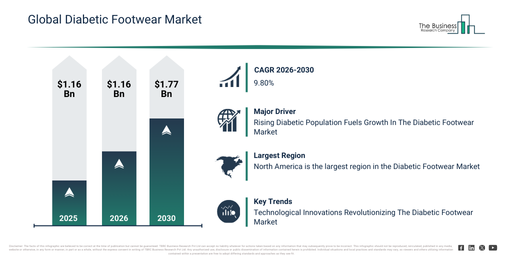
  • Diabetic Footwear Market Size Forecast To Achieve $14.73 Billion By 2030 With 9.8% CAGR

    Diabetic Footwear Market Size Forecast To Achieve $14.73 Billion By 2030 With 9.8% CAGR

    The Business Research Company’s 2026 market reports feature advanced enhancements such as market attractiveness analysis, total addressable market evaluation, company benchmarking matrices, interactive Excel dashboards, expanded supply chain intelligence, emerging startup coverage, and detailed product insights, delivering more actionable and strategically valuable research.

    How Will The Market Size Of The Diabetic Footwear Market Progress Through 2030?

    The diabetic footwear market size has seen substantial growth in recent years. Its valuation is expected to rise from $9.2 billion in 2025 to $10.15 billion in 2026, achieving a compound annual growth rate (CAGR) of 10.3%. This historical expansion can be linked to the increasing occurrence of diabetes, greater understanding of diabetic foot problems, the growth of specialized footwear retail outlets, more frequent recommendations for therapeutic footwear from doctors, and the availability of advanced supportive footwear materials.

    The diabetic footwear market size is set to experience significant expansion in the coming years, with projections indicating it will reach $14.74 billion by 2030, demonstrating a compound annual growth rate (CAGR) of 9.8%. This growth during the forecast period is primarily driven by the escalating demand for customized orthopedic footwear, the increasing adoption of smart insole technologies, the broadening reach of online distribution channels, a greater emphasis on preventive diabetic care, and continuous product innovation aimed at enhancing comfort and mobility. Notable trends anticipated during this period include a rising preference for therapeutic footwear designs, the growing application of pressure-relief insoles, the wider availability of customized diabetic footwear solutions, an increasing shift towards lightweight and breathable materials, and a more pronounced focus on preventing foot ulcers.

    Download A Free Sample Report For Comprehensive Market Insights:

    https://www.thebusinessresearchcompany.com/sample.aspx?id=6855&type=smp

    Which Drivers Are Advancing The Diabetic Footwear Market Growth?

    The growing number of diabetic patients is set to drive the expansion of the diabetic footwear market in the foreseeable future. Diabetes is defined as a chronic medical condition leading to elevated blood glucose levels. Diabetic footwear is instrumental in preventing severe foot health issues that can arise from diabetes, while also offering essential benefits such as enhanced blood circulation, a wide toe box, and massaging to alleviate pressure in vulnerable areas of the foot. For example, in June 2023, a report from the Institute for Health Metrics and Evaluation, a US-based independent population health research organization, projected that the number of diabetic individuals will more than double to 1.3 billion within the next 30 years. Additionally, by 2050, the total count of diabetics is anticipated to reach 529 million. Therefore, the increasing prevalence of diabetic patients is a key factor propelling the growth of the diabetic footwear market.

    Which Segment-Based Categories Are Covered In The Diabetic Footwear Market?

    The diabetic footwear market covered in this report is segmented –

    1) By Type: Shoes, Sandals, Slippers

    2) By Distribution Channel: Online Platform, Specialty Stores, Footwear Stores, Other Distribution Channels

    3) By End User: Men, Women

    Subsegments:

    1) By Shoes: Athletic Shoes, Dress Shoes, Casual Shoes, Therapeutic Shoes

    2) By Sandals: Open-Toe Sandals, Closed-Toe Sandals, Adjustable Sandals

    3) By Slippers: Indoor Slippers, Outdoor Slippers, Heated Slippers

    Which Trends Are Affecting The Diabetic Footwear Market Framework?

    Leading companies within the diabetic footwear market are concentrating on creating advanced products like smart shoes, aiming to elevate patient care and improve health outcomes. This intelligent footwear often integrates sophisticated features such as pressure sensors and monitoring systems that aid in the early detection of foot issues, thereby lowering the risk of complications including ulcers and amputations. For example, in March 2024, nine students from Oman College of Health Sciences, an Oman-based educational institution, developed a smart shoe intended to reduce complications in diabetic patients. This innovative footwear is designed to address critical health challenges associated with diabetes, particularly diabetic foot complications, which can lead to severe consequences such as foot ulcers and amputations.

    Which Key Players Are Active In The Diabetic Footwear Market?

    Major companies operating in the diabetic footwear market are Podartis Srl Co., Orthofeet Inc., Dr. Comfort LLC, Drew Shoe Corp., Aetrex Worldwide Inc., Finn Comfort USA Inc., Apex Foot Health Industries LLC, Propét USA Inc., Anodyne Shoes LLC, P.W. Minor and Son Inc., Pedorthic Shoe Company, San Antonio Shoe Inc., DARCO International Inc., Diabetic Soles Inc., Orthopedic Footwear LLC, SureFit Footwear Inc., Ewidex Footwear Inc., Gravity Defyer Medical Footwear Inc., Orthoshoes Inc., Doctor Cutillas Footwear SL

    Access The Complete Diabetic Footwear Market Report:

    https://www.thebusinessresearchcompany.com/report/diabetic-footwear-global-market-report

    Which Region Stands As The Largest Contributor To The Diabetic Footwear Market?

    North America was the largest region in the diabetic footwear market in 2025. The regions covered in the diabetic footwear market report are Asia-Pacific, South East Asia, Western Europe, Eastern Europe, North America, South America, Middle East, Africa.

    Access a Customized Diabetic Footwear Market Report for Deeper Competitive Insights

    https://www.thebusinessresearchcompany.com/customise?id=6855&type=smp

    Browse Through More Reports Similar to the Global Diabetic Footwear Market 2026, By The Business Research Company

    Medical Footwear Market Report 2026

    https://www.thebusinessresearchcompany.com/report/medical-footwear-global-market-report

    Luxury Footwear Market Report 2026

    https://www.thebusinessresearchcompany.com/report/luxury-footwear-global-market-report

    Diabetic Foot Ulcer Market Report 2026

    https://www.thebusinessresearchcompany.com/report/diabetic-foot-ulcer-global-market-report

    Get in touch with us:

    The Business Research Company: https://www.thebusinessresearchcompany.com/

    Americas: +1 310-496-7795

    Asia: +44 7882 955267 & +91 8897263534

    Europe: +44 7882 955267

    Email us at: marketing@tbrc.info

    Follow us on:

    LinkedIn: https://in.linkedin.com/company/the-business-research-company

    YouTube: https://www.youtube.com/channel/UC24_fI0rV8cR5DxlCpgmyFQ

    Global Market Model: https://www.thebusinessresearchcompany.com/global-market-model