Month: May 2026

  • Artificial Intelligence (AI)-Driven Web Scraping Industry Poised for Rapid Growth, Forecast to Touch $23.7 Billion by 2030 at 23.5% CAGR

    Artificial Intelligence (AI)-Driven Web Scraping Industry Poised for Rapid Growth, Forecast to Touch $23.7 Billion by 2030 at 23.5% CAGR

    Uncover key drivers, emerging technologies, and competitive movements shaping the artificial intelligence (ai)-driven web scraping market from 2026–2035 with trusted insights from The Business Research Company

    What upper market value could the Artificial Intelligence (AI)-Driven Web Scraping Market reach by 2030 starting from 2026 levels?

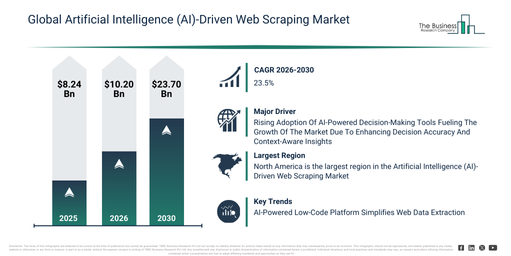
    The artificial intelligence (AI)-driven web scraping market has witnessed significant growth in recent years. This market is projected to expand from $8.24 billion in 2025 to $10.20 billion in 2026, achieving a compound annual growth rate (CAGR) of 23.8%. Historically, this expansion has been fueled by factors such as the increasing volumes of digital data, a rise in e-commerce activity, growing demand for competitive intelligence, the proliferation of cloud-based scraping solutions, and wider adoption across numerous sectors.

    The artificial intelligence (AI)-driven web scraping market is poised for significant expansion in the coming years. It is projected to reach $23.70 billion in 2030, showing a compound annual growth rate (CAGR) of 23.5%. This anticipated growth during the forecast period is fueled by factors such as a heightened need for real-time business insights, increased adoption of artificial intelligence and machine learning technologies, a growing requirement for adaptable pricing and market oversight, the proliferation of no-code/low-code scraping platforms, and rising demand from small and medium-sized businesses. Key trends foreseen during this period include technological breakthroughs in artificial intelligence (AI) and machine learning, progress in automated data extraction tools, evolution of cloud-native and scalable scraping solutions, ongoing research and development in anti-bot evasion and proxy networks, and greater integration with real-time analytical and decision-support systems.

    Access Your Free Sample Report for In-Depth Market Insights:

    https://www.thebusinessresearchcompany.com/sample.aspx?id=30524&type=smp

    Which Drivers Are Influencing Long-Term Growth In The Artificial Intelligence (AI)-Driven Web Scraping Market?

    The increasing use of AI-powered decision-making tools is anticipated to fuel the expansion of the artificial intelligence (AI)-driven web scraping market in the future. These tools are software systems leveraging artificial intelligence, including machine learning and predictive analytics, to automate and improve business insights and decisions. This growing adoption stems from heightened enterprise digitalization and the necessity for strategic decisions informed by data. Artificial intelligence (AI)-driven web scraping boosts AI-powered decision-making tools by automatically gathering and organizing vast amounts of real-time data from various online platforms. It enhances analytical precision and promptness by supplying machine learning models with current insights, thereby facilitating quicker, data-informed strategic choices. For example, data released by Eurostat, the European Union’s statistical office based in Luxembourg, in January 2025 showed that 13.5% of businesses employing 10 or more people utilized AI technologies in 2024, an increase from 8.0% in 2023, representing a 5.5 percentage-point rise. Consequently, the increased uptake of AI-powered decision-making tools is propelling the expansion of the artificial intelligence (AI)-driven web scraping market.

    How Is The Artificial Intelligence (AI)-Driven Web Scraping Market Divided Into Segments?

    The artificial intelligence (AI)-driven web scraping market covered in this report is segmented –

    1) By Scraping Type: Static Web Scraping, Dynamic Web Scraping, Application Programming Interface Scraping, Image And Text Recognition

    2) By Deployment Type: On-Premises, Cloud, Hybrid

    3) By Organization Size: Small Enterprises, Medium Enterprises, Large Enterprises

    4) By Application: Price Monitoring, Market Intelligence, Lead Generation, Data Mining

    5) By Industry Vertical: E-Commerce, Financial Services, Healthcare, Manufacturing, Retail, Technology

    Subsegments:

    1) By Static Web Scraping: Manual Static Page Extraction, Automated Static Content Parsing, Hypertext Markup Language Structure Based Extraction, File Based Static Data Retrieval, Script Driven Static Data Collection

    2) By Dynamic Web Scraping: Browser Automation Extraction, Java Script Rendered Content Extraction, Interactive Page Element Extraction, Form Submission Based Extraction, Dynamic Hypertext Markup Language Content Parsing

    3) By Application Programming Interface Scraping: Public Application Programming Interface Data Extraction, Private Application Programming Interface Data Extraction, Rest Application Programming Interface Based Data Collection, Graph Query Language Application Programming Interface Based Extraction, Automated Application Programming Interface Response Parsing

    4) By Image And Text Recognition: Optical Character Recognition Based Data Extraction, Image Pattern Recognition Extraction, Document Image Data Capture, Visual Content Based Data Identification, Text Recognition From Multimedia Content

    What Trends Are Expected To Impact The Competitive Landscape Of The Artificial Intelligence (AI)-Driven Web Scraping Market?

    Leading companies within the artificial intelligence (AI)-driven web scraping market are concentrating on developing sophisticated platforms, such as AI-powered low-code tools, to boost efficiency, enhance accessibility, and reduce both technical barriers and development time. These AI-powered low-code tools are defined as platforms that employ artificial intelligence to automate the extraction and structuring of web data based on natural language descriptions, thereby eliminating the need for manual coding. For instance, in July 2025, Oxylabs.io, a Lithuania-based web-intelligence and proxy services company, introduced AI Studio. This new suite of AI-powered tools is designed to simplify the process of finding, collecting, and obtaining ready-to-use web data through natural language prompts. It features AI-Crawler and AI-Scraper functionalities, which enable seamless data extraction from multiple or single pages without requiring operator intervention. The suite also incorporates tools like Browser Agent for dynamic interactions and AI-Search for web queries, thereby extending the platform’s utility and reducing operational complexity for developers, product teams, and data analysts.

    Which Key Players Are Driving Competition In The Artificial Intelligence (AI)-Driven Web Scraping Market?

    Major companies operating in the artificial intelligence (AI)-driven web scraping market are Tungsten Automation, Hangzhou Duosuan Technology Co. Ltd., Oxylabs UAB, Bright Data Ltd., Zyte Ltd., Grepsr Pvt. Ltd., Apify Technologies s.r.o., Octopus Data Inc., Octoparse Co. Ltd., SerpApi LLC, ParseHub Inc., Diffbot Technologies Corp., Browse AI Inc., The Phantombuster Company, Scraping Robotics Inc., Scrapfly, DataHen Canada Inc., Datahut, ZenRows Inc., Smartproxy LLC

    Access The Complete Report For Deeper Market Insights:

    https://www.thebusinessresearchcompany.com/report/artificial-intelligence-ai-driven-web-scraping-market-report

    Which Region Is Projected To Lead The Artificial Intelligence (AI)-Driven Web Scraping Market During The Forecast Period?

    North America was the largest region in the artificial intelligence (AI)-driven web scraping market in 2025. Asia-Pacific is expected to be the fastest-growing region in the forecast period. The regions covered in the artificial intelligence (AI)-driven web scraping market report are Asia-Pacific, South East Asia, Western Europe, Eastern Europe, North America, South America, Middle East, Africa.

    Request Your Customized Artificial Intelligence (AI)-Driven Web Scraping Market Research Report for Competitive Advantage:

    https://www.thebusinessresearchcompany.com/customise?id=30524&type=smp

    Browse Through More Reports Similar to the Global Artificial Intelligence (AI)-Driven Web Scraping Market 2026, By The Business Research Company

    Artificial Intelligence Ai Enabled E Commerce Solutions Market Report 2026

    https://www.thebusinessresearchcompany.com/report/artificial-intelligence-ai-enabled-e-commerce-solutions-global-market-report

    Content Intelligence Market Report 2026

    https://www.thebusinessresearchcompany.com/report/content-intelligence-global-market-report

    artificial intelligence ai content generation global market report

    https://www.thebusinessresearchcompany.com/report/artificial-intelligence-ai-content-generation-global-market-report

    Get in touch with us:

    The Business Research Company: https://www.thebusinessresearchcompany.com/

    Americas +1 310-496-7795

    Asia +44 7882 955267 & +91 8897263534

    Europe +44 7882 955267

    Email us at marketing@tbrc.info

    Follow us on:

    LinkedIn: https://in.linkedin.com/company/the-business-research-company

    YouTube: https://www.youtube.com/channel/UC24_fI0rV8cR5DxlCpgmyFQ

    Global Market Model: https://www.thebusinessresearchcompany.com/global-market-model
  • Artificial Intelligence (AI)-Driven Hospital Supply Waste Monitor Market Performance Outlook 2026–2030: Revenue to Hit $4.13 Billion at 19.3% CAGR

    Artificial Intelligence (AI)-Driven Hospital Supply Waste Monitor Market Performance Outlook 2026–2030: Revenue to Hit $4.13 Billion at 19.3% CAGR

    Uncover key drivers, emerging technologies, and competitive movements shaping the artificial intelligence (ai)-driven hospital supply waste monitor market from 2026–2035 with trusted insights from The Business Research Company

    What level of CAGR-driven expansion is anticipated in the Artificial Intelligence (AI)-Driven Hospital Supply Waste Monitor Market between 2026 and 2030?

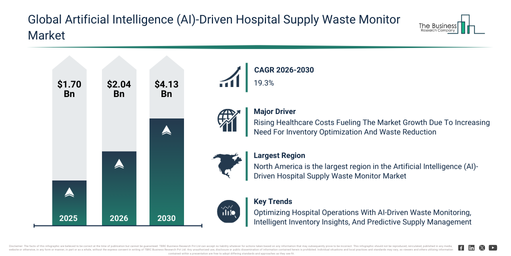
    The artificial intelligence (AI)-driven hospital supply waste monitor market has witnessed rapid expansion in recent years. This market is set to increase from $1.70 billion in 2025 to $2.04 billion in 2026, exhibiting a compound annual growth rate (CAGR) of 19.6%. The historical growth of this market can be attributed to several factors including the increasing adoption of AI in healthcare operations, the growing need to reduce medical supply waste, a rising focus on cost optimization in hospitals, the expansion of predictive analytics usage, and the increasing implementation of inventory monitoring solutions.

    The artificial intelligence (AI)-driven hospital supply waste monitor market size is projected to experience substantial growth over the coming years. This market is anticipated to reach **$4.13 billion in 2030, exhibiting a compound annual growth rate (CAGR) of 19.3%**. Factors contributing to this expansion during the forecast period include increased investments in healthcare IT infrastructure, the expanding integration of AI with hospital management systems, greater uptake of cloud-based supply monitoring platforms, the broadening of remote monitoring and smart inventory systems, and a heightened focus on sustainability and waste reduction. Key developments expected in this period encompass technological advancements in machine learning and AI models, breakthroughs in real-time inventory tracking devices, ongoing research and development in predictive analytics aimed at waste reduction, the creation of automated reporting and dashboard solutions, and improvements in interoperable healthcare IT and inventory systems.

    Access Your Free Sample Report for In-Depth Market Insights:

    https://www.thebusinessresearchcompany.com/sample.aspx?id=30522&type=smp

    What Drivers Are Affecting Demand-Supply Dynamics In The Artificial Intelligence (AI)-Driven Hospital Supply Waste Monitor Market?

    The increasing expenses within healthcare are anticipated to drive expansion in the artificial intelligence (AI)-driven hospital supply waste monitor market in the future. These escalating healthcare costs denote a continuous rise in expenditures necessary for providing medical care and running hospital operations, encompassing personnel, equipment, and medical provisions, thus imposing financial strain on healthcare infrastructures. This increase in healthcare spending primarily stems from an aging demographic that necessitates more extensive medical interventions for long-term ailments like heart disease and diabetes. The AI-driven hospital supply waste monitor assists in managing healthcare costs by minimizing superfluous supply wastage, streamlining inventory quantities, and enabling providers to manage total spending effectively. As an illustration, data from June 2025 by the Centers for Medicare and Medicaid Services (CMS), a US governmental body overseeing health expenditures, showed that in 2023, spending on hospital care surged by 10.4% to $1.52 trillion, and overall national health spending expanded by 7.5% to $4.9 trillion when contrasted with figures from 2022. Consequently, the escalation in healthcare expenses is fueling the expansion of the artificial intelligence (AI)-driven hospital supply waste monitor market.

    What Segments Are Included Within The Artificial Intelligence (AI)-Driven Hospital Supply Waste Monitor Market?

    The artificial intelligence (AI)-driven hospital supply waste monitor market covered in this report is segmented –

    1) By Component: Software, Hardware, Services

    2) By Deployment Mode: On-Premises, Cloud-Based

    3) By Application: Inventory Management, Waste Tracking, Cost Reduction, Compliance Monitoring, Other Applications

    4) By End-User: Hospitals, Clinics, Ambulatory Surgical Centers, Other End-Users

    Subsegments:

    1) By Software: Electronic Health Record Integration, Predictive Analytics Platforms, Risk Scoring Systems, Clinical Decision Support Tools

    2) By Hardware: Servers, Sensors, Monitoring Devices, Data Storage Devices

    3) By Services: Data Analytics Services, Predictive Modeling Services, Integration And Deployment Services, Training And Support Services, Monitoring And Reporting Services

    Which Trends Are Guiding The Evolution Of The Artificial Intelligence (AI)-Driven Hospital Supply Waste Monitor Market?

    Companies leading in the artificial intelligence (AI)-driven hospital supply waste monitor market are prioritizing the creation of advanced technology, such as predictive usage and waste reduction analytics, to improve supply chain transparency, decrease waste, and lower operational costs in healthcare settings. Predictive usage and waste reduction analytics are AI systems that examine historical and real-time data to project inventory needs, pinpoint consumption patterns, and automatically notify staff of potential overstock or waste situations, enabling more intelligent procurement and effective resource distribution. For instance, in April 2024, SmartPAR.AI Inc., a US-based healthtech software provider, introduced an AI-driven solution designed to revolutionize hospital inventory management and cut down on product waste. The platform employs machine learning, predictive usage and waste reduction analytics to monitor available supplies, forecast future consumption, and detect discrepancies that might lead to waste.

    Who Are The Top-Performing Companies In The Artificial Intelligence (AI)-Driven Hospital Supply Waste Monitor Market In Recent Years?

    Major companies operating in the artificial intelligence (AI)-driven hospital supply waste monitor market are Cardinal Health Inc., Oracle Corporation, Becton Dickinson and Company, Owens & Minor Inc., Arvato AG, Zebra Technologies Corporation, Getinge AB, Palantir Technologies Inc., Omnicell Inc., Manhattan Associates Inc., Symplr Inc., Global Healthcare Exchange LLC, Tecsys Inc., Terso Solutions Inc., LogiTag Systems Ltd., Spikewell Inc., Softlabs Group Inc., Stanley Healthcare, Z5 Inventory Inc., IDENTI Medical Ltd.

    Access The Complete Report For Deeper Market Insights:

    https://www.thebusinessresearchcompany.com/report/artificial-intelligence-ai-driven-hospital-supply-waste-monitor-market-report

    Which Region Currently Holds The Largest Share Of The Artificial Intelligence (AI)-Driven Hospital Supply Waste Monitor Market?

    North America was the largest region in the artificial intelligence (AI)-driven hospital supply waste monitor market in 2025. Asia-Pacific is expected to be the fastest-growing region in the forecast period. The regions covered in the artificial intelligence (AI)-driven hospital supply waste monitor market report are Asia-Pacific, South East Asia, Western Europe, Eastern Europe, North America, South America, Middle East, Africa.

    Request Your Customized Artificial Intelligence (AI)-Driven Hospital Supply Waste Monitor Market Research Report for Competitive Advantage:

    https://www.thebusinessresearchcompany.com/customise?id=30522&type=smp

    Browse Through More Reports Similar to the Global Artificial Intelligence (AI)-Driven Hospital Supply Waste Monitor Market 2026, By The Business Research Company

    Hazardous Waste Handling Automation Market Report 2026

    https://www.thebusinessresearchcompany.com/report/hazardous-waste-handling-automation-global-market-report

    Medical Waste Management Market Report 2026

    https://www.thebusinessresearchcompany.com/report/medical-waste-management-global-market-report

    waste management software global market report

    https://www.thebusinessresearchcompany.com/report/waste-management-software-global-market-report

    Get in touch with us:

    The Business Research Company: https://www.thebusinessresearchcompany.com/

    Americas +1 310-496-7795

    Asia +44 7882 955267 & +91 8897263534

    Europe +44 7882 955267

    Email us at marketing@tbrc.info

    Follow us on:

    LinkedIn: https://in.linkedin.com/company/the-business-research-company

    YouTube: https://www.youtube.com/channel/UC24_fI0rV8cR5DxlCpgmyFQ

    Global Market Model: https://www.thebusinessresearchcompany.com/global-market-model
  • Global Artificial Intelligence (AI)-Driven Hospital Readmission Predictor Market Set for Strong Expansion, Reaching $6.08 Billion With 25.9% CAGR by 2030

    Global Artificial Intelligence (AI)-Driven Hospital Readmission Predictor Market Set for Strong Expansion, Reaching $6.08 Billion With 25.9% CAGR by 2030

    Uncover key drivers, emerging technologies, and competitive movements shaping the artificial intelligence (ai)-driven hospital readmission predictor market from 2026–2035 with trusted insights from The Business Research Company

    What long-term size projections exist for the Artificial Intelligence (AI)-Driven Hospital Readmission Predictor Market covering 2026–2035?

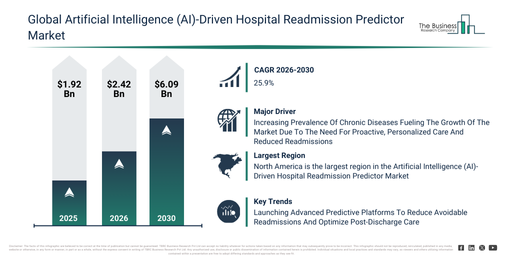
    The market size for artificial intelligence (AI)-driven hospital readmission predictors has experienced significant expansion over recent years. This sector is anticipated to increase from $1.92 billion in 2025 to $2.42 billion in 2026, demonstrating a compound annual growth rate (CAGR) of 26.2%. The historical drivers for this growth include the escalating integration of AI in healthcare, the heightened necessity to minimize hospital readmissions, the increasing presence of electronic health records, the wider deployment of predictive analytics, and an enhanced emphasis on patient welfare.

    The artificial intelligence (AI)-driven hospital readmission predictor market is projected to experience substantial expansion in the coming years. By 2030, its valuation is anticipated to reach $6.09 billion, demonstrating a compound annual growth rate (CAGR) of 25.9%. This anticipated growth throughout the forecast period stems from several factors, including increased investments in healthcare information technology infrastructure, greater incorporation of clinical decision support systems, wider uptake of cloud-based analytics platforms, the broadening availability of remote patient monitoring instruments, and a heightened focus on value-based care frameworks. Key developments expected during this timeframe encompass technological progress in machine learning models, breakthroughs in real-time patient observation, intensified research and development efforts in natural language processing, the emergence of explainable AI solutions tailored for healthcare, and enhancements in interoperable healthcare IT systems.

    Access Your Free Sample Report for In-Depth Market Insights:

    https://www.thebusinessresearchcompany.com/sample.aspx?id=30521&type=smp

    Which Drivers Are Impacting The Competitive Landscape Of The Artificial Intelligence (AI)-Driven Hospital Readmission Predictor Market?

    The expansion of the artificial intelligence (AI)-driven hospital readmission predictor market is anticipated to be driven by the rising occurrence of chronic diseases. These conditions are persistent health issues, like diabetes, heart disease, and arthritis, that typically advance gradually and necessitate continuous medical care and lifestyle adjustments to manage symptoms and avoid complications. Their growing frequency is primarily linked to unhealthy habits such as poor nutrition, lack of exercise, and smoking, which elevate the likelihood of developing conditions like diabetes, heart disease, and obesity. Artificial intelligence (AI)-driven hospital readmission predictors assist in managing chronic diseases by examining patient data to pinpoint individuals with a significant risk of readmission. These tools enhance patient results through proactive interventions, customized care plans, and prompt follow-ups, thereby preventing complications and shortening hospital admissions. As an illustration, the National Health Service, a UK-based government department, reported in June 2024 that 3,615,330 individuals registered with a general practitioner (GP) had received a diagnosis of non-diabetic hyperglycemia or pre-diabetes (a state characterized by elevated blood sugar levels, not yet meeting the criteria for diabetes) in 2023. This represented an 18% rise from the 3,065,825 cases observed in 2022. Consequently, the rising incidence of chronic diseases is fostering the expansion of the artificial intelligence (AI)-driven hospital readmission predictor market.

    What Leading Segments Are Studied In The Artificial Intelligence (AI)-Driven Hospital Readmission Predictor Market?

    The artificial intelligence (AI)-driven hospital readmission predictor market covered in this report is segmented –

    1) By Component: Software, Hardware, Services

    2) By Deployment Mode: On-Premises, Cloud

    3) By Application: Patient Risk Assessment, Care Management, Clinical Decision Support, Population Health Management, Other Applications

    4) By End-User: Hospitals, Clinics, Ambulatory Surgical Centers, Other End-Users

    Subsegments:

    1) By Software: Electronic Health Record Integration, Predictive Analytics Platforms, Risk Scoring Systems, Clinical Decision Support Tools

    2) By Hardware: Servers, Sensors, Monitoring Devices, Data Storage Devices

    3) By Services: Data Analytics Services, Predictive Modeling Services, Integration And Deployment Services, Training And Support Services, Monitoring And Reporting Services

    What Trends Are Projected To Support The Growth Of The Artificial Intelligence (AI)-Driven Hospital Readmission Predictor Market?

    Companies active in the artificial intelligence (AI)-driven hospital readmission predictor market are concentrating on developing sophisticated solutions, such as advanced predictive modeling, to identify high-risk patients, facilitate proactive interventions, and improve post-discharge care. Advanced predictive modeling entails utilizing complex statistical algorithms and machine learning techniques with historical and real-time data to uncover intricate patterns and generate highly precise forecasts of future outcomes. For instance, in July 2025, Innovaccer Inc., a US-based healthcare AI company, introduced its AI-Powered Readmissions Management Solution. This solution integrates advanced predictive modeling to pinpoint avoidable readmissions across Medicare, Medicaid, and uninsured populations. The platform also delivers unified 360-degree patient views, agentic AI tools including Care Management Copilot and Pre-Call Coordinator Agent for automating workflows, and benchmark intelligence for strategic intervention planning. This solution empowers healthcare providers to lower readmission rates, optimize resource allocation, and improve overall patient outcomes.

    Which Leading Companies Dominate The Artificial Intelligence (AI)-Driven Hospital Readmission Predictor Market Share?

    Major companies operating in the artificial intelligence (AI)-driven hospital readmission predictor market are Oracle Corporation, Siemens Healthineers AG, Cognizant Technology Solutions Corp., Epic Systems Corporation, SAS Institute Inc., Veradigm Inc., Merative LLP, Health Catalyst Inc., Lumeris Inc., Innovaccer Inc., Optum Inc., H2O.ai Inc., Healthfirst Inc., Qventus Inc., Lightbeam Health Solutions Inc., HealthEC LLC, Collective Medical Technologies Inc., CarePredict Inc., HBI Solutions Inc., CloudMedx

    Access The Complete Report For Deeper Market Insights:

    https://www.thebusinessresearchcompany.com/report/artificial-intelligence-ai-driven-hospital-readmission-predictor-market-report

    How Does The Artificial Intelligence (AI)-Driven Hospital Readmission Predictor Market Perform Across Major Global Regions?

    North America was the largest region in the artificial intelligence (AI)-driven hospital readmission predictor market in 2025. Asia-Pacific is expected to be the fastest-growing region in the forecast period. The regions covered in the artificial intelligence (AI)-driven hospital readmission predictor market report are Asia-Pacific, South East Asia, Western Europe, Eastern Europe, North America, South America, Middle East, Africa.

    Request Your Customized Artificial Intelligence (AI)-Driven Hospital Readmission Predictor Market Research Report for Competitive Advantage:

    https://www.thebusinessresearchcompany.com/customise?id=30521&type=smp

    Browse Through More Reports Similar to the Global Artificial Intelligence (AI)-Driven Hospital Readmission Predictor Market 2026, By The Business Research Company

    Artificial Intelligence In Healthcare Diagnosis Market Report 2026

    https://www.thebusinessresearchcompany.com/report/artificial-intelligence-in-healthcare-diagnosis-global-market-report

    Artificial Intelligence In Healthcare Market 2026

    https://www.thebusinessresearchcompany.com/report/artificial-intelligence-in-healthcare-market

    generative ai in healthcare global market report

    https://www.thebusinessresearchcompany.com/report/generative-ai-in-healthcare-global-market-report

    Get in touch with us:

    The Business Research Company: https://www.thebusinessresearchcompany.com/

    Americas +1 310-496-7795

    Asia +44 7882 955267 & +91 8897263534

    Europe +44 7882 955267

    Email us at marketing@tbrc.info

    Follow us on:

    LinkedIn: https://in.linkedin.com/company/the-business-research-company

    YouTube: https://www.youtube.com/channel/UC24_fI0rV8cR5DxlCpgmyFQ

    Global Market Model: https://www.thebusinessresearchcompany.com/global-market-model
  • Artificial Intelligence (AI) Tele-Oncology Radiation Dose Scheduler Market Growth Projection: Expected to Surpass $2.27 Billion by 2030 at 23% CAGR

    Artificial Intelligence (AI) Tele-Oncology Radiation Dose Scheduler Market Growth Projection: Expected to Surpass $2.27 Billion by 2030 at 23% CAGR

    Uncover key drivers, emerging technologies, and competitive movements shaping the artificial intelligence (ai) tele-oncology radiation dose scheduler market from 2026–2035 with trusted insights from The Business Research Company

    What total market size is anticipated for the Artificial Intelligence (AI) Tele-Oncology Radiation Dose Scheduler Market in 2030?

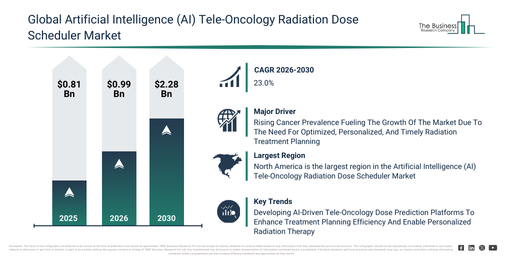
    The artificial intelligence (AI) tele-oncology radiation dose scheduler market has experienced significant expansion in recent years. It is projected to expand from $0.81 billion in 2025 to $0.99 billion in 2026, achieving a compound annual growth rate (CAGR) of 23.3%. This historical growth can be attributed to several factors, including the increasing requirement for remote cancer treatment planning, the growing adoption of tele-oncology platforms, the heightened demand for accurate radiation dose calculation, and the expanding utilization of AI in oncology decision support. Further contributions come from the global rise in cancer incidence, the accelerating digital transformation in hospitals, the increased deployment of cloud-based medical systems, the escalating need for workflow automation in radiotherapy, a sharpened focus on minimizing treatment errors, and the broader integration of intelligent oncology scheduling tools.

    The artificial intelligence (AI) tele-oncology radiation dose scheduler market size is expected to experience significant growth over the next few years. It is predicted to expand to $2.28 billion in 2030, showing a compound annual growth rate (CAGR) of 23.0%. The expansion during this forecast period is driven by factors such as the widening of tele-oncology networks, the adoption of AI-enabled treatment planning platforms, an increasing demand for automated dose calculation systems, the uptake of cloud-based oncology scheduling modules, the deployment of predictive oncology algorithms, the development of remote radiotherapy review tools, the need for precision-based cancer care, the integration of AI tools into oncology departments, partnerships between AI vendors and cancer centers, and the growing acceptance of tele-radiation workflows. Noteworthy trends anticipated in this period include advancements in AI-driven radiotherapy dose prediction, improvements in cloud-based oncology scheduling platforms, progress in real-time dose optimization engines, innovations in automated treatment planning systems, novel developments in predictive oncology algorithms, new approaches in virtual radiation oncology workflows, the integration of tele-oncology with hospital information systems, the merging of AI dose schedulers with imaging platforms, the incorporation of remote dose-review tools for oncologists, and the establishment of multi-center tele-radiation networks.

    Access Your Free Sample Report for In-Depth Market Insights:

    https://www.thebusinessresearchcompany.com/sample.aspx?id=30520&type=smp

    What Drivers Are Influencing Production Trends In The Artificial Intelligence (AI) Tele-Oncology Radiation Dose Scheduler Market?

    The expanding occurrence of cancer is projected to fuel the expansion of the artificial intelligence (AI) tele-oncology radiation dose scheduler market in the future. Cancer is defined as an illness marked by the unchecked proliferation and dissemination of atypical cells, which can harm adjacent tissues and organs if left untreated. The incidence of cancer is growing, attributed to lifestyle factors like inadequate nutrition, tobacco use, alcohol intake, and exposure to environmental contaminants, thereby heightening the likelihood of developing diverse types of cancer. Artificial intelligence (AI) tele-oncology radiation dose schedulers aid in cancer management by refining and tailoring radiation treatment protocols via remote, data-informed assessments. These schedulers enhance patient results by guaranteeing precise dosage, minimizing treatment delays, and facilitating uniform care across different geographical areas. As an illustration, in October 2025, NHS Digital, a UK government body, reported 354,820 new cancer diagnoses in England in 2023, equating to an average of 972 diagnoses daily and marking an increase of 8,605 cases from 2022, with prostate cancer being the predominant diagnosis at 58,137 new cases, showing a 6% rise in registrations year-over-year. Consequently, the increasing prevalence of cancer is propelling the demand for the artificial intelligence (AI) tele-oncology radiation dose scheduler market.

    Which Segment Groups Are Influencing The Artificial Intelligence (AI) Tele-Oncology Radiation Dose Scheduler Market?

    The artificial intelligence (AI) tele-oncology radiation dose scheduler market covered in this report is segmented –

    1) By Component: Software, Hardware, Services

    2) By Technology: Machine Learning Algorithms, Natural Language Processing, Computer Vision, Predictive Analytics

    3) By Deployment Mode: On-Premise (Local Installation), Cloud-Based (SaaS), Hybrid Deployment

    4) By Application: Auto-Contouring And Segmentation (OAR Or Target), Treatment Plan Generation And Optimization, Dose Prediction And Quality Assurance (QA), Workflow And Resource Scheduling Optimization, Adaptive Radiotherapy Planning

    5) By End-User: Hospitals, Cancer Treatment Centers, Research Institutes, Other End-Users

    Subsegments:

    1) By Software: Analytics And Reporting Software, Recommendation Engine Software, Natural Language Processing Software, Machine Learning Model Management Tools, Computer Vision Software, Integration And API Management Software, Mobile And Web Application Software

    2) By Hardware: AI-Optimized Servers, Edge Computing Devices, Sensors And IoT Devices, Smart Cameras, GPUs And AI Accelerators, Storage Systems, Networking And Connectivity Hardware

    3) By Services: Consulting Services, Implementation And Integration Services, Training And Support Services, Managed AI Services, Maintenance And Upgradation Services, Custom AI Development Services, Data Management And Annotation Services

    Which Trends Are Influencing The Performance And Direction Of The Artificial Intelligence (AI) Tele-Oncology Radiation Dose Scheduler Market?

    Leading companies in the AI tele-oncology and radiation therapy market are concentrating on developing advanced solutions, such as AI-powered dose prediction, to forecast personalized radiation dose distributions and improve treatment planning efficiency. These AI-powered dose prediction platforms function as software tools designed to analyze imaging and anatomical data, generate clinically achievable 3D dose distributions, and support timely adjustments for optimizing therapy. For instance, in March 2025, MVision AI, a Finland-based health-tech company, introduced Dose+. This AI-powered dose prediction platform incorporates specialized models for prostate and pelvic lymph node cases, customizes dose distributions to each patient’s anatomy, and supports integration with standard treatment planning systems via DICOM to facilitate efficient planning workflows. This launch represents a significant technological advancement by integrating AI-driven dose prediction into routine clinical practice, bridging traditional planning with automated, patient-specific optimization, and offering clinicians a scalable, efficient solution for precise, personalized radiation therapy.

    Who Are The Major Companies Operating In The Artificial Intelligence (AI) Tele-Oncology Radiation Dose Scheduler Market?

    Major companies operating in the artificial intelligence (AI) tele-oncology radiation dose scheduler market are IBM Corporation, Siemens Healthineers AG, GE HealthCare Technologies Inc., Koninklijke Philips N.V., Varian Medical Systems Inc., Elekta AB, Shanghai United Imaging Healthcare Co. Ltd., Accuray Incorporated, Brainlab AG, RaySearch Laboratories AB, MIM Software Inc., Sun Nuclear Corp., DeepHealth, Radformation Inc., MVision AI Ltd., Mirada Medical Ltd., ViewRay Inc., Oncora Medical, Enlitic, Optellum Ltd.

    Access The Complete Report For Deeper Market Insights:

    https://www.thebusinessresearchcompany.com/report/artificial-intelligence-ai-tele-oncology-radiation-dose-scheduler-market-report

    Which Region Is Anticipated To See The Fastest Growth In The Artificial Intelligence (AI) Tele-Oncology Radiation Dose Scheduler Market?

    North America was the largest region in the AI tele-oncology radiation dose scheduler market in 2025. Asia-Pacific is expected to be the fastest-growing region in the forecast period. The regions covered in the artificial intelligence (AI) tele-oncology radiation dose scheduler market report are Asia-Pacific, South East Asia, Western Europe, Eastern Europe, North America, South America, Middle East, Africa.

    Request Your Customized Artificial Intelligence (AI) Tele-Oncology Radiation Dose Scheduler Market Research Report for Competitive Advantage:

    https://www.thebusinessresearchcompany.com/customise?id=30520&type=smp

    Browse Through More Reports Similar to the Global Artificial Intelligence (AI) Tele-Oncology Radiation Dose Scheduler Market 2026, By The Business Research Company

    Artificial Intelligence In Oncology Market Report 2026

    https://www.thebusinessresearchcompany.com/report/artificial-intelligence-in-oncology-global-market-report

    Radiation Dose Management Market Report 2026

    https://www.thebusinessresearchcompany.com/report/radiation-dose-management-global-market-report

    artificial intelligence ai radiology tool global market report

    https://www.thebusinessresearchcompany.com/report/artificial-intelligence-ai-radiology-tool-global-market-report

    Get in touch with us:

    The Business Research Company: https://www.thebusinessresearchcompany.com/

    Americas +1 310-496-7795

    Asia +44 7882 955267 & +91 8897263534

    Europe +44 7882 955267

    Email us at marketing@tbrc.info

    Follow us on:

    LinkedIn: https://in.linkedin.com/company/the-business-research-company

    YouTube: https://www.youtube.com/channel/UC24_fI0rV8cR5DxlCpgmyFQ

    Global Market Model: https://www.thebusinessresearchcompany.com/global-market-model
  • Artificial Intelligence (AI) Safety Market Forecast 2026–2035: How to Leverage Market Growth

    Artificial Intelligence (AI) Safety Market Forecast 2026–2035: How to Leverage Market Growth

    Uncover key drivers, emerging technologies, and competitive movements shaping the artificial intelligence (ai) safety market from 2026–2035 with trusted insights from The Business Research Company

    What is the expected shift in the Artificial Intelligence (AI) Safety Market’s size between 2026 and 2030?

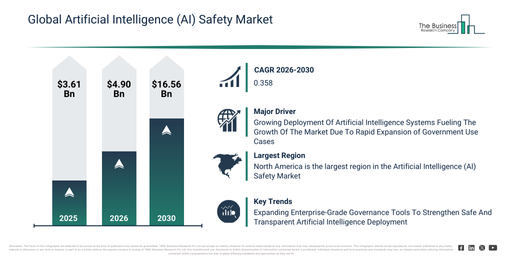
    The artificial intelligence (AI) safety market size has experienced significant expansion recently. It is forecast to grow from $3.61 billion in 2025 to $4.90 billion in 2026, achieving a compound annual growth rate (CAGR) of 35.8 %. This historical growth can be attributed to heightened regulatory scrutiny concerning safe artificial intelligence practices, businesses’ increasing demand for risk-controlled AI deployment, growing apprehension about unintended AI behavior, the wider acceptance of ethical AI frameworks, and increased investment in AI oversight mechanisms.

    The artificial intelligence (AI) safety market is projected to experience substantial growth in the coming years, reaching **$16.56 billion in 2030** with a compound annual growth rate (CAGR) of **35.6 %**. This expansion during the forecast period is driven by increasing demand for explainable and trustworthy AI systems, the growing adoption of AI governance standards, the wider integration of AI safety solutions across various industries, a heightened focus on minimizing AI model bias, and an intensified emphasis on secure AI lifecycle management. Significant trends anticipated for this period include technological progress in AI risk detection, innovative developments in explainable AI modeling, advancements in autonomous system safety protocols, continuous research and development in human-AI alignment, and improvements in AI governance and auditing tools.

    Access Your Free Sample Report for In-Depth Market Insights:

    https://www.thebusinessresearchcompany.com/sample.aspx?id=30519&type=smp

    Which Drivers Are Shaping Strategic Decisions In The Artificial Intelligence (AI) Safety Market?

    The projected growth of the artificial intelligence (AI) safety market is fueled by the expanding use of artificial intelligence systems. These systems are defined as intelligent models or applications capable of significantly impacting safety, civil rights, public services, or critical infrastructure if they malfunction or behave unpredictably. The increase in their deployment stems from the rising demand for automation and efficiency across various industries. This widespread adoption of AI systems necessitates robust safeguards, monitoring, and governance to guarantee their reliable, transparent, and responsible operation in critical contexts, thereby enhancing artificial intelligence (AI) safety. As an illustration, the U.S. Government Accountability Office reported a significant increase in AI use cases, from 571 in 2023 to 1,110 in 2024, with generative AI use cases soaring almost ninefold, from 32 to 282, between the same periods, as of July 2025. Consequently, the expanding implementation of artificial intelligence systems is a key driver for the artificial intelligence (AI) safety market.

    What Segment Classifications Make Up The Artificial Intelligence (AI) Safety Market?

    The artificial intelligence (AI) safety market covered in this report is segmented –

    1) By Component: Software, Hardware, Services

    2) By Deployment Mode: On-Premises, Cloud

    3) By Technology: Machine Learning Safety Systems, Deep Learning Safety Systems, Natural Language Processing Safety Systems, Computer Vision Safety Systems, Reinforcement Learning Safety Systems

    4) By Organization Size: Large Enterprises, Medium Enterprises, Small Enterprises, Micro Enterprises, Public Sector Organizations

    5) By End-User: Banking, Financial Services And Insurance (BFSI), Healthcare, Automotive, Information Technology And Telecommunications, Government, Other End Users

    Subsegments:

    1) By Software: AI Safety Platforms, Robustness And Monitoring Tools, Alignment And Oversight Software, Data Security And Privacy Software

    2) By Hardware: Specialized AI Safety Chips, Secure Enclaves And Trusted Execution Environments, Hardware For Controlled Testing Environments, Biometric And Physical Access Systems

    3) By Services: AI Safety Consulting And Auditing, Red Teaming And Adversarial Testing, Incident Response And Management, Training And Certification

    What Long-Term Trends Are Expected To Shape The Future Of The Artificial Intelligence (AI) Safety Market?

    Major companies operating in the artificial intelligence (AI) safety market are prioritizing the development of technologically advanced solutions, such as open-source model frameworks and enhanced governance functionalities, to elevate transparency, safety adherence, and risk management in enterprise AI deployments. Open-source model frameworks and governance solutions integrate collaborative development, interpretability tools, and community-led safeguards, allowing organizations to build, monitor, and align AI systems effectively while mitigating unintended or harmful outcomes. For example, in May 2024, International Business Machines Corporation, a US-based technology corporation, unveiled the subsequent evolution of its WatsonX platform with open-source product and ecosystem innovations, introducing a family of Granite open-source models and launching InstructLab, a model alignment technique that encourages community contributions and supports safer model development and deployment practices. These enhancements aim to improve visibility, governance, and safety oversight across open and hybrid Artificial Intelligence environments. Therefore, the inclination towards open-source model releases and safety-focused governance innovations is actively shaping the Artificial Intelligence safety market.

    Which Major Firms Are Strengthening Their Position In The Artificial Intelligence (AI) Safety Market?

    Major companies operating in the artificial intelligence (AI) safety market are Microsoft Corporation, OpenAI LLC, MITRE Corporation, Anthropic PBC, DeepMind Technologies Limited, HiddenLayer Inc., Fiddler AI Inc., Arthur AI Inc., ModelOp Center Inc., CalypsoAI Corp., Credo AI Inc., Truera Inc., WhyLabs Inc., Robust Intelligence Inc., Aequitas AI Inc., Fairly AI Inc., Holistic AI Ltd., Goodfire AI Inc., Giskard AI Inc., Center for AI Safety Inc.

    Access The Complete Report For Deeper Market Insights:

    https://www.thebusinessresearchcompany.com/report/artificial-intelligence-ai-safety-market-report

    Which Region Shows The Strongest Potential For Future Expansion In The Artificial Intelligence (AI) Safety Market?

    North America was the largest region in the artificial intelligence (AI) safety market in 2025. Asia-Pacific is expected to be the fastest-growing region in the forecast period. The regions covered in the artificial intelligence (AI) safety market report are Asia-Pacific, South East Asia, Western Europe, Eastern Europe, North America, South America, Middle East, Africa.

    Request Your Customized Artificial Intelligence (AI) Safety Market Research Report for Competitive Advantage:

    https://www.thebusinessresearchcompany.com/customise?id=30519&type=smp

    Browse Through More Reports Similar to the Global Artificial Intelligence (AI) Safety Market 2026, By The Business Research Company

    Ai For Public Security And Safety Market Report 2026

    https://www.thebusinessresearchcompany.com/report/ai-for-public-security-and-safety-global-market-report

    Ai Trust Risk And Security Management Market Report 2026

    https://www.thebusinessresearchcompany.com/report/ai-trust-risk-and-security-management-global-market-report

    artificial intelligence ai in games global market report

    https://www.thebusinessresearchcompany.com/report/artificial-intelligence-ai-in-games-global-market-report

    Get in touch with us:

    The Business Research Company: https://www.thebusinessresearchcompany.com/

    Americas +1 310-496-7795

    Asia +44 7882 955267 & +91 8897263534

    Europe +44 7882 955267

    Email us at marketing@tbrc.info

    Follow us on:

    LinkedIn: https://in.linkedin.com/company/the-business-research-company

    YouTube: https://www.youtube.com/channel/UC24_fI0rV8cR5DxlCpgmyFQ

    Global Market Model: https://www.thebusinessresearchcompany.com/global-market-model
  • Global Artificial Intelligence (AI) Productivity Tools Market 2026–2030: Forecast Insights for Business Planning

    Global Artificial Intelligence (AI) Productivity Tools Market 2026–2030: Forecast Insights for Business Planning

    Uncover key drivers, emerging technologies, and competitive movements shaping the artificial intelligence (ai) productivity tools market from 2026–2035 with trusted insights from The Business Research Company

    What growth pattern is forecast for the Artificial Intelligence (AI) Productivity Tools Market size between 2026 and 2035?

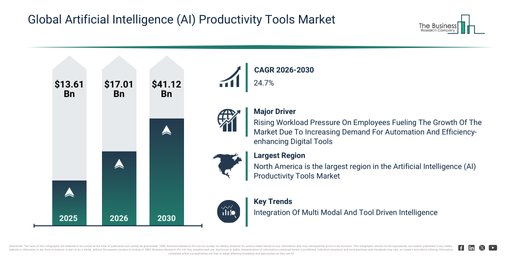
    The market size for artificial intelligence (AI) productivity tools has seen substantial expansion in recent years. This market is projected to grow from $13.61 billion in 2025 to $17.01 billion in 2026, at a compound annual growth rate (CAGR) of 25.0%. Historically, this growth can be attributed to increased enterprise automation adoption, the rising use of cloud-based workforce tools, a greater demand for remote collaboration, the expansion of digital transformation initiatives, and an increase in data-driven decision-making.

    The artificial intelligence (AI) productivity tools market is poised for significant expansion over the coming years. Projections indicate it will reach $41.12 billion by 2030, exhibiting a compound annual growth rate (CAGR) of 24.7%. This anticipated expansion is driven by factors such as increasing investment in AI-powered productivity platforms, the wider acceptance of generative AI assistants, a growing demand for large-scale workflow optimization, the broader integration of AI across various business applications, and a heightened emphasis on cost-effective process automation. Key trends anticipated in this period include technological breakthroughs in generative AI models, ongoing innovation in automation workflows, swift advancements in multimodal AI tools, increased research and development in productivity-focused AI, and emerging progress in adaptive and personalized AI systems.

    Access Your Free Sample Report for In-Depth Market Insights:

    https://www.thebusinessresearchcompany.com/sample.aspx?id=30517&type=smp

    Which Drivers Are Impacting Market Performance In The Artificial Intelligence (AI) Productivity Tools Market?

    The growing workload pressure on employees is expected to stimulate the expansion of the artificial intelligence (AI) productivity tools market moving forward. Employee workload pressure refers to the degree of physical and mental strain workers experience due to significant job demands, tight deadlines, long working hours, or insufficient staffing. This increasing workload pressure on employees is attributed to rising organizational cost optimization, as companies reduce staffing levels while sustaining or expanding operational output. Workload pressure on employees boosts the adoption of artificial intelligence–based productivity tools by generating demand for solutions that automate tasks, improve efficiency, and decrease time spent on repetitive work. For instance, in January 2025, Mental Health UK, a UK-based charitable organization, reported that the risk of burnout remains substantial, with 34% of adults consistently experiencing high or extreme levels of pressure or stress in the past year, which is broadly in line with the 35% recorded in the previous year. Therefore, the rising workload pressure on employees is a primary driver for the artificial intelligence (AI) productivity tools market.

    What Segment Types Are Examined In The Artificial Intelligence (AI) Productivity Tools Market?

    The artificial intelligence (AI) productivity tools market covered in this report is segmented –

    1) By Offering Or Product Type: Virtual Assistants, Document Management, Robotic Process Automation (RPA), Data Analytics And Business Intelligence, Content Creation And Writing Assistance, Code Generation And Assistance, Project Management Tools, Communication And Collaboration Tools, Artificial Intelligence (AI)-Powered Scheduling Tools

    2) By Deployment: Cloud-Based, On-Premises, Hybrid

    3) By Technology: Machine Learning And Deep Learning, Natural Language Processing, Computer Vision, Generative Artificial Intelligence (AI), Other Technologies

    4) By Application: Content Creation And Writing Assistance, Code Development And Assistance, Communication And Meeting Enhancement, Task And Project Management, Data Analysis And Visualization, Other Applications

    5) By End Use: Banking, Financial Services, And Insurance (BFSI), Healthcare, Retail And E-Commerce, Information Technology (IT) And Telecom, Media And Entertainment, Other End Uses

    Subsegments:

    1) By Virtual Assistants: Voice-Based Assistants, Text-Based Assistants, Multimodal Assistants, Task-Oriented Assistants, Customer Support Assistants

    2) By Document Management: Intelligent Document Processing, Automated File Organization, Document Summarization, Document Classification, Smart Search And Retrieval

    3) By Robotic Process Automation (RPA): Rule-Based Automation, Cognitive Automation, Workflow Automation, Intelligent Data Extraction, Automated Error Handling

    4) By Data Analytics And Business Intelligence: Predictive Analytics, Diagnostic Analytics, Prescriptive Analytics, Real-Time Analytics, Natural Language Query Analytics

    5) By Content Creation And Writing Assistance: Text Generation Tools, Editing And Proofreading Tools, Creative Content Tools, Marketing Copy Tools, Academic Writing Tools

    6) By Code Generation And Assistance: Code Completion Tools, Code Review Tools, Code Debugging Tools, Automated Documentation Tools, Software Testing Tools

    7) By Project Management Tools: Task Automation Tools, Resource Allocation Tools, Workflow Optimization Tools, Risk Analysis Tools, Timeline Forecasting Tools

    8) By Communication And Collaboration Tools: Intelligent Meeting Assistants, Automated Transcription Tools, Team Messaging Tools, Real-Time Translation Tools, Collaboration Enhancement Tools

    9) By Artificial Intelligence (AI)-Powered Scheduling Tools: Automated Calendar Management, Meeting Coordination Tools, Availability Prediction Tools, Resource Scheduling Tools, Time Optimization Tools

    Which Market Trends Are Opening Growth Opportunities In The Artificial Intelligence (AI) Productivity Tools Market?

    Major companies operating in the artificial intelligence (AI) productivity tools market are focusing on technological advancements, such as autonomous artificial intelligence (AI) agent technologies, with the goal of automating complex workflows, minimizing manual intervention, and substantially increasing productivity across various tasks and industries. Autonomous artificial intelligence (AI) agent technologies refer to sophisticated artificial intelligence (AI) systems designed to independently plan, execute, and finalize multi-step tasks including data analysis, content creation, and workflow automation without requiring constant human instructions, thereby evolving traditional productivity tools into proactive digital collaborators. As an illustration, in March 2025, Beijing Butterfly Effect Technology Co. Ltd. (Monica), a Singapore-China-based artificial intelligence (AI) startup, launched Manus artificial intelligence (AI), which is a next-generation autonomous artificial intelligence (AI) agent. This new solution provides independent task execution capabilities to automate complex processes with minimal user input, offers multi-modal processing for handling text, images, and code within unified workflows, and includes advanced tool integration for seamless interaction with external systems, all aimed at enhancing real-world productivity outcomes.

    Who Are The Primary Competitors In The Global Artificial Intelligence (AI) Productivity Tools Market?

    Major companies operating in the artificial intelligence (AI) productivity tools market are Nvidia Corporation, Blue Yonder Group Inc., Cognex Corporation, Asana Inc., Lectra SA, Zapier Inc., Centric Software Inc., Datacolor AG, Inspectorio Inc., Uptake Technologies Inc., Alvanon Inc., Coats Digital Ltd., Optitex Ltd., Landing AI inc., Vue.ai, Techmind Solutions LLC, Deepomatic SAS, Resonance Companies Inc., Texel Inc., Unspun Inc., Sewbo Inc.

    Access The Complete Report For Deeper Market Insights:

    https://www.thebusinessresearchcompany.com/report/artificial-intelligence-ai-productivity-tools-market-report

    Which Global Regions Are Shaping The Competitive Landscape Of The Artificial Intelligence (AI) Productivity Tools Market?

    North America was the largest region in the AI productivity tools market in 2025. Asia-Pacific is expected to be the fastest-growing region in the forecast period. The regions covered in the artificial intelligence (AI) productivity tools market report are Asia-Pacific, South East Asia, Western Europe, Eastern Europe, North America, South America, Middle East, Africa.

    Request Your Customized Artificial Intelligence (AI) Productivity Tools Market Research Report for Competitive Advantage:

    https://www.thebusinessresearchcompany.com/customise?id=30517&type=smp

    Browse Through More Reports Similar to the Global Artificial Intelligence (AI) Productivity Tools Market 2026, By The Business Research Company

    Productivity Software Market Report 2026

    https://www.thebusinessresearchcompany.com/report/productivity-software-global-market-report

    Business Productivity Software Market Report 2026

    https://www.thebusinessresearchcompany.com/report/business-productivity-software-global-market-report

    artificial intelligence ai studio global market report

    https://www.thebusinessresearchcompany.com/report/artificial-intelligence-ai-studio-global-market-report

    Get in touch with us:

    The Business Research Company: https://www.thebusinessresearchcompany.com/

    Americas +1 310-496-7795

    Asia +44 7882 955267 & +91 8897263534

    Europe +44 7882 955267

    Email us at marketing@tbrc.info

    Follow us on:

    LinkedIn: https://in.linkedin.com/company/the-business-research-company

    YouTube: https://www.youtube.com/channel/UC24_fI0rV8cR5DxlCpgmyFQ

    Global Market Model: https://www.thebusinessresearchcompany.com/global-market-model
  • Artificial Intelligence (AI) Math Problem Tutors Market Outlook 2026–2035: Growth Drivers and Industry Forecast

    Artificial Intelligence (AI) Math Problem Tutors Market Outlook 2026–2035: Growth Drivers and Industry Forecast

    Uncover key drivers, emerging technologies, and competitive movements shaping the artificial intelligence (ai) math problem tutors market from 2026–2035 with trusted insights from The Business Research Company

    How much larger will the Artificial Intelligence (AI) Math Problem Tutors Market be in 2030 compared with 2026?

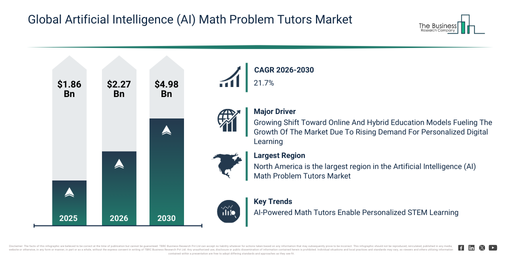
    The artificial intelligence (AI) math problem tutors market has experienced significant expansion in its size over recent years. It is projected to increase from $1.86 billion in 2025 to $2.27 billion in 2026, at a compound annual growth rate (CAGR) of 22.0%. Factors contributing to this growth in the past include the rising adoption of digital learning tools, increasing reliance on online math tutoring, the growing need for personalized student support, the expansion of K-12 STEM programs, and rising parental spending on supplementary math education.

    The market for artificial intelligence (AI) math problem tutors is projected to experience rapid expansion over the coming years. This market is set to reach $4.98 billion by 2030, demonstrating a compound annual growth rate (CAGR) of 21.7%. Several factors will drive this growth during the forecast period, including the rising demand for AI-driven math tutoring, increased adoption of adaptive learning platforms, the expanding reach of mobile math learning applications, a heightened emphasis on enhancing STEM skills, and the wider integration of AI tutors into hybrid classroom settings. Key trends anticipated during this period involve technological progress in AI reasoning models, breakthroughs in adaptive math algorithms, advancements in multimodal math comprehension, ongoing research and development in AI-powered tutoring systems, and the incorporation of sophisticated AI capabilities into educational platforms.

    Access Your Free Sample Report for In-Depth Market Insights:

    https://www.thebusinessresearchcompany.com/sample.aspx?id=30514&type=smp

    What Drivers Are Guiding Growth Patterns In The Artificial Intelligence (AI) Math Problem Tutors Market?

    The increasing adoption of online and hybrid education models is anticipated to drive the expansion of the artificial intelligence (AI) math problem tutors market in the future. These educational frameworks integrate digital platforms with traditional classroom teaching, providing students with access to learning content at any time and location. The surge in online and hybrid education models stems from a heightened demand for adaptable and accessible learning solutions. The AI math problem tutors market facilitates these models by offering intelligent tutoring systems that create customized math problems, evaluate student performance, and adjust learning paths dynamically. For instance, in September 2024, the Institute of Education Sciences, a US government agency, reported that during the 2022–23 school year, approximately 3.4% of students were homeschooled, while 2.5% were engaged in full-time virtual education. Thus, the ongoing transition towards online and hybrid education models is stimulating the growth of the artificial intelligence (AI) math problem tutors market.

    Which Segments Are Driving Activity In The Artificial Intelligence (AI) Math Problem Tutors Market?

    The artificial intelligence (AI) math problem tutors market covered in this report is segmented –

    1) By Component: Software, Services

    2) By Deployment Mode: Cloud-Based, On-Premises

    3) By Technology: Machine Learning and Predictive Analytics, Natural Language Processing (NLP), Computer Vision, Generative Artificial Intelligence (AI)

    4) By Application: K-12 Education, Higher Education, Test Preparation, Professional Training, Other Applications

    5) By End-User: Students, Educational Institutions, Private Tutors, Other End-Users

    Subsegments:

    1) By Software: Interactive Learning Platforms, Intelligent Problem Solving Engines, Automated Feedback Systems, Adaptive Learning Modules, Performance Analytics Tools, Virtual Classroom Interfaces

    2) By Services: Implementation Support Services, Training And Onboarding Services, Technical Assistance Services, Customization And Integration Services, Subscription Management Services, Continuous Improvement Services

    How Are Emerging Trends Affecting The Progression Of The Artificial Intelligence (AI) Math Problem Tutors Market?

    Major companies within the artificial intelligence (AI) math problem tutors market are concentrating on developing advanced products, such as AI-powered learning assistants, to enhance educational accessibility, improve personalized learning, and reduce obstacles to understanding complex topics. AI-powered learning assistants are sophisticated artificial intelligence systems designed to deliver interactive, step-by-step explanations and solutions for challenging subjects like mathematics. For instance, in November 2023, Google LLC, a US-based technology company, introduced an AI-powered math tutor. This intelligent, search-integrated tool possesses the capability to process text and visual queries using Google Lens to comprehend student problems, thereby significantly reducing the difficulty of articulating technical questions. It incorporates functionality for step-by-step problem-solving and personalized practice, facilitating seamless learning across various skill levels and topics without requiring a dedicated platform. Moreover, its integration into everyday tools such as Search expands its reach and lowers the cost for students to access educational support.

    Which Key Market Players Are Investing In Expansion And Innovation Within The Artificial Intelligence (AI) Math Problem Tutors Market?

    Major companies operating in the artificial intelligence (AI) math problem tutors market are Google LLC, Microsoft Corporation, Chegg Inc., Eldan Recycling A/S, Wolfram Alpha, Quizlet Inc., Khan Academy Inc., Bartleby Learn Inc., Pearson plc, Symbolab, Tutor.com Inc., Cuemath Private Limited, Doubtnut Learning Solutions Pvt. Ltd., Photomath Inc., Snapask Ltd., Cognii Inc., Mathway LLC, Querium Corporation, TutorOcean Inc., BYJU’S

    Access The Complete Report For Deeper Market Insights:

    https://www.thebusinessresearchcompany.com/report/artificial-intelligence-ai-math-problem-tutors-market-report

    Which Regions Are Poised For Strategic Growth In The Artificial Intelligence (AI) Math Problem Tutors Market?

    North America was the largest region in the artificial intelligence (AI) math problem tutors market in 2025. Asia-Pacific is expected to be the fastest-growing region in the forecast period. The regions covered in the artificial intelligence (AI) math problem tutors market report are Asia-Pacific, South East Asia, Western Europe, Eastern Europe, North America, South America, Middle East, Africa.

    Request Your Customized Artificial Intelligence (AI) Math Problem Tutors Market Research Report for Competitive Advantage:

    https://www.thebusinessresearchcompany.com/customise?id=30514&type=smp

    Browse Through More Reports Similar to the Global Artificial Intelligence (AI) Math Problem Tutors Market 2026, By The Business Research Company

    Ai In Education Market Report 2026

    https://www.thebusinessresearchcompany.com/report/ai-in-education-global-market-report

    Artificial Intelligence Market Report 2026

    https://www.thebusinessresearchcompany.com/report/artificial-intelligence-global-market-report

    artificial intelligence ai studio global market report

    https://www.thebusinessresearchcompany.com/report/artificial-intelligence-ai-studio-global-market-report

    Get in touch with us:

    The Business Research Company: https://www.thebusinessresearchcompany.com/

    Americas +1 310-496-7795

    Asia +44 7882 955267 & +91 8897263534

    Europe +44 7882 955267

    Email us at marketing@tbrc.info

    Follow us on:

    LinkedIn: https://in.linkedin.com/company/the-business-research-company

    YouTube: https://www.youtube.com/channel/UC24_fI0rV8cR5DxlCpgmyFQ

    Global Market Model: https://www.thebusinessresearchcompany.com/global-market-model
  • Artificial Intelligence (AI) In Energy Distribution Market 2026–2030: Emerging Trends and Forecast Opportunities

    Artificial Intelligence (AI) In Energy Distribution Market 2026–2030: Emerging Trends and Forecast Opportunities

    Uncover key drivers, emerging technologies, and competitive movements shaping the artificial intelligence (ai) in energy distribution market from 2026–2035 with trusted insights from The Business Research Company

    Starting from its 2026 valuation, what market size is the Artificial Intelligence (AI) In Energy Distribution Market expected to reach by 2030?

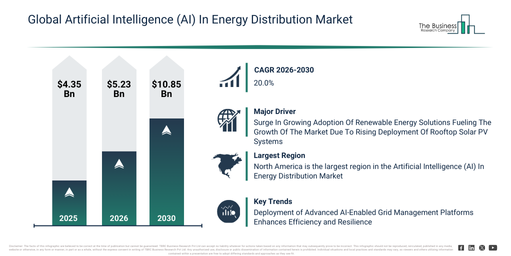
    The artificial intelligence (AI) in energy distribution (ED) market has observed rapid expansion in recent years. Its valuation is anticipated to climb from $4.35 billion in 2025 to $5.23 billion in 2026, achieving a compound annual growth rate (CAGR) of 20.3%. The historical growth of this market can be ascribed to the increasing uptake of smart grid technologies, a rising need for efficient energy management, the expanding deployment of predictive maintenance within distribution networks, broader integration of renewable energy sources, and an enhanced focus on mitigating operational losses and outages.

    The artificial intelligence (AI) in energy distribution (ED) market is projected to experience substantial expansion over the upcoming years. It is forecast to reach a valuation of $10.85 billion by 2030, exhibiting a compound annual growth rate (CAGR) of 20.0%. This projected expansion during the forecast period is driven by several factors, including the increasing incorporation of AI for monitoring energy in real time, a rise in the uptake of automated demand response systems, expanding investments in intelligent energy distribution infrastructure, broader grid modernization and digitalization efforts, and an increase in the implementation of advanced analytics for optimizing energy usage. Key developments anticipated during this period encompass technology-led advancements in grid automation, progress in AI-powered predictive and prescriptive analytics, enhancements in real-time energy monitoring and control solutions, increased research and development focused on renewable energy integration, and novel approaches to automated and intelligent distribution network management.

    Access Your Free Sample Report for In-Depth Market Insights:

    https://www.thebusinessresearchcompany.com/sample.aspx?id=30509&type=smp

    What Drivers Are Driving Adoption Within The Artificial Intelligence (AI) In Energy Distribution Market?

    The increasing implementation of renewable energy solutions is anticipated to stimulate expansion in the artificial intelligence (AI) in energy distribution (ED) market in the future. This adoption of renewable energy signifies the broader utilization of clean and sustainable power sources, particularly solar, wind, and other forms of non-fossil electricity generation, to satisfy increasing power requirements. The rise in renewable energy uptake is a direct result of enhanced global governmental and private sector endeavors to diminish greenhouse gas emissions, meet climate objectives, and foster widespread sustainable energy availability. Artificial intelligence (AI) in energy distribution (ED) facilitates the integration of renewable energy solutions by enhancing grid management, predicting energy demand, and seamlessly incorporating diverse renewable sources. It boosts operational efficiency and dependability by enabling instantaneous decision-making, minimizing energy wastage, and allowing for the smooth inclusion of solar, wind, and other sustainable resources. For instance, in June 2024, figures from the Department for Energy Security and Net Zero, a UK government department, revealed that in the first quarter of 2024, renewable electricity generation saw an increase of 3.7% to 39.2 TWh, primarily driven by onshore wind. This elevated renewables’ portion of total generation to 50.9% and expanded installed capacity by 2.5 GW compared to the first quarter of 2023. Consequently, the expanding deployment of renewable energy solutions is propelling the development of the artificial intelligence (AI) in energy distribution (ED) market.

    How Is The Artificial Intelligence (AI) In Energy Distribution Market Organized Into Various Segments?

    The artificial intelligence (AI) in energy distribution market covered in this report is segmented –

    1) By Component: Solutions, Services, Other Components

    2) By Deployment: Cloud-Based Deployment, On-Premises Deployment, Other Deployment Modes

    3) By End Use: Industrial, Commercial, Residential, Other End Users

    4) By Application: Smart Grid Management, Predictive Maintenance And Equipment Monitoring, Energy Demand Forecasting, Renewable Energy Integration, Other Applications

    Subsegments:

    1) By Solutions: Grid Management Solutions, Fault Detection Solutions, Demand Forecasting Solutions, Energy Optimization Solutions

    2) By Services: Consulting Services, Integration Services, Maintenance Services, Training and Support Services

    3) By Other Components: Data Storage Units, Communication Modules, Sensors and Meters, Network Infrastructure Components

    Which Innovation Trends Are Advancing Developments Within The Artificial Intelligence (AI) In Energy Distribution Market?

    Leading firms within the artificial intelligence (AI) in energy distribution (ED) market are concentrating on creating sophisticated platforms, including advanced AI-enabled grid management platforms, with the aim of enhancing grid planning, operational processes, and asset oversight. These AI-enabled grid management platforms denote comprehensive software systems that leverage artificial intelligence for real-time monitoring, forecasting, and optimization of electricity generation, transmission, and distribution, thereby fostering a more efficient, resilient, and sustainable power network. As an illustration, in November 2025, Schneider Electric SE, a France-based energy management technology company, introduced its One Digital Grid Platform, which incorporates AI functionalities for providing real-time estimates for outage restoration. This platform is a modular, AI-powered solution for utilities, integrating asset management, operational activities, and strategic planning, thereby facilitating innovation without requiring costly infrastructure upgrades. Furthermore, it provides integrated technologies designed to boost dependability, enhance productivity, and refine customer engagements.

    Who Are The Core Companies Influencing Trends In The Artificial Intelligence (AI) In Energy Distribution Market?

    Major companies operating in the artificial intelligence (AI) in energy distribution market are Siemens Aktiengesellschaft, Honeywell International Inc., ABB Ltd, Atos SE, Alpiq Holding AG, Stem Inc., Fluentgrid Limited, Gridware Inc., AutoGrid Systems Inc., Energi Mine Ltd, AppOrchid Inc, Verdigris Technologies Inc., Gridcog Ltd, Octopus Energy Group Ltd, Tibo Energy B.V., reLi Energy GmbH, Podero GmbH, DaisyChain Energy Inc., Tewke Ltd, Volto Technologies Inc., Irasus Technologies Private Limited, Dotnitron Technologies Private Limited

    Access The Complete Report For Deeper Market Insights:

    https://www.thebusinessresearchcompany.com/report/artificial-intelligence-ai-in-energy-distribution-market-report

    Which Regions Are Projected To Dominate The Artificial Intelligence (AI) In Energy Distribution Market In The Coming Years?

    North America was the largest region in the artificial intelligence (AI) in energy distribution (ED) market in 2025. Asia-Pacific is expected to be the fastest-growing region in the forecast period. The regions covered in the artificial intelligence (AI) in energy distribution market report are Asia-Pacific, South East Asia, Western Europe, Eastern Europe, North America, South America, Middle East, Africa.

    Request Your Customized Artificial Intelligence (AI) In Energy Distribution Market Research Report for Competitive Advantage:

    https://www.thebusinessresearchcompany.com/customise?id=30509&type=smp

    Browse Through More Reports Similar to the Global Artificial Intelligence (AI) In Energy Distribution Market 2026, By The Business Research Company

    Artificial Intelligence Ai In Energy And Power Market Report 2026

    https://www.thebusinessresearchcompany.com/report/artificial-intelligence-ai-in-energy-and-power-global-market-report

    Ai In Energy Market Report 2026

    https://www.thebusinessresearchcompany.com/report/ai-in-energy-global-market-report

    artificial intelligence ai engineering global market report

    https://www.thebusinessresearchcompany.com/report/artificial-intelligence-ai-engineering-global-market-report

    Get in touch with us:

    The Business Research Company: https://www.thebusinessresearchcompany.com/

    Americas +1 310-496-7795

    Asia +44 7882 955267 & +91 8897263534

    Europe +44 7882 955267

    Email us at marketing@tbrc.info

    Follow us on:

    LinkedIn: https://in.linkedin.com/company/the-business-research-company

    YouTube: https://www.youtube.com/channel/UC24_fI0rV8cR5DxlCpgmyFQ

    Global Market Model: https://www.thebusinessresearchcompany.com/global-market-model
  • Global Artificial Intelligence (AI) Image Upscaling Chip Market Forecast 2026–2035: Long-Term Growth Insights

    Global Artificial Intelligence (AI) Image Upscaling Chip Market Forecast 2026–2035: Long-Term Growth Insights

    Uncover key drivers, emerging technologies, and competitive movements shaping the artificial intelligence (ai) image upscaling chip market from 2026–2035 with trusted insights from The Business Research Company

    Across 2026–2030, what is the expected market valuation path of the Artificial Intelligence (AI) Image Upscaling Chip Market?

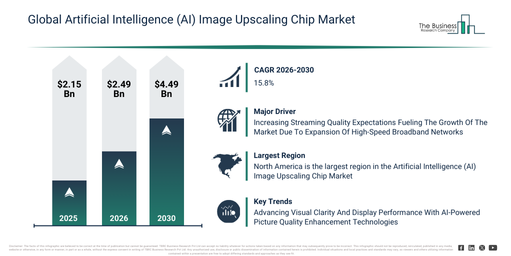
    The artificial intelligence (AI) image upscaling chips market has seen substantial growth in recent years. This market is projected to expand from $2.15 billion in 2025 to $2.49 billion by 2026, achieving a compound annual growth rate (CAGR) of 16.2%. The historical growth can be linked to the increasing use of high-resolution displays, the growing adoption of AI-enabled smartphones and cameras, the proliferation of media and entertainment streaming services, heightened demand for video surveillance applications, and the rising penetration of the gaming and AR/VR markets.

    The artificial intelligence (AI) image upscaling chips market size is anticipated to experience substantial growth over the coming years, reaching $4.49 billion by 2030 with a compound annual growth rate (CAGR) of 15.8%. This projected expansion is driven by factors such as the increasing integration of SoC-based AI upscaling modules, the rising adoption of edge AI processing, the broadening of automotive infotainment and ADAS systems, a surge in industrial imaging and machine vision applications, and enhanced investment in semiconductor research and development for AI hardware. Key trends for this period encompass advancements in deep learning-based super-resolution algorithms, the incorporation of AI upscaling into SoCs and GPUs, the development of low-power, high-efficiency chips, innovations in multi-modal image enhancement, and research focused on neural network compression and optimization.

    Access Your Free Sample Report for In-Depth Market Insights:

    https://www.thebusinessresearchcompany.com/sample.aspx?id=30507&type=smp

    Which Drivers Are Supporting The Rise Of The Artificial Intelligence (AI) Image Upscaling Chip Market?

    The rising expectations for streaming quality are projected to propel the growth of the artificial intelligence (AI) image upscaling chip market moving forward. These streaming quality expectations signify the consumer need for high-definition, buffer-free, and engaging video content across a range of devices. As consumers grow accustomed to high-resolution large screens and immersive formats, their streaming quality expectations are increasing, leading to a demand for sharper visuals, smoother playback, and richer audio as standard features. AI image upscaling chips support these streaming quality expectations by enhancing lower-resolution content to near-native high definition, thereby ensuring sharper visuals on large screens. They also improve playback consistency by minimizing visual artifacts and optimizing frame clarity in real time, delivering a smoother and more immersive viewing experience. For example, in September 2023, according to the Office of Communications, a UK-based statutory regulator for communications services, in March 2023, 73% of Netflix videos were reliably delivered in ultra high definition, an increase from 69% in March 2022, while 22% were streamed in high definition and only 4% in standard definition. Consequently, the increasing streaming quality expectations are driving the growth of the artificial intelligence (AI) image upscaling chip market.

    What Segments Are Identified Within The Structure Of The Artificial Intelligence (AI) Image Upscaling Chip Market?

    The artificial intelligence (AI) image upscaling chip market covered in this report is segmented –

    1) By Chip Type: Application-Specific Integrated Circuit, Field-Programmable Gate Array, Graphics Processing Unit, System On Chip, Other Chip Types

    2) By Technology: Super-Resolution, Deep Learning, Edge Artificial Intelligence, Other Technologies

    3) By Application: Consumer Electronics, Automotive, Healthcare, Industrial, Media And Entertainment, Other Applications

    4) By End-User: Original Equipment Manufacturers, Aftermarket, Other End-Users

    Subsegments:

    1) By Application-Specific Integrated Circuit: Neural Network Accelerator, Dedicated Upscaling Processor, Hardware-Based Image Enhancement Engine, Low-Power Upscaling Chip, Integrated Upscaling Module

    2) By Field-Programmable Gate Array: Reconfigurable Neural Processor, Custom Upscaling Accelerator, Edge AI Upscaling Module, Programmable Image Enhancement Chip, Low-Latency Upscaling Processor

    3) By Graphics Processing Unit: Artificial Intelligence-Enhanced Graphics Processor, Deep Learning Upscaling Engine, High-Resolution Video Processor, Real-Time Image Enhancement Graphics Processing Unit, Multi-Core Upscaling Processor

    4) By System On Chip: Integrated Artificial Intelligence Upscaling SoC, Mobile Device Upscaling Chip, Edge Artificial Intelligence System On Chip Module, High-Performance Video Upscaling System On Chip, Low-Power Integrated Upscaling Module

    5) By Other Chip Types: Hybrid Upscaling Processor, Research And Development Prototype Chip, Experimental Neural Upscaling Module, Custom Edge AI Chip, Specialized Imaging Processor

    Which Competitive Trends Are Impacting The Structure Of The Artificial Intelligence (AI) Image Upscaling Chip Market?

    Leading companies in the artificial intelligence (AI) image upscaling chip market are concentrating on developing advanced solutions, such as AI-driven picture quality enhancement technologies, to provide clearer visuals, improved color fidelity, and immersive viewing experiences across consumer electronics. These AI-powered picture quality enhancement technologies refer to artificial intelligence-based algorithms embedded at the chip level that intelligently boost resolution, reduce noise, sharpen contrast, and optimize brightness in real time, adapting to content and display characteristics. For instance, in January 2025, MediaTek Inc., a Taiwan-based fabless semiconductor company, introduced MiraVision Pro. This suite of AI-powered technologies, making its debut on the Pentonic 800 smart TV chipset, features AI-Super Resolution 3.0 for seamless scaling across resolutions, 500K-zone AI-Contrast 2.0 for precise HDR quality, and AI-based On-Screen-Display upscaling to enhance user interface clarity beyond standard 4K, all powered by an integrated neural processing unit to deliver cinematic-grade visuals. MiraVision Pro integrates AI-powered picture quality enhancement technologies that dynamically analyze video frames to upscale lower-resolution content while preserving fine details and natural textures. This launch enables device manufacturers to offer premium, high-definition viewing experiences without increasing power consumption or hardware complexity.

    Which Major Industry Participants Are Leading The Artificial Intelligence (AI) Image Upscaling Chip Market Growth?

    Major companies operating in the artificial intelligence (AI) image upscaling chip market are Apple Inc., Samsung Electronics Co. Ltd., Intel Corporation, Qualcomm Incorporated, NVIDIA Corporation, MediaTek Inc., Realtek Semiconductor Corp., Synopsys Inc., Cadence Design Systems Inc., Novatek Microelectronics Corp., Socionext Inc., Magnachip Semiconductor Corporation, Ambarella Inc., Rockchip Electronics Co. Ltd., CEVA Inc., HiSilicon (Shanghai) Technologies Co. Ltd., Amlogic Inc., Pixelworks Inc., Axera Semiconductor Co. Ltd., Advanced Micro Devices Inc., Black Sesame Technologies Inc., Hailo Technologies Ltd.

    Access The Complete Report For Deeper Market Insights:

    https://www.thebusinessresearchcompany.com/report/artificial-intelligence-ai-image-upscaling-chip-market-report

    Which Region Is Expected To Experience The Fastest Growth In The Artificial Intelligence (AI) Image Upscaling Chip Market?

    North America was the largest region in the artificial intelligence (AI) image upscaling chips market in 2025. Asia-Pacific is expected to be the fastest-growing region in the forecast period. The regions covered in the artificial intelligence (AI) image upscaling chip market report are Asia-Pacific, South East Asia, Western Europe, Eastern Europe, North America, South America, Middle East, Africa.

    Request Your Customized Artificial Intelligence (AI) Image Upscaling Chip Market Research Report for Competitive Advantage:

    https://www.thebusinessresearchcompany.com/customise?id=30507&type=smp

    Browse Through More Reports Similar to the Global Artificial Intelligence (AI) Image Upscaling Chip Market 2026, By The Business Research Company

    Artificial Intelligence Ai Image Generator Market Report 2026

    https://www.thebusinessresearchcompany.com/report/artificial-intelligence-ai-image-generator-global-market-report

    Artificial Intelligence Chip Market Report 2026

    https://www.thebusinessresearchcompany.com/report/artificial-intelligence-chip-global-market-report

    artificial intelligence AI chipsets global market report

    https://www.thebusinessresearchcompany.com/report/artificial-intelligence-ai-chipsets-global-market-report

    Get in touch with us:

    The Business Research Company: https://www.thebusinessresearchcompany.com/

    Americas +1 310-496-7795

    Asia +44 7882 955267 & +91 8897263534

    Europe +44 7882 955267

    Email us at marketing@tbrc.info

    Follow us on:

    LinkedIn: https://in.linkedin.com/company/the-business-research-company

    YouTube: https://www.youtube.com/channel/UC24_fI0rV8cR5DxlCpgmyFQ

    Global Market Model: https://www.thebusinessresearchcompany.com/global-market-model
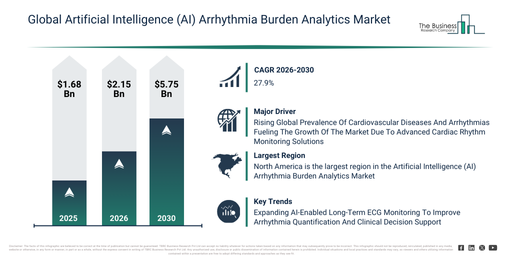
  • Artificial Intelligence (AI) Arrhythmia Burden Analytics Market 2026–2030: Forecasting Business Opportunities Ahead

    Artificial Intelligence (AI) Arrhythmia Burden Analytics Market 2026–2030: Forecasting Business Opportunities Ahead

    Uncover key drivers, emerging technologies, and competitive movements shaping the artificial intelligence (ai) arrhythmia burden analytics market from 2026–2035 with trusted insights from The Business Research Company

    What size range is anticipated for the Artificial Intelligence (AI) Arrhythmia Burden Analytics Market from 2026 to 2030?

    The artificial intelligence (AI) arrhythmia burden analytics market has experienced substantial growth in its size during recent years. It will grow from $1.68 billion in 2025 to $2.15 billion in 2026 at a compound annual growth rate (CAGR) of 28.2%. The expansion observed during the past period stems from several factors, including the increasing incidence of cardiovascular diseases, wider embrace of wearable ECG monitors, heightened need for prompt arrhythmia detection, the broadening scope of remote patient monitoring platforms, and increased capital flow into digital health infrastructure.

    The artificial intelligence (AI) arrhythmia burden analytics market is projected to undergo substantial growth in the next few years. It is anticipated to reach $5.75 billion in 2030, exhibiting a compound annual growth rate (CAGR) of 27.9%. This expansion during the forecast period is driven by the increasing integration of AI within healthcare IT systems, a growing emphasis on predictive and personalized cardiac care, the rising adoption of cloud-based AI deployment, the continued expansion of AI research and development, and enhanced regulatory support for AI-driven medical devices. Key trends for the forecast period include innovation in predictive algorithms, advancements in cloud-based deployment, the integration of technology with wearable devices, investment in data analytics platforms, and the development of AI-enabled diagnostic software.

    Access Your Free Sample Report for In-Depth Market Insights:

    https://www.thebusinessresearchcompany.com/sample.aspx?id=30503&type=smp

    What Drivers Are Affecting Demand In The Artificial Intelligence (AI) Arrhythmia Burden Analytics Market?

    The increasing worldwide incidence of cardiovascular diseases and arrhythmias is anticipated to propel the expansion of the artificial intelligence (AI) arrhythmia burden analytics market moving forward. Cardiovascular diseases and arrhythmias refer to the rising number of individuals globally affected by heart and blood vessel disorders, including irregular heart rhythms such as atrial fibrillation, which are significant causes of death and disability worldwide. This rise in prevalence is attributed to aging populations and heightened exposure to risk factors like hypertension, obesity, and diabetes, all of which elevate the likelihood of developing arrhythmias. Artificial intelligence (AI) arrhythmia burden analytics assists in addressing cardiovascular diseases and arrhythmias through continuous, precise examination of cardiac rhythm data, thereby enhancing the early detection and management of arrhythmic events. For instance, in August 2025, data from the Centers for Disease Control and Prevention, a public health agency located in Switzerland, indicated that 90% of the nation’s 4.9 trillion dollars in annual health care spending is linked to individuals with chronic and mental health conditions, with more than 84,000 Americans dying each year from heart disease or stroke, and the costs associated with cardiovascular diseases are projected to reach roughly 2 trillion dollars by 2050. Hence, the increasing global prevalence of cardiovascular diseases and arrhythmias is a primary factor driving the growth of the artificial intelligence (AI) arrhythmia burden analytics market.

    Which Segments Are Gaining Traction In The Artificial Intelligence (AI) Arrhythmia Burden Analytics Market?

    The artificial intelligence (AI) arrhythmia burden analytics market covered in this report is segmented –

    1) By Component: Software, Hardware, Services

    2) By Technology: Machine Learning (ML), Deep Learning (DL), Natural Language Processing (NLP)

    3) By Deployment Mode: On-Premises, Cloud-Based

    4) By Application: Arrhythmia Detection, Burden Quantification, Predictive Risk Assessment, Treatment Efficacy Monitoring, Clinical Decision Support

    5) By End-User: Healthcare Providers, Diagnostic Centers, Academic And Research Institutes, Other End-Users

    Subsegments:

    1) By Software: Data Management, Predictive Analytics, Visualization Tools, Reporting Platforms, Algorithm Development

    2) By Hardware: Monitoring Devices, Wearable Sensors, Data Storage Units, Processing Units, Connectivity Modules

    3) By Services: Consulting Services, Implementation Services, Maintenance And Support, Training Services, Cloud Hosting Services

    What Industry Trends Are Transforming The Artificial Intelligence (AI) Arrhythmia Burden Analytics Market?

    Key companies active in the artificial intelligence (AI) arrhythmia burden analytics market are concentrating on developing sophisticated offerings, such as AI-driven arrhythmia detection systems, to elevate diagnostic accuracy, improve patient adherence, and lessen the chance of misdiagnosis and subsequent retesting. AI-powered arrhythmia detection systems involve advanced algorithms within cardiac monitors that automatically process continuous electrocardiogram (ECG) data to pinpoint and categorize irregular heart rhythms with clinical exactness. For example, in May 2025, iRhythm Technologies, a digital health firm based in the US, introduced the Zio ECG Recording and Analysis System in Japan. This is a prescription-only, extended continuous monitoring solution that incorporates a deep-learned artificial intelligence (AI) algorithm approved by Japan’s Pharmaceuticals and Medical Devices Agency (PMDA). It comprises a patch-style monitor worn for up to 14 days and an analysis service delivering comprehensive reports, which facilitates the smooth identification of 13 arrhythmia types without significant inconvenience to the patient. Moreover, it features certified clinical review and is linked with a strong diagnostic yield and minimal retesting rates, thus boosting clinical efficiency for healthcare professionals.

    Who Are The Prominent Global Companies Shaping The Artificial Intelligence (AI) Arrhythmia Burden Analytics Market Landscape?

    Major companies operating in the artificial intelligence (AI) arrhythmia burden analytics market are Medtronic plc, Koninklijke Philips N.V., GE HealthCare Technologies Inc., Boston Scientific Corporation, iRhythm Technologies Inc., Bittium Corporation, Cardiac Rhythm Management, AliveCor Inc., VivaLNK Inc., Biotricity Inc., InfoBionic Inc., Cardiac Insight Inc., Cortrium ApS, Eko Health Inc., CardioComm Solutions Inc., Medi-Lynx Cardiac Monitoring LLC, QT Medical Inc., Wearable Sensors Ltd., HeartVista Inc., iCardiac Technologies Inc.

    Access The Complete Report For Deeper Market Insights:

    https://www.thebusinessresearchcompany.com/report/artificial-intelligence-ai-arrhythmia-burden-analytics-market-report

    Which Geographic Areas Are Emerging As Strong Markets For The Artificial Intelligence (AI) Arrhythmia Burden Analytics Market?

    North America was the largest region in the artificial intelligence (AI) arrhythmia burden analytics market in 2025. Asia-Pacific is expected to be the fastest-growing region in the forecast period. The regions covered in the artificial intelligence (AI) arrhythmia burden analytics market report are Asia-Pacific, South East Asia, Western Europe, Eastern Europe, North America, South America, Middle East, Africa.

    Request Your Customized Artificial Intelligence (AI) Arrhythmia Burden Analytics Market Research Report for Competitive Advantage:

    https://www.thebusinessresearchcompany.com/customise?id=30503&type=smp

    Browse Through More Reports Similar to the Global Artificial Intelligence (AI) Arrhythmia Burden Analytics Market 2026, By The Business Research Company

    Cardiac Ai Monitoring And Diagnostics Market Report 2026

    https://www.thebusinessresearchcompany.com/report/cardiac-ai-monitoring-and-diagnostics-global-market-report

    Arrhythmia Market Report 2026

    https://www.thebusinessresearchcompany.com/report/arrhythmia-global-market-report

    arrhythmia monitoring devices global market report

    https://www.thebusinessresearchcompany.com/report/arrhythmia-monitoring-devices-global-market-report

    Get in touch with us:

    The Business Research Company: https://www.thebusinessresearchcompany.com/

    Americas +1 310-496-7795

    Asia +44 7882 955267 & +91 8897263534

    Europe +44 7882 955267

    Email us at marketing@tbrc.info

    Follow us on:

    LinkedIn: https://in.linkedin.com/company/the-business-research-company

    YouTube: https://www.youtube.com/channel/UC24_fI0rV8cR5DxlCpgmyFQ

    Global Market Model: https://www.thebusinessresearchcompany.com/global-market-model